
Great news for your wallet! For the past 32 months – dating all the way back to June 2023 – wages in the United States have been growing faster than the rate of inflation. This means that as of February 2026, the money you're earning is buying you more than it did before, effectively boosting your purchasing power and giving you a little extra room to breathe. This positive trend, where your paycheck stretches further, is a welcome shift after a period where prices often seemed to climb faster than we could keep up.
Wage Growth Beats Inflation for 32 Straight Months, Boosting Purchasing Power
It's been a bit of a rollercoaster, hasn't it? For a while there, it felt like every trip to the grocery store or the gas pump was a stark reminder that prices were going up, and fast. But looking at the numbers now, something has shifted.
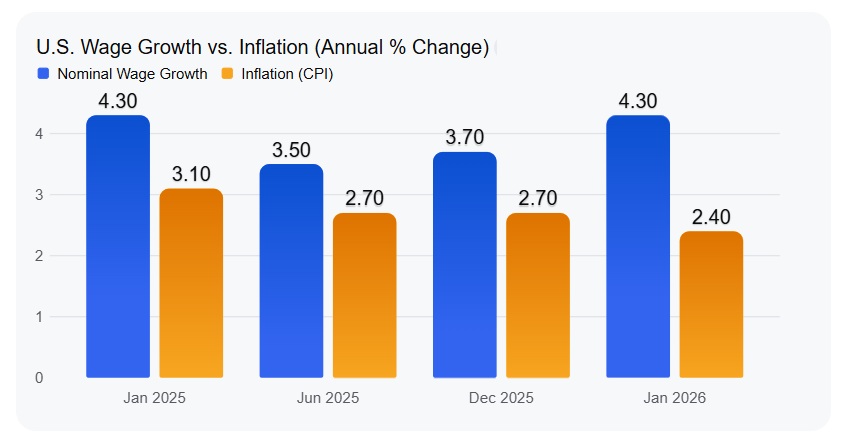
The data from sources like USAFacts shows that by January 2026, nominal wages (that's the actual dollar amount you earn) had climbed by a respectable 4.3%, while the annual inflation rate had cooled to a much more manageable 2.4%.
This gap, my friends, is what we call real wage growth, and it’s been hovering between 1.1% and 1.9% over the past year. This isn't just a small uptick; it represents a tangible increase in what your hard-earned money can actually buy.
Why Your Paycheck Feels Heftier Now
So, what's behind this positive turn of events? It’s not just one thing, but a combination of factors that are making our paychecks work harder for us.
A Tight Labor Market: The Power of Scarcity
One of the biggest drivers is the ongoing shortage of workers. Think about it: when there aren't enough people to fill available jobs, companies have to compete for talent. They do this by offering more attractive pay and benefits. This scarcity is driven by a few things: some workers retired early during the pandemic, immigration patterns have shifted, and many people are still juggling caregiving responsibilities. As a result, employers are digging deeper into their pockets to attract and keep good people.
Inflation Calms Down
Another significant piece of the puzzle is that inflation has started to ease up. Remember when gas prices and grocery bills seemed to be skyrocketing? Well, those sharp price increases have moderated. When prices aren't climbing as quickly, even steady wage increases start to feel much more impactful. It’s like the brakes have been applied to the runaway train of rising costs, allowing our wages to finally catch up and then some.
The Advantage of Switching Jobs
From my experience, and what the data appears to support, changing jobs often leads to bigger pay bumps. As the Atlanta Fed's Wage Growth Tracker shows, individuals who switch jobs as of January 2026 saw higher gains (around 4.7%) compared to those who stayed in their current roles (about 3.5%). This is a clear sign that the labor market is dynamic, and being willing to explore new opportunities can significantly boost your earnings. It puts a little more pressure on companies to keep their existing employees happy with competitive wages, too.
New Rules, New Leverage
There are also some structural changes happening. We're seeing more states and cities implement salary transparency laws, which means employers are more upfront about pay ranges. This can give employees more leverage in negotiations. Plus, some of the economic policies put in place after the pandemic are still creating incentives for people to work and giving them more say in their compensation.
Who is Benefiting Most?
While this trend is good news for many, it's important to acknowledge that the benefits aren’t always spread evenly. It's what some economists call a “K-shaped recovery.”
- Blue-Collar Boost: I've been particularly struck by how well some blue-collar workers are doing. The data shows significant real wage gains for them over the past year. For instance, mining workers saw their real earnings increase by roughly $2,400, construction workers by about $2,100, and manufacturing workers by around $1,700. This is a really positive development for these vital sectors of our economy.
- The Tech and Healthcare Boom: As you might expect, certain high-demand fields are seeing exceptional wage growth.
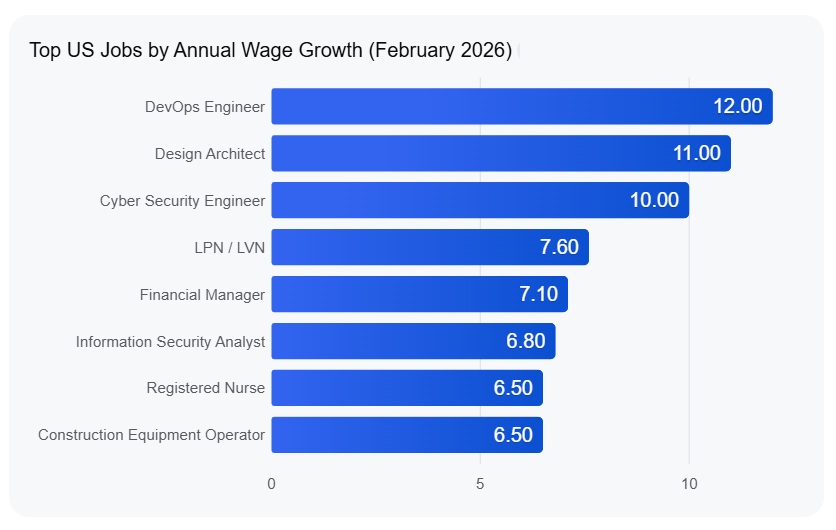
- Tech & AI: The relentless pursuit of digital transformation means roles like DevOps Engineers, AI Engineers, and Cybersecurity Analysts are commanding significant raises, often between 10% and 12% year-over-year.
- Healthcare: With an aging population and persistent staffing shortages, Registered Nurses and Licensed Practical Nurses are seeing annual gains in the range of 6.5% to 7.6%.
- Skilled Trades: The boost from federal infrastructure funding is also evident, with Electrical Power-Line Installers and Construction Equipment Operators seeing raises in the 5.7% to 6.5% range.
- Finance: Specialized expertise in areas like compliance and digital finance is also leading to healthy salary growth, with Financial Managers seeing about 7.1% annual increases.
- The “K-Shape” Concern: However, we also need to be mindful of the “K-shaped” divergence. While higher-income households might feel the full benefit of these real wage gains, lower-income households might still be grappling with the lingering effects of higher prices from previous years. The cumulative impact can be harder to overcome, even with current wage growth.
Looking Ahead: What About 2026?
What does the rest of 2026 look like? Most employers are planning to keep their salary increase budgets pretty steady, around 3.5%. This is still good news, as it’s projected to comfortably outpace the expected inflation rate of around 2.4%. So, it seems this trend of wages growing faster than prices is likely to continue, albeit at a more moderate pace.
| Category | Projection for Remainder of 2026 |
|---|---|
| Salary Increase Budget | ~3.5% |
| Projected Inflation Rate | ~2.4% |
| Real Wage Growth | Modest Positive Growth |
It's important to remember that these are averages. Individual experiences can vary widely depending on your industry, your specific role, and whether you're looking to switch jobs. But overall, the economic picture for your paycheck is looking brighter than it has in quite some time. It's a reward for hard work and a sign that the economic gears are turning in a way that benefits the average worker.
Wage growth has beaten inflation—boosting household purchasing power and fueling confidence in the economy. This rare streak is creating stronger demand for housing and investment opportunities across U.S. markets.
Norada Real Estate helps investors capitalize on this trend with turnkey properties—delivering immediate cash flow and long‑term ROI as rising wages expand affordability and rental demand.
Read More:
- Rising US-Venezuela Tensions Add Uncertainty to the 2026 Economic Outlook
- US-Iran War: A New Threat to America's Shaky Economy
- Bond Market Today and Outlook for 2025 by Morgan Stanley
- Goldman Sachs Significantly Raises Recession Probability by 35%
- 2008 Crash Forecaster Warns of DOGE Triggering Economic Downturn
- Stock Market Predictions 2025: Will the Bull Run Continue?
- Echoes of 1987: Is Today’s Stock Market Crash Leading to a Recession?
- Is the Bull Market Over? What History Says About the Stock Market Crash
- Wall Street Bear Predicts a Historic Stock Market Crash Like 1929
- Economist Predicts Stock Market Crash Worse Than 2008 Crisis
- Next Stock Market Crash Prediction: Is a Crash Coming Soon?
- Stock Market Crash: 30% Correction Predicted by Top Forecaster

