Norada Real Estate Investments

  • Home
  • Markets
  • Properties
  • Membership
  • Podcast
  • Learn
  • About
  • Contact

Dallas vs. Houston: Which City Offers Better Returns for Real Estate Investors

November 15, 2025 by Marco Santarelli

Dallas vs. Houston: Which City Offers Better Returns for Real Estate Investors

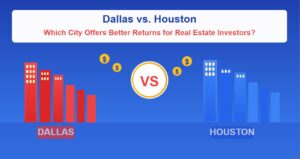
When investors talk about Texas real estate, the rivalry between Houston and Dallas often sounds like a football matchup—intense, high-stakes, and constantly debated. If you are comparing Dallas vs. Houston: Which City Offers Better Returns for Real Estate Investors, the definitive answer depends entirely on your investment goal: Houston is the champion for immediate cash flow and rental yield, while Dallas offers superior long-term wealth building through property appreciation.

I’ve spent years analyzing these markets, and I can tell you that picking the wrong city can mean the difference between steady mailbox money and sitting on trapped equity. Let's break down the economics of the two biggest powerhouse metros in the state and figure out which one is the right fit for your portfolio.

Dallas vs. Houston: Which City Offers Better Returns for Real Estate Investors

The Fundamental Conflict: Cash Flow vs. Appreciation

Before we dive into the numbers, we need to understand the core conflict. Real estate investing generally involves two strategies:

  1. Cash Flow Strategy: You want monthly income now. You seek affordable properties where the rent minus your mortgage, taxes, insurance, and expenses equals a solid profit.
  2. Appreciation Strategy: You sacrifice immediate high profits for long-term equity growth. You buy in markets where values are climbing rapidly, expecting to sell for a large profit in 5 to 15 years.

In the case of Dallas and Houston, they are the textbook definition of these strategies.

In my experience, the data below is the clearest financial picture you can get right now. This is why I caution new investors to clearly define their strategy before even looking at listings.

Factor Houston (Cash Flow Focus) Dallas (Appreciation Focus)
Median Home Price Approx. $325,000 Approx. $400,000
Entry Cost Significantly lower, great for new investors with limited capital. Higher, massive institutional money drives competition.
Rental Yields Higher, due to lower property costs relative to solid rental rates. Lower, high property values “compress” the yields.
Cash Flow Potential Stronger potential for immediate and higher monthly returns. Lower initial cash flow due to higher acquisition costs.
Property Appreciation Historically slower and more variable, tied to energy cycles. Higher and more consistent.
Key Economic Drivers Highly diverse, strong presence in energy, medical/healthcare, and shipping/logistics. Finance, corporate headquarters (HQ), and tech sector investment.
Investment Strategy Match Maximizing cash-on-cash returns, higher leverage opportunities. Long-term wealth building and portfolio equity growth.

Houston: The King of Cash Flow and Affordability

If you are a serious cash flow investor, Houston presents a compelling opportunity that Dallas simply cannot match right now. The biggest variable here is the Median Home Price. A $75,000 difference in the median price acts like a financial wall—it’s the barrier to entry for many new or intermediate investors.

When the median price is lower, several things happen that benefit the cash flow investor:

Lower Buy-In, Higher Yields

Think about the math for a moment. If you buy a $325,000 house in Houston versus a $400,000 house in Dallas (assuming 20% down, or $65,000 vs. $80,000 in cash), your mortgage in Houston is substantially smaller. A smaller mortgage means lower monthly payments.

Because rental rates across both metros are competitive—meaning rent in Houston for a similar product isn't $700 cheaper than in Dallas—that lower mortgage payment instantly translates into a wider profit margin. This is the definition of higher rental yields. I've found time and again that getting that initial cost right is 80% of the battle when chasing cash flow.

If your goal is to hit a 10% cash-on-cash return, Houston gives you a much clearer path to achieve it than Dallas. A lower purchase price also makes it easier to find value-add opportunities—properties that need a moderate renovation to boost rents, allowing you to force appreciation while maintaining strong cash flow.

Economic Diversity vs. Volatility

A common critique of Houston is its reliance on the energy sector. It is true that Houston’s market can be more volatile than Dallas’s because property values and rents historically correlate with oil prices. When oil booms, Houston booms.

However, calling Houston merely an “energy town” is outdated. In the decades I have tracked Gulf Coast real estate, Houston has diversified dramatically. The Texas Medical Center (the largest medical city in the world) provides extraordinary stability. Furthermore, its massive port and logistics hub mean that commerce and trade keep the economy churning, even if oil dips.

My opinion is that while Dallas offers greater stability against economic shocks, Houston's volatility is often overstated today given the strength of its medical and logistics employment base.

Where to Look in Houston

While many investors flock to the suburbs, some of the strongest yields remain in specific Houston neighborhoods. Areas like Spring Branch (moving north and west) offer great buy-and-hold potential. For those looking for slightly higher-end properties that still yield well, the pockets around The Heights remain desirable, though prices there are rapidly approaching Dallas levels.

Dallas: The Appreciation Powerhouse

If you are already financially stable, have a larger budget, and are focused on building long-term wealth through portfolio equity—meaning you are willing to accept lower current cash flow for massive growth later—then Dallas is the superior choice.

Dallas hasn't just grown; it has absolutely exploded.

The Corporate Exodus and Institutional Money

Dallas’s primary driver of appreciation is its white-hot, diversified economy centered on finance, technology, and corporate relocations. We aren’t just talking about mid-sized companies; we’re talking about massive corporations moving their headquarters to the Dallas-Fort Worth metroplex—often specifically to burgeoning northern suburbs like Plano, Frisco, and Irving.

When a major bank, tech firm, or headquarters moves 5,000 high-income earners to an area, the demand for housing skyrockets almost overnight. This sustained demand is why the $400,000 median price has held steady and continues to climb, albeit often with a slight slowdown during interest rate hikes.

Crucially, this rapid appreciation has attracted enormous amounts of institutional investment. Large funds and publicly traded REITs (Real Estate Investment Trusts) are actively buying up properties in the DFW area. They are less worried about a 6% cash-on-cash return and more focused on 10-15% annual equity growth. This institutional activity drives prices up further, making it harder for the individual investor to compete for cash-flowing deals.

Understanding Yield Compression

The high prices lead directly to yield compression—the reason why your cash flow is lower in Dallas.

Imagine the value of a house went up 15% last year, but the average household income (and thus, what tenants can pay in rent) only went up 5%. The rental income simply can’t keep pace with the property value increases. You end up paying significantly more for the property without a proportional increase in rent, thus lowering your monthly profit margin.

This is the trade-off in Dallas: you might only net $200 per month, but your home value could jump $50,000 in a year. That’s wealth building through equity, not immediate income.

The 2025 Rental Market Forecast

One topic I feel needs clear explanation is the recent forecast concerning Dallas rents. We have seen massive construction, especially large multi-family apartment complexes. This increase in supply led to a temporary market adjustment with a slight dip in rental rates in some submarkets in early 2025.

However, based on the continued population influx and job growth, this adjustment is temporary. Rents are widely forecasted to recover and rise robustly in the latter half of the year and into 2026. My professional opinion is that this slight slack should be viewed as an opportunity for portfolio entry, not a sign of fundamental weakness.

Where to Look in Dallas for Compromise

If you absolutely need some cash flow but want Dallas appreciation (the “have your cake and eat it too” strategy), you must look further out from the core business districts. Suburbs on the eastern and southern edges of the metroplex, such as Garland and parts of Mesquite, still offer higher cash flow yields because they haven't experienced the same intense institutional competition as Frisco or Plano.

The Hidden Drains: Property Taxes and Acquisition Costs

No discussion about real estate in Texas is complete without addressing the elephant in the room: property taxes. Both Dallas and Houston have property taxes that are high compared to the national average.

This is where the lower entry cost of Houston becomes even more critical for cash flow analysis.

While the tax rate (millage rate) might be similar between certain tracts in Dallas and Houston, the total tax bill is a percentage of the assessed value.

  • Dallas Example: A $400,000 property assessed at 2.5% tax rate means you pay $10,000 annually in taxes.
  • Houston Example: A $325,000 property assessed at 2.5% tax rate means you pay $8,125 annually in taxes.

That nearly $2,000 annual difference in property tax must come out of your cash flow. In both cities, taxes are the number one expense killer, but tax bills are inherently lower in Houston because the property valuations are lower. This is a massive win for the Houston cash flow investor.

The Investment Strategy Matchmaker

The choice between these two giants depends on a deeply personal evaluation of your financial situation and long-term goals.

Choose Houston If…

  1. You are starting out: You have a smaller initial capital budget and need the lower entry costs.
  2. You rely on monthly income: You use the cash flow from real estate to pay bills, fund other investments, or reinvest immediately.
  3. You prioritize cash-on-cash returns: You want your money to perform immediately at the highest possible percentage return.
  4. You are comfortable with cyclical risk: While diversified, Houston still experiences fluctuations related to global energy and trade markets.

My view is that Houston offers the greatest leverage opportunity for those looking to build their first few rental units into a robust portfolio quickly.

Choose Dallas If…

  1. You have high available capital: You can comfortably afford the $400,000+ entry prices even without stellar initial cash flow.
  2. You are focused on tax advantages: You value compounding wealth through equity and are more interested in minimizing capital gains when you sell (appreciation profit) than maximizing monthly income.
  3. You want maximum economic stability: The broad diversification across finance, tech, and corporate HQs provides insulation against many localized economic downturns.
  4. You prefer long-term hold: You plan to hold the asset for ten years or more, allowing the power of high-paced appreciation to deliver massive returns upon eventual sale.

Final Verdict and Personal Confidence

I often get asked, “Which city is truly the better investment?” And my answer is always the same: Houston offers superior investing, while Dallas offers superior wealth preservation.

If I were starting my real estate journey today with $100,000 in capital, the lower entry points and higher rental yields of Houston means I could acquire properties faster and achieve critical mass sooner. Cash flow today allows for more deals tomorrow.

However, if I were looking to place $1 million of liquid capital into the safest, most reliably appreciating assets for my IRA or retirement portfolio, Dallas would be my preferred option. The consistency and sheer demand driven by headquarters moving in cannot be ignored; it guarantees equity growth that few other U.S. metros can currently match.

Ultimately, your strategy defines your city. Both are absolute titans of the Texas market, but they are built for two very different types of investors. Study your budget, define your goals, and let the numbers guide your decision.

Want Better Returns? Invest in High-Demand Housing Markets

Turnkey rental properties in fast-growing housing markets offer a powerful way to generate passive income with minimal hassle.

Work with Norada Real Estate to find stable, cash-flowing markets beyond the bubble zones—so you can build wealth without the risks of ultra-competitive areas.

🔥 HOT NEW LISTINGS JUST ADDED! 🔥

Talk to a Norada investment counselor today (No Obligation):

(800) 611-3060

Get Started Now

Recommended Read:

  • Dallas Housing Market: Prices, Trends, Forecast 2025-2026
  • Texas Housing Market: Trends and Predictions
  • Will the Texas Housing Market Crash?
  • Is Texas a Good Place to Live: Explore the Cost, Jobs & Lifestyle
  • Are Texas Home Sales Dropping?
  • Should You Invest in the Dallas Real Estate Market?

Filed Under: Growth Markets, Housing Market, Real Estate, Real Estate Investing, Real Estate Investments Tagged With: Dallas, Houston, Real Estate Investment

Houston Housing Market: Trends and Forecast 2025-2026

November 11, 2025 by Marco Santarelli

Houston Housing Market: Trends and Forecast 2025-2026

Thinking about buying or selling a home in Houston in 2025? You're in luck, because right now, the current Houston housing market trends in 2025 are showing a real sign of balance, making things smoother for everyone involved. After a period of rapid changes, it feels like the market is taking a deep breath and finding a steadier rhythm.

I’ve seen a lot of activity, and the latest reports from the Houston Association of Realtors (HAR) confirm what many of us have been feeling. Home sales are up, inventory is healthy, and while prices aren’t sky-high like they once were, they're also not crashing. This is good news for both folks looking to plant roots and those wanting to make a move.

My take on all this is that we're seeing a market that's maturing. It's less about a frantic race and more about thoughtful decisions. Buyers are feeling more confident, and sellers are understanding the value of realistic pricing. It's a welcome change, and I'm optimistic about how this will play out over the rest of the year.

Current Houston Housing Market Trends in 2025

What's Driving the Balance? Easing Prices and Steady Sales

One of the biggest reasons for this newfound peace in the market is that home prices are starting to ease. According to HAR's September 2025 report, the median home price dipped to $327,000. That might sound like a small drop, but it's actually the lowest we've seen since February. This means that for many families, the dream of homeownership feels a little more within reach.

But don't mistake “easing prices” for a “buyers' market” where homes are just sitting around. Home sales are actually climbing, marking the fifth month in a row of year-over-year increases. In September, 7,399 single-family homes were sold. That’s a jump of 5.3 percent compared to the same time last year. Pending sales, which are those contracts that have just been signed, are also looking strong. This tells me that people are actively looking and ready to buy.

It’s interesting to note that while the median price is down, the average price actually increased by 2.0 percent to $421,655. Why the difference? Well, it seems like a good number of luxury home sales happened in September, which can skew the average up. This is a nuanced point – it shows that while the typical home feels more accessible, the high-end market is still doing quite well.

Inventory: Enough Homes for Everyone (Almost!)

A key ingredient in any healthy housing market is having enough homes for sale. In September, we saw inventory levels remain at healthy levels across Houston. There are certainly more active listings than there were last year at this time, giving buyers more choices.

Specifically, for single-family homes, active listings were up by 28.5 percent compared to last year. This growth has started to flatten out a bit month-to-month, which is normal as sales pick up. The number of months of inventory – which is a way to measure how long it would take to sell all the homes on the market – dipped slightly from August. This is happening because more homes are actually selling, which is a positive sign for the market's momentum.

For comparison, Houston's market now has about 5.2 months of inventory, which is a comfortable spot. The national average is around 4.6 months, so Houston is sitting pretty well. This balance means sellers aren't facing a flood of competition, and buyers aren't feeling completely outmatched.

Who is Buying What? A Look at Price Ranges

It's not just one segment of the market that's doing well. We’re seeing growth across most price ranges, highlighting a broad appeal for Houston living.

  • Lower Price Points: Homes priced from $1 to $249,999 saw significant spikes in sales, with increases of 20.2 percent and 35.9 percent respectively. The $150,000 to $249,999 range also saw a solid 25.1 percent jump. This is fantastic news for first-time homebuyers or those looking for more affordable options.
  • Mid-Range Activity: The sweet spot for sales continues to be homes priced between $250,000 and $499,999. While this segment saw a slight dip of 1.3 percent in activity compared to last year, it still accounts for over 55 percent of all sales. This is where most of the action is.
  • Higher End Growth: The market for homes priced $500,000 and above is also showing robust growth. Sales in the $500,000 to $999,999 range increased by 3.7 percent, and the super-luxury segment (which I define as $1 million and up) saw an impressive 27.3 percent boost. This indicates a strong demand for higher-end properties as well.

This broad-based growth means that Houston is a place where many different types of buyers can find what they're looking for, from starter homes to dream estates.

Mortgage Rates and Affordability: A Breath of Fresh Air

One of the biggest factors giving buyer confidence a boost is the trend in mortgage rates. We’ve seen a decline in average 30-year fixed mortgage rates, and when combined with those more moderate home prices, it’s making monthly payments more manageable.

For the typical homebuyer putting down 20 percent, the monthly principal and interest payment has actually dropped considerably compared to earlier in the year. This is a significant relief for many families who were feeling the pinch of higher payments. It makes a real and tangible difference when you're budgeting for one of the biggest purchases of your life.

What's also interesting is the average list-to-sale price ratio has edged down to 93.0 percent. This figure indicates that, on average, homes are selling for 93% of their asking price. This is the lowest we've seen it since early 2023. It suggests that while sellers are still getting good value, there's a bit more room for negotiation for buyers.

Townhomes and Condos: Finding Their Stride

It's not just single-family homes that are seeing positive movement. The townhome and condominium market has also shown strengthening demand. Sales in this segment increased by 4.0 percent year-over-year.

However, similar to single-family homes, prices in this sector have also moderated. The average price for a townhome/condo declined by 4.9 percent to $273,890, and the median price was down 4.4 percent to $230,000.

Inventory in the townhome and condo market has also expanded significantly, with active listings up by 31.9 percent. This has led to a healthy 8.2 months of inventory, giving buyers in this segment plenty of options and a good opportunity to find the right fit at a reasonable price.

What Does This Mean for You?

As I look at these numbers, the current Houston housing market trends in 2025 paint a picture of a mature and balanced market. For buyers, this means you have more options, potentially better negotiation power, and more affordable monthly payments than you might have had in recent years. It’s a great time to start seriously looking for your ideal home.

For sellers, while the market is balanced, it’s crucial to price your home realistically. The days of expecting multiple offers above asking price might be behind us for many properties, but with steady demand and healthy sales, a well-priced home will absolutely find a buyer.

Of course, it's essential to remember that economic uncertainties and factors like the recent government shutdown could still add some twists and turns. HAR Chair Shae Cottar rightly pointed out the impact the current shutdown could have, especially concerning new flood insurance policies. These macro factors can sometimes create ripples, but the underlying strength in Houston's housing market is undeniable.

Overall, I'm feeling positive about the direction we're heading. Houston’s housing market is settling into a rhythm that feels sustainable and encouraging for both buyers and sellers alike.

Houston Housing Market Forecast 2025-2026: What's Coming Up?

Now you're probably wondering about the Houston housing market forecast. The short answer: While prices have cooled down a bit, experts are predicting a slow, steady decline in the near future but definitely not a crash.

Let's dive into the details and see what the data tells us about where things are headed in Houston's real estate world.

Is Houston's Housing Market Slowing Down?

You bet! Right now, the average home value in the Houston-The Woodlands-Sugar Land area is around $313,936. That's about a 1.6% decrease over the past year. And homes are going to pending in an average of 29 days. Source: Zillow

What's the Near-Term Forecast Saying?

Zillow puts out regular forecasts, and here’s what they’re predicting for the Houston area:

Timeframe Projected Change
June 2025 -0.3%
August 2025 -0.7%
May 2025 to May 2026 -1.8%

Basically, expect a gradual dip in home values over the next year. These dips are still much better than the crash a lot of people were predicting last year.

Houston vs. Other Texas Cities

How does Houston stack up against other major cities in Texas? Let's take a peek (Source: Zillow):

City Forecasted Change by June 2025 Forecasted Change by August 2025 Forecasted Change from May 2025-May 2026
Dallas -0.6% -1.5% -2.2%
Houston -0.3% -0.7% -1.8%
San Antonio -0.4% -1.2% -3.2%
Austin -0.8% -2.4% -4.2%
McAllen -0.2% -0.1% 0.9%
El Paso 0% 0% 0.9%
Killeen -0.2% -0.7% -1%
Corpus Christi -0.4% -1.2% -4.2%
Brownsville 0% -0.1% 0.5%
Beaumont -0.4% -1.6% -6.2%

Compared to cities like Austin and Dallas, the Houston housing market is holding reasonably steady.

What About the National Outlook?

It's not just about Houston! The overall US housing market plays a role too. Lawrence Yun, the Chief Economist at the National Association of Realtors, thinks things are looking up nationwide. [Source: NAR]

Here's what he's predicting:

  • Existing Home Sales: Up 6% in 2025 and 11% in 2026.
  • New Home Sales: Up 10% in 2025 and 5% in 2026.
  • Median Home Prices: Up 3% in 2025 and 4% in 2026.
  • Mortgage Rates: Averaging 6.4% in the second half of 2025 and 6.1% in 2026.

If interest rates come down as predicted, that could really give the market a boost.

So, Will Home Prices Drop in Houston? Will It Crash?

Based on the data, a major crash in Houston seems unlikely. We're more likely to see a slight softening of prices over the next year.

My Personal Take for 2026

If mortgage rates do come down as expected, I believe 2026 will be a more stable year for the Houston housing market. We might even see prices start to tick upwards again as affordability improves and more people jump back into the market. But I feel it will likely depend on whether or not there is enough inventory to meet demand.

Should You Invest in the Houston Real Estate Market?

The city of Houston has long been a beacon for real estate investors seeking opportunities for long-term growth. As one of the largest and most dynamic cities in the United States, Houston offers a unique landscape for those looking to make strategic real estate investments. In this essay, we'll explore the factors that make Houston a promising destination for long-term real estate investment and provide insights into its outlook for sustainable growth.

Economic Resilience

One of the fundamental factors that underpin Houston's real estate investment potential is its economic resilience. Houston is home to a diverse range of industries, including energy, healthcare, manufacturing, and aerospace. Its role as the energy capital of the world has historically been a significant driver of economic activity.

While energy markets can be cyclical, Houston's economy has shown remarkable resilience even in the face of energy price fluctuations. This economic diversity serves as a stabilizing force for real estate investors, reducing the risk associated with economic downturns in any single sector.

Population Growth

Houston has consistently experienced population growth over the years. This demographic expansion is driven by several factors, including a robust job market, affordable housing, and a high quality of life. The city's attractiveness to both domestic and international migrants bodes well for long-term real estate investment. As the population continues to grow, the demand for housing and commercial properties is expected to follow suit, creating a reliable source of rental income and property appreciation for investors.

Infrastructure Development

Houston has made significant investments in infrastructure development. The city's commitment to improving transportation, public amenities, and urban planning has enhanced its livability and attractiveness. Infrastructure investments not only make the city a better place to live but also contribute to increasing property values. As Houston continues to expand and modernize its infrastructure, investors can expect to see a positive impact on their real estate holdings in the long term.

Real Estate Diversity

Houston's real estate market offers a diverse range of investment opportunities. Whether you're interested in residential, commercial, industrial, or mixed-use properties, Houston has options to suit various investment strategies. The city's size and varied neighborhoods provide investors with choices to tailor their portfolios to their specific goals. This diversity allows for risk mitigation through portfolio diversification, a key strategy for long-term real estate investors.

Houston's Top 10 Hotspots for Rising Home Values

Houston's real estate market is a diverse tapestry, offering a range of neighborhoods catering to various lifestyles and budgets. But for those seeking promising investment opportunities, specific areas are projected to see significant home value appreciation. Here's a closer look at the top 10 contenders (Neighborhoodscout).

  1. Gulfgate/Riverview/Pine Valley East: This revitalizing pocket on Houston's east side boasts a mix of affordable housing options, proximity to downtown, and ongoing development projects. These factors are fueling a surge in investor interest and property value appreciation.
  2. Lawndale/Wayside South: Located southeast of downtown, this area is undergoing a transformation. Historic bungalows are being restored, attracting young professionals and families. This growing demand is likely to push home values upwards.
  3. Downtown Southeast: As Houston's urban core continues to expand, the southeastern quadrant near Minute Maid Park is witnessing a development boom. New apartment buildings, office spaces, and revitalized historic structures are drawing residents and businesses alike. This confluence of factors positions the area for significant home value appreciation.
  4. Gulfton South: This established neighborhood southwest of downtown offers a multicultural vibe and a variety of housing options, from single-family homes to apartments. The area benefits from easy access to major freeways and proximity to the Medical Center. With its affordability and growing popularity, Gulfton South is poised for steady home value growth.
  5. Second Ward East: Steeped in history, Second Ward East is experiencing a renaissance. Art galleries, restaurants, and trendy shops are transforming the neighborhood into a vibrant destination. As the area attracts a new wave of residents, expect home values to rise alongside its growing appeal.
  6. Close In: This central district encompasses a diverse range of neighborhoods, each with its own unique character. Its proximity to downtown and eclectic offerings are propelling home value appreciation across the area.
  7. Second Ward: Once a predominantly industrial area, Second Ward is undergoing a complete overhaul. New developments, art studios, and a burgeoning nightlife scene are attracting residents, leading to anticipated growth in home values.
  8. Greenway/Upper Kirby Area West: This prestigious enclave on the west side of Houston boasts luxury high-rises, single-family homes, and high-end shopping. Its established affluence and desirability are likely to continue driving home values upwards.
  9. Second Ward West: Once industrial, this area is transforming with converted lofts, art studios, and a growing young professional scene. Its proximity to downtown and development potential position it for rising home values.
  10. South Main: South Main's revitalization is well underway, with historic buildings being restored and repurposed for creative uses. This influx of investment and trendy establishments suggests promising prospects for home value appreciation.

By understanding the unique dynamics of these top neighborhoods, you can make informed decisions about where to invest in Houston's ever-evolving real estate landscape. Remember, consulting with a local real estate expert can provide valuable insights into specific neighborhoods and their potential for future growth.

Conclusion: Houston's Promise for Long-Term Real Estate Investment

When considering the outlook for long-term real estate investment, Houston stands out as a city with immense potential. Its economic resilience, population growth, infrastructure development, and real estate diversity create a fertile ground for investors seeking sustainable and reliable returns. The city's track record of weathering economic challenges and its proactive approach to urban development positions it as an attractive destination for those who value long-term real estate investments. As Houston continues to evolve and expand, it will likely remain a shining star in the constellation of real estate investment opportunities.

Invest in Turnkey Real Estate for Immediate Cash Flow & Long-Term Wealth

Turnkey properties let you start earning rental income from day one—no renovations, no tenant hunts, no management headaches.

Work with Norada Real Estate to find vetted, cash-flowing markets tailored to your goals—so you can build steady returns without the stress.

HOT NEW LISTINGS JUST ADDED!

Speak with a seasoned Norada investment counselor today (No Obligation):

(800) 611-3060

Get Started Now 

Recommended Read:

  • Houston Real Estate Market Forecast 2025: What to Expect
  • Houston Real Estate Investment: Should You Invest in Houston?
  • Housing Market Trends: Big Investors Buy in Houston, Atlanta, Dallas, Charlotte
  • Best Houston Neighborhoods To Buy Investment Properties
  • 17 Facts That Make Houston the Best City in America
  • Texas Housing Market: Prices, Trends, Predictions 2024-2025
Filed Under: Growth Markets, Housing Market, Real Estate Investments Tagged With: Housing Market, Houston

Houston Housing Market 2025: Inventory SURGES, Giving Buyers the Edge

June 17, 2025 by Marco Santarelli

Houston Housing Market 2025: Inventory SURGES, Giving Buyers the Edge

Let me tell you, keeping up with the Houston Housing Market can feel like riding a rollercoaster. But lately, there's been a definite shift, and as someone who's been watching this market closely, I think it's a change worth paying attention to. So, what's the deal? In short, the Houston Housing Market in May 2025 showed some really interesting signs: more homes became available, and prices eased up a bit, which is good news for folks looking to buy.

Houston Housing Market: Inventory SURGES, Giving Buyers the Edge

More Choices for Buyers: Inventory on the Rise

For the longest time, it felt like finding a home in Houston was like searching for a needle in a haystack. There just weren't enough houses on the market, and that drove prices up. But things are looking different now. According to data by the Houston Association of Realtors, in May 2025, the number of active listings for single-family homes shot up by a whopping 35.0% compared to the year before. We're talking about 37,455 homes on the market! This is the highest I've seen the inventory since way back in September 2007. That's nearly 13 years!

Think about it – more homes mean buyers have more choices. They don't have to jump at the first thing they see for fear of missing out. This increase in inventory is a big factor in the shift we're seeing towards what you might call a buyer's market.

Easing Prices Offer Relief

Of course, having more houses to choose from is only part of the story. The other big piece is the price. For a while, it felt like home prices in Houston were just going to keep climbing forever. But in May 2025, we actually saw a slight decrease. The average sales price dropped by 0.7% to $438,230, and the median price went down by 1.2% to $339,425.

Now, I know these aren't massive drops, but they're significant. Combined with slightly lower mortgage rates (the average 30-year rate went from 7.06% in May 2024 to 6.82% in May 2025, according to Freddie Mac), this makes a real difference in what buyers can afford each month. In fact, the typical monthly principal and interest payment for a buyer with a 20% down payment fell by over $66. That's almost $800 in savings per year! That extra money can make a big difference for a lot of families.

Sales are Up! What Does It Mean?

Despite the slight dip in prices, people are actually buying more homes. Single-family home sales increased by 6.8% compared to May of the previous year, with 9,058 homes sold. Pending sales also saw a big jump of 19.8%. This tells me that buyers who might have been sitting on the sidelines are now feeling more confident and jumping into the market.

Shae Cottar, the HAR Chair, put it well: “With more homes to choose from and prices becoming a bit more favorable, people are definitely feeling more confident and getting back out there.” I agree with that completely. It seems like the increased inventory and slightly lower prices are creating a sweet spot for buyers.

What About Townhomes and Condos?

The story isn't quite the same for townhomes and condos. In May 2025, this segment of the Houston Housing Market saw a 12.9% decrease in sales. Both the average and median prices also declined. However, just like the single-family market, the inventory of townhomes and condos has also increased significantly. This suggests that while demand might be down a bit, buyers still have more options available to them.

Overall Market Health

Looking at the bigger picture, the total number of properties sold in May was up by 4.6%, and the total dollar volume increased by 5.6% to $4.5 billion. This shows that while there are shifts happening, the overall Houston Housing Market is still active and seeing growth.

Key Takeaways for Buyers and Sellers

So, what does all of this mean if you're thinking about buying or selling a home in Houston right now?

For Buyers:

  • More Choices: You have more homes to choose from than you've had in a long time. Take your time and find the right fit.
  • Better Negotiating Power: With more inventory, you might have a little more room to negotiate on price.
  • Lower Monthly Payments (Potentially): Lower home prices and slightly lower mortgage rates can lead to more affordable monthly payments.

For Sellers:

  • Increased Competition: With more homes on the market, it's important to make sure your property stands out.
  • Realistic Pricing is Key: Overpricing your home could mean it sits on the market for longer. Work with your agent to determine a competitive price.
  • Motivated Buyers are Out There: While the market is shifting, there are still plenty of people looking to buy. If your home is priced right and in good condition, it should still sell.

Looking Ahead

It's tough to say exactly what the future holds for the Houston Housing Market, but the trends we saw in May 2025 are definitely encouraging for potential homebuyers. The increase in inventory is a much-needed rebalancing of the market, and the easing of prices provides some relief from the affordability challenges we've seen in recent years.

As we move into the summer months, it will be interesting to see if this momentum continues. I'll be keeping a close eye on the data, and I recommend anyone looking to buy or sell in Houston do the same. The Houston Housing Market is dynamic, and staying informed is the best way to make smart decisions.

“Invest in the Houston Real Estate Market”

Discover high-quality, ready-to-rent properties designed to deliver consistent returns.

Contact us today to expand your real estate portfolio with confidence.

Contact our investment counselors (No Obligation):

(800) 611-3060

Get Started Now 

Read More:

  • Best Houston Neighborhoods to Buy Investment Properties in 2025
  • Houston Turnkey Investment Properties for Sale
  • Houston Real Estate Market Forecast 2025: What to Expect
  • Houston Housing Market: Prices, Trends, Forecast 2025
  • Houston Real Estate Investment: Should You Invest in Houston?
  • Housing Market Trends: Big Investors Buy in Houston, Atlanta, Dallas, Charlotte
  • 17 Facts That Make Houston the Best City in America
  • Texas Housing Market: Prices, Trends, Predictions

Filed Under: Real Estate Investing, Real Estate Investments Tagged With: Housing Market Trends, Houston, Houston Housing Market

Best Houston Neighborhoods to Buy Investment Properties in 2025

June 17, 2025 by Marco Santarelli

Best Houston Neighborhoods to Buy Investment Properties in 2024

Houston neighborhoods come with an urban charm and a family-friendly vibe. Houston alternately makes the news for massive traffic jams, hurricanes that periodically hit the city, falling oil prices, and its rampant rate of growth. For example, Hurricane Harvey flooded more than a hundred thousand homes in August 2017 which kind of froze the Houston real estate market.

However, the Houston housing market recovered from that bust and is booming. Factors like affordable housing and good-paying jobs are still drawing people to the area. When considering investment properties, few cities offer the potential that Houston does. Boasting a robust economy, a diverse population, and a thriving housing market, the city stands out as a prime location for savvy investors.

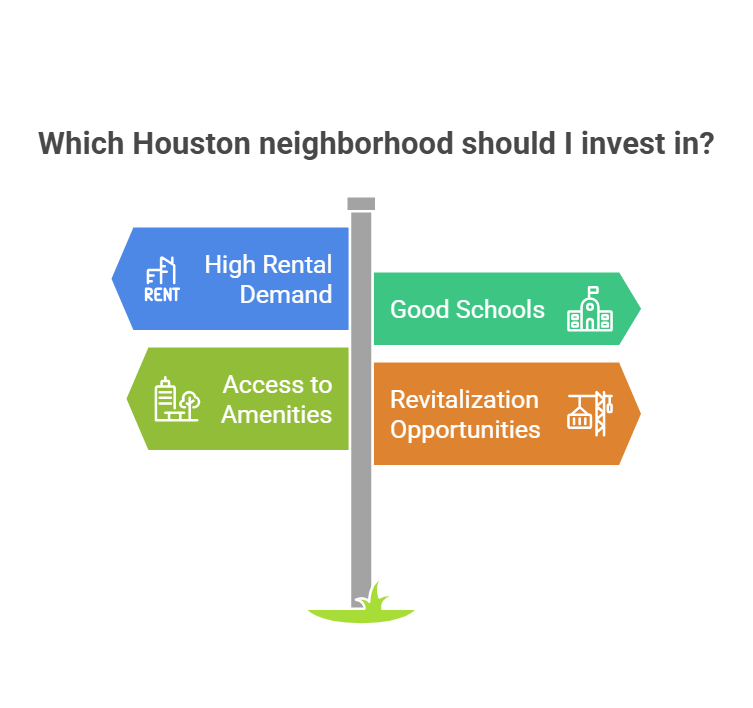
This article will explore the best neighborhoods in Houston to buy investment properties, where smart buyers can maximize both rental income and property appreciation.

Key Takeaways

📈🏙️
Robust Markets: Houston's neighborhoods show strong real estate market dynamics.

🏡🌍
Diverse Options: From upscale areas to emerging markets, there's something for everyone.

💵🏠
Rental Yield: Look for neighborhoods with high rental demand and yields.

🚀🏗️
Growth Potential: Areas with ongoing development typically promise better long-term returns.

🎨🎉
Vibrant Culture: Houston's neighborhoods have unique characteristics, enhancing tenant appeal.


Houston's Growing Economy and Real Estate Landscape

Houston is the fourth-largest city in the United States, recognized for its significant economic contributions stemming from the energy, healthcare, and aerospace sectors. This economic stability translates into a vibrant real estate market, with areas seeing consistent growth in property values and rental demands.

According to recent trends, the average price of a single-family home in Houston is hovering around $425,150 as of December 2024, reflecting a 5.0% increase from the previous year. As we navigate the upcoming years, homeowners and investors alike are advised to capitalize on emerging neighborhoods that promise significant returns.

Best Neighborhoods for Investment Properties in Houston

Best Neighborhoods for Investment Properties in Houston

1. Oak Forest

Historically, Oak Forest has proven to be one of the best neighborhoods for real estate investment due to its rapid appreciation, with property values rising over 60% in the last decade. The area is known for its family-friendly atmosphere and excellent school districts, attracting a consistent influx of new residents. This neighborhood's charm is enhanced by its proximity to downtown Houston, making it appealing for both families and young professionals.

2. The Woodlands

Another notable mention is The Woodlands, a master-planned community with a strong rental market, excellent schools, and low crime rates. The community offers a mix of luxury homes and more affordable properties, making it an attractive option for a variety of investors. The ongoing development of corporate headquarters and retail options continues to enhance its appeal (BiggerPockets).

3. Memorial

The Memorial neighborhood, located just west of Downtown Houston along I-10, is recognized for its affluent residents and top-rated schools. It enjoys a reputation for low inventory and high demand, which makes it a coveted area for investment. Memorial's strategic location and upscale living conditions attract professionals and families, ensuring properties here maintain their value (Roofstock).

4. Greater East End

Fast becoming a trendy spot, the Greater East End is experiencing a renaissance with gentrification and new developments. Affordable housing options and its proximity to downtown Houston appeal to young professionals looking for rental opportunities. Investors focusing on emerging neighborhoods will find excellent returns as this area continues to develop (Residential Leasing).

5. West University

Known locally as West U, this affluent neighborhood is characterized by upscale single-family homes and townhouses. With its close-knit community feel and proximity to recreational amenities, West University consistently ranks among the top choices for property investments. Investors can expect to see strong rental rates, particularly from families and young professionals who prioritize quality living (Ark7).

6. Midtown

In recent years, Midtown has transformed into one of Houston’s most buzzing urban neighborhoods, offering a mix of nightlife, dining, and cultural activities. Its appeal to young adults, especially those just starting their careers, makes it a solid choice for rental properties. The ongoing infrastructure improvements and its walkability feature make Midtown an attractive investment for those looking to capitalize on high rental demand.

7. Cypress

Cypress is emerging as one of the best places to invest in property within the Houston area, offering a respectable median rent of about $2,290 across various property types. The area has a strong community feel and is popular among families, which is conducive to stable rental income (Texas Real Estate Source).

8. Katy

Katy, one of the most family-friendly suburbs of Houston, also emerges as a top investment area. Its highly rated schools and abundant amenities make it attractive to both homebuyers and renters. With median property prices relatively affordable compared to inner-city Houston, it offers a high rental yield. New developments continue to bolster property values (Real Wealth).

9. Spring

The Spring area attracts investors due to its affordable housing and excellent community amenities. Its access to major highways and proximity to Houston make it a good choice for those who commute to the city. Spring's blend of single-family homes and townhouses makes it appealing for a broad range of renters looking for convenience and quality (HAR).

10. Pearland

Pearland is another suburb consistently recognized for its investment potential, with a growing market characterized by strong demand for rentals. The steady influx of families and professionals, combined with the town's convenient access to Houston's job market, continues to drive property appreciation and stability. Investors here can look forward to a great rental yield as the community continues to expand (HAR).

Factors Influencing Investment Success in Houston Neighborhoods

Investing in real estate is heavily influenced by market trends, which in Houston can shift due to various factors. Here are key considerations that make certain neighborhoods more appealing for investment:

  • Economic Indicators: Look for neighborhoods that align with Houston's continued economic growth, such as areas near major job centers.
  • School District Ratings: Properties in reputable school districts generally have higher values and rental demand. Families prioritize education, so neighborhoods that offer strong schools often see quicker rental turnover and better appreciation.
  • Amenities and Infrastructure: Areas with access to parks, restaurants, and retail tend to attract renters who are looking for convenience, making those properties more desirable.
  • Future Developments: Major infrastructural projects—like new highways or public transit expansions—often increase property values in the surrounding neighborhoods.

By aligning investment strategies with these factors, buyers can significantly enhance their chances of securing lucrative properties that appreciate over time.

Frequently Asked Questions (FAQs)

1. What is the average rental yield in Houston neighborhoods?

The average rental yield in Houston neighborhoods varies by location but generally falls between 6% to 9%. Areas experiencing growth and high demand, such as Oak Forest and The Woodlands, can often exceed these averages due to competitive rental rates.

2. How do I choose the best neighborhood for investment in Houston?

To choose the best neighborhood for investment, consider factors such as rental demand, property appreciation, local amenities, school district ratings, and economic growth. Research emerging areas and consult real estate reports to find neighborhoods with the highest potential.

3. Are there risks associated with investing in Houston real estate?

Yes, as with any investment, there are risks, including market fluctuations, economic downturns, and specific neighborhood challenges. However, thorough research, careful selection of neighborhoods, and understanding of market dynamics can mitigate many risks.

4. How does Houston's market compare to other Texas cities for real estate investment?

Houston's market is often seen as more affordable compared to cities like Austin and Dallas, with strong rental yields and robust economic growth. It is especially favorable for investors interested in single-family rentals and suburban developments.

5. What is the predicted real estate trend for Houston in 2024?

The trends indicate a steady growth trajectory, with slight fluctuations in property values. Investors can expect strong demand driven by economic stability and job growth, making Houston a promising market for investment properties into 2025.

Conclusion

Navigating the Houston real estate market requires an understanding of its neighborhoods and the unique attributes each has to offer. With areas like Oak Forest, The Woodlands, and Memorial presenting strong investment potential, the opportunities are substantial for both new and seasoned investors alike. Houston's dynamic economy, diverse population, and ongoing developments provide a solid foundation for creating wealth through real estate investment.

Work with Norada in 2025, Your Trusted Source for

“Houston Real Estate Investment”

Discover high-quality, ready-to-rent properties designed to deliver consistent returns.

Contact us today to expand your real estate portfolio with confidence.

Contact our investment counselors (No Obligation):

(800) 611-3060

Get Started Now 

Read More:

  • Houston Turnkey Investment Properties for Sale
  • Houston Real Estate Market Forecast 2025: What to Expect
  • Houston Housing Market: Prices, Trends, Forecast 2025
  • Houston Real Estate Investment: Should You Invest in Houston?
  • Housing Market Trends: Big Investors Buy in Houston, Atlanta, Dallas, Charlotte
  • 17 Facts That Make Houston the Best City in America
  • Texas Housing Market: Prices, Trends, Predictions

Filed Under: Real Estate Investing, Real Estate Investments Tagged With: Best Houston Neighborhoods, Houston, Houston Housing Market

17 Facts That Make Houston the Best City in America

January 26, 2025 by Marco Santarelli

17 Facts That Make Houston the Best City in America

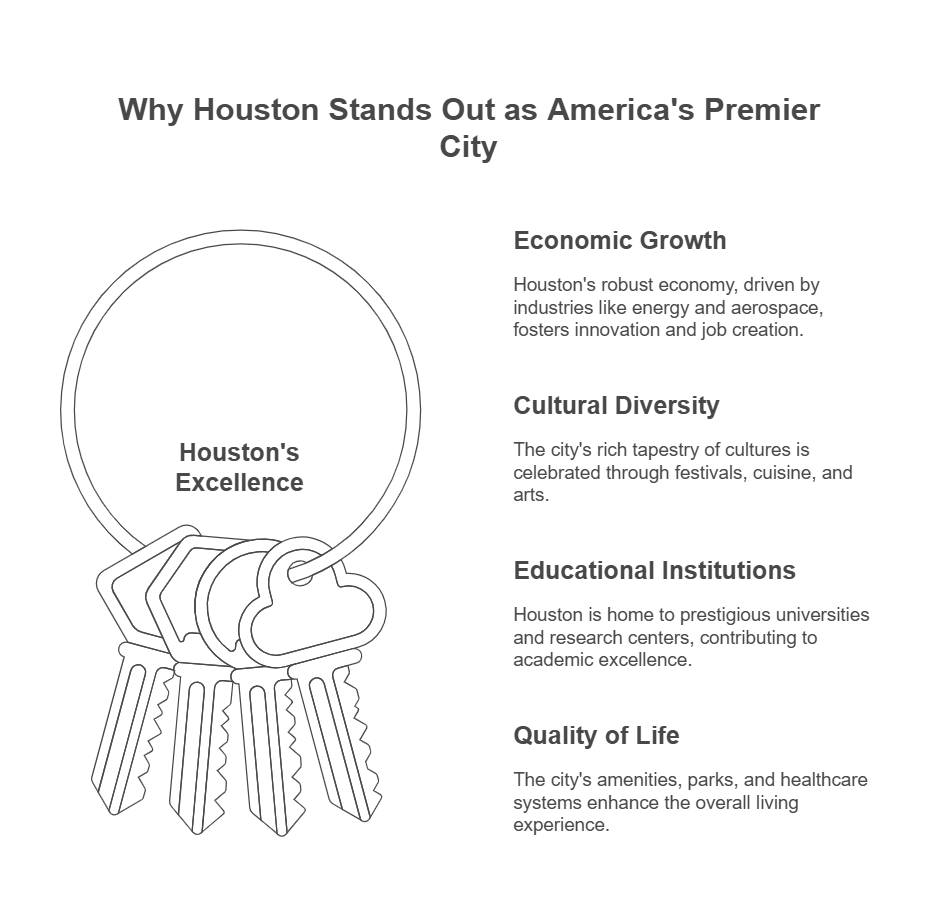
When people think of a thriving, up-and-coming city, they often overlook Houston. The city is frequently associated with oil refineries and humidity, but it has much more to offer, including a rich tapestry of culture, a vibrant economy, and a diverse community. Let’s explore seventeen compelling reasons why Houston stands out as a premier city in the United States.

17 Facts That Make Houston the Best City in America

17 Facts That Make Houston the Best City in America

1. An Economic Powerhouse

Houston is a significant economic engine, recognized as one of the fastest-growing metropolitan areas in the U.S. In 2024, the Greater Houston Partnership projects about 57,000 new jobs will be added in the region, marking a more sustainable pace of growth compared to previous years. This growth is indicative of Houston's ability to adapt and thrive even amid economic shifts, reflecting a city poised for continued success.

2. Job Market Strength

Houston has consistently held its position as a leader in job creation. As of July 2024, the city’s unemployment rate remains below the national average, contributing to a robust labor market with a total employment of approximately 3.4 million people. Despite losing some jobs earlier in the summer due to seasonal fluctuations in certain industries, the overall trend shows significant resilience and recovery. The city has expanded its job offerings across diverse sectors, including technology, healthcare, and manufacturing.

3. Cost of Living Advantage

A paycheck goes further in Houston than in any other major U.S. metropolitan area. With an average salary adjusted for cost of living at approximately $75,256, Houston provides a competitive edge over cities like San Jose, which, despite higher wages, also has significantly higher living costs. This affordability extends beyond housing to include groceries, transportation, and other essential services, making it an attractive option for families and young professionals alike.

4. Affordable Housing Market

Unlike many U.S. cities that faced housing bubbles, Houston's housing market is notably stable. As of July 2024, the average home value is $271,420, up 1.6% over the past year (Zillow). The average home price has moderated, allowing for greater affordability, especially in recent years when many cities have witnessed steep increases. According to recent statistics, the median home price in Houston remains well below the national average, facilitating opportunities for first-time homebuyers and those looking to relocate.

5. Fortune 500 Headquarters

Houston is home to 22 Fortune 500 companies, which ranks second only to New York City. Major firms such as ConocoPhillips, Marathon Oil, and Sysco find their headquarters here, located largely in the city’s “Energy Corridor.” The presence of these corporations not only bolsters the local economy but also creates substantial employment opportunities in various fields, including engineering, finance, and business administration.

6. Energy Sector Hub

The energy industry remains a cornerstone of Houston's economy, with estimates suggesting it comprises roughly 3.4% of the area’s jobs. The sector continues to grow, reinforced by the city's strategic proximity to vast oil reserves and Latin America, cultivating a robust pipeline of resources and talent. Houston's energy landscape is evolving as the industry increasingly pivots towards renewable energy solutions, putting the city at the forefront of innovative energy practices.

7. International Trade

Houston boasts the largest port in the U.S. in terms of international tonnage handled, facilitating extensive trade and job creation. The port's capabilities have attracted over 100 foreign-owned businesses to the area in recent years, further solidifying Houston's role as a critical global trade hub. Enhanced trade relationships with countries in Asia and Latin America promise to bolster economic growth and diversity in the coming years.

8. Space City Legacy

Houston solidifies its title of “Space City” as home to the NASA Johnson Space Center. This hub is vital for astronaut training and manned spaceflight missions, showcasing the city's significant role in advancing space exploration. The center also supports numerous educational programs and initiatives aimed at fostering a new generation of scientists and engineers passionate about space.

10. Culinary Scene Recognition

In 2024, Houston continues to shine as a dynamic food destination. The New York Times has recently highlighted local restaurants for their innovative offerings, stating that the city is among “the most exciting places to eat.” Houston features an incredible variety of cuisines, from Vietnamese and Mexican to exceptional barbecue. The city's culinary landscape is a direct reflection of its diverse population and cultural heritage, making it a must-visit destination for food enthusiasts.

11. Thriving Sports Culture

While the Astros have had mixed fortunes, the Texans are emerging as serious contenders in the NFL, and both the Rockets in the NBA and Dynamo in MLS have shown promising performances in recent seasons. The enthusiastic support of Houston's sports teams unites the community, fostering strong local pride and engagement. Events at renowned venues like NRG Stadium and the Toyota Center draw fans from across the region, further enriching the local economy.

12. Leading Healthcare Sector

The Texas Medical Center is the largest and most comprehensive healthcare center in the world, employing over 106,000 individuals across 21 hospitals and numerous research institutions. M.D. Anderson Cancer Center continues to be at the forefront of cancer research and treatment, particularly with recent investments aimed at tackling various types of cancer. The collaborative environment among medical institutions in Houston fosters groundbreaking research and clinical trials, advancing healthcare outcomes for patients.

13. Cultural Richness

Houston’s Museum District features 19 prominent museums within a 1.5-mile radius, showcasing a blend of art, science, and history. The Museum of Fine Arts stands among the largest art institutions in the country, while other institutions, like the Children’s Museum Houston and the Houston Museum of Natural Science, offer diverse cultural experiences that appeal to residents and tourists alike. The city's commitment to the arts enhances its cultural vibrancy and attracts global visitors.

14. Ample Green Spaces

With over 50,000 acres of parkland, Houston ranks third among major U.S. cities for park acreage per capita. Significant investments in green spaces enhance the quality of life for residents, providing ample opportunities for recreational activities, community events, and leisure. Projects like the revitalization of Buffalo Bayou and improvements to Discovery Green showcase the city's dedication to preserving biodiversity and promoting outdoor activities.

15. Renowned Educational Institutions

Houston is not only a hub for higher education but also home to renowned institutions like Rice University, ranked 17th nationally, and the University of Houston, which has received Tier One research status. These institutions foster academic excellence and research innovation, producing a highly skilled workforce that benefits Houston’s economy. Additionally, community colleges and technical schools in the region provide critical resources for workforce development and vocational training.

16. Unmatched Diversity

As of 2024, Houston is recognized as the most ethnically and racially diverse large city in the U.S. Over 400,000 foreign-born residents added to the population have created a vibrant cultural mosaic, with at least 145 languages spoken citywide. This diversity fosters a rich cultural fabric that is celebrated through festivals, food, art, and community events. Houston’s neighborhoods reflect this cultural blend, showcasing everything from bustling Chinatown to Little India.

17. Cultural Music Scene

Lastly, Houston's cultural scene continues to thrive, with celebrated artists like Beyoncé having roots in the city. The music scene nurtures both emerging and established talents, reinforcing Houston’s influence in the Southern hip-hop genre. In addition to hip-hop, the city boasts a thriving live music scene, with venues hosting everything from jazz to country, further illustrating Houston's role as a cultural crossroads.

In conclusion, with its unique blend of economic opportunity, cultural diversity, and a vibrant lifestyle, Houston makes a compelling case as one of the best cities in America. Its ongoing commitment to innovation, inclusivity, and quality of life ensures that it will continue to be a beacon of growth and prosperity for years to come. Whether you are seeking career opportunities, cultural experiences, or a welcoming community, Houston offers something for everyone.

Work with Norada in 2025, Your Trusted Source for

“Houston Real Estate Investment”

Discover high-quality, ready-to-rent properties designed to deliver consistent returns.

Contact us today to expand your real estate portfolio with confidence.

Contact our investment counselors (No Obligation):

(800) 611-3060

Get Started Now 

Read More:

  • Houston Turnkey Investment Properties for Sale
  • Houston Real Estate Market Forecast 2025: What to Expect
  • Houston Housing Market: Prices, Trends, Forecast 2025-2026
  • Houston Real Estate Investment: Should You Invest in Houston?
  • Housing Market Trends: Big Investors Buy in Houston, Atlanta, Dallas, Charlotte
  • Texas Housing Market: Prices, Trends, Predictions 2025

Filed Under: Best Places, Growth Markets Tagged With: Houston

Houston Real Estate Market Forecast 2025-2026: What to Expect

November 9, 2024 by Marco Santarelli

Houston Real Estate Market Forecast 2025: What to Expect

As we look ahead to 2025, the Houston real estate market is poised for a dynamic year. Economic fluctuations, changing demographics, and evolving consumer preferences will all play a significant role in shaping the landscape. While there are challenges to navigate, there are also promising opportunities for buyers, sellers, and investors in the Houston area.

The overall health of the Houston economy will continue to influence the housing market. Job growth, interest rates, and inflation will all play a part in determining demand and affordability.

Houston Real Estate Market Forecast 2025: What to Expect

Key Takeaways

🏠📉
Home Values Decline: Predicted decline in home values by 1.1% by mid-2025 in the Houston-The Woodlands-Sugar Land Housing Market.

💰📉
Interest Rates Impact: Mortgage rates are expected to average 5.5% by the end of 2025, inviting renewed buyer activity.

🔄🏘️
A Shift Towards Buyers: Increased choices for buyers as the market transitions from a sellers' to a buyers' market.

📈🏡
Long-Term Growth Outlook: Despite short-term dips, a renewed upward trend in home prices is forecasted post-2025.

🏢🏗️
Economic Stability: Job growth and migration trends could bolster long-term demand for housing.


Home Price Predictions for 2025

The Houston real estate market forecast for 2025 indicates a complex scenario for home prices. According to various analyses, including projections from Zillow, the home values may see a slight decrease of about -1.1% as we approach mid-2025. This forecast underscores the balancing act the market is currently engaged in—between stabilizing prices and adjusting to rising inventory and changing buyer dynamics.

Experts suggest that while the immediate future shows signs of price moderation—largely influenced by interest rates remaining high—there is a broader consensus on the resilience of the Houston market. As potential buyers become more active due to slightly lower mortgage rates and increased choices, demand could gradually buffer the anticipated decline in housing prices.

Interest Rates and Their Influence on Buying Behavior

Mortgage interest rates play a pivotal role in shaping the Houston housing market predictions. Currently, rates are pegged to hover around 6.1% by the end of 2024, with expectations to drop to approximately 5.5% by the end of 2025, according to multiple sources including the Mortgage Bankers Association.

This anticipated decline in rates is expected to restore some confidence in buyers who have been on the sidelines due to affordability concerns. Lower interest rates can significantly impact monthly payments and overall housing affordability, opening the market to a broader swath of potential homeowners.

As a result, this could lead to a resurgence in the demand for homes, even amidst a backdrop of slightly dropping prices. The changing mortgage landscape might motivate first-time buyers and those seeking to upgrade their living situations to take action—especially with increasing thought that prices are more reasonable and in line with the current market dynamics.

Market Dynamics: Shifting Toward a Buyers’ Market

The average Houston-The Woodlands-Sugar Land home value is $311,325, up 1.0% over the past year, and goes to pending in around 24 days. The data also indicates a significant shift from a sellers' market to one that is increasingly favorable for buyers.

Current trends show a considerable degree of price negotiation, with 59.2% of homes selling for less than the listing price. This pattern suggests that sellers are beginning to adjust their expectations in light of shifting market dynamics.

Such a transition often occurs in markets that experience a swell of inventory, and Houston appears poised for this change. With greater choices available on the market and buyers willing to wait for favorable terms, we may see a decrease in bidding wars that characterized the previous sellers' market phase. The housing stock is expected to normalize, providing relief to buyers who have previously felt pressured in a competitive landscape.

1-year Market Forecast (July 2024 to July 2025):
-1.1%

For Sale Inventory: 28,304

New Listings: 7,998

Median Sale Price: $344,067

Median List Price: $365,963

Median Days to Pending: 24

Sales Over List Price: 19.5%

Sales Under List Price: 59.2%

Source: Zillow. Data as of July 31, 2024 (For Sale Inventory, New Listings, Median List Price, Median Days to Pending)

Data as of June 30, 2024 (Median Sale Price, Sales Over/Under List Price)


Long-Term Growth and Economic Stability

Despite the projected short-term declines, many analysts maintain that the longer-term outlook for the Houston real estate market remains bright. As the local economy continues to flourish—fueled by growth in sectors like technology, healthcare, and energy—Houston will likely maintain its appeal, driving demand for housing.

The consistent influx of new residents seeking opportunities in Houston strengthens the underlying demand for homes, indicating resilience amidst cyclical fluctuations.

Moreover, given Houston's diverse economy and its significant role in the national economic framework, the city's housing market is well-positioned to rebound strongly following any temporary downturns. This aspect is crucial for investors to consider—investments made with a longer timeline typically weather short-term market volatility.

Conclusion: The Path Ahead for Houston's Real Estate Market

In summary, the Houston real estate market forecast suggests a transitional phase characterized by challenges and newfound opportunities. While prices may face a slight dip initially due to changing interest rates and shifting market conditions, the city's economic fundamentals show promise for long-term growth.

Buyers entering the market will find more favorable conditions compared to previous years, driving activity and potentially stabilizing prices toward the latter half of 2025. As the complexities of the Houston housing market continue to unfold, stakeholders should remain informed about evolving economic indicators, demographic trends, and regional developments.

The balanced outlook encompasses caution and optimism, making it essential for agents, buyers, and sellers alike to stay updated about future developments in this vibrant Texas market.

Recommended Read:

  • Houston Turnkey Investment Properties for Sale
  • Houston Housing Market: Prices, Trends, Forecast 2024-2025
  • Houston Real Estate Investment: Should You Invest in Houston?
  • Housing Market Trends: Big Investors Buy in Houston, Atlanta, Dallas, Charlotte
  • Best Houston Neighborhoods To Buy Investment Properties
  • 17 Facts That Make Houston the Best City in America
  • Texas Housing Market: Prices, Trends, Predictions 2024-2025
Filed Under: Growth Markets, Housing Market, Real Estate Investments Tagged With: Housing Market, Houston

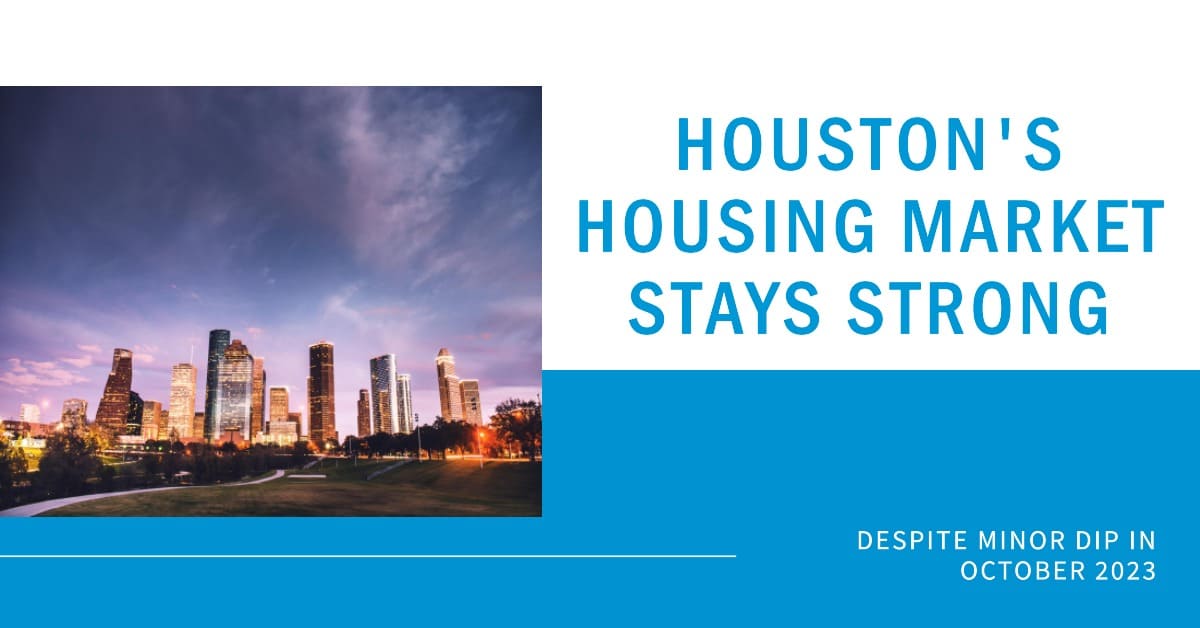
Houston’s Homes Sales Show Resilience with Minor Dip in October 2023

November 21, 2023 by Marco Santarelli

Houston's Homes Sales Show Resilience with Minor Dip in October 2023

Houston's Homes Sales Show Resilience with Minor Dip in October 2023

Despite facing its 19th consecutive month of year-over-year declines in home sales, Houston's housing market exhibited resilience in October 2023, marking the smallest dip of the year. The Houston Association of Realtors reported that single-family home sales, totaling 6,377, experienced a modest 3.4% decrease from the previous October, surpassing the year's earlier record drop in August.

The market witnessed varying trends in different pricing segments. Homes priced between $150,000 and $999,999 saw declines ranging from 4.3% to 8.5%, while the luxury segment, homes priced at or above $1 million, recorded a remarkable 21.3% surge in sales. Interestingly, the lower-priced segments below $150,000 also saw sales increase between 3.1% and 12.7%, showcasing a diverse market response.

Despite the dip in sales, the prices of single-family homes remained relatively stable. The average price edged up by a marginal 0.4% to $403,556, while the median price dipped by 0.9% to $327,000. Compared to pre-pandemic levels in October 2019, these figures still reflect a significant increase of 35.3% and 36.3%, respectively.

Housing Inventory and Future Outlook

The decline in sales contributed to an increase in inventory, reaching a 3.6-month supply, a level last observed in November 2019. Nationally, the inventory stands at a 3.4-month supply, indicating a balanced market. Looking ahead, single-family pending sales showed promise with an 11% increase, and total active listings rose by 12.5% compared to the previous year.

Townhouse and Condominium Market

The townhouse and condominium market mirrored the trends of single-family homes. Experiencing its 17th straight month of decreases, sales fell by 16.4%. The inventory reached a 3.7-month supply, the highest since November 2020. Average prices inched up by 1.2% to $272,597, and the median price increased by 6.6% to $239,900.

Rental Market and Economic Factors

Despite the slowdown in home sales, the rental market for single-family homes and townhomes/condominiums remained robust. Analysts suggest that the highest mortgage rates in two decades might be a key factor influencing consumers to delay home purchases.

According to HAR Chair Cathy Treviño with LPT Realty, “The Houston real estate market had an encore performance of slower home sales and solid rental activity in October, and we can probably expect those trends to prevail for the rest of the year.

While the housing market in Houston faced challenges with declining sales, the minor dip in October 2023 and the positive indicators in pending sales and active listings hint at a potential turnaround. As the market navigates economic factors like mortgage rates, the coming months will be crucial in determining the trajectory of Houston's real estate landscape.

Filed Under: Housing Market, Trending News Tagged With: Houston, Houston Housing Market

Real Estate

  • Birmingham
  • Cape Coral
  • Charlotte
  • Chicago

Quick Links

  • Markets
  • Membership
  • Notes
  • Contact Us

Blog Posts

  • Fed Interest Rate Forecast Signals High Probability of December 2025 Rate Cut
    December 7, 2025Marco Santarelli
  • Florida Housing Market Forecast for 2026 Indicates Price Declines Ahead
    December 7, 2025Marco Santarelli
  • Multiple Florida Housing Markets Are on the Brink of a Crash in 2026
    December 7, 2025Marco Santarelli

Contact

Norada Real Estate Investments 30251 Golden Lantern, Suite E-261 Laguna Niguel, CA 92677

(949) 218-6668
(800) 611-3060
BBB
  • Terms of Use
  • |
  • Privacy Policy
  • |
  • Testimonials
  • |
  • Suggestions?
  • |
  • Home

Copyright 2018 Norada Real Estate Investments

Loading...