Norada Real Estate Investments

  • Home
  • Markets
  • Properties
  • Membership
  • Podcast
  • Learn
  • About
  • Contact

Best Places to Invest in Real Estate in 2026

June 30, 2026 by Marco Santarelli

Best Places to Invest in Real Estate in 2026

The real estate market in 2026 is opening new doors for investors, with steady demand and fresh opportunities across the country. Mortgage rates are holding in the mid‑range, and inventory is improving in key areas, creating space for both rental income and long‑term growth. The best places to invest in real estate in 2026 are those cities where strong cash flow meets rising property values. Based on current data and market insights, several locations stand out as smart choices for building wealth in the year ahead.

Smart investors are looking beyond saturated, high-priced markets and focusing on more affordable, mid-sized cities that offer a stable tenant base and favorable local policies. This strategic pivot is crucial for navigating a market characterized by “higher-for-longer” interest rates. My focus is on markets that show resilience, consistent demand, and attractive yields.

Best Places to Invest in Real Estate in 2026

1. Indianapolis, Indiana: The Cash Flow King

Indianapolis continues to be a standout for investors prioritizing cash flow and long-term holds. Its strength lies in its robust healthcare sector, anchored by companies like Eli Lilly, and the consistent demand from Indiana University-Purdue University Indianapolis (IUPUI) for student housing. I particularly like the stability this market offers. With a projected gross yield of 9.1%, Indianapolis presents a highly stable environment for rental income. The city's infrastructure investments, like the Red Line corridor, also signal a commitment to growth and connectivity, making it an attractive place for residents.

2. Buffalo, New York: The Comeback Kid

Buffalo is making a remarkable comeback, and its real estate market is reaping the rewards. This city offers a low barrier to entry, making it accessible for many investors. Its growth is fueled by a strong presence in healthcare and education, along with its appeal as a climate refuge for those seeking milder weather. I've seen significant rental demand here, leading to an attractive gross yield of 8.2%. The affordability combined with increasing job opportunities makes Buffalo a compelling choice for multifamily investments.

3. Dallas-Fort Worth, Texas: The Economic Powerhouse

The Dallas-Fort Worth metroplex is a juggernaut for scale and long-term appreciation. The region is experiencing massive corporate relocations, and the lack of state income tax is a huge draw for both businesses and individuals. PwC rated it the #1 top overall market prospect, and I can see why. The sheer volume of economic activity here guarantees a steady influx of renters. While prices have risen, the continued growth trajectory still presents significant upside potential for long-term investors.

4. Raleigh-Durham, North Carolina: The Tech and Medical Hub

Known as the Research Triangle Park, this area is a magnet for tech and medical jobs, making it a prime location for conservative, stable holds. The strong presence of universities also ensures a consistent student and faculty tenant base. I'm impressed by the strong population inflows and the stable rent growth of 1.6%. This is a market where you can confidently invest for the long haul, knowing that the job market is diverse and robust.

5. Tampa, Florida: The Sun Belt Sweet Spot

Tampa offers a high-yield, hybrid play for investors. The ongoing tourism boom and retirement influx create a consistent demand for rental properties. While it's a Sun Belt leader, I'm noticing that cooling peak prices might present some discount buying opportunities right now, which is intriguing. It’s important to be mindful of rising insurance premiums here, as mentioned in the underwriting guide, but the overall demand drivers are very strong.

6. Hartford, Connecticut: The Value Proposition

Hartford presents a unique value play with potential for rapid appreciation. Its strategic location between New York City and Boston makes it an attractive option for commuters and businesses looking for more affordable alternatives. Combined with inventory shortages, this has led to exciting growth projections. Realtor.com projected a 17.1% combined growth, which is significant. I see this as a market that's often overlooked but holds considerable promise.

7. Charlotte, North Carolina: The Banking and Young Professional Hub

Charlotte is a major banking epicenter and is attracting a wave of young professionals. This demographic shift fuels demand for rental housing, particularly in the corporate housing and family-oriented sectors. With a projected 2.1% rent growth, it’s poised to be one of the hottest Southern markets. Its economic diversification and appeal to a younger workforce make it a solid bet for consistent rental income.

8. Phoenix, Arizona: The Growing Southwest Gem

Phoenix is a prime location for buy-and-hold strategies, especially for single-family rentals (SFRs). The city is attracting a significant number of relocations from the West Coast and is a hub for semiconductor manufacturing. While the high yields are attractive, my advice is to pick your submarkets carefully as the massive expansion requires attention to local dynamics. The demand here is undeniable, driven by job growth and a desirable climate.

9. Columbus, Ohio: Midwest Affordability and Demand

Columbus offers affordability and strong cash flow potential, especially with the expansion of the Intel chip plant. It also benefits from the consistent demand generated by The Ohio State University student market. I believe the stable Midwest demand combined with very low entry barriers makes Columbus an excellent choice for investors looking for accessible opportunities with reliable tenant pools.

10. Jacksonville, Florida: The First-Time Renter Haven

Jacksonville ranks highly for first-time home buyers, which often translates to a strong pool of renters. This coastal city offers a balanced market with potential for both appreciation and steady tenant acquisition. It's a great option for those looking for a blend of coastal lifestyle appeal and solid investment fundamentals.

My Strategic Approach to Underwriting in 2026

Navigating the 2026 market requires a disciplined approach, especially with interest rates remaining higher than we've seen in a while. I'm focusing on mechanical property metrics rather than relying on speculative appreciation.

  • Calculate the 1% Rule or Net Yield First: My rule of thumb is to ensure the monthly gross rent is close to 1% of the total purchase price. Alternatively, I look for a market average rental yield of 6% to 8%. This provides a crucial safety buffer.
  • Stress Test Against Rising Costs: I'm factoring in a potential 15% increase in operational expenses for year three cash flows. Insurance and property taxes are rising dynamically, especially in areas like Tampa and Phoenix. It's better to overestimate than underestimate these costs.
  • Target Pockets with Vacancy Rates Under 6%: Markets with strong historical population growth and low vacancy rates are more resilient. They can absorb economic shifts more easily, ensuring your property is likely to be rented quickly.
  • Acquire “Essential” Real Estate: I prioritize multifamily housing or single-family rentals (SFRs) located near major medical centers, universities, or key public transportation infrastructure. This locks in high-quality, long-term tenant stability.

Investing in rental real estate in 2026 is about being strategic and discerning. By focusing on these promising markets and applying a rigorous underwriting process, I believe we can achieve excellent results.

🏡 Real Estate Investments in Florida Cities

SE 24 Ave Property
Cape Coral, FL
🏠 Property: SE 24 Ave
🛏️ Beds/Baths: 4 Bed • 4 Bath • 2254 sqft
💰 Price: $449,900 | Rent: $3,164
📊 Cap Rate: 5.7% | NOI: $2,145
📅 Year Built: 2024
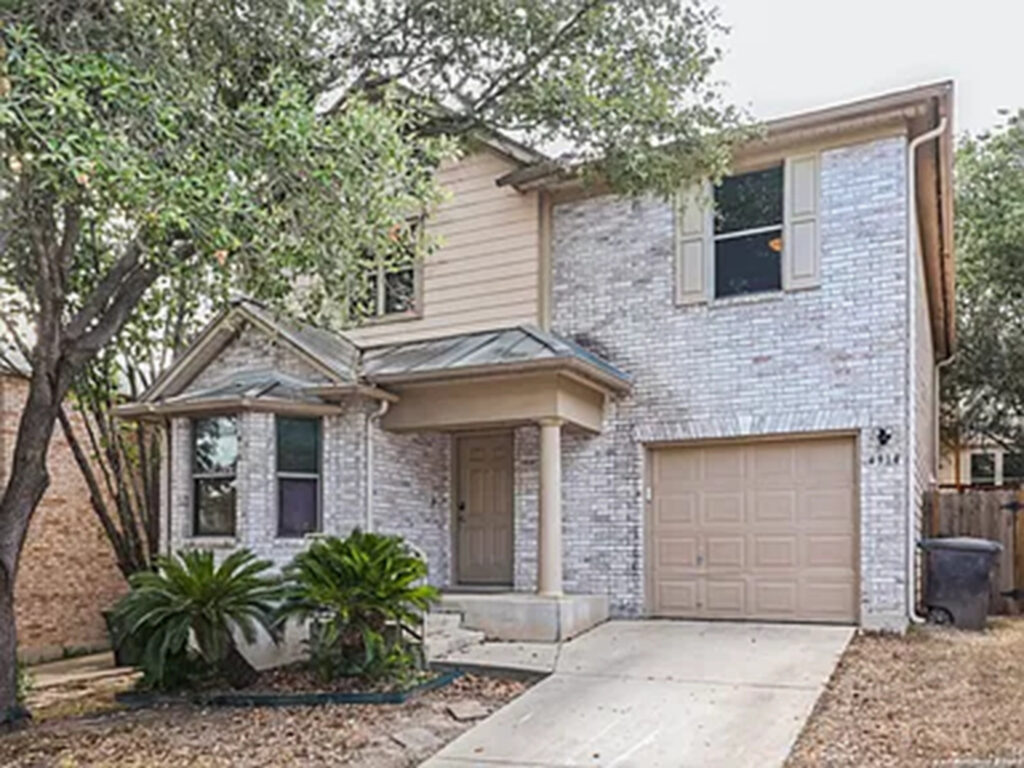
📐 Price/Sq Ft: $200
🏙️ Neighborhood: A-

VS

Hilton Property
Port Charlotte, FL
🏠 Property: Hilton
🛏️ Beds/Baths: 4 Bed • 4 Bath • 2104 sqft
💰 Price: $399,900 | Rent: $3,090
📊 Cap Rate: 6.5% | NOI: $2,156
📅 Year Built: 2024
📐 Price/Sq Ft: $191
🏙️ Neighborhood: A+

Out‑of‑State investors can compare Cape Coral’s newer rental with strong NOI vs Port Charlotte’s A+ property with higher cap rate. Which fits YOUR investment strategy?

We have much more inventory available than what you see on our website – Let us know about your requirement.

📈 Choose Your Winner & Contact Us Today!

Speak to a Norada Investment Counselor (No Obligation):

(800) 611-3060

View All Properties

Recommended Read:

  • 20 Best Cities to Invest in Real Estate in 2026
  • Best Cities for Turnkey Real Estate Investment in 2026
  • Top Markets for Out-of-State Real Estate Investing in 2026
  • Best Cities to Buy Investment Properties in 2026
  • Best Cities to Buy Multi-Family Homes for Investment in 2026
  • Best Cities to Buy Real Estate for Investment in 2026
  • 10 Cities With the Highest Demand for Rental Properties in 2026
  • 20 Cheapest States to Buy a House in 2026
  • Best States to Buy a House in 2026
  • Best Cities to Buy a House for Investment in 2026
  • Best Cities to Buy a House For Rental Income in 2026
  • Best Cities to Invest in Real Estate in 2026
  • Should You Invest in the Austin or Raleigh Real Estate Market in 2026?
  • Dallas vs. Houston: Which City Offers Better Returns for Real Estate Investors
  • Single-Family vs. Townhome: Which is the Real Cash Flow Winner for Investors?
  • 5 Hottest Florida and Texas Markets for Real Estate Investors in 2025
  • Best Places to Invest in Real Estate: November 2024 Hotspots
  • How to Secure Your Retirement With Cash-Flowing Rental Properties
  • Best Places to Invest in Single-Family Rental Properties in 2025
  • 5 Hottest Real Estate Markets for Buyers & Investors in 2025

Filed Under: Real Estate, Real Estate Investing, Real Estate Market Tagged With: Investment Properties, real estate, Real Estate Investment, Turnkey Real Estate Investment

Best Places to Buy Rental Properties for Cash Flow in 2026

June 22, 2026 by Marco Santarelli

Best Places to Buy Rental Properties for Cash Flow in 2026

If you are looking for the absolute best housing markets to buy turnkey rental properties in 2026, the short answer is that Birmingham, Cleveland, and Indianapolis remain your top choices for immediate cash flow, while Dallas and Nashville offer the best potential for long-term appreciation. Choosing the right market depends on whether you prioritize money in your pocket today or wealth building for the future.

Investing in real estate from a distance can feel like a gamble if you don’t have a solid plan. Over the years, I’ve learned that “turnkey”—where the property is renovated and already has a tenant—isn't a magic button for success. It’s a tool. If you use it in the wrong city, you’ll be fighting an uphill battle.

In my experience, the best strategy is to match your financial goals with the specific “personality” of the city. Let’s break down where you should be looking this year.

Best Places to Buy Rental Properties for Cash Flow in 2026

The High-Yield Markets: Where Cash Flow is King

When I talk to investors just starting out, they usually want cash flow. They want to see that monthly rent check covering the mortgage and then some. These markets are the heavy hitters for that strategy.

  • Birmingham, Alabama: This is my go-to for low overhead. The property taxes here are remarkably low, which is the secret sauce for keeping more of your rental income. It’s a working-class hub with a deep pool of renters who need stable housing.
  • Cleveland, Ohio: You can often find properties here yielding near 10% on your gross investment. It is a no-nonsense market where the barrier to entry is low, making it great for building a portfolio of multiple doors quickly.
  • Jackson, Mississippi: If your budget is tight, Jackson allows you to get into the game without needing a massive down payment. It’s a deep-value market where your dollars go much further than in major coastal cities.
  • Ocala, Florida: Don't overlook this one. It’s booming as a logistics hub. People are moving here to escape the crazy costs of South Florida, creating a steady stream of renters looking for affordable, quality homes.

The Balanced Markets: Steady Growth and Safety

If you aren't looking for a “get rich quick” scheme but want a solid, recession-proof way to grow wealth, look at these two.

  • Indianapolis, Indiana: I love “Indy” for its consistency. It’s not flashy, but the job market—anchored by logistics and manufacturing—is rock solid. It’s the kind of place you buy a house, rent it out, and rarely have to worry about the local economy collapsing.
  • Kansas City, Missouri: Sitting right on the border of Kansas and Missouri, this metro area is evolving. With tech and manufacturing jobs moving in, you get a beautiful middle-ground: steady monthly cash flow paired with reliable, slow-and-steady appreciation.

The High-Growth Markets: Aiming for Appreciation

Sometimes, you’re willing to accept a lower monthly profit in exchange for the property value doubling over the next decade. These cities are for the long-term thinkers.

Market Core Benefit Best For
Chicago, IL High Rent Growth Investors who want “Class A” demand
Dallas, TX Population Influx Long-term equity growth
Nashville, TN Tourism & Jobs Investors with higher capital
Cape Coral, FL Price Correction Buying quality at a discount

Chicago is interesting because it’s so competitive. Yes, the taxes are higher, but the rent growth is some of the best in the country. Dallas is a massive corporate hub; when businesses move there, employees need places to live. That’s a recipe for long-term equity. Nashville is expensive, but it’s a lifestyle magnet—people keep moving there, which keeps demand (and rents) high. Cape Coral is currently in a “sweet spot” after a price correction, meaning you might finally be able to grab a newer home at a price that actually makes sense.

A Simple 5-Step Guide to Vetting Your Purchase

I’ve seen too many people buy a property just because a website told them it was “turnkey.” Please, do not skip these steps. Your wallet will thank you.

  1. Check the Rehab Quality: Don’t just look at photos. Get an independent, third-party inspector. If the seller says they put in a new roof, verify it.
  2. Audit the Property Manager: A bad manager can destroy a good investment. Interview them. Ask for their vacancy rate and eviction rate. If they don't know these numbers off the top of their head, walk away.
  3. Run the Numbers Yourself: Ignore the pro-forma spreadsheet the company gives you. Calculate your own taxes, insurance, a 5% vacancy buffer, and a 5% maintenance reserve. If it doesn't cash flow after those expenses, it’s not a deal.
  4. Check the Comps (CMA): Is the seller charging you $200,000 for a house that neighbors sold for $160,000? Use local MLS data to verify you aren't overpaying.
  5. Understand Local Laws: Some states, like Texas or Alabama, make it easier to deal with non-paying tenants. Others, like Illinois, have strict rules. Know what you are walking into before you sign.

Investing in turnkey properties is an excellent way to enter the market, but remember: you are the CEO of your own little real estate company. Trust your research, verify the data, and keep a long-term view.

🏡 Investment Properties for sale in Florida

SE 24 Ave Property
Cape Coral, FL
🏠 Property: SE 24 Ave
🛏️ Beds/Baths: 4 Bed • 4 Bath • 2254 sqft
💰 Price: $449,900 | Rent: $3,164
📊 Cap Rate: 5.7% | NOI: $2,145
📅 Year Built: 2024
📐 Price/Sq Ft: $200
🏙️ Neighborhood: A-

VS

Hilton Property
Port Charlotte, FL
🏠 Property: Hilton
🛏️ Beds/Baths: 4 Bed • 4 Bath • 2104 sqft
💰 Price: $399,900 | Rent: $3,090
📊 Cap Rate: 6.5% | NOI: $2,156
📅 Year Built: 2024
📐 Price/Sq Ft: $191
🏙️ Neighborhood: A+

Out‑of‑State investors can compare Cape Coral’s newer rental with strong NOI vs Port Charlotte’s A+ property with higher cap rate. Which fits YOUR investment strategy?

We have much more inventory available than what you see on our website – Let us know about your requirement.

📈 Choose Your Winner & Contact Us Today!

Speak to a Norada Investment Counselor (No Obligation):

(800) 611-3060

View All Properties

Recommended Read:

  • Best Places for Rental Real Estate Investment in 2026
  • 20 Best Cities to Invest in Real Estate in 2026
  • Best Cities for Turnkey Real Estate Investment in 2026
  • Top Markets for Out-of-State Real Estate Investing in 2026
  • Best Cities to Buy Investment Properties in 2026
  • Best Cities to Buy Multi-Family Homes for Investment in 2026
  • Best Cities to Buy Real Estate for Investment in 2026
  • 10 Cities With the Highest Demand for Rental Properties in 2026
  • 20 Cheapest States to Buy a House in 2026
  • Best States to Buy a House in 2026
  • Best Cities to Buy a House for Investment in 2026
  • Best Cities to Buy a House For Rental Income in 2026
  • Best Cities to Invest in Real Estate in 2026
  • Should You Invest in the Austin or Raleigh Real Estate Market in 2026?
  • Dallas vs. Houston: Which City Offers Better Returns for Real Estate Investors
  • Single-Family vs. Townhome: Which is the Real Cash Flow Winner for Investors?
  • 5 Hottest Florida and Texas Markets for Real Estate Investors in 2025
  • Best Places to Invest in Real Estate: November 2024 Hotspots
  • How to Secure Your Retirement With Cash-Flowing Rental Properties
  • Best Places to Invest in Single-Family Rental Properties in 2025
  • 5 Hottest Real Estate Markets for Buyers & Investors in 2025

Filed Under: Housing Market, Real Estate, Real Estate Investing, Real Estate Market Tagged With: Housing Market, Investment Properties, real estate, Real Estate Investment, Turnkey Real Estate Investment

Best Cities to Invest in Turnkey Real Estate for Rental Income in 2026

June 17, 2026 by Marco Santarelli

Best Cities to Invest in Turnkey Real Estate for Rental Income in 2026

If you're looking to put your money to work in real estate without the day-to-day headaches, the best cities for turnkey investment in 2026 are predominantly in the Sun Belt and Midwest regions, offering a compelling mix of robust rental demand and affordable entry points that promise steady income even in a fluctuating market. As I see it, the real estate game for investors has subtly shifted; it's no longer just about hoping property values skyrocket. Now, the name of the game is yield, and finding markets where your rent checks can reliably cover your expenses and then some.

Best Cities for Turnkey Real Estate Investment in 2026

For years, I’ve been keeping a close eye on the real estate market, not just as an observer, but as someone who understands what makes a good investment tick. The talk among fellow investors and in market reports isn't just about numbers; it's about understanding the underlying forces driving demand and affordability. In 2026, the smart money is headed to cities where people are moving for jobs and where life is still reasonably priced. This creates a perfect storm for turnkey properties – homes that are already renovated and ready to rent, often managed by a dedicated company, allowing you to be a landlord from afar.

Why Turnkey Real Estate Makes Sense Right Now

I get a lot of questions about why I’m such a fan of the turnkey model. It’s simple, really. Turnkey allows you to invest in solid markets without having to deal with the nitty-gritty of finding a property, hiring contractors, or screening tenants. A good turnkey provider handles all of that. You buy a property that’s already in good condition, often with a tenant in place, and the management company takes over. This is huge, especially when you’re investing out of state or if you just want to focus on building your portfolio rather than managing individual properties.

What’s particularly interesting about 2026 is the economic climate. We're seeing national home price growth projected to be pretty flat, around 0% according to some pretty reliable sources like J.P. Morgan. This is a big deal! It means the focus has to shift from just hoping your property doubles in value to ensuring it makes you money month after month. This is where cash flow and yield become your best friends. And that’s exactly what the best turnkey markets are offering.

The Top Cities Poised for Turnkey Success in 2026

Based on what I'm seeing and hearing from major industry players like PwC, ULI, and CBRE, a few cities are really standing out. They’re not necessarily the most talked-about cities, but they are the ones that are quietly delivering for investors.

Dallas-Fort Worth (DFW), Texas: The Reigning Champion

It's no surprise that DFW is holding its top spot for the second year running. You just can't ignore the sheer scale of growth here. Millions of people are moving to Texas for jobs, and the housing market is booming to keep up. DFW is a powerhouse of population growth and job creation, which translates directly into high demand for housing and strong rental income potential. While it might not be the cheapest on this list, its sheer momentum makes it a strong contender for any serious turnkey investor.

Indianapolis, Indiana: The Buyer-Friendly Sweet Spot

This is a city I’ve been recommending for a while, and it’s great to see it getting the recognition it deserves. Zillow even called it the #1 most buyer-friendly market. Why? Because it hits that sweet spot of low acquisition costs and high rental demand. For turnkey investors, this means you can likely buy properties at a reasonable price and then achieve excellent cash flow because so many people want to live there. It’s the kind of market that offers solid, predictable returns.

Kansas City, Missouri/Kansas: Stability and Immediate Returns

Kansas City is becoming a favorite for investors who value consistency over chasing quick, speculative gains. It’s known for being incredibly affordable, and that’s a huge draw. Add to that a consistent 96% occupancy rate, and you’ve got a recipe for reliable income. Out-of-state investors are drawn here because it offers stability and the kind of steady returns that are hard to find elsewhere.

Nashville, Tennessee: Rebounding Strong

Nashville has made a significant jump in the rankings, and for good reason. I've always had a soft spot for Nashville’s diverse economy, and it’s clearly paying off again. With companies expanding and a varied job market, the demand for housing is strong. This rebound to the top 10 nationally shows that Nashville is a resilient market that continues to attract both residents and investors.

Jacksonville, Florida: Coastal and Urban Appeal

Jacksonville is a classic example of a city offering a bit of everything. It draws people in with its coastal vibe and its growing urban core. This dual appeal means steady demand for rentals, supporting both steady appreciation and healthy rent-to-price ratios. For turnkey investors, this combination means your property is likely to hold its value well while also generating good rental income.

Birmingham, Alabama: The Pure Cash Flow Contender

If your primary goal is maximizing pure cash flow, Birmingham is a city you absolutely need to look at. It’s a place where you can still find solid, rentable single-family homes in the $50,000 to $100,000 range. This price point is fantastic for generating impressive cap rates, which is the percentage of rental income you can expect relative to the property's cost.

The Shift: Yield Over Appreciation

I want to reiterate a point that’s really important for 2026. As I mentioned, J.P. Morgan is forecasting 0% national home price growth. This isn’t a doomsday prediction; it’s a signal that the market is maturing. For us as investors, it means the emphasis has to shift from “Will this house be worth more next year?” to “How much am I making from this house every month?” This focus on Net Operating Income (NOI) and sustainable cap rates is what separates successful long-term investors from those who get caught chasing trends.

The data backs this up. We’re seeing a split between Midwest/Southern markets that are great for yield and Sun Belt hubs that still offer growth potential. But even in growth markets, investors are closely scrutinizing the numbers to ensure a positive cash flow.

Key Metrics to Watch in 2026

When evaluating any market, especially for turnkey properties, I always look at a few key metrics:

  • Cap Rate Trends: Cap rates, which measure the potential annual return on investment, have largely stabilized in early 2026 as borrowing conditions have eased. This stability is good news for investors seeking predictable income.
  • The “Sweet Spot”: I’ve observed that Class B suburban properties are offering the best balance of risk and reward right now. These are generally well-maintained, older homes in good neighborhoods. In secondary markets like Indianapolis and Kansas City, you can find cap rates typically ranging from 6.5% to 8.0%.
  • Mortgage Rates: While rates remain higher than a few years ago (hovering around 5.98% for a 30-year fixed in late February 2026), their stabilization is crucial. This predictability makes it easier for leveraged buyers to crunch the numbers and make informed decisions.
  • Supply Dynamics: Some areas, particularly in the Sun Belt, are seeing an increase in housing inventory. While this might temper aggressive price appreciation, it’s actually a positive for turnkey buyers as it means more selection and potentially better negotiation power.

Making Your Move in 2026

Investing in turnkey real estate in 2026 is an intelligent strategy if you focus on the right markets. The cities highlighted above offer a strong foundation for generating consistent returns. My advice? Do your homework. Partner with reputable turnkey providers who have a proven track record in these areas. Understand the local rental market, the job growth, and the overall economic outlook. By focusing on cash flow, affordability, and steady demand, you’ll be well on your way to building a successful and relatively hands-off real estate portfolio. The opportunities are there for those who are willing to look beyond the headlines and focus on the fundamentals.

🏡 Turnkey Real Estate Investment: Indiana vs Missouri

E 14th St Property
Indianapolis, IN
🏠 Property: E 14th St
🛏️ Beds/Baths: 3 Bed • 1 Bath • 964 sqft
💰 Price: $188,000 | Rent: $1,500
📊 Cap Rate: 7.8% | NOI: $1,218
📅 Year Built: 1931
📐 Price/Sq Ft: $196
🏙️ Neighborhood: C+

VS

Johnstown Dr Property
Florissant, MO
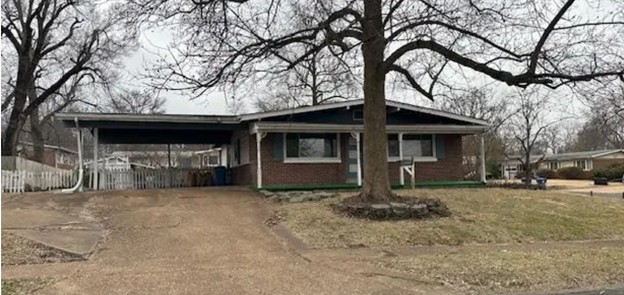
🏠 Property: Johnstown Dr
🛏️ Beds/Baths: 4 Bed • 2 Bath • 1344 sqft
💰 Price: $240,000 | Rent: $2,200
📊 Cap Rate: 8.0% | NOI: $1,597
📅 Year Built: 1956
📐 Price/Sq Ft: $179
🏙️ Neighborhood: B+

Out‑of‑State investors can compare Indiana’s affordable rental with solid cap rate vs Missouri’s larger property with stronger NOI. Which fits YOUR investment strategy?

We have much more inventory available than what you see on our website – Let us know about your requirement.

📈 Choose Your Winner & Contact Us Today!

Speak to a Norada Investment Counselor (No Obligation):

(800) 611-3060

View All Properties

Want Stronger Returns? Invest Where the Housing Market’s Growing

Turnkey rental properties in fast-growing housing markets offer a powerful way to generate passive income with minimal hassle.

Work with Norada Real Estate to find stable, cash-flowing markets beyond the bubble zones—so you can build wealth without the risks of ultra-competitive areas.

🔥 HOT NEW LISTINGS JUST ADDED! 🔥

Speak to a Norada Investment Counselor today (No Obligation):

(800) 611-3060

Get Started Now

Recommended Read:

  • Top Markets for Out-of-State Real Estate Investing in 2026
  • Best Cities to Buy Investment Properties in 2026
  • Best Cities to Buy Multi-Family Homes for Investment in 2026
  • Best Cities to Buy Real Estate for Investment in 2026
  • 10 Cities With the Highest Demand for Rental Properties in 2026
  • 20 Cheapest States to Buy a House in 2026
  • Best States to Buy a House in 2026
  • Best Cities to Buy a House for Investment in 2026
  • Best Cities to Buy a House For Rental Income in 2026
  • Best Cities to Invest in Real Estate in 2026
  • Should You Invest in the Austin or Raleigh Real Estate Market in 2026?
  • Dallas vs. Houston: Which City Offers Better Returns for Real Estate Investors
  • Single-Family vs. Townhome: Which is the Real Cash Flow Winner for Investors?
  • 5 Hottest Florida and Texas Markets for Real Estate Investors in 2025
  • Best Places to Invest in Real Estate: November 2024 Hotspots
  • How to Secure Your Retirement With Cash-Flowing Rental Properties
  • Best Places to Invest in Single-Family Rental Properties in 2025
  • 5 Hottest Real Estate Markets for Buyers & Investors in 2025

Filed Under: Real Estate, Real Estate Investing, Real Estate Market Tagged With: Investment Properties, real estate, Real Estate Investment, Turnkey Real Estate Investment

20 Best U.S. Cities to Invest in Real Estate in 2026

June 17, 2026 by Marco Santarelli

20 Best Cities to Invest in Real Estate in 2026

Thinking about where to put your real estate dollars for the best returns in 2026? You've come to the right place. I’ve spent a lot of time digging into the numbers and looking at what makes a city a winner for investors. Based on my research and what the experts are saying, the 20 best US cities to invest in real estate in 2026 are those showing strong job growth, attracting new people, and offering good value for your money. These are places where your investment is likely to grow and bring in steady income.

The 20 Best US Cities to Invest in Real Estate in 2026

The real estate market can feel like a guessing game, right? But for me, it's about understanding the underlying forces. When a city has a healthy economy with lots of jobs, people want to live there. More people means more renters, which means more income for you. And when cities are bringing in new residents, especially those with good jobs, property values tend to go up over time. That's what we call capital appreciation.

So, what makes these specific cities stand out for 2026? It's a combination of factors. We're seeing big companies moving in, creating thousands of jobs. We're also seeing people move from more expensive areas to find a better quality of life and more affordable housing. And importantly, these cities often have a good rent-to-price ratio, meaning the rent you can charge is a healthy percentage of the property's cost. This is crucial for generating immediate cash flow.

Let's dive into the cities that are poised to be real estate powerhouses. I’ve broken them down to give you a clearer picture of where the opportunities lie.

Top Cities to Invest in Real Estate: Where Growth Meets Stability
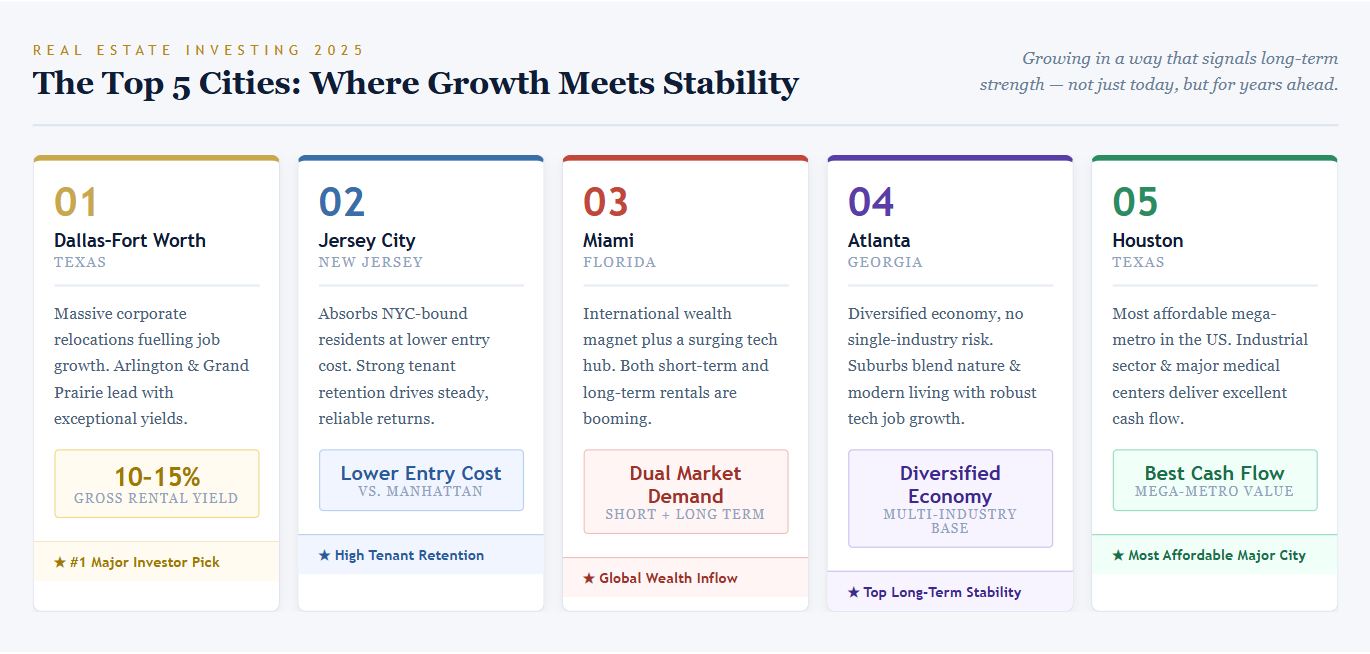
Top Cities for real estate investment: Where Growth Meets Stability

These cities are like the MVPs of real estate investing right now. They’re not just growing; they’re growing in a way that suggests they’ll be strong for a long time.

  1. Dallas-Fort Worth, Texas: This metroplex is absolutely on fire. It's consistently ranked as the top market for big-time investors, and for good reason. Massive corporate relocations are bringing in tons of jobs, and in areas like Arlington and Grand Prairie, you can see gross rental yields (that’s the rent you earn before expenses) hitting an impressive 10% to 15%. This means your money is working hard for you from day one.
  2. Jersey City, New Jersey: Don't let its proximity to NYC fool you. Jersey City is a strong investment on its own. It’s soaking up people who want to live near the Big Apple but can't afford the Manhattan price tag. The lower entry costs and strong tenant retention make it a smart move for steady returns.
  3. Miami, Florida: Miami continues to be a magnet for international wealth. Combine that with a rapidly growing local tech hub, and you've got a recipe for high demand. Both short-term vacation rentals and long-term residential leases are seeing exceptional activity.
  4. Atlanta, Georgia: Atlanta’s strength lies in its diversified economy. It’s not reliant on just one industry. Plus, its suburbs are expanding rapidly, and many neighborhoods are blending nature with modern living, all while fostering robust tech job growth. This makes it a top-tier choice for long-term stability.
  5. Houston, Texas: If affordability in a major city is what you're after, Houston is it. It’s one of the most affordable mega-metros out there. With strong job bases in industrial sectors and major medical centers, Houston offers excellent opportunities for cash flow.

High-Growth Sun Belt Cities: Riding the Wave of Popularity

The Sun Belt, the southern and southwestern parts of the US, has been a hotbed for growth, and 2026 is no exception. These cities are attracting new residents with their climates, lower costs of living, and expanding job markets.

  • Phoenix, Arizona: Phoenix is a prime example of how manufacturing can drive growth. The expanding semiconductor manufacturing ecosystem is creating jobs, and the population keeps growing, leading to sustained demand for housing.
  • Nashville, Tennessee: Music City is more than just music. Major companies are setting up shop here, and the hospitality sector is booming, which fuels demand for short-term rentals.
  • Orlando, Florida: Known for theme parks, Orlando is also a fantastic place for investors. It's ranked #1 for raw land investment and offers strong potential for long-term residential vacation rentals.
  • San Antonio, Texas: According to Zillow, San Antonio is a buyer-friendly city. This means prices haven't skyrocketed as much as in other places, and there's less competition for buyers, making it a more accessible market.
  • Austin, Texas: Despite some price adjustments, Austin’s tech-sector employment density keeps demand high, especially for new home construction. It's a market that rewards those who understand its dynamic.
  • Tampa, Florida: Tampa is a great place to hedge against inflation. High rental demand and investor-friendly tax structures make it an attractive option for preserving and growing your wealth.
  • Jacksonville, Florida: If South Florida feels too expensive, Jacksonville offers a more affordable entry point with significant growth in its coastal logistics sector.
  • Raleigh, North Carolina: Home to Research Triangle Park, Raleigh benefits from a highly educated workforce and high-income tenant bases. This translates to stable rental income.

High-Yield Secondary & Pivot Cities: Smart Money Finds Value

Sometimes, the best deals aren't in the biggest headlines. These cities might be considered “secondary” markets, but they offer excellent value and strong returns for savvy investors.

  • Indianapolis, Indiana: Zillow named Indianapolis the #1 most buyer-friendly metro, and I agree. It offers high rental yields and affordable entry costs, making it a fantastic spot for immediate cash flow.
  • Northwest Arkansas (Fayetteville/Bentonville): With giants like Walmart headquartered here, rental yields in this region can reach 9% to 12%. The corporate presence creates a steady stream of renters.
  • Colorado Springs, Colorado: The strong military presence and the appeal of an outdoor lifestyle make this city a consistent performer. East Colorado Springs, in particular, is a top pick.
  • Birmingham, Alabama: Realtor.com highlighted Birmingham for its affordable multi-family opportunities. This means you can often buy buildings with multiple units, maximizing your potential for strong monthly cash flow.
  • Salt Lake City, Utah: This city is a fascinating blend of a tech-focused economy and explosive organic population growth. The combination is driving demand and appreciation.
  • Lubbock, Texas: With Texas Tech University and growing medical centers, Lubbock is a prime market for student housing and rentals for healthcare professionals, often yielding stable double-digit returns.
  • Savannah, Georgia: The expansion of its logistics port combined with a thriving tourism industry creates a dynamic rental market that caters to both long-term residents and short-term visitors.

Maximizing Immediate Cash Flow: Your Top Cash-Flow Powerhouses for 2026

For many investors, the goal is to see money in their bank account every month. If that’s your priority, focusing on markets with a high rent-to-price ratio, low property taxes, and strong tenant demand is key. Based on current 2026 metrics, here are the top 5 cities that really shine for immediate monthly cash flow from single-family rentals (SFRs).

City Why It Wins for Cash Flow Average SFR Price (approx.) Target Gross Yield Best Submarkets
Indianapolis, IN Lowest entry barrier, high rent-to-price ratios. $220,000 – $260,000 9% – 11% Lawrence, Warren Township, Southport
Houston, TX No state income tax, massive blue-collar tenant pool. $260,000 – $310,000 8.5% – 10.5% Katy (older inventory), Spring, Pasadena
Birmingham, AL Exceptionally low property taxes maximize net cash flow. $160,000 – $210,000 10% – 12% Center Point, Roebuck, Hüeysville
San Antonio, TX Heavy military and healthcare presence ensures low vacancy. $240,000 – $280,000 8% – 9.5% Converse, Live Oak, West San Antonio
Lubbock, TX Texas Tech and medical centers drive reliable, high-yield rentals. $180,000 – $230,000 9.5% – 11.5% Tech Terrace, Medical District

My take on this? Indianapolis and Birmingham really stand out for their ability to put cash in your pocket quickly because the cost of entry is lower, and expenses like property taxes are also manageable. Houston and San Antonio offer that solid Texas advantage with no income tax and strong job markets that keep renters in place. Lubbock is a fantastic niche play if you're looking at the student or healthcare worker market.

When I look at these markets, I see not just numbers, but communities. I see people needing places to live, growing families, and businesses expanding. That’s the human element that drives real estate.

Choosing the right city is just the first step. Your success will also depend on your specific investment strategy, how you manage your properties, and how you navigate local market conditions. But by focusing on these 20 best US cities to invest in real estate in 2026, you're setting yourself up for a strong and profitable future.
🏡 Real Estate Investment in Tennessee and Florida

Ribbon Ln Property
Franklin, TN
🏠 Property: Ribbon Ln
🛏️ Beds/Baths: 2 Bed • 2.5 Bath • 1662 sqft
💰 Price: $569,999 | Rent: $3,000
📊 Cap Rate: 5.1% | NOI: $2,415
📅 Year Built: 2022
📐 Price/Sq Ft: $343
🏙️ Neighborhood: A-

VS

Chamberlain Blvd Property
Port Charlotte, FL
🏠 Property: Chamberlain Blvd
🛏️ Beds/Baths: 4 Bed • 2 Bath • 1617 sqft
💰 Price: $274,900 | Rent: $1,845
📊 Cap Rate: 5.4% | NOI: $1,231
📅 Year Built: 2023
📐 Price/Sq Ft: $171
🏙️ Neighborhood: A+

Out‑of‑State investors can compare Tennessee’s newer rental with higher NOI vs Florida’s A+ property with strong yield. Which fits YOUR investment strategy?

We have much more inventory available than what you see on our website – Let us know about your requirement.

📈 Choose Your Winner & Contact Us Today!

Speak to a Norada Investment Counselor (No Obligation):

(800) 611-3060

View All Properties

Want Stronger Returns? Invest Where the Housing Market’s Growing

Turnkey rental properties in fast-growing housing markets offer a powerful way to generate passive income with minimal hassle.

Work with Norada Real Estate to find stable, cash-flowing markets beyond the bubble zones—so you can build wealth without the risks of ultra-competitive areas.

🔥 HOT NEW LISTINGS JUST ADDED! 🔥

Speak to a Norada Investment Counselor today (No Obligation):

(800) 611-3060

Get Started Now

Recommended Read:

  • Best Cities for Turnkey Real Estate Investment in 2026
  • Top Markets for Out-of-State Real Estate Investing in 2026
  • Best Cities to Buy Investment Properties in 2026
  • Best Cities to Buy Multi-Family Homes for Investment in 2026
  • Best Cities to Buy Real Estate for Investment in 2026
  • 10 Cities With the Highest Demand for Rental Properties in 2026
  • 20 Cheapest States to Buy a House in 2026
  • Best States to Buy a House in 2026
  • Best Cities to Buy a House for Investment in 2026
  • Best Cities to Buy a House For Rental Income in 2026
  • Best Cities to Invest in Real Estate in 2026
  • Should You Invest in the Austin or Raleigh Real Estate Market in 2026?
  • Dallas vs. Houston: Which City Offers Better Returns for Real Estate Investors
  • Single-Family vs. Townhome: Which is the Real Cash Flow Winner for Investors?
  • 5 Hottest Florida and Texas Markets for Real Estate Investors in 2025
  • Best Places to Invest in Real Estate: November 2024 Hotspots
  • How to Secure Your Retirement With Cash-Flowing Rental Properties
  • Best Places to Invest in Single-Family Rental Properties in 2025
  • 5 Hottest Real Estate Markets for Buyers & Investors in 2025

Filed Under: Real Estate, Real Estate Investing, Real Estate Market Tagged With: Investment Properties, real estate, Real Estate Investment, Turnkey Real Estate Investment

Best Cities to Invest in Real Estate in 2026 for Strong ROI Potential

June 17, 2026 by Marco Santarelli

Best Cities to Invest in Real Estate in 2026 for Strong ROI Potential

Summer 2026 is shaping up to be a fantastic time to dive into property investments, and I've been doing a deep dive to find the cream of the crop. My gut, backed by solid data from places like Zillow and the National Association of Realtors, tells me that now is a sweet spot for smart investors. With mortgage rates settling comfortably under 6%, we're seeing a market that's shifting back towards a more balanced playing field, and that's great news for buyers and investors alike.

I’ve personally seen how crucial timing and location are in this game, and this summer, several cities are really standing out. Let's break down where I think the smartest money will be flowing this season, looking at both steady income and strong appreciation.

Best Cities to Invest in Real Estate in 2026 for Strong ROI Potential

The Midwest: Where Your Money Works Harder

For those of you looking for places where your investment dollars can generate solid, reliable income, the Midwest is calling your name. These cities often offer lower entry costs, making them perfect for building a strong cash flow.

Indianapolis, Indiana: The Affordable All-Star

Indianapolis is a real gem, and Zillow has it on their radar for good reason. It's one of those places where you can get into the market without breaking the bank. The average home price hovers around $283,040, which is incredibly accessible compared to many other parts of the country.

What really excites me about Indy is the gross rental yield, which is sitting pretty near 9.1%. Plus, Zillow is predicting a steady 2.9% home value appreciation through 2026. This combination of affordability and consistent growth makes it a balanced win for investors. I've always believed that markets with lower barriers to entry, combined with steady appreciation, are goldmines for long-term wealth.

Cleveland, Ohio: Cash Flow King

If your primary goal is maximizing immediate monthly income, then Cleveland, Ohio, needs to be on your list. This city is delivering some of the highest gross rental yields you'll find anywhere, with figures actually topping 11.3%! For investors who prioritize a “cash-flow-first” strategy, Cleveland is a dream.

You get a great bang for your buck here, with low entry costs that allow you to see returns almost immediately. I’ve seen firsthand how powerful a strong monthly cash flow can be in smoothing out market fluctuations.

Detroit, Michigan: The Comeback Kid with Serious Potential

Detroit's turnaround story is nothing short of amazing, and its real estate market is right there with it. We're talking projected annual appreciation rates of 9% to 10%+! This incredible growth is attracting all sorts of investors, from those looking to do quick fix-and-flips to buy-and-hold strategists.

The sheer scale of the housing market premium that Detroit is now capturing is immense. I remember when Detroit was considered a risky bet, but the momentum it has now is undeniable. It's a testament to resilience and smart urban planning.

The Sun Belt: Growth, Growth, and More Growth

The Sun Belt has long been a magnet for people moving for jobs and a warmer climate, and this trend continues to fuel its real estate markets. These areas often boast strong population growth and diverse economies, which are fantastic drivers for property values and rental demand.

Dallas-Fort Worth, Texas: The Economic Powerhouse

PwC has its eye on Dallas-Fort Worth, and for good reason. This metroplex is experiencing massive population growth, attracting new residents who fuel housing demand. Its economy is also incredibly diversified, meaning it's less reliant on any single industry.

From an investment standpoint, Texas offers a significant advantage: no state income tax. You're looking at a balanced market with an 8.9% rental yield. For me, a strong, diversified economy combined with tax advantages is a recipe for sustained success.

Austin, Texas: Rebounding Strong

After its incredible surge during the pandemic, Austin saw a bit of a cool-down. However, I see this as a golden opportunity. It's shifting back into a more favorable buyer's market, and forecasts are showing a robust 12.2% rental yield. This makes Austin a prime target for investors aiming for long-term equity growth. I often advise clients to look at markets that have experienced a correction but still have strong underlying fundamentals. Austin fits that bill perfectly.

Raleigh, North Carolina: The Tech and Health Hub

The National Association of Realtors and CBRE are highlighting Raleigh, and it's all about the jobs. This city is booming thanks to incredible growth in the technology and healthcare sectors. This translates into a highly resilient rental market, further supported by landlord-friendly state eviction laws. When you have a consistent influx of jobs, you have a consistent demand for housing, which is a landlord's best friend.

Jacksonville, Florida: Sunny Skies and Smart Investments

Jacksonville offers a really nice balance. You've got strong rental demand, but importantly, the inventory is increasing. This gives buyers more leverage and negotiation power, which is a refreshing change. On top of that, Florida's tax-friendly environment and steady stream of people moving in from other states create a solid foundation for real estate investment. I always appreciate markets that offer a bit of breathing room for buyers while still showing strong demand.

Northeast Rental Giants: Tight Supply, High Demand

These cities might come with a higher price tag, but they offer a unique opportunity due to severely limited housing supply, which drives up rental income and home values.

Providence, Rhode Island: The Inventory Scarcity Play

Providence is topping Zillow's list of hottest rental markets, with an impressive 5% annual rent growth. The key here is a severe, chronic inventory shortage—Zillow notes there are 55% fewer homes for sale than before the pandemic. This scarcity is pushing home value forecasts up by 3%. For investors focused on rental income in a supply-constrained market, Providence is a compelling option.

Buffalo, New York: Affordable East Coast Charm

Buffalo remains a really interesting market. While it's competitive, it's still remarkably affordable compared to its East Coast neighbors like New York City. You're looking at a solid 2.5% home value appreciation forecast for 2026, and importantly, a very stable local renter pool. I often recommend Buffalo to investors who want East Coast exposure without the eye-watering price tags.

New York, New York: The Ultimate Low-Vacancy Market

Even with its notoriously high prices, New York City continues to be a powerhouse for real estate investors focused on rental income. The rental vacancy rate is forecast to be a mere 4.3% for the summer, meaning you can expect rapid tenant placement. The supply is extremely restricted, with nearly 49% of homes selling above asking price. This extreme landlord leverage, driven by limited supply, ensures strong returns for those who can enter this market.

My Takeaway

As I see it, summer 2026 offers a diverse range of opportunities. Whether you're chasing high cash flow in the Midwest, betting on growth in the Sun Belt, or navigating the tight markets of the Northeast, there's a city out there for your investment strategy. My advice? Do your homework on these markets, understand your own financial goals, and don't be afraid to act when you find the right fit. The real estate game rewards those who are informed and decisive.

🏡 Invest in Real estate this summer for Cash Flow

Ribbon Ln Property
Franklin, TN
🏠 Property: Ribbon Ln
🛏️ Beds/Baths: 2 Bed • 2.5 Bath • 1662 sqft
💰 Price: $569,999 | Rent: $3,000
📊 Cap Rate: 5.1% | NOI: $2,415
📅 Year Built: 2022
📐 Price/Sq Ft: $343
🏙️ Neighborhood: A-

VS

Chamberlain Blvd Property
Port Charlotte, FL
🏠 Property: Chamberlain Blvd
🛏️ Beds/Baths: 4 Bed • 2 Bath • 1617 sqft
💰 Price: $274,900 | Rent: $1,845
📊 Cap Rate: 5.4% | NOI: $1,231
📅 Year Built: 2023
📐 Price/Sq Ft: $171
🏙️ Neighborhood: A+

Out‑of‑State investors can compare Tennessee’s newer rental with higher NOI vs Florida’s A+ property with strong yield. Which fits YOUR investment strategy?

We have much more inventory available than what you see on our website – Let us know about your requirement.

📈 Choose Your Winner & Contact Us Today!

Speak to a Norada Investment Counselor (No Obligation):

(800) 611-3060

View All Properties

Want Stronger Returns? Invest Where the Housing Market’s Growing

Turnkey rental properties in fast-growing housing markets offer a powerful way to generate passive income with minimal hassle.

Work with Norada Real Estate to find stable, cash-flowing markets beyond the bubble zones—so you can build wealth without the risks of ultra-competitive areas.

🔥 HOT NEW LISTINGS JUST ADDED! 🔥

Speak to a Norada Investment Counselor today (No Obligation):

(800) 611-3060

Get Started Now

Recommended Read:

  • 20 Best U.S. Cities to Invest in Real Estate in 2026
  • Best Cities for Turnkey Real Estate Investment in 2026
  • Top Markets for Out-of-State Real Estate Investing in 2026
  • Best Cities to Buy Investment Properties in 2026
  • Best Cities to Buy Multi-Family Homes for Investment in 2026
  • Best Cities to Buy Real Estate for Investment in 2026
  • 10 Cities With the Highest Demand for Rental Properties in 2026
  • 20 Cheapest States to Buy a House in 2026
  • Best States to Buy a House in 2026
  • Best Cities to Buy a House for Investment in 2026
  • Best Cities to Buy a House For Rental Income in 2026
  • Best Cities to Invest in Real Estate in 2026
  • Should You Invest in the Austin or Raleigh Real Estate Market in 2026?
  • Dallas vs. Houston: Which City Offers Better Returns for Real Estate Investors
  • Single-Family vs. Townhome: Which is the Real Cash Flow Winner for Investors?
  • 5 Hottest Florida and Texas Markets for Real Estate Investors in 2025
  • Best Places to Invest in Real Estate: November 2024 Hotspots
  • How to Secure Your Retirement With Cash-Flowing Rental Properties
  • Best Places to Invest in Single-Family Rental Properties in 2025
  • 5 Hottest Real Estate Markets for Buyers & Investors in 2025
Filed Under: Real Estate, Real Estate Investing, Real Estate Market Tagged With: Investment Properties, real estate, Real Estate Investment, Turnkey Real Estate Investment

Is It the Right Time to Invest in Real Estate in 2026?

May 26, 2026 by Marco Santarelli

Is 2026 the Right Time to Invest in Real Estate Rentals?

If you're thinking about diving into the world of rental properties in 2026, my honest answer is: yes, it absolutely can be a right time, provided you approach it smartly and strategically. The market might not be screaming hot like it was a few years ago, but that's actually what makes it interesting and potentially rewarding for the right kind of investor.

I know, I know. The headlines can be a bit confusing. Some say prices are too high, others talk about rents cooling down. But when I look at the bigger picture, I see a market that's settling into a more balanced rhythm, creating opportunities for those who are patient and informed. It's not about chasing quick flips; it's about building long-term wealth by providing a fundamental need: a place for people to live. And right now, that need is strong, even with some shifts happening.

Is It the Right Time to Invest in Real Estate in 2026?

Let's break down what's going on right now, in mid-2026. The days of bidding wars and skyrocketing rents seem to be on pause, and that's mostly due to a bit more supply hitting the market. We're seeing vacancy rates tick up a little, reaching about 7.3% nationally in the first quarter of 2026. This is the highest we've seen in a few years, especially in big apartment buildings in the South and West, where a lot of new construction wrapped up in 2024 and 2025.

What does this mean for rents? Well, effective asking rents for apartments have seen a slight dip, maybe around 0.5% to 1.7% lower than last year, with the national average sitting somewhere between $1,370 and $1,672.

But here's the crucial part: this wave of new building is slowing down sharply. Projections show significantly fewer apartment buildings being completed in 2026 and 2027. This is good news for investors because it means the extra supply won't last forever. We're likely to see vacancies stabilize and rents start growing again, maybe by a modest 0.5% to 2% for the year.

Now, single-family homes (think houses you'd rent out) have been a bit more steady. Rent growth for these has been holding strong, around 1% to 2% in many areas.

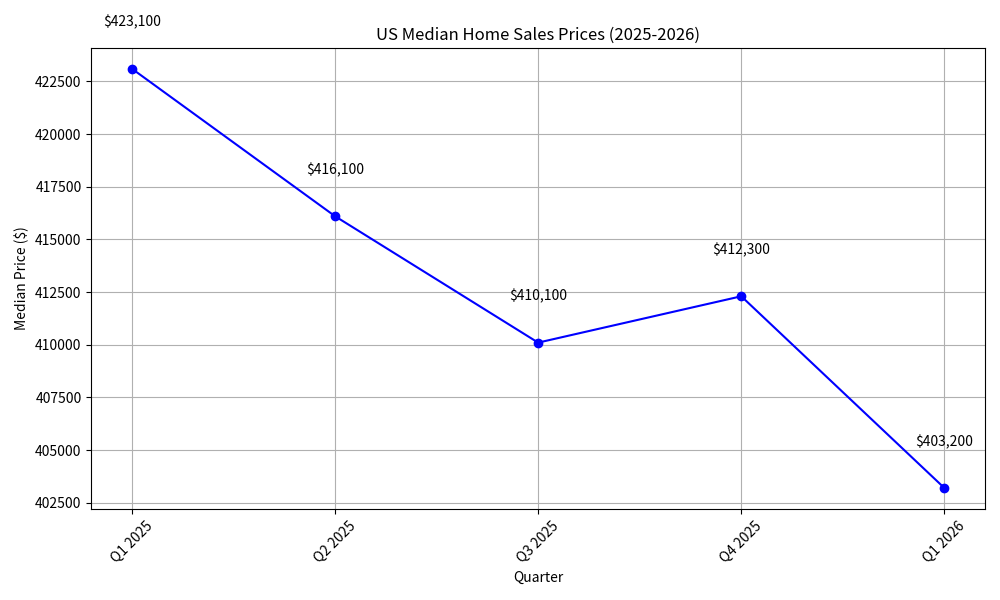
And what about home prices? They're not zooming up like they used to, but they're still high. The median home price is hovering around $403,000 to $425,000, and forecasts suggest they'll stay pretty flat or grow very slowly, maybe 0% to 3.2% nationally.

US Median Home Sales Prices (Q1 2025 – Q1 2026)

Year/Quarter Median Price Range
Q1 2025 Elevated
Q1 2026 $403,000 – $425,000

This environment really favors investors who are focused on cash flow – making money from the rent itself – rather than just hoping the property's value will skyrocket. Plus, with home prices still high and mortgage rates a bit higher than we're used to, more and more people are finding that renting is the more affordable option. That means steady demand for rentals for the foreseeable future.

US Median Home Sales Prices (Q1 2025 – Q1 2026)

The Economic Picture and How You Can Finance Your Investment

Let's talk about money. Mortgage rates for a 30-year fixed loan are sitting around 6.3% to 6.4% as of mid-2026. Experts think they'll stay in the mid-6% range, maybe dipping a bit to around 5.9% to 6.2% by the end of the year. While that's not the super-low rates we saw a few years back, it's definitely manageable for smart investors.

The overall economy is looking pretty stable. We're seeing about 2.2% GDP growth, unemployment around 4.5%, and inflation cooling down. Job markets are strong in places like the South and Midwest, which is great news for attracting renters.

Now, when you're looking to buy a rental property, the loans might be a little pricier than for your own home, often in the 7% to 8% range. That's why focusing on cash-on-cash return – the profit you make relative to the cash you put down – is super important.

Understanding Rental Yields, Cap Rates, and Cash Flow

This is where the math gets exciting. Cap rates (capitalization rates, which help you figure out the potential return on a property) for apartment buildings are averaging around 5.8% nationally. That’s pretty stable and competitive.

For investors focused on individual properties, gross rental yields in good markets can be anywhere from 7% to 12%. After you factor in all your expenses – like mortgage, taxes, insurance, maintenance, and periods when the property is empty (vacancy) – you can often still see net yields of 4% to 7%.

Let me give you a quick example of how this could look in mid-2026:

Imagine you buy a $300,000 single-family home in a Midwest market. You put down 25% ($75,000). The monthly rent is $2,000 (that's about an 8% gross yield). After your mortgage payment (let's say around $1,300 at a 7.5% interest rate), property taxes, insurance, maintenance, and accounting for some vacancy, you might be looking at a net cash flow of $300 to $500 per month. And that's on top of building equity and potential appreciation, not to mention the tax benefits!

Top Markets for Rental Investments in 2026

Location, location, location! It's always true. I've noticed that Texas and Florida continue to be strong contenders, with ten of the top fifteen markets. Why? No state income tax, booming job and population growth, and landlord-friendly rules are big draws.

For immediate cash flow, some Midwest cities really shine. Here are a few I'm keeping an eye on:

  • Indianapolis, IN: You can find high gross yields (around 9%), low vacancy rates, and the initial cost of buying is more affordable.
  • Cleveland, OH: Offers fantastic cash flow (yields up to 11%) and has a steady economy thanks to healthcare and education.
  • Buffalo, NY: Good yields (around 8%) and seeing people move in from more expensive parts of the Northeast.
  • Durham, NC & Austin, TX: These are growth areas with solid rental demand, but it's important to watch how quickly new apartments are being built and absorbed.
  • Dallas-Fort Worth, Charlotte, Atlanta, Tampa: These offer a good balance of potential appreciation and rental demand.

On the flip side, I'd be more cautious in areas that have a lot of new construction already (making them potentially oversupplied) or places with high insurance costs, like parts of Florida and coastal Texas. Also, be aware of areas with strict local regulations.

The Upside: Why Rentals Make Sense Now

Even with the current market shifts, the long-term case for rental properties is incredibly strong.

  • The Housing Shortage is Real: We're facing a multi-million-unit deficit in housing across the country. New construction simply can't keep up quickly enough.
  • Hedge Against Inflation: Historically, rents and property values tend to rise along with inflation, helping your money hold its value.
  • Tax Advantages: This is a big one! You can benefit from depreciation, deducting mortgage interest, a 20% Qualified Business Income deduction (which is now permanent!), and even deferring taxes when you sell and reinvest through 1031 exchanges.
  • Leverage and Cash Flow: Using other people's money (the mortgage) to build wealth is a powerful concept. Positive cash flow, especially in markets with good yields, can steadily grow your wealth over time.
  • Demographics are on Your Side: Millions of Millennials and Gen Z are entering their prime renting years, and more higher-income households are choosing to rent by choice, not just necessity.

Risks and Challenges to Keep in Mind

Of course, no investment is without its risks. It’s important to be aware of them:

  • Short-Term Rent Pressure: In some cities, higher vacancies might mean it takes a little longer to start seeing positive cash flow.
  • Rising Operating Costs: Insurance premiums have gone up significantly, especially in areas prone to natural disasters. Property taxes and general maintenance costs also eat into profits.
  • Interest Rate and Liquidity Risk: If interest rates stay higher for a long time, it could be more expensive to refinance or sell your property.
  • Local Regulations: Rules about rent control, evictions, or short-term rentals vary greatly by city and state, and can impact your returns.
  • Tenant and Management Issues: Dealing with vacancies, repairs, or difficult tenants can be a headache. Professional property management (which typically costs 8-10% of the rent) can be a worthwhile expense.

Your Practical Steps for Investing in 2026

So, how do you actually get started?

  1. Run the Numbers – Seriously: Don't skip this! Look for properties where the monthly rent is at least 1% of the purchase price (the “1% rule”), or target properties with cash-on-cash returns of 8-10% or higher.
  2. Choose Your Property Wisely: For beginners, single-family homes or small multifamily properties (2-4 units) are usually the best starting point. As you gain experience, you can look at larger apartment buildings.
  3. Get Your Financing Lined Up: Shop around for loans specifically for investment properties. Credit unions and portfolio lenders can sometimes offer competitive rates.
  4. Build Your Team: You'll need a good real estate agent who understands investors, a reliable property manager, a thorough inspector, a knowledgeable accountant, and an insurance broker who gets rental properties.
  5. Focus on Fundamentals: Always prioritize markets with strong job growth, population increases, low unemployment, and reasonable insurance and tax rates.
  6. Think Long-Term: 2026 is for buy-and-hold investors. Be prepared to weather any short-term dips and focus on the long-term gains.

The Bottom Line for 2026

In my opinion, yes, 2026 presents a compelling opportunity to invest in real estate rentals for the prepared and strategic investor. The current market softness, with its higher vacancies and more stable rents, could be a fantastic buyer's window before supply tightens and rents start to rebound. When you combine this with moderating interest rates, consistently strong demand, and those valuable tax benefits, it creates an attractive entry point for building wealth over the long haul.

The key to success here is discipline. You need to buy in markets that will give you positive cash flow from day one, be conservative in your financial planning, keep a healthy reserve fund, and always think in terms of decades, not just months. Investors focusing on Midwest markets or specific Sun Belt areas with solid yields are particularly well-positioned for success.

The numbers are clear: the housing shortage isn't going away anytime soon, and millions of Americans will continue to need good rental housing. If you do your homework, act thoughtfully, and focus on the fundamentals, you could set yourself up with a strong, inflation-protected income stream for years to come. The door is open, but you need to be ready to walk through it with a plan.

🏡 2 Rental Properties With Strong Cash Flow

Pleasant Grove, AL
🏠 Property: 6th Avenue
🛏️ Beds/Baths: 3 Bed • 2.5 Bath • 1549 sqft
💰 Price: $270,000 | Rent: $1,900
📊 Cap Rate: 6.7% | NOI: $1,514
📅 Year Built: 2026
📐 Price/Sq Ft: $175
🏙️ Neighborhood: B+

VS

Rincon, GA
🏠 Property: Founders Dr
🛏️ Beds/Baths: 3 Bed • 2 Bath • 1600 sqft
💰 Price: $275,000 | Rent: $2,200
📊 Cap Rate: 7.0% | NOI: $1,613
📅 Year Built: 2025
📐 Price/Sq Ft: $172
🏙️ Neighborhood: B+

Alabama’s new build with solid cap rate vs Georgia’s affordable rental with stronger NOI. Which fits YOUR investment strategy?

We have much more inventory available than what you see on our website – Let us know about your requirement.

📈 Choose Your Winner & Contact Us Today!

Speak to a Norada Investment Counselor (No Obligation):

(800) 611-3060

View All Properties

Want Stronger Returns? Invest Where the Housing Market’s Growing

Turnkey rental properties in fast-growing housing markets offer a powerful way to generate passive income with minimal hassle.

Work with Norada Real Estate to find stable, cash-flowing markets beyond the bubble zones—so you can build wealth without the risks of ultra-competitive areas.

🔥 HOT NEW LISTINGS JUST ADDED! 🔥

Speak to a Norada Investment Counselor today (No Obligation):

(800) 611-3060

Get Started Now

Recommended Read:

  • 20 Best Cities to Invest in Real Estate in 2026
  • Best Cities for Turnkey Real Estate Investment in 2026
  • Top Markets for Out-of-State Real Estate Investing in 2026
  • Best Cities to Buy Investment Properties in 2026
  • Best Cities to Buy Multi-Family Homes for Investment in 2026
  • Best Cities to Buy Real Estate for Investment in 2026
  • 10 Cities With the Highest Demand for Rental Properties in 2026
  • 20 Cheapest States to Buy a House in 2026
  • Best States to Buy a House in 2026
  • Best Cities to Buy a House for Investment in 2026
  • Best Cities to Buy a House For Rental Income in 2026
  • Best Cities to Invest in Real Estate in 2026
  • Should You Invest in the Austin or Raleigh Real Estate Market in 2026?
  • Dallas vs. Houston: Which City Offers Better Returns for Real Estate Investors
  • Single-Family vs. Townhome: Which is the Real Cash Flow Winner for Investors?
  • 5 Hottest Florida and Texas Markets for Real Estate Investors in 2025
  • Best Places to Invest in Real Estate: November 2024 Hotspots
  • How to Secure Your Retirement With Cash-Flowing Rental Properties
  • Best Places to Invest in Single-Family Rental Properties in 2025
  • 5 Hottest Real Estate Markets for Buyers & Investors in 2025
Filed Under: Real Estate, Real Estate Investing, Real Estate Market Tagged With: Investment Properties, real estate, Real Estate Investment, Turnkey Real Estate Investment

Top Real Estate Investment Markets to Watch in 2026

March 13, 2026 by Marco Santarelli

Top Real Estate Investment Markets to Watch in 2026

Are you tired of the crazy swings in the housing market? Every savvy real estate investor I talk to right now is asking the same question: Where can I put my money in 2026 where the cash flow is guaranteed, and I don't have to spend every weekend swinging a hammer? The top real estate markets for 2026 are overwhelmingly found in the Midwest and Northeast, shifting focus away from recent Sun Belt champions, as these regions offer better affordability and tighter supply necessary for long-term rental stability.

If you're looking for predictable income—which is exactly what turnkey investing is all about—you need to look where house prices haven't completely outpaced potential rents. My research and experience tell me that 2026 will be defined by investors prioritizing stable monthly returns over speculative growth, making markets like Indianapolis and Cleveland shine brightest.

Why Real Estate Investing is Booming Right Now

Turnkey properties—those homes that are already renovated, occupied by a vetted tenant, and managed by a local team—have never been more popular.

Why the boom? It’s simple mathematics and risk management. With interest rates settling but still high (we expect them to hover in the low-to-mid 6% range in 2026), borrowing money is expensive. This means two things for us as investors:

  1. Focus on Cash Flow: When debt is costly, immediate and stable cash flow is king. We can no longer rely purely on fast appreciation to bail us out. Turnkey investments, which prioritize the rent-to-price ratio, give us that stability.
  2. Rental Demand is Sky High: High home prices and elevated mortgage rates mean that purchasing a home is out of reach for a massive segment of the population. Renting is the only viable option for millions of households, sustaining powerful demand for single-family rentals. This dynamic benefits the turnkey investor directly.

I’ve seen too many investors pay high premiums for properties just hoping the market goes up. The real risk in turnkey investing, however, often lies in paying an inflated price to the operator or dealing with poor renovation quality. That's why due diligence on the local manager is just as important as the market itself. In 2026, the shift is clear: smart money is looking for stability and reliable management.

The Outlook for 2026: A Balanced Market

Many experts believe the market in 2026 will be more balanced than the volatile periods we just went through. We are experiencing what I call the “Great Housing Reset.” This marks a hopeful shift where income growth is finally expected to outpace the runaway growth in home prices.

While rates easing slightly might bring more traditional homebuyers back, I don't anticipate a sudden collapse in rental demand. New multifamily unit supply might soften rents in certain areas, but the demand for single-family rental homes—which make up the backbone of the turnkey industry—is expected to remain rock-solid, especially in workforce housing areas. The smart strategy for 2026 focuses on supply-constrained areas, not places struggling with oversupply.

Top Real Estate Investment Markets to Watch in 2026

Based on strong foundational economics—specifically affordability, low inventory risk, and better rent-to-price ratios—I see a clear division in how markets will perform. The data strongly suggests we should pivot to markets that I categorize as “Refuge Markets.”

Tier 1: Refuge Markets (Midwest & Northeast)

These areas are projected to deliver the steadiest returns due to tighter inventory and fundamental affordability. They didn't see the hyper-growth of the pandemic years, which means they are less likely to suffer a severe correction.

Region Top Markets to Watch Primary Investor Drivers
Midwest Cleveland, Detroit, Toledo, Indianapolis High rent-to-price ratios, attractive affordability, and minimal risk of new construction oversupply.
Northeast Hartford, Rochester, Worcester, Syracuse Ranked among the “hottest” markets for 2026, driven by commuter demand and historically low pre-pandemic inventory levels.

My specific advice here: Indianapolis, in particular, stands out. It possesses stable job growth (healthcare, logistics) and offers a great synergy between steady appreciation (projected 4-6% annually) and cash flow. For first-time turnkey investors, the Midwest remains the safest entry point.

Tier 2: The Evolving South and Sun Belt

These markets offer robust population inflows and strong job growth but face increased risk due to high existing supply and operational costs (like insurance).

Region Top Markets to Watch Primary Investor Drivers
South/Sun Belt Dallas-FW, Houston, Charlotte, Miami Strongest projected rent growth (up to 5.7% in Charlotte), fueled by sustained population migration.

While Sun Belt demand remains strong, investors must be cautious. The sheer volume of new construction, particularly in Texas and parts of Florida, means supply risk is high. Supply-driven success is the name of the game in 2026, and that heavily favors the supply-constrained Northern markets.

Deep Dive: Key Markets for Turnkey Investors

Let's break down some specific markets I am personally keen on for the coming year, combining the regional ranking with specific market performance data.

Hometown Heroes: Midwest Standouts

Birmingham, Alabama

Birmingham is highly favored by many experts for 2026, and I agree completely. It offers a rare marriage of strong cash flow potential and economic growth centered around the University of Alabama Birmingham and major hospitals—meaning job stability.

  • Outlook: Expect moderate price appreciation (4-7%) as inventory improves.
  • Investor Appeal: The city is landlord-friendly and has a high percentage of renters. This translates directly into highly predictable returns for turnkey investors.

Indianapolis (Indy), Indiana

Indy is a Midwest powerhouse. It is anchored by healthcare, technology, and logistics (it is a major shipping hub).

  • Outlook: High demand for affordable urban alternatives ensures moderate, steady price growth (4-6%).
  • Investor Appeal: Because it is a logistics giant with a growing job base, Indy offers fantastic long-term appreciation potential in key suburban areas alongside reliable immediate cash flow.

Kansas City, Missouri

Kansas City provides genuine balance. It’s not flashy, but it’s reliable.

  • Outlook: Stable performance is expected with steady in-migration. This appeals perfectly to investors who seek predictable, low-volatility returns.
  • Investor Appeal: Excellent rent-to-price ratio on offer here. Its diversified economy provides a secure foundation for long-term rental property success.

Saint Louis, Missouri

St. Louis fits squarely within the Midwest stability narrative. While it won't be on the front page of The Wall Street Journal, it offers the affordability we crave.

  • Investor Appeal: St. Louis is known for strong cash flow properties. My recommendation here is to be granular; investors need to focus on specific, block-by-block investment strategies to find areas undergoing revival with excellent rental potential.

Growth Engines Facing Increased Supply Risk

These markets present fantastic long-term opportunities but require careful underwriting in the near term due to supply challenges.

Charlotte, North Carolina

Charlotte remains a national “hot spot,” driven by financial services, tech job growth, and significant in-migration.

  • Outlook: It is maturing into a more balanced market. I expect single-digit price appreciation (2-4%).
  • Investor Appeal: The fundamentals support sustained demand for rentals. However, look closely at desirable suburbs like Ballantyne and Huntersville, where amenities and good schools stabilize tenant demand.

Jacksonville (JAX), Florida

Jacksonville is unique because it’s one of the only Florida markets still making top 10 lists for 2026. Why? Relative affordability within a high-cost state.

  • Outlook: The market has recently cooled, and prices may bottom out in late 2026 before appreciation slowly resumes.
  • Investor Appeal: Continued migration to Northeast Florida keeps demand high. A massive caveat here: Investors must budget for and understand rising insurance costs. Strong opportunities exist in build-to-rent and mid-term rentals, especially in quality school zones.

San Antonio, Texas

San Antonio has been a dependable investment for years.

  • Outlook: Some experts project a minor cooling in 2026 due to an expansion of new construction and rising insurance rates (a South/Sun Belt common theme).
  • Investor Appeal: Despite short-term softness, San Antonio’s large metro area, population growth, and robust economic drivers make it a solid long-term hold, particularly for balancing a diverse portfolio.

Nashville, Tennessee

Nashville is undeniably high-growth, but it's becoming more expensive to operate property here.

  • Outlook: Forecasts suggest a potential cooling trend, mostly due to an explosion of new housing supply and surging operational costs.
  • Investor Appeal: Population inflows and a vibrant economy keep rental demand substantial. However, turnkey investors must navigate intense competition and the risk of softening in certain high-supply submarkets.

Port Charlotte, Florida

While the broader Florida area (including Port Charlotte/Port St. Lucie) benefits from migration and lifestyle appeal, I advise extreme cautiousness due to insurance volatility. Due diligence on hyper-local supply and insurance quotes is non-negotiable here.

Emerging Trends Shaping 2026 Turnkey Strategy

Looking beyond just single-family homes, I see two important trend shifts coming in 2026:

1. The Recovery of Short-Term Rentals (STR)

After a few bumpy years, 2026 is forecast to be a strong recovery year for STR investment as stabilization (especially regarding mortgage rates) allows demand to fully return. Markets that had overbuilt or saw intense regulatory pressure might lag, but high-demand tourist areas are bouncing back. Las Vegas is projected to lead the nation with an 8.1% RevPAR (Revenue Per Available Room) growth. This recovery offers a more aggressive, yield-focused alternative to traditional long-term turnkey rentals.

2. Multifamily Resilience

Turnkey multifamily assets, such as small apartment buildings or duplexes, remain a “high conviction” sector for 2026. Why? They offer multiple streams of income under one roof, buffering against vacancy risk. Investors should look closely at markets with diversified job bases that can weather economic storms, such as Columbus and Minneapolis. Stability and job diversity are key indicators of sound multifamily investment.

Final Thoughts on Turnkey Investing in 2026

The market in 2026 is rewarding those who are patient, analytical, and ready to prioritize cash flow over aggressive appreciation gambles. The old mantra still holds true: you make money when you buy, not when you sell. By focusing on the Refuge Markets of the Midwest and Northeast, where affordability meets tight supply—and by diligently vetting your turnkey provider—you can secure reliable income, no matter what surprises the broader economy throws our way.

My 2026 Turnkey Investment Priority: Focus Checklist
Cash Flow: Prioritize markets with strong rent-to-price ratios (Midwest).
Supply: Choose supply-constrained regions (Northeast) over supply-heavy ones (Texas/Florida).
Operation: Double-down on vetting your property management team to mitigate third-party risk.
Costs: Factor in rising operational expenses, particularly insurance, when analyzing Sun Belt opportunities.

🏡 Which Turnkey Property Would YOU Purchase?

Saint Louis, MO
🏠 Property: Lewis Place
🛏️ Beds/Baths: 5 Bed • 3 Bath • 3006 sqft
💰 Price: $275,000 | Rent: $2,500
📊 Cap Rate: 8.8% | NOI: $2,020
📅 Year Built: 1895
📐 Price/Sq Ft: $92
🏙️ Neighborhood: C+

VS

Port Charlotte, FL
🏠 Property: Aldridge Ave
🛏️ Beds/Baths: 3 Bed • 2 Bath • 1548 sqft
💰 Price: $339,900 | Rent: $2,195
📊 Cap Rate: 5.8% | NOI: $1,643
📅 Year Built: 2025
📐 Price/Sq Ft: $220
🏙️ Neighborhood: A+

Two contrasting investments: historic St. Louis charm with high cap rate vs modern Florida build with stability. Which fits YOUR investment strategy?

📈 Choose Your Winner & Contact Us Today!

Talk to a Norada investment counselor (No Obligation):

(800) 611-3060

Contact Us Now 

Want Stronger Returns? Invest Where the Housing Market’s Growing

Turnkey rental properties in fast-growing housing markets offer a powerful way to generate passive income with minimal hassle.

Work with Norada Real Estate to find stable, cash-flowing markets beyond the bubble zones—so you can build wealth without the risks of ultra-competitive areas.

🔥 HOT NEW LISTINGS JUST ADDED! 🔥

Talk to a Norada investment counselor today (No Obligation):

(800) 611-3060

Get Started Now

Also Read:

  • Top 10 Most Popular Housing Markets of 2025 for Homebuyers
  • Will Real Estate Rebound in 2026: Top Predictions by Experts
  • Housing Market Predictions for the Next 4 Years: 2026, 2027, 2028, 2029
  • Housing Market Predictions for 2026 Show a Modest Price Rise of 1.2%
  • Housing Market Predictions 2026 for Buyers, Sellers, and Renters
  • 12 Housing Markets Set for Double-Digit Price Decline by Early 2026
  • Real Estate Forecast: Will Home Prices Bottom Out in 2025?
  • Housing Markets With the Biggest Decline in Home Prices Since 2024
  • Why Real Estate Can Thrive During Tariffs Led Economic Uncertainty
  • Rise of AI-Powered Hyperlocal Real Estate Marketing in 2025
  • Real Estate Forecast Next 5 Years: Top 5 Predictions for Future
  • 5 Hottest Real Estate Markets for Buyers & Investors in 2025
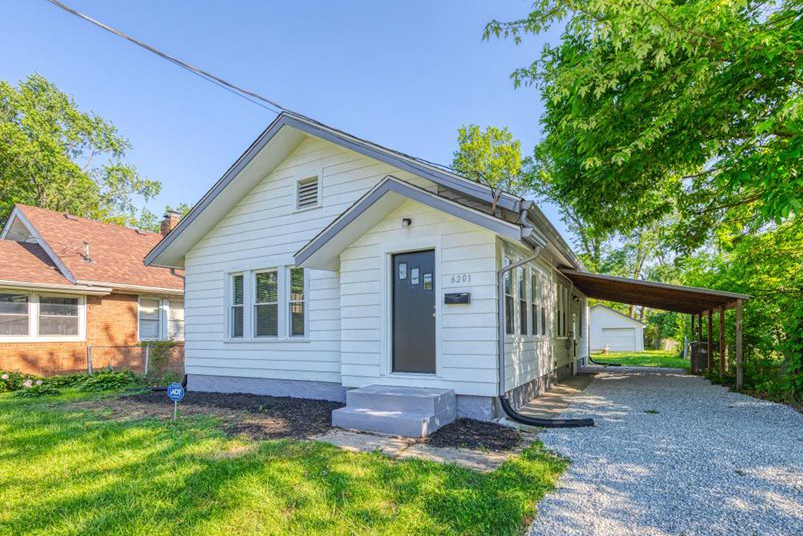
Filed Under: Real Estate Investing, Real Estate Market Tagged With: Real Estate Investing, Real Estate Market, Turnkey Real Estate, Turnkey Real Estate Investment

Turnkey Real Estate Investment in 2026: A Guide For Beginners

March 9, 2026 by Marco Santarelli

Turnkey Real Estate Investment

For many dreaming of building wealth, the idea of real estate investment often conjures up images of late-night landlord calls, leaky faucets, and endless property viewings. But what if I told you there’s a way to tap into the power of real estate investing with significantly less hands-on work, especially if you're just starting out? That’s where turnkey real estate investment comes in.

Simply put, a turnkey real estate investment is a property that’s already renovated, rented out, and managed by a professional company, ready for you to start collecting rent from day one. It’s an approach designed to bridge the gap for beginners who want the benefits of real estate without the steep learning curve or the day-to-day operational headaches.

Turnkey Real Estate Investment: A Beginner's Roadmap to Passive Income

Why Turnkey Might Be Your First Step Into Real Estate

I remember when I first started looking into real estate. The sheer amount of work seemed daunting. Finding the right property, securing financing, dealing with contractors, then finding tenants and managing them – it felt like a full-time job before I even made my first dollar in profit. That's why the concept of turnkey investing really resonated with me. It’s like buying a pre-assembled furniture set instead of building it from scratch. You can start enjoying the benefits almost immediately. If you're new to this, and the thought of being a landlord makes you sweat, a turnkey investment can offer a much less intimidating entry point. It's designed to give you a taste of real estate ownership and income generation with streamlined processes.

Breaking Down the “Turnkey” Concept

So, what exactly makes a real estate investment “turnkey”? It means the property is essentially ready to go. This typically includes:

  • Renovated and Ready: The property has been updated, repaired, and is in good, rentable condition. Think fresh paint, updated kitchens and bathrooms, and essential repairs already completed.
  • Already Tenanted: A reliable tenant is already occupying the property, paying rent. This means your cash flow starts immediately.
  • Professional Management: A property management company is in place to handle everything from rent collection and tenant communication to maintenance and repairs. This is a huge perk for beginners.

The idea is that you, the investor, don't have to do the heavy lifting of finding, fixing, and filling the property. You're stepping into a working asset.

The Allure: Why Beginners Love Turnkey Properties

The appeal of turnkey real estate for beginners is multifaceted. It’s about removing barriers and providing a more accessible path to ownership.

  • Reduced Time Commitment: This is perhaps the biggest draw. You don't need to spend weeks or months searching for a fixer-upper, managing renovations, or interviewing potential tenants.
  • Lower Entry Barrier (Often): While not always the case, some turnkey providers offer properties in markets with more affordable price points, making it easier to get started with a smaller initial investment.
  • Passive Income Potential: The goal is income without the constant hassle. With a good property manager, your involvement can be minimal, allowing you to focus on other aspects of your life or other investments.
  • Diversified Location: Turnkey providers often operate in specific, high-demand rental markets. This allows you to invest in a location you might not have considered or be able to visit regularly.
  • Reduced Risk (Perceived): Because the property is already renovated and tenanted, there’s a sense of immediate stability. You're not buying a project with unknown issues.

When Does Turnkey Shine the Brightest?

I've seen firsthand that turnkey real estate isn't for everyone, but it really shines in specific scenarios for newcomers:

  • Geographic Limitation: You live far from a desirable rental market, or you simply don’t have the time to travel and scout for properties.
  • Lack of Construction/Renovation Experience: You're not comfortable or experienced with managing contractors, understanding repair costs, or overseeing renovations.
  • Desire for Immediate Cash Flow: You want to start generating rental income as soon as possible without the delays of finding and preparing a property.
  • Focus on Portfolio Building: You see real estate as just one part of a larger investment strategy and want to add properties efficiently.

Navigating the Turnkey Landscape: Key Considerations

While turnkey investing offers a streamlined path, it’s crucial to understand that “turnkey” doesn't mean “guaranteed success” or “no work involved.” You still need to do your homework. My experience has taught me that diligence is paramount.

Finding a Reputable Turnkey Provider

This is arguably the most critical step. A good provider is the backbone of your turnkey investment. Look for companies with:

  • Proven Track Record: How long have they been in business? Do they have testimonials or case studies from satisfied investors?
  • Market Expertise: Do they deeply understand the local rental market, including vacancy rates, rent comparables, and tenant demographics?
  • Transparent Fees: Understand all associated costs – acquisition fees, management fees, renovation markups, etc. No hidden charges!
  • Solid Property Management: Their in-house or affiliated property management team should be experienced, responsive, and have clear operating procedures.
  • Investor-Centric Approach: They should be focused on helping you achieve your investment goals, not just selling you a property.

Due Diligence on the Property Itself

Even though it's “turnkey,” you're still buying a physical asset. Don't skip due diligence.

  • Independent Inspection: Always hire your own independent home inspector, even if the provider has already had one done.
  • Review Leases and Tenant History: Understand the terms of the existing lease agreement. If possible, get information about the current tenant's payment history.
  • Appraisal: Get an independent appraisal to ensure the purchase price is fair market value.
  • Market Analysis: Ask for and review their market analysis for the property. Does their projected rent seem realistic based on comparable properties in the area?

Understanding the Numbers and Fees

This is where many beginners can get tripped up. Every dollar counts.

  • Obtain a Detailed Breakdown: Request a comprehensive list of all costs, from the purchase price and closing costs to any fees charged by the turnkey provider and property manager.
  • Projected Cash Flow: Understand the projected rental income versus all expenses (mortgage, taxes, insurance, property management, vacancy reserves, repairs). Be conservative with your estimates for vacancy and repairs.
    • Example Expenses:
      • Mortgage Payment
      • Property Taxes
      • Homeowner's Insurance
      • Property Management Fee (typically 8-10% of gross rent)
      • Vacancy Reserve (budget for 5-10% of rent for periods without a tenant)
      • Maintenance & Repairs Fund (budget for 5-10% of rent)
  • Return on Investment (ROI): Calculate your expected ROI based on your initial investment and projected annual returns.

The Role of Property Management in Turnkey Success

I cannot stress enough how crucial a good property manager is for your turnkey investment. They are your eyes and ears on the ground. A reliable manager will:

  • Screen Tenants Thoroughly: This is vital for reducing turnover and ensuring rent is paid on time.
  • Handle Maintenance and Repairs: They have a network of trusted contractors and will address issues promptly.
  • Collect Rent: They ensure you receive your rental income consistently.
  • Manage Evictions (if necessary): They handle the legal and logistical complexities of evicting a tenant.
  • Provide Financial Reporting: You should receive regular statements detailing income and expenses.

When selecting a turnkey provider, investigate their property management arm or their network of preferred managers. Ask for their tenant screening process, maintenance response times, and reporting frequency.

Potential Pitfalls to Watch Out For

Even with a turnkey approach, there are risks. Being aware of these can help you avoid them:

  • Overpriced Properties: Some turnkey providers may inflate prices, especially in in-demand markets. Always verify fair market value.
  • Poor Quality Renovations: A “renovated” property might have had cosmetic work done, hiding underlying issues. Independent inspections are your friend.
  • Inexperienced or Unethical Providers: This is why thorough vetting is essential. A bad provider can lead to a cascade of problems.
  • Unrealistic Projections: Be skeptical of guarantees of extremely high returns. Real estate is not a get-rich-quick scheme.
  • Geographic Dependence: Your investment's success is tied to the economic health and rental demand of the specific market the turnkey provider operates in.

Turnkey vs. Traditional Investing: A Quick Comparison

Feature Turnkey Real Estate Investment Traditional Real Estate Investment
Entry Speed High (rent collection can start quickly) Slow (requires finding, renovating, and renting)
Hands-On Effort Low (management is typically outsourced) High (self-management or hiring a manager)
Renovation Work Minimal (property is usually pre-renovated) Significant (often involves buying fixer-uppers)
Tenant Finding Handled by provider/manager Your responsibility
Learning Curve Lower (focus on understanding markets and providers) Higher (requires knowledge of construction, markets, tenant law)
Location Choice Often dictated by provider's market Unlimited

My Take: Is Turnkey Right for You?

From my perspective, turnkey real estate investment can be an excellent starting point for beginners who are serious about real estate but feel overwhelmed by the operational aspects. It allows you to gain experience with property ownership and cash flow without the immediate intensity of being a full-time landlord. However, it requires just as much, if not more, diligence in selecting the right partner and understanding the underlying economics of the deal. Don't let the “turnkey” label lull you into complacency. Treat it as a crucial first step in your wealth-building journey, and always remember that knowledge and careful planning are your best allies.

🏡 Two Turnkey Rental Properties With Strong Investor Appeal

San Antonio, TX
🏠 Property: Bradford Park
🛏️ Beds/Baths: 3 Bed • 2 Bath • 1498 sqft
💰 Price: $229,900 | Rent: $1,650
📊 Cap Rate: 5.1% | NOI: $976
📅 Year Built: 2019
📐 Price/Sq Ft: $154
🏙️ Neighborhood: A+

VS

Converse, TX
🏠 Property: Cloudbait View
🛏️ Beds/Baths: 3 Bed • 2 Bath • 1408 sqft
💰 Price: $232,000 | Rent: $1,695
📊 Cap Rate: 5.6% | NOI: $1,080
📅 Year Built: 2008
📐 Price/Sq Ft: $165
🏙️ Neighborhood: A-

San Antonio’s newer A+ rental vs Converse’s established A‑rated property with stronger cap rate. Which fits YOUR investment strategy?

We have much more inventory available than what you see on our website – Let us know about your requirement.

📈 Choose Your Winner & Contact Us Today!

Speak to a Norada Investment Counselor (No Obligation):

(800) 611-3060

View All Properties 

Want Stronger Returns? Invest Where the Housing Market’s Growing

In 2026, select U.S. cities are projected to see surging demand, rising rents, and appreciation—creating prime opportunities for investors seeking passive income and long‑term wealth.

Work with Norada Real Estate to find stable, cash-flowing markets beyond the bubble zones—so you can build wealth without the risks of ultra-competitive areas.

🔥 HOT 2026 INVESTMENT LISTINGS JUST ADDED! 🔥
Talk to a Norada Investment Counselor (No Obligation):
(800) 611-3060

Get Started Now

Filed Under: Real Estate Investing Tagged With: Real Estate Investment, Turnkey Real Estate Investment

Real Estate

  • Birmingham
  • Cape Coral
  • Charlotte
  • Chicago

Quick Links

  • Markets
  • Membership
  • Notes
  • Contact Us

Blog Posts

  • Today’s Mortgage Rates, July 5: ARM Rates Surge as Fixed Loans Hold Steady
    July 5, 2026Marco Santarelli
  • Best Places to Invest in Real Estate for the Next 5 Years (2026-2030)
    July 5, 2026Marco Santarelli
  • Mortgage Rates Today, July 5, 2026: 30‑Year Refinance Rate Remains Stable
    July 5, 2026Marco Santarelli

Contact

Norada Real Estate Investments 30251 Golden Lantern, Suite E-261 Laguna Niguel, CA 92677

(949) 218-6668
(800) 611-3060
BBB
  • Terms of Use
  • |
  • Privacy Policy
  • |
  • Testimonials
  • |
  • Suggestions?
  • |
  • Home

Copyright 2018 Norada Real Estate Investments

Loading...