Norada Real Estate Investments

  • Home
  • Markets
  • Properties
  • Membership
  • Podcast
  • Learn
  • About
  • Contact

Mortgage Rates Drop Fueling a Surge in Rental Property Investment

December 17, 2025 by Marco Santarelli

Mortgage Rates Drop Fueling a Surge in Rental Property Investment

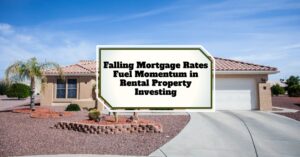
Here's the good news for anyone looking to get into rental property investing or expand their existing portfolio: falling mortgage rates are making it significantly cheaper to buy rental properties, which directly boosts your potential profits. This shift in the market creates a powerful ripple effect, making the numbers crunch much more favorably for investors and driving increased activity.

For a while there, it felt like the sidelines were the only place to be for many aspiring real estate investors. High mortgage rates made the math for buying rental properties look, frankly, a little bleak. But as rates begin to dip, a wave of optimism is washing over the investment property scene, and I'm seeing more and more people asking about getting started. It's a dynamic shift that’s worth understanding if you're serious about building wealth through real estate.

Mortgage Rates Drop Fueling a Surge in Rental Property Investment

When we talk about mortgage rates falling, it's not just a small tweak; it’s a fundamental change in the economics of buying and holding rental properties. Let me break down why this matters so much from my perspective.

When I look at a potential rental property deal, the first thing I always scrutinize is the potential cash flow. This means the money left over after all the expenses are paid. The mortgage payment is usually the biggest chunk of those expenses. So, when the rates you pay on your loan go down, your monthly payment shrinks. That extra money in your pocket each month goes straight to your bottom line, increasing your cash flow and improving your return on investment (ROI). It’s like finding a discount on your biggest business expense, and that’s a game-changer.

What Lower Borrowing Costs Mean for Your Investment Strategy

Let's dive a bit deeper into how these lower rates actually change the game:

  • More Purchasing Power: Imagine you have a certain amount of money for a down payment. With lower interest rates, that same down payment can now qualify you for a larger loan. This means you can afford to buy a more expensive property, or perhaps even multiple properties you couldn't have considered before. Your buying power gets a significant upgrade.
  • Increased Competition (and Opportunity): As it becomes cheaper for investors like us to borrow money, more people enter the market. This increased demand can drive up property prices, which might sound like a negative. However, if you buy before prices fully catch up, you're positioning yourself for capital appreciation – the property's value going up over time.
  • Refinancing Sweetens the Deal: If you already own rental properties, this is a great time to look at refinancing your existing loans. If your current mortgage has a higher interest rate, you could potentially lower your monthly payments significantly by refinancing. This frees up capital that can be reinvested in new properties, used for much-needed renovations, or simply held as a safety net. I’ve seen investors use this strategy to scale their portfolios much faster than they initially thought possible.

The Ripple Effect on the Rental Market

It’s not just about us investors; falling mortgage rates have a fascinating impact on the broader rental market, and that’s great news for those of us in the landlord business.

Even with lower mortgage rates encouraging some people to buy homes, the reality in many areas is that housing prices are still high, and the supply of homes for sale is limited. This means that despite the attraction of homeownership, many individuals and families are still priced out. They must continue to rent. This sustained demand for rental units keeps the market strong. As landlords, we can often maintain steady rental income and, in many cases, even have room to increase rents as the demand outstrips supply.

When you combine lower financing costs with strong rental demand, suddenly your rental yields look a lot more attractive. The math just works out better, leading to more consistent and often higher profits.

Understanding Investment Property Mortgage Rates

Now, you might be thinking, “That all sounds great, but what are these rates actually like for investment properties?” This is a crucial point I always discuss with people.

As of late 2025 (based on current trends), you can typically expect mortgage rates for investment properties to be a bit higher than for primary residences. A good ballpark for a 30-year fixed-rate loan on an investment property is around 7.0% to 7.7%. For comparison, a primary residence might be closer to 6.125%.

These industry-standard rates reflect the additional risk lenders perceive with investment properties. If someone faces financial trouble, they’re generally more likely to prioritize keeping their own home over a rental property.

Factors That Influence YOUR Investment Property Rate

The exact rate you get isn't set in stone. It depends on several factors that I always encourage investors to be mindful of:

  • Your Down Payment: Putting down more money upfront is one of the biggest levers you can pull to get a better rate. Lenders often require 15% to 25% down for investment properties, but aiming for 25% or even more can significantly improve your terms.
  • Your Credit Score: A strong credit score is vital. While some lenders might work with scores as low as 620, you'll want a score of 700 or higher to access the most competitive rates.
  • Cash Reserves: Lenders want to know you have a financial cushion. They often require proof of several months' worth of mortgage payments in reserve, even if the property is rented. This shows you can handle unexpected vacancies or repairs.
  • Property Type: Generally, single-family homes might get a slightly better rate than multi-unit buildings like duplexes or triplexes, though this can vary.
  • Loan Type: The standard conventional loan is common, but there are other options like DSCR (Debt Service Coverage Ratio) loans or hard money loans. These often come with different, usually higher, interest rates, so it's important to understand the trade-offs.

My Take: It's a Great Time to Explore Turnkey Investments

What excites me about the current market conditions, with falling rates, is how it amplifies the benefits of strategies like turnkey rental property investing. With turnkey, you're essentially buying a property that's already been renovated and is ready to rent, often with professional property management already in place.

This approach is fantastic for several reasons, especially in today's market:

  • Simplifies Entry: For new investors, it removes a lot of the guesswork and hassle of finding, renovating, and managing a property from scratch.
  • Focus on ROI: When financing is cheaper, and you have a professionally managed, income-producing property, your potential for positive cash flow and steady returns is significantly enhanced.
  • Scalability: For experienced investors, it allows for faster expansion of their portfolio because the properties are essentially “ready to go.”

I’ve seen firsthand how investors are successfully acquiring properties through this method, from single-family homes to duplexes, in growing real estate markets. The key is finding well-selected deals in areas with strong rental demand and a history of appreciation.

Example Deal Structures (Illustrative of Available Inventory)

To give you a tangible idea of the kind of opportunities we currently have available, consider these examples from our listings. Remember, these represent just a fraction of our extensive inventory, and we're constantly adding new deals in promising markets.

These types of turnkey opportunities, when analyzed correctly with current financing options, can offer a compelling path to building wealth. The ability to acquire well-vetted properties that are already generating income, coupled with more favorable financing, creates a powerful synergy.

🏡 Explore Our Hot Turnkey Investments

Premium Properties Ready for Immediate Cash Flow

Single-Family Home
Lewis Place, St. Louis, MO
5 Bed / 3 Bath
$275,000
Monthly Rental Income
$2,500
Monthly Cash Flow (NOI)
$2,020
Single-Family Home
Bascom Dr, St. Louis, MO
2 Bed / 1 Bath
$120,000
Monthly Rental Income
$1,055
Monthly Cash Flow (NOI)
$815
Single-Family Home
Elbring Dr, St. Louis, MO
3 Bed / 1 Bath
$135,000
Monthly Rental Income
$1,300
Monthly Cash Flow (NOI)
$1,022
Single-Family Home
Barto Dr, St. Louis, MO
2 Bed / 1 Bath
$125,000
Monthly Rental Income
$1,250
Monthly Cash Flow (NOI)
$988
Single-Family Home
Willmann Ct, St. Louis, MO
3 Bed / 1 Bath
$145,000
Monthly Rental Income
$1,450
Monthly Cash Flow (NOI)
$1,120
Duplex
W 117th St, Cleveland, OH
4 Bed / 2 Bath
$169,900
Monthly Rental Income
$1,660
Monthly Cash Flow (NOI)
$1,173
Single-Family Home
Aldridge Ave, Port Charlotte, FL
3 Bed / 2 Bath
$339,900
Monthly Rental Income
$2,195
Monthly Cash Flow (NOI)
$1,643
Duplex
San Cristobal Ave, Punta Gorda, FL
6 Bed / 4 Bath
$575,000
Monthly Rental Income
$3,890
Monthly Cash Flow (NOI)
$2,951
Single-Family Home
Drysdale Ave, Port Charlotte, FL
4 Bed / 2 Bath
$349,900
Monthly Rental Income
$2,295
Monthly Cash Flow (NOI)
$1,633

Note: All figures are estimates based on current market conditions. Monthly Cash Flow represents Net Operating Income after operating expenses. Contact us for detailed property information and investment analysis.

Bottom Line

The combination of falling mortgage rates and sustained rental demand is creating an incredibly opportune moment for rental property investors. It makes the financial equation of owning rental property more attractive, leading to increased confidence and momentum in the market.

If you've been on the fence about investing in real estate, or if you’re looking to grow your portfolio, now is an excellent time to seriously explore your options. By understanding how these economic shifts impact your potential returns, you can make informed decisions and position yourself for success.

Smart Investors Are Buying Turnkey Deals in These Hot Markets

From Birmingham to San Antonio, savvy investors are locking in cash-flowing rental properties in high-demand cities—before prices rise and inventory tightens.

Norada Real Estate offers exclusive access to turnkey deals in Cape Coral, Charlotte, Cleveland, Dallas, Indianapolis, Jacksonville, Kansas City, Nashville, Port Charlotte, and more—perfect for building passive income and long-term wealth.

🔥 HOT December LISTINGS JUST ADDED! 🔥

Talk to a Norada investment counselor today (No Obligation):

(800) 611-3060

View Properties For Sale

The Ultimate Guide to Passive Real Estate Investing


Download Your FREE Guide to Passive Real Estate Wealth

Real estate investing has created more millionaires than any other path—and this guide shows you how to start or scale with turnkey rental properties.

Inside, you’ll learn how to analyze cash flow and returns, choose the best markets, and secure income-generating deals—perfect for building long-term wealth with minimal hassle.

🔥 FREE DOWNLOAD AVAILABLE NOW! 🔥

Download

Recommended Read:

  • Top Real Estate Investment Hotspots in 2025
  • How to Secure Your Retirement With Cash-Flowing Rental Properties
  • Why Turnkey Real Estate Still Beats Today's High Mortgage Rate Climate
  • Best Places to Invest in Single-Family Rental Properties in 2025
  • Why Real Estate Can Thrive During Tariffs Led Economic Uncertainty
  • Rise of AI-Powered Hyperlocal Real Estate Marketing in 2025
  • Real Estate Forecast Next 5 Years: Top 5 Predictions for Future
  • 5 Hottest Real Estate Markets for Buyers & Investors in 2025
  • Will Real Estate Rebound in 2025: Top Predictions by Experts
  • Recession in Real Estate: Smart Ways to Profit in a Down Market
  • Will There Be a Real Estate Recession in 2025: A Forecast
  • Will the Housing Market Crash Due to Looming Recession in 2025?
  • 4 States Facing the Major Housing Market Crash or Correction
  • New Tariffs Could Trigger Housing Market Slowdown in 2025
  • Real Estate Forecast Next 10 Years: Will Prices Skyrocket?
Filed Under: Real Estate, Real Estate Investing, Real Estate Market Tagged With: Real Estate Investing, Rental Properties, Turnkey Real Estate

How to Secure Your Retirement With Cash-Flowing Rental Properties

November 13, 2025 by Marco Santarelli

How to Secure Your Retirement With Cash-Flowing Rental Properties

The global economy seems to twitch and jump with every news cycle, leaving many of us staring at our 401(k) statements and wondering if we’ll really have enough when it’s time to stop working.

Suppose you’re looking for stability and genuine control over your financial future. In that case, the answer is a resounding yes: using cash-flowing rental properties is one of the most reliable and effective strategies available today for long-term retirement security because they generate predictable passive income and build equity simultaneously, providing a perfect hedge against inflation.

This isn't just theory; this is how everyday millionaires secure their later years. I want to share my personal playbook for moving beyond stock market anxiety and building a retirement fund that provides a steady monthly income.

How to Secure Your Retirement With Cash-Flowing Rental Properties

Why Traditional Retirement Planning Often Falls Short

When I first started investing years ago, I did what everyone said: max out the 401(k), buy index funds, and hope for the best. Fast forward a decade, and I realized that “hoping for the best” wasn’t a plan—it was a prayer.

Traditional retirement plans rely on the idea that when you need to retire, the stock market will be high, and you’ll start withdrawing 4% of your total balance every year. But what happens if the market drops 30% right before your 65th birthday? You’re stuck selling valuable assets just to pay the bills, locking in huge losses.

Real estate offers something fundamentally different: income stability. It doesn't matter if the Dow Jones is up or down; people still need a place to live. When you own a cash-flowing property, you own a business that provides an essential service and pays you for it every 30 days.

The Unshakeable Pillars of Real Estate Income

If you ask me what makes real estate superior for retirement, I won’t just talk about rent checks. I’ll talk about the four major wealth generators happening all at once. This is the power of leverage in action.

1. Cash Flow (The Paycheck): This is the money left over after all bills are paid—mortgage, taxes, insurance, and management fees. This is the true definition of a passive retirement income.

2. Appreciation (The Growth): Historically, property values increase over time. While this isn’t guaranteed, good properties in growing areas tend to keep pace with—or beat—inflation.

3. Amortization (Wealth Transfer): Every time your tenant pays rent, a portion of that money goes toward paying down the principal of your mortgage. This is perhaps my favorite part. Your tenant is literally paying off the debt while building your equity. Try finding another investment where someone else pays for your asset!

4. Tax Benefits (The Hidden Handshake): The government allows you to deduct many expenses related to owning rental property, including property taxes, repairs, and most importantly, depreciation. Depreciation is a “paper loss” that reduces your taxable income, even if the property is actually making you money. This is a game-changer for serious wealth building.

My personal view on this is simple: If I can earn income, have that income protected from taxes, and have the underlying asset increase in value, why would I put all my eggs in a basket that only offers one or two of those benefits?

Defining “Cash-Flowing”: Understanding the Key Metrics

The biggest mistake new investors make is buying a property that generates small amounts of rent but barely covers the costs. That’s not cash flow; that’s a hobby that might need funding from your main job. We need properties that truly cash flow strongly.

To measure a healthy property, we must look beyond simple monthly profit and focus on two key metrics:

1. The 1% Rule (A Quick Screening Tool)

While not always applicable in expensive coastal markets, the 1% Rule is a great starting point for analyzing deals quickly. It suggests the minimum monthly rent secured should be at least 1% of the total purchase price.

Property Purchase Price Minimum Monthly Rent Goal
$200,000 $2,000
$300,000 $3,000

If a $300,000 property rents for only $1,500, you’re very unlikely to achieve strong cash flow after expenses.

2. Cash-on-Cash Return (The Real Measure of Performance)

This metric shows you how much annual return you get based only on the cash you actually put down (down payment, closing costs, renovation capital).

Formula: (Annual Cash Flow / Total Cash Invested) * 100 = Cash-on-Cash Return

A high return, typically over 8% to 10%, is a sign of an excellent cash-flowing property. This tells you if your money is working hard enough compared to leaving it in a savings account. I always aim for double-digit Cash-on-Cash Returns—that’s the standard that defines a powerful retirement asset.

My Step-by-Step Guide to Property Acquisition

Building a retirement portfolio of rental properties requires structure, not excitement. Excitement builds resorts, structure builds lasting wealth.

Step 1: Focus on the Market, Not Just the Property. Don't fall in love with the counter tops. Fall in love with the demographics. For cash flow, you generally want areas with strong employment growth, reasonable property taxes, and a high renter population (often near universities, military bases, or large medical facilities). I learned that chasing the highest appreciation isn't always the best strategy for retirement income; consistency is.

Step 2: Know Your Expenses (The Realistic Budget). Never underestimate vacancy rates or repair costs. Many investors only budget for the debt payment, but you must estimate all the variables.

  • Vacancy Rate: Budget 5% to 8% of rent revenue for times the unit is empty.
  • Capital Expenditures (CapEx): Money set aside for big items like a new roof, HVAC system, or water heater. I recommend budgeting $150 to $250 per unit per month, even if you never use it that year.
  • Property Management: If you plan on being truly passive, budget 8% to 12% of the monthly rent for a company to handle the tenants and maintenance.

Step 3: Master the Financing Game (Leverage). The beauty of real estate is using the bank’s money (leverage) to control a large asset. While there are limits on how many mortgages the average person can obtain, always maximize your use of conventional, 30-year fixed-rate financing. This locks in your cost today, while rents and value tend to rise tomorrow. The difference between 15% and 25% down payments can shift your Cash-on-Cash Return significantly; model both to see which provides the best balance of safety and profit.

The Ultimate Guide to Passive Real Estate Investing

Download Your FREE Guide to Passive Real Estate Wealth

Real estate investing has created more millionaires than any other path—and this guide shows you how to start or scale with turnkey rental properties.

Inside, you’ll learn how to analyze cash flow and returns, choose the best markets, and secure income-generating deals—perfect for building long-term wealth with minimal hassle.

🔥 FREE DOWNLOAD AVAILABLE NOW! 🔥

Download


Handling the Headaches: Making Rental Properties Truly Passive

The biggest objection I hear about rental properties is: “I don't want to fix toilets.” I get it. We are building a passive retirement income stream, not creating a second job.

The decision comes down to the quality of your team. This is where your investment becomes truly passive or agonizingly active:

  • Professional Property Management: A good management company handles marketing, tenant screening, rent collection, and maintenance calls. Yes, they cost money (that 8-12% fee), but they provide priceless time back, which is the whole point of retirement planning. For investors looking for E-E-A-T, knowing when to delegate is paramount. In my early years, I tried to save the management fee, and I lost more money through poor tenant decisions and deferred maintenance than I ever saved.
  • Tenant Screening is Everything: The quality of the tenant determines the quality of your cash flow. A good manager screens for high credit scores, stable income, and clean rental history. Don’t rush this phase.

The Long View: Scaling Your Retirement Portfolio

Building a secure retirement rarely happens with a single property. You need a portfolio that generates enough cash flow to cover your actual desired living expenses.

The magic of real estate for scaling is the 1031 Exchange (often pronounced “ten thirty-one”). This is an advanced tax strategy where you can sell one investment property and use the proceeds to buy a “like-kind” replacement property, deferring all capital gains taxes. This allows you to trade up, moving from a single family home to a duplex, then to an apartment building, scaling your income exponentially without the IRS taking a cut in the middle. Strategic scaling accelerates the timeline for achieving your retirement goals dramatically.

  • The Goal: Build enough Net Operating Income (NOI) to exceed your monthly retirement budget.

Conclusion: Securing Your Future on Solid Ground

The path to a secure retirement doesn't have to be a guessing game dictated by Wall Street. By choosing Secure Your Retirement with Cash-Flowing Rental Properties, you are locking in a tangible asset that is inflation-proof, debt-reducing, and inherently flexible.

If you commit to learning the metrics—understanding your Cash-on-Cash Return and respecting the true costs of ownership—you can build a stable, private pension fund that will sustain your desired lifestyle, regardless of what the stock market decides to do next. Start small, stay disciplined, and watch your monthly rental checks transform uncertainty into true security.

Secure Your Retirement with Cash-Flowing Rental Properties

Turnkey real estate offers a low-hassle way to generate passive income and build long-term financial security—perfect for retirement-focused investors.

Norada Real Estate helps you invest in stable, high-demand markets that deliver consistent monthly cash flow and equity growth over time.

🔥 HOT NEW LISTINGS JUST ADDED! 🔥

Talk to a Norada investment counselor today (No Obligation):

(800) 611-3060

Get Started Now

Recommended Read:

  • Why Turnkey Real Estate Still Beats Today's High Mortgage Rate Climate
  • Best Places to Invest in Single-Family Rental Properties in 2025
  • Why Real Estate Can Thrive During Tariffs Led Economic Uncertainty
  • Rise of AI-Powered Hyperlocal Real Estate Marketing in 2025
  • Real Estate Forecast Next 5 Years: Top 5 Predictions for Future
  • 5 Hottest Real Estate Markets for Buyers & Investors in 2025
  • Will Real Estate Rebound in 2025: Top Predictions by Experts
  • Recession in Real Estate: Smart Ways to Profit in a Down Market
  • Will There Be a Real Estate Recession in 2025: A Forecast
  • Will the Housing Market Crash Due to Looming Recession in 2025?
  • 4 States Facing the Major Housing Market Crash or Correction
  • New Tariffs Could Trigger Housing Market Slowdown in 2025
  • Real Estate Forecast Next 10 Years: Will Prices Skyrocket?

Filed Under: Real Estate, Real Estate Investing, Real Estate Market Tagged With: Real Estate Investing, Rental Properties, Turnkey Real Estate

Is Turnkey Real Estate Profitable in a High-Interest Rate Environment?

October 31, 2025 by Marco Santarelli

Is Turnkey Real Estate Profitable in a High-Interest Rate Environment?

It’s a question I hear almost every day from new and even seasoned investors: With interest rates where they are, does real estate investing even make sense anymore? Specifically, is turnkey real estate investing in high-interest rate environments still profitable or worth it? The short answer is a resounding yes, but the game has changed. The strategies that worked when rates were at 3% are not the same ones that will lead to success today. The days of easy money and guaranteed appreciation are behind us, but for the smart, disciplined investor, this new era presents a unique and powerful opportunity.

Is Turnkey Real Estate Profitable in a High-Interest Rate Environment?

First, What Exactly Is Turnkey Investing? A Quick Refresher

Before we dive into the deep end, let's make sure we're on the same page. Turnkey real estate investing is a strategy where you buy a property that is ready to be rented out from day one. In many cases, it has already been renovated, has a tenant in place, and even comes with a property management company to handle the day-to-day operations.

The appeal is obvious: it's designed to be a relatively hands-off way to generate passive income from real estate without the headaches of swinging a hammer or screening tenants at midnight. You’re essentially buying a cash-flowing machine. But when the cost of the fuel for that machine—the mortgage—goes up, does the machine still run a profit?

The Elephant in the Room: Today's Interest Rate Reality

Let’s not sugarcoat it. Higher interest rates make investing harder. A higher rate means a higher monthly mortgage payment, which directly eats into your potential cash flow. It’s simple math.

To understand where we are, let's look at the real numbers. The data from late October 2025 shows a complex but cautiously optimistic picture.

Freddie Mac Primary Mortgage Market Survey® (as of 10/30/2025)

Loan Type Average Rate 52-Week Range
30-Year Fixed-Rate 6.17% 6.17% – 7.04%
15-Year Fixed-Rate 5.41% 5.41% – 6.27%

As you can see, rates have come down from their peaks of over 7%, which is a relief. However, a rate in the low 6% range is still significantly higher than the sub-3% rates we saw just a few years ago.

Adding to this, the Federal Reserve is sending mixed signals. In their last meeting, they cut the benchmark rate, which is good news for borrowing costs. However, Fed Chair Powell was cautious, suggesting that future cuts aren't guaranteed.

  • What this means for you: Don't expect a sudden crash back to 3% mortgage rates. We are likely in for a period of rate stability, or a slow, bumpy decline. This “new normal” of 5.5% to 6.5% rates is what we need to build our strategy around.

Why Turnkey Investing Shines in This Environment

This might sound counterintuitive, but the current market conditions can actually make turnkey a better strategy than traditional flipping or BRRRR (Buy, Rehab, Rent, Refinance, Repeat). Here’s my take on why.

1. Less Competition and More Negotiating Power High interest rates have scared a lot of people away. The casual, “get-rich-quick” investors have left the market. This is fantastic news for you. With fewer buyers competing for properties, sellers are more willing to negotiate on price. In my experience, a 2-3% price reduction can often completely offset the impact of a 1% increase in interest rates over the life of the loan. You couldn't get those discounts when 20 buyers were bidding on every house.

2. The “Date the Rate, Marry the Property” Mantra This has become a cliché for a reason—it’s true. You are buying a physical asset for the long term. The interest rate you lock in today is temporary. The Federal Reserve's recent actions signal that they are shifting towards an easing cycle. It may not be immediate, but rates are far more likely to be lower in 2-5 years than they are today.

You can buy a great property at a fair price today and then refinance into a lower rate down the road. This move alone can dramatically boost your monthly cash flow in the future.

Let’s look at a simple example on a $200,000 loan:

Interest Rate Monthly P&I Payment Potential Savings
6.25% (Today) $1,231 –
4.75% (Future Refi) $1,043 $188/month

That's an extra $2,256 in your pocket every year, just by refinancing when the time is right.

3. Cash Flow Is Still King, But It's Hiding In a high-rate environment, you can't just throw a dart at a map and expect to find a cash-flowing property. You have to be more selective. This is where a good turnkey provider earns its keep. They operate in markets where the rent-to-price ratio still makes sense. Think solid Midwest or Southern markets where you can buy a home for $180,000 that rents for $1,600/month, not coastal cities where a $700,000 condo rents for $3,000.

While your cash flow might be thinner initially—say $150-$250 a month instead of the $400-$500 you saw in 2021—it's still positive cash flow. And that cash flow is protected from inflation.

4. The Ultimate Inflation Hedge Inflation remains a concern, even as the Fed works to control it. Here's the magic of a fixed-rate mortgage: your largest expense—the principal and interest payment—is locked in for 30 years.

  • Your payment stays the same.
  • Meanwhile, inflation pushes everything else up: rent, wages, and the value of the property itself.

Every year, the rent goes up 3-5%, but your mortgage payment doesn't. Your cash flow grows organically over time, making it a powerful long-term wealth-building tool.

The New Playbook: How to Win with Turnkey Investing Today

To succeed now, you need to adjust your approach. Here’s the playbook I'm using and advising others to follow.

Stress-Test Your Numbers Ruthlessly

Hope is not a strategy. When you analyze a turnkey property, you need to be conservative—even borderline pessimistic.

  • Vacancy: Don't assume the property will be rented 12 months a year. Use an 8% vacancy rate (about one month per year) in your calculations.
  • Repairs & Maintenance: Budget at least 5-8% of the gross monthly rent for this. Things will break.
  • Capital Expenditures (CapEx): This is for the big stuff—roof, HVAC, water heater. Set aside another 5-8% for these future expenses.
  • Property Management: This is typically 8-10% of the gross rent.

If the property still cash flows after all these expenses, you have found a potential winner. If it's barely breaking even on paper, walk away. The margins are too thin.

Focus on Quality Markets and Neighborhoods

Now more than ever, where you invest matters. I'm focusing on markets with three key ingredients:

  1. Job Growth: A diverse and growing economy brings in new tenants.
  2. Population Growth: More people mean more demand for housing.
  3. Landlord-Friendly Laws: You need to be in a state that has a fair and efficient eviction process, just in case.

Within those markets, I look for solid B-class neighborhoods. These are not the fanciest areas, but they are full of well-maintained homes, good schools, and a strong base of working-class and middle-class tenants. They offer the perfect balance of affordability and rental demand.

Vet Your Turnkey Provider Like a Hawk

In a challenging market, your team is your most valuable asset. A great turnkey company is more than just a property seller; they are your long-term partner. Ask them the tough questions:

  • What is your track record? Can I speak to some of your past clients?
  • Who handles the property management? Is it in-house or outsourced?
  • What is your process for tenant screening?
  • Can I see the full scope of work for the renovation?
  • What are your fees and how are they structured?

A transparent, experienced provider will welcome these questions. If they get defensive or vague, that's a major red flag.

Final Thoughts: Is It Still Worth It?

Let's circle back to our main question: Turnkey investing in high-interest rate environments—still profitable or worth it?

Absolutely. But it requires a shift in mindset. This is no longer a market for speculators looking for rapid appreciation. This is a market for investors—people who are focused on buying solid assets in good locations that produce a steady, reliable, and growing stream of income over the long term.

The higher rates have cleared out the noise and created opportunities for those willing to do their homework. You can get better prices, you have more negotiating power, and you're buying an asset that will protect you from inflation and build generational wealth. It takes more work, more diligence, and a bit more courage, but the rewards are as real as they've ever been. Don't let the headlines scare you from building your future.

Build Wealth with Turnkey Real Estate — Even in a High-Rate Market

High interest rates don’t have to hold you back. Turnkey rental properties still deliver steady cash flow and long-term appreciation—especially in markets with strong rental demand and job growth.

Work with Norada Real Estate to identify profitable, cash-flowing markets that thrive even when borrowing costs rise—so your investments stay strong and stress-free.

NEW TURNKEY DEALS JUST ADDED!

Talk to a Norada investment counselor today (No Obligation):

(800) 611-3060

Get Started Now

Recommended Read:

  • Why Turnkey Real Estate Still Beats Today's High Mortgage Rate Climate
  • Best Places to Invest in Single-Family Rental Properties in 2025
  • Why Real Estate Can Thrive During Tariffs Led Economic Uncertainty
  • Rise of AI-Powered Hyperlocal Real Estate Marketing in 2025
  • Real Estate Forecast Next 5 Years: Top 5 Predictions for Future
  • 5 Hottest Real Estate Markets for Buyers & Investors in 2025
  • Will Real Estate Rebound in 2025: Top Predictions by Experts
  • Recession in Real Estate: Smart Ways to Profit in a Down Market
  • Will There Be a Real Estate Recession in 2025: A Forecast
  • Will the Housing Market Crash Due to Looming Recession in 2025?
  • 4 States Facing the Major Housing Market Crash or Correction
  • New Tariffs Could Trigger Housing Market Slowdown in 2025
  • Real Estate Forecast Next 10 Years: Will Prices Skyrocket?

Filed Under: Real Estate, Real Estate Investing, Real Estate Market Tagged With: Real Estate Investing, Rental Properties, Turnkey Real Estate

Why Smart Investors Are Buying Cleveland Turnkey Real Estate?

October 23, 2024 by Marco Santarelli

Why Smart Investors Are Buying Cleveland Turnkey Real Estate in 2024

When it comes to real estate investing, Cleveland has recently started to capture the attention of savvy investors. Why are smart investors now looking at this Midwestern city for turnkey rental properties? The answer lies in Cleveland's promising economic indicators, affordable property prices, and an increasing demand for rental housing. The city, known for its rich history and cultural significance, is finally positioning itself as a prolific battleground for real estate opportunities.

In this article, we will explore why smart investors are investing in turnkey real estate in Cleveland, looking deeply into the critical factors that create a strong case for this Midwestern gem.

Why Smart Investors Are Investing in Turnkey Real Estate in Cleveland

Key Takeaways

  • Strong Job Market: Cleveland is recognized as a Top 10 City for New College Graduates, offering various job opportunities across multiple sectors.
  • Affordability: The average property price in Cleveland is much lower than the national average, making outright ownership feasible for many investors.
  • Growing Population: An influx of new residents contributes to increasing rental demand, supported by the city’s robust economic growth and job availability.
  • Diverse Economy: Cleveland prides itself on a mixed economy with a focus on healthcare, biotechnology, and manufacturing, ensuring durability against market fluctuations.
  • Turnkey Convenience: Turnkey properties allow investors to step into a management-free investment, focusing on returns rather than renovations.

“Click to Browse Turnkey Investment Properties For Sale in Cleveland”

Cleveland: A City on the Rise

Automobiles, aerospace, and steel once symbolized Cleveland’s industrial might; however, the city has transformed into a promising hub for diverse industries over the past decades. Once known for economic struggles, Cleveland has rejuvenated its urban areas, which, combined with a dedicated workforce, has attracted various investments.

As stated by CNN, Cleveland ranks as one of the top 10 job markets for new college graduates, making it an appealing location for young professionals. With a city that hosts over 400 bioscience companies and two newly established Amazon distribution centers, it’s no surprise that Cleveland has become a beacon for both employment opportunities and economic growth.

In addition to businesses, Cleveland is home to 27 colleges and universities, contributing to a steady influx of educated individuals seeking job opportunities. It provides a plentiful talent pool for local companies; students often stay and work in the area after graduation, further solidifying the city as a long-term investment destination.

Partner with Norada, Your Trusted Source for Turnkey Investment Properties in Cleveland

Discover high-quality, ready-to-rent properties designed to deliver consistent returns. Contact us today to expand your real estate portfolio with confidence.

Contact Us Today


Affordable Property Prices: A Gateway for Investors

If you’ve been following real estate markets across the country, you might know that the typical home price in many metropolitan areas soars into the millions. This offers a considerable barrier for those looking to invest. However, Cleveland presents a breath of fresh air for prospective buyers, especially first-time investors.

The housing market in Cleveland is one of the most affordable in the nation. According to Zillow, the average home price in Cleveland sits at around $110,963. This relatively low entry price creates an accessible environment for investors with varying budgets. In contrast, major cities like New York and San Francisco boast property prices well beyond the reach of many potential investors.

This affordability not only entices local investors but also attracts out-of-state buyers looking to capitalize on the burgeoning market. With the ability to acquire multiple properties at a reasonable cost, investors can significantly diversify their portfolios without draining their resources.

In addition, buildings that were once neglected are being transformed into beautiful turnkey properties. This means that investors can buy these refurbished homes and start earning rental income immediately without worrying about costly renovations. Smart investors see substantial potential returns, particularly in a market where the average rental price for a two-bedroom home is around $1,200, according to Zillow.

Growing Population and Rental Demand

Cleveland’s real estate narrative is further bolstered by a growing population that creates burgeoning demand for rental properties. As job availability increases, so does the number of people moving to the city. This rising demographic fuels the demand for quality rental homes.

In Cleveland, the rental market is thriving. The trend of young professionals opting to rent instead of buy makes sense given the financial burdens often linked to first-time homeownership. The flexibility of renting appeals to younger generations looking for job security and opportunities to travel or relocate. With more and more students graduating from Cleveland State University and Case Western Reserve University, the local rental market stands to benefit immensely.

Furthermore, Cleveland is noted for its healthcare sector, housing around 120,000 healthcare professionals who are integral to the local economy. Many of these workers are likely to seek out rental agreements close to major hospitals and healthcare facilities, thus keeping demand for rental properties high year-round. Investors have the opportunity to step into a market where demand is likely to outpace supply.

Diverse Economy Driving Continuous Growth

A primary reason smart investors are turning their sights toward Cleveland is the city's diverse economy. Cleveland's job market encompasses a spectrum of industries, ensuring resilience even in times of economic uncertainty.

  • Healthcare: Beyond being just a healthcare hub, with institutions like the Cleveland Clinic, the medical sector provides a myriad of high-paying jobs, attracting skilled workers from various fields.
  • Biosciences and Technology: The biomedical industry is flourishing in Cleveland, with new technologies and research facilities on the rise, resulting in high-paying jobs that enhance the local job market.
  • Manufacturing Legacy: Cleveland has retained its roots in manufacturing while adapting to modern conditions, maintaining a workforce ready to meet the needs of industries ranging from automotive to space technology.

This economic diversification means that the rental market is less susceptible to volatility. If one industry faces challenges, there are several others to help anchor the economy. For investors, this provides a sense of security, knowing that their investments are anchored by various sectors that collectively support the local economy.

The Turnkey Advantage: Minimize Risk and Maximize Returns

For many investors, especially those who are not interested in extensive renovation projects, the presence of turnkey rental properties is an attractive feature of the Cleveland market. Turnkey properties are defined as homes that are already renovated and ready for renters, eliminating the need for investors to engage in time-consuming or expensive renovations.

This significant convenience appeals to busy investors who might not have the time or resources to oversee renovations. Rather than worrying about contractors, timelines, or unexpected costs, investors can simply find a solid turnkey property and start generating income almost immediately.

The turnkey model often includes property management services, thus relieving investors of the burdens associated with day-to-day management. This overall simplicity allows investors to enjoy their income without the constant stress that comes with rental management. Whether you’re an out-of-state investor or someone focused on multiple properties, the turnkey approach can provide a hands-free investment experience.

Cleveland's Competitive Rental Market

When it comes to rental demand, Cleveland offers a competitive landscape that smart investors appreciate. The combination of new residents, college graduates, and established professionals seeking rental opportunities makes this market ideal for investment.

With four professional sports teams, a vibrant local arts scene, and year-round entertainment options, Cleveland has a lot to offer residents. As the younger population continues to flock to the city, they are looking for quality homes in desirable neighborhoods. Consequently, the demand for rental properties escalates.

Aside from young professionals, the presence of students from universities like Cleveland State creates additional pressure on the local rental market. Many students prefer off-campus housing, thereby providing an opportunity for investors to cater specifically to this market. Student rentals can yield higher profits, and with a consistent flow of new graduates entering the area annually, there is no shortage of demand.

The Potential for Continuous Growth and Future Projections

With the current economic outlook and investment trends, Cleveland is poised for continued growth. The city's proactive efforts to improve infrastructure, coupled with significant job creation, will likely bolster further increases in real estate values.

Investors looking for properties with strong upside potential will find Cleveland attractive. The combination of affordability, job growth, a continuously expanding demographic of renters, and an overall bustling market contributes to a promising landscape for investment.

As cities across the United States grapple with increasing housing prices and a competitive rental climate, Cleveland's status as an affordable and dynamic city positions it as a uniquely advantageous investment opportunity.

“Click to Browse Fully Renovated Cleveland Investment Properties For Sale” 

Wrapping It Up: The Case for Cleveland

Investing in turnkey properties in Cleveland presents a distinct opportunity for smart investors to reap the benefits of a thriving market. The economic revitalization, affordable property prices, and increasing rental demand paint a hopeful picture for those willing to invest in the area.

With Cleveland rapidly transforming into a diverse economic hub, it’s not just about the immediate gains; it’s about long-term stability. The city's investment in infrastructure, education, and job growth creates a conducive atmosphere for intelligent investment strategies.

As investors continue to seek out opportunities that align with their financial goals, Cleveland stands out as a city that offers significant advantages. For those considering a foray into the world of rental properties, the Midwestern city presents a proposition that is hard to ignore.

Also Read:

  • Real Estate Investing: Why Smart Investors Are Buying Now
  • The Important Tax Benefits of Real Estate Investing
  • 18 Best Real Estate Investing Books For Beginners (2024)
  • 10 Tips to Be Successful in Real Estate Investing (2024)
  • Risks of Real Estate Investing: What You Can Do About Them?
  • What is Passive Real Estate Investing?
  • Housing Market Predictions for Next 5 Years (2024-2028)
  • Real Estate Forecast for the Next 5 Years: Future Predictions?

Filed Under: Real Estate Investing, Real Estate Investments Tagged With: Cleveland, Real Estate Investing, Real Estate Investment, Turnkey Investment Properties, Turnkey Real Estate, Turnkey Real Estate Investing

  • « Previous Page
  • 1
  • 2

Real Estate

  • Birmingham
  • Cape Coral
  • Charlotte
  • Chicago

Quick Links

  • Markets
  • Membership
  • Notes
  • Contact Us

Blog Posts

  • Today’s Mortgage Rates, Feb 8: Rate Rise Slightly But Remain Near Long-Term Lows
    February 8, 2026Marco Santarelli
  • Does the 1% Rule Say It’s Time to Refinance Your Mortgage in 2026?
    February 8, 2026Marco Santarelli
  • 5 Hottest Real Estate Markets for Buyers and Investors in 2026
    February 8, 2026Marco Santarelli

Contact

Norada Real Estate Investments 30251 Golden Lantern, Suite E-261 Laguna Niguel, CA 92677

(949) 218-6668
(800) 611-3060
BBB
  • Terms of Use
  • |
  • Privacy Policy
  • |
  • Testimonials
  • |
  • Suggestions?
  • |
  • Home

Copyright 2018 Norada Real Estate Investments

Loading...