Norada Real Estate Investments

  • Home
  • Markets
  • Properties
  • Membership
  • Podcast
  • Learn
  • About
  • Contact

Today’s Mortgage Rates, Dec 10: Rates Move Higher as Markets Brace for Fed Decision

December 10, 2025 by Marco Santarelli

Today's Mortgage Rates, Jan 7: Stable Rates Continue for Buyers and Refinancers

Today, December 10, 2025, is a day to watch because mortgage rates have seen a slight bump upward, influenced by Treasury yields as we all brace for the Federal Reserve's latest policy announcement. While we're not seeing massive swings, this subtle shift is a good reminder that things in the housing market are always moving, and understanding why is key.

For many homeowners and prospective buyers, the hope is always for lower rates, and today’s modest rise in the average 30-year fixed mortgage rate to 6.14% (according to Zillow) might feel like a small step back. The 15-year fixed rate held steady at 5.53%. This slight upturn is directly linked to what's happening with the 10-year Treasury yield, which influences how lenders price their mortgages.

Investors are keenly watching what Fed Chair Jerome Powell might say about interest rate cuts and the long-term outlook for inflation. It’s like watching a weather forecast – you know the conditions can change quickly!

Today's Mortgage Rates, Dec 10: Rates Move Higher as Markets Brace for Fed Decision

Current Mortgage Rates

Let's break down what this means specifically. Zillow's data for today, December 10, 2025, shows us the following national averages:

Loan Type Interest Rate
30‑year fixed 6.14%
20‑year fixed 6.03%
15‑year fixed 5.53%
5/1 ARM 6.19%
7/1 ARM 6.30%
30‑year VA 5.56%
15‑year VA 5.16%
5/1 VA 5.45%

(These are national averages, rounded.)

As you can see, the 30-year fixed mortgage rate has nudged up by seven basis points. The 15-year fixed remains steady. It's interesting to note how the 5/1 and 7/1 Adjustable-Rate Mortgages (ARMs) are currently higher than the 30-year fixed, which is a bit unusual and definitely worth considering if you're weighing your options.

Current Refinance Rates

If you're looking to refinance, the picture is slightly different. Here’s a look at refinance rates as reported by Zillow today:

Loan Type Interest Rate
30‑year fixed 6.22%
20‑year fixed 6.18%
15‑year fixed 5.68%
5/1 ARM 6.59%
7/1 ARM 6.93%
30‑year VA 5.72%
15‑year VA 5.47%
5/1 VA 5.42%

Generally, refinance rates tend to track purchase rates, but sometimes they can be a little higher or lower depending on market conditions and lender appetite. Today, it seems refinance rates are slightly higher across the board for fixed options compared to purchase rates. This means that if you were hoping to significantly lower your monthly payment by refinancing, you'll want to do your homework and compare offers carefully. Borrowers with older mortgages carrying much higher rates might still find value, but for those with rates closer to today's averages, the savings might be less dramatic.

What Does the Fed Decision Mean for My Mortgage Rate?

This is the million-dollar question, isn't it? Today is the final Federal Open Market Committee (FOMC) meeting of 2025, and the chatter among economists and traders is loud: a 0.25% interest rate cut is widely expected. This would bring the federal funds rate target down to a new range of 3.50%-3.75%. Futures traders are giving it a very high probability, around 90%. This would be the Fed's third cut this year, signaling continued concern about the economy, particularly the cooling labor market which has seen over 1.1 million jobs cut this year.

Now, here’s where it gets a bit nuanced. The Fed controls the federal funds rate, which is what banks charge each other for overnight loans. This directly impacts things like credit cards and home equity lines of credit (HELOCs). However, mortgage rates, especially for fixed-rate loans, are long-term loans. They are more closely tied to the yield on the 10-year Treasury note.

Think of it this way: the market is already anticipating this Fed cut. When expectations become widespread, they often get “priced in” to current rates. This means the announcement of the cut itself might not cause a massive drop in mortgage rates. It’s like knowing a sale is coming – you might wait for it, but if everyone else is also waiting, the initial prices might already reflect that future discount.

What could really move the needle today is the Fed’s messaging. Many analysts are predicting a “hawkish cut.” This sounds like a contradiction, but it means the Fed might indeed lower rates, but they’ll also signal that this might be a pause, or they’ll express concern about inflation still being above their 2% target. If Fed Chair Jerome Powell’s press conference hints at future rate hikes or a slower pace of cuts due to inflation worries, this could actually push those 10-year Treasury yields up, and consequently, mortgage rates could see another slight uptick, or at least hold steady rather than fall.

Key take-aways from the Fed meeting:

  • The decision: Expected a 0.25% rate cut.
  • Timing: Announcement today at 2:00 p.m. ET, press conference with Powell at 2:30 p.m. ET.
  • Impact on Mortgages: Indirect. Fixed mortgage rates follow long-term Treasury yields, not the federal funds rate directly.
  • “Hawkish Cut” Scenario: Fed cuts rates, but signals concerns about inflation, potentially leading to stable or slightly rising mortgage rates.
  • ARM Loans: Adjustable-Rate Mortgages are more directly tied to short-term rates (like SOFR), so they might see a more immediate effect from the federal funds rate change.

Personal Thoughts and Expertise

From my experience working in this space, I’ve learned that trying to perfectly time the market based on Fed announcements is a risky game. While a Fed cut is generally seen as positive for borrowers, the ripple effect on mortgage rates isn't always a straight line down. The bond market is incredibly sophisticated and forward-looking. If investors believe future economic growth will be strong and inflation might persist, they’ll demand higher yields on bonds, which translates to higher mortgage rates for us.

Today's slight uptick is likely the market digesting all this information – the incoming economic data, the ongoing discussions about inflation, and the anticipation of the Fed’s move. For borrowers, my advice remains consistent:

  1. Know Your Numbers: Understand your credit score, your debt-to-income ratio, and how much you can comfortably afford.
  2. Shop Around: Don’t just get one quote. Compare offers from multiple lenders. Even a small difference in rate can save you tens of thousands of dollars over the life of the loan.
  3. Consider Your Time Horizon: If you plan to sell in a few years, an ARM might be attractive. If you're buying your forever home, a fixed rate offers predictability.
  4. Lock When Ready: If you find a rate you're comfortable with and your lender offers a rate lock, consider using it, especially if you anticipate volatility. Don't let the “what ifs” prevent you from securing a good deal for your situation.

While the news today is about slight adjustments, the underlying trends – like inflation concerns and economic growth – are what truly shape the mortgage market over the longer term. Stay informed, do your due diligence, and you'll be well-positioned to make the right move for your financial future.

Invest in Turnkey Rentals for Smarter Wealth Building

With mortgage rates dipping to their lowest levels in months, savvy investors are seizing the opportunity to lock in financing. By securing favorable terms now, they’re maximizing immediate cash flow while positioning themselves for stronger long‑term returns.

Norada Real Estate helps you seize this rare opportunity with turnkey rental properties in strong markets—so you can build passive income while borrowing costs remain historically low.

🔥 HOT NEW LISTINGS JUST ADDED! 🔥

Talk to a Norada investment counselor today (No Obligation):

(800) 611-3060

Get Started Now

Also Read:

  • Mortgage Rates Predictions Backed by 7 Leading Experts: 2025–2026
  • Mortgage Rate Predictions for the Next 3 Years: 2026, 2027, 2028
  • 30-Year Fixed Mortgage Rate Forecast for the Next 5 Years
  • 15-Year Fixed Mortgage Rate Predictions for Next 5 Years: 2025-2029
  • Will Mortgage Rates Ever Be 3% Again in the Future?
  • Mortgage Rates Predictions for Next 2 Years
  • Mortgage Rate Predictions for Next 5 Years
  • Mortgage Rate Predictions: Why 2% and 3% Rates are Out of Reach
  • How Lower Mortgage Rates Can Save You Thousands?
  • How to Get a Low Mortgage Interest Rate?
  • Will Mortgage Rates Ever Be 4% Again?
Filed Under: Financing, Mortgage Tagged With: Interest Rate, mortgage, Mortgage Rate Trends, mortgage rates, Mortgage Rates Today

Today’s Mortgage Rates, Dec 9: 30-Year FRM Drops Slightly in Anticipation of Fed Rate Cut

December 9, 2025 by Marco Santarelli

Today's Mortgage Rates, Jan 7: Stable Rates Continue for Buyers and Refinancers

If you're looking to buy a home or refinance, you'll be glad to know that today's mortgage rates on December 9th are showing impressive stability, with the average 30-year fixed mortgage rate holding at 6.07% according to Zillow. This calm before the storm, so to speak, is largely influenced by anticipation of the Federal Reserve's upcoming policy meeting. While mortgage rates themselves haven't moved much in over six weeks, the signals we get from the Fed tomorrow could be the key to what happens next.

Today's Mortgage Rates, Dec 9: 30-Year FRM Drops Slightly in Anticipation of Fed Rate Cut

For weeks, mortgage rates have been carefully balanced, not wanting to tip too far in either direction. We’re all keenly observing what the Federal Reserve will do during their meeting tomorrow. A rate cut is pretty much expected, which is a sign the Fed is trying to keep the economy humming without letting inflation get out of hand. But honestly, the real magic (or maybe the real jitters) will come from Fed Chair Jerome Powell's words and that “dot plot” – essentially, a map of where policymakers see interest rates going. How aggressively they signal future rate cuts in 2026 is what will really get the bond market, and by extension mortgage rates, moving.

Current Mortgage Rates at a Glance

Here's a quick look at where things stand as of today, December 9th, based on Zillow's national averages. Remember, these are averages, and your personal rate might be a little different.

Loan Type Average Rate
30-year fixed 6.07%
20-year fixed 6.03%
15-year fixed 5.53%
5/1 ARM 6.19%
7/1 ARM 6.30%
30-year VA 5.64%
15-year VA 5.25%
5/1 VA 5.40%

These figures represent national averages and are rounded.

Refinancing Rates: A Slight Difference

If you're thinking about refinancing your current mortgage, the rates are very similar, though typically a hair higher than for new purchases. This is a common trend.

Loan Type Average Refinance Rate
30-year fixed 6.20%
20-year fixed 6.19%
15-year fixed 5.66%
5/1 ARM 6.50%
7/1 ARM 6.71%
30-year VA 5.67%
15-year VA 5.52%
5/1 VA 5.39%

What This Means for You (The Borrower)

So, what should you take away from this steady rate environment?

  • Steady as She Goes (For Now): The biggest takeaway is the continued stability. Rates have been dancing in a very small range for quite some time. This suggests that unless the Fed throws a curveball, we might not see dramatic shifts in mortgage rates in the immediate short term.
  • The Fed's Shadow: While we expect the Fed to cut rates tomorrow, it's not a guarantee that mortgage rates will instantly drop. Mortgage rates are more closely tied to the yields on Treasury bonds, and those are influenced by all sorts of market factors, not just what the Fed says it will do, but what investors believe will happen. It's an intricate dance.
  • Refinancing Decision Time: Given that refinance rates are a little higher than purchase rates, it's important to crunch the numbers. Is the potential saving from refinancing worth the closing costs? For some, with equity in their homes, exploring a cash-out refinance might be more attractive than waiting for rates to drop significantly.
  • The VA Advantage: If you're a veteran or active-duty service member, it’s worth noting that VA loans continue to offer some of the best rates out there, often significantly lower than the national averages for other loan types.

Understanding the Forces Behind Mortgage Rates

As someone who has followed the housing market for a while, I can tell you that mortgage rates are more than just a number you see online. They're a complex puzzle with many pieces.

1. How Mortgage Rates Dance with Treasury Yields

You can't talk about mortgage rates without talking about the 10-year Treasury yield. Think of the Treasury yield as the benchmark, the big brother that mortgage rates often follow.

  • Investor Love: When investors feel a bit nervous about the economy or want a safe place to put their money, they often buy U.S. Treasury bonds. This increased demand pushes the prices of those bonds up, and their yields (the return you get) go down. This generally means lower mortgage rates.
  • The Extra Slice: Mortgage lenders add a little extra interest on top of Treasury yields. This is to cover things like the risk that borrowers might pay off their loans early (prepayment risk) or that someone might not be able to pay back the loan at all (credit risk). This extra bit is called a “risk premium.”
  • Mirroring the Market: Because Treasury yields have been pretty stable lately, mortgage rates have done the same. They're both in that sideways, rangebound movement I mentioned.

2. Why Rates Differ from Place to Place

While Zillow gives us a great national snapshot, the rate you actually get can depend heavily on where you live.

  • Local Competition: In areas with lots of mortgage lenders competing for business, you might find slightly better rates. They have to offer competitive deals to win you over.
  • Housing Market Heat: If you're in a hot housing market, like some parts of Florida or Texas, where demand is really high, you might see slightly higher mortgage rates. It's just basic supply and demand.
  • Your Own Financial Picture: Beyond the national averages, your credit score, how much you're borrowing, and the type of home you're buying all factor into your personal rate. These elements can cause your rate to deviate from the average.

3. Smart Refinancing Moves When Rates Are Flat

Navigating a flat-rate environment when you're thinking about refinancing presents some interesting strategic options:

  • Tapping Your Home's Value: If you have equity built up in your home, a cash-out refinance might be a good option. You can borrow against your home's value even if rates aren't dropping dramatically. It's a way to access funds for renovations, debt consolidation, or other big expenses.
  • Shorter Loan, More Savings: Even if today's mortgage rates aren't historically low, switching from a 30-year mortgage to a 15-year mortgage can save you a significant amount of money on interest over the life of the loan. You'll have higher monthly payments, but you'll own your home free and clear much sooner.
  • Locking in Peace of Mind: In environments where the Fed's next move is the big question mark, locking your rate can be a wise move. It protects you from the possibility of rates jumping up unexpectedly before you finalize your loan.

Looking ahead, the Fed's meeting tomorrow is the next big event to watch. I'll be paying close attention to Powell's commentary as much as the actual rate decisions. It’s that guidance that often tells us more about the future direction of mortgage rates than anything else.

Invest in Turnkey Rentals for Smarter Wealth Building

With mortgage rates dipping to their lowest levels in months, savvy investors are seizing the opportunity to lock in financing. By securing favorable terms now, they’re maximizing immediate cash flow while positioning themselves for stronger long‑term returns.

Norada Real Estate helps you seize this rare opportunity with turnkey rental properties in strong markets—so you can build passive income while borrowing costs remain historically low.

🔥 HOT NEW LISTINGS JUST ADDED! 🔥

Talk to a Norada investment counselor today (No Obligation):

(800) 611-3060

Get Started Now

Also Read:

  • Mortgage Rates Predictions Backed by 7 Leading Experts: 2025–2026
  • Mortgage Rate Predictions for the Next 3 Years: 2026, 2027, 2028
  • 30-Year Fixed Mortgage Rate Forecast for the Next 5 Years
  • 15-Year Fixed Mortgage Rate Predictions for Next 5 Years: 2025-2029
  • Will Mortgage Rates Ever Be 3% Again in the Future?
  • Mortgage Rates Predictions for Next 2 Years
  • Mortgage Rate Predictions for Next 5 Years
  • Mortgage Rate Predictions: Why 2% and 3% Rates are Out of Reach
  • How Lower Mortgage Rates Can Save You Thousands?
  • How to Get a Low Mortgage Interest Rate?
  • Will Mortgage Rates Ever Be 4% Again?
Filed Under: Financing, Mortgage Tagged With: Interest Rate, mortgage, Mortgage Rate Trends, mortgage rates, Mortgage Rates Today

Today’s Mortgage Rates, December 8: Rates Rise Ahead of Crucial Fed Decision

December 8, 2025 by Marco Santarelli

Today's Mortgage Rates, Jan 7: Stable Rates Continue for Buyers and Refinancers

If you're thinking about buying a home or refinancing, you've likely been keeping a close eye on today's mortgage rates for December 8th. And you'd be right to do so – the numbers have nudged up a bit this week. According to Zillow, the average 30-year fixed mortgage rate is now sitting at 6.10%, a small increase of 13 basis points. The 15-year fixed rate also saw a slight rise, climbing 14 basis points to 5.55%. This uptick comes at a particularly interesting time, right on the heels of a significant policy decision from the Federal Reserve.

Now, I know what many of you might be thinking: “The Fed is going to cut rates, shouldn't mortgage rates go down?” That's a perfectly logical assumption, and sometimes it plays out that way. However, in the world of mortgage rates, it's rarely that simple.

Today's Mortgage Rates, December 8: Rates Rise Ahead of Crucial Fed Decision

Why Mortgage Rates Don't Always Follow the Fed's Lead

As a seasoned observer of the housing market, I've seen this play out many times. Mortgage rates, while influenced by the Federal Reserve, aren't directly controlled by their decisions. They are far more closely tied to what's happening in the bond market, specifically the yields on 10-year Treasury notes.

Think of it this way: when investors are confident about the economy and expect inflation to stay in check, they're generally willing to accept lower returns on bonds, which can push mortgage rates down. But if there are signs of inflation lingering or economic uncertainty, those same investors demand higher yields, and that directly translates to higher mortgage rates for us.

The Federal Reserve’s actions, like cutting the federal funds rate (which they are expected to do for the third time in 2025), are important. However, the market often anticipates these moves. This means that by the time the official announcement is made, lenders have already adjusted their rates based on those expectations. It's like a rumor spreading through town – by the time the mayor officially confirms it, everyone already knows.

Here are a few key reasons why mortgage rates don't always drop in sync with Fed rate cuts:

  • Bond Market Dynamics: As I mentioned, mortgage rates are heavily influenced by 10-year Treasury yields. These yields don't always move lower just because the Fed cuts its benchmark rate. Other global economic factors and investor sentiment play a huge role.
  • Investor Expectations: If investors believe inflation risks are still present, they'll demand higher yields on longer-term investments, keeping mortgage rates elevated even if short-term rates are falling.
  • Lag Effect: Even when the economic conditions are right for rates to fall, it can take time – sometimes weeks or even months – for those changes to fully filter through to the rates offered by individual lenders.

The Federal Reserve's Next Move: What to Watch For

The big event everyone's buzzing about is the Federal Reserve's upcoming policy announcement this Wednesday. Many experts, and indeed the market itself, are anticipating another 25-basis-point (0.25%) cut to the federal funds rate. This would be the third reduction of 2025, signaling a continued effort to stimulate the economy.

While this anticipated cut has likely been “priced in” by lenders as much as possible, the real impact on mortgage rates will come from the guidance the Fed provides about its future plans.

  • If the Fed signals a more aggressive path of rate cuts for 2026, meaning they plan to lower rates more frequently or by larger amounts, this could provide some breathing room and potentially push mortgage rates lower in the coming weeks and months.
  • However, if Fed Chair Jerome Powell adopts a more cautious tone (often called “hawkish”), suggesting a pause in future cuts or a slower pace, mortgage rates might hold steady or even tick up despite the current reduction. This would signal that the Fed is still concerned about inflation or economic stability.

Personally, I'm watching very closely to see how the language used by the Fed reflects their confidence in the progress on inflation. Even a small hint of concern can make mortgage rates pause or even reverse, no matter what the immediate rate cut suggests.

Today's Mortgage Rates: A Snapshot (According to Zillow)

Here's a breakdown of the average rates as of December 8th, based on Zillow's data. Remember, these are national averages, and your individual experience might vary depending on your credit score, loan-to-value ratio, and the specific lender you choose.

Loan Type Average Rate
30-year fixed 6.10%
20-year fixed 5.97%
15-year fixed 5.55%
5/1 ARM 6.45%
7/1 ARM 6.38%
30-year VA 5.56%
15-year VA 5.22%
5/1 VA 5.40%

Refinancing Rates: Still an Option?

For those looking to refinance their existing mortgage, the picture is quite similar. Rates have generally trended downwards throughout 2025, reaching some of their lowest points in recent weeks, but the current uptick means it's more important than ever to compare offers.

Here are the average refinance rates based on Zillow data:

Loan Type Average Rate
30-year fixed 6.15%
20-year fixed 6.09%
15-year fixed 5.63%
5/1 ARM 6.43%
7/1 ARM 6.69%
30-year VA 5.62%
15-year VA 5.47%
5/1 VA 5.37%

Note: These are national averages for refinance loans, rounded to the nearest hundredth. Individual lender offers may vary.

What This Means for You: Borrower Takeaways

So, what should you do with this information? My advice is to stay informed and be proactive.

  • Shop Around, Always: This is the golden rule of mortgages. Don't just go with the first lender you talk to. Get quotes from multiple banks, credit unions, and mortgage brokers. Even a small difference in the interest rate can save you thousands of dollars over the life of your loan.
  • Don't Get Too Caught Up in Just the Fed: While the Fed's decisions are a bellwether, remember that mortgage rates are more sensitive to the bond market and overall economic sentiment. Keep an eye on those 10-year Treasury yields and reports on inflation.
  • Consider Your Timing: Given the current volatility, if you've found a rate you're comfortable with and that fits your budget, it might be wise to lock it in. Waiting for rates to drop further is always a gamble, and sometimes, locking in a rate now provides more peace of mind than chasing an uncertain future decrease.
  • VA Loan Advantage: If you're a veteran or active-duty service member, you're still in a strong position. VA loan programs continue to offer excellent rates, often lower than the general market averages, as you can see from the data above.

The Outlook for December: Looking ahead, experts are predicting that mortgage rates will likely remain in a relatively tight range in the low 6% area throughout December. The anticipated Fed cut should help keep things stable or perhaps nudge them slightly lower. However, the real story will be in Powell's commentary. If he signals continued easing, we might see a continued downward trend. But if he sounds more reserved, expect rates to stay put or even rise.

For now, today’s mortgage rates suggest a moment of watchful waiting. It’s a good time to do your homework, compare your options, and make a decision that feels right for your financial future.

Invest in Turnkey Rentals for Smarter Wealth Building

With mortgage rates dipping to their lowest levels in months, savvy investors are seizing the opportunity to lock in financing. By securing favorable terms now, they’re maximizing immediate cash flow while positioning themselves for stronger long‑term returns.

Norada Real Estate helps you seize this rare opportunity with turnkey rental properties in strong markets—so you can build passive income while borrowing costs remain historically low.

🔥 HOT NEW LISTINGS JUST ADDED! 🔥

Talk to a Norada investment counselor today (No Obligation):

(800) 611-3060

Get Started Now

Also Read:

  • Mortgage Rates Predictions Backed by 7 Leading Experts: 2025–2026
  • Mortgage Rate Predictions for the Next 3 Years: 2026, 2027, 2028
  • 30-Year Fixed Mortgage Rate Forecast for the Next 5 Years
  • 15-Year Fixed Mortgage Rate Predictions for Next 5 Years: 2025-2029
  • Will Mortgage Rates Ever Be 3% Again in the Future?
  • Mortgage Rates Predictions for Next 2 Years
  • Mortgage Rate Predictions for Next 5 Years
  • Mortgage Rate Predictions: Why 2% and 3% Rates are Out of Reach
  • How Lower Mortgage Rates Can Save You Thousands?
  • How to Get a Low Mortgage Interest Rate?
  • Will Mortgage Rates Ever Be 4% Again?

Filed Under: Financing, Mortgage Tagged With: Interest Rate, mortgage, Mortgage Rate Trends, mortgage rates, Mortgage Rates Today

Today’s Mortgage Rates, Dec 7: 30-Year Fixed Rate Rises by 13 Basis Points

December 7, 2025 by Marco Santarelli

Today's Mortgage Rates, Jan 7: Stable Rates Continue for Buyers and Refinancers

Well, it looks like mortgage rates are nudging a bit higher today, December 7th. According to the latest figures from Zillow, the average rate for a 30-year fixed mortgage has moved up to 6.10%, a 13 basis point increase. For those eyeing a 15-year fixed mortgage, the average is now 5.55%, up 14 basis points. Now, remember, these are national averages. Your actual rate will depend on where you live, how good your credit is, and which lender you choose. It's always a good idea to shop around!

Today's Mortgage Rates, Dec 7: 30-Year Fixed Rate Rises by 13 Basis Points

What Are Today's Mortgage Rates?

Let’s break down the numbers you’ll see out there today. These are the national averages as of December 7th:

Loan Type Average Rate
30-year fixed 6.10%
20-year fixed 5.97%
15-year fixed 5.55%
5/1 ARM 6.45%
7/1 ARM 6.38%
30-year VA 5.56%
15-year VA 5.22%
5/1 VA 5.40%

As you can see, the fixed-rate options are holding pretty steady, which is great for those who like the security of knowing their payment won't change. The Adjustable-Rate Mortgages (ARMs) are priced a little higher right now, which makes sense since they often start lower and then adjust. It’s interesting to note that VA loans – those for our deserving veterans and active-duty military members – continue to offer some of the lowest rates available. That's a significant benefit many might overlook.

What About Refinancing?

If you're thinking about refinancing, the rates are also seeing a similar upward trend:

Loan Type Average Rate
30-year fixed 6.15%
20-year fixed 6.09%
15-year fixed 5.63%
5/1 ARM 6.43%
7/1 ARM 6.69%
30-year VA 5.62%
15-year VA 5.47%
5/1 VA 5.37%

Refinancing into a shorter term, like a 15 or 20-year fixed, can still save you a good chunk of money on interest over the life of the loan, even with these rates. You’ll just have a higher monthly payment. It’s a trade-off worth considering, depending on your financial goals. The ARM refinance options here are a bit higher than their fixed counterparts, which, again, makes sense in the current market.

Fixed vs. Adjustable Rate Loans: My Two Cents

In a market where rates are ticking up, fixed-rate mortgages really shine. The peace of mind knowing your interest rate and monthly principal and interest payment will never change is invaluable. You get predictability, which is a huge plus when budgeting. On the flip side, ARMs are currently priced higher than fixed loans. This makes them less attractive for someone looking for that immediate, stable lower payment. Historically, ARMs were a great way to get a lower initial rate, but right now, the math doesn't lean in their favor as strongly.

The VA Loan Advantage: Still a Winner

I mentioned it earlier, but it bears repeating: VA loans are a fantastic option for those who qualify. The rates are consistently lower than conventional loans. If you're a veteran or an active-duty service member, exploring a VA loan is a must. It’s one of the most financially savvy ways to buy a home or even refinance. The savings can add up considerably over the years.

Don't Forget About Local Differences

It’s crucial to remember that these are national averages. I’ve seen firsthand how much rates can vary from one state to another, or even within different cities in the same state. Your credit score, how much you put down, and the specific lender you work with all play a big role. My best advice? Always talk to at least three or four different lenders. Seriously, it can make a significant difference in the rate you're offered and, ultimately, how much you pay for your home.

Navigating Today's Market: Smart Strategies

So, where does this leave us, the homebuyers and homeowners looking to refinance? With rates holding steady at these somewhat elevated levels, just waiting for them to drop dramatically might not be the best strategy for everyone.

  • Focus on Your Financial Health: If you're looking to buy or refinance, now is the time to really shore up your finances. This means:
    • Boosting your credit score: The higher your score, the better rate you’ll likely get.
    • Reducing your debt: Lowering your debt-to-income ratio (DTI) makes you a more attractive borrower.
    • Saving for a larger down payment: More money down can parfois lead to better rate options and potentially avoid private mortgage insurance (PMI).
  • Shop Around Like a Pro: I can’t stress this enough. Compare loan estimates from different lenders. Don't just look at the rate; examine the fees and closing costs, too.
  • Understand Your Options: Whether it’s a fixed-rate, an ARM, or a VA loan, know what each one offers and how it fits your personal financial situation and long-term goals.

What’s Driving These Rates? A Peek Under the Hood

It’s always helpful to understand why rates are where they are. A few key things are at play:

  • The Federal Reserve: While the Fed doesn't directly set mortgage rates, its actions have a big impact. The Fed has been busy influencing inflation control, and while they've signaled potential rate cuts are on the horizon for next year (with some expected in early December 2025), the market is always a step ahead. Mortgage rates often move based on what people expect the Fed to do.
  • Market Expectations: Right now, there's anticipation of a Fed rate cut, which has likely contributed to the slight downtrend we saw recently before this current uptick. It’s a delicate dance between what’s happening now and what might happen down the road.
  • Economic Health: Mortgage rates are strongly tied to the yield on 10-year Treasury bonds. When the economy is looking strong and inflation is a concern, Treasury yields tend to rise, pushing mortgage rates up. If there are signs of an economic slowdown or falling inflation, Treasury yields often drop, which can bring mortgage rates down.
  • Refinance Opportunities: For those who locked in rates much higher, say in the 7% range earlier this year, the current rates, even if slightly higher than a week ago, represent a significant opportunity to lower their monthly payments and save money.

Looking Ahead: Rate Forecasts

What’s the crystal ball telling us? Most experts believe mortgage rates will likely stay in the low to mid-6% range for the immediate future.

  • End of 2025: The general consensus among analysts is that the average 30-year fixed rate will hover around 6.3% by the close of 2025.
  • 2026 Outlook: The forecast for 2026 is a bit more varied. Many predict rates will continue to stay above 6% for most of the year. However, if inflation keeps easing up, some believe we could see rates dip below 6% toward the end of 2026 or even into 2027.

My humble opinion? It’s wise to be prepared for rates to remain fairly consistent for a while. Continue focusing on those personal financial strategies I mentioned. Being ready when the perfect opportunity arises is key, and that means having your ducks in a row financially, regardless of what the daily rate sheet says.

Invest in Turnkey Rentals for Smarter Wealth Building

With mortgage rates dipping to their lowest levels in months, savvy investors are seizing the opportunity to lock in financing. By securing favorable terms now, they’re maximizing immediate cash flow while positioning themselves for stronger long‑term returns.

Norada Real Estate helps you seize this rare opportunity with turnkey rental properties in strong markets—so you can build passive income while borrowing costs remain historically low.

🔥 HOT NEW LISTINGS JUST ADDED! 🔥

Talk to a Norada investment counselor today (No Obligation):

(800) 611-3060

Get Started Now

Also Read:

  • Mortgage Rates Predictions Backed by 7 Leading Experts: 2025–2026
  • Mortgage Rate Predictions for the Next 3 Years: 2026, 2027, 2028
  • 30-Year Fixed Mortgage Rate Forecast for the Next 5 Years
  • 15-Year Fixed Mortgage Rate Predictions for Next 5 Years: 2025-2029
  • Will Mortgage Rates Ever Be 3% Again in the Future?
  • Mortgage Rates Predictions for Next 2 Years
  • Mortgage Rate Predictions for Next 5 Years
  • Mortgage Rate Predictions: Why 2% and 3% Rates are Out of Reach
  • How Lower Mortgage Rates Can Save You Thousands?
  • How to Get a Low Mortgage Interest Rate?
  • Will Mortgage Rates Ever Be 4% Again?

Filed Under: Financing, Mortgage Tagged With: Interest Rate, mortgage, Mortgage Rate Trends, mortgage rates, Mortgage Rates Today

30‑Year Fixed Mortgage Rate Drops Sharply by 50 Basis Points Over the Past Year

December 7, 2025 by Marco Santarelli

30‑Year Fixed Mortgage Rate Drops Sharply by 50 Basis Points Over the Past Year

The financial news I'm seeing lately is genuinely exciting for anyone thinking about buying a home or refinancing their existing mortgage. The 30-year fixed mortgage rate has dropped sharply by 50 basis points, signaling a welcome shift in the housing market. As of December 4, 2025, the average rate for a 30-year fixed-rate mortgage now sits at 6.19%, down from 6.23% last week and a significant drop from the 6.69% we saw just a year ago. This is the kind of news that can make dreams of homeownership a lot more attainable for many people.

30‑Year Fixed Mortgage Rate Falls Sharply by 50 Basis Points Over the Past Year

I remember when mortgage rates were much lower, and it felt like everyone was jumping into the market. Then, as rates climbed, many potential buyers felt priced out. Now, with this noticeable dip, I’m seeing a new wave of optimism, and frankly, it makes sense. A half-a-percent decrease might sound small, but over the life of a 30-year loan, it can translate into tens of thousands of dollars saved. That’s serious money that can go towards furnishing your new home, saving for your kids’ education, or simply building a stronger financial cushion.

This latest report from Freddie Mac's Primary Mortgage Market Survey® highlights a positive trend that’s been unfolding over the past couple of weeks. It’s not just a blip; it’s part of a broader movement that could reshape how people approach their home buying plans for 2026.

Understanding the Numbers: What This Drop Really Means

Let’s break down what these numbers truly signify. Freddie Mac's survey is a key indicator for the mortgage market, and their findings tell a compelling story.

Here's a quick look at how things stack up:

Mortgage Type Avg. Rate (12/04/2025) 1-Wk Change 1-Yr Change
30-Year Fixed 6.19% -0.04% -0.50%
15-Year Fixed 5.44% -0.07% -0.52%

As you can see, it’s not just the 30-year fixed mortgage that’s seeing relief. The 15-year fixed-rate mortgage has also seen a significant drop, sitting at 5.44% compared to 5.96% a year ago. This offers even more attractive options for those willing to take on a shorter loan term.

The 50 basis point drop in the 30-year fixed rate this year is particularly significant. For someone looking to buy a $300,000 home, a difference of 0.5% can mean hundreds of dollars less in monthly payments. Over 30 years, this adds up considerably, making homeownership more accessible and affordable than it has been in recent months.

Why Are Rates Dropping Now? Unpacking the Influences

It's crucial to understand what's driving these favorable mortgage rate movements. Based on my experience observing the market, it’s rarely just one thing. Instead, it’s a combination of economic signals and policy decisions.

  • The Federal Reserve and Interest Rates: The Federal Reserve has been actively adjusting its key interest rate throughout 2025, and the expectation is that they’ll make another cut in mid-December. While mortgage rates aren’t a direct mirror of the Fed's actions, they are certainly influenced by them. When the Fed lowers its target rate, it generally signals a desire to stimulate the economy, which can lead to lower borrowing costs across the board, including for mortgages.
  • Cooling Inflation and a Softer Labor Market: We’re seeing inflation gradually decline, which is a positive sign for the economy. However, it’s still hovering above the Fed's target of 2%. Simultaneously, the labor market is showing signs of cooling down. When inflation starts to ease and the job market becomes less overheated, it tends to reduce pressure on interest rates, allowing mortgage rates to drift lower.
  • The 10-Year Treasury Yield: This is a big one. While many borrowers focus on the Fed’s funds rate, mortgage rates tend to track the 10-year Treasury yield much more closely. When this yield falls, mortgage lenders can offer lower rates because the return they get on these long-term government bonds is lower, making mortgage-backed securities more competitive.
  • Housing Supply and Demand: This is the other side of the coin. If there’s more inventory coming onto the market and demand is becoming more balanced, it can also put downward pressure on prices and, consequently, on mortgage rates. We're seeing some indications that housing supply might increase in 2026, which, coupled with easing rates, could create a much more favorable scenario for buyers.

What Does This Mean for You?

This drop in mortgage rates presents a significant opportunity, whether you're a first-time homebuyer, looking to move up, or considering a refinance.

  • For Buyers: This is excellent news. A lower rate means you can potentially afford a more expensive home for the same monthly payment, or you can secure the same home with a lower monthly payment, freeing up cash flow for other important things. It might be worth re-evaluating your budget and exploring what’s now within reach.
  • For Homeowners Looking to Refinance: If you have an older, higher-interest rate mortgage, now could be the perfect time to look into refinancing. Even a small drop in your interest rate can save you a substantial amount of money over the remaining term of your loan. It’s worth running the numbers to see if a refinance makes financial sense for your situation.

Looking Ahead: Expert Forecasts for 2026

What’s next? While short-term fluctuations are always possible, many experts are optimistic about the direction of mortgage rates heading into 2026.

  • General Sentiment: Most analysts anticipate a continued downward trend in mortgage rates, though perhaps not back to the exceptionally low levels seen in 2020 and 2021.
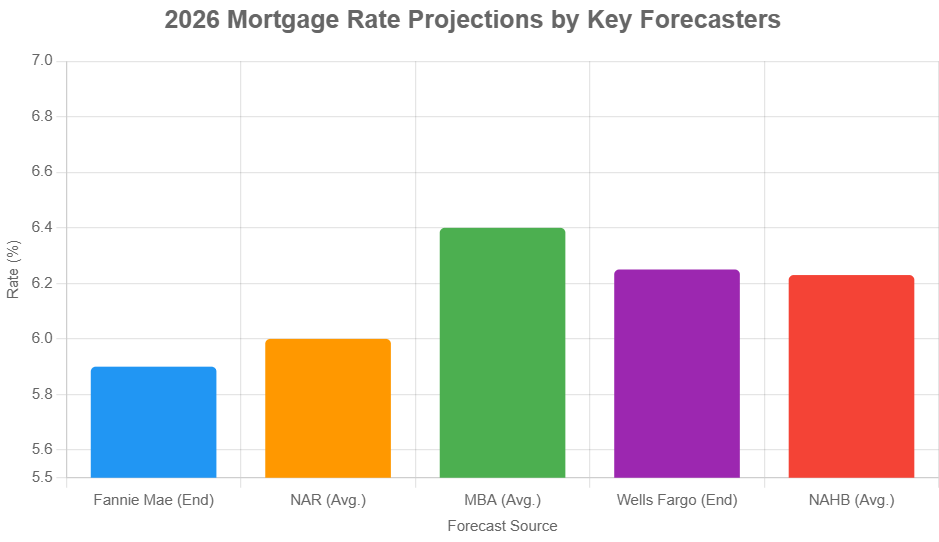
  • Realtor.com: They are predicting that rates will average around 6.3% throughout 2026.
  • Fannie Mae: Their forecast suggests rates could start at 6.2% in Q1 2026 and dip to 5.9% by the end of the year. This would represent a significant—and very welcome—decrease.
  • Mortgage Bankers Association (MBA): They foresee rates averaging 6.4% in Q4 2025 and staying relatively stable at the beginning of 2026, implying a gradual decrease as the year progresses.

From my perspective, while we should always be cautious about exact predictions, the consensus is leaning positive. The combination of anticipated Fed actions, cooling economic indicators, and potential improvements in housing inventory paints a picture of a more buyer-friendly market ahead.

My personal take? It's wise to keep a close eye on these trends. Locking in a lower rate now, or securing a mortgage for a purchase at these improved rates, could prove to be a very smart financial move in the long run. It’s a good time to talk to your lender, get pre-approved if you’re considering buying, or explore refinance options if you’re already a homeowner. This isn't just about numbers; it's about making smart decisions that impact your financial future.

Want Stronger Returns? Invest Where the Housing Market’s Growing

Turnkey rental properties in fast-growing housing markets offer a powerful way to generate passive income with minimal hassle.

Work with Norada Real Estate to find stable, cash-flowing markets beyond the bubble zones—so you can build wealth without the risks of ultra-competitive areas.

🔥 HOT NEW LISTINGS JUST ADDED! 🔥

Talk to a Norada investment counselor today (No Obligation):

(800) 611-3060

Get Started Now

Also Read:

  • Mortgage Rates Predictions 2026: Will We See Sub-6% Rate Again?
  • Pros and Cons of Locking in a Mortgage Rate Now vs Waiting
  • Will Mortgage Rates Go Down Below 6% in the Next 60 Days?
  • Who Benefits Most from Today's Lower Mortgage Rates?
  • Mortgage Rates Predictions Backed by 7 Leading Experts: 2025–2026
  • Mortgage Rate Predictions for the Next 3 Years: 2026, 2027, 2028
  • 30-Year Fixed Mortgage Rate Forecast for the Next 5 Years
  • 15-Year Fixed Mortgage Rate Predictions for Next 5 Years: 2025-2029
  • Will Mortgage Rates Ever Be 3% Again in the Future?
  • Mortgage Rates Predictions for Next 2 Years
  • Mortgage Rate Predictions for Next 5 Years
  • Mortgage Rate Predictions: Why 2% and 3% Rates are Out of Reach
  • How Lower Mortgage Rates Can Save You Thousands?
  • How to Get a Low Mortgage Interest Rate?
  • Will Mortgage Rates Ever Be 4% Again?

Filed Under: Financing, Mortgage Tagged With: Interest Rate, mortgage, Mortgage Rate Trends, mortgage rates, Mortgage Rates Today

Today’s Mortgage Rates, December 6: 30-Year Fixed Rate Rises to 6.10%

December 6, 2025 by Marco Santarelli

Today's Mortgage Rates, Jan 7: Stable Rates Continue for Buyers and Refinancers

As of December 6, 2025, today's mortgage rates are holding relatively steady, with a slight upward nudge due to fresh inflation data. For those looking to buy or refinance, this means the rate you see today might be similar to what you'll find in the coming months, suggesting it's a good time to seriously consider your options rather than holding out for a significant drop anytime soon.

It’s a bit like standing on a platform, watching the train of the economy chug along. We’re not seeing massive shifts, but there are definite signals in the air. The latest Personal Consumption Expenditures (PCE) index, a key measure of inflation, landed pretty much where economists expected.

This is important because it tells us the Federal Reserve isn't likely to start slashing interest rates aggressively in early 2026. For us, the potential homebuyers and homeowners looking to refinance, this translates to mortgage rates probably sticking around where they are for the next several months. So, whether you're eyeing a dream home now or planning for mid-2026, the financial picture for borrowing might look quite similar.

Today's Mortgage Rates, December 6: 30-Year Fixed Rate Rises to 6.10%

What the Numbers Are Saying Today

Let’s break down exactly what these rates look like according to Zillow's latest figures. Remember, these are national averages, so your specific rate might be a bit higher or lower depending on your credit score, down payment, and other personal financial details.

For New Homebuyers:

Loan Type Interest Rate
30-year fixed 6.10%
20-year fixed 5.97%
15-year fixed 5.55%
5/1 ARM 6.45%
7/1 ARM 6.38%
30-year VA 5.56%
15-year VA 5.22%
5/1 VA 5.40%

For Refinancing Your Current Home:

Loan Type Interest Rate
30-year fixed 6.15%
20-year fixed 6.09%
15-year fixed 5.63%
5/1 ARM 6.43%
7/1 ARM 6.69%
30-year VA 5.62%
15-year VA 5.47%
5/1 VA 5.37%

It’s interesting to see how close the purchase and refinance rates are. This further supports the idea that the market is finding a bit of a stable footing, even with the inflation whispers.

Fixed vs. Adjustable Rate Mortgages: A Matter of Choice and Cost

One of the first big decisions you’ll face as a borrower is choosing between a fixed-rate mortgage and an adjustable-rate mortgage (ARM). Today’s rates highlight this choice quite clearly.

  • Fixed-Rate Mortgages: These are the bedrock of stability. Your interest rate, and therefore your principal and interest payment, stays the same for the entire life of the loan. On December 6, you can get a 30-year fixed-rate mortgage at 6.10% for purchasing and 6.15% for refinancing. This predictability is fantastic for budgeting and peace of mind, especially in a potentially fluctuating economic environment.
  • Adjustable-Rate Mortgages (ARMs): ARMs typically start with a lower introductory interest rate for a set period (like 5 or 7 years), after which the rate can adjust periodically based on market conditions. For example, a 5/1 ARM (fixed for 5 years, then adjusts annually) is listed at 6.45% for purchase and 6.43% for refinance. What’s notable today is that the initial rates for ARMs are actually higher than the 30-year fixed rates. This is a significant shift from times when ARMs were clearly the cheaper entry point.

My take on this? Usually, I’d advocate for ARMs if you plan to move or refinance before the adjustment period begins, aiming to capture those lower initial savings. However, with ARMs currently priced above fixed rates, the long-term stability of a fixed mortgage seems like the much more attractive option right now for most people. The risk of subsequent rate hikes far outweighs any potential initial savings, which aren’t even there today. It’s a clear signal that lenders are pricing in future uncertainty.

The VA Loan Advantage: A Real Benefit for Our Heroes

I always make a point to highlight VA loans because they represent a significant benefit for those who have served our country. According to Zillow's data for December 6, VA loans continue to offer remarkably competitive rates compared to conventional loans.

  • A 30-year fixed VA loan for purchasing is available at 5.56%. Compare that to the conventional 30-year fixed at 6.10%. That’s a difference of over half a percentage point!
  • For refinancing, the 30-year fixed VA option is 5.62%, still significantly lower than the conventional 6.15%.

This isn't just a small difference; it can translate into substantial savings over the life of a mortgage. For eligible veterans and service members, exploring a VA loan is an absolute must. It’s one of the tangible ways we can acknowledge their service.

What Does This Mean for You? Borrower Takeaways

So, let's distill all this information into actionable insights for you, the borrower.

  1. Rates are Elevated but Stable: The days of ultra-low mortgage rates are behind us, at least for now. Today's rates, hovering around 6.10% for a 30-year fixed, are higher than what we saw a few years ago. However, the key takeaway from the inflation data is that these rates are likely to remain in this general vicinity for a while. There’s no immediate sign of a sharp decline.
  2. Buying vs. Refinancing: A Strategic Decision:
    • If you're buying: The current rates mean your monthly payments will be higher than they would have been during peak low-rate periods. Your decision to buy hinges on your personal financial situation, your need for housing, and your belief in long-term property appreciation. Given the rate stability, the “perfect time” to buy is less about predicting rate drops and more about when you're financially ready and when the right home appears.
    • If you're refinancing: If you have a mortgage with a rate significantly higher than today's offerings (say, 7% or more), refinancing to a rate around 6.10% or 5.63% (for a 15-year term) can still lead to considerable savings. However, if your current rate is already low (e.g., 4% or below), the current rates probably don't make sense for a refinance, as the closing costs might negate the savings.
  3. ARMs Aren't the Bargain They Used to Be: As mentioned, the initial rates on ARMs are currently not offering the typical discount over fixed rates. For most people valuing certainty, a fixed-rate mortgage is the way to go.
  4. VA Loans Remain a Stellar Option: If you’re a veteran or active-duty service member, don't overlook the significant advantage VA loans offer. The lower rates can make a substantial difference in your monthly budget and overall loan cost.
  5. Keep an Eye on the Fed and Inflation: While rates are stable today, the economy is always shifting. Continue to monitor news about Federal Reserve policy decisions and upcoming inflation reports. These are the primary drivers that could eventually lead to changes in mortgage rates.

Invest Smartly in Turnkey Rental Properties

With rates dipping to their lowest levels, investors are locking in financing to maximize cash flow and long-term returns.

Norada Real Estate helps you seize this rare opportunity with turnkey rental properties in strong markets—so you can build passive income while borrowing costs remain historically low.

🔥 HOT NEW LISTINGS JUST ADDED! 🔥

Talk to a Norada investment counselor today (No Obligation):

(800) 611-3060

Get Started Now

Also Read:

  • Mortgage Rates Predictions Backed by 7 Leading Experts: 2025–2026
  • Mortgage Rate Predictions for the Next 3 Years: 2026, 2027, 2028
  • 30-Year Fixed Mortgage Rate Forecast for the Next 5 Years
  • 15-Year Fixed Mortgage Rate Predictions for Next 5 Years: 2025-2029
  • Will Mortgage Rates Ever Be 3% Again in the Future?
  • Mortgage Rates Predictions for Next 2 Years
  • Mortgage Rate Predictions for Next 5 Years
  • Mortgage Rate Predictions: Why 2% and 3% Rates are Out of Reach
  • How Lower Mortgage Rates Can Save You Thousands?
  • How to Get a Low Mortgage Interest Rate?
  • Will Mortgage Rates Ever Be 4% Again?

Filed Under: Financing, Mortgage Tagged With: Interest Rate, mortgage, Mortgage Rate Trends, mortgage rates, Mortgage Rates Today

Today’s Mortgage Rates, December 5: 30-Year Fixed Rate Goes Down Below 6%

December 5, 2025 by Marco Santarelli

Today's Mortgage Rates, Jan 7: Stable Rates Continue for Buyers and Refinancers

As we head into the busy holiday season on December 5th, I've got some encouraging news for anyone looking to buy a home or refinance their current mortgage: today's mortgage rates are showing a welcome dip. Specifically, national averages are currently sitting about a half-point lower than they were at this same time last year, creating a more welcoming environment for borrowers. This is a significant shift, and understanding where we stand today can help you make smarter financial decisions.

Today's Mortgage Rates, December 5: 30-Year Fixed Rate Goes Down Below 6%

It’s exciting to see this downward trend, especially after the hustle and bustle of the Thanksgiving holiday. As Sam Khater, Freddie Mac’s chief economist, pointed out, rates have been decreasing for two weeks straight. This kind of movement can make a real difference when you're talking about the largest purchase most of us will ever make – a home. Let’s dive into the nitty-gritty of what these numbers mean for you right now.

The Latest Mortgage Rate Snapshot

To give you the clearest picture, I've pulled data from a couple of respected sources.

First, let's look at the national averages reported by Freddie Mac for interest this week. Freddie Mac is a go-to for reliable data in the mortgage industry, and their insights are always valuable.

  • 30-year fixed mortgage: Averaging 6.19%
  • 15-year fixed mortgage: Averaging 5.44%

Now, let's compare that to a year ago:

  • 30-year fixed (last year): Averaged 6.69%
  • 15-year fixed (last year): Averaged 5.96%

As you can see, that half-point decrease is real and tangible. It translates to real savings over the life of a loan.

But what about today's rates, right now? For that, I’m looking at the latest data from Zillow, which often provides a more immediate pulse on the market.

Current Rates for Purchasing a Home (as of December 5th):

Loan Type Interest Rate
30-year fixed 5.97%
20-year fixed 5.91%
15-year fixed 5.41%
5/1 ARM 6.02%
7/1 ARM 6.13%
30-year VA 5.57%
15-year VA 5.30%
5/1 VA 5.39%

Remember, these are national averages and rounded. Your specific rate will depend on your credit score, down payment, and the lender you choose.

Current Rates for Refinancing a Home (as of December 5th):

Loan Type Interest Rate
30-year fixed 6.13%
20-year fixed 6.22%
15-year fixed 5.56%
5/1 ARM 6.29%
7/1 ARM 6.48%
30-year VA 5.50%
15-year VA 5.13%
5/1 VA 5.14%

An interesting thing to note here is the narrowing gap between purchase and refinance rates. This often signals a healthier market where homeowners might be more inclined to consider refinancing if they can get a better deal.

What This Means for You: Buyers and Homeowners

So, what does this half-point drop really mean in practice?

  • For New Buyers: Lower rates mean your monthly mortgage payment is lower. This can open doors to homeownership for those who were on the fence, or it might allow you to afford a bit more house than you could a year ago. It can be the difference between renting a smaller place and owning a modest starter home.
  • For Homeowners Looking to Refinance: If you have an existing mortgage, especially one with a higher interest rate, these lower numbers could make refinancing a smart move. You might be able to lower your monthly payments, shorten your loan term, or even tap into your home’s equity for other needs. The closer refinance rates get to purchase rates, the more attractive it becomes.
  • A More Stable Outlook: Looking ahead, there’s a sense of cautious optimism. While nobody has a crystal ball, the stability we're seeing, combined with these slightly lower rates, could encourage more people to enter the housing market in the coming year.

The Year-Over-Year Story: Half a Point Matters

Let's put that half-point drop into perspective. A year ago, the national average for a 30-year fixed mortgage was around 6.69%. Today, it’s 6.19%. That might sound small – just a few tenths of a percent. But on a $300,000 mortgage, over 30 years, that difference can add up to tens of thousands of dollars in savings.

  • Monthly Payment Example (30-year fixed on $300,000 loan):
    • At 6.69%: Approximately $1,940 per month (principal & interest)
    • At 6.19%: Approximately $1,842 per month (principal & interest)

That's a difference of almost $100 per month, or around $12,000 over 10 years! It’s these kinds of figures that highlight why watching mortgage rate trends is so important. The 15-year fixed also tells a similar story, dropping from 5.96% to 5.44%.

Looking Ahead: What’s Driving Rates and What to Expect

The big question on everyone’s mind is: where are rates headed? It’s a complex equation, influenced by a lot of moving parts.

As an observer of this market, I can tell you that the Federal Reserve plays a significant role. They’ve been cutting their key interest rate, and economists widely expect another cut before the year is out. However, it's crucial to remember that mortgage rates don't always follow the Fed's moves immediately or perfectly. They are more closely tied to the 10-year Treasury yield. When that yield goes down, mortgage rates often follow.

Other important factors include:

  • Inflation: While it’s cooling down, inflation is still a bit higher than the Fed’s ideal 2% target. If inflation continues to recede, it could put further downward pressure on mortgage rates.
  • The Labor Market: We're seeing signs of the job market cooling off, which is generally good for keeping inflation in check and potentially lowering rates.
  • Housing Supply and Demand: An increase in available homes for sale in 2026, coupled with potentially easing mortgage rates, could lead to a more balanced market. This is good news for buyers who have faced intense competition.

Forecasts for 2026:

Experts are weighing in with predictions for the coming year. While rates aren’t expected to plummet back to the historic lows of 2020-2021, the general consensus points towards a continued, albeit gradual, downward trend.

  • Realtor.com suggests we’ll see mortgage rates averaging around 6.3% for all of 2026.
  • Fannie Mae has a slightly more optimistic outlook, predicting rates could start at 6.2% in early 2026 and dip to 5.9% by the year's end.
  • The Mortgage Bankers Association (MBA) anticipates rates to average around 6.4% in late 2025 and stay relatively stable into early 2026.

From my perspective, these forecasts suggest that while we’re unlikely to see a dramatic return to ultra-low rates, the market is moving in a direction that should make homeownership more accessible and refinancing more appealing. It’s a sign of a maturing market, moving away from the extreme conditions of the past few years.

Making a Move Today

If you’ve been waiting for a sign that mortgage rates are becoming more favorable, December 5th, 2025, could be that signal. The current rates, and the year-over-year decrease, offer a tangible benefit.

My advice? Don't just watch the numbers. If you're considering buying or refinancing, now is the time to talk to a trusted mortgage lender. Get pre-approved, understand your options, and see how these current rates can work for your financial goals. Locking in a lower rate today, even if rates tick down slightly more later, can be a shrewd financial move.

Invest Smartly in Turnkey Rental Properties

With rates dipping to their lowest levels, investors are locking in financing to maximize cash flow and long-term returns.

Norada Real Estate helps you seize this rare opportunity with turnkey rental properties in strong markets—so you can build passive income while borrowing costs remain historically low.

🔥 HOT NEW LISTINGS JUST ADDED! 🔥

Talk to a Norada investment counselor today (No Obligation):

(800) 611-3060

Get Started Now

Also Read:

  • Mortgage Rates Predictions Backed by 7 Leading Experts: 2025–2026
  • Mortgage Rate Predictions for the Next 3 Years: 2026, 2027, 2028
  • 30-Year Fixed Mortgage Rate Forecast for the Next 5 Years
  • 15-Year Fixed Mortgage Rate Predictions for Next 5 Years: 2025-2029
  • Will Mortgage Rates Ever Be 3% Again in the Future?
  • Mortgage Rates Predictions for Next 2 Years
  • Mortgage Rate Predictions for Next 5 Years
  • Mortgage Rate Predictions: Why 2% and 3% Rates are Out of Reach
  • How Lower Mortgage Rates Can Save You Thousands?
  • How to Get a Low Mortgage Interest Rate?
  • Will Mortgage Rates Ever Be 4% Again?
Filed Under: Financing, Mortgage Tagged With: Interest Rate, mortgage, Mortgage Rate Trends, mortgage rates, Mortgage Rates Today

Today’s 30-Year Fixed Mortgage Rate Drops Below 6%, Renewing Affordability Hopes

December 5, 2025 by Marco Santarelli

Today's Mortgage Rates, Jan 7: Stable Rates Continue for Buyers and Refinancers

Finally, some good news on the housing front! If you've been dreaming of owning a home but felt pushed out by high interest rates, today marks a significant shift: the 30-year fixed mortgage rate has dipped below 6%, bringing much-needed hope for affordability back into the market. This is a powerful moment for potential homebuyers, signaling that your dream home might be closer than you think.

From my perspective, seeing rates break this crucial psychological barrier is more than just a number; it's a breath of fresh air for many families struggling with the cost of housing. For a long time, the persistently high rates made owning a home feel like an impossible mountain to climb. This drop, even if it feels like a small step, can make a real difference for those who have been patiently waiting or actively searching.

Today’s 30-Year Fixed Mortgage Rate Drops Below 6%, Renewing Affordability Hopes

What Exactly Are These Rates and Why Do They Matter?

Let's break down what this means practically. When we talk about a 30-year fixed-rate mortgage, it means you borrow money to buy a house, and you'll pay it back over 30 years. The “fixed” part is key – your interest rate stays the same for all 30 years, no matter what happens in the economy. This predictability is incredibly valuable, especially when your budget is tight.

According to Zillow Home Loans, as of December 5, 2025, here's a snapshot of what's available:

Mortgage Rate Options from Zillow Home Loans (as of December 5, 2025):

Mortgage Type Rate APR Points (Cost) Key Feature
30-Year Fixed 5.990% 6.172% 1.927 ($5,299.25) Most Popular
30-Year FHA 5.875% 6.556% 1.670 ($4,592.50) For lower credit profiles
30-Year VA 6.000% 6.286% 1.762 ($4,845.50) For eligible military
30-Year Jumbo 5.875% 6.062% 1.988 ($18,886.00) For large loan amounts

Note: APR (Annual Percentage Rate) is a broader measure of the cost of borrowing, including fees. Points are fees paid directly to the lender at closing in exchange for a reduced interest rate.

Seeing that 30-year fixed rate at 5.990% is encouraging. It's the most popular option because it offers stability. While the FHA and Jumbo loans are showing slightly lower rates, the standard 30-year fixed is what most people are looking for because it balances a competitive rate with accessibility.

Why Is the 30-Year Fixed So Popular?

It’s simple, really. The 30-year fixed-rate mortgage is like the comfortable old couch of home loans.

Here’s why it's a favorite for so many:

  • Predictability is King: Your monthly payment (the principal and interest part) won't change for 30 years. This makes budgeting for your biggest expense much easier, letting you plan for life's other goals without worrying about your mortgage bill suddenly jumping.
  • Lower Monthly Payments: Compared to shorter loan terms (like 15-year mortgages), the monthly payments are generally lower because you're spreading the repayment over a longer period. This makes homeownership feel more attainable for more people.
  • Builds Equity Steadily: While you pay more interest over 30 years, you’re still consistently building equity in your home with each payment. This is your stake in the property, which grows as you pay down the loan and hopefully as the home's value increases.
  • Flexibility: Life happens. If you need to pay extra towards your mortgage, you can without penalty on most fixed-rate loans, helping you pay it off faster. Or, if you have a lean month, you know your minimum payment will remain affordable.

What's Behind This Rate Drop?

It's not just random luck that rates are falling. Several factors have come together to bring mortgage rates below that 6% mark. As someone who watches the housing and finance world closely, I see these influences as crucial:

  • The Fed's Moves: The Federal Reserve plays a huge role. They've been cutting their key interest rate throughout 2025, and more cuts are expected. This signals they believe the economy is stabilizing and want to make borrowing cheaper. Importantly, while mortgage rates don't instantly mirror the Fed's every move, they generally follow the trend. The upcoming December cut is likely contributing to this downward pressure.
  • Cooling Economy Signals: We're seeing signs that inflation is easing, and the job market, while still strong, is cooling down a bit. When the economy isn't overheating, it tends to push interest rates lower.
  • The 10-Year Treasury Yield: This is a big one. Mortgage rates are actually more closely tied to the 10-year Treasury yield than the Fed's own short-term rates. As this yield has come down, mortgage rates have followed suit. Think of it like this: when the government can borrow money more cheaply (lower Treasury yield), it becomes cheaper for lenders to offer mortgages.
  • Housing Supply and Demand: While not the primary driver for today's rate drop, the expectation of more homes coming onto the market in 2026, coupled with easing rates, is a recipe for a more balanced housing market. This is great news for buyers who have been competing fiercely for limited inventory.

Factors Influencing Mortgage Rates:

  • Federal Reserve Policy: Interest rate decisions by the central bank.
  • Economic Data: Inflation reports, job numbers, and overall economic growth.
  • 10-Year Treasury Yield: A benchmark for longer-term borrowing costs.
  • Lender Specifics: Each lender has its own pricing models and risk assessments.

Looking Ahead: What to Expect in 2026

While today's news is fantastic, it's natural to wonder if this trend will continue. Based on what experts are saying, the optimism is cautious but present.

Here’s a peek at what some major sources anticipate:

  • Realtor.com: They predict that average mortgage rates will hover around 6.3% for the entirety of 2026. This suggests some fluctuation, but generally staying in a more manageable range.
  • Fannie Mae: Their forecast is a bit more dynamic. They expect rates to start 2026 at around 6.2% and then potentially dip further to 5.9% by the end of the year. This implies a good opportunity for locking in a rate later in the year.
  • Mortgage Bankers Association (MBA): They see rates averaging 6.4% in late 2025 and staying fairly steady at the beginning of 2026.

The consensus seems to be that while we might not see the historically low rates of 2020 and 2021 again anytime soon, we are entering a period where rates are more sustainable and continue to trend downwards, at least for a while. This gradual descent is often healthier for the market than drastic drops.

My Take: What This Means for You Right Now

As a homeownership advocate, seeing rates below 6% is incredibly significant. It means:

  1. Increased Purchasing Power: For the same monthly payment, you can now afford a slightly more expensive home than you could when rates were higher. This could mean a bigger house, a better location, or simply some breathing room in your budget.
  2. Refinancing Opportunities: If you currently have a mortgage with a rate much higher than this, it might be time to investigate refinancing. Even a small drop can save you a significant amount of money over the life of the loan.
  3. A More Encouraging Market: For builders and real estate agents, this could mean more buyer activity, potentially leading to more new construction and a healthier overall housing market. For buyers, it means potentially less intense competition in some areas.

It’s important to remember that the exact rate you get will depend on your credit score, down payment, loan type, and the specific lender. That’s why working with a trusted lender like Zillow Home Loans and exploring your options is so crucial.

This drop below 6% on the 30-year fixed mortgage is more than just a headline; it's a tangible sign that the housing market is becoming more accessible. If buying a home is on your radar, now is definitely the time to start exploring your options and talking to lenders.

Invest Smartly in Turnkey Rental Properties

With rates dipping to their lowest levels, investors are locking in financing to maximize cash flow and long-term returns.

Norada Real Estate helps you seize this rare opportunity with turnkey rental properties in strong markets—so you can build passive income while borrowing costs remain historically low.

🔥 HOT NEW LISTINGS JUST ADDED! 🔥

Talk to a Norada investment counselor today (No Obligation):

(800) 611-3060

Get Started Now

Also Read:

  • Mortgage Rates Predictions Backed by 7 Leading Experts: 2025–2026
  • Mortgage Rate Predictions for the Next 3 Years: 2026, 2027, 2028
  • 30-Year Fixed Mortgage Rate Forecast for the Next 5 Years
  • 15-Year Fixed Mortgage Rate Predictions for Next 5 Years: 2025-2029
  • Will Mortgage Rates Ever Be 3% Again in the Future?
  • Mortgage Rates Predictions for Next 2 Years
  • Mortgage Rate Predictions for Next 5 Years
  • Mortgage Rate Predictions: Why 2% and 3% Rates are Out of Reach
  • How Lower Mortgage Rates Can Save You Thousands?
  • How to Get a Low Mortgage Interest Rate?
  • Will Mortgage Rates Ever Be 4% Again?

Filed Under: Financing, Mortgage Tagged With: Interest Rate, mortgage, Mortgage Rate Trends, mortgage rates, Mortgage Rates Today

Today’s Mortgage Rates, December 4: 30-Year Fixed Rate Drops to 6% Once Again

December 4, 2025 by Marco Santarelli

Today's Mortgage Rates, Jan 7: Stable Rates Continue for Buyers and Refinancers

Well, here we are again, watching mortgage rates dance around that significant 6% mark. As of December 4th, the average 30-year fixed mortgage rate has dipped to 6.00%, according to Zillow. This is a noticeable drop from where we’ve been, and it’s a development that many buyers and homeowners have been eagerly anticipating.

While it’s crucial to remember these are national averages and individual rates can vary, this 6.00% figure is a big psychological win for those looking to buy or refinance, signaling a potential shift in borrowing costs. Let's break down what these numbers mean for you right now and what the experts are predicting for the near future.

Today's Mortgage Rates, December 4: 30-Year Fixed Rate Drops to 6% Once Again

Current Mortgage Rates

Before we dive deeper, let's get a clear picture of the current rates. Zillow's data for December 4th shows the following national averages:

Loan Type Interest Rate
30‑year fixed 6.00%
20‑year fixed 5.88%
15‑year fixed 5.44%
5/1 ARM 6.14%
7/1 ARM 6.07%
30‑year VA 5.67%
15‑year VA 5.34%
5/1 VA 5.43%

It’s worth noting that ARMs (Adjustable-Rate Mortgages) can offer a lower initial rate, but they come with the risk of the rate increasing after the initial fixed period. VA loans are a fantastic option for our nation's veterans, often featuring competitive rates.

Current Mortgage Refinance Rates

If you're already a homeowner and thinking about refinancing, here's how those rates look:

Loan Type Interest Rate
30‑year fixed 6.15%
20‑year fixed 6.01%
15‑year fixed 5.64%
5/1 ARM 6.46%
7/1 ARM 6.71%
30‑year VA 5.61%
15‑year VA 5.39%
5/1 VA 5.29%

You might notice that refinance rates are often slightly higher than purchase rates. This isn't unusual, as lenders sometimes view these transactions a bit differently. However, the gap today is quite small, which is definitely something to consider if you're looking to lower your monthly payment.

When Rates Hover Just Under 6%: What This Means for You

That 6.00% mark for a 30-year fixed mortgage isn’t just a number; it’s a beacon. For many months, we saw rates well above 7%, sometimes even pushing 8%. When rates are that high, the monthly payment for a new mortgage can be significantly larger. Think about it: a $300,000 mortgage at 7.5% costs about $2,098 per month (principal and interest), while at 6.00%, that same loan is roughly $1,799. That's a difference of over $300 a month, or nearly $3,600 a year.

This drop to 6.00% makes homeownership more achievable for some buyers who were priced out by higher rates. It also offers a glimmer of hope for affordability. While the housing market still faces challenges, including inventory shortages in many areas, lower interest rates can help offset those higher home prices to some extent.

It's important to also recognize the volatility we've seen. Rates can fluctuate daily based on economic news, inflation reports, and Federal Reserve signals. So while 6.00% is a great spot to land, it’s wise to be prepared for potential minor swings, particularly in the short term.

Looking Ahead: Projections for 2026

While we're focused on today's mortgage rates December 4, it's always smart to have an eye on the future. Realtor.com's recent housing outlook offers some reassuring projections. They anticipate that average 30-year mortgage rates will likely settle around 6.3% throughout 2026.

Now, you might be thinking, “Wait, aren't they going down?” Yes, rates have been moving down recently, but the projection for 6.3% suggests a scenario where economic growth slows down naturally, and the Federal Reserve signals the end of its aggressive interest rate hikes (quantitative tightening). These factors, they believe, will help to balance out some persistent inflationary pressures and the overall increase in government debt.

From my perspective, this outlook suggests a period of relative stability. It implies that we probably won't see a sudden, sharp drop back to the ultra-low rates of a few years ago, but rather a more consistent, manageable rate environment. This can be a good thing for planning. If you're looking to buy a home or refinance, knowing that rates are projected to stay in a certain range can make it easier to make your decisions without feeling like you're racing against constantly shifting tides. It’s about finding a rate that works for your goals within a predictable future.

Refinance Opportunities: Is Now the Time?

With the 30-year fixed purchase rate at 6.00% and the refinance rate at 6.15%, the gap has definitely narrowed. For homeowners who secured a mortgage when rates were significantly higher – say, 7% or 8% – even a refinance rate around 6.15% could still offer substantial savings.

When I advise clients on refinancing, I always look at the “break-even” point. This means calculating how long it will take for the savings from your lower monthly payment to recoup the closing costs of the refinance. If you plan to stay in your home for several years, refinancing even at a rate slightly higher than current purchase rates can be a smart move if your original rate was much higher.

Consider these questions when evaluating a refinance:

  • What was your original interest rate? The bigger the difference, the more potential savings.
  • What are the closing costs? Get a clear estimate and compare offers.
  • How long do you plan to stay in the home? This is crucial for calculating your break-even point.
  • Are you tapping into your home's equity? Sometimes a refinance is also a cash-out opportunity, which can be useful for home improvements or consolidating debt.

Given these rates, if you have a mortgage well above 7%, it's definitely worth exploring refinance options. The smaller spread between purchase and refinance rates today suggests that lenders are competitively pricing these options.

Final Thoughts on Today's Mortgage Rates

As we wrap up December 4th, the mortgage market is showing signs of stabilization, with key rates hovering around the significant 6% benchmark. For buyers, this is a welcome development, improving affordability compared to recent months. For homeowners, the shrinking difference between purchase and refinance rates opens up potential opportunities to lower their monthly payments.

The projections for 2026 indicate a future of relative rate stability, which is good news for long-term planning. While no one can perfectly predict the future, understanding these trends helps us navigate the market with more confidence. My advice remains consistent: stay informed, and when you're ready to make a move, work with trusted lenders and advisors to find the best option for your unique financial situation.

Invest Smartly in Turnkey Rental Properties

With rates dipping to their lowest levels, investors are locking in financing to maximize cash flow and long-term returns.

Norada Real Estate helps you seize this rare opportunity with turnkey rental properties in strong markets—so you can build passive income while borrowing costs remain historically low.

🔥 HOT NEW LISTINGS JUST ADDED! 🔥

Talk to a Norada investment counselor today (No Obligation):

(800) 611-3060

Get Started Now

Also Read:

  • Mortgage Rates Predictions Backed by 7 Leading Experts: 2025–2026
  • Mortgage Rate Predictions for the Next 3 Years: 2026, 2027, 2028
  • 30-Year Fixed Mortgage Rate Forecast for the Next 5 Years
  • 15-Year Fixed Mortgage Rate Predictions for Next 5 Years: 2025-2029
  • Will Mortgage Rates Ever Be 3% Again in the Future?
  • Mortgage Rates Predictions for Next 2 Years
  • Mortgage Rate Predictions for Next 5 Years
  • Mortgage Rate Predictions: Why 2% and 3% Rates are Out of Reach
  • How Lower Mortgage Rates Can Save You Thousands?
  • How to Get a Low Mortgage Interest Rate?
  • Will Mortgage Rates Ever Be 4% Again?

Filed Under: Financing, Mortgage Tagged With: Interest Rate, mortgage, Mortgage Rate Trends, mortgage rates, Mortgage Rates Today

Today’s Mortgage Rates December 3: 30-Year Fixed Rate Remains Stable at 6.11%

December 3, 2025 by Marco Santarelli

Today's Mortgage Rates, Jan 7: Stable Rates Continue for Buyers and Refinancers

For those keeping a close watch on the housing market, today’s mortgage rates for December 3 are holding quite steady, offering a consistent environment for potential buyers and refinancers. According to Zillow’s data, the benchmark 30-year fixed mortgage rate remains at a solid 6.11%. This stability provides a clear picture for many, suggesting that while rates aren't dropping dramatically, they're also not taking any unexpected leaps today, offering a sense of predictability in a market that can often feel like a rollercoaster.

As I see it, this steady rate isn't just a number; it's a signal. It tells us that the market is digesting economic news and waiting for a clearer direction, likely from the Federal Reserve. While it might not be the dramatic drop some were hoping for, it’s certainly not a surge either, which is good news for anyone looking to finance a home or refinance an existing mortgage.

Today's Mortgage Rates December 3: 30-Year Fixed Rate Remains Stable at 6.11%

What the Numbers Tell Us on December 3

Let’s break down the specifics as reported by Zillow.

For homebuyers, the 30-year fixed rate at 6.11% is the standard bearer. It’s the most popular choice for a reason – it offers predictable monthly payments over a long period, making budgeting easier. However, I always tell people to look beyond the headline number. The 15-year fixed rate is currently at 5.52%. While this means a higher monthly payment due to paying off the loan faster, the total interest paid over the life of the loan is significantly less. For those with the financial wiggle room, this can represent substantial long-term savings.

Here’s a quick rundown of the other key rates from Zillow today:

Loan Type Interest Rate Notes
30-year fixed 6.11% The benchmark, offering stability.
20-year fixed 5.97% A middle ground, slightly cheaper than 30-year.
15-year fixed 5.52% Lower total interest, higher monthly payments.
5/1 ARM 6.25% Lower initial rate, but payments can rise later.
7/1 ARM 6.33% Similar to 5/1 ARM, with a longer initial fixed period.
30-year VA 5.56% Excellent option for veterans, below conventional.
15-year VA 5.14% One of the lowest rates available.

(These are national averages, rounded to two decimal places.)

Refinancing: Is Today the Day?

For homeowners thinking about refinancing, today's mortgage refinance rates show a similar picture, with slight premiums over purchase rates. This is pretty typical, as lenders factor in different risks and costs for refinances.

  • The 30-year fixed refinance rate is at 6.18%, just a hair above the purchase rate.
  • The 15-year fixed refinance rate is at 5.65%.

Here’s the refinance breakdown:

Loan Type Interest Rate Notes
30-year fixed 6.18% Marginally higher than purchase rates, standard practice.
20-year fixed 6.17% Very close to the 30-year refinance rate.
15-year fixed 5.65% Good for those seeking long-term savings.
5/1 ARM 6.33% Adjustable, consider risks if rates increase.
7/1 ARM 6.60% Longer fixed period for ARMs, still carries risk.
30-year VA 5.61% Competitive for veterans looking to refinance.
15-year VA 5.29% A very attractive rate for eligible veterans.

What This Means for You: Buyers and Refinancers

Looking at these figures, what’s the takeaway?

For homebuyers, the steady 6.11% on the 30-year fixed means affordability hasn’t suddenly become worse. If you’ve been pre-approved and have a solid budget, today is as good a day as any to continue your house hunt. However, if your cash flow is strong, I’d still encourage you to crunch the numbers on the 15-year fixed at 5.52%. The immediate increase in your monthly payment might feel daunting, but the amount of interest you save over 15 years can be truly significant. It's a trade-off between monthly comfort now and massive savings down the road.

For homeowners considering refinancing, the slight premium on refinance rates is nothing new. The question really becomes: why are you refinancing?

  • If you need to improve cash flow: A 15-year fixed refinance at 5.65% could still be a winner if it significantly lowers your monthly payment compared to your current loan, especially if your current loan has a higher interest rate.
  • If you want cash out: You might find that the rate offered for a cash-out refinance is higher. It’s crucial to weigh the benefit of having extra funds against the increased cost of your mortgage.
  • If you're just looking for a lower rate: This is where patience might pay off.

A Peek into the Future: 2026 Forecast

Here's where it gets interesting, and where my expertise comes in. Realtor.com's latest forecast is projecting a modest dip in mortgage rates for the coming year. They anticipate the average 30-year mortgage rate to hover near 6.3% in 2026, which is a slight improvement from the projected 6.6% average for 2025.

Now, “modest relief” is the operative phrase here. This isn't a forecast for a dramatic collapse in rates back to the ultra-lows we saw a few years ago. Instead, it suggests a gradual, perhaps more sustainable, easing. From my perspective, this means two things:

  1. If you don't need to refinance right now, and your current rate is decent, holding off until sometime in 2026 might yield a slightly better deal.
  2. The power of locking in a rate still exists. If today's rate offers you a significant improvement or allows you to achieve your homeownership goals, waiting for a potential small drop might not be worth the risk of rates unexpectedly moving higher. Market forecasts are just that – forecasts.

ARM Rates vs. Fixed: A Matter of Risk Tolerance

It’s worth noting the dynamic between Adjustable-Rate Mortgages (ARMs) and fixed-rate loans. Today, the 5/1 ARM is at 6.25% and the 7/1 ARM at 6.33%. These are slightly higher than some fixed-rate options, especially the 15-year.

Why? Lenders are still cautious. ARMs offer a lower introductory rate for a set period (5 or 7 years in these examples), after which the rate adjusts annually, tied to market conditions. If interest rates continue to climb, your ARM payments will go up.

My advice here is always to be brutally honest with yourself about your risk tolerance. Can you comfortably afford the potential increase in payments if rates rise after the initial fixed period? If the answer is a hesitant “maybe,” then a fixed-rate mortgage is almost always the safer, more predictable choice. The security of knowing your principal and interest payment won't change for 15, 20, or 30 years is invaluable for many households.

The Standout: VA Loan Advantage

One area where rates consistently stand out is with VA loans. These are a fantastic benefit for our nation's veterans and service members.

  • The 30-year VA loan at 5.56% and the 15-year VA loan at 5.14% are significantly lower than their conventional counterparts.
  • Even on the refinance side, the 15-year VA refinance rate at 5.29% is incredibly competitive.

If you are a veteran or active-duty service member eligible for a VA loan, I strongly urge you to explore these options. The savings can be substantial, making homeownership more accessible and the overall cost of a mortgage much lower. It's one of those benefits that truly makes a difference.

Final Thoughts on Today’s Mortgage Rates

So, as we look at today’s mortgage rates for December 3, the picture is one of relative stability. For buyers, it means predictability. For refinancers, it’s a time to weigh immediate needs against potential future improvements. While the forecast suggests a possible easing of rates in 2026, the current environment still offers solid options, especially for those using VA loans. It's always a good idea to get personalized quotes from lenders and discuss your specific financial situation to make the best decision for your homeownership journey.

Invest Smartly in Turnkey Rental Properties

With rates dipping to their lowest levels, investors are locking in financing to maximize cash flow and long-term returns.

Norada Real Estate helps you seize this rare opportunity with turnkey rental properties in strong markets—so you can build passive income while borrowing costs remain historically low.

🔥 HOT NEW LISTINGS JUST ADDED! 🔥

Talk to a Norada investment counselor today (No Obligation):

(800) 611-3060

Get Started Now

Also Read:

  • Mortgage Rates Predictions Backed by 7 Leading Experts: 2025–2026
  • Mortgage Rate Predictions for the Next 3 Years: 2026, 2027, 2028
  • 30-Year Fixed Mortgage Rate Forecast for the Next 5 Years
  • 15-Year Fixed Mortgage Rate Predictions for Next 5 Years: 2025-2029
  • Will Mortgage Rates Ever Be 3% Again in the Future?
  • Mortgage Rates Predictions for Next 2 Years
  • Mortgage Rate Predictions for Next 5 Years
  • Mortgage Rate Predictions: Why 2% and 3% Rates are Out of Reach
  • How Lower Mortgage Rates Can Save You Thousands?
  • How to Get a Low Mortgage Interest Rate?
  • Will Mortgage Rates Ever Be 4% Again?

Filed Under: Financing, Mortgage Tagged With: Interest Rate, mortgage, Mortgage Rate Trends, mortgage rates, Mortgage Rates Today

  • « Previous Page
  • 1
  • …
  • 22
  • 23
  • 24
  • 25
  • 26
  • …
  • 76
  • Next Page »

Real Estate

  • Birmingham
  • Cape Coral
  • Charlotte
  • Chicago

Quick Links

  • Markets
  • Membership
  • Notes
  • Contact Us

Blog Posts

  • Cities Offering the Best Cash-on-Cash Returns for Real Estate Investors in 2026
    July 2, 2026Marco Santarelli
  • Top 20 Cities Poised for Highest Home Price Growth by 2027
    July 2, 2026Marco Santarelli
  • Today’s Mortgage Rates, July 2, 2026: Sharp Jump to 6.36% as Inflation Stays Sticky
    July 2, 2026Marco Santarelli

Contact

Norada Real Estate Investments 30251 Golden Lantern, Suite E-261 Laguna Niguel, CA 92677

(949) 218-6668
(800) 611-3060
BBB
  • Terms of Use
  • |
  • Privacy Policy
  • |
  • Testimonials
  • |
  • Suggestions?
  • |
  • Home

Copyright 2018 Norada Real Estate Investments

Loading...