Norada Real Estate Investments

  • Home
  • Markets
  • Properties
  • Membership
  • Podcast
  • Learn
  • About
  • Contact

Mortgage Refinance Applications Skyrocket as Rates Hit New Lows

March 5, 2025 by Marco Santarelli

Mortgage Refinance Applications Skyrocket as Rates Hit New Lows

Low rates lead to a jump in demand in mortgage applications. We're seeing exactly that play out right now! As mortgage rates dip, more people are jumping in to buy homes or refinance their existing mortgages. This responsiveness to interest rate changes is a tale as old as time.

Alright, let's dive into why we're seeing this surge and what it all means for you, whether you're a potential homebuyer, current homeowner, or just curious about the market.

Mortgage Refinance Applications Skyrocket as Rates Hit New Lows

The Numbers Don't Lie: Mortgage Applications Are Soaring

We've seen a definite shift in recent weeks. Mortgage rates, especially for the 30-year fixed mortgage, have fallen to levels we haven't seen since December 2024. And that's not just some minor fluctuation; it's a real drop that's getting people's attention. According to the Mortgage Bankers Association (MBA), the numbers speak for themselves:

  • Purchase applications jumped by a significant 12%. That means more people are actively trying to buy homes.
  • Refinancing applications skyrocketed by a whopping 37%. This tells me homeowners are looking to snag lower rates and save money over the long haul.

Those are substantial increases, folks. And the main reason? Lower rates. In early March 2025, the average 30-year fixed mortgage was around 6.73%. While that may still seem high compared to the rock-bottom rates of a few years ago, it's low enough to entice buyers and homeowners to act.

Why Are Rates Dropping? Economic Uncertainty is the Driver

You might be asking, “Okay, great, rates are down, but why?” Well, it's a bit of a complicated dance between economic factors. In this case, economic uncertainty is the main choreographer.

Specifically, we're talking about concerns over proposed tariffs. These tariffs are shaking up the markets, and investors are reacting by moving their money into safer investments like Treasury bonds. When demand for Treasury bonds goes up, their yields (interest rates) go down. And since mortgage rates tend to follow Treasury yields, we see a corresponding drop in mortgage rates.

Consider this: the 10-year Treasury yield fell from nearly 4.8% in mid-January to around 4.2%. That's a pretty big move in a relatively short period.

The MBA Weighs In: Consumer Sentiment and Tariffs

Joel Kan, the vice president and deputy chief economist at the MBA, summed it up nicely. He pointed out that the combination of lower consumer sentiment and rising economic uncertainty over tariffs has created a favorable environment for lowering mortgage rates.

I tend to agree with Joel Kan. Here is a summary:

  • Lower Consumer Sentiment: People are feeling a little less optimistic about the economy. That can lead to less spending and investment, which can put downward pressure on interest rates.
  • Tariff Uncertainty: Proposed tariffs create a lot of uncertainty. Businesses don't know how much their costs will increase, and consumers don't know how much prices will rise. This uncertainty can also push interest rates down.

A Perfect Storm for Homebuyers and Homeowners?

So, what does all this mean for you? Well, if you've been on the fence about buying a home, now might be a good time to take a serious look.

  • Lower borrowing costs: Obviously, a lower mortgage rate means a lower monthly payment and less interest paid over the life of the loan. That can make a big difference in your budget.
  • Increased purchasing power: A lower rate can also increase how much home you can afford. You might be able to stretch your budget a bit further and get a bigger or better house than you thought.

And if you're already a homeowner, you might want to consider refinancing your mortgage. Even a small drop in your interest rate can save you thousands of dollars over the long term.

A Seasonal Boost: Spring is in the Air

It's important to remember that this surge in mortgage applications isn't solely due to lower rates. We're also entering the spring homebuying season, which is traditionally a peak time for real estate transactions.

As Kan noted, “this is a period where we typically see purchase activity ramp up.” So, we're seeing a combination of factors at play: lower rates plus the usual seasonal increase in demand.

What Does This Mean for the Housing Market Overall?

This increased mortgage demand is a positive sign for the housing market. It could help:

  • Stimulate home sales: Lower borrowing costs make it easier for people to buy homes, which can lead to more sales.
  • Stabilize prices: Increased demand can help prevent home prices from falling further and could even lead to some price appreciation.
  • Invigorate a sluggish market: The housing market has been a bit sluggish in recent years, so this boost in activity could be just what it needs to get back on track.

The housing sector is a big part of the overall economy, so a healthy housing market can contribute to economic growth.

Refinancing: A Golden Opportunity for Homeowners?

For homeowners, the current rates present an attractive opportunity for refinancing. Let's break it down:

  • Long-term savings: Even a small reduction in your interest rate can lead to substantial savings over the life of your mortgage.
  • Lower monthly payments: Refinancing to a lower rate can free up cash in your monthly budget.
  • Opportunity to shorten your loan term: You could refinance to a shorter-term loan (like a 15-year mortgage) and pay off your home faster.

I've seen many homeowners significantly improve their financial situation by refinancing at the right time. Right now might just be one of those times.

Recommended Read:

Should I Refinance My Mortgage Now or Wait Until 2026?

Best Time to Refinance Your Mortgage: Expert Insights

Mortgage Rates Drop: Can You Finally Afford a $400,000 Home?

Expect High Mortgage Rates Until 2026: Fannie Mae's 2-Year Forecast

Will Mortgage Rates Rise Back Above 7% or Go Down in 2025?

Mortgage Interest Rates Forecast for Next 10 Years

Potential Pitfalls and Things to Consider

Of course, it's not all sunshine and rainbows. There are a few potential pitfalls to keep in mind:

  • Economic uncertainty: The same uncertainty that's driving rates down could also lead to job losses or other economic problems. It's important to be prepared for the unexpected.
  • Tariff impacts: The proposed tariffs could have unintended consequences for the economy and the housing market.
  • Rates could rise again: While rates are low now, there's no guarantee they'll stay that way. It's possible they could start to rise again if the economy improves or if the Federal Reserve takes action to combat inflation.
  • It can be tough to qualify for a mortgage: Just because rates are low doesn't mean it is easy to qualify for a mortgage.

My Personal Take: Don't Wait Forever, But Do Your Homework

In my opinion, now is a good time to consider buying a home or refinancing your mortgage, especially if you've been thinking about it for a while. However, you shouldn't rush into anything. Do your homework, compare rates from multiple lenders, and make sure you can comfortably afford the monthly payments.

I wouldn't necessarily try to time the market perfectly. Trying to predict exactly when rates will be at their absolute lowest is a fool's errand. Focus on finding a rate that works for you and making a sound financial decision.

  • Shop around: Don't just go with the first lender you talk to. Get quotes from several different lenders and compare their rates, fees, and terms.
  • Consider a fixed-rate mortgage: With a fixed-rate mortgage, your interest rate will stay the same for the life of the loan. This can give you peace of mind knowing your payments won't go up if rates rise.
  • Don't overextend yourself: Just because you can afford a bigger house doesn't mean you should buy one. Make sure you can comfortably afford the monthly payments, property taxes, insurance, and other associated costs.

The Road Ahead: Monitoring the Market

As we move forward, it will be essential to keep a close eye on the housing market and the broader economy. Things can change quickly, and what looks like a good deal today might not be so attractive tomorrow.

I'll be watching the following factors closely:

  • Treasury yields: These are a key indicator of where mortgage rates are headed.
  • Inflation: If inflation starts to rise, the Federal Reserve may take action to raise interest rates.
  • Economic growth: A strong economy could lead to higher interest rates.
  • Housing inventory: If the supply of homes for sale increases, prices could come down.

Conclusion: Opportunity Knocks, But Proceed with Caution

In conclusion, the current drop in mortgage rates has created a window of opportunity for homebuyers and homeowners alike. The surge in mortgage applications shows that people are responding to these lower rates. However, it's important to remember that the housing market is complex and there are always risks involved. Be sure to do your research, compare rates, and make a sound financial decision.

As you look at home financing options, keep the following points in mind:

  • Shop around for the best rates.
  • Consider both short-term and long-term financial goals.
  • Understand the risks involved before making a decision.

By staying informed and making smart choices, you can navigate the housing market successfully and achieve your financial goals. Happy house hunting!

Work With Norada, Your Trusted Source for

Real Estate Investments

With mortgage rates fluctuating, investing in turnkey real estate

can help you secure consistent returns.

Expand your portfolio confidently, even in a shifting interest rate environment.

Speak with our expert investment counselors (No Obligation):

(800) 611-3060

Get Started Now

Read More:

  • Mortgage Rate Predictions 2025 from 4 Leading Housing Experts
  • Mortgage Rates Forecast for the Next 3 Years: 2025 to 2027
  • 30-Year Mortgage Rate Forecast for the Next 5 Years
  • 15-Year Mortgage Rate Forecast for the Next 5 Years
  • Why Are Mortgage Rates Going Up in 2025: Will Rates Drop?
  • Why Are Mortgage Rates So High and Predictions for 2025
  • Will Mortgage Rates Ever Be 3% Again in the Future?
  • Mortgage Rates Predictions for Next 2 Years
  • Mortgage Rate Predictions for Next 5 Years
  • Mortgage Rate Predictions: Why 2% and 3% Rates are Out of Reach
  • How Lower Mortgage Rates Can Save You Thousands?
  • How to Get a Low Mortgage Interest Rate?
  • Will Mortgage Rates Ever Be 4% Again?
Filed Under: Financing, Mortgage Tagged With: Interest Rate, mortgage, Mortgage Rate Trends, mortgage rates, Mortgage Rates Predictions, Mortgage Rates Today, Refinance Rates

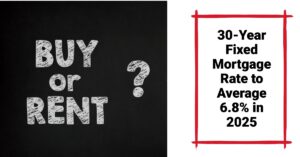
Expect High Mortgage Rates in 2025: 30-Year Fixed to Average 6.8%

March 5, 2025 by Marco Santarelli

Expect High Mortgage Rates in 2025: 30-Year Fixed to Average 6.8%

If you're like me, you're probably glued to housing market news, especially if you're dreaming of buying a home. And lately, the big question on everyone's mind is: where are mortgage rates headed? Well, buckle up, because the latest forecast isn't exactly a smooth ride. Experts at Fannie Mae are predicting that the 30-year fixed-rate mortgage will likely average 6.8% throughout 2025, and settle around 6.6% by the end of the year. Yes, you read that right. It seems those hopes for a significant drop in rates might have to wait a bit longer.

Now, I know what you might be thinking – 6.8%? That's still pretty high! And you're not wrong. We've been hovering around the 7% mark recently, according to Freddie Mac, and anything above 6% feels like a lot compared to the super-low rates we saw just a couple of years ago. But before you let out a frustrated sigh, let's dig into what's driving these predictions and what it really means for you and the housing market.

Mortgage Rate Prediction 2025: Will the 30-Year Fixed Average 6.8%?

Why Higher Rates Are Sticking Around Longer

Honestly, I was hoping to see rates come down more quickly this year. Like many folks, I was listening to whispers in late 2024 about potential rate cuts from the Federal Reserve. But, as Fannie Mae points out, things haven't played out that way. We're facing a cocktail of economic factors that are keeping mortgage rates higher for longer than many of us anticipated.

  • Persistent Inflation: Remember when we thought inflation was finally cooling down? Well, it's proving to be a bit more stubborn than expected. Recent inflation data has been hotter than economists predicted. This is important because inflation directly impacts interest rates. When prices are rising faster, the Federal Reserve tends to keep interest rates higher to try and cool things down.
  • Stronger Economic Growth: On one hand, strong economic growth sounds like good news. And in many ways, it is! But, surprisingly, it can also contribute to higher mortgage rates. A robust economy can fuel inflation, as people are spending more and businesses are more active. This, again, gives the Fed reason to maintain higher interest rates.
  • Trade Policy Uncertainty: This is a wildcard factor that's a bit harder to pin down, but Fannie Mae specifically mentions it: uncertainty around trade policy, particularly concerning tariffs. Remember talk of tariffs and trade wars? Well, these policies can impact the cost of goods, potentially leading to more inflation and influencing long-term interest rates. Even the threat of tariffs can create economic uncertainty, which can ripple through financial markets and affect mortgage rates.
  • The Fed's Pause: The Federal Reserve has indeed paused its rate cuts. The initial expectation was that we'd see several cuts throughout 2024 and into 2025. However, with inflation not cooperating as much as hoped, those cuts have been put on hold, and the timeline for future cuts is very unclear. This pause directly impacts mortgage rates because they tend to track the general direction of the Fed's policy rate.

Basically, the economic picture is a bit murkier than we thought a few months ago. And this murkiness translates to higher projected mortgage rates. Fannie Mae themselves have revised their predictions upwards twice already – first from a 6.2% average to 6.5%, and now to 6.8%. That tells me even the experts are adjusting their forecasts as the economic situation evolves.

Owning vs. Renting in 2025: A Surprising Twist?

Now, with mortgage rates expected to stay elevated, you might think renting is the obvious choice, right? Well, hold on a second. Data from ATTOM, a real estate data company, throws a bit of a curveball into this equation. Their 2025 Rental Affordability Report reveals something quite interesting: owning a home might actually be more affordable than renting in more than half of the county-level markets across the US!

I know, it sounds almost counterintuitive, especially when we keep hearing about sky-high home prices. But let's unpack this. ATTOM analyzed data on average rents, median home prices, and average wages to reach this conclusion. Here’s what I gathered from their report:

  • Affordability is Still a Struggle: Let's be clear, both owning and renting are a financial strain for many people. ATTOM's report shows that housing costs, whether rent or mortgage, are consuming a significant chunk – 25% to 60% – of average wages in many areas. This is a tough reality for a lot of households.
  • Homeownership Can Be More Affordable Than Renting (in Many Places): Despite rising home prices, in nearly 60% of the 341 counties ATTOM analyzed, the major costs of owning a typical single-family home (think mortgage payments, property taxes, insurance) are less than the average rent for a three-bedroom property. That's a pretty significant finding!
  • The Down Payment Hurdle: There's a catch, of course. To take advantage of potentially more affordable homeownership, you need to clear the down payment hurdle. And as ATTOM CEO Rob Barber points out, down payments can often exceed $200,000 in some markets. This is a massive barrier for many first-time buyers. However, for those who can manage the down payment, owning could be the more financially sensible path in many areas.
  • Regional Differences are Huge: Affordability isn't uniform across the country. ATTOM highlights major regional disparities.
    • Midwest and South: These regions are generally more favorable for homeownership. In roughly 80% of Midwestern counties and 60% of Southern counties analyzed, owning is the more affordable option. This is likely due to a combination of lower home prices and potentially more reasonable property taxes in some of these areas.
    • Northeast: The Northeast is more mixed, with homeownership being more affordable in about half of the counties.
    • West: The West bucks the trend. Renting is generally the more affordable choice in about 80% of western markets. Think about places like California and Hawaii, where both home prices and rents are notoriously high.

Here's a quick table summarizing the regional trends:

Region Homeownership More Affordable (Approx. % of Counties) Renting More Affordable (Approx. % of Counties)
Midwest 80% 20%
South 60% 40%
Northeast 50% 50%
West 20% 80%
  • Wage Growth vs. Rent and Home Prices: ATTOM also looked at how wages are keeping up with housing costs. The good news is that in nearly three-quarters of local markets, wages are growing faster than rents. This is a positive sign for renters, meaning rent affordability might be improving slightly in some areas. However, the picture is less rosy for homebuyers. In over half of the counties, home prices are increasing faster than wages. This continues to squeeze affordability for potential buyers.

Recommended Read:

Mortgage Rates Forecast March 2025: Will Rates Finally Drop?

Expect High Mortgage Rates Until 2026: Fannie Mae's 2-Year Forecast

Will Mortgage Rates Go Up as Inflation Surges Back Up to 3%

Will Mortgage Rates Rise Back Above 7% or Go Down in 2025?

Mortgage Interest Rates Forecast for Next 10 Years

Navigating the Housing Market in 2025

So, what does all this mean if you're thinking about buying or renting in 2025? Here are my thoughts, based on the data and my own take on the market:

  • Don't Panic, but Be Realistic: Mortgage rates at 6.8% are not the end of the world. While they are higher than recent years, they are still within historical averages. My advice? Don't let the headlines scare you out of your homeownership dreams, but do be realistic about affordability.
  • Shop Around for Rates: Even in a higher rate environment, it pays to shop around and compare mortgage offers from different lenders. Small differences in rates can add up to significant savings over the life of a loan.
  • Consider Your Local Market: As ATTOM's data shows, housing affordability is very local. The rent vs. buy equation can be drastically different depending on where you live. Do your research on your specific area. Is owning truly more affordable than renting in your county? Factor in all costs, including down payment, property taxes, and insurance.
  • Factor in Long-Term Goals: Think about your long-term financial goals. Is homeownership a priority for you, even with higher rates? Consider the potential for building equity over time, and the stability of owning your own home. Renting might offer more flexibility in the short term, but owning can be a powerful wealth-building tool in the long run.
  • Don't Wait for the “Perfect” Rate: Trying to time the market and wait for the absolute lowest mortgage rate is often a losing game. No one has a crystal ball. If you find a home you love and can comfortably afford the monthly payments at current rates, it might be better to move forward than to wait indefinitely for rates to potentially drop. Rates could even go higher!
  • Be Prepared for Competition (Potentially): Fannie Mae also revised their existing-home sales projections slightly upwards for 2025. This could mean that if rates do stabilize or even dip slightly, we might see more buyers enter the market, potentially leading to increased competition and maybe even upward pressure on home prices in some areas.

Looking Ahead

Predicting the future of mortgage rates is always a bit like reading tea leaves. Economic conditions can change rapidly, and unexpected events can throw forecasts off course. However, based on the latest data from Fannie Mae and ATTOM, it seems like we should prepare for mortgage rates to remain elevated throughout 2025.

While this might be disappointing news for some, it's important to remember that the housing market is still functioning, and homeownership remains attainable for many. The key is to be informed, realistic about affordability, and to make smart financial decisions based on your individual circumstances and local market conditions. And who knows, maybe the economic winds will shift again, and we'll see rates surprise us on the downside. Until then, stay informed, stay savvy, and good luck with your housing journey!

Work with Norada in 2025, Your Trusted Source for

Real Estate Investing

With mortgage rates fluctuating, investing in turnkey real estate

can help you secure consistent returns.

Expand your portfolio confidently, even in a shifting interest rate environment.

Speak with our expert investment counselors (No Obligation):

(800) 611-3060

Get Started Now

Recommended Read:

  • Mortgage Rates Forecast for the Next 3 Years: 2025 to 2027
  • 30-Year Mortgage Rate Forecast for the Next 5 Years
  • 15-Year Mortgage Rate Forecast for the Next 5 Years
  • Why Are Mortgage Rates Going Up in 2025: Will Rates Drop?
  • Why Are Mortgage Rates So High and Predictions for 2025
  • Will Mortgage Rates Ever Be 3% Again in the Future?
  • Mortgage Rates Predictions for Next 2 Years
  • Mortgage Rate Predictions for Next 5 Years
  • Mortgage Rate Predictions: Why 2% and 3% Rates are Out of Reach
  • How Lower Mortgage Rates Can Save You Thousands?
  • How to Get a Low Mortgage Interest Rate?
  • Will Mortgage Rates Ever Be 4% Again?
Filed Under: Financing, Mortgage Tagged With: Interest Rate, mortgage, Mortgage Rate Trends, mortgage rates, Mortgage Rates Predictions, Mortgage Rates Today

Today’s Mortgage Rates March 5, 2025: Rates Fluctuate Marginally

March 5, 2025 by Marco Santarelli

Today's Mortgage Rates March 5, 2025: Rates Change Marginally

Thinking about buying a home or refinancing? You're probably wondering about the most crucial piece of the puzzle: interest rates. As of today, March 5, 2025, mortgage rates are showing slight movement, with some types of loans seeing a bit of a dip while others are inching upwards. The average 30-year fixed mortgage rate currently sits at 6.26%, a small decrease compared to recent weeks. For potential homebuyers and those considering a refinance, this could be a window of opportunity.

Today's Mortgage Rates March 5, 2025: Rates Fluctuate Marginally

It's a big decision, and understanding where things stand is the first step! So, let's break down the numbers and what they mean for you.

Key Takeaways:

  • 30-Year Fixed Rate: 6.26% (down slightly)
  • 15-Year Fixed Rate: 5.58% (up slightly)
  • Refinance rates: Remain a bit higher than purchase rates.
  • These minor changes suggest the mortgage market is becoming more stable. This could be good news for both buyers and those looking to refinance!

Current Mortgage Rates: A Detailed Look

Based on the latest data I've compiled from Zillow and other trusted financial sources, here's a detailed breakdown of average national mortgage rates as of today, March 5, 2025:

Type of Mortgage Rate
30-Year Fixed 6.26%
20-Year Fixed 5.94%
15-Year Fixed 5.58%
5/1 Adjustable Rate Mortgage (ARM) 6.15%
7/1 ARM 6.21%
30-Year VA Loan 5.72%
15-Year VA Loan 5.24%
5/1 VA Loan 5.89%
30-Year FHA Loan 5.96%
15-Year FHA Loan 5.24%

Source: Zillow

As you can see, there's a variety of options. A 30-year fixed mortgage is the most common, offering stability and predictable payments over the long haul. But shorter-term options like a 15-year fixed can save you a significant amount of interest, if you can afford the higher monthly payments. And for those who qualify, VA and FHA loans often come with more favorable terms.

Refinance Rates: Is Now the Time to Lower Your Payments?

With rates where they are, many homeowners are wondering if refinancing their current mortgage makes sense. Let's take a look at the current refinance rates:

Refinance Type Rate
30-Year Fixed 6.30%
20-Year Fixed 5.92%
15-Year Fixed 5.59%
5/1 ARM 6.24%
7/1 ARM 6.55%
30-Year VA 5.73%
15-Year VA 5.43%
5/1 VA 5.91%
30-Year FHA 5.96%
15-Year FHA 5.24%

Generally, refinance rates are slightly higher than purchase rates. To determine if refinancing is right for you, compare your current interest rate with today's refinance rates. Consider your individual circumstances and run some calculations to see if the savings outweigh the costs associated with refinancing.

Crunching the Numbers: What Will Your Monthly Payment Be?

Understanding the interest rate is one thing, but seeing how it translates into your monthly payment is where the rubber meets the road. Let's break down some examples based on common mortgage amounts, using that 6.26% average rate for a 30-year fixed mortgage. Remember, these are just estimates, and your actual payment will also include things like property taxes, homeowner's insurance, and potentially PMI (Private Mortgage Insurance) if you put less than 20% down.

Monthly Payment on $150,000 Mortgage

At 6.26%, a $150,000 mortgage would translate to a monthly payment of approximately $985.

Monthly Payment on $200,000 Mortgage

A $200,000 mortgage at 6.26% would result in a monthly payment of roughly $1,313.

Monthly Payment on $300,000 Mortgage

For a $300,000 mortgage under the current rate of 6.26%, your estimated monthly payment would be around $1,970.

Monthly Payment on $400,000 Mortgage

If you were to take a mortgage for $400,000 at the current rate of 6.26%, your monthly payment would be about $2,627.

Monthly Payment on $500,000 Mortgage

Finally, for a $500,000 mortgage at 6.26%, the approximate monthly payment would be $3,283.

As you can see, even small differences in the loan amount can significantly impact your monthly budget.

Why These Small Changes Matter: The Ripple Effect of Interest Rates

You might be thinking, “Okay, the 30-year is down a little… so what?” But these small shifts can have a significant impact, especially over the life of a loan. Higher interest rates mean you'll pay substantially more over the long term. Conversely, even a slightly lower rate can save you thousands of dollars.

For instance, a 1% difference in the interest rate on a $300,000 mortgage can easily translate into tens of thousands of dollars in savings (or extra cost) over 30 years. That's money that could be used for retirement, your kids' education, or simply enjoying life.

This is why it is important to consult with a mortgage professional and get personalized advice that suits your financial situation.

Recommended Read:

Mortgage Rates Trends as of March 4, 2025

Mortgage Rates Forecast March 2025: Will Rates Finally Drop?

Expect High Mortgage Rates Until 2026: Fannie Mae's 2-Year Forecast

Will Mortgage Rates Rise Back Above 7% or Go Down in 2025?

Mortgage Interest Rates Forecast for Next 10 Years

The Big Picture: The Fed's Role and What It Means for You

One of the biggest factors influencing mortgage rates is the Federal Reserve (the Fed). The Fed sets the federal funds rate, which indirectly affects the interest rates banks charge each other, and ultimately, the rates you pay on mortgages and other loans.

Lately, there's been talk about the Fed potentially keeping interest rates steady for the first part of 2025. While we don't have a crystal ball, any changes to the federal funds rate later in the year will definitely impact mortgage costs. My expectation, based on current economic indicators, is that we're unlikely to see huge drops in mortgage rates anytime soon. Stability is the key here, with the potential for minor adjustments as the year progresses.

Keep an eye on economic news and Fed announcements to stay informed about potential shifts in the market.

The Bottom Line: Making Informed Decisions in a Changing Market

So, what does all this mean for you? Today's mortgage and refinance rates are showing some subtle movement, suggesting a degree of stability that could be favorable for buyers and those looking to refinance. The key is to understand how these rates affect your monthly payments and overall financial picture.

Before making any decisions, talk to a qualified mortgage lender. They can assess your unique situation, help you explore your options, and guide you through the process of finding the right mortgage for your needs. It's a big step, so don't be afraid to ask questions and do your homework.

Ultimately, understanding the current mortgage rates, and what impacts them, can lead to better-informed financial decisions, which can improve both your affordability and your long-term financial health.

Work With Norada, Your Trusted Source for

Real Estate Investments

With mortgage rates fluctuating, investing in turnkey real estate

can help you secure consistent returns.

Expand your portfolio confidently, even in a shifting interest rate environment.

Speak with our expert investment counselors (No Obligation):

(800) 611-3060

Get Started Now

Recommended Read:

  • Mortgage Rates Forecast for the Next 3 Years: 2025 to 2027
  • 30-Year Mortgage Rate Forecast for the Next 5 Years
  • 15-Year Mortgage Rate Forecast for the Next 5 Years
  • Why Are Mortgage Rates Going Up in 2025: Will Rates Drop?
  • Why Are Mortgage Rates So High and Predictions for 2025
  • Will Mortgage Rates Ever Be 3% Again in the Future?
  • Mortgage Rates Predictions for Next 2 Years
  • Mortgage Rate Predictions for Next 5 Years
  • Mortgage Rate Predictions: Why 2% and 3% Rates are Out of Reach
  • How Lower Mortgage Rates Can Save You Thousands?
  • How to Get a Low Mortgage Interest Rate?
  • Will Mortgage Rates Ever Be 4% Again?
Filed Under: Financing, Mortgage Tagged With: Interest Rate, mortgage, Mortgage Rate Trends, mortgage rates, Mortgage Rates Predictions, Mortgage Rates Today

Today’s Mortgage Rates March 4, 2025: Rates Have Dropped Sharply

March 4, 2025 by Marco Santarelli

Today's Mortgage Rates March 4, 2025: Rates Have Dropped Sharply

Today's mortgage rates on March 4, 2025, show a slight decrease, particularly in the 30-year fixed mortgage rate, which sits at an average of 6.26%. However, mortgage rates have dropped nearly 30 basis points from their February average and plunged last week amid market fears of an economic slowdown.

It signifies a potentially more favorable environment for entering the housing market or adjusting your current mortgage terms. I know that even a small drop can feel like a big win when you're dealing with such significant financial decisions. Let's dive into the details to understand what this means for you.

Today's Mortgage Rates March 4, 2025: Rates Have Dropped Sharply

Navigating the world of mortgages can feel like deciphering a complex code. There are so many different types of loans, lenders, and economic factors that play a role. Let's break down exactly what the mortgage rates look like right now.

Snapshot of Today's Mortgage Rates (March 4, 2025)

According to data from Zillow, here's a quick overview of the current mortgage rate averages:

Mortgage Type Average Rate Today
30-Year Fixed 6.26%
20-Year Fixed 5.94%
15-Year Fixed 5.58%
5/1 ARM 6.15%
7/1 ARM 6.21%
30-Year VA 5.72%
15-Year VA 5.24%
5/1 VA 5.89%

A Closer Look at Refinance Rates

If you're already a homeowner and considering refinancing, it's essential to know how those rates compare. Generally, refinance rates can differ from those for new purchases. Here’s a look at the latest refinance rates:

Refinance Type Average Rate Today
30-Year Fixed Refinance 6.30%
20-Year Fixed Refinance 5.92%
15-Year Fixed Refinance 5.59%
5/1 ARM Refinance 6.24%
7/1 ARM Refinance 6.55%
30-Year VA Refinance 5.73%
15-Year VA Refinance 5.43%
30-Year FHA Refinance 5.96%
15-Year FHA Refinance 5.24%

You'll notice that refinance rates are often a touch higher than purchase rates. This reflects the perceived risk involved in refinancing an existing loan versus originating a new one.

Why Did Rates Drop (Even Slightly)? Understanding the “Why”

Okay, so rates dipped a tiny bit. But what's really behind this change? It's never just a random occurrence; several economic factors are always at play.

  • The Federal Reserve (The Fed): The Fed's decisions on interest rates have a huge impact. When the Fed lowers the federal funds rate, it can lead to lower mortgage rates. The market is constantly watching the Fed for clues about future rate adjustments. As of right now, the expectation is that interest rate cuts may not happen before the end of the year 2025.
  • Economic Growth (or Lack Thereof): If the economy is slowing down, investors often shift their money into safer investments like mortgage-backed securities. This increased demand can then push mortgage rates down.
  • Inflation: Inflation is a big one. If inflation is high, the Fed is more likely to keep interest rates high to try and cool down the economy. Conversely, if inflation is low, the Fed might lower rates to stimulate growth.
  • Global Events: Believe it or not, events happening across the globe can impact U.S. mortgage rates. Global economic uncertainty can lead to investors seeking the safety of U.S. markets, affecting rates.

I've been following these trends for years, and I can tell you that predicting the future is impossible. However, understanding these driving forces allows you to make informed guesses and react strategically.

How Current Rates Impact Your Monthly Payments

Let's get down to brass tacks: how do today's rates translate into your monthly mortgage payments? While 6.26% for a 30-year fixed mortgage is the average, I know a lot of potential homebuyers are trying to figure out how much they're going to pay per month. Here's a breakdown of estimated monthly payments for different loan amounts:

Mortgage Amount Estimated Monthly Payment (at 6.26%)
$150,000 $925.43
$200,000 $1,233.91
$300,000 $1,850.39
$400,000 $2,466.87
$500,000 $3,083.35

Important Note: These are just estimates and don't include property taxes, homeowner's insurance, or any potential HOA fees. Make sure to factor those in to get a complete picture of your total monthly housing costs. I can't stress this enough: budget conservatively! It's better to underestimate than to overestimate your spending.

More Than Just the Numbers: Choosing the Right Mortgage For You

The lowest interest rate isn't always the best option. It depends on your individual financial situation and goals.

  • 30-Year Fixed: This is the most popular option for a reason. It offers a stable, predictable monthly payment over the life of the loan. This is a good choice for those who prioritize stability and long-term affordability.
  • 15-Year Fixed: You'll pay it off faster and pay significantly less interest over the life of the loan. But the monthly payments will be higher.
  • Adjustable-Rate Mortgages (ARMs): These typically offer a lower initial interest rate than fixed-rate mortgages, but the rate can adjust periodically based on market conditions. ARMs can be attractive in the short term, but the uncertainty of future rate adjustments should give you pause. ARMs can be risky.
  • VA Loans: For eligible veterans, VA loans offer great benefits, including no down payment and often lower interest rates.
  • FHA Loans: FHA loans are insured by the Federal Housing Administration and are designed for borrowers with lower credit scores or smaller down payments.

My Personal Tip: Don't just jump at the lowest rate you see advertised. Consider the long-term implications of each loan type and how it fits into your overall financial plan.

Factors That Affect Your Mortgage Rate (It's Personal!)

While general market conditions influence mortgage rates, your individual rate is determined by several personal financial factors.

  • Credit Score: A higher credit score (typically 740 or above) will get you the best rates. Make sure to check your credit report for any errors and take steps to improve your score if needed.
  • Debt-to-Income Ratio (DTI): Lenders want to see that you have a handle on your debt. A lower DTI (the percentage of your gross monthly income that goes towards debt payments) signals that you're a less risky borrower.
  • Down Payment: A larger down payment reduces the lender's risk and can result in a lower interest rate. Plus, putting down at least 20% allows you to avoid private mortgage insurance (PMI), which is an added monthly expense.
  • Loan Type: As mentioned earlier, different loan types come with different interest rates and terms.
  • Property Location: Believe it or not, where you're buying can affect your rate. Lenders consider local market conditions and property values.

Recommended Read:

Mortgage Rates Trends as of March 3, 2025

Mortgage Rates Forecast March 2025: Will Rates Finally Drop?

Expect High Mortgage Rates Until 2026: Fannie Mae's 2-Year Forecast

Will Mortgage Rates Rise Back Above 7% or Go Down in 2025?

Mortgage Interest Rates Forecast for Next 10 Years

Shopping Around: Your Secret Weapon

I cannot emphasize this enough: shop around! Don't settle for the first offer you receive.

  • Get Multiple Quotes: Contact at least three different lenders – banks, credit unions, mortgage brokers – and compare their rates and fees.
  • Look Beyond the Interest Rate: Pay attention to closing costs, points (fees paid upfront to lower your interest rate), and other fees.
  • Consider a Mortgage Broker: A mortgage broker can shop around for you and find the best rates and terms from multiple lenders.
  • Don't Be Afraid to Negotiate: Once you have multiple offers, use them to negotiate with lenders.

Remember, even a small difference in interest rates can save you thousands of dollars over the life of the loan.

What's On The Horizon? Looking Ahead

So, what can we expect in the coming months?

While that slight decrease in mortgage rates is positive news, experts predict that significant drops in rates may not happen before the end of 2025. Any potential decrease will largely depend on the economic environment and actions taken by the Federal Reserve.

My advice? Stay informed. Keep an eye on economic news and forecasts. Talk to a qualified financial advisor who can help you assess your individual situation and make informed decisions. Don't let fear or uncertainty paralyze you. Knowledge is power, and in the world of mortgages, it can save you a lot of money.

Remember, buying a home or refinancing your mortgage is a big decision. Take your time, do your research, and choose the option that's right for you.

Work with Norada in 2025, Your Trusted Source for

Real Estate Investing

With mortgage rates fluctuating, investing in turnkey real estate

can help you secure consistent returns.

Expand your portfolio confidently, even in a shifting interest rate environment.

Speak with our expert investment counselors (No Obligation):

(800) 611-3060

Get Started Now

Recommended Read:

  • Mortgage Rates Forecast for the Next 3 Years: 2025 to 2027
  • 30-Year Mortgage Rate Forecast for the Next 5 Years
  • 15-Year Mortgage Rate Forecast for the Next 5 Years
  • Why Are Mortgage Rates Going Up in 2025: Will Rates Drop?
  • Why Are Mortgage Rates So High and Predictions for 2025
  • Will Mortgage Rates Ever Be 3% Again in the Future?
  • Mortgage Rates Predictions for Next 2 Years
  • Mortgage Rate Predictions for Next 5 Years
  • Mortgage Rate Predictions: Why 2% and 3% Rates are Out of Reach
  • How Lower Mortgage Rates Can Save You Thousands?
  • How to Get a Low Mortgage Interest Rate?
  • Will Mortgage Rates Ever Be 4% Again?
Filed Under: Financing, Mortgage Tagged With: Interest Rate, mortgage, Mortgage Rate Trends, mortgage rates, Mortgage Rates Predictions, Mortgage Rates Today

Today’s Mortgage Rates March 3, 2025: Rates Drop Across the Board

March 3, 2025 by Marco Santarelli

Today's Mortgage Rates March 3, 2025: Rates Drop Across the Board

Today's mortgage rates, as of March 3, 2025, have dropped! The current average rate for a 30-year fixed mortgage is 6.27%, while the 15-year fixed mortgage rate is 5.57%. This dip could be your chance to save some serious money. Let’s dive into what this means for you.

These fluctuations, though seemingly small, can make a big difference in your monthly payments and overall financial picture. It’s all about understanding the numbers and making informed decisions.

Today's Mortgage Rates March 3, 2025: Rates Drop Across the Board

What's Driving These Rate Changes?

Mortgage rates are like the weather; they change all the time. Several factors influence them, and it's helpful to have a basic understanding of what's going on behind the scenes. Here are a few key elements:

  • The Federal Reserve (The Fed): The Fed sets the federal funds rate, which is the interest rate at which banks lend money to each other overnight. While this isn’t directly the mortgage rate, it influences it.
  • Inflation: When inflation rises, mortgage rates tend to rise as well. Lenders want to be compensated for the potential loss of purchasing power over time.
  • Economic Growth: A strong economy usually leads to higher interest rates, while a weaker economy can push them down.
  • Investor Confidence: When investors are confident in the economy, they tend to invest in stocks and other higher-yielding assets. This can lead to higher mortgage rates. Uncertainty often pushes rates down as investors seek safer investments like mortgage-backed securities.

It is also important to know about geopolitical events, which might indirectly influence mortgage rates.

Understanding Different Types of Mortgage Rates

Let's break down the different types of mortgage rates you'll encounter:

  • Fixed-Rate Mortgage: This is the most common type. Your interest rate stays the same for the entire loan term (e.g., 30 years, 15 years). This offers stability and predictability.
  • Adjustable-Rate Mortgage (ARM): The interest rate is fixed for a specific period (e.g., 5 years, 7 years), then adjusts periodically based on a benchmark interest rate plus a margin. ARMs often start with lower rates but carry the risk of increasing payments later.

Current Mortgage and Refinance Rates (March 3, 2025)

Here’s a quick overview of today's rates, based on data from Zillow:

Current Mortgage Rates

Loan Type Current Rate (%)
30-Year Fixed 6.27%
20-Year Fixed 5.98%
15-Year Fixed 5.57%
5/1 Adjustable Rate 6.53%
7/1 Adjustable Rate 6.62%
30-Year VA 5.72%
15-Year VA 5.18%
5/1 VA 5.91%

Current Refinance Rates

Loan Type Current Rate (%)
30-Year Fixed 6.27%
20-Year Fixed 5.88%
15-Year Fixed 5.58%
5/1 Adjustable Rate 6.73%
7/1 Adjustable Rate 6.84%
30-Year VA 5.68%
15-Year VA 5.33%
30-Year FHA 6.06%

Important Note: These are average rates. The rate you actually receive will depend on several factors, including your credit score, down payment, debt-to-income ratio, and the specific lender you choose.

Monthly Payment Examples: How Much Will You Pay?

Let's look at some examples to illustrate how these rates translate into monthly payments. These calculations exclude property taxes, homeowner's insurance, and any potential HOA fees, so keep that in mind.

Loan Amount Interest Rate (30-year fixed) Estimated Monthly Payment
$150,000 6.27% $923
$200,000 6.27% $1,231
$300,000 6.27% $1,851
$400,000 6.27% $2,462
$500,000 6.27% $3,076

As you can see, the difference in monthly payments can be substantial depending on the loan amount. That's why careful budgeting and planning are so important.

Recommended Read:

Mortgage Rates Trends as of March 2, 2025

Mortgage Rates Forecast March 2025: Will Rates Finally Drop?

Expect High Mortgage Rates Until 2026: Fannie Mae's 2-Year Forecast

Will Mortgage Rates Rise Back Above 7% or Go Down in 2025?

Mortgage Interest Rates Forecast for Next 10 Years

Should You Buy or Refinance? Weighing Your Options

With rates currently down, you might be wondering if now is a good time to buy a home or refinance your existing mortgage. Here’s a breakdown to help you decide:

Buying a Home:

  • Pros:
    • Owning a home builds equity over time.
    • You can customize your living space.
    • Mortgage interest may be tax-deductible (check with your tax advisor).
    • Falling rates mean your purchase power goes up (you can afford a more expensive home, or have smaller payments for the same house)
  • Cons:
    • Requires a significant down payment and closing costs.
    • You're responsible for maintenance and repairs.
    • Property taxes and homeowner's insurance can be expensive.
    • Home prices could fall if markets turn bearish

Refinancing a Mortgage:

  • Pros:
    • You may be able to lower your monthly payments.
    • You could shorten your loan term and pay off your mortgage faster.
    • You might be able to switch from an ARM to a fixed-rate mortgage for more stability.
  • Cons:
    • Refinancing involves closing costs.
    • It may take several years to recoup the costs through lower monthly payments.
    • You might be extending your loan term, even if your monthly payments are lower, potentially paying more in interest over the long run.

My Take: Consider your long-term goals. If you plan to stay in your home for many years, refinancing at a lower rate is often a smart move. However, if you're only planning to stay for a short period, the closing costs may not be worth it. Always do the math and compare your options.

The Odd Case of Adjustable-Rate Mortgages (ARMs) Today

Here's where things get a little unusual. Typically, ARMs start with lower interest rates than fixed-rate mortgages. This is because the lender is passing on some of the risk of future rate increases to the borrower.

However, as you can see from the data above, the 5/1 and 7/1 ARMs have higher rates than the fixed rate options. This is a sign that lenders expect rates to increase in the future, and they're pricing that risk into the ARM rates now.

My opinion: In the current environment, I would generally advise against an ARM. The initial rate advantage is gone, and you're still exposed to the risk of rising rates. Unless you know you'll be moving or refinancing within the fixed-rate period of the ARM, a fixed-rate mortgage offers more peace of mind.

Tips for Going Through the Mortgage Process

  1. Check Your Credit Score: Your credit score is a major factor in determining your mortgage rate. Get a copy of your credit report and dispute any errors.
  2. Shop Around: Don't just go with the first lender you find. Get quotes from multiple lenders to compare rates and fees.
  3. Get Pre-Approved: Getting pre-approved for a mortgage gives you a better idea of how much you can borrow and strengthens your offer when buying a home.
  4. Understand All the Costs: In addition to the interest rate, be sure to factor in closing costs, points, and other fees.
  5. Negotiate: Don't be afraid to negotiate with lenders. They may be willing to lower their fees or match a competitor's rate.

Other Costs to Consider Beyond the Mortgage Payment

Remember, your mortgage payment is just one part of the overall cost of homeownership. Here are some other expenses you'll need to budget for:

  • Property Taxes: These are typically paid annually or semi-annually.
  • Homeowner's Insurance: Protects your home from damage or loss.
  • Private Mortgage Insurance (PMI): Required if you put down less than 20% on a conventional mortgage.
  • Homeowners Association (HOA) Fees: If you live in a community with an HOA.
  • Maintenance and Repairs: Expect to spend 1-3% of your home's value each year on upkeep.

My advice: Create a detailed budget that includes all of these expenses before you buy a home. It's better to be prepared than to be surprised later.

Final Thoughts

Today's mortgage rates reflect a dynamic market. The slight dip in rates offers some opportunities, but it's crucial to understand the nuances and make informed decisions based on your individual circumstances. As of March 3, 2025, with 30-year fixed rates around 6.27% and 15-year fixed rates around 5.57%, it’s a good time to explore your options.

Stay informed, do your research, and work with trusted professionals to make the best choice for your financial future. I know that finding the right home and mortgage rate can be overwhelming. I hope this comprehensive guide has provided some clarity and empowered you to make smart decisions. Happy house hunting!

Work with Norada in 2025, Your Trusted Source for

Real Estate Investing

With mortgage rates fluctuating, investing in turnkey real estate

can help you secure consistent returns.

Expand your portfolio confidently, even in a shifting interest rate environment.

Speak with our expert investment counselors (No Obligation):

(800) 611-3060

Get Started Now

Recommended Read:

  • Mortgage Rates Forecast for the Next 3 Years: 2025 to 2027
  • 30-Year Mortgage Rate Forecast for the Next 5 Years
  • 15-Year Mortgage Rate Forecast for the Next 5 Years
  • Why Are Mortgage Rates Going Up in 2025: Will Rates Drop?
  • Why Are Mortgage Rates So High and Predictions for 2025
  • Will Mortgage Rates Ever Be 3% Again in the Future?
  • Mortgage Rates Predictions for Next 2 Years
  • Mortgage Rate Predictions for Next 5 Years
  • Mortgage Rate Predictions: Why 2% and 3% Rates are Out of Reach
  • How Lower Mortgage Rates Can Save You Thousands?
  • How to Get a Low Mortgage Interest Rate?
  • Will Mortgage Rates Ever Be 4% Again?
Filed Under: Financing, Mortgage Tagged With: Interest Rate, mortgage, Mortgage Rate Trends, mortgage rates, Mortgage Rates Predictions, Mortgage Rates Today

Today’s Mortgage Rates March 2, 2025: Rates Are Substantially Down

March 2, 2025 by Marco Santarelli

Today's Mortgage Rates March 2, 2025: Rates Are Substantially Down

Mortgage rates are a crucial aspect of home buying. As of today, March 2, 2025, mortgage rates are around 6.30%, marking a significant drop from earlier months due to shifts in the economic landscape. The decline stems from various factors, including a cooling economy and lower bond yields, allowing potential homebuyers an opportunity to access affordable borrowing rates. In this article, we’ll delve into current rates, examine how they influence monthly payments, and provide insights on mortgages and refinancing options that can benefit your financial advocacy.

Today's Mortgage Rates March 2, 2025: Rates Are Substantially Down

Key Takeaways

  • Current Mortgage Rate: Average rates are approximately 6.30%.
  • 15-Year Rates: These stand at about 5.60%, appealing for borrowers wanting lower long-term interest costs.
  • Refinance Rates: Just as competitive as purchase rates, with a 30-year refinance at 6.26%.
  • Impact of Inflation: Ongoing inflation trends could influence rates further in the near future, potentially leading to lower rates.
  • Monthly Payment Projections: Understand how the current rates will impact your monthly payments based on various mortgage amounts.

What Are Today's Mortgage Rates?

As of March 2, 2025, here’s a breakdown of average mortgage and refinance rates by Zillow:

Mortgage Type Average Rate
30-Year Fixed 6.30%
15-Year Fixed 5.60%
30-Year FHA 5.75%
30-Year VA 5.66%
5/1 ARM 6.08%
7/1 ARM 6.19%

These rates represent a shift from the previous month, indicating market adjustments in response to economic reports and inflation trends. Generally, the 30-year fixed-rate mortgage is the most popular choice among homebuyers. This type allows homeowners to spread out their payments over three decades, resulting in lower monthly payments compared to shorter term loans. However, buyers must be aware that they will pay more interest over the life of the loan than they would with a 15-year mortgage.

Today's Refinance Rates

Just as competitive as purchase rates, refinance rates have followed similar trends, allowing homeowners to take advantage of lower amounts to save money over time. Here’s how current refinance rates break down:

Refinance Type Average Rate
30-Year Fixed Refinance 6.26%
15-Year Fixed Refinance 5.62%
30-Year FHA Refinance 5.81%
30-Year VA Refinance 5.85%

If you are currently considering refinancing, it’s essential to compare these rates to your existing mortgage rates to determine if refinancing is a viable option for savings. Lower rates can significantly reduce monthly payments and save thousands on interest over the life of the loan, making the process worthwhile for many homeowners.

Monthly Payments Based on Mortgage Amounts

Understanding your monthly mortgage payments is essential for assessing your budget and financial readiness. Below, we present examples of how different mortgage amounts at current interest rates would affect monthly payments:

Monthly Payment on a $150,000 Mortgage

With a 30-year fixed mortgage rate of 6.30%, your estimated monthly payment would be approximately $977. This calculation accounts only for principal and interest, excluding property taxes, homeowners insurance, or any potential PMI required.

Monthly Payment on a $200,000 Mortgage

For a $200,000 mortgage at 6.30%, you can expect a monthly payment of around $1,302. Similar to the example above, this amount reflects principal and interest only, focusing on the basic mortgage cost.

Monthly Payment on a $300,000 Mortgage

If your mortgage is $300,000, the monthly payment at 6.30% will be approximately $1,953. As with previous figures, it’s important to remember that the total mortgage payment may increase with taxes and insurance.

Monthly Payment on a $400,000 Mortgage

At the current rates, a $400,000 mortgage would result in a payment around $2,603. Understanding these payments helps potential homeowners evaluate how much they can afford and prepare for long-term commitment.

Monthly Payment on a $500,000 Mortgage

If considering the upper limit with a $500,000 mortgage, expect a payment of approximately $3,254. This starkly illustrates how the size of the loan directly translates to monthly obligations.

Recommended Read:

Mortgage Rates Trends as of March 1, 2025

Mortgage Rates Forecast March 2025: Will Rates Finally Drop?

Expect High Mortgage Rates Until 2026: Fannie Mae's 2-Year Forecast

Will Mortgage Rates Rise Back Above 7% or Go Down in 2025?

Mortgage Interest Rates Forecast for Next 10 Years

Understanding Mortgage Types and Options

When considering mortgages, you may find various types and terms available to suit your financial situation. Here’s an overview of some common mortgage options available today:

Fixed-Rate Mortgages

The fixed-rate mortgage guarantees a specific interest rate throughout the entirety of the loan term. While this option often comes with a higher initial rate compared to introductory adjustable-rate mortgages, it offers stability and predictability. Homebuyers who prefer certainty in their monthly payments typically gravitate towards fixed-rate mortgages.

Adjustable-Rate Mortgages (ARMs)

Conversely, ARMs offer lower initial rates that change after a specified period based on market conditions. This can lead to lower payments at the beginning but may result in increased payments later if rates rise. If you plan to sell or refinance soon, an ARM could potentially save you money in the short term. However, understanding the risks associated with potential future rate increases is crucial.

Government-Backed Loans

These loans, including FHA, VA, and USDA mortgages, cater to specific borrower needs. FHA loans allow lower credit scores and can significantly benefit first-time homebuyers by requiring only a 3.5% down payment. VA loans, available to veterans and military members, may not require any down payment at all. USDA loans, aimed at rural homebuyers, also offer 0% down options for qualified borrowers.

The Role of Inflation and Federal Reserve Policy

The relationship between mortgage rates and inflation is vital for borrowers to understand. The Federal Reserve, through its monetary policy, aims to control inflation rates significantly. When inflation rises, borrowing costs can also increase, leading to higher mortgage rates. Conversely, as inflation shows signs of easing, like the recent decline in the personal consumption expenditures price index which slowed to 2.5% year over year, rates may drop if the economy continues to cool.

Since the Fed began adjusting rates in 2022 and 2023 to combat inflation, it has influenced mortgage rates indirectly. While mortgage rates don’t directly track the federal funds rate changes, they often respond to how investors anticipate these changes will affect the economy as a whole. This could mean further rate decreases are possible if inflation continues to trend down, improving affordability for borrowers.

Market Predictions and Economic Outlook

The overall outlook for mortgage rates in 2025 suggests that slight decreases may be on the horizon, according to various forecasts. Experts anticipate rates to affect borrowing costs and home sales depending on inflation and economic growth trends. With mortgage rates falling, potential homebuyers may want to seize the opportunity now rather than wait for rates to lower further, as this could also lead to increased buyer competition.

Home prices, however, may not drop dramatically due to limited inventory. While prices may slow in growth compared to prior years, market analysts predict an increase of about 3.5% in 2025. Homebuyers need to be prepared for both higher prices and competitive bidding when entering the market.

Final Thoughts

Understanding the dynamics of today’s mortgage rates, the diverse types of mortgages, and the economic factors influencing them is essential for all potential homebuyers. As rates remain lower than we have seen in recent months, now may be the best time to explore purchasing a home or refinancing your existing mortgage for savings. The information provided illustrates the importance of making informed decisions based on current rates, loan types, and your financial situation.

In the journey of home buying, connecting with a mortgage advisor or financial planner can provide beneficial insights tailored to your unique needs, ensuring you make empowering decisions aligned with your housing goals.

Work with Norada in 2025, Your Trusted Source for

Real Estate Investing

With mortgage rates fluctuating, investing in turnkey real estate

can help you secure consistent returns.

Expand your portfolio confidently, even in a shifting interest rate environment.

Speak with our expert investment counselors (No Obligation):

(800) 611-3060

Get Started Now

Recommended Read:

  • Mortgage Rates Forecast for the Next 3 Years: 2025 to 2027
  • 30-Year Mortgage Rate Forecast for the Next 5 Years
  • 15-Year Mortgage Rate Forecast for the Next 5 Years
  • Why Are Mortgage Rates Going Up in 2025: Will Rates Drop?
  • Why Are Mortgage Rates So High and Predictions for 2025
  • Will Mortgage Rates Ever Be 3% Again in the Future?
  • Mortgage Rates Predictions for Next 2 Years
  • Mortgage Rate Predictions for Next 5 Years
  • Mortgage Rate Predictions: Why 2% and 3% Rates are Out of Reach
  • How Lower Mortgage Rates Can Save You Thousands?
  • How to Get a Low Mortgage Interest Rate?
  • Will Mortgage Rates Ever Be 4% Again?
Filed Under: Financing, Mortgage Tagged With: Interest Rate, mortgage, Mortgage Rate Trends, mortgage rates, Mortgage Rates Predictions, Mortgage Rates Today

Today’s Mortgage Rates March 1, 2025: Rates Dip Again Slightly

March 1, 2025 by Marco Santarelli

Today's Mortgage Rates March 1, 2025: Rates Dip Again Slightly

As of March 1, 2025, mortgage rates have dropped slightly compared to previous weeks, providing a welcome change for those looking to buy a home or refinance. The current 30-year fixed interest rate stands at 6.27%, and the 15-year fixed rate is at 5.57%. This decline, which marks a reduction of 28 basis points from the previous month, gives homeowners and prospective buyers the opportunity to secure financing under more favorable conditions. Understanding these rates is essential, as they can significantly impact your financial planning.

Today's Mortgage Rates March 1, 2025: Rates Dip Again Slightly

Key Takeaways

  • 30-Year Fixed Rate: 6.27%
  • 15-Year Fixed Rate: 5.57%
  • Rates Decrease: Drop of 28 basis points from the previous month.
  • Refinance Rates: Generally higher than purchase rates.
  • Potential Savings: Lower rates may lead to significant cost savings over time.

For those contemplating a mortgage, it's crucial to have a clear understanding of the current landscape. Recent data from Zillow reveals the following average mortgage rates:

Mortgage Type Current Rate (%)
30-Year Fixed 6.27
20-Year Fixed 5.98
15-Year Fixed 5.57
5/1 ARM 6.53
7/1 ARM 6.62
30-Year VA 5.72
15-Year VA 5.18
5/1 VA 5.91
30-Year FHA 6.06

These rates represent national averages and can differ widely based on various factors, such as geographic location, individual credit scores, and specific lending institutions. The modest decline we see today provides an opportunity for those considering entering the housing market.

Today's Mortgage Refinance Rates

Refinancing can sometimes mean lower monthly payments, and having the right data is essential. Here’s a look at the current refinance rates:

Refinance Type Current Rate (%)
30-Year Fixed 6.27
20-Year Fixed 5.88
15-Year Fixed 5.58
5/1 ARM 6.73
7/1 ARM 6.84
30-Year VA 5.68
15-Year VA 5.33
5/1 VA 6.09
30-Year FHA 6.06

It is important to note that refinance rates can be slightly higher than the rates available for new purchases. However, for many homeowners, refinancing can present an opportunity to lock in lower payments or alter loan terms to better suit their financial goals.

Recommended Read:

Mortgage Rates Trends as of February 28, 2025

Mortgage Rates Drop to 2-Month Low Boosting Housing Affordability

Mortgage Rates Forecast March 2025: Will Rates Finally Drop?

Expect High Mortgage Rates Until 2026: Fannie Mae's 2-Year Forecast

Will Mortgage Rates Go Up as Inflation Surges Back Up to 3%

Will Mortgage Rates Rise Back Above 7% or Go Down in 2025?

Mortgage Interest Rates Forecast for Next 10 Years

What Will Be Your Mortgage Payments Today Under Current Rates?

Understanding how current rates affect your monthly payments is essential for financial planning, whether you are purchasing a home or refinancing. Below are some estimates for monthly payments based on loan amounts and current rates.

Monthly Payment on $150,000 Mortgage

If you choose a 30-year fixed mortgage at 6.27%, your estimated monthly payment would be approximately $948. On the other hand, with a 15-year fixed mortgage at 5.57%, your monthly payment would be around $1,224. It is crucial to consider how the length of the mortgage affects monthly payments — while shorter terms are generally more expensive monthly, they also result in lower overall interest costs.

Monthly Payment on $200,000 Mortgage

For a $200,000 mortgage, the 30-year fixed rate would have an estimated monthly payment of about $1,265. In contrast, opting for a 15-year fixed mortgage would lead to a monthly obligation of approximately $1,632. The choice between these options depends heavily on your financial situation and long-term plans, including how long you intend to stay in the home.

Monthly Payment on $300,000 Mortgage

With a $300,000 loan amount, the estimated monthly payment would be around $1,898 for a 30-year fixed mortgage at the current rate. However, selecting a 15-year fixed mortgage would result in a monthly payment near $2,448. While the latter demands higher payments, it also allows you to pay off the mortgage much sooner and save on interest.

Monthly Payment on $400,000 Mortgage

For homeowners looking at a $400,000 mortgage, expect to pay about $2,532 per month under a 30-year fixed mortgage at 6.27%. Paying off the mortgage in 15 years would cost around $3,264 monthly. It’s essential for buyers to assess their budget realistically to ensure they’re comfortable with whichever payment plan they choose.

Monthly Payment on $500,000 Mortgage

Finally, a $500,000 mortgage will yield a monthly payment of approximately $3,165 under a 30-year fixed mortgage. Conversely, selecting a 15-year fixed mortgage would put your monthly commitments around $4,080. This significant difference illustrates the importance of understanding your budget, as higher monthly payments can impact your financial flexibility.

Factors Influencing Mortgage Rates

Understanding why mortgage rates fluctuate can assist potential buyers in making informed decisions:

  • Economic Conditions: Mortgage rates often reflect broader economic trends, including growth patterns, employment rates, and consumer confidence. If the economy is performing well, rates may increase due to higher demand for loans.
  • Inflation: Higher inflation generally leads to higher mortgage rates. Lenders raise interest rates to maintain their profit margins in times of increasing prices.
  • Federal Reserve Policies: The Federal Reserve's actions regarding interest rates can significantly impact lending rates. When the Fed raises rates to combat inflation, mortgage rates are likely to follow suit.
  • Housing Market Trends: Supply and demand for housing can directly influence mortgage rates. When demand for homes exceeds supply, competition increases, which may drive interest rates higher.

This knowledge underscores the significance of staying informed about economic factors that might affect your mortgage prospects.

Should You Buy or Refinance?

With the current rates dropping, individuals hesitant about purchasing a home or refinancing may find their momentum renewed. However, timing the market can be tricky. Experts suggest that while favorable conditions exist, the best time to buy is when you are financially ready and can commit to your choice long-term.

Evaluate your financial health and how much risk you are willing to take with interest rates. If you are considering refinancing, look closely at your current loan terms and reflect on how much you could save monthly or over the entire loan period.

It’s also essential to account for the overall housing market. While rates are lower than they were previously, housing prices may still be high due to ongoing demand. Finding the right balance between a lower rate and acceptable home prices will be key to a wise investment.

Current Market Sentiment

Real estate experts agree that while rates have fallen recently, the outlook for mortgage rates throughout 2025 indicates that they may not drop drastically again. Some predictions maintain that rates will hover around 6.5% to 7.5% by mid-2025, balancing the concerns of inflation along with continued economic growth. Therefore, buyers and homeowners may see this as a critical opportunity to secure loans before potential upward trends resume.

Further, the overall housing market is stabilizing; spikes in home prices aren't as common as they were during earlier periods, making it a more reasonable time for potential buyers to enter the market. Home sales frequency is starting to normalize, as the initial panic buying appears to be subsiding.

Overall, while financial decisions can be daunting, setting yourself up for success involves doing thorough market research and seeking professional advice tailored specifically to your circumstances.

Work with Norada in 2025, Your Trusted Source for

Real Estate Investing

With mortgage rates fluctuating, investing in turnkey real estate

can help you secure consistent returns.

Expand your portfolio confidently, even in a shifting interest rate environment.

Speak with our expert investment counselors (No Obligation):

(800) 611-3060

Get Started Now

Recommended Read:

  • Mortgage Rates Forecast for the Next 3 Years: 2025 to 2027
  • 30-Year Mortgage Rate Forecast for the Next 5 Years
  • 15-Year Mortgage Rate Forecast for the Next 5 Years
  • Why Are Mortgage Rates Going Up in 2025: Will Rates Drop?
  • Why Are Mortgage Rates So High and Predictions for 2025
  • Will Mortgage Rates Ever Be 3% Again in the Future?
  • Mortgage Rates Predictions for Next 2 Years
  • Mortgage Rate Predictions for Next 5 Years
  • Mortgage Rate Predictions: Why 2% and 3% Rates are Out of Reach
  • How Lower Mortgage Rates Can Save You Thousands?
  • How to Get a Low Mortgage Interest Rate?
  • Will Mortgage Rates Ever Be 4% Again?
Filed Under: Financing, Mortgage Tagged With: Interest Rate, mortgage, Mortgage Rate Trends, mortgage rates, Mortgage Rates Predictions, Mortgage Rates Today

Today’s Mortgage Rates February 28, 2025: Rates Drop Significantly

February 28, 2025 by Marco Santarelli

Today's Mortgage Rates February 28, 2025: Rates Drop Significantly

Great news for anyone looking to buy a home or refinance! As of February 28, 2025, mortgage rates are at their lowest levels this year. According to Zillow, the national average for a 30-year fixed mortgage is 6.31%, and the 15-year fixed rate is 5.61%. With these interest rates trending downwards, it's a really good time to think about buying a home or refinancing your current mortgage. I know it can be a bit overwhelming, but let's break down what this all means for you.

Today's Mortgage Rates – February 28, 2025: Significantly Drop

Key Takeaways:

  • Mortgage rates are at their lowest this year.
  • The 30-year fixed rate is currently 6.31%.
  • The 15-year fixed rate has dropped to 5.61%.
  • Economists don't expect a big drop in rates for the rest of 2025.
  • Now might be a good time to lock in lower rates.

Understanding Current Mortgage Rates

Okay, so what do these numbers actually mean? The mortgage market can seem like a totally different language, especially when rates are going up and down like a rollercoaster. That's why it's super important to understand the basics of these rates and what kind of loans are out there.

As of this week, here’s a snapshot of the latest mortgage rates, according to Zillow:

Mortgage Type Current Rate
30-year Fixed 6.31%
20-year Fixed 5.96%
15-year Fixed 5.61%
5/1 ARM 6.55%
7/1 ARM 6.25%
30-year VA 5.74%
15-year VA 5.21%
5/1 VA 5.92%

Now, remember that these are just averages. Your actual rate will depend on a bunch of things, like your credit score, your income, how much you're putting down, and even where you live. It's always a good idea to shop around and get quotes from a few different lenders to see who can give you the best deal.

Current Refinance Rates

Thinking about refinancing? It could be a smart move, especially with rates dropping! Refinancing basically means taking out a new mortgage to replace your old one, usually to get a lower interest rate or change the terms of your loan.

Here's what the refinance rates are looking like right now, also from Zillow:

Refinance Type Current Rate
30-year Fixed 6.34%
20-year Fixed 6.04%
15-year Fixed 5.62%
5/1 ARM 6.70%
7/1 ARM 6.77%
30-year VA 5.75%
15-year VA 5.46%
5/1 VA 6.06%
30-year FHA 6.06%

Just like with buying a home, your refinance rate will depend on your individual situation. And keep in mind that there are usually costs associated with refinancing, like appraisal fees and closing costs, so you'll want to make sure it makes financial sense for you before you jump in.

Monthly Payments Under Current Rates

Okay, so you know the rates, but what does that really mean for your monthly budget? Let's look at some examples. These are approximate, but they'll give you a good idea of what to expect. Remember to add in property taxes and insurance for a complete picture!

Monthly Payment on $150,000 Mortgage

  • 30-year Fixed: Around $976.58
  • 15-year Fixed: Around $1,201.26

Monthly Payment on $200,000 Mortgage

  • 30-year Fixed: Around $1,301.18
  • 15-year Fixed: Around $1,601.68

Monthly Payment on $300,000 Mortgage

  • 30-year Fixed: Around $1,951.77
  • 15-year Fixed: Around $2,402.52

Monthly Payment on $400,000 Mortgage

  • 30-year Fixed: Around $2,602.36
  • 15-year Fixed: Around $3,203.36

Monthly Payment on $500,000 Mortgage

  • 30-year Fixed: Around $3,252.95
  • 15-year Fixed: Around $4,004.20

See how much faster you pay off the loan with a 15-year mortgage, but your monthly payments are higher? It's a trade-off!

How Mortgage Interest Rates Work

So, what is a mortgage interest rate, anyway? Simply put, it's the cost of borrowing money to buy a home. It's expressed as a percentage of the loan amount, and it's how the lender makes money on the loan.

There are two main types of mortgage interest rates:

  • Fixed-Rate Mortgages: These are pretty straightforward. Your interest rate stays the same for the entire life of the loan, so your monthly payments are predictable and easy to budget for. I generally recommend these to first-time homebuyers, as the predictability is key.
  • Adjustable-Rate Mortgages (ARMs): These loans start with a lower interest rate for a certain period, but then the rate can change based on what's happening in the market. For example, a 7/1 ARM has a fixed rate for the first seven years, and then the rate adjusts every year after that. ARMs can be riskier because your payments could go up if interest rates rise.

What Influences Mortgage Rates?

Mortgage rates don't just magically appear. They're affected by a whole bunch of different factors, including:

  • Economic Indicators: Things like inflation, employment rates, and how much people are spending all play a role. Mortgage rates often follow the trends of the 10-year Treasury yield.
  • Federal Reserve Policies: The Federal Reserve (the Fed) can influence short-term interest rates, which can indirectly affect mortgage rates. When the Fed raises rates, mortgage rates tend to go up, and vice versa.
  • Housing Market Dynamics: If there are a lot of homes for sale and not many buyers, rates might go down to attract more people. If there are tons of buyers competing for a limited number of homes, rates might go up.
  • Credit Score and Financial Health: Lenders look at your credit score, how much debt you have, and your income to decide what interest rate to offer you. The better your credit score and financial situation, the lower your rate is likely to be.

Future Projections

While these lower rates are encouraging, it's important to keep expectations in check. While Zillow shows that today's mortgage rates are at their lowest, experts don’t foresee a drastic drop for the remainder of 2025.

According to economists, significant decreases are not expected, and Freddie Mac anticipates that the average 30-year fixed mortgage rate will stabilize around 6.50% by the end of 2025.

Recommended Read:

Mortgage Rates Trends as of February 27, 2025

Mortgage Rates Drop to 2-Month Low Boosting Housing Affordability

Mortgage Rates Forecast March 2025: Will Rates Finally Drop?

Expect High Mortgage Rates Until 2026: Fannie Mae's 2-Year Forecast

Will Mortgage Rates Go Up as Inflation Surges Back Up to 3%

Will Mortgage Rates Rise Back Above 7% or Go Down in 2025?

Mortgage Interest Rates Forecast for Next 10 Years

Comparing Different Loan Types

Choosing the right type of mortgage can feel like navigating a maze! Let's break down the pros and cons of some popular options:

  • Fixed-Rate Mortgages: These offer stability. Your interest rate and monthly payment stay the same for the entire loan term. This is great for budgeting and peace of mind. However, if interest rates drop significantly, you won't benefit unless you refinance.
  • ARMs (Adjustable-Rate Mortgages): These often start with lower interest rates than fixed-rate mortgages, which can be tempting. But be careful! After the initial fixed-rate period, your interest rate can adjust based on market conditions. If rates go up, your monthly payment will go up too. ARMs can be risky, especially if you're planning to stay in the home for a long time. I generally advise people to proceed with caution.
  • VA Loans: These are special loans for veterans and active-duty military personnel. They often have lower interest rates and don't require a down payment. They're a fantastic benefit for those who qualify!

The Psychological Aspect of Buying a Home

Buying a home is a huge decision, and it's not just about the numbers! There's a lot of emotion involved. Understanding mortgage rates can help you feel more confident and in control.

It's normal to feel stressed during the home-buying process. Take your time, do your research, and don't be afraid to ask questions. Finding a trusted lender who can explain things clearly can make a big difference. Remember, owning a home is a big step, but it can also be incredibly rewarding.

Real-World Impact of Current Rates

Lower mortgage rates can have a big impact on the housing market:

  • More people can afford to buy homes: Lower rates mean lower monthly payments, making homeownership more accessible.
  • Home sales may increase: When rates are low, more people are likely to enter the market, driving up demand for homes.
  • Home prices might rise: Increased demand can lead to higher home prices, especially in popular areas.
  • Refinancing activity could pick up: Homeowners who already have a mortgage may be able to save money by refinancing at a lower rate.

Conclusion on Current Trends

So, what's the bottom line? Today's lower mortgage rates offer a real opportunity for both homebuyers and those looking to refinance. If you're thinking about buying a home, now might be a good time to start exploring your options. And if you already own a home, it's definitely worth checking to see if you could save money by refinancing. Just remember to do your homework, shop around, and find a lender you trust. Good luck!

Work with Norada in 2025, Your Trusted Source for

Real Estate Investing

With mortgage rates fluctuating, investing in turnkey real estate

can help you secure consistent returns.

Expand your portfolio confidently, even in a shifting interest rate environment.

Speak with our expert investment counselors (No Obligation):

(800) 611-3060

Get Started Now

Recommended Read:

  • Mortgage Rates Forecast for the Next 3 Years: 2025 to 2027
  • 30-Year Mortgage Rate Forecast for the Next 5 Years
  • 15-Year Mortgage Rate Forecast for the Next 5 Years
  • Why Are Mortgage Rates Going Up in 2025: Will Rates Drop?
  • Why Are Mortgage Rates So High and Predictions for 2025
  • Will Mortgage Rates Ever Be 3% Again in the Future?
  • Mortgage Rates Predictions for Next 2 Years
  • Mortgage Rate Predictions for Next 5 Years
  • Mortgage Rate Predictions: Why 2% and 3% Rates are Out of Reach
  • How Lower Mortgage Rates Can Save You Thousands?
  • How to Get a Low Mortgage Interest Rate?
  • Will Mortgage Rates Ever Be 4% Again?

Filed Under: Financing, Mortgage Tagged With: Interest Rate, mortgage, Mortgage Rate Trends, mortgage rates, Mortgage Rates Predictions, Mortgage Rates Today

Mortgage Rates Plunge for 6th Week, Hitting Two-Month Low

February 27, 2025 by Marco Santarelli

Mortgage Rates Plunge for 6th Week, Hitting Two-Month Low

In some welcome news for potential homebuyers, the average mortgage rate has fallen for the sixth week in a row, hitting its lowest point since December. This could be a turning point for many who have been patiently waiting for a more favorable market. Let's dive into what this means for you and the housing market right now.

Mortgage Rates Plunge for 6th Week, Hitting Two-Month Low

For the week ending February 27, 2025, Freddie Mac's Primary Mortgage Market Survey® reported that the average rate on a 30-year fixed-rate mortgage has dropped to 6.76%. This is down from 6.85% the previous week, and significantly lower than the 6.94% we saw this time last year. It might not sound like a massive drop, but in the world of mortgages, even small fractions can make a big difference in your monthly payments and overall affordability. This latest dip marks the sixth consecutive week of declines, offering a sustained period of relief after months of rate volatility.

To give you a clearer picture, here's a quick breakdown of the key numbers from Freddie Mac's latest report:

Mortgage Type Current Average Rate 1-Week Change 1-Year Change
30-Year Fixed-Rate Mortgage 6.76% -0.09% -0.18%
15-Year Fixed-Rate Mortgage 5.94% -0.10% -0.32%

Data Source: Freddie Mac, Primary Mortgage Market Survey® as of 02/27/2025

As you can see, it's not just the 30-year mortgage that's becoming more attractive. The 15-year fixed-rate mortgage – often favored by those looking to pay off their homes faster and save on interest in the long run – has also seen a decrease, falling to 5.94%. This is a notable drop from 6.04% the previous week and a considerable decrease from the 6.26% average rate a year ago.

Why is this Rate Drop Important?

Mortgage rates are a major driving force in home buying decisions. When rates are high, it becomes more expensive to borrow money, pushing up monthly payments and shrinking the pool of buyers who can afford to enter the market. Conversely, when rates fall, it's like a breath of fresh air for buyers. It increases their purchasing power, making homes more affordable and potentially opening doors that might have been closed just weeks or months ago.

This recent decline is particularly significant because it brings rates to their lowest level since December 2024. Think about it – the last time rates were this low, the holiday season was in full swing! While we did see a brief dip to a 2-year low last September, rates have largely been stubbornly hovering around the 7% mark for much of this year. Considering that just over four years ago, we were enjoying record low rates around 2.65%, according to reports, the current situation still feels elevated. However, any downward movement is a step in the right direction.

Is This Enough to Solve the Affordability Crisis?

Now, before you start packing your boxes and house hunting with renewed vigor, it's important to keep things in perspective. This rate decrease, while welcome, hasn’t been enough to change the affordability equation for many prospective home shoppers, especially first-time buyers.

The reality is that while mortgage rates are easing, they are still considerably higher than what we've been accustomed to in recent years. Combined with still-elevated home prices in many areas, affordability remains a significant hurdle, especially for those who are entering the market for the first time and don't have the advantage of equity from selling an existing home.

We’ve also seen some concerning data on home sales recently. Sales of previously occupied homes fell in January. This is likely a result of the earlier surge in mortgage rates and persistent high prices that have been freezing out potential buyers, even with more homes becoming available on the market.

Adding to this cautious outlook, new data on pending home sales – which are considered a leading indicator of future completed sales – slid to an all-time low in January. This suggests that we might see further declines in home sales in the coming months, even with these recent rate drops. It's a bit of a mixed bag – rates are going down, which is good, but the broader market signals are still showing some headwinds.

Recommended Read:

Mortgage Rates Drop to 2-Month Low Boosting Housing Affordability

Mortgage Rates Forecast March 2025: Will Rates Finally Drop?

Expect High Mortgage Rates Until 2026: Fannie Mae's 2-Year Forecast

Will Mortgage Rates Go Up as Inflation Surges Back Up to 3%

Will Mortgage Rates Rise Back Above 7% or Go Down in 2025?

Mortgage Interest Rates Forecast for Next 10 Years

Why Are Mortgage Rates Dropping?

So, what's behind this recent streak of falling mortgage rates? Well, mortgage rates don't operate in a vacuum. They are heavily influenced by several factors, especially how the bond market reacts to the Federal Reserve's interest rate policies.

In particular, the 10-year Treasury yield as a key benchmark. Lenders use this yield as a guide when pricing home loans. We've seen a pullback in mortgage rates that mirrors a decline in the 10-year Treasury yield. This yield, which was around 4.79% in mid-January, has been generally trending downwards since then.

This downward trend in the 10-year Treasury yield often reflects broader economic anxieties among bond investors. In this case, worries about the potential economic impacts of tariffs and other policies, like those proposed by the Trump administration, are mentioned as contributing factors. As of Thursday's midday trading, the 10-year yield was at 4.28%. Essentially, when investors are uncertain about the economic outlook, they tend to move towards safer investments like Treasury bonds, which can push yields down, subsequently influencing mortgage rates.

What Does This Mean for the Spring Homebuying Season?

The timing of this rate decline is particularly interesting because it coincides with the start of the spring homebuying season. This is typically the busiest time of year for the housing market, as families with children often prefer to move during the summer break.

Sam Khater, Freddie Mac’s chief economist, sums it up nicely, stating that “The drop in mortgage rates, combined with modestly improving inventory, is an encouraging sign for consumers in the market to buy a home.” I agree with this sentiment. We are seeing some positive shifts in the market.

Let's break down why this is potentially good news for the spring:

  • Lower Rates = Increased Demand: Lower mortgage rates can entice more buyers to jump into the market. For those who were on the fence, the reduced borrowing costs might be the push they need to start actively house hunting.
  • Modestly Improving Inventory: According to data from Redfin, the inventory of homes on the market climbed last month to its highest level since June 2020. More homes on the market mean more choices for buyers and potentially less intense bidding wars, although local market conditions will vary greatly.
  • Potential for More Balanced Market: The combination of slightly lower rates and increased inventory could lead to a more balanced market, shifting away from the strong seller's market we've seen for the past few years. This doesn't mean it will suddenly become a buyer's market everywhere, but it could give buyers a bit more negotiating power and breathing room.

However, it's crucial to remember that even with these encouraging signs, mortgage rates and prices still remain an unaffordable combination for many. The market is still sensitive to any shifts in economic outlook and Federal Reserve policy. We could see rates fluctuate again if economic data surprises or if inflation proves to be more persistent than anticipated.

Takeaway:

The average mortgage rate falling for the 6th straight week and hitting its lowest level since December is undoubtedly positive news for the housing market. It offers a bit of relief to potential homebuyers and could inject some much-needed momentum into the spring homebuying season. However, it’s crucial to remember that affordability challenges remain, and the market is still navigating a complex economic landscape. While this rate dip is encouraging, it's just one step in what will likely be a longer journey toward a more balanced and accessible housing market.

Work with Norada in 2025, Your Trusted Source for

Real Estate Investing

With mortgage rates fluctuating, investing in turnkey real estate

can help you secure consistent returns.

Expand your portfolio confidently, even in a shifting interest rate environment.

Speak with our expert investment counselors (No Obligation):

(800) 611-3060

Get Started Now

Recommended Read:

  • Mortgage Rates Forecast for the Next 3 Years: 2025 to 2027
  • 30-Year Mortgage Rate Forecast for the Next 5 Years
  • 15-Year Mortgage Rate Forecast for the Next 5 Years
  • Why Are Mortgage Rates Going Up in 2025: Will Rates Drop?
  • Why Are Mortgage Rates So High and Predictions for 2025
  • Will Mortgage Rates Ever Be 3% Again in the Future?
  • Mortgage Rates Predictions for Next 2 Years
  • Mortgage Rate Predictions for Next 5 Years
  • Mortgage Rate Predictions: Why 2% and 3% Rates are Out of Reach
  • How Lower Mortgage Rates Can Save You Thousands?
  • How to Get a Low Mortgage Interest Rate?
  • Will Mortgage Rates Ever Be 4% Again?

Filed Under: Financing, Mortgage Tagged With: Interest Rate, mortgage, Mortgage Rate Trends, mortgage rates, Mortgage Rates Predictions, Mortgage Rates Today

Today’s Mortgage Rates: February 27, 2025 – Rates Continue to Drop

February 27, 2025 by Marco Santarelli

Today's Mortgage Rates: February 27, 2025 - Rates Continue to Drop

As of February 27, 2025, today's mortgage rates show a slight decrease, with the average 30-year fixed mortgage rate sitting at 6.32%. This drop of three basis points from the previous day highlights a positive trend, as rates have fallen by 32 basis points in just two weeks. For potential home buyers and those considering refinancing, this may present an advantageous time to explore new opportunities in the housing market.

Today's Mortgage Rates: February 27, 2025 – Rates Continue to Drop

Key Takeaways

  • Current Average Rates:
    • 30-Year Fixed: 6.32%
    • 15-Year Fixed: 5.64%
    • 20-Year Fixed: 5.96%
    • 30-Year VA: 5.75%
  • Refinance Rates:
    • 30-Year Fixed Refinance: 6.28%
    • 15-Year Fixed Refinance: 5.63%
  • Notable Trend: Rates are slowly decreasing, but future direction remains uncertain.

Current Mortgage Rates

According to Zillow, here are the current national averages for mortgage rates:

Loan Type Current Rate (%)
30-Year Fixed 6.32%
20-Year Fixed 5.96%
15-Year Fixed 5.64%
5/1 ARM 6.62%
7/1 ARM 6.49%
30-Year VA 5.75%
15-Year VA 5.25%
5/1 VA 5.93%
30-Year FHA 6.06%
15-Year FHA 5.50%

Today's Mortgage Refinance Rates

Today’s mortgage refinance rates are as follows:

Refinance Loan Type Current Rate (%)
30-Year Fixed Refinance 6.28%
20-Year Fixed Refinance 5.99%
15-Year Fixed Refinance 5.63%
5/1 ARM 6.73%
7/1 ARM 6.84%
30-Year VA Refinance 5.72%
15-Year VA Refinance 5.38%
5/1 VA Refinance 6.09%
30-Year FHA Refinance 6.06%
15-Year FHA Refinance 5.50%

Refinance rates can often be slightly higher than purchase rates, indicating the necessity for borrowers to remain vigilant and well-informed.

Understanding Mortgage Payments for Today’s Rates

When purchasing a home, understanding the monthly payment is crucial for budgeting and financial planning. Below, you will find estimates for monthly payments based on varying loan amounts using today’s rates.

Monthly Payment on $150,000 Mortgage

  • 30-Year Fixed at 6.32%: Approximately $968
  • 15-Year Fixed at 5.64%: Approximately $1,230
  • 20-Year Fixed at 5.96%: Approximately $1,084

Monthly Payment on $200,000 Mortgage

  • 30-Year Fixed at 6.32%: Approximately $1,290
  • 15-Year Fixed at 5.64%: Approximately $1,640
  • 20-Year Fixed at 5.96%: Approximately $1,445

Monthly Payment on $300,000 Mortgage

  • 30-Year Fixed at 6.32%: Approximately $1,935
  • 15-Year Fixed at 5.64%: Approximately $2,460
  • 20-Year Fixed at 5.96%: Approximately $2,168

Monthly Payment on $400,000 Mortgage

  • 30-Year Fixed at 6.32%: Approximately $2,580
  • 15-Year Fixed at 5.64%: Approximately $3,280
  • 20-Year Fixed at 5.96%: Approximately $2,895

Monthly Payment on $500,000 Mortgage

  • 30-Year Fixed at 6.32%: Approximately $3,225
  • 15-Year Fixed at 5.64%: Approximately $4,100
  • 20-Year Fixed at 5.96%: Approximately $3,623

These figures serve as a reference, but actual payments can vary based on factors such as mortgage insurance, property taxes, and homeowners insurance.

How Do Mortgage Rates Work?

Mortgage rates are the cost associated with borrowing money from lenders to purchase a home. Understanding the different types of mortgage rates and their dynamics is vital for making informed financial decisions.

  • Types of Mortgage Rates:
    • Fixed-Rate Mortgages: These loans remain at a consistent interest rate throughout the mortgage term. For example, a 30-year fixed mortgage with a rate of 6% will have that interest rate locked in for the entire duration.
    • Adjustable-Rate Mortgages (ARMs): These rates start lower, but they adjust periodically based on market conditions. For example, a 5/1 ARM may have a fixed rate for the first five years and then adjust annually thereafter.

Recommended Read:

Mortgage Rates Trends as of February 26, 2025

Mortgage Rates Drop to 2-Month Low Boosting Housing Affordability

Mortgage Rates Forecast March 2025: Will Rates Finally Drop?

Expect High Mortgage Rates Until 2026: Fannie Mae's 2-Year Forecast

Will Mortgage Rates Go Up as Inflation Surges Back Up to 3%

Will Mortgage Rates Rise Back Above 7% or Go Down in 2025?

Mortgage Interest Rates Forecast for Next 10 Years

Determining Mortgage Rates

Mortgage rates are influenced by various controllable and uncontrollable factors:

  • Controllable Factors:
    • Credit Score: This is one of the most critical factors. Higher credit scores can lead to lower interest rates. It’s advisable to check your credit report for errors and ensure it reflects your best financial practices.
    • Debt-to-Income Ratio (DTI): This ratio compares your monthly debt payments to your gross monthly income. Lenders prefer a lower DTI, indicating you have enough income to manage monthly payments.
    • Down Payment Size: The amount you pay upfront can significantly impact mortgage rates. Larger down payments reduce the lender’s risk and may provide access to lower rates.
  • Uncontrollable Factors:
    • Economic Environment: The state of the economy can influence mortgage rates. For instance, during economic downturns, rates tend to fall to encourage borrowing and stimulate growth.
    • Federal Reserve Policies: The Federal Reserve’s monetary policy decisions significantly impact interest rates, including mortgage rates.

What Influences Mortgage Rates?

Various macroeconomic factors can influence mortgage rates:

  • Inflation Rates: If the inflation rate is high, lenders may increase mortgage rates to compensate for the reduced value of future payments.
  • Bond Market Performance: Mortgage rates often move in relation to the yields on 10-year Treasury bonds. If investors expect rates to rise, they may sell bonds, leading to higher yields and, eventually, higher mortgage rates.
  • Global Financial Trends: Events in international markets can create fluctuations in U.S. mortgage rates. Economic instability in foreign countries can lead to lower rates as capital flows into the U.S. dollar and its associated investments.

Current Mortgage Rates: Frequently Asked Questions

  1. Which banks offer the lowest mortgage rates? According to the 2023 Home Mortgage Disclosure Act (HMDA) data, banks like Citibank, Wells Fargo, and USAA are known for offering competitive rates. However, it’s wise to shop around and compare offers from both banks and credit unions.
  2. Is 2.75% a good mortgage rate? Yes, a 2.75% rate is exceptional in today’s market, but likely only achievable through assumable mortgages from sellers who locked in lower rates years ago.
  3. What is the lowest-ever mortgage rate? The lowest average ever recorded for a 30-year fixed mortgage was 2.65% in early 2021—an unlikely level to be repeated in the near future.
  4. When should I consider refinancing my mortgage? Refinancing can be beneficial when you can secure a rate that is at least 1% lower than your current rate, but personal financial goals should dictate the timing.

Understanding the Home Buying Process

Knowing about mortgage rates is only one aspect of home buying. Understanding the entire process, including budgeting for additional costs that come with home ownership is essential.

  • Home Inspection Costs: Before finalizing any purchase, it's wise to invest in a home inspection. These typically range from $300 to $500, depending on the size of the home and the local market.
  • Closing Costs: Often, closing costs can account for 2% to 5% of the loan amount. This includes loan processing, underwriting, and title insurance.
  • Property Taxes: Depending on where you live, these can significantly impact your monthly payments.

It's vital for buyers to prepare financially before entering the market.

The Importance of Prequalification

Before you begin shopping for homes, consider going through the mortgage prequalification process. This will give you:

  • Understanding of Your Budget: Knowing how much you can borrow makes it easier to narrow down your home search.
  • Strengthened Position: Being prequalified signals to sellers that you are a serious buyer, potentially giving you an edge in a competitive market.

Summary:

With today's mortgage rates showing a slight decline, potential homebuyers and those looking to refinance might find this an opportune time to make moves. The economic landscape, however, remains uncertain, so staying informed and proactive is crucial in navigating home financing successfully.

Work with Norada in 2025, Your Trusted Source for

Real Estate Investing

With mortgage rates fluctuating, investing in turnkey real estate

can help you secure consistent returns.

Expand your portfolio confidently, even in a shifting interest rate environment.

Speak with our expert investment counselors (No Obligation):

(800) 611-3060

Get Started Now

Recommended Read:

  • Mortgage Rates Forecast for the Next 3 Years: 2025 to 2027
  • 30-Year Mortgage Rate Forecast for the Next 5 Years
  • 15-Year Mortgage Rate Forecast for the Next 5 Years
  • Why Are Mortgage Rates Going Up in 2025: Will Rates Drop?
  • Why Are Mortgage Rates So High and Predictions for 2025
  • Will Mortgage Rates Ever Be 3% Again in the Future?
  • Mortgage Rates Predictions for Next 2 Years
  • Mortgage Rate Predictions for Next 5 Years
  • Mortgage Rate Predictions: Why 2% and 3% Rates are Out of Reach
  • How Lower Mortgage Rates Can Save You Thousands?
  • How to Get a Low Mortgage Interest Rate?
  • Will Mortgage Rates Ever Be 4% Again?

Filed Under: Financing, Mortgage Tagged With: Interest Rate, mortgage, Mortgage Rate Trends, mortgage rates, Mortgage Rates Predictions, Mortgage Rates Today

  • « Previous Page
  • 1
  • …
  • 56
  • 57
  • 58
  • 59
  • 60
  • …
  • 64
  • Next Page »

Real Estate

  • Birmingham
  • Cape Coral
  • Charlotte
  • Chicago

Quick Links

  • Markets
  • Membership
  • Notes
  • Contact Us

Blog Posts

  • Today’s Mortgage Rates, June 17: Rates Edge Down But Market Still Tight
    June 17, 2026Marco Santarelli
  • Best Cities to Invest in Turnkey Real Estate for Rental Income in 2026
    June 17, 2026Marco Santarelli
  • Mortgage Rates Dip Fueling a Surge in Refinancing Activity in June 2026
    June 17, 2026Marco Santarelli

Contact

Norada Real Estate Investments 30251 Golden Lantern, Suite E-261 Laguna Niguel, CA 92677

(949) 218-6668
(800) 611-3060
BBB
  • Terms of Use
  • |
  • Privacy Policy
  • |
  • Testimonials
  • |
  • Suggestions?
  • |
  • Home

Copyright 2018 Norada Real Estate Investments

Loading...