Norada Real Estate Investments

  • Home
  • Markets
  • Properties
  • Membership
  • Podcast
  • Learn
  • About
  • Contact

Mortgage Rates Forecast for Next 90 Days: May to July 2026

June 6, 2026 by Marco Santarelli

Mortgage Rates Forecast for Next 90 Days: May to July 2026

For those looking to buy a home or refinance an existing mortgage, here’s what you need to know: Mortgage rates are expected to stay in the low-to-mid 6% range over the next 90 days, with no dramatic swings anticipated unless major economic shifts occur.

As of early June 2026, the average rate for a 30-year fixed mortgage is sitting around 6.3% to 6.6%. The good news? This is a bit better than some of the peaks we saw a couple of years ago. The not-so-great news? It’s still considerably higher than what many of us got used to before 2022, which definitely puts a squeeze on affordability for both new buyers and those hoping to refinance.

Mortgage Rates Forecast for Next 90 Days: May to July 2026

A Quick Look at Where We Stand (May 2026)

Let’s break down the current rates you might see:

  • 30-year fixed mortgage: You're likely looking at rates between 6.3% and 6.6%. Interestingly, rates for buying a home and refinancing are pretty close these days, though refinancing might sometimes be a touch higher, maybe 0.1% to 0.3% more.
  • 15-year fixed mortgage: These are a bit lower, typically in the 5.7% to 5.9% range.
  • Other loan types: Things like FHA and VA loans, or jumbo loans (for very large amounts), generally follow the 30-year trend, but your specific credit score and the loan details can make a difference.

We've seen some back-and-forth with rates recently. Things like what's happening in the Middle East and how that affects oil prices, plus the general movement of Treasury yields, have played a role. Right now, the 10-year Treasury yield, which is a big signal for mortgage rates, is hovering around 4.5% to 4.6%.

It’s worth remembering that rates had been climbing from their highs in 2023 and 2025, and they’ve sort of settled into this mid-6% groove for 2026.

What’s Really Moving the Mortgage Rate Needle?

It's a common misconception that the Federal Reserve directly sets mortgage rates. While their actions are hugely influential, mortgage rates are actually more closely tied to the bond market, especially the 10-year Treasury yield. Think of it this way: lenders buy bonds to fund mortgages, so when bond prices go down (and yields go up), mortgage rates tend to follow.

Here are the main players influencing rates from May to July 2026:

  • The Federal Reserve’s Next Moves: The Fed has kept its key interest rate (the federal funds rate) pretty steady lately, around 3.5% to 3.75%. Most experts don't see them cutting rates anytime soon. Why? Because the job market is still pretty strong, and inflation, while cooling, isn't quite back to their target. Markets are only pricing in a small chance of rate cuts later in 2026 or even into 2027. If the Fed sounds tough (hawkish) or if economic reports show jobs are booming and inflation is sticking around, we could see Treasury yields and mortgage rates creep up.
  • Economic News – The Inflation and Jobs Report Card: The inflation (CPI, PPI) and employment reports released from April through June will be critical. If inflation shows signs of cooling, that’s good news for lower mortgage rates. If prices keep ticking up, especially due to things like energy costs, rates might stay put or even rise. We’ve seen a mixed bag with jobs lately – some strength, but not a runaway train.
  • Global Jitters: Unexpected international events, particularly those that impact oil prices, can quickly send inflation fears (and yields) higher.
  • Bond Market Mood: The difference between what investors can get on Treasury bonds versus mortgage-backed securities (MBS) affects the final rates lenders offer you.
  • The Summer Buying Season: Usually, more people are looking to buy homes in the spring and summer. This increased demand can sometimes push rates up a bit, but with current affordability challenges, it might not have as big an impact as in years past unless rates do a significant dip.

My Take: The Next 90 Days – A Steady Sail?

Based on what I'm seeing and hearing from various financial analyses, the consensus for the next 90 days (May to July 2026) is for mortgage rates to remain relatively stable. We’re likely looking at the low-to-mid 6% range, with occasional wiggles of perhaps 0.2% to 0.5% in either direction. Don't expect a cliff-diving rate scenario, nor a sudden spike, unless something truly unexpected happens in the economy or the world.

  • May 2026: Expect rates to stay put, around 6.3% to 6.5%. Some predictions even hint at a slight upward nudge early in the month.
  • June–July 2026: There’s a modest chance for rates to ease a bit if inflation data continues to be encouraging and the Fed starts hinting more strongly about future rate cuts. However, if the economy stays robust, rates could stay anchored or even flirt with 6.5% or higher for short periods.
  • Overall Second Quarter 2026: My best guess is that average rates will likely hover in the 6.2% to 6.4% zone, assuming no major surprises. We’ll probably see some choppiness around the big economic data releases, like inflation and jobs reports.

Some financial institutions are projecting that the average for 2026 might land somewhere between 6.1% and 6.4%, with the possibility of dips into the mid-5% range later in the year if everything falls into place perfectly. But for the immediate next 90 days, that kind of drop seems unlikely.

How Does This Affect Your Home Dreams?

This rate environment has a real impact:

  • Affordability Check: Let’s put it in real numbers. On a $400,000 loan (assuming you put 20% down), a rate around 6.4% means your monthly principal and interest payment is roughly $2,000. Compare that to what you might have paid with rates at 3% or 4% – the difference is huge. This, combined with home prices, is why many people are still on the sidelines.
  • Smart Buying Moves:
    • Shop Around: This is crucial! Rates can vary by half a percent or more between lenders. Get quotes from several.
    • Consider Rate Buydowns: Sometimes sellers or builders offer to pay a portion of your interest for the first few years to lower your monthly payment.
    • Adjustable-Rate Mortgages (ARMs): If you plan to move or refinance in a few years, an ARM might offer a lower initial rate. Just be aware of the risks when the rate adjusts.
    • Focus on the Basics: A great credit score, a larger down payment, and negotiating seller concessions can all help you get a better deal.
  • Refinancing Realities: Honestly, unless rates drop by at least 0.75% to 1% below your current rate (and you factor in the closing costs), there's probably not much point in refinancing right now. Keep an eye out for dips, though.
  • The Housing Market Connection: Higher rates mean fewer buyers can afford homes, which leads to slower sales and, in some places, more homes sitting on the market. This helps cool down rapid price increases. My prediction is that home prices will likely see modest growth, or stay relatively flat, nationally in 2026, leading to a more balanced market.

What Could Throw a Wrench in the Works?

Forecasting is never an exact science. Here are the things that could push rates higher or lower:

  • Higher Rates (The Upside Risk): If inflation suddenly heats up, the job market continues to be surprisingly strong, or there's a major global crisis that spooks the markets.
  • Lower Rates (The Downside Risk): If inflation falls faster than expected, the job market softens significantly, or the Fed signals a more dovish stance (meaning they're ready to cut rates sooner).
  • The Broader Economy: A looming recession or unexpected shifts in government policy could cause big swings.

Looking Beyond the Next 90 Days

While we’re focused on May to July 2026, many experts believe that rates could gradually ease through the rest of the year, potentially moving into the upper 5% to low 6% range, especially if the Fed does start cutting rates. The idea of “higher for longer” is still a possibility due to some fundamental economic factors. If rates do tick down, we might see a bit more activity in the housing market.

My best advice, as always, is to stay informed. Rates change daily. Get pre-approved so you know your borrowing power, and most importantly, talk to a qualified mortgage professional. Your personal situation – your credit score, the type of loan you need, where you're buying – will matter far more than national averages.

This outlook is based on the information and expert opinions available in early May 2026. The actual path rates take will depend on how the economy unfolds. Always get current quotes from lenders when you’re ready to make a move!

🏡 turnkey Rental Properties For With Cash Flow

Rincon, GA
🏠 Property: Founders Dr
🛏️ Beds/Baths: 3 Bed • 2 Bath • 1600 sqft
💰 Price: $275,000 | Rent: $2,200
📊 Cap Rate: 7.0% | NOI: $1,613
📅 Year Built: 2025
📐 Price/Sq Ft: $172
🏙️ Neighborhood: B+

VS

Port Charlotte, FL
🏠 Property: Prineville St
🛏️ Beds/Baths: 4 Bed • 2 Bath • 1914 sqft
💰 Price: $349,900 | Rent: $2,100
📊 Cap Rate: 5.0% | NOI: $1,457
📅 Year Built: 2025
📐 Price/Sq Ft: $183
🏙️ Neighborhood: A

Georgia’s affordable rental with higher cap rate vs Florida’s A‑rated property with stability. Which fits YOUR investment strategy?

We have much more inventory available than what you see on our website – Let us know about your requirement.

📈 Choose Your Winner & Contact Us Today!

Speak to a Norada Investment Counselor (No Obligation):

(800) 611-3060

View All Properties

Build Passive Income & Wealth with Turnkey Rentals in 2026

Mortgage rates remain high in 2026, but rental properties continue to deliver strong cash flow and appreciation. Savvy investors know that turnkey real estate is the path to passive income and long‑term wealth.

Norada Real Estate helps you secure turnkey rental properties designed for immediate cash flow and appreciation—so you can invest smartly regardless of interest rate trends.

🔥 HOT 2026 INVESTMENT LISTINGS JUST ADDED! 🔥
Request a Callback / Fill Out the Form Online

Contact Us

Also Read:

  • Mortgage Rates Predictions Backed by 7 Leading Experts: 2025–2026
  • Mortgage Rate Predictions for the Next 3 Years: 2026, 2027, 2028
  • 30-Year Fixed Mortgage Rate Forecast for the Next 5 Years
  • 15-Year Fixed Mortgage Rate Predictions for Next 5 Years: 2025-2029
  • Will Mortgage Rates Ever Be 3% Again in the Future?
  • Mortgage Rates Predictions for Next 2 Years
  • Mortgage Rate Predictions for Next 5 Years
  • Mortgage Rate Predictions: Why 2% and 3% Rates are Out of Reach
  • How Lower Mortgage Rates Can Save You Thousands?
  • How to Get a Low Mortgage Interest Rate?
  • Will Mortgage Rates Ever Be 4% Again?

Filed Under: Financing, Mortgage Tagged With: mortgage, mortgage rates, Mortgage Rates Forecast

Mortgage Rate Predictions This Week: May 11th – 17th

May 13, 2026 by Marco Santarelli

Mortgage Rate Predictions This Week: May 11th – 17th

For anyone eyeing a new home or thinking about refinancing, the big question on everyone's mind is: what's going to happen with mortgage rates this week, from May 11th to May 17th? Based on what I'm seeing in the market, it’s likely rates will stay pretty much where they are, or perhaps inch up just a tiny bit.

Mortgage Rate Predictions This Week: May 11th – 17th

It’s tough to give a definitive prediction with absolute certainty because the financial world is always a bit of a rollercoaster. However, the general consensus among experts and the data I’ve been looking at suggest that we won’t see dramatic swings this week. While some national averages are hovering around the 6.43% to 6.47% mark for a 30-year fixed loan – a slight bump from recent averages like Freddie Mac's 6.37% – the overall trend seems to be one of stability, with a slight lean towards a modest increase.

Why the Jitters (or Lack Thereof) This Week?

Think of mortgage rates like a sensitive thermometer for the economy. They react to all sorts of signals, from inflation worries to what the Federal Reserve is doing. This week, a few key things are keeping things from really moving one way or the other.

The Inflation Watch Continues

One of the biggest drivers of mortgage rates is inflation. When prices are going up too fast, the Federal Reserve might raise interest rates to cool things down. This, in turn, tends to push mortgage rates higher. This week, there's a lingering concern about inflation, and that’s keeping some upward pressure on rates. In fact, a significant chunk of the experts I follow – about 44% – are predicting that rates will actually go up this week. This is largely tied to the idea that if inflation stays stubborn, lenders will need to charge more to make their loans worthwhile.

The Fed's Steady Hand

On the flip side, the Federal Reserve itself isn't signaling any immediate changes to its key interest rate. They recently kept it steady, and the market isn't expecting them to slash rates anytime soon. This means there’s a natural “bottom” preventing mortgage rates from dropping too much. It's like a safety net, keeping them from falling off a cliff. Because of this, about a third of the analysts I’ve consulted believe rates will stay put this week. They figure that without a big announcement from the Fed or some shocking economic news, mortgage rates will likely just bounce around in that 6.2% to 6.6% zone for the rest of May.

A Glimmer of Hope for Lower Rates?

Now, not everyone is expecting rates to climb. A smaller group, around 22% of experts, are holding out hope for a slight dip. For that to happen, we’d need to see some good news on the inflation front. If the upcoming reports from the Bureau of Labor Statistics show that prices aren't rising as fast as people feared, that could calm the markets and allow mortgage rates to ease down a bit. It’s a possibility, but it’s not the most likely scenario for this specific week.

What’s Actually Happening with Rates Right Now?

As of Monday, May 11th, 2026, here’s a snapshot of where we stand:

Loan Type Average Rate Trend
30-Year Fixed 6.33% – 6.47% Slightly Up
15-Year Fixed 5.55% – 5.80% Mixed
30-Year Refinance 6.45% – 6.66% Steady
  • (Note: These are approximate averages and can vary by lender and borrower qualifications.)

As you can see, the most common loan type, the 30-year fixed-rate mortgage, is showing a slight upward trend. The 15-year fixed is a bit all over the place, which is common as it's often more sensitive to market shifts. Refinancing rates are looking pretty steady, which might mean it’s not the best time to refinance unless you have a very specific reason.

Digging Deeper: The Big Picture Influences

It's not just about this week's headlines. Several underlying factors are playing a crucial role in shaping mortgage rates:

  • The Fed's Stance is Key: As I mentioned, the Federal Reserve’s decision to keep the federal funds rate at its current level (3.50%–3.75% as of their last meeting) is a major anchor. This rate influences all other borrowing costs. Since there's no sign of them cutting rates, it puts a firm “floor” under mortgage rates. They aren’t going to plummet drastically as long as the Fed is holding steady.
  • Global Jitters and Energy Prices: The world isn't exactly a picture of calm right now. Geopolitical issues and fluctuations in energy prices can create a lot of uncertainty in the financial markets. When the bond market gets jumpy, mortgage rates tend to follow suit. This volatility is a big reason why we haven't seen rates dip back below the 6% mark, which feels like ages ago for many of us.
  • Looking Ahead: What the Experts Predict Long-Term

Even though this week might be a bit of a holding pattern, it’s helpful to know what the big players are forecasting for the rest of the year. Organizations like Fannie Mae and the Mortgage Bankers Association are generally predicting that mortgage rates will settle down a bit by the end of the second quarter of 2026, aiming to land around 6.30%. This suggests that while we might see some ups and downs in the short term, the overall trend for the next few months is expected to be one of gradual stabilization.

My Take on This Week's Mortgage Rates

From my perspective, this week is going to be about observing. We're in a bit of a holding pattern, waiting for more concrete economic data to emerge. If you’re looking to buy, don't expect a huge drop in rates this week. If anything, a small increase is more probable, but it’s unlikely to be drastic. For those considering refinancing, it seems like a good time to wait and see if rates might tick down slightly in the coming weeks or months. The key is to stay informed and not make any hasty decisions based on daily fluctuations. Keep an eye on those inflation reports – they are the real storytellers for mortgage rates right now.

🏡 turnkey Rental Properties For With Cash Flow

Rincon, GA
🏠 Property: Founders Dr
🛏️ Beds/Baths: 3 Bed • 2 Bath • 1600 sqft
💰 Price: $275,000 | Rent: $2,200
📊 Cap Rate: 7.0% | NOI: $1,613
📅 Year Built: 2025
📐 Price/Sq Ft: $172
🏙️ Neighborhood: B+

VS

Port Charlotte, FL
🏠 Property: Prineville St
🛏️ Beds/Baths: 4 Bed • 2 Bath • 1914 sqft
💰 Price: $349,900 | Rent: $2,100
📊 Cap Rate: 5.0% | NOI: $1,457
📅 Year Built: 2025
📐 Price/Sq Ft: $183
🏙️ Neighborhood: A

Georgia’s affordable rental with higher cap rate vs Florida’s A‑rated property with stability. Which fits YOUR investment strategy?

We have much more inventory available than what you see on our website – Let us know about your requirement.

📈 Choose Your Winner & Contact Us Today!

Speak to a Norada Investment Counselor (No Obligation):

(800) 611-3060

View All Properties

Build Passive Income & Wealth with Turnkey Rentals in 2026

Mortgage rates remain high in 2026, but rental properties continue to deliver strong cash flow and appreciation. Savvy investors know that turnkey real estate is the path to passive income and long‑term wealth.

Norada Real Estate helps you secure turnkey rental properties designed for immediate cash flow and appreciation—so you can invest smartly regardless of interest rate trends.

🔥 HOT 2026 INVESTMENT LISTINGS JUST ADDED! 🔥
Request a Callback / Fill Out the Form Online

Contact Us

Also Read:

  • Mortgage Rates Predictions Backed by 7 Leading Experts: 2025–2026
  • Mortgage Rate Predictions for the Next 3 Years: 2026, 2027, 2028
  • 30-Year Fixed Mortgage Rate Forecast for the Next 5 Years
  • 15-Year Fixed Mortgage Rate Predictions for Next 5 Years: 2025-2029
  • Will Mortgage Rates Ever Be 3% Again in the Future?
  • Mortgage Rates Predictions for Next 2 Years
  • Mortgage Rate Predictions for Next 5 Years
  • Mortgage Rate Predictions: Why 2% and 3% Rates are Out of Reach
  • How Lower Mortgage Rates Can Save You Thousands?
  • How to Get a Low Mortgage Interest Rate?
  • Will Mortgage Rates Ever Be 4% Again?

Filed Under: Financing, Mortgage Tagged With: mortgage, mortgage rates, Mortgage Rates Forecast

Texas Mortgage Rates Forecast for 2026: Will Rates Drop?

February 12, 2026 by Marco Santarelli

Texas Mortgage Rates Forecast for 2026: Will Rates Drop?

If you're a Texan thinking about buying a home or refinancing in 2026, you're probably wondering what's going to happen with mortgage rates. Let me cut straight to the chase: Texas mortgage rates in 2026 are expected to stay pretty steady, hovering close to the 6% mark, and it's unlikely we'll see a big drop back to the super-low rates we experienced during the pandemic. While rates have certainly calmed down from their recent peak, don't expect a sudden dive. Let's break down what 2026 might look like for Texas homebuyers and homeowners.

Texas Mortgage Rates Forecast for 2026: Will Rates Drop?

Understanding the 2026 Texas Mortgage Rate Picture

Think of mortgage rates as being influenced by a lot of different things, kind of like ingredients in a complex recipe. For 2026, the main ingredients suggest a stable, albeit slightly higher than we'd all ideally prefer, situation.

Here’s what the experts are saying for the end of 2026:

  • Fannie Mae: Predicts rates around 5.9%.
  • Mortgage Bankers Association (MBA): Gives a range of 6.1% to 6.4%.
  • National Association of Realtors (NAR): Points to 6.0%.
  • Wells Fargo: Estimates 6.1% to 6.25%.

And what are we seeing right now, as of mid-February 2026?

  • The average 30-year fixed mortgage rate in Texas is around 6.19%.
  • For a 15-year fixed-rate mortgage, it's hovering at about 5.61%.

The Texas Real Estate Research Center at Texas A&M aptly describes the current market as being “stuck in neutral.” It’s not a dramatic fall, but it’s also not a runaway climb. What's interesting is that even with these rates, buyer confidence is slowly picking up. This is partly because, in big cities like Dallas and Houston, more homes are becoming available. It feels like the market is starting to balance out a bit, which is good news for buyers who felt squeezed by low inventory.

What's Driving the Rates in Texas?

Several key factors are playing a role in shaping where mortgage rates are headed. It’s not just one big force; it’s a combination of government actions, the Federal Reserve’s decisions, and even the ups and downs of the bond market.

Government Intervention: A Helping Hand?

We've seen recent moves by the government, like orders for Fannie Mae and Freddie Mac to buy a significant amount of mortgage-backed securities. This is like the government pouring a bit of money into the system to keep things moving. It has put some downward pressure on rates. However, some financial thinkers are cautious, viewing this more as a temporary boost to liquidity rather than a permanent solution to lower rates.

The Federal Reserve's Balancing Act

The Federal Reserve, often called “the Fed,” has been playing a careful game. After pausing interest rate cuts in early 2026 to see how “sticky” inflation (which has been around 2.7%) responds, they're watching the economic data closely. Any future rate cuts are expected to be gradual and spaced out. They don't want to jump the gun and cause new problems, and I don’t blame them. The goal is a soft landing, not a crash.

Bond Market Volatility: The Real Driver

It might surprise some people, but mortgage rates often follow the 10-year Treasury yield more closely than they follow the Fed's direct actions. The 10-year Treasury yield has been sitting above 4%, which is a significant level. This persistent yield acts as a ceiling, limiting how much further mortgage rates can really slide down. Think of it as a natural brake on rapid rate decreases.

The Texas Housing Market: A Look Ahead

Even though rates aren't at historic lows, the Texas housing market is expected to remain resilient. We're looking at a slight increase in home prices for 2026, somewhere in the range of 1.3% to 2%. What’s fueling this? Simple economics: strong population growth. More people moving to Texas means more demand for homes, and that usually pushes prices up a bit.

However, it's not a one-size-fits-all picture across the state. Some areas, like Austin, have seen recent price drops, about 2.1% year-over-year. This suggests that, at least in some markets, we are moving towards a healthier, more balanced state where homes aren't being snatched up the second they hit the market. This is good for buyers who want more options and a little more breathing room.

Do Mortgage Rates Really Vary from State to State?

This is a question I get asked a lot. And the answer is yes, but generally, the differences aren't huge. You might see variations of 0.2% to 0.5% between states. While the big economic forces set the general direction for rates across the country, there are local factors that cause these minor shifts.

Why the Subtle Differences?

Lenders have to consider the cost of doing business and the specific risks tied to each state's economic and legal environment.

  • Foreclosure Laws: States with a judicial foreclosure process (where a court has to approve it) can mean longer and more expensive procedures for lenders. States like New York, Florida, and Illinois fall into this category. Naturally, lenders might factor this increased risk into their rates, sometimes leading to slightly higher ones for borrowers in those states.
  • Lender Competition: In bustling states with lots of real estate activity, like California, there are tons of lenders competing for business. This intense competition can sometimes drive rates down. Conversely, in more rural states with fewer lenders, you might find slightly higher average rates simply due to less competition.
  • Operating Costs: If a lender has to pay high rents for offices in major cities or offer higher salaries because the cost of living is high in that area, those costs can sometimes be passed on to borrowers through interest rates.
  • Loan Size Trends: States with extremely high home prices, like Hawaii or parts of Massachusetts, might have different rate structures because larger “jumbo” loans, while profitable, can be harder for lenders to sell on the secondary market.

A State-by-State Snapshot (February 2026)

Here’s a general look at how 30-year fixed rates were trending by region in February 2026:

Category Typical States Average Rate (Feb 2026)
Lower Rates California, North Carolina, New Jersey ~5.9% – 6.1%
Higher Rates Texas, Kansas, Hawaii, Alaska ~6.3% – 6.5%

Looking at it visually, this is roughly what you might have seen for a 30-year fixed mortgage:

  • New Jersey: Around 5.95%
  • California: Around 6.12%
  • National Average: Around 6.19%
  • Texas: Around 6.35%
  • Kansas: Around 6.44%
  • Hawaii: Around 6.57%

The Bottom Line for Texas Homebuyers

While it’s interesting to know that rates can differ slightly from state to state, here's my professional opinion: For most Texans, the state you live in will have a much smaller impact on your final mortgage rate than your own personal financial situation. Your credit score, down payment amount, and the type of loan you choose are the true power players.

My best advice? Shop around! Don't just go with the first lender you speak to. Compare offers from at least three different places. This includes big national banks, local credit unions, and even online-only lenders. You might be surprised at the difference even a small percentage point can make over the life of your loan. Staying informed and being proactive is the best way to navigate the Texas mortgage market in 2026.

🏡 Two Turnkey Investment Opportunities With Strong Cash Flow

Bessemer, AL
🏠 Property: Blue Jay Cir
🛏️ Beds/Baths: 4 Bed • 2 Bath • 1610 sqft
💰 Price: $282,000 | Rent: $1,885
📊 Cap Rate: 6.4% | NOI: $1,500
📅 Year Built: 2023
📐 Price/Sq Ft: $176
🏙️ Neighborhood: A-

And

Lebanon, TN
🏠 Property: Baltusrol Lane #852
🛏️ Beds/Baths: 4 Bed • 2.5 Bath • 2011 sqft
💰 Price: $369,990 | Rent: $2,400
📊 Cap Rate: 5.8% | NOI: $1,789
📅 Year Built: 2024
📐 Price/Sq Ft: $184
🏙️ Neighborhood: B

Alabama’s newer A- rental vs Tennessee’s larger property with higher NOI. Which fits YOUR investment strategy?

We have much more inventory available than what you see on our website – Let us know about your requirement.

📈 Choose Your Winner & Contact Us Today!

Speak to a Norada Investment Counselor (No Obligation):

(800) 611-3060

View All Properties

Build Passive Income & Wealth with Turnkey Rentals

Mortgage rates remain high in 2026, but rental properties continue to deliver strong cash flow and appreciation. Savvy investors know that turnkey real estate is the path to passive income and long‑term wealth.

Norada Real Estate helps you secure turnkey rental properties designed for immediate cash flow and appreciation—so you can invest smartly regardless of interest rate trends.

🔥 HOT INVESTMENT Properties JUST ADDED! 🔥
Request a Callback / Fill Out the Form Online

Contact Us

Also Read:

  • What Leading Housing Experts Predict for Mortgage Rates in 2026
  • Mortgage Rate Predictions for 2026: What Leading Forecasters Expect
  • Mortgage Rate Predictions for the Next 3 Years: 2026, 2027, 2028
  • 30-Year Fixed Mortgage Rate Forecast for the Next 5 Years
  • 15-Year Fixed Mortgage Rate Predictions for Next 5 Years: 2025-2029
  • Will Mortgage Rates Ever Be 3% Again in the Future?
  • Mortgage Rates Predictions for Next 2 Years
  • Mortgage Rate Predictions for Next 5 Years
  • Mortgage Rate Predictions: Why 2% and 3% Rates are Out of Reach
  • How Lower Mortgage Rates Can Save You Thousands?
  • How to Get a Low Mortgage Interest Rate?
  • Will Mortgage Rates Ever Be 4% Again?
Filed Under: Financing, Mortgage Tagged With: 30-Year Fixed Mortgage, mortgage, mortgage rates, Mortgage Rates Forecast, Texas Mortgage Rates

Mortgage Rates Predictions for February 2026: Will Rates Drop for Buyers?

February 8, 2026 by Marco Santarelli

Mortgage Rates Predictions for February 2026: Will Rates Drop for Buyers?

Thinking about buying a home or refinancing in February 2026? You're probably wondering what's happening with mortgage rates. If you’re hoping for those super-low pandemic rates, I’ve got some news: they’re likely not coming back anytime soon. But don't despair! For February 2026, the sky-high predictions seem to be settling, with most experts pointing towards a 30-year fixed-rate mortgage hovering around the 6.0% to 6.14% range. As of February 5, 2026, we’re seeing the national average right around 6.11%, indicating a period of relative calm with only minor shifts week-to-week.

Mortgage Rates Predictions for February 2026: Will Rates Drop for Buyers?

It’s always a bit of a guessing game when it comes to predicting mortgage rates, but this time around, the crystal ball seems a bit clearer. As someone who follows the housing market closely, I've been sifting through the latest data and expert opinions, and I'm ready to share what I've gleaned.

The following table summarizes the 30-year fixed-rate mortgage forecasts for the first quarter of 2026 from leading industry experts:

Housing Authority Q1 2026 Rate Forecast (30-Year Fixed)
Fannie Mae 6.10%
Mortgage Bankers Association (MBA) 6.10%
Wells Fargo 6.10%
National Association of Home Builders (NAHB) 6.14%
National Association of Realtors (NAR) 6.00%

The Big Picture: What’s Influencing Rates in February 2026?

Several key factors are painting the picture of where mortgage rates are headed. Think of it like a puzzle; each piece tells us something important.

  • The Fed's Waiting Game: You might remember a flurry of interest rate cuts happening in late 2025. Well, the Federal Reserve, or “the Fed” as we often call it, decided to hit the pause button at their January 2026 meeting. The general feeling is that they'll stay put through February, just watching to see how those earlier cuts are affecting the economy. They're not in a rush to do anything drastic, which usually means rates will stay relatively stable.
  • Government Lending a Hand (or Money): This is a big one for February 2026. The current administration has proposed a plan to pump about $200 billion into mortgage-backed securities (MBS). Essentially, they're planning to buy up these securities. What does that mean for you? It's supposed to make borrowing money for a home a bit cheaper by narrowing the gap, or “spread,” between what you pay for a mortgage and what the government pays for its own bonds. This type of government action can definitely put downward pressure on rates.
  • Staying the Course: Most folks who watch the market closely believe that rates will just keep doing their thing in February – kind of like a “holding pattern.” While big, unexpected global events or even government shutdowns can sometimes shake things up and cause a bit of a ripple, the overall trend seems to be a slow, steady descent rather than a sudden dive.
  • A “New Normal” Rate: It’s worth remembering that the incredibly low rates we saw during the pandemic – think 3% or even lower – are almost certainly a thing of the past. The experts are generally agreeing that a range between 5.5% and 6.5% is what we should expect as the “new normal” for the foreseeable future. So, while a 6.11% rate might not sound as exciting as a 3%, it's actually pretty reasonable in the current economic climate.

Digging Deeper: The $200 Billion MBS Program Explained

Let's spend a moment on that $200 billion mortgage-backed securities purchase program. It was announced on January 8, 2026, and its main goal is to lower mortgage rates. Imagine the government stepping in and buying a lot of mortgage bonds. This increased demand can help push down the yields on those bonds, and when bond yields go down, mortgage rates tend to follow.

Here's how this might play out according to what many analysts are saying:

  • Instant Impact: Right after the announcement, we saw a quick dip in rates, even briefly dipping below 6.0% for the first time in years.
  • Further Reduction? Some are predicting this program could shave off an additional 0.25% to 0.50% from mortgage rates, on top of any declines already happening.
  • Don't Expect Miracles: However, it's important to take this with a grain of salt. That $200 billion, while a lot of money, is a small fraction of the entire mortgage bond market. So, while it will likely help, it might not be a dramatic, long-lasting shift. It's more like a helping hand than a complete overhaul.

What are the ripple effects of this program?

  • Market Adjustments: The program did manage to shrink the “mortgage spread” a bit. However, some critics worry that when the government stops buying these bonds, it could lead to some choppy waters or “air pockets” in the market.
  • For Homebuyers: Lower rates are generally good news for affordability. But, if this program just stimulates demand without actually increasing the number of homes available, it could unintentionally push home prices even higher. This is a real concern because we already have a shortage of homes in many areas. It might also encourage people to buy sooner than they might have otherwise, leading to a temporary rush.
  • Government's Role: This move really highlights how the government is using agencies like Fannie Mae and Freddie Mac as tools to influence housing policy. It also underlines how much the housing finance system relies on government support.

Beyond the Fed: Other Key Players in the Rate Game

While the Federal Reserve gets a lot of attention, several other things really move the needle on mortgage rates:

  1. 10-Year Treasury Yields: This is the big cousin to mortgage rates. Think of it this way: when investors feel scared about the economy, they tend to buy U.S. Treasury bonds because they're seen as safe. More buying means higher bond prices and lower yields. In early February 2026, these yields have been hovering around 4.21% to 4.26%, showing that investors are keeping an eye on global stability.
  2. Inflation: Inflation is like a persistent little bug that lenders try to avoid. If inflation is high, it means the money they get back in the future is worth less. So, to protect their profits, they'll charge higher interest rates. Right now in February 2026, inflation is still a bit “sticky” at around 2.7%. This is one reason why rates aren't dropping as fast as some might hope.
  3. The “Mortgage Spread”: We touched on this earlier. It’s the difference between the 10-year Treasury yield and your actual mortgage rate. It's like a fee lenders charge for the risks involved, like you paying off your mortgage early. The government's MBS purchase is trying to shrink this spread.
  4. The Economy and Jobs: When the economy is humming along and people have jobs, it can sometimes signal more inflation, leading to higher rates. But if we see a spike in unemployment, that usually cools things down and can push mortgage rates lower because fewer people are looking to borrow.
  5. World Events: Believe it or not, what happens in other countries can affect your mortgage rate here. If there's trouble abroad, investors often move their money to U.S. markets, which can drive down yields and, therefore, mortgage rates. Right now, some tensions in Europe are causing a bit of back-and-forth in the markets, partly counteracting the effects of domestic policies.

Your Personal Rate: It's Not Just About the National Average

It's super important to remember that the national average is just that – an average. Your personal mortgage rate will depend on a few things:

  • Your Credit Score: This is a big one! If your credit score is in the 740–780+ range, you'll see the best rates. If it's lower, your rate will likely be higher.
  • Your Down Payment (LTV): The more you put down, the less risk for the lender, and the better your rate might be.
  • The Type of Home: Rates are usually lowest for your primary residence. Investment properties or vacation homes often come with a higher rate.

So, as we look ahead to February 2026, it appears we're in a period of cautious stability for mortgage rates. While there are some active government measures to try and bring rates down, the broader economic picture suggests we’ll continue to see rates in that 6.0% to 6.14% ballpark. It’s crucial to keep an eye on these influencing factors and, most importantly, focus on your own financial situation to secure the best possible rate for your dream home.

🏡 Two Profitable Rental Properties With Strong Investor Appeal

Cibolo, TX
🏠 Property: Columbia Dr
🛏️ Beds/Baths: 3 Bed • 2 Bath • 1758 sqft
💰 Price: $245,000 | Rent: $1,795
📊 Cap Rate: 5.2% | NOI: $1,052
📅 Year Built: 2007
📐 Price/Sq Ft: $140
🏙️ Neighborhood: A

VS

Akron, OH
🏠 Property: Whitney Ave
🛏️ Beds/Baths: 3 Bed • 1.5 Bath • 1056 sqft
💰 Price: $135,000 | Rent: $1,225
📊 Cap Rate: 9.4% | NOI: $1,063
📅 Year Built: 1923
📐 Price/Sq Ft: $128
🏙️ Neighborhood: C+

Texas’s A‑rated rental with stability vs Ohio’s affordable property with higher cap rate. Which fits YOUR investment strategy?

We have much more inventory available than what you see on our website – Let us know about your requirement.

📈 Choose Your Winner & Contact Us Today!

Speak to Our Investment Counselor (No Obligation):

(800) 611-3060

View All Properties 

Build Passive Income & Wealth with Turnkey Rentals in 2026

Mortgage rates remain high in 2026, but rental properties continue to deliver strong cash flow and appreciation. Savvy investors know that turnkey real estate is the path to passive income and long‑term wealth.

Norada Real Estate helps you secure turnkey rental properties designed for immediate cash flow and appreciation—so you can invest smartly regardless of interest rate trends.

🔥 HOT 2026 INVESTMENT LISTINGS JUST ADDED! 🔥
Request a Callback / Fill Out the Form Online

Contact Us

Also Read:

  • Mortgage Rates Predictions Backed by 7 Leading Experts: 2025–2026
  • Mortgage Rate Predictions for the Next 3 Years: 2026, 2027, 2028
  • 30-Year Fixed Mortgage Rate Forecast for the Next 5 Years
  • 15-Year Fixed Mortgage Rate Predictions for Next 5 Years: 2025-2029
  • Will Mortgage Rates Ever Be 3% Again in the Future?
  • Mortgage Rates Predictions for Next 2 Years
  • Mortgage Rate Predictions for Next 5 Years
  • Mortgage Rate Predictions: Why 2% and 3% Rates are Out of Reach
  • How Lower Mortgage Rates Can Save You Thousands?
  • How to Get a Low Mortgage Interest Rate?
  • Will Mortgage Rates Ever Be 4% Again?

Filed Under: Financing, Mortgage Tagged With: mortgage, Mortgage Rate Predictions, mortgage rates, Mortgage Rates Forecast

Could 2026 Be the Year Mortgage Rates Finally Return to the 5% Mark?

January 20, 2026 by Marco Santarelli

Could 2026 Be the Year Mortgage Rates Finally Return to the 5% Mark?

It's a question on the minds of many looking to buy a home or refinance: will mortgage rates finally dip back into the coveted 5% range in 2026? While a definitive “yes” is still elusive, the signs are growing more optimistic, with projections leaning towards rates potentially approaching or even dipping below 6% and flirting with the 5% mark under favorable economic conditions.

Could 2026 Be the Year Mortgage Rates Finally Return to the 5% Mark?

So, what we've seen lately feels like a breath of fresh air after a period of significant tension. The average 30-year fixed mortgage rate is currently sitting at a promising 6.06%. This is a welcome drop from the peaks we saw above 7% last year, and it's the lowest we've experienced in over three years. While climbing back to the consistent 5% averages we enjoyed before the pandemic dip feels like a distant memory, this current trend is undeniably a step in the right direction.

A Look Back: From Record Lows to Recent Hikes

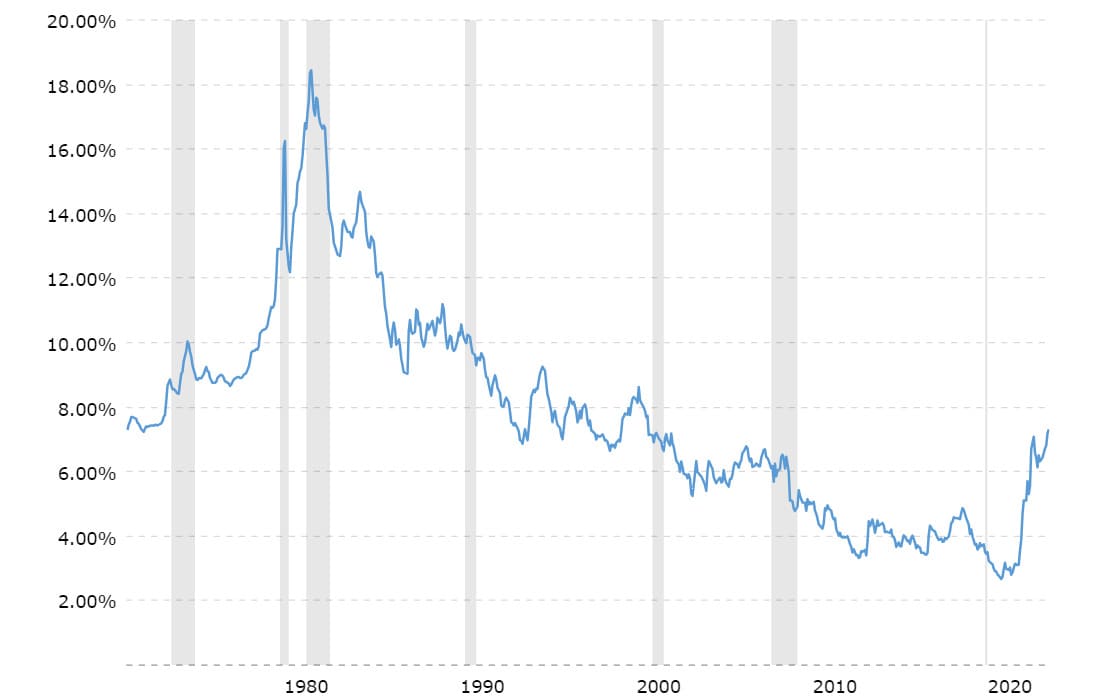
To really understand where we might be headed, it's helpful to remember how we got here. For decades, the average 30-year fixed mortgage rate hovered around 7.7%. We saw some wild spikes, like the astonishing 18.63% in 1981 fueled by high inflation. Then, rates gradually cooled, bringing us into the 2010s where they often danced between 3% and 5%. The pandemic era, with all its economic stimulus, pushed rates to historic lows, even hitting 2.65% in early 2021.

But as inflation reared its head, the Federal Reserve stepped in with interest rate hikes. This, in turn, sent mortgage rates soaring past 7% in 2023 and early 2025. This surge created a strange situation called the “lock-in effect,” where homeowners with super low-interest rates were hesitant to sell, worsening the shortage of homes for sale.

Here's a quick look at how mortgage rates have shifted over the years:

Year/Period Average Rate Key Events
1981 16.64% Inflation peak; Fed hikes
2010 4.69% Recovery from financial crisis
2021 2.96% Pandemic lows; stimulus effects
2025 (peak) ~7.04% Inflation cooling; Fed pauses
Early 2026 ~6.06% Current promising trend

As you can see, rates have been on a rollercoaster. The big question is, can we settle back into that more accessible 5% territory?

What's Driving the Current Trend?

Several factors are at play, and they're all pushing rates in a generally downward direction:

  • Cooling Inflation: This is the big one. When inflation comes down, the Federal Reserve has less pressure to keep interest rates high. And as inflation cools, it generally pulls down the yields on government bonds, which are closely tied to mortgage rates.
  • Federal Reserve Policy: While the Fed isn't directly setting mortgage rates, its actions have a significant impact. Many experts believe the Fed will maintain a neutral policy in 2026, possibly even cutting rates if unemployment starts to climb too high. Of course, any major shift in Fed leadership could introduce some unpredictability.
  • Government Support: In a move aimed at easing the market, directives have been given for agencies like Fannie Mae and Freddie Mac to purchase mortgage-backed securities. This basically injects money into the mortgage market, which can help push rates lower. This has already had a noticeable effect.

Expert Predictions: A Mixed Bag, But Hopeful

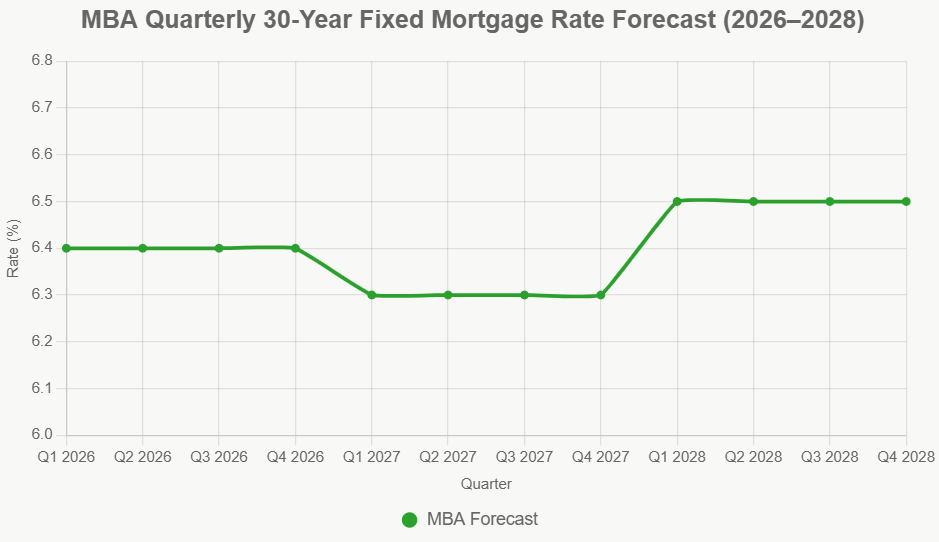
quarterly 30 year fixed mortgage rate forecast 2026

When I look at what the experts are saying, there's a general consensus that rates will continue to ease, but the exact destination for 2026 varies.

  • Some, like Fannie Mae, are calling for rates to hit 5.9% by the end of 2026.
  • Others, like Zillow, see potential for rates to dip to 5.8%, especially with the ongoing government purchases of mortgage-backed securities.
  • However, organizations like the Mortgage Bankers Association (MBA) are a bit more conservative, predicting rates closer to 6.4%, citing concerns about persistent inflation.
  • A few optimistic forecasts, like Morgan Stanley's, suggest rates could even touch 5.75% early in the year.

It's important to note that uncertainties still exist. Global events, unexpected shifts in the job market, or persistent government deficits could all put upward pressure on rates. Think of it as a tug-of-war between forces trying to push rates down and those trying to keep them elevated.

Here’s a quick overview of some predictions:

Organization 2026 Average Rate (Outlook) Notes
Bankrate ~6.1% Possible low of 5.5% with Fed cuts.
Fannie Mae ~5.9% (Q4) Gradual drop expected.
MBA ~6.4% Higher if inflation remains sticky.
Zillow ~5.8% (with MBS buys) Below 6% is psychologically significant for buyers.
Redfin/Realtor.com ~6.3% Affordability will improve, but slowly.
Morgan Stanley ~5.75% Potential for an earlier drop, then a slight rise.
S&P Global ~5.77% Linked to the growth in mortgage originations.

What Could This Mean for You?

If mortgage rates do indeed ease further, particularly if they get close to that 5% mark, it could significantly impact the housing market and individual buyers and sellers.

  • For Buyers: This is where the excitement lies. Lower rates mean lower monthly payments. If rates drop by just 1%, it could make homeownership affordable for millions more households. This would likely lead to an increase in home sales.
  • For Sellers: As the “lock-in effect” lessens, we might see more homes come onto the market, which could help ease the tight inventory we've been experiencing. However, with more competition, prices might not skyrocket as they have in recent years, potentially rising at a more modest pace.
  • Refinancing Opportunities: For those who bought or refinanced at higher rates in the last couple of years, a dip back towards 5% could open the door to significant savings through refinancing.

The Bottom Line: Hope, But Stay Realistic

So, could 2026 be the year mortgage rates return to the 5% mark? It's certainly looking more possible than it has in a long time. The current trend is encouraging, with rates already well below last year's peaks. Falling inflation, a steady Federal Reserve, and supportive government policies are all working in favor of lower mortgage costs.

However, I always advise caution. The economy is a complex beast, and unexpected events can always shift the trajectory. While a return to consistent 5% rates isn't a guarantee, I believe we'll see a continued gradual decline, with many forecasts placing us in the high 5% to low 6% range. This is a much more manageable environment for buyers than we've seen recently.

My advice to anyone looking to buy or sell? Keep a close eye on the economic news, work with a trusted mortgage lender to understand your options, and be prepared to act when the right opportunity arises. 2026 offers a hopeful outlook for the housing market, and for many, it could finally bring that coveted 5% mortgage rate within reach.

🏡 Two Amazing Properties Available for Investors

Port Charlotte, FL
🏠 Property: Aldridge Ave
🛏️ Beds/Baths: 3 Bed • 2 Bath • 1548 sqft
💰 Price: $339,900 | Rent: $2,195
📊 Cap Rate: 5.8% | NOI: $1,643
📅 Year Built: 2025
📐 Price/Sq Ft: $220
🏙️ Neighborhood: A+

and

Punta Gorda, FL
🏠 Property: Oceanic Rd
🛏️ Beds/Baths: 6 Bed • 4 Bath • 3032 sqft
💰 Price: $639,900 | Rent: $4,895
📊 Cap Rate: 6.9% | NOI: $3,685
📅 Year Built: 2025
📐 Price/Sq Ft: $212
🏙️ Neighborhood: B+

Florida’s A+ affordable rental vs Punta Gorda’s larger high‑yield property. Which fits YOUR investment strategy?

We have much more inventory available than what you see on our website – Let us know about your requirement.

📈 Choose Your Winner & Contact Us Today!

Talk to a Norada investment counselor (No Obligation):

(800) 611-3060


View All Properties 

Also Read:

  • What Leading Housing Experts Predict for Mortgage Rates in 2026
  • Mortgage Rate Predictions for 2026: What Leading Forecasters Expect
  • Mortgage Rate Predictions for the Next 3 Years: 2026, 2027, 2028
  • 30-Year Fixed Mortgage Rate Forecast for the Next 5 Years
  • 15-Year Fixed Mortgage Rate Predictions for Next 5 Years: 2025-2029
  • Will Mortgage Rates Ever Be 3% Again in the Future?
  • Mortgage Rates Predictions for Next 2 Years
  • Mortgage Rate Predictions for Next 5 Years
  • Mortgage Rate Predictions: Why 2% and 3% Rates are Out of Reach
  • How Lower Mortgage Rates Can Save You Thousands?
  • How to Get a Low Mortgage Interest Rate?
  • Will Mortgage Rates Ever Be 4% Again?
Filed Under: Financing, Mortgage Tagged With: mortgage, mortgage rates, Mortgage Rates Forecast

Mortgage Rates Slip Under 6%, Driving 29% Surge in Mortgage Demand

January 15, 2026 by Marco Santarelli

Mortgage Rates Slip Under 6%, Driving 29% Surge in Mortgage Demand

Mortgage rates slipping under 6% absolutely ignited a surge in mortgage demand, sending it sky-high by nearly 29% in just one week. This is the news that many in the housing market have been waiting for, and it’s a welcome jolt after a period of cooling. While that big jump in demand is certainly exciting, it’s important to understand what’s behind it and what it means for the future.

Mortgage Rates Slip Under 6%, Driving 29% Surge in Mortgage Demand

Honestly, seeing the numbers from the Mortgage Bankers Association (MBA) for the week ending January 9, 2026, really reaffirmed my own observations. I’ve been in this game long enough to know that even a small shift in interest rates can make a huge difference, and this past week was a perfect example. That brief dip below the 6% mark, largely triggered by news that Fannie Mae and Freddie Mac would be stepping in to buy mortgage-backed bonds, acted like a key unlocking a floodgate of activity.

The Numbers Don't Lie: A Surge in Applications

Let’s break down exactly what happened. The MBA’s Market Composite Index, which tracks overall mortgage application volume, leaped by 28.5% on a seasonally adjusted basis compared to the week before. Now, that’s a significant number, especially considering the usual ebb and flow of the market.

But the real story is in the two main categories of mortgage applications:

  • Refinance Applications: These absolutely exploded, jumping a staggering 40% week-over-week. This was the strongest pace we’ve seen for refinances since October 2025, and when you compare it to the same week a year ago, it’s an unbelievable 128% higher! This tells me that a lot of homeowners who might have been sitting on the sidelines, waiting for a better rate to trim their monthly payments, finally saw their opportunity.
  • Purchase Applications: While not as dramatic as refinances, applications for new home purchases also saw a healthy 16% increase from the prior week. This is great news for the housing market, as it means more people are feeling confident enough to make that big leap into homeownership. It’s also 13% higher than a year ago, showing a positive trend for buyers.

What’s Fueling This Demand Spike?

The primary driver, as mentioned, was the dip in interest rates. The average contract interest rate for a 30-year fixed-rate mortgage nudged down to 6.18% from 6.25% the week before. While that might seem like a small change, it was enough to push the rate below the psychologically important 6% mark for a period, especially after the White House announcement about the government-sponsored enterprises (GSEs) buying mortgage-backed securities.

From my perspective, this shows how sensitive the mortgage market is to even slight shifts in the cost of borrowing. When rates fall, even temporarily, it creates an immediate incentive for people to act. Joel Kan, MBA’s Vice President and Deputy Chief Economist, pointed out that “borrowers with larger loan sizes are typically more sensitive to changes in rates,” which likely contributed to the higher average loan size seen in refinance applications.

Beyond Just Rates: Other Factors at Play

While the rate drop was the main catalyst, it’s not the only reason for this surge. Kan also noted that for purchase applications, “lower rates and higher inventory kept potential homebuyers active in the market.” This is a crucial point. After a period where high prices and limited options made buying a home a significant challenge, an increase in inventory, combined with slightly more affordable borrowing costs, creates a more inviting environment for buyers.

Here’s a quick look at how mortgage activity was distributed:

Application Type Share of Total Applications (Week Ending Jan 9, 2026) Change from Previous Week
Overall – +28.5%
Refinance Increased to 60.2% +40%
Purchase Increased 16% +16%

This shift shows a clear preference for refinancing when rates are favorable, but also a continued, albeit slower, interest in purchasing new homes.

The Broader Housing Market Context

It’s important to temper this good news with a dose of reality. While this surge in mortgage demand is fantastic, it doesn't erase the fundamental challenges that have been impacting the housing market since 2022. Housing affordability remains a significant constraint. Home prices, in many areas, are still elevated, and even with the recent dip, overall mortgage rates are considerably higher than the incredibly low rates we saw during the pandemic years.

This means that while we’re seeing a healthy uptick in activity, we’re not necessarily witnessing a full-blown boom. The market has been in a bit of a slump, and this surge is more of a strong pulse than a complete recovery. We need to see sustained periods of lower rates and potentially moderating home prices for the housing market to truly regain its footing.

What Does This Mean for You?

If you’ve been thinking about refinancing your mortgage, this might be a golden opportunity to lock in a lower interest rate and potentially reduce your monthly payments. It’s always a good idea to shop around and compare offers from different lenders to ensure you’re getting the best deal.

For prospective homebuyers, the increased inventory and the slight dip in rates could make now a more opportune time to enter the market. However, it’s still essential to do your homework, understand your budget, and be prepared for the commitment of homeownership.

Looking Ahead

This recent surge is a powerful reminder of how dynamic the mortgage market is. It’s highly responsive to economic shifts and government actions. While the rates may have moved back up slightly since this snapshot, the underlying demand is clearly there, waiting for the right conditions. As an industry professional, I believe we'll continue to see fluctuations, but this recent activity is a positive indicator of the underlying resilience and desire for homeownership.

🏡 Which Rental Property Would YOU Invest In?

Lebanon, TN
🏠 Property: Baltusrol Lane #852
🛏️ Beds/Baths: 4 Bed • 2.5 Bath • 2011 sqft
💰 Price: $369,990 | Rent: $2,400
📊 Cap Rate: 5.8% | NOI: $1,789
📅 Year Built: 2024
📐 Price/Sq Ft: $184
🏙️ Neighborhood: B

VS

San Antonio, TX
🏠 Property: Salz Way
🛏️ Beds/Baths: 3 Bed • 2 Bath • 2330 sqft
💰 Price: $384,999 | Rent: $2,375
📊 Cap Rate: 4.1% | NOI: $1,324
📅 Year Built: 2019
📐 Price/Sq Ft: $166
🏙️ Neighborhood: A

Tennessee’s balanced rental vs Texas’s larger home with lower cap rate. Which fits YOUR investment strategy?

We have much more inventory available than what you see on our website – Let us know about your requirement.

📈 Choose Your Winner & Contact Us Today!

Talk to a Norada investment counselor (No Obligation):

(800) 611-3060

Contact Us Now

Also Read:

  • Mortgage Rates Forecast for the Next 90 Days: January-April 2026
  • Mortgage Rates Predictions for 2026 Backed by Top Housing Experts
  • Mortgage Rate Predictions for the Next 3 Years: 2026, 2027, 2028
  • 30-Year Fixed Mortgage Rate Forecast for the Next 5 Years
  • 15-Year Fixed Mortgage Rate Predictions for Next 5 Years: 2025-2029
  • Will Mortgage Rates Ever Be 3% Again in the Future?
  • Mortgage Rates Predictions for Next 2 Years
  • Mortgage Rate Predictions for Next 5 Years
  • Mortgage Rate Predictions: Why 2% and 3% Rates are Out of Reach
  • How Lower Mortgage Rates Can Save You Thousands?
  • How to Get a Low Mortgage Interest Rate?
  • Will Mortgage Rates Ever Be 4% Again?

Filed Under: Financing, Mortgage Tagged With: mortgage, mortgage rates, Mortgage Rates Forecast

Mortgage Rates Forecast 2026: Is Your Wallet About to Catch a Break?

January 15, 2026 by Marco Santarelli

Mortgage Rates 2026: Is Your Wallet About to Catch a Break or Just a Breeze?

The era of escalating interest rates has been a challenging one for many. The good news for 2026 is that we might see a gradually declining trend in mortgage rates, offering some much-needed relief. However, let's manage expectations: the sub-3% rates of the pandemic era are likely a relic of the past. Instead, anticipate subtle shifts – more of a gentle exhale than a dramatic plunge.

This post will explore mortgage rate history, current predictions, the economic forces at play, ongoing debates, and the key indicators to watch.

Mortgage Rates Forecast 2026: Is Your Wallet About to Catch a Break?

Understanding where we're going requires a look back at the volatile landscape of mortgage rates:

Era Approximate Mortgage Rate Key Characteristics
The Wild West (1980s) ~18% (1981 peak) Extremely high rates, a challenging financial frontier.
The Calm Before the Storm (1950s-1990s) ~4% to steady decline Relative stability followed by gradual decreases.
The Golden Age (Early 2020s) Sub-3% Temporary paradise due to pandemic-era policies.
The Reality Check (2022-2025) >7% (30-year fixed) Inflation led to Fed rate hikes, causing rates to surge.
Where We Stand Now (Early 2026) ~6.16% A step down from the peak, but still distant from lows.

It's important to note that the historical average since 1971 is closer to 7.7%, providing a broader perspective on current rates.

The Crystal Ball: What the Experts Are Predicting for 2026

Financial forecasters offer a somewhat hazy but generally optimistic outlook for 2026:

Source / Forecast Type Predicted 30-Year Fixed Rate Range Key Nuances
General Consensus Low to Mid-6% Broad agreement among major financial institutions.
Optimists Potentially below 6%, flirting with 5.5% Suggests a return to lower rates not seen since mid-2022.
Realists (e.g., MBA) Closer to 6.4% A more cautious forecast of a gentle downward drift.
Overall Expectation “Bouncing around 6%” Expect volatility with minor oscillations throughout the year.

For those in the UK, rates are projected to ease towards 3-3.5% by year-end, driven by anticipated Bank of England cuts.

Who's Pulling the Strings? The Economic Puppeteers

Several powerful forces influence mortgage rates:

  • Inflation: The primary driver. A retreat in inflation will likely lead to lower rates, while a resurgence could push them higher.
  • The Federal Reserve's Hand: While not directly setting mortgage rates, the Fed's benchmark interest rate decisions have a significant impact. Expected rate cuts are crucial, but the Fed is proceeding cautiously.
  • Economic Jitters: A slowing economy or the threat of recession typically puts downward pressure on rates as central banks aim to stimulate growth.
  • The Bond Market Beat: The 10-year Treasury yield is a key indicator of economic sentiment and closely watched by lenders.
  • Lender Showdown: An ongoing “price war” among lenders is contributing to slight rate easing.
  • Global Wildcards: Geopolitical instability and energy price fluctuations can exert unexpected influence.

The Great Debate: Why Everyone Isn't on the Same Page

Economic forecasting is rarely unanimous. Key points of contention include:

  • How Low Can We Go? Some argue that significant drops below 6% are unlikely without a more pronounced economic downturn.
  • The “Priced In” Argument: Many economists believe that expected Fed rate cuts are already reflected in current market prices, limiting the impact of future cuts on mortgage costs.
  • The Affordability Puzzle: Even with slightly lower rates, elevated home prices mean that affordability will likely see only marginal improvement, with payments remaining significantly higher than pre-pandemic levels.
  • The UK's Unique Twist: In the UK, homeowners might see increased payments due to refinancing from ultra-low fixed deals, even as overall rates decline.
  • Political Interference & Supply Headaches: Geopolitical events, potential government policies, and persistent housing inventory shortages can introduce uncertainty and competition.

Looking Ahead: What's Next for Rates and Your Homeownership Dreams

The outlook for 2026 suggests a sense of cautious optimism with generally easing rates, but prepare for volatility.

Key Indicators to Watch:

  • Inflation Reports: Crucial for understanding the direction of monetary policy.
  • Federal Reserve Announcements: Statements and meeting minutes will provide insights into future rate decisions.
  • Employment Figures: Strong employment data can support economic growth and influence rate expectations.

The Housing Market's New Balance:

Lower rates are anticipated to stimulate sales and offer a modest boost to affordability. However, a combination of strong buyer demand and limited inventory suggests that competition will remain fierce.

The Takeaway for You:

While 2026 is unlikely to mirror the historic lows of 2021, it could present a more favorable borrowing environment than the recent past. The overall trend, however slight, appears to be downward. This may be an opportune time to strategize your next move in the housing market or explore refinancing options.

🏡 Which Rental Property Would YOU Invest In?

Lebanon, TN
🏠 Property: Baltusrol Lane #852
🛏️ Beds/Baths: 4 Bed • 2.5 Bath • 2011 sqft
💰 Price: $369,990 | Rent: $2,400
📊 Cap Rate: 5.8% | NOI: $1,789
📅 Year Built: 2024
📐 Price/Sq Ft: $184
🏙️ Neighborhood: B

VS

San Antonio, TX
🏠 Property: Salz Way
🛏️ Beds/Baths: 3 Bed • 2 Bath • 2330 sqft
💰 Price: $384,999 | Rent: $2,375
📊 Cap Rate: 4.1% | NOI: $1,324
📅 Year Built: 2019
📐 Price/Sq Ft: $166
🏙️ Neighborhood: A

Tennessee’s balanced rental vs Texas’s larger home with lower cap rate. Which fits YOUR investment strategy?

We have much more inventory available than what you see on our website – Let us know about your requirement.

📈 Choose Your Winner & Contact Us Today!

Talk to a Norada investment counselor (No Obligation):

(800) 611-3060

Contact Us Now

Also Read:

  • Mortgage Rates Forecast for the Next 90 Days: January-April 2026
  • Mortgage Rates Predictions for 2026 Backed by Top Housing Experts
  • Mortgage Rate Predictions for the Next 3 Years: 2026, 2027, 2028
  • 30-Year Fixed Mortgage Rate Forecast for the Next 5 Years
  • 15-Year Fixed Mortgage Rate Predictions for Next 5 Years: 2025-2029
  • Will Mortgage Rates Ever Be 3% Again in the Future?
  • Mortgage Rates Predictions for Next 2 Years
  • Mortgage Rate Predictions for Next 5 Years
  • Mortgage Rate Predictions: Why 2% and 3% Rates are Out of Reach
  • How Lower Mortgage Rates Can Save You Thousands?
  • How to Get a Low Mortgage Interest Rate?
  • Will Mortgage Rates Ever Be 4% Again?

Filed Under: Financing, Mortgage Tagged With: mortgage, mortgage rates, Mortgage Rates Forecast

Mortgage Rates Forecast for Next 90 Days: January 2026-April 2026

January 12, 2026 by Marco Santarelli

Mortgage Rates Forecast for the Next 90 Days: January-April 2026

As we stand on the cusp of early 2026, the burning question on many minds, especially those looking to buy a home or refinance an existing mortgage, is: what’s next for mortgage rates? After a period of significant ups and downs, there’s a palpable sense of anticipation. My read on the situation, and on what the data suggests, is that mortgage rates are poised for a period of relative stability or a modest dip over the next 90 days, likely hovering in the low to mid-6% range for a 30-year fixed mortgage. However, it’s crucial to understand that this isn't a guarantee, and a sprinkle of caution is warranted.

Mortgage Rates Forecast for Next 90 Days: January 2026-April 2026

It feels like just yesterday we were talking about rates soaring past 7%, making the dream of homeownership feel impossibly distant for many. Now, as we move through early January 2026, the average 30-year fixed mortgage rate is sitting around 6.5% to 6.8%, with 15-year fixed rates a bit lower, around 5.8% to 6.1%. Adjustable-rate mortgages (ARMs) are still offering lower initial rates, but they come with that built-in risk of future increases.

I’ve spent a lot of time watching the economic signals, digging into reports, and talking to folks in the industry, and my gut feeling is echoed by many experts: we're likely looking at a gradual easing. By April 2026, we might see those 30-year fixed rates nudging down towards the 6.2% to 6.5% mark. This positive outlook is largely driven by the cooling inflation we’ve been witnessing and the Federal Reserve’s recent moves to make borrowing a bit cheaper. But, and here’s the big “but,” economic data can be a fickle thing. If inflation decides to stick around longer than expected, or if the job market continues to roar, rates could surprise us and hold steady or even inch back up.

My goal with this article is to break down what’s influencing these forecasts, what it could mean for you, and how you can best navigate this potentially shifting terrain. I want to give you the real deal, not just a bunch of numbers, but a sense of the forces at play.

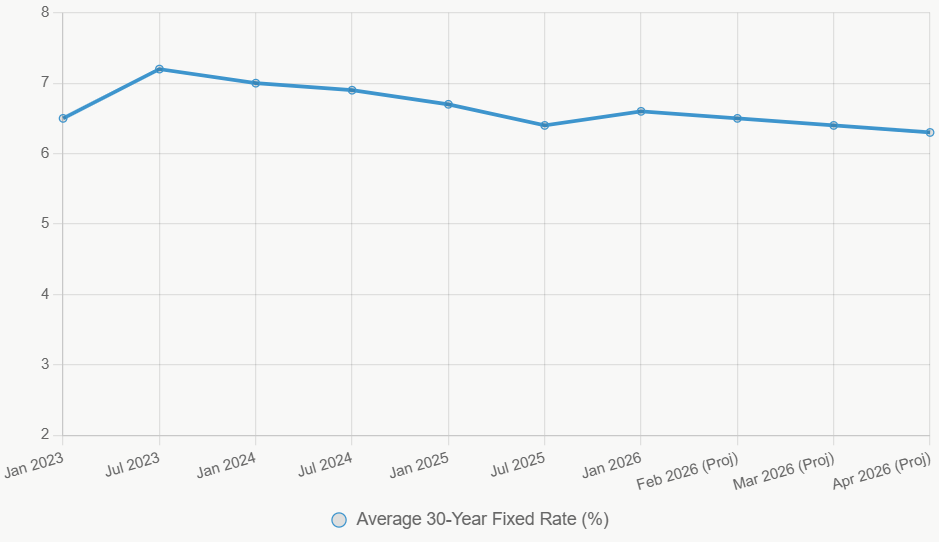
chart depicting mortgage rates forecast for the next 90 days

Understanding the Basics: What Are Mortgage Rates Anyway?

Before we dive into the future, let’s have a quick refresher on what mortgage rates actually are. Simply put, they’re the price you pay to borrow money for a home. They're usually shown as a percentage, an annual rate. The two main types you’ll hear about are:

  • Fixed-Rate Mortgages: These are the predictable ones. Your interest rate stays the same for the entire life of the loan. The 30-year fixed is king for a reason – it offers stable monthly payments, making budgeting much easier. The flip side? They generally come with a slightly higher interest rate compared to shorter terms.
  • Adjustable-Rate Mortgages (ARMs): These often start with a lower interest rate for an initial period (say, five or seven years), after which the rate can go up or down based on market conditions. They can be attractive if you plan to sell or refinance before the adjustment period, but they carry more risk.

Mortgage rates are intricately linked to broader economic signals. Think of the 10-year U.S. Treasury yield as a key benchmark; a higher yield on these government bonds usually means higher mortgage rates, and vice versa. Lenders then add their own spread on top of that to cover their costs and make a profit.

Right now, entering 2026, we’re seeing the results of past actions. After a period of aggressive interest rate hikes in 2022 and 2023 to combat soaring inflation, the Federal Reserve started to dial things back with cuts in 2025. This has brought some much-needed breathing room for borrowers. However, the latest whispers from the jobs market and consumer spending data are adding a layer of complexity, making the Fed’s next moves a critical point to watch.

Factors Shaping the Next 90 Days: My Take on the Moving Parts

Predicting mortgage rates feels a bit like trying to catch lightning in a bottle sometimes. So many things can influence them! Here are the key players I'm keeping a close eye on for the next three months (roughly through mid-April 2026):

  • The Federal Reserve's Next Steps: This is probably the biggest driver. The Fed has a couple of key meetings coming up in January and March 2026. If inflation continues to play nice and shows it’s heading towards their 2% target, they’re likely to make another interest rate cut, perhaps by 0.25%. This would naturally pull mortgage rates down. But, if inflation proves stubborn – what we call “sticky core inflation” – they might hit the pause button, and that would stabilize or even slightly increase rates. I’m leaning towards them continuing to ease, but I’ve seen surprises before.
  • Economic Signals – The Numbers Game: We need to pay close attention to the economic reports that come out. The Consumer Price Index (CPI) report, which tells us about inflation, is a big one. If it’s coming in lower than expected, that’s good news for lower mortgage rates. Similarly, the unemployment rate and job growth numbers are crucial. If the job market is booming, it signals a strong economy that might not need as much help from low interest rates, potentially pushing rates up. I’m looking for a slight moderation in job growth to support continued rate declines.
  • The Global Picture: We can’t ignore what’s happening outside our borders. Trade tensions between major countries or spikes in oil prices (often linked to conflicts in the Middle East) can quickly reignite inflation fears. Conversely, a peaceful resolution to global conflicts could take some pressure off. These geopolitical events can be highly unpredictable and have a ripple effect on markets.
  • The Housing Market Itself: Even within the housing market, there are tugs and pulls. We still have relatively low inventory of homes for sale in many areas, coupled with steady demand. This can keep prices and, by extension, rates a bit higher than they might otherwise be, as lenders factor in the risk of borrowers struggling if home prices were to fall sharply.

The general consensus among those who analyze these things for a living is that we’ll see some relief, but the uncertainty is real. Some projections suggest a drop of 0.25% to 0.5%, while others believe we’ll see more stability if the economy keeps chugging along stronger than anticipated.

What This Could Mean for You: Buyers and Refinancers

So, how does all this translate to your wallet and your homeownership dreams?

For Homebuyers:

  • More Affordable Monthly Payments: A lower interest rate can significantly reduce your monthly mortgage payment. For example, on a $400,000 loan, a 0.5% drop in your interest rate could save you roughly $100 to $200 per month. Over the life of a 30-year loan, that adds up to tens of thousands of dollars.
  • Increased Purchasing Power: As rates come down, your budget can stretch further. A rate decrease might allow you to afford a slightly more expensive home or simply make your desired home more financially accessible.
  • First-Time Buyers: Programs like FHA loans and VA loans for eligible veterans can sometimes offer even more attractive rates than the standard market averages. It’s always worth exploring these options.

For Refinancers:

  • Opportunity to Save: If you have an existing mortgage with a higher interest rate, a dip in rates could make refinancing a smart move. The idea is to lower your monthly payment or reduce the total interest paid over the life of your loan.
  • Break-Even Point: It’s crucial to calculate your break-even point. Refinancing involves closing costs (typically 2% to 5% of your loan amount). You need to figure out how long it will take for your monthly savings to offset these costs. If rates drop significantly, this break-even point becomes much more attractive.

Some Important Considerations:

  • Rate Locks: If you’re buying a home, you’ll likely need to lock in your rate for a certain period. Be mindful of these lock expiration dates, especially if your closing is delayed.
  • Float-Down Options: Some lenders offer a “float-down” option when you lock your rate. This means if your rate drops between locking and closing, you can take advantage of the lower rate. It’s a good way to get some protection against rising rates while hoping for declines.

Deeper Dive: Trends and Projections

To get a more complete picture, I’ve spent time looking at the historical data and where experts are pointing. Mortgage rates are like a barometer of economic health. They reflect how confident investors are, how much inflation is biting, and what central banks are doing. After the crazy stimulus of the pandemic years, which sent rates to historic lows below 3% from 2020-2021, fueling a housing frenzy, we saw inflation climb. That forced the Federal Reserve to hike rates significantly, pushing 30-year fixed mortgages above 7% by 2022-2023.

Thankfully, the tide started to turn in late 2024 with those first Fed rate cuts. By December 2025, rates had eased to roughly 6.6-6.8%. This journey shows just how sensitive rates are to economic cycles.

Here’s a look back to set the stage:

Period Average 30-Year Fixed Rate Key Events Influencing Rates
2020-2021 2.8-3.1% Pandemic stimulus, low Treasury yields, low inflation
2022-2023 6.5-7.5% Fed rate hikes to combat high inflation
2024 6.8-7.2% Inflation started cooling, but still persistent pressures
2025 (to Dec) 6.3-6.8% Multiple Fed cuts, economic softening, inflation trends lower
Jan 2026 ~6.6% (current) Stabilizing post-cuts, awaiting new economic data

Data sourced from Freddie Mac's Primary Mortgage Market Survey and MBA reports.

This table highlights a general downward trend since the peaks of mid-2023, which is why there’s a cautious optimism for early 2026.

The 10-year U.S. Treasury yield, currently around 4.2-4.4% as of January 2026, is the bedrock for mortgage rates. When that yield moves, mortgage rates tend to follow.

Expert Forecasts: A Look at What the Pros Are Saying

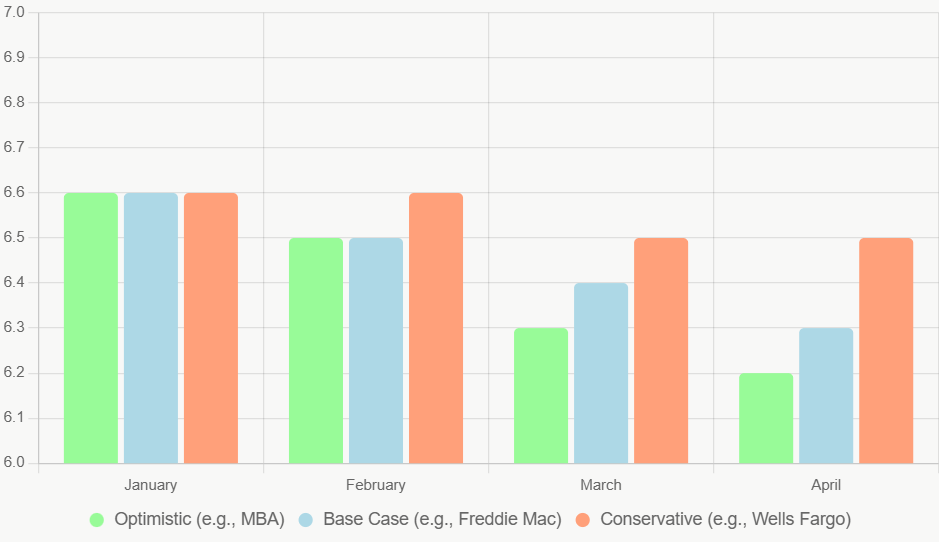
bar chart comparing projected average rates by month

I’ve pulled together some of the general sentiment from reputable sources. Keep in mind these are educated guesses, not crystal balls:

  • Freddie Mac: They're anticipating 30-year fixed rates to average around 6.4% in the first quarter of 2026, potentially dipping to 6.2% by the second quarter. They see this driven by expected Fed cuts and a moderating economy.
  • Fannie Mae: Their outlook is quite similar, forecasting rates in the 6.3% to 6.5% range through April. Their base scenario involves a couple of Fed rate cuts. They do point out that if GDP growth is stronger than expected, rates could trend higher.
  • Mortgage Bankers Association (MBA): The MBA is a bit more bullish on rate drops, predicting rates could fall to 6.2% by the end of March, especially if inflation stays below 3%. Their weekly surveys are a great pulse-check on where things stand.
  • Wells Fargo Economics: They see a bit more stability in the short term, with rates in the 6.5% to 6.7% range. However, they suggest a potential drop to 6.3% if unemployment starts to tick up.
  • JPMorgan Chase: They are a touch more conservative, projecting an average of 6.4% to 6.6%. They specifically mention that the upcoming election year politics (2026 midterms) could introduce some unexpected volatility.

As you can see, the experts generally agree on a downward bias, but they all add caveats about unexpected events.

Here’s a quick comparison of these projections:

Source 30-Year Fixed Forecast (Jan-Apr 2026) Key Assumptions
Freddie Mac 6.4% average, down to 6.3% Two Fed cuts, inflation ~2.5%
Fannie Mae 6.3-6.5% GDP growth ~1.8%, mild recession risk
Mortgage Bankers Assoc. 6.2-6.4% Strong refinancing activity if rates dip below 6.5%
Wells Fargo 6.5-6.7%, potential drop to 6.3% Continued strong jobs data holds rates steady
JPMorgan Chase 6.4-6.6% Geopolitical stability assumed

Scenarios for the Next 90 Days

To really get a grip on the possibilities, thinking in terms of scenarios is helpful:

  • Best Case (Rates Fall Sharply): Imagine inflation dropping below 2.5% and the Fed deciding to make more aggressive cuts, say a total of 0.50% in the next couple of meetings. This could push 30-year fixed rates down to the 6.0% to 6.2% range. This would be fantastic news for affordability, likely spurring a noticeable increase in home sales.
  • Base Case (Modest Decline): This aligns with most of the expert forecasts. We see moderate economic growth (around 2% GDP), inflation continuing its downward trend, and no major economic shocks. Rates ease slightly, settling in the 6.3% to 6.5% range. This is the “steady as she goes” scenario.
  • Worst Case (Rates Rise or Hold Steady): If inflation proves more persistent than expected (say, it stays above 3.5%), or if the job market remains exceptionally strong, the Fed might pause its rate cuts. This could lead to rates holding steady above 6.7% or even drifting back up towards 6.8% to 7.0%. This would undoubtedly cool down the housing market.

Strategies for Navigating the Next 90 Days

Given this mix of potential outcomes, what’s the best way to approach things?

  1. Stay Informed and Watch Key Dates: Mark your calendar for the Federal Reserve’s policy meetings (January 31 and March 20 for 2026) and the release dates for major economic reports like CPI (mid-February, mid-March, mid-April for January, February, and March data, respectively) and employment figures.
  2. Shop Around Like Crazy: This is non-negotiable. Mortgage lenders can offer different rates and fees. Using online tools from sites like Bankrate or NerdWallet can give you a starting point, but always get personalized quotes. Differences of 0.25% or more are not uncommon and can save you thousands.
  3. Understand Rate Locks vs. Floating:
    • Locking: If you’re confident you want to buy and are worried about rates going up, a rate lock provides peace of mind. You’re guaranteed that rate for a specific period.
    • Floating: If you think rates will go down and you have some time before you need to close, you might choose to “float” your rate. This means you’re taking the risk that the rate could go up. Some lenders offer float-down options, which is a nice compromise.
  4. Boost Your Credit Score: If you have a bit of time before seriously shopping for a mortgage, focus on improving your credit score. A score of 760 or higher typically gets you the best rates from lenders. Even a small improvement can make a difference.
  5. Explore All Your Options: Don’t just think about the 30-year fixed. If you plan to move in five to seven years, a 7/1 ARM starting around 5.8% could offer initial savings. Always discuss your personal financial situation and goals with a mortgage professional.
  6. Seek Professional Advice: A good mortgage broker or financial advisor can be an invaluable resource. They can help you understand the nuances of different loan products and guide you based on your unique circumstances. The Consumer Financial Protection Bureau (CFPB) also offers helpful tools to compare rates.

The Bigger Picture: Beyond the Next 90 Days

Looking further out, if the trend of moderating inflation and economic growth continues, some forecasts suggest that the average 30-year fixed rate could settle between 5.8% and 6.2% for 2026. However, longer-term predictions are even harder to make accurately. Factors like climate change impacting insurance costs in certain areas, demographic shifts (like millennials aging into prime home-buying years), and global financial stability all play a role.

Right now, U.S. mortgage rates remain significantly higher than in some European countries (where rates might be around 3-4%), which can influence international investment in U.S. real estate.

In conclusion, the next 90 days offer a promising outlook for those looking to enter or re-enter the mortgage market. While stability or modest declines seem likely, the economic chessboard is constantly shifting. Staying informed, comparing your options diligently, and having a strategy are your best defenses against uncertainty. This forecast is based on the best available information right now, but remember that markets are dynamic and always evolving.

🏡 Which Rental Property Would YOU Invest In?

Lebanon, TN
🏠 Property: Baltusrol Lane #852
🛏️ Beds/Baths: 4 Bed • 2.5 Bath • 2011 sqft
💰 Price: $369,990 | Rent: $2,400
📊 Cap Rate: 5.8% | NOI: $1,789
📅 Year Built: 2024
📐 Price/Sq Ft: $184
🏙️ Neighborhood: B

VS

San Antonio, TX
🏠 Property: Salz Way
🛏️ Beds/Baths: 3 Bed • 2 Bath • 2330 sqft
💰 Price: $384,999 | Rent: $2,375
📊 Cap Rate: 4.1% | NOI: $1,324
📅 Year Built: 2019
📐 Price/Sq Ft: $166
🏙️ Neighborhood: A

Tennessee’s balanced rental vs Texas’s larger home with lower cap rate. Which fits YOUR investment strategy?

We have much more inventory available than what you see on our website – Let us know about your requirement.

📈 Choose Your Winner & Contact Us Today!

Talk to a Norada investment counselor (No Obligation):

(800) 611-3060

Contact Us Now

Also Read:

  • Mortgage Rates Predictions Backed by 7 Leading Experts: 2025–2026
  • Mortgage Rate Predictions for the Next 3 Years: 2026, 2027, 2028
  • 30-Year Fixed Mortgage Rate Forecast for the Next 5 Years
  • 15-Year Fixed Mortgage Rate Predictions for Next 5 Years: 2025-2029
  • Will Mortgage Rates Ever Be 3% Again in the Future?
  • Mortgage Rates Predictions for Next 2 Years
  • Mortgage Rate Predictions for Next 5 Years
  • Mortgage Rate Predictions: Why 2% and 3% Rates are Out of Reach
  • How Lower Mortgage Rates Can Save You Thousands?
  • How to Get a Low Mortgage Interest Rate?
  • Will Mortgage Rates Ever Be 4% Again?

Filed Under: Financing, Mortgage Tagged With: mortgage, mortgage rates, Mortgage Rates Forecast

Historical Mortgage Rates Since 1950: How Did Rates Change By Year?

October 2, 2024 by Marco Santarelli

Historical Mortgage Rates Since 1950: Rate Trends Over Time

If you are thinking about buying a home or refinancing your current mortgage, you might be wondering how interest rates have changed over time and what factors affect them. In this blog post, we will take a look at the historical trends of mortgage rates in the U.S. from 1950 to 2023.

How Have Mortgage Rates Changed by Year Since 1950?

Mortgage rates have fluctuated significantly over time, depending on the changes in the factors mentioned above. According to Freddie Mac's Primary Mortgage Market Survey (PMMS), which tracks the average rates for 30-year fixed-rate mortgages since 1971, mortgage rates have ranged from a record low of 2.65% in January 2021 to a record high of 18.63% in October 1981.

The following chart shows the historical trends of 30-year fixed-rate mortgage rates from 1950 to 2023, based on data from Freddie Mac's PMMS (from 1971 onwards) and Federal Reserve Economic Data (FRED) (from 1950 to 1970).

As you can see from the chart, mortgage rates have gone through several cycles of rising and falling over time, reflecting the changes in the economic and financial conditions.

How Have Mortgage Rates Changed Over Time Since 1950
Source

Historical Mortgage Rate Changes Since 1950

Some of the notable periods of mortgage rate movements include:

The 1950s, when mortgage rates were relatively stable and low, averaged around 4%. This was a period of strong economic growth and low inflation after World War II, supported by government spending on infrastructure, defense, education, and social programs.

The housing market also benefited from favorable policies such as low down payment requirements, long-term amortization schedules, tax deductions for mortgage interest payments, and government-backed mortgage insurance programs.

In the 1960s, mortgage rates started to increase gradually, reaching around 7% by the end of the decade. This was a period of moderate economic growth and rising inflation, driven by increased government spending on social welfare programs, such as Medicare and Medicaid, as well as military spending on the Vietnam War. The housing market also faced some challenges from tighter credit conditions, higher construction costs, and urban unrest.

The 1970s, when mortgage rates soared to double-digit levels, peaking at 12.9% in 1979. This was a period of stagflation, characterized by low economic growth and high inflation, caused by the oil price shocks, the collapse of the Bretton Woods system of fixed exchange rates, and the expansionary monetary and fiscal policies. The housing market also suffered from declining affordability, lower demand, and reduced construction activity.

The 1980s, when mortgage rates reached record highs, hitting 18.63% in 1981, before falling sharply to around 9% by the end of the decade. This was a period of disinflation, marked by a severe recession in the early 1980s, followed by a strong recovery in the mid-to-late 1980s.

The Fed adopted a tight monetary policy to curb inflation, while the government implemented a fiscal policy that combined tax cuts and spending increases. The housing market also experienced a boom-and-bust cycle, with high-interest rates and low affordability in the early 1980s, followed by lower interest rates and higher demand in the mid-to-late 1980s.

The 1990s, when mortgage rates declined steadily, reaching around 6.5% by the end of the decade. This was a period of stable economic growth and low inflation, supported by technological innovations, productivity gains, trade liberalization, and fiscal consolidation. The housing market also enjoyed a sustained expansion, with rising homeownership rates, increasing home values, and robust construction activity.

In the 2000s, the mortgage rates fluctuated within a narrow range of 4.7% to 8.6%, averaging around 6.2% for the decade. This was a period of economic volatility and financial instability, marked by the dot-com bubble and bust in the early 2000s, followed by the housing bubble and bust in the mid-to-late 2000s.

The Fed adopted an accommodative monetary policy to stimulate the economy, while the government implemented various fiscal stimulus measures to mitigate the effects of the recessions.

The housing market also witnessed a dramatic rise and fall, with lax lending standards, speculative demand, and excessive leverage fueling a housing boom in the early-to-mid 2000s, followed by a housing bust in the late 2000s that triggered the global financial crisis.

In the 2010s, the mortgage rates reached historic lows, falling below 3.5% for most of the decade. This was a period of slow economic recovery and low inflation, hampered by the aftermath of the financial crisis, the European debt crisis, the trade war between the U.S. and China, and other geopolitical uncertainties.

The Fed adopted an unconventional monetary policy to support the economy, including quantitative easing (QE), forward guidance, and near-zero interest rates. The housing market also recovered gradually from the crisis, with improving affordability, pent-up demand, limited supply, and favorable demographics boosting home sales and prices.

The 2020s saw the mortgage rates hit an all-time low of 2.65% in January 2021 amid the Covid-19 pandemic, before surging to over 7% in October 2023 amid rising inflation pressures. This was a period of unprecedented economic disruption and policy intervention due to the global health crisis that caused widespread lockdowns, business closures, job losses, and income shocks.

The Fed adopted an emergency monetary policy to provide liquidity and stimulus to the economy, including slashing interest rates to zero, expanding QE programs, launching new lending facilities, and adopting a new framework that allows for higher inflation tolerance.

The government also implemented massive fiscal stimulus measures to provide relief and support to households and businesses affected by the pandemic. The housing market also defied expectations and performed strongly during the pandemic, with record-low interest rates, increased savings rates, shifting preferences for more space and amenities, limited inventory levels, and strong demand from millennials driving home sales and prices to new highs.

How Are Mortgage Rates Determined Over Time?

Mortgage rates are the interest rates that lenders charge borrowers for borrowing money to buy or refinance a home. Mortgage rates are influenced by many factors, such as:

  • The Federal Reserve's monetary policy, which affects the supply and demand of money in the economy. The Fed can raise or lower its target for the federal funds rate, which is the interest rate that banks charge each other for overnight loans. This rate affects other short-term interest rates, such as the prime rate and the London Interbank Offered Rate (LIBOR), which are benchmarks for many consumer and business loans, including some mortgages.
  • The inflation rate, which measures the change in the prices of goods and services over time. Higher inflation erodes the purchasing power of money and reduces the real return on investments. Lenders demand higher interest rates to compensate for the loss of value of their money over time. Conversely, lower inflation increases the real return on investments and reduces the demand for higher interest rates.
  • The economic growth, which reflects the level of activity and income in the economy. Higher economic growth increases the demand for credit and pushes up interest rates, as more people and businesses want to borrow money to invest or spend. Lower economic growth decreases the demand for credit and puts downward pressure on interest rates, as less people and businesses want to borrow money or save more.
  • The supply and demand of mortgage-backed securities (MBS), which are bonds that represent pools of mortgages that are sold to investors. MBS are a major source of funding for mortgage lenders, who use the proceeds from selling MBS to make new loans. The price and yield of MBS are determined by the market forces of supply and demand, which depend on factors such as the quality and performance of the underlying mortgages, the expectations of future interest rates and inflation, and the risk appetite of investors.
  • The creditworthiness of borrowers, which reflects their ability and willingness to repay their loans. Lenders assess borrowers' creditworthiness based on their income, assets, debts, credit history, and other factors. Borrowers with higher credit scores, lower debt-to-income ratios, larger down payments, and more stable income sources are considered less risky and qualify for lower interest rates. Borrowers with lower credit scores, higher debt-to-income ratios, smaller down payments, and less stable income sources are considered more risky and pay higher interest rates.

Filed Under: Financing, Housing Market, Mortgage, Real Estate Tagged With: 30-Year Mortgage Rate Forecast, Mortgage Rates Forecast

30-Year Mortgage Rates on the Rise: Will It Affect Your Dream Home?

April 25, 2024 by Marco Santarelli

30-Year Mortgage Rate predictions

As of April 2024, the housing market finds itself in a state of flux. While hopes for a return to historically low mortgage rates have dimmed, experts still predict a decline from the current highs. But what exactly does 2024 hold for borrowers seeking a 30-year fixed-rate mortgage? Let's dive into the data and insights from leading authorities.

The Current Landscape: Rates on the Rise

As of this writing, the average 30-year fixed-rate mortgage sits at a stubborn 7.1%, according to Freddie Mac. This is a significant jump from rates below 7% at the beginning of the year, and even further from the lows of 2023. The culprit? Stubbornly high inflation has forced the Federal Reserve to raise interest rates.

Expert Predictions: A Gradual Decline is Expected

Despite the recent rise, most experts predict a gradual decrease in mortgage rates throughout the remainder of 2024. Here's a breakdown of some key predictions from housing giants and industry leaders:

  • Fannie Mae: After revising their initial forecast upwards, Fannie Mae now expects the 30-year rate to settle at 6.4% by year-end.
  • Mortgage Bankers Association (MBA): The MBA's baseline forecast is more optimistic, with rates dipping to 6.1% by the end of 2024 and reaching 5.5% in 2025.
  • National Association of Realtors (NAR): Chief Economist Lawrence Yun predicts rates to remain in the 6% to 7% range for most of 2024.

What This Means for Homebuyers:

Prospective homebuyers should be prepared for a mortgage rate environment that's higher than what they might have expected a year ago. However, there's still a chance for rates to fall throughout the year. Here are some tips:

  • Stay Informed: Keep an eye on economic data and Federal Reserve pronouncements to understand how they might affect mortgage rates.
  • Shop Around: Compare rates from different lenders to secure the best deal.
  • Consider Adjustable-Rate Mortgages (ARMs): If you plan to sell your home within the fixed-rate period of an ARM, it might offer a lower initial rate. However, understand the risks involved as rates can adjust after the initial period.
  • Focus on Affordability: Don't overextend yourself financially. Focus on finding a home that fits comfortably within your budget, even with higher mortgage rates.

Factors Influencing Rise or Fall of 30-Year Mortgage Rates

If you are planning to buy a house and need a loan, you might be interested in knowing what are the factors that affect 30-year mortgage rates.  Mortgage rates are the interest rates that lenders charge borrowers for lending them money to buy a property.

The longer the term of the loan, the higher the interest rate, because lenders face more risk and uncertainty. There are many factors that influence 30-year mortgage rates, but some of the most important ones are:

1. The Federal Reserve:

The Fed is the central bank of the United States, and it sets the federal funds rate, which is the interest rate that banks charge each other for overnight loans. The federal funds rate affects the prime rate, which is the interest rate that banks charge their most creditworthy customers. The prime rate, in turn, affects the mortgage rates that lenders offer to borrowers.

When the Fed lowers the federal funds rate, it stimulates the economy by making borrowing cheaper. This can lead to lower mortgage rates, as lenders compete for customers. Conversely, when the Fed raises the federal funds rate, it slows down the economy by making borrowing more expensive. This can lead to higher mortgage rates, as lenders try to protect their profit margins.

2. The Economy

The state of the economy also affects 30-year mortgage rates, as it reflects the supply and demand for credit. When the economy is strong, more people have jobs and income, and they are more likely to buy houses and apply for mortgages.

This increases the demand for credit, which pushes up the mortgage rates, as lenders have more bargaining power. On the other hand, when the economy is weak, fewer people have jobs and income, and they are less likely to buy houses and apply for mortgages. This decreases the demand for credit, which pulls down the mortgage rates, as lenders have less bargaining power.

3. The Inflation

Inflation is the general increase in the prices of goods and services over time. It erodes the purchasing power of money, which means that a dollar today can buy less than a dollar tomorrow.

Lenders are aware of this, and they adjust their mortgage rates accordingly. When inflation is high, lenders charge higher mortgage rates, because they want to compensate for the loss of value of their money over time.

When inflation is low, lenders charge lower mortgage rates, because they expect their money to retain its value over time.

4. The Credit Score

The credit score is a numerical representation of a borrower's creditworthiness, based on their past payment history, debt level, income, and other factors. It ranges from 300 to 850, with higher scores indicating lower risk.

Lenders use credit scores to assess how likely a borrower is to repay their loan on time and in full. Borrowers with higher credit scores are more likely to qualify for lower mortgage rates because they pose less risk to lenders. Borrowers with lower credit scores are more likely to qualify for higher mortgage rates because they pose more risk to lenders.

Filed Under: Financing, Housing Market, Mortgage, Real Estate Tagged With: 30-Year Mortgage Rate Forecast, Mortgage Rates Forecast

Real Estate

  • Birmingham
  • Cape Coral
  • Charlotte
  • Chicago

Quick Links

  • Markets
  • Membership
  • Notes
  • Contact Us

Blog Posts

  • Best Cities to Invest in Real Estate in 2026 for Strong ROI Potential
    June 16, 2026Marco Santarelli
  • Best Cities to Buy a House in 2026 Where Affordability Meets Growth
    June 16, 2026Marco Santarelli
  • Mortgage Rates Today, June 16, 2026: 30‑Year Refinance Rate Drops by 2 Basis Points
    June 16, 2026Marco Santarelli

Contact

Norada Real Estate Investments 30251 Golden Lantern, Suite E-261 Laguna Niguel, CA 92677

(949) 218-6668
(800) 611-3060
BBB
  • Terms of Use
  • |
  • Privacy Policy
  • |
  • Testimonials
  • |
  • Suggestions?
  • |
  • Home

Copyright 2018 Norada Real Estate Investments

Loading...