
Norada Real Estate Investments

  • Home
  • Markets
  • Properties
  • Membership
  • Podcast
  • Learn
  • About
  • Contact

Archives for July 2025

Mortgage Rates Today: The States Offering Lowest Rates – July 3, 2025

July 3, 2025 by Marco Santarelli

U.S. States With Lowest Mortgage Rates Today – July 1, 2025

Looking to buy a home or refinance your mortgage? The mortgage rates today are a crucial piece of the puzzle. As of July 3, 2025, the national average for a 30-year fixed-rate mortgage is hovering around 6.79%. But did you know rates can vary quite a bit from state to state? Right now, you'll find some of the lowest rates in New York, California, Massachusetts, Colorado, Connecticut, New Jersey, Utah, and Florida, where rates float between 6.50% and 6.75%. Here's what you need to know.

Mortgage Rates Today: The States Offering Lowest Rates – July 3, 2025

Which States Offer the Sweetest Mortgage Deals Right Now?

Okay, let's dive into where you might find the best rates. As of today, July 3, 2025, here’s a quick rundown of the states with the lowest and highest 30-year new purchase mortgage rates, according to Investopedia's analysis and Zillow's data. These states are offering some of the most favorable mortgage rates in the nation.

  • New York: Often a competitive market for lenders, potentially leading to better rates.
  • California: High home values can attract lenders, but affordability can be a hurdle.
  • Massachusetts: A strong economy often translates to stable lending environments.
  • Colorado: Growing population and housing demand can lead to varied rate offerings.
  • Connecticut: Similar to Massachusetts, a stable economy can keep rates competitive.
  • New Jersey: Proximity to major financial centers may influence rates.
  • Utah: Rapid growth and development may present unique lending opportunities.
  • Florida: Popular destination with a diverse housing market.

These states are currently showing average 30-year fixed mortgage rates between 6.50% and 6.75%.

Where Are Mortgage Rates on the Higher End?

Unfortunately, not everywhere has the lowest rates. Here are the states where you will find higher mortgage rates:

  • Alaska
  • West Virginia
  • Nebraska
  • Iowa
  • Rhode Island
  • Wyoming
  • North Dakota

Homebuyers in these states face averages between 6.86% and 6.94%.

Why the Big Difference?

You might wonder, why the difference from state to state? Several factors are at play:

  • Lender Competition: Some states have more lenders vying for your business, which can drive down rates.
  • Credit Score Averages: States with higher average credit scores might see slightly better rates overall.
  • Loan Size: The average loan size in a state can influence rates, as larger loans might carry different risk profiles.
  • State Regulations: Different regulations can impact how lenders operate and what rates they offer.

Don't Fall for the “Teaser Rate” Trap

You've probably seen ads boasting crazy-low mortgage rates. Be careful! These are often “teaser rates” designed to lure you in. They come with catches, like needing to pay points upfront (extra fees) or having a near-perfect credit score. The rates I'm sharing are averages, offering a more realistic picture.

National Mortgage Rate Trends: A Bird's Eye View

Looking at the country as a whole, here's what's happening with mortgage rates:

  • Slight Uptick: 30-year rates have nudged up a bit recently, but not by much.
  • Still Lower Than May: Things are better than in mid-May when rates hit a high of 7.15%.
  • Not as Good as Earlier This Year: Back in March, rates dipped to around 6.50%, and last September, they reached a two-year low of 5.89%.

Mortgage Rate Averages

Loan Type Rate
30-Year Fixed 6.79%
FHA 30-Year Fixed 7.55%
15-Year Fixed 5.77%
Jumbo 30-Year Fixed 6.79%
5/6 ARM 7.37%

What's Driving These Fluctuations?

Mortgage rates don't just magically appear. Several key factors influence them:

  • The Federal Reserve: The Fed plays a huge role! They control interest rates to manage inflation. When the Fed lowers rates, mortgage rates tend to follow.
  • 10-Year Treasury Yield: This is a big one. Mortgage rates often track the 10-year Treasury yield closely. Investors drive these yields up or down based on their outlook on the economy.
  • Inflation: If inflation is high, rates tend to rise to compensate.
  • The Labor Market: A strong job market can put upward pressure on rates.
  • Global Events: Uncertainty in the world economy can also affect rates.

Read More:

States With the Lowest Mortgage Rates on July 2, 2025

Are Mortgage Rates Expected to Go Down Soon: A Realistic Outlook

Peering into the Crystal Ball: What's Ahead for July 2025?

So, what can you expect for the rest of July 2025? Here's what the experts are saying:

  • Stable or Gradually Decreasing: Most predict rates will stay relatively steady or maybe decrease a little.
  • Above 6.5%: Don't expect rates to plummet. Most analysts believe they'll stay above 6.5% for now.
  • No Big Surprises: A dramatic drop is unlikely this month.
  • Minor Ups and Downs: Expect some small fluctuations based on economic news.

Mortgage rates in July 2025 are likely to hang around the mid-to-high 6% range. Things are definitely better compared to what we were seeing the past few months. As someone working in this field, this is welcome news!

Take Control: Compare Rates and Crunch the Numbers

Even though rates can be daunting, the best thing you can do is shop around and use online calculators to estimate monthly payments for different loan scenarios. In doing so please consider the following factors to give you a more accurate estimate:

  • Home price
  • Down payment
  • Loan term
  • Property taxes
  • Homeowners insurance
  • Interest rate on the loan (which is highly dependent on your credit score)

Understanding How Macroeconomic Factors Affect You

Mortgage rates are driven by the bond market, the Federal Reserve's (The Fed) monetary policy, and Lender Competition. The Fed's policy is influenced by unemployment rate, inflation and government debt. Because any number of these can cause fluctuations simultaneously, it's generally difficult to attribute any change to any one factor.

As stated above, the Federal Reserve's monetary policy is a major influencer of mortgage rates. Since November 2021, the Fed is agressively raising interest rates to fight decades-high inflation. Although the fed funds rate does not directly influence mortgage rates given the magnitude of these rate increases its' impact on mortgage rates has been dramatic over the last two years.

Final Thoughts: For me, understanding mortgage rates wasn't easy at first. It took time to learn the ins and outs of these economic factors! The best advice I can give you is to do your homework, and consider working with a financial advisor.

Invest in Real Estate in the Top U.S. Markets

Investing in turnkey real estate can help you secure consistent returns with fluctuating mortgage rates.

Expand your portfolio confidently, even in a shifting interest rate environment.

Speak with our expert investment counselors (No Obligation):

(800) 611-3060

Get Started Now

Also Read:

  • Will Mortgage Rates Go Down in 2025: Morgan Stanley's Forecast
  • Expect High Mortgage Rates Until 2026: Fannie Mae's 2-Year Forecast
  • Mortgage Rate Predictions 2025 from 4 Leading Housing Experts
  • Mortgage Rates Forecast for the Next 3 Years: 2025 to 2027
  • 30-Year Mortgage Rate Forecast for the Next 5 Years
  • 15-Year Mortgage Rate Forecast for the Next 5 Years
  • Why Are Mortgage Rates Going Up in 2025: Will Rates Drop?
  • Why Are Mortgage Rates So High and Predictions for 2025
  • Will Mortgage Rates Ever Be 3% Again in the Future?
  • Mortgage Rates Predictions for Next 2 Years
  • Mortgage Rate Predictions for Next 5 Years
  • Mortgage Rate Predictions: Why 2% and 3% Rates are Out of Reach
  • How Lower Mortgage Rates Can Save You Thousands?
  • How to Get a Low Mortgage Interest Rate?
  • Will Mortgage Rates Ever Be 4% Again?

Filed Under: Financing, Mortgage Tagged With: Interest Rate, mortgage, Mortgage Rate Trends, mortgage rates, Mortgage Rates Predictions, Mortgage Rates Today

How Many Banks Have Failed in the US in 2025?

July 3, 2025 by Marco Santarelli

How Many Banks Have Failed in the US in 2025?

Figuring out how many banks have failed in the US in 2025 is a question on many people's minds, especially after the turmoil of recent years. In 2025, there have been a total of 2 bank failures in the United States, according to reports from the Federal Deposit Insurance Corporation (FDIC).

These failures are part of a broader trend that has seen 571 banks fail since January 1, 2000, averaging about 23 failures per year. The bank failures, while concerning, need to be looked at within the context of the broader banking environment to really understand what's happening. So, let's dive into the details and explore what happened, why it happened, and what it means for the rest of the year.

How Many Banks Have Failed in the US in 2025?

The Bank Failures of 2025: A Closer Look

So far in 2025, two banks have been closed. Let's break down the particulars of each:

  • Pulaski Savings Bank, Chicago, IL
    • Closed: January 2025
    • Assets: Roughly $49.5 million
    • Deposits: Roughly $42.7 million
    • Acquired By: Millennium Bank
    • Impact: This failure cost the Deposit Insurance Fund around $28.5 million.
  • The Santa Anna National Bank, Santa Anna, TX
    • Closed: June 2025
    • Assets: Approximately $63.8 million
    • Deposits: Approximately $53.8 million

It's crucial to understand the significance of these failures relative to past events. While any bank failure is a serious event, the scale of these failures is much smaller than the high-profile collapses we saw in 2023, such as Silicon Valley Bank, Signature Bank, and First Republic Bank. Those banks each had assets exceeding $100 billion. In 2024, we also saw two bank failures: Republic First Bank and The First National Bank of Lindsay.

So, what aren't we seeing right now? We are not seeing the same widespread panic that gripped the industry in early 2023. However, one must not relax yet!!

What's Behind These Bank Failures?

There are several factors at play that contributed to these failures. The banking sector is always influenced by wider economic trends like prevailing trends such as interest rate hikes, commercial real estate loan portfolio pressures, net interest margin compression and geopolitical and the regulatory climate is constantly ever-changing. Also, as an expert, I believe internal bank operations are hugely critical to their success. More on that later.

Here's the overall view:

  1. Unrealized Losses on Securities: Banks hold a significant amount of securities, like government bonds and mortgage-backed securities. When interest rates rise, the value of these securities falls. Recent estimates suggest that the sector is sitting on quite a huge amount of unrealized losses. Because banks don't have to recognize these losses until they sell the assets, this poses a huge liquidity risk if there is a depositor runs.
  2. Commercial Real Estate (CRE) loan pressure: This is a big one! Many smaller banks have a large chunk of their lending portfolio tied up in CRE, specifically office buildings. With remote work becoming more common, these properties face declining values, and banks are facing defaults and losses.
  3. Profitability Squeeze:
    • Slower Economic Growth: Economic growth has slowed down, putting pressure on bank profitability.
    • Shrinking Net Interest Margins: The difference between what banks earn on loans and what they pay out on deposits is shrinking.
    • High Deposit Costs: Banks are paying more to attract and retain deposits.
    • Geopolitical Risks and Global Trade Tension
  4. Regulatory Challenges: The FDIC is the main body responsible for supervising banks. However, with funding and and staffing hurdles, they have been under pressure to keep risk under control.

Beyond the Failures: Broader Trends in Banking

Bank failures are not the only indicator of the health of the banking sector. Here are some other key trends to consider:

  • Branch Closures: Banks are continuing to shut down branches as customers shift to online banking.
  • Digital Transformation Struggles: Banks are trying to modernize their technology, but many are struggling to keep up.
  • Cybersecurity Threats: Banks face constant cyber-attacks, resulting in huge losses each year.

Looking Back: Bank Failures in Historical Context

It is important to keep things in perspective. While this year has seen two failures already, the two failures in 2025 continue a downward trend from the 570 bank failures recorded between 2001-2025 . Here's a quick trip down memory lane:

  • 2008-2010 (Global Financial Crisis): Over 300 banks failed. It was a really bad time!
  • 1980-1994 (Savings and Loan Crisis): Around 1,600 banks and 1,300 thrift institutions failed.

Compared to those huge crises, the current situation seems manageable.

What About the Rest of 2025?

What can we expect for the rest of 2025? A few things to keep an eye on include:

  • Further interest rate hikes.
  • Continued issues with commercial real estate loans.
  • The potential for bank runs exists if depositors lose confidence.
  • The FDIC's ability to keep pace with these challenges.

I think that the banking system is on the safer side compared to a year or two ago. However, with the potential for many things to go wrong, we should be vigilant. The small size of the bank collapse this year hints that the market has stabilized in the time after the crisis of 2023.

My Thoughts

My take on all of this is, while the numbers are low, complacency would be foolish. The underlying issues in the banking system are still very much alive. Commercial real estate is a ticking time bomb, and rising interest rates could trigger more problems. The health of the banking sector is very closely tied to the overall health of the economy.

What matters to me as a contributor is transparency and awareness. Citizens and business owners should know where the weaknesses are so they can be cautious and protect their assets. Small businesses, in particular, need to carefully consider their banking relationships and diversify where they can!

A Word About Deposit Insurance (FDIC)

For consumers who have their assets in banks, the FDIC is what keeps them safe. Let's face it––without deposit insurance, depositors would panic and the banking system would go down. I suggest you check the FDIC website (fdic.gov) for the current insurance limits.

Secure Real Estate Amid Banking Sector Turbulence

Following the collapse of Santa Anna National Bank—the second bank failure of 2025—investor confidence is shaken. Real estate investments offer stability when financial markets falter.

Norada provides turnkey rental properties in diversified, resilient markets—perfect for protecting your portfolio during financial shocks.

HOT NEW LISTINGS JUST ADDED!

Speak with a Norada investment counselor today (No Obligation):

(800) 611-3060

Get Started Now 

Read More:

  • Second Bank Failure in 2025: What Happened to Santa Anna National Bank?
  • Bank Failures: Over 120 US Banks Failed Since 2012
  • Which Banks Are in Danger of Failing or Collapse
  • List of FDIC-Insured Banks: Is Your Bank Insured?
  • 10 Ways to Insure Deposits Beyond the FDIC Limit of $250,000
  • Bank Insurance: How Does FDIC Deposit Insurance Work?
  • List of Recent Failed Banks in the United States (2023-2024)
  • Is My Money Safe in the Bank in 2024?
  • US Banking System Insolvency: Is a Crisis Coming Up?

Filed Under: Banking, Economy Tagged With: Bank Collapse, Bank Failures, FDIC

Second Bank Failure in 2025: What Happened to Santa Anna National Bank?

July 3, 2025 by Marco Santarelli

Second Bank Failure in 2025: What Happened to Santa Anna National Bank?

Two bank failures in one year? Yep, that's right.  On June 27, 2025, the Santa Anna National Bank in Santa Anna, Texas, shut its doors, marking the second U.S. bank to fail that year after the closure of Pulaski Savings Bank in Chicago in January. The story isn't just about numbers; it's about a community losing a piece of its heart. Let's dive into what happened, why it matters, and what it means for the future of small-town banking.

Second Bank Failure in 2025: What Happened to Santa Anna National Bank?

A 90-Year Legacy Ends

Imagine your hometown bank, the place generations have trusted, suddenly closing. That’s what happened in Santa Anna, Texas. Santa Anna National Bank, established in 1933, was more than just a place to deposit money; it was a cornerstone of the community. For over nine decades, it supported local families, ranchers, and small businesses in Coleman and Brown counties.

As of June 18, 2025, the bank reported total assets of $63.8 million and total deposits of $53.8 million. However, approximately $2.8 million in deposits exceeded the FDIC’s insurance limit of $250,000 per depositor, per ownership category.

Here's a quick look at the bank's key stats:

Aspect Details
Bank Name Santa Anna National Bank
Location Santa Anna, Texas
Closure Date June 27, 2025
Reason for Failure Suspected fraud
Assuming Bank Coleman County State Bank, Coleman, Texas
Premium for Insured Deposits 5.16%
Estimated Cost to DIF $23.7 million
Total Assets (June 18, 2025) $63.8 million
Total Deposits (June 18, 2025) $53.8 million
Estimated Uninsured Deposits $2.8 million (subject to change)
FDIC Contact for Uninsured Deposits (1-866) 314-1744

The bank's closure isn't just a financial hit; it’s a blow to the identity of a town where community institutions hold immense value. I can imagine the shock and worry rippling through Santa Anna when the news broke. It's a reminder of how much small communities rely on their local banks.

Why Did Santa Anna National Bank Fail?

The official reason for the closure, according to the Office of the Comptroller of the Currency (OCC), was “unsafe or unsound practices,” with suspected fraud cited as the primary cause. Details are scarce, likely due to an ongoing investigation(s). This raises questions about the bank's internal controls and oversight…and it makes me personally worry about the checks and balance in place to protect these smaller, crucial banks.

The FDIC estimates the cost to the Deposit Insurance Fund (DIF) at $23.7 million, which is covered by fees paid by member banks, not taxpayer funds. While the financial impact seems relatively contained, the loss of such a long-standing institution is significant.

The Takeover: Coleman County State Bank Steps In

In the wake of the closure, Coleman County State Bank in Coleman, Texas, stepped in to assume the insured deposits of Santa Anna National Bank. This move ensured that most customers experienced minimal disruption.

Here's what that transition looked like:

  • The Santa Anna branch reopened as a Coleman County State Bank office on June 30, 2025.
  • Customers with insured deposits (up to $250,000 per depositor, per ownership category) continued to have access to their accounts without needing to do anything.
  • For those with deposits exceeding the FDIC limit, the FDIC provided a toll-free number and website for checking insurance status and filing claims.

Reave Scott, CEO of Coleman County State Bank, expressed enthusiasm about welcoming the staff of Santa Anna National Bank and continuing to serve the community. I believe that kind of continuity is crucial in preserving trust and stability.

The Ripple Effect: Impacting the Santa Anna Community

The closure of Santa Anna National Bank sends ripples throughout the small town, shaking the community that depended on it for generations.

Here's what's at stake:

  • Loss of a Local Lender: Small businesses and ranchers often rely on local banks for loans and financial advice. With Santa Anna National Bank gone, these individuals may face challenges in securing funding.
  • Community Identity: The bank was an integral part of Santa Anna's identity. Its absence leaves a void that's hard to fill.
  • Economic Confidence: A bank failure can shake confidence in the local economy. Residents might worry about the stability of other businesses and institutions.

What Does This Mean for Other Small Banks?

The failure of Santa Anna National Bank underscores the vulnerabilities of small community banks. While larger banks often have more resources and sophisticated risk management systems, smaller banks may struggle to compete and adapt to changing economic conditions.

Here are some key considerations:

  • Regulatory Scrutiny: Regulators will likely increase scrutiny of small banks to ensure they are operating safely and soundly. This could mean more frequent audits and stricter enforcement of regulations.
  • Consolidation: We may see more mergers and acquisitions of small banks as they seek to gain scale and efficiency. This could lead to fewer independent community banks.
  • Technology Adoption: Small banks need to invest in technology to remain competitive and meet the changing needs of their customers. This includes online and mobile banking platforms, as well as cybersecurity measures.

Bank Failures in the US: A Broader Perspective

While the Santa Anna National Bank failure may seem isolated, it's part of a larger trend of bank failures and economic instability. It is important to put this occurance into its broader economic picture

Here are some factors to consider:

  • Economic Downturn: Economic downturns can put pressure on banks as borrowers struggle to repay loans. This can lead to higher loan losses and bank failures.
  • Rising Interest Rates: Rapidly rising interest rates can also strain banks, especially those with large holdings of long-term assets.
  • Regulatory Changes: Changes in banking regulations can also impact the profitability and stability of banks.

Protecting Your Deposits: What You Need to Know

The Santa Anna National Bank failure serves as a reminder of the importance of understanding deposit insurance. Here are some key points to keep in mind:

  • FDIC Insurance: The FDIC insures deposits up to $250,000 per depositor, per ownership category. This means that if your bank fails, you will be protected up to that limit.
  • Understanding Ownership Categories It is important to understand different ownership categories in order to maximize your insurance coverage.
  • Review Your Coverage Regularly: Make sure you understand your deposit insurance coverage and review it periodically to ensure it meets your needs.

If you have deposits exceeding $250,000 at a single bank, consider diversifying your deposits across multiple institutions to maximize your insurance coverage.

In Summary

The failure of Santa Anna National Bank had a strong, real impact on a small community. My heart goes out to the citizens of Santa Anna, Texas. While most deposits were protected, the loss of a long-standing community institution is a significant blow. It is a reminder of how interconnected are community members, the crucial role small banks play, and the impact one event can have on everyday people. While the investigation unfolds, I hope community members stay strong and lean on each other to rebuild from this financial and social setback.

Secure Real Estate Amid Banking Sector Turbulence

Following the collapse of Santa Anna National Bank—the second bank failure of 2025—investor confidence is shaken. Real estate investments offer stability when financial markets falter.

Norada provides turnkey rental properties in diversified, resilient markets—perfect for protecting your portfolio during financial shocks.

HOT NEW LISTINGS JUST ADDED!

Speak with a Norada investment counselor today (No Obligation):

(800) 611-3060

Get Started Now 

Read More:

  • Bank Failures: Over 120 US Banks Failed Since 2012
  • Which Banks Are in Danger of Failing or Collapse
  • List of FDIC-Insured Banks in 2024: Is Your Bank Insured?
  • 10 Ways to Insure Deposits Beyond the FDIC Limit of $250,000
  • Bank Insurance: How Does FDIC Deposit Insurance Work?
  • List of Recent Failed Banks in the United States (2023-2024)
  • Is My Money Safe in the Bank in 2024?
  • US Banking System Insolvency: Is a Crisis Coming Up?

Filed Under: Banking, Economy Tagged With: Bank Collapse, Bank Failures, FDIC

Today’s Mortgage Rates – July 3, 2025: Drop in Home Loans and Refinance Rates

July 3, 2025 by Marco Santarelli

Today's Mortgage Rates - July 3, 2025: Slight Drop in Home Loans and Refinance Rates

As of July 3, 2025, mortgage rates have slightly decreased, with the national average for a 30-year fixed mortgage rate at 6.78%, down from 6.79% the previous week. This subtle shift signals a stable trend in the mortgage market, reflecting broader economic conditions. Similarly, refinancing rates show a comparable pattern as homeowners assess their options to either secure lower payments or cash out equity.

Today's Mortgage Rates – July 3, 2025: Slight Drop in Home Loans and Refinance Rates

Key Takeaways

  • Mortgage Rates: The average 30-year fixed mortgage rate is now 6.78%.
  • Refinance Rates: The 30-year fixed refinance rate has climbed to 7.03%.
  • Comparison: The 15-year fixed mortgage rate stands at 5.80%, presenting a slight decline.
  • Economic Influence: Ongoing economic factors contribute to current rate trends.
  • Future Projections: Experts anticipate rates may stabilize or see minor fluctuations in the upcoming months.

Understanding Mortgage Rates

A mortgage rate is the revolving interest that banks charge for lending money to homebuyers for purchasing real estate. These rates can fluctuate daily based on economic indicators like inflation, employment rates, and geopolitical factors. Mortgage rates are critical because they determine your monthly payment and the total amount of interest you will pay over the life of the loan.

The interest rate you receive can vary based on multiple factors, including:

  1. Credit Score: Higher credit scores usually lead to lower interest rates.
  2. Down Payment: A larger down payment may reduce your rate or eliminate private mortgage insurance (PMI).
  3. Loan Type: Different types of loans (fixed-rate vs. adjustable-rate) have different rates.
  4. Loan Term: Shorter terms generally have lower rates but higher monthly payments.

The landscape for mortgage rates is shaped by conditions in the bond market, particularly the yield on the 10-year Treasury note, which serves as a benchmark. Fluctuations in this yield often reflect investor expectations regarding economic growth and inflation. For instance, when the economy shows signs of growth, investors may sell bonds, causing yields to increase and thus pushing mortgage rates higher.

Today's Mortgage Rates Overview

According to Zillow, the current mortgage rates as of July 3, 2025, include:

Mortgage Program Rate 1W Change APR 1W Change
30-Year Fixed 6.78% -0.01% 7.23% -0.01%
20-Year Fixed 6.46% +0.20% 6.78% +0.16%
15-Year Fixed 5.80% -0.01% 6.09% -0.01%
10-Year Fixed 5.58% -0.12% 5.77% -0.23%
7-Year ARM 7.50% +0.36% 7.75% -0.07%
5-Year ARM 7.65% +0.19% 8.06% +0.13%
3-Year ARM — 0.00% — 0.00%

Government Loans vs. Conforming Loans

When navigating mortgage options, borrowers generally encounter two main categories: conforming loans and government loans.

Conforming loans adhere to guidelines set by government-sponsored enterprises like Fannie Mae and Freddie Mac. These loans often have fixed or adjustable interest rates and are available for varying term lengths. Conforming loans typically have lower interest rates since they are less risky for lenders.

Conversely, government loans, such as FHA and VA loans, are backed by the federal government. They typically offer more flexible qualification criteria and lower down payments, making them attractive for first-time homebuyers.

  • For instance, the current average rate for a 30-Year Fixed FHA Loan is 6.92%, which allows borrowers with lower credit scores or smaller down payments to access financing.
  • A 30-Year Fixed VA Loan is as low as 6.31%, offering unique advantages to veterans and active military members, such as no down payment and no PMI.

Understanding the distinctions between these loan types is crucial for borrowers as they can significantly influence long-term financial commitments.

Today's Refinance Rates

Refinancing can offer homeowners the opportunity to take advantage of lower interest rates or modify their loan terms to better fit their financial situation. As of July 3, 2025, refinance rates have shown a minor increase compared to the previous week. The 30-year fixed refinance rate now averages 7.03%, which reflects the following changes:

Refinance Program Rate 1W Change APR 1W Change
30-Year Fixed 7.03% +0.01% 7.23% -0.01%
20-Year Fixed 6.46% +0.20% 6.78% +0.16%
15-Year Fixed 5.82% -0.03% 6.09% -0.01%
10-Year Fixed 5.58% -0.12% 5.77% -0.23%
7-Year ARM 7.50% +0.36% 7.75% -0.07%
5-Year ARM 7.98% +0.06% 8.06% +0.13%

Projections for Mortgage Rates for July 2025

Looking ahead, experts suggest that mortgage rates may stabilize but will likely remain elevated compared to historical lows. Current projections indicate rates may average around 6.65% to 6.75% in July, influenced by various economic factors:

  • Economic Uncertainty: Persistent concerns over inflation and employment data create an unpredictable climate that may affect rates. Economic growth indicates higher consumer spending, which could drive rates up as the Fed may feel pressured to increase interest rates to cool off spending.
  • Federal Reserve Policy: The Fed has paused its rate adjustments recently, observing economic trends before making any changes. Their decisions greatly influence mortgage rates; a favorable jobs report could lead them to consider adjustments that might elevate rates further.
  • Geopolitical Tensions: Global events can impact investor sentiment, often leading to fluctuations in housing market rates. For example, escalating tensions could lead investors to seek safer assets like U.S. Treasuries, subtly pushing mortgage rates down due to weaker demand for loans.


Related Topics:

Mortgage Rates Trends as of July 2, 2025

Will Mortgage Rates Drop or Increase in July 2025: Key Predictions

Mortgage Rate Predictions for the Next 3 Years: 2026, 2027, 2028

Mortgage Rates Predictions for Next 90 Days: July-Sept 2025

Should You Refinance?

Given the current environment, many homeowners are weighing their options for refinancing. While some might find little incentive to refinance due to rising rates, others may look into refinancing to adjust their loan terms or access equity. Key considerations include:

  1. Market Conditions: Rates need to drop significantly (perhaps below 6%) for a widespread refinance boom akin to those seen in previous years. Homeowners should monitor the market closely to find ideal windows for refinancing.
  2. Personal Goals: Refinancing can still be beneficial if it aligns with long-term financial goals, such as shortening the loan term or changing from an adjustable-rate to a fixed-rate mortgage. Homeowners should evaluate their individual circumstances and financial objectives.
  3. Debt Consolidation: Some homeowners may consider refinancing to access equity for larger expenses or consolidate debt. Turning high-interest credit debt into a lower-interest mortgage loan can result in significant savings.
  4. Increased Comfort: Furthermore, refinancing can replace an adjustable-rate loan with a fixed-rate loan, leading to predictable payments and less risk over time.

With rates expected to remain relatively stable, weighing options carefully and conducting comprehensive research remains crucial.

Summary:

While today's mortgage and refinance rates show minor decreases, the broader economic environment continues to influence fluctuations we observe in the real estate markets. As potential buyers and homeowners navigate the options in securing home loans or refinancing existing mortgages, it's essential to consider personal circumstances, market conditions, and long-term financial objectives. Armed with knowledge and research, homeowners can make informed decisions that support their financial well-being.

Invest Smarter in a High-Rate Environment

With mortgage rates remaining elevated this year, it's more important than ever to focus on cash-flowing investment properties in strong rental markets.

Norada helps investors like you identify turnkey real estate deals that deliver predictable returns—even when borrowing costs are high.

HOT NEW LISTINGS JUST ADDED!

Connect with a Norada investment counselor today (No Obligation):

(800) 611-3060

Get Started Now 

Also Read:

  • Will Mortgage Rates Go Down in 2025: Morgan Stanley's Forecast
  • Mortgage Rate Predictions 2025 from 4 Leading Housing Experts
  • 30-Year Mortgage Rate Forecast for the Next 5 Years
  • 15-Year Mortgage Rate Forecast for the Next 5 Years
  • Will Mortgage Rates Ever Be 3% Again in the Future?
  • Mortgage Rates Predictions for Next 2 Years
  • Mortgage Rate Predictions for Next 5 Years
  • Mortgage Rate Predictions: Why 2% and 3% Rates are Out of Reach
  • How Lower Mortgage Rates Can Save You Thousands?
  • How to Get a Low Mortgage Interest Rate?
  • Will Mortgage Rates Ever Be 4% Again?
Filed Under: Financing, Mortgage Tagged With: Interest Rate, mortgage, Mortgage Rate Trends, mortgage rates, Mortgage Rates Today

Today’s 5-Year Adjustable Rate Mortgage Jumps by 4 Basis Points – July 2, 2025

July 2, 2025 by Marco Santarelli

Today's 5-Year Adjustable Rate Mortgage Drops from 7.56% to 7.54% - June 28, 2025

If you're in the market for a home, you're probably keeping a close eye on mortgage rates. According to Zillow, as of today, July 2, 2025, the national average for a 30-year fixed mortgage is 6.76%, up slightly from yesterday. But the real story is in the 5-year ARM, which has increased 4 basis points to 7.60%. Let's find out what these changes mean for you, why rates are where they are, and what you can expect in the coming months.

Today's 5-Year Adjustable Rate Mortgage Jumps by 4 Basis Points – July 2, 2025

Here's a snapshot of where mortgage rates stand today, compared to last week, according to Zillow:

Conforming Loans

PROGRAM RATE 1W CHANGE APR 1W CHANGE
30-Year Fixed Rate 6.76% down 0.02% 7.21% down 0.03%
20-Year Fixed Rate 6.48% up 0.23% 6.82% up 0.19%
15-Year Fixed Rate 5.80% down 0.01% 6.09% down 0.02%
10-Year Fixed Rate 5.62% down 0.08% 5.77% down 0.23%
7-year ARM 7.56% up 0.42% 7.90% up 0.08%
5-year ARM 7.60% up 0.13% 7.98% up 0.05%
3-year ARM — 0.00% — 0.00%

Government Loans

PROGRAM RATE 1W CHANGE APR 1W CHANGE
30-Year Fixed Rate FHA 6.88% down 0.37% 7.90% down 0.38%
30-Year Fixed Rate VA 6.26% down 0.01% 6.45% down 0.03%
15-Year Fixed Rate FHA 5.34% down 0.93% 6.30% down 0.94%
15-Year Fixed Rate VA 5.77% down 0.01% 6.10% down 0.01%

Jumbo Loans

PROGRAM RATE 1W CHANGE APR 1W CHANGE
30-Year Fixed Rate Jumbo 7.08% down 0.07% 7.50% down 0.06%
15-Year Fixed Rate Jumbo 6.50% down 0.04% 6.79% down 0.02%
7-year ARM Jumbo 7.42% 0.00% 8.00% 0.00%
5-year ARM Jumbo 7.55% up 0.08% 8.03% up 0.09%
3-year ARM Jumbo — 0.00% — 0.00%

Why the Focus on the 5-Year ARM?

You might be wondering why I'm highlighting the 5-year ARM. While the 30-year fixed rate is the most popular choice, the 5-year ARM can be a smart option for some borrowers. Here's the deal:

  • What is an ARM? An Adjustable-Rate Mortgage (ARM) has an interest rate that's fixed for a certain period (in this case, five years) and then adjusts periodically based on market conditions.
  • Who Benefits? ARMs can be attractive if you plan to move or refinance before the fixed-rate period ends. They often start with lower interest rates than fixed-rate mortgages, which can save you money in the short term.
  • The Risk: The big risk with an ARM is that your interest rate could increase after the fixed period, making your monthly payments higher. That's why it's crucial to understand how the rate adjusts and what the maximum possible rate could be.

Why Are Mortgage Rates Relatively High in 2025? The Big Picture

It's no secret that mortgage rates aren't as low as they were a few years ago. Here's a breakdown of the key factors driving today's rates:

  • Inflation Concerns: While inflation has cooled down from its peak, it's still hovering above the Federal Reserve's target of 2%. This puts upward pressure on interest rates.
  • Federal Reserve Policy: The Fed doesn't directly control mortgage rates, but its actions have a big impact. The Fed has been holding steady with its benchmark interest rate to fight inflation. Furthermore, they are shrinking their balance sheet which also increases rates.
  • Economic Uncertainty: The global economy is facing a lot of uncertainty, from geopolitical tensions to concerns about economic growth. This uncertainty can lead investors to buy safer assets like US Treasury bonds, which mortgage rates tend to follow.
  • Rising Federal Debt: The increasing national debt is also a factor, as it can put upward pressure on interest rates.
  • Housing Supply and Demand: While inventory varies by market, in many areas, demand still outstrips supply, keeping prices relatively high. This allows lenders to maintain higher rates.

Recommended Read:

5-Year Adjustable Rate Mortgage Update for July 1, 2025

Fixed vs. Adjustable Rate Mortgage in 2025: Which is Best for You

What Does This Mean for You?

So, how do these factors translate into your home-buying or refinancing decisions?

  • For Buyers: The current rate environment means you'll likely pay more in interest over the life of your loan. It's more important than ever to shop around for the best rates and consider different loan options. Don't just focus on the monthly payment; look at the total cost of the loan.
  • For Refinancers: If you're hoping to refinance to a lower rate, you might need to be patient. Keep an eye on market trends and consider talking to a mortgage professional to see if refinancing makes sense for you.

Looking Ahead: What's in Store for Mortgage Rates?

Predicting the future of mortgage rates is never easy, but here's what experts are saying for the rest of 2025:

  • Fannie Mae Forecast: Fannie Mae predicts that the 30-year fixed-rate mortgage could reach 6.5% by the end of 2025.
  • General Consensus: Most experts anticipate a gradual decline in mortgage rates, fueled by a slowing economy and potential interest rate cuts from the Federal Reserve. The general expectation is that rates will be in the mid-to-upper 6% range.

However, it's important to remember that these are just forecasts. Unexpected events could easily change the trajectory of rates.

Stay Informed and Be Prepared

Here's my personal advice based on years of experience:

  1. Know Your Credit Score: Your credit score is a major factor in determining your mortgage rate. Check your credit report regularly and take steps to improve your score if needed.
  2. Shop Around: Don't settle for the first rate you're offered. Get quotes from multiple lenders to see who can give you the best deal.
  3. Consider All Loan Options: Think beyond the 30-year fixed rate. An ARM or a 15-year fixed rate might be a better fit for your financial situation.
  4. Factor in All Costs: Remember that the interest rate is just one part of the equation. Consider other costs like closing costs, property taxes, and insurance.
  5. Talk to a Professional: A good mortgage broker or lender can help you understand your options and guide you through the process.

Key Takeaway: While the slight increase in the 5-year ARM is worth noting, the broader mortgage market remains dynamic. Stay informed, understand your financial situation, and seek expert advice to make the best decision for your needs.

Navigating the mortgage market can be tricky. But with the right information and a little preparation, you can find a mortgage that works for you. Good luck!

Capitalize on ARM Rates Before They Rise Even Higher

With fluctuating adjustable-rate mortgages (ARMs), savvy investors are exploring flexible financing options to maximize returns.

Norada offers a curated selection of ready-to-rent properties in top markets, helping you capitalize on current mortgage trends and build long-term wealth.

HOT NEW LISTINGS JUST ADDED!

Connect with an investment counselor today (No Obligation):

(800) 611-3060

Get Started Now

Also Read:

  • Will Mortgage Rates Go Down in 2025: Morgan Stanley's Forecast
  • Expect High Mortgage Rates Until 2026: Fannie Mae's 2-Year Forecast
  • Mortgage Rate Predictions 2025 from 4 Leading Housing Experts
  • Mortgage Rates Forecast for the Next 3 Years: 2025 to 2027
  • Will Mortgage Rates Ever Be 3% Again in the Future?
  • Mortgage Rates Predictions for Next 2 Years
  • Mortgage Rate Predictions for Next 5 Years
  • Mortgage Rate Predictions: Why 2% and 3% Rates are Out of Reach
  • How Lower Mortgage Rates Can Save You Thousands?
  • How to Get a Low Mortgage Interest Rate?
  • Will Mortgage Rates Ever Be 4% Again?

Filed Under: Financing, Mortgage Tagged With: Adjustable Rate Mortgage, Interest Rate, mortgage, Mortgage Rate Trends, mortgage rates

Mortgage Rates Today: The States Offering Lowest Rates – July 2, 2025

July 2, 2025 by Marco Santarelli

U.S. States With Lowest Mortgage Rates Today – July 1, 2025

Okay, here's the lowdown on where to find the most appealing mortgage rates in the U.S. as of July 2, 2025: If you're shopping for a 30-year fixed rate mortgage for a new home purchase, you might want to focus your search in New York, Massachusetts, Colorado, Connecticut, Florida, New Jersey, California, Texas, and Washington. These states are currently showing refinance averages between 6.36% and 6.72%. Keep reading to discover which states have the highest rates and why rates vary so dramatically across the country.

U.S. States With Lowest Mortgage Rates Today – July 2, 2025

Why Mortgage Rates Vary by State

Mortgage rate game can feel a little bit like a rollercoaster. It's exciting when rates dip, but it can also be frustrating when they climb without any warning. One of the things I've learned over the years is that what you hear about national mortgage rates is often only half the story. The reality is that rates can vary significantly from one state to another. So, what's behind this state-by-state rate variation? It boils down to a number of things:

  • Lender Presence: Different lenders are more active in different states. This means the level of competition varies. More competition generally leads to better rates for you.
  • Credit Score Averages: The average credit score of borrowers in a state can influence rates. States with higher average credit scores may be perceived as lower-risk, leading to slightly better rates.
  • Average Loan Size: The average amount people borrow can also affect interest rates, as a large average can lead to bigger fluctuations.
  • State Regulations: Each state has its own set of regulations and consumer protection laws that can influence how lenders operate and, ultimately, the rates they offer.
  • Risk Management Strategies: Lenders each have their own way of accessing how likely they are to have their money paid back, and this affects interest rate offers.

Ultimately, my advice is to not get too caught up in national averages. Your rate will be individual and impacted by the averages in your area. So do your research!

States With the Lowest 30-Year Mortgage Rates Today – July 2, 2025

If you’re in the market for a home loan right now, this data from July 2, 2025, might be worth taking into consideration. Here’s a snapshot of the states with the lowest and highest 30-year new purchase mortgage rates, according to Investopedia's analysis and Zillow's data. These states are offering some of the most favorable mortgage rates in the nation.

  • New York: This state often sees competitive rates due to the presence of numerous lenders and a generally strong housing market, although prices are inflated.
  • Massachusetts: Like New York, Massachusetts has a robust financial sector and competitive lending environment.
  • Colorado: With its growing population and economy, Colorado attracts a good mix of lenders, contributing to favorable rates.
  • Connecticut: Connecticut's housing market, particularly in certain areas, can drive competition among lenders.
  • Florida: Despite the rising insurance costs and natural disaster risk, has been a long-time favorite for competitive rates.
  • New Jersey: New Jersey sees strong lender competition in its densely populated areas, leading to lower rates.
  • California: California’s enormous housing market forces lenders to offer competitive deals to win business.
  • Texas: The booming housing market in Texas keeps lenders competitive, resulting in generally lower rates.
  • Washington: The tech industry boom in Seattle and other areas drives economic activity and competition among lenders.

This translates to average refinance rates ranging from approximately 6.36% to 6.72%. Keep in mind that these are averages, and your individual rate will depend on your unique financial situation.

States With the Highest 30-Year Mortgage Rates Today – July 2, 2025

On the other end of the spectrum, some states consistently have higher average mortgage rates. As of July 2, 2025, these states are registering the highest rates:

  • Alaska
  • West Virginia
  • Nebraska
  • Kansas
  • Montana
  • North Dakota
  • Rhode Island

These states are registering refinance averages from roughly 6.84% to 6.93%.

These higher rates can be attributed to several factors, including:

  • Lower Population Density: Sparsely populated states may have fewer lenders, reducing competition.
  • Smaller Housing Markets: Less active housing markets might not attract as much lender interest.
  • Economic Factors: Local economic conditions and risks can influence lender pricing.

National Mortgage Rate Trends

Looking at the big picture, the national average rate for a 30-year fixed-rate mortgage is hovering around 6.76% as of July 2, 2025. This is near of a 3-month low, and a little bit better than the rates we saw in mid-May, when things peaked at 7.15%. However, we're still not quite back to the lows we saw earlier in the year, with rates averaging 6.50% in March and a 2-year low of 5.89% in September of the previous year.

Here’s a quick snapshot of national averages across different loan types:

Loan Type Average Rate
30-Year Fixed 6.76%
FHA 30-Year Fixed 7.55%
15-Year Fixed 5.71%
Jumbo 30-Year Fixed 6.74%
5/6 ARM 7.35%

Source: Zillow Mortgage API

Understanding Those “Teaser” Rates

Let's talk about something important: those super-low mortgage rates you see advertised online. As someone who's spent years watching the mortgage market, I can tell you that these rates often come with strings attached. They're kind of like the “sale” price at a store – it might look great at first glance, but once you dig into the details, you realize it's not quite as good as it seems.

These advertised rates, often called “teaser rates,” are carefully chosen to be as attractive as possible. However, they might require you to pay points upfront, have an exceptional credit score, or take out a smaller loan than you need. Remember, the rate you actually qualify for will be based on your individual circumstances, which can be quite different from the hypothetical scenarios used to promote those teaser rates.

What are “points” upfront, you ask? Well, paying a “point” means you pay 1% of your mortgage up front in order to lower your interest rates. It can sometimes be worthwhile, but you won't know until you actually go through the mortgage process.

Read More:

States With the Lowest Mortgage Rates on July 1, 2025

Are Mortgage Rates Expected to Go Down Soon: A Realistic Outlook

Factors That Influence Mortgage Rates

Mortgage rates aren’t just pulled out of thin air. They’re influenced by a complex mix of economic factors. Here are some of the key drivers:

  • Bond Market: Mortgage rates tend to follow the direction of the bond market, especially the 10-year Treasury yield. When bond yields rise, mortgage rates often follow suit.
  • Federal Reserve Policy: The Federal Reserve's monetary policy plays a huge role. The Fed's actions, such as buying bonds or adjusting the federal funds rate, can significantly impact mortgage rates.
  • Competition: The level of competition among mortgage lenders can also influence rates. More competition generally leads to lower rates for borrowers.

It's worth noting that the Fed had reduced the federal funds rate in both November and December of the previous year, so there's a possibility that we could see mortgage rates decrease even further in the coming months.

How to Find the Best Mortgage Rate

Alright, so what can you do to snag the lowest possible mortgage rate? Here’s my advice:

  • Shop Around: Don't settle for the first rate you see. Get quotes from multiple lenders to compare.
  • Improve Your Credit Score: A higher credit score can qualify you for a better rate.
  • Save for a Larger Down Payment: A bigger down payment can reduce your loan-to-value ratio, which may result in a lower rate.
  • Consider Different Loan Types: Explore different loan options, such as 15-year fixed-rate mortgages or adjustable-rate mortgages, to see if they might be a better fit for your situation. However, beware that you will likely be paying a lot more on your monthly bill with a 15-year plan, and an adjustable rate mortgage can go up.
  • Negotiate: Don't be afraid to negotiate with lenders to see if they can match or beat a competitor's offer.

Final Thoughts

While national trends and news headlines offer some insight into the mortgage market, understanding the nuances of mortgage rates at the state level can be super beneficial. By knowing which states typically offer lower rates and understanding the factors that influence those rates, you can make more informed decisions and potentially save money on your home loan.

Invest in Real Estate in the Top U.S. Markets

Investing in turnkey real estate can help you secure consistent returns with fluctuating mortgage rates.

Expand your portfolio confidently, even in a shifting interest rate environment.

Speak with our expert investment counselors (No Obligation):

(800) 611-3060

Get Started Now

Also Read:

  • Will Mortgage Rates Go Down in 2025: Morgan Stanley's Forecast
  • Expect High Mortgage Rates Until 2026: Fannie Mae's 2-Year Forecast
  • Mortgage Rate Predictions 2025 from 4 Leading Housing Experts
  • Mortgage Rates Forecast for the Next 3 Years: 2025 to 2027
  • 30-Year Mortgage Rate Forecast for the Next 5 Years
  • 15-Year Mortgage Rate Forecast for the Next 5 Years
  • Why Are Mortgage Rates Going Up in 2025: Will Rates Drop?
  • Why Are Mortgage Rates So High and Predictions for 2025
  • Will Mortgage Rates Ever Be 3% Again in the Future?
  • Mortgage Rates Predictions for Next 2 Years
  • Mortgage Rate Predictions for Next 5 Years
  • Mortgage Rate Predictions: Why 2% and 3% Rates are Out of Reach
  • How Lower Mortgage Rates Can Save You Thousands?
  • How to Get a Low Mortgage Interest Rate?
  • Will Mortgage Rates Ever Be 4% Again?
Filed Under: Financing, Mortgage Tagged With: Interest Rate, mortgage, Mortgage Rate Trends, mortgage rates, Mortgage Rates Predictions, Mortgage Rates Today

Today’s Mortgage Rates – July 2, 2025: Rates Edge Up, 30-Year FRM Rises to 6.74%

July 2, 2025 by Marco Santarelli

Today's Mortgage Rates - July 2, 2025: Rates Edge Up With 30-Year FRM at 6.74%

As of July 2, 2025, mortgage rates have shown signs of slight fluctuations. According to Zillow, the national average 30-year fixed mortgage rate currently stands at 6.74%, which has seen a minor increase from yesterday's rate of 6.73%. For those interested in refinancing, the average 30-year fixed refinance rate has decreased slightly to 6.93%, down from 7.00%. This trend indicates a bit of relief for potential homebuyers and those looking to refinance their existing mortgages, although the changes remain closely monitored by market analysts.

Today's Mortgage Rates – July 2, 2025: Rates Edge Up, 30-Year FRM Rises to 6.74%

Key Takeaways

  • Current National Average Rates:
    • 30-year fixed mortgage: 6.74%
    • 30-year fixed refinance: 6.93%
  • Week-over-Week Changes: Slight increases and decreases, hinting at market stability.
  • Interest Rate Context: The recent budget bill discussions may be influencing these rates.
  • Market Trends: Homebuyers should stay informed about the ongoing trends as rates may vary.

Understanding Mortgage Rates

Mortgage rates are influenced by various factors, including government policy, inflation, and broader economic conditions. On July 2, 2025, the 30-year fixed mortgage rate saw a slight uptick but fundamentally remains lower than last week's average of 6.79%. The 15-year fixed mortgage rate climbed a small amount to 5.76% while the 5-year ARM (Adjustable Rate Mortgage) has decreased to 7.50%.

Factors Influencing Mortgage Rates

  1. Economic Indicators: Economic growth, inflation rates, and employment statistics play crucial roles in how mortgage rates are set. A strong economy usually leads to higher interest rates due to increased consumer spending and inflation.
  2. Federal Reserve's Monetary Policy: The Federal Reserve influences mortgage rates through its setting of the federal funds rate, which affects how much banks charge each other for lending. When the Fed signals an increase in rates, mortgage rates often follow suit.
  3. Bond Markets: Mortgage rates often mirror the yields on long-term government bonds, particularly the 10-year Treasury note. Investors seeking safety will buy these bonds, driving prices up and yields down, which can lead to lower mortgage rates.
  4. Supply and Demand for Housing: A higher demand for homes typically drives up prices and can lead to higher mortgage rates. Conversely, a surplus of homes can encourage lower rates to stimulate sales.

Current Mortgage Rates Overview

As mentioned, the current rates for various mortgage types reflect slight fluctuations from the previous week. Understanding the different products available can help potential buyers make informed decisions. Below is a table summarizing the up-to-date mortgage rates:

Program Rate (%) 1W Change APR (%) 1W Change
30-Year Fixed 6.74% +0.01% 7.12% -0.08%
15-Year Fixed 5.76% +0.03% 6.01% -0.08%
5-Year ARM 7.50% -0.06% 7.89% -0.02%
20-Year Fixed 6.41% +0.16% 6.64% +0.01%
10-Year Fixed 5.64% -0.06% 5.79% -0.21%

Source: Zillow

Refinance Rates Today

For homeowners looking to refinance, the 30-year fixed refinance rate has dropped to 6.93%, following a lesser rate of 7.00% on the previous day. The 15-year fixed refinance rate has also decreased to 5.75%, suggesting that now might be an optimal time for some homeowners to consider their refinancing options.

Here’s a detailed look at current refinance rates:

Refinance Program Rate (%) 1W Change APR (%) 1W Change
30-Year Fixed Refinance 6.93% -0.07% 7.17% -0.08%
15-Year Fixed Refinance 5.75% -0.02% 6.01% -0.08%
10-Year Fixed Refinance 5.64% -0.06% 5.79% -0.21%
5-Year ARM Refinance 7.79% -0.02% 7.89% -0.02%

Source: Zillow

Future Trends: Are Mortgage Rates Expected to Go Down?

Looking ahead, the question remains: Will mortgage rates continue to decline? Current indicators suggest a careful watch over the Federal Reserve's decisions and the overall economic recovery. Recent market reactions to governmental policies hint that any significant adjustments in the short term might still correlate closely with ongoing fiscal discussions, particularly the outcomes of budget deliberations in Congress.

Current Economic Climate Impact on Rates

As market analysts note, the ongoing discussions in Congress surrounding budget bills could create volatility in the mortgage market. If the government approves measures that stimulate the economy without significantly increasing debt, we may see a more favorable environment for lower mortgage rates. However, any indication of rising inflation, particularly due to increased government spending, could lead to hikes in mortgage rates.

In addition, economic sentiment also plays a vital role. If consumer confidence remains high and spending continues to grow, the Fed may feel pressure to raise interest rates, impacting mortgage affordability.


Related Topics:

Mortgage Rates Trends as of July 1, 2025

Will Mortgage Rates Drop or Increase in July 2025: Key Predictions

Mortgage Rate Predictions for the Next 3 Years: 2026, 2027, 2028

Mortgage Rates Predictions for Next 90 Days: July-Sept 2025

How to Secure the Best Mortgage Rate in July 2025

Finding the best mortgage rate involves a few prudent steps that every potential borrower should consider:

  • Monitoring Rates: Keeping an eye on weekly updates from reliable sources like Zillow and Bankrate is crucial for tracking real-time changes in rates and identifying favorable opportunities.
  • Lender Shopping: Approach multiple lenders for quotes. The mortgage industry is competitive, and different lenders can offer significantly different rates based on their individual business strategies and customer profiles.
  • Understanding Your Financial Position: Your credit score, income levels, and debt-to-income ratio significantly affect the rates you may be offered. Ensure you have a clear understanding of these factors to be in a strong negotiating position.

Navigating the Refinancing Process

If you already own a home, refinancing can be a smart choice, especially with current rates. Refinancing allows homeowners to adjust their loan terms, either lowering their monthly payments or accessing equity for renovations or other expenses. However, it's essential to evaluate costs against potential savings carefully.

When considering refinancing:

  • Compare current market rates against your existing mortgage rate.
  • Factor in any fees involved in the refinancing process, such as closing costs or origination fees.
  • Think about the long-term implications of extending your loan period if you refinance into a new long-term mortgage.

Conclusion: Navigating the Mortgage Waters

As we step into July 2025, mortgage rates feel like a mixed bag of deals – some great, some meh. Small rate changes can pack a punch when it comes to what you’ll actually pay, so don’t just skim the headlines. Do your homework.

When you’ve got the inside scoop, first-time buyers might snag killer deals, and folks refinancing could tweak their mortgages to free up some breathing room. But here’s the thing: as you ride this wave, always ask yourself – Does this move match my money goals? Keep your eyes on both your wallet and the road ahead.

Invest Smarter in a High-Rate Environment

With mortgage rates remaining elevated this year, it's more important than ever to focus on cash-flowing investment properties in strong rental markets.

Norada helps investors like you identify turnkey real estate deals that deliver predictable returns—even when borrowing costs are high.

HOT NEW LISTINGS JUST ADDED!

Connect with a Norada investment counselor today (No Obligation):

(800) 611-3060

Get Started Now 

Also Read:

  • Will Mortgage Rates Go Down in 2025: Morgan Stanley's Forecast
  • Mortgage Rate Predictions 2025 from 4 Leading Housing Experts
  • 30-Year Mortgage Rate Forecast for the Next 5 Years
  • 15-Year Mortgage Rate Forecast for the Next 5 Years
  • Will Mortgage Rates Ever Be 3% Again in the Future?
  • Mortgage Rates Predictions for Next 2 Years
  • Mortgage Rate Predictions for Next 5 Years
  • Mortgage Rate Predictions: Why 2% and 3% Rates are Out of Reach
  • How Lower Mortgage Rates Can Save You Thousands?
  • How to Get a Low Mortgage Interest Rate?
  • Will Mortgage Rates Ever Be 4% Again?

Filed Under: Financing, Mortgage Tagged With: Interest Rate, mortgage, Mortgage Rate Trends, mortgage rates, Mortgage Rates Today

Today’s Mortgage Rates: 5-Year ARM Increases by 3 Basis Points to 7.61%

July 1, 2025 by Marco Santarelli

Today's 5-Year Adjustable Rate Mortgage Drops from 7.56% to 7.54% - June 28, 2025

Feeling confused about the mortgage market? Totally normal! As of July 1, 2025, the 5-year adjustable-rate mortgage (ARM) crept up to 7.61% – a tiny 3-basis-point bump from last week’s 7.58%. Think of it like a slow-rolling hill on a rollercoaster ride. Let’s unpack what this rate wiggle means for buyers, refiners, and the housing market’s vibe. Buying or refinancing is no small move, and these little shifts matter. Your wallet and dream home journey just got a new plot twist – let’s decode it together.

Today's Mortgage Rates: 5-Year ARM Increases by 3 Basis Points to 7.61%

What’s Causing This Rise in 5-Year ARM Rates?

Understanding why 5-Year ARM rates are increasing requires a look at the broader economic environment. Here are factors that could be at play:

  • Inflation Expectations: If investors anticipate higher inflation, they will demand higher returns on their investments, including mortgages.
  • Federal Reserve Policy: The Federal Reserve (also known as the Fed), by raising or lowering interest rates, has a big impact on mortgage rates. If the Fed believes inflation has not come down enough, they can increase these rates.
  • Economic Growth: A strong economy can lead to increased demand for credit, which in turn can push interest rates higher.
  • Bond Market Dynamics: Mortgage rates are closely tied to the yield on 10-year Treasury bonds. When Treasury yields rise, mortgage rates tend to follow.
  • Market Sentiment: Investor confidence and risk appetite can also influence mortgage rates. Times of uncertainty can cause rates to fluctuate.

Breaking Down the Numbers: A Closer Look at July 1, 2025 Mortgage Rates

Let's take a deeper dive into the numbers reported by Zillow on July 1, 2025. To properly understand what is happening with the 5-Year ARM, it helps to view it in the context of other common mortgage products.

Conforming Loans (Loans that meet specific criteria and can be sold to Fannie Mae or Freddie Mac):

PROGRAM RATE 1W CHANGE APR 1W CHANGE
30-Year Fixed Rate 6.73 % down 0.06% 7.17% down 0.07%
20-Year Fixed Rate 6.01 % down 0.25% 6.36% down 0.27%
15-Year Fixed Rate 5.72 % down 0.09% 6.01% down 0.10%
10-Year Fixed Rate 5.62 % down 0.07% 5.77% down 0.23%
7-year ARM 7.00 % down 0.14% 7.91% up 0.09%
5-year ARM 7.61 % up 0.15% 7.98% up 0.05%
3-year ARM — 0.00 % — 0.00 %

Government Loans (FHA and VA loans, which are insured by the government):

PROGRAM RATE 1W CHANGE APR 1W CHANGE
30-Year Fixed Rate FHA 6.44 % down 0.81% 7.46% down 0.82%
30-Year Fixed Rate VA 6.24 % down 0.04% 6.43% down 0.05%
15-Year Fixed Rate FHA 5.19 % down 1.08% 6.15% down 1.09%
15-Year Fixed Rate VA 5.77 % down 0.01% 6.09% down 0.02%

Jumbo Loans (mortgages that exceed conforming loan limits):

PROGRAM RATE 1W CHANGE APR 1W CHANGE
30-Year Fixed Rate Jumbo 7.20 % up 0.05% 7.55% down 0.01%
15-Year Fixed Rate Jumbo 6.57 % up 0.02% 6.74% down 0.07%
7-year ARM Jumbo 7.42 % 0.00 % 8.00% 0.00 %
5-year ARM Jumbo 7.53 % up 0.05% 7.94% 0.00 %
3-year ARM Jumbo — 0.00 % — 0.00 %

Data is current as of July 1, 2025

  • Fixed-Rate Mortgages Generally Lower: Most fixed-rate options have decreased in the past week, indicating a potential cooling in fixed rate demand.
  • ARM Volatility: Adjustable-rate mortgages show mixed movements. The 5-year ARM is notably up, while the 7-year ARM is down. This variance highlights the unpredictable nature of these products.

How Does This Affect You?

Okay, numbers are great, but what does this actually mean for you? Here’s a breakdown:

  • For Homebuyers: If you're considering a 5-Year ARM, this increase means you'll be paying more interest over the initial fixed-rate period. You’ll want to carefully consider if you can comfortably afford potential rate adjustments after those first five years.
  • For Those Refinancing: If you have an existing mortgage, now might not be the ideal time to refinance into a 5-Year ARM, especially if your goal is to lower your interest rate for the long term. It’s always wise to assess and see if a fixed rate is a smarter move for you.
  • For Current 5-Year ARM Holders: If you already have a 5-Year ARM, pay attention to when your rate will adjust. Start preparing for potential higher payments. It might be wise to explore refinancing options to lock in a fixed rate if you're concerned about future increases.

Think of it like driving a car. A fixed rate is like cruise control; you know exactly what's going to happen. An ARM is more like driving manually; you have to constantly adjust to the road and changing conditions.

Recommended Read:

5-Year Adjustable Rate Mortgage Update for June 30, 2025?

Fixed vs. Adjustable Rate Mortgage in 2025: Which is Best for You

5-Year ARM vs. Other Mortgage Options: Which Is Right for You?

Choosing the right mortgage is a deeply personal decision. Here's a comparison to help you weigh your options:

  • 5-Year ARM: Great Option if you are planning to move within 5 years or expect a significant increase in income that will offset eventual rate adjustments.
    • Pros: Lower initial interest rate than fixed-rate mortgages, potentially saving money in the short term.
    • Cons: Interest rate can increase after the initial fixed-rate period, leading to higher monthly payments.
  • 30-Year Fixed-Rate Mortgage: Ideal if you prioritize stability and long-term predictability.
    • Pros: Predictable monthly payments for the life of the loan, protecting you from rising interest rates.
    • Cons: Higher initial interest rate compared to ARMs, resulting in higher overall interest paid over the long term.
  • 15-Year Fixed-Rate Mortgage: Good if you want to pay off your home quickly and save on interest.
    • Pros: Significantly lower interest rates than 30-year mortgages, allowing you to build equity faster.
    • Cons: Higher monthly payments than 30-year mortgages, requiring a larger monthly budget.

    Factors to Consider When Choosing a Mortgage:

  • Your Financial Situation: Assess your income, debts, and credit score.
  • Your Risk Tolerance: How comfortable are you with the possibility of rising interest rates?
  • Your Long-Term Plans: How long do you plan to stay in the home?
  • Your Investment Goals: Are you focused on building equity quickly or minimizing monthly payments?

The Fixed-Rate vs. ARM Dilemma: My Personal Thoughts

As someone who has navigated the mortgage market myself, I can tell you that there's no one-size-fits-all answer. If you decide to take on more risk and seek the lower initial costs of an ARM, you need a crystal ball (kidding!). However, what you DO need is enough financial wiggle room that you can breathe easy if things go badly.

Tips for Navigating Today's Mortgage Market

  • Shop Around: Don't settle for the first offer you receive. Compare rates and terms from multiple lenders to ensure you're getting the best deal. Even a small difference in interest rates can save you thousands of dollars over the life of the loan.
  • Get Pre-Approved: Getting pre-approved for a mortgage gives you a clear understanding of how much you can borrow and strengthens your offer when buying a home.
  • Consider Your Credit Score: Your credit score is a huge factor in determining your interest rate. Work to improve your credit score before applying for a mortgage to secure better terms.
  • Factor in All Costs: Don't just focus on the interest rate. Consider all the associated costs, such as origination fees, appraisal fees, and closing costs.
  • Talk to a Professional: Seek guidance from a qualified mortgage broker or financial advisor. They can help you navigate the complexities of the mortgage market and make informed decisions.

The Bottom Line: Stay Informed and Prepared

The slight increase in the 5-Year ARM rate on July 1, 2025 underscores the dynamic nature of the mortgage market. Whether you're a first-time homebuyer, looking to refinance, or already have an ARM, staying informed about market trends and understanding your options is crucial for making sound financial decisions. Don't be afraid to ask questions, do your homework, and seek professional advice.

Capitalize on ARM Rates Before They Rise Even Higher

With fluctuating adjustable-rate mortgages (ARMs), savvy investors are exploring flexible financing options to maximize returns.

Norada offers a curated selection of ready-to-rent properties in top markets, helping you capitalize on current mortgage trends and build long-term wealth.

HOT NEW LISTINGS JUST ADDED!

Connect with an investment counselor today (No Obligation):

(800) 611-3060

Get Started Now

Also Read:

  • Will Mortgage Rates Go Down in 2025: Morgan Stanley's Forecast
  • Expect High Mortgage Rates Until 2026: Fannie Mae's 2-Year Forecast
  • Mortgage Rate Predictions 2025 from 4 Leading Housing Experts
  • Mortgage Rates Forecast for the Next 3 Years: 2025 to 2027
  • Will Mortgage Rates Ever Be 3% Again in the Future?
  • Mortgage Rates Predictions for Next 2 Years
  • Mortgage Rate Predictions for Next 5 Years
  • Mortgage Rate Predictions: Why 2% and 3% Rates are Out of Reach
  • How Lower Mortgage Rates Can Save You Thousands?
  • How to Get a Low Mortgage Interest Rate?
  • Will Mortgage Rates Ever Be 4% Again?
Filed Under: Financing, Mortgage Tagged With: Adjustable Rate Mortgage, Interest Rate, mortgage, Mortgage Rate Trends, mortgage rates

List of FDIC-Insured Banks 2025: Is Your Bank Insured?

July 1, 2025 by Marco Santarelli

List of FDIC-Insured Banks

When it comes to keeping your hard-earned money safe, one of the most important factors to consider is the financial institution where you choose to deposit it. This is where the Federal Deposit Insurance Corporation (FDIC) comes in. The FDIC is an independent U.S. government agency that provides insurance coverage to depositors in case their bank or financial institution fails. One of the best ways to ensure that your money is safe and protected is by keeping it in an FDIC-insured bank.

This means that your deposits are insured up to $250,000 per depositor, per account category, in case the bank fails. This insurance provides peace of mind to depositors, knowing that their funds are safe and secure. The importance of keeping your money in an FDIC-insured bank cannot be overstated. By doing so, you can protect your savings from loss in case of bank failure. The FDIC has been around since the Great Depression and has provided insurance protection for over 88 years.

With over 4,700 FDIC-insured banks in the United States, there are plenty of options to choose from. It's worth noting that not all financial institutions are FDIC-insured. Before you deposit your money, it's important to do your research and ensure that the bank you're considering is FDIC-insured. You can easily check this by looking for the FDIC logo or by searching for the bank on the FDIC's website.

How to Find the List of FDIC-Insured Banks?

The FDIC website provides information on the number of insured institutions and branch offices, total assets, and total deposits of FDIC-insured banks. In 2021, there were 4,236 FDIC-insured commercial banks in the United States. The number of such registered banks has been declining since 2000 when there were over 8,300 FDIC-insured banks in the country. As of 2025, there are around 4,703 insured institutions and 81,166 insured branch offices.

The total assets of these institutions were $23.7 trillion as of December 31, 2022, while the total deposits amounted to $19.3 trillion. These statistics are updated weekly or quarterly and are important indicators of the overall health and stability of the banking industry. It is crucial for consumers to choose FDIC-insured banks for their deposits to ensure the safety of their money.

Tool to Check Banks That Are Not on FDIC Insured List

Are you unsure if your bank is FDIC-insured or not? Don't worry, the FDIC has you covered. By using their tool, you can easily determine if your bank is on the FDIC-insured list. But what if your bank is not on the list? Read on to learn how to find banks that are not on the FDIC-insured list.

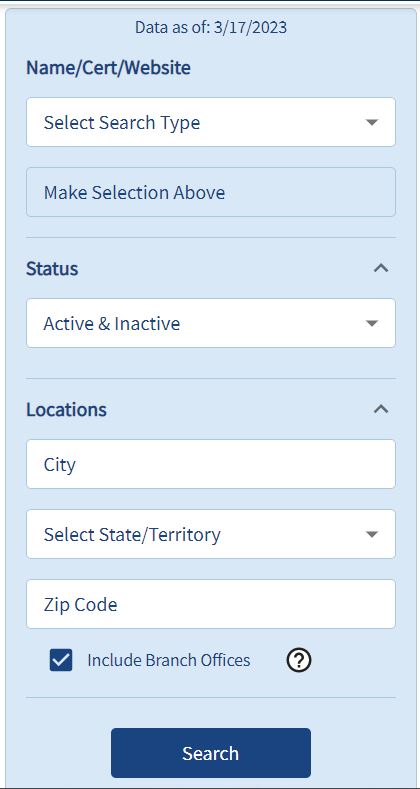
The BankFind Suite is a comprehensive tool provided by the FDIC that allows individuals to search for FDIC-insured banks and branches using the Name & Location Search feature. Users can use this tool to check if a bank is FDIC-insured, locate bank branches, see the history of a bank's mergers and acquisitions, and review a bank's history.

By accessing the tool, users can access current and historical data of FDIC-insured banks and their locations, including any changes in the bank's name, location, and other relevant details. This tool can be a valuable resource for individuals and businesses who are looking for information about banks and their histories.

It provides current and historical data about these banks, including any mergers or acquisitions they may have undergone. Additionally, the tool allows users to review a bank's history, such as name changes or relocations, to get a better understanding of its background. By using the BankFind Suite, customers can make informed decisions about their banking needs and have access to important information about the banks they do business with.


List of FDIC-Insured Banks
Source: FDIC

This search function enables users to search for banks and branches by their name or location, providing a convenient and efficient way to find financial institutions that are insured by the FDIC. The Name & Location Search feature is particularly useful because it allows users to search for banks and branches dating all the way back to 1934.

This means that users can search for institutions that have been around for decades and have a long-standing reputation for stability and reliability. Additionally, the search feature provides up-to-date information, allowing users to find banks and branches that have been newly established or have recently changed their name or location.

When searching for a bank on the FDIC website, there are some quick tips to keep in mind that can help make the process smoother.

  1. Firstly, it's recommended to use a partial name search instead of the whole name as it will produce more results. Additionally, the website provides an auto-complete feature that can save time and reduce typing.
  2. Another important thing to remember is that all fields are optional, so it's not necessary to fill in every line. However, providing more information will result in fewer search results, allowing for a more targeted search.
  3. If you're not getting the results you expected, it's advised to adjust your search input.

By following these quick tips, you can easily find FDIC-insured banks and branches on the FDIC website.

Which Deposit Accounts Are Insured by the FDIC?

It’s also important to know what types of accounts are protected by the Federal Deposit Insurance Corporation (FDIC) in case something happens to your bank or financial institution. The FDIC is an independent U.S. government agency that provides insurance to protect depositors in case their bank fails.

So, what types of accounts are insured by the FDIC? The FDIC lists several types of insurable accounts, including checking accounts, savings accounts, money market deposit accounts (MMDA), certificates of deposit (CDs), cashier’s checks, money orders, and other official items issued by a bank.

In addition, certain retirement accounts and benefit plans are also covered, such as IRAs, self-directed 401(k) plans, revocable trust accounts, and employee benefit plan accounts. However, it’s important to note that banks must apply to become FDIC-insured for this protection. If a bank isn’t FDIC-insured, your deposits won’t be covered. So, it’s always a good idea to check if your bank is FDIC-insured before opening an account.

What isn’t insured by the FDIC? While the FDIC does insure a lot of different accounts, there are some investments that are not covered. For example, stock investments, bond investments, mutual funds, and crypto assets are not insured by the FDIC. Life insurance policies, annuities, and municipal securities are also not covered. Safe deposit boxes or their contents are not insured either. Treasury bills, bonds, or notes are not covered by the FDIC, but they are “backed by the full faith and credit of the U.S. government,” according to the FDIC.

In short, it’s always a good idea to be aware of what types of accounts are insured by the FDIC and what types of investments are not covered. If you’re unsure about the insurance coverage on your accounts, contact your bank or financial institution for more information.

Largest Banks in the United States

In the United States, the banking industry is dominated by four major banks, namely JPMorgan Chase, Bank of America, Wells Fargo, and Citibank. These financial institutions hold the largest market share and are also among the top banks worldwide by market capitalization. According to data published in January 2023 by Statista Research Department, JPMorgan Chase is the most valuable bank globally, with total assets worth about 3.31 trillion U.S. dollars in 2021.

Although JPMorgan Chase is the largest bank in the U.S., the top four positions in the global banking industry in terms of total assets were held by Chinese banks in 2021. Nevertheless, these big four banks in the U.S. have a stable financial position with a common equity tier 1 (CET1) capital ratio well above the required 4.5 percent.

During the second quarter of 2022, JPMorgan Chase recorded a CET1 ratio of 12.17 percent, which is higher than the required minimum. It is worth noting that TD Bank, the ninth-largest bank in the United States in 2022, had the highest CET1 ratio among U.S. banks, which was 16.6 percent.

Knowing the largest banks in the U.S. by assets can provide useful insights for investors and consumers alike. These banks play a vital role in the country's economy and provide various financial services, including deposit accounts, loans, and credit cards. By understanding the stability of these institutions, individuals can make informed decisions when choosing a bank for their financial needs.

References:

  • https://banks.data.fdic.gov/bankfind-suite/bankfind
  • https://www.fdic.gov/resources/tools/bank-data-guide/banks.html
  • https://www.statista.com/statistics/799197/largest-banks-by-assets-usa/

Read More:

  • Second Bank Failure in 2025: What Happened to Santa Anna National Bank?
  • Bank Failures: Over 120 US Banks Failed Since 2012
  • Which Banks Are in Danger of Failing or Collapse
  • 10 Ways to Insure Deposits Beyond the FDIC Limit of $250,000
  • Bank Insurance: How Does FDIC Deposit Insurance Work?
  • List of Recent Failed Banks in the United States (2023-2024)
  • Is My Money Safe in the Bank in 2024?
  • US Banking System Insolvency: Is a Crisis Coming Up?

Filed Under: Banking, Economy, Financing Tagged With: FDIC-Insured Banks, List of FDIC-Insured Banks

U.S. States With Lowest Mortgage Rates Today – July 1, 2025

July 1, 2025 by Marco Santarelli

U.S. States With Lowest Mortgage Rates Today – July 1, 2025

Looking for the best mortgage rates? As of today, July 1, 2025, the states offering the cheapest 30-year new purchase mortgage rates are New York, California, New Jersey, Colorado, Connecticut, Florida, and Utah, with averages ranging from 6.56% to 6.72%.

On the other end of the spectrum, the states with the highest refinance rates are Alaska, West Virginia, New Mexico, Mississippi, Nebraska, Rhode Island, and Hawaii, averaging between 6.83% and 6.94%. Let's dive deeper into why these differences exist and what it means for you as a potential homebuyer or refinancer.

U.S. States With Lowest and Highest Mortgage Rates Today – July 1, 2025

Before we continue, I want to just stress importance of doing your own research and consulting professional mortgage lenders to figure out the best option for you.

Why Do Mortgage Rates Vary So Much by State?

It's frustrating, I know. You see a low advertised rate, but when you start looking in your state, it's a completely different story. So, what gives? Several factors contribute to these state-by-state variations:

  • Different Lenders, Different Regions: Not all lenders operate in every state. The competitive landscape varies, and some lenders may specialize in certain regions. Greater competition often translates to better rates.
  • Credit Score Variations: The average credit score of borrowers can differ across states. States with higher average credit scores might see slightly lower rates overall.
  • Average Loan Size: The typical mortgage amount can vary significantly. Lenders might adjust rates based on the risk associated with smaller or larger loan sizes.
  • State Regulations: Mortgage lending is subject to both federal and state regulations. More stringent regulations can sometimes impact rates, either positively or negatively.
  • Lender Risk Management: Each lender has its unique approach to assessing and managing risk. This includes their comfort level with the housing market in specific states, potentially influencing the rates they offer.

The States With The Lowest Mortgage Rates

Here’s a snapshot of the states with the lowest and highest 30-year new purchase mortgage rates as of today, according to Investopedia's analysis and Zillow's data. These states are enjoying some of the most favorable mortgage rates in the nation.

  • New York
  • California
  • New Jersey
  • Colorado
  • Connecticut
  • Florida
  • Utah

These states registered refi averages between 6.56% and 6.72%. Rates as competitive as these are highly sought after in the current market conditions.

You might be wondering, why these states, in particular? Several things help these states stand out:

  • Dense populations provide more opportunity for competition
  • Robust real estate markets
  • High property values
  • Attractive locations

The States With The Highest Mortgage Rates

Unfortunately, not everyone is seeing these sweet rates. Here's a rundown of the states where borrowers are facing the highest mortgage rates as of today:

  • Alaska
  • West Virginia
  • New Mexico
  • Mississippi
  • Nebraska
  • Rhode Island
  • Hawaii

These states face averages between 6.83% and 6.94%. When compared to the states with the lowest mortgage rates, that's quite a jump.

Here's a few things to consider for why these states may be more expensive for the borrower:

  • Rural populations, reducing competition
  • Slower rates of real estate growth
  • High operational costs
  • Weather challenges

National Mortgage Rate Trends: A Broader Perspective

It's crucial to keep in mind how state-level rates fit within the larger national picture. Broadly, the market has calmed down a bit from the volatility we saw earlier in the year. Let's take a look:

  • The national average for a 30-year new purchase mortgages is currently at 6.76%.
  • Rates on 30-year new purchase mortgages have leveled off after dropping 16 basis points last week. Rates as low as these, have not been seen since April 4.
  • In March, 30-year rates sank to 6.50%, their lowest average of 2025.
  • Rates have improved since Mid-May when rates skyrocketed to 7.15%, the highest rate in a year.

Here's a quick summary of national averages for today's top loan types:

Loan Type New Purchase Rate
30-Year Fixed 6.76%
FHA 30-Year Fixed 7.55%
15-Year Fixed 5.70%
Jumbo 30-Year Fixed 6.76%
5/6 ARM 7.34%

Important Note About “Teaser Rates”

Be careful when browsing online for mortgage rates! The flashy rates you see advertised (those “teaser rates”) are often not what they seem. They might require you to pay points upfront (essentially, prepaid interest), or they might be based on unrealistic borrower profiles – think ultra-high credit scores and smaller-than-typical loan amounts. The rate you actually qualify for will depend on your individual financial situation (credit score, income, down payment, etc.).

What's Driving These Rate Fluctuations?

You might be wondering what powers these rises and falls. The mortgage market is a complex beast, influenced by a variety of interconnected factors:

  • The Bond Market: 10-year Treasury yields, in particular, play a significant role. Mortgage rates generally move in the same direction as Treasury yields.
  • The Federal Reserve (The Fed): The Fed's monetary policy, especially its involvement in bond buying and funding government-backed mortgages, has huge implications.
  • Lender Competition: The degree of competition among lenders, and across different loan types, affects pricing.

It is important to note that these factors also rely on each other. Because these factors can influence mortgage rates and move simultaneously, it is often difficult to decide what actually causes a given rate.

Let's briefly think about the past few years in order to gain context. Macroeconomic factors kept the mortgage market relatively low for much of 2021. In particular, the Federal Reserve had been buying billions of dollars of bonds in response to the pandemic's economic pressures. This bond-buying policy is a major influencer of mortgage rates.

  • Starting in November 2021, the Fed began tapering its bond purchases downward, making sizable monthly reductions until reaching net zero in March 2022.
  • Between that time and July 2023, the Fed aggressively raised the federal funds rate to fight decades-high inflation.
  • The Fed maintained the federal funds rate at its peak level for almost 14 months, beginning in July 2023.
  • In September, the central bank announced a first rate cut of 0.50 percentage points, and then followed that with quarter-point reductions in November and December.
  • For its fourth meeting of the new year, however, the Fed opted to hold rates steady.

Read More:

States With the Lowest Mortgage Rates on June 27, 2025

Are Mortgage Rates Expected to Go Down Soon: A Realistic Outlook

The Fed's Impact: A Bit More Detail

The Fed's actions have an indirect, but powerful, impact on mortgage rates. For example, when the Fed cut rates, it signaled a greater likelihood of a recession, thus influencing the yields on treasury bonds. The connection between these two rates mean that a rate cut by the FED could actually increase mortgage rates, which is not what most people expect.

In fact, the fed funds rate and mortgage rates move in opposite directions. The Fed's aggressive rate increases in 2022 and 2023 (raising the benchmark rate 5.25 percentage points over 16 months) had a dramatic impact on mortgage rates, pushing them upward. It goes without saying, that given the historic speed and magnitude of the Fed's 2022 and 2023 rate increases, this had a huge impact on the market.

It’s possible the central bank may not make another rate cut for months. With a total of eight rate-setting meetings scheduled per year, that means we could see multiple rate-hold announcements in 2025. We will continue to provide coverage as this occurs.

What Does This Mean for You?

So, what's the takeaway? If you're in the market for a mortgage, here's my advice:

  1. Shop Around Extensively: Don't settle for the first rate you see. Get quotes from multiple lenders to find the best deal for your situation.
  2. Understand the Factors That Affect Your Rate: Your credit score, income, down payment, and the type of loan you choose will all influence the rate you receive.
  3. Be Realistic About “Teaser Rates”: Don't get lured in by ultra-low advertised rates that might not be attainable.
  4. Consider the Big Picture: Watch national trends and try to understand the factors influencing mortgage rates.

Final Thoughts

The mortgage market can be confusing, but by staying informed and doing your research, you can make smart financial decisions. Keep an eye on national trends, compare rates carefully, and don't be afraid to seek professional advice. Buying or refinancing a home is a major decision, so take your time and do it right!

Invest in Real Estate in the Top U.S. Markets

Investing in turnkey real estate can help you secure consistent returns with fluctuating mortgage rates.

Expand your portfolio confidently, even in a shifting interest rate environment.

Speak with our expert investment counselors (No Obligation):

(800) 611-3060

Get Started Now

Also Read:

  • Will Mortgage Rates Go Down in 2025: Morgan Stanley's Forecast
  • Expect High Mortgage Rates Until 2026: Fannie Mae's 2-Year Forecast
  • Mortgage Rate Predictions 2025 from 4 Leading Housing Experts
  • Mortgage Rates Forecast for the Next 3 Years: 2025 to 2027
  • 30-Year Mortgage Rate Forecast for the Next 5 Years
  • 15-Year Mortgage Rate Forecast for the Next 5 Years
  • Why Are Mortgage Rates Going Up in 2025: Will Rates Drop?
  • Why Are Mortgage Rates So High and Predictions for 2025
  • Will Mortgage Rates Ever Be 3% Again in the Future?
  • Mortgage Rates Predictions for Next 2 Years
  • Mortgage Rate Predictions for Next 5 Years
  • Mortgage Rate Predictions: Why 2% and 3% Rates are Out of Reach
  • How Lower Mortgage Rates Can Save You Thousands?
  • How to Get a Low Mortgage Interest Rate?
  • Will Mortgage Rates Ever Be 4% Again?

Filed Under: Financing, Mortgage Tagged With: Interest Rate, mortgage, Mortgage Rate Trends, mortgage rates, Mortgage Rates Predictions, Mortgage Rates Today

  • « Previous Page
  • 1
  • …
  • 10
  • 11
  • 12
  • 13
  • Next Page »

Real Estate

  • Birmingham
  • Cape Coral
  • Charlotte
  • Chicago

Quick Links

  • Markets
  • Membership
  • Notes
  • Contact Us

Blog Posts

  • Top Real Estate Investment Markets to Watch in 2026
    March 13, 2026Marco Santarelli
  • Best Midwest Real Estate Markets for Investors in 2026
    March 13, 2026Marco Santarelli
  • Best U.S. Markets for Turnkey Rentals Under $200K in 2026
    March 13, 2026Marco Santarelli

Contact

Norada Real Estate Investments 30251 Golden Lantern, Suite E-261 Laguna Niguel, CA 92677

(949) 218-6668
(800) 611-3060
BBB
  • Terms of Use
  • |
  • Privacy Policy
  • |
  • Testimonials
  • |
  • Suggestions?
  • |
  • Home

Copyright 2018 Norada Real Estate Investments

Loading...