Norada Real Estate Investments

  • Home
  • Markets
  • Properties
  • Membership
  • Podcast
  • Learn
  • About
  • Contact

Today’s Mortgage Rates November 14: 30-Year FRM Drops to 6.10%, Close to Lowest Point

November 14, 2025 by Marco Santarelli

Today's Mortgage Rates - October 9, 2025: 30-Year FRM Nudges Up to 6.48%

As of November 14, 2025, today's mortgage rates are holding remarkably steady, lingering close to the lowest points we've seen so far this year. This stability is welcome news for many hoping to buy a home or refinance an existing mortgage, even if it doesn't signal a dramatic drop.

Today's Mortgage Rates November 14: 30-Year FRM Drops to 6.10%, Close to Lowest Point

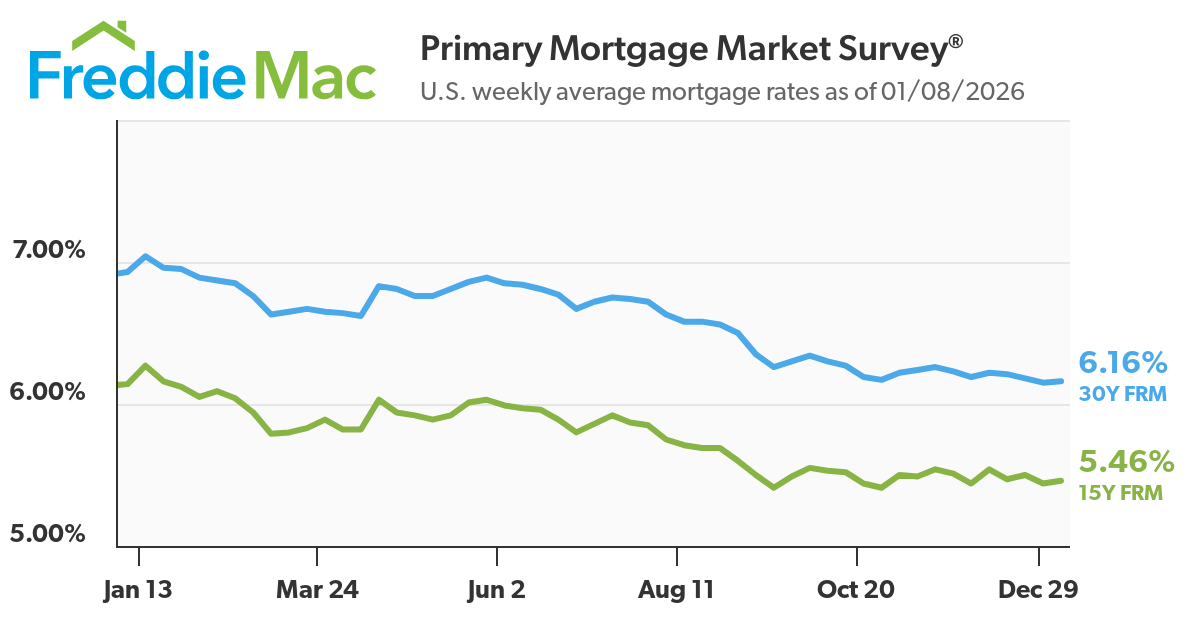
According to the latest data from Freddie Mac, the national average for a 30-year fixed mortgage has nudged up just two basis points to 6.24%, which is still a significant improvement, coming in more than half a percentage point lower than this time last year. For those eyeing shorter loans, the 15-year fixed rate saw a slight dip of one basis point to 5.49%, putting it a solid 49 basis points below its 2024 mark.

From my perspective, seeing these rates hover in the low 6% range is a sign of a market trying to find its footing. After the rollercoaster ride of the past few years, this kind of predictability, while not thrilling, is what many buyers and homeowners need to make informed decisions. It suggests that the forces influencing mortgage rates are in a more balanced state, a welcome change from the rapid shifts we've experienced.

What the Numbers Are Saying Today

To get a clearer picture of where things stand right now, I've pulled together the most recent figures from Zillow. These national averages give us a solid benchmark, but remember that your individual rate can vary based on your credit score, down payment, and other factors.

Here’s a look at the current national average mortgage rates:

Loan Type Interest Rate
30-year fixed 6.10%
20-year fixed 6.08%
15-year fixed 5.60%
5/1 ARM 6.39%
7/1 ARM 6.51%
30-year VA 5.55%
15-year VA 5.33%
5/1 VA 5.44%

As you can see, the 30-year fixed rate is just slightly below the Freddie Mac figure, sitting at 6.10%. The 15-year fixed is also a bit lower at 5.60%. It’s interesting to note the slight difference between the 20-year fixed and the 30-year fixed rate, with the 20-year being just a hair lower at 6.08%. This can sometimes happen as lenders price different loan terms.

Refinancing: Still a Mixed Bag

For folks looking to refinance their current mortgage, the picture is a bit more nuanced. Many homeowners who stood to benefit significantly from refinancing have already locked in lower rates during previous periods.

Here are the current national average refinance rates, again from Zillow:

Loan Type Interest Rate
30-year fixed 6.25%
20-year fixed 6.04%
15-year fixed 5.73%
5/1 ARM 6.56%
7/1 ARM 6.84%
30-year VA 5.78%
15-year VA 5.57%
5/1 VA 5.39%

Notice that the average refinance rates are generally a touch higher than the rates for purchasing a new home. For example, the 30-year fixed refinance rate is at 6.25%, which is higher than the 6.10% purchase rate. This difference is often due to how lenders structure refinance loans and the associated fees. While these rates are still much better than year-ago levels, they might not be compelling enough for many to make the move, especially if they already have a very low rate locked in from a few years ago. Refinance applications did see a small dip last week, which supports this observation.

Why Are Rates Not Dropping More? Affordability and Market Influences

It's easy to look at these rates and wish they were even lower, especially after the historically low rates we saw during the pandemic. But it's crucial to remember that those sub-3% rates were an anomaly, and it's highly unlikely we'll see them again anytime soon.

The main challenge right now isn't just mortgage rates; it's also home prices. Even with rates in the low 6% range, the combination can still make homeownership a stretch for many. This persistent affordability concern is a major factor keeping the market from heating up too quickly.

However, even small movements in rates can make a difference. Last week, we saw a notable increase in mortgage applications to buy a home, up by nearly 6%. This clearly indicates that when rates hover near the year's lows, buyers start to get more active. It’s a powerful reminder of how sensitive the housing market is to interest rate fluctuations.


Related Topics:

Mortgage Rates Trends as of November 13, 2025

Mortgage Rate Predictions for the Next 30 Days: Nov 10 to Dec 10, 2025

Mortgage Rates Predictions for the Next 12 Months: Nov 2025 to Nov 2026

Mortgage Rates Predictions for Next 90 Days: October to December 2025

What's Next? Fed Watch and Policy Ideas

The economic picture continues to be influenced by the Federal Reserve's monetary policy. After making rate cuts in September and October, speculation is mounting about what will happen at their December meeting. While the Fed doesn't directly set mortgage rates, their decisions on the federal funds rate ripple through the economy and influence things like the 10-year Treasury yield, which is a key benchmark for mortgage rates.

Currently, Wall Street traders are less confident about another rate cut happening in December. This uncertainty can contribute to the stability we're seeing in mortgage rates.

On the policy front, there's been discussion about proposals like the Trump administration considering 50-year mortgages to tackle housing affordability. While this idea aims to reduce monthly payments by extending the loan term, it also means paying more interest over time. Experts like Logan Mohtashami suggest that such a long-term mortgage might not fundamentally alter the market and that current rates in the low 6% range are more critical for market stability. I personally believe that while innovative solutions are worth exploring, focusing on sustainable home prices and accessible rates is paramount. Stretching payments over 50 years carries its own set of risks and could lead to homeowners being underwater on their mortgages for longer periods.

Looking Ahead: Forecasts for 2025 and Beyond

So, what do the experts predict for the rest of 2025 and into 2026? Forecasts from major housing organizations like Fannie Mae and the Mortgage Bankers Association generally agree that we'll likely see rates stay above 6% through the end of this year and well into next year.

Fannie Mae offers a slightly more optimistic outlook, suggesting that rates could potentially dip below 6% by the end of 2026. This indicates a gradual return to more balanced conditions rather than a sharp decline. Personally, I see this as a realistic expectation. The era of ultra-low rates is behind us, but the market is adapting to a new normal where rates are higher but more stable, allowing for more predictable planning for buyers and sellers.

In summary, today, November 14, 2025, offers a stable albeit slightly higher mortgage rate environment compared to the very recent past, holding near 2025 lows. While affordability remains a concern, the current rates are a catalyst for buyer activity and a point of consideration for homeowners contemplating refinancing.

Secure Your Retirement with Cash-Flowing Rental Properties

Turnkey real estate offers a low-hassle way to generate passive income and build long-term financial security—perfect for retirement-focused investors.

Norada Real Estate helps you invest in stable, high-demand markets that deliver consistent monthly cash flow and equity growth over time.

🔥 HOT NEW LISTINGS JUST ADDED! 🔥

Talk to a Norada investment counselor today (No Obligation):

(800) 611-3060

Get Started Now

Also Read:

  • Mortgage Rates Predictions Backed by 7 Leading Experts: 2025–2026
  • Mortgage Rate Predictions for the Next 3 Years: 2026, 2027, 2028
  • 30-Year Fixed Mortgage Rate Forecast for the Next 5 Years
  • 15-Year Fixed Mortgage Rate Predictions for Next 5 Years: 2025-2029
  • Will Mortgage Rates Ever Be 3% Again in the Future?
  • Mortgage Rates Predictions for Next 2 Years
  • Mortgage Rate Predictions for Next 5 Years
  • Mortgage Rate Predictions: Why 2% and 3% Rates are Out of Reach
  • How Lower Mortgage Rates Can Save You Thousands?
  • How to Get a Low Mortgage Interest Rate?
  • Will Mortgage Rates Ever Be 4% Again?

Filed Under: Financing, Mortgage Tagged With: Interest Rate, mortgage, Mortgage Rate Trends, mortgage rates, Mortgage Rates Today

30-Year Mortgage Rate Drops by 54 Basis Points Since Last Year

November 14, 2025 by Marco Santarelli

30-Year Mortgage Rate Drops by 54 Basis Points Unlocking Major Savings for Buyers

If you’ve been watching the housing market nervously, feeling like rates were constantly climbing, I have some genuinely good news that cuts through that anxiety. The definitive statement is clear: Yes, the entry point for buying a home is significantly better now than it was 12 months ago because the 30-year fixed mortgage rate drops by 54 basis points year over year.

This decrease, reported by Freddie Mac, may sound like small technical jargon, but trust me, it translates directly into hundreds of dollars in your pocket every month and tens of thousands of dollars saved over the life of your loan. This relief is what the U.S. housing market needed, and judging by the recent spike in buyer interest, many of you are already catching on.

When rates start moving down, even slightly, it injects confidence back into buyers who have been sitting on the sidelines, waiting for a better deal. From my viewpoint working in financial markets, a half-a-percent drop over a year is a strong indicator that the most volatile period of rate hikes has passed.

30-Year Mortgage Rate Drops by 54 Basis Points Since Last Year

The Big Picture: What 54 Basis Points Really Means

When we throw around terms like “basis points,” it’s easy for listeners to tune out. So let me simplify: One basis point is simply one one-hundredth of a percent (0.01%). Therefore, a drop of 54 basis points (-0.54%) means that the average 30-year fixed rate has decreased by over half a percent compared to the same time last year.

This data, which comes directly from the dependable Primary Mortgage Market Survey® released by Freddie Mac, shows a significant improvement in affordability.

Think back to last year. If you were house hunting, you were likely dealing with rates that peaked much higher. While the current 30-year fixed rate stands at 6.24% (as of November 13, 2025), a year prior, it was 54 basis points higher—meaning it was hovering close to 6.78%.

This shift, while seemingly small percentage-wise, changes the entire equation for a potential homeowner.

Crunching the Numbers: Real Savings for Homeowners

As an expert who studies these trends daily, the most exciting part of this data is illustrating the concrete savings. This is where the 54 basis point drop moves from a statistic into real-world peace of mind.

Let's assume a common loan scenario today: You are financing $400,000 for your new home.

Metric Rate One Year Ago (Approx. 6.78%) Current Rate (6.24%) Savings Difference
Loan Amount $400,000 $400,000 N/A
Monthly Principal & Interest (P&I) $2,601 $2,467 $134 per month
Total Interest Paid Over 30 Years $536,360 $488,120 $48,240

I always tell my clients: that $134 per month is substantial. That’s a car payment, groceries, or college savings. And the nearly $50,000 reduction in lifetime interest? That is life-changing wealth retained by the homeowner, not the bank.

This example clearly shows the power of waiting for rates to retreat from their recent highs.

Why Now? Understanding the Rate Stability

While the year-over-year news is fantastic, it’s important to look at the short-term picture. The Freddie Mac survey shows that rates for the 30-year and the 15-year fixed-rate mortgage primarily remained flat this particular week (November 13, 2025). The 30-year rate moved up only 0.02 percentage points, landing at 6.24%.

This flatness suggests stability, which is often just as good as a dramatic drop for the economy. When rates stop wildly fluctuating, both buyers and lenders can plan better.

It’s worth noting the 15-year fixed-rate mortgage saw a similar drop: 50 basis points year over year, landing at an attractive 5.49%. For those who can afford a higher monthly payment and want to own their home free and clear much faster, the 15-year option has also become notably more appealing.

The Market Speaks: Why Buyers Are Stepping Up

What I find truly insightful is how consumers reacted to these relatively stable, lower year-over-year rates. Data from the Mortgage Bankers Association (MBA) confirmed a big shift in buyer behavior during the week ending November 7: Purchase applications increased 6%.

What does this tell us? People are tired of waiting.

Even though rates ticked up just slightly that week (to 6.34% for conforming loans, according to MBA data), buyers interpreted the overall stability and the lower annual trends (that massive 54 basis point drop) as their cue to jump back into the market.

Joel Kan, MBA’s Vice President, highlighted encouraging factors:

  • This was the strongest pace for purchase applications since September.
  • It marked the strongest start to November since 2022.
  • Activity increased across conventional, FHA, and VA loans—a sign of broad market confidence.

From my personal expertise, this spike in purchase activity signals a critical psychological shift. When buyers see rates consistently hold below the 7% or 8% high points we experienced previously, they reset their expectations. The current rate—even if it bumps up or down by 0.05% week-to-week—is viewed as a better deal than anything they saw 12 months ago.

Refinance Reality Check

While purchase activity soared, refinance activity saw a slight 3% decrease week-over-week. This makes sense; if rates are essentially flat or rising slightly this week, there’s no immediate urgency to refinance.

However, the year-over-year comparison on refinancing is absolutely astounding, reflecting the relief of the 54 basis point drop. Refinance applications were 147% higher than the same week last year!

This massive year-over-year spike demonstrates that many existing homeowners who bought at peak rates are rapidly seizing the opportunity to lower their monthly payments now that rates are in the low-to-mid 6% range.

Key Refinance Data Points:

  • The refinance share of mortgage activity settled at 55.6% of total applications.
  • The average loan size for refinances dropped slightly, suggesting lower-balance borrowers are finally able to take advantage of the better rates.


Related Topics:

Mortgage Rates Remain Stable This Week While Purchase Demand Grows

Mortgage Rates Predictions Next 12 Months: November 2025 to November 2026

Mortgage Rate Predictions for the Next 30 Days: Nov 10 to Dec 10, 2025

Mortgage Rates Predictions for Next 90 Days: October to December 2025

My Takeaway: Don't Wait for the Bottom

One of the biggest mistakes I see prospective buyers make is waiting for the mythical “bottom” of the rate cycle. They want rates to hit 3% or 4%, but current economic reality suggests that those ultra-low rates are likely behind us for now.

The 30-Year Fixed Mortgage Rate Drops by 54 Basis Points Year Over Year has given you an excellent entry point that saves you nearly $50,000 in interest over three decades compared to buying a year ago.

The fact that purchase applications are now increasing tells me that the smart money—the savvy buyers—are recognizing this window of opportunity. Inventory is starting to stabilize in some markets, and you are better positioned today with a 6.24% rate than you were chasing desperate bids with a 6.78% rate last year.

My advice remains consistent: If you find a house you love and the payments work today, lock in the rate. The annual drop is your market signal; don't wait for the next slight dip, especially since purchase competition is already heating up.

Secure Your Retirement with Cash-Flowing Rental Properties

Turnkey real estate offers a low-hassle way to generate passive income and build long-term financial security—perfect for retirement-focused investors.

Norada Real Estate helps you invest in stable, high-demand markets that deliver consistent monthly cash flow and equity growth over time.

🔥 HOT NEW LISTINGS JUST ADDED! 🔥

Talk to a Norada investment counselor today (No Obligation):

(800) 611-3060

Get Started Now

Also Read:

  • Mortgage Rates Predictions Backed by 7 Leading Experts: 2025–2026
  • Mortgage Rate Predictions for the Next 3 Years: 2026, 2027, 2028
  • 30-Year Fixed Mortgage Rate Forecast for the Next 5 Years
  • 15-Year Fixed Mortgage Rate Predictions for Next 5 Years: 2025-2029
  • Will Mortgage Rates Ever Be 3% Again in the Future?
  • Mortgage Rates Predictions for Next 2 Years
  • Mortgage Rate Predictions for Next 5 Years
  • Mortgage Rate Predictions: Why 2% and 3% Rates are Out of Reach
  • How Lower Mortgage Rates Can Save You Thousands?
  • How to Get a Low Mortgage Interest Rate?
  • Will Mortgage Rates Ever Be 4% Again?

Filed Under: Financing, Mortgage Tagged With: Interest Rate, mortgage, Mortgage Rate Trends, mortgage rates, Mortgage Rates Today

Mortgage Rates Today, Nov 14: 30-Year Refinance Rate Rises by 15 Basis Points

November 14, 2025 by Marco Santarelli

Mortgage Rates Drop: Today's 30-Year Fixed Refinance Rate Goes Down by 23 Basis Points

Today, November 14th, the news is that mortgage rates today, Nov 14: 30-year refinance rate rises by 15 basis points, topping out at 6.95% according to Zillow. This move upward means that if you were holding out hope for a slightly lower payment soon, it might be time to look at your options more closely. The quick answer is: yes, refinance rates have nudged higher, and it’s worth understanding what that means for your wallet and your homeownership journey.

Mortgage Rates Today, Nov 14: 30-Year Refinance Rate Rises by 15 Basis Points

This 15 basis point jump for the 30-year fixed refinance rate from 6.80% to 6.95% isn't earth-shattering, but it’s a clear signal. It’s a reminder that the mortgage market is a dynamic thing, influenced by a lot of different factors. It feels like just yesterday we were seeing rates dip and rise, and now we're seeing a consistent upward trend. This particular increase from Friday is also up 7 basis points from the average rate of 6.88% we saw last week.

It’s not just the 30-year fixed that's on the move. The 15-year fixed refinance rate has also seen an uptick, climbing 12 basis points from 5.71% to 5.83%. And if you’re considering an adjustable-rate mortgage (ARM), the 5-year ARM refinance rate is up 16 basis points, moving from 7.37% to 7.53%. Basically, across the board, borrowing money to refinance your home is costing a little more today.

What a 15 Basis Point Increase Really Means for Your Monthly Payment

Let’s break down what this 15 basis point increase actually translates to in real dollars. It might sound small, just a fraction of a percent, but over the life of a mortgage, it can add up. Imagine you have a $300,000 loan.

  • At 6.80% (the previous rate): Your principal and interest payment would be roughly $1,965.
  • At 6.95% (today's rate): Your principal and interest payment would be roughly $2,010.

That’s an increase of about $45 per month. Now, $45 might not sound like much if you’re thinking about that fancy coffee you buy every morning. But consider this: if you’re looking at a 30-year mortgage, that’s $45 multiplied by 360 months. That’s an extra $16,200 over the life of the loan. Ouch. This is why understanding these small shifts is so important, especially if you’re aiming to lower your overall housing costs through refinancing. It really hammers home the idea of timing.

Refinance Timing: Locking in Rates Before Further Hikes

This is where my own experience comes into play. I've seen homeowners get caught out by waiting too long for that “perfect” rate, only to see it slip away. The market today suggests a potential for further increases, though of course, no one has a crystal ball. The fact that the 30-year fixed refinance rate is already pushing close to 7% is a significant psychological and practical threshold.

If you've been on the fence about refinancing, and you were hoping to achieve a substantial savings on your monthly payment or reduce your loan term, these rising numbers are a strong nudge to act sooner rather than later. Taking action might mean securing a rate that, while not the absolute lowest it’s ever been, is still better than what you might get a few weeks or months down the line if the trend continues. It’s about weighing the potential for future savings against the certainty of current savings.

Comparing 30-Year Fixed vs. 15-Year Refinance Options

With rates on the rise, it’s a good time to revisit the classic refinance decision: 30-year fixed versus 15-year fixed. Both have gone up, but the gap between them has widened slightly, as you can see from Zillow's data.

  • 30-Year Fixed Refinance Rate: 6.95%
  • 15-Year Fixed Refinance Rate: 5.83%

The difference here is about 1.12 percentage points.

Here’s how I see it shaping up:

  • 30-Year Fixed: This is still the go-to for many folks because it offers the lowest monthly payment. It’s great if your priority is to free up cash flow each month, perhaps to handle other expenses, invest, or simply have a little more breathing room in your budget. However, as we've seen, these payments are creeping up, and you'll pay more interest over the long haul.
  • 15-Year Fixed: The 15-year option, even with its increase, still offers a significantly lower interest rate. This means you’ll pay substantially less interest over the life of the loan and pay off your home much faster—in half the time! The trade-off? Your monthly payments will be higher. It requires a bit more financial cushion but can be a fantastic way to build equity rapidly and achieve debt freedom sooner.

I often advise clients to look at their financial situation holistically. If you can comfortably afford the higher monthly payment of a 15-year mortgage, the savings are immense. But if stretching for that payment would put a strain on your finances, the 30-year, even at a slightly higher rate, might be the more sensible choice for now.

How Your Credit Score Impacts Your Refinance Rate Today

It’s crucial to remember one of the fundamental truths of borrowing money: your credit score is your best friend when it comes to securing good rates. The rates reported by Zillow, like those from other sources, are national averages. Your individual rate will likely be different, and your credit score is a major factor in determining where you fall on the spectrum.

Think of it this way: lenders see a higher credit score as proof that you're a responsible borrower who pays bills on time. They perceive less risk in lending to you, and they reward that with lower interest rates. Conversely, a lower credit score signals higher risk, and lenders will charge more to compensate for that.

  • Excellent Credit (740+): You'll likely qualify for rates very close to, or even better than, the advertised averages.
  • Good Credit (670-739): You'll probably get rates that are a bit higher than the average, but still reasonable.
  • Fair Credit (580-669): You might find it harder to qualify for refinancing, and if you do, the rates could be significantly higher, making refinancing less attractive.
  • Poor Credit (below 580): Refinancing is likely out of reach. The focus here should be on improving your credit score first.

If you're thinking about refinancing, it’s always a smart move to check your credit report and score beforehand. If there are any errors, get them corrected. If your score isn't where you'd like it to be, consider taking steps to improve it (like paying down debt or ensuring you pay all bills on time) before officially applying for a refinance. This could potentially lead to a better rate than today's average.

Recommended Read:

30-Year Fixed Refinance Rate Trends – November 13, 2025

Best Time to Refinance Your Mortgage: Expert Insights

Should You Refinance Your Mortgage Now or Wait Until 2026? 

The Role of Debt-to-Income Ratio in Refinancing

Another critical piece of the refinancing puzzle is your debt-to-income ratio (DTI). This ratio compares how much you owe each month on debts to your gross monthly income. Lenders use DTI to gauge your ability to manage monthly payments and repay debts.

  • Front-end DTI: This focuses on your housing costs (principal, interest, taxes, and insurance) as a percentage of your gross income.
  • Back-end DTI: This includes all your monthly debt payments (including housing costs, car loans, student loans, credit card minimums, etc.) as a percentage of your gross income.

Lenders have different DTI requirements, but generally:

  • A DTI of 43% or lower is often considered ideal for most mortgage programs, including refinancing.
  • Some programs might allow for higher DTIs, but this usually comes with stricter conditions or higher rates.

If your DTI is high, it means a significant portion of your income is already spoken for by debt. This makes it harder for lenders to feel confident in approving you for a new loan, as it suggests less disposable income to handle additional payments.

My advice? Before you even fill out a refinance application, do the math on your DTI. If it's on the higher side, focus on reducing your other debts or increasing your income before applying. Paying down credit card balances or making extra payments on car loans can make a noticeable difference.

In conclusion, today's rise in mortgage rates, specifically the 15 basis point increase for the 30-year fixed refinance rate to 6.95% according to Zillow, is a clear signal that the cost of borrowing is nudging higher. While it might not be the headline-grabbing surge some fear, it's enough to make those considering a refinance pay attention.

“Invest Smart — Build Long-Term Wealth Through Real Estate”

Norada's team can guide you through current market dynamics and help you position your investments wisely—whether you're looking to reduce rates, pull out equity, or expand your portfolio.

Work with us to identify proven, cash-flowing markets and diversify your portfolio while borrowing costs remain favorable.

HOT NEW TURNKEY DEALS JUST LISTED!

Speak with a seasoned Norada investment counselor today (No Obligation):

(800) 611-3060

Get Started Now

Recommended Read:

  • When You Refinance a Mortgage Do the 30 Years Start Over?
  • Should You Refinance as Mortgage Rates Reach Lowest Level in Over a Year?
  • NAR Predicts 6% Mortgage Rates in 2025 Will Boost Housing Market
  • Mortgage Rates Predictions for 2025: Expert Forecast
  • Half of Recent Home Buyers Got Mortgage Rates Below 5%
  • Mortgage Rates Need to Drop by 2% Before Buying Spree Begins
  • Will Mortgage Rates Ever Be 3% Again: Future Outlook
  • Mortgage Rates Predictions for Next 2 Years
  • Mortgage Rate Predictions for Next 5 Years
  • Mortgage Rate Predictions for 2025: Expert Forecast

Filed Under: Financing, Mortgage Tagged With: mortgage, mortgage rates, Mortgage Refinance Rates

Today’s Mortgage Rates November 13: 30-Year FRM Holds at 6.13%, 15-Year FRM Drops to 5.59%

November 13, 2025 by Marco Santarelli

Today's Mortgage Rates - October 9, 2025: 30-Year FRM Nudges Up to 6.48%

For Today’s Mortgage Rates, November 13, the answer is pretty straightforward: No—we’re sitting still. According to data compiled by Zillow, the overall market is in a holding pattern. The average 30-year fixed mortgage rate is pegged at 6.13%, sticking tightly to the spot it has occupied for the past week. We are seeing stability, though perhaps stability at a higher price than most buyers would like.

I’ve been watching these numbers for a long time, and what I see right now is a market desperately waiting for a clear sign, a definite signal from the economy that isn’t coming yet. Rates are steady because the forces pulling them up and pushing them down are perfectly balanced—a tough place to be if you’re trying to make a big financial decision.

Today's Mortgage Rates November 13: 30-Year FRM Holds at 6.13%, 15-Year FRM Drops to 5.59%

What’s Happening Today?

When we look beneath the headline number, we see minor movements, but nothing that signals a major shift. The core reason for this recent stagnation is that the 10-year Treasury yield, which is the actual boss of mortgage pricing, has been drifting sideways.

If the 10-year Treasury yield doesn't move, neither do mortgage rates. It’s that simple. There hasn't been a big economic report lately, no major change in inflation expectations, and no surprise moves from global markets. When the economy hits the pause button, mortgage markets usually follow suit.

The slightly good news is seen in the shorter terms. The 15-year fixed rate has dropped just a bit to 5.59%. While this is a subtle edge, for anyone who can swing the higher monthly payment of a 15-year loan, this rate offers a meaningful discount compared to the 30-year option.

Let's break down where the rates are sitting right now, based on the latest data from Zillow. Remember, these are national averages. When you talk to a lender, your rate will likely be different depending on your credit score, location, and down payment.

Breaking Down the Numbers: Today's Mortgage Rates

Loan Type Average Interest Rate Commentary
30-year Fixed 6.13% The baseline rate, remaining stable this week.
20-year Fixed 6.04% A small efficiency gain for those who want to pay off faster.
15-year Fixed 5.59% The most attractive fixed rate for many buyers today.
30-year VA 5.77% Generally reserved for eligible military borrowers.
15-year VA 5.39% The lowest fixed rate option available today.
5/1 ARM 6.47% Starting rate higher than 30-year fixed, signaling caution.
7/1 ARM 6.52% Slightly higher than the 5/1 ARM start rate.
5/1 VA 5.56% A competitive starting rate for VA borrowers looking for flexibility.

Refinancing Reality Check

For current homeowners, the thought of refinancing remains tempting, but frankly, the numbers are still discouraging for most people. If you locked in a rate any time before 2022, chances are your current rate is better than what the market offers today.

Refinance rates are typically a little higher than purchase rates because lenders account for the risk and effort involved in structuring a new loan for an existing debt.

Here's the outlook on refinance rates today, also sourced from Zillow:

Refinance Loan Type Average Interest Rate (Zillow)
30-year Fixed Refi 6.27%
20-year Fixed Refi 6.11%
15-year Fixed Refi 5.75%
30-year VA Refi 5.83%
15-year VA Refi 5.79%
5/1 ARM Refi 6.59%
7/1 ARM Refi 7.01%
5/1 VA Refi 5.51%

I find the 7/1 ARM Refi rate particularly interesting—it’s jumped all the way up to ***7.01%***. This high rate shows that lenders are either nervous about locking in rates for seven years without adjusting, or they simply aren’t interested in taking on a lot of new ARM refinancing business right now. If rates are already stable, why risk an ARM that starts this high? It’s a good example of the caution in the current lending environment.

Diving Deeper: Why Are Rates Stuck Here?

We have to face a harsh truth: The days of 3% or 4% mortgages are likely gone forever, or at least for a very long time.

My personal expertise tells me that borrowers need to stop comparing today's rates to the unique, pandemic-era low points. Those low rates required unprecedented central bank intervention and zero inflation—conditions we will not see again soon.

Even though the Federal Reserve has already executed some rate cuts earlier in 2025, those cuts affect short-term bank borrowing—not long-term mortgages. Mortgage rates are firmly tied to the 10-year Treasury yield, and that bond yield is terrified of one thing: Inflation.

When investors look at the economy and think inflation might rear its head, they demand a higher rate of return to compensate for the risk that their money won't buy as much in ten years. This demand drives the Treasury yield up, which drags the mortgage rate up with it.

Right now, the consensus is that inflation is calming down, but it’s still persistent. It’s sticky. Until we see solid, monthly evidence that inflation is truly tamed and locked down, the 10-year Treasury will likely sit where it is, keeping Today’s Mortgage Rates November 13 in this mid-6% territory.

My Take: What This Means for Buyers

If you are waiting for rates to drop below 5% before you buy, you might be waiting for two or three more years, or perhaps longer. My advice is often the same: focus on affordability and re-evaluation.

  1. Marry the House, Date the Rate: If you find the right house, don't let a quarter-point scare you off. You plan to live in the house for ten years, but you might only keep this particular mortgage rate for two or three years. With rates stable in the 6% range, the time to buy might be now, with the plan to refinance if rates dip significantly in 2027 or 2028.
  2. Focus on the Payment, Not Just the Rate: At 6.13%, you should be absolutely crunching the budget. Can you comfortably afford this monthly payment? If the answer is yes, then worrying about where rates might go next month is just unnecessary stress.

Decoding the Forecasts: What 2026 Looks Like

Based on the overall stability we are seeing right now, most housing economists are in strong agreement: the mid-to-low 6% range is the new normal for the time being. No major authority predicts a return to the pandemic lows.

The question now is how far those predictions diverge as we look ahead to 2026. The key discrepancy revolves around how quickly various experts think inflation will subside entirely.

Here is a look at what major housing organizations project for the 30-year fixed mortgage rate average by the end of 2026:

Authority Projected 30-Year Fixed Rate (End of 2026) Interpretation
Fannie Mae 5.9% The most optimistic large-scale forecast, relying on a mild economic slowdown and continued Fed cuts.
National Association of Realtors (NAR) 6.0% Predicts slow, steady relief, bringing rates right to the 6% mark.
National Association of Home Builders (NAHB) 6.19% A very bearish forecast, anticipating rates will hold near today’s average.
Mortgage Bankers Association (MBA) 6.4% The most pessimistic forecast, suggesting rates might actually creep higher than today's number.
Zillow Home Loans 6% to 7% Range Keeps expectations broad, acknowledging volatility but setting a high floor.

It is clear from this table that the most aggressive downside prediction is only 5.9%. To me, this confirms that anything below 6% will be seen as a victory for borrowers in the near future. The market has priced in the current risk, and it’s very reluctant to lower that price tag.


Related Topics:

Mortgage Rates Trends as of November 12, 2025

Mortgage Rate Predictions for the Next 30 Days: Nov 10 to Dec 10, 2025

Mortgage Rates Predictions for the Next 12 Months: Nov 2025 to Nov 2026

Mortgage Rates Predictions for Next 90 Days: October to December 2025

Key Factors Holding Rates Steady

If we’re going to understand why the forecasts look this way, we have to grasp the three main levers that are preventing a rate drop:

  1. Federal Reserve Actions (Indirect Impact): Yes, the Fed has cut short-term rates in 2025 (in a move to stimulate the economy), but this doesn't directly shift mortgage rates. Mortgage rates are driven by the long-term bond market, which is focused on future inflation, not immediate short-term bank policy.
  2. Inflation Concerns (The Big Worry): This is the root problem. Despite some cooling, if service costs, labor costs, or energy prices spike unexpectedly, those long-term bond investors will get nervous instantly, driving the 10-year Treasury—and thus your mortgage rate—back toward the 7% mark.
  3. Housing Supply and Demand (The Buyer Problem): The moment rates tick down toward 5.8%, what do you think happens? Every buyer who has been sitting on the sidelines jumps back into the market. This surge in demand creates competition, drives up home prices, and basically negates the benefit of the slightly lower rate. This cycle creates a soft ceiling for rate decreases.

Final Thoughts on Moving Forward

As we close out 2025, the stability in rates should be viewed as a sign of maturity in the market, not a sign of failure. The volatility of the past years seems to have subsided, and we are now working with a steady target.

If you are planning to purchase a home or refinance a debt, use the current stability to secure a strong rate lock—a process where the lender promises you the current rate for a specific period of time. Shop around, be prepared, and secure the best rate you can within this predictable mid-6% range. The worst thing you can do now is wait for a miracle that isn't coming.

Secure Your Retirement with Cash-Flowing Rental Properties

Turnkey real estate offers a low-hassle way to generate passive income and build long-term financial security—perfect for retirement-focused investors.

Norada Real Estate helps you invest in stable, high-demand markets that deliver consistent monthly cash flow and equity growth over time.

🔥 HOT NEW LISTINGS JUST ADDED! 🔥

Talk to a Norada investment counselor today (No Obligation):

(800) 611-3060

Get Started Now

Also Read:

  • Mortgage Rates Predictions Backed by 7 Leading Experts: 2025–2026
  • Mortgage Rate Predictions for the Next 3 Years: 2026, 2027, 2028
  • 30-Year Fixed Mortgage Rate Forecast for the Next 5 Years
  • 15-Year Fixed Mortgage Rate Predictions for Next 5 Years: 2025-2029
  • Will Mortgage Rates Ever Be 3% Again in the Future?
  • Mortgage Rates Predictions for Next 2 Years
  • Mortgage Rate Predictions for Next 5 Years
  • Mortgage Rate Predictions: Why 2% and 3% Rates are Out of Reach
  • How Lower Mortgage Rates Can Save You Thousands?
  • How to Get a Low Mortgage Interest Rate?
  • Will Mortgage Rates Ever Be 4% Again?

Filed Under: Financing, Mortgage Tagged With: Interest Rate, mortgage, Mortgage Rate Trends, mortgage rates, Mortgage Rates Today

Canadian Housing Market Forecast for 2025 and 2026

November 13, 2025 by Marco Santarelli

Canada Housing Market Forecast for 2025 and 2026

When it comes to Canadian real estate, predicting where the market is headed can feel like trying to catch smoke. Will prices continue their upward climb, or are we looking at a cooling period? I’ve been following these trends closely, and based on the latest insights from The Canadian Real Estate Association (CREA), I can tell you this: expect a mixed bag for the Canadian housing market in 2025, with a noticeable rebound anticipated for 2026. While 2025 might see a slight dip in sales and a modest price adjustment, the underlying strength suggests a strong comeback is on the horizon.

Canadian Housing Market Forecast for 2025 and 2026

It's easy to get caught up in the headlines, but digging into the actual data from organizations like CREA gives us a clearer picture. They provide crucial forecasts that help buyers, sellers, and investors make more informed decisions. My own experience tells me that these seasoned forecasts, grounded in real-time data, are far more reliable than gut feelings or speculative trends.

Let's unpack what CREA is projecting for the next couple of years and what it could mean for you.

The 2025 Outlook: A Slight Pause Before the Push

Looking at 2025, CREA anticipates a slight softening in the resale housing market. The projected number of residential properties expected to trade hands across Canada is around 473,090. This represents a modest decrease of 1.1% compared to what's expected for 2024.

Why this dip? CREA points to a couple of factors. Firstly, in the early part of 2025, there was some “tariff chaos and economic uncertainty” that caused many potential buyers to pause and wait on the sidelines. This hesitancy particularly impacted markets like British Columbia and Ontario, which are known for their higher price points. When sales activity slows in these major provinces, it can have a ripple effect across the entire country, even if other regions are seeing growth.

On the price front, the national average home price is forecasted to see a slight decline of 1.4%, bringing it to an estimated $676,705. Again, this is largely influenced by price adjustments in British Columbia and Ontario. However, it's important to note that many other provinces are expected to see price gains ranging from 4% to 8% in 2025. This means that while some expensive markets might cool down a bit, affordability challenges and price growth could still be a concern in other areas.

My take on this: While a dip in sales and prices might sound alarming, it's a relatively small shift. The fact that sales activity has been on a “steady upward climb” since March 2025, as CREA noted, is a very positive sign. It suggests that the initial hesitation wasn't a rejection of the market, but rather a delay. Buyers who were planning to enter the market likely just pushed their plans back, and their return is bolstering activity. This means 2025 might be a year where the market takes a breath, allowing for a more sustainable growth trajectory.

Regional Snapshot: Where the Action Might Be

While the national picture is one of slight moderation, regional variations are key. Here’s how some provinces are expected to fare:

Province/Territory 2025 Sales Forecast 2025 % Change (vs 2024) 2025 Average Price Forecast 2025 % Change (vs 2024)
Canada 473,090 -1.1% $676,705 -1.4%
British Columbia 71,361 -4.1% $951,154 -3.1%
Alberta 77,830 -6.8% $511,287 3.5%
Saskatchewan 16,540 1.6% $349,195 8.8%
Manitoba 16,269 3.2% $396,250 7.3%
Ontario 163,074 -3.7% $838,993 -3.4%
Quebec 98,328 9.1% $547,058 4.6%
New Brunswick 9,657 1.9% $348,026 6.7%
Nova Scotia 11,046 -0.3% $467,954 4.5%
Prince Edward Island 2,142 5.8% $398,013 2.3%
Newfoundland 5,994 5.4% $344,329 7.7%

Key observations from the table for 2025:

  • Declines in B.C. and Ontario: These provinces show anticipated drops in both sales activity and average prices, heavily influencing the national figures.
  • Strong Gains Elsewhere: Provinces like Saskatchewan, Manitoba, Quebec, and Newfoundland are projected to see healthy increases in both sales and prices. This indicates regional economic strengths and varying demand-supply dynamics.
  • Alberta's Mixed Picture: While Alberta's sales are forecast to decrease, prices are expected to see a moderate rise, suggesting a potentially tighter market or increased demand for higher-priced homes within the province.

The 2026 Forecast: Rebound and Resilience

Now, let's look ahead to 2026, where CREA’s projections paint a much rosier picture. This is where that delayed demand truly seems to kick in.

National home sales are forecast to rebound significantly, with an estimated 509,479 properties trading hands. This represents a robust increase of 7.7% from 2025. CREA notes that this level of activity is the highest seen since 2021, though still below the absolute peak reached historically. It’s a welcome return to a more dynamic market, moving past the half-million mark in sales.

On the price front, the national average home price is expected to climb by 3.2% from its 2025 level, reaching an estimated $698,622. This would mark the sixth consecutive year where the average price hovers around the $700,000 mark, indicating a period of relative stability for the national average, punctuated by moderate growth.

My perspective on this: This projected rebound in 2026 is exactly what I look for to confirm the underlying health of our housing market. Periods of slight correction or stabilization are often followed by renewed growth, especially when driven by factors like pent-up demand and potentially stabilizing interest rates (though interest rates are notoriously hard to predict definitively). The fact that 2026 sales are expected to surpass 2024 levels, despite the mid-2025 dip, is a strong indicator of long-term market resilience.

Regional Roundup for 2026

Let's see how the regions are expected to perform in 2026:

Province/Territory 2026 Sales Forecast 2026 % Change (vs 2025) 2026 Average Price Forecast 2026 % Change (vs 2025)
Canada 509,479 7.7% $698,622 3.2%
British Columbia 80,342 12.6% $968,141 1.8%
Alberta 81,792 5.1% $517,129 1.1%
Saskatchewan 16,786 1.5% $360,839 3.3%
Manitoba 17,079 5.0% $407,629 2.9%
Ontario 180,080 10.4% $861,112 2.6%
Quebec 102,300 4.0% $561,287 2.6%
New Brunswick 10,016 3.7% $356,356 2.4%
Nova Scotia 11,720 6.1% $475,402 1.6%
Prince Edward Island 2,311 7.9% $403,983 1.5%
Newfoundland 6,154 2.7% $354,740 3.0%

Key takeaways for 2026:

  • Strong Rebound Across the Board: Most provinces are expected to see significant increases in sales activity. The 12.6% jump in British Columbia and 10.4% in Ontario are particularly noteworthy, indicating a strong return to these previously dampened markets.
  • Continued Price Growth: While the pace of price increases might be more moderate than during peak years, most regions are projected to see steady growth. Saskatchewan leads with a 3.3% price increase, alongside other provinces showing gains of 1.1% to 3.2%.
  • Balanced Growth: The 2026 forecast suggests a more balanced growth across the country, with strong sales figures and modest price appreciation, pointing towards a more sustainable market.

What Does This Mean for You?

For potential buyers, the 2025 forecast might offer a slight reprieve in some pricier markets, potentially creating windows of opportunity. However, with competition expected to heat up by 2026, it’s wise to be prepared. Saving for a down payment and getting pre-approved for a mortgage will be crucial steps.

For sellers, understanding these trends is vital. If you're considering selling in 2025, be realistic about pricing, especially in markets like B.C. and Ontario. However, the strong rebound anticipated for 2026 suggests that holding on might lead to a better return if you’re not in a rush. The forecast is a good reminder that timing is everything.

For investors, the regional variations are key. Provinces showing consistent growth in both sales and prices, like Quebec and Manitoba, might present attractive opportunities. Diversification is always a smart strategy.

It's crucial to remember that these are forecasts, based on current data and trends. Unexpected economic shifts, changes in government policy, or global events can always influence the market. My best advice, honed by years of seeing how markets ebb and flow, is to stay informed, consult with local real estate professionals, and make decisions that align with your personal financial goals. The Canadian housing market is dynamic, and understanding these projections from CREA is a great starting point for your real estate journey in 2025 and 2026.

Work With Norada – Invest in Real Estate in the U.S.

Uncertainty in the Canadian housing market makes planning hard. Whether it crashes or stabilizes, smart investors protect portfolios with income-producing real estate.

Norada connects you to turnkey, cash-flowing properties—a practical diversification path for investors worried about market swings.

🔥 HOT NEW LISTINGS JUST ADDED! 🔥

Talk to a Norada investment counselor today (No Obligation):

(800) 611-3060

Get Started Now

Read More:

  • Will the Canada Housing Market Crash or Stabilize in 2025?
  • Canada Housing Market Forecast for 2025 and 2026 by CREA
  • Canadian Housing Market Predictions 2025: Rebound Ahead?
  • Bank of Canada Cuts Interest Rates Due to Softening Economic Indicators
  • Will the Canada Housing Market Crash?
  • Canada Housing Market Outlook: A Shift Toward Healthier Territory
  • Canada Real Estate Predictions for Next 5 Years
  • Canada Interest Rate Forecast for Next 10 Years

Filed Under: Housing Market, Real Estate Market Tagged With: Canada, Housing Market

How Low Mortgage Rates Are Fueling Stronger Real Estate Returns in 2025

November 13, 2025 by Marco Santarelli

How Low Mortgage Rates Are Fueling Stronger Real Estate Returns in 2025

In these ever-changing economic times, owning rental properties has long been a solid way to build wealth, and right now, it's looking particularly appealing. As of late 2025, you'll notice that 30-year fixed mortgage rates have settled back down to hover around 6.2-6.3%, which is about as low as we've seen them all year, especially after they ticked above 7% earlier on.

This dip in rates is a fantastic chance for anyone thinking about becoming a landlord. It means you can lock in a more affordable loan, which leads to better cash flow from your rentals and helps you ride the wave of steady demand from people looking for homes, partly due to ongoing housing shortages and more people working remotely.

How Low Mortgage Rates Are Fueling Stronger Real Estate Returns

So, is this the perfect time to jump in? I'm here to walk you through everything—what's happening in the market, the money benefits, how to get started, where the best places to invest are, how to make sure you're getting a good return, the tax advantages, and what risks to watch out for, so you can make the best decision for yourself.

Here’s the straight-up answer: Yes, with mortgage rates near their yearly lows in late 2025, investing in rental properties presents a significantly attractive opportunity for building long-term wealth.

Why Low Mortgage Rates Are a Big Deal for Rental Property Investors

Think about it: the interest rate on your mortgage is one of the biggest costs of owning a rental property. When rates go down, the cost of borrowing money goes down too, which directly affects how much money you make from your investment. All through 2025, we've seen rates ease up a bit from their higher points, thanks to things like inflation cooling down and signals from the Federal Reserve.

Right now, the average 30-year fixed mortgage rate is sitting pretty around 6.22%, according to Freddie Mac's weekly survey. Even for investment properties, which usually have rates about 0.5% to 1% higher than for your primary home, this is still a huge improvement from the 7%+ you might have seen mid-year. This stability near the year's lows means you're borrowing money at a much cheaper rate.

This is where leverage comes into play. That’s a fancy term for using borrowed money to increase your potential return. When debt is cheaper, you can finance more of the property's cost. This means the money you put in (your down payment) can potentially generate a much bigger return. Let’s look at a quick example: Say you’re buying a $300,000 property and putting down 20% ($60,000).

If your mortgage rate drops from 7% to 6.25%, your monthly payment on that loan will be about $150 less. That extra $150 each month could be used for property upkeep, saved for emergencies, or just add to your profit. Historically, when rates have been this low, we’ve seen a real boom in rental property investments, much like what happened after 2020 when rates dipped below 3%.

To give you a visual, here’s how mortgage rates have been trending in 2025:

chart of approximate monthly averages for the 30-year fixed rate:

This downward trend really suggests that if the economy keeps improving, rates might even soften further, making 2025 an excellent year to start investing in rental properties.

Putting Your Money to Work: Key Benefits of Renting in a Low-Rate Era

Investing in rental properties is more than just collecting rent checks. It’s about building long-term wealth, creating a stream of income that can grow over time, and having an asset that often holds its value, even when other investments get shaky. Low mortgage rates make these benefits even stronger:

  • Better Cash Flow: When your monthly interest payment is lower, more of the rent you collect stays in your pocket as profit. For example, on a $250,000 loan, the difference between a 7% and a 6.25% rate can save you over $1,800 a year. That’s money that directly boosts your Net Operating Income (NOI).
  • Leverage and Growth: Affordable loans allow you to buy more properties sooner. This diversifies your investment (if one property has a problem, others can cover it) and lets you grow your wealth faster through rent and property appreciation.
  • An Inflation Buffer: Rents typically go up over time, often keeping pace with or even beating inflation. If you have a fixed-rate mortgage, your biggest loan payment stays the same. This means your rental income grows faster than your primary expense, a concept known as positive leverage.
  • Long-Term Appreciation: Real estate, especially in growing areas, tends to increase in value over time. We often see annual increases of 3-5%, which can turn your initial investment into a much larger amount of equity over a decade or more.

Compared to something like stocks or bonds, rental properties are a tangible asset. You can see them, touch them, and have more control over them. Plus, there are significant tax breaks. Now, it does take more work than just clicking a buy button on a stock, but for many of us, the rewards are well worth it. In 2025, with many people still working remotely and seeking out different living situations, vacancy rates are generally low, around 6-7% nationally, meaning your properties are likely to be occupied.

First Steps: A Simple Guide to Becoming a Landlord

Getting started in rental property investing might seem daunting, but when mortgage rates are friendly, it makes the initial hurdle feel much lower. Here’s how I usually advise people to begin:

  1. Get Your Finances in Order: For investment properties, lenders usually want to see around a 20-25% down payment, plus you should have enough saved to cover 3-6 months of expenses (like mortgage, taxes, insurance) for each property. A credit score of 700 or higher will help you get the best rates, often closer to 6.75% for non-owner-occupied loans.
  2. Decide on the Type of Property: If you’re new to this, a single-family home is often the easiest to manage. If you want to maximize your income on each dollar invested, look at multifamily properties like duplexes or triplexes.
  3. Line Up Your Financing: Don't just go with the first lender you talk to. Shop around for banks or mortgage brokers that specialize in investment property loans. While FHA loans can be a good option for owner-occupied properties with lower down payments, they usually have limits on units and aren't ideal for pure investment. Conventional loans offer more flexibility.
  4. Do Your Homework: Before buying, hire a professional inspector to check for any hidden problems. Use online tools like Zillow or Redfin to see what similar homes have sold for, and use sites like Rentometer to get a good idea of what you can realistically charge for rent in the area.
  5. Figure Out Management: You can manage the property yourself, which saves money but takes time. Or, you can hire a property management company. They typically charge 8-10% of the monthly rent but handle everything from finding tenants to dealing with repairs.

My advice? Start small. Maybe it's a modest home in a stable neighborhood for around $200,000. That allows you to learn the ropes without betting the farm.

Prime Locations: Where to Invest for the Best Returns in 2025

Location, location, location – it’s the oldest saying in real estate for a reason. But where should you look? Right now, cities in the Sun Belt are really popular because lots of people are moving there for jobs and a lower cost of living. On the flip side, many cities in the Midwest offer fantastic rental yields because property prices are lower, but demand is steady. I'd suggest being a bit cautious about areas that have seen a lot of new construction, as those markets can get crowded. Instead, focus on places with balanced growth.

Here's a look at some top U.S. markets that are currently showing strong potential for rental properties in 2025, considering things like how much rent you can earn compared to the property price (gross rental yield), potential for the property's value to go up (appreciation), and how long it typically takes to find a tenant (vacancy rate):

City/State Avg. Home Price Avg. Monthly Rent Gross Yield (%) Annual Appreciation (%) Vacancy Rate (%) Key Driver
Detroit, MI $71,500 $1,308 21.95 4.5 5.2 Industrial revival, low costs
Cleveland, OH $85,000 $1,200 25.1 3.8 6.0 Affordable Midwest entry
Memphis, TN $150,000 $1,200 9.6 5.2 4.8 Logistics boom, cash flow
Indianapolis, IN $220,000 $1,400 7.6 4.0 5.5 Hybrid growth, job market
Phoenix, AZ $380,000 $1,800 5.7 6.1 6.2 Sunbelt migration
Raleigh, NC $350,000 $1,700 5.8 5.5 4.9 Tech hub expansion

Data from various market analyses; gross yield calculated as (annual rent / home price) x 100.

To help you see how these cities stack up on rental income potential

Prime Markets: Where to Buy for Maximum Returns in 2025

If you're after strong monthly cash flow, cities like Detroit and Cleveland are looking very good. If you're more focused on the property value increasing over time, places like Phoenix and Raleigh might be a better fit.

Doing the Math: How to Figure Out Your Rental Property ROI

Before you hand over any money, it’s crucial to understand your potential Return on Investment (ROI). This tells you how profitable your investment is. Here are the key numbers I always look at:

  • Cash-on-Cash Return: This is probably the most important for rental properties. It’s your annual pre-tax cash flow divided by the total cash you invested (down payment, closing costs, initial repairs).
    • Formula: (Annual Pre-Tax Cash Flow / Total Cash Invested) x 100.
    • Example: If you made $15,000 in profit and put down $100,000 total, your cash-on-cash return is 15%.
  • Capitalization Rate (Cap Rate): This helps you compare different properties, regardless of how you finance them. It’s your Net Operating Income (NOI – income after operating expenses but before mortgage payments) divided by the property’s value.
    • Formula: (Net Operating Income / Property Value) x 100.
    • Example: On a $200,000 property with an NOI of $12,000, the cap rate is 6%.
  • Overall ROI: This considers both the cash flow you received and any profit when you sell the property.
    • Formula: (Total Profit from Property – Initial Investment) / Initial Investment x 100.

Let’s crunch some numbers for a hypothetical $250,000 duplex in Indianapolis.

  • Assume a 20% down payment ($50,000) plus $5,000 in closing costs, for a total cash invested of $55,000.
  • Let's say you rent it for $2,000 per month, but after accounting for vacancies, maintenance, property taxes, and insurance, your actual rent collected after expenses (but before mortgage) is closer to $1,400/month, assuming mortgage payments with a 6.5% rate.
  • This gives you an annual cash flow of $1,400 x 12 = $16,800.
  • If the property appreciates by 4% in the first year, that’s an additional $10,000 in value.
  • So, in year one, you've received $16,800 in cash flow and gained $10,000 in equity. Your total return relative to your $55,000 investment is quite high. This calculation shows the power of well-chosen investments.

There are great online calculators, like those on BiggerPockets, that can help you figure this out more precisely. Generally, I look for a cash-on-cash return of at least 8-12% on a rental property, especially in today's market. Those lower mortgage rates really help boost this number by reducing your debt service.

Tax Sweeteners: How Landlords Save Money on Taxes

One of the biggest draws of owning rental properties is the tax advantages. The U.S. tax code is pretty friendly to landlords. Here are some of the best deductions you can take:

  • Mortgage Interest Deduction: You can usually deduct the full amount of interest you pay on your investment property's mortgage. This is often your largest deduction.
  • Depreciation: This is a powerful, non-cash deduction. The IRS allows you to deduct a portion of the property's value (excluding land) over its useful life. For residential properties, this is typically 3.636% per year for 27.5 years. It reduces your taxable income without you having to spend more money.
  • Operating Expenses: Pretty much every cost associated with running your rental property is deductible. Think repairs, maintenance, property insurance, property taxes, property management fees, travel to the property, and even supplies.
  • 1031 Exchanges: This is a strategic way to grow your portfolio. If you sell an investment property, you can defer paying capital gains taxes by reinvesting the profit into a “like-kind” property.
  • No Social Security/Medicare Taxes: Unlike regular wages where you pay these payroll taxes, rental income is generally exempt from them. This can save you a significant amount.

Seriously, talking to a Certified Public Accountant (CPA) who specializes in real estate is one of the smartest moves you can make. These deductions can often lower your effective tax rate by 20-30%.

Watching Out for Pitfalls: Risks and How to Protect Yourself

Like any investment, owning rental properties isn't without its risks. It’s important to be aware of potential problems and have a plan to deal with them.

  • Vacancy and Tenant Problems: The biggest risk is having a property sit empty for too long, meaning no income but still having to pay bills. Another issue is tenants who don't pay rent or damage the property. To guard against this, be very thorough in screening tenants – check credit, background, and references – and price your rent competitively, perhaps 5-10% below market to attract good renters quickly.
  • Rising Expenses: While rents tend to go up, so do costs. Maintenance and repair costs can creep up (a general rule is to budget 1-2% of the property value annually for upkeep). Property taxes and insurance can also increase, sometimes by 10-15% in certain areas. Always budget conservatively; I often advise clients to expect expenses to be around 50% of their gross rental income.
  • Market Changes: Economic downturns or sudden interest rate hikes (though unlikely right now) could slow down property appreciation or even lead to value decreases. New local regulations, like rent control laws, can also impact your profitability.
  • Liquidity Issues: Real estate isn't like stocks; you can't sell it instantly. If you need cash fast, especially during a down market, you might have to sell at a loss. This is why diversification and having cash reserves are so important.

My best advice for weathering any storm? Diversify your investments. Don't put all your eggs in one basket. If possible, aim to own 3-5 properties in different areas or even different types of property. Make sure you have adequate insurance for everything, and always, always maintain a healthy cash reserve – having 6 months of operating expenses set aside is a good target. Even with these risks, the strong demand for rentals, with rents increasing 3-4% year-over-year in many areas, still makes it a favorable market.

The Takeaway: Timing is Everything, But Be Smart About It

Right now, with mortgage rates sitting at their 2025 lows, buying rental properties offers a really compelling mix of generating income, growing your wealth over time, and having a solid, tangible asset. It can be a much more stable option than riding the rollercoaster of the stock market.

The key to success, however, always comes down to doing your research, picking the right location, and being smart and careful with your money. Whether you're drawn to the high yields in places like Detroit or the growth potential in Raleigh, make sure you educate yourself and have a solid plan in place before you make a move. Real estate has always been an investment that rewards those who are prepared, and in this current market window, the prepared investor has a fantastic opportunity to really thrive.

As Mortgage Rates Drop, Investors Are Locking in Long-Term Gains

With rates near their lowest point in a year, investors are seizing the moment to finance rental properties that deliver strong monthly cash flow and long-term appreciation.

Norada Real Estate helps you capitalize on this window with fully managed turnkey rentals in stable, high-demand markets—so you can build wealth while borrowing costs stay favorable.

🔥 HOT NEW LISTINGS JUST ADDED! 🔥

Talk to a Norada investment counselor today (No Obligation):

(800) 611-3060

Get Started Now

Recommended Read:

  • Is Turnkey Real Estate Profitable in a High-Interest Rate Environment?
  • Why Turnkey Real Estate Still Beats Today's High Mortgage Rate Climate
  • Best Places to Invest in Single-Family Rental Properties in 2025
  • Why Real Estate Can Thrive During Tariffs Led Economic Uncertainty
  • Rise of AI-Powered Hyperlocal Real Estate Marketing in 2025
  • Real Estate Forecast Next 5 Years: Top 5 Predictions for Future
  • 5 Hottest Real Estate Markets for Buyers & Investors in 2025
  • Will Real Estate Rebound in 2025: Top Predictions by Experts
  • Recession in Real Estate: Smart Ways to Profit in a Down Market
  • Will There Be a Real Estate Recession in 2025: A Forecast
  • Will the Housing Market Crash Due to Looming Recession in 2025?
  • 4 States Facing the Major Housing Market Crash or Correction
  • New Tariffs Could Trigger Housing Market Slowdown in 2025
  • Real Estate Forecast Next 10 Years: Will Prices Skyrocket?

Filed Under: Real Estate, Real Estate Investing, Real Estate Market Tagged With: mortgage rates, Real Estate Investing, Real Estate Returns, Rental Properties

Mortgage Rates Today, Nov 13: 30-Year Refinance Rate Jumps by 17 Basis Points

November 13, 2025 by Marco Santarelli

Mortgage Rates Drop: Today's 30-Year Fixed Refinance Rate Goes Down by 23 Basis Points

If you felt a shift in the mortgage market this week, you were not imagining things. Mortgage rates today—November 13, 2025—show a noticeable uptick, with the 30-year fixed refinance rate rising by 17 basis points to 6.96%. While the increase isn’t dramatic, it signals a shift from the recent period of rate stability and may prompt borrowers to reassess their timing for refinancing

This increase, reported by Zillow, confirms that for the moment, the era of stable rates hovering just below the 7% threshold has ended, making borrowing marginally more expensive for those considering a refinance.

Mortgage Rates Today, Nov 13: 30-Year Refinance Rate Jumps by 17 Basis Points

For me, tracking these small weekly movements is like trying to read tea leaves. One week we see a dip, the next we see a rise. While 17 basis points (that’s 0.17%) might sound small, it’s a strong signal about where the market believes rates are headed, especially given that just a week ago, the average was 6.79%. This tells me that the whispers about inflation cooling down might not be loud enough yet to convince lenders to drop their prices.

Let’s dive into exactly what happened this week, why most existing homeowners aren't worried, and why the small movements in the refinance market tell a much bigger story about the housing market as a whole.

Breaking Down the Basis Points

Every day, I look to data sources like Zillow because they give us a clear snapshot of the lending realities across the country. The recent climb in the 30-year fixed refinance rate is the headline, but it wasn't the only change we saw.

According to latest figures, here is the official breakdown of the national average refinance rates as of Thursday, November 13, 2025:

Loan Type Previous Rate Current Rate Change (Basis Points)
30-Year Fixed Refinance 6.79% 6.96% +17 bps
15-Year Fixed Refinance 5.71% 5.80% +9 bps
5-Year ARM Refinance – 7.36% N/A

I also noted that this 6.96% rate is 8 basis points higher than the previous week’s average of 6.88%. This slow, steady upward crawl is what really catches my attention. It suggests lenders are worried about something staying hot—and usually, that “something” is broader economic strength, defying the Federal Reserve’s efforts to slow everything down.

Who Cares About Refinancing Right Now?

This is where my professional expertise comes in handy. When rates flirt with 7%, most people understandably assume that refinancing is a dead issue. And for the vast majority of homeowners, they are absolutely right.

The Great Rate Divide

I constantly remind my readers and clients about the massive discrepancy in mortgage rates across the country created by the pandemic-era housing boom. The data supports what I’ve been observing:

  • A majority of existing American homeowners (about ***70%***) hold mortgages with interest rates locked in below 5%. Many are sitting comfortably below 4%, or even 3%.
  • For these homeowners, a 7% refinance rate holds absolutely zero appeal. They have no financial incentive to swap a cheap loan for an expensive one. Refinance applications were already low and, unsurprisingly, decreased another 3% this past week, sensitive to these slight rate increases.

Niche Opportunities That Remain

However, I believe focusing only on the 70% misses the specialized opportunity. Refinancing isn't dead for everyone. It is currently a niche product, perfect for a specific group of people:

  1. The Recent Buyer: If you are one of the unlucky folks who bought a home in the summer or fall of 2023 when rates briefly peaked above 8%, today’s 6.96% rate is a lifeline. Dropping your rate by a full percentage point or more could save hundreds of dollars a month.
  2. The Adjustable Rate Mortgage (ARM) Holder: If your 5/1 ARM is about to adjust—especially if you snagged that ARM in the 2018–2020 period—refinancing into a fixed rate below 7% could be crucial if your contractual rate jump takes you into the 8s or 9s.
  3. The Cash-Out Necessity: Sometimes, money simply needs to be accessed, regardless of the cost. If you need a significant cash-out refinance to pay for emergency medical bills or critical home repairs, consolidating existing high-interest debt (like credit cards that charge 25% or more) under a 6.96% mortgage still makes excellent financial sense.

The Hidden Trend: Purchase Power is Back

While the rate rise might discourage refinancers, what truly makes this week’s data insightful is the strong movement in the purchase market.

According to the Mortgage Bankers Association's (MBA) Weekly Applications Survey, the total volume of mortgage applications only increased by a modest 0.6% week-over-week. But when you look closer, the details reveal real optimism:

MBA Application Breakdown (Reporting Period Ending Nov 13, 2025)

Application Type Weekly Change Key Trend
Total Volume +0.6% Slight overall growth.
Refinance Applications -3.0% Highly sensitive to rising rates.
Purchase Applications +6.0% Reached their highest level since September.

I see that 6% jump in purchase applications as the definitive piece of evidence that buyers are finally adjusting to the “new normal” of high interest rates.

Why the surge? My theory is simple: rate stability. Even though the absolute rate is high (around 7%), the fact that it has stayed mostly within a tight band (6.7% to 7.1%) for several months has given potential buyers the confidence to commit. They’ve realized that the 3% rates are history, and there is no guarantee that waiting six more months will result in lower rates. Fear of missing out on housing inventory, combined with acceptance of the current rate environment, is pulling them back off the sidelines. They have started to treat the sub-7% rate as a reasonable deal.

Recommended Read:

30-Year Fixed Refinance Rate Trends – November 12, 2025

Best Time to Refinance Your Mortgage: Expert Insights

Should You Refinance Your Mortgage Now or Wait Until 2026? 

The Big Picture: Stability Amidst Volatility and Alternative Solutions

In my view, the rate stability we’ve experienced recently is a reflection of mixed signals from the U.S. economy. We see proof that inflation is easing, which should theoretically lower rates. But we also see steady consumer spending and a resilient job market, which signals strength—strength that puts upward pressure on rates.

Housing economists generally agree, and I certainly concur, that refinance rates will likely remain above 6% through the end of 2025. The Federal Reserve might cut rates in December, potentially resulting in a slight drop for mortgages, but that move is primarily aimed at cooling other parts of the economy, not triggering a housing frenzy. The 3% loans many of us remember are simply not coming back anytime soon.

The Shift to Alternative Equity Access

Since full refinancing is mostly off the table for the 70% of homeowners with low rates, I’ve seen a massive surge in alternative products designed to tap into record high home equity.

  • Home Equity Lines of Credit (HELOCs): These are extremely popular right now. A HELOC allows a homeowner to access the equity in their home—usually for home improvements or debt consolidation—without touching their primary, low-interest mortgage. While the HELOC rate might be variable and relatively high (the 5-year ARM is currently 7.36%, which shows you the price of variable money), it’s often still cheaper than personal loans or high-interest credit cards.
  • Second Mortgages/Home Equity Loans: These offer a fixed repayment schedule, useful for large, one-time expenses.

This strategy of using a HELOC is smart. It allows you to leverage your home's appreciation (which has been massive in recent years) while securing your valuable low-rate primary loan. My advice is if you need cash, pursue a second lien rather than upsetting the apple cart of your 3.5% first mortgage.

My Final Thoughts on Timing and Strategy

The 17 basis point rise in the 30-year fixed refinance rate is a reminder that the market is still delicate, and dips are fleeting.

For anyone who has been waiting on the sidelines to refinance out of a high-rate loan (say, 7.5% or above), I believe this data point should serve as a wake-up call to act sooner rather than later. While we may see rates fluctuate downwards, the trend that they could move back up toward 7.5% is a real possibility, especially if economic data next month comes in hotter than expected.

If you are a prospective buyer, the 6% jump in purchase applications tells you that competition is heating up. We are seeing a stabilization of rate acceptance, which means more people are willing to enter the market. If you are ready to buy, delaying a purchase based on the hope of dramatically lower rates might be a mistake, as you risk facing higher prices and more bidding wars down the road.

My takeaway is simple: The window for optimizing your current mortgage situation is shrinking. If you fit into one of the “niche opportunity” categories identified earlier, now is the time to lock in rates before they inch closer to the 7% mark. Don't wait for the magic 5% rate; it is not on the 2025 forecast horizon.

“Invest Smart — Build Long-Term Wealth Through Real Estate”

Norada's team can guide you through current market dynamics and help you position your investments wisely—whether you're looking to reduce rates, pull out equity, or expand your portfolio.

Work with us to identify proven, cash-flowing markets and diversify your portfolio while borrowing costs remain favorable.

HOT NEW TURNKEY DEALS JUST LISTED!

Speak with a seasoned Norada investment counselor today (No Obligation):

(800) 611-3060

Get Started Now

Recommended Read:

  • When You Refinance a Mortgage Do the 30 Years Start Over?
  • Should You Refinance as Mortgage Rates Reach Lowest Level in Over a Year?
  • NAR Predicts 6% Mortgage Rates in 2025 Will Boost Housing Market
  • Mortgage Rates Predictions for 2025: Expert Forecast
  • Half of Recent Home Buyers Got Mortgage Rates Below 5%
  • Mortgage Rates Need to Drop by 2% Before Buying Spree Begins
  • Will Mortgage Rates Ever Be 3% Again: Future Outlook
  • Mortgage Rates Predictions for Next 2 Years
  • Mortgage Rate Predictions for Next 5 Years
  • Mortgage Rate Predictions for 2025: Expert Forecast

Filed Under: Financing, Mortgage Tagged With: mortgage, mortgage rates, Mortgage Refinance Rates

Today’s Mortgage Rates November 12: 30-Year FRM Holds at 6.16% as Market Stays Steady

November 12, 2025 by Marco Santarelli

Today's Mortgage Rates - October 9, 2025: 30-Year FRM Nudges Up to 6.48%

You're likely wondering about today's mortgage rates for November 12th, and the short answer is that they're holding steady, sitting near some of the lowest points we’ve seen all year. According to Zillow, the average 30-year fixed mortgage rate is 6.16%, and the 15-year fixed rate is at 5.61%. While this offers a bit of breathing room for potential homebuyers and homeowners looking to refinance, there isn't a strong push for rates to drop much further right now. It feels like a moment of stability, a calm before what might be the next economic breeze.

This current period reminds me of when things feel predictable, but you just know there’s an underlying hum of activity. We’re not seeing the dramatic swings of the super-low pandemic rates, but we're also not on the cusp of them rocketing back up. It’s a balanced environment, which can actually be a good thing for making grounded financial decisions.

Today's Mortgage Rates November 12: 30-Year FRM Holds at 6.16% as Market Stays Steady

What the Numbers Tell Us for November 12th

Let's break down what's happening with mortgage rates today. These figures from Zillow give us a clear picture of where things stand for both buying a new home and refinancing an existing mortgage.

Current Mortgage Rates (as of November 12, 2025):

Loan Type Average Rate
30-year fixed 6.16%
20-year fixed 6.04%
15-year fixed 5.61%
5/1 ARM 6.54%
7/1 ARM 6.51%
30-year VA 5.61%
15-year VA 5.35%
5/1 VA 5.57%

It’s important to remember that these are national averages. Your actual rate could be a bit higher or lower depending on your specific situation, where you live, and the lender you choose.

Refinance Rates for November 12, 2025:

If you’re looking to refinance, the rates are slightly different:

Loan Type Average Rate
30-year fixed 6.33%
20-year fixed 6.30%
15-year fixed 5.82%
5/1 ARM 6.63%
7/1 ARM 6.95%
30-year VA 5.97%
15-year VA 5.77%
5/1 VA 5.42%

You might notice that refinance rates are generally a tick higher than purchase rates. This is pretty standard because lenders often see refinancing as a slightly different risk profile.

Why Are Rates This Way? The Driving Forces Behind Today's Numbers

So, what’s keeping these rates relatively stable near their yearly lows? It’s a combination of factors, and understanding them can give you a better sense of what to expect.

The Federal Reserve has been quite active, with recent cuts to the federal funds rate in September and October of 2025. This action is a major reason why we've seen a general downward trend in mortgage rates. However, don't get your hopes up for the ultra-low rates from the pandemic days; economists widely believe those are behind us.

My own take on this is that the market is absorbing these rate cuts, and without new significant economic news or another Fed move, things settle into a rhythm. Think of it like a pond after you throw a stone – there are ripples, but eventually, it becomes still again. Many experts predict that rates will stick around the 6% mark or higher through the rest of 2025. This is a crucial piece of information for anyone planning their homeownership journey.

There’s also been chatter about unconventional mortgage products, like the proposed 50-year mortgage. While an interesting idea, it seems to be fading away due to a lot of criticism and regulatory hurdles. For now, the traditional loan types remain the most practical options.

One interesting social dynamic I’ve observed is what people call the “golden handcuffs.” Many homeowners who secured mortgages at the incredibly low rates during the pandemic are hesitant to sell their homes. Why? Because moving would mean taking on a new, higher mortgage. This is creating a bit of a logjam in the market, as fewer people are listing their homes, which can indirectly affect demand and, consequently, rates.


Related Topics:

Mortgage Rates Trends as of November 11, 2025

Mortgage Rate Predictions for the Next 30 Days: Nov 10 to Dec 10, 2025

Mortgage Rates Predictions for the Next 12 Months: Nov 2025 to Nov 2026

Mortgage Rates Predictions for Next 90 Days: October to December 2025

Making the Most of Today's Market: Strategies for a Better Rate

Even though rates are stable, that doesn't mean you're powerless. There are concrete steps you can take to potentially secure a lower mortgage rate — or at least the best possible rate for you. I always advise my clients to treat this process like a strategic game; knowledge and preparation are your best assets.

1. Boost Your Financial Profile:

  • Improve Your Credit Score: This is probably the single most important factor. Lenders love high credit scores, especially those at 740 and above. Paying all your bills on time is the foundation. Beyond that, keeping your credit card balances low (below 30% of your limit, ideally under 10%) and regularly checking your credit report for any errors can make a big difference.
  • Increase Your Down Payment: A larger down payment means you're borrowing less money relative to the home's value. This is known as a lower loan-to-value (LTV) ratio, which signals less risk to lenders. Putting down 20% or more is often a sweet spot, as it also allows you to avoid paying Private Mortgage Insurance (PMI).
  • Reduce Your Debt-to-Income (DTI) Ratio: This is what lenders use to see how much of your monthly income goes towards paying off debt. A lower DTI shows you're financially responsible, and this can directly translate into a better interest rate.

2. Smart Mortgage Options:

  • Shop Around, Really Shop Around: This is non-negotiable. Don't just go to your bank. Compare offers from different banks, credit unions, and online lenders. The rates and fees can vary significantly. Having multiple quotes gives you leverage to negotiate.
  • Consider Shorter Loan Terms: While the 30-year mortgage is the standard for a reason (lower monthly payments), a 15-year or 20-year loan typically comes with a lower interest rate. If your budget can handle the higher monthly payments, the amount of interest you pay over the life of the loan can be substantially less.
  • Explore Adjustable-Rate Mortgages (ARMs): ARMs can be a clever choice if you know you'll be selling your home or refinancing in a few years. They offer a lower interest rate for an initial fixed period (like 5, 7, or 10 years). But be warned: after that period, the rate can go up, so you need to be comfortable with that potential change.

3. Negotiate and Buy Down the Rate:

  • Pay for Discount Points: This is a way to pay an upfront fee at closing to permanently lower your interest rate. Typically, one point costs about 1% of your loan amount and might reduce your rate by about 0.25%. I always recommend doing a “breakeven analysis” to see if paying for points makes financial sense for how long you expect to have the mortgage.
  • Ask for Seller Concessions: In markets that are a bit cooler or where sellers are eager to move their property, you might be able to negotiate for them to contribute to your closing costs or even pay for a temporary rate buydown.
  • Lock In Your Rate: Once you find a rate you're happy with, don't delay! Secure it by locking it in. This protects you if rates happen to climb while your loan is being processed. Some lenders even offer a “float-down” option, which means if rates drop after you lock, you might still be able to get that lower rate.

My Personal Take on Today's Mortgage Market

From my vantage point, today, November 12, 2025, represents a moment of thoughtful opportunity in the mortgage market. We're not in a frantic chase for the absolute lowest rate, but rather a period where careful planning and smart financial moves can reap significant rewards. The rates, while not hitting historic lows, are accessible and stable enough for serious homebuyers and those looking to optimize their current homeownership costs.

The fact that rates have held near yearly lows for a sustained period is a testament to a market that's finding its balance. It means that while immediate, dramatic drops aren't on the horizon, the conditions are favorable for those who are prepared. My advice is always to focus on what you can control: your credit score, your savings for a down payment, and your knowledge of the available loan products.

The “golden handcuffs” effect is real, and it does mean that inventory might be a bit tighter for buyers. However, for those looking to refinance, this stable rate environment is actually a good time to evaluate if it makes sense to lower your monthly payments or shorten your loan term. It's not about chasing a hype, but about making a sound financial decision that aligns with your long-term goals.

Secure Your Retirement with Cash-Flowing Rental Properties

Turnkey real estate offers a low-hassle way to generate passive income and build long-term financial security—perfect for retirement-focused investors.

Norada Real Estate helps you invest in stable, high-demand markets that deliver consistent monthly cash flow and equity growth over time.

🔥 HOT NEW LISTINGS JUST ADDED! 🔥

Talk to a Norada investment counselor today (No Obligation):

(800) 611-3060

Get Started Now

Also Read:

  • Mortgage Rates Predictions Backed by 7 Leading Experts: 2025–2026
  • Mortgage Rate Predictions for the Next 3 Years: 2026, 2027, 2028
  • 30-Year Fixed Mortgage Rate Forecast for the Next 5 Years
  • 15-Year Fixed Mortgage Rate Predictions for Next 5 Years: 2025-2029
  • Will Mortgage Rates Ever Be 3% Again in the Future?
  • Mortgage Rates Predictions for Next 2 Years
  • Mortgage Rate Predictions for Next 5 Years
  • Mortgage Rate Predictions: Why 2% and 3% Rates are Out of Reach
  • How Lower Mortgage Rates Can Save You Thousands?
  • How to Get a Low Mortgage Interest Rate?
  • Will Mortgage Rates Ever Be 4% Again?

Filed Under: Financing, Mortgage Tagged With: Interest Rate, mortgage, Mortgage Rate Trends, mortgage rates, Mortgage Rates Today

Rhode Island Housing Market Forecast 2025-2026: What Buyers Must Know

November 12, 2025 by Marco Santarelli

Rhode Island Housing Market

As someone who watches the local real estate market constantly, I get asked the same question almost every day: “Is the Rhode Island housing situation finally going to crash?”

It’s easy to feel anxious when you see articles about high interest rates or hear about shifting trends across the country. But here in the Ocean State, our market often marches to the beat of its own drum. We have unique pressures—like limited land and high demand—that keep things competitive.

Let’s dive deep into the numbers and trends to cut through the confusion. The Current Rhode Island Housing Market Trends and Forecast show that while the rapid, chaotic price gains of the pandemic era have definitely slowed down, Rhode Island remains a strong, competitive Seller’s Housing Market through 2025, driven almost entirely by persistent lows in housing inventory. We aren't seeing a crash or major correction, but we are seeing a return to more normal (though still high) rates of home price growth.

Think of it this way: the market has gone from running a 100-yard dash to settling into a long, steady marathon.

Current Rhode Island Housing Market Trends in 2025

To understand where we are going, we need to look at where we’ve been. Rhode Island—especially around the Providence area—is still experiencing incredible upward pressure on prices because we simply don't have enough homes for everyone who wants to live here.

Here is a breakdown of what the current metrics are telling us about competition, supply, and home prices:

The Price is Still Right (for Sellers)

If you own a home, chances are its value has continued to climb, even as mortgage rates have hovered high. The growth isn't 20% a year anymore (thank goodness), but it's solid.

  • According to Zillow, the average Rhode Island home value currently sits at $487,363.
  • This value is up 2.9% over just the past year. This shows healthy, sustainable appreciation.
  • The Median sale price (the middle price of all homes sold) is $475,667.
  • The Median list price (what sellers are asking for) is higher at $521,317. This difference tells me that the most desirable homes are consistently asking for—and often getting—high prices.

A Tight Squeeze: Housing Inventory or Supply

This is the single most critical factor in keeping Rhode Island a Seller’s Housing Market. When you have fewer homes available than people who want to buy, prices don't drop—they go up.

As of the latest reports, this is what our supply looks like:

  • Total “For Sale” housing inventory (October 31, 2025): 2,449 homes.
  • New listings added in the month: 929.

My Analysis: Less than 2,500 homes for an entire state? That is incredibly low. To put that into perspective, a “balanced market” (not favoring buyers or sellers) usually has enough supply to last 5 to 6 months. Rhode Island is currently sitting at less than 2 months of supply. Until we see a massive boom in new construction, housing supply will continue to drive up home prices, even if demand softens due to high rates.

Still a Seller's Game: Home Sales Speed and Competition

How do we know who has the upper hand? We look at how fast homes sell and how much people are willing to pay over the asking price.

Current Market Metric Data (September/October 2025) What This Means for You
Median days to pending 14 days (2 weeks) Homes are moving off the market incredibly fast. If you're a buyer, you must be prepared to act quickly.
Median sale to list ratio 1.000 On average, homes are selling exactly at the asking price.
Percent of sales over list price 47.4% Almost half of homes sold are getting bid up above the asking price.
Percent of sales under list price 39.2% A significant chunk are selling under list, but the intense bidding wars are clearly more common.

The low inventory creates intense bidding wars on the best-located or best-priced homes. So while some properties may sit longer or see a slight price drop, most desirable homes are still going fast and over asking. This defines a classic Seller’s Housing Market.

The Rhode Island Housing Market Forecast 2026

The big question now is what happens next. Will the high mortgage rates finally break the market, or will limited supply win out?

Based on data provided by reliable sources like Zillow, the outlook for Rhode Island is one of continued, moderate growth through the end of 2026.

Is a Rhode Island Home Price Crash Coming? (Spoiler: No)

I know many potential buyers are holding off, praying for a crash that will slash prices. However, when I look at the supply numbers and the forecasted demand, I see no evidence suggesting a dramatic crash in Rhode Island.

Why? A crash usually requires three things:

  1. A flood of housing inventory (We have the opposite).
  2. Massive job losses (Rhode Island's economy is relatively stable).
  3. Widespread foreclosures (Lending rules are much stricter than they were in the 2008 crisis).

Instead of a crash, analysts predict steady, modest growth in the value of our homes.

Rhode Island (Providence MSA) Home Price Forecast

The Providence Metropolitan Statistical Area (MSA)—which includes much of the high-demand area of Rhode Island—is expected to see stable growth, particularly as we move into the end of 2025 and 2026.

Here is the projected annual percentage change in home prices:

Forecast Timeframe Expected Home Price Growth
October 31, 2025 0.4%
December 31, 2025 1.0%
1-Year Forecast (Sept 2025 to Sept 2026) 3.5%

My Interpretation: We are currently in a very slow patch (0.4% growth), likely due to seasonal slowdowns and high short-term mortgage rates. However, analysts predict that this slowdown will quickly pass, and we can expect a healthy 3.5% appreciation rate over the next year.

For homeowners, this 3.5% growth is excellent news because it means your equity is continuing to build. For buyers, it means waiting for a crash is a risky strategy; you are likely just waiting to pay more.

The National View: Why Mortgage Rates Matter

To understand Rhode Island’s forecast, we need to look at what's happening with mortgage rates nationally, as this impacts affordability and, therefore, demand.

Economists agree that the “magic bullet” for unlocking the market is lower interest rates.

Key Predictions from Zillow (Nationwide):

  • Home value growth is expected to recover in 2026 after a flat 2025. It's expected to peak at nearly 1.9% annual growth nationally by August 2026. (Note: Rhode Island’s forecast of 3.5% is significantly stronger than the national 1.9%, reinforcing our local strength).
  • Home sales are forecast to end the year slightly above the previous year, showing that transactions are beginning to pick up.

Key Predictions from NAR Chief Economist Lawrence Yun:

Lawrence Yun of the National Association of Realtors (NAR) has optimism for the future, largely centered on rates easing.

NAR Forecast Category 2025 Projected Change 2026 Projected Change
Existing Home Sales Rise 6% Accelerate 11%
New Home Sales Climb 10% Additional 5%
Median Home Prices Rise 3% Rise 4%
Mortgage Rates (Average) 6.4% (2nd half) 6.1%

The most important takeaway here is the anticipated drop in mortgage rates to the low 6% range by 2026. When rates drop, buyer affordability improves, and many existing homeowners who have been locked into low rates will finally feel comfortable selling their homes. This will boost home sales and bring some much-needed supply to the market.

Rhode Island’s forecast of 3.5% growth fits right in line with NAR’s prediction of 3% to 4% growth nationally for median home prices.

What Does This Mean for the End of 2026 and Early 2027?

Looking further out, I predict a continuation of these moderate trends, perhaps with an acceleration in home sales volume.

If mortgage rates truly fall into the low 6s or high 5s by late 2026, we will see two things happen:

  1. Demand will surge: Buyers who have been sidelined over the last two years will flood back into the market, increasing competition.
  2. Supply will improve slightly: Existing homeowners will be less hesitant to move, boosting the overall housing inventory.

Because Rhode Island is geographically small and extremely desirable, any lowering of rates will increase demand faster than supply can be built. Therefore, expect continued, steady appreciation—likely in the 3.5% to 5% range—and a competitive environment for the best homes well into 2027.

Final Takeaway

The Current Rhode Island Housing Market Trends and Forecast point toward stability, not volatility.

For Buyers: The market is tough and will remain competitive. Focus on getting pre-approved and being ready to act fast. Don't wait for a crash; instead, focus on how lowering mortgage rates might improve your monthly payment in the future through refinancing.

For Sellers: Now is still a fantastic time to sell, especially with the scarcity of housing supply. While you might not see 20 offers like in 2021, you are still likely to get asking price—or more—and sell extremely quickly given the current 14-day median timeline. Be realistic about pricing, but trust that demand for quality housing in Rhode Island is not going away.

Want Better Cash Flow? Invest in High-Demand Housing Markets

Turnkey rental properties in fast-growing housing markets offer a powerful way to generate passive income with minimal hassle.

Work with Norada Real Estate to find stable, cash-flowing markets beyond the bubble zones—so you can build wealth without the risks of ultra-competitive areas.

🔥 HOT NEW LISTINGS JUST ADDED! 🔥

Talk to a Norada investment counselor today (No Obligation):

(800) 611-3060

Get Started Now

Recommended Read:

  • Providence RI Housing Market Trends and Predictions
  • Housing Market Predictions for Next Year: Prices to Rise by 4.4%
  • Housing Market Forecast for the Next 2 Years
  • Housing Market Predictions 2027 by Moodys and Goldman Sachs
  • Housing Market Predictions for the Next 4 Years

Filed Under: Housing Market, Real Estate Market Tagged With: Housing Market, Rhode Island

Providence Housing Market Forecast 2025-2026: Will Home Prices Crash?

November 12, 2025 by Marco Santarelli

Providence RI Housing Market Trends and Predictions for 2024

This is a challenging time for anyone trying to buy or sell a home, and I know how confusing all the real estate news can be. If you’re looking at the housing market in Rhode Island, specifically in Providence, you’re probably asking, “What’s really going on?” Well, let's dive deep into the Current Providence Housing Market Trends and Forecast.

The short answer is this: Providence is currently a tight Seller’s Market characterized by high prices and low inventory, but growth is slowing down. Looking ahead to 2025, the market is expected to cool slightly but remain stable, with home values forecast to increase by a modest 3.5% over the next year.

I’ve been watching the movement in and around the Providence area closely, and while the national headlines can be scary, the local story is always a bit different. Let’s break down the data to see where we stand right now and where we might be heading.

Current Providence Housing Market Trends in 2025

The market here has been stubborn. Despite higher mortgage rates, demand seems to be holding up, which keeps home prices elevated. Why? Because we simply don't have enough houses for sale. This lack of housing inventory or supply is the biggest driver of the current market conditions.

Home Prices and Values: Where Are We Now?

If you look at the big picture for the entire Providence Metropolitan Statistical Area (MSA), the numbers tell a clear story of modest appreciation mixed with high transaction prices.

According to recent data from Zillow, the Average Home Value in the MSA is $419,889. This is up 1.1% over the past year. Now, 1.1% isn't the crazy growth we saw a few years ago, but it shows that values are still inching up—they aren't falling.

When we look at actual sales, the numbers are even higher, reflecting the fierce competition for move-in-ready homes:

  • Median Sale Price (September 30, 2025): $486,667
  • Median List Price (October 31, 2025): $539,650

Notice the gap there? The price people are asking (List Price) is higher than the price things are actually selling for (Sale Price), suggesting some negotiation is happening, especially at the higher end.

The Pressure Cooker: Sales Ratios and Speed

This is where you really see that Providence is a strong Seller's Housing Market. When there’s strong demand and low supply, houses don't sit around, and they often sell for asking price or more.

  • Time to Pending: Homes are going under contract in around 15 days. That is incredibly fast. If you’re a buyer, you need to be ready to move quickly and decisively.
  • Median Sale to List Ratio (September 30, 2025): 1.000. This key metric means that, on average, homes are selling for exactly their asking price. This is a crucial indicator of a tight market.
  • Bidding Wars are Still Happening:
    • 48.8% Percent of Sales Over List Price. That’s almost half of all transactions!
    • 38.7% Percent of Sales Under List Price. These are likely properties that needed major repairs or were overpriced to begin with.

My take? If a home is priced right and shows well, it is absolutely still getting multiple offers and selling above asking. If it doesn't, sellers are finding they need to adjust quickly.

Housing Inventory: The Supply Problem

The biggest constraint on the Providence housing market is the lack of homes for sale. Low housing inventory prevents prices from correcting significantly.

Here’s the recent supply data:

Metric Date Number Notes
Total For Sale Inventory October 31, 2025 3,496 Very low for an MSA of this size.
New Listings October 31, 2025 1,359 New inventory isn't keeping up with demand.

When fewer homes come onto the market, buyers have to fight harder for what is available, which keeps those home prices sticky and high. Many current homeowners have low mortgage rates from the last few years and are hesitant to sell because they don't want to buy a new house with today’s higher rates. This creates a supply lock.

Providence Housing Market Forecast 2025 and 2026

So, if we know where we are, the next big question is: where are we going?

We have some very specific projections for the Providence Housing Market Forecast provided by Zillow, which give us a clear view of the near future and beyond.

The Short-Term View (Next Few Months)

The forecast suggests that the relatively flat growth we’ve seen will continue through the end of the year, followed by a slight uptick.

  • October 2025 Forecast: Home values are expected to see a 0.4% increase.
  • December 2025 Forecast: Home values are expected to see a 1.0% increase (cumulative).

This small, steady growth means no major shocks are expected. Buyers waiting for a sudden, massive drop in home prices will likely be disappointed.

The 1-Year Outlook: Stability, Not Explosion

The most critical data point for the Current Providence Housing Market Trends and Forecast is the year-long prediction.

Region (Providence, RI MSA) Base Date (September 2025) 1-Year Value Growth Forecast (Sept 2026) Meaning for Providence Homeowners
Providence, RI 30-09-2025 3.5% Steady, sustainable appreciation.

A 3.5% growth rate over the next 12 months is healthy. It's not the unsustainable double-digit growth of the pandemic era, but it ensures that home values will continue to rise moderately. This forecast suggests that the market will remain stable—a relief for both sellers who want security and buyers who want to avoid panic buying.

Will Home Prices Drop in Providence? Can it Crash?

Based on the Zillow data and current housing inventory levels, no, I do not believe home prices in Providence will drop significantly, nor will the market crash.

A market crash requires either a massive oversupply of homes (which we don't have) or a sudden, severe economic shock that forces mass selling (which is not currently forecast). With the expected 3.5% appreciation, Providence is positioned for a soft landing and a return to more typical, steady growth patterns. The supply/demand imbalance in Rhode Island is simply too severe to allow a major price correction.

Comparing Providence to the National Housing Market Forecast

To truly understand the Providence forecast, it helps to see how it compares to the bigger picture.

Key Predictions from Zillow (Nationwide)

  • Home Value Growth: The national market is expected to be flat through much of 2025, recovering to a peak growth of nearly 1.9% by August 2026.
  • Providence Comparison: Providence is forecast to outperform the national average. Our 3.5% expected growth shows greater resilience and stronger underlying demand than the US as a whole.

Key Predictions from NAR Chief Economist Lawrence Yun (Nationwide)

Lawrence Yun's forecast centers around the power of easing mortgage rates to unlock activity:

  • Mortgage Rates: Anticipated to average 6.4% in late 2025 and dip to 6.1% in 2026. Lower rates are the “magic bullet” that makes housing affordable again.
  • Sales Volume: Existing home sales are expected to rise 6% in 2025 and another 11% in 2026.
  • Median Home Prices (Nationwide): Forecasted to increase modestly by 3% in 2025 and 4% in 2026.

My Interpretation: If national home sales volume rises significantly due to better rates, Providence will see a similar jump in transactions. The national home price increase of 3%-4% aligns perfectly with the 3.5% forecast for Providence, reinforcing the idea of stable, healthy growth.

Looking Ahead: The Forecast for Late 2026 and Early 2027

If the national trends hold, and mortgage rates continue to tick down into the low 6% or even high 5% range, we will see a substantial shift.

Possible Forecast for 2026 End and Early 2027:

  1. Increased Transactions: Lower mortgage rates will bring more buyers back into the market, especially first-time buyers and those who have been on the sidelines. We could see a significant rise in home sales volume, likely returning to pre-2022 levels.
  2. Inventory Thaw: Current homeowners who have been locked into low rates will feel more comfortable moving if the new rate is closer to 6% than 7.5%. This will slowly increase housing inventory or supply.
  3. Appreciation Continues: While inventory improves, it won't solve the long-term structural shortage in Providence overnight. Therefore, home prices are likely to continue appreciating in the 4% to 5% range in late 2026 and early 2027, driven by strong underlying demand for housing near major employment centers and universities. The market will gradually shift from a fierce Seller’s Market toward a more balanced one, but sellers will still maintain the advantage.

Final Thoughts: Advice for Buyers and Sellers in Providence

For Buyers: The Current Providence Housing Market Trends and Forecast suggests that waiting for a crash is a bad strategy. Prices aren't going to fall. If you can afford the monthly payment at current mortgage rates, buying now gets you ahead of the wave of competition expected when rates eventually drop. Focus on affordability and stability.

For Sellers: You still hold the cards, but the market is becoming smarter. Overpricing your home will lead to it sitting longer and potentially selling for less than a well-priced listing. Be realistic, and rely on the fact that demand for high-quality, well-located homes in Providence remains exceptionally high.

The Providence market is resilient, marked by steady demand and limited supply. It's not the frantic market of 2021, but it is certainly not a buyer's paradise either. By keeping an eye on mortgage rates and local inventory levels, you can make informed decisions in the months ahead.

Want Better Cash Flow? Invest in High-Demand Housing Markets

Turnkey rental properties in fast-growing housing markets offer a powerful way to generate passive income with minimal hassle.

Work with Norada Real Estate to find stable, cash-flowing markets beyond the bubble zones—so you can build wealth without the risks of ultra-competitive areas.

🔥 HOT NEW LISTINGS JUST ADDED! 🔥

Talk to a Norada investment counselor today (No Obligation):

(800) 611-3060

Get Started Now

Recommended Read:

  • 10 Fastest Growing Housing Markets of the Previous Year
  • Rhode Island Housing Market: Trends and Forecast
  • The 2025 Housing Market Forecast for Buyers and Sellers
  • Housing Market Forecast for the Next 2 Years

Filed Under: Housing Market, Real Estate Market Tagged With: Housing Market, Providence

  • « Previous Page
  • 1
  • …
  • 81
  • 82
  • 83
  • 84
  • 85
  • …
  • 365
  • Next Page »

Real Estate

  • Birmingham
  • Cape Coral
  • Charlotte
  • Chicago

Quick Links

  • Markets
  • Membership
  • Notes
  • Contact Us

Blog Posts

  • 30-Year Fixed Mortgage Rate Drops by 37 Basis Points Year-Over-Year
    June 4, 2026Marco Santarelli
  • Today’s Mortgage Rates, June 4: 30‑Year Fixed at 6.29%, Adjustable Rates Drop Sharply
    June 4, 2026Marco Santarelli
  • Mortgage Rates Today, June 4, 2026: 30‑Year Refinance Rate Falls by 8 Basis Points
    June 4, 2026Marco Santarelli

Contact

Norada Real Estate Investments 30251 Golden Lantern, Suite E-261 Laguna Niguel, CA 92677

(949) 218-6668
(800) 611-3060
BBB
  • Terms of Use
  • |
  • Privacy Policy
  • |
  • Testimonials
  • |
  • Suggestions?
  • |
  • Home

Copyright 2018 Norada Real Estate Investments

Loading...