Norada Real Estate Investments

  • Home
  • Markets
  • Properties
  • Membership
  • Podcast
  • Learn
  • About
  • Contact

3 Florida Housing Markets Are Again on the Brink of a Crash

November 6, 2024 by Marco Santarelli

3 Florida Housing Markets Are Again on the Brink of a Crash

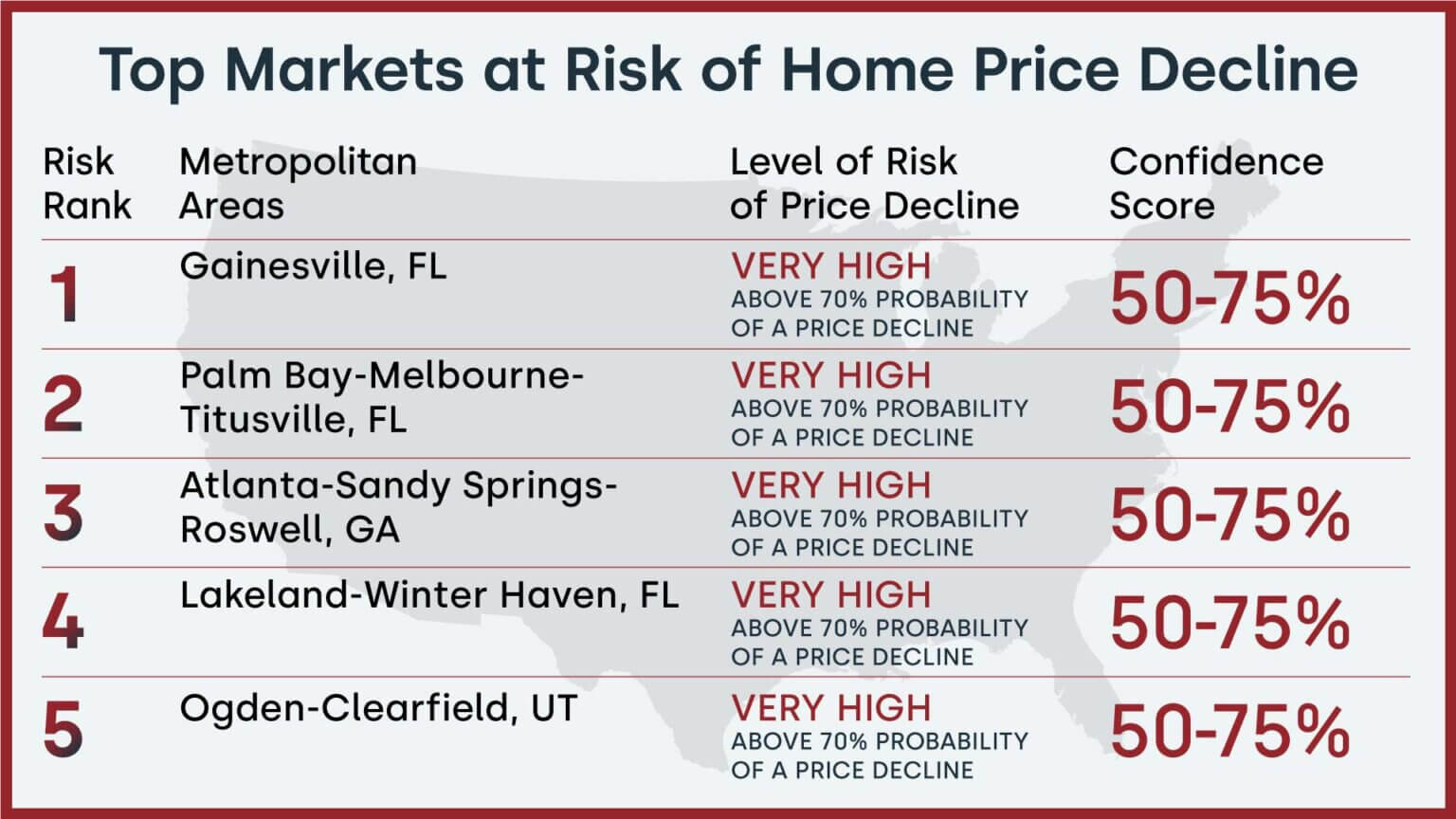
As the U.S. housing market continues its precarious dance with economic forces, Florida finds itself at the epicenter of a potential real estate upheaval. Recent data from CoreLogic's Market Risk Indicator (MRI) has shed light on an alarming trend: three major Florida metropolitan areas are at a very high risk of experiencing significant home price declines over the next 12 months. This article explores the factors contributing to this looming crisis and what it means for homeowners, buyers, and investors in these vulnerable markets.

3 Florida Housing Markets on the Brink of a Crash

  1. Gainesville, FL
  2. Palm Bay-Melbourne-Titusville, FL
  3. Lakeland-Winter Haven, FL

These three metropolitan areas have been identified as having a “very high” risk of price decline, with a probability exceeding 70%. Let's examine each market in detail:

1. Gainesville: The Educational Hub on Shaky Ground

Gainesville, home to the University of Florida, has long been considered a stable real estate market due to its consistent influx of students and faculty. However, it now sits atop the list of markets at risk of price decline. Several factors contribute to this precarious position:

  • Overreliance on the student housing market
  • Potential shifts in remote learning affecting local demand
  • Overvaluation of properties in recent years

The combination of these factors has created a perfect storm for Gainesville's housing market, making it vulnerable to a significant correction.

2. Palm Bay-Melbourne-Titusville: Space Coast's Economic Uncertainty

Known as the Space Coast due to its proximity to Cape Canaveral, this area has seen substantial growth in recent years, driven by the resurgence of the space industry and technology sector. However, the market now faces challenges:

  • Potential cutbacks in aerospace and defense spending
  • Overheated market due to speculative buying
  • Vulnerability to climate change and rising insurance costs

These factors have placed the Palm Bay-Melbourne-Titusville area in a high-risk category for price declines, threatening the equity of recent buyers and long-term residents alike.

3. Lakeland-Winter Haven: Central Florida's Overextended Market

Situated between Tampa and Orlando, Lakeland-Winter Haven has benefited from its strategic location and relatively affordable housing compared to its larger neighbors. However, this market is now facing its own set of challenges:

  • Rapid price appreciation outpacing local wage growth
  • Dependence on tourism and service industries affected by economic fluctuations
  • Increased inventory as investors begin to sell off properties

The combination of these factors has put Lakeland-Winter Haven at risk of a significant market correction.

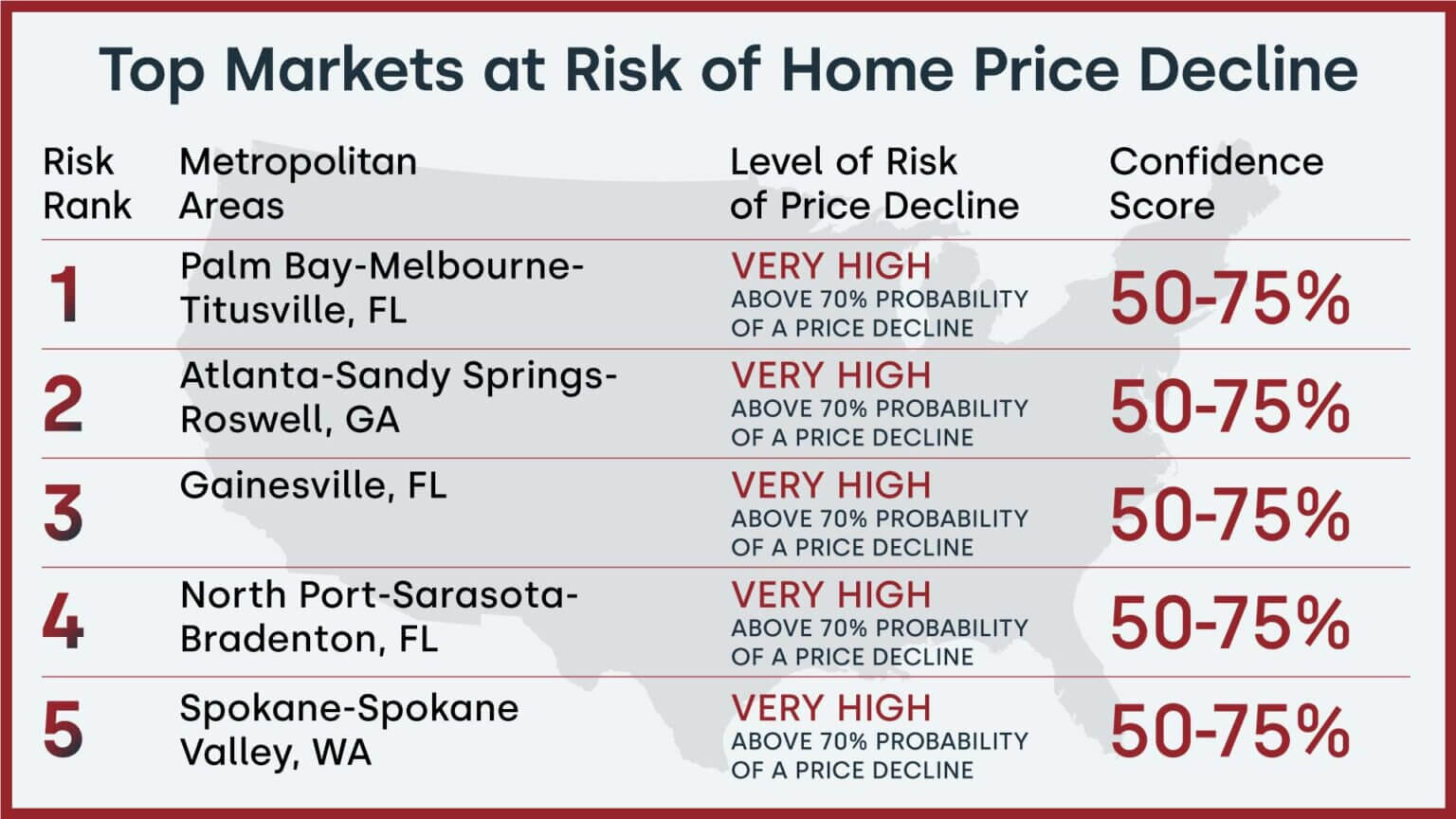
three major Florida metropolitan areas are at a very high risk of experiencing significant home price declines
Source: CoreLogic 

Understanding the Broader Context

To fully grasp the situation in these Florida markets, it's crucial to consider the national housing market trends:

  • National home prices increased by 4.3% year-over-year in July 2024
  • Monthly home price growth is slowing, with prices decreasing by 0.01% from June to July 2024
  • CoreLogic forecasts a modest 2.2% price increase nationally from July 2024 to July 2025

Dr. Selma Hepp, Chief Economist for CoreLogic, notes that “Housing demand continued to buckle under the pressure of high mortgage rates and unaffordable home prices, leading to a considerable slowing of home price gains during the summer.”

The Florida Paradox

Interestingly, while these three Florida markets are at high risk of decline, Miami stands out as an anomaly. With a 9.1% year-over-year price increase as of July 2024, Miami demonstrates the diverse and complex nature of Florida's real estate landscape.

Factors Contributing to Florida's Vulnerable Housing Markets

  1. Interest Rate Sensitivity: Florida's real estate market is particularly sensitive to interest rate fluctuations, affecting both local buyers and out-of-state investors.
  2. Climate Change Concerns: Increasing awareness of climate risks, including hurricanes and flooding, is impacting long-term property values and insurance costs.
  3. Demographic Shifts: Changes in migration patterns, both domestic and international, are reshaping demand in various Florida markets.
  4. Economic Diversity: Markets heavily reliant on specific industries (e.g., tourism, education) are more vulnerable to economic shocks.
  5. Investor Activity: The high level of investor ownership in Florida makes certain markets more susceptible to rapid selling in a downturn.

Implications for Stakeholders

  • Homeowners: Those in high-risk areas should be prepared for potential loss of equity and consider their long-term housing plans.
  • Buyers: While price declines may present opportunities, buyers should be cautious and consider the long-term stability of their chosen market.
  • Investors: Diversification and thorough market research are crucial in navigating Florida's varied real estate landscape.
  • Local Governments: Policymakers may need to prepare for potential decreases in property tax revenues and implement strategies to maintain community stability.

Looking Ahead

While the risk of price declines in these Florida markets is significant, it's important to note that real estate is inherently local and cyclical. The potential for Federal Reserve rate cuts and the natural resilience of Florida's economy could mitigate some of these risks.

Dr. Hepp suggests that the key question is “whether the upcoming rate cut from the Fed and the expected continuation of falling mortgage rates will be sufficient to motivate potential homebuyers” in the face of economic uncertainties and the upcoming presidential election.

As Florida's housing markets navigate these turbulent waters, stakeholders must stay informed, adaptable, and prepared for a range of potential outcomes. The Sunshine State's real estate market has shown resilience in the past, but the current confluence of factors presents a unique and challenging landscape for the months ahead.

Related Articles:

  • Miami, Florida Housing Market Faces BIG Crash Risk
  • Florida Housing Market Predictions for Next 2 Years: 2025-2026
  • Florida Housing Market 2024: Predictions for Next 5 Years
  • Florida Housing Market Predictions 2025: Insights Across All Cities
  • How Much Do Real Estate Agents Make in Florida?
  • Florida's Housing Market Sets a New Record With $70 Million Teardown

Filed Under: Housing Market, Real Estate, Real Estate Market Tagged With: Florida, Housing Market, housing market crash, Real Estate Market

Safest and Cheapest Places to Live in Florida in 2024 & 2025

November 4, 2024 by Marco Santarelli

Cheapest and Safest Places to Live in Florida

Thinking of Moving to Florida? These 10 Safest Spots Will Give You Peace of Mind. Florida is a popular destination for people who want to enjoy the sunshine, the beaches, and the attractions of the Sunshine State. But living in Florida can also be expensive, especially in the big cities and tourist hotspots. If you are looking for a place to live in Florida that is affordable, safe, and desirable, you may want to consider some of these options. Here are some of the cheapest and safest places to live in Florida based on data from AreaVibes, Zillow, and Bestplaces.

Safest and Cheapest Places to Live in Florida in 2024 & 2025

1. Tavares

Tavares is a small city in central Florida that is known as the “Seaplane City” because of its seaplane base and marina on Lake Dora. Tavares has a population of about 17,000 and a cost of living index of 90, which is 10% lower than the national average. The average home price in Tavares is around $230,000, which is 44% lower than the Florida average.

The crime rate in Tavares is also low, with 14 crimes per 1,000 residents, compared to the state average of 23. Tavares offers a variety of amenities, such as parks, museums, restaurants, and festivals.

2. Lake Wales

Lake Wales is another small city in central Florida that is located in the Lakeland-Winter Haven metropolitan area. Lake Wales has a population of about 16,000 and a cost of living index of 86, which is 14% lower than the national average. The average home price in Lake Wales is around $165,000, which is 60% lower than the Florida average.

The crime rate in Lake Wales is also below average, with 18 crimes per 1,000 residents. Lake Wales has many attractions, such as Bok Tower Gardens, Spook Hill, Lake Wales Museum, and Lake Kissimmee State Park.

3. Lady Lake

Lady Lake is a town in central Florida that is adjacent to The Villages, a large retirement community. Lady Lake has a population of about 15,000 and a cost of living index of 92, which is 8% lower than the national average. The average home price in Lady Lake is around $240,000, which is 41% lower than the Florida average.

The crime rate in Lady Lake is also low, with 12 crimes per 1,000 residents. Lady Lake has many amenities for seniors, such as golf courses, recreation centers, shopping plazas, and medical facilities.

4. Ocala

Ocala is a city in north-central Florida that is known as the “Horse Capital of the World” because of its many horse farms and equestrian events. Ocala has a population of about 64,000 and a cost of living index of 99, which is equal to the national average. The average home price in Ocala is around $275,000, which is 33% lower than the Florida average.

The crime rate in Ocala is slightly above average, with 24 crimes per 1,000 residents. Ocala has many attractions for nature lovers, such as Ocala National Forest, Silver Springs State Park, and Rainbow Springs State Park.

5. Daytona Beach

Daytona Beach is a city on the Atlantic coast of Florida that is famous for its beaches, motorsports, and spring break parties. Daytona Beach has a population of about 68,000 and a cost of living index of 97, which is 3% lower than the national average. The average home price in Daytona Beach is around $300,000, which is 27% lower than the Florida average.

The crime rate in Daytona Beach is high, with 40 crimes per 1,000 residents. Daytona Beach has many amenities for tourists and residents, such as Daytona International Speedway, Daytona Beach Boardwalk, and Daytona Lagoon.

6. Pine Hills

Pine Hills is a suburb of Orlando that is located about six miles from the city center. Pine Hills has a population of about 66,000 and a cost of living index of 94, which is 6% lower than the national average. The average home price in Pine Hills is around $300,000, which is 27% lower than the Florida average.

The crime rate in Pine Hills is above average, with 28 crimes per 1,000 residents. Pine Hills has some amenities for families and commuters, such as Barnett Park, Orlando West Shopping Center, and easy access to Orlando's attractions.

7. Gainesville

Gainesville is a city in north-central Florida that is home to the University of Florida, one of the largest public universities in the country. Gainesville has a population of about 142,000 and a cost of living index of 97, which is 3% lower than the national average. The average home price in Gainesville is around $282,000, which is 31% lower than the Florida average.

The crime rate in Gainesville is slightly above average, with 25 crimes per 1,000 residents. Gainesville has many attractions for students and residents, such as Florida Museum of Natural History, Butterfly Rainforest, and Paynes Prairie Preserve State Park.

8. Cape Coral

Cape Coral is a city on the Gulf coast of Florida that is known for its canals, boating, and fishing. Cape Coral has a population of about 200,000 and a cost of living index of 102, which is 2% higher than the national average. The average home price in Cape Coral is around $325,000, which is 20% lower than the Florida average.

The crime rate in Cape Coral is low, with 11 crimes per 1,000 residents. Cape Coral has many amenities for water lovers, such as Sun Splash Family Waterpark, Four Mile Cove Ecological Preserve, and Cape Coral Yacht Club.

9. Palm Coast

Palm Coast is a city on the Atlantic coast of Florida that is part of the Deltona-Daytona Beach-Ormond Beach metropolitan area. Palm Coast has a population of about 91,000 and a cost of living index of 103, which is 3% higher than the national average. The average home price in Palm Coast is around $330,000, which is 19% lower than the Florida average.

The crime rate in Palm Coast is low, with 10 crimes per 1,000 residents. Palm Coast has many attractions for beach goers and golfers, such as Flagler Beach, Washington Oaks Gardens State Park, and Palm Harbor Golf Club.

10. Port Orange

Port Orange is a city on the Atlantic coast of Florida that is also part of the Deltona-Daytona Beach-Ormond Beach metropolitan area. Port Orange has a population of about 64,000 and a cost of living index of 104, which is 4% higher than the national average. The average home price in Port Orange is around $335,000, which is 18% lower than the Florida average.

The crime rate in Port Orange is low, with 9 crimes per 1,000 residents. Port Orange has many amenities for families and retirees, such as Dunlawton Sugar Mill Gardens, Port Orange City Center Municipal Complex, and Spruce Creek Park.

ALSO READ: 10 Best Places to Live in Florida in 2024


References:

  • https://www.areavibes.com/
  • https://www.zillow.com/
  • https://www.bestplaces.net/

Filed Under: Best Places, Housing Market Tagged With: Florida

Florida Housing Market Predictions 2025: Insights Across All Cities

October 17, 2024 by Marco Santarelli

Florida Housing Market Predictions 2025

The Florida housing market predictions for 2025 present a blend of cautious optimism and careful analysis of regional trends. As we navigate through uncertainties influenced by economic factors, interest rates, and buyer behaviors, it is crucial to delve deeply into each metropolitan statistical area (MSA) within the state. Understanding these dynamics can help prospective buyers, investors, and industry professionals make well-informed decisions.

Florida Housing Market Predictions 2025

Key Takeaways

  • Average Florida home value currently stands at $394,728, a minimal 1.1% bump over the previous year.
  • As of July 31, 2024, the median sale price is $381,667, with a median list price of $425,833 as of August 31, 2024.
  • Projections indicate potential increases in home values by 3% to 5% in various regions of Florida by 2025.
  • Many MSAs may witness slight drops before recovering in 2025, suggesting stabilization rather than dramatic shifts.

Current Overview of the Florida Housing Market

Florida's housing market has shown resilience and adaptability over recent years. The state remains a popular destination for homeowners and investors alike, characterized by a rapidly growing population and an influx of residents from other states seeking a more favorable climate and lifestyle.

As of now, the state’s average home value is approximately $394,728. Homes tend to sell quickly, taking an average of 41 days to go pending, demonstrating a competitive market.

However, recent data from Zillow indicates that 71.1% of homes sold in July 2024 went for prices below their listed amounts. This trend suggests a potential shift in market dynamics as buyers may be exercising more power in negotiations due to increased inventory levels.

Will House Prices Drop in Florida?

While there is active speculation about home price drops in certain areas, the reality is complex. Some of Florida's prominent cities, including Miami and Tampa, are forecasted to experience temporary declines leading into late 2024. However, the overall expectation is that many regions will see a recovery in home values and buying activity by 2025.

Florida Metro Cities Housing Market Predictions

Let’s now take a closer look at the market predictions within several key MSAs across Florida (Zillow data). Each area has unique elements contributing to its housing market dynamics, shaping the trends we can expect in 2025.

1. Miami, FL

  • Current Trends: Miami's housing market is projected to see a slight decline of -0.1% by September 2024, dipping further to -0.5% by November 2024. However, a recovery is expected, with prices increasing by 2.5% by August 2025.
  • Driving Factors: Miami continues to be a major draw for luxury buyers and high-net-worth individuals, thanks to its vibrant cultural life and economic opportunities. The demand for waterfront properties holds firm, impacting overall market values positively.

2. Tampa, FL

  • Market Forecast: Tampa's real estate market is anticipated to witness a -0.4% drop by September 2024, potentially increasing by 1.4% come August 2025.
  • Driving Factors: The booming job market and influx of new residents from other states bolster Tampa’s housing sector. The city's ongoing infrastructure developments, coupled with a youthful demographic, make it a desirable place to live.

3. Orlando, FL

  • Current Data: Orlando is expected to see a decline of -0.2% by September 2024, followed by a modest recovery to 1.1% by August 2025.
  • Driving Factors: As a city known for tourism and theme parks, Orlando remains attractive to families. Affordable housing options compared to nearby cities make it appealing for new buyers and investors.

4. Jacksonville, FL

  • Outlook: Jacksonville's housing market forecasts a slight drop of -0.3% initially, with a potential rise to 0.5% by mid-2025.
  • Driving Factors: The city's diverse economy, featuring sectors like technology and finance, coupled with its expanding suburban areas, continues to draw new residents.

5. North Port, FL

  • Market Predictions: North Port is likely to experience a more significant decline, with predictions of -0.8% through 2024, gradually recovering to 0.4% by 2025.
  • Driving Factors: Although North Port is growing, its affordability attracts budget-conscious homebuyers.

6. Cape Coral, FL

  • Trends: A forecasted fall of -0.7% by September 2024 precedes a very slight uptick to 0.3% by August 2025.
  • Driving Factors: Like North Port, Cape Coral’s appeal lies in its suburban charm and waterfront properties that cater to retirees and families.

7. Lakeland, FL

  • Forecast: Experts predict a -0.4% decline initially, followed by an increase to 0.7% by mid-2025.
  • Driving Factors: Lakeland’s sense of community combined with affordability makes it attractive for families and individuals looking to settle down.

8. Deltona, FL

  • Future Predictions: Deltona is expected to decline -0.3%, stabilizing around 0.5% in the following year.
  • Driving Factors: Its proximity to Orlando facilitates an exploration of both relaxed living and urban convenience.

9. Palm Bay, FL

  • Market Outlook: Expected to decline by -0.4%, with a projected increase of 0.8% by August 2025, Palm Bay remains popular for its affordability.
  • Driving Factors: An increase in local amenities and proximity to beaches have bolstered homebuyer interest.

10. Pensacola, FL

  • Trends: Pensacola will see a slight decline of -0.2%, with a predicted increase of 1.6% by August 2025.
  • Driving Factors: The coastal lifestyle, combined with a growing military presence, supports its housing demand.

11. Port St. Lucie, FL

  • Outlook: Anticipated decline of -0.3%, increasing to 1.6% in 2025 as it attracts retirees.
  • Driving Factors: Port St. Lucie continues to experience growth promoted by new developments and quality living options.

12. Tallahassee, FL

  • Forecast: This political center is projected to see a minor decline of -0.2%, with stable positioning at 0.4% growth expected to develop.
  • Driving Factors: As home to significant educational institutions, it builds a consistent market for renters and buyers alike.

13. Naples, FL

  • Future Predictions: Amid a future decline of -0.7%, recovery to 1.3% indicates ongoing interest in luxury markets.
  • Driving Factors: Naples' status as a luxury haven continues to attract wealthy buyers seeking sunshine and leisure.

14. Ocala, FL

  • Market Trends: Having a projected decline of -0.2%, Ocala is also set to recover to 2.2% as it remains an attractive place for those looking for rural charm.
  • Driving Factors: Horse country and affordability make Ocala a go-to for aspiring homeowners.

15. Gainesville, FL

  • Outlook: Similar to Ocala, predicted to drop -0.2%, then recover to 1.3% by the following year.
  • Driving Factors: Home to a major university, Gainesville maintains a steady flow of new residents and rental demand.

16. Crestview, FL

  • Forecast: Expected drop of -0.4%, with stabilization anticipated at 0.1% by August 2025.
  • Driving Factors: Its small-town feel paired with proximity to larger cities draws residents seeking a balance.

17. Punta Gorda, FL

  • Trends: A more significant decline of -1.1% is expected, followed by recovery trends highlighting its waterfront living.
  • Driving Factors: Punta Gorda’s charm lies in its unique lifestyle, drawing in retirees.

18. Panama City, FL

  • Market Outlook: Panama City is anticipated to decline -0.5%, with a grow-upward trajectory to 1.2% by August 2025.
  • Driving Factors: Its tourism and local resources continue to position it as a market of interest.

19. Sebastian, FL

  • Current Data: Projected decline of -0.4%, with an expected increase to 0.9% by next year.
  • Driving Factors: Natural beauty and close-knit communities enhance its attractiveness.

20. Homosassa Springs, FL

  • Outlook: Smaller predicted declines of -0.2%, with a future increase to 2.2%.
  • Driving Factors: Its appeal is underlined by natural attractions and family-friendly communities.

21. The Villages, FL

  • Future Predictions: Known for attracting retirees, projections indicate a decline of -0.4%, followed by a -1.6% downturn.
  • Driving Factors: It remains a significant residential area, particularly for older adults.

22. Sebring, FL

  • Market Trends: Expected decline of -0.4%, with a recovery forecast to 2.4% by mid-2025.
  • Driving Factors: These trends reflect its affordability and recreational options.

23. Key West, FL

  • Forecast: Anticipated drop of -0.4% followed by an increase to 2.1% as demand for vibrant living environments continues.
  • Driving Factors: The cultural richness of Key West strongly influences housing desirability.

24. Palatka, FL

  • Trends: Fairly stable with -0.3% decline and recovery expected at 1.9%.
  • Driving Factors: Its historical significance adds a unique charm that may attract newcomers.

25. Lake City, FL

  • Market Outlook: While a slight decline of -0.2% is expected, a substantial rebound of 3% signals potential future interest.
  • Driving Factors: Lake City’s industry and affordability bring engagement to its real estate market.

26. Okeechobee, FL

  • Current Data: Projected minor gains of 0.1%, leading to growth of 3.6% by 2025.
  • Driving Factors: Its agricultural roots and recreational appeal support the market dynamics.

27. Clewiston, FL

  • Outlook: Slight decline of -0.1% is expected to shift toward 5% growth driven by local economic enhancements.
  • Driving Factors: Accessibility and community improvements contribute positively.

28. Arcadia, FL

  • Market Trends: A neutral outlook maintains projections around 0%, with a potential increase stabilized at 2.8%.
  • Driving Factors: Local economic factors and cultural ties keep the market steady.

29. Wauchula, FL

  • Forecast: Expected minimal growth of 0.1% suggests stability, reaching 4.2% by 2025.
  • Driving Factors: Institutional influx and capital investments may drive demand upward.

Overall, these detailed predictions emphasize the diversity within Florida's housing markets. Different regions are influenced by unique local factors, which can either cushion them from downturns or drive shines of growth.

Market Influences and External Factors

Several significant external factors shape the Florida housing market moving into 2025:

  • Interest Rates: The landscape of mortgage rates directly impacts buyer affordability. If rates can decrease, even slightly, it may bolster homebuying activity, eventually driving up prices.
  • Net Migration Trends: Florida continues to attract people from other regions seeking not only favorable weather but also improved economic conditions and job markets.
  • Inventory Trends: An increase in available homes can lead to greater competition among sellers, resulting in better prices for buyers.

The ongoing electronic and remote work trends encourage younger generations to consider Florida as a more permanent residence, boosting overall demand across the states.

Reports from U.S. News and sources like The Mortgage Reports suggest that as the housing market stabilizes, many areas in Florida may experience a renewed interest from potential buyers, especially first-time homeowners looking to invest in the market.


Will the Florida Housing Market Crash or Boom in 2025?

While some analysts predict minor fluctuations, the consensus is that Florida will not endure a significant crash in the housing market. Instead, many experts anticipate a steady appreciation rate of 3% to 5% annually from 2024 to 2028, fueled by ongoing demand and economic stability.

My Opinion on the Forecast

As a seasoned investor in real estate, my view is that despite prevailing uncertainties, Florida’s housing market remains fundamentally strong. The long-term growth potential will continue to attract buyers and investors, especially in areas with burgeoning economic opportunities.

As we transition into the 2025 market, signs of recovery are evident across various regions. While certain MSAs may experience tumbles in prices, a combination of economic growth and demographic shifts ensures the viability of home investments in Florida.

In Conclusion

The Florida housing market captures a complex interplay of regional economies, buyer interests, and external pressures. Tracking these fluctuations and understanding their implications can prove valuable for potential homeowners, investors, and real estate professionals hoping to capitalize on emerging opportunities in this diverse market landscape.

Related Articles:

  • Florida Housing Market Predictions 2024: What to Expect?
  • 5 Worst Cities in Florida to Buy Real Estate
  • Florida’s Housing Market Sets a New Record With $70 Million Teardown
  • Florida Housing Markets Face Steep Risk: CoreLogic Prediction
  • Florida Housing Market: Coastal Crisis vs Inland Opportunity
  • Worst Places to Live in Florida for Families & Retirees
  • Florida Housing Market Predictions for Next 2 Years
  • Florida Housing Market Warning: Insights from a Proven Predictor
  • Florida's Priciest Places: Top 35 Most Expensive Cities
  • Florida Housing Market: Will These 2 Metros Crash in 2025?
  • When Will the Housing Market Crash in Florida?
  • South Florida Housing Market: Will it Crash in 2024?

Filed Under: Housing Market, Real Estate Market Tagged With: Florida, Home Price Forecast, Housing Market, housing market predictions, Housing Market Trends

10 Worst Places to Live in South Florida (2024)

October 11, 2024 by Marco Santarelli

South Florida's 10 Worst Places to Live: Where Sunshine Turns Shady

South Florida is a haven for many, offering pristine beaches, vibrant nightlife, and a laid-back lifestyle. But beneath the glamorous facade, some neighborhoods struggle with crime, affordability, and infrastructure issues. This article dives into the ten worst places to live in South Florida, analyzing factors like crime rates, cost of living, and quality of life to help you make informed decisions about where to call home.

The Bottom Line: While South Florida offers a plethora of desirable locations, certain neighborhoods struggle with challenges that can significantly impact your living experience. By understanding these concerns, you can avoid areas that don't align with your priorities and find a place where you can truly thrive.

Why Defining “Worst” Is Subjective

Before we jump into the list, it's important to understand that “worst” is a relative term. What one person considers undesirable, another might find appealing. Factors like personal preferences, budget, and lifestyle choices play a crucial role in determining your ideal neighborhood.

This list aims to shed light on areas with statistically higher crime rates, elevated costs of living, and other factors that might not be suitable for everyone. However, it's crucial to remember that within even the most challenging neighborhoods, pockets of vibrant communities and hidden gems exist.

10 Worst Places to Live in South Florida 

1. West Palm Beach, Florida

  • Crime: West Palm Beach struggles with a high crime rate, particularly in certain neighborhoods. The city ranks above the national average for both violent and property crimes.
  • Cost of Living: The cost of living in West Palm Beach is significantly higher than the national average, making it challenging for many to afford housing and other essentials.
  • Quality of Life: While West Palm Beach boasts beaches and a lively downtown, infrastructure issues can hinder daily life. Traffic congestion, limited public transportation, and aging infrastructure are common concerns.

2. Fort Lauderdale, Florida

  • Crime: Fort Lauderdale experiences higher crime rates compared to other major cities in Florida, particularly in certain areas like Downtown Fort Lauderdale and the Riverbend neighborhood.
  • Cost of Living: The cost of housing, particularly rentals, is extremely high in Fort Lauderdale.
  • Quality of Life: While Fort Lauderdale offers a beautiful waterfront and vibrant nightlife, traffic congestion, limited affordable housing options, and an aging infrastructure can be problematic.

3. Miami Gardens, Florida

  • Crime: Miami Gardens has consistently ranked among the highest for crime rates in South Florida.
  • Cost of Living: While the cost of living in Miami Gardens is lower than in Miami Beach or Fort Lauderdale, it remains relatively high, especially for housing.
  • Quality of Life: Miami Gardens struggles with limited public transportation options, high poverty rates, and a lack of quality education facilities, making it a challenging place for many residents.

4. Pembroke Pines, Florida

  • Crime: Pembroke Pines has seen a significant increase in crime rates in recent years, particularly in property crimes.
  • Cost of Living: The cost of housing in Pembroke Pines is relatively high, and rising, placing pressure on residents.
  • Quality of Life: While Pembroke Pines boasts a good school system and ample parks, traffic congestion, limited public transportation, and a lack of walkable areas can make daily life inconvenient.

5. Hollywood, Florida

  • Crime: Hollywood faces a higher than average crime rate, with particular concerns about property crimes.
  • Cost of Living: The cost of living is on the rise in Hollywood, with increasing housing costs and expenses.
  • Quality of Life: Hollywood boasts beautiful beaches and a vibrant arts scene but has issues with traffic congestion, limited public transportation, and aging infrastructure.

6. Lauderdale Lakes, Florida

  • Crime: Lauderdale Lakes struggles with a high crime rate, with both violent and property crimes posing challenges for residents.
  • Cost of Living: The cost of living is relatively low compared to other cities in South Florida, but housing options are limited and can be outdated.
  • Quality of Life: Lauderdale Lakes lacks adequate public transportation, has limited access to healthcare services, and struggles with high poverty rates.

7. Miramar, Florida

  • Crime: Miramar experiences a relatively high crime rate for South Florida, with property crimes being a significant concern.
  • Cost of Living: The cost of housing in Miramar is on the rise, and the city is facing affordability challenges.
  • Quality of Life: Miramar boasts a good school system and ample parks, but it lacks sufficient public transportation, struggles with traffic congestion, and has limited walkable areas.

8. Hallandale Beach, Florida

  • Crime: Hallandale Beach has experienced a rise in crime rates in recent years, particularly in certain areas.
  • Cost of Living: The cost of housing in Hallandale Beach is relatively high, with limited options for affordable housing.
  • Quality of Life: Hallandale Beach has a beautiful beachfront but faces infrastructure issues, including traffic congestion, limited public transportation, and a lack of walkable areas.

9. North Lauderdale, Florida

  • Crime: North Lauderdale has a higher than average crime rate, particularly in property crimes.
  • Cost of Living: The cost of living in North Lauderdale is relatively low compared to other cities in South Florida, but housing options are limited and aging.
  • Quality of Life: North Lauderdale lacks adequate public transportation, struggles with traffic congestion, and has limited access to quality healthcare services.

10. Tamarac, Florida

  • Crime: Tamarac has experienced an increase in crime rates in recent years, with property crimes being a major concern.
  • Cost of Living: The cost of living in Tamarac is relatively low compared to other cities in South Florida, but housing options can be outdated and limited.
  • Quality of Life: Tamarac struggles with traffic congestion, limited public transportation, and aging infrastructure, making it difficult to navigate daily life.

Beyond the Statistics: A Deeper Dive

These ten areas represent a cross-section of South Florida's diverse neighborhoods, each with its own unique challenges. Remember, these rankings are based on data and statistical analysis. Ultimately, the “best” or “worst” place to live is subjective and depends on your individual priorities, lifestyle, and budget.

Here are some additional factors to consider beyond the statistics:

  • Neighborhood Dynamics: Within each city, there can be significant variations between individual neighborhoods. Some areas may offer a safe and vibrant community, while others struggle with crime and social problems.
  • Community Resources: Access to healthcare, education, and social services can vary greatly depending on the location. Consider your family's needs and priorities.
  • Infrastructure: Infrastructure plays a crucial role in quality of life. Evaluate the quality of roads, public transportation, and utilities in your potential neighborhood.
  • Future Development: Emerging areas can offer opportunities, but it's essential to research plans for future development and its potential impact on your neighborhood.

Making Informed Decisions: A Guide to South Florida Living

South Florida offers a vast array of communities, each with its unique character and appeal. By researching and considering various factors, you can find a place that aligns with your needs and preferences.

  • Do your research: Use online resources like Zillow, Trulia, Niche, and GreatSchools.org to gather information about crime rates, cost of living, schools, and community amenities.
  • Visit potential neighborhoods: Exploring a neighborhood firsthand can provide valuable insights into its atmosphere, community spirit, and amenities.
  • Talk to local residents: Connect with people who live in the areas you're considering to gain firsthand perspectives and insights.
  • Consider your long-term goals: Think about your lifestyle, career aspirations, and future plans when choosing a place to live.

The Power of Perspective: Finding Opportunity in Challenges

While these ten areas face specific challenges, it's important to acknowledge that they also offer opportunities. Many residents find affordable housing, diverse communities, and a strong sense of belonging in these neighborhoods.

Remember:

  • Change is constant: South Florida is a dynamic region, and many communities are undergoing revitalization efforts to improve their quality of life.
  • Individual experiences matter: Personal perspectives and experiences shape our views on a neighborhood. What one person finds challenging, another might find rewarding.
  • Focus on the positive: Look for the bright spots and potential in every neighborhood, as it's often the hidden gems that contribute to a sense of community and belonging.

Conclusion: Navigating the South Florida Landscape

South Florida is a complex and vibrant region with diverse neighborhoods. By understanding the challenges and opportunities presented by these ten areas, you can make informed decisions about where to call home.

Remember, the “best” place to live is subjective and depends on your individual needs and priorities. Whether you're seeking a vibrant urban center, a tranquil waterfront community, or a family-friendly suburb, South Florida offers something for everyone. By doing your research and exploring your options, you can find a place where you can thrive and enjoy all that South Florida has to offer.


Also Read:

  • Worst Places to Live in Florida for Families & Retirees in 2024
  • 12 Best Places to Live in Florida for Young Adults in 2024
  • Best Beaches in Florida in 2024: Top Spots for Families & Adventurers
  • 10 Best Places to Live in Florida in 2024
  • 10 Best Places to Live in Florida for Families in 2024
  • Cheapest Places to Live in Florida by the Beach in 2024

Filed Under: Best Places, Housing Market Tagged With: Florida, South Florida

Ocala Housing Market: Prices, Trends, Forecast 2024-2025

September 28, 2024 by Marco Santarelli

Ocala Housing Market

Located in the heart of Florida, Ocala is not only known for its scenic beauty and equestrian culture but also for its vibrant housing market. The Ocala housing market has been growing in recent years, due in part to its affordability and its proximity to major cities like Orlando and Tampa. The city is also home to several retirement communities and horse farms.

Several factors contribute to the rising popularity of the Ocala housing market:

  • Location: Centrally positioned in Florida, Ocala offers easy access to major cities like Orlando and Tampa, enhancing its appeal to potential residents.
  • Climate: Ocala enjoys a mild climate characterized by warm winters and hot summers, providing a comfortable living environment throughout the year.
  • Amenities: The city provides a diverse range of amenities, including golf courses, horse farms, and shopping centers, catering to the varied interests of its residents.
  • Retirement Communities: Ocala is home to numerous retirement communities, attracting retirees from across the country seeking an ideal place to spend their golden years.

Ocala Housing Market Trends 2024

Key Takeaways

  • Home sales in Ocala are influenced by fluctuating prices and inventory levels.
  • Home prices have experienced a slight decrease over the past year, but projections for the future look promising.
  • Housing supply remains a challenge, affecting both buyers and sellers in the area.
  • Current market trends show readiness for a shift in 2025, anticipating a transition back to a seller's market.

Home Sales

In 2024, Ocala has seen mixed results in home sales. According to Zillow, the average home value in Ocala hovers around $277,511, reflecting a marginal decline of 0.3% over the past year. While this slight drop may raise eyebrows, it signals an adjustment in a once booming market where prices were escalating rapidly.

Home sales typically peak in the summer months. This year has followed that trend, but increasing interest rates and economic uncertainties have somewhat cooled buyer enthusiasm. Many potential buyers are still hesitant, reflecting a broader uncertainty in the housing market. With rising costs in other aspects of living, some are waiting for more favorable conditions.

Real estate professionals point out that although home sales have slowed, the demand remains steady. Ocala's appeal as an affordable place to live compared to larger Florida cities draws newcomers looking for a comfortable and quieter lifestyle.

Home Prices

The Ocala housing market trends indicate a stabilization in home prices. After dramatic increases in previous years, the current prices reflect a correction phase. The average home price last year soared significantly, leading to concerns about affordability for new buyers. However, as of late September 2024, the average price has slightly dipped, creating new opportunities for those re-entering the market.

Projections for home prices are moderately optimistic. They forecast a recovery mode beginning in 2025, predicting an average increase of approximately 2.2% by 2025. This moderate future growth suggests that despite today’s fluctuations, there is a pathway toward increased home values, making 2025 a potentially more advantageous time for buyers.

Housing Supply

One of the most pressing issues affecting the Ocala housing market trends is the supply of homes. The availability of properties for sale has not kept pace with demand, resulting in a competitive market atmosphere. Inventory levels have been relatively low, which often leads to higher prices for those homes that are available. The limited housing supply means that buyers must act quickly, often resulting in multiple offer situations for desirable properties.

Reports from Realtor.com indicate that Ocala's rental market is robust as well. With many people looking to rent while contemplating purchasing, the demand for rental properties also impacts overall housing supply dynamics. Such conditions contribute to increasing rental rates, which can further influence future housing decisions.

Market Trends

The Ocala housing market trends highlight important behavioral patterns among buyers and sellers. Recently, many potential buyers remain cautious about entering the market due to concerns over costs and economic stability. As interest rates climb, buyers may feel strained, making them reluctant to commit to home purchases.

However, this cautious approach could shift quickly. As we look toward 2025, predictions suggest a growth cycle. Industry experts note that economic recovery and stabilization could lead to heightened demand, ultimately favoring sellers. This fluctuation hints at a possible transformation back to a seller’s market, which will encourage homeowners to list their properties at competitive prices.

Ocala Housing Market Forecast for 2024 and 2025

As we move forward, understanding the Ocala housing market forecast offers valuable insights. The data from multiple sources, including recent reports from Zillow, emphasizes a typical cyclical nature of the housing market.

For 2024, we may experience a continuation of the current trend of stabilizing prices. According to forecasts, by late November 2024, home prices may see a slight dip of -0.7%. This suggests that the market is not entering a crisis but is rather adjusting to more sustainable levels.

Transitioning into 2025, experts expect a turning point. The forecast indicates a potential increase in home prices, particularly as supply constraints loosen and economic conditions improve. Over the next year, this could lead to a projected 2.2% average price increase by August 2025, fostering a more dynamic buying environment.

Should You Invest in Real Estate in Ocala?

1. Population Growth and Trends

Ocala, with its moderate-sized housing market, is experiencing noteworthy population growth and trends that make it an attractive prospect for real estate investment. The city's population growth is fueled by factors such as its affordable housing market, pleasant climate, and strategic location in Florida. The influx of new residents contributes to a thriving real estate market, providing a solid foundation for potential investors.

2. Economy and Jobs

  • The Ocala economy is diverse, with a strong presence in industries such as healthcare, manufacturing, and agriculture.
  • Job opportunities in Ocala are on the rise, driven by the city's economic diversification and its proximity to major urban centers.
  • A stable job market enhances the city's appeal for potential residents, positively impacting the demand for rental properties.

3. Livability and Other Factors

  • Ocala boasts a mild climate, making it an attractive destination for individuals seeking a comfortable living environment.
  • The city offers a range of amenities, including golf courses, horse farms, and shopping centers, contributing to its overall livability.
  • Investors should consider the quality of life factors that contribute to Ocala's appeal, as these aspects influence rental demand and property values.

4. Rental Property Market Size and Growth

The rental property market in Ocala is substantial, with a diverse range of housing options catering to various demographics. Key factors for investors to consider include:

  • Market Size: The Ocala rental market has a significant presence, providing ample opportunities for property investment.
  • Growth Potential: As the city experiences population growth and economic development, the demand for rental properties is likely to increase, offering investors the potential for robust returns.

5. Other Factors Related to Real Estate Investing

  • Affordability: Ocala is known for its affordability, making it an accessible market for real estate investors, especially those entering the market for the first time.
  • Strategic Location: The city's central location in Florida enhances its desirability, attracting individuals looking for a convenient and well-connected place to live.
  • Development Initiatives: Investors should keep an eye on ongoing and planned development initiatives in Ocala, as these can impact property values and rental demand.

Filed Under: Growth Markets, Housing Market Tagged With: Florida, Housing Market, Ocala

Florida Housing Market Predictions 2024: What to Expect?

September 23, 2024 by Marco Santarelli

Florida Housing Market Predictions 2024: What to Expect?

The Florida housing market predictions for 2024 are generating substantial interest as potential buyers, investors, and homeowners anticipate the next chapter in this vibrant real estate landscape. With its picturesque beaches and warm climate, Florida continues to attract newcomers from across the nation, leading to various shifts in housing trends. As we dive deep into the expected dynamics of this market for 2024, it's essential to consider various economic factors, regional variances, and consumer behavior influencing these predictions.

Florida Housing Market Predictions 2024: What to Expect?

Key Takeaways

  • Housing Prices: Expected to rise but at a slower pace—around 3.4% in 2024.
  • Inventory Levels: Increase in new listings indicates more options for buyers.
  • Mortgage Rates: Anticipated decline could ease purchasing power concerns.
  • Market Shifts: Older condos may face price drops of up to 20% in specific areas.
  • Demand Factors: Migration influx and job growth continue to fuel demand.

Current State of the Market

As of mid-2024, Florida's housing market exhibits a complicated interplay between significant demand and new supply. The Florida Realtors Association has reported an upswing in the median sale prices for properties, particularly in major metropolitan areas like Miami and Orlando.

According to the data, while prices in the latter part of 2023 soared due to a confluence of factors including low interest rates and heightened demand from out-of-state buyers, this growth appears to be stabilizing. A recent analysis from Zillow estimates a more modest price appreciation of about 3.4% for 2024 (source).

Inventory and Demand Dynamics

One of the crucial indicators of the housing market's health is inventory levels. For 2024, the trend shows a notable increase in new listings, which could facilitate better options for buyers and potentially moderate rising prices. The influx of listings is partially fueled by ongoing construction projects and a higher homeowner confidence in selling, expecting favorable conditions to reinvest or upgrade.

Interestingly, while demand remains strong, the correlation between supply and demand could shift as more inventory becomes available. Many buyers are currently facing challenges related to affordability due to previous significant price hikes, with higher mortgage payments affecting purchasing decisions. As these dynamics evolve, we may observe a balanced market, especially if the construction of entry-level homes ramps up.

Is it a good time to buy a house in Florida in 2024?

Currently, many analysts argue that 2024 presents an opportune moment to purchase property in Florida. Recent reports suggest that the current market conditions, including a stabilized price increase and expected declines in mortgage rates, make for a favorable buying environment. According to a notable expert analysis, if you plan to live in the home long-term and are prepared for potential fluctuations, now may be the right time to consider purchase options (source).

However, prospective buyers should monitor pricing trends and inventory levels closely, as these factors will play a significant role in determining readiness to engage.

Mortgage Rates Forecast

Another significant factor influencing the Florida housing market predictions for 2024 is the outlook on mortgage rates. Following years of volatility, Redfin has predicted a gradual decline in interest rates, improving affordability for potential buyers (source). Such a decrease could stimulate demand further, bringing back buyers who had previously been sidelined by high borrowing costs.

A lower rate environment would not only attract first-time homebuyers but could also impact investors looking to seize rental opportunities in Florida—a state known for its thriving short-term rental market spurred by tourism.

Is there a housing shortage in Florida?

Florida is currently grappling with signs of a housing shortage that continues to challenge its market. Despite being in a phase of increased construction to accommodate rising demand, many experts express concerns over the state’s ability to meet the growing need for affordable housing options. Reports indicate that, along with the influx of new residents, the affordable housing situation has reached a crisis level, with some areas experiencing severe shortages (source).

This supply-demand disparity could lead to rising competition for available homes, particularly in desirable regions. Buyers may find themselves in bidding wars, further complicating affordability issues, particularly in urban centers.

Price Discrepancies Across Regions

It's essential to note that while the overall market trend indicates moderate price growth, regional discrepancies persist. Certain areas, particularly those that have experienced rapid appreciation in the last few years, could see price corrections. For instance, older condos in popular locations may face significant declines in value, some experts predicting drops as high as 20% in select markets (source). This phenomenon reflects a saturation point whereby many buyers reassess the value proposition of these properties amid changing consumer preferences.

Urban areas, particularly those with robust job growth and tech sector expansions—like Tampa and Orlando—are likely to remain hot spots for demand, pushing sustenance in prices. In contrast, rural and some suburban areas may struggle to maintain momentum as prices rise without equivalent job growth or amenities.

Will the Florida housing market crash?

Concerns about a potential housing market crash in Florida have been making headlines, but current insights suggest that a significant downturn is unlikely in 2024. While home prices have risen to notable heights, and some investors express trepidation, many analysts maintain that the market remains stable overall. The continuing demand, coupled with rising employment and economic activity in major cities, acts as a bulwark against drastic fluctuations in property values (source).

However, like any market, external factors such as economic downturns, shifts in consumer behavior, or changes in interest rates could influence stability, and a sector slowdown could occur. Keeping an eye on macroeconomic indicators will be critical for industry stakeholders and buyers alike.

Outlook for Investors

For real estate investors, the predicted conditions present a unique landscape. With increased inventory levels and lower mortgage rates, there are opportunities for acquiring properties that could appreciate over time. Investors need to be discerning, ensuring they choose properties that align with demographic trends and future growth potential.

Areas exhibiting strong infrastructures, such as good schools, amenities, and transportation links, will likely see higher demand. Moreover, as remote work becomes a staple in many industries, homes in less densely populated but attractive regions may gain traction.

Closing Thoughts

Looking ahead, the Florida housing market is expected to navigate through a period of moderation characterized by stable price growth, slight increases in inventory, and a beneficial shift in mortgage rates. As migration fuels demand and new constructions come online, buyers could see a healthier market dynamic where affordability issues may lessen over time. Understanding these trends is crucial for anyone looking to engage with the Florida real estate market in 2024.

Related Articles:

  • 5 Worst Cities in Florida to Buy Real Estate
  • Florida Housing Markets Face Steep Risk: CoreLogic Prediction
  • Florida Housing Market: Coastal Crisis vs Inland Opportunity
  • Worst Places to Live in Florida for Families & Retirees
  • Florida Housing Market Predictions for Next 2 Years
  • Florida Housing Market Warning: Insights from a Proven Predictor
  • Florida's Priciest Places: Top 35 Most Expensive Cities
  • Florida Housing Market: Will These 2 Metros Crash in 2025?
  • When Will the Housing Market Crash in Florida?
  • South Florida Housing Market: Will it Crash in 2024?

Filed Under: Growth Markets, Housing Market Tagged With: Florida, Housing Market

Florida’s Housing Market Sets a New Record With $70 Million Teardown

September 21, 2024 by Marco Santarelli

Florida's Housing Market Sets a New Record With $70 Million Teardown

In the dynamic Fort Lauderdale housing market, a remarkable event has taken place that has left many in awe. A teardown property recently fetched an astonishing $70 million, thus shattering all previous sales records in the city.

This monumental sale highlights the growing attraction of ultra-luxury real estate in this iconic South Florida locale. As we delve deeper into this eyebrow-raising transaction, it becomes evident that Fort Lauderdale is not just witnessing an increase in property prices; it's experiencing a transformational shift in its residential appeal.

Record-Breaking $70 Million Teardown Redefines Fort Lauderdale Housing Market

💵
Key Takeaways

  • 🏠 Record Sale: A teardown property in Fort Lauderdale set a new record selling for $70 million (Realtor.com).
  • 💸 Prominent Seller: The property was owned by hedge fund manager Donald Sussman, who made a significant investment in assembling the estate.
  • 🏝 Exclusive Location: Located in the prestigious Harbor Beach neighborhood, the property boasts 1,035 feet of waterfront access.
  • 📈 Market Trend: Luxury home prices in the area increased by 7.4% from last year.
  • 🔨 Development Plans: The buyer plans to demolish the existing structure to build a new, smaller home.


The house in question was initially a Mediterranean-style estate, once serving as a lavish abode housing a multitude of amenities, including a theater, gym, and even a batting cage. Despite its grandeur, the new owner has different aspirations, planning to demolish the 20,000-square-foot mansion to create a more personalized space.

This decision, while seemingly counterintuitive during a period of soaring property values, illustrates a growing preference among certain affluent buyers for customized homes that reflect their specific tastes rather than grandiose structures that may not meet their personal style.

Donald Sussman, the seller and a seasoned figure in the hedge fund industry, initially invested approximately $40 million to assemble the expansive 2.7-acre property starting in 2015. Beyond his purchase, he reportedly spent an additional $6 million on renovations and enhancements to the structure. It is noteworthy that Sussman was motivated not only by investment but also to create an estate with a lifestyle appeal, one that includes extensive amenities and luxurious features.

The Fort Lauderdale Housing Market's Evolution

The Fort Lauderdale housing market is on an upward trajectory, with a significant increase in luxury home sales. Reports indicate that luxury properties sold for an average price of $5.59 million in the second quarter of 2024, reflecting a considerable 7.4% increase from the same quarter the previous year (source: Douglas Elliman). The influx of affluent residents and investors seeking luxury real estate has pushed the housing market to new heights, characterized by low inventory and high demand.

Notably, the previous record held for a Fort Lauderdale home sale was a mere $40 million, set just last year. This stark contrast illustrates the rapid appreciation of high-end properties in the area. The driving forces behind this trend can be attributed to factors such as low interest rates, the influx of wealthy remote workers, and the city's appeal as a destination for those seeking sun and luxury living.

The influential position of Harbor Beach, the neighborhood where the teardown property resides, cannot be overstated. This exclusive enclave is known for its pristine waterfront views, expansive lots, and privacy. Residents enjoy a lifestyle that combines luxury living with proximity to the beautiful Atlantic Ocean. The allure of owning a slice of this prestigious community continues to attract affluent buyers, often leading to competitive bidding wars for properties even before they hit the market.

Implications of the $70 Million Sale

The record-setting sale of the $70 million teardown raises questions about future real estate trends in the Fort Lauderdale housing market. Will we see more buyers opting for teardown properties in favor of new constructions customized to their desires? This trend could indicate a shift where buyers prioritize personalized design over existing luxury. As property values continue to climb, the trend may also reveal significant opportunities for land developers and investors looking to tap into the ultra-luxury market.

In addition, the sale distances itself from traditional real estate purchasing attitudes, where individuals sought out opulent homes already equipped with high-end features. The new owner’s decision to demolish a recently renovated home in favor of constructing a new one reflects an evolving mindset about luxury living and personal space.

Market Projections and Future Outlook

As of now, real estate agents and experts remain optimistic about the Fort Lauderdale housing market. Since the luxury segment continues to thrive amid low inventory, it is expected that prices will continue to rise in the short to medium term. Investors are keenly aware that the region’s overall economic forecast remains bright, further contributing to upward pressure on the housing prices.

The increasing number of buyers transitioning to Fort Lauderdale from more expensive housing markets, like New York and Los Angeles, particularly underscores the city’s growing reputation as a desirable relocation option. The state of Florida benefits from a lack of state income tax and a lower overall cost of living, making it an appealing destination for high-net-worth individuals.

Ultimately, the recent sale suggests a shift in buyer preferences and signals potential emerging trends that could redefine the luxurious living paradigm in the area.


ALSO READ:

  • Fort Lauderdale Housing Market Trends and Forecast 2024
  • Florida Housing Market Predictions 2024: What to Expect?
  • 5 Worst Cities in Florida to Buy Real Estate
  • Florida Housing Markets Face Steep Risk: CoreLogic Prediction
  • Florida Housing Market: Coastal Crisis vs Inland Opportunity
  • Worst Places to Live in Florida for Families & Retirees
  • Florida Housing Market Predictions for Next 2 Years
  • Florida Housing Market Warning: Insights from a Proven Predictor
  • Florida's Priciest Places: Top 35 Most Expensive Cities
  • Florida Housing Market: Will These 2 Metros Crash in 2025?
  • When Will the Housing Market Crash in Florida?
  • South Florida Housing Market: Will it Crash in 2024?

Filed Under: Housing Market, Real Estate Market Tagged With: Florida, Home Price Forecast, Housing Market, housing market predictions, Housing Market Trends

Lakeland Housing Market: Prices, Trends, Forecast 2024-2025

September 9, 2024 by Marco Santarelli

Lakeland Housing Market

The Lakeland housing market trends reveal significant insights into the state of real estate in this vibrant Florida city. As we delve deeper into the latest statistics and observations, it becomes clear that Lakeland is an appealing locale for both buyers and investors alike. The rhythm of this housing market is influenced by a combination of economic factors, community growth, and changing demographics. Understanding these elements can provide a clearer perspective on what lies ahead for potential homeowners and real estate enthusiasts

Lakeland Housing Market Trends

Key Takeaways

  • Median Home Prices: The median home price in Lakeland has been observed to fluctuate, reflecting a recent uptick to approximately $315,086.
  • Market Dynamics: Home prices have increased year-over-year, with a notable rise of 1.9%.
  • Supply and Demand: The housing inventory remains tight, with around 292 homes currently available for sale.
  • Average Selling Time: Homes in Lakeland are selling faster, averaging 53-55 days on the market before being purchased.
  • Future Outlook: Analysts suggest continued modest growth, with predictions that prices may stabilize or increase slightly in the year ahead.

Current Overview of the Lakeland Housing Market

As of August 2024, Lakeland's housing market displays a compelling mix of stability and gradual growth. An essential factor to note is that the median home price has reached approximately $315,086, as reported by sources like RocketHomes. This price represents a slight increase of 0.2% from the previous year, signifying a stable yet competitive market atmosphere.

According to Zillow, the average home value in Lakeland is currently estimated at $324,803, indicating a nominal growth of 1.6% year-over-year. When comparing these figures, it becomes evident that despite economic fluctuations and external pressures, the Lakeland housing market continues to hold its ground.

Home Sales and Inventory Trends

In terms of inventory, the Lakeland housing market remains somewhat constrained. With approximately 292 homes listed for sale, prospective buyers may face a competitive environment. Homes are selling relatively quickly, often within 53 to 55 days, indicating a responsive market that is driven by buyer demand.

Moreover, according to Redfin, there has been a 5.8% increase in home prices compared to last year, showcasing a robust demand that suggests buyers are willing to pay a premium for properties in sought-after neighborhoods.

Demographic and Economic Influences

Several factors affect the Lakeland housing market, particularly demographic shifts and economic trends. The population in Lakeland has been steadily increasing, with new residents attracted by job opportunities and the appealing lifestyle that Florida offers. Recent trends indicate a growing interest from both local and out-of-state buyers, particularly retirees looking for warmer climates or families searching for more affordable housing options compared to urban centers.

The city’s strategic location between Tampa and Orlando adds to its appeal, as accessibility to larger cities enhances the desirability of living in Lakeland without the associated costs of urban living.

Lakeland Housing Market Forecast for 2024-2025

Looking ahead, analysts speculate the Lakeland housing market will continue to experience moderate growth. The estimates suggest that prices may stabilize with an increase projected for the next couple of years. According to Zillow, the average property value is expected to maintain upward momentum, anticipating a 0.5% growth trajectory in home values between July 2024 and July 2025.

This forecast is supported by economic indicators such as low unemployment rates, rising wage growth, and ongoing community developments. However, potential buyers should keep an eye on external economic pressures including inflation rates and interest rates, which may impact buyer capabilities and overall market dynamics.

Local Market Sentiment

Surveying local sentiment about the housing market, many real estate agents report a strong demand for affordable homes. This has resulted in multiple offers on desirable properties, creating a sense of urgency among buyers. At the same time, sellers are capitalizing on the favorable conditions, leading to a rising trend of home renovations and upgrades in a bid to enhance property value.

In summary, the Lakeland housing market trends indicate a positive outlook characterized by steady price appreciation, tight inventory, and increased buyer demand. As the region continues to grow and attract new residents, the interplay of various economic factors will remain crucial in shaping the market’s future.

Will the Lakeland Housing Market Crash?

The question of whether the Lakeland housing market will crash remains a topic of significant discussion among economists and real estate professionals. As of mid-2024, predictions suggest that while the market may face some fluctuations, a complete crash is not anticipated in the immediate future.

Current Market Analysis

  1. Stability and Growth: The average home value in Lakeland was reported to be around $324,803, experiencing a 1.6% increase year-over-year. This ongoing appreciation in home values indicates relative stability in the market, although growth may be slowing compared to previous years.
  2. Cooling Trends: Recent reports indicate that Florida's housing markets, including Lakeland, are beginning to cool. While this can raise concerns of an impending crash, it is critical to differentiate between a market cooling off and a straightforward decline in prices. A cooling market often reflects a transition from a seller's market to a more balanced or even a buyer's market, which can stabilize prices without leading to drastic devaluation.
  3. External Economic Factors: Key factors influencing the housing market's performance include interest rates and local economic conditions. Any significant increases in mortgage interest rates could lead to a decrease in housing demand, pressuring home prices downward. However, as of now, many experts believe that market fundamentals remain strong enough to sustain current price levels.
  4. Local Demand Dynamics: Despite potential signs of cooling, the demand for homes in Lakeland continues to be supported by its appealing location, employment opportunities, and quality of life offerings. The city has attracted many out-of-state buyers and families seeking affordable housing compared to larger metropolitan areas like Tampa and Orlando.

In light of the aforementioned factors, while there may be a softening in growth and potential fluctuations in home sales, a full crash of the Lakeland housing market is not on the horizon for 2024. The market is expected to transition calmly, potentially moving towards a more balanced state without substantial decreases in pricing.

Investing in the Lakeland, FL Real Estate Market: A Comprehensive Analysis

1. Population Growth and Trends:

  • Population Dynamics: Lakeland has experienced consistent population growth, contributing to a vibrant real estate market. The city's appeal to residents is reflected in the steady influx, providing a positive outlook for real estate investors.
  • Trends Impacting Demand: Demographic trends, such as an increase in young professionals or retirees moving to the area, can drive housing demand. Investors should monitor these trends to make informed decisions.

2. Economy and Jobs:

The city's economic landscape is a critical factor for real estate investors.

  • Economic Growth: Lakeland's growing economy, supported by diverse industries, enhances the overall stability of the real estate market.
  • Job Market: A robust job market is indicative of economic health. Investors should consider employment trends and the presence of major industries in Lakeland.

3. Livability and Other Factors:

The quality of life in Lakeland plays a pivotal role in attracting residents and, consequently, influencing the real estate market.

  • Livability Scores: Assessing livability indices, considering factors like schools, amenities, and safety, provides insights into the overall attractiveness of the city for potential tenants and buyers.
  • Infrastructure Development: Ongoing or planned infrastructure projects can positively impact property values. Investors should stay informed about city development initiatives.

4. Rental Property Market Size and Growth:

For investors interested in rental properties, understanding the market size and its growth potential is crucial.

  • Market Size: Analyze the current size of the rental market in Lakeland to determine the level of competition and potential for rental income.
  • Growth Trends: Evaluate historical data and future projections to gauge the growth trajectory of the rental market, identifying opportunities for sustained returns.

5. Other Factors Related to Real Estate Investing:

  • Interest Rates: Monitor interest rate trends, as they can impact financing costs for real estate investments.
  • Regulatory Environment: Stay informed about local regulations and policies that may affect real estate transactions and property management.
  • Property Appreciation: Assess historical property appreciation rates to gauge the potential for long-term capital gains.

Filed Under: Housing Market, Real Estate Market Tagged With: Florida, Housing Market, Lakeland

Florida Housing Market Crash: 3 Cities on High Risk of Decline

September 5, 2024 by Marco Santarelli

Florida Housing Market Crash: 3 Cities on High Risk of Decline

Florida's housing market has been a hot topic for years, and with good reason. The state has consistently attracted homebuyers seeking sunny skies and sandy beaches. But what's the current forecast? Is it smooth sailing or are there potential squalls ahead? Let's dive into the data.

Is Florida Headed for a Housing Downturn?

The CoreLogic Market Risk Indicator (MRI) has identified several housing markets across the United States that are at high risk for a decline in home prices over the next year. Among the top five markets mentioned, Florida stands out with multiple entries in the list. This report is critical for both homebuyers and real estate investors looking for potential risks in property value changes.

This means there's a more than 70% chance that home values in these areas could decline. This is a significant concern for potential buyers in these regions and underscores the importance of careful research before investing in any housing market.

Palm Bay-Melbourne-Titusville, FL: A Market to Watch

The Palm Bay-Melbourne-Titusville metro area is recognized as having the highest risk among all U.S. markets. With a probability of over 70% for a home price decline, the area faces significant potential challenges in terms of real estate value. This could impact both current homeowners and those looking to invest in the region.

  • Inventory Imbalance: The influx of new construction in Palm Bay may have outpaced buyer demand. While a healthy market thrives on a balance between supply and demand, an overabundance of available homes can put downward pressure on prices.

  • Affordability Concerns: The national rise in interest rates significantly impacts affordability, especially in markets like Palm Bay, where home values have climbed steadily. With mortgage rates hovering around 7%, some potential buyers might be priced out.

  • Economic Dependence: The economic engine of Palm Bay-Melbourne-Titusville is heavily reliant on aerospace and technology industries. Any fluctuations in these sectors could impact the overall housing market health.

Gainesville, FL and North Port-Sarasota-Bradenton, FL

Other Florida regions to keep a close eye on include Gainesville and North Port-Sarasota-Bradenton. Both markets show similar risk profiles with a very high probability of a price drop. These areas, known for their diverse communities and appeal to both families and retirees, could see major shifts in housing affordability if these projections hold true.

  • Price Reassessment: July data might solidify the trend of slight price adjustments observed in June. Median listing prices could show a continued decline compared to the previous year.
  • Shifting Inventory: The number of homes for sale might remain elevated compared to the seller-driven market of the past. This increased inventory could benefit buyers seeking negotiation leverage.

Broader Implications for the Florida Housing Market

The fact that three Florida markets rank in the top five for high-risk price declines signals a larger trend that investors and homeowners in the state must pay attention to. Rising interest rates, coupled with the national economic outlook, have been key drivers in these predictions. If home prices in these areas do decline, it could present an opportunity for buyers but a challenge for those who currently own property.

What Homeowners and Investors Should Do

  • Monitor market trends: Stay informed about real estate data in your area. CoreLogic's MRI can serve as a reliable source for understanding regional trends.
  • Consider timing: If you're planning to sell, it might be worth evaluating the current market conditions to determine if it's better to sell now or wait.
  • Be cautious with investments: Those looking to invest in the Florida housing market should consider the potential for price declines and carefully assess the risk factors involved.

It's important to remember that these are potential risks, and the housing market is a complex system. Local market dynamics, unforeseen economic shifts, and even national housing trends can all play a role in how these Florida cities fare.

Is Florida Housing Market Facing a Crash
Source: CoreLogic

South Florida: A Tale of Two Markets

The situation gets even more interesting when we zoom in on specific regions. South Florida, in particular, seems to be a tale of two markets. A study by Florida Atlantic and International Universities suggests that South Florida's average home might be overvalued by nearly 35% compared to historical trends.

This raises concerns about a potential housing bubble, particularly for condo buildings that may require expensive repairs to meet current safety codes. However, there's another layer to the story. Despite rising interest rates and a slowdown in rent increases, home prices in Miami and other South Florida cities continue to climb.

This seemingly contradictory trend might be explained by several factors. Firstly, South Florida's desirability as a vacation destination and a retirement haven continues to attract a steady stream of wealthy buyers, many of whom are paying in cash and thus not as affected by rising interest rates.

Secondly, inventory levels in South Florida remain low, which helps to prop up prices. Even with a potential slowdown, there simply aren't enough houses on the market to meet buyer demand.

Is Now the Right Time to Buy in Florida?

So, what does this all mean for you? If you're considering buying a home in Florida, it's important to be aware of the potential risks and rewards. While some areas might see price drops, others could continue to experience growth. Here's what you can do:

  • Do your research: Look beyond statewide data and delve into specific neighborhoods. Consider factors like job growth, local schools, and flood risks.
  • Work with a realtor: A good realtor can provide valuable insights into the local market and help you find the right property at the right price.
  • Consider your budget: Factor in not just the purchase price, but also ongoing costs like property taxes, insurance, and potential maintenance.

FAQs:

Q: Are Palm Bay, North Port, and Gainesville guaranteed to experience a housing price correction?

A: No, a price correction is not guaranteed. The housing market is complex and influenced by many factors. CoreLogic simply identified these areas as having a high risk based on current trends.

Q: If there is a price correction, how much will home prices drop?

A: Predicting the exact dip is difficult. Analysts believe a significant drop is unlikely, but there could be a stagnation or a moderate decline in home values.

Q: Should I be worried if I'm a homeowner in Palm Bay, Gainsville, or North Port?

A: Not necessarily. Existing homeowners likely won't see a dramatic decrease in equity. However, staying informed about market trends and consulting with a financial advisor is recommended.

Q: Is this a good time to buy a house in Palm Bay or Deltona?

A: It depends on your individual circumstances and risk tolerance. If you're looking for a long-term investment and can weather some potential short-term fluctuations, it could be an opportunity. However, careful market research is crucial.

Q: Will a price correction in Palm Bay, Gainesville, and North Port affect the entire Florida housing market?

A: The impact might be localized. However, it could create a ripple effect, influencing buyer sentiment across the state. The overall strength of Florida's market would likely play a role in mitigating any widespread downturn.

The Florida housing market may be complex, but with careful planning and professional guidance, you can navigate it successfully. Remember, knowledge is power, so stay informed and make smart decisions!


RELATED POSTS:

  • Florida Housing Market Predictions for Next 2 Years
  • Florida Housing Market: Will These 2 Metros Crash in 2025?
  • When Will the Housing Market Crash in Florida?
  • South Florida Housing Market: Will it Crash in 2024?
  • South Florida Housing Market: A Crossroads for Homebuyers
  • Florida Housing Market Trends: Rent Growth Falls Behind Nation

Filed Under: Housing Market, Real Estate Market Tagged With: Florida, Housing Market

Florida Housing Market Shows Signs of Stabilization in 2024

August 31, 2024 by Marco Santarelli

Florida Housing Market Shows Signs of Stabilization in 2024

Is the Florida housing market finally cooling down after the recent surge? It's a question on everyone's minds, from potential buyers to seasoned investors. While the market is certainly experiencing a change in pace, it's not a complete slowdown, but rather a shift towards a more balanced and potentially sustainable environment.

Florida Housing Market Update: Signs of Stabilization and Shifting Trends

Key Takeaways

  • Sales on the Rise: Florida saw a significant uptick in closed sales of single-family homes, with a 5.2% increase year-over-year in July 2024.
  • Inventory is Growing: Both new listings and overall inventory levels have shown significant growth, marking a positive change from previous years.
  • Prices are Stabilizing: Median prices for single-family homes increased slightly by 0.5%, while condo prices saw a minor decrease of 1.3%.
  • Regional Differences: The market is far from uniform, with various regions in Florida experiencing unique conditions.
  • Interest Rates Play a Role: Lower mortgage rates are boosting buyer demand, giving them more purchasing power.

Home Sales: A Shift in Buyer Preferences

The latest data from Florida Realtors® paints a picture of rising home sales, with 23,353 closed sales of existing single-family homes in July 2024. This represents a 5.2% increase compared to the same period last year. However, condo-townhouse sales experienced a slight decline of 1.2%, with 8,364 units sold. This difference highlights an interesting trend: buyers are increasingly gravitating towards single-family homes, likely seeking more space and privacy in the wake of recent events.

Home Prices: A Move Towards Stability

The median sales price for single-family existing homes hit $416,990 in July 2024, representing a modest 0.5% increase from the same month in 2023. On the other hand, the median price for condo-townhouse units stood at $315,000, marking a 1.3% decline year-over-year.

Dr. Brad O'Connor, Chief Economist for Florida Realtors®, believes these price fluctuations indicate a market stabilization, potentially alleviating affordability concerns. While single-family home prices are edging up slightly, the decrease in condo prices suggests a normalization as more inventory becomes available.

Housing Supply: More Choices for Buyers

The Florida housing market is undergoing a transformation in terms of housing supply. In July 2024, new listings for single-family homes rose by 10.7% compared to the previous year. The condo and townhouse market saw an even steeper increase of 13.8% in new listings.

According to Florida Realtors®, the current inventory levels represent a 4.6-month supply for single-family homes and a 7.4-month supply for condo-townhouse properties. This rising inventory suggests a possible shift towards a buyer's market, providing more leverage for buyers and potentially easing some of the intense price pressures experienced in recent years.

Market Trends: Regional Variations and a Growing Influence of Lower Mortgage Rates

The trends in Florida's housing market are becoming increasingly diverse, influenced by rising inventory levels and the evolving dynamics of sales. Urban centers like Miami and Orlando, driven by strong economic activity, may continue to see robust demand, while less-populated areas might experience more moderate activity.

The growing inventory is providing buyers with more options, allowing them to make more informed decisions. Lower mortgage rates are also contributing significantly, bolstering buyer purchasing power and encouraging first-time homebuyers to enter the market.

Florida Realtors® President Gia Arvin views these trends as a positive development, addressing ongoing affordability challenges. As inventory continues to rise, buyers may find themselves in a more favorable negotiating environment, leading to a more stable market in the long run.

Future Outlook: A Focus on Stability

The Florida housing market is currently at a critical juncture. With improving inventory levels, a slight uptick in sales, and the potential for continued low mortgage rates, the future may hold more stability than the volatile swings seen in previous years.

The Florida housing market, while still dynamic, is showing resilience and adaptability in the face of fluctuating conditions. The significant increase in inventory and new listings, coupled with the modest rise in single-family home sales, creates a promising landscape for potential growth and stabilization.


Also Read:

  • 5 Worst Cities in Florida to Buy Real Estate
  • Florida Housing Markets Face Steep Risk: CoreLogic Prediction
  • Florida Housing Market: Coastal Crisis vs Inland Opportunity
  • Worst Places to Live in Florida for Families & Retirees
  • Florida Housing Market Predictions for Next 2 Years
  • Florida Housing Market Warning: Insights from a Proven Predictor
  • Florida's Priciest Places: Top 35 Most Expensive Cities
  • Florida Housing Market: Will These 2 Metros Crash in 2025?
  • When Will the Housing Market Crash in Florida?
  • South Florida Housing Market: Will it Crash in 2024?

Filed Under: Growth Markets, Housing Market Tagged With: Florida, Housing Market

  • « Previous Page
  • 1
  • …
  • 5
  • 6
  • 7
  • 8
  • 9
  • Next Page »

Real Estate

  • Birmingham
  • Cape Coral
  • Charlotte
  • Chicago

Quick Links

  • Markets
  • Membership
  • Notes
  • Contact Us

Blog Posts

  • Hottest and Fastest-Growing Housing Markets in 2026
    May 3, 2026Marco Santarelli
  • When Will Mortgage Rates Go Down to 4%?
    May 3, 2026Marco Santarelli
  • Atlanta Housing Market: Prices, Trends, Forecast 2026
    May 3, 2026Marco Santarelli

Contact

Norada Real Estate Investments 30251 Golden Lantern, Suite E-261 Laguna Niguel, CA 92677

(949) 218-6668
(800) 611-3060
BBB
  • Terms of Use
  • |
  • Privacy Policy
  • |
  • Testimonials
  • |
  • Suggestions?
  • |
  • Home

Copyright 2018 Norada Real Estate Investments

Loading...