Norada Real Estate Investments

  • Home
  • Markets
  • Properties
  • Membership
  • Podcast
  • Learn
  • About
  • Contact

Mortgage Demand Drops as Buyers Pull Back Despite Lower Rates

December 30, 2025 by Marco Santarelli

Mortgage Demand Drops as Buyers Pull Back Despite Lower Rates

It might sound a bit backward, but even with mortgage rates ticking down, fewer people are applying for home loans. This is the surprising trend we're seeing right now, according to the Mortgage Bankers Association (MBA). It means that even when borrowing gets a little cheaper, other factors are making potential buyers hit the pause button.

Mortgage Demand Drops as Buyers Pull Back Despite Lower Rates

What the Numbers Are Telling Us

Let's break down what the MBA's latest survey for the week ending December 19, 2025, showed us.

  • Overall Application Volume is Down: The Market Composite Index, which tracks how many people are applying for mortgages, fell by 5.0 percent from the week before. That's a noticeable dip.
  • Purchase Applications Dip: People looking to buy a new home specifically applied for fewer loans. The Purchase Index decreased by 4 percent (seasonally adjusted) and 6 percent (unadjusted) compared to the previous week. Despite this recent drop, it's important to note this is still 16 percent higher than it was a year ago, which is a positive note for future sales.
  • Refinancing Activity Cools: Even though rates have dropped, the Refinance Index also saw a decrease of 6 percent, though it remains significantly higher than a year ago. This suggests that while refinancing is popular compared to last year, the momentum has slowed down recently.

Why Are Buyers Steering Clear?

So, if mortgage rates are dropping, why aren't we seeing a flood of new applications? This is where the real story unfolds. Mike Fratantoni, MBA’s SVP and Chief Economist, hit the nail on the head when he mentioned a few key reasons that likely explain this pullback.

The Economy's Shadow

  • Softening Job Market: When people feel less secure about their jobs, they tend to be more cautious with major purchases like a house. Even if they have the money now, the thought of job uncertainty can make buying a home seem like too big a risk. I’ve seen this happen time and again – a shaky job market puts a damper on big financial commitments.
  • Sticky Inflation: Even though inflation might be coming down a bit, prices for everyday things are still higher than they used to be. This means people have less disposable income for things like a down payment or the extra costs associated with buying a home. When your grocery bill is up and your utility costs are creeping, saving for a house feels like an uphill battle.

Housing Market Dynamics

  • Elevated Home Inventories: It's a bit of a mixed bag here. While higher inventory can sometimes mean more choices for buyers and potentially more room for negotiation, it also suggests that demand might not be keeping pace with supply. In some areas, this could lead to a stabilization or even a slight cooling of home prices, making some buyers wait to see if prices drop further.
  • Steady Mortgage Rates (Relative to Expectations): While rates did slightly decrease in the latest survey, they are still at a level that many buyers find challenging. For instance, the average rate for a 30-year fixed-rate mortgage with a conforming loan balance was around 6.31 percent. This is a significant jump from the historic lows we saw a few years ago. Even a small increase in rates can add hundreds of dollars to a monthly payment, which adds up when you're looking at a 30-year loan.

A Deeper Look at Mortgage Rates

Let's see how the rates for different types of mortgages played out:

Mortgage Type Average Rate (Week Ending Dec 19, 2025) Previous Week's Rate Change
30-Year Fixed (Conforming) 6.31% 6.38% Down
30-Year Fixed (Jumbo) 6.52% 6.44% Up
30-Year Fixed (FHA) 6.14% 6.12% Up
15-Year Fixed 5.70% 5.72% Down
5/1 ARM 5.79% 5.63% Up

Source: MBA Weekly Mortgage Applications Survey

  • Conforming Loans: The good news is that the benchmark 30-year fixed-rate mortgage for conforming loans saw a slight dip. This is generally the loan most people use and a good indicator of the broader market.
  • Jumbo Loans: Interestingly, jumbo loan rates actually increased. These are for larger loan amounts and can be more sensitive to certain market conditions.
  • FHA and VA Loans: Rates for FHA loans saw a small uptick, while VA loan applications decreased. These government-backed loans are crucial for many first-time and veteran buyers, and shifts here can significantly impact a segment of the market.
  • ARMs: Adjustable-rate mortgages (ARMs) saw an increase in rates for the 5/1 option. While these can offer lower initial payments, the possibility of rates rising in the future makes them a riskier bet for some buyers, especially in uncertain economic times.

Who's Still in the Market?

Even with the overall slowdown, certain groups are still finding ways to buy homes. We saw an increase in the share of FHA loans, indicating that buyers who might need more assistance with down payments or credit are still actively seeking financing. On the other hand, the share of VA loans decreased slightly.

The refinance share of mortgage activity remained high, hovering around 59.1 percent. This tells me that many homeowners are still taking advantage of potentially lower rates than they locked in during previous years, even if they aren't buying a new home. It's a smart move for those who can save on their housing costs.

My Take on What's Next

Looking ahead to the new year, I agree with the MBA's outlook. We're likely to see these trends continue. The job market will probably stay somewhat soft, inflation isn’t going to disappear overnight, and home inventories might stay elevated. This all points to a market where buyers aren't rushing in.

However, the 16 percent year-over-year increase in purchase applications is a crucial data point. It shows that underlying demand for homes is still present. People want to own homes, and life events like needing more space or relocating still drive sales. The key will be whether economic conditions improve enough to give potential buyers the confidence to move forward.

For those who are looking to buy, patience might be a virtue. Waiting for more favorable economic news or a further dip in rates could be a smart strategy. On the flip side, if inventory in your desired area is good and you find a home you love, acting now could still be beneficial, especially when compared to potentially higher rates down the line. The housing market is always a balancing act, and right now, it's showing a clear pause.

Invest in Fully Managed Rentals for Smarter Wealth Building

Analysts warn that mortgage rates are unlikely to return to the ultra-low 3–4% range this decade, with long-term averages expected to remain higher due to inflationary pressures and economic shifts.

For investors, this means planning for financing at elevated levels—Norada Real Estate helps you secure turnkey rental properties designed for strong cash flow even in higher-rate environments.

🔥 HOT LONG-TERM INVESTMENT LISTINGS JUST ADDED! 🔥
Talk to a Norada investment counselor today (No Obligation):
(800) 611-3060

Get Started Now

Also Read:

  • Mortgage Rate Predictions Through 2030: 3% and 4% Rates Are Unlikely to Return Soon
  • Mortgage Rates Reset 2026: Ultra-Low Rates End, 6% Becomes Normal
  • Mortgage Rates Predictions Backed by 7 Leading Experts: 2025–2026
  • Mortgage Rate Predictions for the Next 3 Years: 2026, 2027, 2028
  • 30-Year Fixed Mortgage Rate Forecast for the Next 5 Years
  • 15-Year Fixed Mortgage Rate Predictions for Next 5 Years: 2025-2029
  • Will Mortgage Rates Ever Be 3% Again in the Future?
  • Mortgage Rates Predictions for Next 2 Years
  • Mortgage Rate Predictions for Next 5 Years
  • Mortgage Rate Predictions: Why 2% and 3% Rates are Out of Reach
  • How Lower Mortgage Rates Can Save You Thousands?
  • How to Get a Low Mortgage Interest Rate?
  • Will Mortgage Rates Ever Be 4% Again?

Filed Under: Financing, Mortgage Tagged With: Interest Rate, mortgage, Mortgage Rate Trends, mortgage rates, Mortgage Rates Today

Today’s Mortgage Rates, Dec 29: 30-Year Fixed at 6.01%, 15-Year Even More Attractive at 5.47%

December 29, 2025 by Marco Santarelli

Today's Mortgage Rates, Jan 7: Stable Rates Continue for Buyers and Refinancers

For anyone wondering about today's mortgage rates on December 29, 2025, the answer is they’re holding remarkably steady, a comfortable hum where we’ve been for almost two months. This consistent lull in changes offers a welcome bit of predictability for those dreaming of a new home or looking to save money by refinancing. It's a chance to breathe and plan without the constant worry of rates jumping or dropping out of nowhere. These figures are based on the latest data from Zillow, and they paint a picture of a market that’s taken a brief, but perhaps significant, pause.

Today's Mortgage Rates, Dec 29: 30-Year Fixed at 6.01%, 15-Year Even More Attractive at 5.47%

What Are Today's Mortgage Rates? A Snapshot on December 29, 2025

As of today, December 29, 2025, the national average for a 30-year fixed mortgage rate is sitting at 6.01%. For those eyeing shorter-term commitments, the 15-year fixed mortgage rate is even more attractive at 5.47%. This stability means that if you were shopping for a home or thinking about refinancing back in early November, the core borrowing costs haven't really changed.

Here’s a clearer breakdown of the figures, national averages rounded for simplicity:

Current Mortgage Rates (Purchase Loans) – December 29, 2025

Loan Type Interest Rate
30-year fixed 6.01%
20-year fixed 5.93%
15-year fixed 5.47%
5/1 ARM 6.11%
7/1 ARM 6.34%
30-year VA loan 5.59%
15-year VA loan 5.19%
5/1 VA ARM 5.24%

These rates are the foundation for buying a home and are shaped by a mix of economic factors. Think inflation reports, what the Federal Reserve is signaling, and how many people are actively looking to buy. The fact that they’ve been so steady since November suggests that whoever is setting these prices believes this is a good balance point for now.

Refinancing Your Home: A Look at Today's Numbers

For homeowners considering a refinance to potentially lower their monthly payments or tap into their home's equity, the rates are also holding steady. It’s important to note that refinance rates are often just a hair higher than purchase rates. This is usually because there's a little more risk involved for the lender, and the process itself takes a bit more work.

Current Refinance Rates – December 29, 2025

Loan Type Interest Rate
30-year fixed refinance 6.09%
20-year fixed refinance 5.80%
15-year fixed refinance 5.60%
5/1 ARM refinance 6.35%
7/1 ARM refinance 6.77%
30-year VA refinance 5.54%
15-year VA refinance 5.35%
5/1 VA refinance 5.39%

If you’re a veteran or active service member, you'll notice that VA refinance rates continue to be incredibly competitive. This is a fantastic benefit that can lead to significant savings over the life of your loan.

Why the Holiday Hang-Up? What’s Keeping Rates Steady?

It’s natural to wonder why rates haven't budged. Mortgage rates are closely tied to the 10-year Treasury yield, which itself reacts to economic news and the Federal Reserve’s actions. For the past couple of months, we’ve seen inflation easing up a bit more than expected, and the Fed has kept its key interest rate parked right where it is. This has created a sort of “wait and see” attitude in the mortgage world.

During the holiday season, there are usually fewer economic reports to digest and less major news from the Fed. Lenders have therefore had very little incentive to make big changes to their pricing. This peaceful period could extend into the very beginning of January. However, I’ve got a strong feeling that as soon as the Federal Reserve starts making its policy moves in the new year, we’ll see things pick up speed again, and the rate volatility might return.

Should You Lock In Today? My Take on the Current Market

If you're in the market to buy a home right now, that 6.01% for a 30-year loan might seem higher than the incredibly low rates we saw back in 2020 and 2021. To be fair, it is. But when you look at the peaks we experienced in 2023 and 2024, where rates were pushing above 7%, the current level actually looks quite manageable. From my experience, for many people, this could be a perfectly good entry point, especially if you’re planning to make that house your home for a long time.

If you’re thinking about refinancing, it’s definitely worth comparing your current rate to the averages I’ve listed.

  • If you’re currently paying more than 6.5% on a 30-year mortgage, refinancing into a rate around 6.09% could genuinely lower your monthly expenses.
  • Even more impactful, consider shortening your loan term. Moving from a 30-year to a 15-year loan at 5.60% might mean a slightly higher monthly payment, but you'll pay off your home much faster and save a substantial amount on interest over the years. I’ve seen clients save tens of thousands of dollars this way.

But here’s a crucial point: these national averages are just a starting point. Your actual rate depends on a lot of personal factors – your credit score, how much equity you have in your home, how much you’re borrowing, and which lender you choose. My best advice, learned from years of being in this space, is to always shop around. Don’t just go with the first lender you speak with. Get pre-approved by a few different ones to see what real offers you can get. Even a tiny difference in percentage points can make a massive difference over the life of your loan.

Looking Ahead: What’s Next for Mortgage Rates in 2026?

While the market feels calm right now, I can tell you from experience that this kind of quiet usually doesn’t last long. The real story for mortgage rates in 2026 will be dictated by the Federal Reserve and its policy decisions. Will they start cutting rates? If so, when?

The early economic indicators in January and February – things like employment numbers and inflation data – will be key in shaping what lenders expect and, consequently, what they offer. It’s like watching a complex dance unfold, where each step is influenced by the last.

For now, I encourage you to use this steady period to your advantage. Take a good look at your finances, check where your credit stands, and explore your options. Whether you’re buying a starter home, moving up, or looking to save money with a refinance, being prepared is your greatest asset. Don’t let this stable moment pass you by without doing your homework. It could be the perfect time to make a move that benefits you financially for years to come.

🏡 Which Rental Property Would YOU Invest In?

Cullman, AL
🏠 Property: Dryden St SE
🛏️ Beds/Baths: 3 Bed • 2 Bath • 1337 sqft
💰 Price: $229,900 | Rent: $1,595
📊 Cap Rate: 6.0% | NOI: $1,148
📅 Year Built: 2025
📐 Price/Sq Ft: $172
🏙️ Neighborhood: B+

VS

Lebanon, TN
🏠 Property: Baltusrol Lane #852
🛏️ Beds/Baths: 4 Bed • 2.5 Bath • 2011 sqft
💰 Price: $369,990 | Rent: $2,400
📊 Cap Rate: 5.8% | NOI: $1,789
📅 Year Built: 2024
📐 Price/Sq Ft: $184
🏙️ Neighborhood: B

Two solid options: Alabama’s affordable new build with steady returns vs Tennessee’s larger home with higher cash flow. Which fits YOUR investment strategy?

📈 Choose Your Winner & Contact Us Today!

Talk to a Norada investment counselor (No Obligation):

(800) 611-3060

Contact Us Now 

Invest in Fully Managed Rentals for Smarter Wealth Building

With mortgage rates dipping to their lowest levels in months, savvy investors are seizing the opportunity to lock in financing.

By securing favorable terms now, you can also maximize immediate cash flow while positioning yourself for stronger long‑term returns.

Norada Real Estate helps you seize this rare opportunity with turnkey rental properties in strong markets—so you can build passive income while borrowing costs remain historically low.

🔥 HOT NEW LISTINGS JUST ADDED! 🔥

Talk to a Norada investment counselor today (No Obligation):

(800) 611-3060

Get Started Now

Also Read:

  • Mortgage Rates Predictions Backed by 7 Leading Experts: 2025–2026
  • Mortgage Rate Predictions for the Next 3 Years: 2026, 2027, 2028
  • 30-Year Fixed Mortgage Rate Forecast for the Next 5 Years
  • 15-Year Fixed Mortgage Rate Predictions for Next 5 Years: 2025-2029
  • Will Mortgage Rates Ever Be 3% Again in the Future?
  • Mortgage Rates Predictions for Next 2 Years
  • Mortgage Rate Predictions for Next 5 Years
  • Mortgage Rate Predictions: Why 2% and 3% Rates are Out of Reach
  • How Lower Mortgage Rates Can Save You Thousands?
  • How to Get a Low Mortgage Interest Rate?
  • Will Mortgage Rates Ever Be 4% Again?
Filed Under: Financing, Mortgage Tagged With: Interest Rate, mortgage, Mortgage Rate Trends, mortgage rates, Mortgage Rates Today

Today’s Mortgage Rates: 30-Year FRM Hovers Close to a Crucial Threshold of 6%

December 29, 2025 by Marco Santarelli

Today's Mortgage Rates, Jan 7: Stable Rates Continue for Buyers and Refinancers

Mortgage rates as of December 28th are showing a fascinating stability, with the average 30-year fixed mortgage rate hovering just shy of the 6% mark. According to Zillow's latest data, this key benchmark sits at 6.01%, a level that offers a glimmer of hope for prospective homebuyers and existing homeowners alike.

This isn't just a number; it's a signal of a market that's become more predictable, allowing for more informed decisions in what has been a somewhat unpredictable housing climate. From my perspective, this period of relative calm is significant. We've seen rates fluctuate quite a bit over the past year, but December has held steady within a tighter band.

This stability is crucial. It means that if you're looking to buy a home or refinance an existing mortgage, you can plan with a bit more certainty. While a few hundredths of a percent might seem small, over the life of a 30-year loan, these small shifts can add up to a considerable amount of money.

Today's Mortgage Rates: 30-Year FRM Hovers Close to a Crucial Threshold of 6%

Deciphering Today's Numbers

Let's break down what these numbers actually mean for you. The following table shows the national average rates for different loan types, as reported by Zillow:

Loan Type Current Rate
30-year fixed 6.01%
20-year fixed 5.93%
15-year fixed 5.47%
5/1 ARM 6.11%
7/1 ARM 6.34%
30-year VA 5.59%
15-year VA 5.19%
5/1 VA 5.24%

It's important to remember that these are national averages. Your actual rate will depend on many factors, including your credit score, the loan amount, your down payment, and the specific lender you choose.

What About Refinancing?

If you're a homeowner looking to refinance, the picture is similar, with rates for refinancing generally a touch higher than those for new purchases. Zillow reports the following refinance rates:

Loan Type Refinance Rate
30-year fixed 6.09%
20-year fixed 5.80%
15-year fixed 5.60%
5/1 ARM 6.35%
7/1 ARM 6.77%
30-year VA 5.54%
15-year VA 5.35%
5/1 VA 5.39%

For those holding onto older mortgages with significantly higher interest rates, refinancing could still offer modest savings. However, the dramatic rate drops that many saw in previous years are less common now. The key is to do the math carefully and see if the savings from a lower rate outweigh the closing costs of the refinance.

My Take: Why This Stability Matters for You

For Homebuyers: This stable environment is a breath of fresh air. Instead of reacting to daily rate swings, buyers can focus on finding the right home and securing financing with more predictable monthly payments. The fact that rates are still hovering around that 6% mark means that affordability, while still a challenge in many areas, hasn't completely slipped out of reach for many. I've always advised buyers to aim for shorter-term loans if their budget allows, and that remains sound advice. A 15-year fixed mortgage at 5.47% will save you a substantial amount in interest over its lifetime compared to a 30-year loan, even if the monthly payments are higher.

For Homeowners: Refinancing is a nuanced decision right now. If your current mortgage rate is, say, 7% or higher, then exploring a refinance makes a lot of sense. Even a move to 6.09% can make a difference. However, if your rate is already in the low 6s, the savings might be marginal, and you need to factor in refinance costs. It’s less about a quick win and more about strategic financial management.

For VA Borrowers: I’m always impressed by the value VA loans offer. For our veterans and active-duty service members, the rates are consistently among the lowest available. A 30-year VA loan at 5.59% is a fantastic deal, and the 15-year VA rate of 5.19% is particularly appealing for those looking to pay off their mortgage faster.

The Economic Currents Shaping Today's Rates

It's not magic that keeps rates in this zone; it's a complex interplay of economic factors.

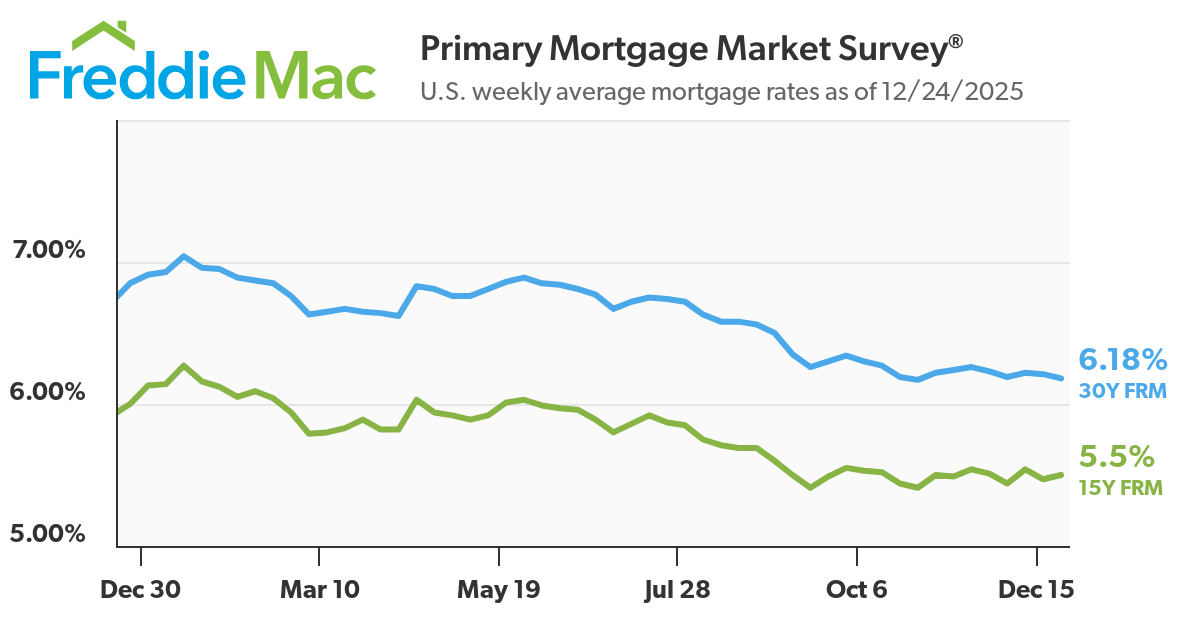
  • Rate Stability: As I mentioned, rates have been following a fairly narrow path since late October. Freddie Mac's average for a 30-year fixed rate for the week of December 24th was 6.18%. This consistency is what we're seeing reflected in today's Zillow data.
  • Economic Strength: A surprising 4.3% GDP growth in the third quarter signals a robust economy. From an investor's standpoint, a strong economy often means more attractive opportunities in the stock market. Money tends to move from safer investments like bonds (which mortgage rates tend to follow) into stocks, which can put some upward pressure on mortgage rates. It's a sign of confidence, but it can temper rate declines.
  • The Fed's Influence: The Federal Reserve has been actively cutting its benchmark rates. While these cuts don't directly dictate your mortgage rate, they set the overall tone for the economy. The market has largely factored in these moves already, so while they are important, we don't usually see massive rate drops immediately after a Fed announcement.

Looking Ahead: What to Expect in 2026

The crystal ball for 2026 is a bit cloudy, but most housing experts are forecasting continued rates above the 6% mark for much of the year. Fannie Mae, for instance, has some forecasts suggesting a dip to 5.9% by year-end 2026. However, a sustained drop below 6% is not anticipated. This means that the extreme affordability we saw during the pandemic era is unlikely to return anytime soon.

Smart Strategies to Secure a Better Rate

Even in today's market, you have levers you can pull to get the best possible rate. My best advice? Always shop around. Getting quotes from at least three to five different lenders can easily save you thousands of dollars over the life of your loan. Don't assume one lender offers the best deal.

Beyond just shopping, here are some proactive steps you can take:

  • Polish Your Credit Score: Lenders reward borrowers with stellar credit. Aim for a FICO score of 740 or higher for the best rates. This means consistently paying your bills on time and diligently paying down any existing debt.
  • Lower Your Debt-to-Income Ratio (DTI): This ratio compares your total monthly debt payments to your gross monthly income. Lenders see a lower DTI as less risk. An ideal DTI is 36% or less. If you have high credit card balances or car loans, paying them down can significantly improve your DTI.
  • Demonstrate Stable Employment: Lenders want to see that you have a reliable income. A consistent employment history, ideally with the same employer for at least two years, provides them with the confidence that you can manage loan repayments.

Ultimately, securing the right mortgage rate is a blend of understanding the market, preparing your finances, and being a savvy consumer.

🏡 Which Rental Property Would YOU Invest In?

Cullman, AL
🏠 Property: Dryden St SE
🛏️ Beds/Baths: 3 Bed • 2 Bath • 1337 sqft
💰 Price: $229,900 | Rent: $1,595
📊 Cap Rate: 6.0% | NOI: $1,148
📅 Year Built: 2025
📐 Price/Sq Ft: $172
🏙️ Neighborhood: B+

VS

Lebanon, TN
🏠 Property: Baltusrol Lane #852
🛏️ Beds/Baths: 4 Bed • 2.5 Bath • 2011 sqft
💰 Price: $369,990 | Rent: $2,400
📊 Cap Rate: 5.8% | NOI: $1,789
📅 Year Built: 2024
📐 Price/Sq Ft: $184
🏙️ Neighborhood: B

Two solid options: Alabama’s affordable new build with steady returns vs Tennessee’s larger home with higher cash flow. Which fits YOUR investment strategy?

📈 Choose Your Winner & Contact Us Today!

Talk to a Norada investment counselor (No Obligation):

(800) 611-3060

Contact Us Now 

Invest in Fully Managed Rentals for Smarter Wealth Building

With mortgage rates dipping to their lowest levels in months, savvy investors are seizing the opportunity to lock in financing.

By securing favorable terms now, you can also maximize immediate cash flow while positioning yourself for stronger long‑term returns.

Norada Real Estate helps you seize this rare opportunity with turnkey rental properties in strong markets—so you can build passive income while borrowing costs remain historically low.

🔥 HOT NEW LISTINGS JUST ADDED! 🔥

Talk to a Norada investment counselor today (No Obligation):

(800) 611-3060

Get Started Now

Also Read:

  • Mortgage Rates Predictions Backed by 7 Leading Experts: 2025–2026
  • Mortgage Rate Predictions for the Next 3 Years: 2026, 2027, 2028
  • 30-Year Fixed Mortgage Rate Forecast for the Next 5 Years
  • 15-Year Fixed Mortgage Rate Predictions for Next 5 Years: 2025-2029
  • Will Mortgage Rates Ever Be 3% Again in the Future?
  • Mortgage Rates Predictions for Next 2 Years
  • Mortgage Rate Predictions for Next 5 Years
  • Mortgage Rate Predictions: Why 2% and 3% Rates are Out of Reach
  • How Lower Mortgage Rates Can Save You Thousands?
  • How to Get a Low Mortgage Interest Rate?
  • Will Mortgage Rates Ever Be 4% Again?

Filed Under: Financing, Mortgage Tagged With: Interest Rate, mortgage, Mortgage Rate Trends, mortgage rates, Mortgage Rates Today

30-Year Fixed Rate Mortgage Drops Sharply by 67 Basis Points

December 27, 2025 by Marco Santarelli

30-Year Fixed Rate Mortgage Drops Sharply by 67 Basis Points

This is the news many of us have been waiting for: the average 30-year fixed-rate mortgage has dropped by a significant 67 basis points, bringing it down to 6.18%. This welcome dip offers a timely boost for anyone dreaming of homeownership or looking to save money by refinancing their current home loan.

As the year draws to a close, it feels like the housing market is finally taking a collective deep breath. I've been following mortgage rate trends for years, and seeing rates ease like this, especially heading into the holidays, is always a positive sign. It’s not just a small fluctuation; this is a substantial drop from where we were just a year ago, and it can make a real difference in people's finances.

30-Year Fixed Rate Mortgage Drops Sharply by 67 Basis Points

What Did Freddie Mac Say? A Closer Look at the Numbers

Freddie Mac, a key player in the housing finance system, released its latest Primary Mortgage Market Survey®, and the numbers are worth celebrating. They track average rates across the country, and their findings paint a clearer picture of where we stand.

Let's break down the key figures from their survey as of December 24, 2025:

Mortgage Type Average Rate (Dec 24, 2025) 1-Week Change 1-Year Change
30-Year Fixed Rate 6.18% –0.03% –0.67%
15-Year Fixed Rate 5.50% +0.03% –0.50%

As you can see, the 30-year fixed-rate mortgage is what really grabbed my attention this week. It's now sitting at 6.18%, which is incredibly close to its 52-week low of 6.17%. To put that into perspective, last year around this time, the average rate was a much higher 6.85%. That’s a difference of 67 basis points, and believe me, that adds up!

The 15-year fixed-rate mortgage also saw some movement, ticking up slightly to 5.50% this week. While it's not dropping as dramatically as the 30-year, it's still significantly lower than its 52-week high and has decreased by half a percentage point over the last year. This might make it a more appealing option for those who can handle a higher monthly payment in exchange for paying off their loan sooner.

30-Year Fixed Rate Mortgage Drops Sharply by 67 Basis Points
Source: Freddie Mac

Why This Drop Matters: Real Savings for Real People

So, what does a 67 basis point drop actually mean for your wallet? It’s more than just a number; it translates into tangible savings, whether you're buying a new home or refinancing your current one.

Let’s imagine you’re taking out a $300,000 loan secured by a 30-year fixed-rate mortgage.

  • If you had locked in a rate at the year's high of 7.04% earlier in 2025: Your monthly principal and interest payment would be around $2,005.
  • Now, with the current rate of 6.18%: Your monthly principal and interest payment drops to approximately $1,836.

That’s a saving of about $169 per month!

Think about that:

  • That’s roughly $2,028 saved per year.
  • Over the full 30 years of the loan, you could save over $60,000 in interest!

This kind of saving is a game-changer. It can free up money for other important things, like renovations, savings, or simply enjoying life a little more. From my experience, even a fraction of a percent difference in mortgage rates can have a monumental impact over the life of a loan.

Who Benefits Most from These Lower Rates?

1. Aspiring Homebuyers: For those looking to buy their first home or move to a new one, these lower rates can significantly improve affordability. They might be able to qualify for a larger loan than they initially thought, or perhaps afford a home in a more desirable neighborhood. It also provides more stability and predictability in budgeting, which is crucial when making such a major financial decision. I’ve seen buyers hesitate when rates are high, and then jump at the chance when they see them trending down. This is that chance.

2. Refinancers: If you already own a home and have a mortgage with a rate higher than 6.18%, now could be an excellent time to explore refinancing. Locking in a lower rate can reduce your monthly payments or allow you to pay down your principal faster. It’s like getting a financial do-over, and when rates are this low, it's an opportunity that shouldn't be missed. My advice to clients is always to run the numbers carefully, but if the savings are substantial, refinancing is often a smart move.

3. Those with Adjustable-Rate Mortgages (ARMs): While this specific piece of news is about fixed rates, the general downward trend in interest rates can also impact ARMs when they adjust. Even if you have an ARM now, keeping an eye on these fixed-rate shifts is wise, as they can signal a broader easing of borrowing costs.

What’s Driving These Rate Declines?

While Freddie Mac doesn't always detail the exact causes in their regular survey report, we can infer some common factors that influence mortgage rates. Generally, mortgage rates tend to follow trends in the broader bond market, particularly the yields on U.S. Treasury bonds. Economic indicators, inflation data, and the Federal Reserve's monetary policy play huge roles.

When inflation is seen as under control and the economy is stable, investors are often willing to accept lower returns on bonds, which can push mortgage rates down. Conversely, if inflation fears rise, bond yields (and thus mortgage rates) can climb. The fact that rates have declined over the past year suggests that factors like moderating inflation and a stable economic outlook have been at play. It's a delicate dance, and right now, it seems the music is playing a slower, more affordable tune.

Looking Ahead: What Could Happen Next?

Predicting interest rates with certainty is a fool's errand – even the experts get it wrong sometimes! However, based on this trend and general economic principles, here’s what I’m keeping an eye on:

  • Federal Reserve Policy: The Fed’s decisions on interest rates are a massive influence. If they signal future rate cuts or maintain a dovish stance, it could help keep mortgage rates relatively low.
  • Economic Growth: Strong economic growth can sometimes lead to higher inflation and, consequently, higher rates. A moderate growth rate is often best for stable, lower mortgage rates.
  • Inflation: Continued progress in bringing inflation down will be a key factor in keeping rates from climbing again.

For now, though, the data points to a positive environment for borrowers. This stability around the 6.18% mark for the 30-year fixed is a rare and valuable opportunity.

The Bottom Line

As of December 24, 2025, the average 30-year fixed-rate mortgage stands at 6.18%, a welcome decrease of 67 basis points from a year ago. The 15-year fixed-rate mortgage is holding steady around 5.50%. This period of stable, lower rates provides a valuable window for individuals looking to purchase a home or refinance their existing mortgage. My professional opinion is that anyone considering a move or a refi should absolutely be exploring their options right now. Don't let this opportunity pass you by!

🏡 Which Rental Property Would YOU Invest In?

Cullman, AL
🏠 Property: Dryden St SE
🛏️ Beds/Baths: 3 Bed • 2 Bath • 1337 sqft
💰 Price: $229,900 | Rent: $1,595
📊 Cap Rate: 6.0% | NOI: $1,148
📅 Year Built: 2025
📐 Price/Sq Ft: $172
🏙️ Neighborhood: B+

VS

Lebanon, TN
🏠 Property: Baltusrol Lane #852
🛏️ Beds/Baths: 4 Bed • 2.5 Bath • 2011 sqft
💰 Price: $369,990 | Rent: $2,400
📊 Cap Rate: 5.8% | NOI: $1,789
📅 Year Built: 2024
📐 Price/Sq Ft: $184
🏙️ Neighborhood: B

Two solid options: Alabama’s affordable new build with steady returns vs Tennessee’s larger home with higher cash flow. Which fits YOUR investment strategy?

📈 Choose Your Winner & Contact Us Today!

Talk to a Norada investment counselor (No Obligation):

(800) 611-3060

Contact Us Now 

Invest in Fully Managed Rentals for Smarter Wealth Building

With mortgage rates dipping to their lowest levels in months, savvy investors are seizing the opportunity to lock in financing.

By securing favorable terms now, you can also maximize immediate cash flow while positioning yourself for stronger long‑term returns.

Norada Real Estate helps you seize this rare opportunity with turnkey rental properties in strong markets—so you can build passive income while borrowing costs remain historically low.

🔥 HOT NEW LISTINGS JUST ADDED! 🔥

Talk to a Norada investment counselor today (No Obligation):

(800) 611-3060

Get Started Now

Also Read:

  • How Mortgage Rates Dropped From 7% Highs to 6.2% Lows in 2025
  • Mortgage Rates Predictions Backed by 7 Leading Experts: 2025–2026
  • Mortgage Rate Predictions for the Next 3 Years: 2026, 2027, 2028
  • 30-Year Fixed Mortgage Rate Forecast for the Next 5 Years
  • 15-Year Fixed Mortgage Rate Predictions for Next 5 Years: 2025-2029
  • Will Mortgage Rates Ever Be 3% Again in the Future?
  • Mortgage Rates Predictions for Next 2 Years
  • Mortgage Rate Predictions for Next 5 Years
  • Mortgage Rate Predictions: Why 2% and 3% Rates are Out of Reach
  • How Lower Mortgage Rates Can Save You Thousands?
  • How to Get a Low Mortgage Interest Rate?
  • Will Mortgage Rates Ever Be 4% Again?
Filed Under: Financing, Mortgage Tagged With: Interest Rate, mortgage, Mortgage Rate Trends, mortgage rates

Today’s Mortgage Rates, Dec 27: 30-Year Fixed Edges Past 6%, Refi Rates Hold Steady

December 27, 2025 by Marco Santarelli

Today's Mortgage Rates, Jan 7: Stable Rates Continue for Buyers and Refinancers

As 2025 draws to a close, if you're looking to buy a home or refinance your current mortgage, you'll find today's mortgage rates hover just a hair above 6%. This steady interest is a key point to grasp if you're navigating the housing market right now. According to Zillow's latest data for December 27th, the benchmark 30-year fixed mortgage rate is sitting at 6.01%, with the 15-year fixed rate at 5.47%. For us everyday folks trying to figure out our finances, this means borrowing costs have found a relatively stable rhythm, which can actually be a good thing for planning purposes.

Today’s Mortgage Rates, Dec 27: 30-Year Fixed Edges Past 6%, Refinance Rates Hold Steady

Where Do Today's Mortgage Rates Stand?

Let's break down the national averages as of December 27th, 2025, courtesy of Zillow:

Loan Type Average Rate
30-year fixed 6.01%
20-year fixed 5.93%
15-year fixed 5.47%
5/1 ARM 6.11%
7/1 ARM 6.34%
30-year VA 5.59%
15-year VA 5.19%
5/1 VA 5.24%

Just a quick note: these are national averages and might be rounded slightly. Your actual rate will depend on many personal factors.

And What About Refinancing Today?

If you're a homeowner who's been eyeing a refinance, here’s how the numbers are looking for that side of the market:

Loan Type Average Rate
30-year fixed 6.09%
20-year fixed 5.80%
15-year fixed 5.60%
5/1 ARM 6.35%
7/1 ARM 6.77%
30-year VA 5.54%
15-year VA 5.35%
5/1 VA 5.39%

What Does This Mean for You? A Deeper Dive.

Looking at these numbers, my professional opinion is that we're in a period of cautious optimism. Rates are stable near the holidays, which is a consistent trend. You might see slight daily fluctuations, but the broader picture is one of predictability.

On the flip side, we have to acknowledge the underlying economic forces. If we see strong economic news – things like higher-than-expected GDP growth, as Zillow points out – it can put upward pressure on mortgage rates. This happens because investors might see better returns in other areas, like the stock market, and move their money out of bonds, which mortgages are often tied to. It’s a delicate dance between economic strength and borrowing costs.

So, for homebuyers, these rates hovering just above 6% mean affordability is still a challenge, especially in many pricier markets. However, that stability I mentioned? It's a real benefit. You can sit down with your budget and have a much clearer idea of what your monthly payments will look like, month after month, for the life of the loan. This predictability is invaluable when making such a significant financial commitment.

For homeowners looking to refinance, there are certainly opportunities, especially if your current mortgage has a significantly higher rate from a few years back. However, don't expect the dramatic savings of the past. The savings might be more modest now, but for some, it could still mean lowering monthly payments or shortening the loan term.

And then there are the adjustable-rate mortgages (ARMs). Right now, they're generally coming in slightly higher than their fixed-rate counterparts. This usually makes them less attractive unless you have a very specific plan to move or sell the home before the initial fixed period ends. From my experience, most people find the peace of mind of a fixed rate outweighs the potential initial savings of an ARM.

Becoming a Savvy Borrower: Strategies to Lock In a Better Rate

Even in a market like this, your effort can make a real difference. Don't just take the first rate you're offered. Here are some strategies I consistently advise people on:

  • Shop Around: This is non-negotiable. Rates can vary significantly between lenders. I always tell people to compare offers from at least three, and ideally more, different lending institutions. You might be surprised by the difference.
  • Boost Your Credit Score: A higher credit score directly translates to a lower interest rate. If you have a few months before you plan to apply, focus on paying down credit card balances and ensuring all your bills are paid on time.
  • Consider Shorter Loan Terms: As you’ll see in the comparison below, a 15-year mortgage comes with a lower interest rate than a 30-year one. If your budget can handle it, this can lead to massive savings over time.
  • Explore VA Loans if Eligible: For those who have served our country, VA loans often come with very competitive rates, even lower than many conventional 30-year fixed options. It's a benefit you've earned, so definitely look into it.
  • Time Your Application Wisely: While rates are stable, there can still be minor shifts during the day or week. Discuss with your lender about the best time to lock in your rate.

The Big Decision: 15-Year vs. 30-Year Fixed Mortgage

This is a classic dilemma, and it really comes down to your financial personality and goals.

The 30-Year Fixed Mortgage: This is the workhorse for most borrowers, and for good reason.

  • Pros: Lower monthly payments, which frees up cash flow for other investments, emergencies, or simply daily living expenses. It offers more flexibility if your income is less predictable or if you want to have more breathing room in your budget.
  • Cons: You'll pay significantly more in interest over the life of the loan. It takes longer to build equity.

The 15-Year Fixed Mortgage: This option is fantastic for those who can manage the higher payments.

  • Pros: Much lower interest rates, meaning you’ll save a considerable amount of money (potentially hundreds of thousands of dollars) on interest over the loan's term. You'll build equity much faster and be debt-free sooner.
  • Cons: Higher monthly payments that can strain a tighter budget. Less flexibility if unexpected financial setbacks occur.

My Favorite Approach: The “Hybrid” Strategy

Here’s a tip from my own playbook: many homeowners I know have found success with what I call the “hybrid” strategy. You take out the 30-year fixed mortgage for its built-in flexibility and lower mandatory payment. Then, if your finances allow, you voluntarily make extra principal payments. This way, you get the best of both worlds: you have the security of the lower payment if you need it, but you can pay off your home much faster, effectively acting like you have a 15-year mortgage. It’s a smart way to control your destiny without locking yourself into an unmanageable payment.

Key Takeaway for Today

In summary, mortgage and refinance rates are holding steady, just above 6%. While we're not seeing the bargain-basement rates of the past, this period of stability offers predictability, which is a valuable asset for anyone looking to buy or refinance. My advice remains unchanged: do your homework, compare lenders diligently, and choose the loan option that best aligns with your personal financial situation and long-term goals.

🏡 Which Rental Property Would YOU Invest In?

Cullman, AL
🏠 Property: Dryden St SE
🛏️ Beds/Baths: 3 Bed • 2 Bath • 1337 sqft
💰 Price: $229,900 | Rent: $1,595
📊 Cap Rate: 6.0% | NOI: $1,148
📅 Year Built: 2025
📐 Price/Sq Ft: $172
🏙️ Neighborhood: B+

VS

Lebanon, TN
🏠 Property: Baltusrol Lane #852
🛏️ Beds/Baths: 4 Bed • 2.5 Bath • 2011 sqft
💰 Price: $369,990 | Rent: $2,400
📊 Cap Rate: 5.8% | NOI: $1,789
📅 Year Built: 2024
📐 Price/Sq Ft: $184
🏙️ Neighborhood: B

Two solid options: Alabama’s affordable new build with steady returns vs Tennessee’s larger home with higher cash flow. Which fits YOUR investment strategy?

📈 Choose Your Winner & Contact Us Today!

Talk to a Norada investment counselor (No Obligation):

(800) 611-3060

Contact Us Now 

Invest in Fully Managed Rentals for Smarter Wealth Building

With mortgage rates dipping to their lowest levels in months, savvy investors are seizing the opportunity to lock in financing.

By securing favorable terms now, you can also maximize immediate cash flow while positioning yourself for stronger long‑term returns.

Norada Real Estate helps you seize this rare opportunity with turnkey rental properties in strong markets—so you can build passive income while borrowing costs remain historically low.

🔥 HOT NEW LISTINGS JUST ADDED! 🔥

Talk to a Norada investment counselor today (No Obligation):

(800) 611-3060

Get Started Now

Also Read:

  • Mortgage Rates Predictions Backed by 7 Leading Experts: 2025–2026
  • Mortgage Rate Predictions for the Next 3 Years: 2026, 2027, 2028
  • 30-Year Fixed Mortgage Rate Forecast for the Next 5 Years
  • 15-Year Fixed Mortgage Rate Predictions for Next 5 Years: 2025-2029
  • Will Mortgage Rates Ever Be 3% Again in the Future?
  • Mortgage Rates Predictions for Next 2 Years
  • Mortgage Rate Predictions for Next 5 Years
  • Mortgage Rate Predictions: Why 2% and 3% Rates are Out of Reach
  • How Lower Mortgage Rates Can Save You Thousands?
  • How to Get a Low Mortgage Interest Rate?
  • Will Mortgage Rates Ever Be 4% Again?

Filed Under: Financing, Mortgage Tagged With: Interest Rate, mortgage, Mortgage Rate Trends, mortgage rates, Mortgage Rates Today

Today’s Mortgage Rates, Dec 26: Rates Persist in Low 6% Range for Homebuyers

December 26, 2025 by Marco Santarelli

Today's Mortgage Rates, Jan 7: Stable Rates Continue for Buyers and Refinancers

It's reassuring to know that mortgage rates on December 26, 2025, are showing welcome stability, with minor fluctuations that aren't drastically shifting the market. This means if you're looking to buy a home or refinance an existing mortgage, the landscape hasn't seen any dramatic upheavals. While we aren't at the rock-bottom rates of a few years ago, this steady environment can offer a bit more predictability as we head into a new year.

Today’s Mortgage Rates, Dec 26: Rates Persist in Low 6% Range for Homebuyers

It’s been quite a ride with mortgage rates the past few years, hasn't it? We saw them dip to levels that felt almost too good to be true, and then climb back up, making many of us hold our breath. Today, the numbers are telling a story of calm before what’s next.

According to Zillow, the national average for a 30-year fixed mortgage is currently sitting at a solid 6.10%. That’s a bit lower than the 6.18% average (for the week) reported by Freddie Mac for the same type of loan, and a noticeable drop from the 6.85% we saw this time last year. On the 15-year fixed mortgage front, Zillow reports 5.52%, a gentle nudge down from 5.50% on the Freddie Mac tracker and a pleasant decrease from 6.00% a year ago.

This quiet period feels more like a thoughtful pause than a stalemate. The market seems to be digesting the Federal Reserve's recent moves and waiting for clearer signals about the economy's direction in 2026.

For potential buyers, this means you can approach your budgeting with a bit more certainty. For homeowners considering a refinance, it’s a good time to check if your current rate is significantly higher than these averages, but significant savings might be elusive unless you have a loan from the high-rate period of 2022 or earlier.

What the Numbers Mean for You Right Now

Let’s break down what these rates really translate to for folks like you and me. It’s not just about a number; it’s about how that number impacts your monthly payments and your overall financial plan.

For Homebuyers:
Having rates in the low 6% range for a 30-year fixed mortgage is certainly better than the higher numbers we saw earlier in 2025. While it’s not the “once-in-a-lifetime” deal we experienced not too long ago, it's a realistic figure that allows for more confident planning. My advice? Don't chase the absolute lowest rate if it means waiting indefinitely. If you find a home you love and the rate fits your budget, locking it in can provide peace of mind. The stability here is your friend.

For Homeowners Looking to Refinance:
This is where things get a bit nuanced. If you secured your mortgage before 2022, chances are you have a rate higher than what’s currently available. In that case, refinancing could offer notable savings. However, if your mortgage is from, say, 2023 or even early 2024 when rates were elevated but perhaps not at their peak, the savings from refinancing might be marginal. You'll need to run the numbers carefully, factoring in closing costs, to see if it truly makes financial sense. Sometimes, the hassle isn't worth a few dollars saved each month.

For Those Considering Adjustable-Rate Mortgages (ARMs):
ARMs, like the 5/1 and 7/1 options, are currently hovering around 6.26%. While they can sometimes offer a lower initial rate, they come with the risk of future increases. With fixed rates in a stable, albeit higher-than-historic-low, range, ARMs are less appealing unless you have a very specific plan to move or refinance before the fixed period ends and rates potentially rise.

Today's Mortgage Rates: A Closer Look

It's always best to see the specifics, so here's a clear picture of the national averages from Zillow for today, December 26, 2025:

Loan Type Interest Rate
30-year fixed 6.10%
20-year fixed 6.00%
15-year fixed 5.52%
5/1 ARM 6.26%
7/1 ARM 6.26%
30-year VA 5.62%
15-year VA 5.31%
5/1 VA 5.25%

Please remember these are national averages. Your actual rate will depend on your credit score, loan-to-value ratio, and other individual factors.

Refinancing Rates: Is it Worth It?

For those of you curious about refinancing an existing mortgage, here are the current national averages also provided by Zillow:

Loan Type Interest Rate
30-year fixed 6.25%
20-year fixed 5.92%
15-year fixed 5.69%
5/1 ARM 6.44%
7/1 ARM 6.43%
30-year VA 5.55%
15-year VA 5.37%
5/1 VA 5.50%

Notice how the refinance rates are generally a touch higher than the purchase rates. This is common and reflects different market dynamics and lender pricing for each type of transaction.

Why the Stability? Factors Shaping Today's Rates

The market's current calm isn't by accident. It's a result of several forces working together.

  • Holiday Lull: It's no surprise that trading volumes tend to be lighter during the holiday season. Many institutional investors and traders are enjoying time off, which naturally leads to less market activity and, consequently, fewer aggressive swings in bond yields that influence mortgage rates.
  • Fed's “Wait-and-See” Approach: The Federal Reserve has made several rate adjustments throughout 2025. Now, the market is digesting these changes and anticipating what the Fed might do next. Without a strong immediate push from the Fed, mortgage rates tend to settle.
  • Inflation Cooling: A significant factor is the recent news that inflation is cooling down. Reports showing inflation dropping to around 2.7% are a good sign. Lower inflation generally means the Federal Reserve might feel more comfortable with continuing its policy of easing interest rates in 2026, which could put downward pressure on mortgage rates in the longer term.
  • Economic Strength: On the flip side, economic data paints a picture of a reasonably strong economy. Robust GDP growth, like the 4.3% seen in the third quarter of 2025, can sometimes nudge rates higher. Why? Because investors might pull money out of safer government bonds (whose yields influence mortgage rates) and pour it into the stock market, seeking higher returns.

Looking Ahead: What to Expect in Early 2026

As I look into my crystal ball (or, more accurately, analyze market forecasts), it seems we might be in a “higher-for-longer” scenario for a bit. This means significant drops in mortgage rates aren't likely right around the corner. However, if inflation continues to trend downwards and the Fed signals more rate cuts for 2026, we could see a modest easing. Some experts suggest that rates might hover in a relatively narrow range in the immediate future.

🏡 Which Rental Property Would YOU Invest In?

Cullman, AL
🏠 Property: Dryden St SE
🛏️ Beds/Baths: 3 Bed • 2 Bath • 1337 sqft
💰 Price: $229,900 | Rent: $1,595
📊 Cap Rate: 6.0% | NOI: $1,148
📅 Year Built: 2025
📐 Price/Sq Ft: $172
🏙️ Neighborhood: B+

VS

Lebanon, TN
🏠 Property: Baltusrol Lane #852
🛏️ Beds/Baths: 4 Bed • 2.5 Bath • 2011 sqft
💰 Price: $369,990 | Rent: $2,400
📊 Cap Rate: 5.8% | NOI: $1,789
📅 Year Built: 2024
📐 Price/Sq Ft: $184
🏙️ Neighborhood: B

Two solid options: Alabama’s affordable new build with steady returns vs Tennessee’s larger home with higher cash flow. Which fits YOUR investment strategy?

📈 Choose Your Winner & Contact Us Today!

Talk to a Norada investment counselor (No Obligation):

(800) 611-3060

Contact Us Now 

Invest in Fully Managed Rentals for Smarter Wealth Building

With mortgage rates dipping to their lowest levels in months, savvy investors are seizing the opportunity to lock in financing.

By securing favorable terms now, you can also maximize immediate cash flow while positioning yourself for stronger long‑term returns.

Norada Real Estate helps you seize this rare opportunity with turnkey rental properties in strong markets—so you can build passive income while borrowing costs remain historically low.

🔥 HOT NEW LISTINGS JUST ADDED! 🔥

Talk to a Norada investment counselor today (No Obligation):

(800) 611-3060

Get Started Now

Also Read:

  • Mortgage Rates Predictions Backed by 7 Leading Experts: 2025–2026
  • Mortgage Rate Predictions for the Next 3 Years: 2026, 2027, 2028
  • 30-Year Fixed Mortgage Rate Forecast for the Next 5 Years
  • 15-Year Fixed Mortgage Rate Predictions for Next 5 Years: 2025-2029
  • Will Mortgage Rates Ever Be 3% Again in the Future?
  • Mortgage Rates Predictions for Next 2 Years
  • Mortgage Rate Predictions for Next 5 Years
  • Mortgage Rate Predictions: Why 2% and 3% Rates are Out of Reach
  • How Lower Mortgage Rates Can Save You Thousands?
  • How to Get a Low Mortgage Interest Rate?
  • Will Mortgage Rates Ever Be 4% Again?
Filed Under: Financing, Mortgage Tagged With: Interest Rate, mortgage, Mortgage Rate Trends, mortgage rates, Mortgage Rates Today

Mortgage Rate Predictions Through 2030: 3% and 4% Rates Are Unlikely to Return Soon

December 25, 2025 by Marco Santarelli

Mortgage Rates Predictions: Return of 3% or 4% Rates Unlikely Before 2030

Don't hold your breath for those dreamlike 3% or 4% mortgage rates to reappear anytime in the next few years. Most economists and housing experts are pointing to a future where rates settle into a much higher “new normal” of somewhere between 5.5% and 6.5% for the foreseeable future, meaning a return to those ultra-low pandemic-era numbers is highly improbable before 2030. If they do come back, it would likely require a significant global economic shake-up, not just a gentle economic breeze. The days of snagging a 30-year fixed rate below 4% feel like a distant, almost surreal memory.

Mortgage Rate Predictions Through 2030: 3% and 4% Rates Are Unlikely to Return Soon

What are the Experts Saying? The “New Normal” of Higher Rates

The consensus is pretty strong. Those incredibly low rates we enjoyed a few years back? They were a product of extraordinary circumstances, a kind of economic adrenaline shot to keep things from collapsing during the pandemic. It wasn't sustainable in the long run, and now we're seeing the aftermath.

Here’s a breakdown of what the crystal balls are showing for the next few years:

  • 2026–2027: Expect mortgage rates to largely hang out between 5.9% and 6.5%. Fannie Mae, a big name in the mortgage world, thinks we might see rates dip just below 6% (around 5.9%) by late 2026, but then they’re predicted to stay pretty much stuck there through 2027. It’s like they’ll hit a plateau.
  • 2028–2029: A few optimists are whispering that rates could potentially touch 5.5% during this period. But this is a big “if.” It would only happen if inflation stays super low and the economy takes a serious nosedive. Not exactly a rosy outlook for that to occur.
  • 2030: By the time we ring in the new decade, some analysts, like those at Redfin, suggest that a sense of “normal” affordability might return. However, this is based on rates stabilizing around that 5.5% mark, not a magical comeback to the 3% or 4% club.

It's important to remember that these are projections, educated guesses based on the best data available. Life, and especially the economy, has a knack for throwing curveballs. But as it stands, the outlook isn't painting a picture of super-cheap borrowing.

Why Your Dream of 3% or 4% Rates is Likely a No-Go

So, what’s holding those rates back from diving back into the abyss of what we once considered normal? It boils down to a few key economic realities.

  • Historical Context Isn't Working in Our Favor: Think about it. The current rates, often hovering in the 6% range, are actually lower than the long-term historical average for a 30-year fixed mortgage. Since 1971, that average has been around 7.74%. So, in a strange way, we're almost back to “normal” when compared to decades of history, rather than the pandemic anomaly.
  • Treasury Yields – The Unseen Force: The 10-year Treasury yield is like the big brother of mortgage rates. It doesn't dictate them exactly, but it sets a strong influence. And right now, the predictions are for this yield to stay above 4% all the way through 2030. This creates a kind of hard floor, a barrier that prevents mortgage rates from plummeting into the 3% or 4% territory. There’s just too much cost baked in for lenders.
  • “Emergency Mode” is Over: For rates to drop that dramatically again, we’d probably need another massive global economic crisis. Think of the 2008 financial meltdown or the early days of COVID-19. These were situations where the Federal Reserve had to step in with extreme measures, printing money and slashing interest rates to emergency lows, to prevent total collapse. Experts simply don't see the conditions right now for such drastic interventions.

Digging Deeper: What Needs to Happen for Rates to Drop

It’s not just about wishful thinking. For the 10-year Treasury yield to consistently dip below 4% again, and consequently pull mortgage rates down with it, some pretty significant economic shifts would need to occur.

Here are the conditions that would likely pave the way for lower yields and, therefore, potentially lower mortgage rates:

  • A Serious Economic Slowdown or Recession: If the U.S. economy starts to stumble significantly, with unemployment climbing noticeably (think consistently above 4.5%) and the Gross Domestic Product (GDP) shrinking, investors tend to flee riskier assets and pile into the safety of U.S. Treasuries. This surge in demand pushes bond prices up and yields down. We’ve seen this pattern before, especially in the lead-up to economic downturns.
  • Inflation Under Control (Like, Really Under Control): The Federal Reserve aims to keep inflation at 2%. For Treasury yields to drop below 4%, the market’s expectation for long-term inflation would need to become very low, staying close to or even below that 2% target. If people and businesses believe prices will stay stable, investors don’t need as high a yield to protect their purchasing power.
  • The Fed Reverses Course Aggressively: If the economy tanks, the Federal Reserve might start cutting its main interest rate (the federal funds rate) dramatically. This action signals to the market that money will become cheaper, and it puts downward pressure on longer-term yields. The 10-year Treasury yield is very sensitive to expectations about where the Fed’s short-term rates are headed.
  • Government Borrowing Scales Back: The U.S. government borrows a lot of money by issuing Treasury bonds. When there’s a huge supply of new bonds, it can push yields up if demand doesn’t keep pace. If the government significantly reduces its borrowing or creates a credible plan to lower its deficit, this could reduce the supply of bonds and help lower yields.
  • Global Chaos Fuels “Safe Haven” Demand: The U.S. Treasury is often seen as a safe place to park money during times of global uncertainty. If a major international crisis or widespread geopolitical instability erupts, investors worldwide might rush to buy U.S. debt, driving up demand and pushing yields down. We saw a version of this during the early days of the pandemic.

The Federal Reserve's Own Projections

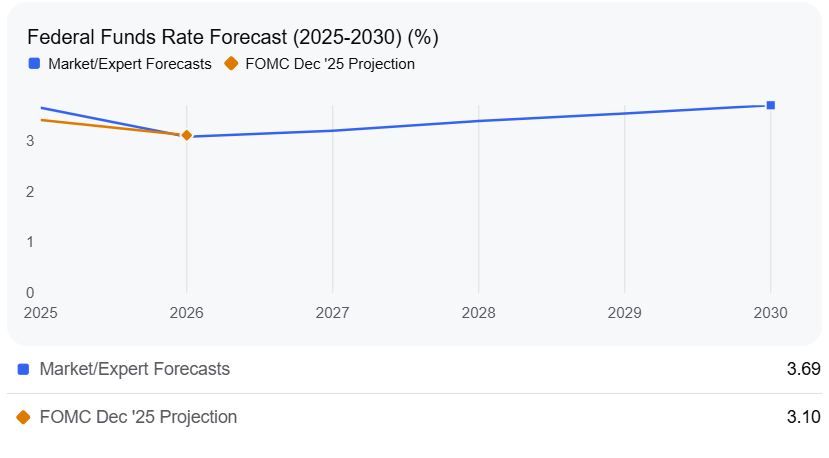
Even the Federal Reserve's own long-term projections for its key interest rate, the federal funds rate, offer some perspective. They see this “neutral” rate settling around 3%. This is the rate they believe allows the economy to grow without overheating or slowing down too much.

Current market and Fed projections show a gradual path of rate cuts from where we are now, likely stabilizing near that 3% mark in the longer run. However, market forecasts suggest the actual federal funds rate might even tick up slightly beyond that 3% neutral rate by 2030, perhaps hitting around 3.69%.

This data essentially reinforces the idea that while rates might come down from their current peaks, they're not expected to plummet to the historically low levels we've recently experienced. The Federal Funds Rate Forecast (2025-2030) chart provides a visual of this:

Federal Funds Rate Forecast (2025-2030)

The key takeaway here is that all these forecasts are data-dependent. The path of inflation and the strength of the job market will be the primary drivers dictating exactly where interest rates end up.

So, What Does This Mean for You?

If you're in the market for a home, or looking to refinance, it means adjusting your expectations. Those significantly lower mortgage payments that seemed within reach a couple of years ago might require a different approach.

  • Budget Realistically: When you're planning your home purchase, make sure your budget accounts for interest rates in the 5.5% to 6.5% range, not the 3% or 4% you might have hoped for.
  • Focus on Affordability: Instead of banking on falling rates, focus on finding a home within your current budget and consider paying down your principal more aggressively if you can afford it.
  • Don't Wait for a Miracle: While rates could fluctuate, the widespread expert opinion is that a return to the extreme lows of the pandemic era is unlikely for many years. It might be more practical to make your move now if your circumstances allow, rather than hoping for a massive rate drop that may not materialize.

For those of us who’ve been following the housing market for a while, this shift can feel like a real change. I remember when rates were in the 7s and 8s, and then suddenly we were seeing 3s. It felt like a different world. Now, we’re seeing a return to a more historically common range, but with the added impact of higher starting prices in many areas.

Ultimately, while 3% or 4% rates might not be on the horizon for a while, understanding these predictions can help you make smarter financial decisions. Staying informed about economic trends and consulting with a trusted mortgage professional will be your best allies in navigating the current mortgage market.

Invest in Fully Managed Rentals for Smarter Wealth Building

Analysts warn that mortgage rates are unlikely to return to the ultra-low 3–4% range this decade, with long-term averages expected to remain higher due to inflationary pressures and economic shifts.

For investors, this means planning for financing at elevated levels—Norada Real Estate helps you secure turnkey rental properties designed for strong cash flow even in higher-rate environments.

🔥 HOT LONG-TERM INVESTMENT LISTINGS JUST ADDED! 🔥
Talk to a Norada investment counselor today (No Obligation):
(800) 611-3060

Get Started Now

Also Read:

  • Mortgage Rates Reset 2026: Ultra-Low Rates End, 6% Becomes Normal
  • Mortgage Rates Predictions Backed by 7 Leading Experts: 2025–2026
  • Mortgage Rate Predictions for the Next 3 Years: 2026, 2027, 2028
  • 30-Year Fixed Mortgage Rate Forecast for the Next 5 Years
  • 15-Year Fixed Mortgage Rate Predictions for Next 5 Years: 2025-2029
  • Will Mortgage Rates Ever Be 3% Again in the Future?
  • Mortgage Rates Predictions for Next 2 Years
  • Mortgage Rate Predictions for Next 5 Years
  • Mortgage Rate Predictions: Why 2% and 3% Rates are Out of Reach
  • How Lower Mortgage Rates Can Save You Thousands?
  • How to Get a Low Mortgage Interest Rate?
  • Will Mortgage Rates Ever Be 4% Again?
Filed Under: Financing, Mortgage Tagged With: Interest Rate, mortgage, Mortgage Rate Trends, mortgage rates, Mortgage Rates Today

Today’s Mortgage Rates, Dec 25: Rates Decline Offering a Holiday Gift for Buyers

December 25, 2025 by Marco Santarelli

Today's Mortgage Rates, Jan 7: Stable Rates Continue for Buyers and Refinancers

Mortgage rates continue to move with only minor changes this week, offering borrowers a relatively calm environment as the year draws to a close. According to Freddie Mac, the average 30‑year fixed mortgage rate slipped three basis points to 6.18%, while the 15‑year fixed rate edged up three basis points to 5.50%. “The average 30‑year fixed‑rate mortgage decreased further this week,” said Sam Khater, Freddie Mac’s chief economist. “Declining rates offer a timely and welcome gift for aspiring homebuyers.”

Today’s Mortgage Rates, Dec 25: Rates Decline Offering a Holiday Gift for Buyers

A Look at Today's Numbers: Purchase Mortgage Rates

Now, let's break down what the rates from Zillow are looking like for those aiming to purchase a new home as of December 25th, 2025. These are national averages, so your specific rate might vary slightly depending on your credit score, loan-to-value ratio, and the lender you choose.

Mortgage Type Interest Rate
30-year fixed 6.10%
20-year fixed 6.00%
15-year fixed 5.52%
5/1 ARM 6.26%
7/1 ARM 6.26%
30-year VA 5.62%
15-year VA 5.31%
5/1 VA 5.25%

(Note: ARM stands for Adjustable-Rate Mortgage. VA loans are specifically for veterans and active-duty military personnel.)

As you can see, the familiar workhorses, the 30-year and 15-year fixed-rate mortgages, are the most common choices and are showing steady rates. The fact that the 30-year fixed is just over 6% is a significant improvement from where we were in previous years, and it offers a good balance of affordability and predictability.

Thinking About Refinancing? Here's What's Available

Refinancing can be a smart move for homeowners looking to lower their monthly payments, shorten their loan term, or tap into their home equity. While refinance rates are often a hair higher than purchase rates, the difference can be minimal, and the long-term savings can be substantial.

Here are the national average refinance rates from Zillow for December 25th, 2025:

Refinance Type Interest Rate
30-year fixed 6.25%
20-year fixed 5.92%
15-year fixed 5.69%
5/1 ARM 6.44%
7/1 ARM 6.43%
30-year VA 5.55%
15-year VA 5.37%
5/1 VA 5.50%

You'll notice that the 30-year fixed refinance rate is 6.25%, which is slightly higher than the purchase rate of 6.10%. This is pretty typical. However, when you look at the 15-year fixed refinance at 5.69%, it's very competitive and can lead to significant interest savings over time compared to keeping an older, higher-rate loan.

What Do These Numbers Mean for You?

Let's translate these percentages into real-world impact, because numbers on a screen are one thing, but how they affect your wallet is what truly matters.

  • For New Homebuyers: The current rates offer a relatively calm and predictable market. While rates haven't plummeted, the stability is a welcome gift. It means you can plan your budget with more confidence. Sam Khater, Freddie Mac’s chief economist, hit the nail on the head when he called declining rates a “timely and welcome gift for aspiring homebuyers.” Even small dips can make a big difference when you're looking at a 30-year commitment.
  • For Homeowners Looking to Refinance: If you secured a mortgage a few years ago at significantly higher rates, now is definitely a good time to explore refinancing. While the rates today aren't the all-time lows we saw in the past, they are still very attractive compared to many loans from, say, 2022 or earlier. You might be able to shave off a quarter or even half a percentage point, which on a large loan can equal thousands of dollars saved over the life of the loan.
  • Fixed vs. Adjustable Rates: Right now, the adjustable-rate mortgages (ARMs), like the 5/1 and 7/1 options, are showing rates similar to or even slightly higher than fixed-rate loans. For most people, especially in a stable rate environment like this, the security of a fixed rate is hard to beat. You know exactly what your principal and interest payment will be for the entire loan term. ARMs can be attractive if you plan to move or refinance before the fixed period ends, but they come with the risk of your payment increasing later.

A Real-World Payment Example

Let's put this into perspective with a $300,000 loan on a 30-year fixed-rate mortgage.

  • At 6.25% (Current Refinance Rate): Your estimated monthly principal and interest payment would be around $1,848.
  • At 6.10% (Current Purchase Rate): Your estimated monthly principal and interest payment would be around $1,820.

The difference might seem small at first glance – about $28 less per month if you qualify for the purchase rate. But let's zoom out:

  • Annual Savings: That's roughly $336 per year.
  • 30-Year Lifetime Savings: Over the life of the loan, this could amount to over $10,000 in interest saved! This is why even small rate shifts matter immensely.

Why Does This Calm Market Make a Difference?

I always emphasize that time is your friend in the mortgage process, and this current stability amplifies that.

  • Shop Around: When rates are stable, lenders are often more willing to compete on fees and terms. This gives you the power to really shop. Don't just go with the first lender you speak to. Get quotes from at least three to five different lenders (banks, credit unions, online mortgage companies). Small differences in closing costs can add up, and it might be worth negotiating them down.
  • The “Lock-In Effect”: We're still seeing a bit of what's called the “lock-in effect.” Many homeowners have mortgages with rates much lower than today's (often below 4%). This makes them hesitant to sell their current home and buy a new one, as their new mortgage payment would likely be higher. This is contributing to lower inventory in some areas. For buyers, this can mean slightly less competition in certain markets, which could translate into more negotiating power.

Market Pulse: What's Driving These Numbers?

So, what's behind these steady mortgage rates as we head into the new year? It's a mix of economic signals and expectations for the future.

  • Economic Signals: We've seen some mixed economic data lately. While there's been good news, like strong GDP growth reports, there have also been signs of inflation easing. Strong economic news generally pushes mortgage rates up, while weaker news tends to push them down. The market is trying to balance these competing forces.
  • The Federal Reserve and Treasury Yields: While the Federal Reserve has been cutting its benchmark interest rate, mortgage rates tend to follow the 10-year Treasury yield more closely. These cuts were largely anticipated by the market, so we haven't seen mortgage rates fall as dramatically as one might expect.
  • Expert Predictions for 2026: Looking ahead to 2026, there's no clear consensus among experts. Some predict rates will hold relatively steady around 6.4%, while others foresee a drop to around 5.9% by the end of the year. The general feeling is that rates will likely stay within a certain range in the immediate future, partly due to shorter trading weeks during the holidays and lower trading volumes.

The Bottom Line for December 25th, 2025

Here’s the snapshot as we celebrate the holidays:

  • 30-year fixed purchase mortgage rates are around 6.10%.
  • 15-year fixed purchase mortgage rates are near 5.52%.
  • 30-year fixed refinance rates are approximately 6.25%.

This period of stability is a fantastic opportunity. Whether you're dreaming of your first home or aiming to improve your current mortgage situation, take advantage of this calm. Do your research, compare what different lenders are offering, and don't hesitate to ask questions. Getting your mortgage financing sorted before potential market shifts in the new year could be one of the smartest decisions you make.

🏡 Which Rental Property Would YOU Invest In?

Cullman, AL
🏠 Property: Dryden St SE
🛏️ Beds/Baths: 3 Bed • 2 Bath • 1337 sqft
💰 Price: $229,900 | Rent: $1,595
📊 Cap Rate: 6.0% | NOI: $1,148
📅 Year Built: 2025
📐 Price/Sq Ft: $172
🏙️ Neighborhood: B+

VS

Lebanon, TN
🏠 Property: Baltusrol Lane #852
🛏️ Beds/Baths: 4 Bed • 2.5 Bath • 2011 sqft
💰 Price: $369,990 | Rent: $2,400
📊 Cap Rate: 5.8% | NOI: $1,789
📅 Year Built: 2024
📐 Price/Sq Ft: $184
🏙️ Neighborhood: B

Two solid options: Alabama’s affordable new build with steady returns vs Tennessee’s larger home with higher cash flow. Which fits YOUR investment strategy?

📈 Choose Your Winner & Contact Us Today!

Talk to a Norada investment counselor (No Obligation):

(800) 611-3060

Contact Us Now 

Invest in Fully Managed Rentals for Smarter Wealth Building

With mortgage rates dipping to their lowest levels in months, savvy investors are seizing the opportunity to lock in financing.

By securing favorable terms now, you can also maximize immediate cash flow while positioning yourself for stronger long‑term returns.

Norada Real Estate helps you seize this rare opportunity with turnkey rental properties in strong markets—so you can build passive income while borrowing costs remain historically low.

🔥 HOT NEW LISTINGS JUST ADDED! 🔥

Talk to a Norada investment counselor today (No Obligation):

(800) 611-3060

Get Started Now

Also Read:

  • Mortgage Rates Predictions Backed by 7 Leading Experts: 2025–2026
  • Mortgage Rate Predictions for the Next 3 Years: 2026, 2027, 2028
  • 30-Year Fixed Mortgage Rate Forecast for the Next 5 Years
  • 15-Year Fixed Mortgage Rate Predictions for Next 5 Years: 2025-2029
  • Will Mortgage Rates Ever Be 3% Again in the Future?
  • Mortgage Rates Predictions for Next 2 Years
  • Mortgage Rate Predictions for Next 5 Years
  • Mortgage Rate Predictions: Why 2% and 3% Rates are Out of Reach
  • How Lower Mortgage Rates Can Save You Thousands?
  • How to Get a Low Mortgage Interest Rate?
  • Will Mortgage Rates Ever Be 4% Again?

Filed Under: Financing, Mortgage Tagged With: Interest Rate, mortgage, Mortgage Rate Trends, mortgage rates, Mortgage Rates Today

How Mortgage Rates Dropped From 7% Highs to 6.2% Lows in 2025

December 25, 2025 by Marco Santarelli

How Mortgage Rates Dropped From 7% Highs to 6.2% Lows in 2025

2025 has been a transitional year for mortgage rates. We observed a welcome, albeit cautious, descent in mortgage rates, which started above 7% and gradually settled near 6.2% as the year is about to end, signaling a potential easing of affordability pressures for homebuyers. It wasn't the dramatic drop in rates that some might have dreamed of, but it was a crucial step towards a more stable and balanced housing market.

It reminded us that while interest rates are a major piece of the puzzle for accessing homeownership, the strength of our economy and smart financial decisions are key to achieving the American Dream.

How Mortgage Rates Dropped From 7% Highs to 6.2% Lows in 2025

A Year of Slow But Steady Progress for Mortgage Rates

Let me tell you, as someone who’s seen a few market cycles, 2025 felt like a year of holding your breath, then exhaling a little. We started the year with the shadow of those 7% mortgage rates looming, a stark reminder of the economic challenges we’d been facing. But as the months ticked by, we began to see a glimmer of hope. It wasn’t a sudden freefall, mind you.

It has felt more like a slow, steady climb down a hill, with only a few minor bumps along the way. As December draws to a close, the average 30‑year fixed mortgage rate is hovering near 6.2%. While that may still sound high compared to the historically low rates of just a few years ago, for many borrowers it marks a meaningful improvement — and a chance to finally step into the housing market or refinance existing, more expensive loans.

The Rate Rollercoaster: January to December

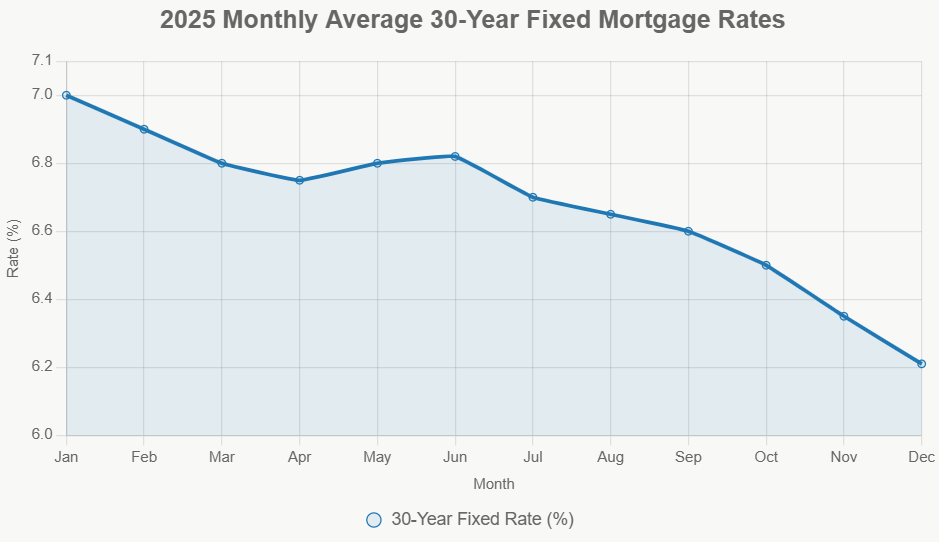
2025 monthly average timeline of 30 year fixed mortgage rates

So far, 2025 has unfolded in distinct phases for mortgage rates. Rather than moving in a straight line downward, the path has been jagged, with a clearer downward trend beginning to take shape in the latter half of the year.

Here's a breakdown of how the average 30-year fixed mortgage rate played out month by month:

Month Average Rate (%) High (%) Low (%) Key Notes
January 7.00 7.04 6.95 Kicked off the year over 7% due to ongoing inflation worries.
February 6.90 6.95 6.85 A slight easing as the Federal Reserve started signaling support.
March 6.80 6.85 6.75 Continued to drop as job market data showed cooling signs.
April 6.75 6.80 6.70 Average for Q2 started at 6.79%, reflecting balanced economic news.
May 6.80 6.85 6.75 A minor bump up due to persistent wage growth.
June 6.82 6.87 6.77 Rates stayed steady as the second quarter wrapped up.
July 6.70 6.75 6.65 Rates softened a bit during the summer slowdown.
August 6.65 6.70 6.60 Global worries caused a brief pause in the downward trend.
September 6.60 6.65 6.55 The Fed's rate cut in September really got things moving downward.
October 6.50 6.55 6.45 Continued to decrease following more Fed actions.
November 6.35 6.40 6.30 A noticeable dip, partly driven by post-election optimism.
December 6.21 6.25 6.17 Ended the year at its lowest point after the December Fed cut.

The journey from 7.04% in January to around 6.17% in December reflects a clear downward trend. The most notable declines have taken place in the latter half of the year, especially as the Federal Reserve began making proactive moves to adjust interest rates.”

The “Why” Behind the Rate Changes: More Than Just Numbers

It's easy to get lost in the percentages, but what actually causes these mortgage rates to move? Think of it like a complex recipe where several ingredients need to be just right.

Federal Reserve's Hand on the Wheel

The Federal Reserve (the Fed) played a starring role in 2025. They are like the central bank of the U.S., and their main job is to keep the economy healthy – not too hot, not too cold. In 2025, they continued the rate-cutting approach they started in late 2024. By cutting their target interest rate, they essentially make it cheaper for banks to borrow money. This, in turn, tends to push down other interest rates, including the ones for mortgages. The Fed’s decision to cut rates in September, October, and December was a major driver of the rate decreases we saw late in the year. Their goal was to gently stimulate the economy without letting inflation run wild.

Inflation: The Balancing Act

Inflation, which is basically how fast prices are rising for goods and services, is a huge factor. When inflation is high, the Fed often raises interest rates to cool things down. When inflation starts to cool, they can afford to lower rates. In 2025, we saw inflation, measured by the Consumer Price Index (CPI), average around 2.5% for the year. This was down from the previous year, and this cooling inflation gave the Fed the green light to ease up on interest rates. However, certain costs, like housing and rent, remained stubbornly high, which prevented rates from dropping even further.

The Job Market's Influence

The health of the job market also matters a lot. A strong job market with lots of people employed means people have money to spend, which can sometimes push up inflation. As 2025 progressed, we saw some signs of the job market cooling slightly, with unemployment ticking up to around 4.2% by November. This cooling was actually good news for mortgage rates because it relieved some of the pressure on wages and inflation, allowing for those rate cuts.

Global Calm (Mostly)

Economic stability around the world also plays a part. In 2025, while there were still some global tensions, things were generally more stable than in previous years. This global calm made investors more confident, and they tend to buy bonds when they feel secure. When demand for bonds goes up, their yields go down. Since mortgage rates are closely tied to the yields on long-term government bonds, this trend also helped keep mortgage rates lower.

The “Lock-In Effect” and Affordability Hurdles

Now, it’s crucial to understand that while rates were coming down, they were still nowhere near the historic lows of 2020 and 2021. This meant that many homeowners who had refinanced into ultra-low rates during that period were still reluctant to sell or refinance again. This is known as the “lock-in effect,” and it kept many potential sellers on the sidelines. For new buyers, even with slightly lower rates, the overall high cost of homes meant that affordability remained a significant challenge.

How Mortgage Rates Affect the Housing Market: Ripples and Waves

Changes in mortgage rates don't just affect the numbers on a piece of paper; they send ripples through the entire housing market.

A Boost for Buyers (Eventually)

As the year went on and rates eased, we started to see a positive impact on buyer activity. Purchase applications, which is a good indicator of how many people are trying to buy homes, saw a 10% increase year-over-year by December. This was a direct result of borrowers being able to afford more or seeing that their monthly payments would decrease compared to earlier in the year. For instance, someone who had a mortgage at 7% could now potentially get one closer to 6.2%, saving them a good chunk of money each month.

Home Prices: Slowing the Surge

The rapid price increases we saw during the pandemic started to moderate in 2025. Home prices saw an 7.8% rise year-over-year through September, which is a much more sustainable pace than the double-digit surges we'd witnessed. This slowdown was partly due to the higher interest rates making buying less accessible and partly because more homes started to come onto the market.

Inventory: A Slow Trickle into a Steady Flow

The number of homes for sale, or inventory, also saw some changes. While it didn't suddenly explode, we did see a modest increase throughout the year, especially as rates began to fall in the latter half. This was welcome news for buyers who had been struggling to find properties.

Refinancing: A Second Wind

For homeowners with existing mortgages carrying higher interest rates (say, above 6.5%), the drop in rates in the fall and winter offered a chance to refinance and lower their monthly payments. We saw a 20% surge in refinances in the fourth quarter. While not everyone qualified due to equity requirements or closing costs, it provided significant savings for many who could take advantage of it.

Different Loan Types, Different Journeys

It's not just the standard 30-year fixed mortgage that's important. Other loan types also saw shifts in 2025:

  • 15-Year Fixed Mortgages: These continued to be attractive for those who wanted to pay off their homes faster and build equity more quickly. While the rates were lower than 30-year, they offered higher monthly payments.
  • 5/1 Adjustable-Rate Mortgages (ARMs): We saw a slight uptick in the use of ARMs, which offer a fixed rate for the first five years and then adjust based on market conditions. Some borrowers, sensing that rates might continue to fall, opted for ARMs to get a lower initial rate, hoping to refinance into a fixed rate later if rates dropped further or to take advantage of short-term investment strategies (like flipping houses).

Here's a quick look at how these loan types performed:

Loan Type 2025 Avg. Rate (%) Change from 2024 Market Share (%) Affordability Impact
30-Year Fixed 6.70 -0.02 85 Modest improvement; payments down $100/mo on median home
15-Year Fixed 5.90 -0.05 10 Strong for equity builders; faster payoff appeal
5/1 ARM 5.80 +0.10 5 Uptick in use for short-term flips amid rate uncertainty

Looking Towards 2026: What's Next?

So, what does all of this mean for the future? As we close the books on 2025, the general forecast for 2026 suggests rates might settle in the 6.0% to 6.5% range. This is based on the assumption that the Fed will continue to ease interest rates and keep inflation under control.

However, as the past few years have taught us, nothing is ever guaranteed. Unexpected global events or changes in economic policy could always throw a curveball.

For anyone looking to buy a home: If you're seeing rates dip into the 6.2% range or lower, it might be a good time to lock in a rate, especially if you plan to stay in your home for a while.

For those looking to refinance: If you have a mortgage with a rate significantly higher than what's currently available (think 6.5% or more), it's definitely worth exploring refinancing to save money on your monthly payments. Just remember to factor in the closing costs and make sure you plan to stay in your home long enough to recoup those expenses.

🏡 Which Rental Property Would YOU Invest In?

Cullman, AL
🏠 Property: Dryden St SE
🛏️ Beds/Baths: 3 Bed • 2 Bath • 1337 sqft
💰 Price: $229,900 | Rent: $1,595
📊 Cap Rate: 6.0% | NOI: $1,148
📅 Year Built: 2025
📐 Price/Sq Ft: $172
🏙️ Neighborhood: B+

VS

Lebanon, TN
🏠 Property: Baltusrol Lane #852
🛏️ Beds/Baths: 4 Bed • 2.5 Bath • 2011 sqft
💰 Price: $369,990 | Rent: $2,400
📊 Cap Rate: 5.8% | NOI: $1,789
📅 Year Built: 2024
📐 Price/Sq Ft: $184
🏙️ Neighborhood: B

Two solid options: Alabama’s affordable new build with steady returns vs Tennessee’s larger home with higher cash flow. Which fits YOUR investment strategy?

📈 Choose Your Winner & Contact Us Today!

Talk to a Norada investment counselor (No Obligation):

(800) 611-3060

Contact Us Now 

Invest in Fully Managed Rentals for Smarter Wealth Building

With mortgage rates dipping to their lowest levels in months, savvy investors are seizing the opportunity to lock in financing.

By securing favorable terms now, you can also maximize immediate cash flow while positioning yourself for stronger long‑term returns.

Norada Real Estate helps you seize this rare opportunity with turnkey rental properties in strong markets—so you can build passive income while borrowing costs remain historically low.

🔥 HOT NEW LISTINGS JUST ADDED! 🔥

Talk to a Norada investment counselor today (No Obligation):

(800) 611-3060

Get Started Now

Also Read:

  • Mortgage Rates Predictions Backed by 7 Leading Experts: 2025–2026
  • Mortgage Rate Predictions for the Next 3 Years: 2026, 2027, 2028
  • 30-Year Fixed Mortgage Rate Forecast for the Next 5 Years
  • 15-Year Fixed Mortgage Rate Predictions for Next 5 Years: 2025-2029
  • Will Mortgage Rates Ever Be 3% Again in the Future?
  • Mortgage Rates Predictions for Next 2 Years
  • Mortgage Rate Predictions for Next 5 Years
  • Mortgage Rate Predictions: Why 2% and 3% Rates are Out of Reach
  • How Lower Mortgage Rates Can Save You Thousands?
  • How to Get a Low Mortgage Interest Rate?
  • Will Mortgage Rates Ever Be 4% Again?

Filed Under: Financing, Mortgage Tagged With: Interest Rate, mortgage, Mortgage Rate Trends, mortgage rates

Will Mortgage Rates Drop During the Christmas Holidays?

December 24, 2025 by Marco Santarelli

Will Mortgage Rates Drop During the Christmas Holidays?

It’s a question that often pops up as the scent of gingerbread fills the air and carols play on repeat: do mortgage rates actually dip around Christmas? The answer, and I'll give it to you straight from the get-go, is that mortgage rates don't consistently drop during the Christmas holidays, but they often show less movement or small dips because financial markets are quieter and trading volumes are lower.

Don't expect a huge holiday miracle slash rate drop, but there's usually a bit of a lull that can be beneficial if you're looking to buy or refinance. This time of year brings a unique rhythm. It's a period where many people, myself included, tend to slow down, focus on family, and maybe even take a much-needed break. This applies to the financial markets too, believe it or not.

Will Mortgage Rates Drop During the Christmas Holidays?

Why Rates Tend to Calm Down During Holidays?

When Christmas rolls around, a noticeable shift happens in the financial world. It's not a secret that many people, including those working in banks and financial institutions, are taking time off to be with family. This leads to a significant slowdown in trading activities. When trading volumes are lower, the market tends to be less volatile. It’s like a quiet evening rather than a bustling marketplace.

This lull in activity means that large swings in mortgage rates are less likely. Instead, you often see rates holding relatively steady or even experiencing a slight softening. For example, back in 2025, we saw the average 30-year fixed mortgage rate dip to around 6.149% on Christmas Eve. This wasn't a cliff dive, but it was a welcome sign of stability for those looking to secure a home loan. Some analyses even pointed out that rates in late December were noticeably lower – sometimes by as much as half a percent – compared to earlier in the year. It might not be a massive, life-changing drop, but every little bit helps, right?

The Real Drivers: What's Really Moving Mortgage Rates

Now, as much as we might like to attribute any rate decrease to the holiday season, I have to be honest: broader economic factors are the real puppet masters. Mortgage rates are intricately linked to the bond market, especially the yields on U.S. Treasury bonds, like the 10-year Treasury note. When these bond yields go up, mortgage rates tend to follow, and vice-versa.

Think about the Federal Reserve. Their decisions on interest rates and monetary policy have a ripple effect throughout the economy. When the Fed signals potential rate hikes or holds steady, investors react, and this can influence the bond market and, consequently, mortgage rates. However, the market is pretty smart; these effects are often priced in by investors well before any official announcement. So, even if the Fed makes a statement right before Christmas, its impact might have already been felt in the rates leading up to it.

Inflation data is another huge piece of the puzzle. If inflation is creeping up, lenders might factor that into their rates, anticipating that the cost of money will soon be higher. Conversely, if inflation shows signs of cooling, it can give mortgage rates some breathing room. These economic indicators are constantly being monitored, and they play a much more significant role in setting the overall trajectory of mortgage rates than a holiday week.

Who's Still Buying During the Holidays?

Even though overall activity in the real estate market slows down during the holidays, the buyers and sellers who are active are often very serious. People looking to buy or sell during this time usually have a strong motivation. This can sometimes lead to quicker transactions because both parties are highly motivated to get the deal done. While this might not directly cause mortgage rates to drop, it contributes to a slightly different market dynamic during this period. It's a smaller pool of players, but they're often playing with more intent.

Why the “Holiday Calm” Happens: A Market Snapshot

Let's break down why this seasonal calm occurs:

  • Reduced Trading Hours and Volume: Major financial markets often operate on shorter schedules during the holiday weeks. With fewer trading days and less participation, the usual day-to-day volatility is significantly reduced. Less noise means more stability.
  • Investor Pauses: Many institutional investors, who are major players in the bond market, take a break. When these big players step back, the market can become less prone to sudden shifts.
  • Lender Strategies: Sometimes, lenders might offer a more stable rate environment during the holidays to build goodwill or encourage hesitant borrowers. It’s a subtle marketing tactic, perhaps, but it can contribute to the overall sense of stability.

Here’s a look at some typical mortgage rates you might have seen in the past, illustrating this stability:

Product Interest Rate (Approx.) APR (Approx.)
30-Year Fixed Rate 6.23% 6.30%
20-Year Fixed Rate 6.03% 6.15%
15-Year Fixed Rate 5.61% 5.71%
5/1 ARM 5.62% 6.05%

These are national averages and can vary based on your credit score, down payment, and the specific lender.

My Expert Take: Don't Bet the Farm on Holiday Rate Drops

From my experience, I always advise my clients to approach the holiday period with realistic expectations. While you might find a slightly more favorable rate or a lender eager to close a deal before year-end, it’s rarely a dramatic financial windfall. The primary takeaway is stability.

Instead of hoping for an improbable price drop, think of the holiday lull as an opportunity to shop around. With fewer people actively comparing lenders during this time, you might get more personalized attention from loan officers. It's a perfect chance to compare offers from multiple lenders, negotiate terms, and ensure you're getting the best possible deal. Use this period to research, get pre-approved if you haven't already, and be ready to act when the market is a bit calmer.

Ultimately, mortgage rates are a reflection of the larger economic picture, and while the holiday season offers a brief pause in the usual market frenzy, it doesn't fundamentally rewrite the economic script.

🏡 Which Rental Property Would YOU Invest In?

Cullman, AL
🏠 Property: Dryden St SE
🛏️ Beds/Baths: 3 Bed • 2 Bath • 1337 sqft
💰 Price: $229,900 | Rent: $1,595
📊 Cap Rate: 6.0% | NOI: $1,148
📅 Year Built: 2025
📐 Price/Sq Ft: $172
🏙️ Neighborhood: B+

VS

Lebanon, TN
🏠 Property: Baltusrol Lane #852
🛏️ Beds/Baths: 4 Bed • 2.5 Bath • 2011 sqft
💰 Price: $369,990 | Rent: $2,400
📊 Cap Rate: 5.8% | NOI: $1,789
📅 Year Built: 2024
📐 Price/Sq Ft: $184
🏙️ Neighborhood: B

Two solid options: Alabama’s affordable new build with steady returns vs Tennessee’s larger home with higher cash flow. Which fits YOUR investment strategy?

📈 Choose Your Winner & Contact Us Today!

Talk to a Norada investment counselor (No Obligation):

(800) 611-3060

Contact Us Now 

Invest in Fully Managed Rentals for Smarter Wealth Building

With mortgage rates dipping to their lowest levels in months, savvy investors are seizing the opportunity to lock in financing.

By securing favorable terms now, you can also maximize immediate cash flow while positioning yourself for stronger long‑term returns.

Norada Real Estate helps you seize this rare opportunity with turnkey rental properties in strong markets—so you can build passive income while borrowing costs remain historically low.

🔥 HOT NEW LISTINGS JUST ADDED! 🔥

Talk to a Norada investment counselor today (No Obligation):

(800) 611-3060

Get Started Now

Also Read:

  • Mortgage Rates Predictions Backed by 7 Leading Experts: 2025–2026
  • Mortgage Rate Predictions for the Next 3 Years: 2026, 2027, 2028
  • 30-Year Fixed Mortgage Rate Forecast for the Next 5 Years
  • 15-Year Fixed Mortgage Rate Predictions for Next 5 Years: 2025-2029
  • Will Mortgage Rates Ever Be 3% Again in the Future?
  • Mortgage Rates Predictions for Next 2 Years
  • Mortgage Rate Predictions for Next 5 Years
  • Mortgage Rate Predictions: Why 2% and 3% Rates are Out of Reach
  • How Lower Mortgage Rates Can Save You Thousands?
  • How to Get a Low Mortgage Interest Rate?
  • Will Mortgage Rates Ever Be 4% Again?

Filed Under: Financing, Mortgage Tagged With: Interest Rate, mortgage, Mortgage Rate Trends, mortgage rates

  • « Previous Page
  • 1
  • 2
  • 3
  • 4
  • …
  • 84
  • Next Page »

Real Estate

  • Birmingham
  • Cape Coral
  • Charlotte
  • Chicago

Quick Links

  • Markets
  • Membership
  • Notes
  • Contact Us

Blog Posts

  • Will Mortgage Rates Go Down to 5% in 2026?
    May 1, 2026Marco Santarelli
  • Today’s Mortgage Rates, May 1: Rates Rise, Fed Pause and Geopolitical Currents Sway Homebuyers
    May 1, 2026Marco Santarelli
  • Savannah Housing Market: Prices, Trends, Forecast 2026
    May 1, 2026Marco Santarelli

Contact

Norada Real Estate Investments 30251 Golden Lantern, Suite E-261 Laguna Niguel, CA 92677

(949) 218-6668
(800) 611-3060
BBB
  • Terms of Use
  • |
  • Privacy Policy
  • |
  • Testimonials
  • |
  • Suggestions?
  • |
  • Home

Copyright 2018 Norada Real Estate Investments

Loading...