Norada Real Estate Investments

  • Home
  • Markets
  • Properties
  • Membership
  • Podcast
  • Learn
  • About
  • Contact

Mortgage Rate Predictions for the Next 30 Days: Nov 10 to Dec 10, 2025

November 11, 2025 by Marco Santarelli

Mortgage Rate Predictions for the Next 30 Days: Nov 10 to Dec 10, 2025

The holiday season is just around the corner, and for many of us, that means thinking about big life events – and buying a home is certainly one of them. So, what's the deal with mortgage rates over the next month, from November 10th to December 10th, 2025? Based on the most informed guesswork out there, I expect we'll see rates mostly holding steady in the low- to mid-6% range, likely nudging up slightly to around 6.3% to 6.4% by early December. It's not a time for drastic changes, but a few key factors could push things a bit higher or keep them from falling much further.

Mortgage Rate Predictions for the Next 30 Days: Nov 10 to Dec 10, 2025

Right now, as I write this in early November 2025, the average 30-year fixed mortgage rate is sitting at a pretty solid 6.22%, according to Freddie Mac's weekly survey. This is a far cry from the rock-bottom rates we saw during the pandemic, where dipping below 3% was possible. Today's rates mean a significant jump in monthly payments for buyers compared to just a few years ago.

For instance, that $1,300 payment on a $300,000 loan is about 50% more than it was then, making affordability a real concern for many, especially first-time homebuyers. While there isn't a huge controversy or surprise looming, the general feeling among experts is that we're in for a period of relative calm, with just a hint of upward pressure.

A Quick Look Back: How We Got Here

Diving into the numbers would be a lot less useful without understanding the journey. Mortgage rates have been on a rollercoaster for the past few years. After hitting historic lows around 2.65% in 2021, fueled by pandemic-era stimulus and historically low interest rates, they began a steady climb as inflation concerns grew and the Federal Reserve started its rate-hiking campaign. By late 2023, we saw rates peak near 7.8%.

Thankfully, the Federal Reserve started to pivot, implementing two rate cuts in September and October of 2025. This easing has brought average rates down from those scary mid-7% highs to the 6.22% we’re seeing now. It's a significant drop, almost 1.8 percentage points year-to-date. Still, when you look at the historical average of 7.71% since 1971, our current rates, while challenging, aren't completely out of the ordinary in the grand scheme of things. It just feels that way because we got so spoiled with those ultra-low numbers.

Here’s a quick snapshot of how rates have moved:

Period Average 30-Year Fixed Rate Key Event
2021 Annual ~3.0% Pandemic lows, stimulus boost
2023 Peak ~7.8% Fed hikes for inflation
October 2025 ~6.3% After second Fed rate cut
November 6, 2025 6.22% Freddie Mac survey

This table really shows how much things can change quickly. It sets the stage for why we’re approaching the next few weeks with cautious optimism.

What’s Driving the Numbers for the Next 30 Days?

Mortgage rates are like a thermostat for the housing market, and they’re influenced by a lot of different factors. For the next 30 days, I'm keeping my eye on a few key players:

The Federal Reserve's Next Move

The biggest question mark is the Fed's upcoming meeting on December 9-10. After cutting rates in September and October, markets are pricing in about a 60% chance of another 25-basis-point cut. Fed Chair Jerome Powell has been clear that their decisions are data-dependent, and he’s mentioned there are “differing views” on the committee about how fast to proceed.

If they do cut rates again, it could put a little downward pressure on mortgage rates, potentially keeping them closer to 6.2%. However, if they hold rates steady, especially if inflation worries resurface, we could see yields jump, pushing mortgage rates higher, perhaps even towards 6.5%.

Treasury Yields: The Mortgage Rate's Best Friend (or Foe)

The yield on the 10-year Treasury note is a super important benchmark for mortgage rates. Think of it as the foundation upon which mortgage rates are built. When the 10-year Treasury yield goes up, mortgage rates tend to follow, and vice-versa. It usually sits about 2% to 2.5% above the 10-year yield.

Right now, the 10-year yield is hovering around 4.0%. We’ve seen it tick up recently, partly due to worries about tariffs and their potential impact on inflation. If tariffs do start pushing up the cost of imported goods, that could add a bit of upward pressure on yields, and consequently, on mortgage rates. If the yield stays around 4.0% or dips, rates should stay relatively stable. But if it climbs to, say, 4.2%, we could easily see mortgage rates add another tenth or two of a percent by early December.

Inflation and Jobs: The Economic Pulse

Inflation is still a hot topic. While the overall inflation rate has cooled to about 2.4%, the “core” inflation rate (which excludes volatile food and energy prices) is still a bit stickier, especially with housing costs continuing their upward trend.

Upcoming jobs reports are crucial. If the unemployment rate, currently at 4.1%, continues to tick up, it signals a cooling economy and strengthens the case for more Fed rate cuts. This would be good news for mortgage rates. But if job growth remains strong, it could give the Fed pause and make them less likely to cut rates, keeping mortgage rates elevated. The wild card here is definitely tariffs; economists are warning they could add as much as 0.5% to 1% to inflation in early 2026, which could impact Fed thinking and market sentiment heading into year-end.

The Housing Market's Own Rhythm

The persistently high mortgage rates, even with the recent Fed cuts, have created a “lock-in effect.” This means a huge chunk of homeowners – about 83% – have mortgages with rates well below 6%. They’re naturally hesitant to sell and buy a new home with a much higher rate. This lack of inventory continues to prop up home prices, meaning that even small increases in mortgage rates have a really noticeable impact on monthly payments. A 0.25% rate increase can add around $50 to $60 per month to the payment on a typical-sized loan.

What the Experts Are Saying: A Nod to Stability with a Slight Upswing

When I look across what various housing market experts and organizations are predicting for the next 30 days, a pretty consistent picture emerges. They’re generally forecasting a period of stability, but with a slight leaning towards rates inching up rather than falling significantly.

Here’s a breakdown of some common predictions I've been seeing:

Source November 2025 Prediction December 2025 Prediction (End/Q4 Avg) Key Reason for Outlook
Fannie Mae ~6.2–6.3% 6.3% (end-year) Fed cuts expected, but inflation caps steep drops
Mortgage Bankers Assoc. Low-mid 6% 6.4% (Q4 avg) Tariffs and yields keeping rates higher
National Assoc. Realtors Mid-6% range Mid-6% (through Q4) Strong labor market balances things
LendingTree/Zillow 6.17% (early Nov) 6.3–6.5% Policy uncertainty, lock-in effect
NerdWallet/Freddie Mac 6.22–6.3% Slight rise to 6.3% 60% chance of December Fed cut

As you can see, most forecasts hover within a tight band, suggesting that big swings aren't likely. The MBA's Q4 average prediction sits at the higher end, reflecting concerns about tariffs and yields.

To help visualize this, here's a look at how these forecasts compare:

Mortgage Rate Predictions for the Next 30 Days: November 10 to December 10, 2025

This chart visually confirms the expectation of a modest upward trend in average rates by the end of the year.

What Does This Mean for You? Smart Moves for the Next Month

So, with all this information, what should you do? My advice is always to be proactive and prepared.

  • If You're a Homebuyer:
    • Shop Around: Seriously, don't just go with the first lender you talk to. Rates can vary by a significant amount – often 0.25% or more – between lenders for the same borrower. I’ve seen it myself.
    • Get Pre-Approved: Know exactly how much you can borrow and what your estimated payments will be.
    • Stress-Test Your Budget: Use online affordability calculators that let you plug in slightly higher rates (like 6.5%) to see if you’re still comfortable.
    • Consider Different Loan Types: If you qualify, FHA or VA loans often come with lower rates, currently in the 5.9% to 6.1% range.
  • If You're Thinking About Refinancing:
    • Compare Your Rate: If your current mortgage rate is higher than 6.5%, it might be worth exploring a refinance.
    • Calculate Break-Even: Remember to factor in closing costs, which can be anywhere from 2% to 5% of your loan amount. You’ll want to make sure the savings from a lower rate allow you to recoup those costs within a reasonable time, typically 1.5 to 2 years.
    • Most Existing Owners are Locked In: Given that so many homeowners have rates below 6%, refinancing opportunities are more limited now. It's really about chasing those significantly lower rates.
  • For Everyone: Stay Informed and Be Flexible:
    • Watch the News: Keep an eye on weekly Freddie Mac rate surveys and read the minutes from the Federal Reserve meetings. These give you the pulse of the market.
    • Consider ARMs (Carefully): For some buyers who plan to move or refinance within a few years, an Adjustable-Rate Mortgage (ARM) might offer a lower initial rate. However, they come with the risk of rates increasing later. In times of uncertainty, a traditional fixed-rate mortgage often provides more peace of mind.
    • Look Beyond the Rate: Don't forget about the other costs of homeownership. Property taxes, homeowner's insurance, and even closing costs have seen increases (up to 10% year-over-year). Factor these into your total housing budget.

A Glimpse into 2026

While we’re focused on the next 30 days, it’s helpful to know what the longer-term picture might look like. Most experts, including Fannie Mae, are predicting that rates could head below 6% by mid-2026 as inflation continues to moderate and the Fed completes its easing cycle. However, unexpected global events or changes in U.S. fiscal policy could always throw a wrench in those predictions and keep rates in this mid-6% range for longer.

Wrapping It Up

From November 10th to December 10th, 2025, I don’t anticipate any earth-shattering news in the mortgage rate world. Expect things to be relatively stable, probably hovering between 6.2% and 6.4%. It’s a market that’s still finding its footing after a period of significant change. While it presents challenges, especially for affordability, it’s also a period where informed decisions and careful planning can still lead you to the right homeownership opportunity. Stay vigilant, stay informed, and you’ll be well-positioned for whatever comes next, whether it's finding your dream home this holiday season or setting yourself up for potentially better rates in 2026.

Want Better Cash Flow? Invest in High-Demand Housing Markets

Turnkey rental properties in fast-growing housing markets offer a powerful way to generate passive income with minimal hassle.

Work with Norada Real Estate to find stable, cash-flowing markets beyond the bubble zones—so you can build wealth without the risks of ultra-competitive areas.

🔥 HOT NEW LISTINGS JUST ADDED! 🔥

Talk to a Norada investment counselor today (No Obligation):

(800) 611-3060

Get Started Now

Also Read:

  • Will Mortgage Rates Go Down in 2025: Morgan Stanley's Forecast
  • Mortgage Rate Predictions 2025 from 4 Leading Housing Experts
  • Mortgage Rate Predictions for the Next 3 Years: 2026, 2027, 2028
  • 30-Year Fixed Mortgage Rate Forecast for the Next 5 Years
  • 15-Year Fixed Mortgage Rate Predictions for Next 5 Years: 2025-2029
  • Will Mortgage Rates Ever Be 3% Again in the Future?
  • Mortgage Rates Predictions for Next 2 Years
  • Mortgage Rate Predictions for Next 5 Years
  • Mortgage Rate Predictions: Why 2% and 3% Rates are Out of Reach
  • How Lower Mortgage Rates Can Save You Thousands?
  • How to Get a Low Mortgage Interest Rate?
  • Will Mortgage Rates Ever Be 4% Again?

Filed Under: Financing, Mortgage Tagged With: Interest Rate, mortgage, Mortgage Rate Trends, mortgage rates, Mortgage Rates Predictions

Should You Refinance Your Mortgage Now or Wait Until 2026?

November 11, 2025 by Marco Santarelli

Should I Refinance My Mortgage Now or Wait Until 2026?

This is the million-dollar question many homeowners are asking themselves right now. As of November 9, 2025, with mortgage rates hovering around 6.22%, the decision to refinance your home seems tempting, but should you act today or hold out for potentially better deals in 2026? My take, after looking at all the angles, is that if you stand to save a significant amount and have a solid plan to stay in your home, refinancing now can be a smart move, but waiting offers a gamble for even greater savings if forecasts pan out.

Should You Refinance Your Mortgage Now or Wait Until 2026?

Buying a home is often the biggest financial decision of our lives, and for many, the equity built up is their largest asset. That’s why deciding whether to refinance your mortgage carries so much weight. Homeowners can potentially save thousands each year, but getting it wrong can end up costing you. The economic signs are pointing towards potential rate drops, but there’s a lot of uncertainty. Let’s dive into what’s happening with rates, what experts are predicting, and how you can figure out the best path for your situation.

Understanding Today's Mortgage Rate Environment

Mortgage rates aren't just numbers pulled out of thin air; they're closely tied to what's happening in the broader economy. The 30-year fixed mortgage, the most popular choice for its predictable payments, is currently averaging 6.22%. This is a welcome drop from the higher rates we saw for much of 2025, thanks to the Federal Reserve’s efforts to lower borrowing costs.

Several big factors influence these rates:

  • The Federal Reserve's Moves: The Fed has been cutting its key interest rate, making it cheaper for banks to borrow money. This generally means lower mortgage rates. As of November 2025, their target rate is between 4.5% and 4.75%. However, mortgage rates are more directly influenced by the yields on the 10-year Treasury note. This yield, which reflects what investors expect for inflation and economic growth, is currently around 4.09%. It’s come down from last year, but it can jump up quickly if there’s a lot of positive economic news or concerns about inflation.
  • Inflation: Inflation is still a bit higher than the Fed’s target of 2%. Right now, it’s sitting around 2.6% year-over-year. If inflation continues to cool down, mortgage rates are likely to follow. Many economists predict inflation will get closer to 2.3% by mid-2026, which would be good news for borrowers.
  • Economic Signals: The economy is showing signs of strength, with solid job growth and a decent pace of expansion. However, there are still whispers of a possible slowdown, and global events can always throw a wrench into the works. All these things can make mortgage rates a bit jumpy.

To give you a sense of where we’ve been, look at this chart showing average annual mortgage rates. You can see that the super-low rates of 2020 and 2021 were an exception, largely due to pandemic recovery efforts. Rates then climbed significantly in 2022 as inflation surged. The 2025 figure reflects rates seen so far this year, with recent dips suggesting we might be past the peak.

An overview of annual average 30-year fixed rates

What Do the 2026 Forecasts Say?

Most experts are predicting that mortgage rates will continue to drop, but not necessarily back to the ultra-low levels we saw a few years ago. Fannie Mae, for example, expects rates to be around 5.9% by the end of 2026, assuming inflation stays in check and the Fed makes further rate cuts. Other groups, like the Mortgage Bankers Association, are a bit more cautious, projecting rates closer to 6.4%.

These predictions rely on a few key things:

  • The Fed's Plan: If the Fed continues to cut rates as expected, this should help push mortgage rates down.
  • Housing Market Balance: While home inventories have increased, demand is still a factor that can influence how much further rates can fall.
  • Global Stability: Major world events, elections, and economic shifts can impact investor confidence and, consequently, bond yields and mortgage rates.

This chart shows a projected trend, with a moderate decline anticipated over the next year:

Projected outlook chart for 30-Year fixed rate mortgage

(Note: The 2026 projection is an average of various expert forecasts, highlighting the range of possibilities.)

It's interesting to see discussions online about a potential “refinance boom” in 2026 as rates move closer to lower figures. Many people are debating whether to lock in savings now or wait and hope for even better rates.

The Nitty-Gritty of Refinancing: Costs, Savings, and When You Break Even

When you refinance, you're essentially replacing your current mortgage with a new one. The most common reasons are to get a lower interest rate, shorten your loan term, or tap into your home equity.

The Price Tag of Refinancing:
Keep in mind that refinancing isn't free. You'll encounter closing costs, similar to when you bought your home. For a typical loan, these costs can range from $3,000 to $7,000, or about 1-2% of the loan amount. Some lenders may even let you roll these costs into the new loan.

Here’s a general idea of what these costs include:

Cost Category Estimated Amount What It Covers
Application/Origination Fees $500 – $1,500 Lender’s administrative costs
Appraisal Fee $300 – $500 Professional estimate of your home's value
Title Search & Insurance $800 – $2,000 Ensures clear ownership and protects lender
Credit Report/Underwriting $200 – $500 Checks your credit history and loan approval
Total Estimated Costs $3,000 – $7,000

Let’s crunch some numbers. If you have a $300,000 loan and can refinance from 7% down to 6.22%, your monthly payment could decrease by about $147. That’s $1,764 saved each year. To figure out your break-even point – when your savings cover the closing costs – you’d divide the total closing costs by your monthly savings. Using our example, $5,000 in closing costs divided by $147 in monthly savings is about 34 months, or roughly 2.8 years.

Key Personal Factors to Consider:

  • How Long Will You Stay? If you plan to stay in your home for at least 5-7 years, refinancing is often worthwhile because you’ll be in the home long enough to truly benefit from the savings. If you think you might move sooner, the closing costs might eat up your savings.
  • Your Credit Score and Equity: You’ll generally need a credit score of 620 or higher and at least 20% equity in your home to get the best rates and avoid paying for private mortgage insurance (PMI) again.
  • Taxes: The interest you pay on your mortgage is usually tax-deductible, and refinancing can impact this. It's always a good idea to chat with a tax advisor about your specific situation, especially with any changes in tax laws.

Refinancing Now vs. Waiting: The Pros and Cons

Refinancing Now:

  • Pros:
    • Immediate Savings: You start saving money on your monthly payments right away.
    • Security: You lock in a lower rate and protect yourself if rates unexpectedly rise again.
    • Simplicity: Some refinance options, like streamline refinances for FHA or VA loans, are designed to be quick and easy.
    • Catching Rate Drops: If your current rate is significantly higher than today’s, say above 6.75%, refinancing now can provide substantial savings that quickly add up.
  • Cons:
    • Upfront Costs: You have to pay closing costs, which means it takes time to see net savings.
    • Missed Lower Rates: If rates drop significantly in 2026 (e.g., by 0.5% or more), you might regret not waiting and could end up paying refinancing fees twice.

Waiting Until 2026:

  • Pros:
    • Potentially Bigger Savings: If rates fall to 5.9% or lower, your monthly savings could be even larger, leading to greater long-term financial benefits. You avoid paying closing costs now.
    • Potentially Lower Fees: Sometimes fees can fluctuate, and waiting might mean you avoid seasonal price increases for services.
  • Cons:
    • Delayed Savings: You continue paying your current, possibly higher, interest rate until you refinance.
    • Uncertainty: Rate forecasts aren't guarantees. Economic shifts or unexpected events could cause rates to level off or even increase.
    • Life Changes: If you unexpectedly need to move or face other major life changes, your plans to refinance might get complicated.

A Special Case: If you currently have an adjustable-rate mortgage (ARM) and your rate is scheduled to reset higher soon, refinancing now is often a no-brainer to avoid that upcoming payment increase.

Recommended Read:

Best Time to Refinance Your Mortgage: Expert Insights 

Are There Other Options Besides a Full Refinance?

You don't always have to do a complete mortgage refinance to achieve your financial goals. Here are some alternatives:

  • Home Equity Line of Credit (HELOC) or Home Equity Loan: These allow you to borrow against the equity you've built in your home. HELOCs typically have variable rates, while home equity loans have fixed rates. They can be useful for debt consolidation or home improvements without changing your primary mortgage. Current rates for these might start around 8-9%, or perhaps 7.99% for those with excellent credit.
  • Mortgage Recasting: This is a simpler process where you make a large lump-sum payment towards your principal, and the lender then re-calculates your monthly payments based on the new, lower balance. There are usually minimal fees ($250 is common) and no credit check involved.
  • Reverse Mortgage: If you're 62 or older, a reverse mortgage allows you to convert a portion of your home equity into cash without having to make monthly mortgage payments. However, it does reduce the inheritance you leave to your heirs.
  • Personal Loans or Balance Transfers: For smaller debts, these can be options, but their interest rates are often much higher than mortgage rates.

My Advice: What to Do Next

Based on my experience and what I’m seeing in the market, here’s how I’d approach this decision:

  1. Run the Numbers Personally: Don't just rely on general advice. Use online calculators from reputable sites like Bankrate or NerdWallet to get a precise idea of your potential savings and break-even point.
  2. Consider Your Current Rate: If your current mortgage rate is above 6.75% and your break-even point is less than 3 years, refinancing now is likely a good idea. It's especially compelling if you can get tax benefits by refinancing before year-end.
  3. If Your Rate is Lower: If your rate is closer to today's average (say, below 6.5%), it might be worth waiting. Keep an eye on weekly mortgage rate trends from sources like Freddie Mac. A drop of 0.25% or more could make waiting more attractive.
  4. Talk to a Lender: Get a no-obligation quote from a mortgage lender. Many are happy to provide this, and they can also explain rate lock options, which can secure a rate for you for 60-90 days while you finalize your decision.
  5. Think About Your Life: Are you planning any major life changes in the next few years? Does the thought of a potentially lower payment bring significant peace of mind? These personal factors are just as important as the numbers.

The mortgage market is dynamic. Rates can change based on Fed announcements, economic reports, or even global events. Staying informed and understanding your personal financial picture will help you make the best decision for your home and your future.

Refinance Now or Wait? Turnkey Investors Are Locking in Strategic Gains

Refinancing your mortgage in late 2025 could mean lower monthly payments, stronger cash flow, and better positioning for future rate hikes—especially for turnkey rental owners.

Norada Real Estate helps investors evaluate refinance timing, optimize loan structures, and scale portfolios with properties that deliver consistent income and long-term equity.

🔥 HOT NEW LISTINGS JUST ADDED! 🔥

Talk to a Norada investment counselor today (No Obligation):

(800) 611-3060

Get Started Now

Recommended Read:

  • When You Refinance a Mortgage Do the 30 Years Start Over?
  • Should You Refinance as Mortgage Rates Reach Lowest Level in Over a Year?
  • NAR Predicts 6% Mortgage Rates in 2025 Will Boost Housing Market
  • Mortgage Rates Predictions for 2025: Expert Forecast
  • Half of Recent Home Buyers Got Mortgage Rates Below 5%
  • Mortgage Rates Need to Drop by 2% Before Buying Spree Begins
  • Will Mortgage Rates Ever Be 3% Again: Future Outlook
  • Mortgage Rates Predictions for Next 2 Years
  • Mortgage Rate Predictions for Next 5 Years
  • Mortgage Rate Predictions for 2025: Expert Forecast

Filed Under: Financing, Mortgage Tagged With: Interest Rate, mortgage, mortgage rates, Mortgage Rates Predictions

Mortgage Rates Today, Nov 11: 30-Year Refinance Rate Jumps by 12 Basis Points

November 11, 2025 by Marco Santarelli

Mortgage Rates Drop: Today's 30-Year Fixed Refinance Rate Goes Down by 23 Basis Points

As of Tuesday, November 11, 2025, the average national rate for a 30-year fixed refinance has nudged up to 6.93%, marking a 12 basis point increase from the previous 6.81%. As reported by Zillow, this means that securing a refinance at a lower rate just became a little more challenging for homeowners looking to adjust their mortgage terms. It’s a dynamic market, and even small shifts can have a significant impact on your monthly budget.

Mortgage Refinance Rates Today, Nov 11: 30-Year Fixed Rate Jumps to 6.93%

What Does This 12 Basis Point Rise Really Mean?

Let’s break down what this increase signifies in practical terms. A basis point is simply 1/100th of a percent. So, a 12 basis point increase means the rate went up by 0.12%. While this might sound small, when you're talking about mortgages, which are typically large sums of money spread over many years, it adds up.

For instance, if you were looking to refinance a $300,000 loan, a jump from 6.81% to 6.93% could translate to an extra tens of dollars each month for the life of the loan. Over 30 years, this difference can be quite substantial, potentially amounting to thousands of dollars more paid in interest. My personal experience as someone who has navigated refinancing multiple times tells me that even minor rate increases emphasize the importance of timing and understanding the true cost of borrowing.

Refinance Timing: Should You Lock In Rates Now?

The question on everyone's mind when rates start ticking up is: should I refinance now, before they climb even higher? This is a classic dilemma in the mortgage world. Zillow’s data shows that the 30-year fixed refinance rate has also risen 5 basis points from the previous week's average of 6.88%. This suggests a trend of increasing rates, not just a one-day blip.

From my perspective, if you've been contemplating a refinance, especially if your current rate is significantly higher than today's offerings, this upward trend is a strong signal to act sooner rather than later. However, it’s crucial to weigh this urgency against your personal financial situation and long-term goals. Are you planning to move in a few years? If so, the long-term savings might not be as impactful. If you plan to stay in your home for the foreseeable future, locking in a lower rate while it's still relatively accessible could be a smart move.

Exploring Your Refinance Options on November 11th

While the 30-year fixed refinance rate is grabbing headlines, don't forget to look at other options available. The market today, November 11, 2025, shows some interesting movements:

  • 15-Year Fixed Refinance Rate: This popular option has seen a significant increase, climbing 25 basis points from 5.73% to 5.98%. This means that while it's still generally lower than the 30-year rate, the gap has narrowed, and the cost of refinancing for a shorter term has gone up more sharply.
  • 5-Year Adjustable-Rate Mortgage (ARM) Refinance Rate: In a surprising move, the 5-year ARM refinance rate has actually decreased by 27 basis points, falling from 7.25% to 6.98%. This is a notable shift and might present an attractive option for those who are comfortable with the idea of potentially fluctuating payments down the line, or who plan to sell or refinance again before the fixed period ends.

Comparing 30-Year Fixed vs. 15-Year Refinance Options

When I'm evaluating refinance scenarios for myself or clients, I always compare the 30-year and 15-year fixed options. Here’s a quick rundown of what today’s rates suggest:

Loan Term Current Rate (Nov 11) Previous Rate (Approx.) Change Monthly Payment Impact (Example: $300k loan)
30-Year Fixed 6.93% 6.81% +12 bps Increased
15-Year Fixed 5.98% 5.73% +25 bps Increased significantly
5-Year ARM 6.98% 7.25% -27 bps Decreased

As you can see, the 15-year fixed rate, while still lower than the 30-year, has become more expensive relative to where it was. The 30-year fixed rate is now very close to the 5-year ARM rate. This might make you think twice about stretching out your payments unless there's a compelling reason.

Factors Influencing Your Refinance Rate Today

It's important to remember that the rates reported by Zillow are national averages. Your personal refinance rate will depend on several key factors:

How Your Credit Score Impacts Your Refinance Rate Today

Your credit score is arguably one of the most critical components lenders consider. A higher credit score (generally 740 and above) signals to lenders that you are a lower risk, and they are more likely to offer you the best available rates. Even a small improvement in your score can result in a lower interest rate. Conversely, a lower score can mean higher rates or even difficulty qualifying for a refinance at all. I’ve seen firsthand how diligently working on improving credit can shave tenths of a percent off a rate, saving thousands over time.

The Role of Debt-to-Income Ratio in Refinancing

Your debt-to-income ratio (DTI) compares your monthly debt payments to your gross monthly income. Lenders use DTI to assess your ability to manage monthly mortgage payments. A lower DTI generally makes you a more attractive borrower. Most lenders prefer a DTI of 43% or lower, but some may have stricter requirements, especially in a rising rate environment. If your income has increased or your debt has decreased since your last mortgage, your eligibility for a better refinance rate might improve.

The Effect of Loan-to-Value Ratio on Refinancing

The loan-to-value ratio (LTV) compares the amount you owe on your mortgage to the current market value of your home. A lower LTV (meaning you owe less relative to the home's value) indicates less risk for the lender. If your home's value has appreciated significantly, or if you've paid down a substantial portion of your mortgage, your LTV will be lower, potentially leading to better refinance rates. Many lenders require an LTV of 80% or less for a refinance, or that you have at least 20% equity in your home.

Broader Economic Influences: The Impact of Inflation

When we discuss mortgage rates, especially on a day like November 11, 2025, it’s impossible to ignore the broader economic forces at play, particularly inflation. Central banks, like the Federal Reserve, often raise interest rates to combat inflation. When inflation is high, the cost of borrowing generally increases across the board. Lenders need to ensure their returns keep pace with inflation, so mortgage rates tend to rise as well. The fact that the 30-year fixed rate is nudging towards 7% suggests that inflationary pressures are still a significant concern in the market.

Recommended Read:

30-Year Fixed Refinance Rate Trends – November 10, 2025

Best Time to Refinance Your Mortgage: Expert Insights

Should You Refinance Your Mortgage Now or Wait Until 2026? 

Considering Your Refinance Goals: Pros and Cons

The decision to refinance isn’t always about chasing the lowest rate. Your personal goals should guide your decision.

Pros and Cons of Cash-Out Refinancing

A cash-out refinance allows you to tap into your home's equity by borrowing more than you owe and taking the difference in cash.

  • Pros: Provides a lump sum of cash for various needs like home improvements, debt consolidation, or major purchases. It can be a convenient way to access funds.
  • Cons: You'll be increasing your mortgage balance and monthly payments. The interest rate on the entire loan (including the original balance) might be higher than other loan types, and you're essentially using your home as collateral for consumer spending or investments.

Understanding Adjustable-Rate Mortgage Refinances (ARMs)

As we saw today with the 5-year ARM, these can be attractive when their initial rates are lower than fixed rates.

  • Pros: Lower initial interest rate and monthly payments during the fixed period. This can be beneficial if you plan to move or refinance again within a few years, or if you expect interest rates to fall in the future.
  • Cons: After the initial fixed period, your interest rate and monthly payments will adjust based on market conditions, which could lead to significantly higher costs if rates rise. It carries more risk than a fixed-rate mortgage.

Don't Forget the Costs: Refinancing Costs and Fees to Consider

Refinancing isn't free. Be sure to factor in the costs, which can include:

  • Appraisal Fees: To determine your home's current market value.
  • Origination Fees: Charged by the lender for processing the loan.
  • Title Insurance: Protects the lender (and often you) against future claims on your property's title.
  • Recording Fees: Paid to local government to record the new mortgage.
  • Attorney Fees: In some states, an attorney is required to handle the closing.

It’s crucial to compare the loan estimate you receive from lenders, which will detail all these fees. My rule of thumb is to ensure that the savings from refinancing will recoup these costs within a reasonable timeframe, typically 1-4 years.

Making the Right Choice Today

The mortgage market is always in motion, as evidenced by today's activity on November 11th. While the rise in the 30-year fixed refinance rate to 6.93% might seem unsettling, understanding all your options – including the more significant jump in the 15-year rate and the dip in the 5-year ARM – is key. Consider your credit score, DTI, LTV, and your personal financial goals. Don't rush into anything without carefully evaluating the numbers and the associated costs.

“Invest Smart — Build Long-Term Wealth Through Real Estate”

Norada's team can guide you through current market dynamics and help you position your investments wisely—whether you're looking to reduce rates, pull out equity, or expand your portfolio.

Work with us to identify proven, cash-flowing markets and diversify your portfolio while borrowing costs remain favorable.

HOT NEW TURNKEY DEALS JUST LISTED!

Speak with a seasoned Norada investment counselor today (No Obligation):

(800) 611-3060

Get Started Now

Recommended Read:

  • When You Refinance a Mortgage Do the 30 Years Start Over?
  • Should You Refinance as Mortgage Rates Reach Lowest Level in Over a Year?
  • NAR Predicts 6% Mortgage Rates in 2025 Will Boost Housing Market
  • Mortgage Rates Predictions for 2025: Expert Forecast
  • Half of Recent Home Buyers Got Mortgage Rates Below 5%
  • Mortgage Rates Need to Drop by 2% Before Buying Spree Begins
  • Will Mortgage Rates Ever Be 3% Again: Future Outlook
  • Mortgage Rates Predictions for Next 2 Years
  • Mortgage Rate Predictions for Next 5 Years
  • Mortgage Rate Predictions for 2025: Expert Forecast

Filed Under: Financing, Mortgage Tagged With: mortgage, mortgage rates, Mortgage Refinance Rates

Today’s Mortgage Rates November 10: Rates Hover Near Yearly Lows, Fueling Refinancing

November 10, 2025 by Marco Santarelli

Today's Mortgage Rates - October 9, 2025: 30-Year FRM Nudges Up to 6.48%

As of November 10th, today's mortgage rates are giving many of us reason to take a closer look at our homeownership dreams. The good news is that borrowing costs continue to hold steady near some of the lowest points we've seen in over a year. According to Zillow, the average rate for a 30-year fixed mortgage is sitting at a comfortable 6.15%, and the 15-year fixed rate is even lower at 5.57%.

This sustained dip is sparking interest for both new buyers and those looking to refinance, especially with speculation about potential market shifts on the horizon. Personally, I feel like we're in a much more approachable lending environment now compared to where we were perhaps a year ago.

Today's Mortgage Rates November 10: Rates Hover Near Yearly Lows, Fueling Refinancing

The Current Snapshot: What the Numbers Tell Us

It's always helpful to see the numbers laid out clearly, so here's a quick look at the national averages for mortgage rates, based on the latest data from Zillow. Remember, these are averages, and your specific rate might differ based on your credit score, down payment, and lender.

Current Mortgage Rates (National Averages – November 10th)

Loan Type Average Rate
30-year fixed 6.15%
20-year fixed 5.97%
15-year fixed 5.57%
5/1 ARM 6.38%
7/1 ARM 6.45%
30-year VA 5.69%
15-year VA 5.25%
5/1 VA 5.70%

Source: Zillow

Thinking About Refinancing? Let's Check Those Rates

If you're a homeowner with an existing mortgage, the idea of refinancing might be on your mind. You could potentially save a good chunk of money each month. Here's a look at the refinance rates, again for national averages from Zillow.

Current Mortgage Refinance Rates (National Averages – November 10th)

Loan Type Average Rate
30-year fixed 6.27%
20-year fixed 6.29%
15-year fixed 5.75%
5/1 ARM 6.46%
7/1 ARM 6.87%
30-year VA 5.75%
15-year VA 5.62%
5/1 VA 5.48%

As you can see, refinance rates are generally very close to purchase rates. For homeowners with significantly higher rates locked in from previous years, this could absolutely be the time to explore saving money. However, my advice is to always factor in those closing costs. Sometimes, the savings might not outweigh the upfront expenses, so it's a careful calculation.

Where Are Rates Headed? A Look at the Forecasts

The big question on everyone's mind is: what's next for mortgage rates? While we saw a slight uptick in rates at the very beginning of November, the overall trend has been a welcome decline throughout the year. The Federal Reserve has been making some moves, and that's definitely influencing the market.

Looking ahead, predictions from various financial experts and organizations offer a mixed but generally stable picture.

  • Fannie Mae is feeling more optimistic, suggesting rates could dip to around 5.9% by the end of 2026. I personally find their outlook a bit more hopeful than what I'm seeing elsewhere.
  • The Mortgage Bankers Association (MBA) tends to be a bit more conservative, anticipating rates to stay relatively stable, hovering around 6.4% throughout 2026. This suggests a holding pattern rather than a significant drop.
  • Many analysts from well-known sites like LendingTree and Bankrate are also pointing towards rates likely staying in the 6% to 6.5% range for the remainder of the year. Stability seems to be the word of the day.

What everyone seems to agree on? Don't expect a return to those crazy-low 2-3% pandemic rates anytime soon. The economic conditions that allowed for those historic lows just aren't present anymore.


Related Topics:

Mortgage Rates Trends as of November 9, 2025

Mortgage Rate Predictions for the Next 30 Days: Nov 10 to Dec 10, 2025

Mortgage Rates Predictions for the Next 12 Months: Nov 2025 to Nov 2026

Mortgage Rates Predictions for Next 90 Days: October to December 2025

The Economic Engine Driving Mortgage Rates

So, what exactly is making these rates move? It's a complex interplay of factors, but here are the main drivers I'm watching:

  • Federal Reserve Actions: While the Fed doesn't directly set mortgage rates, their decisions on interest rates and their public statements have a huge impact. When the Fed talks about being cautious or hints at future moves, the markets react, and this volatility can influence mortgage rates.
  • The 10-Year Treasury Yield: This might sound technical, but it's a big one. The yield on the 10-year Treasury bond is often considered the benchmark for long-term borrowing costs, and it has a strong correlation with mortgage rates. When this yield goes up, as it did in early November, mortgage rates tend to follow suit.
  • Inflation and Jobs Data: Think of these as thermometers for the economy. The Federal Reserve and investors are constantly looking at readings like inflation rates and employment numbers. If the economy is showing signs of being too hot (like strong job growth or rising inflation), rates might go up to help cool things down. Conversely, weaker data could lead to lower rates.
  • Market Volatility: We live in a world that can be unpredictable. Things like political events, international trade issues, or even just general economic uncertainty can cause the markets to swing. These swings can, in turn, affect mortgage rates. It’s like a domino effect.

What This Means for You: Homebuyers and Homeowners

Let's boil this down to practical advice for you.

For Those Looking to Buy:

  • Consider Acting Now: Waiting for a dramatic drop in mortgage rates might not be the best strategy. Given that rates are unlikely to plummet and home prices are still climbing in many areas, you might find yourself paying more for a home later, even with a slightly lower rate. It’s about finding that sweet spot where your monthly payment is manageable.
  • Shop Around! Seriously: I can't stress this enough. Mortgage rates aren't uniform across lenders. Even a small difference in the interest rate can add up to thousands of dollars over the life of your loan. Get quotes from at least three to five different lenders – banks, credit unions, and mortgage brokers. Don't be afraid to negotiate!

For Homeowners Considering Refinancing:

  • Evaluate Your Savings Carefully: If your current mortgage rate is significantly higher than today's rates, refinancing could be a smart move. However, do your homework on closing costs. Make sure the savings you'll achieve over time will genuinely make it worthwhile. A mortgage calculator can be your best friend here.
  • Look at ARMs (Adjustable-Rate Mortgages): While fixed-rate mortgages offer stability, ARMs can provide a lower introductory interest rate. This could be beneficial if you plan to sell your home or refinance again before the fixed period ends. Just be sure you understand how the rate might change later on.

It's an exciting time to be in the housing market, with rates offering a breathing room that many haven't seen in a while. By staying informed and doing your due diligence, you can make the most of today's mortgage rates.

Secure Your Retirement with Cash-Flowing Rental Properties

Turnkey real estate offers a low-hassle way to generate passive income and build long-term financial security—perfect for retirement-focused investors.

Norada Real Estate helps you invest in stable, high-demand markets that deliver consistent monthly cash flow and equity growth over time.

🔥 HOT NEW LISTINGS JUST ADDED! 🔥

Talk to a Norada investment counselor today (No Obligation):

(800) 611-3060

Get Started Now

Also Read:

  • Mortgage Rates Predictions Backed by 7 Leading Experts: 2025–2026
  • Mortgage Rate Predictions for the Next 3 Years: 2026, 2027, 2028
  • 30-Year Fixed Mortgage Rate Forecast for the Next 5 Years
  • 15-Year Fixed Mortgage Rate Predictions for Next 5 Years: 2025-2029
  • Will Mortgage Rates Ever Be 3% Again in the Future?
  • Mortgage Rates Predictions for Next 2 Years
  • Mortgage Rate Predictions for Next 5 Years
  • Mortgage Rate Predictions: Why 2% and 3% Rates are Out of Reach
  • How Lower Mortgage Rates Can Save You Thousands?
  • How to Get a Low Mortgage Interest Rate?
  • Will Mortgage Rates Ever Be 4% Again?

Filed Under: Financing, Mortgage Tagged With: Interest Rate, mortgage, Mortgage Rate Trends, mortgage rates, Mortgage Rates Today

Why More Buyers Are Betting on Adjustable-Rate Mortgages in 2025?

November 10, 2025 by Marco Santarelli

Today's 5-Year Adjustable Rate Mortgage Drops from 7.56% to 7.54% - June 28, 2025

Buying a home is a huge step, and one of the biggest hurdles is figuring out how to afford it. With today's market, many folks are finding that an adjustable-rate mortgage, or ARM, is becoming a seriously attractive option. Adjustable-rate mortgages are gaining popularity as buyers look for ways to lower their initial mortgage costs, and for good reason. They can offer a lower starting payment, which can make getting into a new home feel a little more within reach.

Why More Buyers Are Betting on Adjustable-Rate Mortgages in 2025?

For a while there, fixed-rate mortgages have been the go-to. You know, where your interest rate stays the same for the entire life of the loan – usually 15 or 30 years. This gives you predictable monthly payments, and that peace of mind is priceless for many. However, as interest rates fluctuate, sometimes the initial sting of a higher fixed rate can really make you pause. That's where ARMs come in, offering a different path. They typically start with a lower, fixed interest rate for a set number of years, like five, seven, or even ten. After that introductory period, the rate “adjusts” based on what's happening in the wider market.

I've seen firsthand how confusing mortgage options can be. When I was looking to buy my first place, the sheer number of choices felt overwhelming. But by talking to lenders and doing my homework, I learned that understanding the different types of mortgages is key to making a smart financial decision. ARMs, while they might seem a bit riskier because the payments can go up, can actually be a fantastic tool if you're strategic about it.

Why All the Buzz About ARMs Right Now?

It's no secret that the Federal Reserve making moves on interest rates can shake things up. Recently, they've cut their benchmark interest rates a couple of times. Now, this doesn't mean your mortgage rate instantly drops, but it does influence broader market rates. Freddie Mac reported that the average 30-year fixed-rate mortgage dipped to about 6.17% recently, which is great news if you're looking for a fixed rate. But here's where ARMs really start to shine: loans like ARMs might see a more direct impact from these Fed adjustments.

The experts at the Mortgage Bankers Association (MBA) have noticed this shift. In September, ARMs made up about 10% of all mortgage applications, which was the highest it's been in nearly two years. That's a pretty significant jump and tells us a lot of people are seriously considering them.

The Savings: A Closer Look at ARMs

Let's talk numbers, because that's what really matters when you're trying to buy a house. Typically, an ARM offers a lower interest rate during its initial fixed period compared to a 30-year fixed mortgage. For example, a 5/1 ARM (meaning the rate is fixed for the first five years and then adjusts annually) averaged around 5.66% in September. That's almost a full percentage point lower than the average 30-year fixed rate at the time.

What does that mean in real dollars? If we're talking about a $400,000 loan, that difference could save you about $200 per month during those first five years. Multiply that by 60 months (five years), and you're looking at around $12,000 in savings, just on monthly payments. That's real money that can help with moving costs, furniture, or just gives you a bit more breathing room in your budget.

Understanding the “Adjustable” Part: What to Watch Out For

Now, as much as I love a good money-saving opportunity, it's crucial to be realistic. The “adjustable” part of an ARM is where the potential risk lies. After that initial low-rate period ends, your interest rate will change based on market conditions. This means your monthly payment could go up, or, if the market is favorable, it could even go down.

Joel Kan, the deputy chief economist at the MBA, wisely pointed out that while ARMs offer opportunities, you need to understand the potential risks. If interest rates climb significantly after your fixed period, your mortgage payment could become much harder to manage. This is where my own experience kicks in: I always advise talking to a lender and really getting a clear picture of what the worst-case scenario looks like for your payment. Don't just dive in without fully understanding it.

Who Benefits Most from an ARM?

ARMs aren't for everyone, but they can be a smart move for certain buyers:

  • First-time homebuyers: The lower initial payment can make getting into your first home more achievable.
  • People who plan to sell or refinance: If you anticipate selling your home or refinancing your mortgage before the initial fixed period ends, you can take advantage of the lower rate without facing the adjustment.
  • Buyers who can afford higher payments: If your budget can comfortably accommodate a higher payment if rates rise, an ARM can be a calculated risk for initial savings.
  • Those who expect interest rates to fall: If you believe that overall interest rates will decline in the future, you might benefit from the rate adjusting downward after the initial period.

Recommended Read:

Fixed vs. Adjustable Rate Mortgage in 2025: Which is Best for You

Fixed-Rate Mortgages Still Offer Value

Even with the rise in ARM popularity, 30-year fixed-rate mortgages are still a great option for many. As I mentioned, rates have been dropping. Freddie Mac's data shows that the 30-year fixed-rate mortgage averaged 6.17% recently. For some, the security of a predictable payment for decades outweighs the potential for short-term savings with an ARM.

The National Association of REALTORS® (NAR) actually reported a 4.1% annual increase in existing-home sales for September, which signals renewed buyer activity. This shows that even with rates hovering in the mid-6% range, people are still finding ways to make homeownership happen. A LendingTree analysis found that buyers already saved an average of $40,000 over the life of a 30-year loan just from rate drops earlier in the year.

My Take on the Current Mortgage Market

As someone who's navigated the home-buying process and kept a close eye on the market, I think the current environment presents some really interesting choices. The fact that both fixed-rate mortgages and ARMs are becoming more attractive shows a market that's trying to balance affordability with stability.

My advice? Don't pick a mortgage type based on what everyone else is doing or what sounds cheapest at first glance. Instead, take a deep breath, crunch your numbers, and have honest conversations with mortgage professionals. Understand the terms, the potential upsides, and the possible downsides of each option.

For adjustable-rate mortgages, the key is to do your due diligence on the initial fixed period, the rate adjustment formula, and what your potential maximum payment could be. For fixed rates, it's about finding the best rate and term that fits your long-term financial plan. Both have their place, and sometimes the “best” mortgage is the one that best fits your unique situation and goals.

Here's a quick peek at how mortgage rates have been looking:

Mortgage Type Average Rate (Week Ending Oct. 30) Year Ago Rate
30-Year Fixed-Rate 6.17% 6.72%
15-Year Fixed-Rate 5.41% 5.99%

(Data from Freddie Mac)

Ultimately, the goal is to find a home you love and a mortgage that you can comfortably manage. ARMs are definitely a tool worth exploring in today's market to potentially lower those upfront costs.

Earn Passive Income Through Smart Real Estate Investments

With fluctuating mortgage rates, savvy investors are exploring flexible financing options to maximize returns.

Norada offers a curated selection of ready-to-rent properties in top markets, helping you capitalize on current mortgage trends and build long-term wealth.

HOT NEW LISTINGS JUST ADDED!

Connect with an investment counselor today (No Obligation):

(800) 611-3060

Get Started Now

Also Read:

  • Will Mortgage Rates Go Down in 2025: Morgan Stanley's Forecast
  • Expect High Mortgage Rates Until 2026: Fannie Mae's 2-Year Forecast
  • Mortgage Rate Predictions 2025 from 4 Leading Housing Experts
  • Mortgage Rates Forecast for the Next 3 Years: 2025 to 2027
  • Will Mortgage Rates Ever Be 3% Again in the Future?
  • Mortgage Rates Predictions for Next 2 Years
  • Mortgage Rate Predictions for Next 5 Years
  • Mortgage Rate Predictions: Why 2% and 3% Rates are Out of Reach
  • How Lower Mortgage Rates Can Save You Thousands?
  • How to Get a Low Mortgage Interest Rate?
  • Will Mortgage Rates Ever Be 4% Again?
Filed Under: Financing, Mortgage Tagged With: Adjustable Rate Mortgage, Interest Rate, mortgage, Mortgage Rate Trends, mortgage rates

Mortgage Rates Today, Nov 10: 30-Year Refinance Rate Drops by 36 Basis Points

November 10, 2025 by Marco Santarelli

Mortgage Rates Drop: Today's 30-Year Fixed Refinance Rate Goes Down by 23 Basis Points

It's a relief for many homeowners to see that mortgage rates are on the move, and for those considering refinancing, the 30-year refinance rate drops by 36 basis points today, landing at a more accessible 6.56%. This is a welcome change from last week’s average of 6.88%, and it means that if you're looking to adjust your current mortgage, now might be a great time to explore your options.

These kinds of drops are definitely worth paying attention to. This recent drop, as reported by Zillow, signals that lenders are adjusting their offerings, and for borrowers, it translates into potential savings on your monthly payments and over the life of your loan.

Mortgage Rates Today, Nov 10: 30-Year Refinance Rate Drops by 36 Basis Points

What This Drop Really Means for Your Wallet

So, what exactly does a 36 basis point (or 0.36%) drop in interest rate mean for you? Let's break it down. Imagine you're looking to refinance a $300,000 loan.

  • Before the drop: At an average rate of 6.92% (the rate before this recent decrease), your monthly principal and interest payment would be approximately $1,983.
  • After the drop: At the new average rate of 6.56%, that same payment drops to about $1,898.

That’s a difference of $85 per month! Over a year, that's $1,020 in savings. And over the typical 30-year term of a mortgage, those savings can really add up, potentially saving you tens of thousands of dollars. It's not just about the monthly cash flow; it's about the long-term financial impact.

Mortgage Rates Today: 30-Year Refinance Rate Falls by 11 Basis Points

While Zillow reported a larger 36 basis point drop to 6.56% for the 30-year fixed refinance rate on Monday, it's also worth noting that on a slightly different timeframe, it was down 11 basis points on another day, reaching 6.56% as well. This might seem like a minor detail, but it highlights the dynamic nature of mortgage rates. They can move daily, even hourly, influenced by a complex interplay of economic factors.

This indicates that the market is actively adjusting. What's crucial here is that the overall trend is downwards for refinance rates, which is the good news.

Other Rates See Significant Declines Too

It’s not just the widely popular 30-year fixed refinance rate that’s getting a boost. Zillow’s data shows other beneficial shifts:

  • The 15-year fixed refinance rate also saw a significant decrease, falling 40 basis points from 5.84% to 5.44%. This is fantastic news for those looking for shorter loan terms and even bigger savings over time.
  • Even the 5-year Adjustable-Rate Mortgage (ARM) refinance rate experienced a notable drop of 45 basis points, moving from 7.35% down to 6.90%. While ARMs can be riskier due to potential future rate increases, a lower starting rate can be attractive for some borrowers, especially if they plan to move or refinance again before the rate adjusts.

Why Are Rates Moving Down Now?

This recent downward trend in mortgage rates isn’t happening in a vacuum. Several big economic forces are at play, as I’ve observed in my years covering this space:

  • Federal Reserve Actions: The Federal Reserve has been busy cutting its benchmark federal funds rate throughout 2025. This is a move designed to stimulate the economy. While mortgage rates aren't directly tied to this rate, it does influence the overall cost of borrowing. Even though mortgage rates haven't always perfectly mirrored the Fed's moves – sometimes ticking up slightly after announcements – the general direction of lower Fed rates tends to push mortgage rates down eventually.
  • Treasury Yields: Mortgage rates tend to follow the 10-year Treasury yield more closely. When there's economic uncertainty, like during the government shutdown in late September, investors often flock to safer assets like Treasury bonds. This increased demand can push yields down initially. However, as the market digests information and investor sentiment shifts, these yields can rise again, which we’ve seen happen in early November 2025, with the 10-year Treasury yield showing an upward trend and, consequently, mortgage rates following suit.
  • Government Shutdown Uncertainty: The recent government shutdown, while not directly causing mortgage rate drops in all instances, creates a ripple effect. It impacts the release of crucial economic data that the Fed and investors use to gauge the economy's health. This lack of clear data can add volatility to the market. On top of that, government-backed loans (like FHA and VA mortgages) faced processing delays, which can inconvenience borrowers. Historically, shutdowns can sometimes lead to lower rates due to a “flight to safety” by investors, but the current environment is complex.
  • Broader Economic Trends: Inflation and the overall robustness of the economy are always major players. If inflation seems to be under control and the economy is showing signs of slowing, lenders might offer lower rates to encourage borrowing and spending. Conversely, if inflation remains stubbornly high, rates might stay elevated.

Refinance Timing: Locking in Before Potential Hikes

This is where personal expertise comes in. While the current trend is downward, the market is unpredictable. Experts are divided on what will happen next. Some see stability, while others anticipate further small movements – up or down.

My take? If you've been thinking about refinancing and these current rates work for your financial goals, now is the time to explore locking in that rate. Waiting for potentially even lower rates is a gamble. If rates do start to climb again, you could miss out on significant savings opportunity. It’s always a good idea to get personalized quotes to see where you stand.

Recommended Read:

30-Year Fixed Refinance Rate Trends – November 9, 2025

Best Time to Refinance Your Mortgage: Expert Insights

Should I Refinance My Mortgage Now or Wait Until 2026? 

Comparing Your Refinance Options: 30-Year Fixed vs. 15-Year Fixed

With these rate drops, it’s a great opportunity to re-evaluate your refinance choices:

  • 30-Year Fixed: This remains the most popular choice for a reason. It offers predictable monthly payments for the long haul and a lower monthly payment compared to a 15-year loan. It's excellent for managing cash flow and affordability. The recent drop makes it even more attractive.
  • 15-Year Fixed: If you can comfortably afford the higher monthly payments, a 15-year fixed refinance offers substantial savings. You'll pay off your mortgage twice as fast and save a significant amount in interest over the life of the loan. For instance, with the 15-year rate falling to 5.44%, this option becomes even more compelling if your budget allows.

It’s not a one-size-fits-all decision. I always advise clients to consider their financial stability, future income expectations, and how long they plan to stay in their home when choosing between these two.

The Bottom Line

Seeing a 30-year refinance rate drop by 36 basis points to 6.56% is excellent news for homeowners. Coupled with decreases in 15-year and ARM rates, it presents a prime opportunity to potentially lower your monthly payments and save on interest.

While market conditions can change quickly, these current rates are significantly better than what we saw at the start of 2025. My advice? Don't just read about it – take action. Get pre-approved, compare offers from different lenders, and decide what's best for your financial future. The savings can be very real.

“Invest Smart — Build Long-Term Wealth Through Real Estate”

Norada's team can guide you through current market dynamics and help you position your investments wisely—whether you're looking to reduce rates, pull out equity, or expand your portfolio.

Work with us to identify proven, cash-flowing markets and diversify your portfolio while borrowing costs remain favorable.

HOT NEW TURNKEY DEALS JUST LISTED!

Speak with a seasoned Norada investment counselor today (No Obligation):

(800) 611-3060

Get Started Now

Recommended Read:

  • When You Refinance a Mortgage Do the 30 Years Start Over?
  • Should You Refinance as Mortgage Rates Reach Lowest Level in Over a Year?
  • NAR Predicts 6% Mortgage Rates in 2025 Will Boost Housing Market
  • Mortgage Rates Predictions for 2025: Expert Forecast
  • Half of Recent Home Buyers Got Mortgage Rates Below 5%
  • Mortgage Rates Need to Drop by 2% Before Buying Spree Begins
  • Will Mortgage Rates Ever Be 3% Again: Future Outlook
  • Mortgage Rates Predictions for Next 2 Years
  • Mortgage Rate Predictions for Next 5 Years
  • Mortgage Rate Predictions for 2025: Expert Forecast

Filed Under: Financing, Mortgage Tagged With: mortgage, mortgage rates, Mortgage Refinance Rates

How to Qualify for a 1% Mortgage Rate in 2025

November 10, 2025 by Marco Santarelli

How Buyers Can Lock In a Sub-1% Mortgage Rate in 2025

Let's cut to the chase: getting a mortgage rate under 1% in 2025 is not just possible, it's already happening for some lucky buyers. However, it's crucial to understand that these rock-bottom rates are not your typical, long-term, everyday mortgage deals. They're special offers, often tied to purchasing new construction from specific builders who are motivated to move their inventory.

As someone who dives deep into the real estate market, I see these incredible offers as a lifeline for many who feel priced out of homeownership. The dream of a super low mortgage payment can be a reality, but it requires a strategic approach. Forget waiting for magic to happen; this is about knowing where to look and being ready to act.

How to Qualify for a 1% Mortgage Rate in 2025

The Big Question: Why Are Builders Offering Such Low Rates?

You might be wondering why a builder would offer such an insane discount on mortgage rates. It boils down to the current housing market. As Realtor.com reported, even though there are more homes for sale than in recent years, sales haven't picked up much. Buyers are hesitant, mainly because of high mortgage interest rates.

Think about it: the average rate is way higher than the sub-6% rates many homeowners enjoy. When rates are high, people get spooked. They can't afford the monthly payments, so they put their homebuying dreams on hold.

Builders are smart. They know that mortgage rates are a huge factor for buyers. Instead of slashing the price of their homes, which can devalue their entire development, they're saying, “Let's make the financing part of the deal incredibly attractive.” It's a way to offer a significant benefit without directly lowering the sticker price of the house. Joel Berner, a senior economist at Realtor.com, pointed out that this is a way to “break down the barrier of the 6%-plus rate.”

My Take: It's a Smart Marketing Move, But a Win for Buyers Too

From my perspective, this is a brilliant strategy for builders. They have stock to sell, and they need to get creative. Offering a temporary rate buydown is a way to entice buyers who might otherwise walk away. It’s essentially a discount on the home, just packaged differently.

For buyers, it's a golden opportunity, especially for those who are buying their first home. The typical age of a first-time homebuyer has been creeping up, and these kinds of incentives can help bring that number back down. It makes homeownership accessible again.

How These Sub-1% Rates Actually Work: The Temporary Rate Buydown

So, how does this magic happen? It’s called a temporary rate buydown. This isn't a rate that stays low for the entire 30 years of your loan. Instead, the builder chips in to cover a portion of your interest payments for the first few years. This means your monthly payment is much lower at the beginning.

Here’s a common example, as seen with D.R. Horton's program:

  • Year 1: A super low rate, like 0.99%.
  • Year 2: Slightly higher, maybe 1.99%.
  • Year 3: Increasing again, perhaps 2.99%.
  • Year 4: Another bump, say 3.99%.
  • Year 5 onwards: The loan then switches to the actual market rate for the rest of its term.

Let's crunch some numbers to see the impact. Imagine a $400,000 home with a 10% down payment, using D.R. Horton's example from Realtor.com.

Year Interest Rate Estimated Monthly Payment
1 0.99% ~$1,700
2 1.99% ~$2,037
3 2.99% ~$2,224
4 3.99% ~$2,425
5+ Market Rate ~$2,933 (approx.)

That's a huge difference in your pocket for the first four years – potentially around $40,000 in savings over those four years, according to the data. That money can go towards furniture, renovations, or just building up your savings.

My Experience: The Power of Early Equity

As a seasoned observer of the market, I can tell you that these lower initial payments offer a fantastic chance to get ahead. You can do a few things with that extra cash:

  • Aggressive Principal Payments: While your rate is low, you can choose to pay more than the minimum payment each month. This extra money goes directly towards your principal balance, helping you build equity much faster.
  • Save for the Future: You can tuck that extra money away for future home improvements or to create a stronger financial cushion.
  • Refinance Opportunity: If mortgage rates continue to fall after the buydown period, you might be able to refinance your loan into a new, permanent rate that’s even lower than the market rate you'd transition to. This is like getting a second discount!

Other Builders Are Playing the Game Too

D.R. Horton isn't the only one trying to make homeownership more affordable. Other big builders, like Lennar Corp., are also offering incentives. They've had sales with adjustable rates as low as 3.99% for the first seven years, plus thousands of dollars towards closing costs. It's a competitive market, and that's good news for us buyers.

What You Need to Be Super Careful About (My Honest Advice)

As exciting as a sub-1% rate sounds, you absolutely must read the fine print. I can't stress this enough.

  1. The Buydown is Temporary: This is the biggest thing to remember. That 0.99% rate will not last. You must be able to comfortably afford the full market rate payment once the buydown period is over. If your budget is tight now, it might be impossible later. Do your homework and see if you can afford that ~ $2,933 payment (using the example above) or even higher if rates go up.
  2. Refinancing Isn't Guaranteed: Yes, refinancing can be a great way to save more, but it's not a sure thing. If interest rates don't drop significantly, or if your personal financial situation changes (job loss, increased debt), you might not qualify for a lower rate later.
  3. Is the Price Right? Builders are using these buydowns to avoid lowering their home prices. You need to ask yourself: “Is this home really worth this price, even with the low initial rate?” Sometimes, a straightforward price reduction on an existing home might be a better deal in the long run than a fancy financing package on a new build. Do your research on comparable homes in the area.

The Bottom Line: Is It the Right Move for You?

Getting a sub-1% mortgage rate in 2025 is absolutely achievable, but it generally means buying a new construction home from a builder offering a temporary rate buydown. It’s a pathway to homeownership for many who have been shut out of the market due to high rates.

My advice? Do your research. Understand the terms completely. Can you afford the payments when the introductory period ends? Are you comfortable with the overall price of the home? If you can answer “yes” to these questions, then a sub-1% rate could be your ticket to unlocking the dream of homeownership sooner than you thought possible.

 Turnkey Rentals Help You Retire Early and Hedge Against Inflation

Turnkey real estate offers powerful tax benefits, monthly cash flow, and long-term equity growth—ideal for early retirement planning.

Norada Real Estate helps you invest in inflation-resistant markets with strong rental demand and built-in tax advantages like depreciation and 1031 exchanges.

🔥 HOT NEW LISTINGS JUST ADDED! 🔥

Talk to a Norada investment counselor today (No Obligation):

(800) 611-3060

Get Started Now

Also Read:

  • Mortgage Rates Predictions for 2025 and 2026 by Fannie Mae
  • Mortgage Rates Predictions for the Latter Half of 2025 by Norada Real Estate
  • Will Mortgage Rates Go Down in 2025: Morgan Stanley's Forecast
  • Mortgage Rates Predictions by Top Industry Experts 2025-2026
  • Mortgage Rate Predictions for the Next 3 Years: 2026, 2027, 2028
  • 30-Year Fixed Mortgage Rate Forecast for the Next 5 Years
  • 15-Year Fixed Mortgage Rate Predictions for Next 5 Years: 2025-2029
  • Will Mortgage Rates Ever Be 3% Again in the Future?
  • Mortgage Rates Predictions for Next 2 Years
  • Mortgage Rate Predictions for Next 5 Years
  • Mortgage Rate Predictions: Why 2% and 3% Rates are Out of Reach
  • How Lower Mortgage Rates Can Save You Thousands?
  • How to Get a Low Mortgage Interest Rate?
  • Will Mortgage Rates Ever Be 4% Again?
Filed Under: Financing, Mortgage Tagged With: mortgage, Mortgage Rate Trends, mortgage rates

Mortgage Rates Today: The States Offering Lowest Rates to Borrowers

November 9, 2025 by Marco Santarelli

U.S. States With Lowest Mortgage Rates Today – July 1, 2025

Thinking about buying a home? If so, you're likely wondering, “What are mortgage rates today?” It’s a big question, and thankfully, I can tell you that today, the states offering the lowest mortgage rates are Kentucky, New York, North Carolina, Louisiana, California, and New Jersey, with averages generally falling between 6.36% and 6.41%. While national averages are hovering around 6.48%, these states are currently showing a slight edge for potential buyers.

Mortgage Rates Today: The States Offering Lowest Rates to Borrowers

What’s Driving Today's Mortgage Rates?

You might have heard that the Federal Reserve has been making some moves with interest rates. It’s true, they’ve been cutting their benchmark rates. However, and this is a crucial point that often confuses people, these short-term rate cuts by the Fed don't directly control the long-term mortgage rates you see when you apply for a home loan.

Think of it this way: the rate the Fed sets is like a pilot light for the economy. It influences things, but it’s not setting the main thermostat temperature for mortgages. Instead, mortgage rates are much more influenced by things like the 10-year Treasury yield, which is a global market indicator, along with overall inflation trends and other broad economic forces.

Investopedia, a reputable source for financial information, recently highlighted this dynamic, noting that even after anticipated Fed rate cuts, mortgage rates actually nudged higher. This happened because the market had already “priced in” those expected cuts, and slightly more cautious statements from the Fed created a ripple of uncertainty.

Recent Economic Ripples Affecting Rates

Besides the Fed's actions, there have been a couple of other significant factors impacting mortgage rates recently:

  • The 10-Year Treasury Yield: This is the real workhorse that mortgage rates tend to follow. When things get uncertain in the economy, investors often flock to the safety of Treasury bonds, which can push their yields down. However, recently, we’ve seen the opposite. The 10-year Treasury yield has been on the rise in November, and naturally, mortgage rates have followed suit.
  • Government Shutdown Uncertainty: You might recall the recent government shutdown. These events can create a bit of a stir. Historically, shutdowns have sometimes led to lower mortgage rates because investors seek safety. But in this current environment, the lack of consistent economic data coming out due to the shutdown adds a layer of unpredictability. Plus, during the shutdown, there were even delays in processing government-backed loans like FHA and VA mortgages, which is something buyers should be aware of.

Comparing Rates: Where the Deals Are Today

While the national average for a 30-year fixed mortgage is currently around 6.48%, which is just a little higher than a recent 13-month low of 6.35%, we do see some variations by state. It's interesting to see how these national trends play out on a more local level.

According to the latest data I've seen, compiled by sources like Investopedia, the states that are currently offering some of the lowest average 30-year fixed mortgage rates are:

  • Kentucky
  • New York
  • North Carolina
  • Louisiana
  • California
  • New Jersey

These states are clustered together, with rates ranging from approximately 6.36% to 6.41%. This might seem like a small difference, but when you're talking about a home loan, those fractions of a percent can add up significantly over the life of the loan.

On the flip side, some states are experiencing higher average mortgage rates. As of the latest information:

  • Hawaii
  • Nevada
  • Massachusetts
  • Utah
  • New Mexico

These states are seeing averages between 6.57% and 6.60%.

Why Do Rates Vary by State?

You might wonder why there's this geographical difference. It’s not usually one single reason, but a combination of factors. Local economic conditions, the demand for housing in that area, the presence of specific lenders and their local offerings, and even state-specific economic policies can all play a role. For instance, a state with a very robust economy and high housing demand might see slightly different rate trends compared to a state with lower demand and a more moderate economy.

My Take on Rate Shopping

As someone deeply involved in this field, I always emphasize that shopping around for your mortgage is non-negotiable. Even within a state, different lenders can offer slightly different rates and fees. Don’t be afraid to get quotes from several lenders – banks, credit unions, and online mortgage companies. Look at the Loan Estimate form they provide; it details all the costs involved.

Furthermore, remember that your own financial situation is a huge factor. Your credit score, down payment amount, debt-to-income ratio, and employment history will all influence the specific rate you are offered. So, while knowing which states have the lowest averages is helpful for a general understanding, your personal financial profile is paramount.

The housing market is always dynamic. While it's smart to be aware of trends like the mortgage rates today, it’s even smarter to focus on your personal readiness and find a home that fits your needs. Keep an eye on these numbers, do your research, and you'll be well on your way to securing a great mortgage.

Build Wealth with Turnkey Real Estate — Even in a High-Rate Market

High interest rates don’t have to hold you back. Turnkey rental properties still deliver steady cash flow and long-term appreciation—especially in markets with strong rental demand and job growth.

Work with Norada Real Estate to identify profitable, cash-flowing markets that thrive even when borrowing costs rise—so your investments stay strong and stress-free.

NEW TURNKEY DEALS JUST ADDED!

Talk to a Norada investment counselor today (No Obligation):

(800) 611-3060

Get Started Now

Also Read:

  • Expect High Mortgage Rates Until 2026: Fannie Mae's 2-Year Forecast
  • Mortgage Rate Predictions 2025 from 4 Leading Housing Experts
  • Mortgage Rates Forecast for the Next 3 Years: 2025 to 2027
  • 30-Year Mortgage Rate Forecast for the Next 5 Years
  • 15-Year Mortgage Rate Forecast for the Next 5 Years
  • Why Are Mortgage Rates Going Up in 2025: Will Rates Drop?
  • Why Are Mortgage Rates So High and Predictions for 2025
  • Will Mortgage Rates Ever Be 3% Again in the Future?
  • Mortgage Rates Predictions for Next 2 Years
  • Mortgage Rate Predictions for Next 5 Years
  • Mortgage Rate Predictions: Why 2% and 3% Rates are Out of Reach
  • How Lower Mortgage Rates Can Save You Thousands?
  • How to Get a Low Mortgage Interest Rate?
  • Will Mortgage Rates Ever Be 4% Again?
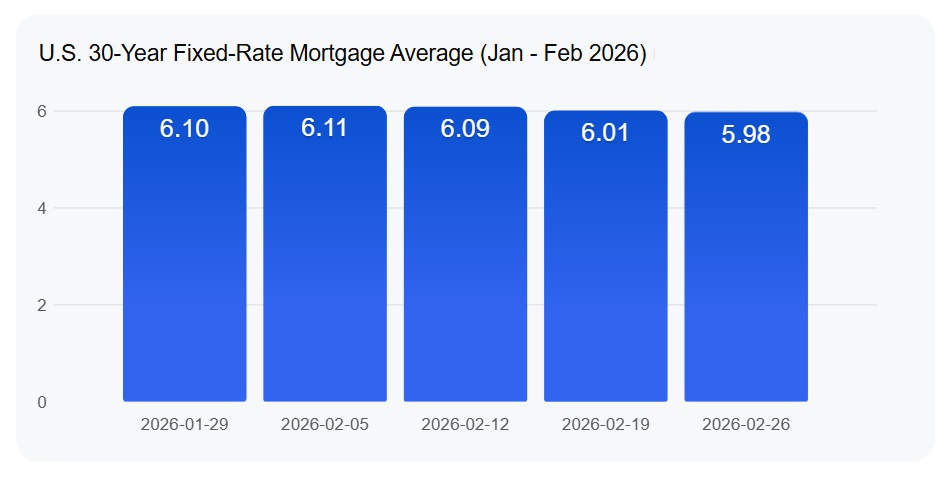
Filed Under: Financing, Mortgage Tagged With: Interest Rate, mortgage, Mortgage Rate Trends, mortgage rates, Mortgage Rates Predictions, Mortgage Rates Today

Today’s Mortgage Rates November 9: Rates Hit Yearly Low, Refinance Momentum Builds

November 9, 2025 by Marco Santarelli

Today's Mortgage Rates - October 9, 2025: 30-Year FRM Nudges Up to 6.48%

Here's some insight on today's mortgage rates, November 9, 2025. The average rate for a 30-year fixed mortgage is currently sitting at 6.15%, which is the lowest it's been in the past year, according to Zillow. This is a pretty significant development and means a lot of homeowners are starting to explore refinancing to potentially lower their monthly payments and save money in the long run.

What's interesting right now is that while rates did tick up slightly at the very beginning of November, they're still hovering near their yearly low. This comes after a general downward trend, partly influenced by actions from the Federal Reserve. It’s a good time to pay attention to these numbers, especially if you’ve been on the fence.

Today's Mortgage Rates November 9: Rates Hit Yearly Low, Refinance Momentum Builds

What Are Today's Mortgage Rates Like?

To give you a clearer picture, let's break down some of the current average rates based on Zillow's latest data for November 9:

Mortgage Type Average Rate
30-year fixed 6.15%
20-year fixed 5.97%
15-year fixed 5.57%
5/1 ARM 6.38%
7/1 ARM 6.45%
30-year VA 5.69%
15-year VA 5.25%
5/1 VA 5.70%

It's important to remember that these are national averages, and the rates you might get can vary based on your specific financial situation, credit score, down payment, and the lender you choose.

Refinancing: Is Today the Day?

Along with rates for new purchases, it's also worth noting the current rates for those looking to refinance. If you have a mortgage from a few years ago, chances are your rate is higher than these current offerings.

Here’s a look at refinance rates, again from Zillow data:

Mortgage Type Average Refinance Rate
30-year fixed 6.27%
20-year fixed 6.29%
15-year fixed 5.75%
5/1 ARM 6.46%
7/1 ARM 6.87%
30-year VA 5.75%
15-year VA 5.62%
5/1 VA 5.48%

You'll notice that refinance rates are slightly higher than purchase rates. This is common, as lenders have different pricing models for these transactions. However, if your current mortgage rate is significantly higher than these numbers, it might still be worth exploring a refinance. You’ll want to factor in closing costs to see if the monthly savings over the life of the loan make sense for you.

What's Driving Today's Mortgage Rates?

Understanding why rates are where they are can be really helpful. It's not just random; a few key economic factors are always at play.

The Federal Reserve plays a big role, though not as directly as some people think. The Fed sets the federal funds rate, which is a short-term interest rate. While this doesn't directly set your mortgage rate, market expectations about the Fed's future actions and commentary can definitely influence it. Comments from Fed officials about inflation or economic growth can cause ripples.

Another major influencer is the 10-year Treasury yield. Think of this as the benchmark for longer-term borrowing. When the yields on these Treasury bonds go up, mortgage rates typically follow suit, and vice versa. We saw this happen in early November when the yield nudged upwards.

Inflation and jobs data are also critical. The Fed and investors closely watch how much prices are rising (inflation) and how many people are employed. Strong job reports can sometimes signal a robust economy, which might lead to concerns about inflation. In response, interest rates can sometimes rise to cool things down.

Finally, market volatility – things like global events, political uncertainty, or even unexpected news – can cause temporary swings in rates as investors react and adjust their strategies.


Related Topics:

Mortgage Rates Trends as of November 8, 2025

Mortgage Rates Predictions for the Next 12 Months: Nov 2025 to Nov 2026

Mortgage Rates Predictions for Next 90 Days: October to December 2025

A Look at Recent Trends and Future Forecasts

To put today's rates in perspective, let's consider what’s happened recently. For the week ending November 6, 2025, the average 30-year fixed rate did tick up to 6.22%, according to Freddie Mac. Other reputable sources like Zillow and Bankrate also noted this slight increase.

However, and this is a crucial point, these rates are still considerably lower than they were a year ago. In early November 2024, the 30-year fixed rate was about 57 basis points (or 0.57%) higher than it is now. That’s a noticeable difference when you're talking about a 30-year loan.

Looking ahead, forecasting mortgage rates is always a bit of a guessing game, as economists and financial institutions often have different predictions.

  • Fannie Mae is on the more optimistic side, suggesting rates could dip down to 5.9% by the end of 2026.
  • The Mortgage Bankers Association (MBA) anticipates a more stable period, with rates likely staying around 6.4% throughout 2026.
  • Many other experts and analysts from places like LendingTree and Bankrate believe we'll see rates staying in that 6% to 6.5% range for the remainder of 2025.

One thing most experts do agree on is that we're unlikely to see a return to the incredibly low 2-3% rates that were common during the pandemic anytime soon. The economic conditions that fueled those rates have changed.

What Does This Mean for You?

So, given all this information, what are the key takeaways for homebuyers and homeowners?

  • Consider Buying Now: If you've been waiting for a dramatic drop in mortgage rates, it might be a good idea to adjust your expectations. Rates aren't predicted to plummet. Meanwhile, home prices are still increasing in many areas. Holding off indefinitely for significantly lower rates might mean missing out on your ideal home or facing higher prices later.
  • Refinancing Potential: As I mentioned, if you have a mortgage with a rate substantially higher than today's offerings, it's definitely worth investigating a refinance. Do your homework to calculate the closing costs against potential savings. Even a small reduction in your interest rate can lead to significant savings over many years.
  • Always Shop Around: This is probably the single most important piece of advice I can give. Mortgage rates are not one-size-fits-all. Different lenders will offer different rates and terms, even for the same loan product. Take the time to get quotes from several lenders – banks, credit unions, and online mortgage companies. Comparing offers can save you thousands of dollars.

Beat Inflation & Retire Early with Turnkey Rentals

Turnkey real estate offers powerful tax benefits, monthly cash flow, and long-term equity growth—ideal for early retirement planning.

Norada Real Estate helps you invest in inflation-resistant markets with strong rental demand and built-in tax advantages like depreciation and 1031 exchanges.

🔥 HOT NEW LISTINGS JUST ADDED! 🔥

Talk to a Norada investment counselor today (No Obligation):

(800) 611-3060

Get Started Now

Also Read:

  • Mortgage Rates Predictions Backed by 7 Leading Experts: 2025–2026
  • Mortgage Rate Predictions for the Next 3 Years: 2026, 2027, 2028
  • 30-Year Fixed Mortgage Rate Forecast for the Next 5 Years
  • 15-Year Fixed Mortgage Rate Predictions for Next 5 Years: 2025-2029
  • Will Mortgage Rates Ever Be 3% Again in the Future?
  • Mortgage Rates Predictions for Next 2 Years
  • Mortgage Rate Predictions for Next 5 Years
  • Mortgage Rate Predictions: Why 2% and 3% Rates are Out of Reach
  • How Lower Mortgage Rates Can Save You Thousands?
  • How to Get a Low Mortgage Interest Rate?
  • Will Mortgage Rates Ever Be 4% Again?
Filed Under: Financing, Mortgage Tagged With: Interest Rate, mortgage, Mortgage Rate Trends, mortgage rates, Mortgage Rates Today

Mortgage Rates Today: 30-Year Refinance Rate Falls by 11 Basis Points

November 9, 2025 by Marco Santarelli

Mortgage Rates Drop: Today's 30-Year Fixed Refinance Rate Goes Down by 23 Basis Points

The Mortgage Rates Today, specifically the national average for a 30-year fixed refinance rate, has seen a welcome dip, falling by 11 basis points to 6.82% as of Sunday, according to a recent announcement by Zillow. This decrease, from last week's average of 6.93%, could be the nudge many homeowners need to explore their refinancing options. It’s not a massive drop, but in the world of mortgages, even small shifts can have a significant impact on your wallet.

Mortgage Rates Today: 30-Year Refinance Rate Falls by 11 Basis Points

What a 11 Basis Point Fall Actually Means for Your Monthly Payments

Let's break down what that 11 basis point, or 0.11%, drop really means for you. While it might sound like a tiny number, on a substantial mortgage, it can add up. Imagine you owe $300,000 on your mortgage. Refinancing at 6.93% would mean a principal and interest payment of roughly $1,970 per month. If you were to refinance at the new rate of 6.82%, that payment would drop to about $1,945. That's a saving of about $25 each month, or $300 per year.

Now, $25 might not seem like a game-changer, but consider this: this is based on a single loan amount. For larger mortgages, the savings could be even more pronounced. Moreover, this is just the interest component. Refinancing can also allow you to adjust your loan term, which could offer even greater savings. It's also important to remember that this is the average rate. Your own rate could be higher or lower depending on your creditworthiness and other factors.

Refinance Timing: Locking in Rates Before Potential Further Hikes

This dip in mortgage rates is particularly noteworthy because it comes at a time when there's ongoing discussion about potential future rate increases. While the market has moved in a favorable direction for borrowers this past Sunday, it's wise to be aware of the broader economic forces at play. Inflation, central bank policy, and global economic stability all contribute to the ebb and flow of mortgage rates.

My personal take on this is that any time rates move downwards, it’s a good signal to at least explore your options. We've seen periods where rates were steadily climbing, and homeowners were hesitant to refinance. Then, a sudden drop like this can create a sense of urgency. It’s not about timing the market perfectly, which is nearly impossible, but about seizing opportune moments. If you’ve been on the fence, this could be the encouragement you need to at least get pre-approved and see what kind of rate you can secure.

Comparing 30-Year Fixed vs. 15-Year Refinance Options

The Zillow report also highlighted changes in other refinance rates. The 15-year fixed refinance rate saw a more significant drop, decreasing by 13 basis points to 5.80%. This is fantastic news for those who can afford the higher monthly payments associated with a shorter loan term.

Here’s a quick comparison to illustrate the difference:

Loan Term Current Rate (Sunday) Previous Rate (Last Week) Monthly Payment on $300,000 Total Interest Paid (Approx. 30 Yrs)
30-Year Fixed 6.82% 6.93% $1,945 $399,200
15-Year Fixed 5.80% 5.93% $2,322 $117,960

Note: Calculations are for principal and interest only and do not include taxes, insurance, or fees.

As you can see, the 15-year option offers significantly lower interest payments over the life of the loan. However, the monthly payment is considerably higher. The choice between a 30-year and a 15-year refinance often comes down to your current financial situation and long-term goals. If your priority is the lowest possible monthly payment, the 30-year might be better. If you want to pay off your home faster and save a substantial amount on interest and have the cash flow, then the 15-year is a strong contender.

We also saw a slight decrease in the 5-year Adjustable-Rate Mortgage (ARM) refinance rate, down by 2 basis points to 7.54%. ARMs can be attractive initially due to lower interest rates, but they come with the risk of your rate increasing after the initial fixed period.

How Your Credit Score Impacts Your Refinance Rate Today

It’s absolutely crucial to remember that these are average rates. The actual interest rate you’re offered will depend heavily on your personal financial profile, with your credit score being one of the most significant factors. Generally, the higher your credit score, the lower the interest rate you'll qualify for.

  • Excellent Credit (740+): You're likely to get rates at or even below the national average.
  • Good Credit (670-739): You'll probably qualify for competitive rates, though they might be slightly higher than the average.
  • Fair Credit (580-669): Expect higher rates, and you might need to improve your score before refinancing.
  • Poor Credit (Below 580): Refinancing might be very challenging, and lenders may require significant improvement.

If your credit score isn't where you'd like it to be, this might be a good time to focus on improving it before you formally apply for a refinance. Small improvements can lead to substantial savings over time.

The Role of Debt-to-Income Ratio in Refinancing

Another critical metric lenders evaluate is your debt-to-income ratio (DTI). This compares your total monthly debt payments (including your potential new mortgage payment) to your gross monthly income. Lenders generally prefer a DTI of 43% or lower, though some may go up to 50% depending on other factors.

A lower DTI indicates you have more disposable income and are less likely to struggle with payments, making you a lower risk for lenders. If your DTI is high, you might be able to improve it by paying down existing debts before refinancing.

Impact of Inflation on Mortgage Rates

It’s impossible to talk about mortgage rates without mentioning inflation. When inflation is high, the Federal Reserve often raises interest rates to cool down the economy. This, in turn, tends to push mortgage rates higher as lenders price in the increased cost of borrowing and the expectation of future inflation. Conversely, when inflation shows signs of cooling, the Fed might pause rate hikes or even consider cuts, which can lead to lower mortgage rates. The recent fall in rates, despite ongoing economic complexities, suggests that perhaps the market is anticipating a moderation in inflation or a shift in monetary policy.

Pros and Cons of Cash-Out Refinancing

A cash-out refinance isn't just about lowering your interest rate; it's also about accessing the equity you've built up in your home. You can use this cash for a variety of purposes, such as home renovations, debt consolidation, or even investments.

Pros:

  • Access to a significant amount of cash.
  • Potentially lower interest rate than other forms of borrowing (like personal loans or credit cards).
  • Interest paid on the mortgage is often tax-deductible (consult a tax advisor).

Cons:

  • Increases your total mortgage balance and potentially your monthly payments if not managed carefully.
  • May mean paying a slightly higher interest rate on the entire loan amount compared to a rate-and-term refinance.
  • Requires a higher Loan-to-Value (LTV) ratio, which can mean a higher interest rate and Private Mortgage Insurance (PMI) if your LTV is too high.

Understanding Adjustable-Rate Mortgage (ARM) Refinances

As mentioned, the 5-year ARM refinance rate saw a very slight dip. ARMs are structured with an initial period of a fixed interest rate, followed by periods where the rate adjusts based on market conditions.

  • Initial Fixed Period: Typically 3, 5, 7, or 10 years. During this time, your payment remains stable.
  • Adjustment Period: After the fixed period, the rate can go up or down, usually annually.

ARMs can be a good option if you plan to sell your home or refinance again before the fixed period ends, or if you anticipate interest rates falling in the future. However, if you plan to stay in your home long-term and rates rise, your payments could increase substantially.

Recommended Read:

30-Year Fixed Refinance Rate Trends – November 8, 2025

Best Time to Refinance Your Mortgage: Expert Insights

Should I Refinance My Mortgage Now or Wait Until 2026? 

The Effect of Loan-to-Value Ratio on Refinancing

Your Loan-to-Value ratio (LTV) is the amount of your mortgage compared to the market value of your home. For example, if your home is worth $400,000 and you owe $300,000, your LTV is 75%.

  • Lower LTV: Generally leads to better interest rates and more refinance options, as it indicates less risk for the lender.
  • Higher LTV: Can result in higher interest rates, fewer loan options, and may require Private Mortgage Insurance (PMI) if you're refinancing into a loan where your LTV is above 80%.

If you're considering a cash-out refinance, your LTV will increase, which could impact the rate offered.

Refinancing Costs and Fees to Consider

Refinancing isn't free. Be prepared for closing costs, which can include:

  • Appraisal fees
  • Title insurance
  • Loan origination fees
  • Attorney or notary fees
  • Recording fees
  • Prepaid interest

These costs can often add up to 2% to 6% of the loan amount. It's essential to calculate your break-even point – how long it will take for your monthly savings to offset these closing costs.

Tax Implications of Refinancing Your Mortgage

While the Tax Cuts and Jobs Act of 2017 changed some rules, interest paid on a mortgage used to buy, build, or substantially improve a home is generally still tax-deductible, up to certain limits (loan amounts of $750,000 for new debt). If you do a cash-out refinance and use the funds for purposes other than home improvement, the deductibility of that portion of the interest can be complex. It’s always best to consult with a qualified tax professional to understand how refinancing might affect your personal tax situation.

This recent drop in the 30-year fixed refinance rate is a positive development for homeowners. While taking advantage of lower rates is enticing, remember to weigh the costs and benefits carefully, consider your personal financial situation, and consult with professionals to make the best decision for you.

“Invest Smart — Build Long-Term Wealth Through Real Estate”

Norada's team can guide you through current market dynamics and help you position your investments wisely—whether you're looking to reduce rates, pull out equity, or expand your portfolio.

Work with us to identify proven, cash-flowing markets and diversify your portfolio while borrowing costs remain favorable.

HOT NEW TURNKEY DEALS JUST LISTED!

Speak with a seasoned Norada investment counselor today (No Obligation):

(800) 611-3060

Get Started Now

Recommended Read:

  • When You Refinance a Mortgage Do the 30 Years Start Over?
  • Should You Refinance as Mortgage Rates Reach Lowest Level in Over a Year?
  • NAR Predicts 6% Mortgage Rates in 2025 Will Boost Housing Market
  • Mortgage Rates Predictions for 2025: Expert Forecast
  • Half of Recent Home Buyers Got Mortgage Rates Below 5%
  • Mortgage Rates Need to Drop by 2% Before Buying Spree Begins
  • Will Mortgage Rates Ever Be 3% Again: Future Outlook
  • Mortgage Rates Predictions for Next 2 Years
  • Mortgage Rate Predictions for Next 5 Years
  • Mortgage Rate Predictions for 2025: Expert Forecast

Filed Under: Financing, Mortgage Tagged With: mortgage, mortgage rates, Mortgage Refinance Rates

  • « Previous Page
  • 1
  • …
  • 47
  • 48
  • 49
  • 50
  • 51
  • …
  • 126
  • Next Page »

Real Estate

  • Birmingham
  • Cape Coral
  • Charlotte
  • Chicago

Quick Links

  • Markets
  • Membership
  • Notes
  • Contact Us

Blog Posts

  • Today’s Mortgage Rates, May 5: Inflation Pushes 30‑Year FRM to One‑Month High
    May 5, 2026Marco Santarelli
  • When Will Mortgage Rates Go Down to 4%?
    May 5, 2026Marco Santarelli
  • Mortgage Rates Today, May 5, 2026: 30-Year Refinance Rate Rises by 7 Basis Points
    May 5, 2026Marco Santarelli

Contact

Norada Real Estate Investments 30251 Golden Lantern, Suite E-261 Laguna Niguel, CA 92677

(949) 218-6668
(800) 611-3060
BBB
  • Terms of Use
  • |
  • Privacy Policy
  • |
  • Testimonials
  • |
  • Suggestions?
  • |
  • Home

Copyright 2018 Norada Real Estate Investments

Loading...