Norada Real Estate Investments

  • Home
  • Markets
  • Properties
  • Membership
  • Podcast
  • Learn
  • About
  • Contact

States With Lowest Mortgage Rates Today – May, 13 2025

May 13, 2025 by Marco Santarelli

States With the Lowest Mortgage Rates Today – May, 13 2025

For anyone dreaming of owning a home, or even just keeping their current one affordable, understanding where to find the lowest mortgage rates is paramount. As of today, May 13, 2025, the states offering the most attractive interest rates on 30-year new purchase mortgages might surprise you. According to the latest data, the five states boasting the lowest mortgage rates are New York, California, Texas, Florida, and Pennsylvania. Interestingly, these also happen to be the five most populous states in the nation.

States With the Lowest Mortgage Rates Today – May, 13 2025

Now, I know what you might be thinking. What's the connection between population size and lower mortgage rates? It's a valid question, and the answer lies in a mix of factors. These large states often have a higher volume of mortgage lenders operating within their borders. This increased competition can naturally drive rates down as lenders vie for your business. Furthermore, these states tend to have diverse economic activity, which can influence the overall risk assessment by lenders.

Following closely behind these giants, the states with the next best mortgage rates include Georgia, Hawaii, Virginia, and Washington. On May 13, 2025, the average rates in these nine states hovered between a comfortable 6.84% and 6.98%. On the other end of the spectrum, if you were looking for a mortgage in Alaska, West Virginia, North Dakota, Vermont, Maine, Mississippi, New Mexico, Nevada, or Wyoming, you would likely encounter the highest average rates, ranging from 7.06% to 7.26%.

It's fascinating to see such a clear regional disparity in mortgage rates. It really highlights that the housing market isn't a monolithic entity; it's a patchwork quilt of local economies, regulations, and lender appetites.

Why the Rate Rollercoaster? Unpacking the Factors Behind State-Specific Mortgage Rates

You might be wondering why your neighbor across state lines could be looking at a significantly different interest rate than you. Several key factors contribute to these state-level variations in mortgage rates.

  • Lender Presence and Competition: As I touched upon earlier, the sheer number of mortgage lenders operating in a state plays a big role. More lenders typically mean more competitive pricing. Think of it like any other market – when there are more options, businesses have to work harder to attract customers, and one way they do that is by offering better rates.
  • Credit Score Landscape: Believe it or not, the average credit score of borrowers within a state can influence the rates offered. States with a generally higher average credit score might be seen as less risky by lenders, potentially leading to slightly lower rates across the board.
  • Average Loan Size: The typical amount people borrow for a mortgage in a specific state can also have an impact. In areas with higher average home prices (and thus larger loan sizes), lenders might adjust their rates based on the overall risk associated with larger sums.
  • State-Level Regulations: Each state has its own set of regulations governing the mortgage industry. These rules can affect the operational costs for lenders, which in turn can be reflected in the interest rates they offer.
  • Lender Risk Management: Ultimately, each lending institution has its own way of assessing and managing risk. This internal strategy can significantly influence the rates they are willing to offer in different regions. A lender might have a larger appetite for risk in one state compared to another based on their past experiences and market analysis.

It's crucial to remember that these factors often intertwine and influence each other in complex ways. There's no single magic bullet that dictates mortgage rates in a given state.

Beyond the Averages: Why Individual Rates Can Still Vary Widely

While it's helpful to understand the average mortgage rates in your state, it's equally important to recognize that your personal rate will be unique to your financial situation. The averages we see are just a snapshot, a general trend. Several factors will determine the specific interest rate you qualify for:

  • Your Credit Score: This is arguably one of the biggest drivers of your mortgage rate. A higher credit score signals lower risk to lenders, translating into more favorable interest rates.
  • Your Down Payment: The amount of money you put down as a down payment significantly impacts the loan-to-value (LTV) ratio. A larger down payment means you're borrowing a smaller percentage of the home's value, which lenders see as less risky. This often results in a lower interest rate.
  • Loan Type and Term: The type of mortgage you choose (e.g., fixed-rate vs. adjustable-rate, FHA, VA, conventional) and the length of the loan term (e.g., 15-year vs. 30-year) will directly influence your interest rate. Shorter terms typically come with lower rates but higher monthly payments.
  • Your Income and Debt-to-Income Ratio (DTI): Lenders will assess your income and existing debt to ensure you can comfortably afford the monthly mortgage payments. A lower DTI is generally viewed favorably.
  • Points: You might have the option to pay “points” upfront to lower your interest rate. This is essentially pre-paying some of the interest. Whether this is a good strategy depends on how long you plan to stay in the home.

Therefore, while knowing the average rates in states with the lowest mortgage rates today is a great starting point, it's essential to focus on strengthening your own financial profile to secure the best possible rate for your individual circumstances.

My Two Cents: Why Shopping Around is Always the Smart Move

If there's one piece of advice I can give anyone looking for a mortgage, it's this: shop around! Don't settle for the first offer you receive. Mortgage rates can vary significantly between different lenders, even within the same state.

Think of it like buying anything else – you wouldn't just walk into the first store and buy the first item you see without comparing prices, would you? The same principle applies to mortgages, arguably one of the biggest financial commitments you'll ever make.

By getting quotes from multiple lenders, you can compare their interest rates, fees, and terms. This empowers you to make an informed decision and potentially save thousands of dollars over the life of your loan. Don't be afraid to negotiate and let lenders know you're comparing offers. They may be willing to adjust their rates to earn your business.

Read More:

States With the Lowest Mortgage Rates on May 12, 2025

Projected Mortgage Rates for the Week of May 5-11, 2025

When Will Mortgage Rates Go Down from Current Highs in 2025?

National Trends: A Broader Look at the Mortgage Landscape

While we've focused on state-specific data for May 13, 2025, it's also helpful to consider the broader national trends in mortgage rates. According to data, the average rate for a 30-year new purchase mortgage nationally stood at 7.00% on Monday. This reflects a slight increase after a couple of days of decline.

Interestingly, earlier in the year, in March 2025, we saw a low point with the 30-year average dipping to 6.50%. This just goes to show how dynamic the mortgage market can be, influenced by a complex interplay of economic factors, including the bond market and the Federal Reserve's monetary policy.

Understanding these national fluctuations can provide context for the state-level variations we've discussed. When national rates are generally lower, you might see more states offering particularly attractive deals. Conversely, when national rates rise, even the states with the lowest rates will likely see some upward pressure.

The Bottom Line: Knowledge is Power in the Mortgage Game

Understanding which states currently boast the lowest mortgage rates is a valuable piece of information for prospective homebuyers. As of May 13, 2025, New York, California, Texas, Florida, and Pennsylvania lead the way. However, remember that these are just averages, and your individual rate will depend on your unique financial profile.

The key takeaway here is to be proactive. Research the mortgage market in your state, compare offers from multiple lenders, and focus on improving your creditworthiness and down payment. By being informed and diligent, you can navigate the mortgage process with confidence and secure the best possible terms for your dream home.

Work With Norada, Your Trusted Source for

Real Estate Investment in the U.S.

Investing in turnkey real estate can help you secure consistent returns with fluctuating mortgage rates.

Expand your portfolio confidently, even in a shifting interest rate environment.

Speak with our expert investment counselors (No Obligation):

(800) 611-3060

Get Started Now

Also Read:

  • Will Mortgage Rates Go Down in 2025: Morgan Stanley's Forecast
  • Expect High Mortgage Rates Until 2026: Fannie Mae's 2-Year Forecast
  • Mortgage Rate Predictions 2025 from 4 Leading Housing Experts
  • Mortgage Rates Forecast for the Next 3 Years: 2025 to 2027
  • 30-Year Mortgage Rate Forecast for the Next 5 Years
  • 15-Year Mortgage Rate Forecast for the Next 5 Years
  • Why Are Mortgage Rates Going Up in 2025: Will Rates Drop?
  • Why Are Mortgage Rates So High and Predictions for 2025
  • Will Mortgage Rates Ever Be 3% Again in the Future?
  • Mortgage Rates Predictions for Next 2 Years
  • Mortgage Rate Predictions for Next 5 Years
  • Mortgage Rate Predictions: Why 2% and 3% Rates are Out of Reach
  • How Lower Mortgage Rates Can Save You Thousands?
  • How to Get a Low Mortgage Interest Rate?
  • Will Mortgage Rates Ever Be 4% Again?

Filed Under: Financing, Mortgage Tagged With: Interest Rate, mortgage, Mortgage Rate Trends, mortgage rates, Mortgage Rates Predictions, Mortgage Rates Today

Today’s Mortgage & Refinance Rates – May 13, 2025: Rates Rise Across Various Loan Types

May 13, 2025 by Marco Santarelli

Today's Mortgage & Refinance Rates - May 13, 2025: Rates Rise Across Various Loan Types

As of May 13, 2025, mortgage rates have increased to approximately 6.80%, a slight rise primarily linked to a recent trade agreement between the United States and China which has temporarily paused heightened tariffs on goods traded between the two countries. This trade development comes amid a backdrop of rising investor concerns, leading to the conclusion that while recession fears may reduce, mortgage rates may not necessarily follow suit and drop. Instead, the prevailing sentiment seems to indicate a stabilization or slight increase in rates moving forward.

Today's Mortgage & Refinance Rates – May 13, 2025: Rates Rise Across Various Loan Types

Key Takeaways:

  • Current Average Mortgage Rate: 6.80%
  • Rates Increased: Due to trade tensions easing and heightened economic uncertainty.
  • Refinance Rates: Show a similar upward trend across various mortgage types.
  • Economic Influences: Tariff decisions and Federal Reserve policies significantly impact rates.
  • Market Outlook: The future of mortgage rates remains uncertain as policymakers continue to evaluate inflation and economic growth prospects.

In today's financial landscape, staying current with mortgage rates and understanding their trends is essential for anyone looking to purchase a home or refinance their existing mortgage. The mortgage market is where buyers and homeowners decide how they will finance their properties, and every percentage point in mortgage rates can significantly impact monthly payments and overall affordability.

What Are Today's Mortgage Rates?

According to data from Zillow, the average mortgage rates for May 13, 2025, are as follows:

Mortgage Type Average Rate Today
30-Year Fixed 6.79%
20-Year Fixed 6.52%
15-Year Fixed 6.07%
7/1 Adjustable Rate 7.56%
5/1 Adjustable Rate 7.62%
30-Year FHA 5.95%
30-Year VA 6.36%

The 30-Year Fixed Rate Mortgage continues to be the favorite among borrowers, primarily because of its long-term stability and predictability. Borrowers choose this option to ensure that their monthly payment remains fixed for the entire life of the loan. While the 30-year fixed mortgage offers manageable monthly payments over time, the longer duration means more interest paid over the life of the loan compared to shorter terms, such as the 15-Year Fixed Rate mortgage.

15-Year Fixed Rate Mortgages have become an appealing choice for those who want to minimize total interest costs. The current average for a 15-year fixed mortgage is around 6.07%. While monthly payments will be higher than those of a 30-year mortgage, the advantage lies in paying off the loan faster and saving significantly on interest over time.

Current Mortgage Refinance Rates

Homeowners looking to refinance are finding themselves in an environment where the rates for refinancing have not been favorable recently either. Here’s the latest average refinancing data from Zillow:

Refinance Mortgage Type Average Rate Today
30-Year Fixed Refinance 6.84%
20-Year Fixed Refinance 6.46%
15-Year Fixed Refinance 6.09%
7/1 ARM Refinance 7.67%
5/1 ARM Refinance 7.82%
30-Year FHA Refinance 5.75%
30-Year VA Refinance 6.25%

Refinancing can be a strategic move for homeowners looking to lower their monthly payments, consolidate debt, or withdraw cash from their home’s equity. An important consideration when deciding on refinancing is understanding the costs associated with it. Homeowners often debate if they should refinance based on the savings they would achieve through a lower interest rate. The general recommendation often cited by financial advisors is to consider refinancing if you can reduce the existing mortgage rate by at least one percent.

This can be calculated by comparing the new monthly payment to the existing payment, and considering the total costs of refinancing, such as closing costs. If a homeowner pays $3,000 to refinance and reduces their monthly payment by $200, it would take them about 15 months to break even on their refinancing costs.

Understanding Mortgage Rate Fluctuations

Several interlinked factors contribute to the current fluctuations in mortgage rates. Economic trends, market sentiment, and Federal Reserve policies all play critical roles in shaping the mortgage landscape.

  1. Economic Factors: Economic data that indicates inflation or growth can drive a rise in mortgage rates because lenders will want to offset the risk that future inflation might erode the value of the fixed payments. Reports regarding job growth, consumer spending, and wage inflation can all signal economic strength, which may lead to increased borrowing costs as lenders perceive less risk.
  2. Federal Reserve Policies: The Federal Reserve (often referred to simply as “the Fed”) influences mortgage rates through its policy decisions regarding the federal funds rate—the interest at which banks lend to each other overnight. Although mortgage rates do not adjust directly in tandem with the federal funds rate, they are influenced by expectations surrounding monetary policy. For instance, a rate hike by the Fed could prompt lenders to raise mortgage rates in anticipation of increased costs for borrowing.
  3. Investor Sentiment: Mortgage rates are also influenced by investor preferences in the bond market. Mortgage-backed securities (MBS) are bonds composed of various home loans, and when investor interest in these securities declines, lenders might raise mortgage rates to entice investors back into the market with higher yields.

Read More:

Mortgage Rates Trends as of May 12, 2025

Dave Ramsey Predicts Mortgage Rates Will Probably Drop Soon in 2025

Future of Mortgage Rates Post-Fed Decision: Will Rates Drop?

Fed's Decision Signals Mortgage Rates Won't Go Down Significantly

Mortgage Rate Forecast 2025: When Will Rates Go Below 6%?

Current Trends in Mortgage Rates and the Economy

As we reflect on mortgage rates’ tendencies over the past few months, we see a pattern of gradual increases. Rates have risen from 6.71% in April, signaling a broader market trend that reflects not just recent tariff negotiations but also ongoing fiscal policies and inflation concerns. The gradual rise of rates is in contrast to the earlier expectations from the beginning of the year, where many experts predicted substantial rate cuts by the Fed for an anticipated recession.

Recent tariff agreements between the U.S. and China, aimed at averting severe economic downturns, provide a valuable context for understanding these rate movements. The agreement to pause heightened tariffs for 90 days has unnerved some investors, primarily due to historical apprehensions surrounding trade policy unpredictability. In essence, while lessening economic uncertainty seems positive, it has contributed to the slight uptick in mortgage rates as markets adjust their expectations.

Will Home Prices Drop in 2025?

A critical component of the housing market amidst rising rates is the ongoing trend in home prices. Despite the anxiety around increasing mortgage costs, home prices are anticipated to maintain a growth pattern. According to industry analysts from Fannie Mae, home prices are expected to increase by 4.1% in 2025. This represents a moderated pace compared to previous years’ explosive growth, reflecting a market striving for balance amid economic constraints.

Challenges like slow inventory growth, high demand, and continued low housing supply fuel this upward pressure. Given that prospective homebuyers grapple with high rates, market dynamics indicate that many will still be willing to purchase homes, leading to continued appreciation in home prices.

Choosing the Right Mortgage Option

For homebuyers navigating this complex landscape, understanding the array of lending options is crucial:

  1. Fixed-Rate Mortgages: These loans provide consistent monthly payments and are ideal for those seeking financial predictability. By locking in an interest rate, borrowers can shield themselves from possible future hikes. This stability often comes at a slightly higher short-term rate compared to adjustable options but can save borrowers significant amounts in total interest if markets surge.
  2. Adjustable-Rate Mortgages (ARMs): Initially attractive for their lower starting rates, such loans come with the caveat of fluctuating rates after an introductory period. ARMs may make sense for buyers planning to sell or refinance within a short timeframe, as they can secure lower payments upfront. However, potential future rate increases should weigh heavily in their decision-making process.
  3. Government-Backed Loans: Options like FHA, VA, and USDA loans can make homeownership accessible to those with lower credit scores or limited down payment capabilities. These loans often come with favorable terms compared to conventional loans, making them a worthwhile consideration for first-time homebuyers.

Conclusion: The Mortgage Market Outlook

Examining today's mortgage rates as of May 13, 2025, reveals a nuanced landscape shaped by trade negotiations, economic factors, and investor sentiment. While the rise in rates poses challenges for potential homebuyers and those considering refinancing, understanding these elements equips consumers with the knowledge to navigate the mortgage process effectively. The interplay of various economic indicators, Federal Reserve policies, and local market conditions create a complex yet manageable scenario for securing home financing in today's environment.

As we continue into 2025, all eyes will be on how these factors evolve, and their cumulative effects on borrowing costs will undoubtedly impact the broader housing market.

Invest Smarter in a High-Rate Environment

With mortgage rates remaining elevated this year, it's more important than ever to focus on cash-flowing investment properties in strong rental markets.

Norada helps investors like you identify turnkey real estate deals that deliver predictable returns—even when borrowing costs are high.

HOT NEW LISTINGS JUST ADDED!

Connect with a Norada investment counselor today (No Obligation):

(800) 611-3060

Get Started Now 

Also Read:

  • Will Mortgage Rates Go Down in 2025: Morgan Stanley's Forecast
  • Expect High Mortgage Rates Until 2026: Fannie Mae's 2-Year Forecast
  • Mortgage Rate Predictions 2025 from 4 Leading Housing Experts
  • Mortgage Rates Forecast for the Next 3 Years: 2025 to 2027
  • 30-Year Mortgage Rate Forecast for the Next 5 Years
  • 15-Year Mortgage Rate Forecast for the Next 5 Years
  • Why Are Mortgage Rates Going Up in 2025: Will Rates Drop?
  • Why Are Mortgage Rates So High and Predictions for 2025
  • Will Mortgage Rates Ever Be 3% Again in the Future?
  • Mortgage Rates Predictions for Next 2 Years
  • Mortgage Rate Predictions for Next 5 Years
  • Mortgage Rate Predictions: Why 2% and 3% Rates are Out of Reach
  • How Lower Mortgage Rates Can Save You Thousands?
  • How to Get a Low Mortgage Interest Rate?
  • Will Mortgage Rates Ever Be 4% Again?

Filed Under: Financing, Mortgage Tagged With: Interest Rate, mortgage, Mortgage Rate Trends, mortgage rates, Mortgage Rates Predictions, Mortgage Rates Today

Gold Price Forecast: Experts Predict Prices Will Hit $6,000 by 2029

May 13, 2025 by Marco Santarelli

Gold Price Forecast: Experts Predict Prices Will Hit $6,000 by 2029

You know, lately I've been digging into what's happening with gold, and let me tell you, some experts are making some pretty bold predictions. The gold price forecast is definitely turning heads, with whispers of it potentially soaring to a staggering $6,000 per ounce by 2029. That's a massive jump from where we are now! Analysts at JPMorgan suggest this could happen if even a small fraction – just 0.5% – of the U.S. assets held by investors outside the country shifts towards gold. It sounds like a big “if,” but let's dive deeper into why this might actually be more plausible than you think.

Gold Price Forecast: Could Prices Really Hit $6,000 by 2029?

Why the Buzz Around Gold?

For ages, gold has been seen as a safe haven, a place to park your money when things get a little shaky in the world. And lately, there's been no shortage of shaky situations! Think about it:

  • Global Uncertainty: From geopolitical tensions to economic worries, there's a lot making investors nervous. Gold tends to shine when traditional assets like stocks look risky.
  • Central Bank Actions: After Russia's invasion of Ukraine and the subsequent freezing of some of its assets, it seems like many central banks are rethinking their reliance on certain currencies. This has led to increased gold buying as a way to diversify their holdings.
  • Inflation Fears: When the cost of everyday things goes up, people often turn to gold as a way to preserve their wealth because it's seen as a hedge against inflation.
  • Government Debt: The amount of money some governments owe is also raising concerns, and gold is often viewed as a more stable alternative.

Now, when you throw in the possibility of even a tiny shift in how much faith foreign investors have in U.S. assets, as JPMorgan's analysts point out, the impact on gold prices could be huge. Why? Because the supply of gold doesn't really grow that much each year. So, even a small increase in demand can lead to a significant jump in price.

The Trump Factor and Shifting Global Dynamics

Interestingly, the analysts at JPMorgan highlighted that the trade war initiated by former President Trump actually added fuel to gold's rally. It made some foreign investors question the stability of U.S. assets. Plus, talk about “burden sharing” – suggesting that other countries benefiting from the dollar's reserve currency status should contribute more – might also be making some investors abroad a bit uneasy.

As the JPMorgan analysts put it, “The recent period in financial markets has demonstrated that interest and trust in US assets are already being questioned, and the US is vulnerable to capital outflows.” This is a pretty significant statement. If this trend continues, even a small trickle of money moving from U.S. assets to gold could create a big wave in the gold market.

Breaking Down the Numbers: 0.5% Can Make a Big Difference

Let's get into the nitty-gritty. JPMorgan estimates that if just 0.5% of the total U.S. assets held by foreign investors were reallocated to gold, it would mean about $273.6 billion flowing into the precious metal over four years. That's roughly 2,500 metric tons of gold.

Now, while 2,500 metric tons might sound like a lot, it's only about 3% of the total gold holdings worldwide. However, as the analysts point out, “the additional demand impulse on a quarterly basis is quite immense.” Because the supply of new gold is limited, this extra demand could really push prices upwards. They even project that this scenario could lead to annual returns of around 18% for gold investors!

My Thoughts on This Bold Prediction

Honestly, while an 80% jump to $6,000 by 2029 sounds like a huge leap, the reasoning behind it makes a lot of sense to me. We're living in a time of significant global shifts and uncertainties. The traditional faith in the dominance of U.S. assets isn't as rock-solid as it once seemed.

Factors like:

  • Geopolitical Instability: Conflicts and tensions around the world are likely to continue driving investors towards safe-haven assets.
  • Inflationary Pressures: While there have been efforts to control inflation, it remains a concern, and gold has historically acted as a good hedge.
  • Currency Debasement: Massive government spending and quantitative easing can sometimes lead to the devaluation of currencies, making gold more attractive.

These are all ongoing issues that could very well contribute to a sustained increase in the demand for gold.

Of course, it's important to remember that this is just one potential scenario put forth by analysts. The future is uncertain, and there are many factors that could influence the price of gold. For instance, a sudden period of strong global economic growth and renewed confidence in traditional assets could dampen the enthusiasm for gold.

What Other Experts Are Saying

It's also worth noting that JPMorgan isn't the only one with a bullish outlook on gold. Earlier this year, Goldman Sachs also raised its year-end gold price forecast, suggesting it could even approach $4,500 in some extreme cases. This kind of consensus among major financial institutions adds weight to the idea that gold still has significant upside potential.

Navigating the Gold Market

If you're thinking about investing in gold, it's crucial to do your own research and understand the risks involved. You can invest in gold in various ways, including:

  • Physical Gold: Buying gold bars or coins.
  • Gold ETFs (Exchange-Traded Funds): These funds track the price of gold and can be traded like stocks.
  • Gold Mining Stocks: Investing in companies that mine gold (though their performance can be influenced by factors beyond just the price of gold).

Each of these options has its own set of advantages and disadvantages, so it's important to choose what aligns best with your investment goals and risk tolerance.

Final Thoughts: A Golden Opportunity or Just Wishful Thinking?

While predicting the future price of anything is always a tricky business, the scenario laid out by JPMorgan's analysts regarding the gold price forecast to $6,000 by 2029 is certainly compelling. The confluence of global uncertainties, potential shifts in investment preferences, and the limited supply of gold creates a strong argument for continued price appreciation.

Whether it reaches that exact $6,000 mark remains to be seen. However, based on the current trends and the analysis from experts, it seems to me that gold is likely to remain a significant asset in the years to come, and its price could indeed climb considerably higher. It's definitely something I'll be keeping a close eye on!

Diversify Beyond Gold: Invest in Real Estate

While experts predict gold could reach $6,000 by 2029, smart investors are also turning to income-producing real estate for long-term wealth and cash flow.

Norada offers turnkey investment properties in top-performing U.S. markets—ideal for diversifying your portfolio beyond commodities.

HOT NEW LISTINGS JUST ADDED!

Speak to a Norada investment advisor today (No Obligation):

(800) 611-3060

Get Started Now

Read More:

  • The Risk of New Tariffs: Will They Crash the Stock Market and Economy?
  • Stagflation Alert: Economist Survey Predicts Weak Q1 GDP Due to Tariffs
  • Goldman Sachs Significantly Raises Recession Probability by 35%
  • 2008 Crash Forecaster Warns of DOGE Triggering Economic Downturn
  • Stock Market Predictions 2025: Will the Bull Run Continue?
  • Stock Market Crash: Nasdaq 100 Tanks 3.5% Amid AI Concerns
  • Stock Market Crash Prediction With Huge Discounts on Bitcoin, Gold, Houses
  • S&P 500 Forecast for the Next Year: What to Expect in 2025?
  • Stock Market Predictions for the Next 5 Years
  • Echoes of 1987: Is Today’s Stock Market Crash Leading to a Recession?
  • Is the Bull Market Over? What History Says About the Stock Market Crash
  • Wall Street Bear Predicts a Historic Stock Market Crash Like 1929
  • Economist Predicts Stock Market Crash Worse Than 2008 Crisis
  • Next Stock Market Crash Prediction: Is a Crash Coming Soon?
  • Stock Market Crash: 30% Correction Predicted by Top Forecaster

Filed Under: Economy, Stock Market Tagged With: Economic Forecast, Economy, Gold Price Forecast, Gold Prices

10-Year Treasury Yield Rises After US-China 90-Day Tariff Deal

May 13, 2025 by Marco Santarelli

10-Year Treasury Yield Rises After US-China 90-Day Tariff Deal

The bond market reacted when the US-China 90-Day Tariff Truce was announced. This temporary break in the trade war between the world's two largest economies led investors to become a bit less scared about the future, causing them to sell off safe-haven assets like U.S. Treasury bonds. This selling pressure pushed the price of bonds down, and as you probably know, when bond prices fall, their yields – specifically the 10-year Treasury yield – go up.

How the US-China 90-Day Tariff Truce Sent 10-Year Yields Climbing

Think of it like this: when there's a lot of worry in the air about things like a potential recession caused by escalating tariffs, people want the security of government bonds, even if the return isn't huge. This increased demand pushes bond prices up and yields down. But when a bit of good news comes along, like this tariff truce, that worry eases. Investors feel more comfortable putting their money into potentially higher-growth areas, and they're less desperate for the safety of bonds. Hence, they sell bonds, prices drop, and yields rise.

This wasn't just a tiny blip either. The announcement caused a noticeable jump in the 10-year Treasury yield, reaching its highest point in about a month. To put it in numbers, we saw the yield climb to around 4.45%, a significant increase from the lower levels we saw earlier in April. This jump tells us a story about how sensitive the bond market is to the ebbs and flows of global trade tensions.

A Look Back: Tariffs and the Bond Market's Twists and Turns

This recent reaction wasn't out of the blue. We've seen this movie before, haven't we? Remember back in early April when there was news about new tariffs being slapped on Chinese goods? Initially, investors got spooked and flocked to the safety of Treasury bonds, causing yields to dip. But then, almost as quickly as they fell, yields bounced back up. This showed us that while tariff escalations can initially trigger a flight to safety (pushing yields down), they can also lead to fears of higher inflation and slower growth down the line, which can ultimately push yields higher.

It's almost like the market is constantly trying to figure out the puzzle. Is a tariff hike going to lead to a recession, making safe bonds attractive? Or will it lead to higher prices, making those fixed-income returns less appealing? The US-China 90-Day Tariff Truce news fell squarely into the “de-escalation” category. Historically, when there's a pause or a rollback of tariffs, the immediate reaction is often a sell-off in bonds, leading to higher yields. This truce basically signaled that the worst-case scenario of ever-increasing tariffs might be avoided, at least for now.

What the Experts Are Saying: A Collective Sigh of Relief (with a Pinch of Salt)

It wasn't just the numbers on the screen that told the story. Analysts and market strategists around the world had plenty to say about this 90-day tariff truce and its impact. Many pointed out that the scale of the tariff reductions was actually quite surprising. Some even used phrases like “much bigger than expected,” which highlights the sense of relief that rippled through the markets.

However, this optimism came with a healthy dose of caution. Experts reminded us that this is just a temporary pause. The underlying issues between the US and China haven't magically disappeared. As one analyst put it, it's a “long-term positive plus 90 days of uncertainty.” The tariffs are significantly lower during this truce (U.S. tariffs on some Chinese imports dropped from 145% to 30%, and China's duties on some U.S. goods fell from 125% to 10%), but the fact remains that tariffs still exist.

Here are some key takeaways from the expert commentary:

  • Relief is Temporary: While the market breathed a sigh of relief, the 90-day window means the threat of renewed or even higher tariffs looms in the future.
  • Uncertainty Remains: Even with the reduced tariffs, the fundamental trade disputes between the two nations are still unresolved, creating ongoing uncertainty for businesses and investors.
  • Impact on Growth: While the truce is seen as positive for short-term growth by easing supply chain concerns, the lingering tariffs and potential for future escalation still pose a risk.
  • Inflationary Pressures: Even with the tariff reductions, some level of tariffs remains, which will likely continue to contribute to inflationary pressures, albeit less than before.

The Fed's Perspective: Less Pressure for Rate Cuts?

The Federal Reserve also weighed in on the implications of the US-China 90-Day Tariff Truce. One Fed official noted that this development should help to ease some of the inflation that was being driven by the trade war. This good news also led to a slight shift in market expectations for future interest rate cuts. With the immediate threat of escalating tariffs diminished, the pressure on the Fed to lower rates to stimulate the economy seemed to lessen, at least in the short term.

However, it's important to remember that even with the reduced tariffs, they still exist, and a Fed Governor pointed out that a 30% tariff will still lead to higher prices and slow down the economy to some degree. So, while the truce might have pushed out expectations for rate cuts, it didn't completely eliminate them. The Fed will likely continue to monitor the situation closely, paying attention to both inflation data and economic growth indicators.

Beyond Bonds: A Ripple Effect Across Global Markets

The impact of the US-China 90-Day Tariff Truce wasn't limited to just the bond market. We saw a broader “risk-on” sentiment take hold across global markets. Stock markets in the US, Europe, and Asia generally rallied on the news. This makes sense because a de-escalation in trade tensions is seen as a positive for corporate earnings and overall economic activity.

Interestingly, the US dollar also strengthened against many other currencies. This could be because the truce was seen as particularly beneficial for the US economy in the short term. On the other hand, safe-haven assets like gold, which tend to do well when investors are worried, saw their prices fall as the immediate fear of a full-blown trade war subsided.

China's markets also reacted positively. The Chinese stock market went up, and the yuan, their currency, reached a six-month high. This reflects the fact that Chinese officials also viewed the truce as a positive development for their businesses and for global stability.

The Bigger Picture: Buying Time, Not Solving the Problem

While the US-China 90-Day Tariff Truce provided a welcome break from the escalating trade tensions, it's crucial to understand what it really represents. In my opinion, it's more of a temporary pause – a chance for both sides to come back to the negotiating table and try to find a more lasting solution. It doesn't erase the fundamental disagreements that led to the trade war in the first place.

Think about it: even with the reduced tariffs during this 90-day period, US consumers are still facing an average tariff level that's higher than it's been since the 1930s. This tells us that while the immediate pain might be lessened, the underlying cost of the trade war hasn't gone away entirely. Estimates suggest that the tariffs put in place are still expected to raise US price levels and dampen economic growth to some extent.

So, while I was as relieved as many others to see this truce, I also know that we're not out of the woods yet. The next 90 days will be crucial. Will this temporary break lead to a more permanent agreement, or will we see tensions flare up again? That's the big question mark hanging over the global economy right now, and it's something that will continue to influence the bond market and beyond.

“Secure Real Estate While Treasury Yields Climb”

As the 10-Year Treasury yield rises following the US-China tariff agreement, real estate remains a reliable hedge against market volatility and shifting bond returns.

Norada offers cash-flowing investment properties that outperform traditional fixed-income assets—ideal for building passive income in today’s rate environment.

HOT NEW LISTINGS JUST ADDED!

Talk to a Norada investment advisor today (No Obligation):

(800) 611-3060

Get Started Now

Recommended Read:

  • Interest Rate Predictions for the Next 10 Years: 2025-2035
  • Will the Bond Market Panic Keep Interest Rates High in 2025?
  • Interest Rate Predictions for 2025 by JP Morgan Strategists
  • Interest Rate Predictions for Next 2 Years: Expert Forecast
  • Fed Holds Interest Rates But Lowers Economic Forecast for 2025
  • Fed Indicates No Rush to Cut Interest Rates as Policy Shifts Loom in 2025
  • Fed's Powell Hints of Slow Interest Rate Cuts Amid Stubborn Inflation
  • Fed Funds Rate Forecast 2025-2026: What to Expect?
  • Interest Rate Predictions for 2025 and 2026 by NAR Chief
  • Market Reactions: How Investors Should Prepare for Interest Rate Cut
  • Interest Rate Predictions for the Next 3 Years
  • Impact of Interest Rate Cut on Mortgages, Car Loans, and Your Wallet
  • Interest Rate Predictions for Next 10 Years: Long-Term Outlook
  • When is the Next Fed Meeting on Interest Rates?
  • Interest Rate Cuts: Citi vs. JP Morgan – Who is Right on Predictions?
  • More Predictions Point Towards Higher for Longer Interest Rates

Filed Under: Economy, Financing, Mortgage Tagged With: 10-Year Treasury Yield, Bonds, Economy, Federal Reserve, Interest Rate

States With the Lowest Mortgage Rates Today – May, 12 2025

May 12, 2025 by Marco Santarelli

States With the Lowest Mortgage Rates Today – May, 12 2025

Finding the most affordable path to homeownership is a top priority for many. As of today, May 12, 2025, the states offering the lowest 30-year new purchase mortgage rates are New York, Pennsylvania, Tennessee, Oregon, California, and Florida, with average rates hovering between 6.78% and 6.96%, according to Zillow's data. It's interesting to see this mix of states, from the Northeast to the Southeast and the West Coast, all offering relatively attractive rates right now.

On the flip side, those looking to buy in Alaska, West Virginia, North Dakota, Maine, Montana, New Hampshire, South Dakota, and Wyoming are facing the highest average mortgage rates, ranging from 7.04% to 7.17%. This disparity highlights a crucial point: the journey to securing a mortgage isn't a one-size-fits-all experience, and where you live can significantly impact the interest rate you'll likely pay.

States With the Lowest Mortgage Rates Today – May 12, 2025

Why Does Your State Matter for Mortgage Rates?

You might be wondering why mortgage rates aren't uniform across the entire country. Well, several factors come into play, many of which are specific to individual states. For starters, the lenders operating in a particular region can influence rates. Different companies have different risk appetites and operational costs, which can translate to varying interest rates.

Beyond that, state-level variations in credit scores, the average size of home loans, and even state regulations can all have an impact. Think about it – a state with a generally higher average credit score might be seen as a lower-risk lending environment, potentially leading to slightly better rates overall. Similarly, the types of properties being bought and the typical loan amounts could influence the rates offered.

I've also noticed that lenders' own risk management strategies play a role. They're constantly assessing the economic climate and local market conditions, and this assessment feeds into the rates they deem appropriate. It's a bit like a balancing act – they want to attract borrowers while also protecting themselves against potential defaults.

The National Picture: A Bit of a Seesaw

Looking at the broader national trends, the average rate for a 30-year new purchase mortgage currently stands at 6.98%. We've seen some movement recently, with rates dropping for a couple of days before inching up again. Interestingly, we saw a peak in mid-April, reaching 7.14%, which was the highest since May of the previous year.

However, March offered a bit of relief, with rates dipping to 6.50%, the lowest average we've seen so far in 2025. And if we look back a bit further, September of last year saw a notable low of 5.89%. This back-and-forth really underscores how dynamic the mortgage market can be.

Here's a quick look at the national averages for different loan types as of today (Zillow):

  • 30-Year Fixed: 6.98%
  • FHA 30-Year Fixed: 7.37%
  • 15-Year Fixed: 6.03%
  • Jumbo 30-Year Fixed: 6.96%
  • 5/6 ARM: 7.31%

It's worth noting that these are just national averages. The actual rate you'll qualify for will depend heavily on your individual financial situation, including your credit score, income, and the size of your down payment.

Read More:

States With the Lowest Mortgage Rates on May 9, 2025

Projected Mortgage Rates for the Week of May 5-11, 2025

When Will Mortgage Rates Go Down from Current Highs in 2025?

My Take: Why Shopping Around is Non-Negotiable

Based on what I'm seeing, one piece of advice rings louder than ever: always, always shop around for your mortgage. Whether you're in a state with some of the lowest rates or one of the highest, the rates offered by different lenders can vary significantly. Don't just settle for the first offer you receive. Take the time to compare rates and terms from multiple lenders. It might seem like extra work, but it could save you thousands of dollars over the life of your loan.

Also, be wary of those super low “teaser rates” you might see advertised online. Often, these come with strings attached, like having to pay points upfront or requiring an exceptionally high credit score that most people don't have. The rates you actually qualify for will be based on your unique circumstances.

Understanding the Forces Behind Rate Fluctuations

The reasons why mortgage rates rise and fall are complex and involve a dance of various economic factors. Here are some of the key players:

  • The Bond Market: Keep a close eye on the 10-year Treasury yield. It's a big influencer on mortgage rates. When Treasury yields go up, mortgage rates often follow suit, and vice versa.
  • The Federal Reserve (The Fed): The Fed's monetary policy, particularly its actions related to buying bonds and managing interest rates, can have a ripple effect on mortgage rates. For example, when the Fed was buying a lot of bonds during the pandemic, it helped keep mortgage rates relatively low. However, when they started to reduce these purchases, we saw rates begin to climb.
  • Competition Among Lenders: The level of competition in the mortgage market itself can also play a role. When lenders are vying for borrowers, they might offer slightly more competitive rates.
  • Overall Economic Health: Factors like inflation, unemployment, and economic growth can influence investor confidence and, consequently, mortgage rates.

Trying to pinpoint the exact cause of a rate change is often tricky because many of these factors are moving simultaneously. For instance, the Fed aggressively raised the federal funds rate to combat inflation a while back. While the federal funds rate doesn't directly dictate mortgage rates, its rapid increase definitely contributed to the significant rise in mortgage rates we've witnessed.

Looking ahead, the Fed has held rates steady for a bit, and there's a chance we might see more of that throughout the rest of 2025. With several rate-setting meetings still on the calendar, it's something I'll be watching closely.

In Conclusion: Stay Informed and Shop Smart

Navigating the world of mortgage rates can feel overwhelming, but understanding the factors at play and knowing where to find potentially lower rates is a great first step. While New York, Pennsylvania, Tennessee, Oregon, California, and Florida are currently showing the lowest averages, remember that your individual rate will depend on your specific financial profile. My best advice is to stay informed about market trends and, most importantly, shop around diligently to find the best mortgage option for your needs.

Work With Norada, Your Trusted Source for

Real Estate Investment in the U.S.

Investing in turnkey real estate can help you secure consistent returns with fluctuating mortgage rates.

Expand your portfolio confidently, even in a shifting interest rate environment.

Speak with our expert investment counselors (No Obligation):

(800) 611-3060

Get Started Now

Also Read:

  • Will Mortgage Rates Go Down in 2025: Morgan Stanley's Forecast
  • Expect High Mortgage Rates Until 2026: Fannie Mae's 2-Year Forecast
  • Mortgage Rate Predictions 2025 from 4 Leading Housing Experts
  • Mortgage Rates Forecast for the Next 3 Years: 2025 to 2027
  • 30-Year Mortgage Rate Forecast for the Next 5 Years
  • 15-Year Mortgage Rate Forecast for the Next 5 Years
  • Why Are Mortgage Rates Going Up in 2025: Will Rates Drop?
  • Why Are Mortgage Rates So High and Predictions for 2025
  • Will Mortgage Rates Ever Be 3% Again in the Future?
  • Mortgage Rates Predictions for Next 2 Years
  • Mortgage Rate Predictions for Next 5 Years
  • Mortgage Rate Predictions: Why 2% and 3% Rates are Out of Reach
  • How Lower Mortgage Rates Can Save You Thousands?
  • How to Get a Low Mortgage Interest Rate?
  • Will Mortgage Rates Ever Be 4% Again?

Filed Under: Financing, Mortgage Tagged With: Interest Rate, mortgage, Mortgage Rate Trends, mortgage rates, Mortgage Rates Predictions, Mortgage Rates Today

Mortgage Rates Climb Slightly After US-China Trade Agreement

May 12, 2025 by Marco Santarelli

Mortgage Rates Climb Slightly After US-China Trade Agreement

As of Today, May 12, 2025, mortgage rates are a bit higher, currently hovering around the high 6% range, with the average for a 30-year fixed loan sitting at approximately 6.80%. This uptick is largely a ripple effect of the recently announced temporary trade deal between the United States and China. While this news has been welcomed by investors who see it as a potential shield against a deeper economic downturn, the resulting shift towards riskier assets has softened demand for bonds, consequently nudging mortgage rates upwards.

Mortgage Rates Climb Slightly After US-China Trade Agreement

It feels like just yesterday we were holding our breath, wondering what the escalating trade tensions would mean for our wallets and the broader economy. The prospect of sky-high tariffs, like that staggering 145% figure being thrown around, was enough to make anyone anxious about the future of business and the flow of goods. So, the news over the weekend that the U.S. and China have agreed to a temporary truce, bringing the tariff rate down to a more manageable 30% for the next 90 days, was a breath of fresh air for many.

The immediate reaction in the market was palpable. Investors, seemingly relieved at the potential avoidance of a severe economic slump, shifted their focus towards riskier investments. This “risk-on” sentiment, while positive for certain sectors, has had a direct impact on the bond market.

You see, when investors feel more confident, they tend to move away from the safety of bonds, leading to lower demand and, consequently, higher yields. And since mortgage rates tend to move in tandem with the 10-year Treasury yield, this upward pressure on bond yields has translated to slightly higher mortgage rates for us folks looking to buy or refinance a home.

To give you a clearer picture, here's a snapshot of the average mortgage rates across different loan types as of today, based on data from Zillow:

Current Mortgage Rates Overview

Mortgage Type Average Rate (%)
30-Year Fixed Mortgage 6.80%
20-Year Fixed Mortgage 6.19%
15-Year Fixed Mortgage 6.08%
7/1 ARM Mortgage 7.39%
5/1 ARM Mortgage 7.06%
30-Year FHA 5.95%
30-Year VA 6.36%

As you can see, while the increase isn't dramatic, it's certainly something to be aware of. I remember when rates were significantly lower, and the urgency to lock in a good deal was intense. Now, it feels like we're in a bit of a holding pattern.

The Risk-On Effect and Its Impact on Mortgage Rates

Looking back at the data, the 10-year bond yield has indeed seen a notable increase – around 20 basis points higher than before the recent flurry of trade deal announcements. We first saw a bit of a jump after the UK trade deal on May 8th, and then the China deal today added to that upward momentum. This correlation between bond yields and mortgage rates is a fundamental aspect of how the housing market operates.

However, there's a bit of a silver lining here. Despite the rise in bond yields, the spread – the difference between mortgage rates and those yields – has actually improved. This means that some of the upward pressure we might have expected on mortgage rates due to higher bond yields has been somewhat offset. It's like a shock absorber, preventing rates from climbing too sharply. So, while we have seen a moderate increase, it hasn't been as drastic as it could have been based solely on the bond market movements.

A Period of Calm Before the Next Storm?

For the past week, the rate for a 30-year fixed mortgage has remained relatively stable, hovering around that 6.80% mark. It seems the market is taking this trade news as a return to a sort of normalcy, neither overwhelmingly positive nor negative for mortgage rates. It's like everyone is taking a collective deep breath.

However, I can't shake the feeling that this calmness might be temporary. This China trade deal is, after all, only a 90-day pause. It won't be long before the questions about what happens next start swirling again. Will the deal be extended? Will a more permanent agreement be reached? Or will we find ourselves back in the thick of trade tensions? This uncertainty could very well keep interest rates relatively flat for the remainder of the second quarter as investors adopt a wait-and-see approach.

With the immediate pressure of trade disputes easing, the economic data will once again take center stage. This means those reports that usually matter for mortgage rates, like the jobs report and the Consumer Price Index (CPI), will regain their influence in dictating where rates might head next. Speaking of the CPI, the report due out tomorrow will be particularly interesting to watch as it will give us a fresh look at the inflation situation.

But there's a potential wrinkle in all of this. The past couple of months have been anything but ordinary due to the trade uncertainties. This could lead to some unusual readings in the upcoming economic data. Will we see a spike in inflation because of previous supply chain disruptions? Could we see an increase in unemployment?

Economists will be poring over these numbers, trying to determine if these are temporary trade-related anomalies or signs of a more significant shift in the economic landscape. And, of course, everyone will be watching how the Federal Reserve, under Jerome Powell, interprets this data as it unfolds.

It's quite possible that these uncertainties could delay any anticipated policy decisions from the Fed. They might want to see a clearer, more consistent picture emerge before making any significant moves. This too could contribute to stubbornly stable mortgage rates for the next few months, which is a crucial time of year for home buying activity.

This period of relatively flat rates will also likely dampen refinance activity. Especially for those who recently bought homes, the math for a rate and term refinance – where you lower your interest rate and potentially change your loan term – becomes much harder to make work when rates aren't significantly lower.

Why Mortgage Rates Could Still Trend Lower Later This Year

Despite this current holding pattern, I still believe there's a possibility that mortgage rates could gradually ease as the year progresses. One significant headwind – the intense trade tensions – has, for now, been alleviated thanks to this temporary deal.

It's crucial to remember that “temporary” part, though. If these trade issues resurface in a few months, they could easily put upward pressure back on rates. However, in the meantime, we might see mortgage spreads improve further, and rates could slowly tick downwards as new economic data comes in each month, provided that data doesn't paint an overly inflationary picture.

But even with the trade truce, we might still see some resistance to lower rates through the summer as caution prevails and other factors, like the ongoing discussions around government spending, come into play. It feels like we're navigating a complex maze of economic indicators and geopolitical events.

If we do eventually reach a permanent agreement with China and put this particular source of uncertainty behind us, then the fundamental economic data will once again be the primary driver of mortgage rates.

It's worth remembering that even before the trade war escalated, there were clear signs that the economy was starting to cool down. If those cooling trends continue throughout this year, it could lead to lower interest rates across the board, including mortgage rates. All else being equal, a slowing economy typically translates to lower rates.

Perhaps even more importantly, a stable trade relationship would allow the Federal Reserve to focus squarely on its mandate of maintaining full employment and price stability, without the added complication of unpredictable trade policy impacts. This could pave the way for the Fed to consider interest rate cuts if the economic data warrants them, without hesitating due to potential trade-related fallout. It's like removing one major obstacle in their path.

So, when I look at the overall picture, I see a couple of potential positives for mortgage rates: the easing of trade tensions (even if temporary) and the possibility of tighter mortgage spreads. Ideally, we'd see a gradual economic cooling that avoids a full-blown recession. Of course, the large government spending bill still looms as a potential concern.

What I anticipate is a scenario where the Fed might eventually resume cutting interest rates, much like we saw in August and September of last year. This could very well be preceded by a gradual decline in mortgage rates, potentially bringing us closer to some of the forecasts for 2025, including my own general expectation of the 30-year fixed mortgage rate moving closer to the 6% mark by the end of the year.

Read More:

Dave Ramsey Predicts Mortgage Rates Will Probably Drop Soon in 2025

Mortgage Rates Forecast: May 8-14, 2025 – What Experts Predict

Will Mortgage Rates Finally Go Down in May 2025?

Future of Mortgage Rates Post-Fed Decision: Will Rates Drop?

Fed's Decision Signals Mortgage Rates Won't Go Down Significantly

Mortgage Rate Forecast 2025: When Will Rates Go Below 6%?

Expert Outlook: Fannie Mae and Freddie Mac Weigh In

It's always helpful to look at what the big players in the mortgage industry are predicting. According to Fannie Mae's latest forecast, they anticipate mortgage rates to end 2025 at around 6.2% and then fall slightly further to 6.0% in 2026. This is a downward revision from their previous forecast, suggesting they also see potential for rates to ease.

They note that while economic growth might be softening, the lingering impact of past tariffs could lead the Federal Reserve to take a cautious, “wait-and-see” approach to interest rate cuts. They currently project only one rate cut in September of this year, followed by two more in 2026, acknowledging that there are both upside and downside risks to this outlook.

Freddie Mac's Housing and Mortgage Market Outlook paints a slightly different picture of the recent past, noting that mortgage rates remained higher than many expected in 2024. Looking ahead to 2025, their prevailing sentiment is that rates might stay higher for longer than initially anticipated.

They suggest this could prompt both buyers and sellers who might have been waiting for lower rates to become more active in the market sooner, potentially leading to an increase in home sales compared to last year, although still likely below historical averages. They also expect the “rate lock-in effect” – where homeowners with very low mortgage rates are hesitant to sell – to gradually cool off as mortgage balances amortize.

Interestingly, Freddie Mac anticipates a moderation in the pace of house price appreciation in 2025, while still expecting positive growth. This, combined with potentially higher home sales and slightly lower mortgage rates compared to last year, is expected to boost total mortgage origination volumes in 2025, suggesting a more promising outlook for the industry as a whole.

Navigating the Current Mortgage Market

So, where does all of this leave us? As of today, May 12, 2025, mortgage rates are moderately higher in response to the temporary U.S.-China trade deal. While this news has eased concerns about a significant economic downturn, it has led to a shift in investor sentiment that has nudged bond yields and, consequently, mortgage rates upwards.

However, this increase hasn't been dramatic, thanks to improving mortgage spreads. The market seems to be in a period of digestion, with rates remaining relatively flat for the time being. The future direction of mortgage rates will likely depend heavily on upcoming economic data releases and how the Federal Reserve interprets that data, especially in light of the unusual economic conditions created by past trade uncertainties.

While the temporary nature of the China trade deal introduces an element of uncertainty, there are reasons to believe that mortgage rates could still trend lower as the year progresses. These include the potential for further improvement in mortgage spreads and the possibility of a cooling economy prompting the Federal Reserve to consider interest rate cuts.

For those of us navigating the housing market, whether as potential buyers, sellers, or those considering refinancing, staying informed about these economic dynamics is more crucial than ever. It feels like we're in a period where patience and careful observation will be key to making the right financial decisions.

Invest Smarter in a High-Rate Environment

With mortgage rates remaining elevated so far this year, it's more important than ever to focus on cash-flowing investment properties in strong rental markets.

Norada helps investors like you identify turnkey real estate deals that deliver predictable returns—even when borrowing costs are high.

HOT NEW LISTINGS JUST ADDED!

Connect with a Norada investment counselor today (No Obligation):

(800) 611-3060

Get Started Now 

Also Read:

  • Will Mortgage Rates Go Down in 2025: Morgan Stanley's Forecast
  • Expect High Mortgage Rates Until 2026: Fannie Mae's 2-Year Forecast
  • Mortgage Rate Predictions 2025 from 4 Leading Housing Experts
  • Mortgage Rates Forecast for the Next 3 Years: 2025 to 2027
  • 30-Year Mortgage Rate Forecast for the Next 5 Years
  • 15-Year Mortgage Rate Forecast for the Next 5 Years
  • Why Are Mortgage Rates Going Up in 2025: Will Rates Drop?
  • Why Are Mortgage Rates So High and Predictions for 2025
  • Will Mortgage Rates Ever Be 3% Again in the Future?
  • Mortgage Rates Predictions for Next 2 Years
  • Mortgage Rate Predictions for Next 5 Years
  • Mortgage Rate Predictions: Why 2% and 3% Rates are Out of Reach
  • How Lower Mortgage Rates Can Save You Thousands?
  • How to Get a Low Mortgage Interest Rate?
  • Will Mortgage Rates Ever Be 4% Again?

Filed Under: Financing, Mortgage Tagged With: Interest Rate, mortgage, Mortgage Rate Trends, mortgage rates, Mortgage Rates Predictions, Mortgage Rates Today

Will the Bond Market Panic Keep Interest Rates High in 2025?

May 12, 2025 by Marco Santarelli

Will the Bond Market Panic Keep Interest Rates High in 2025?

The recent turmoil in the bond market has understandably left many wondering about the future of interest rates. As of May 12, 2025, the 10-year U.S. Treasury yield stood at a notable 4.382%, signaling a period of stress in this critical sector of the global financial system. The big question on everyone's mind, and what we'll delve into here, is whether this bond market panic will keep rates high. My take is that while the immediate reaction has been an increase in yields and thus interest rates, the long-term trajectory is far from set in stone and hinges on a complex interplay of factors.

Will the Bond Market Panic Keep Interest Rates High in 2025?

To really understand what's happening now and what might happen next, it's important to grasp some fundamental concepts about the bond market. Think of bonds as essentially IOUs. When governments or companies need to borrow money, they issue these bonds. Investors who buy them are lending money and in return, they get periodic interest payments, known as coupons, and the original amount they lent back when the bond matures.

Now, here's a key point: bond prices and their yields move in opposite directions. When a lot of people want to sell bonds (increasing supply or pressure), the price goes down. Because the fixed coupon payments are now a larger percentage of the lower price, the yield – the actual return an investor gets – goes up.

The 10-Year U.S. Treasury yield is a really big deal because it acts as a benchmark for so many other interest rates in the economy. This includes things like mortgage rates, the interest you pay on corporate loans, and even how much the government itself has to pay to borrow money. A higher 10-year Treasury yield generally tells us that investors want more compensation for holding onto longer-term debt. This could be because they expect higher inflation down the road, they see more economic uncertainty, or they perceive a greater risk.

What's Causing the Current Bond Market Turmoil?

Lately, the bond market has definitely been a bit rocky. We've seen some pretty significant and rapid sell-offs, leading to those higher Treasury yields. From my perspective, this isn't just one thing happening; it's a combination of different forces all hitting at once:

  • Trade Tensions: Remember those back-and-forth tariffs between the U.S. and China? Well, they're still casting a shadow of uncertainty over the global economy. When businesses and investors get nervous about trade wars, they tend to become more cautious. We've seen some investors pulling back from assets they see as riskier, and that can sometimes include selling off bonds, even U.S. Treasuries which are usually seen as a safe harbor in stormy times. This selling pressure pushes bond prices down and yields up.
  • Debt Ceiling Concerns: Earlier in 2025, the U.S. government bumped up against its debt ceiling. This is like reaching the limit on your credit card. While the Treasury Department has been using what they call “extraordinary measures” to keep things running, it creates a sense of unease. A limited supply of new Treasury bonds being issued can actually lead to higher yields because the demand for existing bonds might outstrip what's available. It introduces a bit of a liquidity squeeze.
  • Federal Reserve Policy Expectations: The Federal Reserve, our central bank, plays a huge role in all of this. They've already cut interest rates three times in 2024, bringing their main rate (the federal funds rate) down to a range of 4.25%-4.50%. Now, everyone's trying to guess what they'll do next. Some folks are worried that if inflation doesn't cool down or if the economy stays surprisingly strong, the Fed might not cut rates as much or as quickly as some hope. This expectation of potentially higher rates for longer can also push bond yields higher.

It's been a bit unusual recently because we've seen both the stock market and the bond market declining at the same time. Usually, when stocks get shaky, investors tend to flock to the relative safety of bonds. But the factors I've mentioned above have kind of messed with that traditional pattern, making people even more concerned about the stability of the bond market.

Here's a quick look at some of the drivers:

Factors Driving Bond Market Panic Impact on Yields
Trade Tensions Increase Yields increase due to risk aversion and economic uncertainty.
Debt Ceiling Concerns Yields increase due to reduced bond supply and liquidity issues.
Fed Policy Expectations Yields increase if investors anticipate higher rates for longer.

How Does This Impact Interest Rates for Everyone Else?

The bond market's ups and downs have a very real effect on the interest rates we see in our daily lives:

  • Mortgages: When those Treasury yields go up, so do mortgage rates. We've already seen some back and forth, with the average 30-year fixed rate hovering around 6.64% in early 2025. While that's a bit lower than the 7.04% we saw in late 2024, it's still quite a bit higher than what we were used to before the pandemic. For people looking to buy a home, this means higher monthly payments.
  • Consumer and Business Loans: Things like credit card interest rates, car loan rates, and the cost for businesses to borrow money are also tied to those Treasury yields. If yields stay high, it becomes more expensive for individuals to borrow and for businesses to invest and expand.
  • Economic Growth: Higher interest rates can act like a brake on the economy. When borrowing becomes more expensive, people might be less likely to spend, and businesses might put off investments. This is a real concern, especially when we're already dealing with global trade issues and other uncertainties.

The current 10-year Treasury yield of 4.382% is definitely higher than the lows we saw in 2024, but it's also not the highest we've seen historically during periods of market stress. However, the speed at which we've seen these yields rise recently is what's making people nervous about the possibility of sustained high rates.

So, Will Rates Actually Stay This High?

This is the million-dollar question, isn't it? Whether this bond market panic will translate into persistently high interest rates over the long haul depends on how several key factors play out:

  • The Resolution of Trade Tensions: If the U.S. and China can actually reach a solid trade agreement, I think that would be a big sigh of relief for investors. It could boost confidence and reduce the need for those higher yields as a safety cushion. Easing tariffs could also help bring down some of those inflationary pressures we've been seeing, which might give the Fed more room to cut rates. On the flip side, if trade tensions get even worse, investors might continue to demand higher yields to compensate for the added economic uncertainty.
  • Getting Past the Debt Ceiling Drama: A swift and clean resolution to the U.S. debt ceiling issue would bring some much-needed stability to the Treasury market. Knowing there's a steady supply of bonds should help ease those liquidity concerns and potentially bring yields down. However, if there are more political battles and delays, that could keep the market on edge and yields elevated.
  • What the Federal Reserve Does Next: The Fed's moves are going to be crucial. As of March 2025, they've held their key interest rate steady. Their own forecasts suggest they might cut rates twice more in 2025, which, if it happens, could help bring down those longer-term bond yields. But, and this is a big but, if inflation proves to be stickier than they hope or if the economy stays stronger than expected, the Fed might decide to hold off on those cuts, meaning rates could stay higher for longer.
  • What the Market is Expecting: Right now, the market seems to be pricing in a scenario where rates might not fall dramatically in 2025, but they're also not expected to shoot way up. For instance, I've seen predictions from Bankrate suggesting the Fed might cut rates three more times in 2025. The Mortgage Bankers Association is also forecasting a gradual decline in mortgage rates into 2026. However, these are just forecasts, and they all assume that some of these current uncertainties will start to ease. If those trade tensions or debt ceiling issues drag on, things could look quite different.
  • The Global Economic Picture: If we see a slowdown in the global economy, that could actually increase demand for safe assets like U.S. Treasuries, which could, counterintuitively, push yields lower. But if the U.S. economy remains resilient while other parts of the world struggle, investors might still demand higher yields here to account for potential inflation risks.

Here's a summary of how these factors might influence future rates:

Factors Influencing Future Rates Likely Impact
Trade Agreement Lower yields and interest rates.
Debt Ceiling Resolution Lower yields if resolved; higher if there are delays.
Fed Rate Cuts Lower yields if they are implemented.
Global Slowdown Lower yields due to increased demand for safe assets.
Persistent Inflation Higher yields if the Fed holds off on rate cuts.

What the Experts Are Saying and My Own Thoughts

When I look at what various experts are saying, it's clear there's no single, unified view. Some optimists believe this bond market jitters are just temporary. They think that once those trade issues calm down and the debt ceiling is sorted, we'll see investor confidence bounce back, leading to lower yields and interest rates. The Fed's projected rate cuts also lend some support to this idea.

On the other hand, the pessimists are more worried. They point to ongoing geopolitical risks and the stubbornness of economic uncertainty as reasons why yields might stay elevated. If that trade war escalates or if inflation doesn't come down as much as hoped, the Fed might feel stuck keeping rates higher, which would put more pressure on bond prices.

Personally, I think the recent behavior of the bond market suggests that investors are bracing for a scenario where rates might stay higher for a bit longer than we initially anticipated. However, I don't necessarily see this as meaning rates will stay at these exact levels forever. Instead, it feels like the market is adjusting to a new reality where uncertainty is just a bigger part of the equation.

In Conclusion

The recent bond market panic has definitely played a role in pushing Treasury yields higher, and this, in turn, affects the interest rates we see throughout the economy. However, whether this panic will lead to a sustained period of high rates is still very much up in the air.

If we see some positive developments – like a resolution to trade disputes and a smooth handling of the debt ceiling – there's a good chance that bond yields could stabilize or even decline, which would eventually lead to lower interest rates. But if these issues persist or get worse, we could be looking at a scenario where borrowing costs remain elevated for consumers and businesses.

Right now, the Federal Reserve seems to be treading carefully, holding rates steady but signaling a potential for future cuts. However, the market's reaction suggests that there's still a lot of nervousness about what the future holds.

Ultimately, the direction of interest rates will depend on how those global trade issues, our domestic fiscal policy, and the Fed's response to economic data all come together. While the bond market's recent volatility has created some short-term pain, the long-term impact on rates will really hinge on how these bigger, broader forces play out.

Secure Real Estate Before Rates Rise Further

With the bond market in turmoil and interest rates under pressure, now may be the best time to lock in cash-flowing rental properties before borrowing costs climb even higher.

Norada provides access to fully managed, turnkey real estate investments in resilient markets—ideal for navigating economic uncertainty.

HOT NEW LISTINGS JUST ADDED!

Speak to a Norada investment advisor today (No Obligation):

(800) 611-3060

Get Started Now

Recommended Read:

  • Interest Rate Predictions for 2025 by JP Morgan Strategists
  • Interest Rate Predictions for Next 2 Years: Expert Forecast
  • Fed Holds Interest Rates But Lowers Economic Forecast for 2025
  • Fed Indicates No Rush to Cut Interest Rates as Policy Shifts Loom in 2025
  • Fed's Powell Hints of Slow Interest Rate Cuts Amid Stubborn Inflation
  • Fed Funds Rate Forecast 2025-2026: What to Expect?
  • Interest Rate Predictions for 2025 and 2026 by NAR Chief
  • Market Reactions: How Investors Should Prepare for Interest Rate Cut
  • Interest Rate Predictions for the Next 3 Years
  • Impact of Interest Rate Cut on Mortgages, Car Loans, and Your Wallet
  • Interest Rate Predictions for Next 10 Years: Long-Term Outlook
  • When is the Next Fed Meeting on Interest Rates?
  • Interest Rate Cuts: Citi vs. JP Morgan – Who is Right on Predictions?
  • More Predictions Point Towards Higher for Longer Interest Rates

Filed Under: Economy, Financing, Mortgage Tagged With: Bonds, Economy, Fed, Federal Reserve, Interest Rate, mortgage

Today’s Mortgage Rates – May 12, 2025: Rates Rise Narrowly Affecting Homebuyers

May 12, 2025 by Marco Santarelli

Today's Mortgage Rates - May 12, 2025: Rates Rise Narrowly Affecting Homebuyers

As of May 12, 2025, mortgage rates are hovering around the high 6% range, with the average rate for a 30-year fixed mortgage at approximately 6.80%. These rates reflect ongoing economic dynamics and fluctuations driven by variables such as inflation data and broader market trends. For borrowers and potential homebuyers, understanding these rates is essential for making informed decisions in today’s housing market.

Today's Mortgage Rates – May 12, 2025: Rates Rise Narrowly Affecting Homebuyers

Key Takeaways

  • Mortgage rates are currently around 6.80% for a 30-year fixed mortgage.
  • Refinancing rates are also aligned with mortgage rates, averaging 6.87%.
  • Upcoming inflation data may cause slight fluctuations in these rates.
  • Adjustable-rate mortgages (ARMs) currently have higher rates compared to fixed rates.

Current Mortgage Rates Overview

Here's a detailed look at today's average mortgage rates from Zillow across various products:

Mortgage Type Average Rate (%)
30-Year Fixed Mortgage 6.80%
20-Year Fixed Mortgage 6.19%
15-Year Fixed Mortgage 6.08%
7/1 ARM Mortgage 7.39%
5/1 ARM Mortgage 7.06%
30-Year FHA 5.95%
30-Year VA 6.36%

Current Refinance Rates

If you're considering refinancing, here’s the latest on refinance rates from Zillow:

Refinance Type Average Rate (%)
30-Year Fixed Refinance 6.87%
20-Year Fixed Refinance 6.29%
15-Year Fixed Refinance 6.15%
7/1 ARM Refinance 7.69%
5/1 ARM Refinance 8.00%
30-Year FHA Refinance 5.75%
30-Year VA Refinance 6.50%

Understanding Mortgage Rates

Mortgage rates are a decisive aspect of the home buying process. They determine how much interest you will pay over the life of your loan, significantly impacting your financial situation. The widely favored 30-year fixed mortgage allows homeowners to enjoy predictable monthly payments over a long duration. This predictability means that despite market fluctuations, your payment remains stable.

However, some buyers may opt for a 15-year fixed mortgage as a way to save on interest payments over the life of the loan, even though it requires higher monthly payments. ARMs can also be appealing due to lower initial rates; however, they come with the risk of rate adjustments after the initial period, which may increase monthly payments if interest rates rise.

Factors Influencing Mortgage Rates

Several factors influence mortgage rates, including:

  • Economic Indicators: Key indicators such as unemployment rates and inflation figures play a vital role. If inflation rises beyond expectations, it generally leads to increased mortgage rates as lenders need to account for the decreased purchasing power over time.
  • Federal Reserve Policies: The actions of the Federal Reserve, particularly regarding the federal funds rate, can influence mortgage rates. While rates are not directly tied to the federal funds rate, they often follow trends based on investor perceptions of future interest rate movements.
  • Housing Market Dynamics: The balance of supply and demand in the housing market also plays a fundamental part. If housing inventory remains low, prices and corresponding mortgage rates can be pushed higher, further complicating the environment for first-time buyers.

Recent Market Trends

Recent data suggests that mortgage rates have shown some stability recently, reflecting a degree of investor confidence despite lingering economic uncertainties. Inflation data released this week will be closely monitored, as changes in consumer prices can directly impact lending decisions.

According to reports from sources like Zillow and Freddie Mac, today's trends indicate that while rates are elevated, they are not experiencing the extreme fluctuations seen in earlier years. The average rate for a 30-year fixed mortgage has consistently remained around 6.80%, striking a balance that could represent a new normal for borrowers.

Read More:

Mortgage Rates Trends as of May 11, 2025

Dave Ramsey Predicts Mortgage Rates Will Probably Drop Soon in 2025

Future of Mortgage Rates Post-Fed Decision: Will Rates Drop?

Fed's Decision Signals Mortgage Rates Won't Go Down Significantly

Mortgage Rate Forecast 2025: When Will Rates Go Below 6%?

Economic Influence on Rates

As we look deeper into economic predictions, the inflation rate is projected to rise slightly, estimated to reach 2.3% for April. This uptick could lead to a reassessment of the mortgage market, especially if it considerably deviates from past data. As a homeowner or a prospective buyer, staying attuned to these economic indicators can help you anticipate changes in mortgage rates.

For individuals contemplating refinancing, the current rates suggest a cautious yet strategic approach. Refinancing may still be worthwhile if you can secure a rate significantly lower than your existing one.

Mortgage Payment Implications

When budgeting for a mortgage, it's critical to account for both the interest rate and the potential monthly payments. For example, if you were to take out a $400,000 mortgage at a 6.80% interest rate, your monthly payment would be around $2,585, excluding additional costs such as property taxes and homeowners insurance. It's essential to factor these costs into your overall financial strategy.

To better understand how varying rates affect your financial planning, consider the cumulative cost of a mortgage. A lower rate not only reduces monthly payments but can also lead to significant savings over the term of the loan. As an example, locking in a lower rate today could save you tens of thousands of dollars in interest over the life of the loan, making your home more affordable in the long run.

Mortgage Rate Projections for 2025

Looking ahead, industry experts anticipate that mortgage rates will likely decrease gradually throughout 2025, influenced largely by economic health. If the inflation continues to be tempered by government measures or if we experience slower economic growth, mortgage rates could decline even more. However, caution is warranted, as unpredicted economic events could lead to sudden increases.

As the year progresses, it's advisable to keep an eye on the Federal Reserve’s actions and any significant economic reports. Understanding these factors can help potential homebuyers and those considering refinancing make more informed choices amidst changing market conditions.

Conclusion

In summary, as of May 12, 2025, mortgage rates are stable, remaining in the high 6% range. Both homebuyers and those looking to refinance should stay informed of economic trends and their potential impact on lending rates. By understanding current conditions and potential future movements, you can navigate this crucial decision-making period more confidently.

Invest Smarter in a High-Rate Environment

With mortgage rates remaining elevated this year, it's more important than ever to focus on cash-flowing investment properties in strong rental markets.

Norada helps investors like you identify turnkey real estate deals that deliver predictable returns—even when borrowing costs are high.

HOT NEW LISTINGS JUST ADDED!

Connect with a Norada investment counselor today (No Obligation):

(800) 611-3060

Get Started Now 

Also Read:

  • Will Mortgage Rates Go Down in 2025: Morgan Stanley's Forecast
  • Expect High Mortgage Rates Until 2026: Fannie Mae's 2-Year Forecast
  • Mortgage Rate Predictions 2025 from 4 Leading Housing Experts
  • Mortgage Rates Forecast for the Next 3 Years: 2025 to 2027
  • 30-Year Mortgage Rate Forecast for the Next 5 Years
  • 15-Year Mortgage Rate Forecast for the Next 5 Years
  • Why Are Mortgage Rates Going Up in 2025: Will Rates Drop?
  • Why Are Mortgage Rates So High and Predictions for 2025
  • Will Mortgage Rates Ever Be 3% Again in the Future?
  • Mortgage Rates Predictions for Next 2 Years
  • Mortgage Rate Predictions for Next 5 Years
  • Mortgage Rate Predictions: Why 2% and 3% Rates are Out of Reach
  • How Lower Mortgage Rates Can Save You Thousands?
  • How to Get a Low Mortgage Interest Rate?
  • Will Mortgage Rates Ever Be 4% Again?

Filed Under: Financing, Mortgage Tagged With: Interest Rate, mortgage, Mortgage Rate Trends, mortgage rates, Mortgage Rates Predictions, Mortgage Rates Today

Today’s Mortgage Rates – May 11, 2025: Rates Rise Marginally by One Basis Point

May 11, 2025 by Marco Santarelli

Today's Mortgage Rates - May 11, 2025: Rates Rise Marginally by One Basis Point

As of May 11, 2025, the average mortgage rate stands at approximately 6.70%. This figure reflects a housing market navigating economic headwinds, including ongoing tariffs and inflation. Borrowers face varying rates across different loan types, influenced by the financial climate and market uncertainty.

All eyes are on the Federal Reserve, as their upcoming decisions are anticipated to significantly impact future mortgage loan costs for potential homebuyers and investors alike. Staying informed on these key indicators is crucial for anyone involved in the 2025 housing market.

Today's Mortgage Rates – May 11, 2025: Rates Rise Marginally by One Basis Point

Key Takeaways

  • Current Average Mortgage Rates: 30-year fixed is at 6.79%, and 15-year fixed is at 6.00%.
  • Refinance Rates: Comparable to purchase rates, the average refinancing rate for a 30-year mortgage is 6.84%.
  • Market Influences: Economic conditions, tariffs, and Federal Reserve policy are significant factors influencing current rates.
  • Potential for Change: Rates may fluctuate as economic data is released, providing either upward or downward momentum.
  • Borrower Considerations: Understanding the implications of current rates on purchasing power is crucial for prospective homebuyers.

Current Mortgage Rates Overview

Mortgage rates, which are crucial for home buyers and those looking to refinance, have seen some fluctuations recently. Here’s a detailed snapshot of the current rates as of May 11, 2025:

Mortgage Type Average Rate
30-Year Fixed Mortgage 6.79%
20-Year Fixed Mortgage 6.45%
15-Year Fixed Mortgage 6.00%
7/1 Adjustable-Rate Mortgage 7.41%
5/1 Adjustable-Rate Mortgage 6.97%
30-Year FHA Mortgage 5.95%
30-Year VA Mortgage 6.34%

Source: Zillow

The current average for refinance rates mirrors purchase mortgage rates closely:

Refinance Type Average Rate
30-Year Fixed Refinance 6.84%
20-Year Fixed Refinance 6.28%
15-Year Fixed Refinance 6.10%
7/1 ARM Refinance 7.13%
5/1 ARM Refinance 7.28%
30-Year FHA Refinance 5.75%
30-Year VA Refinance 6.62%

Understanding Mortgage Rates

What are Mortgage Rates? Mortgage rates reflect the cost of borrowing money to purchase a home or refinance an existing mortgage. Essentially, when you take a mortgage, you agree to pay the lender back the amount you borrowed, plus interest. The interest rate determines how much additional money you will pay over time.

The primary types of mortgage loans include fixed-rate and adjustable-rate mortgages (ARMs). A fixed-rate mortgage maintains the same interest rate throughout the life of the loan, while an ARM can vary based on market conditions.

Factors Influencing Today's Rates

Many elements contribute to the current state of mortgage rates. Let’s discuss a few:

  1. Federal Reserve Policy: Interest rates are closely monitored by mortgage lenders. The Federal Reserve's decisions regarding the federal funds rate can have a ripple effect on mortgage rates, even if they don’t shift simultaneously. The Fed has been signaling a cautious stance lately—recently mentioning the term “wait and see” to describe the outlook, indicating a reluctance to increase or decrease rates hastily.
  2. Economic Indicators: Factors such as inflation, employment figures, and tariffs play major roles in shaping the economic landscape. Tariffs, for instance, create uncertainties in costs for consumer goods, which can lead to inflationary pressures that affect interest rates. The anticipation of upcoming economic reports drives investors to adjust their expectations, which directly affects mortgage rates.
  3. Market Sentiment: External conditions such as tariffs can affect investor confidence, which can lead to a rise in mortgage rates. If tariffs are likely to have more impact on inflation rather than economic growth, lenders may expect to maintain or hike rates.
  4. Investor Behavior: Mortgage interest rates are affected by how investors demand mortgage-backed securities (MBS). If investors are optimistic about the economy, they might push pricing on MBS up, which elevates mortgage rates. Conversely, when investors are cautious about economic growth, it can lead to lower rates.

Recent Trends in Mortgage Rates

In order to provide a comprehensive perspective, we need to look at how mortgage rates have trended over the past months. The average rate for a 30-year fixed mortgage hovered around 6.71% in April 2025, reflecting slight increases through early May. Prices spiked towards the end of April, predominantly due to increased investor anxiety over economic conditions.

Month 30-Year Fixed Rate 15-Year Fixed Rate
January 6.60% 5.85%
February 6.55% 5.80%
March 6.65% 5.90%
April 6.71% 6.05%
May 6.79% 6.00%

(Data Source: Freddie Mac)

Read More:

Mortgage Rates Trends as of May 10, 2025

Future of Mortgage Rates Post-Fed Decision: Will Rates Drop?

Fed's Decision Signals Mortgage Rates Won't Go Down Significantly

Mortgage Rate Forecast 2025: When Will Rates Go Below 6%?

Financial Implications of Current Rates

The higher mortgage rates can have a considerable impact on homebuyers' decisions. Since a high-interest rate can significantly increase monthly payments, this can restrict purchasing power. For instance, on a $300,000 mortgage at 6.70%, the monthly payment would be approximately $1,879 in principal and interest alone. However, with a lower rate of 4%, the payment drops to about $1,432.

Example Calculation:

If a homebuyer locks in a 6.70% rate on a $300,000 loan for 30 years, the total payment would amount to around $675,000 over the life of the loan, including $375,000 in interest alone. This example illustrates how critical even a percentage point difference can be.

Refinance Opportunities Amid Higher Rates

One crucial consideration for homeowners is whether to refinance existing loans in today’s market. Because refinance rates are similar to purchase rates, borrowers should evaluate if it makes financial sense to pursue refinancing. Generally, experts advise refinancing only if a borrower can obtain a loan at least 0.5% to 1% lower than their existing rate.

Cost-Benefit Analysis for Refinancing:

Consider a homeowner who currently has a 7.00% mortgage on a $350,000 loan. If they can refinance to 6.70%, their monthly payment could decrease from $2,329 to roughly $2,241, saving around $88 per month. If refinancing costs are $3,000, they would break even after just 34 months (i.e., $3,000 ÷ $88).

How to Shop for Mortgage Rates

Shopping around for mortgage rates can be beneficial. Different lenders may offer a variety of rates based on their unique criteria. Homebuyers are encouraged to:

  • Get Quotes: Request quotes from multiple lenders, as rates may vary significantly.
  • Consider Fees: Compare not only the interest rates but also any associated fees that might come with them.
  • Look Beyond Rates: Review the lender’s services, customer support, and other terms that may be important for homeownership.

The Crystal Ball: How Low Will Rates Go?

While the current discussions hint at possible stabilization in mortgage rates, predicting their future trajectory is challenging. It's unlikely that they will return to the historic lows of 2020-2021, when rates fell below 3%. Economists are forecasting a gradual easing, with rates potentially settling closer to 6% within the next year if inflation can be kept under control.

Summary:

Current mortgage rates reflect a complex interplay of economic factors and federal policies. While the outlook can be uncertain, understanding rates' influences can provide valuable insights for homebuyers and those seeking to refinance. As borrowers navigate these economic waters, staying informed will be their best tool in making financial decisions.

Invest Smarter in a High-Rate Environment

With mortgage rates remaining elevated this year, it's more important than ever to focus on cash-flowing investment properties in strong rental markets.

Norada helps investors like you identify turnkey real estate deals that deliver predictable returns—even when borrowing costs are high.

HOT NEW LISTINGS JUST ADDED!

Connect with a Norada investment counselor today (No Obligation):

(800) 611-3060

Get Started Now 

Also Read:

  • Will Mortgage Rates Go Down in 2025: Morgan Stanley's Forecast
  • Expect High Mortgage Rates Until 2026: Fannie Mae's 2-Year Forecast
  • Mortgage Rate Predictions 2025 from 4 Leading Housing Experts
  • Mortgage Rates Forecast for the Next 3 Years: 2025 to 2027
  • 30-Year Mortgage Rate Forecast for the Next 5 Years
  • 15-Year Mortgage Rate Forecast for the Next 5 Years
  • Why Are Mortgage Rates Going Up in 2025: Will Rates Drop?
  • Why Are Mortgage Rates So High and Predictions for 2025
  • Will Mortgage Rates Ever Be 3% Again in the Future?
  • Mortgage Rates Predictions for Next 2 Years
  • Mortgage Rate Predictions for Next 5 Years
  • Mortgage Rate Predictions: Why 2% and 3% Rates are Out of Reach
  • How Lower Mortgage Rates Can Save You Thousands?
  • How to Get a Low Mortgage Interest Rate?
  • Will Mortgage Rates Ever Be 4% Again?

Filed Under: Financing, Mortgage Tagged With: Interest Rate, mortgage, Mortgage Rate Trends, mortgage rates, Mortgage Rates Predictions, Mortgage Rates Today

Mortgage Rates Forecast: May 8-14, 2025 – What Experts Predict

May 11, 2025 by Marco Santarelli

Mortgage Rates Forecast: May 8-14, 2025 - What Experts Predict

If you're keeping a close eye on the housing market, like I am, you know that one of the biggest pieces of the puzzle is understanding where mortgage rates are headed. For the week of May 8th to 14th, 2025, the crystal ball isn't perfectly clear, but based on a recent poll by Bankrate, a significant portion of experts, 42 percent to be exact, believe that mortgage rates will likely remain unchanged. However, a notable 33 percent predict a downward trend, while 25 percent anticipate a rise. This tug-of-war between different economic forces makes navigating the housing market a bit like reading tea leaves.

Mortgage Rates Forecast: May 8-14, 2025 – What Experts Predict

What Influences These Predictions?

To really understand these predictions for mortgage rate trends, we need to dive into the factors these experts are considering. It's not just a guessing game; it's about analyzing the complex dance of economic indicators.

  • Inflation Concerns: Several experts highlighted the persistent issue of inflation. As Greg McBride, CFA, Chief Financial Analyst at Bankrate, pointed out, with inflation already high and expected to climb further, the Federal Reserve is unlikely to cut interest rates without clear signs of a weakening job market. Robert J. Smith, Chief Economist at GetWYZ Mortgage, also expects slight upward pressure on rates as we await crucial inflation data. The potential impact of new tariffs, as mentioned by Melissa Cohn, Regional Vice President at William Raveis Mortgage, adds another layer of uncertainty to the inflation outlook. Higher tariffs could lead to increased costs, potentially pushing inflation up and, consequently, mortgage rates.
  • Economic Growth and Stagnation: On the flip side, some experts believe that slowing economic growth could exert downward pressure on mortgage rates. Nicole Rueth of The Rueth Team of Movement Mortgage perfectly encapsulates this, stating that we're “caught between two forces: stagnating growth that should pull rates down, and rising costs that could push them up.” This delicate balance suggests why there's such a divergence in expert opinions.
  • Federal Reserve Actions: The Federal Reserve's monetary policy is always a key driver of mortgage rates. While the consensus from the Bankrate poll suggests the Fed will likely keep its benchmark rate steady in the short term, the long-term outlook remains uncertain. Melissa Cohn noted that the bond market reacted positively to the Fed leaving rates unchanged, leading to an expectation of slightly lower mortgage rates in the coming week. However, James Sahnger, a Mortgage Planner at C2 Financial Corporation, pointed out that while recent economic data has been “relatively cool,” the impact of tariffs on the economy and future Fed decisions remains a significant unknown.
  • Treasury Yields: Ken Johnson, Walker Family Chair of Real Estate at the University of Mississippi, specifically mentioned the rise in 10-year Treasury yields as a predictor of increasing mortgage rates. Treasury yields often serve as a benchmark for long-term interest rates, including mortgages.
  • Trade and Tariff Policies: The ongoing discussions and potential changes in trade and tariff policies are creating ripples of uncertainty in the financial markets. Heather Devoto, Vice President at First Home Mortgage, anticipates rates declining as traders react to updates in this area. Conversely, the potential for tariffs to fuel inflation, as noted by several experts, could lead to upward pressure on rates.

My Take: Navigating the Uncertainty

As someone who's followed these trends for a while, it seems to me that we're in a period of significant economic ambiguity. The experts' divided opinions for the week of May 8th to 14th, 2025, perfectly reflect this uncertainty surrounding mortgage rate trends. While the largest group anticipates rates holding steady, the substantial percentages predicting both increases and decreases highlight the sensitivity of the market to incoming economic data and policy shifts.

Personally, I'm leaning towards a scenario where we might see some volatility, but overall, rates could remain within a relatively tight range for the immediate future. The tug-of-war between sticky inflation and potentially slowing economic growth is a powerful one. Unless we see a significant shift in either of these areas, or a clear signal from the Federal Reserve, a dramatic upward or downward swing in mortgage rates in such a short timeframe seems less likely.

Read More:

Will Mortgage Rates Finally Go Down in May 2025?

Future of Mortgage Rates Post-Fed Decision: Will Rates Drop?

Fed's Decision Signals Mortgage Rates Won't Go Down Significantly

Mortgage Rate Forecast 2025: When Will Rates Go Below 6%?

What This Means for Homebuyers and Homeowners

For those looking to buy a home in the week of May 8th to 14th, 2025, this period of uncertainty means it's crucial to be prepared. Locking in a rate if you find a suitable property might be a prudent approach, especially if you're risk-averse. Keep a close watch on economic news and be ready to act if rates start to move significantly.

For current homeowners, understanding these mortgage rate trends is important if you're considering refinancing. If rates do dip, it could present an opportunity to lower your monthly payments. However, if rates start to climb, refinancing might become less attractive.

Key Factors to Watch in the Coming Weeks:

  • Inflation Data: Keep an eye on the latest Consumer Price Index (CPI) and Producer Price Index (PPI) reports. These will provide crucial insights into the direction of inflation.
  • Federal Reserve Communications: Any statements or minutes released by the Federal Reserve will be closely analyzed for clues about future monetary policy.
  • Employment Data: The health of the labor market is a key factor influencing the Fed's decisions. Watch for unemployment rates and job creation numbers.
  • Treasury Yield Movements: Continue to monitor the trend in 10-year Treasury yields, as they often foreshadow movements in mortgage rates.
  • Developments in Trade and Tariff Policies: Any significant news or changes in trade relations could impact inflation expectations and market sentiment.

In Conclusion: Staying Informed is Your Best Strategy

Predicting the future of mortgage rate trends is never an exact science. The week of May 8th to 14th, 2025, appears to be another period where we'll see the market reacting to a complex interplay of economic forces. While the Bankrate expert poll suggests a leaning towards stable rates, the significant number of predictions for both increases and decreases underscores the existing uncertainty. As a potential or current homeowner, staying informed, understanding the factors at play, and being prepared to act are your most valuable tools in navigating this dynamic market.

Invest Smarter in a High-Rate Environment

With mortgage rates remaining elevated this year, it's more important than ever to focus on cash-flowing investment properties in strong rental markets.

Norada helps investors like you identify turnkey real estate deals that deliver predictable returns—even when borrowing costs are high.

HOT NEW LISTINGS JUST ADDED!

Connect with a Norada investment counselor today (No Obligation):

(800) 611-3060

Get Started Now 

Also Read:

  • Will Mortgage Rates Go Down in 2025: Morgan Stanley's Forecast
  • Expect High Mortgage Rates Until 2026: Fannie Mae's 2-Year Forecast
  • Mortgage Rate Predictions 2025 from 4 Leading Housing Experts
  • Mortgage Rates Forecast for the Next 3 Years: 2025 to 2027
  • 30-Year Mortgage Rate Forecast for the Next 5 Years
  • 15-Year Mortgage Rate Forecast for the Next 5 Years
  • Why Are Mortgage Rates Going Up in 2025: Will Rates Drop?
  • Why Are Mortgage Rates So High and Predictions for 2025
  • Will Mortgage Rates Ever Be 3% Again in the Future?
  • Mortgage Rates Predictions for Next 2 Years
  • Mortgage Rate Predictions for Next 5 Years
  • Mortgage Rate Predictions: Why 2% and 3% Rates are Out of Reach
  • How Lower Mortgage Rates Can Save You Thousands?
  • How to Get a Low Mortgage Interest Rate?
  • Will Mortgage Rates Ever Be 4% Again?
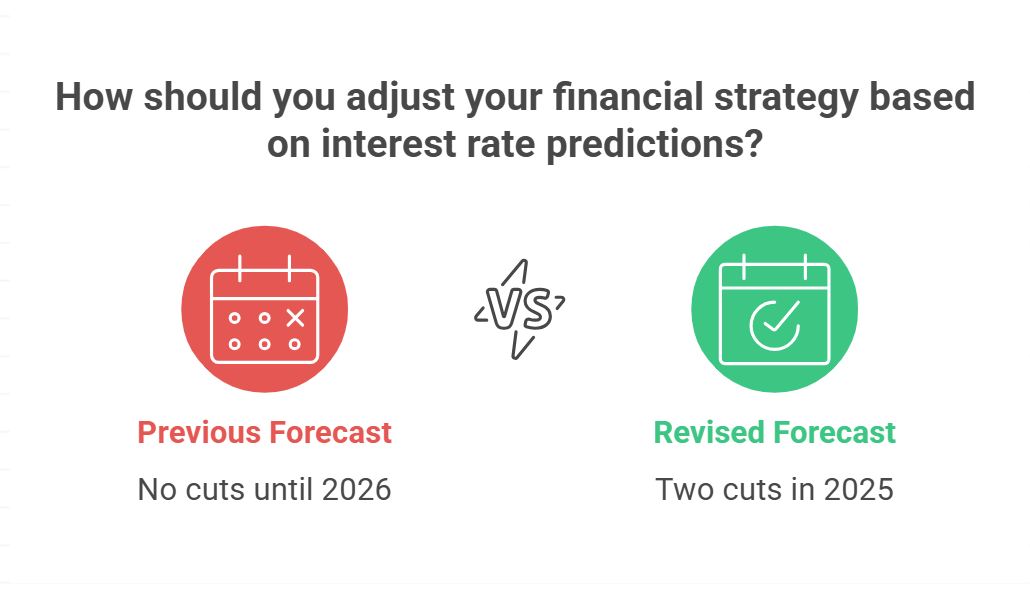
Filed Under: Financing, Mortgage Tagged With: Interest Rate, mortgage, Mortgage Rate Trends, mortgage rates, Mortgage Rates Predictions, Mortgage Rates Today

  • « Previous Page
  • 1
  • …
  • 111
  • 112
  • 113
  • 114
  • 115
  • …
  • 323
  • Next Page »

Real Estate

  • Birmingham
  • Cape Coral
  • Charlotte
  • Chicago

Quick Links

  • Markets
  • Membership
  • Notes
  • Contact Us

Blog Posts

  • 30-Year Fixed Mortgage Rate Drops Sharply by 98 Basis Points
    January 20, 2026Marco Santarelli
  • Why January is the Cheapest Month to Buy a Home in 2026
    January 19, 2026Marco Santarelli
  • Today’s Mortgage Rates, January 19: Rates Go Down, Easing Pressure on Buyers
    January 19, 2026Marco Santarelli

Contact

Norada Real Estate Investments 30251 Golden Lantern, Suite E-261 Laguna Niguel, CA 92677

(949) 218-6668
(800) 611-3060
BBB
  • Terms of Use
  • |
  • Privacy Policy
  • |
  • Testimonials
  • |
  • Suggestions?
  • |
  • Home

Copyright 2018 Norada Real Estate Investments

Loading...