Norada Real Estate Investments

  • Home
  • Markets
  • Properties
  • Membership
  • Podcast
  • Learn
  • About
  • Contact

Federal Reserve Interest Rate Decision Today – September 17, 2025

September 17, 2025 by Marco Santarelli

Federal Reserve Interest Rate Decision Today - September 17, 2025

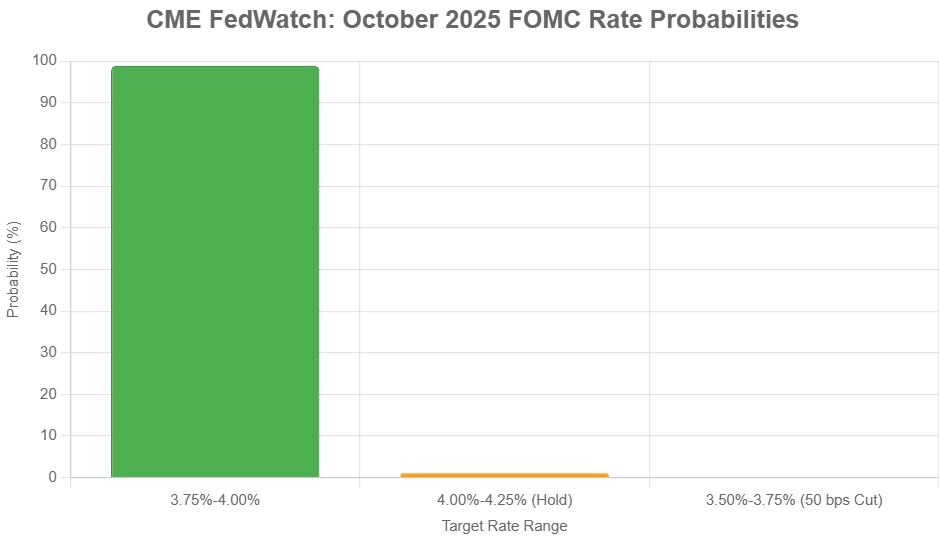
It's September 17, 2025, and all eyes are on the Federal Reserve. After months of holding steady, the big question on everyone's mind is: Will the Fed cut interest rates today? My confident answer is yes, the Federal Reserve is widely expected to lower its benchmark federal funds rate by a quarter of a percentage point, bringing it down to a range of 4.00%-4.25%.

This momentous decision marks the first rate reduction since late 2024 and signals a shift in the Fed's strategy as inflation cools and the job market shows signs of softening. But what exactly does this mean for you, for the economy, and for the markets?

Federal Reserve Interest Rate Decision Today – September 17, 2025

I've been following the Federal Reserve's moves for years, and let me tell you, these meetings are always fascinating. It’s a delicate dance the Fed performs, trying to balance keeping prices stable with ensuring everyone who wants a job can find one. Today's decision is particularly interesting because we’re seeing some mixed signals.

Inflation is definitely heading in the right direction, which is great news, but the job market isn't as strong as it was. Adding to the complexity are the political winds, with calls from the Trump administration for more aggressive action. So, while a cut is likely, the exact size and the Fed’s future outlook will be key to understanding what happens next.

A Look Back: Why We're Here Today

To understand today’s decision, we need to rewind a bit. For a long time, the Federal Reserve, or the Fed as we usually call it, kept interest rates super low—almost zero—especially during the pandemic. This was to encourage spending and keep the economy moving. But then, inflation started to creep up, and by mid-2022, it was soaring way past the Fed’s target of 2%. Remember those stories about the price of everything going up? That’s what the Fed was fighting.

To tackle this, the Fed started raising interest rates pretty aggressively, starting in March 2022. They kept raising them throughout 2023, and by early 2025, the key interest rate was sitting at a high of 4.25%-4.50%. This strategy, they hoped, would make borrowing money more expensive, which would slow down spending and, in turn, bring inflation back down to earth. And it seems to have worked, to some extent.

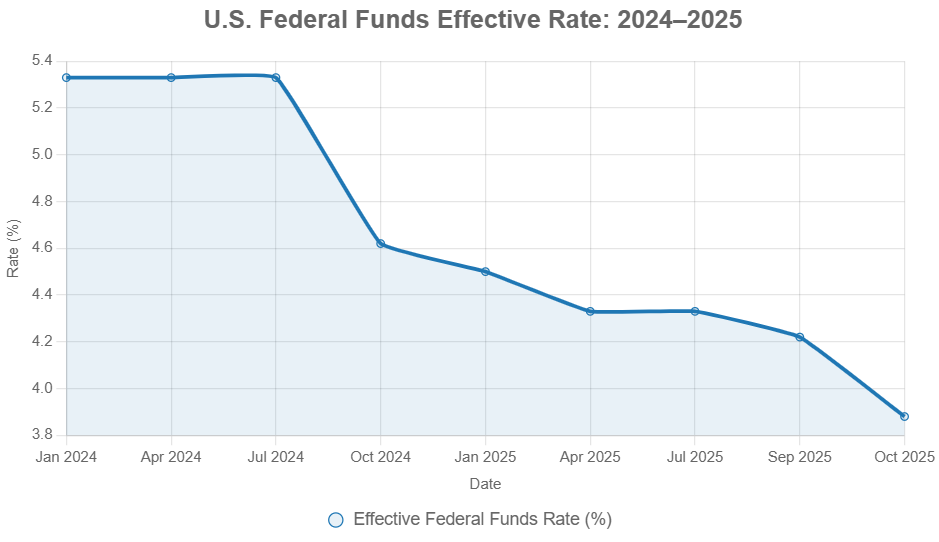
Here’s a simple way to visualize how the Fed’s main interest rate has moved over the past few years:

Year Average Federal Funds Rate (%) Key Fed Actions
2020-2021 ~0.10 Kept rates near zero to support economy
2022 ~1.68 Began aggressive rate hikes to fight inflation
2023 ~5.02 Reached peak rates, paused hikes
Early 2024 – Aug 2025 ~4.33 Held rates steady at higher levels

As you can see, it’s been a wild ride from near-zero to very high interest rates. Today’s decision is about potentially starting the journey back down.

The Economy Today: What the Numbers Say

The Federal Reserve has a tough balancing act. They have two main goals: keep prices stable (that means keeping inflation low, around 2%) and make sure everyone who wants a job can find one. They look at a lot of different data to make their decisions, and here’s what’s been happening leading up to today’s meeting:

  • Prices are Cooling (Mostly): Inflation is definitely getting closer to that 2% target. The latest Consumer Price Index (CPI), a common way to measure how fast prices are rising, showed a 2.5% increase over the last year. That’s a big drop from the peak we saw last year. The Fed’s favorite inflation measure, the Personal Consumption Expenditures (PCE) price index, also came in at 2.5% for July. While this is good news, some prices, especially for things like housing and services, are still a bit sticky and haven’t come down as much as the Fed would like.
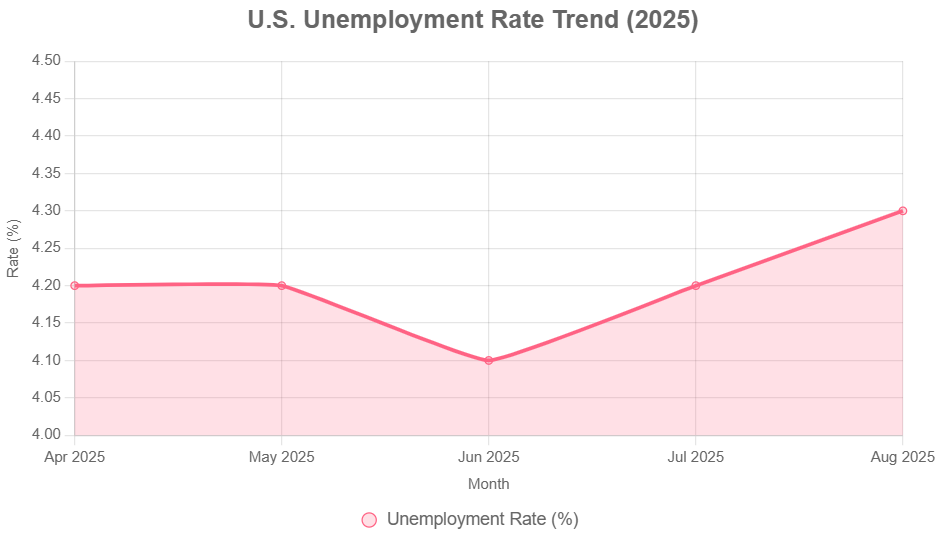
  • The Job Market is Slowing Down: This is another big piece of the puzzle. The unemployment rate has nudged up to 4.2% in August 2025. That’s a bit higher than it was a year ago when it was closer to 3.7%. Also, the number of new jobs being created each month has slowed down, with companies adding fewer than 150,000 jobs on average recently. This slowdown could mean it’s harder for people to find jobs, and it might be a sign that the economy is starting to feel the pinch of those higher interest rates.
  • Economic Growth is Steady, But Watch Out: The economy, measured by Gross Domestic Product (GDP), grew at a pretty decent pace of about 2.8% in the second quarter of 2025. Consumer spending has been strong, which is good. However, some business surveys, like the ISM Manufacturing Index, are showing that factories are actually producing less, which isn’t a great sign for that sector.
  • Other Worries: We also have to consider things like trade policies and what’s happening around the world. For example, any new tariffs or trade disputes could make prices go up again, and a really strong U.S. dollar makes imported goods cheaper but can hurt American companies that sell things overseas.

Here’s a quick look at some of the key economic numbers:

Economic Indicator August 2025 Value What it Means for the Fed’s Decision
CPI Inflation 2.5% Moving closer to the 2% target, which supports a rate cut.
Unemployment Rate 4.2% Higher than before, suggesting the job market is cooling, also supporting a cut.
GDP Growth (Q2) 2.8% Healthy growth, but signs of slowing in some areas need watching.
Wage Growth 3.8% Slowing down, which is good for fighting inflation.
10-Year Treasury Yield 4.02% Falling yields often mean markets expect lower interest rates.

All these pieces of information are like clues for the Fed. The data seems to be pointing them towards cutting rates to help keep the economy from slowing down too much, especially the job market.

What to Expect Today: The Rate Cut and Market Reactions

As I mentioned, the strong expectation is for a 0.25 percentage point rate cut, bringing the federal funds rate down to 4.00%-4.25%. This would be the first cut in nearly a year.

What could this mean right away?

  • For You and Me: Borrowing money should become a little cheaper over time.
    • Credit Cards: Expect those high credit card interest rates (which are often sky-high, around 21% on average!) to slowly start coming down.
    • Car Loans: Rates on new car loans (typically in the 7%-8% range) might also see a slight dip.
    • Mortgages: While mortgage rates are influenced by many factors, they might not drop instantly. They’ve already been pulled down a bit by the expectation of a Fed cut, sitting around 6.5% for a 30-year fixed loan. However, if the Fed continues to cut rates in the future, we could see them fall further, maybe to the 5.5%-6% range by next year.
  • For Businesses: A rate cut makes it cheaper for companies to borrow money to invest in new equipment, expand their operations, or hire more people. This could be good news for the stock market, as companies that invest and grow tend to see their stock prices go up. Stocks in the S&P 500, for example, have already been doing well in anticipation of this.
  • For Financial Markets:
    • Stocks: We’ve already seen a bit of a rally in the stock market leading up to this announcement. A cut could keep that momentum going, but if the Fed does something unexpected, like no cut at all, or a much bigger cut than anticipated, we could see some jitters or a sell-off in the short term.
    • Bonds: When interest rates go down, bond prices generally go up. This is because existing bonds with higher interest payments become more attractive.
    • Cryptocurrencies: Things like Bitcoin, which are seen as riskier investments, often do well when interest rates are low. Lower rates encourage people to take more risks with their money, potentially pushing up prices for assets like Bitcoin, which has been trading around $117,000.

It's also important to remember that if the Fed were to cut rates by a larger amount, say 0.50%, markets might get worried. They could interpret a bigger cut as a sign that the Fed sees more serious problems with the economy than we currently understand, which could lead to more unpredictable price swings across all markets.

What Happens Next? The “Dot Plot” and Powell's Words

Today isn’t just about the rate cut itself. Two other things will be super important:

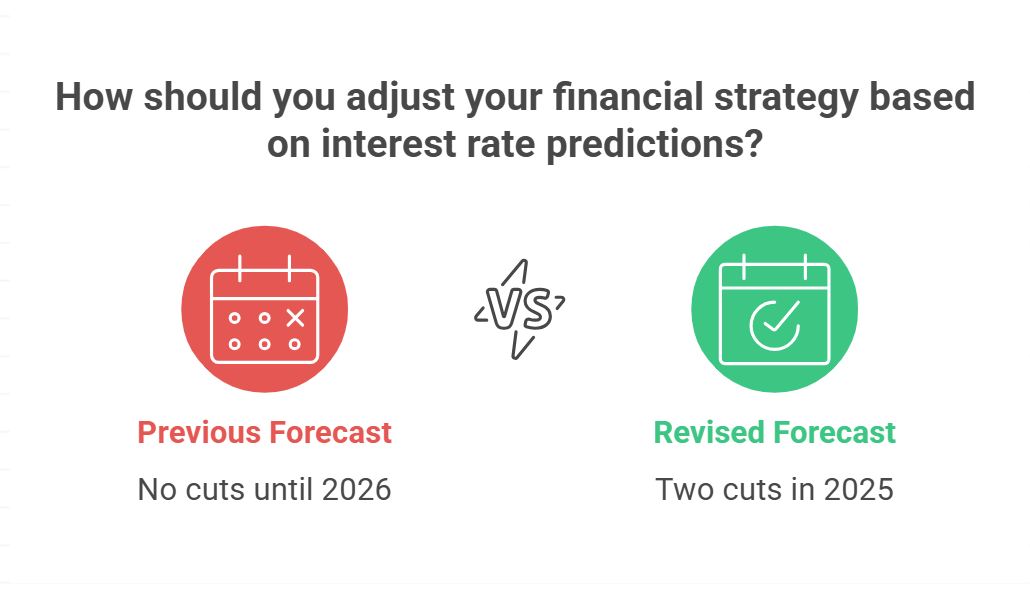
  1. The Summary of Economic Projections (SEP), or “Dot Plot”: This is a report where Fed officials provide their forecasts for where they see interest rates, inflation, and economic growth going in the future. In June 2025, they were projecting the rate to be around 3.9% by the end of this year, which would imply about two rate cuts in total for 2025. Today’s updated “dot plot” will show if they still think that way or if they expect more cuts. If the job market continues to weaken, they might signal more cuts are coming. If inflation starts ticking up again, they might signal fewer cuts.
  2. Chair Jerome Powell's Press Conference: After the announcement, Fed Chair Jerome Powell will hold a press conference. What he says and the tone he uses can often be more impactful than the actual rate decision. If he sounds optimistic about controlling inflation and supportive of the job market, it could further boost markets. If he sounds more concerned about the economy or inflation, it might dampen investor enthusiasm.

Looking Ahead: The Path Forward for Interest Rates

What happens after today is also a big question. The Fed has two more meetings scheduled for 2025: one in October and another in December. Based on the economic data we've seen, many expect the Fed to make at least one more rate cut, possibly two, by the end of the year. This would bring the total number of cuts for 2025 to somewhere between 0.50% and 0.75%.

Looking further out, perhaps into 2026, the Fed’s projections might suggest rates could stabilize somewhere between 3.4% and 3.6%, assuming the economy continues to grow steadily.

However, there are always risks that could change this plan:

  • Political Pressure: President Trump has made it clear he wants lower interest rates. While the Fed is independent, this pressure adds another layer of complexity. His proposed policies, like new tariffs, could potentially increase inflation by about 0.5% to 1%, which might force the Fed to be more cautious.
  • Global Events: Unpredictable events happening around the world can also impact the U.S. economy and the Fed’s decisions.
  • Economic Surprises: If the unemployment rate unexpectedly jumps to 4.5%, the Fed might feel pressured to cut rates more aggressively. On the flip side, if inflation unexpectedly stays high, they might pause their rate-cutting cycle, even if the job market is weak.

Ultimately, the Federal Reserve today is making a decision based on the best information they have right now. It’s a crucial moment that will influence our economy for months and years to come. While a rate cut is expected and might bring some relief, the Fed’s careful approach, guided by incoming data and projections, will be key to navigating what’s next.

Position Your Portfolio Ahead of the Fed’s Next Move

The Federal Reserve’s next rate decision could shape real estate returns through the rest of 2025. Whether or not a rate cut happens, smart investors are acting now.

Norada Real Estate helps you secure cash-flowing properties in stable markets—shielding your investments from volatility and interest rate swings.

HOT NEW LISTINGS JUST ADDED!

Talk to a Norada investment counselor today (No Obligation):

(800) 611-3060

Get Started Now

Recommended Read:

  • Fed Interest Rate Predictions This Week: 25 Basis Point Cut Widely Expected
  • Fed Holds Interest Rates Steady for the Fifth Time in 2025
  • Fed Projects Two Interest Rate Cuts Later in 2025
  • Interest Rate Predictions for the Next 3 Years: 2025, 2026, 2027
  • When is Fed's Next Meeting on Interest Rate Decision in 2025?
  • Interest Rate Predictions for the Next 10 Years: 2025-2035
  • Will the Bond Market Panic Keep Interest Rates High in 2025?
  • Interest Rate Predictions for 2025 by JP Morgan Strategists
  • Interest Rate Predictions for Next 2 Years: Expert Forecast
  • Fed Holds Interest Rates But Lowers Economic Forecast for 2025
  • Fed Indicates No Rush to Cut Interest Rates as Policy Shifts Loom in 2025
  • Fed Funds Rate Forecast 2025-2026: What to Expect?
  • Interest Rate Predictions for 2025 and 2026 by NAR Chief
  • Market Reactions: How Investors Should Prepare for Interest Rate Cut
  • Impact of Interest Rate Cut on Mortgages, Car Loans, and Your Wallet

Filed Under: Economy, Financing Tagged With: Economy, Fed, Fed Rate Cut, Federal Reserve, inflation, Interest Rate

Federal Reserve Begins Key Interest Rate Meeting with Economic Jitters

September 17, 2025 by Marco Santarelli

Federal Reserve Begins Key Interest Rate Meeting with Economic Jitters

The Federal Reserve's September 2025 Federal Open Market Committee (FOMC) meeting begins today, September 16th, and will conclude tomorrow, the 17th. This meeting isn't just another check-in on the economy; it's a pivotal moment where big decisions about interest rates will be made, and it's causing quite a stir, especially with the late word on Stephen Miran's place on the Board of Governors.

The general expectation, with over 96% certainty priced in by the markets, is for a 25 basis point interest rate cut, marking the first adjustment since December 2024. This move, however, is happening under a cloud of economic uncertainty and significant political attention, largely due to Miran's very recent confirmation.

Federal Reserve Begins Key Interest Rate Meeting with Economic Jitters

I've been watching the lead-up to this meeting with keen interest. It feels like we're at a crossroads. On one hand, the data suggests the economy is chugging along, but there are clear signs of a cooldown, particularly in the job market. On the other hand, inflation stubbornly remains higher than the Fed's target, creating a delicate balancing act.

Add to this a new Fed governor whose confirmation was a nail-biter and who happens to be a presidential advisor, and you've got a situation that's anything but routine. This meeting will tell us a lot about where the Fed is headed and how resilient the U.S. economy truly is.

The FOMC: The Brains Behind Interest Rate Decisions

First off, let's get a handle on what the FOMC actually is. It's the main policymaking body of the Federal Reserve, sort of like the central bank's think tank. It meets regularly throughout the year – eight scheduled meetings in total – to discuss the economic outlook and decide on the direction of monetary policy.

The most crucial tool they use is the federal funds rate. Think of this as the target rate for overnight lending between banks. When the Fed adjusts this rate, it’s like turning a large dial that influences borrowing costs for pretty much everyone, from big corporations taking out loans to individuals financing a car or using a credit card.

The FOMC is made up of the seven members of the Board of Governors (who are appointed by the President and confirmed by the Senate) and five Federal Reserve Bank presidents. The Chair of the Federal Reserve heads up the meeting. Right now, that's Jerome Powell, who has been at the helm since 2018.

Their decisions aren't just about the here and now; they also release an economic forecast, often called the “dot plot,” which gives us clues about where they might be leaning in the future. It's this forward-looking aspect that makes every FOMC meeting so closely watched by investors, businesses, and everyday consumers alike.

This particular meeting is designated as one of the four “projection” meetings, meaning we'll get updated economic projections in addition to the interest rate decision. This is a big deal because it gives us a clearer picture of how the Fed sees inflation, employment, and economic growth shaping up in the coming years. Historically, the September meeting has often been a time of significant policy adjustments or clear guidance for the remainder of the year.

FOMC Meeting Schedule for 2025 Dates Key Features
January 28-29 Standard policy review
March 18-19 Economic projections released
April/May 6-7 Notation vote possible
June 17-18 Economic projections released
July 29-30 Standard policy review
September 16-17 Economic projections; press conference today
October 28-29 Standard policy review
December 9-10 Economic projections released

Source: Federal Reserve Board

Stephen Miran's Last-Minute Arrival: A Game Changer?

The biggest drama leading up to this meeting has undoubtedly been the confirmation of Stephen Miran to the Federal Reserve Board of Governors. His Senate confirmation on September 15th, the day before the meeting began, was a real cliffhanger, passing by a razor-thin margin. This isn't just about adding another member to the board; it's about who that member is and how he got there. Miran, who also serves as President Trump's chief economic advisor, has a background that offers a different perspective than many on the current board.

Miran's academic and professional background suggests a pragmatic approach to economics. He's known for a somewhat hawkish stance on inflation, meaning he's typically been in favor of keeping rates higher for longer to really get a handle on rising prices. However, he's also supported policies, like tariffs, that some might see as potentially inflationary, though his argument has been that a strong dollar can offset those effects.

His ability to vote directly in this meeting, especially given his close ties to the White House, has raised questions about the Fed's independence – a core principle meant to shield monetary policy from short-term political pressures. While Miran has publicly stated his commitment to the Fed's dual mandate of stable prices and maximum employment, his presence could tip the scales in discussions about rate cuts.

President Trump has been quite vocal about his desire for deeper interest rate reductions to stimulate the economy, and Miran's vote could be seen as a key factor in whether the Fed leans more dovish. The chatter on social media and among analysts has been intense, with some seeing him as a voice for “accountability” and others as a symbol of “politicization” within the central bank.

Miran's Background and Potential Influence

Aspect Details Significance for Fed Vote
Nominated By President Trump Suggests potential alignment with administration's economic goals
Current Role Chief Economic Advisor to President Trump; Chairman of the Council of Economic Advisers Raises concerns about Fed independence, potential policy influence
Economic Stance Hawkish on inflation (historically), supportive of tariffs; pragmatic approach articulated in writings and analyses. May favor a cautious approach to cuts or advocate for specific economic stimulus measures.
Confirmation Vote 48-47, narrow margin, emphasizing political divide. Highlights potential for diverse views on the Board, could emphasize ideological split.
Public Commentary Has pledged fidelity to the dual mandate but has also acknowledged Trump's call for quicker rate reductions. Creates anticipation for how his voting aligns with public statements.

The confirmation itself was a narrow 48-47 vote, underscoring the sensitive nature of adding a politically aligned figure to the central bank's board. It also comes after a separate court ruling that preserved Governor Lisa Cook's seat, which had been challenged by the Trump administration. This means there's at least some balance on the board, but Miran's vote is undeniably significant.

The Economic Tightrope: Jobs Slowing, Inflation Stubborn

So, what economic signs are influencing the Fed's decision-making? It's a mixed bag. On one hand, the economy has shown surprising resilience. Gross Domestic Product (GDP) grew at a solid 3.3% annualized rate in the second quarter of 2025. This is a healthy pace and suggests that the economy is still expanding.

However, there are clear signs of a cooling labor market, which is a big focus for the Fed. In August 2025, nonfarm payrolls added only 22,000 jobs. This is significantly lower than what economists had been expecting and indicates a definite slowdown in hiring. This, in turn, pushed the unemployment rate up to 4.3%. While not alarmingly high in historical terms, it's a noticeable tick upward and concerns some about the potential for a more significant economic slowdown or even a recession.

Then there's inflation. Despite the cooling job market, inflation isn't quite behaving as the Fed would like. The Consumer Price Index (CPI) rose by 0.4% month-over-month in August, bringing the annual inflation rate to 2.9%. This is the highest it's been since January and is still above the Fed's target of 2%. The sticking points for inflation appear to be in areas like housing costs and services. This persistent inflation makes the Fed's decision to cut rates a bit more complicated. Cutting rates too aggressively could risk pushing inflation higher, while not cutting enough might stifle economic growth too much, especially with the softening labor market. It’s a true balancing act.

Here's a quick look at some key economic indicators:

Key U.S. Economic Indicators (August 2025) Value Change from Prior Month Implication for Fed Policy
GDP Growth (Q2 Annualized) 3.3% +0.5% from Q1 Mixed: Shows growth but masks labor softness
Unemployment Rate 4.3% +0.1% Cooling labor market, potentially supporting a cut
Nonfarm Payrolls +22K -57K from July Significant hiring slowdown, a dovish signal
CPI Inflation (YoY) 2.9% +0.2% from July Still above target, cautioning against aggressive easing
Core PCE (Fed's Preferred) 2.6% Unchanged Stable but vigilance needed for services inflation

The Fed's own projections, last updated in June, anticipated two rate cuts by the end of 2025. Today's expected 25 basis point cut would be the first of those. However, the incoming data, especially on jobs, might lead them to adjust those future projections today, perhaps hinting at more cuts if the trend continues.

Impact on Your Wallet and the Markets

So, what does a rate cut, even a modest one, mean for you and me?

  • Borrowing Costs: If the Fed cuts the federal funds rate, you'll likely see a slight decrease in the interest rates on things like credit cards, auto loans, and potentially personal loans. For example, if a credit card has an Annual Percentage Rate (APR) tied to the prime rate (which moves with the federal funds rate), a 0.25% cut could mean about $0.25 less in interest for every $100 you carry over month to month. On a $20,000 credit card balance, that's roughly a $50 saving per month, which can add up.
  • Mortgages: Mortgage rates are generally tied more closely to longer-term bond yields, like the 10-year Treasury note, rather than the federal funds rate directly. However, a Fed cut can still influence them. If the market anticipates further cuts or a weaker economy, longer-term yields might fall, which could translate to slightly lower mortgage rates. A 0.25% cut might shave off a small amount from current 30-year fixed mortgage rates, which are around 6.8%. This might not be enough to spark a massive wave of refinancing immediately, but it could make it a bit more attractive.
  • Savings: The downside for savers is that yields on things like Certificates of Deposit (CDs) and high-yield savings accounts might also tick down. If banks are paying less to borrow money, they'll likely pay less to hold your deposits.

Here’s a snapshot of how the cut might affect different financial products:

Financial Product Current Average (Est.) Post-Cut Impact (Est.) Potential User Impact
Credit Card APR 21.5% ~21.25% Slight reduction in interest costs on carried balances.
Auto Loan Rate 7.2% ~7.0% Lower monthly payments for new car loans.
30-Year Fixed Mortgage 6.8% ~6.7% – 6.75% Minor relief, could prompt some refinancing if rates fall further.
High-Yield Savings 4.7% ~4.5% Slightly lower interest earnings on deposits.
CD Rates (1-Year) 4.5% ~4.3% Slightly lower returns on savings locked up in CDs.

For the broader markets, a rate cut is generally seen as a positive catalyst, especially in an environment where there's been a lot of talk about potential economic slowdowns:

  • Stocks: Historically, stock markets tend to react favorably to interest rate cuts, as lower borrowing costs can boost corporate profits and make stocks more attractive relative to bonds. We could see an initial boost of 1-2% in major stock indices like the S&P 500.
  • Cryptocurrencies: Cryptocurrencies, particularly Bitcoin, have often been viewed as a “risk-on” asset, and they tend to perform well when interest rates are low, as liquidity tends to increase in the financial system. Bitcoin has already seen a significant rally this year on the back of rate cut expectations, and a cut could provide further fuel.
  • The Dollar: A rate cut by the Fed, especially if other central banks aren't cutting as aggressively, can lead to a weaker U.S. dollar. This can be beneficial for American companies that export goods, making their products cheaper abroad, but it can also make imports more expensive for consumers.

Navigating the Uncertainty: What to Watch Next

The announcement, scheduled for tomorrow (around 2:00 PM ET), will be followed by a press conference from Chair Jerome Powell at 2:30 PM ET. This press conference is often just as important as the rate decision itself. Powell's words will be dissected for any hints about the Fed's future intentions, specifically regarding the pace and scope of any further rate cuts in 2025. Will they stick to the plan of two more cuts, or will the recent economic data push them to signal more aggressive easing?

Stephen Miran's presence on the board is a wildcard. His vote and his commentary will be closely scrutinized. Does his perspective align with a more cautious approach, or will he push for the more aggressive easing that President Trump has publicly advocated? The narrow margin of his confirmation and the fact that he retains his White House advisory role put a spotlight on the Fed's independence. For me, maintaining that independence is crucial for long-term economic stability. Any perception that monetary policy is being dictated by political considerations could damage the Fed's credibility, which is one of its most valuable assets.

Given the mixed economic signals and the political backdrop, this meeting feels particularly charged. It’s not just about adjusting a number; it’s about how the Fed navigates a complex economic environment while trying to maintain its autonomy. The decisions made will have ripple effects across financial markets, businesses, and households for months to come. I'll certainly be watching closely to see how the Fed balances its dual mandate in this uniquely challenging period.

Position Your Portfolio Ahead of the Fed’s Next Move

The Federal Reserve’s next rate decision could shape real estate returns through the rest of 2025. Whether or not a rate cut happens, smart investors are acting now.

Norada Real Estate helps you secure cash-flowing properties in stable markets—shielding your investments from volatility and interest rate swings.

HOT NEW LISTINGS JUST ADDED!

Talk to a Norada investment counselor today (No Obligation):

(800) 611-3060

Get Started Now

Recommended Read:

  • Fed Interest Rate Predictions This Week: 25 Basis Point Cut Widely Expected
  • Fed Holds Interest Rates Steady for the Fifth Time in 2025
  • Fed Projects Two Interest Rate Cuts Later in 2025
  • Interest Rate Predictions for the Next 3 Years: 2025, 2026, 2027
  • When is Fed's Next Meeting on Interest Rate Decision in 2025?
  • Interest Rate Predictions for the Next 10 Years: 2025-2035
  • Will the Bond Market Panic Keep Interest Rates High in 2025?
  • Interest Rate Predictions for 2025 by JP Morgan Strategists
  • Interest Rate Predictions for Next 2 Years: Expert Forecast
  • Fed Holds Interest Rates But Lowers Economic Forecast for 2025
  • Fed Indicates No Rush to Cut Interest Rates as Policy Shifts Loom in 2025
  • Fed Funds Rate Forecast 2025-2026: What to Expect?
  • Interest Rate Predictions for 2025 and 2026 by NAR Chief
  • Market Reactions: How Investors Should Prepare for Interest Rate Cut
  • Impact of Interest Rate Cut on Mortgages, Car Loans, and Your Wallet
Filed Under: Economy, Financing Tagged With: Economy, Fed, Fed Rate Cut, Federal Reserve, inflation, Interest Rate

Senate Set to Confirm Miran for Fed on Eve of Pivotal Interest Rate Decision

September 15, 2025 by Marco Santarelli

Senate Set to Confirm Miran for Fed on Eve of Pivotal Interest Rate Decision

In a nail-biting finish to September 15, 2025, the U.S. Senate is poised to confirm Stephen Miran as a new member of the Federal Reserve Board of Governors. This confirmation is timed so precisely that Miran could actually cast a vote on the Federal Open Market Committee's (FOMC) crucial interest rate decision, which is set to be announced tomorrow. This isn't just a routine appointment; it's happening right on the cusp of what many expect to be a significant move by the Fed to lower interest rates, a decision that could have major ripple effects across our economy.

Senate Set to Confirm Miran for Fed on Eve of Pivotal Interest Rate Decision

The timing of Miran's potential entry into the Fed is no accident. He's been nominated by President Trump, and Miran is known to favor lower interest rates. With signs of the job market cooling down, the Fed is already under pressure to ease monetary policy. Miran's presence could tip the scales, potentially pushing for a more aggressive cut than others might prefer.

This move also shines a spotlight on a familiar debate: how much influence should the President have over the Federal Reserve, an institution designed to be independent? While some believe bringing in allies with specific economic views can be beneficial, others worry it risks injecting politics into decisions that should be based purely on economic data.

Who is Stephen Miran, Anyway?

Before we dive into what this all means, let's get a clearer picture of the man at the center of this discussion. Stephen Miran, a highly educated economist, has a background that bounces between top-tier universities, the fast-paced world of finance, and the halls of government. He earned his Ph.D. from Harvard University in 2010, a prestigious academic achievement, where he studied under Martin Feldstein, someone who was a significant economic advisor during the Reagan years. This academic foundation is important because it gives him a deep understanding of economic theory.

Beyond academia, Miran has also worked in the private sector at investment firms like Fidelity and Hudson Bay Capital. These experiences gave him a hands-on understanding of how financial markets work and how different economic policies can affect investments. More recently, he served as an advisor at the Treasury Department during President Trump's first term, where he was involved in shaping economic policies, including tariffs. From March 2025, he's been heading up the White House Council of Economic Advisers, a role where he's had a direct hand in economic strategy and critiques of past government actions. This blend of academic expertise, Wall Street knowledge, and direct policy involvement makes him a unique candidate for the Fed.

The Fast Track to the Fed: Why the Rush?

What's particularly striking about Miran's confirmation process is how quickly it's happening. He was nominated in early August 2025 to fill a vacant seat on the Fed's Board of Governors. Typically, these confirmations can take a considerable amount of time, with various committees and debates involved. However, the Senate Banking Committee fast-tracked his nomination just last week, voting along party lines to send his name to the full Senate.

The Senate is using a procedural move to bundle several confirmations together for a vote tonight, which is a common tactic to speed up the President's agenda. If confirmed, Miran plans to take unpaid leave from his current role as chair of the Council of Economic Advisers. While this complies with ethics rules, it has raised some eyebrows, as it means he'll still be technically associated with the White House while serving on a body that's supposed to be independent. It’s a tightrope walk, and frankly, it feels like a deliberate effort to have him in place for this critical economic decision.

The Current Fed Board: Who's Who?

To understand the potential shift in the Fed's dynamics, it helps to know who's currently on the Board of Governors. With Miran's potential confirmation, the seven-member board would be at full strength. Here's a look at the current composition:

Governor Role Term End Key Stance Notes
Jerome H. Powell Chair 2026 (as Chair), Governonr until 2028 Known for a data-driven approach; cautious on policy changes
Philip N. Jefferson Vice Chair 2027 (as VC), Governor until 2036 Focuses on employment and inclusion
Michael S. Barr Governor 2032 Specialist in banking regulation
Lisa D. Cook Governor 2034 Advocate for diversity; currently facing legal scrutiny
Christopher J. Waller Governor 2030 Generally holds a more hawkish view on inflation
Michelle W. Bowman Vice Chair for Supervision 2029 (as VC), Governor until 2034 Expert on regional banking
Stephen Miran (Incoming) Governor January 2026 Pro-lower rates; supports tariffs

As you can see, Powell and Jefferson are leading the board, with Waller often seen as more hawkish. Miran’s addition could significantly shift the balance, especially considering the uncertainty around Governor Cook's legal situation. His term is quite short, ending in January 2026, meaning his influence might be concentrated in the immediate future.

The Critical September FOMC Meeting: What's at Stake?

The Federal Open Market Committee (FOMC) is the group within the Fed that decides on interest rates. They are scheduled to meet on September 16-17, with their decision announced tomorrow. The financial world is buzzing with expectations that the Fed will lower interest rates for the first time in almost a year. We're currently seeing some evidence that the job market isn't as strong as it was, and this usually prompts the Fed to make borrowing cheaper to encourage spending and economic activity.

Right now, the target range for the federal funds rate, which influences many other interest rates in the economy, is 4.25% to 4.50%. The prevailing market view, based on many economic indicators, is for a cut of about 25 basis points (which is one-quarter of a percentage point). However, Miran's known preference for lower rates could encourage a more significant cut, perhaps 50 basis points. This aligns with President Trump's public calls for the Fed to be more aggressive in lowering rates to boost economic growth. Fed Chair Jerome Powell, however, has consistently emphasized that the Fed makes its decisions based on solid data and is mindful of inflation risks, especially those that might be caused by tariffs on imported goods.

A Look Back: The Fed's Rate Journey

To understand where we are, it's useful to see how the Fed's interest rates have changed recently. The Fed has been actively managing interest rates to combat inflation after the pandemic.

Date Federal Funds Target Range Key Event/Context
March 2020 0.00%-0.25% Emergency cuts due to COVID-19
March 2022 0.25%-0.50% Start of rate hikes to fight inflation
July 2023 5.25%-5.50% Peak of the rate hike cycle
July 2024 5.25%-5.50% Hold steady after aggressive hiking
September 2024 4.75%-5.00% First cut, a 0.50% reduction
March 2025 4.50%-4.75% Continued gradual easing
September 2025 (Expected) 4.00%-4.25% or 3.75%-4.00% Potential deeper cut, possibly influenced by Miran

This table shows how the Fed has gone from extremely low rates during the pandemic to raising them significantly to control inflation, and now is considering lowering them again. The decision tomorrow will be the next step in this cycle.

Miran's Economic Philosophy: A Look Under the Hood

To really understand the potential impact of Miran's confirmation, it's important to look at his economic thinking. He believes that the government has a role to play in guiding the economy, and that sometimes, this means using tools like tariffs to level the playing field in global trade. He's argued that tariffs can be used to protect domestic industries and job growth. This is a viewpoint that differs from some free-market advocates who believe that free trade always leads to the best outcomes.

Miran has also been critical of certain government spending and regulatory policies, arguing they can sometimes stifle growth or contribute to inflation. His perspective is that economic policy should be practical and aimed at delivering tangible results for the people. In his own words, he's suggested that “pure independence” for the central bank might not be the best approach, implying that some accountability to elected officials is necessary. This is a significant statement because the Fed's independence from political pressure is seen by many as crucial for its ability to control inflation and maintain economic stability.

The Broader Debate: Independence vs. Influence

This entire situation brings up a really important question about the Federal Reserve's independence. For decades, the Fed has operated as a largely separate entity from the day-to-day politics of Washington. This independence is meant to allow the central bank to make tough decisions, like raising interest rates to combat inflation, even if those decisions are unpopular with politicians or the public. The idea is that this shields monetary policy from short-term political winds.

President Trump, however, has been very vocal about his desire for lower interest rates and has openly criticized Fed officials who haven't aligned with his views. His nomination of individuals like Miran, who share his economic outlook, is seen by some as an effort to reshape the Fed's thinking. Critics worry that this could lead to the Fed making decisions that are more politically motivated than economically sound, potentially leading to higher inflation or economic instability down the road. On the other hand, supporters argue that having diverse perspectives on the Fed board is healthy and that Miran's background brings valuable insights. They might point out that even with political influence, the Fed's data-driven culture can act as a buffer.

My Take on It All

From my perspective, watching these events unfold is always fascinating, and frankly, a little unnerving. I've spent years reading economic reports and trying to understand what moves markets and affects everyday people. The independence of the Federal Reserve is something I’ve always valued. It allows policymakers to make decisions that are best for the long-term health of the economy, even when those decisions are tough in the short run. President Trump has always been a president who isn't afraid to shake things up, and his approach to the Fed is certainly a part of that.

Miran's background is certainly impressive, but the timing of his potential confirmation—right before such a crucial interest rate decision—raises a lot of questions. Will he be a moderating voice, or could his presence lead to a more aggressive easing of monetary policy that might stoke inflation later on? The arguments about whether he'll indeed take leave from his White House role while serving at the Fed also strike me as a bit of a procedural dance. It’s essential that the Fed maintains its credibility, and actions that even appear to intertwine political influence with monetary policy can chip away at that trust.

The incoming rate decision itself is critical. We've seen the economy slow down a bit, so a rate cut makes sense. But how big should that cut be? And what about those tariffs? They introduce a layer of complexity because they can push prices up, even as the Fed tries to manage interest rates. Miran's vote could be the deciding factor in whether we see a gentle easing or a more substantial push towards lower rates. It’s a delicate balance, and having a new member whose views are so closely aligned with the President’s at this exact moment is, to say the least, a significant development.

Looking Ahead: What This Means for You

So, what does all this mean for the person on the street? If the Fed does cut rates broadly, and Miran is confirmed, we could see lower borrowing costs. This might make it a bit cheaper to get a mortgage or a loan. However, if trade policies continue to drive up the prices of goods you buy, those savings might not feel as significant. The real test will be how the Federal Reserve navigates these challenges moving forward. Will it maintain its focus on long-term economic stability, or will political considerations play a more prominent role? That's the question on everyone's mind, and the confirmation of Stephen Miran seems to be a major step in that ongoing story.

Position Your Portfolio Ahead of the Fed’s Next Move

The Federal Reserve’s next rate decision could shape real estate returns through the rest of 2025. Whether or not a rate cut happens, smart investors are acting now.

Norada Real Estate helps you secure cash-flowing properties in stable markets—shielding your investments from volatility and interest rate swings.

HOT NEW LISTINGS JUST ADDED!

Talk to a Norada investment counselor today (No Obligation):

(800) 611-3060

Get Started Now

Recommended Read:

  • Fed Interest Rate Predictions This Week: 25 Basis Point Cut Widely Expected
  • Fed Holds Interest Rates Steady for the Fifth Time in 2025
  • Fed Projects Two Interest Rate Cuts Later in 2025
  • Interest Rate Predictions for the Next 3 Years: 2025, 2026, 2027
  • When is Fed's Next Meeting on Interest Rate Decision in 2025?
  • Interest Rate Predictions for the Next 10 Years: 2025-2035
  • Will the Bond Market Panic Keep Interest Rates High in 2025?
  • Interest Rate Predictions for 2025 by JP Morgan Strategists
  • Interest Rate Predictions for Next 2 Years: Expert Forecast
  • Fed Holds Interest Rates But Lowers Economic Forecast for 2025
  • Fed Indicates No Rush to Cut Interest Rates as Policy Shifts Loom in 2025
  • Fed Funds Rate Forecast 2025-2026: What to Expect?
  • Interest Rate Predictions for 2025 and 2026 by NAR Chief
  • Market Reactions: How Investors Should Prepare for Interest Rate Cut
  • Impact of Interest Rate Cut on Mortgages, Car Loans, and Your Wallet
Filed Under: Economy, Financing Tagged With: Economy, Fed, Fed Rate Cut, Federal Reserve, inflation, Interest Rate

Fed Interest Rate Predictions This Week: 25 Basis Point Cut Widely Expected

September 15, 2025 by Marco Santarelli

Interest Rate Predictions for This Week Lean Toward a 25 Basis Point Cut

It looks like a sure thing: the Federal Reserve is widely expected to cut interest rates this week. After holding steady, the data suggests the central bank will likely lower its key interest rate by a quarter of a percent (0.25%) at its September 17-18, 2025, meeting. This would bring the target range down to 4.00%-4.25%. While a slightly larger cut isn't impossible, most signs point to a more cautious approach as the economy navigates a tricky path between cooling employment and stubbornly persistent inflation.

Fed Interest Rate Predictions This Week: 25 Basis Point Cut Widely Expected

The Economic Picture: A “Soft Landing” with a Few Wobbles

To really get what the Fed might do, you need to look at the two main things they watch: how many people have jobs and how much prices are going up. Think of it like trying to keep everything balanced – not too hot, not too cold.

Recently, the numbers from the Bureau of Labor Statistics (BLS) tell a story of moderation. Inflation, measured by the Consumer Price Index (CPI), nudged up a bit to 2.9% for the 12 months ending in August 2025. This increase was partly due to things like housing costs going up by 0.4% in a month and food prices climbing 0.5%. Core inflation, which is what prices are like without food and energy, is sticking around at 3.1% year-over-year.

But here's where things get interesting: the job market is showing signs of slowing down. The unemployment rate ticked up to 4.3% in August, and new jobs created that month were only 22,000. That's much lower than what most economists were predicting. What makes this even more significant is that when the books were updated, it turned out the economy added nearly 911,000 fewer jobs in 2024 and early 2025 than we previously thought. This weaker job growth, combined with unemployment inching up, suggests the Fed might be more worried about jobs than about inflation just yet.

Federal Reserve Chair Jerome Powell has been hinting at this. He’s said the Fed makes decisions based on the latest data, and it’s clear he’s paying attention to the struggles in the job market.

What the Markets and Experts Are Saying: A Consensus on Cutting

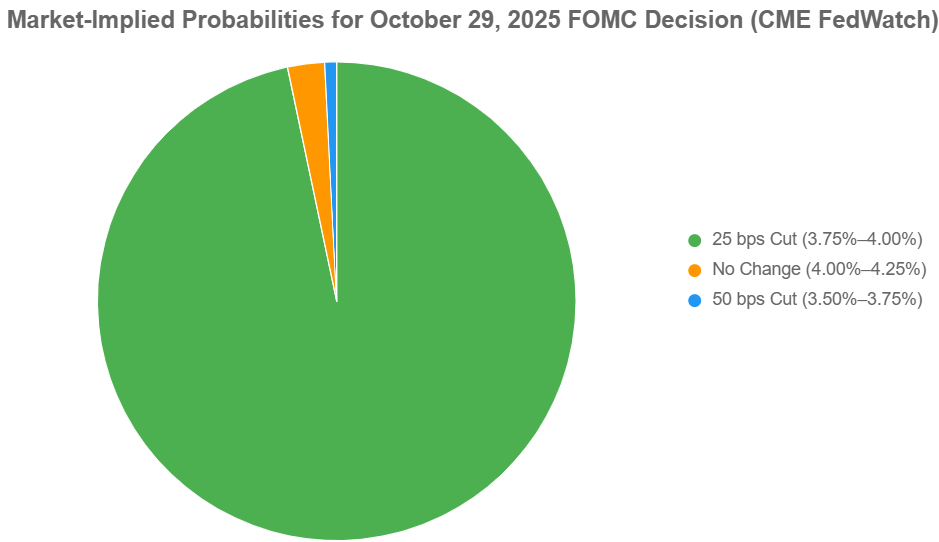
If you look at what people who trade financial contracts are thinking, they're almost certain a rate cut is coming. The CME FedWatch Tool, which tracks these expectations, shows a 100% probability of a rate reduction this week, with about 92% of that expecting a 25 basis point cut. This sentiment really built up after that disappointing jobs report in August.

When I look at this, it’s like a snowball effect. Before the jobs report, the chances of a cut were much lower. But once that weak data came out, everyone started to believe a cut was necessary.

Economists are pretty much on the same page. A survey of 107 economists by Reuters in early September 2025 showed that 105 of them predicted a 25 basis point cut. Many of these experts also believe there will be at least one more cut before the year is out. Some are even forecasting total cuts of 50 basis points for the rest of 2025, while others lean towards 75 basis points. Major banks like J.P. Morgan are also calling for a few more quarter-point cuts after this week’s meeting.

However, it’s not all perfectly clear. Some analysts point out that the Fed is in a tough spot. They have to balance the risks of a weak job market against inflation that’s still a bit higher than their 2% target. It reminds me of trying to juggle – you have to keep things moving smoothly without dropping any balls.

Online discussions also show similar feelings. Many people on platforms like X (formerly Twitter) are talking about how a rate cut could be good for stocks and even for cryptocurrencies. Of course, some are also warning that political issues, like possible tariffs, could make things a bit unpredictable in the short term.

Here’s a quick look at what economists are generally expecting for the rest of the year:

Forecasted Action Likelihood (Estimated)
25 bps cut this week ~92%
50 bps cut this week ~8%
Additional cuts by year-end 50%-75% total

Looking Back: A Shift from Raising to Cutting Rates

The Fed’s journey to this point has been quite a ride. Starting in 2022 and into 2023, they aggressively raised interest rates to combat the high inflation that followed the pandemic. Rates went from near zero all the way up to over 5%. By early 2025, things had stabilized, and the Fed kept rates steady at 4.25%-4.50% for a few months. This upcoming cut would be the first in a while, signaling a change in their strategy to support the economy.

Historically, when the Fed starts cutting rates, it’s often to help the job market and prevent a possible recession. Think back to 2019, when they cut rates a few times amid trade tensions; that period saw a bump in stock markets. It’s a careful balancing act – they want to help the economy grow without causing prices to spiral out of control again.

What Happens Next? The Ripple Effects of a Rate Cut

So, what could a quarter-percent rate cut mean for you and for the broader economy?

  • For Investors and Stocks: Generally, lower interest rates make borrowing cheaper, which can encourage businesses to invest and expand. This often leads to a boost in the stock market. Stocks, especially in sectors like technology, which are sensitive to interest rates, might see further gains. The S&P 500, which has been performing well, could continue its upward trend.
  • For Homebuyers: Mortgage rates are already reacting to the expectation of a cut. They might even dip below 6% soon. This could make buying a home more affordable and encourage more people to enter the housing market, which has been a bit slow lately due to high borrowing costs.
  • For the Economy as a Whole: Cheaper borrowing could help both consumers and businesses. It might mean lower interest payments on credit cards or loans, and it could stimulate spending. The Fed hopes this will help achieve a “soft landing”—where the economy slows down just enough to control inflation without falling into a recession. However, with inflation still hovering around 2.9%, they’ll be watching closely to make sure they don’t accidentally push prices back up too quickly.

It’s important to remember that while a cut can be good for growth, it also carries risks. If inflation starts creeping up again, maybe due to things like those potential tariffs, the Fed might have to hit the brakes on further cuts. Certain investments, like bonds, might become less attractive as rates fall, while others, like stocks, could become more appealing.

Ultimately, this week’s expected rate cut is part of the Fed’s ongoing effort to read the economic tea leaves and make decisions based on the latest information. It aims to support employment while keeping an eye on inflation, and the effects will likely be felt across many parts of our financial lives.

Position Your Portfolio Ahead of the Fed’s Next Move

The Federal Reserve’s next rate decision could shape real estate returns through the rest of 2025. Whether or not a rate cut happens, smart investors are acting now.

Norada Real Estate helps you secure cash-flowing properties in stable markets—shielding your investments from volatility and interest rate swings.

HOT NEW LISTINGS JUST ADDED!

Talk to a Norada investment counselor today (No Obligation):

(800) 611-3060

Get Started Now

Recommended Read:

  • Fed Holds Interest Rates Steady for the Fifth Time in 2025
  • Fed Projects Two Interest Rate Cuts Later in 2025
  • Interest Rate Predictions for the Next 3 Years: 2025, 2026, 2027
  • When is Fed's Next Meeting on Interest Rate Decision in 2025?
  • Interest Rate Predictions for the Next 10 Years: 2025-2035
  • Will the Bond Market Panic Keep Interest Rates High in 2025?
  • Interest Rate Predictions for 2025 by JP Morgan Strategists
  • Interest Rate Predictions for Next 2 Years: Expert Forecast
  • Fed Holds Interest Rates But Lowers Economic Forecast for 2025
  • Fed Indicates No Rush to Cut Interest Rates as Policy Shifts Loom in 2025
  • Fed Funds Rate Forecast 2025-2026: What to Expect?
  • Interest Rate Predictions for 2025 and 2026 by NAR Chief
  • Market Reactions: How Investors Should Prepare for Interest Rate Cut
  • Impact of Interest Rate Cut on Mortgages, Car Loans, and Your Wallet
Filed Under: Economy, Financing Tagged With: Economy, Fed, Fed Rate Cut, Federal Reserve, inflation, Interest Rate

Interest Rate Predictions for September 2025: Will Fed Cut Interest Rates?

September 11, 2025 by Marco Santarelli

Interest Rates Predictions for September 2025: Will the Fed Cut Rates?

As we look ahead to the Federal Reserve's meeting on September 16-17, 2025, everyone's asking the same question: Will the Fed cut interest rates? Considering the fluctuating economic data, I believe it's likely the Fed will cut rates by 0.25% at the September meeting. However, the final decision will depend on key data points released before the meeting. Let's dive deep into the factors influencing this pivotal decision.

Interest Rate Predictions for September 2025: Will Fed Cut Interest Rates?

Where We Stand Right Now

The Federal Reserve has kept the interest rate between 4.25%-4.50% since December 2024. At their July 30, 2025, meeting, they decided to hold steady. At that time, five consecutive meetings had passed without any rate changes. Then, some fresh data came out that made everyone rethink their expectations.

After a disappointing jobs report in July 2025, the chances of a rate cut in September shot up. Before the report, the market predicted only a 37% chance of a cut, but after the report the prediction went up to over 80% according to the CME FedWatch tool. That's a big jump which shows how sensitive the market is to new data.

What's Driving the Fed's Decision?

The economy is sending mixed signals, making the Fed's job much harder. Let's break them down:

  • Inflation: Inflation is still above the Fed's target of 2%. In June 2025, it was at 2.7%, up from 2.4% in May. Core inflation, which excludes food and energy, was at 2.9%. The increased tariffs, with average U.S. tariff rates at about 18.4% in July 2025, are contributing to these higher prices.
  • Labor Market: The labor market seems to be cooling off. The unemployment rate went up to 4.2% in July, up from 4.1% in June. Also, job growth has slowed. More concerning is that past months' job numbers have been adjusted downwards. May and June job gains were revised down by 258,000 jobs!

Here’s a quick summary:

Indicator June 2025 July 2025
Inflation (YoY) 2.4% 2.7%
Core Inflation N/A 2.9%
Unemployment Rate 4.1% 4.2%

Tensions Within the Fed

At the Federal Reserve's July 30th meeting, there was some disagreement. Two governors, Michelle Bowman and Christopher Waller, voted for a rate cut of 0.25%. It had been since 1993 that multiple Fed governors have voted againt the majority position, which shows how much pressure there is to start lowering rates.

Jerome Powell, the Fed Chair, played it cool and mentioned that no decision was made about September. He stressed that the Fed wanted to see more data before making any move. He also said the Fed has to balance two things: Cutting rates too soon, which could cause inflation to rise again, versus waiting too long, which could hurt the job market.

The Tariff Situation

It's undeniable that tariffs are causing some serious headaches. Chair Powell admitted that they have made some goods more expensive. The full effect is still unclear. It's a delicate balancing act for the Fed. They see some tariff-related price increases as temporary.

However, the uncertainty around future tariff policy can hurt business confidence and investment decisions. This high level of doubt is one of the factors the Fed is considering.

Economic Growth and Consumer Spending

Even though the job market is shaky, the U.S. economy grew at a 3.0% rate in the second quarter of 2025. However, this growth was mostly due to trade and lower imports, not strong demand in the U.S.

Domestic final sales only grew by 1.2% in the second quarter, which is the slowest since late 2022. This gives a clearer sense of the economy's momentum: things are slowing down.

Consumer spending, which is a significant factor for economic growth, has also slowed, growing by just 1.4% in the second quarter. This is due to higher interest rates and ongoing inflation affecting people's spending power.

What Wall Street Thinks

Financial markets haven't been able to make up their minds. After Powell's cautious comments in July, the dollar became stronger, and Treasury yields increased. People thought the Fed would not be cutting rates soon, but the weak jobs report changed everything. Market participants now expect more aggressive rate cuts.

Big Wall Street firms have changed their forecasts accordingly. Goldman Sachs now predicts three rate cuts in 2025 like what I've indicated, and expects the federal funds rate to be between 3.0%-3.25% by the end of the year. This is pretty substantial.

BlackRock's Rick Rieder even wondered if the Fed might make a big move and cut rates by 0.50% in September if the job market continues to weaken.

The Global View

What the Fed decides greatly influences global markets and other central banks. Many foreign central banks have already started cutting rates. The Fed's actions will likely affect how quickly other central banks make their own changes.

If the Fed starts slashing interest rates, the U.S. dollar, which has been strong, may weaken. This could affect emerging market economies and trade around the world.

Uncertainty Makes Decisions Tough

The Economic Policy Uncertainty Index hit a high of 243.7 in July 2025. This shows how difficult it is for businesses and policymakers to plan for the future.

Fed officials have said that their forecasts are dispersed. The June 2025 Summary of Economic Projections showed that FOMC participants have different ideas about where interest rates should go.

What About Jobs and Inflation?

The job situation is crucial for the Fed's decision, and the Job Openings and Labor Turnover Survey (JOLTS) has shown fewer jobs and lower hiring rates.

Although inflation has come down from its peak, core inflation remains a concern. Models from the Federal Reserve Bank of Cleveland predict that prices will continue to rise in the near future, potentially reaching 2.9% by August 2025.

The Fed needs to figure out whether price increases are temporary due to tariffs or if they are more permanent.

My Interest Rate Predictions for Sept 2025: A Balancing Act

The Federal Reserve is approaching a crossroads. Based on all the evidence, I believe the Fed will likely cut rates in September. Right now, markets estimate around an 80% chance of a 0.25% reduction.

Will the Fed Cut Rates in September 2025
Evolution of market expectations for Federal Reserve rate cuts in September 2025 based on CME FedWatch tool data

The Fed's next steps will depend on how the economy performs, especially concerning the job market and inflation. I think the challenge will be to figure out recent labor market problems are just a short-term glitch or a sign of something more serious. Though the Fed has some wiggle room to maneuver, the margin for error is small. Given that current unprecedented economic conditions, the September 2025 FOMC meeting could set the tone for monetary policy.

Position Your Portfolio Ahead of the Fed’s Next Move

The Federal Reserve’s next rate decision could shape real estate returns through the rest of 2025. Whether or not a rate cut happens, smart investors are acting now.

Norada Real Estate helps you secure cash-flowing properties in stable markets—shielding your investments from volatility and interest rate swings.

HOT NEW LISTINGS JUST ADDED!

Talk to a Norada investment counselor today (No Obligation):

(800) 611-3060

Get Started Now

Recommended Read:

  • Fed Holds Interest Rates Steady for the Fifth Time in 2025
  • Fed Projects Two Interest Rate Cuts Later in 2025
  • Interest Rate Predictions for the Next 3 Years: 2025, 2026, 2027
  • When is Fed's Next Meeting on Interest Rate Decision in 2025?
  • Interest Rate Predictions for the Next 10 Years: 2025-2035
  • Will the Bond Market Panic Keep Interest Rates High in 2025?
  • Interest Rate Predictions for 2025 by JP Morgan Strategists
  • Interest Rate Predictions for Next 2 Years: Expert Forecast
  • Fed Holds Interest Rates But Lowers Economic Forecast for 2025
  • Fed Indicates No Rush to Cut Interest Rates as Policy Shifts Loom in 2025
  • Fed Funds Rate Forecast 2025-2026: What to Expect?
  • Interest Rate Predictions for 2025 and 2026 by NAR Chief
  • Market Reactions: How Investors Should Prepare for Interest Rate Cut
  • Impact of Interest Rate Cut on Mortgages, Car Loans, and Your Wallet
Filed Under: Economy, Financing Tagged With: Economy, Fed, Fed Rate Cut, Federal Reserve, inflation, Interest Rate

Jerome Powell and Federal Reserve: 80%+ Chance of Interest Rate Cut in September 2025

September 11, 2025 by Marco Santarelli

Jerome Powell and the Fed: 80%+ Chance of Interest Rate Cut in September

The financial world is buzzing with anticipation. Is the Federal Reserve, under the watchful eye of Chair Jerome Powell, gearing up for an interest rate cut next month? Based on the latest market signals, it seems incredibly likely, with odds pointing to a strong 80%+ chance of a rate cut in September. This isn't just a small possibility; it's a strong possibility that could ripple through your wallet and the economy in big ways.

As we head into the crucial September 16-17 meeting of the Federal Open Market Committee (FOMC), every economic report, every speech from Fed officials, and every tick on financial markets futures is being dissected. The original question about an 80% chance is actually a bit conservative now.

Looking at the data as of mid-August 2025, the probabilities are even higher, often landing between a solid 83% and a very convincing 94% for at least a quarter-percentage-point (0.25%) reduction. Powell, while influential, doesn't call the shots alone; the FOMC makes the decision as a group. But his words and the Fed's direction heavily influence these outcomes.

Let's break down what's really going on with these interest rates, the economic signs pointing towards a cut, how we can actually measure these probabilities, what Powell has been saying, and what this all means for you. I’ll share some of my own thoughts and experiences to give you a deeper understanding of this complex but important topic.

Jerome Powell and the Fed: 80%+ Chance of Interest Rate Cut in September


Federal Reserve Data Visualization Dashboard

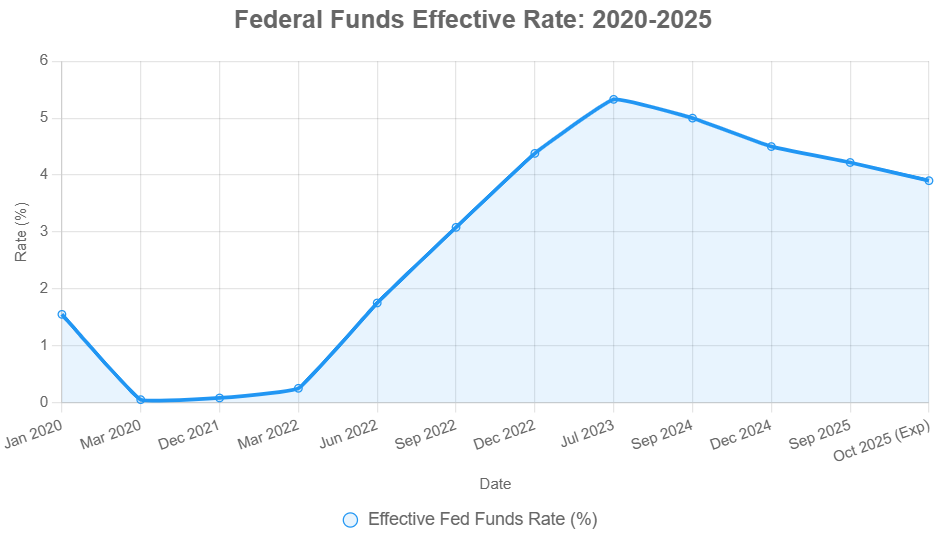
Historical Federal Funds Rate (2020-2025)

 
Key Events: 🔴 First Hike (Mar 2022) | 🔴 Peak Rate (Jul 2023) | 🔴 First Cut (Sep 2024)

Inflation and Unemployment Trends (2025)

 
Shows the Fed's balancing act: Inflation declining to 2.7%, Unemployment rising to 4.2%

September 2025 Rate Cut Probabilities by Source

 
High consensus (80%+) across all major financial institutions for September rate cut
4.33%
Current Fed Rate
August 2025
2.7%
Latest Inflation
July 2025
84%
Rate Cut Consensus
September 2025

Key Insights

  • The Fed raised rates aggressively from near-zero to 5.5% between March 2022 and July 2023
  • Rate cuts began in September 2024, bringing rates down to current 4.33% level
  • Inflation has steadily declined to 2.7%, approaching the Fed's 2% target
  • Unemployment has risen moderately to 4.2%, signaling some labor market softening
  • Strong market consensus (80%+) expects another rate cut in September 2025
Created by Norada Real Estate Investments

The Fed's Balancing Act: Understanding Interest Rates

First off, what exactly is the Fed doing with interest rates? Think of the federal funds rate as the main thermostat for the economy. It's the rate banks charge each other for overnight loans. When the Fed adjusts this rate, it affects borrowing costs everywhere – from the mortgage on your house and the interest on your car loan to how much it costs businesses to borrow money to expand.

The FOMC, the Fed's decision-making body, meets eight times a year to look at all the economic information and decide whether to raise, lower, or keep rates the same. For a long time, after the COVID-19 pandemic, rates were pretty much at zero to help the economy bounce back. But then, inflation started to climb really high.

To fight that, the Fed started raising rates aggressively in March 2022. They kept going until they hit a peak of 5.25%-5.50% in July 2023. Since then, they’ve been gradually bringing rates down, and as of mid-August 2025, the target range is 4.25%-4.50%. This slow cooling reflects progress on inflation but also a careful watch for any signs of the economy slowing down too much.

Generally, the Fed cuts rates when inflation is under control and they worry about people losing jobs or businesses struggling. They raise rates to cool down an economy that's getting too hot, which can lead to inflation.

Historically, when the Fed starts cutting rates, they often make bigger moves, maybe 50 to 75 basis points at a time. But today, the talk is mostly about a smaller 25-basis-point cut to bring the rate down to 4.00%-4.25%. Some analysts are even talking about the possibility of a larger 50-basis-point cut if the economic data shows a significant slowdown.

The Economic Clues: Why a Cut Looks Likely

So, what's an economy analyst like me seeing that makes a September cut seem so probable? The U.S. economy in mid-2025 presents a bit of a mixed bag, which is exactly the kind of situation where the Fed might decide to lower rates.

  • Inflation is Cooling, But Not Gone: The Consumer Price Index (CPI), which is how we measure inflation, rose by 2.7% year-over-year in July 2025. That’s the same as June, but it's still higher than it was earlier in the year, and notably above the Fed's target of 2%. Core inflation, which strips out food and energy prices, was 3.1%. While this is much lower than the highs we saw in 2022 (over 6%), it's still a bit persistent. This moderate inflation, however, shows that the Fed's previous rate hikes are working, and keeping rates too high might slow things down more than necessary.
  • Jobs Market Shows Some Weakness: The unemployment rate nudged up to 4.2% in July from 4.1% in June. It’s been hovering in that 4.0%-4.2% range for a while. More importantly, job growth, which is how many new jobs are created each month, slowed down significantly. We only saw 114,000 nonfarm payrolls added in July, which was less than many people expected. This slight cooling in the job market is something the Fed watches very closely because one of its main goals is to have as many people employed as possible. If unemployment starts to tick up more consistently, it’s a strong signal for the Fed to ease up on rates.
  • Economic Growth is Slowing Down: The overall economy, measured by Gross Domestic Product (GDP), grew at a rate of 3.0% in the second quarter of 2025. That’s actually pretty good and better than the first quarter. However, when you look at forecasts for the rest of 2025 and into 2026, most experts predict growth will slow down to around 1.5%. This anticipated slowdown is another reason why the Fed might consider cutting rates now, to help keep the economy moving along smoothly – what they call a “soft landing.”

Taken together, these economic signs suggest a scenario where inflation is getting closer to the target, and the economy is slowing without necessarily falling into a recession. But you can see how volatile these numbers can be; that weaker jobs report in July really boosted the chances of a rate cut.

Reading the Tea Leaves: Market Predictions and Probability Tools

That “80%” figure you might have heard is definitely in the ballpark, but as I mentioned, it’s actually on the lower end of what the markets are showing now. The best way to get a real-time look at what the markets expect is by using tools like the CME FedWatch Tool. This tool looks at futures contracts for the federal funds rate and basically shows how traders are betting on future rate decisions.

Here’s a snapshot of what the probabilities looked like around mid-August 2025:

Source/Date Probability of 25bp Cut Probability of 50bp Cut Probability of No Change
CME FedWatch (Aug 19) 82.9% 17.1% 0%
Bloomberg Analysts (Aug 18) 90%+ N/A <10%
Investing.com Fed Monitor (Aug 13) 91.8% 8.2% 0%
Barron's (Aug 13) 90.9% N/A 9.1%
Growbeansprout (Aug 17) 83.4% N/A 16.6%

(Note: Probabilities are aggregated and may not sum to exactly 100% across all outcomes in every single reporting instance due to how different sources round and present data.)

As you can see, many sources are putting the odds of a cut at 90% or higher. This consensus is a strong signal, but it’s crucial to remember that these are just probabilities. They can change day by day based on new economic reports.

You see these numbers reflected all over social media, too, with people discussing predictions and linking them to how other markets, like cryptocurrency or gold, might react.

What Jerome Powell is Saying (and What It Means)

Jerome Powell, as the head of the Fed, carefully chooses his words. He’s emphasized that the Fed is “data-dependent,” meaning they base their decisions on the latest economic information. In the Fed's July 30, 2025, statement, he shared that they were keeping rates at the current 4.25%-4.50% level while they “assess incoming data, the evolving outlook, and the balance of risks.”

He pointed out that while economic activity has been expanding at a solid pace, inflation is still “elevated,” and the job market has “shown signs of improving.” Crucially, he reiterated the Fed's commitment to getting inflation down to 2% and supporting maximum employment. He also made it clear that the Fed is “prepared to adjust” its policy if they see new risks.

Powell's upcoming appearance at the Jackson Hole Economic Symposium on August 22, 2025, will be closely watched for any hints about the Fed's thinking. There’s always speculation around these events, from thoughts on future rate cuts to even discussions about his own position at the Fed. While he hasn't said a cut is guaranteed, he's certainly not ruling it out. He’s been pushing back against expectations for very rapid interest rate cuts, suggesting a cautious approach.

Weighing the Risks and What Comes Next

Even with such high probabilities, there are always things that could change the Fed's mind. If inflation suddenly becomes “sticky” again – maybe because of things like new tariffs on imported goods driving prices up – the Fed might delay a cut. Or, if upcoming economic data surprises everyone by being much stronger than expected, they might hold off.

Some people still believe the odds are lower if the economy remains strong, citing times in the past when markets were overly optimistic about rate cuts.

So, what does a rate cut – or no cut – mean?

  • For Consumers: Lower interest rates mean it will be cheaper to borrow money. This could mean lower monthly payments on mortgages if you’re looking to refinance or buy a new home, and potentially lower interest rates on car loans and credit cards.
  • For Businesses: More affordable borrowing means businesses might find it easier to invest in new equipment, hire more people, or expand their operations.
  • For Investors: When interest rates go down, investments like stocks and other riskier assets often become more attractive, potentially leading to higher prices. On the flip side, a rate cut can make existing bonds worth less if their fixed interest rate is now lower than new bonds being issued. A cut can also make the U.S. dollar weaker against other currencies. If the Fed doesn't cut rates, it might mean they are more concerned about inflation or economic strength, which could make the stock market a bit nervous.

The Bottom Line

Based on what I'm seeing in the economic data and how the markets are reacting, the chance of the Federal Reserve cutting interest rates in September 2025 is very high, likely in the 85-95% range. This is driven by inflation that's moving in the right direction, a job market that's showing some signs of cooling, and a general expectation that economic growth will slow down.

However, the Fed’s core principle is to be “data-dependent,” so nothing is set in stone until the FOMC officially makes its decision. Always keep an eye on Jerome Powell's comments and any new economic reports that come out between now and the September meeting. These will be the key factors that could either confirm or change the current expectations.

Position Your Portfolio Ahead of the Fed’s Next Move

The Federal Reserve’s next rate decision could shape real estate returns through the rest of 2025. Whether or not a rate cut happens, smart investors are acting now.

Norada Real Estate helps you secure cash-flowing properties in stable markets—shielding your investments from volatility and interest rate swings.

HOT NEW LISTINGS JUST ADDED!

Talk to a Norada investment counselor today (No Obligation):

(800) 611-3060

Get Started Now

Recommended Read:

  • Interest Rate Forecast for September 2025: Will Fed Cut Rates?
  • Fed Holds Interest Rates Steady for the Fifth Time in 2025
  • Fed Projects Two Interest Rate Cuts Later in 2025
  • Interest Rate Predictions for the Next 3 Years: 2025, 2026, 2027
  • When is Fed's Next Meeting on Interest Rate Decision in 2025?
  • Interest Rate Predictions for the Next 10 Years: 2025-2035
  • Will the Bond Market Panic Keep Interest Rates High in 2025?
  • Interest Rate Predictions for 2025 by JP Morgan Strategists
  • Interest Rate Predictions for Next 2 Years: Expert Forecast
  • Fed Holds Interest Rates But Lowers Economic Forecast for 2025
  • Fed Indicates No Rush to Cut Interest Rates as Policy Shifts Loom in 2025
  • Fed Funds Rate Forecast 2025-2026: What to Expect?
  • Interest Rate Predictions for 2025 and 2026 by NAR Chief
  • Market Reactions: How Investors Should Prepare for Interest Rate Cut
  • Impact of Interest Rate Cut on Mortgages, Car Loans, and Your Wallet
 

Filed Under: Economy, Financing Tagged With: Economy, Fed, Fed Rate Cut, Federal Reserve, inflation, Interest Rate

How Will the Interest Rate Cut in September 2025 Impact Your Wallet?

September 7, 2025 by Marco Santarelli

How Will the September 2025 Interest Rate Cut Impact Your Wallet?

The Federal Reserve is likely to cut interest rates in September, and you're probably wondering, “How will this affect me?” In short, the anticipated interest rate cut in September will likely lead to lower borrowing costs for things like credit cards and car loans, but it could also mean lower returns on your savings accounts. The stock market might get a small boost too. But before you start celebrating or panicking, let's dive into the details.

I know, talking about the Federal Reserve and interest rates can sound like something only economists care about. But trust me, this decision can have a real impact on your everyday life, from the interest you pay on your credit card to the return you get on your savings. As somebody who’s been closely watching economic trends for years, I’m going to explain how this potential rate cut could affect your money.

How Will the Interest Rate Cut in September 2025 Impact Your Wallet?

Why is This Even Happening?

First, let's understand why the Fed is considering cutting rates. The Federal Reserve has two main jobs: to keep prices stable (control inflation) and to keep unemployment low. Lately, inflation has been cooling down, but there are concerns about the job market slowing down too. Fed Chair Jerome Powell even talked about “downside risks” to employment. Cutting interest rates is one way the Fed can try to boost the economy and encourage businesses to hire more people.

Think of it like this: imagine the economy is a car. If it's going too fast (high inflation), the Fed taps the brakes by raising interest rates. If it's going too slow (high unemployment), the Fed steps on the gas by lowering interest rates to get things moving. They are trying to achieve the right balance for us all.

Borrowing Costs: Good News for Debtors?

One of the most immediate effects of an interest rate cut is on borrowing costs. This is where you might see some relief if you have certain types of debt.

  • Credit Cards: If you have a credit card with a variable interest rate (which most people do), you could see your APR (Annual Percentage Rate) drop within a couple of billing cycles. Even a small decrease can make a difference, especially if you're carrying a balance.

  • Auto Loans: If you're planning to buy a car, an interest rate cut could mean a slightly lower interest rate on your auto loan, saving you some cash over the life of the loan.

  • Mortgages: Mortgage rates are more complicated, as I observe that they are more closely tied to the 10-year Treasury yield than the federal funds rate. However, a rate cut could indirectly lead to lower mortgage rates, especially for adjustable-rate mortgages (ARMs). If you have a fixed-rate mortgage, you likely won’t see an immediate impact, but you could consider refinancing if rates drop significantly.

Here's a simple example: Let’s say you have a credit card with a $5,000 balance and an APR of 20%. A 0.25% rate cut might not seem like much, but it could save you around $12.50 per year in interest. Over time, those savings can add up.

Savings Accounts and CDs: Not-So-Good News for Savers

While borrowers might benefit from lower rates, savers could see their returns shrink. Banks typically respond to rate cuts by lowering the interest rates they offer on savings accounts, certificates of deposit (CDs), and money market funds.

  • Savings Accounts: Don't expect to get rich off your savings account. The average savings account APY (Annual Percentage Yield) is already quite low, and it could go even lower after a rate cut.

  • CDs: If you're looking for a slightly higher yield, CDs might be an option. However, keep in mind that you'll typically have to lock your money up for a specific period of time.

Here’s a key point: If you're serious about saving, shop around for the best rates. Online banks often offer higher yields than traditional brick-and-mortar banks. I have found that online accounts are highly fruitful and easy to maintain.

The Housing Market: A Little Boost?

The housing market is a complex beast, and there are many factors that influence it, including interest rates. A rate cut could make buying a home more affordable, potentially stimulating demand. However, it's not quite so simple:

  • Mortgage Rates: As I mentioned before, mortgage rates aren't directly tied to the Fed's rate. But they can be influenced by it. Lower rates could make it easier for people to afford a mortgage, potentially increasing home sales.

  • Home Prices: High home prices and limited inventory continue to be major challenges in many markets. A rate cut might provide a small boost, but it's unlikely to solve these underlying issues.

  • Refinancing: If you already own a home, a rate cut could be an opportunity to refinance your mortgage and potentially lower your monthly payments.

Investments and Stock Markets: Will Your Portfolio Get a Sweetener?

Historically, rate cuts tend to be favorable for stock markets. They're often seen as a sign that the Fed is trying to support economic growth, which can boost corporate profits and valuations. Sectors that are particularly sensitive to interest rates, like real estate and utilities, might see even bigger gains. So, there is a high potential for return. However, markets have a knack for being unpredictable.

Here's what to watch for: The Stock market gains could also depend on market sentiment and other economic factors. Don't assume that a rate cut will automatically translate into huge gains for your investment portfolio.

However, the impact on your individual investments may depend on many parameters, keep an eye on the following:

  • Bonds – Bond value will increase as yields fall, benefiting bondholders since issues will yield less.
  • Equities – Investments are generally boosted with growth stimulations.

The Bigger Picture: Economic Growth vs. Inflation

Ultimately, the Fed's decision to cut interest rates is aimed at supporting the overall economy. The goal is to encourage spending and investment, which can lead to job creation and economic growth. However, there are also risks to consider, most notably the risk of inflation. I believe that inflation can arise due to tariff influences.

Let's not go into very complex economic theories which are very hard to apprehend, but the primary risk the federal banks are trying to alleviate is economic recession.

  • Tariffs: Ongoing trade tariffs could put upward pressure on prices, potentially offsetting the benefits of lower interest rates.

  • Inflation: If inflation starts to rise again, the Fed might have to reverse course and raise rates, even if the economy is still weak.

The Fed is walking a tightrope, trying to balance the risks of slowing growth and rising inflation. Only future will tell the true economic condition.

What Should You Do?

So, what should you do in response to the likely rate cut? Here are a few things to consider:

  • Review your debt: If you have high-interest debt, explore options for refinancing or consolidating it.
  • Shop around for savings rates: Don't settle for a low APY on your savings account. Look for better options online.
  • Consider your investment strategy: Talk to a financial advisor to make sure your portfolio is properly diversified and aligned with your goals.
  • Stay informed: Keep an eye on economic news and updates from the Federal Reserve.

The potential interest rate cut in September is just one piece of the puzzle. It's important to stay informed and make smart financial decisions based on your individual circumstances.

Keep in mind that I'm not a financial advisor, so this information is for educational purposes only. Be sure to consult with a qualified professional before making any major financial decisions.

Position Your Portfolio Ahead of the Fed’s Next Move

The Federal Reserve’s next rate decision could shape real estate returns through the rest of 2025. Whether or not a rate cut happens, smart investors are acting now.

Norada Real Estate helps you secure cash-flowing properties in stable markets—shielding your investments from volatility and interest rate swings.

HOT NEW LISTINGS JUST ADDED!

Talk to a Norada investment counselor today (No Obligation):

(800) 611-3060

Get Started Now

Recommended Read:

  • Fed's Powell Hints at First Interest Rate Cut of 2025 in Jackson Hole Speech
  • Jerome Powell and the Fed: 80%+ Chance of Interest Rate Cut in September
  • Interest Rate Forecast for September 2025: Will Fed Cut Rates?
  • Fed Holds Interest Rates Steady for the Fifth Time in 2025
  • Fed Projects Two Interest Rate Cuts Later in 2025
  • Interest Rate Predictions for the Next 3 Years: 2025, 2026, 2027
  • When is Fed's Next Meeting on Interest Rate Decision in 2025?
  • Interest Rate Predictions for the Next 10 Years: 2025-2035
  • Will the Bond Market Panic Keep Interest Rates High in 2025?
  • Interest Rate Predictions for 2025 by JP Morgan Strategists
  • Interest Rate Predictions for Next 2 Years: Expert Forecast
  • Fed Holds Interest Rates But Lowers Economic Forecast for 2025
  • Fed Indicates No Rush to Cut Interest Rates as Policy Shifts Loom in 2025
  • Fed Funds Rate Forecast 2025-2026: What to Expect?
  • Interest Rate Predictions for 2025 and 2026 by NAR Chief
  • Market Reactions: How Investors Should Prepare for Interest Rate Cut
  • Impact of Interest Rate Cut on Mortgages, Car Loans, and Your Wallet


Filed Under: Economy, Financing Tagged With: Economy, Fed, Fed Rate Cut, Federal Reserve, inflation, Interest Rate

Jerome Powell’s Hint for First Interest Rate Cut of 2025 in Jackson Hole Speech

September 7, 2025 by Marco Santarelli

Jerome Powell and the Fed: 80%+ Chance of Interest Rate Cut in September

In his much-anticipated August 22, 2025, Jackson Hole speech, Powell hinted at Federal Reserve rate cuts, acknowledging a shift in economic risks, but he made it clear that the exact timing remains a big question mark, leaving us all waiting for more data. For those of us keeping a close eye on the economy, this wasn't a firm promise, but it was certainly a strong signal that the wind might be changing direction.

Jerome Powell's Hint for First Interest Rate Cut of 2025 in Jackson Hole Speech

Every year, the quaint, majestic setting of Jackson Hole, Wyoming, becomes the temporary capital of the financial world. It's where the Federal Reserve Bank of Kansas City hosts its annual Economic Policy Symposium, bringing together central bankers, economists, and policymakers from around the globe. This isn't just a fancy gathering; it's a crucial stage, often used by the Federal Reserve Chair to drop hints or even make big announcements about the future of our money.

I've always viewed Jackson Hole as the Fed's most significant “tell-all” moment outside of official meetings. Think of it like a coach's pre-game press conference: while they won't reveal their entire strategy, they often give enough clues for seasoned observers to understand the general direction. In 2024, Powell used this very platform to confirm that rate cuts were coming, setting a precedent. So, when he stepped up to the podium in 2025, the world leaned in, hoping for another clear sign. And he delivered, albeit with careful, measured words.

Deciphering Powell's 2025 Address: A Delicate Balancing Act

On August 22, 2025, Chairman Powell delivered what might be his final Jackson Hole speech as Fed Chair, titled “Economic Outlook and Framework Review.” As I listened, it became clear his focus was, as always, on the Fed's dual mandate: keeping prices stable (aiming for a 2% inflation rate) and making sure as many people as possible have jobs (maximum employment). But the economic picture he painted was complex, almost like a puzzle with pieces that don't quite fit together perfectly.

Shifting Risks: The Labor Market Cools, But Inflation Lingers

Powell highlighted a shifting economic balance. On one hand, the job market, which had been red-hot for so long, was starting to show signs of cooling. The July jobs report, for instance, was weaker than expected, with only 35,000 new jobs added. Worse, previous months' numbers for May and June were revised downwards, suggesting the slowdown might be more pronounced than initially thought. The unemployment rate, while still historically low at 4.2%, has climbed almost a full percentage point from its lowest point. As an observer of economic cycles, I find that particular statistic concerning, as Powell himself noted, such a rise often happens right before or during an economic downturn. It's like the engine light coming on in your car – it might not be a huge problem yet, but it deserves immediate attention.

On the other hand, the monster of inflation still hasn't been completely tamed. Prices are still stubbornly above the Fed's 2% target. And to add another layer of complexity, President Trump's recently imposed tariffs are, in my opinion, throwing a wrench into the works. While Powell suggested their inflationary impact might be “short-lived,” I believe any added pressure on prices, especially from policy decisions, makes the Fed's job much harder. It's like trying to put out a fire while someone keeps tossing in kindling.

The Dual Mandate Under Pressure

This delicate situation puts the Fed's dual mandate under immense pressure. How do you support a strong job market when it's slowing down, while simultaneously fighting inflation that just won't go away? Powell acknowledged this difficulty, stating that “The balance of risks appears to be shifting.” This phrase, coming from the Fed Chair, is code for: “We're looking at things differently now.” It means the current policy of having the federal funds rate at 4.25%–4.5%—a restrictive stance meant to slow things down—might need to change.

Data-Dependent Stance: Why No Firm Timeline?

Despite the clear signal, Powell was careful. He avoided giving a firm commitment to a specific timeline, like for the upcoming September 17–18 Federal Open Market Committee (FOMC) meeting. This “data-dependent” approach is Powell's hallmark. He's essentially telling us, “Don't hold me to a date; hold me to the numbers.”

In my view, this cautious approach is smart. The global economy is a complex beast, and unexpected events can change the picture overnight. Committing too early would paint the Fed into a corner. He emphasized the Fed's commitment, saying, “We will do everything we can to support a strong labor market as we make further progress toward price stability.” To me, this shows a deep understanding of the human element of the economy – it's not just about numbers, but about people's jobs and their ability to afford daily necessities.

My Take on the Economic Puzzle: What I See Happening

From my vantage point, the economic situation in 2025 feels like we're walking a tightrope. The labor market, while still strong by historical standards, is definitely cooling. When I see numbers like 35,000 new jobs and downward revisions, it makes me wonder if companies are getting nervous. Are they seeing a drop in demand? Are they becoming more cautious about hiring? This isn't necessarily a bad thing if it helps bring inflation down without a big surge in unemployment. However, if this trend continues, we could quickly find ourselves in a recessionary environment, and that's precisely what the Fed wants to avoid.

The inflation picture is even trickier. We've come a long way from the peak, but getting that last bit down to 2% is proving to be incredibly difficult. My strong opinion is that the tariffs President Trump implemented, while perhaps intended to protect domestic industries, are creating an unnecessary headwind for the Fed. Tariffs often lead to higher prices for imported goods, which then trickle down to consumers. Even if the impact is “limited,” as Powell suggested, it still adds a layer of uncertainty that complicates the inflation fight. The expectation of the core Personal Consumption Expenditures (PCE) price index at 2.6% in August 2025 is still too high for comfort, and it means the Fed's work is far from over.

I also believe that Powell's emphasis on “shifting risks” is a nod to the fact that the risk of doing too much (keeping rates high for too long) might now outweigh the risk of doing too little (cutting rates too early). It's a subtle but significant pivot that tells me the Fed is genuinely concerned about the possibility of tipping the economy into a recession if they don't ease up soon.

The Market's Enthusiastic Nod: What Happened on Wall Street

When Powell speaks, Wall Street listens. And this time, they didn't just listen; they reacted with enthusiasm. His comments, seen as “dovish-leaning” (meaning he favors easier monetary policy), sparked a noticeable rally.

  • Stock Market Soared: The S&P 500 climbed 1.6%, the Nasdaq shot up 2.1%, and the Dow Jones Industrial Average gained a strong 2%, even approaching a record high. Investors clearly interpreted Powell's words as a strong hint that a rate cut was on the horizon, likely in September. When interest rates go down, borrowing becomes cheaper for companies, which can boost their profits and make their stocks more attractive.
  • Bonds and the Dollar Fell: The two-year Treasury yield dropped nearly 10 basis points to 3.69%, and the 10-year Treasury yield fell to 4.27%. Similarly, the U.S. dollar weakened against major currencies like the euro and yen. This is typical market behavior when rate cuts are expected. Lower bond yields mean bonds are less attractive, and a weaker dollar can make U.S. exports cheaper.
  • Rate Cut Probabilities Spiked: Before Powell's speech, the CME FedWatch Tool showed markets were pricing in a 72%–85% chance of a 25-basis-point (bps) rate cut in September. After the speech, those expectations jumped significantly, with some estimates going as high as 90%. Some analysts even started talking about a 50-bps cut if the August jobs data turned out to be particularly weak.

Here's a quick look at how expectations shifted:

Indicator Pre-Speech Expectation Post-Speech Expectation
Probability of 25-bps Cut 72%–85% 90%
Probability of 50-bps Cut 15%–28% 10%–30%
S&P 500 Movement Flat +1.6%
10-Year Treasury Yield 4.33% 4.27%

Table 1: Market Expectations and Reactions to Powell’s 2025 Jackson Hole Speech

To me, this market reaction isn't just about immediate profits; it's a vote of confidence. Investors believe the Fed is now more attuned to the risks of over-tightening and is ready to act to prevent a deeper economic slump.

Understanding the Fed's Playbook: The Policy Framework Review

Beyond the immediate talk of rate cuts, Powell also used his Jackson Hole platform to discuss a significant, five-year review of the Fed's monetary policy framework. On August 22, 2025, the Fed announced a revised “Statement on Longer-Run Goals and Monetary Policy Strategy.”

This new framework is quite important. It moves away from the 2020 “flexible average inflation targeting” approach. That older idea allowed the Fed to let inflation run a bit hot (above 2%) for a while to make up for times when it was too low. The new framework, as I understand it, emphasizes being more adaptable to rapid economic changes. This flexibility is a direct lesson learned from the wild swings of the pandemic era, when inflation surged much faster and higher than anyone expected.

Powell put it simply: “A key objective has been to make sure that our framework is suitable across a broad range of economic conditions.” In my opinion, this shows a maturing understanding within the Fed that the economy can throw curveballs you never anticipated. Building in more adaptability is a smart move, acknowledging that one-size-fits-all rules don't work in a constantly evolving global economy.

Beyond the Data: Political Winds and the Fed's Independence

It's impossible to discuss the Federal Reserve in 2025 without acknowledging the political backdrop. President Trump has been openly critical of Powell, pushing for aggressive rate cuts and even making controversial calls for the resignation of Fed Governor Lisa Cook over unsubstantiated allegations.

I've always believed that the independence of the central bank is one of its most vital characteristics. It allows the Fed to make tough, often unpopular, decisions based solely on economic data, without political interference. Powell took a moment in his speech to implicitly defend this principle, stating, “Having an independent central bank has served the public well.” This wasn't just a throwaway line; it was a firm stand against political pressure, reminding everyone that the Fed's decisions are for the long-term health of the economy, not short-term political gains. It's a statement that, in my professional opinion, defines a crucial aspect of Powell's legacy.

What This Means for You and Me: Impact on Borrowing Costs

So, what does all this central bank talk mean for the average person and small businesses? A potential rate cut, while good news, won't necessarily translate into immediate, dramatic savings.

  • Mortgages: Ted Rossman of Bankrate noted that a 25-50 bps cut would likely have a modest effect on mortgage rates. We've actually already seen some drops in mortgage rates, hitting their lowest in 15 months, so some of that good news is already “priced in.”
  • Credit Cards and Auto Loans: For things like credit card interest rates and auto loans, the relief might be even slower to arrive. These rates don't always move in lockstep with the federal funds rate, especially for existing balances.
  • Businesses: For businesses looking to borrow money for expansion or operations, lower rates could mean cheaper loans, encouraging investment and potentially job creation.

I'd advise consumers and businesses to remain cautiously optimistic. While a cut is coming, don't expect your credit card interest rate to plummet overnight. The impact tends to be gradual. However, if the Fed were to cut rates more aggressively – say, a 50-bps reduction if the August jobs report is particularly grim – then we might see more significant movements across the board.

Looking Ahead: The Road to the September FOMC Meeting

The financial world now has its eyes firmly fixed on the Fed's next meeting, scheduled for September 17–18, 2025. This meeting will be pivotal, and the decision will heavily rely on the economic data released in the coming weeks.

Here are the key data points I'll be watching, and you should too:

  • Core PCE Inflation Data: Expected on August 29, 2025. This is the Fed's preferred measure of inflation. If it comes in hotter than the expected 2.6%, it could make the Fed hesitant about a big cut. If it surprises to the downside, it might give them more confidence.
  • August Jobs Report: Due on September 6, 2025. This is arguably the most critical piece of data. If it shows significant weakness—even more so than July's disappointing numbers—it could increase the odds of a more substantial 50-bps cut. Conversely, a surprisingly strong report might cause the Fed to stick to a smaller cut or even delay.

The market's expectation for a 25-bps cut is strong right now. But as I've seen countless times in my career, the market can be fickle. A weaker labor market could push for a 50-bps reduction, which would be quite a bold move. However, if inflation proves more stubborn than anticipated, the Fed might surprise everyone by holding rates steady, potentially disappointing markets and leading to some volatility.

Table 2: Upcoming Economic Data and Events Influencing Fed Policy

Data Release Date Expected Impact
Core PCE Inflation August 29, 2025 Could confirm inflation trends (2.6% expected)
August Jobs Report September 6, 2025 Weak data may increase odds of a 50-bps cut
FOMC Meeting September 17–18, 2025 Decision on rate cut size and timing

Conclusion

Jerome Powell's 2025 Jackson Hole speech was, in essence, a carefully crafted message signaling the Federal Reserve's openness to cutting interest rates. Amid a cooling labor market and persistent inflation, he acknowledged a “shifting balance of risks,” indicating a potential pivot in monetary policy. While he skillfully avoided committing to a firm timeline, his data-dependent stance and the recognition of these evolving risks significantly boosted market expectations for a rate cut, likely in September.

This speech also served as a moment for Powell to underscore the Fed's revised, more adaptable policy framework and to staunchly defend the central bank's crucial independence against political pressures. As we eagerly await the September FOMC meeting, the upcoming economic data—particularly the August jobs report and core PCE inflation—will be the critical pieces of the puzzle that determine the Fed's next move. The implications for markets, consumers, and the broader economy are substantial, and I'll be watching every twist and turn with keen interest, just like many of you.

Position Your Portfolio Ahead of the Fed’s Next Move

The Federal Reserve’s next rate decision could shape real estate returns through the rest of 2025. Whether or not a rate cut happens, smart investors are acting now.

Norada Real Estate helps you secure cash-flowing properties in stable markets—shielding your investments from volatility and interest rate swings.

HOT NEW LISTINGS JUST ADDED!

Talk to a Norada investment counselor today (No Obligation):

(800) 611-3060

Get Started Now

Recommended Read:

  • Jerome Powell and the Fed: 80%+ Chance of Interest Rate Cut in September
  • Interest Rate Forecast for September 2025: Will Fed Cut Rates?
  • Fed Holds Interest Rates Steady for the Fifth Time in 2025
  • Fed Projects Two Interest Rate Cuts Later in 2025
  • Interest Rate Predictions for the Next 3 Years: 2025, 2026, 2027
  • When is Fed's Next Meeting on Interest Rate Decision in 2025?
  • Interest Rate Predictions for the Next 10 Years: 2025-2035
  • Will the Bond Market Panic Keep Interest Rates High in 2025?
  • Interest Rate Predictions for 2025 by JP Morgan Strategists
  • Interest Rate Predictions for Next 2 Years: Expert Forecast
  • Fed Holds Interest Rates But Lowers Economic Forecast for 2025
  • Fed Indicates No Rush to Cut Interest Rates as Policy Shifts Loom in 2025
  • Fed Funds Rate Forecast 2025-2026: What to Expect?
  • Interest Rate Predictions for 2025 and 2026 by NAR Chief
  • Market Reactions: How Investors Should Prepare for Interest Rate Cut
  • Impact of Interest Rate Cut on Mortgages, Car Loans, and Your Wallet
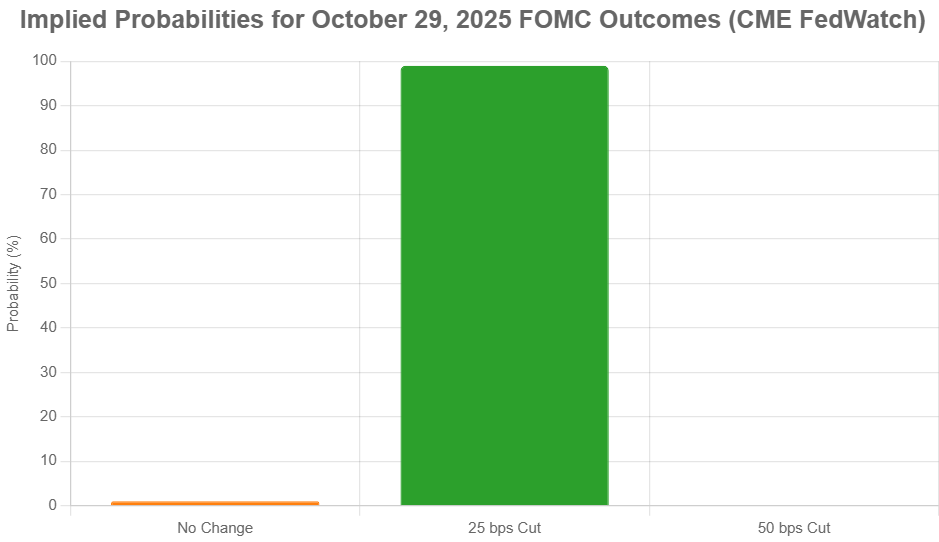
 

Filed Under: Economy, Financing Tagged With: Economy, Fed, Fed Rate Cut, Federal Reserve, inflation, Interest Rate

Will Trump Succeed in Sacking Federal Reserve Governor Lisa Cook?

August 26, 2025 by Marco Santarelli

Will Trump Succeed in Sacking Federal Reserve Governor Lisa Cook?

Did you ever think you'd see a President try to fire a Federal Reserve Governor? Well, that's exactly what happened when President Donald Trump tried to remove Lisa Cook from her position. The move immediately raised a ton of questions: Can he actually do that? What would that mean for our wallets? Let's dig deep into what happened, why it matters, and what could happen next.

While it's unlikely his attempt will succeed legally, given Fed governors can only be dismissed “for cause,” this action could still erode trust in the Fed's autonomy, potentially leading to higher long-term inflation risks and market volatility, though short-term rate cuts remain data-driven.

Will Trump Succeed in Sacking Federal Reserve Governor Lisa Cook?

What's the Deal With the Federal Reserve Anyway?

Okay, before we dive into the drama, let's refresh our memory on the Federal Reserve. Think of it as the backbone of the US economy. It's in charge of keeping prices stable (so things don't get too expensive too fast) and making sure enough people have jobs. It does this by setting interest rates, which influence how much it costs to borrow money.

The Fed is run by a Board of Governors. These folks are supposed to be independent, meaning they aren't supposed to be swayed by politics when making decisions. This is super important because it keeps the economy stable. If politicians had too much control, they might make decisions that are good for them right now, but bad for the economy later.

Lisa D. Cook is one of these Governors. Appointed by President Biden in 2022, she's an economist whose work has focused on things like racial disparities and how they affect the economy. Her views on the economy are generally in line with the Fed's current approach.

So, What Exactly Did Trump Do?

On August 25, 2025, things got wild. President Trump announced on social media that he was firing Lisa Cook, claiming she had committed mortgage fraud. He said she had falsely claimed two properties as her primary residence to get better loan terms.

Cook responded immediately, saying that Trump didn't have the power to fire her and that she wasn't going anywhere. This set the stage for a legal showdown and sent ripples through the financial world.

But Can he Do That? The Legal Angle

This is where things get interesting. The law says a Fed Governor can only be removed “for cause”. But what does “for cause” even mean? No one really knows! It's never been tested in court before.

According to some legal experts, unproven allegations probably aren't enough to justify firing someone. Cook's lawyers are already preparing to fight this, arguing that she hasn't had any due process and that the allegations are just a pretext to get her out of the Fed. This could end up in the Supreme Court, which would be a huge deal for the future of the Fed.

Here's a breakdown:

  • The Law: Federal Reserve Act allows removal “for cause.”
  • The Debate: What constitutes “for cause”? Are unproven allegations enough?
  • The Fight: Cook vows to fight the removal in court.
  • The Stakes: Could redefine presidential power over the Fed.

Think of it like this: Imagine your boss trying to fire you for something someone said, without giving you a chance to defend yourself. Seems pretty unfair, right? That's the kind of argument Cook's team is making.

Why Did Trump Do This?

Okay, let's be real. This probably isn't just about mortgage applications. Trump has been critical of the Fed for years, especially when he thought they weren't cutting interest rates fast enough. By getting Cook out of the way, he might be hoping to replace her with someone who's more likely to agree with his economic policies.

There were also allegations from Bill Pulte, a Trump ally, which added fuel to the fire. Basically anything negative that could be thrown her way was.

Some folks think that Trump wants to weaken the Fed's independence and make it easier to pump up the economy before the next election. This could lead to short-term gains, but it could also lead to long-term problems like inflation.

What Happened to Wall Street when Trump Announced the Planned Firing?

Believe it or not, the immediate reaction in the financial markets was fairly tame. But honestly that might be because everyone is expecting her to win and nothing will ultimately come of it.

  • The Dollar Dipped: The U.S. dollar index fell a bit – 0.3%
  • Gold Got a Bump: Gold prices rose to $2,520 an ounce
  • Stocks Wobbled: Futures dipped down slightly (SP500 down 0.3%)

Here's why this matters:

  • Dollar down: This may signal reduced confidence in the US economy.
  • Gold up: Investors were looking for safe investments.
  • Stocks down: People were wary of the possible economic consequences

The Treasury bond market also reacted; the trend indicates a steepening curve, where short term prices went down on hopes of rate cuts. But the long term yields went up suggesting higher inflation overall.

What Could Happen Next? The Ripple Effect

Let's break down the possible consequences:

  • Interest Rates: Remember, the Fed sets interest rates. If Trump gets his way and replaces Cook with someone who agrees with him, we could see faster and bigger rate cuts. That might sound good, but it could also fuel inflation and hurt the long-term health of the economy. It's a gamble.
  • The Fed's Credibility: The Fed's power comes from its independence. If people start to think the Fed is just doing what the President wants, they might lose faith in it. That could lead to all sorts of problems, like higher inflation and unstable markets.
  • The Economy as a Whole: This is the big one. A politically influenced Fed could make mistakes that hurt everyone. Imagine prices skyrocketing, your savings losing value, and the economy going into a tailspin. It sounds scary, but it's a real risk if we don't protect the Fed's independence. Nobody wants to see a repeat of the horrible inflation from the 1970s.

Think About It This Way:

The Fed is like a doctor treating a patient. You want the doctor to make decisions based on what's best for the patient's health, not on what the patient (or someone else) wants to hear. If the doctor starts listening to politics instead of science, things could go very wrong!

What Can We Do?

So, what do you and I do with all this information?

  • Stay Informed: Keep track of what's happening. Read news from different sources. Be critical of what you hear.
  • Talk About It: Discuss these issues with your friends, family, and neighbors. The more people understand what's at stake, the better.
  • Hold Our Leaders Accountable: Let your elected officials know that you care about the Fed's independence. Tell them to protect it.

This whole situation with Lisa Cook is a wake-up call. It shows how important it is to have an independent Federal Reserve that can make decisions based on what's best for the economy AS A WHOLE, not on what's best for politics. Keeping the Fed out of politics is vital for long-term economic stability and for ensuring that our money keeps its value now and for the future.

Navigating Political Shifts & Market Uncertainty

With headlines questioning whether Trump could fire Fed Governor Lisa Cook, the housing and mortgage markets are bracing for potential volatility. But as an investor, you don’t have to sit on the sidelines.

Norada helps you build a resilient real estate portfolio designed to weather political moves, policy shifts, and interest rate changes—so your wealth strategy stays on track.

Secure Cash-Flowing Properties Today!

Talk to a Norada investment counselor now (No Obligation):

(800) 611-3060

Get Started Now

Read More:

  • Trump’s Section 8 Housing Cuts: Will Millions Face Homelessness?
  • Top Reasons Behind the End of the Trump-Musk Alliance in 2025
  • What is Trump's Plan for Privatizing Fannie Mae and Freddie Mac?
  • Elon Musk's $10,000 Homes: A Game Changer for the Housing Market?
  • Elon Musk Calls for Major Reforms at the U.S. Federal Reserve
  • Can Elon Musk Revolutionize Affordable Housing for Americans?
  • Emergency Price Relief on Housing: What Does Trump's Order Mean?
  • Trump's Inaugural Speech: Bold Plans on Border, Economy, and More
  • What Happens to Kamala Harris' Proposal of $25,000 Homebuyer Assistance Now?
  • Housing Market Predictions for 2025 if “Trump” Wins Election
  • 10 Housing Market Predictions Under Trump for the Next 4 Years
  • Will Donald Trump's Victory Reshape the Housing Market in 2025?
  • Trump vs Harris: Housing Market Predictions Post-Election
  • 10 Housing Market Predictions Under Trump for the Next 4 Years
  • Will Donald Trump's Victory Reshape the Housing Market in 2025?

Filed Under: Economy, Trending News Tagged With: Fed, Federal Reserve, Federal Reserve Governor

Federal Reserve Interest Rate Predictions for the Next 2 Years

August 21, 2025 by Marco Santarelli

Federal Reserve Interest Rate Predictions for the Next 2 Years

Are you wondering where interest rates are heading? You're not alone! The Federal Reserve's (the Fed's) interest rate decisions affect everything from your mortgage payments to the growth of your investments. So, what's the scoop for the next two years? Expert predictions suggest a gradual decrease in interest rates.

As of August 2025, the federal funds rate sits at 4.25%-4.50%. Experts at the Federal Reserve and major financial institutions anticipate rates moving downward, although the pace and extent of these cuts remain uncertain, driven by factors like inflation, economic growth, and global events. Let's dive deep into what's influencing these predictions and what they mean for you.

Federal Reserve Interest Rate Predictions for the Next 2 Years

Before we get into the nitty-gritty, let's remember why paying attention to interest rates is so important. Think of them as the price of borrowing money.

  • For You: They affect how much you pay for mortgages, car loans, credit cards, and how much you earn on your savings. Lower rates mean cheaper loans but smaller returns on your savings.
  • For Businesses: They influence how much it costs companies to borrow money to invest and expand.
  • For the Economy: They help control inflation (rising prices) and support economic growth.

Basically, they are a big deal for all.

August 2025: Where Interest Rates Stand Right Now

As I write this in August 2025, the Federal Reserve (the Fed, for short) has kept the federal funds rate steady at a range of 4.25% to 4.50% in its July meeting. The Fed kept the rate unchanged for the fifth time in 2025. This federal funds rate is the benchmark interest rate for the US economy. It's what banks charge each other for overnight lending. It affects things like mortgages, credit cards, and savings accounts. The Fed put a hold on hiking interest rates after raising it many times in the recent past to try to curb inflation.

The Fed’s trying to balance controlling inflation, while making sure the economy keeps growing. It's a tough balancing act! The Fed's aiming for 2% inflation over the long term, and it's watching the data like a hawk before making any more moves.

Decoding the Fed's Crystal Ball: The SEP Projections

To get a sense of where the central bankers think rates are headed, you look at the Fed's Summary of Economic Projections (SEP). This report, updated every few months, gives us clues on what the Fed thinks will happen with interest rates, inflation, the economy, and jobs. I like to think of it as the Fed's way of saying, “Here's what we think will happen if we do what we think we should do.” It’s not a guarantee, but it's the best insight we've got.

Interest Rate Projections (according to the Summary of Economic Projections):

Here’s what the Fed's Summary of Economic Projections says it expects:

Year Median Projection Central Tendency Range Implication
2025 3.9% 3.9%–4.4% 3.6%–4.4% Two 0.25% cuts from current levels (4.25%–4.50%)
2026 3.4% 3.1%–3.9% 2.9%–4.1% One additional 0.25% cut
2027 3.1% 2.9%–3.6% 2.6%–3.9% Another 0.25% cut

In plain English, the Fed thinks it will be able to cut rates slowly over the next few years as inflation cools down and the economy stays steady.

Inflation Forecasts:

Since controlling inflation is job number one for the Fed, let's look at what they think will happen with prices. The Fed focuses on something called PCE inflation, which is a way of measuring how much prices are changing.

PCE Inflation:

Year Median Central Tendency Range
2025 2.7% 2.6%–2.9% 2.5%–3.4%
2026 2.2% 2.1%–2.3% 2.0%–3.1%
2027 2.0% 2.0%–2.1% 1.9%–2.8%

Core PCE Inflation:

Year Median Central Tendency Range
2025 2.8% 2.7%–3.0% 2.5%–3.5%
2026 2.2% 2.1%–2.4% 2.1%–3.2%
2027 2.0% 2.0%–2.1% 2.0%–2.9%

These forecasts paint a picture of inflation gradually falling back to the Fed's 2% target by 2027. It is predicted they will begin cutting rates as inflationary pressures ease

Economic Growth and Unemployment:

The Fed is looking at these factors:

Real GDP Growth:

Year Median Central Tendency Range
2025 1.7% 1.5%–1.9% 1.0%–2.4%
2026 1.8% 1.6%–1.9% 0.6%–2.5%
2027 1.8% 1.6%–2.0% 0.6%–2.5%

Unemployment Rate:

Year Median Central Tendency Range
2025 4.4% 4.3%–4.4% 4.1%–4.6%
2026 4.3% 4.2%–4.5% 4.1%–4.7%
2027 4.3% 4.1%–4.4% 3.9%–4.7%

It looks pretty stable. The Fed sees the economy growing a bit each year, and they think the job market will stay pretty tight.

What the Big Banks Are Saying

Graph Showing Interest Rate Predictions for the Next 2 Years

The Fed projections are only one piece of the puzzle. It’s always good to check out what other big players in the financial world are thinking. Here's a snapshot of interest rate predictions from some major institutions:

Institution 2025 Prediction 2026 Prediction 2027 Prediction
Federal Reserve 3.9% 3.4% 3.1%
BlackRock ~4% – –
Goldman Sachs 3.5%–3.75% – –
Morningstar 3.5%–3.75% – 2.25%–2.5%
Fannie Mae (30-yr) 6.3%–6.8% (mortgage) – –
Mortgage Bankers Association 6.8% (early) (mortgage) 6.4% –

A few things stand out to me here:

  • The Consensus: Most experts agree that interest rates will come down over the next two years, but they have a difference on how fast and how far.
  • The Cautious View: BlackRock seems a bit more reserved. They mention things like possible trade wars and other global issues, which could make the Fed think twice about slashing rates too quickly.
  • The Optimists: Morningstar is a bit more bullish, thinking rates could fall more dramatically if inflation cools off faster than most people expect.

Mortgage Rate Predictions:

If you're keeping an eye on mortgage rates:

  • Fannie Mae sees the 30-year fixed rate starting at 6.8% in early 2025 and then dropping to 6.3% later in the year.
  • The Mortgage Bankers Association predicts a drop from 6.8% to 6.4% throughout 2026.

What Could Throw a Wrench in the Works? The Global and Policy Wildcards

Making interest rate predictions is more than just crunching numbers. You need to think about the bigger picture like global events and government policies. Here are a few things that could shake things up:

  • Global Economic Conditions: What's happening in Europe, China, and other parts of the world matters too. If other countries are struggling, it could pull down the U.S. economy.
  • Trade and Tariffs: If the government starts slapping tariffs on goods from other countries, prices could go up!
  • Fiscal Policy: Tax cuts or big government spending could fire up the economy. If the economy grows too quickly, inflation could come roaring back.
  • Geopolitical Events: Wars, political instability, or unexpected crises can send shock waves through the economy, making it harder for the Fed to predict what's going to happen.

What It All Means for You: Consumers and Investors

So, how do these interest rate predictions impact your wallet?

For Consumers:

  • Borrowing Costs: Lower rates mean you'll pay less for mortgages, car loans, and anything else you borrow money for. This could make it easier to buy a home or a new car.
  • Savings Returns: The downside? You'll probably earn less on your savings accounts and CDs.

For Investors:

  • Bonds: When rates fall, bond prices tend to rise. So, if you already own bonds, you could see some gains. But remember, new bonds will pay lower interest rates.
  • Stocks: Lower rates can be good for stocks because they make it cheaper for companies to borrow money and grow. But if the Fed is cutting rates because the economy is faltering, that could temper the optimism.
  • Real Estate: Lower mortgage rates could fire up the housing market, potentially pushing home prices up.

Here’s a quick cheat sheet:

Financial Decision Impact of Lower Rates (2025-2027)
Buying a Home Cheaper mortgages, increased affordability
Savings Accounts Lower returns, reduced interest earnings
Stock Investments Potential gains, but risks remain
Bond Investments Higher prices for existing bonds, lower new yields

The Bottom Line and My Two Cents

The interest rate predictions for 2025-2027 point to a gradual easing, but the road ahead is anything but smooth. The Fed, along with financial institutions, anticipates rates declining from the current 4.25%–4.50% range to around 3.1% by 2027. I believe this path is reasonable because inflation is very hot now. But the Fed might cut more or less.

As I watch this situation of rate cuts unfold, there is a risk of some external factors blowing it all off course.

So, what should you do? Stay informed, be realistic, and remember that nobody has a crystal ball.

Recommended Read:

  • Fed Projects Two Interest Rate Cuts Later in 2025
  • Federal Reserve Holds Interest Rates Steady in June 2025
  • When is Fed's Next Meeting on Interest Rate Decision in 2025?
  • Fed Indicates No Rush to Cut Interest Rates as Policy Shifts Loom in 2025
  • Fed's Powell Hints of Slow Interest Rate Cuts Amid Stubborn Inflation
  • Fed Funds Rate Forecast 2025-2026: What to Expect?
  • Interest Rate Predictions for 2025 and 2026 by NAR Chief
  • Market Reactions: How Investors Should Prepare for Interest Rate Cut
  • Interest Rate Predictions for the Next 3 Years
  • Impact of Interest Rate Cut on Mortgages, Car Loans, and Your Wallet
  • Interest Rate Predictions for Next 10 Years: Long-Term Outlook
  • When is the Next Fed Meeting on Interest Rates?
  • Interest Rate Cuts: Citi vs. JP Morgan – Who is Right on Predictions?
  • More Predictions Point Towards Higher for Longer Interest Rates

Filed Under: Economy, Financing Tagged With: Fed, Interest Rate, Interest Rate Predictions, mortgage

  • « Previous Page
  • 1
  • 2
  • 3
  • 4
  • 5
  • 6
  • …
  • 10
  • Next Page »

Real Estate

  • Birmingham
  • Cape Coral
  • Charlotte
  • Chicago

Quick Links

  • Markets
  • Membership
  • Notes
  • Contact Us

Blog Posts

  • 30-Year Fixed Mortgage Rate Drops Steeply to a Four-Week Low
    April 16, 2026Marco Santarelli
  • Best Cities to Buy Real Estate for Investment in 2026
    April 16, 2026Marco Santarelli
  • Best Cities to Buy Multi-Family Homes for Investment in 2026
    April 16, 2026Marco Santarelli

Contact

Norada Real Estate Investments 30251 Golden Lantern, Suite E-261 Laguna Niguel, CA 92677

(949) 218-6668
(800) 611-3060
BBB
  • Terms of Use
  • |
  • Privacy Policy
  • |
  • Testimonials
  • |
  • Suggestions?
  • |
  • Home

Copyright 2018 Norada Real Estate Investments

Loading...