Norada Real Estate Investments

  • Home
  • Markets
  • Properties
  • Membership
  • Podcast
  • Learn
  • About
  • Contact

Mortgage Rates Hit 6.55%: Buyer Demand Cools Amid Rising Costs

July 16, 2026 by Marco Santarelli

Mortgage Rates Hit 6.55%: Buyer Demand Cools Amid Rising Costs

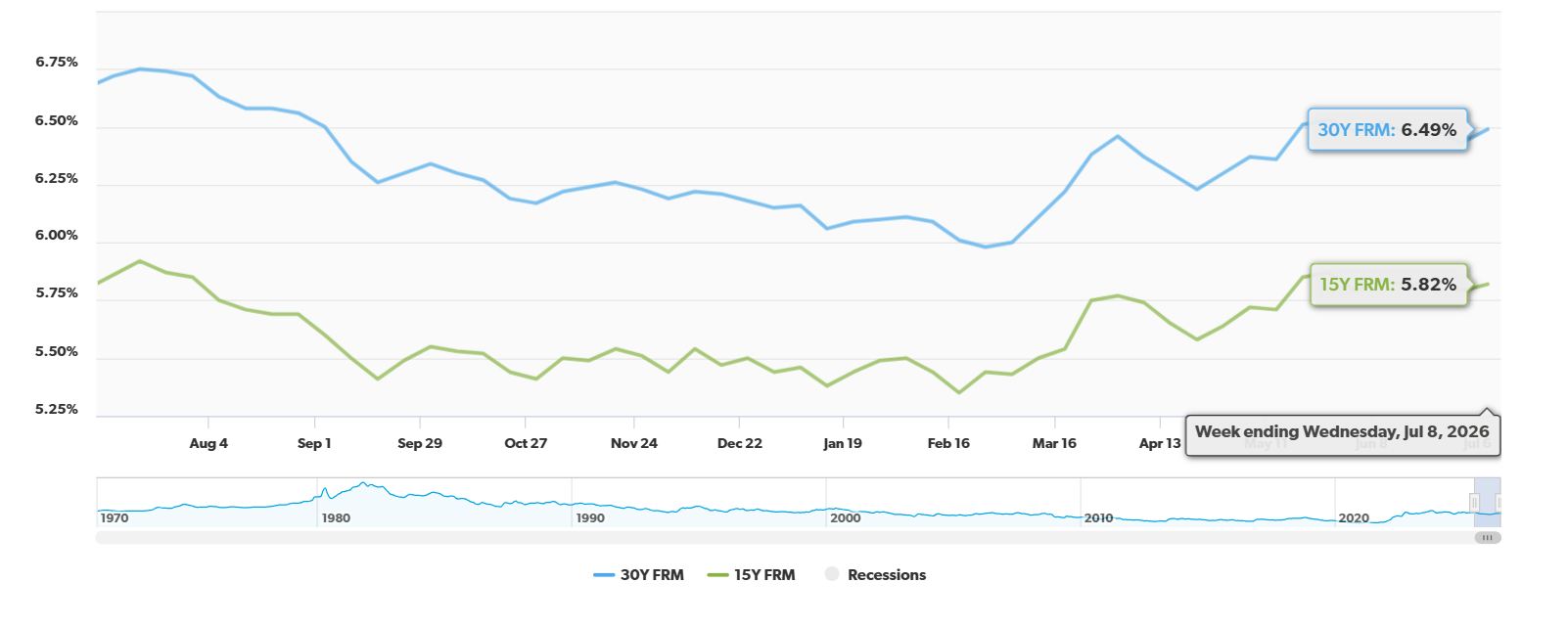
Mortgage rates have climbed again, with the average 30-year fixed-rate mortgage reaching 6.55% this week, causing many potential homebuyers to pause their search. The latest news from the Freddie Mac Primary Mortgage Market Survey, released today, July 16, 2026, tells a different story. That average 30-year fixed-rate mortgage has nudged up to 6.55%. This small jump, from last week's 6.49%, might not sound like a lot, but when you're talking about buying a house, those tenths of a percent can add up quickly and make a real difference in monthly payments.

Mortgage Rates Hit 6.55%: Buyer Demand Cools Amid Rising Costs

What Does This Mean for You?

For anyone in the market right now, this news likely brings a sigh of disappointment. When mortgage rates go up, the cost of borrowing money to buy a home also goes up. This means your monthly mortgage payment will be higher for the entire time you own the home. It can make it harder to qualify for the loan you need or force you to look at homes that are a bit less expensive. I've seen this play out many times as a long-time observer of the housing market, and it always makes things a bit tougher for buyers.

Breaking Down the Numbers: A Closer Look at the Latest Rates

Freddie Mac, a reliable source for mortgage rate information, tracks these averages closely. Here’s what their latest survey tells us:

Table 1: Average Mortgage Rates – July 16, 2026

Mortgage Type This Week (July 16, 2026) Last Week One Year Ago
30-Year Fixed-Rate 6.55% 6.49% 6.75%
15-Year Fixed-Rate 5.93% 5.82% 5.92%

Source: Freddie Mac Primary Mortgage Market Survey, July 16, 2026

You can see that both the popular 30-year fixed-rate and the 15-year fixed-rate have seen increases compared to last week. While the 30-year rate is still a little lower than it was a year ago, the recent upward trend is what's causing concern.
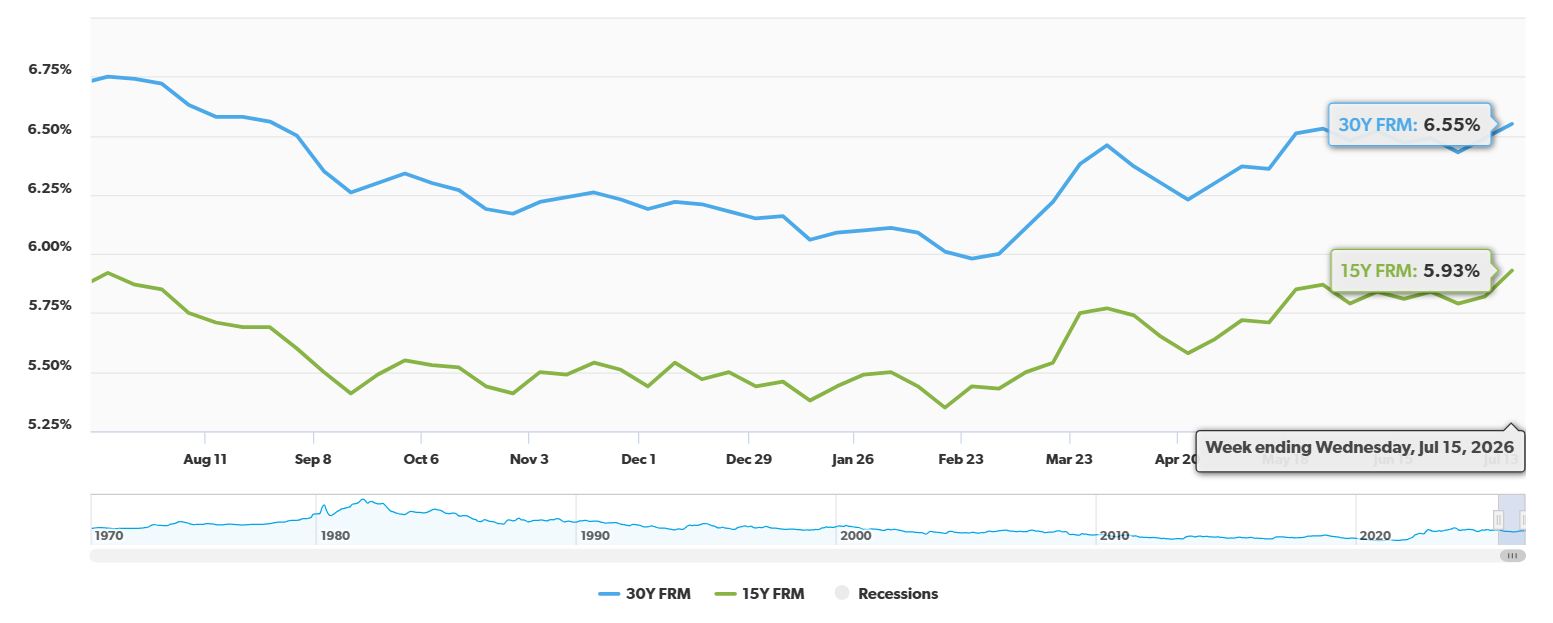
30-Year Fixed Mortgage Rate Rises, Suppressing Buyer Demand
Freddie Mac

Why Are Rates Going Up?

It's not just random chance that mortgage rates are moving. Several things are at play, and it's helpful to understand them.

  • Economic Signals: When the economy is doing well, or there are signs of inflation creeping back, lenders might increase mortgage rates. They are trying to protect themselves against the value of the money they lend decreasing over time. Think of it like this: if prices for everything else are going up, the price of borrowing money might go up too.
  • The Federal Reserve: While the Federal Reserve doesn't directly set mortgage rates, their decisions on interest rates and other economic policies have a big impact. When they signal a tougher stance on inflation, it often leads to higher borrowing costs across the board, including for mortgages.
  • Investor Demand: Mortgage-backed securities (that's basically bundles of mortgages that investors buy) are influenced by the overall financial markets. If investors are looking for better returns elsewhere, or if there's uncertainty, it can push mortgage rates higher.

Buyer Demand Takes a Hit

As you might expect, when borrowing costs rise, fewer people are rushing to buy homes. The survey notes that purchase application demand has softened recently. This makes perfect sense. If your dream home suddenly becomes hundreds of dollars more expensive each month due to higher interest, you'll probably put your plans on hold and wait to see if things improve. I've talked to so many families who were ready to buy, but the math just didn't work out with the new rates. It’s a tough pill to swallow.

But There's a Silver Lining?

Even with these rising rates, the Freddie Mac survey hints at some positive shifts that could eventually help buyers.

  • More Homes on the Market: The good news is that housing inventory continues to rise. This means there are more homes available for sale, giving buyers more choices and potentially less competition. When there are more homes, sellers might be more willing to negotiate on price, which can help offset some of the increased borrowing costs.
  • Affordability is Improving (Slowly): Despite the weekly rate bump, Freddie Mac’s Chief Economist, Sam Khater, mentioned that housing affordability is more favorable and housing inventory trends are modestly improving. This sounds a bit contradictory, doesn't it? But what it means is that while the cost of borrowing is up, the underlying conditions for buying might still be getting better. For example, if home prices themselves start to stabilize or slightly decrease, and there are more homes to choose from, it can make the overall process of buying more manageable, even with a higher interest rate.

What I'm Seeing and Thinking

From my perspective, the housing market is in a bit of a tug-of-war. On one side, you have the rising cost of borrowing, which cools off demand. On the other, you have a slowly increasing supply of homes, which should theoretically help buyers.

It’s a tricky time for both buyers and sellers. Buyers need to be realistic about what they can afford. It might mean adjusting expectations, looking at slightly smaller homes, or considering different neighborhoods. For sellers, it means understanding that buyers are more price-sensitive now. Overpriced homes will likely sit on the market longer.

I believe that the market is naturally trying to find a balance. Rates might fluctuate, and home prices will respond to how many people are buying and selling. The key for buyers right now is to be patient, do their homework, and work with trusted advisors to understand their options. Don't get discouraged by a single week's rate increase. Look at the bigger picture and the long-term trends.

Looking Ahead

Will mortgage rates keep going up? It's hard to say for sure. The economy is always changing, and unexpected events can shake things up. However, for now, it seems we need to get used to rates being in this general range. This might mean that the intense bidding wars we saw a while back will become less common.

For those still set on buying, getting pre-approved for a mortgage is more important than ever. This will give you a clear picture of how much you can borrow at the current rates and help you avoid any surprises when you find the perfect home.
🏡 Out‑of‑State Real Estate Investment: Tennessee vs Florida

Ribbon Ln Property
Franklin, TN
🏠 Property: Ribbon Ln
🛏️ Beds/Baths: 2 Bed • 2.5 Bath • 1662 sqft
💰 Price: $569,999 | Rent: $3,000
📊 Cap Rate: 5.1% | NOI: $2,415
📅 Year Built: 2022
📐 Price/Sq Ft: $343
🏙️ Neighborhood: A-

VS

Chamberlain Blvd Property
Port Charlotte, FL
🏠 Property: Chamberlain Blvd
🛏️ Beds/Baths: 4 Bed • 2 Bath • 1617 sqft
💰 Price: $274,900 | Rent: $1,845
📊 Cap Rate: 5.4% | NOI: $1,231
📅 Year Built: 2023
📐 Price/Sq Ft: $171
🏙️ Neighborhood: A+

Out‑of‑State investors can compare Tennessee’s newer rental with higher NOI vs Florida’s A+ property with strong yield. Which fits YOUR investment strategy?

We have much more inventory available than what you see on our website – Let us know about your requirement.

📈 Choose Your Winner & Contact Us Today!

Speak to a Norada Investment Counselor (No Obligation):

(800) 611-3060

View All Properties

Build Passive Income & Wealth with Turnkey Rentals

Mortgage rates remain near 6%, but rental properties continue to deliver strong cash flow and appreciation. Savvy investors know that turnkey real estate is the path to passive income and long‑term wealth.

Norada Real Estate helps you secure turnkey rental properties designed for immediate cash flow and appreciation—so you can invest smartly regardless of interest rate trends.

🔥 HOT INVESTMENT Properties JUST ADDED! 🔥
Request a Callback / Fill Out the Form Online

Contact Us

Also Read:

  • Will Mortgage Rates Drop to 5% in 2026: Expert Forecast
  • How to Get a 3% Mortgage Rate in 2026 With Assumable Mortgages?
  • How to Get a 4% Interest Rate on a Mortgage in 2026?
  • What Leading Housing Experts Predict for Mortgage Rates in 2026
  • Mortgage Rate Predictions for 2026: What Leading Forecasters Expect
  • Mortgage Rate Predictions for the Next 3 Years: 2026, 2027, 2028
  • 30-Year Fixed Mortgage Rate Forecast for the Next 5 Years
  • 15-Year Fixed Mortgage Rate Predictions for Next 5 Years: 2025-2029
  • Will Mortgage Rates Ever Be 3% Again in the Future?
  • Mortgage Rates Predictions for Next 2 Years
  • Mortgage Rate Predictions for Next 5 Years
  • Mortgage Rate Predictions: Why 2% and 3% Rates are Out of Reach
  • How Lower Mortgage Rates Can Save You Thousands?
  • How to Get a Low Mortgage Interest Rate?
  • Will Mortgage Rates Ever Be 4% Again?

Filed Under: Financing, Mortgage Tagged With: 30-Year Fixed Mortgage Rate, mortgage, mortgage rates

Today’s Mortgage Rates, July 16: Inflation Fears Push Rates Higher into Mid-6% Range

July 16, 2026 by Marco Santarelli

Today's Mortgage Rates, Sept 13: 30-Year Holds Near 6.91%, a Notable Jump From Last Week

Today, July 16, 2026, you'll find that mortgage rates are nudging higher, mostly sitting in the mid-6% range, and this bump is tied to some big worries about prices going up and trouble in other countries.

Today's Mortgage Rates, July 16: Inflation Fears Push Rates Higher into Mid-6% Range

What's Happening with Rates Right Now?

According to Zillow, a really helpful place that tracks this stuff, mortgage rates are a bit higher today than they were just yesterday. Think of it like this: yesterday was a bit cooler, and today it's warming up, but not in a way that feels super comfortable for your wallet.

Here's a breakdown of what is showing for purchase mortgage rates today:

Loan Type Interest Rate
30-year fixed 6.49%
20-year fixed 6.21%
15-year fixed 5.96%
5/1 ARM 6.74%
7/1 ARM 6.41%
30-year VA 5.93%
15-year VA 5.65%
5/1 VA 5.85%

(A “basis point” is like a tiny, tiny fraction of a percent. 100 basis points make up 1 full percent.)

You can see that the 30-year fixed loan, which is super popular because it makes your monthly payments predictable, went up a little. The 15-year fixed, which usually has a lower rate because you pay it off faster, also crept up. And those Adjustable-Rate Mortgages (ARMs), where the rate can change, are also showing a bit more of an increase.

Looking at the Big Picture: A Bit of a Jiggle

Even though rates went up a little today, they've actually been pretty steady over the last couple of months. Since late May, they've been dancing around in the 6.4% to 6.7% area. That's good to know because it means it's not a crazy roller coaster ride right now. However, it's important to remember that these rates are still quite a bit higher than they were back in February, when we saw them dip down to around 5.98%.

On the flip side, if you were looking to buy a home last year at this time, you're actually in a slightly better spot. Rates have come down a little bit – maybe around 20 to 30 basis points, which is roughly 0.20% to 0.30% lower – compared to the middle of 2025. So, while today's rates aren't the lowest we've seen, they're not the highest either.

Why Are Rates Doing This Jiggle? The Big Three

So, why are mortgage rates going up and down like this? Lenders, the people who give you the money for your house, look at a few main things that make them adjust their prices. It's like when the price of gas goes up, and suddenly everything else feels more expensive too.

Here are the big reasons I'm seeing:

  1. Global Worries and Gas Prices: You might have heard about some trouble brewing between countries, especially around the July 4th holiday. When there's conflict, especially involving oil-producing regions, the price of oil can shoot up. And when oil gets more expensive, it costs more to move things around – trucks, ships, planes. This makes everything from making products to getting them to stores cost more. This worries people about inflation, which is when prices for almost everything go up.
  2. Prices Still Trying to Settle Down: Even though prices for things didn't go up as much in June as they did in May, they're still rising faster than the Federal Reserve (that's the country's main bank) wants them to. The Fed has a goal of prices going up by just 2% a year. Right now, they're at about 3.5%. The head of the Fed recently sounded pretty serious, saying that if prices keep going up, they might have to raise interest rates even more later this year. This makes people think that borrowing money will get more expensive.
  3. The Bond Market Buzz: Mortgage rates are really tied to something called the 10-year U.S. Treasury yield. Think of this like a big report card for the government's debt. When this yield goes up, it usually means mortgage rates will go up too. And why does this yield go up? Because investors (people who lend money) get nervous about inflation and global problems. They want more money back to feel safe. So, as these yields have been climbing to around the 4.5% to 4.6% mark, lenders have to charge you more for a mortgage to keep their own businesses running.

What This Means for You

For anyone looking to buy a home, today's mortgage rates mean that your monthly payment will be a bit higher than if you had locked in a rate a few weeks ago. It also means that the total amount of interest you pay over the life of the loan will be more.

However, my advice is always to not panic. Rates can change daily. If you're seriously looking to buy, it's a good idea to talk to a mortgage lender. They can give you a personalized quote and explain all your options. Also, remember that a good credit score can help you get the best possible rate.

If you're already a homeowner, you might be wondering about refinancing. If your current rate is much higher than what's available today, it might still be worth exploring. But with rates nudging up, the savings might not be as dramatic as they were a few months ago.

Ultimately, understanding these factors – the everyday bumps, the bigger trends, and the reasons behind them – can help you make smarter decisions about your homeownership journey.

🏡 Real Estate Investment: Tennessee vs Florida

Ribbon Ln Property
Franklin, TN
🏠 Property: Ribbon Ln
🛏️ Beds/Baths: 2 Bed • 2.5 Bath • 1662 sqft
💰 Price: $569,999 | Rent: $3,000
📊 Cap Rate: 5.1% | NOI: $2,415
📅 Year Built: 2022
📐 Price/Sq Ft: $343
🏙️ Neighborhood: A-

VS

Chamberlain Blvd Property
Port Charlotte, FL
🏠 Property: Chamberlain Blvd
🛏️ Beds/Baths: 4 Bed • 2 Bath • 1617 sqft
💰 Price: $274,900 | Rent: $1,845
📊 Cap Rate: 5.4% | NOI: $1,231
📅 Year Built: 2023
📐 Price/Sq Ft: $171
🏙️ Neighborhood: A+

Out‑of‑State investors can compare Tennessee’s newer rental with higher NOI vs Florida’s A+ property with strong yield. Which fits YOUR investment strategy?

We have much more inventory available than what you see on our website – Let us know about your requirement.

📈 Choose Your Winner & Contact Us Today!

Speak to a Norada Investment Counselor (No Obligation):

(800) 611-3060

View All Properties

Build Passive Income & Wealth with Turnkey Rentals in 2026

Mortgage rates remain high in 2026, but rental properties continue to deliver strong cash flow and appreciation. Savvy investors know that turnkey real estate is the path to passive income and long‑term wealth.

Norada Real Estate helps you secure turnkey rental properties designed for immediate cash flow and appreciation—so you can invest smartly regardless of interest rate trends.

🔥 HOT 2026 INVESTMENT LISTINGS JUST ADDED! 🔥
Request a Callback / Fill Out the Form Online

Contact Us

Also Read:

  • Mortgage Rates Predictions Backed by 7 Leading Experts: 2025–2026
  • Mortgage Rate Predictions for the Next 3 Years: 2026, 2027, 2028
  • 30-Year Fixed Mortgage Rate Forecast for the Next 5 Years
  • 15-Year Fixed Mortgage Rate Predictions for Next 5 Years: 2025-2029
  • Will Mortgage Rates Ever Be 3% Again in the Future?
  • Mortgage Rates Predictions for Next 2 Years
  • Mortgage Rate Predictions for Next 5 Years
  • Mortgage Rate Predictions: Why 2% and 3% Rates are Out of Reach
  • How Lower Mortgage Rates Can Save You Thousands?
  • How to Get a Low Mortgage Interest Rate?
  • Will Mortgage Rates Ever Be 4% Again?

Filed Under: Financing, Mortgage Tagged With: mortgage, mortgage rates, Today’s Mortgage Rates

Mortgage Rates Today, July 16, 2026: 30-Year Refinance Rate Drops by 19 Basis Points

July 16, 2026 by Marco Santarelli

Mortgage Rates Today, September 14, 2026: 30-Year Refinance Rate Rises by 14 Basis Points

The mortgage world is always buzzing with news, and today, July 16, 2026, brings a welcome shift for those looking to refinance. The average 30-year fixed refinance rate has dipped by a notable 19 basis points, now sitting at 6.81%, according to Zillow. While this is good news, it's important to remember where we've been and where we might be heading.

Mortgage Rates Today, July 16, 2026: 30-Year Refinance Rate Drops by 19 Basis Points

A Little Relief in the Refinance Market

For homeowners hoping to snag a better deal on their mortgage, this drop is a breath of fresh air. We saw the 30-year fixed refinance rate fall from 7.00% to 6.81%. It's a small step, but in the world of mortgages, even a few basis points can make a difference over the life of a loan. It's worth noting that this rate is just a tiny bit higher, up by 1 basis point, from last week's average of 6.80%.

But it's not all good news across the board. The 15-year fixed refinance rate saw a slight tick up, now at 6.00%, a 1-basis point increase from last week. And for those considering an adjustable-rate mortgage (ARM), the 5-year ARM refinance rate is holding steady at 6.12%.

Here's a quick look at how things stack up today, according to Zillow:

Loan Type Current Average Rate (July 16, 2026) Change from Previous Week
30-Year Fixed Refinance 6.81% -0.19%
15-Year Fixed Refinance 6.00% +0.01%
5-Year ARM Refinance 6.12% 0.00%

Why Are Rates Doing This Dance?

It might feel like mortgage rates are on a rollercoaster, and honestly, they kind of are right now. Several big factors are playing a role in keeping these rates higher than many of us would like.

First, there's the geopolitical tension. Conflicts involving the U.S. and places like Iran have sent global oil prices soaring. When gas prices go up, everything tends to get more expensive.

This leads directly to the next point: inflation pressures. All that high energy cost is making consumer prices jump, and inflation is moving further away from the Federal Reserve's goal of keeping it around 2%.

The Federal Reserve is watching this closely. They recently decided to keep their main interest rate steady, between 3.50% and 3.75%. But they've also hinted that they might have to raise rates later this year if inflation doesn't start to calm down. This possibility always casts a shadow over mortgage rates.

And then there's the bond market. When things get uncertain, like when a ceasefire breaks down, investors get nervous. This nervousness drives up the yield on the 10-year Treasury note, which has a direct impact on mortgage rates, pushing them higher. It’s a complex web, and it’s why we see these fluctuations.

Thinking About Your Refinance Strategy

Now, let's talk about what this means for you. Many of us locked in incredibly low rates during the pandemic, somewhere between 2% and 4%. If you're one of the many who have a rate in that sweet spot, a simple rate-and-term refinance probably doesn't make much sense right now. You'd likely be trading a great rate for a slightly less great one, and that often doesn't save you money in the long run.

However, there are still smart reasons to consider refinancing.

  • FHA/VA Streamlines: If you bought a home recently when rates were really high, maybe close to 7% or even more, you might want to look into FHA Streamline or VA IRRRL options. These are special programs that allow for a quick, easy refinance with less paperwork and often without needing a new appraisal. They can be a good way to lower your rate without a lot of hassle.
  • Cash-Out Refi Wisely: Home values are still pretty high, which means many homeowners have built up a good amount of equity in their homes. If you need cash for something important, like a big home renovation or to pay off high-interest credit card debt, a cash-out refinance could be a good move. You could also consider a Home Equity Line of Credit (HELOC), which is currently around 7.04%. It's all about weighing the costs and benefits.
  • Shorten Your Loan Term: If your financial situation has improved and you're feeling more secure, you might consider switching from a 30-year mortgage to a 15-year fixed refinance. This can often get you a rate below 6% and will save you a massive amount of money on interest over the life of the loan. Yes, your monthly payments will go up, but you'll pay off your home faster and pay less overall.
  • Shop Around, Seriously! This is probably the most important piece of advice I can give. Rates can vary a lot from one lender to another. Don't just go with the first bank you talk to. Get quotes from at least three different lenders. You could save thousands of dollars over time just by doing a little comparison shopping. I’ve seen clients save an incredible amount just by taking the time to get multiple offers.

Refinancing isn't always about chasing the absolute lowest rate. It's about making the right financial move for your specific situation. Today's drop in the 30-year rate is a positive sign, but it's just one piece of the puzzle. Keep an eye on those economic indicators, understand your own financial goals, and always, always shop around.

🏡 Real Estate Investment: Tennessee vs Florida

Ribbon Ln Property
Franklin, TN
🏠 Property: Ribbon Ln
🛏️ Beds/Baths: 2 Bed • 2.5 Bath • 1662 sqft
💰 Price: $569,999 | Rent: $3,000
📊 Cap Rate: 5.1% | NOI: $2,415
📅 Year Built: 2022
📐 Price/Sq Ft: $343
🏙️ Neighborhood: A-

VS

Chamberlain Blvd Property
Port Charlotte, FL
🏠 Property: Chamberlain Blvd
🛏️ Beds/Baths: 4 Bed • 2 Bath • 1617 sqft
💰 Price: $274,900 | Rent: $1,845
📊 Cap Rate: 5.4% | NOI: $1,231
📅 Year Built: 2023
📐 Price/Sq Ft: $171
🏙️ Neighborhood: A+

Out‑of‑State investors can compare Tennessee’s newer rental with higher NOI vs Florida’s A+ property with strong yield. Which fits YOUR investment strategy?

We have much more inventory available than what you see on our website – Let us know about your requirement.

📈 Choose Your Winner & Contact Us Today!

Speak to a Norada Investment Counselor (No Obligation):

(800) 611-3060

View All Properties

Build Passive Income & Wealth with Turnkey Rentals in 2026

Mortgage rates remain high in 2026, but rental properties continue to deliver strong cash flow and appreciation. Savvy investors know that turnkey real estate is the path to passive income and long‑term wealth.

Norada Real Estate helps you secure turnkey rental properties designed for immediate cash flow and appreciation—so you can invest smartly regardless of interest rate trends.

🔥 HOT 2026 INVESTMENT LISTINGS JUST ADDED! 🔥
Request a Callback / Fill Out the Form Online

Contact Us

Also Read:

  • Mortgage Rates Predictions Backed by 7 Leading Experts: 2025–2026
  • Mortgage Rate Predictions for the Next 3 Years: 2026, 2027, 2028
  • 30-Year Fixed Mortgage Rate Forecast for the Next 5 Years
  • 15-Year Fixed Mortgage Rate Predictions for Next 5 Years: 2025-2029
  • Will Mortgage Rates Ever Be 3% Again in the Future?
  • Mortgage Rates Predictions for Next 2 Years
  • Mortgage Rate Predictions for Next 5 Years
  • Mortgage Rate Predictions: Why 2% and 3% Rates are Out of Reach
  • How Lower Mortgage Rates Can Save You Thousands?
  • How to Get a Low Mortgage Interest Rate?
  • Will Mortgage Rates Ever Be 4% Again?
Filed Under: Financing, Mortgage Tagged With: mortgage rates, Mortgage Rates Today, Refinance Rates

Today’s Mortgage Rates, July 15: Buyers Face Volatility as 30‑Year Fixed Rises to 6.46%

July 15, 2026 by Marco Santarelli

Today's Mortgage Rates, Sept 13: 30-Year Holds Near 6.91%, a Notable Jump From Last Week

If you're thinking about buying a home or refinancing, today, Wednesday, July 15, 2026, mortgage rates are generally a bit higher than they were yesterday. This little shift might seem small, but understanding why it’s happening can really help you make smart decisions about your money.

Today's Mortgage Rates, July 15: Buyers Face Volatility as 30‑Year Fixed Rises to 6.46%

What the Numbers Tell Us

According to Zillow, here's a snapshot of what’s going on today:

  • 30-Year Fixed-Rate Purchase Loan: This is the most common type of mortgage, where your interest rate stays the same for 30 years. Today, it's at 6.46%, which is 4 basis points higher than yesterday.
  • 20-Year Fixed-Rate Purchase Loan: A bit shorter than the 30-year, this loan has a slightly lower rate. It's up 13 basis points to 6.32%.
  • 15-Year Fixed-Rate Purchase Loan: This is a popular choice for those who want to pay off their home faster and save on interest. Good news here, it actually went down by 6 basis points to 5.86%.
  • 5/1 ARM Purchase Rate: This is an Adjustable Rate Mortgage. The “5/1” means the rate is fixed for the first 5 years, then it can change each year after that. Today, it's at 6.65%, up 8 basis points.

Here's a quick look at some other rates Zillow shared:

Loan Type Today's Rate Change from Yesterday
30-Year Fixed 6.46% +4 basis points
20-Year Fixed 6.32% +13 basis points
15-Year Fixed 5.86% -6 basis points
5/1 ARM 6.65% +8 basis points
7/1 ARM 6.32% –
30-Year VA 5.93% –
15-Year VA 5.62% –
5/1 VA 5.81% –

(Note: Basis points are just small percentages. 100 basis points equal 1 percentage point.)

Digging Deeper into the Most Popular Rates

Let's spend a moment on those three big ones: the 30-year, 20-year, and 15-year fixed-rate loans.

  • The 30-Year Fixed: This is the workhorse of homebuying. It's loved because it spreads out your payments over a long time, making your monthly bill more manageable. Even though it's gone up a little today, it's still a solid choice for many people who want predictable housing costs for decades.
  • The 20-Year Fixed: This one is like a middle child – not as long as the 30-year, but not as short as the 15-year. You'll pay a bit more each month than with a 30-year loan, but you'll build equity faster and pay less interest over the life of the loan. It’s a good balance for people who want to pay off their house sooner without a huge monthly payment.
  • The 15-Year Fixed: This loan is a champion for saving money. Your monthly payments will be higher, but you'll pay off your mortgage in half the time and save a significant amount on interest. If you have a stable income and want to be mortgage-free sooner, this is often the smartest financial move. The slight dip today makes it even more attractive.

Why Are Rates Moving Like This?

It’s easy to just look at the numbers and get confused when they go up or down. But there are bigger forces at play, and I think understanding them is key. Here are the main reasons I’m seeing for the current ups and downs:

  • Worries About Global Stuff and Gas Prices: You know how sometimes when there's trouble in other parts of the world, especially involving oil, gas prices at home can go up? Well, that’s happening now. When oil gets more expensive, it can make prices for other things go up too. This makes people think inflation might get worse.
  • Inflation Isn't Going Away Easily: Related to the gas prices, we're seeing signs that prices for everyday things are still climbing. Reports show inflation is higher than folks hoped it would be. This makes investors a bit nervous that prices aren't under control.
  • The Fed is Pausing Its Rate Cuts: The Federal Reserve, which is like the country's main bank, had been lowering interest rates a bit. But because inflation is still a concern, they've put a pause on those cuts. This means the cost of borrowing money isn't going to get cheaper anytime soon, which affects mortgage rates.
  • Borrowing Money is Getting More Expensive for the Government: When the government borrows money by selling bonds (like the 10-year U.S. Treasury note), people who buy those bonds want more money back to make up for inflation. When those yields go up, mortgage rates usually follow them. Right now, that 10-year yield is around 4.58%, which pushes mortgage rates higher.
  • New Leadership at the Fed: There's a new boss at the Federal Reserve, and they seem to be taking a tougher stance on inflation. Sometimes, when there’s a bit of uncertainty about what the Fed will do next, it can cause bigger, faster changes in the markets, including mortgage rates.

What Can We Expect Moving Forward?

Predicting mortgage rates is never an exact science, but based on what I'm seeing with these economic drivers, it’s likely we’ll continue to see some volatility. The Federal Reserve’s actions are going to be watched very closely. If inflation shows consistent signs of cooling down, we might see the Fed start to lower rates again, which could bring mortgage rates down. However, if inflation stays stubborn or unexpected global events cause energy prices to spike again, rates could keep heading upward.

My personal take is that for the near future, we should expect rates to remain somewhat elevated and fluctuate. It’s important to stay informed and not make big decisions based on just one day's numbers. Building a relationship with a trusted mortgage lender is also a great idea. They can help you navigate these changes and find the best option for your specific situation.

🏡 Real Estate Investment: Tennessee vs Florida

Ribbon Ln Property
Franklin, TN
🏠 Property: Ribbon Ln
🛏️ Beds/Baths: 2 Bed • 2.5 Bath • 1662 sqft
💰 Price: $569,999 | Rent: $3,000
📊 Cap Rate: 5.1% | NOI: $2,415
📅 Year Built: 2022
📐 Price/Sq Ft: $343
🏙️ Neighborhood: A-

VS

Chamberlain Blvd Property
Port Charlotte, FL
🏠 Property: Chamberlain Blvd
🛏️ Beds/Baths: 4 Bed • 2 Bath • 1617 sqft
💰 Price: $274,900 | Rent: $1,845
📊 Cap Rate: 5.4% | NOI: $1,231
📅 Year Built: 2023
📐 Price/Sq Ft: $171
🏙️ Neighborhood: A+

Out‑of‑State investors can compare Tennessee’s newer rental with higher NOI vs Florida’s A+ property with strong yield. Which fits YOUR investment strategy?

We have much more inventory available than what you see on our website – Let us know about your requirement.

📈 Choose Your Winner & Contact Us Today!

Speak to a Norada Investment Counselor (No Obligation):

(800) 611-3060

View All Properties

Build Passive Income & Wealth with Turnkey Rentals in 2026

Mortgage rates remain high in 2026, but rental properties continue to deliver strong cash flow and appreciation. Savvy investors know that turnkey real estate is the path to passive income and long‑term wealth.

Norada Real Estate helps you secure turnkey rental properties designed for immediate cash flow and appreciation—so you can invest smartly regardless of interest rate trends.

🔥 HOT 2026 INVESTMENT LISTINGS JUST ADDED! 🔥
Request a Callback / Fill Out the Form Online

Contact Us

Also Read:

  • Mortgage Rates Predictions Backed by 7 Leading Experts: 2025–2026
  • Mortgage Rate Predictions for the Next 3 Years: 2026, 2027, 2028
  • 30-Year Fixed Mortgage Rate Forecast for the Next 5 Years
  • 15-Year Fixed Mortgage Rate Predictions for Next 5 Years: 2025-2029
  • Will Mortgage Rates Ever Be 3% Again in the Future?
  • Mortgage Rates Predictions for Next 2 Years
  • Mortgage Rate Predictions for Next 5 Years
  • Mortgage Rate Predictions: Why 2% and 3% Rates are Out of Reach
  • How Lower Mortgage Rates Can Save You Thousands?
  • How to Get a Low Mortgage Interest Rate?
  • Will Mortgage Rates Ever Be 4% Again?

Filed Under: Financing, Mortgage Tagged With: mortgage, mortgage rates, Today’s Mortgage Rates

Mortgage Rates Today, July 15, 2026: 30‑Year Refinance Rate Rises by 17 Basis Points

July 15, 2026 by Marco Santarelli

Mortgage Rates Today, September 14, 2026: 30-Year Refinance Rate Rises by 14 Basis Points

If you're looking to refinance your home, you might have noticed that 30-year fixed refinance rates have gone up. Today, July 15, 2026, the average rate is sitting at 6.97%, which is a jump from where it was last week.

It's a bit of a bumpy ride out there for homeowners thinking about refinancing. As of today, July 15, 2026, the national average for a 30-year fixed refinance rate has climbed to 6.97%. This is according to Zillow's latest data, and it represents a noticeable increase of 17 basis points compared to the average rate we saw just last week, which was around 6.80%.

Mortgage Rates Today, July 15, 2026: 30-Year Refinance Rate Rises by 17 Basis Points

What's Happening with Refinance Rates Right Now?

Let's break down what these numbers mean.

  • 30-Year Fixed Refinance Rate: This is the rate that most people think of when they talk about mortgages. It's the rate you get for a loan that you'll pay off over 30 years. Today, it's at 6.97%, up from 6.91% yesterday.
  • 15-Year Fixed Refinance Rate: This is for people who want to pay off their homes faster, usually over 15 years. Good news here: this rate has actually gone down a little, to 5.96%.
  • 5-Year ARM Refinance Rate: This is an adjustable-rate mortgage, where the interest rate is fixed for the first five years and then can change. The current rate is 6.12%.

Here's a quick look at the numbers:

Loan Type Current Rate (July 15, 2026) Previous Day Rate Change (Basis Points)
30-Year Fixed 6.97% 6.91% +6
15-Year Fixed 5.96% 6.01% -5
5-Year ARM 6.12% (Data not provided) (Data not provided)

Why Are Rates Going Up? It's a Mix of Things.

It's never just one reason why mortgage rates do what they do. Think of it like a big puzzle with many pieces.

  • Trouble Across the Seas: There's been some military conflict in Iran, and it's making it harder for ships to travel through a key waterway called the Strait of Hormuz. This is causing oil prices to go up, sometimes past $75-$80 a barrel. When oil gets more expensive, everything else tends to get more expensive too, which is called inflation.
  • Inflation is Still Stubborn: We keep seeing reports that show prices for everyday things are still higher than the goal the government has set (which is around 2%). When prices stay high, it makes it harder for the economy to cool down.
  • The Federal Reserve is Staying Firm: The Federal Reserve, which is like the main bank for the country, decided not to change its main interest rate at its last meeting. What's more important is that many of the people who make these decisions are now thinking that they might need to raise interest rates later this year, instead of lowering them. This “hawkish” stance signals they are serious about fighting inflation.
  • Bond Prices are Climbing: Mortgage rates often follow what's called the 10-year U.S. Treasury yield. This number has been going up, and it's now getting close to 4.59%. When this yield goes up, mortgage rates usually follow.

Should I Refinance Now? Let's Think It Through.

Seeing rates go up can feel a bit discouraging, especially if you were hoping to save money on your monthly payments. But here's what I always tell people: don't just look at the number. You need to think about your own situation.

1. Do the Math: When Will You Break Even?

A lot of people still use a simple “1% rule” to see if refinancing is worth it. But that's old news! What you really need to do is figure out your break-even point.

Here's how:

  • Add up all the costs you have to pay to refinance. This includes things like appraisal fees, title fees, and any points you might pay to get a lower rate.
  • Figure out how much you'll save each month by refinancing.
  • Divide the total costs by your monthly savings.

The number you get tells you how many months it will take for your savings to pay back the costs of refinancing. If you plan to stay in your home longer than that, it's probably a good idea. If not, it might not be worth it.

2. Look at Your Home's Value and Your Loan

Your home's value has probably gone up a lot lately, which is great! This can help you in a few ways:

  • No More PMI: If you have a lot of equity (meaning the difference between what your home is worth and what you owe on the mortgage), you might not have to pay Private Mortgage Insurance anymore. That's money back in your pocket every month.
  • Cash-Out Refinance: You might be able to refinance your home for more than you owe and get some of that money back in cash. This is useful for paying off high-interest debt like credit cards or student loans. But be careful: lenders have rules about how much you can borrow (Loan-to-Value or LTV limits), and these cash-out loans often have slightly higher interest rates.

3. Your Credit Score and Debt Matter

To get the best rates, you need to have a good financial picture.

  • Credit Score: Lenders love to see high credit scores. Aim for a FICO score of 780 or higher. The better your score, the less risky you are to the lender, and the lower your rate will be.
  • Debt-to-Income (DTI) Ratio: This is the amount of money you owe each month for debts (like car payments, student loans, and credit cards) compared to how much money you earn each month before taxes. A DTI below 36% is usually what lenders like to see.

4. Shop Around! Don't Just Stick with Your Current Bank.

This is so important, and I can't stress it enough. Many people just go back to the same company they got their original mortgage from. That's a mistake!

  • Get Multiple Offers: You should always compare offers from at least three different lenders. I've seen people save thousands of dollars over the life of their loan by just taking a little time to shop around.
  • Compare Loan Estimates: Ask each lender for a “Loan Estimate.” This is a standard form that shows you all the costs and terms of the loan. Compare them side-by-side to see who is really offering you the best deal.

The Long-Term View

Even though rates are up today, experts like Fannie Mae and the Mortgage Bankers Association believe that rates will probably stay in the mid-6% range for the rest of the year. So, while today's jump is a bit of a bummer, it might not be a sign that rates are going to skyrocket.

My advice? Don't make a rash decision. Do your homework, understand your own financial situation, and then make the choice that's best for you.

🏡 Real Estate Investment: Tennessee vs Florida

Ribbon Ln Property
Franklin, TN
🏠 Property: Ribbon Ln
🛏️ Beds/Baths: 2 Bed • 2.5 Bath • 1662 sqft
💰 Price: $569,999 | Rent: $3,000
📊 Cap Rate: 5.1% | NOI: $2,415
📅 Year Built: 2022
📐 Price/Sq Ft: $343
🏙️ Neighborhood: A-

VS

Chamberlain Blvd Property
Port Charlotte, FL
🏠 Property: Chamberlain Blvd
🛏️ Beds/Baths: 4 Bed • 2 Bath • 1617 sqft
💰 Price: $274,900 | Rent: $1,845
📊 Cap Rate: 5.4% | NOI: $1,231
📅 Year Built: 2023
📐 Price/Sq Ft: $171
🏙️ Neighborhood: A+

Out‑of‑State investors can compare Tennessee’s newer rental with higher NOI vs Florida’s A+ property with strong yield. Which fits YOUR investment strategy?

We have much more inventory available than what you see on our website – Let us know about your requirement.

📈 Choose Your Winner & Contact Us Today!

Speak to a Norada Investment Counselor (No Obligation):

(800) 611-3060

View All Properties

Build Passive Income & Wealth with Turnkey Rentals in 2026

Mortgage rates remain high in 2026, but rental properties continue to deliver strong cash flow and appreciation. Savvy investors know that turnkey real estate is the path to passive income and long‑term wealth.

Norada Real Estate helps you secure turnkey rental properties designed for immediate cash flow and appreciation—so you can invest smartly regardless of interest rate trends.

🔥 HOT 2026 INVESTMENT LISTINGS JUST ADDED! 🔥
Request a Callback / Fill Out the Form Online

Contact Us

Also Read:

  • Mortgage Rates Predictions Backed by 7 Leading Experts: 2025–2026
  • Mortgage Rate Predictions for the Next 3 Years: 2026, 2027, 2028
  • 30-Year Fixed Mortgage Rate Forecast for the Next 5 Years
  • 15-Year Fixed Mortgage Rate Predictions for Next 5 Years: 2025-2029
  • Will Mortgage Rates Ever Be 3% Again in the Future?
  • Mortgage Rates Predictions for Next 2 Years
  • Mortgage Rate Predictions for Next 5 Years
  • Mortgage Rate Predictions: Why 2% and 3% Rates are Out of Reach
  • How Lower Mortgage Rates Can Save You Thousands?
  • How to Get a Low Mortgage Interest Rate?
  • Will Mortgage Rates Ever Be 4% Again?

Filed Under: Financing, Mortgage Tagged With: mortgage rates, Mortgage Rates Today, Refinance Rates

Today’s Mortgage Rates, July 14: 30‑Year Fixed Drops to 6.42% While ARMs Edge Higher

July 14, 2026 by Marco Santarelli

Today's Mortgage Rates, Sept 13: 30-Year Holds Near 6.91%, a Notable Jump From Last Week

If you're thinking about buying a home or refinancing your current one, you're probably wondering about today's mortgage rates for July 14. Well, I've got the quick answer for you: According to Zillow, the average 30-year fixed mortgage rate is 6.42% today. This is a small dip from yesterday, which is good news for some!

Today's Mortgage Rates, July 14: 30‑Year Fixed Drops to 6.42% While ARMs Edge Higher

Here’s a quick look at some of the most common mortgage rates, as reported by Zillow for today, July 14, 2026:

Loan Type Current Rate
30-year fixed 6.42%
20-year fixed 6.19%
15-year fixed 5.92%
5/1 ARM 6.57%
7/1 ARM 6.36%
30-year VA 5.94%
15-year VA 5.63%
5/1 VA 5.77%

Basis points are just a small way of measuring changes. 100 basis points equals 1%. So, a dip of 2 basis points means the rate went down by a tiny, tiny bit, like 0.02%.

Understanding the Most Popular Rates

When most people talk about mortgages, they usually mean one of these three:

  • The 30-Year Fixed-Rate Mortgage: This is the most popular choice for a reason. You pay your mortgage for 30 years, and your interest rate stays the same the whole time. This means your monthly payment for the principal and interest part of your loan will never change. It’s like having a steady friend. You might pay a little more interest over the full 30 years compared to a shorter loan, but your monthly payments are usually lower, which makes it easier to afford a home. Today, it’s at 6.42%.
  • The 15-Year Fixed-Rate Mortgage: This loan is paid off in half the time, 15 years. Because you're paying it off faster, the interest rate is usually lower than a 30-year loan. Today, it’s at 5.92%. The trade-off? Your monthly payments will be higher. It’s a great option if you can comfortably afford those bigger payments and want to be debt-free sooner, saving a lot of money on interest in the long run.
  • The 5/1 Adjustable-Rate Mortgage (ARM): This one is a bit different. For the first 5 years, you get a fixed interest rate. After those 5 years are up, the rate can change, usually once a year, based on what’s happening in the economy. It might start with a lower rate than a fixed loan (today it’s at 6.57%, which is higher than the 30-year fixed, so that’s interesting!), but you have to be ready for your payments to go up or down later on. It’s a good option if you plan to sell your home or refinance before the fixed period ends, or if you're comfortable with the possibility of changing payments.

Why Are Rates Doing This? My Take.

It’s easy to get lost in the numbers, but what's really driving these changes? From my experience, it’s rarely just one thing. Today, we're seeing a lot of big global and economic forces at play:

  • Worries in the World: There's been some tension overseas, particularly involving the U.S. and Iran. This can mess with how much oil costs. When oil prices go up, it often makes everything else cost a bit more, too. It’s like a ripple effect.
  • Inflation Making a Comeback: Remember when things were getting cheaper, or at least not getting much more expensive? Well, with those higher energy costs, inflation is showing its face again. Recent reports show prices went up a bit more than people expected. This makes people a bit nervous that the economy isn't quite as stable as we hoped.
  • The Federal Reserve's Balancing Act: The people in charge of our country's money, the Federal Reserve, have been trying to keep things steady. They cut rates a bit before, but now they're holding back on more cuts. They’re worried about this inflation sticking around, so they’re keeping the main interest rate high to try and cool things down. This means the hope for even lower mortgage rates right now might be a bit dashed.
  • Bond Market Jitters: Mortgage rates are very closely tied to something called the 10-year U.S. Treasury yield. Think of it like this: when investors are worried about inflation, they want to get paid more for lending their money out. So, the yield on these government bonds goes up. When that goes up, mortgage rates usually follow. Today, that yield is around 4.58%, and it’s pulling mortgage rates up with it.
  • New Boss at the Fed: There’s a new person leading the Federal Reserve, and their approach to fighting inflation seems a bit more serious. They’re not as chatty about their plans, which can make the markets a bit jumpy. When there’s uncertainty, markets can swing more dramatically, affecting mortgage rates quickly.

Will Rates Go Up or Down?

This is the million-dollar question, right? Based on what I'm seeing and hearing from economic experts, it's tough to say for sure. The Federal Reserve seems determined to keep inflation under control, which means they might keep interest rates higher for longer. However, if economic growth slows down more than expected, or if those global tensions ease up significantly, we could see rates start to tick down again.

For now, expect continued choppiness. It’s wise to stay informed and be ready to act if you see a rate that works for your budget.

What Does This Mean for You?

If you’re in the market for a home, these fluctuating rates mean it’s more important than ever to shop around and compare offers from different lenders. Even a small difference in the rate can save you thousands of dollars over the life of your loan.

  • Get Pre-Approved: This is crucial! Knowing how much you can borrow helps you focus your house hunt and shows sellers you're serious.
  • Lock in a Rate: If you find a rate you like, ask your lender about locking it in. This protects you if rates go up while you're in the process of buying.
  • Consider Your Timeline: Are you planning to stay in your home for many years, or just a few? This can help you decide if a fixed-rate or an ARM might be better.

I truly believe that understanding these pieces – the current rates, what they mean, and why they’re moving – empowers you to make a confident decision. Don't just look at the headlines; dig a little deeper, and you’ll be in a much better position.

🏡 Real Estate Investment: Tennessee vs Florida

Ribbon Ln Property
Franklin, TN
🏠 Property: Ribbon Ln
🛏️ Beds/Baths: 2 Bed • 2.5 Bath • 1662 sqft
💰 Price: $569,999 | Rent: $3,000
📊 Cap Rate: 5.1% | NOI: $2,415
📅 Year Built: 2022
📐 Price/Sq Ft: $343
🏙️ Neighborhood: A-

VS

Chamberlain Blvd Property
Port Charlotte, FL
🏠 Property: Chamberlain Blvd
🛏️ Beds/Baths: 4 Bed • 2 Bath • 1617 sqft
💰 Price: $274,900 | Rent: $1,845
📊 Cap Rate: 5.4% | NOI: $1,231
📅 Year Built: 2023
📐 Price/Sq Ft: $171
🏙️ Neighborhood: A+

Out‑of‑State investors can compare Tennessee’s newer rental with higher NOI vs Florida’s A+ property with strong yield. Which fits YOUR investment strategy?

We have much more inventory available than what you see on our website – Let us know about your requirement.

📈 Choose Your Winner & Contact Us Today!

Speak to a Norada Investment Counselor (No Obligation):

(800) 611-3060

View All Properties

Build Passive Income & Wealth with Turnkey Rentals in 2026

Mortgage rates remain high in 2026, but rental properties continue to deliver strong cash flow and appreciation. Savvy investors know that turnkey real estate is the path to passive income and long‑term wealth.

Norada Real Estate helps you secure turnkey rental properties designed for immediate cash flow and appreciation—so you can invest smartly regardless of interest rate trends.

🔥 HOT 2026 INVESTMENT LISTINGS JUST ADDED! 🔥
Request a Callback / Fill Out the Form Online

Contact Us

Also Read:

  • Mortgage Rates Predictions Backed by 7 Leading Experts: 2025–2026
  • Mortgage Rate Predictions for the Next 3 Years: 2026, 2027, 2028
  • 30-Year Fixed Mortgage Rate Forecast for the Next 5 Years
  • 15-Year Fixed Mortgage Rate Predictions for Next 5 Years: 2025-2029
  • Will Mortgage Rates Ever Be 3% Again in the Future?
  • Mortgage Rates Predictions for Next 2 Years
  • Mortgage Rate Predictions for Next 5 Years
  • Mortgage Rate Predictions: Why 2% and 3% Rates are Out of Reach
  • How Lower Mortgage Rates Can Save You Thousands?
  • How to Get a Low Mortgage Interest Rate?
  • Will Mortgage Rates Ever Be 4% Again?

Filed Under: Financing, Mortgage Tagged With: mortgage, mortgage rates, Today’s Mortgage Rates

Mortgage Rates Today, July 14, 2026: 30‑Year Refinance Rate Rises by 10 Basis Points

July 14, 2026 by Marco Santarelli

Mortgage Rates Today, September 14, 2026: 30-Year Refinance Rate Rises by 14 Basis Points

So, if you're thinking about refinancing your home, listen up. Today, July 14, 2026, the average rate for a 30-year fixed refinance just nudged up by a small but important amount – 10 basis points. This means the 30-year fixed refinance rate is now sitting at 6.90%. It's not a huge jump, but it’s a clear sign that even small changes can matter when you're dealing with mortgages.

Mortgage Rates Today, July 14, 2026: 30-Year Refinance Rate Rises by 10 Basis Points

What's Happening with Refinance Rates Right Now?

Let’s get down to the nitty-gritty. According to the latest info from Zillow, the big numbers for refinance rates today, July 14, 2026, are looking like this:

  • 30-Year Fixed Refinance Rate: 6.90% (This is the one that moved up 10 basis points from last week's 6.80%)
  • 15-Year Fixed Refinance Rate: 5.96% (Holding steady)
  • 5-Year ARM Refinance Rate: 6.38% (Also holding steady)

It’s important to remember that these are national averages. Your specific rate could be a little higher or lower depending on your credit score, how much equity you have in your home, and the lender you choose. But these averages give us a really good snapshot of what’s going on across the country.

Why Are Rates Doing This Little Dance?

You might be wondering why rates aren’t just going down, down, down, especially after those lower dips we saw earlier in the spring. Well, a few things are keeping them from completely dropping.

  1. World Events and Oil Prices: There’s still some tension happening around the world, particularly with ongoing conflicts involving Iran. This is making global oil supplies a bit shaky, and that, in turn, is pushing up the cost of energy. Think about it: when gas prices go up, almost everything else tends to follow.
  2. Inflation That Won't Quit: Those higher oil prices are a direct contributor to sticky inflation. This means the prices of goods and services in our country are still a bit higher than we’d like them to be. When inflation is a concern, it makes it harder for mortgage rates to keep falling.
  3. The Fed's Next Move is a Mystery: Remember how the Federal Reserve cut interest rates a lot at the end of last year? Well, they’ve paused since then. And lately, they’ve been hinting that if our economy stays strong, they might have to keep the main interest rate higher for longer than they originally thought. This uncertainty plays a big role in mortgage rates.
  4. The Bumpy Bond Market: Mortgage rates are closely tied to something called the 10-year U.S. Treasury yield. Right now, this yield is doing a lot of jumping up and down, mostly staying around the 4.5% mark. When this yield swings, it pulls mortgage rates along for the ride.

Thinking About Refinancing? Here's What I'd Tell My Best Friend

Looking at these numbers, I know the first thing you're probably thinking is, “Should I refinance now?” It’s a big decision, and it’s not always as simple as just chasing the lowest rate. Based on my experience, here are a few things I always tell people to consider:

  • Calculate Your Break-Even Point: This is super important. Refinancing usually comes with some fees, right? You need to figure out how long it will take for the money you save each month on your mortgage to cover those upfront costs. If you plan to sell your house or move before you hit that break-even point, refinancing might not be worth it. I always tell people to grab a calculator and do the math for their specific situation.
  • Shop Around, Seriously! I can’t stress this enough. Don’t just go with the first lender you talk to. Get quotes from at least three different banks or mortgage companies. I’ve seen people save tens of thousands of dollars over the life of their loan just by comparing offers. It sounds like a lot of work, but it can pay off big time.
  • Ditch Those Extra Insurance Costs: If you have an FHA loan and have built up at least 20% equity in your home, think about refinancing into a conventional mortgage. This can allow you to get rid of that expensive FHA mortgage insurance premium (MIP) forever. That’s a recurring cost that can really add up.
  • Consider Shorter Loan Terms: I know the 30-year mortgage is popular because the monthly payment is lower. But if you can swing it, looking at a 15-year or even a 10-year loan can be a game-changer. You'll likely get a lower interest rate (often around 75 basis points less than a 30-year) and you’ll pay way less interest over the life of the loan. Your monthly payment will be higher, of course, but the long-term savings are huge.

Today's Refinance Rates at a Glance

Here’s a quick table to help you see the different refinance options:

Loan Type Average Rate (July 14, 2026) Change from Last Week
30-Year Fixed 6.90% Up 10 basis points
15-Year Fixed 5.96% Stable
5-Year ARM 6.38% Stable

(Data provided by Zillow)

What This Means for You

So, the 30-year fixed refinance rate ticking up by 10 basis points to 6.90% today isn't the end of the world. It's a gentle reminder that rates are still being influenced by a lot of different factors. For those of you who have been waiting for a sign to refinance, it might be time to really dig into your numbers. The best time to refinance is always when it makes financial sense for you, not just when rates are at their absolute lowest.

I’ve been in this business for a while, and I’ve seen rates go up and down like a yo-yo. The key is to stay informed and to make smart decisions based on your own goals and circumstances. Don't be afraid to talk to a mortgage professional to get personalized advice. They can help you navigate these rates and figure out if refinancing is the right move for your homeownership journey.

🏡 Real Estate Investment: Tennessee vs Florida

Ribbon Ln Property
Franklin, TN
🏠 Property: Ribbon Ln
🛏️ Beds/Baths: 2 Bed • 2.5 Bath • 1662 sqft
💰 Price: $569,999 | Rent: $3,000
📊 Cap Rate: 5.1% | NOI: $2,415
📅 Year Built: 2022
📐 Price/Sq Ft: $343
🏙️ Neighborhood: A-

VS

Chamberlain Blvd Property
Port Charlotte, FL
🏠 Property: Chamberlain Blvd
🛏️ Beds/Baths: 4 Bed • 2 Bath • 1617 sqft
💰 Price: $274,900 | Rent: $1,845
📊 Cap Rate: 5.4% | NOI: $1,231
📅 Year Built: 2023
📐 Price/Sq Ft: $171
🏙️ Neighborhood: A+

Out‑of‑State investors can compare Tennessee’s newer rental with higher NOI vs Florida’s A+ property with strong yield. Which fits YOUR investment strategy?

We have much more inventory available than what you see on our website – Let us know about your requirement.

📈 Choose Your Winner & Contact Us Today!

Speak to a Norada Investment Counselor (No Obligation):

(800) 611-3060

View All Properties

Build Passive Income & Wealth with Turnkey Rentals in 2026

Mortgage rates remain high in 2026, but rental properties continue to deliver strong cash flow and appreciation. Savvy investors know that turnkey real estate is the path to passive income and long‑term wealth.

Norada Real Estate helps you secure turnkey rental properties designed for immediate cash flow and appreciation—so you can invest smartly regardless of interest rate trends.

🔥 HOT 2026 INVESTMENT LISTINGS JUST ADDED! 🔥
Request a Callback / Fill Out the Form Online

Contact Us

Also Read:

  • Mortgage Rates Predictions Backed by 7 Leading Experts: 2025–2026
  • Mortgage Rate Predictions for the Next 3 Years: 2026, 2027, 2028
  • 30-Year Fixed Mortgage Rate Forecast for the Next 5 Years
  • 15-Year Fixed Mortgage Rate Predictions for Next 5 Years: 2025-2029
  • Will Mortgage Rates Ever Be 3% Again in the Future?
  • Mortgage Rates Predictions for Next 2 Years
  • Mortgage Rate Predictions for Next 5 Years
  • Mortgage Rate Predictions: Why 2% and 3% Rates are Out of Reach
  • How Lower Mortgage Rates Can Save You Thousands?
  • How to Get a Low Mortgage Interest Rate?
  • Will Mortgage Rates Ever Be 4% Again?

Filed Under: Financing, Mortgage Tagged With: mortgage rates, Mortgage Rates Today, Refinance Rates

30-Year Fixed Mortgage Rate Drops by 23 Basis Points Year-Over-Year

July 14, 2026 by Marco Santarelli

It might feel like mortgage rates are playing a game of statues lately, barely budging from week to week. However, if you're looking to buy a home, there's some good news: the popular 30-year fixed mortgage rate is actually down by 23 basis points compared to this time last year. While the number might not seem huge, that difference can add up to real savings in your monthly payments and over the life of your loan.

30-Year Fixed Mortgage Rate Drops by 23 Basis Points Year-Over-Year

As your friendly neighborhood real estate enthusiast and observer of all things housing, I've been keeping a close eye on these numbers. It’s easy to get caught up in the day-to-day chatter about rates ticking up or down a hair, but the bigger picture often tells a more interesting story. And right now, that bigger picture shows us rates are holding steady in the mid-6% range, which, while higher than many would ideally want, is still a welcome improvement from where we were a year ago.

Mortgage Rates: Staying Put, But A Little Cheaper Than Last Year

Let's break down what the latest numbers from Freddie Mac, a big player in the mortgage market, are telling us. They conduct a survey every week to see what the average mortgage rates are.

For the week ending July 9, 2026, the average rate for a 30-year fixed mortgage landed at 6.49%. Now, that’s a tiny bit higher than the week before (6.43%), but the really important part is looking back a whole year. This time last year, that same 30-year fixed mortgage was averaging a higher 6.72%. That difference of 0.23%, or 23 basis points, is significant.

30-Year Fixed Mortgage Rate Drops by 23 Basis Points Year-Over-Year
Freddie Mac

It's not just the 30-year fixed rate that's behaving similarly. The 15-year fixed-rate mortgage is also showing this trend. It’s currently averaging 5.82%, slightly up from 5.79% last week, but down a smidge from 5.86% a year ago.

Here’s a quick look at how things have shaken out, according to Freddie Mac's latest Primary Mortgage Market Survey:

Mortgage Type Current Average (July 9, 2026) Change from Previous Week Change from Year Ago
30-Year Fixed-Rate Mortgage 6.49% +0.06% -0.23%
15-Year Fixed-Rate Mortgage 5.82% +0.03% -0.04%

Why Aren't Rates Moving Much?

It’s a good question! When we see rates sitting relatively still, it’s often because there are opposing forces at play. Think of it like a tug-of-war.

One of the biggest things that influences mortgage rates is the 10-year Treasury yield. Right now, that yield is hovering around 4.58%. Why is that important? Well, mortgage lenders often use Treasury yields as a benchmark when setting their own rates. When Treasury yields climb, mortgage rates tend to follow suit, and when they fall, mortgage rates often do too. Geopolitical happenings and worries about prices going up (inflation) are pushing those Treasury yields higher, which puts upward pressure on mortgage rates.

However, on the flip side, we're seeing some signs of economic stability. According to Freddie Mac's Chief Economist, Sam Khater, while rates aren’t as low as buyers might dream of, the economy is growing, and that’s helping to keep things more balanced. When the economy is doing okay, it can temper some of the extreme movements in interest rates. It's a delicate balance, and right now, it seems to be leaning towards stability, keeping those mortgage rates in their current neighborhood.

What Does This Mean for You?

Even though the week-to-week changes are small, that year-over-year decrease in the 30-year fixed rate is definitely something to celebrate if you're in the market for a home. Let’s imagine what that saving looks like.

Suppose you're buying a $400,000 home and putting down 20%, so you're financing $320,000.

  • At 6.72% (last year's rate): Your monthly principal and interest payment would be around $2,072.
  • At 6.49% (this year's rate): Your monthly principal and interest payment is around $2,016.

That's a savings of $56 per month! Over 30 years, that adds up to over $20,000. That’s a pretty nice chunk of change that could go towards other things, like furniture for your new home, saving for retirement, or even just enjoying life a little more.

Even though rates are still above 6%, the fact that they’ve dipped from last year is a win for potential buyers. It means a bit more breathing room in the budget.

Looking Ahead: What Do the Experts Predict?

So, what's the crystal ball telling us about the future? Well, most of the smart folks who study the housing market, like those at Fannie Mae and the Mortgage Bankers Association, are predicting that the 30-year fixed rate will likely stay put between 6.3% and 6.5% for the rest of 2026.

This suggests that we shouldn't expect wild swings in mortgage rates in the immediate future. It’s more of a “steady as she goes” situation for now. This stability can actually be a good thing for buyers because it makes it easier to plan and budget for a home purchase without constantly worrying about rates jumping or plummeting.

My Take on the Market

From where I stand, watching the housing market and helping people navigate it, this period of stability, even with rates above 6%, is a sign of a more mature market. It’s not the frenzy we saw a few years back, and it’s not the deep freeze of a recession. It's a more balanced environment.

The fact that the 30-year fixed rate is down year-over-year is a gentle nudge of encouragement for those who have been waiting. It means that while affordability is still a concern for many, there's a slight easing of that pressure compared to last year.

I always tell people to focus on what they can control: their credit score, their down payment, and their overall financial health. Even a small improvement in your credit score can sometimes lead to a slightly better rate, and that extra bit of savings can make a big difference.

It's also important to remember that these are averages. Your personal mortgage rate will depend on many factors, including your creditworthiness, the loan amount, and the lender you choose. Shopping around and getting quotes from multiple lenders is always a smart move.

So, while the headlines might shout about minor weekly fluctuations, take comfort in the fact that the 30-year fixed mortgage rate is offering a bit of relief compared to last year. It’s a good time to reassess your homeownership goals and see if this slightly more favorable rate environment aligns with your plans.

🏡 Out‑of‑State Real Estate Investment: Tennessee vs Florida

Ribbon Ln Property
Franklin, TN
🏠 Property: Ribbon Ln
🛏️ Beds/Baths: 2 Bed • 2.5 Bath • 1662 sqft
💰 Price: $569,999 | Rent: $3,000
📊 Cap Rate: 5.1% | NOI: $2,415
📅 Year Built: 2022
📐 Price/Sq Ft: $343
🏙️ Neighborhood: A-

VS

Chamberlain Blvd Property
Port Charlotte, FL
🏠 Property: Chamberlain Blvd
🛏️ Beds/Baths: 4 Bed • 2 Bath • 1617 sqft
💰 Price: $274,900 | Rent: $1,845
📊 Cap Rate: 5.4% | NOI: $1,231
📅 Year Built: 2023
📐 Price/Sq Ft: $171
🏙️ Neighborhood: A+

Out‑of‑State investors can compare Tennessee’s newer rental with higher NOI vs Florida’s A+ property with strong yield. Which fits YOUR investment strategy?

We have much more inventory available than what you see on our website – Let us know about your requirement.

📈 Choose Your Winner & Contact Us Today!

Speak to a Norada Investment Counselor (No Obligation):

(800) 611-3060

View All Properties

Build Passive Income & Wealth with Turnkey Rentals

Mortgage rates remain near 6%, but rental properties continue to deliver strong cash flow and appreciation. Savvy investors know that turnkey real estate is the path to passive income and long‑term wealth.

Norada Real Estate helps you secure turnkey rental properties designed for immediate cash flow and appreciation—so you can invest smartly regardless of interest rate trends.

🔥 HOT INVESTMENT Properties JUST ADDED! 🔥
Request a Callback / Fill Out the Form Online

Contact Us

Also Read:

  • Will Mortgage Rates Drop to 5% in 2026: Expert Forecast
  • How to Get a 3% Mortgage Rate in 2026 With Assumable Mortgages?
  • How to Get a 4% Interest Rate on a Mortgage in 2026?
  • What Leading Housing Experts Predict for Mortgage Rates in 2026
  • Mortgage Rate Predictions for 2026: What Leading Forecasters Expect
  • Mortgage Rate Predictions for the Next 3 Years: 2026, 2027, 2028
  • 30-Year Fixed Mortgage Rate Forecast for the Next 5 Years
  • 15-Year Fixed Mortgage Rate Predictions for Next 5 Years: 2025-2029
  • Will Mortgage Rates Ever Be 3% Again in the Future?
  • Mortgage Rates Predictions for Next 2 Years
  • Mortgage Rate Predictions for Next 5 Years
  • Mortgage Rate Predictions: Why 2% and 3% Rates are Out of Reach
  • How Lower Mortgage Rates Can Save You Thousands?
  • How to Get a Low Mortgage Interest Rate?
  • Will Mortgage Rates Ever Be 4% Again?

Filed Under: Financing, Mortgage Tagged With: 30-Year Fixed Mortgage Rate, mortgage, mortgage rates

Today’s Mortgage Rates, July 13: 30‑Year Rate Dips, Experts Predict Mid‑6% Range Through 2027

July 13, 2026 by Marco Santarelli

Today's Mortgage Rates, Sept 13: 30-Year Holds Near 6.91%, a Notable Jump From Last Week

Well, it looks like the dream of snagging a mortgage rate under 6% is a bit further away today, July 13th. According to Zillow, the 30-year fixed-rate for buying a home is now at 6.44%, which is actually 8 basis points lower than yesterday. That's a bit of good news! The 15-year fixed-rate also dipped to 5.82% (down 7 basis points), and the 5/1 ARM is at 6.43% (down 12 basis points). While these drops are nice, we're still seeing mortgage rates mostly hanging out in the mid-6% range, and that's a big change from the near 6% we saw earlier in the year.

Today's Mortgage Rates, July 13: 30‑Year Rate Dips, Experts Predict Mid‑6% Range Through 2027

Why Are Rates Like This Right Now?

It’s helpful to think about what’s really causing these mortgage rate ups and downs. It's not just random; there are real reasons behind it.

1. Global Jitters and Oil Prices

There's a lot happening in the world, and unfortunately, some of that trouble is making its way to our wallets. When there's conflict in places like the Middle East, especially when it affects big oil routes like the Strait of Hormuz, oil prices tend to go up. And when oil gets more expensive, everything from the gas you put in your car to the cost of shipping goods can get more expensive too. This makes people worry about inflation, which is basically when prices for everything go up faster.

2. Inflation That Just Won't Quit

You’ve probably noticed that things are costing more these days, right? Well, that’s inflation. The yearly inflation rate is around 4.2%, which is a lot higher than what the Federal Reserve (that’s the main bank in the U.S.) wants to see. Their goal is usually around 2%. Because inflation is being so stubborn, the Fed is being careful about lowering interest rates. In fact, instead of cutting rates, some big banks are now thinking the Fed might actually raise rates a couple of times later this year. This makes borrowing money, like for a mortgage, more expensive.

3. Treasury Yields Are Climbing

Now, here's something a little more technical, but it’s super important for understanding mortgage rates. Your mortgage rate doesn’t just magically go up because the Fed changes a number. Instead, mortgage lenders watch what’s happening with 10-year U.S. Treasury notes. Think of these as loans the government takes out. When there’s a lot of uncertainty in the world or people are worried about inflation, they want to get paid more for lending money to the government. This makes the yield (the profit for the lender) on these Treasury notes go up. Right now, the 10-year Treasury yield is climbing towards 4.56%. Since mortgage lenders make their money by selling mortgages to investors, they have to offer higher rates to keep up with these government bond yields. It's like they need to offer a bit more to make it worth it for people to invest in mortgages instead of safer government bonds.

Today's Mortgage Rates Snapshot (According to Zillow)

Here’s a quick look at some of the average rates for buying a home today, July 13th. Remember, these are averages, and your actual rate might be a little different based on your credit score and other factors.

Loan Product Average Interest Rate (Zillow) Weekly Trend
30-year fixed 6.44% Lowering 📉
20-year fixed 6.21% (Not provided)
15-year fixed 5.82% Lowering 📉
5/1 ARM 6.43% Lowering 📉
7/1 ARM 6.35% –
30-year VA 5.88% –
15-year VA 5.43% –
5/1 VA 5.66% –

Note: The rates listed above are from Zillow. Other sources like Freddie Mac and Bankrate might show slightly different numbers because they use different ways of collecting data.

What Should I Be Thinking About for the Future?

It's tough to say exactly what will happen with mortgage rates tomorrow, let alone next month. But based on what economists are seeing, the hope of getting a mortgage rate below 6% anytime soon is fading. Many experts are predicting that rates will likely stay in the 6.50% to 6.70% range through 2027.

Another thing to keep in mind is the U.S. government's debt. When the country spends more than it brings in (which it's doing a lot of right now), it can put more pressure on the bond market. This means it's less likely we'll see a big drop in rates unless the economy really slows down.

As someone who deals with this stuff all the time, my best advice is to stay informed. Keep an eye on the news, especially anything about inflation and what the Federal Reserve is doing. And if you're thinking about buying a home, talk to a mortgage lender. They can give you the most up-to-date information and help you figure out what's best for your situation.

🏡 Real Estate Investment: Tennessee vs Florida

Ribbon Ln Property
Franklin, TN
🏠 Property: Ribbon Ln
🛏️ Beds/Baths: 2 Bed • 2.5 Bath • 1662 sqft
💰 Price: $569,999 | Rent: $3,000
📊 Cap Rate: 5.1% | NOI: $2,415
📅 Year Built: 2022
📐 Price/Sq Ft: $343
🏙️ Neighborhood: A-

VS

Chamberlain Blvd Property
Port Charlotte, FL
🏠 Property: Chamberlain Blvd
🛏️ Beds/Baths: 4 Bed • 2 Bath • 1617 sqft
💰 Price: $274,900 | Rent: $1,845
📊 Cap Rate: 5.4% | NOI: $1,231
📅 Year Built: 2023
📐 Price/Sq Ft: $171
🏙️ Neighborhood: A+

Out‑of‑State investors can compare Tennessee’s newer rental with higher NOI vs Florida’s A+ property with strong yield. Which fits YOUR investment strategy?

We have much more inventory available than what you see on our website – Let us know about your requirement.

📈 Choose Your Winner & Contact Us Today!

Speak to a Norada Investment Counselor (No Obligation):

(800) 611-3060

View All Properties

Build Passive Income & Wealth with Turnkey Rentals in 2026

Mortgage rates remain high in 2026, but rental properties continue to deliver strong cash flow and appreciation. Savvy investors know that turnkey real estate is the path to passive income and long‑term wealth.

Norada Real Estate helps you secure turnkey rental properties designed for immediate cash flow and appreciation—so you can invest smartly regardless of interest rate trends.

🔥 HOT 2026 INVESTMENT LISTINGS JUST ADDED! 🔥
Request a Callback / Fill Out the Form Online

Contact Us

Also Read:

  • Mortgage Rates Predictions Backed by 7 Leading Experts: 2025–2026
  • Mortgage Rate Predictions for the Next 3 Years: 2026, 2027, 2028
  • 30-Year Fixed Mortgage Rate Forecast for the Next 5 Years
  • 15-Year Fixed Mortgage Rate Predictions for Next 5 Years: 2025-2029
  • Will Mortgage Rates Ever Be 3% Again in the Future?
  • Mortgage Rates Predictions for Next 2 Years
  • Mortgage Rate Predictions for Next 5 Years
  • Mortgage Rate Predictions: Why 2% and 3% Rates are Out of Reach
  • How Lower Mortgage Rates Can Save You Thousands?
  • How to Get a Low Mortgage Interest Rate?
  • Will Mortgage Rates Ever Be 4% Again?

Filed Under: Financing, Mortgage Tagged With: mortgage, mortgage rates, Today’s Mortgage Rates

Mortgage Rates Today, July 13, 2026: 30‑Year Refinance Rate Rises by 8 Basis Points

July 13, 2026 by Marco Santarelli

Mortgage Rates Today, September 14, 2026: 30-Year Refinance Rate Rises by 14 Basis Points

If you're thinking about refinancing your home, you'll want to know that the average rate for a 30-year fixed refinance has nudged up. Today, July 13, 2026, that rate is sitting at 6.88%, a small but noticeable increase.

It's always a bit of a juggling act keeping up with mortgage rates, isn't it? One minute they seem to be heading in one direction, and the next, they've taken a little turn. This is something I've seen time and time again in my years working with mortgages. Today, we're seeing that happen with the 30-year fixed refinance rate, which has climbed by 8 basis points from the average we saw last week.

Mortgage Rates Today, July 13, 2026: 30-Year Refinance Rate Rises by 8 Basis Points

What's Happening with Refinance Rates Today?

Let's break down the numbers as reported by Zillow.

  • 30-Year Fixed Refinance Rate: The national average is now 6.88%. This is up from 6.84% yesterday and up by 8 basis points from the average of 6.80% last week.
  • 15-Year Fixed Refinance Rate: This rate has seen a slight dip, moving down by 2 basis points to 5.92% from 5.94%.
  • 5-Year Adjustable-Rate Mortgage (ARM) Refinance Rate: This rate is holding steady at 6.25%.

Here's a quick look at how these rates stack up:

Loan Type Current Average Rate (July 13, 2026) Change from Previous Week
30-Year Fixed Refinance 6.88% +8 basis points
15-Year Fixed Refinance 5.92% -2 basis points
5-Year ARM Refinance 6.25% No change

Why Are Rates Moving Like This? A Look at the Market Pressures

It's not magic that makes rates go up or down; it's a mix of things happening in our economy and around the world. Think of it like a big seesaw with different weights pushing it.

Things Pushing Rates Up:

  • Inflation Jitters: You might have heard about inflation. Well, the numbers for the Consumer Price Index (CPI) came out higher than expected, hitting 4.2%. This is quite a bit more than the Federal Reserve's goal of 2%. When prices for things go up faster, it can make lenders want to charge more for loans to keep up.
  • The Fed's Steady Hand: Because inflation is being a bit stubborn, the person in charge at the Federal Reserve, Chairman Kevin Warsh, has signaled that they're not planning to lower interest rates anytime soon. This means borrowing money for banks is likely to stay at its current level for a while, which can trickle down to mortgage rates.
  • Global Oil Worries: There's some unrest in places like Iran, and that's causing problems with shipping. This has made oil prices jump. When oil is more expensive, it affects the cost of almost everything, which fuels those inflation worries and can push up the cost of borrowing money, especially for longer terms.

Things Pulling Rates Down (Slightly):

  • A Slower Job Market: On the flip side, some recent news about jobs wasn't as strong as people hoped. When there are fewer jobs being created or people aren't finding work as easily, it can suggest that the economy is cooling down a bit. This can sometimes lead to lower interest rates on things like the 10-year Treasury bond, which influences mortgage rates.
  • Investors Seeking Safety: When the stock market feels uncertain or shaky, people often move their money into safer places, like government bonds. When lots of people buy bonds, it can bring the price of those bonds down, which in turn can lower the interest rates associated with them. This offers a little bit of relief to mortgage rates, but not enough to completely counteract the upward pressure.

My Take on All This

From my experience, when you see these kinds of mixed signals – inflation pushing up, but a slightly weaker job market pulling down – it means things are a bit uncertain. This is why mortgage rates can feel like they're doing a little dance. For lenders, the rise in inflation and the Fed's stance mean they need to price in more risk. Even though the job market might be cooling, the inflation story is currently the louder one, which is why we're seeing that 30-year refinance rate climb.

It's easy to get caught up in the day-to-day fluctuations, but it's important to remember that these are often short-term movements. The bigger picture is influenced by much larger economic forces.

What Does This Mean for You?

If you're a homeowner thinking about refinancing or a homebuyer looking to purchase, these rates are important.

For Homebuyers

Since rates aren't likely to drop significantly below 6% in the immediate future, it's smart to be strategic.

  • Shop Around, Really Shop Around: This is so important! Don't just go to the first bank you see. Getting quotes from multiple lenders can make a huge difference. I've seen people save thousands of dollars just by comparing offers from three or more lenders. It really pays off.
  • Think About Home Prices: You might have noticed that home prices aren't zooming up as fast as they used to. This means there might be a chance to negotiate with sellers on the price or ask them to help with some of the costs. Don't wait for mortgage rates to be your only hope for a better deal.
  • Explore Different Loan Options: If your debt-to-income ratio is a bit high, talk to your lender about other possibilities. Things like FHA loans or starting with an adjustable-rate mortgage (ARM) might be options that can help you get into a home.

For Homeowners

If you already own a home, especially one with a low interest rate from a few years ago, you might want to be cautious about refinancing unless you have a very specific reason.

  • Refinance Only When It Makes Sense: Refinancing is usually best when you're making a big change, like moving from an older ARM to a fixed rate before your payments jump up. If your current mortgage has a great rate, a small increase might not be enough to justify the costs of refinancing.
  • Tap Into Your Home's Value Wisely: Many homeowners have built up a lot of equity in their homes, especially with prices staying high. If you need extra cash for something, consider a Home Equity Line of Credit (HELOC) instead of refinancing your whole mortgage. This lets you borrow against your home's value without changing your primary, low-interest loan.

The world of mortgages can feel complicated, but by understanding the forces at play and knowing your options, you can make the best decisions for your financial future.

🏡 Real Estate Investment: Tennessee vs Florida

Ribbon Ln Property
Franklin, TN
🏠 Property: Ribbon Ln
🛏️ Beds/Baths: 2 Bed • 2.5 Bath • 1662 sqft
💰 Price: $569,999 | Rent: $3,000
📊 Cap Rate: 5.1% | NOI: $2,415
📅 Year Built: 2022
📐 Price/Sq Ft: $343
🏙️ Neighborhood: A-

VS

Chamberlain Blvd Property
Port Charlotte, FL
🏠 Property: Chamberlain Blvd
🛏️ Beds/Baths: 4 Bed • 2 Bath • 1617 sqft
💰 Price: $274,900 | Rent: $1,845
📊 Cap Rate: 5.4% | NOI: $1,231
📅 Year Built: 2023
📐 Price/Sq Ft: $171
🏙️ Neighborhood: A+

Out‑of‑State investors can compare Tennessee’s newer rental with higher NOI vs Florida’s A+ property with strong yield. Which fits YOUR investment strategy?

We have much more inventory available than what you see on our website – Let us know about your requirement.

📈 Choose Your Winner & Contact Us Today!

Speak to a Norada Investment Counselor (No Obligation):

(800) 611-3060

View All Properties

Build Passive Income & Wealth with Turnkey Rentals in 2026

Mortgage rates remain high in 2026, but rental properties continue to deliver strong cash flow and appreciation. Savvy investors know that turnkey real estate is the path to passive income and long‑term wealth.

Norada Real Estate helps you secure turnkey rental properties designed for immediate cash flow and appreciation—so you can invest smartly regardless of interest rate trends.

🔥 HOT 2026 INVESTMENT LISTINGS JUST ADDED! 🔥
Request a Callback / Fill Out the Form Online

Contact Us

Also Read:

  • Mortgage Rates Predictions Backed by 7 Leading Experts: 2025–2026
  • Mortgage Rate Predictions for the Next 3 Years: 2026, 2027, 2028
  • 30-Year Fixed Mortgage Rate Forecast for the Next 5 Years
  • 15-Year Fixed Mortgage Rate Predictions for Next 5 Years: 2025-2029
  • Will Mortgage Rates Ever Be 3% Again in the Future?
  • Mortgage Rates Predictions for Next 2 Years
  • Mortgage Rate Predictions for Next 5 Years
  • Mortgage Rate Predictions: Why 2% and 3% Rates are Out of Reach
  • How Lower Mortgage Rates Can Save You Thousands?
  • How to Get a Low Mortgage Interest Rate?
  • Will Mortgage Rates Ever Be 4% Again?

Filed Under: Financing, Mortgage Tagged With: mortgage rates, Mortgage Rates Today, Refinance Rates

  • « Previous Page
  • 1
  • …
  • 13
  • 14
  • 15
  • 16
  • 17
  • …
  • 156
  • Next Page »

Real Estate

  • Birmingham
  • Cape Coral
  • Charlotte
  • Chicago

Quick Links

  • Markets
  • Membership
  • Notes
  • Contact Us

Blog Posts

  • Where to Keep Your Money During a Fed Rate Hike
    September 14, 2026Marco Santarelli
  • How Fed Rate Hikes Affect Your Wallet, Credit Cards, and Loans
    September 14, 2026Marco Santarelli
  • September 2026 Fed Rate Decision: Will Inflation Trigger a New Hike?
    September 14, 2026Marco Santarelli

Contact

Norada Real Estate Investments 30251 Golden Lantern, Suite E-261 Laguna Niguel, CA 92677

(949) 218-6668
(800) 611-3060
BBB
  • Terms of Use
  • |
  • Privacy Policy
  • |
  • Testimonials
  • |
  • Suggestions?
  • |
  • Home

Copyright 2018 Norada Real Estate Investments

Loading...