Norada Real Estate Investments

  • Home
  • Markets
  • Properties
  • Membership
  • Podcast
  • Learn
  • About
  • Contact

Today’s Mortgage Rates, April 27: 30‑Year Fixed 6.09%, Inflation Keeps Buyers Waiting

April 27, 2026 by Marco Santarelli

Today's Mortgage Rates, June 20: Rates See Mixed Moves as Market Stays Unsettled

As of April 27th, the average 30-year fixed mortgage rate is hovering around 6.09%, showing a slight increase from the previous week, though it still holds the potential to dip below the significant 6% mark in the coming days. As I look at today's rates, I get a sense of cautious optimism mixed with a healthy dose of realism. Mortgage rates have inched up a bit lately, but they’re still sitting pretty close to some of the lowest points we’ve seen in a while.

Today's Mortgage Rates, April 27: 30‑Year Fixed 6.09%, Inflation Keeps Buyers Waiting

What the Numbers Tell Us Today

According to the information I've gathered from Zillow, here's a snapshot of what the average rates look like right now. It's helpful to see the different types of loans laid out clearly.

Loan Type Average Rate (%)
30-year fixed 6.09
20-year fixed 6.04
15-year fixed 5.58
5/1 ARM 6.07
7/1 ARM 6.04
30-year VA 5.63
15-year VA 5.58
5/1 VA 5.32

These are averages, and your actual rate could be different based on your credit score, down payment, and lender.

Digging Deeper: What's Fueling These Rates?

It's easy to just see a number and move on, but as someone who spends a lot of time thinking about the housing market, I know that these percentages don't just appear out of thin air. They're influenced by a lot of moving parts.

Firstly, it’s important to remember that the Federal Reserve doesn't directly set mortgage rates. What they do is set a target for the federal funds rate, which is the rate banks charge each other for overnight loans. This, in turn, influences the broader economy and, crucially, the bond market. Mortgage rates tend to follow the trends in the 10-year US Treasury yield. When that yield goes up, mortgage rates usually follow, and vice versa.

So, what’s pushing the 10-year Treasury yield lately?

  • Inflation Worries: We've all felt the pinch of rising prices. When inflation is high, investors demand higher returns on their investments, which can push bond yields and mortgage rates up. Recent news about oil prices climbing due to tensions in the Middle East isn't helping to ease these inflation concerns.
  • Fed's Balancing Act: The Federal Reserve has been carefully managing interest rates. They've made some cuts to try and stimulate the economy, but at their most recent meeting, they decided to hold steady. This signals they're closely watching economic data. The next big announcement regarding their interest rate policy is expected around July 30, 2026 – a date many in the financial world will be marking on their calendars.

Is It a Buyer's Market Out There?

This is a question I get asked a lot. After the frenzy of the pandemic years, where bidding wars were the norm, the market has definitely shifted. Reports from places like Redfin suggest that nationally, there are about 43% more sellers than buyers. What does this mean for you if you're looking to buy a home? It means you likely have more breathing room. You might be in a better position to negotiate on price, ask for seller concessions (like help with closing costs), or get other terms in your favor. This is a far cry from the intense competition many faced just a couple of years ago.

Refinancing: Is the Time Right for You?

If you bought a home when rates were really high, say near 7% or even higher in late 2023 and into 2024, then seeing rates hover around the 6.4% mark (which is slightly higher than today's average but reflects a broader trend) might finally present a real opportunity for you. Refinancing could mean a tangible reduction in your monthly mortgage payment, saving you a considerable amount of money over the life of your loan. It’s always worth running the numbers to see if it makes sense for your financial situation.

What You Need to Know to Get the Best Rate

It’s not just about the national average; your personal situation plays a huge role.

  • Your Credit Score is King: The best rates are generally reserved for those with excellent credit scores, typically in the mid-700s and higher. A higher credit score signals to lenders that you're a lower risk, and they reward you with a better interest rate.
  • Loan Limits Matter: For 2026, the standard conforming loan limit across most of the country is set at $832,750. If you need to borrow more than that, you'll be looking at a “Jumbo” loan, which often comes with a different set of interest rates and requirements.
  • Government-Backed Loans: For those who qualify, options like FHA and VA loans can be fantastic. They often come with lower average rates (around 6.15% for FHA and 5.85% for VA loans, based on general trends) and can be particularly helpful for borrowers with smaller down payments.

Looking Ahead

Will rates continue to hover here, or will they drop below 6% as I suspect might happen this week? Or will they climb higher due to ongoing global economic factors? It’s tough to say for sure, and that’s the nature of markets. What I recommend is staying informed, talking to trusted lenders, and understanding your own financial health. The right time for one person might not be the right time for another.

🏡 Two Rental Properties Generating Consistent Cash Flow

Rincon, GA
🏠 Property: Founders Dr
🛏️ Beds/Baths: 3 Bed • 2 Bath • 1600 sqft
💰 Price: $275,000 | Rent: $2,200
📊 Cap Rate: 7.0% | NOI: $1,613
📅 Year Built: 2025
📐 Price/Sq Ft: $172
🏙️ Neighborhood: B+

VS

Port Charlotte, FL
🏠 Property: Prineville St
🛏️ Beds/Baths: 4 Bed • 2 Bath • 1914 sqft
💰 Price: $349,900 | Rent: $2,100
📊 Cap Rate: 5.0% | NOI: $1,457
📅 Year Built: 2025
📐 Price/Sq Ft: $183
🏙️ Neighborhood: A

Georgia’s affordable rental with higher cap rate vs Florida’s A‑rated property with stability. Which fits YOUR investment strategy?

We have much more inventory available than what you see on our website – Let us know about your requirement.

📈 Choose Your Winner & Contact Us Today!

Speak to a Norada Investment Counselor (No Obligation):

(800) 611-3060

View All Properties

Build Passive Income & Wealth with Turnkey Rentals in 2026

Mortgage rates remain high in 2026, but rental properties continue to deliver strong cash flow and appreciation. Savvy investors know that turnkey real estate is the path to passive income and long‑term wealth.

Norada Real Estate helps you secure turnkey rental properties designed for immediate cash flow and appreciation—so you can invest smartly regardless of interest rate trends.

🔥 HOT 2026 INVESTMENT LISTINGS JUST ADDED! 🔥
Request a Callback / Fill Out the Form Online

Contact Us

Also Read:

  • Mortgage Rates Predictions Backed by 7 Leading Experts: 2025–2026
  • Mortgage Rate Predictions for the Next 3 Years: 2026, 2027, 2028
  • 30-Year Fixed Mortgage Rate Forecast for the Next 5 Years
  • 15-Year Fixed Mortgage Rate Predictions for Next 5 Years: 2025-2029
  • Will Mortgage Rates Ever Be 3% Again in the Future?
  • Mortgage Rates Predictions for Next 2 Years
  • Mortgage Rate Predictions for Next 5 Years
  • Mortgage Rate Predictions: Why 2% and 3% Rates are Out of Reach
  • How Lower Mortgage Rates Can Save You Thousands?
  • How to Get a Low Mortgage Interest Rate?
  • Will Mortgage Rates Ever Be 4% Again?

Filed Under: Financing, Mortgage Tagged With: mortgage, mortgage rates, Today’s Mortgage Rates

Mortgage Rates Today, April 27, 2026: 30-Year Refinance Rate Rises by 15 Basis Points

April 27, 2026 by Marco Santarelli

Mortgage Rates Today, June 20, 2026: 30‑Year Refinance Rate Rises by 3 Basis Points

As April draws to a close, the picture for mortgage refinancing shows a bit of a shift. Today, April 27, 2026, the average rate for a 30-year fixed refinance has bumped up by 15 basis points, now sitting at 6.67%. While this might sound small, in the world of mortgages, even a quarter of a percent can make a difference over the life of your loan. This upward tick on the most popular loan type is something homeowners looking to refinance should definitely pay attention to.

Mortgage Rates Today, April 27, 2026: 30-Year Refinance Rate Sees a 15 Basis Point Jump

What's Happening with Refinance Rates Today?

Let's break down the numbers as of this morning, Monday, April 27, 2026, according to the latest data from Zillow. It's not a simple story of all rates moving in the same direction, which is pretty typical for our market these days.

  • 30-Year Fixed Refinance: This is the big one. The average rate is now at 6.67%. This is a noticeable increase, up 9 basis points from yesterday and 15 basis points higher than where we were this time last week. Back then, the average was a more attractive 6.52%.
  • 15-Year Fixed Refinance: For those looking at a shorter loan term, there's a slightly better story. The 15-year fixed refinance rate has dipped a little, coming in at 5.56%, down by 2 basis points from yesterday's 5.58%.
  • 5-Year Adjustable-Rate Mortgage (ARM) Refinance: This is where we see the most dramatic change. The 5-year ARM refinance rate has fallen significantly, dropping by a substantial 122 basis points to 5.75%, way down from yesterday's 6.97%. This is a pretty wild swing and could signal opportunities for some.

For weeks, we've seen the refinance market doing a bit of a dance, but it seems like things are starting to settle, albeit with a slight upward nudge on the 30-year fixed. In late April, the average 30-year fixed refinance rate has been pretty steady, hovering around 6.42%. This relative stability has actually encouraged more homeowners to explore their options, leading to a moderate uptick in those looking to refinance.

Why the Shift? Looking at What's Driving Rates

It’s never just one thing, is it? Mortgage rates are like a complex recipe with many ingredients. Today, several factors are at play, and some of them are quite significant on a global scale.

  • Global Tensions and Oil Prices: I’ve found that when there’s uncertainty in the world, especially involving major oil-producing regions like Iran, it tends to ripple through the markets. Higher oil prices can lead to inflation concerns, which in turn can push bond yields up. Since mortgage rates are closely tied to bond yields, this directly impacts what homeowners will be offered.
  • The Federal Reserve's Stance: The Federal Reserve is always a major player. In their most recent meeting, they decided to keep the federal funds rate exactly where it was, between 3.5% and 3.75%. The general feeling in the market is that they’ll likely stick with this plan for their late April meeting too. This steady approach, while not directly lowering mortgage rates, removes some of the unpredictability, which can be a good thing for planning.
  • The “Lock-In Effect” is Real: You hear a lot about the “lock-in effect,” and it's very much still a factor. Many homeowners secured mortgages at incredibly low rates – remember those 2% to 3% rates from the pandemic days? Now that rates are much higher, even a small increase past their current rate makes it less appealing to refinance. However, this recent dip in rates for some loan types, combined with some homeowners still having rates well above 7%, means there are still windows of opportunity opening for those who stand to gain enough from refinancing. Experts often suggest that if you can shave off 0.5% to 1% from your current rate, it’s usually worth looking into, depending on how long you plan to stay in your home.

What Does This Mean for You?

So, what does this 15-basis point rise in the 30-year fixed refinance rate to 6.67% mean for you specifically? It's a reminder that the market is a dynamic place.

  • For Homeowners with Higher Rates: If your current mortgage rate is still above 7%, then even with today's increase, refinancing might still offer significant savings. It's definitely worth getting quotes to see if the potential savings on your monthly payment and overall interest paid outweigh the closing costs involved.
  • For Those Considering Shorter Terms or ARMs: The significant drop in the 5-year ARM rate is interesting. If you're someone who plans to move or refinance again within a few years, this could be a very attractive option to lower your immediate monthly payments. Just be aware that after the initial five years, your rate could go up.
  • A Time for Cautious Action: With the Fed likely to keep rates steady for now, we might see continued ups and downs, but perhaps not huge swings in the immediate future. My advice is to keep a close eye on the numbers. If you see a rate that aligns with your long-term financial goals and the savings are substantial, it might be a good time to lock it in before any potential future increases.

The Takeaway

To sum it up, as of April 27, 2026, we're seeing a bit of a mixed bag in refinance rates. The most common 30-year fixed refinance rate has moved up by 15 basis points, which is a key point for many homeowners. On the flip side, shorter-term loans like the 15-year fixed have seen small dips, and the 5-year ARM is down considerably. Despite the rate fluctuations, homeowner demand for refinancing is still strong, actually showing a 15% increase compared to this time last year. With global events and the Fed's steady hand continuing to shape the economic environment, it's crucial for borrowers to be smart and strategic. Look at your own financial situation, weigh the pros and cons carefully, and act when you find an opportunity that makes sense for your future.

🏡 Two Midwest Rentals With Strong Cash Flow

Cleveland, OH
🏠 Property: W 117th St
🛏️ Beds/Baths: 4 Bed • 2 Bath • 4800 sqft
💰 Price: $169,900 | Rent: $1,660
📊 Cap Rate: 8.3% | NOI: $1,173
📅 Year Built: 1952
📐 Price/Sq Ft: $36
🏙️ Neighborhood: B-

VS

Kansas City, MO
🏠 Property: N Main Street
🛏️ Beds/Baths: 6 Bed • 6 Bath • 3480 sqft
💰 Price: $485,000 | Rent: $4,000
📊 Cap Rate: 8.2% | NOI: $3,295
📅 Year Built: 2006
📐 Price/Sq Ft: $140
🏙️ Neighborhood: C+

Cleveland’s affordable rental with strong rent yield vs Kansas City’s larger 6‑bed property with higher NOI. Which fits YOUR investment strategy?

We have much more inventory available than what you see on our website – Let us know about your requirement.

📈 Choose Your Winner & Contact Us Today!

Speak to a Norada Investment Counselor (No Obligation):

(800) 611-3060

View All Properties

Invest Smart — Build Long-Term Wealth Through Turnkey Real Estate in 2026

Market forecasts suggest steady demand, making turnkey real estate one of the most reliable paths to passive income and wealth creation.

Norada Real Estate helps investors capitalize on these trends with turnkey rental properties designed for appreciation and consistent cash flow—so you can grow wealth securely while others wait for clarity in the market.

🔥 HOT 2026 INVESTMENT LISTINGS JUST ADDED! 🔥
Send Us An Email or Request a Call Back

Contact Us

Recommended Read:

  • 30-Year Fixed Refinance Rate Trends – March 22, 2026
  • Best Time to Refinance Your Mortgage: Expert Insights
  • Should You Refinance Your Mortgage Now or Wait Until 2026?
  • When You Refinance a Mortgage Do the 30 Years Start Over?
  • Should You Refinance as Mortgage Rates Reach Lowest Level in Over a Year?
  • Half of Recent Home Buyers Got Mortgage Rates Below 5%
  • Mortgage Rates Need to Drop by 2% Before Buying Spree Begins
  • Will Mortgage Rates Ever Be 3% Again: Future Outlook
  • Mortgage Rates Predictions for Next 2 Years
  • Mortgage Rate Predictions for Next 5 Years

Filed Under: Financing, Mortgage Tagged With: mortgage rates, Mortgage Rates Today, Refinance Rates

Today’s Mortgage Rates, April 26: Fixed Loan Rates Fall to Lowest Since Mid-March

April 26, 2026 by Marco Santarelli

Today's Mortgage Rates, June 20: Rates See Mixed Moves as Market Stays Unsettled

If you've been keeping an eye on the housing market, you've probably been watching mortgage rates like a hawk. As of April 26, 2026, there's some welcome news: today's average 30-year fixed mortgage rate has dipped to 6.09%, marking the lowest point we've seen since the middle of March. This little shift could be exactly what some homeowners and prospective buyers have been waiting for.

Today's Mortgage Rates, April 26: Fixed Loan Rates Fall to Lowest Since Mid-March

Let's break down what Zillow is reporting for the average rates today, April 26th, 2026:

Loan Type Average Rate (April 26, 2026)
30-Year Fixed 6.09%
20-Year Fixed 6.04%
15-Year Fixed 5.58%
5/1 ARM 6.07%
7/1 ARM 6.04%
30-Year VA 5.63%
15-Year VA 5.58%
5/1 VA 5.32%

Looking at the bigger picture, that 30-year fixed rate is a solid 26 basis points lower than it was just last month. That's a noticeable drop! However, it's also nudged up a bit, seven basis points higher than where we were this past weekend. For those considering a shorter loan term, the 15-year fixed rate is 23 basis points lower than last month, but it's also seen a small increase of six basis points compared to last week. It's a dynamic situation, for sure.

What's Been Shaking Things Up Recently?

So, what's causing these rates to head south for the third week in a row, landing us at these mid-March lows? A few things are happening behind the scenes:

  • A Sigh of Relief in the Bond Market: You've probably heard me talk about how mortgage rates are closely tied to the bond market, especially Treasury yields. The 10-year Treasury yield has edged down to around 4.30% from 4.32%. While it may sound like a tiny change, in the world of finance, this can translate to a bit more breathing room for mortgage rates.
  • More People Applying for Mortgages: Good news for lenders! Mortgage applications have actually increased by 1.8%. This is the first uptick we've seen in five weeks, and it makes sense – when rates become more attractive, people tend to start seriously looking into buying or refinancing.
  • Refinancing is Picking Up Steam: While new homebuyers might still be a bit cautious, we're seeing a definite surge in people looking to refinance their existing mortgages, especially with those lower 15-year fixed rates. If you've been thinking about it, now might be a good time to crunch those numbers.
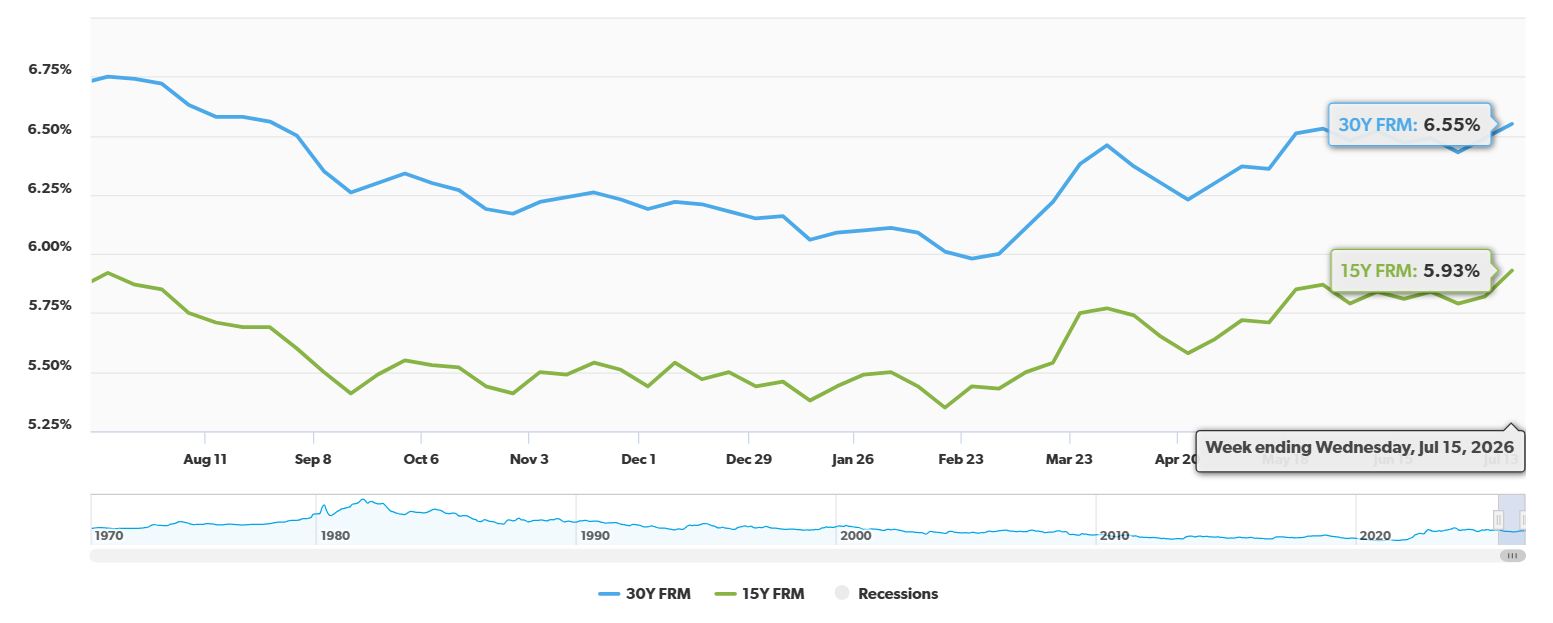
  • Putting it in Perspective: It's easy to get caught up in the day-to-day fluctuations, but it's worth remembering that even with recent ups and downs, today's rates are still significantly lower than the average of 7.8% we saw over the long haul since 1971. That's a pretty impressive historical context.

The Big Picture: What's Driving the Market?

Beyond the immediate shifts, several larger forces are shaping the mortgage rate environment we're experiencing:

  • The Federal Reserve's Approach: The Federal Reserve recently decided to keep the federal funds rate steady at 3.50%–3.75%. This is the rate banks use to lend to each other, and it influences borrowing costs across the economy. Their decision indicates they are still watching the economic picture closely.
  • Inflation and Economic Health: The good news is that projections for core inflation for 2026 are around 2.7%, and job gains appear to be steady. This suggests a generally stable economy. However, policymakers are expecting only one more rate reduction from the Fed this year. This cautious optimism means we probably won't see dramatic drops in interest rates overnight.
  • The Upcoming Decision: Mark your calendars for April 28–29, 2026! This is when the next FOMC (Federal Open Market Committee) meeting happens. What the Fed signals then will be a major factor in whether these current lower rates stick around or if we might see them creep back up. It’s always a pivotal moment.

My Two Cents: What This Means for You

From my perspective, seeing rates hover just above the 6% mark is a really interesting psychological threshold. Historically, when rates get this close to or dip below 6%, it tends to loosen things up in the housing market. We're seeing what could be the lowest spring rates in three years, and for many people who have been waiting on the sidelines, this might just be the open door they’ve been anticipating.

If you're considering a mortgage right now, here’s what I’d be thinking about:

  • Timing is Everything (Almost): If these rates continue to slide or even dip below 6%, I'd expect to see a noticeable jump in people wanting to buy homes. So, if you're ready, acting sooner rather than later might be a smart move.
  • Get Your Financial House in Order: Lenders love to see a strong credit score. If you're aiming for the best possible rates, having a FICO score of 740 or higher is often the ticket to those most competitive offers.
  • Is Refinancing Really Worth It?: If you're looking to refinance, do the math! Calculate the potential savings you'll get from a lower monthly payment over the life of the loan and compare that against the closing costs. Sometimes, even with a lower rate, it might not make financial sense if the upfront costs are too high. It's all about finding that sweet spot for your personal situation.

It’s an exciting time in the mortgage market, with just enough movement to warrant attention. Keep those eyes on the data, and don't hesitate to reach out to a trusted advisor to see how these rates might fit into your specific financial goals.

🏡 Two Rental Properties Generating Consistent Cash Flow

Rincon, GA
🏠 Property: Founders Dr
🛏️ Beds/Baths: 3 Bed • 2 Bath • 1600 sqft
💰 Price: $275,000 | Rent: $2,200
📊 Cap Rate: 7.0% | NOI: $1,613
📅 Year Built: 2025
📐 Price/Sq Ft: $172
🏙️ Neighborhood: B+

VS

Port Charlotte, FL
🏠 Property: Prineville St
🛏️ Beds/Baths: 4 Bed • 2 Bath • 1914 sqft
💰 Price: $349,900 | Rent: $2,100
📊 Cap Rate: 5.0% | NOI: $1,457
📅 Year Built: 2025
📐 Price/Sq Ft: $183
🏙️ Neighborhood: A

Georgia’s affordable rental with higher cap rate vs Florida’s A‑rated property with stability. Which fits YOUR investment strategy?

We have much more inventory available than what you see on our website – Let us know about your requirement.

📈 Choose Your Winner & Contact Us Today!

Speak to a Norada Investment Counselor (No Obligation):

(800) 611-3060

View All Properties

Build Passive Income & Wealth with Turnkey Rentals in 2026

Mortgage rates remain high in 2026, but rental properties continue to deliver strong cash flow and appreciation. Savvy investors know that turnkey real estate is the path to passive income and long‑term wealth.

Norada Real Estate helps you secure turnkey rental properties designed for immediate cash flow and appreciation—so you can invest smartly regardless of interest rate trends.

🔥 HOT 2026 INVESTMENT LISTINGS JUST ADDED! 🔥
Request a Callback / Fill Out the Form Online

Contact Us

Also Read:

  • Mortgage Rates Predictions Backed by 7 Leading Experts: 2025–2026
  • Mortgage Rate Predictions for the Next 3 Years: 2026, 2027, 2028
  • 30-Year Fixed Mortgage Rate Forecast for the Next 5 Years
  • 15-Year Fixed Mortgage Rate Predictions for Next 5 Years: 2025-2029
  • Will Mortgage Rates Ever Be 3% Again in the Future?
  • Mortgage Rates Predictions for Next 2 Years
  • Mortgage Rate Predictions for Next 5 Years
  • Mortgage Rate Predictions: Why 2% and 3% Rates are Out of Reach
  • How Lower Mortgage Rates Can Save You Thousands?
  • How to Get a Low Mortgage Interest Rate?
  • Will Mortgage Rates Ever Be 4% Again?
Filed Under: Financing, Mortgage Tagged With: mortgage, mortgage rates, Today’s Mortgage Rates

Mortgage Rates Today, April 26, 2026: 30-Year Refinance Rate Drops by 3 Basis Points

April 26, 2026 by Marco Santarelli

Mortgage Rates Today, June 20, 2026: 30‑Year Refinance Rate Rises by 3 Basis Points

As of Sunday, April 26, 2026, homeowners looking to refinance are seeing a slight easing in the market, with the average 30-year fixed refinance rate dropping by 3 basis points from last week. While this change might seem small, it’s a welcome breath for a market that’s been holding its breath, especially with the Federal Reserve’s pivotal meeting just around the corner.

Today's update from Zillow shows a national average of 6.54% for a 30-year fixed refinance. This is a modest improvement from last week's 6.57%, although it’s a tiny tick up of 2 basis points from yesterday’s 6.52%. It’s these small movements that make us lean in and analyze what’s really going on.

Mortgage Rates Today, April 26, 2026: 30-Year Refinance Rate Dips by 3 Basis Points

What the Numbers Are Telling Us on April 26, 2026

Let’s break down where things stand, according to Zillow’s latest reporting:

  • 30-Year Fixed Refinance: Currently sitting at 6.54%. While up slightly from yesterday, it's a positive sign compared to last week.
  • 15-Year Fixed Refinance: This shorter term is trading at 5.64%, showing a smaller uptick from yesterday's 5.60%. It’s good to see rates on the shorter end moving in a more controlled fashion.
  • 5-Year Adjustable-Rate Mortgage (ARM) Refinance: This option remains steady at 6.95%. ARMs can offer a lower initial rate, but it's crucial to understand the risks involved.

These figures paint a picture of a market that’s certainly not experiencing the wild swings of earlier this year, but it’s far from static. We’re in a period of careful observation, where every decimal point seems to carry significant weight.

The Bigger Economic Picture: Inflation, Geopolitics, and the Fed

You can’t talk about mortgage rates without talking about the Federal Reserve. Their upcoming meeting on April 28th and 29th is the elephant in the room. The general expectation is that they’ll keep the federal funds rate right where it is, somewhere between 3.50% and 3.75%. Why? Because inflation, while showing glimmers of hope, is still a persistent challenge.

Recent spikes in energy prices, influenced by ongoing geopolitical tensions, have pushed U.S. inflation up to around 3.3%. This is a significant factor that dampens hopes for any quick rate cuts from the Fed. They’re in a “wait-and-see” mode, which in turn keeps mortgage rates from falling dramatically. For homeowners hoping for a big refinance boost, it means continued patience.

How Homeowners Are Reacting: The “Lock-In” Effect

I’ve spoken to many people recently, and the “lock-in effect” is a term that comes up constantly. It refers to the fact that a huge number of homeowners – over 80% – secured their mortgages at rates far below where we are today, often under 6%. This makes the idea of refinancing at current rates seem financially unappealing, even with a slight dip.

Generally, a refinance makes the most sense when you can shave off at least 1% from your current rate. In today’s market, achieving that kind of saving is a tall order for many. It requires a bit more than just a minor rate drop.

What also matters immensely is your credit score. To get the best possible rates that are available, even in this environment, a FICO score of 740 or higher is typically what lenders are looking for. Maintaining good credit is always key, but it becomes even more critical when rates are elevated.

Market Sentiment and What the Future Might Hold

The general mood in the mortgage market is one of volatility. Headlines about global affairs and new inflation data can send sentiment swinging. While some economists are still looking at a gradual easing of rates later in 2026, the timeline for the first rate cut from the Fed seems to be inching closer to late September, or perhaps even later. It’s a nuanced picture, and crystal balls are in short supply.

So, What Does This Mean for You?

That 3-basis-point drop in the 30-year refinance rate today is a positive signal, but it’s not a game-changer for most. We’re still in a period where costs are higher than many would like, and optimism needs to be tempered with realism.

If you’re thinking about refinancing, here’s my advice:

  • Crunch the Numbers Carefully: Always calculate if the savings you’ll achieve by refinancing outweigh the closing costs. These costs can often range from 2% to 6% of your loan amount.
  • Listen to the Fed: Pay close attention to any signals coming from the Federal Reserve this week. Their communications will heavily influence rate trends throughout the summer.
  • Keep Your Credit in Top Shape: Continue to manage your credit responsibly. A strong credit profile is your best tool for accessing the most competitive rates on the market.

It's a waiting game for many, but understanding the forces at play can help you make the most informed decisions for your financial future.

🏡 Two Midwest Rentals With Strong Cash Flow

Cleveland, OH
🏠 Property: W 117th St
🛏️ Beds/Baths: 4 Bed • 2 Bath • 4800 sqft
💰 Price: $169,900 | Rent: $1,660
📊 Cap Rate: 8.3% | NOI: $1,173
📅 Year Built: 1952
📐 Price/Sq Ft: $36
🏙️ Neighborhood: B-

VS

Kansas City, MO
🏠 Property: N Main Street
🛏️ Beds/Baths: 6 Bed • 6 Bath • 3480 sqft
💰 Price: $485,000 | Rent: $4,000
📊 Cap Rate: 8.2% | NOI: $3,295
📅 Year Built: 2006
📐 Price/Sq Ft: $140
🏙️ Neighborhood: C+

Cleveland’s affordable rental with strong rent yield vs Kansas City’s larger 6‑bed property with higher NOI. Which fits YOUR investment strategy?

We have much more inventory available than what you see on our website – Let us know about your requirement.

📈 Choose Your Winner & Contact Us Today!

Speak to a Norada Investment Counselor (No Obligation):

(800) 611-3060

View All Properties

Invest Smart — Build Long-Term Wealth Through Turnkey Real Estate in 2026

Market forecasts suggest steady demand, making turnkey real estate one of the most reliable paths to passive income and wealth creation.

Norada Real Estate helps investors capitalize on these trends with turnkey rental properties designed for appreciation and consistent cash flow—so you can grow wealth securely while others wait for clarity in the market.

🔥 HOT 2026 INVESTMENT LISTINGS JUST ADDED! 🔥
Send Us An Email or Request a Call Back

Contact Us

Recommended Read:

  • 30-Year Fixed Refinance Rate Trends – March 22, 2026
  • Best Time to Refinance Your Mortgage: Expert Insights
  • Should You Refinance Your Mortgage Now or Wait Until 2026?
  • When You Refinance a Mortgage Do the 30 Years Start Over?
  • Should You Refinance as Mortgage Rates Reach Lowest Level in Over a Year?
  • Half of Recent Home Buyers Got Mortgage Rates Below 5%
  • Mortgage Rates Need to Drop by 2% Before Buying Spree Begins
  • Will Mortgage Rates Ever Be 3% Again: Future Outlook
  • Mortgage Rates Predictions for Next 2 Years
  • Mortgage Rate Predictions for Next 5 Years

Filed Under: Financing, Mortgage Tagged With: mortgage rates, Mortgage Rates Today, Refinance Rates

Today’s Mortgage Rates, April 25: Rates Edge Higher as Inflation and Energy Costs Persist

April 25, 2026 by Marco Santarelli

Today's Mortgage Rates, June 20: Rates See Mixed Moves as Market Stays Unsettled

If you're looking to buy a home or refinance, you've probably noticed that mortgage interest rates have nudged up a bit this weekend, with the popular 30-year fixed rate now sitting at 6.09%. This slight rise comes after rates had dipped briefly last week, and it seems a bit more uncertainty in the world is nudging borrowing costs back up.

Today's Mortgage Rates, April 25: Rates Edge Higher as Inflation and Energy Costs Persist

For those of you who like to get straight to the point, here’s the situation according to Zillow as of Saturday, April 25, 2026:

  • 30-Year Fixed Mortgage: 6.09% (Up 7 basis points)
  • 20-Year Fixed Mortgage: 6.04%
  • 15-Year Fixed Mortgage: 5.58% (Up 8 basis points)
  • 5/1 ARM: 6.07%
  • 7/1 ARM: 6.04%
  • 30-Year VA: 5.63%
  • 15-Year VA: 5.58%
  • 5/1 VA: 5.32%

It’s interesting to see how these rates are moving, isn’t it? Just a short while ago, we saw rates hit their lowest point in about a month. That was partly because some of the big international tensions seemed to calm down a bit. But as is often the case, things can shift quickly. Renewed global worries have put a gentle upward pressure on borrowing costs. Now, I don’t want to cause any alarm – these increases are pretty small compared to some of the wild swings we saw earlier this spring. Still, it's something to keep an eye on if you're in the market.

What These Numbers Mean for You

Let's break down what these rates actually mean for most people.

  • The 30-Year Fixed: Your Reliable Friend
    This is the workhorse of the mortgage world, and for good reason. It gives you that comfortable predictability with your monthly payments for a whole 30 years. At 6.09%, it's just a hair above that important 6% mark. For many, this stability is gold. You know exactly what your principal and interest will be, making budgeting much easier. It’s the top choice for a reason, especially if you plan on staying in your home for a good chunk of time.
  • The 15-Year Fixed: Speed and Savings
    If you're someone who likes to build equity faster and save money on interest over the life of the loan, the 15-year fixed mortgage is often the way to go. At 5.58%, it’s a decent rate. The trade-off is that your monthly payments will be higher than with a 30-year loan because you're paying it off in half the time. But the long-term savings? They can be substantial. It’s like getting a discount on the total cost of your home if you can swing it.
  • The 5/1 ARM: A Shorter-Term Strategy
    The 5/1 Adjustable-Rate Mortgage, starting at 6.07%, is a bit different. It offers a lower interest rate for the first five years, which means lower payments initially. After those five years, however, the rate can go up or down each year based on market conditions. This can be a great option if you're pretty sure you'll sell your home or refinance before those five years are up. But if you plan to stay put long-term, you’re taking on a bit of future risk. It’s a gamble that can pay off, but you need to be prepared for the potential for higher payments down the road.

What’s Happening in the Bigger Picture?

To really understand why mortgage rates are where they are, we need to look beyond just the numbers. Several big things are influencing the market right now.

  • The Federal Reserve is Always on Our Minds
    This is probably the biggest driver of interest rate movement. The Federal Reserve, or the “Fed” as we often call it, is set to meet very soon, on April 28th and 29th. Most smart people who watch the economy very closely – like analysts at J.P. Morgan and folks on platforms like Polymarket – are pretty darn sure the Fed will keep interest rates the same. We're talking about a 99% chance they'll leave their target rate between 3.5% and 3.75%. This kind of certainty, while it might seem boring, actually helps stabilize things a bit. It tells lenders and borrowers that at least one major influence isn’t going to suddenly jolt the market.
  • Good News for Fed Leadership
    Here’s a bit of political and economic news that could indirectly impact the markets: The Department of Justice has decided to drop its criminal investigation into Fed Chair Jerome Powell. This is significant because it seems to clear the way for President Trump’s nominee, Kevin Warsh, to potentially take over the role later on. While this doesn't directly change mortgage rates today, stability in leadership at the Federal Reserve is generally seen as a positive for the financial markets.
  • Consumers are Feeling the Pinch
    This is a tough one. Consumer sentiment, which is basically how people feel about the economy and their own financial future, has hit a really low point in April. Affordability is a huge issue. Houses are still expensive, and when coupled with these mortgage rates, it makes buying a home very difficult for a lot of people. This is why you'll hear some experts describe the housing market as being in a bit of a “freeze.” People aren't rushing to buy, and that lack of demand puts its own kind of pressure on the market.
  • Inflation and Gas Prices – Still a Headache
    We saw the Consumer Price Index (CPI) for March come in at 3.3%. A big reason for this was the ups and downs in energy prices. When energy costs go up, it tends to push up prices for a lot of other things, too. This persistent inflation is a major reason why we haven’t seen mortgage rates drop significantly. The “easy money” days of very low rates are still a distant memory because the central bank is trying to keep inflation in check.

What to Expect Next Week

So, what’s the takeaway from all this for someone like you, who’s trying to navigate the housing market?

  • Stability Seems to Be the Theme
    Based on what I'm seeing and hearing from my sources, it feels like we're settling into a period where mortgage rates might stay relatively stable, rather than making big, dramatic drops. The days of rapidly falling rates are probably behind us for now.
  • The “6% Threshold” is Key
    Experienced folks in the mortgage industry, like those at Nadlan Capital Group, are really watching that 6% mark for the 30-year fixed. If rates manage to dip below 6%, it could really spark more buyer interest and activity. It's like a psychological trigger. But until then, many buyers are likely to remain on the sidelines.
  • Everyone's Waiting to See What the Fed Does
    Because the Federal Reserve meeting is so close, most lenders are playing it safe this weekend. They're holding their rates steady, waiting for the Fed's announcement next week. Once the Fed speaks, we’ll have a clearer picture of their plans, and that’s when lenders might adjust their offerings more confidently. So, next week is going to be pretty important for figuring out where the housing market is headed in the short term.

My Two Cents

As someone who’s been following the mortgage and housing markets for a while, what strikes me most right now is the cautious optimism, tempered with a healthy dose of reality. We’re not in a panic, but we’re certainly not in a boom time either. The rates themselves aren’t sky-high compared to historical averages, but the combination of those rates with affordability challenges and lingering inflation is creating a tricky environment for buyers.

The Fed’s meeting will be the big event. If they signal any changes in their approach to inflation or the economy, it will absolutely ripple through to mortgage rates. On the flip side, if they maintain their current stance, we'll likely see mortgage rates continue to dance around these current levels. For borrowers, it really reinforces the idea of patience and strategy. Understanding your own financial situation, talking to lenders, and knowing those key rate thresholds can make all the difference. Don't get discouraged by the numbers today; focus on what you can control and prepare for what might come next week.

🏡 Two Rental Properties Generating Consistent Cash Flow

Rincon, GA
🏠 Property: Founders Dr
🛏️ Beds/Baths: 3 Bed • 2 Bath • 1600 sqft
💰 Price: $275,000 | Rent: $2,200
📊 Cap Rate: 7.0% | NOI: $1,613
📅 Year Built: 2025
📐 Price/Sq Ft: $172
🏙️ Neighborhood: B+

VS

Port Charlotte, FL
🏠 Property: Prineville St
🛏️ Beds/Baths: 4 Bed • 2 Bath • 1914 sqft
💰 Price: $349,900 | Rent: $2,100
📊 Cap Rate: 5.0% | NOI: $1,457
📅 Year Built: 2025
📐 Price/Sq Ft: $183
🏙️ Neighborhood: A

Georgia’s affordable rental with higher cap rate vs Florida’s A‑rated property with stability. Which fits YOUR investment strategy?

We have much more inventory available than what you see on our website – Let us know about your requirement.

📈 Choose Your Winner & Contact Us Today!

Speak to a Norada Investment Counselor (No Obligation):

(800) 611-3060

View All Properties

Build Passive Income & Wealth with Turnkey Rentals in 2026

Mortgage rates remain high in 2026, but rental properties continue to deliver strong cash flow and appreciation. Savvy investors know that turnkey real estate is the path to passive income and long‑term wealth.

Norada Real Estate helps you secure turnkey rental properties designed for immediate cash flow and appreciation—so you can invest smartly regardless of interest rate trends.

🔥 HOT 2026 INVESTMENT LISTINGS JUST ADDED! 🔥
Request a Callback / Fill Out the Form Online

Contact Us

Also Read:

  • Mortgage Rates Predictions Backed by 7 Leading Experts: 2025–2026
  • Mortgage Rate Predictions for the Next 3 Years: 2026, 2027, 2028
  • 30-Year Fixed Mortgage Rate Forecast for the Next 5 Years
  • 15-Year Fixed Mortgage Rate Predictions for Next 5 Years: 2025-2029
  • Will Mortgage Rates Ever Be 3% Again in the Future?
  • Mortgage Rates Predictions for Next 2 Years
  • Mortgage Rate Predictions for Next 5 Years
  • Mortgage Rate Predictions: Why 2% and 3% Rates are Out of Reach
  • How Lower Mortgage Rates Can Save You Thousands?
  • How to Get a Low Mortgage Interest Rate?
  • Will Mortgage Rates Ever Be 4% Again?

Filed Under: Financing, Mortgage Tagged With: mortgage, mortgage rates, Today’s Mortgage Rates

Mortgage Rates Today, April 25, 2026: 30-Year Refinance Rate Drops by 6 Basis Points

April 25, 2026 by Marco Santarelli

Mortgage Rates Today, June 20, 2026: 30‑Year Refinance Rate Rises by 3 Basis Points

Well, it looks like spring is bringing a little relief for those of us thinking about refinancing our homes. As of today, April 25, 2026, the average rate for a 30-year fixed refinance has dipped by 6 basis points, landing at 6.51%. This isn't a massive plunge, but it's a welcome sign of easing after a period of considerable ups and downs. For many homeowners, this could be the nudge they need to explore saving money on their monthly mortgage payments.

Mortgage Rates Today, April 25, 2026: 30-Year Refinance Rate Drops by 6 Basis Points

What's Moving the Numbers Today?

It's easy to focus just on the numbers, but understanding why they're moving is critical. From my perspective, the big story is the Federal Reserve's delicate balancing act. They've kept their target interest rate steady between 3.5% and 3.75%. This “wait-and-see” approach is understandable given the economic climate. We're seeing some bumps in the road, particularly with gas prices, thanks to ongoing global events. This has nudged inflation up a bit in March to 3.3%, making the Fed cautious about making any sudden moves.

And speaking of potential moves, there's a lot of chatter about who might be at the helm of the Fed next. The nomination of Kevin Warsh to potentially succeed Jerome Powell is definitely on everyone's radar. Changes at the top of the Federal Reserve can signal shifts in how they plan to manage the economy, and markets are very sensitive to that.

Current Refinance Rates at a Glance

Let's break down where things stand right now, according to Zillow's national averages:

  • 30-Year Fixed Refinance: 6.51% (This is our headline move, down from 6.57% last week).
  • 15-Year Fixed Refinance: 5.58% (This one has been pretty stable lately).
  • 5-Year Adjustable-Rate Mortgage (ARM) Refinance: 7.01% (Also holding steady for now).

The fact that the 30-year fixed rate is nudging downwards is significant. While the 15-year and ARM rates are holding firm, any drop in the most popular long-term loan is noteworthy.

Is Refinancing Right for You? The Key Questions

I always tell people that refinancing isn't a one-size-fits-all solution. Before you jump in, it's smart to ask yourself a few questions. Think of it like checking if a new pair of shoes fits perfectly before you buy them.

  • The 1% Rule: A common guideline I often refer to is the 1% rule. Generally, refinancing makes the most sense if you can shave at least one full percentage point off your current interest rate. If your current rate is, say, 7.5%, and you can get a refinance at 6.5%, you're meeting that mark.
  • Don't Forget Closing Costs: Refinancing comes with fees, much like taking out a new mortgage. These can range from 2% to 6% of the total loan amount. For a $300,000 loan, that could mean anywhere from $6,000 to $18,000 out of pocket. It’s essential to factor this into your savings calculation.
  • When Do You Break Even? This is crucial. You need to figure out how many months it will take for your monthly savings to cover those upfront closing costs. Most experts, and honestly, my own experience agrees, suggest aiming for a 2-to-3 year recovery window. If it takes you 10 years to recoup your costs, it might not be worth it.
  • Lock In or Wait? Given the market's current moodiness, I strongly advise thinking about locking in a rate if it meets your financial goals. Lenders are making small adjustments now, but the crystal ball for interest rates is still a little cloudy. Locking in gives you certainty.

What This Means for Homeowners and Buyers

So, what's the takeaway for you, whether you're a homeowner looking to refinance or perhaps a buyer in the market?

For Homeowners: If you've got an older mortgage with a rate significantly higher than today's 6.51% for a 30-year fixed, now is definitely a time to run the numbers. The savings could be real, but remember to crunch them against those closing costs.

For New Buyers: While this update is specifically about refinancing, the stability in shorter-term loans like the 15-year fixed can be reassuring. If you're considering a shorter mortgage term for faster equity building, the 5.58% rate is pretty attractive and offers a good level of certainty.

For Investors: The current market volatility might make some investors a bit hesitant, and that's wise. However, a slight easing in rates, as we're seeing with the 30-year refinance, can present opportunities for strategic adjustments to portfolios. It’s about being smart and calculated.

The Bottom Line on April 25, 2026

To sum things up, mortgage refinance rates on this Saturday, April 25, 2026, are showing a gentle downward trend, with the 30-year fixed rate dropping by six basis points to 6.51%. This is providing a bit of cautious optimism in what has been a somewhat unpredictable economic climate. With inflation and Federal Reserve policy still developing, it’s a good time for homeowners to carefully review their options, crunch the numbers, and consider locking in a more favorable rate if it aligns with their long-term financial plans. Don't let the opportunity for potential savings slip by!

🏡 Two Midwest Rentals With Strong Cash Flow

Cleveland, OH
🏠 Property: W 117th St
🛏️ Beds/Baths: 4 Bed • 2 Bath • 4800 sqft
💰 Price: $169,900 | Rent: $1,660
📊 Cap Rate: 8.3% | NOI: $1,173
📅 Year Built: 1952
📐 Price/Sq Ft: $36
🏙️ Neighborhood: B-

VS

Kansas City, MO
🏠 Property: N Main Street
🛏️ Beds/Baths: 6 Bed • 6 Bath • 3480 sqft
💰 Price: $485,000 | Rent: $4,000
📊 Cap Rate: 8.2% | NOI: $3,295
📅 Year Built: 2006
📐 Price/Sq Ft: $140
🏙️ Neighborhood: C+

Cleveland’s affordable rental with strong rent yield vs Kansas City’s larger 6‑bed property with higher NOI. Which fits YOUR investment strategy?

We have much more inventory available than what you see on our website – Let us know about your requirement.

📈 Choose Your Winner & Contact Us Today!

Speak to a Norada Investment Counselor (No Obligation):

(800) 611-3060

View All Properties

Invest Smart — Build Long-Term Wealth Through Turnkey Real Estate in 2026

Market forecasts suggest steady demand, making turnkey real estate one of the most reliable paths to passive income and wealth creation.

Norada Real Estate helps investors capitalize on these trends with turnkey rental properties designed for appreciation and consistent cash flow—so you can grow wealth securely while others wait for clarity in the market.

🔥 HOT 2026 INVESTMENT LISTINGS JUST ADDED! 🔥
Send Us An Email or Request a Call Back

Contact Us

Recommended Read:

  • 30-Year Fixed Refinance Rate Trends – March 22, 2026
  • Best Time to Refinance Your Mortgage: Expert Insights
  • Should You Refinance Your Mortgage Now or Wait Until 2026?
  • When You Refinance a Mortgage Do the 30 Years Start Over?
  • Should You Refinance as Mortgage Rates Reach Lowest Level in Over a Year?
  • Half of Recent Home Buyers Got Mortgage Rates Below 5%
  • Mortgage Rates Need to Drop by 2% Before Buying Spree Begins
  • Will Mortgage Rates Ever Be 3% Again: Future Outlook
  • Mortgage Rates Predictions for Next 2 Years
  • Mortgage Rate Predictions for Next 5 Years

Filed Under: Financing, Mortgage Tagged With: mortgage rates, Mortgage Rates Today, Refinance Rates

Today’s Mortgage Rates, April 24: A Welcome Dip Especially for Those Looking at Short-Term Loans

April 24, 2026 by Marco Santarelli

Today's Mortgage Rates, June 20: Rates See Mixed Moves as Market Stays Unsettled

It’s a relief to bring you some good news this spring! On April 24, 2026, mortgage rates are showing a welcome dip, especially for those looking at shorter-term loans. While the widely watched 30-year fixed mortgage rate is still just over 6%, we’re seeing some of those shorter-term fixed loans now comfortably below the 6% mark. This is fantastic news for affordability as we head into the busy homebuying season.

Today's Mortgage Rates, April 24: A Welcome Dip Especially for Those Looking at Short-Term Loans

What the Numbers Say: Today's Rates

Let’s get straight to the numbers. Based on data from Zillow, here’s how things are shaking out for various mortgage types today, April 24, 2026:

  • 30-Year Fixed: Currently sitting at 6.05%. This is a slight decrease, down by 5 basis points from where we were.
  • 20-Year Fixed: This option has seen a more significant drop, moving from 6.05% down to 5.81%.
  • 15-Year Fixed: This popular choice is holding steady at 5.56%.
  • 5/1 ARM: For those comfortable with an adjustable rate, the 5/1 ARM is at 5.84%.
  • 7/1 ARM: A bit higher, the 7/1 ARM is listed at 5.98%.
  • 30-Year VA: For our veterans, the 30-year VA loan is at 5.57%.
  • 15-Year VA: A great rate for veterans here, at 5.20%.
  • 5/1 VA: The adjustable-rate option for veterans is also 5.20%.

To give you a broader perspective, the weekly data from Freddie Mac (released April 23) also paints a similar picture of easing rates:

  • 30-Year Fixed: Freddie Mac reports this at 6.23%.
  • 15-Year Fixed: Stands at 5.58%.
  • 30-Year Jumbo: For those looking at larger loan amounts, this is 6.63%.
  • FHA/VA Loans: These combined rates range from 5.16% to 5.60%, depending on the specific loan term.

What this broader look tells me is that there’s a general trend of rates coming down across the board, which is definitely a positive sign for anyone looking to buy or refinance.

Why Are Rates Moving? The Inside Scoop

So, what’s behind this movement? It’s a few things, and understanding them can help you make smarter decisions.

1. The Bond Market Taking a Breath: The biggest driver for mortgage rate changes is typically the bond market, specifically the 10-year Treasury bond yield. These yields have been heading down, hovering near 4.30%. When Treasury yields fall, it usually means mortgage rates follow suit. It’s like a domino effect!

2. Economic Stability (Relatively Speaking): Even with some global concerns, like the ongoing geopolitical situations in the Middle East, the financial markets seem to be finding their footing. This stability is encouraging lenders like HSBC and Santander to feel confident enough to announce cuts in their lending rates. It shows a bit more predictability, which is good for everyone.

3. The Fed's Steady Hand: The Federal Reserve hasn't made any surprises lately. They've kept the federal funds rate steady in the 3.50% to 3.75% range. They’re being cautious, watching the employment numbers and inflation reports closely. It’s like they’re saying, “Let's see how these recent moves settle before we do anything else.” This pause is important because it allows the market to adjust.

What You Absolutely Need to Know Today

Beyond the raw numbers, there are some trends I’m seeing that are really shaping the market right now.

  • Market Activity is Picking Up: Lower rates are doing what they’re supposed to do – encouraging people to buy homes and consider refinancing. I’m seeing more purchase applications and a boost in refinance activity. The spring market is definitely getting busier.
  • Inflation is Still a Factor: While rates are coming down, we can’t ignore inflation. The March CPI (Consumer Price Index) rose to 3.3%, partly due to those energy costs. This is a key reason why rates might not be able to plunge much further, at least not dramatically, until inflation shows more sustained cooling.
  • Borrowers are Getting Savvy: I’ve noticed a significant trend where many borrowers are opting for shorter-term fixed-rate deals, like the 2-year fixed, which has captured about 65% of recent customers. They’re choosing this over, say, a 5-year term. Why? It’s all about flexibility. They’re hoping that if rates drop even more later this year, they can refinance into something even better without being locked into a higher rate for too long. It’s a smart strategy in a fluctuating market.
  • The Magic Number: 6%: Many experts, including myself, are watching 6% very closely for the 30-year fixed-rate mortgage. This is often seen as a psychological benchmark. If rates dip below this, it's likely to spark an even bigger surge in homebuying activity. It’s a tipping point many buyers are waiting for.

What This Means For Your Wallet

So, with the 30-year fixed rate at 6.05% and those shorter-term loans now beneath 6%, what does this really mean for you?

  • For Homebuyers: This is a prime opportunity! If you’re looking to buy, those shorter-term loans might offer a lower starting rate. They also help you build equity faster. Keep in mind that while the monthly payment might be slightly higher on a shorter loan compared to a 30-year at the same rate, the overall interest paid over the life of the loan will be less. It’s a trade-off to consider based on your budget and future plans.
  • For Homeowners Looking to Refinance: If your current mortgage rate is around 1% higher than today’s rates (like the 5.81% or 5.56% options), it might be time to seriously look into refinancing. This could lower your monthly payment or allow you to shorten your loan term. It's always worth getting a quote to see if the savings make sense for you.
  • For Investors: The current stability in rates does offer a brief window for planning. However, as I mentioned, the persistent inflation is a risk that investors need to keep a close eye on. It means that while borrowing costs might be lower now, the overall cost of living and potential returns need careful calculation.

The Bottom Line

As of April 24, 2026, we're seeing a positive shift in mortgage rates. The short-term fixed rates dipping below 6% mark a significant milestone after three spring seasons. While the economic uncertainties and inflation are still on the horizon, today presents a genuine opportunity for both buyers and homeowners to secure more favorable borrowing terms. It’s a great time to explore your options, especially before the next Federal Reserve meeting.

🏡 Two Rental Properties Generating Consistent Cash Flow

Rincon, GA
🏠 Property: Founders Dr
🛏️ Beds/Baths: 3 Bed • 2 Bath • 1600 sqft
💰 Price: $275,000 | Rent: $2,200
📊 Cap Rate: 7.0% | NOI: $1,613
📅 Year Built: 2025
📐 Price/Sq Ft: $172
🏙️ Neighborhood: B+

VS

Port Charlotte, FL
🏠 Property: Prineville St
🛏️ Beds/Baths: 4 Bed • 2 Bath • 1914 sqft
💰 Price: $349,900 | Rent: $2,100
📊 Cap Rate: 5.0% | NOI: $1,457
📅 Year Built: 2025
📐 Price/Sq Ft: $183
🏙️ Neighborhood: A

Georgia’s affordable rental with higher cap rate vs Florida’s A‑rated property with stability. Which fits YOUR investment strategy?

We have much more inventory available than what you see on our website – Let us know about your requirement.

📈 Choose Your Winner & Contact Us Today!

Speak to a Norada Investment Counselor (No Obligation):

(800) 611-3060

View All Properties

Build Passive Income & Wealth with Turnkey Rentals in 2026

Mortgage rates remain high in 2026, but rental properties continue to deliver strong cash flow and appreciation. Savvy investors know that turnkey real estate is the path to passive income and long‑term wealth.

Norada Real Estate helps you secure turnkey rental properties designed for immediate cash flow and appreciation—so you can invest smartly regardless of interest rate trends.

🔥 HOT 2026 INVESTMENT LISTINGS JUST ADDED! 🔥
Request a Callback / Fill Out the Form Online

Contact Us

Also Read:

  • Mortgage Rates Predictions Backed by 7 Leading Experts: 2025–2026
  • Mortgage Rate Predictions for the Next 3 Years: 2026, 2027, 2028
  • 30-Year Fixed Mortgage Rate Forecast for the Next 5 Years
  • 15-Year Fixed Mortgage Rate Predictions for Next 5 Years: 2025-2029
  • Will Mortgage Rates Ever Be 3% Again in the Future?
  • Mortgage Rates Predictions for Next 2 Years
  • Mortgage Rate Predictions for Next 5 Years
  • Mortgage Rate Predictions: Why 2% and 3% Rates are Out of Reach
  • How Lower Mortgage Rates Can Save You Thousands?
  • How to Get a Low Mortgage Interest Rate?
  • Will Mortgage Rates Ever Be 4% Again?

Filed Under: Financing, Mortgage Tagged With: mortgage, mortgage rates, Today’s Mortgage Rates

Mortgage Rates Today, April 24, 2026: 30-Year Refinance Rate Drops by 4 Basis Points

April 24, 2026 by Marco Santarelli

Mortgage Rates Today, June 20, 2026: 30‑Year Refinance Rate Rises by 3 Basis Points

It's a welcome piece of news for homeowners today, April 24, 2026: the 30-year fixed refinance rate has dipped by four basis points to 6.53%. This slight but significant decrease means we're looking at the lowest refinance rates we've seen across three spring homebuying seasons. For anyone contemplating refinancing their mortgage, this movement, while small, is a signal worth paying close attention to.

Mortgage Rates Today, April 24, 2026: 30-Year Refinance Rate Drops by 4 Basis Points

What Are the Latest Refinance Rates?

According to the latest data from Zillow, here’s the national average snapshot for refinance rates today:

  • 30-Year Fixed Refinance: 6.53% (This is a decrease of 4 basis points from last week's 6.57%)
  • 15-Year Fixed Refinance: 5.63% (This rate has remained stable)
  • 5-Year Adjustable-Rate Mortgage (ARM) Refinance: 7.11% (Also unchanged)

Seeing the 30-year fixed rate tick down is particularly important. It’s the most popular mortgage product for a reason – it offers predictability over the long haul. The fact that it's now at its lowest point in three springs is a story in itself.

Navigating a Volatile Market with Improving Momentum

Even with this positive dip, it’s crucial to understand that the market is still quite volatile. Think of it like a ship on a choppy sea; there are ups and downs, influenced by a lot of different currents. Experts at HomeOwners Alliance have described it as precisely that – a volatile environment. Rates are dancing around based on what's happening with U.S. Treasury yields and those ever-present global inflation concerns.

However, what's also interesting is the improving momentum in refinance activity. Economists are pointing out that borrowers are starting to respond to these recent declines, especially after seeing rates creep up in March. It shows that people are paying attention, and when there's a chance to potentially save money, they'll often seize it.

One trend I've definitely noticed is the growing preference for fixed-rate mortgages. The gap in pricing between fixed-rate loans and ARMs has shrunk considerably. This means borrowers are leaning towards the security of a fixed payment rather than taking on the risk of an ARM, even if an ARM might seem slightly cheaper upfront on paper.

What's Driving These Rate Shifts?

Several factors are playing a role in where mortgage rates are headed. It's not just one thing, but a combination of economic signals and global events that shape the financial picture.

  • Economic Data: The March Consumer Price Index (CPI) came in at 3.3%. Now, while this number might seem okay, it's not low enough for central banks to feel completely confident about aggressive rate cuts. This caution keeps a lid on how much rates can realistically fall.
  • Geopolitical Conflict: Unfortunately, the ongoing tensions in the Middle East continue to be a factor. These conflicts can directly impact oil and gas prices, which in turn can increase the costs for lenders, indirectly influencing mortgage rates. It’s a ripple effect that reaches all the way to your potential refinance application.
  • Global Inflation Concerns: As mentioned with the CPI, inflation is still a concern globally. When inflation is high, lenders need to account for the fact that the money they lend out today will be worth less in the future. This often translates to higher interest rates.

Your Personal Financial Profile Still Matters Most

While these market-wide factors are important, I always tell folks that your personal financial situation is the most significant piece of the puzzle when it comes to the rate you'll actually get. Borrowers who have maintained strong credit scores and kept their debt-to-income ratios low are in the best position. These individuals are the ones who are more likely to secure rates closer to the mid-to-high 5% range for those desirable 30-year fixed loans. It's a testament to the fact that good financial habits have tangible rewards.

Expert Advice: Should You Lock In?

So, with all this ebb and flow, what’s the move? Based on my experience and what other industry experts are saying, here's my take:

  • The Lock-In Strategy: If you're within about six months of a deal ending (whether it’s a refinance or a purchase), and you’re happy with the current rate of 6.53% for a 30-year fixed, it might be wise to consider locking it in. The market is still uncertain enough that locking provides a safety net. Many lenders are also offering the ability to renegotiate your rate if it happens to fall even further before your closing date. It’s a ‘best of both worlds’ approach.
  • The 1% Rule: A good rule of thumb for refinancing is that you generally want to see your rate drop by at least one full percentage point compared to your current mortgage. This ensures that the savings you'll see over the life of the loan will outweigh the closing costs associated with the refinance.

What Does This Mean for You?

This latest update on mortgage rates on April 24, 2026, presents a market that is both volatile and opportunistic. Here’s what it could mean for different groups of people:

  • Homeowners: If you locked in a higher-rate mortgage between 2023 and 2025, and you have a good chunk of equity and a solid financial profile, this dip could be your chance to refinance and lower your monthly payments. You'll want to compare your current rate to the 6.53% to see if it makes sense.
  • Homebuyers: For those looking to buy a home, the relative stability in mortgage rates, even with some volatility, offers a welcome window for planning. However, it’s important to stay grounded; affordability remains a significant challenge for many due to home prices.
  • Investors: For real estate investors, this period of market volatility calls for a cautious approach. However, the predictable short-term movements in rates can be helpful for timing acquisition or refinancing strategies.

The Bottom Line

In conclusion, mortgage refinance rates on April 24, 2026, are showing a modest decline, reaching the lowest point in three spring seasons. While there are still potential headwinds from geopolitical risks and inflation, this presents a rare opportunity for borrowers to consider locking in potentially more favorable terms. It’s a good time to review your current mortgage and see if refinancing makes sense for your financial goals.

🏡 Two Midwest Rentals With Strong Cash Flow

Cleveland, OH
🏠 Property: W 117th St
🛏️ Beds/Baths: 4 Bed • 2 Bath • 4800 sqft
💰 Price: $169,900 | Rent: $1,660
📊 Cap Rate: 8.3% | NOI: $1,173
📅 Year Built: 1952
📐 Price/Sq Ft: $36
🏙️ Neighborhood: B-

VS

Kansas City, MO
🏠 Property: N Main Street
🛏️ Beds/Baths: 6 Bed • 6 Bath • 3480 sqft
💰 Price: $485,000 | Rent: $4,000
📊 Cap Rate: 8.2% | NOI: $3,295
📅 Year Built: 2006
📐 Price/Sq Ft: $140
🏙️ Neighborhood: C+

Cleveland’s affordable rental with strong rent yield vs Kansas City’s larger 6‑bed property with higher NOI. Which fits YOUR investment strategy?

We have much more inventory available than what you see on our website – Let us know about your requirement.

📈 Choose Your Winner & Contact Us Today!

Speak to a Norada Investment Counselor (No Obligation):

(800) 611-3060

View All Properties

Invest Smart — Build Long-Term Wealth Through Turnkey Real Estate in 2026

Market forecasts suggest steady demand, making turnkey real estate one of the most reliable paths to passive income and wealth creation.

Norada Real Estate helps investors capitalize on these trends with turnkey rental properties designed for appreciation and consistent cash flow—so you can grow wealth securely while others wait for clarity in the market.

🔥 HOT 2026 INVESTMENT LISTINGS JUST ADDED! 🔥
Send Us An Email or Request a Call Back

Contact Us

Recommended Read:

  • 30-Year Fixed Refinance Rate Trends – March 22, 2026
  • Best Time to Refinance Your Mortgage: Expert Insights
  • Should You Refinance Your Mortgage Now or Wait Until 2026?
  • When You Refinance a Mortgage Do the 30 Years Start Over?
  • Should You Refinance as Mortgage Rates Reach Lowest Level in Over a Year?
  • Half of Recent Home Buyers Got Mortgage Rates Below 5%
  • Mortgage Rates Need to Drop by 2% Before Buying Spree Begins
  • Will Mortgage Rates Ever Be 3% Again: Future Outlook
  • Mortgage Rates Predictions for Next 2 Years
  • Mortgage Rate Predictions for Next 5 Years

Filed Under: Financing, Mortgage Tagged With: mortgage rates, Mortgage Rates Today, Refinance Rates

Today’s Mortgage Rates, April 23: Rates Steady Near 6% With Refinance Demand Rising

April 23, 2026 by Marco Santarelli

Today's Mortgage Rates, June 20: Rates See Mixed Moves as Market Stays Unsettled

If you’re thinking about buying a home or refinancing your current mortgage, you’ve probably been glued to those mortgage rate numbers. Today, April 23rd, brings some welcome news: today’s mortgage rates are showing a rare bit of calm after a period of much more dramatic ups and downs. The key figure to watch, the 30-year fixed mortgage rate, is sitting at 6.10% according to Zillow. This is a small tick up from yesterday, but more importantly, it’s a significant improvement from the unsettling peaks we saw last year.

Today's Mortgage Rates, April 23: Rates Steady Near 6% With Refinance Demand Rising

It feels like just yesterday we were all talking about rates soaring above 7%, and honestly, that was a tough time for potential homebuyers. But right now, there’s a sense that we're in a slightly more predictable phase. This stability, while still at a higher level than we’ve gotten used to in the past, offers a valuable opportunity for planning and making informed decisions. I’ve been following this market closely, and this pause feels like a chance to take a deep breath.

What the Numbers Tell Us Right Now (April 23, 2026)

Let’s dive into the specifics so you know exactly where things stand:

Loan Type Interest Rate
30-Year Fixed 6.10%
20-Year Fixed 6.05%
15-Year Fixed 5.56%
5/1 ARM 6.20%
7/1 ARM 5.99%
30-Year VA 5.60%
15-Year VA 5.23%
5/1 VA 5.16%

Looking at these numbers, the 30-year fixed rate remains the go-to for many, offering that long-term predictability in monthly payments. The 15-year fixed is significantly lower, which is great if you can handle a higher monthly payment – it means you’ll pay much less interest over the life of the loan. The Adjustable-Rate Mortgages (ARMs) are a bit mixed, with the 7/1 ARM actually sitting a bit below the 30-year fixed, but remember those rates can go up after the initial fixed period.

Why This Stability? It’s a Mix of Things.

So, what’s behind this quiet spell in the mortgage rate world? It’s not just one single factor, but a few key players:

  • The Fed’s Rest: The Federal Reserve has kept its key interest rate, the federal funds rate, steady in the 3.50%–3.75% range throughout 2026. This is a big deal because it influences where other interest rates, including mortgage rates, tend to go. We’re all looking ahead to the upcoming April 28–29 FOMC meeting, and the word on the street is they’ll likely hit the pause button for the third time in a row. This predictability from the Fed is a major contributor to the current market calm.
  • Global Ripples: Unfortunately, the world doesn’t always cooperate with our housing plans. Ongoing conflicts, particularly in the Middle East, have been pushing up energy prices. When energy prices rise, it often fuels inflation, and inflation is a big driver of mortgage rates. It’s a constant dance between global events and our local mortgage markets. This is why you’ll often see mortgage rates move closely with things like the 10-year Treasury yield, which is, in its own way, influenced by all sorts of economic and geopolitical news.

My Take: A Smart Time to Be Proactive

From my experience working with people navigating these markets, this period of “pause in volatility” is a golden moment. It’s rare to see rates moving so little, day after day. It means that buyers and homeowners have a bit more time to act without feeling like the rug is going to be pulled out from under them tomorrow.

Brokers I’ve spoken with are strongly recommending that anyone serious about buying or refinancing should use rate-lock services. Think of it as putting a temporary hold on the current rate you qualify for. This way, you secure the 6.10% (or whatever rate you get) while still having the option to potentially get an even lower rate if the market dips further before your deal is finalized. It’s a smart way to play it safe and stay flexible.

Beyond the Headlines: What Really Matters for Your Rate

While the national averages are important, your individual mortgage rate can vary quite a bit. Here are the things that lenders look at most closely:

  • Your Credit Score: This is probably the biggest factor. If you have a score of 750 or higher, you're generally in a great position to get the best advertised rates. Scores below this can lead to higher interest charges.
  • Your Debt-to-Income (DTI) Ratio: This tells lenders how much of your monthly income is already spoken for by debt payments. A lower DTI (generally below 43%) shows you have more disposable income and are a lower risk.
  • Your Down Payment: Putting down a bigger chunk of cash upfront, especially 25% or more, can significantly impact your rate. You might even be able to “buy down” your interest rate, meaning you pay a fee at closing to get a lower rate for the life of the loan.

I’ve also noticed that some lenders are really trying to stand out by advertising very competitive “as low as” rates. For example, I’ve seen some credit unions offering rates as low as 5.25% for a 30-year fixed – but this is usually for borrowers with a near-perfect credit score, a substantial down payment, and a very low debt-to-income ratio. It’s always worth shopping around!

FHA vs. Conventional: An Important Distinction

For first-time homebuyers, FHA loans are often a fantastic entry point. They typically have slightly more flexible credit requirements and can offer slightly lower rates than conventional loans. However, it’s crucial to remember that FHA loans come with mandatory mortgage insurance, which adds to your monthly costs. So, while the upfront rate might seem attractive, weigh the total monthly payment.

Refinancing: Is It Worth It Now?

If you already own a home and your current mortgage rate is significantly higher than 6.10%, then yes, refinancing is absolutely something to consider. Experts generally say it makes sense if you can shave off at least one percentage point from your current rate. Even a half-percent can save you a good amount over many years. With this stability, you have the breathing room to explore those options.

What This Means for You

So, how does all of this translate into action for you, the borrower?

  • Homebuyers: Affordability is still a challenge, no doubt about it. But with rates sitting here, and potentially opportunities like FHA loans or incentives from home builders, it’s a more manageable time to enter the market than it was last year.
  • Homeowners: If you’ve been holding off on refinancing a higher-rate loan, now is the time to seriously look into it. The current 6.10% for a 30-year fixed means that if your current rate is, say, 7.5% or higher, you could be saving a considerable amount each month.
  • Investors: The predictability is a short-term win. It allows for better financial planning. However, the real long-term relief for investors, and indeed for the broader market, will likely depend on inflation continuing to cool down and the Fed making more significant policy shifts later in the year.

The Bottom Line: As of April 23rd, today’s mortgage rates are signaling a stable, albeit elevated, market. The 30-year fixed rate at 6.10% isn't the record low we might dream of, but it’s a far cry from the stress of last year. This rare window of predictability is your cue to be proactive. Explore refinancing, keep an eye on those Treasury yields, and shop around with different lenders. Making an informed move now could save you a lot of money in the long run.

🏡 Two Rental Properties Generating Consistent Cash Flow

Rincon, GA
🏠 Property: Founders Dr
🛏️ Beds/Baths: 3 Bed • 2 Bath • 1600 sqft
💰 Price: $275,000 | Rent: $2,200
📊 Cap Rate: 7.0% | NOI: $1,613
📅 Year Built: 2025
📐 Price/Sq Ft: $172
🏙️ Neighborhood: B+

VS

Port Charlotte, FL
🏠 Property: Prineville St
🛏️ Beds/Baths: 4 Bed • 2 Bath • 1914 sqft
💰 Price: $349,900 | Rent: $2,100
📊 Cap Rate: 5.0% | NOI: $1,457
📅 Year Built: 2025
📐 Price/Sq Ft: $183
🏙️ Neighborhood: A

Georgia’s affordable rental with higher cap rate vs Florida’s A‑rated property with stability. Which fits YOUR investment strategy?

We have much more inventory available than what you see on our website – Let us know about your requirement.

📈 Choose Your Winner & Contact Us Today!

Speak to a Norada Investment Counselor (No Obligation):

(800) 611-3060

View All Properties

Build Passive Income & Wealth with Turnkey Rentals in 2026

Mortgage rates remain high in 2026, but rental properties continue to deliver strong cash flow and appreciation. Savvy investors know that turnkey real estate is the path to passive income and long‑term wealth.

Norada Real Estate helps you secure turnkey rental properties designed for immediate cash flow and appreciation—so you can invest smartly regardless of interest rate trends.

🔥 HOT 2026 INVESTMENT LISTINGS JUST ADDED! 🔥
Request a Callback / Fill Out the Form Online

Contact Us

Also Read:

  • Mortgage Rates Predictions Backed by 7 Leading Experts: 2025–2026
  • Mortgage Rate Predictions for the Next 3 Years: 2026, 2027, 2028
  • 30-Year Fixed Mortgage Rate Forecast for the Next 5 Years
  • 15-Year Fixed Mortgage Rate Predictions for Next 5 Years: 2025-2029
  • Will Mortgage Rates Ever Be 3% Again in the Future?
  • Mortgage Rates Predictions for Next 2 Years
  • Mortgage Rate Predictions for Next 5 Years
  • Mortgage Rate Predictions: Why 2% and 3% Rates are Out of Reach
  • How Lower Mortgage Rates Can Save You Thousands?
  • How to Get a Low Mortgage Interest Rate?
  • Will Mortgage Rates Ever Be 4% Again?

Filed Under: Financing, Mortgage Tagged With: mortgage, mortgage rates, Today’s Mortgage Rates

Mortgage Rates Today, April 23, 2026: 30-Year Refinance Rate Surges by 18 Basis Points

April 23, 2026 by Marco Santarelli

Mortgage Rates Today, June 20, 2026: 30‑Year Refinance Rate Rises by 3 Basis Points

Well, it's certainly been a bit of a jolt for homeowners looking to refinance this week. As of today, Thursday, April 23, 2026, the national average for a 30-year fixed refinance rate has seen a noticeable jump, climbing by 18 basis points compared to where we were at the start of the week. According to the latest data from Zillow, that means the average rate is now sitting at 6.75%. This isn't just a small blip; it signals a real shift in the refinance market we need to pay attention to.

Mortgage Rates Today, April 23, 2026: 30-Year Refinance Rate Surges by 18 Basis Points

Where Do Things Stand Today?

Let's break down the numbers from Zillow for April 23, 2026, so we can get a clear picture of the current refinance landscape:

  • 30-Year Fixed Refinance: This is the big mover, now averaging 6.75%. That's up 28 basis points from yesterday and, as mentioned, 18 basis points higher than the average rate recorded last week, which stood at 6.57%. This is the rate most homeowners think of when considering a refinance, and this increase is definitely something to keep an eye on.
  • 15-Year Fixed Refinance: This rate has been a bit more stable, coming in at 5.55%. It's actually seen a slight dip of 3 basis points from yesterday's 5.58%. While not as common for a full cash-out refinance, many homeowners opt for this shorter term to pay off their mortgage faster.
  • 5-Year Adjustable-Rate Mortgage (ARM) Refinance: This rate remains unchanged at 6.85%. ARMs can be attractive for those planning to sell or refinance again before the fixed period ends, but the current rate is actually higher than the 30-year fixed, making it less appealing for most borrowers right now.

What's Driving This Refinance Rebound?

It might seem counterintuitive that rates are rising when refinance applications are actually picking up! But that's exactly what's happening. For the week ending April 15, 2026, mortgage applications saw a healthy jump of 7.9%. This suggests that even with the recent rate uptick, there's still a strong desire among homeowners to explore refinancing options.

What I'm seeing in my experience is that borrowers are incredibly rate-sensitive. When the 30-year fixed temporarily dipped earlier in April to a low of around 6.42%, there was a noticeable surge in refinance demand. This clearly shows that even small decreases in interest rates can unlock significant savings for a lot of people. We're talking about millions of homeowners who are sitting on older, higher-rate mortgages.

In fact, back when rates were closer to 6.0% earlier this year, the pool of homeowners eligible to save money by refinancing was estimated to be over 5 million. That's the largest group we've seen since 2022! The majority of this activity is coming from those who took out loans between 2023 and 2025, when rates were considerably higher. They know that even a fraction of a percent off their interest rate can mean hundreds of dollars saved each month.

Navigating the Market: Economic Signals and What They Mean

So, why the sudden surge in the 30-year fixed rate? It's never just one thing, is it? The market is a complex web of economic indicators and global events.

While the increase in refinance applications is a positive sign, we can't ignore the underlying economic caution. Geopolitical tensions are still a factor, and while inflation has eased somewhat, there are persistent worries that it could creep back up. This uncertainty keeps a lid on aggressively falling rates.

The Federal Reserve has been maintaining a policy of holding rates steady, keeping them higher than the ultra-low levels we saw during the pandemic. Their reasoning often boils down to what they call “sticky” inflation – components of inflation that are proving difficult to bring down. The Mortgage Bankers Association (MBA) mirrors this cautious outlook, and their forecasts are often closely watched by industry professionals like myself.

Interestingly, some analysts are pointing to a “rare window of predictability” in the market right now. This doesn't mean rates won't move, but rather that the factors influencing them are becoming a bit clearer. The markets are in the process of digesting recent economic data and geopolitical shifts, which can, paradoxically, offer borrowers a short-term glimpse into what might happen with rates in the immediate future.

What This Means for You: Homeowners and Buyers

With the 30-year fixed refinance rate standing at 6.75% today, it's a mixed bag of challenges and opportunities for different groups:

  • For Homeowners Looking to Refinance: If you have a mortgage from 2023, 2024, or 2025, it's definitely still worth keeping an eye on rates. While today's rate is higher, even a small dip in the coming days or weeks could make refinancing a financially smart move. Don't get discouraged by today's uptick; the market can be fickle.
  • For Prospective Homebuyers: Affordability continues to be a major hurdle for many. Higher interest rates mean higher monthly payments, which directly impacts how much house someone can afford. However, this “predictable window” we're hearing about might offer some stability for budgeting and long-term planning, even if rates aren't at their absolute lowest.
  • For Investors: The current level of economic uncertainty and the Fed's cautious stance suggest that significant upside in the housing market might be limited for now. Investors are likely waiting for clearer signs of inflation cooling and a potential shift in Fed policy later in 2026 before making major moves.

The Takeaway

The increase in the 30-year fixed refinance rate to 6.75% on April 23, 2026, underscores the delicate balance in today's market. We're seeing strong refinance demand, driven by homeowners eager to lock in better terms, clashing with ongoing economic uncertainties that are contributing to rate volatility. My professional advice is to stay informed. Keep track of these rate movements, and be ready to act if rates dip, even modestly. Those small windows can still open up significant savings for well-prepared borrowers.

🏡 Two Midwest Rentals With Strong Cash Flow

Cleveland, OH
🏠 Property: W 117th St
🛏️ Beds/Baths: 4 Bed • 2 Bath • 4800 sqft
💰 Price: $169,900 | Rent: $1,660
📊 Cap Rate: 8.3% | NOI: $1,173
📅 Year Built: 1952
📐 Price/Sq Ft: $36
🏙️ Neighborhood: B-

VS

Kansas City, MO
🏠 Property: N Main Street
🛏️ Beds/Baths: 6 Bed • 6 Bath • 3480 sqft
💰 Price: $485,000 | Rent: $4,000
📊 Cap Rate: 8.2% | NOI: $3,295
📅 Year Built: 2006
📐 Price/Sq Ft: $140
🏙️ Neighborhood: C+

Cleveland’s affordable rental with strong rent yield vs Kansas City’s larger 6‑bed property with higher NOI. Which fits YOUR investment strategy?

We have much more inventory available than what you see on our website – Let us know about your requirement.

📈 Choose Your Winner & Contact Us Today!

Speak to a Norada Investment Counselor (No Obligation):

(800) 611-3060

View All Properties

Invest Smart — Build Long-Term Wealth Through Turnkey Real Estate in 2026

Market forecasts suggest steady demand, making turnkey real estate one of the most reliable paths to passive income and wealth creation.

Norada Real Estate helps investors capitalize on these trends with turnkey rental properties designed for appreciation and consistent cash flow—so you can grow wealth securely while others wait for clarity in the market.

🔥 HOT 2026 INVESTMENT LISTINGS JUST ADDED! 🔥
Send Us An Email or Request a Call Back

Contact Us

Recommended Read:

  • 30-Year Fixed Refinance Rate Trends – March 22, 2026
  • Best Time to Refinance Your Mortgage: Expert Insights
  • Should You Refinance Your Mortgage Now or Wait Until 2026?
  • When You Refinance a Mortgage Do the 30 Years Start Over?
  • Should You Refinance as Mortgage Rates Reach Lowest Level in Over a Year?
  • Half of Recent Home Buyers Got Mortgage Rates Below 5%
  • Mortgage Rates Need to Drop by 2% Before Buying Spree Begins
  • Will Mortgage Rates Ever Be 3% Again: Future Outlook
  • Mortgage Rates Predictions for Next 2 Years
  • Mortgage Rate Predictions for Next 5 Years

Filed Under: Financing, Mortgage Tagged With: mortgage rates, Mortgage Rates Today, Refinance Rates

  • « Previous Page
  • 1
  • …
  • 12
  • 13
  • 14
  • 15
  • 16
  • …
  • 136
  • Next Page »

Real Estate

  • Birmingham
  • Cape Coral
  • Charlotte
  • Chicago

Quick Links

  • Markets
  • Membership
  • Notes
  • Contact Us

Blog Posts

  • Mortgage Rates Today, June 20, 2026: 30‑Year Refinance Rate Rises by 3 Basis Points
    June 20, 2026Marco Santarelli
  • Cape Coral Housing Market 2026: Where Investors Are Finding the Best Deals
    June 19, 2026Marco Santarelli
  • Florida Housing Market Maintains Growth Streak Heading Into Summer 2026
    June 19, 2026Marco Santarelli

Contact

Norada Real Estate Investments 30251 Golden Lantern, Suite E-261 Laguna Niguel, CA 92677

(949) 218-6668
(800) 611-3060
BBB
  • Terms of Use
  • |
  • Privacy Policy
  • |
  • Testimonials
  • |
  • Suggestions?
  • |
  • Home

Copyright 2018 Norada Real Estate Investments

Loading...