
Norada Real Estate Investments

  • Home
  • Markets
  • Properties
  • Membership
  • Podcast
  • Learn
  • About
  • Contact

Top 10 States Dominating Home Flipping Activity in 2025

December 20, 2025 by Marco Santarelli

Top 10 States Dominating Home Flipping Activity in 2025

If you're looking for where the action is in home flipping right now, Georgia, Delaware, and Arizona stand out as leaders in the third quarter of 2025, though the overall flipping market is seeing a noticeable slowdown compared to previous periods.

As someone who’s been around the real estate block a few times, I can tell you that the world of home flipping is always a fascinating one to watch. It’s like a dynamic puzzle where smart investors try to find those diamond-in-the-rough properties, fix them up, and sell them for a profit. But 2025 has brought some interesting shifts.

The days of consistently hitting home runs with 40-60% returns seem to be in the rearview mirror for now. According to the latest Q3 2025 Home Flipping Report by ATTOM, the national return on investment (ROI) is hovering around 23.1%, the lowest it's been since 2008. This isn't to say flipping is dead, far from it, but it means investors need to be sharper, more strategic, and perhaps a bit more patient than before.

Top 10 States Dominating Home Flipping Activity in 2025

So, where are the investors putting their energy and money? Let's dive into the states that are really making waves in home flipping this year.

The Shifting Tides of Home Flipping in 2025

It's crucial to understand why these states are leading. The data from ATTOM paints a clear picture: elevated home prices and a scarcity of undervalued properties are putting pressure on investors. This means that finding those hidden gems is tougher than it used to be. Competition is heating up, and the costs to acquire and renovate are directly impacting the final profit margins.

In the third quarter of 2025, a total of 72,217 single-family homes and condos were flipped across the U.S. This accounted for 6.8% of all home sales, a slight dip from the previous quarter. Year-over-year, it's also down. This slowdown isn't a sign of failure, but rather an evolution. Investors are having to work harder for their returns.

Understanding the Flipping Landscape: Profitability and Trends

Before we crown our top states, let's talk numbers. The national gross flipping profit in Q3 2025 averaged $60,000. While that sounds like a decent chunk of change, it's a drop from the previous quarter and the year before. The median purchase price of a flipped home was around $260,000, and it was resold for about $320,000. This gives us that national ROI of 23.1%.

What does this mean for you if you're an investor? It means the days of simply buying cheap, doing a quick cosmetic update, and expecting a massive payday are mostly over. Savvy flippers are looking for properties with significant potential for value-add, often involving more substantial renovations or targeting specific niches within a market.

The Top 10 States Dominating Home Flipping Activity in 2025 (Q3 Data from ATTOM)

Based on the share of home flipping activity in the third quarter of 2025, here are the states that are leading the charge. It's important to remember that while some states have a high rate of flipping, others have a higher volume due to their sheer size. My take is we should look at both.

Here’s a breakdown of the top contenders:

Rank State Total Flips Flipping Rate (%) Gross Flipping Profit Gross Flipping ROI (%) Notes on Profit/ROI vs. Year Ago
1 Georgia 3,931 10.1% $55,000 22.9% Profit up; ROI up
2 Delaware 382 9.6% $92,603 36.0% Profit down significantly; ROI down significantly
3 Arizona 2,833 9.1% $50,000 14.3% Profit down slightly; ROI down slightly
4 Ohio 4,789 9.0% $50,000 31.3% Profit down; ROI down
5 Alabama 1,167 8.7% $61,690 43.7% Profit up; ROI down
6 South Carolina 1,843 8.3% $50,854 23.7% Profit down; ROI down
7 Texas 6,860 8.3% $14,425 5.1% Profit down significantly; ROI down significantly
8 Nevada 1,181 8.3% $55,488 14.9% Profit down; ROI down
9 Utah 1,005 8.2% $40,177 8.3% Profit up slightly; ROI down slightly
10 Tennessee 2,134 7.9% $85,000 47.2% Profit down; ROI down

Data Source: ATTOM Q3 2025 Home Flipping Report

Digging Deeper: What Makes These States Tick?

You might notice some familiar names on this list, and there are reasons for that.

  • Georgia: It's no surprise Georgia, particularly areas like Atlanta and Macon, continues to be a flipping hotspot. Strong population growth and a generally appreciating real estate market provide a solid foundation for flippers. Even with the broader market slowdown, Georgia seems to have a natural demand that absorbs flipped properties. The slight increase in ROI here is a very positive sign for investors in the Peach State.
  • Delaware: Delaware shows a remarkably high flipping rate, but the data indicates a sharp decrease in both profit and ROI compared to the previous year. This suggests that while there’s activity, the market might be becoming more challenging. Perhaps acquisition costs have outpaced resale values significantly in this period, or the types of properties being flipped are changing.
  • Arizona: Arizona has always been popular for real estate investment, and flipping is no exception. The demand for housing, driven by job growth and migration, is a consistent factor. With a slight dip in profit and ROI, Arizona flippers are likely facing similar pressures to their national counterparts, needing to be more precise in their investments.
  • Ohio: Ohio often appears on lists like this because it offers a good balance of affordability and potential for appreciation, especially in its many mid-sized cities. While the ROI has softened, the sheer volume of flips here, the fourth highest on our list, demonstrates ongoing investor confidence.
  • Alabama: Alabama stands out with a healthy gross flipping profit and a strong ROI, despite the general downward trend. This suggests finding opportunities here might still be yielding good results for investors who are skilled at identifying undervalued assets and executing efficient renovations.
  • South Carolina: Similar to Georgia, South Carolina benefits from population influx and a desirable lifestyle, making its housing markets attractive. The dip in profit and ROI mirrors the national trend, indicating tougher conditions for flippers.
  • Texas: Texas consistently leads in the volume of home flips, a testament to its massive housing market and investor activity. However, the profit margins are looking tight, with a very low ROI. This signals that in a state as large and dynamic as Texas, the strategy needs to be highly localized and driven by specific market conditions within cities. Identifying the right sub-markets within Texas is key.
  • Nevada: Nevada's market has seen its ups and downs, but flipping remains a noticeable activity. The decrease in profit and ROI suggests that investors are facing similar headwinds as elsewhere, requiring careful budgeting and strategic pricing.
  • Utah: Utah's growing economy and desirable living conditions keep its real estate market robust. While the ROI has seen a slight dip, the consistent profit indicates a steady, albeit more competitive, flipping environment.
  • Tennessee: Tennessee, known for its affordability and growing urban centers like Nashville, remains a strong contender. The significant drop in profit and ROI compared to the previous year is a clear indicator of increased competition and rising costs. However, the highest ROI on this list at 47.2%, even with the decline, still makes it a highly attractive state for dedicated flippers.

My Two Cents: What I'm Seeing on the Ground

From my perspective, what matters most in this evolving market is strategy. It's not just about finding a cheap house and a buyer anymore. It’s about understanding the local market's true potential, being realistic about renovation costs (and unforeseen issues!), and having a solid exit strategy.

I’m seeing investors who are:

  • Focusing on specific niches: Think first-time homebuyers, downsizing seniors, or even catering to the rental market.
  • Investing in deeper renovations: Instead of just cosmetic updates, they're tackling structural issues, modernizing kitchens and bathrooms entirely, and improving energy efficiency to add more substantial value.
  • Leveraging local expertise: Working with local contractors and real estate agents who truly know the ins and outs of a specific neighborhood is invaluable.

The key takeaways from the ATTOM Q3 2025 report are clear: profit margins are shrinking, and investors need to be more discerning. The era of easy money in flipping has shifted, requiring a more analytical and hands-on approach.

So, while Georgia leads in flipping rate and Texas leads in volume, each state has its own story and requires a tailored investment strategy. The top 10 states are where the activity is happening, but success in 2025 hinges on adaptability and smart decision-making.

🏡 Which Rental Property Would YOU Invest In?

Lebanon, TN
🏠 Property: Wren Way Lot 420
🛏️ Beds/Baths: 3 Bed • 2 Bath • 1618 sqft
💰 Price: $349,900 | Rent: $2,100
📊 Cap Rate: 5.4% | NOI: $1,571
🏆 Neighborhood: A

VS

Jacksonville, FL
🏠 Property: Pangola Dr
🛏️ Beds/Baths: 4 Bed • 4 Bath • 2076 sqft
💰 Price: $411,900 | Rent: $2,498
📊 Cap Rate: 4.3% | NOI: $1,483
🏙️ Neighborhood: B-

Both properties are 2025 builds with strong cash flow potential. Which one fits YOUR investment strategy?

📈 Choose Your Winner & Contact Us Today!

Talk to a Norada investment counselor (No Obligation):

(800) 611-3060

Contact Us Now

Recommended Read:

  • Top Tech Tools Real Estate Investors Use to Analyze Market Trends
  • Top Real Estate Investment Hotspots in 2025
  • How to Secure Your Retirement With Cash-Flowing Rental Properties
  • Why Turnkey Real Estate Still Beats Today's High Mortgage Rate Climate
  • Best Places to Invest in Single-Family Rental Properties in 2025
  • Why Real Estate Can Thrive During Tariffs Led Economic Uncertainty
  • Rise of AI-Powered Hyperlocal Real Estate Marketing in 2025
  • Real Estate Forecast Next 5 Years: Top 5 Predictions for Future
  • 5 Hottest Real Estate Markets for Buyers & Investors in 2025
  • Will Real Estate Rebound in 2025: Top Predictions by Experts
  • Recession in Real Estate: Smart Ways to Profit in a Down Market
  • Will There Be a Real Estate Recession in 2025: A Forecast
  • Will the Housing Market Crash Due to Looming Recession in 2025?
  • 4 States Facing the Major Housing Market Crash or Correction
  • New Tariffs Could Trigger Housing Market Slowdown in 2025
  • Real Estate Forecast Next 10 Years: Will Prices Skyrocket?

Filed Under: Real Estate, Real Estate Investing, Real Estate Market Tagged With: Home Flipping, Real Estate Investing, Turnkey Real Estate

Top Tech Tools Real Estate Investors Use to Analyze Market Trends

December 18, 2025 by Marco Santarelli

Top Tech Tools Real Estate Investors Use to Analyze Market Trends

Ever feel like wading through a mountain of paperwork and guesswork to pinpoint the next big real estate opportunity? I’ve been there. For years, the best investors relied on gut feelings, endless hours of research, and a bit of luck. But today, that’s like bringing a butter knife to a sword fight. The truth is, the smartest real estate investors are now using a powerful arsenal of technology to analyze markets, moving beyond gut instinct to make truly data-driven decisions. If you're serious about investing, understanding this tech isn't just helpful; it's essential.

Top Tech Tools Real Estate Investors Use to Analyze Market Trends

The Driving Force: AI and Big Data

At the heart of this technological revolution in real estate analysis are Artificial Intelligence (AI) and big data. Think of it this way: instead of trying to read every single newspaper article to understand the economy, AI and big data can sift through millions of pieces of information, identifying trends and patterns that would be impossible for a human to spot. This allows investors to move faster, spot opportunities earlier, and ultimately, make more money.

Here’s how some of the key technologies are changing the game:

  • AI and Machine Learning (ML): These aren't just buzzwords; they're the engine behind most of the cutting-edge real estate analysis tools. ML algorithms are like super-powered pattern-finders. They can crunch through historical sales, rental rates, demographic data, and even economic indicators to do things like:
    • Forecast property values with incredible accuracy: We’re talking estimates that can be 95% accurate, letting you know if a property is likely to go up or down in value.
    • Predict market cycles: Understanding when a market is likely to heat up or cool down allows you to buy low and sell high, or hold strategically.
    • Reduce prediction errors: This means less wasted time and money on properties that don't pan out.
  • Predictive Analytics: This is where AI gets really exciting for investors. Predictive analytics tools can look into the future, not with a crystal ball, but with sophisticated models. I’ve found these tools can give me a heads-up on market shifts 6 to 18 months before they’re obvious to everyone else. This could be predicting future price movements, identifying areas with booming rental demand, or pinpointing neighborhoods that are poised for significant growth. It’s like having a cheat sheet for the real estate market.
  • Automated Valuation Models (AVMs): You’ve probably heard of Zillow’s Zestimate. That’s an example of an AVM. These tools use data, like recently sold comparable properties (known as “comps”), tax records, and property specifics, to give you an instant, data-driven valuation of a property. While not always perfect, AVMs are incredibly useful for getting a quick, objective price estimate, especially when you’re looking at many properties quickly. Platforms like HouseCanary also offer robust AVM data for deeper analysis.
  • Natural Language Processing (NLP): This technology is all about understanding human language. In real estate, NLP can scan through mountains of unstructured data – think news articles, online reviews, social media chatter, and even complex lease agreements. What does this do for an investor? It can:
    • Gauge market sentiment: Is the local news talking positively or negatively about the housing market? Are people excited about new developments?
    • Quickly extract critical information: Instead of spending hours reading through dense legal documents, NLP can pull out key terms and figures, saving serious time. I’ve seen firsthand how this can shave days off a due diligence process.
  • Computer Vision: This tech allows computers to “see” and interpret images. For real estate investors, this means analyzing photos from property listings, satellite imagery, or even drone footage. It can help assess:
    • Property conditions: Identifying signs of wear and tear or potential maintenance issues without being on-site.
    • Key features: Recognizing specific amenities or architectural styles that might appeal to renters or buyers.
    • Refining valuations: A more accurate understanding of a property’s physical state naturally leads to a more accurate valuation.
  • Geographic Information Systems (GIS) and Location Intelligence: Location is king in real estate, and GIS tools help us understand it better than ever. They map and analyze data based on location. This is invaluable for:
    • Analyzing foot traffic patterns: Especially important for retail or commercial properties.
    • Proximity to amenities: How close is the property to good schools, public transportation, shopping centers, or parks? These factors significantly impact desirability and value.
    • Understanding neighborhood dynamics: Analyzing local demographics, income levels, and population growth to pick the most promising areas.

Real-World Tools for Every Investor

It’s one thing to talk about AI and big data; it’s another to see it in action. The market is flooded with specialized software and platforms, and the best one for you depends on your investment focus.

For General Residential Analysis:

  • Mashvisor: This platform is fantastic for comparing investment strategies. It uses heatmaps to visually show you which areas are performing best and has calculators to quickly determine Return on Investment (ROI). It’s especially good at comparing the profitability of short-term rentals (like Airbnb) versus long-term leases.
  • PropStream: If you're looking for off-market deals or motivated sellers, PropStream is a serious tool. I love its ability to filter through over 165 data points. You can find properties owned by absentee owners, properties in pre-foreclosure, or those with high equity, all of which can signal a motivated seller. It’s a game-changer for lead generation.
  • DealCheck: Sometimes you just need a straightforward way to analyze a potential deal. DealCheck offers a user-friendly interface to run financial analyses quickly and generates professional reports. This is super handy if you need to present your findings to lenders or partners.
  • Zillow Research and Redfin Data Center: While their primary purpose is property listings, these sites also offer a wealth of high-level market trends and neighborhood data. They can be a great starting point for any investor doing initial research, and they’re free!

For Commercial Real Estate (CRE) & Institutional Investors:

CRE analysis is often more complex, dealing with larger-scale cash flows and detailed financial modeling.

  • ARGUS Enterprise: This is the industry standard for detailed commercial cash flow analysis, valuation, and sophisticated scenario modeling. If you’re dealing with large commercial properties, understanding ARGUS is almost a requirement.
  • Rentana and RealPage Market Analytics: These platforms focus on the multifamily market, using AI to predict rent growth and occupancy trends. They provide deep insights into what’s happening with apartment buildings, which is crucial for large-scale investors.
  • Reonomy: This platform is excellent for commercial property prospecting. It aggregates vast amounts of ownership records and property data, helping investors find off-market commercial deals and connect with owners.

These technologies are not just making real estate investment easier; they're making it smarter, more profitable, and frankly, more accessible to those who embrace them. They allow us to cut through the noise, bypass the guesswork, and focus on what truly matters: finding solid investments with predictable returns.

Navigating the Tech Adoption Maze

Now, I don't want to paint too rosy a picture. Moving into this tech-heavy approach isn't always a walk in the park. I've seen firsthand the challenges that come with adopting new tools in this traditionally slow-moving industry.

1. Integration with Legacy Systems

A big one is dealing with older, “legacy” systems. Many companies—especially larger ones—still rely on outdated computer programs for their core operations. These old systems often don't “talk” to newer cloud-based or AI tools, creating “data silos” where information gets stuck. It’s like having two different filing cabinets that can’t share information, making it hard to get a complete picture. Roughly 61% of commercial real estate companies still use these older systems.

2. Cybersecurity and Data Privacy Risks

Real estate transactions involve a ton of sensitive financial and personal information. This makes investors and companies prime targets for cybercriminals. We’re seeing more sophisticated attacks like ransomware and phishing scams every year. Plus, we have to keep up with privacy laws like GDPR and CCPA, which can be complex and carry hefty fines for non-compliance. It’s no wonder around 40% of real estate firms cite data security as a major reason they hesitate to adopt new tech.

3. Organizational Resistance to Change

Let's be honest, real estate has a bit of a “we've always done it this way” culture. This can lead to people fearing that new technology and automation will take their jobs. This fear can cause people to push back against new tools. On top of that, many don't have the in-house tech skills needed to use these advanced tools. This means investing in training or hiring expensive consultants, which adds to the cost and complexity.

4. Financial Barriers and ROI Uncertainty

Implementing sophisticated tech costs money upfront – for the software, hardware, and training. Sometimes, companies underestimate the total cost, not factoring in ongoing maintenance and security updates. For smaller firms, proving the return on investment (ROI) for complex technologies can be difficult, making them wary of committing significant funds.

5. Fragmentation and Interoperability

The world of real estate technology itself is really spread out. There are separate tools for security, building management, investment analysis, and more. A lack of common data formats means these different tools often don't work well together, creating “interoperability issues.” Imagine trying to build a puzzle where pieces from different boxes don’t fit.

Despite these hurdles, the benefits of using technology to analyze real estate markets are undeniable. It’s about equipping yourself with the best possible information to make informed decisions and seize opportunities. The investors who embrace these tools will be the ones leading the pack in the years to come.

The Ultimate Guide to Passive Real Estate Investing

Download Your FREE Guide to Passive Real Estate Wealth

Real estate investing has created more millionaires than any other path—and this guide shows you how to start or scale with turnkey rental properties.

Inside, you’ll learn how to analyze cash flow and returns, choose the best markets, and secure income-generating deals—perfect for building long-term wealth with minimal hassle.

🔥 FREE DOWNLOAD AVAILABLE NOW! 🔥

Download

Smart Investors Are Buying Turnkey Deals in These Hot Markets

From Birmingham to San Antonio, savvy investors are locking in cash-flowing rental properties in high-demand cities—before prices rise and inventory tightens.

Norada Real Estate offers exclusive access to turnkey deals in Cape Coral, Charlotte, Cleveland, Dallas, Indianapolis, Jacksonville, Kansas City, Nashville, Port Charlotte, and more—perfect for building passive income and long-term wealth.

🔥 HOT NOVEMBER LISTINGS JUST ADDED! 🔥

Talk to a Norada investment counselor today (No Obligation):

(800) 611-3060

View Properties For Sale

Recommended Read:

  • Top Real Estate Investment Hotspots in 2025
  • How to Secure Your Retirement With Cash-Flowing Rental Properties
  • Why Turnkey Real Estate Still Beats Today's High Mortgage Rate Climate
  • Best Places to Invest in Single-Family Rental Properties in 2025
  • Why Real Estate Can Thrive During Tariffs Led Economic Uncertainty
  • Rise of AI-Powered Hyperlocal Real Estate Marketing in 2025
  • Real Estate Forecast Next 5 Years: Top 5 Predictions for Future
  • 5 Hottest Real Estate Markets for Buyers & Investors in 2025
  • Will Real Estate Rebound in 2025: Top Predictions by Experts
  • Recession in Real Estate: Smart Ways to Profit in a Down Market
  • Will There Be a Real Estate Recession in 2025: A Forecast
  • Will the Housing Market Crash Due to Looming Recession in 2025?
  • 4 States Facing the Major Housing Market Crash or Correction
  • New Tariffs Could Trigger Housing Market Slowdown in 2025
  • Real Estate Forecast Next 10 Years: Will Prices Skyrocket?

Filed Under: Real Estate, Real Estate Investing, Real Estate Market Tagged With: Real Estate Investing, Rental Properties, Turnkey Real Estate

Mortgage Rates Drop Fueling a Surge in Rental Property Investment

December 17, 2025 by Marco Santarelli

Mortgage Rates Drop Fueling a Surge in Rental Property Investment

Here's the good news for anyone looking to get into rental property investing or expand their existing portfolio: falling mortgage rates are making it significantly cheaper to buy rental properties, which directly boosts your potential profits. This shift in the market creates a powerful ripple effect, making the numbers crunch much more favorably for investors and driving increased activity.

For a while there, it felt like the sidelines were the only place to be for many aspiring real estate investors. High mortgage rates made the math for buying rental properties look, frankly, a little bleak. But as rates begin to dip, a wave of optimism is washing over the investment property scene, and I'm seeing more and more people asking about getting started. It's a dynamic shift that’s worth understanding if you're serious about building wealth through real estate.

Mortgage Rates Drop Fueling a Surge in Rental Property Investment

When we talk about mortgage rates falling, it's not just a small tweak; it’s a fundamental change in the economics of buying and holding rental properties. Let me break down why this matters so much from my perspective.

When I look at a potential rental property deal, the first thing I always scrutinize is the potential cash flow. This means the money left over after all the expenses are paid. The mortgage payment is usually the biggest chunk of those expenses. So, when the rates you pay on your loan go down, your monthly payment shrinks. That extra money in your pocket each month goes straight to your bottom line, increasing your cash flow and improving your return on investment (ROI). It’s like finding a discount on your biggest business expense, and that’s a game-changer.

What Lower Borrowing Costs Mean for Your Investment Strategy

Let's dive a bit deeper into how these lower rates actually change the game:

  • More Purchasing Power: Imagine you have a certain amount of money for a down payment. With lower interest rates, that same down payment can now qualify you for a larger loan. This means you can afford to buy a more expensive property, or perhaps even multiple properties you couldn't have considered before. Your buying power gets a significant upgrade.
  • Increased Competition (and Opportunity): As it becomes cheaper for investors like us to borrow money, more people enter the market. This increased demand can drive up property prices, which might sound like a negative. However, if you buy before prices fully catch up, you're positioning yourself for capital appreciation – the property's value going up over time.
  • Refinancing Sweetens the Deal: If you already own rental properties, this is a great time to look at refinancing your existing loans. If your current mortgage has a higher interest rate, you could potentially lower your monthly payments significantly by refinancing. This frees up capital that can be reinvested in new properties, used for much-needed renovations, or simply held as a safety net. I’ve seen investors use this strategy to scale their portfolios much faster than they initially thought possible.

The Ripple Effect on the Rental Market

It’s not just about us investors; falling mortgage rates have a fascinating impact on the broader rental market, and that’s great news for those of us in the landlord business.

Even with lower mortgage rates encouraging some people to buy homes, the reality in many areas is that housing prices are still high, and the supply of homes for sale is limited. This means that despite the attraction of homeownership, many individuals and families are still priced out. They must continue to rent. This sustained demand for rental units keeps the market strong. As landlords, we can often maintain steady rental income and, in many cases, even have room to increase rents as the demand outstrips supply.

When you combine lower financing costs with strong rental demand, suddenly your rental yields look a lot more attractive. The math just works out better, leading to more consistent and often higher profits.

Understanding Investment Property Mortgage Rates

Now, you might be thinking, “That all sounds great, but what are these rates actually like for investment properties?” This is a crucial point I always discuss with people.

As of late 2025 (based on current trends), you can typically expect mortgage rates for investment properties to be a bit higher than for primary residences. A good ballpark for a 30-year fixed-rate loan on an investment property is around 7.0% to 7.7%. For comparison, a primary residence might be closer to 6.125%.

These industry-standard rates reflect the additional risk lenders perceive with investment properties. If someone faces financial trouble, they’re generally more likely to prioritize keeping their own home over a rental property.

Factors That Influence YOUR Investment Property Rate

The exact rate you get isn't set in stone. It depends on several factors that I always encourage investors to be mindful of:

  • Your Down Payment: Putting down more money upfront is one of the biggest levers you can pull to get a better rate. Lenders often require 15% to 25% down for investment properties, but aiming for 25% or even more can significantly improve your terms.
  • Your Credit Score: A strong credit score is vital. While some lenders might work with scores as low as 620, you'll want a score of 700 or higher to access the most competitive rates.
  • Cash Reserves: Lenders want to know you have a financial cushion. They often require proof of several months' worth of mortgage payments in reserve, even if the property is rented. This shows you can handle unexpected vacancies or repairs.
  • Property Type: Generally, single-family homes might get a slightly better rate than multi-unit buildings like duplexes or triplexes, though this can vary.
  • Loan Type: The standard conventional loan is common, but there are other options like DSCR (Debt Service Coverage Ratio) loans or hard money loans. These often come with different, usually higher, interest rates, so it's important to understand the trade-offs.

My Take: It's a Great Time to Explore Turnkey Investments

What excites me about the current market conditions, with falling rates, is how it amplifies the benefits of strategies like turnkey rental property investing. With turnkey, you're essentially buying a property that's already been renovated and is ready to rent, often with professional property management already in place.

This approach is fantastic for several reasons, especially in today's market:

  • Simplifies Entry: For new investors, it removes a lot of the guesswork and hassle of finding, renovating, and managing a property from scratch.
  • Focus on ROI: When financing is cheaper, and you have a professionally managed, income-producing property, your potential for positive cash flow and steady returns is significantly enhanced.
  • Scalability: For experienced investors, it allows for faster expansion of their portfolio because the properties are essentially “ready to go.”

I’ve seen firsthand how investors are successfully acquiring properties through this method, from single-family homes to duplexes, in growing real estate markets. The key is finding well-selected deals in areas with strong rental demand and a history of appreciation.

Example Deal Structures (Illustrative of Available Inventory)

To give you a tangible idea of the kind of opportunities we currently have available, consider these examples from our listings. Remember, these represent just a fraction of our extensive inventory, and we're constantly adding new deals in promising markets.

These types of turnkey opportunities, when analyzed correctly with current financing options, can offer a compelling path to building wealth. The ability to acquire well-vetted properties that are already generating income, coupled with more favorable financing, creates a powerful synergy.

🏡 Explore Our Hot Turnkey Investments

Premium Properties Ready for Immediate Cash Flow

Single-Family Home
Lewis Place, St. Louis, MO
5 Bed / 3 Bath
$275,000
Monthly Rental Income
$2,500
Monthly Cash Flow (NOI)
$2,020
Single-Family Home
Bascom Dr, St. Louis, MO
2 Bed / 1 Bath
$120,000
Monthly Rental Income
$1,055
Monthly Cash Flow (NOI)
$815
Single-Family Home
Elbring Dr, St. Louis, MO
3 Bed / 1 Bath
$135,000
Monthly Rental Income
$1,300
Monthly Cash Flow (NOI)
$1,022
Single-Family Home
Barto Dr, St. Louis, MO
2 Bed / 1 Bath
$125,000
Monthly Rental Income
$1,250
Monthly Cash Flow (NOI)
$988
Single-Family Home
Willmann Ct, St. Louis, MO
3 Bed / 1 Bath
$145,000
Monthly Rental Income
$1,450
Monthly Cash Flow (NOI)
$1,120
Duplex
W 117th St, Cleveland, OH
4 Bed / 2 Bath
$169,900
Monthly Rental Income
$1,660
Monthly Cash Flow (NOI)
$1,173
Single-Family Home
Aldridge Ave, Port Charlotte, FL
3 Bed / 2 Bath
$339,900
Monthly Rental Income
$2,195
Monthly Cash Flow (NOI)
$1,643
Duplex
San Cristobal Ave, Punta Gorda, FL
6 Bed / 4 Bath
$575,000
Monthly Rental Income
$3,890
Monthly Cash Flow (NOI)
$2,951
Single-Family Home
Drysdale Ave, Port Charlotte, FL
4 Bed / 2 Bath
$349,900
Monthly Rental Income
$2,295
Monthly Cash Flow (NOI)
$1,633

Note: All figures are estimates based on current market conditions. Monthly Cash Flow represents Net Operating Income after operating expenses. Contact us for detailed property information and investment analysis.

Bottom Line

The combination of falling mortgage rates and sustained rental demand is creating an incredibly opportune moment for rental property investors. It makes the financial equation of owning rental property more attractive, leading to increased confidence and momentum in the market.

If you've been on the fence about investing in real estate, or if you’re looking to grow your portfolio, now is an excellent time to seriously explore your options. By understanding how these economic shifts impact your potential returns, you can make informed decisions and position yourself for success.

Smart Investors Are Buying Turnkey Deals in These Hot Markets

From Birmingham to San Antonio, savvy investors are locking in cash-flowing rental properties in high-demand cities—before prices rise and inventory tightens.

Norada Real Estate offers exclusive access to turnkey deals in Cape Coral, Charlotte, Cleveland, Dallas, Indianapolis, Jacksonville, Kansas City, Nashville, Port Charlotte, and more—perfect for building passive income and long-term wealth.

🔥 HOT December LISTINGS JUST ADDED! 🔥

Talk to a Norada investment counselor today (No Obligation):

(800) 611-3060

View Properties For Sale

The Ultimate Guide to Passive Real Estate Investing


Download Your FREE Guide to Passive Real Estate Wealth

Real estate investing has created more millionaires than any other path—and this guide shows you how to start or scale with turnkey rental properties.

Inside, you’ll learn how to analyze cash flow and returns, choose the best markets, and secure income-generating deals—perfect for building long-term wealth with minimal hassle.

🔥 FREE DOWNLOAD AVAILABLE NOW! 🔥

Download

Recommended Read:

  • Top Real Estate Investment Hotspots in 2025
  • How to Secure Your Retirement With Cash-Flowing Rental Properties
  • Why Turnkey Real Estate Still Beats Today's High Mortgage Rate Climate
  • Best Places to Invest in Single-Family Rental Properties in 2025
  • Why Real Estate Can Thrive During Tariffs Led Economic Uncertainty
  • Rise of AI-Powered Hyperlocal Real Estate Marketing in 2025
  • Real Estate Forecast Next 5 Years: Top 5 Predictions for Future
  • 5 Hottest Real Estate Markets for Buyers & Investors in 2025
  • Will Real Estate Rebound in 2025: Top Predictions by Experts
  • Recession in Real Estate: Smart Ways to Profit in a Down Market
  • Will There Be a Real Estate Recession in 2025: A Forecast
  • Will the Housing Market Crash Due to Looming Recession in 2025?
  • 4 States Facing the Major Housing Market Crash or Correction
  • New Tariffs Could Trigger Housing Market Slowdown in 2025
  • Real Estate Forecast Next 10 Years: Will Prices Skyrocket?

Filed Under: Real Estate, Real Estate Investing, Real Estate Market Tagged With: Real Estate Investing, Rental Properties, Turnkey Real Estate

How to Secure Your Retirement With Cash-Flowing Rental Properties

November 13, 2025 by Marco Santarelli

How to Secure Your Retirement With Cash-Flowing Rental Properties

The global economy seems to twitch and jump with every news cycle, leaving many of us staring at our 401(k) statements and wondering if we’ll really have enough when it’s time to stop working.

Suppose you’re looking for stability and genuine control over your financial future. In that case, the answer is a resounding yes: using cash-flowing rental properties is one of the most reliable and effective strategies available today for long-term retirement security because they generate predictable passive income and build equity simultaneously, providing a perfect hedge against inflation.

This isn't just theory; this is how everyday millionaires secure their later years. I want to share my personal playbook for moving beyond stock market anxiety and building a retirement fund that provides a steady monthly income.

How to Secure Your Retirement With Cash-Flowing Rental Properties

Why Traditional Retirement Planning Often Falls Short

When I first started investing years ago, I did what everyone said: max out the 401(k), buy index funds, and hope for the best. Fast forward a decade, and I realized that “hoping for the best” wasn’t a plan—it was a prayer.

Traditional retirement plans rely on the idea that when you need to retire, the stock market will be high, and you’ll start withdrawing 4% of your total balance every year. But what happens if the market drops 30% right before your 65th birthday? You’re stuck selling valuable assets just to pay the bills, locking in huge losses.

Real estate offers something fundamentally different: income stability. It doesn't matter if the Dow Jones is up or down; people still need a place to live. When you own a cash-flowing property, you own a business that provides an essential service and pays you for it every 30 days.

The Unshakeable Pillars of Real Estate Income

If you ask me what makes real estate superior for retirement, I won’t just talk about rent checks. I’ll talk about the four major wealth generators happening all at once. This is the power of leverage in action.

1. Cash Flow (The Paycheck): This is the money left over after all bills are paid—mortgage, taxes, insurance, and management fees. This is the true definition of a passive retirement income.

2. Appreciation (The Growth): Historically, property values increase over time. While this isn’t guaranteed, good properties in growing areas tend to keep pace with—or beat—inflation.

3. Amortization (Wealth Transfer): Every time your tenant pays rent, a portion of that money goes toward paying down the principal of your mortgage. This is perhaps my favorite part. Your tenant is literally paying off the debt while building your equity. Try finding another investment where someone else pays for your asset!

4. Tax Benefits (The Hidden Handshake): The government allows you to deduct many expenses related to owning rental property, including property taxes, repairs, and most importantly, depreciation. Depreciation is a “paper loss” that reduces your taxable income, even if the property is actually making you money. This is a game-changer for serious wealth building.

My personal view on this is simple: If I can earn income, have that income protected from taxes, and have the underlying asset increase in value, why would I put all my eggs in a basket that only offers one or two of those benefits?

Defining “Cash-Flowing”: Understanding the Key Metrics

The biggest mistake new investors make is buying a property that generates small amounts of rent but barely covers the costs. That’s not cash flow; that’s a hobby that might need funding from your main job. We need properties that truly cash flow strongly.

To measure a healthy property, we must look beyond simple monthly profit and focus on two key metrics:

1. The 1% Rule (A Quick Screening Tool)

While not always applicable in expensive coastal markets, the 1% Rule is a great starting point for analyzing deals quickly. It suggests the minimum monthly rent secured should be at least 1% of the total purchase price.

Property Purchase Price Minimum Monthly Rent Goal
$200,000 $2,000
$300,000 $3,000

If a $300,000 property rents for only $1,500, you’re very unlikely to achieve strong cash flow after expenses.

2. Cash-on-Cash Return (The Real Measure of Performance)

This metric shows you how much annual return you get based only on the cash you actually put down (down payment, closing costs, renovation capital).

Formula: (Annual Cash Flow / Total Cash Invested) * 100 = Cash-on-Cash Return

A high return, typically over 8% to 10%, is a sign of an excellent cash-flowing property. This tells you if your money is working hard enough compared to leaving it in a savings account. I always aim for double-digit Cash-on-Cash Returns—that’s the standard that defines a powerful retirement asset.

My Step-by-Step Guide to Property Acquisition

Building a retirement portfolio of rental properties requires structure, not excitement. Excitement builds resorts, structure builds lasting wealth.

Step 1: Focus on the Market, Not Just the Property. Don't fall in love with the counter tops. Fall in love with the demographics. For cash flow, you generally want areas with strong employment growth, reasonable property taxes, and a high renter population (often near universities, military bases, or large medical facilities). I learned that chasing the highest appreciation isn't always the best strategy for retirement income; consistency is.

Step 2: Know Your Expenses (The Realistic Budget). Never underestimate vacancy rates or repair costs. Many investors only budget for the debt payment, but you must estimate all the variables.

  • Vacancy Rate: Budget 5% to 8% of rent revenue for times the unit is empty.
  • Capital Expenditures (CapEx): Money set aside for big items like a new roof, HVAC system, or water heater. I recommend budgeting $150 to $250 per unit per month, even if you never use it that year.
  • Property Management: If you plan on being truly passive, budget 8% to 12% of the monthly rent for a company to handle the tenants and maintenance.

Step 3: Master the Financing Game (Leverage). The beauty of real estate is using the bank’s money (leverage) to control a large asset. While there are limits on how many mortgages the average person can obtain, always maximize your use of conventional, 30-year fixed-rate financing. This locks in your cost today, while rents and value tend to rise tomorrow. The difference between 15% and 25% down payments can shift your Cash-on-Cash Return significantly; model both to see which provides the best balance of safety and profit.

The Ultimate Guide to Passive Real Estate Investing

Download Your FREE Guide to Passive Real Estate Wealth

Real estate investing has created more millionaires than any other path—and this guide shows you how to start or scale with turnkey rental properties.

Inside, you’ll learn how to analyze cash flow and returns, choose the best markets, and secure income-generating deals—perfect for building long-term wealth with minimal hassle.

🔥 FREE DOWNLOAD AVAILABLE NOW! 🔥

Download


Handling the Headaches: Making Rental Properties Truly Passive

The biggest objection I hear about rental properties is: “I don't want to fix toilets.” I get it. We are building a passive retirement income stream, not creating a second job.

The decision comes down to the quality of your team. This is where your investment becomes truly passive or agonizingly active:

  • Professional Property Management: A good management company handles marketing, tenant screening, rent collection, and maintenance calls. Yes, they cost money (that 8-12% fee), but they provide priceless time back, which is the whole point of retirement planning. For investors looking for E-E-A-T, knowing when to delegate is paramount. In my early years, I tried to save the management fee, and I lost more money through poor tenant decisions and deferred maintenance than I ever saved.
  • Tenant Screening is Everything: The quality of the tenant determines the quality of your cash flow. A good manager screens for high credit scores, stable income, and clean rental history. Don’t rush this phase.

The Long View: Scaling Your Retirement Portfolio

Building a secure retirement rarely happens with a single property. You need a portfolio that generates enough cash flow to cover your actual desired living expenses.

The magic of real estate for scaling is the 1031 Exchange (often pronounced “ten thirty-one”). This is an advanced tax strategy where you can sell one investment property and use the proceeds to buy a “like-kind” replacement property, deferring all capital gains taxes. This allows you to trade up, moving from a single family home to a duplex, then to an apartment building, scaling your income exponentially without the IRS taking a cut in the middle. Strategic scaling accelerates the timeline for achieving your retirement goals dramatically.

  • The Goal: Build enough Net Operating Income (NOI) to exceed your monthly retirement budget.

Conclusion: Securing Your Future on Solid Ground

The path to a secure retirement doesn't have to be a guessing game dictated by Wall Street. By choosing Secure Your Retirement with Cash-Flowing Rental Properties, you are locking in a tangible asset that is inflation-proof, debt-reducing, and inherently flexible.

If you commit to learning the metrics—understanding your Cash-on-Cash Return and respecting the true costs of ownership—you can build a stable, private pension fund that will sustain your desired lifestyle, regardless of what the stock market decides to do next. Start small, stay disciplined, and watch your monthly rental checks transform uncertainty into true security.

Secure Your Retirement with Cash-Flowing Rental Properties

Turnkey real estate offers a low-hassle way to generate passive income and build long-term financial security—perfect for retirement-focused investors.

Norada Real Estate helps you invest in stable, high-demand markets that deliver consistent monthly cash flow and equity growth over time.

🔥 HOT NEW LISTINGS JUST ADDED! 🔥

Talk to a Norada investment counselor today (No Obligation):

(800) 611-3060

Get Started Now

Recommended Read:

  • Why Turnkey Real Estate Still Beats Today's High Mortgage Rate Climate
  • Best Places to Invest in Single-Family Rental Properties in 2025
  • Why Real Estate Can Thrive During Tariffs Led Economic Uncertainty
  • Rise of AI-Powered Hyperlocal Real Estate Marketing in 2025
  • Real Estate Forecast Next 5 Years: Top 5 Predictions for Future
  • 5 Hottest Real Estate Markets for Buyers & Investors in 2025
  • Will Real Estate Rebound in 2025: Top Predictions by Experts
  • Recession in Real Estate: Smart Ways to Profit in a Down Market
  • Will There Be a Real Estate Recession in 2025: A Forecast
  • Will the Housing Market Crash Due to Looming Recession in 2025?
  • 4 States Facing the Major Housing Market Crash or Correction
  • New Tariffs Could Trigger Housing Market Slowdown in 2025
  • Real Estate Forecast Next 10 Years: Will Prices Skyrocket?

Filed Under: Real Estate, Real Estate Investing, Real Estate Market Tagged With: Real Estate Investing, Rental Properties, Turnkey Real Estate

How Low Mortgage Rates Are Fueling Stronger Real Estate Returns in 2025

November 13, 2025 by Marco Santarelli

How Low Mortgage Rates Are Fueling Stronger Real Estate Returns in 2025

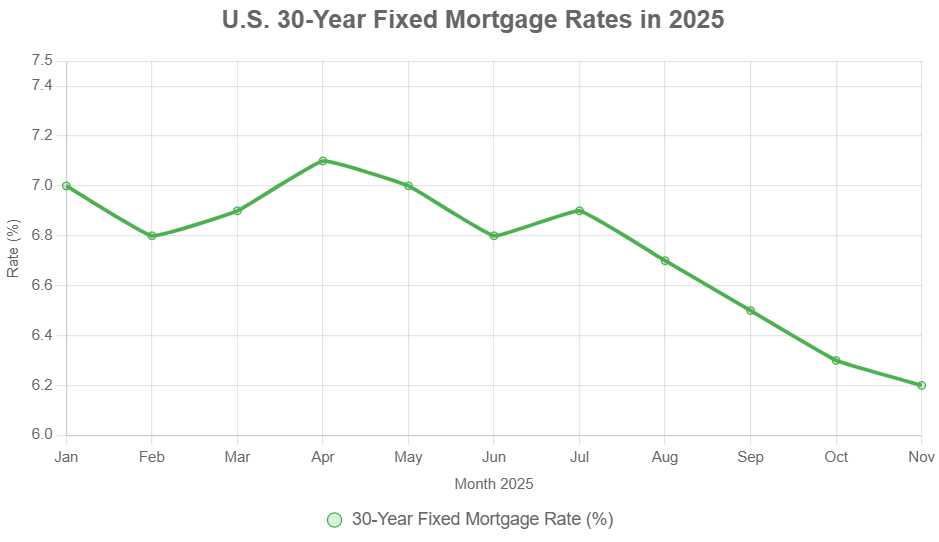
In these ever-changing economic times, owning rental properties has long been a solid way to build wealth, and right now, it's looking particularly appealing. As of late 2025, you'll notice that 30-year fixed mortgage rates have settled back down to hover around 6.2-6.3%, which is about as low as we've seen them all year, especially after they ticked above 7% earlier on.

This dip in rates is a fantastic chance for anyone thinking about becoming a landlord. It means you can lock in a more affordable loan, which leads to better cash flow from your rentals and helps you ride the wave of steady demand from people looking for homes, partly due to ongoing housing shortages and more people working remotely.

How Low Mortgage Rates Are Fueling Stronger Real Estate Returns

So, is this the perfect time to jump in? I'm here to walk you through everything—what's happening in the market, the money benefits, how to get started, where the best places to invest are, how to make sure you're getting a good return, the tax advantages, and what risks to watch out for, so you can make the best decision for yourself.

Here’s the straight-up answer: Yes, with mortgage rates near their yearly lows in late 2025, investing in rental properties presents a significantly attractive opportunity for building long-term wealth.

Why Low Mortgage Rates Are a Big Deal for Rental Property Investors

Think about it: the interest rate on your mortgage is one of the biggest costs of owning a rental property. When rates go down, the cost of borrowing money goes down too, which directly affects how much money you make from your investment. All through 2025, we've seen rates ease up a bit from their higher points, thanks to things like inflation cooling down and signals from the Federal Reserve.

Right now, the average 30-year fixed mortgage rate is sitting pretty around 6.22%, according to Freddie Mac's weekly survey. Even for investment properties, which usually have rates about 0.5% to 1% higher than for your primary home, this is still a huge improvement from the 7%+ you might have seen mid-year. This stability near the year's lows means you're borrowing money at a much cheaper rate.

This is where leverage comes into play. That’s a fancy term for using borrowed money to increase your potential return. When debt is cheaper, you can finance more of the property's cost. This means the money you put in (your down payment) can potentially generate a much bigger return. Let’s look at a quick example: Say you’re buying a $300,000 property and putting down 20% ($60,000).

If your mortgage rate drops from 7% to 6.25%, your monthly payment on that loan will be about $150 less. That extra $150 each month could be used for property upkeep, saved for emergencies, or just add to your profit. Historically, when rates have been this low, we’ve seen a real boom in rental property investments, much like what happened after 2020 when rates dipped below 3%.

To give you a visual, here’s how mortgage rates have been trending in 2025:

chart of approximate monthly averages for the 30-year fixed rate:

This downward trend really suggests that if the economy keeps improving, rates might even soften further, making 2025 an excellent year to start investing in rental properties.

Putting Your Money to Work: Key Benefits of Renting in a Low-Rate Era

Investing in rental properties is more than just collecting rent checks. It’s about building long-term wealth, creating a stream of income that can grow over time, and having an asset that often holds its value, even when other investments get shaky. Low mortgage rates make these benefits even stronger:

  • Better Cash Flow: When your monthly interest payment is lower, more of the rent you collect stays in your pocket as profit. For example, on a $250,000 loan, the difference between a 7% and a 6.25% rate can save you over $1,800 a year. That’s money that directly boosts your Net Operating Income (NOI).
  • Leverage and Growth: Affordable loans allow you to buy more properties sooner. This diversifies your investment (if one property has a problem, others can cover it) and lets you grow your wealth faster through rent and property appreciation.
  • An Inflation Buffer: Rents typically go up over time, often keeping pace with or even beating inflation. If you have a fixed-rate mortgage, your biggest loan payment stays the same. This means your rental income grows faster than your primary expense, a concept known as positive leverage.
  • Long-Term Appreciation: Real estate, especially in growing areas, tends to increase in value over time. We often see annual increases of 3-5%, which can turn your initial investment into a much larger amount of equity over a decade or more.

Compared to something like stocks or bonds, rental properties are a tangible asset. You can see them, touch them, and have more control over them. Plus, there are significant tax breaks. Now, it does take more work than just clicking a buy button on a stock, but for many of us, the rewards are well worth it. In 2025, with many people still working remotely and seeking out different living situations, vacancy rates are generally low, around 6-7% nationally, meaning your properties are likely to be occupied.

First Steps: A Simple Guide to Becoming a Landlord

Getting started in rental property investing might seem daunting, but when mortgage rates are friendly, it makes the initial hurdle feel much lower. Here’s how I usually advise people to begin:

  1. Get Your Finances in Order: For investment properties, lenders usually want to see around a 20-25% down payment, plus you should have enough saved to cover 3-6 months of expenses (like mortgage, taxes, insurance) for each property. A credit score of 700 or higher will help you get the best rates, often closer to 6.75% for non-owner-occupied loans.
  2. Decide on the Type of Property: If you’re new to this, a single-family home is often the easiest to manage. If you want to maximize your income on each dollar invested, look at multifamily properties like duplexes or triplexes.
  3. Line Up Your Financing: Don't just go with the first lender you talk to. Shop around for banks or mortgage brokers that specialize in investment property loans. While FHA loans can be a good option for owner-occupied properties with lower down payments, they usually have limits on units and aren't ideal for pure investment. Conventional loans offer more flexibility.
  4. Do Your Homework: Before buying, hire a professional inspector to check for any hidden problems. Use online tools like Zillow or Redfin to see what similar homes have sold for, and use sites like Rentometer to get a good idea of what you can realistically charge for rent in the area.
  5. Figure Out Management: You can manage the property yourself, which saves money but takes time. Or, you can hire a property management company. They typically charge 8-10% of the monthly rent but handle everything from finding tenants to dealing with repairs.

My advice? Start small. Maybe it's a modest home in a stable neighborhood for around $200,000. That allows you to learn the ropes without betting the farm.

Prime Locations: Where to Invest for the Best Returns in 2025

Location, location, location – it’s the oldest saying in real estate for a reason. But where should you look? Right now, cities in the Sun Belt are really popular because lots of people are moving there for jobs and a lower cost of living. On the flip side, many cities in the Midwest offer fantastic rental yields because property prices are lower, but demand is steady. I'd suggest being a bit cautious about areas that have seen a lot of new construction, as those markets can get crowded. Instead, focus on places with balanced growth.

Here's a look at some top U.S. markets that are currently showing strong potential for rental properties in 2025, considering things like how much rent you can earn compared to the property price (gross rental yield), potential for the property's value to go up (appreciation), and how long it typically takes to find a tenant (vacancy rate):

City/State Avg. Home Price Avg. Monthly Rent Gross Yield (%) Annual Appreciation (%) Vacancy Rate (%) Key Driver
Detroit, MI $71,500 $1,308 21.95 4.5 5.2 Industrial revival, low costs
Cleveland, OH $85,000 $1,200 25.1 3.8 6.0 Affordable Midwest entry
Memphis, TN $150,000 $1,200 9.6 5.2 4.8 Logistics boom, cash flow
Indianapolis, IN $220,000 $1,400 7.6 4.0 5.5 Hybrid growth, job market
Phoenix, AZ $380,000 $1,800 5.7 6.1 6.2 Sunbelt migration
Raleigh, NC $350,000 $1,700 5.8 5.5 4.9 Tech hub expansion

Data from various market analyses; gross yield calculated as (annual rent / home price) x 100.

To help you see how these cities stack up on rental income potential

Prime Markets: Where to Buy for Maximum Returns in 2025

If you're after strong monthly cash flow, cities like Detroit and Cleveland are looking very good. If you're more focused on the property value increasing over time, places like Phoenix and Raleigh might be a better fit.

Doing the Math: How to Figure Out Your Rental Property ROI

Before you hand over any money, it’s crucial to understand your potential Return on Investment (ROI). This tells you how profitable your investment is. Here are the key numbers I always look at:

  • Cash-on-Cash Return: This is probably the most important for rental properties. It’s your annual pre-tax cash flow divided by the total cash you invested (down payment, closing costs, initial repairs).
    • Formula: (Annual Pre-Tax Cash Flow / Total Cash Invested) x 100.
    • Example: If you made $15,000 in profit and put down $100,000 total, your cash-on-cash return is 15%.
  • Capitalization Rate (Cap Rate): This helps you compare different properties, regardless of how you finance them. It’s your Net Operating Income (NOI – income after operating expenses but before mortgage payments) divided by the property’s value.
    • Formula: (Net Operating Income / Property Value) x 100.
    • Example: On a $200,000 property with an NOI of $12,000, the cap rate is 6%.
  • Overall ROI: This considers both the cash flow you received and any profit when you sell the property.
    • Formula: (Total Profit from Property – Initial Investment) / Initial Investment x 100.

Let’s crunch some numbers for a hypothetical $250,000 duplex in Indianapolis.

  • Assume a 20% down payment ($50,000) plus $5,000 in closing costs, for a total cash invested of $55,000.
  • Let's say you rent it for $2,000 per month, but after accounting for vacancies, maintenance, property taxes, and insurance, your actual rent collected after expenses (but before mortgage) is closer to $1,400/month, assuming mortgage payments with a 6.5% rate.
  • This gives you an annual cash flow of $1,400 x 12 = $16,800.
  • If the property appreciates by 4% in the first year, that’s an additional $10,000 in value.
  • So, in year one, you've received $16,800 in cash flow and gained $10,000 in equity. Your total return relative to your $55,000 investment is quite high. This calculation shows the power of well-chosen investments.

There are great online calculators, like those on BiggerPockets, that can help you figure this out more precisely. Generally, I look for a cash-on-cash return of at least 8-12% on a rental property, especially in today's market. Those lower mortgage rates really help boost this number by reducing your debt service.

Tax Sweeteners: How Landlords Save Money on Taxes

One of the biggest draws of owning rental properties is the tax advantages. The U.S. tax code is pretty friendly to landlords. Here are some of the best deductions you can take:

  • Mortgage Interest Deduction: You can usually deduct the full amount of interest you pay on your investment property's mortgage. This is often your largest deduction.
  • Depreciation: This is a powerful, non-cash deduction. The IRS allows you to deduct a portion of the property's value (excluding land) over its useful life. For residential properties, this is typically 3.636% per year for 27.5 years. It reduces your taxable income without you having to spend more money.
  • Operating Expenses: Pretty much every cost associated with running your rental property is deductible. Think repairs, maintenance, property insurance, property taxes, property management fees, travel to the property, and even supplies.
  • 1031 Exchanges: This is a strategic way to grow your portfolio. If you sell an investment property, you can defer paying capital gains taxes by reinvesting the profit into a “like-kind” property.
  • No Social Security/Medicare Taxes: Unlike regular wages where you pay these payroll taxes, rental income is generally exempt from them. This can save you a significant amount.

Seriously, talking to a Certified Public Accountant (CPA) who specializes in real estate is one of the smartest moves you can make. These deductions can often lower your effective tax rate by 20-30%.

Watching Out for Pitfalls: Risks and How to Protect Yourself

Like any investment, owning rental properties isn't without its risks. It’s important to be aware of potential problems and have a plan to deal with them.

  • Vacancy and Tenant Problems: The biggest risk is having a property sit empty for too long, meaning no income but still having to pay bills. Another issue is tenants who don't pay rent or damage the property. To guard against this, be very thorough in screening tenants – check credit, background, and references – and price your rent competitively, perhaps 5-10% below market to attract good renters quickly.
  • Rising Expenses: While rents tend to go up, so do costs. Maintenance and repair costs can creep up (a general rule is to budget 1-2% of the property value annually for upkeep). Property taxes and insurance can also increase, sometimes by 10-15% in certain areas. Always budget conservatively; I often advise clients to expect expenses to be around 50% of their gross rental income.
  • Market Changes: Economic downturns or sudden interest rate hikes (though unlikely right now) could slow down property appreciation or even lead to value decreases. New local regulations, like rent control laws, can also impact your profitability.
  • Liquidity Issues: Real estate isn't like stocks; you can't sell it instantly. If you need cash fast, especially during a down market, you might have to sell at a loss. This is why diversification and having cash reserves are so important.

My best advice for weathering any storm? Diversify your investments. Don't put all your eggs in one basket. If possible, aim to own 3-5 properties in different areas or even different types of property. Make sure you have adequate insurance for everything, and always, always maintain a healthy cash reserve – having 6 months of operating expenses set aside is a good target. Even with these risks, the strong demand for rentals, with rents increasing 3-4% year-over-year in many areas, still makes it a favorable market.

The Takeaway: Timing is Everything, But Be Smart About It

Right now, with mortgage rates sitting at their 2025 lows, buying rental properties offers a really compelling mix of generating income, growing your wealth over time, and having a solid, tangible asset. It can be a much more stable option than riding the rollercoaster of the stock market.

The key to success, however, always comes down to doing your research, picking the right location, and being smart and careful with your money. Whether you're drawn to the high yields in places like Detroit or the growth potential in Raleigh, make sure you educate yourself and have a solid plan in place before you make a move. Real estate has always been an investment that rewards those who are prepared, and in this current market window, the prepared investor has a fantastic opportunity to really thrive.

As Mortgage Rates Drop, Investors Are Locking in Long-Term Gains

With rates near their lowest point in a year, investors are seizing the moment to finance rental properties that deliver strong monthly cash flow and long-term appreciation.

Norada Real Estate helps you capitalize on this window with fully managed turnkey rentals in stable, high-demand markets—so you can build wealth while borrowing costs stay favorable.

🔥 HOT NEW LISTINGS JUST ADDED! 🔥

Talk to a Norada investment counselor today (No Obligation):

(800) 611-3060

Get Started Now

Recommended Read:

  • Is Turnkey Real Estate Profitable in a High-Interest Rate Environment?
  • Why Turnkey Real Estate Still Beats Today's High Mortgage Rate Climate
  • Best Places to Invest in Single-Family Rental Properties in 2025
  • Why Real Estate Can Thrive During Tariffs Led Economic Uncertainty
  • Rise of AI-Powered Hyperlocal Real Estate Marketing in 2025
  • Real Estate Forecast Next 5 Years: Top 5 Predictions for Future
  • 5 Hottest Real Estate Markets for Buyers & Investors in 2025
  • Will Real Estate Rebound in 2025: Top Predictions by Experts
  • Recession in Real Estate: Smart Ways to Profit in a Down Market
  • Will There Be a Real Estate Recession in 2025: A Forecast
  • Will the Housing Market Crash Due to Looming Recession in 2025?
  • 4 States Facing the Major Housing Market Crash or Correction
  • New Tariffs Could Trigger Housing Market Slowdown in 2025
  • Real Estate Forecast Next 10 Years: Will Prices Skyrocket?

Filed Under: Real Estate, Real Estate Investing, Real Estate Market Tagged With: mortgage rates, Real Estate Investing, Real Estate Returns, Rental Properties

Is Turnkey Real Estate Profitable in a High-Interest Rate Environment?

October 31, 2025 by Marco Santarelli

Is Turnkey Real Estate Profitable in a High-Interest Rate Environment?

It’s a question I hear almost every day from new and even seasoned investors: With interest rates where they are, does real estate investing even make sense anymore? Specifically, is turnkey real estate investing in high-interest rate environments still profitable or worth it? The short answer is a resounding yes, but the game has changed. The strategies that worked when rates were at 3% are not the same ones that will lead to success today. The days of easy money and guaranteed appreciation are behind us, but for the smart, disciplined investor, this new era presents a unique and powerful opportunity.

Is Turnkey Real Estate Profitable in a High-Interest Rate Environment?

First, What Exactly Is Turnkey Investing? A Quick Refresher

Before we dive into the deep end, let's make sure we're on the same page. Turnkey real estate investing is a strategy where you buy a property that is ready to be rented out from day one. In many cases, it has already been renovated, has a tenant in place, and even comes with a property management company to handle the day-to-day operations.

The appeal is obvious: it's designed to be a relatively hands-off way to generate passive income from real estate without the headaches of swinging a hammer or screening tenants at midnight. You’re essentially buying a cash-flowing machine. But when the cost of the fuel for that machine—the mortgage—goes up, does the machine still run a profit?

The Elephant in the Room: Today's Interest Rate Reality

Let’s not sugarcoat it. Higher interest rates make investing harder. A higher rate means a higher monthly mortgage payment, which directly eats into your potential cash flow. It’s simple math.

To understand where we are, let's look at the real numbers. The data from late October 2025 shows a complex but cautiously optimistic picture.

Freddie Mac Primary Mortgage Market Survey® (as of 10/30/2025)

Loan Type Average Rate 52-Week Range
30-Year Fixed-Rate 6.17% 6.17% – 7.04%
15-Year Fixed-Rate 5.41% 5.41% – 6.27%

As you can see, rates have come down from their peaks of over 7%, which is a relief. However, a rate in the low 6% range is still significantly higher than the sub-3% rates we saw just a few years ago.

Adding to this, the Federal Reserve is sending mixed signals. In their last meeting, they cut the benchmark rate, which is good news for borrowing costs. However, Fed Chair Powell was cautious, suggesting that future cuts aren't guaranteed.

  • What this means for you: Don't expect a sudden crash back to 3% mortgage rates. We are likely in for a period of rate stability, or a slow, bumpy decline. This “new normal” of 5.5% to 6.5% rates is what we need to build our strategy around.

Why Turnkey Investing Shines in This Environment

This might sound counterintuitive, but the current market conditions can actually make turnkey a better strategy than traditional flipping or BRRRR (Buy, Rehab, Rent, Refinance, Repeat). Here’s my take on why.

1. Less Competition and More Negotiating Power High interest rates have scared a lot of people away. The casual, “get-rich-quick” investors have left the market. This is fantastic news for you. With fewer buyers competing for properties, sellers are more willing to negotiate on price. In my experience, a 2-3% price reduction can often completely offset the impact of a 1% increase in interest rates over the life of the loan. You couldn't get those discounts when 20 buyers were bidding on every house.

2. The “Date the Rate, Marry the Property” Mantra This has become a cliché for a reason—it’s true. You are buying a physical asset for the long term. The interest rate you lock in today is temporary. The Federal Reserve's recent actions signal that they are shifting towards an easing cycle. It may not be immediate, but rates are far more likely to be lower in 2-5 years than they are today.

You can buy a great property at a fair price today and then refinance into a lower rate down the road. This move alone can dramatically boost your monthly cash flow in the future.

Let’s look at a simple example on a $200,000 loan:

Interest Rate Monthly P&I Payment Potential Savings
6.25% (Today) $1,231 –
4.75% (Future Refi) $1,043 $188/month

That's an extra $2,256 in your pocket every year, just by refinancing when the time is right.

3. Cash Flow Is Still King, But It's Hiding In a high-rate environment, you can't just throw a dart at a map and expect to find a cash-flowing property. You have to be more selective. This is where a good turnkey provider earns its keep. They operate in markets where the rent-to-price ratio still makes sense. Think solid Midwest or Southern markets where you can buy a home for $180,000 that rents for $1,600/month, not coastal cities where a $700,000 condo rents for $3,000.

While your cash flow might be thinner initially—say $150-$250 a month instead of the $400-$500 you saw in 2021—it's still positive cash flow. And that cash flow is protected from inflation.

4. The Ultimate Inflation Hedge Inflation remains a concern, even as the Fed works to control it. Here's the magic of a fixed-rate mortgage: your largest expense—the principal and interest payment—is locked in for 30 years.

  • Your payment stays the same.
  • Meanwhile, inflation pushes everything else up: rent, wages, and the value of the property itself.

Every year, the rent goes up 3-5%, but your mortgage payment doesn't. Your cash flow grows organically over time, making it a powerful long-term wealth-building tool.

The New Playbook: How to Win with Turnkey Investing Today

To succeed now, you need to adjust your approach. Here’s the playbook I'm using and advising others to follow.

Stress-Test Your Numbers Ruthlessly

Hope is not a strategy. When you analyze a turnkey property, you need to be conservative—even borderline pessimistic.

  • Vacancy: Don't assume the property will be rented 12 months a year. Use an 8% vacancy rate (about one month per year) in your calculations.
  • Repairs & Maintenance: Budget at least 5-8% of the gross monthly rent for this. Things will break.
  • Capital Expenditures (CapEx): This is for the big stuff—roof, HVAC, water heater. Set aside another 5-8% for these future expenses.
  • Property Management: This is typically 8-10% of the gross rent.

If the property still cash flows after all these expenses, you have found a potential winner. If it's barely breaking even on paper, walk away. The margins are too thin.

Focus on Quality Markets and Neighborhoods

Now more than ever, where you invest matters. I'm focusing on markets with three key ingredients:

  1. Job Growth: A diverse and growing economy brings in new tenants.
  2. Population Growth: More people mean more demand for housing.
  3. Landlord-Friendly Laws: You need to be in a state that has a fair and efficient eviction process, just in case.

Within those markets, I look for solid B-class neighborhoods. These are not the fanciest areas, but they are full of well-maintained homes, good schools, and a strong base of working-class and middle-class tenants. They offer the perfect balance of affordability and rental demand.

Vet Your Turnkey Provider Like a Hawk

In a challenging market, your team is your most valuable asset. A great turnkey company is more than just a property seller; they are your long-term partner. Ask them the tough questions:

  • What is your track record? Can I speak to some of your past clients?
  • Who handles the property management? Is it in-house or outsourced?
  • What is your process for tenant screening?
  • Can I see the full scope of work for the renovation?
  • What are your fees and how are they structured?

A transparent, experienced provider will welcome these questions. If they get defensive or vague, that's a major red flag.

Final Thoughts: Is It Still Worth It?

Let's circle back to our main question: Turnkey investing in high-interest rate environments—still profitable or worth it?

Absolutely. But it requires a shift in mindset. This is no longer a market for speculators looking for rapid appreciation. This is a market for investors—people who are focused on buying solid assets in good locations that produce a steady, reliable, and growing stream of income over the long term.

The higher rates have cleared out the noise and created opportunities for those willing to do their homework. You can get better prices, you have more negotiating power, and you're buying an asset that will protect you from inflation and build generational wealth. It takes more work, more diligence, and a bit more courage, but the rewards are as real as they've ever been. Don't let the headlines scare you from building your future.

Build Wealth with Turnkey Real Estate — Even in a High-Rate Market

High interest rates don’t have to hold you back. Turnkey rental properties still deliver steady cash flow and long-term appreciation—especially in markets with strong rental demand and job growth.

Work with Norada Real Estate to identify profitable, cash-flowing markets that thrive even when borrowing costs rise—so your investments stay strong and stress-free.

NEW TURNKEY DEALS JUST ADDED!

Talk to a Norada investment counselor today (No Obligation):

(800) 611-3060

Get Started Now

Recommended Read:

  • Why Turnkey Real Estate Still Beats Today's High Mortgage Rate Climate
  • Best Places to Invest in Single-Family Rental Properties in 2025
  • Why Real Estate Can Thrive During Tariffs Led Economic Uncertainty
  • Rise of AI-Powered Hyperlocal Real Estate Marketing in 2025
  • Real Estate Forecast Next 5 Years: Top 5 Predictions for Future
  • 5 Hottest Real Estate Markets for Buyers & Investors in 2025
  • Will Real Estate Rebound in 2025: Top Predictions by Experts
  • Recession in Real Estate: Smart Ways to Profit in a Down Market
  • Will There Be a Real Estate Recession in 2025: A Forecast
  • Will the Housing Market Crash Due to Looming Recession in 2025?
  • 4 States Facing the Major Housing Market Crash or Correction
  • New Tariffs Could Trigger Housing Market Slowdown in 2025
  • Real Estate Forecast Next 10 Years: Will Prices Skyrocket?
Filed Under: Real Estate, Real Estate Investing, Real Estate Market Tagged With: Real Estate Investing, Rental Properties, Turnkey Real Estate

How to Start Earning Cash Flow from Day One in Real Estate?

October 8, 2025 by Marco Santarelli

How to Start Earning Cash Flow from Day One in Real Estate?

Imagine this: you've just closed on an investment property, and instead of a pile of repair bills and a vacant unit, you're already collecting rent. That's the powerful promise of turnkey real estate investing, and it's absolutely possible to earn cash flow from day one. This isn't about some get-rich-quick scheme; it's a carefully structured approach to real estate that leverages professionals to put money in your pocket from the moment you own the property. If you're looking for a way to build wealth without being glued to your phone fixing leaky faucets or chasing down tenants, you've come to the right place.

How to Start Earning Cash Flow from Day One in Real Estate?

For years, I've been watching and participating in the real estate game, and I've seen firsthand how traditional investing can be a massive time sink. You might buy a property with good intentions, only to get bogged down in renovations, unexpected problems, and the sheer effort of finding reliable tenants.

Turnkey real estate flips that script. It's built on the idea that you can acquire a property that's already renovated, already rented out, and already being managed by a competent team. This means the income stream can begin almost instantly, potentially covering your mortgage, taxes, insurance, and management fees, leaving you with positive cash flow from the get-go. It's the closest thing to “passive” real estate income I've encountered, and it opens doors for so many people who thought real estate investing was out of reach.

What Exactly Is Turnkey Real Estate?

Let's break down what we mean by “turnkey real estate.” Think of it like buying a brand-new car. You don't have to assemble it, paint it, or install the engine yourself. You just get in, turn the key, and drive. Turnkey real estate is similar. You're buying a property that's been fully prepared for rental. This means it's either newly built or has been thoroughly renovated to be in excellent condition. Often, these properties come already leased to a tenant, meaning rent is already coming in.

But the “turnkey” aspect goes beyond just the physical condition of the property. It also includes the management. Reputable turnkey providers handle all the day-to-day operations. This includes finding and screening tenants, collecting rent, handling maintenance requests, and even dealing with potential evictions if necessary.

You, as the investor, are largely removed from the day-to-day grind. This makes it incredibly attractive for people who are busy with their careers, live far from the investment property, or simply prefer a more hands-off approach to real estate investing. For instance, I've worked with professionals whose primary focus is their high-paying job, and turnkey allows them to benefit from real estate without sacrificing their existing career.

Key features you can expect with turnkey properties generally include:

  • Fully Renovated or New Construction: The property is up-to-date, meets current building codes, and is appealing to renters.
  • Tenant-Ready: Many properties are already occupied by pre-vetted tenants, minimizing vacancy periods.
  • Professional Property Management: A dedicated company handles all operational aspects.
  • Sourced in Specific Markets: Providers typically focus on areas with strong rental demand and growth potential.

The Magic of Day-One Cash Flow: How It Works

The core appeal of turnkey real estate is the potential for immediate positive cash flow. This means the rental income you receive, from the moment you own the property, is more than your total expenses. How is this possible? It’s because the properties are delivered in a rent-ready state, usually already leased.

Let’s look at a simplified example. Suppose you purchase a turnkey property for $150,000. With a 20% down payment ($30,000), your mortgage principal is $120,000. Let's say your monthly mortgage payment, property taxes, insurance, and a conservative estimate for maintenance add up to $900. If the property is already rented for $1,200 per month, and you pay a property manager 10% of the rent ($120), your total monthly expenses are $900 + $120 = $1,020. Your net cash flow for that month would be $1,200 (rent) – $1,020 (expenses) = $180. That's positive cash flow from day one.

This calculation highlights the importance of your expenses, particularly the mortgage payment, property taxes, and insurance. The rental income needs to be robust enough to cover these, plus management fees, and still leave a surplus.

Cash Flow = Gross Rental Income – (Mortgage Payment + Property Taxes + Insurance + Maintenance + Property Management Fees)

In strong markets, it's common to aim for cash-on-cash returns (CoC) of 8-12%. This is a crucial metric that measures the annual pre-tax cash flow generated by the property relative to the total cash you invested (down payment, closing costs, and initial repair buffer). So, on that $30,000 investment, an 8% CoC return would mean generating at least $2,400 in positive cash flow per year, or an average of $200 per month.

Here's a look at how some markets are performing, giving you an idea of potential yields:

City Average Gross Rental Yield (Est. 2025) Median Home Price (Approx.) Potential Monthly Rent (Approx.) Key Economic Drivers
Birmingham, AL ~8-10% $220,000 $1,400+ Healthcare, low cost of living, growing job market
Memphis, TN ~9-11% $190,000 $1,250+ Logistics hub, affordable housing, strong rental demand
Indianapolis, IN ~8-10% $200,000 $1,300+ Diverse economy, manufacturing, affordable prices
Cleveland, OH ~8-10% $180,000 $1,200+ Revitalization, medical industry, low entry cost

These figures are estimates and can vary, but they illustrate the principle: in more affordable areas with steady job growth, rental income can significantly outpace property values, leading to healthy yields.

Why I'm a Fan: The Deeper Benefits of Turnkey Investing

As someone who values efficiency and tangible assets, certain benefits of turnkey real estate really stand out to me:

  • True Passive Income for Busy Lives: This is the big one. If you have a demanding career, family obligations, or simply aren't interested in being a landlord, turnkey is a game-changer. You're outsourcing the headaches. The property management company handles the tenant screening, rent collection, and maintenance calls. You receive a monthly statement and, ideally, a deposit into your bank account. It allows you to benefit from real estate appreciation and cash flow without the constant demands.
  • Geographic Freedom: You're not limited to investing in your local market. If your hometown has sky-high prices and low rental yields, you can explore opportunities in more investor-friendly states. This also allows for diversification – owning properties in different cities or even states can spread risk. I've seen investors build portfolios across several states, isolating risks and capitalizing on varied economic cycles.
  • Minimized Renovation Headaches: One of the biggest pitfalls of traditional real estate investing is unexpected renovation costs and delays. Turnkey properties are meant to be in excellent condition, meaning you're less likely to face thousands in unexpected repair bills right after closing. This predictability makes budgeting and financial planning much simpler.
  • Potentially Lower Vacancy Rates: Turnkey providers often have effective tenant placement strategies, and since the properties are well-maintained, they're more attractive to reliable renters. This can lead to lower vacancy periods, which directly impacts your bottom line.
  • Tax Advantages: Like any real estate investment, turnkey properties offer significant tax benefits. You can deduct mortgage interest, property taxes, insurance premiums, maintenance costs, and depreciation (which is a non-cash expense that reduces your taxable income). For those who qualify as “real estate professionals” (a specific IRS definition), there can be even more powerful advantages, like offsetting active income with passive losses.

Think of it this way: Turnkey real estate allows you to buy a fully operational income-generating business asset without needing to be the CEO, the operations manager, and the customer service representative all at once.

The Practical Steps to Earning Cash Flow from Day One

Getting started with turnkey investing requires a structured approach. It’s not just about picking the first property you see.

  1. Deep Market Research: This is non-negotiable. I always start by looking for markets with strong economic fundamentals. This means looking for:
    • Job Growth: Are new companies moving in? Are existing ones expanding? This creates demand for housing.
    • Population Growth: Are people moving to the area? This is a direct driver of rental demand.
    • Affordability: Can people afford to buy and rent in the area? A good balance is key.
    • Landlord-Tenant Laws: While you won’t be managing day-to-day, understanding the legal environment is important. Popular regions often cited for these factors include parts of the Southeast (like Alabama and Georgia) and the Midwest (like Ohio and Indiana). Cities like Birmingham, AL, or Indianapolis, IN, frequently appear on lists for their combination of affordability and rental demand.
  2. Financial Readiness: You’ll need capital. Typically, turnkey providers expect around a 20-25% down payment, plus closing costs and some reserves for unexpected expenses. I’d also advise having 3-6 months’ worth of mortgage payments and expenses set aside as reserves for each property you acquire. Knowing your budget upfront will filter your choices effectively.
  3. Partner with a Reputable Turnkey Provider: This is critical. Your success hinges on the quality of the provider you choose. Look for companies with:
    • A proven track record: How long have they been in business? What are their investor success stories?
    • Transparency: Are they open about their fees, renovation processes, and market analysis?
    • In-house or Vetted Management: Do they manage the properties themselves, or do they work with a trusted third-party manager?
    • Strong Reviews and References: Check online reviews and ask for references from existing investors.
  4. Thorough Due Diligence: Even with the best providers, you need to do your homework.
    • Property Inspection: Hire an independent inspector to review the property's condition. Understand that “renovated” can mean different things.
    • Review Pro Forma Statements: This is the provider's projection of income and expenses. Scrutinize these numbers. Are the rent estimates realistic for the area? Are expense estimates conservative?
    • Verify Leases: If the property comes with a tenant, review the lease agreement and the tenant's history.
  5. Secure Financing: You'll likely use conventional mortgages for turnkey properties. Ensure you have a good credit score and a solid financial history to qualify. Some providers may also work with specialized lenders or accept cash. Self-directed IRAs can also be a viable option for tax-advantaged investing.
  6. Monitor Your Investment: Once you own the property, stay engaged. Review your monthly statements from the property manager. Understand your property's performance, occupancy rates, and any maintenance trends. This allows you to make informed decisions about future investments.

Navigating the Risks: What to Watch Out For

While turnkey investing offers significant advantages, it's not without its potential pitfalls. Being aware of these allows you to mitigate them effectively:

  • Higher Purchase Prices: Because the properties are renovated and ready to go, the upfront cost is usually higher than buying a fixer-upper. This can sometimes mean a lower initial cash-on-cash return if the rent isn't sufficiently high.
  • Reliance on the Provider: Your entire investment rests on the competence and integrity of your turnkey provider and their property management team. If they are not proactive, honest, or efficient, your investment can suffer. This is why thorough vetting is paramount.
  • Quality of Renovations: Sometimes, renovations might be cosmetic rather than structural. A poorly done renovation can lead to expensive repairs down the line. Independent inspections are your best defense here.
  • Market Fluctuations: While you're investing in markets with growth potential, no market is immune to economic downturns. Rents can decrease, and occupancy rates can fall. Diversifying your investments across multiple properties and potentially multiple markets can help cushion the impact.
  • Hidden Fees or Markups: Some providers might mark up the cost of renovations or charge various fees that aren't immediately obvious. Always ask for a clear breakdown of all costs involved.

My approach to mitigating these risks has always been to:

  • Over-communicate: Don’t be afraid to ask questions, no matter how small they seem. Clear communication prevents costly misunderstandings.
  • Have a “Plan B”: Be prepared for unexpected changes—whether it's a property management company failing or a sudden market shift. Know your backup strategy.
  • Build Sufficient Reserves: A solid financial cushion is essential for weathering surprises like repairs, vacancies, or economic downturns.

Building Wealth Long-Term with Turnkey Real Estate

Turnkey real estate isn't just about getting a little bit of cash flow from day one; it's a powerful tool for building long-term wealth when used strategi­cally.

  • Scaling Your Portfolio: Once you've successfully acquired your first turnkey property and experienced the cash flow and management process, you can use that income and experience to acquire more. Many investors aim to build a portfolio of 5-10 cash-flowing properties, which can provide a significant passive income stream and contribute to financial freedom.
  • Leveraging Equity: As properties appreciate over time and you pay down the mortgage, you build equity. This equity can be tapped through refinancing to acquire additional properties, further accelerating your wealth-building journey.
  • Diversification: Turnkey real estate can be a component of a broader investment strategy that also includes stocks, bonds, or other real estate ventures like syndications or REITs. This diversification can create a more resilient financial future.

The key is to approach it as a business. Treat each property as a revenue-generating asset, consistently monitor its performance, and make informed decisions for growth. The ability to generate cash flow from day one with turnkey properties removes a significant barrier to entry and allows you to start building that robust, income-producing portfolio sooner. It’s a strategy that has the potential to provide consistent, tangible returns in a world that often feels unpredictable.

In conclusion, earning cash flow from day one through turnkey real estate is not only possible but a well-trodden path for many successful investors. By understanding the model, carefully selecting your partners and markets, performing diligent research, and managing your investments wisely, you can unlock a powerful and more passive stream of income.

Work With Norada – Start Earning Cash Flow from Day One

Want instant rental income without the stress of managing properties? Norada’s turnkey real estate investments come fully renovated, tenanted, and managed — so you can start earning cash flow immediately while building long-term wealth.

🔥 Begin Your Passive Income Journey Today! 🔥

Talk to a Norada investment counselor today (No Obligation):

(800) 611-3060

Get Cash Flow Now

Also Read:

  • 10 Steps for Picking a Hot Real Estate Market for Investment
  • Best Places to Invest in Single-Family Rental Properties
  • Why Real Estate Can Thrive During Tariffs Led Economic Uncertainty
  • Rise of AI-Powered Hyperlocal Real Estate Marketing
  • Real Estate Forecast Next 5 Years: Top 5 Predictions for Future
  • 5 Hottest Real Estate Markets for Buyers & Investors
  • Will Real Estate Rebound in 2025: Top Predictions by Experts
  • Recession in Real Estate: Smart Ways to Profit in a Down Market
  • Will There Be a Real Estate Recession in 2025: A Forecast

Filed Under: Real Estate Investing, Real Estate Investments, Real Estate Market Tagged With: real estate, Real Estate Investing, Turnkey

Risks of Real Estate Investing: What You Can Do About Them?

September 3, 2025 by Marco Santarelli

Risks of Real Estate Investing

Everyone would be a millionaire if real estate investing were 100% risk-free. No one would have any reason not to invest. Real estate investing, like any other form of investing, comes with risks. Only those investors who are willing to take on these risks and have the knowledge and skills to manage them will be successful in the long term.

Real estate investing requires a significant amount of knowledge and understanding of the market, the property, and the financing options available. Investors who are not well-informed about these factors may not be able to effectively manage the risks associated with their investments.

For example, an investor who is not familiar with the local market may not be able to accurately predict changes in demand and property values, which can lead to a loss. Similarly, an investor who is not familiar with the property they are investing in may not be aware of property-specific risks such as structural problems or zoning changes, which can also lead to a loss.

In addition to knowledge, investors must also have the skills necessary to manage risks. For example, an investor who is not able to effectively manage tenants may have difficulty collecting rent or may have to deal with costly repairs and maintenance. Furthermore, an investor who is not able to effectively negotiate financing terms may end up with a mortgage or loan that is not favorable, which can lead to additional risks.

Here Are Some Real Estate Investing Risks and How to Manage Them

Market Risk:

Market risk in real estate refers to the potential for the value of a property to decrease due to changes in economic conditions and supply and demand. Economic factors such as recession, inflation, and unemployment rates can all affect the demand for housing and, as a result, the value of properties.

During a recession, for example, unemployment rates may increase, and people may have less disposable income, which can lead to a decrease in demand for housing. As a result, property values may decrease, leading to a loss for the investor. Similarly, if there is an oversupply of housing in a particular area, it can lead to an excess of properties on the market, which can also lead to a decrease in property values.

It's important to note that market risk can be mitigated by investing in a diversified portfolio of properties, which can spread the risk across different types of properties, locations, and economic conditions. As well as, doing proper research and due diligence to identify properties that are likely to hold their value or appreciate in value, and investing in areas that are likely to be in demand in the future.

Rental Risk:

Rental risk in real estate refers to the potential for a loss of income from rental properties due to a variety of factors. One of the main risks is that the property may not be occupied, meaning that the landlord will not receive any rental income. This can happen for a variety of reasons, such as a lack of demand for rental properties in the area, a lack of suitable tenants, or difficulty in finding tenants.

Additionally, if the property is only occupied for a short period of time, the landlord may not be able to charge enough rent to cover the costs of the property, leading to a loss. Another risk is that tenants may not pay rent on time or at all. This can lead to a loss of income for the landlord and can also lead to additional expenses, such as legal fees and court costs if the landlord needs to evict the tenant.

Property damage caused by tenants can also lead to a loss of income. Tenants may cause damage to the property through neglect or misuse, which can lead to repairs and maintenance costs for the landlord. Moreover, if the landlord is not able to find suitable tenants, the property may be vacant for a long time, which can lead to additional expenses, such as property taxes and mortgage payments, which will further decrease your income.

To mitigate rental risks, a landlord should screen tenants carefully, using credit checks, employment and landlord references, and background checks. Also, it's important to have a solid lease agreement that clearly outlines the rights and responsibilities of both the landlord and the tenant, as well as the consequences for not following the lease agreement. Additionally, landlords should keep the property well-maintained to attract and retain tenants and should have a plan in place to handle vacancies and non-payment of rent.

Potential for Negative Cash Flow Risk:

Like many other investments, real estate has the potential to create losses. Whenever you complete a deal with less money than you started with, you've created negative cash flow. And too much negative cash flow can leave you broke. So you must know how to find and analyze a good real estate investment. If this is a skill you are working on, you can reduce your risk and save some time by using the services of a real estate investment firm.

Availability of Funds:

One of the primary barriers to investing in real estate is the lack of funding. Even though you can invest in real estate without using your own money, you still need to have money from somewhere. There are many creative ways of getting other people's money (OPM) to complete a transaction, and many good books have been written on the subject. One of the latest incarnations of OPM has been the use of corporate credit.

Interest rate Risk:

Changes in interest rates can affect the affordability of a property, which can affect the demand for that property. This can also affect the value of a property. For example, if interest rates increase, it may make it more difficult for buyers to afford a property, which can lead to a decrease in demand and a decrease in property values.

Property-specific Risk:

Issues with a particular property, such as structural problems, zoning changes, or environmental hazards, can all negatively impact the value of the property. For example, if a property is found to have a serious structural problem, it may be difficult to find buyers or renters willing to purchase or occupy the property, which can lead to a decrease in value.

Leverage Risk:

Real estate investing often involves borrowing money, which can amplify potential losses. When you borrow money to invest in real estate, you are increasing your risk of losing money. If the value of the property decreases, you may owe more on the property than it is worth, which can result in a loss.

Time Constraints:

Some types of investments require more time than others, for example, distressed and rehab properties. Other types of investments require you to be available during business hours. If your regular job demands most of your time, you might find it difficult to make time to invest in real estate. Understand the time involved with the various types of real estate investments so you can plan your schedule around your investing.

Need for an Exit Strategy:

Before you go into a deal, you need to have a feasible plan for getting rid of your investment property. Note the word “feasible.” Your exit strategy has to be logical and doable; otherwise, it's not a very good exit strategy. Your plan may be to fix and flip the property right away, or it may be to lease and hold for 10 years.

Be sure to invest with a clear and specific exit strategy in mind. And always have a contingency plan in place in case situations come up that are out of your control. Real estate investing, like any other form of investing, has some potential risks. On the positive side, these risks are associated with the potential for high returns. But with proper planning and ongoing education, you will be successful as a real estate investor.

In summary, real estate investing is a risky business, and only those investors who are willing to take on these risks and have the knowledge and skills to manage them will be successful. It's important for an investor to thoroughly research and understand the market and the property before investing, and to have a solid plan in place for managing risks.

Explore Nationwide Real Estate Investing Opportunity

Discover high-quality, ready-to-rent properties designed to deliver consistent returns.

Contact us today to expand your real estate portfolio with confidence.

Contact our investment counselors (No Obligation):

(800) 611-3060

Get Started Now 

Filed Under: Real Estate Investing Tagged With: Investment Properties, Investment Property, Real Estate Investing, Real Estate Investment, Risks of Real Estate Investing

Dallas Real Estate Investment: Is It Time to Invest or Wait?

August 26, 2025 by Marco Santarelli

Investing in Dallas real estat

So, you're thinking about putting your hard-earned money into Dallas real estate. That's a smart move to be considering. After all, Dallas has consistently been a hub of opportunity, attracting people and businesses from all over. But with the market always shifting, it's natural to ask: Should you invest in Dallas right now?

Dallas Real Estate Investment: Is It Time to Invest or Wait?

My quick answer is a resounding yes, but with an understanding of the current market dynamics and a strategic approach. While there have been some slight cooling-off periods, Dallas remains a fundamentally strong market with a bright future for real estate investors.

As someone who's spent a good chunk of time navigating the Dallas housing scene, I've seen firsthand how it can bounce back and grow stronger. It’s not just about stats; it’s about understanding the pulse of the city. And right now, Dallas is in an interesting spot – not the scorching-hot seller’s market of a few years ago, but definitely not a buyer’s free-for-all. It’s more nuanced, and that’s where the real opportunity lies for those who do their homework.

What's Really Happening in Dallas Real Estate Right Now?

Let’s cut through the noise and look at what the numbers are telling us. As of May 2025, home sales in the Dallas-Fort Worth-Arlington area saw a small dip, about 2.51% less than the year before. We’re talking about 9,195 sales compared to 9,432 in May 2024. Year-to-date, sales are also down a bit, a little over 2%.

Now, before you get worried, this isn't a Dallas-specific problem. Across the nation, home sales also saw a slight decrease, around 0.7% year-over-year. So, the Dallas housing market is pretty much in step with the national trend. It means the market isn’t overheating, which can actually be a good thing for investors.

When it comes to prices, there’s been a bit of a correction. The median close price in May 2025 was $399,000, which is a small drop from $408,000 in May 2024. The average sales price also saw a dip of about 1.75%.

Here's a quick snapshot:

  • Median Close Price: $399,000 (down 2.21% YoY)
  • Average Sales Price: $516,731 (down 1.75% YoY)
  • Median Price Per Square Foot: $195.71
  • Average Price Per Square Foot: $211.52

Now, are home prices dropping drastically? I don't think so. From my perspective, these slight decreases are more a sign of a market cooling down after a period of rapid growth. It's a healthier adjustment, bringing things back to a more sustainable pace. It’s also worth noting that the national median home price is around $422,800, and it’s actually seen a slight increase. Dallas is still more affordable than the national average, which is a big draw.

The Rise of Housing Supply: Good News for Buyers (and Savvy Investors!)

This is where things get really interesting for investors. The amount of housing available in Dallas has gone up significantly. We’re looking at a jump from 3.5 months' supply to 4.7 months' supply. Active listings have also shot up by over 37%.

What does this mean? More homes are on the market, giving buyers more choices and less pressure to race against dozens of other offers. For investors, this means:

  • More Negotiating Power: You can likely negotiate better deals on properties.
  • Less Competition: You’re not going to be in a bidding war for every decent home.
  • Opportunity for Value: You can find properties that might have been out of reach or snapped up instantly a year or two ago.

Is it a buyer's market or a seller's market? Right now, Dallas is definitely moving towards a more balanced market. It’s not the extreme seller’s market where everyone was making cash offers way over asking. But is it a full-blown buyer’s market yet? Not quite. Buyers have more leverage, and sellers still hold a pretty strong hand, but the cards are more evenly distributed.

Key Market Trends Shaping Dallas Real Estate

Let's dive a bit deeper into what’s driving these changes:

  • Increased Inventory: As mentioned, more homes are available, which is a welcome change for many.
  • Slightly Lower Prices: Some price moderation makes properties more accessible.
  • Homes Staying on Market Longer: Homes are taking a bit longer to sell – about 86 days on average now, up from 75. This means less pressure to make hasty decisions.
  • Mortgage Rates: Ah, the big one. Higher mortgage rates are definitely impacting affordability and buyer behavior. The average 30-year fixed rate is hovering around 6.72%, and the 15-year around 5.86%. While these are higher than we've seen in recent years, it's important to remember that rates are showing a downward trend, and home purchase applications are still on the rise. This ebb and flow of rates is a normal part of the market cycle.
  • Job Growth: Dallas’s economy is still humming. The number of jobs in the Dallas-Fort Worth-Arlington MSA increased by over 1.10% year-over-year, adding about 46,800 new jobs. A strong job market is a fundamental pillar of a healthy real estate market. People need places to live, and jobs are what bring them here.

Price Cohort Analysis: Where is the Action?

Looking at different price points can tell us a lot about where demand is strong.

Price Cohort Closed Sales YoY % % Total Sales Median Close Price YoY % Median Price PSF YoY % Active Listings Months Inventory Median Square Feet Median Year Built
$0 < $70k 21 61.54% 0.23% $57,500 -5.74% $61.48 -14.60% 39 3.4 1,263 1983
$70k < $100k 41 46.43% 0.45% $85,000 1.80% $88.94 -16.92% 89 3.5 994 1969
$100k < $150k 106 8.16% 1.15% $130,000 0.00% $121.08 -5.14% 354 4.1 1,082 1965
$150k < $200k 232 6.42% 2.52% $176,000 -2.22% $149.68 -7.66% 928 4.6 1,200 1963
$200k < $250k 637 20.64% 6.93% $230,000 0.00% $168.54 -5.39% 1,528 3.2 1,354 1984
$250k < $300k 1,122 -1.75% 12.21% $276,359 -0.23% $178.35 -3.73% 3,473 3.7 1,554 1997
$300k < $400k 2,483 -0.80% 27.02% $347,000 0.58% $181.19 -3.69% 8,474 4.1 1,890 2007
$400k < $500k 1,486 -8.44% 16.17% $440,000 -1.10% $197.37 -1.13% 6,305 5.0 2,250 2009
$500k < $750k 1,859 -6.77% 20.23% $590,000 0.00% $215.64 -1.54% 8,108 5.3 2,768 2012
$750k < $1 mil 621 -7.31% 6.76% $839,000 -0.12% $246.66 -0.21% 2,901 6.1 3,421 2006
$1 mil + 581 -5.53% 6.32% $1,407,500 -0.90% $344.32 -3.09% 3,356 7.7 4,278 2007

A few things jump out here:

  • The Mid-Range is Strong: The $300,000 to $400,000 and $500,000 to $750,000 price brackets are still seeing the highest volume of sales. This indicates steady demand in these popular price points.
  • Lower Price Points Showing Growth (in sales): The very affordable end ($0-$100k) and the $200k-$250k range are seeing surprisingly strong sales growth. This suggests that affordability is still a key driver, and investors looking for rental properties might find good value here.
  • Higher Price Points Cooling: The luxury market ($750k and above) is experiencing slightly larger dips in sales and price per square foot. This is typical in a market that's balancing out – the ultra-luxury segment is often more sensitive to economic shifts.

Single-Family Homes, Townhomes, and Condos: What's the Difference?

It’s crucial to understand how different property types are performing:

Single-Family Homes

These are the backbone of the Dallas market. Sales are down by a small 0.58% year-over-year, but that’s a very minor shift.

Here is a summary of Single-Family Activity:

Metric May 2025 YoY %
Sales 8,728 -0.58%
Dollar Volume $4,541,925,171 -2.74%
Median Close Price $400,000 -2.44%
New Listings 14,146 8.65%
Active Listings 32,248 35.61%
Months Inventory 4.5 33.32%
Days to Sell 86 14.67%
Average Price PSF $209.64 -2.41%
Median Price PSF $194.21 -2.62%
Median Square Feet 2,129 0.05%
Close to Original List Price 95.53 -1.57%
  • Active Listings Up: This is positive for buyers and investors looking for single-family rentals or flips.
  • Days to Sell: 86 days. Still reasonable, and buyers have a bit more time to consider their options.

I generally see single-family homes as a stable investment in Dallas. They appeal to families, which are a significant demographic here. The slight increase in inventory and longer days on market mean you might be able to snag a property at a more favorable price than before.

Townhomes

The townhome market has seen a more noticeable dip in sales, down 26.65% year-over-year.

Here is a summary of Townhouse Activity:

Metric May 2025 YoY %
Sales 245 -26.65%
Dollar Volume $105,492,529 -28.56%
Median Close Price $397,410 -0.65%
New Listings 585 29.14%
Active Listings 1,515 60.32%
Months Inventory 6.2 67.25%
Days to Sell 93 16.25%
Average Price PSF $223.66 -3.64%
Median Price PSF $216.24 -4.26%
Median Square Feet 1,875 2.74%
Close to Original List Price 94.92 -2.35%

This signifies a weaker demand for townhomes specifically right now. While the median price hasn't dropped much, the significant increase in supply and decrease in sales might mean oversupply in certain areas or a shift in buyer preferences away from townhomes. This could present an opportunity if you find a great deal, but it’s something to watch closely.

Condominiums

Condos have also experienced a substantial decrease in sales, down 32.29% year-over-year.

Here is a summary of Condominium Activity:

Metric May 2025 YoY %
Sales 216 -32.29%
Dollar Volume $101,329,699 -29.08%
Median Close Price $265,000 -7.10%
New Listings 545 7.07%
Active Listings 1,792 50.59%
Months Inventory 8.2 66.08%
Days to Sell 86 8.86%
Average Price PSF $272.23 -5.07%
Median Price PSF $235.02 -6.04%
Median Square Feet 1,141 -0.52%
Close to Original List Price 93.21 -1.92%

The condo market seems to be the softest right now. This could be due to a combination of factors: rising interest rates hitting buyers who might lean towards condos, perhaps an oversupply in certain urban areas, or changing lifestyle preferences. Again, the potential for a bargain exists, but requires careful due diligence.

Dallas Housing Market Forecast: What's Next?

Looking ahead, experts are predicting a slight decrease in home values in Dallas over the next year. Zillow, for instance, projects a gradual decline in home values, with a forecasted change of -2.2% by May 2026.

  • End of June 2025: -0.6%
  • End of August 2025: -1.5%
  • End of May 2026: -2.2%

This isn't a crash; it's a continued stabilization. Compared to other Texas cities, Dallas is in the middle of the pack. Austin and Corpus Christi are predicted to see steeper declines (-3.2% and -4.2% respectively), while McAllen and El Paso are even expected to see modest growth.

This forecast reinforces the idea that this isn't the time to expect rapid appreciation overnight. Instead, it’s a market where you can potentially buy at a more reasonable price, focus on cash flow from rentals, and benefit from long-term appreciation as Dallas continues its growth trajectory.

So, Should You Invest in Dallas? Let's Break It Down.

You’ve seen the numbers, you’ve heard about the trends, and now the big question looms: Should you invest in Dallas right now? After diving deep into the market, talking to people on the ground, and crunching the latest data, my honest answer is still a confident yes. But—and it’s a big but—it’s not a simple “jump in with both feet” kind of yes. It’s more of a “proceed with informed strategic action” yes.

Dallas is a city that’s been on a consistent upward trajectory for years, fueled by job growth, in-migration, and a business-friendly environment. Even with the recent market adjustments, those fundamental strengths haven't vanished. What we're experiencing now is a recalibration, a move back to a more sustainable growth pattern, which, frankly, is a much better environment for long-term investors.

Here’s why I believe Dallas remains a prime spot for real estate investment, and what you need to keep at the forefront of your mind:

Reasons to Invest in Dallas: The Enduring Strengths

  1. The Dallas Economy: Still a Powerhouse. This is, hands down, the biggest driver. Dallas isn’t just growing; it’s diversifying. We’re seeing massive success in sectors like technology, healthcare, financial services, and logistics. Major companies continue to relocate or expand their operations here, bringing with them a steady influx of new residents who need places to live. As an investor, a strong job market is your best friend. It translates directly into consistent demand for housing, whether for rent or for purchase. You’re investing in a city that’s a magnet for opportunity, not just a passing trend.
  2. The Market is Finding its Balance: Opportunity Knocks. Remember those frantic bidding wars and waived contingencies of a year or two ago? They’re largely behind us. The increase in housing inventory means more choices for buyers and investors. This isn't a sign of a failing market; it’s a sign of a maturing market.
    • More Negotiating Power: Sellers are becoming more realistic. This gives you the chance to negotiate better purchase prices, which is crucial for a good investment. You’re not going to overpay in a frenzy.
    • Less Competition: While good deals still go quickly, you're not usually competing with 20 other offers. This allows for more thoughtful decisions.
    • Entry Points Become More Accessible: As prices stabilize and even slightly dip in some areas, your initial investment can be more manageable, especially when factoring in the long-term appreciation potential.
  3. Affordability Still Holds Its Ground (Compared to the Nation). Yes, Dallas prices have gone up over the years, but when you stack it against the national median home price of $422,800, Dallas at $399,000 (median close price in May 2025) still offers relative affordability. This makes Dallas attractive to a wider range of buyers and renters, creating a more robust demand base for your investment properties. It also means your dollar can stretch further here than in many other major metros.
  4. Long-Term Growth Trajectory is Undeniable. While we're talking about a potential slight decrease in home values over the next year, this is a correction, not a collapse. Projections show Dallas as being more resilient than some other major Texas cities in terms of price stability moving forward. Dallas’s continued population growth, its status as a major transportation hub, and its commitment to innovation all point to sustained long-term appreciation. Investing in real estate is often a long game, and Dallas’s fundamentals support that long game very well.
  5. Diverse Investment Avenues. Dallas offers flexibility. You can focus on single-family homes for long-term rentals, which are generally the most stable. Or, if you're strategic, you might find opportunities in multi-family properties for stronger cash flow, or even value-add opportunities through renovations. While townhomes and condos have seen a tougher time recently, this doesn't mean they're bad investments, just that you need to be exceptionally discerning about location, condition, and price.

Potential Challenges and How to Navigate Them Like a Pro

It wouldn’t be honest if I didn’t highlight what to watch out for. Every market has its hurdles, and the current Dallas market is no different.

  1. Higher Mortgage Rates: The Affordability Factor. This is the elephant in the room for many buyers and investors. Rates around 6.58% for a 30-year fixed (as of August 21, 2025) mean higher monthly payments compared to a few years ago.
    • Your Strategy: This is where a laser focus on cash flow becomes non-negotiable. You need to ensure your rental income can comfortably cover those higher mortgage payments, property taxes, insurance, vacancy periods, and maintenance, and still leave you with profit. It’s also a good time to consider if a larger down payment or a different loan product makes sense for your financial situation. For investors who can pay cash or have substantial down payments, this is a golden opportunity to acquire properties without the same financing costs as others.
  2. Slight Price Corrections: Managing Expectations. We’re not seeing widespread price collapses, but the era of rapid, double-digit appreciation is paused.
    • Your Strategy: Adjust your financial models. Don't bank on quick appreciation to make your investment work. Instead, prioritize properties that provide solid rental income and have the potential for steady, long-term value growth. Focus on the intrinsic value of the property and its location, not just the speculative market appreciation.
  3. Increased Inventory (Especially for Townhomes & Condos): The Need for Selective Investing. While increased inventory is good, the more significant jumps in townhomes and condos mean you need to do your homework.
    • Your Strategy: This is where hyper-local market research is critical. Why are these specific property types seeing inventory increases? Is it an oversupply in a particular sub-market? Are newer, more desirable units coming online? Or is it a broader shift away from these types of housing? My advice here is to lean heavily into single-family homes, as they tend to be the most stable. If you are considering townhomes or condos, ensure you are buying them at a price that reflects the current market conditions and demand, and that the property itself has strong appeal (amenities, location, condition).
  4. Days on Market: Taking Your Time, But Not Too Much. Homes are staying on the market longer (around 86 days).
    • Your Strategy: This gives you breathing room for due diligence and negotiation. However, it also means that properties that sit can sometimes indicate underlying issues or overpricing. Use this data to your advantage by targeting well-priced, well-maintained properties and being prepared to act decisively when the right deal appears.

Strategies for Today's Savvy Dallas Investor

To truly capitalize on the Dallas market right now, here are the strategies I’d be focusing on:

  • Mastering Cash Flow: Rents in Dallas are generally strong, and they tend to keep pace with inflation. Your primary goal should be to find properties where the rental income significantly outweighs your expenses, including your mortgage. This creates passive income and builds equity over time, even if property values are only inching up.
    • Think about it: A property that rents for $2,000 per month might have a mortgage payment of $1,500, taxes, insurance, and a buffer for vacancy and repairs. If you’re left with $200-$300 (or more!) of pure profit each month, that’s valuable cash flow.
  • Hyper-Local Neighborhood Analysis: Dallas is composed of dozens of distinct sub-markets, each with its own housing stock, tenant demographics, and growth patterns.
    • My experience says: Don’t just look at Dallas as a whole. Dive into specific zip codes or even neighborhoods. Where are the good schools? Where are the new job centers creating demand? What’s the crime rate like? What are the zoning laws, and are there limitations on building or renovations? Understanding these granular details is what separates a good investment from a great one. Areas like North Dallas, Richardson, Plano, Frisco, and parts of Irving are consistently strong performers due to their excellent schools and proximity to employment.
  • Property Type Selection: Stability First. While opportunities exist everywhere, I would continue to prioritize single-family homes in desirable family-friendly neighborhoods. They have broader appeal to the largest segment of renters and buyers.
    • Why I feel this way: Families typically commit to longer leases, meaning fewer vacancies. They also tend to maintain properties better. The slightly larger inventory of single-family homes now makes them even more attractive than during the frantic seller's market.
  • Consider Multi-Family for Scale: If you have the capital and interest, investing in duplexes, triplexes, or small apartment buildings can be a fantastic way to diversify risk and increase cash flow. Having multiple units means even if one is vacant, you still have income from the others.
  • The Value of Property Management: If you’re not local, or if your portfolio is growing, a professional property manager is an investment, not an expense. They handle the day-to-day headaches of tenant screening, rent collection, maintenance requests, and evictions (if necessary). This preserves your time and often your sanity, while ensuring your investment performs optimally.
  • Don't Skip the Due Diligence: This cannot be stressed enough. A thorough inspection can reveal hidden issues that could cost you dearly down the line. Always review the most recent property taxes, HOA fees (if applicable), and understand the local rental market to set realistic rent expectations.

The Bottom Line for Dallas Real Estate Investment

Dallas is in a transition phase. Home sales and prices have seen minor dips, but the increased housing inventory is creating more opportunities for buyers and investors. High mortgage rates remain a challenge, but the market is adjusting, and job growth continues to be a strong positive indicator.

For potential buyers and investors: This is a time to be strategic. You have more choices, and less competition than before. Take your time to find the right property that fits your investment goals. Negotiation is back on the table, so leverage that.

For sellers: Be realistic about pricing. Your home needs to be in excellent condition, and you might need to be more open to negotiation than you were a year or two ago.

In my opinion, Dallas isn't going anywhere. It's a dynamic city with a growing population and a strong economy. While the market might not be the sprinting pace of a few years ago, it’s a steady jog, and that’s fantastic for building a real estate portfolio. If you do your homework, focus on cash flow, and choose your investments wisely, investing in Dallas real estate today can set you up for significant success in the years to come.

“Invest in the Dallas Real Estate Market”

The Dallas housing market continues to draw attention with strong population growth, job expansion, and steady rental demand. But many investors are asking the big question: Is now the right time to buy, or should you wait?

Norada gives you access to cash-flowing, turnkey rental properties in Dallas and other high-demand markets—helping you lock in opportunities before prices climb further.

Exclusive Dallas Opportunities Available Now!

Talk to a Norada investment counselor today (No Obligation):

(800) 611-3060

Get Started Now 

Want to Know More?

Explore these related articles for even more insights:

  • Dallas Housing Market: Prices, Trends, Forecast 2025-2026
  • Texas Housing Market: Trends and Predictions
  • Will the Texas Housing Market Crash?
  • Is Texas a Good Place to Live: Explore the Cost, Jobs & Lifestyle
  • Are Texas Home Sales Dropping?
  • Should You Invest in the Dallas Real Estate Market?

Filed Under: Real Estate Investing, Real Estate Investments Tagged With: Dallas real estate investment, Real Estate Investing

10 Best Cities in Ohio for Real Estate Investment in 2025

June 16, 2025 by Marco Santarelli

10 Best Cities in Ohio for Real Estate Investment in 2025

As someone who's spent years kicking the tires on properties, crunching numbers, and watching markets shift, I've developed a real appreciation for places that offer solid value and growth potential without the sky-high entry costs of coastal cities.

And folks, when you talk about that sweet spot – affordability intersecting with opportunity – Ohio consistently pops up on the radar. So, if you're thinking about putting your money into property next year, getting ahead of the curve and pinpointing the 10 Best Cities in Ohio for Real Estate Investment in 2025 is a seriously smart move, and yes, Ohio absolutely holds significant promise for investors looking ahead to the next year. It's not just hype; there are tangible economic and demographic shifts making these cities compelling choices.

Why Look at Ohio, Anyway?

Before we get to the list, let's talk fundamentals. Why is the “Buckeye State” a place worth your investment dollars, especially in 2025?

For years, Ohio, like much of the Midwest's “Rust Belt,” faced challenges. Manufacturing jobs declined, populations shrunk or stagnated in many areas, and the narrative wasn't always positive. But things have been changing, and quite significantly.

  1. Affordability: This is perhaps the biggest draw. Compared to national averages and certainly compared to markets on the East or West Coasts, or even popular Sun Belt cities that have seen prices explode, Ohio remains remarkably affordable. This means your investment dollar goes further, whether you're buying multiple properties or just getting started. Lower purchase prices often translate to higher potential rental yields. This is key for cash flow.
  2. Strategic Location: Ohio is slap-bang in the middle of everything important in the Eastern US. It's a massive logistics hub. Think about interstate highways crossing the state (I-70, I-71, I-75, I-80/90). Goods are consistently moving through Ohio, supporting warehouse, distribution, and transport jobs. This isn't as glamorous as tech, but it's incredibly stable and necessary.
  3. Economic Diversification: While manufacturing is still present, Ohio's economy has been diversifying. Education (lots of major universities), healthcare (world-renowned institutions like Cleveland Clinic), finance, logistics, and even burgeoning tech sectors are playing larger roles. This diversified base makes the economy more resilient to downturns in any single industry.
  4. Population Trends: While some smaller areas still struggle, major metropolitan areas like Columbus, Cleveland, and Cincinnati are seeing population growth. People are being drawn by jobs and the lower cost of living, particularly millennials and Gen Z who are finding coastal cities out of reach, and even those in later life phases looking for more value.
  5. Infrastructure & Development: There's ongoing investment in infrastructure and significant urban development projects happening in many of the larger cities. New businesses are moving in, downtown areas are revitalizing, and neighborhoods are improving. This creates a positive feedback loop, attracting more residents and businesses.

Putting it simply, Ohio offers a compelling mix of value, stability, and growth potential – three things every real estate investor should be looking for.

Understanding What “Best” Means for You

Now, before I unveil the list, I want to be clear: the “best” city for your investment depends entirely on your goals, risk tolerance, and investment strategy.

  • Are you looking for maximum cash flow? Some cities on this list offer incredible potential for high rental yields relative to property price. These might be older cities with lower price points.
  • Are you focused on long-term appreciation? Other cities might have faster job growth, attracting higher-income residents, leading to quicker property value increases, though rental yield might be lower initially.
  • Are you interested in specific niches? Student housing near major universities? Short-term rentals (though be mindful of local regulations)? Commercial property? Single-family rentals vs. multi-family units?

My list considers a blend of factors – affordability, economic outlook, population trends, and rental market strength – aiming to identify cities with generally favorable conditions for investment in 2025. But remember, always do your own hyper-local research within any chosen city.

Without further ado, based on my observations, research, and understanding of market dynamics headed into 2025, here are what I believe are the top 10 cities in Ohio offering exciting real estate investment opportunities:

The 10 Best Cities in Ohio for Real Estate Investment in 2025

1. Columbus

If you've followed Ohio at all over the last decade, Columbus has been the undeniable success story. As the state capital and home to Ohio State University (one of the largest in the US), it has a built-in economic engine fueled by government, education, and a rapidly expanding tech sector. Intel's massive planned semiconductor plant nearby is just the most recent, high-profile example attracting significant attention and related development.

Why it's Hot for 2025: Columbus boasts strong job growth rates, attracting a young, educated workforce. The population is growing consistently. Rental demand is high across single-family homes, apartments, and student housing. Neighborhoods are constantly evolving, offering different price points and investment profiles. You can find everything from trendy urban developments to more suburban family-friendly areas.

Let's look at some recent market indicators (as of late Spring 2025):

  • Median Sale Price: Around $240,167 (April 30, 2025 — Zillow)
  • Median List Price: Hovering near $268,133 (May 31, 2025)
  • Market Pace: Very fast, with a median of 7 days to pending (May 31, 2025).
  • Competition: Strong, with a median sale-to-list ratio of 1.000 (April 30, 2025) and 34.3% of sales over list price.
  • Inventory: 1,924 homes for sale, 896 new listings (May 31, 2025) – while this is a snapshot, it indicates a market that's still moving quickly.

My Read on These Numbers for Investors: That $240k median sale price, while the highest among the major Ohio cities on this list (excluding affluent suburbs), is still incredibly attractive compared to national hotbeds. The 7 days to pending is lightning fast and speaks volumes about demand. A 1.000 sale-to-list ratio means properties are generally selling for what they're asked, and a third of them going over list suggests a competitive environment. Inventory isn't super tight, but combined with the speed, it means you need to be ready to act. For investors, this signals continued appreciation potential, but also the need for swift, decisive offers. Cash flow might be tighter here due to the higher entry price, making it more of an appreciation play.

My Take: Columbus is probably the safest bet on this list for long-term appreciation. It feels like a market with significant momentum. However, affordability is becoming more challenging here compared to other Ohio cities. You'll likely pay more upfront, which might squeeze immediate cash flow, but the growth trajectory looks promising. I see Columbus as an appreciation play primarily. You need to be strategic about neighborhood selection and have a slightly higher capital entry point.

2. Cleveland

Hear me out on Cleveland. Often misunderstood, Cleveland is undergoing a significant, albeit quieter, transformation. Its strengths lie in world-class healthcare (Cleveland Clinic, University Hospitals), a solid educational base (Case Western Reserve University), a burgeoning tech and biomedical sector, and arts and culture that rival much larger, more expensive cities.

Why it's Hot for 2025: Crucially, Cleveland remains one of the most affordable major metropolitan areas in the US. You can still find properties at prices that make achieving strong cash flow very achievable. The rental market is robust, supported by the large anchor institutions and a population looking for value. Neighborhoods outside the immediate downtown core, like Tremont, Ohio City before it got too hot, and areas branching out, offer opportunities for revitalization plays.

A Glimpse at Cleveland's Market (as of late Spring 2025):

  • Median Sale Price: An incredibly low $109,167 (April 30, 2025 — Zillow)
  • Median List Price: Around $137,933 (May 31, 2025)
  • Market Pace: Quick, at 11 days to pending (May 31, 2025).
  • Negotiation Room?: A median sale-to-list ratio of 0.991 (April 30, 2025) and 53.9% of sales under list price suggests some potential for negotiation, more so than Columbus.
  • Inventory: 1,019 homes for sale, 357 new listings (May 31, 2025).

My Read on These Numbers for Investors: That $109k median sale price is what screams cash flow potential. It's less than half of Columbus! Even though properties are moving in 11 days, the fact that over half sell under list price (0.991 sale-to-list) suggests that while competitive, there's more room to find a deal compared to Columbus. This is a market where your investment dollar stretches significantly further on the acquisition side, potentially leading to much stronger monthly returns if you manage well. The lower “percent of sales over list price” (33.6%) also supports this.

My Take: Cleveland is a fascinating market for someone looking for cash flow and potential upside as the urban core and surrounding neighborhoods continue their recovery and growth. You must do your homework on specific neighborhoods here; it's not a uniform market. Some areas still face challenges, while others are seeing rapid appreciation. I view Cleveland best suited for investors focused on yield and willing to put in the effort on property management or finding solid local partners. The potential return on investment relative to the purchase price is compelling.

3. Cincinnati

Nestled on the Ohio River, Cincinnati boasts a strong, diverse economy anchored by major corporations like Procter & Gamble, Kroger, and Fifth Third Bank. It has a vibrant cultural scene and distinct neighborhoods with unique character.

Why it's Hot for 2025: Cincinnati offers a good blend of stability and growth. The corporate presence provides a consistent job market. Population growth is steady. Like Cleveland, it offers better affordability than Columbus, making cash flow more attainable. Areas like Over-the-Rhine have seen incredible — perhaps now saturated — revitalization, but the ripple effects continue outwards into adjacent neighborhoods, presenting newer opportunities. The suburbs surrounding Cincinnati also show strong metrics.

Cincinnati's Market Snapshot (as of late Spring 2025):

  • Median Sale Price: $236,083 (April 30, 2025 — Zillow) – Similar to Columbus.
  • Median List Price: Around $269,633 (May 31, 2025)
  • Market Pace: Extremely fast! Median of 6 days to pending (May 31, 2025).
  • Competition: Very high, with a median sale-to-list ratio of 0.996 (April 30, 2025) and 34.9% of sales over list price.
  • Inventory: 1,110 homes for sale, 557 new listings (May 31, 2025).

My Read on These Numbers for Investors: Cincinnati's median sale price is almost on par with Columbus, but wow, 6 days to pending is blazing! This signals intense demand. The sale-to-list ratio being very close to 1.000 and over a third of sales going above list price underscore a seller's market. For investors, this means you need to be prepared for competition and potentially paying at or above asking. Similar to Columbus, the strong appreciation makes it attractive, but immediate cash flow might be tighter than in Cleveland or Dayton due to the price point. The relatively healthy inventory and new listings number indicate an active market, but good deals will be snapped up fast.

My Take: I see Cincinnati as a solid, stable market. It might not offer the explosive growth potential of Columbus or the deep affordability of Cleveland, but it's less volatile than some other markets. It’s a great place for investors who prefer a steadier hand and reliable performance. Focusing on solid B/C class neighborhoods with good access to employment centers seems like a smart play here. Multi-family properties often do well in Cincinnati due to the rental demand from corporate employees and university students.

4. Dayton

Once primarily known for manufacturing and aviation history, Dayton has successfully pivoted into a major logistics and research hub, largely thanks to Wright-Patterson Air Force Base (a massive employer) and its location at the intersection of major interstates (I-70 and I-75).

Why it's Hot for 2025: Dayton is arguably the most affordable of the major Ohio cities on this list, offering incredible opportunities for high cash flow. The presence of Wright-Patterson AFB creates a very stable rental market, as military and civilian personnel constantly cycle through. The expansion of distribution centers around the metro area also adds to the job base and housing demand.

Dayton's Market by the Numbers (as of late Spring 2025):

  • Median Sale Price: A very attractive $154,983 (April 30, 2025 — Zillow)
  • Median List Price: Around $173,850 (May 31, 2025)
  • Market Pace: Respectable, at 9 days to pending (May 31, 2025).
  • Buyer Leverage?: A median sale-to-list ratio of 0.987 (April 30, 2025) and 57.2% of sales under list price – this is significant!
  • Inventory: 624 homes for sale, 265 new listings (May 31, 2025).

My Read on These Numbers for Investors: That $155k median sale price is a sweet spot for many investors looking for a balance of affordability and market size. The 9 days to pending shows good demand. However, the most interesting stat here is that 57.2% of sales are under list price alongside a 0.987 sale-to-list ratio. This suggests that while the market moves, buyers might have more room to negotiate here compared to Columbus or Cincinnati. This is fantastic news for cash flow investors looking to acquire properties at favorable prices. The lower “Percent of sales over list price” (23.8%) further reinforces this.

My Take: Dayton is a fantastic market for the investor who is looking for maximum rental yield. Purchase prices are low, and rental demand is consistent. It's a less glamorous market than Columbus or Cincinnati, but the numbers can be very attractive. Due diligence on specific property condition is crucial, as many properties are older. It's a market where you can potentially pick up properties well below replacement cost.

5. Akron

Known historically as the “Rubber Capital of the World,” Akron is another Ohio city that has had to reinvent itself. Today, its economy is more diverse, with healthcare (Akron Children's Hospital), education (University of Akron), and manufacturing still playing roles.

Why it's Hot for 2025: Affordability is the primary driver here. You can find incredibly low property prices in Akron, which translates directly to high potential cash flow. The University of Akron creates demand for student rentals, and the city's efforts towards downtown revitalization hint at future potential. It's also geographically close enough to Cleveland to benefit from some of its economic activity.

Akron's Market Data (as of late Spring 2025):

  • Median Sale Price: Just $112,726 (April 30, 2025 — Zillow) – very similar to Cleveland.
  • Median List Price: Around $141,267 (May 31, 2025)
  • Market Pace: Quick, at 7 days to pending (May 31, 2025).
  • Negotiation Potential: A median sale-to-list ratio of 0.991 (April 30, 2025) and 53.1% of sales under list price.
  • Inventory: 685 homes for sale, 300 new listings (May 31, 2025).

My Read on These Numbers for Investors: Akron, much like Cleveland, shines with its $112k median sale price. This is prime territory for strong cash flow. A swift 7 days to pending indicates good demand, yet, similar to Cleveland and Dayton, the fact that over half of sales go under list price (and only 30% over) suggests investors can still find deals and aren't always forced into bidding wars. Inventory levels are decent, providing options. Akron looks like another strong contender for yield-focused investors.

My Take: Akron is a cash flow king contender. Similar to Dayton and Youngstown, the low entry point is the main attraction. This market requires careful property selection and robust property management. It's not a market where you can buy sight unseen. However, if you're looking to build a portfolio quickly or maximize monthly income, Akron offers significant opportunity. The revitalization efforts are real, but patience is required for potential appreciation plays.

6. Toledo

Located in Northwest Ohio on Lake Erie, Toledo sits at another critical logistics crossroads (I-75, I-80/90) and maintains ties to the automotive industry, but has also grown its healthcare and education sectors.

Why it's Hot for 2025: Toledo offers excellent affordability and a strong rental market supported by its industrial base and universities. Its location makes it a key player in regional logistics and manufacturing supply chains. The proximity to Michigan and potential cross-border economic activity adds an interesting dimension. Efforts to revitalize the downtown and waterfront areas are ongoing.

Toledo's Market Highlights (as of late Spring 2025):

  • Median Sale Price: $113,533 (April 30, 2025 — Zillow) – another very affordable option.
  • Median List Price: A very low $129,900 (May 31, 2025)
  • Market Pace: Super quick, 6 days to pending (May 31, 2025)!
  • Seller's Market?: A perfect 1.000 median sale-to-list ratio (April 30, 2025) and a high 42.9% of sales over list price.
  • Inventory: 598 homes for sale, 299 new listings (May 31, 2025).

My Read on These Numbers for Investors: Toledo presents an interesting dynamic. The median sale price of $113k is fantastic for cash flow. However, the 6 days to pending and the 1.000 sale-to-list ratio, coupled with nearly 43% of sales going over list, indicate a surprisingly hot and competitive market at this price point. This is a much stronger seller's market than even Cleveland or Akron by these metrics. It suggests that while affordable, you'll need to be aggressive to win deals. It's a compelling mix of deep affordability and high demand.

My Take: Toledo presents a case for affordable investment with steady, if not spectacular, growth potential. Similar to Akron and Dayton, it's geared towards cash flow. The stability offered by the logistics and automotive sectors provides a reliable tenant base. The recent data suggests it's more competitive than one might initially think for such an affordable market. Research into specific micro-markets and industrial impacts is important here. It's a market where understanding the local economy deeply can give you an edge.

7. Youngstown

Let's talk about Youngstown. This is not a city for the faint of heart or the passive investor. Youngstown was arguably the hardest hit by the decline of the steel industry. However, precisely because of that, it offers some of the lowest property prices you will find anywhere in the country.

Why it's Hot for 2025: The “hot” factor here is purely based on extreme affordability and the potential for extraordinary cash flow if managed correctly. There are also genuine, albeit challenging, efforts towards revitalization and building new economic bases, including technology and education (Youngstown State University). For a specific type of investor, the risk-reward calculation can be very compelling.

Youngstown's Market Data Dive (as of late Spring 2025):

  • Median Sale Price: An astonishingly low $77,250 (April 30, 2025 — Zillow)
  • Median List Price: Just $89,900 (May 31, 2025)
  • Market Pace: Moderate, at 8 days to pending (May 31, 2025).
  • Buyer's Edge: A median sale-to-list ratio of 0.976 (April 30, 2025) and a very high 59.7% of sales under list price.
  • Inventory: Very low, with only 175 homes for sale and 66 new listings (May 31, 2025).

My Read on These Numbers for Investors: Youngstown is, by far, the most affordable metro on this list, with a median sale price under $80k. This is where the term “BRRRR” (Buy, Rehab, Rent, Refinance, Repeat) investors often look. The 8 days to pending means there's still movement. The key indicators for investors here are the 0.976 sale-to-list ratio and nearly 60% of properties selling under list price. This screams buyer leverage, assuming you find a property that meets your criteria. However, the very low inventory is a critical factor. While prices are low and negotiation might be possible, finding suitable properties could be the biggest hurdle. The small number of new listings reinforces this.

My Take: Youngstown is a classic high-risk, high-reward market. You can acquire properties for prices that seem unbelievably low. This can generate enormous rental yields. However, vacancy rates can be higher, tenant screening is paramount, property condition is often poor, and the level of local market expertise required is significant. I would only recommend Youngstown to experienced investors who understand distressed markets or those working with extremely reliable local teams. It's a market for potentially massive cash flow, but the operational challenges and low inventory of good deals are real.

8. Dublin (Columbus Suburb)

Shifting gears completely, let's look at a suburb that offers a different kind of opportunity: Dublin, just northwest of Columbus. This is a highly affluent area known for excellent schools, low crime, and a strong corporate presence (e.g., Wendy's headquarters).

Why it's Hot for 2025: Dublin represents the appreciation side of the coin within the greater Columbus area. It attracts high-income professionals and families. Demand for rentals, even at higher price points, is consistently strong due to job relocation and access to top schools. Property values here have shown steady, strong growth.

Dublin's Premium Market (as of late Spring 2025):

  • Median Sale Price: A hefty $507,083 (April 30, 2025 — Zillow)
  • Median List Price: Even higher at $606,283 (May 31, 2025) – note the gap!
  • Market Pace: Blistering fast, 3 days to pending (May 31, 2025)!
  • Seller's Paradise: Median sale-to-list ratio of 1.002 (April 30, 2025) and a staggering 46.8% of sales over list price.
  • Inventory: Tight, with 135 homes for sale and 88 new listings (May 31, 2025).

My Read on These Numbers for Investors: Dublin is clearly in a different league price-wise. The half-million-dollar median sale price reflects its desirability. 3 days to pending is incredibly fast, showing intense demand. A sale-to-list ratio over 1.000 and nearly half of homes selling above list means fierce competition. The significant gap between median list and sale price might reflect a tendency to list slightly lower to incite bidding wars, or that higher-end properties are moving. Inventory is quite low for such a desirable area. This is a market for well-capitalized investors focused purely on quality and appreciation; cash flow will be thin to non-existent at these entry points for typical rentals.

My Take: Investing in Dublin is a play on stability, quality, and appreciation rather than immediate cash flow. Property prices are significantly higher than the urban centers. This is better suited for investors with a higher capital base looking to secure assets that are likely to hold and increase in value over the long term. The rental pool is reliable, typically lower-maintenance professional tenants. Multi-family doesn't have the same presence as single-family homes or condos/townhomes.

9. Westlake (Cleveland Suburb)

Similar to Dublin but in the Cleveland metro area, Westlake is a prosperous western suburb known for its high quality of life, excellent schools, and major employers (like the Crocker Park mixed-use development).

Why it's Hot for 2025: Westlake provides a stable investment environment with good potential for appreciation. It attracts high-income residents and the demand for both sales and rentals is robust. It's close enough to Cleveland for commuting but offers a distinct, highly desirable suburban lifestyle. Investment here is a bet on quality of life and a strong local economy within a resilient metro area.

Westlake's Upscale Market (as of late Spring 2025):

  • Median Sale Price: $290,083 (April 30, 2025 — Zillow)
  • Median List Price: Notably higher at $461,667 (May 31, 2025) – a very large gap again!
  • Market Pace: Extremely fast, 4 days to pending (May 31, 2025).
  • Competition: Strong, with a median sale-to-list ratio of 0.993 (April 30, 2025), but “only” 33.2% of sales over list price. A higher 48% sell under list.
  • Inventory: Very tight, with just 86 homes for sale and 41 new listings (May 31, 2025).

My Read on These Numbers for Investors: Westlake's median sale price of $290k positions it as an affluent Cleveland suburb, more accessible than Dublin but still premium. The 4 days to pending is indicative of high demand. The very large gap between median list price and median sale price is intriguing. It could mean sellers are ambitious with list prices, or that the types of properties listed vs. sold are quite different month-to-month. With nearly half selling under list but still a third over, it suggests a mixed bag but generally competitive. The extremely low inventory is the biggest headline here – very few options for buyers. This scarcity will drive appreciation.

My Take: Westlake offers a more secure, albeit higher-cost, entry point into the Cleveland market's periphery. Like Dublin, it's more about appreciation and reliable tenancy than maximizing monthly cash flow. The data suggests that while competitive, there might be slightly more room to negotiate here on average than in Dublin, despite the swift market pace, perhaps due to those ambitious list prices. Understanding the specific micro-markets within Westlake is still important, as property types and values can vary. It's a good choice for investors seeking lower operational headaches and focusing on wealth building through equity growth.

10. Canton

Rounding out the list, Canton offers an interesting blend of history (Pro Football Hall of Fame), regional significance, and affordability. Located between Cleveland and Akron, it serves as the commercial center for Stark County.

Why it's Hot for 2025: Canton provides better affordability than the major urban centers but has a more stable economic base than some of the more challenged legacy cities. The Pro Football Hall of Fame and associated annual events bring tourism and attention. Local initiatives aim to improve the downtown area and attract new businesses. It offers a middle-ground opportunity between the high growth/high cost of Columbus and the deep value/higher risk of places like Youngstown or even Akron.

Canton's Market Breakdown (as of late Spring 2025):

  • Median Sale Price: $143,167 (April 30, 2025 — Zillow)
  • Median List Price: Around $177,967 (May 31, 2025)
  • Market Pace: Respectable, at 9 days to pending (May 31, 2025).
  • Negotiation Potential: A median sale-to-list ratio of 0.991 (April 30, 2025) and 52.3% of sales under list price.
  • Inventory: 354 homes for sale, 159 new listings (May 31, 2025).

My Read on These Numbers for Investors: Canton's ~$143k median sale price puts it firmly in the “affordable with potential” category. It's pricier than Cleveland/Akron/Toledo/Youngstown but much cheaper than Columbus/Cincinnati. The 9 days to pending is a healthy market speed. Similar to Dayton and Akron, the fact that over half of properties sell for under list price (0.991 sale-to-list) suggests that investors can often find opportunities to negotiate and aren't constantly battling overbids (only 29.6% sell over list). This is a good sign for achieving better entry points for cash flow.

My Take: I see Canton as a potentially underrated market. It doesn't get the same headlines as the “Big Three” or even Dayton/Akron/Toledo, but it has a solid foundation and better affordability metrics than its northern neighbors in many areas. The data supports this view, painting a picture of a balanced market where investors can still find value. It's a market where finding local deals and understanding neighborhood dynamics is key. It could offer a decent blend of both cash flow and modest appreciation potential if you buy right.

A Quick Comparative Glance at Key Metrics (Based on April/May 2025 Data from Zillow):

City Median Sale Price (Apr) Median Days to Pending (May) Sale-to-List Ratio (Apr) % Sales Over List (Apr) % Sales Under List (Apr) For Sale Inventory (May)
Columbus $240,167 7 1.000 34.3% 45.8% 1,924
Cleveland $109,167 11 0.991 33.6% 53.9% 1,019
Cincinnati $236,083 6 0.996 34.9% 48.6% 1,110
Dayton $154,983 9 0.987 23.8% 57.2% 624
Akron $112,726 7 0.991 30.1% 53.1% 685
Toledo $113,533 6 1.000 42.9% 45.1% 598
Youngstown $77,250 8 0.976 29.4% 59.7% 175
Dublin $507,083 3 1.002 46.8% 37.9% 135
Westlake $290,083 4 0.993 33.2% 48.0% 86
Canton $143,167 9 0.991 29.6% 52.3% 354

This table really illuminates the differences! You can see the speed of markets like Dublin and Cincinnati (3 and 6 days to pending!), the extreme affordability of Youngstown, and the negotiation potential in places like Dayton where nearly 60% of homes sell under list price.

Essential Considerations Before You Invest in Ohio

Choosing a city is just the first step. No matter which of these 10 Best Cities in Ohio to Invest in Real Estate catches your eye, the real work begins with due diligence.

  1. Hyper-Local Research is Non-Negotiable: I cannot stress this enough. Every city has micro-markets – some blocks can be great, while others are struggling. Crime rates, school quality, local amenities, and proximity to jobs or transport hubs vary dramatically even within the same city. You absolutely must understand the specific neighborhood you're considering.
  2. Run the Numbers Meticulously: Don't just look at the sale price. Factor in potential rehab costs, closing costs, property taxes, insurance, potential vacancy rates, maintenance budgets, and property management fees. Use realistic rental income estimates. Calculate your potential cash flow, Cap Rate, and projected ROI. Make sure the numbers work for your goals.
  3. Build Your Local Team: If you're investing from out of state (or even if you're local but new to investment), you need a reliable team on the ground. This includes:
    • An investor-friendly real estate agent who understands the local market dynamics.
    • A trustworthy contractor for rehabs and repairs.
    • A reliable property manager (especially crucial in cash flow markets like Dayton, Akron, or Youngstown).
    • A local real estate attorney.
    • Maybe even a boots-on-the-ground partner if you can find one you trust.
    • My experience tells me a good local team can make or break your investment, particularly in older, more affordable markets.
  4. Understand Local Regulations: Zoning laws, landlord-tenant laws, and any specific city ordinances for rentals need to be understood. Some cities have rental registration requirements or inspection programs.
  5. Financing: How will you fund your purchase? Cash, conventional loan, portfolio loan, hard money? Understand your financing options and costs.

Final Thoughts:

Ohio, looking ahead to 2025, offers a diverse menu of real estate investment opportunities. From the rapid growth of Columbus and its suburbs to the compelling affordability and cash flow potential in cities like Dayton or Akron, there's something for almost every investment strategy.

I believe the fundamental shift happening in the US, where affordability is becoming a primary driver for migration and economic activity, positions states like Ohio favorably. People and businesses are seeking value, and Ohio delivers that in spades compared to many other regions.

Investing in Ohio real estate in 2025 requires careful planning, thorough research, and, ideally, connecting with experienced local professionals. It's not about picking a city based on a list alone, but using that list as a starting point to dive deep and find the right opportunity for you. The potential for building a successful investment portfolio, generating passive income, and achieving long-term wealth is definitely within reach in the Buckeye State. Just remember the golden rule: research, research, research!

“Invest in Real Estate in the Top Ohio Markets”

Discover high-quality, ready-to-rent properties designed to deliver consistent returns.

Contact us today to expand your real estate portfolio with confidence.

Contact our investment counselors (No Obligation):

(800) 611-3060

Get Started Now 

Also Read:

  • Ohio Housing Market: Trends and Forecast 2025
  • Top 10 Housing Markets Seeing Incredible Double-Digit Growth in 2025
  • Best Real Estate Markets for New Investors to Watch in 2025
  • Best Places to Invest in Single-Family Rental Properties in 2025
  • Why Real Estate Can Thrive During Tariffs Led Economic Uncertainty
  • Rise of AI-Powered Hyperlocal Real Estate Marketing in 2025
  • Real Estate Forecast Next 5 Years: Top 5 Predictions for Future
  • 5 Hottest Real Estate Markets for Buyers & Investors in 2025
  • Will Real Estate Rebound in 2025: Top Predictions by Experts
  • Recession in Real Estate: Smart Ways to Profit in a Down Market
  • Will There Be a Real Estate Recession in 2025: A Forecast
  • Will the Housing Market Crash Due to Looming Recession in 2025?
  • 4 States Facing the Major Housing Market Crash or Correction
  • New Tariffs Could Trigger Housing Market Slowdown in 2025
  • Real Estate Forecast Next 10 Years: Will Prices Skyrocket?
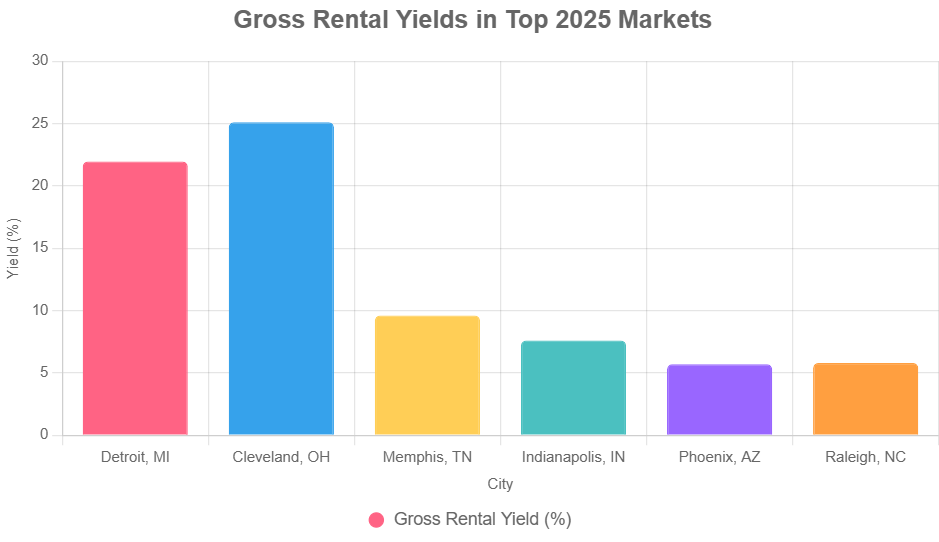
Filed Under: Real Estate, Real Estate Investing Tagged With: Ohio, Real Estate Investing, Real Estate Investment

  • « Previous Page
  • 1
  • …
  • 3
  • 4
  • 5
  • 6
  • 7
  • …
  • 29
  • Next Page »

Real Estate

  • Birmingham
  • Cape Coral
  • Charlotte
  • Chicago

Quick Links

  • Markets
  • Membership
  • Notes
  • Contact Us

Blog Posts

  • Today’s Mortgage Rates, March 2: Rates at Lowest Levels Spark Buyer Optimism
    March 2, 2026Marco Santarelli
  • Top 5 Housing Markets Set to Deliver High Investor ROI in 2026
    March 2, 2026Marco Santarelli
  • 5 Housing Markets Poised for Rapid Recovery if Mortgage Rates Fall in 2026
    March 2, 2026Marco Santarelli

Contact

Norada Real Estate Investments 30251 Golden Lantern, Suite E-261 Laguna Niguel, CA 92677

(949) 218-6668
(800) 611-3060
BBB
  • Terms of Use
  • |
  • Privacy Policy
  • |
  • Testimonials
  • |
  • Suggestions?
  • |
  • Home

Copyright 2018 Norada Real Estate Investments

Loading...