Norada Real Estate Investments

  • Home
  • Markets
  • Properties
  • Membership
  • Podcast
  • Learn
  • About
  • Contact

Archives for August 2025

Today’s Mortgage Rates – August 7, 2025: Rates Drop Consistently Across All Segments

August 7, 2025 by Marco Santarelli

Today's Mortgage Rates - August 7, 2025: Rates Drop Consistently Across All Segments

On August 7, 2025, mortgage rates have shown a marginal drop from last week across all segments, with the national average 30-year fixed mortgage rate decreasing to 6.70% from 6.82%. This slight dip provides a bit of relief to homebuyers who have been grappling with historically high rates over the last couple of years.

Refinancing rates, however, show mixed results with the 30-year fixed refinance rate inching up slightly to 6.98% but still down from previous highs. Understanding these trends in mortgage and refinance rates can help buyers and homeowners make informed decisions today.

Today's Mortgage Rates – August 7, 2025: Rates Drop Consistently Across All Segments

Key Takeaways

  • 30-year fixed mortgage rates dropped slightly to 6.70%, down 12 basis points from last week.
  • 15-year fixed mortgage rates increased marginally to 5.75%.
  • 5-year ARM mortgage rates slightly decreased to 7.18%.
  • Mortgage applications rose by 3.1% as rates fell, according to Mortgage Bankers Association.
  • 30-year fixed refinance rates slightly increased to 6.98%, but are still down 5 basis points from last week.
  • Federal Reserve monetary policy continues to influence rates, with potential cuts expected later in 2025.

Current Mortgage and Refinance Rates: August 7, 2025

Understanding today's mortgage and refinance rates is key for anyone thinking about purchasing a home or refinancing an existing mortgage. Rates vary by loan type and term, influenced heavily by Federal Reserve decisions and market conditions.

Loan Type Current Rate Weekly Change APR Weekly APR Change
30-Year Fixed 6.70% Down 0.13% 7.21% Down 0.07%
20-Year Fixed 6.41% Down 0.05% 6.80% Down 0.13%
15-Year Fixed 5.75% Down 0.13% 6.08% Down 0.09%
10-Year Fixed 5.48% Down 0.26% 5.84% Down 0.28%
7-Year ARM 7.08% Down 0.14% 7.59% Down 0.29%
5-Year ARM 7.18% Down 0.36% 7.84% Down 0.07%

Government Loans Mortgage Rates

Loan Type Current Rate Weekly Change APR Weekly APR Change
30-Year Fixed FHA 6.91% Down 0.29% 7.93% Down 0.30%
30-Year Fixed VA 6.40% Up 0.11% 6.62% Up 0.12%
15-Year Fixed FHA 5.75% Up 0.23% 6.72% Up 0.20%
15-Year Fixed VA 6.00% Up 0.16% 6.36% Up 0.18%

(Source: Zillow, August 7, 2025)

Refinance Rates Today

Refinancing rates have shown small fluctuations, with a slight increase in the average 30-year fixed refinance rate but a mixed trend in shorter terms.

Loan Type Current Rate Weekly Change APR Weekly APR Change
30-Year Fixed Refi 6.98% Up 0.03% — —
15-Year Fixed Refi 5.82% Up 0.08% — —
5-Year ARM Refi 7.89% Up 0.16% — —


Understanding Why Mortgage Rates Matter in 2025

Mortgage rates heavily influence housing affordability. When rates rise, monthly payments increase, making homes less affordable for many buyers. Conversely, when rates fall or stabilize, more buyers find it feasible to enter the market. After years of rising rates that peaked near historic highs, the recent slight retreat signals potential good news for home buyers and those looking to refinance.

The Mortgage Bankers Association reports a 3.1% increase in mortgage applications following the recent dip in rates. This uptick reflects buyers seizing the opportunity to lock in lower rates before they potentially rise again.

The Federal Reserve's Role in Shaping Mortgage Rates

The Federal Reserve’s monetary policy is a critical factor behind the movement of mortgage rates. Since the pandemic, the Fed's actions have dramatically affected borrowing costs.

The Rate Journey from Pandemic to 2025

  • 2021-2023: The Fed kept rates near zero to support recovery, causing mortgage rates to historically low levels.
  • March 2022 – July 2023: The Fed aggressively increased the federal funds rate by 5.25 percentage points to fight inflation, pushing mortgage rates to around 7% and beyond—the highest in about 20 years.
  • Late 2024: The Fed started cutting rates, signaling the beginning of easing monetary policy. By December 2024, rates were lowered by a full percentage point to 4.25%-4.5%.
  • 2025: Since the rate cuts, the Fed has paused at these higher levels into mid-year, creating uncertainty and volatility in mortgage markets.

Despite no changes at the last five Fed meetings, internal divisions exist about when to cut rates further due to slowing economic growth and persistent inflation.


Related Topics:

Mortgage Rates Trends as of August 6, 2025

Mortgage Rates Predictions for the Next 30 Days: July 22-August 22

Mortgage Rates Predictions for Next 90 Days: July-Sept 2025

Economic Context and Mortgage Rates Forecast

  • Inflation remains stubbornly above the Fed’s 2% target, particularly core prices impacting consumer goods and services.
  • Economic growth has slowed to an annualized GDP rate of approximately 1.2% in the first half of 2025.
  • Unemployment has crept upward to around 4.5%.

These mixed signals lead the Fed to hold rates steady while awaiting clearer economic data to adjust policy again.

Predictions include:

  • Average mortgage rates expected to trend around 6.4% in H2 2025, with possible dips toward 6.1% in 2026 (National Association of REALTORS®).
  • The Mortgage Bankers Association expects rates to remain near 6.7% by year-end 2025, with modest declines into 2026.
  • The Federal Reserve might enact two rate cuts this year, which could lower mortgage rates closer to 6% by late 2025 or early 2026, but timing is uncertain.

What This Means for Homebuyers and Refinancers

Buyers remain challenged by rates near 7% for 30-year fixed loans, but recent declines suggest some relief may be coming. Refinancers with loans above 7% should watch closely for Fed moves later this year that could open opportunities for cost savings.

Example Mortgage Payment Calculation (30-Year Fixed Loan at 6.7%)

To illustrate, consider a conventional 30-year fixed mortgage of $300,000 at today's average rate of 6.7%:

  • Monthly principal and interest payment = $1,939.37
  • Total payments over 30 years = $1,939.37 × 360 months = $698,173.20

Compare that with last week's average rate of 6.82% for the same loan:

  • Monthly payment = $1,948.10
  • Total paid over 30 years = $701,316

The slight rate drop saves almost $9 monthly and about $3,143 in interest over the life of the loan.

Long-Term Trends and What to Watch

  • The Fed’s cautious approach and uncertain economic outlook suggest rates will hover near current levels for some months.
  • Inflation pressures continue to create upward risk, while slowing growth pressures push rates downward.
  • Real GDP forecasts of 1.4% growth in 2025 and 2.2% in 2026 point toward a slow recovery phase that could stabilize mortgage rates in the mid-6% range.

Summary Table: Mortgage Rate Trends August 7, 2025

Metric Current Rate Weekly Change Trend
30-Year Fixed Mortgage 6.70% Down 0.12% Slight Drop
15-Year Fixed Mortgage 5.75% Up 0.02% Slight Rise
5-Year ARM Mortgage 7.18% Down 0.02% Slight Drop
30-Year Fixed Refi 6.98% Up 0.03% Slight Rise
15-Year Fixed Refi 5.82% Up 0.08% Slight Rise
5-Year ARM Refi 7.89% Up 0.16% Moderate Rise

Mortgage rates remain a pivotal factor for the real estate market in 2025. While recent small declines offer hope, the overall environment remains challenging. The Federal Reserve’s future decisions, inflation data, and economic growth will continue to be watched closely by borrowers and lenders alike.

Capitalize Amid Rising Mortgage Rates

With mortgage rates expected to remain high in 2025, it’s more important than ever to focus on strategic real estate investments that offer stability and passive income.

Norada delivers turnkey rental properties in resilient markets—helping you build steady cash flow and protect your wealth from borrowing cost volatility.

HOT NEW LISTINGS JUST ADDED!

Speak with a seasoned Norada investment counselor today (No Obligation):

(800) 611‑3060

Get Started Now

Also Read:

  • Will Mortgage Rates Go Down in 2025: Morgan Stanley's Forecast
  • Mortgage Rate Predictions 2025 from 4 Leading Housing Experts
  • Mortgage Rate Predictions for the Next 3 Years: 2026, 2027, 2028
  • 30-Year Fixed Mortgage Rate Forecast for the Next 5 Years
  • 15-Year Fixed Mortgage Rate Predictions for Next 5 Years: 2025-2029
  • Will Mortgage Rates Ever Be 3% Again in the Future?
  • Mortgage Rates Predictions for Next 2 Years
  • Mortgage Rate Predictions for Next 5 Years
  • Mortgage Rate Predictions: Why 2% and 3% Rates are Out of Reach
  • How Lower Mortgage Rates Can Save You Thousands?
  • How to Get a Low Mortgage Interest Rate?
  • Will Mortgage Rates Ever Be 4% Again?

Filed Under: Financing, Mortgage Tagged With: Interest Rate, mortgage, Mortgage Rate Trends, mortgage rates, Mortgage Rates Today

Worst Places to Live in Florida for Families & Retirees in 2025

August 7, 2025 by Marco Santarelli

Worst Places to Live in Florida for Families & Retirees 2023-2024

So you're considering a move to Florida? Well, before you start packing your bags, it's essential to know which areas you might want to avoid. Whether you're planning a family life or looking for a relaxed retirement spot, Florida offers a range of options. However, there are certain places that may not be the best fit for families and retirees alike. In this article, we'll take a look at some of the worst places to live in Florida for families and retirees, helping you make a more informed decision about your next move.

Worst Places to Live in Florida for Families & Retirees in 2024 & 2025

1. Pahokee

Pahokee is a small town located on the shore of Lake Okeechobee in Palm Beach County, Florida. It is considered one of the worst towns in Florida due to its high poverty rate, unemployment rate, and crime rate. The town has limited job opportunities, and most of the available jobs are seasonal, which makes it difficult for locals to find work outside of the harvesting season.

The town's infrastructure is also inadequate, and there are no recreational facilities or entertainment options for citizens to enjoy. The town's population has been declining due to the lack of economic activity, and many people have left the town in search of better opportunities. However, Pahokee has a rich history and culture, and residents are proud of their community.

2. Gainesville

Gainesville, home to the University of Florida, may not be the ideal retirement destination for many. The city has a high crime rate, exceeding the national average, which can be a significant concern for retirees. However, a lot of the crime in Gainesville is concentrated in just a few neighborhoods and the city's crime rate is comparable to other major cities such as Miami and Dallas but 68% higher than Tampa. The hot and humid climate may not be suitable for everyone, and the limited recreational activities for seniors can impact their overall happiness and well-being. Retirees should carefully consider these factors before choosing Gainesville as their retirement home.

3. Pine Hills

Pine Hills is an unincorporated subdivision in Orange County, Florida, west of Orlando, with a population of 66,111 in 2020. The area has a high crime rate, and poverty and unemployment rates are above the national average. However, Pine Hills is home to several parks, schools, and community resources, and revitalization efforts are currently underway. The area is also known for its diverse culture, with many different cultures living in the same vicinity.

4. Miami-Beach

Miami is often considered one of the worst places to live in Florida for families. While the city has a vibrant culture and beautiful beaches, it also has a high cost of living and a high crime rate. The cost of housing in Miami is significantly above the national average, making it difficult for families to find affordable homes. Additionally, the city's crime rate is well above the national average, making safety a concern for parents raising children. Miami also has limited access to quality public schools, which can pose a challenge for families seeking a good education for their children.

5. Daytona Beach

Daytona Beach, known for its racing history and beautiful coastline, may not be the best choice for families. The city has a high crime rate, making it less safe for children. The high unemployment rate can also make it challenging for parents to find stable employment. While the city may be appealing for its beachside atmosphere, families need to carefully consider these drawbacks before making a move.

6. Homestead

Homestead is another city that families should think twice about when considering a move to Florida. Despite its close proximity to Miami, Homestead has a considerably lower cost of living. However, it also has a high crime rate, especially when compared to the national average. The lack of quality public schools and limited recreational activities for families are also concerns. While Homestead can offer some affordability, it may not be worth the sacrifice in safety and education for families looking to settle down.

7. Fort Pierce

Fort Pierce is often cited as one of the worst places to live in Florida for families. The city has a high crime rate that exceeds the national average, raising concerns about safety for families. Fort Pierce also struggles with a weak economy, limited access to quality education, and a lack of recreational activities for children. The city's infrastructure is also inadequate, and there are limited job opportunities outside of the tourism and service sectors. The limited job opportunities can make it difficult for parents to provide for their families, adding to the overall challenges of living in this city.

8. West Palm Beach

West Palm Beach, while offering some attractive features, may not be the best place for families to settle down. The city has a high cost of living which can be challenging for families on a budget. The crime rate in West Palm Beach is also a concern, surpassing the national average. Additionally, the city lacks access to quality public schools and has limited recreational options for families. While West Palm Beach may offer some amenities and cultural attractions, families looking for a safe and affordable place to live may need to look elsewhere.

9. Orlando

Orlando is a city located in Orange County, Florida. The city has a high crime rate, and poverty and unemployment rates are above the national average. The city's infrastructure is also inadequate, and there are limited job opportunities outside of the tourism and service sectors. However, Orlando is a major tourist destination, known for its theme parks, cultural attractions, and business opportunities. The city also has several parks, museums, and community resources, making it an attractive place to live for some people.

10. Ocala

Ocala, located in central Florida, has received mixed reviews as a retirement destination. While the city offers a lower cost of living compared to other parts of the state, it does have some downsides. The hot and humid climate may not be suitable for all retirees, especially those with health concerns. Ocala also has limited recreational activities for seniors. It's important for retirees to carefully assess these factors before considering Ocala as their retirement home.

11. Tallahassee

Tallahassee, the capital of Florida, may not be the best place for retirees. The city has a higher-than-average crime rate, raising concerns about safety and security. The city's infrastructure is also inadequate, and there are limited job opportunities outside of the government sector. The city's hot and humid climate may not be suitable for everyone, and the lack of recreational activities for seniors could impact their quality of life. Retirees looking for a peaceful and safe retirement should carefully consider their options before settling in Tallahassee.

12. Tampa

While Tampa offers beautiful landscapes and a booming job market, it may not be the best fit for retirees. The city has a higher cost of living, which can strain retirement budgets. The traffic congestion and crowded beaches can also be overwhelming for those seeking a more relaxed retirement lifestyle. Tampa also has a higher crime rate compared to the national average, which can be a concern for retirees who prioritize safety. Retirees looking for tranquility and affordability may need to explore other options.

While Florida offers many attractive destinations, there are also places that may not be suitable for families or retirees. Factors such as high crime rates, limited access to quality education and healthcare, a high cost of living, and limited recreational activities can make these cities less desirable for families and retirees. It's crucial to carefully research and assess these factors before making a decision to ensure a happy and fulfilling life in the Sunshine State.

Filed Under: Best Places, Housing Market Tagged With: Worst Places to Live in Florida

30-Year Fixed Mortgage Rate (FRM) Drops Today by 12 Basis Points – August 7, 2025

August 7, 2025 by Marco Santarelli

30-Year Fixed Mortgage Rate (FRM) Drops Today by 12 Basis Points – August 7, 2025

If you're looking to buy a home or refinance, good news! The national average for a 30-Year Fixed Mortgage Rate (FRM) has dropped today, August 7, 2025, by 12 basis points, bringing it down to 6.70%. The previous week's average rate was 6.82%. While rates have been fluctuating quite a bit lately, this dip offers a bit of potential relief for borrowers. Let's dig into what this means for you, and why it's happening.

30-Year Fixed Mortgage Rate (FRM) Drops Today by 12 Basis Points – August 7, 2025

What's Driving This Slight Dip?

Okay, so a 12 basis point drop isn't going to make headlines on the evening news, but it’s still worth paying attention to. To understand why this happened, we need to look at the bigger economic picture and what the Federal Reserve is up to.

Currently, after aggressive hikes to combat soaring inflation since 2022, the Fed seems to be in a “wait and see” mode. They cut rates three times in late 2024, which brought some initial optimism. However, the economy is sending mixed signals in 2025: inflation is still a bit stubborn, but economic growth is definitely slowing down. This puts the Fed in a tricky spot, as indicated by internal divisions within the Fed.

Here is an overview of the situation.

Factor Current Status Impact on Mortgage Rates
Federal Reserve Policy Holding rates steady, but with internal debates Creates uncertainty; potential for future cuts
Inflation (Core PCE) ~2.7% Keeps upward pressure on rates
GDP Growth ~1.2% annualized Puts downward pressure on rates
Unemployment Rate 4.5% Puts downward pressure on rates

The drop in mortgage rates by 12 basis points is due to some of the downward pressures such as slowing growth. However, this number might go up soon.

A Look at Today's Mortgage Rates:

Here's a snapshot of where rates stand today, across different loan types. Notice that these are conforming loans, which means they meet specific criteria set by Fannie Mae and Freddie Mac (primarily loan size limitations).

PROGRAM RATE 1W CHANGE APR 1W CHANGE
30-Year Fixed Rate 6.70% down 0.13% 7.21% down 0.07%
20-Year Fixed Rate 6.41% down 0.05% 6.80% down 0.13%
15-Year Fixed Rate 5.75% down 0.13% 6.08% down 0.09%
10-Year Fixed Rate 5.48% down 0.26% 5.84% down 0.28%
7-year ARM 7.08% down 0.14% 7.59% down 0.29%
5-year ARM 7.18% down 0.36% 7.84% down 0.07%

Source: Zillow

What Should You Do?

Keep a close eye on what the Fed says and does! Their September and December meetings are key dates to watch. If they signal further rate cuts, mortgage rates will likely follow. If you have rate above 7%, monitor these Fed decisions for potential opportunities.

30-Year vs. 15-Year Fixed Rate: Which is Right for You?

Choosing between a 30-year and a 15-year fixed-rate mortgage is a big decision and depends entirely on your financial situation and goals. While the 30-year FRM offers lower monthly payments, you'll pay significantly more interest over the life of the loan. The 15-year FRM, on the other hand, comes with higher monthly payments but saves you a ton of money in interest and allows you to build equity much faster.

Here's a quick comparison to help you decide:

Feature 30-Year Fixed 15-Year Fixed
Monthly Payment Lower Higher
Interest Paid Higher Lower
Equity Building Slower Faster
Interest Rate Slightly Higher Slightly Lower
Best For Budget-conscious buyers Building equity, saving on interest

For most people who cannot afford higher payments or need access to cash for other investments or home improvements (a.k.a. opportunity cost), 30-year FRM is the better solution.


Related Topics:

30-Year Fixed Mortgage Rate (FRM) Drops by 15 Basis Points – August 6, 2025

Mortgage Rates Predictions for the Next 30 Days: July 22-August 22

Mortgage Rates Predictions for Next 90 Days: July-Sept 2025

Expert Opinions: Where Are Mortgage Rates Headed?

Predicting the future is always tricky, but here's what some experts are saying:

  • Fannie Mae: Expects mortgage rates to end 2025 at 6.5% and 2026 at 6.1%. This is based on their forecast for moderate GDP growth.
  • Mortgage Bankers Association (MBA): Projects mortgage rates to remain mostly unchanged through September 2025, ending the year close to 6.7% and being around 6.3% in 2026.
  • Morgan Stanley: Home prices could decrease slightly amid increased housing supply. A slowing in U.S. gross domestic product (GDP) growth could take Treasury yields lower and mortgage rates with them, further helping affordability

My Take:

I think the experts are mostly right, with a bit of wiggle room. The key is what the Fed does and how inflation shakes out. If inflation remains stubborn, rates might stay higher for longer. But if the economy slows down more than expected, the Fed will likely cut rates, pushing mortgage rates down.

Ultimately, the best time to buy a home is when you're financially ready. While predicting the future is impossible, staying informed and working with a trusted mortgage professional will help you make the best decision for your situation.

Capitalize Amid Rising Mortgage Rates

With mortgage rates expected to remain high in 2025, it’s more important than ever to focus on strategic real estate investments that offer stability and passive income.

Norada delivers turnkey rental properties in resilient markets—helping you build steady cash flow and protect your wealth from borrowing cost volatility.

HOT NEW LISTINGS JUST ADDED!

Speak with a seasoned Norada investment counselor today (No Obligation):

(800) 611‑3060

Get Started Now

Also Read:

  • Will Mortgage Rates Go Down in 2025: Morgan Stanley's Forecast
  • Mortgage Rate Predictions 2025 from 4 Leading Housing Experts
  • Mortgage Rate Predictions for the Next 3 Years: 2026, 2027, 2028
  • 30-Year Fixed Mortgage Rate Forecast for the Next 5 Years
  • 15-Year Fixed Mortgage Rate Predictions for Next 5 Years: 2025-2029
  • Will Mortgage Rates Ever Be 3% Again in the Future?
  • Mortgage Rates Predictions for Next 2 Years
  • Mortgage Rate Predictions for Next 5 Years
  • Mortgage Rate Predictions: Why 2% and 3% Rates are Out of Reach
  • How Lower Mortgage Rates Can Save You Thousands?
  • How to Get a Low Mortgage Interest Rate?
  • Will Mortgage Rates Ever Be 4% Again?
Filed Under: Financing, Mortgage Tagged With: Interest Rate, mortgage, Mortgage Rate Trends, mortgage rates, Mortgage Rates Today

Scottsdale Housing Market: Trends and Forecast 2025-2026

August 6, 2025 by Marco Santarelli

Scottsdale Housing Market: Trends and Forecast

So, you're wondering about the current Scottsdale housing market trends? As of mid-2025, the Scottsdale housing market appears to be shifting towards a buyer's market, presenting a balanced scenario with opportunities for both buyers and sellers. Let's dive in to find out more about this housing market in 2025.

Scottsdale Housing Market Trends in 2025:

Home Sales

Let's dive into the numbers. Home sales are a good indicator of how active the market is. According to the data by Scottsdale REALTORS®, in June 2025, the median sold price for homes in Scottsdale was $920,000. This shows a 2.22% increase month-over-month. A lot of homes are changing hands, so the demand is still high.

Home Prices

One of the biggest questions everyone has is about home prices. Are they going up, down, or staying the same? As mentioned above, the median sold price in June 2025 was $920,000. However, it's important to look at the bigger picture. The median estimated value is $863,980 showing a change of 1.4% over the past 12 months.

Are Home Prices Dropping in Scottsdale?

The million-dollar question (well, almost a million!). While the median sold price did increase from May to June, the rate of increase is slowing down. It's not a freefall, but we're not seeing the crazy price jumps we saw a few years ago. From the looks of it, the median list price is $985,000, down 1.4% MoM.

Housing Supply

How many homes are available for sale? This is called the housing supply, and it plays a huge role in determining whether it's a buyer's or seller's market.

In June 2025, the months supply of inventory was 8.18. This means that at the current rate of sales, it would take about 8 months to sell all the homes currently on the market. This is a 9.01% increase month-over-month, and a 42.5% increase over the last 12 months.

Is Scottsdale a Buyer's Housing Market in 2025?

Here's the deal: a balanced market usually has around 5-6 months of inventory. Anything above that starts to favor buyers, and anything below favors sellers. With over 8 months of inventory, Scottsdale is leaning toward a buyer's market, which means that buyers may have more negotiating power.

Market Trends Based on recent data, here's a quick snapshot of the Scottsdale housing market:

Metric June 2025 Change (MoM)
Median Sold Price $920,000 ↑ 2.22%
Median Estimated Value $863,980 +0.5%
Months Supply of Inventory 8.18 ↑ 9.01%
Sold to List Price % 96% ↓ 0.54%
Median Days in RPR 61 days ↑ 7.02%

Impact of High Mortgage Rates

Of course, we can't talk about the housing market without mentioning mortgage rates. These rates have a big influence on what people can afford.

Currently, U.S. weekly averages as of 07/31/2025, the average 30-year fixed mortgage rate is around 6.72% and 15-Yr FRM is about 5.85%, according to Primary Mortgage Market Survey® by Freddie Mac. The 30-year fixed-rate mortgage showed little movement, remaining within the same narrow range for the fourth consecutive week. Continued economic growth, along with moderating house prices and rising inventory, bodes well for buyers and sellers alike. According to various forecast, 30-year FRM rate will end 2025 between 6.0 to 6.5 percent. Borrowers should find comfort in the stability of mortgage rates, which have only fluctuated within a narrow 15-basis point range since mid-April.

High mortgage rates mean that borrowing money to buy a house is more expensive. This can cool down demand and put downward pressure on prices. Although rates are expected to slightly decline at the end of the year, they are still relatively high.

My Two Cents

I've been watching the Scottsdale market for a while now, and I think we're entering a more balanced phase. The days of bidding wars and homes selling way over asking price seem to be behind us. While prices might not plummet, buyers have a bit more breathing room. For sellers, it means being realistic about pricing and making sure your home is in tip-top shape to attract potential buyers. Working with an experienced real estate agent is more important than ever to navigate these changing conditions.

The Bottom Line – The Scottsdale housing market trends in mid-2025 show a market that's shifting toward a buyer's advantage. Inventory is up, price increases are moderating, and mortgage rates are influencing affordability.

Scottsdale Housing Market Forecast 2025-2026: What's Ahead?

Predicting the future is tough, especially in real estate! However, by analyzing the current Scottsdale housing market trends and considering broader economic factors, we can sketch out a possible scenario for 2025-2026.

Key Factors Influencing the Forecast

Before we dive into specifics, here are the main things that will likely shape the Scottsdale housing market over the next year or so:

  • Mortgage Rates: As we mentioned before, mortgage rates are a huge driver. If they stay elevated, it'll keep pressure on affordability. Any significant drops could spark more demand.
  • Inventory Levels: The supply of homes for sale will continue to be a crucial factor. Will it keep rising, level off, or even start to decline?
  • Economic Growth: The overall health of the economy, both nationally and locally, will impact people's ability and willingness to buy homes.
  • Migration Patterns: Is Scottsdale still attracting new residents from other states? Strong population growth fuels housing demand.

Possible Scenarios

Given these factors, here are a few potential paths the Scottsdale housing market could take:

Scenario 1: The “Slow and Steady” Market

  • Mortgage rates remain relatively stable at around 6% – 6.5%.
  • Inventory gradually increases but doesn't reach extreme levels.
  • The economy continues to grow at a moderate pace.
  • Migration to Scottsdale remains positive, but slows down slightly.

In this scenario, we'd likely see:

  • Home prices remain relatively flat, with small increases in some areas and minor decreases in others.
  • Days on market stay elevated, giving buyers more time to consider their options.
  • Negotiating power remains in favor of buyers, but not overwhelmingly so.
  • Overall market activity is moderate and fairly predictable.

Scenario 2: The “Buyer's Market Deepens”

  • Mortgage rates rise slightly further, perhaps peaking near 7%.
  • Inventory continues to build as more sellers enter the market.
  • Economic growth slows down, leading to some job losses.
  • Migration to Scottsdale stagnates or even declines slightly.

In this scenario, we could see:

  • Home prices experience more noticeable declines, particularly in the luxury market.
  • Homes take longer to sell, and price reductions become more common.
  • Buyers have significant negotiating leverage, potentially getting great deals.
  • Foreclosure activity might start to tick up (though not to the levels seen during the housing crisis).

Scenario 3: The “Unexpected Rebound”

  • Mortgage rates drop unexpectedly, perhaps due to a shift in Federal Reserve policy.
  • Inventory tightens as buyers jump back into the market.
  • The economy experiences a resurgence, fueled by new industries or technologies.
  • Migration to Scottsdale accelerates, driven by lifestyle factors or job opportunities.

In this more optimistic scenario, we might see:

  • Home prices start to rise again, although likely not as dramatically as in the past.
  • Homes sell relatively quickly, and competition among buyers increases.
  • Sellers regain some negotiating power.
  • New construction activity picks up to meet the renewed demand.

My Best Projections for Scottsdale

Based on the current Scottsdale housing market trends, I think Scenario 1, the “Slow and Steady” Market, is the most likely outcome. We're already seeing a shift towards more balance, and it's unlikely that we'll experience a major shock that dramatically changes the trajectory.

Here are my specific predictions:

  • Home Prices: Expect modest fluctuations, with overall prices staying relatively flat or perhaps declining by a few percentage points. Some desirable neighborhoods might see slight increases.
  • Inventory: Inventory will likely remain elevated compared to the peak of the seller's market, giving buyers more choices.
  • Mortgage Rates: I anticipate rates to stay within a range of 6% to 6.5%.
  • Days on Market: Homes will take longer to sell than they did a few years ago, so sellers need to be patient.

Should You Invest in the Scottsdale Real Estate Market?

Scottsdale, Arizona is a highly desirable location for real estate investment. With its warm climate, stunning natural scenery, vibrant nightlife, and high-quality educational institutions, Scottsdale has something to offer for everyone. The city has been ranked as one of the best places to live in the United States, and it is not hard to see why.

The Scottsdale real estate market has been thriving in recent years. There are many investment opportunities in Scottsdale, ranging from single-family homes to multifamily properties. The city has a diverse range of properties available, from luxury homes to more affordable options. One of the most promising investment opportunities in Scottsdale is in rental properties. The rental market is strong. The city has a high demand for rental properties, making it a great location to invest in rental real estate.

Another promising area for real estate investment in Scottsdale is commercial real estate. The city has a thriving economy, with a range of businesses and industries that are in need of commercial space. With a growing population and a strong economy, the demand for commercial real estate is likely to continue to grow in the coming years.

The Excellent Quality of Life

A city in a large metropolitan area is competing with every other city for residents. If the city is poorly managed or simply deteriorates, it’ll lose residents who only have to move a few miles to get away from it. In this regard, Scottsdale real estate investment is a wise choice because the city stands out in terms of quality of life. We’ll ignore the golf courses and focus instead on A-rated public schools and family-friendly amenities. They could do a little better on crime, but there are areas in Phoenix real estate market that are far worse.

Scottsdale's Job Market

Scottsdale is also an emerging tech market, with companies GoDaddy, Yelp, Paypal, Indeed.com, and Paradigm Tech all opening offices downtown. This is a great town for businesses, including small businesses and entrepreneurs. The Scottsdale job market has consistently averaged an unemployment rate a full point lower than the state average and roughly half a point lower than the Phoenix metro area average.

That alone would bolster the Scottsdale housing market. However, the relatively high property values mean much work here but live in other cities. Yet it contributes to a higher-than-expected rental rate in the Scottsdale housing market. Ironically, the high per capita income of 54K per person, twice the state average, drives up rents and housing prices.

Scottsdale's Tourist Market

Scottsdale is famous among locals for its Fashion Square Mall. However, you see more people coming here on vacation to enjoy the 200 local golf courses, many of which are world-class.

Others come to see the Major League Baseball teams in spring training in Scottsdale. Others stay in Scottsdale while watching teams practice in nearby Mesa. All of this explains why the city has the fourth-largest number of AAA four-diamond hotels in the United States. The nature of the tourist market, though, gives you the ability to rent out properties both nightly and for weeks at a time.

The Diverse Scottsdale Rental Market

The Scottsdale housing market has a more diverse rental market than just catering to those who can’t afford to buy a single-family home. For example, the area is famous for its snowbirds, retirees who come for the winter before returning home. Some of them buy a one or two-bedroom home to live in for half the year.

Others rent such properties. While many live in Sun City and other age-restricted communities, others choose to rent elsewhere in the Scottsdale real estate market.

They’ll prioritize amenities, proximity to healthcare providers, and low maintenance over cost in many cases. This population also increases the demand for RV-friendly homes and trailer parks. That provides an unusual play for those who want to profit off affordable housing in the Scottsdale housing market but don’t want to deal with Section 8 rentals.

Latest Rental Trends

Arizona is landlord-friendly compared to neighboring states like Nevada and California. What makes it notable is that it is becoming more landlord-friendly. For example, the city is passing laws that make it easier for landlords to enter units to make repairs. The state is making it easier to discard abandoned personal property and limiting appeals by those going through eviction. And it was already relatively fast and easy to evict people in Arizona.

The Scottsdale real estate investment options include the short-term rental market. The city requires short-term and vacation rentals to be registered with the county. Landlords must pay the transaction privilege sales tax and transient tax. A sales tax license is required. However, that’s simply the city saying you can rent out these units if you pay the same taxes that hotels do. The rest of the city’s regulations make the Scottsdale real estate market-friendly for renting out via sites like Airbnb.

They don’t limit short-term rentals to a tourist district. You can rent out both the main house and accessory dwelling unit on the same property. And state law doesn’t give cities the ability to apply new regulations that essentially ban short-term rentals. However, homeowners associations can regulate these types of properties, so do your research before you buy a Scottsdale real estate investment property assuming you can generate short-term rental income.

The Geographic Constraints

The Scottsdale real estate market is certain to experience appreciation for the same reason the local quality of life is so good – it is nearly surrounded by parks. The northern end of the city touches Tonto National Forest. The western edge borders McDowell Mountain Regional Park.

Homes with views and access to the national parks command a premium. Fort McDowell is a Native American reservation likewise off-limits. Tempe, Phoenix, and Mesa are all heavily developed. The city simply doesn’t have much room to expand to meet demand. This means the newest development will require redevelopment, increasing the cost of such properties and the value of existing housing stock.

At first glance, Scottsdale seems like a home buyer’s dream. It is full of suburban neighborhoods. The median household income is more than 70,000 dollars a year, and that’s pulled down by a retiree population so large that the average age is 46. However, affordability in the Scottsdale real estate market is relative.

The median wage is 73,000 but the median home price is approaching 400,000 dollars a year. This means many cannot afford to own a home though they may want to. This drives demand for rentals in the Scottsdale housing market.

It is surprisingly only a third of the residents rent, though this is somewhat higher than the 20 percent average for the area. Conversely, the high-paying jobs in the area are one reason many people move here, generating demand for rental properties by new residents.

The Relatively Low Tax Burden

Arizona has a surprisingly low property tax rate. It averages 0.85 percent of the property’s assessed value, while the national average hovers around 1.1 percent. Another benefit of Arizona real estate law is that the state limits the increases in the assessed value of property to 5 percent (or less) per year. This means your property taxes probably won’t rise at the same rate as the property value. That’s good since the Scottsdale housing market saw an appreciation of roughly five percent last year and is predicted to see at least 2 percent growth in 2019. Income taxes are competitive with the rest of the country and a bargain compared to tax-and-spend states like California, too.

Recommended Read:

  • Arizona Housing Market: Trends and Forecast
  • When Will the Housing Market Crash in Arizona?
  • 12 Best Places to Live in Arizona
  • Phoenix Housing Market: Trends and Forecast

Filed Under: Growth Markets, Housing Market, Real Estate Investing

Arizona Housing Market: Trends and Forecast 2025-2026

August 6, 2025 by Marco Santarelli

Arizona Housing Market: Trends and Forecast

If you're thinking about buying or selling a home in Arizona, you're probably wondering what's going on with the market. Simply put, the current Arizona housing market is experiencing a mixed bag. Home prices are slightly down compared to last year, but sales are up, and there are more homes on the market. Let's dive into the details so you can get a better understanding of what to expect.

Arizona Housing Market Trends: What's Happening Right Now?

Home Sales

One of the most interesting things happening is that home sales are actually up. According to recent data by Redfin, in June 2025, there were 8,787 homes sold in Arizona. That's a 4.3% increase compared to the same time last year.

Home sales are up +4.3% year-over-year!

Why is this happening? Well, even though interest rates are still relatively high (more on that later), it seems like people are still eager to buy homes in Arizona. Maybe they're attracted to the state's weather, job opportunities, or simply want a change of scenery. Whatever the reason, the increased sales indicate there's still solid demand in the Arizona real estate market.

Home Prices

Now, let's talk about home prices. The median sale price in Arizona in June 2025 was $444,500. That's a 1.3% decrease compared to last year.

Median home price in Arizona is $444,500!

Home prices are down -1.3% year-over-year!

This means that homes are slightly more affordable than they were a year ago. While a 1.3% decrease might not seem like a lot, it can make a difference for potential buyers, especially when combined with other market factors.

Are Home Prices Dropping in Arizona?

The slight dip in median home prices may have you wondering, “Are home prices dropping in Arizona?”. While the median price is down slightly, it’s more accurate to say prices are stabilizing. We are not seeing a drastic price crash. This small decrease suggests that the market is cooling off a bit, but it's not a dramatic plunge. It could also mean there are just more lower-priced homes being sold, bringing down the median.

Plus, it’s important to remember that real estate is very location-specific. While the overall state median might be down, certain areas are still seeing price increases. For example, some of the top metros in Arizona with the fastest growing sales prices are:

  • Anthem, AZ (46.2%)
  • New River, AZ (43.1%)
  • Show Low, AZ (19.2%)

So, depending on where you're looking to buy, your experience might be different.

Housing Supply

One big change in the Arizona housing market is the increase in housing supply. In June 2025, there were 48,344 homes for sale in Arizona. That's a 24.7% increase compared to last year.

Number of homes for sale in Arizona is 48,344!

Housing supply is up +24.7% year-over-year!

This increase in inventory is a significant factor influencing the market. More homes on the market mean buyers have more options, which can lead to less competition and more negotiating power.

However, the number of newly listed homes is slightly down by 2.0% year-over-year, with only 9,850 newly listed homes. This suggests that while the overall inventory is up, fewer sellers are putting their homes on the market right now, which might be due to uncertainty about the market or the higher interest rates.

Is Arizona a Buyer's Housing Market?

So, with home prices slightly down and the number of homes for sale up, is it a buyer's or seller's market in Arizona? Right now, it's leaning more towards a balanced market. Buyers have more choices and a little more negotiating power, but demand is still there. It's not a complete free-for-all for buyers, and sellers still have a good chance of selling their homes, especially if they're priced competitively and in desirable locations.

To help determine this, we can look at “Months of Supply”, this represents how long it would take to sell all current homes on the market. This is at 4 months.

Months of supply is 4

Market Trends

Here's a quick rundown of some key market trends in the Arizona housing market:

  • Homes are staying on the market longer: The median days on market is 62 days, which is up 10 days compared to last year. This means that homes are taking a bit longer to sell.
  • Fewer homes are selling above list price: Only 14.1% of homes in Arizona sold above list price in June 2025, which is down 2.5 percentage points year-over-year. This indicates that bidding wars are becoming less common.
  • More homes are having price drops: 32.9% of homes had price drops, which is up 2.8 percentage points year-over-year. This is another sign that the market is becoming more favorable for buyers.
  • Sale-to-list price is slightly down: The sale-to-list price ratio is 97.9%, which is down 0.3 percentage points year-over-year. This means that homes are selling for slightly less than their original list price.

Here is a table summarizing the market trends in Arizona:

Market Trend Data (June 2025) Year-over-Year Change
Median Sale Price $444,500 -1.3%
Number of Homes Sold 8,787 +4.3%
Number of Homes for Sale 48,344 +24.7%
Newly Listed Homes 9,850 -2.0%
Median Days on Market 62 +10 days
Homes Sold Above List Price 14.1% -2.5 points
Homes with Price Drops 32.9% +2.8 points
Sale-to-List Price Ratio 97.9% -0.3 points

Impact of High Mortgage Rates

Of course, we can't talk about the housing market without mentioning mortgage rates. High mortgage rates are one of the biggest factors influencing the market right now. Currently, U.S. weekly averages as of 07/31/2025, the average 30-year fixed mortgage rate is around 6.72% and 15-Yr FRM is about 5.85%, according to Primary Mortgage Market Survey® by Freddie Mac.

These rates can significantly impact affordability, making it more expensive for people to buy homes. High rates can also discourage people from selling because they don't want to give up their existing low-interest mortgage.

However, there's some good news on the horizon. According to various forecasts, the 30-year FRM rate will end 2025 between 6.0 to 6.5 percent. This could provide some relief to buyers and potentially stimulate the market a bit.

Migration Trends

Another interesting trend to consider is migration. Arizona has been a popular destination for people moving from other states, especially from California. According to recent data, Phoenix, AZ is the second most popular destination for people moving from other metro areas, with a net inflow of 6,300 between May '25 and Jul '25. This influx of people can contribute to demand for housing, which can impact prices and inventory.

Here is a table summarizing the migration trends:

Rank Metro Area Net Inflow (May '25 – Jul '25)
1 Sacramento, CA 10,400
2 Phoenix, AZ 6,300
3 Salisbury, MD 5,000
4 Cape Coral, FL 4,900
5 Sarasota, FL 4,900

The Bottom Line – The current Arizona housing market is a bit of a mixed bag. Home prices are slightly down, but sales are up. There are more homes on the market, giving buyers more options. High mortgage rates are still a factor, but forecasts suggest they might come down a bit by the end of the year.

Arizona Housing Market Forecast 2025-2026: Will The Desert Bloom or Bust?

You're probably wondering what's going to happen with prices. Simply put, the Arizona housing market forecast suggests a slight cooling over the next year. While the market won't crash, don't expect prices to skyrocket either. So, let's dig into the details and see what the future might hold for Arizona real estate.

First, let's take a quick look at where we stand right now. According to recent data, the average home value in Arizona is around $430,710. That's down about 2.7% compared to last year. So, prices have already started to come down a bit.

Here are some of the factors influencing the dip

  • Mortgage Rates: Higher interest rates have made buying a home less affordable, so demand has cooled off a little.
  • Inventory: We're starting to see a slight increase in the number of homes for sale, giving buyers more choices and reducing bidding wars.
  • Overall Economy: Economic uncertainty at the national level always tends to impact local housing markets.

What The Experts Are Saying

Zillow, one of the leaders of providing housing data, has provided some interesting insights on where home values are headed. Here's a simplified version of their projections for key Arizona metro areas:

Region July 2025 Price Change September 2025 Price Change June 2026 Price Change (1-Year)
Phoenix, AZ -0.5% -1.5% -1.7%
Tucson, AZ -0.4% -1% -1%
Lake Havasu City, AZ -0.3% -1.3% -1.7%
Yuma, AZ -0.1% -0.3% 1.2%
Flagstaff, AZ -0.2% -0.7% 1%
Sierra Vista, AZ -0.3% -1.3% -2.4%
Show Low, AZ -0.2% -1.2% 0%
Payson, AZ -0.5% -1.4% -0.8%
Nogales, AZ -0.2% -0.9% -0.2%
Safford, AZ 0.1% -0.7% -1.3%

As you can see, most areas are expected to see slight price decreases in the short term within a year's time. Yuma, and Flagstaff on the other hand, may see a small increase. However, the changes are relatively minor, suggesting more of a gentle correction than a major crash.

Note: These are just predictions, and the actual market can be affected by many unexpected events.

National Trends Also Influence Our State

It's important to remember that what happens nationally affects us locally. Lawrence Yun, Chief Economist for the National Association of Realtors (NAR), thinks things are looking up for the overall U.S. housing market. Here’s what he predicts:

  • Existing Home Sales: Up 6% in 2025, up 11% in 2026.
  • New Home Sales: Up 10% in 2025, up 5% in 2026.
  • Median Home Prices: Up 3% in 2025, up 4% in 2026.
  • Mortgage Rates: Around 6.4% in the second half of 2025, dipping to 6.1% in 2026.

If mortgage rates do come down as expected, that could give the Arizona housing market a boost, even if it doesn't completely reverse the predicted price corrections above.

Will Arizona Housing Prices Crash?

Honestly, a major crash seems unlikely right now. While prices might dip slightly, most experts are predicting a more stable market going forward. A true crash would require a significant economic downturn or a massive oversupply of homes, and neither of those things seems likely right now.

What About 2026?

Looking further ahead to 2026, it's tough to say for sure. If the national trends continue as Yun forecasts, we could see a more balanced market with modest price increases. However, local factors will still play a big role. Things to keep an eye on include:

  • Job Growth in Arizona: More jobs mean more people moving to the state, which would drive up demand for housing.
  • New Construction: The amount of new homes being built will affect the supply of available houses.
  • Migration Patterns: Are people still moving to Arizona from other states? This is a major factor in demand.

My Thoughts and Conclusions

As a local who watches these trends closely, here's my take: I think the Arizona housing market is going through a correction, not a collapse. Prices might soften a bit in the short term, but strong demand and a relatively healthy economy should prevent a major downturn.

If you're a buyer, this could be a good time to start looking for a home. You might have more negotiating power and less competition. If you're a seller, be prepared to be realistic about your pricing and don't expect the bidding wars we saw a couple of years ago.

Recommended Read:

  • Phoenix Housing Market: Trends and Forecast 2025-2026
  • 12 Best Places to Live in Arizona
  • When Will the Housing Market Crash in Arizona?
  • Arizona's Housing Crisis: Young Adults Struggling to Find Home
  • Scottsdale Housing Market: Trends and Forecast
  • Tucson Housing Market Trends and Forecast
  • Top 10 Priciest States to Buy a House by 2030: Expert Predictions
  • 10 Best Real Estate Markets for Investors in 2025

Filed Under: Growth Markets, Housing Market, Real Estate Market Tagged With: Arizona, Housing Market

Today’s Mortgage Rates – August 6, 2025: Rates Fall Steadily Across the Spectrum

August 6, 2025 by Marco Santarelli

Today's Mortgage Rates - August 6, 2025: Rates Fall Steadily Across the Spectrum

As of August 6, 2025, mortgage rates have dropped slightly across the board, providing a modest break for both homebuyers and those looking to refinance. The average 30-year fixed mortgage rate is now 6.67%, down 15 basis points from last week’s 6.82%, and the 15-year fixed rate decreased from 5.75% to 5.70%, according to Zillow's latest data.

Refinance rates also saw mild declines, with the 30-year fixed refinance rate dropping from 6.93% to 6.90%. These shifts indicate a cooling, if gradual, easing after months of higher rates that have challenged affordability.

Today's Mortgage Rates – August 6, 2025: Rates Fall Steadily Across the Spectrum

Key Takeaways

  • 30-year fixed mortgage rates dropped to 6.67%, down from 6.82% last week
  • 15-year fixed rates also fell slightly to 5.70%
  • 5-year and 7-year ARM rates declined as well, hovering around 7.08%
  • 30-year fixed refinance rates eased to 6.90%, down from 6.93%
  • The Federal Reserve’s ongoing monetary policy closely influences rates, with potential cuts expected later in 2025
  • Experts forecast mortgage rates could further drop to around 6.4% by year-end 2025 and 6.1% in 2026 (National Association of REALTORS®)
  • Economic factors—such as inflation, GDP growth, and employment trends—continue to shape the mortgage market

Understanding Today’s Mortgage Rates: What You Need to Know

Mortgage rates, the interest charged on home loans, have experienced significant fluctuations over the past few years due to economic changes and Federal Reserve policy moves. Today’s rates around 6.67% for a 30-year fixed mortgage are lower than recent highs but still elevated in historical terms. This is important because mortgage rates directly affect monthly payments, home affordability, and real estate demand.

The Federal Reserve’s moves on interest rates and inflation have strongly affected mortgage costs. Following several rate hikes to combat inflation, the Fed has paused in 2025, with market watchers anticipating potential rate cuts in the coming months. These developments create some optimism for borrowers looking for lower borrowing costs.

Current Mortgage Rates by Loan Type (August 6, 2025)

Loan Program Rate 1-Week Change APR 1-Week APR Change
30-Year Fixed 6.67% -0.15% 7.12% -0.16%
20-Year Fixed 6.41% -0.05% 6.80% -0.13%
15-Year Fixed 5.70% -0.17% 5.99% -0.19%
10-Year Fixed 5.48% -0.26% 5.84% -0.28%
7-Year ARM 7.08% -0.14% 7.59% -0.29%
5-Year ARM 7.08% -0.47% 7.70% -0.21%

Source: Zillow, August 6, 2025

Government-backed loans (FHA and VA) see slight changes, with 30-year fixed FHA dropping notably by over 1%, highlighting some relief for borrowers relying on these options.

Government Loan Program Rate 1-Week Change APR 1-Week APR Change
30-Year Fixed FHA 6.13% -1.07% 7.14% -1.10%
30-Year Fixed VA 6.21% -0.08% 6.42% -0.08%
15-Year Fixed FHA 5.88% +0.36% 6.84% +0.33%
15-Year Fixed VA 5.85% +0.01% 6.20% +0.02%

Current Refinance Rates (August 6, 2025)

Refinancing has seen a bit of a mixed picture but mostly slight declines for most loan types, signaling potential opportunities for homeowners wanting to lower monthly payments.

Loan Type Rate 1-Week Change
30-Year Fixed Refi 6.90% -0.03%
15-Year Fixed Refi 5.73% +0.01%
5-Year ARM Refi 7.67% +0.01%

What Does This Mean in Real Numbers? Sample Calculations

To understand how these shifts affect borrowers, let’s consider the following example based on a $300,000 loan amount with a 30-year fixed mortgage:

Rate Monthly Principal & Interest Difference vs. 6.82% Rate
6.82% $1,953 Baseline
6.67% $1,930 -$23 per month

Savings of $23 a month may seem small, but over a year that’s nearly $275, and over the life of the loan, thousands could be saved if rates stay low and other conditions remain constant.

Why Are Mortgage Rates Changing Now?

Several factors influence daily mortgage rate movements:

  • Federal Reserve Policy: The Fed’s decisions on interest rates impact borrowing costs. After aggressive hikes to counter inflation, the Fed paused in 2025, signaling possible rate cuts later this year (FOMC Minutes, July 2025).
  • Economic Data: Inflation remains stubborn (core PCE around 2.7%), slowing GDP growth (~1.2% annualized), and creeping unemployment (4.5%) contribute to market uncertainty.
  • Bond Markets: Mortgage rates tend to track the 10-year Treasury yield, recently fluctuating near 4.34%. As bond investors react to Fed forecasts, mortgage rates adjust accordingly.
  • Housing Market Dynamics: With buyer affordability challenged by past rate highs, modest declines can ease some pressure but the backlog and inventory also affect pricing.

National Forecast for Mortgage and Refinance Rates

Multiple leading associations and analysts offer projections that help frame what borrowers might expect:

Source Forecast
National Association of REALTORS® Average mortgage rates at ~6.4% in H2 2025, 6.1% in 2026
Realtor.com Rates easing slowly, expected dip to 6.4% by year-end 2025
Fannie Mae 6.5% mortgage rate at end of 2025, dropping to 6.1% in 2026
Mortgage Bankers Association Rates holding near mid-6% range through 2025 and 2026

These forecasts consider the likelihood of Fed rate cuts amid inflation uncertainties and economic headwinds, suggesting that while rates won’t return to historic lows soon, the trend may gently move downward into 2026.


Related Topics:

Mortgage Rates Trends as of August 5, 2025

Mortgage Rates Predictions for the Next 30 Days: July 22-August 22

Mortgage Rates Predictions for Next 90 Days: July-Sept 2025

The Federal Reserve’s Role in Mortgage Rates in 2025

The Federal Reserve continues to hold significant power over mortgage interest rates through its monetary policy:

  • 2021-2023: The Fed’s pandemic bond buying kept mortgage rates near historic lows; subsequent hikes drove rates sharply higher.
  • Late 2024: The Fed cut rates thrice, bringing the federal funds rate down to 4.25%-4.5%.
  • 2025: The Fed has paused rate changes but faces pressure to cut due to slowing growth and inflation complexities.
  • Upcoming Key Dates:
    • September 16-17, 2025: Next Fed meeting, with ~47% market chance of a rate cut.
    • December 2025: Last expected opportunity for rate cuts this year.
  • Long-Term Outlook: The Fed aims for rates near 2.25%-2.5% by 2027, which would support lower mortgage rates eventually.

Impact on Borrowers and Market Participants

For buyers and refinancers facing these rates today:

  • Homebuyers must weigh affordability carefully. While rates are high compared to earlier decades, the recent drops offer some financial relief and hope for continued declines.
  • Refinancers with mortgages above 7% may find August-December 2025 an ideal time to watch market moves and potentially lock a lower rate.
  • Investors and Lenders continue to navigate volatile bond markets influenced by Fed communications and global economic shifts.

Final Thought on Mortgage Rates Today

Mortgage and refinance rates dropping slightly across the board is positive news but reflects a cautious economic environment. The Federal Reserve’s actions this year play a crucial role. Analysts generally expect a gradual easing of rates by the end of 2025 and into 2026, but factors like inflation persist as challenges. Borrowers should remain informed and closely watch upcoming Fed meetings for clearer direction.

Capitalize Amid Rising Mortgage Rates

With mortgage rates expected to remain high in 2025, it’s more important than ever to focus on strategic real estate investments that offer stability and passive income.

Norada delivers turnkey rental properties in resilient markets—helping you build steady cash flow and protect your wealth from borrowing cost volatility.

HOT NEW LISTINGS JUST ADDED!

Speak with a seasoned Norada investment counselor today (No Obligation):

(800) 611‑3060

Get Started Now

Also Read:

  • Will Mortgage Rates Go Down in 2025: Morgan Stanley's Forecast
  • Mortgage Rate Predictions 2025 from 4 Leading Housing Experts
  • Mortgage Rate Predictions for the Next 3 Years: 2026, 2027, 2028
  • 30-Year Fixed Mortgage Rate Forecast for the Next 5 Years
  • 15-Year Fixed Mortgage Rate Predictions for Next 5 Years: 2025-2029
  • Will Mortgage Rates Ever Be 3% Again in the Future?
  • Mortgage Rates Predictions for Next 2 Years
  • Mortgage Rate Predictions for Next 5 Years
  • Mortgage Rate Predictions: Why 2% and 3% Rates are Out of Reach
  • How Lower Mortgage Rates Can Save You Thousands?
  • How to Get a Low Mortgage Interest Rate?
  • Will Mortgage Rates Ever Be 4% Again?
Filed Under: Financing, Mortgage Tagged With: Interest Rate, mortgage, Mortgage Rate Trends, mortgage rates, Mortgage Rates Today

30-Year Fixed Mortgage Rate (FRM) Drops Today by 15 Basis Points – August 6, 2025

August 6, 2025 by Marco Santarelli

30-Year Fixed Mortgage Rate (FRM) Drops Again by 15 Basis Points to 6.67%

If you're looking to buy a home or refinance your mortgage, you're probably glued to mortgage rates. The good news is, the national average for the 30-year fixed mortgage rate has seen a slight dip. As of August 6, 2025, it's sitting at 6.67%, a welcome 15 basis point decrease from the previous week. This could be a glimmer of hope for many looking to enter the housing market.

30-Year Fixed Mortgage Rate (FRM) Drops Today by 15 Basis Points to 6.67%

What's Causing This Shift?

While a 15 basis point drop might feel small, it can make a difference in your monthly payments and overall interest paid over the life of the loan. It's crucial to understand what factors are driving this change. The biggest influence is the Federal Reserve and its monetary policy.

Here's a quick recap of what the Fed's been doing and how it impacts mortgage rates:

  • Pandemic Era: The Fed kept rates artificially low to stimulate the economy, leading to historically low mortgage rates.
  • Inflation Surge: When inflation spiked, the Fed aggressively raised interest rates, causing mortgage rates to climb to highs not seen in decades.
  • Recent Actions: As of recent times, the Fed is holding rates steady, though cuts are being looked at to address slow growth.

The Fed's every move sends ripples through the economy, directly impacting mortgage rates. As a homeowner, it's crucial to monitor economic trends.

Breaking Down the Numbers: A Closer Look at Mortgage Rates

Let's get into the nitty-gritty with some data. Here's a snapshot of current mortgage rates  from Zillow across different loan types as of August 6, 2025:

PROGRAM RATE 1W CHANGE APR 1W CHANGE
30-Year Fixed Rate 6.67% down 0.15% 7.12% down 0.16%
20-Year Fixed Rate 6.41% down 0.05% 6.80% down 0.13%
15-Year Fixed Rate 5.70% down 0.17% 5.99% down 0.19%
10-Year Fixed Rate 5.48% down 0.26% 5.84% down 0.28%
7-year ARM 7.08% down 0.14% 7.59% down 0.29%
5-year ARM 7.08% down 0.47% 7.70% down 0.21%
3-year ARM — 0.00% — 0.00%

A few things to note:

  • The 30-year fixed rate remains the most popular choice, offering stability and predictability. Its drop to 6.67% is a positive sign.
  • 15-year fixed rates are significantly lower, but come with higher monthly payments. This is a great option if you can afford it and want to build equity faster.
  • Adjustable-rate mortgages (ARMs), like the 5-year and 7-year ARMs, offer lower initial rates but carry the risk of future rate increases.

Why Choose a 30-Year Fixed-Rate Mortgage?

The 30-year fixed-rate mortgage still stands as the bedrock of home financing for many Americans. Here's why:

  • Predictability: Your interest rate and monthly payment stay the same for the entire 30-year term, making budgeting much easier.
  • Affordability: Lower monthly payments compared to shorter-term loans, allowing you to qualify for a more expensive home.
  • Popular Choice: The 30-year fixed rate is the most popular option, so when talking about mortgage rates, that is what people generally consider first.

30-Year Fixed vs. 15-Year Fixed vs. ARMs: Which is Right for You?

Choosing a mortgage is a deeply personal decision. Here's a quick comparison:

  • 30-Year Fixed: Ideal for those seeking affordability and payment stability, even if it means paying more interest over the long run. At 6.67%, this provides certainty.
  • 15-Year Fixed: Best for those who can afford higher payments and want to build equity quickly and save on interest.
  • ARMs: Suitable for those who anticipate their income will increase or plan to move before the fixed-rate period ends. However, they come with the risk of higher payments if rates rise.


Related Topics:

Mortgage Rates Predictions for the Next 30 Days: July 22-August 22

Mortgage Rates Predictions for Next 90 Days: July-Sept 2025

Expert Insights and Future Predictions

Industry experts are closely watching the Fed and economic data to predict where mortgage rates are headed. Fannie Mae expects mortgage rates to end 2025 at 6.5% and 2026 at 6.1%, while the Mortgage Bankers Association projects rates to remain near 6.8% through September 2025 and settle in the mid-6% range at the end of the year. I think that rates will continue to stay between 6 -7 percent until the foreseeable future as inflation is still higher than the Fed wants it to be and the Fed will not lower rates until this issue is dealt with.

What This Means for You: Should You Buy or Refinance?

Here's a quick guide to help you make a decision:

  • Current Buyers: If you are looking to buy a home, this dip could be a great way to start!
  • Refinancers: If you have a rate above 7%, keep an eye on the news and consult a financial advisor.

Final Thoughts: While a drop of 15 basis points in the 30-year fixed mortgage rate is encouraging, it's essential to remember that the housing market is constantly evolving. Make sure to stay updated about mortgage rates trends, and consider contacting a mortgage expert.

Capitalize Amid Rising Mortgage Rates

With mortgage rates expected to remain high in 2025, it’s more important than ever to focus on strategic real estate investments that offer stability and passive income.

Norada delivers turnkey rental properties in resilient markets—helping you build steady cash flow and protect your wealth from borrowing cost volatility.

HOT NEW LISTINGS JUST ADDED!

Speak with a seasoned Norada investment counselor today (No Obligation):

(800) 611‑3060

Get Started Now

Also Read:

  • Will Mortgage Rates Go Down in 2025: Morgan Stanley's Forecast
  • Mortgage Rate Predictions 2025 from 4 Leading Housing Experts
  • Mortgage Rate Predictions for the Next 3 Years: 2026, 2027, 2028
  • 30-Year Fixed Mortgage Rate Forecast for the Next 5 Years
  • 15-Year Fixed Mortgage Rate Predictions for Next 5 Years: 2025-2029
  • Will Mortgage Rates Ever Be 3% Again in the Future?
  • Mortgage Rates Predictions for Next 2 Years
  • Mortgage Rate Predictions for Next 5 Years
  • Mortgage Rate Predictions: Why 2% and 3% Rates are Out of Reach
  • How Lower Mortgage Rates Can Save You Thousands?
  • How to Get a Low Mortgage Interest Rate?
  • Will Mortgage Rates Ever Be 4% Again?
Filed Under: Financing, Mortgage Tagged With: Interest Rate, mortgage, Mortgage Rate Trends, mortgage rates, Mortgage Rates Today

Mortgage Rates Predictions: Will Rates Go Down to 4% Next Year?

August 6, 2025 by Marco Santarelli

Mortgage Rates Predictions for Next Year: Will Rates Go Down to 4%?

Are you dreaming of a 4% mortgage rate next year? If you're like many, you're probably wondering whether you hold off on buying a home or refinancing, hoping those super-low rates from the pandemic will make a comeback. The short and honest answer is no, experts aren't predicting mortgage rates will drop to 4% next year (2026). While there might be some small fluctuations, the general consensus is that rates will likely stay in the mid-6% range. Let's dive into why that's the case and what it means for you.

Mortgage Rates Predictions: Will Rates Go Down to 4% Next Year?

Current Mortgage Rate Trends

Right now, as of late July 2025, if you go to get a 30 year fixed mortgage (the most common type), you're looking at an average interest rate of around 6.85%. Of course, this isn't set in stone– it depends on your credit score, the size of your down payment, and which lender you go through.

To give you some perspective, here’s a quick snapshot of where things stand:

  • 30-Year Fixed Mortgage Rate: Approximately 6.85%
  • 15-Year Fixed Mortgage Rate: Around 5.87%

Now, I know what you're thinking: “That's way higher than the 2.65% we saw during the peak of COVID-19!” And you're right. Those rates were truly exceptional, driven by emergency measures to prop up the economy during an unprecedented crisis. It was a unique situation, unlikely to be repeated any time soon.

It's also worth noting that sub-3% rates are not typical. For many decades, interest rates ranged from 6%-18.36% from 1971 to 2024. In the 1980s it was common to pay over 10% for a mortgage.

Expert Predictions: What the Forecasters Are Saying

Mortgage Rates Forecast

Since the future is in no one's hands, let's examine some predictions made by the experts.

So, who are these magical forecasters, and what are they saying about 2026? I've gathered predictions from some major players in the real estate and finance game:

Organization 2025 Average Forecast 2026 End Forecast
National Association of Realtors (NAR) 6.4% 6.1%
Fannie Mae 6.7% 6.1%
Mortgage Bankers Association (MBA) 6.8% (Q3), 6.7% (Year-End) 6.6% (Q1)
Wells Fargo 6.66% Not Provided
Realtor.com 6.3% 6.2%
National Association of Home Builders (NAHB) 6.75% ~6.62% (End of 2025)

As you can see, there's a consensus: no one is expecting a return to 4%. Most experts predict rates will hover in the low-to-mid 6% range throughout 2026. While there is some variation, for the most part, they all say the same thing.

Key Factors Shaping Mortgage Rates

Why aren't rates expected to plummet? A variety of economic forces are at play. Here are some of the biggest influences:

  • Inflation: This is the big one. When prices rise too quickly, the Federal Reserve (the Fed) tends to raise interest rates to cool things down. While inflation has come down significantly from its peak in 2022, it's still above the Fed's target of 2%. As long as inflation remains elevated, mortgage rates are likely to stay higher as well.
  • Federal Reserve Policies: The Fed directly controls the federal funds rate, which is the interest rate banks charge each other for overnight lending. While mortgage rates are technically different, they tend to loosely follow the trends set by the Fed. If the Fed continues to raise or maintain the federal funds rate, mortgage rates typically follow suit.
  • Economic Growth: A strong economy can actually put upward pressure on interest rates. Here's why: when the economy is booming, demand for goods and services increases, which can lead to inflation. To keep things in check, the Fed may raise interest rates, indirectly impacting mortgage rates.
  • Global Events: Trade wars, political instability, and other global events can create economic uncertainty, which can then impact interest rates. It's like a ripple effect – problems overseas can affect how much you pay for your mortgage here at home.

A Look Back: Mortgage Rate History

Current Mortgage Rate Trends

To really understand where we are, it helps to take a trip down memory lane. Here's a condensed history of mortgage rates in the US:

  • 1970s-1980s: Think double-digit rates! Inflation was rampant, and mortgage rates soared, peaking at a whopping 18.63% in 1981. Can you imagine paying almost 19% on your mortgage?
  • 1990s-2000s: A period of more moderate rates between 6-8%, as inflation started to cool off.
  • 2010s: After the 2008 financial crisis, rates dipped to the 4-5% range, reflecting a recovering economy.
  • 2020-2021: The pandemic era saw record-low rates below 3%, thanks to the Fed's efforts to stimulate the economy.
  • 2022-2023: As inflation spiked, rates jumped to a 23-year high, climbing above 7%.

As you can see, today's rates, while higher than the pandemic lows, are actually pretty average when you zoom out and look at the bigger picture. Those super-low rates from 2020-2021 were a blip in the timeline, not the norm.

Deconstructing the Unlikelihood of 4% Mortgage Rates in 2026

Based on what we've seen so far, there are a few reasons why expecting rates to plummet to 4% next year is overly optimistic:

  • Inflation's Staying Power: As long as inflation remains above the Fed's target, significant rate cuts are unlikely.
  • The Fed's Cautious Approach: The central bank is likely to take a measured approach to easing monetary policy, so drastic rate cuts are off the table.
  • Still relatively High Treasury Yields: The 10-year Treasury yield, a key benchmark for mortgage rates, is hovering around 4.42% . This yield has to decrease substantially to translate into meaningful mortgage rate reduction.
  • Economic Stability: A stable economy doesn't necessarily need ultra-low rates to keep things humming.

Could Rates Go Lower? Possible Scenarios

While a drop to 4% is unlikely, here are a few possible scenarios that could lead to lower rates (though these are less probable):

  • A Sharp Decline in Inflation: If inflation were to suddenly plummet well below the Fed's 2% target, the central bank might feel more comfortable cutting rates aggressively.
  • An Economic Recession: A significant economic downturn could force the Fed to slash rates to stimulate growth.
  • Global Stability: Reduced trade tensions and more political stability could ease economic uncertainty.

Keep in mind, these are just hypothetical situations. Most economists aren't expecting any of these scenarios to play out.


Related Topics:

Mortgage Rates Predictions August 2025: Will Rates Go Down?

Mortgage Rates Predictions for the Next 30 Days: July 22-August 22

Mortgage Rate Predictions for the Next 3 Years: 2026, 2027, 2028

Mortgage Rates Predictions for Next 90 Days: July-Sept 2025

What This Means for Homebuyers

Higher mortgage rates undeniably impact your wallet. They translate to higher monthly mortgage payments, which can make it more challenging to afford a home.

Here are some tips to navigate today's higher rate environment:

  • Boost Your Credit Score: A higher credit score can qualify you for a lower interest rate.
  • Increase Your Down Payment: A larger down payment can lower your loan-to-value ratio, potentially resulting in a better rate.
  • Consider an Adjustable-Rate Mortgage (ARM): ARMs often have lower initial rates, but keep in mind that the rate can adjust in the future.
  • Shop Around: It's essential to compare rates from multiple lenders to find the best deal.
  • Don't Wait Endlessly: Waiting for lower rates could mean missing out on your dream home and paying even more if housing prices continue to rise.

The Bottom Line

Hope is not a strategy, according to many experts out there. I understand wanting rates to fall to 4% or lower, but from the research I've done, I think this is unlikely. This highlights the importance of being realistic about your expectations and focusing on what you can control. Improve your credit, save for a larger down payment, and shop around for the best rates.

While it's always good to be informed, don't let interest rates scare you too much. As mentioned previously, these rates are not out of the norm and similar to some historical rates.

Based on current economic conditions and expert forecasts, I don't believe mortgage rates will plunge to 4% in 2026. The consensus is that rates will likely stay in the mid-6% range. Homebuyers should focus on taking steps now to secure the best possible rates.

Invest Smarter in a High-Rate Environment

With mortgage rates remaining elevated this year, it's more important than ever to focus on cash-flowing investment properties in strong rental markets.

Norada helps investors like you identify turnkey real estate deals that deliver predictable returns—even when borrowing costs are high.

HOT NEW LISTINGS JUST ADDED!

Connect with a Norada investment counselor today (No Obligation):

(800) 611-3060

Get Started Now 

Also Read:

  • Will Mortgage Rates Go Down to 3% in 2026?
  • Will Mortgage Rates Go Down in 2025: Morgan Stanley's Forecast
  • Mortgage Rate Predictions 2025 from 4 Leading Housing Experts
  • 30-Year Fixed Mortgage Rate Forecast for the Next 5 Years
  • 15-Year Fixed Mortgage Rate Predictions for Next 5 Years: 2025-2029
  • Will Mortgage Rates Ever Be 3% Again in the Future?
  • Mortgage Rates Predictions for Next 2 Years
  • Mortgage Rate Predictions for Next 5 Years
  • Mortgage Rate Predictions: Why 2% and 3% Rates are Out of Reach
  • How Lower Mortgage Rates Can Save You Thousands?
  • How to Get a Low Mortgage Interest Rate?
  • Will Mortgage Rates Ever Be 4% Again?

Filed Under: Financing, Mortgage Tagged With: Interest Rate, mortgage, Mortgage Rate Trends, mortgage rates, Mortgage Rates Predictions

Dave Ramsey Predicts Mortgage Rates Will Go Down Soon in 2025

August 5, 2025 by Marco Santarelli

Dave Ramsey Predicts Mortgage Rates Will Probably Drop Soon in 2025

If you're anything like me, the thought of buying a home or even just keeping up with mortgage payments in today's economy can feel a little overwhelming. That's why when someone like Dave Ramsey, a guy who's built a career on giving straightforward financial advice, talks about the housing market, people tend to listen.

And recently, he's made a pretty significant prediction: major mortgage rate changes are likely on the horizon soon. In fact, Ramsey believes these changes, specifically a drop in rates, could be the key to unlocking a more active housing market. So, what exactly did he say, and more importantly, what does it mean for those of us dreaming of owning a home or looking to make our current mortgage more manageable? Let's dive in.

Dave Ramsey Predicts Mortgage Rates Will Drop Soon in 2025

Who is Dave Ramsey and Why Should We Care?

For those who might not be as familiar, Dave Ramsey is a personal finance guru. He's the author of several best-selling books, most notably The Total Money Makeover, and hosts the nationally syndicated The Ramsey Show. What I appreciate about Ramsey is his down-to-earth approach to money. He doesn't speak in complicated financial jargon; he tells it like it is.

Having navigated his own financial ups and downs, including a bankruptcy early in his career, he speaks from experience. He's built a massive following by offering practical, no-nonsense advice on getting out of debt, saving, and building wealth. When he talks about mortgages, people pay attention, especially because he often advocates for more conservative approaches like the 15-year fixed-rate mortgage.

Ramsey's Forecast: Lower Mortgage Rates Ahead

In a recent interview with TheStreet, Ramsey shared his prediction that mortgage rates will “probably fall.” This isn't just a casual hunch; he believes this potential decrease could be the spark that the current housing market needs to see a significant uptick in activity. While he didn't throw out specific numbers, he suggested that even a one to two percentage point drop could lead to what he called a “home buying frenzy” due to the pent-up demand that's been building up.

This prediction comes at a crucial time. We've seen mortgage rates climb quite a bit, which has understandably made many potential homebuyers hesitant. Ramsey's optimistic outlook is interesting because, while some experts are cautiously optimistic, others anticipate rates staying relatively high for a while longer. His focus on a potential near-term drop suggests he sees factors at play that could lead to improved affordability for buyers.

The Current Mortgage Rate Landscape (May 2025)

To put Ramsey's prediction into context, let's take a look at where mortgage rates stand right now, in May 2025.

  • The average rate for a 30-year fixed mortgage is hovering around 6.8%. Sources like Freddie Mac reported it at 6.76% for the week ending May 8th, 2025, while Bankrate showed a slightly higher 6.91% for the same type of refinance.
  • If you're considering a shorter term, the 15-year fixed-rate mortgage is averaging between 5.89% and 5.92%. This lower rate comes with higher monthly payments but saves you significantly on interest over the life of the loan, something Ramsey often emphasizes.
  • For those looking to refinance a 30-year fixed mortgage, the average is around 6.91%, according to Bankrate.
  • Even jumbo mortgages, for higher-priced homes, are sitting at about 6.80%.

It's worth remembering that these rates are down a bit from their peak of 7.79% in October 2023, but they're still considerably higher than the sub-3% rates we saw just a few years ago. This jump is a big reason why many people are feeling the pinch when it comes to buying or refinancing a home.

What Drives Mortgage Rates? A Look Under the Hood

Understanding why mortgage rates fluctuate is key to making sense of any predictions. Several factors play a significant role:

  • Inflation: When the cost of goods and services rises (inflation), lenders often demand higher interest rates to ensure their returns don't lose purchasing power over time. Recent reports have highlighted that persistent inflation is a major reason why rates have remained elevated.
  • Federal Reserve Policies: The Federal Reserve (the Fed) sets the federal funds rate, which is the rate banks charge each other for overnight borrowing. While this doesn't directly set mortgage rates, it significantly influences them. Even though the Fed cut rates a few times in 2024, mortgage rates haven't mirrored that decrease completely, indicating other market forces are at play.
  • Economic Growth: A strong economy usually means more demand for credit, which can push interest rates higher. Conversely, if the economy slows down, rates might decrease to encourage borrowing and spending.
  • Bond Market Yields: Mortgage rates tend to closely follow the yield on the 10-year Treasury note. This yield reflects investors' confidence in the economy and their expectations for future inflation.
  • Global and Geopolitical Events: Things happening around the world, like trade disputes, fears of recession, and instability in financial markets, can also impact mortgage rates by affecting bond yields. For instance, recent tariff announcements have been cited as a factor influencing bond markets.

Because these factors are constantly shifting and interacting, predicting future mortgage rates with absolute certainty is incredibly difficult. Ramsey's prediction likely takes these dynamics into account, but ultimately reflects his belief that the scales will tip towards lower rates in the near future.

What Other Experts Are Saying

It's always a good idea to see how Ramsey's prediction aligns with what other experts in the field are saying. Here's a snapshot of some forecasts:

  • The National Association of Home Builders (NAHB) projects the average 30-year fixed-rate mortgage to be around 6.62% by the end of 2025 and slightly above 6% by the end of 2026.
  • Analysts at U.S. News anticipate rates to stay in the mid-6% range throughout 2025 and 2026, citing ongoing economic uncertainty and a cautious approach from the Federal Reserve.
  • Both Freddie Mac and the Mortgage Bankers Association (MBA) are also forecasting a gradual decline, with rates stabilizing around 6.5% by late 2025.

While these projections generally point towards a downward trend, they seem a bit more measured in their optimism compared to Ramsey's suggestion of a potential “frenzy.” Most experts agree that a return to the very low rates of the early 2020s is unlikely, a point Ramsey himself has acknowledged.

Read More:

Mortgage Rates Forecast: May 8-14, 2025 – What Experts Predict

Will Mortgage Rates Finally Go Down in May 2025?

Future of Mortgage Rates Post-Fed Decision: Will Rates Drop?

Fed's Decision Signals Mortgage Rates Won't Go Down Significantly

Mortgage Rate Forecast 2025: When Will Rates Go Below 6%?

Potential Ripple Effects: How Lower Rates Could Impact You and the Housing Market

If Ramsey's prediction, or even the more conservative expert forecasts, come to pass, we could see some significant effects on both homebuyers and the broader housing market:

  • Lower Monthly Payments: Even a small drop in interest rates can make a big difference in your monthly mortgage payment. For example, if the rate on a $300,000 30-year fixed mortgage drops from 6.8% to 6%, the monthly payment could decrease by around $157. Over the life of the loan, that adds up to significant savings – over $56,000 in interest! This increased affordability could bring more people into the market.
  • Increased Buying Power: Lower rates mean you can afford to borrow more money for the same monthly payment. This could open up options for buyers to consider larger homes or homes in more desirable locations.
  • Refinancing Opportunities: For current homeowners with mortgages at higher interest rates, a drop could present an opportunity to refinance and secure a lower rate. This could reduce their monthly payments or allow them to shorten their loan term, saving them money on interest in the long run.
  • Market Dynamics: As more buyers enter the market due to improved affordability, we could see increased competition for available homes. Ramsey believes that this strong demand will likely keep home prices stable or even push them higher.

However, it's important to remember that the housing market faces other challenges. Limited inventory and home prices that have risen faster than wages are still significant hurdles. The fact that only 33% of 27-year-olds own homes today, compared to 40% of baby boomers at the same age, underscores the affordability issues many face. While lower rates would be a welcome development, they need to be considered alongside these existing market realities.

Ramsey's Advice for Navigating the Current Market

Regardless of when and how much mortgage rates might change, Dave Ramsey's advice for homebuyers remains consistent: don't try to time the market. He emphasizes that trying to predict the absolute lowest point for rates is a risky game. Instead, he advises purchasing a home when you are truly financially ready.

For Ramsey, being financially ready means:

  • Being debt-free (excluding the mortgage itself).
  • Having a 3–6 month emergency fund in place.
  • Opting for a 15-year fixed-rate mortgage where the monthly payment, including taxes and insurance, doesn't exceed 25% of your take-home pay.

He is a strong advocate for the 15-year mortgage over the traditional 30-year term, highlighting the massive amount of interest you can save over the shorter loan period. For those considering refinancing, his advice is to carefully evaluate whether the lower interest rate and potentially shorter term justify the associated closing costs.

Final Thoughts: Staying Informed in a Changing Landscape

Dave Ramsey's prediction of upcoming mortgage rate changes offers a beacon of hope for a housing market that has felt out of reach for many. While the exact timing and extent of these changes remain to be seen, his forecast aligns with a general expectation among experts for a gradual decline in rates. For those of us navigating the complexities of buying a home or managing a mortgage, staying informed about these trends and understanding the underlying economic factors is crucial. Ultimately, Ramsey's core advice – to be financially prepared and make wise, long-term decisions – remains timeless, no matter where mortgage rates go.

Invest Smarter in a High-Rate Environment

With mortgage rates remaining elevated so far this year, it's more important than ever to focus on cash-flowing investment properties in strong rental markets.

Norada helps investors like you identify turnkey real estate deals that deliver predictable returns—even when borrowing costs are high.

HOT NEW LISTINGS JUST ADDED!

Connect with a Norada investment counselor today (No Obligation):

(800) 611-3060

Get Started Now 

Also Read:

  • Will Mortgage Rates Go Down in 2025: Morgan Stanley's Forecast
  • Expect High Mortgage Rates Until 2026: Fannie Mae's 2-Year Forecast
  • Mortgage Rate Predictions 2025 from 4 Leading Housing Experts
  • Mortgage Rates Forecast for the Next 3 Years: 2025 to 2027
  • 30-Year Mortgage Rate Forecast for the Next 5 Years
  • 15-Year Mortgage Rate Forecast for the Next 5 Years
  • Why Are Mortgage Rates Going Up in 2025: Will Rates Drop?
  • Why Are Mortgage Rates So High and Predictions for 2025
  • Will Mortgage Rates Ever Be 3% Again in the Future?
  • Mortgage Rates Predictions for Next 2 Years
  • Mortgage Rate Predictions for Next 5 Years
  • Mortgage Rate Predictions: Why 2% and 3% Rates are Out of Reach
  • How Lower Mortgage Rates Can Save You Thousands?
  • How to Get a Low Mortgage Interest Rate?
  • Will Mortgage Rates Ever Be 4% Again?

Filed Under: Financing, Mortgage Tagged With: Interest Rate, mortgage, Mortgage Rate Trends, mortgage rates, Mortgage Rates Predictions, Mortgage Rates Today

Mortgage Rates Today: 5-Year ARM Rises by 3 basis points – August 5, 2025

August 5, 2025 by Marco Santarelli

Today's 5-Year Adjustable Rate Mortgage Drops from 7.56% to 7.54% - June 28, 2025

Alright, let's dive into the mortgage market. As of today, August 5, 2025, the national average 5-year Adjustable Rate Mortgage (ARM) has risen by 3 basis points, climbing from 7.11% to 7.14%. Now, before you panic or celebrate, let's unpack what this means for you and whether a 5-year ARM is even the right tool for your financial toolbox.

Imagine trying to decide what dessert to order. Do you go for the reliable chocolate cake (a fixed-rate mortgage) or the more adventurous crème brûlée (an ARM)? Both are tasty, but one might be a better fit depending on your mood and appetite. Mortgage rates are similar – it's all about finding the right “flavor” for your financial situation.

Mortgage Rates Today: 5-Year ARM Rises by 3 basis points – August 5, 2025

Understanding Today's Mortgage Rate Environment

First, let's take a look at where rates stand overall. Here's a snapshot of some key mortgage rates as of this morning:

  • 30-Year Fixed Rate: 6.66% (down 1 basis point from yesterday, down 16 basis points from last week)
  • 15-Year Fixed Rate: 5.73% (unchanged from yesterday, down 15 basis points from last week)
  • 5-Year ARM: 7.14% (up 3 basis points from yesterday, down 40 basis points from last week)

So, while the 5-year ARM did see a slight bump today, it's important to note that week-over-week, it's actually lower than it was. The 30-year fixed, the workhorse of the mortgage world, also dipped, and the 15-year hangs tight.

Why the ARM Increase? A Quick Look at the Bigger Picture

Interest rates, especially adjustable ones, rarely move in isolation. The slight increase in the 5-year ARM rate today likely reflects ongoing uncertainty in the broader economic environment as well as the Federal Reserve decisions which lead to rate changes. Let's refresh ourselves on the Federal Reserve's stance.

The Federal Reserve's Role in Mortgage Rates

The Federal Reserve (also known as The Fed) is like the conductor of the economic orchestra, and the federal funds rate is its baton. When the Fed raises rates, it generally becomes more expensive to borrow money, and mortgage rates tend to follow suit. Conversely, when the Fed lowers rates, borrowing becomes cheaper.

To quickly summarize the Fed’s activity:

  • 2021-2023: The Fed aggressively raised the federal funds rate to combat rising inflation. In turn, this drove mortgage rates up significantly.
  • Late 2024: We saw the effects taking place and in turn, the FED cut rates three times in late 2024 by one percentage point which in turn reduced the federal funds rate to 4.25%-4.5%.
  • 2025: After holding rates steady for five consecutive meetings in 2025, the Fed hasn’t made any change. Currently, economic headwinds are making the entire decision more difficult.

The Fed and 2025 Monetary Decisions

Here is what is expected regarding the Fed and monetary decisions:

Sept 16-17 Meeting Next critical juncture
December Meeting Likely the FED’s last opportunity
Long-term Outlook Ease gradually, rates settling near 2.25%-2.5% by 2027

The Fed has now held rates steady for five consecutive meetings in 2025 (through July 30), despite growing economic headwinds. The July 30 decision saw a 9-2 vote, with dissents from Governors Bowman and Waller advocating for immediate cuts to address slowing growth. So what does this mean for mortgage rates?

  • 30-year fixed rates have hovered near 6.8% through mid-2025, with modest declines expected later this year if cuts materialize.
  • The Fed’s projected two cuts in 2025 (per June “dot plot”) could eventually pull mortgage rates toward 6% by year-end, though timing remains uncertain.

Breaking Down the 5-Year ARM: How it Works

A 5-year ARM, in essence, is a hybrid mortgage. Here's how it rolls:

  1. The Fixed-Rate Period: For the first five years, your interest rate stays the same, just like a fixed-rate mortgage. This is the “honeymoon” period.
  2. The Adjustment Period: After those five years, your interest rate adjusts annually based on a specific index (like the Secured Overnight Financing Rate or SOFR, which has replaced the LIBOR) plus a margin. The margin is the lender's profit, and it stays fixed for the life of the loan.
  3. Rate Caps: ARMs typically have caps on how much the interest rate can adjust at each adjustment period and over the life of the loan. These caps protect you from runaway rate increases.

Is a 5-Year ARM Right for You? Key Considerations

Now, for the million-dollar question: should you consider a 5-year ARM? Honestly, it depends, and here's what I would think about if I were in your shoes:

  • How Long Will You Stay? This is the BIGGEST factor. If you plan to move or refinance within the next five years, a 5-year ARM could be a smart move. You'll likely benefit from a lower initial rate compared to a fixed-rate mortgage.
  • Risk Tolerance: Are you comfortable with the possibility of your interest rate increasing? If you're risk-averse, a fixed-rate mortgage may offer more peace of mind.
  • Financial Stability: Can you afford potential rate increases? It's crucial to factor in how much your monthly payments could rise if the interest rate adjusts upwards. Run the numbers and have a contingency plan.
  • The Future Interest Rate Outlook: While predicting interest rates is a fool’s errand, it's wise to consider the general economic climate and expectations for future rate movements. Are economists forecasting lower rates in the coming years? If so, an ARM might be more attractive.

The Benefits of an ARM:

  • An ARM loan could benefit you if you think interest rates will go down
  • An ARM is also advantageous to you if you believe you'll move before the term is up.
  • ARMs are also good because they have lower initial rates than fixed-rate mortgages.

The Downsides of an ARM:

  • If intereest rates are volatile, that can cause expenses to be unpredictable.
  • If the rates increase, that can cause you to struggle to pay it back.
  • More complicated terms mean you may have to spend more time learning about them.

Recommended Read:

5-Year Adjustable Rate Mortgage Update for August 4, 2025

Fixed vs. Adjustable Rate Mortgage in 2025: Which is Best for You

Understanding Those Numbers: A Deeper Dive Into the Data

Let's circle back to today's rates and compare them across different loan types:

PROGRAM RATE 1W CHANGE APR 1W CHANGE
30-Year Fixed Rate 6.66 % down0.16 % 7.11 % down0.17 %
20-Year Fixed Rate 6.41 % down0.05 % 6.80 % down0.13 %
15-Year Fixed Rate 5.73 % down0.15 % 6.02 % down0.15 %
10-Year Fixed Rate 5.48 % down0.26 % 5.84 % down0.28 %
7-year ARM 7.08 % down0.14 % 7.59 % down0.29 %
5-year ARM 7.14 % down0.40 % 7.74 % down0.17 %

A few takeaways from this table:

  • the 5 year ARM increased today, it is trending down for the week.
  • The 30-year fixed rate remains the most popular choice, offering stability and predictability. The rates decreased from 6.82% to 6.66%.
  • The 15-year fixed rate is at a quite attractive rate, but requires bigger monthly payments.
  • The 5 year ARM has the highest rate of all.

Things to Consider Before You Move Forward

Before you jump into any mortgage decision, I highly recommend talking to a qualified mortgage professional. They can assess your individual financial situation, answer your questions, and help you determine the best loan option for your needs.

Beyond interest rates, consider these factors:

  • Loan Fees and Closing Costs: Shop around and compare fees from different lenders.
  • Prepayment Penalties: Are there any penalties for paying off your mortgage early?
  • Long-Term Financial Goals: How does this mortgage fit into your overall financial plan?

Final Thoughts

Mortgage rates are a moving target, influenced by a complex interplay of economic factors. The slight increase in today’s 5-year ARM rate is a reminder of the dynamic nature of the market.

My personal take? Don't get too caught up in the daily fluctuations. Focus on your long-term financial goals and choose a mortgage that aligns with your comfort level and risk tolerance. Whether it's a fixed-rate, an ARM, or something else entirely, the right mortgage should help you achieve your homeownership dreams without causing unnecessary stress.

Remember to use your best judgement and happy house hunting!

Capitalize on ARM Rates Before They Rise Even Higher

With fluctuating adjustable-rate mortgages (ARMs), savvy investors are exploring flexible financing options to maximize returns.

Norada offers a curated selection of ready-to-rent properties in top markets, helping you capitalize on current mortgage trends and build long-term wealth.

HOT NEW LISTINGS JUST ADDED!

Connect with an investment counselor today (No Obligation):

(800) 611-3060

Get Started Now

Also Read:

  • Will Mortgage Rates Go Down in 2025: Morgan Stanley's Forecast
  • Expect High Mortgage Rates Until 2026: Fannie Mae's 2-Year Forecast
  • Mortgage Rate Predictions 2025 from 4 Leading Housing Experts
  • Mortgage Rates Forecast for the Next 3 Years: 2025 to 2027
  • Will Mortgage Rates Ever Be 3% Again in the Future?
  • Mortgage Rates Predictions for Next 2 Years
  • Mortgage Rate Predictions for Next 5 Years
  • Mortgage Rate Predictions: Why 2% and 3% Rates are Out of Reach
  • How Lower Mortgage Rates Can Save You Thousands?
  • How to Get a Low Mortgage Interest Rate?
  • Will Mortgage Rates Ever Be 4% Again?
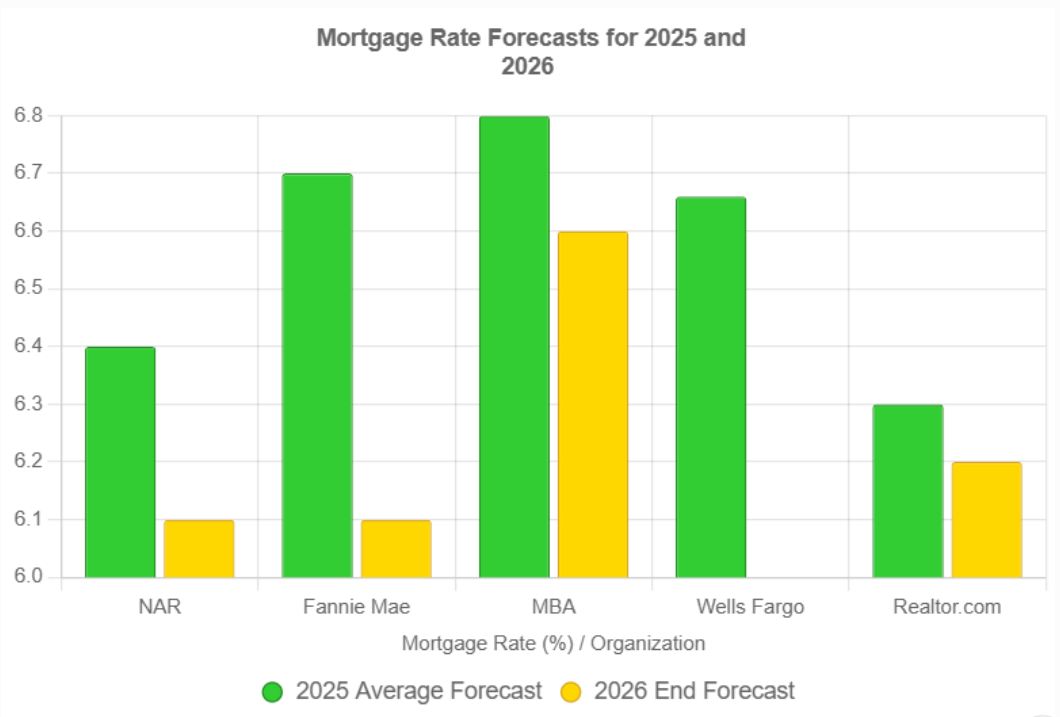
Filed Under: Financing, Mortgage Tagged With: Adjustable Rate Mortgage, Interest Rate, mortgage, Mortgage Rate Trends, mortgage rates

  • « Previous Page
  • 1
  • …
  • 8
  • 9
  • 10
  • 11
  • 12
  • Next Page »

Real Estate

  • Birmingham
  • Cape Coral
  • Charlotte
  • Chicago

Quick Links

  • Markets
  • Membership
  • Notes
  • Contact Us

Blog Posts

  • Mortgage Rates Today, March 12, 2026: 30-Year Refinance Rate Rises by 8 Basis Points
    March 12, 2026Marco Santarelli
  • Today’s Mortgage Rates, March 11: 30‑Year Fixed Dips Below 6%, Inflation Concerns Persist
    March 11, 2026Marco Santarelli
  • Mortgage Rates Drop Unlocking 5.5 Million More Households in 2026
    March 11, 2026Marco Santarelli

Contact

Norada Real Estate Investments 30251 Golden Lantern, Suite E-261 Laguna Niguel, CA 92677

(949) 218-6668
(800) 611-3060
BBB
  • Terms of Use
  • |
  • Privacy Policy
  • |
  • Testimonials
  • |
  • Suggestions?
  • |
  • Home

Copyright 2018 Norada Real Estate Investments

Loading...