Norada Real Estate Investments

  • Home
  • Markets
  • Properties
  • Membership
  • Podcast
  • Learn
  • About
  • Contact

Mortgage Rates Drop from 6.76% to 5.78% Over the Past Year

February 27, 2026 by Marco Santarelli

Mortgage Rates Drop from 6.76% to 5.78% Over the Past Year

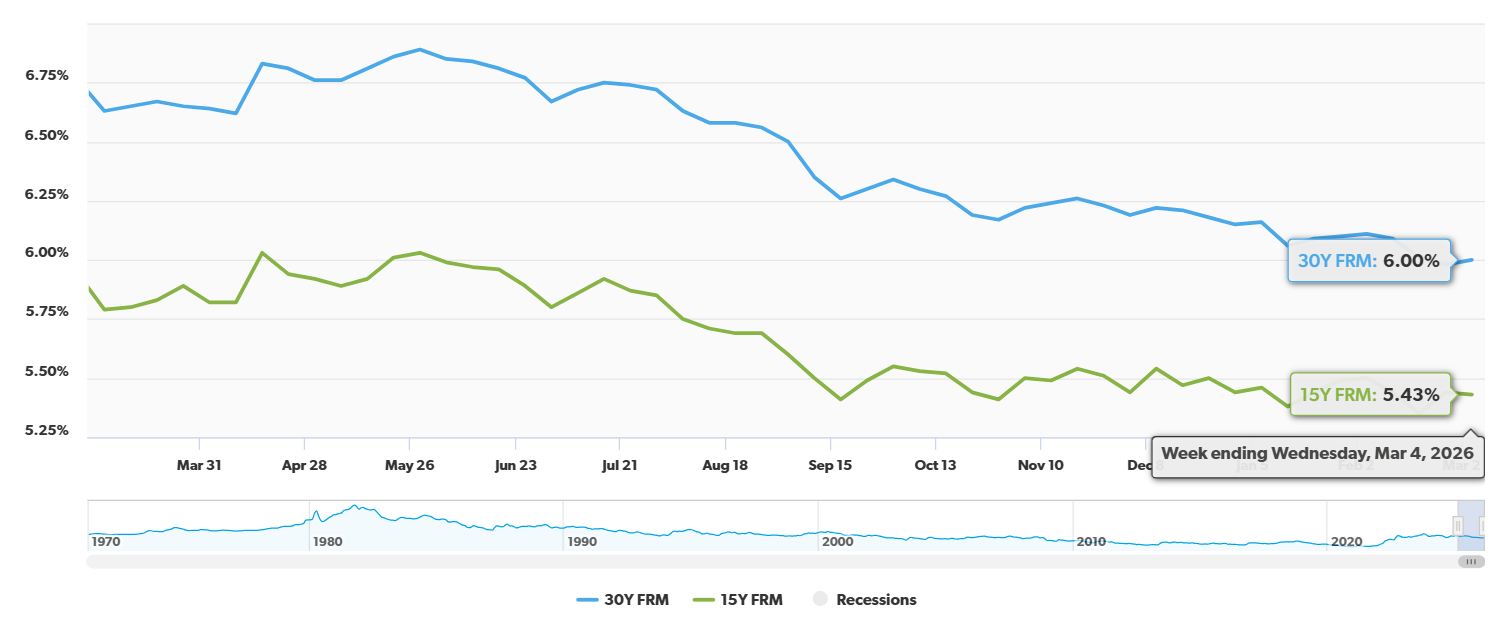
Mortgage rates have seen a significant drop over the past year. We've gone from an average of 6.76% to a much more palatable 5.78%, and for the first time in nearly four years, the benchmark 30-year fixed rate has dipped below 6%. This is a game-changer for the housing market, and I want to dive into what this really means for you.

Right now, the shift is decidedly in favor of buyers and homeowners looking to refinance. This isn't just a small blip; it's a sign that the market is responding to economic changes, and it could be your moment to make a move.

Mortgage Rates Fall from 6.76% to 5.78% Over the Past Year

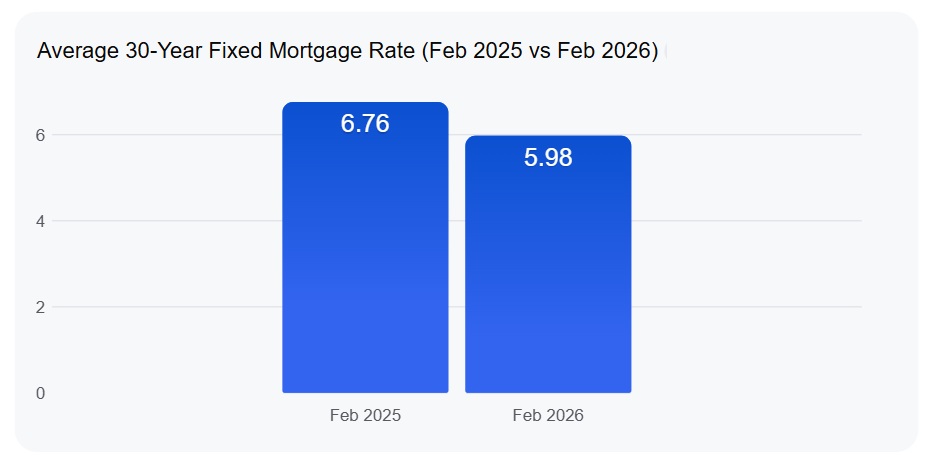
Average 30-Year Fixed Mortgage Rate (Feb 2025 vs Feb 2026)

A Breath of Fresh Air for the Housing Market

For a long time, those high mortgage rates acted like a freeze on the housing market. Buyers were priced out, sellers were hesitant to list because they’d have to buy again at a higher rate, and bidding wars, while still happening for desirable properties, definitely cooled from their frenzy. When mortgage rates are high, even a seemingly small difference in percentage points can translate into hundreds of dollars more on your monthly payment.

Think about this: For a typical $400,000 loan, that drop from an average of, say, 6.85% down to around 6% saves a homeowner approximately $220 per month in principal and interest payments. Over the life of a 30-year loan, that's thousands upon thousands of dollars back in your pocket. That's money that can go towards renovations, savings, or simply a better quality of life.

Why the Big Drop? Tracing the Trend

So, how did we get here? The most significant driver of this decline is the action taken by the Federal Reserve. In late 2025, they initiated a series of interest rate cuts, bringing the federal funds rate down. While the federal funds rate isn't directly the mortgage rate, it's a major influencing factor. When the Fed lowers its target rate, it signals a loosening of monetary policy, which tends to trickle down to other borrowing costs, including mortgages.

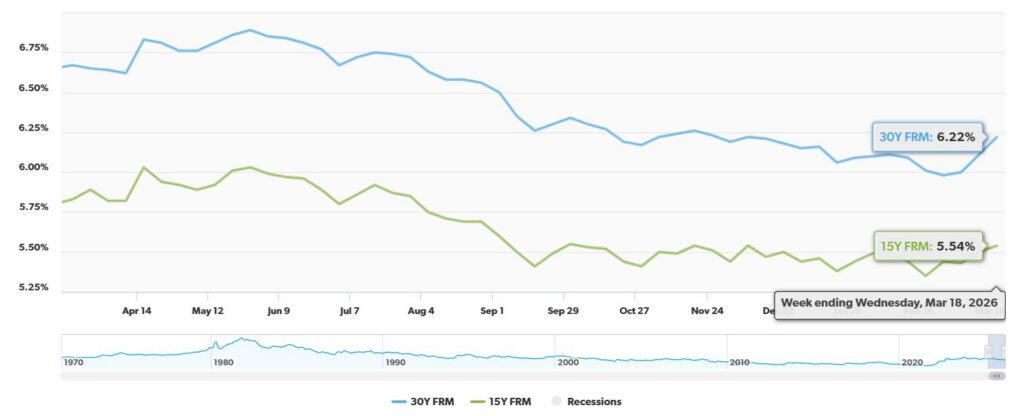
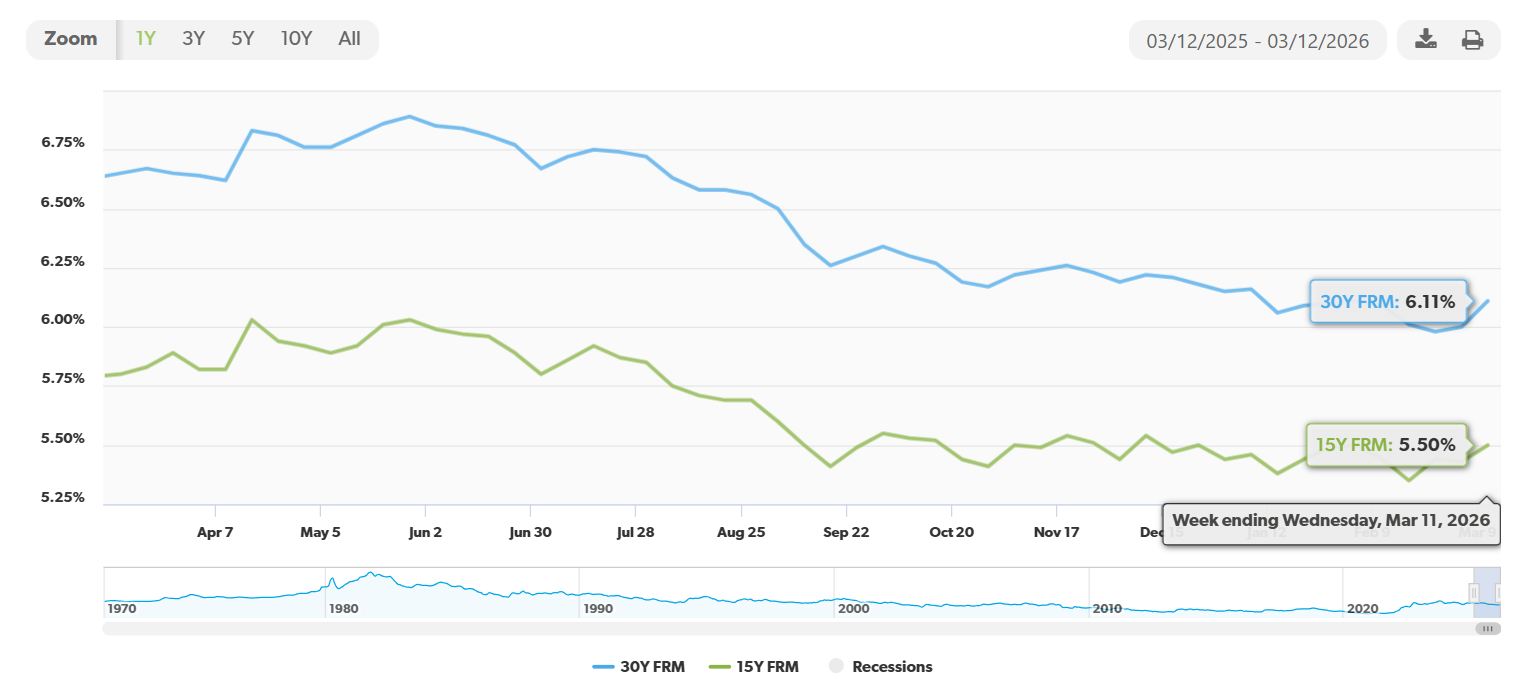
According to data from Freddie Mac, the average 30-year fixed mortgage rate has specifically fallen from 6.76% in February 2025 to 5.98% as of February 26, 2026. This is a substantial shift and marks a significant psychological victory for the market.

Here’s a snapshot of the current averages as of February 27, 2026, also reported by Freddie Mac:

  • 30-Year Conventional: 5.964%
  • 15-Year Conventional: 5.291%
  • 30-Year FHA: 5.881%
  • 30-Year VA: 5.638%

Each of these numbers is lower than they were a year ago, offering more inviting options for different types of homebuyers.

What's Driving Mortgage Rate Volatility in 2026?

While the overall trend is encouraging, the reality is that mortgage rates don’t move in a perfectly straight line. There are still factors that can cause them to sway, even in 2026. From my perspective as someone who keeps a close eye on the housing market, this year is particularly interesting because of a few key influences:

  • Federal Reserve Leadership Speculation: Heads up, as there's chatter about a potential leadership change at the Fed. Any uncertainty about who will be steering the ship and their approach to interest rates can create ripples in the mortgage market. Will a new leader prioritize keeping rates low, or continue a more cautious path? This speculation alone can make rates jump or dip.
  • The 10-Year Treasury Yield Spread: Mortgage rates are closely tied to the interest paid on 10-year U.S. Treasury bonds. However, the gap or spread between these two can widen or narrow. Things like investor confidence and even government directives on mortgage-backed securities can influence this spread, causing mortgage rates to move more independently from Treasury yields at times.
  • Mixed Signals from the Labor Market: The job market is crucial. While we've seen growth in some sectors, others are showing signs of slowing down. If employment numbers are stronger than expected, it might make the Fed pause on further rate cuts, leading to a quick spike in mortgage rates. Conversely, softer job reports can signal room for more rate reductions.
  • Inflation Watch: Everyone is watching inflation reports, like the Consumer Price Index (CPI). If inflation doesn't seem to be heading steadily towards the Fed's 2% target, it can signal to lenders and investors that rates might need to stay higher for longer. Any unexpected jump in inflation can immediately push mortgage rates up.
  • Global Events: Sometimes, events happening far away can have a direct impact on your mortgage rate. If there's global uncertainty, investors often flock to U.S. Treasury bonds as a safe bet. This increased demand can, paradoxically, drive down bond yields and, consequently, pull mortgage rates lower for a period.

Expert Forecasts for the Rest of 2026

So, where are we headed? The general consensus from major players like Fannie Mae and the Mortgage Bankers Association (MBA) is that rates are likely to stabilize or even decline slightly further through the remainder of 2026. Many experts are predicting an average rate hovering around 6.0% to 6.1%.

Here's a look at some expert projections:

Source Projected Rate Range Key Assumption
Fannie Mae ~5.9% Stable labor market; inflation near 2%
Morgan Stanley 5.5% – 5.75% Possible mid-year dip due to economic softening
Mortgage Bankers Association ~6.4% Continued but very gradual inflation moderation
Redfin ~6.3% Moderate labor market weakness without a recession

While there are slight variations, the overarching theme is one of relative stability with potential for further modest decreases, rather than a sharp upward trend.

Is Now the Time to Buy or Refinance?

For many, this period of lower mortgage rates presents a fantastic opportunity.

  • For Buyers: You can potentially afford a larger loan amount than you could a year ago, which might mean a nicer home, a better location, or simply more breathing room in your monthly budget. The key is to get pre-approved and understand exactly what you can afford.
  • For Refinancers: If you have an existing mortgage with a rate significantly higher than current offerings, refinancing could save you substantial money over time. It’s worth exploring whether the costs of refinancing outweigh the monthly savings.

🏡 Two Investment Opportunities With Cash Flow

Bessemer, AL
🏠 Property: Blue Jay Cir
🛏️ Beds/Baths: 4 Bed • 2 Bath • 1610 sqft
💰 Price: $282,000 | Rent: $1,885
📊 Cap Rate: 6.4% | NOI: $1,500
📅 Year Built: 2023
📐 Price/Sq Ft: $176
🏙️ Neighborhood: A-

And

Lebanon, TN
🏠 Property: Baltusrol Lane #852
🛏️ Beds/Baths: 4 Bed • 2.5 Bath • 2011 sqft
💰 Price: $369,990 | Rent: $2,400
📊 Cap Rate: 5.8% | NOI: $1,789
📅 Year Built: 2024
📐 Price/Sq Ft: $184
🏙️ Neighborhood: B

Alabama’s newer A- rental vs Tennessee’s larger property with higher NOI. Which fits YOUR investment strategy?

We have much more inventory available than what you see on our website – Let us know about your requirement.

📈 Choose Your Winner & Contact Us Today!

Speak to a Norada Investment Counselor (No Obligation):

(800) 611-3060

View All Properties

Build Passive Income & Wealth with Turnkey Rentals

Mortgage rates remain high in 2026, but rental properties continue to deliver strong cash flow and appreciation. Savvy investors know that turnkey real estate is the path to passive income and long‑term wealth.

Norada Real Estate helps you secure turnkey rental properties designed for immediate cash flow and appreciation—so you can invest smartly regardless of interest rate trends.

🔥 HOT INVESTMENT Properties JUST ADDED! 🔥
Request a Callback / Fill Out the Form Online

Contact Us

Also Read:

  • Will Mortgage Rates Drop to 5% in 2026: Expert Forecast
  • How to Get a 3% Mortgage Rate in 2026 With Assumable Mortgages?
  • How to Get a 4% Interest Rate on a Mortgage in 2026?
  • What Leading Housing Experts Predict for Mortgage Rates in 2026
  • Mortgage Rate Predictions for 2026: What Leading Forecasters Expect
  • Mortgage Rate Predictions for the Next 3 Years: 2026, 2027, 2028
  • 30-Year Fixed Mortgage Rate Forecast for the Next 5 Years
  • 15-Year Fixed Mortgage Rate Predictions for Next 5 Years: 2025-2029
  • Will Mortgage Rates Ever Be 3% Again in the Future?
  • Mortgage Rates Predictions for Next 2 Years
  • Mortgage Rate Predictions for Next 5 Years
  • Mortgage Rate Predictions: Why 2% and 3% Rates are Out of Reach
  • How Lower Mortgage Rates Can Save You Thousands?
  • How to Get a Low Mortgage Interest Rate?
  • Will Mortgage Rates Ever Be 4% Again?
Filed Under: Financing, Mortgage Tagged With: 30-Year Fixed Mortgage Rate, mortgage, mortgage rates

30-Year Fixed Mortgage Rate Drops Below 6% for First Time in 3.5 Years

February 26, 2026 by Marco Santarelli

30-Year Fixed Mortgage Rate Drops Below 6% for First Time in 3.5 Years

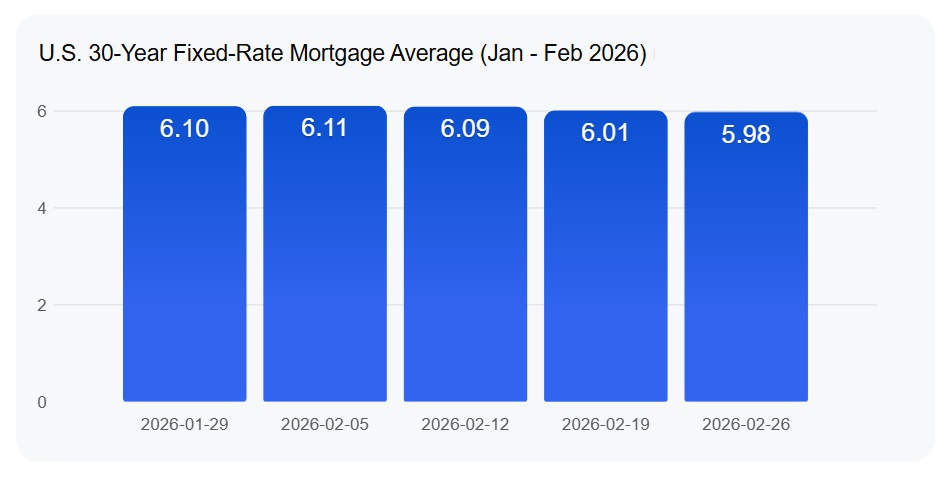
Exciting news for anyone dreaming of homeownership! For the first time in about three and a half years, the average rate for a 30-year fixed-rate mortgage has dipped below the crucial 6% mark, landing at a solid 5.98% as of February 26, 2026, according to the latest report from Freddie Mac. This is more than just a number; it's a significant shift that’s poised to make a real difference for buyers as we head into the busy spring homebuying season.

Crossing this 6% threshold feels like a major turning point. It’s not only about the immediate financial savings but also about the psychological impact this brings to a market that’s felt a bit stagnant for many. It’s a welcome development that offers a much-needed boost in affordability and could very well unlock some pent-up demand.

30-Year Fixed Mortgage Rate Drops Below 6% for First Time in 3.5 Years

What Does This “5-Handle” Really Mean for You?

You might be wondering why this particular rate drop is such a big deal. Well, think of it like this: for a long time, “6%” has been a sort of mental barrier for many potential homeowners and even for those thinking about selling and buying again. Seeing that number start with a “5” instead of a “6” has a powerful effect. It’s something many economists have pointed out – round numbers just carry more weight in people’s minds.

This dip below 6% is significant for a couple of key reasons:

  • Increased Purchasing Power: Suddenly, your budget stretches further. That means you might be able to afford a slightly more expensive home, or you can aim for a home that was previously just out of reach.
  • The “Lock-in Effect” Loosens: We’ve been hearing a lot about the “lock-in effect.” Homeowners who secured super-low rates during the pandemic (think 3%) were understandably hesitant to sell and then buy at much higher rates. This drop below 6% starts to narrow that gap. It might make more homeowners feel comfortable enough to list their homes, which is fantastic news because a bigger selection of homes generally leads to a healthier market for everyone.
  • Spring Buying Season Kick-off: Timing is everything, right? This rate drop comes just as we’re heading into spring, traditionally the busiest time for real estate. This could create a perfect storm, potentially making 2026 a very active year for home sales.

Crunching the Numbers: Real Savings This Year

U.S. 30-Year Fixed-Rate Mortgage Average (Jan - Feb 2026)

Let’s get down to the nitty-gritty. This isn't just theoretical; it translates into real money in your pocket. To give you a clearer picture, I’ve put together a comparison of how things stand now versus last year, using the Freddie Mac data.

Mortgage Rate Comparison: 30-Year Fixed-Rate Mortgage

Metric February 26, 2026 Last Week (Feb 2026) One Year Ago (Feb 2025)
Average Rate 5.98% 6.01% 6.76%
Weekly Change -0.03% -. -.
Yearly Change -0.78% -. -.
52-Week Average 6.46% -. -.
52-Week Range 5.98% – 6.89% -. -.

As you can see, the drop from last year is quite substantial – a full 0.78%. Now, let's translate that into actual savings. Consider a homebuyer looking to purchase a home with a mortgage of, say, $400,000.

  • At last year's average rate of 6.76%: Your estimated monthly payment (principal and interest) would be around $2,603.
  • At today's rate of 5.98%: Your estimated monthly payment (principal and interest) is around $2,393.

That’s a monthly savings of $210! Over the life of a 30-year mortgage, that’s nearly $75,600 back in your pocket. That’s a significant amount of money that could go towards renovations, savings, or simply improving your quality of life.

Even compared to just last week, where rates were at 6.01%, you're saving about $20 per month on that $400,000 loan. It might not sound like much, but every bit counts, especially in today's market.

A Deeper Dive: The 15-Year Fixed-Rate Mortgage

It’s not just the popular 30-year fixed-rate that’s showing movement. The 15-year fixed-rate mortgage has also seen some shifts, though it's currently above 5.5%.

Mortgage Rate Comparison: 15-Year Fixed-Rate Mortgage

Metric February 26, 2026 Last Week (Feb 2026) One Year Ago (Feb 2025)
Average Rate 5.44% 5.35% 5.94%
Weekly Change +0.09% -. -.
Yearly Change -0.50% -. -.
52-Week Average 5.67% -. -.
52-Week Range 5.35% – 6.03% -. -.

While the 15-year rate actually ticked up slightly from last week, it's still considerably lower than a year ago, down by 0.50%. Homebuyers who opt for a 15-year mortgage typically build equity faster and pay less interest overall, though their monthly payments are higher.

For a $400,000 loan at a 15-year term:

  • At last year's rate of 5.94%: The monthly payment would be approximately $3,131.
  • At today's rate of 5.44%: The monthly payment would be approximately $2,918.

That's a monthly savings of about $213, or over $38,000 in interest over the life of the loan. In my experience, borrowers who can manage the higher monthly payments of a 15-year mortgage often see significant long-term financial benefits.

Who Benefits Most from This Market Shift?

The impact of these lower rates isn't felt equally by everyone. Here’s who stands to gain the most:

  • First-Time Homebuyers: This is huge for those who have been renting and saving. The increased purchasing power means more affordable starter homes or condos might now be within reach. Freddie Mac data suggests a one-percentage-point drop in rates could help approximately 1.6 million renters qualify for a mortgage. Imagine transitioning from paying rent to building equity in your own home!
  • Buyers Priced Out Previously: For people who have been monitoring the market but found themselves just shy of affording their desired home, this could be their window of opportunity. Simply put, lower rates qualify more households for mortgages – potentially 5.5 million more households nationally.
  • Homeowners Looking to Refinance: If you purchased a home in the last year or two at a higher rate (say, 7% or more), it might finally be time to explore refinancing. Lower rates can lead to significant savings on your monthly payments, freeing up cash flow. I've seen refinance activity surge as a result of these rate movements.
  • Sellers (Indirectly): As I mentioned earlier, when rates drop, the “lock-in effect” for existing homeowners starts to weaken. This could encourage more people to list their homes, increasing inventory. More homes for sale is generally a good thing for market balance and can help stabilize prices, even as demand rises.

Looking Beyond the Numbers: Broader Economic Context

It's important to understand that this isn't happening in a vacuum. These falling mortgage rates are influenced by larger economic trends. The Federal Reserve’s decision to implement three rate cuts in late 2025 has certainly played a role in cooling borrowing costs. Additionally, government initiatives, like a recent presidential directive for Fannie Mae and Freddie Mac to purchase more mortgage-backed securities, are designed specifically to lower borrowing costs for consumers.

These actions by policymakers show a clear intent to stimulate the housing market and make homeownership more accessible. It's a sign that the economic winds are shifting in favor of buyers.

My Take: A Good Time to Explore Your Options

As someone who has navigated the complexities of the housing market for a while, I see this drop below 6% as a genuinely positive development. It injects a much-needed dose of affordability and optimism into the real estate world.

While it’s tempting to jump straight into bidding wars, my advice is always to be prepared. Get pre-approved for a mortgage so you know exactly what you can comfortably afford. Work with a trusted real estate agent who understands your local market and can help you find the best opportunities. And remember, while rates are favorable now, they can move. Locking in a rate that works for you is a crucial step.

The spring buying season is shaping up to be an exciting one. If you've been on the fence about buying a home, or considering a refinance, now is definitely the time to explore your options. The “5-handle” on mortgage rates is a significant milestone, and it could be your key to unlocking the home of your dreams.

🏡 Two Investment Opportunities With Cash Flow

Bessemer, AL
🏠 Property: Blue Jay Cir
🛏️ Beds/Baths: 4 Bed • 2 Bath • 1610 sqft
💰 Price: $282,000 | Rent: $1,885
📊 Cap Rate: 6.4% | NOI: $1,500
📅 Year Built: 2023
📐 Price/Sq Ft: $176
🏙️ Neighborhood: A-

And

Lebanon, TN
🏠 Property: Baltusrol Lane #852
🛏️ Beds/Baths: 4 Bed • 2.5 Bath • 2011 sqft
💰 Price: $369,990 | Rent: $2,400
📊 Cap Rate: 5.8% | NOI: $1,789
📅 Year Built: 2024
📐 Price/Sq Ft: $184
🏙️ Neighborhood: B

Alabama’s newer A- rental vs Tennessee’s larger property with higher NOI. Which fits YOUR investment strategy?

We have much more inventory available than what you see on our website – Let us know about your requirement.

📈 Choose Your Winner & Contact Us Today!

Speak to a Norada Investment Counselor (No Obligation):

(800) 611-3060

View All Properties

Build Passive Income & Wealth with Turnkey Rentals

Mortgage rates remain high in 2026, but rental properties continue to deliver strong cash flow and appreciation. Savvy investors know that turnkey real estate is the path to passive income and long‑term wealth.

Norada Real Estate helps you secure turnkey rental properties designed for immediate cash flow and appreciation—so you can invest smartly regardless of interest rate trends.

🔥 HOT INVESTMENT Properties JUST ADDED! 🔥
Request a Callback / Fill Out the Form Online

Contact Us

Also Read:

  • Will Mortgage Rates Drop to 5% in 2026: Expert Forecast
  • How to Get a 3% Mortgage Rate in 2026 With Assumable Mortgages?
  • How to Get a 4% Interest Rate on a Mortgage in 2026?
  • What Leading Housing Experts Predict for Mortgage Rates in 2026
  • Mortgage Rate Predictions for 2026: What Leading Forecasters Expect
  • Mortgage Rate Predictions for the Next 3 Years: 2026, 2027, 2028
  • 30-Year Fixed Mortgage Rate Forecast for the Next 5 Years
  • 15-Year Fixed Mortgage Rate Predictions for Next 5 Years: 2025-2029
  • Will Mortgage Rates Ever Be 3% Again in the Future?
  • Mortgage Rates Predictions for Next 2 Years
  • Mortgage Rate Predictions for Next 5 Years
  • Mortgage Rate Predictions: Why 2% and 3% Rates are Out of Reach
  • How Lower Mortgage Rates Can Save You Thousands?
  • How to Get a Low Mortgage Interest Rate?
  • Will Mortgage Rates Ever Be 4% Again?

Filed Under: Financing, Mortgage Tagged With: 30-Year Fixed Mortgage Rate, mortgage, mortgage rates

30-Year Fixed Mortgage Rate Falls to 6.3% in the US

October 10, 2025 by Marco Santarelli

30-Year Fixed Mortgage Rate Falls to 6.3% in the US

Great news, everyone! If you've been dreaming of homeownership or considering a refinance, you'll be happy to hear that the 30-year fixed mortgage rate has fallen to 6.3% in the US. This is a significant drop and, frankly, a much-needed breath of fresh air for many looking to make a move in the housing market. We're seeing mortgage rates settle at their lowest point in about a year, and it seems like homebuyers are finally starting to take notice and feel a bit more confident about diving back into the market. This positive shift is already showing up in increased purchase activity.

30-Year Fixed Mortgage Rate Falls to 6.3% in the US, Bringing Hope to Homebuyers

What This Drop Means for Homebuyers

Let's break down what this 6.3% rate actually means for you, especially if you're in the market for a new home. Think of it this way: a lower interest rate directly translates to a lower monthly payment. It might not sound like a huge difference at first glance, but over the lifetime of a mortgage, those savings can add up to tens of thousands of dollars.

Let's do a quick, simplified example. Imagine a $300,000 mortgage.

  • At a 7% interest rate, your monthly principal and interest payment would be roughly $1,996.
  • At the new 6.3% rate, that payment drops to about $1,848.

That's a difference of nearly $148 per month. Over 30 years, that's over $53,000 saved! That kind of money can make a big difference, whether it means you can afford a slightly larger home, have more breathing room in your budget for other life expenses, or even have extra cash to put towards home improvements or savings.

For first-time homebuyers, this drop is particularly encouraging. The initial sticker shock of buying a home can be daunting, and every bit of affordability improvement helps. This lower rate can make that first step onto the property ladder feel a lot more achievable. It's about making the dream of owning a home feel less like a distant fantasy and more like a tangible reality.

Is Now the Right Time to Lock In a Mortgage?

This is the million-dollar question, isn't it? With rates at their lowest in a year, the natural instinct is to jump on it. And honestly, for many people, I believe now is a really good time to consider locking in a mortgage.

Here's my take: nobody has a crystal ball that can perfectly predict where interest rates will go. While they've been heading down, there's always a possibility they could tick back up. Freddie Mac's Primary Mortgage Market Survey® is a key indicator, and its latest report shows a decline.

Let's look at the recent numbers from our trustworthy source, Freddie Mac:

Mortgage Type Current Avg. Rate 1-Week Change 1-Year Change 52-Week Avg. 52-Week Range
30-Year Fixed 6.3% -0.04% -0.02% 6.3% 6.26% – 7.04%
15-Year Fixed 5.53% -0.02% +0.12% 5.5% 5.41% – 6.27%

See how the 30-year fixed rate is at 6.3%, which is right in the middle of its 52-week range? This suggests stability, but also room for potential fluctuations. My personal experience in this market tells me that securing a rate you're comfortable with, especially one that looks favorable compared to recent history (like the 52-week average of 6.71%), is often a wise move.

Here are some things to think about:

  • Rate Locks: Most lenders offer a rate lock, which guarantees you a specific interest rate for a set period (usually 30 to 60 days) while you finalize your purchase or refinance. This protects you if rates go up before your closing.
  • Refinancing Opportunities: If you currently have a mortgage with a rate significantly higher than 6.3%, now might be the perfect opportunity to refinance and lower your monthly payments. Even a small reduction can lead to substantial long-term savings.
  • Market Volatility: Economic news and Federal Reserve actions can cause rates to move. While currently trending down, a sudden shift in the economic outlook could cause them to rise again. Acting sooner rather than later can help you capitalize on the current favorable conditions.

Understanding the Forces at Play

Why are rates dropping? It's usually a combination of factors, but primarily driven by inflation and the Federal Reserve's monetary policy. When inflation is cooling down, the Fed might signal or implement policies that make borrowing money cheaper. Mortgage rates tend to follow these broader economic trends.

  • Inflation: When inflation is high, the cost of goods and services goes up, and the purchasing power of money goes down. Lenders factor this into interest rates. As inflation shows signs of cooling, lenders can afford to offer lower rates.
  • Federal Reserve: The Fed influences interest rates through its policy decisions, like adjusting the federal funds rate. While mortgage rates aren't directly set by the Fed, they are heavily influenced by its actions and statements about the economy.
  • Economic Health: A strong economy can sometimes lead to higher rates as demand for loans increases, while a weaker economy might see rates fall to encourage borrowing.

The fact that we're seeing a sustained period of lower rates, as indicated by Freddie Mac's survey, suggests that these underlying economic forces are currently in a place that favors borrowers. It's a delicate balance, and as an observer of this market, I find these trends are worth paying close attention to.


Related Topics:

Mortgage Rates Predictions Next 60 Days: October to November 2025

Mortgage Rates Predictions for the Next 12 Months: Oct 2025 to Oct 2026

Mortgage Rates Predictions for Next 6 Months: October 2025-March 2026

Mortgage Rates Predictions for Next 90 Days: October to December 2025

What About the 15-Year Fixed Rate?

While the headline grabbed us with the 30-year fixed mortgage rate at 6.3%, it's always good to look at other options. The 15-year fixed mortgage rate is also looking attractive at 5.53%.

Here's a quick comparison:

  • 15-Year Fixed: Typically comes with a lower interest rate than a 30-year fixed. You'll pay off your home faster and save a significant amount on interest over the life of the loan. However, your monthly payments will be higher.
  • 30-Year Fixed: Offers more flexibility with lower monthly payments, making it more affordable on a month-to-month basis. This gives you more breathing room in your budget.

Choosing between a 15-year and a 30-year mortgage often comes down to your financial goals and current budget. If you can comfortably afford the higher monthly payments of a 15-year mortgage, you'll build equity faster and save a lot on interest. If you need that lower monthly payment for affordability, the 6.3% 30-year fixed rate is an excellent option and a significant improvement from where rates have been.

In conclusion, this drop to 6.3% for the 30-year fixed mortgage rate is a welcome development. It's making homeownership more accessible and providing a valuable opportunity for those looking to refinance. Keep an eye on this trend, and if you’re considering a move, now is definitely the time to explore your options and talk to a lender.

Capitalize Amid Rising Mortgage Rates

With mortgage rates expected to remain high in 2025, it’s more important than ever to focus on strategic real estate investments that offer stability and passive income.

Norada delivers turnkey rental properties in resilient markets—helping you build steady cash flow and protect your wealth from borrowing cost volatility.

HOT NEW LISTINGS JUST ADDED!

Speak with a seasoned Norada investment counselor today (No Obligation):

(800) 611‑3060

Get Started Now

Also Read:

  • Will Mortgage Rates Go Down in 2025: Morgan Stanley's Forecast
  • Mortgage Rate Predictions 2025 from 4 Leading Housing Experts
  • Mortgage Rate Predictions for the Next 3 Years: 2026, 2027, 2028
  • 30-Year Fixed Mortgage Rate Forecast for the Next 5 Years
  • 15-Year Fixed Mortgage Rate Predictions for Next 5 Years: 2025-2029
  • Will Mortgage Rates Ever Be 3% Again in the Future?
  • Mortgage Rates Predictions for Next 2 Years
  • Mortgage Rate Predictions for Next 5 Years
  • Mortgage Rate Predictions: Why 2% and 3% Rates are Out of Reach
  • How Lower Mortgage Rates Can Save You Thousands?
  • How to Get a Low Mortgage Interest Rate?
  • Will Mortgage Rates Ever Be 4% Again?

Filed Under: Financing, Mortgage Tagged With: 30-Year Fixed Mortgage Rate, Interest Rate, mortgage, Mortgage Rate Trends, mortgage rates

30-Year Fixed Mortgage Rate Forecast for the Next 5 Years

July 25, 2025 by Marco Santarelli

30-Year Fixed Mortgage Rate Forecast for the Next 5 Years

Buying a home already feels overwhelming without mortgage rates throwing curveballs. If you’re eyeing a new place or thinking about refinancing, you’re probably asking, “What’s next?” The 30-year rate forecast for the next 5 years? Think of it as a bit of a rollercoaster: experts guess we might hover around 6.2% next year, dip to ~4.7% by late 2027, then climb back toward 6% by 2029.

These numbers aren’t just abstract figures—they’re about whether that starter home feels doable, or if upgrading makes sense. Let’s unpack what this means for your wallet and how to plan.

30-Year Fixed Mortgage Rate Forecast for the Next 5 Years

To get a clearer picture, let's look at the specific projections from sources like longforecast.com. These numbers give us a roadmap, though remember, they are forecasts, not guarantees. The economy is a complex beast, and many things can influence these predictions.

Key Takeaways:

  • Peak Soon? Rates seem to be highest at the start of this forecast period, possibly peaking around the 6.20% mark by the end of 2025.
  • The Dip: The most significant drop appears to happen between the end of 2026 and the end of 2027, potentially reaching lows near 4.7%. This is the “sweet spot” I mentioned. For anyone actively house hunting or planning to buy, keeping an eye on this window is critical.
  • The Rebound: After hitting that low point in 2027, the forecast suggests rates will start climbing again, reaching almost 6% by mid-2029. This indicates that while there might be a buying opportunity, waiting too long could mean facing higher costs again.

30-Year Mortgage Rate Forecast: Projected rates for 2025-2029

Projected 30-Year Mortgage Rate for 2025-2029 based on economic analysis

Breaking Down the 30-Year Mortgage Rate Forecast from 2025 to 2029

Here's a breakdown of the projected 30-year mortgage rates over the next five years, based on projections from the Economy Forecast Agency (EFA). Keep in mind that these are just forecasts, and actual rates may vary.

2025:

  • The remainder of 2025 is expected to see a gradual decline in mortgage rates.
  • July 2025: Forecasted close at 6.49%
  • December 2025: Forecasted close at 6.20%

2026:

  • The first half of 2026 sees a continuation of the downward trend.
  • June 2026: Rates are expected to dip below 6%, closing at 5.83%.
  • The latter half of 2026 shows a slight uptick.
  • December 2026: Rates are forecasted to close at 5.86%.

2027:

  • 2027 is projected to be a year of significant rate drops.
  • Rates are forecasted to fall below 5% by October.
  • December 2027: Rates are expected to close at 4.69%.

2028:

  • The first half of 2028 continues the downward momentum, with rates bottoming out mid-year.
  • June 2028: Rates are forecasted to reach a low of 3.68%.
  • The second half of 2028 shows a notable rebound.
  • December 2028: Rates are expected to close at 5.38%.

2029:

  • 2029 sees a continuation of the upward trend that started in late 2028.
  • Rates are forecasted to climb back up.
  • June 2029: Rates are expected to close at 5.96%.

To summarize, here's a table that presents the year-end forecasts:

Year Projected 30-Year Mortgage Rate (Year-End)
2025 6.20%
2026 5.86%
2027 4.69%
2028 5.38%
2029 5.96%

Factors That Could Change the Forecast

As I mentioned before, these are just predictions! Plenty of things can throw a wrench in the works. Here are some key factors to keep an eye on:

Unexpected Inflation Spikes: If inflation suddenly surges again, the Fed might have to raise rates more aggressively, sending mortgage rates higher. The current inflation rate is 2.4% for the 12 months ending in May 2025. This rate, based on the Consumer Price Index (CPI), represents a slight increase from the 2.3% rate reported in April 2025.

Geopolitical Instability: Don't forget that what happens globally can ripple back home. Trade tensions, wars, or major economic shifts in other large economies can affect investor confidence, currency values, and ultimately, U.S. interest rates. For instance, global instability might make investors seek the perceived safety of U.S. Treasury bonds, pushing yields down and potentially lowering mortgage rates. Conversely, global supply chain disruptions could worsen inflation here, pushing rates up. These international events add another layer of unpredictability, something Business Insider often covers in its economic analysis.

Changes in Fed Policy: The Fed's decisions about interest rates are crucial. Any unexpected shifts in their policy could significantly alter the forecast. The forecast suggests the Fed might be cautious initially, holding off on rate cuts due to lingering inflation worries. This cautious stance is a big reason why rates are projected to stay relatively high in 2025 and 2026. However, as inflation potentially cools (more on that below), the Fed might start cutting rates. I always watch the Fed’s statements and meeting minutes very closely; they often give clues about their next moves.

Economic Slowdown: If the economy slows down more than expected, the Fed might cut rates to stimulate growth, potentially lowering mortgage rates. The US economy, as measured by Gross Domestic Product (GDP), experienced a contraction of 0.5% in the first quarter of 2025 (January, February, and March) compared to the previous quarter. This marks the first quarterly contraction in three years. Nonfarm payroll employment increased by 147,000 in June, surpassing economists' expectations and remaining in line with the 12-month average. The unemployment rate fell to 4.1%, down from 4.2% in May and reaching its lowest point since February.

Housing Market Dynamics: Changes in housing supply and demand can also influence mortgage rates. For example, a surge in housing construction could put downward pressure on rates.

Bond Yields: The Market's Whisper: This is a technical point, but super important. Mortgage rates, particularly the 30-year fixed, are heavily influenced by the yields on long-term bonds, especially the 10-year Treasury note. Mortgage lenders often bundle mortgages into securities and sell them to investors. These investors want a certain return, and that return is linked to what they can get from safer investments like Treasury bonds.

When demand for Treasury bonds goes up, their prices rise, and their yields (the interest rate they pay) tend to fall. When yields fall, mortgage lenders can offer lower rates. Conversely, if investors get nervous about the economy or inflation, they might sell bonds, pushing yields up, forcing mortgage rates higher. Keep an eye on the 10-year yield; it’s often a leading indicator for mortgage rates. Freddie Mac and other financial institutions frequently highlight this connection.

Implications for You, the Homebuyer

Okay, we have the numbers and the reasons behind them. Now, what does this 30-Year Mortgage Rate Forecast for the Next 5 Years mean for your home-buying plans?

The Opportunities: Timing Your Purchase

  • The 2027 Window: As highlighted, the forecast suggests a potential dip in rates around 2027, possibly falling below 5%. This could be a fantastic time to buy. Lower rates mean lower monthly payments. Let's do a quick example:
    • On a $400,000 loan:
      • At 7% interest, your principal and interest payment is ~$2,661/month.
      • At 5% interest, that payment drops to ~$2,147/month.
    • That’s a difference of over $500 per month! Over 30 years, that’s significant savings ($180,000+). Waiting until 2027 might make a huge difference in what you can afford or simply save you a fortune.
  • Refinancing Power: If you bought a home in the last couple of years when rates were higher (say, 7% or 8%), and you can refinance when rates hit that projected 2027 low, you could potentially lower your monthly payment or switch from an adjustable-rate mortgage (ARM) to a fixed-rate loan, giving you long-term payment stability.

The Challenges: The Near-Term Hurdles

  • 2025-2026 Affordability: With rates predicted to be in the 5.8% to 6.2% range, buying might still feel expensive, especially if home prices don't cool down significantly. High prices combined with these rates can make affordability a real struggle. Many buyers might feel priced out or forced to make compromises on location or home size.
  • The Waiting Game Risk: While waiting for that 2027 low seems appealing, it’s not without risk.
    • Home Prices: What if home prices continue to rise faster than rates fall? You might save on the mortgage rate but pay significantly more for the house itself, potentially canceling out the savings.
    • Economic Shocks: Unexpected economic events could change the forecast entirely. A sudden recession might push rates down faster but could also lead to job instability for buyers. Conversely, a stronger-than-expected economy could keep rates higher for longer.
    • Personal Circumstances: Life happens! Your personal situation (job change, family growth) might necessitate buying sooner rather than later, regardless of the rate forecast.

Final Thoughts: 

Let’s cut to the chase—these next five years? It’s a bit of a rollercoaster ride. Rates might hit their peak soon, then dip enough by 2027 to make house hunting feel less stressful… before edging up again. Why? Blame (or thank) the usual suspects: inflation throwing tantrums, job growth doing its thing, and the Fed playing musical chairs with interest rates.

What does this mean for you? If you’re dreaming of buying a home, think of it like catching waves. Lower rates later sound great for your wallet, but don’t get stuck waiting for “perfect” conditions. Pulling the trigger when you find the right home and rate combo usually beats playing the guessing game. Stay sharp, lean on folks you trust (like your mortgage pro), and remember: homeownership’s not a race against the market—it’s about making moves that work for your life.

“Invest in Rental Income Properties”

With today's mortgage rates on the rise, investing in turnkey real estate can help you secure consistent returns.

Expand your portfolio confidently, even in a shifting interest rate environment.

Speak with our expert investment counselors (No Obligation):

(800) 611-3060

Get Started Now 

Recommended Read:

  • 15-Year Mortgage Rate Forecast for the Next 5 Years
  • Fed Funds Rate Forecast 2025-2026: What to Expect?
  • Will Mortgage Rates Go Down in 2025: Morgan Stanley's Forecast
  • Mortgage Rate Predictions 2025 from 4 Leading Housing Experts
  • Mortgage Rates Forecast for the Next 3 Years: 2025 to 2027
  • Will Mortgage Rates Ever Be 3% Again in the Future?
  • Mortgage Rate Predictions for Next 5 Years
  • Mortgage Rate Predictions: Why 2% and 3% Rates are Out of Reach
  • How Lower Mortgage Rates Can Save You Thousands?
  • How to Get a Low Mortgage Interest Rate?
  • Will Mortgage Rates Ever Be 4% Again?
Filed Under: Financing, Mortgage Tagged With: 30-Year Fixed Mortgage Rate, interest rates, Mortgage Rate Forecast, Mortgage Rate Predictions

  • « Previous Page
  • 1
  • 2
  • 3
  • 4

Real Estate

  • Birmingham
  • Cape Coral
  • Charlotte
  • Chicago

Quick Links

  • Markets
  • Membership
  • Notes
  • Contact Us

Blog Posts

  • Best Cities to Invest in Real Estate in 2026
    July 8, 2026Marco Santarelli
  • Today’s Mortgage Rates, July 8: Buyers See Modest Decline in Rates But No Major Shift
    July 8, 2026Marco Santarelli
  • Mortgage Rates Today, July 8, 2026: 30‑Year Refinance Rate Drops by 2 Basis Points
    July 8, 2026Marco Santarelli

Contact

Norada Real Estate Investments 30251 Golden Lantern, Suite E-261 Laguna Niguel, CA 92677

(949) 218-6668
(800) 611-3060
BBB
  • Terms of Use
  • |
  • Privacy Policy
  • |
  • Testimonials
  • |
  • Suggestions?
  • |
  • Home

Copyright 2018 Norada Real Estate Investments

Loading...