Norada Real Estate Investments

  • Home
  • Markets
  • Properties
  • Membership
  • Podcast
  • Learn
  • About
  • Contact

30-Year Mortgage Rate Predictions for 2026

May 22, 2026 by Marco Santarelli

30-Year Mortgage Rate Predictions for 2026

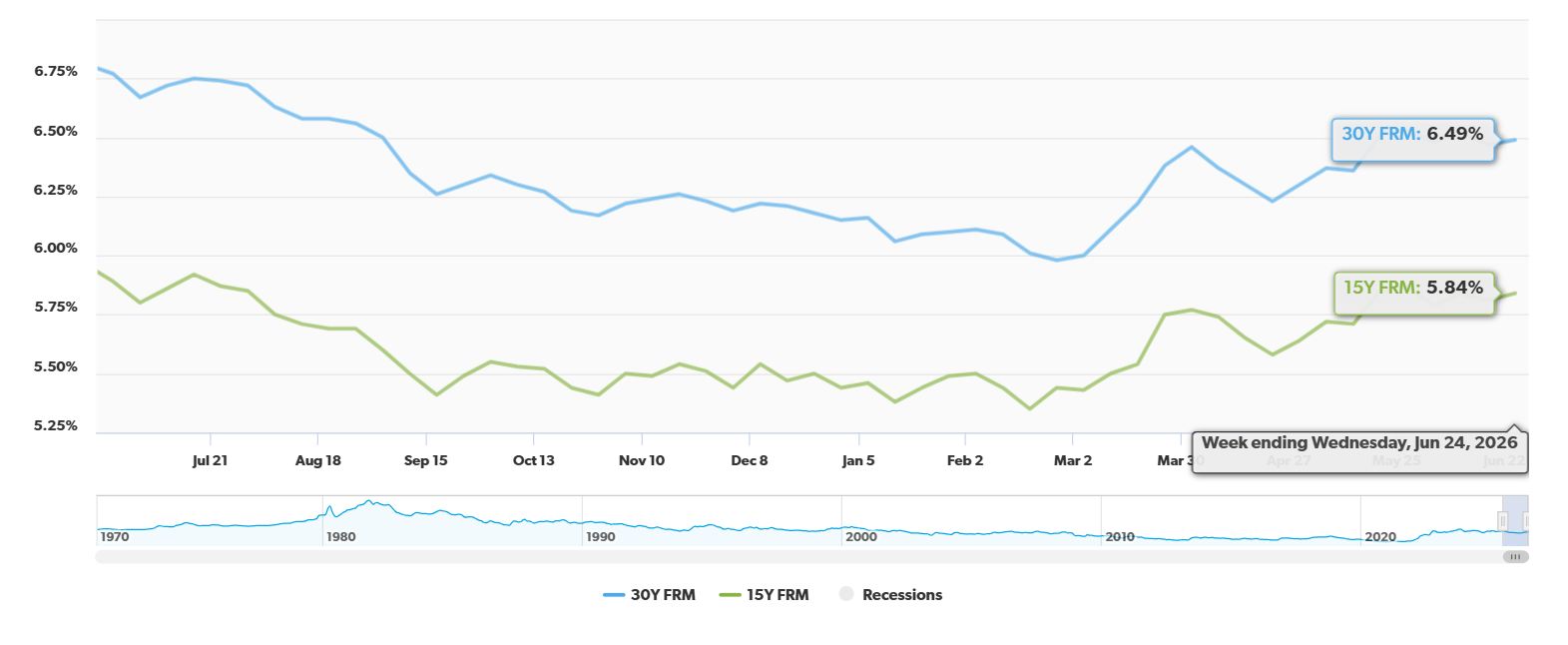
Trying to make sense of the housing market in 2026 can feel a bit like guesswork—especially when it comes to those all‑important 30‑year mortgage rates. Will they finally dip into a more comfortable range, or are we looking at another year of borrowing costs hovering stubbornly high? Based on the latest insights from major housing authorities and my own read on the economic currents, it appears that 30-year mortgage rates are likely to stay in the 5.5% to 6.5% range through the end of 2026. While some had hoped for lower figures, the economic climate suggests we'll be dealing with borrowing costs that are “higher for longer.”

30-Year Mortgage Rate Predictions for 2026

It’s easy to feel a bit lost when trying to predict mortgage rates, as so many factors are at play. From the Federal Reserve’s decisions to global events, it’s a complex dance. Here’s my breakdown of what’s really driving these numbers and why we're not seeing a sharp drop anytime soon.

The Fed's Tight Grip: Inflation and Interest Rates

The Federal Reserve's primary mission is to keep inflation in check. Lately, that inflation has been a bit more persistent than anyone would like. When the Consumer Price Index (CPI) stays elevated, the Fed tends to keep its benchmark interest rate – the federal funds rate – higher. Think of it like this: if the cost of goods and services is still climbing, the Fed is hesitant to make borrowing money cheaper, as that could further fuel spending and inflation. This “higher for longer” stance directly impacts bond yields, including those that mortgage rates are closely tied to, like the 10-year Treasury yield. I’ve seen this play out many times in my career; the Fed is usually more cautious than optimistic when inflation is stubborn.

Global Puzzles and Their Impact

We can't ignore what's happening on the world stage. Geopolitical tensions, particularly in regions like the Middle East, have a ripple effect on global oil prices. When oil prices climb, so does the cost of energy, which in turn contributes to overall inflation. This global uncertainty adds a “geopolitical premium” to things like mortgage rates and Treasury yields. It’s an extra layer of cost that lenders factor in because of the unpredictable nature of these events. It's a constant reminder that our local housing market is connected to a much larger, global economy.

The Secondary Market: A Wider Gap

Another critical piece of the puzzle is the secondary mortgage market. This is where loans are bought and sold. The spread – the difference in yield – between the 10-year Treasury and Mortgage-Backed Securities (MBS) has been wider than usual. This widening spread means lenders have to charge more for mortgages to maintain their profitability. It's an institutional factor, but it directly translates into higher rates for us as borrowers.

Expert Forecasts: What the Pros Are Saying

It’s always helpful to see what the major players in the housing industry are predicting. While early optimism for significant rate drops has softened, these revised forecasts offer a clearer picture of what to expect.

Here’s a look at some of the key predictions for late 2026:

Forecaster Predicted 2026 Range / Year-End Target Key Driver / Outlook
Fannie Mae 6.1% to 6.3% Expects rates to remain sticky, averaging 6.1% late 2026-2027.
Mortgage Bankers Association (MBA) 6.1% to 6.5% Cites elevated 10-year Treasury yields and potential Fed hikes.
Morgan Stanley 5.5% to 5.75% Predicts a mid-year low followed by a moderate rebound.
National Association of Realtors (NAR) 5.9% to 6.5% Forecasts general stabilization within a narrow range.

As you can see, there’s a consensus that rates will likely stay within a certain band, with most predicting figures above 6%. Morgan Stanley offers a slightly more optimistic outlook, suggesting a potential dip mid-year, but even they see a rebound. This consistency across different organizations gives me more confidence in the 5.5% to 6.5% range as a realistic expectation for 30-year mortgage rates in 2026.

My Take: Beyond the Numbers – Actionable Strategies

While watching economic forecasts is important, I believe the best approach for homebuyers and homeowners isn't to try and perfectly time the market – that’s a fool’s errand in my opinion. Instead, we need to focus on strategies that can help us secure the best possible rate now, regardless of minor fluctuations.

Leverage Seller-Paid Buydowns

This is a tactic I often advise clients to explore, especially in a market where sellers might be looking for an edge. A seller-paid buydown, like a 2-1 or 3-1 temporary rate buydown, can significantly lower your interest rate for the first few years of your mortgage. For example, a 2-1 buydown means your rate is 2% lower in the first year and 1% lower in the second year. This can make a substantial difference in your monthly payments during those crucial early years of homeownership. It's a win-win: the seller gets their home sold, and you get a more affordable start.

Polish Your Financial Profile

Your personal financial health plays a huge role in the rate you’ll be offered. While the Fed might move rates by a quarter-point, a significant improvement in your credit score can often yield a much larger personal benefit. If you’re planning to buy or refinance, spending time cleaning up your credit report, paying down debt, and ensuring a solid credit history can put you in a much stronger position. Moving from a “good” credit score to an “excellent” one can genuinely save you more money than waiting for a hypothetical rate drop. I’ve seen clients shave off half a percentage point or more just by improving their credit profile.

Shop Around, Especially with Credit Unions and Brokers

Don't just walk into the first big bank you see. Large financial institutions often have higher overhead and may apply stricter overlays on their rates. I highly recommend getting pre-approvals from multiple sources. Credit unions are often non-profit and can offer more competitive rates. Wholesale mortgage brokers also have access to a wider network of lenders and can often find better deals than you might find on your own. Comparing at least three to five quotes is essential. It's not about being difficult; it's about being smart with your money.

Conclusion: Preparedness is Key

The outlook for 30-year mortgage rates in 2026 suggests a period of relative stability within a higher range, likely between 5.5% and 6.5%. While economic conditions can always shift, the current trends point towards continued caution from the Federal Reserve and persistent inflationary pressures. Instead of waiting for the perfect moment, I encourage you to focus on what you can control: improving your financial standing, exploring creative financing options like seller buydowns, and diligently comparing offers from various lenders. By being prepared and proactive, you can still achieve your homeownership goals, even in this higher-rate environment.

🏡 Out‑of‑State Real Estate Investment: Alabama vs Tennessee

Helena, AL
🏠 Property: Village Pkwy
🛏️ Beds/Baths: 3 Bed • 2.5 Bath • 1500 sqft
💰 Price: $300,000 | Rent: $1,925
📊 Cap Rate: 6.4% | NOI: $1,608
📅 Year Built: 2025
📐 Price/Sq Ft: $200
🏙️ Neighborhood: B

VS

Nashville, TN
🏠 Property: Winton Dr
🛏️ Beds/Baths: 3 Bed • 2.5 Bath • 1688 sqft
💰 Price: $360,000 | Rent: $2,100
📊 Cap Rate: 5.5% | NOI: $1,662
📅 Year Built: 2001
📐 Price/Sq Ft: $214
🏙️ Neighborhood: A

Out‑of‑State real estate investors can weigh Alabama’s newer rental with solid cap rate against Tennessee’s established A‑rated property with stability. Which fits YOUR investment strategy?

We have much more inventory available than what you see on our website – Let us know about your requirement.

📈 Choose Your Winner & Contact Us Today!

Speak to a Norada Investment Counselor (No Obligation):

(800) 611-3060

View All Properties

Build Passive Income & Wealth with Turnkey Rentals

Mortgage rates remain near 6%, but rental properties continue to deliver strong cash flow and appreciation. Savvy investors know that turnkey real estate is the path to passive income and long‑term wealth.

Norada Real Estate helps you secure turnkey rental properties designed for immediate cash flow and appreciation—so you can invest smartly regardless of interest rate trends.

🔥 HOT INVESTMENT Properties JUST ADDED! 🔥
Request a Callback / Fill Out the Form Online

Contact Us

Also Read:

  • Will Mortgage Rates Drop to 5% in 2026: Expert Forecast
  • How to Get a 3% Mortgage Rate in 2026 With Assumable Mortgages?
  • How to Get a 4% Interest Rate on a Mortgage in 2026?
  • What Leading Housing Experts Predict for Mortgage Rates in 2026
  • Mortgage Rate Predictions for 2026: What Leading Forecasters Expect
  • Mortgage Rate Predictions for the Next 3 Years: 2026, 2027, 2028
  • 30-Year Fixed Mortgage Rate Forecast for the Next 5 Years
  • 15-Year Fixed Mortgage Rate Predictions for Next 5 Years: 2025-2029
  • Will Mortgage Rates Ever Be 3% Again in the Future?
  • Mortgage Rates Predictions for Next 2 Years
  • Mortgage Rate Predictions for Next 5 Years
  • Mortgage Rate Predictions: Why 2% and 3% Rates are Out of Reach
  • How Lower Mortgage Rates Can Save You Thousands?
  • How to Get a Low Mortgage Interest Rate?
  • Will Mortgage Rates Ever Be 4% Again?
Filed Under: Financing, Mortgage Tagged With: 30-Year Fixed Mortgage Rate, mortgage, Mortgage Rate Predictions, mortgage rates

30‑Year Fixed Mortgage Rate Drops by 45 Basis Points Year-Over-Year

May 19, 2026 by Marco Santarelli

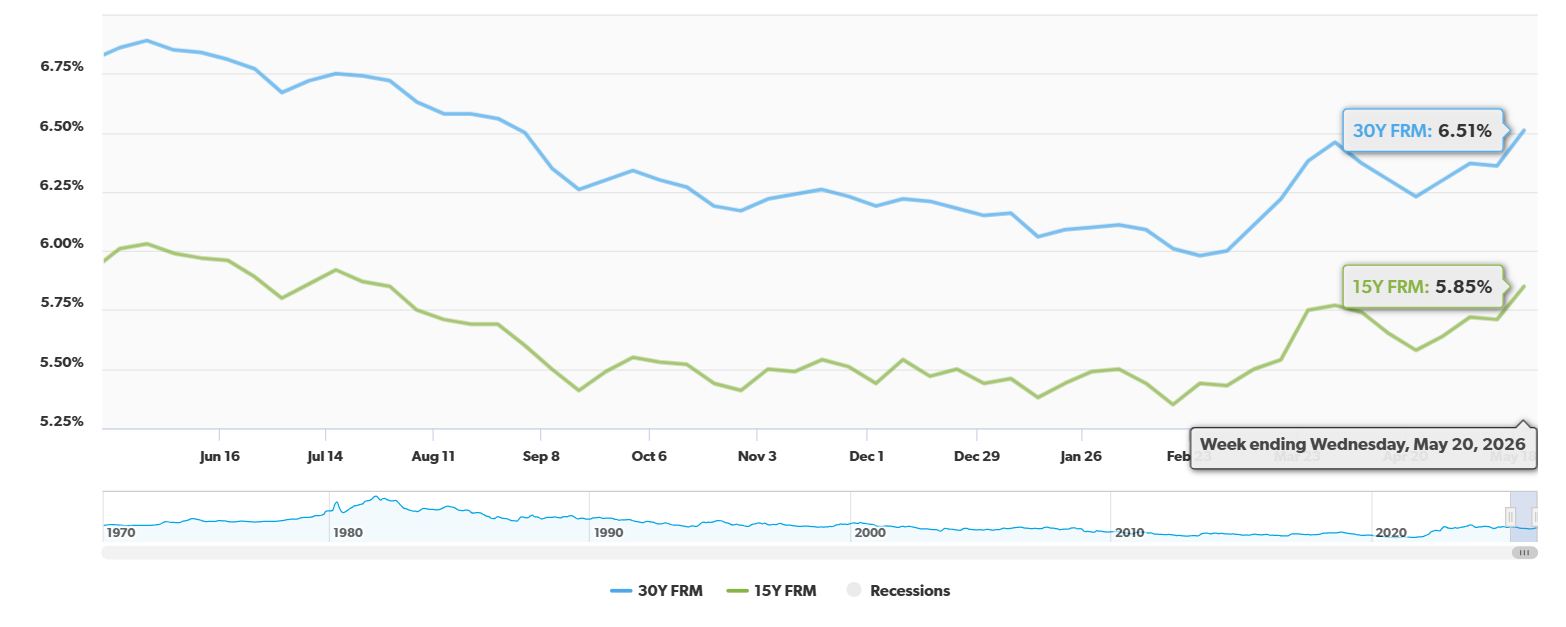
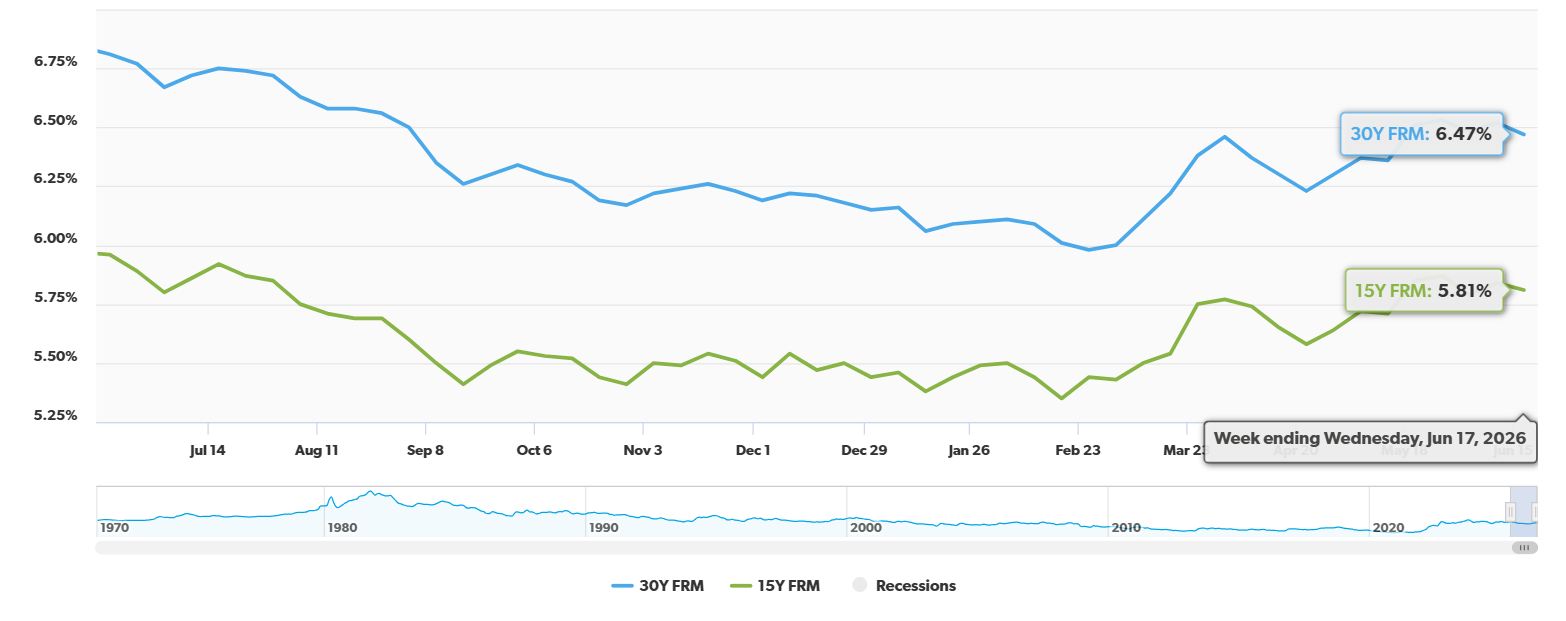
Good news for anyone dreaming of homeownership or looking to refinance: the average rate for a 30-year fixed mortgage has fallen by a significant 45 basis points (that’s 0.45%) compared to this time last year, currently standing at 6.36% as of May 14, 2026, according to Freddie Mac’s latest data. It's worth noting that rates also saw a minor decrease from last week's average of 6.37%, making this a positive development on both fronts for borrowers. This shift is making a real difference in monthly payments and the overall cost of buying a home.

30-Year Fixed Mortgage Rate Drops by 45 Basis Points Year-Over-Year

Why This Drop Matters: Real Savings for Your Wallet

Let's break down what this actually means for you. A basis point might sound small, but when it comes to a loan that lasts 30 years, even small changes can add up to a lot of money.

  • Monthly Payments: For a standard $400,000 loan, the difference between last year's average rate of 6.81% and this week's 6.36% translates to a monthly saving of $119. That's nearly $120 extra in your budget each month!
  • Lifetime Savings: Over the full 30-year term of that same $400,000 loan, this rate decrease will save you a staggering $42,840 in total interest payments. That's a significant chunk of change that could go towards home improvements, retirement, or simply enjoying life more.

Even for smaller loan amounts, the savings are still substantial. On a $300,000 loan, you're looking at saving $90 per month, which amounts to $32,400 in lifetime interest savings.

A Look at the Numbers from Freddie Mac

Freddie Mac’s Primary Mortgage Market Survey (PMMS) is a key source for tracking mortgage rate trends. Here’s a snapshot of what their latest report shows:

Loan Type Current Week Average (May 14, 2026) Previous Week Average One Year Ago Average (May 15, 2025) Year-Over-Year Change
30-Year Fixed 6.36% 6.37% 6.81% Down 45 Basis Points
15-Year Fixed 5.71% 5.72% 5.92% Down 21 Basis Points

As you can see, it's not just the 30-year fixed rate that's seen a dip. The 15-year fixed-rate mortgage has also moved down, dropping by 21 basis points year-over-year. However, the 45 basis point drop in the 30-year fixed is the most impactful for the majority of homebuyers who choose this longer-term option for its predictable monthly payments.

Mortgage Rate Drops by 45 Basis Points Year-Over-Year
Freddie Mac

Beyond the Numbers: What's Driving This Trend?

While the headline number is the 45 basis point drop, it's important to understand the forces at play. Freddie Mac’s Chief Economist, Sam Khater, points out that while purchase demand is showing signs of softening, it's still higher than it was this time last year. This suggests that despite some economic pressures, people are still motivated to buy homes. He also notes that existing-home sales have seen a modest uptick, which is encouraging.

From my perspective, this suggests a market that's finding its footing. Lenders are becoming a bit more competitive as they aim to secure business, and this can lead to more attractive rates for borrowers. It’s a sign that the housing market is dynamic and can offer opportunities even amidst economic uncertainties.

Who Benefits Most from These Rates?

It's crucial to remember that these average rates, as reported by Freddie Mac, typically reflect conventional, conforming home purchase loans for low-risk borrowers. This generally means:

  • A down payment of 20% or more.
  • An excellent credit score.

If you don't fit this exact profile, your actual rate might be slightly different. However, the general trend of lower rates year-over-year still applies and can influence the offers you receive.

Is This a Big Change from Last Week?

Looking at the table, you'll notice the change from last week to this week is very small – just a 1 basis point (0.01%) drop for the 30-year fixed. On a $400,000 loan, that's a saving of about $3 per month. While every dollar counts, the real story here is the year-over-year improvement. That’s where the significant savings are found.

My Take: A Welcome Respite for Buyers

As someone who has spent years navigating the mortgage world, I see this 45 basis point year-over-year decrease as a welcome bit of good news for potential homebuyers. It eases some of the financial pressure that has been felt over the past couple of years. It makes homeownership feel a little more attainable, and for those looking to refinance, it presents an opportunity to reduce their monthly expenses.

However, it's always wise to remember that rates can fluctuate. If you're in the market, I'd encourage you to:

  1. Shop Around: Get quotes from multiple lenders. Even small differences in rates can have a big impact over time.
  2. Improve Your Credit: If your credit score isn't top-notch, focus on improving it. This can unlock even better rates.
  3. Understand Your Options: Talk to a mortgage professional about the different loan types and terms available to you.

This 45 basis point drop is a solid indicator that the market is becoming more favorable for borrowers. It’s a positive sign that the dream of homeownership might be closer than you think!

🏡 Out‑of‑State Real Estate Investment: Alabama vs Tennessee

Helena, AL
🏠 Property: Village Pkwy
🛏️ Beds/Baths: 3 Bed • 2.5 Bath • 1500 sqft
💰 Price: $300,000 | Rent: $1,925
📊 Cap Rate: 6.4% | NOI: $1,608
📅 Year Built: 2025
📐 Price/Sq Ft: $200
🏙️ Neighborhood: B

VS

Nashville, TN
🏠 Property: Winton Dr
🛏️ Beds/Baths: 3 Bed • 2.5 Bath • 1688 sqft
💰 Price: $360,000 | Rent: $2,100
📊 Cap Rate: 5.5% | NOI: $1,662
📅 Year Built: 2001
📐 Price/Sq Ft: $214
🏙️ Neighborhood: A

Out‑of‑State real estate investors can weigh Alabama’s newer rental with solid cap rate against Tennessee’s established A‑rated property with stability. Which fits YOUR investment strategy?

We have much more inventory available than what you see on our website – Let us know about your requirement.

📈 Choose Your Winner & Contact Us Today!

Speak to a Norada Investment Counselor (No Obligation):

(800) 611-3060

View All Properties

Build Passive Income & Wealth with Turnkey Rentals

Mortgage rates remain near 6%, but rental properties continue to deliver strong cash flow and appreciation. Savvy investors know that turnkey real estate is the path to passive income and long‑term wealth.

Norada Real Estate helps you secure turnkey rental properties designed for immediate cash flow and appreciation—so you can invest smartly regardless of interest rate trends.

🔥 HOT INVESTMENT Properties JUST ADDED! 🔥
Request a Callback / Fill Out the Form Online

Contact Us

Also Read:

  • Will Mortgage Rates Drop to 5% in 2026: Expert Forecast
  • How to Get a 3% Mortgage Rate in 2026 With Assumable Mortgages?
  • How to Get a 4% Interest Rate on a Mortgage in 2026?
  • What Leading Housing Experts Predict for Mortgage Rates in 2026
  • Mortgage Rate Predictions for 2026: What Leading Forecasters Expect
  • Mortgage Rate Predictions for the Next 3 Years: 2026, 2027, 2028
  • 30-Year Fixed Mortgage Rate Forecast for the Next 5 Years
  • 15-Year Fixed Mortgage Rate Predictions for Next 5 Years: 2025-2029
  • Will Mortgage Rates Ever Be 3% Again in the Future?
  • Mortgage Rates Predictions for Next 2 Years
  • Mortgage Rate Predictions for Next 5 Years
  • Mortgage Rate Predictions: Why 2% and 3% Rates are Out of Reach
  • How Lower Mortgage Rates Can Save You Thousands?
  • How to Get a Low Mortgage Interest Rate?
  • Will Mortgage Rates Ever Be 4% Again?

Filed Under: Financing, Mortgage Tagged With: 30-Year Fixed Mortgage Rate, mortgage, mortgage rates

30‑Year Fixed Mortgage Rate Drops by 39 Basis Points Since Last Year

May 11, 2026 by Marco Santarelli

30‑Year Fixed Mortgage Rate Drops by 39 Basis Points Since Last Year

The 30 year fixed mortgage rate has seen a significant drop of 39 basis points compared to this time last year. While there’s been a small bump up in the past week, the overall trend is a welcome one for anyone looking to finance their property. As of May 7, 2026, Freddie Mac reported that the average 30-year fixed-rate mortgage is sitting at 6.37%. Now, that’s up just a touch from last week’s 6.30%, but here’s the kicker: this time last year, that average was a higher 6.76%.

That difference, that 39 basis points, might sound small, but trust me, it can add up to some serious savings and a bigger purchasing power for you. Seeing these rates come down year-over-year is a breath of fresh air. It feels like we’re finally getting a bit of breathing room in what has been a challenging affordability environment.

30‑Year Fixed Mortgage Rate Drops by 39 Basis Points Since Last Year

Breaking Down the Numbers: A Closer Look at the Data

Let’s get a little more specific. Freddie Mac’s Primary Mortgage Market Survey® is a crucial tool for understanding where mortgage rates are heading. Here’s what their latest data, as of May 7, 2026, tells us:

Mortgage Type Current Average (05/07/2026) 1-Week Change 1-Year Change
30-Year Fixed 6.37% +0.07% -0.39%
15-Year Fixed 5.72% +0.08% -0.17%
30 Year Fixed Mortgage Rate Drops Steeply by 39 Basis Points Year-Over-Year
Freddie Mac

As you can see, the 30-year fixed-rate mortgage isn't just good compared to last year; it’s also sitting at a monthly average of 6.3% and a 52-week average of 6.38%. The range over the past year has been from 5.98% to 6.89%, so we’re currently in the middle of that, leaning towards the lower end.

The 15-year fixed-rate mortgage is also showing a similar year-over-year improvement, currently at 5.72%, down 17 basis points from 5.89% a year ago. This is also great news, especially for those who can manage a higher monthly payment for a shorter loan term and want to pay off their home faster.

The Real Impact: How a 39 Basis Point Drop Affects Your Wallet

So, what does a 39 basis point drop in the 30 year fixed mortgage rate actually mean for you, a potential homebuyer or refinancer? It’s more significant than you might think.

1. Significant Monthly Savings and Boosted Purchasing Power:

Let’s do some simple math. Imagine you’re looking at a $400,000 mortgage.

  • Last Year (at 6.76%): Your monthly principal and interest payment would have been around $2,597.
  • This Year (at 6.37%): That payment drops to roughly $2,494.

That’s a saving of about $103 per month, which works out to over $1,200 per year! Now, think about what that extra money can do. It can go towards furnishing your new home, saving for other financial goals, or simply giving you more breathing room in your budget.

Beyond monthly savings, this decrease also effectively increases your purchasing power. For the same monthly payment you could afford last year, you can now potentially afford a home worth about $16,000 more. This could mean the difference between your dream home and just a starter home.

2. Easing the “Lock-In” Effect and Improving Market Sentiment:

I’ve spoken to many homeowners who are hesitant to sell because they’re comfortable with their super-low, pandemic-era mortgage rates. This is what we call the “lock-in” effect. When rates start to trend downwards consistently, it can encourage those homeowners to list their properties, increasing the available inventory for buyers.

This downward trend also signals to buyers who have been on the fence that we might have passed the peak of interest rates. When rates dipped earlier this year, we saw a notable surge in mortgage applications – about 30%! This year-over-year drop suggests a more stable and potentially improving market sentiment for buyers.

3. A Modest Ease in Affordability Pressures:

The good news doesn't stop there. The data from Freddie Mac also points to other positive factors for buyers this spring. Alongside these lower mortgage rates, we’re seeing:

  • Increased new-home sales: This indicates demand is picking up.
  • Median new-home prices at their lowest level since July 2021: This is a significant development in affordability.
  • Higher inventory than in recent years: More homes on the market mean more choices for buyers and less intense bidding wars.

These combined factors are working together to modestly ease affordability pressures for many people looking to buy a home this spring.

Why This Matters to Me (and Likely You Too!)

As someone who has navigated the mortgage process myself and advised others, I know how much these rates influence big life decisions. A 39 basis point drop year-over-year isn't just a number; it's a tangible benefit that can make homeownership more accessible and less financially burdensome.

While the slight weekly increase is something to note, it’s important to focus on the broader, more sustained trend. Geopolitical tensions can cause short-term fluctuations, but the underlying economic conditions that are driving these rates lower, like improved inventory and more stable new-home prices, are very encouraging.

If you’re in the market to buy or refinance, now might be an excellent time to explore your options. It’s always wise to shop around with different lenders and get personalized quotes to see exactly how these rates can benefit you. Don’t just look at the headline numbers; consider your specific financial situation and long-term goals.

The Takeaway

The 30 year fixed mortgage rate drop of 39 basis points year-over-year is a significant positive development for the housing market. It’s offering much-needed relief and improved purchasing power for prospective buyers. While market conditions can always shift, the current trend provides a compelling reason to reconsider your homeownership plans.

🏡 Two Performing Rentals With Strong Cash Flow

Pleasant Grove, AL
🏠 Property: 6th Avenue
🛏️ Beds/Baths: 3 Bed • 2.5 Bath • 1549 sqft
💰 Price: $270,000 | Rent: $1,900
📊 Cap Rate: 6.7% | NOI: $1,514
📅 Year Built: 2026
📐 Price/Sq Ft: $175
🏙️ Neighborhood: B+

VS

Rincon, GA
🏠 Property: Founders Dr
🛏️ Beds/Baths: 3 Bed • 2 Bath • 1600 sqft
💰 Price: $275,000 | Rent: $2,200
📊 Cap Rate: 7.0% | NOI: $1,613
📅 Year Built: 2025
📐 Price/Sq Ft: $172
🏙️ Neighborhood: B+

Alabama’s new build with solid cap rate vs Georgia’s affordable rental with stronger NOI. Which fits YOUR investment strategy?

We have much more inventory available than what you see on our website – Let us know about your requirement.

📈 Choose Your Winner & Contact Us Today!

Speak to a Norada Investment Counselor (No Obligation):

(800) 611-3060

View All Properties

Build Passive Income & Wealth with Turnkey Rentals

Mortgage rates remain near 6%, but rental properties continue to deliver strong cash flow and appreciation. Savvy investors know that turnkey real estate is the path to passive income and long‑term wealth.

Norada Real Estate helps you secure turnkey rental properties designed for immediate cash flow and appreciation—so you can invest smartly regardless of interest rate trends.

🔥 HOT INVESTMENT Properties JUST ADDED! 🔥
Request a Callback / Fill Out the Form Online

Contact Us

Also Read:

  • Will Mortgage Rates Drop to 5% in 2026: Expert Forecast
  • How to Get a 3% Mortgage Rate in 2026 With Assumable Mortgages?
  • How to Get a 4% Interest Rate on a Mortgage in 2026?
  • What Leading Housing Experts Predict for Mortgage Rates in 2026
  • Mortgage Rate Predictions for 2026: What Leading Forecasters Expect
  • Mortgage Rate Predictions for the Next 3 Years: 2026, 2027, 2028
  • 30-Year Fixed Mortgage Rate Forecast for the Next 5 Years
  • 15-Year Fixed Mortgage Rate Predictions for Next 5 Years: 2025-2029
  • Will Mortgage Rates Ever Be 3% Again in the Future?
  • Mortgage Rates Predictions for Next 2 Years
  • Mortgage Rate Predictions for Next 5 Years
  • Mortgage Rate Predictions: Why 2% and 3% Rates are Out of Reach
  • How Lower Mortgage Rates Can Save You Thousands?
  • How to Get a Low Mortgage Interest Rate?
  • Will Mortgage Rates Ever Be 4% Again?

Filed Under: Financing, Mortgage Tagged With: 30-Year Fixed Mortgage Rate, mortgage, mortgage rates

30 Year Fixed Mortgage Rate Drops Steeply by 46 Basis Points Year-Over-Year

May 6, 2026 by Marco Santarelli

30 Year Fixed Mortgage Rate Drops Steeply by 46 Basis Points Year-Over-Year

It’s a moment many prospective homebuyers have been waiting for: the 30-year fixed mortgage rate, despite a slight uptick this week, is showing a robust 46 basis point decrease year-over-year, a significant drop that’s making homeownership feel more accessible again, even with the economic storms brewing. This is fantastic news for anyone looking to finance a home, as it represents a tangible improvement in affordability that we haven't seen in a while.

30 Year Fixed Mortgage Rate Drops Steeply by 46 Basis Points Year-Over-Year

A Welcome Downturn: What Those Numbers Really Mean

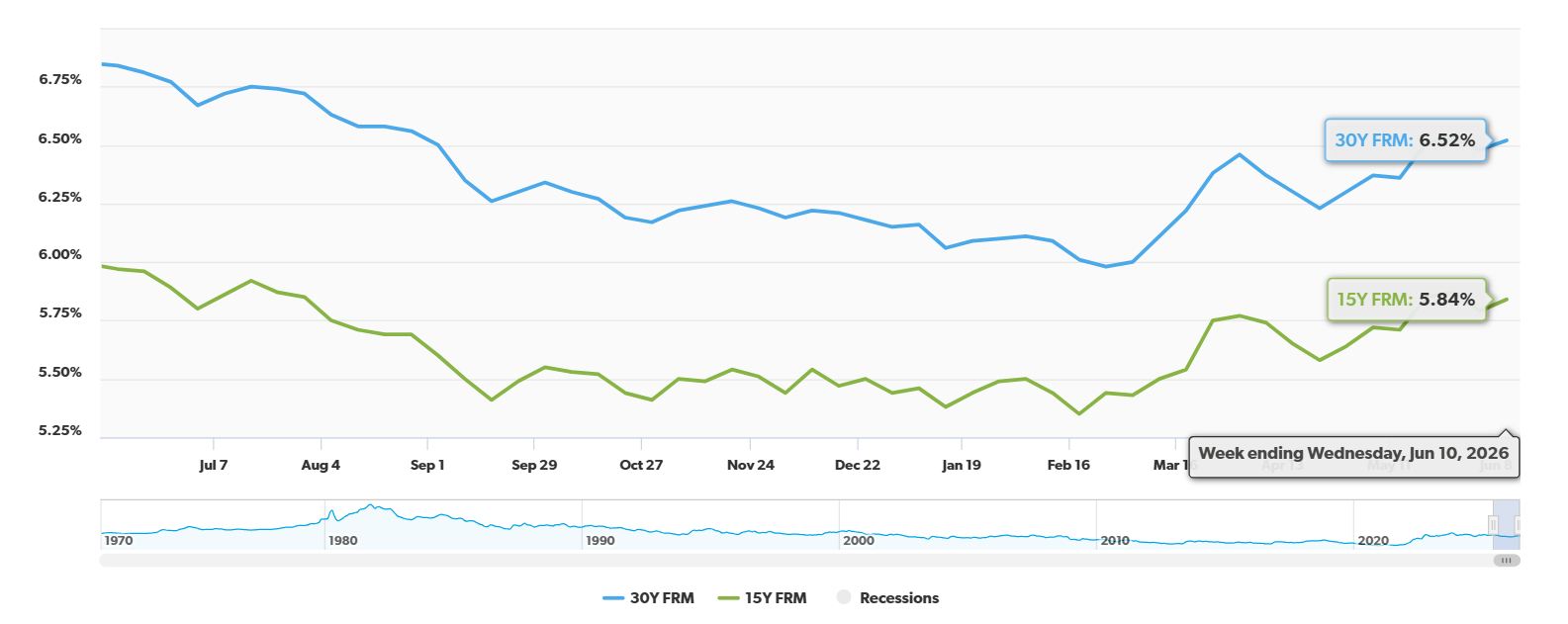
Let's break down what's happening. According to the latest data from Freddie Mac, for the week ending April 30, 2026, the average rate for a 30-year fixed mortgage landed at 6.30%. Now, you might notice that this is a slight jump – 7 basis points, to be exact – from the week prior (where it was 6.23%). On the surface, a small increase can sound discouraging.

But here’s where it gets interesting and, frankly, quite encouraging: when you zoom out and compare it to the same week last year, that figure stood at 6.76%. That means, while we saw a minor weekly wobble, the big story is the significant 46 basis point decline year-over-year. That’s a substantial chunk of percentage points, and it translates into real savings for borrowers. For me, this signals a market that's trying to find its footing, offering a much-needed lifeline to buyers.

Fixed Mortgage Rate Rises Ending 3 Weeks of Decline
Freddie Mac

Why the Seemingly Mixed Signals? Understanding Market Dynamics

This situation, where rates move up slightly one week but are down significantly over a longer period, isn't uncommon. The mortgage market is a bit like a boat navigating choppy seas. There are always waves (weekly fluctuations) and larger currents (year-over-year trends).

The Freddie Mac report itself highlights these nuances. While the average rate for a 30-year fixed mortgage is 6.30% as of April 30, 2026, it's important to remember this followed a three-week decline. The real win is that year-over-year, we're seeing a 6.76% rate from a year ago plummeting to 6.30% today. That's a definite step in the right direction.

The “Headwinds in 2026” and Their Impact

The headline mentions “headwinds in 2026,” and this is where the real insight comes in. What are these headwinds? Market watchers and analysts, including those cited by FOX Business and U.S. News, point to ongoing geopolitical tensions and the subsequent volatility in long-term Treasury yields. These are the bigger, more unpredictable forces that can cause rates to sway. Think of it like this: global events can make investors nervous about where their money is safest, and that nervousness directly impacts the cost of borrowing money for things like mortgages.

Even with these external pressures, the fact that we're still seeing such a significant annual rate decrease is a testament to the underlying economic forces at play, which are generally more favorable for borrowers than they were last year.

Buyer Demand Soars: A Direct Result of Lower Rates

Perhaps the most telling sign that this drop in rates is having a real impact is the surge in buyer demand. The report proudly states that purchase applications are currently running over 20% above year-ago levels. This isn't just a small bump; it's a strong indication that more people are actively looking to buy homes.

What's fueling this increased demand? Two key factors mentioned are improved inventory and, of course, those overall lower rates compared to previous spring buying seasons. For years, inventory has been a major bottleneck. When more homes become available, it eases competition and can help stabilize prices. Combine that with more affordable financing, and you have a recipe for increased buyer activity. From my perspective, this is the market responding positively to improved conditions. It's a cycle: lower rates make buying more attractive, which brings more buyers into the market, and that enthusiasm can encourage more sellers to list their homes.

Beyond the 30-Year: Trends in Other Mortgage Types

It's not just the iconic 30-year fixed-rate mortgage that's showing improvement. The 15-year fixed-rate mortgage is following a similar, welcome trend. For the week ending April 30, 2026, it averaged 5.64%. Like its longer-term counterpart, this is up slightly from 5.58% the previous week. However, the year-over-year picture is again the compelling story: it’s down from 5.92% recorded a year ago. This offers even more options for those looking for shorter repayment terms and lower overall interest paid over the life of a loan.

The Economic Forecast: What Freddie Mac and Analysts Predict

Looking ahead, the outlook, while acknowledging the “headwinds,” remains cautiously optimistic. Freddie Mac's own Q1 2026 report reveals a company in strong financial health, with a notable $3.6 billion in net income. This financial stability is crucial for the housing market. Furthermore, they forecast a 2.3% projected house price growth for the year. This suggests a balanced market, avoiding the rampant price increases of some past years, which is good for long-term stability.

The broader analysis points towards a gradual improvement in affordability throughout 2026. Factors contributing to this include a projected 7.1% increase in inventory and the expectation that mortgage rates will continue on a downward trajectory as inflation is anticipated to cool. This is the nuanced outlook that experienced market participants follow – a blend of short-term fluctuations and longer-term trends driven by fundamental economic indicators.

My Take: A Balanced Market Finding its Equilibrium

As someone who's followed the housing market for a while, this data tells me a story of recovery and stabilization. The 30-year fixed mortgage rate's impressive year-over-year drop of 46 basis points is the headline, and rightly so. It signifies a real shift towards affordability. The weekly uptick is just noise in the grand scheme, common in any dynamic market.

The strength in purchase demand, exceeding year-ago levels by over 20%, is the undeniable proof that buyers are responding. They're seeing an opportunity. While geopolitical issues and other economic “headwinds” are real and will continue to cause some bumps, the underlying trend seems to be one of cautious optimism. The fact that Freddie Mac is doing well and predicting growth, alongside a rise in inventory and a cooling inflation outlook, paints a picture of a housing market that is actively working towards finding a more sustainable equilibrium. For anyone considering a move, this period presents a potentially golden opportunity.

🏡 Two Performing Rentals With Strong Cash Flow

Pleasant Grove, AL
🏠 Property: 6th Avenue
🛏️ Beds/Baths: 3 Bed • 2.5 Bath • 1549 sqft
💰 Price: $270,000 | Rent: $1,900
📊 Cap Rate: 6.7% | NOI: $1,514
📅 Year Built: 2026
📐 Price/Sq Ft: $175
🏙️ Neighborhood: B+

VS

Rincon, GA
🏠 Property: Founders Dr
🛏️ Beds/Baths: 3 Bed • 2 Bath • 1600 sqft
💰 Price: $275,000 | Rent: $2,200
📊 Cap Rate: 7.0% | NOI: $1,613
📅 Year Built: 2025
📐 Price/Sq Ft: $172
🏙️ Neighborhood: B+

Alabama’s new build with solid cap rate vs Georgia’s affordable rental with stronger NOI. Which fits YOUR investment strategy?

We have much more inventory available than what you see on our website – Let us know about your requirement.

📈 Choose Your Winner & Contact Us Today!

Speak to a Norada Investment Counselor (No Obligation):

(800) 611-3060

View All Properties

Build Passive Income & Wealth with Turnkey Rentals

Mortgage rates remain near 6%, but rental properties continue to deliver strong cash flow and appreciation. Savvy investors know that turnkey real estate is the path to passive income and long‑term wealth.

Norada Real Estate helps you secure turnkey rental properties designed for immediate cash flow and appreciation—so you can invest smartly regardless of interest rate trends.

🔥 HOT INVESTMENT Properties JUST ADDED! 🔥
Request a Callback / Fill Out the Form Online

Contact Us

Also Read:

  • Will Mortgage Rates Drop to 5% in 2026: Expert Forecast
  • How to Get a 3% Mortgage Rate in 2026 With Assumable Mortgages?
  • How to Get a 4% Interest Rate on a Mortgage in 2026?
  • What Leading Housing Experts Predict for Mortgage Rates in 2026
  • Mortgage Rate Predictions for 2026: What Leading Forecasters Expect
  • Mortgage Rate Predictions for the Next 3 Years: 2026, 2027, 2028
  • 30-Year Fixed Mortgage Rate Forecast for the Next 5 Years
  • 15-Year Fixed Mortgage Rate Predictions for Next 5 Years: 2025-2029
  • Will Mortgage Rates Ever Be 3% Again in the Future?
  • Mortgage Rates Predictions for Next 2 Years
  • Mortgage Rate Predictions for Next 5 Years
  • Mortgage Rate Predictions: Why 2% and 3% Rates are Out of Reach
  • How Lower Mortgage Rates Can Save You Thousands?
  • How to Get a Low Mortgage Interest Rate?
  • Will Mortgage Rates Ever Be 4% Again?
Filed Under: Financing, Mortgage Tagged With: 30-Year Fixed Mortgage Rate, mortgage, mortgage rates

30‑Year Fixed Mortgage Rate Rises Ending 3 Weeks of Steep Declines

April 30, 2026 by Marco Santarelli

30-Year Fixed Mortgage Rate Rises Ending 3 Weeks of Decline

The average rate for a 30-year fixed mortgage has climbed back up to 6.30%, according to the latest Freddie Mac Primary Mortgage Market Survey (PMMS). This modest increase puts an end to a three-week stretch where rates had been steadily declining, signaling a potential shift in the housing market's immediate trajectory and impacting affordability for many hopeful homebuyers.

30-Year Fixed Mortgage Rate Rises Ending 3 Weeks of Steep Decline

It’s been an interesting few weeks watching the mortgage rate roller coaster. Just when we thought things were cooling off and rates were settling into a comfortable downward trend, they’ve decided to take a little jump upwards. I find these shifts fascinating because they don’t just happen in a vacuum. There are real economic forces at play, and these changes ripple out to affect real people trying to achieve the dream of homeownership.

When I last checked in, the rates for a 30-year fixed mortgage had been inching down. This was great news for potential buyers because it meant their monthly payments could potentially be lower, and they might be able to afford a bit more house. But as you'll see, the market can be a bit of a fickle friend.

What the Numbers Tell Us This Week

Let's break down what Freddie Mac, a trusted source for mortgage rate data, reported this week.

  • 30-Year Fixed-Rate Mortgage: The average rate is now 6.30%. This is up from 6.23% last week.
  • 15-Year Fixed-Rate Mortgage: This type of mortgage, often chosen by those looking to pay off their homes faster or refinance, also saw a slight increase to 5.64%, up from 5.58% last week.

It's important to put this into a longer perspective. While this week’s bump is noticeable, the overall picture is still more favorable than it was a year ago.

Fixed Mortgage Rate Rises Ending 3 Weeks of Decline
Freddie Mac

A Year-Over-Year Comparison: A Ray of Hope?

Mortgage Type Current Rate (as of 05/01/2026) Rate Last Week (as of 04/24/2026) Rate Last Year (as of 05/01/2025) Weekly Change Yearly Change
30-Year Fixed 6.30% 6.23% 6.76% +0.07% -0.46%
15-Year Fixed 5.64% 5.58% 5.92% +0.06% -0.28%

What does this yearly difference mean for a borrower? Let's imagine you're buying a $400,000 home.

  • At 6.76% (a year ago): Your principal and interest payment would be roughly $2,595 per month.
  • At 6.30% (this week): Your principal and interest payment would be roughly $2,472 per month.

That's a difference of about $123 per month in your favor, or nearly $1,500 saved annually, just on the loan itself. This might not seem like a massive amount to some, but over the 30 years of a mortgage, it adds up to tens of thousands of dollars. It can be the difference between affording a home or not.

Why the Reversal? Delving Deeper

So, what’s causing this slight uptick after a period of decline? The Chief Economist at Freddie Mac, Sam Khater, offered some insightful commentary. He pointed out that purchase applications have actually been rising – up by over 20% compared to the same time last year. This surge, he suggests, is a direct result of buyers responding to the previously lower rates and an increased inventory of homes available. It’s a classic supply and demand scenario playing out in the housing market.

However, we can't ignore the broader economic forces. My own take is that this week's movement is a gentle reminder from the financial markets that they are paying close attention to inflation. Recent data, particularly concerning core Personal Consumption Expenditures (PCE), has shown that inflation isn't quite as subdued as some might have hoped. When inflation shows signs of stubbornness, it can lead to speculation that interest rates might need to stay higher for longer, or even see small increases, to keep things in check. This uncertainty often translates into mortgage rates.

Think of it like this: when the economy is running a little too hot, the Federal Reserve (and by extension, mortgage rates) acts like a thermostat. If things are heating up (inflation), they might turn the temperature up a notch to cool it down. This week’s rate rise could be a small adjustment in response to those inflation signals.

The Buyer's Reaction: A Balancing Act

It’s a balancing act for buyers right now. On one hand, the rates are still lower than last year, which is a significant advantage. On the other hand, this recent uptick means that the savings gained from the previous weeks' declines might be slightly diminished for new applicants.

I’ve spoken with many aspiring homeowners lately, and the sentiment is often one of cautious optimism. They were excited by the declining rates, seeing it as their window of opportunity. Now, it’s about re-evaluating their budgets and seeing if this new rate still fits.

Here’s what I believe is crucial for buyers to consider:

  • Don't panic: A 0.07% increase might seem daunting, but it’s a small movement in the grand scheme of things.
  • Focus on the annually lower rates: You're still in a better position than you were a year ago.
  • Inventory is key: As Sam Khater mentioned, more homes are available. This gives buyers more choices and potentially more negotiating power, which can offset a slight rise in interest rates.
  • Get pre-approved: Knowing exactly what you can afford based on current rates is vital.

What’s Next?

Predicting mortgage rates is a bit like trying to predict the weather – you can make educated guesses, but there are always unexpected shifts. The sustained presence of inflation concerns, coupled with the Federal Reserve's watchful eye, will likely keep mortgage rates somewhat sensitive to economic news.

For now, the 30-year fixed mortgage rate at 6.30% represents the current cost of borrowing for a home. It’s a reminder that the market is dynamic, and staying informed is the best strategy for anyone looking to buy. I’ll be keeping a close eye on the upcoming economic data and Freddie Mac’s surveys to see if this rate rise is a brief pause or the start of a new trend.

🏡 Two Performing Rentals With Strong Cash Flow

Pleasant Grove, AL
🏠 Property: 6th Avenue
🛏️ Beds/Baths: 3 Bed • 2.5 Bath • 1549 sqft
💰 Price: $270,000 | Rent: $1,900
📊 Cap Rate: 6.7% | NOI: $1,514
📅 Year Built: 2026
📐 Price/Sq Ft: $175
🏙️ Neighborhood: B+

VS

Rincon, GA
🏠 Property: Founders Dr
🛏️ Beds/Baths: 3 Bed • 2 Bath • 1600 sqft
💰 Price: $275,000 | Rent: $2,200
📊 Cap Rate: 7.0% | NOI: $1,613
📅 Year Built: 2025
📐 Price/Sq Ft: $172
🏙️ Neighborhood: B+

Alabama’s new build with solid cap rate vs Georgia’s affordable rental with stronger NOI. Which fits YOUR investment strategy?

We have much more inventory available than what you see on our website – Let us know about your requirement.

📈 Choose Your Winner & Contact Us Today!

Speak to a Norada Investment Counselor (No Obligation):

(800) 611-3060

View All Properties

Build Passive Income & Wealth with Turnkey Rentals

Mortgage rates remain near 6%, but rental properties continue to deliver strong cash flow and appreciation. Savvy investors know that turnkey real estate is the path to passive income and long‑term wealth.

Norada Real Estate helps you secure turnkey rental properties designed for immediate cash flow and appreciation—so you can invest smartly regardless of interest rate trends.

🔥 HOT INVESTMENT Properties JUST ADDED! 🔥
Request a Callback / Fill Out the Form Online

Contact Us

Also Read:

  • Will Mortgage Rates Drop to 5% in 2026: Expert Forecast
  • How to Get a 3% Mortgage Rate in 2026 With Assumable Mortgages?
  • How to Get a 4% Interest Rate on a Mortgage in 2026?
  • What Leading Housing Experts Predict for Mortgage Rates in 2026
  • Mortgage Rate Predictions for 2026: What Leading Forecasters Expect
  • Mortgage Rate Predictions for the Next 3 Years: 2026, 2027, 2028
  • 30-Year Fixed Mortgage Rate Forecast for the Next 5 Years
  • 15-Year Fixed Mortgage Rate Predictions for Next 5 Years: 2025-2029
  • Will Mortgage Rates Ever Be 3% Again in the Future?
  • Mortgage Rates Predictions for Next 2 Years
  • Mortgage Rate Predictions for Next 5 Years
  • Mortgage Rate Predictions: Why 2% and 3% Rates are Out of Reach
  • How Lower Mortgage Rates Can Save You Thousands?
  • How to Get a Low Mortgage Interest Rate?
  • Will Mortgage Rates Ever Be 4% Again?
Filed Under: Financing, Mortgage Tagged With: 30-Year Fixed Mortgage Rate, mortgage, mortgage rates

30-Year Fixed Mortgage Rate Drops Steeply to Lowest Level This Week

April 29, 2026 by Marco Santarelli

30-Year Fixed Mortgage Rate Drops Steeply to Lowest Level This Week

If you've been dreaming of buying a home or even refinancing your current mortgage, this is fantastic news! The 30‑year fixed mortgage rate has just experienced a significant drop, reaching its lowest point this week in what feels like forever. As of April 23, 2026, this crucial rate now stands at a promising 6.23%, a level we haven't seen during the spring homebuying season in the last three years. This dip isn't just a small blip; it's a signal that the housing market might be regaining some much-needed momentum, making homeownership more accessible for many.

30-Year Fixed Mortgage Rate Drops Steeply to Lowest Level This Week

A Significant Shift: Rates Are Down, Way Down

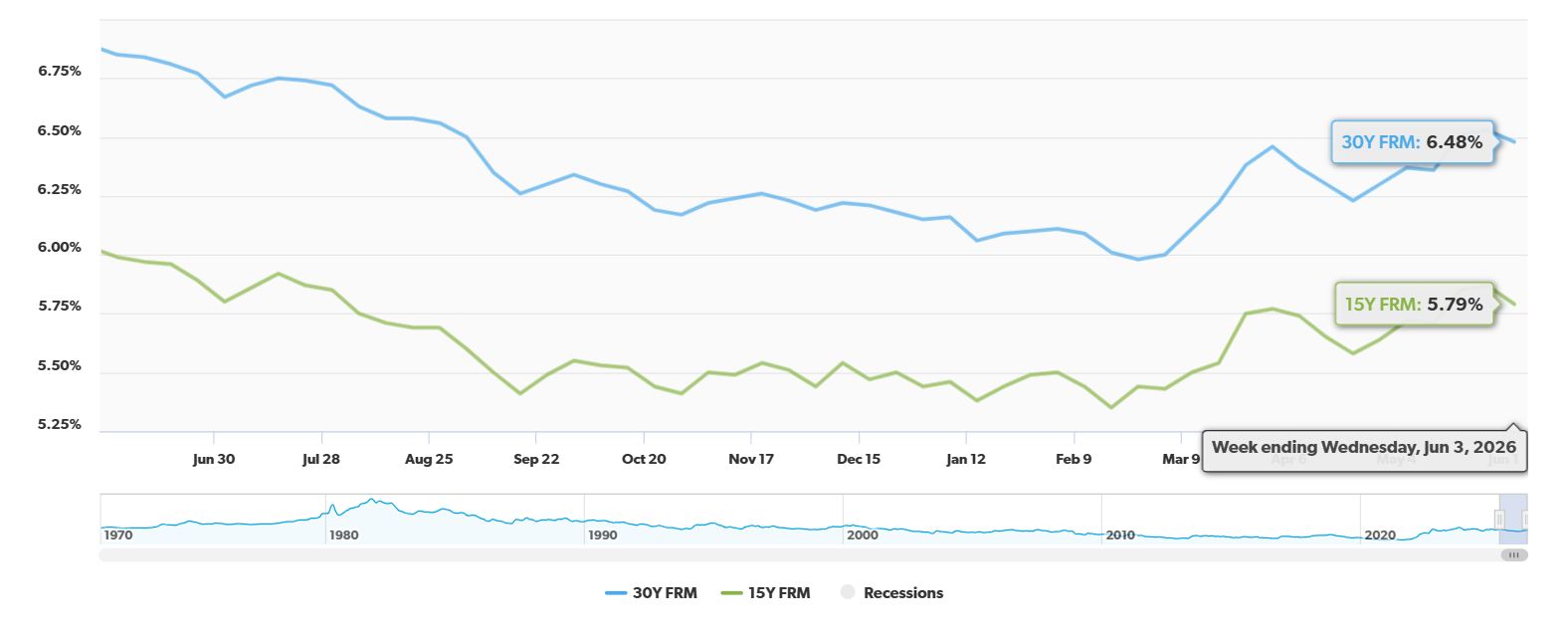
The numbers from Freddie Mac, a key player in the mortgage market, paint a clear picture. For the week ending April 23, 2026, the average 30-year fixed-rate mortgage settled at 6.23%. This is a noticeable decrease from the 6.30% we saw just last week. But the real story is when you look back a bit further. A year ago, this same rate hovered around a much higher 6.81%. That difference is substantial and translates into real savings for borrowers.

It's not just the popular 30-year mortgage that's seeing improvement. The 15-year fixed-rate mortgage also declined, now averaging 5.58%, down from 5.65% last week. A year ago, this shorter-term option was at 5.94%.

30-Year Fixed Mortgage Rate Drops Steeply to Lowest Level This Week
Freddie Mac

Understanding the Decline: What's Behind the Drop?

So, why are we seeing such a steep decline in mortgage rates? A significant factor, according to Chief Economist Sam Khater of Freddie Mac, is the Federal Reserve's move to lower the federal funds rate. This key interest rate influences borrowing costs across the economy. By lowering it to a target range of 3.50% to 3.75% in late 2025, the Fed has set the stage for mortgage rates to follow suit. When it's cheaper for banks to borrow money, they can afford to offer better rates to consumers.

This downward trend isn't an overnight phenomenon. It's a continuation of a pattern that began to emerge in late 2025. This sustained decline is what gives the current drop its real significance. It suggests a more fundamental shift rather than a temporary fluctuation.

Impact on Homebuyers and Refinancers: What Does This Mean for You?

This drop in mortgage rates has a direct and positive impact on anyone looking to buy a home or refinance their existing mortgage. Let's break down how.

Potential Savings:

To illustrate the impact, let's consider the potential savings on a hypothetical mortgage. Imagine you're looking at a $300,000 mortgage.

Mortgage Term Rate This Week (April 23, 2026) Rate Last Week Rate Last Year (April 23, 2025) Approximate Monthly Savings (vs. Last Week) Approximate Annual Savings (vs. Last Week) Approximate Monthly Savings (vs. Last Year) Approximate Annual Savings (vs. Last Year)
30-Year Fixed 6.23% 6.30% 6.81% ~$100 ~$1,200 ~$325 ~$3,900
15-Year Fixed 5.58% 5.65% 5.94% ~$50 ~$600 ~$150 ~$1,800

Note: These savings are estimates based on common mortgage calculators for a $300,000 loan amount and do not include taxes, insurance, or other fees. Actual savings will vary.

As you can see, even a small percentage drop can add up to significant savings over the life of a loan. For a 30-year mortgage, saving over $300 a month compared to last year could mean paying off your home faster or having more money for other financial goals.

Increased Buying Power:

For potential homebuyers, lower rates mean you can afford more house for the same monthly payment. This could allow you to:

  • Qualify for a larger loan amount: This might mean looking at homes in areas you previously thought were out of reach.
  • Lower your monthly payments: If you were already pre-approved, your monthly mortgage payment could decrease, giving you more breathing room in your budget.
  • Save money on interest: Over the 30 years of your loan, the total interest paid will be considerably less.

Refinancing Opportunities:

If you currently have a mortgage with a rate higher than 6.23%, now might be the perfect time to consider refinancing. Refinancing can help you:

  • Lower your monthly payment: This can free up cash flow for other expenses or investments.
  • Reduce the total interest paid: By refinancing into a lower rate, you'll pay less interest over the remaining life of your loan.
  • Shorten your loan term: You might be able to refinance into a shorter term, like a 15-year mortgage, and pay off your home faster, while still potentially saving on your monthly payment compared to your current situation.

Market Momentum: Signs of Life in the Housing Sector

The good news doesn't stop with just falling rates. Freddie Mac's report also indicates a pickup in purchase applications, which means more people are actively looking to buy homes. Additionally, there's been an increase in refinance activity, showing that homeowners are taking advantage of the lower borrowing costs. We're also seeing an increase in monthly pending home sales, which is a strong indicator of future sales activity.

This combination of lower rates, more applications, and increased pending sales suggests that the housing market is experiencing some positive momentum. After a period of uncertainty, this is a welcome sign for both buyers and sellers. It signifies a more stable and potentially growing market.

My Thoughts as an Observer

In my opinion, this 30-year fixed mortgage rate drop is a significant development we shouldn't ignore. For a long time, we've seen rates climb, making affordability a major concern for many. Seeing them now at their lowest point in recent spring seasons is extremely encouraging. It's a testament to the fact that the market does, indeed, react to economic shifts, particularly when the Federal Reserve takes action to influence borrowing costs.

I believe this trend is likely to invigorate the housing market. It’s a powerful incentive for those who have been on the sidelines, waiting for a more favorable borrowing environment. The fact that both purchase and refinance applications are picking up reinforces this idea. People are recognizing a good opportunity when they see it.

It’s also important to remember that mortgage rates are influenced by a complex interplay of factors, including inflation, economic growth, and government policy. While the Fed's actions are a major driver, other economic indicators will continue to shape future rate movements.

🏡 Two Performing Rentals With Strong Cash Flow

Pleasant Grove, AL
🏠 Property: 6th Avenue
🛏️ Beds/Baths: 3 Bed • 2.5 Bath • 1549 sqft
💰 Price: $270,000 | Rent: $1,900
📊 Cap Rate: 6.7% | NOI: $1,514
📅 Year Built: 2026
📐 Price/Sq Ft: $175
🏙️ Neighborhood: B+

VS

Rincon, GA
🏠 Property: Founders Dr
🛏️ Beds/Baths: 3 Bed • 2 Bath • 1600 sqft
💰 Price: $275,000 | Rent: $2,200
📊 Cap Rate: 7.0% | NOI: $1,613
📅 Year Built: 2025
📐 Price/Sq Ft: $172
🏙️ Neighborhood: B+

Alabama’s new build with solid cap rate vs Georgia’s affordable rental with stronger NOI. Which fits YOUR investment strategy?

We have much more inventory available than what you see on our website – Let us know about your requirement.

📈 Choose Your Winner & Contact Us Today!

Speak to a Norada Investment Counselor (No Obligation):

(800) 611-3060

View All Properties

Build Passive Income & Wealth with Turnkey Rentals

Mortgage rates remain near 6%, but rental properties continue to deliver strong cash flow and appreciation. Savvy investors know that turnkey real estate is the path to passive income and long‑term wealth.

Norada Real Estate helps you secure turnkey rental properties designed for immediate cash flow and appreciation—so you can invest smartly regardless of interest rate trends.

🔥 HOT INVESTMENT Properties JUST ADDED! 🔥
Request a Callback / Fill Out the Form Online

Contact Us

Also Read:

  • Will Mortgage Rates Drop to 5% in 2026: Expert Forecast
  • How to Get a 3% Mortgage Rate in 2026 With Assumable Mortgages?
  • How to Get a 4% Interest Rate on a Mortgage in 2026?
  • What Leading Housing Experts Predict for Mortgage Rates in 2026
  • Mortgage Rate Predictions for 2026: What Leading Forecasters Expect
  • Mortgage Rate Predictions for the Next 3 Years: 2026, 2027, 2028
  • 30-Year Fixed Mortgage Rate Forecast for the Next 5 Years
  • 15-Year Fixed Mortgage Rate Predictions for Next 5 Years: 2025-2029
  • Will Mortgage Rates Ever Be 3% Again in the Future?
  • Mortgage Rates Predictions for Next 2 Years
  • Mortgage Rate Predictions for Next 5 Years
  • Mortgage Rate Predictions: Why 2% and 3% Rates are Out of Reach
  • How Lower Mortgage Rates Can Save You Thousands?
  • How to Get a Low Mortgage Interest Rate?
  • Will Mortgage Rates Ever Be 4% Again?
Filed Under: Financing, Mortgage Tagged With: 30-Year Fixed Mortgage Rate, mortgage, mortgage rates

30-Year Fixed Mortgage Rate Drops Steeply to a Four-Week Low

April 22, 2026 by Marco Santarelli

Great news for anyone looking to buy a home! The 30-year fixed mortgage rate has just dipped to its lowest point in a month, offering a welcome breath of fresh air for homebuyers navigating the typically busy spring market. This recent drop to 6.30% is a significant improvement compared to where we stood just a year ago.

Seeing rates retreat from recent highs feels like a little win for folks trying to achieve the dream of homeownership. It’s a reminder that while the market can certainly feel unpredictable, opportunities can emerge when you least expect them.

30-Year Fixed Mortgage Rate Drops Steeply to a Four-Week Low

What This Drop Means for You

Let's break down what this means in practical terms. The average 30-year fixed-rate mortgage is now sitting at 6.30%. This is lower than last week's average of 6.37%, and a noticeable improvement from the 6.83% we were seeing this time last year. This isn't just a minor adjustment; it's a tangible benefit for your wallet.

To give you a clearer picture, here's a look at how current rates compare to recent history, courtesy of Freddie Mac's Primary Mortgage Market Survey®:

Mortgage Type Current Average (04/16/2026) 1-Week Change 1-Year Change Last Week's Average Last Year's Average
30-Year Fixed Rate 6.30% -0.07% -0.53% 6.37% 6.83%
15-Year Fixed Rate 5.65% -0.09% -0.38% 5.74% 6.03%

Thinking about savings? A decrease of even half a percentage point on a mortgage can translate into tens of thousands of dollars in savings over 30 years. For example, on a $300,000 loan, a 6.30% rate means a monthly principal and interest payment of approximately $1,846. At 6.83%, that same payment would be around $1,989. That's nearly $150 more in your pocket each month, which can really add up!

ixed Mortgage Rate Drops Steeply to a Four-Week Low
Freddie Mac

Beyond the Headlines: Expert Insights and Predictions

While the current dip is welcome, what does the future hold? Most experts believe we'll likely see rates hover in the 6% range for the remainder of 2026. Some even predict a chance of dipping into the high 5s by the end of the year. This creates a generally stable environment, which is good for planning.

It's important to remember that the mortgage rates we saw during the ultra-low pandemic era (think 3%) are highly unlikely to return anytime soon. The market has adjusted to a new “normal,” with the 5.5% to 6.5% range being more realistic.

Here's a glimpse at what some major housing and financial institutions are forecasting for the 30-year fixed-rate mortgage by the end of 2026:

  • Fannie Mae: 5.7% (Most optimistic)
  • National Association of Realtors (NAR): 5.8%
  • Mortgage Bankers Association (MBA): 6.1% – 6.2%
  • Wells Fargo: 6.2%

As you can see, there’s a general consensus that rates will continue to see a gradual decline. Fannie Mae's forecast, in particular, suggests a steady descent from around 6.0% in the first quarter to 5.7% by the fourth quarter of 2026.

Factors Influencing Mortgage Rates

It's not just a simple up-and-down movement; several forces are at play. One significant factor influencing rate movements, and preventing them from dropping faster, is the ongoing geopolitical situation. Conflicts in the Middle East have led to volatile oil prices, which, in turn, can keep inflation higher than we'd like. When inflation is up, interest rates often follow suit to try and cool things down.

Another interesting dynamic to watch is the interplay between inventory and rates. If rates do indeed dip below the 6% mark, economists anticipate a surge in buyer demand. More buyers competing for the same homes could potentially drive home prices even higher. This is something for potential buyers to keep closely in mind as they strategize their home search.

Putting it All Together: My Take

From my perspective, this recent drop to a four-week low is a positive signal. For those who have been patiently waiting for a more favorable interest rate, now might be a great time to re-evaluate your options. While the “low-low” rates of yesteryear are likely behind us, securing a rate in the mid-6% range is still a solid opportunity, especially when compared to the recent past.

My advice is always to stay informed but also to avoid trying to perfectly time the market. Work with a trusted mortgage lender who can explain your specific options and help you lock in a rate that aligns with your financial goals. Building equity and achieving homeownership is a long-term investment, and locking in a good rate now, even if it drops a little more later, can still be a very smart move.

The key takeaway here is that the market is showing signs of positive movement for borrowers. Whether you're a first-time homebuyer or looking to refinance, keeping a close eye on these trends and understanding the factors that influence them can empower you to make the best decisions for your financial future.

🏡 Two turnkey properties With Strong Cash Flow

Rincon, GA
🏠 Property: Founders Dr
🛏️ Beds/Baths: 3 Bed • 2 Bath • 1600 sqft
💰 Price: $275,000 | Rent: $2,200
📊 Cap Rate: 7.0% | NOI: $1,613
📅 Year Built: 2025
📐 Price/Sq Ft: $172
🏙️ Neighborhood: B+

VS

Port Charlotte, FL
🏠 Property: Prineville St
🛏️ Beds/Baths: 4 Bed • 2 Bath • 1914 sqft
💰 Price: $349,900 | Rent: $2,100
📊 Cap Rate: 5.0% | NOI: $1,457
📅 Year Built: 2025
📐 Price/Sq Ft: $183
🏙️ Neighborhood: A

Georgia’s affordable rental with higher cap rate vs Florida’s A‑rated property with stability. Which fits YOUR investment strategy?

We have much more inventory available than what you see on our website – Let us know about your requirement.

📈 Choose Your Winner & Contact Us Today!

Speak to a Norada Investment Counselor (No Obligation):

(800) 611-3060

View All Properties

Build Passive Income & Wealth with Turnkey Rentals

Mortgage rates remain near 6%, but rental properties continue to deliver strong cash flow and appreciation. Savvy investors know that turnkey real estate is the path to passive income and long‑term wealth.

Norada Real Estate helps you secure turnkey rental properties designed for immediate cash flow and appreciation—so you can invest smartly regardless of interest rate trends.

🔥 HOT INVESTMENT Properties JUST ADDED! 🔥
Request a Callback / Fill Out the Form Online

Contact Us

Also Read:

  • Will Mortgage Rates Drop to 5% in 2026: Expert Forecast
  • How to Get a 3% Mortgage Rate in 2026 With Assumable Mortgages?
  • How to Get a 4% Interest Rate on a Mortgage in 2026?
  • What Leading Housing Experts Predict for Mortgage Rates in 2026
  • Mortgage Rate Predictions for 2026: What Leading Forecasters Expect
  • Mortgage Rate Predictions for the Next 3 Years: 2026, 2027, 2028
  • 30-Year Fixed Mortgage Rate Forecast for the Next 5 Years
  • 15-Year Fixed Mortgage Rate Predictions for Next 5 Years: 2025-2029
  • Will Mortgage Rates Ever Be 3% Again in the Future?
  • Mortgage Rates Predictions for Next 2 Years
  • Mortgage Rate Predictions for Next 5 Years
  • Mortgage Rate Predictions: Why 2% and 3% Rates are Out of Reach
  • How Lower Mortgage Rates Can Save You Thousands?
  • How to Get a Low Mortgage Interest Rate?
  • Will Mortgage Rates Ever Be 4% Again?

Filed Under: Financing, Mortgage Tagged With: 30-Year Fixed Mortgage Rate, mortgage, mortgage rates

30-Year Fixed Mortgage Rate Drops Steeply From Last Week

April 12, 2026 by Marco Santarelli

30-Year Fixed Mortgage Rate Drops Steeply From Last Week

You've probably heard the whispers, and now it's official: the 30-year fixed-rate mortgage rate has dropped steeply, hitting an average of 6.37% for the week ending April 9, 2026. This significant tumble, a decrease of 9 basis points from the previous week, marks a welcome relief after a steady climb and offers a glimmer of hope for homebuyers and homeowners looking to refinance.

30-Year Fixed Mortgage Rate Drops Steeply – Here’s What It Means for You

Why the Sudden Plunge? The Driving Forces Behind the Drop

You might be wondering what’s behind this swift decline. Analysts, including those at the reputable Freddie Mac, are pointing to a rather significant geopolitical event: a tentative ceasefire between the U.S. and Iran. This development has had a ripple effect, most notably leading to a drop in oil prices. When oil prices fall, it often translates to lower inflation fears, which in turn tends to stabilize bond markets. For us, as potential borrowers, this means lenders can offer lower interest rates on mortgages.

Think of it like this: when there's less uncertainty in the world, investors feel more confident putting their money into bonds. Lower yields on bonds make mortgage-backed securities more attractive, and as demand for those rises, the rates they offer – which directly influence mortgage rates – tend to fall. It's a complex dance, but the end result for us is good news.

30-Year Fixed Mortgage Rate Drops Steeply From the Previous Week
Freddie Mac

Sam Khater, Freddie Mac's Chief Economist, put it well, suggesting this could “spark a more favorable spring homebuying season.” I wholeheartedly agree. This kind of rate movement can be the nudge many buyers need to finally make their move, especially as we head into the traditionally busier spring market.

Digging into the Numbers: What the Data Tells Us

Let’s break down these figures from Freddie Mac’s Primary Mortgage Market Survey®, because the details are important:

Weekly Changes:

  • 30-Year Fixed-Rate Mortgage: Dropped from 6.46% to 6.37% (a decrease of 0.09%). This ended a streak of five consecutive weeks where rates had been inching upwards. Imagine planning your budget based on one rate, only to see it increase week after week. This halt and reversal is a welcome change.
  • 15-Year Fixed-Rate Mortgage: Also eased slightly, from 5.77% to 5.74% (down 0.03%). While not as dramatic as the 30-year, any decrease is a positive sign.

Year-Over-Year Comparison:

This is where the real savings start to become apparent.

  • 30-Year Fixed-Rate Mortgage: Currently at 6.37%, it’s down a substantial 0.25% compared to this time last year (when it was 6.62%). That quarter-percent difference might not sound huge, but over the lifetime of a mortgage, it adds up to significant savings.
  • 15-Year Fixed-Rate Mortgage: Is down 0.08% year-over-year, moving from 5.82% to 5.74%.

Potential Savings for Homebuyers and Refinancers

To really grasp the impact, let's look at how these rate drops can translate into tangible savings. For the sake of illustration, let's consider a hypothetical home purchase of $400,000.

Mortgage Term Rate Last Week Rate This Week (04/09/2026) Weekly Savings (P&I) Rate Last Year (04/09/2025) Year-Over-Year Savings (P&I)
30-Year Fixed 6.46% 6.37% ~$38 6.62% ~$133
15-Year Fixed 5.77% 5.74% ~$9 5.82% ~$24

Note: These are approximate figures for Principal and Interest payments only and do not include taxes, insurance, or other fees.

As you can see, the weekly savings are modest but a pleasant surprise. The year-over-year savings, however, are where the power of this recent decline truly shines. For a 30-year fixed mortgage, that 0.25% drop means paying about $133 less per month on a $400,000 loan. Over 30 years, that’s nearly $48,000 back in your pocket!

For those looking to refinance, this could be an excellent opportunity to lower your monthly payments, pay down your loan faster, or even tap into your home's equity for other needs.

Beyond the Headlines: What This Means for the Spring Housing Market

I've seen markets ebb and flow for a long time, and what’s happening now is particularly interesting. The fact that this rate drop is happening right before the traditional spring selling season is crucial.

Typically, this is when demand for homes surges. If mortgage rates were continuing to climb, that surge would be met with affordability challenges for many buyers. But with rates falling, we could see increased buyer activity. This is a welcome sign for sellers too, potentially leading to quicker sales and perhaps even multiple offers in competitive areas.

It’s also worth noting that the average rate this week (6.37%) is very close to the monthly average of 6.36% and within the 52-week range (5.98% to 6.89%). This suggests that while this week's rate is good, it’s not an unprecedented low compared to the past year. However, the trend is what’s most important here – moving in the right direction.

From my perspective, this rate drop provides much-needed breathing room. It can help buyers who were priced out to re-enter the market and encourage those on the fence to move forward. The stability in bond markets, driven by the easing of geopolitical tensions, is a powerful catalyst.

What to Do Now: Taking Advantage of Lower Rates

If you're thinking about buying a home or refinancing your current mortgage, now is the time to act.

  • Get Pre-Approved: If you're a buyer, securing a pre-approval will give you a clear understanding of your budget and show sellers you're a serious contender.
  • Shop Around: Don't settle for the first rate you’re offered. Different lenders will have different rates and fees. Compare offers from multiple banks and mortgage brokers.
  • Consider Your Long-Term Goals: Are you planning to stay in your home for a long time? If so, a 30-year fixed might still be the best option for predictable payments. If you plan to move in 5-7 years, or if you can comfortably afford higher monthly payments, a shorter term like the 15-year might save you more in interest overall.
  • Talk to a Mortgage Professional: A good loan officer can help you understand your options, navigate the process, and find the best mortgage product for your unique situation.

This recent dip in 30-year fixed mortgage rates is a significant development. It’s a clear sign that the market is reacting to global events, and the outlook for the spring homebuying season looks considerably brighter. Whether you're a first-time buyer dreaming of homeownership or a seasoned homeowner looking to improve your financial standing, this is definitely a trend worth paying attention to.

🏡 Two turnkey properties With Strong Cash Flow

Rincon, GA
🏠 Property: Founders Dr
🛏️ Beds/Baths: 3 Bed • 2 Bath • 1600 sqft
💰 Price: $275,000 | Rent: $2,200
📊 Cap Rate: 7.0% | NOI: $1,613
📅 Year Built: 2025
📐 Price/Sq Ft: $172
🏙️ Neighborhood: B+

VS

Port Charlotte, FL
🏠 Property: Prineville St
🛏️ Beds/Baths: 4 Bed • 2 Bath • 1914 sqft
💰 Price: $349,900 | Rent: $2,100
📊 Cap Rate: 5.0% | NOI: $1,457
📅 Year Built: 2025
📐 Price/Sq Ft: $183
🏙️ Neighborhood: A

Georgia’s affordable rental with higher cap rate vs Florida’s A‑rated property with stability. Which fits YOUR investment strategy?

We have much more inventory available than what you see on our website – Let us know about your requirement.

📈 Choose Your Winner & Contact Us Today!

Speak to a Norada Investment Counselor (No Obligation):

(800) 611-3060

View All Properties

Build Passive Income & Wealth with Turnkey Rentals

Mortgage rates remain near 6%, but rental properties continue to deliver strong cash flow and appreciation. Savvy investors know that turnkey real estate is the path to passive income and long‑term wealth.

Norada Real Estate helps you secure turnkey rental properties designed for immediate cash flow and appreciation—so you can invest smartly regardless of interest rate trends.

🔥 HOT INVESTMENT Properties JUST ADDED! 🔥
Request a Callback / Fill Out the Form Online

Contact Us

Also Read:

  • Will Mortgage Rates Drop to 5% in 2026: Expert Forecast
  • How to Get a 3% Mortgage Rate in 2026 With Assumable Mortgages?
  • How to Get a 4% Interest Rate on a Mortgage in 2026?
  • What Leading Housing Experts Predict for Mortgage Rates in 2026
  • Mortgage Rate Predictions for 2026: What Leading Forecasters Expect
  • Mortgage Rate Predictions for the Next 3 Years: 2026, 2027, 2028
  • 30-Year Fixed Mortgage Rate Forecast for the Next 5 Years
  • 15-Year Fixed Mortgage Rate Predictions for Next 5 Years: 2025-2029
  • Will Mortgage Rates Ever Be 3% Again in the Future?
  • Mortgage Rates Predictions for Next 2 Years
  • Mortgage Rate Predictions for Next 5 Years
  • Mortgage Rate Predictions: Why 2% and 3% Rates are Out of Reach
  • How Lower Mortgage Rates Can Save You Thousands?
  • How to Get a Low Mortgage Interest Rate?
  • Will Mortgage Rates Ever Be 4% Again?

Filed Under: Financing, Mortgage Tagged With: 30-Year Fixed Mortgage Rate, mortgage, mortgage rates

Will Mortgage Rates Drop to 5% Over the Next Year?

April 11, 2026 by Marco Santarelli

Will Mortgage Rates Go Down to 5% in 2027?

The prevailing wisdom from most housing experts is that mortgage rates are unlikely to fall all the way back to 5% by 2027. While this might be a dream number for aspiring homeowners and those looking to refinance, the current forecasts from major organizations paint a different picture. Instead, you're more likely to see rates hovering somewhere between 5.6% and 6.4% in that year.

Will Mortgage Rates Drop to 5% Over the Next Year?

As someone who's been following the housing market for years, I understand the allure of those super-low rates we saw during the pandemic. It felt like free money, didn't it? But as things stand now, getting back to that 5% mark by 2027 looks like a long shot. It's not impossible, mind you, but it would require some pretty significant shifts in the economy.

Why a Return to 5% Looks Doubtful

So, what's keeping mortgage rates from dropping back to that magical 5% number? It really boils down to a few big economic forces.

Inflation's Stubborn Grip

One of the main culprits is inflation. We've seen it linger longer than many expected, and with current global events, especially things like energy prices and ongoing geopolitical tensions, that inflationary pressure isn't just going to disappear overnight. When inflation is high, it tends to push up the interest rates on things like the 10-year Treasury yield, which is a key indicator for mortgage rates. Think of it as a domino effect.

The Fed's Careful Dance

Then there's the Federal Reserve. They've been working hard to get inflation under control by raising interest rates. Now, they're expected to play it pretty cautiously. Some economists are even whispering about the possibility of the Fed raising rates again in 2027 if inflation proves to be more persistent than they'd like. It's a delicate balancing act, and their decisions have a direct impact on mortgage rates.

The “New Normal” Argument

Many smart folks, like Lawrence Yun over at the National Association of REALTORS®, are suggesting that maybe rates in the 6% range are becoming the “new normal.” The ultra-low rates we enjoyed for a while were largely thanks to emergency measures put in place during the pandemic to boost the economy. Now that those emergency conditions are gone, it makes sense that rates would adjust back to a more typical level.

What the Experts Are Predicting for 2027

Let's look at what some of the big players in the housing world are saying about 2027 mortgage rates:

Organization 2027 Average Forecast
Fannie Mae 5.6% to 5.7%
National Association of Home Builders 5.89% to 6.01%
Wells Fargo 6.19%
Mortgage Bankers Association (MBA) 6.4%

As you can see, even the most optimistic forecasts don't quite hit that 5% mark. They're suggesting a range that's a bit higher, but still a significant drop from where we've been recently.

Could 5% Still Happen? What Would it Take?

Now, I know what you're thinking: “But what if things change dramatically?” And you're right – they absolutely could. While the current consensus doesn't see 5% by 2027, there are some scenarios where it might happen, though they're less likely.

Some advanced AI models are looking at a “bull case” scenario where rates could get closer to 5% by 2030. This would likely involve what's called a “soft landing,” where inflation cools down to the Fed's target of 2% without tipping the economy into a recession.

For mortgage rates to actually dip to 5% by 2027, we'd probably need a pretty significant economic shock. Think a severe recession that forces yields down much faster than anyone is currently predicting. It's not something anyone hopes for, but it's a possibility the market always considers.

Current Market Snapshot (as of April 3, 2026)

To give you some context, right now, you're looking at 30-year fixed mortgage rates averaging somewhere between 6.25% and 6.46%. While forecasts suggest we'll see rates ease a bit by 2027, heading towards the higher end of the 5% range, the decision of whether to buy now or wait for a potential refinance really depends on your personal situation and your local housing market.

Should You Buy a Home Now or Wait?

This is the million-dollar question (sometimes literally!). If you're financially ready to buy, don't let the “what if” of future lower rates paralyze you. Buying now has its own set of advantages.

  • Beat the Competition (Potentially): Sometimes, when rates are a bit higher, fewer people are out looking to buy. This can mean less competition for properties and potentially more room for negotiation with sellers.
  • “Marry the House, Date the Rate”: I've always liked this saying. It means focusing on finding the perfect home that fits your needs and your lifestyle. If you find that dream house now, you can always refinance later if rates drop significantly.
  • Home Price Appreciation: While rates might fluctuate, home prices have a tendency to go up over time. Some experts predict home values to continue increasing by about 1% to 4% annually through 2027. Waiting for lower rates could mean paying more for the same house down the line.

Thinking About Refinancing?

If you already own a home and are hoping to refinance, the general rule of thumb is that it makes sense when market rates drop at least 0.5% to 1% below your current rate. But remember to factor in the closing costs, which can add up, typically between 2% to 6% of your loan amount.

Before you jump into a refinance, I always suggest doing a break-even analysis. This means calculating how long it will take for your monthly savings to cover those upfront costs. If you plan on moving before you hit that break-even point, refinancing might not be the best financial move for you.

There are also streamlined options available if you have an FHA or VA loan, which can simplify the process considerably.

Final Thoughts

While the idea of mortgage rates hitting 5% by 2027 is appealing, the data and expert opinions suggest it's not the most probable outcome. My take is that we're likely looking at rates in the mid-to-high 5% range, potentially pushing towards 6% by that year. The “new normal” might indeed be a bit higher than we're used to. Your best bet is to focus on your personal financial readiness and the specific housing market in your area. Whether you decide to buy now or wait, make sure it’s a decision based on a solid understanding of your own goals and the current economic realities, not just a hope for a sudden, dramatic drop in rates.

🏡 Two Prime Rentals With Solid Cash Flow

Raytown, MO
🏠 Property: E 85th Street
🛏️ Beds/Baths: 3 Bed • 2 Bath • 2005 sqft
💰 Price: $215,000 | Rent: $1,500
📊 Cap Rate: 5.9% | NOI: $1,056
📅 Year Built: 1961
📐 Price/Sq Ft: $108
🏙️ Neighborhood: A-

VS

San Antonio, TX
🏠 Property: Bradford Park
🛏️ Beds/Baths: 3 Bed • 2 Bath • 1498 sqft
💰 Price: $229,900 | Rent: $1,650
📊 Cap Rate: 5.1% | NOI: $976
📅 Year Built: 2019
📐 Price/Sq Ft: $154
🏙️ Neighborhood: A+

Missouri’s affordable A‑rated rental vs Texas’s newer A+ property. Which fits YOUR investment strategy?

We have much more inventory available than what you see on our website – Let us know about your requirement.

📈 Choose Your Winner & Contact Us Today!

Speak to a Norada Investment Counselor (No Obligation):

(800) 611-3060

View All Properties

Build Passive Income & Wealth with Turnkey Rentals

Mortgage rates remain near 6%, but rental properties continue to deliver strong cash flow and appreciation. Savvy investors know that turnkey real estate is the path to passive income and long‑term wealth.

Norada Real Estate helps you secure turnkey rental properties designed for immediate cash flow and appreciation—so you can invest smartly regardless of interest rate trends.

🔥 HOT INVESTMENT Properties JUST ADDED! 🔥
Request a Callback / Fill Out the Form Online

Contact Us

Also Read:

  • Mortgage Rate Predictions for the Next 90 Days: April to June 2026
  • Will Mortgage Rates Drop to 5% in 2026: Expert Forecast
  • How to Get a 3% Mortgage Rate in 2026 With Assumable Mortgages?
  • How to Get a 4% Interest Rate on a Mortgage in 2026?
  • What Leading Housing Experts Predict for Mortgage Rates in 2026
  • Mortgage Rate Predictions for 2026: What Leading Forecasters Expect
  • Mortgage Rate Predictions for the Next 3 Years: 2026, 2027, 2028
  • 30-Year Fixed Mortgage Rate Forecast for the Next 5 Years
  • 15-Year Fixed Mortgage Rate Predictions for Next 5 Years: 2025-2029
  • Will Mortgage Rates Ever Be 3% Again in the Future?
  • Mortgage Rates Predictions for Next 2 Years
  • Mortgage Rate Predictions for Next 5 Years
  • Mortgage Rate Predictions: Why 2% and 3% Rates are Out of Reach
  • How Lower Mortgage Rates Can Save You Thousands?
  • How to Get a Low Mortgage Interest Rate?
  • Will Mortgage Rates Ever Be 4% Again?

Filed Under: Financing, Mortgage Tagged With: 30-Year Fixed Mortgage Rate, mortgage, Mortgage Rate Predictions, mortgage rates

30-Year Fixed Mortgage Rate Rises Sharply by 8 Basis Points

April 4, 2026 by Marco Santarelli

30-Year Fixed Mortgage Rate Rises Steeply by 8 Basis Points

The latest news from Freddie Mac might make you pause: the 30-year fixed mortgage rate has gone up by 8 basis points, now sitting at an average of 6.46%. This isn't just a small blip; it's the fifth week in a row we've seen rates climb, reaching the highest point since early September of last year. This means that for those looking to finance their dream home, the cost of borrowing has become a little more expensive.

30-Year Fixed Mortgage Rate Rises Sharply by 8 Basis Points

Let's break down what these changes mean. According to Freddie Mac's Primary Mortgage Market Survey, as of April 2, 2026, the average 30-year fixed-rate mortgage stands at 6.46%. Just last week, it was 6.38%. While this seems like a small jump, remember that over the long term of a 30-year loan, even fractions of a percent make a big difference. Looking back a year, rates were actually a bit higher at 6.64%, so that's a small silver lining.

It's not just the 30-year loan that's seeing movement. The 15-year fixed-rate mortgage, a popular option for those who want to pay off their homes faster, has also inched up to 5.77%, from 5.75% last week. A year ago, this rate was at 5.82%.

Here’s a table to give you a clearer picture of the recent changes:

Mortgage Type As of April 2, 2026 1-Week Change 1-Year Change
30-Year Fixed FRM 6.46% +0.08% -0.18%
15-Year Fixed FRM 5.77% +0.02% -0.05%

(Data based on Freddie Mac's Primary Mortgage Market Survey. FRM stands for Fixed-Rate Mortgage.)

30-Year Fixed Mortgage Rate Rises Steeply by 8 Basis Points

What's Driving These Rate Hikes?

It's easy to just see the numbers go up and feel a bit frustrated. But understanding why they're going up can help us make better decisions. Several factors are pushing mortgage rates higher right now.

One of the biggest concerns is the ongoing situation in Iran. When there are geopolitical conflicts like this, it often leads to higher oil prices. Higher oil prices can then fuel fears of inflation. Inflation is when the cost of goods and services goes up, and it's something the Federal Reserve (often called the Fed) watches very closely.

The yield on 10-year Treasury notes is another major player. Think of Treasury notes as a benchmark for borrowing costs for the government. When these yields go up, it generally means it's more expensive for institutions to borrow money, and that cost often gets passed on to consumers in the form of higher mortgage rates. We've seen these yields climb, hitting around 4.34%, which directly impacts mortgage rates.

Then there's the timing. We're right in the middle of the spring homebuying season. Normally, this is a busy time with lots of people looking to buy homes. However, as Freddie Mac's Chief Economist, Sam Khater, pointed out, even though things are in “full swing,” these rising borrowing costs are starting to make some potential buyers hesitate. The dream home might feel a little further out of reach when the monthly payments get higher.

A Shift in Expectations: The Fed and Future Rates

Perhaps one of the most telling signs of how things are shifting is what’s happening with the Federal Reserve's potential actions. Not too long ago, many folks expected the Fed to lower interest rates several times in 2026. But now, with inflation concerns and other economic signals, some market watchers are starting to believe the Fed might actually raise rates by the end of the year. The chance of a rate hike is now priced in at about 31%, which is a significant change from the earlier hopes. This uncertainty can create a ripple effect, making lenders more cautious and pushing rates up.

What This Means for You: Immediate and Long-Term Impact

So, what's the bottom line for you as a prospective homebuyer?

  • Higher Monthly Payments: A higher mortgage rate means your monthly mortgage payment will be larger for the same loan amount. This could affect your budget and how much home you can comfortably afford.
  • Reduced Purchasing Power: With higher monthly payments, you might have to look at homes that are less expensive than you initially planned, or you'll need a larger down payment to keep your monthly costs where you want them.
  • Importance of Shopping Around: I can't stress this enough. Comparing offers from different lenders is more crucial than ever. A slight difference in rate can save you tens of thousands of dollars over the life of your loan. Use online comparison tools and talk to multiple brokers.
  • Locking in a Rate: If you're working with a lender and find a rate you're comfortable with, consider locking it in. This protects you if rates continue to rise before your loan closes. However, understand the terms of rate locks, as they typically have an expiration date.
  • Re-evaluating Your Budget: It’s a good time to revisit your overall budget. Figure out what you can truly afford each month, factoring in not just the mortgage principal and interest, but also property taxes, homeowner's insurance, and potential HOA fees.

My Take:

From my perspective, the market is telling us a few things. Firstly, the economy is still sensitive to global events and inflation worries. Secondly, the Fed is in a tricky position, balancing economic growth with price stability. For homebuyers, this means being adaptable and informed.

While the 30-year fixed mortgage rate rising steeply is a current reality, it doesn't mean the dream of homeownership is out of reach. It just requires a more strategic approach. Consider exploring different loan types, like adjustable-rate mortgages (ARMs), if you plan to sell or refinance within a few years (though these come with their own risks). Also, improving your credit score can significantly impact the rates you're offered. Every point counts!

Homeownership is a significant financial decision, and in times like these, it’s wise to be patient, do your homework, and make sure any move you make is a well-calculated one. Don't let these weekly fluctuations discourage you completely, but do let them encourage you to be a smart shopper.

🏡 Two turnkey properties With Strong Cash Flow

Rincon, GA
🏠 Property: Founders Dr
🛏️ Beds/Baths: 3 Bed • 2 Bath • 1600 sqft
💰 Price: $275,000 | Rent: $2,200
📊 Cap Rate: 7.0% | NOI: $1,613
📅 Year Built: 2025
📐 Price/Sq Ft: $172
🏙️ Neighborhood: B+

VS

Port Charlotte, FL
🏠 Property: Prineville St
🛏️ Beds/Baths: 4 Bed • 2 Bath • 1914 sqft
💰 Price: $349,900 | Rent: $2,100
📊 Cap Rate: 5.0% | NOI: $1,457
📅 Year Built: 2025
📐 Price/Sq Ft: $183
🏙️ Neighborhood: A

Georgia’s affordable rental with higher cap rate vs Florida’s A‑rated property with stability. Which fits YOUR investment strategy?

We have much more inventory available than what you see on our website – Let us know about your requirement.

📈 Choose Your Winner & Contact Us Today!

Speak to a Norada Investment Counselor (No Obligation):

(800) 611-3060

View All Properties

Build Passive Income & Wealth with Turnkey Rentals

Mortgage rates remain near 6%, but rental properties continue to deliver strong cash flow and appreciation. Savvy investors know that turnkey real estate is the path to passive income and long‑term wealth.

Norada Real Estate helps you secure turnkey rental properties designed for immediate cash flow and appreciation—so you can invest smartly regardless of interest rate trends.

🔥 HOT INVESTMENT Properties JUST ADDED! 🔥
Request a Callback / Fill Out the Form Online

Contact Us

Also Read:

  • Will Mortgage Rates Drop to 5% in 2026: Expert Forecast
  • How to Get a 3% Mortgage Rate in 2026 With Assumable Mortgages?
  • How to Get a 4% Interest Rate on a Mortgage in 2026?
  • What Leading Housing Experts Predict for Mortgage Rates in 2026
  • Mortgage Rate Predictions for 2026: What Leading Forecasters Expect
  • Mortgage Rate Predictions for the Next 3 Years: 2026, 2027, 2028
  • 30-Year Fixed Mortgage Rate Forecast for the Next 5 Years
  • 15-Year Fixed Mortgage Rate Predictions for Next 5 Years: 2025-2029
  • Will Mortgage Rates Ever Be 3% Again in the Future?
  • Mortgage Rates Predictions for Next 2 Years
  • Mortgage Rate Predictions for Next 5 Years
  • Mortgage Rate Predictions: Why 2% and 3% Rates are Out of Reach
  • How Lower Mortgage Rates Can Save You Thousands?
  • How to Get a Low Mortgage Interest Rate?
  • Will Mortgage Rates Ever Be 4% Again?

Filed Under: Financing, Mortgage Tagged With: 30-Year Fixed Mortgage Rate, mortgage, mortgage rates

  • « Previous Page
  • 1
  • 2
  • 3
  • 4
  • Next Page »

Real Estate

  • Birmingham
  • Cape Coral
  • Charlotte
  • Chicago

Quick Links

  • Markets
  • Membership
  • Notes
  • Contact Us

Blog Posts

  • Best Cities to Invest in Real Estate in 2026
    July 8, 2026Marco Santarelli
  • Today’s Mortgage Rates, July 8: Buyers See Modest Decline in Rates But No Major Shift
    July 8, 2026Marco Santarelli
  • Mortgage Rates Today, July 8, 2026: 30‑Year Refinance Rate Drops by 2 Basis Points
    July 8, 2026Marco Santarelli

Contact

Norada Real Estate Investments 30251 Golden Lantern, Suite E-261 Laguna Niguel, CA 92677

(949) 218-6668
(800) 611-3060
BBB
  • Terms of Use
  • |
  • Privacy Policy
  • |
  • Testimonials
  • |
  • Suggestions?
  • |
  • Home

Copyright 2018 Norada Real Estate Investments

Loading...