Norada Real Estate Investments

  • Home
  • Markets
  • Properties
  • Membership
  • Podcast
  • Learn
  • About
  • Contact

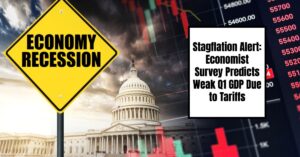
Stagflation Alert: Economist Survey Predicts Weak Q1 GDP Due to Tariffs

March 31, 2025 by Marco Santarelli

Stagflation Alert: Economist Survey Predicts Weak Q1 GDP Due to Tariffs

Ever get that uneasy feeling, like something just isn't quite right with the way things are going? That's the vibe I'm getting when I look at the latest economic forecasts. A recent CNBC survey of 14 economists points to a significant slowdown in growth, with the economic growth in the first quarter of this year projected to be a meager 0.3%. This sluggish pace, the weakest since the pandemic recovery, is largely attributed to the chilling effect of new tariffs, which appear to be creating conditions ripe for stagflation – a nasty combination of slow growth and persistent inflation.

Economist Survey Predicts Weak Q1 GDP Due to Tariffs

It feels like just yesterday the economy was showing some decent momentum, but these new numbers paint a starkly different picture. Seeing growth plummet from the previous quarter's 2.3% to a near standstill is definitely cause for concern. And the fact that core inflation, as measured by the Personal Consumption Expenditures (PCE) price index, the Federal Reserve's preferred gauge, is expected to remain stubbornly high around 2.9% for most of the year only adds fuel to this worrying outlook.

Why the Sudden Slowdown? The Tariff Tango

From where I'm sitting, the main culprit seems pretty clear: the uncertainty and the actual implementation of new, sweeping tariffs from the current administration. It's like throwing sand in the gears of the economic machine. Businesses become hesitant to invest, and consumers, facing potentially higher prices, tighten their purse strings.

We're already seeing signs of this in the real economic data. The Commerce Department recently reported that inflation-adjusted consumer spending in February barely budged, rising by a paltry 0.1%, following a 0.6% decline in January. This is a significant drop from the robust spending growth we saw in the last quarter of the previous year. As Barclays economists noted, the earlier decline in sentiment is now translating into a tangible slowdown in economic activity.

Another factor playing a role is a noticeable surge in imports. Now, on the surface, more goods coming into the country might seem like a good thing. However, in the context of impending tariffs, it appears businesses are rushing to bring in goods before the higher taxes kick in. While this might offer some short-term relief in terms of supply, these imports actually subtract from the GDP calculation. It's a bit of a temporary distortion, but it contributes to the weak first-quarter growth number.

Stagflation's Shadow: A Looming Threat

The prospect of stagflation is particularly troubling. Think about it: slow economic growth means fewer job opportunities and potentially stagnant wages. At the same time, persistent inflation erodes the purchasing power of the money we do have. It's a squeeze on both ends, and it can be incredibly difficult to break free from.

The CNBC survey highlights that core PCE inflation isn't expected to fall convincingly until the very end of the year. This stubbornness will likely tie the Federal Reserve's hands. While the market might be hoping for interest rate cuts to stimulate the slowing economy, the Fed will be hesitant to lower rates while inflation remains well above their target. It's a tricky situation, a real balancing act with potentially significant consequences.

Not All Doom and Gloom? A Glimmer of Hope

It's important to note that not all economists are predicting a complete downturn. The survey indicates that only a couple of the 12 economists who provided specific growth numbers for the first quarter foresee negative growth. And importantly, none are forecasting consecutive quarters of contraction, which is often a key indicator of a recession.

Oxford Economics, for instance, while having one of the lowest Q1 growth estimates (-1.6%), anticipates a rebound in the second quarter, projecting GDP growth to bounce back to 1.9%. Their reasoning is that the surge in imports during the first quarter will eventually translate into positive contributions to growth as these goods are either added to inventories or sold to consumers. It's a bit of a delayed effect.

Recession Risks on the Rise

Despite the hopes for a rebound, the margin for error looks slim. An economy growing at a snail's pace of 0.3% is incredibly vulnerable to any further shocks. And with the new tariffs expected to be implemented this week, the risks of slipping into negative territory have definitely increased.

As Mark Zandi of Moody's Analytics aptly put it, even though their baseline forecast doesn't show a decline in GDP, the mounting global trade war and potential cuts to jobs and funding create a “good chance GDP will decline in the first and even the second quarters of this year.” He further warns that a recession becomes likely if the president doesn't reconsider the tariffs by the third quarter. That's a pretty stark warning from a respected economist.

Moody's Analytics themselves are projecting a slightly better first quarter growth of 0.4%, with a rebound to 1.6% by the end of the year. However, even this more optimistic scenario still represents growth that is modestly below the long-term trend.

My Take: Navigating Choppy Waters

Personally, I find these forecasts deeply concerning. While I understand the arguments sometimes made in favor of tariffs – like protecting domestic industries – the potential for widespread economic disruption and the creation of stagflationary conditions seem to outweigh any perceived benefits in this current climate.

The interconnected nature of the global economy means that tariffs rarely have a unilateral effect. They often lead to retaliatory measures from other countries, resulting in a trade war that hurts businesses and consumers on all sides. The uncertainty created by these policies also discourages investment, which is crucial for long-term economic growth and job creation.

The fact that inflation is proving to be so sticky further complicates matters. The Federal Reserve's usual toolkit for dealing with slow growth – lowering interest rates – becomes less effective when inflation is still a significant problem. They risk further fueling price increases if they ease monetary policy prematurely.

Looking Ahead: A Need for Course Correction?

The coming months will be critical. We'll need to closely monitor economic data, particularly consumer spending, business investment, and inflation figures, to see if the anticipated rebound materializes or if the risks of a more significant downturn become reality.

It seems to me that a reassessment of the current trade policies might be necessary to avoid potentially serious economic consequences. Finding ways to foster international trade and cooperation, rather than erecting barriers, could be a more sustainable path to healthy economic growth.

In the meantime, businesses and individuals will need to navigate this period of uncertainty with caution. For businesses, this might mean carefully managing costs and delaying major investment decisions. For individuals, it could mean being mindful of spending and saving where possible.

The economic forecast for the first quarter serves as a stark reminder that policy decisions have real-world impacts. I sincerely hope that policymakers take these warnings seriously and consider adjustments to avoid the specter of stagflation becoming a reality.

Work With Norada – Build Wealth

With economists warning of stagflation and weak Q1 GDP due to tariffs, now is the time to invest in stable, income-generating real estate for financial security.

Norada’s turnkey rental properties provide consistent cash flow and long-term wealth, no matter the economic climate.

Speak with our expert investment counselors (No Obligation):

(800) 611-3060

Get Started Now

Read More:

  • Goldman Sachs Significantly Raises Recession Probability by 35%
  • 2008 Crash Forecaster Warns of DOGE Triggering Economic Downturn
  • Stock Market Predictions 2025: Will the Bull Run Continue?
  • Stock Market Crash: Nasdaq 100 Tanks 3.5% Amid AI Concerns
  • Stock Market Crash Prediction With Huge Discounts on Bitcoin, Gold, Houses
  • S&P 500 Forecast for the Next Year: What to Expect in 2025?
  • Stock Market Predictions for the Next 5 Years
  • Billionaire Warns of Stock Market Crash If Harris Wins Elections
  • Stock Market is Predicted to Surge Regardless of the Election Outcome
  • Echoes of 1987: Is Today’s Stock Market Crash Leading to a Recession?
  • Is the Bull Market Over? What History Says About the Stock Market Crash
  • Wall Street Bear Predicts a Historic Stock Market Crash Like 1929
  • Economist Predicts Stock Market Crash Worse Than 2008 Crisis
  • Stock Market Forecast Next 6 Months
  • Next Stock Market Crash Prediction: Is a Crash Coming Soon?
  • Stock Market Crash: 30% Correction Predicted by Top Forecaster
Filed Under: Economy, Stock Market Tagged With: Economic Forecast, Economy, Federal Reserve, GDP, inflation, Stagflation, Tariffs

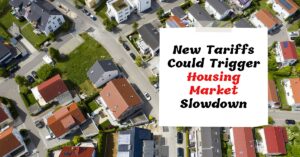
New Tariffs Could Trigger Housing Market Slowdown in 2025

March 18, 2025 by Marco Santarelli

New Tariffs Could Trigger Housing Market Slowdown in 2025

Tariffs can potentially shake up the U.S. housing market. We're talking about a situation where new taxes on imported goods, like building materials, can ripple through the economy and make things more expensive for everyone, especially those looking to buy or build a home. It's a complex issue with a lot of moving parts, and that's what I want to explore with you.

Have you ever felt like you're walking through a maze where every turn seems to lead to another twist? That's kind of how I feel when trying to understand the economy sometimes, especially when things like tariffs get thrown into the mix. As someone who’s kept a close eye on the market for a while now, I've seen firsthand how seemingly small changes can have big impacts on people’s lives and finances.

This isn't just about numbers and graphs; it’s about real families trying to find a place to call home. A report from Redfin also highlighted these very concerns, which just confirms that I am not just pulling these concerns out of thin air. So, let's break down how these new tariffs, especially those from countries like Canada, Mexico, and China, might affect the housing market, shall we?

Will New Tariffs Cause a Slowdown in the U.S. Housing Market?

The Inflation Equation: Tariffs and Higher Prices

First off, the biggest concern with tariffs is inflation. When we slap taxes on imported goods, those costs don’t magically disappear; they usually get passed down to us, the consumers. Think about it – a 25% tariff on building materials from Canada and Mexico and 10% on China? That means wood, steel, and all sorts of other things needed to build a house suddenly become pricier. That extra cost can mean higher home prices or less money for other improvements.

Now, things aren't always that straightforward. Inflation's impact isn't always a direct, easy-to-predict line. Here's why:

  • Substitution: How easy is it for companies to find alternatives to those tariffed goods? If it’s hard to find substitutes, prices will likely go up even more. If it’s easy, the inflationary pressure might be less. For example, if the U.S. can easily import from other countries not subjected to these tariffs, then the price effect will be lower. But, at the moment that doesn't seem to be the case, since the proposed tariffs apply to so many countries at once.
  • Currency Exchange: The value of a country’s currency can also play a role. A weaker currency might offset some of the higher prices from tariffs. But this effect is difficult to predict.
  • The Timing: What’s happening in the broader economy matters too. If the economy is experiencing low inflation, tariffs might not push it over the edge. But, as we’re experiencing right now, with the Fed’s ongoing battle with inflation, tariffs could make their job much harder. This brings me to my next point…

The Fed's Tightrope Walk: Interest Rates and Inflation

Now, what’s the Federal Reserve, the folks in charge of keeping our economy in check, going to do? Usually, when inflation starts climbing, the Fed might raise interest rates to cool things down. I've seen this play out before, and it can affect the mortgage rates that people pay when they buy a home.

Here's where it gets tricky. The Fed might not be too worried about inflation if it’s due to something that’s not likely to be sustained, like these new tariffs. Back in 2018, they sort of “looked through” similar tariffs because inflation was already low, and they were more concerned about slow economic growth. However, things are different now. With inflation still a concern, I'm not sure that they will just let this pass.

Here's what I think will happen:

  • Hesitation: If the tariffs go into effect and we start seeing more inflation, the Fed will likely hesitate to cut rates. They've been trying hard to get inflation under control and probably won't want to jeopardize that progress.
  • No New Hikes: I do not foresee that the Fed will hike rates further, because that will further weaken the economy, but what they will most certainly do is to prolong keeping rates high, for longer. That means no immediate relief in sight for mortgage rates.

The Bond Market's Response: The Real Game-Changer

Where mortgage rates go depends largely on what bond markets do. Bond markets are like the mood ring of the financial world – they react to what they expect will happen in the future. These markets have already priced in the possibility of new tariffs as it became clear that President Trump was likely to return to office. So, we're in a wait-and-see situation, depending on how exactly these policies are implemented versus what markets were already anticipating.

My personal opinion is that the bond market's reaction is the key factor here. If the market thinks that these tariffs are just the beginning, we will see further increases in mortgage rates. If they think this is a one time event, then it might not be as bad.

Recommended Read:

Will Trump Lower Mortgage Interest Rates in 2025?

US Housing Market Sees Worst Year for Sales Since 1995

Housing Market and Mortgage Outlook January 2025: A Positive Trajectory

Construction Costs: Building More Expensive Homes

Tariffs won't just affect the overall economy; they'll also hit specific parts of the housing market hard. Construction costs are one of them. A huge chunk of our building materials, like lumber, come from Canada. If these imports get slapped with tariffs, builders will be paying a lot more.

Here's what I anticipate happening:

  • Higher Costs: These added expenses will either lead to higher prices for new homes or might cause builders to scale down their projects. They cannot absorb these costs forever.
  • Supply Issues: If builders reduce the number of new projects due to these tariffs, that will also affect the housing supply in the longer run. This would mean even fewer homes available, possibly driving up existing home prices.

Economic Growth: A Balancing Act

These tariffs can also weaken overall economic growth. How much, though, depends on how Canada, Mexico and China decide to respond. If they retaliate with their own tariffs, that could reduce trade further and push our economies lower.

The US economy is already experiencing a slow down because of higher interest rates, and tariffs will act as another headwind. If this continues, it will impact employment and in turn lower the housing demand too.

Here is a summary of some of the key issues at stake:

Impact Area Potential Effect
Inflation Increased costs for goods, potentially leading to higher prices for everything, including housing.
Mortgage Rates Likely to remain higher for longer due to the potential impact on inflation and the Fed's reaction.
Construction Higher building material costs, potentially increasing new home prices and/or decreasing supply.
Economic Growth Risk of slower economic growth due to retaliatory tariffs and lower consumer demand due to inflation. This could impact the labor market and housing demand.

My Final Thoughts

So, what's the overall picture here? Personally, I believe that these tariffs pose a significant risk to the U.S. housing market. They could lead to higher prices, slower sales, and less new construction. It’s like adding fuel to the inflation fire which will inevitably affect the housing market.

But, let’s be clear: we’re not talking about doomsday scenarios here. The specific details of these policies, along with how the Fed and bond markets react, will play a huge role. We’re in a period of uncertainty. It's important to keep a watchful eye on developments in the coming months, and I'll certainly be following these events closely.

Work with Norada in 2025, Your Trusted Source for Investment

in the Top Housing Markets of the U.S.

Discover high-quality, ready-to-rent properties designed to deliver consistent returns.

Contact us today to expand your real estate portfolio with confidence.

Contact our investment counselors (No Obligation):

(800) 611-3060

Get Started Now 

Recommended Read:

  • Housing Market Forecast 2025: Affordability Crisis Will Continue
  • Lower Mortgage Rates Will Reignite the Housing Demand in 2025
  • NAR Predicts 6% Mortgage Rates in 2025 Will Boost Housing Market
  • Housing Market Forecast for the Next 2 Years: 2024-2026
  • Housing Market Predictions for the Next 4 Years: 2025 to 2028
  • Housing Market Predictions for Next Year: Prices to Rise by 4.4%
  • Housing Market Predictions for 2025 and 2026 by NAR Chief
  • Real Estate Forecast Next 5 Years: Top 5 Predictions for Future
  • 2008 Forecaster Warns: Housing Market 2024 Needs This to Survive
  • Real Estate Forecast Next 10 Years: Will Prices Skyrocket?

Filed Under: Housing Market, Real Estate Market Tagged With: Housing Market, Housing Market 2025, housing market crash, Housing Market Forecast, housing market predictions, Housing Market Trends, Real Estate Market, Tariffs

  • « Previous Page
  • 1
  • 2

Real Estate

  • Birmingham
  • Cape Coral
  • Charlotte
  • Chicago

Quick Links

  • Markets
  • Membership
  • Notes
  • Contact Us

Blog Posts

  • 30-Year Fixed Mortgage Rate Drops Sharply by 98 Basis Points
    January 18, 2026Marco Santarelli
  • Today’s Mortgage Rates, January 18: Rates Steadily Hold Below 6% for 30-Year Loan
    January 18, 2026Marco Santarelli
  • Cheapest Florida Beach Vacations for 2026: Affordable Beaches
    January 18, 2026Marco Santarelli

Contact

Norada Real Estate Investments 30251 Golden Lantern, Suite E-261 Laguna Niguel, CA 92677

(949) 218-6668
(800) 611-3060
BBB
  • Terms of Use
  • |
  • Privacy Policy
  • |
  • Testimonials
  • |
  • Suggestions?
  • |
  • Home

Copyright 2018 Norada Real Estate Investments

Loading...

