Norada Real Estate Investments

  • Home
  • Markets
  • Properties
  • Membership
  • Podcast
  • Learn
  • About
  • Contact

Top 10 Counties With the Biggest Home Price Gains in Q4 2025

January 15, 2026 by Marco Santarelli

Top 10 Counties With the Biggest Home Price Gains in Q4 2025

If you're keeping an eye on the housing market, you know that prices have been a hot topic. Well, the data is in for the last quarter of 2025, and it shows some serious upward movement in home values in specific areas across the United States. According to ATTOM's Q4 2025 U.S. Home Affordability Report, a definitive look at the housing market reveals that Jefferson County, Alabama saw the most significant jump in median home prices, with an impressive 31% year-over-year increase. This report gives us a crucial snapshot of where the housing market is heating up fastest.

It’s easy to feel a bit overwhelmed by all the real estate news out there, especially with prices constantly shifting. What I've learned from years of following these trends is that while the national picture is important, the real story often lies in the more local data. These specific county-level gains tell us a lot about what's driving demand, what kind of economic activity is happening, and where people are finding opportunities. It's not just about numbers; it’s about the pulse of communities.

Understanding the Housing Price Surge: What's Driving These Gains?

Before we dive into the specific counties that made the biggest leaps, it's important to understand why these price increases are happening. ATTOM's report paints a picture where, for the most part, buying a home became less affordable in nearly every county analyzed. This isn't necessarily a surprise, given that the national median home price has stayed stubbornly near a record high.

However, there's a small glimmer of hope: affordability actually improved from the third to the fourth quarter of 2025 in a significant chunk of counties (86%). This suggests that while overall affordability is a challenge, some markets are seeing a slight easing of pressure, perhaps due to new inventory or a temporary slowdown in price growth within that quarter.

Over the last five years, we've seen a substantial 54% rise in the median home sales price, reaching $365,185 in Q4 2025. Compare that to wages, which, according to the U.S. Bureau of Labor Statistics for the second quarter of 2025, only rose by 29%. This gap highlights the ongoing affordability challenges many homeowners and aspiring buyers are facing.

Of the counties analyzed by ATTOM that met a population threshold of at least 100,000 residents and had at least 50 home sales in Q3 2025, a considerable number (69.5%) experienced year-over-year price increases. These are the counties that are truly showing the most dynamic growth.

Top 10 Counties With the Biggest Home Price Gains in Q4 2025

Now, let's get to the exciting part – the counties where home prices have seen the most dramatic year-over-year increases, according to ATTOM's Q4 2025 report. These are the places that have experienced significant appreciation in home values.

Here are the top 10:

  • #10 – Oswego County, New York
    • Year-over-Year Percentage Change in Median Home Price: 19%
    • Q4 2025 Median Sales Price: $184,369
    • Oswego County, situated on the shores of Lake Ontario, is seeing its housing market heat up. This increase suggests growing demand, potentially driven by its natural beauty, access to outdoor activities, and perhaps a spillover effect from more expensive neighboring areas.
  • #9 – Jefferson County, New York
    • Year-over-Year Percentage Change in Median Home Price: 20%
    • Q4 2025 Median Sales Price: $208,000
    • Another New York county making the list, Jefferson County, home to Fort Drum and the Thousand Islands region, is experiencing a notable rise in home values. This could be linked to economic stability from military presence, tourism, and a general increase in desirability.
  • #8 – Calcasieu Parish, Louisiana
    • Year-over-Year Percentage Change in Median Home Price: 20%
    • Q4 2025 Median Sales Price: $199,000
    • Located in southwestern Louisiana, Calcasieu Parish is showing strong home price growth. This region is known for its industrial base, particularly in petrochemicals and energy. Economic growth in these sectors often translates directly into a stronger housing market.
  • #7 – Dallas County, Iowa
    • Year-over-Year Percentage Change in Median Home Price: 20%
    • Q4 2025 Median Sales Price: $358,500
    • This Iowa county, part of the Des Moines metropolitan area, is experiencing robust price appreciation. As a growing suburban area, it likely benefits from job opportunities in the capital city and a desirable quality of life for families.
  • #6 – Mercer County, Pennsylvania
    • Year-over-Year Percentage Change in Median Home Price: 21%
    • Q4 2025 Median Sales Price: $133,500
    • Mercer County is demonstrating a significant jump in its housing market. While the median price is still relatively low compared to some others on this list, a 21% increase is substantial and indicates a surge in demand and possibly a correction from previous lower valuations.
  • #5 – Lorain County, Ohio
    • Year-over-Year Percentage Change in Median Home Price: 21%
    • Q4 2025 Median Sales Price: $255,000
    • Situated west of Cleveland, Lorain County is seeing its home values climb. Proximity to a major metropolitan area, along with its own developing economy and attractive communities, likely contributes to this price growth.
  • #4 – Madison County, Illinois
    • Year-over-Year Percentage Change in Median Home Price: 22%
    • Q4 2025 Median Sales Price: $220,000
    • Madison County, across the Mississippi River from St. Louis, Missouri, is experiencing impressive home price gains. This region often benefits from the economic influence of its larger neighbor, coupled with its own local development and housing market dynamics.
  • #3 – Lancaster County, South Carolina
    • Year-over-Year Percentage Change in Median Home Price: 23%
    • Q4 2025 Median Sales Price: $265,297
    • This South Carolina county is a standout performer with a 23% increase. Its location in the rapidly growing Charlotte metropolitan area is a significant factor. As Charlotte continues to attract businesses and people, its surrounding counties often see a corresponding boom in housing demand and prices.
  • #2 – Potter County, Texas
    • Year-over-Year Percentage Change in Median Home Price: 25%
    • Q4 2025 Median Sales Price: $196,875
    • In the Texas Panhandle, Potter County, which includes Amarillo, is showing a substantial 25% leap in home prices. The energy sector and agricultural presence in this part of Texas are strong economic drivers that can directly influence the real estate market.
  • #1 – Jefferson County, Alabama
    • Year-over-Year Percentage Change in Median Home Price: 31%
    • Q4 2025 Median Sales Price: $196,000
    • Taking the top spot, Jefferson County, Alabama, with Birmingham as its hub, has seen an extraordinary 31% increase in median home prices. This significant gain suggests a dynamic economic environment, potentially driven by job growth, an influx of new residents, or perhaps a rebound in a market that was previously undervalued. Birmingham has been making strides in diversifying its economy, and this housing data certainly reflects that progress.

My Take: What These Numbers Really Mean

From my perspective, these county-level reports are far more telling than just broad national statistics. When you see a county like Jefferson in Alabama jump by 31%, it’s not arbitrary. It points to underlying economic strength, increased desirability, and a robust demand that's outstripping supply. It’s a sign that that particular community is becoming a more sought-after place to live.

I do notice a trend where counties adjacent to or within commuting distance of major metropolitan areas (like Dallas County, Iowa, near Des Moines; Lorain County, Ohio, near Cleveland; Madison County, Illinois, near St. Louis; and Lancaster County, South Carolina, near Charlotte) are showing significant gains. This “spillover effect” is a common pattern. As housing becomes less affordable in the core cities, buyers look to surrounding areas, driving up prices there.

It's also interesting to see counties with strong industrial or energy sectors (Calcasieu Parish, Louisiana; Potter County, Texas) also appear. These sectors can create well-paying jobs, attracting people and bolstering local economies, which naturally heats up the housing market.

While these price gains are positive for homeowners, they definitely underscore the ongoing challenge of affordability for new buyers. The gap between wage growth and home price appreciation remains a critical issue that policymakers and market participants will need to address. It makes me wonder about the long-term sustainability of these rapid increases and what they mean for the next generation of homebuyers.

Ultimately, the ATTOM Q4 2025 U.S. Home Affordability Report and these specific county figures offer a fascinating glimpse into a housing market that continues to evolve. Keeping an eye on these trends can provide valuable insights for buyers, sellers, and anyone interested in the economic health of these communities.

🏡 2 Amazing Properties Available for Investors

Port Charlotte, FL
🏠 Property: Aldridge Ave
🛏️ Beds/Baths: 3 Bed • 2 Bath • 1548 sqft
💰 Price: $339,900 | Rent: $2,195
📊 Cap Rate: 5.8% | NOI: $1,643
📅 Year Built: 2025
📐 Price/Sq Ft: $220
🏙️ Neighborhood: A+

VS

Punta Gorda, FL
🏠 Property: Oceanic Rd
🛏️ Beds/Baths: 6 Bed • 4 Bath • 3032 sqft
💰 Price: $639,900 | Rent: $4,895
📊 Cap Rate: 6.9% | NOI: $3,685
📅 Year Built: 2025
📐 Price/Sq Ft: $212
🏙️ Neighborhood: B+

Florida’s A+ affordable rental vs Punta Gorda’s larger high‑yield property. Which fits YOUR investment strategy?

We have much more inventory available than what you see on our website – Let us know about your requirement.

📈 Choose Your Winner & Contact Us Today!

Talk to a Norada investment counselor (No Obligation):

(800) 611-3060

View All Properties

Also Read:

  • U.S. Household Real Estate Value Drops by $361 Billion From Record High
  • Top 10 Housing Markets Set to Deliver High ROI in 2026
  • 10 Hottest Housing Markets of 2026: From Hartford to Milwaukee
  • Top 10 Most Popular Housing Markets of 2025 for Homebuyers
  • Will Real Estate Rebound in 2026: Top Predictions by Experts
  • Housing Market Predictions for the Next 4 Years: 2026, 2027, 2028, 2029
  • Housing Market Predictions for 2026 Show a Modest Price Rise of 1.2%
  • Housing Market Predictions 2026 for Buyers, Sellers, and Renters
  • 12 Housing Markets Set for Double-Digit Price Decline by Early 2026
  • Rise of AI-Powered Hyperlocal Real Estate Marketing in 2025
  • Real Estate Forecast Next 5 Years: Top 5 Predictions for Future
  • 5 Hottest Real Estate Markets for Buyers & Investors in 2025

Filed Under: Housing Market, Real Estate Market Tagged With: Federal Reserve, Housing Market, real estate

U.S. Household Real Estate Value Drops by $361 Billion From Record High

January 14, 2026 by Marco Santarelli

U.S. Household Real Estate Value Drops by $361 Billion From Record High

Listen up, homeowners and aspiring buyers – the latest numbers are in, and they show a slight dip in how much our houses are worth. The total value of U.S. households' real estate has dropped by $361 billion from its peak, settling in at just over $48 trillion in the third quarter of 2025. While this might sound alarming, I want to assure you that this is a modest adjustment, and overall, our homes are still worth a whole lot more than they were just a few years ago.

As someone who's been watching the housing market for years, this kind of fluctuation isn't exactly a shocker. We've seen incredible growth in home values over the past decade, far more than doubling in many areas. So, a small dip isn't necessarily a sign of doom and gloom, but it's definitely worth understanding what's behind it.

U.S. Household Real Estate Value Drops $361B From Record High

What's Driving the Real Estate Value Drop?

The Federal Reserve's Z.1 Financial Accounts data gives us this snapshot, and it’s corroborated by insights from Realtor.com®. Senior Economist Jake Krimmel points to a small quarterly drop in the Case-Shiller Home Price Index as a key player in this decrease. Think of the Case-Shiller index as a way to track how home prices are changing over time across major cities. When it dips even a little, it can ripple out and affect the overall national value.

But it's not just one thing. Several factors are subtly nudging the market. Persistently high mortgage rates, which have been lingering in the 6%-8% range throughout 2024 and 2025, are a big one. When borrowing money to buy a house becomes more expensive, it naturally puts a damper on demand and, consequently, prices.

Beyond that, we're seeing climbing property taxes and insurance costs. These aren't always included in the purchase price, but they add to the overall cost of homeownership. For many, these rising expenses are making it a tougher pill to swallow, even if the initial purchase price seems manageable.

And then there's the inventory. For a while, there just weren’t enough homes for sale. Now, some homeowners are realizing that those historically low interest rates they locked in a few years ago are probably not coming back anytime soon. So, they’re starting to put their homes on the market, which can lead to a slight tick up in housing inventory. More homes for sale means more choice for buyers, and potentially less upward pressure on prices.

Homeowner Equity: Still Strong?

Now, let's talk about what this means for homeowners. A big concern for many is how much equity they have – the difference between what their home is worth and what they owe on their mortgage. The good news is that even with this recent dip, owners' equity in real estate remains robust. In the first quarter of 2025, homeowners' equity share was around 72%. That's a really healthy number and acts as a significant cushion. It means most people still have a substantial amount of money tied up in their homes that they truly “own.” This strong equity position is a major reason why most experts don't see a repeat of the 2008 housing crash on the horizon.

What Does the Future Hold?

Looking ahead, Realtor.com® forecasts a 2.2% annual home price gain for 2026. That's a bit higher than the estimated 2% increase in 2025. However, and this is where things get a touch more nuanced, the forecast also suggests that inflation might outpace these price gains. This means that in “real” terms – adjusted for inflation – homeowners might see a slight decline in their home's purchasing power.

Krimmel puts it this way: “We forecast 2.2% home price gains but the homeownership rate to tick slightly down. In total, real estate values will be steady in 2026, but at the local level home values often diverge from national trends.”

This last part is crucial. National averages can be misleading. Some areas, especially those that saw massive price surges during the pandemic – think parts of coastal Florida or Austin, Texas – are experiencing a more notable softening in their home values. Conversely, other markets might continue to see modest growth. It really emphasizes the importance of looking at your specific local market rather than just the big picture.

A Mixed Bag for Buyers and Sellers

For potential buyers, this cooling market could offer a slightly better environment. We’re expecting existing home sales to grow about 1.7% to 4.13 million units. Combined with that potential increase in inventory, buyers might find more options and a bit more room to negotiate. However, those persistent high mortgage rates will still be a factor.

For sellers, it means the days of receiving multiple offers above asking price within hours of listing might be less common, at least for now. It’s a return to a more balanced market, where thoughtful pricing and good presentation are key.

Debt vs. Equity: A Balancing Act

It's also worth noting the other side of the financial coin: debt. In the third quarter of 2025, household debt increased by 4.1%, a slight uptick from the previous quarter. Mortgage debt specifically saw a notable $108 billion spike. This increase in debt, while potentially concerning, is happening alongside strong homeowner equity. It’s a complex financial equation, but the overall picture suggests homeowners are generally in a solid position, even with these subtle shifts.

Overall, the U.S. household real estate market is demonstrating resilience. While we've seen a small retreat from peak values, it's more of a gentle recalibration than a harsh correction. Understanding the underlying causes and looking at local market dynamics will be key for anyone navigating this ever-evolving space.

🏡 2 Amazing Properties Available for Investors

Port Charlotte, FL
🏠 Property: Aldridge Ave
🛏️ Beds/Baths: 3 Bed • 2 Bath • 1548 sqft
💰 Price: $339,900 | Rent: $2,195
📊 Cap Rate: 5.8% | NOI: $1,643
📅 Year Built: 2025
📐 Price/Sq Ft: $220
🏙️ Neighborhood: A+

VS

Punta Gorda, FL
🏠 Property: Oceanic Rd
🛏️ Beds/Baths: 6 Bed • 4 Bath • 3032 sqft
💰 Price: $639,900 | Rent: $4,895
📊 Cap Rate: 6.9% | NOI: $3,685
📅 Year Built: 2025
📐 Price/Sq Ft: $212
🏙️ Neighborhood: B+

Florida’s A+ affordable rental vs Punta Gorda’s larger high‑yield property. Which fits YOUR investment strategy?

We have much more inventory available than what you see on our website – Let us know about your requirement.

📈 Choose Your Winner & Contact Us Today!

Talk to a Norada investment counselor (No Obligation):

(800) 611-3060

View All Properties

Also Read:

  • Top 10 Housing Markets Set to Deliver High ROI in 2026
  • 10 Hottest Housing Markets of 2026: From Hartford to Milwaukee
  • Top 10 Most Popular Housing Markets of 2025 for Homebuyers
  • Will Real Estate Rebound in 2026: Top Predictions by Experts
  • Housing Market Predictions for the Next 4 Years: 2026, 2027, 2028, 2029
  • Housing Market Predictions for 2026 Show a Modest Price Rise of 1.2%
  • Housing Market Predictions 2026 for Buyers, Sellers, and Renters
  • 12 Housing Markets Set for Double-Digit Price Decline by Early 2026
  • Real Estate Forecast: Will Home Prices Bottom Out in 2025?
  • Housing Markets With the Biggest Decline in Home Prices Since 2024
  • Why Real Estate Can Thrive During Tariffs Led Economic Uncertainty
  • Rise of AI-Powered Hyperlocal Real Estate Marketing in 2025
  • Real Estate Forecast Next 5 Years: Top 5 Predictions for Future
  • 5 Hottest Real Estate Markets for Buyers & Investors in 2025

Filed Under: Housing Market, Real Estate Market Tagged With: Federal Reserve, Housing Market, real estate

Why Bank of America Predicts Just Two Fed Rate Cuts in 2026

January 7, 2026 by Marco Santarelli

Interest Rate Predictions: Bank of America Sees Two Fed Cuts in 2026

Bank of America Global Research is signaling a significant shift in the Federal Reserve's interest rate policy down the road. They're forecasting two interest rate cuts in 2026, specifically in June and July. For us regular folks trying to make sense of it all, this means the cost of borrowing money could start to ease up a couple of years from now, as the Fed looks to keep the economy humming along.

Now, why would the Fed, which has been so focused on taming inflation by raising rates, suddenly start cutting them? It's a complex picture, and as someone who’s spent a good chunk of time watching these economic cycles, I can tell you it’s all about balance. Bank of America's economists point to a few key reasons for this future forecast: a cooling labor market, potential changes in the Fed's leadership, and the delayed impact of the rate hikes we've already seen.

Why Bank of America Predicts Just Two Fed Rate Cuts in 2026

What's Driving This Forecast? Let's Break It Down.

When I look at economic forecasts, I'm always searching for the “why.” It's not enough to just know what might happen; understanding the underlying currents is what gives us real insight.

The Sputtering Engine: A Weakening Labor Market

One of the biggest clues Bank of America is using is the expectation of a cooling labor market. Think about it: when jobs are plentiful and wages are climbing rapidly, it can push prices up because businesses have to pay more and, well, we have more money to spend. But if the job market starts to slow down, with fewer job openings and perhaps more people looking for work, that puts less pressure on wages and, by extension, on inflation.

  • Rising Unemployment: Even a small tick up in unemployment can signal that the economy is losing steam, and the Fed tends to react to this.
  • Slowing Wage Growth: When paychecks aren't growing as fast, people tend to spend less, which can help cool down demand and inflation.

This isn't about the economy crashing, mind you. It's more about the economy finding a more sustainable pace after a period of high demand. The Fed's job is to keep things from overheating or from falling into a deep slump.

A New Captain at the Helm? The Influence of Fed Leadership

This is a fascinating point raised by Bank of America. The term for the current Fed Chair, Jerome Powell, expires in May 2026. This means there's a real possibility of a new appointment.

Why does this matter so much? The Federal Reserve Chair is a massively influential figure. They don't just have a vote; they set the tone, guide the discussion, and often have a significant hand in shaping the consensus among the Federal Open Market Committee (FOMC) members.

  • Dovish vs. Hawkish: Generally, a “dovish” Fed leans towards lower interest rates to support employment and growth, while a “hawkish” Fed prioritizes fighting inflation by keeping rates higher. A new Chair, appointed by a different administration, might bring a different philosophy.
  • Shifting the Committee: It's not just the Chair. Over time, a new administration can appoint other members to the Fed's Board of Governors. This can gradually shift the overall leanings of the entire committee.

While economic data is always the primary driver, a highly anticipated change in leadership can certainly influence market expectations and the Fed's forward guidance.

The Balancing Act: Growth, Inflation, and Time

Bank of America isn't predicting a recession here. In fact, they're actually more optimistic than many others about the US economy in 2026, expecting 2.4% GDP growth. This is a significant point because it suggests they believe the Fed can cut rates without letting inflation get out of control.

How can they cut rates and still get growth?

  • Lagged Effects of Previous Cuts: Monetary policy is like a slow-moving ship. The rate hikes we've seen take time to really work their way through the economy. By the time 2026 rolls around, the full impact of those higher rates might be felt, allowing for some easing.
  • Business Investment & Fiscal Stimulus: Bank of America also points to increased business investment – companies spending more on equipment, technology, and expansion – and potential fiscal stimulus (government spending) as drivers of growth. This can provide a boost to the economy even if interest rates aren't super low.

However, it's not all smooth sailing. They also warn of risks like sticky inflation (inflation that's hard to bring down) and the possibility of AI-driven bubbles in certain markets, which could create unexpected volatility.

Where Do Rates End Up?

Bank of America's forecast, building on a projected cut in December 2025, suggests these two cuts in 2026 would bring the federal funds rate target range down to between 3.00% and 3.25%.

To give you some context, the federal funds rate is the target rate that banks charge each other for overnight loans. It influences a wide range of interest rates in the economy, from mortgages and car loans to credit cards and business loans. So, a shift down in this range would generally mean borrowing costs become more affordable.

Beyond the Rate Cuts: A Broader Economic Picture

It's always helpful to see the bigger picture. Bank of America’s outlook for 2026 extends beyond just interest rates:

  • GDP Growth: As I mentioned, they're relatively bullish with a 2.4% GDP growth expectation for the end of 2026.
  • Inflation Forecast: They see headline and core PCE inflation around 2.6% and 2.8% respectively by year-end 2026. Core CPI is expected to be about 2.8%. They acknowledge that tariffs could keep inflation a bit stubborn in the short term.
  • Labor Market: Job growth is projected to average 50,000 per month, with the unemployment rate settling slightly lower at 4.3% by late 2026.
  • Housing Market: Expect a pretty flat housing market in terms of price appreciation, but with more homes coming onto the market.
  • Stock Market and Commodities: Interestingly, they have a strong outlook for the S&P 500, targeting 7100 by year-end 2026, driven by earnings growth. They also forecast significant price increases for commodities like copper and gold.

What This Means for You and Me

While these forecasts are for 2026, they offer a valuable glimpse into the long-term thinking of some of the smartest minds in finance.

  • For Borrowers: If this forecast holds true, it suggests a time when taking out a mortgage, a car loan, or financing a business might become cheaper.
  • For Savers: On the flip side, if interest rates come down significantly, the returns on savings accounts and certificates of deposit (CDs) might also decrease.
  • For Investors: The optimistic outlook for stocks and commodities suggests potential opportunities, though this always comes with risks.

It’s crucial to remember that economic forecasting is an art, not an exact science. A lot can happen between now and 2026. However, understanding these projections from institutions like Bank of America helps us prepare for potential shifts in the economic environment.

Invest in Real Estate While Rates Are Dropping — Build Wealth

Lower borrowing costs would boost cash flow and enhance overall returns, especially for those positioned to act quickly

Work with Norada Real Estate to find turnkey, income-generating properties in stable markets—so you can capitalize on this easing cycle and grow your wealth confidently.

NEW TURNKEY DEALS JUST ADDED!

Talk to a Norada investment counselor today (No Obligation):

(800) 611-3060

Get Started Now

Want to Know More?

Explore these related articles for even more insights:

  • Why Your Loan Payment Isn’t Budging Despite Recent Fed Rate Cut
  • How Does the Recent Fed Rate Cut Impact Your Personal Finances
  • How Will Today's Fed Rate Cut Impact Mortgage and Refinance Rates
  • Fed Interest Rate Decision Today: Latest News and Predictions
  • Fed Meeting Today is Poised to Deliver the Third Interest Rate Cut of 2025
  • Fed Interest Rate Predictions Signal 70% Chance of December 2025 Cut
  • Fed Meeting Minutes Expose Divide: Why December Rate Cut Odds Are Fading Fast
  • Fed Interest Rate Predictions for the December 2025 Policy Meeting
  • Fed Signals Growing Reluctance to Interest Rate Cut in December 2025
  • Fed Cuts Interest Rate Today for the Second Time in 2025
  • Fed Interest Rate Forecast for the Next 12 Months
  • When is Fed's Next Meeting on Interest Rate Decision in 2025?
  • Market Reactions: How Investors Should Prepare for Interest Rate Cut
  • Impact of Interest Rate Cut on Mortgages, Car Loans, and Your Wallet
Filed Under: Economy, Financing Tagged With: Economy, Fed, Federal Reserve, interest rates

Meet the Two Kevins Leading the Race for the Next Fed Chair in 2026

December 31, 2025 by Marco Santarelli

Meet the Two Kevins Leading the Race for the Next Fed Chair in 2026

The battle to decide who will control America's money supply has whittled down to a tale of two Kevins. Kevin Warsh, a former Federal Reserve governor with deep ties to Wall Street, and Kevin Hassett, the current director of the National Economic Council and a staunch Trump loyalist, are the clear frontrunners to replace Jerome Powell when his term ends in May 2026. While both are conservative economists, they offer President Trump drastically different paths: Warsh represents the traditional, independent “guardian of the currency,” while Hassett largely represents a vision of a Fed more aligned with the White House's political goals.

Meet the Two Kevins Leading the Race for the Next Fed Chair

It feels like every time I turn on the financial news, the speculation has reached a fever pitch. And for good reason—Meet the Two Kevins Leading the Race for the Next Fed Chair isn't just a catchy headline; it is the single most important decision for the global economy in the coming year.

The Current State of Play: A Sudden Shift

If you had asked me a few months ago, I would have bet on the loyalist. But money talks, and right now, the smart money is moving.

We have seen a fascinating reversal in the prediction markets. According to data tracked by Kalshi throughout December 2025, the momentum has swung violently. Just look at the numbers:

Candidate Odds in Early Dec 2025 Odds by Late Dec 2025 Trend
Kevin Hassett 81% 41% 📉 Dropping
Kevin Warsh 11% 47% 📈 Surging
Others 8% 12% ➡️ Flat

Source: Kalshi prediction markets.

Why the sudden change? From what I gather, it comes down to a fear that Hassett might be “too close to Trump.” A recent CNBC report highlighted pushback from influential figures around the President who worry that appointing a pure loyalist might spook the markets. When investors get scared that a Fed Chair will print money just to help a President generally, they sell bonds, and interest rates spike. That is the exact opposite of what Trump wants.

Kevin Warsh: The Wall Street “Adult in the Room”

Let’s dig into the first contender. Kevin Warsh, 55, is what I would call the “safe pair of hands” for the banking sector. He isn't just an academic; he is a guy who has been in the trenches.

Warsh has a resume that screams establishment. He spent seven years at Morgan Stanley working in mergers and acquisitions. He speaks the language of the trading floor. But his real claim to fame came when President George W. Bush nominated him to the Fed Board of Governors at age 35. That is incredibly young for central banking.

In my opinion, Warsh’s strongest selling point is his track record during the 2008 financial crisis. He was the primary liaison between the Fed and Wall Street. Imagine being the guy on the phone with terrified CEOs while the global economy is melting down. He worked side-by-side with Ben Bernanke and Timothy Geithner to keep the system from collapsing.

However, Warsh isn't a rubber stamp for easy money. In fact, he famously resigned from the Fed in 2011, well before his term was up. Why? Because he was critical of Quantitative Easing (QE)—the Fed's policy of buying massive amounts of bonds. He worried it would cause inflation. Given that we have just lived through a massive inflationary period, Warsh looks pretty prescient right now.

  • Key Advantage: Trusted by Wall Street; proven crisis manager.
  • Key Risk: Theoretically hawkish (might hesitate to cut rates if inflation risks remain).

Kevin Hassett: The Loyal Political Economist

On the other side of the ring is Kevin Hassett, 62. If Warsh is the banker, Hassett is the academic warrior.

Hassett has a PhD from Penn and has been a fixture in Republican politics for decades, advising everyone from McCain to Romney. During Trump's first term, he chaired the Council of Economic Advisers and was a massive force behind the 2017 corporate tax cuts. Currently, he is serving as the director of the National Economic Council, making him Trump's right-hand man on the economy.

But there is a bit of history here that I find impossible to ignore. In 1999, Hassett co-authored a book called Dow 36,000. He predicted the stock market would hit 36,000 by 2005. Spoiler alert: It didn't happen until November 2021. While economists get things wrong all the time, that book has followed him around like a shadow.

The worry with Hassett isn't his intellect; it's his independence. In August 2025, he defended Trump's controversial firing of the head of the Bureau of Labor Statistics. To me, that is a red flag. The Fed relies on data. If the person leading the Fed is seen as manipulating or ignoring data to please the President, the credibility of the US Dollar takes a hit.

  • Key Advantage: aligned with Trump’s pro-growth tax vision; deep White House experience.
  • Key Risk: Perceived lack of independence; potentially erratic monetary policy.

The Independence Factor: Why It Matters to You

You might be wondering, “Why should I care which Kevin gets the job?”

Here is the bottom line: Inflation vs. Jobs.

The Federal Reserve is supposed to be independent. They are like the referee in a football game. If the referee starts betting on one team (the President's political party), the game is rigged.

Jamie Dimon, the CEO of JPMorgan Chase, has reportedly signaled support for Warsh. Dimon knows that if Hassett gets in and cuts interest rates too aggressively just to boost the economy before an election, inflation could roar back. High inflation eats into your paycheck.

Hassett has gone on TV (CBS's Face the Nation) to do some damage control. He stated that Trump’s voice would carry “no weight” on Fed decisions unless it was based on data. But actions speak louder than words. Major bond investors have already complained to the Treasury Department. They are terrified that Hassett equates to political loyalty over economic stability.

My Take: The Market Is Voting for Warsh

Looking at the landscape (oops, I promised not to use that word!), looking at the current situation, I believe the shift toward Kevin Warsh tells us what we need to know.

President Trump loves loyalty, but he loves a booming stock market more. If the bond market revolts because they fear Hassett is a puppet, interest rates on mortgages and credit cards will skyrocket, crushing the economy. Trump is a businessman; he knows that Kevin Warsh offers the credibility that keeps investors calm.

Trump has personally met with Warsh and asked him if he can be trusted to back rate cuts. This suggests Trump is looking for a middle ground: someone the markets trust, but someone who isn't opposed to growth.

What Hangs in the Balance?

We are likely to get an announcement in early 2026. Treasury Secretary Scott Bessent is running the selection process right now. While there are other names on the list—like Fed Governors Christopher Waller and Michelle Bowman, or BlackRock’s Rick Rieder—it is clearly a race between the two Kevins.

This choice represents a fork in the road for the American economy:

  1. The Warsh Path: A return to orthodox, Wall Street-friendly central banking with a focus on fighting inflation.
  2. The Hassett Path: An experimental fusion of fiscal and monetary policy where the line between the White House and the Fed blurs.

As we wait for May 2026, keep an eye on the 10-year Treasury yield. If it spikes, the market is nervous about Hassett. If it stabilizes, they are pricing in Warsh.

In the end, as the two Kevins lead the race for the next Fed Chair, we aren't just looking at resumes. We are looking at the future value of the money in our pockets.

Build Wealth & Passive Income with Real Estate in 2026

The race between Kevin Warsh and Kevin Hassett to become the next Fed Chair will shape interest rates and America’s money supply—directly influencing mortgage costs and financing opportunities for investors.

Norada Real Estate helps you stay ahead of Fed policy shifts with turnkey rental properties designed for cash flow, appreciation, and long‑term wealth—so you can invest smart no matter who leads the Fed.

🔥 HOT 2026 INVESTMENT LISTINGS JUST ADDED! 🔥
Talk to a Norada investment counselor today (No Obligation):
(800) 611-3060

Get Started Now

Want to Know More?

Explore these related articles for even more insights:

  • Who Will Push Interest Rates Lower in 2026 After Powell's Term Ends
  • Why Your Loan Payment Isn't Budging Despite Recent Fed Rate Cut
  • How Does the Recent Fed Rate Cut Impact Your Personal Finances
  • How Will Today's Fed Rate Cut Impact Mortgage and Refinance Rates
  • Fed Interest Rate Decision Today: Latest News and Predictions
  • Fed Meeting Today is Poised to Deliver the Third Interest Rate Cut of 2025
  • Fed Interest Rate Predictions Signal 70% Chance of December 2025 Cut
  • Fed Meeting Minutes Expose Divide: Why December Rate Cut Odds Are Fading Fast
  • Fed Interest Rate Predictions for the December 2025 Policy Meeting
  • Fed Signals Growing Reluctance to Interest Rate Cut in December 2025
  • Fed Cuts Interest Rate Today for the Second Time in 2025
  • Fed Interest Rate Forecast for the Next 12 Months
  • When is Fed's Next Meeting on Interest Rate Decision in 2025?
  • Market Reactions: How Investors Should Prepare for Interest Rate Cut
  • Impact of Interest Rate Cut on Mortgages, Car Loans, and Your Wallet

Filed Under: Economy, Financing Tagged With: Economy, Fed, Federal Reserve, interest rates

Why Your Loan Payment Isn’t Budging Despite Recent Fed Rate Cut

December 13, 2025 by Marco Santarelli

Why Your Loan Payment Isn't Budging Despite Recent Fed Rate Cut

It’s a common frustration: you hear on the news that the Federal Reserve has cut interest rates, and you’re hopeful your loan payment might finally get a little cheaper. But then, when your next bill comes, nothing has changed. If your loan payment isn't budging despite a recent Fed rate cut, it's almost certainly because you have a fixed-interest-rate loan, and those rates are locked in for the life of the loan, immune to the Fed's actions.

Why Your Loan Payment Isn't Budging Despite Recent Fed Rate Cut

I’ve seen this confusion time and time again. People assume that any change in the Fed’s benchmark rate automatically trickles down to their personal loans, car payments, or mortgages. While that’s true for some types of loans, it's not the universal rule many believe it to be. Understanding why your payment remains the same is key to managing your personal finances effectively, especially in a fluctuating economic environment.

The Fixed vs. Variable Game: Where Your Rate Stands

The main reason your loan payment is likely holding steady is the type of interest rate your loan carries.

  • Fixed-Rate Loans: The vast majority of consumer loans you’ll encounter – think most mortgages, auto loans, and personal loans – come with fixed interest rates. The moment you sign on the dotted line, you’ve agreed to a specific rate that won't change for the entire duration of the loan. Whether the Fed cuts rates or hikes them, your interest rate, and therefore your payment, stays the same. This predictability is a huge benefit for budgeting, but it also means you won't see immediate relief when rates fall.
  • Variable-Rate Loans: On the flip side, loans with variable interest rates are directly influenced by benchmark rates like the prime rate, which is tied to the Fed funds rate. Common examples include credit cards, home equity lines of credit (HELOCs), and adjustable-rate mortgages (ARMs). If you have one of these, you should expect to see your interest rate and monthly payment adjust, usually within one to two billing cycles after the Fed makes its move.

Understanding the Prime Rate and Its Connection to the Fed

For those with variable-rate loans, the mechanism is quite straightforward. The Federal Reserve directly influences the federal funds rate, which is essentially the overnight interest rate banks charge each other for borrowing money. This, in turn, has a direct and rapid impact on the prime rate.

Here’s how it typically works:

  • Prime Rate Adjustment: When the Fed cuts its target rate by, say, 0.25%, major banks usually follow suit and lower their prime rate by the same amount, often within a day or two.
  • “Plus 3%” Formula: The prime rate is consistently set about 3 percentage points above the upper limit of the federal funds rate target. This predictable relationship makes the adjustment straightforward for financial institutions.
  • Direct Impact: This adjustment directly affects variable-rate loans. If your credit card interest rate is “prime + 10%,” and the prime rate drops by 0.25%, your interest rate also drops by 0.25%.

The speed at which this happens is important. Because banks want to stay competitive and reflect the current cost of borrowing, they are quick to adjust their prime rates after an FOMC (Federal Open Market Committee) announcement.

Beyond the Fed Funds Rate: What Else Influences Your Loan Rate?

Even if you have a variable-rate loan, or if you're looking for a new loan, it’s crucial to remember that the Fed funds rate isn't the only player in town. Several other factors contribute to the interest rates you see offered by lenders.

The Fed Funds Rate is Just One Piece of the Puzzle

The federal funds rate is a short-term benchmark. It directly influences other short-term rates, but its connection to longer-term loan rates, like a 30-year mortgage, is more indirect.

  • Long-Term Rates: For longer-term loans, especially mortgages, lenders look more closely at the yields on longer-term government bonds, such as the 10-year Treasury note. These yields are influenced by a broader set of economic expectations.

Market Expectations and “Priced In” Rates

Here’s a fascinating aspect of financial markets: they are forward-looking.

  • Anticipating Moves: Often, the bond market and lenders will anticipate Fed rate cuts (or hikes) before they officially happen. This means that the rates offered for new loans may have already adjusted in the weeks leading up to the Fed’s announcement. So, even if the Fed just cut rates, the market might have already priced that in.
  • The Information Train: Think of it like this: if there's widespread expectation that the Fed will cut rates, lenders will start offering new loans at slightly lower rates in anticipation. By the time the official announcement is made, the market has already digested the news.

Other Economic Forces at Play

Beyond direct Fed actions and market expectations, a variety of other economic conditions influence lending rates:

  • Inflation Expectations: If lenders and economists expect inflation to rise, they will demand higher interest rates on loans to ensure their returns keep pace with rising costs.
  • Economic Growth: Strong economic growth can lead to increased demand for loans, which can push rates up. Conversely, fears of a recession might prompt a Fed cut to stimulate borrowing and investment.
  • Supply and Demand for Credit: Like any market, the cost of borrowing (interest rates) is affected by how much money lenders are willing to lend and how many people or businesses want to borrow.

Lender Discretion: Not Always a Straight Line

While the Fed sets the stage, individual lenders have some leeway.

  • Profit Margins: For certain products, like credit cards, the interest rate is often set at a significant margin above the prime rate. Lenders have discretion in how tight or wide those margins are.
  • Speed of Adjustment: While banks usually adjust their prime rates quickly, the actual implementation for your specific loan product might take a bit longer, depending on the lender's internal processes.

So, What Can You Do if Your Loan Payment Isn't Budging?

My personal philosophy on personal finance is to always be proactive. If you’re seeing lower interest rates in the market and you’re stuck with a higher fixed rate, don’t just sit on your hands. There are actionable steps you can take.

The Power of Refinancing Fixed-Rate Loans

If you have a fixed-rate loan and current interest rates are significantly lower than what you’re paying, refinancing is often your best bet.

  • What is Refinancing? Simply put, you're taking out a new loan to pay off your old loan. The goal is to secure a lower interest rate, which reduces your monthly payment and can save you a substantial amount of money over the life of the loan.
  • Is it Worth It? This is the million-dollar question. Refinancing isn't free. You’ll incur closing costs, which can include fees for loan origination, appraisals, title insurance, and more. These typically range from 2% to 6% of the new loan amount.
  • Calculating the Break-Even Point: To see if refinancing makes financial sense, you need to calculate your break-even point. This is the number of months it will take for your monthly savings to recoup the upfront closing costs.For example, if your closing costs are $4,000 and you’ll save $200 per month on your payments, it will take 20 months ($4,000 / $200) to break even. If you plan to stay in your home or keep the loan for longer than 20 months, refinancing is likely a sound move.
  • Other Factors to Consider:
    • How Long You Plan to Stay: This is crucial. If you plan to sell your home before you hit the break-even point, you’ll end up losing money.
    • The Interest Rate Drop: While the old rule of thumb was to aim for at least a 1% drop in interest rate, even a smaller reduction (0.50% or 0.75%) can be beneficial if your loan amount is large and you plan to keep the loan for many years.
    • Loan Term: Refinancing into a shorter term (e.g., from a 30-year mortgage to a 15-year) can save you a fortune in interest and build equity faster, though your monthly payment might increase slightly. Refinancing into a new, longer term can lower your monthly payment but increase the total interest paid over the life of the loan.
    • Home Equity and Credit Score: A good credit score (generally 620+) and significant home equity (owning at least 20% of your home’s value) are essential to qualify for the best refinance rates.
    • Other Financial Goals: You might consider refinancing for reasons beyond just a lower payment, such as a cash-out refinance to consolidate debt or fund a major expense. In these cases, the cost-benefit analysis becomes more complex.

Shop Around for New Loans and Credit Cards

If you're in the market for a new loan or a credit card, take advantage of the current rate environment.

  • Compare Offers: Don’t settle for the first offer you receive. Shop around with multiple lenders, credit unions, and online banks.
  • Read the Fine Print: Pay close attention to the advertised Annual Percentage Rate (APR), fees, and any terms and conditions. A slightly lower advertised rate might come with higher fees that negate the savings.
  • Understand Variable Rates: If you're getting a variable-rate product, understand how it's tied to the prime rate and what the potential for future increases looks like.

A Final Thought on Your Loan Payment

It’s easy to feel misled when you hear about Fed rate cuts and see no change in your loan payments. But understanding the difference between fixed and variable rates, and recognizing the many factors that influence lending, empowers you to make smart financial decisions. Don't be afraid to crunch the numbers, explore your options, and take proactive steps to ensure your borrowing costs are as low as they can be. Your financial future will thank you for it.

Invest in Real Estate While Rates Are Dropping — Build Wealth

Lower borrowing costs would boost cash flow and enhance overall returns, especially for those positioned to act quickly

Work with Norada Real Estate to find turnkey, income-generating properties in stable markets—so you can capitalize on this easing cycle and grow your wealth confidently.

NEW TURNKEY DEALS JUST ADDED!

Talk to a Norada investment counselor today (No Obligation):

(800) 611-3060

Get Started Now

Want to Know More?

Explore these related articles for even more insights:

  • How Does the Recent Fed Rate Cut Impact Your Personal Finances
  • How Will Today's Fed Rate Cut Impact Mortgage and Refinance Rates
  • Fed Interest Rate Decision Today: Latest News and Predictions
  • Fed Meeting Today is Poised to Deliver the Third Interest Rate Cut of 2025
  • Fed Interest Rate Predictions Signal 70% Chance of December 2025 Cut
  • Fed Meeting Minutes Expose Divide: Why December Rate Cut Odds Are Fading Fast
  • Fed Interest Rate Predictions for the December 2025 Policy Meeting
  • Fed Signals Growing Reluctance to Interest Rate Cut in December 2025
  • Fed Cuts Interest Rate Today for the Second Time in 2025
  • Fed Interest Rate Forecast for the Next 12 Months
  • When is Fed's Next Meeting on Interest Rate Decision in 2025?
  • Market Reactions: How Investors Should Prepare for Interest Rate Cut
  • Impact of Interest Rate Cut on Mortgages, Car Loans, and Your Wallet
Filed Under: Economy, Financing Tagged With: Economy, Fed, Federal Reserve, interest rates

How Does the Recent Fed Rate Cut Impact Your Personal Finances

December 13, 2025 by Marco Santarelli

How Does the Recent Fed Rate Cut Impact Your Personal Finances

So, the Federal Reserve made a move, and you're likely wondering what that means for your hard-earned money. The recent quarter-point cut to the federal funds rate, bringing it to a target range of 3.50%-3.75%, is the third consecutive reduction, signaling a shift in economic strategy. This isn't just an abstract economic decision; it has very real, and often opposing, effects on your wallet. Simply put, borrowing just got a little cheaper, but your savings are likely to earn less.

How Does the Recent Fed Rate Cut Impact Your Personal Finances

It’s easy to get lost in the jargon, but understanding these fundamental shifts is crucial for making smart financial decisions. I've spent years watching how these moves ripple through everyday finances, and what I’ve learned is that while some people might cheer for lower loan payments, others might frown as their savings accounts offer a bit less. This is the dual nature of a Fed rate cut – it’s a two-sided coin, and you need to know how to play both sides to your advantage.

When Your Wallet Gets a Break: The Borrowing Side

One of the immediate effects of the Fed lowering its benchmark rate is that it generally makes it cheaper for banks to borrow money. This cost saving often gets passed on to consumers in the form of lower interest rates on various loans and credit products.

Credit Cards: A Little Breathing Room

If you carry a balance on your credit cards, especially those with variable interest rates, you might see a small dip in the interest you’re charged. These rates are often tied to the prime rate, which closely follows the federal funds rate. While a quarter-point might not seem like a lot, over months of carrying a balance, it can add up to a noticeable difference, potentially reducing your minimum payment slightly and meaning less of your payment goes toward just interest.

Mortgages: A Chance to Refinance or Buy

Mortgage rates are a bit more complex, influenced not just by the Fed but also by the bond market's outlook on inflation and the economy. However, a Fed rate cut often sends a signal that the market might expect lower rates in the future, and this can gradually lead to lower mortgage rates.

For those with an adjustable-rate mortgage (ARM), your payments could decrease. And if you’re in the market for a new home, you might find slightly more favorable rates. More importantly, if you have a mortgage with a decent interest rate but not a stellar one, a rate cut can be the perfect trigger to consider refinancing. This could potentially save you thousands of dollars over the life of your loan. I’ve seen clients significantly improve their monthly cash flow by strategically refinancing after a series of Fed cuts.

Auto Loans and Personal Loans: Making Big Purchases More Accessible

The affordability of larger purchases also gets a boost. Rates on new auto loans, personal loans, and even home equity lines of credit (HELOCs) tend to become more attractive. This can make that new car, a necessary home renovation, or even consolidating higher-interest debt into a more manageable loan a more financially sensible decision.

When Your Savings Get Less Love: The Flip Side

Now, for the savers among us, the news isn’t as rosy. As the cost of borrowing decreases for banks, so does the rate they can earn on their own money. This typically leads them to lower the interest rates they offer on savings products.

High-Yield Savings Accounts (HYSAs) and Money Market Accounts: Returns Soften

These are often the first places to feel the pinch. The annual percentage yields (APYs) on your HYSAs and money market accounts tend to drop relatively quickly after a Fed rate cut. While these accounts are still designed to offer better returns than traditional savings, the gap might narrow. If the Fed continues its path of rate cuts, expect these APYs to keep nudging downwards.

Certificates of Deposit (CDs): Lock in or Look Ahead

The beauty of a CD is its fixed rate. If you already have a CD, your interest rate is locked in, and you won't see any immediate change. However, any new CDs being offered by banks after a rate cut will likely come with lower APYs. This presents a strategic decision: If you believe rates will continue to fall, now might be a good time to lock in the current, still relatively decent, fixed rate for a CD.

Traditional Savings Accounts: Minimal Impact

For those who stick with basic savings accounts at large, traditional banks, the impact of a rate cut is usually minimal. These accounts typically offer very low interest rates year-round, so even a Fed cut might only shave off a fraction of a percentage point, if anything at all.

My Take: Navigating the Current Environment

As I see it, this recent move by the Fed is a clear signal: the era of chasing exceptionally high yields on the safest of savings vehicles might be winding down, at least for now. The central bank is likely trying to stimulate economic activity by making it cheaper to borrow, which is a delicate balancing act.

From my experience, people often react one of two ways: either they jump on the lower borrowing costs, or they fret about their savings. My advice? Don't just react; be deliberate. Understand both sides of the equation.

Strategic Moves for Savers in a Falling Rate World

When the Federal Reserve starts cutting rates, it's a cue for savers to become more proactive. Simply letting your money sit in a standard savings account means you’re likely losing purchasing power to inflation. Here’s what I’d be looking at:

Optimization for Short-Term Cash

  • Hunt for High-Yields: Even with slight decreases, online HYSAs and money market accounts still offer far better rates than most brick-and-mortar bank savings accounts, which can be as low as 0.40%. Don't overlook the online options for your emergency fund or any cash you need quick access to.
  • Stay Vigilant: These variable rates change. I make it a habit to periodically check the APY of my savings accounts and be ready to move my money if a competitor offers a significantly better rate. It’s a small effort for potentially a better return.
  • CDs as Anchors: If you have a portion of your savings that you won’t need for a year or three, consider opening a CD now to lock in a competitive, fixed rate before they potentially drop further.
  • CD Laddering: A smart play I often recommend is CD laddering. This means buying CDs with staggered maturity dates – say, one that matures each year for three years. This gives you periodic access to some funds while the bulk of your money is earning a higher, longer-term rate.

Revisiting Your Long-Term Investment Strategy

While safe havens might offer less, your longer-term goals might need a different approach.

  • Goals and Time Horizons: If you need money in under three years, stick to safe, liquid options like HYSAs or Treasury bills (T-bills). For goals five years or more away, you might consider investments with higher growth potential, where you can weather short-term market ups and downs.
  • Diversification is Key: In a lower-rate environment, earning decent returns often requires taking on a bit more risk or looking in different places. Consider diversifying into assets like stocks, real estate investment trusts (REITs), or dividend-paying stocks, which have historically performed well when interest rates are low.
  • Bonds: As interest rates fall, the value of existing bonds that carry higher yields tends to increase. Short-term bond funds or high-quality corporate bonds can offer a blend of yield and stability, but always remember they carry more risk than a CD.

General Financial Housekeeping

This is also a good time to shore up your overall financial health.

  • Employer Match: Never leave free money on the table. Contribute enough to your 401(k) or similar retirement plan to get the full employer match. This is one of the most straightforward ways to boost your savings significantly over time.
  • Debt Reduction: With borrowing costs potentially falling, it's an opportune moment to tackle high-interest debt, especially if you have variable-rate loans. Consider using any extra cash to pay down credit card balances or explore consolidating debt at a lower, fixed rate.

The Bottom Line

The recent Federal Reserve rate cut isn't a simple event with a single outcome. It’s a financial nudge that presents both a challenge to savers and an opportunity for borrowers. By understanding its dual impact, staying informed, and adapting your financial strategies accordingly, you can navigate these shifts effectively and keep your finances on the right track.

Invest in Real Estate While Rates Are Dropping — Build Wealth

Lower borrowing costs would boost cash flow and enhance overall returns, especially for those positioned to act quickly

Work with Norada Real Estate to find turnkey, income-generating properties in stable markets—so you can capitalize on this easing cycle and grow your wealth confidently.

NEW TURNKEY DEALS JUST ADDED!

Talk to a Norada investment counselor today (No Obligation):

(800) 611-3060

Get Started Now

Want to Know More?

Explore these related articles for even more insights:

  • How Will Today's Fed Rate Cut Impact Mortgage and Refinance Rates
  • Fed Interest Rate Decision Today: Latest News and Predictions
  • Fed Meeting Today is Poised to Deliver the Third Interest Rate Cut of 2025
  • Fed Interest Rate Predictions Signal 70% Chance of December 2025 Cut
  • Fed Meeting Minutes Expose Divide: Why December Rate Cut Odds Are Fading Fast
  • Fed Interest Rate Predictions for the December 2025 Policy Meeting
  • Fed Signals Growing Reluctance to Interest Rate Cut in December 2025
  • Fed Cuts Interest Rate Today for the Second Time in 2025
  • Fed Interest Rate Forecast for the Next 12 Months
  • When is Fed's Next Meeting on Interest Rate Decision in 2025?
  • Market Reactions: How Investors Should Prepare for Interest Rate Cut
  • Impact of Interest Rate Cut on Mortgages, Car Loans, and Your Wallet
Filed Under: Economy, Financing Tagged With: Economy, Fed, Federal Reserve, FOMC Meeting, interest rates

Fed Interest Rate Predictions for 2026 Indicate Just One Rate Cut

December 12, 2025 by Marco Santarelli

Fed Interest Rate Predictions for 2026 Indicate Just One Rate Cut

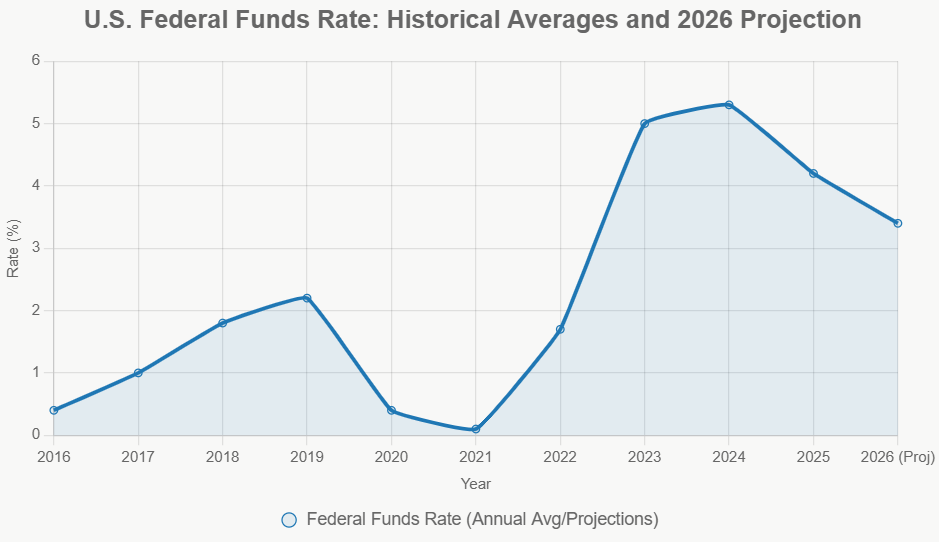
Let's talk about the big question on everyone's mind: what are the Federal Reserve's plans for interest rates in 2026? Based on their latest projections, it looks like they're aiming for just one more quarter-point interest rate cut by the end of 2026. This would bring the target for the federal funds rate down to the 3.25% to 3.5% range. But here's the thing, and I’ve seen this play out before in my years following the economy – these predictions are more like educated guesses than concrete plans. The economy is a wild horse, and we can't always predict its every move.

Fed Interest Rate Predictions for 2026 Indicate Just One Rate Cut

It's easy to get lost in the numbers and charts, but understanding what drives these decisions is key. The Fed, or the Federal Open Market Committee (FOMC) as they're formally known, just made another 0.25% cut on December 10th, 2025. This brought their main interest rate tool, the federal funds rate, to a target of 3.5% to 3.75%. This was their third cut of the year, signaling a shift from their earlier stance of keeping rates high to fight inflation.

Now, let's dive into what the folks at the Fed are thinking for 2026.

Peering into the Fed's Crystal Ball: The Official Forecasts

Every now and then, the FOMC releases what they call the Summary of Economic Projections (SEP). Think of it as their report card on where they see the economy going and what path their interest rate policy might take.

Here's a rundown of their key hopes for the end of 2026:

  • Federal Funds Rate: The big prediction is a median forecast of 3.4%. This basically means they expect the rate to land somewhere between 3.25% and 3.50% by the close of 2026, which ties into that single cut.
  • GDP Growth: They're feeling a bit more optimistic about how much the economy will grow. They've bumped up their prediction to 2.3%, which is up from the 1.8% they thought back in September.
  • Unemployment Rate: They generally expect the job market to stay pretty stable, forecasting the unemployment rate to be around 4.4%.
  • Core PCE Inflation: This is the Fed's preferred measure of inflation, and they think it will cool down to 2.5% by the end of 2026. That’s a welcome drop from the 3.0% they were projecting for the end of 2025.

More Like a Crowd: Disagreements Among the Fed Officials

What really jumps out at me from these projections, and frankly, it always does, is how much the Fed officials themselves disagree. It’s not a monolith; it’s a bunch of smart people looking at the same data and coming to different conclusions.

While the average or median prediction is for just one cut, look deeper, and you see a wide spread. Some officials think rates should end up much lower – down to 2% or 2.25%. Others, however, believe rates should stay higher, or even tick up a little.

This is a crucial point because it contrasts with what the markets are expecting. Traders in the financial world often bet on two or even more rate cuts in 2026, pushing the rates down towards or even below the 3% mark. When the Fed's thinking and the market's expectations diverge this much, it can create a lot of uncertainty and volatility. I’ve seen this lead to surprising market moves when the Fed’s actions don’t quite match what everyone was betting on.

The Economic Tightrope Walk: Why the Cautious Approach?

Fed Chair Jerome Powell has explained that they're in a tough spot. They need to balance keeping inflation in check with supporting job growth. Inflation, while coming down, is still a bit higher than their long-term goal of 2%. At the same time, the job market, while strong, shows some signs of weakening.

Their current thinking – the optimism about faster growth and cooling inflation – is what's leading them to be cautious about aggressively cutting rates. They don’t want to cut too much and risk reigniting inflation, but they also don’t want to keep rates too high and choke off the economy.

What Could Derail the Fed's 2026 Rate Path?

Okay, so the Fed is projecting one cut. But let’s be real, predicting the future is a fool’s errand, especially when it comes to something as complex as the economy. I’ve learned to always have a few “what if” scenarios in mind. Here’s what could seriously throw a wrench into their current plans:

  • Inflation Plays Hard to Get: The Fed's main job is keeping prices stable. If inflation, particularly that core PCE number they’re watching, stubbornly stays above their 2% target or, worse, starts creeping back up, they’ll have to hit the brakes on rate cuts. We could even see them consider raising rates again if things get out of hand. Think about unexpected global events or new supply chain problems – those can quickly inflate prices.
  • The Job Market Stumbles: Right now, they’re betting the unemployment rate will stay around 4.4%. But if we see a sudden jump in people losing their jobs or fewer people looking for work, that’s a clear signal for the Fed to step in and cut rates more aggressively to try and keep the economy humming and people employed.
  • The Economy Gets Too Hot: This sounds like a good problem to have, right? But if the economy starts growing much faster than their 2.3% prediction, fueled by, say, a massive tech boom or government spending, the Fed might worry about overheating. That means too much money chasing too few goods, which leads back to inflation. In this case, they might hold rates steady to cool things down.
  • A New Boss with New Ideas: Jerome Powell's term as Chair ends in May 2026. The President will pick a new Chair and likely appoint new members to the Fed board. A new leader might have a completely different philosophy on monetary policy. Someone who’s really focused on growth might push for lower rates, while a staunch inflation hawk might be more reluctant. This change in leadership could significantly shift the committee's direction.
  • Global Curveballs: The world economy is interconnected. A major international conflict, a trade war that flares up unexpectedly, or even domestic political gridlock could create massive uncertainty. These kinds of shocks can disrupt everything, forcing the Fed to react in ways they haven’t even considered today.

Tariffs: The Wild Card That Could Mess with Everything

Tariffs are a prime example of something that can seriously complicate the Fed’s plan. They’re like a tax on imported goods, and they tend to do two things: make prices go up and slow down economic growth. This creates a tough dilemma for the Fed, which has to juggle both inflation and employment.

How Tariffs Hit Inflation and the Economy

  • Higher Prices for You and Me: When tariffs are put in place, businesses that import goods have to pay more. They usually pass that cost on to consumers in the form of higher prices. This effect doesn’t just disappear overnight; it can linger and impact prices well into 2026. Some economists believe tariffs could add a full percentage point to inflation.
  • Prices Stay Higher: Even if the rate of inflation from tariffs slows down, the overall level of prices for certain goods will likely stay permanently higher than they would have been without the tariffs.
  • Messing with Supply Chains and Trade: Tariffs can disrupt how businesses get their materials, raising their costs. Plus, other countries often retaliate with their own tariffs, which can hurt American exports and slow down our economy.

Tariffs and Fed Policy in 2026

The Fed’s current prediction of a single rate cut likely assumes that the impact of any existing tariffs will fade and that no major new ones will be announced. But if tariffs cause more trouble than expected, we could see some big changes:

  • Slower Rate Cuts: If tariffs keep inflation higher than anticipated, the Fed will likely get more cautious. They might delay those planned rate cuts. Chair Powell has said they're trying to look past temporary, tariff-driven price hikes, but if they become a lasting problem, they’ll have to act.
  • Potential for Rate Hikes: In a more extreme scenario, imagine new, significant tariffs being imposed. If these lead to a surge in inflation or higher expectations for future inflation, the Fed might be forced to consider raising interest rates, which would be a huge departure from their current outlook.
  • The “Stagflation” Dilemma: Tariffs can create a nasty situation where you have higher inflation and slower economic growth (and potentially higher unemployment). This is what economists call stagflation. In such a scenario, the Fed might have to choose which goal to prioritize, making their policy moves unpredictable.
  • More Uncertainty: When there’s uncertainty about trade policy, it makes it harder for businesses to plan and invest. This general economic fuzziness can lead to shaky markets, and the Fed might feel pressured to use its tools to calm things down.

So, while the Fed's projections give us a roadmap, it's crucial to remember that the journey can be unpredictable. Keep an eye on inflation data, the job market, and any surprising policy shifts – those are the real indicators of where interest rates are headed.

Invest in Real Estate While Rates Are Dropping — Build Wealth

The Federal Reserve’s last FOMC meeting of 2025 delivered a 25 basis point cut, lowering borrowing costs and signaling continued support for a cooling economy.

For investors, this move strengthens opportunities to lock in financing for turnkey rental properties—Norada Real Estate helps you capitalize on lower rates with cash-flowing deals in strong markets.

🔥 HOT NEW LISTINGS JUST ADDED! 🔥

Talk to a Norada investment counselor today (No Obligation):

(800) 611-3060

Get Started Now

Want to Know More?

Explore these related articles for even more insights:

  • FOMC Meeting Today Expected to Announce Third Fed Rate Cut of 2025
  • Fed Interest Rate Decision Today: Latest News and Predictions
  • Fed Meeting Today is Poised to Deliver the Third Interest Rate Cut of 2025
  • Fed Interest Rate Predictions Signal 70% Chance of December 2025 Cut
  • Fed Meeting Minutes Expose Divide: Why December Rate Cut Odds Are Fading Fast
  • Fed Interest Rate Predictions for the December 2025 Policy Meeting
  • Fed Signals Growing Reluctance to Interest Rate Cut in December 2025
  • Fed Cuts Interest Rate Today for the Second Time in 2025
  • Fed Interest Rate Forecast for the Next 12 Months
  • When is Fed's Next Meeting on Interest Rate Decision in 2025?
  • Market Reactions: How Investors Should Prepare for Interest Rate Cut
  • Impact of Interest Rate Cut on Mortgages, Car Loans, and Your Wallet
Filed Under: Economy, Financing Tagged With: Economy, Fed, Federal Reserve, FOMC Meeting, interest rates

How Will Today’s Fed Rate Cut Impact Mortgage and Refinance Rates

December 12, 2025 by Marco Santarelli

How Will Today's Fed Rate Cut Impact Mortgage and Refinance Rates

You've probably heard the Federal Reserve is considering cutting interest rates today, December 10, 2025, and you're wondering, “Will this finally make my mortgage payment cheaper or make refinancing my home a no-brainer?” It's a fair question, and the short answer is: a Fed rate cut can influence mortgage and refinance rates, but it's not always a direct, slam-dunk connection. Often, the impact is more like a gentle nudge than a shove, and a lot of what's expected is already baked into the rates you see today.

How Will Today's Fed Rate Cut Impact Mortgage and Refinance Rates

This isn't just about numbers and economic jargon. It's about your wallet, your biggest investment, and making smart financial decisions. As someone who's navigated these choppy waters, I can tell you that understanding when and how these moves by the Fed actually trickle down to your mortgage is key. Think of the Fed as setting the thermostat for the entire economy, but your mortgage rate is more like a complex thermostat in a specific room – influenced, but not solely controlled, by the main setting.

The Fed's Main Tool: The Federal Funds Rate

First things first, let's clarify what the Federal Reserve actually does. The Fed doesn't directly set your mortgage interest rate. Instead, their primary tool is the federal funds rate. This is the target rate at which commercial banks lend reserve balances to each other overnight. When the Fed decides to raise or lower this rate, it's like them adjusting the prime lending rate for banks.

This action does have a ripple effect. When banks borrow money more cheaply, they tend to pass those savings on to consumers through lower interest rates on things like credit cards, auto loans, and crucially, home equity lines of credit (HELOCs). These are typically shorter-term loans, so they react more quickly and directly to changes in the federal funds rate.

Why Mortgage Rates are a Different Beast

Now, for mortgages and refinancing, it gets a bit more complicated. Most people looking for a new mortgage or considering a refinance are interested in a fixed-rate mortgage. These loans have an interest rate that stays the same for the entire life of the loan, often 15 or 30 years. Because these are long-term commitments, their rates are much more closely tied to longer-term U.S. Treasury yields, particularly the 10-year Treasury note.

Why the 10-year Treasury? Think of it this way: investors are buying these bonds, lending money to the government for 10 years. The yield (the interest they expect to earn) on these bonds is influenced by expectations about future inflation, economic growth, and the overall health of the economy over that decade. If investors expect inflation to rise or the economy to boom, they'll demand a higher yield on their bonds, which pushes mortgage rates up. Conversely, if they expect a slowdown or low inflation, yields fall, and so do mortgage rates.

This is where today's situation, as an example, becomes interesting. Imagine it's December 10, 2025, and the Fed is widely expected to cut its short-term federal funds rate by 0.25 percentage points. While this is significant for short-term borrowing, the big question for your mortgage is what the 10-year Treasury yield is doing.

The “Priced In” Phenomenon: What the Market Already Knows

One of the biggest factors influencing mortgage rates is anticipation. The financial markets are incredibly good at predicting the Fed's moves. If economists and traders believe, with high certainty (like that 90% chance of a cut we're seeing discussed), that the Fed will lower rates, this expectation is often “priced in” to the current mortgage rates before the official announcement even happens.

So, even if the Fed announces that rate cut, you might not see your mortgage rate suddenly drop by the same amount. It's like knowing a friend is coming to your party; you're excited, but the anticipation is already part of the experience. The actual arrival might not change your mood drastically.

In my experience, this is where many homeowners get a little confused. They hear “Fed cuts rates” and expect a significant drop, only to see their offers not move as much as they hoped. This is often why. The market has already adjusted.

“Hawkish Cuts” and What They Mean for You

There's another layer of complexity: the Fed's messaging. Sometimes, even when the Fed cuts rates, they might also signal that they're not done cutting, or that they're worried about inflation. This is what analysts sometimes call a “hawkish cut.”

Imagine the Fed cuts rates, but in their press conference, Fed Chair Jerome Powell hints that future cuts are uncertain, or that inflation is still a concern. This kind of talk can actually make investors nervous about the long-term economic outlook. They might think inflation could pick up later, or that the Fed might pause and even start raising rates again in the future.

In such a scenario, the 10-year Treasury yield could actually rise after the Fed announces its cut. This is because investors are looking beyond the immediate short-term rate cut and focusing on potential future economic conditions. A rising Treasury yield, as we've discussed, typically leads to higher mortgage and refinance rates, or at least halts any downward movement.

Impact on Different Mortgage Types

  • Fixed-Rate Mortgages: As mentioned, these are less directly affected by the Fed's rate cuts because they're tied to longer-term bonds.
  • Adjustable-Rate Mortgages (ARMs): These are a different story. ARMs often have interest rates tied to short-term benchmarks, like the Secured Overnight Financing Rate (SOFR). These benchmarks do tend to move more closely with the federal funds rate. So, if the Fed cuts rates, homeowners with ARMs might see their payments decrease more directly and immediately.
  • Refinance Rates: This is where the 10-year Treasury yield and market expectations play the biggest role. If the market has already priced in the cut, and the Fed signals a hawkish stance, the refinance market might remain largely unchanged, or even see a slight uptick in rates.

What to Watch For: Beyond the Headlines

If you're a homeowner looking to refinance or someone buying a new home, it's crucial to look beyond just the Fed's decision. Here's what I always advise people to pay attention to:

  • The Fed's “Dot Plot”: This is a chart showing individual Fed members' projections for future interest rates. It gives clues about their confidence in future rate cuts.
  • Fed Chair's Press Conference: This is a goldmine of information. Listen to the tone and read between the lines for hints about future policy. Are they concerned about growth? Inflation? This will heavily influence market sentiment.
  • Economic Data: Inflation reports (like the Consumer Price Index or CPI), employment figures, and GDP growth numbers are watched closely by the Fed and the bond market. These can sway future interest rate decisions.
  • Daily Rate Shopping: Don't rely on one announcement. Mortgage rates can fluctuate daily. If you're looking to refinance, keep an eye on rates and be ready to lock in a rate if you find an offer that meets your financial goals.

My Take: Stay Informed, Be Patient (But Ready to Act)

From where I stand, the Fed's decisions are just one piece of a much larger puzzle when it comes to mortgage and refinance rates. While a rate cut can create a more favorable environment, it's not a guarantee of drastically lower rates overnight for fixed-rate loans. The market's anticipation and the Fed's own messaging about future policy are often more influential.

So, while it's good to be aware of what the Fed is doing, for your own financial planning, focus on what the 10-year Treasury yield is doing and what the overall economic sentiment suggests for the future. And if you're thinking about refinancing, don't wait too long once you see a rate that feels right. The market can shift quickly, and locking in a good rate is often the smartest move.

Invest in Real Estate While Rates Are Dropping — Build Wealth

If the Federal Reserve moves forward with another rate cut in December, investors could gain a valuable window to secure more favorable financing terms and scale their portfolios ahead of renewed buyer demand.

Lower borrowing costs would boost cash flow and enhance overall returns, especially for those positioned to act quickly

Work with Norada Real Estate to find turnkey, income-generating properties in stable markets—so you can capitalize on this easing cycle and grow your wealth confidently.

NEW TURNKEY DEALS JUST ADDED!

Talk to a Norada investment counselor today (No Obligation):

(800) 611-3060

Get Started Now

Want to Know More?

Explore these related articles for even more insights:

  • Fed Interest Rate Decision Today: Latest News and Predictions
  • Fed Meeting Today is Poised to Deliver the Third Interest Rate Cut of 2025
  • Fed Interest Rate Predictions Signal 70% Chance of December 2025 Cut
  • Fed Meeting Minutes Expose Divide: Why December Rate Cut Odds Are Fading Fast
  • Fed Interest Rate Predictions for the December 2025 Policy Meeting
  • Fed Signals Growing Reluctance to Interest Rate Cut in December 2025
  • Fed Cuts Interest Rate Today for the Second Time in 2025
  • Fed Interest Rate Forecast for the Next 12 Months
  • When is Fed's Next Meeting on Interest Rate Decision in 2025?
  • Market Reactions: How Investors Should Prepare for Interest Rate Cut
  • Impact of Interest Rate Cut on Mortgages, Car Loans, and Your Wallet

Filed Under: Economy, Financing Tagged With: Economy, Fed, Federal Reserve, FOMC Meeting, interest rates

Fed Cuts Rate by 25 Basis Points in its Final FOMC Meeting of 2025

December 11, 2025 by Marco Santarelli

Fed Cuts Rate by 25 Basis Points in its Final FOMC Meeting of 2025

Well, the wait is over. The Federal Reserve, in its final meeting of 2025, has decided to cut its benchmark interest rate by 25 basis points, bringing the new target range for the federal funds rate to 3.5% to 3.75%. This move, while perhaps not a shocker, is definitely significant. For the third time this year, the Fed is acting to try and nudge the economy in a certain direction. I see this as the Fed signaling cautious optimism, a desire to support growth without overdoing it, especially as inflation is still a bit of a stubborn guest.

Fed Cuts Rate by 25 Basis Points in its Final FOMC Meeting of 2025

It's easy to get lost in the jargon, but what does this 25 basis point cut actually mean for everyday folks like you and me? Think of it like this: the federal funds rate is the temperature that influences all other borrowing costs across the country. When the Fed lowers this rate, it becomes cheaper for banks to lend money, and this can trickle down to make things like mortgages, car loans, and credit card debt a little less expensive. It's the Fed's way of saying, “Let's make it a bit easier for people and businesses to borrow and spend.”

The December 2025 FOMC Decision: A Closer Look

This latest decision wasn't a slam dunk. In fact, it was quite the opposite. For the first time since 2019, there were three dissenting votes on the Federal Open Market Committee (FOMC), the group that makes these crucial decisions. This tells me that even the experts are looking at the same economic picture and seeing different paths forward.

  • Two members, Austan Goolsbee and Jeffrey Schmid, thought it was better to just hold steady and keep rates where they were. They might be more worried about inflation or the strength of the economy holding firm.
  • One member, Stephen Miran, felt a bolder move was needed, pushing for a larger 50 basis point cut. This suggests he might be more concerned about an economic slowdown and wants to act more decisively.

This 9-3 vote breakdown shows that the path forward isn't crystal clear, and the Fed is navigating a complex economic environment. Fed Chair Jerome Powell himself described the situation as “a challenging situation,” acknowledging the delicate balance they're trying to strike.

Why the Cut? Shifting Economic Winds

So, what's prompting these cuts? The Fed has pointed to two main drivers:

  1. A Softening Labor Market: While the job market has been remarkably resilient, we're seeing signs that it's not quite as red-hot as it was. Job gains have slowed, and while the unemployment rate is still historically low, it's nudged up. The Fed wants to make sure that the labor market stays strong and doesn't stumble.
  2. Inflation Still Above Target: The good news is that inflation has been cooling, but it's still sitting above the Fed's 2% target. This is the tricky part. The Fed wants to bring inflation down without choking off economic growth. This cut is a careful step in that direction.

I've been following the Fed's actions for a while, and my take is that they're trying to engineer a “soft landing.” This means slowing down the economy just enough to cool inflation without tipping us into a recession. It's a high-wire act, and this rate cut is part of that balancing routine.

The 2026 Outlook: Slowing Down the Pace?

What's really interesting is what the Fed sees coming down the road. They released their updated Summary of Economic Projections (SEP), and it painted a picture for 2026 that suggests a more measured approach to future rate cuts.

Here's a snapshot of what they're forecasting:

  • Just One More Rate Cut in 2026: The median forecast among Fed officials points to only one additional quarter-point rate cut in 2026. This is a significant shift from the three cuts we've seen in 2025.
  • Economic Growth Picks Up: They actually revised their GDP growth forecast upwards to 2.3% for 2026, up from 1.8%. This is a positive sign that they expect the economy to keep expanding.
  • Inflation Continues to Cool: The forecast for PCE inflation is expected to cool to 2.4% by the end of 2026, showing progress towards that 2% target.
  • Unemployment Holds Steady: The unemployment rate is projected to remain unchanged at 4.4%.

Fed Chair Powell emphasized that with the new rate range, they believe they are “well positioned to wait” and see how the economy unfolds. He also made it clear that nobody is currently thinking about raising rates again, which is a reassuring signal for those worried about the economy overheating.

What Could Cause More Rate Cuts in 2026?

While the Fed is signaling a slower pace of cuts, I believe there are a few scenarios where we could see them pivot and cut rates more aggressively:

  • A Significant Deterioration in the Labor Market: This is the big one. If we start seeing large job losses and the unemployment rate shoots up significantly, the Fed would almost certainly be forced to act faster to prevent a full-blown recession.
  • Worsening Conditions for Key Groups: Even if the overall unemployment rate looks okay, if specific demographics, like college-educated workers who drive a lot of spending, start facing major job challenges, that could signal deeper economic problems.
  • Other Economic Indicators Tank: If we see a broad-based weakening in things like consumer spending and business investment, it would be a clear sign that the economy needs a bigger boost, and more rate cuts would be on the table.
  • Inflation Falls Much Faster Than Expected: While they see inflation cooling, if it suddenly drops below 2% much sooner than anticipated, the Fed would have more room to cut rates without worrying about overshooting their price stability goals.

It always comes down to the data. The Fed is constantly watching a flood of information, and these projections are just that – educated guesses. My own experience has taught me that unforeseen events can always change the game.

My Take: A Measured Approach with Room for Surprise

From where I stand, this decision reflects a Fed that is trying to be both responsible and supportive. They've done a good job of bringing inflation down from its highs without causing widespread economic pain, and this rate cut is another step in that delicate dance.

However, the dissenting votes are a stark reminder that there are differing views within the Fed, and that economic forecasting is anything but an exact science. The fact that they're projecting only one more cut for 2026 suggests they believe the economy is on a relatively stable path. But we've seen how quickly things can change.

For all of us, this means we should be paying close attention to the incoming economic reports. If the labor market shows unexpected weakness, or inflation proves more persistent than expected, the Fed's plans for 2026 could easily be rewritten. It’s a fascinating time to be watching these economic developments unfold, and I’ll be here to break down what it all means for you.

Invest in Real Estate While Rates Are Dropping — Build Wealth

The Federal Reserve’s last FOMC meeting of 2025 delivered a 25 basis point cut, lowering borrowing costs and signaling continued support for a cooling economy.

For investors, this move strengthens opportunities to lock in financing for turnkey rental properties—Norada Real Estate helps you capitalize on lower rates with cash-flowing deals in strong markets.

🔥 HOT NEW LISTINGS JUST ADDED! 🔥

Talk to a Norada investment counselor today (No Obligation):

(800) 611-3060

Get Started Now

Want to Know More?

Explore these related articles for even more insights:

  • FOMC Meeting Today Expected to Announce Third Fed Rate Cut of 2025
  • Fed Interest Rate Decision Today: Latest News and Predictions
  • Fed Meeting Today is Poised to Deliver the Third Interest Rate Cut of 2025
  • Fed Interest Rate Predictions Signal 70% Chance of December 2025 Cut
  • Fed Meeting Minutes Expose Divide: Why December Rate Cut Odds Are Fading Fast
  • Fed Interest Rate Predictions for the December 2025 Policy Meeting
  • Fed Signals Growing Reluctance to Interest Rate Cut in December 2025
  • Fed Cuts Interest Rate Today for the Second Time in 2025
  • Fed Interest Rate Forecast for the Next 12 Months
  • When is Fed's Next Meeting on Interest Rate Decision in 2025?
  • Market Reactions: How Investors Should Prepare for Interest Rate Cut
  • Impact of Interest Rate Cut on Mortgages, Car Loans, and Your Wallet

Filed Under: Economy, Financing Tagged With: Economy, Fed, Federal Reserve, FOMC Meeting, interest rates

Significant Dissent on Fed Rate Cut Expected at Today’s FOMC Meeting

December 10, 2025 by Marco Santarelli

Significant Dissent on Fed Rate Cut is Expected at Today's FOMC Meeting

It's looking like today's Federal Open Market Committee (FOMC) meeting could be quite the showdown. I'm expecting significant dissent on the Fed rate cut, perhaps more than we've seen in decades, with members likely voting in opposite directions on a potential 0.25 percentage-point reduction. This isn't just a difference of opinion; it's a fundamental disagreement about the very health of our economy and the best path forward.

When the FOMC members start squabbling, it matters. It tells us that the economic signals are murky, and the decisions ahead aren't clear-cut. This meeting is shaping up to be one of those pivotal moments where the Fed's internal divisions could really come to the surface, challenging Fed Chair Jerome Powell's ability to present a united front.

Significant Dissent on Fed Rate Cut is Expected at Today's FOMC Meeting

Why All the Fuss? Conflicting Economic Signals are the Culprit.

The core of the issue boils down to the Fed's dual mandate: maximum employment and price stability (which means keeping inflation low, around 2%). Right now, these two goals seem to be at odds with each other. Some officials see inflation as still too high and are worried about loosening the reins too soon. Others see a weakening job market and believe the Fed isn't cutting rates fast enough.

It's like trying to steer a ship with two incredibly strong winds pushing from opposite directions.

Who's Likely to Disagree and Why?

Based on what I've seen and heard, there are a few key players who are likely to voice their dissent. This isn't just about a little disagreement; we could see a division as large as eight against four or seven against five.

  • The “Keep Rates Higher” Camp (Hawks):
    • Jeffrey Schmid, President of the Kansas City Fed, is almost certainly going to be in this group. He's voiced concerns that inflation, while down from its peak, is still stubbornly above the Fed's 2% target. His argument is that cutting rates too early could reignite price increases, forcing the Fed to hike them again later – a move that would be much more disruptive to the economy. He's likely to vote for no change in interest rates.
  • The “Cut Rates More Aggressively” Camp (Doves):
    • Stephen Miran, a Fed Governor, is expected to push for a larger cut. He's concerned about the health of the labor market and believes current interest rates are holding back job growth. He might advocate for a 0.50 percentage-point (50 basis points) reduction to give the economy a bigger boost and prevent a more serious downturn.
  • The “Cautious Observers” (Soft Dissenters):
    • Beyond these two, I'm also keeping an eye on others like Alberto Musalem (St. Louis Fed President) and Susan Collins (Boston Fed President). While they might not cast a dissenting vote, their public statements suggest they are more cautious about further rate cuts. They likely share some of President Schmid's concerns about inflation and might signal in their projections (the “dot plot”) a desire for a more gradual approach to easing.

The Data Dilemma: A Confusing Economic Picture

Part of the reason for this deep division is the confusing economic data we've been getting. It's like trying to solve a puzzle with missing pieces.

  • Conflicting Indicators:
    • On one hand, we see signs of a weakening job market. Reports have shown rising unemployment and an increase in job cuts. Some private data, like the ADP report, has suggested job losses. This points to an economy that might need more support.
    • On the other hand, inflation, particularly in areas like housing and healthcare services, still seems stubbornly high. The Fed's concern is that if they cut rates too soon, these price pressures could surge again.
  • The “One Tool” Problem:
    • As Fed Chair Powell himself has noted, the Fed essentially has “one tool” – the interest rate – to manage both inflation and employment. When these two goals are pulling in opposite directions, finding a consensus becomes incredibly difficult. The risks are described as being “on the upside for inflation and to the downside for employment,” which is a classic tough spot.

What Happens When There's This Much Disagreement?

A high level of dissent can have consequences. Market confidence is a big one. If the Fed sends a message that it's deeply divided, it can lead to uncertainty in the financial markets. Investors might question the Fed's direction and its ability to steer the economy effectively. Imagine trying to follow directions from a group of people who can't agree on where to go – it creates confusion and could make people hesitant to invest or make big financial decisions.

This expected dissent isn't just a minor detail; it's a significant signal about the challenges the Fed faces. They are navigating a really tricky economic environment, and different officials are interpreting the same data in vastly different ways. How they resolve this today will tell us a lot about the path ahead. The question on everyone's mind is: will they prioritize fighting inflation, or will they focus on supporting a potentially weakening job market? The outcome of this internal debate is crucial for the economy.

Invest in Real Estate While Rates Are Dropping — Build Wealth

If the Federal Reserve moves forward with another rate cut in December, investors could gain a valuable window to secure more favorable financing terms and scale their portfolios ahead of renewed buyer demand.

Lower borrowing costs would boost cash flow and enhance overall returns, especially for those positioned to act quickly

Work with Norada Real Estate to find turnkey, income-generating properties in stable markets—so you can capitalize on this easing cycle and grow your wealth confidently.

NEW TURNKEY DEALS JUST ADDED!

Talk to a Norada investment counselor today (No Obligation):

(800) 611-3060

Get Started Now

Want to Know More?

Explore these related articles for even more insights:

  • FOMC Meeting Today Expected to Announce Third Fed Rate Cut of 2025
  • Fed Interest Rate Decision Today: Latest News and Predictions
  • Fed Meeting Today is Poised to Deliver the Third Interest Rate Cut of 2025
  • Fed Interest Rate Predictions Signal 70% Chance of December 2025 Cut
  • Fed Meeting Minutes Expose Divide: Why December Rate Cut Odds Are Fading Fast
  • Fed Interest Rate Predictions for the December 2025 Policy Meeting
  • Fed Signals Growing Reluctance to Interest Rate Cut in December 2025
  • Fed Cuts Interest Rate Today for the Second Time in 2025
  • Fed Interest Rate Forecast for the Next 12 Months
  • When is Fed's Next Meeting on Interest Rate Decision in 2025?
  • Market Reactions: How Investors Should Prepare for Interest Rate Cut
  • Impact of Interest Rate Cut on Mortgages, Car Loans, and Your Wallet
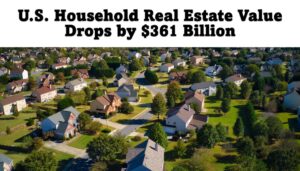
Filed Under: Economy, Financing Tagged With: Economy, Fed, Federal Reserve, FOMC Meeting, interest rates

  • « Previous Page
  • 1
  • 2
  • 3
  • 4
  • …
  • 11
  • Next Page »

Real Estate

  • Birmingham
  • Cape Coral
  • Charlotte
  • Chicago

Quick Links

  • Markets
  • Membership
  • Notes
  • Contact Us

Blog Posts

  • Should You Buy Down Your Interest Rate in 2026?
    July 30, 2026Marco Santarelli
  • Interest Rate Predictions for the Next 5 Years: 2026-2030
    July 30, 2026Marco Santarelli
  • Today’s Mortgage Rates, July 30: 30-Year Dips to 6.65%, 5/1 ARM Falls 41 Basis Points
    July 30, 2026Marco Santarelli

Contact

Norada Real Estate Investments 30251 Golden Lantern, Suite E-261 Laguna Niguel, CA 92677

(949) 218-6668
(800) 611-3060
BBB
  • Terms of Use
  • |
  • Privacy Policy
  • |
  • Testimonials
  • |
  • Suggestions?
  • |
  • Home

Copyright 2018 Norada Real Estate Investments

Loading...