Norada Real Estate Investments

  • Home
  • Markets
  • Properties
  • Membership
  • Podcast
  • Learn
  • About
  • Contact

California Housing Market Rebounds With Sales Growth in 40+ Counties

October 27, 2025 by Marco Santarelli

California Housing Market Bounces Back in September With Stronger Sales

The California housing market made a noticeable comeback in September, with home sales picking up momentum both from the previous month and from the year before. Infact, 40 out of 53 counties posted explosive annual sales growth, signaling widespread recovery. This rebound is a welcome sign for many, suggesting a stabilization after a period of uncertainty. The California housing market rebounds in September with a promising uptick in activity.

California Housing Market Rebounds With Sales Growth in 40+ Counties

As a real estate professional who's seen my share of market ups and downs, I can tell you that September felt different. There was a tangible shift in the air, a sense that potential buyers, who might have been sitting on the sidelines, were starting to feel more comfortable making a move. This isn't just about numbers; it's about the feeling of renewed confidence that permeates the market.

The CALIFORNIA ASSOCIATION OF REALTORS® (C.A.R.) reported that existing, single-family home sales reached a seasonally adjusted annualized rate of 277,410 in September. This is a solid 5 percent increase from August's 264,240 sales and a healthy 6.6 percent jump from September 2024's 260,340 sales. It's the highest sales level we've seen in about seven months, which is a great indicator of renewed activity.

Understanding the September Sales Surge

What's driving this comeback? A few things are coming into play. One significant factor is the slight easing of mortgage interest rates. While they haven't dropped dramatically, they’ve hovered in a more manageable range, making homeownership feel more attainable for a broader group of buyers. As Heather Ozur, a REALTOR® from Palm Springs, noted, “Even though rates have inched up a bit, they’re still in the low 6% range, which should help keep the market steady through the end of the year.” This has been crucial.

Also, after a relatively quiet summer, September often sees a natural increase in activity as families settle back into routines and a sense of urgency to buy before the holidays kicks in. However, this year, it feels like more than just seasonal timing; it's a genuine rekindling of interest.

The Price Picture: Modest Growth Amidst the Rebound

While sales are up, the median home price in California also saw a modest increase, though it dipped slightly compared to August. In September, the statewide median home price stood at $883,640. This is down 1.7 percent from August's $899,130. This monthly dip is pretty typical for this time of year, as the market often cools slightly after the summer.

However, looking at the year-over-year picture is where we see the positive trend. That $883,640 median price is 1.8 percent higher than the $868,150 recorded in September 2024. This marks the second consecutive month where prices have shown year-over-year gains, a sign of underlying strength.

From my perspective, this stabilization in prices is a good thing. It suggests that the market isn't overheating, nor is it in a freefall. It's finding a more balanced ground, which is ultimately healthier for long-term stability.

Jordan Levine, C.A.R. Senior Vice President and Chief Economist, offered some valuable insight here: “The housing market showed modest improvement in September, with both sales and prices up from a year ago. Steady mortgage rates may give demand a small boost heading into the fourth quarter, but broader economic uncertainty—like the ongoing government shutdown and renewed U.S.-China trade tensions—will likely keep the recovery gradual.” This highlights the delicate balance of factors at play.

Regional Variations: Where the Action Is

California is a state of diverse real estate markets, and September's rebound was felt differently across its regions. It's always exciting to see these variations because they tell a more nuanced story.

Looking at year-over-year sales on a non-seasonally adjusted basis, all of California's major regions saw growth. The stars of the show were:

  • Central Coast: A remarkable 11.8 percent increase in sales.
  • Southern California: A strong 11.3 percent increase.
  • Central Valley: A solid 10.2 percent increase.

Even the San Francisco Bay Area (9.8 percent) and the Far North (8 percent) posted healthy gains, showing that the momentum wasn't confined to just one part of the state.

This regional strength is a testament to the diverse economic drivers within California. The Central Coast, for instance, often attracts buyers looking for lifestyle and vacation properties, while the Central Valley offers more affordable entry points. Southern California, a massive and diverse market, always has its own unique pulse.

At the county level, the numbers are even more striking. 40 out of 53 tracked counties saw year-over-year sales gains.

  • Kings County led the pack with an impressive 46.3 percent increase.
  • Calaveras County followed closely with 42 percent growth.
  • Santa Cruz County also saw a significant jump of 37.9 percent.

It's also important to note where sales declined. Trinity County saw a substantial drop of 50 percent, and San Benito County fell by 23.9 percent. These outliers often point to specific local economic factors or inventory issues that are worth digging into.

Home Price Trends Across California: A Mixed Bag

When it comes to prices, most regions saw year-over-year appreciation:

  • Far North: Up 2.9 percent.
  • San Francisco Bay Area: Up 2.7 percent.
  • Southern California: Up 2.3 percent.
  • Central Coast: Up 1.2 percent.

The Central Valley was the only major region to experience a slight annual price dip, down 0.2 percent.

On the county level, the price story is also varied. Mono County saw a massive 53.4 percent increase in its median price, which can sometimes be attributed to very few high-value sales skewing the median. Other notable price gains came from Mariposa County (51.6 percent) and Del Norte County (23 percent).

Conversely, some counties saw price declines. Trinity County experienced the largest drop at 15.2 percent, with Calaveras and San Benito counties also seeing significant decreases. These figures highlight that while the statewide California housing market rebounds in September, local conditions can create very different realities.

Housing Inventory and Time on Market: A Buyers' Market Still?

One of the key metrics I always watch is the Unsold Inventory Index (UII). This tells us how many months it would take to sell all the homes currently on the market if sales continued at the September pace. In September, the UII was 3.6 months, which is a slight dip from August (3.9 months) and unchanged from September 2024.

What does this mean? Generally, a UII below 4 months indicates a seller's market, where demand outstrips supply. However, the fact that active listings have been rising for 20 consecutive months, even though the growth rate is slowing, suggests that while inventory is tight, it's not overwhelmingly restrictive for buyers.

“September marked the fifth straight month of slowing inventory growth, indicating that while supply conditions still favor buyers, momentum on the supply side is easing as the market follows its typical seasonal slowdown in the fourth quarter,” C.A.R. noted. This is a crucial point: the market is shifting, but it hasn't fully tipped into a seller's definitive advantage yet.

The time it takes to sell a home also provides insight. In September, it took an average of 32 days to sell a single-family home. This is up from 24 days in September 2024. This increase in days on market, coupled with steady inventory growth, suggests buyers have a bit more breathing room than they did a year ago. They have more time to consider their options and negotiate.

The sales-price-to-list-price ratio was 98.2 percent in September 2025, down from 100 percent in September 2024. This means that, on average, homes are selling slightly below their asking price, which is another indicator that buyers have some negotiation power.

What's Next for the California Housing Market?

The September data paints a picture of cautious optimism. The California housing market rebounds in September with sales and modest price appreciation, but there are still headwinds. Economic uncertainty, as mentioned by Jordan Levine, remains a significant factor. Geopolitical tensions and domestic policy issues can always cast a shadow over consumer confidence and, by extension, the housing market.

Mortgage rates, while currently in a better range, are always subject to change based on Federal Reserve policy and broader economic performance. A sharp uptick in rates could easily cool the nascent recovery we're seeing.

However, on the positive side, the underlying demand for housing in California remains strong. The state's population continues to grow, and the desirability of its lifestyle and economic opportunities persists. As more buyers feel confident about their financial future and the stability of interest rates, we can expect continued, albeit gradual, growth.

From my experience, the key for buyers right now is to be prepared. Have your financing in order, understand your local market dynamics, and be ready to act when the right opportunity arises. For sellers, understanding that while the market is improving, it’s not the frenzied seller’s market of a couple of years ago, is crucial. Pricing your home competitively and presenting it well will be key to a successful sale.

The September rebound is a positive step. It shows the resilience of the Californian homeowner and the inherent strength of its real estate market. While we should always be mindful of the broader economic context, this September's performance offers a hopeful glimpse into the latter part of the year and beyond.

Think Like a Smart Investor—Build Wealth Through Real Estate

Norada helps you navigate volatility by connecting you with turnkey, cash-flowing rental properties in resilient markets—so you can protect purchasing power and pursue steady income regardless of short-term rate moves.

🔥 HOT NEW LISTINGS JUST ADDED! 🔥

Talk to a Norada investment counselor today (No Obligation):

(800) 611-3060

Get Started Now

Related Articles:

  • Best Time to Buy a House in California's Largest Metros in 2025
  • California Housing Market Forecast 2026: Will it Crash or Recover?
  • California Housing Market Rebounds Driven by Lower Mortgage Rates
  • Home Prices Drop in 21 Counties in the California Housing Market
  • California Leads With Most At Risk Housing Market Counties in 2025
  • California Housing Market Decline: Sales Drop for 4th Straight Month
  • California Housing Affordability Drops in Q2 2025 Amid High Mortgage Rates
  • Is the California Housing Market Heading for a Crash or Correction?
  • California Housing Market: Forecast and Trends 2025-2026
  • California Housing Market Graph 50 Years
  • The Great Recession and California's Housing Market Crash: A Retrospective
  • California Dominates Housing With 7 of Top 10 Priciest Markets
  • Real Estate Forecast Next 5 Years California: Boom or Crash?
  • Anaheim, California Joins Trillion-Dollar Club of Housing Markets
  • California Housing Market: Nearly $174,000 Needed to Buy a Home
  • Most Expensive Housing Markets in California
  • Abandoned Houses for Free California: Can You Own Them?
  • Homes Under 50k in California: Where to Find Them?

Filed Under: Growth Markets, Housing Market, Real Estate Market Tagged With: california, Housing Market

Los Angeles Housing Market Sees 292% Growth in Home Prices Since 1975

October 26, 2025 by Marco Santarelli

Los Angeles Values Rise by a Staggering 292% Over the Last 50 Years

If you've been thinking about buying a home in Los Angeles, the numbers don't lie: Los Angeles values have risen by a remarkable 292% over the last 50 years, making it one of the nation's hottest housing markets. This incredible surge from 1975 to 2024, as detailed in a report by Realtor.com using data from the Federal Housing Finance Agency (FHFA), tells a compelling story about the city's transformation and its enduring appeal. It’s not just about numbers; it’s about how a city has reshaped itself and why people continue to flock here.

Los Angeles Housing Market Sees 292% Growth in Home Prices Since 1975

The Big Picture: A Shifting American Economy and Its Impact on Real Estate

It might seem like a long time ago, but 50 years ago, in 1975, the United States was a very different place. Think bell-bottoms, disco music, and a manufacturing-heavy economy. Fast forward to today, and we're living in a world driven by technology and services. This massive economic shift has had a profound effect on where people choose to live and, crucially, how much homes are worth.

According to Jake Krimmel, a senior economist at Realtor.com, this evolution is the key to understanding the dramatic differences in home value growth across the country. “In short,” he explains, “the U.S. moved from a manufacturing to a service and information economy, and that evolution impacted different places through their labor and housing markets. Some areas were huge winners from that shift, while some got the short end of the stick.”

The data lays this out clearly: the biggest winners were on the coasts, especially in areas that became hubs for technology and finance. On the flip side, many cities that once thrived on manufacturing saw much slower growth, or even stagnation.

California Dreamin': The West Coast Dominates Home Value Gains

When you look at the cities with the biggest home value increases over the past five decades, California cities absolutely shine. It’s no surprise to me, having witnessed the consistent pull of the Golden State for decades.

Here’s how the top contenders stacked up:

  • San Jose, CA: A stunning 396% increase. Nestled in the heart of Silicon Valley, its rise is directly tied to the tech revolution.
  • San Francisco, CA: A remarkable 300% increase. This iconic city has always been a magnet for innovation and culture.
  • Los Angeles, CA: Right behind at a strong 292% increase. My hometown continues to be a global center for entertainment, creativity, and now, so much more.
  • Seattle, WA: Coming in at 280%. Home to tech giants, its growth mirrors the booming information age.
  • San Diego, CA: With a 271% increase, this sunny city has also seen substantial property appreciation.

It's fascinating to see that half of the top 10 metros showing the largest home value increases are in California. This region has clearly been a consistent engine of economic growth and desirability.

Why the West Coast, and Los Angeles in Particular, Saw Such Explosive Growth

The success of West Coast markets like the Bay Area and my beloved Los Angeles isn't just luck. As Krimmel pointed out, these areas became massive tech hubs. Think about the ripple effect:

  • Innovation Hotbeds: Universities, cutting-edge research and development, and key companies that started shaping the digital world back in the 1980s created an environment ripe for growth.
  • Talent Magnet: These industries attracted highly skilled and well-paid professionals, leading to increased demand for housing.
  • Limited Supply: Especially in desirable coastal areas, space is limited. When you have a lot of people wanting to live in a place with finite room, prices naturally go up.
  • The “L.A. Factor”: Beyond tech, Los Angeles has always been a global center for entertainment, media, and fashion. These industries, while different from tech, also create high-paying jobs and draw people from all over the world. The lifestyle, the weather, and the sheer opportunities have cemented its status as a place many aspire to call home. I’ve seen firsthand how people are drawn to the diverse communities, the vibrant arts scene, and the constant buzz of creativity that you can only find here.
US Home Value Changes: 50-Year Analysis

🏠 US Home Value Transformation

Top Metropolitan Areas with the Greatest Home Value Increases Above Inflation (1974-2024)

Top 10 Markets by Growth Above Inflation

1

San Jose, CA

+396%

Growth Above Inflation

2

San Francisco, CA

+300%

Growth Above Inflation

3

Los Angeles, CA

+292%

Growth Above Inflation

4

Seattle, WA

+280%

Growth Above Inflation

5

San Diego, CA

+271%

Growth Above Inflation

6

Boston, MA

+196%

Growth Above Inflation

7

Riverside, CA

+179%

Growth Above Inflation

8

New York, NY

+161%

Growth Above Inflation

9

Denver, CO

+161%

Growth Above Inflation

10

Portland, OR

+154%

Growth Above Inflation

Key Insights

5/10
California Cities
in Top 10
396%
Maximum Growth
(San Jose)
239%
Average Growth
Top 10 Markets

Growth percentages shown are adjusted for inflation over 50 years (1974-2024) • Data represents real home value appreciation above the rate of inflation

East Coast Powerhouses: Finance and Tradition Drive Value

While the West Coast steals the spotlight for tech-driven booms, some traditional East Coast hubs also saw impressive gains, particularly those anchored by finance and a strong historical presence.

  • Boston, MA: Racked up a 196% increase. This historic city, a powerhouse of education and finance, has maintained its strong value.
  • New York, NY: Appreciated by 161%. As a global financial capital, the demand for housing remained incredibly high.
  • Denver, CO: Also saw a 161% increase. While not on the coast, Denver’s growth reflects its emergence as a significant economic center.

These cities benefited from similar economic shifts, with the rise of finance and service industries contributing to job growth and, consequently, higher real estate values. Krimmel also highlighted a crucial factor for these urban centers: “Highly productive and profitable industries grew local job markets and increased real estate values as a result.” He added that what further pushed prices up in places like Boston and New York was the combination of surging demand and limited supply, often due to strict zoning laws that restricted new construction.

The Tale of Two Economies: Where Home Values Lagged

On the other end of the spectrum are cities that continue to grapple with the transition away from manufacturing. These areas, which once powered the American economy with factories, haven't always had the easiest time reinventing themselves as tech or information-driven hubs.

Here are a few examples of cities with the smallest value gains:

  • Memphis, TN: A mere 2% increase. This city has faced challenges in transitioning to newer industries.
  • Cleveland, OH: Also saw a 2% increase. A former giant in steel and iron, its path to economic reinvention has been slow.
  • Birmingham, AL: Posted a 9% increase. Another city with deep manufacturing roots, it shows a more modest turnaround.
  • Pittsburgh, PA: With a 26% increase, this “Steel City” is seeing some recovery, but its growth pales in comparison to the tech giants.

As Krimmel put it, “Not only were manufacturing jobs offshored, resulting in job losses and economic plight, but many of these places did not have the capital—financial or human—to reinvent themselves as tech and finance forward hubs.” This stark difference in economic trajectory clearly shows up in home value appreciation.

Looking Ahead: What Does This Mean for Buyers and Sellers?

The data over these 50 years paints a clear picture: location, location, location has always mattered, and the economic forces shaping our nation dramatically influence real estate values. For Los Angeles, the 292% rise is a testament to its enduring appeal and adaptability. It's a city that has reinvented itself time and again, attracting talent and investment.

For anyone considering buying or selling in Los Angeles today, understanding this historical context is vital. The demand is strong, fueled by a dynamic economy and a lifestyle that continues to attract people globally. While prices are undoubtedly higher than they were decades ago, the continued growth suggests that Los Angeles remains a significant investment. From my own experience living and working here, I can tell you that the energy and opportunity that drive these value increases are palpable.

“Turnkey Rentals Outside California Offer Better Returns & Cash Flow “

Turnkey properties let you start earning rental income from day one—no renovations, no tenant hunts, no management headaches.

Work with Norada Real Estate to find vetted, cash-flowing markets tailored to your goals—so you can build steady returns without the stress.

HOT NEW LISTINGS JUST ADDED!

Speak with a seasoned Norada investment counselor today (No Obligation):

(800) 611-3060

Get Started Now 

Recommended Read:

  • Los Angeles Housing Market Booms With Double-Digit Sales Growth
  • Los Angeles Housing Market: Forecast and Trends 2025-2026
  • Los Angeles Housing Market Cools as Buyers Pullback in 2025
  • Impact of Wildfires on the Los Angeles Housing Market in 2025
  • Minimum Qualifying Income to Buy a House in Los Angeles is $219,200
  • Top 5 Richest Cities in the Los Angeles County
  • 20 Wealthy Neighborhoods in Los Angeles
  • Average Home Price in Los Angeles
  • Unveiled: The Top 5 Richest Cities in Los Angeles County You Need to Know About
  • Minimum Qualifying Income to Buy a House in Los Angeles is $219,200

Filed Under: Growth Markets, Housing Market, Real Estate Market Tagged With: Housing Market, Los Angeles

Florida Housing Market Trends: 4 Cities Turn Buyer-Friendly in 2025

October 26, 2025 by Marco Santarelli

4 Major Florida Cities Shift to Buyer-Friendly Housing Markets in 2025

The days of frantically outbidding everyone and waiving your inspection just to get a house in Florida are officially over. New data from Realtor.com® reveals that four of the state's biggest housing markets – Buyer – have finally tipped the scales in favor of people looking to buy. This is a huge shift from the feverish seller's market we’ve seen for the past few years, and it means a big change in who holds the power when it comes to finding your dream home.

Florida Housing Market Trends: 4 Cities Turn Buyer-Friendly in 2025

For what felt like forever, Florida was the poster child for the housing market on fire. Picture this: folks from all over the country, especially those looking to escape pricier cities like New York and Los Angeles, flocked to the Sunshine State. They were drawn by the promise of sunshine, more elbow room, and a dollar that seemed to stretch further. Homes were getting snatched up faster than you could blink, often for more than the asking price, and there were hardly any houses available. It was a tough time to be a buyer, to say the least.

But as is often the case with markets, things change. The steady stream of new residents moving to Florida has slowed down a bit, and importantly, there are significantly more homes on the market now. This means houses are staying put a little longer, and sellers are becoming more open to talking price or even pulling their listings if they aren’t getting the offers they hoped for. It’s a welcome relief for anyone who’s been dreaming of owning a piece of Florida.

Florida’s Inventory Surge: A Welcome Change

What’s really surprising is just how much Florida stands out in the national picture. While the country as a whole is seeing a more balanced housing market with about five months of supply (which is generally considered healthy), Florida's major metros are well past that point.

  • Miami is leading the pack, boasting an impressive 9.7 months of housing supply.
  • Orlando is right behind at 7.0 months of supply.
  • Jacksonville and Tampa are both sitting comfortably at 6.3 months of supply.

Generally, anything above six months of supply signals that buyers have more options and more power. So, all four of these major Florida cities are officially in buyer-friendly territory.

Florida: The New King of Homes for Sale

The sheer volume of homes available in Florida is a big deal. According to Realtor.com® data, Florida is offering more active listings than any other state in the nation. We're talking about over 167,000 homes for sale, which is about 15% of all the homes available across the entire country. To put that in perspective, Texas is second with nearly 140,000 listings, and California is a distant third with 77,000.

This massive increase in available homes didn’t happen overnight. In just February 2023, Florida saw the steepest jump in inventory in the entire country – a whopping 143% increase compared to the year before! This rapid buildup helped the market find its balance much faster than most other places, setting the stage for the buyer-friendly conditions we're seeing now.

How the Buyer's Market is Playing Out on the Ground

Let's break down what this really looks like in each of these popular Florida cities:

  • Miami: Known for its glitz and glamour, Miami is experiencing a significant shift. With 9.7 months of supply, it now leads the nation in homes being taken off the market. Inventory is up 24% from last year, and homes are sticking around 16 days longer. While sellers aren't dropping prices drastically across the board (only about 17% of listings have seen reductions), having so many homes available gives buyers a much better chance to negotiate.
  • Orlando: This tourist hotspot saw a huge surge in popularity during the pandemic, but that trend is cooling. With 7 months of supply, homes are taking about two weeks longer to sell than last year, and inventory has grown by almost 20%. Importantly, nearly a quarter of Orlando listings have seen price cuts, showing sellers are becoming more flexible to make a sale.
  • Jacksonville: As one of Florida’s fastest-growing metros, Jacksonville now has 6.3 months of supply. The median listing price has actually dropped by 2.6% to $399,000. What’s really telling is that almost 30% of the homes on the market have had price reductions, indicating sellers are adapting to the new market reality.
  • Tampa: Also at 6.3 months of supply, Tampa has seen a 16% increase in listings compared to last year. Over a quarter of homes have seen price cuts, and a significant number of sellers are choosing to delist their properties rather than accept what they feel are low offers, suggesting they prefer to wait it out.

This Isn't a Crash, It's a (Welcome) Cooldown

It's crucial to understand that this isn't some sort of housing market collapse. Florida's economy is still strong, with unemployment rates across these four major cities (Miami at 3.1%, Orlando at 3.6%, Jacksonville at 3.8%, and Tampa at 3.8%) all sitting below the national average. Healthy job markets and a continued influx of people mean there's still demand for housing, even as the inventory levels normalize.

Think of it less like the housing crisis of the late 2000s and more like a market finding its equilibrium. Back then, buyers were often saddled with shaky loans and less stable finances. Today, the lending standards are much tighter, and people are generally in a stronger financial position. What we're seeing in Florida is simply an overheated market taking a deep breath and settling into something more sustainable.

Why This is Great News for Buyers

For anyone who's been dreaming of owning a home in Florida, the message is clear: the conditions are finally on your side. This increase in available homes means you have more choices than you’ve had in years. Homes sitting on the market longer translate to less competition, giving you more time to consider your options and less pressure to make a rushed decision. And with a significant portion of sellers in some of these metros willing to cut prices, you have a much better chance to negotiate a deal that works for you.

As a real estate enthusiast who’s watched these markets closely, I can tell you this shift is significant. After years of sellers dictating terms, Florida is moving into a more balanced phase. This is the moment many have been waiting for – a chance to step into the Florida housing market without feeling like you have to win a bidding war or give up essential protections just to get a home. For many, right now might just be the best opportunity in years to take advantage of Florida's abundant housing supply and enjoy a more favorable playing field.

Capitalize on Florida’s Emerging Buyer-Friendly Housing Markets

With Miami, Jacksonville, Tampa, and Orlando all transitioning into buyer-friendly housing markets in 2025, investors have a rare opportunity to enter high-demand regions at more favorable prices. These shifts create the perfect setup for long-term cash flow and appreciation.

Work with Norada Real Estate to explore turnkey rental properties across Florida’s top cities—so you can build wealth through steady rental income while these markets rebalance in your favor.

NEW FLORIDA LISTINGS AVAILABLE NOW!

Speak with a seasoned Norada investment counselor today (No Obligation):

(800) 611-3060

Get Started Now 

Want to Know More About the Florida Housing Market?

Explore these related articles for even more insights:

  • Florida Housing Market Faces Fallout Amid NFIP Freeze and Permit Delays
  • Florida Housing Market Sees a Major Shift With a Jump in Pending Sales
  • Florida Housing Prices Drop for the Fifth Consecutive Month in 2025
  • Is the Florida Housing Market on the Edge of a Crash or Downturn?
  • 24 Florida Housing Markets Could See Home Prices Drop by Early 2026
  • Is the Florida Housing Market Headed for Another Crash Like 2008?
  • Key Trends Shaping the Florida Housing Market in 2025
  • This Florida Housing Market Bucks National Trend With Declining Prices
  • Florida Housing Market Crash 2.0? Analyst Warns of 2008 Echoes
  • Tax Relief Proposed as Florida Housing Market Faces Deepening Crisis
  • Florida Housing Market: Record Supply Expected to Favor Buyers in 2025
  • Florida Housing Market Forecast for Next 2 Years: 2025-2026
  • Florida Housing Market: Predictions for Next 5 Years (2025-2030)
  • When Will the Housing Market Crash in Florida?
  • South Florida Housing Market: Will it Crash?

Filed Under: Housing Market, Real Estate Market Tagged With: Buyer's Market, Florida, Housing Market

Seattle Home Values Surge by 280% Over the Last 50 Years

October 25, 2025 by Marco Santarelli

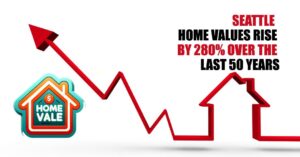
Seattle Home Values Surge by 280% Over the Last 50 Years

It’s true: if you owned a home in Seattle between 1975 and 2024, you’ve seen its value skyrocket by an incredible 280%. This isn’t just a number; it’s a story of a city transformed, and it’s important for anyone thinking about buying or selling in the Emerald City today. A report by Realtor.com, using data from the Federal Housing Finance Agency (FHFA), confirms this jaw-dropping increase, placing Seattle firmly among the top-tier cities experiencing massive property value growth over the last half-century.

This statistic doesn't surprise me at all. I remember when Seattle was primarily known for its rainy skies and coffee culture. Now, it’s a global tech powerhouse, and that shift has dramatically reshaped its housing market. This isn't just about inflation; it's about a fundamental change in what attracts people to a city and where economic opportunities lie.

Seattle Home Values Surge by 280% Over the Last 50 Years: What It Means for Today

The Tale of Two Markets: Winners and Losers Over 50 Years

What the Realtor.com report highlights is a stark division across the nation. While home values have gone up everywhere, the real story is in how much they've gone up. We're seeing a clear split between cities that benefited from the shift away from manufacturing and towards a service and information economy, and those that haven't quite made that transition.

Think of it this way: imagine two boats sailing. One is catching a powerful tailwind and speeding ahead, while the other is battling headwinds or even drifting. That’s essentially what’s happened to different cities' housing markets.

The Big Winners of the 50-Year Boom:

The data clearly shows that coastal cities, especially those that became hubs for technology and finance, are the undisputed champions.

  • San Jose, CA: Leads the pack with a staggering 396% increase. It’s the undisputed kingpin of the tech revolution.
  • San Francisco, CA: Not far behind at 300%. The iconic city by the bay has seen mind-boggling growth.
  • Los Angeles, CA: Grabs the third spot with a 292% surge. From Hollywood to Silicon Beach, L.A. has been a powerhouse.
  • Seattle, WA: Comes in at a remarkable 280%. My city, where tech giants have transformed the skyline and the economy.
  • San Diego, CA: Also sees impressive growth at 271%.

It’s interesting to note that half of the top 10 cities with the largest home value gains are in California. That's a testament to the state's economic engine, especially its tech sector.

US Home Value Changes: 50-Year Analysis

🏠 US Home Value Transformation

Top Metropolitan Areas with the Greatest Home Value Increases Above Inflation (1974-2024)

Top 10 Markets by Growth Above Inflation

1

San Jose, CA

+396%

Growth Above Inflation

2

San Francisco, CA

+300%

Growth Above Inflation

3

Los Angeles, CA

+292%

Growth Above Inflation

4

Seattle, WA

+280%

Growth Above Inflation

5

San Diego, CA

+271%

Growth Above Inflation

6

Boston, MA

+196%

Growth Above Inflation

7

Riverside, CA

+179%

Growth Above Inflation

8

New York, NY

+161%

Growth Above Inflation

9

Denver, CO

+161%

Growth Above Inflation

10

Portland, OR

+154%

Growth Above Inflation

Key Insights

5/10
California Cities
in Top 10
396%
Maximum Growth
(San Jose)
239%
Average Growth
Top 10 Markets

Growth percentages shown are adjusted for inflation over 50 years (1974-2024) • Data represents real home value appreciation above the rate of inflation. A Realtor.com® analysis of 50 years of housing data from the Federal Housing Finance Agency (FHFA)

Why Seattle and Other West Coast Cities Soared

So, what turned Seattle into a real estate rockstar, alongside cities like San Jose and San Francisco? It boils down to a few key factors that have evolved over the past 50 years:

  1. The Rise of Tech: This is the big one. Places like the San Francisco Bay Area and Seattle became magnets for bright minds and massive companies in the information technology world. Think of the foundational work done by companies that started in the '80s and '90s, and the subsequent boom in software development, cloud computing, and more recently, artificial intelligence.
  2. Job Growth and Influx of Talent: As these tech hubs grew, so did the jobs. High-paying tech salaries attracted top talent from all over the world. More people wanting to live and work in these cities means more demand for housing.
  3. Limited Supply: Especially in desirable urban areas like Seattle, there's only so much land. Building new homes, particularly in older, established neighborhoods, can be a slow and complex process. When you have a surging demand and a limited supply, prices are bound to climb. This was particularly true in cities with stricter zoning laws, like some on the East Coast, which also saw significant gains.
  4. Innovation and University Ties: These cities often have strong connections to top universities, fostering research and development that fuels further innovation. This creates a virtuous cycle of growth.

As a local observer, I’ve witnessed this firsthand. What used to be more affordable neighborhoods are now prime real estate. Coffee shops have been replaced by tech company offices, and the constant hum of innovation is palpable.

East Coast Appeal: Finance and Limited Supply

It’s not just the West Coast, though. Traditional powerhouses on the East Coast also experienced significant growth.

  • Boston, MA: Saw 196% growth. A hub for education, biotech, and finance.
  • New York, NY: Appreciated 161%. The global financial capital continues to be a massive draw.
  • Denver, CO: Also hit 161%. The Mile High City has transformed itself into a business and lifestyle destination.

Krimmel of Realtor.com points out that cities like Boston and New York also benefited from modernization and digitization, particularly in the financial services sector. But, as he notes, restrictive zoning and land-use rules played a huge role, limiting new construction and further driving up prices as demand soared.

The Struggling Markets: A Different Economic Story

On the flip side, we have cities that haven't seen the same kind of boom. These are often places that were historically reliant on manufacturing and have struggled to reinvent themselves.

  • Memphis, TN: A low 2% increase.
  • Cleveland, OH: Also hit a mere 2%.
  • Birmingham, AL: Saw a 9% increase.
  • Pittsburgh, PA: Rose 26%. This is a bit better than the lowest, but still far behind the leaders.

These cities, once powered by steel mills and factories, faced major job losses when those industries declined or moved overseas. The report explains that many of these areas lacked the capital – both financial and human expertise – to pivot effectively into high-tech or fast-growing service industries. This economic reality directly impacts
home values.

What Does This Mean for Seattle Today?

The 280% surge in Seattle home values over 50 years is a powerful indicator of its economic transformation. It means:

  • High Cost of Entry: Buying a home in Seattle is significantly more expensive than it was 50 years ago, even after adjusting for inflation.
  • Investment Potential: For those who already own property, it represents a substantial investment gain. It's a great place to have put your money if you were looking for long-term appreciation.
  • Economic Drivers are Key: The city's continued prosperity is tied to its strong tech and innovation sectors. Any shifts in these industries will have a ripple effect on the housing market.
  • Affordability Challenges: The high cost of housing is a major challenge for many residents, leading to discussions about affordability, zoning, and urban planning.

From my perspective, this isn't just about numbers on a report. I’ve seen friends and family grapple with the cost of housing here. It’s a dynamic city, and its housing market reflects that dynamism. Understanding these long-term trends is crucial for anyone trying to navigate the Seattle real estate scene, whether you’re a first-time buyer, an investor, or just curious about the city I call home.

Turnkey Investing: Passive Income Today, Financial Freedom Tomorrow

Turnkey properties let you start earning rental income from day one—no renovations, no tenant hunts, no management headaches.

Work with Norada Real Estate to find vetted, cash-flowing markets tailored to your goals—so you can build steady returns without the stress.

HOT NEW LISTINGS JUST ADDED!

Speak with a seasoned Norada investment counselor today (No Obligation):

(800) 611-3060

Get Started Now 

Want to Know More About the Seattle Housing Market?

Explore these related articles for even more insights:

  • Seattle Housing Market: Trends and Forecast 2025-2026
  • Seattle's Housing Market: $178K Income Needed for a Starter Home
  • The Hottest Housing Markets in Seattle Area in 2025
  • Seattle Housing Market Predictions for the Next 5 Years
  • Washington State Housing Market Forecast
  • Seattle Housing Market: Prices Sizzle, Ranking Among Nation’s Hottest
  • Seattle Real Estate Investment: Is it a Good Place to Invest?

Filed Under: Growth Markets, Housing Market, Real Estate Market Tagged With: Housing Market, Seattle, Seattle Home Value

San Francisco Home Values Skyrocket by 300% Over the Last 50 Years

October 25, 2025 by Marco Santarelli

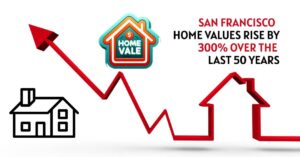
San Francisco Home Values Skyrocket by 300% Over the Last 50 Years

It’s no secret that buying a home in San Francisco feels like a monumental undertaking, a significant financial leap. But if you’ve ever wondered just how much the price of a San Francisco pad has climbed, get ready for a jaw-dropping number: San Francisco home values have risen by almost 300% over the last 50 years. That’s right, a nearly three-fold increase in the real value of your San Francisco property, when you account for inflation. This isn't just a statistic; it’s a story of transformation, economic evolution, and a city that has become a global magnet.

San Francisco Home Values Skyrocket by 300% Over the Last 50 Years

As I’ve spent years navigating the San Francisco real estate market, observing its ebb and flow, I’ve seen firsthand the incredible demand and the often staggering prices. This massive appreciation isn't a random event; it's a direct reflection of profound shifts in the American economy and the unique role San Francisco has carved out for itself on the global stage, particularly as the undisputed capital of technological innovation.

The Shifting Tides of American Economy and Real Estate

From the mid-1970s to the mid-2020s, the United States has undergone a seismic economic transformation. We’ve moved from an era dominated by manufacturing and industry to one driven by service, information, and technology. According to a deep dive by Realtor.com, analyzing five decades of data from the Federal Housing Finance Agency (FHFA), this shift has led to wildly different outcomes for cities across the country.

While home values have increased everywhere, the magnitude of that growth tells a compelling story. We're seeing a stark divide between coastal hubs that have become economic powerhouses and cities that once thrived on manufacturing but have struggled to reinvent themselves.

West Coast: The Undisputed Champions of Home Value Growth

When you look at where home values have skyrocketed, the West Coast, and especially California, stands out like a beacon. It’s no surprise that San Jose, the heart of Silicon Valley, leads the pack. From 1975 to 2024, adjusted for inflation, home values in San Jose soared by a remarkable 396%. This surge is directly tied to the rise of the tech industry, attracting brilliant minds and significant investment, creating high-paying jobs and, consequently, intense demand for housing.

And then there's San Francisco. Following closely behind San Jose, our beloved Golden City saw its home values climb by an astonishing 300% over the same period. What’s particularly insightful here is the proximity of these gains. San Jose and San Francisco, mere miles apart, represent twin pillars of the tech revolution. This close clustering of innovation and industry created a powerful economic vortex, drawing people and capital to the Bay Area like never before.

This isn't just about owning a home; it's about owning a piece of a global innovation engine. The demand for housing in these areas is fueled by more than just a desire for a nice place to live; it’s driven by career opportunities, access to groundbreaking industries, and a lifestyle that embraces forward-thinking innovation.

Table: Top Metros with Highest Inflation-Adjusted Home Value Increases (1975-2024)

Rank Metro Area Inflation-Adjusted Home Value Increase
1 San Jose, CA 396%
2 San Francisco, CA 300%
3 Los Angeles, CA 292%
4 Seattle, WA 280%
6 Boston, MA 196%

The Engine of Tech: Driving San Francisco's Ascent

As someone who has witnessed San Francisco’s evolution, I can attest to the immense impact of the technology sector. Back in the 1970s and 80s, while Silicon Valley was buzzing, San Francisco was also a vibrant city with its own unique culture and economic drivers. However, the explosion of personal computing, the internet, and then mobile technology completely reshaped the economic landscape. Companies like Apple, Google, Facebook (now Meta), and countless others either headquartered themselves or established major operations in the Bay Area.

This concentration of talent and capital created a “winner-take-all” dynamic. Highly skilled workers, drawn by the allure of groundbreaking careers and substantial salaries, flocked to the region. This influx of demand, coupled with the inherent geographical constraints of San Francisco – a peninsula with limited land for expansion – created a perfect storm for skyrocketing property values. Limited new construction, due to zoning laws and the sheer difficulty of building on the hilly terrain, further squeezed supply, pushing prices to astronomical levels.

East Coast Echoes: Finance and Innovation

While the West Coast often grabs the headlines for tech, it's important to note that other major economic hubs also saw significant gains. Cities like Boston and New York, with their strong financial sectors and esteemed universities, benefited from similar economic trends. Boston, a historic hub of education and finance, saw home values increase by a respectable 196%. New York City, the undisputed global financial capital, followed with a 161% appreciation.

These cities, like their West Coast counterparts, experienced a boom in high-paying service and information-based jobs. However, they also faced similar challenges with housing supply. Strict zoning regulations and limited space for new development in established urban cores meant that demand often outstripped supply, leading to sustained price increases.

The Other Side of the Coin: Struggling Housing Markets

The contrast between the booming coastal cities and the struggling industrial heartlands is stark. Cities that were once powered by manufacturing, jobs that have largely moved overseas or been automated, have found it difficult to adapt. Here, home value growth has been minimal, and in some cases, stagnant.

For instance, Memphis, Tennessee, and Cleveland, Ohio, cities with deep roots in manufacturing, saw inflation-adjusted home value increases of a mere 2% over the past 50 years. Birmingham, Alabama, another former industrial powerhouse, experienced a 9% rise. Pittsburgh, once the “Steel City,” saw a slightly better but still modest 26% increase.

What's the common thread here? These cities often lacked the capital—both financial and human—to successfully transition to the new economy. The loss of manufacturing jobs led to economic decline, making it harder to attract the tech and finance industries that have driven growth elsewhere. The housing market in these areas reflects this economic reality; without strong job growth and a vibrant economy, there's little pressure to drive up property values. This is a critical insight: it's not just about location, it's about the economic engine powering that location.

Looking Ahead: What Does This Mean for San Francisco?

The nearly 300% rise in San Francisco home values is a testament to the city's incredible resilience and its pivotal role in the modern economy. However, it also presents ongoing challenges. Affordability remains a major concern for residents, and the question of how to maintain a diverse and vibrant community in the face of such high living costs is a persistent debate.

As I see it, the future of San Francisco's housing market will likely remain tied to the fortunes of the tech industry. While the industry continues to innovate and attract talent, demand for housing will remain high. However, there's a growing conversation about decentralization and the possibility of more remote work impacting the need for everyone to live in the most expensive cities.

Understanding these historical trends, from the boom in tech hubs to the struggles of former industrial centers, gives us a clearer picture of the forces shaping real estate. San Francisco's story over the last 50 years is a powerful illustration of how economic shifts can radically transform a city and its housing market, proving that location, innovation, and economic opportunity are inextricable from the value of a home.

Turnkey Rental Properties = Fast Cash Flow + Lasting Wealth

Turnkey properties let you start earning rental income from day one—no renovations, no tenant hunts, no management headaches.

Work with Norada Real Estate to find vetted, cash-flowing markets tailored to your goals—so you can build steady returns without the stress.

HOT NEW LISTINGS JUST ADDED!

Speak with a seasoned Norada investment counselor today (No Obligation):

(800) 611-3060

Get Started Now

Also Read:

  • San Jose Home Values Rise by Almost 400% Over the Last 50 Years
  • San Jose Housing Market: Trends and Forecast 2025-2026
  • Average Home Price in San Jose Reaches $1.45 Million
  • $2 Million Homes: San Jose's Housing Market Reaches New Height
  • Best Time to Buy a House in California’s Largest Metros in 2025
  • Bay Area Housing Market: Prices, Trends, Forecast 2025
  • Bay Area Housing Market Forecast for the Next 2 Years
  • Bay Area Housing Market Predictions 2030
  • Bay Area Housing Market Booming! Median Prices Hit Record Highs
  • Bay Area Housing Market: What Can You Buy for Half a Million?
  • Bay Area Home Prices Skyrocket: Wealthy Buyers Fuel Market

Filed Under: Housing Market, Real Estate Market Tagged With: Bay Area, california, Housing Market, san jose

San Jose Home Values Rise by Almost 400% Over the Last 50 Years

October 24, 2025 by Marco Santarelli

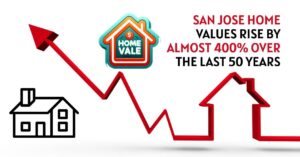
San Jose Home Values Rise by Almost 400% Over the Last 50 Years

If you lived in the San Jose area over the last 50 years, your home likely became almost four times more valuable, even after accounting for inflation. It’s a staggering number, and it tells a big story about how our country has changed. I’ve been following real estate for a while now, and the meteoric rise of Silicon Valley’s housing market is one of the most compelling economic sagas I’ve ever witnessed. It wasn't just a lucky streak; it was a fundamental shift in the American economy that reshaped places like San Jose into global powerhouses.

San Jose Area Home Values Rise by Almost 400% Over the Last 50 Years

This incredible surge in San Jose’s home values is detailed in a report by Realtor.com, which dug deep into housing data from the Federal Housing Finance Agency (FHFA) spanning from 1975 to 2024. While home values have increased everywhere in the U.S., the scale of the gain in places like San Jose is truly mind-boggling. It highlights a stark divide in how different parts of the country have fared economically over the past half-century.

From Manufacturing Might to Digital Dreams: How the Economy Shifted

As I see it, this massive difference in home value appreciation comes down to a few major economic transformations that have swept across the United States. Back in the 1970s, a lot of our economy was built on making things – think factories, assembly lines, and manufacturing jobs. But over the decades, that started to change. We've moved more and more towards a service and information economy.

Jake Krimmel, a senior economist at Realtor.com, put it perfectly: “The U.S. moved from a manufacturing to a service and information economy, and that evolution impacted different places through their labor and housing markets. Some areas were huge winners from that shift, while some got the short end of the stick.” San Jose, without a doubt, was a huge winner.

The West Coast's Golden Ticket: San Jose Leads the Pack

When we talk about the biggest winners, the West Coast is where you see the most dramatic stories, and San Jose, California, stands head and shoulders above them all. Nestled right in the heart of what we now call Silicon Valley, this area has been the epicenter of the technological revolution. Over the last 50 years, from 1975 to 2024, the typical home in San Jose saw its value skyrocket by an inflation-adjusted 396%. That's almost a 400% increase!

It's no wonder that by 2024, coinciding with the current boom in Artificial Intelligence (AI), San Jose became the first U.S. city to see the median price of a single-family home break the $2 million mark. And this momentum hasn't slowed down. As of September 2025, Realtor.com's latest reports show San Jose as the most expensive housing market in the nation, with a median list price still hovering around a hefty $1.36 million.

Looking at the data, it's clear that California was on fire during this period. Half of the top 10 metro areas that saw the biggest home value jumps were in the Golden State. San Jose’s neighbor, San Francisco, came in second with a remarkable 300% growth, followed by Los Angeles at 292%. Even further north, Seattle, the home of tech giants like Microsoft, saw a fantastic 280% gain, ranking fourth.

Krimmel explains, “The West Coast markets like the Bay Area and Seattle became huge tech hubs thanks to universities, R&D, and key companies that began shaping the information technology world going back to the '80s.” This ecosystem of innovation, research, and leading companies created high-paying jobs and attracted talent from all over the world, driving up demand for housing.

When Opportunity Knocks: East Coast Success Stories

It wasn't just the West Coast that saw impressive home value growth. Traditional hubs in the Northeast also experienced significant gains, especially as finance and business transformed through technology. Boston, for instance, landed the sixth spot with a solid 196% inflation-adjusted increase. New York, the undisputed global financial capital, secured the eighth position with homes appreciating by a remarkable 161% since 1975, mirroring Denver's growth.

According to Krimmel, these East Coast cities benefited from similar trends as their West Coast counterparts. The financial services industry, heavily influenced by modernization and digitization, created highly productive and profitable industries that boosted local job markets and, consequently, real estate values.

What’s particularly interesting about places like Boston and New York is that they also faced a common challenge: limited supply. These cities often have stricter zoning laws and land-use regulations that make it harder to build new homes. So, as demand surged due to booming job markets, the supply of housing couldn’t keep up, pushing prices even higher. This is an ongoing issue, as we're still seeing the Northeast lag in housing inventory growth.

The Tale of Two Cities: Where Growth Stalled

On the flip side of this economic boom, we have cities that were once the powerhouses of America’s manufacturing age but struggled to make the transition to the new economy. These areas, unfortunately, saw very little home value growth over the last 50 years.

Memphis, Tennessee, is a prime example of this struggle. Home values in the Bluff City saw a meager increase of just 2% over the entire 50-year period. This reflects the city's difficulty in shifting from its historical industrial base to high-tech industries. Cleveland, a former heavyweight in the steel and iron industries, experienced a similar fate, with home values creeping up by only 2%.

Birmingham, Alabama, another city with deep roots in iron and steel manufacturing, saw the third-smallest inflation-adjusted gain at 9%. Pittsburgh, famously known as “Steel City,” fared only slightly better, with home values rising by 26%.

Krimmel explains the core reason: “Not only were manufacturing jobs offshored, resulting in job losses and economic plight, but many of these places did not have the capital—financial or human—to reinvent themselves as tech and finance forward hubs.” Without the investment and the skilled workforce needed for sectors like technology and finance, these cities couldn't attract the same kind of economic growth that powered places like San Jose. As a result, even as of late 2025, Pittsburgh lists the nation's lowest median home prices, with Cleveland close behind.

Looking Ahead: What Does This Mean for Homeowners?

The data clearly shows that where you live has played an enormous role in your home's financial growth over the past 50 years. San Jose's incredible appreciation is a direct result of its transformation into a global innovation hub. It’s a testament to how technological advancements and a shift towards knowledge-based industries can profoundly impact local economies and real estate values.

For homeowners in areas that experienced this boom, it means significant wealth creation. For those in struggling areas, it highlights the challenges of economic diversification. As I look at these numbers, it’s a powerful reminder that real estate isn't just about bricks and mortar; it's deeply intertwined with the economic forces shaping our nation.

Build Wealth Faster—Invest in Turnkey Rentals for Cash Flow & Equity

Turnkey properties let you start earning rental income from day one—no renovations, no tenant hunts, no management headaches.

Work with Norada Real Estate to find vetted, cash-flowing markets tailored to your goals—so you can build steady returns without the stress.

HOT NEW LISTINGS JUST ADDED!

Speak with a seasoned Norada investment counselor today (No Obligation):

(800) 611-3060

Get Started Now

Also Read:

  • San Jose Housing Market: Trends and Forecast 2025-2026
  • Average Home Price in San Jose Reaches $1.45 Million
  • $2 Million Homes: San Jose's Housing Market Reaches New Height
  • Best Time to Buy a House in California’s Largest Metros in 2025
  • Bay Area Housing Market: Prices, Trends, Forecast 2025
  • Bay Area Housing Market Forecast for the Next 2 Years
  • Bay Area Housing Market Predictions 2030
  • Bay Area Housing Market Booming! Median Prices Hit Record Highs
  • Bay Area Housing Market: What Can You Buy for Half a Million?
  • Bay Area Home Prices Skyrocket: Wealthy Buyers Fuel Market

Filed Under: Housing Market, Real Estate Market Tagged With: Bay Area, california, Housing Market, san jose

Housing Market Update: Home Sales Rise Fueled by Lower Mortgage Rates

October 23, 2025 by Marco Santarelli

Housing Market Update: Home Sales Rise Fueled by Lower Mortgage Rates

It’s been a pretty solid September for the housing market, and I'm feeling optimistic. The latest report from the National Association of REALTORS® (NAR) shows that existing-home sales jumped by 1.5% last month, hitting a seasonally adjusted annual rate of 4.06 million. This is exactly what we’ve been hoping for: as mortgage rates started to dip, more buyers felt comfortable making a move. So, yes, lower mortgage rates are indeed lifting home sales.

Housing Market Update: Home Sales Rise Fueled by Lower Mortgage Rates

This uptick is a welcome sign, especially after a period where affordability has been a major hurdle for many. For those of us who live and breathe real estate, seeing more transactions happen means a healthier market overall. It signals that buyers are back, and sellers are finding their homes moving faster. It's a complex dance, but right now, the music is playing a bit more cheerfully.

What's Driving This Positive Shift?

Honestly, it boils down to a few key factors, and the biggest one is definitely mortgage rates. In September, the average 30-year fixed-rate mortgage dipped to 6.35%, down from 6.59% in August. Even a small decrease like this can make a big difference in monthly payments, making homeownership feel achievable again for a lot of people. It's like finally seeing a clear path after a period of foggy uncertainty.

Dr. Lawrence Yun, NAR's Chief Economist, put it perfectly: “As anticipated, falling mortgage rates are lifting home sales. Improving housing affordability is also contributing to the increase in sales.” I couldn't agree more. When the cost of borrowing money for a home goes down, it directly impacts how much house people can afford. This affordability boost is a crucial piece of the puzzle.

Inventory Levels: A Mixed Bag, But Still Improving

One of the big concerns in recent years has been the lack of homes on the market. While we're not quite back to pre-pandemic levels, the inventory situation saw a slight improvement in September. Total housing inventory rose by 1.3% month-over-month to 1.55 million units. This gives us a supply of 4.6 months of unsold inventory.

This increase, while not massive, is significant. It means buyers have a bit more choice, and competition, while still present, might not be as cutthroat as it was. Dr. Yun also pointed out that inventory is matching a five-year high, which is encouraging. However, he also made a really insightful point: “Many homeowners are financially comfortable, resulting in very few distressed properties and forced sales.” This is important because it means the homes hitting the market are generally well-maintained and not part of a fire sale, which helps keep prices stable.

Home Prices: Still Climbing, But at a Slower Pace

Despite the increase in sales and inventory, home prices are still on the rise. The median existing-home price for all housing types reached $415,200 in September. This marks the 27th consecutive month of year-over-year price increases.

It's important to note that while prices are up, the rate of increase is more moderate than we've seen in some of the hotter periods. Personally, I see this as a good thing. When prices climb too quickly, it can price out a whole generation of buyers. A more steady, sustainable increase is healthier for the long-term market.

Breakdown by Housing Type and Region:

Let's dive a bit deeper into what's happening:

Single-Family Homes:

  • Sales of single-family homes increased by 1.7% month-over-month to an annual rate of 3.69 million.
  • Year-over-year, single-family home sales are up 4.5%.
  • The median price for single-family homes climbed to $420,700, a 2.3% increase from the previous year.

Condominiums and Co-ops:

  • For condos and co-ops, the sales picture was a bit different. There was no change month-over-month or year-over-year, with sales holding steady at 370,000 units annually.
  • The median price for these properties saw a slight dip of 0.6% year-over-year, landing at $360,300. This could be due to a variety of factors, including buyer preferences or specific market conditions in cities where these types of homes are more prevalent.

Regional Trends:

The housing market is never a one-size-fits-all story, and the regional data for September really highlights this:

Region Month-over-Month Sales Change Year-over-Year Sales Change Median Price (September) Year-over-Year Price Change
Northeast +2.1% +4.3% $500,300 +4.1%
Midwest -2.1% +2.2% $320,800 +4.7%
South +1.6% +6.9% $364,500 +1.2%
West +5.5% 0% $619,100 +0.4%
  • The West saw a significant 5.5% surge in sales month-over-month, indicating strong demand in that region, even though year-over-year sales were flat. The median price here is the highest at $619,100.
  • The South showed consistent growth with a 1.6% increase in sales month-over-month and a healthy 6.9% jump year-over-year.
  • The Northeast also experienced positive growth, with a 2.1% rise in sales month-over-month and a 4.3% increase year-over-year, along with the second-highest median price at $500,300.
  • The Midwest was the only region to see a slight decrease in sales month-over-month (-2.1%), but still managed to achieve a 2.2% year-over-year increase. Interestingly, it has the lowest median price at $320,800, making it potentially a more affordable option for many buyers.

Who's Buying and How Are They Doing It?

Some interesting insights come from the REALTORS® Confidence Index for September:

  • Homes are taking a little longer to sell: The median time on market was 33 days, up from 31 days last month and 28 days a year ago. This isn't necessarily a bad thing; it could mean buyers are taking their time to find the right home and aren't feeling pressured by frantic bidding wars.
  • First-time homebuyers are making a comeback: 30% of sales were to first-time homebuyers, which is up from 28% in July and 26% in September 2024. This is fantastic news for the future of homeownership.
  • Cash is still king for some: 30% of transactions were cash sales, showing that some buyers have the financial flexibility to bypass mortgages entirely.
  • Investors are stepping back a bit: 15% of transactions were by individual investors or second-home buyers, down from 21% last month. This suggests that perhaps individual buyers, with less investment capital, are re-entering the market now that rates have softened.
  • Distressed sales remain very low: Only 2% of sales were distressed properties (foreclosures and short sales), which is a testament to the generally healthy financial state of homeowners and the market.

As a real estate professional, I see these numbers as a sign of a maturing market. We're moving away from the extreme frenzy and into a more balanced environment where both buyers and sellers can find success. The decrease in mortgage rates has unlocked a lot of pent-up demand, and it’s particularly encouraging to see more first-time buyers getting a foot in the door.

My Takeaway: A Path Towards Stability

The September housing market update paints a picture of progress. The return of slightly lower mortgage rates has clearly energized the market, leading to increased sales. While prices are still climbing, the pace seems more sustainable, and the growing inventory, though still needing more volume, offers buyers more choices.

For anyone looking to buy or sell, this is a crucial time to pay attention. The market is dynamic, and understanding these trends can give you a real advantage. I believe we're on a path towards greater stability, which is good for everyone involved. It’s about finding that sweet spot where affordability meets opportunity.

Capitalize on Rising Home Sales and Lower Mortgage Rates

As mortgage rates ease and home sales climb, now is an ideal time for smart investors to lock in strong real estate deals. Lower borrowing costs mean better cash flow and long-term returns.

Work with Norada Real Estate to identify turnkey rental properties in high-demand markets—so you can build wealth through stable, income-producing investments that thrive even as the market shifts.

NEW TURNKEY OPPORTUNITIES JUST LISTED!

Speak with a seasoned Norada investment counselor today (No Obligation):

(800) 611-3060

Get Started Now 

Want to Know More About the Housing Market Trends?

Explore these related articles for even more insights:

  • Housing Market Trends: Nearly 1 in 3 Buyers Still Opt for All-Cash Deals in 2025
  • Will the Housing Market Shift to a Buyer’s Market in 2026?
  • Housing Market 2025: Booming vs. Shrinking Inventory Across America
  • Housing Market Gains Supply But Buyers Hit Pause in 2025
  • Mid-Atlantic Housing Market Heats Up as Mortgage Rates Go Down
  • NAR Chief's Bold Predictions for the 2025 Housing Market
  • Housing Market Update 2025: NAR Report Indicates Sluggish Trends
  • 7 Buyer-Friendly Housing Markets in 2025 With Abundant Homes for Sale
  • The $1 Trillion Club: America's Richest Housing Markets Revealed
  • 4 States Dominate as the Riskiest Housing Markets in 2025
  • Housing Market Predictions 2025 by Norada Real Estate
  • Housing Market Predictions 2026: Will it Crash or Boom?
  • Housing Market Predictions for the Next 4 Years: 2025 to 2029
  • Real Estate Forecast: Will Home Prices Bottom Out in 2025?
  • Real Estate Forecast Next 5 Years: Top 5 Predictions for Future
  • Will Real Estate Rebound in 2025: Top Predictions by Experts

Filed Under: Housing Market, Real Estate Market Tagged With: Housing Market, Housing Market Trends

Housing Market Trends: Nearly 1 in 3 Buyers Still Opt for All-Cash Deals in 2025

October 22, 2025 by Marco Santarelli

Housing Market Trends: Nearly 1 in 3 Buyers Still Opt for All-Cash Deals in 2025

The housing market can feel like a constantly shifting puzzle, and understanding the current housing market trends is crucial whether you're dreaming of buying your first home, selling your place, or just curious about your neighborhood's value. Right now, nearly 29% of U.S. homebuyers are still opting to pay with cash, a figure that has remained remarkably steady compared to last year, suggesting a resilient segment of the market even as other factors begin to shift.

This might sound like a lot of cash, and honestly, it is. But digging a little deeper reveals a more nuanced picture. I've spent years immersed in the world of real estate, watching cycles ebb and flow, and I can tell you that while cash is still king for a significant portion of buyers, it's not the whole story. In fact, if you're someone who relies on a mortgage, there's actually some encouraging news brewing.

Housing Market Trends: Nearly 1 in 3 Buyers Still Opt for All-Cash Deals in 2025

Why is Cash Still So Prevalent?

Before I dive into the reasons, let me share a thought. For a long time, we saw a surge in cash purchases. This was largely because mortgage rates skyrocketed, making borrowing money incredibly expensive. When you can avoid those hefty monthly interest payments, especially on the kind of money buying a home takes, paying cash just makes sense if you have it. Redfin's data from October 2025 shows that the peak for all-cash offers was in late 2023 and early 2024 when mortgage rates were hovering in the high 7% range.

Think about it: if you have the funds, why wouldn't you skip the interest and potentially secure a deal faster in a competitive market? It's a strategic move for many. However, as mortgage rates have started to dip – currently averaging around 6.27% – the allure of paying cash has lessened for some. Lower rates mean lower borrowing costs, which can make taking out a mortgage more attractive again.

Furthermore, the market has become a bit less frantic. We saw a significant cooling from its “red hot” phase. When there are fewer bidding wars and less pressure to “win” at all costs, buyers who need mortgages don't feel as compelled to fork over cash just to beat out someone else.

The Rising Tide of Down Payments

While the share of all-cash buyers is holding steady, another significant trend is the record-breaking median down payment. In August 2025, the typical U.S. homebuyer put down a whopping $70,000. That's a 6.1% increase from the previous year. In percentage terms, the median down payment now sits at 18.6% of the purchase price, the highest it's been in August since 2013.

Why the jump? Well, home prices have been climbing, so naturally, you need to put down more money when the overall cost is higher. However, Redfin's analysis shows that down-payment growth has actually outpaced home-price growth. This tells me something interesting is happening.

One key reason, in my experience, is that affluent buyers are playing a bigger role in the market. When housing costs are high, those with substantial financial resources are more likely to enter the market and make larger down payments. They can absorb a higher price point and still make a significant down payment. It's also possible some wealthier individuals are choosing to make large down payments rather than paying cash as mortgage rates have eased slightly.

Beyond the wealthy, I'm seeing a trend with “move-up” buyers. These are homeowners who are selling their current property and leveraging the equity they've built up to put a substantial down payment on their next home. This strategy can significantly lower their mortgage amount and monthly payments. Also, lenders themselves might be encouraging larger down payments to mitigate their risk in a market that still has some uncertainties.

A Welcome Shift for First-Time Buyers

This rise in larger down payments, combined with slightly lower mortgage rates and a less competitive market, is actually a breath of fresh air for many first-time homebuyers. Kathy Scott, a Redfin Premier agent in Phoenix, shared something I hear often: “First-time buyers have more opportunities than they did when the market was hot; they’re no longer competing against 10 other offers from people who are either paying in cash or shelling out a 50% down payment.”

This means buyers who are stretching to afford a home can breathe a little easier. They're not necessarily facing instant rejection if they can't compete with all-cash offers or massive down payments. They can take their time, find a home that truly fits their needs, and potentially even negotiate on price. Kathy's advice is spot-on: “Now is a great time to start building equity if you’re planning to stay in your new home for five to 10 years.”

However, I need to acknowledge that not everyone has significant cash reserves. Andrew Vallejo, another Redfin Premier agent in Austin, TX, highlights the other side of the coin: “the people who are buying are those who are financially comfortable, secure in their jobs, and have money ready and waiting in the bank for a down payment.” He shared an example of a buyer who liquidated stocks to make a $400,000 down payment on an $800,000 home. That's certainly a different reality for many.

But even with this trend, the flip side is also true. For some first-time buyers with more modest savings, perhaps $10,000 or $15,000, finding a home with a small down payment used to be nearly impossible. Now, in some areas, with less competition, these buyers are finding that their smaller down payments are more feasible.

Where the Trends Play Out: Metro-Level Snapshot

It's important to remember that the housing market isn't a one-size-fits-all phenomenon. Trends can vary wildly from city to city. Here’s a quick glimpse from the August 2025 data covering 40 major metro areas:

All-Cash Purchases:

  • Highest Prevalence: West Palm Beach, FL (43.4%), Cleveland, OH (42.1%), Miami, FL (39.2%). These areas often see a strong presence of investors and buyers with significant liquid assets.
  • Lowest Prevalence: Oakland, CA (18.8%), San Jose, CA (19.1%), Seattle, WA (20.5%). These are typically high-cost-of-living areas where even buyers with strong finances might opt for mortgages to spread the cost.
  • Biggest Increases in Share: Baltimore, MD; Riverside, CA; Providence, RI. This suggests a growing segment of cash buyers in these particular metros.
  • Biggest Declines in Share: Milwaukee, WI; New York, NY; Cincinnati, OH. This implies a shift towards more mortgage-dependent buyers in these locations.

Down Payments (in Dollars):

  • Largest: San Jose, CA ($408,000), San Francisco, CA ($400,000), Anaheim, CA ($300,000). These are some of the priciest housing markets in the nation, demonstrating the sheer scale of investment required.
  • Smallest: Virginia Beach, VA ($9,000), Pittsburgh, PA ($23,000), Cleveland, OH ($27,000). These areas represent more affordable markets where a smaller down payment can go a long way.
  • Biggest Increases: Providence, RI; Chicago, IL; Washington, D.C. Markets where demand is strong and home prices are rising could be seeing larger down payments.
  • Biggest Declines: Riverside, CA; Seattle, WA; Denver, CO. This could indicate a cooling market in these areas, or perhaps a shift towards smaller homes or first-time buyers.

Down Payments (in Percentage):

  • Highest: Anaheim, CA (25%), San Francisco, CA (25%), San Jose, CA (25%). Again, in very expensive areas, buyers often need to put down a larger percentage to make the numbers work.
  • Lowest: Virginia Beach, VA (3%), Las Vegas, NV (9.4%), Tampa, FL (9.8%). These markets often have more lenient down payment requirements for certain loan types.
  • Biggest Increases in Percentage: Providence, RI; Orlando, FL; Columbus, OH. This points to buyers actively trying to reduce their loan principal, perhaps due to higher interest rates or a desire for lower monthly payments.
  • Biggest Declines in Percentage: Miami, FL; Denver, CO; Warren, MI. This reversal could suggest a relaxation of down payment requirements or a shift in buyer demographics.

My Take: Navigating the Current Climate

From where I stand, the current housing market trends present a fascinating duality. On one hand, the persistence of cash purchases shows a deep pool of financially secure buyers still actively participating. On the other, the slight easing of mortgage rates and a less cutthroat environment offer renewed hope and opportunity for those who rely on financing.

For potential buyers, my advice has always been to get pre-approved for a mortgage and understand your budget thoroughly. Don't get discouraged by headlines. Focus on your local market. Talk to an experienced real estate agent who understands the nuances of your area. They can offer invaluable insights and guide you through the process, whether you're bringing cash to the table or seeking a mortgage.

For sellers, understanding these trends is equally important. If you're in a market where cash offers are common and robust, you might be able to expect a quicker sale. If your market is seeing more mortgage-dependent buyers, presentation, price, and flexibility might be key to attracting offers.

Invest Strategically in Real Estate Markets Dominated by Cash Buyers

With nearly 1 in 3 buyers purchasing homes with all cash in 2025, the housing market is showing clear signs of investor confidence. These all-cash trends highlight the stability and profit potential of well-chosen rental markets.

Work with Norada Real Estate to discover turnkey rental opportunities in markets where investor activity remains strong—helping you generate consistent monthly cash flow and long-term wealth without the hassle.

NEW TURNKEY DEALS AVAILABLE NOW!

Speak with a seasoned Norada investment counselor today (No Obligation):

(800) 611-3060

Get Started Now

Want to Know More About the Housing Market Trends?

Explore these related articles for even more insights:

  • Will the Housing Market Shift to a Buyer’s Market in 2026?
  • Housing Market 2025: Booming vs. Shrinking Inventory Across America
  • Housing Market Gains Supply But Buyers Hit Pause in 2025
  • Mid-Atlantic Housing Market Heats Up as Mortgage Rates Go Down
  • NAR Chief's Bold Predictions for the 2025 Housing Market
  • Housing Market Update 2025: NAR Report Indicates Sluggish Trends
  • 7 Buyer-Friendly Housing Markets in 2025 With Abundant Homes for Sale
  • The $1 Trillion Club: America's Richest Housing Markets Revealed
  • 4 States Dominate as the Riskiest Housing Markets in 2025
  • Housing Market Predictions 2025 by Norada Real Estate
  • Housing Market Predictions 2026: Will it Crash or Boom?
  • Housing Market Predictions for the Next 4 Years: 2025 to 2029
  • Real Estate Forecast: Will Home Prices Bottom Out in 2025?
  • Real Estate Forecast Next 5 Years: Top 5 Predictions for Future
  • Will Real Estate Rebound in 2025: Top Predictions by Experts

Filed Under: Housing Market, Real Estate Market Tagged With: Housing Market, Housing Market Trends

5 States Facing the Highest Foreclosure Rates in 2025

October 21, 2025 by Marco Santarelli

States Facing the Highest Foreclosure Rates in 2025

If you're paying attention to the housing market, you know that things can change quickly. While many areas are seeing steady growth, some homeowners are facing tougher times. In September 2025, Florida emerged as the state with the highest foreclosure rate, followed closely by Delaware and Nevada. This means that, unfortunately, more families in these areas are facing the difficult prospect of losing their homes. It's a serious issue, and understanding why it's happening is key to navigating these challenges.

As someone who's been watching the real estate world for a while, I've seen cycles come and go. This data from ATTOM, a leading real estate data firm, gives us a snapshot of where the pressure points are right now. It's not just about the numbers themselves, but what they tell us about the underlying economic health of these regions and the lives of the people living there.

5 States Facing the Highest Foreclosure Rates in 2025

The Foreclosure Picture in September 2025

Let's break down what's happening nationally first. In September 2025, there were 35,602 properties that experienced a foreclosure filing. This includes everything from initial default notices to scheduled auctions and properties that lenders took back. While this number was a tiny bit lower than in August (down 0.3%), it's a significant 20% jump compared to September of the previous year. This year-over-year increase is what really tells the story – it shows a trend of building pressure, not a fleeting blip. On a national level, this means one in every 3,997 housing units had a foreclosure filing.

Digging deeper, we see that new foreclosure starts were down 2% from August to 23,761. However, these starts are still up a notable 20% from last year. On the other hand, completed foreclosures – known as REOs (Real Estate Owned), where lenders officially repossess the property – saw a month-over-month dip of 7%. But just like with starts, they are up significantly, 44%, from this time last year. This tells me that while some new cases might be slowing down a bit, the backlog of properties entering the system and those already in it are still creating a challenging environment.

Why Are These States Struggling?

The top five states with the most foreclosure activity in September 2025 were Florida, Delaware, Nevada, Indiana, and South Carolina. What's interesting here is that these states are geographically diverse. This isn't just a problem in one corner of the country; it's a sign of broader issues affecting homeowners across different economic landscapes.

While the official data doesn't always spell out the exact reasons for each state, I can tell you from experience that a few common factors usually contribute to higher foreclosure rates:

  • Affordability Pressures: When housing costs, property taxes, or insurance premiums rise faster than incomes, people can find themselves in a bind.
  • Job Market Fluctuations: Economic downturns or industry-specific challenges in certain areas can lead to job losses, making it hard for people to keep up with mortgage payments.
  • Interest Rate Hikes: For homeowners with adjustable-rate mortgages or those looking to refinance, rising interest rates can significantly increase monthly payments.
  • Lingering Effects of Economic Shocks: Sometimes, the impact of past economic events, like a pandemic or regional recession, can surface later as people exhaust their reserves.
  • Local Market Dynamics: Specific local issues, like a major employer leaving town or a surge in foreclosures from a previous period creating a supply glut, can affect a state's rates.

A Closer Look at the Top 5

Let's spotlight the states that are currently facing the most significant foreclosure challenges, based on ATTOM's September 2025 data.

1. Florida: The Sunshine State Sees Storm Clouds

Florida takes the top spot with a foreclosure rate of 1 in every 2,182 housing units. This translates to 4,621 foreclosure filings out of over 10 million housing units. It’s a stark contrast to the typical image of a thriving tourist destination.

  • Key Counties Affected: Hardee, Highlands, and Osceola counties are showing particularly high rates based on the broader report from ATTOM.
  • My Take: Florida has always been a dynamic market, prone to rapid growth and sometimes, rapid corrections. I suspect a combination of rapidly appreciating home values outpacing wage growth, coupled with potential issues related to high insurance costs and perhaps some speculative buying from previous years, could be contributing factors. The sheer volume of filings here is concerning.

2. Delaware: A Small State, Big Challenges

In Delaware, the foreclosure rate is 1 in every 2,325 housing units. While the number of filings (197) is much lower than Florida, relative to its smaller housing stock, it's a serious concern.

  • Key Counties Affected: Kent, New Castle, and Sussex are the areas with the highest concentration according to the report.
  • My Take: Delaware is often overlooked, but it has its own economic drivers. It's possible that specific local industries are facing headwinds, or perhaps a significant portion of its homeowners are on fixed incomes or have adjustable-rate mortgages that are now feeling the pinch of interest rate changes.

3. Nevada: The Silver State's Shiny Surface Tarnishes

Nevada ranks third, with a foreclosure rate of 1 in every 2,417 housing units. This means 541 filings in a state with just over 1.3 million housing units.

  • Key Counties Affected: Lyon, Clark (which includes Las Vegas), and Churchill counties are seeing the most activity as per ATTOM's findings.
  • My Take: Nevada's economy has historically been tied to tourism and development, which can be quite volatile. If there's been a slowdown in those sectors or if a lot of people bought homes during a boom period with the expectation of continued growth, they could now be struggling to keep up with payments, especially if property taxes or home maintenance costs have surged.

4. Indiana: The Crossroads of America Faces Economic Crossroads

Indiana finds itself fourth on the list, with a rate of 1 in every 2,697 housing units. This means 1,095 foreclosure filings across its roughly 2.9 million housing units.

  • Key Counties Affected: Clinton, Vigo, and Pulaski counties are experiencing higher rates.
  • My Take: Indiana has a strong manufacturing base, and the automotive sector has been particularly important. If there have been significant shifts or slowdowns in these industries, it could directly impact homeowners' ability to meet their mortgage obligations. It’s also possible that some of the housing market gains from previous years have plateaued or reversed, leaving some underwater.

5. South Carolina: The Palmetto State's Growth Pains

Rounding out the top five is South Carolina, with a foreclosure rate of 1 in every 2,883 housing units. This involves 833 filings.

  • Key Counties Affected: Lexington, Kershaw, and Allendale counties are showing elevated concern according to the data.
  • My Take: South Carolina has seen substantial growth, particularly in its coastal and Upstate regions. However, rapid expansion can sometimes outpace wage growth, and a significant portion of the population might be finding it harder to keep up with rising costs of living and homeownership. Like Florida, insurance costs could also be a factor here.
U.S. Foreclosure Rates – September 2025

🏠 U.S. Foreclosure Activity Report

September 2025 – Top 10 States by Foreclosure Rate

States with Highest Foreclosure Rates

The following states have the highest foreclosure rates in the nation, measured as the ratio of foreclosure filings to housing units (HU).

1
Florida
Foreclosure Rate
1 : 2,182
housing units
2
Delaware
Foreclosure Rate
1 : 2,325
housing units
3
Nevada
Foreclosure Rate
1 : 2,417
housing units
4
Indiana
Foreclosure Rate
1 : 2,697
housing units
5
South Carolina
Foreclosure Rate
1 : 2,883
housing units
6
Illinois
Foreclosure Rate
1 : 2,883
housing units
7
Utah
Foreclosure Rate
1 : 3,075
housing units
8
Ohio
Foreclosure Rate
1 : 3,114
housing units
9
Iowa
Foreclosure Rate
1 : 3,222
housing units
10
Texas
Foreclosure Rate
1 : 3,313
housing units

Data Source: ATTOM Data Solutions – September 2025

Foreclosure rates represent the ratio of foreclosure filings to total housing units in each state.

Highest Rate
Top 10 States

A Comprehensive Look Across All States

Here's a detailed breakdown of the foreclosure rates by state for September 2025. This table, using data directly from ATTOM's report, provides a clear comparison and allows us to see how all regions are performing.

RankStateForeclosure Rate (1 in every X HU)Total Foreclosure Filings% Change from Aug 2025% Change from Sep 2024
1Florida2,1824,62115.1524.42
2Delaware2,32519751.5418.67
3Nevada2,417541-14.4014.86
4Indiana2,6971,0958.2018.00
5South Carolina2,883833-25.3617.82
6Illinois2,8831,888-6.30-13.24
7Utah3,0753887.1815.82
8Ohio3,1141,693-2.819.16
9Iowa3,22244319.4165.92
10Texas3,3133,5893.7957.83
11Maryland3,3147683.781.99
12California3,5144,1360.6813.88
13Georgia3,5841,25132.6673.75
14New Jersey3,814990-30.43-4.26
15North Carolina3,9371,223-4.7562.63
16Pennsylvania4,0931,41242.2028.13
17Michigan4,2201,09025.7228.08
18Alabama4,23454722.3740.26
19Arizona4,2647374.8442.83
20Connecticut4,609332-29.81-11.94
21Louisiana4,706445-0.672.06
22New York5,0201,701-14.865.13
23Colorado5,215488-18.5386.97
24Alaska5,40659-10.6125.53
25Wyoming5,503506.38138.10
26Virginia5,895620-4.6216.76
27Maine6,221120-50.4131.87
28Washington6,27452021.7867.74
29New Mexico6,640143-29.215.15
30Oklahoma6,653265-10.47-27.00
31Massachusetts6,655453-20.53-8.11
32Arkansas6,98319815.125.32
33New Hampshire7,2398925.3561.82
34Hawaii7,24278-17.024.00
35Missouri7,433378-10.0090.91
36Idaho7,615102-21.54-10.53
37Kentucky7,616264-8.33-12.00
38Tennessee7,8173963.944.49
39North Dakota7,9764714.6362.07
40Wisconsin8,16233710.4911.59
41Nebraska8,3071030.0053.73
42Oregon8,714211-12.4544.52
43Minnesota9,031279-39.08-10.58
44Rhode Island9,89049-19.67-9.26
45Montana11,1264746.88113.64
46Mississippi11,2001190.00-13.77
47Kansas12,011107-23.02-4.46
48West Virginia17,19350-36.7172.41
49Vermont42,1348-50.00-46.67
50South Dakota49,8638-33.3360.00
 U.S. TOTAL3,99735,602-0.2720.00

Looking Ahead: What Does This Mean for You?

The rise in year-over-year foreclosure filings is a signal that we can't ignore. For those living in these affected states, or for anyone concerned about the housing market, it's a good time to be proactive.

  • For Homeowners: If you're struggling to make your mortgage payments, don't wait. Reach out to your lender immediately to discuss options like loan modifications or payment plans. Explore local housing counseling agencies for free advice.
  • For Potential Buyers: This data can highlight areas where there might be more distressed property opportunities, though it's crucial to do thorough due diligence. It also emphasizes the importance of a stable financial footing and understanding your long-term affordability.
  • For Investors: Distressed properties can present opportunities, but they also come with risks. Careful analysis and understanding of the local market are paramount.

The housing market is a complex ecosystem, and this latest report from ATTOM provides a valuable, albeit concerning, look at the challenges homeowners are facing in certain parts of the country in 2025. By understanding these trends, we can better prepare and make informed decisions.

Invest in Stable Real Estate Markets Amid Rising Foreclosures

As foreclosure rates rise in 2025, many markets are showing signs of financial stress—creating both risks and opportunities. Savvy investors can protect their wealth by focusing on cash-flowing rental properties in stable, high-demand regions.

Work with Norada Real Estate to identify resilient markets and secure turnkey investments that deliver consistent returns—even when housing volatility increases.

SMART INVESTMENT OPPORTUNITIES AVAILABLE NOW!

Speak with a seasoned Norada investment counselor today (No Obligation):

(800) 611-3060

Get Started Now 

Want to Know More About Foreclosure Trends?

Explore these related articles for even more insights:

  • Housing Market Alert: Rising Foreclosures in 2025 Signal Deeper Trouble Ahead
  • Housing Markets With the Highest Zombie Foreclosure Rates in 2025
  • US Foreclosure Activity Drops by 10% in 2024: A Sign of Stability?
  • New Jersey Stands Out With Highest Foreclosure Rate Last Month
  • Is the Housing Market Recovering? A Look at Recent Trends
  • US Housing Market Sees Worst Year for Sales Since 1995
  • Nearly 100,000 U.S. Properties Faced Foreclosure Filings in Q1 2024

Filed Under: Foreclosures, Housing Market Tagged With: foreclosure, foreclosure rate, Housing Market, REO

Housing Market Alert: Rising Foreclosures in 2025 Signal Deeper Trouble Ahead

October 21, 2025 by Marco Santarelli

Housing Markets With the Highest Zombie Foreclosure Rates in 2025

If you've been keeping an eye on the housing market, you might have noticed a growing number of signs warning of a potential uptick in foreclosures. And you're right to be paying attention. The latest data clearly shows that foreclosures are on the rise in the U.S., with both new filings and bank repossessions climbing year-over-year back in Q3 of 2025. While it's tempting to dismiss these numbers as a minor fluctuation, I believe it's crucial to look closer and understand what's truly happening.

As someone who's followed these real estate trends for years, this increase feels significant. It's not just a small jump; it's a consistent upward movement that warrants serious consideration. The question on everyone's mind is whether this is just a temporary bump in the road or if we're looking at a more sustained “trend” that could reshape parts of the housing market.

Housing Market Alert: Rising Foreclosures in 2025 Signal Deeper Trouble Ahead

What the Numbers Are Telling Us

Let's break down what the latest report from ATTOM, a leading source for property data, reveals about the foreclosure market. In the third quarter of 2025, over 101,513 U.S. properties were hit with foreclosure filings. While that's only a tiny bit more than the previous quarter, it's a substantial 17% increase compared to the same time last year.

What's particularly interesting is the pace at which these foreclosures are starting. In Q3 2025, 72,317 properties began the foreclosure process. This number is 2% higher than the quarter before and a significant 16% jump from last year. This tells me that more and more homeowners are falling behind on their payments, leading to the initiation of foreclosure proceedings.

Then there are the bank repossessions, often called REOs (Real Estate Owned). These are homes that lenders have already taken back. In Q3 2025, lenders repossessed 11,723 U.S. properties. This is a 4% increase from the previous quarter and a notable 33% surge from a year earlier. This rise in repossessions suggests that the process of reclaiming properties is accelerating.

Where Are Escrow Accounts Leaking? The Hotspots Revealed

It’s not just a nationwide phenomenon; some areas are feeling the pressure more than others. When we look at states with the highest foreclosure rates (meaning, the number of homes with filings compared to all homes), Florida stands out, with one in every 814 housing units having a foreclosure filing. Right behind it are Nevada (1 in 831) and South Carolina (1 in 867).

Here's a look at some of the other states experiencing higher-than-average foreclosure filings:

  • Florida: 1 in every 814 housing units
  • Nevada: 1 in every 831 housing units
  • South Carolina: 1 in every 867 housing units
  • Illinois: 1 in every 944 housing units
  • Delaware: 1 in every 974 housing units

Even within major cities, we're seeing concentrations. Houston, Texas; New York, New York; Chicago, Illinois; Miami, Florida; and Los Angeles, California, all reported the highest number of foreclosure starts in Q3 2025. This tells me it's not just specific states but also major economic hubs that are feeling the pinch.

The Fastest and Slowest Roads to Foreclosure

One aspect that gives me pause is the average time it takes for a foreclosure to be completed. ATTOM reports that in Q3 2025, properties foreclosed took an average of 608 days. This is actually down 25% from last year. This decrease in the foreclosure timeline is significant. Historically, longer foreclosure periods could sometimes give homeowners more breathing room. A shorter timeline suggests a more efficient, and perhaps more aggressive, process by lenders.

We see huge differences from state to state:

State (Longest Time) Average Days to Foreclose State (Shortest Time) Average Days to Foreclose
Louisiana 3,632 days West Virginia 135 days
Nevada 2,667 days Texas 154 days
Rhode Island 1,929 days Virginia 160 days
New York 1,867 days Wyoming 165 days
Hawaii 1,710 days Montana 174 days

This disparity in timelines is telling. In states like Louisiana and Nevada, the process can drag on for years, while in places like West Virginia and Texas, it can be completed in a matter of months. This can create very different market dynamics and homeowner experiences in different parts of the country.

Why Now? Unpacking the Potential Drivers

So, what could be causing this increase in foreclosures? In my experience, several factors often come into play, and this time seems no different:

  1. Shifting Economic Winds: While the economy might seem okay on the surface, subtle shifts can put pressure on households. Higher interest rates, which have been a reality for some time, can make mortgage payments much tougher, especially for those who renewed fixed-rate loans or are on adjustable-rate mortgages. Inflation, even if it's cooling, has squeezed budgets for a while, leaving less room for unexpected expenses or income dips.
  2. The End of Stimulus Measures: We saw a lot of government support during recent challenging times. As those programs wind down, some households may no longer have that safety net. This can be a silent trigger for financial strain.
  3. Loan Default Trends: The ATTOM report mentions “borrower strain.” This is a euphemism for people struggling to pay their mortgages. This could be due to job loss, medical emergencies, or simply not being able to keep up with rising costs.
  4. Investment Property Dynamics: Sometimes, an increase in foreclosures can be linked to investors who might have bought properties with the expectation of quick appreciation or rental income. If market conditions change, or if their own financial situations falter, these properties can become a burden.
  5. Loan Servicer Adjustments: Lenders and loan servicers often have policies in place to help borrowers avoid foreclosure. However, the flexibility and willingness to implement these solutions can sometimes shift, especially as economic pressures mount across the board.

Is This an Anomaly or a Trend? My Two Cents

Based on the consistent, year-over-year increases in both foreclosure starts and repossessions that we're seeing in the ATTOM data, my gut feeling leans towards this not being just a temporary fluctuation. The fact that Rob Barber, CEO of ATTOM, calls it a “consistent pattern” and an “early indicator of emerging borrower strain” resonates with me.

Think of it like this: a blip is like a single bad day. A trend is a pattern of bad days that suggests something bigger is at play. The data suggests the latter. We're seeing multiple quarters in a row with higher numbers, and the drop in the average foreclosure timeline is also a concerning sign that the process is becoming more efficient for lenders, potentially meaning they are more inclined to move forward with it.

However, it's important to note that while the numbers are increasing, they don't appear to be at crisis levels seen in past housing downturns. This could mean we're in a period of adjustment rather than a full-blown crash. The resilience of the job market, for instance, is a key factor that could prevent a more severe downturn.

What This Means for You

If you're a homeowner, this is a good time to ensure your finances are in order. Review your budget, build up an emergency fund, and understand your mortgage terms thoroughly. If you're struggling, reach out to your lender or a housing counselor before you miss payments.

For potential buyers or investors, this situation presents both challenges and opportunities. On one hand, more distressed properties could hit the market, potentially driving down prices in certain areas. On the other hand, the uncertainty of a rising foreclosure trend means being extra cautious with your investments. It’s crucial to do thorough due diligence and not get caught in a market downturn with properties you can't afford to hold.

The housing market is always evolving, and these foreclosure numbers are a significant signal. While it's too early to say for sure what the long-term outcome will be, my advice is to stay informed, be prepared, and make smart decisions based on the information available. The “foreclosures on the rise” narrative is one we should all be paying close attention to.

Invest in Stable Real Estate Markets Amid Rising Foreclosures

As foreclosure rates rise in 2025, many markets are showing signs of financial stress—creating both risks and opportunities. Savvy investors can protect their wealth by focusing on cash-flowing rental properties in stable, high-demand regions.

Work with Norada Real Estate to identify resilient markets and secure turnkey investments that deliver consistent returns—even when housing volatility increases.

SMART INVESTMENT OPPORTUNITIES AVAILABLE NOW!

Speak with a seasoned Norada investment counselor today (No Obligation):

(800) 611-3060

Get Started Now 

Want to Know More About Foreclosure Trends?

Explore these related articles for even more insights:

  • Housing Markets With the Highest Zombie Foreclosure Rates in 2025
  • US Foreclosure Activity Drops by 10% in 2024: A Sign of Stability?
  • New Jersey Stands Out With Highest Foreclosure Rate Last Month
  • Is the Housing Market Recovering? A Look at Recent Trends
  • US Housing Market Sees Worst Year for Sales Since 1995
  • Nearly 100,000 U.S. Properties Faced Foreclosure Filings in Q1 2024

Filed Under: Foreclosures, Housing Market Tagged With: foreclosure, Housing Market

  • « Previous Page
  • 1
  • …
  • 13
  • 14
  • 15
  • 16
  • 17
  • …
  • 93
  • Next Page »

Real Estate

  • Birmingham
  • Cape Coral
  • Charlotte
  • Chicago

Quick Links

  • Markets
  • Membership
  • Notes
  • Contact Us

Blog Posts

  • Today’s Mortgage Rates, June 29: Fixed Rates Drop Slightly as Lenders Target Buyers
    June 29, 2026Marco Santarelli
  • Mortgage Rate Predictions for Next 5 Years: 2026 to 2030
    June 29, 2026Marco Santarelli
  • Mortgage Rate Predictions for Next 2 Years: 2026 to 2027
    June 29, 2026Marco Santarelli

Contact

Norada Real Estate Investments 30251 Golden Lantern, Suite E-261 Laguna Niguel, CA 92677

(949) 218-6668
(800) 611-3060
BBB
  • Terms of Use
  • |
  • Privacy Policy
  • |
  • Testimonials
  • |
  • Suggestions?
  • |
  • Home

Copyright 2018 Norada Real Estate Investments

Loading...