Norada Real Estate Investments

  • Home
  • Markets
  • Properties
  • Membership
  • Podcast
  • Learn
  • About
  • Contact

Housing Market Predictions 2026 for Buyers, Sellers, and Renters

December 4, 2025 by Marco Santarelli

Housing Market Predictions 2026 for Buyers, Sellers, and Renters

The housing market in 2026 is shaping up to be a period of welcome, albeit measured, improvement for most people involved. While mortgage rates are likely to stay a bit higher than we've become accustomed to historically, better income growth and a gradual increase in available homes mean things will become more affordable for buyers and offer more options for renters.

Housing Market Predictions 2026 for Buyers, Sellers, and Renters

As we look ahead to 2026, the whispers about the housing market are growing louder, and the picture is becoming clearer. After a few years that felt like a rollercoaster – exciting for some, terrifying for others – I'm sensing a shift. It’s not going to be a sudden drop in prices or a return to the ridiculously low mortgage rates of the past, but it will be a move towards more balance. Think of it as the market catching its breath.

According to the economic research team at Realtor.com®, we're likely to see mortgage rates averaging around 6.3% in 2026. That's a slight dip from the expected 6.6% for 2025, but still higher than the 4% we saw between 2013 and 2019. But here's the key bit: home prices are still predicted to grow, by about 2.2% nationally by the end of next year. This might sound alarming, but the good news is that incomes and inflation are expected to climb faster than home prices. This widening gap is what will bring a much-needed boost to affordability.

As Realtor.com Chief Economist Danielle Hale put it, 2026 “should offer a welcome, if modest, step toward a healthier housing market.” I personally feel this is spot on. It’s a gradual return to a more sensible market, not a boom or bust.

Let’s break down what this means for you, whether you’re dreaming of owning a home, looking to sell, or currently renting.

For the Homebuyers of 2026: A Bit More Breathing Room

I know many of you have been feeling the pinch. High prices, low inventory, and soaring mortgage rates have made buying a home feel like an impossible task lately. The good news for 2026 is that it's going to get easier.

This video explainer breaks down housing market predictions for 2026—for buyers, sellers, and renters.

https://www.noradarealestate.com/wp-content/uploads/2025/12/2026_Housing_Forecast-1.mp4


You’ll benefit from a few key things:

  • Slightly Lower (but still elevated) Mortgage Rates: That predicted 6.3% average for mortgage rates is a real sigh of relief compared to recent spikes. While not historically low, it makes a difference in your monthly payments and overall borrowing costs.
  • Improving Affordability: This is the big one. The typical monthly payment for a home is projected to fall by about 1.3% compared to this year. For the first time since 2022, the monthly payment for the average home is expected to be less than 30% of a household's income. This is the magic number for affordability, and hitting it means more people will be able to qualify for mortgages and afford their payments without stretching too thin. I've seen firsthand as a professional how breaking that 30% mark can really impact a buyer's life.
  • More Homes on the Market: Inventory is set to grow by a healthy 8.9% in 2026. This means more choices for you! You won't have to rush into a decision or settle for the first thing you see. The market is moving closer to pre-pandemic levels of supply, which is fantastic. By the end of 2026, inventory levels should be only about 12% below pre-2020 averages.
  • New Construction Helping Out: Expect about 1 million new single-family homes to be built. This adds even more options to the market, especially for those looking for brand-new spaces.

Table: Key Factors for Homebuyers in 2026

Factor 2026 Forecast Impact on Buyers
Mortgage Rates Average 6.3% (vs. ~6.6% in 2025) Lower monthly payments than 2025, but still historically higher.
Affordability Monthly payment < 30% of median income Improved access to homeownership, less financial strain.
Home Prices +2.2% national growth Modest gains, but incomes growing faster means real affordability improves.
Inventory +8.9% growth (closer to pre-pandemic levels) More choices, less competition, more negotiation power.
New Construction +3.1% single-family starts Adds to overall supply, offering new and modern options.
Unemployment Expected to stay below 5% Generally stable job market supports buyer confidence, though lower-income groups may be more vulnerable.

While the unemployment rate is expected to tick up slightly, staying below 5% is a good sign for the overall economy and supports buyer confidence. However, I do agree with the Realtor.com® report – those with lower incomes or who are younger might still find parts of the market challenging as the labor market cools.

Ultimately, for buyers, 2026 looks like a year where you can breathe a little easier. The market will still require smart decisions and realistic expectations, but the overwhelming pressure should start to ease.

For the Home Sellers of 2026: Patience and Pragmatism are Key

If you're thinking about selling your home in 2026, it's crucial to understand that the market is shifting away from the red-hot seller's market we saw a few years ago. This isn't a bad thing, but it does mean adjusting your strategy.

From my perspective, sellers will need to be more strategic and go into the process with realistic expectations. Here’s what you should keep in mind:

  • Competition is Growing: With more inventory available, buyers will have more options. This means your home will be competing with others on the market.
  • Pricing is Crucial: Setting the right price from day one will be more important than ever. Overpricing your home will likely lead to it sitting on the market longer, requiring price reductions later. I've seen too many sellers lose out by being too stubborn on price initially. You'll need to pay close attention to comparable sales in your area.
  • Flexibility is Your Friend: Be open to negotiation. Buyers might come in with offers that aren't exactly what you dreamed of, but a “good enough” offer that closes the deal might be your best bet. Consider offering seller concessions if needed to help a buyer with their closing costs or to buy down their interest rate.
  • Market Variations Matter: The Realtor.com® forecast notes that markets in the Northeast and Midwest have been stronger recently, and this trend is expected to continue in 2026. Conversely, some markets in the South and West might see price declines. It’s essential to understand the local market dynamics where your home is located.
  • Price Point Influences: Homes at lower price points have seen more price cuts lately, while homes above $1 million are still seeing solid activity from wealthy buyers. This suggests that if you have a high-end property, you might face less immediate pressure than if you have a starter home.

Chart: Seller Considerations for 2026

Aspect Outlook Recommendation
Market Balance Shifting towards buyers Be prepared for more negotiation and longer selling times.
Pricing Critical, needs to be accurate Research thoroughly, price competitively from the start, and be ready for adjustments.
Offers May less aggressive Be flexible and consider all offers, especially those with good terms and a motivated buyer.
Location/Price Varies by region and segment Understand your specific market and its trends; don't assume national trends apply perfectly everywhere.
Staging/Condition Important A well-maintained and attractively staged home will stand out against the competition.

In short, sellers in 2026 should prepare for a more balanced market. It’s still possible to sell and make a profit, but the easy days of multiple offers above asking price might be less common. Your success will hinge on smart pricing, good marketing, and a willingness to be flexible.

For the Renters of 2026: A Glimmer of Relief

Renters have faced their own set of challenges with rapidly increasing rents in recent years. The good news for 2026 is that the tide is beginning to turn in your favor.

I've been watching the rental market closely, and the prediction of rents declining slightly is a welcome development. According to Realtor.com®, we can expect rents to fall by about 1% nationally in 2026. This follows an estimated 1.6% decline in 2025.

Why the change? Simply put, supply is catching up to demand. More new apartment buildings are coming online, which increases the number of places available to rent. This increase in supply is what typically pushes rents down or at least stabilizes them.

Here’s what this means for renters:

  • More Affordable Rents: That extra breathing room in your budget can make a significant difference, especially after years of rising costs.
  • Increased Mobility: With more units available and possibly lower prices, you might find it easier to move to a different neighborhood or a larger apartment if you need to. It also gives you more leverage when negotiating with your current landlord about renewing your lease.
  • Renting Remains a Viable Option: For many, especially younger adults or those new to homeownership, renting will continue to be a more cost-effective option than buying in the short term. This trend allows more time to save for a down payment while enjoying relatively stable housing costs.

Key Takeaways for Renters in 2026

  • Rent Declines: Expect a further 1% drop in asking rents nationally.
  • Increased Supply: More new apartment construction is entering the market.
  • Renter Mobility: More options and better affordability make moving or finding a new lease easier.
  • Cost-Effective Choice: Renting likely remains more affordable than buying for many.

While these rent declines aren't a dramatic crash, they represent a meaningful shift back towards balance in the rental market. It’s a chance for renters to regain some financial footing and have more choices when it comes to where and how they live.

Looking Ahead: A Balanced Market Awaits

My overall take on the 2026 housing market forecast is one of cautious optimism. Realtor.com®'s predictions paint a picture of a market that is slowly but surely moving towards a healthier equilibrium. For buyers, it means more opportunity. For sellers, it means adapting to a more competitive environment. And for renters, it signifies a much-needed breather.

The journey back to pre-pandemic housing market norms is still a gradual one, but 2026 is shaping up to be a solid step in the right direction. The key themes are improving affordability, increasing inventory, and a more balanced power dynamic between buyers and sellers. It won't be perfect, and there will still be regional differences and individual challenges, but for many, 2026 promises a more accessible and stable housing market.

2026 Housing Market Forecast for Investors

Experts forecast steady but modest price growth, shifting affordability, and evolving rental demand in 2026—creating unique opportunities for each group.

Rising demand keeps rental markets competitive, but turnkey investors benefit from strong cash flow.

Norada Real Estate helps you navigate these shifts with fully managed rental properties—so whether you’re buying, selling, or renting, you can position yourself for success in 2026.

🔥 HOT NEW Investor Deals JUST ADDED! 🔥

Talk to a Norada investment counselor today (No Obligation):

(800) 611-3060

Get Started Now

Want to Know More About the Housing Market Trends?

Explore these related articles for even more insights:

  • Why Are Home Prices Dropping in Over Half of Major US Cities in 2025?
  • Redfin's Bold Predictions About The Great Housing Market Reset in 2026
  • 5 Most Expensive Housing Markets Are Now Seeing the Biggest Price Cuts
  • Housing Market Predicted to See Strong Growth in 2026: Expert Forecast
  • Housing Market Predictions for the Next 12 Months by Zillow
  • Housing Market Regains Ground as Falling Mortgage Rates Unlock Buyer Savings
  • Hidden Costs of Homeownership Now Add Up to Nearly $16,000 a Year
  • Small Investors Dominate the Housing Market From Detroit to Vegas
  • Housing Market Predictions for the Next 4 Years: 2025 to 2029
  • Housing Market 2025 Splits Between Wealthy Buyers and First-Timers
  • Housing Markets at Risk of Double-Digit Price Decline Over the Next 12 Months
  • Will the Housing Market Shift to a Buyer’s Market in 2026?
  • Mid-Atlantic Housing Market Heats Up as Mortgage Rates Go Down
Filed Under: Housing Market, Real Estate Market Tagged With: Housing Market, Housing Market Trends

Why Are Home Prices Dropping in Over Half of Major US Cities in 2025?

December 3, 2025 by Marco Santarelli

Why Are Home Prices Dropping in Over Half of Major US Cities in 2025?

Are you watching the real estate market and feeling a bit confused? You're not alone. While the idea of home prices consistently going up might be what many of us are used to, the truth is, home prices are dropping in more than half of the major cities across the country right now. This isn't just a small blip; it's a noticeable shift with several important factors at play.

From my own experience watching this market, it's clear that the days of double-digit price increases year after year are taking a pause. The market is currently undergoing a rebalancing act, and understanding why this is happening is crucial for anyone thinking about buying or selling a home.

Why Are Home Prices Dropping in Over Half of Major US Cities in 2025?

The Big Picture: A Slowdown Across the Board

Let's look at the numbers. While national home values are still showing a slight increase year-over-year – around 1.3% according to the S&P CoreLogic Case-Shiller Index in September – this is the slowest annual gain since mid-2023. What's more, this national average is being pulled up by a few strong markets. Dig a little deeper, and you'll find that in 11 out of the 20 major metropolitan areas tracked by this index, home values have actually fallen on an annual basis.

You might be wondering which cities are seeing these declines. The data points to areas in the South and West, with places like Tampa, Florida, experiencing the biggest year-over-year drops. Even with these drops, it's important to remember that homes in these very same cities are still significantly more valuable than they were just a few years ago. For instance, Tampa homes are still about 55% higher than they were five years back.

On the flip side, some cities are still seeing growth. Chicago, for example, reported the biggest annual gain. This shows how uneven the market is right now; it's not a one-size-fits-all situation.

What's Driving These Price Drops? Let's Break It Down.

So, what’s causing this shift? It’s a combination of factors, but the two biggest players are high mortgage rates and tough affordability challenges.

  • Mortgage Rates That Just Won't Quit: Remember when mortgage rates were in the 2-3% range? Those days feel like a distant memory. While rates have dipped slightly from their highest points (below 6.3% from Freddie Mac recently), they've remained stubbornly high for most of the past year, averaging around 6.35% in September. For potential buyers, this means their monthly payments are much higher, even if the sticker price of the house hasn't changed. This directly impacts how much house they can afford.
  • Affordability is a Major Hurdle: When you combine high home prices that were driven up by years of low interest rates with current higher mortgage rates, you get a perfect storm for affordability issues. As Nick Godec, who tracks these markets, put it, the market is settling into an “equilibrium of minimal price growth—or, in some regions, outright decline.” It’s simply too expensive for many people to buy a home right now.
  • Demand Takes a Hit: When buying a home becomes a stretch financially, demand naturally cools off. Buyers are either forced to wait, hoping rates or prices will drop further, or they are looking for smaller homes, less desirable locations, or just giving up on homeownership for now. Anthony Smith from Realtor.com® notes that while there's been some buyer activity, “sticky home prices and high borrowing costs continue to strain affordability, keeping home sales at historically low levels.”
  • Inflation Plays a Role Too: When you look at home price growth compared to inflation, you see another layer to the story. For the past four months, national home prices have grown slower than the overall inflation rate (Consumer Price Index). This means that, in real, inflation-adjusted terms, home prices are actually slightly decreasing. This gives a small glimmer of hope for affordability, but it doesn't erase the fact that prices are still high.

A Look at the Numbers: September Data Snapshot

To really see what's going on, let's consider some key figures from September:

Metro Area Year-over-Year Home Price Change Notes
Tampa, FL -4.14% Seeing the largest decline
Phoenix -2.02% Another major city with falling prices
Chicago +5.45% Led the nation in price appreciation
New York City +5.25% Followed closely behind Chicago
National Avg. +1.3% Slowest annual gain since mid-2023

Source: S&P CoreLogic Case-Shiller Index (September data)

It's interesting to see how some previously hot markets are now cooling down. This is a strong indicator that the national trends are real and affecting diverse locations.

My Take: It's About Finding a New Normal

From what I've seen, this isn't necessarily a crash in the making. Instead, it feels more like the market is correcting itself after a period of incredibly rapid growth fueled by historically low interest rates. Many of us in the real estate world felt that the pace of appreciation was unsustainable.

The current situation is forcing buyers and sellers to be more realistic. Buyers are being more selective, and sellers who are eager to sell might need to adjust their expectations on price. It’s a return to a more balanced market where demand and supply, along with economic conditions, are the primary drivers, rather than just the fear of missing out.

What Does This Mean for You?

If you're thinking about buying:

  • You might have more negotiating power. With prices softening in some areas and fewer bidding wars, you might be able to get a better deal.
  • Affordability is still key. Make sure you're comfortable with your monthly payments, even with slightly lower prices or rates.
  • Do your homework. Research your local market because trends can vary greatly from city to city.

If you're thinking about selling:

  • Price your home realistically. Overpricing will likely lead to your home sitting on the market longer.
  • Consider making improvements. A well-maintained and appealing home will stand out.
  • Be patient. Selling might take a bit longer than it did a year or two ago.

The housing market is constantly evolving. While home prices are dropping in many major cities, it's a complex picture. Understanding the forces at play – high mortgage rates, affordability crunch, and a return to more realistic valuations – will help you navigate these changes with confidence.

Home Prices Are Falling Across Major U.S. Cities

In 2025, more than half of major U.S. housing markets are seeing price declines—driven by affordability pressures, higher inventory, and shifting buyer demand.

For turnkey investors, this correction is opening doors to discounted properties with strong rental demand—Norada Real Estate helps you identify the best deals before prices stabilize.

🔥 HOT NEW Investor Deals JUST ADDED! 🔥

Talk to a Norada investment counselor today (No Obligation):

(800) 611-3060

Get Started Now

Want to Know More About the Housing Market Trends?

Explore these related articles for even more insights:

  • Redfin's Bold Predictions About The Great Housing Market Reset in 2026
  • 5 Most Expensive Housing Markets Are Now Seeing the Biggest Price Cuts
  • Housing Market Predicted to See Strong Growth in 2026: Expert Forecast
  • Housing Market Predictions for the Next 12 Months by Zillow
  • Housing Market Regains Ground as Falling Mortgage Rates Unlock Buyer Savings
  • Hidden Costs of Homeownership Now Add Up to Nearly $16,000 a Year
  • Small Investors Dominate the Housing Market From Detroit to Vegas
  • Housing Market Predictions for the Next 4 Years: 2025 to 2029
  • Housing Market 2025 Splits Between Wealthy Buyers and First-Timers
  • Housing Markets at Risk of Double-Digit Price Decline Over the Next 12 Months
  • Will the Housing Market Shift to a Buyer’s Market in 2026?
  • Mid-Atlantic Housing Market Heats Up as Mortgage Rates Go Down

Filed Under: Housing Market, Real Estate Market Tagged With: Housing Market, Housing Market Trends

Zillow Predicts What’s Ahead for the Housing Market in 2026

December 1, 2025 by Marco Santarelli

Zillow Predicts What’s Ahead for the Housing Market in 2026

Trying to figure out where the housing market is heading can feel like staring into a crystal ball sometimes. But instead of relying on magic, we can look at the smart folks at Zillow for some educated guesses. Based on their latest data, home values are predicted to inch up by 1.2% over the next 12 months, suggesting a period of modest growth rather than a boom. This gentle rise is influenced by a few key factors that I’ll dive into.

Zillow Predicts What’s Ahead for the Housing Market in 2026

As someone who keeps a close eye on real estate trends, I've seen both exciting growth spurts and periods of quiet. What Zillow is telling us now points towards the latter – a stable, perhaps even slightly cooling, market. It’s not the kind of news that will send shockwaves, but it’s incredibly important for anyone buying, selling, or just curious about their home's worth. Let’s unpack what Zillow’s predictions mean for you.

A Gentle Pace for Home Values

Zillow’s forecast of a 1.2% home value appreciation over the next year is pretty specific. It’s not a massive leap, and that’s important. Why such a modest prediction? Well, a couple of big players are involved: soft demand and accumulating inventory.

Think about it: when there are more homes for sale than eager buyers, sellers can't just slap any price tag on their house and expect it to fly off the market. Buyers, on the other hand, get a little more power to negotiate. This balancing act naturally keeps price growth muted. It means those dreaming of huge immediate gains might need to adjust their expectations, while those looking to buy might find a slightly more favorable environment than in recent years.

My take on this is that we're seeing a market that's still finding its equilibrium. The frenzy of a few years back, fueled by incredibly low mortgage rates, is a memory. Now, with rates higher, affordability is a bigger concern. Zillow’s prediction acknowledges this by saying that if mortgage rates and incomes follow what’s expected, affordability should gradually improve. This is the slow and steady approach, which, in my experience, often leads to more sustainable long-term stability.

Existing Home Sales: A Small Step Forward

When we talk about the housing market, we're not just talking about how much homes are worth, but also how many are actually changing hands. Zillow predicts that existing home sales will reach 4.09 million in 2025. This is a slight uptick of 0.6% from 2024.

It might not sound like a lot, but remember, it's building on what’s been a bit of a slow market. For a while, many people were hesitant to sell because they were locked into low mortgage rates and didn't want to trade them for a much higher one on a new purchase. This is often referred to as the “lock-in effect.”

Zillow’s numbers suggest that while the next year will see a small improvement, the real momentum is expected to pick up in 2026. They forecast a more significant jump to 4.26 million existing home sales, a 4.3% increase from the year before. This stronger rebound in 2026 is tied to a few key factors:

  • Easing Mortgage Rates: As borrowing becomes cheaper, more people will feel comfortable making a move.
  • Recovering Inventory: More homes becoming available will give buyers more choices.
  • Pent-Up Demand: The buyers who sat on the sidelines this year will likely return to the market.

From my perspective, this gradual recovery in sales makes sense. It takes time for the market to adjust to shifting economic conditions. The fact that Zillow is anticipating a more robust increase in sales in 2026 is a positive sign for market health. It suggests a more active and balanced environment where transactions can happen more smoothly.

Renting: A Tale of Two Markets

What happens in the sales market directly impacts the rental market. Zillow’s predictions show a divergence:

  • Single-Family Rents: Expected to rise by 2.2% over the next year.
  • Multifamily Rents (Apartments): Expected to dip by 0.1%.

Why this difference? It’s largely the same affordability issue affecting sales. When buying a home becomes too expensive because of high mortgage rates and prices, more people are forced to rent. This increased demand for rental properties, especially for single-family homes that might feel more like traditional homeownership, pushes those rental prices up.

On the flip side, the apartment market is dealing with a different challenge: a wave of new construction. We’ve seen a lot of new apartment buildings going up, which means more units are becoming available. When supply outstrips demand, landlords often have to offer concessions (like a free month's rent) or lower prices to attract tenants. This ample supply and high vacancy rates are putting downward pressure on apartment rents.

As I see it, this split tells a clear story. For those hoping to buy, the rental market for single-family homes remains competitive. But for renters looking for apartments, there might be more options and perhaps a bit more breathing room, especially in areas with a lot of new developments.

Regional Variations: It's Not the Same Everywhere

It's crucial to remember that the housing market isn't a single entity; it's a collection of local markets. What Zillow predicts for the nation as a whole gives us a good baseline, but individual cities and areas can – and do – behave very differently.

Let's look at some of the insights from Zillow's regional forecast. I've pulled some key metros to give you a feel for the variety:

Region Name Projected Home Value Growth by Oct 2026
New York, NY 1.5%
Los Angeles, CA 1.1%
Chicago, IL 1.2%
Dallas, TX -0.5%
Houston, TX -0.1%
Washington, DC -0.3%
Philadelphia, PA 1.7%
Miami, FL 1.9%
Atlanta, GA 1.1%
Boston, MA 1.5%
Phoenix, AZ 0.1%
San Francisco, CA -2.2%
Riverside, CA 1.6%
Detroit, MI 1.4%
Seattle, WA 0.1%
Minneapolis, MN -0.5%
San Diego, CA 1.2%
Tampa, FL 0.5%
Denver, CO -1.3%
Baltimore, MD 0.1%
St. Louis, MO 1.2%
Orlando, FL 0.7%

Note: Data provided by Zillow reflects projections through October 2026. These figures represent the cumulative change from the base date of October 2025.

Looking at this table, you can see quite a bit of variation. For instance, Miami, Florida, and Philadelphia, Pennsylvania, are projected to see some positive growth by October 2026, while cities like Dallas, Texas, and Denver, Colorado, are forecasted to experience slight declines. San Francisco stands out with a projected decrease of -2.2%.

This regional breakdown is so important because it underscores that real estate is local. Factors like job growth, population migration, local economic health, housing supply, and even local government policies all play a role. The national average might be a gentle 1.2% increase, but your specific metro could be experiencing something quite different.

For example, while Texas has seen significant growth in recent years, Zillow's data suggests some cooling in its major metros like Dallas and Houston, with slight negative projections by late 2026. Conversely, some East Coast cities like Boston and Philadelphia are showing more resilience in their projections.

My experience has taught me that understanding these local nuances is key for anyone making a real estate decision. General predictions are helpful benchmarks, but a deep dive into the specific market you're interested in is absolutely essential.

What Does This Mean for You?

So, how do these Zillow predictions translate into practical advice?

  • For Potential Buyers: The market isn't going to suddenly become impossible, but it’s also not a fire sale. Affordability is still the main hurdle. If your finances are in order and you find a home you love in your budget, now might be a reasonable time to buy, especially if you plan to stay put for several years. The increased inventory Zillow mentions could give you more choice and a little more negotiation power. However, it’s wise to be patient and shop around.
  • For Sellers: If you're looking to sell, don't expect the rapid price appreciation of past years. However, with a modest overall increase in home values and potentially improving sales volumes in the near future, your home could still sell well, especially if it's well-maintained and realistically priced. Focus on presentation and understanding your local market's demand.
  • For Renters: As mentioned, apartment rents might stabilize or even dip slightly in some areas due to new construction. However, single-family rents are expected to rise. If you're renting and hoping to buy, continuing to save and monitor the market for shifts in affordability will be important.

Looking Ahead with Zillow's Lens

Zillow's latest forecasts paint a picture of a housing market that is navigating a period of adjustment. We're moving away from the breakneck pace of recent years towards a more measured environment. Modest home value growth, a slight increase in sales volume, and a divergent rental market are the main takeaways.

It's a market that rewards patience, careful planning, and a good understanding of local conditions. By keeping an eye on the data and understanding the driving forces behind these predictions, you can make more informed decisions about your own housing journey in the coming year.

Small Investors Are Winning Big in Today’s Housing Market

Turnkey rental properties in affordable, high-demand metros are helping everyday investors build passive income, equity, and long-term wealth—without the headaches of active management.

Norada Real Estate makes it easy to scale your portfolio in the markets where small investors are outpacing institutional buyers and locking in strong returns.

🔥 HOT NEW LISTINGS JUST ADDED! 🔥

Talk to a Norada investment counselor today (No Obligation):

(800) 611-3060

Get Started Now

Want to Know More About the Housing Market Trends?

Explore these related articles for even more insights:

  • Housing Market Regains Ground as Falling Mortgage Rates Unlock Buyer Savings
  • Hidden Costs of Homeownership Now Add Up to Nearly $16,000 a Year
  • Small Investors Dominate the Housing Market From Detroit to Vegas
  • Housing Market Predictions for the Next 4 Years: 2025 to 2029
  • Housing Market 2025 Splits Between Wealthy Buyers and First-Timers
  • Housing Markets at Risk of Double-Digit Price Decline Over the Next 12 Months
  • Housing Market Trends: Nearly 1 in 3 Buyers Still Opt for All-Cash Deals in 2025
  • Will the Housing Market Shift to a Buyer’s Market in 2026?
  • Mid-Atlantic Housing Market Heats Up as Mortgage Rates Go Down

  • NAR Chief's Bold Predictions for the 2025 Housing Market
  • The $1 Trillion Club: America's Richest Housing Markets Revealed
  • 4 States Dominate as the Riskiest Housing Markets in 2025
  • Housing Market Predictions 2025 by Norada Real Estate

Filed Under: Housing Market, Real Estate Market Tagged With: home sales, Housing Market, housing market predictions, Housing Market Trends

5 Most Expensive Housing Markets Are Now Seeing the Biggest Price Cuts

December 1, 2025 by Marco Santarelli

5 Most Expensive Housing Markets Are Now Seeing the Biggest Price Cuts

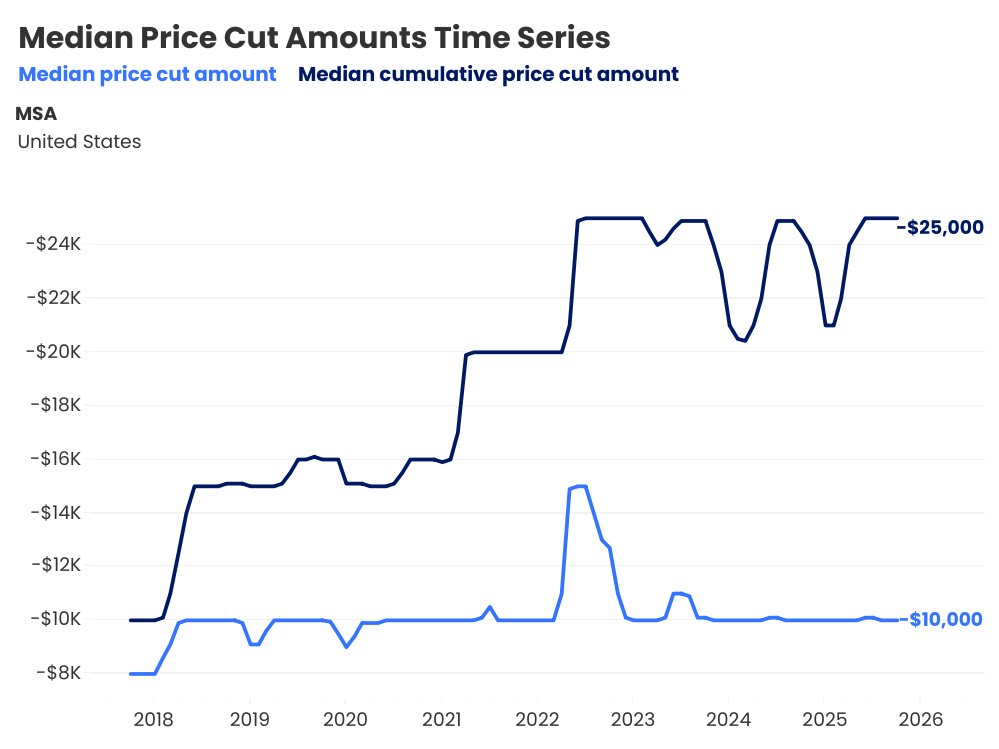
If you've been keeping an eye on the housing market, you've likely felt the pinch of high prices. For quite some time, it seemed like the dream of homeownership was slipping further away for many. But I've got some encouraging news: some of the priciest housing markets in the country are starting to offer more significant price cuts, making them more accessible than they've been in a while. As of October, the typical home listing saw a record-high discount of $25,000, a clear sign that sellers are adjusting their expectations.

I've been following real estate trends for a while now, and what I'm seeing is a market that's slowly but surely finding its footing. For years, we've dealt with soaring prices and incredibly stiff competition. But now, a combination of factors is creating a more balanced environment, and believe it or not, this is good news for buyers.

5 Most Expensive Housing Markets Are Now Seeing the Biggest Price Cuts

What's Driving These Bigger Discounts?

Several things are coming together to create this situation. First, affordability has seen its best improvement in three years. This simply means that, relative to incomes, buying a home isn't as much of a stretch as it was recently. Think about it: with mortgage rates still elevated compared to a few years ago, people just can't afford to pay top dollar for homes. Sellers are starting to realize this, and they're making adjustments.

us housing market seeing some of the steepest price cuts in years
Source: Zillow

Secondly, homes are staying on the market longer. We're not seeing the frantic bidding wars and homes flying off the shelves as we did at the height of the market frenzy. When a house sits for a bit, sellers become more motivated to negotiate. This often leads to multiple price reductions rather than just one big drop.

A seller might initially list their home for, say, $600,000. If it doesn't sell quickly, they might initially cut it by $10,000, then another $10,000 a few weeks later, and so on. Zillow’s data shows that the typical price cut is still hovering around $10,000, but the frequency of these cuts is what's making a difference.

It's also important to remember that most homeowners have built up significant equity over the past few years. Their homes have appreciated so much that they can afford to reduce their asking price and still walk away with a very healthy profit. This gives them the flexibility to be more realistic in today's market.

Where Are the Biggest Price Cuts Happening?

The most striking trend, according to Zillow's latest data, is that the largest median discounts are appearing in some of the nation's most expensive housing markets. This makes a lot of sense when you think about it. In areas where homes are already extremely costly, even a $50,000 or $70,000 price chop might still leave the home in a high price bracket. But for buyers, it represents a significant opportunity to get into a market that was previously out of reach.

Here are the top markets seeing the biggest median discounts (from their initial list price):

  • San Jose, California: A massive $70,900 in discounts.
  • Los Angeles, California: Buyers are seeing discounts around $61,000.
  • San Francisco, California: Coming in at $59,001 in typical price reductions.
  • New York, New York: An average of $50,000 in discounts.
  • San Diego, California: Also seeing discounts of $50,000.

These aren't small numbers. For someone eyeing a home in these generally unaffordable areas, these price cuts can be a game-changer. It signals a shift, even if subtle, towards a more buyer-friendly scenario in these usually seller-dominated regions.

It's Not Just About the Dollar Amount: Relative Discounts Matter

While the absolute dollar figures are eye-catching, I always like to consider the relative discount as well. In more affordable markets, a smaller dollar amount might actually represent a larger percentage off the home's value. This is a crucial point because it tells us where buyers might be getting the “best bang for their buck” in terms of negotiation power.

  • Pittsburgh, Pennsylvania: A typical markdown of $20,000 here can represent about 9% of the metro's typical home value. This is the largest relative discount I've seen among major markets.
  • New Orleans, Louisiana: Similar to Pittsburgh, homes here are typically discounted by around 9% of their value.
  • Austin, Texas: Buyers are finding deals with discounts around 8.4%.
  • Houston, Texas: Discounts are in the 8.2% range.
  • San Antonio, Texas: Tightly following with 7.9%.

These markets, while not always the absolute cheapest, are offering buyers a significant opportunity to negotiate, given how much their housing costs have risen in recent years.

Markets Where Sellers Are Still Holding Firm

On the flip side, there are markets where sellers have had less pressure to cut prices. These are typically areas with strong demand, faster sales, and often, more affordable home prices to begin with. This means sellers don't need to offer big discounts to attract buyers.

According to Zillow, markets with the smallest cumulative discounts in October included:

  • Oklahoma City, Oklahoma: With discounts around $15,000.
  • Louisville, Kentucky: Also seeing $15,000 in cuts.
  • St. Louis, Missouri: Around $15,100.
  • Indianapolis, Indiana: With discounts of $16,000.
  • Detroit, Michigan: At $17,100.

In cities like St. Louis, Louisville, and Indianapolis, homes are selling faster than the national average, and the listings are often newer. This indicates consistent demand, meaning sellers don't have to be as aggressive with their pricing to secure a sale.

What This Means for You (The Buyer)

If you've been waiting on the sidelines, hoping for a more favorable market, now might be the time to start seriously looking. The fact that discounts are increasing, especially in those high-priced markets, gives you more leverage. It means sellers are more open to negotiation, and you have a better chance of getting a property for less than its initial asking price.

However, my advice is always to be patient and prepared. Even with discounts, homes in desirable areas will still command high prices. Get pre-approved for a mortgage, understand your budget, and work with a good real estate agent who can help you navigate these opportunities.

The housing market is constantly evolving, and while these price cuts are a welcome sign for buyers, it's crucial to look at the data in context. Keep an eye on local market conditions, interest rates, and your personal financial situation. But for now, for those dreaming of homeownership, the doors are slowly beginning to creak open a little wider.

Small Investors Are Winning Big in Today’s Housing Market

Turnkey rental properties in affordable, high-demand metros are helping everyday investors build passive income, equity, and long-term wealth—without the headaches of active management.

Norada Real Estate makes it easy to scale your portfolio in the markets where small investors are outpacing institutional buyers and locking in strong returns.

🔥 HOT NEW LISTINGS JUST ADDED! 🔥

Talk to a Norada investment counselor today (No Obligation):

(800) 611-3060

Get Started Now

Want to Know More About the Housing Market Trends?

Explore these related articles for even more insights:

  • Housing Market Predicted to See Strong Growth in 2026: Expert Forecast
  • Housing Market Predictions for the Next 12 Months by Zillow
  • Housing Market Regains Ground as Falling Mortgage Rates Unlock Buyer Savings
  • Hidden Costs of Homeownership Now Add Up to Nearly $16,000 a Year
  • Small Investors Dominate the Housing Market From Detroit to Vegas
  • Housing Market Predictions for the Next 4 Years: 2025 to 2029
  • Housing Market 2025 Splits Between Wealthy Buyers and First-Timers
  • Housing Markets at Risk of Double-Digit Price Decline Over the Next 12 Months
  • Housing Market Trends: Nearly 1 in 3 Buyers Still Opt for All-Cash Deals in 2025
  • Will the Housing Market Shift to a Buyer’s Market in 2026?
  • Mid-Atlantic Housing Market Heats Up as Mortgage Rates Go Down
  • NAR Chief's Bold Predictions for the 2025 Housing Market
  • The $1 Trillion Club: America's Richest Housing Markets Revealed
  • 4 States Dominate as the Riskiest Housing Markets in 2025
  • Housing Market Predictions 2025 by Norada Real Estate

Filed Under: Housing Market, Real Estate Market Tagged With: Housing Market, Housing Market Trends, Price Cuts

Housing Market Predicted to See Strong Growth in 2026: Expert Forecast

December 1, 2025 by Marco Santarelli

Housing Market Poised for a Strong Comeback in 2026: NAR’s Forecast

It feels like we’ve been talking about the housing market and its ups and downs for years now. But what does the future hold? If you’re thinking about buying, selling, or just curious about where things are headed, you’re in the right place. I’ve been digging into the latest forecasts, and the buzz is that the housing market predictions for 2026 are looking a lot brighter, with experts pointing towards a potential comeback after a period of slower activity.

To cut straight to the chase, the National Association of REALTORS® (NAR) is forecasting a significant jump in home sales for 2026, potentially seeing a double-digit increase. This is welcome news for many who have felt the squeeze of higher prices and tougher buying conditions. While it’s not a crystal ball, understanding these predictions can help us make smarter decisions.

Housing Market Predicted to See Strong Growth in 2026: Expert Forecast

What’s Driving the Expected Comeback?

So, what’s behind this optimistic outlook for 2026? It boils down to a few key factors that are starting to come together. Think of it like ingredients for a good meal – each one is important, but together they create something substantial.

One of the biggest drivers is expected to be steady job growth. When people have stable jobs and feel confident about their future, they’re more likely to make big decisions like buying a home. We’ve seen job gains holding up pretty well, and this is a fundamental strength that supports the housing market.

Another crucial piece of the puzzle is mortgage rates. For a while now, higher mortgage rates have been a big hurdle for many potential buyers. They’ve made monthly payments significantly more expensive, pushing some people out of the market altogether. However, experts like Lawrence Yun, the chief economist at NAR, are forecasting a modest decline in mortgage rates for 2026. He expects the average 30-year fixed rate to hover around 6% in 2026, down from an estimated 6.7% this year.

“It’s not going to be a big decline, but it will be a modest decline that will improve affordability,” Yun explained at a recent NAR event. This might not sound like huge news, but even small drops in rates can make a big difference in what people can afford each month.

Furthermore, homebuilder activity is also contributing to the supply side. While we’ve heard a lot about housing shortages, builders are continuing to add new homes to the market. This increase in supply, even if it's slow, helps balance things out.

The Big Numbers: What Sales and Prices Might Look Like

This is where things get really interesting. The NAR forecast suggests that 2026 could be the year we see a noticeable uptick in home sales.

  • Overall Home Sales: NAR is predicting a 14% nationwide increase in home sales for 2026. This is a pretty significant jump compared to what we've seen recently.
  • New-Home Sales: For those interested in new construction, the prediction is a 5% rise in new-home sales.

Now, what about prices? A common worry is that a surge in sales could lead to another rapid increase in home prices. However, the outlook for 2026 is different. NAR expects home prices nationwide to climb by about 4%.

This suggests a more balanced market where sales increase, but prices grow at a more sustainable rate. This is a good sign because it means affordability might improve without causing another affordability crisis. It’s important to remember that these are national averages, and local markets will always have their own unique trends.

Understanding the Nuances: A Market of “Haves” and “Have-Nots”

While the overall picture for 2026 looks positive, it’s not a one-size-fits-all story. The housing market today is quite uneven, and this likely will continue to some extent. Jessica Lautz, NAR’s Deputy Chief Economist, highlighted the concept of a market with “haves” and “have-nots.”

The “Haves”:

  • These are often individuals who already own homes and have built up significant equity over the years.
  • They are frequently repeat buyers, especially baby boomers, who can leverage their existing home equity, sometimes buying with cash.
  • The upper end of the market has been doing better, with strong inventory and robust financial markets supporting sales in the $750,000 to $1 million price range.

The “Have-Nots”:

  • These are primarily first-time homebuyers who are facing significant challenges.
  • The share of first-time buyers has dropped to an all-time low of 21%, far below their historical average of 40%.
  • Their average age has also increased, with a median age of 40. This means people are waiting longer to buy.

Why are first-time buyers struggling so much? Lautz pointed to several reasons:

  • High rent costs: Rent payments eat into savings that could otherwise go towards a down payment.
  • Student loan debt: Many young adults are burdened by student loans, making it harder to qualify for mortgages or save extra money.
  • Childcare costs: Raising a family adds significant financial pressure.

To help these aspiring homeowners, Lautz suggests focusing on better financial education about down payment assistance programs and special loan types like FHA loans.

When Homes Sit, Prices Get a Push

We’ve also seen a trend where homes that stay on the market longer than expected often need price adjustments. This isn't necessarily a sign of a collapsing market but rather sellers adapting to buyer demand and market conditions. Yun shared some data on how price reductions tend to increase with how long a home has been listed:

  • 0–14 days on market: Typically a 4.9% price cut if needed.
  • 15–30 days on market: Might see a 6.1% cut.
  • 31–60 days on market: A larger adjustment, around 7.3%.
  • 61–90 days on market: Sellers might consider a 9% reduction.
  • 91–120 days on market: Further adjustments could be around 10.6%.
  • Over 120 days on market: For homes that have been listed for a long time, a 13.8% reduction might be necessary to attract buyers.

These price dips are often temporary or localized when inventory quickly grows. Nationally, the 4% median home-price gain expected for 2026 still points to overall price appreciation.

Looking Ahead: Fundamentals Remain Strong

Despite some of the challenges we’ve discussed, the underlying fundamentals of the housing market remain quite strong, according to Yun.

  • Low Mortgage Delinquencies: The number of homeowners falling behind on their mortgage payments or facing foreclosure is at historically low rates. This is a critical indicator of market health.
  • Homeowner Equity: Homeowners have built up substantial equity in their homes, providing a financial cushion.
  • Steady Job Growth: As mentioned before, consistent job creation is a robust sign for the economy and housing demand.

So, while 2025 might be remembered as a slower year, the pieces for a more active and vibrant housing market in 2026 appear to be falling into place.

My Take on the Forecast

As someone who follows the housing market closely, I find NAR's prediction for 2026 to be cautiously optimistic and realistic. The emphasis on job growth and improving mortgage rates as key drivers makes sense. The forecast for a 14% sales increase is exciting, and the projected 4% price appreciation suggests a market that is growing, but not overheating.

The distinction between the “haves” and “have-nots” is particularly insightful. It reminds us that market conditions can vary wildly depending on your financial situation and where you are in your homeownership journey. For first-time buyers, the path will likely still involve significant planning and resourcefulness, making programs that help with down payments and offer lower interest rates crucial.

For sellers, especially those who might have overshot their pricing or are in a less in-demand area, adapting to market realities with realistic pricing or potential reductions will be key to a successful sale.

Ultimately, the housing market predictions for 2026 from NAR offer a hopeful outlook. It suggests a market that is becoming more accessible as rates ease and demand remains, while also appreciating in value at a more sustainable pace. It’s a forecast that encourages continued interest and readiness for those looking to enter or move within the housing market.

Small Investors Are Winning Big in Today’s Housing Market

Turnkey rental properties in affordable, high-demand metros are helping everyday investors build passive income, equity, and long-term wealth—without the headaches of active management.

Norada Real Estate makes it easy to scale your portfolio in the markets where small investors are outpacing institutional buyers and locking in strong returns.

🔥 HOT NEW LISTINGS JUST ADDED! 🔥

Talk to a Norada investment counselor today (No Obligation):

(800) 611-3060

Get Started Now

Want to Know More About the Housing Market Trends?

Explore these related articles for even more insights:

  • Housing Market Predictions for the Next 12 Months by Zillow
  • Housing Market Regains Ground as Falling Mortgage Rates Unlock Buyer Savings
  • Hidden Costs of Homeownership Now Add Up to Nearly $16,000 a Year
  • Small Investors Dominate the Housing Market From Detroit to Vegas
  • Housing Market Predictions for the Next 4 Years: 2025 to 2029
  • Housing Market 2025 Splits Between Wealthy Buyers and First-Timers
  • Housing Markets at Risk of Double-Digit Price Decline Over the Next 12 Months
  • Housing Market Trends: Nearly 1 in 3 Buyers Still Opt for All-Cash Deals in 2025
  • Will the Housing Market Shift to a Buyer’s Market in 2026?
  • Mid-Atlantic Housing Market Heats Up as Mortgage Rates Go Down
  • NAR Chief's Bold Predictions for the 2025 Housing Market
  • The $1 Trillion Club: America's Richest Housing Markets Revealed
  • 4 States Dominate as the Riskiest Housing Markets in 2025
  • Housing Market Predictions 2025 by Norada Real Estate

Filed Under: Housing Market, Real Estate Market Tagged With: Housing Market, housing market predictions, Housing Market Trends

Seattle Housing Market: Trends and Forecast 2025-2026

November 29, 2025 by Marco Santarelli

Seattle Housing Market: Trends and Forecast 2025

The Seattle housing market is heading towards a delicate balance. Thanks to surging housing inventory and stubborn mortgage rates, the breakneck pace of the last few years is gone, but robust economic fundamentals mean that while home sales are down, home prices are showing surprising resilience and are only expected to see minor, near-flat growth through the end of 2025.

In this deep dive, using the latest data from the Northwest Multiple Listing Service (NWMLS) and Zillow’s forward-looking forecasts, I will walk you through what the numbers truly mean. We will look at what’s really going up, what’s coming down, and what we can reasonably expect to happen next in the Puget Sound area, specifically across Seattle and All King County.

Seattle Housing Market Trends: Decoding Today’s Market

When evaluating whether we are in a Buyer’s Housing Market or a Seller’s Housing Market, we always look at three key factors: supply (inventory), demand (sales), and price resilience. The October 2025 data (compared to October 2024) tells a vivid story about how high mortgage rates are acting as a powerful brake on sales activity, even while new listings continue to hit the market.

The Supply Surge: Inventory is Back

The most dramatic shift in the Seattle Housing Market Trends over the last year is the sudden jump in available homes. For years, the story was low supply, bidding wars, and no time to think. That dynamic is changing fast.

For King County overall (Residential and Condo combined), the total active listings went up by 25.64% year-over-year. Seattle specifically saw a healthy jump of 17.30% in total active listings.

More inventory is great news for buyers because it means less competition and fewer situations where you have to waive contingencies just to get a foot in the door.

In real estate, we measure how tight the market is using Months of Inventory (MOI). This figure tells us how long it would take to sell every home currently listed if no new homes came onto the market.

  • 0-3 months: Strong Seller's Market
  • 4-6 months: Balanced Market
  • 7+ months: Buyer's Market
Region Total Active Listings (Oct 2025) % Change YOY Months of Inventory (MOI) Market Type
All King County (Res + Condo) 5,719 +25.64% 2.67 Seller's (but loosening)
Seattle (Res + Condo) 2,298 +17.30% 3.04 Seller's (but loosening)
Seattle Residential Only 1,297 +20.99% 2.30 Strong Seller's
Seattle Condo Only 1,001 +12.85% 5.21 Approaching Balance

The takeaway is clear: While King County still officially favors sellers (below the 4-month mark), the key areas like Seattle’s condo market are nearing balance. In my professional experience, when MOI hits 5+ months, buyers finally feel like they have negotiating power.

Sales Activity and Mortgage Rates: The Demand Slowdown

If supply is up, sales should be up too, right? Nope. This is where high borrowing costs, specifically mortgage rates (which are still fluctuating but remain high compared to 2020-2022), are killing demand.

Think of it this way: Many potential buyers are priced out, trapped by monthly payment costs, and many current homeowners are stuck in what we call the “lock-in effect.” They don't want to sell their current home with a 3% mortgage only to buy a new one at 7% or 8%. This reduces overall mobility and slows down sales dramatically.

Looking at the closed home sales data for October 2025:

Region Closed Sales (Oct 2025) % Change YOY
All King County (Res + Condo) 2,144 -6.90%
Seattle (Res + Condo) 755 -7.48% (Nearly 8% drop)
Seattle Residential Only 563 -7.10%
Seattle Condo Only 192 -8.57%

The decline in sales is widespread. The market isn't collapsing, but it is certainly sluggish. This sluggishness is what gives buyers their biggest opportunity: there is less urgency.

Price Resilience: The Million-Dollar Question

Despite the slowdown in sales and rising inventory, why haven't the median home prices dropped significantly yet? This is the core strength of Seattle’s economy—a resilient job market filled with high-wage earners (mostly in tech).

Let's look at the median price change year-over-year.

Region Median Price (Oct 2025) % Change YOY
All King County (Res + Condo) $887,300 +2.58%
Seattle (Res + Condo) $899,000 +2.80%
Seattle Residential Only $1,049,999 +7.97%
Seattle Condo Only $577,562 -0.42%

This data is fascinating. While the combined average is only up slightly, the Seattle Residential Only market (single-family homes) held incredibly strong, jumping almost 8% year-over-year!

What this means: The most desirable, largest single-family homes in Seattle are extremely well-insulated from current economic pressures because the buyers for those homes are less reliant on the current fluctuating mortgage rates and are often using cash or large down payments.

On the flip side, the condo market, which is often the first entry point for buyers, has faced much more pressure. Prices here are essentially flat (-0.42% in Seattle condos). This tells me that the pressure caused by high interest rates is most keenly felt in the affordable segments of the market, where buyers are most sensitive to payment shock.

My professional opinion on these trends is this: The Seattle market is not experiencing a traditional slowdown driven by job loss or panic selling. It’s an affordability-driven slowdown. If mortgage rates were to drop even moderately (say, down to 5.5%), the accumulated demand would likely rush back in, instantly wiping out this new-found housing inventory and causing a new round of price acceleration.

Why is the Seattle Housing Market So Hot?

Seattle's housing market has been a seller's dream for years, fueled by a combination of factors that create intense competition for a limited resource: homes.

  • Tech Boom and Job Market: Seattle's status as a major tech hub attracts a constant stream of employees from established companies and startups alike. This influx of well-paid professionals creates a strong and consistent demand for housing in the city and surrounding areas.
  • Limited Supply: Geographically, Seattle is hemmed in by water on one side and mountains on the other, restricting urban sprawl. Zoning regulations and a hilly landscape further limit the developable land available for new construction. This constraint on new housing supply keeps the number of available homes lagging behind the growing number of potential buyers.
  • Economic Factors: “Historically low interest rates” in recent years made mortgages more affordable, further inflating demand. While rates have risen in 2024, the market seems to be adjusting and staying relatively stable for now.

Seattle Housing Market Forecast: What Comes Next?

Now that we understand the current Seattle Housing Market Trends, the crucial next step is to look ahead. What do predictive models suggest for the final months of 2025 and all of 2026?

For this forecast, we turn to Zillow’s home value predictions for the Seattle-Tacoma-Bellevue Metropolitan Statistical Area (MSA). Currently, the average home value in this MSA is $733,309, which is down 1.0% over the last year, and homes go pending in around 23 days—a far cry from the 5-7 days we saw during the pandemic peak.

The Short-Term Outlook for Seattle Home Values (November 2025 – January 2026)

Zillow provides a monthly projected percent change for the MSA home value. This shows the immediate sensitivity of the market to seasonal changes and current rate volatility.

Region Projected Change: November 2025 Projected Change: January 2026
Seattle, WA MSA +0.2% -0.4%

Interpretation: We expect a slight bump in November, perhaps reflecting final sales pushing through before the holidays. However, the projected -0.4% dip in January highlights the expected seasonal slump combined with ongoing affordability challenges. This brief projected decline is not a cause for alarm; it’s a typical micro-adjustment in a high-cost area struggling with high mortgage rates.

The 1-Year Price Prediction (October 2026)

The most important figure for long-term planning is the one-year forecast, projecting change from October 2025 to October 2026.

Zillow’s forecast for the Seattle MSA is for a change of +0.1%.

My interpretation is that a 0.1% change is effectively flat. This is what a balanced market looks like when it hits an affordability ceiling. We are not anticipating major surges, but we are also not predicting the collapse that many cash-strapped buyers might hope for. Flat growth allows wages and savings to catch up modestly, but it will not solve the housing crisis overnight.

Context: Seattle vs. Rest of Washington State

To fully understand the Seattle forecast, it’s helpful to see how we compare to other metro areas in Washington State. This exercise illustrates that Seattle is currently facing unique headwinds.

Here is a comparison of the projected 1-Year (Oct 2025-Oct 2026) home value growth across various Washington MSAs:

Metro Area (MSA) 1-Year Home Price Forecast (Oct 2026)
Seattle, WA +0.1%
Bremerton, WA -0.2%
Wenatchee, WA +0.3%
Yakima, WA +0.4%
Kennewick, WA +0.5%
Longview, WA +0.5%
Spokane, WA +0.6%
Olympia, WA +0.6%
Bellingham, WA +0.9%
Mount Vernon, WA +1.3%
Moses Lake, WA +1.9%

In my expertise, this comparison is eye-opening. Seattle is severely lagging behind smaller, less expensive markets like Moses Lake and Mount Vernon. Why? Those smaller markets still have more room for price appreciation because they remain relatively affordable and are seeing net population absorption. Seattle, on the other hand, has already hit its affordability maximum. We simply peaked faster. This flat forecast is the market trying to take a necessary breather.

So, Will Seattle Home Prices Drop? Can the Market Crash?

This is the question I am asked most often. Based on the data, the answer remains no, a crash is highly unlikely.

  1. Drop vs. Crash: The prices are not predicted to drop significantly—the forecast is +0.1%, which is statistically negligible.
  2. Structural Integrity: Seattle’s wealth engine (Tech, Biotechnology, Aerospace) is fundamentally strong, preventing the kind of massive job loss that historically causes housing crashes.
  3. Owner Equity: Unlike the 2008 crisis, most existing homeowners sitting on all-time low mortgage rates have massive amounts of equity. Panic selling, which fuels a crash, is not a factor. If the market gets tough, owners simply decide not to sell.

What we are experiencing is a tough-to-swallow “correction” where prices stop growing at crazy speeds, but they don't fall back to pre-pandemic levels. The high prices are here to stay for the foreseeable future unless a major recession hits the tech industry.

Looking Ahead: Late 2026 and Early 2027

Forecasting beyond one year is always tricky—we have to make assumptions about inflation and mortgage rates.

If the Federal Reserve manages to bring inflation down steadily through 2026, and we see mortgage rates drift downward toward the 5% to 6% range by the end of 2026:

  • We will see the Seattle Housing Market Trends shift back toward sellers.
  • Home sales will jump as pent-up demand is released.
  • Home prices will likely pick up steam again, returning to modest year-over-year growth in the 3% to 5% range by early 2027.

If mortgage rates remain stubbornly high (7%+) or increase:

  • The market will remain flat, continuing in this sensitive holding pattern. Housing inventory will continue to accumulate, leading to increasingly aggressive price cuts on poorly positioned homes.

For buyers, late 2025 and 2026 represent a rare window of opportunity: high inventory means selection, and flat prices mean no intense bidding wars. You just need to budget for the current cost of money—the mortgage rates.

Conclusion

The Seattle Housing Market Trends show a standoff between high affordability barriers and strong underlying wealth. While inventory is up and sales are slow, Seattle home prices are proving incredibly difficult to budge. Whether you wait for rates to drop or jump in now to secure higher inventory and negotiating power, patience and careful budgeting remain the best strategies for navigating the Puget Sound market in 2026.

Recommended Read:

  • Which Are The Hottest Markets in Seattle?
  • Seattle Housing Market Predictions for the Next 5 Years
  • Washington State Housing Market Forecast
  • Seattle Housing Market: Prices Sizzle, Ranking Among Nation’s Hottest
  • Seattle Real Estate Investment: Is it a Good Place to Invest?

Filed Under: Growth Markets, Housing Market, Real Estate Market Tagged With: Housing Market, Seattle

Florida Housing Market Forecast for the Next 12 Months

November 28, 2025 by Marco Santarelli

Florida Housing Market Predictions for the Next 12 Months

Thinking about buying or selling a home in the Sunshine State? You’re probably wondering what on earth is going to happen next. After a few years of dizzying price hikes and market madness, things are starting to feel… different. So, what are the Florida housing market predictions for the next 12 months? In short, I see a market that’s finally catching its breath and settling into a more stable, balanced rhythm. Expect home prices to flatten out, not crash, with modest single-digit growth in some areas, while sales activity will continue to be heavily influenced by mortgage rates, creating windows of opportunity for savvy buyers.

Florida Housing Market Forecast for the Next 12 Months

I've been analyzing real estate trends in Florida for years, and what we're seeing now isn't a sign of collapse; it's a much-needed return to normalcy. The frantic, buy-at-any-cost days are behind us, and that’s a good thing for everyone. Let’s break down what the latest data is telling us and what I believe it means for you over the coming year.

A Quick Look Back: What Just Happened in the Florida Market?

Before we look forward, we have to understand where we are right now. The latest numbers from Florida Realtors® for September paint a really interesting picture. After a long period of slumping sales, we're seeing signs of life again.

Here’s a snapshot of the key takeaways from their September report:

  • Sales Are Up: Existing single-family home sales jumped 13.6% compared to this time last year. That’s a big deal. Even condo and townhouse sales, which have been sluggish, saw an 8% increase.
  • Prices Are Leveling Off: The statewide median price for a single-family home was $410,000. The most important part? That’s the exact same price as it was a year ago. For condos, the median price was $299,000, which is actually down a bit. This tells us the days of 20% year-over-year price gains are over.
  • Mortgage Rates are the Puppet Master: According to Florida Realtors® Chief Economist Dr. Brad O’Connor, the recent dip in mortgage rates is a huge reason for this renewed activity. When rates briefly fell over the summer, buyers came off the sidelines. This shows just how sensitive the market is to affordability.
  • Pending Sales Look Promising: New pending sales (homes that went under contract but haven't closed yet) were up for the second month in a row. This is a great forward-looking indicator that suggests the sales momentum could continue.

So, the data shows a market that's shifting from a wild seller's market to something more balanced. The fear is subsiding, and strategic moves are replacing panicked decisions.

My Top 5 Florida Housing Market Predictions for the Next 12 Months

Based on this data, my own experience in the field, and the larger economic factors at play, here are my five key predictions for what we can expect in Florida over the next year.

1. The End of the Price Freefall: Hello, Stability.

I’ll say it again: we are not heading for a 2008-style crash. The leveling of the median home price at $410,000 is the strongest evidence of this. For months, prices were correcting from their unsustainable peak. Now, they've found a floor.

Over the next 12 months, I predict that home prices will largely move sideways, with slight variations by region. We might see some markets eke out a 1-3% gain, while others might see a small 1-2% dip, but the statewide median will hover in a very tight range. Why? Because the fundamental demand for Florida living hasn't gone away. People are still moving here for jobs, weather, and the lack of state income tax. This consistent influx of new residents creates a safety net under home prices that prevents them from collapsing.

2. Mortgage Rates Will Be the Market's Most Valuable Player (MVP)

Everything hinges on interest rates. The Federal Reserve's fight against inflation has kept rates elevated, sidelining many would-be buyers. As Dr. O'Connor noted, even a small drop in rates can reignite demand.

My prediction is that mortgage rates will slowly and unevenly trend downward over the next 12 months, likely settling in the low-to-mid 6% range by this time next year. There will be volatility along the way. When rates dip, expect a flurry of activity from buyers who have been waiting patiently. When they tick back up, the market will cool off again.

For buyers, this means being prepared is paramount. Have your financing in order so you can lock in a rate and make an offer the moment an opportunity presents itself.

3. Inventory Will Grow, But at a Snail's Pace

Inventory, or the number of homes for sale, gives us a sense of market balance. A 5-6 month supply is considered healthy. Right now, Florida has a 5.1-month supply of single-family homes—perfectly balanced!

However, the condo market is a different story, with a 9.1-month supply. This puts it firmly in buyer's market territory.

Over the next year, I expect overall inventory to continue to rise, but not dramatically. Many current homeowners are locked into sub-3% mortgage rates and have no desire to sell and take on a new loan at double that rate. This “lock-in effect” will keep a lid on the number of homes hitting the market, which in turn will support prices. We won't see a flood of listings, but buyers will have more choices than they've had in years.

4. The Condo Market: A Tale of Opportunity and Caution

The high inventory and falling prices in the condo market are a direct result of two major factors: soaring insurance costs and rising HOA fees, often driven by new safety and maintenance requirements following the Surfside tragedy.

This creates a fantastic opportunity for some, but a potential minefield for others.

  • The Opportunity: For cash buyers or those who can navigate the financing hurdles, there are deals to be had. You’ll have more negotiating power and a wider selection of properties.
  • The Caution: You must do your due diligence. I can't stress this enough. Investigate the condo association's financial health. Are the reserves fully funded? Are there any large special assessments planned? A low purchase price can be quickly negated by a $30,000 assessment for a new roof.

I predict the condo market will remain a buyer's market for the next 12 months, with prices staying soft until the insurance and HOA fee situations stabilize.

Market Segment Current Supply Price Trend My 12-Month Outlook
Single-Family Homes 5.1 Months (Balanced) Stable Slight price stability to modest growth (1-3%)
Condos/Townhouses 9.1 Months (Buyer's Market) Decreasing Prices will remain soft; a great opportunity for diligent buyers

5. Florida's “Magnetic” Appeal Isn't Fading

Let's zoom out from the monthly stats. The long-term story for Florida is still incredibly strong. It remains one of the fastest-growing states in the country. This isn't just about retirees anymore; we're seeing major corporate relocations, a booming tech scene in places like Miami and Tampa, and a steady stream of families looking for a better quality of life. This fundamental, underlying demand is the bedrock of our housing market and will prevent any prolonged downturn.

What This Means For You: A Practical Guide

Predictions are great, but how do they apply to your personal situation?

For Buyers: The next 12 months could be your “golden window.” You'll face less competition, have more inventory to choose from, and may even be able to negotiate on price. The key is to be patient and ready. Don't try to time the absolute bottom of the market. Instead, focus on finding the right home for your family and budget. Remember the old saying: “Marry the house, date the rate.” You can always refinance when rates eventually come down.

For Sellers: Your mindset has to shift from 2021. Pricing your home accurately from day one is the most important thing you can do. Overpriced homes will sit on the market and accumulate “stale” days, forcing you to make price cuts later. A well-presented, competitively priced home will still sell in a timely manner. The market is no longer a lottery where every ticket is a winner; it's a strategic game where preparation and realistic expectations lead to success.

A Tale of Two Floridas: Why Location Still Matters Most

It's crucial to remember that Florida is not one single market. The trends in Miami-Dade will be different from those in Jacksonville or The Villages.

  • Major Metro Areas (Tampa, Orlando, South Florida): These areas benefit from strong job growth and will likely remain the most resilient. I expect prices here to stay firm and potentially see modest appreciation.
  • Coastal/Insurance-Sensitive Areas: Coastal communities, particularly those with older housing stock, will face the biggest headwinds from property insurance costs. This could suppress price growth in certain zip codes.
  • Second Home/Vacation Markets: These markets are more sensitive to economic downturns and high interest rates. While demand is still there, expect a more pronounced return to a balanced market in these areas.

My Final Take: The Verdict on the Next 12 Months

The Florida housing market predictions for the next 12 months point toward a much-needed normalization. The market is taking a deep breath after a frantic sprint. We're transitioning from a period of volatility to one of stability.

I am cautiously optimistic. We will see a healthier, more sustainable market where buyers have a chance to think and sellers can still get a fair price for their homes. It won’t be the wild ride of the past few years, and frankly, that's good news for the long-term health of real estate in the Sunshine State.

Invest in Turnkey Properties in Florida’s Changing Market

Norada Real Estate helps you invest in turnkey rental properties that deliver monthly cash flow, inflation protection, and tax advantages like depreciation and 1031 exchanges—perfect for early retirement planning.

NEW FLORIDA LISTINGS AVAILABLE NOW!

Speak with a seasoned Norada investment counselor today (No Obligation):

(800) 611-3060

Get Started Now

Want to Know More About the Florida Housing Market?

Explore these related articles for even more insights:

  • Florida Housing Market Trends: 4 Cities Turn Buyer-Friendly in 2025
  • Florida Housing Market Faces Fallout Amid NFIP Freeze and Permit Delays
  • Florida Housing Market Sees a Major Shift With a Jump in Pending Sales
  • Florida Housing Prices Drop for the Fifth Consecutive Month in 2025
  • Is the Florida Housing Market on the Edge of a Crash or Downturn?
  • 24 Florida Housing Markets Could See Home Prices Drop by Early 2026
  • Is the Florida Housing Market Headed for Another Crash Like 2008?
  • Key Trends Shaping the Florida Housing Market in 2025
  • This Florida Housing Market Bucks National Trend With Declining Prices
  • Florida Housing Market Crash 2.0? Analyst Warns of 2008 Echoes
  • Tax Relief Proposed as Florida Housing Market Faces Deepening Crisis
  • Florida Housing Market: Record Supply Expected to Favor Buyers in 2025
  • Florida Housing Market Forecast for Next 2 Years: 2025-2026
  • Florida Housing Market: Predictions for Next 5 Years (2025-2030)
  • When Will the Housing Market Crash in Florida?
  • South Florida Housing Market: Will it Crash?

Filed Under: Housing Market, Real Estate Market Tagged With: Florida, Florida Housing Market Predictions, Housing Market

What New Forecasts Say About the Utah Housing Market From 2025 to 2027

November 26, 2025 by Marco Santarelli

What New Forecasts Say About the Utah Housing Market From 2025 to 2027

Let's talk about what's happening and what might happen in the Utah housing market over the next couple of years. If you're wondering if home prices will drop in Utah or if it could crash, the short answer for the next two years is likely no, especially not a significant crash. The Utah housing market in 2025 is showing signs of steady, albeit slower, growth and a more balanced environment compared to the frenzy of recent years.

Utah Housing Market Trends

Before we peek into the future, it's super important to understand where we are right now. Think of it like checking the weather before you pack for a trip. We need to know the current conditions to make sense of the forecast.

What's Happening with Utah Homes Right Now?

According to Zillow, here's the scoop on Utah's housing market as of late 2025:

  • Average Home Value: The average home in Utah is valued at $530,173. This is a good sign, showing a 2.2% increase over the last year. It means your home is likely worth more than it was, and for buyers, it means prices are still appreciating, just at a more sensible pace.
  • How Fast Homes Are Selling: Homes are spending about 36 days on the market before going into contract (pending). This is a noticeable difference from the lightning-fast sales we saw not too long ago. It suggests buyers have a bit more time to make decisions, and sellers might not get 20 offers on day one.
  • How Many Homes Are for Sale: As of October 31, 2025, there are 16,138 homes for sale. This is the housing inventory, or the supply of homes. Having more homes available is great for buyers because it means more choices and less intense competition.
  • New Homes Hitting the Market: In October 2025, there were 3,819 new listings. This number tells us how many fresh opportunities are coming up for buyers.
  • What Homes Are Selling For: The median sale price (what half the homes sold for more than, and half sold for less) was $522,102 in September 2025. This is slightly less than the median list price of $568,883 in October 2025. This difference between list and sale price is something to watch.
  • Are Homes Selling Above Asking Price? This is where things get interesting. Only 21.9% of sales were over the list price, while a significant 56.9% were under the list price. This is a strong indicator that the intense bidding wars are largely over, and we're moving towards a more balanced market. This data from Zillow really paints a picture of a market that's cooling down from its peak but is far from crashing.

The Buyer vs. Seller Market: Where Do We Stand?

Based on these numbers, Utah is leaning more towards a buyer's market, or at least a balanced market.

  • For Sellers: While homes are still appreciating, you might not get the astronomical offers you saw a year or two ago. You'll likely need to price your home realistically and be prepared for negotiations. Homes are taking longer to sell, so patience is key.
  • For Buyers: This is a much better time to buy! You have more homes to choose from, you have more time to make a decision without feeling rushed, and you're less likely to get into a bidding war where you have to offer way over asking. You might even be able to negotiate a bit on price or ask for seller concessions.

What New Forecasts Say About the Utah Housing Market From 2025 to 2027

Now, let's look ahead. What do the experts think will happen with the Utah housing market over the next two years, roughly from late 2025 through 2026 and into early 2027?

Utah's Major Cities: A Closer Look

Zillow's forecast for different areas within Utah gives us a good idea of regional differences. Let's focus on some key areas and their projected home value changes:

Projected Home Value Changes (in percentage)

Region Name Base Date Oct 2025 Dec 2025 Sep 2026
Salt Lake City, UT 30-09-2025 0.4% 0.3% 1.6%
Ogden, UT 30-09-2025 0.5% 0.7% 2.5%
Provo, UT 30-09-2025 0.4% 0.5% 1.7%
St. George, UT 30-09-2025 0.0% -0.3% 1.4%
Logan, UT 30-09-2025 0.5% 0.8% 2.6%
Heber, UT 30-09-2025 0.2% 0.3% 3.4%
Cedar City, UT 30-09-2025 0.1% 0.3% 2.5%
Vernal, UT 30-09-2025 0.5% 1.2% 4.3%
Price, UT 30-09-2025 0.3% 0.9% 5.4%

(Data Source: Zillow)

What does this table tell us?

  • Near-Term (Late 2025): For October and December 2025, the projections show very small positive or slightly negative changes. For instance, Salt Lake City is expected to see just a 0.4% increase in October and a 0.3% increase in December. St. George even shows a slight dip of -0.3% by December. This indicates a period of stability rather than rapid growth. It’s like the market is treading water before deciding on its next move.
  • Medium-Term (Through September 2026): Looking out to September 2026, the picture brightens considerably for most areas. We see positive growth projected across the board.
    • Stronger Growth Areas: Places like Vernal and Price are forecasted to see the highest growth (4.3% and 5.4% respectively by September 2026). Heber also shows strong potential at 3.4%. These might be areas experiencing increased demand or having more affordable entry points that are attracting buyers.
    • Steady Growth Areas: Cities like Ogden, Logan, and Cedar City are looking at solid growth of around 2.5% to 2.6%.
    • Moderate Growth Areas: Salt Lake City and Provo are projected to see more moderate gains of 1.6% and 1.7%.
    • St. George: This area, which showed a slight dip late in 2025, is forecast to recover and see a 1.4% increase by September 2026.

My Take: Overall, the Zillow forecast suggests a slow and steady approach for the Utah housing market over the next two years. We're not looking at massive jumps in home prices, but more importantly, we're not seeing signs of a crash. The market is expected to gradually gain momentum throughout 2026.

Comparing Utah to the Nation: What's Happening Elsewhere?

It’s always helpful to see how Utah stacks up against the rest of the country. Zillow and the National Association of Realtors (NAR) have some interesting predictions for the U.S. housing market.

Key Predictions from Zillow (Nationwide):

  • Home Value Growth: Zillow predicts that home value growth will be flat in 2025 and then start to recover in 2026. They expect annual growth to peak at nearly 1.9% by August 2026. This aligns with the idea of a gradual recovery after a period of cooling.
  • Home Sales: The number of home sales is expected to be around 4.07 million by the end of 2025, which is a slight increase from 2024. More sales mean more activity, which is generally a good sign for the market.
  • Rents: Rental growth is expected to continue cooling, meaning rent increases might not be as steep as they have been.

Key Predictions from NAR Chief Economist Lawrence Yun (Nationwide):

Lawrence Yun, a well-respected economist, shares an optimistic outlook. He sees “brighter days” ahead.

  • Existing Home Sales: He forecasts a 6% rise in 2025 and an even bigger 11% jump in 2026. This is a pretty significant increase, suggesting more people will be buying and selling homes.
  • New Home Sales: New construction is also expected to do well, with a 10% increase in 2025 and another 5% in 2026. This is great news for housing inventory, as it helps to build more homes to meet demand.
  • Median Home Prices: Yun predicts modest increases in median home prices, with a 3% rise in 2025 and 4% in 2026. This is a healthy, sustainable pace of appreciation.
  • Mortgage Rates: This is a big one! Yun expects mortgage rates to average 6.4% in the latter half of 2025 and then dip to 6.1% in 2026. He calls them a “magic bullet” because lower rates make buying a home more affordable, which can boost demand.

My Thoughts on the National Picture: The national forecast suggests a market that is also recovering. The key takeaway is that mortgage rates are expected to become more favorable, which is fantastic news for affordability. More home sales and modest price growth across the U.S. indicate a market that's moving towards a healthier balance.

Will Home Prices Drop in Utah? Can it Crash?

So, back to the big question: Will Utah home prices crash? Based on all the data and forecasts from Zillow and NAR, the answer for the next two years is highly unlikely.

Here’s why:

  1. Steady Appreciation: Both Utah-specific forecasts and national outlooks point to continued, albeit modest, home price appreciation in 2025 and 2026. We're not seeing predictions of significant drops.
  2. Improving Affordability (Potentially): While prices are still high, the combination of slightly more homes on the market and potentially stabilizing or slightly decreasing mortgage rates (as predicted nationally) can improve buyer affordability over time. This demand helps keep prices from plummeting.
  3. Housing Supply Issues: Even with new construction, Utah has faced challenges with keeping up with demand for housing for years. This underlying housing inventory shortage is a strong factor preventing major price drops.
  4. Utah's Economic Growth: Utah has a generally strong economy. While economic downturns can affect housing, the current outlook for Utah is still quite positive.

A “crash” usually implies a rapid and steep decline in prices, often driven by major economic shocks or an oversupply of homes. The current trends and forecasts don't support this scenario for Utah in the near future.

A Peek Ahead: Late 2026 and Early 2027

Extrapolating from the current forecasts, here's what we might expect as we move towards the end of 2026 and into early 2027:

  • Continued Gentle Growth: The momentum from 2026 is likely to carry into early 2027. We should see home values continue to appreciate at a sustainable pace, similar to the 3-4% range predicted nationally for 2026.
  • Mortgage Rates: If mortgage rates continue to trend downwards as predicted, this will keep buyer demand strong and support price growth.
  • Inventory Levels: We might see a slight improvement in housing inventory as more new homes come online and as some homeowners who were hesitant to sell might feel more confident listing their properties. However, it's unlikely to swing dramatically to a severe seller's market again.
  • More Balanced Market: The trend towards a more balanced market is expected to continue. This means buyers will have more options and negotiation power than in the recent past, while sellers will still likely see good returns on their homes.

In essence, the Utah housing market forecast for the next 2 years points towards a period of stabilization followed by gradual, healthy growth. It's a market that's becoming more accessible for buyers and still rewarding for sellers, but without the extreme volatility of previous years.

I hope this deep dive helps you feel more confident about navigating the Utah housing market! It's always a good idea to keep an eye on local news and talk to real estate professionals for the most up-to-date information. Happy house hunting or selling!

Want Stronger Returns? Invest Where the Housing Market’s Growing

Turnkey rental properties in fast-growing housing markets offer a powerful way to generate passive income with minimal hassle.

Work with Norada Real Estate to find stable, cash-flowing markets beyond the bubble zones—so you can build wealth without the risks of ultra-competitive areas.

🔥 HOT NEW LISTINGS JUST ADDED! 🔥

Talk to a Norada investment counselor today (No Obligation):

(800) 611-3060

Get Started Now

Also Read:

  • Utah Housing Market: Prices, Trends, Forecast
  • Utah Clinches Top Spot for America's Best State
  • Ogden Housing Market 2024: Trends and Forecast
  • Salt Lake City Housing Market: Prices, Trends, Forecast
  • Should You Invest In The Salt Lake City Housing Market?

Filed Under: Growth Markets, Housing Market, Real Estate Market Tagged With: Housing Market, Utah

10 Texas Housing Markets That Analysts Say Could See Price Declines in 2026

November 26, 2025 by Marco Santarelli

10 Texas Housing Markets That Analysts Say Could See Price Declines in 2026

If you're a homeowner or looking to buy in Texas, you'll want to pay close attention to this. According to the latest forecast from Zillow, some Texas housing markets are staring down the barrel of significant home price drops in 2026. While the national picture suggests modest growth, a specific set of Texas metros are projected to see the sharpest declines over the 12 months from October 2025 to October 2026. This isn't just about a little dip; some areas are bracing for double-digit percentage drops.

10 Texas Housing Markets That Analysts Say Could See Price Declines in 2026

I've seen cycles of boom and bust, but this forecast from Zillow definitely raises an eyebrow. It’s a stark reminder that real estate isn't monolithic – what happens in one city can be vastly different from another, even within the same state. Let's dive into which parts of the Lone Star State might see their home values take a hit and why.

Understanding the Forecast: What's Driving the Declines?

Before we get to the list, it's crucial to understand why Zillow is predicting these declines. Several factors are usually at play in a softening market. High mortgage rates, while showing signs of potentially easing, have already had a significant impact on affordability. When buying a home becomes more expensive due to rising interest rates, demand naturally cools. This can lead to properties sitting on the market longer, and sellers may eventually have to lower their asking prices to attract buyers.

Another piece of the puzzle is housing inventory. While the national picture suggests new listings are outpacing demand, leading to a leveling off of price appreciation nationwide, certain local markets might experience a different dynamic. If a region built up a lot of new housing during a boom period, and then demand suddenly slows, that extra supply can put downward pressure on prices. Conversely, some areas might be experiencing issues specific to their local economy, like job losses or a downturn in a key industry, which would directly impact housing demand.

Zillow's forecast specifically mentions that sustained elevated mortgage rates are keeping more would-be buyers renting, which affects both home sales and rental prices. For areas projected to decline, this suggests that the issues are localized rather than a broad national trend.

The Top 10 Texas Housing Markets Facing Steepest Price Corrections 

Zillow's data points to a cluster of smaller metropolitan areas, particularly in West Texas and South Texas, as being most vulnerable. These are often communities with economies that are more heavily reliant on specific industries, like oil and gas, which can be quite volatile.

Here are the Texas housing markets Zillow forecasts to see the most significant price declines between October 2025 and October 2026:

Region Name Projected Price Change (Oct 2025 – Oct 2026)
Pecos, TX -11.8%
Alice, TX -9.9%
Zapata, TX -9.6%
Big Spring, TX -8.5%
Beeville, TX -8.0%
Sweetwater, TX -7.8%
Rio Grande City, TX -7.5%
Raymondville, TX -7.1%
Vernon, TX -6.0%
Lamesa, TX -5.8%

As you can see, Pecos, in West Texas, is projected to lead the pack with an 11.8% drop in home prices. This area has historically been tied to the oil and gas industry, and the cyclical nature of that sector can significantly impact local housing markets. When oil prices are high and exploration is active, demand surges. When they fall, the opposite happens.

Looking at this list, I notice a pattern. Many of these are smaller cities. Smaller markets can sometimes be more susceptible to rapid price swings because they have fewer diverse economic drivers. A downturn in a major local employer or industry can have a more pronounced effect compared to a large, diversified metropolitan area.

Deeper Dive into Affected Regions

Let's take a closer look at a couple of these areas to understand the potential nuances:

  • Pecos, TX: Situated in the heart of the Permian Basin, Pecos's economy is heavily influenced by oil and gas activity. Increased exploration and production can lead to rapid population growth and housing demand, driving prices up quickly. However, when the industry experiences a downturn, the reverse can happen just as fast. Zillow's projection suggests that the current economic winds are not favorable for sustained price growth here, and a correction is anticipated.
  • Alice, TX: Located in South Texas, Alice's economy has also seen influences from the energy sector, as well as agriculture. Shifts in commodity prices or changes in industrial output can directly affect job availability and, consequently, housing demand. A projected decline of nearly 10% indicates that market forces in Alice are expected to push prices down significantly.

These are not just abstract numbers; for the people living in these communities, these forecasts can represent real changes in their home equity and their ability to afford housing moving forward. It’s a tough outlook for sellers in these specific markets.

Contrast: Texas Markets Expected to See Modest Growth

It's not all doom and gloom across the entire state. To provide a more complete picture, Zillow also forecasts modest growth in other Texas housing markets. This contrast is important, as it highlights the localized nature of real estate trends.

Here are some Texas regions Zillow expects to see modest home price appreciation:

Region Name Projected Price Change (Oct 2025 – Oct 2026)
El Paso, TX 2.4%
Stephenville, TX 2.2%
Corsicana, TX 1.9%
Brownsville, TX 1.8%
McAllen, TX 1.6%
Tyler, TX 1.3%
Wichita Falls, TX 1.2%
Amarillo, TX 1.2%

These markets, generally showing projected growth of around 1-2%, are likely benefiting from more diversified economies, sustained population growth, or perhaps more stable demand drivers. For instance, El Paso, a major border city, has a robust economy with diverse sectors. Tyler, in East Texas, has seen growth in healthcare and technology. These markets are better positioned to weather economic shifts than those heavily reliant on a single industry.

The National Picture: A Gentle Headwind

It’s helpful to zoom out and look at Zillow’s national forecast. Across the United States, home values are expected to rise by about 1.2% over the next 12 months. Home sales are projected to increase slightly. This points to a market that isn’t in freefall but rather experiencing a period of rebalancing.

Key national trends cited by Zillow include:

  • Modest Home Value Growth: A projected 1.2% increase nationally, a far cry from the rapid appreciation seen in previous years.
  • Inventory and Demand Balance: New listings are keeping pace with demand, which helps to ease price pressures.
  • Affordability Challenges: Elevated mortgage rates continue to make buying a home difficult for many.
  • Improving Sales Projections: Home sales are expected to improve in 2026 as mortgage rates potentially ease and pent-up demand returns.

The national forecast of muted growth is largely driven by affordability constraints due to higher interest rates. However, where Texas differs is in the stark decline projected for specific micro-markets. This isn't a uniform cooling; it's a localized recalibration based on regional economic health and supply-demand dynamics.

Navigating the Texas Housing Market in 2026

For buyers in the markets projected for declines, this could present an opportunity. If Zillow's forecast holds true, those looking to purchase in areas like Pecos or Alice might find more negotiation power and lower prices than they would have a year or two ago. However, it's critical to understand the underlying economic reasons for the decline. Is it a temporary dip in a cyclical industry, or a more fundamental shift?

For homeowners in these areas, it’s a signal to manage expectations. If you were planning to sell, you might need to adjust your asking price to align with market realities. It also highlights the importance of local market research when making real estate decisions.

My personal take? Real estate forecasts are educated guesses based on current data and trends. They are not guarantees. However, Zillow is a leading voice in this space, and their data is worth paying attention to. The deep disparities between the projected declines in some Texas markets and the modest growth in others underscore the importance of looking beyond just the state-level trends. Texas is a big, diverse state, and its housing markets reflect that diversity.

It’s wise for anyone involved in the Texas real estate market – whether as a buyer, seller, or investor – to stay informed, understand local economic drivers, and consult with knowledgeable real estate professionals. The next couple of years promise to be interesting, with some areas cooling off significantly while others continue to see steady, albeit modest, growth.

Small Investors Are Winning Big in Today’s Housing Market

Turnkey rental properties in affordable, high-demand metros are helping everyday investors build passive income, equity, and long-term wealth—without the headaches of active management.

Norada Real Estate makes it easy to scale your portfolio in the markets where small investors are outpacing institutional buyers and locking in strong returns.

🔥 HOT NEW LISTINGS JUST ADDED! 🔥

Talk to a Norada investment counselor today (No Obligation):

(800) 611-3060

Get Started Now

Want to Know More About the Texas Housing Market?

Explore these articles for more insights:

  • Texas Housing Market: Trends and Forecast 2025-2026
  • 5 Hottest Florida and Texas Markets for Real Estate Investors in 2025
  • Will the Texas Housing Market Crash as Prices Drop Across the State?
  • Texas Housing Market Predictions for the Next 2 Years: 2025-2026
  • Average Down Payment on a House in Texas
  • 10 Texas Cities Where Home Prices Are Expected to Fall in 2025
  • Will the Texas Housing Market Crash in 2025?
  • This Texas Housing Market is the Best in the U.S. [2024 Rankings]
  • Are Texas Home Sales Dropping?
  • How Much Do Real Estate Agents Make in Texas?
  • 10 Cheapest Places to Live in Texas
  • Is Texas a Good Place to Live: Explore the Cost, Jobs and Lifestyle

Filed Under: Housing Market, Real Estate Market Tagged With: Housing Market, housing market predictions, Texas

Greenville, Mississippi Housing Market Faces High Risk of Crash in 2026

November 24, 2025 by Marco Santarelli

Greenville, Mississippi Housing Market Faces High Risk of Crash in 2026

The housing market in Greenville, Mississippi, is showing some alarming signs, and experts are predicting a significant downturn in home prices by 2026. This isn't just a hunch; it's based on detailed analysis, and frankly, it’s something homeowners and potential buyers in the area need to pay close attention to.

According to Zillow's latest projections, Greenville is at the top of the list for potential home price declines over the next year, with a forecast of a more than 18% drop. That sort of prediction demands a deep dive into what's happening on the ground and why this Mississippi city is standing out for all the wrong reasons.

Greenville, Mississippi Housing Market Faces High Risk of Crash in 2026

Why Greenville is on Zillow's Radar for a Housing Downturn

It’s not every day a city becomes the poster child for a potential housing crash. But that’s precisely what’s happening with Greenville, MS. Zillow, a well-respected name in real estate data, has released its forecast, and the numbers for Greenville are stark. They’re predicting a substantial decrease in home prices between late 2025 and late 2026.

Here’s a snapshot of what their data suggests:

  • Greenville, MS: Projected Home Price Change
    • October 2025: -3%
    • January 2026: -7.6%
    • October 2026: -18.4%

Think about that for a moment. An 18.4% drop in home values within a year is a serious economic event for homeowners. It erodes equity, can make it harder to sell, and impacts the financial well-being of families. As someone who’s followed housing trends for a while, I can tell you that such drastic predictions rarely come out of nowhere. There are underlying factors at play that are pushing Greenville into this precarious position.

Comparing Greenville to the Rest of Mississippi: A Troubling Picture

To really understand the gravity of Greenville's situation, we need to look at how it stacks up against other cities in Mississippi. Zillow's forecast also provides projections for other urban areas within the state. When you line them up, Greenville’s predicted decline is significantly steeper than most of its Mississippi neighbors.

Take a look at this comparison:

Region Name Projected Price Change (Oct 2026)
Greenville, MS -18.4%
Cleveland, MS -10.4%
Clarksdale, MS -9.5%
McComb, MS -7.4%
Indianola, MS -7.4%
Greenwood, MS -6.7%
Vicksburg, MS -5.0%
Brookhaven, MS -4.1%
Meridian, MS -3.8%
Laurel, MS -3.8%
Grenada, MS -2.6%

As you can see, while several Mississippi cities are expected to see modest price declines, Greenville’s projected drop of over 18% is more than double the next highest forecast (Cleveland at -10.4%). This suggests that the economic forces hitting Greenville are more intense or unique compared to other areas in the state. This isn't a statewide trend; it appears to be a localized issue that’s hitting Greenville particularly hard.

What's Happening Nationally: A Different Story?

It's important to contrast Greenville's concerning outlook with the broader national picture. On a national level, the housing market is expected to be much more stable, even showing modest growth. According to Zillow's nationwide forecast:

  • Home values are predicted to rise 1.2% over the next 12 months.
  • Home sales are expected to increase slightly in 2025 and see more momentum in 2026 as mortgage rates hopefully ease.
  • Single-family rents are anticipated to go up by 2.2%, while apartment rents might see a small dip.

This national data suggests that the housing market, overall, is not on the brink of a widespread collapse. The projections indicate a cooling effect due to factors like high mortgage rates and sufficient inventory, but not a devastating crash. This makes Greenville's predicted sharp decline even more noteworthy. It highlights that the issues impacting Greenville are likely specific to its local economy and real estate dynamics, rather than a reflection of the entire U.S. housing market.

My Thoughts: Unpacking the Potential Causes Behind Greenville's Risk

From my perspective, based on what I see happening in real estate markets, a forecast like this for Greenville signals that several negative factors are likely converging. It’s rarely just one thing. Here are some potential reasons why Greenville, MS, might be facing such a high risk of a housing market crash:

  • Economic Vulnerability: I suspect Greenville's local economy might be heavily reliant on certain industries that are currently struggling or undergoing significant changes. A major employer leaving, a decline in a key sector like manufacturing or agriculture, or even regional demographic shifts can have a profound impact on housing demand. When jobs disappear or become less plentiful, people tend to move away, and that reduces the number of buyers.
  • Population Decline: Many smaller cities and towns across the country have been experiencing population loss for years. If Greenville is losing residents, especially younger working-age people, this directly translates into fewer people needing homes. A shrinking population is a significant drag on any housing market.
  • Aging Infrastructure and Housing Stock: Older cities can sometimes struggle if their infrastructure isn't keeping pace or if a large portion of their housing stock is outdated and requires significant repairs. Buyers, especially in a tougher economic climate, might be hesitant to invest in properties that need a lot of work.
  • Limited Investment and Development: A lack of new investment or development in a city can also be a sign of underlying economic weakness. If businesses aren't expanding and new residential projects aren't being undertaken, it suggests a lack of confidence in the area's future growth prospects.
  • Impact of Foreclosures and Distressed Properties: If there's already a higher-than-average number of foreclosures or distressed properties on the market in Greenville, this can depress prices for all homes in the area. When there are many distressed sellers, they often have to accept lower offers, which then sets a lower benchmark for comparable sales.

It's this combination of local economic realities that, in my opinion, is leading to Zillow's stark prediction for Greenville. The national market might be showing resilience, but that doesn't mean every single city will be insulated from its own set of challenges.

What Does This Mean for Homeowners and Buyers in Greenville?

This forecast is a serious wake-up call.

  • For Homeowners: If you own a home in Greenville, it might be prudent to consider your options sooner rather than later. Waiting until 2026, if these predictions hold true, could mean seeing a significant portion of your home's equity disappear. This could impact your ability to sell, refinance, or tap into your home's value for other financial needs. It might be a good time to consult with a local real estate professional about your specific situation and potential strategies.
  • For Potential Buyers: While falling prices might sound attractive, a crashing market comes with its own set of risks. Buying a home that continues to lose value can lead to being “underwater” on your mortgage (owing more than the home is worth). It's crucial to do your homework, understand the local economic outlook beyond just the Zillow forecast, and be prepared for potential further price drops. Think about your long-term plans for the home and your financial stability.

Looking Ahead: Caution is Key

The Zillow forecast for Greenville, Mississippi, is a strong indicator that the local housing market is facing significant headwinds. While no one can predict the future with absolute certainty, these projections based on extensive data are hard to ignore. The divergence between Greenville's forecast and the national trend suggests that local economic conditions are the primary driver here.

My advice is to stay informed. Keep an eye on local economic news, employment figures, and real estate market reports specific to Greenville. If you’re considering a move, whether to or from Greenville, thorough research and a cautious approach are absolutely essential. Understanding these detailed predictions and the potential reasons behind them is the first step in navigating what could be a very challenging period for the Greenville, Mississippi housing market.

Small Investors Are Winning Big in Today’s Housing Market

Turnkey rental properties in affordable, high-demand metros are helping everyday investors build passive income, equity, and long-term wealth—without the headaches of active management.

Norada Real Estate makes it easy to scale your portfolio in the markets where small investors are outpacing institutional buyers and locking in strong returns.

🔥 HOT NEW LISTINGS JUST ADDED! 🔥

Talk to a Norada investment counselor today (No Obligation):

(800) 611-3060

Get Started Now

Want to Know More?

Explore these articles for more insights:

  • Mississippi Housing Market: Trends and Forecast
  • Best Places to Live in Mississippi for Families and Retirees
  • Should You Invest In The Mississippi Gulf Coast Real Estate?
  • Why is Mississippi so Poor: Is It Really the Poorest State?
  • Why is Mississippi So Dangerous: Exploring Crime Rates
  • Top 20 Most Dangerous Cities in Mississippi 2024: High Crime Index

Filed Under: Housing Market, Real Estate Market Tagged With: Greenville, Housing Market, housing market predictions, Housing Market Trends, Mississippi

  • « Previous Page
  • 1
  • 2
  • 3
  • 4
  • 5
  • 6
  • …
  • 88
  • Next Page »

Real Estate

  • Birmingham
  • Cape Coral
  • Charlotte
  • Chicago

Quick Links

  • Markets
  • Membership
  • Notes
  • Contact Us

Blog Posts

  • Mortgage Rates Reset 2026: Ultra-Low Rates End, 6% Becomes Normal
    December 23, 2025Marco Santarelli
  • Is the 30-Year Fixed Mortgage Rate Set to Break into the 5% Range?
    December 23, 2025Marco Santarelli
  • Top Turnkey Real Estate Markets for 2026: The Investor’s Guide
    December 23, 2025Marco Santarelli

Contact

Norada Real Estate Investments 30251 Golden Lantern, Suite E-261 Laguna Niguel, CA 92677

(949) 218-6668
(800) 611-3060
BBB
  • Terms of Use
  • |
  • Privacy Policy
  • |
  • Testimonials
  • |
  • Suggestions?
  • |
  • Home

Copyright 2018 Norada Real Estate Investments

Loading...