
Norada Real Estate Investments

  • Home
  • Markets
  • Properties
  • Membership
  • Podcast
  • Learn
  • About
  • Contact

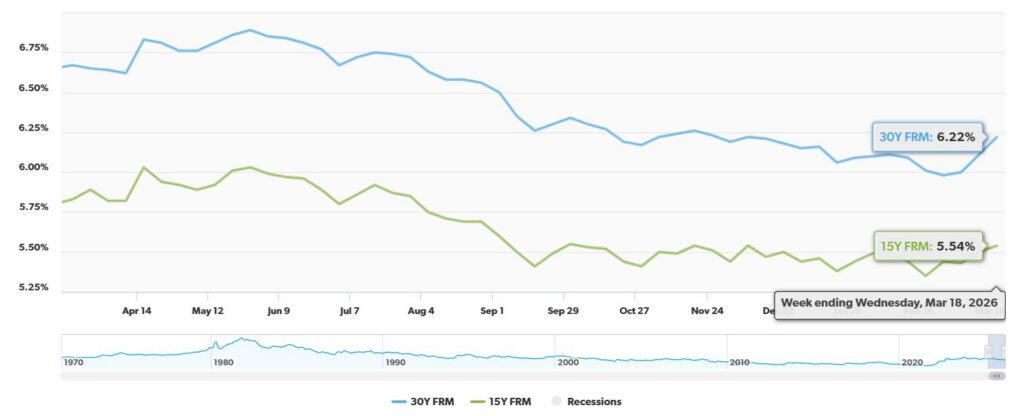
30-Year Fixed Mortgage Rate is Now 66 Basis Points Lower Than a Year Ago

February 12, 2026 by Marco Santarelli

30-Year Fixed Mortgage Rate is Now 66 Basis Points Lower Than a Year Ago

If you're looking to buy a home or refinance your mortgage, I have some good news that might just make you want to celebrate. As of February 10, 2026, the average 30-year fixed mortgage rate for home purchases has dropped to 5.91%. This is a notable improvement, sitting 66 basis points lower than the 6.57% rate we were seeing exactly one year ago. This shift means borrowing money for a home is considerably cheaper right now, opening doors for many potential buyers.

30-Year Fixed Mortgage Rate is Now 66 Basis Points Lower Than a Year Ago

This decline isn't just a small dip; it's a significant change that could dramatically impact how much house you can afford or how much you can save by refinancing. For years, we've been navigating a landscape of higher borrowing costs, and seeing rates fall below the crucial 6% threshold in early 2026 feels like a real turning point. In some areas, this translates to monthly payments being up to 8.4% lower than they were just twelve months ago, which can add up to thousands of dollars saved over the life of the loan.

30-Year Fixed Mortgage Rate Comparison (%)

What's Behind This Cheaper Borrowing?

It’s always fascinating to look beneath the surface and understand why these numbers change. From my perspective, this recent drop in mortgage rates is a confluence of several key economic factors, with the Federal Reserve playing a starring role.

The Fed's Role in Lowering Rates

The Federal Reserve has been actively trying to cool down the economy, and one of their main tools is adjusting the federal funds rate. They've made three rate cuts in late 2025, bringing the target range down to 3.50%–3.75%. When the Fed lowers its benchmark rate, it generally makes borrowing money cheaper across the board, and mortgage rates are certainly influenced by this. It signals a broader shift in monetary policy, aiming to stimulate economic activity without overheating it.

Inflation Finally Calming Down

Another huge piece of the puzzle is inflation. For a while there, it felt like prices were just going up and up, making everything more expensive. But recently, inflation has started to slow down, moving closer to the Fed's target of 2%. When lenders see that inflation is under control, they don't feel the need to charge as much for the risk of lending money. This cooling inflation is a big reason why those mortgage rates are able to come down.

Treasury Yields are Also Taking a Dip

Mortgage rates are closely tied to the yields on U.S. Treasury bonds, particularly the 10-year Treasury note. Just look at the numbers: a year ago, the 10-year yield was sitting at 4.46%. Now, by early February 2026, it's down to 4.25%. This trend indicates that investors are demanding less return for lending money to the government, which in turn allows mortgage lenders to offer lower rates to consumers.

A Slightly Softer Labor Market

It might sound strange, but a slightly weaker job market can actually be good news for mortgage rates. We saw a small uptick in the unemployment rate to 4.3% in late 2025. This signals that the economy isn't running at full blast, which can ease concerns about inflation getting out of control. When the economy cools a bit, it puts downward pressure on interest rates overall.

A Little Help from the Government

Beyond the typical economic forces, there was a specific government action in early 2026 that really helped push mortgage rates down. The federal government directed Fannie Mae and Freddie Mac, which are major players in the housing finance system, to purchase $200 billion in mortgage-backed securities. Think of these securities as bundles of mortgages that investors can buy. By stepping in to buy these, the government increased demand for mortgage debt. This helped to narrow the gap between what Treasury bonds pay and what mortgage loans cost, ultimately contributing to lower rates.

Market Dynamics: Buyers and Sellers

It's not just about the big economic picture, though. The actual supply and demand in the housing market itself plays a crucial role. I've noticed that as rates started to fall below that 6% mark, we saw a decrease in mortgage applications towards the end of 2025. This might seem counterintuitive, but when demand drops, lenders often become more competitive to attract borrowers. They lower their rates to make loans more appealing.

Furthermore, the dreaded “lock-in effect” – where homeowners with low existing mortgage rates are hesitant to sell and buy again at a higher rate – seems to be easing. As rates dipped below 6%, more homeowners might be listing their properties. This increased supply helps to stabilize the housing market and can also contribute to more competitive bidding, which is good news for buyers.

What’s the Outlook for the Rest of 2026?

2026 Mortgage Rate Forecasts by Major Institutions

Looking ahead, the crystal ball for mortgage rates is always a bit cloudy, but here's what many experts are saying. The general consensus among major housing economists, as reported by Zillow, is that 30-year fixed mortgage rates will likely stay within a relatively tight range, hovering between 5.9% and 6.3% for the remainder of 2026.

While rates are currently just under 6%, it's important to remember that a return to the super-low rates we saw during the pandemic isn't expected. We might still see some ups and downs, or volatility, depending on how economic policies evolve.

Here’s a quick look at what some of the big names in housing economics are predicting:

  • Zillow: Predicts rates will likely stay above 6% for the entire year.
  • Fannie Mae: Forecasts a gradual easing of rates down to 5.9% by the last three months of 2026.
  • Morgan Stanley: Offers a more optimistic view, anticipating a dip to 5.50%–5.75% by the middle of the year, followed by a slight increase.
  • Mortgage Bankers Association (MBA): Expects rates to remain fairly steady, close to 6.1%, throughout the year.

Key Factors to Watch For the Rest of the Year:

  • The Fed's Next Moves: After their rate-cutting spree in 2025, the Federal Reserve seems to be adopting a more cautious stance. Many believe their cutting cycle might be winding down, suggesting rates could stabilize.
  • Economic Shocks: New trade policies, potential tax changes, or other government economic initiatives could cause ripples in the 10-year Treasury yield, which would directly impact mortgage rates.
  • Housing Supply: While lower rates are helping to unlock some previously “locked-in” homeowners, inventory still remains a challenge. If rates continue to stay below 6%, it could be enough to encourage more people to sell, potentially balancing out the market and prices.
  • Jobs Report: The ongoing health of the labor market is crucial. If unemployment starts to climb significantly, it could lead to a strong rally in bonds, pushing mortgage rates even lower. If the job market stays solid, rates are likely to stay “pinned” around the 6% level.

The Takeaway for You

So, what does all this mean for you? The bottom line is that the 30-year fixed mortgage rate has seen a substantial drop, now sitting at 5.91%, a significant 66 basis point decrease from February 2025. This favorable shift, fueled by Fed actions, easing inflation, lower Treasury yields, and even government support, creates a much more affordable borrowing environment. For anyone looking to buy a home or refinance an existing mortgage, early 2026 presents a really excellent opportunity to secure financing and explore the possibilities in the housing market. It feels like a much-needed breath of fresh air for aspiring homeowners!

🏡 Two Turnkey Investment Opportunities With Strong Cash Flow

Bessemer, AL
🏠 Property: Blue Jay Cir
🛏️ Beds/Baths: 4 Bed • 2 Bath • 1610 sqft
💰 Price: $282,000 | Rent: $1,885
📊 Cap Rate: 6.4% | NOI: $1,500
📅 Year Built: 2023
📐 Price/Sq Ft: $176
🏙️ Neighborhood: A-

And

Lebanon, TN
🏠 Property: Baltusrol Lane #852
🛏️ Beds/Baths: 4 Bed • 2.5 Bath • 2011 sqft
💰 Price: $369,990 | Rent: $2,400
📊 Cap Rate: 5.8% | NOI: $1,789
📅 Year Built: 2024
📐 Price/Sq Ft: $184
🏙️ Neighborhood: B

Alabama’s newer A- rental vs Tennessee’s larger property with higher NOI. Which fits YOUR investment strategy?

We have much more inventory available than what you see on our website – Let us know about your requirement.

📈 Choose Your Winner & Contact Us Today!

Speak to a Norada Investment Counselor (No Obligation):

(800) 611-3060

View All Properties

Build Passive Income & Wealth with Turnkey Rentals

Mortgage rates remain high in 2026, but rental properties continue to deliver strong cash flow and appreciation. Savvy investors know that turnkey real estate is the path to passive income and long‑term wealth.

Norada Real Estate helps you secure turnkey rental properties designed for immediate cash flow and appreciation—so you can invest smartly regardless of interest rate trends.

🔥 HOT INVESTMENT Properties JUST ADDED! 🔥
Request a Callback / Fill Out the Form Online

Contact Us

Also Read:

  • What Leading Housing Experts Predict for Mortgage Rates in 2026
  • Mortgage Rate Predictions for 2026: What Leading Forecasters Expect
  • Mortgage Rate Predictions for the Next 3 Years: 2026, 2027, 2028
  • 30-Year Fixed Mortgage Rate Forecast for the Next 5 Years
  • 15-Year Fixed Mortgage Rate Predictions for Next 5 Years: 2025-2029
  • Will Mortgage Rates Ever Be 3% Again in the Future?
  • Mortgage Rates Predictions for Next 2 Years
  • Mortgage Rate Predictions for Next 5 Years
  • Mortgage Rate Predictions: Why 2% and 3% Rates are Out of Reach
  • How Lower Mortgage Rates Can Save You Thousands?
  • How to Get a Low Mortgage Interest Rate?
  • Will Mortgage Rates Ever Be 4% Again?

Filed Under: Financing, Mortgage Tagged With: 30-Year Fixed Mortgage, mortgage, mortgage rates

Today’s Mortgage Rates, Feb 11: Rates Stay Below 6%, Will the Jobs Report Push Them Higher?

February 11, 2026 by Marco Santarelli

Today's Mortgage Rates, June 23: Fixed Loans Ease While ARMs Hold Firm

If you've been keeping an eye on mortgage rates, you'll be happy to hear that as of February 11, 2026, they're holding comfortably below the 6% mark. The average 30-year fixed mortgage rate is currently sitting at 5.87%, with the popular 15-year fixed rate even lower at 5.34%. This is welcome news for anyone looking to buy a home or refinance an existing mortgage, as these rates provide a more affordable entry point into the housing market.

Today's Mortgage Rates, Feb 11: Rates Stay Below 6%, Will the Jobs Report Push Them Higher?

Why Are Rates Staying Low Right Now?

You might be wondering what's keeping these rates so attractive. A big piece of the puzzle is the bond market. Specifically, the 10-year Treasury yield has been on a downward path over the past week. Think of the 10-year Treasury yield as a kind of bellwether for mortgage rates; when it goes down, mortgage rates often follow suit. This trend is what's helping to keep us under that important 6% threshold for now.

It’s truly encouraging to see these rates staying in this more accessible range. From my experience in this field, when rates dip below 6%, we often see a significant uptick in interest from buyers. It not only makes monthly payments more manageable but also can help individuals who might have been hesitant to sell their homes due to being “locked in” at higher rates feel more comfortable listing their properties.

Today's Mortgage Rates: The Numbers

For those who like to see the specifics, here’s a breakdown of today's average rates, according to data from Zillow:

Current Mortgage Rates (Zillow Data – February 11, 2026)

Mortgage Type Average Rate
30-year fixed 5.87%
20-year fixed 5.82%
15-year fixed 5.34%
5/1 ARM 5.83%
7/1 ARM 6.02%
30-year VA 5.36%
15-year VA 4.95%
5/1 VA 4.93%

Note: ARM stands for Adjustable-Rate Mortgage.

As you can see, both fixed and adjustable-rate mortgages are offering competitive rates. While the 30-year fixed is at 5.87%, the 15-year fixed is even more appealing at 5.34%. This can make a difference of hundreds of dollars in your monthly payment and tens of thousands over the life of the loan.

The Elephant in the Room: The January 2026 Employment Report

Now, here's where things get really interesting and potentially impactful for the rest of the week. This morning, February 11, 2026, at 8:30 a.m. ET, the Employment Situation report for January 2026 is set to be released. This is not just any jobs report; its release on a Wednesday is a bit unusual and is due to a brief government shutdown that happened earlier this month. Economists are watching this report very closely because it's expected to be a major driver, or catalyst, for where mortgage rates go next.

How the Jobs Report Could Shake Things Up

Let's break down the potential effects this report could have on our mortgage rates:

  • Downward Pressure (Lower Rates): If the job growth numbers come in weaker than economists are predicting, it could signal that the economy is cooling down more than expected. This usually leads to investors feeling more confident that the Federal Reserve might cut interest rates. When the Fed signals potential rate cuts, bond yields tend to fall, and consequently, mortgage rates often move lower, potentially pushing us even further from that 6% mark.
  • Upward Pressure (Higher Rates): On the flip side, if we see a much stronger-than-expected increase in jobs, it might suggest the economy is still quite robust. This could lead investors to temper their expectations for Federal Reserve rate cuts, as the Fed might feel less pressure to stimulate the economy. Stronger economic signals often lead to higher bond yields and, you guessed it, higher mortgage rates.
  • The Wildcard of Revisions: What makes this report even more complex is that it includes annual revisions for the job numbers from 2024 and 2025. If these revisions show that fewer jobs were actually added in those years than we initially thought, it could really reinforce a longer-term trend of falling mortgage rates. This is because it would paint a picture of a more consistently cooling economy over a longer period.

Putting It All in Perspective: Why This Matters

Reaching and staying below the 6% threshold for the 30-year fixed mortgage is more than just a number; it's a significant win for housing affordability. When rates are lower:

  • Purchasing Power Increases: Buyers can afford to borrow more money for the same monthly payment, meaning they can potentially buy larger homes or homes in more desirable areas.
  • Refinancing Becomes Attractive: Homeowners who locked in higher rates over the past couple of years have a compelling reason to refinance and secure a lower monthly payment.
  • The “Lock-in Effect” Eases: Many homeowners have been hesitant to sell because they don't want to give up their low existing mortgage rates. When rates fall further, some of these homeowners might feel more comfortable listing their homes, which can help increase the supply of available properties.

Market Intel and What Experts Are Saying

Looking at the broader market, we're seeing some encouraging signs. Rates have been remarkably stable, hovering near three-year lows. Compared to this time last year, when the average 30-year rate was closer to 6.89%, we're now looking at rates about 0.75% lower.

The 10-year Treasury yield falling below 4.14% just before the jobs report is a strong indicator of current market sentiment. If this downward trend in Treasury yields continues, many experts believe we could see mortgage rates pushing towards 5.99%. Some analysts even predict that if economic cooling persists, rates could potentially dip into the 5.50%–5.75% range by mid-2026, according to strategists at Morgan Stanley.

We're already seeing the impact on refinancing. With rates near 6%, refinance applications have reportedly surged by 117% compared to early 2025. This “refi window” is a fantastic opportunity for homeowners looking to trim their monthly expenses.

Key Takeaways for Today's Rates

So, to sum it up for February 11, 2026: Mortgage rates are in a favorable position, with the 30-year fixed at 5.87% and the 15-year fixed at 5.34%. The big event to watch today is the January jobs report, which will likely be the deciding factor in whether rates continue their recent downward trend or start to tick higher by the end of the week. It's a dynamic market, and staying informed is key!

🏡 Two Profitable Rental Properties With Strong Investor Appeal

Cibolo, TX
🏠 Property: Columbia Dr
🛏️ Beds/Baths: 3 Bed • 2 Bath • 1758 sqft
💰 Price: $245,000 | Rent: $1,795
📊 Cap Rate: 5.2% | NOI: $1,052
📅 Year Built: 2007
📐 Price/Sq Ft: $140
🏙️ Neighborhood: A

VS

Akron, OH
🏠 Property: Whitney Ave
🛏️ Beds/Baths: 3 Bed • 1.5 Bath • 1056 sqft
💰 Price: $135,000 | Rent: $1,225
📊 Cap Rate: 9.4% | NOI: $1,063
📅 Year Built: 1923
📐 Price/Sq Ft: $128
🏙️ Neighborhood: C+

Texas’s A‑rated rental with stability vs Ohio’s affordable property with higher cap rate. Which fits YOUR investment strategy?

We have much more inventory available than what you see on our website – Let us know about your requirement.

📈 Choose Your Winner & Contact Us Today!

Speak to Our Investment Counselor (No Obligation):

(800) 611-3060

View All Properties 

Build Passive Income & Wealth with Turnkey Rentals in 2026

Mortgage rates remain high in 2026, but rental properties continue to deliver strong cash flow and appreciation. Savvy investors know that turnkey real estate is the path to passive income and long‑term wealth.

Norada Real Estate helps you secure turnkey rental properties designed for immediate cash flow and appreciation—so you can invest smartly regardless of interest rate trends.

🔥 HOT 2026 INVESTMENT LISTINGS JUST ADDED! 🔥
Request a Callback / Fill Out the Form Online

Contact Us

Also Read:

  • Mortgage Rates Predictions Backed by 7 Leading Experts: 2025–2026
  • Mortgage Rate Predictions for the Next 3 Years: 2026, 2027, 2028
  • 30-Year Fixed Mortgage Rate Forecast for the Next 5 Years
  • 15-Year Fixed Mortgage Rate Predictions for Next 5 Years: 2025-2029
  • Will Mortgage Rates Ever Be 3% Again in the Future?
  • Mortgage Rates Predictions for Next 2 Years
  • Mortgage Rate Predictions for Next 5 Years
  • Mortgage Rate Predictions: Why 2% and 3% Rates are Out of Reach
  • How Lower Mortgage Rates Can Save You Thousands?
  • How to Get a Low Mortgage Interest Rate?
  • Will Mortgage Rates Ever Be 4% Again?

Filed Under: Financing, Mortgage Tagged With: Current Mortgage Rates, mortgage, mortgage rates, Today’s Mortgage Rates

Mortgage Rates Could Fall as Weak Jobs Report Looms Today

February 11, 2026 by Marco Santarelli

Mortgage Rates Could Fall as Weak Jobs Report Looms Today

The financial world is holding its breath this morning, and for good reason. Mortgage rates are poised to either dip or stay put today, February 11th, 2026, as we await the crucial January jobs report. Early signs from the economic scene are pointing towards a softer labor market, which typically translates to lower interest rates for your home loan. This is a big deal for anyone dreaming of buying a house or refinancing their current mortgage.

Mortgage Rates Could Fall as Weak Jobs Report Looms Today

For a while now, the average 30-year fixed mortgage rate has been playing a game of limbo, dancing between 6.11% and 6.18%. It’s been a period of relative calm, but this jobs report has the potential to shake things up… or at least confirm what we've been expecting.

The Big Question: What Will the Jobs Report Say?

Economists are bracing themselves for a rather uninspiring number when the Bureau of Labor Statistics (BLS) releases its findings later today. The consensus is that we'll see very little job growth for January, perhaps somewhere in the ballpark of 55,000 to 75,000 new jobs. Now, compared to stronger months, that’s a pretty modest figure.

When the jobs report comes in weak, it’s like a signal to the financial markets that the economy might not be as hot as we thought. This often leads to a drop in what are called Treasury yields. Think of Treasury yields as a benchmark for many interest rates, including mortgages. When they go down, mortgage rates usually follow suit. It’s a pretty reliable cause-and-effect, and it’s why lenders and borrowers alike will be glued to their screens today.

A Predictable Pattern, But With Twists

Having covered the mortgage market for a while, I've learned that while the direction of mortgage rates after a jobs report is often predictable, the exact movement can be a bit of a wild card. It's a bit like knowing it’s going to rain, but not being sure if it will be a drizzle or a downpour.

Generally, there's an inverse relationship at play:

  • Good economic news (like strong job growth) is often bad news for mortgage rates. It suggests the economy is chugging along nicely, maybe even overheating, which can prompt the Federal Reserve to consider raising interest rates to cool things down. Higher Fed rates typically mean higher mortgage rates.
  • Bad economic news (like weak job growth or rising unemployment) is usually good news for mortgage rates. It signals economic weakness, which can lead to the Fed cutting rates or investors seeking safer investments, both pushing mortgage rates lower.

However, it’s not always a straight line. Sometimes, the jobs report can be a mixed bag. You might see strong job creation, but maybe wage growth slows down, or the unemployment rate ticks up. These conflicting signals can create a “push-and-pull” effect, leaving mortgage rates in a sort of holding pattern.

What If the Report Isn't So Bad?

Even if today’s report shows a bit more resilience than expected, don't expect rates to skyrocket. Experts believe that even a moderately positive jobs report will likely keep mortgage rates in a “holding pattern” around the 6% mark. Why? Because inflation data hasn’t shown enough of a pickup to make the Federal Reserve think about raising rates. And right now, the Fed’s stance on interest rates is a huge driver of mortgage rate movement.

My Take: It’s All About the Fed and the Bonds

From my perspective, the jobs report is a key piece of the puzzle, but it's not the whole picture. The Federal Reserve's actions, or more importantly, its intended actions regarding interest rates, cast a long shadow over mortgage rates. We're also constantly watching the 10-year Treasury yield. This is where mortgage rates often find their closest ally. Lenders typically add a margin, usually around 1.5% to 2%, to the 10-year Treasury yield to determine your mortgage rate. So, if that yield dips, your mortgage rate likely will too.

Current Mortgage Rates (As of Today, February 11, 2026)

Here's a snapshot of what you might be seeing right now:

Loan Type Average Rate
30-Year Fixed 6.12% – 6.18%
15-Year Fixed 5.50% – 5.63%
30-Year FHA 5.94% – 6.13%

Please remember these are averages, and your individual rate will depend on your specific financial situation.

Beyond the Jobs Report: Other Rate Movers

It’s important to remember that the jobs report is just one of several factors influencing mortgage rates today. Here are a few other significant players:

  1. The Bond Market and 10-Year Treasury Yields: As I mentioned, this is a huge one. When the global economy feels shaky, investors often flock to U.S. Treasuries as a safe haven. This increased demand drives up bond prices and, in turn, lowers their yields. A lower 10-year Treasury yield usually means lower mortgage rates.
  2. Federal Reserve Policy and the Balance Sheet: While the Fed doesn't directly set mortgage rates, its decisions on interest rates and its balance sheet have a massive impact. The Fed ended its policy of shrinking its balance sheet in December 2025, which is a move that can inject liquidity into the market and potentially put downward pressure on rates. Plus, there was a directive for Fannie Mae and Freddie Mac to buy a significant amount of mortgage-backed securities ($200 billion!), which also boosts demand for mortgages, potentially lowering rates.
  3. Inflation and Economic Growth: High inflation is like a corrosive acid on the value of money. Lenders need to charge higher rates to compensate for the fact that the money they get back in the future will be worth less. Conversely, if the economy is growing too fast and consumer spending is through the roof, it can lead to inflation. To prevent this “overheating,” the Fed might hint at higher rates, which influences mortgage rates. On the flip side, fears of a recession usually push rates down as the Fed looks to stimulate the economy.
  4. Housing Market Supply and Demand: This one is more about the nuts and bolts of the mortgage industry. If a lender is swamped with people applying for mortgages, they might actually raise their rates to slow down the application queue. On the other hand, if there aren't many homes for sale, fewer people will be applying for mortgages, and lenders might lower rates to try and attract more business.
  5. Your Personal Financial Snapshot: This is crucial. While the market sets the stage, your own financial health determines your specific rate. Key factors include:
    • Your Credit Score: A score of 740 and above usually gets you the best deals. Below 620, and you might face higher costs or even a denial.
    • Loan-to-Value (LTV) Ratio: This is the amount of the loan compared to the value of the home. A bigger down payment (meaning a lower LTV) shows less risk to the lender, which can translate to a lower interest rate.
    • Type of Property: Buying a primary residence is typically less risky for a lender than an investment property or a vacation home, so you'll often see lower rates for those first two.

The Bottom Line

Today's jobs report is a significant event that could provide some clarity for the mortgage market. I’m expecting that the downward pressure from anticipated economic softness will likely keep mortgage rates stable or even nudge them slightly lower. However, always keep an eye on the broader economic picture and your own financial qualifications. Making an informed decision about when to lock in your rate, regardless of today's report, is paramount.

🏡 Two Turnkey Investment Opportunities With Strong Cash Flow

Bessemer, AL
🏠 Property: Blue Jay Cir
🛏️ Beds/Baths: 4 Bed • 2 Bath • 1610 sqft
💰 Price: $282,000 | Rent: $1,885
📊 Cap Rate: 6.4% | NOI: $1,500
📅 Year Built: 2023
📐 Price/Sq Ft: $176
🏙️ Neighborhood: A-

And

Lebanon, TN
🏠 Property: Baltusrol Lane #852
🛏️ Beds/Baths: 4 Bed • 2.5 Bath • 2011 sqft
💰 Price: $369,990 | Rent: $2,400
📊 Cap Rate: 5.8% | NOI: $1,789
📅 Year Built: 2024
📐 Price/Sq Ft: $184
🏙️ Neighborhood: B

Alabama’s newer A- rental vs Tennessee’s larger property with higher NOI. Which fits YOUR investment strategy?

We have much more inventory available than what you see on our website – Let us know about your requirement.

📈 Choose Your Winner & Contact Us Today!

Speak to a Norada Investment Counselor (No Obligation):

(800) 611-3060

View All Properties

Build Passive Income & Wealth with Turnkey Rentals

Mortgage rates remain high in 2026, but rental properties continue to deliver strong cash flow and appreciation. Savvy investors know that turnkey real estate is the path to passive income and long‑term wealth.

Norada Real Estate helps you secure turnkey rental properties designed for immediate cash flow and appreciation—so you can invest smartly regardless of interest rate trends.

🔥 HOT INVESTMENT Properties JUST ADDED! 🔥
Request a Callback / Fill Out the Form Online

Contact Us

Also Read:

  • What Leading Housing Experts Predict for Mortgage Rates in 2026
  • Mortgage Rate Predictions for 2026: What Leading Forecasters Expect
  • Mortgage Rate Predictions for the Next 3 Years: 2026, 2027, 2028
  • 30-Year Fixed Mortgage Rate Forecast for the Next 5 Years
  • 15-Year Fixed Mortgage Rate Predictions for Next 5 Years: 2025-2029
  • Will Mortgage Rates Ever Be 3% Again in the Future?
  • Mortgage Rates Predictions for Next 2 Years
  • Mortgage Rate Predictions for Next 5 Years
  • Mortgage Rate Predictions: Why 2% and 3% Rates are Out of Reach
  • How Lower Mortgage Rates Can Save You Thousands?
  • How to Get a Low Mortgage Interest Rate?
  • Will Mortgage Rates Ever Be 4% Again?

Filed Under: Financing, Mortgage Tagged With: 30-Year Fixed Mortgage, mortgage, mortgage rates

Today’s Mortgage Rates, Feb 10, 2026: Rates Holding Below 6% Boost Affordability

February 10, 2026 by Marco Santarelli

Today's Mortgage Rates, June 23: Fixed Loans Ease While ARMs Hold Firm

Here's the good news for anyone thinking about buying a home or refinancing their current mortgage: today, February 10, 2026, mortgage rates are continuing to offer a welcome sense of stability, with the most sought-after 30-year fixed mortgage rate holding just below the significant 6% mark.

According to the latest data from Zillow, this key benchmark rate is currently sitting at 5.91%. This is a critically important point because it means a considerable portion of the market is enjoying rates that make homeownership more accessible and refinancing a much more attractive option than it has been in recent times.

Today's Mortgage Rates, Feb 10, 2026: Rates Holding Below 6% Boost Affordability

What the Numbers Tell Us Today:

Let's break down what Zillow is reporting for us today. Knowing these figures can really help you understand where you stand and what options might be best for your situation.

Here's a quick rundown:

  • 30-year fixed: 5.91% (This is the most common type of mortgage, offering predictable monthly payments for the entire life of the loan.)
  • 20-year fixed: 5.95% (A good middle ground for those who want to pay off their home a bit faster than a 30-year without the higher payments of a 15-year.)
  • 15-year fixed: 5.44% (This option usually comes with a lower interest rate and allows you to build equity much faster, but your monthly payments will be higher.)
  • 5/1 ARM: 5.97% (An Adjustable-Rate Mortgage where your interest rate stays the same for the first five years, then adjusts annually. This can be attractive if you plan to move or refinance before the adjustment period.)
  • 7/1 ARM: 6.23% (Similar to the 5/1 ARM, but the initial fixed-rate period is seven years.)
  • 30-year VA: 5.55% (For eligible veterans and service members, these rates are often lower and don't require a down payment.)
  • 15-year VA: 5.04% (A shorter term option for VA loan holders, offering faster equity buildup.)
  • 5/1 VA: 5.03% (An ARM option for VA borrowers, with a fixed rate for the first five years.)

Why Staying Below 6% Is a Big Deal (More Than Just a Number!)

It might seem like a small difference to go from, say, 6.1% to 5.9%, but believe me, in the world of mortgages, this is significant. Crossing that 6% threshold is more than just a symbolic win; it has real, tangible effects on the housing market and on your wallet.

  • More Bang for Your Buck (Increased Purchasing Power): When interest rates are lower, you can often qualify for a larger loan amount. This means that for the same monthly payment you might have budgeted for when rates were higher, you can now potentially afford a more expensive home, or at least a home in a more desirable area. This can really open up options for potential buyers who felt priced out before.
  • Savvy Refinancing Opportunities: If you bought a home in the last couple of years and locked in a rate closer to 7.5% or even 8% (which was common not too long ago!), today's rates are probably making you think hard about refinancing. Lowering your rate by even a full percentage point can save you tens of thousands of dollars over the life of your loan. I've seen many homeowners significantly improve their monthly cash flow by taking advantage of these opportunities.
  • A Breath of Fresh Air for Housing Inventory: One of the biggest headaches in the housing market recently has been the “lock-in effect.” People with super low rates from years ago were hesitant to sell their homes because moving meant taking on a much higher mortgage. As rates dip back below 6%, this effect starts to ease. Some homeowners might feel more comfortable listing their properties, which could mean more choices for buyers and a more balanced market overall.

Understanding the Real-World Impact: How Much Does that 0.5% Matter?

Let's put this into perspective with a concrete example. Imagine you're looking to finance a $400,000 mortgage.

  • With a 30-year fixed rate at 5.91%, your estimated monthly principal and interest payment would be around $2,375. This offers a predictable payment for a long time.
  • If you opt for the 15-year fixed rate at 5.44%, your monthly payment jumps to approximately $3,256. It's a bigger payment now, yes, but you'll pay off your home in half the time and save a substantial amount on the total interest paid over the loan's life. The choice really depends on your financial goals and comfort level with monthly payments.

Those differences, especially over 15 or 30 years, add up to a huge amount of money. It's why these mortgage rate shifts are so important to pay attention to.

What's Driving These Rates? Insights from the Latest Trends

The mortgage rate environment is always a juggling act, influenced by a mix of economic cues, government actions, and even political developments. Here's what's shaping things right now:

  • A Calm Before the Storm? Rate Stability: Right now, the market feels like it's in a bit of a “holding pattern.” Investors are waiting for more concrete economic data, particularly on jobs and inflation, before making big moves that could significantly push rates up or down.
  • Government's Helping Hand: We saw a positive development earlier this year when Fannie Mae and Freddie Mac received a directive to purchase a substantial amount ($200 billion) of mortgage-backed securities. This action injected liquidity into the market and definitely played a role in nudging rates down below 6% as we kicked off 2026.
  • Watching the Political Tea Leaves: President Trump's potential appointment for the Federal Reserve Chair, Kevin Warsh, is being closely watched. Warsh's known stance on reducing the Fed's bond holdings could, in the future, put some upward pressure on interest rates. It's a situation many are keeping an eye on.
  • The Refinance Rush: As soon as rates dipped below 6% in early January, we saw a surge in refinancing activity, reaching a four-year high in mortgage affordability. This opened the door for roughly 5 million borrowers who can now potentially save money by refinancing their existing mortgages.

Key Factors That Could Still Move Your Rate

While the overall trend is positive, it's essential to remember that your individual rate can be influenced by several factors. It’s not just about the nationwide average.

  • The 10-Year Treasury Yield: This is one of the most closely watched indicators. Mortgage rates tend to track the 10-year Treasury yield more directly than the Federal Reserve's short-term interest rates.
  • Economic Health Check:
    • Inflation: If inflation remains stubbornly high (current readings are around 2.6%–2.7%), it can put pressure on rates to stay elevated because lenders need to protect the purchasing power of the money they lend.
    • Labor Market: On the flip side, if the job market starts to cool down or we see an increase in layoffs, that typically signals a weaker economy, which can lead to lower interest rates as the Fed might consider easing policies.
  • The Power of Lender Competition: In the current market, especially after periods of lower activity, some lenders are really eager to do business. This competition is fantastic news for borrowers! It means you absolutely must shop around and compare quotes from multiple lenders. I've seen data suggesting that up to 45% of buyers get a better rate simply by comparing offers. Don't settle for the first quote you get!
  • Supply and Demand in Housing: We've talked about the “lock-in effect” keeping inventory low due to high rates. As rates become more favorable, more homes might come onto the market. A healthier inventory can lead to more stable, and potentially lower, prices and mortgage rates.

A Peek into 2026: Expert Predictions for Mortgage Rates

Looking ahead, the experts have varying opinions on where mortgage rates might go throughout the rest of 2026. It's always a good idea to see what the forecasters are saying to get a broader sense of the market.

Source 30-Year Rate Forecast
Morgan Stanley Potential drop to 5.50%–5.75% by mid-2026
Fannie Mae Average near 6.0% for most of the year
Mortgage Bankers Association Steady at 6.1% throughout 2026
Bankrate Experts Forecasted range between 5.7% and 6.5%

As you can see, there's a general consensus that rates will likely hover around the 6% mark, with some predicting a slight dip and others expecting them to remain fairly steady. The key takeaway is that the extreme volatility we saw in previous years seems to have subsided for now, which is a positive sign for housing market stability.

Wrapping It Up: Today's Mortgage Rates Offer Encouraging Options

To sum up, on this February 10, 2026, the mortgage rate story is one of welcome stability and affordability. With the 30-year fixed rate at 5.91% and the 15-year fixed rate at 5.44%, staying comfortably below that crucial 6% benchmark is a significant development. This level of rates benefits potential homebuyers by increasing their purchasing power, provides a strong incentive for homeowners to consider refinancing and reducing their monthly payments, and is showing early signs of easing the housing inventory crunch. For anyone looking to make a move in the housing market, today's rates offer a genuinely encouraging environment, presenting both immediate financial advantages and solid long-term investment potential.

🏡 Two Profitable Rental Properties With Strong Investor Appeal

Cibolo, TX
🏠 Property: Columbia Dr
🛏️ Beds/Baths: 3 Bed • 2 Bath • 1758 sqft
💰 Price: $245,000 | Rent: $1,795
📊 Cap Rate: 5.2% | NOI: $1,052
📅 Year Built: 2007
📐 Price/Sq Ft: $140
🏙️ Neighborhood: A

VS

Akron, OH
🏠 Property: Whitney Ave
🛏️ Beds/Baths: 3 Bed • 1.5 Bath • 1056 sqft
💰 Price: $135,000 | Rent: $1,225
📊 Cap Rate: 9.4% | NOI: $1,063
📅 Year Built: 1923
📐 Price/Sq Ft: $128
🏙️ Neighborhood: C+

Texas’s A‑rated rental with stability vs Ohio’s affordable property with higher cap rate. Which fits YOUR investment strategy?

We have much more inventory available than what you see on our website – Let us know about your requirement.

📈 Choose Your Winner & Contact Us Today!

Speak to Our Investment Counselor (No Obligation):

(800) 611-3060

View All Properties 

Build Passive Income & Wealth with Turnkey Rentals in 2026

Mortgage rates remain high in 2026, but rental properties continue to deliver strong cash flow and appreciation. Savvy investors know that turnkey real estate is the path to passive income and long‑term wealth.

Norada Real Estate helps you secure turnkey rental properties designed for immediate cash flow and appreciation—so you can invest smartly regardless of interest rate trends.

🔥 HOT 2026 INVESTMENT LISTINGS JUST ADDED! 🔥
Request a Callback / Fill Out the Form Online

Contact Us

Also Read:

  • Mortgage Rates Predictions Backed by 7 Leading Experts: 2025–2026
  • Mortgage Rate Predictions for the Next 3 Years: 2026, 2027, 2028
  • 30-Year Fixed Mortgage Rate Forecast for the Next 5 Years
  • 15-Year Fixed Mortgage Rate Predictions for Next 5 Years: 2025-2029
  • Will Mortgage Rates Ever Be 3% Again in the Future?
  • Mortgage Rates Predictions for Next 2 Years
  • Mortgage Rate Predictions for Next 5 Years
  • Mortgage Rate Predictions: Why 2% and 3% Rates are Out of Reach
  • How Lower Mortgage Rates Can Save You Thousands?
  • How to Get a Low Mortgage Interest Rate?
  • Will Mortgage Rates Ever Be 4% Again?

Filed Under: Financing, Mortgage Tagged With: Current Mortgage Rates, mortgage, mortgage rates, Today’s Mortgage Rates

30-Year Fixed Mortgage Rate Drops Steeply by 78 Basis Points

February 10, 2026 by Marco Santarelli

30-Year Fixed Mortgage Rate Drops Steeply by 78 Basis Points

This is potentially fantastic news for anyone dreaming of homeownership. The 30-year fixed mortgage rate has experienced a significant drop of 78 basis points compared to this time last year, now hovering near an approachable 6%. This substantial decrease offers a much-needed boost in affordability for prospective buyers and could invigorate the housing market as we head into the busy spring season.

30-Year Fixed Mortgage Rate Drops Steeply by 78 Basis Points

As of Thursday, February 5, 2026, a major shift has occurred in the mortgage world. Freddie Mac, a prominent player in the housing finance industry, has reported a steep decline of 78 basis points in the average 30-year fixed mortgage rate when compared to the same period last year. This isn't just a small nudge; it's a substantial move that could rewrite the financial plans of countless Americans. This particular drop from an average of 6.89% last year to a new average of 6.11% this year is incredibly significant. It means that buying power has just received a considerable injection.

Understanding What a Basis Point Actually Means

Before we dive deeper, let's clarify what “78 basis points” translates to in real dollars. A basis point is simply one-hundredth of a percentage point. So, 78 basis points equal 0.78%. This might not sound like a massive number on its own, but when applied to the large sums involved in a mortgage, it can add up to thousands, even tens of thousands, of dollars saved over the life of a loan.

Imagine you're looking at a $300,000 mortgage.

  • At last year's rate of 6.89%, your monthly principal and interest payment would have been approximately $1,976.
  • At this year's new rate of 6.11%, that payment drops to about $1,821.

That's a difference of $155 per month, or $1,860 per year in savings! Over a 30-year period, this translates to nearly $46,800 in interest savings. That's a considerable chunk of change that could go towards renovations, investments, or simply building wealth.

30-Year Fixed Mortgage Rate Drops Steeply by 78 Basis Points

A Closer Look at the Numbers: The Latest Freddie Mac Data

Freddie Mac’s latest report, the Primary Mortgage Market Survey® (PMMS) for the week ending February 5, 2026, paints a clear picture.

Loan Type Current Rate (Feb 5, 2026) 1-Wk Change 1-Yr Change Monthly Avg. 52-Wk Avg. 52-Wk Range
30-Year Fixed 6.11% +0.01% -0.78% 6.09% 6.51% 6.06% – 6.89%
15-Year Fixed 5.50% +0.01% -0.55% 5.45% 5.71% 5.38% – 6.09%

As you can see, the 30-year fixed-rate mortgage (FRM) averaged 6.11%. This is a slight tick up from last week's 6.10%, but the year-over-year comparison is where the real story lies. The -0.78% change from last year is a powerful indicator of the current favorable environment for borrowers.

Even the 15-year fixed-rate mortgage has seen its own positive movement, dropping by 55 basis points year-over-year to an average of 5.50%. While the 30-year mortgage remains the most popular choice for its predictable payments and lower monthly costs, the 15-year option can save a significant amount in interest if you have the financial capacity for higher monthly payments.

Why Are Rates Dropping So Sharply?

It's natural to wonder what's driving such a significant drop. It's rarely just one factor, but rather a combination of economic forces.

The Influence of Monetary Policy

The Federal Reserve plays a crucial role in shaping interest rates. In a recent development, the Fed made the decision to pause interest rate cuts after lowering them three times towards the end of 2025. This pause offers a sense of stability. While the Fed isn't actively pushing rates lower right now, the impact of those previous cuts is still reverberating through the economy. Furthermore, the market anticipates that future policy decisions will likely lean towards keeping rates lower for a sustained period. This expectation itself can influence mortgage rates downwards.

Treasury Yields and the “Spread”

Mortgage rates are closely tied to the yields on U.S. Treasury bonds, particularly the 10-year Treasury note. This bond is often seen as a benchmark for long-term borrowing costs. While the 10-year Treasury yield has recently been hovering around 4.2%, something interesting is happening. The “spread” – the difference between Treasury yields and mortgage rates – has actually narrowed. This means that even though Treasury yields haven't plummeted, mortgage lenders are able to offer lower rates because the gap between what they pay for funds and what they charge borrowers has tightened. This is a bit technical, but it means less of a premium is being added to mortgage rates.

Looking Ahead: The Spring Home Sales Season

This sharp drop in rates is arriving at a critical time: the cusp of the spring home sales season. Freddie Mac's Chief Economist, Sam Khater, has pointed to a couple of key factors that make this a positive outlook:

  • Improving Affordability: Lower mortgage rates directly translate to lower monthly payments, making homes more affordable for a larger segment of the population. This can bring buyers back into the market who may have been priced out previously.
  • Increased Home Availability: Reports suggest that the supply of homes available for purchase is also on the rise. A greater selection of homes, combined with better affordability, creates a more balanced market that benefits both buyers and sellers. A balanced market is a healthy market.

Potential Challenges and What They Mean for You

While the news on mortgage rates is overwhelmingly positive, it's important to remain grounded.

Winter Storms Dampen Recent Demand

It’s worth noting that despite the favorable rate environment, recent mortgage applications have seen a dip. The week ending January 30, for instance, saw a nearly 9% decrease in new mortgage applications. Freddie Mac attributes this largely to the winter storms that swept across the U.S., which likely hindered homebuying activities. This is a temporary setback. As the weather improves and the spring season picks up, we can expect to see renewed interest and activity in the housing market.

The Fed's Next Move: A Watchful Eye

While the Fed has paused rate cuts, the future trajectory of interest rates will depend on economic indicators like inflation and employment. If the economy continues to perform well and inflation remains under control, we might see rates stay at these favorable levels or even dip further. However, any unexpected economic shifts could lead to adjustments.

Key Takeaways from My Perspective

I view this sharp decline in 30-year fixed mortgage rates as a significant opportunity. For years, affordability has been the elephant in the room for many aspiring homeowners. This 78-basis-point drop is closing that gap considerably.

If you've been patiently waiting for the right moment to buy, or if you’ve been considering refinancing your existing mortgage to secure a lower rate, now is the time to seriously explore your options. Get pre-approved, talk to lenders, and understand exactly how much you can save. Don't let this moment pass you by. The housing market is dynamic, and conditions like these don't always last.

🏡 Two Turnkey Investment Opportunities With Strong Cash Flow

Bessemer, AL
🏠 Property: Blue Jay Cir
🛏️ Beds/Baths: 4 Bed • 2 Bath • 1610 sqft
💰 Price: $282,000 | Rent: $1,885
📊 Cap Rate: 6.4% | NOI: $1,500
📅 Year Built: 2023
📐 Price/Sq Ft: $176
🏙️ Neighborhood: A-

And

Lebanon, TN
🏠 Property: Baltusrol Lane #852
🛏️ Beds/Baths: 4 Bed • 2.5 Bath • 2011 sqft
💰 Price: $369,990 | Rent: $2,400
📊 Cap Rate: 5.8% | NOI: $1,789
📅 Year Built: 2024
📐 Price/Sq Ft: $184
🏙️ Neighborhood: B

Alabama’s newer A- rental vs Tennessee’s larger property with higher NOI. Which fits YOUR investment strategy?

We have much more inventory available than what you see on our website – Let us know about your requirement.

📈 Choose Your Winner & Contact Us Today!

Speak to a Norada Investment Counselor (No Obligation):

(800) 611-3060

View All Properties

Build Passive Income & Wealth with Turnkey Rentals

Mortgage rates remain high in 2026, but rental properties continue to deliver strong cash flow and appreciation. Savvy investors know that turnkey real estate is the path to passive income and long‑term wealth.

Norada Real Estate helps you secure turnkey rental properties designed for immediate cash flow and appreciation—so you can invest smartly regardless of interest rate trends.

🔥 HOT INVESTMENT Properties JUST ADDED! 🔥
Request a Callback / Fill Out the Form Online

Contact Us

Also Read:

  • What Leading Housing Experts Predict for Mortgage Rates in 2026
  • Mortgage Rate Predictions for 2026: What Leading Forecasters Expect
  • Mortgage Rate Predictions for the Next 3 Years: 2026, 2027, 2028
  • 30-Year Fixed Mortgage Rate Forecast for the Next 5 Years
  • 15-Year Fixed Mortgage Rate Predictions for Next 5 Years: 2025-2029
  • Will Mortgage Rates Ever Be 3% Again in the Future?
  • Mortgage Rates Predictions for Next 2 Years
  • Mortgage Rate Predictions for Next 5 Years
  • Mortgage Rate Predictions: Why 2% and 3% Rates are Out of Reach
  • How Lower Mortgage Rates Can Save You Thousands?
  • How to Get a Low Mortgage Interest Rate?
  • Will Mortgage Rates Ever Be 4% Again?

Filed Under: Financing, Mortgage Tagged With: 30-Year Fixed Mortgage, mortgage, mortgage rates

Today’s Mortgage Rates, Feb 9, 2026: Economic Slowdown Holds 30-Year Fixed Under 6%

February 9, 2026 by Marco Santarelli

Today's Mortgage Rates, June 23: Fixed Loans Ease While ARMs Hold Firm

If you're thinking about buying a home or refinancing your current mortgage, February 9, 2026, feels like a good day to be in the market. As of today, the numbers are looking quite inviting. According to Zillow, the average 30-year fixed mortgage rate is sitting comfortably at 5.95%, and for those looking at a shorter commitment, the 15-year fixed rate is even more attractive at 5.43%. These rates staying under the 6% mark are genuinely noteworthy, and I've seen markets swing wildly before, so this kind of stability is something to pay attention to. It’s a clear signal that the economy is doing something different than what we saw just a year or two ago.

Today's Mortgage Rates, Feb 9, 2026: Economic Slowdown Holds 30-Year Fixed Under 6%

What the Numbers Are Telling Us Today

Let’s break down what these rates mean and put them into perspective. It's not just about the percentages themselves, but what’s behind them.

Here’s a snapshot of mortgage rates today, February 9, 2026, as reported by Zillow:

Loan Type Average Rate
30-year fixed 5.95%
20-year fixed 5.99%
15-year fixed 5.43%
5/1 ARM 5.93%
7/1 ARM 5.95%
30-year VA 5.48%
15-year VA 5.18%
5/1 VA 4.94%

You can see that both fixed and adjustable-rate mortgages (ARMs) are clustered fairly closely together right now. This generally indicates a market that's not expecting huge immediate swings in interest rates. The fact that the 30-year fixed is just shy of 6% is a significant milestone. I remember when rates were pushing 7% and 8%, and that single percentage point difference made a huge impact on monthly payments and what people could afford. Now, those rates below 6% are opening doors for many.

Why Are Rates This Low? It’s All About the Economy, Folks.

So, why are we seeing these numbers? It’s a direct reflection of cooler economic signals. The biggest story has been the labor market. Job growth hasn’t been red-hot. In fact, if you look at the last three months of 2025, private nonfarm payrolls were adding, on average, just 29,000 jobs per month. That’s a noticeable slowdown compared to the more aggressive hiring we saw in previous periods.

From my perspective as someone who’s watched housing markets for a while, this quietness in the job market is a significant factor. When employers aren't rushing to hire, it signals a bit of caution in the economy. This caution leads to expectations that the Federal Reserve might not be in a hurry to keep interest rates high. In fact, it’s leading many to believe they might even lower rates sooner rather than later. This anticipation is precisely what’s helping to keep mortgage rates down near these favorable long-term lows.

The Big Test: What Will the Upcoming Inflation Report Bring?

Now, here’s where things get really interesting. The calm we're experiencing today might not last forever. A really important economic report is due out this Friday, February 13, 2026: the inflation report. This is the report that financial markets, and certainly mortgage lenders, will be watching like a hawk.

Here’s what could happen depending on what that report says:

  • If Inflation is Stubborn: If the numbers show that prices are still rising faster than expected, or if other parts of the economy are showing surprising strength, we might see mortgage rates hold steady or even tick up a bit. Lenders and investors will get nervous about inflation getting out of hand again.
  • If Inflation Cools Down (and Jobs Stay Weak): This is the scenario that could push rates even lower. If inflation data comes in softer than anticipated, coupled with that ongoing weakness in the job market, it would give the Federal Reserve more reason to consider cutting interest rates. This could easily push those 30-year fixed rates below the psychological 5.9% mark.
  • The Unexpected Factors: We also have to consider the “wildcards.” Sometimes, things happen that are hard to predict. Political news, major government announcements – like the proposed $200 billion in bond purchases by Fannie Mae and Freddie Mac – can create ripples. If there are delays in official government data, like we’ve seen with the government shutdown mentioned in some reports, that can add a bit of short-term choppiness to the market. These aren't usually long-term drivers, but they can cause lenders to pull back or adjust rates for a few days.

What Does This Mean for You?

These rates aren't just abstract numbers; they have real-world consequences for people looking to make a move.

  • For the Aspiring Homeowner: If you’re a first-time homebuyer, or just looking to own a piece of the American dream, rates under 6% are a massive boost to affordability. Your monthly payment for the same loan amount will be significantly lower than if rates were a percentage or two higher. This allows you to potentially buy a more comfortable home or put more down.
  • For the Refinancer: Are you sitting on an older mortgage with a rate that’s creeping up towards 6.5% or even 7%? Today is a prime opportunity to look into refinancing. Even saving half a percent or a full percentage point can save you tens of thousands of dollars over the life of your loan. I always tell people to at least explore their options; you might be surprised at what you can save.
  • For Property Investors: The stability offered by fixed-rate mortgages, especially rates that are historically low, is great news for those looking to invest in real estate. VA loans, which are often tied to slightly lower rates for eligible service members and veterans, are also presenting very attractive financing options for both primary residences and investment properties.

Deeper Market Insights and What Forecasters Are Saying

It’s not just me feeling optimistic. Experts in the field are seeing positive signs too. For instance, a dip in rates back in January to 6.04% actually made more people eligible to refinance – by about 20%! This brought housing affordability to its highest point in four years. That’s a big deal.

Right now, the market feels like it's in a bit of a “holding pattern” because everyone is waiting for more concrete information on inflation. While some recent jobs reports have been strong enough to make the Federal Reserve hesitant about cutting rates too soon, the overall sentiment is that the economy is cooling.

Looking ahead to the rest of 2026, major players like Fannie Mae and the Mortgage Bankers Association (MBA) are predicting that 30-year fixed rates will likely stay in a pretty tight band, somewhere between 6.0% and 6.5% for most of the year. However, some sharper minds, like those at Morgan Stanley, speculate that if the 10-year Treasury yield continues to fall (which is closely linked to mortgage rates), we could see rates dip even further, perhaps to 5.50%-5.75% by the middle of the year.

There’s also a psychological factor at play. When rates dip below that 5.99% threshold, it’s like a switch flips for buyers. Many reports suggest that demand can increase by as much as 30% when rates “start with a five.” This is because it signals a clear shift to a more affordable borrowing environment, encouraging people who might have been on the fence to jump into the market.

Key Takeaways for Today's Mortgage Rates

So, to sum it up for today, February 9, 2026:

  • Stability Reigns: Mortgage rates are stable, with the 30-year fixed at 5.95% and the 15-year fixed at 5.43%.
  • Economic Cooling: The current low rates are a result of a cooling economy and a weaker labor market, which is keeping the Federal Reserve from raising rates aggressively.
  • Inflation is Key: The upcoming inflation report on Friday, February 13th, is the next big event that could move rates significantly in either direction.
  • Borrowers Benefit: Right now, it's a favorable window for both homebuyers looking for affordable payments and for homeowners looking to refinance and save money.

This is a great time to be exploring your housing goals. The rates are good, and the market feels more accessible than it has in a while. Make sure to talk to a trusted lender to see what these numbers mean for your specific situation.

🏡 Two Profitable Rental Properties With Strong Investor Appeal

Cibolo, TX
🏠 Property: Columbia Dr
🛏️ Beds/Baths: 3 Bed • 2 Bath • 1758 sqft
💰 Price: $245,000 | Rent: $1,795
📊 Cap Rate: 5.2% | NOI: $1,052
📅 Year Built: 2007
📐 Price/Sq Ft: $140
🏙️ Neighborhood: A

VS

Akron, OH
🏠 Property: Whitney Ave
🛏️ Beds/Baths: 3 Bed • 1.5 Bath • 1056 sqft
💰 Price: $135,000 | Rent: $1,225
📊 Cap Rate: 9.4% | NOI: $1,063
📅 Year Built: 1923
📐 Price/Sq Ft: $128
🏙️ Neighborhood: C+

Texas’s A‑rated rental with stability vs Ohio’s affordable property with higher cap rate. Which fits YOUR investment strategy?

We have much more inventory available than what you see on our website – Let us know about your requirement.

📈 Choose Your Winner & Contact Us Today!

Speak to Our Investment Counselor (No Obligation):

(800) 611-3060

View All Properties 

Build Passive Income & Wealth with Turnkey Rentals in 2026

Mortgage rates remain high in 2026, but rental properties continue to deliver strong cash flow and appreciation. Savvy investors know that turnkey real estate is the path to passive income and long‑term wealth.

Norada Real Estate helps you secure turnkey rental properties designed for immediate cash flow and appreciation—so you can invest smartly regardless of interest rate trends.

🔥 HOT 2026 INVESTMENT LISTINGS JUST ADDED! 🔥
Request a Callback / Fill Out the Form Online

Contact Us

Also Read:

  • Mortgage Rates Predictions Backed by 7 Leading Experts: 2025–2026
  • Mortgage Rate Predictions for the Next 3 Years: 2026, 2027, 2028
  • 30-Year Fixed Mortgage Rate Forecast for the Next 5 Years
  • 15-Year Fixed Mortgage Rate Predictions for Next 5 Years: 2025-2029
  • Will Mortgage Rates Ever Be 3% Again in the Future?
  • Mortgage Rates Predictions for Next 2 Years
  • Mortgage Rate Predictions for Next 5 Years
  • Mortgage Rate Predictions: Why 2% and 3% Rates are Out of Reach
  • How Lower Mortgage Rates Can Save You Thousands?
  • How to Get a Low Mortgage Interest Rate?
  • Will Mortgage Rates Ever Be 4% Again?
Filed Under: Financing, Mortgage Tagged With: Current Mortgage Rates, mortgage, mortgage rates, Today’s Mortgage Rates

Today’s Mortgage Rates, Feb 8: Rate Rise Slightly But Remain Near Long-Term Lows

February 8, 2026 by Marco Santarelli

Today's Mortgage Rates, June 23: Fixed Loans Ease While ARMs Hold Firm

As of today, February 8, 2026, the popular 30-year fixed mortgage rate has seen a slight uptick, now sitting at 5.99%. While this might sound like a small change, understanding these shifts is key to making smart financial decisions in today's housing market.

While the headlines often focus on whether rates are going up or down by a fraction, what truly matters is the context. Are these rates good for you personally? What factors are really driving these changes, and what does it mean for your long-term goals? That’s what I want to dive into with you today, going beyond just the digits to give you a clearer picture.

Today's Mortgage Rates, Feb 8: Rate Rise Slightly But Remain Near Long-Term Lows

A Snapshot of Today's Rates (February 8, 2026)

Let's break down what Zillow is reporting for primary home purchase loans. It's important to remember these are national averages, and your individual rate could be different based on your credit score, down payment, and other factors.

Loan Type Current Rate
30-Year Fixed 5.99%
20-Year Fixed 5.96%
15-Year Fixed 5.42%
10-Year Fixed 5.57%
30-Year Fixed FHA 6.12%
30-Year Fixed VA 5.50%
7-Year ARM 5.99%
5-Year ARM 6.03%

Decoding the Weekly Shifts: What's Moving and Why?

Looking at the past week, we see a bit of a tug-of-war between the two most common fixed-rate mortgage types:

  • 30-Year Fixed-Rate Mortgage: A Tiny Climb
    The 5.99% rate we're seeing today is about 0.03% (or 3 basis points) higher than last week. Now, I know what you might be thinking – “Is this the start of a big spike?” From my perspective, this is more like a gentle nudge than a dramatic surge. This term remains the undisputed champion for most homebuyers, and frankly, for good reason. The predictable monthly payments are a huge comfort, especially when you're planning your budget for years to come. Experts are highlighting that despite this slight increase, these rates are still wonderfully close to three-year lows. Plus, with February being a quieter month for Federal Reserve meetings, we might not see huge swings, giving buyers a bit of breathing room.
  • 15-Year Fixed-Rate Mortgage: A Small Step Down
    On the flip side, the 15-year fixed-rate mortgage has dipped slightly, now hovering around 5.42%. This is great news for those who can handle a higher monthly payment. Why? Because while your monthly outlay will be more, you'll pay off your loan significantly faster and, most importantly, save a ton of money on interest over the life of the loan. I’ve seen countless clients who opted for the 15-year and ended up debt-free years ahead of schedule, feeling a massive sense of financial freedom. The fact that it's held steady below 5.5% for a couple of weeks is a real opportunity.
  • 5/1 Adjustable-Rate Mortgage (ARM): A Curious Case
    This week, the 5/1 Adjustable-Rate Mortgage is a bit of an anomaly. Rates are either flat or have seen a minuscule increase, landing between 5.93% and 6.03%. What's really interesting is how narrow the gap is between ARMs and the 30-year fixed. Usually, ARMs offer a much juicier introductory rate to entice borrowers. Right now, the incentive isn't as strong. Unless you're absolutely certain you'll sell your home or refinance before the initial five-year period is up, a fixed-rate mortgage might actually offer better value and predictability. It’s a good reminder to look at your own life plans when choosing a loan.

Behind the Scenes: What's Influencing Today's Rates?

It’s easy to just look at the numbers, but as someone who studies this market closely, I know there’s a lot more going on under the surface.

  • The Fed's Steady Hand: The Federal Reserve took a pause on cutting interest rates in January 2026, following three cuts late last year. They're carefully watching how these moves affect inflation, which is slowly but surely inching towards their 2% target. This cautious approach means they're not likely to make drastic changes overnight, which can contribute to the relative stability we're seeing.
  • Economic Signals – The Jobs Report: Keep an eye on the upcoming January jobs report, which is due mid-February. If it comes in weaker than expected, it could signal to the Fed that the economy needs a bit more help. This might mean they could resume rate cuts sooner, potentially pulling mortgage rates down further. It's a classic “watch and wait” scenario.
  • Government Support: There are whispers of a potential government initiative involving a mortgage bond purchase worth a significant amount. Actions like these can help narrow the gap between the interest rates on government bonds and mortgage rates, which can, in turn, put downward pressure on what borrowers like you have to pay. It's a way for policymakers to try and keep housing affordable.

Looking Ahead: What Do the Experts Predict?

When I think about the future of mortgage rates, I always consider the opinions of major housing authorities like Fannie Mae and the Mortgage Bankers Association. Their forecasts give us a good sense of where things might be headed.

For the immediate future, through the first quarter of 2026, the general consensus is that the 30-year fixed rate will remain “sticky,” averaging around 6.10%. This suggests that the slight increase we saw this week isn't the beginning of a dramatic trend upwards.

However, some analysts are looking further out. If the economy continues to cool down, we could see a gradual movement towards 5.75% by mid-2026. This is where having a good understanding of your own financial timeline and goals becomes absolutely crucial. Are you planning to buy now, or can you wait a few months? Every situation is unique.

My Take: What Matters Most to You?

As a longtime observer of the mortgage market, I can tell you this: while the national averages are important, they’re not the whole story. What truly matters is understanding how these rates impact your ability to afford the home you want.

  • Your Credit Score: This is still king. A higher credit score means lenders see you as less of a risk, often leading to a better interest rate.
  • Your Down Payment: A larger down payment reduces the loan amount and can also qualify you for better rates.
  • Your Loan Type Choice: As we've discussed, the 15-year versus the 30-year has a massive impact on your total interest paid. ARMs can be a good option for some, but require careful consideration of your future plans.
  • Your Local Market: Rates can sometimes vary slightly by region, and home prices are definitely a local affair.

Today, February 8, 2026, presents a market where rates are relatively stable, hovering near long-term lows. The slight increase in the 30-year fixed rate isn't a cause for panic, but it’s a good reminder to act if you've found your dream home. For those looking to save on interest over time, the dip in the 15-year fixed rate is an attractive opportunity.

🏡 Two Profitable Rental Properties With Strong Investor Appeal

Cibolo, TX
🏠 Property: Columbia Dr
🛏️ Beds/Baths: 3 Bed • 2 Bath • 1758 sqft
💰 Price: $245,000 | Rent: $1,795
📊 Cap Rate: 5.2% | NOI: $1,052
📅 Year Built: 2007
📐 Price/Sq Ft: $140
🏙️ Neighborhood: A

VS

Akron, OH
🏠 Property: Whitney Ave
🛏️ Beds/Baths: 3 Bed • 1.5 Bath • 1056 sqft
💰 Price: $135,000 | Rent: $1,225
📊 Cap Rate: 9.4% | NOI: $1,063
📅 Year Built: 1923
📐 Price/Sq Ft: $128
🏙️ Neighborhood: C+

Texas’s A‑rated rental with stability vs Ohio’s affordable property with higher cap rate. Which fits YOUR investment strategy?

We have much more inventory available than what you see on our website – Let us know about your requirement.

📈 Choose Your Winner & Contact Us Today!

Speak to Our Investment Counselor (No Obligation):

(800) 611-3060

View All Properties 

Build Passive Income & Wealth with Turnkey Rentals in 2026

Mortgage rates remain high in 2026, but rental properties continue to deliver strong cash flow and appreciation. Savvy investors know that turnkey real estate is the path to passive income and long‑term wealth.

Norada Real Estate helps you secure turnkey rental properties designed for immediate cash flow and appreciation—so you can invest smartly regardless of interest rate trends.

🔥 HOT 2026 INVESTMENT LISTINGS JUST ADDED! 🔥
Request a Callback / Fill Out the Form Online

Contact Us

Also Read:

  • Mortgage Rates Predictions Backed by 7 Leading Experts: 2025–2026
  • Mortgage Rate Predictions for the Next 3 Years: 2026, 2027, 2028
  • 30-Year Fixed Mortgage Rate Forecast for the Next 5 Years
  • 15-Year Fixed Mortgage Rate Predictions for Next 5 Years: 2025-2029
  • Will Mortgage Rates Ever Be 3% Again in the Future?
  • Mortgage Rates Predictions for Next 2 Years
  • Mortgage Rate Predictions for Next 5 Years
  • Mortgage Rate Predictions: Why 2% and 3% Rates are Out of Reach
  • How Lower Mortgage Rates Can Save You Thousands?
  • How to Get a Low Mortgage Interest Rate?
  • Will Mortgage Rates Ever Be 4% Again?

Filed Under: Financing, Mortgage Tagged With: Current Mortgage Rates, mortgage, mortgage rates, Today’s Mortgage Rates

Mortgage Rates Predictions for February 2026: Will Rates Drop for Buyers?

February 8, 2026 by Marco Santarelli

Mortgage Rates Predictions for February 2026: Will Rates Drop for Buyers?

Thinking about buying a home or refinancing in February 2026? You're probably wondering what's happening with mortgage rates. If you’re hoping for those super-low pandemic rates, I’ve got some news: they’re likely not coming back anytime soon. But don't despair! For February 2026, the sky-high predictions seem to be settling, with most experts pointing towards a 30-year fixed-rate mortgage hovering around the 6.0% to 6.14% range. As of February 5, 2026, we’re seeing the national average right around 6.11%, indicating a period of relative calm with only minor shifts week-to-week.

Mortgage Rates Predictions for February 2026: Will Rates Drop for Buyers?

It’s always a bit of a guessing game when it comes to predicting mortgage rates, but this time around, the crystal ball seems a bit clearer. As someone who follows the housing market closely, I've been sifting through the latest data and expert opinions, and I'm ready to share what I've gleaned.

The following table summarizes the 30-year fixed-rate mortgage forecasts for the first quarter of 2026 from leading industry experts:

Housing Authority Q1 2026 Rate Forecast (30-Year Fixed)
Fannie Mae 6.10%
Mortgage Bankers Association (MBA) 6.10%
Wells Fargo 6.10%
National Association of Home Builders (NAHB) 6.14%
National Association of Realtors (NAR) 6.00%

The Big Picture: What’s Influencing Rates in February 2026?

Several key factors are painting the picture of where mortgage rates are headed. Think of it like a puzzle; each piece tells us something important.

  • The Fed's Waiting Game: You might remember a flurry of interest rate cuts happening in late 2025. Well, the Federal Reserve, or “the Fed” as we often call it, decided to hit the pause button at their January 2026 meeting. The general feeling is that they'll stay put through February, just watching to see how those earlier cuts are affecting the economy. They're not in a rush to do anything drastic, which usually means rates will stay relatively stable.
  • Government Lending a Hand (or Money): This is a big one for February 2026. The current administration has proposed a plan to pump about $200 billion into mortgage-backed securities (MBS). Essentially, they're planning to buy up these securities. What does that mean for you? It's supposed to make borrowing money for a home a bit cheaper by narrowing the gap, or “spread,” between what you pay for a mortgage and what the government pays for its own bonds. This type of government action can definitely put downward pressure on rates.
  • Staying the Course: Most folks who watch the market closely believe that rates will just keep doing their thing in February – kind of like a “holding pattern.” While big, unexpected global events or even government shutdowns can sometimes shake things up and cause a bit of a ripple, the overall trend seems to be a slow, steady descent rather than a sudden dive.
  • A “New Normal” Rate: It’s worth remembering that the incredibly low rates we saw during the pandemic – think 3% or even lower – are almost certainly a thing of the past. The experts are generally agreeing that a range between 5.5% and 6.5% is what we should expect as the “new normal” for the foreseeable future. So, while a 6.11% rate might not sound as exciting as a 3%, it's actually pretty reasonable in the current economic climate.

Digging Deeper: The $200 Billion MBS Program Explained

Let's spend a moment on that $200 billion mortgage-backed securities purchase program. It was announced on January 8, 2026, and its main goal is to lower mortgage rates. Imagine the government stepping in and buying a lot of mortgage bonds. This increased demand can help push down the yields on those bonds, and when bond yields go down, mortgage rates tend to follow.

Here's how this might play out according to what many analysts are saying:

  • Instant Impact: Right after the announcement, we saw a quick dip in rates, even briefly dipping below 6.0% for the first time in years.
  • Further Reduction? Some are predicting this program could shave off an additional 0.25% to 0.50% from mortgage rates, on top of any declines already happening.
  • Don't Expect Miracles: However, it's important to take this with a grain of salt. That $200 billion, while a lot of money, is a small fraction of the entire mortgage bond market. So, while it will likely help, it might not be a dramatic, long-lasting shift. It's more like a helping hand than a complete overhaul.

What are the ripple effects of this program?

  • Market Adjustments: The program did manage to shrink the “mortgage spread” a bit. However, some critics worry that when the government stops buying these bonds, it could lead to some choppy waters or “air pockets” in the market.
  • For Homebuyers: Lower rates are generally good news for affordability. But, if this program just stimulates demand without actually increasing the number of homes available, it could unintentionally push home prices even higher. This is a real concern because we already have a shortage of homes in many areas. It might also encourage people to buy sooner than they might have otherwise, leading to a temporary rush.
  • Government's Role: This move really highlights how the government is using agencies like Fannie Mae and Freddie Mac as tools to influence housing policy. It also underlines how much the housing finance system relies on government support.

Beyond the Fed: Other Key Players in the Rate Game

While the Federal Reserve gets a lot of attention, several other things really move the needle on mortgage rates:

  1. 10-Year Treasury Yields: This is the big cousin to mortgage rates. Think of it this way: when investors feel scared about the economy, they tend to buy U.S. Treasury bonds because they're seen as safe. More buying means higher bond prices and lower yields. In early February 2026, these yields have been hovering around 4.21% to 4.26%, showing that investors are keeping an eye on global stability.
  2. Inflation: Inflation is like a persistent little bug that lenders try to avoid. If inflation is high, it means the money they get back in the future is worth less. So, to protect their profits, they'll charge higher interest rates. Right now in February 2026, inflation is still a bit “sticky” at around 2.7%. This is one reason why rates aren't dropping as fast as some might hope.
  3. The “Mortgage Spread”: We touched on this earlier. It’s the difference between the 10-year Treasury yield and your actual mortgage rate. It's like a fee lenders charge for the risks involved, like you paying off your mortgage early. The government's MBS purchase is trying to shrink this spread.
  4. The Economy and Jobs: When the economy is humming along and people have jobs, it can sometimes signal more inflation, leading to higher rates. But if we see a spike in unemployment, that usually cools things down and can push mortgage rates lower because fewer people are looking to borrow.
  5. World Events: Believe it or not, what happens in other countries can affect your mortgage rate here. If there's trouble abroad, investors often move their money to U.S. markets, which can drive down yields and, therefore, mortgage rates. Right now, some tensions in Europe are causing a bit of back-and-forth in the markets, partly counteracting the effects of domestic policies.

Your Personal Rate: It's Not Just About the National Average

It's super important to remember that the national average is just that – an average. Your personal mortgage rate will depend on a few things:

  • Your Credit Score: This is a big one! If your credit score is in the 740–780+ range, you'll see the best rates. If it's lower, your rate will likely be higher.
  • Your Down Payment (LTV): The more you put down, the less risk for the lender, and the better your rate might be.
  • The Type of Home: Rates are usually lowest for your primary residence. Investment properties or vacation homes often come with a higher rate.

So, as we look ahead to February 2026, it appears we're in a period of cautious stability for mortgage rates. While there are some active government measures to try and bring rates down, the broader economic picture suggests we’ll continue to see rates in that 6.0% to 6.14% ballpark. It’s crucial to keep an eye on these influencing factors and, most importantly, focus on your own financial situation to secure the best possible rate for your dream home.

🏡 Two Profitable Rental Properties With Strong Investor Appeal

Cibolo, TX
🏠 Property: Columbia Dr
🛏️ Beds/Baths: 3 Bed • 2 Bath • 1758 sqft
💰 Price: $245,000 | Rent: $1,795
📊 Cap Rate: 5.2% | NOI: $1,052
📅 Year Built: 2007
📐 Price/Sq Ft: $140
🏙️ Neighborhood: A

VS

Akron, OH
🏠 Property: Whitney Ave
🛏️ Beds/Baths: 3 Bed • 1.5 Bath • 1056 sqft
💰 Price: $135,000 | Rent: $1,225
📊 Cap Rate: 9.4% | NOI: $1,063
📅 Year Built: 1923
📐 Price/Sq Ft: $128
🏙️ Neighborhood: C+

Texas’s A‑rated rental with stability vs Ohio’s affordable property with higher cap rate. Which fits YOUR investment strategy?

We have much more inventory available than what you see on our website – Let us know about your requirement.

📈 Choose Your Winner & Contact Us Today!

Speak to Our Investment Counselor (No Obligation):

(800) 611-3060

View All Properties 

Build Passive Income & Wealth with Turnkey Rentals in 2026

Mortgage rates remain high in 2026, but rental properties continue to deliver strong cash flow and appreciation. Savvy investors know that turnkey real estate is the path to passive income and long‑term wealth.

Norada Real Estate helps you secure turnkey rental properties designed for immediate cash flow and appreciation—so you can invest smartly regardless of interest rate trends.

🔥 HOT 2026 INVESTMENT LISTINGS JUST ADDED! 🔥
Request a Callback / Fill Out the Form Online

Contact Us

Also Read:

  • Mortgage Rates Predictions Backed by 7 Leading Experts: 2025–2026
  • Mortgage Rate Predictions for the Next 3 Years: 2026, 2027, 2028
  • 30-Year Fixed Mortgage Rate Forecast for the Next 5 Years
  • 15-Year Fixed Mortgage Rate Predictions for Next 5 Years: 2025-2029
  • Will Mortgage Rates Ever Be 3% Again in the Future?
  • Mortgage Rates Predictions for Next 2 Years
  • Mortgage Rate Predictions for Next 5 Years
  • Mortgage Rate Predictions: Why 2% and 3% Rates are Out of Reach
  • How Lower Mortgage Rates Can Save You Thousands?
  • How to Get a Low Mortgage Interest Rate?
  • Will Mortgage Rates Ever Be 4% Again?

Filed Under: Financing, Mortgage Tagged With: mortgage, Mortgage Rate Predictions, mortgage rates, Mortgage Rates Forecast

Today’s Mortgage Rates, Feb 7: 30-Year Fixed Falls to 5.95%, 15-Year Fixed Holds at 5.43%

February 7, 2026 by Marco Santarelli

Today's Mortgage Rates, June 23: Fixed Loans Ease While ARMs Hold Firm

As of February 7, 2026, homeowners and prospective buyers can breathe a little easier. The national average 30-year fixed mortgage rate has slid back below the psychological 6% barrier, settling at 5.95% according to Zillow's latest report. This modest decrease from earlier this week is a welcome change, offering a small but significant boost to affordability for many. It’s a positive signal that the market, while still navigating economic currents, is offering a slightly more favorable environment for those looking to finance a home or refinance existing debt.

Today's Mortgage Rates, Feb 7: 30-Year Fixed Falls to 5.95%, 15-Year Fixed Holds at 5.43%

Current Mortgage Rate Snapshot (February 7, 2026)

Let’s break down what these numbers mean for different loan types. Zillow's data shows:

Loan Type Interest Rate
30-year fixed 5.95%
20-year fixed 5.99%
15-year fixed 5.43%
5/1 ARM 5.93%
7/1 ARM 5.95%
30-year VA 5.48%
15-year VA 5.18%
5/1 VA 4.94%

Diving Deeper into Today's Rates

Looking at these figures, a few things stand out to me as someone who’s followed this market for a while.

The 30-Year Fixed: Back in Familiar Territory

The 30-year fixed mortgage rate at 5.95% is a move in the right direction. We’ve seen rates flirt with and tick above 6% recently, so this dip back below offers a bit of breathing room. For many borrowers, especially first-time homebuyers who are often stretching their budgets, every tenth of a percent matters considerably. This rate provides a sense of stability for those who prefer the predictability of a fixed payment over the entire life of their loan.

The 15-Year Fixed: A Powerful Tool for Savings

The 15-year fixed mortgage rate continues to be an incredibly attractive option at 5.43%. While it means higher monthly payments compared to a 30-year loan, the savings on lifetime interest are substantial. If a borrower can comfortably manage the higher payment, choosing a 15-year term can shave years off their mortgage and tens of thousands of dollars in interest. It’s a strategy that builds equity faster and can be a fantastic way to achieve financial freedom sooner.

Adjustable-Rate Mortgages (ARMs): Less Appealing Today

When I look at the ARMs, the 5/1 ARM at 5.93% and the 7/1 ARM at 5.95%, I don't see them offering a significant discount over their fixed-rate counterparts. Historically, ARMs are appealing because they start with a lower interest rate than fixed loans, giving borrowers lower initial payments. However, with these rates so close to, or even matching, 30-year fixed rates, the benefit of the initial lower rate is diminished, and the risk of future rate increases becomes a more prominent concern. For most borrowers today, the certainty of a fixed rate likely outweighs the minimal savings and inherent risk of an ARM.

VA Loans: Still the Champion for naszych Vets

As always, our veterans and active-duty service members are benefiting from some of the most competitive rates available with VA loans. The 5/1 VA loan at a remarkable 4.94% is particularly noteworthy. Rates like these can make homeownership significantly more accessible for those who have served our country. The 30-year VA loan at 5.48% and the 15-year VA loan at 5.18% also present fantastic value. It's a testament to the importance of these programs, and I always encourage eligible individuals to explore them.

What This Means For You

These numbers aren't just abstract figures; they directly impact real people's financial decisions.

  • For Homebuyers: That dip back below 6% on the most popular mortgage product is a tangible win. It can make the difference between affording a home in a desired location or needing to adjust expectations. For first-time buyers, this improved affordability is crucial.
  • For Refinancers: If you have a mortgage with a rate significantly higher than today's averages – say, above 6.5% or even 7% – it might be time to seriously consider refinancing. Even a seemingly small drop in rates can lead to considerable savings over the life of your loan. I've seen many homeowners save hundreds of dollars a month by taking advantage of a rate drop.
  • For Investors: The stability of fixed rates and the continued attractiveness of VA loans offer solid financing options for those looking to acquire investment properties or rental homes. Predictable costs are key for managing investment portfolios.

Decoding the Market: What’s Driving These Rates?

To truly understand today's mortgage rates, we need to look beyond the daily fluctuations at the bigger economic picture. Several key factors are at play:

  • The Federal Reserve's Stance: Remember, the Federal Reserve doesn't directly set mortgage rates, but its actions significantly influence them. The Fed’s decision in late January to hold the federal funds rate steady at 3.50%–3.75% signaled a “wait-and-see” approach. This pause has a ripple effect, often leading to a stabilization of the 10-year Treasury yield, which mortgage rates tend to follow closely. When the Fed isn't actively raising rates, it can create a calmer environment for mortgage pricing.
  • Economic Data Delays: The current situation with a temporary government shutdown has caused delays in crucial economic reports, like the January jobs report. This delay has left markets in a bit of a holding pattern. Investors are eagerly awaiting this data to gauge the health of the labor market. A cooling job market can signal that inflation is under control, which often leads to lower interest rates. Until that data is released, markets are likely to remain somewhat subdued.
  • Government Intervention Speculation: There’s been talk of potential government action, such as President Trump's proposal to “unfreeze” mortgage rates. The idea is to encourage entities like Fannie Mae and Freddie Mac to buy more mortgage bonds. This kind of direct intervention could potentially lower rates by increasing demand for those bonds, which indirectly affects mortgage pricing. While speculative, these “what if” scenarios can create market sentiment.
  • The Ongoing Affordability Challenge: Even with rates below 6%, affordability remains a significant issue for many. Home prices, while perhaps not growing as rapidly as they once were, are still at historically high levels. Zillow data shows the median existing home sale price at a substantial $405,700. This means that even with a lower rate, the overall cost of purchasing a home can still be a major hurdle for a large segment of the population.

Looking Ahead: What's Next for Mortgage Rates?

Predicting mortgage rates is never an exact science, but seasoned forecasters offer some insights.

  • A Stable Range: Major players like Fannie Mae and the Mortgage Bankers Association (MBA) are generally projecting rates to remain in a fairly tight range, hovering around 6.0% to 6.1% for the remainder of 2026. This suggests a period of relative stability, barring any major economic shocks.
  • A More Optimistic Scenario: Some institutions, like Morgan Stanley, are suggesting a potentially more optimistic outlook. They believe that if the 10-year Treasury yield continues to trend downward, we could see rates dipping to as low as 5.75% by the middle of 2026. This would be a significant win for borrowers.
  • Spring Housing Market Hopes: Many experts believe that the current stable rate environment will contribute to a stronger spring housing market compared to last year. While it might not be a “breakout” year due to ongoing inventory shortages, we could see more activity and potentially more transactions as buyers feel more confident with rate predictability.

The Takeaway for February 7th

On this February 7, 2026, the mortgage rate news is generally positive. The 30-year fixed mortgage rate has retreated to 5.95%, a welcome break from the above-6% territory seen recently. The 15-year fixed rate remains a solid option for those looking to save on interest, holding steady at 5.43%. And for our eligible veterans, VA loans continue to offer some of the absolute best rates, particularly the 5/1 VA loan at 4.94%. This current environment offers a good window for those considering a home purchase or refinance to explore their options. It’s a time for informed decisions, weighing the benefits of today’s rates against broader economic trends.

🏡 Two Profitable Rental Properties With Strong Investor Appeal

Cibolo, TX
🏠 Property: Columbia Dr
🛏️ Beds/Baths: 3 Bed • 2 Bath • 1758 sqft
💰 Price: $245,000 | Rent: $1,795
📊 Cap Rate: 5.2% | NOI: $1,052
📅 Year Built: 2007
📐 Price/Sq Ft: $140
🏙️ Neighborhood: A

VS

Akron, OH
🏠 Property: Whitney Ave
🛏️ Beds/Baths: 3 Bed • 1.5 Bath • 1056 sqft
💰 Price: $135,000 | Rent: $1,225
📊 Cap Rate: 9.4% | NOI: $1,063
📅 Year Built: 1923
📐 Price/Sq Ft: $128
🏙️ Neighborhood: C+

Texas’s A‑rated rental with stability vs Ohio’s affordable property with higher cap rate. Which fits YOUR investment strategy?

We have much more inventory available than what you see on our website – Let us know about your requirement.

📈 Choose Your Winner & Contact Us Today!

Speak to Our Investment Counselor (No Obligation):

(800) 611-3060

View All Properties 

Build Passive Income & Wealth with Turnkey Rentals in 2026

Mortgage rates remain high in 2026, but rental properties continue to deliver strong cash flow and appreciation. Savvy investors know that turnkey real estate is the path to passive income and long‑term wealth.

Norada Real Estate helps you secure turnkey rental properties designed for immediate cash flow and appreciation—so you can invest smartly regardless of interest rate trends.

🔥 HOT 2026 INVESTMENT LISTINGS JUST ADDED! 🔥
Request a Callback / Fill Out the Form Online

Contact Us

Also Read:

  • Mortgage Rates Predictions Backed by 7 Leading Experts: 2025–2026
  • Mortgage Rate Predictions for the Next 3 Years: 2026, 2027, 2028
  • 30-Year Fixed Mortgage Rate Forecast for the Next 5 Years
  • 15-Year Fixed Mortgage Rate Predictions for Next 5 Years: 2025-2029
  • Will Mortgage Rates Ever Be 3% Again in the Future?
  • Mortgage Rates Predictions for Next 2 Years
  • Mortgage Rate Predictions for Next 5 Years
  • Mortgage Rate Predictions: Why 2% and 3% Rates are Out of Reach
  • How Lower Mortgage Rates Can Save You Thousands?
  • How to Get a Low Mortgage Interest Rate?
  • Will Mortgage Rates Ever Be 4% Again?

Filed Under: Financing, Mortgage Tagged With: Current Mortgage Rates, mortgage, mortgage rates, Today’s Mortgage Rates

Today’s Mortgage Rates, February 6: 30-Year FRM Remains Stable, No Significant Change

February 6, 2026 by Marco Santarelli

Today's Mortgage Rates, June 23: Fixed Loans Ease While ARMs Hold Firm

As of today, February 6, 2026, mortgage rates are showing a welcome period of stability, with the 30-year fixed mortgage rate hovering just below 6% in many daily reports. While Freddie Mac’s weekly average indicates a slight uptick to 6.11% for the 30-year fixed, Zillow's daily data places it even lower at 5.93%, suggesting that while minor fluctuations are present, the market isn’t experiencing any dramatic swings right now. This steadiness offers a breath of fresh air for anyone looking to buy a home or refinance.

Today's Mortgage Rates, February 6: 30-Year FRM Remains Stable, No Significant Change

What the Numbers Tell Us Today

Let's break down what the major players are reporting:

According to the widely respected Freddie Mac weekly average data, which is a great way to see the general trend over the last week, we're seeing the following:

  • The average 30-year fixed-rate mortgage has seen a tiny bump, moving up by one basis point to 6.11%.
  • Similarly, the 15-year fixed-rate mortgage has also nudged up slightly to 5.50%.

Now, these might sound like small changes, and they are. But even small shifts can sometimes hint at bigger movements to come. Many analysts are watching economic reports closely, and a recent disappointing job openings report from Thursday could influence future decisions that might, in turn, affect interest rates.

Diving a little deeper, Zillow's daily snapshot for February 6, 2026, gives us a more immediate look at today's averages across popular loan types. This is fantastic for getting a real-time feel for what’s available right now.

Here’s a look at the current figures:

Loan Type Today's Average Rate
30-year fixed 5.93%
20-year fixed 5.90%
15-year fixed 5.36%
5/1 ARM 5.74%
7/1 ARM 5.81%
30-year VA 5.51%
15-year VA 5.19%
5/1 VA 5.09%

As you can see, Zillow has the 30-year fixed rate a good bit lower than Freddie Mac's weekly average, which really emphasizes how much rates can vary even within a few days. It's a good reminder to always shop around and get personalized quotes.

Let's Talk Key Loan Types

The Ever-Popular 30-Year Fixed Rate

Today, the 30-year fixed rate at 5.93% (according to Zillow) is a really attractive number for many borrowers. Staying under the 6% mark for a long-term loan is a big deal, especially when you think about what rates were like not too long ago. Freddie Mac's slightly higher weekly figure of 6.11% shows that while the average is holding steady, there's still a bit of upward pressure in the market that daily data helps reveal. This is crucial for understanding the overall trend versus what you might qualify for today.

The Speedy 15-Year Fixed Rate

For those who want to build equity faster and pay less interest over the life of the loan, the 15-year fixed rate continues to be a solid choice. Zillow reports it at 5.36%, while Freddie Mac's weekly average is 5.50%. The consistency here is great news. It means if you're looking to shorten your loan term, you're likely to find competitive options without much hassle.

Adjustable-Rate Mortgages (ARMs): Are They Worth It Now?

When we look at Adjustable-Rate Mortgages (ARMs), the numbers are pretty close to fixed rates right now. The 5/1 ARM is at 5.74%, and the 7/1 ARM is at 5.81%. Historically, people choose ARMs for that lower initial rate and payment. But with fixed rates so close, the traditional advantage of an ARM is a bit diminished. It makes you really question whether the potential future uncertainty of rising rates is worth the minimal upfront savings. I always advise people to think hard about their long-term plans before opting for an ARM when fixed rates are this appealing.

VA Loans: A Big Thank You to Our Heroes

VA loans continue to offer incredibly competitive rates for our veterans and active-duty service members. It’s always good to highlight these.

  • The 30-year VA rate is 5.51%.
  • The 15-year VA rate is 5.19%.
  • The 5/1 VA rate is 5.09%.

These rates are quite a bit lower than their conventional counterparts, offering significant savings. If you’re eligible for a VA loan, it’s almost always the best path to homeownership.

What This Means for You

So, what do these figures mean for the average person looking to get into the housing market or improve their current situation?

  • For Homebuyers: This stable rate environment is fantastic! It means you can budget more confidently. You're not facing the shock of a rate jumping significantly just days after you started looking. This stability allows for more thoughtful decisions about the homes you can afford and the mortgages that fit your budget.
  • For Refinancers: If you have an older mortgage with a rate well above 6.5% or even 7%, now is still a good time to explore refinancing, especially with the 30-year fixed rate hovering below 6%. While it might not be a massive drop for everyone, even a percentage point or two can save you a substantial amount of money over the life of your loan. I’ve seen people save thousands of dollars a year by refinancing at the right moment.
  • For Investors: Consistent borrowing costs are a dream for real estate investors. It makes planning your cash flow for rental properties much easier. When your financing costs are predictable, you can better forecast your returns, which is essential for smart investment decisions.

Looking Ahead: What Could Happen Next?

While today’s rates are steady, the housing market is always tied to the broader economy. That disappointing job openings report I mentioned earlier could be a signal. If the job market continues to show signs of cooling, it might prompt the Federal Reserve to consider lowering interest rates. This, in turn, could trickle down to lower mortgage rates in the coming weeks and months.

My take on this is that we’re in a holding pattern. The Fed is carefully balancing inflation control with economic growth, and mortgage rates are a key tool in that balancing act. We'll likely see rates remain sensitive to economic data, especially anything related to employment and consumer spending.

In Conclusion

As of February 6, 2026, mortgage rates are in a state of equilibrium. The 30-year fixed rate stands at about 5.93% according to Zillow’s daily data, while Freddie Mac’s weekly average is slightly higher at 6.11%. The 15-year fixed rate is also holding strong around the 5.36%–5.50% mark. For those eligible, VA loans continue to offer exceptional value. This period of calm is beneficial for borrowers and investors alike, providing a predictable window in what is often a dynamic market, even as we watch economic indicators for signs of future shifts.

🏡 Two Exclusive Rental Properties Available for Smart Investors

Kansas City, MO
🏠 Property: Askew Ave
🛏️ Beds/Baths: 3 Bed • 2 Bath • 1457 sqft
💰 Price: $175,000 | Rent: $1,420
📊 Cap Rate: 7.5% | NOI: $1,093
📅 Year Built: 1954
📐 Price/Sq Ft: $121
🏙️ Neighborhood: B

VS

Schertz, TX
🏠 Property: Rooster Run
🛏️ Beds/Baths: 4 Bed • 2.5 Bath • 2551 sqft
💰 Price: $333,000 | Rent: $2,195
📊 Cap Rate: 4.7% | NOI: $1,300
📅 Year Built: 2011
📐 Price/Sq Ft: $131
🏙️ Neighborhood: A

Kansas City’s affordable rental with higher cap rate vs Texas’s larger A‑rated property. Which fits YOUR investment strategy?

We have much more inventory available than what you see on our website – Let us know about your requirement.

📈 Choose Your Winner & Contact Us Today!

Speak to a Norada Investment Counselor (No Obligation):

(800) 611-3060

View All Properties 

Build Passive Income & Wealth with Turnkey Rentals in 2026

Mortgage rates remain high in 2026, but rental properties continue to deliver strong cash flow and appreciation. Savvy investors know that turnkey real estate is the path to passive income and long‑term wealth.

Norada Real Estate helps you secure turnkey rental properties designed for immediate cash flow and appreciation—so you can invest smartly regardless of interest rate trends.

🔥 HOT 2026 INVESTMENT LISTINGS JUST ADDED! 🔥
Request a Callback / Fill Out the Form Online

Contact Us

Also Read:

  • Mortgage Rates Predictions Backed by 7 Leading Experts: 2025–2026
  • Mortgage Rate Predictions for the Next 3 Years: 2026, 2027, 2028
  • 30-Year Fixed Mortgage Rate Forecast for the Next 5 Years
  • 15-Year Fixed Mortgage Rate Predictions for Next 5 Years: 2025-2029
  • Will Mortgage Rates Ever Be 3% Again in the Future?
  • Mortgage Rates Predictions for Next 2 Years
  • Mortgage Rate Predictions for Next 5 Years
  • Mortgage Rate Predictions: Why 2% and 3% Rates are Out of Reach
  • How Lower Mortgage Rates Can Save You Thousands?
  • How to Get a Low Mortgage Interest Rate?
  • Will Mortgage Rates Ever Be 4% Again?

Filed Under: Financing, Mortgage Tagged With: Current Mortgage Rates, mortgage, mortgage rates, Today’s Mortgage Rates

  • « Previous Page
  • 1
  • …
  • 18
  • 19
  • 20
  • 21
  • 22
  • …
  • 124
  • Next Page »

Real Estate

  • Birmingham
  • Cape Coral
  • Charlotte
  • Chicago

Quick Links

  • Markets
  • Membership
  • Notes
  • Contact Us

Blog Posts

  • 20 Best Small Cities to Invest in Real Estate in 2026
    June 23, 2026Marco Santarelli
  • Best Places to Buy a House in the USA for Investment in 2026
    June 23, 2026Marco Santarelli
  • Best Places to Invest in Real Estate in 2026
    June 23, 2026Marco Santarelli

Contact

Norada Real Estate Investments 30251 Golden Lantern, Suite E-261 Laguna Niguel, CA 92677

(949) 218-6668
(800) 611-3060
BBB
  • Terms of Use
  • |
  • Privacy Policy
  • |
  • Testimonials
  • |
  • Suggestions?
  • |
  • Home

Copyright 2018 Norada Real Estate Investments

Loading...