Norada Real Estate Investments

  • Home
  • Markets
  • Properties
  • Membership
  • Podcast
  • Learn
  • About
  • Contact

10 Smart Strategies to Expand Your Real Estate Portfolio in 2025

November 23, 2024 by Marco Santarelli

Top 10 Strategies to Expand Your Real Estate Portfolio in 2025

Dreaming of building a real estate empire and becoming financially secure? Growing your property collection is a fantastic way to achieve financial freedom and create a solid future. Whether you're a seasoned pro or just getting started in the world of real estate, the right strategies can help you buy more properties, earn more money from them, and build something lasting for yourself and your family.

In this guide, I'll share 10 smart strategies to help you expand your real estate portfolio. I'll break down the key things you need to know to succeed in this exciting and rewarding field.

Understanding the Foundation of Real Estate Portfolio Expansion

Before we delve into specific strategies, it's crucial to understand the core principles that underpin successful portfolio expansion. The foundation rests on a few key pillars:

  • Financial Planning and Budgeting: Building a strong real estate portfolio is not just about buying properties; it's about smart financial management. You need to develop a robust budget, understand your financial capacity, and maintain a solid financial plan to manage risks effectively. A clear understanding of your financial situation will help you determine how much you can invest in a new property and whether you need to explore financing options.
  • Market Research and Due Diligence: The real estate market is dynamic and constantly changing. Before you invest, it's vital to research the market thoroughly. Understand the trends, property values, rental rates, and the local economy. Knowing your market is critical to choosing the right properties and making informed decisions. Conducting due diligence is essential before committing to a purchase. This includes reviewing property inspections, understanding the zoning regulations, and exploring the potential risks and rewards associated with each property.
  • Risk Management and Diversification: Real estate investing carries inherent risks. Diversifying your portfolio is a key strategy to mitigate those risks. Spread your investments across different property types, geographic locations, and rental strategies. A diversified portfolio provides a safety net against market fluctuations and helps protect your capital.
  • Networking and Building Relationships: Networking plays a crucial role in real estate. Building relationships with real estate agents, lenders, contractors, and other investors can provide you with valuable insights and opportunities. Your network can provide you with early access to new properties, assist in identifying potential investment opportunities, and provide crucial advice during critical stages of a transaction.

10 Genius Strategies to Expand Your Real Estate Portfolio in 2025

1. Reinvesting Profits and Cash Flow

One of the most straightforward strategies for expanding your real estate portfolio is to reinvest your profits and cash flow. This approach involves taking the money you earn from existing properties (through rent or property appreciation) and using it to acquire new ones.

How it works: Let's say you own a rental property that generates a consistent monthly cash flow. Instead of spending that money, you can save it and use it as a down payment for a second property. The key is to create a cycle where your profits fuel further growth.

Pros:

  • Simplicity: This is a relatively simple and easy-to-implement strategy.
  • Leverage: It allows you to leverage your existing investments to acquire more properties.

Cons:

  • Time-consuming: It can take time to accumulate enough profits to purchase another property.
  • Limited Growth: If your initial investment doesn't generate significant cash flow, this method might not be effective for rapid portfolio expansion.

2. Utilizing BRRRR Strategy (Buy, Rehab, Rent, Refinance, Repeat)

The BRRRR method is a popular strategy for expanding a real estate portfolio, particularly for those interested in fix-and-flip or rental properties. It involves buying a property, renovating it, renting it out, refinancing it to pull out equity, and repeating the process with the profits.

How it works:

  1. Buy: Identify and purchase a property below market value, often one that requires some renovations or repairs.
  2. Rehab: Invest in renovating the property to increase its value and attractiveness to potential tenants.
  3. Rent: Once renovated, rent out the property to generate a consistent cash flow.
  4. Refinance: After the property is rented and stabilized, refinance the mortgage to pull out the equity you've built.
  5. Repeat: Use the cash from refinancing to purchase another property and repeat the process.

Pros:

  • Potential for High Returns: The BRRRR method can generate significant returns, especially if you can identify undervalued properties and execute effective renovations.
  • Building Equity Quickly: You can build equity rapidly by refinancing and using the proceeds to acquire new properties.

Cons:

  • Requires Expertise: Renovating properties requires expertise, knowledge, and potentially a network of contractors.
  • Risk of Overspending: It's easy to overspend on renovations, which can negatively impact your return on investment.

3. House Hacking

House hacking is an innovative strategy where you live in a multi-unit property (like a duplex or a triplex) and rent out the other units. This strategy allows you to reduce your living expenses and use the rental income to cover your mortgage payments or even generate a profit.

How it works:

  1. Purchase a Multi-Unit Property: Find a property with multiple units, often a duplex, triplex, or fourplex.
  2. Live in One Unit: Occupy one unit yourself while renting out the other units.
  3. Utilize Rental Income: Use the rental income from the other units to cover your mortgage payments, property taxes, and other expenses.
  4. Generate Positive Cash Flow: If the rental income exceeds your expenses, you can generate a positive cash flow, which can be used to expand your portfolio further.

Pros:

  • Reduced Living Expenses: Living in one unit can significantly reduce your housing costs.
  • Building Equity: You're building equity in the property as you pay down the mortgage.

Cons:

  • Requires Finding the Right Property: It can be challenging to find the right multi-unit property in a desirable location.
  • Tenant Management Responsibilities: Managing tenants can be time-consuming and require a certain skill set.

4. Partnering with Other Investors

Teaming up with other real estate investors can significantly expand your purchasing power and reduce your financial risk. You can pool your resources, knowledge, and network to acquire larger or more complex properties that you might not be able to afford on your own.

How it works:

  1. Find the Right Partner: Identify investors who share your investment goals, risk tolerance, and investment strategies.
  2. Define Roles and Responsibilities: Clearly define each partner's role, responsibilities, and investment contributions.
  3. Create a Partnership Agreement: Draft a comprehensive partnership agreement that outlines the terms of the partnership, including profit sharing, decision-making processes, and exit strategies.
  4. Invest in Properties: Pool your resources to acquire properties that are suitable for your combined investment goals.

Pros:

  • Increased Buying Power: Partnering with others can significantly increase your purchasing power, allowing you to access larger and more lucrative properties.
  • Shared Risk: Dividing the risk among multiple partners can help reduce your individual exposure to potential losses.

Cons:

  • Potential for Conflicts: Disagreements and conflicts can arise between partners, especially when managing a complex property or facing unforeseen challenges.
  • Compromise on Investment Decisions: You might have to compromise on investment decisions to accommodate the preferences of your partner(s).

5. Utilizing Hard Money Loans

Hard money loans are short-term loans that are secured by real estate. They are often used for fix-and-flip projects or bridge financing to acquire a property quickly. Hard money lenders are generally more focused on the property's value and potential than the borrower's credit history.

How it works:

  1. Find a Hard Money Lender: Identify a lender who offers hard money loans in your area and who specializes in real estate transactions.
  2. Present Your Investment Plan: Prepare a comprehensive investment plan that outlines your strategy for acquiring and renovating the property.
  3. Secure the Loan: Negotiate loan terms and secure the funding from the lender.
  4. Complete the Project: Use the loan proceeds to acquire and renovate the property, and eventually refinance with a traditional lender.

Pros:

  • Fast Funding: Hard money loans can provide funding quickly, allowing you to act on profitable investment opportunities.
  • Less stringent Qualifications: They often have less stringent qualification requirements compared to traditional loans.

Cons:

  • High-Interest Rates: Hard money loans typically come with higher interest rates and fees compared to traditional financing.
  • Short-Term Loans: They are typically short-term loans, which can create a time constraint for completing projects.

6. Exploring Seller Financing

Seller financing is an arrangement where the seller of a property provides financing to the buyer. This can be a beneficial option for buyers who don't qualify for traditional financing or who want to avoid the stringent requirements of hard money loans.

How it works:

  1. Negotiate with Sellers: Communicate with sellers about your interest in purchasing their property with seller financing.
  2. Structure the Agreement: Create a contract outlining the terms of the financing, including the interest rate, payment schedule, and any other relevant details.
  3. Make Payments: Make payments to the seller as outlined in the agreement.

Pros:

  • Easier Qualifications: It can be easier to qualify for seller financing compared to traditional mortgages.
  • Flexibility: Sellers can be more flexible with their terms compared to traditional lenders.

Cons:

  • Limited Availability: Not all sellers are willing to offer seller financing.
  • Potential for Complications: Issues can arise if the seller doesn't understand the legal and financial aspects of offering financing.

7. Investing in Real Estate Investment Trusts (REITs)

REITs are companies that own and operate income-producing real estate. They offer investors a way to participate in the real estate market without having to directly purchase and manage properties.

How it works:

  1. Invest in REIT Shares: Purchase shares of a REIT through a brokerage account.
  2. Earn Dividends: REITs are required to distribute at least 90% of their taxable income to shareholders in the form of dividends.
  3. Diversify Your Portfolio: REITs provide a way to diversify your real estate portfolio across various property types and geographic locations.

Pros:

  • Diversification: REITs allow you to diversify your investment across multiple properties without the hassle of direct ownership.
  • Liquidity: REITs are traded on stock exchanges, providing more liquidity than direct real estate investments.

Cons:

  • Limited Control: As a REIT shareholder, you have limited control over the properties or management decisions.
  • Dependence on Market Conditions: REIT values can fluctuate based on market conditions, impacting your returns.

8. Exploring Crowdfunding Platforms

Crowdfunding platforms are online platforms that connect investors with real estate projects. These platforms allow you to invest in a wide range of properties and projects, often with relatively small investments.

How it works:

  1. Choose a Crowdfunding Platform: Select a reputable platform that offers projects aligned with your investment goals.
  2. Review Investment Opportunities: Explore various projects listed on the platform and evaluate their risk and return potential.
  3. Invest in Projects: Invest in projects that meet your investment criteria and financial goals.

Pros:

  • Accessibility: Crowdfunding makes real estate investing accessible to individuals with smaller capital amounts.
  • Diversification: It allows you to diversify across various properties and geographic locations.

Cons:

  • Lack of Control: You have limited control over the management of the properties or projects.
  • Potential for Fraud: It's crucial to conduct thorough due diligence and choose a reputable platform to avoid potential fraud.

9. Participating in Tax-Deferred Exchange (1031 Exchange)

A 1031 exchange allows you to defer paying capital gains taxes when you sell a property and reinvest the proceeds in a new property of equal or greater value. This strategy can be very beneficial for investors who want to minimize their tax burden and maximize their returns.

How it works:

  1. Sell Your Property: Sell your existing property and identify a replacement property.
  2. Utilize a Qualified Intermediary: Engage a qualified intermediary to manage the exchange process.
  3. Identify a Replacement Property: Locate a replacement property that meets the requirements of a 1031 exchange.
  4. Complete the Exchange: Complete the purchase of the replacement property within the allotted timeframe, typically 180 days.

Pros:

  • Tax Deferral: You can defer paying capital gains taxes on the sale of your property.
  • Potential for Growth: It allows you to reinvest your capital in a new property with the potential for higher returns.

Cons:

  • Complexity: 1031 exchanges can be complex and require careful planning.
  • Time-Sensitive: There are strict deadlines and requirements for completing the exchange process.

Partner with Norada, Your Trusted Source for Turnkey Investment Properties

Discover high-quality, ready-to-rent properties designed to deliver consistent returns. Contact us today to expand your real estate portfolio with confidence.

Reach out to our investment counselors:

(949) 218-6668 | (800) 611-3060

Contact Us Today


10. Leveraging Your Existing Network

Your existing network of friends, family, and colleagues can be a valuable resource for expanding your real estate portfolio. Sharing your investment goals and interests with your network can lead to unexpected opportunities and partnerships.

How it works:

  1. Communicate Your Goals: Let your network know that you're actively looking to expand your real estate portfolio.
  2. Attend Networking Events: Attend industry events and connect with others in the real estate field.
  3. Leverage Referrals: Ask your network for referrals to potential properties, investors, or industry professionals.
  4. Build Relationships: Foster strong relationships with people in your network, and you never know when an opportunity will arise.

Pros:

  • Access to Opportunities: Your network can provide you with early access to potential investment opportunities.
  • Potential for Partnerships: You might discover potential partners who share your investment goals.

Cons:

  • Limited Control: You have limited control over the opportunities that come from your network.
  • Potential for Conflicts: Conflicts can arise if you enter into a business deal with someone you know personally.

Final Thoughts

Expanding your real estate portfolio can be a challenging yet rewarding experience. By understanding and implementing the strategies outlined in this guide, you can significantly improve your chances of success. Remember to carefully research each opportunity, manage risks effectively, and build a strong financial foundation. Building a successful real estate portfolio takes time, effort, and dedication. However, with the right approach and a strategic mindset, you can create a legacy for yourself and future generations.

Recommended Read:

  • 10 Best Real Estate Markets for Investors in 2025
  • 21 Best Cities to Invest in Real Estate in 2024: Prime Locations
  • 21 Cheapest States to Buy a House: Most Affordable States (2024)
  • 5 Tips for Buyers to Outsmart the Competitive Housing Market
  • Top 10 Most Expensive States to Live in the US in 2024
  • Cheapest Places to Buy a House in America in 2024
  • Most Expensive Real Estate in the World: Top 10 Luxurious Properties
  • Most Expensive Housing in California
  • Top 10 Most Expensive States to Live in the US
  • Florida's Priciest Places: Top 35 Most Expensive Cities


Filed Under: Growth Markets, Real Estate Investing, Real Estate Market Tagged With: Investment Strategy, Real Estate Investment, Real Estate Market, Real Estate Portfolio

3 Florida Housing Markets Are Again on the Brink of a Crash

November 6, 2024 by Marco Santarelli

3 Florida Housing Markets Are Again on the Brink of a Crash

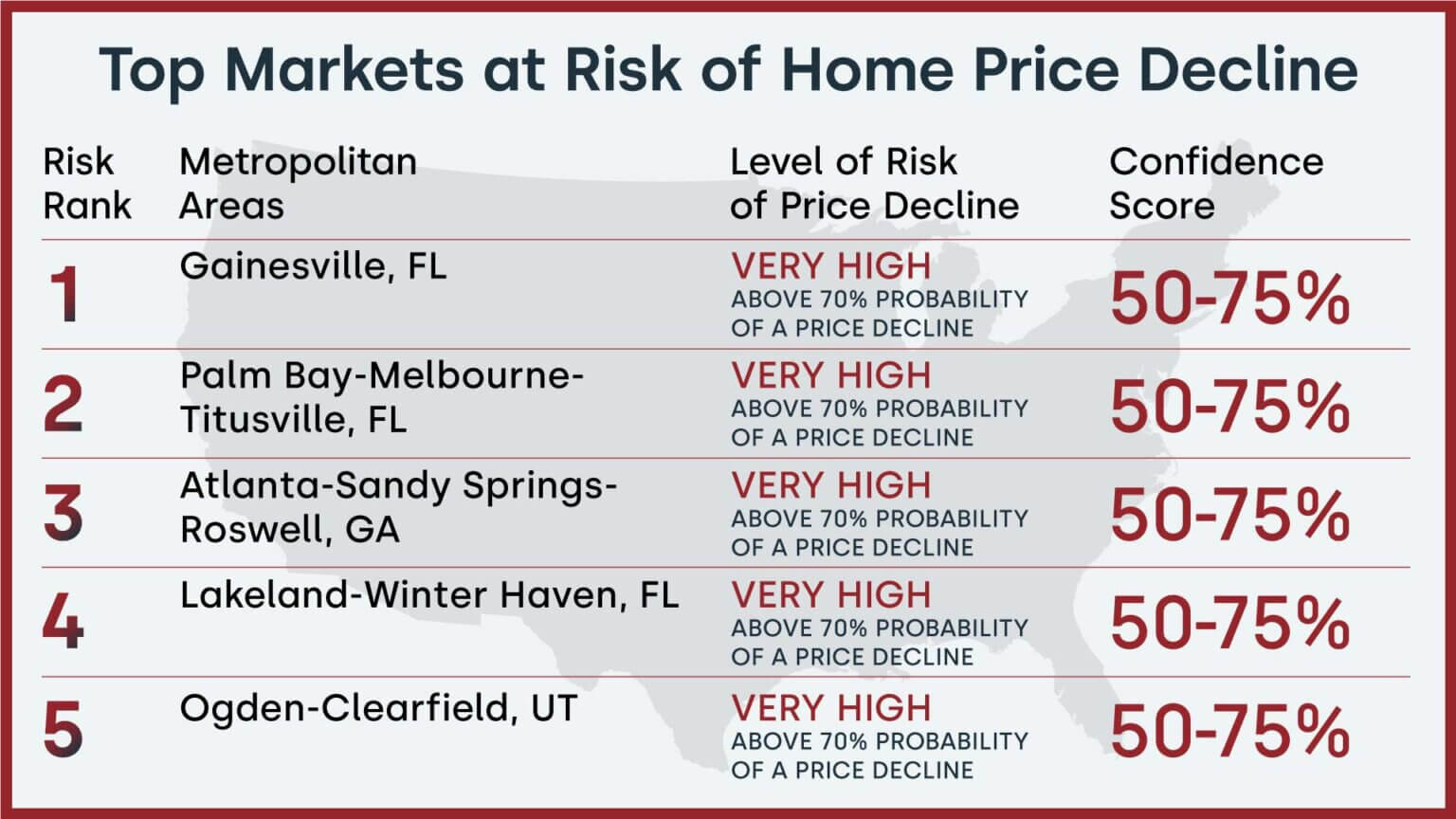
As the U.S. housing market continues its precarious dance with economic forces, Florida finds itself at the epicenter of a potential real estate upheaval. Recent data from CoreLogic's Market Risk Indicator (MRI) has shed light on an alarming trend: three major Florida metropolitan areas are at a very high risk of experiencing significant home price declines over the next 12 months. This article explores the factors contributing to this looming crisis and what it means for homeowners, buyers, and investors in these vulnerable markets.

3 Florida Housing Markets on the Brink of a Crash

  1. Gainesville, FL
  2. Palm Bay-Melbourne-Titusville, FL
  3. Lakeland-Winter Haven, FL

These three metropolitan areas have been identified as having a “very high” risk of price decline, with a probability exceeding 70%. Let's examine each market in detail:

1. Gainesville: The Educational Hub on Shaky Ground

Gainesville, home to the University of Florida, has long been considered a stable real estate market due to its consistent influx of students and faculty. However, it now sits atop the list of markets at risk of price decline. Several factors contribute to this precarious position:

  • Overreliance on the student housing market
  • Potential shifts in remote learning affecting local demand
  • Overvaluation of properties in recent years

The combination of these factors has created a perfect storm for Gainesville's housing market, making it vulnerable to a significant correction.

2. Palm Bay-Melbourne-Titusville: Space Coast's Economic Uncertainty

Known as the Space Coast due to its proximity to Cape Canaveral, this area has seen substantial growth in recent years, driven by the resurgence of the space industry and technology sector. However, the market now faces challenges:

  • Potential cutbacks in aerospace and defense spending
  • Overheated market due to speculative buying
  • Vulnerability to climate change and rising insurance costs

These factors have placed the Palm Bay-Melbourne-Titusville area in a high-risk category for price declines, threatening the equity of recent buyers and long-term residents alike.

3. Lakeland-Winter Haven: Central Florida's Overextended Market

Situated between Tampa and Orlando, Lakeland-Winter Haven has benefited from its strategic location and relatively affordable housing compared to its larger neighbors. However, this market is now facing its own set of challenges:

  • Rapid price appreciation outpacing local wage growth
  • Dependence on tourism and service industries affected by economic fluctuations
  • Increased inventory as investors begin to sell off properties

The combination of these factors has put Lakeland-Winter Haven at risk of a significant market correction.

three major Florida metropolitan areas are at a very high risk of experiencing significant home price declines
Source: CoreLogic 

Understanding the Broader Context

To fully grasp the situation in these Florida markets, it's crucial to consider the national housing market trends:

  • National home prices increased by 4.3% year-over-year in July 2024
  • Monthly home price growth is slowing, with prices decreasing by 0.01% from June to July 2024
  • CoreLogic forecasts a modest 2.2% price increase nationally from July 2024 to July 2025

Dr. Selma Hepp, Chief Economist for CoreLogic, notes that “Housing demand continued to buckle under the pressure of high mortgage rates and unaffordable home prices, leading to a considerable slowing of home price gains during the summer.”

The Florida Paradox

Interestingly, while these three Florida markets are at high risk of decline, Miami stands out as an anomaly. With a 9.1% year-over-year price increase as of July 2024, Miami demonstrates the diverse and complex nature of Florida's real estate landscape.

Factors Contributing to Florida's Vulnerable Housing Markets

  1. Interest Rate Sensitivity: Florida's real estate market is particularly sensitive to interest rate fluctuations, affecting both local buyers and out-of-state investors.
  2. Climate Change Concerns: Increasing awareness of climate risks, including hurricanes and flooding, is impacting long-term property values and insurance costs.
  3. Demographic Shifts: Changes in migration patterns, both domestic and international, are reshaping demand in various Florida markets.
  4. Economic Diversity: Markets heavily reliant on specific industries (e.g., tourism, education) are more vulnerable to economic shocks.
  5. Investor Activity: The high level of investor ownership in Florida makes certain markets more susceptible to rapid selling in a downturn.

Implications for Stakeholders

  • Homeowners: Those in high-risk areas should be prepared for potential loss of equity and consider their long-term housing plans.
  • Buyers: While price declines may present opportunities, buyers should be cautious and consider the long-term stability of their chosen market.
  • Investors: Diversification and thorough market research are crucial in navigating Florida's varied real estate landscape.
  • Local Governments: Policymakers may need to prepare for potential decreases in property tax revenues and implement strategies to maintain community stability.

Looking Ahead

While the risk of price declines in these Florida markets is significant, it's important to note that real estate is inherently local and cyclical. The potential for Federal Reserve rate cuts and the natural resilience of Florida's economy could mitigate some of these risks.

Dr. Hepp suggests that the key question is “whether the upcoming rate cut from the Fed and the expected continuation of falling mortgage rates will be sufficient to motivate potential homebuyers” in the face of economic uncertainties and the upcoming presidential election.

As Florida's housing markets navigate these turbulent waters, stakeholders must stay informed, adaptable, and prepared for a range of potential outcomes. The Sunshine State's real estate market has shown resilience in the past, but the current confluence of factors presents a unique and challenging landscape for the months ahead.

Related Articles:

  • Miami, Florida Housing Market Faces BIG Crash Risk
  • Florida Housing Market Predictions for Next 2 Years: 2025-2026
  • Florida Housing Market 2024: Predictions for Next 5 Years
  • Florida Housing Market Predictions 2025: Insights Across All Cities
  • How Much Do Real Estate Agents Make in Florida?
  • Florida's Housing Market Sets a New Record With $70 Million Teardown

Filed Under: Housing Market, Real Estate, Real Estate Market Tagged With: Florida, Housing Market, housing market crash, Real Estate Market

Seattle’s Housing Market: $178K Income Needed for a Starter Home

November 2, 2024 by Marco Santarelli

Seattle's Housing Market: $178K Income Needed for a Starter Home

If you're considering buying a typical starter home in Seattle, prepare to earn a substantial income—it requires a whopping $178,332 annually. This reflects increased challenges for buyers as the housing market in Seattle becomes more competitive and prices continue to rise.

The latest data reveals that, despite a recent dip in mortgage rates, affordability remains a significant hurdle for many prospective homeowners. In this blog post, we'll dive deeper into the current housing situation in Seattle, analyzing home prices, mortgage rates, and what this all means for first-time buyers.

Seattle's Housing Market: $178K Income Needed for a Starter Home

Key Takeaways

  • High Income Requirement: A minimum annual income of $178,332 is needed to afford a starter home.
  • Rising Home Prices: The typical starter home price has surged to $564,450, up 4.5% from last year.
  • Mortgage Rates: Despite a drop in mortgage rates from 7.07% to 6.08%, affordability challenges persist.
  • Income vs. Home Price: Buyers will spend 42.4% of their income, exceeding the recommended 30% threshold for housing costs.
  • Market Trends: Nationally, the income required for a starter home has slightly decreased, but Seattle's market remains challenging.

The Current Housing Market in Seattle

The Seattle housing market has always been known for its high prices and competitive nature. A recent report from Redfin highlights that the income needed to buy a starter home in Seattle is pegged at $178,332 per year. This figure showcases just how tough it is for new buyers to find affordable housing in the area. Even as mortgage rates fall to their lowest this year, the typical starter home price has risen, making it a daunting task for many.

The report reveals that the average price of a typical starter home in Seattle is now $564,450, which is up by 4.5% from the previous year. Contrast this with the fact that many buyers are only seeing limited income growth, and it's clear why many individuals and families feel locked out of the market. As home prices have increased considerably—up 51.1% since 2019—the earnings required to comfortably afford these homes have followed suit.

A household earning $178,332 would, alarmingly, need to allocate 42.4% of their income solely towards housing, significantly above the advisable 30% of gross income. This situation is not simply a local issue; it reflects a wider trend in housing affordability across the nation where, according to recent data, buyers are contending with similar challenges.

The Mortgage Rate Landscape

Interestingly, mortgage rates have recently declined, offering a glimmer of hope to prospective homebuyers. Currently, mortgage rates are hovering around 6.08%, a reduction from the previous year’s rate of 7.07%. This drop marks the lowest rate this year and is significant as it may potentially increase the number of people who are able to afford a mortgage.

However, despite lower mortgage rates, the general trend of rising home prices has overshadowed any short-term benefits that might come from reduced borrowing costs. While it's true that lower rates can make monthly payments more manageable, the overall price of homes continues to escalate, leaving buyers grappling with affordability concerns.

My Take

The current state of Seattle's housing market is particularly alarming. With such high income requirements, it feels increasingly impossible for average families to achieve homeownership. The gap between income growth and home prices creates a daunting hurdle that needs to be addressed.

Comparison with National Trends

On a broader scale, the challenges faced by Seattle’s homebuyers resonate nationally. As reported, the national income requirement to buy a typical starter home has seen a slight decrease to $76,995, a 0.4% drop compared to last year. This is the first annual decline since 2020, hinting at some potential easing in the market. However, this decline does not alleviate the heavy burdens many markets, including Seattle, are grappling with.

In fact, starter homes in Seattle remain vastly less affordable compared to pre-pandemic levels. In 2019, the typical household in the city earned 57% more than was necessary to afford a starter home, highlighting how drastically the landscape has shifted in just a few years.

Nationally, the affordability situation seems dire; buyers are facing a significant challenge to obtain even the simplest starter homes, with competition pushing prices into unrealistically high territories. Notably, there are metro areas, primarily in Texas and Florida, where the affordability situation has improved, contrasting sharply with Seattle's ongoing struggles.

Housing Market Outlook for Seattle

The prospects for Seattle's housing market are cautious at best. Redfin warns that the typical starter home affordability may not see much improvement soon, as prices tend to trend upwards over time while mortgage rate reductions have likely already been absorbed by the current housing dynamics.

The competition in the housing market isn’t only between first-time buyers but also includes older and wealthier buyers who often have far more capital to spend. This has only added to the squeeze on affordability for those just looking to get their foot in the door of homeownership.

Even with a slight improvement in the overall housing inventory, which recently hit a post-pandemic high, the demand remains strong. Homes in Seattle city limits typically sell within 21 days, compared to 14 days last year, indicating a rapid turnover that keeps prices high. For many, the dream of owning a home in Seattle appears more a distant fantasy than an achievable reality.

Final Thoughts

Navigating the Seattle housing market as a potential buyer can be exceedingly complex, especially for first-time buyers. The stark disparity between income growth and skyrocketing home prices presents a critical challenge. With a required annual income of $178,332 to afford a typical starter home, many potential homeowners find themselves at a crossroads, caught between rising prices and stagnant wage growth.

Lower interest rates on mortgages sound great, but house prices are also way up. This makes it really hard to say what will happen to housing in the future. With so many people trying to buy homes right now, it's important to understand what's going on before you make a big decision like buying a house.

Recommended Read:

  • Seattle Housing Market Predictions for Next 5 Years
  • Seattle Housing Market Forecast 2025: What to Expect
  • Seattle Housing Market: Prices, Trends, Predictions
  • Seattle Housing Market: Prices Sizzle, Ranking Among Nation’s Hottest
  • Seattle Real Estate Investment: Is it a Good Place to Invest?
  • The Hottest Housing Markets in Seattle Area (2024)

Filed Under: Growth Markets, Housing Market, Real Estate Market Tagged With: Housing Market, Housing Market Forecast, housing market predictions, Real Estate Market, Seattle

Housing Market Crisis: Fact-Checking Trump’s Claims Against Biden

November 1, 2024 by Marco Santarelli

Trump Claims Explosive Housing Crisis Under Biden: Is It Exaggeration?

In a lengthy speech at the Republican National Convention (RNC) in July, former President Donald Trump highlighted the US housing crisis but exaggerated several statistics. He aimed to spotlight incumbent President Joe Biden's alleged failings, linking rising housing costs directly to inflation.

Realtor.com® senior economist Ralph McLaughlin expressed appreciation for including housing in political discussions, but the accuracy of Trump's statements leaves much to be scrutinized. Here's what you need to know:

Housing Market Crisis: Fact-Checking Trump's Claims Against Biden

The Real Picture of Inflation and Housing Costs

Inflation's Impact

Trump's claim: “Groceries are up 57%, gasoline is up 60-70%, mortgage rates have quadrupled, and total household costs have increased an average of $28,000 per family under this administration.”

Fact Check:

  • Grocery Prices: Up 21% since January 2021 (Labor Department).
  • Gasoline Prices: Up 35% since January 2021 (Labor Department).
  • Mortgage Rates: More than doubled but have not quadrupled.
  • Household Costs: Average expenditures increased by $11,635 from 2020 to 2022, not $28,000.

While Trump's figures are overstated, they underscore the real pain many consumers feel due to inflation.

Mortgage Rates and Home Affordability

  • Current Average Mortgage Rate: 6.77% (Freddie Mac).
  • Record Low in Early 2021: 2.65% (Freddie Mac).
  • Peak Rate in Last Fall: Nearly 7.8%.

Although the rise in mortgage rates has been dramatic, it is not as severe as Trump claimed. The Federal Reserve's decision to raise its benchmark rate to combat inflation has led to significant increases in monthly payments for new homebuyers.

Home Prices and Affordability:

  • National Home Price Increase (Past 5 Years): 54% (Case-Schiller Home Price Index).
  • Home Affordability: At its lowest in four decades (Realtor.com analysis).

Household Expenses and Financing

Household Expenses:

  • Average Annual Household Expenditures: Increased by $11,635 from 2020 to 2022 (Labor Department).
  • Trump’s Claim: $28,000 increase, unsupported by data.

Trump's figures do not align with published data. The actual increase in household expenditures has been significant but far short of the claimed $28,000.

Recommended Read:

Will Donald Trump’s Victory Reshape the Housing Market in 2025? 

Republican Party's 2024 Platform on Housing

The Republican Party lists “housing affordability” first in their 2024 platform, proposing several measures:

  • Reducing Mortgage Rates: Through inflation reduction.
  • Opening Federal Lands: For new home construction.
  • Tax Incentives: To promote homeownership.
  • Cutting Regulations: These increase housing costs.

Young People and Home Financing

Trump's Claim: “Young people can’t get any financing to buy a house.”

Reality Check:

  • Lending Standards: Remain largely unchanged for conforming mortgages (Fed's quarterly survey).
  • Homeownership Rate (Under 35): Higher now than pre-pandemic levels.

The under-35 homeownership rate has been trending down since its 2020 peak, yet it remains above pre-pandemic levels at 37.7%. While high prices and interest rates pose challenges, the data does not support the claim that young people cannot get financing.

Conclusion and Future Outlook

Despite Trump's exaggerations, the issues he highlighted remain pressing concerns for many Americans. The housing market and inflation continue to be significant topics as we approach the 2024 election. As the Federal Reserve considers potential rate cuts, the future of mortgage rates and overall housing affordability remains uncertain.

Partner with Norada, Your Trusted Source for Turnkey Investment Properties

Discover high-quality, ready-to-rent properties designed to deliver consistent returns. Contact us today to expand your real estate portfolio with confidence.

Reach out to our investment counselors:

(949) 218-6668 | (800) 611-3060

Contact Us Today


Stay Tuned: For more detailed analysis and updates on this topic, follow our real estate blog. The discussion around housing and homeownership is sure to remain a critical issue in the upcoming election season.

Recommended Read:

  • Housing Market Forecast for the Next 2 Years: 2024-2026
  • How the Housing Market Fared During Donald Trump's Presidency?
  • Donald Trump Warns US Fed Chair to Hold Off Rate Cuts Before Election
  • Housing Market Predictions for Next 5 Years (2024-2028)
  • Housing Market Predictions for the Next 2 Years
  • Housing Market Predictions: 8 of Next 10 Years Poised for Gains
  • Housing Market Predictions: Top 5 Most Priciest Markets of 2024
  • Real Estate Forecast Next 5 Years: Top 5 Future Predictions
  • Housing Market Predictions for 2027: Experts Differ on Forecast

Filed Under: Housing Market, Real Estate Market Tagged With: Housing Affordability, Housing Crisis, Housing Market, Housing Policies, Real Estate Market

Top 10 Hottest Real Estate Markets in the World

October 13, 2024 by Marco Santarelli

Top 10 Hottest Real Estate Markets in the World

The global real estate market is constantly evolving, with new trends and hot spots emerging all the time. Whether you're a seasoned investor or a first-time buyer, identifying these up-and-coming markets can offer exciting opportunities for growth and appreciation. In this article, we'll explore some of the hottest real estate markets in the world, highlighting the factors driving their appeal and providing insights for potential investors.

Top 10 Hottest Real Estate Markets in the World

  1. Dubai, United Arab Emirates:

    Why it's hot: Dubai's booming economy, luxurious lifestyle, and strategic location make it a magnet for international investors. With ambitious government projects which were started a couple of years back like Expo 2020 and the Dubai Plan 2021, the city's infrastructure and real estate sector are experiencing rapid growth.

    What to expect: Prices in Dubai are high, but there is still room for growth, especially in luxury properties. The rental market is also strong, making it a good option for investors looking for passive income.

    Insider tip: Focus on emerging neighborhoods like Dubai South and Jumeirah Lakes Towers, which offer more affordable options with high growth potential.

  2. Lisbon, Portugal:

    Why it's hot: Portugal's golden visa program, low cost of living, and charming historic city center have attracted a surge of foreign investment. Lisbon, the country's capital, offers a vibrant cultural scene, beautiful beaches, and a growing tech sector, making it an attractive option for lifestyle investors and retirees.

    What to expect: Prices in Lisbon have been rising steadily in recent years, but they are still relatively affordable compared to other European capitals. The rental market is also strong, making it a good option for investors looking for short-term rentals.

    Insider tip: Look for properties in up-and-coming neighborhoods like Arroios and Alcantara, which offer good value for money and are close to popular attractions.

  3. Berlin, Germany:

    Why it's hot: Germany's stable economy and thriving tech scene have fueled demand for housing in Berlin, particularly in desirable neighborhoods like Mitte and Kreuzberg. The city's affordability compared to other European capitals and its diverse cultural offerings make it a popular choice for young professionals and families.

    What to expect: Prices in Berlin have been rising steadily in recent years, but they are still relatively affordable compared to other major European cities. The rental market is also strong, making it a good option for investors looking for long-term rentals.

    Insider tip: Look for properties in former East Berlin, which are often cheaper than those in the west and offer more potential for renovation and value appreciation.

  4. Amsterdam, Netherlands:

    Why it's hot: Amsterdam's limited land availability and strong economic growth have contributed to a hot real estate market. The city's focus on sustainability and cycling infrastructure attracts eco-conscious buyers, while its reputation as a global tourism hub ensures steady rental income potential.

    What to expect: Prices in Amsterdam are high, but there is still room for growth, especially in apartments and houses with canal views. The rental market is also very strong, making it a good option for investors looking for short-term rentals.

    Insider tip: Focus on up-and-coming neighborhoods like Nieuw-West and Zeeburg, which offer more affordable options with good transport links to the city center.

  5. Miami, Florida, USA:

    Why it's hot: Miami's tropical climate, beaches, and growing tech scene have propelled it to the top of the US real estate market. The influx of wealthy Latin Americans and international investors has driven up prices, particularly in luxury condos and waterfront properties.

    What to expect: Prices in Miami are high, but there is still room for growth, especially in luxury properties. The rental market is also strong, making it a good option for investors looking for short-term rentals.

    Insider tip: Look for properties in up-and-coming neighborhoods like Wynwood and Edgewater, which offer more affordable options with good potential for appreciation.

  6. Austin, Texas, USA:

    Why it's hot: Austin's booming tech industry, low taxes, and live music scene have made it a magnet for young professionals and millennials. The city's affordability compared to other major tech hubs like San Francisco and Seattle further adds to its appeal.

    What to expect: Prices in Austin have been rising steadily in recent years, but they are still relatively affordable compared to other major US cities. The rental market is also strong, making it a good option for investors looking for long-term rentals.

    Insider tip: Look for properties in close proximity to downtown or in established neighborhoods like Zilker and Barton Hills, which offer good value for money and are close to popular attractions.

  7. Denver, Colorado, USA:

    Why it's hot: Denver's stunning natural beauty, outdoor recreation opportunities, and strong job market have fueled a hot real estate market. The city's growing healthcare and aerospace industries also contribute to steady demand for housing.

    What to expect: Prices in Denver have been rising steadily, but remain comparatively lower than coastal cities like Miami and Seattle. The rental market is strong, offering both long-term and short-term income possibilities.

    Insider tip: Explore up-and-coming neighborhoods like RiNo and Highlands, known for their vibrant artistic communities and close proximity to mountains and parks.

  8. Seattle, Washington, USA:

    Why it's hot: Seattle's tech giant, Amazon, continues to drive economic growth and housing demand. The city's proximity to nature, vibrant cultural scene, and progressive values attract young professionals and families alike.

    What to expect: Expect competitive prices, particularly in neighborhoods close to Amazon HQ. The rental market is strong, offering lucrative short-term rental opportunities.

    Insider tip: Consider emerging neighborhoods like Ballard and Fremont, known for their unique character and potential for appreciation.

  9. Toronto, Canada:

    Why it's hot: Canada's stable economy, strong immigration policies, and multicultural diversity make Toronto a desirable destination for both domestic and international buyers. The city's robust job market and growing tech sector further contribute to its real estate appeal.

    What to expect: Expect moderate yet consistent price growth, particularly in desirable areas like downtown and waterfront properties. The rental market is strong, offering long-term income potential.

    Insider tip: Look for up-and-coming neighborhoods like Liberty Village and Parkdale, known for their affordability and potential for development.

  10. Tokyo, Japan:

    Why it's hot: Despite concerns about an aging population, Tokyo's robust economy and limited land availability continue to drive demand for real estate. The city's world-class infrastructure, efficient transportation system, and cultural attractions make it a prime target for investors seeking long-term stability.

    What to expect: Expect consistent but slower price growth compared to faster-paced markets. The rental market is very strong, offering stable long-term income potential.

    Insider tip: Consider central neighborhoods like Shibuya and Shinjuku, known for their high rental occupancy rates and proximity to business districts.

Bonus Picks for Hot Markets:

  • Athens, Greece: Greece's economic recovery and tourism boom have revitalized the Athens real estate market. The city's affordability and proximity to stunning beaches make it an attractive option for budget-conscious investors.
  • Valencia, Spain: Spain's sunny beaches, affordable cost of living, and growing startup scene have attracted international buyers to Valencia. The city's historic center, vibrant arts scene, and proximity to nature further add to its appeal.
  • Milan, Italy: Italy's fashion capital, Milan, is experiencing a real estate renaissance driven by economic growth and foreign investment. The city's luxury real estate market is particularly hot, with demand for high-end apartments and penthouses soaring.
  • Prague, Czech Republic: Prague's affordability, rich history, and beautiful architecture have made it a popular tourist destination and real estate investment hub. The city's growing tech sector and increasing rental income potential further add to its allure.
  • Marrakech, Morocco: Morocco's exotic appeal, growing tourism industry, and government efforts to improve infrastructure have boosted the Marrakesh real estate market. The city's vibrant culture, traditional riads, and proximity to stunning landscapes make it a unique and lucrative investment opportunity.
  • Tel Aviv, Israel: Israel's booming tech scene and vibrant startup ecosystem have fueled demand for housing in Tel Aviv, particularly in central neighborhoods close to beaches and nightlife. The city's cosmopolitan atmosphere and sunny Mediterranean climate add to its appeal for young professionals and investors.
  • Bali, Indonesia: Bali's tropical paradise setting, luxury resorts, and thriving tourism industry have made it a hot spot for both vacation rentals and long-term investments. The island's diverse landscape, rich culture, and growing expat community further enhance its real estate appeal.

Final Thoughts:

The global real estate market offers a diverse range of options for investors with varying risk appetites and budgets. While established markets like Dubai and Miami continue to hold their appeal, emerging destinations like Lisbon and Austin are increasingly grabbing attention. When choosing a hot real estate market, it's crucial to consider factors like economic growth, job market stability, government policies, infrastructure development, and lifestyle amenities.

By conducting thorough research and understanding the local market dynamics, investors can make informed decisions and capitalize on the exciting potential of these thriving sectors.

Remember, real estate investment involves risks, and market conditions can change rapidly. Always consult with a qualified financial advisor before making any investment decisions.

Remember:

  • Market conditions can change rapidly, so thorough research and professional advice are crucial before investing.
  • Diversification is key to minimizing risk. Invest in multiple countries or regions to avoid relying solely on one hot market.
  • Consider your investment goals and risk tolerance when choosing a market. Some markets offer higher potential returns but also come with greater risk.

Insights:

  • Emerging countries: Look for rising stars like Vietnam, the Philippines, and Kenya, experiencing economic growth and attracting foreign investment.
  • Secondary cities: Consider exploring smaller cities in established markets like Atlanta, Nashville, and Indianapolis in the US, offering affordability and strong job markets.
  • Sustainable real estate: Focus on eco-friendly properties with energy-efficient features, catering to a growing demand for sustainable living.

Remember, research, caution, and a solid plan are key to success in the dynamic world of real estate!

Filed Under: Growth Markets, Housing Market, Real Estate Market Tagged With: Real Estate Market

Seattle Housing Market Forecast 2025: What to Expect

October 9, 2024 by Marco Santarelli

Seattle Housing Market Forecast 2025: What to Expect

When considering real estate investment, understanding the Seattle housing market forecast 2025 serves as a vital compass in navigating this complex terrain. As we move deeper into 2024, Seattle's housing market showcases intriguing trends that could profoundly impact buyers, sellers, and investors alike.

Seattle Housing Market Forecast 2025

Key Takeaways

  • Average Home Value: As of mid-2024, the average home value in Seattle is $869,584, reflecting a 3.8% increase over the past year (Zillow).
  • Market Dynamics: Homes are going pending in as little as 9 days on average, indicating a robust demand.
  • Median Sale Price: The median sale price for homes is recorded at $867,167 as of June 30, 2024.
  • Price Trends: Projections suggest a slight decline, with home values expected to decrease by 0.6% by the end of 2024, stabilizing further into 2025.
  • Availability Challenge: The Seattle-Tacoma-Bellevue region is facing limited housing inventory, putting upward pressure on prices.

Current State of the Seattle Housing Market

As we examine the current state of the Seattle housing market, it’s important to recognize the unique dynamics at play. The average home value has seen a notable rise, but this trend is accompanied by an increasingly competitive market. Home listings are not lasting long; the average time for a home to receive an offer is down to about 9 days.

This rapid pace showcases the high demand for housing in Seattle, which is characterized by a dense population and a flourishing tech industry. The median sale price for homes in Seattle has reached $867,167 as of mid-2024, a figure that represents both the growth of the market and the challenges facing potential homeowners.

The Seattle-Tacoma-Bellevue area exhibits similar trends with an average home value of $746,560, indicating a 5.6% increase over the past year. As housing inventory remains low, buyers often find themselves in bidding wars, leading to inflated prices and properties often selling above asking.

Forecast for 2025

Looking towards 2025, we can anticipate a more stabilized market. With projected declines of 0.6% in home values by late 2024, Zillow predicts that prices may drop even slightly further into early 2025. A key factor contributing to this forecast is the potential for increased housing inventory, which could relieve some of the price pressure.

Overall, the national housing market forecasts indicate that while some regions might experience growth, the restrictive affordability issues that plague areas like Seattle could lead to stiffer competition in keeping prices in check. In fact, external economic factors, including shifts in mortgage rates and general inflation, will also play a pivotal role in influencing the market dynamics.

Are Home Prices Dropping?

The question on many potential buyers’ minds revolves around whether home prices are indeed dropping or will drop in the coming months. Reports indicate that while there may be a minor decline projected for 2024, the rates of decrease are not significant at this time. In fact, national trends indicate a resilience in home prices despite rising interest rates. As predicted by various housing market analysts, prices have previously exhibited fluctuations due to economic conditions but are expected to remain relatively stable.

Interestingly, the Seattle market is marked by peculiarities that can dampen the direct impacts of these broader trends. The area's desirability, particularly for technology professionals and affluent buyers, suggests continued competition, which will likely keep prices from dropping too drastically.

Final Thoughts on Seattle's Market Forecast

In conclusion, the Seattle housing market forecast for 2025 is characterized by a subtle balancing act between rising demand and slight projected declines. While current statistics highlight robust housing values, future projections hint at stabilization that could provide relief for buyers feeling the pinch of skyrocketing prices.

The continued strength of Seattle's economic underpinnings—especially in technology—will remain influential in dictating the housing dynamics moving forward.

It's crucial to stay informed about market trends, economic indicators, and local developments to navigate the complexities of buying or selling a home in such a vigorous market. Those keeping an eye on the Seattle housing market may find that patience and vigilance pay off as the landscape gradually transitions towards a more balanced state.


ALSO READ:

  • Seattle Housing Market: Prices, Trends, Predictions
  • Seattle Housing Market: Prices Sizzle, Ranking Among Nation’s Hottest
  • Seattle Real Estate Investment: Is it a Good Place to Invest?
  • The Hottest Housing Markets in Seattle Area (2024)
  • Real Estate Forecast Next 10 Years: Will Prices Skyrocket?
  • Housing Market Predictions for Next 5 Years (2024-2028)
  • Housing Market Predictions for the Next 2 Years

Filed Under: Housing Market, Real Estate Market Tagged With: Housing Market, Real Estate Market, Seattle

Miami Real Estate Market Predictions 2025-2026: Insights for Buyers

October 6, 2024 by Marco Santarelli

Miami Real Estate Market Predictions 2025: Insights for Buyers

The Miami real estate market predictions for 2025 suggest substantial growth, with expected home price increases driven by declining mortgage rates and escalating demand from buyers. In 2025, Miami is well-positioned to remain a premier destination for real estate investment, characterized by its vibrant lifestyle and robust market dynamics.

Miami Real Estate Market Predictions 2025-2026

Key Takeaways

  • Median Home Prices are anticipated to rise by 6.5% overall, with single-family homes likely soaring by 9.7%.
  • Mortgage Rates could drop to approximately 5% by the end of 2025, making housing more accessible.
  • The luxury condo market is thriving, especially for properties priced over $1 million, which have witnessed a 122.2% increase compared to pre-pandemic levels.
  • Inventory shortages will continue to define the market, making it predominantly a seller’s market for both single-family and condominium properties.
  • Population growth and migration are significantly boosting household incomes and driving real estate demand in Miami.

Miami has shown remarkable resilience and growth in its real estate sector, even amidst changing economic conditions and fluctuating mortgage rates. The city’s allure lies in its unique combination of culture, climate, and economic opportunity, continually attracting both domestic and international buyers.

Current Market Overview

The Miami real estate market has seen a consistent uptick, with single-family home sales experiencing year-over-year growth. The MIAMI Association of Realtors reported a 1.7% increase in single-family home sales from 948 to 964 transactions in August 2024. This reflects a bullish trend in a market that has gained in eight of the last ten months, despite a broader decline in sales attributed to limited inventory in key price segments. The total sales for Miami-Dade dropped 8.1% year-over-year due to sheer inventory constraints rather than a lack of demand (MIAMI Association of Realtors).

Home Price Trends

As of August 2024, the median sale price for single-family homes in Miami-Dade County rose from $620,000 to $640,000, marking a 3.2% increase. For an astonishing 12.75 years, the city has seen rising prices, with single-family home prices climbing 156% since August 2014. On the other hand, condo prices have also enjoyed a remarkable increase of 128% in the same span. Interestingly, existing condo median prices saw a minor decline of 0.2%, from $416,000 to $415,000, a slight blip in an otherwise upward trajectory.

Luxury Condo Market Surge

The luxury condo market is witnessing unprecedented growth, especially for properties priced at $1 million and above. August 2024 statistics reveal that sales in this segment surged by an incredible 122.2% compared to pre-pandemic benchmarks set in August 2019. This remarkable demand can be attributed to both domestic and foreign buyers, with many seeking Miami’s unique blend of lifestyle and investment potential (Newsweek).

Economic Influencers

A confluence of economic factors is enabling growth in the Miami real estate market. The aggressive actions of the Federal Reserve to cut interest rates have positioned mortgage rates on a downward trajectory, thereby increasing affordability for potential buyers. Recent predictions suggest that mortgage rates might reach as low as 5% by the end of 2025. This affordability, combined with a backlog of demand built up over the past two years, sets the stage for a rebound in sales volume and price appreciation in the upcoming year.

Migration and Increased Income

Miami's appeal extends beyond its real estate; it has emerged as a sought-after destination due to lifestyle factors, leading to significant population growth. Migration contributed an impressive $10 billion increase to Southeast Florida’s aggregate household income by 2022. New arrivals to Miami have an average adjusted gross income of $175,600, which is substantially higher than the income of long-term residents. This influx of high-income earners enhances the purchasing power in the real estate sector, thus stimulating demand.

Market Challenges: Inventory Issues

Despite a robust increase in sales and escalating prices, inventory remains a significant challenge. As of August 2024, the total active listings of existing condos fell 42.2% short of historical averages, resulting in a seller’s market where demand consistently outstrips supply. The current months’ supply of inventory for single-family homes stands at 4.7 months, indicating a tight market, while condos feature a slightly more extended supply at 9.5 months; both metrics highlight a market favoring sellers.

Future Projections for 2025

As we look to 2025, expectations for the Miami real estate market remain optimistic. Analysts predict an overall 6.5% increase in sales prices, with single-family homes anticipated to escalate even more at 9.7%. The luxury real estate segment, especially, is poised for notable appreciation given the robust demand and limited supply (The Apt Team).

Cash Sales and International Buyers

Additionally, a significant portion of Miami's real estate transactions, approximately 32.9%, are cash sales, significantly higher than the national average of around 26%. This high percentage of cash buyers underscores Miami’s desirability among international investors, particularly those from wealthier foreign markets. In August 2024, cash transactions accounted for 43% of all existing condo sales and 22% of single-family transactions, illustrating a strong inclination towards secure investments in high-demand properties.

Domestic and International Demand

The dual pressure from both domestic and international buyers ensures that the demand side of the market remains strong. With specific interest shown in properties above the $1 million mark, Miami’s reputation as a luxury hub only reinforces its status as one of the top U.S. cities for millionaires and affluent buyers. As highlighted by the Knight Frank’s 2024 Wealth Report, Miami ranks first in the U.S. for luxury market price growth, making it a prime location for real estate investment.

Conclusion: The Road Ahead

Overall, Miami is set to retain its position as a critical player in the national and international real estate markets. An interplay of distinct factors, including declining mortgage rates, an influx of affluent residents, and a resilient luxury segment, paints a promising picture for 2025. While inventory challenges persist, the appetite for Miami real estate remains strong, promising continued appreciation and market activity in the year ahead. The economic and demographic shifts solidify Miami's standing not just as a desirable destination but also as a hotspot for real estate investment.

Related Articles:

  • Miami, Florida Housing Market Faces BIG Crash Risk
  • Miami Housing Market: Prices, Trends, Forecast 2024
  • Will Miami's Housing Market Crash Due to Rising Mortgage Rates
  • Miami Housing Market Soars: Prices Jump by Remarkable 10.6%

Filed Under: Housing Market, Real Estate, Real Estate Market Tagged With: Housing Market, Housing Market Forecast, Miami, Real Estate Market

Delaware Housing Market Forecast 2025-2026: Insights for Buyers

October 4, 2024 by Marco Santarelli

Delaware Housing Market Forecast 2025-2026: Insights for Buyers

The Delaware housing market forecast for 2025-2026 reveals a mixed outlook for home prices across various regions in the state. With average home values around $388,163, reflecting a modest annual price increase of 2.7% as reported by Zillow, the market remains dynamic.

While we do not anticipate dramatic declines or a housing crash, subtle fluctuations are likely as the balance of supply and demand shifts. This post will explore the detailed predictions for the coming years, focusing on regional variations, anticipated trends, and what homeowners can expect.

Delaware Housing Market Forecast 2025-2026

Key Takeaways

  • Average Home Value: $388,163
  • Median Sale Price: $349,333 (as of July 31, 2024)
  • Median List Price: $437,450 (as of August 31, 2024)
  • Days Until Pending Sale: Homes are pending in approximately 11 days.
  • Market Trends: 28% of sales were over the list price; 51.4% under the list price.

Delaware is not just a charming place to live; its recent housing trends demonstrate a solid market with opportunities for both buyers and sellers. As we explore this forecast, we'll highlight significant state statistics and delves deeper into specific regions with unique characteristics.

Current Market Overview

Recent data indicates that the average home value in Delaware has reached $388,163. This represents a 2.7% increase over the past year, according to Zillow. The median sale price stands at $349,333 as of July 31, 2024, while the median list price surged to $437,450 by the end of August 2024. Homes are moving quickly, pending in as little as 11 days, showcasing the competitiveness of the current market landscape.

One striking metric is the sale-to-list ratio currently at 0.994, implying that homes are selling very close to their asking prices. This figure, accompanied by the fact that 28% of sales occurred at prices exceeding the listing price, reflects a robust market where eager buyers are willing to outbid each other. However, it’s notable that 51.4% of sales were below the listing price during July 2024, suggesting that buyers have room for negotiation in certain situations, particularly as market dynamics shift.

Regional Forecasts and Trends

Understanding broader market trends is essential, but regional insights can provide a clearer picture of what to expect in different parts of Delaware. The following analysis breaks down predicted growth and challenges across varying regions:

Major Statistical Areas (MSA) Forecast

For the period between September 2024 and August 2025, we can anticipate different behaviors across Delaware's MSA regions:

  • Salisbury, MD (DE MSA):
    • September 2024: 0% change
    • November 2024: -0.2% decline
    • August 2025: 1.2% growth projected
  • Dover, DE (DE MSA):
    • September 2024: 0% change
    • November 2024: -0.1% decline
    • August 2025: 1.7% growth projected

From this forecast, we observe that while certain areas may experience slight downturns in the short term, growth is anticipated as we progress into 2025. It's vital to remain attuned to local market fluctuations rather than relying solely on statewide averages.

Will Home Prices Drop? Will There Be a Crash?

Many market analysts express caution regarding the potential for a significant downturn in home prices. Most forecasts do not indicate a severe housing crash in Delaware. Instead, we are likely to see minor decreases in some areas followed by corrections as demand stabilizes against increasing inventory. With the aforementioned 51.4% of sales going for less than the list price in July, sellers might find it necessary to adjust their expectations to meet the current market conditions.

One contributing factor to these dynamics is the recent rise in available inventory, which may not entirely align with buyer demand. The growth is pivotal; as potential buyers have more options, competition may ease, encouraging negotiations and ultimately pressuring prices in certain neighborhood.

Forecast for 2026

Looking further ahead to 2026, experts forecast a mild recovery period characterized by infrastructure improvements and economic growth. Predictions suggest that as job opportunities increase and population growth becomes more pronounced, we may see a resurgence in demand for housing. This trend could possibly lead to home prices increasing by 3% to 4% by 2026.

The potential for suburban areas around Wilmington and Dover to capitalize on increasing population influx may drive prices and demand significantly higher, elevating their respective housing markets. Many buyers looking for affordable housing options hidden within the charm of Delaware’s communities will continue to pursue these opportunities.

Key Highlights

Average Home Value: $388,163 (2.7% annual increase)

Median Sale Price: $349,333 (as of July 2024)

Median List Price: $437,450 (as of August 2024)

Regions on the Rise

Region Forecasted Growth by 2025
Salisbury, MD 1.2%
Dover, DE 1.7%

Overall Market SentimentSales Trends: 28% of sales above list price; 51.4% below list price (as of July 2024).

Market Outlook: Slight price fluctuations expected, but overall stability projected through 2026.

My Opinion on the Forecast

In my opinion, the Delaware housing market is presently in a favorable position as it navigates through minor fluctuations. As supply chains stabilize and buyer preferences evolve, we can expect a healthy market that reflects both local economic growth and the changing needs of homeowners.

Conclusion

The Delaware housing market forecast for 2025-2026 suggests a stable and evolving landscape. While slight variations in home prices across different regions may occur, there are ample opportunities for buyers and sellers alike. Homeowners should keep a close eye on local market trends to make informed decisions that capitalize on the market’s potential.

As Delaware continues to leverage its strategic location and growing job markets, the momentum may well carry through the coming years, creating both challenges and opportunities for prospective buyers and existing homeowners.

Related Articles:

  • Average House Prices by State in USA (2024)
  • Housing Market Predictions for Next Year: Prices to Rise by 4.4%
  • Housing Market Predictions for the Next 4 Years: 2024 to 2028
  • Housing Market Predictions for Next 5 Years: 2025 to 2029
  • Housing Market Predictions 2030: These 12 States Will Boom

Filed Under: Housing Market, Real Estate, Real Estate Market Tagged With: Delaware, Housing Market, Housing Market Forecast, Real Estate Market

Is the Housing Market Headed for a Crash Again?

October 1, 2024 by Marco Santarelli

Another Sign of a Housing Market Crash Coming?

Is the housing market headed for a crash again? Many experts believe that, unlike the disastrous downturn of 2008, the current housing market is more resilient and less likely to crash significantly. While prices have risen dramatically and affordability issues persist, factors such as low inventory and strong demand indicate stability in the market for the foreseeable future.

Is the Housing Market Headed for a Crash Again?

Key Takeaways

  • Current Market Trends: Home prices remain high but may stabilize or increase slightly.
  • Demand vs. Supply: Low inventory continues to push demand upwards.
  • Economic Factors: Inflation and high mortgage rates create challenges but are not expected to lead to a crash.
  • Expert Opinions: Most believe a significant downturn is unlikely due to various market dynamics.

The State of the Housing Market in 2024

In navigating whether the housing market is headed for a crash again, it's essential to consider the current state of affairs. The market has witnessed a dramatic increase in home prices over the past few years. As of 2024, reports indicate that home values have risen approximately 5.4% year-over-year, per the latest S&P CoreLogic Case-Shiller Index. Such growth, while impressive, raises eyebrows; many wonder if these prices are sustainable or if they are propped up by speculation and financial manipulation.

What’s Causing the Price Surge?

Several factors contribute to the increasing home prices:

  • Low Inventory: The number of homes available on the market remains lower than needed to meet demand. Homebuilders have struggled to keep pace following the COVID-19 pandemic.
  • High Demand: Despite elevated mortgage rates, many buyers are unwilling to wait, driven by the belief that not buying now could lead to even higher prices later. This has kept competition for homes fierce.
  • Record Low Mortgages: Homeowners who secured lower mortgage rates in the past are reluctant to sell and lose their favorable rates, thereby decreasing available inventory.

Comparative Analysis with Past Crashes

Unlike the catastrophic housing crash of 2008, which was fueled by subprime mortgages and rampant speculation, the current market does not appear to have the same vulnerabilities. According to a Forbes article from December 2023, the general consensus aligns with the view that a similar crash is unlikely due to more stringent lending practices and better overall financial conditions among homeowners (Forbes). Most homeowners now possess significant equity, contrasting sharply with the situation before the 2008 crisis.

However, discussions around housing market stability also surface. Some critics argue that the market is experiencing a bubble, stating that “the U.S. is in a massive housing bubble,” with prices artificially inflated. They suggest that political decisions and economic factors could lead to significant corrections down the line (Strong Towns).

Economic Challenges on the Horizon

While the consensus leans toward optimism, it is crucial to highlight the economic challenges ahead. High inflation rates continue to influence the economy, causing uncertainty among consumers and potential homebuyers. Additionally, mortgage rates have recently soared above 6%, creating a more challenging lending environment. Homebuyers now face increased monthly payments, further constraining affordability for many.

Impact of Interest Rates on the Market

The Federal Reserve's policies around interest rates can significantly impact housing demand. If rates remain high or continue to rise, it could suppress home sales and cool the market. However, forecasts suggest a potential decline in rates as inflation stabilizes, which could revitalize buyer interest (Bankrate). The overall feeling among experts is mixed yet controlled: housing will likely face challenges, but a crash akin to 2008 remains improbable.

The Take From Experts

Expert insights paint a comprehensive picture of the housing market's future. In a recent analysis, it was stated that the ongoing competition and multiple offers for homes will likely drive prices upward, contrary to fears of a downturn (Business Insider). This sentiment is echoed in multiple reports, including surveys from U.S. News, which forecast a continued demand for housing amidst increasing prices, stating there is “no imminent collapse” for the housing market in 2024.

It’s also worth noting the emotional side of home buying. Many families view homeownership as an essential part of their future, which drives commitment despite rising prices. This mindset can act as a stabilizer in the market, even amid economic turbulence.

Local vs. National Market Trends

While national trends give us an overall view, local markets present unique dynamics. Certain areas may experience corrections due to economic downturns, job losses, or an influx of new housing developments. This contrasting scenario highlights that, while the national outlook seems positive, some regions might still struggle. For instance, some analysts predict that specific markets may not enjoy the same level of stability due to local economic conditions and shifts in industry.

Conclusion to the Discussion

As we dive deeper into 2024, the question remains: is the housing market destined for a crash again? The evidence suggests that while there may be challenges, a crash similar to that of 2008 is unlikely. With continued demand, historic low inventory, and more resilient economic fundamentals, many experts remain hopeful that the housing market will continue to evolve without the tumultuous setbacks we've seen in the past.

As individuals and families contemplate home purchases amidst rising prices, it’s crucial to stay informed about market dynamics. Understanding the intricacies of supply and demand, interest rates, and local economic conditions can provide insight into making sound decisions in today’s housing market.

Recommended Read:

  • Is the Housing Market Crash Coming? Experts Weigh In
  • Housing Market Predictions for Next 5 Years: 2025 to 2029
  • Housing Market Predictions for the Next 4 Years: 2024 to 2028

Filed Under: Housing Market Tagged With: Housing Market, housing market crash, Real Estate Market

Miami, Florida Housing Market Faces BIG Crash Risk

September 25, 2024 by Marco Santarelli

Miami, Florida Housing Market Faces BIG Crash Risk

The Miami, Florida housing market faces a significant crash risk, making it one of the most discussed topics among real estate enthusiasts and investors. As of 2024, Miami has been identified as the most overvalued housing market globally, according to UBS's Global Real Estate Bubble Index. With home prices up nearly 50% since late 2019, this surge raises pressing questions about the sustainability of prices in a market already strained by rising living costs and environmental threats.

Miami, Florida Housing Market Faces Crash Risk

Key Takeaways

  • Miami is ranked as the most overvalued housing market globally.
  • Home prices have increased nearly 50% since late 2019, despite recent cooling trends.
  • The market exhibits significant imbalances when comparing price growth against income and rent.
  • Rising insurance costs, alongside fears of sea-level rise, contribute to market instability.
  • An increase in the supply of available homes could lead to declining prices as demand cools.

Understanding the Housing Market Bubble Risk in Miami

Miami's housing market has skyrocketed, buoyed by a combination of affluent buyers from within the U.S. and abroad, a limited supply of high-end properties, and an evolving perception of real estate value. According to the Global Real Estate Bubble Index 2024 from UBS, the city's real estate market is now regarded as the most precarious, surpassing major financial centers such as Tokyo and Zurich.

The rapid price hikes, particularly since the onset of the COVID-19 pandemic, have left many potential buyers feeling priced out of the market. The report indicates a stark disconnect between housing prices and income growth, citing that “price rises in recent years have strongly decoupled from income and rental growth.” This disparity signals that we may be witnessing a precarious situation, suggesting the potential for significant market correction.

The Bubble Dynamics: What is Driving Prices Up?

Several critical factors are contributing to the exceptional price increases in Miami's housing market:

  1. High Demand from Wealthy Buyers: The influx of wealthy individuals seeking Miami's sun-soaked lifestyle, vibrant culture, and favorable tax conditions has placed tremendous pressure on the local housing market. These buyers often prefer luxury homes, further driving prices upward in the high-end market.
  2. Limited Availability of Premium Properties: A shortage of high-end homes in sought-after neighborhoods has resulted in bidding wars, pushing prices even higher. This situation creates a competitive environment where properties often sell for much more than their listed prices, exacerbating the affordability crisis for typical buyers.
  3. Comparative Value Perception: Many homebuyers consider Miami a more affordable alternative to other urban centers like San Francisco and New York. However, as local prices rise, this comparison risks becoming outdated, leading to an overestimation of value and potentially unsustainable price levels.
  4. Discrepancy Between Price and Income Growth: Over time, the median income growth in Miami has not kept pace with the soaring housing prices. Families and individuals facing stagnant wages are becoming increasingly unable to keep up with the high cost of living, which is starkly highlighted by recent trends in rental prices.

Looking Ahead: Potential Risks and Challenges

As we navigate the landscape of Miami's housing market, several risks and challenges emerge that could impact its future:

  • Increasing Home Supply: The rise in the number of homes for sale could signal a shift in market conditions. Many experts believe that an upsurge in inventory may lead to price reductions, as buyers have more options that could ease pressure on exorbitant prices.
  • Rising Insurance Costs: Insurance rates in Florida have surged, largely driven by climate-related risks. Homeowners can face steep premiums, especially in areas vulnerable to hurricanes or flooding. This increase adds another financial burden, potentially dissuading prospective buyers and contributing to price corrections.
  • Environmental Concerns: The threat of rising sea levels poses a unique risk for Miami's real estate market. Coastal areas may experience declining value due to climate change concerns, prompting buyers to reconsider their investments. As these environmental factors take center stage, they create instability that could impact long-term property values.
  • Economic Influences: National economic trends are crucial in shaping the housing market situation. Inflationary pressures and fluctuating interest rates can lead to diminished purchasing power among consumers. If the economy softens, buyers may further delay their home purchases, contributing to reduced demand and price adjustments.

A Broader Context: What Does This Mean for Future Buyers?

The implications of an overinflated housing market in Miami extend beyond the immediate concerns of current homeowners and sellers; they affect the entire community and potential new buyers. For those considering entering the market, the situation poses both a risk and an opportunity.

Many first-time buyers face an uphill battle to secure affordable housing in a marketplace characterized by inflated prices. The challenge becomes extra daunting as they navigate the complexities of financing amid rising costs. Additionally, with increased dialogue around the potential for a housing crash, many may be hesitant to invest in a market viewed as unstable or unsustainable.

As highlighted in Miami Housing Market Report, there may be pockets within the market where prices remain resilient. However, a growing skepticism about inflated valuation could temper buyer enthusiasm and reshape expectations regarding homeownership and investment.

Consumer Sentiment: A Cautionary Perspective

Growing concern about the sustainability of Miami's prices has generated many mixed sentiments among consumers and real estate professionals. Many potential buyers express skepticism about the longevity of current price levels, emphasizing the need for realistic pricing in light of economic fundamentals.

In conversation threads such as those found on Reddit, users regularly express that current home prices feel artificially inflated. The sentiment appears heavily cautious, underscoring the need for prudent decision-making about future investments in Miami’s housing market.

Furthermore, many individuals feel the market is becoming untenable for everyday people. The rising costs challenge traditional notions of home ownership, driving discussions about alternative living arrangements, such as renting or relocating to more affordable regions.

Conclusion: Miami's Housing Market Under the Lens

As the Miami housing market stands at a critical junction, housing prices and economic pressures create a precarious environment. The city's top ranking on UBS's Global Real Estate Bubble Index reveals the urgent need for stakeholders to assess short- and long-term strategies while considering emerging trends.

The rising prices fueled by various factors present an extraordinary opportunity for some investors. Still, for the average consumer, navigating this turbulent real estate landscape poses extensive challenges. At this phase, the focus will shift from speculative investments toward securing financial stability and affordability in a market fraught with uncertainty.

Over the coming months, it will be imperative to observe how the dynamics within Miami's housing market evolve. The interplay of supply and demand, economic fluctuations, and environmental concerns will shape the future of this once-thriving market.

Related Articles:

  • Miami Housing Market: Prices, Trends, Forecast 2024
  • Will Miami's Housing Market Crash Due to Rising Mortgage Rates
  • Miami Housing Market Soars: Prices Jump by Remarkable 10.6%
  • When Will the Housing Market Crash Again?
  • Housing Market Crash 2024: When Will it Crash Again?
  • Housing Market Predictions for Next 5 Years (2024-2028)
  • Housing Market Predictions for the Next 2 Years
  • Housing Market Predictions: 8 of Next 10 Years Poised for Gains
  • Housing Market Predictions: Top 5 Most Priciest Markets of 2024
  • Real Estate Forecast Next 5 Years: Top 5 Future Predictions

Filed Under: Housing Market, Real Estate, Real Estate Market Tagged With: Housing Market, Real Estate Market

  • « Previous Page
  • 1
  • …
  • 9
  • 10
  • 11
  • 12
  • 13
  • …
  • 20
  • Next Page »

Real Estate

  • Birmingham
  • Cape Coral
  • Charlotte
  • Chicago

Quick Links

  • Markets
  • Membership
  • Notes
  • Contact Us

Blog Posts

  • Today’s Mortgage Rates, March 3: Rates Remain Below 6% Amid Heightened Global Volatility
    March 3, 2026Marco Santarelli
  • 30-Year Fixed Mortgage Rate Drops Steeply by 78 Basis Points
    March 3, 2026Marco Santarelli
  • 5 Steps to Secure the Lowest Mortgage Rates in 2026
    March 3, 2026Marco Santarelli

Contact

Norada Real Estate Investments 30251 Golden Lantern, Suite E-261 Laguna Niguel, CA 92677

(949) 218-6668
(800) 611-3060
BBB
  • Terms of Use
  • |
  • Privacy Policy
  • |
  • Testimonials
  • |
  • Suggestions?
  • |
  • Home

Copyright 2018 Norada Real Estate Investments

Loading...