Norada Real Estate Investments

  • Home
  • Markets
  • Properties
  • Membership
  • Podcast
  • Learn
  • About
  • Contact

Archives for May 2025

When Will Mortgage Rates Go Down from Current Highs in 2025?

May 4, 2025 by Marco Santarelli

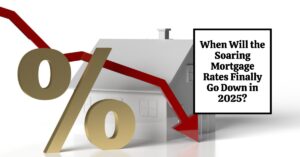
When Will the Soaring Mortgage Rates Finally Go Down in 2025?

If you're dreaming of buying a home or refinancing your current mortgage, you're probably wondering: when will mortgage rates go down? The short answer, based on current trends and expert predictions, is that a significant drop in mortgage rates in 2025 seems unlikely. While some minor fluctuations are always possible, major relief isn't anticipated this year. But don't lose hope! This article will break down the factors influencing mortgage rates, what experts are saying, and some strategies you can use to navigate today's market.

When Will Mortgage Rates Go Down from Current Highs in 2025?

Understanding the Mortgage Rate Puzzle

Mortgage rates aren't pulled out of thin air. They're affected by a bunch of different economic forces, kind of like a complex machine with many moving parts. Keeping an eye on these factors can give you a better sense of where rates might be headed.

  • The Federal Reserve (The Fed): This is the central bank of the United States, and it plays a major role. The Fed sets the federal funds rate, which is the rate banks charge each other for overnight lending. While mortgage rates aren't directly tied to the federal funds rate, they tend to follow the same trends.
  • 10-Year Treasury Yield: This is another key indicator. Mortgage rates tend to track the 10-year Treasury yield closely. The yield reflects investors' confidence in the U.S. economy.
  • Inflation: Inflation is the rate at which prices for goods and services are rising. When inflation is high, mortgage rates tend to be higher as well.
  • Housing Supply and Demand: This is pretty straightforward. If there are more buyers than homes for sale (a seller's market), prices tend to go up, and vice-versa.
  • The “Spread”: This is the difference between the 10-year Treasury yield and the mortgage rate. Lenders add this “spread” to cover their costs and the risk of lending money.

What the Experts Are Saying About 2025

According to recent data (as of May 1, 2025) from Freddie Mac, 30-year fixed-rate mortgages are hovering around 6.83% while the 15-year fixed-rate mortgages are around 5.92%. This is more than double the sub-3% rates seen during the pandemic.

Based on the Federal Reserve's recent meetings, they voted to keep the federal funds rate the same for now. However, they are predicting a couple of rate cuts sometime in 2025.

Considering the other factors, don't expect any major drops anytime soon. I've been watching the market for years, and my gut feeling is that we're more likely to see stability, maybe some minor dips. It is important to remember that I am not a financial advisor and you should consult with one before making financial decisions.

Looking at the Numbers: A Snapshot of Recent Mortgage Rate Trends

Here's a quick look at how mortgage rates have behaved over the past year (as of April 2025):

Mortgage Type High Low
30-Year Fixed-Rate 7.22% 6.08%
15-Year Fixed-Rate 6.47% 5.15%

As you can see, there have been some fluctuations, but the rates have mostly stayed within a relatively narrow range. Freddie Mac reported rates for 30-year fixed mortgages had stayed below 7% for 13 consecutive weeks in April.

The Fed's Role and its Impact on Mortgage Rates

The Federal Reserve's decisions have a domino effect on the whole economy. When the Fed raises rates, it becomes more expensive for banks to borrow money, which then trickles down to consumers in the form of higher interest rates on things like credit cards and mortgages. The inverse is also true. If the Fed cuts rates, borrowing becomes cheaper.

In March 2025, the Fed decided to hold steady on interest rates. They are predicting a couple of rate cuts in 2025.

Why Waiting Might Not Be the Best Strategy

It's tempting to sit on the sidelines and wait for rates to drop, but that might not be the smartest move. Here's why:

  • Home Prices: Mortgage rates are only one piece of the puzzle. Home prices are also a huge factor. Right now, there's a shortage of homes for sale, which means prices are staying high.
  • The Recession Factor: If a recession hits, interest rates might drop, but so will the number of houses to choose from.
  • Building Equity: The longer you wait, the longer you delay building equity in a home. Equity is the difference between what your home is worth and what you owe on your mortgage. As you pay down your mortgage and your home's value increases, your equity grows.

Read More:

Mortgage Demand Plunges 13% as Rates Hit 2-Month High in April 2025

Why Are Mortgage Rates Rising Back to 7%: The Key Drivers

Mortgage Rate Forecast 2025: When Will Rates Go Below 6%?

Do Mortgage Rates Go Down During an Economic Recession?

Strategies for Buying a Home in Today's Market

Okay, so waiting for rates to plummet might not be realistic. But that doesn't mean you have to give up on your homeownership dreams. Here are some strategies you can use to make buying a home more affordable:

  • Explore Different Neighborhoods: Be open to considering areas you might not have thought of before. You might find more affordable options in up-and-coming neighborhoods or suburban areas.
  • Consider a Fixer-Upper: A home that needs some work can be a great way to save money. Look into loans like the FHA 203(k) mortgage, which allows you to finance the purchase and renovation costs into one loan.
  • Rethink Your Commute: Are you willing to trade a longer commute for a more affordable home? Consider areas outside the city limits that offer public transportation options.
  • Go Condo: Condos are generally more affordable than single-family homes. They can be a great option for first-time homebuyers or those looking to downsize. Just be sure to factor in HOA fees.
  • Consider a 15-Year Mortgage: Yes, the monthly payments will be higher, but you'll pay off your home faster, save a ton on interest, and likely get a lower interest rate.
  • Explore Rate Buydowns: A rate buydown allows you to pay cash upfront in exchange for a lower interest rate on your mortgage. This can be a permanent or temporary solution.
  • Get Pre-Approved: Getting pre-approved for a mortgage before you start shopping for homes will give you a better idea of what you can afford and make you a more competitive buyer.
  • Work with a Real Estate Agent: A good real estate agent can help you navigate the market, find properties that fit your budget and needs, and negotiate the best possible deal.

Frequently Asked Questions

  1. Are mortgage rates expected to drop?Economists are expecting the rates to hold steady for the remainder of the year.
  2. Is 7% a high mortgage rate?Compared to historical rates, 7% isn't considered high. In the 1990s the rates were the same and higher in the 70s and 80s.
  3. Is it impossible to get a 3% interest rate on a mortgage?It's not impossible, but it's unlikely. The only way is to find someone with an assumable mortgage – which can be passed to the buyer at the same rate.

The Bottom Line

While a dramatic drop in mortgage rates in 2025 seems unlikely, that doesn't mean you should put your homeownership dreams on hold. By understanding the factors that influence mortgage rates, exploring different buying strategies, and working with a knowledgeable real estate agent and lender, you can navigate today's market and find a home that's right for you. Focus on what you can control: your budget, your credit score, and your willingness to be flexible.

Work With Norada, Your Trusted Source for

Real Estate Investment in the U.S.

Investing in turnkey real estate can help you secure consistent returns with fluctuating mortgage rates.

Expand your portfolio confidently, even in a shifting interest rate environment.

Speak with our expert investment counselors (No Obligation):

(800) 611-3060

Get Started Now

Also Read:

  • Will Mortgage Rates Go Down in 2025: Morgan Stanley's Forecast
  • Expect High Mortgage Rates Until 2026: Fannie Mae's 2-Year Forecast
  • Mortgage Rate Predictions 2025 from 4 Leading Housing Experts
  • Mortgage Rates Forecast for the Next 3 Years: 2025 to 2027
  • 30-Year Mortgage Rate Forecast for the Next 5 Years
  • 15-Year Mortgage Rate Forecast for the Next 5 Years
  • Why Are Mortgage Rates Going Up in 2025: Will Rates Drop?
  • Why Are Mortgage Rates So High and Predictions for 2025
  • Will Mortgage Rates Ever Be 3% Again in the Future?
  • Mortgage Rates Predictions for Next 2 Years
  • Mortgage Rate Predictions for Next 5 Years
  • Mortgage Rate Predictions: Why 2% and 3% Rates are Out of Reach
  • How Lower Mortgage Rates Can Save You Thousands?
  • How to Get a Low Mortgage Interest Rate?
  • Will Mortgage Rates Ever Be 4% Again?
Filed Under: Financing, Mortgage Tagged With: Interest Rate, mortgage, Mortgage Rate Trends, mortgage rates, Mortgage Rates Predictions, Mortgage Rates Today

Mortgage Rates Predictions This Week – May 1-7, 2025: Will Rates Drop?

May 4, 2025 by Marco Santarelli

Mortgage Rates Predictions This Week - May 1-7, 2025: Will Rates Drop?

Wondering what's going to happen with mortgage rates this week? The consensus leans towards a slight decrease. According to a recent Bankrate poll, a majority of experts (54%) believe rates will fall in the coming week (May 1-7, 2025). The remaining experts are split, with 23% predicting an increase and 23% anticipating no change. Let's dive deeper into the factors influencing these predictions and what it could mean for you.

The mortgage market is a complex beast, influenced by everything from inflation and employment figures to international trade deals and the Federal Reserve's decisions. So, figuring out where rates are headed can feel like trying to predict the weather, but understanding the key drivers can give you an edge.

Mortgage Rates Predictions for Week – May 1-7, 2025: Will Rates Drop?

What's Driving the Predictions for This Week?

Several factors are at play, shaping the outlook for mortgage rates. Here’s a breakdown of the key influences:

  • Economic Data: Recent reports paint a picture of a potentially slowing economy.
    • The economy shrank in the first quarter.
    • Tepid economic data and a softening of tariff rhetoric are helping rates.
    • The ADP report showed weakness in job creation for April.
  • Federal Reserve (The Fed) Actions: The market is keenly awaiting the Fed's next meeting, with speculation of potential rate cuts. A potential rate cut is stronger than average.
  • Trade Deals and Tariffs: The ongoing trade situation and the potential impact of tariffs continue to create uncertainty. Trump's tariff policy is threatened to be undermined by Amazon considering listing tariff impacts on its prices.
  • Treasury Yields: The yield on 10-year Treasurys has fallen for six consecutive trading days. Long-term mortgage rates are highly correlated to 10-year Treasury yields.

Expert Opinions: A Mixed Bag of Forecasts

To get a comprehensive view, let's look at what some experts are saying about the direction of mortgage rates this week:

Those Who Think Rates Will Go Down (54%):

  • Michael Becker (Branch Manager, Sierra Pacific Mortgage): Believes rates have improved due to tepid economic data and softening tariff rhetoric. He anticipates a weak Non-Farm Payroll report will further push rates lower.
  • Jeff Lazerson (President, MortgageGrader): Expects a significant drop, citing the economy's contraction in the first quarter.
  • Ken Johnson (Walker Family Chair of Real Estate, University of Mississippi): Points to the declining 10-year Treasury yields as an indicator of lower mortgage rates.
  • Joel Naroff (President and Chief Economist, Naroff Economic Advisors): Thinks the potential easing of tariffs could contribute to a rate decrease.
  • Dr. Anthony O. Kellum (President & CEO, Kellum Mortgage): Cites recent trends showing a steady drop, influenced by signs of an economic slowdown and potential Fed rate cuts. He also mentions Fannie Mae's adjusted outlook projecting a modest decline by the end of 2025.
  • Sean P. Salter, Ph.D. (Associate Professor of Finance, Middle Tennessee State University): Expects markets to anticipate Fed rate cuts following the news of GDP contraction.
  • Les Parker (Managing Director, Transformational Mortgage Solutions): Pending trade deals continue to emit positive signals, which calm the mortgage market.

Those Who Think Rates Will Go Up (23%):

  • Heather Devoto (Vice President, Branch Manager, First Home Mortgage): Anticipates a slight rise due to traders' fears of potential stagflation.
  • Denise McManus (Global Real Estate Advisor, Engel & Voelkers & Senior Lender, Xpert Home Lending): Believes the market remains choppy, leading to a slight climb in rates as the market awaits the Fed Meeting.

Those Who Think Rates Will Stay the Same (23%):

  • Dick Lepre (Senior Loan Officer, Realfinity): Expects rates to remain flat, citing the impact of Trump's tariff policy.
  • James Sahnger (Mortgage Planner, C2 Financial Corporation): Notes uncertainty about the impact of tariffs and believes more weakness in economic numbers is needed for further rate improvement.
  • Robert J. Smith (Chief Economist, GetWYZ Mortgage): Predicts relatively unchanged rates absent a surprise in the upcoming employment data.

My Take: Cautious Optimism

Based on the current trends and expert opinions, I'm leaning towards the view that mortgage rates are likely to decrease slightly this week. The key factors supporting this are:

  • Weakening Economic Data: The recent GDP contraction and lackluster job creation reports suggest the economy may be slowing, which could prompt the Fed to consider easing monetary policy.
  • Declining Treasury Yields: The downward trend in 10-year Treasury yields is a positive sign for mortgage rates, as they are closely correlated.
  • Potential for Fed Rate Cuts: While not guaranteed, the market seems to be pricing in the possibility of future rate cuts by the Fed, which could put downward pressure on mortgage rates.

However, it's crucial to acknowledge the inherent uncertainty in predicting market movements. Factors like surprise economic news, unexpected geopolitical events, or shifts in investor sentiment could easily disrupt the current trajectory.

Read More:

Mortgage Rates Continue to Drop: 30-Year Fixed-Rate Dips to 6.76%

When Will the Soaring Mortgage Rates Finally Go Down in 2025?

Why Are Mortgage Rates Rising Back to 7%: The Key Drivers

Mortgage Rate Forecast 2025: When Will Rates Go Below 6%?

Do Mortgage Rates Go Down During an Economic Recession?

What Does This Mean for You?

If you're a prospective homebuyer, this week could present a good opportunity to lock in a slightly lower rate. Even a small decrease can translate to significant savings over the life of a mortgage.

If you already have a mortgage, it might be worth keeping an eye on rates and considering a refinance if they drop significantly. Use a mortgage calculator to see how much you might save by refinancing your mortgage.

Here's a quick guide to help you navigate the current market:

  • For Buyers:
    • Shop around for the best rates from multiple lenders.
    • Get pre-approved for a mortgage to strengthen your offer.
    • Be prepared to act quickly if you find a property you like.
  • For Existing Homeowners:
    • Monitor mortgage rates closely.
    • Consider refinancing if rates drop significantly.
    • Factor in closing costs and other fees when evaluating a refinance.

Beyond This Week: The Bigger Picture

Looking beyond this week, the long-term outlook for mortgage rates remains uncertain. Several factors could influence their trajectory in the coming months:

  • Inflation: Persistently high inflation could force the Fed to maintain or even increase interest rates, putting upward pressure on mortgage rates.
  • Economic Growth: Strong economic growth could lead to higher interest rates as the Fed seeks to prevent the economy from overheating.
  • Geopolitical Events: Unexpected geopolitical events could disrupt financial markets and impact interest rates.

As the saying goes, past performance is not indicative of future results. The future is tough to see. I feel staying informed, consulting with financial professionals, and being prepared to adapt to changing market conditions is important.

Turnkey Real Estate Investment With Norada

Investing in real estate can help you secure consistent returns with fluctuating mortgage rates.

Despite softer demand, smart investors are locking in properties now while competition is lower and rental returns remain strong.

HOT NEW LISTINGS JUST ADDED!

Speak with an investment counselor (No Obligation):

(800) 611-3060

Get Started Now

Also Read:

  • Will Mortgage Rates Go Down in 2025: Morgan Stanley's Forecast
  • Expect High Mortgage Rates Until 2026: Fannie Mae's 2-Year Forecast
  • Mortgage Rate Predictions 2025 from 4 Leading Housing Experts
  • Mortgage Rates Forecast for the Next 3 Years: 2025 to 2027
  • 30-Year Mortgage Rate Forecast for the Next 5 Years
  • 15-Year Mortgage Rate Forecast for the Next 5 Years
  • Why Are Mortgage Rates Going Up in 2025: Will Rates Drop?
  • Why Are Mortgage Rates So High and Predictions for 2025
  • Will Mortgage Rates Ever Be 3% Again in the Future?
  • Mortgage Rates Predictions for Next 2 Years
  • Mortgage Rate Predictions for Next 5 Years
  • Mortgage Rate Predictions: Why 2% and 3% Rates are Out of Reach
  • How Lower Mortgage Rates Can Save You Thousands?
  • How to Get a Low Mortgage Interest Rate?
  • Will Mortgage Rates Ever Be 4% Again?
Filed Under: Financing, Mortgage Tagged With: Interest Rate, mortgage, Mortgage Rate Trends, mortgage rates, Mortgage Rates Predictions, Mortgage Rates Today

Today’s Mortgage Rates – May 4, 2025: Rates Rise Notably by 9 Basis Points

May 4, 2025 by Marco Santarelli

Today's Mortgage Rates - May 4, 2025: Rates Rise Notably by 9 Basis Points

As of May 4, 2025, today's mortgage rates have seen a notable increase. The average 30-year fixed mortgage rate is now at 6.70%, up by nine basis points since last week, while the 15-year fixed rate has also risen to 5.95%. For anyone looking to buy or refinance a home, it's essential to be aware that these higher rates can significantly impact your payments and overall affordability.

Today's Mortgage Rates – May 4, 2025: Rates Have Increased Notably 

Key Takeaways:

  • 30-year fixed mortgage rate: 6.70%, up 9 basis points
  • 15-year fixed mortgage rate: 5.95%, up 5 basis points
  • Mortgage rates are expected to stabilize but remain above 6% throughout 2025.
  • Increased rates are a reaction to strong job market data.
  • Comparing rates from multiple lenders is crucial in a high-rate environment.

With the mortgage landscape in constant flux, understanding the current rates and factors influencing them is critical for potential homebuyers and homeowners considering refinancing. This blog will delve into today's mortgage rates, the factors influencing these rates, and what they mean for both buying a home and refinancing an existing mortgage.

Current Mortgage Rates

According to the most recent data from Zillow, here are the mortgage rates as of May 4, 2025:

Loan Type Rate (%)
30-year fixed 6.70%
20-year fixed 6.28%
15-year fixed 5.95%
5/1 adjustable-rate mortgage (ARM) 6.88%
7/1 ARM 7.13%
30-year VA 6.24%
15-year VA 5.66%
5/1 VA ARM 6.32%

Current Mortgage Refinance Rates

Refinancing rates tend to differ slightly from purchase rates. Here are the refinance rates as of May 4, 2025:

Loan Type Rate (%)
30-year fixed 6.75%
20-year fixed 6.49%
15-year fixed 6.08%
5/1 ARM 7.37%
7/1 ARM 7.47%
30-year VA 6.33%
15-year VA 6.07%
5/1 VA ARM 6.43%

The above rates are rounded to the nearest hundredth, reflecting national averages that can vary by location and lender.

Understanding the Increase in Rates

The upswing in mortgage rates is closely tied to economic indicators, particularly the latest jobs report, which exceeded expectations. When the job market shows strength, as it did recently, it often signals to investors that the Federal Reserve may hold off on cutting interest rates. This can lead to higher mortgage rates as we see today.

How Employment Data Affects Mortgage Rates

When the economy is robust, with job creation rising, it tends to spur inflationary pressures. The Federal Reserve's primary mandate is to maintain price stability and full employment. To combat rising inflation, the Fed may decide to keep interest rates higher for longer, which trickles down to mortgage rates.

What’s Next?

Looking ahead, economists generally expect mortgage rates to taper down somewhat by the end of 2025, although not drastically. Most forecasts suggest that the national average for 30-year rates will still hover around or above 6%. This means prospective home buyers and those considering refinancing should act quickly if they find a rate that meets their budget.

30-Year vs. 15-Year Fixed Mortgage Rates

The choice between a 30-year and a 15-year mortgage primarily revolves around your financial situation and goals.

30-Year Fixed Mortgages

  • Rate: 6.70%
  • Monthly Payment on a $300,000 Loan: Approximately $1,936
  • Total Interest Paid Over 30 Years: About $396,900

The extended term of 30 years lowers your monthly payment, making it easier for many buyers to afford their monthly obligations.

15-Year Fixed Mortgages

  • Rate: 5.95%
  • Monthly Payment on a $300,000 Loan: Approximately $2,523
  • Total Interest Paid Over 15 Years: About $154,225

With a 15-year mortgage, although your monthly payment is higher, you save significantly on interest over the life of the loan.

Adjustable-Rate Mortgages (ARMs)

ARMs are another option that can offer lower initial rates, which may seem attractive in the short term. Here’s a comparison of traditional fixed mortgages and ARMs:

  • Initial Rate: Lower than that of fixed-rate mortgages
  • Adjustment Period: Fixed for a specific period (e.g., 5 or 7 years)
  • Post-Adjustment Risk: After the fixed period, rates may increase based on market conditions

In some cases, we see rates on ARMs starting higher than fixed rates. It's essential to weigh the potential risks of rising rates against the benefits of lower upfront costs.

Read More:

Mortgage Rates Trends as of May 3, 2025

When Will the Soaring Mortgage Rates Finally Go Down in 2025?

Why Are Mortgage Rates Rising Back to 7%: The Key Drivers

Mortgage Rate Forecast 2025: When Will Rates Go Below 6%?

Do Mortgage Rates Go Down During an Economic Recession?

Should You Refinance Now?

As rates have increased, many homeowners are contemplating refinancing their existing mortgages. The typical thought process is whether the new rate can save enough on a monthly basis to justify the costs associated with refinancing.

When Should You Refinance?

  • Potential Savings: Many experts suggest refinancing is justifiable if you can lower your rate by at least 1 percentage point.
  • Closing Costs: Determine how long it will take to recoup the costs of refinancing. If you can lower your monthly payment significantly and make up the closing costs within a couple of years, refinancing may be a wise move.

For instance, if refinancing costs you $3,000 but saves you $200 a month, it would take 15 months to recover your costs—this could be beneficial in the long term.

The Fed Rate and Its Impact on Mortgage Rates

The Federal Reserve plays a crucial role in determining the direction of mortgage rates. While mortgage rates don't move exactly in tandem with the Fed's actions, they tend to reflect trends in the federal funds rate.

In 2022-2023, the Fed raised rates to combat inflation. While inflation is decreasing, it remains above the target rate, leading to speculation about future cuts in the federal funds rate. However, recent strong economic data suggests that substantial cuts may not occur until later in 2025.

Expectations for Mortgage Rates Moving Forward

Looking at forecasts by influential entities like Fannie Mae and Freddie Mac, mortgage rates are expected to decline slightly, although not to the historic lows seen in 2020-2021. The consensus is that rates may stabilize around 6.0% by late 2026, depending on economic developments. Homebuyers should be aware that the outlook on rates can shift based on evolving economic factors and Federal Reserve policies.

According to Freddie Mac, many are now anticipating a high-rate environment to last longer than originally expected. Even slight declines or stability at current levels may push prospective buyers to act sooner rather than waiting for lower rates that might never come.

Summary

Mortgage rates as of today reflect a proactive economy responding to recent labor market improvements. By understanding today's mortgage rates' intricacies, consumers can be more prepared in their financial planning, whether for buying a new home or refinancing a current mortgage.

Turnkey Real Estate Investment With Norada

Investing in real estate can help you secure consistent returns with fluctuating mortgage rates.

Despite softer demand, smart investors are locking in properties now while competition is lower and rental returns remain strong.

HOT NEW LISTINGS JUST ADDED!

Speak with an investment counselor (No Obligation):

(800) 611-3060

Get Started Now

Also Read:

  • Will Mortgage Rates Go Down in 2025: Morgan Stanley's Forecast
  • Expect High Mortgage Rates Until 2026: Fannie Mae's 2-Year Forecast
  • Mortgage Rate Predictions 2025 from 4 Leading Housing Experts
  • Mortgage Rates Forecast for the Next 3 Years: 2025 to 2027
  • 30-Year Mortgage Rate Forecast for the Next 5 Years
  • 15-Year Mortgage Rate Forecast for the Next 5 Years
  • Why Are Mortgage Rates Going Up in 2025: Will Rates Drop?
  • Why Are Mortgage Rates So High and Predictions for 2025
  • Will Mortgage Rates Ever Be 3% Again in the Future?
  • Mortgage Rates Predictions for Next 2 Years
  • Mortgage Rate Predictions for Next 5 Years
  • Mortgage Rate Predictions: Why 2% and 3% Rates are Out of Reach
  • How Lower Mortgage Rates Can Save You Thousands?
  • How to Get a Low Mortgage Interest Rate?
  • Will Mortgage Rates Ever Be 4% Again?
Filed Under: Financing, Mortgage Tagged With: Interest Rate, mortgage, Mortgage Rate Trends, mortgage rates, Mortgage Rates Predictions, Mortgage Rates Today

Mortgage Rates Continue to Drop: 30-Year Fixed-Rate Dips to 6.76%

May 3, 2025 by Marco Santarelli

Mortgage Rates Continue to Drop: 30-Year Fixed-Rate Dips to 6.76%

Are you thinking about buying a home, or perhaps refinancing your current mortgage? The news you've been waiting for is here: mortgage rates are continuing their downward trend. As of May 1, 2025, the 30-year fixed-rate mortgage has dipped to 6.76%, a welcome change compared to the earlier part of the year. This decline offers a potential window of opportunity for both homebuyers and those looking to save money on their existing loans.

But what exactly does this mean for you, and how can you make the most of it? Let’s dive in.

Mortgage Rates Continue to Decline: What This Means for You

The Numbers Don't Lie: Rates Are Down

Let's get specific. According to the latest Primary Mortgage Market Survey, here’s the snapshot as of May 1, 2025:

  • 30-Year Fixed-Rate Mortgage (FRM): 6.76%
    • Weekly Change: -0.05%
    • Yearly Change: -0.46%
    • 4-Week Average: 6.76%
    • 52-Week Average: 6.71%
    • 52-Week Range: 6.08% – 7.09%
  • 15-Year Fixed-Rate Mortgage (FRM): 5.92%
    • Weekly Change: -0.02%
    • Yearly Change: -0.55%
    • 4-Week Average: 5.93%
    • 52-Week Average: 5.92%
    • 52-Week Range: 5.15% – 6.38%

What's interesting is that the rates have dipped below the first quarter average of 6.83%. While it may seem like a small change, every fraction of a percentage point can translate into significant savings over the life of a loan.

Why Are Mortgage Rates Declining? The Big Picture

Understanding why rates are moving is just as important as knowing that they are. Several factors play into mortgage rate fluctuations, and it's a bit like a complex puzzle. Here are some of the key pieces:

  • Inflation Expectations: Mortgage rates are closely tied to inflation. When inflation is expected to cool down, investors are willing to accept lower yields on long-term bonds, which impacts mortgage rates.
  • Federal Reserve Policy: The Federal Reserve's actions, especially regarding the federal funds rate and its bond-buying programs, have a direct impact on interest rates across the board. If the Fed signals a more dovish (less aggressive) approach to monetary policy, mortgage rates often decline.
  • Economic Growth: A slowing economy can also lead to lower rates. When economic activity slows, demand for loans decreases, and rates tend to follow suit.
  • Investor Sentiment: Mortgage-backed securities (MBS) are bought and sold by investors. Changes in investor sentiment can impact the prices of these securities and, consequently, mortgage rates.
  • Global Economic Factors: Events happening around the world can also influence U.S. mortgage rates. Things like economic slowdowns in major economies or geopolitical instability can drive investors toward safer assets, like U.S. Treasury bonds, which can then affect mortgage rates.

Trying to time the market perfectly is always a challenge. Even the experts can't predict the future with certainty. However, understanding these key drivers can help you make a more informed decision.

What Does This Mean for Homebuyers? Time to Act?

For those of you looking to purchase a home, this news could be a game-changer. Lower mortgage rates can significantly improve affordability. Let’s illustrate this with an example:

Assume you're looking to buy a $400,000 home with a 20% down payment ($80,000). This means you'll need a $320,000 mortgage.

Rate Monthly Payment (Principal & Interest) Total Interest Paid (30 Years)
7.00% $2,130 $446,794
6.76% $2,081 $429,284

As you can see, the slightly lower rate could save you thousands of dollars over the life of the loan!

However, don’t just jump in without doing your homework.

  • Get Pre-Approved: Before you start seriously looking at homes, get pre-approved for a mortgage. This will give you a clear idea of how much you can afford and make your offers more competitive.
  • Shop Around: Don't settle for the first rate you're offered. Get quotes from multiple lenders to ensure you're getting the best deal. Online mortgage calculators can be useful.
  • Consider Your Budget: Just because rates are lower doesn't mean you should stretch yourself too thin. Be realistic about your monthly budget and factor in all the costs associated with homeownership, including property taxes, insurance, and maintenance.

Refinancing Your Mortgage: A Golden Opportunity?

If you already own a home, this dip in mortgage rates could be a golden opportunity to refinance. Refinancing involves replacing your existing mortgage with a new one, ideally at a lower interest rate.

When does refinancing make sense?

  • Rule of Thumb: A general rule of thumb is that refinancing is worth considering if you can lower your interest rate by at least 0.5% to 1%.
  • Long-Term Savings: Consider the long-term savings. Even a small reduction in your interest rate can save you a significant amount of money over the remaining life of your loan.
  • Closing Costs: Factor in the closing costs associated with refinancing. These costs can include appraisal fees, title insurance, and other expenses. You'll need to weigh these costs against the potential savings.
  • Break-Even Point: Calculate your break-even point. This is the amount of time it will take for your savings to offset the closing costs. If you plan to stay in your home longer than your break-even point, refinancing is likely a good idea.

Example of Refinancing Savings:

Let's say you currently have a $300,000 mortgage with a 7.25% interest rate. If you refinance to a 6.76% rate, here’s how the numbers could look:

Scenario Interest Rate Monthly Payment (Principal & Interest)
Current Mortgage 7.25% $2,046
Refinanced Mortgage 6.76% $1,951
Monthly Savings $95

Things to Remember When Refinancing:

  • Credit Score: A good credit score is essential for securing a low refinance rate.
  • Debt-to-Income Ratio: Lenders will also look at your debt-to-income ratio to assess your ability to repay the loan.
  • Home Equity: You'll typically need to have sufficient equity in your home to refinance.

Read More:

When Will the Soaring Mortgage Rates Finally Go Down in 2025?

Why Are Mortgage Rates Rising Back to 7%: The Key Drivers

Mortgage Rate Forecast 2025: When Will Rates Go Below 6%?

Do Mortgage Rates Go Down During an Economic Recession?

Beyond the Numbers: My Thoughts on the Market

While the declining rates are certainly encouraging, I always advise caution and careful planning. The housing market is dynamic, and many factors are constantly at play.

I believe that if you're in a stable financial situation and have found a home that you love and can afford, this might be an opportune time to make a move. However, don't let the fear of missing out (FOMO) drive your decisions. Always prioritize your long-term financial well-being.

Remember, homeownership is a significant investment, and it's crucial to approach it with a clear head and a well-thought-out plan. Take your time, do your research, and seek professional advice from a qualified financial advisor or mortgage broker.

Looking Ahead: What's Next?

Predicting the future of mortgage rates is never easy. However, keep an eye on these key indicators:

  • Inflation Reports: Pay close attention to inflation reports from the Bureau of Labor Statistics.
  • Federal Reserve Meetings: Monitor the Federal Reserve's announcements and statements regarding monetary policy.
  • Economic Data: Keep an eye on economic indicators such as GDP growth, employment numbers, and consumer spending.

In Conclusion: A Time for Careful Consideration

The news that mortgage rates continue to decline is undoubtedly positive for potential homebuyers and those looking to refinance. These lower rates can provide much-needed relief, making homeownership more accessible and offering opportunities for significant savings. But always remember to make informed decisions based on your individual financial situation and long-term goals. Don't rush into anything, do your due diligence, and seek expert advice when needed.

Turnkey Real Estate Investment With Norada

Investing in real estate can help you secure consistent returns with fluctuating mortgage rates.

Despite softer demand, smart investors are locking in properties now while competition is lower and rental returns remain strong.

HOT NEW LISTINGS JUST ADDED!

Speak with an investment counselor (No Obligation):

(800) 611-3060

Get Started Now

Also Read:

  • Will Mortgage Rates Go Down in 2025: Morgan Stanley's Forecast
  • Expect High Mortgage Rates Until 2026: Fannie Mae's 2-Year Forecast
  • Mortgage Rate Predictions 2025 from 4 Leading Housing Experts
  • Mortgage Rates Forecast for the Next 3 Years: 2025 to 2027
  • 30-Year Mortgage Rate Forecast for the Next 5 Years
  • 15-Year Mortgage Rate Forecast for the Next 5 Years
  • Why Are Mortgage Rates Going Up in 2025: Will Rates Drop?
  • Why Are Mortgage Rates So High and Predictions for 2025
  • Will Mortgage Rates Ever Be 3% Again in the Future?
  • Mortgage Rates Predictions for Next 2 Years
  • Mortgage Rate Predictions for Next 5 Years
  • Mortgage Rate Predictions: Why 2% and 3% Rates are Out of Reach
  • How Lower Mortgage Rates Can Save You Thousands?
  • How to Get a Low Mortgage Interest Rate?
  • Will Mortgage Rates Ever Be 4% Again?

Filed Under: Financing, Mortgage Tagged With: Interest Rate, mortgage, Mortgage Rate Trends, mortgage rates, Mortgage Rates Predictions, Mortgage Rates Today

Today’s Mortgage Rates – May 3, 2025: Rates Rise Following Strong Jobs Data

May 3, 2025 by Marco Santarelli

Today's Mortgage Rates - May 3, 2025: Rates Rise Following Strong Jobs Data

As of May 3, 2025, mortgage rates have experienced a noticeable increase, primarily in response to a recent strong jobs report. The average 30-year fixed mortgage rate has risen to 6.70%, reflecting a nine basis point hike since the previous reporting period. If you've been considering purchasing a home or refinancing, you may be wondering how these changes affect your options.

Today's Mortgage Rates – May 3, 2025: Rates Rise Following Strong Jobs Report

Key Takeaways

  • Current Mortgage Rates: 30-year fixed at 6.70%, 15-year fixed at 5.95%.
  • Refinance Rates: 30-year refinance rate now 6.75%.
  • Impact of Jobs Report: Higher employment figures correlate with rising rates.
  • Market Trends: Economists predict that while rates are currently higher, a gradual decline may occur by the end of 2025.

The fluctuation in mortgage rates not only influences individual borrowers but also reflects broader economic conditions. Factors such as employment rates, inflation, and the state of the economy play critical roles in shaping these rates.

Current Mortgage Rates

The table below outlines the national average mortgage rates for various loan types as of May 3, 2025, based on the latest data from Zillow.

Loan Type Current Rate
30-Year Fixed 6.70%
20-Year Fixed 6.28%
15-Year Fixed 5.95%
5/1 ARM 6.88%
7/1 ARM 7.13%
30-Year VA 6.24%
15-Year VA 5.66%
5/1 VA 6.32%

Today's Mortgage Refinance Rates

The table below presents the current average refinance rates, also sourced from Zillow:

Refinance Type Current Rate
30-Year Fixed 6.75%
20-Year Fixed 6.49%
15-Year Fixed 6.08%
5/1 ARM 7.37%
7/1 ARM 7.47%
30-Year VA 6.33%
15-Year VA 6.07%
5/1 VA 6.43%

Understanding the Rate Changes

In recent weeks, mortgage interest rates have generally moved upward, influenced by stronger-than-anticipated job growth as evidenced by the latest jobs report. According to reports, while the unemployment rate remains stable, the addition of more jobs suggests a robust economy. As a result, banks and lenders often increase mortgage rates in response to positive economic indicators. This trend can make borrowing more expensive at a time when buyers may initially hope for lower rates.

The Psychology of Rate Changes

The psychological impact of rising mortgage rates cannot be overlooked. Buyers tend to perceive increasing rates as a signal that now is the last chance to act before they rise even further. This sentiment can lead to a rush in home purchases, which can push prices up even more in the short term. Conversely, when rates are falling, potential buyers may delay their purchases, waiting for even lower rates. Such behaviors create fluctuations in demand that can significantly affect housing prices.

Furthermore, the terminology used to discuss rates plays a role in public perception. For instance, when rates decrease by a fraction, it often results in increased buyer interest. However, when rates rise—even slightly—it can lead to hesitation among potential buyers who fear that they may be priced out of the market or end up with a less favorable mortgage deal.

Factors Influencing Mortgage Rates

  1. Economic Indicators: Mortgage rates react to overall economic health. Positive indicators can increase rates, as lenders anticipate potential inflation. Conversely, economic downturns may lower rates as lenders seek to stimulate borrowing. Key indicators to watch include employment data, inflation rates, and consumer spending patterns.
  2. Federal Reserve Policy: The Federal Reserve's decisions on interest rates directly impact mortgage rates. They utilize monetary policy to maintain economic stability, adjusting rates in response to inflation or unemployment levels. When the Fed raises the federal funds rate, it increases borrowing costs, ultimately affecting mortgage rates.
  3. Treasury Yields: The yield on 10-year Treasury notes is closely tied to mortgage rates. When investors buy Treasury securities, their yields decrease, leading to lower mortgage rates. Conversely, rising yields signal increasing rates. This relationship highlights how financial markets react to global events, such as pandemics or geopolitical tensions, impacting investor risk appetite.
  4. Market Conditions: Supply and demand dynamics in the housing market can also sway mortgage rates. Significant home demand can lead to increased rates as lenders capitalize on competition. Conversely, if inventory increases without corresponding demand, rates may stabilize or even decrease.
  5. Political Climate: Political events, including elections and policy changes, can also impact mortgage rates. For example, proposed regulations affecting lending standards or housing developments can create uncertainty, influencing lenders’ decisions about rate adjustments.
  6. Global Economic Factors: Global events and economic ties significantly affect domestic markets. Natural disasters, international trade negotiations, or conflicts can lead to unpredictability in financial markets, pushing rates up or down based on investor confidence in economic stability.

Types of Mortgages Available

It's essential to thoroughly understand the options available in today's market. Here’s a closer look at each type of mortgage, their pros and cons:

30-Year Fixed Mortgage Rates

The 30-year fixed mortgage is a long-term option that allows borrowers to lock in a consistent interest rate over a three-decade period.

  • Pros:
    • Predictable Payments: Monthly payments remain consistent, helping with budgeting.
    • Lower Monthly Payments: Spreading repayments over a longer period results in lower monthly costs.
  • Cons:
    • Higher Interest Payments: Over a 30-year term, borrowers pay significantly more interest compared to shorter terms.
    • Long-Term Commitment: 30 years is a long time; life circumstances may change, impacting your financial situation.

15-Year Fixed Mortgage Rates

The 15-year fixed mortgage offers a shorter repayment option, resulting in significant interest savings.

  • Pros:
    • Lower Interest Rates: Generally, interest rates on shorter loans are lower.
    • Faster Equity Building: Pay off the loan quicker, allowing greater ownership sooner.
  • Cons:
    • Higher Monthly Payments: A compressed repayment period results in heftier payments, which can strain budgets.
    • Less Flexibility: Higher payments may limit financial flexibility for other expenses.

Adjustable-Rate Mortgages (ARMs)

ARMs typically feature an initial lower interest rate that adjusts after a specified period.

  • Pros:
    • Lower Initial Payments: Typically start lower than fixed-rate mortgages, making homeownership more accessible initially.
    • Potential Savings: If you move before rates adjust, you can benefit from lower payments without long-term commitment.
  • Cons:
    • Unpredictable Rates: Post-initial period, rates can significantly increase, making budgeting challenging.
    • Risk: Renewing an ARM may lead to unpleasant surprises if market conditions change drastically.

Read More:

Mortgage Rates Trends as of May 2, 2025

When Will the Soaring Mortgage Rates Finally Go Down in 2025?

Why Are Mortgage Rates Rising Back to 7%: The Key Drivers

Mortgage Rate Forecast 2025: When Will Rates Go Below 6%?

Do Mortgage Rates Go Down During an Economic Recession?

Mortgage Rate Expectations 2025

Does this current increase imply rates will continue to rise? According to Fannie Mae's Forecast, mortgage rates are expected to stabilize as the economy finds its footing, projecting rates might settle around 6.2% by late 2025. Similarly, Freddie Mac's Housing and Mortgage Market Outlook suggests that while rates are presently higher, the market may respond by gradually cooling down. However, the projections are not without their uncertainties.

Experts note that despite projections of potential decreases, several factors could complicate the situation. For instance, persistent inflation or geopolitical tensions could prevent significant drops in rates, causing borrowers to remain cautious.

Are We in a Good Market to Buy a Home?

Despite higher mortgage rates, the housing market presents opportunities, particularly when compared to previous years when prices surged dramatically. With rates higher than in earlier periods, immediate buying decisions should reflect individual needs rather than predictions of rate changes.

Timing the Market

While it’s tempting to try and time the perfect moment to buy, few can successfully predict market fluctuations consistently. Buyers should consider their personal financial situations, how long they plan to stay in the home, and other factors unique to their circumstances.

Some prospective buyers may find themselves in a good position despite the rising rates if they can find a reasonably priced home in their desired area. Financing options such as first-time homebuyer programs or state-sponsored assistance programs can also ease the burden for many buyers.

In summary, from today's mortgage rates showing a tangible increase to the longer-term expectations that hint at moderation, the mortgage landscape can seem daunting. However, with informed choices and an understanding of individual financial goals, navigating these waters becomes achievable. Mortgage rates, driven by fluctuating economic conditions, pose a complex picture impacting both current homeowners and prospective buyers similarly.

By staying informed and actively researching the market, borrowers can better position themselves for negotiation and make decisions that best suit their needs in the context of the changing financial landscape.

Turnkey Real Estate Investment With Norada

Investing in real estate can help you secure consistent returns with fluctuating mortgage rates.

Despite softer demand, smart investors are locking in properties now while competition is lower and rental returns remain strong.

HOT NEW LISTINGS JUST ADDED!

Speak with an investment counselor (No Obligation):

(800) 611-3060

Get Started Now

Also Read:

  • Will Mortgage Rates Go Down in 2025: Morgan Stanley's Forecast
  • Expect High Mortgage Rates Until 2026: Fannie Mae's 2-Year Forecast
  • Mortgage Rate Predictions 2025 from 4 Leading Housing Experts
  • Mortgage Rates Forecast for the Next 3 Years: 2025 to 2027
  • 30-Year Mortgage Rate Forecast for the Next 5 Years
  • 15-Year Mortgage Rate Forecast for the Next 5 Years
  • Why Are Mortgage Rates Going Up in 2025: Will Rates Drop?
  • Why Are Mortgage Rates So High and Predictions for 2025
  • Will Mortgage Rates Ever Be 3% Again in the Future?
  • Mortgage Rates Predictions for Next 2 Years
  • Mortgage Rate Predictions for Next 5 Years
  • Mortgage Rate Predictions: Why 2% and 3% Rates are Out of Reach
  • How Lower Mortgage Rates Can Save You Thousands?
  • How to Get a Low Mortgage Interest Rate?
  • Will Mortgage Rates Ever Be 4% Again?

Filed Under: Financing, Mortgage Tagged With: Interest Rate, mortgage, Mortgage Rate Trends, mortgage rates, Mortgage Rates Predictions, Mortgage Rates Today

April 2025 Jobs Report: Economy Adds 177K Jobs Amid Trade War Fears

May 3, 2025 by Marco Santarelli

April 2025 Jobs Report: Economy Adds 177K Jobs Amid Trade War Fears

The April 2025 Jobs Report reveals that the U.S. economy added a respectable 177,000 jobs, and the unemployment rate remained steady at 4.2%. This good news comes amidst concerns about the potential impact of tariffs on the economy, leaving the Federal Reserve in a wait-and-see mode regarding future interest rate adjustments.

It's always exciting to dive into the jobs report each month. It gives us a snapshot of where the economy is at, and it's something I follow closely. This month's report, though, is a bit more nuanced than usual because we have to consider the impact of tariffs alongside the raw job numbers.

April 2025 Jobs Report: A Solid Pace Amidst Tariff Uncertainty

Why the April Jobs Report Matters

The jobs report is more than just a number; it's a health check for the U.S. economy. It tells us how many people are working, where jobs are being created, and if wages are going up. This information helps everyone from the Federal Reserve to small business owners make informed decisions. It's kind of like reading the weather forecast – you might not like what it says, but it helps you prepare for what's coming.

Here's why this particular report is grabbing headlines:

  • Healthy Job Growth: Adding 177,000 jobs is a solid number, showing that businesses are still hiring and the economy is moving forward.
  • Tariff Concerns: President Trump's tariffs are looming, and there's worry they could slow down the economy or raise prices for consumers. The report provides early hints, but the full impact is yet to be seen.
  • Fed's Next Move: The Federal Reserve is watching the data closely to decide whether to cut interest rates. This report influences their decision, potentially impacting borrowing costs for businesses and individuals.

Breaking Down the Numbers: Key Takeaways from the April 2025 Jobs Report

Here's a closer look at what the report revealed:

  • Total Nonfarm Payrolls: Rose by 177,000 in April.
  • Unemployment Rate: Remained unchanged at 4.2%.
  • Average Hourly Earnings: Increased by 6 cents, or 0.2%, to $36.06.

Digging Deeper: What the Numbers Really Mean

Okay, so we know the numbers, but what do they mean?

  • Job Creation: The 177,000 jobs added is a good sign, although it's a slight dip from the revised March figure of 185,000. It signals that the economy is still creating jobs, but the pace might be slowing down a bit.
  • Unemployment: A steady unemployment rate of 4.2% is considered low and indicates a tight labor market. This means it's harder for businesses to find workers, which can potentially push wages higher.
  • Wages: The modest increase in average hourly earnings suggests that wage growth is still relatively tame. While workers always want to see their paychecks increase, slow and steady wage growth can help keep inflation in check.

Sector Spotlight: Where the Jobs Are (and Aren't)

Not all sectors are created equal when it comes to job growth. Here's where the April report showed gains and losses:

  • Healthcare: Continues to be a strong performer, adding 51,000 jobs in April. This reflects the ongoing demand for healthcare services as the population ages.
  • Transportation and Warehousing: Showed positive hiring numbers, likely driven by the continued growth of e-commerce and the need to move goods around the country.
  • Financial Activities: Positive hiring numbers.
  • Social Assistance: Positive hiring numbers.
  • Federal Government: Experienced a decline of 9,000 jobs in April, and has shed 26,000 jobs since January, continuing a trend of government cutbacks.

The Tariff Factor: A Cloud Over the Economic Horizon

The big question mark hanging over this jobs report is the potential impact of President Trump's tariffs. Here's what we know:

  • Tariffs on Hold (for Now): While tariffs were announced earlier in the year, some are paused until July. This gives businesses and the Fed some breathing room to assess the situation.
  • Escalating Tensions: Tensions between the U.S. and China have increased, with tariffs on U.S.-bound goods from China rising to 145%. This could potentially raise costs for businesses and consumers.
  • Waiting for Data: It's likely too soon to see the full impact of the tariffs in the April jobs report. The Fed is closely watching the data for clues about whether the tariffs will lead to higher inflation or slower economic growth.

The Fed's Dilemma: Rates on Hold, But For How Long?

The jobs report plays a crucial role in the Federal Reserve's decision-making process when it comes to interest rates. Here's the situation:

  • Rates on Hold: The solid job growth in April makes it likely that the Fed will keep interest rates steady at its upcoming May and June meetings.
  • July Cut Possible?: However, the bond market is starting to price in a higher probability of a rate cut in July. As of this report, bond futures traders are pricing in a chance of over 56% for a Fed rate cut in July.
  • Data Dependent: The Fed will likely wait until July to make any moves, as they need more data to gauge the inflationary consequences of the tariffs.

Why the Fed is Playing the Waiting Game

The Federal Reserve wants to avoid making any knee-jerk reactions. Cutting interest rates too soon could fuel inflation, while waiting too long could stifle economic growth. They're trying to find that sweet spot, and that requires carefully analyzing all the available data.

My Take on the April 2025 Jobs Report

Overall, I think the April 2025 Jobs Report paints a picture of an economy that's still performing well, but facing some potential headwinds. The solid job growth is encouraging, but the uncertainty surrounding tariffs is a real concern.

  • Good News: The U.S. economy is still chugging along, creating jobs and keeping unemployment low. This is a testament to the resilience of American businesses and workers.
  • Cause for Caution: The tariffs are a wild card. If they escalate, they could definitely put a damper on economic growth and raise prices for consumers.
  • Watching the Fed: The Federal Reserve has a tough job ahead of them. They need to carefully balance the risks of inflation and slower growth, and they'll be relying heavily on the data in the coming months.

What to Watch For in the Coming Months

Here are a few things I'll be keeping an eye on:

  • Tariff Impact: I'll be looking for signs that the tariffs are starting to affect consumer spending, business investment, and inflation.
  • Wage Growth: Will wages start to accelerate as the labor market remains tight? This could put upward pressure on inflation.
  • Global Economy: The U.S. economy doesn't operate in a vacuum. I'll be watching the global economy for signs of strength or weakness, as this can impact U.S. growth.
  • Federal Reserve Decisions: If the Fed decides to cut rates, it will be interesting to see how the market reacts.

Final Thoughts

The April 2025 Jobs Report provides a valuable snapshot of the U.S. economy at a crucial moment. While the headline numbers are positive, it's important to look beyond the surface and consider the potential impact of tariffs. The coming months will be critical as we see how these factors play out and how the Federal Reserve responds.

Work With Norada – Build Wealth

With economists warning of stagflation and weak Q1 GDP due to tariffs, now is the time to invest in stable, income-generating real estate for financial security.

Norada’s turnkey rental properties provide consistent cash flow and long-term wealth, no matter the economic climate.

Speak with our expert investment counselors (No Obligation):

(800) 611-3060

Get Started Now

Read More:

  • Bond Market Today and Outlook for 2025 by Morgan Stanley
  • The Risk of New Tariffs: Will They Crash the Stock Market and Economy?
  • Stagflation Alert: Economist Survey Predicts Weak Q1 GDP Due to Tariffs
  • Goldman Sachs Significantly Raises Recession Probability by 35%
  • 2008 Crash Forecaster Warns of DOGE Triggering Economic Downturn
  • Stock Market Predictions 2025: Will the Bull Run Continue?
  • Stock Market Crash: Nasdaq 100 Tanks 3.5% Amid AI Concerns
  • Stock Market Crash Prediction With Huge Discounts on Bitcoin, Gold, Houses
  • S&P 500 Forecast for the Next Year: What to Expect in 2025?
  • Stock Market Predictions for the Next 5 Years
  • Echoes of 1987: Is Today’s Stock Market Crash Leading to a Recession?
  • Is the Bull Market Over? What History Says About the Stock Market Crash
  • Wall Street Bear Predicts a Historic Stock Market Crash Like 1929
  • Economist Predicts Stock Market Crash Worse Than 2008 Crisis
  • Next Stock Market Crash Prediction: Is a Crash Coming Soon?
  • Stock Market Crash: 30% Correction Predicted by Top Forecaster

Filed Under: Economy, Stock Market Tagged With: Economic Forecast, Economy, inflation, Jobs Report, Tariffs, Unemployment Rate

Will Mortgage Rates Ever Drop Below 5% Again?

May 3, 2025 by Marco Santarelli

Will Mortgage Rates Ever Drop Below 5% Again?

If you're like many people thinking about buying a home or even just keeping an eye on your current mortgage, the question of whether mortgage rates will ever drop below 5% again is probably on your mind. It feels like just yesterday we saw those incredibly low rates, and the thought of getting back to that level is certainly appealing.

Well, based on where things stand in late April 2025, it looks like we might have to wait a while longer, and honestly, there's a good chance we won't see rates consistently below 5% in the next couple of years. Currently, the average 30-year fixed mortgage rate is hovering around 6.82% to 6.92%, and while that's a bit lower than the peak we saw recently, it's still a far cry from those sub-5% days.  Let's dive in and explore this important question together.

Will Mortgage Rates Ever Drop Below 5% Again?

A Look Back: The Wild Ride of Mortgage Rate History

To get a better grasp of where we might be headed, it's helpful to take a little trip down memory lane and see where mortgage rates have been before. Trust me, it's been a rollercoaster!

Think back to the 1970s and 1980s – mortgage rates were sky-high, often in the double digits. Can you imagine paying over 18% interest on your home loan? That was the reality for many folks back then, largely due to some serious inflation and a volatile economy.

Fast forward to more recent times, and we saw a completely different picture. The early 2020s were a period of unprecedented low mortgage rates. During the peak of the COVID-19 pandemic, the 30-year fixed rate actually dipped below 3%, hitting an all-time low of 2.65% in January 2021. This was a perfect storm of factors: a lot of economic uncertainty, low inflation, and the Federal Reserve taking some pretty aggressive steps, like dropping interest rates close to zero, to try and keep the economy afloat.

But as things started to recover and inflation became a real concern in 2022, the script flipped. Mortgage rates started their climb, and by late 2023, they had surged above 7%, even touching 8.01% at one point. Since then, we've seen some stabilization, with rates settling into the mid-6% range. This tells me that the ultra-low rates we saw were likely an exception, driven by very specific and unusual circumstances.

What the Experts Are Saying: Forecasts for 2025 and 2026

Now, let's talk about what the people who spend their days analyzing this stuff are predicting for the near future. Based on the latest forecasts from various reputable institutions for 2025 and 2026, the general consensus is that we're unlikely to see mortgage rates drop below 5%.

Here's a quick look at what some of the big players are expecting:

Institution 2025 Forecast 2026 Forecast Source
Fannie Mae 6.2% 6.0% Fannie Mae Economic Developments
Mortgage Bankers Association (MBA) 6.5% 6.4% MBA Mortgage Finance Forecast
National Association of Home Builders (NAHB) 6.65% 6.19% NAHB Macro-Economic Outlook
National Association of Realtors (NAR) 6.4% 6.1% NAR Economic Outlook
Wells Fargo 6.53% 6.46% Wells Fargo Housing Market Outlook
Realtor.com 6.3% 6.2% Realtor.com Housing Forecast

As you can see, most experts anticipate rates staying in the mid-6% range throughout 2025, with a possibility of a slight dip in 2026, but still well above that 5% mark. For example, Fannie Mae, in its latest April Forecast, thinks rates might edge down from around 6.8% at the start of 2025 to about 6.2% by the year's end. Mortgage rates to end 2025 and 2026 at 6.2 percent and 6.0 percent, respectively, down from 6.3 and 6.2 percent in their prior forecast.The MBA is predicting a more gradual decline, reaching around 6.4% in 2026.

I even came across a CBS News article from late 2024 that floated the idea of rates potentially hitting 5% by the end of 2025, but with us already being well into 2025 and rates still above 6%, that seems increasingly improbable. Some analysts, like Lisa Sturtevant from Bright MLS, are even suggesting that a 6% rate might just be the “new normal” for the 30-year fixed mortgage, a sign that the super-low rates of the early 2020s were an unusual blip.

Now, it's important to remember that these are just forecasts, and the future can be unpredictable. However, the consistency across these different expert opinions gives us a pretty strong indication of what to expect in the near term.

The Economic Puzzle: What Drives Mortgage Rate Movements?

So, why are mortgage rates the way they are, and what needs to happen for them to potentially drop significantly? It all boils down to a complex interplay of several key economic factors:

  • Inflation: This is a big one. When the cost of goods and services goes up (inflation), lenders need to charge higher interest rates to make sure they're still getting a real return on their money that isn't being eaten away by rising prices. The high inflation we've seen in recent years has been a major reason for the elevated mortgage rates. While inflation has cooled off a bit since its peak in 2022, it's still higher than the Federal Reserve's target, which keeps upward pressure on rates.
  • Federal Reserve Policies: The Fed plays a crucial role. While the Federal Reserve's federal funds rate doesn't directly set mortgage rates, it has a significant indirect influence. When the Fed raises its benchmark rate, it makes borrowing more expensive across the board, which can lead to higher mortgage rates. The Fed aggressively hiked rates in 2022 and 2023 to fight inflation, pushing the federal funds rate to a high of 5.25% to 5.5%. While there have been some small cuts recently, the impact on mortgage rates has been limited so far.
  • The Bond Market: Here's a connection you might not immediately think of: mortgage rates are very closely linked to the yield on 10-year Treasury notes. These are essentially IOUs issued by the U.S. government. When investors demand a higher return (higher yield) on these safe-haven bonds, mortgage rates tend to follow suit. This is because mortgage-backed securities, which are what many mortgages are bundled into, compete with Treasury bonds for investor dollars.
  • Economic Growth: A strong and growing economy usually means more demand for borrowing, which can push interest rates higher. On the flip side, if the economy starts to slow down, demand for loans might decrease, potentially leading to lower rates.
  • Housing Market Dynamics: While not the primary driver, the health of the housing market can also have an impact. For example, if there's very low inventory (not many homes for sale) but still strong demand from buyers, this can help to sustain higher mortgage rates.
  • Global Events: Believe it or not, things happening across the globe can also affect mortgage rates. Geopolitical tensions or economic crises in other parts of the world can impact investor confidence, which can then influence Treasury yields and, consequently, mortgage rates.

So, what would it take for mortgage rates to fall below 5% again? Based on these factors, we'd likely need to see a combination of things happen: significantly lower inflation, the Federal Reserve making substantial cuts to interest rates, and potentially some slowing in economic growth. The ultra-low rates we saw in 2020-2021 were a result of a unique set of these conditions all aligning, and right now, the economic picture looks quite different.

The Long View: Could Sub-5% Rates Return Eventually?

While the near-term outlook suggests staying above 5%, what about further down the road? History tells us that mortgage rates can indeed fluctuate quite a bit over the long term. We saw rates dip below 5% in 2019 (averaging 3.94%), as well as throughout 2020 and 2021, thanks to those specific economic circumstances I mentioned earlier.

If the economy were to experience another significant downturn, like a recession, or if inflation were to settle at very low levels for an extended period, then it's certainly possible that rates could once again find their way below 5%. However, many experts believe that the ultra-low rates of the early 2020s were an anomaly, a once-in-a-lifetime event. As the economy continues to normalize, we might see mortgage rates settle into a higher range, with 6% or even higher becoming more typical.

There are also other uncertainties on the horizon. For instance, potential shifts in government policies, like changes to tariffs or trade agreements, could impact the economy and, in turn, interest rates. I even saw a U.S. News survey that found a significant chunk of homebuyers are holding out for rates below 5%, but many analysts are cautioning that this expectation might be unrealistic in the foreseeable future.

Read More:

When Will the Soaring Mortgage Rates Finally Go Down in 2025?

Why Are Mortgage Rates Rising Back to 7%: The Key Drivers

Mortgage Rate Forecast 2025: When Will Rates Go Below 6%?

Do Mortgage Rates Go Down During an Economic Recession?

What This Means for Homebuyers and Homeowners

For those of you hoping to snag a mortgage with an interest rate below 5%, the current situation suggests that you might need to be patient. However, waiting for rates to drop significantly could also mean missing out on opportunities, especially if home prices continue their upward trend. As some experts have pointed out, if you can comfortably afford the monthly payments at today's rates, delaying your purchase in hopes of a big rate drop could actually end up costing you more in the long run due to rising home prices.

If you're already a homeowner, keeping a close eye on interest rates is always a good idea. While a small dip in rates might not warrant a refinance, if rates do come down more substantially in the future, refinancing could be a way to lower your monthly payments and save money over the life of your loan. Organizations like the HomeOwners Alliance recommend working with mortgage brokers to stay informed about the best deals and potentially locking in rates if you find a good opportunity.

Final Thoughts:

So, to bring it all together, while the dream of seeing mortgage rates drop below 5% again is still alive for many, the current economic outlook and expert forecasts suggest that it's unlikely to happen in the near term, specifically in 2025 or 2026. We're more likely to see rates settle in the mid-6% range for the foreseeable future.

It's important to remember that the economy is constantly evolving, and unexpected events can always throw a wrench in the works. While a significant economic shift could potentially bring rates down in the long run, relying on that in your immediate decision-making might not be the most strategic approach.

My advice? Focus on the current market conditions, understand what you can comfortably afford, and consult with experienced mortgage professionals to make informed decisions. Whether you're a first-time buyer or a current homeowner, staying knowledgeable and adaptable is key to navigating the ever-changing world of mortgage rates.

Turnkey Real Estate Investment With Norada

Investing in real estate can help you secure consistent returns with fluctuating mortgage rates.

Despite softer demand, smart investors are locking in properties now while competition is lower and rental returns remain strong.

HOT NEW LISTINGS JUST ADDED!

Speak with an investment counselor (No Obligation):

(800) 611-3060

Get Started Now

Also Read:

  • Will Mortgage Rates Go Down in 2025: Morgan Stanley's Forecast
  • Expect High Mortgage Rates Until 2026: Fannie Mae's 2-Year Forecast
  • Will Mortgage Rates Ever Be 4% Again?

  • Mortgage Rate Predictions 2025 from 4 Leading Housing Experts
  • Mortgage Rates Forecast for the Next 3 Years: 2025 to 2027
  • 30-Year Mortgage Rate Forecast for the Next 5 Years
  • 15-Year Mortgage Rate Forecast for the Next 5 Years
  • Why Are Mortgage Rates Going Up in 2025: Will Rates Drop?
  • Why Are Mortgage Rates So High and Predictions for 2025
  • Will Mortgage Rates Ever Be 3% Again in the Future?
  • Mortgage Rates Predictions for Next 2 Years
  • Mortgage Rate Predictions for Next 5 Years
  • Mortgage Rate Predictions: Why 2% and 3% Rates are Out of Reach
  • How Lower Mortgage Rates Can Save You Thousands?
  • How to Get a Low Mortgage Interest Rate?

Filed Under: Financing, Mortgage Tagged With: mortgage

Housing Prices Are Set to Rise by 4.1% by the End of 2025

May 2, 2025 by Marco Santarelli

Housing Prices Are Set to Increase by 4.1% in 2025: Fannie Mae

According to the latest projections from Fannie Mae, it looks like housing prices are set to increase by 4.1% in 2025. This might sound like just a number, but it has real implications for all of us. Let's dive into what this means and the factors driving this prediction.

Housing Prices Are Set to Rise by 4.1% by the End of 2025

What's Driving This Predicted Rise in Home Prices?

Now, you might be asking, “Why 4.1%? Where does that number come from?” It's not just pulled out of thin air. Fannie Mae‘s Economic and Strategic Research (ESR) Group puts together detailed forecasts based on a whole host of economic indicators and housing market trends. They've recently updated their outlook, and several key factors contribute to their prediction that housing prices are set to increase by 4.1% in 2025.

One of the main things they look at is the overall health of the economy. Their current forecast suggests a modest economic growth of 0.5% for the full year 2025 and a more robust 1.9% for 2026. While 0.5% isn't exactly booming, it still indicates some level of economic activity, which can support housing demand. As the economy gradually improves, more people might feel confident enough to make big purchases like a home.

Another crucial piece of the puzzle is the balance between the number of homes available (supply) and the number of people looking to buy (demand). For quite some time now, we've been seeing a situation where there aren't enough homes on the market to meet the demand from potential buyers. This limited supply naturally puts upward pressure on prices. While there's an expectation of approximately 964,000 new single-family homes being constructed this year, it might not be enough to fully satisfy the existing demand.

The Role of Interest Rates

Mortgage rates play a significant role in the housing market. When interest rates are high, borrowing money to buy a home becomes more expensive, which can cool down demand and potentially slow down price increases. Conversely, lower rates can make home buying more accessible. Fannie Mae currently forecasts that mortgage rates will end 2025 at 6.2 percent and 2026 at 6.0 percent, which is slightly lower than their previous predictions. While these rates aren't as low as we've seen in the past, a gradual decrease could provide some support to buyer affordability and contribute to the projected price increase.

Home Sales and Construction Outlook

Interestingly, while they predict a price increase, Fannie Mae has slightly revised their outlook for home sales in 2025 downwards, to 4.86 million units from 4.95 million. This adjustment suggests that while demand might still be there, factors like affordability (even with slightly lower mortgage rates) could still present challenges for some buyers. The fact that they saw higher-than-expected sales in the first quarter somewhat offset their downward revision for the rest of the year. This tells me that the market is still quite dynamic and can be influenced by short-term fluctuations.

Why This Matters to You

So, what does this 4.1% increase in home prices are set to increase by 4.1% in 2025 really mean for you?

  • For Potential Homebuyers: If you're planning to buy a home in the near future, this forecast suggests that waiting might mean paying more. Saving up a larger down payment and getting your finances in order sooner rather than later could be beneficial. It also highlights the importance of working with a knowledgeable real estate agent who can help you navigate the market.
  • For Current Homeowners: If you already own a home, this projected price increase could mean an increase in your home's equity. This can be good news if you're thinking about selling in the future or leveraging your equity for other financial goals. However, it's also important to remember that real estate is local, and price changes can vary significantly depending on your specific area.
  • For the Overall Economy: The housing market is a significant part of the overall economy. Increases in home prices can contribute to wealth creation for homeowners but can also create affordability challenges for those trying to enter the market. It's a delicate balance that policymakers and economists closely watch.

My Take on the Housing Market Forecast

Having followed the housing market for a while, I think Fannie Mae‘s forecast of a 4.1% increase in home prices are set to increase by 4.1% in 2025 is a reasonable one, given the current economic conditions and the persistent supply-demand imbalance. While the slight downward revision in home sales suggests some caution, the projected decrease in mortgage rates could provide some offsetting support.

However, it's crucial to remember that forecasts are just that – predictions based on the best available data at a specific point in time. Unexpected economic shifts, changes in government policies, or even regional factors could influence the actual outcome. For instance, if the economy weakens more than anticipated, or if interest rates don't decline as predicted, the rate of home price appreciation could be lower. Conversely, if we see a sudden surge in demand or a more significant constriction in supply, prices could rise even faster.

In my opinion, while a nationwide average increase of 4.1% is projected, the experience will likely vary quite a bit from one housing market to another. Areas with strong job growth and limited housing inventory are likely to see more significant price increases, while other areas might experience slower growth or even price stabilization.

What Should You Do Next?

If you're actively involved in the housing market, whether as a buyer, seller, or homeowner, it's essential to stay informed. Here are a few things I recommend:

  • Talk to a Real Estate Professional: A local real estate agent can provide valuable insights into your specific market and help you understand the current trends.
  • Monitor Economic Indicators: Keep an eye on reports related to economic growth, employment, and inflation, as these can indirectly impact the housing market.
  • Assess Your Personal Financial Situation: Understand your affordability and make informed decisions based on your individual circumstances.
  • Don't Panic: Real estate is a long-term investment. Avoid making rash decisions based solely on short-term forecasts.

Looking Ahead

The housing market is constantly evolving, and while Fannie Mae‘s prediction that home prices are set to increase by 4.1% in 2025 provides a useful outlook, it's just one piece of the puzzle. By staying informed and understanding the underlying factors, you can make more confident decisions about your housing future.

Work with Norada, Your Trusted Source for

Real Estate Investment in the Top U.S. Markets

Discover high-quality, ready-to-rent properties designed to deliver consistent returns.

Contact us today to expand your real estate portfolio with confidence.

Contact our investment counselors (No Obligation):

(800) 611-3060

Get Started Now 

Also Read:

  • Housing Market Predictions for the Next 4 Years: 2025 to 2029
  • 12 Housing Markets Set for Double-Digit Price Decline by Early 2026
  • Real Estate Forecast: Will Home Prices Bottom Out in 2025?
  • Housing Markets With the Biggest Decline in Home Prices Since 2024
  • Why Real Estate Can Thrive During Tariffs Led Economic Uncertainty
  • Rise of AI-Powered Hyperlocal Real Estate Marketing in 2025
  • Real Estate Forecast Next 5 Years: Top 5 Predictions for Future
  • 5 Hottest Real Estate Markets for Buyers & Investors in 2025
  • Will Real Estate Rebound in 2025: Top Predictions by Experts
  • Recession in Real Estate: Smart Ways to Profit in a Down Market
  • Will There Be a Real Estate Recession in 2025: A Forecast
  • Will the Housing Market Crash Due to Looming Recession in 2025?
  • 4 States Facing the Major Housing Market Crash or Correction
  • New Tariffs Could Trigger Housing Market Slowdown in 2025
  • Real Estate Forecast Next 10 Years: Will Prices Skyrocket?

Filed Under: Housing Market, Real Estate Market Tagged With: home prices, Housing Market, Housing Price Forecast, Housing Prices, real estate, Real Estate Market

States With the Lowest Mortgage Rates Today – May 2, 2025

May 2, 2025 by Marco Santarelli

States With the Lowest Mortgage Rates Today – May 2, 2025

If you're in the market for a home, you're probably glued to mortgage rates! As of today, May 2, 2025, the states with the lowest mortgage rates for a 30-year new purchase are New York and Washington. Following closely behind, you'll find relatively low rates in Tennessee, Texas, California, Florida, Michigan, North Carolina, and Pennsylvania. These nine states showed average mortgage rates hovering between 6.68% and 6.85%.

Now, let's dive a little deeper and figure out why these variations exist, and what you can do to snag the best rate possible.

States With the Lowest Mortgage Rates Today – May 2, 2025

Why Do Mortgage Rates Vary by State?

It's a fair question! Why isn't there just one national rate for everyone? Well, a bunch of factors play a role. Think of it like this: each state has its own unique financial “flavor.”

  • Lender Presence: Not every lender operates in every state. Some focus on specific regions. This creates varying levels of competition, which directly impacts rates. More competition usually means better rates for you!
  • Credit Scores: The average credit score within a state can influence rates. States with higher average credit scores might see slightly lower rates overall.
  • Average Loan Size: This one is pretty straightforward. The average amount people are borrowing in a state can affect the rates lenders offer.
  • State Regulations: Each state has its own set of rules and regulations governing the mortgage industry. These regulations can influence the costs for lenders, which they might pass on to borrowers in the form of slightly higher rates.
  • Lender Risk Management: At the end of the day, lenders are trying to manage risk. If they perceive a higher level of risk in a particular state (maybe due to economic factors or housing market volatility), they might adjust rates accordingly.

As an expert in this field for years, I've seen these subtle differences play out time and time again. It's never a bad idea to stay vigilant, and do your own research.

The National Picture: A Quick Overview

Before we get too deep into state-by-state specifics, let's zoom out and look at the national trends. As of today:

  • The national average for a 30-year fixed-rate mortgage for new purchases is around 6.88%.

It's been a bit of a rollercoaster recently. Rates jumped up in early April, hitting a high of 7.14% – the highest since May 2024. Before that, in March, we saw a low of 6.50%, the cheapest average of 2025. Remember September? Rates hit a two-year low of 5.89%.

Here's a quick look at national averages across different loan types:

Loan Type New Purchase Rate
30-Year Fixed 6.88%
FHA 30-Year Fixed 7.33%
15-Year Fixed 5.93%
Jumbo 30-Year Fixed 6.79%
5/6 ARM 7.10%

Source: Zillow

States With The Lowest Rates: A Closer Look

Let's take a closer look at the states offering the most attractive mortgage rates today. Remember, these are averages, and your individual rate will depend on your specific financial situation.

  1. New York: Consistently a competitive market, New York often sees lower rates due to high demand and a large number of lenders vying for business.
  2. Washington: The strong economy and relatively stable housing market in Washington contribute to favorable mortgage rates.
  3. Tennessee: A growing real estate market and a business-friendly environment are helping to keep rates attractive in Tennessee.
  4. Texas: Despite its size and varied markets, Texas generally benefits from a strong economy and a competitive lending environment.
  5. California: Despite high home prices, California's large population and diverse economy keep the mortgage market active and competitive.
  6. Florida: A popular retirement and relocation destination, Florida's steady demand for housing helps maintain competitive rates.
  7. Michigan: With a rebounding economy and a focus on revitalization, Michigan is seeing more competitive mortgage rates.
  8. North Carolina: A growing job market and an influx of new residents are making North Carolina an attractive market for lenders.
  9. Pennsylvania: A diverse economy and a mix of urban and rural markets contribute to stable and competitive mortgage rates in Pennsylvania.

States With The Highest Rates: What's Going On?

On the other end of the spectrum, some states are seeing higher-than-average mortgage rates. As of today, these include:

  • Alaska
  • West Virginia
  • Washington, D.C.
  • Maryland
  • North Dakota
  • Rhode Island
  • New Mexico

The rate averages in these states range from 6.94% to 7.04%. These higher rates can be due to a number of factors, including:

  • Smaller Market Size: States with smaller populations or less active housing markets might have fewer lenders, leading to less competition and higher rates.
  • Economic Factors: Local economic conditions, such as unemployment rates or industry downturns, can impact lender risk assessments and, consequently, mortgage rates.
  • Regulatory Environment: Stricter regulations or higher costs of doing business can lead lenders to charge slightly higher rates to compensate.

Don't Fall For the “Teaser” Rates!

Here's a crucial piece of advice: don't get suckered in by those incredibly low rates you see advertised online. These are often “teaser” rates designed to grab your attention, and they might come with hidden costs or strict requirements.

These teaser rates usually involve:

  • Paying Points: You might have to pay upfront fees (points) to get that super-low rate.
  • Ultra-High Credit Scores: The rate might only be available to borrowers with near-perfect credit.
  • Small Loan Amounts: The rate might only apply to smaller-than-average loan amounts.

Remember, the rate you ultimately get will depend on your individual credit score, income, debt-to-income ratio, and other factors.

What Makes Mortgage Rates Tick?

Understanding the forces that move mortgage rates is like understanding the weather – complex, but helpful!

Here are some of the key factors:

  • The Bond Market: Mortgage rates are closely tied to the bond market, particularly the yield on the 10-year Treasury note. When Treasury yields rise, mortgage rates tend to follow.
  • The Federal Reserve (The Fed): The Fed's monetary policy plays a big role. Their actions, especially those related to buying bonds and funding government-backed mortgages, can significantly influence rates.
  • Competition: The level of competition between mortgage lenders can drive rates up or down.
  • Macroeconomic Factors: Overall economic conditions, such as inflation, unemployment, and economic growth, can also impact mortgage rates.

Historically, the Fed's actions have had a major impact. For example, during the pandemic, the Fed bought billions of dollars in bonds, which helped to keep mortgage rates low. However, starting in late 2021, the Fed began to reduce its bond purchases, leading to higher rates.

The Fed also aggressively raised the federal funds rate in 2022 and 2023 to combat inflation. While the federal funds rate doesn't directly control mortgage rates, it does influence them indirectly. In fact, the fed funds rate and mortgage rates can move in opposite directions.

In 2025, the Fed is expected to hold rates steady for some time, which could lead to more stable mortgage rates.

Read More:

States With the Lowest Mortgage Rates on May 1, 2025

When Will the Soaring Mortgage Rates Finally Go Down in 2025?

Mortgage Demand Plunges 13% as Rates Hit 2-Month High in April 2025

Why Are Mortgage Rates Rising Back to 7%: The Key Drivers

Mortgage Rate Forecast 2025: When Will Rates Go Below 6%?

Do Mortgage Rates Go Down During an Economic Recession?

How To Find YOUR Best Mortgage Rate

Okay, so you know the national and state trends. But how do you actually find the best rate for you? Here's my advice:

  1. Shop Around: This is the golden rule! Don't just settle for the first rate you see. Get quotes from multiple lenders – banks, credit unions, and online lenders.
  2. Improve Your Credit Score: A higher credit score almost always translates to a lower interest rate. Check your credit report for errors and take steps to improve your score if needed.
  3. Save For a Larger Down Payment: Putting down more money upfront can reduce your loan-to-value ratio (LTV), which can qualify you for a lower rate.
  4. Consider Different Loan Types: Explore different loan options, such as FHA loans (if you qualify) or adjustable-rate mortgages (ARMs), but be sure you understand the risks.
  5. Negotiate: Don't be afraid to negotiate with lenders. If you've received a lower rate from another lender, see if they're willing to match it.

Don't just look at the interest rate. Consider the entire cost of the loan, including fees, points, and other charges.

Tools to Help You Calculate

There are also various mortgage calculators online that can help you get a handle on what your monthly payments might look like.

Here's a breakdown of how your monthly mortgage payment is calculated:

Component Example Amount
Home Price $440,000
Down Payment $88,000 (20%)
Loan Term 30 years
APR 6.67%
Principal & Interest $2,264.38
Property Taxes $256.67
Homeowners Insurance $128.00
Total Monthly Payment $2,649.04

The Bottom Line

Mortgage rates are constantly changing, and they vary depending on a variety of factors. By staying informed, shopping around, and understanding your own financial situation, you can increase your chances of securing the best possible rate for your home purchase. Remember the states with the lowest mortgage rates today – May 2, 2025: New York and Washington! But don't let that stop you from exploring your options elsewhere.

Work With Norada, Your Trusted Source for

Real Estate Investment in the U.S.

Investing in turnkey real estate can help you secure consistent returns with fluctuating mortgage rates.

Expand your portfolio confidently, even in a shifting interest rate environment.

Speak with our expert investment counselors (No Obligation):

(800) 611-3060

Get Started Now

Also Read:

  • Will Mortgage Rates Go Down in 2025: Morgan Stanley's Forecast
  • Expect High Mortgage Rates Until 2026: Fannie Mae's 2-Year Forecast
  • Mortgage Rate Predictions 2025 from 4 Leading Housing Experts
  • Mortgage Rates Forecast for the Next 3 Years: 2025 to 2027
  • 30-Year Mortgage Rate Forecast for the Next 5 Years
  • 15-Year Mortgage Rate Forecast for the Next 5 Years
  • Why Are Mortgage Rates Going Up in 2025: Will Rates Drop?
  • Why Are Mortgage Rates So High and Predictions for 2025
  • Will Mortgage Rates Ever Be 3% Again in the Future?
  • Mortgage Rates Predictions for Next 2 Years
  • Mortgage Rate Predictions for Next 5 Years
  • Mortgage Rate Predictions: Why 2% and 3% Rates are Out of Reach
  • How Lower Mortgage Rates Can Save You Thousands?
  • How to Get a Low Mortgage Interest Rate?
  • Will Mortgage Rates Ever Be 4% Again?
Filed Under: Financing, Mortgage Tagged With: Interest Rate, mortgage, Mortgage Rate Trends, mortgage rates, Mortgage Rates Predictions, Mortgage Rates Today

Bond Market Today and Outlook for 2025 by Morgan Stanley

May 2, 2025 by Marco Santarelli

Bond Market Outlook for 2025 by Morgan Stanley

What's the vibe in the bond market for 2025? According to Morgan Stanley, it's all about being selective and flexible. With uncertainty swirling around U.S. fiscal policy and the economy, investors should carefully consider specific sectors like corporate credit, securitized credit, and emerging-market debt to potentially find value and diversify their portfolios. Instead of blindly following benchmarks, it's time to roll up our sleeves and find the hidden gems.

Bond Market Today and Outlook for 2025

Let's be honest, the market feels a bit like a rollercoaster right now. We're all trying to figure out what's next, especially with potential shifts in U.S. fiscal policy creating waves. Heightened volatility seems to be the name of the game, and it’s likely to stick around for a while. This isn’t necessarily a bad thing, though! Volatility can create opportunities for savvy investors who know where to look.

Think of it like this: imagine you're at a crowded flea market. There are tons of things, some valuable, some not so much. If you just grabbed the first thing you saw, you might not get the best deal. But if you took your time, looked closely, and knew what you were looking for, you could find a real treasure. That's the approach we need to take with the bond market in 2025.

Morgan Stanley suggests a few key principles to guide our strategy:

  • Select Actively: Don't just blindly follow the herd. Actively manage your portfolio, looking for securities that are mispriced. Exploit those market inefficiencies to outperform passive benchmarks.
  • Focus on Credit Quality and Risk-Adjusted Returns: Dig deep into the specifics of each bond. Don't be swayed by tight spreads on investment-grade or expensive high-yield bonds.
  • Optimize the Mix: Diversification is still key. A mix of U.S. Treasuries, corporate bonds, securitized credit, and emerging-market debt can help you ride out the bumps.
  • Assess Macro Conditions: Keep a close eye on those big-picture factors, like potential shifts in fiscal policy, monetary policy, and their ripple effects on credit markets.

Finding Opportunities in a Selective Market

So, where should we be focusing our attention? Here are some areas Morgan Stanley highlights:

Corporate Credit: Strength in Selectivity

Despite all the uncertainty, it's good to remember that corporate balance sheets are generally in pretty good shape as we enter 2025.

  • Investment-grade company fundamentals are still looking strong, offering some stability.
  • However, be aware of how tariffs might affect global supply chains, especially in sectors like autos and retail.
  • Instead of broad exposure through passive indices, focus on high-quality issuers with strong balance sheets.
  • High-quality bonds may be more attractive than bank loans, especially given slow economic growth and a potentially dovish Federal Reserve.

I think the key takeaway here is to do your homework. Don't just assume that all corporate bonds are created equal. Look for those companies that are well-managed, have strong financials, and are likely to weather any potential storms.

Securitized Credit: A Solid Performer

Securitized credit (think asset-backed securities, commercial mortgage-backed securities, and mortgage-backed securities) performed well in 2024 and the beginning of 2025.

  • Agency mortgage-backed securities (MBS) have even outperformed investment-grade and high-yield sectors.
  • MBS and asset-backed securities often offer higher-yield spreads than traditional investment-grade corporate bonds.
  • Strong consumer credit fundamentals and the resilience of U.S. households support structured credit markets.
  • You can also move up the capital structure by investing in higher-rated tranches (AAA or AA), capturing attractive risk-adjusted returns.

My take on this is that securitized credit offers a good balance of risk and reward. It's not as flashy as some other investments, but it can provide a steady stream of income and help to diversify your portfolio.

Emerging-Market Debt: Targeting Stability

Emerging markets can be a bit of a wild card, but there are opportunities to be found if you're careful.

  • Look for countries with strong fundamentals and central banks willing to cut rates.
  • Target countries with stable growth, improving fiscal positions, and proactive monetary policies.
  • Continued U.S. dollar weakness could be a positive for emerging-market currencies.
  • Focus on emerging-market countries that are more shielded from U.S. policies.

Personally, I believe that emerging markets require a deeper level of due diligence. It's not enough to just look at the headline numbers. You need to understand the political and economic context of each country to make informed decisions.

Riding the Yield Curve: Curve Steepeners

The yield curve is expected to steepen, which means that long-term bond yields could rise relative to short-term yields.

  • The U.S. Treasury yield curve steepened after the tariff announcement.
  • Consider curve steepeners (overweighting shorter-term bonds matched with an underweight to longer-term bonds).
  • Duration management is also crucial, especially with the Federal Reserve expected to cut rates gradually.

From my perspective, paying attention to the yield curve is critical for fixed-income investing. It offers key insight into how the market perceives the economic outlook and, thus, provides valuable hints for positioning your portfolio.

The Big Picture: Navigating Volatility for Potential Gains

Even with all the uncertainty, fixed income can still play a vital role in portfolios, providing a strong negative correlation to risky assets. Institutional investors should focus on those key areas: being active, prioritising credit quality, optimizing mix, and assessing macro conditions. U.S. fixed-income allocations may provide the potential for income, total returns, and diversification.

Starting yields are also at their highest levels since the financial crisis. Historically, high starting yields have been a reliable indicator of future returns, suggesting that bonds with higher yields at the time of purchase may offer greater total returns over time.

Ultimately, the 2025 bond market is all about being selective and flexible. By focusing on specific sectors, carefully evaluating credit quality, and paying attention to the overall macroeconomic environment, we can navigate the volatility and potentially find some attractive opportunities.

Disclaimer: I'm just sharing my thoughts and insights based on the Morgan Stanley report. This isn't financial advice, and you should always do your own research before making any investment decisions.

Work With Norada – Build Wealth

With economists warning of stagflation and weak Q1 GDP due to tariffs, now is the time to invest in stable, income-generating real estate for financial security.

Norada’s turnkey rental properties provide consistent cash flow and long-term wealth, no matter the economic climate.

Speak with our expert investment counselors (No Obligation):

(800) 611-3060

Get Started Now

Read More:

  • The Risk of New Tariffs: Will They Crash the Stock Market and Economy?
  • Stagflation Alert: Economist Survey Predicts Weak Q1 GDP Due to Tariffs
  • Goldman Sachs Significantly Raises Recession Probability by 35%
  • 2008 Crash Forecaster Warns of DOGE Triggering Economic Downturn
  • Stock Market Predictions 2025: Will the Bull Run Continue?
  • Stock Market Crash: Nasdaq 100 Tanks 3.5% Amid AI Concerns
  • Stock Market Crash Prediction With Huge Discounts on Bitcoin, Gold, Houses
  • S&P 500 Forecast for the Next Year: What to Expect in 2025?
  • Stock Market Predictions for the Next 5 Years
  • Echoes of 1987: Is Today’s Stock Market Crash Leading to a Recession?
  • Is the Bull Market Over? What History Says About the Stock Market Crash
  • Wall Street Bear Predicts a Historic Stock Market Crash Like 1929
  • Economist Predicts Stock Market Crash Worse Than 2008 Crisis
  • Next Stock Market Crash Prediction: Is a Crash Coming Soon?
  • Stock Market Crash: 30% Correction Predicted by Top Forecaster

Filed Under: Economy, Stock Market Tagged With: Economic Forecast, Economy, Federal Reserve, GDP, inflation, Stagflation, Tariffs

  • « Previous Page
  • 1
  • …
  • 8
  • 9
  • 10
  • 11
  • Next Page »

Real Estate

  • Birmingham
  • Cape Coral
  • Charlotte
  • Chicago

Quick Links

  • Markets
  • Membership
  • Notes
  • Contact Us

Blog Posts

  • Fed Interest Rate Forecast Signals High Probability of December 2025 Rate Cut
    December 7, 2025Marco Santarelli
  • Florida Housing Market Forecast for 2026 Indicates Price Declines Ahead
    December 7, 2025Marco Santarelli
  • Multiple Florida Housing Markets Are on the Brink of a Crash in 2026
    December 7, 2025Marco Santarelli

Contact

Norada Real Estate Investments 30251 Golden Lantern, Suite E-261 Laguna Niguel, CA 92677

(949) 218-6668
(800) 611-3060
BBB
  • Terms of Use
  • |
  • Privacy Policy
  • |
  • Testimonials
  • |
  • Suggestions?
  • |
  • Home

Copyright 2018 Norada Real Estate Investments

Loading...