Norada Real Estate Investments

  • Home
  • Markets
  • Properties
  • Membership
  • Podcast
  • Learn
  • About
  • Contact

Today’s Mortgage Rates, April 9: Rates Drop as Ceasefire Eases Inflation Fears

April 9, 2026 by Marco Santarelli

Today's Mortgage Rates, June 20: Rates See Mixed Moves as Market Stays Unsettled

Here's the good news for potential homebuyers and homeowners looking to refinance: today, April 9, we're seeing a noticeable dip in mortgage rates after a period of unwelcome increases. As of this writing, according to data from Zillow, the most common 30-year fixed mortgage rate has fallen to 6.10%, a welcome decrease of nine basis points. The 15-year fixed rate is also moving in the right direction, dropping eight basis points to 5.62%. This offers a much-needed sigh of relief for many navigating the homeownership journey.

Today's Mortgage Rates, April 9: Rates Drop as Ceasefire Eases Inflation Fears

What the Numbers Are Telling Us: Today's Mortgage Rates

Let's get down to the specifics. Here's a breakdown of today's mortgage rates, keeping in mind that these are averages and your personal rate might be different based on your credit score, down payment, and other factors.

Mortgage Type Today's Rate (April 9)
30-year fixed 6.10%
20-year fixed 6.11%
15-year fixed 5.62%
5/1 ARM 6.17%
7/1 ARM 6.29%
30-year VA 5.79%
15-year VA 5.42%
5/1 VA 5.59%

Source: Zillow, April 9, 2026

As you can see, the 30-year fixed rate is the most commonly sought-after mortgage, and its drop to 6.10% is significant. The 15-year fixed rate remains attractive for those who can handle higher monthly payments, as it consistently offers a lower interest rate. Adjustable-rate mortgages (ARMs), like the 5/1 and 7/1 options, are currently priced a bit higher than the 30-year fixed, which isn't always the case. This suggests that lenders might still be factoring in some underlying economic uncertainty. For our veterans, VA loan rates are also showing those positive downward trends, which is wonderful to see.

It feels like just yesterday we were talking about mortgage rates hitting a seven-month high, pushed upward by concerns surrounding unfolding events in the Middle East. I remember seeing those numbers climb and thinking, “Here we go again, another hurdle for buyers.” But then, like a breath of fresh air, news of a ceasefire agreement has emerged, and it's having a pretty immediate impact.

When tensions rise in regions like the Middle East, it often sends ripples through the global economy. Think about it: oil prices tend to spike, and that can lead to higher inflation. Higher inflation, in turn, puts pressure on interest rates, including those for mortgages, because lenders want to protect their returns against rising costs. This is exactly what we saw happening in March.

However, the recent two-week ceasefire agreement has been a game-changer. This development has helped to bring oil prices down, easing those inflation worries. When inflation fears subside, bond yields tend to fall, and this is fantastic news for mortgage rates, as they are closely tied to bond market performance. It’s like the financial markets are collectively exhaling.

Looking Deeper: Beyond the Headlines

While the drop is positive, it's crucial to understand the nuances. The economic data released recently paints a mixed picture. The March labor report, for instance, indicated strong job growth with 178,000 new positions. On one hand, this is great news for the economy. On the other hand, robust job growth can sometimes make the Federal Reserve hesitant to cut interest rates, as it suggests the economy is doing well enough on its own.

This brings us to the Federal Reserve's role. As of their first meetings in 2026, the Fed has kept the federal funds rate steady between 3.50% and 3.75%. Currently, and this is a crucial point, the market anticipates at most one rate cut by the end of the year. This conservative outlook from the Fed is a significant factor in why most experts believe the 30-year fixed rate will likely hover above 6% for the rest of 2026.

Expert Perspectives and Future Forecasts

So, what's next? It's always wise to listen to what the experts are saying.

  • Fannie Mae offers a slightly more optimistic outlook, projecting that rates could drift down to 5.7% by the fourth quarter of 2026. This would be a substantial drop and a very welcome development for the housing market.
  • However, the Mortgage Bankers Association (MBA) presents a more cautious forecast, expecting the end-of-year rate to be somewhere between 6.1% and 6.2%. This aligns more closely with the current trend and the Fed's probable stance.

From my own experience working in this space, I've learned that these forecasts are educated guesses, influenced by a constant stream of global and domestic events. A break in a ceasefire, a surprise inflation report, or even a shift in global investor sentiment can quickly alter these projections. The bond market rally, for example, saw the 10-year Treasury yield drop significantly after the ceasefire announcement, directly impacting mortgage pricing. Similarly, the plunge in crude oil prices helped to quell those inflation fears that were pushing rates up.

What This Means for You

The biggest takeaway for me is that while today's rates offer a welcome reprieve, the situation remains volatile. Lenders are still cautious. A breakdown in peace talks after this two-week window could cause rates to rebound almost instantly. This is why I always advise my clients to stay informed but avoid making impulsive decisions.

It's also important to remember that even with slightly lower rates, the housing market itself has its own challenges. Spring is typically a busy time for real estate, but we're still seeing inventory constraints and strong demand in many areas. This can keep home prices elevated, even if borrowing costs soften a bit.

The current dip in mortgage rates is a positive step, a moment to breathe and perhaps re-evaluate plans. However, the underlying economic and geopolitical factors are still at play. Staying informed and working with trusted financial professionals will be key to making the best decision for your homeownership journey in this dynamic market.

🏡 Two Southeastern Rentals With Strong Cash Flow

Rincon, GA
🏠 Property: Founders Dr
🛏️ Beds/Baths: 3 Bed • 2 Bath • 1600 sqft
💰 Price: $275,000 | Rent: $2,200
📊 Cap Rate: 7.0% | NOI: $1,613
📅 Year Built: 2025
📐 Price/Sq Ft: $172
🏙️ Neighborhood: B+

VS

Port Charlotte, FL
🏠 Property: Prineville St
🛏️ Beds/Baths: 4 Bed • 2 Bath • 1914 sqft
💰 Price: $349,900 | Rent: $2,100
📊 Cap Rate: 5.0% | NOI: $1,457
📅 Year Built: 2025
📐 Price/Sq Ft: $183
🏙️ Neighborhood: A

Georgia’s affordable rental with higher cap rate vs Florida’s A‑rated property with stability. Which fits YOUR investment strategy?

We have much more inventory available than what you see on our website – Let us know about your requirement.

📈 Choose Your Winner & Contact Us Today!

Speak to a Norada Investment Counselor (No Obligation):

(800) 611-3060

View All Properties

Build Passive Income & Wealth with Turnkey Rentals in 2026

Mortgage rates remain high in 2026, but rental properties continue to deliver strong cash flow and appreciation. Savvy investors know that turnkey real estate is the path to passive income and long‑term wealth.

Norada Real Estate helps you secure turnkey rental properties designed for immediate cash flow and appreciation—so you can invest smartly regardless of interest rate trends.

🔥 HOT 2026 INVESTMENT LISTINGS JUST ADDED! 🔥
Request a Callback / Fill Out the Form Online

Contact Us

Also Read:

  • Mortgage Rates Predictions Backed by 7 Leading Experts: 2025–2026
  • Mortgage Rate Predictions for the Next 3 Years: 2026, 2027, 2028
  • 30-Year Fixed Mortgage Rate Forecast for the Next 5 Years
  • 15-Year Fixed Mortgage Rate Predictions for Next 5 Years: 2025-2029
  • Will Mortgage Rates Ever Be 3% Again in the Future?
  • Mortgage Rates Predictions for Next 2 Years
  • Mortgage Rate Predictions for Next 5 Years
  • Mortgage Rate Predictions: Why 2% and 3% Rates are Out of Reach
  • How Lower Mortgage Rates Can Save You Thousands?
  • How to Get a Low Mortgage Interest Rate?
  • Will Mortgage Rates Ever Be 4% Again?

Filed Under: Financing, Mortgage Tagged With: mortgage, mortgage rates, Today’s Mortgage Rates

Mortgage Rates Today, April 9, 2026: 30-Year Refinance Rate Drops by 20 Basis Points

April 9, 2026 by Marco Santarelli

Mortgage Rates Today, June 20, 2026: 30‑Year Refinance Rate Rises by 3 Basis Points

If you've been thinking about refinancing your home loan, today might offer a welcome glimmer of hope. As of Thursday, April 9, 2026, the average 30-year fixed refinance rate has dipped to 6.61%, a noticeable drop of 20 basis points compared to where we were just last week. This easing of rates, as reported by Zillow, could be the signal some homeowners have been waiting for, although the overall refinance market is still feeling a bit sluggish.

Mortgage Rates Today, April 9, 2026: 30-Year Refinance Rate Drops by 20 Basis Points

What’s Happening with Refinance Rates Right Now?

Let's break down the numbers for today, April 9, 2026, according to Zillow:

  • 30-Year Fixed Refinance Rate: 6.61% (This is down from 6.66% yesterday and a full 20 basis points lower than last week's 6.81% average.)
  • 15-Year Fixed Refinance Rate: 5.67% (Also moving in the right direction, down 4 basis points from yesterday.)
  • 5-Year ARM Refinance Rate: 5.96% (Holding steady for now, but it's worth keeping an eye on.)

It's good to see these rates ticking down, especially the significant drop in the 30-year fixed. This is the most common type of mortgage, so any relief here can make a real difference for a lot of households.

Why the Refinance Market Isn't Exactly Booming (Yet)

Even with today's positive movement, I'm seeing a lot of homeowners sitting on the sidelines. It's not hard to understand why. The Mortgage Bankers Association (MBA) reported a 3% drop in refinance applications for the week ending April 3, 2026. When you look at it year-over-year, demand is actually 4% to 7% lower.

From my own experience working in this space, I’ve noticed a real sense of “borrower fatigue.” Many folks were already feeling the pinch from the roughly 50-basis-point jump in rates we saw back in March. That kind of rapid increase can make even a seemingly good rate today feel less appealing. It's like you finally get the energy to go for a run, only to find a hill right at the start – it saps your motivation. Consequently, the portion of total mortgage activity that comes from refinances has slipped to 44.3%, down from its earlier, more robust levels.

The Big Picture: What's Driving These Fluctuations?

So, what's causing these swings and keeping the refinance market from fully taking off? A few key factors are at play:

  • Global Ripples: The ongoing conflict in Iran is a major disruptor. You see it immediately with oil prices spiking and shipping lanes getting rerouted. This kind of uncertainty tends to push 10-year Treasury yields higher, and since mortgage rates often follow those yields, it has kept them from falling as much as they might otherwise. It’s a reminder that what happens halfway across the world can directly impact your wallet back home.
  • Economic Resilience: On the domestic front, the unemployment rate is still showing signs of decline, which suggests our economy is holding up pretty well. While good news for jobs, it can also put pressure on the Federal Reserve, potentially delaying any anticipated rate cuts. This economic stability, while generally a positive, adds another layer of complexity to predicting mortgage rate movements.
  • Expert Predictions for 2026: Looking ahead, there are mixed opinions. The MBA is forecasting that 30-year refinance rates will likely stay in the 6.1% to 6.3% range for the rest of the year. That’s still a bit higher than many would prefer for a substantial refinance. Fannie Mae, however, is a bit more optimistic, suggesting rates could even dip below 6% later in 2026. It’s a coin toss, really, depending on how inflation behaves and if global tensions cool down.

My Take: What Does This Mean for You?

Today's 6.61% rate on a 30-year fixed refinance is certainly an improvement, and the 5.67% on a 15-year fixed refinance is even more attractive for those who can manage a higher monthly payment. However, as I mentioned, the overall demand is still subdued. Many homeowners are probably doing the math and realizing that the savings today might not outweigh the hassle or the slight increase from their current rate, especially after the March surge.

My advice? Don't rush, but definitely stay informed. If your current rate is significantly higher than today's offerings, it might be worth exploring, especially if you plan to stay in your home for the long haul. But for many, the benefit might not be as dramatic as it was a few years ago. Keep an eye on those forecasts, particularly the ones suggesting rates could dip below 6%. If inflation pressures ease up and the geopolitical situation stabilizes, we might see that happen.

In the meantime, if refinancing isn't quite the no-brainer it used to be, homeowners might want to look at other options for accessing their home equity, such as home equity loans or HELOCs (Home Equity Lines of Credit). These can offer more flexible ways to use your home's value without touching your primary mortgage.

The bottom line is that while rates are moving in the right direction today, the refinance market is still navigating some choppy waters. Stay savvy, do your research, and weigh your options carefully.

🏡 Two rental properties With Strong Cash Flow

Rincon, GA
🏠 Property: Founders Dr
🛏️ Beds/Baths: 3 Bed • 2 Bath • 1600 sqft
💰 Price: $275,000 | Rent: $2,200
📊 Cap Rate: 7.0% | NOI: $1,613
📅 Year Built: 2025
📐 Price/Sq Ft: $172
🏙️ Neighborhood: B+

VS

Port Charlotte, FL
🏠 Property: Prineville St
🛏️ Beds/Baths: 4 Bed • 2 Bath • 1914 sqft
💰 Price: $349,900 | Rent: $2,100
📊 Cap Rate: 5.0% | NOI: $1,457
📅 Year Built: 2025
📐 Price/Sq Ft: $183
🏙️ Neighborhood: A

Georgia’s affordable rental with higher cap rate vs Florida’s A‑rated property with stability. Which fits YOUR investment strategy?

We have much more inventory available than what you see on our website – Let us know about your requirement.

📈 Choose Your Winner & Contact Us Today!

Speak to a Norada Investment Counselor (No Obligation):

(800) 611-3060

View All Properties

Invest Smart — Build Long-Term Wealth Through Turnkey Real Estate in 2026

Market forecasts suggest steady demand, making turnkey real estate one of the most reliable paths to passive income and wealth creation.

Norada Real Estate helps investors capitalize on these trends with turnkey rental properties designed for appreciation and consistent cash flow—so you can grow wealth securely while others wait for clarity in the market.

🔥 HOT 2026 INVESTMENT LISTINGS JUST ADDED! 🔥
Send Us An Email or Request a Call Back

Contact Us

Recommended Read:

  • 30-Year Fixed Refinance Rate Trends – March 22, 2026
  • Best Time to Refinance Your Mortgage: Expert Insights
  • Should You Refinance Your Mortgage Now or Wait Until 2026?
  • When You Refinance a Mortgage Do the 30 Years Start Over?
  • Should You Refinance as Mortgage Rates Reach Lowest Level in Over a Year?
  • Half of Recent Home Buyers Got Mortgage Rates Below 5%
  • Mortgage Rates Need to Drop by 2% Before Buying Spree Begins
  • Will Mortgage Rates Ever Be 3% Again: Future Outlook
  • Mortgage Rates Predictions for Next 2 Years
  • Mortgage Rate Predictions for Next 5 Years

Filed Under: Financing, Mortgage Tagged With: mortgage rates, Mortgage Rates Today, Refinance Rates

Today’s Mortgage Rates, April 8: 30-Year Fixed Falls Amid Treasury Yield Volatility

April 8, 2026 by Marco Santarelli

Today's Mortgage Rates, June 20: Rates See Mixed Moves as Market Stays Unsettled

Are you keeping a close eye on where mortgage rates are heading? If so, you'll be glad to know that on April 8, 2026, things have settled down a bit. The average 30-year fixed mortgage rate is sitting at 6.19%, according to Zillow, which is just a tiny dip from yesterday. After a really up-and-down March, this feels like a much-needed pause. The 15-year fixed mortgage rate has nudged up slightly to 5.70%, but overall, rates are behaving themselves.

It’s been a wild ride lately, hasn't it? We saw rates climb quite a bit, touching a high of 6.47% at the end of March. Now, seeing them ease back by more than a quarter of a point is definitely a noticeable shift. My take on this is that the market is still trying to figure things out, weighing worries about inflation against signs that the economy might be slowing down. It’s like a tug-of-war, and today, the scales are tipping ever so slightly in favor of lower rates.

Today's Mortgage Rates, April 8: 30-Year Fixed Falls Amid Treasury Yield Volatility

What the Numbers Are Saying Today (April 8, 2026)

Let's dive into the specifics from Zillow for April 8, 2026. This helps us see the clearer picture:

Mortgage Type Rate
30-Year Fixed 6.19% (↓ 0.01%)
20-Year Fixed 6.10%
15-Year Fixed 5.70% (↑ 0.03%)
5/1 ARM 6.43%
7/1 ARM 6.29%
30-Year VA 5.77%
15-Year VA 5.42%
5/1 VA 5.55%

Notice how the 30-year fixed is still the most popular choice for many, and it’s holding steady, just below that 6.20% mark. The fact that it’s down from its recent peak is good news for anyone thinking about buying a home or refinancing.

The Forces Shaking Up the Market

Why are rates doing what they're doing? It’s a complex mix, and honestly, as someone who watches this stuff closely, it feels like a balancing act with a lot of moving parts.

One of the biggest things that caught my attention was the renewed concern over inflation. The tensions in the Middle East, especially involving Iran, sent oil prices climbing. We all know that when gas prices go up, it tends to ripple through the economy and can make inflation a bigger worry. Higher inflation usually means lenders demand higher rates to protect their earnings.

Then there’s the Federal Reserve. They met recently and decided to keep interest rates where they are, in the 3.50%–3.75% range. This was expected, but the real question on everyone's mind is when, or even if, they’ll start cutting rates later this year. The markets are really divided on this. Some analysts think a cut is coming, while others are betting it won't happen. This uncertainty directly impacts mortgage rates because the Fed's actions are a huge signal to the broader financial world.

And we can’t forget the 10-year Treasury yield. This is a really important benchmark for mortgage rates, and it’s been pretty jumpy. It hit a high of nearly 4.44% just yesterday before cooling off a little. When Treasury yields go up, mortgage rates tend to follow suit, and vice versa. It’s like they’re dancing together, and right now, that dance is a bit more cautious.

Looking Ahead: What Experts Think for the Rest of 2026

Predicting mortgage rates is never an exact science, and that's especially true right now. The experts have different ideas about what the next few months might hold.

  • The Optimists (like Fannie Mae): They're feeling pretty good that by the middle of the year, the average 30-year fixed rate could fall to 5.90%. This all hinges on inflation cooling down, which is a big “if” right now.
  • The Cautious Ones (like the Mortgage Bankers Association – MBA): They think rates will stick around and stay pretty high, maybe averaging around 6.30% through the second quarter. They're not seeing a big drop coming anytime soon.
  • The Majority View (Most Analysts): Most folks I've talked to, and what I’m seeing in market reports, lean towards rates staying in a fairly tight band, likely between 6% and 6.5%. Big surprises, like major global upsets or economic shocks, would be needed to push them much outside of this range.

From my perspective, the cautious outlook seems more realistic at the moment. The global situation is still quite unpredictable, and that always adds a layer of risk premium to interest rates.

My Two Cents: What This Means for You

So, what’s the takeaway from April 8, 2026? Mortgage rates have taken a breather, giving us a moment of relative stability. The 30-year fixed rate at 6.19% is still higher than we’ve seen in recent years, but it’s a welcome change from the volatility we experienced in March.

My advice to anyone looking to buy or refinance is to be prepared for continued ups and downs. Rates are likely to continue fluctuating within that 6% to 6.5% zone for the coming months. Keep a close eye on energy prices, any news from the Fed, and global events, as these will be the main things dictating how affordable borrowing becomes.

It's a good time to stay informed, work with a trusted lender, and lock in a rate when it feels right for your financial situation. Don't get too caught up in trying to time the market perfectly; instead, focus on what makes sense for your long-term goals.

🏡 Two Southeastern Rentals With Strong Cash Flow

Rincon, GA
🏠 Property: Founders Dr
🛏️ Beds/Baths: 3 Bed • 2 Bath • 1600 sqft
💰 Price: $275,000 | Rent: $2,200
📊 Cap Rate: 7.0% | NOI: $1,613
📅 Year Built: 2025
📐 Price/Sq Ft: $172
🏙️ Neighborhood: B+

VS

Port Charlotte, FL
🏠 Property: Prineville St
🛏️ Beds/Baths: 4 Bed • 2 Bath • 1914 sqft
💰 Price: $349,900 | Rent: $2,100
📊 Cap Rate: 5.0% | NOI: $1,457
📅 Year Built: 2025
📐 Price/Sq Ft: $183
🏙️ Neighborhood: A

Georgia’s affordable rental with higher cap rate vs Florida’s A‑rated property with stability. Which fits YOUR investment strategy?

We have much more inventory available than what you see on our website – Let us know about your requirement.

📈 Choose Your Winner & Contact Us Today!

Speak to a Norada Investment Counselor (No Obligation):

(800) 611-3060

View All Properties

Build Passive Income & Wealth with Turnkey Rentals in 2026

Mortgage rates remain high in 2026, but rental properties continue to deliver strong cash flow and appreciation. Savvy investors know that turnkey real estate is the path to passive income and long‑term wealth.

Norada Real Estate helps you secure turnkey rental properties designed for immediate cash flow and appreciation—so you can invest smartly regardless of interest rate trends.

🔥 HOT 2026 INVESTMENT LISTINGS JUST ADDED! 🔥
Request a Callback / Fill Out the Form Online

Contact Us

Also Read:

  • Mortgage Rates Predictions Backed by 7 Leading Experts: 2025–2026
  • Mortgage Rate Predictions for the Next 3 Years: 2026, 2027, 2028
  • 30-Year Fixed Mortgage Rate Forecast for the Next 5 Years
  • 15-Year Fixed Mortgage Rate Predictions for Next 5 Years: 2025-2029
  • Will Mortgage Rates Ever Be 3% Again in the Future?
  • Mortgage Rates Predictions for Next 2 Years
  • Mortgage Rate Predictions for Next 5 Years
  • Mortgage Rate Predictions: Why 2% and 3% Rates are Out of Reach
  • How Lower Mortgage Rates Can Save You Thousands?
  • How to Get a Low Mortgage Interest Rate?
  • Will Mortgage Rates Ever Be 4% Again?
Filed Under: Financing, Mortgage Tagged With: mortgage, mortgage rates, Today’s Mortgage Rates

Mortgage Rates Today, April 8, 2026: 30-Year Fixed Refinance Rate Rises by 7 Basis Points

April 8, 2026 by Marco Santarelli

Mortgage Rates Today, June 20, 2026: 30‑Year Refinance Rate Rises by 3 Basis Points

Well, if you've been thinking about refinancing your home lately, you'll want to pay attention. On Wednesday, April 8, 2026, refinance mortgage rates saw another bump upwards. Specifically, the average 30-year fixed refinance rate climbed to 6.88%, which is up by 7 basis points from where it stood last week. This continues a trend we've been seeing at the start of April, where rates are generally heading higher. My own experience tells me that even small jumps like this can make a difference for homeowners looking to save money.

Mortgage Rates Today, April 8: 30-Year Fixed Refinance Rate Rises by 7 Basis Points

Why the Upward Trend in Rates?

It’s easy to just see a number and move on, but as someone who follows the housing market closely, I know it’s crucial to understand the forces behind these shifts. The increase in the 30-year fixed refinance rate to 6.88% isn't happening in a vacuum. It’s directly influenced by a mix of economic signals and, frankly, some significant global unease.

Let's look at the other rates for context, based on data from Zillow:

  • 15-Year Fixed Refinance: This popular option held its ground at 5.81%. It’s still a good rate if you're looking to pay off your mortgage faster.
  • 5-Year Adjustable-Rate Mortgage (ARM) Refinance: This type of loan averaged 6.16%. ARMs can sometimes offer a lower starting rate, but they come with the risk of payments going up later on.

As you can see, while the 30-year fixed saw a rise, the 15-year held steady. This often happens because different types of loans are influenced by slightly different market factors.

The Impact on Homeowners: Why Refinancing is Getting Tougher

This rise in rates, even by a few basis points, has a real impact on how many people can benefit from refinancing. I've seen it time and again: when rates tick up, the pool of homeowners who can save money by refinancing shrinks.

Here's what the data is showing:

  • Dropping Application Numbers: Refinance applications took a significant dive. In the week ending March 27, 2026, they fell by 17%. This is one of the biggest weekly drops we've seen in a while, and it’s a pretty clear sign that higher costs are making people pause.
  • Monthly Slide: Looking at the bigger picture, demand for refinancing has dropped by over 40% in the past month. That's a massive decline, and it tells me that many homeowners are simply not finding the savings they need to make refinancing worthwhile.
  • Who's Being Left Behind? A lot of homeowners I speak with already have mortgages with rates well below 5%. For them, even a slight increase in current rates makes it very hard to find a reason to refinance. The math just doesn't add up anymore to save money.
  • Market Share Shift: Because of this, the share of total mortgage activity that comes from refinancing has gone down. It’s now at 45.3%, which is quite a bit lower than the over 52% we were seeing just a few weeks ago. This indicates a stronger focus on new home purchases, or at least, more people are choosing not to refinance.

What's Driving These Mortgage Rate Changes? More Than Just Housing.

It’s crucial to understand that the mortgage rate environment today isn't solely about what’s happening in the US housing market. There are bigger, global forces at play.

  • Geopolitical Tensions Flare Up: A major driver of recent market unease has been the conflict in Iran. This has directly affected oil exports and shipping routes. When oil prices jump, it tends to increase the cost of transportation and, consequently, many other goods and services.
  • Inflation Fears Re-Ignite: Those rising energy costs have unfortunately brought back fears of inflation. When inflation is a concern, 10-year Treasury yields typically rise. Think of Treasury yields as a benchmark for many borrowing costs, including mortgages. So, when they go up, mortgage rates tend to follow.
  • The Fed's Next Move: The Federal Reserve's actions, or even what people think the Fed might do, have a big impact. The market is now scaling back its expectations for how many times the Fed will cut interest rates in 2026. Fewer rate cuts generally mean higher borrowing costs for longer.
  • A Glimmer of Hope in Housing: On a more local note, there's been a slight uptick in the number of homes available for sale (housing inventory). This is helping to keep home prices from skyrocketing, offering a bit of stability in the market even as borrowing costs are on the rise. It's a balancing act, for sure.

My Takeaway: What Homeowners Need to Know Today

So, to sum it up on this April 8th, 2026: the 30-year fixed refinance rate has moved up to 6.88%, while the 15-year fixed rate has stayed put at 5.81%. Even though the jump in the 30-year is relatively small, it’s enough to make refinancing less appealing for many homeowners.

For those of you who secured a mortgage at below 5%, refinancing isn’t likely to save you money right now. In situations like these, I often see homeowners looking into other ways to access their home's equity, like Home Equity Lines of Credit (HELOCs) or home equity loans.

Given the ongoing global uncertainties and the persistent concerns about inflation, I expect mortgage rates to remain somewhat unpredictable through the spring. This means opportunities for a financially beneficial refinance might continue to be limited for the time being. It's definitely a good time to keep an eye on the market and understand all your options.

🏡 Two rental properties With Strong Cash Flow

Rincon, GA
🏠 Property: Founders Dr
🛏️ Beds/Baths: 3 Bed • 2 Bath • 1600 sqft
💰 Price: $275,000 | Rent: $2,200
📊 Cap Rate: 7.0% | NOI: $1,613
📅 Year Built: 2025
📐 Price/Sq Ft: $172
🏙️ Neighborhood: B+

VS

Port Charlotte, FL
🏠 Property: Prineville St
🛏️ Beds/Baths: 4 Bed • 2 Bath • 1914 sqft
💰 Price: $349,900 | Rent: $2,100
📊 Cap Rate: 5.0% | NOI: $1,457
📅 Year Built: 2025
📐 Price/Sq Ft: $183
🏙️ Neighborhood: A

Georgia’s affordable rental with higher cap rate vs Florida’s A‑rated property with stability. Which fits YOUR investment strategy?

We have much more inventory available than what you see on our website – Let us know about your requirement.

📈 Choose Your Winner & Contact Us Today!

Speak to a Norada Investment Counselor (No Obligation):

(800) 611-3060

View All Properties

Invest Smart — Build Long-Term Wealth Through Turnkey Real Estate in 2026

Market forecasts suggest steady demand, making turnkey real estate one of the most reliable paths to passive income and wealth creation.

Norada Real Estate helps investors capitalize on these trends with turnkey rental properties designed for appreciation and consistent cash flow—so you can grow wealth securely while others wait for clarity in the market.

🔥 HOT 2026 INVESTMENT LISTINGS JUST ADDED! 🔥
Send Us An Email or Request a Call Back

Contact Us

Recommended Read:

  • 30-Year Fixed Refinance Rate Trends – March 22, 2026
  • Best Time to Refinance Your Mortgage: Expert Insights
  • Should You Refinance Your Mortgage Now or Wait Until 2026?
  • When You Refinance a Mortgage Do the 30 Years Start Over?
  • Should You Refinance as Mortgage Rates Reach Lowest Level in Over a Year?
  • Half of Recent Home Buyers Got Mortgage Rates Below 5%
  • Mortgage Rates Need to Drop by 2% Before Buying Spree Begins
  • Will Mortgage Rates Ever Be 3% Again: Future Outlook
  • Mortgage Rates Predictions for Next 2 Years
  • Mortgage Rate Predictions for Next 5 Years

Filed Under: Financing, Mortgage Tagged With: mortgage rates, Mortgage Rates Today, Refinance Rates

Today’s Mortgage Rates, April 7: Rates Go Down Amid Economic Slowdown

April 7, 2026 by Marco Santarelli

Today's Mortgage Rates, June 20: Rates See Mixed Moves as Market Stays Unsettled

If you're looking to buy a home or refinance an existing mortgage, today, April 7, 2026, brings some welcome news: mortgage rates have dipped a bit, offering a small breath of fresh air. According to data from Zillow, the average rate for a 30-year fixed mortgage is now 6.20%, a modest decrease of two basis points from yesterday.

This follows a period of sharp increases seen in March, and we're now seeing the average rate more than a quarter of a point below its recent peak. The 15-year fixed mortgage rate has also seen a downward tick, dropping five basis points to 5.67%. This easing is largely a response to cooling inflation expectations and some hints of an economic slowdown, which tend to lower bond yields and, in turn, mortgage rates.

Today's Mortgage Rates, April 7: Rates Go Down Amid Economic Slowdown

Where We Stand Today: Current Mortgage Rates

It’s always best to have the numbers right in front of you, so here’s a breakdown of the average rates as of today, April 7, 2026, according to Zillow:

Loan Type Average Rate
30-Year Fixed 6.20%
20-Year Fixed 6.13%
15-Year Fixed 5.67%
5/1 ARM 6.31%
7/1 ARM 6.16%
30-Year VA 5.85%
15-Year VA 5.51%
5/1 VA 5.55%

Note: ARM stands for Adjustable-Rate Mortgage. VA loans are for eligible veterans and service members.

Why the Slight Dip? Understanding the Recent Trends

So, what’s behind this modest easing of mortgage rates? It's rarely just one thing, but rather a combination of factors that influence the complex world of finance.

  • Hints of a Slowing Economy: We're seeing more indicators that the economy isn't roaring ahead at the pace it was. This includes things like slightly weaker job market reports and, in some surveys, consumers feeling a bit less confident about just how strong things are. When the economy shows signs of slowing, it often leads to lower bond yields, which is good news for mortgage rates.
  • Investors Seeking Safety: In times of uncertainty, big investors often pull their money out of riskier assets and put it into safer options. U.S. Treasury bonds are a classic example of a “safe haven.” When demand for these bonds goes up, their yields tend to go down. Lower Treasury yields often translate directly into lower mortgage rates.
  • Energy Prices Stabilizing (for now): You'll recall that earlier in the year, concerns about global conflicts caused oil prices to spike. This, of course, fuels inflation fears. However, oil prices have started to pull back a bit recently. This moderation in energy costs helps to ease those long-term inflation worries, which can take some pressure off of mortgage rates.
  • The Federal Reserve's Pause: The Federal Reserve, our central bank, held its interest rates steady at its March meeting. They haven't started cutting rates yet, but the fact that they've stopped raising them has provided a welcome sense of stability. This pause, at least for now, has prevented mortgage rates from continuing on their rapid upward climb.

What’s Next? Factors to Watch That Will Impact Mortgage Rates

Looking ahead, the trend we're seeing today could easily shift. There are several critical pieces of the puzzle that will determine whether rates continue to ease or start climbing again. As someone who advises clients, I always stress the importance of staying informed about these moving parts.

  • The Fed's Stance and Inflation Concerns: Federal Reserve officials are making it clear that they are still watching inflation very closely. They've warned that if energy prices, like those from the ongoing tensions, continue to push inflation up towards the 3.5% mark, they might have to consider raising rates again. This is a significant point to monitor.
  • Treasury Yield Swings: The 10-year Treasury yield, which is a key benchmark for mortgage rates, did tick down slightly to 4.33% today. While this is positive, we've seen a lot of choppiness in these yields recently. Just last week, this volatility kept the average 30-year fixed rate stubbornly above 6.5%. So, even a small dip today doesn't guarantee a trend.
  • The Energy Equation: Oil prices are still hovering around $112 per barrel. This is a sensitive spot. If energy costs stay high or creep up, that directly feeds into inflation. And as we all know, higher inflation usually means higher interest rates, including mortgage rates. It's a delicate balance.
  • Market Mood – The Fear & Greed Factor: Right now, the Fear & Greed Index is sitting at 19, which is categorized as “Extreme Fear.” Historically, when investors are feeling this fearful, they often move their money into safe assets like bonds, which can indeed push mortgage rates down. However, as I mentioned, the ongoing geopolitical risks are currently keeping rates from falling as much as that “fear” might suggest, creating a bit of a tug-of-war.

My Two Cents: Navigating Today’s Mortgage Market

On this April 7, 2026, the slight pullback in mortgage rates is a positive development, bringing the 30-year fixed down to 6.20% and the 15-year fixed to 5.67%. For those in the market for a home or considering refinancing, this offers a bit of temporary relief. However, it’s crucial to understand that the overall environment is still quite volatile. Inflationary pressures, the unpredictable nature of energy prices, and the ever-present geopolitical uncertainties are all major players.

As we move through April, I expect to see continued fluctuations. Borrowers should probably anticipate mortgage rates to hover in a range, perhaps between 6% and 6.5%, depending on the day. If you're ready to make a move, whether it's buying a new place or refinancing your current mortgage, my best advice is to keep a close eye on those Treasury yields, listen carefully to what Fed officials are saying, and stay aware of what's happening in the global energy markets. Timing is everything, and being informed is your biggest advantage.

🏡 Two Southeastern Rentals With Strong Cash Flow

Rincon, GA
🏠 Property: Founders Dr
🛏️ Beds/Baths: 3 Bed • 2 Bath • 1600 sqft
💰 Price: $275,000 | Rent: $2,200
📊 Cap Rate: 7.0% | NOI: $1,613
📅 Year Built: 2025
📐 Price/Sq Ft: $172
🏙️ Neighborhood: B+

VS

Port Charlotte, FL
🏠 Property: Prineville St
🛏️ Beds/Baths: 4 Bed • 2 Bath • 1914 sqft
💰 Price: $349,900 | Rent: $2,100
📊 Cap Rate: 5.0% | NOI: $1,457
📅 Year Built: 2025
📐 Price/Sq Ft: $183
🏙️ Neighborhood: A

Georgia’s affordable rental with higher cap rate vs Florida’s A‑rated property with stability. Which fits YOUR investment strategy?

We have much more inventory available than what you see on our website – Let us know about your requirement.

📈 Choose Your Winner & Contact Us Today!

Speak to a Norada Investment Counselor (No Obligation):

(800) 611-3060

View All Properties

Build Passive Income & Wealth with Turnkey Rentals in 2026

Mortgage rates remain high in 2026, but rental properties continue to deliver strong cash flow and appreciation. Savvy investors know that turnkey real estate is the path to passive income and long‑term wealth.

Norada Real Estate helps you secure turnkey rental properties designed for immediate cash flow and appreciation—so you can invest smartly regardless of interest rate trends.

🔥 HOT 2026 INVESTMENT LISTINGS JUST ADDED! 🔥
Request a Callback / Fill Out the Form Online

Contact Us

Also Read:

  • Mortgage Rates Predictions Backed by 7 Leading Experts: 2025–2026
  • Mortgage Rate Predictions for the Next 3 Years: 2026, 2027, 2028
  • 30-Year Fixed Mortgage Rate Forecast for the Next 5 Years
  • 15-Year Fixed Mortgage Rate Predictions for Next 5 Years: 2025-2029
  • Will Mortgage Rates Ever Be 3% Again in the Future?
  • Mortgage Rates Predictions for Next 2 Years
  • Mortgage Rate Predictions for Next 5 Years
  • Mortgage Rate Predictions: Why 2% and 3% Rates are Out of Reach
  • How Lower Mortgage Rates Can Save You Thousands?
  • How to Get a Low Mortgage Interest Rate?
  • Will Mortgage Rates Ever Be 4% Again?
Filed Under: Financing, Mortgage Tagged With: mortgage, mortgage rates, Today’s Mortgage Rates

Mortgage Rates Today, April 7: 30-Year Fixed Refinance Rate Drops by 6 Basis Points

April 7, 2026 by Marco Santarelli

Mortgage Rates Today, June 20, 2026: 30‑Year Refinance Rate Rises by 3 Basis Points

The latest numbers are in, and it's looking like a mixed bag for those thinking about refinancing their mortgage. Here in the trenches of real estate and finance, I can tell you that any movement downward in rates, even a small one, is worth noticing. Today, April 7, 2026, the average 30-year fixed refinance rate has dipped by 6 basis points to 6.75%, according to data from Zillow. While this isn't a dramatic drop, it's a welcome sign after enduring a period of pretty consistent rate hikes and volatility.

Mortgage Rates Today – April 7, 2026: 30-Year Refinance Rate Drops by 6 Basis Points

A Little Relief, But Don't Pop the Champagne Just Yet

Let's unpack what this 6.75% really means. Six basis points might sound tiny, but in the world of mortgages, where small percentages can equate to thousands of dollars over the life of a loan, it's a positive shift. For a while there, it felt like we were staring at the ceiling, with rates constantly inching up. This slight reprieve on the 30-year fixed is a small breath of fresh air.

On the flip side, the 15-year fixed refinance rate is playing a bit of a different tune, holding steady at a still respectable 5.78%. And for those considering an Adjustable-Rate Mortgage (ARM), the 5-year ARM refinance rate is averaging 6.02%. It's important to remember that these are national averages, and your specific rate will depend on your credit score, loan-to-value ratio, and the lender you choose.

Why This Small Drop Matters (And What's Really Going On)

I've been following mortgage rates for years now, and I can tell you that borrower behavior is incredibly sensitive to rate fluctuations. We saw this vividly a few weeks back when refinance applications took a sizable hit – about a 17% drop for the week ending March 27, 2026. That coincided with rates climbing to their highest point since October of last year.

The truth is, most homeowners out there are still riding the wave of those incredibly low rates we saw a couple of years ago. If you locked in a mortgage below 5%, refinancing right now probably doesn't make much financial sense. The real opportunity for refinancing is generally for those who took out loans in 2023 or 2024 when rates were significantly higher, perhaps in the 7% or even 8% range. For them, this 6.75% offers a more tangible path to savings.

This is why we're seeing a lot of homeowners get creative. Instead of refinancing their primary mortgage and potentially losing that super-low rate, they're turning to other options like Home Equity Lines of Credit (HELOCs) or home equity loans. It's a smart strategy to tap into their home's value without disturbing their existing, favorable first-lien mortgage.

The Forces Pushing and Pulling on Rates

What's behind these movements? It’s a complex dance of economic signals and global events.

  • The Federal Reserve's Stance: The Federal Reserve has been playing a careful game. They held their benchmark interest rate steady at 3.50%–3.75% at their last meeting in March. There's been talk of rate cuts, but persistent inflation has made the Fed cautious. The next big announcement is coming up on April 29, 2026, and everyone will be watching closely to see if the economic outlook shifts the Fed's plans.
  • Global Uncertainty: Let's not beat around the bush – the ongoing conflict in Iran and the potential disruptions to oil supplies at the Strait of Hormuz are a major wild card. When energy prices spike, it doesn't just affect your gas bill; it ripples through the economy, often leading to higher inflation and, consequently, pushing mortgage rates up. It’s a stark reminder of how interconnected our world is.
  • What the Experts Are Saying: The crystal ball isn't always clear on this one. Fannie Mae, for instance, is forecasting that rates could drop below 6% by the end of the year, which would be a significant development if inflation starts to cooperate. On the other hand, the Mortgage Bankers Association (MBA) has a more conservative outlook, suggesting we might be stuck in the low-to-mid 6% range for a good while. This divergence in forecasts highlights the uncertainty we're dealing with.

My Two Cents: Is Refinancing Worth It Today?

As of April 7, 2026, the headline is that the 30-year fixed refinance rate is 6.75%, and the 15-year fixed is 5.78%. This is a welcome bit of good news, offering a slight reduction and potentially some savings for the right borrower.

However, speaking from experience, the dream of a widespread refinancing boom isn't quite here yet. Most homeowners are still holding onto those rock-bottom rates from the past. The real action is for those who financed at higher rates recently. For everyone else, exploring options like HELOCs to unlock home equity is a much more common and practical strategy right now.

The overall environment remains… unpredictable. With inflation still lingering and global events creating ripples, I expect we'll continue to see some choppiness. If you're considering refinancing, do your homework, compare offers, and, most importantly, run the numbers to ensure it truly benefits your financial situation.

🏡 Two rental properties With Strong Cash Flow

Rincon, GA
🏠 Property: Founders Dr
🛏️ Beds/Baths: 3 Bed • 2 Bath • 1600 sqft
💰 Price: $275,000 | Rent: $2,200
📊 Cap Rate: 7.0% | NOI: $1,613
📅 Year Built: 2025
📐 Price/Sq Ft: $172
🏙️ Neighborhood: B+

VS

Port Charlotte, FL
🏠 Property: Prineville St
🛏️ Beds/Baths: 4 Bed • 2 Bath • 1914 sqft
💰 Price: $349,900 | Rent: $2,100
📊 Cap Rate: 5.0% | NOI: $1,457
📅 Year Built: 2025
📐 Price/Sq Ft: $183
🏙️ Neighborhood: A

Georgia’s affordable rental with higher cap rate vs Florida’s A‑rated property with stability. Which fits YOUR investment strategy?

We have much more inventory available than what you see on our website – Let us know about your requirement.

📈 Choose Your Winner & Contact Us Today!

Speak to a Norada Investment Counselor (No Obligation):

(800) 611-3060

View All Properties

Invest Smart — Build Long-Term Wealth Through Turnkey Real Estate in 2026

Market forecasts suggest steady demand, making turnkey real estate one of the most reliable paths to passive income and wealth creation.

Norada Real Estate helps investors capitalize on these trends with turnkey rental properties designed for appreciation and consistent cash flow—so you can grow wealth securely while others wait for clarity in the market.

🔥 HOT 2026 INVESTMENT LISTINGS JUST ADDED! 🔥
Send Us An Email or Request a Call Back

Contact Us

Recommended Read:

  • 30-Year Fixed Refinance Rate Trends – March 22, 2026
  • Best Time to Refinance Your Mortgage: Expert Insights
  • Should You Refinance Your Mortgage Now or Wait Until 2026?
  • When You Refinance a Mortgage Do the 30 Years Start Over?
  • Should You Refinance as Mortgage Rates Reach Lowest Level in Over a Year?
  • Half of Recent Home Buyers Got Mortgage Rates Below 5%
  • Mortgage Rates Need to Drop by 2% Before Buying Spree Begins
  • Will Mortgage Rates Ever Be 3% Again: Future Outlook
  • Mortgage Rates Predictions for Next 2 Years
  • Mortgage Rate Predictions for Next 5 Years

Filed Under: Financing, Mortgage Tagged With: mortgage rates, Mortgage Rates Today, Refinance Rates

Today’s Mortgage Rates, April 6: 30-Year Fixed Rate Drops Steeply to 6.22%

April 7, 2026 by Marco Santarelli

Today's Mortgage Rates, June 20: Rates See Mixed Moves as Market Stays Unsettled

As of April 6, 2026, mortgage rates are showing a welcome dip, with the average 30-year fixed rate settling at 6.22%, a noticeable drop from recent highs. My take? It’s a bit of a breather in what’s been a rather bumpy ride for homebuyers and homeowners looking to refinance.

Today's Mortgage Rates, April 6: 30-Year Fixed Rate Drops Steeply to 6.22%

Let's get straight to the point. Here’s a snapshot of what the mortgage market looks like today, as reported by Zillow:

Mortgage Type Rate
30-Year Fixed 6.22%
20-Year Fixed 6.23%
15-Year Fixed 5.72%
5/1 ARM 6.27%
7/1 ARM 6.24%
30-Year VA 5.90%
15-Year VA 5.56%
5/1 VA 5.42%

What stands out to me immediately is that the popular 30-year fixed mortgage rate has fallen a quarter of a point in just the last five days. That’s not chump change when you're talking about a mortgage. The 15-year fixed has also eased, which is great news for those looking for shorter loan terms and potentially lower overall interest paid.

What Caused This Recent Dip? A Look Back at the Week

For those of you who’ve been watching the market like a hawk, you’ll remember that rates were actually climbing recently. In fact, just a few days ago, on April 2, 2026, the 30-year fixed rate had hit a six-month high, averaging 6.46%. So, this recent pullback is a reversal of that upward trend.

From my perspective, this kind of fluctuation isn't entirely unexpected. We saw a bit of a spike driven by some concerning international news, specifically geopolitical conflict in the Middle East. When that happens, oil prices tend to jump, and that can reignite fears about inflation. Higher inflation often means higher interest rates, as central banks try to cool things down. The current dip seems to be a short-term market adjustment after that surge. It’s a good reminder that the housing market is connected to many other global events.

The Big Picture: What's Driving Mortgage Rates Right Now?

It's not just one thing, is it? Mortgage rates are like a complex recipe, with many ingredients affecting the final taste. Here are the key players shaping today's environment:

  • Inflation and the Cost of Energy: The ongoing conflict abroad has definitely put upward pressure on oil prices. Some economists are predicting inflation could creep up to around 4.2% this year. When prices for everyday goods and energy rise, it impacts the cost of borrowing money.
  • The Federal Reserve's Next Move: The Federal Reserve held its key interest rate steady at 3.50%–3.75% at its March meeting. Now, the big question is what they'll do next. The financial markets are a bit skeptical about significant rate cuts happening this year. In fact, traders are currently assigning a 31% chance of a rate hike by the end of 2026. This uncertainty about the Fed's policy directly influences mortgage rates.
  • Treasury Yields: The Mortgage Rate's Best Friend (or Foe): You’ll often hear that mortgage rates tend to follow the yields on U.S. Treasury bonds, especially the 10-year Treasury note. Right now, those yields have been pretty jumpy. This volatility is largely due to that global uncertainty we've been talking about, and how investors are feeling about the economy.

What Does the Future Hold? Expert Predictions for 2026

Predicting mortgage rates is a bit like trying to catch lightning in a bottle. Even the experts have different ideas! Here's what some major players are forecasting for the rest of 2026:

  • Fannie Mae: They're on the more optimistic side, predicting a slow and steady decline. Their forecast suggests that rates could potentially dip below 6% by the end of 2026.
  • Mortgage Bankers Association (MBA): The MBA is taking a more cautious approach. They expect the 30-year fixed rate to pretty much stay in the range of 6.30% for the rest of the year.
  • Bankrate: They're putting their average for 2026 at around 6.1%. However, they also serve as a good reminder that rates could climb as high as 6.5%, depending on how inflation and other economic data points pan out.

My Takeaway: Navigating Today’s Market

So, to sum it up, on April 6, 2026, we're seeing a positive move with today's mortgage rates showing a slight decline. The 30-year fixed is at 6.22%, and the 15-year fixed is at 5.72%. While this offers some welcome relief for buyers and homeowners, it's important to remember the bigger picture.

Geopolitical tensions, worries about inflation, and the Federal Reserve’s careful stance are all keeping mortgage rates higher than they were at the start of the year. For anyone looking to buy or refinance, I'd expect to see some continued ups and downs throughout the spring. Rates will likely bounce around somewhere between 6% and 6.5%.

My best advice? Don't just go with the first lender you talk to. Do your homework, compare offers from different lenders, and try to lock in a rate when you feel it's a good time for you. Understanding these moving parts can make a huge difference in your homeownership journey.

🏡 Two Southeastern Rentals With Strong Cash Flow

Rincon, GA
🏠 Property: Founders Dr
🛏️ Beds/Baths: 3 Bed • 2 Bath • 1600 sqft
💰 Price: $275,000 | Rent: $2,200
📊 Cap Rate: 7.0% | NOI: $1,613
📅 Year Built: 2025
📐 Price/Sq Ft: $172
🏙️ Neighborhood: B+

VS

Port Charlotte, FL
🏠 Property: Prineville St
🛏️ Beds/Baths: 4 Bed • 2 Bath • 1914 sqft
💰 Price: $349,900 | Rent: $2,100
📊 Cap Rate: 5.0% | NOI: $1,457
📅 Year Built: 2025
📐 Price/Sq Ft: $183
🏙️ Neighborhood: A

Georgia’s affordable rental with higher cap rate vs Florida’s A‑rated property with stability. Which fits YOUR investment strategy?

We have much more inventory available than what you see on our website – Let us know about your requirement.

📈 Choose Your Winner & Contact Us Today!

Speak to a Norada Investment Counselor (No Obligation):

(800) 611-3060

View All Properties

Build Passive Income & Wealth with Turnkey Rentals in 2026

Mortgage rates remain high in 2026, but rental properties continue to deliver strong cash flow and appreciation. Savvy investors know that turnkey real estate is the path to passive income and long‑term wealth.

Norada Real Estate helps you secure turnkey rental properties designed for immediate cash flow and appreciation—so you can invest smartly regardless of interest rate trends.

🔥 HOT 2026 INVESTMENT LISTINGS JUST ADDED! 🔥
Request a Callback / Fill Out the Form Online

Contact Us

Also Read:

  • Mortgage Rates Predictions Backed by 7 Leading Experts: 2025–2026
  • Mortgage Rate Predictions for the Next 3 Years: 2026, 2027, 2028
  • 30-Year Fixed Mortgage Rate Forecast for the Next 5 Years
  • 15-Year Fixed Mortgage Rate Predictions for Next 5 Years: 2025-2029
  • Will Mortgage Rates Ever Be 3% Again in the Future?
  • Mortgage Rates Predictions for Next 2 Years
  • Mortgage Rate Predictions for Next 5 Years
  • Mortgage Rate Predictions: Why 2% and 3% Rates are Out of Reach
  • How Lower Mortgage Rates Can Save You Thousands?
  • How to Get a Low Mortgage Interest Rate?
  • Will Mortgage Rates Ever Be 4% Again?

Filed Under: Financing, Mortgage Tagged With: mortgage, mortgage rates, Today’s Mortgage Rates

Mortgage Rates Today, April 6, 2026: 30-Year Refinance Rate Rises by 3 Basis Points

April 6, 2026 by Marco Santarelli

Mortgage Rates Today, June 20, 2026: 30‑Year Refinance Rate Rises by 3 Basis Points

Today, April 6, 2026, the average 30-year fixed refinance rate has nudged up to 6.84%, a slight increase of 3 basis points from the previous week. This small shift might seem insignificant, but for many homeowners, it's part of a larger trend we're watching closely in the mortgage market.

Mortgage Rates Today, April 6, 2026: 30-Year Refinance Rate Rises by 3 Basis Points

What’s Happening with Refinance Rates Today?

Let’s break down the numbers we’re seeing for April 6, 2026:

  • 30-Year Fixed Refinance: This is the most common mortgage, and it's currently sitting at 6.84%. It’s up from last week’s average of 6.81%.
  • 15-Year Fixed Refinance: For those looking to pay off their mortgage faster, the 15-year fixed rate is holding steady at 5.84%.
  • 5-Year Adjustable Rate Mortgage (ARM) Refinance: These rates, which can be attractive initially, are averaging 6.12%.

So, while the 30-year rate is a tad higher, the 15-year and ARMs haven't moved much. It’s this 30-year rate that most impacts homeowners looking to swap their current mortgage for a new one.

Why the Slight Jump, and What Does it Mean for You?

This isn't a huge spike, but it’s important to understand the forces at play. Over the last few weeks, we've seen a bit of choppiness in the market, and this 3-basis point rise is a continuation of that. Frankly, with economic news still being a bit unpredictable, interest rates are just reacting to these bigger picture events.

We’re seeing things like rising oil prices, often tied to global events, which can push up Treasury yields. And when Treasury yields go up, mortgage rates tend to follow. It’s like a domino effect.

Plus, the Federal Reserve's approach to interest rate cuts in 2026 isn't as aggressive as some hoped. This makes borrowing money a little more expensive for a longer period, and that pressure trickles down to your mortgage.

Refinance Demand is Cooling Down

Now, here's where the real story is, in my opinion. Despite rates still being historically decent (especially compared to a few years ago), fewer and fewer people are rushing to refinance. My experience tells me this is because:

  • Rates are just high enough to make it not worth it for many: Most people who have refinanced in the past few years likely did so when rates were at their absolute lowest, often dipping below 5%. If you locked in a sub-5% rate, moving to 6.84% just doesn't make financial sense. You'd be swapping a great deal for a less attractive one.
  • A Shrinking Pool of “Rate Lock” Opportunities: This means that the pool of homeowners who actually benefit financially from refinancing is getting smaller. It's primarily those who bought homes or refinanced in 2023 or 2024, and perhaps secured rates above 7%, who might see a savings. For everyone else with a lower rate, the math just doesn't add up.

Let’s look at how much demand has dropped:

  • Weekly Drop: Applications for refinancing fell by a significant 17% in the last week of March.
  • Monthly Contraction: When we look at the whole month, refinance applications are down by over 40% compared to the month before.

It’s a stark contrast to last year when rates were much higher, and refinance activity was absolutely buzzing. Even with these recent dips, we’re still seeing more refinancing than we did during those peak high-rate periods of last year.

Alternative Ways to Access Your Home’s Value

So, if refinancing your entire mortgage isn't the best move right now for many, what are people doing if they need cash? I’m noticing a definite shift towards using home equity.

Instead of taking out a new, higher-rate mortgage for your entire home, homeowners are increasingly turning to:

  • Home Equity Lines of Credit (HELOCs): Think of this like a credit card for your home. You get a line of credit you can draw from as needed, and you only pay interest on the amount you use. The rates on HELOCs can be variable, but they often offer a way to access cash without touching your existing, low-rate primary mortgage.
  • Home Equity Loans: This is more like a traditional loan. You borrow a lump sum against your home's equity and pay it back over time with a fixed interest rate.

These options allow homeowners to tap into the wealth they've built up in their homes without having to refinance their main mortgage at a higher rate. It's a smart strategy when your current primary mortgage is significantly better than what you can get today.

My Two Cents on the Market

As of April 6, 2026, the mortgage market is showing us a bit of continued upward pressure on refinance rates, particularly for the popular 30-year fixed. While the 3 basis point rise to 6.84% might be small, it solidifies a trend where refinancing isn't the obvious financial win it once was for many.

My take is that we'll continue to see this bifurcated market. Those with older, much lower mortgage rates will likely hold onto them, preferring to use their home equity through HELOCs or home equity loans for any cash needs. Those who still have a financial incentive to refinance, perhaps because they have a rate significantly higher than 6.84% or need to make major changes to their loan, will be the ones exploring options.

The key takeaway is to always do the math for your specific situation. What’s right for your neighbor might not be right for you, especially in a market that requires careful consideration.

🏡 Two rental properties With Strong Cash Flow

Rincon, GA
🏠 Property: Founders Dr
🛏️ Beds/Baths: 3 Bed • 2 Bath • 1600 sqft
💰 Price: $275,000 | Rent: $2,200
📊 Cap Rate: 7.0% | NOI: $1,613
📅 Year Built: 2025
📐 Price/Sq Ft: $172
🏙️ Neighborhood: B+

VS

Port Charlotte, FL
🏠 Property: Prineville St
🛏️ Beds/Baths: 4 Bed • 2 Bath • 1914 sqft
💰 Price: $349,900 | Rent: $2,100
📊 Cap Rate: 5.0% | NOI: $1,457
📅 Year Built: 2025
📐 Price/Sq Ft: $183
🏙️ Neighborhood: A

Georgia’s affordable rental with higher cap rate vs Florida’s A‑rated property with stability. Which fits YOUR investment strategy?

We have much more inventory available than what you see on our website – Let us know about your requirement.

📈 Choose Your Winner & Contact Us Today!

Speak to a Norada Investment Counselor (No Obligation):

(800) 611-3060

View All Properties

Invest Smart — Build Long-Term Wealth Through Turnkey Real Estate in 2026

Market forecasts suggest steady demand, making turnkey real estate one of the most reliable paths to passive income and wealth creation.

Norada Real Estate helps investors capitalize on these trends with turnkey rental properties designed for appreciation and consistent cash flow—so you can grow wealth securely while others wait for clarity in the market.

🔥 HOT 2026 INVESTMENT LISTINGS JUST ADDED! 🔥
Send Us An Email or Request a Call Back

Contact Us

Recommended Read:

  • 30-Year Fixed Refinance Rate Trends – March 22, 2026
  • Best Time to Refinance Your Mortgage: Expert Insights
  • Should You Refinance Your Mortgage Now or Wait Until 2026?
  • When You Refinance a Mortgage Do the 30 Years Start Over?
  • Should You Refinance as Mortgage Rates Reach Lowest Level in Over a Year?
  • Half of Recent Home Buyers Got Mortgage Rates Below 5%
  • Mortgage Rates Need to Drop by 2% Before Buying Spree Begins
  • Will Mortgage Rates Ever Be 3% Again: Future Outlook
  • Mortgage Rates Predictions for Next 2 Years
  • Mortgage Rate Predictions for Next 5 Years

Filed Under: Financing, Mortgage Tagged With: mortgage rates, Mortgage Rates Today, Refinance Rates

Today’s Mortgage Rates, April 5: 30-Year Fixed Rate Drops Sharply Since Last Weekend

April 5, 2026 by Marco Santarelli

Today's Mortgage Rates, June 20: Rates See Mixed Moves as Market Stays Unsettled

If you're in the market for a home or looking to refinance, today, April 5th, 2026, brings some good news. Mortgage rates have taken a noticeable dip compared to just last weekend. The average 30-year fixed mortgage rate is currently sitting at 6.22%, according to Zillow. That’s a solid quarter-point drop, which, when you're talking about mortgages, can make a real difference.

The 15-year fixed mortgage rate has also seen a decline, now averaging 5.72%. While these figures still mean we’re generally in the mid-6% range, this sudden fall offers a much-needed breath of fresh air in what has been a rather bumpy ride for potential homeowners.

Today's Mortgage Rates, April 5: 30-Year Fixed Rate Drops Sharply Since Last Weekend

A Closer Look at Today's Numbers (April 5, 2026)

Here's a breakdown of what Zillow is reporting for today's average rates. It's always wise to compare these to what individual lenders are offering, as these are just averages.

Loan Type Average Rate
30-Year Fixed 6.22%
20-Year Fixed 6.23%
15-Year Fixed 5.72%
5/1 ARM 6.27%
7/1 ARM 6.24%
30-Year VA 5.90%
15-Year VA 5.56%
5/1 VA 5.42%

What's Driving These Rate Fluctuations?

You might be wondering why rates suddenly dropped. It’s rarely just one thing; it's usually a combination of factors creating a ripple effect.

  • Global Unease and Oil Prices: The ongoing situation in the Middle East is unfortunately a big player here. When there's conflict, oil prices tend to go up. Higher oil prices can make people worry about inflation – the general rise in prices for goods and services. This inflation anxiety can make lenders demand higher returns for their money, which means higher mortgage rates. It also keeps the yields on government bonds, like Treasury notes, elevated.
  • The Federal Reserve's Watchful Eye: The Federal Reserve, or the “Fed” as most people call it, plays a massive role in interest rates. They look closely at the economy to decide if they need to raise or lower their benchmark interest rate. The latest jobs report for March showed higher-than-expected hiring. This is good news for the economy, but it can signal to the Fed that the economy is strong enough that they don't need to cut interest rates anytime soon. In fact, it makes it more likely they'll keep things as they are for now.
  • Refinancing Realities: For those of us hoping to lower our monthly payments by refinancing our existing mortgages, the current numbers, like the 30-year fixed refinance rate averaging 6.68%, suggest it's still a tough market to get a significantly better deal. This means opportunities to save money by refinancing are limited right now.

Looking Ahead: Expert Predictions for the Rest of 2026

Predicting mortgage rates is a bit like trying to catch lightning in a bottle – experts have their informed guesses, but the market can be wonderfully unpredictable.

  • Fannie Mae's Optimism: On one hand, we have institutions like Fannie Mae. They're forecasting that rates will gradually move downwards, estimating they could reach 5.7% by the fourth quarter of 2026. This usually hinges on the hope that inflation pressures will ease up. If prices stop climbing so fast, the Fed might feel more comfortable lowering their rates.
  • The MBA's Caution: On the other hand, the Mortgage Bankers Association (MBA) is taking a more cautious approach. They believe rates might stick around where they are, or even stay stubbornly high, potentially ending the year somewhere between 6.20% and 6.30%. This viewpoint suggests that some of the inflationary pressures or economic uncertainties might linger longer than others anticipate.

My Two Cents:

I see today’s rates as a positive development, no doubt about it. The 30-year fixed at 6.22% and the 15-year fixed at 5.72% are definitely more attractive than they were a few days ago. However, we aren't out of the woods yet. The big concerns – what's happening globally, the consistent worry about inflation, and the Fed's careful dance – are still very much present.

It feels like we’re in for a spring of ups and downs when it comes to rates. My best guess is that we’ll see rates bouncing around in the 6% to 6.5% range. It’s a bit of a waiting game, and for anyone looking to buy or refinance, being smart about your timing and doing your homework on different lenders will be more important than ever.

Don't just go with the first offer you get. Shop around, compare those Loan Estimates, and understand all the fees involved. Sometimes, a slightly higher rate from one lender might come with lower fees that make it a better overall deal. It’s about finding the right fit for your financial situation.

🏡 Two Southeastern Rentals With Strong Cash Flow

Rincon, GA
🏠 Property: Founders Dr
🛏️ Beds/Baths: 3 Bed • 2 Bath • 1600 sqft
💰 Price: $275,000 | Rent: $2,200
📊 Cap Rate: 7.0% | NOI: $1,613
📅 Year Built: 2025
📐 Price/Sq Ft: $172
🏙️ Neighborhood: B+

VS

Port Charlotte, FL
🏠 Property: Prineville St
🛏️ Beds/Baths: 4 Bed • 2 Bath • 1914 sqft
💰 Price: $349,900 | Rent: $2,100
📊 Cap Rate: 5.0% | NOI: $1,457
📅 Year Built: 2025
📐 Price/Sq Ft: $183
🏙️ Neighborhood: A

Georgia’s affordable rental with higher cap rate vs Florida’s A‑rated property with stability. Which fits YOUR investment strategy?

We have much more inventory available than what you see on our website – Let us know about your requirement.

📈 Choose Your Winner & Contact Us Today!

Speak to a Norada Investment Counselor (No Obligation):

(800) 611-3060

View All Properties

Build Passive Income & Wealth with Turnkey Rentals in 2026

Mortgage rates remain high in 2026, but rental properties continue to deliver strong cash flow and appreciation. Savvy investors know that turnkey real estate is the path to passive income and long‑term wealth.

Norada Real Estate helps you secure turnkey rental properties designed for immediate cash flow and appreciation—so you can invest smartly regardless of interest rate trends.

🔥 HOT 2026 INVESTMENT LISTINGS JUST ADDED! 🔥
Request a Callback / Fill Out the Form Online

Contact Us

Also Read:

  • Mortgage Rates Predictions Backed by 7 Leading Experts: 2025–2026
  • Mortgage Rate Predictions for the Next 3 Years: 2026, 2027, 2028
  • 30-Year Fixed Mortgage Rate Forecast for the Next 5 Years
  • 15-Year Fixed Mortgage Rate Predictions for Next 5 Years: 2025-2029
  • Will Mortgage Rates Ever Be 3% Again in the Future?
  • Mortgage Rates Predictions for Next 2 Years
  • Mortgage Rate Predictions for Next 5 Years
  • Mortgage Rate Predictions: Why 2% and 3% Rates are Out of Reach
  • How Lower Mortgage Rates Can Save You Thousands?
  • How to Get a Low Mortgage Interest Rate?
  • Will Mortgage Rates Ever Be 4% Again?
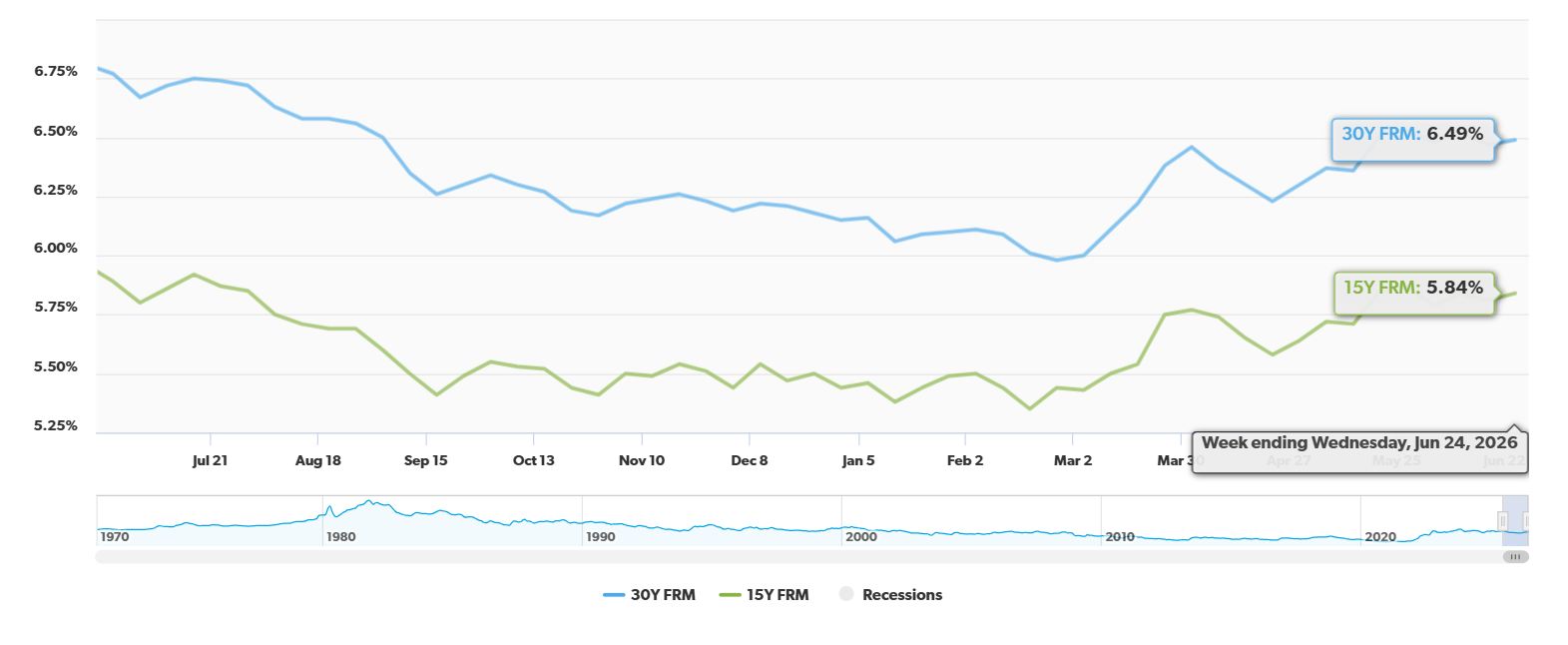
Filed Under: Financing, Mortgage Tagged With: mortgage, mortgage rates, Today’s Mortgage Rates

Mortgage Rates Today, April 5, 2026: 30-Year Refinance Rate Drops by 5 Basis Points

April 5, 2026 by Marco Santarelli

Mortgage Rates Today, June 20, 2026: 30‑Year Refinance Rate Rises by 3 Basis Points

Good news for homeowners looking to potentially lower their monthly payments: on Sunday, April 5, 2026, mortgage refinance rates have seen a slight dip. Specifically, the average 30-year fixed refinance rate has dropped by 5 basis points, now sitting at 6.80%, according to Zillow. This small but welcome decrease comes after a period of some back-and-forth in the market.

Mortgage Rates Today – April 5, 2026: 30-Year Refinance Rate Drops by 5 Basis Points

What's Happening with Refinance Rates Right Now?

Let's break down the numbers from Zillow for today, April 5, 2026:

  • 30-Year Fixed Refinance: This is the most common type of mortgage. Today, the average rate is 6.80%. It’s down from last week’s average of 6.85%, which is a 5 basis point improvement. Over the lifespan of a mortgage, even small drops like this can save you a good chunk of money.
  • 15-Year Fixed Refinance: If you're looking to pay off your mortgage faster, the 15-year fixed rate has seen a more significant drop, moving down 8 basis points to 5.75%. This is a great option for those who can handle a higher monthly payment but want to be mortgage-free sooner.
  • 5-Year Adjustable-Rate Mortgage (ARM): For those who don't mind a rate that could change down the line, the 5-year ARM refinance rate is holding steady at 6.00%. ARMs often start with lower rates than fixed mortgages, but it's important to remember they can go up after the initial fixed period.

Will People Rush to Refinance?

Even though rates have ticked down a bit, I'm not seeing the frenzy of activity that some might expect. The data from Zillow shows that refinance application demand has actually softened considerably over the past month. What gives?

  • Monthly Demand Decline: Applications have dropped by about 40% in the last month. This happened as rates climbed almost 40 basis points since late February. When rates climb, people tend to hold off, hoping they’ll go back down.
  • Weekly Trends: For the week ending March 27th, the total dollar amount of refinance applications was down by 18.3% compared to the week before.
  • Looking Back: Now, it’s important to remember where we were last year. Even with this recent slowdown, the number of people applying to refinance is still 21% to 33% higher than this time last year. That’s because rates were much higher back then.
  • Refinance Share: Right now, refinances make up just under half, 49.6%, of all mortgage applications. Back in mid-January, this number was closer to 60%.

This tells me that while the recent drop is good news, many people are still sitting on the sidelines, carefully watching the market. We’re not in a wild refinance boom, but rather a more cautious environment.

What's Driving These Rate Movements?

Several big events are keeping the mortgage rate market on its toes:

  • Global Tensions: The ongoing geopolitical situation, particularly the conflict involving Iran, has been a major player. This has caused oil prices to go up, which in turn makes people worry more about inflation. When inflation concerns rise, Treasury yields tend to go up, and mortgage rates closely follow those yields. It’s a chain reaction that can make borrowing more expensive.
  • Who's “In the Money”? Think about the folks who bought homes between 2023 and 2025. During those years, mortgage rates were often hovering around the 7% mark. For these homeowners, even a small dip towards 6% or the current 6.80% can be enough to make a rate-and-term refinance worthwhile – meaning they’re refinancing to get a better rate and/or term for their existing mortgage balance.
  • Tapping Home Equity Differently: Since refinance rates are still relatively high compared to a few years ago, many homeowners are looking for alternatives to a cash-out refinance. Instead, they're turning to Home Equity Lines of Credit (HELOCs), which currently have an average rate around 7.20%, or traditional home equity loans. This allows them to access the wealth they've built up in their homes without giving up the very low interest rate they might have secured on their first mortgage a few years back. I see this as a smart move for many; why give up a 3% or 4% first mortgage if you don't absolutely have to?
  • Mixed Signals for the Future: What's next? The experts have different ideas:
    • Fannie Mae is predicting that rates could actually drop below 6% by the end of the year. This is an optimistic outlook, but it hinges on inflation calming down.
    • However, the Mortgage Bankers Association (MBA) has recently updated their own predictions. They now believe rates will stay above 6% throughout 2026. This suggests a more cautious approach, anticipating that inflation might be stickier.

My Takeaway for You

As of April 5, 2026, we're seeing a modest breather in refinance rates, with the 30-year fixed at 6.80% and the 15-year fixed at 5.75%. While this is a positive movement from last week, the overall demand for refinancing isn't what it could be. Many homeowners are in a tough spot: they might have a low rate already, or they're waiting to see if rates will drop even further.

For those who bought homes when rates were quite high (say, 2023-2025), these current rates still offer a chance to save some money each month. But if you already secured a rate well below 5%, refinancing now might not make financial sense. The smart play, for many, is to explore options like HELOCs or home equity loans if you need to tap into your home's equity, preserving that fantastic first mortgage rate.

It really boils down to your individual situation and what your financial goals are. Keeping an eye on these numbers and understanding the bigger economic picture will help you make the best decision for your home and your wallet.

🏡 Two rental properties With Strong Cash Flow

Rincon, GA
🏠 Property: Founders Dr
🛏️ Beds/Baths: 3 Bed • 2 Bath • 1600 sqft
💰 Price: $275,000 | Rent: $2,200
📊 Cap Rate: 7.0% | NOI: $1,613
📅 Year Built: 2025
📐 Price/Sq Ft: $172
🏙️ Neighborhood: B+

VS

Port Charlotte, FL
🏠 Property: Prineville St
🛏️ Beds/Baths: 4 Bed • 2 Bath • 1914 sqft
💰 Price: $349,900 | Rent: $2,100
📊 Cap Rate: 5.0% | NOI: $1,457
📅 Year Built: 2025
📐 Price/Sq Ft: $183
🏙️ Neighborhood: A

Georgia’s affordable rental with higher cap rate vs Florida’s A‑rated property with stability. Which fits YOUR investment strategy?

We have much more inventory available than what you see on our website – Let us know about your requirement.

📈 Choose Your Winner & Contact Us Today!

Speak to a Norada Investment Counselor (No Obligation):

(800) 611-3060

View All Properties

Invest Smart — Build Long-Term Wealth Through Turnkey Real Estate in 2026

Market forecasts suggest steady demand, making turnkey real estate one of the most reliable paths to passive income and wealth creation.

Norada Real Estate helps investors capitalize on these trends with turnkey rental properties designed for appreciation and consistent cash flow—so you can grow wealth securely while others wait for clarity in the market.

🔥 HOT 2026 INVESTMENT LISTINGS JUST ADDED! 🔥
Send Us An Email or Request a Call Back

Contact Us

Recommended Read:

  • 30-Year Fixed Refinance Rate Trends – March 22, 2026
  • Best Time to Refinance Your Mortgage: Expert Insights
  • Should You Refinance Your Mortgage Now or Wait Until 2026?
  • When You Refinance a Mortgage Do the 30 Years Start Over?
  • Should You Refinance as Mortgage Rates Reach Lowest Level in Over a Year?
  • Half of Recent Home Buyers Got Mortgage Rates Below 5%
  • Mortgage Rates Need to Drop by 2% Before Buying Spree Begins
  • Will Mortgage Rates Ever Be 3% Again: Future Outlook
  • Mortgage Rates Predictions for Next 2 Years
  • Mortgage Rate Predictions for Next 5 Years

Filed Under: Financing, Mortgage Tagged With: mortgage rates, Mortgage Rates Today, Refinance Rates

  • « Previous Page
  • 1
  • …
  • 16
  • 17
  • 18
  • 19
  • 20
  • …
  • 136
  • Next Page »

Real Estate

  • Birmingham
  • Cape Coral
  • Charlotte
  • Chicago

Quick Links

  • Markets
  • Membership
  • Notes
  • Contact Us

Blog Posts

  • Mortgage Rates Today, June 20, 2026: 30‑Year Refinance Rate Rises by 3 Basis Points
    June 20, 2026Marco Santarelli
  • Cape Coral Housing Market 2026: Where Investors Are Finding the Best Deals
    June 19, 2026Marco Santarelli
  • Florida Housing Market Maintains Growth Streak Heading Into Summer 2026
    June 19, 2026Marco Santarelli

Contact

Norada Real Estate Investments 30251 Golden Lantern, Suite E-261 Laguna Niguel, CA 92677

(949) 218-6668
(800) 611-3060
BBB
  • Terms of Use
  • |
  • Privacy Policy
  • |
  • Testimonials
  • |
  • Suggestions?
  • |
  • Home

Copyright 2018 Norada Real Estate Investments

Loading...