Norada Real Estate Investments

  • Home
  • Markets
  • Properties
  • Membership
  • Podcast
  • Learn
  • About
  • Contact

Today’s Mortgage Rates, March 22: 30-Year Fixed Rises to 6.31%, a Six-Month High

March 22, 2026 by Marco Santarelli

Today's Mortgage Rates, June 24: Fed Policy and Inflation Push Rates Higher Across Loan Types

If you're thinking about buying a home or refinancing an existing mortgage, you've probably been keeping a close eye on interest rates. As of Sunday, March 22, 2026, today's mortgage rates have reached their highest point since September of last year, a trend that’s making waves in the housing market. The 30-year fixed mortgage rate is now averaging a solid 6.31%, and the 15-year fixed rate has ticked up to 5.77%. This isn't just a small blip; it reflects a broader economic story that's worth understanding if you're navigating the current real estate environment.

It feels like just yesterday we were seeing rates dip below the 6% mark, and honestly, it’s a bit of a jolt to see them climb again. This shift is a stark reminder of how sensitive the housing market is to larger economic forces. From my perspective, when rates move like this, it signals that several factors are at play, and it’s not just a random fluctuation.

Today's Mortgage Rates, March 22: 30-Year Fixed Rises to 6.31%, a Six-Month High

Let’s break down the numbers you need to know, directly from Zillow, which is a go-to source for this kind of data. As of March 22, 2026, these are the rates we're seeing:

Mortgage Type Interest Rate
30-Year Fixed 6.31%
20-Year Fixed 6.29%
15-Year Fixed 5.77%
5/1 ARM 6.36%
7/1 ARM 6.34%
30-Year VA 5.85%
15-Year VA 5.47%
5/1 VA 5.39%

These figures are significant because they represent the highest we’ve seen in about six months. This means that for anyone taking out a new mortgage or considering refinancing an older, higher-rate loan, the costs involved have just gone up. It puts a bit more pressure on wallets, plain and simple.

Why Are Rates Going Up? It's Not Just One Thing.

There are a few big reasons why we're seeing this upward trend in mortgage rates. It’s a confluence of global events and domestic economic policy that's pushing borrowing costs higher.

  • Inflation Woes: The biggest story continues to be inflation. Even though the Federal Reserve has been working to keep it in check, stubborn inflation concerns are making lenders nervous. When inflation is high, the money you borrow today is worth less in the future, so lenders need to charge more interest to compensate.
  • Global Economic Jitters: The world feels a little uncertain right now. The ongoing conflict with Iran, for instance, has really shaken global markets. When oil prices jump above $100 a barrel, as they have recently, it directly contributes to inflation. This kind of global instability always makes investors a bit more cautious, and that caution gets passed on to borrowing costs.
  • The Fed's Tightrope Walk: The Federal Reserve held its benchmark interest rate steady at 3.5%–3.75% during its March 18 meeting. While this might seem like good news, keeping the federal funds rate high signals the Fed's continued focus on fighting inflation. It also means the cost of borrowing money for banks remains elevated, which in turn influences the rates they offer to consumers. They’ve only projected one rate cut for late 2026, which doesn't offer much immediate relief.
  • Bond Market Signals: Longer-term government bonds are a key indicator for mortgage rates. The 10-year Treasury yield recently shot up to 4.303%. When Treasury yields rise, it generally means investors are demanding more return for lending their money, and this directly correlates with higher mortgage rates.

How This is Affecting Homeowners and Buyers

When mortgage rates rise, it doesn’t just affect the numbers on a spreadsheet; it has real-world consequences for real people.

  • The Affordability Squeeze: For those looking to buy, especially for the first time, this jump is noticeable. Moving from rates below 6% just a month ago to over 6.3% can mean an extra few hundred dollars on your monthly mortgage payment. That can make a significant difference in what kind of home people can afford or even if they can enter the market at all. I’ve seen firsthand how quickly affordability can change when rates shift even a quarter of a percent.
  • Refinancing Gets Less Appealing: Homeowners who locked in rates below 6% are likely feeling pretty good about that decision right now. With rates climbing, the incentive to refinance has dwindled significantly. Why would you trade a 5.5% rate for a 6.31% rate? This is why we're seeing a shift in how people access home equity.
  • Turning to HELOCs and Home Equity Loans: Instead of refinancing their primary mortgage, many homeowners are tapping into their home equity through Home Equity Lines of Credit (HELOCs) or home equity loans. The average rates for these are currently around 7.20% for HELOCs and 7.47% for home equity loans. While these rates are higher than primary mortgages, they allow homeowners to keep their existing low mortgage rate and still access cash for renovations, debt consolidation, or other needs. It’s a smart move for many to preserve their prime mortgage terms.
  • Demand Takes a Hit: Unsurprisingly, this rate environment has cooled down buyer demand. Mortgage applications fell by 10.9% last week, and the drop in refinance activity was particularly sharp. When rates move further away from the magic 6% mark, people tend to put their buying or refinancing plans on hold.

What Does the Future Hold? Expert Predictions

Looking ahead, there’s a lot of discussion about where rates might go. While nobody has a crystal ball, some of the smartest minds in the industry have offered their insights.

  • Fannie Mae's View: Fannie Mae is predicting that by the end of 2026, rates could potentially settle back down to the 5.7%–5.9% range. This optimistic outlook assumes that economic growth will slow down from its current pace, which would typically lead to lower interest rates.
  • The Mortgage Bankers Association (MBA) Perspective: The MBA, on the other hand, is a bit more cautious. They forecast that rates will likely remain in the 6% to 6.5% range for the rest of 2026. Their view suggests that persistent inflation will keep borrowing costs elevated, even if they don't climb much higher from here.

From my experience, these predictions often come with a caveat: the economic situation is fluid. If there are unexpected developments, these forecasts could change.

Key Takeaways for Today's Market

If you're trying to make sense of all this, here are the most important things to remember as of March 22, 2026:

  • Rates are High (for now): We've hit a six-month high for mortgage rates, with the benchmark 30-year fixed at 6.31%.
  • Inflation and Global Issues Drive This: Persistent inflation, geopolitical conflicts, and rising bond yields are the main reasons for these higher costs.
  • Homeowners are Being Creative: To avoid higher primary mortgage rates, people are increasingly using HELOCs and home equity loans.
  • Buyers are Pulling Back: Demand has softened, although there's more inventory available, which can create opportunities for determined buyers.
  • Expect More of the Same (for a while): Analysts anticipate rates will stay elevated, with only modest potential for relief towards the end of the year.

The Bottom Line: Today's mortgage rates, March 22, have climbed to their highest levels since last fall, impacting both those looking to buy and those considering refinancing. The current economic climate, fueled by inflation and global uncertainty, is keeping borrowing costs high. While there's hope for stabilization later in 2026, the near future suggests continued challenges for affordability in the housing market. It’s a time for careful consideration and strategic planning for anyone involved in real estate.

🏡 Two Rentals With Strong Investor Potential

Pleasant Grove, AL
🏠 Property: 4th Ave (1549 sqft)
🛏️ Beds/Baths: 3 Bed • 2 Bath • 1549 sqft
💰 Price: $265,000 | Rent: $1,850
📊 Cap Rate: 6.2% | NOI: $1,368
📅 Year Built: 2026
📐 Price/Sq Ft: $172
🏙️ Neighborhood: B+

VS

Pleasant Grove, AL
🏠 Property: 4th Ave (1856 sqft)
🛏️ Beds/Baths: 3 Bed • 2 Bath • 1856 sqft
💰 Price: $410,000 | Rent: $3,200
📊 Cap Rate: 5.8% | NOI: $1,981
📅 Year Built: 2026
📐 Price/Sq Ft: $221
🏙️ Neighborhood: B+

Two Pleasant Grove rentals—one affordable with higher cap rate vs one larger with stronger NOI. Which fits YOUR investment strategy?

We have much more inventory available than what you see on our website – Let us know about your requirement.

📈 Choose Your Winner & Contact Us Today!

Speak to a Norada Investment Counselor (No Obligation):

(800) 611-3060

View All Properties

Build Passive Income & Wealth with Turnkey Rentals in 2026

Mortgage rates remain high in 2026, but rental properties continue to deliver strong cash flow and appreciation. Savvy investors know that turnkey real estate is the path to passive income and long‑term wealth.

Norada Real Estate helps you secure turnkey rental properties designed for immediate cash flow and appreciation—so you can invest smartly regardless of interest rate trends.

🔥 HOT 2026 INVESTMENT LISTINGS JUST ADDED! 🔥
Request a Callback / Fill Out the Form Online

Contact Us

Also Read:

  • Mortgage Rates Predictions Backed by 7 Leading Experts: 2025–2026
  • Mortgage Rate Predictions for the Next 3 Years: 2026, 2027, 2028
  • 30-Year Fixed Mortgage Rate Forecast for the Next 5 Years
  • 15-Year Fixed Mortgage Rate Predictions for Next 5 Years: 2025-2029
  • Will Mortgage Rates Ever Be 3% Again in the Future?
  • Mortgage Rates Predictions for Next 2 Years
  • Mortgage Rate Predictions for Next 5 Years
  • Mortgage Rate Predictions: Why 2% and 3% Rates are Out of Reach
  • How Lower Mortgage Rates Can Save You Thousands?
  • How to Get a Low Mortgage Interest Rate?
  • Will Mortgage Rates Ever Be 4% Again?
Filed Under: Financing, Mortgage Tagged With: mortgage, mortgage rates, Today’s Mortgage Rates

Mortgage Rates Surge to the Highest Level in Over Three Months

March 21, 2026 by Marco Santarelli

Mortgage Rates Surge to the Highest Level in Over Three Months

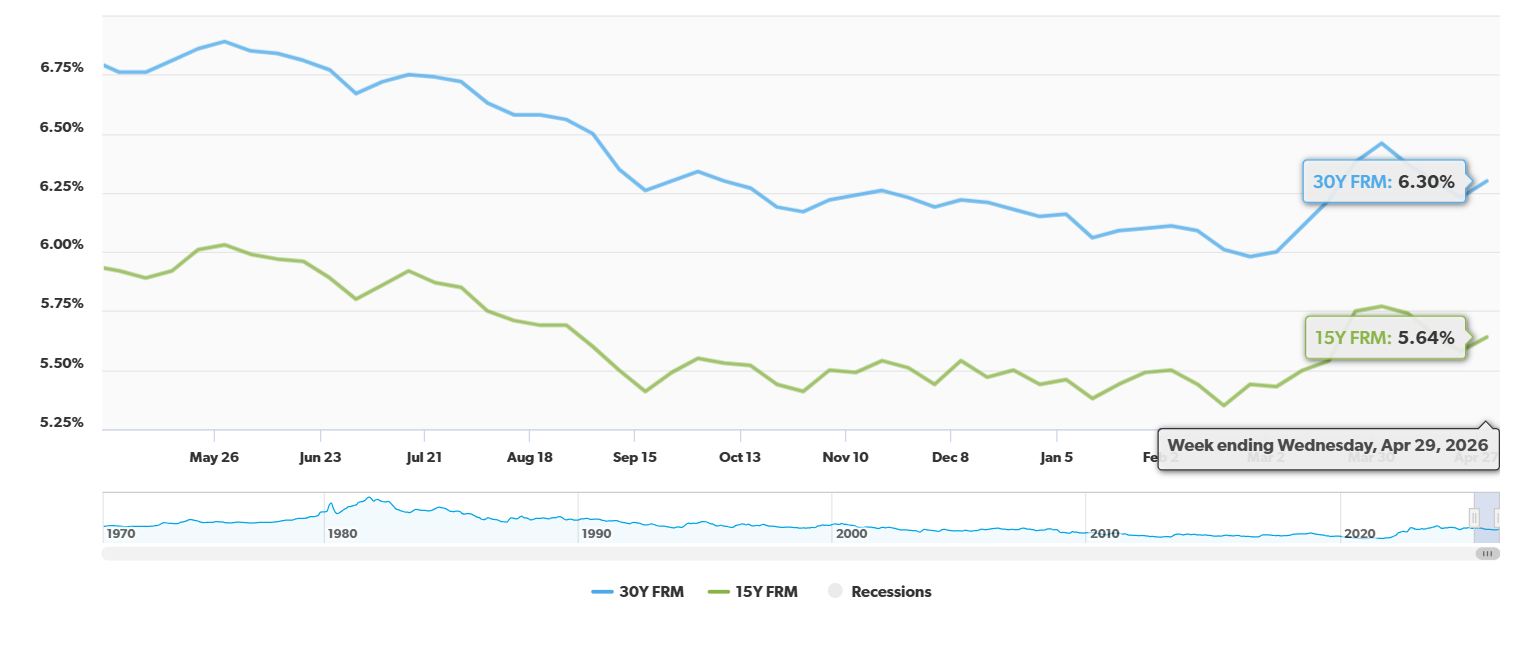
So, you've been dreaming of owning a home, maybe picturing yourself settling in just in time for warmer weather. Well, I've got some news that's a bit of a buzzkill. For the third week in a row, mortgage rates have been climbing, hitting their highest point in more than three months. As of March 21, 2026, you're looking at an average of 6.22% for a 30-year fixed mortgage, according to Freddie Mac. This jump is a tough pill to swallow, especially after we saw rates dip below 6% earlier in February. It’s a stark reminder that the housing market is a dynamic beast, and external forces can shift things faster than you might think.

Mortgage Rates Surge to the Highest Level in Over Three Months

The Triple Threat: What's Driving This Rate Hike?

I always try to break down these market movements into understandable pieces, and in this case, there are three main culprits behind this recent spike in mortgage rates:

1. The Shadow of Geopolitical Conflict

Let’s be frank, the ongoing war with Iran has cast a long, unsettling shadow over financial markets. When major global conflicts erupt, uncertainty takes hold. Investors get nervous, and that nervousness always translates into higher borrowing costs. It’s like a ripple effect; a shaky global picture makes lenders want more for their money, and that translates to higher mortgage rates for us.

2. Energy Prices: The Inflationary Spark

Directly tied to the geopolitical situation, we’ve seen oil prices skyrocket, pushing past the $100 a barrel mark. This isn't just about the gas you put in your car; high energy prices are a fundamental driver of inflation. Think about it: everything from the food you buy to the materials used to build a house has to be transported. When fuel costs go up, those costs get passed along. This surge in energy prices is feeding fears that inflation won't be as quick to tamedown as we'd hoped.

3. The Federal Reserve's “Wait-and-See” Approach

Up until recently, many of us (myself included!) were anticipating the Federal Reserve to start lowering interest rates, which would almost certainly bring mortgage rates down with them. However, those plans have been put on hold. The Fed, on March 18th, decided to keep the federal funds rate steady at 3.5%–3.75%. This signals a cautious stance, a “wait-and-see” when it comes to future rate cuts. With inflation still a concern and the global situation unstable, the Fed is holding its cards close to its chest, which means less downward pressure on mortgage rates than we’d hoped for.

From the Fed's Perspective: Why the Pause?

I find it crucial to understand the Fed's reasoning. They’re tasked with balancing a lot: keeping inflation in check and fostering economic growth. While they’ve made progress on inflation, the lingering threats of geopolitical instability and those stubborn energy prices mean they’re not ready to declare victory. Their recent decision to hold rates steady suggests they’re looking for more sustained evidence that inflation is truly under control before they start making borrowing cheaper. This cautious approach, while sensible from an economic stability standpoint, directly impacts our ability to afford homes.

How This is Affecting Your Wallet and the Housing Market

So, what does this all mean for you, the potential homebuyer? It’s not just about a number on a screen; it has real-world consequences.

The Application Slump: A Clear Sign of Hesitation

The numbers don’t lie. The week ending March 13th saw a significant drop in mortgage applications – down a whopping 10.9%. Refinance applications took an even bigger hit, falling nearly 26%. This tells me that as borrowing costs have risen, many people are hitting the pause button on their homebuying plans. It’s a natural reaction when the monthly payment suddenly becomes a lot more daunting.

Spring Season Setback: Not the Warm Welcome We Expected

This is the time of year when the housing market usually heats up. Families are looking to move before the new school year, and a lot of buyers are eager to get into a new home for the summer. However, these surging rates are throwing a wrench into that traditional spring buying season. The increased cost of borrowing means buyers have less purchasing power, or they might need to adjust their expectations on the type of home they can afford. It’s a real setback for many who were counting on this period.

The “Locked-In” Homeowner Dilemma

Now, let's talk about inventory. While the good news is that inventory has actually increased by about 20% year-over-year, there’s a catch. Many homeowners who secured mortgages when rates were significantly lower are hesitant to sell. Why would they trade a 3% or 4% rate for a 6% or 7% rate when buying their next home? This “locked-in” effect continues to limit the supply of existing homes on the market, which can keep prices from falling even with higher rates. It’s a bit of a stalemate for some.

Looking Ahead: What Do the Experts Say?

As for the rest of 2026, the outlook is a bit murky, but there are some projections. Agencies like Fannie Mae and the Mortgage Bankers Association are forecasting rates to settle between 6.1% and 6.2% for the year. That’s still higher than what we saw recently, but it suggests a potential stabilization. However, they also emphasize that volatility remains high. This means we could still see ups and downs.

Many economists and Fed officials still believe there's a good chance of at least one more rate cut before the end of 2026, provided inflation continues to trend downwards. This is the crucial “if.” If inflation proves stubborn, or if other global events cause further economic shocks, those rate cuts could be delayed or even cancelled.

My Take: Navigating the Current Climate

From my perspective, this situation demands a patient and informed approach. If you were planning to buy, it's essential to re-evaluate your budget. Can you still afford the home you had in mind with these higher rates, or do you need to look at less expensive options or save for a larger down payment? For those looking to refinance, unless you have a very specific financial situation, refinancing now probably doesn't make much sense.

The key takeaway is that the days of incredibly low mortgage rates might be behind us for a while. We're in a period of adjustment. Staying informed about economic news, understanding the drivers behind rate movements, and working closely with a trusted mortgage professional will be more important than ever as you navigate your homeownership journey. It's a complex time, but with the right knowledge and strategy, you can still make smart decisions.

🏡 Two Rentals With Strong Investor Potential

Pleasant Grove, AL
🏠 Property: 4th Ave (1549 sqft)
🛏️ Beds/Baths: 3 Bed • 2 Bath • 1549 sqft
💰 Price: $265,000 | Rent: $1,850
📊 Cap Rate: 6.2% | NOI: $1,368
📅 Year Built: 2026
📐 Price/Sq Ft: $172
🏙️ Neighborhood: B+

VS

Pleasant Grove, AL
🏠 Property: 4th Ave (1856 sqft)
🛏️ Beds/Baths: 3 Bed • 2 Bath • 1856 sqft
💰 Price: $410,000 | Rent: $3,200
📊 Cap Rate: 5.8% | NOI: $1,981
📅 Year Built: 2026
📐 Price/Sq Ft: $221
🏙️ Neighborhood: B+

Two Pleasant Grove rentals—one affordable with higher cap rate vs one larger with stronger NOI. Which fits YOUR investment strategy?

We have much more inventory available than what you see on our website – Let us know about your requirement.

📈 Choose Your Winner & Contact Us Today!

Speak to a Norada Investment Counselor (No Obligation):

(800) 611-3060

View All Properties

Build Passive Income & Wealth with Turnkey Rentals

Mortgage rates remain near 6%, but rental properties continue to deliver strong cash flow and appreciation. Savvy investors know that turnkey real estate is the path to passive income and long‑term wealth.

Norada Real Estate helps you secure turnkey rental properties designed for immediate cash flow and appreciation—so you can invest smartly regardless of interest rate trends.

🔥 HOT INVESTMENT Properties JUST ADDED! 🔥
Request a Callback / Fill Out the Form Online

Contact Us

Also Read:

  • Will Mortgage Rates Drop to 5% in 2026: Expert Forecast
  • How to Get a 3% Mortgage Rate in 2026 With Assumable Mortgages?
  • How to Get a 4% Interest Rate on a Mortgage in 2026?
  • What Leading Housing Experts Predict for Mortgage Rates in 2026
  • Mortgage Rate Predictions for 2026: What Leading Forecasters Expect
  • Mortgage Rate Predictions for the Next 3 Years: 2026, 2027, 2028
  • 30-Year Fixed Mortgage Rate Forecast for the Next 5 Years
  • 15-Year Fixed Mortgage Rate Predictions for Next 5 Years: 2025-2029
  • Will Mortgage Rates Ever Be 3% Again in the Future?
  • Mortgage Rates Predictions for Next 2 Years
  • Mortgage Rate Predictions for Next 5 Years
  • Mortgage Rate Predictions: Why 2% and 3% Rates are Out of Reach
  • How Lower Mortgage Rates Can Save You Thousands?
  • How to Get a Low Mortgage Interest Rate?
  • Will Mortgage Rates Ever Be 4% Again?
Filed Under: Financing, Mortgage Tagged With: 30-Year Fixed Mortgage Rate, mortgage, mortgage rates

Today’s Mortgage Rates, March 21: Rates Hit 6-Month High, 30-Year Fixed Rises to 6.31%

March 21, 2026 by Marco Santarelli

Today's Mortgage Rates, June 24: Fed Policy and Inflation Push Rates Higher Across Loan Types

If you're looking to buy a home or refinance an existing mortgage, you've probably noticed that borrowing money has gotten more expensive. On Saturday, March 21, 2026, mortgage and refinance interest rates jumped to their highest point in six months. According to Zillow, the popular 30-year fixed mortgage rate climbed to 6.31%. This isn't just a small bump; it's the highest we've seen since late September of last year, and it's a clear sign that inflationary pressures and global market ups and downs are really making their mark.

Today's Mortgage Rates, March 21: Rates Hit 6-Month High, 30-Year Fixed Rises to 6.31%

Let's break down where things stand right now. These numbers from Zillow reflect what lenders are offering, and it's helpful to see how different loan types are performing.

Loan Type Interest Rate
30-Year Fixed 6.31%
20-Year Fixed 6.29%
15-Year Fixed 5.77%
5/1 ARM 6.36%
7/1 ARM 6.34%
30-Year VA 5.85%
15-Year VA 5.47%
5/1 VA 5.39%

As you can see, the increases aren't limited to just one type of loan. Both fixed-rate mortgages, which offer stability over the life of the loan, and adjustable-rate mortgages (ARMs), which can start lower but change over time, are seeing higher borrowing costs. It's a broad uptick that impacts a lot of people looking for their piece of the American dream.

What's Driving These Higher Rates?

It’s never just one thing that moves mortgage rates. It's usually a combination of factors. Right now, a couple of big ones are really at play:

The Shadow of Geopolitical Conflict

One of the biggest headaches for the global economy right now is the ongoing conflict in Iran. This isn't just a faraway problem; it has direct financial consequences. The situation has pushed oil prices up and over $100 per barrel. When oil gets more expensive, pretty much everything else follows suit. Transportation costs go up, manufacturing costs increase, and this all adds to the general pressure of inflation. Lenders see this inflation, and they adjust mortgage rates to account for the fact that their money will be worth a little less in the future.

The Federal Reserve's Cautious Step

Our central bank, the Federal Reserve, plays a huge role in setting the overall direction of interest rates. On March 18th, they decided to keep the federal funds rate, which influences borrowing costs across the economy, steady at 3.50%–3.75%. This decision wasn't a surprise, but what was notable was their indication that they only anticipate one rate cut for the rest of 2026. This signal of caution tells us they're still worried about inflation lingering and aren't ready to start lowering rates aggressively just yet. When the Fed holds steady or signals fewer rate cuts, it often puts upward pressure on mortgage rates.

The Bond Market's Nervousness

You might not think about the bond market when you're applying for a mortgage, but it's deeply connected. The 10-year Treasury yield, for instance, is a benchmark that mortgage rates tend to follow very closely. Right now, that yield has been climbing pretty sharply. Why? Economic uncertainty and those geopolitical tensions I mentioned. When investors are nervous about the future, they often demand higher returns to lend their money, and that pushes Treasury yields up. As those yields go up, so do mortgage rates.

Looking Ahead: 2026 Forecast and What to Expect

So, what does all this mean for the rest of the year? It's a bit of a mixed bag, and honestly, predicting the future of interest rates is always a challenge.

  • Annual Projections: Most of the big players in the mortgage industry and financial analysts are putting the average 30-year fixed rate somewhere between 6.1% and 6.4% for pretty much all of 2026. This suggests that while we've hit a high point, we might be settling into this higher range for a while. It’s not a comfortable range for many, but it’s the reality we’re facing.
  • A Glimmer of Hope? There's a possibility for some relief down the line. Fannie Mae, a major player in the housing finance system, is forecasting that rates could dip to around 5.7% by the end of the year. But, and it’s a big “but,” this is dependent on GDP growth slowing down significantly. If the economy stays strong, those lower rates are less likely.
  • Impact on Buyers: We're already seeing the effect this is having on people looking to buy homes. The Mortgage Bankers Association reported a significant 10.9% drop in purchase applications recently. When mortgage rates go up, the monthly payment on a home increases, making it harder for some people to afford the home they want. This can cool down demand, which is what we're starting to see.

My Takeaways: What Matters Most to You

For me, the key takeaways from today’s mortgage rate situation are pretty clear:

  • We're at a six-month high for mortgage rates as of March 21st, with the 30-year fixed hitting 6.31%. This is the most significant marker.
  • The root causes are quite serious: inflation fueled by expensive oil due to geopolitical events, and a cautious Federal Reserve. It’s a double whammy that’s keeping borrowing costs up.
  • Don't expect the Fed to swoop in with rapid rate cuts anytime soon. Their focus is on inflation, meaning we'll likely see only one cut this year, if that.
  • Homebuyers are feeling the pinch, with fewer people applying for mortgages. This is a direct consequence of making homeownership more expensive month-to-month.
  • The experts aren't seeing a huge drop in rates this year. Expect rates to generally stay within the 6.1% to 6.4% range, with any real relief being more of a possibility towards the very end of the year, and only if certain economic conditions are met.

The Bottom Line:

Right now, mortgage rates are telling a story of rising costs and a housing market that's having to adjust. While the prospect of borrowing money at its highest point in half a year is tough, understanding the forces behind it can help you make better decisions. It’s a rapidly changing situation, and for anyone looking to refinance or buy, navigating these choppy waters will require careful planning and a realistic understanding of the current borrowing costs in 2026.

🏡 Two Rentals With Strong Investor Potential

Pleasant Grove, AL
🏠 Property: 4th Ave (1549 sqft)
🛏️ Beds/Baths: 3 Bed • 2 Bath • 1549 sqft
💰 Price: $265,000 | Rent: $1,850
📊 Cap Rate: 6.2% | NOI: $1,368
📅 Year Built: 2026
📐 Price/Sq Ft: $172
🏙️ Neighborhood: B+

VS

Pleasant Grove, AL
🏠 Property: 4th Ave (1856 sqft)
🛏️ Beds/Baths: 3 Bed • 2 Bath • 1856 sqft
💰 Price: $410,000 | Rent: $3,200
📊 Cap Rate: 5.8% | NOI: $1,981
📅 Year Built: 2026
📐 Price/Sq Ft: $221
🏙️ Neighborhood: B+

Two Pleasant Grove rentals—one affordable with higher cap rate vs one larger with stronger NOI. Which fits YOUR investment strategy?

We have much more inventory available than what you see on our website – Let us know about your requirement.

📈 Choose Your Winner & Contact Us Today!

Speak to a Norada Investment Counselor (No Obligation):

(800) 611-3060

View All Properties

Build Passive Income & Wealth with Turnkey Rentals in 2026

Mortgage rates remain high in 2026, but rental properties continue to deliver strong cash flow and appreciation. Savvy investors know that turnkey real estate is the path to passive income and long‑term wealth.

Norada Real Estate helps you secure turnkey rental properties designed for immediate cash flow and appreciation—so you can invest smartly regardless of interest rate trends.

🔥 HOT 2026 INVESTMENT LISTINGS JUST ADDED! 🔥
Request a Callback / Fill Out the Form Online

Contact Us

Also Read:

  • Mortgage Rates Predictions Backed by 7 Leading Experts: 2025–2026
  • Mortgage Rate Predictions for the Next 3 Years: 2026, 2027, 2028
  • 30-Year Fixed Mortgage Rate Forecast for the Next 5 Years
  • 15-Year Fixed Mortgage Rate Predictions for Next 5 Years: 2025-2029
  • Will Mortgage Rates Ever Be 3% Again in the Future?
  • Mortgage Rates Predictions for Next 2 Years
  • Mortgage Rate Predictions for Next 5 Years
  • Mortgage Rate Predictions: Why 2% and 3% Rates are Out of Reach
  • How Lower Mortgage Rates Can Save You Thousands?
  • How to Get a Low Mortgage Interest Rate?
  • Will Mortgage Rates Ever Be 4% Again?

Filed Under: Financing, Mortgage Tagged With: mortgage, mortgage rates, Today’s Mortgage Rates

Today’s Mortgage Rates, March 20: 30-Year Fixed Hits 6.25% Amid Market Volatility

March 20, 2026 by Marco Santarelli

Today's Mortgage Rates, June 24: Fed Policy and Inflation Push Rates Higher Across Loan Types

On Friday, March 20, 2026, owning a home likely felt a little more expensive for many Americans as mortgage rates continued their upward trek. Both Zillow Home Loans and Freddie Mac data show a clear trend: borrowing costs are higher this week, directly impacting the dreams of potential homeowners and those looking to refinance. It's a stark reminder that the housing market is a dynamic beast, constantly responding to bigger economic forces.

Today's Mortgage Rates, March 20: 30-Year Fixed Hits 6.25% Amid Market Volatility

Here’s a snapshot of what mortgage rates are looking like today, according to Zillow Home Loans. It’s important to remember these are averages, and your specific rate can depend on many things, like your credit score and loan type.

Loan Type Interest Rate
30-Year Fixed 6.25%
20-Year Fixed 6.375%
15-Year Fixed 5.75%
30-Year FHA 5.875%
30-Year VA 6.00%
30-Year Jumbo 6.125%
7/6 ARM 6.125%
10-Year Fixed 5.75%

A Look Back: Weekly Rate Changes

Seeing these numbers alone is helpful, but comparing them to last week gives us a clearer picture of the direction we’re headed.

  • The ever-popular 30-Year Fixed rate has nudged up by 17 basis points, moving from 6.08% last week to today's 6.25%. That might sound like a small jump, but over the life of a mortgage, it adds up.
  • For those looking at shorter terms, the 15-Year Fixed has also seen an increase, climbing by 13 basis points from 5.62% to 5.75%. This suggests that shorter-term debts are becoming pricier too.

Freddie Mac Agrees: The Upward Trend is Real

It’s not just Zillow Home Loans painting this picture. The widely watched Freddie Mac survey, which tracks rates from a broader range of lenders, echoes the same sentiment. Their data shows the 30-Year Fixed Mortgage at 6.22% as of today, up from 6.11% last week. This consolidation of data from different sources really underscores the reality of the market.

This 6.22% figure, according to Freddie Mac, is the highest we've seen in about three months. This isn't just a blip; it's a sign that borrowing costs have firmly entered a higher gear, a direct reflection of the economic winds blowing through our financial markets.

What’s Pushing Rates Higher? The Big Picture

So, why are we seeing these increases? It's rarely just one thing, but a combination of powerful forces.

The Federal Reserve's Steady Hand (for Now)

The Federal Reserve has been playing a careful game. At its most recent meeting on March 17–18, they decided to keep the federal funds rate right where it was, between 3.50% and 3.75%. This decision to hold steady, or “pause,” is a significant factor.

When the Fed keeps its key interest rate elevated, it’s often because inflation is still a concern. This pause removes some of the expected downward pressure on mortgage rates that many borrowers were hoping for. It’s like seeing a lifeguard tell swimmers to stay close to shore – caution is the keyword.

Global Tensions and Their Ripple Effect

The world feels a bit unsettled right now, and that often hits our economy. The ongoing conflict in the Middle East, for instance, has pushed oil prices past the $100 per barrel mark. Why does this matter for your mortgage?

  • Rising Energy Costs: When gas and oil get more expensive, it doesn’t just affect your commute. It increases the cost of transporting goods, making almost everything a little pricier.
  • Inflation Fears: This surge in energy costs feeds directly into inflation worries. Investors, and by extension lenders, become more anxious about the future purchasing power of money.
  • Treasury Yields Up: In response to inflation fears and the general uncertainty, yields on U.S. Treasury bonds tend to rise. Since mortgage rates are closely tied to these yields, they get pulled upward as well. It’s a chain reaction that travels from global headlines right to your loan application.

Stubborn Inflation’s Lingering Shadow

We've seen the Fed try to tame inflation with rate cuts in the past year, but it’s proving to be a tougher opponent than some anticipated. Even with those previous efforts, inflation is still not cooperating.

Fed Chair Jerome Powell’s recent remarks have been measured and cautious. This lack of clear signals about immediate rate cuts means that the downward pressure on mortgage rates that we might have expected in early 2026 is being held back. Borrowers are essentially left in a holding pattern, waiting for a clearer sign that the coast is truly clear.

How This is Affecting Us: Market Reactions

These rising rates aren’t happening in a vacuum. They have real, tangible effects on people’s decisions.

  • Refinancing Takes a Hit: When rates go up, the incentive to refinance an existing mortgage disappears for many. Why pay more if your current rate is lower? We've seen refinance applications drop dramatically, by nearly 27% in the past week alone. This is a significant pullback, signaling that homeowners are holding onto their current loans.
  • Homebuyers Feel the Squeeze: For those looking to buy, higher rates mean higher monthly payments. This affordability crunch is making potential buyers pause. Total mortgage applications, which include both purchases and refinances, have fallen by 10.9%. It’s a clear sign that buyers are being priced out or are opting to wait it out, hoping for better conditions.
  • A Shift in Future Predictions: Looking ahead, economists are recalibrating their expectations. The general consensus is now leaning towards only one more Fed rate cut by the end of 2026. This means that mortgage rates are expected to remain elevated, likely hovering between 6% and 6.5% for the remainder of the year. This is a crucial piece of information for anyone planning a home purchase in the coming months.

The Bottom Line: What You Need to Know Today

As of March 20, 2026, the market is clear: mortgage rates are on an upward swing.

  • The 30-year fixed rate is hovering around 6.25% according to Zillow and 6.22% according to Freddie Mac.
  • This increase is dampening both the desire to refinance and the activity of new buyers.
  • The main culprits behind this rise are persistent inflation, global economic uncertainties, and the Federal Reserve's cautious approach to monetary policy.
  • The general outlook suggests that we’ll likely be in this higher rate environment for a good part of 2026, with only modest potential for relief towards the year's end.

🏡 Two Rentals With Strong Investor Potential

Pleasant Grove, AL
🏠 Property: 4th Ave (1549 sqft)
🛏️ Beds/Baths: 3 Bed • 2 Bath • 1549 sqft
💰 Price: $265,000 | Rent: $1,850
📊 Cap Rate: 6.2% | NOI: $1,368
📅 Year Built: 2026
📐 Price/Sq Ft: $172
🏙️ Neighborhood: B+

VS

Pleasant Grove, AL
🏠 Property: 4th Ave (1856 sqft)
🛏️ Beds/Baths: 3 Bed • 2 Bath • 1856 sqft
💰 Price: $410,000 | Rent: $3,200
📊 Cap Rate: 5.8% | NOI: $1,981
📅 Year Built: 2026
📐 Price/Sq Ft: $221
🏙️ Neighborhood: B+

Two Pleasant Grove rentals—one affordable with higher cap rate vs one larger with stronger NOI. Which fits YOUR investment strategy?

We have much more inventory available than what you see on our website – Let us know about your requirement.

📈 Choose Your Winner & Contact Us Today!

Speak to a Norada Investment Counselor (No Obligation):

(800) 611-3060

View All Properties

Build Passive Income & Wealth with Turnkey Rentals in 2026

Mortgage rates remain high in 2026, but rental properties continue to deliver strong cash flow and appreciation. Savvy investors know that turnkey real estate is the path to passive income and long‑term wealth.

Norada Real Estate helps you secure turnkey rental properties designed for immediate cash flow and appreciation—so you can invest smartly regardless of interest rate trends.

🔥 HOT 2026 INVESTMENT LISTINGS JUST ADDED! 🔥
Request a Callback / Fill Out the Form Online

Contact Us

Also Read:

  • Mortgage Rates Predictions Backed by 7 Leading Experts: 2025–2026
  • Mortgage Rate Predictions for the Next 3 Years: 2026, 2027, 2028
  • 30-Year Fixed Mortgage Rate Forecast for the Next 5 Years
  • 15-Year Fixed Mortgage Rate Predictions for Next 5 Years: 2025-2029
  • Will Mortgage Rates Ever Be 3% Again in the Future?
  • Mortgage Rates Predictions for Next 2 Years
  • Mortgage Rate Predictions for Next 5 Years
  • Mortgage Rate Predictions: Why 2% and 3% Rates are Out of Reach
  • How Lower Mortgage Rates Can Save You Thousands?
  • How to Get a Low Mortgage Interest Rate?
  • Will Mortgage Rates Ever Be 4% Again?

Filed Under: Financing, Mortgage Tagged With: mortgage, mortgage rates, Today’s Mortgage Rates

Mortgage Rate Predictions 2026: What the Fed’s Latest Decision Means

March 19, 2026 by Marco Santarelli

Mortgage Rate Predictions 2026: What the Fed's Latest Decision Means

So, the Federal Reserve just made its big decision on March 18, 2026. They've decided to keep the benchmark interest rate right where it is, sitting between 3.50% and 3.75%. What does this mean for you if you're looking to buy a home or refinance your mortgage? In a nutshell, don't expect a sudden, dramatic drop in mortgage rates anytime soon. It looks like we'll be seeing rates staying pretty much the same or maybe inching up a bit over the next little while.

Mortgage Rate Predictions 2026: What the Fed's Latest Move Means for Your Home Loan

I've been following the housing market and interest rates for a long time, and honestly, this isn't a huge surprise. The Fed is walking a tightrope, trying to cool down inflation without crashing the economy. Their decision to hold rates steady, while still hinting at one rate cut later this year, tells me they're being cautious. And when the Fed is cautious, it usually means mortgage rates will be a bit more unpredictable than we'd like.

Why Aren't Rates Plummeting?

You might be wondering, “Why aren't they cutting rates and making mortgages cheaper?” Well, there are a few big reasons behind the Fed's cautious approach, and they all play a role in what happens with mortgage rates.

1. Stubborn Inflation: Even though things might feel like they're getting better, inflation is proving to be tougher to get rid of than we hoped. The Fed actually raised their inflation forecast for 2026 to 2.7%. Their main goal is to get inflation back down to 2%, and if it’s not cooperating, they can’t just cut rates willy-nilly. Keeping rates higher for longer is their tool to try and bring prices back under control.

2. Shaky Global Events: Things happening around the world have a real impact right here at home. The ongoing conflicts, especially in the Middle East, have sent oil prices shooting up. When oil gets more expensive, it usually means everything else gets more expensive too – that's inflation. This makes the Fed's job even harder and can push mortgage rates higher because the cost of borrowing money goes up across the board.

3. What's Happening with Treasury Yields: This is a big one for mortgage rates. Think of mortgage rates as being closely tied to what's called the 10-year Treasury yield. When investors get nervous about inflation or the economy, they often demand higher returns on government bonds, which pushes yields up. Since the Fed is being cautious, investors are reacting, keeping these yields higher. And when Treasury yields are up, mortgage rates tend to follow.

What Experts Are Saying About the Immediate Future

Looking at the numbers right now, as of March 19, 2026, the average 30-year fixed-rate mortgage is hanging around 6.27% to 6.29%. That's a bit higher than it was at the start of the month when it was closer to 6.00%.

Most people I talk to in the industry are expecting things to stay in a kind of “holding pattern.” Some think rates might even climb a little. A recent poll from Bankrate shows that exactly half of the experts polled believe rates will go up, while the other half think they'll stay flat. Not exactly a clear signal, right? This uncertainty is what makes it tricky for anyone trying to plan their homebuying.

Looking Ahead: Long-Term Mortgage Rate Predictions for 2026

So, if the immediate future looks a bit stuck, what about the rest of the year? This is where it gets interesting, and the opinions start to spread out a bit.

Major housing experts have been adjusting their predictions after the Fed's announcement:

  • Fannie Mae is forecasting that rates will likely hover around 6.0% for the rest of 2026.
  • The Mortgage Bankers Association (MBA) is offering a slightly wider range, between 6.0% and 6.5%. They're currently seeing trends that point towards the higher end of that range.
  • The National Association of Realtors (NAR) is a bit more optimistic. They believe rates could settle near 6.0% by year-end, but only if the economic data starts to look softer.
  • Then you have folks like J.P. Morgan, who are taking a more cautious stance. They're not expecting any rate cuts at all in 2026. That's a pretty different outlook!

From my own experience, I've seen how quickly these predictions can change based on a single economic report. It’s like trying to guess the weather a month out – you can make an educated guess, but a sudden storm can change everything.

What This Means for You: Advice from an Insider

Now, let's talk about what this all means for you, the potential homebuyer or homeowner looking to refinance.

Don't Try to Catch the Falling Knife (or Rising Rate!)

One thing I can't stress enough is to be careful about trying to guess the absolute bottom for mortgage rates. Waiting for that perfect dip can be a risky game. If you wait too long and rates do start to tick up, you might find yourself competing with even more buyers. This increased competition can actually push home prices higher, even if mortgage rates are only slightly lower. It's a delicate balance.

Should You Lock In or Wait? The Big Question.

This is the million-dollar question for many people right now. With the current situation, the Bankrate Rate Variability Index rates the market at a 7 out of 10 for how much rates can change. That's pretty high volatility!

  • If you're close to closing on a home: My personal advice would lean towards being more conservative. If you find a rate that works for your budget, consider locking it in. This protects you from any sudden spikes that could occur due to new geopolitical news or unexpected inflation data. It might not be the absolute lowest rate possible, but it provides certainty.
  • If you're just starting your search: You have a bit more flexibility. You can keep an eye on the market, but be prepared for rates to potentially move either way.

I've seen clients miss out on homes they loved because they were waiting for a quarter-percent drop in their mortgage rate, only to see rates jump up by half a percent and a home they could have afforded slip away. Peace of mind is often worth more than chasing the absolute lowest number.

The Fed's decision is a signal, but it's not the whole story. Keep an eye on inflation numbers, global events, and how the 10-year Treasury yield is behaving. These will be your best indicators of what's to come for mortgage rates in 2026.

🏡 Two Rental Properties With Strong Cash Flow

Nashville, TN
🏠 Property: Winton Dr
🛏️ Beds/Baths: 3 Bed • 2.5 Bath • 1688 sqft
💰 Price: $360,000 | Rent: $2,100
📊 Cap Rate: 5.5% | NOI: $1,662
📅 Year Built: 2001
📐 Price/Sq Ft: $214
🏙️ Neighborhood: A

VS

Birmingham, AL
🏠 Property: Oak St
🛏️ Beds/Baths: 4 Bed • 2 Bath • 1533 sqft
💰 Price: $172,000 | Rent: $1,425
📊 Cap Rate: 7.9% | NOI: $1,137
📅 Year Built: 1956
📐 Price/Sq Ft: $113
🏙️ Neighborhood: B+

Nashville’s A‑rated rental with stability vs Birmingham’s affordable property with higher cap rate. Which fits YOUR investment strategy?

We have much more inventory available than what you see on our website – Let us know about your requirement.

📈 Choose Your Winner & Contact Us Today!

Speak to a Norada Investment Counselor (No Obligation):

(800) 611-3060

View All Properties

Build Passive Income & Wealth with Turnkey Rentals

Mortgage rates remain high in 2026, but rental properties continue to deliver strong cash flow and appreciation. Savvy investors know that turnkey real estate is the path to passive income and long‑term wealth.

Norada Real Estate helps you secure turnkey rental properties designed for immediate cash flow and appreciation—so you can invest smartly regardless of interest rate trends.

🔥 HOT INVESTMENT Properties JUST ADDED! 🔥
Request a Callback / Fill Out the Form Online

Contact Us

Also Read:

  • How to Get a 4% Mortgage Rate in 2026?
  • What Leading Housing Experts Predict for Mortgage Rates in 2026
  • Mortgage Rate Predictions for 2026: What Leading Forecasters Expect
  • Mortgage Rate Predictions for the Next 3 Years: 2026, 2027, 2028
  • 30-Year Fixed Mortgage Rate Forecast for the Next 5 Years
  • 15-Year Fixed Mortgage Rate Predictions for Next 5 Years: 2025-2029
  • Will Mortgage Rates Ever Be 3% Again in the Future?
  • Mortgage Rates Predictions for Next 2 Years
  • Mortgage Rate Predictions for Next 5 Years
  • Mortgage Rate Predictions: Why 2% and 3% Rates are Out of Reach
  • How Lower Mortgage Rates Can Save You Thousands?
  • How to Get a Low Mortgage Interest Rate?
  • Will Mortgage Rates Ever Be 4% Again?

Filed Under: Financing, Mortgage Tagged With: mortgage, Mortgage Rate Predictions, mortgage rates

Today’s Mortgage Rates, March 19: Rates See Slight Uphill Climb Amid Fed Pause

March 19, 2026 by Marco Santarelli

Today's Mortgage Rates, June 24: Fed Policy and Inflation Push Rates Higher Across Loan Types

If you're thinking about buying a home or refinancing your current mortgage, I know the first thing you look at is the interest rate. On March 19, 2026, we saw a slight tick upwards in mortgage rates. Specifically, according to Zillow's latest data, the popular 30-year fixed mortgage rate is now at 6.16%, and the 15-year fixed rate is at 5.65%. While this isn't a massive jump, it's a move worth paying attention to, especially as we navigate these interesting economic times.

When rates go up, even just a little, it can feel like a speed bump. My experience tells me that even small shifts can make a difference in monthly payments, so understanding why and what comes next is key for anyone in the housing market right now.

Today's Mortgage Rates, March 19: Rates See Slight Uphill Climb Amid Fed Pause

Here's a quick rundown of the average rates we're seeing today, based on Zillow's data:

Mortgage Type Interest Rate
30-year fixed 6.16%
20-year fixed 6.12%
15-year fixed 5.65%
5/1 ARM 6.42%
7/1 ARM 6.33%
30-year VA 5.59%
15-year VA 5.37%
5/1 VA 5.26%

As you can see, fixed mortgage rates are generally sitting between 6.16% and 6.33%. This is a noticeable, though not dramatic, increase compared to where we were earlier this month. Adjustable-rate mortgages (ARMs) are showing a slightly different picture, but the core message for most homeowners is about those fixed rates.

Why Are Rates Moving? Key Factors Shaping Today's Market

It’s not just random chance that mortgage rates go up or down. Several big forces are at play, and on March 19, 2026, these are the main ones I see influencing the numbers:

The Federal Reserve's Decision to Pause

The biggest news hitting the financial world lately was the Federal Reserve's announcement after their meeting on March 18th. They decided to keep the federal funds rate steady, holding it somewhere between 3.5% and 3.75%. Now, why does this matter for your mortgage?

Think of the federal funds rate as the Fed's main tool to influence the economy. When they raise this rate, it generally makes borrowing money more expensive across the board, including for mortgages. When they lower it, borrowing costs tend to drop. Many people were hoping the Fed would start cutting rates to make borrowing cheaper. However, because inflation is still a bit stubborn and there’s uncertainty in the global economy, the Fed is taking a “wait and see” approach. This pause means the brakes are on for cheaper borrowing right now, which pushes mortgage rates up a bit.

Global Events and Their Ripple Effect

Sometimes, things happening far away can directly impact your wallet here at home. Right now, the situation in Iran has pushed oil prices past the $100 per barrel mark. This is a significant jump and has a direct effect on inflation. When energy costs go up, almost everything else gets more expensive, from transportation to everyday goods.

This higher inflation is like a red flag for bond markets. When inflation is high, the yield on government bonds, particularly the 10-year Treasury note, tends to rise. Why is this important? Because mortgage rates are closely tied to the yields on these bonds. When bond yields go up, mortgage rates usually follow suit. So, that conflict in Iran is indirectly making mortgages a little pricier.

Mixed Signals from the Economy

Economic data is like a report card for the country's financial health. Lately, that report card has been a bit mixed. We've seen some reports on unemployment that don't paint a clear picture of a booming job market and, as I mentioned, inflation just isn't coming down as quickly as hoped.

These kinds of reports make it harder for the Federal Reserve to confidently cut interest rates. If they cut rates too soon when the economy isn't fully ready, they risk making inflation even worse. Because of this, the chances of the Fed making a rate cut anytime soon have shrunk considerably. In fact, right now, analysts are giving it less than a 1% chance for their most recent meetings. This uncertainty about future rate cuts is another reason why rates are staying put or moving slightly higher.

Looking Ahead: What's Next for Mortgage Rates?

So, what does this all mean for the rest of 2026? It’s tough to say with 100% certainty, but we can look at expert predictions and try to get a sense of the direction.

  • The Near-Term Forecast: The Mortgage Bankers Association, a respected group in the industry, is predicting that mortgage rates will likely stay within a range of 6% to 6.5% for the rest of the year. Given the current economic pressures, they seem to think we'll be leaning more towards the higher end of that range.
  • Year-End Hopes: On a slightly more optimistic note, Fannie Mae, another major player in the housing market, has a projection that the 30-year fixed rate might settle closer to 6.0% by the time 2026 wraps up. This suggests that while we might not see big drops soon, there’s hope for some stabilization.
  • Buyers are Adjusting: Even though rates have moved up from their lowest points, it's important to remember that today’s rates are still much better than the 7%+ levels we saw back in 2025.

From my perspective, this has created a bit of a “new normal.” Buyers are realizing that the super-low rates of the past might not be returning anytime soon, and they're finding ways to adjust. We're actually seeing a 1.7% increase in home sales, which tells me people are still determined to buy homes, even if they have to recalibrate their budgets a bit. It’s a sign of resilience from buyers.

The Big Takeaways for You

Let's sum up what you need to know from today's update:

  • Mortgage rates have seen a slight increase today, with the 30-year fixed rate now at 6.16%.
  • The Federal Reserve's decision to hold interest rates steady, combined with ongoing inflation and global issues, is keeping rates elevated.
  • Experts are generally expecting rates to stay in the 6% to 6.5% range through the rest of 2026.
  • Despite the ups and downs, buyers are adapting, and we’re seeing positive movement in home sales compared to last year.

The Bottom Line: My best advice to you is to stay informed and plan strategically. Today, mortgage rates are a little higher, reflecting the broader economic pressures we’re facing. While the Fed is being cautious and global events add uncertainty, the overall outlook suggests rates might stabilize around the 6% mark by year's end. For anyone looking to buy or refinance, understanding these forces and timing your move thoughtfully remains super important in this market. Don't let a small jump discourage you; make sure you're working with a lender to see what makes the most sense for your personal financial situation.

🏡 Two Rentals With Strong Investor Potential

Pleasant Grove, AL
🏠 Property: 4th Ave (1549 sqft)
🛏️ Beds/Baths: 3 Bed • 2 Bath • 1549 sqft
💰 Price: $265,000 | Rent: $1,850
📊 Cap Rate: 6.2% | NOI: $1,368
📅 Year Built: 2026
📐 Price/Sq Ft: $172
🏙️ Neighborhood: B+

VS

Pleasant Grove, AL
🏠 Property: 4th Ave (1856 sqft)
🛏️ Beds/Baths: 3 Bed • 2 Bath • 1856 sqft
💰 Price: $410,000 | Rent: $3,200
📊 Cap Rate: 5.8% | NOI: $1,981
📅 Year Built: 2026
📐 Price/Sq Ft: $221
🏙️ Neighborhood: B+

Two Pleasant Grove rentals—one affordable with higher cap rate vs one larger with stronger NOI. Which fits YOUR investment strategy?

We have much more inventory available than what you see on our website – Let us know about your requirement.

📈 Choose Your Winner & Contact Us Today!

Speak to a Norada Investment Counselor (No Obligation):

(800) 611-3060

View All Properties

Build Passive Income & Wealth with Turnkey Rentals in 2026

Mortgage rates remain high in 2026, but rental properties continue to deliver strong cash flow and appreciation. Savvy investors know that turnkey real estate is the path to passive income and long‑term wealth.

Norada Real Estate helps you secure turnkey rental properties designed for immediate cash flow and appreciation—so you can invest smartly regardless of interest rate trends.

🔥 HOT 2026 INVESTMENT LISTINGS JUST ADDED! 🔥
Request a Callback / Fill Out the Form Online

Contact Us

Also Read:

  • Mortgage Rates Predictions Backed by 7 Leading Experts: 2025–2026
  • Mortgage Rate Predictions for the Next 3 Years: 2026, 2027, 2028
  • 30-Year Fixed Mortgage Rate Forecast for the Next 5 Years
  • 15-Year Fixed Mortgage Rate Predictions for Next 5 Years: 2025-2029
  • Will Mortgage Rates Ever Be 3% Again in the Future?
  • Mortgage Rates Predictions for Next 2 Years
  • Mortgage Rate Predictions for Next 5 Years
  • Mortgage Rate Predictions: Why 2% and 3% Rates are Out of Reach
  • How Lower Mortgage Rates Can Save You Thousands?
  • How to Get a Low Mortgage Interest Rate?
  • Will Mortgage Rates Ever Be 4% Again?

Filed Under: Financing, Mortgage Tagged With: mortgage, mortgage rates, Today’s Mortgage Rates

Today’s Mortgage Rates, March 18: Rates Drop Gently as the Market Awaits Fed’s Decision

March 18, 2026 by Marco Santarelli

Today's Mortgage Rates, June 24: Fed Policy and Inflation Push Rates Higher Across Loan Types

The mortgage interest rates experienced a subtle shift today, March 18, 2026, as rates dipped slightly, offering a moment of respite for potential homebuyers and existing homeowners. The average rate for a 30-year fixed mortgage has settled at 6.08%, a small but welcome decrease reflecting underlying market movements and anticipation of the Federal Reserve's upcoming policy announcement.

Today's Mortgage Rates – March 18, 2026: A Gentle Dip as the Market Awaits Fed News

According to Zillow, here's a snapshot of where things stand as of March 18, 2026. Here’s a quick look at the averages:

Mortgage Type Average Rate
30-Year Fixed 6.08% (down 4 bps)
20-Year Fixed 5.92%
15-Year Fixed 5.62% (down 3 bps)
5/1 ARM 6.28%
7/1 ARM 6.14%
30-Year VA 5.68%
15-Year VA 5.29%
5/1 VA 5.35%

It’s important to remember that these are average rates. Your actual rate will depend on your credit score, the size of your down payment, the type of loan you choose, and the specific lender.

What’s Moving the Numbers Today?

It's essential to understand what's behind these daily rate fluctuations. Think of it like tuning into a radio station; the signal strength can change based on many factors. For mortgage rates on March 18, 2026, the key players are:

  • The Federal Reserve Meeting: This is the big one. The Fed wraps up its two-day meeting today, and everyone will be hanging on every word from Chair Jerome Powell at his press conference later this afternoon. While it’s almost a certainty they’ll keep the federal funds rate steady in the 3.5%–3.75% range, it's the hints about future actions that will really move markets.
  • Treasury Yields: Mortgage rates often track the yields on U.S. Treasury bonds, particularly the 10-year Treasury. Today, that yield has eased down to 4.18%. When bond yields go down, it generally means borrowing money is becoming cheaper, which usually translates to lower mortgage rates.
  • Economic Whispers: Recent economic data has been painting a picture of a slowing economy. We're seeing inflation figures that are trending lower, and the job market, while still strong, shows signs of cooling. This type of data often leads investors to believe the Fed might cut rates sooner rather than later, which can push Treasury yields down.
  • Global Uncertainties: The ongoing conflict in Iran is casting a shadow, pushing oil prices, like Brent crude, up near $103 per barrel. This can create concerns about inflation and economic growth, which can add volatility to the bond market.

Why the Fed's Decision Matters So Much

The Federal Reserve doesn’t directly set mortgage rates, but its actions have a cascading effect on the entire economy, including the borrowing costs for homes. When the Fed adjusts its benchmark federal funds rate, it influences how much banks charge each other to borrow money overnight. This, in turn, impacts longer-term interest rates, like those for mortgages.

Today, the market is overwhelmingly expecting the Fed to hold rates steady. The odds of them keeping the rate between 3.5% and 3.75% are sky-high at 98.9%. However, the real story will be in what Fed Chair Powell says about the future. If he hints at continued economic strength and persistent inflation, it could signal that rate cuts might be delayed, which would likely cause mortgage rates to tick up. Conversely, any sign that the Fed is getting more concerned about economic slowing could pave the way for future rate cuts, potentially keeping mortgage rates in check or even pushing them lower.

Geopolitical Storm Clouds and Economic Realities

We can’t talk about today’s mortgage rates without acknowledging the bigger picture. The surge in oil prices, driven by the conflict in Iran, is a serious concern. This isn't just about gas prices at the pump; it can lead to a phenomenon called stagflation, where prices rise (inflation) while economic growth slows down. This is a tricky situation for central banks like the Fed, as they typically have to choose between fighting inflation (by raising rates) or stimulating growth (by lowering rates).

Adding to this, the latest GDP growth figures for the fourth quarter were revised down to a sluggish 0.7%. This revision suggests the economy is cooling more than we initially thought. This cooling effect is what's helping to slightly lower Treasury yields and, consequently, mortgage rates today. It’s a delicate balancing act – the world’s economy is quite complex!

What This Means for You

So, what does today’s slight dip in mortgage rates mean for you, whether you’re dreaming of buying a home or looking to refinance?

  • For Homebuyers: This is a small ray of sunshine. While rates are still higher than they have been in recent years, any decrease improves affordability. It might just be enough to make that dream home a little more within reach. However, given the market's sensitivity, it’s wise to lock in a rate if you find a good one, but do so with a clear understanding of potential shifts.
  • For Homeowners (Refinancing): If your current mortgage rate is at least 0.5% to 1.0% higher than today’s average fixed rates, it might be worth exploring a refinance. However, I urge caution. The volatility we're seeing means that a slightly lower rate today might not be the best rate you could get down the line, especially if the Fed signals future rate cuts. It's a calculated decision, and you need to weigh the immediate savings against potential future opportunities.
  • For Investors: The bond market will be your best guide in the coming weeks. How investors react to the Fed’s pronouncements will largely dictate where mortgage rates head next.

The Takeaway on March 18, 2026

Mortgage rates on March 18, 2026, have seen a slight decrease, with the popular 30-year fixed rate at 6.08% and the 15-year fixed at 5.62%. This modest dip is largely thanks to softening Treasury yields and the market's anticipation of the Federal Reserve's policy announcement. While this provides a brief window of opportunity, it's crucial to remember that rates are still quite susceptible to economic data and global events. The Fed's decision and subsequent commentary later today will be the deciding factor in whether this downward trend continues or if we see an immediate reversal. It’s a day for watchful optimism in the mortgage market.

🏡 Two Rentals With Strong Investor Potential

Pleasant Grove, AL
🏠 Property: 4th Ave (1549 sqft)
🛏️ Beds/Baths: 3 Bed • 2 Bath • 1549 sqft
💰 Price: $265,000 | Rent: $1,850
📊 Cap Rate: 6.2% | NOI: $1,368
📅 Year Built: 2026
📐 Price/Sq Ft: $172
🏙️ Neighborhood: B+

VS

Pleasant Grove, AL
🏠 Property: 4th Ave (1856 sqft)
🛏️ Beds/Baths: 3 Bed • 2 Bath • 1856 sqft
💰 Price: $410,000 | Rent: $3,200
📊 Cap Rate: 5.8% | NOI: $1,981
📅 Year Built: 2026
📐 Price/Sq Ft: $221
🏙️ Neighborhood: B+

Two Pleasant Grove rentals—one affordable with higher cap rate vs one larger with stronger NOI. Which fits YOUR investment strategy?

We have much more inventory available than what you see on our website – Let us know about your requirement.

📈 Choose Your Winner & Contact Us Today!

Speak to a Norada Investment Counselor (No Obligation):

(800) 611-3060

View All Properties

Build Passive Income & Wealth with Turnkey Rentals in 2026

Mortgage rates remain high in 2026, but rental properties continue to deliver strong cash flow and appreciation. Savvy investors know that turnkey real estate is the path to passive income and long‑term wealth.

Norada Real Estate helps you secure turnkey rental properties designed for immediate cash flow and appreciation—so you can invest smartly regardless of interest rate trends.

🔥 HOT 2026 INVESTMENT LISTINGS JUST ADDED! 🔥
Request a Callback / Fill Out the Form Online

Contact Us

Also Read:

  • Mortgage Rates Predictions Backed by 7 Leading Experts: 2025–2026
  • Mortgage Rate Predictions for the Next 3 Years: 2026, 2027, 2028
  • 30-Year Fixed Mortgage Rate Forecast for the Next 5 Years
  • 15-Year Fixed Mortgage Rate Predictions for Next 5 Years: 2025-2029
  • Will Mortgage Rates Ever Be 3% Again in the Future?
  • Mortgage Rates Predictions for Next 2 Years
  • Mortgage Rate Predictions for Next 5 Years
  • Mortgage Rate Predictions: Why 2% and 3% Rates are Out of Reach
  • How Lower Mortgage Rates Can Save You Thousands?
  • How to Get a Low Mortgage Interest Rate?
  • Will Mortgage Rates Ever Be 4% Again?

Filed Under: Financing, Mortgage Tagged With: mortgage, mortgage rates, Today’s Mortgage Rates

Mortgage Rates Are Rising Due to Inflation Fears and the Oil Shock

March 17, 2026 by Marco Santarelli

Mortgage Rates Rise Due to Wartime Inflation Fears and the Oil Shock

If you're in the market for a home or looking to refinance, you've likely noticed that mortgage rates have been climbing lately. As of mid-March 2026, the average 30-year fixed mortgage is hovering around 6.27%, reaching levels not seen in over a month. This isn't just a random fluctuation; it's largely a consequence of the recent turmoil in the Middle East, specifically the ongoing conflict in Iran, which has triggered a significant oil shock and sent crude prices soaring above $100 a barrel. This, in turn, has ignited fears of wartime inflation, pushing up U.S. Treasury yields and, consequently, the cost of borrowing for homeowners.

Mortgage Rates Are Rising Due to Inflation Fears and the Oil Shock

It’s a bit unnerving when these big global events directly impact something as significant as buying a house. From my perspective, having watched the housing market for years, this kind of macroeconomic shock isn't uncommon, but it’s always impactful. We’d seen rates briefly dip below the 6% mark in late February, giving some buyers a glimmer of hope. However, the current geopolitical instability and the resulting market uncertainty have a way of quickly reversing those comforting trends.

The Chain Reaction: From Oil Prices to Your Home Loan

Let's break down how this works, and why you should pay attention. When tensions rise in oil-producing regions like Iran, the global supply of oil can be disrupted. This scarcity, or even the fear of future scarcity, drives up the price of crude oil. Now, oil is a fundamental commodity; it's not just about the gas you put in your car. It’s used in manufacturing, transportation, and countless other industries. When oil prices spike, the cost of almost everything else tends to go up too. This is what we call inflation – the general increase in prices and fall in the purchasing value of money.

Wartime Inflation and Treasury Yields: A Closer Look

The current situation is particularly concerning because the inflation fears are described as wartime inflation. This suggests a deeper, more prolonged economic impact. When investors anticipate higher inflation over the long term, they tend to demand a higher return on their investments, especially on government bonds like U.S. Treasuries.

  • U.S. Treasury Yields Climb: As demand for higher returns increases, the yields on U.S. Treasury notes and bonds go up. Why does this matter for mortgages? Because mortgage rates, especially the fixed-rate ones that most people consider, are closely tied to the yields on long-term Treasury bonds. Lenders essentially price mortgages based on what they can earn by investing in these safe government securities. If Treasury yields rise, lenders need to charge more for mortgages to remain profitable.
  • Impact on 30-Year Fixed Mortgages: The average 30-year fixed-rate mortgage, a popular choice for its predictable monthly payments, has seen a notable rise. For the week ending March 12, 2026, it stood at 6.11%, up from 6.00% the week before. By March 16, 2026, it had climbed further to an average of 6.27%. That might seem like a small percentage, but over the life of a mortgage, it can translate into tens of thousands of dollars in extra interest paid.
  • 15-Year Mortgages Also Affected: It's not just the longer-term loans. The 15-year fixed-rate mortgage, which typically comes with a lower interest rate, also saw an increase. It averaged 5.50% for the week of March 12, compared to 5.43% the prior week, and has moved up to 5.62% by March 16th.

What Experts Are Saying About Mortgage Rates

The sentiment among mortgage professionals is leaning towards continued upward pressure. In a recent survey by Bankrate, a significant 78% of mortgage experts predicted that rates would continue to rise in the short term, largely driven by these energy-driven inflation concerns. This consensus among those who actively work in the mortgage industry adds another layer of credibility to the current market predictions.

I always advise people to consider the expertise of those deeply embedded in the market. This kind of collective foresight, based on daily interactions and market analysis, is invaluable for anyone trying to navigate these waters.

The Federal Reserve's Role and Market Volatility

Another crucial piece of the puzzle is the upcoming Federal Reserve meeting. While the Fed doesn't directly dictate mortgage rates, its decisions and pronouncements about the economy, inflation, and interest rate policy have a substantial impact. Investors and markets hang on the Fed's every word, as their outlook can significantly influence future economic conditions and, by extension, mortgage rate trends.

Key Takeaways for Homebuyers and Refinancers:

  • Urgency Might Be Key: If you've been on the fence about buying or refinancing, the current upward trend suggests that acting sooner rather than later might be beneficial, although timing the market perfectly is always a challenge.
  • Budgeting for Higher Costs: The increase in mortgage rates means that your monthly housing payment will be higher than if rates were lower. It’s essential to adjust your budget accordingly and ensure you can comfortably afford the higher payments.
  • Shop Around: Even with rising rates, there can still be variations between lenders. It’s always wise to get quotes from multiple mortgage providers to find the best possible deal for your situation.
  • Consider Loan Types: While 30-year fixed mortgages are popular, explore other options like the 15-year fixed mortgage for potentially lower rates if your budget allows for higher monthly payments, or FHA/VA loans if you qualify.

Here’s a quick look at some of the average rates as of Monday, March 16, 2026:

Loan Type Average Interest Rate
30-Year Fixed 6.27%
15-Year Fixed 5.62%
30-Year Fixed (FHA) 6.10%
30-Year Fixed (VA) 6.34%
30-Year Fixed (Refi) 6.67%

Note: These are national averages and actual rates can vary based on your credit score, down payment, and other factors.

Looking Ahead: Navigating Uncertainty

Despite the recent uptick, it's worth noting that buyer activity hasn't completely dried up. Freddie Mac's Chief Economist, Sam Khater, pointed out that existing-home sales actually increased by 1.7% in February. This suggests that while higher rates present a challenge, many buyers are still finding ways to enter the market, perhaps by adjusting their expectations or finding opportunities.

The current environment is a prime example of how global events, even those seemingly distant, can have a tangible and immediate impact on our personal financial decisions, like taking out a mortgage. My advice? Stay informed, be realistic with your budgeting, and consult with trusted financial professionals. This kind of volatility, while unsettling, is also a reminder of the importance of careful planning and strategic financial decision-making.

🏡 Two New Construction Rentals With Strong Cash Flow

Fort Wayne, IN
🏠 Property: Cinema Crossing
🛏️ Beds/Baths: 6 Bed • 5 Bath • 3012 sqft
💰 Price: $500,000 | Rent: $4,200
📊 Cap Rate: 7.0% | NOI: $2,920
📅 Year Built: 2026
📐 Price/Sq Ft: $167
🏙️ Neighborhood: B-

VS

Pleasant Grove, AL
🏠 Property: 4th Ave
🛏️ Beds/Baths: 3 Bed • 2 Bath • 1856 sqft
💰 Price: $410,000 | Rent: $3,200
📊 Cap Rate: 5.8% | NOI: $1,981
📅 Year Built: 2026
📐 Price/Sq Ft: $221
🏙️ Neighborhood: B+

Indiana’s large 6‑bed rental with higher NOI vs Alabama’s new build with strong rent yield. Which fits YOUR investment strategy?

We have much more inventory available than what you see on our website – Let us know about your requirement.

📈 Choose Your Winner & Contact Us Today!

Speak to a Norada Investment Counselor (No Obligation):

(800) 611-3060

View All Properties

Unlock Passive Income Through Turnkey Rentals

Mortgage rates remain high in 2026, but rental properties continue to deliver strong cash flow and appreciation. Savvy investors know that turnkey real estate is the path to passive income and long‑term wealth.

Norada Real Estate helps you secure turnkey rental properties designed for immediate cash flow and appreciation—so you can invest smartly regardless of interest rate trends.

🔥 HOT INVESTMENT Properties JUST ADDED! 🔥
Request a Callback / Fill Out the Form Online

Contact Us

Also Read:

  • How to Get a 4.5% Mortgage Rate in 2026?
  • Will Mortgage Rates Drop to 5% in 2026: Expert Forecast
  • How to Get a 3% Mortgage Rate in 2026 With Assumable Mortgages?
  • How to Get a 4% Interest Rate on a Mortgage in 2026?
  • What Leading Housing Experts Predict for Mortgage Rates in 2026
  • Mortgage Rate Predictions for 2026: What Leading Forecasters Expect
  • Mortgage Rate Predictions for the Next 3 Years: 2026, 2027, 2028
  • 30-Year Fixed Mortgage Rate Forecast for the Next 5 Years
  • 15-Year Fixed Mortgage Rate Predictions for Next 5 Years: 2025-2029
  • Will Mortgage Rates Ever Be 3% Again in the Future?
  • Mortgage Rates Predictions for Next 2 Years
  • Mortgage Rate Predictions for Next 5 Years
  • Mortgage Rate Predictions: Why 2% and 3% Rates are Out of Reach
  • How Lower Mortgage Rates Can Save You Thousands?
  • How to Get a Low Mortgage Interest Rate?
  • Will Mortgage Rates Ever Be 4% Again?

Filed Under: Financing, Mortgage Tagged With: home loan, inflation, mortgage, mortgage rates, Treasury Yields

Today’s Mortgage Rates, March 17: 30-Year Fixed Surges to 6.12% Amid Bond Market Volatility

March 17, 2026 by Marco Santarelli

Today's Mortgage Rates, June 24: Fed Policy and Inflation Push Rates Higher Across Loan Types

On Tuesday, March 17, 2026, the dream of ultra-low mortgage rates seems to be fading as quickly as it arrived. According to Zillow, the average 30-year fixed rate is now 6.12%. The 15-year loan is 5.65%. We're seeing rates climb back up to levels we haven't experienced since the holiday season of 2025. This isn't just a random fluctuation; it's a direct response to the choppy waters in the bond market, stirred up by ongoing global events. These unsettling times are sparking inflation worries, pushing up Treasury yields, and ultimately, making borrowing money for a home more expensive.

Today's Mortgage Rates, March 17: 30-Year Fixed Surges to 6.12% Amid Bond Market Volatility

The average rates on Tuesday, March 17, 2026, are as follows (Zillow):

Loan Type Average Rate
30-Year Fixed 6.12%
20-Year Fixed 6.18%
15-Year Fixed 5.65%
5/1 ARM 6.34%
7/1 ARM 6.31%
30-Year VA 5.74%
15-Year VA 5.26%
5/1 VA 5.41%

Seeing these numbers, especially the 30-year fixed rate nudging past 6.10%, is a noticeable shift from just a few weeks ago when we briefly dipped below that important psychological barrier. It feels like we've taken a step back in time, revisiting the mortgage rate environment of late last year.

What's Fueling This Mortgage Rate Surge?

It's easy to just look at the numbers and feel a pang of disappointment, especially if you were hoping to lock in a historically low rate. But understanding why these rates are moving is key to making smart financial decisions. The big driver right now is the escalating conflict in the Middle East. This isn't just a headline; it has a very real impact on the global economy. Specifically, it's causing significant volatility in the bond market.

When there's uncertainty and fear about inflation, investors tend to pull their money out of more stable, lower-yield investments and move towards assets that are seen as safer, or they demand higher returns to compensate for the risk. This pushes up the yields on things like the 10-year Treasury note, which is a fundamental benchmark that mortgage rates follow very closely. We've seen the 10-year Treasury yield climb above 4.25%, and that directly translates to higher borrowing costs for mortgages.

This spike is a significant reversal. Only about two weeks ago, the 30-year fixed rate was hovering around 5.98%. It was a brief moment of relief, a chance for some buyers and refinancers to snag a rate under 6%. Now, we're back to that three-month high territory, mirroring the 6.15% to 6.22% range we saw in mid-to-late December of last year.

While this jump feels significant, it’s worth remembering where we were just a year ago. Back in March 2025, the average 30-year fixed mortgage rate was a much higher 6.65%. So, while today’s rates are certainly not low compared to the recent dip, they are still a welcome improvement from the peaks we experienced in 2025. Thinking about this historical context can help put the current situation into perspective.

Looking Ahead: Forecasts for 2026

So, what does the rest of 2026 hold for mortgage rates? This is the million-dollar question, and honestly, it’s not as clear-cut as we might hope.

Big players in the housing market, like Fannie Mae and the Mortgage Bankers Association (MBA), have been forecasting a relatively stable year for the 30-year fixed mortgage rate, with averages expected to hover around 6.10% for the remainder of 2026. This would imply that today's rates are pretty much what we can expect for a while.

However, the economic picture has become more complicated. The Federal Reserve’s plans for cutting interest rates, which often lead to lower mortgage rates, have been thrown into disarray. The “wartime inflation” concerns – that's the term some economists are using for the inflationary pressures driven by global conflicts and potential supply chain disruptions – are making the Fed hesitate. Instead of a steady stream of cuts, some analysts are now warning that we might see zero Fed rate cuts in 2026, especially if oil prices continue to stay high due to geopolitical tensions.

This is a pretty significant development. For months, the expectation was that the Fed would start easing monetary policy, which would naturally put downward pressure on mortgage rates. If that doesn't happen, or is significantly delayed, it means the rates we're seeing now could persist longer than anticipated. We'll all be watching the Fed’s upcoming meetings very closely for any signals or adjustments to their long-term projections.

What Does This Mean for You as a Borrower?

Navigating the mortgage market today requires a bit of a strategic mindset. Here’s what these current rates and future outlooks might mean for your homeownership plans:

  • Stay Aware of Volatility: The biggest takeaway is that rates are incredibly sensitive to global events. What happens in the Middle East, or anywhere else significant tensions arise, can directly impact your mortgage payment. This means timing is more important than ever.
  • Consider Locking In: With rates back above the 6% mark for the 30-year fixed, and with the uncertainty surrounding future Fed actions, for those who have found a home they love and have a solid pre-approval, now might be a good time to lock in your rate. This gives you certainty and protects you from any further upward swings. It’s a personal decision, of course, but it’s a strategy many people consider when rates are trending up.
  • Keep the Bigger Picture in Mind: Yes, 6.12% feels higher than 5.98%, but it’s still significantly lower than the 6.65% average from last year. If you were priced out or missed the opportunity to buy or refinance in 2025, today’s rates, while elevated from recent lows, still offer possibilities that weren't available not too long ago. Don't let the recent uptick completely discourage you if you've been waiting for a good opportunity.

The Bottom Line

As of March 17, 2026, mortgage rates have taken a notable jump, with the 30-year fixed rate reaching 6.12%. This surge is a direct consequence of global economic anxieties, particularly the conflict in the Middle East, which has sent Treasury yields climbing. While forecasts suggest rates might remain relatively stable around the 6% level for the rest of the year, the possibility of persistent inflation and hesitation from the Federal Reserve on rate cuts means we should all be prepared for continued market choppiness. For borrowers, this environment calls for vigilance, strategic planning, and a keen eye on those economic headlines.

🏡 Two Rental Properties With Strong Cash Flow

Cibolo, TX
🏠 Property: Columbia Dr
🛏️ Beds/Baths: 3 Bed • 2 Bath • 1758 sqft
💰 Price: $245,000 | Rent: $1,795
📊 Cap Rate: 5.2% | NOI: $1,052
📅 Year Built: 2007
📐 Price/Sq Ft: $140
🏙️ Neighborhood: A

VS

San Antonio, TX
🏠 Property: Burning Lamp
🛏️ Beds/Baths: 3 Bed • 2 Bath • 1415 sqft
💰 Price: $237,500 | Rent: $1,750
📊 Cap Rate: 5.4% | NOI: $1,069
📅 Year Built: 2012
📐 Price/Sq Ft: $168
🏙️ Neighborhood: A

Two Texas rentals in A‑rated neighborhoods—Cibolo’s larger home vs San Antonio’s newer build with stronger cap rate. Which fits YOUR investment strategy?

We have much more inventory available than what you see on our website – Let us know about your requirement.

📈 Choose Your Winner & Contact Us Today!

Speak to a Norada Investment Counselor (No Obligation):

(800) 611-3060

View All Properties

Build Passive Income & Wealth with Turnkey Rentals in 2026

Mortgage rates remain high in 2026, but rental properties continue to deliver strong cash flow and appreciation. Savvy investors know that turnkey real estate is the path to passive income and long‑term wealth.

Norada Real Estate helps you secure turnkey rental properties designed for immediate cash flow and appreciation—so you can invest smartly regardless of interest rate trends.

🔥 HOT 2026 INVESTMENT LISTINGS JUST ADDED! 🔥
Request a Callback / Fill Out the Form Online

Contact Us

Also Read:

  • Mortgage Rates Predictions Backed by 7 Leading Experts: 2025–2026
  • Mortgage Rate Predictions for the Next 3 Years: 2026, 2027, 2028
  • 30-Year Fixed Mortgage Rate Forecast for the Next 5 Years
  • 15-Year Fixed Mortgage Rate Predictions for Next 5 Years: 2025-2029
  • Will Mortgage Rates Ever Be 3% Again in the Future?
  • Mortgage Rates Predictions for Next 2 Years
  • Mortgage Rate Predictions for Next 5 Years
  • Mortgage Rate Predictions: Why 2% and 3% Rates are Out of Reach
  • How Lower Mortgage Rates Can Save You Thousands?
  • How to Get a Low Mortgage Interest Rate?
  • Will Mortgage Rates Ever Be 4% Again?

Filed Under: Financing, Mortgage Tagged With: mortgage, mortgage rates, Today’s Mortgage Rates

30-Year Fixed Mortgage Rate Drops Steeply by 54 Basis Points

March 17, 2026 by Marco Santarelli

30-Year Fixed Mortgage Rate Drops Steeply by 54 Basis Points

If you've been dreaming of owning a home or looking to refinance your current mortgage, I've got some welcome news for you. The average 30-year fixed mortgage rate has gone down by a significant 54 basis points compared to this time last year. This isn't just a small blip on the radar; it's a notable shift that could make a real difference in your homeownership journey. As of Freddie Mac's Primary Mortgage Market Survey for the week ending March 12, 2026, the average reached 6.11%, a noticeable dip from the 6.65% we saw a year prior. It signals a potential shift that could unlock doors for many aspiring homeowners and provide relief for those looking to adjust their existing loans.

30-Year Fixed Mortgage Rate Drops Steeply by 54 Basis Points

What Exactly is a “Basis Point” and Why Does It Matter?

Before we dive deeper, let's quickly clarify what we mean by “basis points.” Think of it like this: one basis point is equal to one-hundredth of a percent (0.01%). So, a drop of 54 basis points translates to a 0.54% decrease in the mortgage rate. While that might sound small, when you're talking about the cost of borrowing hundreds of thousands of dollars over 30 years, that half-a-percent can add up to many thousands of dollars in savings.

30-Year Fixed Mortgage Rate Drops Steeply by 54 Basis Points
Freddie Mac

The Numbers: A Clearer Picture of the Drop

Freddie Mac's latest report provides some really valuable data, and I've put together a table to make it easy to see the changes. This isn't just about a single week's fluctuation; it's about looking at the bigger picture, including comparisons to last week, last month's average, and, most importantly, last year.

Here's a breakdown from the Primary Mortgage Market Survey® for the U.S. weekly averages as of March 12, 2026:

Mortgage Type Current Avg. (03/12/2026) 1-Week Change 1-Year Change Monthly Avg. 52-Week Avg. 52-Week Range
30-Yr Fixed FRM 6.11% +0.11% -0.54% 6.03% 6.44% 5.98% – 6.89%
15-Yr Fixed FRM 5.50% +0.07% -0.30% 5.43% 5.66% 5.35% – 6.03%

Note on Savings: The most impactful saving comes from the 30-year fixed rate's 0.54% year-over-year drop. Let's look at an example for a $300,000 loan.

  • At 6.65% (last year): Monthly Principal & Interest Payment = ~$1,943
  • At 6.11% (this year): Monthly Principal & Interest Payment = ~$1,827

That's a difference of $116 per month, or over $1,392 per year, in savings on principal and interest alone! Over the life of a 30-year mortgage, that's tens of thousands of dollars back in your pocket. It's this kind of tangible benefit that shows why tracking mortgage rates is so crucial.

Why the Recent Uptick Despite the Yearly Drop?

It's important to note that while the year-over-year comparison is fantastic news, the rate for the week ending March 12, 2026 (6.11%) is slightly up from the previous week (6.00%). This might seem confusing, but it's a common occurrence in the market, and Freddie Mac's Chief Economist, Sam Khater, offers some insight.

He mentions that buyers are still responding positively to rates in this current range, which is why we're seeing increased housing activity. Existing-home sales, for instance, went up 1.7% in February, and purchase applications have also seen an uptick as we head into the spring homebuying season. This resilience from buyers, even with minor weekly fluctuations, is a strong indicator of market health.

What's driving these small weekly swings? Often, it's a mix of factors. In this instance, economic news and global events can play a big role. The mention of “bond market jitters and inflation concerns stemming from the conflict in Iran” is particularly telling. Such geopolitical events can create uncertainty, leading investors to move their money, which in turn affects bond yields and, consequently, mortgage rates. It’s a reminder that the mortgage market doesn't exist in a vacuum.

Homebuyer Resilience: A Sign of a Healthy Market?

I've seen many markets over the years, and what strikes me about this situation is the apparent resilience of homebuyers. Despite the temporary bumps, the fact that activity is picking up suggests that people are seeing value and opportunity at these current rate levels. The spring homebuying season is traditionally a busy time, and it seems like buyers are eager to take advantage of the still-lower rates compared to last year.

This upward trend in existing-home sales and purchase applications is exactly what I’d expect to see when rates have fallen significantly over a longer period. It’s not just about the week-to-week numbers; it's about the sustained availability of more affordable financing.

Looking Back: A Brief Dip Below 6%

It's also worth remembering that rates have recently touched even lower points within the past few months. The data indicates that rates briefly dipped below the 6% threshold in late February, reaching their lowest point in over three years at 5.98%. While we've seen a slight reversal since then, this demonstrates that even more favorable conditions have been within reach. This historical context is crucial for understanding the current market dynamics.

What This Means for You: Potential Impact on Your Homeownership Goals

So, what does this 54 basis point drop in the 30-year fixed mortgage rate really mean for you?

  • For First-Time Homebuyers: This is a golden opportunity. The lower monthly payments can make a home more affordable, potentially allowing you to qualify for a larger loan or simply reduce your monthly burden, freeing up cash for other investments or expenses.
  • For Current Homeowners (Refinancing): If you have an older mortgage with a higher interest rate, now might be the perfect time to explore refinancing. Even if your current rate isn't extremely high, shaving off over half a percentage point can lead to significant savings over the remaining term of your loan. You can also potentially shorten your loan term or even pull out some equity for home improvements or other needs.
  • For Investors: Lower borrowing costs can improve the cash flow on investment properties, making them more attractive.

It's not just about the numbers on paper; it's about how these changes translate into real-world financial benefits. My advice? Don't just read the headlines; take the time to see how this affects your personal financial situation.

The Road Ahead: What to Watch For

While this recent drop is excellent news, the mortgage market is always influenced by a multitude of factors. We'll need to keep an eye on inflation data, Federal Reserve policy, and any further global events that could impact interest rates. However, for now, this significant decrease in the 30-year fixed mortgage rate is something to celebrate and act upon if it aligns with your financial goals.

🏡 Two High‑Yield Rental Properties With Strong Cash Flow

Fort Wayne, IN
🏠 Property: Cinema Crossing
🛏️ Beds/Baths: 6 Bed • 5 Bath • 3012 sqft
💰 Price: $500,000 | Rent: $4,200
📊 Cap Rate: 7.0% | NOI: $2,920
📅 Year Built: 2026
📐 Price/Sq Ft: $167
🏙️ Neighborhood: B-

VS

Port Charlotte, FL
🏠 Property: Arthur Ave
🛏️ Beds/Baths: 4 Bed • 2 Bath • 1914 sqft
💰 Price: $349,900 | Rent: $2,295
📊 Cap Rate: 5.6% | NOI: $1,633
📅 Year Built: 2025
📐 Price/Sq Ft: $183
🏙️ Neighborhood: A+

Indiana’s large 6‑bed rental with higher cap rate vs Florida’s new A+ property with stability. Which fits YOUR investment strategy?

We have much more inventory available than what you see on our website – Let us know about your requirement.

📈 Choose Your Winner & Contact Us Today!

Speak to a Norada Investment Counselor (No Obligation):

(800) 611-3060

View All Properties

Build Passive Income & Wealth with Turnkey Rentals

Mortgage rates remain near 6%, but rental properties continue to deliver strong cash flow and appreciation. Savvy investors know that turnkey real estate is the path to passive income and long‑term wealth.

Norada Real Estate helps you secure turnkey rental properties designed for immediate cash flow and appreciation—so you can invest smartly regardless of interest rate trends.

🔥 HOT INVESTMENT Properties JUST ADDED! 🔥
Request a Callback / Fill Out the Form Online

Contact Us

Also Read:

  • Will Mortgage Rates Drop to 5% in 2026: Expert Forecast
  • How to Get a 3% Mortgage Rate in 2026 With Assumable Mortgages?
  • How to Get a 4% Interest Rate on a Mortgage in 2026?
  • What Leading Housing Experts Predict for Mortgage Rates in 2026
  • Mortgage Rate Predictions for 2026: What Leading Forecasters Expect
  • Mortgage Rate Predictions for the Next 3 Years: 2026, 2027, 2028
  • 30-Year Fixed Mortgage Rate Forecast for the Next 5 Years
  • 15-Year Fixed Mortgage Rate Predictions for Next 5 Years: 2025-2029
  • Will Mortgage Rates Ever Be 3% Again in the Future?
  • Mortgage Rates Predictions for Next 2 Years
  • Mortgage Rate Predictions for Next 5 Years
  • Mortgage Rate Predictions: Why 2% and 3% Rates are Out of Reach
  • How Lower Mortgage Rates Can Save You Thousands?
  • How to Get a Low Mortgage Interest Rate?
  • Will Mortgage Rates Ever Be 4% Again?

Filed Under: Financing, Mortgage Tagged With: 30-Year Fixed Mortgage Rate, mortgage, mortgage rates

  • « Previous Page
  • 1
  • …
  • 12
  • 13
  • 14
  • 15
  • 16
  • …
  • 124
  • Next Page »

Real Estate

  • Birmingham
  • Cape Coral
  • Charlotte
  • Chicago

Quick Links

  • Markets
  • Membership
  • Notes
  • Contact Us

Blog Posts

  • Bay Area Housing Market Forecast for the Next 2 Years: 2026-2027
    June 24, 2026Marco Santarelli
  • Today’s Mortgage Rates, June 24: Fed Policy and Inflation Push Rates Higher Across Loan Types
    June 24, 2026Marco Santarelli
  • Best Places to Invest in Real Estate in 2026
    June 24, 2026Marco Santarelli

Contact

Norada Real Estate Investments 30251 Golden Lantern, Suite E-261 Laguna Niguel, CA 92677

(949) 218-6668
(800) 611-3060
BBB
  • Terms of Use
  • |
  • Privacy Policy
  • |
  • Testimonials
  • |
  • Suggestions?
  • |
  • Home

Copyright 2018 Norada Real Estate Investments

Loading...