Real estate investment is a popular way for beginners to make money and build wealth. One important metric to consider when investing in real estate is the return on investment (ROI). How do you know if you are getting a good return on your real estate investment? Calculating the ROI on your investment property is critical to know how your investment is performing, or when comparing one investment to another.
In this beginner's guide, we will cover everything you need to know about ROI investment in real estate.
Understanding ROI in Real Estate
ROI is a measure of the return on an investment, calculated as a percentage of the initial investment. It is important in real estate investing because it helps investors to compare different investment opportunities and choose the most profitable one.
There are different types of real estate investments that generate ROI, including rental properties, fix-and-flip properties, commercial real estate, and real estate investment trusts (REITs). Each type of investment has its own advantages and disadvantages, and the ROI can vary depending on the type of investment.
Several factors impact the ROI in real estate, such as location, property condition, rental income and expenses, financing and leverage, taxes, and depreciation. These factors will be discussed in detail in the next section.
Calculating ROI in Real Estate
To calculate ROI in real estate, you need to use a formula that takes into account the amount of money you invested, the amount of money you earned from the investment, and the duration of the investment. The formula for calculating ROI is:
ROI = (Gain from Investment – Cost of Investment) / Cost of Investment
For example, if you purchased a rental property for $200,000, rented it out for a year, and earned $20,000 in rental income, your ROI would be:
ROI = ($20,000 – $200,000) / $200,000 = -90%
This result may seem alarming, but it's important to note that ROI is not always a perfect measure of performance. The example above does not take into account the property's value appreciation, which can significantly impact the ROI over the long term.
Limitations of ROI as a performance metric include its failure to account for factors such as taxes, property appreciation, and loan pay-downs. It's important to keep in mind that ROI is only one measure of performance and should be considered in conjunction with other metrics when evaluating an investment.
Cash on Cash Return on Investment
The cash-on-cash return on investment is the before-tax cash flow (BTCF) divided by your initial cash investment. The formula looks like this:
Cash on Cash Return on Investment = BTCF / Initial Cash Investment
Your before-tax cash flow is calculated by subtracting your annual mortgage payment from your net operating income (NOI). The net operating income is simply the total income from the property minus the total expenses.
Let's take a look at an example using a $150,000 income property purchased with a 20% down payment of $30,000. Let's assume your mortgage of $120,000 is fixed for 30 years at a 7 percent interest rate.
Let's assume your BTCF is $3,000 per year ($250 per month):
Cash on Cash ROI = $3,000 / $30,000 = 10.0%
Through the "magic" of leverage using financing to purchase your property, you have created a cash on cash ROI of 10%. This would be quite attractive to most investors in today's market.
The cash on cash ROI is a good measure of a property's first year financial performance. However, it does not include the additional benefits achieved through real estate such as the amortization of the mortgage and any future appreciation. The total return on investment addresses that.
Total Return on Investment
The total return on investment (TROI) provides a better and more complete measure of a property's financial performance. That is because it factors in amortization and appreciation gained over time.
Total ROI = (BTCF + Net Sales Proceeds - Initial Cash Investment) / Initial Cash Investment
In order to calculate the total return on investment, one must project the BTCF for each year of expected ownership as well as the net sales proceeds from the sale of the property.
Let's take our example above and assume that we plan to sell it in five years with an average annual appreciation rate of 4% per year. After five years our $150,000 property would be worth $182,498, and our mortgage balance would be $111,665. Let's also assume that our selling expenses total 5% of the sales price, or $9,125.
Using the figures above, our net sales proceeds from the sale of the property in year five would be $61,708 ($182,498 - $111,665 - $9,125). Additionally, our before tax cash flow after five years would total $15,000 assuming no annual increase in rents or cash flow. Now our formula looks like this:
Total Return on Investment = ($15,000 + $61,708 - $30,000) / $30,000 = 156%
Note that some investors calculate their TROI using their after-tax cash flow (ATCF) instead of the BTCF. This can provide a deeper "bottom line" measure of the return on investment; however, it does not provide a good measure to compare one investment to another since tax liabilities will vary between individual investors. Calculating the TROI using ATCF is best suited for investor specific use.
By projecting a property's future cash flows and appreciation, you can calculate the potential gains on your initial cash invested (down payment). Assuming the property is not declining in value, the TROI should increase in each successive year.
However, total return on investment can be a little shortsighted when used in isolation. This is because total return on investment does not measure the property's financial performance as it relates to its equity. For this we must calculate the property's return on equity (ROE). Similar to the TROI, the return on equity calculation replaces the initial cash invested with the properties equity in a given year.
Factors That Impact ROI in Real Estate
Location and neighborhood: The location and neighborhood of a property play a critical role in determining its ROI. Properties located in desirable areas with good schools, low crime rates, and proximity to amenities like shops and restaurants tend to generate higher ROI than those in less desirable areas.
Property condition and maintenance: The condition and maintenance of a property can impact its ROI by affecting its resale value and the cost of ongoing maintenance. It's important to budget for repairs and maintenance when calculating the ROI of a property.
Rental income and expenses: The rental income and expenses associated with a property are important factors in determining its ROI. Rental income can be maximized by setting competitive rental rates, marketing the property effectively, and keeping the property occupied with reliable tenants. Expenses such as property taxes, insurance, and maintenance costs can eat into the ROI, so it's important to keep these costs in mind when calculating the ROI.
Financing and leverage: Financing and leverage can impact the ROI of a property by affecting the amount of money required to purchase the property and the ongoing cost of financing. Using leverage can increase the ROI of a property, but it also comes with added risk, such as the potential for foreclosure if payments cannot be made.
Taxes and depreciation: Taxes and depreciation can impact the ROI of a property by reducing the amount of taxable income generated by the investment. It's important to consult with a tax professional to understand the tax implications of real estate investing.
Strategies to Maximize ROI in Real Estate
While there are many factors that impact the ROI in real estate, there are several strategies that beginners can use to maximize their returns. Here are some of the most effective strategies to consider:
Property value appreciation: One of the most common ways to increase ROI is to invest in properties that are likely to appreciate in value over time. This can be achieved by choosing properties in up-and-coming neighborhoods, areas with new developments or infrastructure, or areas where property values are expected to rise.
It's important to note that property value appreciation is not guaranteed, and it's important to conduct thorough research and due diligence before making an investment. It's also important to keep in mind that appreciation is a long-term strategy, and it may take several years before the property value increases significantly.
Rental income optimization: Rental income is one of the most important sources of ROI for real estate investors, and there are several strategies to maximize rental income. One strategy is to set competitive rents that are in line with the market rate in the area. This will help to attract high-quality tenants and minimize vacancies.
Another strategy is to provide additional amenities or services that can increase the value of the rental property, such as laundry facilities, parking, or cleaning services. It's also important to maintain the property in good condition and respond quickly to tenant requests or concerns, as this can help to retain tenants and reduce turnover.
Renovation and improvements: Renovating and improving a property can be an effective way to increase its value and rental income, and it can also help to attract higher-quality tenants. This can be achieved by upgrading the property's features and amenities, such as the kitchen, bathrooms, or flooring. It can also involve adding additional space, such as a bedroom or bathroom, or converting unused space into a rental unit.
It's important to carefully consider the cost of renovations and improvements and to ensure that they are likely to generate a return on investment. Beginners should also work with experienced contractors and designers to ensure that the renovations are done correctly and to a high standard.
Tax planning and mitigation: Real estate investing can have significant tax benefits, and it's important to understand how to optimize these benefits to maximize ROI. This can involve strategies such as taking advantage of depreciation, which allows investors to deduct a portion of the property's value from their taxable income each year.
It can also involve utilizing tax credits, such as those available for energy-efficient upgrades or investments in low-income housing. Beginners should work with experienced tax professionals to ensure that they are taking advantage of all available tax benefits and to avoid any potential tax liabilities.
Risks and Challenges of ROI in Real Estate
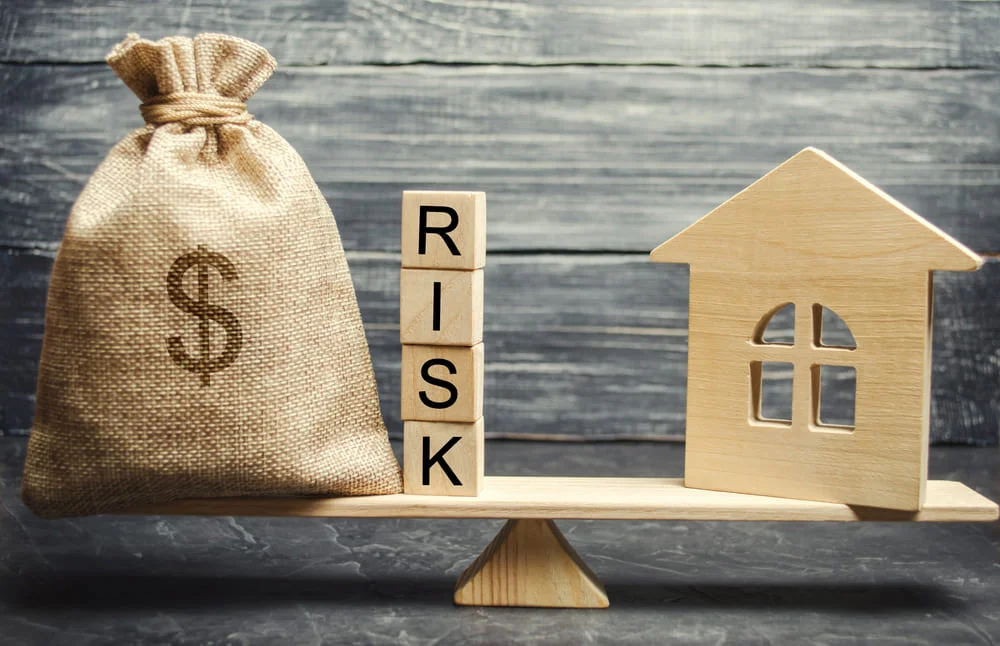
Real estate investing can offer high returns, but it also involves risks and challenges. Before investing in real estate, beginners must evaluate and understand these risks to mitigate them effectively.
Market volatility and unpredictability: Real estate markets are subject to economic and political changes that can impact property values, rental demand, and financing. Recessions, interest rate hikes, and regulatory changes can all impact real estate investments. Investors need to have a long-term investment strategy and plan for market fluctuations to ride out any potential economic downturns.
Property management and tenant issues: Real estate investing involves managing properties and tenants. Managing property requires time, resources, and expertise. Landlords must maintain the property, ensure tenants pay rent on time, and handle tenant requests and complaints. Landlords must also find new tenants when old ones move out. A bad tenant can damage the property and cause legal problems, so screening tenants is critical.
Financing and liquidity risks: Real estate investments require substantial amounts of capital, and financing is often necessary to purchase the property. Investors may use their own funds or borrow from banks or other financial institutions. Loans have interest rates and must be repaid, which can affect the ROI. In addition, real estate investments can be illiquid, meaning it can be challenging to sell the property quickly if needed.
Legal and regulatory compliance: Real estate investing is subject to various legal and regulatory requirements that investors must adhere to. Regulations may include zoning laws, building codes, tenant protection laws, and tax regulations. Investors need to be aware of these requirements to avoid legal issues and penalties.
Summary: ROI in Real Estate
Real estate investing offers a potentially lucrative investment opportunity for beginners. ROI investment in real estate can be a profitable and rewarding experience if they understand the key factors that impact ROI, calculate ROI accurately, and employ strategies to maximize ROI. However, it is important to recognize and mitigate the risks and challenges associated with real estate investing to achieve long-term success.
By following the guidelines in this guide, beginners can set themselves up for success and make informed decisions when investing in real estate. While investing in real estate involves risks, those who understand the market, manage their properties well, and plan for challenges will likely reap the benefits of this investment option.