Norada Real Estate Investments

  • Home
  • Markets
  • Properties
  • Membership
  • Podcast
  • Learn
  • About
  • Contact

Archives for November 2025

Michigan Housing Market: Trends and Forecast 2025-2026

November 7, 2025 by Marco Santarelli

Michigan Housing Market

When you think about the American dream of homeownership, the state of Michigan often feels like the place where that dream still has strong roots. We are a state of vast natural beauty, hardworking communities, and incredibly distinct metropolitan areas. Naturally, anyone looking to buy or sell here is constantly asking: what exactly is happening with the prices?

The truth is, the Michigan housing market is currently experiencing stable growth driven by low inventory and consistent buyer demand, suggesting a strong, though competitive, environment rather than a crash in 2025 or 2026. This stability means that while the frenzied, double-digit appreciation rates of a few years ago have calmed down, home values are still climbing steadily, making Michigan a reliable place for real estate investment.

I’ve spent years watching the shifts and trends across the Mitten State, from the bustling suburbs of Detroit to the serene coastlines of the Upper Peninsula. What I’ve learned is that Michigan’s housing story is rarely a single headline; it’s a collection of many local markets performing at different speeds. To truly understand where we are and where we are going, we need to look beyond the national chatter and dive into the concrete data that’s shaping our communities right now.

The Current State of the Michigan Housing Market

If you look at the raw numbers provided by Zillow, you get a clear picture: the market is moving, and it’s moving up.

As of recent data, the average Michigan home value stands at $258,642. This isn't just a static figure; it represents growth of 3.0% over the past year. Now, 3.0% might not sound like the explosive growth we saw a few years back, but in a climate defined by high interest rates and broader economic uncertainty, 3.0% is a sign of stability and health. It tells us that demand hasn't evaporated; it has simply settled into a more sustainable pace.

And here’s a critical point that speaks volumes about market intensity: homes are moving fast. The average time a home spends waiting before it goes pending (meaning a seller has accepted an offer) is only around 14 days. In a balanced market, that number is usually closer to 30 days or more. When homes disappear in two weeks, we are firmly planted in a seller’s market.

Why Everyone is Asking About a Crash

It feels like every conversation about housing eventually gets to the ‘C’ word: crash. I understand why people worry. We saw historic price increases, and now interest rates are high. Logic suggests that prices must fall dramatically, right?

But that worry misses one crucial ingredient specific to the Michigan market: inventory.

A true housing crash requires a massive surplus of homes hitting the market, coupled with an inability for buyers to afford them. While affordability is definitely a challenge right now, we simply do not have the inventory surplus. Many homeowners with low, locked-in mortgage rates are choosing to stay put rather than sell and buy something new at 6% or 7%. This lack of movement severely limits the supply, which keeps a strong floor under prices, even if demand cools slightly.

In my opinion, the persistent low inventory is the single biggest factor preventing any significant price decline or “crash” in Michigan through 2026.

Understanding the Hard Numbers Driving Michigan Real Estate

Let’s dig into the most recent metrics, using data current through September 2025, according to Zillow. These numbers offer the clearest snapshot of the competition, pricing strategy, and available housing in the state.

Inventory and Listings: The Supply Squeeze

Metric September 30, 2025 Data Analysis
For Sale Inventory 35,485 units Low total inventory for a state this size.
New Listings 12,758 units New listings aren't keeping up with demand.
Median Sale Price $270,000 (August 31, 2025) The price buyers are actually paying.
Median List Price $279,933 (September 30, 2025) The price sellers are asking.

The most telling statistic here, for me, is the low For Sale Inventory number. When there are fewer than 40,000 homes available statewide, buyers face steep competition for anything appealing that hits the market. New listings are coming in, but they are often swallowed up immediately, leading to a kind of real estate bottleneck.

The Price Battle: Median List vs. Sale Price

When we compare the Median List Price ($279,933) to the Median Sale Price ($270,000), we see something interesting: homes are selling for slightly less than what sellers originally asked. However, we need to balance that observation with the Median Sale to List Ratio, which is 1.000.

What does a 1.000 Sale to List Ratio mean? It means that, on average, homes are selling exactly for their asking price. This is the definition of a highly competitive, yet stable, market. Buyers aren't routinely winning major discounts, but sellers are also having to price correctly to move the home quickly.

This leads us to the surprising data on bidding wars:

  • Percent of Sales Over List Price: 39.0%

  • Percent of Sales Under List Price: 44.4%

Wait, how can nearly 45% of homes sell under list price while the ratio is exactly 1.000?

This is where my experience tells me the market is highly segmented:

  1. The Bidding Wars (39.0%): Homes that are move-in ready, updated, and strategically priced slightly low are generating intense bidding wars, often in desirable suburbs or popular coastal towns. These sales drag the average sale price up.

  2. The Negotiation Zone (44.4%): Homes needing significant updates, or those priced aggressively high by optimistic sellers, are sitting longer. Buyers are successfully negotiating these prices down, sometimes significantly, which pulls the median sale price back down.

The 1.000 ratio is a perfect balance point between these two dynamics. It tells buyers: don't expect a deal, but don't assume you have to overpay on every single property either.

Will the Michigan Housing Market Crash in 2025 or 2026?

This is the central question, and based on the forward-looking data from Zillow, the answer is a resounding no. The forecast for 2025 and 2026 clearly shows positive projected appreciation across almost every major metropolitan area in the state.

A housing crash is defined by sharp, sustained negative price growth. Michigan is forecast to experience positive growth. While the growth rate is modest in some areas, it confirms stability, not collapse.

Projected Michigan Home Value Appreciation

This forecast shows the anticipated percentage change in home values in key Metropolitan Statistical Areas (MSAs) across Michigan, providing crucial insight for anyone planning their next move or investment.

Region Name Projected Appreciation by October 2025 Projected Appreciation by December 2025 Projected Appreciation by September 2026
Detroit, MI 0.2% 0.5% 1.7%
Grand Rapids, MI 0.4% 1.1% 3.2%
Lansing, MI 0.3% 0.8% 2.0%
Ann Arbor, MI 0.3% 0.5% 0.5%
Kalamazoo, MI 0.3% 0.5% 1.5%
Saginaw, MI 0.6% 1.7% 4.9%
Muskegon, MI 0.5% 1.1% 3.3%
Holland, MI 0.7% 1.4% 3.6%
Traverse City, MI 0.1% 0.5% 3.3%
Escanaba, MI 0.9% 2.3% 4.8%
Marquette, MI 0.6% 1.4% 4.2%
Coldwater, MI 0.4% 0.7% 0.0%
Ludington, MI 0.0% 0.0% 0.8%

Note: Data reflects Zillow forecasts based on figures dated September 30, 2025.

Regional Deep Dive: Where is Michigan Seeing the Most Growth?

Looking at this forecast, we can clearly identify the strongest projected markets and those that are expected to slow down considerably. This is essential for investors and movers alike.

The High-Growth Hotspots

Three regions stand out with the highest projected growth through September 2026, and they tell a story about Michigan migration and affordability:

  1. Saginaw (4.9% Projected Growth): This is a serious forecast and suggests that affordability migration is heavily impacting the Saginaw area. As prices rise too high in Grand Rapids and parts of Metro Detroit, buyers are looking for value in areas with established infrastructure. This growth suggests Saginaw is becoming a key beneficiary of the search for better prices.

  2. Escanaba and Marquette (4.8% and 4.2% respectively): These Upper Peninsula (UP) regions are showing significant strength. What I observe here is the permanent shift caused by remote work. People who love the outdoors, who want proximity to Lake Superior, and who no longer need to commute to the office are choosing the UP. This sustained interest drives value up, even in smaller markets.

  3. Holland (3.6%) and Grand Rapids (3.2%): West Michigan continues to be a powerful economic engine. Grand Rapids has strong corporate foundations and a vibrant downtown, making it perpetually desirable. Holland’s forecast reflects its reputation as a highly appealing mid-sized coastal town. They are both stable, high-demand areas.

The Major Metropolitan Stabilizers

Areas like Detroit and Ann Arbor are forecasted to see lower appreciation rates relative to the state’s high-growth outliers.

  • Detroit (1.7%): While 1.7% growth is positive, it reflects a market that has already seen substantial recovery and is now normalizing. The Detroit metro area is massive and diverse, meaning that while certain sub-markets are still booming (like parts of Oakland and Macomb counties), the overall average is pulled down by slower growth in less developed areas.

  • Ann Arbor (0.5%): Ann Arbor’s forecast is surprisingly flat. As a highly desirable, education-driven market, Ann Arbor is often insulated from large dips, but it also reaches a saturation point quicker than other areas. Prices here are already very high, and the forecast suggests high existing prices are hitting affordability limits, slowing the rate of appreciation.

The Slow-Movers

The data also points to areas like Coldwater, Ludington, and Mount Pleasant, which show minimal or zero projected growth for parts of 2026. This isn't necessarily a bad sign; it simply means those markets are either currently fully priced or lack the sudden infusion of demand seen in the high-growth areas. For buyers seeking stability without expecting a massive return right away, these areas offer a less competitive buying experience.

Key Factors Driving Michigan’s Housing Stability

To fully appreciate why Michigan isn't crashing, we need to consider the foundational economic pillars supporting our real estate market.

1. Economic Resilience and Job Growth

Michigan's economy, while historically tied to the auto industry, has successfully diversified. We are seeing major investments in battery technology, clean energy manufacturing, and tech startups, particularly in the Grand Rapids and Detroit corridors. When local economies are creating stable, high-wage jobs, people need housing, and that demand acts as a powerful brake on price depreciation.

From my perspective, the confidence in the state’s long-term economic outlook is what keeps equity locked into homes. People aren't panicking and selling because they trust their jobs and their local economies are generally sound.

2. Interest Rates and the ‘Golden Handcuffs’ Effect

High mortgage rates are undeniably making homes less affordable for new buyers, but they are also preventing supply from hitting the market.

Think about the seller who bought their home in 2020 with a 3.0% interest rate. If they sell their current home, they will likely need to buy a new one using a 6.5% or 7.0% mortgage. This massive increase in monthly payments, often referred to as “golden handcuffs,” encourages existing homeowners to stay put. This phenomenon severely restricts the flow of available houses.

  • Result for Buyers: Fewer homes available means higher competition for the ones that are listed, keeping prices firm.

  • Result for Sellers: Those who must sell (due to job relocation or family changes) are still finding eager buyers quickly, as evidenced by the 14-day pending time.

3. The Impact of Migration and Remote Work

Michigan offers a fantastic quality of life relative to the cost of living in major coastal cities. We have incredible freshwater access, four distinct seasons, and major urban centers without the astronomical housing prices of New York or California.

The shift to permanent remote work has allowed people who earn large city salaries to move to Michigan communities like Traverse City, Grand Rapids, or even the Upper Peninsula. These incoming buyers often bring stronger purchasing power, which puts upward pressure on prices in their chosen community. The robust growth forecasts for the UP markets are a direct reflection of this migration pattern.

My Final Thoughts on the Future of the Michigan Housing Market

When I step back and look at the big picture—the steady 3.0% annual appreciation, the fierce 14-day selling timeline, and the positive forecasts across all major MSAs—I see a market that has successfully weathered the storm of high interest rates and broader economic uncertainty.

The Michigan housing market is neither booming out of control nor headed for disaster. It is maturing. It is normalizing.

We are seeing a stabilization where price growth continues, but at a more manageable rate. For buyers, the challenge will remain inventory and interest rates, but the fear of buying at the absolute peak should subside. For sellers, the market remains favorable, provided they heed the signals that accurate pricing is crucial.

I project that West Michigan (Grand Rapids/Holland) and the key Upper Peninsula towns will continue to be the fastest-growing areas due to strong economic diversity and quality of life migration. Metro Detroit will hold firm, serving as the essential economic anchor for the state.

The key takeaway for 2025 and 2026 is this: prepare for continued competition, expect modest appreciation, and invest with confidence in the enduring stability of the Mitten State.

Build Wealth with Turnkey Real Estate — Even in a High-Rate Market

High interest rates don’t have to hold you back. Turnkey rental properties still deliver steady cash flow and long-term appreciation—especially in markets with strong rental demand and job growth.

Work with Norada Real Estate to identify profitable, cash-flowing markets that thrive even when borrowing costs rise—so your investments stay strong and stress-free.

NEW TURNKEY DEALS JUST ADDED!

Talk to a Norada investment counselor today (No Obligation):

(800) 611-3060
Get Started Now

Related Posts:

  • Detroit Housing Market Trends and Predictions
  • Grand Rapids Housing Market: Trends and Forecast
  • Detroit Overtakes Atlanta as Most Overvalued Housing Market
  • Real Estate Forecast Next 5 Years: Top 5 Predictions for Future

Filed Under: Housing Market, Real Estate Market Tagged With: Michigan Housing Market, Michigan Housing Prices, Michigan Real Estate Market

Today’s Mortgage Rates November 7: 30-Year Fixed Rate Sees a Big Yearly Drop

November 7, 2025 by Marco Santarelli

Today's Mortgage Rates - October 9, 2025: 30-Year FRM Nudges Up to 6.48%

As we look at today's mortgage rates on November 7th, it's clear the housing market is in an interesting spot. The good news is that for many of us, mortgage rates are notably lower than they were a year ago. Specifically, the national average for a 30-year fixed mortgage has settled around 6.22%, according to Freddie Mac's latest report. That's a significant drop from this time last year!

This shift can translate into substantial savings for homebuyers, making homeownership a more attainable goal for many. Now, let's dive a bit deeper than just the headline figures and unpack what’s really influencing current mortgage rates. We'll look at the latest data and, more importantly, what it means for you.

Today's Mortgage Rates November 7: 30-Year Fixed Rate Sees a Big Yearly Drop

What the Numbers Show: A Snapshot of Current Mortgage Rates

Let's get right down to the specifics. We've got some fresh data from Zillow that gives us a clearer picture of where things stand right now. It's important to remember these are national averages, and your specific rate might be a little different based on your credit, loan type, and other factors.

Here’s a look at the current mortgage rates as of today, November 7th:

Loan Type Interest Rate
30-year fixed 6.11%
20-year fixed 6.00%
15-year fixed 5.62%
5/1 ARM 6.47%
7/1 ARM 6.36%
30-year VA 5.82%
15-year VA 5.35%
5/1 VA 5.70%

Now, if you’re thinking about refinancing your current mortgage, those numbers look a bit different. Refinancing rates can sometimes be slightly higher than purchase rates because lenders are looking at the existing loan and property differently.

Here are the current mortgage refinance rates from Zillow:

Loan Type Interest Rate
30-year fixed 6.27%
20-year fixed 6.19%
15-year fixed 5.77%
5/1 ARM 6.70%
7/1 ARM 6.85%
30-year VA 5.97%
15-year VA 5.88%
5/1 VA 5.64%

As you can see, there's a slight difference between buying a new home and refinancing, which is completely normal. The core rates we're seeing for a 30-year fixed mortgage, hovering around 6.11% for purchases, are certainly more encouraging than what we saw a year ago. Sam Khater, Freddie Mac's chief economist, hit the nail on the head when he mentioned that this improvement in affordability could save homebuyers thousands annually.

Is This the Right Time for You to Lock In? Understanding the Influences

This is the million-dollar question, isn't it? After looking at the numbers, the next natural step is to figure out if it's your time. The truth is, mortgage rates are like a complex recipe with many ingredients. Several factors are currently stirring the pot, and it's crucial to understand them to make an informed decision.

The Federal Reserve's Moves and How They Ripple

The Federal Reserve plays a significant role in the economy, and their decisions, particularly regarding interest rates, have a big impact. We've seen the Fed cut its benchmark federal funds rate twice recently, in September and October, with the goal of stimulating the economy.

However, and this often surprises people, mortgage rates don't directly mirror these Fed rate cuts. Instead, they often move based on expectations. Sometimes, we see mortgage rates increase shortly after a Fed rate cut announcement. Why? Because the market might have already priced in that cut. If the Fed's message afterward is more cautious (like Fed Chair Jerome Powell stating a December cut isn't a “foregone conclusion”), investors might start to reprice bonds, which in turn can push mortgage rates up. It’s a bit of a dance between anticipated moves and actual pronouncements.

The Pulse of Treasury Yields

When I think about mortgage rates, my mind immediately goes to the 10-year Treasury bond yield. This is a much stronger indicator of where mortgage rates are headed. For the past few weeks, we've seen the yield on these bonds ticking upwards in November, and mortgage rates have generally followed suit.

What's also interesting is the “spread” – that's the difference between the 10-year Treasury yield and mortgage rates. Right now, this spread seems to be a bit wider than what we typically see historically. This wider spread can contribute to those slightly elevated mortgage rates we're observing.

The Shadow of the Government Shutdown

The current government shutdown is another layer of complexity. Historically, government shutdowns can make investors a bit nervous. They often seek out “safer” investments during uncertain times, like Treasury bonds. This increased demand for Treasuries can drive their yields down, which could theoretically lead to lower mortgage rates.

However, the shutdown creates its own set of problems. It's causing delays in the release of important economic data, like employment reports, which the Federal Reserve relies on to make its decisions. This lack of clear data can lead to more market choppiness and make it harder to predict exactly where rates will go. On top of that, a shutdown can sometimes slow down the processing of mortgages, especially for government-backed loans like FHA and VA loans, which can add to the waiting game for some borrowers.


Related Topics:

Mortgage Rates Trends as of November 6, 2025

Mortgage Rates Predictions for the Next 12 Months: Nov 2025 to Nov 2026

Mortgage Rates Predictions for Next 90 Days: October to December 2025

My Take: What Does This All Mean for You?

From my perspective, the current situation is a mixed bag, but with some definite positives. First, the fact that rates are a half-point lower than a year ago is a significant win for affordability. If you're a first-time homebuyer or looking to upgrade, that difference can make a substantial dent in your monthly payments over the life of the loan.

However, the recent uptick in rates, driven by those rising Treasury yields and the Fed's cautious signals, means that you can't necessarily wait too long for rates to plummet. Mortgage rates have been pretty volatile lately. What I tell people is to focus on their personal financial situation.

  • Is your credit score in good shape? A higher credit score generally gets you a lower interest rate.
  • Do you have a solid down payment? This not only reduces your loan amount but can also improve your loan-to-value (LTV) ratio, potentially leading to better terms.
  • What are your long-term plans? If you plan to stay in your home for many years, locking in a fixed rate now, even if it's slightly higher than the absolute lowest point of the week, might offer more long-term stability than constantly hunting for a mythical “perfect” moment.

For those considering refinancing, the numbers suggest it's worth a serious look, especially if you've been paying a higher rate for a while. The savings could be considerable, but it's essential to weigh the closing costs against the monthly savings to ensure it makes financial sense for your situation.

The influence of the Federal Reserve and Treasury yields is a constant reminder that the economic environment is dynamic. While a government shutdown adds uncertainty, it also highlights the interconnectedness of our financial systems. It’s not just about the numbers themselves, but the story behind them and how they can impact your biggest financial decision – your home.

Stable Income, Zero Headaches—Invest in Turnkey Real Estate

Savvy investors are locking in properties that deliver consistent passive rental income and long-term appreciation.

Work with Norada Real Estate to find turnkey, cash-flowing homes in stable markets—helping you grow wealth no matter which way rates move.

HOT NEW INVESTMENT PROPERTIES JUST LISTED!

Speak with a seasoned Norada investment counselor today (No Obligation):

(800) 611-3060

Get Started Now

Also Read:

  • Mortgage Rates Predictions Backed by 7 Leading Experts: 2025–2026
  • Mortgage Rate Predictions for the Next 3 Years: 2026, 2027, 2028
  • 30-Year Fixed Mortgage Rate Forecast for the Next 5 Years
  • 15-Year Fixed Mortgage Rate Predictions for Next 5 Years: 2025-2029
  • Will Mortgage Rates Ever Be 3% Again in the Future?
  • Mortgage Rates Predictions for Next 2 Years
  • Mortgage Rate Predictions for Next 5 Years
  • Mortgage Rate Predictions: Why 2% and 3% Rates are Out of Reach
  • How Lower Mortgage Rates Can Save You Thousands?
  • How to Get a Low Mortgage Interest Rate?
  • Will Mortgage Rates Ever Be 4% Again?

Filed Under: Financing, Mortgage Tagged With: Interest Rate, mortgage, Mortgage Rate Trends, mortgage rates, Mortgage Rates Today

New York City Housing Market Poised for Rent Freeze and Affordable Homes

November 7, 2025 by Marco Santarelli

NYC Housing Market: Mamdani Proposes Rent Freeze and 200K Affordable Units

New York City just elected its 110th mayor, Zohran Kwame Mamdani, and his win is a major turning point. On November 4, 2025, this 34-year-old Democratic Socialist, formerly a state assemblyman, beat out big names like former Governor Andrew Cuomo and Curtis Sliwa, becoming not only the youngest mayor in over a century but the city's first Muslim and South Asian leader.

His victory signifies a powerful shift, especially concerning his ambitious plans for tackling the city's housing crisis. Mamdani's core promise is Housing By and For New York, a plan that aims to create 200,000 new affordable homes and implement an immediate rent freeze on stabilized apartments. This bold agenda is already sparking debate about whether it’s the solution the city desperately needs or a risky experiment.

New York City Housing Market Poised for Rent Freeze and Affordable Homes

Who is Zohran Mamdani? More Than Just a Young Politician

I've been following New York politics for a while, and Zohran Mamdani's rise is something special. He arrived in the city from Kampala, Uganda, as a child with his filmmaker mother, Mira Nair, and his academic father, Mahmood Mamdani. Growing up in Manhattan, he attended schools like the Bank Street School and the Bronx High School of Science, mixing with a creative crowd while developing a strong sense of social justice. After graduating from Bowdoin College, he worked to help people facing foreclosure. In 2020, he won a seat in the state assembly, making a name for himself by fighting for rent control and police reform.

His campaign for mayor really took off by using social media, especially TikTok, where he’d share short videos about everyday NYC problems like subway delays and evictions. This connected with a lot of younger voters and working-class families. He got the backing of big names like Bernie Sanders and Alexandria Ocasio-Cortez, and really positioned himself as the voice of the people against the old political guard. His message of “a dignified life for all New Yorkers” resonated deeply, especially in a city where finding an affordable place to live feels like a constant battle. Of course, his past comments have drawn criticism, but his supporters see his immigrant background and focus on fairness as strengths that will unite the city.

The NYC Housing Crisis: A Problem That's Getting Worse

Let's be real, New York City's housing situation is a mess. It's like everyone wants to live here, but there just aren't enough places to go around. The numbers don't lie: the city needs about 500,000 new housing units by 2030, but only built around 40,000 in 2024. This shortage means prices keep going up. Median asking rents hit $3,491 in mid-2025, squeezing the wallets of most New Yorkers. It’s estimated that over half of NYC households are spending more than 30% of their income on rent, which is the standard definition of being rent-burdened.

This has a ripple effect, pushing more people into homelessness. In 2024, over 630,000 households applied for limited rental assistance, showing just how desperate things have become. Things like the high cost of building (over $400,000 per unit), zoning rules that require parking spaces (taking up valuable building space), and the continuation of old, disconnected policies mean we haven't built enough homes for decades, especially affordable ones. The 2019 Housing Stability and Tenant Protection Act helped tenants, but it didn't stop rents from climbing.

Here’s a look at how rents have been climbing:

Year Median Gross Rent (NYC) Year-Over-Year Change Key Challenge Highlighted
2019 $1,500 +3.4% Pre-pandemic stability.
2021 $1,620 +4.5% Remote work increases demand.
2023 $1,850 +10.1% Evictions rise significantly.
2025 (Q1-Q2) $3,397-$3,491 +3.7-5.6% Operating costs rise; tight market.

As you can see, rents have almost doubled since 2019, way faster than most people's salaries are increasing. Families earning less than $70,000 a year are hit the hardest.

Mamdani's “Housing By and For New York” Plan: A Deep Dive

Mamdani's housing plan, called “Housing By and For New York,” is built on the idea that government should be the primary driver of creating affordable housing, not private developers who he believes prioritize profits. It’s a huge commitment: $100 billion over 10 years. This money will come from a mix of municipal bonds and existing funds. The goal is ambitious: to triple the production of rent-stabilized, union-built units to 200,000. This plan is targeted at families, seniors, and homeless individuals.

Let's break down the key pieces:

  • Rent Freeze and Tenant Power: A major promise is to immediately freeze rents on rent-stabilized apartments. This would protect about 2 million tenants from potential rent hikes of 3-7.75% that the Rent Guidelines Board might allow. Mamdani also wants to work with Albany to make all new buildings rent-stabilized, closing loopholes that developers use. The idea is that while landlords' costs are going up, the city can step in with subsidies to cover the difference, preventing tenants from facing steep increases. He’s also committed to cracking down on landlords who discriminate against tenants using housing vouchers, making sure that all assistance programs are used effectively.
  • Massive Public Investment: Mamdani is looking to double the capital investment in NYCHA (New York City Housing Authority) to $10 billion annually. This is crucial to fix the thousands of units falling into disrepair due to years of underfunding. He also plans to:
    • Expand programs like ELLA (for families earning under $72,000) and SARA (for senior housing) to create 100% affordable developments.
    • Speed up approvals for projects like the redevelopment of Greenpoint Hospital.
    • Use underused NYCHA land, like empty parking lots, to build new housing, ensuring these are union-built and environmentally friendly.
      This massive building spree will be funded through bonds, public land, and a slight increase in the corporate tax rate, which he believes can raise $2 billion a year without taxing residents more.
  • Smarter City Planning: Mamdani is calling for a comprehensive citywide plan that connects housing with transportation, schools, and climate goals. He wants to reform the zoning code, which he argues is biased and prevents development in many neighborhoods. Key changes include getting rid of parking minimums (those rules that force new buildings to have a certain number of parking spots, which takes up valuable space) and encouraging development near transit hubs. This is about creating more housing where people need it and where they can access jobs and services easily.

Could This Actually Work? The Challenges and Criticisms

Mamdani's plan is inspiring to many, especially those who feel left behind by the current housing market. Supporters believe it could create tens of thousands of jobs and help hundreds of thousands of lower-income residents find safe, affordable homes. They point to his deep ties with community groups as a strength that can help push through bureaucratic hurdles.

However, there are serious questions and concerns. Some economists worry that a strict rent freeze, like ones seen in other cities such as San Francisco in the past, could actually discourage new construction and lead to a decline in the quality of existing housing because landlords have less incentive to invest. They also warn that it could create a black market for housing or lead to longer waiting lists for apartments, similar to what happened in cities that implemented similar policies decades ago.

Here are some of the big hurdles Mamdani will face:

  • Getting Approval from Albany: The state government, specifically Governor Hochul, has resisted expanding rent control measures. Mamdani will need to do a lot of convincing and negotiating to get state-level support for his housing agenda.
  • Federal Funding: His plans for NYCHA, which desperately needs billions in repairs, rely heavily on federal funding. If national politics shift in a way that cuts federal aid, his ability to fix public housing could be severely impacted.
  • Landlord Pushback: While the plan aims to help tenants, it could put a significant strain on smaller landlords who own many rent-stabilized units. They might face financial difficulties, potentially leading to more evictions or a reluctance to maintain their properties.
  • The Sheer Cost: A $100 billion price tag is enormous, even for a city like New York. Funding this will require careful financial planning and could be jeopardized by economic downturns or changes in tax revenue.

The NYU Furman Center’s research suggests that simply freezing rents isn't enough; you need to build more housing to truly solve affordability. Mamdani’s approach tries to do both, but the success will depend on how well these two parts work together and how quickly they can show results, like getting those first new affordable units built and occupied.

What Does This All Mean for New York City?

If Zohran Mamdani can pull off his housing agenda, it could fundamentally change what it means to live in New York City. It could become a more inclusive place where people can afford to stay and raise their families, potentially slowing down the exodus of residents who are leaving because of high living costs. We might see a city where housing is seen more as a fundamental right, like access to clean water or parks, rather than just a commodity. This could help reduce the racial and economic inequalities that have plagued the city for so long.

But there's also a risk. If the plans aren't executed well, or if the economic challenges are too great, New York could face serious financial trouble, similar to the crisis it experienced in the 1970s. The success of his agenda will likely depend not just on his vision, but on his ability to build strong coalitions with different political groups, including more moderate voices in city government.

For tenants, this promises much-needed relief. For property owners, it means a mix of potential support through subsidies and increased regulation. For the city’s economy, there’s the promise of construction jobs and stimulus, but also the uncertainty of how these new policies will affect the broader real estate market.

As Mayor-elect Mamdani prepares to take office on January 1, 2026, everyone in New York City will be watching closely. His election is a clear signal that voters are tired of the housing crisis and ready for bold solutions. The next few years will show whether his ambitious vision can truly create a more affordable and equitable New York for everyone. The real work, the implementation, is what matters most now.

Invest in Real Estate That Grows Beyond Rent-Freeze Zones

With proposals like NYC’s rent freeze and new affordable housing plans on the horizon, now’s the time to diversify your portfolio into growth-oriented rental markets where cash flow and property values remain strong.

Work with Norada Real Estate to find profitable turnkey rentals in stable, landlord-friendly regions—so you can build wealth without being limited by local housing policy shifts.

NEW TURNKEY OPPORTUNITIES AVAILABLE NOW!

Talk to a Norada investment counselor today (No Obligation):

(800) 611-3060

Get Started Now

Read More:

  • NYC Housing Market: Prices, Trends, Forecast 2025-2026
  • How Much Do Real Estate Agents Make in New York?
  • 5 Predictions That Will Define the NYC Housing Market in 2025
  • Albany Housing Market Trends and Forecast for 2025
  • Syracuse Housing Market Trends and Forecast for 2025
  • NYC Housing Market Report: Rent Prices Are Skyrocketting
  • Rent-to-Own Homes in NYC: A Pathway to Homeownership
  • Long Island's Housing Crisis: Can New York Fix This Market
  • New York Housing Market: These 3 Cities Are Hottest in the Nation
  • New York Real Estate Market: Should You Invest Here?
  • Worst Places to Live in the New York State

Filed Under: Housing Market, Real Estate Market Tagged With: Housing Market, New York, New York City, NYC

Will the 30-Year Fixed Mortgage Rate Drop Below 6% by End of 2025?

November 7, 2025 by Marco Santarelli

Will the 30-Year Mortgage Rate Drop Below 6% Before 2026?

It's the question on everyone's mind in the housing market: will 30-year fixed mortgage rates slide below the psychologically significant 6% mark by the end of 2025? My read of the current economic currents and expert forecasts suggests that while rates are certainly heading in a hopeful direction, a definitive drop below 6% by that specific date in December 2025 is unlikely. We're more likely to see rates hovering in the mid-6% range, with a more solid chance of dipping below 6% sometime in early to mid-2026.

Will the 30-Year Fixed Mortgage Rate Drop Below 6% by End of 2025?

The Current Pulse: Where Rates Stand Today

As I'm writing this, the news is actually pretty good. The average 30-year fixed-rate mortgage is currently at 6.22% and remains near 2025 lows. This is a welcome trend. This is largely thanks to the Federal Reserve's recent decision to cut the federal funds rate by 25 basis points, bringing it to a range of 4.0%-4.25%.

For those looking to refinance or perhaps buy a slightly smaller home, the 15-year fixed rate is even more appealing, currently at about 5.44%. However, for the majority of homebuyers seeking that long-term stability of a 30-year fixed mortgage, rates are still sitting just above our magic number.

It's important to remember that these are averages. Your actual rate will depend on factors like your credit score, loan-to-value ratio, and the specific lender you choose. Borrowers with excellent credit scores (think 760 and above) might shave off another quarter-percent or so from these averages, which can make a significant difference over the life of a loan.

A Journey Through Time: What the Past Tells Us

To understand where we might be going, it's crucial to look at where we've been. The last few years have been a wild ride for mortgage rates. We saw them plummet to historic lows, below 3%, during the height of the COVID-19 pandemic in 2020 and 2021. This fueled an incredible buying spree, with many people jumping into the market, often making offers well above asking price.

Then, as inflation surged unexpectedly, the Federal Reserve began aggressively hiking interest rates to try and cool things down. This sent mortgage rates soaring, climbing above 7% in 2022 and 2023. It was a tough period for homebuyers, as monthly payments became much more expensive, and many potential buyers were priced out of the market altogether.

Here’s a look at how average annual rates have played out:

Year Average 30-Year Fixed Rate (%) Key Events
2020 3.11 Pandemic starts, Fed slashes rates to near zero to support the economy.
2021 2.96 Record low rates, housing market frenzy, inventory shortages begin.
2022 5.34 Inflation spikes, Fed begins rapid rate hikes.
2023 6.81 Rates reach over 7% at their peak, affordability crisis deepens.
2024 * 6.63 (estimated) Rates begin to stabilize in the mid-6% range.
2025 * 6.40 (projected) Fed rate cuts resume, but inflation remains slightly above target.
  • (Estimates and projections based on current trends and forecasts)

The record lows of 2020-2021 made it difficult for many homeowners to sell, as they didn't want to give up their incredibly low interest rates – a phenomenon often called “rate lock-in.” This has significantly contributed to the low inventory we've seen in many areas. While rates in 2025 are trending downwards from the peaks of 2023, we're not quite at the levels that would unlock the market for everyone.

will mortgage rates drop below 6 by end the of december 2025

The Economic Engine: What Really Drives Mortgage Rates?

It's easy to think of mortgage rates as just a number, but they're deeply connected to the much larger economic picture. The 10-year U.S. Treasury yield is a major benchmark that mortgage rates tend to follow, with a typical spread of about 1.5% to 2% added on top for things like lender risk and profit. So, what influences the Treasury yield and that spread?

  1. The Federal Reserve's Game Plan: The Fed's main job is to keep prices stable (control inflation) and help as many people as possible have jobs. They do this by adjusting short-term interest rates. Right now, the Fed is projecting its federal funds rate to be around 3.6% by the end of 2025, down from where it started the year. This indicates they plan to make more cuts if inflation behaves. However, they've stressed repeatedly that they'll only act based on what the economic data shows, so we can't assume these cuts are guaranteed.
  2. The Inflation Challenge: Even with recent cooling, inflation is still a concern. The Fed's target is 2%, and forecasts for 2025 often put it around 3.0%. Things like lingering supply chain issues and potential new tariffs being put in place could keep prices rising faster than we'd like. This persistent inflation makes the Fed hesitant to cut rates too aggressively, which in turn keeps mortgage rates from dropping dramatically.
  3. Jobs and Economic Growth: We're seeing some signs of cooling in the job market, with unemployment ticking up to around 4.5%. This can be a good sign for the Fed, as it means the economy isn't overheating, and they might feel more comfortable cutting rates. However, if economic growth slows down too much, heading towards a recession, that could also lead to lower rates, but it would be a more concerning reason.
  4. Global and Government Factors: Things happening around the world, like conflicts in the Middle East, can create uncertainty and cause investors to seek safer havens, which can sometimes push longer-term Treasury yields up. Domestically, the government's debt levels and spending plans can also influence interest rates.
  5. Lender and Buyer Specifics: It's not just the big picture. Your own financial situation matters a lot. How good is your credit score? How much income do you have compared to your debts (your debt-to-income ratio)? These factors determine the specific rate you'll be offered by a lender. We're also seeing more people opt for Adjustable-Rate Mortgages (ARMs) because their initial rates are lower, but these come with the risk that your payments could go up significantly later.

Expert Crystal Ball: What the Forecasters Are Saying

When I look at the major housing and economic institutions – like Fannie Mae, the Mortgage Bankers Association (MBA), Freddie Mac, and the National Association of Realtors (NAR) – they all seem to be in agreement, albeit with slight variations. The general consensus is that rates will likely continue to trend downwards in 2025, but not quite dip below 6% by the end of December. Most projections place the average 30-year fixed rate somewhere between 6.3% and 6.5% by the close of 2025.

Here’s a snapshot of what some key players are predicting:

Forecaster Predicted End-2025 Rate (%) Main Reason for Prediction
Fannie Mae 6.3 Inflation continues to cool, leading to more Fed cuts.
Mortgage Bankers Assoc. (MBA) 6.5 Potential tariffs and government debt may limit rate drops.
Freddie Mac 6.4 Modest Fed easing, with housing supply improvements helping.
NAR Mid-6% (6.25 avg.) Steady market recovery, increase in available homes.
Zillow Mid-6% Regional differences will be key, some areas may soften more.

This forecast cluster comfortably above 6% tells me that a significant majority expect rates to tease that 6% mark but ultimately stay a bit higher by year-end 2025. While a few optimistic voices might see it dipping lower if inflation falls dramatically and the Fed makes more aggressive cuts, the risks of inflation sticking around or new economic headwinds emerging keep most forecasts tempered.

Here's a visual representation of those end-of-year 2025 rate predictions:

mortgage rate predictions end of year 2025

Broader Ramifications: Who Wins, Who Waits?

So, what does this mean for people looking to buy or sell?

  • First-Time Buyers: If rates hover around 6.5%, the affordability challenge remains. For example, on a $400,000 loan, your monthly payment (principal and interest) would be roughly $2,528 at 6.5%. Compare that to $1,760 at 4% back in 2021 – that’s a huge difference. This means many buyers will continue to need larger down payments or will look for more affordable housing options. First-time buyer programs and FHA/VA loans, which often offer slightly lower rates, become even more critical.
  • Refinancers: For those who managed to lock in rates below 4% a few years ago, there's likely not much incentive to refinance right now. However, as rates come down into the 5% and low 6% range, we could see a more significant wave of refinancing activity, especially for those looking to convert from an ARM to a fixed rate or tap into some home equity.
  • Sellers: The market is still a bit tricky for sellers. While there's more demand than supply in many areas, the higher interest rates mean buyers often have less purchasing power. In some regions, especially where prices rose dramatically, we might see modest price drops or homes sitting on the market longer.

The Road Ahead: Scenarios and Strategies

Based on my understanding of the markets and expert opinions, I see a few potential paths forward:

  • The Most Likely Scenario (Around 70% Probability): Rates end 2025 in the 6.3% to 6.5% range. We'll see continued volatility, with weekly economic reports causing small ups and downs, but the overall trend will be downward but not quite breaking the 6% barrier by year-end. If this is the case, I'd advise buyers to get pre-approved now, understand their budget, and be ready to lock in a rate when it moves into their target range.
  • The Optimistic Scenario (Around 20% Probability): Inflation takes a sharper turn downwards, hitting the Fed’s 2.5% target or lower, and the Fed decides to cut rates more aggressively in the latter half of 2025. This could realistically push 30-year fixed rates below 6% before December 31, 2025. In this scenario, we might see a surge in homebuying activity in early to mid-2026.
  • The Less Likely, But Possible, Scenario (Around 10% Probability): Unexpected economic shocks, like ongoing geopolitical issues or a significant increase in tariffs, could re-ignite inflation fears. This would force the Fed to pause or even reverse course on rate cuts, pushing mortgage rates back up towards the 6.8% to 7.0% range. If this happens, those planning to buy might need to delay their plans or significantly adjust their expectations.

Ultimately, the housing market is a complex entity. While the desire for sub-6% mortgage rates by the end of 2025 is strong, the data and expert opinions suggest a more gradual descent. We're definitely moving in the right direction, and a dip below 6% is highly probable in the not-too-distant future, likely in 2026. For now, patience, preparation, and smart shopping are key for anyone navigating the mortgage market.

Grab the Deals—Turnkey Properties That Deliver Monthly Returns

As mortgage rates remain high, savvy investors are locking in properties that deliver consistent rental income and long-term appreciation.

Work with Norada Real Estate to find turnkey, cash-flowing homes in stable markets—helping you grow wealth no matter which way rates move.

HOT NEW INVESTMENT PROPERTIES JUST LISTED!

Speak with a seasoned Norada investment counselor today (No Obligation):

(800) 611-3060

Get Started Now

Also Read:

  • Will Mortgage Rates Go Down in 2025: Morgan Stanley's Forecast
  • Mortgage Rate Predictions 2025 from 4 Leading Housing Experts
  • Mortgage Rate Predictions for the Next 3 Years: 2026, 2027, 2028
  • 30-Year Fixed Mortgage Rate Forecast for the Next 5 Years
  • 15-Year Fixed Mortgage Rate Predictions for Next 5 Years: 2025-2029
  • Will Mortgage Rates Ever Be 3% Again in the Future?
  • Mortgage Rates Predictions for Next 2 Years
  • Mortgage Rate Predictions for Next 5 Years
  • Mortgage Rate Predictions: Why 2% and 3% Rates are Out of Reach
  • How Lower Mortgage Rates Can Save You Thousands?
  • How to Get a Low Mortgage Interest Rate?
  • Will Mortgage Rates Ever Be 4% Again?

Filed Under: Financing, Mortgage Tagged With: Interest Rate, mortgage, Mortgage Rate Trends, mortgage rates, Mortgage Rates Today

Mortgage Rates Drop Offering Thousands in Savings for Borrowers

November 6, 2025 by Marco Santarelli

Mortgage Rates Drop Offering Thousands in Savings for Borrowers

If you've been dreaming of buying a home or refinancing your current mortgage, the news is definitely encouraging. Mortgage rates remain near their 2025 lows, with the average 30-year fixed-rate mortgage standing at 6.22% as of November 6, 2025, according to Freddie Mac. This is a significant development that can translate into thousands of dollars saved annually for homebuyers, signaling a welcome improvement in housing affordability.

This stability is a breath of fresh air compared to some of the more turbulent times we’ve seen. The current rate environment isn't just a random occurrence; it's a direct reflection of broader economic policy and market sentiment. Let's dive into what's really driving these favorable mortgage rates and what it could mean for you.

Mortgage Rates Drop, Offering Thousands in Savings for Borrowers

Understanding the Numbers: A Snapshot from Freddie Mac

Freddie Mac's Primary Mortgage Market Survey® is the go-to source for weekly mortgage rate averages, and the latest data paints a clear picture.

Mortgage Type U.S. Weekly Average (11/06/2025) 1-Week Change 1-Year Change Monthly Average 52-Week Average 52-Week Range (Low – High)
30-Yr Fixed FRM 6.22% +0.05% -0.57% 6.21% 6.68% 6.17% – 7.04%
15-Yr Fixed FRM 5.5% +0.09% -0.50% 5.47% 5.85% 5.41% – 6.27%

Looking at these figures, two things really stand out to me. First, the 30-year fixed-rate mortgage (FRM) at 6.22% is indeed quite competitive when you compare it to the 1-year average of 6.68%. That’s a noticeable difference! Second, the 52-week range for the 30-year FRM shows we've recently touched lows around 6.17%. This indicates that while rates have ticked up slightly week-over-week, they are still very much in the lower end of what we've seen over the past year.

It’s also worth noting the 15-year fixed-rate mortgage is even more attractive, averaging 5.5%. This option can save you a significant amount in interest payments over the life of the loan, though it will mean higher monthly payments compared to a 30-year loan.

So, how much could a buyer save? The savings depend heavily on the size of the loan, but we can illustrate it with an example.

Let's consider a buyer purchasing a home with a loan amount of $300,000.

  • Scenario 1: Last Year's Average Rate (Illustrative based on 52-week average trend)
    If we approximate a rate from a year ago to be around 6.7% (a bit higher than the 52-week average of 6.68% to show a clear comparison point and reflecting a slightly less favorable time within that year, just for illustrative clarity), the monthly principal and interest (P&I) payment on a $300,000 loan would be approximately $1,946.01.
  • Scenario 2: Current Rate (November 6, 2025)
    With the current average rate of 6.22%, the monthly P&I payment on the same $300,000 loan would be approximately $1,846.63.

The Savings:

By securing a mortgage at the current rate of 6.22% compared to a hypothetical rate of 6.7% from around last year, this buyer would save approximately $99.38 per month ($1,946.01 – $1,846.63).

Now, let's look at the long-term impact of those monthly savings:

  • Annual Savings: $99.38/month * 12 months = $1,192.56 per year
  • Total Savings over 30 Years: $1,192.56/year * 30 years = $35,776.80 over the life of the loan!

This is a significant amount of money – over $35,000! It's enough for a substantial down payment on a future property, a fantastic renovation project, or simply to provide a greater sense of financial security.

The Federal Reserve's Role: More Than Just a Cut

The fact that mortgage rates are hovering near these lower levels is undeniably linked to actions taken by the Federal Reserve. On October 29, 2025, the Fed made its second consecutive cut to its benchmark interest rate, lowering it by 0.25 percentage points. This move brought the target range down to 3.75% to 4.00%.

Why is this important? When the Fed cuts its benchmark rate, it directly impacts the cost of borrowing for banks. This, in turn, tends to trickle down to consumers in the form of lower interest rates on various loans, including mortgages. The Fed’s decision clearly signals a growing concern about the economy possibly cooling down too much, and they’re attempting to provide a boost.

However, it’s not quite as simple as a direct one-to-one correlation. Mortgage rates are influenced by a multitude of factors, and the Fed’s actions are just one piece of a much larger puzzle.

Key Details from the Fed's Decision:

  • A Divided Vote: The decision wasn't unanimous. Seven of the ten members voted for the cut, but there were differing opinions. Some, like Kansas City Fed President Jeffrey Schmid, felt no cut was necessary, while others, like Fed Governor Stephen Miran, believed a larger, half-point cut was warranted. This division highlights the uncertainty the Fed faces in navigating the current economic climate.
  • Cautious Forward Guidance: Fed Chair Powell was careful not to promise any future rate cuts. He stated that another cut in December was “not a foregone conclusion.” This cautious language is crucial. It suggests that while the Fed is willing to cut rates to support the economy, they are also watching economic data very closely and are ready to pause if necessary. This can create some market volatility as traders try to decipher future intentions.
  • Ending Quantitative Tightening (QT): A major policy shift is coming on December 1, 2025, when the Fed will stop reducing the size of its asset holdings. This means they'll stop letting bonds they own mature without buying new ones. Ending QT injects liquidity into the financial system, which can also put downward pressure on longer-term interest rates, including mortgage rates.

Conflicting Economic Signals: A Balancing Act

The Fed's actions are a response to a complex economic picture filled with mixed signals. As I see it, they are trying to balance several competing forces.

  • Labor Market Concerns: There are undeniable signs that the job market is showing some weakness. When unemployment ticks up or job growth slows, it’s a clear indicator that the economy might be heading for a slowdown, prompting the Fed to lower rates to make borrowing cheaper and encourage spending and investment.
  • Inflation Persistence: On the flip side, inflation is still a persistent issue. Prices for goods and services haven't fully returned to the Fed's target of 2%. This is a big constraint on the Fed. If they cut rates too aggressively while inflation is still high, they risk making the inflation problem even worse. It's a delicate balancing act.
  • Data Challenges from Government Shutdown: The recent federal government shutdown has unfortunately cast a shadow over economic data. With key reports delayed or unavailable, it's much harder for economists and the Fed to get a clear, up-to-the-minute read on the economy. This lack of clarity adds to market uncertainty and can make forecasting and decision-making more challenging.

Market Reaction: Yields and Forecasts

The Fed's cautious approach and the ongoing economic uncertainties have led to some interesting market reactions, particularly with bond yields. Mortgage rates, especially the 30-year fixed, tend to follow the yields on 10-year Treasury bonds. When those yields go up, so do mortgage rates, and vice versa.

Latest Mortgage Rate Forecasts (Q4 2025):

Most housing authorities are painting a consistent picture for the remainder of 2025. They generally predict that 30-year fixed mortgage rates will stay in the low- to mid-6% range. Some even anticipate a slight dip by the year's end.

Here’s a look at some more specific predictions:

Housing Authority Q4 2025 Forecast
Fannie Mae 6.3%
Mortgage Bankers Association (MBA) 6.4%
Wells Fargo 6.3%
Realtor.com 6.4% (year-end)

It’s important to remember that these are averages and predictions. Actual mortgage rates you see will depend on much more than just these broad forecasts.


Related Topics:

Mortgage Rates Predictions for Next 90 Days Ending January 2026

Mortgage Rates Predictions for the Next 12 Months: Nov 2025 to Nov 2026

What Truly Drives Mortgage Rates?

While the Fed's policy rate is a significant influence, it's not the only factor. Think of it as the conductor of an orchestra – setting the tempo, but the individual musicians (other economic factors) play crucial roles in the final sound.

Here are the key drivers I always consider:

  • Federal Reserve Policy: As we’ve discussed, the Fed's decisions on its benchmark rate and its balance sheet (QT) are foundational. The outlook for future Fed actions is often more impactful than the current cut itself. The uncertainty surrounding a December cut is a prime example.
  • Inflation and Economic Data: This is a big one.
    • If inflation continues to be stubborn, pushing rates higher, it can put upward pressure on mortgage rates.
    • Conversely, if we see strong job growth and a robust economy, it could signal that the Fed might not need to cut rates further, potentially keeping them stable or even nudging them up.
    • Weaker economic data, like a rise in unemployment or a slowdown in consumer spending, is more likely to push rates down.
  • Bond Market Movement: The 10-year Treasury yield is a critical benchmark. When investors are confident in the economy, they often sell their safer Treasury bonds, driving yields up. When they are worried, they buy bonds, pushing yields down. Since many mortgages are packaged and sold as mortgage-backed securities, which often compete with Treasury bonds for investor dollars, there’s a natural correlation.
  • Government Shutdown Impact: The shutdown's effect on data reliability is like trying to navigate with a damaged compass. It introduces an extra layer of unpredictability, making it harder for markets to price in events accurately. This uncertainty can sometimes lead to more volatile swings in yields and, consequently, mortgage rates.

Personal Insights: What This Means for You

From my perspective, the current environment is a golden opportunity for those looking to enter the housing market or refinance. The mortgage rates near 2025 lows mean a lower monthly payment and less money paid in interest over the life of your loan.

Let’s say you’re buying a $400,000 home with 20% down ($320,000 loan).

  • At 7.0%, your principal and interest payment would be roughly $2,129.
  • At 6.22%, that payment drops to approximately $1,971.

That's a savings of about $158 per month, or nearly $1,900 per year. Over 30 years, that adds up to over $57,000 in saved interest! This is a tangible difference that can significantly improve your financial well-being and affordability.

For those considering refinancing, if you secured a mortgage at a rate well above 6.22% even a year or two ago, now could be the time to explore lowering your monthly housing costs. It’s always wise to compare offers and understand the closing costs involved, but the potential savings are substantial.

The cautious stance from the Fed, while creating some day-to-day market chatter, suggests a commitment to economic stability. The conclusion of QT also suggests a supportive financial environment. While future rate cuts are not guaranteed, the current stability offers a promising window for those looking to leverage these lower borrowing costs.

My advice? Don't wait too long to explore your options. Market conditions can change, and locking in a favorable rate now could be a decision you're very happy with years down the road.

Stable Income, Zero Headaches—Invest in Turnkey Real Estate

Savvy investors are locking in properties that deliver consistent passive rental income and long-term appreciation.

Work with Norada Real Estate to find turnkey, cash-flowing homes in stable markets—helping you grow wealth no matter which way rates move.

HOT NEW INVESTMENT PROPERTIES JUST LISTED!

Speak with a seasoned Norada investment counselor today (No Obligation):

(800) 611-3060

Get Started Now

Also Read:

  • Mortgage Rates Predictions Backed by 7 Leading Experts: 2025–2026
  • Mortgage Rate Predictions for the Next 3 Years: 2026, 2027, 2028
  • 30-Year Fixed Mortgage Rate Forecast for the Next 5 Years
  • 15-Year Fixed Mortgage Rate Predictions for Next 5 Years: 2025-2029
  • Will Mortgage Rates Ever Be 3% Again in the Future?
  • Mortgage Rates Predictions for Next 2 Years
  • Mortgage Rate Predictions for Next 5 Years
  • Mortgage Rate Predictions: Why 2% and 3% Rates are Out of Reach
  • How Lower Mortgage Rates Can Save You Thousands?
  • How to Get a Low Mortgage Interest Rate?
  • Will Mortgage Rates Ever Be 4% Again?

Filed Under: Financing, Mortgage Tagged With: Interest Rate, mortgage, Mortgage Rate Trends, mortgage rates, Mortgage Rates Today

Today’s Mortgage Rates Nov 6: 30-Year FRM Jumps to 6.15% as Treasury Yield Gains

November 6, 2025 by Marco Santarelli

Today's Mortgage Rates - October 9, 2025: 30-Year FRM Nudges Up to 6.48%

If you're looking to buy a home or refinance an existing mortgage, you'll want to know that today's mortgage rates have nudged upwards, showing a modest but clear upward trend. This means borrowing a bit more might cost slightly more than it did very recently. It’s not a dramatic jump, but it’s a shift worth paying attention to.

Today's Mortgage Rates Nov 6: 30-Year FRM Jumps to 6.15% as Treasury Yield Gains

What the Numbers Are Saying

Let's get straight to the point, using the latest data from Zillow, a reliable source in the housing market.

For Homebuyers:

When you're looking to purchase a new home, these are the average rates being advertised:

Loan Type Average Rate
30-year fixed 6.15%
20-year fixed 6.11%
15-year fixed 5.69%
5/1 ARM 6.47%
7/1 ARM 6.60%
30-year VA 5.83%
15-year VA 5.46%
5/1 VA 5.75%

It's important to remember that these are national averages. Your personal rate could be different based on your credit score, the lender you choose, and other factors.

For Homeowners Looking to Refinance:

If you're thinking about refinancing to potentially lower your monthly payments or tap into home equity, here's what the picture looks like for refinance rates today:

Loan Type Average Rate
30-year fixed 6.30%
20-year fixed 6.25%
15-year fixed 5.75%
5/1 ARM 6.58%
7/1 ARM 6.91%
30-year VA 5.94%
15-year VA 5.79%
5/1 VA 5.98%

Notice how the refinance rates are generally a bit higher than the purchase rates. This is common because lenders often price in slightly more risk for refinancing.

Why Are Rates Moving Today?

The immediate driver behind these slight increases is the rising yield on 10-year Treasury bonds. Think of the 10-year Treasury as a sort of bellwether for long-term borrowing costs in the economy. When investors demand higher returns on these government bonds, it makes it more expensive for lenders to borrow money, and that increase in cost gets passed on to consumers in the form of higher mortgage rates.

However, pinning it just on Treasury yields is like looking at one piece of a puzzle. There are several powerful forces at play that shape where mortgage rates are headed:

The Federal Reserve's Tightrope Walk

The Federal Reserve (often called “the Fed”) has been actively trying to steer the economy. They've recently cut their benchmark interest rate twice this year. This is meant to make borrowing cheaper and encourage spending and investment.

  • Recent Cuts: The Fed lowered its benchmark rate in both September and October 2025. This shows they are concerned about the economy slowing down, especially in the job market.
  • December's Big Question: What happens in December? Fed Chair Powell has been cautious, saying a December rate cut is “not a foregone conclusion.” This uncertainty is a major reason for market jitters. Mixed economic signals and disruptions from the recent government shutdown are making their job, and ours in predicting rates, much harder.
  • Quantitative Tightening (QT) Ending: A significant shift is happening on December 1, 2025, when the Fed will stop reducing its asset holdings. This is a move that should, in theory, provide some underlying support to financial markets, potentially capping rapid rate increases.

Inflation: The Stubborn Guest

Inflation is still a concern. While the Fed aims for a 2% inflation rate, prices have been above that target. Persistent inflation can prevent the Fed from cutting rates aggressively, keeping borrowing costs higher than we might otherwise expect.

Economic Data: A Jumbled Puzzle

The economy is sending mixed signals.

  • Labor Market Worries: There are definite signs that the job market is weakening. This was a big push for the Fed to make those rate cuts.
  • But Jobs Are Still Being Added: Despite some concerns, the economy has continued to add jobs, which can put upward pressure on rates. It’s a delicate balance.
  • Government Shutdown's Shadow: The recent government shutdown has caused delays in important economic data releases. This lack of clear information makes it harder for the Fed, and for us, to get a solid read on the economy's true health, leading to more volatility.

The Bond Market's Pulse

As I mentioned, the 10-year Treasury yield is a key influencer. When yields go up, mortgage rates tend to follow. The market has reacted to Fed comments, with yields ticking back up after signs that further rate cuts might not be immediate.

What Does This Mean for You?

If you're buying a home:

The environment is still much better than the peaks of last year. However, the period of rapidly falling rates might be pausing for a bit. It's crucial to lock in a rate when you find one that works for you, rather than waiting too long for an uncertain dip.

If you're a seller:

Demand for housing is likely to remain steady. People still need places to live and invest. However, the frenzied pace of rapid price increases might moderate a bit as mortgage rates stabilize.

If you're considering refinancing:

If your current mortgage rate is above 6.75%, you’re still in a good position to explore refinancing. You might have missed the absolute best rates of the cycle, but there are still solid opportunities to save money.


Related Topics:

Mortgage Rates Trends as of November 5, 2025

Mortgage Rates Predictions for the Next 12 Months: Nov 2025 to Nov 2026

Mortgage Rates Predictions for Next 90 Days: October to December 2025

Looking Ahead: What to Watch in the Coming Months

The rest of 2025 is shaping up to be interesting. Most housing experts predict that 30-year fixed mortgage rates will likely stay in the low- to mid-6% range. There’s a possibility of a slight dip towards the end of the year, but it’s far from guaranteed.

Here’s a quick look at some forecast predictions for the end of 2025:

Housing Authority Q4 2025 Forecast
Fannie Mae 6.3%
Mortgage Bankers Association (MBA) 6.4%
Wells Fargo 6.3%
Realtor.com 6.4% (year-end)

These are just averages, mind you. The actual rates will dance to the tune of the market.

Key things I'll be watching personally:

  1. Post-Shutdown Economic Data: As soon as those delayed reports start coming out in November, they will be critical. They'll give us a clearer picture of the economy's direction and heavily influence the December Fed meeting.
  2. Labor Market Trends: If we see continued weakening in jobs, it will increase the pressure on the Fed to cut rates further.
  3. Inflation Readings: Any sign that inflation is picking up again could completely halt the rate-cutting cycle.
  4. Market Technicals: The impact of the Fed ending its asset sales reduction will be important to gauge. It could help put a ceiling on how high rates can climb, even if they don't fall significantly.

My Take

In my experience, trying to time the mortgage market perfectly is a fool's errand. What I advise people is to understand their own financial goals and circumstances. If you have a solid financial plan, a good credit score, and the current rates align with your budget and long-term goals, then today is a good day to act. Don't get too caught up in trying to catch that perfect, lowest-ever rate that might or might not appear. Focus on what makes sense for your financial well-being.

The key takeaway today is that while rates have edged up, the overall environment for homebuyers and refinancers remains more favorable than in recent years. Keep an eye on the economic news, but more importantly, keep your own financial picture front and center.

Stable Income, Zero Headaches—Invest in Turnkey Real Estate

Savvy investors are locking in properties that deliver consistent passive rental income and long-term appreciation.

Work with Norada Real Estate to find turnkey, cash-flowing homes in stable markets—helping you grow wealth no matter which way rates move.

HOT NEW INVESTMENT PROPERTIES JUST LISTED!

Speak with a seasoned Norada investment counselor today (No Obligation):

(800) 611-3060

Get Started Now

Also Read:

  • Mortgage Rates Predictions Backed by 7 Leading Experts: 2025–2026
  • Mortgage Rate Predictions for the Next 3 Years: 2026, 2027, 2028
  • 30-Year Fixed Mortgage Rate Forecast for the Next 5 Years
  • 15-Year Fixed Mortgage Rate Predictions for Next 5 Years: 2025-2029
  • Will Mortgage Rates Ever Be 3% Again in the Future?
  • Mortgage Rates Predictions for Next 2 Years
  • Mortgage Rate Predictions for Next 5 Years
  • Mortgage Rate Predictions: Why 2% and 3% Rates are Out of Reach
  • How Lower Mortgage Rates Can Save You Thousands?
  • How to Get a Low Mortgage Interest Rate?
  • Will Mortgage Rates Ever Be 4% Again?

Filed Under: Financing, Mortgage Tagged With: Interest Rate, mortgage, Mortgage Rate Trends, mortgage rates, Mortgage Rates Today

Louisiana Housing Market: Trends and Forecast 2025-2026

November 6, 2025 by Marco Santarelli

Louisiana Housing Market: Trends and Forecast

The Louisiana housing market, a fascinating blend of rich culture and evolving economic tides, is currently experiencing a period of significant adjustment. As of late 2025, the average Louisiana home value hovers around $209,930, a figure that has seen a slight dip of 0.7% over the past year. This isn't to say the market is frozen; homes are typically going under contract in about 40 days, indicating a steady, albeit not scorching, pace of activity.

My take? While some might see a dip as a sign of trouble, I view it more as a recalibration, a chance for the market to find a more stable footing after a period of rapid growth.

Louisiana Housing Market Trends in 2025

Current Snapshot: Louisiana Housing Market Stats for 2025

To truly get a grasp on where things stand, let's dive into the numbers for October 2025, pulling insights from sources like Zillow, which provide a valuable pulse on the housing industry.

  • Homes for Sale: As of September 30, 2025, there were approximately 19,515 homes available across Louisiana. This inventory level gives buyers more options than in recent years, which can be a welcome change.
  • New Listings: In September 2025 alone, just over 3,800 new homes entered the market. This number hints at the rate at which new opportunities are being created for potential buyers.
  • Sale-to-List Ratio: In August 2025, the median sale to list ratio was 0.982. This means that, on average, homes were selling for about 98.2% of their asking price. From my perspective, this signifies a market moving towards equilibrium, where sellers are still receptive to offers but are less likely to get multiple bids significantly over their asking price.
  • Median Sale Price: The median sale price in August 2025 was $234,917. This is a crucial figure for understanding what buyers are actually paying for homes.
  • Median List Price: For September 30, 2025, the median list price stood at $269,000. The gap between the median sale price and the median list price (around $34,000) suggests that negotiation is still very much a part of the process.
  • Sales Over/Under List Price:
    • 13.8% of sales in August 2025 occurred over the list price. This indicates that while competition isn't as fierce as it once was, desirable properties in good locations can still command multiple offers.
    • Conversely, a significant 61.6% of sales were under the list price. This is a strong signal that buyers have room to negotiate, especially on properties that might have been priced optimistically by sellers.

Looking at these figures, I don't see a market in freefall. Instead, I see a market that's becoming more balanced. Buyers have more leverage, allowing for more thoughtful decision-making. Sellers, on the other hand, need to be realistic with their pricing to attract a solid offer.

Louisiana Housing Market Forecast for 2025 and 2026

Predicting the future of any housing market is a tricky business, influenced by economic indicators, local job markets, and even broader global events. However, by looking at projections, we can get a sense of potential trends. Zillow's data provides some interesting insights into how different parts of Louisiana are expected to perform.

Here's a breakdown of projected home value changes:

Region Name Projected Home Value Change (End of 2025) Projected Home Value Change (End of 2026)
National Average +0.2% +1.9%
New Orleans, LA +0.2% -4.0%
Baton Rouge, LA +0.3% -0.2%
Lafayette, LA -0.1% -4.3%
Shreveport, LA 0.0% -3.8%
Lake Charles, LA -0.1% -6.9%
Houma, LA -0.5% -7.4%
Monroe, LA 0.0% -2.1%
Alexandria, LA +0.1% -3.4%
Hammond, LA +0.1% -2.9%
Opelousas, LA -0.5% -7.6%
Morgan City, LA -0.9% -7.1%
Fort Polk South, LA -0.2% -4.4%
Natchez, MS -0.8% -6.4%
Ruston, LA 0.0% -1.8%
Bogalusa, LA -0.2% -5.7%
Natchitoches, LA -0.2% -5.9%
DeRidder, LA -0.8% -8.4%

As you can see, the national trend suggests a slight positive growth in home values. However, Louisiana presents a more varied picture. Many of the metropolitan statistical areas (MSAs) within Louisiana are projected to experience modest declines in home values throughout 2025 and into 2026. Some areas, like Houma, Opelousas, Morgan City, and DeRidder, are bracing for more significant drops.

My interpretation of these projections is that Louisiana's housing market might be diverging from the national average. Several factors could contribute to this. For instance, areas heavily reliant on specific industries that might be facing global challenges could see a greater impact. Hurricanes and other weather events always play a role in property values and insurance costs in coastal regions. Also, the general economic climate and interest rate environment will continue to be major drivers.

Will the Louisiana Housing Market Crash in 2025 or 2026?

This is the million-dollar question, isn't it? Based on the data and my understanding of market dynamics, I can tell you this: a widespread, catastrophic crash across the entire Louisiana housing market in 2025 or 2026 seems unlikely.

What we are observing is more of a cooling-off period and a correction in certain segments and regions. The days of bidding wars on every listing are largely behind us. Buyers have more breathing room, and home prices are beginning to stabilize, with some areas seeing slight decreases. This isn't the same as a crash. A crash typically involves a rapid and significant drop in prices across the board, often triggered by severe economic downturns or a glut of foreclosures.

However, it's crucial to differentiate between the state as a whole and specific local markets. As the projection table shows, some smaller cities and towns, particularly those in more vulnerable geographical areas or with less diverse economic bases, might experience more pronounced price adjustments. Zillow's data, which forecasts declines for places like Lake Charles, Houma, and DeRidder, underscores this point. These areas may be more sensitive to regional economic shifts or the ongoing costs associated with weather preparedness and recovery.

On the other hand, larger metropolitan areas like Baton Rouge are projected for more stable, or even slightly positive, growth. This is often due to more diversified economies, stronger job markets, and consistent demand. New Orleans, despite its tourist allure, is also showing a projected modest dip, which could reflect a variety of factors including the cost of living and competition.

My personal take on this is that while sensational headlines about a “crash” might grab attention, the reality is much more nuanced. It’s going to be about local economies, job growth, and demographic shifts. For example, if a major employer in a particular area announces layoffs, that can have a localized impact. Conversely, if a new industry booms in another Louisiana city, that could bolster its housing market.

Key Factors to Watch:

  • Interest Rates: While the Federal Reserve has signaled potential rate cuts, the speed and extent of these will significantly influence affordability and demand. Higher rates tend to cool a market, while lower rates can spur activity.
  • Job Market: Strong job growth is the bedrock of any healthy housing market. Areas with diverse and growing employment sectors will fare better.
  • Inventory Levels: While inventory is currently at reasonable levels, any major shift in the number of homes for sale can impact prices.
  • Economic Health of Specific Industries: Louisiana's economy is tied to several key sectors. Performance in sectors like energy, manufacturing, and agriculture will have ripple effects.
  • Insurance Costs and Natural Disaster Preparedness: For coastal communities and areas prone to hurricanes, the cost and availability of homeowner's insurance are significant factors that can affect property values and desirability.

Instead of anticipating a crash, I'd advise focusing on understanding the specific market conditions in the areas you are interested in. Each city and town in Louisiana has its own unique story.

What This Means for Buyers in Louisiana?

For Buyers, this current market dynamic presents an opportunity for buyers. With a more balanced supply and demand, you're less likely to face the extreme competition of recent years. The median sale-to-list ratio being below 1.00 means you can likely negotiate on price. Don't be afraid to make reasonable offers. With more homes on the market, you have a better chance of finding a property that truly meets your needs and budget.

Louisiana's Diverse Regional Markets: A Deeper Dive

It’s not enough to just look at Louisiana as a whole. The state's housing market is a mosaic of distinct regional economies and cultural influences. What impacts New Orleans might have a different effect on Shreveport, for instance.

  • New Orleans and Surrounding Areas: Known for its vibrant culture, tourism, and growing healthcare sector, New Orleans usually maintains a strong appeal. However, it can also be sensitive to economic fluctuations and the ongoing challenges of coastal resilience. Projections here suggest a slight dip, implying a market that is stabilizing rather than booming.
  • Baton Rouge: As the state capital and a hub for several universities and government jobs, Baton Rouge tends to be more economically stable. The projected stability or slight growth here reflects its diversified economic base.
  • North Louisiana (Shreveport, Monroe, Alexandria): These areas often have economies tied to industries like manufacturing, agriculture, and regional services. Projections here are mixed to negative, suggesting these markets might be more susceptible to broader economic headwinds or specific local industry trends.
  • Acadiana Region (Lafayette, Houma, Lake Charles): This part of Louisiana is known for its unique Cajun culture and is diverse in industry, from energy and petrochemicals to agriculture. Lake Charles, in particular, has seen significant investment in recent years, but also faces environmental and economic boom-and-bust cycles. The projected declines in these areas could be linked to sectors undergoing adjustments. Houma and Morgan City, with their proximity to the Gulf Coast and reliance on industries like oil and gas and fishing, may also be more sensitive to global energy prices and environmental concerns.

Understanding these regional nuances is critical for anyone looking to buy or sell. A property in Baton Rouge might behave very differently from a property in Lake Charles, even if both are within Louisiana.

Final Thoughts:

Having spent time observing and engaging with the Louisiana housing market, I can tell you it’s more than just numbers on a spreadsheet. It’s about communities, dreams, and the distinctive spirit of the state. I've seen firsthand how natural disasters can temporarily stall or even displace housing markets, and I've also witnessed incredible resilience and recovery.

From my perspective, what Zillow's data reveals is a market that is maturing. After a period of intense activity driven by low interest rates and a desire for more space, we're settling into a phase where affordability, local job markets, and long-term economic stability are once again the primary drivers of home values. This isn't a bad thing; it's a healthy return to fundamentals.

I firmly believe that Louisiana's unique cultural appeal and its strategic position in some key industries will continue to attract residents and investment. The key is not to panic about projected modest declines but to understand the underlying reasons and to make informed decisions. For buyers, this might mean a chance to get into a desirable neighborhood they might have been priced out of during the peak. For sellers, it means being smart about pricing and presentation.

The housing market will always have its cycles, and Louisiana is no exception. The forecast, while showing some dips, doesn't paint a picture of a widespread collapse. Instead, it points to a market that is recalibrating, offering different opportunities and challenges depending on where you are in the state.

Build Wealth with Turnkey Real Estate Investments

High interest rates don’t have to hold you back. Turnkey rental properties still deliver steady cash flow and long-term appreciation—especially in markets with strong rental demand and job growth.

Work with Norada Real Estate to identify profitable, cash-flowing markets that thrive even when borrowing costs rise—so your investments stay strong and stress-free.

NEW TURNKEY DEALS JUST ADDED!

Talk to a Norada investment counselor today (No Obligation):

(800) 611-3060

Get Started Now

Recommended Read:

  • New Orleans Housing Market Trends and Forecast
  • Baton Rouge Housing Market Trends and Forecast

Filed Under: Housing Market, Real Estate Market Tagged With: home prices, Housing Market Forecast, Housing Market Trends, Louisiana

Mortgage Refinance Demand Skyrockets by 151% Compared to Last Year

November 6, 2025 by Marco Santarelli

Mortgage Refinance Demand is 111% Higher Than It Was a Year Ago

It’s a staggering figure: mortgage refinance demand has ballooned by a phenomenal 151% compared to this time last year. If you’re a homeowner, this is a signal you absolutely can’t afford to ignore, especially if you’ve been on the fence about revisiting your mortgage. The data, as reported by the Mortgage Bankers Association (MBA), paints a clear picture – a massive wave of homeowners are actively seeking to refinance their loans, and for good reason.

As someone who’s followed the housing and mortgage markets closely for years, this surge doesn’t surprise me. We've seen periods of lower interest rates before, but the sheer scale of this increase in refinance activity suggests something more profound is at play. It’s not just about chasing the lowest possible rate; it’s about smart financial moves and capitalizing on market shifts that benefit homeowners.

Mortgage Refinance Demand Skyrockets by 151% Compared to Last Year

Why the Refinance Frenzy? It’s All About the Rates

The primary driver, as you might expect, is interest rates. While mortgage rates can fluctuate, the general trend over the past year has been a decline from their peaks. Joel Kan, MBA’s Vice President and Deputy Chief Economist, pointed out that the 30-year fixed rate has been hovering around 6.31%, which is close to the lowest point we’ve seen in over a year. For anyone who locked in a higher rate in previous years, even a small drop can translate into significant savings over the life of their loan.

Think about it: if your current mortgage rate is a full percentage point or more higher than what’s available today, refinancing could shave hundreds, if not thousands, off your monthly payments. Over 15 or 30 years, that adds up to serious money that could be used for home improvements, tackling debt, or simply building a healthier savings account.

Beyond the Monthly Payment: Other Refinance Benefits

While the allure of a lower monthly payment is undeniably strong, it's not the only reason homeowners are flocking to refinance. Here are some other compelling benefits that are likely fueling this demand:

  • Lowering Total Interest Paid: This is the flip side of a lower monthly payment. By securing a lower interest rate, you'll pay significantly less interest over the entire loan term.
  • Shortening Loan Term: Some homeowners are using the refinance opportunity to switch to a shorter loan term (like a 15-year mortgage from a 30-year). While this often means a slightly higher monthly payment, you'll own your home free and clear much sooner and pay drastically less in interest.
  • Cash-Out Refinance: This is a popular strategy for homeowners who have seen their home equity grow. A cash-out refinance allows you to borrow more than you currently owe on your mortgage, and the difference is paid to you in cash. This cash can be used for almost anything –- home renovations, consolidating high-interest debt, or funding a child's education. The MBA data noted that the average loan size for refinance applications has been at its highest in six weeks, which could indicate more homeowners opting for this route.
  • Switching Loan Types: If you currently have an adjustable-rate mortgage (ARM) and are concerned about future rate increases, refinancing into a fixed-rate mortgage can provide payment certainty and peace of mind. Conversely, some borrowers might consider an ARM if they plan to sell their home before the fixed-rate period ends, as ARMs often start with lower rates.

Who is Benefiting Most?

The MBA’s report offers a few clues about who’s actively refinancing:

  • Borrowers with Larger Loans: Joel Kan specifically mentioned that “borrowers with larger loans continued to seek ways to lower their monthly payments.” This makes sense; the absolute dollar savings on high-value loans are more substantial with even modest rate reductions.
  • Homeowners with Equity: As mentioned earlier, those with significant home equity are prime candidates for cash-out refinances.

Recommended Read:

Mortgage Rates Drop Fueling Refinancing Surge and Buyer Confidence

Mortgage Refinance Activity Jumps by 111% – October 24, 2025

Best Time to Refinance Your Mortgage: Expert Insights

Should I Refinance My Mortgage Now or Wait Until 2026? 

What About Purchase Applications?

While our focus is on refinance, it’s worth noting that purchase applications saw a slight dip of 1.9% from the previous week. However, they are still 26% higher than a year ago. This indicates that while the market might be cooling slightly on the purchase side, affordability continues to be a challenge for prospective buyers. The increase in FHA purchase applications, as noted by the MBA, further supports this, as FHA loans are often sought by first-time homebuyers or those with smaller down payments who are looking for more manageable options.

My Take: Don't Sit on This Opportunity

Based on the data and my years of observing the market, I firmly believe that many homeowners are leaving money on the table by not exploring a refinance. The 151% jump in refinance demand isn't an anomaly; it's a clear indicator that the conditions are ripe for homeowners to improve their financial situation.

Here’s my advice:

  1. Calculate Your Potential Savings: Use online mortgage refinance calculators to get a rough idea of how much you could save. Plug in your current loan balance, interest rate, and compare it to current rates.
  2. Know Your Credit Score: Your credit score is a major factor in determining the interest rate you'll qualify for. Aim for a score of 700 or higher for the best rates.
  3. Shop Around: Don't settle for the first offer you get. Contact at least three to four different lenders to compare rates, fees, and terms. This is crucial for securing the best deal.
  4. Understand the Costs: Refinancing isn't free. There are closing costs involved, such as appraisal fees, title insurance, and origination fees. Make sure the savings you achieve outweigh these costs. A good rule of thumb is the “break-even” point – how many months it will take for your monthly savings to cover your refinance costs.

The current environment presents a golden opportunity for homeowners. With refinance demand soaring by 151% year-over-year, it’s a strong signal that the market is favorable. Ignoring this could mean paying more than you need to for your home for years to come. It's time to explore your options and take advantage of the financial benefits that a mortgage refinance can offer.

Refinance Demand Surges as Strategic Investors Pivot to Real Estate

Norada's team can guide you through current market dynamics and help you position your investments wisely—whether you're looking to reduce rates, pull out equity, or expand your portfolio.

Work with us to identify proven, cash-flowing markets and diversify your portfolio while borrowing costs remain favorable.

HOT NEW TURNKEY DEALS JUST LISTED!

Speak with a seasoned Norada investment counselor today (No Obligation):

(800) 611-3060
Get Started Now

Recommended Read:

  • When You Refinance a Mortgage Do the 30 Years Start Over?
  • Should You Refinance as Mortgage Rates Reach Lowest Level in Over a Year?
  • NAR Predicts 6% Mortgage Rates in 2025 Will Boost Housing Market
  • Mortgage Rates Predictions for 2025: Expert Forecast
  • Half of Recent Home Buyers Got Mortgage Rates Below 5%
  • Mortgage Rates Need to Drop by 2% Before Buying Spree Begins
  • Will Mortgage Rates Ever Be 3% Again: Future Outlook
  • Mortgage Rates Predictions for Next 2 Years
  • Mortgage Rate Predictions for Next 5 Years
  • Mortgage Rate Predictions for 2025: Expert Forecast

Filed Under: Financing, Mortgage Tagged With: mortgage, mortgage rates, Refinance

Mortgage Rates Today, Nov 6, 2025: 30-Year Refinance Rate Drops by 16 Basis Points

November 6, 2025 by Marco Santarelli

Mortgage Rates Drop: Today's 30-Year Fixed Refinance Rate Goes Down by 23 Basis Points

Today, November 6, 2025, the national average 30-year fixed refinance rate has dipped to 6.74%, a significant decrease of 16 basis points from yesterday’s 6.90%, according to Zillow. This is a welcome drop for many, and if you’ve been on the fence about refinancing, this might be the nudge you need to explore your options and potentially lock in a lower monthly payment.

Mortgage Rates Today, Nov 6, 2025: 30-Year Refinance Rate Drops by 16 Basis Points

Why a 16 Basis Point Drop Matters More Than You Think

When we talk about mortgage rates, those seemingly small percentage point changes can actually add up to a substantial difference in your monthly payments over the life of your loan. Let’s break down what a 16 basis point drop really means. A basis point is simply one-hundredth of a percent. So, a 16 basis point drop means the rate is 0.16% lower.

For example, if you have a $300,000 mortgage, a rate of 6.90% would mean a monthly principal and interest payment of about $1,956. Dropping that rate to 6.74% brings your monthly payment down to roughly $1,922. That’s a savings of about $34 per month, which translates to nearly $408 per year. Over 30 years, that’s a total of over $12,000 in savings! It might not sound like a fortune overnight, but it’s a tangible reduction in your housing expenses.

Refinance Timing: Is Now the Time for You?

As experts who have been watching the mortgage and housing markets for years, I can tell you that timing is everything when it comes to refinancing. While this 16 basis point drop is excellent news, it’s also important to understand the bigger picture.

According to Zillow's latest report, the 30-year fixed refinance rate falling to 6.74% is part of a trend that has seen rates decrease by 13 basis points from the previous week's average of 6.87%. This indicates a softening in the refinance market, driven by several factors we'll explore.

However, it’s crucial to remember that mortgage rates are influenced by a lot of moving parts, including actions by the Federal Reserve and broader economic conditions. While today’s rates are attractive, it’s always wise to compare them with where they were recently and consider what might happen next. I personally believe that while this drop is great, the very best rates of this particular easing cycle might have already passed. This drop is more like a welcome reprieve than a signal for a dramatic plunge.

Comparing Your Refinance Options: 30-Year Fixed vs. 15-Year

When you're looking to refinance, you usually have two main choices for fixed-rate mortgages: the 30-year and the 15-year terms. Today's data from Zillow gives us a clear comparison:

  • 30-Year Fixed Refinance Rate: Currently at 6.74%. This offers lower monthly payments, making it more accessible for many homeowners.
  • 15-Year Fixed Refinance Rate: Decreased to 5.74%. This rate is significantly lower than the 30-year option, but it comes with higher monthly payments.

What's the trade-off? Opting for a 15-year mortgage means you'll pay off your home much faster and save a considerable amount on interest over time. However, your monthly payments will be higher. If your budget can handle it, a 15-year refinance is often a financially sound decision. If your priority is lowering your monthly outflow, the 30-year fixed is the way to go. It's a personal finance decision that depends entirely on your individual circumstances and financial goals.

What About Adjustable-Rate Mortgages (ARMs)?

It’s also worth noting how other loan types are performing. The 5-year ARM refinance rate has nudged up slightly to 7.44%, an increase of 2 basis points. This is an interesting contrast. ARMs often start with lower teaser rates than fixed mortgages, but they carry the risk of your payments increasing significantly when the fixed-rate period ends and the rate adjusts to market conditions. Given the recent trend and the slight uptick in the 5-year ARM, a fixed-rate mortgage, especially with today’s drop, might offer more peace of mind for many.

Refinancing Costs and Fees: Don't Forget These!

It’s easy to get excited about a lower interest rate, but remember that refinancing isn’t free. Like when you first bought your home, there will be closing costs involved. These can include:

  • Appraisal fees
  • Title insurance
  • Lender fees
  • Recording fees
  • Escrow fees

Before you jump into refinancing, I always advise homeowners to get a clear breakdown of all these costs and calculate your “break-even point.” This is the point at which the savings from your lower monthly payment will cover all the costs of refinancing. If you plan to move or sell your home before you reach that break-even point, refinancing might not be financially beneficial for you.

Recommended Read:

30-Year Fixed Refinance Rate Trends – November 5, 2025

Best Time to Refinance Your Mortgage: Expert Insights

Should I Refinance My Mortgage Now or Wait Until 2026? 

How Market Trends and the Fed Are Influencing Your Mortgage Rates

So, what’s behind this drop in mortgage rates today? It’s a complex interplay of economic signals and the Federal Reserve’s recent decisions.

The Federal Reserve's Role: The Fed recently made its second consecutive cut to its benchmark interest rate, lowering it by 0.25 percentage points to a target range of 3.75% to 4.00%. This move signals their growing concern about the economy softening, particularly in terms of jobs.

However, the Fed’s messaging is a mixed bag. Fed Chair Powell indicated that another rate cut in December is “not a foregone conclusion.” This caution is due to mixed economic signals and disruptions in data collection caused by a government shutdown. This cautious forward guidance is likely why we're seeing some market volatility rather than a continued, steep dive in rates.

Economic Context: The economy is presenting conflicting signals. While there are clear signs of weakening in the labor market, which pushed the Fed to cut rates, inflation remains stubbornly above their 2% target. This high inflation creates a dilemma for the Fed, as cutting rates too aggressively could fuel even more price increases. The government shutdown has only added to the complexity by creating gaps in economic data, making it harder for the Fed and markets to gauge the true economic health.

Market Reaction: Following Chair Powell’s comments, the 10-Year Treasury yield, a key indicator for mortgage rates, saw a slight increase, settling around 4.08%. This shows how sensitive the market is to the Fed’s signals. When the Fed suggests further rate reductions might not be immediate, Treasury yields, and consequently mortgage rates, tend to stabilize or even tick up.

What This Means for You Right Now

For Homeowners: Today’s 6.74% rate for a 30-year fixed refinance is a strong opportunity if your current rate is higher. The end of quantitative tightening (QT) by the Fed on December 1st is also expected to provide some underlying support for mortgage markets, potentially capping significant rate increases in the near term. However, as I mentioned earlier, the absolute lowest rates of this cycle might be behind us, so acting sooner rather than later could be beneficial.

For Buyers: The housing market remains more favorable for buyers than it was at the peaks of 2024, but the rapid improvement in conditions might be pausing temporarily due to this market uncertainty.

For Sellers: Housing demand is expected to stay steady, though the overall pace of market activity might moderate a bit as buyers and sellers assess the evolving economic picture.

What's Next? Key Factors to Watch

The coming weeks will be crucial for understanding the future direction of mortgage rates. Here's what I'll be closely monitoring:

  • Post-Shutdown Data: Economic reports released in November will be vital for the Fed's December policy decisions.
  • Labor Market Trends: Any further weakening here will put more pressure on the Fed to ease monetary policy.
  • Inflation Readings: If inflation starts to accelerate again, it could put a halt to the current easing cycle.
  • Market Technicals: The impact of the Fed ending quantitative tightening will be interesting to observe, and it could help put a lid on any significant rate increases.

In conclusion, November 6, 2025, brings a welcome decrease in 30-year fixed refinance rates. While it's a positive sign for homeowners looking to reduce their monthly payments, it’s essential to weigh the costs of refinancing against the potential savings and consider the broader economic and policy trends.

“Invest Smart — Build Long-Term Wealth Through Real Estate”

Norada's team can guide you through current market dynamics and help you position your investments wisely—whether you're looking to reduce rates, pull out equity, or expand your portfolio.

Work with us to identify proven, cash-flowing markets and diversify your portfolio while borrowing costs remain favorable.

HOT NEW TURNKEY DEALS JUST LISTED!

Speak with a seasoned Norada investment counselor today (No Obligation):

(800) 611-3060
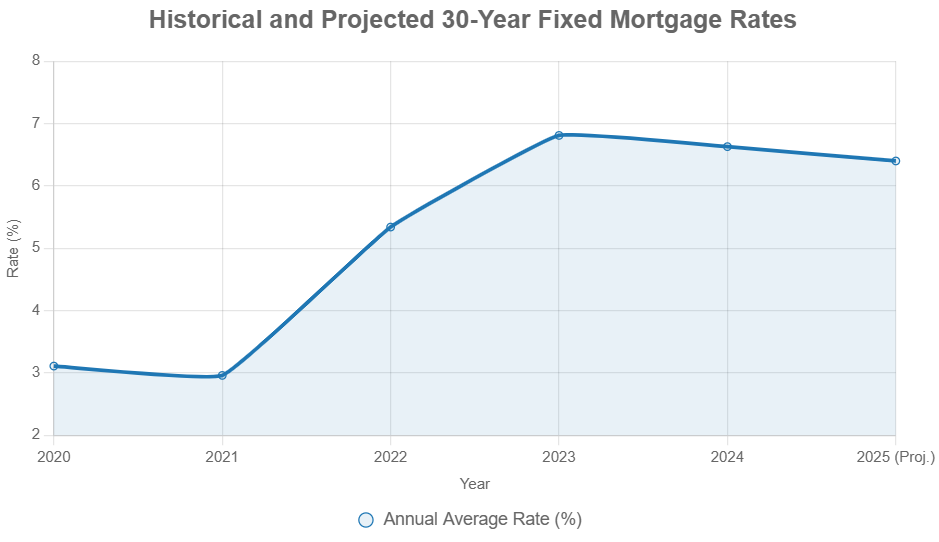
Get Started Now

Recommended Read:

  • When You Refinance a Mortgage Do the 30 Years Start Over?
  • Should You Refinance as Mortgage Rates Reach Lowest Level in Over a Year?
  • NAR Predicts 6% Mortgage Rates in 2025 Will Boost Housing Market
  • Mortgage Rates Predictions for 2025: Expert Forecast
  • Half of Recent Home Buyers Got Mortgage Rates Below 5%
  • Mortgage Rates Need to Drop by 2% Before Buying Spree Begins
  • Will Mortgage Rates Ever Be 3% Again: Future Outlook
  • Mortgage Rates Predictions for Next 2 Years
  • Mortgage Rate Predictions for Next 5 Years
  • Mortgage Rate Predictions for 2025: Expert Forecast

Filed Under: Financing, Mortgage Tagged With: mortgage, mortgage rates, Mortgage Refinance Rates

Mortgage Rates Today, Nov 5, 2025: 30-Year Refinance Rate Remains Unchanged

November 5, 2025 by Marco Santarelli

Mortgage Rates Drop: Today's 30-Year Fixed Refinance Rate Goes Down by 23 Basis Points

The big takeaway today is that the national average 30-year fixed refinance rate is holding firm at 6.87% according to Zillow. This means that if you were thinking about refinancing your mortgage to a new 30-year loan, today's rate is the same as it was last week. While this isn't a rate hike, it also doesn't signal a continued downward trend, so understanding where things stand is important for making good decisions.

It's my experience that after a period of movement, rates often find a bit of a pause. This stability, while not a huge drop, can still be an opportunity for many homeowners. Many of you out there likely have a mortgage rate higher than this 6.87%, and even holding steady can be a good time to explore if refinancing makes sense for your financial goals. For those looking at shorter loan terms, the 15-year fixed refinance rate is also sitting steady at 5.83%, and the 5-year ARM refinance rate is at 7.29%, also unchanged from what we saw last week. So, across the board, the refinance market is showing a period of calm.

Mortgage Rates Today, Nov 5, 2025: 30-Year Refinance Rate Remains Unchanged

Why This Stability Matters

This stable environment for mortgage rates isn't happening in a vacuum. It’s a direct reflection of broader economic signals and the actions (or anticipated actions) of major financial players, like the Federal Reserve. The Fed recently made their second consecutive cut to their benchmark interest rate, moving it down by 0.25 percentage points. This shows they’re watching the economy closely and are concerned about signs of it slowing down, especially when it comes to jobs.

However, what’s fascinating – and sometimes a little nerve-wracking for markets – is the “cautious guidance” that has accompanied these cuts. Fed Chair Powell has made it clear that another rate cut in December isn't a sure thing. This kind of uncertainty can create a bit of a tug-of-war in financial markets, and we’re seeing that play out.

Decoding the Fed's Moves and Market Reactions

The Federal Reserve's decision-making process is like a complex puzzle with many pieces. On one hand, you have strong evidence of a weakening labor market, which is a major driver for rate cuts. But on the other hand, inflation is still a concern; prices haven’t quite settled down to their 2% target yet. This creates a tricky balancing act for the Fed – they want to support the economy, but they also don’t want to make inflation worse.

Adding to the complexity are disruptions caused by things like the federal government shutdown, which has made it harder to get clear economic data. This “information gap” makes future decisions even more unpredictable.

And how does this all affect us? Well, the markets are incredibly sensitive to what the Fed says. When Chair Powell hinted that more rate cuts aren't guaranteed, we saw immediate reactions. The 10-year Treasury yield, which is a key indicator for mortgage rates, has ticked up a bit, currently hovering around 4.08%. This uptick suggests that mortgage rates might not continue their recent downward trend and could instead stabilize in the mid-6% range. It highlights how important it is to watch economic reports closely in the coming weeks.

I’ve seen this many times in my years following the mortgage market: when there’s a hint of fewer rate cuts to come, mortgage rates tend to firm up. It’s the market anticipating future borrowing costs.

Refinancing: Is Now the Right Time for You?

So, with the 30-year refinance rate standing at 6.87%, what does this mean for you? It really depends on your personal financial situation and your original mortgage rate.

  • If your current rate is higher than 6.87%: You are likely in a good position to consider refinancing. Even without a further drop, locking in a rate below what you currently have can lead to significant savings over the life of your loan.
  • Window of Opportunity: While the best borrowing rates of the cycle might have passed, this stable point still offers a valuable opportunity. The market is indicating potential future increases, so locking in a rate now could be wise before that happens.
  • Shorter Terms vs. Longer Terms:
    • The 15-year fixed refinance rate at 5.83% is significantly lower. If you can afford the higher monthly payments, a 15-year loan could save you a substantial amount of money in interest over time and help you pay off your home faster.
    • The 5-year ARM refinance rate at 7.29% is higher than the fixed rates. ARMs can be attractive if you plan to move or refinance again within the initial fixed period, but the current rate makes the stability of a 30-year fixed look more appealing for most.

What Influences Your Specific Rate?

It's crucial to remember that the national average is just that – an average. Your actual refinance rate will depend on several personal factors. Lenders look at these things very closely:

  • Your Credit Score: This is probably the biggest factor. A higher credit score signals to lenders that you're a lower risk, which usually translates to a better interest rate. If your credit score has improved since you last took out a mortgage, you might qualify for an even lower rate than the national average.
  • Your Debt-to-Income Ratio (DTI): This is a calculation of how much of your monthly income goes toward paying off debts. Lenders prefer to see a lower DTI, as it indicates you have more disposable income to handle your mortgage payments.
  • Loan-to-Value Ratio (LTV): This compares the amount you want to borrow to the value of your home. A lower LTV (meaning you have more equity or are putting down a larger down payment) is generally seen as less risky and can lead to better rates.
  • The Type of Loan: As we've seen, 30-year fixed, 15-year fixed, and ARMs all have different rate structures.

Recommended Read:

30-Year Fixed Refinance Rate Trends – November 4, 2025

Best Time to Refinance Your Mortgage: Expert Insights

Should I Refinance My Mortgage Now or Wait Until 2026? 

Looking Ahead: What to Watch For

As we head into the rest of November and approach December, several key factors will be on my radar, and I think they’re important for you to track too:

  1. Post-Shutdown Economic Data: Now that the government shutdown is over, we'll be seeing a flood of economic reports. These will give us a clearer picture of the economy's health and will be critical for the Fed's December decision. Pay attention to inflation numbers and job market reports.
  2. Labor Market Trends: If we see continued signs of jobs weakening, it will put more pressure on the Fed to consider further rate cuts down the line.
  3. Inflation Readings: If inflation starts to tick up again, it could put a halt to any easing cycle the Fed is trying to implement.
  4. Market Technicals: The Fed is also ending its program of reducing its asset holdings (“quantitative tightening”) starting December 1st. This could provide some underlying support to mortgage markets, potentially capping any significant rate increases.

For Buyers and Sellers

While this article focuses on refinancing, it's worth a brief mention of what this environment means for the broader housing market. For buyers, the current conditions remain more favorable than they were at the peak of last year's market. However, the rapid improvements might be pausing temporarily. For sellers, housing demand is expected to stay solid, though like with buying, the pace of activity could moderate a bit.

My Takeaway

Today, the 30-year fixed refinance rate at 6.87% isn't moving, and that stability is my main focus. It’s a moment to pause and assess. If you’ve been waiting for rates to drop dramatically, it seems those days might be on hold for now. However, if your current mortgage rate is higher than 6.87%, then this stable rate is an invitation to explore your options. Don't overlook the possibility of significant savings, even if there isn't a steep drop happening today.

“Invest Smart — Build Long-Term Wealth Through Real Estate”

Norada's team can guide you through current market dynamics and help you position your investments wisely—whether you're looking to reduce rates, pull out equity, or expand your portfolio.

Work with us to identify proven, cash-flowing markets and diversify your portfolio while borrowing costs remain favorable.

HOT NEW TURNKEY DEALS JUST LISTED!

Speak with a seasoned Norada investment counselor today (No Obligation):

(800) 611-3060
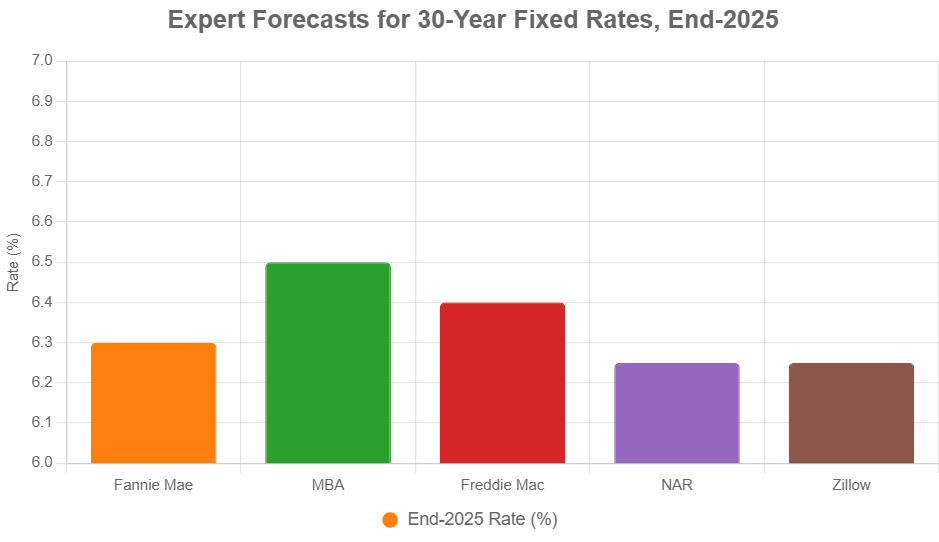
Get Started Now

Recommended Read:

  • When You Refinance a Mortgage Do the 30 Years Start Over?
  • Should You Refinance as Mortgage Rates Reach Lowest Level in Over a Year?
  • NAR Predicts 6% Mortgage Rates in 2025 Will Boost Housing Market
  • Mortgage Rates Predictions for 2025: Expert Forecast
  • Half of Recent Home Buyers Got Mortgage Rates Below 5%
  • Mortgage Rates Need to Drop by 2% Before Buying Spree Begins
  • Will Mortgage Rates Ever Be 3% Again: Future Outlook
  • Mortgage Rates Predictions for Next 2 Years
  • Mortgage Rate Predictions for Next 5 Years
  • Mortgage Rate Predictions for 2025: Expert Forecast

Filed Under: Financing, Mortgage Tagged With: mortgage, mortgage rates, Mortgage Refinance Rates

  • « Previous Page
  • 1
  • …
  • 10
  • 11
  • 12
  • 13
  • 14
  • …
  • 16
  • Next Page »

Real Estate

  • Birmingham
  • Cape Coral
  • Charlotte
  • Chicago

Quick Links

  • Markets
  • Membership
  • Notes
  • Contact Us

Blog Posts

  • Today’s Mortgage Rates, April 21: 30-Year Fixed at 6.05% as Bond Market Holds Steady
    April 21, 2026Marco Santarelli
  • 30-Year Fixed Mortgage Rate Drops Steeply to a Four-Week Low
    April 21, 2026Marco Santarelli
  • Houston Housing Market: Trends and Forecast 2026
    April 21, 2026Marco Santarelli

Contact

Norada Real Estate Investments 30251 Golden Lantern, Suite E-261 Laguna Niguel, CA 92677

(949) 218-6668
(800) 611-3060
BBB
  • Terms of Use
  • |
  • Privacy Policy
  • |
  • Testimonials
  • |
  • Suggestions?
  • |
  • Home

Copyright 2018 Norada Real Estate Investments

Loading...