
Norada Real Estate Investments

  • Home
  • Markets
  • Properties
  • Membership
  • Podcast
  • Learn
  • About
  • Contact

Mortgage Rates Today, January 7: Refinance Rates Go Higher Rising by 14 Basis Points

January 7, 2026 by Marco Santarelli

Mortgage Rates Today, February 25: 30-Year Refinance Rate Falls by 16 Basis Points

The national average for a 30-year fixed refinance rate has ticked up to 6.70% as of today, January 7, 2026, according to Zillow. This slight increase signals a need for homeowners considering a refinance to pay close attention to current market movements.

As we kick off 2026, it’s clear the market is still a bit of a rollercoaster. Today’s news from Zillow shows the 30-year fixed refinance rate has climbed to 6.70%, a 14 basis point jump from Tuesday’s 6.56%. That might not sound like a huge leap, but for those looking to refinance, it means their monthly payments could be a little higher than they were just yesterday. This is up 8 basis points from last week’s average of 6.62%, confirming a modest upward creep for those seeking longer-term stability.

My own experience working with homeowners over the years tells me that even small shifts like this can influence decisions. People are often waiting for that “perfect moment” to refinance, and seeing a rate move in the wrong direction can cause hesitation.

Mortgage Rates Today, January 7: 30‑Year Refinance Rate Rises by 14 Basis Points

Refinance Rates Edge Higher, With Mixed Movements Across Loan Types

While the headline for the 30-year fixed rate isn't the most encouraging, it's not all bad news if you look closer. Shorter-term loans are actually showing a bit of improvement. The 15-year fixed refinance rate has dipped by 5 basis points, going from 5.59% down to 5.54%. This is a welcome bit of good news for those who prefer to pay off their mortgages faster. Meanwhile, the 5-year adjustable-rate mortgage (ARM) refinance rate has stayed steady at 6.99%. This tells me that while fixed rates are seeing some fluctuation, ARMs are not offering much in the way of immediate savings, even if they might be attractive to some for their initial lower payments.

Current Refinance Rates Snapshot

To help you get a clearer picture, here’s a quick summary of how today's rates compare:

Loan Type Previous Rate (Jan 6) Current Rate (Jan 7) Change (Basis Points) Trend / Impact
30-Year Fixed Refinance 6.56% 6.70% +14 bps Higher costs for long-term borrowers
15-Year Fixed Refinance 5.59% 5.54% –5 bps Slight relief for short-term borrowers
5-Year ARM Refinance 6.99% 6.99% 0 bps No change, ARMs remain elevated, less attractive now

What This Means for Borrowers

So, what’s the takeaway from these numbers?

  • For Long-Term Borrowers: That rise to 6.70% for a 30-year fixed refinance definitely makes it more expensive to lower your monthly payment over a long period. However, it's crucial to remember that these are national averages. There's always a chance you can find a lender offering slightly better terms, so shopping around is more important than ever.
  • For Short-Term Borrowers: The dip in the 15-year fixed rate is a nice little window of opportunity. If you're looking to pay off your mortgage quicker and can comfortably manage slightly higher monthly payments, now might be a good time to explore this option. The savings over the life of a 15-year loan are often substantial.
  • For ARM Borrowers: The stability in 5-year ARMs at 6.99% doesn't offer much incentive for refinancing unless you have a specific reason. While ARMs can be appealing for their potentially lower initial payments, at these levels, the security of a fixed rate often outweighs the variable risk, especially if your goal is to refinance to save money.

Market Trends and News Shaping Today's Rates

Understanding why rates are moving the way they are is key. We've seen some significant shifts recently. Remember those lower rates we saw at the end of 2025? Those came after the Federal Reserve made its third consecutive quarterly rate cut in December 2025. That was a moment of optimism for many.

However, mortgage rates don't always move in lockstep with the Fed's benchmark rate. They are more closely tied to the 10-year Treasury yield. Experts are predicting this yield will hover around 4% for much of 2026. Why? Well, inflation is still a concern, and that persistent inflation keeps upward pressure on longer-term bond yields, which in turn pushes up mortgage rates.

This has, understandably, led to a surge in refinance activity. The Mortgage Bankers Association reports a big jump in refinance applications compared to last year. Many homeowners who locked in rates above 7% in 2023 and 2024 are actively seeking ways to lower those payments. But there's an interesting trend emerging: because so many people refinanced at very low rates (below 5%) during the pandemic, we're also seeing a rise in people opting for Home Equity Lines of Credit (HELOCs) or home equity loans instead of a full cash-out refinance. They might want to tap into their home's value without jeopardizing their incredibly low existing mortgage rate. It's a smart move for them.

Looking Ahead: The 2026 Forecast

When I talk to clients, there’s always the question: “When will rates go back down to 3% or 4%?” Based on current expert opinions and forecasts, it's highly unlikely we'll see those pandemic-era rates again in 2026.

  • Mortgage Bankers Association (MBA) Forecast: They anticipate 30-year mortgage rates will likely stay relatively stable, hovering around 6.4% throughout 2026. This suggests a period of consolidation rather than sharp declines.
  • Fannie Mae Forecast: They offer a slightly more optimistic view, suggesting rates could dip to around 5.9% by the fourth quarter of 2026. This is still a significant improvement from today's 6.70%, but it’s a gradual decrease.
  • Federal Reserve's Stance: The Fed has signaled that they may only implement one more rate cut in 2026. This cautious approach suggests that interest rates will likely remain in a similar range unless there's a major disruption in the economy.

Essentially, the consensus is that we’re in a higher-rate environment for the foreseeable future, and homeowners should prepare for that reality.

Recommended Read:

30-Year Fixed Refinance Rate Trends – January 6, 2025

Best Time to Refinance Your Mortgage: Expert Insights

Should You Refinance Your Mortgage Now or Wait Until 2026? 

How to Secure the Best Refinance Rate in 2026

Given the current market, being strategic is your best bet. Experts agree that getting the best rate requires a two-pronged approach: improving your financial health and becoming a savvy shopper. On average, homeowners can save about $6,000 over the life of their loan just by getting at least five rate quotes.

Financial Preparation for a Better Rate

Before you even start talking to lenders, focus on these areas:

  • Boost Your Credit Score: This is probably the single most impactful factor. Lenders reserve their absolute best rates for borrowers with credit scores of 740 or higher. Even moving up from a “good” score to a “very good” one can shave a noticeable amount off your interest rate.
  • Lower Your Debt-to-Income (DTI) Ratio: This ratio compares your monthly debt payments to your gross monthly income. Lenders strongly prefer a DTI of 25% or less for the best rates. While many will approve loans with a DTI under 36%, your goal for top-tier rates should be lower.
  • Build Home Equity: Ideally, you want at least 20% equity in your home. This not only helps you avoid Private Mortgage Insurance (PMI) on conventional loans but also qualifies you for the absolute lowest rates. If your home's value has appreciated since you bought it, that “organic” equity can be a huge advantage.

Smart Comparison Shopping Strategies

Once your finances are in order, it's time to shop:

  • Shop on the Same Day: Mortgage rates are incredibly volatile and can change by the hour, let alone by the day. To get an accurate “apples-to-apples” comparison, try to get your official Loan Estimates from all the lenders you're considering on the same day. This ensures you're comparing offers based on the same market conditions for the exact same loan scenario.
  • Compare the APR, Not Just the Rate: This is a crucial point I always emphasize. The interest rate is just one part of the cost. The Annual Percentage Rate (APR) includes the interest rate plus all the lender fees (like origination fees, appraisal fees, etc.). The APR gives you a much clearer picture of the total cost of the loan.
  • Consider Shorter Terms: As we’ve seen today, 15-year fixed-rate mortgages are currently offering significantly lower rates than 30-year loans. If your budget allows for the higher monthly payments, the interest savings over time can be massive.

Negotiation and Advanced Tactics

Don't be afraid to negotiate or use some advanced strategies:

  • Buy Discount Points: This is where you pay extra upfront at closing to permanently lower your interest rate for the life of the loan. It’s most effective if you plan to stay in your home for a long time. You'll want to calculate the “break-even point” – the number of months it takes for your monthly savings to recoup the cost of the points.
  • Negotiate Lender Fees: Many fees charged by lenders are negotiable. Don't hesitate to ask for a waiver or reduction on things like application or processing fees. You can also use a Loan Estimate from one lender as leverage to ask another lender to match their rate or fees. It's a competitive market out there!
  • Lock Your Rate: Once you find an offer you're happy with, consider locking in your interest rate. Most locks last for 30 to 90 days. This protects you from any potential rate increases while your loan is being processed.
  • Check with Your Current Lender: Sometimes, your existing mortgage servicer might offer “streamlined” refinance options that require less paperwork or have lower fees. They want to keep your business, so it’s always worth a quick call to see what they can offer.

Outlook for Early 2026

The refinance market right now is presenting a bit of a mixed bag.

  • The upward trend in long-term rates means that refinancing into a 30-year loan will cost a bit more each month.
  • On a brighter note, shorter-term fixed loans are showing slight decreases, offering a bit of breathing room for those who prefer to pay off their debt faster.
  • ARMs are holding steady but at a level that makes them less appealing than stable fixed-rate options, highlighting the inherent risks tied to variable borrowing.

Ultimately, the direction of mortgage rates will continue to be influenced by big economic forces like Federal Reserve policy, ongoing inflation trends, and the general demand for housing in the market. For now, homeowners need to carefully weigh whether the stability of a fixed rate is worth the current cost, or if exploring shorter-term options makes more sense for their financial future.

Invest Smart — Build Long-Term Wealth Through Turnkey Real Estate in 2026

With interest rates and housing policies shaping affordability, 2026 offers investors a pivotal chance to lock in cash‑flowing rental properties.

Market forecasts suggest steady demand, making turnkey real estate one of the most reliable paths to passive income and wealth creation.

Norada Real Estate helps investors capitalize on these trends with turnkey rental properties designed for appreciation and consistent cash flow—so you can grow wealth securely while others wait for clarity in the market.

🔥 HOT 2026 INVESTMENT LISTINGS JUST ADDED! 🔥
Talk to a Norada investment counselor today (No Obligation):
(800) 611-3060

Get Started Now

Recommended Read:

  • When You Refinance a Mortgage Do the 30 Years Start Over?
  • Should You Refinance as Mortgage Rates Reach Lowest Level in Over a Year?
  • Half of Recent Home Buyers Got Mortgage Rates Below 5%
  • Mortgage Rates Need to Drop by 2% Before Buying Spree Begins
  • Will Mortgage Rates Ever Be 3% Again: Future Outlook
  • Mortgage Rates Predictions for Next 2 Years
  • Mortgage Rate Predictions for Next 5 Years

Filed Under: Flipping, Mortgage Tagged With: mortgage rates, Mortgage Rates Today, Refinance Rates

Mortgage Rates Today, Jan 6: 30-Year Refinance Rate Drops by 6 Basis Points

January 6, 2026 by Marco Santarelli

Mortgage Rates Today, January 7: 30‑Year Refinance Rate Rises by 14 Basis Points

It's a bit of good news for those looking to adjust their home loans: as of January 6, 2026, the national average 30-year fixed refinance rate has ticked down by 6 basis points, settling at 6.56%. While this might seem like a small change, it's a welcome nudge in the right direction after a period of rising rates, and it means potentially a little more breathing room in your monthly budget if you're considering refinancing.

Mortgage Rates Today, Jan 6: 30-Year Refinance Rate Drops by 6 Basis Points

It’s been a bit of a roller coaster in the mortgage world lately, hasn’t it? After the Federal Reserve made some smart moves and cut interest rates a few times toward the end of last year, we’re seeing these lower refinance rates pop up. Honestly, it feels like ages since rates were this good – in fact, they’re at some of the lowest points we’ve seen in over a year. This has led to a noticeable jump in people wanting to refinance, even though many homeowners are still comfortably sitting on the lower rates they secured a while back.

From my perspective, seeing these rates dip, even by a little, is a positive sign for homeowners. It means that the work the Fed did to try and cool things down and make borrowing more accessible is starting to pay off for those looking to swap out their existing mortgages.

A Quick Look at Today's Refinance Rates

Let’s break down what’s happening with different types of refinance loans right now. It’s not all good news across the board, but the main rate people care about is going the right way.

Loan Type Last Week's Rate Today's Rate Change (Basis Points) What It Means for You
30-Year Fixed Refinance 6.62% 6.56% –6 bps A small but welcome relief for long-term borrowers.
15-Year Fixed Refinance 5.59% 5.66% +7 bps Shorter-term loans are getting a bit more expensive.
5-Year ARM Refinance 7.16% 7.16% 0 bps Adjustable-rate mortgages are staying put, and they're still high.

Data based on Zillow's reporting as of January 6, 2026.

What Does This Mean for You?

These numbers paint a picture, and it’s important to understand how they might affect your own financial decisions.

  • For those looking at the long haul (30-year fixed): That drop to 6.56% is definitely something to consider. While it’s not a massive plunge, it’s a step in the right direction. The stability at this rate might give you the confidence to lock it in now, especially with the uncertainty that can always creep into the market later in the year. It means your monthly payments could be a bit lower, or you could potentially pay down your loan faster over time.
  • If you prefer shorter loan terms (15-year fixed): You’ll notice that rates have gone up a little here, to 5.66%. This makes those shorter loans a bit pricier than last week. However, it's important to remember that even with this slight increase, 15-year loans are still generally cheaper overall than their 30-year counterparts. It’s a trade-off between a higher monthly payment and paying off your mortgage much faster and saving on total interest.
  • For those eyeing adjustable-rate mortgages (ARMs): The 5-year ARM rate holding steady at 7.16% doesn't offer much excitement. While ARMs can sometimes be a good option if you plan to move or refinance before the rate adjusts, the current elevated rate makes them a less attractive choice compared to the fixed options right now. The risk of rates jumping up later could be a worry for many.

Looking Ahead: A Mixed Bag for Early 2026

As I see it, the refinance market is giving off some conflicting signals right now. On one hand, we have long-term rates easing a bit, which is great news for borrowers seeking predictability. On the other, short-term loans are getting pricier, which might make the gap between them and longer loans feel smaller. And those ARMs? They’re just sitting there, high and unchanged, reminding us that variable rates can be a gamble in today’s economy.

The big economic players – think the Federal Reserve’s next moves, how inflation is behaving, and how many people are actively buying or selling homes – will all continue to play a huge role in what happens with mortgage rates. For now, though, there’s a sense of relative calm. This is a good time for homeowners to really dive into their own situation and see if refinancing makes sense for their personal financial goals.

Recommended Read:

30-Year Fixed Refinance Rate Trends – January 5, 2025

Best Time to Refinance Your Mortgage: Expert Insights

Should You Refinance Your Mortgage Now or Wait Until 2026? 

What’s Driving the Refinance Boom (and What’s Holding It Back)?

It’s fascinating to see the activity in the mortgage market. The Mortgage Bankers Association (MBA) reported that their Refinance Index has shot up by a massive 86% compared to this time last year. That surge was definitely kicked off by those rate cuts at the end of 2025, prompting a lot of people who took out loans when rates were at their peak in 2023 and 2024 to jump back into the refinancing game.

However, there’s a significant factor that’s keeping this boom from being even bigger: the “lock-in” effect. It’s estimated that about 70% of homeowners out there have mortgages with rates below 5%. For these folks, refinancing to a rate around 6.56% just doesn't make financial sense. They’d be paying more in interest!

Because of this, we're seeing a noticeable shift. Instead of a full refinance, many homeowners are turning to Home Equity Lines of Credit (HELOCs) and other home equity loans. This allows them to tap into the significant equity they've built up in their homes without giving up those incredibly low primary mortgage rates they’re already enjoying. It’s a smart workaround for many.

Expert Predictions for 2026: What’s the Crystal Ball Saying?

When I look at what the experts are forecasting for 2026, it’s a mixed bag, which is pretty typical in the financial world.

  • The Federal Reserve: After those three rate cuts in late 2025 (September, October, and December), they've signaled they’re likely to hit the pause button in early 2026. They’re only projecting one more cut for the rest of the year. This suggests a cautious approach, trying not to overstimulate the economy.
  • Fannie Mae has a more optimistic outlook, predicting that rates will start the year around 6.2% and could even dip as low as 5.9% by the end of 2026. That would be a fantastic rate for many homeowners.
  • The MBA sees things holding a bit steadier, forecasting rates to stay around 6.4% throughout 2026. They point to inflation as a stubborn factor that could keep rates from falling much further.
  • The National Association of Realtors (NAR) is even more optimistic, expecting an average rate of 6.0% for the year. If their prediction comes true, that could really unlock a lot more activity in the housing market.

It’s always wise for borrowers to keep an eye on the 10-year Treasury yield. Why? Because mortgage rates tend to follow this yield more closely than they do the Federal Reserve's short-term interest rates. It’s a key indicator of where borrowing costs are headed.

So, while the small dip today might not seem huge, it’s part of a larger trend that’s making refinancing more accessible than it has been in a while for many. It’s worth exploring your options!

Invest Smart — Build Long-Term Wealth Through Turnkey Real Estate in 2026

With interest rates and housing policies shaping affordability, 2026 offers investors a pivotal chance to lock in cash‑flowing rental properties.

Market forecasts suggest steady demand, making turnkey real estate one of the most reliable paths to passive income and wealth creation.

Norada Real Estate helps investors capitalize on these trends with turnkey rental properties designed for appreciation and consistent cash flow—so you can grow wealth securely while others wait for clarity in the market.

🔥 HOT 2026 INVESTMENT LISTINGS JUST ADDED! 🔥
Talk to a Norada investment counselor today (No Obligation):
(800) 611-3060

Get Started Now

Recommended Read:

  • When You Refinance a Mortgage Do the 30 Years Start Over?
  • Should You Refinance as Mortgage Rates Reach Lowest Level in Over a Year?
  • Half of Recent Home Buyers Got Mortgage Rates Below 5%
  • Mortgage Rates Need to Drop by 2% Before Buying Spree Begins
  • Will Mortgage Rates Ever Be 3% Again: Future Outlook
  • Mortgage Rates Predictions for Next 2 Years
  • Mortgage Rate Predictions for Next 5 Years

Filed Under: Flipping, Mortgage Tagged With: mortgage rates, Mortgage Rates Today, Refinance Rates

Today’s Mortgage Rates, Jan 6: Buyers Find Calm as 30-Year Fixed Rate Sticks Near 6%

January 6, 2026 by Marco Santarelli

Today's Mortgage Rates, Jan 7: Stable Rates Continue for Buyers and Refinancers

If you're looking to buy a home or refinance your existing mortgage, you'll be pleased to know that today, January 6, 2026, mortgage rates are holding steady, beautifully balanced just above and below the 6% mark. This consistent rhythm offers a rare pocket of predictability in the often-turbulent housing market.

As of today, Zillow reports that the national average for a 30-year fixed mortgage rate is 6.04%, while the popular 15-year fixed rate is currently at 5.41%. This stability, which has been a welcome guest for a few weeks now, is a significant development for anyone navigating the path to homeownership or looking to improve their current loan terms.

This period of steadiness is both a relief and a signal. The dramatic peaks and valleys we saw last year are thankfully behind us, and while these rates aren't the historic lows of a few years ago, they represent a significantly more manageable environment for many.

Today's Mortgage Rates, Jan 6: Buyers Find Calm as 30-Year Fixed Rate Sticks Near 6%

The Current Numbers: What the Rates Tell Us

Let’s break down the numbers you need to know right now. These are the national averages, rounded for clarity, as reported by Zillow.

Loan Type Rate
30-Year Fixed 6.04%
20-Year Fixed 5.91%
15-Year Fixed 5.41%
5/1 ARM 6.12%
7/1 ARM 6.10%
30-Year VA 5.54%
15-Year VA 5.11%
5/1 VA 5.24%

As you can see, the 30-year fixed mortgage rate is holding firm at 6.04%. For many, this is the benchmark for long-term financial planning as it offers predictable monthly payments for the life of the loan. The 15-year fixed rate at 5.41% remains a compelling option for those who can swing higher monthly payments in exchange for paying off their homes much faster and saving a significant amount on interest over time.

It’s also worth noting the Adjustable-Rate Mortgages (ARMs), like the 5/1 ARM at 6.12% and the 7/1 ARM at 6.10%. These can offer a lower initial interest rate for the first five or seven years, but borrowers must be prepared for potential increases down the line. With rates currently in the low 6s, the initial appeal of an ARM is a bit muted compared to when rates were higher, but they can still be a smart move for people who plan to sell or refinance before the adjustment period begins.

And for our deserving veterans and active service members, the VA loan rates continue to shine. The 30-year VA loan at 5.54% and the 15-year VA loan at 5.11% are notably lower than conventional loan options, showcasing the incredible benefits available to those who have served.

Refinancing Your Home: Is Now the Right Time?

When it comes to refinancing, the rates are generally a hair higher than for purchase loans, which is typical. However, the difference is small enough that it's absolutely worth exploring if you're looking to lower your monthly payment, shorten your loan term, or tap into your home's equity.

Loan Type Rate
30-Year Fixed 6.09%
20-Year Fixed 5.97%
15-Year Fixed 5.53%
5/1 ARM 6.17%
7/1 ARM 6.40%
30-Year VA 5.53%
15-Year VA 5.11%
5/1 VA 5.38%

Notice how the 30-year fixed refinance rate is just 6.09%, a minuscule jump from the purchase rate. For those with a 15-year fixed, the refinance rate is 5.53%, still a very attractive number. The VA loans remain incredibly competitive for refinancing as well, with the 30-year VA at 5.53% and the 15-year VA at 5.11%.

My professional opinion here is to be diligent. Even a quarter-point difference can add up to thousands over the life of a loan. If you haven't looked at refinancing in a year or two, and your credit score has improved, or if your income has increased, it's a prime time to see if you can get a better deal. However, always consider the closing costs associated with refinancing. You need to make sure the savings outweigh these upfront expenses.

What This Means for You in Early 2026

This steady rate environment breaks down into clear advantages for different types of borrowers:

  • For the Long-Term Planner (30-Year Fixed): With the 30-year fixed rate around 6.04%, the stability is fantastic for budgeting. But remember that offer for 5.5%? That’s a potential monthly savings of hundreds of dollars. Never settle for the first offer; shop around!
  • For the Fast-Payoff Enthusiast (15-Year Fixed): The 15-year fixed rate at 5.41% is a dream for those who want to be mortgage-free sooner. Refinancing at 5.53% is also a strong contender if you're looking to shave a bit more off your existing loan.
  • For the Rate-Sensitive Borrower (ARMs): The ARMs are holding in the low 6s. While the initial payment might be appealing, always do the math for the worst-case scenario if rates climb. This makes them a tool for those with a clear exit strategy.
  • For Our Service Members (VA Loans): The consistently lower rates for VA loans are a game-changer. They are a testament to the gratitude we owe our veterans and continue to be among the most affordable financing options.

Looking Ahead: The First Half of 2026

The mortgage market is a complex interplay of economic factors. As we move through the first half of 2026, several indicators are shaping the outlook.

Economic Pulse: Inflation and Employment
The Federal Reserve's decisions regarding interest rates are heavily influenced by inflation and the labor market. While inflation has cooled from its recent highs, its trajectory will continue to be a key driver. A strong job market generally supports economic growth but can also put upward pressure on wages and, consequently, inflation. Experts are keeping a close eye on these figures, as they can lead to shifts in bond yields, which directly impact mortgage rates.

Bond Yields: The Underlying Current
Mortgage rates tend to move in tandem with the yields on U.S. Treasury bonds, particularly the 10-year Treasury note. When bond yields rise, mortgage rates typically follow suit, and vice-versa. While the current rates are stable, any significant movement in bond markets related to economic news or Fed policy could cause rates to tick up or down.

Housing Market Activity: Buyers Gain Traction
The good news for potential buyers is that the housing market is gradually shifting towards a more balanced state.

  • Home Sales: We’re seeing predictions suggesting a modest increase in existing-home sales for 2026, climbing around 1.7%. While this is still below pre-pandemic levels, it indicates a growing willingness to buy. Mortgage application activity has already shown a healthy uptick in late 2025, reflecting renewed buyer interest.
  • Home Prices: Forget the astronomical surges of recent years. Home values are now expected to see more modest growth, in the range of 1.2% to 2.2% nationally. This slower pace, combined with steady income growth, is a positive sign for affordability.
  • Inventory Levels: The number of homes for sale is improving, which is great news. However, it's important to remember that inventory is still below what we considered normal before the pandemic. This continued scarcity in many areas is a primary reason we aren’t seeing dramatic price drops.
  • Affordability: This is where things are looking up. With incomes rising faster than inflation and mortgage rates stabilizing, the portion of your income going towards your mortgage payment is expected to dip below that crucial 30% threshold for the first time since 2022. A significant drop in rates could open the doors for millions more households to become qualified buyers.

My advice based on this outlook? Don't get caught up in trying to perfectly time the market. Homeownership is a big personal decision. Your financial situation, your family's needs, and your long-term goals should always be the most important factors. The current rate environment, however, offers a more forgiving stage for making those decisions.

The Takeaway for Today

Mortgage rates on January 6, 2026, are wonderfully balanced just above and below the 6% mark. This stability is a welcome development. My perspective is that shopping around is no longer just a good idea – it’s essential. The difference between lenders can represent tens of thousands of dollars over the life of your loan. If predictability brings you peace of mind, locking in a rate now might be a wise move, especially given the ongoing economic conversations. And for those looking to refinance, remember to compare offers meticulously; slight differences can translate to significant savings.

With the economic winds of inflation, Federal Reserve policies, and ongoing housing demand shaping the future, staying informed is key. But for now, this period of steady rates, coupled with diverse and competitive lender offers, presents a truly opportune moment for both new homebuyers and those looking to refinance.

🏡 Which Rental Property Would YOU Invest In?

Lebanon, TN
🏠 Property: Baltusrol Lane #852
🛏️ Beds/Baths: 4 Bed • 2.5 Bath • 2011 sqft
💰 Price: $369,990 | Rent: $2,400
📊 Cap Rate: 5.8% | NOI: $1,789
📅 Year Built: 2024
📐 Price/Sq Ft: $184
🏙️ Neighborhood: B

VS

San Antonio, TX
🏠 Property: Salz Way
🛏️ Beds/Baths: 3 Bed • 2 Bath • 2330 sqft
💰 Price: $384,999 | Rent: $2,375
📊 Cap Rate: 4.1% | NOI: $1,324
📅 Year Built: 2019
📐 Price/Sq Ft: $166
🏙️ Neighborhood: A

Tennessee’s balanced rental vs Texas’s larger home with lower cap rate. Which fits YOUR investment strategy?

We have much more inventory available than what you see on our website – Let us know about your requirement.

📈 Choose Your Winner & Contact Us Today!

Talk to a Norada investment counselor (No Obligation):

(800) 611-3060

Contact Us Now

Also Read:

  • Mortgage Rates Predictions Backed by 7 Leading Experts: 2025–2026
  • Mortgage Rate Predictions for the Next 3 Years: 2026, 2027, 2028
  • 30-Year Fixed Mortgage Rate Forecast for the Next 5 Years
  • 15-Year Fixed Mortgage Rate Predictions for Next 5 Years: 2025-2029
  • Will Mortgage Rates Ever Be 3% Again in the Future?
  • Mortgage Rates Predictions for Next 2 Years
  • Mortgage Rate Predictions for Next 5 Years
  • Mortgage Rate Predictions: Why 2% and 3% Rates are Out of Reach
  • How Lower Mortgage Rates Can Save You Thousands?
  • How to Get a Low Mortgage Interest Rate?
  • Will Mortgage Rates Ever Be 4% Again?

Filed Under: Financing, Mortgage Tagged With: Current Mortgage Rates, mortgage, mortgage rates, Today’s Mortgage Rates

Housing Market Predictions for 2026 by America’s Leading Economists

January 6, 2026 by Marco Santarelli

Housing Market Predictions for 2026 by America’s Leading Economists

The buzz around the 2026 housing market is that it's poised for a comeback. After a few years of bumps and bruises for buyers and sellers alike, America's top housing economists are seeing a shift. They predict a rebalance, with more homes available and mortgage rates potentially easing, making it a more favorable year for many to jump into homeownership or upgrade.

As someone who spends a lot of time thinking about houses and how people buy them, I’ve been watching these trends closely. This isn't just about numbers on a spreadsheet; it's about people achieving a major life goal. And from what I'm hearing from the experts, that dream is looking a lot more attainable in 2026.

Let's dive into what these leading voices are saying and what it means for you.

Housing Market Predictions for 2026: What America's Leading Economists Are Saying

A Renewed Energy for Home Sales in 2026

Lawrence Yun, NAR Chief Economist, paints a pretty optimistic picture for 2026. He believes we'll see a noticeable bump in home sales, estimating an increase of about 14% nationwide. His reasoning is solid: more homes are coming onto the market, and the “lock-in effect” (where people with low mortgage rates are hesitant to sell) is starting to fade. When life events happen – like needing more space for a growing family or moving closer to jobs – people are more likely to list their homes. Plus, he anticipates lower mortgage rates, which will open the door for more buyers to qualify for a loan.

  • Home Prices: Gentle Gains Ahead. Don't expect a wild spike like we saw a few years ago. Yun predicts home price growth to be quite modest, around 2% to 3%. This is great news because it means your income will likely outpace both inflation and home price increases. Homeowners shouldn't worry about their equity taking a hit; prices are stable and expected to grow at a healthy, sustainable pace.
  • Less Crowded Open Houses. Inventory is up by roughly 20% compared to last year. While we're not quite back to what I'd call “normal” pre-pandemic inventory levels, there are definitely more choices for buyers. This means less pressure to make snap decisions and a smaller chance of getting caught in bidding wars. It’s a welcome change from the frenzy of the past!
  • The American Dream is Still Alive. The desire to own a home hasn't gone anywhere. For many renters, the only thing standing in their way has been the high cost of mortgages. With better conditions expected in 2026, that dream of owning your own piece of the American pie is looking more achievable.

Signs of Life from the Supply Side: New Home Construction

Robert Dietz, chief economist at the National Association of Home Builders, is also seeing positive movement, particularly in new-home construction. A big factor here is the Federal Reserve's actions. While they don't directly set mortgage rates, their decisions do influence the interest rates builders pay for construction loans. Lower rates for builders mean they can afford to build more, which ultimately helps increase the housing supply. Dietz anticipates about a 1% increase in single-family home building and new-home sales for 2026.

  • An Unusual Price Dynamic. Interestingly, Dietz points out that the median price of a resale home is currently higher than the median price of a newly built home. This is a rare occurrence and has only happened a few times in recent decades. Builders are offering incentives like price cuts, and the locations of new construction are contributing to this interesting market quirk.
  • The Persistent Housing Deficit. Even with more homes becoming available, there's still a structural problem: we simply don't have enough homes for the number of people. This “housing deficit” is a major reason why affordability remains a challenge. The only real long-term solution is to build more homes – single-family, multi-family, for sale, and for rent.
  • Zoning Laws are a Hurdle. Dietz highlights that restrictive zoning and land-use policies often make it difficult to build the types of homes we need, like townhomes, which can be more affordable. Updating these policies to allow for denser, more efficient construction is crucial.
  • Shifting Geography: Watch the Midwest. While some previously booming markets like Texas and Florida have cooled a bit, Dietz notes emerging pockets of strength, especially in the Midwest. Affordable cities near major universities, like Columbus, Ohio, Indianapolis, and Kansas City, are showing strong growth. This suggests a geographic shift in where the housing action will be.

Affordability Takes Center Stage

From my perspective, affordability is the linchpin. When people can afford to buy, the whole market benefits. Danielle Hale, chief economist at realtor.com®, is incredibly optimistic about improving affordability in 2026, something she believes will be a major drivers for home sales to finally break through the stagnant 4 million mark we've seen lately.

  • Monthly Payments Easing. Hale's team estimates that 2026 will be the first time we see monthly mortgage payments decrease since 2020. Even with a modest 2% home price growth, lower mortgage rates will more than offset the increase. Combined with rising incomes, this means that in real terms, homes will become more affordable. It's not necessarily the sticker price dropping, but the cost relative to your income is improving.
  • A More Balanced Market. We're seeing a slight increase in sellers taking their homes off the market, but this isn't a cause for panic. It mainly reflects a more balanced market where sellers aren't always getting every single thing they want, and some are choosing to wait to sell. The market is the most balanced it's been in nearly a decade, giving buyers a bit more breathing room and requiring sellers to be more flexible.
  • Regional Differences Persist. While national affordability is improving, Hale points out significant regional variations. Markets in the South and West, where policies have encouraged more building, are more balanced. However, the Northeast and Midwest are still dealing with lower inventory and continued price increases compared to pre-pandemic levels.
  • Policy Stability is Key. Hale expects the pace of policy changes to slow down in 2026. This stability will be a relief for everyone involved – buyers, sellers, and builders – allowing them to plan more effectively without constantly reacting to new rules.

Demographics: Who is Buying and What They Want

Understanding the people in the market is just as important as understanding the numbers. Jessica Lautz, NAR's deputy chief economist, is watching key demographic trends that are shaping who is buying and what kind of homes they're looking for.

  • First-Time Buyers Gradually Returning. With interest rates coming down and more existing homes available, Lautz is hopeful that first-time buyers will seize the opportunity in 2026. They are crucial for a healthy, dynamic housing market, and homeownership is a powerful way to build wealth.
  • Boomers Still Leading the Pack. Baby boomers continue to be a dominant force. They have significant housing wealth and the flexibility to move where they want, often to be closer to family. They aren't making many compromises on their home choices and have the financial means to do so. The continued presence of retirees in the market might mean a shift towards smaller households and different housing preferences, with fewer buyers having young children.
  • All-Cash Buyers Aren't Disappearing. While mortgage applications are on the rise, indicating more buyers using financing, Lautz doesn't expect all-cash buyers to vanish. The wealth accumulated in the housing market ensures that there will always be individuals who can purchase homes outright.

The Big Picture: Mortgage Rates Remain the Wildcard

If there's one factor that everyone agrees will have the biggest impact, it's mortgage rates. Nadia Evangelou, a senior economist at NAR, emphasizes how critical rates are for affordability.

  • Lower Rates Unlock Buyers. Evangelou highlights that a mere one percentage-point drop in mortgage rates can allow about 5.5 million more households nationwide to qualify for a mortgage. This includes around 1.6 million renters who could potentially become first-time homebuyers. While not all of these millions will buy, it could translate into an additional 500,000 home sales in 2026. This is why economists are so focused on rate movements.
  • Inventory Needs to Keep Pace. However, Evangelou cautions that lower rates alone won't create a super-charged market. We still need more homes for sale to meet the demand that will come with lower rates. Inventory is rising, but it needs to continue growing to keep pace.
  • Middle-Income Buyers Still Feeling the Squeeze. Despite these positive trends, Evangelou points out that middle-income buyers are still struggling. They can currently afford only about 21% of available homes, a far cry from the 50% they could afford before the pandemic. This underscores the need for targeted solutions like building more homes that align with middle-income budgets.

My Take: A Year of Opportunity

As I see it, 2026 is shaping up to be a year of significant opportunity in the housing market. The combined forces of increasing inventory, moderating price growth, and the potential for lower mortgage rates are creating a more balanced environment. This is fantastic news for those who have been priced out or hesitant to jump in.

I'm particularly encouraged by the prediction that home price growth will be in line with or just slightly above inflation. This means that homeownership should continue to be a sound investment, with the potential for wealth building without the fear of prices plummeting. The subtle shift in market balance, where sellers need to be more flexible, is also a welcome development for buyers who have felt overwhelmed by intense competition.

The demographic shifts, like the continued strength of first-time buyers and the evolving needs of an aging population, also suggest a market that is adapting and serving a broader range of people.

However, I believe it's essential to remember that the housing market is not a single entity. It's a collection of local markets, each with its own drivers and challenges. While the national outlook is positive, buyers and sellers should still do their homework on their specific local conditions.

Ultimately, the economists I've consulted are not predicting a boom and bust, but rather a steady, healthy recovery. For those looking to buy, sell, or invest, 2026 looks like a promising year to make your move.

2026 Housing Market for Investors

Analysts project steady growth in select U.S. markets, with affordability shifts and rental demand shaping investor strategies in 2026.

Norada Real Estate helps investors leverage turnkey rental properties to capture cash flow and appreciation—positioning portfolios for strength in the year ahead.

🔥 HOT 2026 INVESTOR LISTINGS JUST ADDED! 🔥
Talk to a Norada investment counselor today (No Obligation):
(800) 611-3060

Get Started Now

Want to Know More About the Housing Market Trends?

Explore these related articles for even more insights:

  • 10 Housing Markets Predicted to See Rapid Price Decline in 2026
  • Housing Market Predictions for 2026 Show a Modest Price Rise of 1.2%
  • Housing Market Predictions 2026 for Buyers, Sellers, and Renters
  • Why Are Home Prices Dropping in Over Half of Major US Cities in 2025?
  • Redfin's Bold Predictions About The Great Housing Market Reset in 2026
  • 5 Most Expensive Housing Markets Are Now Seeing the Biggest Price Cuts
  • Housing Market Predicted to See Strong Growth in 2026: Expert Forecast
  • Housing Market Predictions for the Next 12 Months by Zillow
  • Housing Market Regains Ground as Falling Mortgage Rates Unlock Buyer Savings
  • Hidden Costs of Homeownership Now Add Up to Nearly $16,000 a Year
  • Small Investors Dominate the Housing Market From Detroit to Vegas
  • Housing Market Predictions for the Next 4 Years: 2025 to 2029
  • Housing Market 2025 Splits Between Wealthy Buyers and First-Timers
  • Housing Markets at Risk of Double-Digit Price Decline Over the Next 12 Months
  • Will the Housing Market Shift to a Buyer’s Market in 2026?
  • Mid-Atlantic Housing Market Heats Up as Mortgage Rates Go Down

Filed Under: Housing Market, Real Estate Market Tagged With: Housing Market, Housing Market Trends

Today’s Mortgage Rates, January 5: Steady 6% Rates Offer Room for Smarter Savings

January 5, 2026 by Marco Santarelli

Today's Mortgage Rates, Jan 7: Stable Rates Continue for Buyers and Refinancers

The news you've been waiting for this January 5th: mortgage rates are holding steady, hovering just above the 6% mark. While the national averages presented by Zillow are clear, my experience tells me there's real opportunity here, with some lenders discreetly offering rates dipping into the mid-5% range. This means that even if you're just looking at the headline numbers, there's potential to save more than you might think if you're willing to shop around.

Today's Mortgage Rates, January 5: Steady 6% Rates Offer Room for Smarter Savings

What's Happening with Mortgage Rates Right Now?

Let’s break down the numbers from Zillow for today, January 5, 2026. These are national averages, so your own rate might be a bit different depending on your credit score, down payment, and the lender you choose.

Here's a look at the typical rates you'll see:

Loan Type Rate
30-Year Fixed 6.01%
20-Year Fixed 5.95%
15-Year Fixed 5.44%
5/1 ARM 6.23%
7/1 ARM 6.51%
30-Year VA 5.52%
15-Year VA 5.14%
5/1 VA 5.22%

And How About Refinancing Your Home?

If you’re looking to refinance your current mortgage, the rates are just a touch higher on average, but the story is pretty similar. For many homeowners still holding onto those higher rates from a couple of years ago, this is a moment to pay close attention.

Here are the refinance rate averages:

Loan Type Rate
30-Year Fixed 6.16%
20-Year Fixed 5.97%
15-Year Fixed 5.61%
5/1 ARM 6.32%
7/1 ARM 6.56%
30-Year VA 5.74%
15-Year VA 5.44%
5/1 VA 5.40%

What This Means for You (My Take)

Okay, so the numbers are what they are, but what does this really mean for the average person trying to buy a home or refinance?

  • For the Long Haul Buyers (30-Year Fixed): That 6.01% average means you’re not paying the sky-high rates we saw in the past. But here’s the insider tip: many lenders are actively seeking business and you can likely find rates closer to the mid-5% range. This could save you hundreds on your monthly payment over the life of the loan. Don't just take the first offer you get!
  • For the Fast Payoff Fanatics (15-Year Fixed): A 5.44% rate on a 15-year fixed mortgage is really attractive if you want to build equity faster and be mortgage-free sooner. For refinancing, that 5.61% is still a good move if your current rate is significantly higher.
  • For the Flexible Thinkers (ARMs): Adjustable-Rate Mortgages (ARMs) are coming in around the low 6% range. These can offer a lower initial payment, which is nice. But as someone who’s seen the market move, you must be aware of the future. Rates can go up, so make sure you understand the potential risks and have a plan for when that adjustment period hits.
  • For Our Veterans (VA Loans): I always make it a point to highlight these. VA loans continue to offer some of the best rates available, with the 30-year fixed at 5.52% and the 15-year at 5.14%. If you're a veteran or active service member, this is a huge advantage you should absolutely be looking into.

Digging Deeper: Beyond the Daily Numbers

While these daily rates are important, understanding the bigger picture helps you make smarter decisions.

The Recent Past & Expert Guesses for 2026:

We've seen rates come down significantly from their peaks in late 2023, which were hovering around 8%. Today's rates are much more manageable. Looking ahead, experts are mostly predicting that the 30-year fixed rate will likely stay in that 6% to 6.5% range throughout 2026.

  • Fannie Mae: Thinks rates might sneak down to around 5.9% by the end of the year.
  • Mortgage Bankers Association (MBA): Is a bit more cautious, seeing rates staying closer to 6.4%.
  • National Association of Realtors (NAR): Believes rates will average around 6.0%, which they think will encourage more buyers.

What's Driving Mortgage Rates?

It’s not just what the Federal Reserve is doing, although their actions definitely set a tone. Mortgage rates are more directly linked to the yields on 10-year Treasury notes. Think of it like this: when investors demand more for lending their money (higher Treasury yields), mortgage lenders have to charge more too. Things like inflation, the general health of the economy, and even global events can all play a role.

The Housing Market: Still a Challenge, But Shifting

Even with these better rates, buying a home isn't always easy. High home prices and limited homes for sale are still big issues in many places. However, there are signs that things might be slowly improving.

  • Inventory is Expected to Grow: We’re looking at about a 9% increase in homes available for sale compared to last year.
  • Home Prices are Rising Slowly: Expect modest home price increases, maybe 1-2.2% nationwide. The good news? Wages are projected to grow faster than home prices, which could make things a little more affordable for some.

Refinancing: A Big Opportunity

If you bought a home in 2023 or 2024 when rates were really high (7%+), now is definitely the time to seriously consider refinancing. The volume of refinances is expected to jump by over 30% this year because so many people can now save money by lowering their monthly payments.

The “Rate Lock-In” Effect:

One interesting thing is that about 80% of current homeowners have mortgage rates below 6%. This makes many people hesitant to sell their homes because they'd have to take out a new mortgage at a higher rate. This is one reason why inventory can still be tight.

Looking Ahead: A Stable Start to 2026

Today, January 5, 2026, we're seeing a mortgage market that feels pretty stable, with rates sitting just above 6%. While the national averages are a guide, my advice is always to look for those lenders advertising rates in the mid-5% range. This requires a bit of effort to compare offers, but the savings can be significant.

The economic factors I mentioned – like what the Federal Reserve does, inflation, and how many people want to buy homes – will continue to shape the market. But for now, this period of relative stability, combined with competitive lender offers, presents a great chance for both first-time buyers and those looking to refinance. Don't miss out on the potential to lock in a rate that works for your budget.

🏡 Which Rental Property Would YOU Invest In?

Lebanon, TN
🏠 Property: Baltusrol Lane #852
🛏️ Beds/Baths: 4 Bed • 2.5 Bath • 2011 sqft
💰 Price: $369,990 | Rent: $2,400
📊 Cap Rate: 5.8% | NOI: $1,789
📅 Year Built: 2024
📐 Price/Sq Ft: $184
🏙️ Neighborhood: B

VS

San Antonio, TX
🏠 Property: Salz Way
🛏️ Beds/Baths: 3 Bed • 2 Bath • 2330 sqft
💰 Price: $384,999 | Rent: $2,375
📊 Cap Rate: 4.1% | NOI: $1,324
📅 Year Built: 2019
📐 Price/Sq Ft: $166
🏙️ Neighborhood: A

Tennessee’s balanced rental vs Texas’s larger home with lower cap rate. Which fits YOUR investment strategy?

We have much more inventory available than what you see on our website – Let us know about your requirement.

📈 Choose Your Winner & Contact Us Today!

Talk to a Norada investment counselor (No Obligation):

(800) 611-3060

Contact Us Now

Also Read:

  • Mortgage Rates Predictions Backed by 7 Leading Experts: 2025–2026
  • Mortgage Rate Predictions for the Next 3 Years: 2026, 2027, 2028
  • 30-Year Fixed Mortgage Rate Forecast for the Next 5 Years
  • 15-Year Fixed Mortgage Rate Predictions for Next 5 Years: 2025-2029
  • Will Mortgage Rates Ever Be 3% Again in the Future?
  • Mortgage Rates Predictions for Next 2 Years
  • Mortgage Rate Predictions for Next 5 Years

  • Mortgage Rate Predictions: Why 2% and 3% Rates are Out of Reach
  • How Lower Mortgage Rates Can Save You Thousands?
  • How to Get a Low Mortgage Interest Rate?
  • Will Mortgage Rates Ever Be 4% Again?

Filed Under: Financing, Mortgage Tagged With: Current Mortgage Rates, mortgage, mortgage rates, Today’s Mortgage Rates

Rising US-Venezuela Tensions Add Uncertainty to the 2026 Economic Outlook

January 5, 2026 by Marco Santarelli

Rising US-Venezuela Tensions Add Uncertainty to the 2026 Economic Outlook

The recent military action by the U.S. in Venezuela, specifically the capture of President Nicolás Maduro on January 3, 2026, has thrown a big question mark over what the economy will look like in 2026. While the long-term possibility of tapping into Venezuela's massive oil reserves is tempting, the immediate aftermath is a messy mix of fears about instability and financial jitters. It's not a simple picture, and frankly, it’s something I’ve been watching closely.

I remember reading about Venezuela’s oil potential for years, with its immense reserves often talked about as a game-changer. Yet, mismanagement and political turmoil meant that potential remained largely untapped. Now, with this dramatic intervention, the gears are turning in a new, and frankly, unpredictable direction.

Rising US-Venezuela Tensions Add Uncertainty to the 2026 Economic Outlook

When the Unexpected Happens: Geopolitical Ripples and Market Jitters

You know how sometimes a sudden storm can make everything feel a bit shaky? That’s kind of what’s happening in the global economy right now because of what went down in Venezuela.

  • Investors Running for Cover: The moment news broke about the U.S. action, you saw people scrambling to protect their money. Gold prices shot up by over 2.5%, hitting more than $4,430 an ounce. Silver followed suit with a nearly 5% jump. This is a classic reaction – when things get uncertain, investors tend to dump riskier assets and pile into things like gold, which are seen as a safer bet. I’ve seen this play out before, and it signals that folks are worried.
  • A “Wait and See” Approach: President Trump has said the U.S. intends to “run” Venezuela until it’s stable. This is a huge statement. It raises concerns that this isn't going to be a quick fix. A drawn-out, messy transition could easily spill over, causing headaches for other countries in our hemisphere. It’s like a domino effect, and nobody wants to be the one the domino falls on.

I think about how interconnected everything is. What happens in one corner of the world, especially when it involves a major power like the U.S. and a country with significant resources like Venezuela, inevitably sends tremors everywhere else.

The Oil Factor: More Questions Than Answers for 2026

Venezuela’s oil is a big piece of this puzzle, even if they aren’t currently producing a massive chunk of the world’s supply (around 800,000 to 900,000 barrels a day).

  • Potential for Hiccups: The worry isn't so much about a current shortage, but about what happens during this transition. If things get chaotic, you could see a significant drop in production – maybe up to half – because of operational issues or resistance from those who were in charge. This is what keeps energy traders up at night.
  • The Long Road to Rebuilding: President Trump has talked about bringing in U.S. energy companies to fix Venezuela’s broken-down oil infrastructure. That sounds good on paper, but from my understanding of how these things work, it’s a monumental task. It will take years and billions upon billions of dollars. So, don’t expect it to suddenly solve any oil supply shortages in 2026. It’s more of a long-term bet.
  • U.S. Tightening the Grip: The U.S. has essentially put an “oil blockade” on tankers carrying Venezuelan oil. This is a clear signal that they’re using this to ensure the outcome benefits them. For now, this means Venezuela’s oil exports are still going to be limited, keeping prices from dropping significantly based on their potential output.

It’s a bit of a Catch-22. The potential is there, but the execution and the time it takes to realize that potential are the big unknowns.

Global Trade and Money Matters: What It Means for Your Wallet

This situation isn't just about Venezuela and the U.S.; it reaches across the globe.

  • China's Watchful Eye: China is a major buyer of Venezuelan oil, so they're obviously keeping a close watch on these developments. Any supply chain disruption for them is a big deal. You saw Chinese oil companies' stocks take a dip after the U.S. intervention.
  • The Dollar's Strength and Inflation Fears: As geopolitical tensions ramped up, the U.S. dollar got stronger. While some folks hope that a stabilized Venezuela could eventually lead to more oil and lower global prices, the immediate effect is a higher “risk premium.” This makes it harder for the Federal Reserve to manage interest rates and complicates forecasts for economic growth worldwide in 2026. It’s like adding an extra layer of complexity to an already tricky economic equation.

From my perspective, this is exactly why understanding these geopolitical moves is crucial for anyone trying to make sense of the economy. It's not just about numbers; it’s about decisions that have far-reaching consequences.

Looking at 2026: A Summary of What We Might Expect

So, where does this leave us for the 2026 economic outlook?

  • Oil Prices: Most experts are still predicting that oil prices will stay relatively steady in 2026, with Brent crude averaging between $55 and $60 a barrel. This is largely due to a record global surplus of oil, meaning there’s plenty of supply from other sources even with the Venezuela situation. The Venezuela event is like a splash in a very large pond right now.
  • Investor Mood: Right now, markets are in a “wait and see” mode. The real upside for the global economy hinges on whether a stable, legitimate government can be established in Venezuela that can secure massive energy deals. That's the long-term hope, but it’s still very much up in the air.

It’s clear that the events in Venezuela are more than just a regional issue. They are a significant factor adding doubt to an already complex global economic forecast for 2026. The path forward is uncertain, and I’ll be watching closely to see how these tensions continue to shape our economic future.

Secure Your Investments Amid Global Geopolitical Uncertainty

Rising US‑Venezuela tensions add volatility to the 2026 economic outlook, creating uncertainty in energy markets, inflation, and interest rates. For investors, these geopolitical shifts highlight the importance of stable, income‑producing assets.

Norada Real Estate helps you hedge against global risks with turnkey rental properties designed for consistent cash flow and appreciation—providing passive income and long‑term wealth even when the broader economy faces turbulence.

🔥 HOT 2026 INVESTMENT LISTINGS JUST ADDED! 🔥
Talk to a Norada investment counselor today (No Obligation):
(800) 611-3060

Get Started Now

Read More:

  • US-Iran War: A New Threat to America's Shaky Economy
  • Bond Market Today and Outlook for 2025 by Morgan Stanley
  • Goldman Sachs Significantly Raises Recession Probability by 35%
  • 2008 Crash Forecaster Warns of DOGE Triggering Economic Downturn
  • Stock Market Predictions 2025: Will the Bull Run Continue?
  • Echoes of 1987: Is Today’s Stock Market Crash Leading to a Recession?
  • Is the Bull Market Over? What History Says About the Stock Market Crash
  • Wall Street Bear Predicts a Historic Stock Market Crash Like 1929
  • Economist Predicts Stock Market Crash Worse Than 2008 Crisis
  • Next Stock Market Crash Prediction: Is a Crash Coming Soon?
  • Stock Market Crash: 30% Correction Predicted by Top Forecaster

Filed Under: Economy Tagged With: Economic Crisis, Economic Forecast, economic outlook, Economy

Mortgage Rate Predictions for the Next 5 Years: 2026–2030

January 5, 2026 by Marco Santarelli

Mortgage Rate Predictions for the Next 5 Years: What’s Ahead 2026–2030

For homebuyers, homeowners considering a refinance, and anyone trying to plan ahead, where mortgage rates are headed over the next several years matters more than ever. With borrowing costs reshaping affordability, understanding the outlook has become a key part of navigating the housing market.

Looking ahead to 2026 through 2030, most indicators point to a period of gradual adjustment rather than a return to extremes. While the ultra-low, sub-3% mortgage rates seen during the pandemic are unlikely to reappear anytime soon, rates are expected to ease modestly over the next five years. Current forecasts suggest the 30-year fixed mortgage rate will likely settle in a range of roughly 5.5% to 6.5%, offering some relief for buyers and refinancers—but confirming that the era of exceptionally cheap borrowing has largely passed.

Mortgage Rate Predictions for the Next 5 Years: What’s Ahead 2026–2030

As I'm writing this, in January 2026, the average rate for a 30-year fixed mortgage is hovering around 6.18%. That's a welcome drop from the higher rates we saw earlier in the year, but it's still a far cry from the rock-bottom rates of 2021. Why are rates still this elevated? It's mostly because the Federal Reserve is playing it cautiously.

They're trying to bring inflation under control, and that means keeping a close eye on short-term borrowing costs, which, in turn, influence the longer-term mortgage rates we see. Right now, the 10-year Treasury yield, a key benchmark for mortgage rates, is sitting around the 4.2% mark.

A Look Back: The Rollercoaster of Mortgage Rates

To understand where we’re going, it’s helpful to see where we’ve been. Over the last quarter-century, mortgage rates have done a real tightrope walk. We've seen them soar above 8% in the early 2000s when the economy was booming, and then plunge to historic lows below 3% during the height of the COVID-19 pandemic.

These swings are driven by a mix of factors: the natural ups and downs of the economy, decisions made by the Federal Reserve, and major global events. The jump we saw after 2022, when rates climbed back above 7%, was a direct result of the Fed’s aggressive efforts to combat rising inflation. It really shows us how sensitive mortgage rates are to the overall health of our economy.

Here's a snapshot of how average annual rates have looked over the years:

Year 30-Year Fixed Rate (Approx.) Key Event(s)
2000 8.64% Dot-com boom, Fed hikes
2008 6.03% Financial crisis, rate cuts
2012 3.66% Quantitative easing
2021 2.96% COVID-19 pandemic, ultra-low rates
2023 6.81% Inflation surge, Fed rate hikes
2025 ~6.50% Tentative stabilization

Historical 30-Year Fixed Mortgage Rates: 2000-2025

This history teaches us a crucial lesson: rates don't tend to stay at extreme highs or lows forever. They usually drift back towards their long-term averages as the economy finds its balance. The current average of around 6.50% in 2025, down a bit from 2024, seems to be the start of that return to more normal levels. But, we can't forget that periods of high inflation, like in the 1980s when rates topped 16%, show us that we should never get too comfortable.

What’s Driving the Rates? The Big Economic Forces

Mortgage rates aren't just plucked out of thin air. They’re closely tied to what’s happening in the broader financial world, especially the 10-year U.S. Treasury yield. Think of it this way: the Treasury yield is the base rate, and then lenders add a bit extra (usually around 1.8% to 2.2%) to cover their risks and account for things like homeowners paying off their mortgages early.

So, what are the key ingredients in this recipe?

  • The Federal Reserve's Game Plan: The Fed controls the federal funds rate, which is the interest rate banks charge each other for overnight loans. The Fed has been cutting this rate, and projections suggest it could fall to around 3.4% by the end of 2025 and 2.9% in 2026. When the Fed lowers this rate, it usually brings down Treasury yields, which in turn should help ease mortgage rates. However, if government spending continues to balloon, leading to bigger budget deficits (some forecasts suggest hitting $2 trillion annually by 2028), it could push Treasury yields higher, putting a ceiling on how much mortgage rates can fall.
  • The Inflation Story: Inflation is the Fed's main target. We've seen the main inflation numbers (CPI) cooling down to about 2.5% by late 2025. The Congressional Budget Office (CBO) predicts it will get even closer to the Fed's 2% target by 2027. If inflation stays under control, we should see mortgage rates continue to drop. But if new supply chain problems pop up or energy prices spike, inflation could flare up again, just like it did in 2022, pushing rates back up.
  • Debt and Global Jitters: The U.S. national debt is a growing concern, projected to reach 120% of GDP by 2030. High debt levels can make investors nervous, and they might demand higher yields on Treasury bonds to compensate for the risk. Global political tensions can also play a role, potentially increasing uncertainty and pushing yields up. On the flip side, if the U.S. economy experiences a mild recession (which economists currently put at a 10-20% chance), the Fed would likely cut rates aggressively, which could accelerate the drop in mortgage rates, potentially seeing them fall even lower than anticipated.
  • What's Happening in Housing: Even with interest rates, what's going on in the housing market itself matters a lot. We're still seeing a shortage of homes for sale – only about 3.5 months' supply in 2025. Plus, with millennials continuing to enter their prime home-buying years, demand remains strong. This imbalance between supply and demand can indirectly keep mortgage rates from falling too sharply, as lenders and the market anticipate continued buyer activity.

What Experts Are Saying: A Look at the Forecasts

Projected 30-Year Fixed Mortgage Rates: 2025-2030

When I look at what other smart people and institutions are predicting, there’s a general sense of cautious optimism. The consensus is that rates will ease somewhat initially and then settle into a more stable range. Here's a summary of what some key players are forecasting for the average 30-year fixed mortgage rate:

Year Fannie Mae Projection (Approx.) MBA Projection (Approx.) Consensus Range (Other Sources) Key Considerations
2026 5.9% (end-of-year) 6.0-6.5% 5.9-6.4% Could dip below 6% if yields stabilize at 4%
2027 N/A N/A 6.0-6.4% Fiscal policy risks might limit rate drops
2028 N/A N/A 5.5-6.2% Potential for recession-driven drops to 5%
2029 N/A N/A 5.8-6.5% Stabilization as the economy normalizes
2030 N/A N/A 5.7-6.3% Long-term average likely to settle around 6%

Source Insights:

  • Fannie Mae talks about a “gradual rebound” in housing and suggests rates might only dip below 6% if quarterly GDP growth stays at a solid 2%.
  • The Mortgage Bankers Association (MBA), looking at steady rates between 6% and 6.5% for 2026, sees this as a good balance for continued mortgage activity.
  • Other forecasts from places like Yahoo Finance and U.S. News & World Report often echo the idea of rates staying in the 6-7% range unless there's an economic downturn. Morningstar has a more optimistic view, suggesting rates could hit 5% by 2028 if we have a “soft landing” in the economy.

Possible Paths Forward: Best, Average, and Worst Cases

It’s important to remember that forecasting is never an exact science. There are always different paths the economy could take.

  • The Optimistic Scenario (about a 20% chance): A recession hits in 2027. This would likely cause the Fed to slash interest rates significantly, potentially bringing 30-year fixed mortgage rates down to around 5% by 2028. We might see a surge in home sales, but the downside would be increased job losses.
  • The Most Likely Scenario (about a 60% chance): Inflation stays reasonably controlled, hovering around 2%, and Treasury yields settle in the 4% range. This would keep mortgage rates in the 6% to 6.5% zone. This scenario supports moderate economic growth and allows for home prices to continue rising at a healthy, but not overheated, pace of about 5-7% annually.
  • The Pessimistic Scenario (about a 20% chance): Government deficits continue to grow, leading to persistent inflation. This could push Treasury yields up to 5% or higher, keeping mortgage rates stubbornly high, around 6.5% to 7%. In this situation, home affordability would become a serious issue, potentially freezing up the housing market for many buyers.

We also need to consider risks like policy changes around elections that could worsen deficits or unexpected inflation spikes from global commodity markets. On the brighter side, efforts to increase the supply of housing, like reforming zoning laws, could help alleviate some of the demand-side pressure on prices and rates.

What Does This Mean for You?

So, how do these predictions translate into real-world advice for potential buyers, homeowners looking to refinance, and investors?

  • For Homebuyers: If you're looking to buy, you should prepare for rates in the mid-6% range. This means your monthly payments will be higher than they were a few years ago. For example, on a $400,000 loan, your monthly principal and interest payment could be over $2,400 – that’s about 20% more than what the same loan cost in 2021. It might make sense to aim for a larger down payment (20% or more to avoid Private Mortgage Insurance, or PMI) and to be flexible with your buying timeline. Some people might consider an Adjustable-Rate Mortgage (ARM) if they plan to sell or refinance within 5-7 years. These often start with a lower “teaser rate” (perhaps in the 5.5-6% range), but remember, that rate will eventually adjust. Tools like rate-lock floats can help protect you from small rate increases for a short period.
  • For Refinancers: If you managed to lock in a mortgage rate below 4% during the pandemic, you're in a fantastic position and probably shouldn't refinance unless you need cash. However, for the many homeowners who took out loans at rates above 7% (estimates suggest this could be around 40% of borrowers), waiting for rates to dip below 6% could lead to significant savings. I'm talking potentially $250 or more per month, which adds up to tens of thousands of dollars over the life of the loan.
  • For Investors: With rates in the 6% range, the returns on rental properties (known as cap rates) might be tighter, likely around 4-5%. This could make value-added projects and multifamily properties more attractive than quick single-family home flips. Commercial real estate investors might see some challenges if rates stay high, but investments in agency-backed mortgage securities could still offer stability.

Beyond individual finances, these rate predictions have broader societal implications. Persistently higher rates can make it harder for younger generations and first-time buyers to enter the housing market, potentially widening the wealth gap. Policies like expanded down-payment assistance programs could be crucial in bridging this gap.

My Final Thoughts: Prudence and Patience

The next five years won't bring back the days of sub-4% mortgages, and I don't think we should expect that. However, the predicted gradual easing of mortgage rates, bringing them into the 5.5% to 6.5% range, does offer some breathing room for the housing market and for individuals trying to achieve homeownership.

My advice? Keep a close eye on the Federal Reserve's actions and statements, as they are the primary driver of interest rate policy. Focus on building a strong credit score and saving for a substantial down payment.

Don't rush into a decision, and always consider consulting with a trusted financial advisor or mortgage professional who can help you navigate the options based on your specific situation. The key to success in the coming years will be agility – being ready to adapt as economic conditions and interest rates evolve.

Invest Smartly in Turnkey Rental Properties

With rates dipping to their lowest levels this year, investors are locking in financing to maximize cash flow and long-term returns.

Norada Real Estate helps you seize this rare opportunity with turnkey rental properties in strong markets—so you can build passive income while borrowing costs remain historically low.

🔥 HOT NEW LISTINGS JUST ADDED! 🔥

Talk to a Norada investment counselor today (No Obligation):

(800) 611-3060

Get Started Now

Also Read:

  • Mortgage Rates Predictions Backed by 7 Leading Experts: 2025–2026
  • Mortgage Rate Predictions for the Next 3 Years: 2026, 2027, 2028
  • 30-Year Fixed Mortgage Rate Forecast for the Next 5 Years
  • 15-Year Fixed Mortgage Rate Predictions for Next 5 Years: 2025-2029
  • Will Mortgage Rates Ever Be 3% Again in the Future?
  • Mortgage Rates Predictions for Next 2 Years
  • Mortgage Rate Predictions for Next 5 Years

  • Mortgage Rate Predictions: Why 2% and 3% Rates are Out of Reach
  • How Lower Mortgage Rates Can Save You Thousands?
  • How to Get a Low Mortgage Interest Rate?
  • Will Mortgage Rates Ever Be 4% Again?

Filed Under: Financing, Mortgage Tagged With: Mortgage Rate Predictions, Mortgage Rate Trends, mortgage rates

What’s Keeping Mortgage Refinance Rates Above 6% in 2026?

January 5, 2026 by Marco Santarelli

What's Keeping Mortgage Refinance Rates Above 6% in 2026?

If you’re like me, you’ve been keeping a close eye on mortgage refinance rates, hoping to snag a better deal on your home loan. Well, I’ve got some upfront news for you: don't expect rates to dip significantly below 6% for a 30-year fixed mortgage anytime soon, even as we head into 2026. This isn't just a guess; it's a reality shaped by a few powerful forces that continue to steer the market.

I’ve spent a lot of time digging into this stuff, talking with folks in the industry, and frankly, observing how things unfold. It’s easy to get caught up in the day-to-day headlines, but when it comes to understanding interest rates, we need to look at the bigger picture. Several key factors are stubbornly keeping refinance rates higher than many of us might have hoped.

What’s Keeping Mortgage Refinance Rates Above 6% in 2026?

The Inflation Elephant in the Room

Let’s start with the big one: inflation. Remember all the talk about inflation cooling down? It has, to a degree. But here’s the kicker: it’s still not back to the Federal Reserve’s target of 2%. Think of the Fed as the conductor of our economic orchestra. When inflation is too high, they raise their key interest rates to make borrowing more expensive, which should slow down spending and bring prices back under control.

Because inflation is still a bit too zippy, the Fed can’t just hit the easy button and slash rates dramatically. This means the cost of borrowing money for banks, and therefore for us, stays higher for longer. It's like trying to cool down a hot oven – you can't just turn it off instantly; you have to let it gradually reduce its temperature. Even though it's cooling, the residual heat keeps things warmer than we'd like.

Uncle Sam's Big Wallet and Treasury Yields

Another major player is the 10-year Treasury yield. Why should you care about this? Well, the 10-year Treasury note is essentially a benchmark for many long-term loan rates, including those for mortgages. When the government needs to borrow a lot of money, it issues bonds (Treasury notes and bonds). To get people to buy these bonds, especially when there’s a lot of them, they have to offer a higher interest rate.

The United States has some pretty big spending plans and, let's be honest, sizable deficits. This means the government is constantly issuing new debt. As more debt floods the market, the yields (the interest an investor gets) on these notes have to stay competitive. Experts are generally predicting that this 10-year Treasury yield will hang around 4% or even higher throughout 2026. This elevated yield directly translates to higher mortgage rates. It’s a supply and demand game for money, and Uncle Sam’s demand is keeping the price (yield) up.

Lenders Play It Safe with Refinances

Now, let's talk about the guys actually giving us the loans: the lenders. In my experience, lenders tend to be more cautious when it comes to refinance loans compared to loans to buy a new house. When you’re buying a home, it’s a fresh transaction with a new property. Refinances can sometimes be seen as a bit riskier for them.

Unless there's a massive surge in people wanting to refinance, or if there's intense competition among lenders driving prices down, they’re likely to keep their profit margins a bit wider on refinance products. They want to ensure they’re making a decent return, and with the bigger economic uncertainties, they’re not likely to be giving away the farm. This conservative lender pricing is a silent but significant factor keeping rates ticking above that 6% mark.

Economic Policy Uncertainty: The Wild Card

The economic world is rarely a smooth, predictable ride. We’re still dealing with the ripple effects of various economic policies, like tariffs and changes in tax laws. These things can create a lot of volatility in the markets. Think of it like a bumpy road; you might see a brief stretch of smooth pavement, but then you hit another pothole.

This ongoing uncertainty means that even if there are moments when rates could dip lower, the possibility of an economic surprise or policy shift makes lenders a bit hesitant to commit to much lower rates. They anticipate these bumps and adjust their pricing accordingly. This resistance to a clean break below the 6% threshold is a consequence of navigating these economic twists and turns.

What the Experts Are Saying About 2026 Rates

Looking at the crystal ball, most of the folks who make their living analyzing this stuff expect 30-year fixed refinance rates to hover between 6.0% and 6.5% for most of 2026. Here’s a quick look at some of their predictions:

Organization 2026 Average Rate Forecast
Mortgage Bankers Association (MBA) 6.4%
Redfin / Realtor.com 6.3%
National Association of Home Builders (NAHB) 6.2%
Fannie Mae (by year-end) 5.9%

As you can see, most forecasts keep us firmly above 6%, with Fannie Mae offering a slight glimmer of hope for a dip just below it towards the very end of the year.

How These Rates Affect Homeowners

So, what does this mean for you and me, the homeowners?

  • The “Lock-in Effect” is Strong: A massive number of homeowners, somewhere between 70% and 80%, currently have mortgages with rates below 5% or even 6%. This is fantastic for them, but it means there’s very little incentive for them to refinance their primary mortgage. Why would you trade a 3% rate for a 6% rate? It just doesn't make financial sense for a traditional rate-and-term refinance.
  • Shifting Focus to Home Equity: Because refinancing your main mortgage doesn't make sense for most, people are looking for other ways to access their home's value. This is why we're seeing a rise in homeowners opting for things like Home Equity Lines of Credit (HELOCs) or second mortgages. These allow you to tap into your home's equity for renovations, investments, or other needs without giving up that super-low rate on your primary mortgage. It’s a smart workaround.
  • Refinance Windows Still Exist: However, it’s not all bleak. If you happened to buy or refinance in early 2025, when rates might have peaked above 7%, then a refinance in 2026 to a rate in the low 6% range could still be very attractive. These specific windows of opportunity will certainly exist for a segment of homeowners.

My Two Cents on the Matter

From where I stand, it feels like the market is in a bit of a holding pattern. The forces pushing rates down – like a desire to stimulate the housing market – are being countered by the forces keeping them up – persistent inflation, government debt, and cautious lenders. It’s a delicate balancing act.

I believe the Federal Reserve is going to be very deliberate in its rate decisions. They’ve learned from past mistakes (like tightening too late) and will likely err on the side of caution to ensure inflation is truly defeated before they start significant rate cuts. This means borrowing costs will likely remain elevated for a while.

For homeowners, I always advise looking at the long-term picture. If you have a rate below 5%, there’s probably no rush to refinance your main mortgage. Instead, explore your home equity options if you need cash. If you’re one of the folks who bought when rates were higher, then yes, keeping an eye on that 6% to 6.5% range for a potential refinance is a smart move. It won't be the historically low rates we saw a few years back, but it could still offer significant savings.

The game has changed, and we need to adjust our expectations. Understanding these underlying economic dynamics is key to making smart financial decisions for your home.

Invest Smart — Build Long-Term Wealth Through Turnkey Real Estate in 2026

With interest rates and housing policies shaping affordability, 2026 offers investors a pivotal chance to lock in cash‑flowing rental properties.

Market forecasts suggest steady demand, making turnkey real estate one of the most reliable paths to passive income and wealth creation.

Norada Real Estate helps investors capitalize on these trends with turnkey rental properties designed for appreciation and consistent cash flow—so you can grow wealth securely while others wait for clarity in the market.

🔥 HOT 2026 INVESTMENT LISTINGS JUST ADDED! 🔥
Talk to a Norada investment counselor today (No Obligation):
(800) 611-3060

Get Started Now

Recommended Read:

  • Best Alternatives to Traditional Mortgage Refinancing in 2026
  • When You Refinance a Mortgage Do the 30 Years Start Over?
  • Should You Refinance as Mortgage Rates Reach Lowest Level in Over a Year?
  • NAR Predicts 6% Mortgage Rates in 2025 Will Boost Housing Market
  • Mortgage Rates Predictions for 2025: Expert Forecast
  • Half of Recent Home Buyers Got Mortgage Rates Below 5%
  • Mortgage Rates Need to Drop by 2% Before Buying Spree Begins
  • Will Mortgage Rates Ever Be 3% Again: Future Outlook
  • Mortgage Rates Predictions for Next 2 Years
  • Mortgage Rate Predictions for Next 5 Years
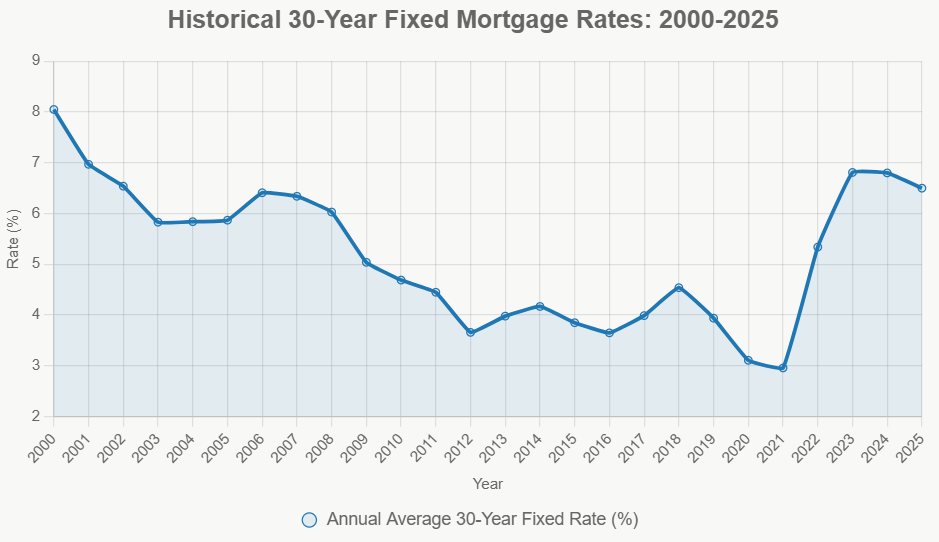
  • Mortgage Rate Predictions for 2025: Expert Forecast

Filed Under: Flipping, Mortgage Tagged With: mortgage rates, Mortgage Rates Today, Refinance Rates

Mortgage Rates Today, Jan 5: 30-Year Refinance Rate Drops by 21 Basis Points

January 5, 2026 by Marco Santarelli

Mortgage Rates Today, January 7: 30‑Year Refinance Rate Rises by 14 Basis Points

Great news for homeowners looking to save on their monthly payments! As of today, January 5th, the average national 30-year fixed refinance rate has seen a significant dip, falling by 21 basis points to 6.41%. This marks a welcome trend in what has been a fluctuating mortgage market, and it definitely gives us something to talk about.

This isn't just a small blip; it's a chance to potentially lower your housing costs and free up some cash. So, what does this drop really mean for you, and is it the right time to jump on a refinance? Let's dive in.

Mortgage Rates Today, Jan 5: 30-Year Refinance Rate Drops by 21 Basis Points

The Numbers You Need to Know

First off, let's get clear on what these numbers mean. When we talk about a “basis point,” it's a unit of measure for interest rates, equal to one-hundredth of a percent. So, a drop of 21 basis points means the rate is now 0.21% lower than it was before.

Here's a quick breakdown of the rates as announced by Zillow today:

Mortgage Type Rate (Jan 5, 2026) Change from Previous Week
30-Year Fixed Refinance 6.41% -21 basis points
15-Year Fixed Refinance 5.64% -1 basis point
5-Year ARM Refinance 7.28% +5 basis points

As you can see, the 30-year fixed refinance rate leading this charge downwards. This is often the go-to for many homeowners because it offers a consistent monthly payment and keeps your housing costs predictable over the long haul. The 15-year fixed rate also saw a slight decrease, while the adjustable-rate mortgage (ARM) went up a tiny bit. For most people looking to refinance, the 30-year fixed is usually the primary focus.

What's Driving This Rate Drop?

It's not magic, it's the economy! This downward movement is largely a result of the Federal Reserve's actions. You might remember that throughout late 2025, the Fed made three cuts to the federal funds rate (in September, October, and December). While the Fed doesn't directly set mortgage rates, their decisions have a big ripple effect. When the Fed signals it's trying to make borrowing cheaper, mortgage lenders often follow suit.

This latest drop has pushed the 30-year fixed refinance rate to a 15-month low. Think back to 2023 – rates were hovering much higher, sometimes near 8%! So, this shift is genuinely significant progress for homeowners.

Refinance Demand vs. The “Lock-In Effect”

With rates dipping toward the 6% mark, it's no surprise that refinance applications have surged. We're seeing an 86% increase in applications compared to this time last year. People are definitely noticing the savings.

However, there's a catch, and it's a big one: the “lock-in effect.” A lot of homeowners secured mortgages at incredibly low rates, often under 5%, before rates started climbing. Now, even though current rates are more attractive than they were, they might still be higher than what these homeowners are currently paying. This makes it less appealing to refinance and give up that super low rate, even if the current advertised rates are falling. It’s like having a really good deal on a favorite coffee, and even though a new coffee shop offers a slightly better price, you’re still happy with your current one.

When Does Refinancing Actually Make Sense Today?

This is the million-dollar question, isn't it? With fluctuating rates and the “lock-in effect,” it's crucial to do your homework. Based on what experts are saying for the 2026 mortgage market, refinancing generally makes the most sense if you can achieve one of these:

  • A significant rate reduction: Aim for a drop of at least 0.50% to 1.0% in your interest rate.
  • A plan to stay put: You need to plan on staying in your home long enough to make back the costs associated with refinancing.

Core Refinancing Strategies for 2026

If you're considering a refinance, here are some smart strategies I always recommend:

  • Calculate Your Break-Even Point: Every refinance comes with closing costs, which can range from 2% to 6% of your loan amount. It's vital to figure out how many months of monthly savings it will take to cover these costs. For example, if your closing costs are $10,000 and you save $500 each month, it will take you 20 months to break even. If you plan to move before that, the refinance might not be worth it.
  • Leverage Rate “Buydowns”: If the current rate is close to what you want but not quite there, you might be able to pay for “discount points.” These are essentially prepaid interest that can permanently lower your interest rate for the life of the loan. It’s a trade-off – a higher upfront cost for lower monthly payments over time.
  • Shop Around Like a Pro: This is non-negotiable! Don't just go with the first lender you talk to. Rates, fees, and customer service can vary wildly. I strongly advise getting a written Loan Estimate from at least three different lenders. This will give you a clear, standardized document to compare Annual Percentage Rates (APRs) and the total cost of the loan. APR is a better indicator of the total cost of borrowing because it includes fees and other charges.
  • Consider a “Streamline” Refinance: If you have an FHA, VA, or USDA loan, you might be eligible for a streamline refinance. These programs are designed to be simpler, often requiring less paperwork and a quicker approval process, which can be a real time-saver.
  • Think About a Shorter Term: While the 30-year mortgage is popular for its lower monthly payments, refinancing into a 15-year mortgage usually means a lower interest rate. The trade-off? Your monthly payments will be higher. However, you'll pay off your mortgage much faster and save a significant amount on interest over the life of the loan.

Recommended Read:

30-Year Fixed Refinance Rate Trends – January 4, 2025

Best Time to Refinance Your Mortgage: Expert Insights

Should You Refinance Your Mortgage Now or Wait Until 2026? 

Getting Prepared for a Refinance

Before you even start talking to lenders, there are a few things you can do to put yourself in the best possible position:

  • Boost Your Credit Score: Even a small increase in your credit score can move you into a lower interest rate bracket. This can translate into savings of thousands of dollars over the loan's term. Pay down credit card balances and ensure you're making all your payments on time.
  • Lower Your Debt-to-Income (DTI) Ratio: Lenders look at your DTI to assess your ability to manage monthly payments. Aiming for a DTI of 35% or less will generally qualify you for the most competitive market rates.
  • Watch the Fed: While they don't dictate mortgage rates directly, keeping an eye on Federal Reserve meetings is smart. Their decisions on the federal funds rate influence market expectations, which in turn affects mortgage bond yields.

What's Next for Mortgage Rates in 2026?

Looking ahead, most economic forecasts suggest a relatively stable, though still somewhat elevated, rate environment for 2026. Experts at organizations like Fannie Mae and the Mortgage Bankers Association project **30-year rates to likely stay in the 6.0% to 6.4% range throughout the year.

While inflation has slowed down to around 2.7% by late 2025, it's still a bit above the Fed's 2% target. This might mean that we won't see dramatic, further rate drops in the immediate future.

My two cents? The current drop is a positive sign, and if you've been on the fence about refinancing, it's definitely worth exploring. Just remember the key advice: ensure you can lower your current rate by at least 0.5% to 1.0% and that you plan to stay in your home long enough to recoup your closing costs.

So, take a look at your current mortgage, crunch some numbers, and see if this dip in mortgage rates today, Jan 5th, is your opportunity to save some serious money.

Invest Smart — Build Long-Term Wealth Through Turnkey Real Estate in 2026

With interest rates and housing policies shaping affordability, 2026 offers investors a pivotal chance to lock in cash‑flowing rental properties.

Market forecasts suggest steady demand, making turnkey real estate one of the most reliable paths to passive income and wealth creation.

Norada Real Estate helps investors capitalize on these trends with turnkey rental properties designed for appreciation and consistent cash flow—so you can grow wealth securely while others wait for clarity in the market.

🔥 HOT 2026 INVESTMENT LISTINGS JUST ADDED! 🔥
Talk to a Norada investment counselor today (No Obligation):
(800) 611-3060

Get Started Now

Recommended Read:

  • When You Refinance a Mortgage Do the 30 Years Start Over?
  • Should You Refinance as Mortgage Rates Reach Lowest Level in Over a Year?
  • NAR Predicts 6% Mortgage Rates in 2025 Will Boost Housing Market
  • Mortgage Rates Predictions for 2025: Expert Forecast
  • Half of Recent Home Buyers Got Mortgage Rates Below 5%
  • Mortgage Rates Need to Drop by 2% Before Buying Spree Begins
  • Will Mortgage Rates Ever Be 3% Again: Future Outlook
  • Mortgage Rates Predictions for Next 2 Years
  • Mortgage Rate Predictions for Next 5 Years
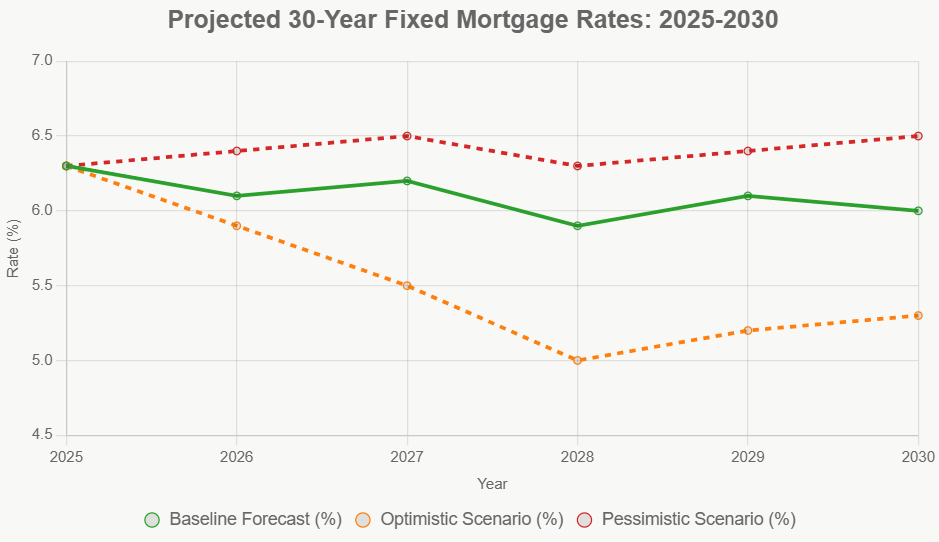
  • Mortgage Rate Predictions for 2025: Expert Forecast

Filed Under: Flipping, Mortgage Tagged With: mortgage rates, Mortgage Rates Today, Refinance Rates

Best Alternatives to Traditional Mortgage Refinancing in 2026

January 5, 2026 by Marco Santarelli

Best Alternatives to Traditional Mortgage Refinancing in 2026

Feeling stuck with your current mortgage, but the idea of a full-blown refinance feels like too much hassle, or maybe even too expensive? You're not alone. Many homeowners in 2026 are exploring smarter ways to tap into their home's value or adjust their payments without the often-daunting process of a traditional mortgage refinance. The good news is, there are excellent alternatives out there that can get you what you need, whether that's extra cash, lower monthly bills, or simply more breathing room in your budget.

For homeowners in 2026, the best alternatives to a traditional refinance depend on your financial goals. Options that avoid replacing your entire primary mortgage, such as home equity loans, HELOCs, government-backed streamline options, and home equity agreements, are often more efficient and cost-effective.

The traditional refinance, with its piles of paperwork, appraisals, and potentially higher closing costs, can sometimes feel like closing the barn door after the horse has bolted. But imagine this: you need some fast cash for that dream kitchen renovation, or perhaps your income has changed, and you're looking to lighten the monthly load on your mortgage. Do you really need to go through the whole song and dance of a full refinance? Often, the answer is a resounding no.

Let's dive into some of these smarter pathways.

Best Alternatives to Traditional Mortgage Refinancing in 2026

Many of us have built up significant equity in our homes over the years, especially with the way home values have been trending. This is essentially the portion of your home you own outright. If your main goal is to get your hands on some of that cash for a big project, debt consolidation, or any other significant expense, without disturbing your current, possibly low, mortgage rate, then these options are your best bet.

Home Equity Loan (HEL): A Reliable Lump Sum

Think of a Home Equity Loan as a second mortgage. You borrow a fixed amount of money upfront, and you pay it back over a set period, usually between 5 and 30 years. The exciting part? You get a fixed interest rate. This means your monthly payments will stay the same for the entire loan term. It’s a predictable way to manage your finances.

  • Who is this best for? This is a fantastic choice if you need a specific, significant amount of money for a single, planned expense, like a major home renovation project or paying off high-interest debt. The certainty of fixed payments offers peace of mind.

Home Equity Line of Credit (HELOC): Flexibility at Your Fingertips

A Home Equity Line of Credit (HELOC) is a bit different. It's more like a credit card that's backed by your home. You get approved for a maximum amount you can borrow from, and you can draw funds as you need them during a specific period, often called the “draw period” (typically around 10 years). You only pay interest on the amount you've actually borrowed.

  • Who is this best for? HELOCs are perfect for homeowners who have ongoing or unpredictable expenses. Maybe you're doing a renovation in stages, or you have a business that requires fluctuating cash flow. Be aware that most HELOCs come with a variable interest rate, meaning your payments could go up or down over time. This requires a bit more financial discipline and forecasting.

Home Equity Agreement (HEA): Sharing the Future

This is a more innovative option, and one that's gaining traction. With a Home Equity Agreement (HEA), you're not technically taking out a loan. Instead, an investor gives you a lump sum of cash in exchange for a share of your home's future appreciation. Essentially, you're selling a portion of your home's future value.

  • Who is this best for? This is a great fit for homeowners who want to avoid taking on new monthly payments altogether. It's also a viable option for those who might struggle to qualify for traditional loans due to credit history or income limitations. The trade-off is that you'll be giving up a slice of the profit when you eventually sell your home.

Reverse Mortgage: For Our Senior Homeowners

If you're 62 or older and have significant equity in your home, a Reverse Mortgage is a unique way to turn that equity into cash. The best part? You don't have to make any monthly mortgage payments as long as you live in the home, move out permanently, or pass away. The loan is typically repaid when the home is sold.

  • Who is this best for? This option is specifically for seniors who want to supplement their retirement income or pay for unexpected expenses without the burden of monthly loan payments.

Lowering Your Bills Without a Full Refinance

Sometimes, your primary goal isn't to pull out cash, but to simply make your monthly mortgage payments more manageable, or to adjust the terms of your loan. Going through a full refinance can involve significant closing costs and a lengthy approval process. Fortunately, there are simpler ways to achieve these goals.

Government-Backed Streamline Refinance: A Smoother Path

If you currently have a loan backed by the government – specifically an FHA, VA, or USDA loan – you might qualify for a Streamline Refinance. These programs are designed to be faster and less expensive than traditional refinances.

  • FHA Streamline Refinance: For borrowers with FHA loans.
  • VA IRRRL (Interest Rate Reduction Refinance Loan): For borrowers with VA loans.
  • Who is this best for? If you already have one of these government-backed loans and want to lower your interest rate, reduce your monthly payment, or switch from a variable rate to a fixed rate, this is often the easiest route. The process usually involves minimal paperwork, often skipping the need for a new appraisal or income verification.

Mortgage Recasting: A Powerful Principal Paydown

This is one of my favorite, often overlooked, options. Mortgage Recasting isn't technically a refinance because it doesn't change your interest rate or the term of your loan. Instead, you make a substantial lump-sum payment towards your mortgage's principal balance. Your lender then recalculates your monthly payments based on this lower balance.

  • Who is this best for? This is ideal if you've come into a significant amount of money unexpectedly – maybe a bonus, an inheritance, or the sale of another asset. You want to lower your monthly obligations without restarting the clock on your loan term or incurring the costs associated with a full refinance.

Other Considerations: When Home Equity Isn't the Answer

While tapping into your home equity is a common strategy, it's not always the best or only solution. Sometimes, other types of loans or borrowing methods might be more appropriate.

Personal Loan: Unsecured and Quick

A Personal Loan is an unsecured loan, meaning it's not tied to any collateral like your house. You can get approved based on your creditworthiness.

  • Who is this best for? If you only need a smaller amount of cash, don't have much home equity, or simply don't want to put your home at risk, a personal loan can be a good option. However, be prepared for potentially higher interest rates compared to loans secured by your home.

401(k) Loan: Borrowing from Your Future

You can also borrow against your own retirement savings by taking out a 401(k) Loan. This usually involves minimal credit checks.

  • Who is this best for? This can be a way to get funds quickly if you plan to repay the loan promptly. The main drawback is that if you leave your job with an outstanding balance, you could face taxes and penalties. It's a tool for short-term liquidity, and it's crucial to have a solid repayment plan in place.

Making the Right Choice for You

Deciding which alternative is best involves looking closely at your personal financial situation, what you want to achieve, and the details of your current mortgage. There's no one-size-fits-all answer.

I always advise my clients to sit down and crunch the numbers. Understand the fees, the interest rates, and the long-term implications of each option. Consulting with a qualified financial advisor or a trusted mortgage professional is an invaluable step. They can help you weigh the costs, benefits, and risks, ensuring you make the most informed decision that aligns perfectly with your financial goals and brings you the greatest peace of mind.

Invest Smart — Build Long-Term Wealth Through Turnkey Real Estate in 2026

With interest rates and housing policies shaping affordability, 2026 offers investors a pivotal chance to lock in cash‑flowing rental properties.

Market forecasts suggest steady demand, making turnkey real estate one of the most reliable paths to passive income and wealth creation.

Norada Real Estate helps investors capitalize on these trends with turnkey rental properties designed for appreciation and consistent cash flow—so you can grow wealth securely while others wait for clarity in the market.

🔥 HOT 2026 INVESTMENT LISTINGS JUST ADDED! 🔥
Talk to a Norada investment counselor today (No Obligation):
(800) 611-3060

Get Started Now

Recommended Read:

  • When You Refinance a Mortgage Do the 30 Years Start Over?
  • Should You Refinance as Mortgage Rates Reach Lowest Level in Over a Year?
  • NAR Predicts 6% Mortgage Rates in 2025 Will Boost Housing Market
  • Mortgage Rates Predictions for 2025: Expert Forecast
  • Half of Recent Home Buyers Got Mortgage Rates Below 5%
  • Mortgage Rates Need to Drop by 2% Before Buying Spree Begins
  • Will Mortgage Rates Ever Be 3% Again: Future Outlook
  • Mortgage Rates Predictions for Next 2 Years
  • Mortgage Rate Predictions for Next 5 Years

  • Mortgage Rate Predictions for 2025: Expert Forecast

Filed Under: Flipping, Mortgage Tagged With: mortgage rates, Mortgage Rates Today, Refinance Rates

  • « Previous Page
  • 1
  • …
  • 26
  • 27
  • 28
  • 29
  • 30
  • …
  • 337
  • Next Page »

Real Estate

  • Birmingham
  • Cape Coral
  • Charlotte
  • Chicago

Quick Links

  • Markets
  • Membership
  • Notes
  • Contact Us

Blog Posts

  • 5 Steps to Secure the Lowest Mortgage Rates in 2026
    February 25, 2026Marco Santarelli
  • How to Get a 4.5% Mortgage Rate in 2026?
    February 25, 2026Marco Santarelli
  • Today’s Mortgage Rates, Feb 25: VA Loans Drop Below 5%, Fixed Rates Rise Slightly
    February 25, 2026Marco Santarelli

Contact

Norada Real Estate Investments 30251 Golden Lantern, Suite E-261 Laguna Niguel, CA 92677

(949) 218-6668
(800) 611-3060
BBB
  • Terms of Use
  • |
  • Privacy Policy
  • |
  • Testimonials
  • |
  • Suggestions?
  • |
  • Home

Copyright 2018 Norada Real Estate Investments

Loading...

