Thinking about buying or selling a home in Cleveland? The Cleveland housing market is currently showing signs of a steadier pace with moderate price growth and an increasing number of homes available, which is good news for buyers, while sellers can expect continued demand.
Let's dive into what's happening right now, looking at things like how many homes are for sale, how long they're taking to sell, and what's happening with home prices. Then, we'll look ahead and see what experts are predicting for the Cleveland housing market in the coming months and years. Ready to get informed? Let's go!
Cleveland Housing Market Trends in 2025
Right now, the Cleveland housing market is telling an interesting story. It's not a wild, super-fast market like we might have seen a year or two ago, but it’s definitely not sitting still either. Think of it as finding its rhythm.
Home Sales and What's Available (Housing Inventory)
Let's start with the number of homes you can actually see when you're out looking – this is what we call housing inventory, or supply. According to data from Realtor.com, in September, there were 868 homes for sale in Cleveland. That might sound like a lot, or maybe not, but here’s what's important: that’s 6.0% more homes than the month before and a significant 15.3% more homes than this time last year.
What does this mean for you? If you’re a buyer, this is generally good news. More homes on the market means you have more choices. It takes some of the pressure off and might give you a bit more room to negotiate. For sellers, it means you'll likely have more competition, so making your home stand out is key.
Nationally, the story is a little different. Active inventory across the U.S. only grew by 0.2% from last month. So, Cleveland is actually seeing a bigger jump in the number of homes available compared to the rest of the country.
Home Prices in Cleveland
Now, let’s talk about the big one: home prices. In September, the median listing price in Cleveland was $139,900. This means half the homes listed were above this price, and half were below.
It's interesting because, usually, home prices in Cleveland tend to go up in September. But the latest numbers show something different: the price per square foot actually decreased by 3.9% compared to the month before.
How does this stack up against the rest of the U.S.? Nationally, the price per square foot also went down, but only by 0.8%. This tells us that the price changes we're seeing in Cleveland are more noticeable than the national trend.
So, while the overall median listing price remained the same from the previous month, the price per square foot dipping is something to watch. It could indicate that while sellers are listing, they might be adjusting their expectations a bit, especially for larger homes or those needing updates, to keep them competitive.
How Long Homes Are Staying on the Market (Time on Market)
Another crucial piece of the puzzle is how quickly homes are selling. This tells us if it's a fast-paced market where homes fly off the shelves, or if things are moving at a more relaxed pace.
In September, homes in Cleveland took an average of 52 days to sell. That’s just one day less than the month before, so not a big change there. However, it's seven days longer than this time last year.
Compared to the national average, which was 62 days on the market in September, Cleveland homes are still selling faster than the rest of the U.S. This suggests that while homes might be taking a little longer to sell than last year, there's still a healthy demand here in Cleveland. For buyers, this extra time can be a blessing, allowing for more thoughtful decisions. For sellers, it’s a reminder to price your home correctly from the start and make sure it’s presented beautifully.
Buyer's or Seller's Housing Market?
Based on the trends we're seeing – more homes on the market than last year, homes taking a little longer to sell than last year, but still selling faster than the national average, and prices remaining steady with some per-square-foot adjustments – I'd say Cleveland is leaning towards a more balanced market. It's not a strong seller's market where sellers can ask for the moon and get it, nor is it a buyer's market where buyers have all the power. It’s more of a level playing field.
Buyers have more choices and a bit more time to make decisions. Sellers need to be competitive with pricing and presentation. It’s a good time to buy if you’re prepared, and a good time to sell if your home is priced and marketed effectively.
Cleveland Housing Market Forecast for 2025 and 2026
Looking ahead, predicting the future of any market can be tricky, but by looking at expert forecasts, we can get a pretty good idea of where things might be headed. This is where we put on our crystal ball hats, but with data to back us up!
What Experts Predict for Cleveland and the U.S.
Let’s start with Zillow's data, which gives us a glimpse into the near future.
Current Home Value in Cleveland-Elyria:
According to Zillow, the average home value in the Cleveland-Elyria area is $242,875. This is up 4.6% over the past year. Homes are also pending sale very quickly, in around 9 days on average. This suggests strong underlying demand for well-priced homes in the current market.
Zillow's MSA Forecast (Cleveland, OH):
Zillow provides forecasts for Metropolitan Statistical Areas (MSAs). Here’s what they’re predicting for the Cleveland area:
| Timeframe | Predicted Home Value Change |
|---|---|
| October 2025 | 0.3% |
| December 2025 | 0.7% |
| September 2026 | 2.8% |
Source: Zillow's MSA Forecast
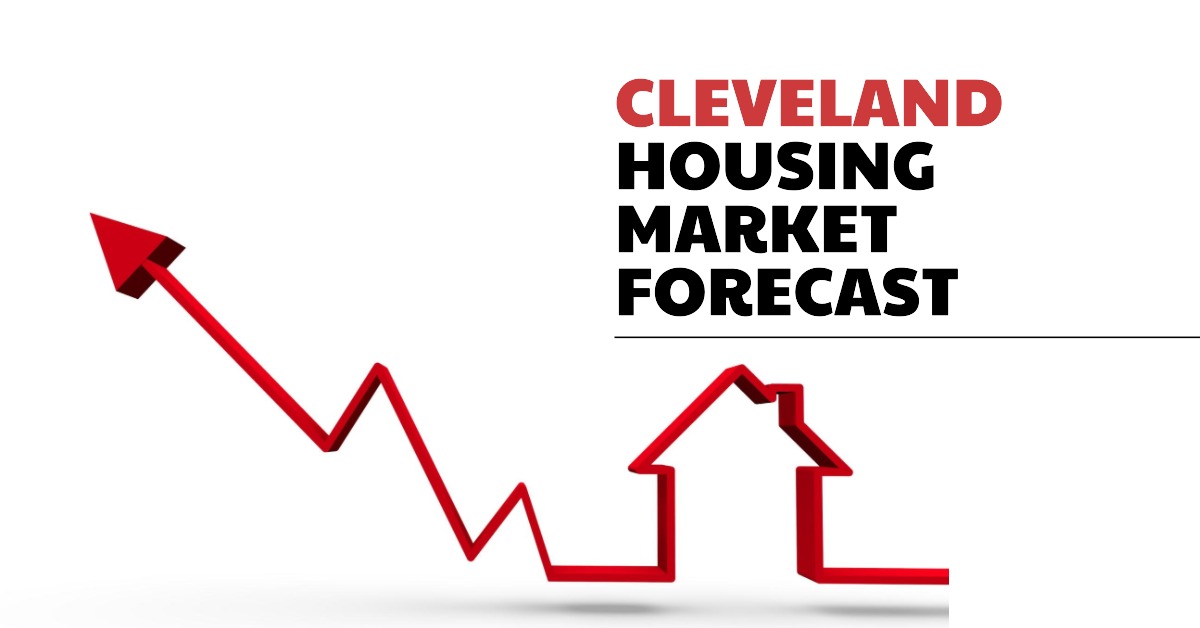
This table suggests a slow and steady appreciation for home values in Cleveland. We’re looking at modest growth of less than 1% by the end of 2025, picking up a bit more momentum to reach 2.8% by September of 2026. This forecast indicates that we're not expecting any dramatic price drops or crashes, but rather a return to more sustainable, long-term appreciation.
Cleveland vs. Other Ohio Cities:
Let's see how Cleveland stacks up against other major cities in Ohio based on Zillow's MSA forecast for September 2026:
| Region Name | Predicted Home Value Change (Sept 2026) |
|---|---|
| Cleveland, OH | 2.8% |
| Cincinnati, OH | 2.4% |
| Columbus, OH | 2.4% |
| Akron, OH | 2.3% |
| Toledo, OH | 2.1% |
| Youngstown, OH | 4.1% |
| Canton, OH | 2.8% |
| Huntington, WV | 0.5% |
Looking at this, Cleveland and Canton are forecasted to see the same level of home value growth by September 2026. Youngstown is showing a higher potential for growth, while Cincinnati, Columbus, Akron, and Toledo are projected to grow at a slightly slower pace. Huntington, WV, shows much slower growth, which isn't surprising as it's a smaller market. This comparison shows Cleveland is right in the middle of the pack for Ohio cities, suggesting a stable and predictable market.
Cleveland vs. the U.S. Housing Market Forecast:
Now, let's zoom out and look at the nationwide predictions from Zillow and the National Association of Realtors (NAR) Chief Economist, Lawrence Yun.
Key Predictions from Zillow (Nationwide):
- Home Value Growth: After a flat period in late 2025, Zillow expects home value growth to recover in 2026, reaching a peak of nearly 1.9% by August of that year. This reinforces the idea of a market that’s stabilizing and preparing for a modest rebound.
- Home Sales: Zillow forecasts home sales to end 2025 at 4.07 million, which is slightly better than 2024. This means more people are expected to be buying and selling homes across the country.
- Rents: Rents are expected to continue cooling, with lower growth than in previous years by the end of 2025.
Key Predictions from NAR Chief Economist Lawrence Yun (Nationwide):
Lawrence Yun offers a very optimistic view for the U.S. housing market. He sees “brighter days ahead.”
- Existing Home Sales: Predicted to rise 6% in 2025 and accelerate by 11% in 2026. This is a significant jump, indicating a strong recovery in the number of homes changing hands.
- New Home Sales: Projected to climb by 10% in 2025 and an additional 5% in 2026. This growth in new construction is vital for addressing the shortage of homes available.
- Median Home Prices: Forecasted to continue increasing modestly, with a projected rise of 3% in 2025 and 4% in 2026. This signals a return to healthier, more sustainable appreciation rates.
- Mortgage Rates: Anticipated to average 6.4% in the second half of 2025 and dip further to 6.1% in 2026. Yun calls these rates a “magic bullet” because they directly impact affordability. Lower rates make it easier for buyers to afford more house, boosting demand.
So, Will Home Prices Drop in Cleveland? Can it Crash?
Based on all this data and expert opinion, my professional assessment is that home prices in Cleveland are unlikely to drop significantly in the near future, and a crash is highly improbable.
The Zillow forecast for Cleveland shows a modest positive growth trend. The nationwide forecasts from Zillow and NAR also point towards stable to moderate appreciation, not a decline. The increase in housing inventory we saw in September, while a change from last year, is also a sign of a healthier, more balanced market, not a market in distress.
The fact that homes are still selling, and pending sales are happening quickly for good properties (like the 9 days mentioned by Zillow), shows there is consistent demand. Any slight dips in price per square foot might be more about specific property types or strategic pricing by sellers rather than a market-wide downturn.
A Possible Forecast for Late 2026 and Early 2027
Extending the trends we're seeing, for late 2026 and early 2027, I expect the Cleveland housing market to continue its trajectory of steady, sustainable growth.
- Home Prices: Building on the projected 2.8% growth by September 2026, I wouldn't be surprised to see prices continue to climb at a similar pace, perhaps in the 3-4% range annually through early 2027. This is in line with the national predictions for modest appreciation.
- Home Sales: With mortgage rates expected to remain relatively stable or even slightly decrease as predicted by NAR, and with more buyers able to afford homes, the number of home sales should remain strong. We could see continued or even slightly increased transaction volumes compared to the 2025 forecast.
- Housing Inventory: The inventory is likely to remain at a healthy level. While we saw an increase in September, it’s unlikely to balloon into a glut of homes. A steady flow of new listings will probably balance out the number of homes selling, maintaining that balanced market feel.
- Mortgage Rates: If mortgage rates continue to hover in the low 6% range as predicted, affordability will remain a key driver of demand. This would support continued price appreciation and robust home sales activity.
In my opinion, the Cleveland housing market is evolving into a more mature phase after some of the rapid price changes of previous years. It’s becoming a market where value and thoughtful homeownership are prioritized. For anyone considering entering this market, whether as a buyer or seller, understanding these trends and forecasts is your best tool for making smart decisions.
Want Better Cash Flow? Invest in High-Demand Housing Markets
Turnkey rental properties in fast-growing housing markets offer a powerful way to generate passive income with minimal hassle.
Work with Norada Real Estate to find stable, cash-flowing markets beyond the bubble zones—so you can build wealth without the risks of ultra-competitive areas.
🔥 HOT NEW LISTINGS JUST ADDED! 🔥
Talk to a Norada investment counselor today (No Obligation):
(800) 611-3060
Want to Know More?
Explore these related articles for even more insights:
- Why Smart Investors Are Buying Cleveland Turnkey Real Estate?
- 7 Housing Markets Set for Major Correction Over the Next 12 Months
- 10 Best Cities in Ohio for Real Estate Investment in 2025
- Jacksonville Housing Market: Trends and Forecast 2025-2026
- Florida Housing Market Trends: 4 Cities Turn Buyer-Friendly
- Florida Housing Market: Jacksonville Emerges as a Hotspot for Turnkey Rentals