Norada Real Estate Investments

  • Home
  • Markets
  • Properties
  • Membership
  • Podcast
  • Learn
  • About
  • Contact

Mortgage Rates Remain Stable Fueling Buyer Demand in 2026

January 9, 2026 by Marco Santarelli

Mortgage Rates Remain Stable Fueling Buyer Demand in 2026

It's a breath of fresh air for many aspiring homeowners: stable mortgage rates are starting to bring buyers back into the housing market in 2026, signaling a positive shift after a period of uncertainty. The good news is that rates have settled into a more predictable pattern, and this stability is encouraging more people to start looking for their dream homes.

For what feels like ages, the housing market has been a bit of a rollercoaster. We saw rates skyrocket, making it tough for many to even consider buying a home. But as we've moved into 2026, things are starting to feel different. The numbers coming out from Freddie Mac's Primary Mortgage Market Survey® paint a promising picture.

Mortgage Rates Remain Stable Fueling Buyer Demand in 2026

What's Driving This Shift?

The main reason we're seeing this change is that mortgage rates have found a comfortable spot, hovering around the 6% mark. This isn't just a small dip; it's a significant drop from where we were just last year. For example, as of January 8, 2026, the 30-year fixed-rate mortgage averaged 6.16%. To put that into perspective, just a year ago, that same mortgage averaged a much higher 6.93%. That difference might not sound huge in daily talk, but over the life of a loan, it can mean tens of thousands of dollars in savings. And that’s enough to make a real difference for a family.

It's not just about the lower rates, though. We're also seeing the economy holding up pretty well. This combination of lower borrowing costs and solid economic growth is like a double shot of espresso for the housing market. It’s giving people the confidence and the means to start seriously considering a purchase.

The Numbers Don't Lie: A Look at the Data

Freddie Mac has been tracking these trends, and their data is eye-opening. In the first week of the new year, purchase applications – which are a good indicator of how many people are actively looking to buy a home – were up over 20% from this time last year. That's a significant jump and suggests that buyers who were sitting on the sidelines are now stepping back into the game.

Let's break down some of the key figures from Freddie Mac's Primary Mortgage Market Survey® for the U.S. weekly averages as of January 8, 2026:

Mortgage Type Average Rate (01/08/2026) 1-Week Change 1-Year Change Estimated Monthly Savings (vs. 1 Yr Ago*)
30-Yr Fixed FRM 6.16% +0.01% -0.77% Significant (Tens of Thousands)
15-Yr Fixed FRM 5.46% +0.02% -0.68% Substantial (Thousands)

*Note: This is a simplified illustration. Actual savings depend on loan amount and exact rate difference.

Looking at the year-over-year change is where you really see the impact. A drop of 0.77% for the 30-year fixed-rate mortgage and 0.68% for the 15-year fixed-rate mortgage means a lot more buying power for consumers. If you were looking to buy a $300,000 home, that 0.77% difference could translate to hundreds of dollars less each month. It’s like getting a bit of a discount that you didn't have before.

Stable Mortgage Rates Begin to Rekindle Purchase Demand in 2026
Source: Freddie Mac

Market Momentum and the Return of Buyers

This stabilization of rates around the 6% mark isn't just a minor blip; it's a catalyst. It's providing the predictability that buyers crave. For a long time, there was so much uncertainty about where rates were headed. Now, seeing them stay relatively steady makes it easier for people to plan their finances and make big decisions.

I've talked to a lot of people in the real estate industry, and the general feeling is that the market is starting to breathe again. We're seeing more open houses, more inquiries, and just a general buzz of activity that we haven't felt as strongly in a while. The experts are pointing to a few key factors:

  • Lower Borrowing Costs: As the numbers show, this is the most obvious driver. When your monthly mortgage payment goes down, you can afford more home or simply have more disposable income each month.
  • Resilient Economic Growth: A strong economy means people are more secure in their jobs and more confident about taking on a mortgage. It’s a sign that the fundamentals are sound enough to support homeownership.
  • Sidelined Buyers Returning: Many potential buyers had to put their plans on hold when rates were high. Now, with more favorable conditions, they're re-entering the market with renewed optimism.

Regional Differences and Future Outlook

While the national picture is encouraging, it's important to remember that real estate is local. We're hearing that areas in the Northeast, Midwest, and South are particularly showing improving conditions for first-time buyers. This could be due to slightly different local economic factors or housing inventory.

Looking ahead, forecasters from organizations like Fannie Mae and the Mortgage Bankers Association (MBA) are generally expecting these rates to stick around in the low 6% range for the first quarter of 2026. This suggests a period of sustained stability, which is music to the ears of anyone looking to buy.

Let's look at some expert projections for the average rate in 2026:

Source Projected Average Rate Key Driver
Fannie Mae 5.9% Gradual inflation cooling
Bankrate 6.1% Balancing Fed cuts vs. inflation risk
Redfin 6.3% Avoiding recession while inflation lingers
Mortgage Bankers Association (MBA) 6.4% Expectations of a single Fed cut in 2026

These different projections highlight the ongoing economic dance between managing inflation and supporting growth. But the overall consensus is that rates are likely to remain in a range that's much more manageable than we've seen recently. The difference between, say, 6.1% and 6.4% might seem small, but it can impact affordability significantly.

My Take on the Market

From my perspective, this period of stable mortgage rates is a welcome development. It’s fostering a healthier balance between buyers and sellers. For years, we saw prices soar partly because of low rates and high demand, with limited supply. Now, with rates settling, we might see a more sustainable pace of price growth, which is good for the long-term health of the market.

What’s crucial for potential buyers right now is to get pre-approved for a mortgage. Knowing exactly what you can afford is the first step. Then, work with a good real estate agent who understands your local market. Don't forget to factor in all the costs of homeownership, not just the mortgage.

This is an excellent time for those who have been dreaming of buying to really explore their options. The market is responding to affordability, and that's a powerful force. It feels like the housing market is finally finding its footing, and that's something to be optimistic about.

🏡 Which Rental Property Would YOU Invest In?

Lebanon, TN
🏠 Property: Baltusrol Lane #852
🛏️ Beds/Baths: 4 Bed • 2.5 Bath • 2011 sqft
💰 Price: $369,990 | Rent: $2,400
📊 Cap Rate: 5.8% | NOI: $1,789
📅 Year Built: 2024
📐 Price/Sq Ft: $184
🏙️ Neighborhood: B

VS

San Antonio, TX
🏠 Property: Salz Way
🛏️ Beds/Baths: 3 Bed • 2 Bath • 2330 sqft
💰 Price: $384,999 | Rent: $2,375
📊 Cap Rate: 4.1% | NOI: $1,324
📅 Year Built: 2019
📐 Price/Sq Ft: $166
🏙️ Neighborhood: A

Tennessee’s balanced rental vs Texas’s larger home with lower cap rate. Which fits YOUR investment strategy?

We have much more inventory available than what you see on our website – Let us know about your requirement.

📈 Choose Your Winner & Contact Us Today!

Talk to a Norada investment counselor (No Obligation):

(800) 611-3060

Contact Us Now

Also Read:

  • Mortgage Rates Predictions Backed by 7 Leading Experts: 2025–2026
  • Mortgage Rate Predictions for the Next 3 Years: 2026, 2027, 2028
  • 30-Year Fixed Mortgage Rate Forecast for the Next 5 Years
  • 15-Year Fixed Mortgage Rate Predictions for Next 5 Years: 2025-2029
  • Will Mortgage Rates Ever Be 3% Again in the Future?
  • Mortgage Rates Predictions for Next 2 Years
  • Mortgage Rate Predictions for Next 5 Years
  • Mortgage Rate Predictions: Why 2% and 3% Rates are Out of Reach
  • How Lower Mortgage Rates Can Save You Thousands?
  • How to Get a Low Mortgage Interest Rate?
  • Will Mortgage Rates Ever Be 4% Again?

Filed Under: Financing, Mortgage Tagged With: mortgage, mortgage rates

Today’s Mortgage Rates, Jan 8: 30-Year Fixed Rate Goes Down Below 6%

January 8, 2026 by Marco Santarelli

Today’s Mortgage Rates, Jan 21: Rates Rise Driven by Surge in Treasury Yields

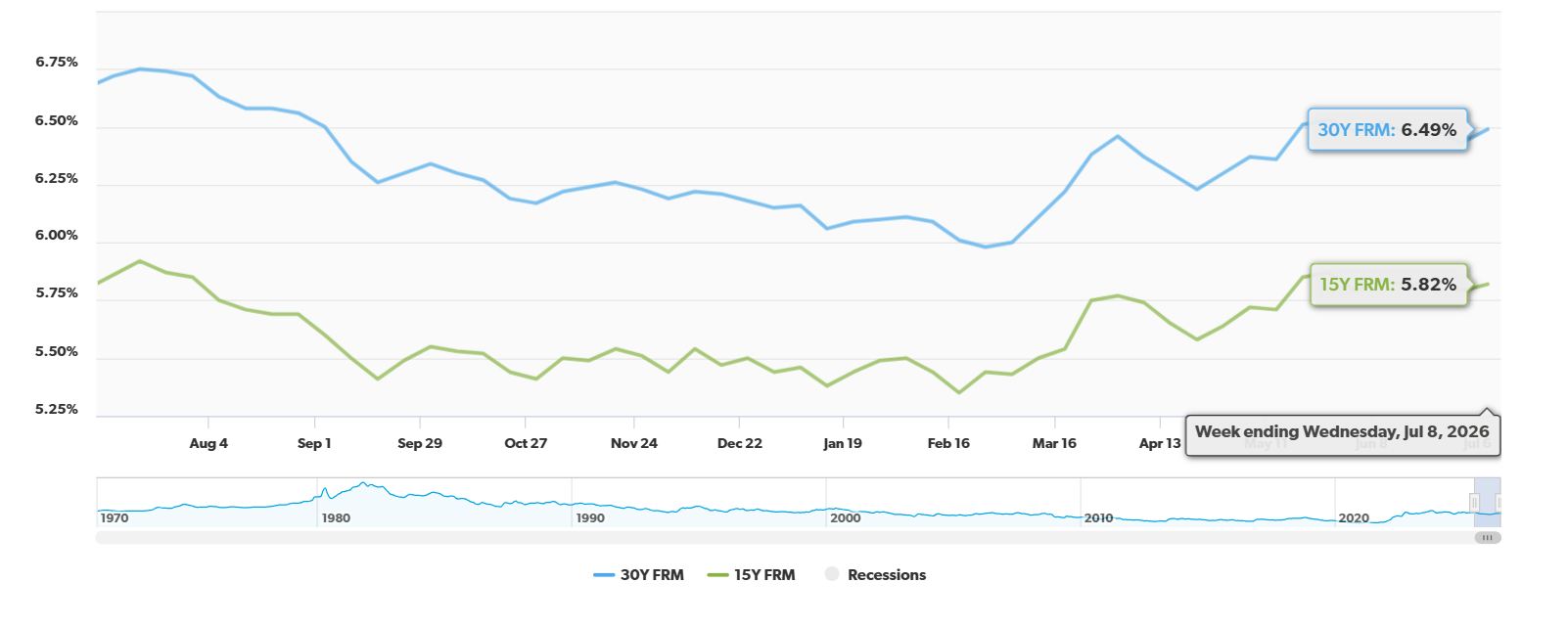
If you're thinking about buying a home or refinancing your current mortgage, pay attention: as of January 8, 2026, the national average for a 30-year fixed mortgage rate is hovering right around 5.98%. This is a critical number, as it means we're not far from rates dipping below the significant 6% mark, which could open up new possibilities for many. While this rate offers a degree of affordability, it's crucial to understand the full picture, including how it compares to shorter loan terms and what it means for your wallet over time.

Today's Mortgage Rates, Jan 8: 30-Year Fixed Rate Goes Down Below 6%

Understanding Today's Mortgage Rate Environment

It’s an interesting time in the mortgage market. Rates have been inching closer to that 6% threshold for weeks, and today’s figures from Zillow show us right on its doorstep. For buyers, this means potentially more favorable borrowing costs compared to the recent past. For homeowners, it brings the possibility of refinancing to a lower rate, which can significantly impact monthly payments and overall interest paid. However, it's important to remember that these are national averages, and your specific rate will depend on many factors, including your credit score, down payment, the lender you choose, and even your geographic location.

Current Mortgage Rates: A Snapshot

Here’s a breakdown of the national averages for different types of mortgages as of January 8, 2026:

Loan Type Rate (%)
30-Year Fixed 5.98
20-Year Fixed 5.84
15-Year Fixed 5.41
5/1 ARM 6.11
7/1 ARM 6.34
30-Year VA 5.48
15-Year VA 5.06
5/1 VA 5.37
  • The 30-year fixed rate remains the most popular choice for many, offering stability and a predictable monthly payment. At 5.98%, it provides a level of comfort, though it does come with a higher total interest cost over the life of the loan.
  • The 15-year fixed rate at 5.41% is notably lower than its 30-year counterpart. This can be incredibly attractive for those who can comfortably afford a higher monthly payment, as it shaves off years from the loan term and can save you a substantial amount in interest.
  • Adjustable-Rate Mortgages (ARMs) like the 5/1 and 7/1 offer a lower initial rate, but come with the risk of future rate increases after the initial fixed period. They are often chosen by people who plan to sell or refinance before the adjustment period begins.

Refinance Rates: Should You Consider It?

If you're already a homeowner, the question often becomes: is it a good time to refinance? Here's what the refinance market looks like today:

Loan Type Rate (%)
30-Year Fixed 6.09
20-Year Fixed 5.81
15-Year Fixed 5.51
5/1 ARM 6.17
7/1 ARM 6.12
30-Year VA 5.60
15-Year VA 5.26
5/1 VA 5.51

Notice that refinance rates are generally a bit higher than purchase rates. This is common, as lenders often have different pricing for cash-out refinances or when an existing mortgage is being paid off. However, the gap isn't huge, and for many, the ability to lower their monthly payment or change their loan term could still make refinancing a smart move.

Putting the Numbers into Perspective: Monthly Payments

To truly grasp the impact of these rates, let’s look at some real-world examples. Imagine you're taking out a $300,000 loan.

Loan Type Interest Rate Term Length Monthly Payment*
30-Year Fixed 5.98% 360 months ~$1,790
15-Year Fixed 5.41% 180 months ~$2,450

*Payments shown are principal + interest only, excluding taxes and insurance.

What does this tell us?

  • By choosing the 30-year fixed at 5.98%, your monthly payment is more manageable at around $1,790. This makes it easier to fit into your budget right now. You get the benefit of a lower immediate payment and more breathing room in your cash flow.
  • However, opting for the 15-year fixed at 5.41% boosts your monthly payment significantly to about $2,450. That's an extra $660 per month. But, the trade-off is huge. You'll pay off your home much faster and save a massive amount on interest over the life of the loan.

The Long-Term Financial Impact: Lifetime Interest Cost

This is where things get really interesting, and frankly, where I always advise people to look beyond just the monthly payment. Let's do a quick comparison of the total interest paid over the life of the loan for that $300,000 loan:

  • 30-Year Fixed (5.98%): Over 30 years, you'd pay approximately $344,400 in interest. Add that to your principal, and you're looking at a total cost of around $644,400 for your home.
  • 15-Year Fixed (5.41%): By contrast, over 15 years, you'd pay roughly $151,000 in interest. That’s a staggering savings of over $193,000! The total cost for your home would be around $451,000.

These are estimates and can vary slightly based on exact closing dates and payment schedules.

My take: For many, even if the 15-year payment is a stretch, finding a way to make it work can be one of the smartest financial decisions they make. That extra $660 a month is a significant amount, but saving nearly $200,000 in interest over time is life-changing. It frees up so much more for retirement, investing, or simply enjoying life. However, if that higher payment truly puts a strain on your finances, the 30-year option is still a solid path to homeownership, especially with rates still hovering near 6%. It allows you to get into a home now, and you can always look into refinancing into a shorter term or making extra principal payments down the line if your financial situation improves.

What’s Driving Today's Mortgage Rates?

Understanding why rates are where they are adds another layer of insight. Zillow’s analysis points to a couple of key factors influencing the market in early 2026:

  • Seasonal Slowdown: We're currently in the post-holiday period, which historically sees a dip in mortgage application volume. This can sometimes create a temporary lull in demand, which could influence rates, though broader economic trends are usually more dominant.
  • Economic Factors: Inflation, Federal Reserve monetary policy, and the overall health of the economy all play massive roles. While rates have dipped, affordability challenges due to high home prices persist for many buyers.
  • Market Balance Hint: There are signs the real estate market is slowly moving towards a more balanced state. Some areas are seeing prices ease a bit, and inventory is picking up. This could give buyers a bit more leverage and potentially cool the overheated appreciation we've seen in past years.

The Mortgage Demand Picture

Despite the rates nudging lower, overall mortgage application volume actually dropped by 9.7% in the recent two-week period ending January 2, 2026, as reported by MBA. This is partly due to the holiday slowdown, but it also highlights that even with lower rates, the market isn't exactly booming.

  • Refinance Applications: Saw a bigger drop, down 14%. However, the year-over-year comparison is strong, up 133%. This means many homeowners have already refinanced when rates were even lower, or that opportunities are still significantly better than a year ago.
  • Purchase Applications: Dropped by 6% from two weeks prior but are still up 10% year-over-year. This indicates a steady, albeit not explosive, demand from homebuyers.

Looking Ahead: What to Expect

Industry experts are generally anticipating that rates will stick around current levels for a while, with the possibility of dipping below 6% more consistently later in 2026. If that happens, it could truly “unleash” pent-up buyer demand, especially as we head into the traditionally busy spring housing market.

My Personal Take

From my experience, the 5.98% on the 30-year fixed is a very compelling rate for anyone looking to buy or refinance. It strikes a good balance between affordability and offering some of the lowest rates we've seen in a while. For those who can manage the higher payments, the 15-year fixed at 5.41% is almost a no-brainer if your goal is to save the maximum amount of money over time and build equity rapidly. Don't get so caught up in the monthly payment that you forget the total cost. It's always worth talking to a trusted mortgage professional who can run personalized scenarios for you.

🏡 Which Rental Property Would YOU Invest In?

Lebanon, TN
🏠 Property: Baltusrol Lane #852
🛏️ Beds/Baths: 4 Bed • 2.5 Bath • 2011 sqft
💰 Price: $369,990 | Rent: $2,400
📊 Cap Rate: 5.8% | NOI: $1,789
📅 Year Built: 2024
📐 Price/Sq Ft: $184
🏙️ Neighborhood: B

VS

San Antonio, TX
🏠 Property: Salz Way
🛏️ Beds/Baths: 3 Bed • 2 Bath • 2330 sqft
💰 Price: $384,999 | Rent: $2,375
📊 Cap Rate: 4.1% | NOI: $1,324
📅 Year Built: 2019
📐 Price/Sq Ft: $166
🏙️ Neighborhood: A

Tennessee’s balanced rental vs Texas’s larger home with lower cap rate. Which fits YOUR investment strategy?

We have much more inventory available than what you see on our website – Let us know about your requirement.

📈 Choose Your Winner & Contact Us Today!

Talk to a Norada investment counselor (No Obligation):

(800) 611-3060

Contact Us Now

Also Read:

  • Mortgage Rates Predictions Backed by 7 Leading Experts: 2025–2026
  • Mortgage Rate Predictions for the Next 3 Years: 2026, 2027, 2028
  • 30-Year Fixed Mortgage Rate Forecast for the Next 5 Years
  • 15-Year Fixed Mortgage Rate Predictions for Next 5 Years: 2025-2029
  • Will Mortgage Rates Ever Be 3% Again in the Future?
  • Mortgage Rates Predictions for Next 2 Years
  • Mortgage Rate Predictions for Next 5 Years
  • Mortgage Rate Predictions: Why 2% and 3% Rates are Out of Reach
  • How Lower Mortgage Rates Can Save You Thousands?
  • How to Get a Low Mortgage Interest Rate?
  • Will Mortgage Rates Ever Be 4% Again?
Filed Under: Financing, Mortgage Tagged With: Current Mortgage Rates, mortgage, mortgage rates, Today’s Mortgage Rates

Mortgage Rates Today, Jan 8: 30-Year Refinance Rate Drops by 10 Basis Points

January 8, 2026 by Marco Santarelli

Mortgage Rates Today, Jan 21: 30-Year Refinance Rate Rises by 17 Basis Points

As of January 8, 2026, the 30-year fixed refinance rate has dipped by 10 basis points, a welcome sign for homeowners looking to potentially lower their monthly payments. While other refinance rates are holding steady, this small but significant movement could be your cue to explore refinancing your mortgage.

For homeowners, that often includes a serious look at their mortgage. After all, it’s usually the biggest debt we have, and even a slight change in the interest rate can make a real difference to our wallets month after month. Today, January 8, 2026, brings a bit of financial breathing room, thanks to a drop in one of the most popular mortgage types.

Mortgage Rates Today, Jan 8: 30-Year Refinance Rate Drops by 10 Basis Points

What's Happening with Refinance Rates Right Now?

Think of refinance rates like the weather; they can change, but sometimes they just settle in for a bit. According to the latest data from Zillow, the national averages for fixed and adjustable refinance rates have been pretty stable recently. That’s not a bad thing! Stability can make planning a lot easier.

Here's a quick look at the national averages as of today, January 8, 2026:

  • 30-Year Fixed Refinance Rate: 6.52% (This is the big mover, down from last week)
  • 15-Year Fixed Refinance Rate: 5.50% (Holding steady, offering a quicker path to ownership)
  • 5-Year ARM Refinance Rate: 6.98% (Adjustable-rate mortgages are also stable for now)

The Tiny Drop That Could Mean Big Savings

The most exciting bit of news is the 10 basis point drop in the 30-year fixed refinance rate. Last week, the average was hovering around 6.62%, and now it’s at 6.52%. Now, I know what you might be thinking – 0.10%? That doesn't sound like much. But trust me, when you’re talking about a loan that can last three decades, even a small percentage point can add up to thousands of dollars in savings over time.

To put this into perspective, let's look at how it breaks down:

Loan Type Current Rate (Jan 8, 2026) Last Week's Rate Change
30-Year Fixed 6.52% 6.62% –0.10%
15-Year Fixed 5.50% 5.50% Stable
5-Year ARM 6.98% 6.98% Stable

This little dip in the 30-year rate might just be the nudge some homeowners need to seriously consider refinancing. It’s about finding that sweet spot where your monthly payment is manageable while also making progress on paying down your home loan.

Understanding Your Monthly Payment

Knowing the numbers is key to making smart financial decisions. Let’s imagine you have a $300,000 loan and see how these rates might affect your monthly bill. Remember, these figures are for principal and interest only and don't include property taxes or homeowner's insurance.

Here’s a quick comparison for a $300,000 loan:

Loan Type Interest Rate Term Length Estimated Monthly Payment*
30-Year Fixed 6.52% 360 months ~$1,900
15-Year Fixed 5.50% 180 months ~$2,450

*Payments are principal + interest only.

As you can see:

  • The 30-Year Fixed: Offers a lower monthly payment of around $1,900. This can be a lifesaver if you’re trying to free up cash for other expenses or investments. However, because you're stretching the payments over twice as long, you'll end up paying more in total interest by the time you own your home free and clear.
  • The 15-Year Fixed: Comes with a higher monthly payment, approximately $2,450. But the upside is huge! You’ll pay off your mortgage much faster (in half the time!) and save tens of thousands of dollars in interest over the life of the loan.

So, it’s a classic trade-off: affordability now versus long-term savings.

Recommended Read:

30-Year Fixed Refinance Rate Trends – January 7, 2025

Best Time to Refinance Your Mortgage: Expert Insights

Should You Refinance Your Mortgage Now or Wait Until 2026? 

Beyond the Numbers: What This Means for You

This update is more than just numbers on a screen; it’s a potential opportunity. The Mortgage Bankers Association (MBA) has been tracking this closely, and their recent reports confirm that interest rates have hit a 15-month low. That's a pretty significant milestone.

Even though overall mortgage application volume has been a bit slow, we're seeing a spike in refinance applications. In fact, refinance applications rose by 7.4% in the most recent survey. This tells me that a lot of homeowners, just like you, are noticing these rates and are starting to explore their options. Refinancing now makes up 56.6% of all mortgage applications, up from the previous week.

It's important to note that despite the usual holiday slowdown, the refinance index is a whopping 133% higher than it was this time last year. This indicates a strong underlying interest in refinancing.

On the flip side, the purchase market has seen a bit of a dip, with applications for new home purchases falling 6.2%. This is likely due to economic uncertainty and a job market that, while improving, still keeps some potential buyers on the sidelines.

Looking Ahead: What the Experts Predict

What does all this mean for the rest of 2026? The MBA has a forecast, and they anticipate mortgage rates will likely remain relatively stable throughout the year. They’re not expecting a huge drop, but they do anticipate “spells of refinance opportunities” as rates naturally fluctuate.

Their economists are projecting that rates will average around 6.4% for the entire year. The reason for this stability? They point to inflation that’s proving a bit stubborn and an economy that’s still growing. These factors tend to keep interest rates in that mid-6% range rather than seeing a dramatic decrease.

My Take: Is Refinancing Right for You?

From my perspective, the stability we're seeing in January 2026 is a golden opportunity for homeowners. While rates are still higher than the absolute rock-bottom lows we saw a few years back, the modest 10 basis point drop in the 30-year fixed rate is definitely worth paying attention to.

If you’ve been thinking about refinancing, now is the time to get quotes and compare.

  • For those prioritizing long-term payoff and saving the most on interest: The 15-year fixed rate at 5.50% is still an excellent choice if your budget comfortably allows for the higher monthly payment.
  • For those who need more breathing room in their monthly budget: The slightly lower 30-year fixed rate of 6.52% could significantly ease your cash flow. This reduction, while small percentage-wise, makes that monthly payment more manageable.

Don't just take my word for it – get an official quote from your lender or multiple lenders. Many refinancing costs can be offset by the savings you'll achieve, especially if you plan to stay in your home for several more years. It’s about making your mortgage work for you, not against you.

Invest Smart — Build Long-Term Wealth Through Turnkey Real Estate in 2026

With interest rates and housing policies shaping affordability, 2026 offers investors a pivotal chance to lock in cash‑flowing rental properties.

Market forecasts suggest steady demand, making turnkey real estate one of the most reliable paths to passive income and wealth creation.

Norada Real Estate helps investors capitalize on these trends with turnkey rental properties designed for appreciation and consistent cash flow—so you can grow wealth securely while others wait for clarity in the market.

🔥 HOT 2026 INVESTMENT LISTINGS JUST ADDED! 🔥
Talk to a Norada investment counselor today (No Obligation):
(800) 611-3060

Get Started Now

Recommended Read:

  • When You Refinance a Mortgage Do the 30 Years Start Over?
  • Should You Refinance as Mortgage Rates Reach Lowest Level in Over a Year?
  • Half of Recent Home Buyers Got Mortgage Rates Below 5%
  • Mortgage Rates Need to Drop by 2% Before Buying Spree Begins
  • Will Mortgage Rates Ever Be 3% Again: Future Outlook
  • Mortgage Rates Predictions for Next 2 Years
  • Mortgage Rate Predictions for Next 5 Years

Filed Under: Flipping, Mortgage Tagged With: mortgage rates, Mortgage Rates Today, Refinance Rates

How a 1% Drop in Mortgage Rates Could Unlock 5.5 Million Buyers

January 7, 2026 by Marco Santarelli

How a 1% Drop in Mortgage Rates Could Unlock 5.5 Million Buyers

Imagine finally finding that perfect house, picturing your life there, only to realize the monthly payments are just out of reach. It’s a story many potential homebuyers know all too well these days. But what if things could change? Well, it turns out that even a seemingly small shift, like a 1% drop in mortgage rates, could make a huge difference, potentially opening the door for millions of people to buy a home.

Yes, according to research from the National Association of REALTORS® (NAR), a 1% decrease in mortgage rates could add about 5.5 million households to the pool of potential buyers, including 1.6 million renters who might finally be able to make the leap into homeownership. This is exciting news for anyone feeling priced out of the market right now.

How a 1% Drop in Mortgage Rates Could Unlock 5.5 Million Buyers

Why All the Fuss About Mortgage Rates?

You’ve probably heard a lot about mortgage rates lately. They've been a major topic because they directly impact how much house you can afford. Think of it like this: the mortgage rate is the price you pay to borrow the money needed to buy your home. When that price goes up, your monthly payments go up significantly.

For a while now, we've been dealing with a double whammy: home prices shot up, and then mortgage rates followed suit. The National Association of REALTORS® pointed out that between mid-2022 and the end of 2023, average rates jumped from around 3% to over 7%. What does that mean in real dollars? For many people, it meant their monthly mortgage payment jumped by more than $1,000 compared to what they might have paid before the pandemic. Ouch.

From my perspective, this surge in costs effectively put many potential buyers on pause. They were ready and willing, but the numbers just didn't work anymore. It created what experts call an affordability crunch, freezing many buyers in their tracks.

Breaking Down the Numbers: What's a 1% Drop Worth?

Okay, let's talk specifics. How much difference does that 1% really make? It’s more than you might think.

Let’s look at an example cited by Matt Schulz, LendingTree’s chief consumer finance analyst. Suppose you're buying a $500,000 home and manage a 10% down payment ($50,000), leaving you needing a $450,000 mortgage.

  • At a 7% interest rate: Your estimated monthly payment for principal and interest would be around $3,895.
  • If rates dropped to 6.25%: That same loan would mean a monthly payment of about $3,672.

That's a saving of $223 per month. Now, imagine if rates dropped even further, say, to 6%. Based on calculations, the principal and interest payment on that same $450,000 loan could fall closer to $2,700 per month. That’s a potential saving of nearly $1,200 per month compared to the 7% rate!

While the ultra-low rates of 2020-2021 are likely behind us, a drop of 1% from current levels is a pretty big deal. NAR's research highlights that this kind of change could make homeownership achievable for millions more households. They estimate that 5.5 million households could be added to the potential buyer pool. Out of that group, a significant portion – 1.6 million – are renters who might finally see a path to owning their own place.

My take on this? It’s not just about saving a few bucks. It's about shifting the dream of homeownership from “maybe someday” to “maybe next year.” It changes the whole affordability equation for a massive number of people.

Who Gets the Biggest Boost?

When mortgage rates decrease, certain groups benefit more than others:

  • First-Time Home Buyers: This group often has less equity built up and may be stretching their budget to afford a home. They are often the most sensitive to monthly payment changes. Rising rents have made saving for a down payment even harder, so a lower rate that reduces the monthly mortgage payment can be the key factor in making a purchase possible.
  • Current Homeowners Looking to Move: Many homeowners refinanced or bought homes when rates were historically low. They might be hesitant to sell now because moving would mean taking out a new, much higher-rate mortgage. However, if rates drop significantly (like by 1%), it could lessen the “lock-in effect.” This might encourage them to sell their current homes, which in turn adds more properties to the market – increasing housing inventory for everyone. NAR economist Nadia Evangelou notes that lower rates help “both first-time buyers and current homeowners take the next step.”

It seems like a potential drop in rates could be a catalyst for activity across the board, helping people move up, move down, or buy for the very first time.

Are People Already Responding to Lower Rates?

It’s not just theoretical. Real estate professionals are already seeing signs that buyers are sensitive to rate changes.

Brad O’Connor, chief economist at Florida REALTORS®, shared during a recent NAR event that Florida saw a roughly 10% year-over-year increase in home sales this past fall. This uptick happened right when mortgage rates were starting to come down, hovering around 6.25%. Pending home sales in Florida were even up by 23% in October compared to the previous year. “We’re encouraged by how we see people are responding to lower interest rates already,” O’Connor mentioned.

Similarly, Ryan Price, chief economist at Virginia REALTORS®, noted a similar trend in his state. He observed an increase in sales in the fall that coincided with improved mortgage rates in September. He called these “early glimmers of hope” for what might come next year.

Personally, I’ve been hearing similar stories from agents and buyers in my area. When there’s even a hint of better affordability, the phones start ringing, and showings pick up. It really shows that pent-up demand is just waiting for the right conditions.

What’s the Crystal Ball Saying About Mortgage Rates?

So, will rates actually drop significantly? The National Association of REALTORS® has a forecast suggesting that mortgage rates could fall to around 6% in 2026.

This prediction takes into account several economic factors, including:

  • Potential cuts to the Federal Reserve's short-term interest rates.
  • Ongoing trends in inflation.
  • Government spending and national debt levels.
  • Global trade impacts (like tariffs).
  • The Federal Reserve’s management of its balance sheet (quantitative tightening).
  • The performance of the 10-year Treasury yield, which is a key indicator for mortgage rates.

While predicting the future is tricky, this forecast offers a hopeful outlook for potential homebuyers.

Deep Dive: How a 1% Drop in Mortgage Rates Could Unlock 5.5 Million Buyers in Your Area

NAR’s analysis digs deeper, looking at how specific metro areas could be impacted if rates were to drop from, say, 7% down to 6%. It's not just about the national numbers; the effect can be felt differently from place to place.

Generally, a rate decrease means more households can afford the monthly payments associated with the median-priced home in that area. Here are some of the areas predicted to see the biggest jump in qualifying households from a 1% rate drop:

  • Kalamazoo-Portage, Mich.: Potential for an 8% increase in households qualifying to buy.
  • Yuma, Ariz.: 7.5% increase.
  • Racine, Wis.: 7.5% increase.
  • Hilton Head Island-Bluffton, S.C.: 7.4% increase.
  • Rochester, Minn.: 7.4% increase.

Let's look at some specific examples provided by NAR to see the potential impact:

New York-Newark-Jersey City, NY-NJ-PA

  • A 1% drop (from 7% to 6%) could increase the share of households qualifying to buy by 3.8%.
  • This means roughly 285,972 more households could afford the median-priced home.
  • If just 10% of these newly qualified households buy, that could lead to approximately 28,597 additional home sales in the next year or two.

Atlanta-Sandy Springs-Alpharetta, GA

  • A 1% rate drop could boost the number of qualifying households by 5.4%.
  • An estimated 126,038 more households would gain affordability.
  • This could translate to about 12,604 additional home sales.

Dallas-Fort Worth-Arlington, TX

  • This area might see a 4.9% increase in qualifying households with a 1% rate drop.
  • Around 144,734 more households could afford the median home.
  • An estimated 14,473 additional sales could result.

Los Angeles-Long Beach-Anaheim, CA

  • Here, a 1% drop could mean 2.7% more households qualifying.
  • That's about 122,864 additional households affording the median home.
  • Projected additional sales could be around 12,286.

San Jose-Sunnyvale-Santa Clara, CA

  • A similar rate drop could add 2.9% to the qualifying household share.
  • This translates to about 19,835 more households qualifying.
  • Potentially leading to 1,984 additional home sales.

(Note: These figures are based on NAR's analysis and projections. Actual impacts can vary.)

These examples illustrate the significant ripple effect lower rates can have, not just on individual buyers but on the overall market activity in major metropolitan areas.

My Thoughts: A Welcome Shift for Homeownership

As someone who follows the housing market closely, the potential impact of a 1% drop in mortgage rates is genuinely significant. While 6% is still higher than the rock-bottom rates we saw a few years ago, it represents a substantial improvement in affordability compared to the 7%+ rates.

This research from NAR gives me confidence that the market is dynamic. It shows that when affordability improves, people respond. Bringing 5.5 million potential buyers back into consideration could lead to a more balanced market, provide much-needed opportunities for aspiring homeowners, and help existing owners make their next move. It’s a crucial step towards making the dream of homeownership accessible again for a much larger slice of the population. If rates continue on the predicted downward trend, 2026 could indeed be a pivotal year for the housing market.

🏡 Which Rental Property Would YOU Invest In?

Lebanon, TN
🏠 Property: Baltusrol Lane #852
🛏️ Beds/Baths: 4 Bed • 2.5 Bath • 2011 sqft
💰 Price: $369,990 | Rent: $2,400
📊 Cap Rate: 5.8% | NOI: $1,789
📅 Year Built: 2024
📐 Price/Sq Ft: $184
🏙️ Neighborhood: B

VS

San Antonio, TX
🏠 Property: Salz Way
🛏️ Beds/Baths: 3 Bed • 2 Bath • 2330 sqft
💰 Price: $384,999 | Rent: $2,375
📊 Cap Rate: 4.1% | NOI: $1,324
📅 Year Built: 2019
📐 Price/Sq Ft: $166
🏙️ Neighborhood: A

Tennessee’s balanced rental vs Texas’s larger home with lower cap rate. Which fits YOUR investment strategy?

We have much more inventory available than what you see on our website – Let us know about your requirement.

📈 Choose Your Winner & Contact Us Today!

Talk to a Norada investment counselor (No Obligation):

(800) 611-3060

Contact Us Now

Also Read:

  • Mortgage Rates Predictions Backed by 7 Leading Experts: 2025–2026
  • Mortgage Rate Predictions for the Next 3 Years: 2026, 2027, 2028
  • 30-Year Fixed Mortgage Rate Forecast for the Next 5 Years
  • 15-Year Fixed Mortgage Rate Predictions for Next 5 Years: 2025-2029
  • Will Mortgage Rates Ever Be 3% Again in the Future?
  • Mortgage Rates Predictions for Next 2 Years
  • Mortgage Rate Predictions for Next 5 Years
  • Mortgage Rate Predictions: Why 2% and 3% Rates are Out of Reach
  • How Lower Mortgage Rates Can Save You Thousands?
  • How to Get a Low Mortgage Interest Rate?
  • Will Mortgage Rates Ever Be 4% Again?

Filed Under: Financing, Mortgage Tagged With: mortgage, mortgage rates

Experts Predict Little Chance of Mortgage Rates Dropping Below 6% in 2026

January 7, 2026 by Marco Santarelli

Experts Predict Little Chance of Mortgage Rates Dropping Below 6% in 2026

If so, you're probably wondering what's going to happen with mortgage rates. It's the million-dollar question, right? Well, I've been looking closely at the latest forecasts, especially the 30‑year mortgage rate predictions for 2026 by Zillow, Redfin, and Realtor.com. And here's the headline takeaway I'm getting: most experts think the average 30-year fixed mortgage rate will likely settle around 6.3% in 2026. It’s not a huge drop, but it might be just enough to make things a bit easier for buyers.

As we wrap up 2025, the housing market feels like it's finally catching its breath after a few wild years. Remember when rates shot up past 7%? Ouch. Thankfully, the Federal Reserve's moves this year have brought rates down into the mid-6% range. But that dream of getting back to those super-low rates we saw a few years ago? That still seems unlikely for now.

This 6.3% prediction from Zillow, Redfin, and Realtor.com suggests a gradual cooling off, more of a steady adjustment than a sudden boom or bust. I'll be sharing my own thoughts and insights based on what I'm seeing in the market data and hearing from these major real estate players.

Experts Predict Little Chance of Mortgage Rates Dropping Below 6% in 2026

What the Experts Are Saying About 2026 Mortgage Rates

It’s interesting how closely Zillow, Redfin, and Realtor.com seem to agree on the main point: rates are expected to ease slightly, but probably not dramatically drop below 6% for any extended period in 2026. Think of it as a gentle nudge towards better affordability rather than a wide-open door.

Here’s a quick look at their general outlook:

Platform Projected 2026 Average Rate Key Rate Range/Scenarios Impact on Payments (Estimated)
Zillow Around 6.3% (unlikely below 6%) Lingers in the low- to mid-6% range Modest improvement
Redfin 6.3% Mostly low-6% range, brief dips <6% Slight affordability boost
Realtor.com 6.3% Stays in the low-6% range ~1.3% payment reduction

What strikes me is this consistent forecast. It tells me that the underlying economic forces are pointing in a similar direction for all these groups. They're all looking at factors like inflation, the Federal Reserve's actions, and the overall health of the economy.

Historical and Projected 30-Year Fixed Mortgage Rates (2010-2026)

Zillow's team, who pay close attention to things like rent prices (a big part of inflation), are really emphasizing that inflation isn't going away completely. This is a major reason they don't see rates diving below 6%. They believe the bond market, which heavily influences mortgage rates, will keep rates somewhat anchored above that psychological threshold.

Redfin talks about a “Great Housing Reset,” and their prediction fits right into that. They see rates averaging 6.3%, maybe dipping slightly below 6% here and there, but not staying there. It suggests a market finding a more stable footing.

Realtor.com's forecast is right on the money at 6.3% too. They highlight that this could mean a noticeable drop in monthly payments—around 1.3% less for the typical homebuyer compared to 2025. That might not sound huge, but trust me, when you're talking about mortgage payments, every little bit helps!

Why Are Rates Predicted to Be Around 6.3%?

It's easy to just throw out a number, but why do these experts think this? Several big economic factors are at play. Based on my reading and experience, here are the main ones shaping the 2026 mortgage rate predictions:

  • The Federal Reserve's Balancing Act: The Fed has been raising interest rates to fight inflation. Now, they've started cutting them, which helps lower mortgage rates. But they're being cautious. They've signaled they'll likely cut rates more in 2025, maybe 50 to 75 basis points total. However, they don't want to cut too fast or too deep, especially if inflation starts ticking up again. By late 2025, they might reach a “neutral” rate – not actively trying to slow the economy down, but not stimulating it either. This neutrality means less downward pressure on mortgage rates.
  • Inflation Still Lingers: Even with rate cuts, inflation hasn't completely vanished. Costs for things like rent and housing services are still a bit stubborn. Since mortgage rates are closely tied to the yields on government bonds (like the 10-year Treasury), and those yields are sensitive to inflation fears, rates are likely to stay higher than they were a few years ago. Think of it like this: if investors think inflation will eat away at their returns, they'll demand higher interest rates on bonds, and that pushes mortgage rates up.
  • The Economy is Okay, But Not Amazing: We're seeing slowing economic growth and unemployment ticking up slightly (maybe around 4.5%). This is actually one reason the Fed can cut rates. But the job market is still pretty solid, with decent job creation each month. This resilience prevents a sharp economic downturn that might force rates much lower. It’s a Goldilocks scenario – not too hot, not too cold – which often leads to moderate rate environments.
  • Worries About Debt and Global Stability: The U.S. has a lot of government debt, and that can sometimes put upward pressure on interest rates. Plus, global issues – like trade tensions or conflicts – can create uncertainty. When the world feels shaky, investors often move money to safer assets, which can affect bond yields and, consequently, mortgage rates. These factors act as a brake, preventing rates from falling too drastically.
  • What's Happening in Housing Itself: Even though rates are higher, there still aren't enough homes for sale in many areas. This shortage keeps demand relatively strong, which can indirectly support mortgage rates by preventing a steep drop in home prices.

From my perspective, it’s this mix of factors – the Fed trying to be careful, inflation not totally gone, a steady economy, and some lingering global/debt concerns – that creates the consensus for rates hovering in that low-to-mid-6% range.

What Does This Mean for the Housing Market? A “Reset,” Not a “Boom”

So, what’s the practical impact of these 30‑year mortgage rate predictions? The word I keep hearing from these experts is “reset.” It suggests a market that's becoming more balanced, not one that's suddenly going to take off like a rocket.

Here’s what I expect we might see:

  • More Homes Selling: With rates slightly lower, some buyers who were priced out or waiting on the sidelines might jump back in. Zillow predicts around 4.26 million existing-home sales, Redfin is looking at about 4.2 million, and Realtor.com forecasts 4.13 million. This is a modest increase, maybe 1-4% higher than in 2025. It’s driven by the fact that buyers could potentially save tens of thousands of dollars over the life of their loan compared to earlier peaks.
  • Home Prices Stabilize: Forget huge price jumps. Experts are predicting price growth to slow down to about 1-2.2% nationally. Realtor.com sees prices going up maybe 2.2%, Redfin forecasts just 1%, and Zillow is around 1.2%. This is good news because it means incomes might start keeping pace with, or even slightly outpacing, home price increases for the first time in a while.
  • Refinancing Picks Up: Many homeowners refinanced when rates were at historic lows a few years back. Now, with rates expected to be in the mid-6% range, some of those folks might find a reason to refinance again if rates dip into the high 5% or very low 6% range. Redfin, for instance, sees refinancing activity jumping significantly. This could help homeowners lower their monthly payments.
  • A Better Balance for Buyers and Sellers: We might see a slight increase in the number of homes available for sale (maybe 15-20% more). This could ease the intense competition buyers have faced. However, I suspect a significant chunk of potential buyers, especially younger ones like millennials, might still struggle with affordability, even with slightly lower rates. Builders might continue offering incentives like mortgage rate buydowns to attract buyers.

I personally feel this gradual adjustment is healthier for the market long-term. It helps prevent another bubble and allows things to stabilize after the craziness of the pandemic and the subsequent rate hikes.

Not All Areas Are the Same: Regional Differences Matter

It’s crucial to remember that these national averages don't tell the whole story. My experience shows that real estate is always local.

  • Midwest vs. Sun Belt: You might find better affordability and more stable rates in Midwestern cities, where home prices are generally lower. Places like Indianapolis could see rates around 6.2% with payments dropping. On the flip side, popular Sun Belt areas like Phoenix might continue to see rates slightly higher, maybe closer to 6.5%, and still experience some price growth.
  • Value Opportunities: Zillow points out cities like Buffalo, NY, that might see home values increase despite higher rates, maybe by 3.5%. These are often places where prices haven’t skyrocketed as much. Conversely, areas like Austin, TX, might see prices soften slightly (-0.5%).
  • Coastal Hubs: Expect sticker shock to remain a challenge in major coastal cities where demand is high and prices are already expensive. Even with a 6.3% rate, monthly payments could easily be $3,000 or more.

Conclusion: A Steady Path Forward

Looking at the 30‑year mortgage rate predictions for 2026, I feel cautiously optimistic. The consensus points towards a gradual cooling, settling around 6.3%. This isn't the super-low rate environment of the past, but it’s a step towards better balance and affordability after a period of intense fluctuation.

This forecast suggests a housing market focused on sustainable growth rather than speculative frenzy. While unexpected economic events can always shake things up, 2026 appears poised to be a year of steady progress for those looking to make a move in real estate. It’s a good time to be informed, do your homework, and make strategic decisions based on the best data available.

From Cash to Cash Flow: Build Hassle‑Free Passive Income

Invest once, collect monthly — a simple way to turn your capital into steady, hassle‑free passive income.

Norada Real Estate helps you seize this rare opportunity with turnkey rental properties in strong markets—so you can build passive income while borrowing costs remain historically low.

🔥 HOT NEW Properties JUST ADDED! 🔥

Talk to a Norada investment counselor today (No Obligation):

(800) 611-3060

Get Started Now

Also Read:

  • Mortgage Rates Predictions for 2026: Insights from Leading Forecasters
  • Mortgage Rates Predictions Backed by 7 Leading Experts: 2025–2026
  • Mortgage Rate Predictions for the Next 3 Years: 2026, 2027, 2028
  • 30-Year Fixed Mortgage Rate Forecast for the Next 5 Years
  • 15-Year Fixed Mortgage Rate Predictions for Next 5 Years: 2025-2029
  • Will Mortgage Rates Ever Be 3% Again in the Future?
  • Mortgage Rates Predictions for Next 2 Years
  • Mortgage Rate Predictions for Next 5 Years
  • Mortgage Rate Predictions: Why 2% and 3% Rates are Out of Reach
  • How Lower Mortgage Rates Can Save You Thousands?
  • How to Get a Low Mortgage Interest Rate?
  • Will Mortgage Rates Ever Be 4% Again?

Filed Under: Financing, Mortgage Tagged With: Interest Rate, mortgage, Mortgage Rate Trends, mortgage rates, Mortgage Rates Today

Mortgage Rate Predictions for 2026: What Leading Forecasters Expect

January 7, 2026 by Marco Santarelli

Mortgage Rate Predictions for 2026: What Leading Forecasters Expect

The question on everyone’s mind, especially if you're dreaming of homeownership or looking to refinance: what will mortgage rates do by 2026? Based on current economic indicators and expert analysis, mortgage rates in 2026 are expected to see a modest decline, likely hovering between 5.9% and 6.5% for a 30-year fixed loan. While a significant drop below 6% isn't a certainty, this anticipated easing offers a glimmer of hope for a more accessible housing market.

Mortgage Rate Predictions for 2026: What Leading Forecasters Expect

As I look at the data and speak with folks who follow this stuff closely, it feels like we're moving from a period of significant upward pressure on rates to a more stable, slowly descending path. It’s not a freefall, mind you, but it’s definitely a move in the right direction after the highs we’ve seen. This isn't just about numbers; it's about how people can afford their homes, build equity, and participate in the American dream.

The Road Behind Us: From Pandemic Perks to Pricey Mortgages

To understand where we're headed, we have to look back at how we got here. Remember those unbelievably low mortgage rates around 2021? A 30-year fixed-rate mortgage averaged a stunning 3.15%. It was a golden age for home buyers and refinancers!

Then, as we all know, the economy started to heat up fast. Inflation, which had been pretty quiet, suddenly surged. To try and tame it, the Federal Reserve started raising interest rates pretty aggressively. This “interest rate hike” cycle meant mortgage rates shot up, hitting a peak near 7% in 2023. Ouch. For anyone trying to buy a house, that meant much higher monthly payments. It also created a “lock-in effect” where homeowners with super-low rates weren't selling their homes, leading to less inventory.

Now, as we stand in late 2025, rates have stabilized a bit, mostly hovering in the 6.2% to 6.7% range. This is still high compared to a few years ago, but it’s a welcome pause after the rapid increases.

Here's a quick look at how rates have moved:

Year Average 30-Year Fixed Rate (%) Key Reason
2020 3.38 Pandemic stimulus, low inflation
2021 3.15 Continued Fed support, record-low yields
2022 5.53 Inflation starts to rise, Fed hikes begin
2023 7.00 Aggressive Fed action to curb inflation
2024 (Estimate) 6.90 Inflation slows, Fed begins cuts
2025 (Estimate) 6.73 More rate cuts, mortgage rates stabilize
2026 (Projection) ~5.9% – 6.5% Further easing, economic moderation

This table shows just how much rates can swing based on what the economy is doing.

chart showing mortgage rate predictions for 2026

What's Driving the 2026 Forecasts? It's All About Balance

The predictions for 2026 mortgage rates aren't pulled out of thin air. They're based on careful analysis of what drives these costs. Think of it like a delicate balancing act between a few key economic forces:

  • Fighting Inflation: The Federal Reserve's main goal has been to get inflation back down to their target of around 2%. If they succeed, and inflation stays down, it gives the Fed room to lower its own key interest rates. Lower short-term rates from the Fed generally lead to lower long-term rates, including mortgage rates.
  • The Economy's Health: Is the economy humming along nicely without overheating? Or is it slowing down too much, perhaps heading towards a recession? Forecasters are hoping for a “soft landing”—where the economy cools down just enough to curb inflation without crashing. If the economy weakens significantly, the Fed might cut rates more, pushing mortgage rates down faster. But if it stays surprisingly strong and inflation proves stubborn, rates might stay higher for longer.
  • Treasury Yields: Mortgage rates are closely tied to the yields on U.S. Treasury bonds, particularly the 10-year Treasury. When investors demand higher yields on these safe investments (meaning they can get more for their money), mortgage lenders also have to charge more. Factors like government spending, international demand for U.S. debt, and general economic sentiment all influence Treasury yields.
  • Job Market Stability: A strong job market usually means people have money to spend and borrow, which can sometimes fuel inflation. If job growth slows down considerably, it might signal a weaker economy, which again could lead to lower interest rates.

My take on this? From what I’ve seen, the Fed has made real progress on inflation. Core inflation (which strips out volatile food and energy prices) is still a bit sticky, but I'm optimistic it will continue its downward trend. This should give the Fed the confidence to continue cutting rates, which should translate to lower mortgage rates in 2026. However, I don't see us returning to the sub-4% rates of the early 2020s anytime soon. Those were truly extraordinary times.

What the Experts Are Saying: A Range of Views

You'll find a spectrum of opinions when you look at mortgage rate predictions for 2026. This isn't a bad thing; it actually highlights the uncertainties involved.

  • Fannie Mae, a big player in the mortgage market, expects rates to end 2026 around 5.9%. They're betting on the Fed making a couple more moves to lower rates.
  • The Mortgage Bankers Association (MBA), on the other hand, sees things as a bit more stable. They predict rates to be around 6.4% for the year. They seem to think things like wage growth might keep some pressure on yields.
  • The National Association of Realtors (NAR) has a slightly more optimistic outlook, anticipating an average rate around 6.0%. They believe better affordability will boost home sales.
  • Other institutions like Wells Fargo and the National Association of Home Builders (NAHB) are looking at rates in the 6.2% to 6.25% range. They often point to ongoing costs in building homes and labor market tightness as factors that could keep rates from falling too much.

Here's a visual of those different predictions:

Mortgage Rate Predictions for 2026

While the exact numbers vary, the general trend points towards lower rates than we have right now, but likely not dramatically lower.

How Will This Affect You? Breaking Down the Impact

So, what does a potential drop in mortgage rates mean for different people?

  • For Homebuyers: Even a half-percentage-point drop can make a big difference. On a $400,000 mortgage, a rate of 6.0% instead of 6.5% could save you roughly $120 per month and nearly $43,000 over the life of the loan. For first-time buyers struggling with affordability, this easing can be crucial. However, home prices are also expected to continue rising, albeit at a slower pace (around 1.3%–2.5%). So, while rates might improve, the overall cost of buying could still be a challenge.
  • For Refinancers: If you have a mortgage with a rate above 6.5% or 7%, a move down towards 6% could finally make refinancing worthwhile. Many homeowners have been stuck with their existing low-rate mortgages (the “lock-in effect”). A decrease could prompt a wave of refinancing, allowing people to lower their monthly payments by a couple of hundred dollars.
  • For Sellers: With potentially more buyers able to afford homes, the housing market could become more active. This could lead to quicker home sales and a modest increase in prices. However, more inventory might also mean less intense bidding wars compared to the frenzied market of a few years ago.
  • For the Economy: Increased home sales and refinancing activity generally give the economy a boost. More construction means more jobs, and people who can lower their monthly payments have more money to spend elsewhere.

Here's a simple table summarizing the potential benefits:

Group Benefit of ~0.5% Rate Drop Potential Hurdle
Homebuyers Lower monthly payments, improved affordability Still-rising home prices, down payment challenges
Refinancers Reduced mortgage payments, cash savings Need to qualify for new loan, appraisal values
Sellers Faster sales, potentially higher prices Increased competition, property taxes
Overall Economy Stimulus via construction and consumer spending Inflation risks, global economic shifts

The Wildcards: What Could Throw a Wrench in the Works?

No prediction is foolproof. There are always risks that could push mortgage rates in unexpected directions:

  • Stubborn Inflation: What if inflation doesn't cool down as expected? If it stays stubbornly above 2%, the Fed might have to hold off on rate cuts for longer, or even consider raising them again. This would likely keep mortgage rates higher than predicted, possibly edging back towards 6.8% or 7%.
  • Economic Shocks: A sudden recession, a major geopolitical event (like a new conflict impacting oil prices), or unexpected supply chain issues could send shockwaves through the economy. A severe downturn might force the Fed to cut rates aggressively, dropping mortgage rates significantly, perhaps to the 5.5% range. On the flip side, surprisingly strong economic growth could keep rates elevated.
  • Government Spending/Debt: High levels of government borrowing can sometimes put upward pressure on interest rates as the government competes for funds in the bond market.

Given these uncertainties, I always advise people to prepare for a range of possibilities. Don't bet your entire financial plan on rates dropping dramatically. Consider your own timeline and financial situation when making housing decisions.

My Own Thoughts: Patience and Preparedness

From my perspective, the 2026 mortgage rate predictions suggest a market that is gradually becoming more accessible. The days of 3% rates are likely behind us for the foreseeable future, but the peak of 7%+ seems to be receding. This middle ground, the mid-6% range, offers a more balanced environment.

For those looking to buy, my advice is to focus on what you can control:

  1. Improve your credit score: A higher score gets you better rates.
  2. Save for a solid down payment: This reduces your loan amount and can sometimes open up better loan options.
  3. Get pre-approved for a mortgage: This gives you a clear picture of what you can afford and shows sellers you're a serious buyer.
  4. Shop around for lenders: Don't just go with the first one you talk to. Rates and fees can vary.

For those looking to refinance, keep a close eye on rates. If we see a sustained drop of 0.5% or more from your current rate, it might be time to explore your options.

The housing market is a complex beast, influenced by so many factors. While we can analyze trends and listen to expert opinions, life often throws curveballs. The key is to stay informed, be prepared, and make decisions that align with your personal financial goals, not just chase the latest rate prediction.

In essence, 2026 looks set to be a year of cautious optimism for the housing market, driven by a slow and steady easing of mortgage rates. It won't be a return to the wild lows of the pandemic era, but it should be a welcome improvement for many aiming to achieve homeownership or financial flexibility through refinancing.

Want Stronger Returns? Invest Where the Housing Market’s Growing

Turnkey rental properties in fast-growing housing markets offer a powerful way to generate passive income with minimal hassle.

Work with Norada Real Estate to find stable, cash-flowing markets beyond the bubble zones—so you can build wealth without the risks of ultra-competitive areas.

🔥 HOT NEW LISTINGS JUST ADDED! 🔥

Talk to a Norada investment counselor today (No Obligation):

(800) 611-3060

Get Started Now

Also Read:

  • Will Mortgage Rates Go Down Below 6% in the Next 60 Days?
  • Who Benefits Most from Today's Lower Mortgage Rates?
  • Mortgage Rates Predictions Backed by 7 Leading Experts: 2025–2026
  • Mortgage Rate Predictions for the Next 3 Years: 2026, 2027, 2028
  • 30-Year Fixed Mortgage Rate Forecast for the Next 5 Years
  • 15-Year Fixed Mortgage Rate Predictions for Next 5 Years: 2025-2029
  • Will Mortgage Rates Ever Be 3% Again in the Future?
  • Mortgage Rates Predictions for Next 2 Years
  • Mortgage Rate Predictions for Next 5 Years
  • Mortgage Rate Predictions: Why 2% and 3% Rates are Out of Reach
  • How Lower Mortgage Rates Can Save You Thousands?
  • How to Get a Low Mortgage Interest Rate?
  • Will Mortgage Rates Ever Be 4% Again?

Filed Under: Financing, Mortgage Tagged With: Interest Rate, mortgage, Mortgage Rate Trends, mortgage rates, Mortgage Rates Today

Mortgage Demand Drops by 10% Even With Lower Interest Rates

January 7, 2026 by Marco Santarelli

Mortgage Demand Drops by 10% Even With Lower Interest Rates

It seems counterintuitive, doesn't it? Mortgage rates are dipping to their lowest point since September of last year, yet people are actually applying for fewer home loans. That’s right, according to the Mortgage Bankers Association (MBA), mortgage application volume has taken a 9.7% nosedive heading into 2026. This trend, even with more attractive borrowing costs, points to deeper issues at play in the housing market that we need to unpack.

This current situation feels like a puzzle where the obvious pieces don't quite fit. Normally, when the cost of borrowing money for a home decreases, we’d expect a flurry of activity – buyers rushing in to lock in those lower rates, and homeowners considering refinancing. But that’s just not what’s happening. This disconnect tells us that simply lowering mortgage rates isn't a magic wand that automatically fixes everything.

Mortgage Demand Drops by 10% Even With Lower Interest Rates

What’s Really Going On?

Let's break down the numbers from the MBA. For the two-week holiday period wrapping up January 2, 2026, the average interest rate for a 30-year fixed-rate mortgage dipped to 6.25%, down from 6.32%. This is the lowest we’ve seen it since September 2024. Even the points associated with these loans, which are basically upfront fees, went down slightly. You'd think this would be the green light for more people to jump into the market.

However, the opposite occurred.

  • Overall Application Volume: Down 9.7% (seasonally adjusted).
  • Purchase Applications: Fell 6% compared to the previous two-week period.
  • Refinance Applications: Dropped a significant 14%.

Now, when we look at refinances, it's important to note that while they fell over this specific two-week window, they are still massively up, by 133%, compared to the same time last year. This tells me that the people who could refinance and see a clear benefit already did so. The remaining pool of potential refinancers might be seeing less of a compelling reason to move.

Beyond Just the Rate: The Hidden Hurdles

So, if the rates are good, why the decline in demand? I believe there are several deeper factors at play that the headline numbers might not fully capture.

1. Affordability Remains a Sticking Point

Even with lower interest rates, home prices haven't exactly plummeted. For most buyers, the monthly payment is the biggest hurdle. When home prices are high and incomes haven’t kept pace, even a slightly lower interest rate might not bring the monthly cost down enough to be truly affordable for a broad segment of the population.

Consider this: the MBA noted that the average loan size was $408,700, which is the smallest in a year. This is driven by lower average loan sizes across both conventional and government loan types. This is an interesting point. It suggests that perhaps buyers are either being more conservative with their purchase price or are able to put down larger down payments. However, if prices are still high, a smaller loan size could simply mean people are finding homes at a lower price point, but the overall affordability squeeze persists.

2. Economic Uncertainty Lingers

The economy is a complex beast, and while things might look okay on the surface, there’s often underlying uncertainty that impacts major financial decisions like buying a home. Concerns about future job security, inflation that hasn't fully disappeared, or a general feeling that the economy might slow down can make people hesitant to take on a large, long-term commitment like a mortgage. People are essentially saying, “Maybe it's better to wait and see what happens,” even if rates are a bit lower now.

3. The “Refinance Exhaustion” Factor

As I mentioned, refinance applications are still way up year-over-year. This indicates that many homeowners who stood to gain significantly from lower rates already took advantage of them. The pool of homeowners who can still benefit substantially from refinancing might be shrinking, or they might be waiting for rates to fall even further before they consider it. Joel Kan, an MBA economist, touched on this, noting that “MBA continues to expect mortgage rates to stay around current levels, with spells of refinance opportunities in the weeks when rates move lower.” This suggests the MBA is also anticipating a fairly stable rate environment, making dramatic refinance waves less likely.

4. The FHA Niche: A Small Rebound

It was interesting to see that FHA refinance applications saw a 19% increase, though it was noted as a partial rebound from a dip the week before. This suggests that borrowers who rely on FHA loans, often first-time homebuyers or those with lower down payments, might be finding more opportunities. However, this is a specific segment, and it wasn’t enough to offset the overall decline in demand.

What About Adjustable-Rate Mortgages (ARMs)?

When fixed mortgage rates are attractive, the appeal of adjustable-rate mortgages (ARMs) naturally diminishes. ARMs typically start with lower interest rates than fixed-rate mortgages, but those rates can increase over time. With fixed rates hovering around 6.25%, the perceived benefit of an ARM is lessened. This is reflected in the data, as the ARM share of total applications decreased to 6.3%. People are opting for the certainty of a fixed payment when the upfront cost isn't significantly higher.

Looking Ahead: Will Rates Be Enough?

The MBA anticipates mortgage rates will stay around current levels. This means that the primary driver for increased mortgage demand will likely need to come from factors beyond just a slight dip in rates. We need to see significant improvements in:

  • Home Affordability: This means either a notable decrease in home prices or a substantial increase in incomes.
  • Economic Confidence: Clearer signs of sustained economic growth and stability would encourage buyers to make bigger commitments.
  • Inventory: While not directly reflected in application numbers, a lack of desirable homes on the market can also dampen demand.

My Take on It

From my perspective, this trend is a sign that the housing market is maturing after a period of intense activity. Simply lowering rates is like trying to jumpstart a car with a nearly dead battery – it might help a little, but if the battery itself is fundamentally weak, it won't get you far. We're seeing a more cautious buyer, one who is increasingly focused on the long-term affordability and stability of a home purchase. The days of just snagging a low rate and expecting the market to boom might be over for now. It's a more nuanced environment, and understanding these underlying pressures is key for anyone involved in buying, selling, or investing in real estate. The market is telling us a complex story, and it's not all about interest rates.

🏡 Which Rental Property Would YOU Invest In?

Lebanon, TN
🏠 Property: Baltusrol Lane #852
🛏️ Beds/Baths: 4 Bed • 2.5 Bath • 2011 sqft
💰 Price: $369,990 | Rent: $2,400
📊 Cap Rate: 5.8% | NOI: $1,789
📅 Year Built: 2024
📐 Price/Sq Ft: $184
🏙️ Neighborhood: B

VS

San Antonio, TX
🏠 Property: Salz Way
🛏️ Beds/Baths: 3 Bed • 2 Bath • 2330 sqft
💰 Price: $384,999 | Rent: $2,375
📊 Cap Rate: 4.1% | NOI: $1,324
📅 Year Built: 2019
📐 Price/Sq Ft: $166
🏙️ Neighborhood: A

Tennessee’s balanced rental vs Texas’s larger home with lower cap rate. Which fits YOUR investment strategy?

We have much more inventory available than what you see on our website – Let us know about your requirement.

📈 Choose Your Winner & Contact Us Today!

Talk to a Norada investment counselor (No Obligation):

(800) 611-3060

Contact Us Now

Also Read:

  • Mortgage Rates Predictions Backed by 7 Leading Experts: 2025–2026
  • Mortgage Rate Predictions for the Next 3 Years: 2026, 2027, 2028
  • 30-Year Fixed Mortgage Rate Forecast for the Next 5 Years
  • 15-Year Fixed Mortgage Rate Predictions for Next 5 Years: 2025-2029
  • Will Mortgage Rates Ever Be 3% Again in the Future?
  • Mortgage Rates Predictions for Next 2 Years
  • Mortgage Rate Predictions for Next 5 Years
  • Mortgage Rate Predictions: Why 2% and 3% Rates are Out of Reach
  • How Lower Mortgage Rates Can Save You Thousands?
  • How to Get a Low Mortgage Interest Rate?
  • Will Mortgage Rates Ever Be 4% Again?

Filed Under: Financing, Mortgage Tagged With: mortgage, mortgage rates

Is a 50-Year Mortgage Term a Risky Bet for Homebuyers?

January 7, 2026 by Marco Santarelli

Is a 50-Year Mortgage Term a Risky Bet for Homebuyers?

Thinking about a 50-year mortgage? While the idea of lower monthly payments might sound like a dream come true, especially in today's housing market, I've got to tell you, it's a path paved with potential pitfalls. In 2026, these ultra-long loans are still a hot topic, and while they offer a temporary breather on your bank statement, the long-term consequences can be pretty significant. Let's dive deep into why I approach these with a healthy dose of caution.

Is a 50-Year Mortgage Term a Risky Bet for Homebuyers?

The Staggering Cost of Time: Money You'll Never See Again

This is the big one, folks. When you stretch a mortgage out over 50 years instead of the more traditional 30, the interest you pay skyrockets. Think of it like this: every dollar you borrow costs you a little extra each month just to have it. The longer you keep that dollar, the more those little extras add up.

Let's crunch some numbers, and please remember these are just examples to show the difference. If you borrow $400,000 and the interest rate is 7%, over 30 years, you'll end up paying back around $958,000 total. That's a lot of money, right? But now, imagine that same loan, but at 7.5% for 50 years. Suddenly, you're looking at paying back a mind-boggling $1.54 million. That's almost $578,000 more just because you added 20 years to the loan term! That extra half a percent interest rate, which lenders often slap on for longer loans, truly bites. It's like paying for a whole second house in interest over the life of the loan. In my experience, homeowners who get locked into these ultra-long terms often don't realize the true cost until much later, when they're looking back and wishing they'd found another way.

Glaciers Move Faster: The Painfully Slow Climb to Ownership

Another huge concern is how painfully slow you build equity with a 50-year mortgage. Equity is the part of your home that you actually own. With most mortgages, especially in the early years, your monthly payment is mostly going towards interest, not the actual price of the house.

Imagine this: after 10 years of making payments on a 30-year mortgage, you've likely paid off around 18% of the principal (the original loan amount). That's pretty decent progress! Now, with a 50-year mortgage, after the same 10 years, you might have only chipped away at about 4% of the principal. That means you're still owing almost as much as you borrowed, even after a decade of payments. This slow growth makes it incredibly tough to build real wealth from your home.

The Underwater Trap: When Your House is Worth Less Than You Owe

Because the principal paid down so slowly, it’s incredibly easy to get into a situation where you owe more on your mortgage than your home is actually worth. This is what we call being “underwater,” or in a state of negative equity. If you bought a home with a 50-year mortgage and suddenly the housing market takes a dip, even a small one, you could find yourself owing $300,000 on a home that's now only worth $280,000. This makes it nearly impossible to sell your home without bringing a significant amount of cash to the table, or to refinance into a better loan.

From what I've seen, people who aren't building equity feel stuck. They can't move for a better job, can't downsize if their family situation changes, and often just feel trapped in their homes because of the financial entanglement.

Debt That Doesn't Quit: Your Retirement Might Get Complicated

This is a reality check that I think many people gloss over. The average age of a first-time homebuyer is creeping up. By 2025 and 2026, it’s projected to be around 40. If you take out a 50-year mortgage at that age, you could still be making payments when you’re 90! For most people, retirement means living on a fixed income, and having a massive mortgage payment hanging over your head in your golden years is a recipe for significant stress and financial strain. I've heard stories from older clients who deeply regret not having their mortgages paid off before they stopped working.

Stuck in Place: The Mobility Straitjacket

That slow equity growth we talked about? It directly impacts your ability to move. If you need to sell your house, and you haven't built up much equity, the money you get from the sale might not even be enough to cover the remaining mortgage balance, let alone any closing costs or moving expenses. This means you’d have to pull money from savings to pay off the loan, which defeats the purpose of buying a home for financial security. It’s a real catch-22.

Passing the Buck: Generational Debt Concerns

Some financial experts worry that 50-year mortgages could end up creating “generational debt.” Instead of a home being a stepping stone to building wealth that you can pass down or enjoy in your lifetime, it could become a financial burden that your heirs inherit if you can't pay it off. This is a far cry from the traditional idea of homeownership as a pathway to financial freedom.

A Niche Market with Few Safety Nets

It’s important to know that 50-year mortgages aren't exactly mainstream right now, especially in early 2026. They're often considered “non-qualified” mortgages. This means they usually don't have the same backing from government-sponsored entities like Fannie Mae or Freddie Mac, which typically stick to 30-year limits. This lack of federal backing can sometimes mean less consumer protection and more risk for both the borrower and the lender.

Fueling the Fire? The Inflation Question

There's also a concern among many economists that if 50-year mortgages become widely popular, the increased borrowing power they offer could actually push home prices even higher. This could worsen the very affordability crisis they're supposedly trying to solve. It’s like trying to put out a fire with gasoline – it might seem like a good idea at first, but it can make things much worse in the long run.

Beyond the 50-Year Horizon: Smarter Choices for Homeownership

So, if a 50-year mortgage isn't the best route, what are your options for making homeownership more affordable? Thankfully, there are many other roads to take that don't saddle you with such a long-term debt.

Low Down Payment Loans: Getting Your Foot in the Door

Several programs are designed to help people buy a home with less money upfront.

  • FHA Loans: These are great for folks who don't have a huge down payment saved. You can get in with as little as 3.5% down and they're more flexible with credit scores.
  • VA and USDA Loans: If you're a veteran or looking to buy in certain rural or suburban areas, these loans can be amazing. They often require zero down payment!
  • HomeReady & Home Possible: Backed by Fannie Mae and Freddie Mac, these programs let you put down as little as 3% and are aimed at those with good credit and moderate incomes.

Playing with Interest Rates: Smart Short-Term Savings

Sometimes, you just need a little relief in the beginning.

  • Adjustable-Rate Mortgages (ARMs): These usually have a lower interest rate for the first few years (often 5-10 years) compared to a fixed-rate mortgage. This can give you that monthly payment savings you might be seeking from a 50-year loan, but with a clear end in sight for the lower rate.
  • Temporary Buydowns: This is where a seller or builder helps lower your interest rate for the first 1 to 3 years. It’s a fantastic way to ease into your mortgage payments while you get settled in your new home.
  • Assumable Mortgages: This is a bit more niche, but if a seller has an existing mortgage with a really good interest rate, you might be able to “assume” it. This means you take over their loan terms, potentially saving you a ton on interest.

Down Payment Assistance and Grants: Free Money for Your Home

Don't forget about all the help out there! Many organizations offer grants and assistance to help with your upfront costs.

  • National Programs: Some funds like the National Homebuyers Fund (NHF) can provide grants that might not even need to be repaid.
  • State & Local Agencies: Your state or local housing authority (think CalHFA in California, for example) can offer incredible programs. Some might provide a chunk of money for your down payment in exchange for a small share of your home’s future value increase.
  • Lender Grants: Even big banks sometimes have grants for homebuyers in specific areas. It's always worth asking your lender!

Sharing the Ownership: Creative Ways to Buy

  • Shared Ownership: In some places, you can buy a portion of the home and rent the rest from a housing association. This lowers your initial purchase price significantly.
  • Rent-to-Own: This lets you rent a place with the option to buy it later. The price is often locked in, and a portion of your rent might go towards your down payment. It’s a great way to save up while living in the home you want to buy.

When I look at the mortgage market, I always try to think about the whole picture. A 50-year mortgage might seem like a quick fix for affordability, but the long-term costs and risks are just too high for most people. It’s always better to explore other options that build your financial health over time, rather than just kicking the can down a very, very long road.

🏡 Which Rental Property Would YOU Invest In?

Lebanon, TN
🏠 Property: Baltusrol Lane #852
🛏️ Beds/Baths: 4 Bed • 2.5 Bath • 2011 sqft
💰 Price: $369,990 | Rent: $2,400
📊 Cap Rate: 5.8% | NOI: $1,789
📅 Year Built: 2024
📐 Price/Sq Ft: $184
🏙️ Neighborhood: B

VS

San Antonio, TX
🏠 Property: Salz Way
🛏️ Beds/Baths: 3 Bed • 2 Bath • 2330 sqft
💰 Price: $384,999 | Rent: $2,375
📊 Cap Rate: 4.1% | NOI: $1,324
📅 Year Built: 2019
📐 Price/Sq Ft: $166
🏙️ Neighborhood: A

Tennessee’s balanced rental vs Texas’s larger home with lower cap rate. Which fits YOUR investment strategy?

We have much more inventory available than what you see on our website – Let us know about your requirement.

📈 Choose Your Winner & Contact Us Today!

Talk to a Norada investment counselor (No Obligation):

(800) 611-3060

Contact Us Now

Also Read:

  • Mortgage Rates Predictions Backed by 7 Leading Experts: 2025–2026
  • Mortgage Rate Predictions for the Next 3 Years: 2026, 2027, 2028
  • 30-Year Fixed Mortgage Rate Forecast for the Next 5 Years
  • 15-Year Fixed Mortgage Rate Predictions for Next 5 Years: 2025-2029
  • Will Mortgage Rates Ever Be 3% Again in the Future?
  • Mortgage Rates Predictions for Next 2 Years
  • Mortgage Rate Predictions for Next 5 Years
  • Mortgage Rate Predictions: Why 2% and 3% Rates are Out of Reach
  • How Lower Mortgage Rates Can Save You Thousands?
  • How to Get a Low Mortgage Interest Rate?
  • Will Mortgage Rates Ever Be 4% Again?

Filed Under: Financing, Mortgage Tagged With: 50-Year Mortgage, mortgage, mortgage rates

Today’s Mortgage Rates, Jan 7: Stable Rates Continue for Buyers and Refinancers

January 7, 2026 by Marco Santarelli

Today’s Mortgage Rates, Jan 21: Rates Rise Driven by Surge in Treasury Yields

As of January 7, 2026, the news is good: mortgage and refinance rates are holding steady, creating a remarkably predictable environment for anyone looking to buy a home or refinance an existing mortgage. This stability, with minimal movement for weeks, is a welcome change for many.

Today's Mortgage Rates, Jan 7: Stable Rates Continue for Buyers and Refinancers

It feels like we've been talking about fluctuating interest rates for a long time, doesn't it? Well, as we kick off 2026, the mortgage market seems to be taking a collective breath. According to Zillow’s latest figures, the most common loan, the 30-year fixed mortgage rate, is hanging out at 6.01%. That's actually a tiny dip of three basis points from yesterday.

On the other hand, the 15-year fixed mortgage rate has seen a slight nudge upwards to 5.45%, a four-basis-point increase. Honestly, these small shifts have become the norm, and it’s created a really calm atmosphere for anyone in the market.

For me, this long stretch of stability is truly noteworthy. I’ve seen markets swing wildly, and to have this kind of predictability, especially for buyers who are trying to budget for one of the biggest purchases of their lives, is a real gift. It means you can often plan your finances with a much clearer picture than you could a year or two ago.

Understanding Today's Mortgage Rates

Let’s break it down with the latest national averages, rounded to make things easy:

Loan Type Rate Notes
30-Year Fixed 6.01% The go-to for predictable monthly payments.
20-Year Fixed 5.97% A middle ground, paying it off faster than 30 years.
15-Year Fixed 5.45% Lower total interest paid, but higher monthly costs.
5/1 ARM 6.08% Initial lower rate, but it adjusts after 5 years.
7/1 ARM 6.04% A bit more time before the first rate adjustment.
30-Year VA 5.60% Excellent rates for our veterans and service members.
15-Year VA 5.09% Faster payoff with competitive rates for VA borrowers.
5/1 VA 5.25% Adjustable VA loan with a good initial rate.

A Closer Look at the Popular Choices

  • 30-Year Fixed (6.01%): This is the workhorse of the mortgage world for a reason. You get that peace of mind knowing your principal and interest payment stays the same for 30 years. Even a small percentage point difference here can impact your monthly budget significantly, so this current stability is a real plus for buyers.
  • 15-Year Fixed (5.45%): For those who want to be mortgage-free sooner and don’t mind a higher monthly payment, this is a fantastic option. You pay way less interest over the life of the loan. That slight increase we're seeing this week isn't enough to scare off folks who are focused on long-term savings.
  • Adjustable-Rate Mortgages (ARMs): With the 5/1 ARM at 6.08% and the 7/1 ARM at 6.04%, these loans are currently slightly lower than the traditional 30-year fixed, but that comes with a caveat. After the initial fixed period (5 or 7 years), your rate can go up or down with market conditions. For me, the risk of future rate hikes often outweighs the initial savings, making fixed-rate loans a safer bet for many.
  • VA Loans: I always love highlighting VA loans because they offer such fantastic value. The 30-year VA rate at 5.60% and the 15-year VA rate at 5.09% are incredibly competitive. If you're a veteran or active-duty service member, you’re in a great position right now.

Current Mortgage Refinance Rates

Refinancing is also looking pretty stable, though sometimes refinance rates are a tad higher than purchase rates. Here’s the breakdown:

Loan Type Rate Notes
30-Year Fixed 6.09% Steady option for homeowners looking to adjust payments.
20-Year Fixed 5.82% Good for those wanting quicker payoff than 30-year.
15-Year Fixed 5.54% Less total interest, but expectedly higher monthly payment.
5/1 ARM 6.15% Rate will adjust after 5 years.
7/1 ARM 6.16% Longer initial fixed period before adjustment.
30-Year VA 5.62% Still attractive for veterans refinancing.
15-Year VA 5.31% Competitive refinance option for VA borrowers.
5/1 VA 5.55% Adjustable VA refinance with an initial rate.

Refinancing: What the Rates Mean

  • 30-Year Fixed Refinance (6.09%): If your goal is to lower your monthly payments or tap into some home equity without drastically changing your long-term financial plan, this is the way to go. The slight premium over purchase rates is often worth it for the benefits of refinancing.
  • 15-Year Fixed Refinance (5.54%): This is for the homeowners who are ready to aggressively pay down their mortgage. The slightly higher rate compared to purchase loans is usually a small price to pay for shaving years off your mortgage.
  • ARMs in Refinancing: The 5/1 ARM at 6.15% and 7/1 ARM at 6.16% are pretty comparable to the 30-year fixed, making them less appealing for most people looking to refinance for savings. The potential for future rate hikes just doesn’t seem worth it when fixed options are so accessible.
  • VA Refinance Loans: Again, our veterans are in a strong position. The 30-year VA at 5.62% and 15-year VA at 5.31% offer excellent value for those looking to refinance their existing homes.

What This Means for You, the Borrower

So, what's the takeaway from all this stability?

  • Planning is Easier: The biggest advantage is predictability. You can lock in a rate and know what your payments will be for years to come. This is huge for budgeting and financial planning.
  • Don't Skip Shopping Around: Even with national averages around 6%, some lenders are offering rates closer to 5.5%. This is where my personal expertise comes in – I always tell people to get quotes from multiple lenders. Even a quarter-percent difference can save you tens of thousands of dollars over the life of your loan.
  • VA Loans Are Still a Champion: If you're a veteran or active-duty military member, the current rates are exceptionally good. Seriously, explore your VA loan options.
  • ARMs: Know the Risk: While ARMs can seem attractive with their lower initial rates, I strongly advise caution. The housing market has been volatile in recent years, and betting on rates going down can be a risky game. Fixed rates offer a much more secure path for most.

Looking Ahead: Early 2026 Outlook

Right now, the mortgage and refinance market feels like it’s in a holding pattern. The minor fluctuations we're seeing are a sign of a relatively stable economy and a Federal Reserve that isn't making drastic moves. This provides a rare window for borrowers to act.

My professional opinion is that this period of stability won't last forever. Economic conditions, inflation, and housing demand are always shifting. Eventually, rates will likely move out of this narrow range. So, if you're thinking about buying or refinancing, now is a great time to take advantage of the current predictable rates before any potential shifts occur. The key, as always, is to do your homework, compare lenders, and lock in the best deal you can find.

🏡 Which Rental Property Would YOU Invest In?

Lebanon, TN
🏠 Property: Baltusrol Lane #852
🛏️ Beds/Baths: 4 Bed • 2.5 Bath • 2011 sqft
💰 Price: $369,990 | Rent: $2,400
📊 Cap Rate: 5.8% | NOI: $1,789
📅 Year Built: 2024
📐 Price/Sq Ft: $184
🏙️ Neighborhood: B

VS

San Antonio, TX
🏠 Property: Salz Way
🛏️ Beds/Baths: 3 Bed • 2 Bath • 2330 sqft
💰 Price: $384,999 | Rent: $2,375
📊 Cap Rate: 4.1% | NOI: $1,324
📅 Year Built: 2019
📐 Price/Sq Ft: $166
🏙️ Neighborhood: A

Tennessee’s balanced rental vs Texas’s larger home with lower cap rate. Which fits YOUR investment strategy?

We have much more inventory available than what you see on our website – Let us know about your requirement.

📈 Choose Your Winner & Contact Us Today!

Talk to a Norada investment counselor (No Obligation):

(800) 611-3060

Contact Us Now

Also Read:

  • Mortgage Rates Predictions Backed by 7 Leading Experts: 2025–2026
  • Mortgage Rate Predictions for the Next 3 Years: 2026, 2027, 2028
  • 30-Year Fixed Mortgage Rate Forecast for the Next 5 Years
  • 15-Year Fixed Mortgage Rate Predictions for Next 5 Years: 2025-2029
  • Will Mortgage Rates Ever Be 3% Again in the Future?
  • Mortgage Rates Predictions for Next 2 Years
  • Mortgage Rate Predictions for Next 5 Years
  • Mortgage Rate Predictions: Why 2% and 3% Rates are Out of Reach
  • How Lower Mortgage Rates Can Save You Thousands?
  • How to Get a Low Mortgage Interest Rate?
  • Will Mortgage Rates Ever Be 4% Again?

Filed Under: Financing, Mortgage Tagged With: Current Mortgage Rates, mortgage, mortgage rates, Today’s Mortgage Rates

Mortgage Rates Today, January 7: Refinance Rates Go Higher Rising by 14 Basis Points

January 7, 2026 by Marco Santarelli

Mortgage Rates Today, Jan 21: 30-Year Refinance Rate Rises by 17 Basis Points

The national average for a 30-year fixed refinance rate has ticked up to 6.70% as of today, January 7, 2026, according to Zillow. This slight increase signals a need for homeowners considering a refinance to pay close attention to current market movements.

As we kick off 2026, it’s clear the market is still a bit of a rollercoaster. Today’s news from Zillow shows the 30-year fixed refinance rate has climbed to 6.70%, a 14 basis point jump from Tuesday’s 6.56%. That might not sound like a huge leap, but for those looking to refinance, it means their monthly payments could be a little higher than they were just yesterday. This is up 8 basis points from last week’s average of 6.62%, confirming a modest upward creep for those seeking longer-term stability.

My own experience working with homeowners over the years tells me that even small shifts like this can influence decisions. People are often waiting for that “perfect moment” to refinance, and seeing a rate move in the wrong direction can cause hesitation.

Mortgage Rates Today, January 7: 30‑Year Refinance Rate Rises by 14 Basis Points

Refinance Rates Edge Higher, With Mixed Movements Across Loan Types

While the headline for the 30-year fixed rate isn't the most encouraging, it's not all bad news if you look closer. Shorter-term loans are actually showing a bit of improvement. The 15-year fixed refinance rate has dipped by 5 basis points, going from 5.59% down to 5.54%. This is a welcome bit of good news for those who prefer to pay off their mortgages faster. Meanwhile, the 5-year adjustable-rate mortgage (ARM) refinance rate has stayed steady at 6.99%. This tells me that while fixed rates are seeing some fluctuation, ARMs are not offering much in the way of immediate savings, even if they might be attractive to some for their initial lower payments.

Current Refinance Rates Snapshot

To help you get a clearer picture, here’s a quick summary of how today's rates compare:

Loan Type Previous Rate (Jan 6) Current Rate (Jan 7) Change (Basis Points) Trend / Impact
30-Year Fixed Refinance 6.56% 6.70% +14 bps Higher costs for long-term borrowers
15-Year Fixed Refinance 5.59% 5.54% –5 bps Slight relief for short-term borrowers
5-Year ARM Refinance 6.99% 6.99% 0 bps No change, ARMs remain elevated, less attractive now

What This Means for Borrowers

So, what’s the takeaway from these numbers?

  • For Long-Term Borrowers: That rise to 6.70% for a 30-year fixed refinance definitely makes it more expensive to lower your monthly payment over a long period. However, it's crucial to remember that these are national averages. There's always a chance you can find a lender offering slightly better terms, so shopping around is more important than ever.
  • For Short-Term Borrowers: The dip in the 15-year fixed rate is a nice little window of opportunity. If you're looking to pay off your mortgage quicker and can comfortably manage slightly higher monthly payments, now might be a good time to explore this option. The savings over the life of a 15-year loan are often substantial.
  • For ARM Borrowers: The stability in 5-year ARMs at 6.99% doesn't offer much incentive for refinancing unless you have a specific reason. While ARMs can be appealing for their potentially lower initial payments, at these levels, the security of a fixed rate often outweighs the variable risk, especially if your goal is to refinance to save money.

Market Trends and News Shaping Today's Rates

Understanding why rates are moving the way they are is key. We've seen some significant shifts recently. Remember those lower rates we saw at the end of 2025? Those came after the Federal Reserve made its third consecutive quarterly rate cut in December 2025. That was a moment of optimism for many.

However, mortgage rates don't always move in lockstep with the Fed's benchmark rate. They are more closely tied to the 10-year Treasury yield. Experts are predicting this yield will hover around 4% for much of 2026. Why? Well, inflation is still a concern, and that persistent inflation keeps upward pressure on longer-term bond yields, which in turn pushes up mortgage rates.

This has, understandably, led to a surge in refinance activity. The Mortgage Bankers Association reports a big jump in refinance applications compared to last year. Many homeowners who locked in rates above 7% in 2023 and 2024 are actively seeking ways to lower those payments. But there's an interesting trend emerging: because so many people refinanced at very low rates (below 5%) during the pandemic, we're also seeing a rise in people opting for Home Equity Lines of Credit (HELOCs) or home equity loans instead of a full cash-out refinance. They might want to tap into their home's value without jeopardizing their incredibly low existing mortgage rate. It's a smart move for them.

Looking Ahead: The 2026 Forecast

When I talk to clients, there’s always the question: “When will rates go back down to 3% or 4%?” Based on current expert opinions and forecasts, it's highly unlikely we'll see those pandemic-era rates again in 2026.

  • Mortgage Bankers Association (MBA) Forecast: They anticipate 30-year mortgage rates will likely stay relatively stable, hovering around 6.4% throughout 2026. This suggests a period of consolidation rather than sharp declines.
  • Fannie Mae Forecast: They offer a slightly more optimistic view, suggesting rates could dip to around 5.9% by the fourth quarter of 2026. This is still a significant improvement from today's 6.70%, but it’s a gradual decrease.
  • Federal Reserve's Stance: The Fed has signaled that they may only implement one more rate cut in 2026. This cautious approach suggests that interest rates will likely remain in a similar range unless there's a major disruption in the economy.

Essentially, the consensus is that we’re in a higher-rate environment for the foreseeable future, and homeowners should prepare for that reality.

Recommended Read:

30-Year Fixed Refinance Rate Trends – January 6, 2025

Best Time to Refinance Your Mortgage: Expert Insights

Should You Refinance Your Mortgage Now or Wait Until 2026? 

How to Secure the Best Refinance Rate in 2026

Given the current market, being strategic is your best bet. Experts agree that getting the best rate requires a two-pronged approach: improving your financial health and becoming a savvy shopper. On average, homeowners can save about $6,000 over the life of their loan just by getting at least five rate quotes.

Financial Preparation for a Better Rate

Before you even start talking to lenders, focus on these areas:

  • Boost Your Credit Score: This is probably the single most impactful factor. Lenders reserve their absolute best rates for borrowers with credit scores of 740 or higher. Even moving up from a “good” score to a “very good” one can shave a noticeable amount off your interest rate.
  • Lower Your Debt-to-Income (DTI) Ratio: This ratio compares your monthly debt payments to your gross monthly income. Lenders strongly prefer a DTI of 25% or less for the best rates. While many will approve loans with a DTI under 36%, your goal for top-tier rates should be lower.
  • Build Home Equity: Ideally, you want at least 20% equity in your home. This not only helps you avoid Private Mortgage Insurance (PMI) on conventional loans but also qualifies you for the absolute lowest rates. If your home's value has appreciated since you bought it, that “organic” equity can be a huge advantage.

Smart Comparison Shopping Strategies

Once your finances are in order, it's time to shop:

  • Shop on the Same Day: Mortgage rates are incredibly volatile and can change by the hour, let alone by the day. To get an accurate “apples-to-apples” comparison, try to get your official Loan Estimates from all the lenders you're considering on the same day. This ensures you're comparing offers based on the same market conditions for the exact same loan scenario.
  • Compare the APR, Not Just the Rate: This is a crucial point I always emphasize. The interest rate is just one part of the cost. The Annual Percentage Rate (APR) includes the interest rate plus all the lender fees (like origination fees, appraisal fees, etc.). The APR gives you a much clearer picture of the total cost of the loan.
  • Consider Shorter Terms: As we’ve seen today, 15-year fixed-rate mortgages are currently offering significantly lower rates than 30-year loans. If your budget allows for the higher monthly payments, the interest savings over time can be massive.

Negotiation and Advanced Tactics

Don't be afraid to negotiate or use some advanced strategies:

  • Buy Discount Points: This is where you pay extra upfront at closing to permanently lower your interest rate for the life of the loan. It’s most effective if you plan to stay in your home for a long time. You'll want to calculate the “break-even point” – the number of months it takes for your monthly savings to recoup the cost of the points.
  • Negotiate Lender Fees: Many fees charged by lenders are negotiable. Don't hesitate to ask for a waiver or reduction on things like application or processing fees. You can also use a Loan Estimate from one lender as leverage to ask another lender to match their rate or fees. It's a competitive market out there!
  • Lock Your Rate: Once you find an offer you're happy with, consider locking in your interest rate. Most locks last for 30 to 90 days. This protects you from any potential rate increases while your loan is being processed.
  • Check with Your Current Lender: Sometimes, your existing mortgage servicer might offer “streamlined” refinance options that require less paperwork or have lower fees. They want to keep your business, so it’s always worth a quick call to see what they can offer.

Outlook for Early 2026

The refinance market right now is presenting a bit of a mixed bag.

  • The upward trend in long-term rates means that refinancing into a 30-year loan will cost a bit more each month.
  • On a brighter note, shorter-term fixed loans are showing slight decreases, offering a bit of breathing room for those who prefer to pay off their debt faster.
  • ARMs are holding steady but at a level that makes them less appealing than stable fixed-rate options, highlighting the inherent risks tied to variable borrowing.

Ultimately, the direction of mortgage rates will continue to be influenced by big economic forces like Federal Reserve policy, ongoing inflation trends, and the general demand for housing in the market. For now, homeowners need to carefully weigh whether the stability of a fixed rate is worth the current cost, or if exploring shorter-term options makes more sense for their financial future.

Invest Smart — Build Long-Term Wealth Through Turnkey Real Estate in 2026

With interest rates and housing policies shaping affordability, 2026 offers investors a pivotal chance to lock in cash‑flowing rental properties.

Market forecasts suggest steady demand, making turnkey real estate one of the most reliable paths to passive income and wealth creation.

Norada Real Estate helps investors capitalize on these trends with turnkey rental properties designed for appreciation and consistent cash flow—so you can grow wealth securely while others wait for clarity in the market.

🔥 HOT 2026 INVESTMENT LISTINGS JUST ADDED! 🔥
Talk to a Norada investment counselor today (No Obligation):
(800) 611-3060

Get Started Now

Recommended Read:

  • When You Refinance a Mortgage Do the 30 Years Start Over?
  • Should You Refinance as Mortgage Rates Reach Lowest Level in Over a Year?
  • Half of Recent Home Buyers Got Mortgage Rates Below 5%
  • Mortgage Rates Need to Drop by 2% Before Buying Spree Begins
  • Will Mortgage Rates Ever Be 3% Again: Future Outlook
  • Mortgage Rates Predictions for Next 2 Years
  • Mortgage Rate Predictions for Next 5 Years

Filed Under: Flipping, Mortgage Tagged With: mortgage rates, Mortgage Rates Today, Refinance Rates

  • « Previous Page
  • 1
  • …
  • 3
  • 4
  • 5
  • 6
  • 7
  • …
  • 99
  • Next Page »

Real Estate

  • Birmingham
  • Cape Coral
  • Charlotte
  • Chicago

Quick Links

  • Markets
  • Membership
  • Notes
  • Contact Us

Blog Posts

  • Mortgage Rates Today, Jan 21: 30-Year Refinance Rate Rises by 17 Basis Points
    January 21, 2026Marco Santarelli
  • Best Turnkey Duplex Properties in Cleveland for 2026 Investors
    January 20, 2026Marco Santarelli
  • Best Lenders for Rental Property Investors in 2026
    January 20, 2026Marco Santarelli

Contact

Norada Real Estate Investments 30251 Golden Lantern, Suite E-261 Laguna Niguel, CA 92677

(949) 218-6668
(800) 611-3060
BBB
  • Terms of Use
  • |
  • Privacy Policy
  • |
  • Testimonials
  • |
  • Suggestions?
  • |
  • Home

Copyright 2018 Norada Real Estate Investments

Loading...