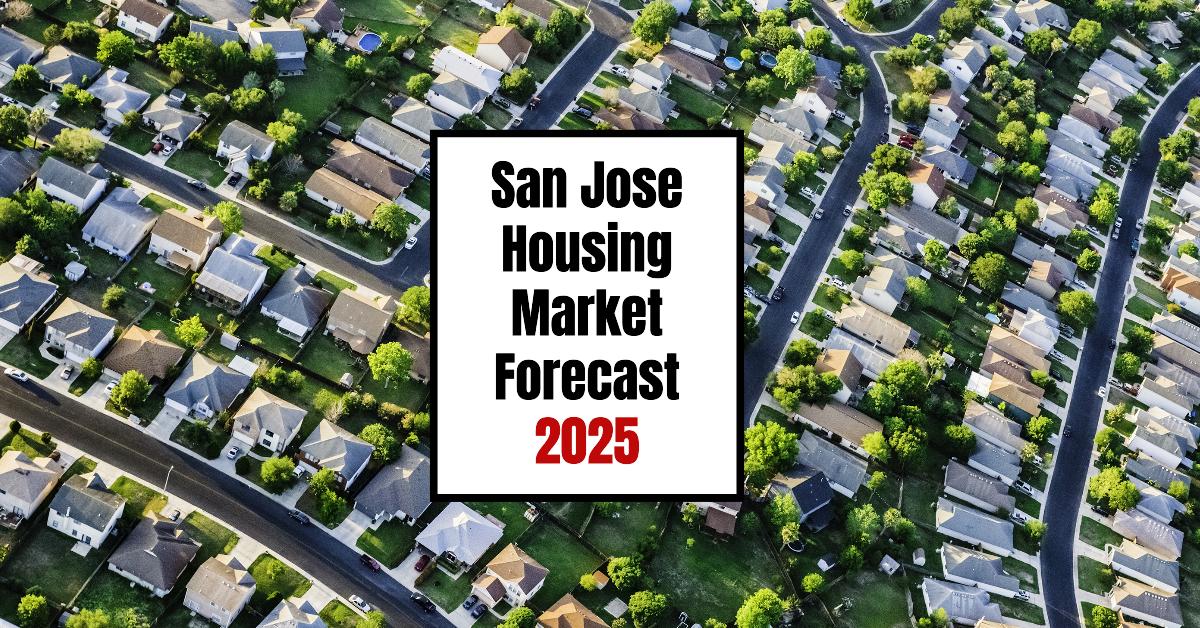
Thinking about buying or selling in San Jose? You're not alone. The San Jose housing market is a hot topic, and for good reason. As of last month, the median sale price for a home here was a cool $1.4 million. Now, before you get sticker shock, let's dig into what that really means for you. Based on the latest insights from Redfin, it seems the market is holding steady, but with some interesting shifts happening beneath the surface.
San Jose Housing Market Update: What's Happening Now and What to Expect
Home Sales: A Slight Dip, But Still Active
Let's talk about how many homes are actually changing hands. Last month, we saw 521 homes sold in San Jose. This is a little down from the 539 homes sold during the same period last year. While it might sound like a slowdown, I don't see this as a major red flag. In my experience, these kinds of small fluctuations happen regularly. What's more important is how these homes are selling. Even with fewer homes sold overall, the competition remains present.
Home Prices: Holding Strong with a Modest Rise
Now for the numbers that grab everyone's attention: home prices. Redfin data shows that the median sale price in San Jose jumped by 2.7% over the last year, landing at that $1.4 million mark. This means that while the price of admission to the San Jose market is high, it's also appreciating steadily. The price per square foot also saw a small increase, going up by 0.7%.
It's crucial to remember that San Jose's housing costs are significantly higher than the national average. Redfin reports that the median sale price here is a whopping 227% higher than the national average, contributing to a cost of living that's also 81% higher. This context is vital for understanding the affordability challenges in our area.
Housing Supply: Still Tight, but More Choice Evolving
One of the biggest factors influencing any housing market is supply. When there aren't enough homes for the number of people who want to buy them, prices tend to go up, and things move quickly. In San Jose, the supply remains somewhat limited, which is a big reason why prices have stayed so high.
However, I've noticed a trend where more homes are coming onto the market than we saw last year. This is a good sign for buyers who have been waiting for more options. While we're not in a buyer's paradise of endless choices, the slight increase in available inventory is a welcome development.
Average or Median Days on Market: The Pace of Transactions
How fast are homes selling? This tells us a lot about buyer demand and seller confidence. Last month, homes in San Jose took an average of 18 days to sell. This is a bit longer than the 15 days it took last year.
What does this average hide, though? Redfin data suggests that while the average is 18 days, “hot homes” can still fly off the market in as little as 9 days, often receiving multiple bids. On the flip side, homes that aren't priced perfectly or need some work might linger a bit longer. We're also seeing that, on average, homes are selling for about 2% above their list price. This indicates a market that's still favoring sellers, even if it's not as fiercely competitive as it was in previous peak periods.
Here's a snapshot of how the market is performing:
| Metric | Last Month | Last Year | Change |
|---|---|---|---|
| Median Sale Price | $1.4M | $1.36M | +2.7% |
| Median Price per Sq Ft | $891 | $885 | +0.7% |
| Homes Sold | 521 | 539 | -3.4% |
| Average Days on Market | 18 | 15 | +3 days |
| Sale-to-List Price Ratio | 102.1% | 104.2% | -2.1 pt |
| Homes Sold Above List Price | 54.1% | 67.5% | -13.4 pt |
| Homes with Price Drops | 37.2% | 20.4% | +16.8 pt |
Data sourced from Redfin.
Buyer's or Seller's Market? It's Still a Seller's Game, but Nuances Emerge
So, who has the upper hand right now: buyers or sellers? Based on the data, I'd still call this a seller's market, but with some important qualifications. The fact that the median sale price is up and homes are still selling for more than asking price points to strong demand.
However, the slight increase in the average days on market and the significant rise in homes with price drops (up 16.8% year-over-year) suggest that buyers have a bit more room to negotiate than they did a year ago. The percentage of homes selling above list price has also decreased by 13.4%. This doesn't mean buyers are getting huge discounts, but perhaps the extreme bidding wars are less common.
My take on this is that while sellers still have an advantage due to persistent demand and relatively low inventory, buyers who are well-qualified and patient can find some opportunities. It's less about rushing into a multi-offer frenzy and more about making a well-researched and strong offer on the right property.
Looking Ahead
The San Jose housing market is dynamic. While the overall picture shows a stable market with appreciating prices, it's the details that matter. As we move forward, I'll be watching interest rate trends and the broader economic climate, as these will undoubtedly continue to shape how many homes sell, how quickly they sell, and at what price.
Why Are Houses in San Jose So Expensive?
San Jose, like the rest of the Bay Area, is an excellent place to call home. However, you should only do so if you can afford it. National Affordability More than Five Times San José Metro Area’s Affordability. San Jose's job market and economy are thriving.
The region has the fastest rate of employment growth among the nation's largest metropolitan areas. San Jose is also located in Silicon Valley, which is home to technology behemoths such as Apple and Google, as well as a slew of successful startup businesses. Numerous well-compensated employees can afford very high market prices.
Houses in San Jose are known for their high prices due to several factors. Firstly, San Jose is located in the heart of Silicon Valley, which is home to numerous technology giants and startups. The thriving tech industry has led to high demand for housing from highly paid professionals, driving up prices.
Additionally, limited land availability and strict zoning regulations restrict new construction, further exacerbating the supply-demand imbalance. The desirable climate, quality of life, and proximity to job opportunities also contribute to the high demand for housing in San Jose, making it a sought-after market with premium prices.
In addition to the factors mentioned earlier, several other reasons contribute to the high cost of houses in San Jose. The region's strong economy and job growth have attracted a skilled workforce from around the world, increasing the competition for housing. The presence of prestigious universities and research institutions in the area further fuels the demand for housing from students and faculty members.
Moreover, San Jose faces challenges in expanding its infrastructure to accommodate the growing population. Limited housing supply coupled with a rapidly increasing population puts pressure on the existing housing stock, leading to higher prices. The high cost of construction materials, labor, and stringent building regulations also contribute to the overall cost of housing in the area.
Additionally, the desirability of the San Jose area, with its excellent schools, cultural amenities, and proximity to natural attractions like beaches and mountains, adds to the demand for housing. The high cost of living in the region is also reflected in the housing prices.
Overall, the combination of a booming tech industry, limited supply, population growth, infrastructure constraints, and desirability of the area contribute to the expensive housing market in San Jose.
San Jose Housing Market Forecast 2025-2026: Will Prices Drop?
While the current market is showing some growth, experts predict a slight dip in home values over the next year. But don't panic just yet! Let's break down the numbers and explore the factors at play. Currently, the average home value in the San Jose-Sunnyvale-Santa Clara area is $1,631,344, showing a modest increase of 1.1% over the past year, with homes going under contract in approximately 15 days. This reflects the enduring appeal and high demand for housing in Silicon Valley. But what about the future?
Prediction: A Slight Cooling Trend
Zillow's latest forecast offers a glimpse into the coming months. Here's a simplified look at their projections as of June 30, 2025:
| Timeframe | Predicted Change in Home Value |
|---|---|
| July 31, 2025 | -1.0% |
| September 30, 2025 | -2.6% |
| June 30, 2025 – June 30, 2026 | -4.0% |
This data suggests that while home values in San Jose have been steadily growing over the past few years, we might see a slight correction. It doesn't signal a crash, but rather a potential leveling off or a minor decrease.
How Does San Jose Compare to Other California Markets?
It's important to see how San Jose's forecast stacks up against other major California cities. Here's a comparison:
| Region | Expected Change (June 2025 – June 2026) |
|---|---|
| San Jose | -4.0% |
| San Francisco | -6.1% |
| Los Angeles | -1.3% |
| San Diego | -1.5% |
| Sacramento | -3.7% |
As you can see, San Jose's projected decrease is more pronounced than in Los Angeles or San Diego, but less drastic than San Francisco. Several factors could be contributing to this, including affordability challenges, tech industry trends, and migration patterns.
National Trends: A Brighter Outlook?
Moving beyond California, what's happening on a national level? Lawrence Yun, Chief Economist at the National Association of Realtors (NAR), is relatively optimistic. His forecasts include:
- Existing Home Sales: Expected to rise 6% in 2025 and 11% in 2026.
- New Home Sales: Projected to climb by 10% in 2025 and an additional 5% in 2026.
- Median Home Prices: Forecasted to increase by 3% in 2025 and 4% in 2026.
- Mortgage Rates: Anticipated to average 6.4% in the second half of 2025 and dip further to 6.1% in 2026.
While the national outlook suggests growth, it's crucial to remember that local markets like San Jose can behave differently.
So, Will Home Prices Drop in San Jose? Will it Crash? Forecasting 2026
Based on the available data, a crash seems unlikely. The forecast points to a correction and not a collapse. The slight downturn and the national predictions indicate a trend toward price stabilizing amid economic uncertainty.
Looking ahead to 2026, if mortgage rates continue to drop, and the economy improves, we might see San Jose begin a slight rebound. My prediction, and this is just my opinion, is that we'll likely see flatter growth. This means slower growth numbers closer to 0%, and even a bit of growth by the end of the year. Of course, this is all subject to change, so stay tuned for future updates!
Lower than June's median sale price of $1,642,667, indicating a slight market cooling off.
Homes are moving quickly, indicating a still-competitive market.
Homes are selling above list price on average.
Total for-sale inventory, with 1237 new listings in July 2025.
63.6% of sales were over list price, while 30.2% were under list price. This indicates a competitive market with a majority of homes selling above asking price.
“The San Jose housing market remains competitive with the majority of the homes selling above the list price. However, the decrease in median list price compared to previous month's sale price suggests a potential market adjustment.”
San José Housing Market Update: Q4 2024 (Most Recent Data)
The San José Housing Market Update for Q4 2024 by the Government of San José reveals a mixed bag. While apartment rents saw a slight decrease quarter-over-quarter, home prices continue their climb, albeit at varying paces for single-family homes and townhouses. The main story? Affordability remains a significant challenge, as incomes struggle to keep pace with housing costs.
I've been watching the San José housing market closely for years, and it's a market unlike any other. The allure of Silicon Valley, coupled with limited housing supply, creates a unique pressure cooker. Let's dive into the details and see what Q4 2024 tells us.
ADU Activity: A Sign of Things Slowing?
Accessory Dwelling Units (ADUs), often seen as a key solution to the housing shortage, experienced a slowdown in permit activity compared to the previous quarter. Here's a quick rundown:
- QoQ Decline: ADU permit activity slowed in Q4 2024 compared to Q3 2024.
- Yearly Growth: Despite the quarterly dip, annual ADU permit activity still grew year-over-year.
The city has been actively promoting ADU construction by updating zoning codes in 2016 and 2018 to conform with new State Legislation and to facilitate construction of ADUs.
Here's a table summarizing the ADU trends over the past few years.
| Year | ADU Applications | ADU Permits Issued | ADU Completed |
|---|---|---|---|
| 2019 | 422 | 352 | 233 |
| 2020 | 382 | 351 | 205 |
| 2021 | 536 | 465 | 276 |
| 2022 | 452 | 529 | 342 |
| 2023 | 506 | 466 | 360 |
| 2024 | 694 | 558 | 365 |
While the annual numbers look positive, the quarterly slowdown in permits issued could signal a cooling trend. I believe this is something to watch closely. It could be due to rising construction costs, challenges in navigating the permitting process, or simply a saturation point in certain neighborhoods.
Residential Permit Activity: Overall Weakness
Overall residential permit activity in Q4 2024 was weak. This includes permits for:
- Multi-family Affordable Housing
- Multi-family Market Rate Housing
- 1-4 Unit Dwellings/Second Units
Here's an overview of the annual residential building permits compared to the Regional Housing Needs Allocation (RHNA) Goal.
- Overall: Residential building permits reached only 28% of the RHNA goal
- Affordable: Affordable housing permits achieved 47% of the RHNA goal
- Market Rate: Market-rate housing permits only achieved 5% of the RHNA goal.
San José is clearly struggling to meet its housing goals, especially when it comes to market-rate units.
Apartment Rents and Vacancies: A Slight Shift
The apartment market is showing signs of slight moderation.
- Average Rent (Q4 2024): \$2,782 (Down 0.7% QoQ)
- Average Rent (Annual 2024): \$2,798 (Up 2.2% YoY)
- Vacancy Rate (Q4 2024): 5.3% (Up from 3.8% in Q3)
- Vacancy Rate (Annual 2024): 4.6% (Down from 5.1% in 2023)
While average rents are still up compared to last year, the slight quarterly decrease and the increase in vacancy rates suggest that the market may be starting to soften. It's important to note that a healthy vacancy rate is considered to be around 5%, so San José is hovering around that mark.
Breaking down the apartment market by class:
- Class A (highest quality): Average vacancy of 10.4%.
- Class B and C (more affordable): Vacancies of 4.0% and 3.9%, respectively.
This suggests that newer, more expensive apartments are sitting vacant longer, while there's still strong demand for more affordable options.
Home Prices: Still Climbing, but at Different Paces
The ownership market in San José remains competitive, but the pace of price increases is showing some variation.
- Single-Family Home (Median Price Q4 2024): $1.65 Million
- Townhome/Condo (Median Price Q4 2024): $790,000
- Single-Family Home (Median Price Annual 2024): $1,660,888 (Up 9% from 2023)
- Townhome/Condo (Median Price Annual 2024): $844,000 (Up 1.3% from 2023)
- Single Family Homes (Days on Market Q4 2024): 37 Days
- Townhomes (Days on Market Q4 2024): 23 Days
- Single Family Homes (Days on Market Annual 2024): 16 Days
- Townhomes (Days on Market Annual 2024): 24 Days
Single-family homes continue to appreciate significantly, while townhomes are experiencing much slower growth. Interest rates continue to impact the overall market.
The Affordability Crisis: A Persistent Challenge
The report highlights the stark reality of the affordability crisis in San José. The income needed to afford even a modest home is significantly higher than what many professions earn.
To really drive the point home, you need an annual income of $426,277 to afford a median-priced single-family home in San José. Think about that for a moment. Even a median priced townhome/condo requires an annual income of $226,376.
Final Thoughts and What's Next?
The San José housing market remains a complex puzzle. While some indicators suggest a slight cooling, affordability remains a critical issue. I believe that:
- ADUs are still important: Streamlining the permitting process and offering incentives could help boost ADU construction.
- Focus on affordable housing: Prioritizing the development of affordable units is essential to address the needs of lower-income residents.
- Monitor interest rates: Mortgage rates play a significant role in housing affordability, and any significant changes will impact the market.
I'll continue to keep a close eye on these trends and provide updates as the market evolves.
Should You Invest in the San Jose Real Estate Market?
Investing in San Jose real estate can be an attractive prospect due to several factors that make it a vibrant market within the larger real estate landscape of California. San Jose, often referred to as the capital of Silicon Valley, is a bustling tech hub renowned for innovation and economic prosperity. This status has positioned it as an appealing destination for both local and international investors seeking opportunities in real estate.
One of the top reasons to consider investing in San Jose real estate is its position as a thriving tech hub. The city hosts numerous technology companies and startups, attracting a high concentration of skilled professionals. This influx of talent has created a consistent demand for housing, both for buying and renting, making it an investor-friendly market. The demand is further driven by the desire of tech professionals to reside in close proximity to their workplaces, enhancing the value of residential properties.
The city's strong and diverse economy is another compelling reason to invest in San Jose real estate. San Jose is not solely reliant on the tech sector; it boasts a diverse economic base that includes industries like healthcare, finance, manufacturing, and education. A robust econom
San Jose's real estate market benefits immensely from being a prominent tech hub, housing major technology companies and startups. The presence of big tech firms not only drives demand for office spaces and commercial real estate but also fuels the need for housing, attracting a pool of high-income tech professionals to the region. This demand contributes to property appreciation, high rental yields, and a consistent influx of talent, making it an attractive proposition for real estate investors seeking to capitalize on the tech industry's growth and stability.
The limited supply of housing and high demand for homes is a significant factor driving property values in San Jose. The region faces constraints on available land for construction, limiting the number of new housing developments. Simultaneously, the city's desirability and employment opportunities attract a growing population. This supply-demand imbalance exerts upward pressure on both property prices and rental rates, making real estate investment potentially lucrative.
The presence of reputable educational institutions also contributes to the investment appeal of San Jose. The city hosts renowned universities and colleges, attracting students and faculty members. This academic influence creates a consistent demand for rental properties, particularly in neighborhoods close to these institutions. Investors can capitalize on this demand by targeting properties suitable for the student population.
Furthermore, ongoing development projects and infrastructural improvements in the city add to its investment allure. The continuous development of commercial spaces, transportation networks, and community amenities enhances the overall quality of life and attractiveness of San Jose. It can result in increased property values over time, providing potential returns on investment.
Drawbacks of Investing in San Jose Real Estate
While the San Jose real estate market offers promising opportunities, it's crucial to consider the potential drawbacks before making investment decisions.
Firstly, the high costs associated with real estate in San Jose can pose a challenge for investors. The median home prices in this region are considerably higher than the national average, demanding substantial initial capital for property acquisition. Investors need to carefully assess their financial capacity and consider the impact on their investment portfolio.
Secondly, the real estate market in San Jose, like any other, is subject to market volatility and economic fluctuations. Changes in interest rates, economic downturns, or shifts in demand can influence property values and rental incomes. Investors need to be prepared for market variations and develop strategies to mitigate risks and adapt to changing market conditions.
Regulatory challenges and legal complexities related to real estate in California can be a potential drawback for investors. The state has specific laws and regulations governing real estate transactions, property taxes, and landlord-tenant relationships. Investors should thoroughly understand these regulations and seek professional guidance to navigate the legal aspects and compliance requirements effectively.
Lastly, the competitive landscape of the San Jose real estate market can present a hurdle for investors. The high demand for properties often leads to competitive bidding, making it crucial for investors to act swiftly and strategically. Additionally, this competitiveness can impact property prices, potentially affecting the overall return on investment.