The Denver housing market in December 2025 is showing signs of a market that is stabilizing and recalibrating, rather than declining, despite what headlines might suggest. The median close price for homes in the Denver Metro area has settled at $575,000, representing a slight dip of 0.86% month-over-month. While this might sound concerning, I believe it's more indicative of a market finding its footing after years of rapid price hikes, and it's crucial to look beyond the surface to understand what's truly happening.
Right now, the market is transitioning from the frenzy of the pandemic years to a more predictable, balanced state. It's easy to get caught up in the sensational headlines about a “slowdown,” but the data, especially when you dig into it, tells a more nuanced story. The Denver Metro Association of Realtors (DMAR) December 2025 Market Trends Report paints a picture of seasonal shifts and rational adjustments, not a market in distress.
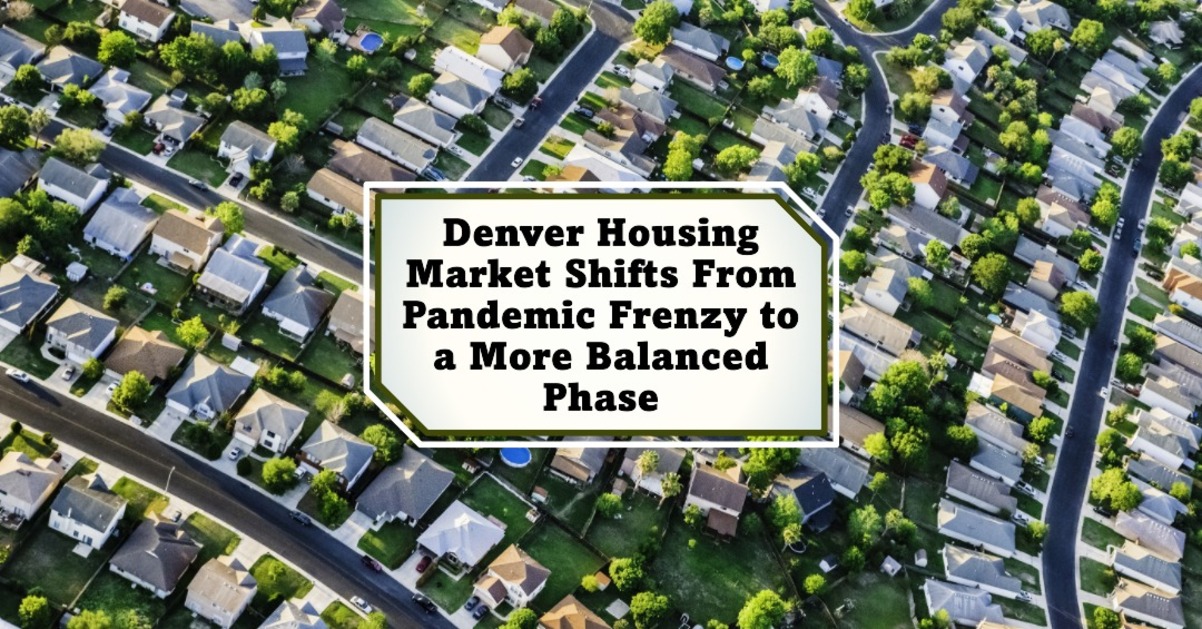
Denver Housing Market Shifts From Pandemic Frenzy to a More Balanced Phase
What the December 2025 Data Tells Us
Let's break down some of the key figures from the DMAR report and what they mean for anyone thinking about buying or selling in Denver right now.
- Median Close Price: At $575,000, this is the price point where half of the homes are selling for more and half are selling for less. The 0.86% decrease from the previous month is a small fluctuation, especially when you consider the overall increases we've seen in recent years.
- Closed Homes: We saw 3,101 sales in December, a healthy 9.23% increase compared to the month before. This indicates that people are still buying homes. The activity picked up, which is a positive sign.
- Sales Volume: The total value of homes sold reached a substantial $2.10 BILLION, an impressive 52.35% jump from the previous month. This shows that not only are more homes selling, but the dollar amount tied to those sales is significant, reflecting the continued value in Denver real estate.
- Months of Inventory: This is a key metric for understanding the balance of supply and demand. We currently have 2.45 MONTHS of inventory. While this is a 36.20% decrease from the previous month, it's still a number that suggests a somewhat balanced market compared to the extreme seller's markets of the past. In simpler terms, if no new homes were listed, it would take about 2.45 months to sell all the existing homes on the market.
- Median Days in MLS: Homes are taking, on average, 45 DAYS to sell. This is a 25.00% increase from the month before. This longer timeframe is actually a good thing for buyers. It means they have more time to consider their options, do inspections, and negotiate. It’s a return to more normal market conditions where homes don’t fly off the shelves in a matter of hours.
Understanding the Seasonal Shift
It's vital to remember that real estate is inherently seasonal. The numbers we see in November and December often reflect a predictable slowdown as the holidays approach.
- New Listings Declining: The 41.39% drop in new listings from October to November is very similar to what we saw in the previous year. This is typical. Sellers often pull their homes off the market for the holidays, planning to relist them after the new year. This isn't a sign of people abandoning the market, but rather a normal pause.
- Active Listings Easing: Similarly, the 15.92% decrease in active listings at the end of November closely mirrors the 14.89% decline in 2024. Again, this is part of the annual holiday pattern.
Pricing Trends: A Return to Normalcy
When we look at pricing, the month-over-month numbers show a slight dip, which is also common as we head into winter.
- Attached Homes: Saw a 1.96% decrease in median sale price.
- Detached Homes: Experienced a 1.47% decrease.
However, looking at these numbers in isolation can be misleading. The year-to-date picture offers better context:
- Attached Homes are Down 3.21% Year-to-Date.
- Detached Homes are Up a Modest 0.02% Year-to-Date.
These are small shifts. They highlight a market that is stabilizing after years of rapid appreciation. Think about it: from March 2020 to April 2022, prices in Denver surged by a whopping 38.5%! The past few years of slower growth have been a necessary correction, bringing the market back into better balance. From March 2020 to November 2025, the cumulative median price increase is now 31.5%, averaging out to about 6.3% annually. This is a far more sustainable pace than the double-digit increases we saw during the peak of the market.
My Take: Embrace the “Normal” Market
I've heard many people say the market is “slow.” From my perspective, what we're experiencing is a return to normal. After years of bidding wars, waived contingencies, and homes selling for well over asking price, a market where homes sit for 45 days (which still isn't that long, historically speaking!) and where buyers can actually negotiate is a sign of a healthy, functional market.
Amanda Snitker, Chair of the DMAR Market Trends Committee, put it perfectly: “2025 reminded us that functional markets have negotiation, reasonable timelines and modest price movements.”
Here's what I believe makes the Denver market robust right now, even if it doesn't generate dramatic headlines:
- Increased Leverage for Buyers: More days on market and a healthier inventory give buyers more breathing room to make informed decisions.
- Stabilized Pricing: The era of runaway price increases has passed, leading to more predictable and sustainable home values.
- Seasonal Rhythms: The market is behaving as expected for this time of year, not succumbing to some underlying rot.
Looking Ahead to 2026
For 2026, I'm optimistic about the Denver housing market. The key will be for buyers and sellers to understand and embrace this new “normal.”
- Buyers: If you've been waiting for a market crash, you'll likely be disappointed. The current conditions offer a great opportunity to buy without the extreme pressure of a hyper-competitive market. Be prepared to negotiate and don't be afraid to make a strong offer on a home you love.
- Sellers: It's essential to price your home correctly from the outset. While the market may not be as frenzied as it was, well-maintained and realistically priced homes are still attracting buyers. Patience and strategic pricing will be your best allies.
The days of homes sitting on the market for months on end aren't the norm in Denver, but we're also not in the extreme territory of a few years ago. A reasonable 45 days on market is a sign of a market finding its equilibrium.
A Deeper Dive: The $1 Million+ Market
DMAR also provides insights into different market segments. The market for homes priced at $1 million or greater is fascinating. As Keri Duffy, a member of the DMAR Market Trends Committee, notes, “This segment is better insulated from mortgage rates and rising insurance costs.” Buyers and sellers in this range are often more resilient and continue to transact.
I recall a property in Cherry Hills that was listed at $20 million and eventually sold for $17 million. While headlines might scream “price drop,” looking at its sale history – it sold for $5.3 million in 2016 – highlights that even with the reduction, the seller achieved a price much closer to list price than the previous owner did in a strong 2016 market. The key takeaway here is that context is everything. Days on market and sale-to-list price ratios, even for high-end properties, often tell a more accurate story than simple price reduction figures.
The highest-priced condo sale this month was a penthouse in Cherry Creek North that sold for over $10 million, and it received multiple offers and sold above asking price. This sale, which was significantly higher than its 2020 sale price, proves that the luxury condo market is far from dead and buyers are still competing for the best properties.
Key Takeaways from the $1 Million+ Segment:
- Continued Activity: Buyers and sellers remain engaged.
- Resilience: This segment is less affected by broader economic shifts.
- Context is Crucial: High-end sales histories reveal more about market dynamics than isolated price drops.
This data, while perhaps not “viral headline” material, reflects the consistent reality of Denver’s luxury market. As Keri Duffy advises, “When dramatic headlines pop up, pull the data and revisit pre-COVID history for context. Days on market often tell the story.”
In Conclusion
The Denver housing market in December 2025 is in a phase of stabilization. The “trends” we're seeing are largely seasonal adjustments and a rational return to more typical appreciation rates. For those looking to navigate this market, understanding these nuances is key. It's a market that rewards patience, realistic expectations, and a solid grasp of current data, not speculation on extremes.
Want Stronger Returns? Invest Where the Housing Market’s Growing
Turnkey rental properties in fast-growing housing markets offer a powerful way to generate passive income with minimal hassle.
Work with Norada Real Estate to find stable, cash-flowing markets beyond the bubble zones—so you can build wealth without the risks of ultra-competitive areas.
🔥 HOT NEW LISTINGS JUST ADDED! 🔥
Talk to a Norada investment counselor today (No Obligation):
(800) 611-3060
Recommended Read:
- Denver Housing Market: Trends and Forecast 2026
- Denver Housing Market Trends: Sellers Still Have the Upper Hand
- Denver Housing Market Heats Up Again: Can You Afford?
- Where to Buy Denver Investment Properties in 2025?
- Denver Housing Market Forecast 2025-2026: What to Expect
- Colorado housing market forecast & trends
- Is Buying a House in Denver a Wise Investment
- Buying a House in Denver in 2025: Comprehensive Guide