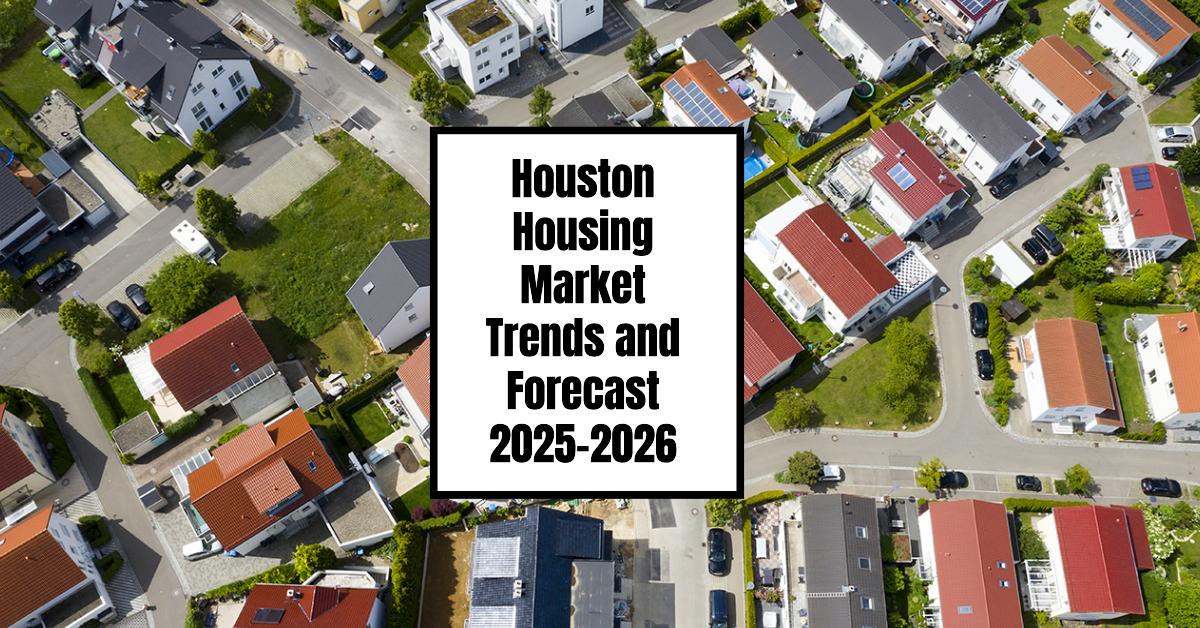
The Houston housing market in 2025 truly found its footing, delivering a much-needed sense of balance for both those looking to buy and those hoping to sell. After a few bumpy years, the Greater Houston area shifted back towards pre-pandemic norms, offering a promising outlook that many other major cities across the U.S. are still striving for. Overall property sales saw a healthy uptick, signaling continued interest and activity in our region.
2025 was a refreshing year for Houston. It wasn't a wild, runaway market, nor was it a complete standstill. It was, dare I say, normal, and for a lot of us, that's exactly what we needed.
Houston Housing Market Update: A Year of Stability and Opportunity
Home Sales: A Steady Climb Back
Let's talk about the nuts and bolts: sales. The Houston Association of Realtors reported that total property sales for the full year of 2025 were 2.3 percent higher than in 2024. That might sound like a small percentage, but when you're talking about the sheer volume of homes sold in a market as large as Houston, it adds up. It means more families found their new homes, more investors saw opportunities, and more people felt confident making a big life decision.
The total dollar volume, which is essentially the total value of all homes sold, also saw a respectable 4.5 percent increase, reaching $42.9 billion. This higher dollar volume, coupled with the increased sales numbers, indicates that not only were more homes changing hands, but the overall value of those transactions was growing.
When we zoom in on single-family homes, the backbone of most housing markets, the news is equally positive. Sales of single-family homes climbed by a solid 3.8 percent in 2025. This means 88,634 single-family homes found new owners throughout the year, compared to 85,373 in 2024. As someone who watches these trends closely, this sustained demand for single-family homes is a testament to Houston's enduring appeal as a place to live, work, and raise a family.
HAR Chair Theresa Hill of Compass RE Texas, LLC – Houston, summed it up perfectly: “The past year brought a welcome sense of balance back to the Houston housing market. Buyers had more choices, prices were more stable, and homes continued to sell at a steady pace.” I couldn't agree more. It felt like the frenzy of prior years calmed down, allowing for more thoughtful decisions and less pressure cooker scenarios.
Home Prices: Stability Over Spikes
One of the most talked-about aspects of any housing market is home prices. After several years of rapid appreciation that left many feeling priced out, 2025 brought a welcome moderation. The median home price for the year remained largely flat, holding steady at $334,990. This is a significant shift from the meteoric rises we'd grown accustomed to. We saw modest increases in January (1.6 percent) and March (1.5 percent), but beyond that, prices were generally stable.
This stability is a good thing. It means that while the market wasn't seeing incredible gains for sellers every single month, it also wasn't becoming inaccessible for buyers. It created a more predictable environment, allowing people to better budget and plan for their homeownership journey.
However, the average home price did see a slight increase of 0.9 percent year-over-year, reaching $426,558. This is often influenced by sales in the higher-end market. In fact, strong demand in the luxury segment even propelled the average price to an impressive record high of $449,561 in June. This tells me that while the everyday market saw stability, the demand for higher-end properties remained robust, indicating a healthy and diverse market.
Dr. Ted C. Jones, HAR's Chief Economist, provided some excellent perspective: “We’re selling just as many homes in the Houston area now as we did in 2019, which shows how far this market has come. Houston is one of the few markets in the country that’s truly back to normal.” This quote really resonates with me. It emphasizes that Houston isn't just recovering; it's returned to a natural, sustainable rhythm, which is a strong indicator for future growth.
Affordability Gets a Boost
With stable prices and slightly easing interest rates (which we'll touch on later), affordability improved in Houston for most of 2025. According to HAR data, when comparing 2025 to 2024, homebuyers saw a reduction in their monthly principal and interest payments in 10 out of 12 months. For someone buying the median-priced home in December 2025, their monthly payment was about $87.72 lower than it would have been in December 2024. Over a year, that's a savings of over $1,000 – a tangible difference for many families.
Housing Supply: More Choices for Buyers
Perhaps one of the most significant developments that contributed to the market's balance was the expansion of housing inventory. Throughout 2025, we saw a steady increase in the number of active listings. This trend culminated in July with a record high of 39,490 active listings, providing buyers with more options than they'd had in years.
This growth in supply pushed the months of inventory – the time it would take to sell all available homes at the current pace – to a healthy 5.5 months in July. This was the highest level since June 2012! Having more homes available is a win for buyers. It eases the intense competition, reduces the likelihood of bidding wars, and allows for more deliberate decision-making. It signals a shift away from the extreme seller's market that characterized recent years.
Market Trends: A Healthier Balance
In my experience, a market with a balanced supply and demand is a healthy market. 2025 truly exemplified this. We saw sales activity remain consistent for most of the year, with only a few months showing year-over-year declines. The summer months were particularly strong, acting as a powerful engine to keep momentum going.
Seller's or Buyer's Market? It's Complicated, but Leaning Balanced
While the market wasn't a full-blown buyer's market, the increased inventory and moderated price growth definitely gave buyers more leverage than they've had in a while. Sellers still needed to be competitive, price their homes correctly, and ensure they were in good condition. However, the days of accepting offers sight unseen and waiving every contingency were largely behind us.
The Days on Market (DOM) – the total time it takes to sell a home – increased slightly from 59 days in late 2024 to 64 days in December 2025. This is the longest average time homes spent on the market since February 2020, further reinforcing the idea of a more measured pace.
December Wrap-Up: A Strong Finish
Looking at the end of the year, December 2025 provided a positive conclusion to a balanced market. Total property sales saw a 1.2 percent increase year-over-year, with dollar volume up 2.1 percent to $3.6 billion. The number of properties available was a robust 16.5 percent higher than in December 2024, with 52,727 active listings.
Single-family homes performed well, with sales up 2.8 percent. The median price remained statistically flat at $335,000, while the average price saw a small rise to $425,535. The average price per square foot, however, dipped slightly to $174 from $177 a year prior, indicating continued price moderation at the micro-level.
Townhomes and condominiums also saw a good pickup in December, with closings up 5.5 percent year-over-year. This was the largest year-over-year jump since January 2025. While the median price declined by 4.4 percent to $224,500, the average price edged up by 0.8 percent to $269,502. Inventory for these types of homes also expanded considerably, reaching a 7.1-month supply.
Looking Ahead
Based on the stability and steady demand seen throughout 2025, I'm optimistic about the Houston housing market as we move forward. The return to pre-pandemic norms, with more balanced conditions, stronger inventory, and more accessible pricing, sets a solid foundation for continued growth and opportunity. Houston continues to be a dynamic and appealing place to live, and the housing market reflects that resilience.
Houston Housing Market Forecast 2026: What's Coming Up?
Now you're probably wondering about the Houston housing market forecast. The short answer: While prices have cooled down a bit, experts are predicting a slow, steady decline in the near future but definitely not a crash.
Let's dive into the details and see what the data tells us about where things are headed in Houston's real estate world.
Is Houston's Housing Market Slowing Down?
You bet! Right now, the average home value in the Houston-The Woodlands-Sugar Land area is around $313,936. That's about a 1.6% decrease over the past year. And homes are going to pending in an average of 29 days. Source: Zillow
What's the Near-Term Forecast Saying?
Zillow puts out regular forecasts, and here’s what they’re predicting for the Houston area:
| Timeframe | Projected Change |
|---|---|
| June 2025 | -0.3% |
| August 2025 | -0.7% |
| May 2025 to May 2026 | -1.8% |
Basically, expect a gradual dip in home values over the next year. These dips are still much better than the crash a lot of people were predicting last year.
Houston vs. Other Texas Cities
How does Houston stack up against other major cities in Texas? Let's take a peek (Source: Zillow):
| City | Forecasted Change by June 2025 | Forecasted Change by August 2025 | Forecasted Change from May 2025-May 2026 |
|---|---|---|---|
| Dallas | -0.6% | -1.5% | -2.2% |
| Houston | -0.3% | -0.7% | -1.8% |
| San Antonio | -0.4% | -1.2% | -3.2% |
| Austin | -0.8% | -2.4% | -4.2% |
| McAllen | -0.2% | -0.1% | 0.9% |
| El Paso | 0% | 0% | 0.9% |
| Killeen | -0.2% | -0.7% | -1% |
| Corpus Christi | -0.4% | -1.2% | -4.2% |
| Brownsville | 0% | -0.1% | 0.5% |
| Beaumont | -0.4% | -1.6% | -6.2% |
Compared to cities like Austin and Dallas, the Houston housing market is holding reasonably steady.
What About the National Outlook?
It's not just about Houston! The overall US housing market plays a role too. Lawrence Yun, the Chief Economist at the National Association of Realtors, thinks things are looking up nationwide. [Source: NAR]
Here's what he's predicting:
- Existing Home Sales: Up 6% in 2025 and 11% in 2026.
- New Home Sales: Up 10% in 2025 and 5% in 2026.
- Median Home Prices: Up 3% in 2025 and 4% in 2026.
- Mortgage Rates: Averaging 6.4% in the second half of 2025 and 6.1% in 2026.
If interest rates come down as predicted, that could really give the market a boost.
So, Will Home Prices Drop in Houston? Will It Crash?
Based on the data, a major crash in Houston seems unlikely. We're more likely to see a slight softening of prices over the next year.
My Personal Take for 2026
If mortgage rates do come down as expected, I believe 2026 will be a more stable year for the Houston housing market. We might even see prices start to tick upwards again as affordability improves and more people jump back into the market. But I feel it will likely depend on whether or not there is enough inventory to meet demand.
Should You Invest in the Houston Real Estate Market?
The city of Houston has long been a beacon for real estate investors seeking opportunities for long-term growth. As one of the largest and most dynamic cities in the United States, Houston offers a unique landscape for those looking to make strategic real estate investments. In this essay, we'll explore the factors that make Houston a promising destination for long-term real estate investment and provide insights into its outlook for sustainable growth.
Economic Resilience
One of the fundamental factors that underpin Houston's real estate investment potential is its economic resilience. Houston is home to a diverse range of industries, including energy, healthcare, manufacturing, and aerospace. Its role as the energy capital of the world has historically been a significant driver of economic activity.
While energy markets can be cyclical, Houston's economy has shown remarkable resilience even in the face of energy price fluctuations. This economic diversity serves as a stabilizing force for real estate investors, reducing the risk associated with economic downturns in any single sector.
Population Growth
Houston has consistently experienced population growth over the years. This demographic expansion is driven by several factors, including a robust job market, affordable housing, and a high quality of life. The city's attractiveness to both domestic and international migrants bodes well for long-term real estate investment. As the population continues to grow, the demand for housing and commercial properties is expected to follow suit, creating a reliable source of rental income and property appreciation for investors.
Infrastructure Development
Houston has made significant investments in infrastructure development. The city's commitment to improving transportation, public amenities, and urban planning has enhanced its livability and attractiveness. Infrastructure investments not only make the city a better place to live but also contribute to increasing property values. As Houston continues to expand and modernize its infrastructure, investors can expect to see a positive impact on their real estate holdings in the long term.
Real Estate Diversity
Houston's real estate market offers a diverse range of investment opportunities. Whether you're interested in residential, commercial, industrial, or mixed-use properties, Houston has options to suit various investment strategies. The city's size and varied neighborhoods provide investors with choices to tailor their portfolios to their specific goals. This diversity allows for risk mitigation through portfolio diversification, a key strategy for long-term real estate investors.
Houston's Top 10 Hotspots for Rising Home Values
Houston's real estate market is a diverse tapestry, offering a range of neighborhoods catering to various lifestyles and budgets. But for those seeking promising investment opportunities, specific areas are projected to see significant home value appreciation. Here's a closer look at the top 10 contenders (Neighborhoodscout).
- Gulfgate/Riverview/Pine Valley East: This revitalizing pocket on Houston's east side boasts a mix of affordable housing options, proximity to downtown, and ongoing development projects. These factors are fueling a surge in investor interest and property value appreciation.
- Lawndale/Wayside South: Located southeast of downtown, this area is undergoing a transformation. Historic bungalows are being restored, attracting young professionals and families. This growing demand is likely to push home values upwards.
- Downtown Southeast: As Houston's urban core continues to expand, the southeastern quadrant near Minute Maid Park is witnessing a development boom. New apartment buildings, office spaces, and revitalized historic structures are drawing residents and businesses alike. This confluence of factors positions the area for significant home value appreciation.
- Gulfton South: This established neighborhood southwest of downtown offers a multicultural vibe and a variety of housing options, from single-family homes to apartments. The area benefits from easy access to major freeways and proximity to the Medical Center. With its affordability and growing popularity, Gulfton South is poised for steady home value growth.
- Second Ward East: Steeped in history, Second Ward East is experiencing a renaissance. Art galleries, restaurants, and trendy shops are transforming the neighborhood into a vibrant destination. As the area attracts a new wave of residents, expect home values to rise alongside its growing appeal.
- Close In: This central district encompasses a diverse range of neighborhoods, each with its own unique character. Its proximity to downtown and eclectic offerings are propelling home value appreciation across the area.
- Second Ward: Once a predominantly industrial area, Second Ward is undergoing a complete overhaul. New developments, art studios, and a burgeoning nightlife scene are attracting residents, leading to anticipated growth in home values.
- Greenway/Upper Kirby Area West: This prestigious enclave on the west side of Houston boasts luxury high-rises, single-family homes, and high-end shopping. Its established affluence and desirability are likely to continue driving home values upwards.
- Second Ward West: Once industrial, this area is transforming with converted lofts, art studios, and a growing young professional scene. Its proximity to downtown and development potential position it for rising home values.
- South Main: South Main's revitalization is well underway, with historic buildings being restored and repurposed for creative uses. This influx of investment and trendy establishments suggests promising prospects for home value appreciation.
By understanding the unique dynamics of these top neighborhoods, you can make informed decisions about where to invest in Houston's ever-evolving real estate landscape. Remember, consulting with a local real estate expert can provide valuable insights into specific neighborhoods and their potential for future growth.
Conclusion: Houston's Promise for Long-Term Real Estate Investment
When considering the outlook for long-term real estate investment, Houston stands out as a city with immense potential. Its economic resilience, population growth, infrastructure development, and real estate diversity create a fertile ground for investors seeking sustainable and reliable returns. The city's track record of weathering economic challenges and its proactive approach to urban development positions it as an attractive destination for those who value long-term real estate investments. As Houston continues to evolve and expand, it will likely remain a shining star in the constellation of real estate investment opportunities.
In 2026, select U.S. cities are projected to see surging demand, rising rents, and appreciation—creating prime opportunities for investors seeking passive income and long‑term wealth.
Work with Norada Real Estate to find stable, cash-flowing markets beyond the bubble zones—so you can build wealth without the risks of ultra-competitive areas.
Recommended Read:
- Houston Real Estate Market Forecast: What to Expect
- Houston Real Estate Investment: Should You Invest in Houston?
- Housing Market Trends: Big Investors Buy in Houston, Atlanta, Dallas, Charlotte
- Best Houston Neighborhoods To Buy Investment Properties
- 17 Facts That Make Houston the Best City in America
- Texas Housing Market: Prices, Trends, Predictions 2024-2025