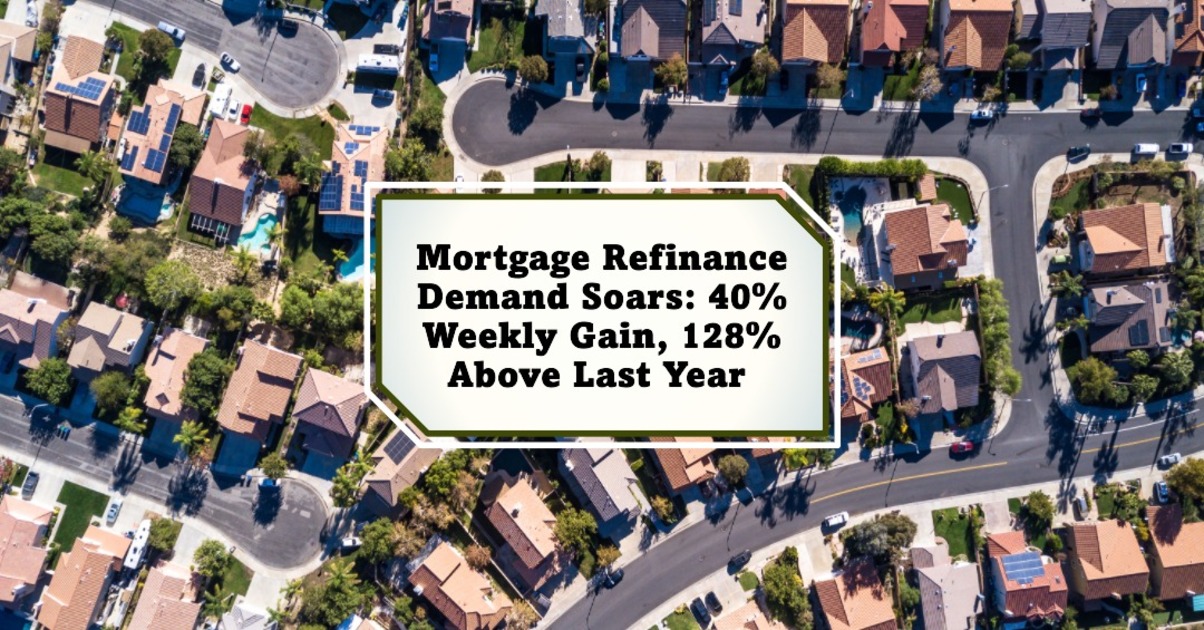
If you've been thinking about refinancing your mortgage, it seems like now might be the perfect time, as mortgage refinance demand has exploded, showing a 40% weekly gain and a staggering 128% increase above last year. This isn't just a small bump; it's a significant surge in homeowners looking to lock in new loan terms, and I want to dive into what’s driving this, what it means for you, and what I’m seeing from my vantage point.
Mortgage Refinance Demand Soars: 40% Weekly Gain, 128% Above Last Year
As someone who spends a lot of time immersed in the mortgage market, these numbers from the Mortgage Bankers Association (MBA) are truly eye-catching. A 40% jump in just one week for refinance applications, and being over double what it was a year ago? That’s a clear signal that something big is happening. It’s not just a blip; it’s a trend that could have real implications for your bottom line.
What’s Fueling This Refinance Rush?
So, what’s causing this massive uptick in homeowners wanting to refinance? The answer, as is often the case in the world of mortgages, boils down to interest rates.
According to Joel Kan, the MBA’s Vice President and Deputy Chief Economist, the latest survey data shows that mortgage rates dropped lower last week. This was a direct response to an announcement about increased mortgage-backed security (MBS) purchases by government-sponsored enterprises (GSEs). When GSEs buy more MBS, it generally leads to lower borrowing costs for consumers.
Specifically, the 30-year fixed-rate mortgage dipped to 6.18 percent. For many homeowners, this is a critical threshold. Think about it: if you took out your mortgage even a few years ago, there’s a good chance your interest rate was higher than that. Even a small decrease in your interest rate can translate into significant savings over the life of your loan.
Here’s what this means in simple terms:
- Lower Monthly Payments: The most immediate benefit of refinancing at a lower rate is a reduction in your monthly mortgage payment. This frees up cash for other expenses, investments, or even paying down debt faster.
- Reduced Total Interest Paid: Over the 15, 20, or 30 years of your mortgage, a lower interest rate means you'll pay substantially less in interest overall. This can save you tens of thousands of dollars.
- Cash-Out Refinance Opportunities: With refinance demand up, lenders are often willing to offer cash-out refinance options. This allows homeowners to tap into their home equity for things like home renovations, consolidating debt, or funding education.
The Impact on Different Borrowers
It’s important to note that not everyone is equally sensitive to rate changes. Joel Kan pointed out that the average loan size for refinance applications was also higher. This is because borrowers with larger loan balances are often more sensitive to fluctuations in interest rates. A small percentage point drop on a million-dollar loan amounts to far more savings than on a $200,000 loan.
However, this surge isn't just for those with massive mortgages. Even those with more modest loans can see significant benefits. If your current mortgage rate is, say, 7% or higher, dropping to 6.18% is a noticeable improvement that can chip away at your overall debt faster.
Beyond Refinance: What About Buying a Home?
The good news doesn't stop with refinancing. For those looking to purchase a new home, the Purchase Index also saw a healthy jump, increasing 16 percent from the previous week and sitting 13 percent ahead of last year's pace.
According to Kan, this is partly due to the same factors driving refinance: lower rates and higher inventory. When interest rates fall, it makes mortgages more affordable, which can encourage potential buyers to enter the market. Additionally, if there's more housing stock available, buyers have more choices and may feel more confident making a purchase.
This is a positive sign for the housing market in general. It suggests a more balanced environment where both existing homeowners and new buyers are finding opportunities.
A Deeper Look at the Data
Let’s break down some of the key numbers from the MBA survey for the week ending January 9, 2026:
| Metric | This Week (vs. Previous) | This Week (vs. Year Ago) |
|---|---|---|
| Market Composite Index (Overall Volume) | +28.5% (seasonally adj.) | N/A |
| Refinance Index | +40% | +128% |
| Purchase Index | +16% (seasonally adj.) | +13% |
| Refinance Share of Activity | 60.2% | (Up from 56.6% prev. week) |
| 30-Year Fixed Rate (Conforming) | 6.18% | (Down from 6.25%) |
| 15-Year Fixed Rate | 5.60% | (Down from 5.64%) |
Note: The seasonally adjusted numbers account for predictable seasonal patterns in the housing market. The unadjusted numbers give a real-time look at the week-over-week changes.
Key Takeaways from the Data:
- Refinance Dominance: The refinance index is clearly the star of the show, with its massive leap. The fact that more than 60% of all mortgage applications are now for refinances underscores this trend.
- Rate Sensitivity: The average rate for a 30-year fixed conforming mortgage dropped slightly from 6.25% to 6.18%. While this might seem small, it had a huge impact on demand, reinforcing how sensitive borrowers are to these figures. Even the 15-year fixed rate saw a dip.
- Jumbo Loan Market: Interestingly, the average rate for jumbo loan balances actually increased slightly to 6.42% from 6.32%. This suggests that while the overall market benefits from lower rates, larger loan amounts might be experiencing slightly different dynamics, perhaps due to investor demand or other market factors specific to jumbo loans.
My Perspective: Opportunities and Considerations
From my experience, when we see a surge like this, it signals a significant opportunity for homeowners. If you have equity in your home and your current mortgage rate is higher than current offerings, it's absolutely worth exploring a refinance.
However, it's not a one-size-fits-all situation. Here’s what I always advise my clients to consider:
- Closing Costs: Refinancing isn't free. There are closing costs involved, such as appraisal fees, title insurance, and loan origination fees. You need to calculate your break-even point – the amount of time it will take for your monthly savings to equal your closing costs. If you plan to sell your home before you reach that break-even point, refinancing might not make financial sense.
- Loan Term: Are you looking to shorten your loan term to pay off your mortgage faster, or are you aiming to lower your monthly payments even if it means extending the loan term? Both are valid reasons to refinance, but they have different financial implications.
- Your Financial Goals: Why are you refinancing? Is it purely to save money on interest, or are you looking to pull cash out for a specific purpose? Understanding your primary goal will help you choose the right refinance product.
- Credit Score and Equity: Your credit score and the amount of equity you have in your home are crucial factors in determining your eligibility for the best refinance rates. Make sure you know where you stand.
The current market conditions, with falling rates and increased refinance activity, are creating a very favorable environment for those looking to optimize their mortgage. It's a testament to how responsive the housing market is to interest rate movements.
So, if you've been on the fence about refinancing, this surge in demand is a clear signal that many of your neighbors are already taking advantage of the situation. It’s a good reminder to review your current mortgage and see if a refinance could benefit your financial future.
and
Florida’s modern build with strong cash flow vs Missouri’s affordable rental with higher cap rate. Which fits YOUR investment strategy?
We have much more inventory available than what you see on our website – Let us know about your requirement.
📈 Choose Your Winner & Contact Us Today!
Talk to a Norada investment counselor (No Obligation):
(800) 611-3060
Market forecasts suggest steady demand, making turnkey real estate one of the most reliable paths to passive income and wealth creation.
Norada Real Estate helps investors capitalize on these trends with turnkey rental properties designed for appreciation and consistent cash flow—so you can grow wealth securely while others wait for clarity in the market.
Recommended Read:
- Best Time to Refinance Your Mortgage: Expert Insights
- Should You Refinance Your Mortgage Now or Wait Until 2026?
- When You Refinance a Mortgage Do the 30 Years Start Over?
- Should You Refinance as Mortgage Rates Reach Lowest Level in Over a Year?
- Half of Recent Home Buyers Got Mortgage Rates Below 5%
- Mortgage Rates Need to Drop by 2% Before Buying Spree Begins
- Will Mortgage Rates Ever Be 3% Again: Future Outlook
- Mortgage Rates Predictions for Next 2 Years
- Mortgage Rate Predictions for Next 5 Years