Norada Real Estate Investments

  • Home
  • Markets
  • Properties
  • Membership
  • Podcast
  • Learn
  • About
  • Contact

Today’s Mortgage Rates, June 22: Fixed Rates Drop, Offering Buyers Slight Relief

June 22, 2026 by Marco Santarelli

Today's Mortgage Rates, August 18: 30‑Year Fixed at 6.53%, Experts Predict 6.4%–6.5% in 2026

If you're thinking about buying a home or refinancing your current mortgage, you'll be happy to know that today, June 22, mortgage rates are showing a slight dip, offering a bit of breathing room for potential homebuyers and homeowners alike. According to the latest data from Zillow, the 30-year fixed-rate purchase loan has fallen to 6.42%, a welcome change from recent trends.

Today's Mortgage Rates, June 22: Fixed Rates Drop, Offering Buyers Slight Relief

What the Numbers Are Saying Today

Let's break down what Zillow's data is telling us for today, Monday, June 22, 2026. It's important to remember that these are averages, and your actual rate might be a little different depending on your personal situation and the lender you choose.

Here’s a look at some of the key rates:

  • 30-year fixed: 6.42% (This is the most common type of mortgage, offering a stable payment for three decades.)
  • 20-year fixed: 6.14% (A good middle ground if you want to pay off your home faster than a 30-year but have lower payments than a 15-year.)
  • 15-year fixed: 5.79% (This option means higher monthly payments but you’ll pay significantly less interest over the life of the loan.)
  • 5/1 ARM: 6.70% (An Adjustable-Rate Mortgage where the rate is fixed for the first five years, then adjusts annually.)
  • 7/1 ARM: 6.27% (Similar to the 5/1 ARM, but the initial fixed period is seven years.)
  • 30-year VA: 5.88% (For eligible veterans and service members, often with no down payment required.)
  • 15-year VA: 5.54% (A shorter-term VA loan option.)
  • 5/1 VA: 5.57% (An adjustable-rate VA loan with a 5-year fixed period.)

You'll notice that the 30-year fixed-rate purchase loan is 6.42%, which is actually 12 basis points higher than the current 30-year refinance rate. This is a common scenario – often, refinancing your existing mortgage can get you a slightly better rate than taking out a brand-new loan.

For those looking at shorter loan terms, the 15-year fixed-rate purchase loan has dropped to 5.79%. This is a healthy decrease, falling by 8 basis points today. It's also 8 basis points lower than the average 15-year refinance rate, which is interesting to see.

On the flip side, the 5/1 ARM purchase rate has nudged up by 24 basis points to 6.70%. This is a bit of a jump and highlights how different loan types can move independently.

Why Are Rates Moving Today? The Hidden Factors

It’s easy to just look at the numbers, but what’s actually causing these shifts? As a rule of thumb, mortgage rates tend to follow the 10-year Treasury yield. When that yield goes up, mortgage rates often follow suit, and when it goes down, lenders might have room to lower their rates. Today, the 10-year Treasury yield has been hovering in the mid-4% range, which is helping to keep mortgage rates somewhat anchored.

Beyond the big economic indicators, there are a lot of other things that play a role:

  • Bond Market Mood: Mortgage-backed securities (MBS) are essentially bundles of mortgages that are bought and sold by investors. The prices of these MBS directly influence mortgage rates. If MBS prices are high, rates tend to be lower, and vice versa.
  • Lender Competition: Just like any business, mortgage lenders are trying to get your business. They’ll adjust their pricing based on how much competition they're facing in your area.
  • Costs of Doing Business: Lenders have their own expenses – think staff, technology, and keeping the lights on. These costs can sometimes influence the rates they offer.
  • Risk Appetite: Lenders also assess risk. If they feel the market is riskier, they might charge more for loans.

It’s this intricate dance of factors that makes it so important to shop around. You might get a noticeably different quote from one lender to another, even on the same day, for the exact same loan.

The Short-Term Trend: Modest Easing

Looking at the past week, the trend has been one of modest easing. Neither dramatically up nor dramatically down, just a gentle step back. This suggests that the market is taking a bit of a breather.

Freddie Mac, a major player in the housing finance system, has noted in their weekly reports that incoming data continues to show a resilient consumer. That means people are still spending, and retail sales are looking good. Pending home sales are also strengthening, which is a positive sign for demand. This is encouraging because it means that even though rates are still higher than what we saw a few years ago, people are still finding ways to buy homes.

Deciphering the 15-Year vs. 30-Year Mortgage

A question I get asked a lot is about the difference between a 15-year and a 30-year fixed mortgage. It's a big decision, and understanding the trade-offs is key to choosing what’s right for you.

Here’s a simple breakdown:

  • Monthly Payment: A 15-year mortgage will have a higher monthly payment because you’re paying off the same amount of money in half the time. A 30-year mortgage spreads those payments out, making the monthly bill more manageable.
  • Interest Rate: Generally, 15-year fixed rates are lower than 30-year fixed rates. This is because lenders see them as less risky since the loan will be paid off sooner.
  • Total Interest Paid: This is where the 15-year really shines. Because you’re paying off the loan faster and usually at a lower interest rate, you’ll save a significant amount on total interest over the life of the loan with a 15-year mortgage.
  • Flexibility: If keeping your monthly expenses low is a top priority, the 30-year mortgage offers more breathing room. This extra cash flow can be used for other financial goals, like saving for retirement or investing.

Think of it this way:

  • 15-year fixed: You pay more each month, but you build equity faster and pay a lot less interest overall.
  • 30-year fixed: You pay less each month, giving you more flexibility, but you’ll end up paying more in interest by the time the loan is repaid.

My two cents? If your budget comfortably allows for the higher monthly payments of a 15-year loan, it’s often a financially smart move. You'll be mortgage-free sooner and save a bundle on interest. However, if that higher payment would strain your finances, a 30-year loan can be a perfectly good option, especially if you plan to make extra payments when you can.

What to Keep Your Eye On Next

Looking ahead, mortgage rates are likely to remain sensitive to movements in the Treasury market. Any significant shifts in inflation and growth data will also be closely watched. The bond market's interpretation of these releases will have a ripple effect on mortgage pricing. If Treasury yields climb, we’ll likely see upward pressure on mortgage rates. Conversely, if yields soften, lenders might have more leeway to offer lower rates.

So, while today's rates offer a bit of good news, it’s always wise to stay informed and be ready to act when the conditions are right for you.
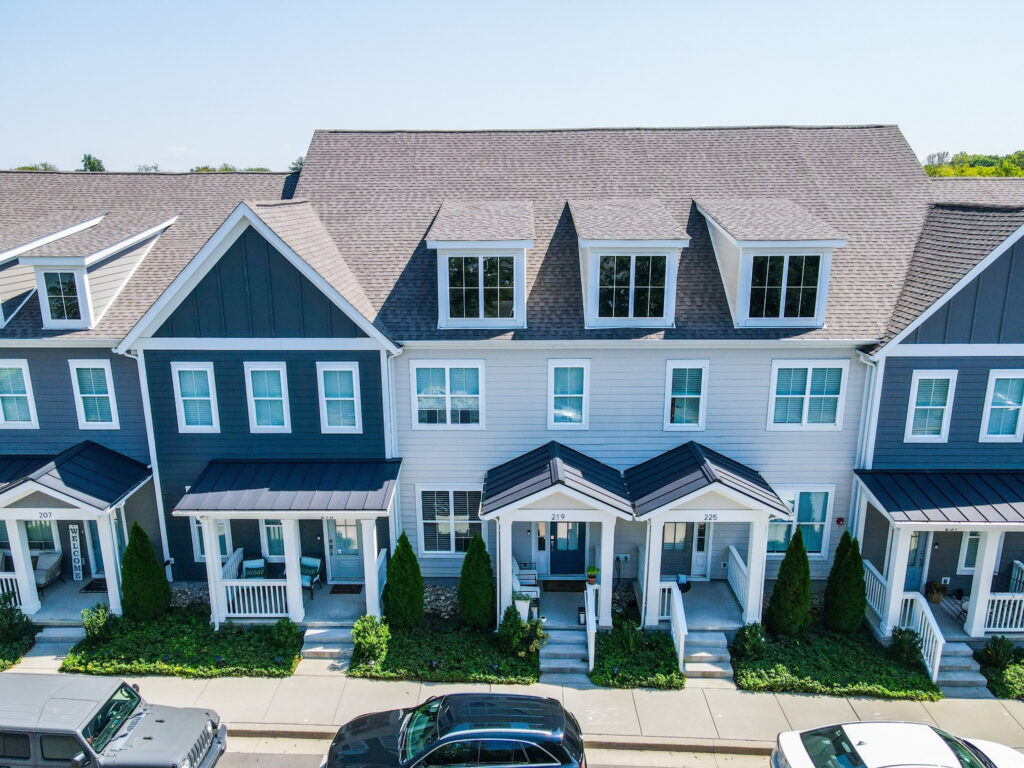
🏡 Real Estate Investment: Tennessee vs Florida

Ribbon Ln Property
Franklin, TN
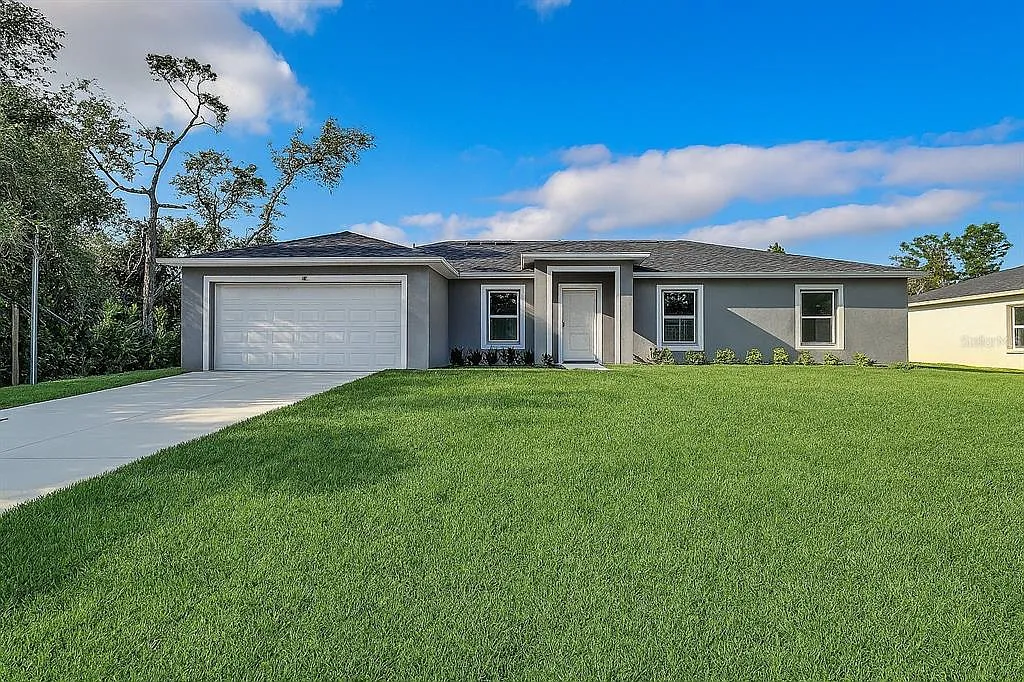
🏠 Property: Ribbon Ln
🛏️ Beds/Baths: 2 Bed • 2.5 Bath • 1662 sqft
💰 Price: $569,999 | Rent: $3,000
📊 Cap Rate: 5.1% | NOI: $2,415
📅 Year Built: 2022
📐 Price/Sq Ft: $343
🏙️ Neighborhood: A-

VS

Chamberlain Blvd Property
Port Charlotte, FL
🏠 Property: Chamberlain Blvd
🛏️ Beds/Baths: 4 Bed • 2 Bath • 1617 sqft
💰 Price: $274,900 | Rent: $1,845
📊 Cap Rate: 5.4% | NOI: $1,231
📅 Year Built: 2023
📐 Price/Sq Ft: $171
🏙️ Neighborhood: A+

Out‑of‑State investors can compare Tennessee’s newer rental with higher NOI vs Florida’s A+ property with strong yield. Which fits YOUR investment strategy?

We have much more inventory available than what you see on our website – Let us know about your requirement.

📈 Choose Your Winner & Contact Us Today!

Speak to a Norada Investment Counselor (No Obligation):

(800) 611-3060

View All Properties

Build Passive Income & Wealth with Turnkey Rentals in 2026

Mortgage rates remain high in 2026, but rental properties continue to deliver strong cash flow and appreciation. Savvy investors know that turnkey real estate is the path to passive income and long‑term wealth.

Norada Real Estate helps you secure turnkey rental properties designed for immediate cash flow and appreciation—so you can invest smartly regardless of interest rate trends.

🔥 HOT 2026 INVESTMENT LISTINGS JUST ADDED! 🔥
Request a Callback / Fill Out the Form Online

Contact Us

Also Read:

  • Mortgage Rates Predictions Backed by 7 Leading Experts: 2025–2026
  • Mortgage Rate Predictions for the Next 3 Years: 2026, 2027, 2028
  • 30-Year Fixed Mortgage Rate Forecast for the Next 5 Years
  • 15-Year Fixed Mortgage Rate Predictions for Next 5 Years: 2025-2029
  • Will Mortgage Rates Ever Be 3% Again in the Future?
  • Mortgage Rates Predictions for Next 2 Years
  • Mortgage Rate Predictions for Next 5 Years
  • Mortgage Rate Predictions: Why 2% and 3% Rates are Out of Reach
  • How Lower Mortgage Rates Can Save You Thousands?
  • How to Get a Low Mortgage Interest Rate?
  • Will Mortgage Rates Ever Be 4% Again?
Filed Under: Financing, Mortgage Tagged With: mortgage, mortgage rates, Today’s Mortgage Rates

30-Year Fixed Mortgage Rate Drops by 34 Basis Points Year Over Year

June 22, 2026 by Marco Santarelli

30-Year Fixed Mortgage Rate Drops by 34 Basis Points Year Over Year

Great news for anyone dreaming of owning a home or looking to refinance: the average rate on a 30-year fixed mortgage has dropped by 34 basis points compared to this time last year. This means borrowing money for your home is getting a little cheaper, which is always a welcome change in the housing market.

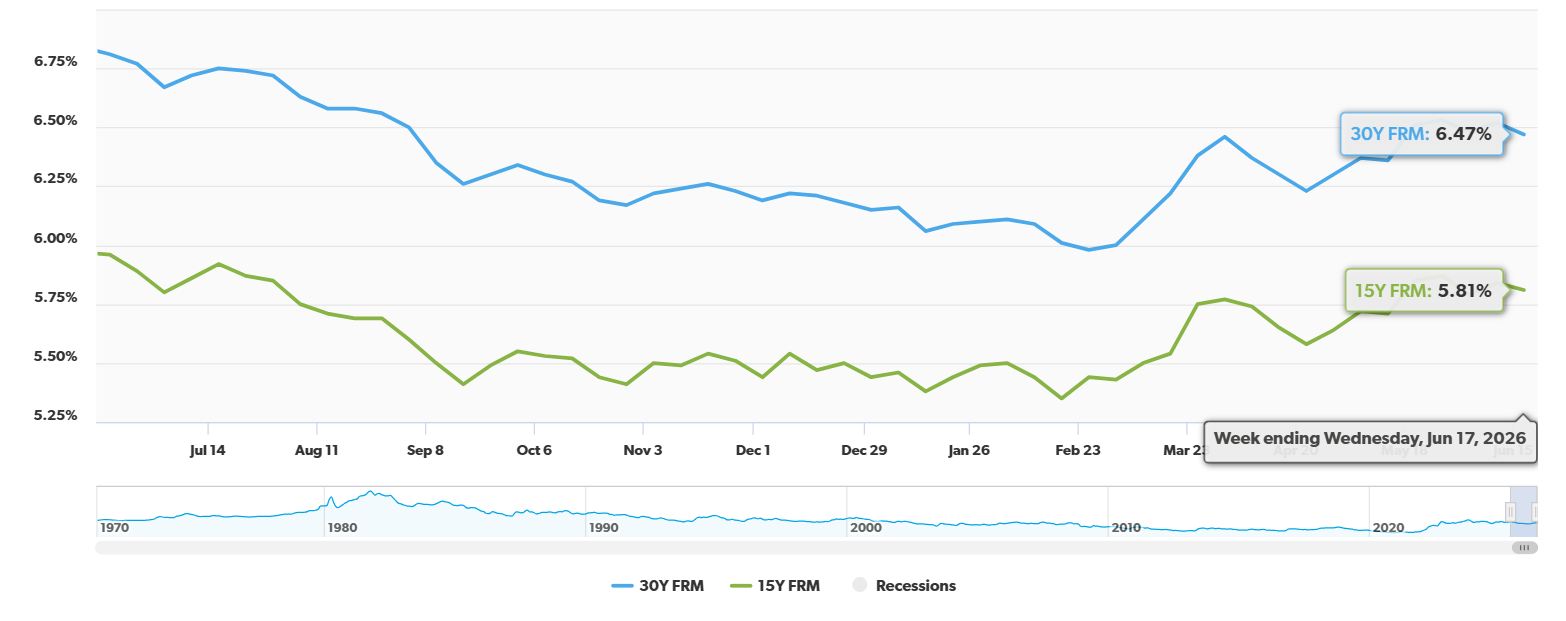
Even small changes in mortgage rates can make a big difference over the long run. Freddie Mac, a well-known source for housing data, recently shared that the average rate for a 30-year fixed mortgage is now 6.47%. That’s down from 6.81% a year ago. While it might not sound like a huge difference day-to-day, over the 30 years you'll be paying off your home, it can add up to serious savings.

30-Year Fixed Mortgage Rate Drops by 34 Basis Points Year Over Year

What Does This Rate Drop Mean for You?

Let's break down what this means in plain English. A “basis point” is just a fancy way of saying one-hundredth of a percent. So, a 34 basis point drop means the rate is 0.34% lower.

On a $400,000 loan, this actually saves you a good chunk of money over time. Imagine this:

Metric Last Year (6.81%) Today (6.47%) Savings
Monthly Payment $2,610.37 $2,520.39 ~$90 per month less
Lifetime Interest $539,732.14 $507,339.23 ~$32,000 less overall

See? That $32,000 in savings is money you won't have to pay back in interest. That’s huge! It’s like getting a nice bonus over the life of your loan.

Mortgage Rate Drops by 34 Basis Points From Last Year
Freddie Mac

Why Did the Rates Go Down?

Several things can influence mortgage rates, and this recent drop is likely due to a few factors working together.

1. Good News on the World Stage: One big reason rates often move is based on how folks feel about the global economy. Recently, there's been some positive news about peace talks in a conflict with Iran. When big global worries ease up, it often calms down the bond market, and that can lead to lower mortgage rates. Think of it like a storm passing – things feel safer, and that makes borrowing money cheaper.

2. What the Big Banks are Doing (or Not Doing): The Federal Reserve, which is like the country's main bank, has been keeping a close eye on prices. Even though mortgage rates went down this week, the Federal Reserve decided to keep its main interest rate steady. They're still a bit worried about prices going up too fast, so they might raise rates later. This tells lenders to be a little cautious, but the good news from abroad helped push mortgage rates down for now.

3. People are Still Buying Homes: Despite all the ups and downs, the housing market is showing it's strong. Things like people buying more stuff at stores and more people looking at homes (pending home sales) are good signs. This means there's still interest in buying houses, which helps keep things steady.

A Look at the Numbers: This Week vs. Last Year

Here’s a quick look at how rates have changed, thanks to Freddie Mac's survey:

Mortgage Type This Week (6.47%) Last Week (6.52%) Last Year (6.81%)
30-Year Fixed Rate 6.47% 6.52% 6.81%
15-Year Fixed Rate 5.81% 5.84% 5.96%

As you can see, both the 30-year and 15-year fixed rates are lower than they were last year. The 15-year fixed rate, which is a shorter loan term, is also lower than it was just last week.

Does This Mean I Should Buy or Refinance Right Now?

That’s the million-dollar question, isn't it? This drop is definitely a positive sign. The $32,000 savings over the life of a loan is significant. It could mean you can afford a slightly bigger house for the same monthly payment, or it could simply mean you pay off your mortgage faster with fewer interest costs.

However, it’s also important to be realistic. While saving $90 a month feels good, it might not feel like a huge change when you look at your overall budget, especially if home prices are still high where you live.

Also, remember that mortgage rates have been much lower in the past. We saw rates in the 3% to 4% range for many years. So, while today's rates are better than last year, they're still higher than that recent historical low.

When you're thinking about buying a new home or refinancing your current one, you have to consider the costs involved, like closing costs. These fees can add up, and it might take a few years of those $90 monthly savings to cover those upfront expenses.

My Two Cents: Keep an Eye on the Market

As a homeowner myself and someone who follows this stuff closely, my advice is to always do your homework. This rate drop is fantastic news, and it definitely makes things more affordable. It's a good time to:

  • See if you qualify for a lower rate: If you're thinking about refinancing, now might be the time to talk to a lender and see what kind of rates you can get.
  • Explore buying a home: For those looking to buy, lower rates mean a more manageable monthly payment.
  • Understand your options: Don't just jump into anything. Compare offers from different lenders and make sure the numbers make sense for your personal situation.

The housing market is always moving, and these rate changes are part of that rhythm. Enjoy the good news, but stay informed!

🏡 Out‑of‑State Real Estate Investment: Tennessee vs Florida

Ribbon Ln Property
Franklin, TN
🏠 Property: Ribbon Ln
🛏️ Beds/Baths: 2 Bed • 2.5 Bath • 1662 sqft
💰 Price: $569,999 | Rent: $3,000
📊 Cap Rate: 5.1% | NOI: $2,415
📅 Year Built: 2022
📐 Price/Sq Ft: $343
🏙️ Neighborhood: A-

VS

Chamberlain Blvd Property
Port Charlotte, FL
🏠 Property: Chamberlain Blvd
🛏️ Beds/Baths: 4 Bed • 2 Bath • 1617 sqft
💰 Price: $274,900 | Rent: $1,845
📊 Cap Rate: 5.4% | NOI: $1,231
📅 Year Built: 2023
📐 Price/Sq Ft: $171
🏙️ Neighborhood: A+

Out‑of‑State investors can compare Tennessee’s newer rental with higher NOI vs Florida’s A+ property with strong yield. Which fits YOUR investment strategy?

We have much more inventory available than what you see on our website – Let us know about your requirement.

📈 Choose Your Winner & Contact Us Today!

Speak to a Norada Investment Counselor (No Obligation):

(800) 611-3060

View All Properties

Build Passive Income & Wealth with Turnkey Rentals

Mortgage rates remain near 6%, but rental properties continue to deliver strong cash flow and appreciation. Savvy investors know that turnkey real estate is the path to passive income and long‑term wealth.

Norada Real Estate helps you secure turnkey rental properties designed for immediate cash flow and appreciation—so you can invest smartly regardless of interest rate trends.

🔥 HOT INVESTMENT Properties JUST ADDED! 🔥
Request a Callback / Fill Out the Form Online

Contact Us

Also Read:

  • Will Mortgage Rates Drop to 5% in 2026: Expert Forecast
  • How to Get a 3% Mortgage Rate in 2026 With Assumable Mortgages?
  • How to Get a 4% Interest Rate on a Mortgage in 2026?
  • What Leading Housing Experts Predict for Mortgage Rates in 2026
  • Mortgage Rate Predictions for 2026: What Leading Forecasters Expect
  • Mortgage Rate Predictions for the Next 3 Years: 2026, 2027, 2028
  • 30-Year Fixed Mortgage Rate Forecast for the Next 5 Years
  • 15-Year Fixed Mortgage Rate Predictions for Next 5 Years: 2025-2029
  • Will Mortgage Rates Ever Be 3% Again in the Future?
  • Mortgage Rates Predictions for Next 2 Years
  • Mortgage Rate Predictions for Next 5 Years
  • Mortgage Rate Predictions: Why 2% and 3% Rates are Out of Reach
  • How Lower Mortgage Rates Can Save You Thousands?
  • How to Get a Low Mortgage Interest Rate?
  • Will Mortgage Rates Ever Be 4% Again?

Filed Under: Financing, Mortgage Tagged With: 30-Year Fixed Mortgage Rate, mortgage, mortgage rates

Today’s Mortgage Rates, June 21: Rates Rise Again, 30-Year Fixed Hits 6.42%

June 21, 2026 by Marco Santarelli

Today's Mortgage Rates, August 18: 30‑Year Fixed at 6.53%, Experts Predict 6.4%–6.5% in 2026

If you're thinking about buying a home or refinancing your current mortgage, it's important to know that today, Sunday, June 21, 2026, mortgage rates have moved up compared to last week. The latest data from Zillow shows that the popular 30-year fixed mortgage rate is now at 6.42%, up by 7 basis points from last week. This means borrowing a home loan costs a bit more right now. Today's increase is a clear sign that the market is reacting to some big economic shifts.

Today's Mortgage Rates, June 21: Rates Rise Again, 30-Year Fixed Hits 6.42%

What's Driving Today's Mortgage Rates?

Several factors are playing a role in why mortgage rates are higher today. It's not just one thing; it's a combination of events that push lenders to ask for more money to lend.

One of the biggest players is inflation. You might have heard about it in the news – the cost of goods and services is going up. In May, the Consumer Price Index (CPI) jumped by 4.2% compared to the year before, largely because energy prices went up by 3.9%. When inflation rises, lenders need to charge higher interest rates to make sure the money they get back from you is still worth something. Think of it like this: if prices for everything else are going up, the money you pay back in a few years won't buy as much as it does today. So, lenders want to be compensated for that.

Then there are Treasury yields. The 10-year Treasury yield is a big benchmark for 30-year mortgages. Lately, it's been hovering around 4.54% to 4.55%. This rise is partly due to a strong jobs report and that inflation spike I just mentioned. When the yields on these government bonds go up, mortgage rates usually follow suit. Lenders add a little extra on top of the Treasury yield to make their profit, so when the base yield rises, your mortgage rate also rises.

The Federal Reserve also has a hand in this. They recently decided to keep their key interest rates steady, but they've signaled that they're not in a hurry to lower them anytime soon. While the Fed doesn't directly set your mortgage rate, their decisions influence the overall cost of borrowing money across the economy, including those long-term Treasury yields that impact mortgages.

Finally, global events can't be ignored. The conflict involving the U.S. and Iran, which started in late February, has pushed oil prices up. Higher oil prices mean higher energy costs, which contributes to that inflation I talked about. This whole chain reaction – global tension leading to higher oil prices, then higher inflation, higher Treasury yields, and finally higher mortgage rates – has caused rates to climb about 50 basis points since the conflict began.

A Look at Today's Rates (June 21, 2026)

According to Zillow's latest data, here's a snapshot of what mortgage rates look like today:

Loan Type Interest Rate
30-year fixed 6.42%
20-year fixed 6.14%
15-year fixed 5.79%
5/1 ARM 6.70%
7/1 ARM 6.27%
30-year VA 5.88%
15-year VA 5.54%
5/1 VA 5.57%

How Today's Rates Affect You

The key relationship to remember is that mortgage rates closely follow the 10-year Treasury yield. When yields go up, mortgage rates usually go up too, and when yields go down, mortgage rates tend to follow. Today's elevated rates, especially the 30-year fixed at 6.42%, are a direct reflection of high inflation, strong job numbers, and those geopolitical risks pushing up energy prices.

For anyone hoping to buy a home, this means your borrowing costs are higher than they were in early 2026, when rates dipped to a low of 6.09%. This is one reason why the housing market has been a bit slower lately. Higher rates mean a larger monthly payment, which can affect how much house you can afford or whether you can qualify for a loan.

If you're already a homeowner with a mortgage, you might be wondering if refinancing makes sense. If you have a higher interest rate, refinancing to a lower one could save you a lot of money over the life of your loan. However, with rates on the rise, now might not be the best time to refinance if your goal is to get a lower rate. It really depends on your current rate and how much you could potentially save.

My Take on Today's Mortgage Market

From my perspective, what we're seeing today is a market trying to find its balance. Inflation is a persistent concern, and the Federal Reserve is walking a tightrope, trying to cool down prices without sending the economy into a recession. The global situation adds another layer of uncertainty.

For buyers, it means being extra diligent with your budget. Get pre-approved for a mortgage early in your house hunt so you know exactly what you can afford. Don't stretch yourself too thin, especially with rates expected to remain elevated. Consider all the costs of homeownership, not just the mortgage payment.

For those looking to refinance, I'd advise caution. If you have a rate below 6%, holding onto it might be wise unless you have a very specific financial goal that refinancing will achieve. If your rate is significantly higher, it might still be worth exploring, but do the math carefully. Compare offers from multiple lenders and understand all the fees involved.

The housing market is always changing, and today's mortgage rates are just one piece of the puzzle. It's crucial to stay informed and make decisions based on your personal financial situation and goals.

🏡 Real Estate Investment: Tennessee vs Florida

Ribbon Ln Property
Franklin, TN
🏠 Property: Ribbon Ln
🛏️ Beds/Baths: 2 Bed • 2.5 Bath • 1662 sqft
💰 Price: $569,999 | Rent: $3,000
📊 Cap Rate: 5.1% | NOI: $2,415
📅 Year Built: 2022
📐 Price/Sq Ft: $343
🏙️ Neighborhood: A-

VS

Chamberlain Blvd Property
Port Charlotte, FL
🏠 Property: Chamberlain Blvd
🛏️ Beds/Baths: 4 Bed • 2 Bath • 1617 sqft
💰 Price: $274,900 | Rent: $1,845
📊 Cap Rate: 5.4% | NOI: $1,231
📅 Year Built: 2023
📐 Price/Sq Ft: $171
🏙️ Neighborhood: A+

Out‑of‑State investors can compare Tennessee’s newer rental with higher NOI vs Florida’s A+ property with strong yield. Which fits YOUR investment strategy?

We have much more inventory available than what you see on our website – Let us know about your requirement.

📈 Choose Your Winner & Contact Us Today!

Speak to a Norada Investment Counselor (No Obligation):

(800) 611-3060

View All Properties

Build Passive Income & Wealth with Turnkey Rentals in 2026

Mortgage rates remain high in 2026, but rental properties continue to deliver strong cash flow and appreciation. Savvy investors know that turnkey real estate is the path to passive income and long‑term wealth.

Norada Real Estate helps you secure turnkey rental properties designed for immediate cash flow and appreciation—so you can invest smartly regardless of interest rate trends.

🔥 HOT 2026 INVESTMENT LISTINGS JUST ADDED! 🔥
Request a Callback / Fill Out the Form Online

Contact Us

Also Read:

  • Mortgage Rates Predictions Backed by 7 Leading Experts: 2025–2026
  • Mortgage Rate Predictions for the Next 3 Years: 2026, 2027, 2028
  • 30-Year Fixed Mortgage Rate Forecast for the Next 5 Years
  • 15-Year Fixed Mortgage Rate Predictions for Next 5 Years: 2025-2029
  • Will Mortgage Rates Ever Be 3% Again in the Future?
  • Mortgage Rates Predictions for Next 2 Years
  • Mortgage Rate Predictions for Next 5 Years
  • Mortgage Rate Predictions: Why 2% and 3% Rates are Out of Reach
  • How Lower Mortgage Rates Can Save You Thousands?
  • How to Get a Low Mortgage Interest Rate?
  • Will Mortgage Rates Ever Be 4% Again?

Filed Under: Financing, Mortgage Tagged With: mortgage, mortgage rates, Today’s Mortgage Rates

Mortgage Rates Decline This Week Boosting Purchase Demand

June 21, 2026 by Marco Santarelli

Mortgage Rates Decline This Week Boosting Purchase Demand

The latest numbers show that mortgage rates have dipped, and this is giving a little nudge to people looking to buy a home. While it's not a floodgate opening, this drop is definitely making a difference for some hopeful buyers. For a while now, buying a home has felt like trying to run through thick mud. High prices, rising interest rates – it’s been a tough road for many.

But sometimes, just a little bit of sunshine can make a big difference. And that’s exactly what we’re seeing with mortgage rates. The average rate for a 30-year fixed mortgage has just dropped, and that’s great news for anyone dreaming of owning their own place.

Mortgage Rates Decline This Week Boosting Purchase Demand

I’ve been following the housing market for a long time, and I’ve seen these kinds of shifts before. When rates go down, even just a little, it can spark renewed interest. It’s like the housing market takes a breath of fresh air. This latest dip in rates, to an average of 6.47% for a 30-year fixed mortgage, is a welcome change. It’s not a miracle cure, but it's definitely a step in the right direction.

What's Happening with Mortgage Rates

Let's break down what’s been going on. Freddie Mac, a big name in the mortgage world, puts out a weekly survey that's like a pulse check for the housing market. This past week, the 30-year fixed-rate mortgage averaged 6.47%. That might not sound like a huge change, but let’s put it in perspective.

  • This is down from 6.52% just the week before.
  • And it’s a noticeable drop from 6.81% this same time last year.

It’s not just the 30-year loan that’s seeing some love. The 15-year fixed-rate mortgage also dipped, averaging 5.81%. This is down from 5.84% last week and 5.96% a year ago.

Why the Rates Are Dropping

So, why are these rates getting a little lower? Well, it's a mix of things happening in the bigger world.

  • Good News from Abroad: Believe it or not, some big global events can actually affect your mortgage rate here at home. There’s been some relief on the international front, with a peace deal helping to wind down a conflict. This has made investors feel a bit more confident, and when investors are more confident, they tend to buy bonds. When bond prices go up, their yields (which are closely tied to mortgage rates) go down.
  • What the Fed is Doing (and Not Doing): The Federal Reserve, which is like the captain of our country's economic ship, decided to keep its main interest rate steady. While they're watching inflation closely and might consider raising rates later, holding steady for now has also helped ease some of the pressure on long-term borrowing costs.

A Look at the Numbers: Rate Changes Over Time

To really see what this means, let’s look at a table. This shows how rates have changed recently and over the past year.

Primary Mortgage Market Survey® (U.S. Weekly Averages as of 06/18/2026) 30-Yr FRM 15-Yr FRM
Average Rate 6.47% 5.81%
1-Week Change -0.05% -0.03%
1-Year Change -0.34% -0.15%
Monthly Average (approx.) 6.5% 5.83%
52-Week Average 6.34% 5.61%
52-Week Range 5.98% – 6.77% 5.35% – 5.92%

The Impact on You: Is It a Big Deal?

Now, here’s where it gets really interesting. How much does a drop like this actually help someone buying a house?

If you’re thinking about buying a home, even a small drop in your interest rate can add up to a lot of money over the life of your loan. Let’s imagine you're looking to buy a home for around $400,000.

  • Last Year's Rate (6.81%): Your monthly payment would be about $2,610. Over 30 years, you’d pay roughly $539,732 in interest.
  • Today's Rate (6.47%): Your monthly payment drops to about $2,520. And over 30 years, you'd pay around $507,339 in interest.

That means, just from this rate drop, you could save about $90 per month and a whopping $32,392 in total interest over the life of the loan! That’s a huge amount of money that you can use for other things, like furnishing your new home or saving for retirement.

More Buying Power: A lower interest rate also means you can afford to borrow a little more money for the same monthly payment. For instance, at today's rates, you could borrow about $14,000 more than you could at last year's rates, while keeping your monthly payment the same. This could mean qualifying for a slightly bigger or better home.

Why It Might Not Feel Like a Huge Win (Yet)

I know what some of you might be thinking. “$90 a month? That’s not going to change my life!” And I get that. It’s important to be realistic.

  • Home Prices are Still High: Even though rates have come down a bit, home prices in many areas have been very high, and they haven’t dropped much. So, that $90 saving might feel small when you’re looking at the overall cost of a house.
  • Rates Are Still Higher Than Before: If you remember the good old days of the last decade, mortgage rates were often in the 3% to 4% range. So, while 6.47% is better than 6.81%, it’s still significantly higher than what many people were used to.
  • Upfront Costs: When you buy a home, there are always closing costs and fees. These can add up, and it can take a few years for the monthly savings from a lower rate to make up for those initial expenses.

What Does This Mean for Buyers?

So, what’s the takeaway from all of this?

  • Opportunity Knocks: This is a good time for buyers who have been on the fence. The slight drop in rates makes homeownership more accessible and affordable. If you’ve been pre-approved, it might be worth revisiting your budget and seeing if you can now afford a home you previously thought was out of reach.
  • The Consumer is Resilient: It's encouraging to see that even with economic ups and downs, people are still out there buying things and looking for homes. This shows a strong spirit and a desire for stability that homeownership provides.
  • Keep an Eye on the Market: The housing market is always changing. While these rate drops are good news, it’s wise to stay informed. Continue to monitor mortgage rate trends and home prices in your specific area.

For me, seeing these rates tick down is a sign that the market is finding its footing. It’s a signal that it’s becoming a bit more manageable for everyday people to step into homeownership. It’s not about making everyone rich overnight, but about opening doors that might have felt a little too heavy to push open before.

My Thoughts on Demand

As a housing market observer, I see this “modest boost in purchase demand” as a natural reaction. When borrowing money gets cheaper, people are naturally more inclined to borrow it, especially for something as significant as a home. It’s like when your favorite store has a sale; more people tend to shop.

The data showing improving retail sales and strengthening pending home sales paints a picture of a consumer who, despite ongoing economic challenges, is still willing and able to make big purchases. This resilience is key. It means people aren’t just waiting for rates to hit rock bottom; they’re taking action when they see a favorable opportunity.

This isn't a massive surge, and that's probably a good thing. A more gradual increase in demand is healthier for the market, allowing prices to adjust more smoothly and preventing the kind of rapid appreciation that can lead to instability.

So, if you’ve been dreaming of owning a home, now might be a really good time to explore your options. The numbers are looking a bit friendlier, and that can make a world of difference.

🏡 Real Estate Investment: Tennessee vs Florida

Ribbon Ln Property
Franklin, TN
🏠 Property: Ribbon Ln
🛏️ Beds/Baths: 2 Bed • 2.5 Bath • 1662 sqft
💰 Price: $569,999 | Rent: $3,000
📊 Cap Rate: 5.1% | NOI: $2,415
📅 Year Built: 2022
📐 Price/Sq Ft: $343
🏙️ Neighborhood: A-

VS

Chamberlain Blvd Property
Port Charlotte, FL
🏠 Property: Chamberlain Blvd
🛏️ Beds/Baths: 4 Bed • 2 Bath • 1617 sqft
💰 Price: $274,900 | Rent: $1,845
📊 Cap Rate: 5.4% | NOI: $1,231
📅 Year Built: 2023
📐 Price/Sq Ft: $171
🏙️ Neighborhood: A+

Out‑of‑State investors can compare Tennessee’s newer rental with higher NOI vs Florida’s A+ property with strong yield. Which fits YOUR investment strategy?

We have much more inventory available than what you see on our website – Let us know about your requirement.

📈 Choose Your Winner & Contact Us Today!

Speak to a Norada Investment Counselor (No Obligation):

(800) 611-3060

View All Properties

Build Passive Income & Wealth with Turnkey Rentals

Mortgage rates remain near 6%, but rental properties continue to deliver strong cash flow and appreciation. Savvy investors know that turnkey real estate is the path to passive income and long‑term wealth.

Norada Real Estate helps you secure turnkey rental properties designed for immediate cash flow and appreciation—so you can invest smartly regardless of interest rate trends.

🔥 HOT INVESTMENT Properties JUST ADDED! 🔥
Request a Callback / Fill Out the Form Online

Contact Us

Also Read:

  • Will Mortgage Rates Drop to 5% in 2026: Expert Forecast
  • How to Get a 3% Mortgage Rate in 2026 With Assumable Mortgages?
  • How to Get a 4% Interest Rate on a Mortgage in 2026?
  • What Leading Housing Experts Predict for Mortgage Rates in 2026
  • Mortgage Rate Predictions for 2026: What Leading Forecasters Expect
  • Mortgage Rate Predictions for the Next 3 Years: 2026, 2027, 2028
  • 30-Year Fixed Mortgage Rate Forecast for the Next 5 Years
  • 15-Year Fixed Mortgage Rate Predictions for Next 5 Years: 2025-2029
  • Will Mortgage Rates Ever Be 3% Again in the Future?
  • Mortgage Rates Predictions for Next 2 Years
  • Mortgage Rate Predictions for Next 5 Years
  • Mortgage Rate Predictions: Why 2% and 3% Rates are Out of Reach
  • How Lower Mortgage Rates Can Save You Thousands?
  • How to Get a Low Mortgage Interest Rate?
  • Will Mortgage Rates Ever Be 4% Again?
Filed Under: Financing, Mortgage Tagged With: 30-Year Fixed Mortgage Rate, mortgage, mortgage rates

Today’s Mortgage Rates, June 20: Rates See Mixed Moves as Market Stays Unsettled

June 20, 2026 by Marco Santarelli

Today's Mortgage Rates, August 18: 30‑Year Fixed at 6.53%, Experts Predict 6.4%–6.5% in 2026

Looking for the latest on mortgage rates today, June 20th, 2026? It's a bit of a mixed bag, with some rates climbing and others taking a slight dip. If you're eyeing a new home or thinking about refinancing, understanding these shifts is key to making smart financial moves. While the 30-year fixed rate has nudged up, other popular loan types have seen modest decreases, offering a glimmer of hope for some buyers.

Today's Mortgage Rates, June 20: Rates See Mixed Moves as Market Stays Unsettled

What the Numbers Are Saying Today

According to the latest data from Zillow, here's a snapshot of mortgage rates as of Saturday, June 20th, 2026:

Loan Type Current Rate
30-Year Fixed 6.42%
20-Year Fixed 6.14%
15-Year Fixed 5.79%
5/1 ARM 6.70%
7/1 ARM 6.27%
30-Year VA 5.88%
15-Year VA 5.54%
5/1 VA 5.57%

The most significant mover today is the 5/1 ARM, which jumped up by 24 basis points. On the flip side, the 20-year fixed saw a notable drop of 14 basis points. The 30-year fixed, the go-to for many homebuyers, has seen a small increase of 6 basis points.

What a 6 Basis Point Rise Really Means

Let's talk about that 6 basis point increase for the 30-year fixed rate. While it might seem tiny, it can affect your monthly payment. For example, if you were to borrow $300,000, a rate of 6.42% instead of 6.36% would mean a slightly higher monthly payment. It’s these small shifts that remind us why staying informed is so crucial.

The Bigger Picture: Why Rates Are Doing What They're Doing

It’s easy to get lost in the daily ups and downs of mortgage rates. But to truly understand them, we need to look at the bigger economic forces at play. Right now, things are a bit unsettled, and that's reflected in the mortgage market.

You see, mortgage rates don't just exist in a vacuum. They're closely tied to things like inflation, the Federal Reserve's policies, and even global events. As of late June 2026, the average 30-year fixed mortgage rate is hovering around 6.47%, according to Freddie Mac. This is lower than it was a year ago, which is good news, but it's still higher than many of us would like.

Will Mortgage Rates Go Down? The Experts Weigh In

This is the million-dollar question, isn't it? Will we see rates drop significantly soon? Based on what I'm seeing and hearing from industry experts, the answer is likely no, at least not in the immediate future.

Here's why I feel this way:

  • The Federal Reserve's Stance: The Federal Reserve has been trying to tame inflation, and they've put a pause on cutting interest rates. In fact, some analysts are now saying there's almost a 50% chance they might even raise rates by the end of the year. This “higher for longer” environment for interest rates means mortgage rates are likely to stay elevated.
  • Treasury Yields: Mortgage rates tend to follow the 10-year Treasury yield. With the government spending a lot of money, those yields are staying high. If the 10-year Treasury yield goes above 4.50%, we could easily see 30-year mortgage rates climbing back toward 6.75% or even higher.
  • Global Uncertainty: While things have been a bit calmer recently, geopolitical tensions can quickly affect oil prices and, in turn, inflation. Any renewed conflict could send mortgage rates soaring again.
  • Housing Market Expectations: Major housing organizations like Fannie Mae and the Mortgage Bankers Association are predicting that rates will remain locked in the low to mid-6% range for the rest of 2026 and well into 2027.

Lenders are finding it tough right now with low business volume and tight profit margins. For us as consumers, waiting for a dramatic drop in rates might not be the best strategy. If rates do eventually fall, we could see a huge surge in buyers, leading to more competition and higher home prices.

My Take: What I'm Watching

From my perspective, the key is to stay flexible and informed. If you're in the market for a home, don't get discouraged by the current rates. Explore different loan options, like the 15-year fixed or even an ARM if it fits your long-term plans. Talking to a trusted mortgage professional can help you navigate these choices.

I've seen borrowers succeed by locking in rates when they see a favorable dip, even if it’s not a historic low. It’s about finding the right rate for your situation and your timeline. The market is certainly keeping us on our toes, but with careful planning and a good understanding of the factors involved, you can still achieve your homeownership goals.

🏡 Real Estate Investment: Tennessee vs Florida

Ribbon Ln Property
Franklin, TN
🏠 Property: Ribbon Ln
🛏️ Beds/Baths: 2 Bed • 2.5 Bath • 1662 sqft
💰 Price: $569,999 | Rent: $3,000
📊 Cap Rate: 5.1% | NOI: $2,415
📅 Year Built: 2022
📐 Price/Sq Ft: $343
🏙️ Neighborhood: A-

VS

Chamberlain Blvd Property
Port Charlotte, FL
🏠 Property: Chamberlain Blvd
🛏️ Beds/Baths: 4 Bed • 2 Bath • 1617 sqft
💰 Price: $274,900 | Rent: $1,845
📊 Cap Rate: 5.4% | NOI: $1,231
📅 Year Built: 2023
📐 Price/Sq Ft: $171
🏙️ Neighborhood: A+

Out‑of‑State investors can compare Tennessee’s newer rental with higher NOI vs Florida’s A+ property with strong yield. Which fits YOUR investment strategy?

We have much more inventory available than what you see on our website – Let us know about your requirement.

📈 Choose Your Winner & Contact Us Today!

Speak to a Norada Investment Counselor (No Obligation):

(800) 611-3060

View All Properties

Build Passive Income & Wealth with Turnkey Rentals in 2026

Mortgage rates remain high in 2026, but rental properties continue to deliver strong cash flow and appreciation. Savvy investors know that turnkey real estate is the path to passive income and long‑term wealth.

Norada Real Estate helps you secure turnkey rental properties designed for immediate cash flow and appreciation—so you can invest smartly regardless of interest rate trends.

🔥 HOT 2026 INVESTMENT LISTINGS JUST ADDED! 🔥
Request a Callback / Fill Out the Form Online

Contact Us

Also Read:

  • Mortgage Rates Predictions Backed by 7 Leading Experts: 2025–2026
  • Mortgage Rate Predictions for the Next 3 Years: 2026, 2027, 2028
  • 30-Year Fixed Mortgage Rate Forecast for the Next 5 Years
  • 15-Year Fixed Mortgage Rate Predictions for Next 5 Years: 2025-2029
  • Will Mortgage Rates Ever Be 3% Again in the Future?
  • Mortgage Rates Predictions for Next 2 Years
  • Mortgage Rate Predictions for Next 5 Years
  • Mortgage Rate Predictions: Why 2% and 3% Rates are Out of Reach
  • How Lower Mortgage Rates Can Save You Thousands?
  • How to Get a Low Mortgage Interest Rate?
  • Will Mortgage Rates Ever Be 4% Again?

Filed Under: Financing, Mortgage Tagged With: mortgage, mortgage rates, Today’s Mortgage Rates

Today’s Mortgage Rates, June 19: Rates Tick Higher Amid Inflation Concerns

June 19, 2026 by Marco Santarelli

Today's Mortgage Rates, August 18: 30‑Year Fixed at 6.53%, Experts Predict 6.4%–6.5% in 2026

Today, June 19, 2026, average mortgage rates are ticking up a bit, with the popular 30-year fixed-rate purchase mortgage now sitting at 6.36% according to Zillow. It’s like a gentle nudge upwards, not a giant leap. If you're thinking about buying a home or refinancing, knowing these numbers is super important. It's my job to help you understand what all these numbers mean for your wallet.

Today's Mortgage Rates, June 19: Rates Tick Higher Amid Inflation Concerns

Let's break down the numbers you'll see today, June 19, 2026, straight from Zillow. These are for buying a home, so they're what most people think about when they hear “mortgage rates.”

Here's a simple table to see it all clearly:

Loan Type Interest Rate
30-year fixed 6.36%
20-year fixed 6.28%
15-year fixed 5.87%
5/1 ARM 6.46%
7/1 ARM 6.38%
30-year VA 5.85%
15-year VA 5.49%
5/1 VA 5.70%

You'll notice a few things. The 30-year fixed and 15-year fixed rates are a bit higher than they were recently. Also, the 5/1 ARM has nudged up. It’s a bit of a mixed bag, but the general trend is a slight increase today.

What's Making These Rates Move?

It's not just random numbers floating around. Lots of things influence mortgage rates, and they can change pretty quickly. Think of it like the weather – sometimes it's sunny, sometimes it rains, and sometimes it’s a bit breezy.

1. What's Happening in the World:
Remember that big conflict involving Iran that started back in February? That really shook things up. When there’s talk of war and oil prices jump way up (like over $115 a barrel!), it makes everyone a little worried about inflation. When inflation fears rise, borrowing money, including for mortgages, tends to get more expensive.

But here's some good news: there's been talk of a peace deal, and the Strait of Hormuz, a super important route for oil ships, is looking like it might reopen. This has helped calm things down a bit. When the world feels a little more stable, oil prices can cool off, and that makes people less anxious about money. That's why we've seen rates ease up a little from their high points in May.

2. Those Government Bonds:
You might not think about it, but mortgage rates aren't directly controlled by the Federal Reserve's short-term rates. Instead, they tend to follow something called the 10-year U.S. Treasury note yield. When people feel safer about the world, they often put their money into bonds. This demand pushes bond prices up and their yields down. As those Treasury yields have come down from over 4.53% to 4.44%, it’s helped pull mortgage rates down a bit too.

3. Prices Going Up (Inflation):
Even though world events have been calming down, our own country's inflation numbers are still a bit stubborn. The Consumer Price Index (CPI), which is a big way we measure how much prices are changing, jumped to 4.2% in May. That's the fastest it's gone up in three years! When prices are going up quickly, the people in charge of our money, like the Federal Reserve, get nervous.

The Federal Reserve's Move:
The Federal Reserve recently met and decided to keep their main interest rate steady between 3.5% and 3.75%. That sounds like good news, right? But there's a twist. The new boss at the Fed, Kevin Warsh, and his team are now saying that to fight this stubborn inflation, they might actually need to raise interest rates later this year. This is a big deal because it signals they're more serious about stopping prices from rising so fast, even if it means borrowing gets a little more expensive. This “hawkish” stance, as they call it, can put upward pressure on mortgage rates.

What This Means for You

So, what's the big picture for folks looking to buy a house?

On the bright side, the world isn't as scary as it was a few months ago. The worst-case scenarios that could have pushed mortgage rates past 7% haven't happened. That’s a relief!

However, the fact that prices at home are still going up and the Federal Reserve is talking about raising rates means that mortgage rates probably aren't going to drop super low anytime soon. Experts from places like Fannie Mae and the Mortgage Bankers Association think that for now, rates are likely to stay above 6%. It’s like they’re stuck in that zone for a while.

My Two Cents

From my experience, it’s always a bit of a balancing act. You’ve got global events creating waves, and then you’ve got our own economic situation. Right now, the world events have given us a bit of a breather, but domestic inflation and the Fed’s response are the real story.

If you're in the market to buy or thinking about refinancing, my best advice is to stay informed. These rates can shift, and understanding why they’re moving helps you make the best decisions. Don't just look at the number; think about what's behind it.

Are you trying to figure out if now is the right time to buy your dream home, or perhaps thinking about changing your current mortgage? Let me know your situation, and I can try to give you some more specific thoughts based on what I've seen over the years.

🏡 Real Estate Investment: Tennessee vs Florida

Ribbon Ln Property
Franklin, TN
🏠 Property: Ribbon Ln
🛏️ Beds/Baths: 2 Bed • 2.5 Bath • 1662 sqft
💰 Price: $569,999 | Rent: $3,000
📊 Cap Rate: 5.1% | NOI: $2,415
📅 Year Built: 2022
📐 Price/Sq Ft: $343
🏙️ Neighborhood: A-

VS

Chamberlain Blvd Property
Port Charlotte, FL
🏠 Property: Chamberlain Blvd
🛏️ Beds/Baths: 4 Bed • 2 Bath • 1617 sqft
💰 Price: $274,900 | Rent: $1,845
📊 Cap Rate: 5.4% | NOI: $1,231
📅 Year Built: 2023
📐 Price/Sq Ft: $171
🏙️ Neighborhood: A+

Out‑of‑State investors can compare Tennessee’s newer rental with higher NOI vs Florida’s A+ property with strong yield. Which fits YOUR investment strategy?

We have much more inventory available than what you see on our website – Let us know about your requirement.

📈 Choose Your Winner & Contact Us Today!

Speak to a Norada Investment Counselor (No Obligation):

(800) 611-3060

View All Properties

Build Passive Income & Wealth with Turnkey Rentals in 2026

Mortgage rates remain high in 2026, but rental properties continue to deliver strong cash flow and appreciation. Savvy investors know that turnkey real estate is the path to passive income and long‑term wealth.

Norada Real Estate helps you secure turnkey rental properties designed for immediate cash flow and appreciation—so you can invest smartly regardless of interest rate trends.

🔥 HOT 2026 INVESTMENT LISTINGS JUST ADDED! 🔥
Request a Callback / Fill Out the Form Online

Contact Us

Also Read:

  • Mortgage Rates Predictions Backed by 7 Leading Experts: 2025–2026
  • Mortgage Rate Predictions for the Next 3 Years: 2026, 2027, 2028
  • 30-Year Fixed Mortgage Rate Forecast for the Next 5 Years
  • 15-Year Fixed Mortgage Rate Predictions for Next 5 Years: 2025-2029
  • Will Mortgage Rates Ever Be 3% Again in the Future?
  • Mortgage Rates Predictions for Next 2 Years
  • Mortgage Rate Predictions for Next 5 Years
  • Mortgage Rate Predictions: Why 2% and 3% Rates are Out of Reach
  • How Lower Mortgage Rates Can Save You Thousands?
  • How to Get a Low Mortgage Interest Rate?
  • Will Mortgage Rates Ever Be 4% Again?

Filed Under: Financing, Mortgage Tagged With: mortgage, mortgage rates, Today’s Mortgage Rates

Today’s Mortgage Rates, June 18: Fixed Loans Drop, Adjustable Rates Stay Mixed

June 18, 2026 by Marco Santarelli

Today's Mortgage Rates, August 18: 30‑Year Fixed at 6.53%, Experts Predict 6.4%–6.5% in 2026

If you're thinking about buying a home or refinancing, you're probably wondering about today's mortgage rates for June 18. The good news is that for fixed-rate loans, rates are nudging a little lower this week! Specifically, the average rate for a 30-year fixed loan dropped to 6.24%, the 20-year fixed is now at 6.01%, and the 15-year fixed is sitting at 5.72%. This is a welcome little dip, though it's important to remember these are averages, and your personal rate might be a bit different.

Today's Mortgage Rates, June 18: Fixed Loans Drop, Adjustable Rates Stay Mixed

It feels like just yesterday we were talking about super low mortgage rates, right? I've been following the housing market for years, and I remember when getting a rate under 3% felt like finding a unicorn. Now, things are a bit different, and understanding where rates are today and what might happen next is key to making smart decisions about your home.

What Are Today's Mortgage Rates Like?

Let's break down what the numbers look like right now, according to Zillow data for June 18, 2026:

Loan Type Average Rate
30-year fixed 6.24%
20-year fixed 6.01%
15-year fixed 5.72%
5/1 ARM 6.31%
7/1 ARM 6.03%
30-year VA 5.74%
15-year VA 5.28%
5/1 VA 5.50%

(Note: These rates are for purchase loans and are averages. Your actual rate can depend on your credit score, down payment, and other factors.)

Fixed vs. Adjustable-Rate Mortgages: A Quick Look

You'll see different types of loans listed. Fixed-rate mortgages mean your interest rate stays the same for the whole life of the loan. Adjustable-rate mortgages (ARMs) have a rate that can change over time.

Right now, I'd be a little cautious about the 5/1 ARMs. They're actually costing a bit more than the 30-year fixed loans, which feels a bit backward! However, the 7/1 ARM is something to look at closely. It's currently lower than the 30-year fixed. The big idea with an ARM is that you get a lower rate for the first few years (that's the ‘5' or ‘7' in 5/1 or 7/1). If you plan to move or refinance before that initial period ends, it could save you money. But if you plan to stay put for a long time, locking in a fixed rate is usually the safer bet to avoid surprises when the rate adjusts.

How Do These Rates Affect Your Wallet?

Let's imagine you're looking at a $400,000 loan. Here's how the monthly payments (principal and interest only) stack up:

  • 30-Year Fixed (6.24%): You'd be looking at about $2,460 per month.
  • 15-Year Fixed (5.72%): This would be around $3,314 per month.

That's a difference of $854 per month if you choose the 30-year loan. However, over the life of the loan, the 15-year fixed saves you a whopping $388,719 in interest! It's a trade-off between a lower monthly payment now and significant savings in the long run.

What's Driving Today's Mortgage Rates?

Mortgage rates aren't just pulled out of thin air. They're influenced by a lot of things happening in the economy. Think of it like a big puzzle with many pieces.

The Big Picture for the Coming Year:

Experts who study the housing market, like those at Fannie Mae and the Mortgage Bankers Association, think rates will likely stay in the 6.1% to 6.5% range for the rest of the year. And looking further out, it seems like rates will probably stick between 6.0% and 6.5% for a few years. This tells me that the days of super-duper low rates are probably behind us for a while.

What Makes Rates Go Up (or Down):

The most important thing to remember is that mortgage rates don't just follow what the Federal Reserve does with their short-term rates. Instead, they're more closely tied to something called the 10-year Treasury yield. This yield is like a thermometer for how investors are feeling about the economy.

Stuff Pushing Rates Higher (These are the bigger forces right now):

  • Inflation Won't Quit: Prices are going up faster than the Federal Reserve wants. When money loses its buying power, lenders try to charge more interest to make up for it over the long loan term.
  • World Events: Sometimes, problems in other parts of the world, like conflicts that affect oil prices, can make everything more expensive and push inflation higher, which then pushes mortgage rates up too.
  • The Fed's Tightrope Walk: Even though the Federal Reserve didn't raise its main interest rate recently, some people in the market think they might have to raise it later in the year because of inflation. This expectation can push mortgage rates up.
  • Government Borrowing: The government borrows a lot of money, and when they issue a lot of bonds to do that, it can push up the yields on those bonds, which in turn pulls up mortgage rates.

What's Keeping Rates From Going Completely Crazy High?

  • People Buying Less: With higher home prices and higher borrowing costs, fewer people are buying houses. This naturally puts a bit of a brake on how high lenders can push rates before the market just stops altogether.

What Should You Do With This Information?

Based on what experts are saying, like the National Association of Realtors, it's a good idea to stop waiting for rates to magically drop and start making plans based on what's happening now.

For People Wanting to Buy a Home:

  • “Marry the House, Date the Rate”: This is a popular saying, and it's wise. If you find a house you love and can afford, it might be better to buy it now. Waiting for a lower rate is a gamble.
  • Expect More Buyers Later: If rates do dip a bit in the future, a lot of people who have been waiting will rush back into the market. This could mean more competition and higher home prices, possibly canceling out any savings from a slightly lower rate.
  • Think About Hybrid ARMs: Like the 7/1 ARM, these can offer a lower starting rate. If you think you might sell or refinance in a few years, it could be a smart way to get into a home now and potentially save money initially.
  • Ask About “Buying Down” the Rate: You can sometimes negotiate with the seller to help you pay for a lower interest rate at closing. It's like an upfront payment to save on interest later.

For People Who Already Own a Home:

  • Protect Your Low Rate: If you got lucky and have a super low rate from a few years ago, hold onto it! If you need cash for renovations, consider a home equity line of credit (HELOC) or a second mortgage instead of refinancing your main mortgage, which would mean giving up that great low rate.
  • Get Ready to Refinance Later: Keep your credit score in great shape (aim for 740 or higher) and pay down other debts as much as you can. This will put you in the best position to refinance if rates take a dip below 6% in the future.

The housing market is always changing, and today's mortgage rates for June 18 are just one piece of the puzzle. But by understanding what's going on, you can make the best choices for your own homeownership journey.

🏡 Real Estate Investment: Tennessee vs Florida

Ribbon Ln Property
Franklin, TN
🏠 Property: Ribbon Ln
🛏️ Beds/Baths: 2 Bed • 2.5 Bath • 1662 sqft
💰 Price: $569,999 | Rent: $3,000
📊 Cap Rate: 5.1% | NOI: $2,415
📅 Year Built: 2022
📐 Price/Sq Ft: $343
🏙️ Neighborhood: A-

VS

Chamberlain Blvd Property
Port Charlotte, FL
🏠 Property: Chamberlain Blvd
🛏️ Beds/Baths: 4 Bed • 2 Bath • 1617 sqft
💰 Price: $274,900 | Rent: $1,845
📊 Cap Rate: 5.4% | NOI: $1,231
📅 Year Built: 2023
📐 Price/Sq Ft: $171
🏙️ Neighborhood: A+

Out‑of‑State investors can compare Tennessee’s newer rental with higher NOI vs Florida’s A+ property with strong yield. Which fits YOUR investment strategy?

We have much more inventory available than what you see on our website – Let us know about your requirement.

📈 Choose Your Winner & Contact Us Today!

Speak to a Norada Investment Counselor (No Obligation):

(800) 611-3060

View All Properties

Build Passive Income & Wealth with Turnkey Rentals in 2026

Mortgage rates remain high in 2026, but rental properties continue to deliver strong cash flow and appreciation. Savvy investors know that turnkey real estate is the path to passive income and long‑term wealth.

Norada Real Estate helps you secure turnkey rental properties designed for immediate cash flow and appreciation—so you can invest smartly regardless of interest rate trends.

🔥 HOT 2026 INVESTMENT LISTINGS JUST ADDED! 🔥
Request a Callback / Fill Out the Form Online

Contact Us

Also Read:

  • Mortgage Rates Predictions Backed by 7 Leading Experts: 2025–2026
  • Mortgage Rate Predictions for the Next 3 Years: 2026, 2027, 2028
  • 30-Year Fixed Mortgage Rate Forecast for the Next 5 Years
  • 15-Year Fixed Mortgage Rate Predictions for Next 5 Years: 2025-2029
  • Will Mortgage Rates Ever Be 3% Again in the Future?
  • Mortgage Rates Predictions for Next 2 Years
  • Mortgage Rate Predictions for Next 5 Years
  • Mortgage Rate Predictions: Why 2% and 3% Rates are Out of Reach
  • How Lower Mortgage Rates Can Save You Thousands?
  • How to Get a Low Mortgage Interest Rate?
  • Will Mortgage Rates Ever Be 4% Again?

Filed Under: Financing, Mortgage Tagged With: mortgage, mortgage rates, Today’s Mortgage Rates

Today’s Mortgage Rates, June 17: Rates Edge Down But Market Still Tight

June 17, 2026 by Marco Santarelli

Today's Mortgage Rates, August 18: 30‑Year Fixed at 6.53%, Experts Predict 6.4%–6.5% in 2026

If you're thinking about buying a home or refinancing your mortgage, you've probably been watching mortgage rates closely. As of June 17, the rates have seen a small dip, with the popular 30-year fixed mortgage rate now at 6.26%. While this is a tiny bit lower than yesterday, it's still a bit higher than what we saw earlier this year.

Today's Mortgage Rates, June 17: Rates Edge Down But Market Still Tight

It feels like just yesterday we were seeing rates closer to 6.0%, and now we're hovering a bit above that. Why is this happening? Well, a few big things are going on in the world that are making these rates stick around. Think of it like a big puzzle where different pieces affect how much you pay for your home loan.

What's Happening with Today's Mortgage Rates?

Let's break down what the numbers are telling us today. According to Zillow, here's a snapshot of what mortgage rates look like on June 17:

Loan Type Interest Rate
30-year fixed 6.26%
20-year fixed 6.06%
15-year fixed 5.73%
5/1 ARM 6.30%
7/1 ARM 6.03%
30-year VA 5.80%
15-year VA 5.38%
5/1 VA 5.58%

As you can see, most of the rates have nudged down just a tiny bit. The 30-year fixed rate, which is what most people choose for their homes, dropped by 5 “basis points” (that's just a fancy word for a small change in percentage) to land at 6.26%. The 15-year fixed and the 5/1 ARM also saw a small dip of 1 basis point.

Why Aren't Rates Much Lower? The Big Picture

Even though we saw a small drop, rates are still higher than they were at the start of the year. This is mainly because of a few big factors that are like strong winds pushing against lower rates. I’ve been watching this market for a while, and it's clear that these issues aren't going away overnight.

Here are the main things making rates stick around the current levels:

  • Trouble Far Away, Trouble Here: There's a military conflict happening in Iran. This is really important because Iran is a big supplier of oil. When there's worry about oil, prices go up. Since oil is used for almost everything – like shipping goods and making things – higher oil prices make everything else cost more. This is called inflation. Even though there have been some small agreements to help ships get through safely, the worries about prices going up for a long time are still there.
  • Prices Keep Going Up: You know how sometimes the price of your favorite snack goes up? Well, that's happening with lots of things for everyone. The government wants prices to only go up about 2% each year. But right now, prices are going up much faster, around 4.2%! When prices go up quickly, the money people have saved doesn't buy as much. To make sure they don't lose money because of this, banks and lenders have to charge more for loans, which means higher mortgage rates.
  • Government Borrowing and Bonds: You might have heard about the government borrowing money. When the government needs a lot of money, it sells something called “bonds.” Think of bonds like an IOU from the government. When lots of bonds are being sold, the government has to offer a higher “interest rate” on these bonds to get people to buy them. Mortgage rates tend to follow what happens with these long-term government bonds, specifically the 10-year Treasury yield, which has been around 4.5%. So, the more the government borrows, the higher interest rates tend to go.
  • The Federal Reserve's Tough Choices: The Federal Reserve (often called the “Fed”) is like the main banker for the country. They can help control how much money is out there and how much it costs to borrow. They actually lowered interest rates a lot late last year to help people. But now, with prices going up so much and people still having jobs, the Fed is rethinking things. They're not planning to lower rates anytime soon. In fact, some people are even starting to think they might have to raise interest rates to fight inflation, which would push mortgage rates even higher.

What Does This Mean for You?

When mortgage rates are a bit higher, it means buying a home can be more expensive each month. For example, if you borrow $300,000, even a small increase in the interest rate can add up to hundreds of dollars more on your monthly payment over the years.

  • For Buyers: If you're looking to buy, it’s a good time to shop around for the best rate from different lenders. Also, try to save up a larger down payment if you can. A bigger down payment means you borrow less money, which can lower your monthly payments.
  • For Refinancers: If you already have a mortgage, it might not be the best time to refinance if your current rate is lower than today's rates. However, if you need to lower your monthly payments for other reasons, it's still worth looking into options.

My Thoughts on Today's Rates

From where I stand, these rates are a bit of a balancing act. The world is dealing with some big challenges, from faraway conflicts affecting oil prices to how we manage our own country's money. The Federal Reserve is in a tough spot, trying to keep prices from going up too fast without hurting the economy too much.

For the average person, it means we need to be smart about our homebuying decisions. It's not just about the sticker price of a house; it's about the total cost over time, and that's heavily influenced by the mortgage rate you get.

I’ve seen rates go up and down over the years, and what’s happening now is a reminder that things don't always move in a straight line. The good news is that even with these rates, owning a home is still possible for many. It just requires a bit more careful planning and understanding of what's driving the numbers.

So, while today's mortgage rates might not be the lowest we've seen, they are what they are for now. Keep an eye on the news, talk to lenders, and make the best decision for your situation!

🏡 Real Estate Investment: Tennessee vs Florida

Ribbon Ln Property
Franklin, TN
🏠 Property: Ribbon Ln
🛏️ Beds/Baths: 2 Bed • 2.5 Bath • 1662 sqft
💰 Price: $569,999 | Rent: $3,000
📊 Cap Rate: 5.1% | NOI: $2,415
📅 Year Built: 2022
📐 Price/Sq Ft: $343
🏙️ Neighborhood: A-

VS

Chamberlain Blvd Property
Port Charlotte, FL
🏠 Property: Chamberlain Blvd
🛏️ Beds/Baths: 4 Bed • 2 Bath • 1617 sqft
💰 Price: $274,900 | Rent: $1,845
📊 Cap Rate: 5.4% | NOI: $1,231
📅 Year Built: 2023
📐 Price/Sq Ft: $171
🏙️ Neighborhood: A+

Out‑of‑State investors can compare Tennessee’s newer rental with higher NOI vs Florida’s A+ property with strong yield. Which fits YOUR investment strategy?

We have much more inventory available than what you see on our website – Let us know about your requirement.

📈 Choose Your Winner & Contact Us Today!

Speak to a Norada Investment Counselor (No Obligation):

(800) 611-3060

View All Properties

Build Passive Income & Wealth with Turnkey Rentals in 2026

Mortgage rates remain high in 2026, but rental properties continue to deliver strong cash flow and appreciation. Savvy investors know that turnkey real estate is the path to passive income and long‑term wealth.

Norada Real Estate helps you secure turnkey rental properties designed for immediate cash flow and appreciation—so you can invest smartly regardless of interest rate trends.

🔥 HOT 2026 INVESTMENT LISTINGS JUST ADDED! 🔥
Request a Callback / Fill Out the Form Online

Contact Us

Also Read:

  • Mortgage Rates Predictions Backed by 7 Leading Experts: 2025–2026
  • Mortgage Rate Predictions for the Next 3 Years: 2026, 2027, 2028
  • 30-Year Fixed Mortgage Rate Forecast for the Next 5 Years
  • 15-Year Fixed Mortgage Rate Predictions for Next 5 Years: 2025-2029
  • Will Mortgage Rates Ever Be 3% Again in the Future?
  • Mortgage Rates Predictions for Next 2 Years
  • Mortgage Rate Predictions for Next 5 Years
  • Mortgage Rate Predictions: Why 2% and 3% Rates are Out of Reach
  • How Lower Mortgage Rates Can Save You Thousands?
  • How to Get a Low Mortgage Interest Rate?
  • Will Mortgage Rates Ever Be 4% Again?

Filed Under: Financing, Mortgage Tagged With: mortgage, mortgage rates, Today’s Mortgage Rates

30-Year Fixed Mortgage Rate Drops by 32 Basis Points From Last Year’s Highs

June 17, 2026 by Marco Santarelli

30-Year Fixed Mortgage Rate Drops by 32 Basis Points Year-Over-Year

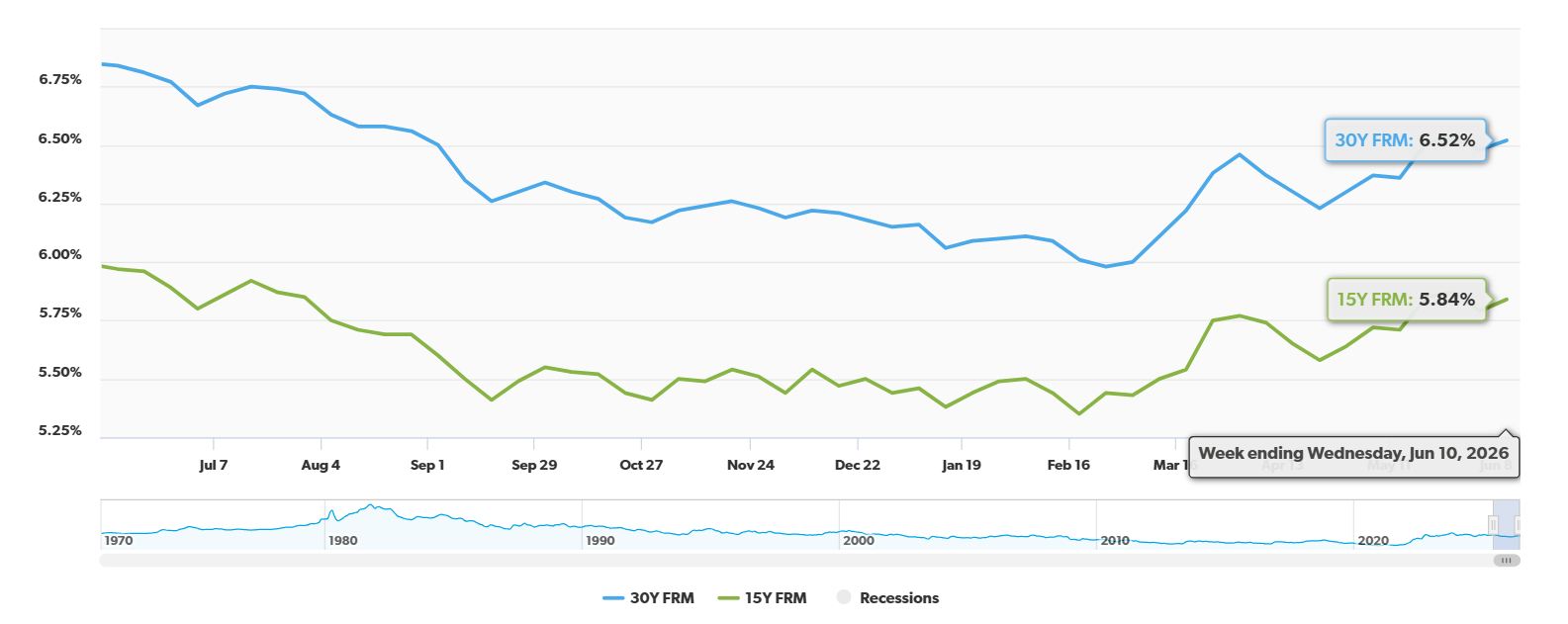
According to the Freddie Mac Primary Mortgage Market Survey for the week ending June 11, 2026, the 30-year fixed-rate mortgage averaged 6.52%, marking a 32-basis-point drop year-over-year from the 6.84% average recorded during the same week in 2025. While borrowing costs have trended lower over the past 12 months, rates ticked up slightly from last week’s average of 6.48% due to resilient labor data and sticky consumer inflation. This annual decrease translates into tangible savings for borrowers, making homeownership more attainable despite current economic pressures.

30-Year Fixed Mortgage Rate Drops by 32 Basis Points From Last Year’s Highs

Understanding the Numbers: A Closer Look at the Decline

Let's break down what this means. Freddie Mac, a key player in the housing finance industry, releases weekly surveys that are a benchmark for mortgage rates across the country. Their data for the week ending June 11, 2026, shows the average 30-year fixed-rate mortgage at 6.52%.

Here's a quick look at how this compares:

Loan Type Weekly Average (06/11/2026) 1-Week Change 1-Year Change
30-Yr Fixed FRM 6.52% +0.04% -0.32%
15-Yr Fixed FRM 5.84% +0.05% -0.13%

FRM stands for Fixed-Rate Mortgage.

You can see the 30-year fixed rate is a full 0.32% lower than it was a year ago. This is a substantial move. While the weekly jump of 0.04% might seem small, it's the year-over-year trend that truly signals a more affordable borrowing environment for many. The 15-year fixed-rate mortgage also saw a year-over-year decrease, though it wasn't as pronounced.

30-Year Fixed Mortgage Rate Drops by 32 Basis Points Year-Over-Year
Freddie Mac

Why the Slight Weekly Jump? Factors at Play

It's important to understand that mortgage rates don't move in a straight line. Even with the positive year-over-year trend, rates can fluctuate weekly. The data from Freddie Mac points to a couple of key reasons for the slight increase from last week:

  • Resilient Labor Data: The latest jobs report showed more new jobs were created than economists predicted. This is generally a good sign for the economy, but it can also signal that the Federal Reserve might be less inclined to lower its benchmark interest rates quickly. Lower benchmark rates often lead to lower mortgage rates.
  • Sticky Consumer Inflation: While inflation has cooled from its peak, it's still proving to be a bit stubborn. When inflation is higher, it can put upward pressure on interest rates as lenders try to keep pace with rising costs.

These are the forces that are essentially creating a floor under mortgage rates, preventing them from plummeting back into the 5% range we saw in some more favorable periods.

The Real Impact: What a 32-Basis-Point Drop Means for Your Wallet

This is where it gets exciting for potential homeowners. A 32-basis-point reduction in your interest rate can make a significant difference in your monthly mortgage payment and the total interest you pay over the life of your loan.

Let's imagine you're looking at a standard $400,000, 30-year fixed loan.

  • At 6.52%, your estimated monthly principal and interest payment would be around $2,533.54.
  • If the rate were 6.20% (representing a 32-basis-point drop from the current 6.52%), that same loan's monthly payment would be approximately $2,449.88.

That's a monthly savings of $83.66!

Over the 30-year life of the loan, this translates to a total interest saving of $30,117.60. That's money you can use for home improvements, savings, or simply enjoy.

Here's a table showing how this drop impacts various loan amounts:

Loan Amount Monthly Payment at 6.52% Monthly Payment at 6.20% Monthly Savings 30-Year Lifetime Savings
$300,000 $1,900.16 $1,837.41 $62.75 $22,590.00
$400,000 $2,533.54 $2,449.88 $83.66 $30,117.60
$500,000 $3,166.93 $3,062.35 $104.58 $37,648.80
$600,000 $3,800.31 $3,674.82 $125.49 $45,176.40

Note: These are estimates for principal and interest only and do not include taxes, insurance, or fees.

What This Means for the Housing Market and Buyers

This annual rate reduction, even with slight weekly ups and downs, is a positive signal for the housing market. It boosts buyer purchasing power. For instance, Redfin data suggests that new home listings have surged, creating a more favorable inventory situation for buyers. With nearly 47% more sellers than active buyers in some areas, homebuyers might find they have more room to negotiate on price, even with mortgage rates in the mid-6% range.

From my perspective, this environment presents a unique opportunity. Buyers who have been patiently waiting for rates to dip may find that now is a good time to re-enter the market. The combination of a more favorable interest rate year-over-year and potentially increased inventory can lead to a better overall home-buying experience. It's crucial, however, to stay informed about weekly rate changes and consult with a mortgage professional to understand how these fluctuations might affect your specific situation.

The average 30-year fixed mortgage rate falling by 32 basis points year-over-year to 6.52% is a clear indication of improving affordability for potential homebuyers, despite some ongoing economic factors keeping rates from falling further.

🏡 Out‑of‑State Real Estate Investment: Tennessee vs Florida

Ribbon Ln Property
Franklin, TN
🏠 Property: Ribbon Ln
🛏️ Beds/Baths: 2 Bed • 2.5 Bath • 1662 sqft
💰 Price: $569,999 | Rent: $3,000
📊 Cap Rate: 5.1% | NOI: $2,415
📅 Year Built: 2022
📐 Price/Sq Ft: $343
🏙️ Neighborhood: A-

VS

Chamberlain Blvd Property
Port Charlotte, FL
🏠 Property: Chamberlain Blvd
🛏️ Beds/Baths: 4 Bed • 2 Bath • 1617 sqft
💰 Price: $274,900 | Rent: $1,845
📊 Cap Rate: 5.4% | NOI: $1,231
📅 Year Built: 2023
📐 Price/Sq Ft: $171
🏙️ Neighborhood: A+

Out‑of‑State investors can compare Tennessee’s newer rental with higher NOI vs Florida’s A+ property with strong yield. Which fits YOUR investment strategy?

We have much more inventory available than what you see on our website – Let us know about your requirement.

📈 Choose Your Winner & Contact Us Today!

Speak to a Norada Investment Counselor (No Obligation):

(800) 611-3060

View All Properties

Build Passive Income & Wealth with Turnkey Rentals

Mortgage rates remain near 6%, but rental properties continue to deliver strong cash flow and appreciation. Savvy investors know that turnkey real estate is the path to passive income and long‑term wealth.

Norada Real Estate helps you secure turnkey rental properties designed for immediate cash flow and appreciation—so you can invest smartly regardless of interest rate trends.

🔥 HOT INVESTMENT Properties JUST ADDED! 🔥
Request a Callback / Fill Out the Form Online

Contact Us

Also Read:

  • Will Mortgage Rates Drop to 5% in 2026: Expert Forecast
  • How to Get a 3% Mortgage Rate in 2026 With Assumable Mortgages?
  • How to Get a 4% Interest Rate on a Mortgage in 2026?
  • What Leading Housing Experts Predict for Mortgage Rates in 2026
  • Mortgage Rate Predictions for 2026: What Leading Forecasters Expect
  • Mortgage Rate Predictions for the Next 3 Years: 2026, 2027, 2028
  • 30-Year Fixed Mortgage Rate Forecast for the Next 5 Years
  • 15-Year Fixed Mortgage Rate Predictions for Next 5 Years: 2025-2029
  • Will Mortgage Rates Ever Be 3% Again in the Future?
  • Mortgage Rates Predictions for Next 2 Years
  • Mortgage Rate Predictions for Next 5 Years
  • Mortgage Rate Predictions: Why 2% and 3% Rates are Out of Reach
  • How Lower Mortgage Rates Can Save You Thousands?
  • How to Get a Low Mortgage Interest Rate?
  • Will Mortgage Rates Ever Be 4% Again?

Filed Under: Financing, Mortgage Tagged With: 30-Year Fixed Mortgage Rate, mortgage, mortgage rates

Today’s Mortgage Rates, June 16: Fixed Loan Rates Ease But ARMs Edge Higher

June 16, 2026 by Marco Santarelli

Today's Mortgage Rates, August 18: 30‑Year Fixed at 6.53%, Experts Predict 6.4%–6.5% in 2026

As of today, June 16, 2026, if you're looking to buy a home, the average 30-year fixed mortgage rate is sitting at 6.31%, which is a little bit lower than yesterday. It's a bit of a mixed bag out there with some rates inching up and others dipping down, but overall, things are staying pretty steady in the mid-6% range for the most common types of loans.

Today's Mortgage Rates, June 16: Fixed Loan Rates Ease But ARMs Edge Higher

So, today is one of those days where we see a little bit of movement in mortgage rates. It’s like the stock market, but for houses! While a small change might not seem like a big deal, it can actually make a difference in how much you pay over the years. Let's break down what's happening with today's mortgage rates and what it means for you and your dream of homeownership.

What Are Today's Mortgage Rates, June 16, 2026?

Based on the latest information from Zillow, here’s a snapshot of what you might see today:

  • 30-year fixed rate: 6.31% (down 4 basis points from yesterday)
  • 20-year fixed rate: 6.19% (up 9 basis points from yesterday)
  • 15-year fixed rate: 5.74% (down 4 basis points from yesterday)
  • 5/1 ARM: 6.31% (up 1 basis point from yesterday)

And just so you know, these numbers are just averages. Your actual rate could be higher or lower depending on your credit score, the size of your down payment, and other factors.

A Deeper Dive: What’s Causing These Swings?

It’s easy to just look at the numbers and say “higher” or “lower,” but understanding why they move is the real key. For me, as someone who's watched this market for a while, it's all about how different parts of the economy are doing. Think of it like a big puzzle with lots of pieces.

1. Inflation: The Big Spender

You’ve probably heard about inflation in the news. It’s basically when prices for everything go up. This May, the government said prices went up by 4.2% compared to last year. Even when you take out the prices of things like food and gas that can change a lot, prices are still stubbornly high, up 2.9%.

When inflation is high, money isn't worth as much. So, people who lend money (like banks) want to get paid more to make up for it. This makes mortgage rates go up. It's like if your favorite candy bar suddenly cost more – you’d want more allowance to buy it, right?

2. Jobs, Jobs, Jobs!

The good news is that people are finding jobs! In May, the U.S. added 172,000 jobs, which is more than people expected. And the number of people looking for jobs but not finding them stayed the same at 4.3%.

A strong job market is a sign that our economy is doing well. When people are working and earning money, they feel more confident about buying homes and making big purchases. This can sometimes push rates up a little because there’s more demand.

3. What the Fed is Thinking (and Doing)

The Federal Reserve, or the “Fed” as many call it, is like the conductor of our economy’s orchestra. They have the power to lower or raise interest rates. Right now, they’ve kept their main interest rate pretty high, between 3.5% and 3.75%.

Because inflation is still a worry and the job market is strong, many people don't think the Fed will lower interest rates anytime soon. In fact, they might keep them high for a while longer. This “higher-for-longer” idea makes the cost of borrowing money, including for mortgages, stay up. The 10-year U.S. Treasury yield, which is like a benchmark for mortgage rates, is also staying high because of this.

4. World Events and Oil Prices

Sometimes things happening far away can still affect our wallets. There's been some trouble in the Middle East, and that can make oil prices jump around. When oil prices go up, so do the costs of lots of things, including transportation and making products.

This global uncertainty can make investors a bit nervous. They might demand a higher return for lending their money, which again, pushes up mortgage rates. It’s a ripple effect!

Comparing Today to Last Week and Last Year

It’s always helpful to see how today’s rates stack up.

Loan Type Today's Average (June 16, 2026) Last Week's Average (Approx.) Change from Last Week Last Year's Average (Approx.) Change from Last Year
30-year fixed 6.31% 6.59% Down 6.84% Down
15-year fixed 5.74% 5.84% Down N/A N/A
5/1 ARM 6.31% N/A N/A N/A N/A

Note: Weekly data is based on general trends and surveys.

Looking at the table, you can see that while today's 30-year fixed rate is a bit lower than the average we saw at the start of the week (around 6.59%), it's still a good bit lower than this time last year, when it was around 6.84%. That's a saving of about 40 basis points, which is nice!

The 15-year fixed rate has also seen some ups and downs, but it's currently looking pretty good at 5.74%.

What Does This Mean for You?

If you’re thinking about buying a home, these rates mean you'll want to shop around for the best deal. Even a small difference in the interest rate can save you thousands of dollars over the life of your loan. It’s why I always tell people to get quotes from a few different lenders.

If you already own a home and have a higher interest rate, you might be wondering about refinancing. It’s a good idea to keep an eye on these numbers. If rates dip significantly, refinancing could lower your monthly payments. However, with rates staying in the mid-to-high 6% range, it's still a bit of a wait-and-see game for many homeowners looking for a big drop.

For those considering an Adjustable-Rate Mortgage (ARM), like the 5/1 ARM at 6.31%, remember that the rate is fixed for the first five years and then can change. It can be a good option if you plan to move or refinance before the fixed period is over, but it comes with the risk of higher payments later on.

My advice? Don't get too caught up in the day-to-day ups and downs. Focus on what your personal finances look like, what your long-term goals are, and then work with a trusted lender to find the mortgage that’s the best fit for you.

Future Outlook: What to Watch For

Predicting mortgage rates is like trying to predict the weather – you can make educated guesses, but there are always surprises. I'll be keeping an eye on inflation reports, job numbers, and anything the Fed says. If inflation starts to cool down and the Fed signals they might lower rates, we could see mortgage rates begin to trend downwards more consistently. Until then, expect things to stay a bit bumpy.

Remember, buying a home is a huge decision. Take your time, do your research, and don't be afraid to ask questions!

🏡 Real Estate Investment: Tennessee vs Florida

Ribbon Ln Property
Franklin, TN
🏠 Property: Ribbon Ln
🛏️ Beds/Baths: 2 Bed • 2.5 Bath • 1662 sqft
💰 Price: $569,999 | Rent: $3,000
📊 Cap Rate: 5.1% | NOI: $2,415
📅 Year Built: 2022
📐 Price/Sq Ft: $343
🏙️ Neighborhood: A-

VS

Chamberlain Blvd Property
Port Charlotte, FL
🏠 Property: Chamberlain Blvd
🛏️ Beds/Baths: 4 Bed • 2 Bath • 1617 sqft
💰 Price: $274,900 | Rent: $1,845
📊 Cap Rate: 5.4% | NOI: $1,231
📅 Year Built: 2023
📐 Price/Sq Ft: $171
🏙️ Neighborhood: A+

Out‑of‑State investors can compare Tennessee’s newer rental with higher NOI vs Florida’s A+ property with strong yield. Which fits YOUR investment strategy?

We have much more inventory available than what you see on our website – Let us know about your requirement.

📈 Choose Your Winner & Contact Us Today!

Speak to a Norada Investment Counselor (No Obligation):

(800) 611-3060

View All Properties

Build Passive Income & Wealth with Turnkey Rentals in 2026

Mortgage rates remain high in 2026, but rental properties continue to deliver strong cash flow and appreciation. Savvy investors know that turnkey real estate is the path to passive income and long‑term wealth.

Norada Real Estate helps you secure turnkey rental properties designed for immediate cash flow and appreciation—so you can invest smartly regardless of interest rate trends.

🔥 HOT 2026 INVESTMENT LISTINGS JUST ADDED! 🔥
Request a Callback / Fill Out the Form Online

Contact Us

Also Read:

  • Mortgage Rates Predictions Backed by 7 Leading Experts: 2025–2026
  • Mortgage Rate Predictions for the Next 3 Years: 2026, 2027, 2028
  • 30-Year Fixed Mortgage Rate Forecast for the Next 5 Years
  • 15-Year Fixed Mortgage Rate Predictions for Next 5 Years: 2025-2029
  • Will Mortgage Rates Ever Be 3% Again in the Future?
  • Mortgage Rates Predictions for Next 2 Years
  • Mortgage Rate Predictions for Next 5 Years
  • Mortgage Rate Predictions: Why 2% and 3% Rates are Out of Reach
  • How Lower Mortgage Rates Can Save You Thousands?
  • How to Get a Low Mortgage Interest Rate?
  • Will Mortgage Rates Ever Be 4% Again?

Filed Under: Financing, Mortgage Tagged With: mortgage, mortgage rates, Today’s Mortgage Rates

  • « Previous Page
  • 1
  • …
  • 6
  • 7
  • 8
  • 9
  • 10
  • …
  • 131
  • Next Page »

Real Estate

  • Birmingham
  • Cape Coral
  • Charlotte
  • Chicago

Quick Links

  • Markets
  • Membership
  • Notes
  • Contact Us

Blog Posts

  • Today’s Mortgage Rates, August 18: 30‑Year Fixed at 6.53%, Experts Predict 6.4%–6.5% in 2026
    August 18, 2026Marco Santarelli
  • Mortgage Rates Today, August 18, 2026: 30-Year Refinance Rate Rises by 8 Basis Points
    August 18, 2026Marco Santarelli
  • Best Cities to Buy a House For Rental Income in 2026
    August 17, 2026Marco Santarelli

Contact

Norada Real Estate Investments 30251 Golden Lantern, Suite E-261 Laguna Niguel, CA 92677

(949) 218-6668
(800) 611-3060
BBB
  • Terms of Use
  • |
  • Privacy Policy
  • |
  • Testimonials
  • |
  • Suggestions?
  • |
  • Home

Copyright 2018 Norada Real Estate Investments

Loading...