Norada Real Estate Investments

  • Home
  • Markets
  • Properties
  • Membership
  • Podcast
  • Learn
  • About
  • Contact

How to Pay Property Taxes Online?

October 16, 2024 by Marco Santarelli

How to Pay Property Taxes Online?

Understanding Property Taxes

Property taxes can be a major expense for investors, but understanding how this tax works could save you thousands of dollars in the long run. The first thing to learn about property tax is that property is divided into two categories: real and personal. Real property includes land, buildings, and permanent property attached to land— such as a well.

Personal property is everything else, including clothes, books, electronics, furniture, and financial holdings. Personal property is further divided into either tangible property or intangible property. Tangible property is anything you can touch, such as a sofa or a blender, and the intangible property includes abstract possessions like stocks, bonds, and patents.

Methods for calculating property tax vary from city to city. Smaller cities send an appraiser from house to house every one to five years and this appraiser calculates the property’s value. Larger cities use an automated valuation method. Whichever method is used, you should look over your property’s valuation for mistakes or miscalculations. Property owners generally have a small amount of time to appeal the assessed value of their property and mistakes do occur, especially in automated processes.

Knowing the correct value of your property is important not only for paying property taxes but also for purchasing insurance. To ensure your property and possessions against damage or theft, first, check for cheap insurance quotes online. Cheap insurance is readily available: There is no need for you to leave your property vulnerable.

If there is an obvious flaw in your property’s valuation, you should register your complaint with the city immediately. The city can repossess your property if you simply choose not to pay your property taxes without first registering a complaint. In contesting the valuation of your property, it is important to do research and have hard evidence as to why you think a mistake has been made.

Realtors can provide you with figures on recent sales of comparable properties and professional appraisal firms are available to evaluate the value of your possessions. These services cost up to $500 but they can catch mistakes in your city’s valuation process that could cost you much more in taxes over the years.

Property taxes are an unfortunate fact of life, but reducing its burden on your wallet is sometimes possible, even without a master's in taxation. Diligently reviewing the paperwork on your property’s valuation, knowing the value of items in your house, and keeping receipts and records to prove these values can save you from overpaying on property taxes. Part of being a responsible property owner is keeping up to date with all of your taxes, along with properly insuring your property and possessions.

Finally, make sure that the money you’re paying on property taxes isn’t wasted in the event of a burglary, fire, or flood by shopping for cheap insurance quotes to cover your valuables and possessions. With so many types of cheap insurance available today, leaving your property uninsured is foolish when you’ve already paid for debt service and taxes on it.

How to Pay Property Taxes Online?

Paying property taxes is an important responsibility for homeowners, and it's essential to know how to do it conveniently and efficiently. Luckily, paying property taxes online is becoming increasingly popular and convenient for many homeowners. There are several ways to pay property taxes online, including using a credit or debit card, electronic check payment (eCheck), and online portals. To pay property taxes online, the first step is to visit your local county tax website or portal.

Once on the website, you will need to register and log in with your credentials. Next, select the property tax option and provide the necessary information such as property type, assessment year, and other relevant details. After that, select your preferred payment method and complete your payment. If you choose to pay by credit or debit card, you may need to pay a service fee that is usually a percentage of the transaction amount. It is essential to note that some transactions may have limits on the amount you can pay per transaction.

Property tax payments can be made online through various methods. Here are some options available:

  1. Online using a credit or debit card: Many local government websites allow you to pay your property taxes online using a credit or debit card. You may need to pay a convenience fee for this service.
  2. Electronic check payment (eCheck): Some online payment platforms allow you to pay property taxes using an electronic check, which can be done by entering your routing and account number.
  3. Pay directly on county websites: Many counties and municipalities have websites that allow property owners to pay their taxes online. You can typically find your local tax office website through an online search.
  4. Using credit or debit cards: Some counties and municipalities accept payments using major credit or debit cards. A service fee may be applied to each transaction.
  5. Multiple payment methods: Property tax payments can be made online through multiple methods, including credit cards and e-checks. Partial payments are usually accepted and can help to reduce the amount of penalty and interest owed.

It is important to note that the payment methods available may vary depending on your county and state. Make sure to check with your local tax office for specific instructions on how to pay your property taxes online.

FAQs on Online Payment of Property Taxes

Yes, it is generally safe to pay property taxes online. However, it is important to make sure that you are using a secure website and that your personal information is protected. Look for the "https" at the beginning of the website address to ensure that the website is secure.

Yes, many local governments allow you to pay your property taxes online using a credit card. However, a service fee may be applied to each transaction.

Each credit/debit card transaction is typically limited to a certain amount, which can vary depending on the county or state. Additionally, some banks may have daily limits or may automatically decline large internet payments for security purposes.

An eCheck is an electronic payment made using your bank account and routing number. Some online payment platforms allow you to pay property taxes using an eCheck.

If you miss the property tax payment deadline, you may be subject to penalty and interest fees. These fees can add up quickly, so it is important to pay your taxes on time. If you are unable to pay your taxes in full, you may be able to make partial payments to reduce the amount owed.

The frequency of property tax payments varies depending on the county and state. In general, property taxes are due once a year, but some counties may allow for semi-annual or quarterly payments.


Filed Under: Real Estate Investing, Real Estate Investments, Taxes Tagged With: How to Pay Property Taxes Online, Property Taxes, Real Estate Investing

Is Rental Housing Boom Set to Explode in 2024?

September 29, 2024 by Marco Santarelli

Is Rental Housing Boom Set to Explode

The U.S. rental housing market has been a topic of much speculation and analysis, especially as we approach 2024. After a tumultuous period of rapid growth and subsequent cooling, experts are closely watching for signs of what the next phase might bring. Here's an exploration of the current state of the rental housing market and predictions for its trajectory in 2024.

Will the Rental Housing Boom Explode?

The rental market has experienced a rollercoaster ride in recent years, with significant fluctuations in demand and supply. In 2021 and early 2022, rents surged dramatically, but the trend reversed in 2023, with national year-over-year rent growth plummeting to negative figures. This shift indicates a market taking a breather after a period of intense activity.

Factors Influencing the Rental Housing Market

Several factors are contributing to the current state of the rental market:

  • Supply and Demand Dynamics: A historic multifamily construction boom is underway, which is expected to continue into 2024. This increase in supply, coupled with softening demand, has led to a stabilization of rents.
  • Economic Conditions: The broader economic landscape, including inflation rates and household formation trends, plays a crucial role in shaping the rental market. While inflation concerns persist, the market is adjusting to these economic pressures.
  • Interest Rates: Mortgage rates and their impact on the housing market are also significant. As mortgage rates slowly decline from their 2023 highs, the market is likely to see gradual changes.

Predictions for 2024

Looking ahead to 2024, here are some key predictions for the rental housing market:

  • Stabilization of Rents: Rents are expected to stabilize and more closely track inflation rates, with a mild annual decline in median asking rent projected.
  • Increased Construction: New apartment construction is anticipated to reach its strongest year in decades, providing renters with more options and potentially better negotiation power.
  • Moderate Rent Growth: Year-over-year rent growth is likely to emerge from negative territory, but it is not expected to exceed low single-digit percentages.

Implications for Renters and Investors

For renters, the potential increase in housing options and the stabilization of rents could mean more opportunities to find affordable housing and negotiate favorable lease terms. For investors and property owners, understanding these market dynamics is crucial for making informed decisions about property investments and management strategies.

What Would be the Implications for Renters?

The implications for renters in the U.S. rental housing market are multifaceted, reflecting a complex interplay of economic, demographic, and industry-specific factors. Here's an in-depth look at what renters might expect:

Affordability and Choice

With the anticipated increase in new apartment construction, renters may find themselves with more options to choose from. This could lead to a more competitive market for landlords, potentially resulting in more favorable rent prices for tenants. The increased supply may also help to alleviate some of the affordability issues that have plagued many urban areas, giving renters more leverage in negotiations.

Quality of Living

The growth in new construction is not just about quantity but also quality. As developers compete to attract tenants, we may see a rise in the standard of living with newer amenities, better designs, and more sustainable living environments becoming available.

Economic Factors

Renters will need to stay informed about broader economic conditions, such as inflation rates and employment trends, as these will directly impact their cost of living and ability to afford rent. While rents are expected to stabilize, personal incomes will need to keep pace with any changes in the cost of living.

Long-Term Planning

For those considering long-term leases, it's important to consider the potential for rent increases over time. While the market may be stabilizing, economic conditions can shift, affecting rent prices. Renters should be mindful of lease terms that allow for predictable rent increases and consider rent control regulations where applicable.

Location Flexibility

The shift in work culture towards remote and hybrid models has given many renters more flexibility in choosing where to live. This trend may continue to influence the rental market as individuals seek housing options outside of traditional urban centers, potentially leading to a redistribution of rental demand.

Tenant Rights and Advocacy

As the market adjusts, renters should be aware of their rights and any changes in tenant laws. Advocacy groups and resources can provide support and guidance, ensuring that renters are treated fairly and can make the most of the evolving market conditions.

Bottom Line: While the term “boom” may not accurately describe the expected state of the rental housing market in 2024, it is clear that the market is evolving. With new construction adding to the supply and economic factors influencing demand, the market is set for a period of adjustment and potential growth, albeit at a more moderate pace than in previous years.

Filed Under: Economy, Housing Market, Real Estate Investing Tagged With: housing, Real Estate Investing, Rental

Live Where You Want. Invest in Where It Makes Sense!

September 24, 2024 by Marco Santarelli

Live Where You Want. Invest in Where It Makes Sense!

Ever dreamt of owning a beach house in Florida while living in the heart of New York City? Or maybe a cozy cabin in the Rockies while enjoying the bustling city life in Chicago? Guess what? You totally can! In today's world, you can live where you want and invest in real estate where it makes sense, building wealth and achieving your financial goals without being tied down to a single location.

Gone are the days when real estate investing meant being a hands-on landlord in your own neighborhood. With the rise of technology and the emergence of innovative property management solutions, you can now invest in out-of-state turnkey rental properties with ease.

Why “Live Where You Want, Invest Where It Makes Sense” Is the New Mantra

This approach to real estate investing is gaining popularity, and for good reason. It offers a level of flexibility and freedom that traditional investing simply can't match.

  • Location Independence: You're no longer limited by your geographic location. You can explore real estate markets across the country, choosing areas with strong rental yields and appreciation potential, regardless of where you call home.
  • Diversification: Investing in different markets spreads your risk. If one market experiences a downturn, your other investments can help cushion the impact.
  • Passive Income: With the right property management team in place, owning rental properties can generate consistent passive income, allowing you to achieve financial freedom faster.

Unlocking the Power of Turnkey Rental Properties

For many investors, the idea of managing properties from afar can seem daunting. That's where turnkey rental properties come in. These properties are typically:

  • Renovated and Rent-Ready: You don't have to worry about renovations or repairs. The property is move-in ready for tenants.
  • Tenant-Occupied: Some turnkey properties come with existing tenants, providing immediate cash flow from day one.
  • Managed by Professionals: Property management companies handle everything from tenant screening and rent collection to maintenance and repairs, making your life as a landlord incredibly easy.

Building Your Real Estate Empire: Lessons from the Pros

You don't have to take my word for it. Countless successful investors have built impressive real estate portfolios using this exact strategy.

  • Robert Kiyosaki, author of the best-selling book “Rich Dad Poor Dad,” is a staunch advocate of real estate investing and owns thousands of rental properties across the globe. He emphasizes the importance of passive income and leveraging real estate to achieve financial freedom.
  • Grant Cardone, renowned entrepreneur and real estate mogul, built his multi-billion dollar empire by acquiring apartment buildings in high-growth markets. He stresses the significance of cash flow and focusing on properties that generate consistent income.

Navigating the World of Out-of-State Real Estate Investing

While investing in out-of-state real estate offers incredible opportunities, it's crucial to approach it strategically. Here's what you need to keep in mind:

  1. Market Research is Key: Thoroughly research potential markets, looking at factors like:
    • Job Growth: Areas with strong job markets attract renters.
    • Population Growth: Growing populations drive housing demand.
    • Rental Yields: Aim for markets with favorable rental yields (annual rental income as a percentage of property value).
    • Property Appreciation: Consider historical and projected property value appreciation rates.
  2. Building a Reliable Team: Surround yourself with experienced professionals, including:
    • Real Estate Agents: Local agents can provide valuable market insights and help you find the right property.
    • Property Managers: A reputable property management company is essential for handling day-to-day operations.
    • Attorneys: Real estate transactions involve legal complexities, so having a trusted attorney is crucial.
  3. Financing Your Investment: Explore various financing options, including:
    • Conventional Loans: Traditional mortgages are available for investment properties.
    • Private Lenders: Private lenders often have more flexible lending criteria.
    • Partnerships: Partnering with other investors can help you pool resources and invest in larger assets.

Making Informed Decisions for Long-Term Success

Investing in real estate is a significant decision, and knowledge is power. Here are some resources to help you make informed choices:

  • Real Estate Investing Books and Podcasts: Learn from experts who have walked the path before you.
  • Online Forums and Communities: Connect with other investors, share experiences, and gain valuable insights.
  • Real Estate Investment Groups (REIGs): REIGs provide networking opportunities and access to educational resources.

Partner with Norada, Your Trusted Source for Turnkey Investment Properties

Discover high-quality, ready-to-rent properties designed to deliver consistent returns. Contact us today to expand your real estate portfolio with confidence.

Contact Us Today 

Embrace the Freedom to Live and Invest on Your Terms

The ability to live where you want and invest in real estate where it makes sense is a game-changer. It empowers you to build wealth, generate passive income, and create the life you've always envisioned. Embrace the possibilities, do your research, and embark on your real estate investing journey with confidence.

Also Read:

  • Is Turnkey Real Estate a Smart Investment Choice for Beginners?
  • Why Smart Investors Are Buying Cleveland Turnkey Real Estate
  • Turnkey Homes for Sale Are Selling Fast in 2024
  • Turnkey Real Estate Investment: A Guide For Beginners
  • What is Turnkey Rental Property Investing?
  • What is Turnkey Rental Property Investing?
  • Top Real Estate Markets for Turnkey Investment Properties
  • Housing Market Predictions for Next Year: Prices to Rise by 4.4%
  • Housing Market Predictions for the Next 4 Years: 2024 to 2028

Filed Under: Real Estate Investing, Real Estate Investments Tagged With: Building Wealth, Financial Freedom, Investment Strategies, Passive Income, Real Estate Investing, Turnkey Rental Properties

Housing Market Trends: Big Investors Buy in Atlanta, Dallas, Charlotte, Houston

September 3, 2024 by Marco Santarelli

Housing Market 2024: Big Investors Buy in Atlanta, Dallas, Charlotte, Houston

The US housing market continues to evolve, with a growing presence of institutional investors in the single-family rental space. As foreclosure rates have declined, these large-scale investors have adopted new strategies to acquire properties. This trend is particularly noticeable in the Sunbelt region, where cities like Atlanta, Dallas, Charlotte, and Houston are experiencing a significant rise in investor-owned rentals. Is this good or bad for renters & homebuyers? Let's find out.

Big Investors Set Their Sights on Sunbelt Rentals

According to the U.S. Government Accountability Office (GAO), institutional investors are defined as those owning 1,000 or more properties. By June 2022, an estimated 32 investors met this criteria, collectively holding nearly 450,000 single-family homes nationwide. This translates to roughly 3% of all rental properties in the U.S. While the overall numbers might seem small, their impact is concentrated in specific areas.

One of the key findings of the study is the geographic clustering of these investments. Institutional investors tend to favor high-growth regions with a booming job market and strong rental demand. The Sunbelt, a term encompassing the southeastern and south-central United States, perfectly fits this description.

Following the 2008 financial crisis, this region saw a surge in foreclosure activity, leading to a pool of potentially undervalued properties. Additionally, the Sunbelt's generally newer housing stock offered investors opportunities for price recovery.

Atlanta, Dallas, Charlotte, and Houston emerged as top targets for these investors. As of 2022, these cities boasted some of the highest concentrations of investor-owned single-family rentals. This trend can be attributed to several factors.

Firstly, economies of scale come into play – by focusing on specific metropolitan areas, investors can streamline operations and reduce costs associated with property management and maintenance. Secondly, a dense concentration of rentals allows investors to achieve similar efficiencies enjoyed in multi-family housing investments.

The GAO study also highlights the preference of institutional investors for moderate- and higher-income neighborhoods. However, the specific neighborhoods targeted can vary depending on the investor's strategy.

For example, a study of Atlanta's rental market revealed contrasting approaches by different investors. One investor focused on neighborhoods with a high percentage of Asian and Hispanic residents, while another concentrated on areas with a predominantly non-Hispanic Black population.

This trend underscores the complexity of the investor landscape. While certain property characteristics undoubtedly influence purchasing decisions, the choice of neighborhoods appears to be more nuanced and may differ based on the investor's specific goals and investment strategies.

Impact on Renters, Market, and Homeownership

The growing presence of institutional investors in the Sunbelt's single-family rental market presents a unique situation with potential benefits and drawbacks. Let's analyze the impact on various stakeholders.

Impact on Renters:

  • Increased Competition: A surge in investor-owned rentals can lead to heightened competition among renters, potentially driving up rental prices. This could be particularly challenging for low- and moderate-income renters who may find it increasingly difficult to secure affordable housing options.
  • Standardized Management: Institutional investors often manage their properties professionally, which can translate to consistent and efficient maintenance services. Renters can expect timely repairs and a more professional approach to tenancy management.
  • Potential for Limited Choice: A large number of investor-owned properties can limit the variety of rental options available. Renters seeking unique or character homes might find themselves with fewer choices in a market dominated by standardized investment properties.

Impact on the Housing Market:

  • Potential for Increased Stability: Institutional investors often hold their properties for extended periods, contributing to stability in the housing market. This can be particularly beneficial in areas prone to volatile market fluctuations.
  • Impact on Homeownership Rates: A rise in investor ownership can make it more challenging for aspiring homeowners to compete, especially when bidding against cash-backed investors. This could potentially lead to a decrease in overall homeownership rates.
  • Potential for Revitalization: Investor activity can revitalize neighborhoods by renovating older properties and bringing vacant units back into the rental market. This can have a positive impact on the overall aesthetics and property values in the area.

Considerations for Homebuyers:

  • Strategic Bidding: Understanding the investor presence in your target area is crucial. When competing against investors, it may be necessary to consider offering above-asking price or presenting a stronger financial profile.
  • Alternative Financing Options: Exploring programs like FHA loans or down payment assistance initiatives can help bridge the gap for aspiring homeowners facing stiff competition from cash buyers.
  • Focus on Long-Term Ownership: If you plan to stay in the home for a longer duration, purchasing a property might be a viable option despite the initial challenges. Owning a home offers long-term benefits like equity building and potential appreciation in value.

Looking Forward – Policy, Trends, and Recommendations

The influx of institutional investors into the Sunbelt rental market is a complex issue with far-reaching implications. Understanding potential policy measures, emerging trends, and formulating recommendations can help renters, homeowners, and policymakers navigate this evolving landscape.

Policy Measures:

  • Fair Housing Regulations: Ensuring fair housing regulations are upheld is crucial to prevent discrimination against renters based on race, ethnicity, or source of income.
  • Investor Registration and Transparency: Increased transparency regarding investor activity can help policymakers better understand the market dynamics and formulate informed regulations.
  • Incentives for Homeownership: Programs that support homeownership, such as down payment assistance or tax breaks for first-time buyers, can help level the playing field for aspiring homeowners competing with cash investors.

Emerging Trends:

  • Technology and Automation: The use of technology for property management, tenant screening, and rent collection is likely to increase, potentially impacting the overall rental experience.
  • Focus on Sustainability: As environmental concerns gain prominence, investor focus might shift towards energy-efficient properties or developments with sustainable features.
  • Rise of Build-to-Rent Communities: The build-to-rent model, where investors construct communities specifically for rentals, may become more prevalent, catering to the growing demand for high-quality rental housing.

Recommendations:

For Renters:

  • Shop Around and Compare: Despite the rise of investor ownership, independent landlords are still present in the market. Carefully compare rental options to find the best fit in terms of price, location, and amenities.
  • Understand Lease Agreements: Be sure to thoroughly understand the terms of your lease agreement, particularly regarding rent increases, maintenance policies, and pet restrictions.
  • Maintain a Positive Rental History: Paying rent on time and maintaining the property in good condition can strengthen your position as a renter and potentially open doors to better rental opportunities in the future.

For Homebuyers:

  • Get Pre-Approved for a Mortgage: Securing pre-approval demonstrates your financial readiness to potential sellers and can give you an edge over competing offers, particularly from investors.
  • Consider Working with a Buyer's Agent: A qualified buyer's agent can provide invaluable guidance throughout the homebuying process, helping you navigate the competitive market and secure the best possible deal.
  • Stay Informed: Staying updated on market trends and investor activity in your target area allows you to make informed decisions and adjust your strategies accordingly.

By understanding the complexities of the Sunbelt rental market and its evolving dynamics, both renters and aspiring homeowners can make informed choices.

Policymakers also have a role to play in ensuring fair housing practices and a healthy balance between investor activity and homeowner opportunities. As the Sunbelt rental market continues to transform, staying informed and adapting to these changes will be key to success for all stakeholders involved.


ALSO READ:

Housing Market Predictions for Next 5 Years (2024-2028)

Housing Market Predictions for the Next 2 Years

Housing Market Predictions 2024: Will Real Estate Crash?

Housing Market Predictions: 8 of Next 10 Years Poised for Gains

Housing Market Cooling Faster Than Expected?

Is the Housing Market Shifting? Key Trends to Watch (April Report)

Housing Market Trends: How BIG Investors Are Shaping Single-Family Rentals

Filed Under: Housing Market, Real Estate Investing, Real Estate Market Tagged With: Housing Market, Real Estate Investing, Single-Family Rentals

New York Real Estate Market: Should You Invest Here?

September 2, 2024 by Marco Santarelli

New York Real Estate Market: Should You Invest Here?

The allure of Manhattan's skyline, the energy of Times Square, and the promise of owning a piece of the Big Apple – investing in New York real estate has always been a tantalizing prospect. But is it a good investment, especially in today's market?

This comprehensive guide will delve into the intricacies of the New York real estate market, examining its potential rewards and inherent risks. We'll explore what makes this market unique, where to find the investment opportunities, and whether now is the right time to take the plunge.

Is New York Real Estate a Good Investment in 2024?

New York City is one of the most expensive real estate markets in the world, and it regularly tops lists of the most expensive markets in the United States. It is known for its powerful tenants' union and difficult eviction process. What then makes New York real estate investment attractive? Why do so many invest in New York real estate market?

The truth is that NYC real estate investment is not one thing. There are radical differences between over-priced and over-built luxury areas and the relatively affordable neighborhoods where people compete for apartments and homes. And there are neighborhoods where people want to live and pay a premium to do so. That’s why all real estate is, ultimately, local.

If you looking to buy a home, you should also consider a thing called a tipping point. Nationally, the median tipping point is around two years but in New York, it’s 5.8 years. The higher a home is priced, the longer you’ll need to stay in it to make the investment pay off relative to renting.

Despite economic uncertainties, New York real estate remains a good investment in 2024. The city's enduring appeal, coupled with a resilient economy and a perpetual housing shortage, continues to attract investors. Recent data from the New York State Association of REALTORS® reveals encouraging signs for the state's housing market:

📈
Increased Sales Activity: Closed home sales rose by 3.5% in July 2024 compared to the previous year. This positive trend indicates a renewed interest in homeownership.

📊
Growing Demand: Pending sales surged by 7.8% year-over-year in July 2024, reflecting a healthy demand that outweighs the available supply.

🏦
Declining Mortgage Rates: After a period of volatility, mortgage rates have started to decline, making homeownership more accessible. In July 2024, the average interest rate on a 30-year fixed-rate mortgage fell to 6.84%.

🏘️
Shrinking Inventory: The number of homes available for sale continues to dwindle. This limited supply further intensifies competition and strengthens the case for real estate investment.


While these indicators paint an optimistic picture, it's crucial to remember that the New York real estate market is nuanced. Factors like location, property type, and investment strategy significantly influence your chances of success.

What Makes New York Real Estate Investment Attractive to Investors?

New York City, a global epicenter of finance, culture, and innovation, possesses an irresistible magnetism for real estate investors. Here's why:

1. Unparalleled Global Appeal

New York City is more than just a city; it's a global brand. Its iconic landmarks, world-class entertainment, and status as a financial powerhouse make it a magnet for people and businesses worldwide. This enduring global appeal translates into a consistent influx of potential tenants and buyers, ensuring a robust real estate market.

2. Robust and Diversified Economy

New York City boasts a resilient and remarkably diversified economy. Home to major stock exchanges, Fortune 500 companies, thriving tech startups, and a vibrant arts and culture scene, the city offers a wide array of employment opportunities. This economic stability underpins the strength of the real estate market, making it less susceptible to economic downturns.

3. Limited Housing Supply

The adage “location, location, location” rings especially true in New York City. With limited land available for new construction, the city faces a perpetual housing shortage. This supply-demand imbalance empowers sellers and landlords, driving up property values and rental income.

4. Strong Rental Market

New York City is a renter's city, with a large portion of the population choosing to rent rather than own. This high demand for rentals, coupled with the limited housing supply, creates a landlord-friendly environment. Investors can expect competitive rental yields and long-term appreciation.

As of September 1, 2024, the rental market in New York, NY, presents a median rent of $3,600 across all bedrooms and property types. This figure indicates a month-over-month decrease of $95 and a year-over-year decline of $100.

This decline suggests a cooling in rental demand or adjustments in pricing strategies as landlords respond to changing market conditions. The current rental market in New York is categorized as warm, indicating an increase in renter demand compared to the national average.

Notably, rent in New York is 71% higher than the national median, which stands at $2,100. This significant difference underscores the premium pricing that characterizes the New York housing market.

5. Potential for Long-Term Appreciation

Historically, New York real estate has demonstrated remarkable resilience and a consistent upward trajectory in value. While past performance is not indicative of future results, the city's enduring appeal, constrained supply, and economic vitality suggest that real estate investments have the potential for significant long-term appreciation.

Feature Description Data & Stats
Population & Global Significance NYC is a global powerhouse, attracting residents and investment from around the world. Most populous city in the US (8.8 million in 2023). Largest metropolitan area in the world by urban landmass (2023). NYC metro area population: 20.2 million.
Cultural Capital NYC's vibrant culture and diverse population make it a highly desirable place to live and invest. Recognized as the cultural, financial, and media capital of the world. Over 800 languages are spoken. Home to the largest foreign-born population of any city in the world (over 3.4 million in 2023).
Economic Powerhouse NYC's robust economy and status as a global financial center attract businesses and investors seeking stability and growth. Ranked first globally in attracting capital, business, and tourists. A global hub for banking and finance, retail, world trade, transportation, tourism, and real estate. Home to many Fortune 500 corporations.
Real Estate Investment Magnet NYC real estate is highly sought after by both domestic and international investors, making it a competitive but potentially lucrative market. Top choice for foreign real estate investment in both commercial and residential sectors.

Where to Invest in New York Real Estate Market?

Navigating the vast and diverse New York City real estate market requires careful consideration. Here are some of the most sought-after neighborhoods for investors:

1. Manhattan

  • Midtown: The heart of Manhattan, home to iconic skyscrapers, corporate headquarters, and Broadway theaters.
  • Upper East Side: Known for its elegant pre-war buildings, upscale boutiques, and proximity to Central Park.
  • Tribeca: A trendy neighborhood with cobblestone streets, converted lofts, and a thriving arts scene.

2. Brooklyn

  • Williamsburg: A hipster haven with waterfront views, trendy restaurants, and a thriving nightlife.
  • Park Slope: A family-friendly neighborhood with tree-lined streets, brownstones, and proximity to Prospect Park.
  • Dumbo: A former industrial area transformed into a chic neighborhood with art galleries, tech startups, and stunning views of the Manhattan Bridge.

3. Queens

  • Long Island City: A rapidly developing neighborhood with waterfront parks, modern high-rises, and easy access to Manhattan.
  • Astoria: A diverse and vibrant neighborhood with Greek tavernas, independent shops, and a growing arts scene.

Factors to Consider Before Investing in New York Real Estate

Before diving headfirst into the New York real estate market, consider these crucial factors:

1. Budget and Financing

New York City real estate commands a premium price tag. Determine your budget and explore financing options, remembering that down payment requirements and closing costs can be substantial.

2. Investment Goals

Are you seeking short-term rental income or long-term appreciation? Clarifying your investment goals will guide your property selection and investment strategy.

3. Property Type

Condominiums, cooperatives, and townhouses each come with their own set of rules, regulations, and financial considerations. Choose a property type that aligns with your investment goals and lifestyle preferences.

4. Location, Location, Location

The neighborhood you choose will significantly impact your rental income potential, property value appreciation, and overall investment experience.

5. Due Diligence

Thoroughly research potential properties, review financial statements, and engage experienced professionals like real estate agents and attorneys to guide you through the process.

Tips for Successful Real Estate Investing in New York

Investing in real estate in New York can be a rewarding venture, but it requires careful planning and strategy. Here are some essential tips to help you navigate the complexities of the New York real estate market successfully.

1. Partner with Experienced Professionals

Assemble a team of seasoned real estate agents, attorneys, and financial advisors who specialize in the New York City market. These professionals possess local knowledge and insights that can help you identify opportunities and avoid potential pitfalls.

2. Conduct Thorough Market Research

Staying informed about market trends, neighborhood dynamics, and rental rates is crucial for making informed investment decisions. The New York real estate market is dynamic and can change rapidly; therefore, being proactive in your research will allow you to capitalize on emerging opportunities and understand the competitive landscape.

3. Network with Other Investors

Connecting with experienced investors allows you to gain valuable insights, exchange ideas, and learn from their experiences. This networking can take various forms, such as attending real estate meetups, joining online forums, or participating in local investment groups.

4. Be Prepared to Negotiate

In the competitive New York real estate market, strong negotiation skills are essential for securing the best possible deals. Whether you are negotiating the price of a property or the terms of a contract, being able to advocate for your interests can make a significant difference in your investment outcomes.

5. Be Patient and Persistent

Finding the right investment property in New York often takes time and effort. It’s important to remain patient and to stay committed to your investment goals. Don’t be afraid to walk away from deals that don’t meet your criteria; sometimes, the best decision is to wait for the right opportunity rather than rushing into an investment that isn’t aligned with your objectives.

Conclusion

Investing in New York real estate offers the potential for significant rewards but demands careful planning, due diligence, and a realistic understanding of the market's nuances. By aligning your investment goals with the right property, location, and strategy, you can capitalize on the enduring allure and financial opportunities that New York City has to offer.


Also Read:

  • NYC Housing Market: Prices, Trends, and Forecast 2024
  • Best Places to Live in New York State
  • Rent-to-Own Homes in NYC: A Pathway to Homeownership
  • NYC Housing Market Report: Rent Prices Are Skyrocketing
  • Worst Places to Live in the New York State

Filed Under: Real Estate Investing, Real Estate Market Tagged With: New York Real Estate Investment, New York Real Estate Market, NYC Real Estate Investment, Real Estate Investing

Housing Market Trends: How BIG Investors Are Shaping Single-Family Rentals

August 12, 2024 by Marco Santarelli

Housing Market Trends: How BIG Investors Are Shaping Single-Family Rentals

Big investors are buying up single-family homes, impacting rent prices & homeownership. Is this trend is shaping the housing market? A new watchdog report from the U.S. Government Accountability Office (GAO) sheds light on the growing presence of institutional investors in the single-family rental market and the factors influencing their emergence. This article explores how the 2007-2009 financial crisis paved the way for these large-scale investors to enter the market and the factors that fueled their growth.

Capitalizing on Opportunity:

The financial crisis created a unique opportunity for institutional investors. With a surge in foreclosed homes flooding the market, local auctions offered a chance to acquire properties in bulk. This was particularly attractive due to:

  • Economies of Scale: Buying large numbers of homes simultaneously allowed for more efficient management and potentially lower costs per unit.
  • Pricing Power: The sheer volume of purchases gave institutional investors significant leverage in determining rental prices within specific markets.

Beyond Auctions:

Institutional investors didn't limit themselves to auctions. They also participated in initiatives like Fannie Mae's REO-to-Rental program, which offered foreclosed properties in areas heavily impacted by the crisis.

Financial Muscle:

Institutional investors had a distinct advantage when it came to financing their purchases. They possessed access to a wider range of funding sources compared to smaller investors and individual buyers. These included:

  • Private Equity Funds
  • Public Equity and Debt Securities
  • Securitization of Rental Income
  • Government-Backed Loans

A Lending Landscape in Flux:

While institutional investors enjoyed diverse funding options, the situation for traditional homebuyers was quite different. Mortgage lenders had tightened their lending standards, making it harder for many to qualify for homeownership in the aftermath of the crisis. This further tilted the playing field in favor of institutional investors who could offer cash upfront.

The Technological Edge:

Technological advancements played a crucial role in enabling institutional investors to manage large portfolios efficiently. Digital platforms streamlined property acquisition, allowing for targeted purchases based on specific investment criteria. Online portals also facilitated tenant management, enabling them to search for rentals, submit applications, and pay rent electronically.

The Impact of Institutional Investors on the Housing Market

The emergence of institutional investors in the single-family rental market has sparked debate about its potential consequences. This part will explore the findings from the GAO report on the impact of these investors on various aspects of the housing market.

Potential Benefits:

The GAO report acknowledges that institutional investors may have contributed to some positive developments in the housing market, including:

  • Stabilization of Neighborhoods: Following the financial crisis, many neighborhoods faced vacancy and blight due to foreclosures. Institutional investors' purchases may have helped stabilize these areas by filling vacant homes and improving property maintenance.

Potential Drawbacks:

While some potential benefits exist, the GAO report also highlights concerns regarding the impact of institutional investors:

  • Impact on Homeownership Rates: A significant portion of the single-family rental market is now owned by institutional investors. This raises concerns about the reduced availability of homes for purchase, potentially hindering homeownership opportunities, particularly for first-time buyers.

Uncertainties and the Need for More Data:

The GAO report acknowledges that the full impact of institutional investors on the housing market remains unclear due to limitations in data and the lack of a consistent definition for “institutional investor.” Here are some key uncertainties highlighted in the report:

  • Impact on Rents: The extent to which institutional investors contribute to rising rents is unclear. More data is needed to understand their pricing strategies and how they affect rental markets across different regions.
  • Impact on Eviction Rates: There is a lack of data on how institutional investors' ownership affects eviction rates for tenants. Understanding this aspect is crucial for assessing the stability and affordability of rental housing.

Policy Considerations and Further Research

The growing presence of institutional investors in the single-family rental market raises important policy questions. This part will explore potential policy considerations and areas for further research identified in the GAO report.

Policy Considerations:

  • Data Collection and Standardization: Establishing a consistent definition for “institutional investor” and improving data collection efforts are crucial to gain a clearer understanding of their impact on the housing market. This data could inform the development of targeted policies.
  • Promoting Homeownership: If reduced homeownership opportunities are a concern, policymakers might explore initiatives to support first-time homebuyers, such as down payment assistance programs or tax incentives.
  • Balancing Investor Activity with Affordability: Finding ways to encourage investment in rental housing while ensuring affordability for tenants is a key challenge. Policies could explore areas like rental assistance programs or tax breaks for investors who maintain affordable rents.

Further Research:

The GAO report highlights the need for further research in several areas to fully understand the impact of institutional investors:

  • Investor Strategies: A deeper understanding of institutional investors' acquisition and pricing strategies, as well as their long-term plans for their rental portfolios, would be beneficial.
  • Geographic Impact: Researching how institutional investor activity varies across different geographic locations and housing markets could provide valuable insights.
  • Tenant Outcomes: More data is needed to assess the impact of institutional ownership on tenant experiences, including eviction rates, maintenance responsiveness, and overall satisfaction.

By addressing these policy considerations and conducting further research, policymakers can work towards creating a housing market that benefits both investors and renters, while ensuring opportunities for homeownership remain accessible.

Looking Ahead:

The rise of institutional investors in the single-family rental market is a complex issue with both potential advantages and challenges. As the market continues to evolve, ongoing research and informed policy decisions will be crucial for fostering a healthy and balanced housing ecosystem.

Conclusion

The emergence of institutional investors in the single-family rental market represents a significant shift in the housing landscape. This four-part series, informed by the U.S. Government Accountability Office (GAO) report, has explored the factors behind their rise, their potential impact on the market, and considerations for the future.

Key Takeaways:

  • The 2007-2009 financial crisis created opportunities for institutional investors to enter the single-family rental market through bulk purchases at auctions and programs like Fannie Mae's REO-to-Rental initiative.
  • Their access to capital, combined with technological advancements, allowed them to efficiently manage large portfolios.
  • While institutional investors may have contributed to neighborhood stabilization, concerns exist regarding their impact on homeownership rates, rental prices, and tenant experiences.

The Path Forward:

Addressing the complexities of this issue requires a multi-pronged approach:

  • Data and Standardization: Consistent data collection and a clear definition of “institutional investor” are essential for effective policymaking.
  • Policy Considerations: Exploring measures like promoting homeownership, encouraging affordable rentals, and improving data collection can help ensure a balanced housing market.
  • Further Research: A deeper understanding of investor strategies, geographic variations, and tenant outcomes is crucial to inform future policy decisions.

Looking to the future, fostering healthy competition, ensuring access to homeownership, and guaranteeing affordable rentals for all stakeholders remain key priorities. By prioritizing data-driven decision-making and ongoing research, we can create a housing market that thrives on innovation while meeting the needs of both investors and residents.


ALSO READ:

Housing Market Predictions for Next 5 Years (2024-2028)

Housing Market Predictions for the Next 2 Years

Housing Market Predictions 2024: Will Real Estate Crash?

Housing Market Predictions: 8 of Next 10 Years Poised for Gains

Housing Market Cooling Faster Than Expected?

Is the Housing Market Shifting? Key Trends to Watch (April Report)

Filed Under: Housing Market, Real Estate Investing, Real Estate Market Tagged With: Housing Market, Real Estate Investing, Single-Family Rentals

Top Counties Where Investors Are Flipping Homes in 2024

July 1, 2024 by Marco Santarelli

Top Counties Where Investors Are Flipping Homes in 2024

According to ATTOM’s Q1 2024 U.S. Home Flipping Report, the first quarter of 2024 saw a significant surge in home flipping activity. During this period, 67,817 single-family homes and condominiums were flipped in the United States. This accounted for 8.7 percent, or roughly one in every twelve home sales, from January through March.

Rising Home Flipping Rates

ATTOM’s analysis revealed a rise in the proportion of flipped homes to 8.7 percent in Q1 2024, up from 7.7 percent in Q4 2023. This marks the second consecutive quarterly increase, although it remains below the 9.8 percent recorded in Q1 2023.

The steady increase highlights a robust market for home flippers, driven by various factors including favorable economic conditions, increased buyer demand, and improved access to capital for renovations.

Improved Investor Returns

As flipping rates increased, so did investor returns. In Q1 2024, home flippers earned an average gross profit of 30.2 percent before expenses on homes sold. This trend marks the third time in four quarters that profit margins have risen, reversing a six-year decline. The profitability of home flipping has been buoyed by rising home prices in many markets, which allow flippers to sell at higher prices relative to their purchase and renovation costs.

Profit Margins

The typical profit margin for home flips in Q1 2024, based on the difference between median purchase and resale prices, was about 25 percentage points below the 2016 peak.

Despite renovation, mortgage, and property tax costs potentially offsetting these gains, the margin was higher than in Q4 2023 and above the decade-low of 25 percent in Q1 2023. This resurgence in profit margins suggests that flippers are becoming more adept at managing costs and timing their sales to maximize returns.

Gross Profits

Gross profits on typical flips nationwide rose to $72,375, though still below the 2022 high of around $80,000. This figure is up from $65,000 in Q4 2023 and about $10,000 higher than the lowest point last year. The increase in gross profits reflects a combination of higher resale values and more efficient renovation processes, enabling flippers to capture a larger share of the market’s appreciation.

Regional Flipping Trends

In 134 out of 173 metropolitan statistical areas across the U.S., comprising 77.5 percent of areas analyzed with sufficient data, the proportion of home flips relative to total home sales increased from Q4 2023 to Q1 2024. Most decreases observed were marginal, generally less than two percentage points.

Metropolitan statistical areas included in the analysis had populations of 200,000 or more and recorded at least 50 home flips in Q1 2024. This widespread increase in flipping activity underscores the broad-based nature of the trend, affecting both large and small markets across the country.

County-Level Analysis

Home flips constituted at least 10 percent of all home sales in 284 counties across the U.S. in Q1 2024. This figure represents 31.5 percent of the 902 counties analyzed with a minimum of 10 flips, marking a notable increase from the 22.7 percent of counties in Q4 2023. The significant rise in the number of counties with high flipping rates indicates that the practice is becoming more prevalent and geographically diverse, offering opportunities for investors in a variety of locations.

Factors Driving High Flipping Rates

Several factors contribute to the high flipping rates observed in these top counties:

  • Economic Growth: Strong local economies with job growth and rising incomes support higher demand for housing, making it easier for flippers to sell renovated homes quickly and profitably.
  • Housing Supply Constraints: In markets with limited housing supply, buyers are more willing to pay a premium for move-in-ready homes, benefiting flippers who can deliver quality renovations.
  • Renovation Expertise: Investors in these counties often have extensive experience and networks, allowing them to manage renovation projects efficiently and cost-effectively.
  • Financing Availability: Access to affordable financing for both purchases and renovations enables more investors to participate in flipping, increasing overall activity.

Top 10 Counties with Highest Home Flipping Rates

In this deep dive into ATTOM’s latest U.S. Home Flipping Report, we uncover the top 10 counties with the highest home flipping rates in Q1 2024. Among counties with 10 or more home flips in the first quarter, the highest flipping rates were observed in:

  • Cobb County, GA: 23.5 percent
  • Hickman County, TN: 20.3 percent
  • Houston County, GA: 20.1 percent
  • Clayton County, GA: 19.6 percent
  • Douglas County, GA: 19.5 percent
  • Hopewell City County, VA: 19.0 percent
  • Bibb County, GA: 18.6 percent
  • Botetourt County, VA: 18.1 percent
  • Loudon County, TN: 17.3 percent
  • Alamance County, NC: 17.2 percent

Cobb County, GA

Cobb County, GA, leads the nation with a flipping rate of 23.5 percent. The county's proximity to Atlanta, combined with its strong local economy and growing population, makes it an attractive market for home flippers. Investors benefit from high demand and rising home prices, allowing for substantial profit margins.

Hickman County, TN

In Hickman County, TN, the flipping rate reached 20.3 percent. The rural charm and affordable property prices attract investors looking to capitalize on the county's growing appeal to new residents seeking a quieter lifestyle away from urban centers.

Houston County, GA

Houston County, GA, saw a flipping rate of 20.1 percent. The county's robust job market, driven by the presence of Robins Air Force Base, provides a steady stream of potential homebuyers, making it a favorable environment for flippers.

Clayton County, GA

Clayton County, GA, recorded a flipping rate of 19.6 percent. The county's affordability and proximity to Atlanta contribute to its high flipping rate, as investors target first-time homebuyers and those seeking more affordable housing options.

Douglas County, GA

In Douglas County, GA, the flipping rate was 19.5 percent. The county's strategic location along major highways and its economic growth make it a hotspot for investors looking to flip homes for profit.

Hopewell City County, VA

Hopewell City County, VA, achieved a flipping rate of 19.0 percent. The county's historical charm and redevelopment efforts attract investors aiming to revitalize older properties and sell them at a premium.

Bibb County, GA

Bibb County, GA, with a flipping rate of 18.6 percent, benefits from the economic activities in Macon, the county seat. The local economy, bolstered by healthcare, education, and manufacturing sectors, supports strong housing demand.

Botetourt County, VA

Botetourt County, VA, had a flipping rate of 18.1 percent. The county's scenic beauty and outdoor recreational opportunities attract both homebuyers and investors looking to capitalize on its growing desirability.

Loudon County, TN

In Loudon County, TN, the flipping rate was 17.3 percent. The county's proximity to Knoxville and its lakeside attractions make it an appealing market for flippers aiming to meet the demand for vacation and second homes.

Alamance County, NC

Alamance County, NC, rounded out the top 10 with a flipping rate of 17.2 percent. The county's location between Raleigh and Greensboro, along with its economic growth, makes it an attractive market for investors seeking profitable opportunities.


ALSO READ:

5 Reasons Why You Shouldn’t Flip Homes

Filed Under: Housing Market, Real Estate Investing Tagged With: Real Estate Investing

Real Estate Outlook 2024: Will Home Prices Stabilize?

April 18, 2024 by Marco Santarelli

Real Estate Outlook 2024: Will Home Prices Stabilize?

In 2024, the real estate market faces an uncertain future. Will home prices finally stabilize after years of rapid growth? Here are the latest trends. While there are varying opinions on the exact trajectory of the US real estate market, the general consensus seems to be leaning towards a stabilization of prices in 2024. This could present opportunities for investors and relief for potential homeowners.

Real Estate Outlook 2024

According to a comprehensive report by CBRE, there is an increased chance that the US will avoid a recession and achieve a soft economic landing in 2024.

This optimistic scenario suggests that while economic growth will slow, downside risks are elevated, and commercial real estate investment activity is likely to pick up in the second half of the year. The report also highlights that the normalization of hybrid working arrangements will continue to limit the growth of office demand, and the biggest wave of new apartment supply in decades will temper rent growth and improve affordability for renters.

Some experts provide a more cautious outlook, indicating that the housing market will continue to face the dual affordability constraints of high home prices and elevated interest rates in 2024. They forecast an increase in home sales transactions compared to the previous year, but also anticipate a slower rise in home prices. The regional variation will play a significant role in how prices fluctuate, with local market supply being a determining factor.

Zillow's forecast aligns with the notion of a stabilizing market, predicting a modest 0.2% decrease in home values nationally, which indicates a trend towards stability. This projection is supported by the S&P CoreLogic Case-Shiller Home Price Index, which noted a decline in US home prices for consecutive months, yet an overall annual increase.

DWS shares a positive long-term perspective, believing that 2024 will mark a turning point for US real estate, as easing financial conditions offset a soft patch for fundamentals. They suggest that lower prices are pushing income returns to their highest level in more than a decade, which could signal a bright future beyond 2024.

Real Estate Outlook 2025

As we move further into the decade, the question of whether real estate prices will stabilize in 2025 is on the minds of many. The real estate market is notoriously difficult to predict, influenced by a myriad of factors including economic policies, market trends, and global events. However, based on current analyses and expert predictions, we can piece together a potential outlook for the US real estate market in 2025.

We echo the sentiment of a strong market in the coming years, with a slower pace in the rise of home prices. The supply of homes for sale is expected to increase, which could help balance the market and contribute to price stabilization. Additionally, mortgage rates are projected to decline, potentially spurring more home sales and contributing to market stability.

A report from U.S. News suggests a gradual thaw in the market with added challenges. After a significant low in 2023, existing home sales are expected to rebound as mortgage rates decline. This could lead to a stabilization of home prices, especially if the supply of homes increases as anticipated. The report also indicates that rents are likely to stabilize and track inflation rates more closely, providing some relief to renters.

The Mortgage Reports also weigh in, forecasting that home values will continue their upward trajectory, albeit at a more moderate rate of appreciation. This could indicate a market that is stabilizing, with less dramatic price increases than in previous years.

In summary, while the future is never certain, the consensus among experts points towards a stabilization of the US real estate market in 2025. The anticipated increase in home supply, coupled with declining mortgage rates and a gradual correction of home prices, suggests a market that is settling into a new normal.

However, it's important to note that these predictions are subject to change based on economic developments and policy decisions. As always, individuals should conduct thorough research and consult with financial advisors before making significant real estate decisions.

Filed Under: Housing Market, Real Estate Market Tagged With: Investment Properties, Investment Property, Real Estate Investing, Real Estate Investment

If You’re Going to Buy Investment Property, Do It Now

April 13, 2024 by Marco Santarelli

If You're Going to Buy Investment Property, Do It Now

The United States real estate market has always been a dynamic landscape, and recent trends suggest that now may be an opportune time to invest in property. As of 2024, the market is shaped by various economic factors, including interest rates, inflation, and housing market dynamics, which significantly impact investment decisions.

Are You Going to Buy Investment Property Now?

Market Trends

The current climate presents a unique window for potential investors. The CBRE's 2023 U.S. Real Estate Market Outlook Midyear Review indicates that the expected economic slowdown and high-interest rates could lead to more attractive pricing for certain assets. This could be particularly true for secondary office assets, which have seen a decrease in pricing due to the rise of permanent hybrid working arrangements.

Moreover, the industrial and logistics sectors have shown resilience, with leasing activity surpassing expectations. This robust performance is projected to continue, making these sectors potentially lucrative areas for investment. The multifamily sector has also demonstrated strong performance, with new construction and absorption levels exceeding forecasts. Although annual rent growth predictions have been revised downward, the sector remains a strong contender for investment.

The retail market has experienced some adjustments, with slight shifts in rent growth forecasts due to negative absorption and rising availability rates in some markets. However, CBRE's predictions have largely been accurate, suggesting that the retail sector may still offer viable investment opportunities.

Sustainable Investments

For those considering investment property, it's essential to stay informed about the latest market trends and forecasts. The 2024 real estate market is also witnessing a shift towards sustainable and eco-friendly properties, reflecting a broader societal move towards environmental consciousness. This trend opens up new avenues for investors who are looking to align their portfolios with sustainable practices.

Strategic Opportunities

Investing in U.S. real estate now could be advantageous, especially as we anticipate a recovery in commercial real estate investment volume and stabilization in cap rates in the coming years. With the potential for bargain pricing and a market poised for recovery, the current period may present a strategic opportunity for those looking to diversify their investment portfolio with property assets.

Key Considerations

As with any investment, it's crucial to conduct thorough research and consider the long-term implications of market trends. Consulting with real estate professionals and financial advisors can provide additional insights and help tailor an investment strategy that aligns with individual goals and market conditions.

The Role of Technology in U.S. Real Estate

It's important to highlight the role of technology in the U.S. real estate market. PropTech, or property technology, is revolutionizing the way investors and consumers interact with real estate. From virtual tours to blockchain-based transactions, technology is making it easier to buy, sell, and manage properties. This digital transformation is not only enhancing operational efficiency but also providing a more transparent and seamless experience for investors.

Demographic Shift and Housing Market

Another factor to consider is the demographic shift and its impact on the housing market. The U.S. is experiencing significant changes in population dynamics, with millennials now representing the largest cohort of homebuyers. This generation values flexibility, sustainability, and smart home features, influencing the types of properties that are in demand. As a result, investment properties that cater to these preferences are likely to see increased interest and value appreciation.

Rise of Remote Work and Market Opportunities

Furthermore, the rise of remote work has led to a surge in demand for properties in suburban and rural areas, as people seek more space and a better quality of life outside of crowded urban centers. This trend is creating opportunities for investors to explore markets that were previously overlooked, potentially yielding higher returns.

Impact of Global Events

It's also worth noting the impact of global events on the U.S. real estate market. For instance, geopolitical tensions and economic uncertainties can affect foreign investment patterns, leading to shifts in demand and pricing. Staying abreast of international developments is crucial for investors looking to capitalize on these fluctuations.

Conclusion: Strategic Investment Opportunities

In conclusion, the U.S. real estate market is at a pivotal point, and the current conditions may offer a strategic advantage for those considering investment property. By understanding the interplay of economic, technological, demographic, and global factors, investors can make well-informed decisions that align with their financial objectives. The key is to remain vigilant, adaptable, and informed as the market continues to evolve.

For those ready to take the plunge, now might indeed be the time to invest in U.S. property. With the right approach and due diligence, investment property can be a valuable addition to your portfolio, offering both short-term gains and long-term growth potential. Remember, the most successful investors are those who not only seize opportunities but also anticipate and adapt to change. Happy investing!

If you’ve got the money, buy investment property.  You won’t find a better time to invest!

Filed Under: Housing Market, Real Estate Investing Tagged With: buy investment property, Housing Market, Real Estate Investing, real estate investments

Building Wealth Through Real Estate for Your Retirement

April 13, 2024 by Marco Santarelli

Building Wealth Through Real Estate for Your Retirement

Real estate is the most powerful way to build wealth, and more people have become millionaires through real estate than by any other means.  Despite the obvious need to save for retirement, many Americans still face financial difficulties at retirement!

Of course, you have several options for your retirement and other savings, but most of these options pale in comparison to real estate.  Consider options like savings accounts, CDs, bonds, and money market accounts.  These are safe options, but you certainly won’t reach a goal of building significant wealth through these means.

For the most part, these options will barely outpace inflation.  Think of it.  How many millionaires do you know who have become wealthy by investing in savings accounts?  The stock market can bring you some interesting returns, but it can also lead to some big losses.  You have very little control over the companies you invest in, and there aren’t significant tax advantages to owning stock.

Also, traditional retirement planning often falls short. Safe options like savings accounts offer minimal returns, barely keeping pace with inflation. The stock market, while potentially rewarding, is inherently risky and offers limited tax advantages.

Real estate, however, presents a powerful alternative. Historically, property values have shown a steady upward trend, unlike the stock market's unpredictable nature. Consider this: many people credit their home as their smartest investment.

The true strength of real estate lies in leverage. With a relatively small down payment, you can own a property worth considerably more, profiting from the full appreciation of its value.

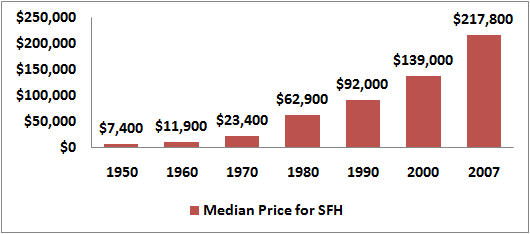
Historically, real estate has provided investors with a stronger return than other options.  Consider the growth of the median price of a home from 1950 to 2007 (57 years):


Click to enlarge.

While there may have been a few small dips at certain points in time, the fact remains that real estate has had a strong history of steady appreciation.

Here’s an interesting experiment.  If you were to ask your parents what the best investment they ever made was, what would they say?  More likely than not, they’ll mention their home, and if they could do it all over again, I bet they wish they would have bought a few more.

Let’s take a simple example.  Let’s say you purchase a $125,000 home today with an investment of about $15,000.  If you rent this home and simply break even, you will have an asset that grows while someone else makes your mortgage, tax, and insurance payments.  At a conservative 4% appreciation per year, in 30 years that home will be worth $405,000, free and clear!  Not a bad return for a $15,000 investment!  Think of the ways you could spend that money in retirement by simply sacrificing $15,000 today.  That’s called leverage and is a major strength of investing with real estate.  With the use of leverage, you can own something worth 10 times your initial investment, and still be able to take advantage of 100% of the appreciation on that asset!

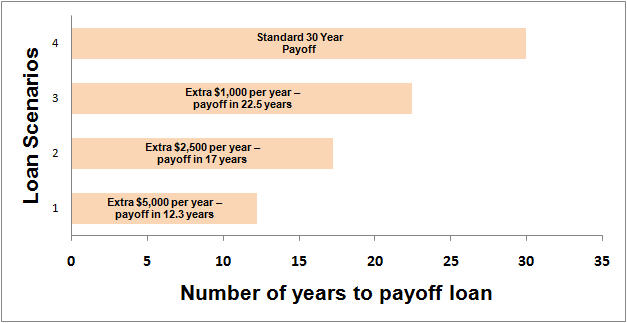
Now, you may be saying to yourself, “that’s great, but I can’t wait 30 years to retire”.  Real estate loans have a solution for that as well.  The following chart provides some examples:


Click to enlarge.

Loan scenario # 4 above shows a standard 30 year mortgage that is paid off in 30 years.  However, if you were to make an additional $1,000 payment per year (loan scenario #3), that same loan would be paid off in 22.5 years!  An extra $2,500 per year (scenario #2) pays it off in just 17 years.  And finally, an extra $5,000 per year (scenario #1) pays it off in only 12.3 years.

By investing in carefully selected growth markets you will build your wealth and become financially independent.  What are you waiting for?  The best time to invest in real estate is now.

Concerned about the long-term commitment? Strategic mortgage payments can significantly shorten the loan term. This allows you to enjoy the benefits of your investment much sooner.

By targeting the right real estate markets, you can build wealth and achieve financial independence. Take action today. Real estate empowers you to take control of your financial future and secure your long-term goals.

Filed Under: Real Estate Investing, Real Estate Investments Tagged With: Down Payment, Investment Properties, Investment Property, Real Estate Investing, Real Estate Investment

  • « Previous Page
  • 1
  • …
  • 9
  • 10
  • 11
  • 12
  • 13
  • …
  • 31
  • Next Page »

Real Estate

  • Birmingham
  • Cape Coral
  • Charlotte
  • Chicago

Quick Links

  • Markets
  • Membership
  • Notes
  • Contact Us

Blog Posts

  • Best Cities to Buy a House For Rental Income in 2026
    August 17, 2026Marco Santarelli
  • Today’s Mortgage Rates, August 17: Purchase Rates Beat Refinancing Across the Board
    August 17, 2026Marco Santarelli
  • Mortgage Rates Today, August 17, 2026: 30-Year Refinance Rate Drops by 10 Basis Points
    August 17, 2026Marco Santarelli

Contact

Norada Real Estate Investments 30251 Golden Lantern, Suite E-261 Laguna Niguel, CA 92677

(949) 218-6668
(800) 611-3060
BBB
  • Terms of Use
  • |
  • Privacy Policy
  • |
  • Testimonials
  • |
  • Suggestions?
  • |
  • Home

Copyright 2018 Norada Real Estate Investments

Loading...