Norada Real Estate Investments

  • Home
  • Markets
  • Properties
  • Membership
  • Podcast
  • Learn
  • About
  • Contact

Archives for January 2025

Today’s Mortgage Rates January 27, 2025: Rates Drop Across the Board

January 27, 2025 by Marco Santarelli

Today's Mortgage Rates January 27, 2025: Rates Drop Across the Board

On January 27, 2025, today's mortgage rates have seen a notable drop across various loan types, making it a potentially cost-effective time for homebuyers and those looking to refinance. The average rates for a 30-year fixed mortgage now sit at 7.04%, marking a significant decrease. This decline can provide substantial savings for borrowers compared to last week’s rates.

Today's Mortgage Rates: January 27, 2025 – Rates Drop Across the Board

Key Takeaways:

  • 30-Year Fixed Rate: 7.04%, down from 7.11%
  • 15-Year Fixed Rate: 6.32%, down from 6.39%
  • 5/1 ARM Rate: 6.47%, down from 6.56%
  • Jumbo Mortgage Rate: 7.07%, down from 7.14%
  • Current trends suggest potential volatility in rates due to economic factors.

As we delve into the mortgage rates for today, it's essential to understand the context of these changes. Mortgage rates are influenced by a multitude of factors, including economic indicators, Federal Reserve policies, and trends in inflation. Each of these elements plays a pivotal role in determining how accessible mortgages are for the average consumer.

Current Mortgage Rate Trends

Here's a detailed table summarizing the current mortgage rates by Bankrate as of today, January 27, 2025:

Loan Type Today's Rate Last Week's Rate Change
30-Year Fixed Mortgage 7.04% 7.11% -0.07%
15-Year Fixed Mortgage 6.32% 6.39% -0.07%
5/1 Adjustable Rate Mortgage 6.47% 6.56% -0.09%
30-Year Fixed Jumbo Mortgage 7.07% 7.14% -0.07%

In-Depth Analysis of Mortgage Rates

30-Year Mortgage Rates

The average 30-year fixed mortgage rate today stands at 7.04%, down 7 basis points from last week. This is significant because a lower rate means reduced monthly payments for homeowners. For example, at the current average rate, borrowing $100,000 would require a monthly payment of $667.99, which is $4.72 less than what homeowners would have paid a week ago. Over the life of a typical 30-year mortgage, even such modest savings can accumulate to substantial totals, making it crucial for potential buyers to consider their timing carefully.

15-Year Fixed Mortgage Rates

The 15-year fixed mortgage rate has similarly decreased to 6.32%. This rate drop also reflects a decrease of 7 basis points from the previous week. Monthly payments on a 15-year mortgage at this rate would amount to approximately $861 for every $100,000 borrowed. This type of mortgage is ideal for buyers who wish to pay off their loans more quickly, allowing them to significantly reduce the interest paid over the life of the loan.

For instance, if you borrowed $300,000 with a 15-year mortgage at 6.32%, your monthly payments would total around $2,583. Over 15 years, you'd pay approximately $171,000 in interest, compared to around $162,000 in interest with a 30-year mortgage at the current 7.04% rate. Though the monthly payment is considerably higher, the total savings in interest can make it a compelling choice for many.

Adjustable Rate Mortgages (ARMs)

The 5/1 adjustable-rate mortgage (ARM) has witnessed a drop to 6.47%, which is down 9 basis points from last week. The attractive feature of this type of mortgage is its lower initial rate, making the monthly payments more manageable at about $630 for every $100,000 borrowed during the first five years. This could represent a smart financial decision for buyers intending to sell or refinance within that timeframe, as they could capitalize on a lower initial rate before potential adjustments come into play.

However, it’s essential to note that after the initial five years, the interest rate on the 5/1 ARM can fluctuate on an annual basis, depending on the performance of the specified index. This means that while borrowers benefit from lower initial payments, they may face higher payments in the future if market rates rise significantly.

Jumbo Mortgage Rates

Today's national average for a 30-year fixed jumbo mortgage is 7.07%, down from 7.14% a week ago. Jumbo loans, which are typically used for properties above the conforming loan limit, require a monthly payment of $670.01 per $100,000. These loans often come with stricter credit requirements and down payment rules due to the higher risk associated with lending large amounts of money.

Considering that the housing market varies widely across different states and cities, potential buyers should ensure they have accurate information about local lending limits. For example, a jumbo loan may be a necessity in high-cost areas where real estate values soar, but this could lead to higher interest rates in comparison to standard conforming loans.

Refinance Mortgage Rates

For those considering refinancing their homes, the average 30-year fixed refinance rate is currently at 7.06%, down 6 basis points from last week. If you borrow $100,000, your monthly payment will be $669.34, representing a drop of $4.04 from the previous week. Refinancing can be attractive to homeowners seeking to lower their monthly payments or tap into their home equity for renovations, debt consolidation, or other financial needs.

Refinancing your mortgage can help reduce your financial burden significantly, especially if you can secure a rate lower than what you're currently paying. Consider a scenario in which a homeowner with a balance of $200,000 at a 7.5% interest rate refinances to the current rate of 7.06%. This could result in a monthly payment drop from approximately $1,398 to $1,330, creating a saving of $68 a month or over $800 annually.

Recommended Read:

Mortgage Rates Trends for January 26, 2025

Mortgage Rate Predictions Next Week: Jan 27 to Feb 2, 2025

Post-Inauguration Mortgage Rates Outlook: Will They Rise or Fall?

Mortgage Rates Rise Past 7% in January: Highest in 7 Months

What Influences Mortgage Rates?

Several factors contribute to the fluctuations in mortgage rates:

  • Federal Reserve Policies: Changes in the Fed's key benchmark rates can influence mortgage rates significantly. For instance, after reducing the benchmark rate in December, we see a slight variance in mortgage rates in response to market adjustments.
  • Economic Indicators: Mortgage rates typically correlate with the 10-year Treasury yield. When the economy is doing well, yields may rise, which in turn can increase mortgage rates. Conversely, if yields drop due to economic uncertainty, mortgage rates may follow suit.
  • Inflation and Global Events: Inflation remains a critical factor, as it influences bond yields and, subsequently, mortgage rates. Additionally, geopolitical tensions can create volatility in the financial markets, impacting rates. For example, global conflicts or domestic economic policies can lead to investor uncertainty, impacting both the stock and bond markets, which may ultimately reflect on mortgage rates.

Will Mortgage Rates Continue to Drop?

Experts remain cautious but optimistic about the trajectory of mortgage rates in 2025. Current indicators suggest that mortgage rates may remain stable, with predictions that the average 30-year fixed rate will predominantly be in the 6% range throughout the year, with brief spikes above 7% but likely not dipping below 6%.

According to Greg McBride, Chief Financial Analyst at Bankrate, while rates might not be as low as they were during the pandemic years, upcoming Federal Reserve decisions could provide further insight into future movements. The next Fed meeting on January 29, 2025, could once again shift these rates depending on inflation reports and other economic data presented.

Looking Ahead: The Overall Market Context

The current trends in mortgage rates can also be contextualized within the broader housing market dynamics. Many experts believe that as interest rates stabilize, this will lead to an increase in housing activity. Homebuyers who had been sidelined by high rates in previous months might now feel more comfortable entering the market, especially with these recent declines.

However, it’s also worth considering that affordability remains a critical issue in many areas. While lower mortgage rates are beneficial, they do little to combat rising home prices, which continue to outpace wage growth in several markets. As a result, buyers might still find themselves grappling with affordability challenges, in spite of the favorable financing conditions.

Throughout 2025, homebuyers, existing homeowners looking to refinance, and industry professionals alike will need to keep a close eye on these evolving trends. The recent drops in mortgage rates represent significant savings opportunities, but the overall financial landscape remains complex. Understanding the interplay between economic indicators and mortgage rates will be essential for making informed decisions as new information becomes available.

Work with Norada in 2025, Your Trusted Source for

Real Estate Investing

With mortgage rates fluctuating, investing in turnkey real estate

can help you secure consistent returns.

Expand your portfolio confidently, even in a shifting interest rate environment.

Speak with our expert investment counselors (No Obligation):

(800) 611-3060

Get Started Now

Recommended Read:

  • Mortgage Rates Forecast for the Next 3 Years: 2025 to 2027
  • 30-Year Mortgage Rate Forecast for the Next 5 Years
  • 15-Year Mortgage Rate Forecast for the Next 5 Years
  • Why Are Mortgage Rates Going Up in 2025: Will Rates Drop?
  • Why Are Mortgage Rates So High and Predictions for 2025
  • NAR Predicts 6% Mortgage Rates in 2025 Will Boost Housing Market
  • Mortgage Rates Predictions for 2025: Expert Forecast
  • Will Mortgage Rates Ever Be 3% Again: Future Outlook
  • Mortgage Rates Predictions for Next 2 Years
  • Mortgage Rate Predictions for Next 5 Years
  • Mortgage Rate Predictions for 2025: Expert Forecast
  • Mortgage Rate Predictions: Why 2% and 3% Rates are Out of Reach
  • How Lower Mortgage Rates Can Save You Thousands?
  • How to Get a Low Mortgage Interest Rate?
  • Will Mortgage Rates Ever Be 4% Again?
Filed Under: Financing, Mortgage Tagged With: Interest Rate, mortgage, Mortgage Rate Trends, mortgage rates, Mortgage Rates Predictions, Mortgage Rates Today

17 Facts That Make Houston the Best City in America

January 26, 2025 by Marco Santarelli

17 Facts That Make Houston the Best City in America

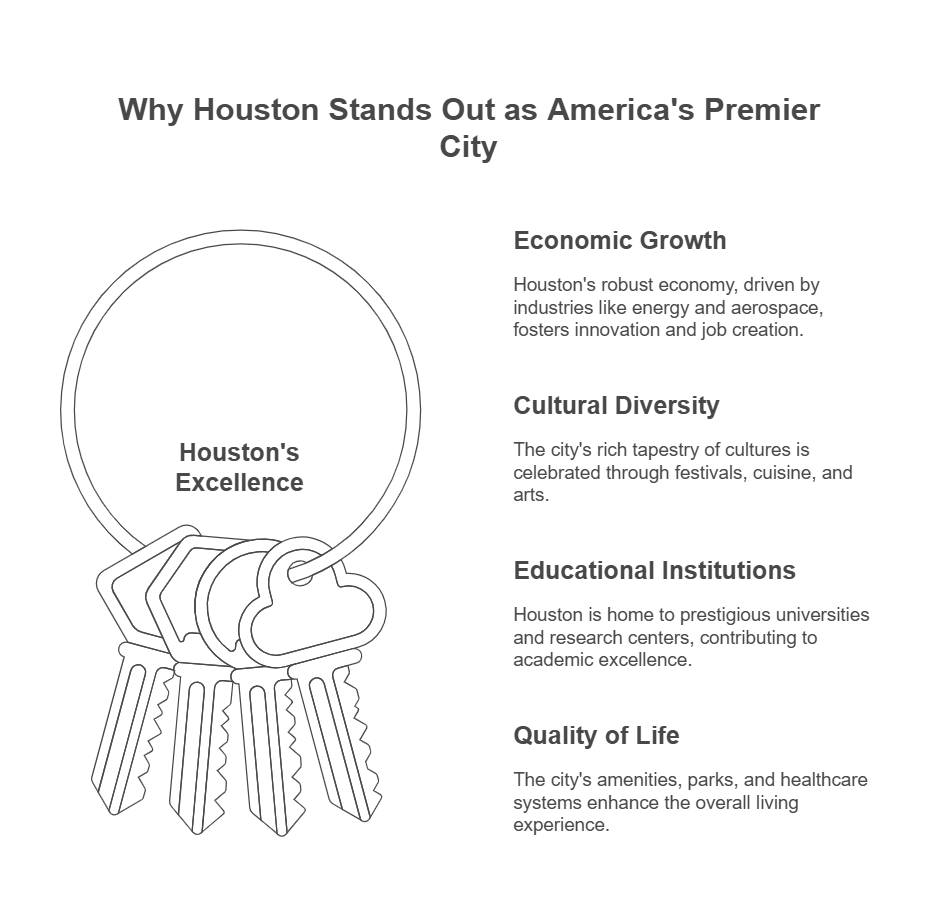
When people think of a thriving, up-and-coming city, they often overlook Houston. The city is frequently associated with oil refineries and humidity, but it has much more to offer, including a rich tapestry of culture, a vibrant economy, and a diverse community. Let’s explore seventeen compelling reasons why Houston stands out as a premier city in the United States.

17 Facts That Make Houston the Best City in America

17 Facts That Make Houston the Best City in America

1. An Economic Powerhouse

Houston is a significant economic engine, recognized as one of the fastest-growing metropolitan areas in the U.S. In 2024, the Greater Houston Partnership projects about 57,000 new jobs will be added in the region, marking a more sustainable pace of growth compared to previous years. This growth is indicative of Houston's ability to adapt and thrive even amid economic shifts, reflecting a city poised for continued success.

2. Job Market Strength

Houston has consistently held its position as a leader in job creation. As of July 2024, the city’s unemployment rate remains below the national average, contributing to a robust labor market with a total employment of approximately 3.4 million people. Despite losing some jobs earlier in the summer due to seasonal fluctuations in certain industries, the overall trend shows significant resilience and recovery. The city has expanded its job offerings across diverse sectors, including technology, healthcare, and manufacturing.

3. Cost of Living Advantage

A paycheck goes further in Houston than in any other major U.S. metropolitan area. With an average salary adjusted for cost of living at approximately $75,256, Houston provides a competitive edge over cities like San Jose, which, despite higher wages, also has significantly higher living costs. This affordability extends beyond housing to include groceries, transportation, and other essential services, making it an attractive option for families and young professionals alike.

4. Affordable Housing Market

Unlike many U.S. cities that faced housing bubbles, Houston's housing market is notably stable. As of July 2024, the average home value is $271,420, up 1.6% over the past year (Zillow). The average home price has moderated, allowing for greater affordability, especially in recent years when many cities have witnessed steep increases. According to recent statistics, the median home price in Houston remains well below the national average, facilitating opportunities for first-time homebuyers and those looking to relocate.

5. Fortune 500 Headquarters

Houston is home to 22 Fortune 500 companies, which ranks second only to New York City. Major firms such as ConocoPhillips, Marathon Oil, and Sysco find their headquarters here, located largely in the city’s “Energy Corridor.” The presence of these corporations not only bolsters the local economy but also creates substantial employment opportunities in various fields, including engineering, finance, and business administration.

6. Energy Sector Hub

The energy industry remains a cornerstone of Houston's economy, with estimates suggesting it comprises roughly 3.4% of the area’s jobs. The sector continues to grow, reinforced by the city's strategic proximity to vast oil reserves and Latin America, cultivating a robust pipeline of resources and talent. Houston's energy landscape is evolving as the industry increasingly pivots towards renewable energy solutions, putting the city at the forefront of innovative energy practices.

7. International Trade

Houston boasts the largest port in the U.S. in terms of international tonnage handled, facilitating extensive trade and job creation. The port's capabilities have attracted over 100 foreign-owned businesses to the area in recent years, further solidifying Houston's role as a critical global trade hub. Enhanced trade relationships with countries in Asia and Latin America promise to bolster economic growth and diversity in the coming years.

8. Space City Legacy

Houston solidifies its title of “Space City” as home to the NASA Johnson Space Center. This hub is vital for astronaut training and manned spaceflight missions, showcasing the city's significant role in advancing space exploration. The center also supports numerous educational programs and initiatives aimed at fostering a new generation of scientists and engineers passionate about space.

10. Culinary Scene Recognition

In 2024, Houston continues to shine as a dynamic food destination. The New York Times has recently highlighted local restaurants for their innovative offerings, stating that the city is among “the most exciting places to eat.” Houston features an incredible variety of cuisines, from Vietnamese and Mexican to exceptional barbecue. The city's culinary landscape is a direct reflection of its diverse population and cultural heritage, making it a must-visit destination for food enthusiasts.

11. Thriving Sports Culture

While the Astros have had mixed fortunes, the Texans are emerging as serious contenders in the NFL, and both the Rockets in the NBA and Dynamo in MLS have shown promising performances in recent seasons. The enthusiastic support of Houston's sports teams unites the community, fostering strong local pride and engagement. Events at renowned venues like NRG Stadium and the Toyota Center draw fans from across the region, further enriching the local economy.

12. Leading Healthcare Sector

The Texas Medical Center is the largest and most comprehensive healthcare center in the world, employing over 106,000 individuals across 21 hospitals and numerous research institutions. M.D. Anderson Cancer Center continues to be at the forefront of cancer research and treatment, particularly with recent investments aimed at tackling various types of cancer. The collaborative environment among medical institutions in Houston fosters groundbreaking research and clinical trials, advancing healthcare outcomes for patients.

13. Cultural Richness

Houston’s Museum District features 19 prominent museums within a 1.5-mile radius, showcasing a blend of art, science, and history. The Museum of Fine Arts stands among the largest art institutions in the country, while other institutions, like the Children’s Museum Houston and the Houston Museum of Natural Science, offer diverse cultural experiences that appeal to residents and tourists alike. The city's commitment to the arts enhances its cultural vibrancy and attracts global visitors.

14. Ample Green Spaces

With over 50,000 acres of parkland, Houston ranks third among major U.S. cities for park acreage per capita. Significant investments in green spaces enhance the quality of life for residents, providing ample opportunities for recreational activities, community events, and leisure. Projects like the revitalization of Buffalo Bayou and improvements to Discovery Green showcase the city's dedication to preserving biodiversity and promoting outdoor activities.

15. Renowned Educational Institutions

Houston is not only a hub for higher education but also home to renowned institutions like Rice University, ranked 17th nationally, and the University of Houston, which has received Tier One research status. These institutions foster academic excellence and research innovation, producing a highly skilled workforce that benefits Houston’s economy. Additionally, community colleges and technical schools in the region provide critical resources for workforce development and vocational training.

16. Unmatched Diversity

As of 2024, Houston is recognized as the most ethnically and racially diverse large city in the U.S. Over 400,000 foreign-born residents added to the population have created a vibrant cultural mosaic, with at least 145 languages spoken citywide. This diversity fosters a rich cultural fabric that is celebrated through festivals, food, art, and community events. Houston’s neighborhoods reflect this cultural blend, showcasing everything from bustling Chinatown to Little India.

17. Cultural Music Scene

Lastly, Houston's cultural scene continues to thrive, with celebrated artists like Beyoncé having roots in the city. The music scene nurtures both emerging and established talents, reinforcing Houston’s influence in the Southern hip-hop genre. In addition to hip-hop, the city boasts a thriving live music scene, with venues hosting everything from jazz to country, further illustrating Houston's role as a cultural crossroads.

In conclusion, with its unique blend of economic opportunity, cultural diversity, and a vibrant lifestyle, Houston makes a compelling case as one of the best cities in America. Its ongoing commitment to innovation, inclusivity, and quality of life ensures that it will continue to be a beacon of growth and prosperity for years to come. Whether you are seeking career opportunities, cultural experiences, or a welcoming community, Houston offers something for everyone.

Work with Norada in 2025, Your Trusted Source for

“Houston Real Estate Investment”

Discover high-quality, ready-to-rent properties designed to deliver consistent returns.

Contact us today to expand your real estate portfolio with confidence.

Contact our investment counselors (No Obligation):

(800) 611-3060

Get Started Now 

Read More:

  • Houston Turnkey Investment Properties for Sale
  • Houston Real Estate Market Forecast 2025: What to Expect
  • Houston Housing Market: Prices, Trends, Forecast 2025-2026
  • Houston Real Estate Investment: Should You Invest in Houston?
  • Housing Market Trends: Big Investors Buy in Houston, Atlanta, Dallas, Charlotte
  • Texas Housing Market: Prices, Trends, Predictions 2025

Filed Under: Best Places, Growth Markets Tagged With: Houston

Housing Market Crash: Expert Says Market ‘Ready to Pop’

January 26, 2025 by Marco Santarelli

Housing Market Bubble Warning: Expert Says Market 'Ready to Pop'

The supply of new homes in Southern U.S. states has surged significantly, potentially creating a bubble in the housing market, a real estate analyst suggested on Monday.

Imminent Housing Bubble Burst in Southern U.S., Expert Warns

Increased Construction Amid Pandemic Demand

Home builders in the Southern states ramped up construction in response to the heightened demand for homes during the COVID-19 pandemic. Many Americans relocated to the South seeking more affordable housing after remote work became widely feasible due to stay-at-home orders aimed at slowing the virus's spread. However, this trend is now slowing, resulting in decreased demand for homes.

During the pandemic, cities like Austin, Dallas, and Nashville saw an influx of new residents attracted by relatively low housing costs and the appeal of larger living spaces. This demand surge prompted builders to rapidly increase the construction of new homes to meet the growing need. According to housing market reports, this period saw record numbers of building permits issued and homes being completed at unprecedented rates.

Potential Housing Bubble

Despite the initial surge, the market dynamics are shifting. One analyst suggests that the drop in demand has left many homes on the market, creating a potential bubble.

“A massive housing bubble has developed, and is about to pop, in the South. The number of new homes for sale in the Southern Region (FL, GA, TN, TX, etc.) has spiked up to nearly 300,000,” said Nick Gerli, CEO of Reventure Consulting, in a post on X, formerly known as Twitter. “This is the highest level of all-time. Even higher than the previous bubble peak in August 2006, before the massive crash.”

The data from Gerli's analysis shows that this inventory buildup is not just a temporary fluctuation but a significant indicator of market imbalance. The Southern housing market's rapid expansion is now revealing vulnerabilities that could lead to sharp corrections if not addressed.

A massive housing bubble has developed, and is about to pop, in the South.

The number of new homes for sale in the Southern Region (FL, GA, TN, TX, etc.) has spiked up to nearly 300,000.

This is the highest level of all-time. Even higher than the previous bubble peak in August… pic.twitter.com/bVB9vCQl4I

— Nick Gerli (@nickgerli1) July 8, 2024

Impact of Declining Demand

Gerli further suggested that the COVID-19 inspired demand led to high prices, which are now declining as demand for homes decreases. The rush to acquire property during the pandemic drove prices to record highs, making it increasingly difficult for local buyers to afford homes.

“I know this sounds very bearish on Southern real estate. But ultimately it's pretty simple. Home builders and investors rampantly speculated in this housing market over the last 3-4 years. Prices went far above what locals can afford, creating a bubble,” he said on X. “Now that bubble is – slowly – popping. And it could start to pop pretty fast if a recession is thrown into the mix.”

The potential recession Gerli mentions could exacerbate the market correction. If economic conditions worsen, potential homebuyers may delay purchases, further reducing demand and putting additional downward pressure on prices. This could lead to a more accelerated and pronounced market adjustment.

Market Normalization

Some housing economists propose that the market may be normalizing after the volatility experienced during COVID-19, when cheap mortgage rates and lower prices in the South attracted buyers. The Southern housing market, once characterized by rapid growth and high demand, is beginning to stabilize as market forces rebalance.

“In our data, it is clear that the Southern markets are the most normalized. In Austin and San Antonio, for example, there are more homes now for sale than there were before the pandemic,” Danielle Hale, chief economist at Realtor.com, told Newsweek. “So there is greater availability in the South, and we are seeing that affect pricing.”

The median listing price in Austin, for instance, was down 3 percent compared to a year ago, she added. This decline in prices indicates that the market is adjusting to the reduced demand, aligning home prices more closely with what buyers are willing and able to pay.

Southern Market Resilience

The U.S. still needs to build enough homes, and the South has done a better job than other parts of the country in supplying new homes to the market, Hale noted. The Southern states have been more proactive in addressing the housing shortage by ramping up construction efforts.

“It has also attracted a lot of households from other regions of the country because homes there remain affordable,” she said. “My expectation is that it will continue to draw in people and that its relative affordability will continue to be an advantage.”

Hale added, “So I don't think we're going to see a crash, but it is the case that inventory of homes for sale are less scarce in the South now than they have been over the past few years.”

Equity and Market Stability

Compared to the housing crash during the 2008 financial crisis, homeowners now have significant equity in their homes, including in parts of the South. This equity acts as a buffer against potential market downturns, reducing the risk of widespread foreclosures.

“Historically, Florida, for example, has a high share of homeowners that own their home outright,” Hale said. “Nationwide, there's a lot more equity in housing right now, making it less likely we'll see the kind of price declines that led to trouble in the mid-2000s.”

This equity provides homeowners with more financial stability and flexibility, allowing them to withstand market fluctuations better. It also means that even if prices decline, many homeowners will not be underwater on their mortgages, reducing the likelihood of distressed sales and foreclosures.

Regional Variations

Gerli acknowledged that other regions of the U.S. are experiencing fewer challenges than the South. The Northeast and Midwest, for example, have not seen the same level of speculative building and price inflation.

“We won't see a housing crash in the Northeast and Midwest. Home building there is at very low levels. As is speculative inventory activity,” he pointed out on X. “Prices in these regions are also less overvalued. And inventory is much lower.”

He added, “Perhaps there's a housing correction eventually in Northeast/Midwest. But for now – these markets are holding strong.”

The more conservative building practices and stable market conditions in these regions have kept them insulated from the extreme fluctuations seen in the South. While they may not experience the same rapid growth, they are also less likely to face severe corrections.

Summary: To sum up, the Southern U.S. housing market is at a critical juncture. The rapid growth driven by pandemic-era demand is now revealing potential vulnerabilities. While some experts suggest the market is normalizing, others warn of an imminent bubble burst. The region's future will depend on how demand stabilizes and whether economic conditions support continued housing market growth without significant corrections.

Read More:

  • When Will the Housing Market Crash Again?
  • Housing Market Crash: When Will it Crash Again?
  • Housing Market Predictions for Next 5 Years (2025-2029)
  • Housing Market Predictions for the Next 2 Years
  • Housing Market Predictions: 8 of Next 10 Years Poised for Gains
  • Housing Market Predictions: Top 5 Most Priciest Markets
  • Real Estate Forecast Next 5 Years: Top 5 Future Predictions

Filed Under: Housing Market, Real Estate, Real Estate Market Tagged With: Housing Market, Real Estate Market

Southern Housing Market Faces Massive Bubble Threat: Prediction

January 26, 2025 by Marco Santarelli

Southern Housing Market Faces Massive Bubble Threat: Expert Predictions

The American South is teetering on the edge of a housing market crisis, according to real estate analyst Nick Gerli. The COVID-19 pandemic created a radical shift in housing demands, leading to a substantial increase in homebuilding in states like Florida, Georgia, Tennessee, and Texas. However, this building boom has resulted in an oversupply of homes that could spell trouble ahead.

‘Massive' Housing Bubble About to Burst

Pandemic-Induced Demand

During the COVID-19 pandemic, stay-at-home orders and the rise of remote work allowed Americans greater flexibility in choosing where to live. Many opted for the Southern states, attracted by the lower cost of living and cheaper housing options compared to other regions. As a result, home builders rushed to meet this increased demand, rapidly escalating construction activities and adding thousands of new homes to the market.

The Bubble Formation

According to Nick Gerli, CEO of Reventure Consulting, the increase in home building has created what he describes as a “massive housing bubble” in the South. The current number of newly built homes for sale in the Southern region has soared to nearly 300,000, the highest level ever recorded, even surpassing the previous peak during the housing bubble of 2006-2007. Gerli's analysis, shared on social media platform X (formerly Twitter), emphasizes that this excess supply could lead to a significant market correction if demand continues to decline.

A massive housing bubble has developed, and is about to pop, in the South.

The number of new homes for sale in the Southern Region (FL, GA, TN, TX, etc.) has spiked up to nearly 300,000.

This is the highest level of all-time. Even higher than the previous bubble peak in August… pic.twitter.com/bVB9vCQl4I

— Nick Gerli (@nickgerli1) July 8, 2024

Declining Demand and Price Adjustments

The post-pandemic demand surge is now slowing, leading to a decrease in the need for new homes. This shift is causing home prices, which had previously been driven up by the fervent buying activity during COVID-19, to decline. Gerli suggests that “home builders and investors rampantly speculated in this housing market the last 3-4 years, and prices went far above what locals can afford.” As a result, the market is currently experiencing a bubble that is on the verge of bursting.

A Broader Perspective

While Gerli's predictions paint a bearish outlook for the Southern real estate market, some economists offer a more balanced view. Danielle Hale, chief economist at Realtor.com, mentions that the housing market may be normalizing after the volatility witnessed during the pandemic. In certain Southern markets like Austin and San Antonio, there are more homes available for sale now than there were before the pandemic, which has helped in stabilizing prices. The median listing price in Austin, for example, has decreased by 3% compared to a year ago.

According to Hale, the Southern housing market's relative affordability will continue to attract households from other regions. This continuous influx of new residents could help mitigate the severity of a potential housing crash.

Comparing to the 2008 Financial Crisis

A critical factor distinguishing the current situation from the 2008 financial crisis is the significant equity that homeowners now have in their properties. This equity provides a cushion against the kind of widespread price drops experienced during the mid-2000s crash. In places like Florida, a high share of homeowners own their homes outright, which reduces the likelihood of a dramatic decline in prices.

Regional Differences

Gerli points out that while the Southern market is facing a potential crisis, other regions of the United States, such as the Northeast and Midwest, are far less affected. Home building activities in these areas remain at low levels, with less speculative inventory and more stable pricing. Thus, these regions are currently holding strong against the market volatility seen in the South.

Conclusion

The Southern states of the U.S. are facing a unique set of challenges in the housing market, driven by an oversupply of homes following a pandemic-induced building boom. While some experts predict a significant market correction, others believe the region's relative affordability will continue to attract buyers, potentially softening the blow. Homeowners stand on more solid financial ground compared to the last housing crisis, suggesting that while a bubble may burst, the fallout may not mirror the catastrophic events of 2008.

In summary, the situation underscores the importance of cautious and calculated investment in the real estate market, particularly in regions experiencing rapid change. As the housing market continues to evolve, it will be crucial for buyers, investors, and policymakers to remain vigilant and responsive to emerging trends.

Work with Norada in 2025, Your Trusted Source for

Turnkey Real Estate Investing

Discover high-quality, ready-to-rent properties designed to deliver consistent returns.

Contact us today to expand your real estate portfolio with confidence.

Contact our investment counselors (No Obligation):

(800) 611-3060

Get Started Now 

Read More:

  • Real Estate Forecast Next 10 Years: Will Prices Skyrocket?
  • Housing Market Predictions for Next 5 Years (2025-2029)
  • Housing Market Predictions for 2027: Experts Differ on Forecast
  • Housing Market Predictions for the Next 2 Years
  • Housing Market Crash: Expert Says Market Ready to Pop
  • Housing Market Crash Myth Busted? 5 Experts Say No Crash

Filed Under: Housing Market, Real Estate Market Tagged With: Housing Market, Real Estate Market

Don’t Panic Sell! Homeowners Hold Strong in Housing Market

January 26, 2025 by Marco Santarelli

Don't Panic Sell! Homeowners Hold Strong in Housing Market (Morgan Stanley)

The current housing market landscape in the U.S. has been the subject of extensive discussion and scrutiny. Morgan Stanley analysts have voiced a compelling argument that U.S. homeowners are showcasing remarkable resilience, referring to them as the “strong hands” within this market cycle.

Understanding the reasoning behind this assertion is pivotal, as it sheds light on the stability and dynamics of the housing market. Let's delve into the critical factors that underpin this perspective and explore the supporting data and trends.

Don't Panic Sell! Homeowners Hold Strong in Housing Market (Morgan Stanley)

Why Homeowners Are ‘Strong Hands’

According to Morgan Stanley, several significant factors contribute to homeowners' current strong position:

The Lock-in Effect

One of the primary reasons homeowners are considered “strong hands” is due to what is known as the lock-in effect. This term refers to the phenomenon where homeowners have secured low, fixed-rate mortgages for 30 years, disincentivizing them from selling their homes. Unlike other debt instruments that may fluctuate with market conditions, fixed-rate mortgages provide stability. This long-term financial commitment ensures that homeowners avoid the volatility and unpredictability of rising interest rates, making them less likely to offload their properties.

Affordability and Financial Stability

The argument for homeowners’ strength is also anchored in the issue of affordability:

  • Despite significant decreases in housing activity and existing home sales, national home prices have remained relatively stable.
  • Homeowners with fixed-rate mortgages are protected from the direct impact of deteriorating affordability, as their monthly payments remain constant.

Morgan Stanley analysts highlight that this stability has created a group of homeowners who can weather economic fluctuations without being forced to sell their homes at distressed prices.

Supporting Data and Statistics

To further substantiate this argument, Morgan Stanley has provided several key data points. Let’s closely analyze these figures:

Mortgage-Free Homeowners: Financial Independence

39% of U.S. homeowners are mortgage-free. This substantial figure is indicative of a large portion of homeowners who do not face the pressures and uncertainties related to mortgage rate fluctuations. These mortgage-free homeowners contribute significantly to the stability of the housing market, as they are not at risk of foreclosure or selling due to financial distress.

Prevalence of Fixed-Rate Mortgages

Fixed-rate mortgages are a cornerstone of homeowners' financial stability. Among U.S. homeowners with a mortgage:

  • 96% have secured fixed-rate mortgages.
  • Measures introduced to curb risky lending practices have led to a shift towards these stable mortgage products.
  • Before the 2008 financial crisis, approximately 80% of U.S. subprime mortgages were adjustable-rate, posing higher risks to borrowers.

This dramatic shift towards fixed-rate mortgages ensures that most homeowners have predictable and manageable monthly payments, thereby contributing to overall market stability.

Interest Rates: A Crucial Factor

Another crucial factor is the interest rates on these mortgages. Among U.S. homeowners with a mortgage:

  • 76% have an interest rate below 5.0%.

These low interest rates reduce the financial burden on homeowners, making it easier for them to maintain their monthly mortgage payments without financial distress.

The Broader Economic Context

While the data highlights the robustness of homeowners' financial positions, it's essential to consider the broader economic context:

Housing Market Stability

Morgan Stanley suggests that because homeowners are the “strong hands,” there will be fewer distressed sales and foreclosures. This stability is one reason national home prices have remained relatively constant, despite a doubling in mortgage rates.

Potential Vulnerabilities

However, Morgan Stanley also cautions that many homeowners' monthly mortgage payments may be shielded from spiking interest rates, but their employment situations may not be. If the U.S. economy were to slide into a recession, the current rate hiking cycle could adversely impact recent homebuyers with less substantial savings, potentially leading to an increased risk of default and financial distress.

Credit Card Borrowers and Financial Stress

Another crucial point to consider is the impact of rising interest rates on other forms of debt:

  • U.S. credit card borrowers with variable rates have seen increased financial stress and delinquencies.
  • Credit card stress highlights the broader financial pressures facing many U.S. households, even if their housing payments remain stable.

Table: Delinquencies Among Credit Card Borrowers

Indicator Current Trend
Credit Card Delinquencies Rising
Financial Stress Among Variable Rate Borrowers Increasing

Conclusion

Morgan Stanley's perspective that homeowners are the “strong hands” of this housing market cycle is compelling and well-supported by data. The prevalence of low, fixed-rate mortgages and the financial stability they provide help to insulate homeowners from many of the economic fluctuations affecting other segments of society. This stability explains the lack of distressed sales and the relative steadiness in national home prices.

However, the broader economic context, including potential employment instability and rising stress among credit card borrowers, suggests that vigilance remains necessary. Monitoring these indicators will be crucial for maintaining the current stability of the housing market.

Work with Norada in 2025, Your Trusted Source for

Real Estate Investing in the U.S.

Discover high-quality, ready-to-rent properties designed to deliver consistent returns.

Contact us today to expand your real estate portfolio with confidence.

Contact our investment counselors (No Obligation):

(800) 611-3060

Get Started Now 

Read More:

  • Housing Market Predictions for the Next 2 Years
  • Housing Market Predictions for Next 5 Years (2024-2028)
  • Housing Market Predictions 2025: Will Real Estate Crash?
  • Housing Market Predictions: 8 of Next 10 Years Poised for Gains
  • Don't Panic Sell: Here's What Current Housing Market Trends Predict

Filed Under: Housing Market, Mortgage Tagged With: Housing Market, mortgage

Today’s Mortgage Rates Rise: January 26, 2025 Trends

January 26, 2025 by Marco Santarelli

Today's Mortgage Rates January 26, 2025: Rates Rise Again

As of January 26, 2025, mortgage rates have seen an uptick, reflecting broader economic trends that suggest they could remain high for much of the year. Based on data from Zillow, the average 30-year fixed mortgage rate stands at 6.74%, while the 15-year fixed rate has climbed to 6.03%. This increase marks a pivotal moment for potential homebuyers and those considering refinancing.

Today's Mortgage Rates: January 26, 2025 – Trends and Insights

Key Takeaways

  • Current Rates:
    • 30-Year Fixed: 6.74%
    • 15-Year Fixed: 6.03%
    • 5/1 ARM: 6.69%
  • Expert Perspective: Economists forecast that mortgage rates will largely stay elevated throughout 2025, making early acquisition potentially more prudent.
  • Consideration for Buyers: Delaying a purchase with hopes for lower rates may not be advisable if you’re financially ready to enter the market now.

Understanding Today's Mortgage Rates

The evolving economy plays a direct role in shaping mortgage rates. Factors such as inflation, Federal Reserve policies, and overall economic growth set a backdrop that affects borrowing costs for consumers. Reports indicate that mortgage rates have slightly increased recently, reflecting a continued path of stability amid economic fluctuations.

Here's a summary breakdown of current average mortgage rates:

Type of Mortgage Current Interest Rate
30-Year Fixed 6.74%
20-Year Fixed 6.49%
15-Year Fixed 6.03%
5/1 Adjustable Rate (ARM) 6.69%
7/1 ARM 6.74%
30-Year VA 6.17%
15-Year VA 5.66%
5/1 VA 6.07%
30-Year FHA 6.29%

Current Mortgage Refinance Rates

Refinance Type Current Rate
30-Year Fixed 6.75%
20-Year Fixed 6.45%
15-Year Fixed 6.08%
5/1 ARM 6.68%
7/1 ARM 6.64%
30-Year VA 6.16%
15-Year VA 5.89%
5/1 VA 6.08%

30-Year vs. 15-Year Fixed Mortgage Rates

When choosing between a 30-year fixed mortgage and a 15-year fixed mortgage, it's essential to consider your financial goals. The 30-year option, with an average rate of 6.74%, provides lower monthly payments. However, it comes with a steep long-term interest cost. Conversely, the 15-year mortgage offers a lower rate at 6.03%, resulting in significant savings on interest but requires higher monthly payments.

To illustrate, if you were to finance a $300,000 mortgage, here’s how the costs break down:

  • 30-Year Mortgage:
    • Monthly Payment: $1,944
    • Total Interest Paid Over 30 Years: $399,768
  • 15-Year Mortgage:
    • Monthly Payment: $2,536
    • Total Interest Paid Over 15 Years: $156,558

This comparison showcases the critical balance between short-term affordability and long-term financial health.

Fixed-Rate vs. Adjustable-Rate Mortgages

Understanding the differences between fixed-rate and adjustable-rate mortgages (ARMs) can further influence your decision. A fixed-rate mortgage guarantees your interest rate for the entire loan term, which provides payment stability against market variances.

In contrast, an adjustable-rate mortgage features a lower initial rate that adjusts after a predetermined period (e.g., 7/1 ARM—fixed for the first seven years). While this may appeal to some, it presents a risk if rates rise after the fixed period. Many fixed-rate options are currently more competitive than some ARMs, prompting buyers to consider their long-term interest in conjunction with immediate affordability.

Factors Influencing Mortgage Rates

Mortgage rates are affected by various economic indicators, including:

  • Inflation: Higher inflation rates often lead to increased mortgage rates, as lenders seek to offset the decreased purchasing power.
  • Economic Growth: A robust economic environment can elevate borrowing costs due to increased demand for loans.
  • Federal Reserve Policies: The Federal Reserve's adjustments to interest rates have a direct impact on the mortgage market, shaping consumer borrowing experiences.

Recent expert predictions hinted that mortgage rates would decline slightly by the end of 2025, potentially settling around 6.50% for a 30-year fixed mortgage. However, waiting for such declines could cause buyers to miss valuable opportunities in the current market.

How to Secure a Lower Mortgage Rate

Locking in lower mortgage rates may appear challenging, but there are actionable strategies to attend to. Lenders frequently reward borrowers who exhibit sound financial habits:

  • Credit Score Enhancement: A healthy credit score (typically above 740) will often unlock the lowest interest rates.
  • Larger Down Payment: A down payment exceeding 20% of the home price can significantly lower your rate.
  • Lower Debt-to-Income Ratio (DTI): A lower DTI indicates to lenders that you are more capable of handling additional debt.

Thinking about waiting for lower rates can be risky, considering the general tendency of rates to remain above 6% in the near future. Ideally, focusing on improving your personal finances right now may yield more significant benefits than merely hoping for future rate drops.

Recommended Read:

Mortgage Rates Trends for January 25, 2025

Post-Inauguration Mortgage Rates Outlook: Will They Rise or Fall?

Mortgage Rates Rise Past 7% in January: Highest in 7 Months

Navigating the Current Mortgage Environment

With rising mortgage rates, potential refinancers should assess their current mortgage conditions against the current offers available. Statistics show that a slight rise in rates could have broader impacts on housing market dynamics such as affordability and buyer confidence.

As higher rates influence home affordability, potential buyers face steeper monthly payments, limiting the price range for many. This contraction could lead to a supply influx as current homeowners opt to sell, causing them to lock in their existing lower mortgage rates. Consequently, potential sales can continue shaping the market as prices adjust slowly.

Real estate experts broadly expect the next five years (2025-2029) to witness moderated increases in home prices, influenced by the high mortgage rates. As affordability constraints persist, both home buyers and sellers must adapt to evolving market conditions. Lower demand from buyers could push sellers to adjust their asking prices and, in some cases, even to offer concessions to make deals more attractive.

Concluding Thoughts on Mortgage Rates

The mortgage landscape is shaped by numerous external factors, including economic performance and consumer behavior. Understanding the dynamics of today’s rates allows buyers and homeowners to make more informed decisions.

As potential homebuyers engage with lenders, preparation remains key. Having financial documents organized and a clear understanding of one's financial situation can empower you for favorable negotiations in securing mortgage terms that align with both current and long-term aspirations.

Work with Norada in 2025, Your Trusted Source for

Real Estate Investing

With mortgage rates fluctuating, investing in turnkey real estate

can help you secure consistent returns.

Expand your portfolio confidently, even in a shifting interest rate environment.

Speak with our expert investment counselors (No Obligation):

(800) 611-3060

Get Started Now

Recommended Read:

  • Mortgage Rates Forecast for the Next 3 Years: 2025 to 2027
  • 30-Year Mortgage Rate Forecast for the Next 5 Years
  • 15-Year Mortgage Rate Forecast for the Next 5 Years
  • Why Are Mortgage Rates Going Up in 2025: Will Rates Drop?
  • Why Are Mortgage Rates So High and Predictions for 2025
  • NAR Predicts 6% Mortgage Rates in 2025 Will Boost Housing Market
  • Mortgage Rates Predictions for 2025: Expert Forecast
  • Will Mortgage Rates Ever Be 3% Again: Future Outlook
  • Mortgage Rates Predictions for Next 2 Years
  • Mortgage Rate Predictions for Next 5 Years
  • Mortgage Rate Predictions for 2025: Expert Forecast
  • Mortgage Rate Predictions: Why 2% and 3% Rates are Out of Reach
  • How Lower Mortgage Rates Can Save You Thousands?
  • How to Get a Low Mortgage Interest Rate?
  • Will Mortgage Rates Ever Be 4% Again?

Filed Under: Financing, Mortgage Tagged With: Interest Rate, mortgage, Mortgage Rate Trends, mortgage rates, Mortgage Rates Predictions, Mortgage Rates Today

Today’s Mortgage Rates Fall: January 25, 2025 Insights

January 25, 2025 by Marco Santarelli

Today's Mortgage Rates January 25, 2025: Trends and Insights

Today's mortgage rates are at the forefront of many minds as potential homebuyers and those looking to refinance seek the best financial options available. As of January 25, 2025, the average interest rate for a 30-year fixed mortgage sits at approximately 7.01%, which represents a slight dip of 10 basis points from last week's figures. Understanding the nuances of these rates will not only help you make informed decisions but also potentially save you significant amounts over the duration of your mortgage.

Today's Mortgage Rates Fall: January 25, 2025 Insights

Key Takeaways

  • Current 30-Year Fixed Rate: 7.01%
  • Average Refinance Rate: 7.01%
  • 15-Year Fixed Refinance Rate: 6.26%
  • Top Offers: 6.48% (approximately 0.64% lower than the national average)
  • Estimated Annual Savings: Borrowers could save around $1,725 annually on a $340,000 mortgage when choosing lower rates.

A Closer Look at Current Mortgage Rates

According to Bankrate, the mortgage market is experiencing a stabilization phase following significant fluctuations. The average 30-year fixed mortgage rate has demonstrated a reassuring decline compared to exaggerated peaks earlier in the year, reflecting broader economic trends and lender competition.

Monthly Rate Trends

The following table summarizes recent trends in mortgage rates:

Loan Type Current Rate APR
30-Year Fixed Rate 7.01% 7.01%
15-Year Fixed Rate 6.26% 6.32%
20-Year Fixed Rate 6.81% 6.87%
30-Year Fixed FHA 6.95% 7.00%
10-Year Fixed Rate 6.14% 6.21%

Mortgage Rate Trends: Recent Insights

As noted by the Federal Reserve, the recent decline in mortgage rates stands at a very pivotal moment for the real estate market. Most significantly, 30-year fixed mortgages saw a fall from 7.11% to the current 7.01%. This could lead to increased demand among first-time homebuyers and others looking to enter the housing market.

Projected Future Trends

Looking forward, various economic forecasts suggest that while today’s rates signify a decline, they could hover around the mid-6% range later in the year. The consensus from financial experts indicates that rates may stabilize slightly above their current levels, leading to a cautious but optimistic outlook in the housing market.

Key Economic Factors Affecting Mortgage Rates

There are several critical factors that drive mortgage rates and their fluctuations:

1. Creditworthiness

Lenders consider your credit score as a reflection of your reliability in repaying loans. A higher credit score generally results in lower interest rates, saving you money over time.

2. Down Payment Size

The more you can put down initially, the less risk the lender has. Thus, larger down payments typically secure better rates.

3. Loan Type and Structure

Fixed-rate mortgages tend to have higher initial rates than adjustable-rate mortgages (ARMs), but they provide stability against future rate hikes.

4. Economic Indicators

Economic health, dictated by inflation rates, employment figures, and Federal Reserve policies, affects mortgage interests. For example, recent expectations of inflation control led to recent decreases in rates.

5. Demand and Supply Dynamics

Mortgage rates can also fluctuate based on the broader housing market dynamics. High demand for homes can lead to elevated rates, especially if supply doesn't keep pace.

The Importance of Shopping Around

One of the most effective strategies for securing the best mortgage rates is comparison shopping. Mortgage rates can vary significantly from lender to lender, and small differences in rates can translate to large savings over a loan's lifetime.

Potential Savings from Rate Comparison

Based on estimations provided by Bankrate, a mere 0.1% difference in mortgage rates can translate into thousands saved over the life of a loan.

Example Loan Amount Rate Difference Savings Over 30 Years
$340,000 0.1% $30,000

Recommended Read:

Mortgage Rates Trends for January 24, 2025

Post-Inauguration Mortgage Rates Outlook: Will They Rise or Fall?

Mortgage Rates Rise Past 7% in January: Highest in 7 Months

Refinancing Opportunities

As interest rates remain dynamic, many homeowners may contemplate refinancing their existing mortgages. Refinancing involves replacing your current mortgage with a new one, ideally at a lower rate.

Reasons to Refinance:

  • Lower Interest Rates: If rates have decreased since you took your initial mortgage.
  • Cash-Out Opportunities: Refinancing can also give you access to your equity for home improvements or debt consolidation.
  • Change Loan Types: Many homeowners choose to switch from an adjustable rate to a fixed-rate mortgage to make their payments more predictable.

What’s Next?

The economic forecast indicates that interest rates may experience modest fluctuations in the upcoming months. For prospective homeowners, this could present a favorable opportunity to secure a mortgage at competitive rates. If you’re a current homeowner considering refinancing, carefully evaluate your goals and the possible benefits of locking in lower rates.

With the current landscape of mortgage rates as of January 25, 2025, offering both challenges and opportunities, staying informed is more critical than ever. By understanding these key metrics and the factors influencing them, you can approach your home financing decisions with confidence.

Work with Norada in 2025, Your Trusted Source for

Real Estate Investing

With mortgage rates fluctuating, investing in turnkey real estate

can help you secure consistent returns.

Expand your portfolio confidently, even in a shifting interest rate environment.

Speak with our expert investment counselors (No Obligation):

(800) 611-3060

Get Started Now

Recommended Read:

  • Mortgage Rates Forecast for the Next 3 Years: 2025 to 2027
  • 30-Year Mortgage Rate Forecast for the Next 5 Years
  • 15-Year Mortgage Rate Forecast for the Next 5 Years
  • Why Are Mortgage Rates Going Up in 2025: Will Rates Drop?
  • Why Are Mortgage Rates So High and Predictions for 2025
  • NAR Predicts 6% Mortgage Rates in 2025 Will Boost Housing Market
  • Mortgage Rates Predictions for 2025: Expert Forecast
  • Will Mortgage Rates Ever Be 3% Again: Future Outlook
  • Mortgage Rates Predictions for Next 2 Years
  • Mortgage Rate Predictions for Next 5 Years
  • Mortgage Rate Predictions for 2025: Expert Forecast
  • Mortgage Rate Predictions: Why 2% and 3% Rates are Out of Reach
  • How Lower Mortgage Rates Can Save You Thousands?
  • How to Get a Low Mortgage Interest Rate?
  • Will Mortgage Rates Ever Be 4% Again?

Filed Under: Financing, Mortgage Tagged With: Interest Rate, mortgage, Mortgage Rate Trends, mortgage rates, Mortgage Rates Predictions, Mortgage Rates Today

Mortgage Refinance Rates January 25, 2025: A Closer Look

January 25, 2025 by Marco Santarelli

Mortgage Refinance Rates January 25, 2025: A Closer Look

Are you feeling the pinch of your current mortgage payments? Wondering if there’s a way to free up some cash or even pay off your home faster? Well, you’re not alone! As of January 25, 2025, mortgage refinance rates are showing some interesting trends that could potentially benefit you.

The market is certainly not what it was a couple of years ago with those rock-bottom rates, but it’s also not as high as it could be. In short, yes, there are opportunities for homeowners to secure competitive terms, but whether it's the “right” time for you is more nuanced. Let's dig into the numbers, see what's moving the market, and figure out if refinancing makes sense for your personal situation.

Mortgage Refinance Rates January 25, 2025: Is Now The Right Time To Refinance?

Today's Refinance Rates at a Glance

Alright, let’s get straight to the good stuff – the actual rates. As of today, January 25, 2025, Zillow’s national averages (rounded to the nearest hundredth) for mortgage refinance rates are as follows:

Loan Type Average Rate
30-year fixed 6.75%
20-year fixed 6.45%
15-year fixed 6.08%
5/1 ARM 6.68%
7/1 ARM 6.64%
30-year VA 6.16%
15-year VA 5.89%
5/1 VA ARM 6.08%

Now, here’s something important to keep in mind: refinance rates are often a bit higher than the rates you see for purchasing a home. It’s just the way the system is, though there are always exceptions based on how the market is behaving. So, if you’re comparing rates, be sure you’re looking at the correct ones.

Key Trends Shaping Today's Rates

So, why are these rates what they are? Several factors play a role, and understanding them can help us anticipate where things might be headed.

  • Federal Reserve Policy: The Fed is like the central nervous system of the economy. In late 2024, they made three rate cuts, which helped lower borrowing costs across the board. However, they’re proceeding cautiously in 2025. They are predicting only two additional cuts. This is like a seesaw – they want to keep the economy moving, but also keep inflation in check. Inflation was at 2.9% in December 2024, which is still a bit high and means they might hold off on further rate drops for now. I think this cautious approach is understandable and prudent.
  • Housing Market Stability: For a while, home prices were going up like crazy. They seem to have finally stabilized, which is good for everyone in the long run. There still aren't many houses for sale, though, which keeps prices supported. For those of us already owning homes, this means you probably have some decent equity built up that you might be able to tap into or use to lower your monthly payments by refinancing.
  • VA Loan Advantages: If you’re a veteran or on active duty, you should definitely pay attention to this. VA loans are government-backed and tend to have some seriously attractive rates. The 15-year VA refinance rate, at 5.89%, is particularly eye-catching, it is about 0.2% lower than conventional 15-year loans! In my opinion, if you qualify for this, it’s something you need to investigate immediately.

Refinance Opportunities by Loan Type

Okay, let's break it down even further, looking at the different kinds of mortgages and the refinance options that might be attractive to you:

  • Fixed-Rate Mortgages: These are the classic, stable, “what you see is what you get” kind of loans.
    • 30-year fixed (6.75%): If your main goal is to have consistent payments that won’t change, this is a pretty safe bet. It gives you that long-term stability.
    • 20-year fixed (6.45%): This is kind of the middle ground option. You’ll pay it off faster than a 30-year loan and often get a slightly better interest rate, but still keep the monthly payment relatively reasonable.
    • 15-year fixed (6.08%): If you are serious about building equity fast, this is the way to go. For example, if you refinanced a $340,000 loan from a 7.5% rate to a 6.08% rate, that could save you over $50,000 in interest over the life of the loan. It's a powerful tool, but definitely one that you have to be able to budget for, since monthly payments will be higher.
  • Adjustable-Rate Mortgages (ARMs): These loans have rates that are fixed for an initial period but then adjust based on market conditions.
    • 5/1 ARM (6.68%) and 7/1 ARM (6.64%): These rates are a bit below the average fixed-rate mortgages. These could make sense for you if you plan to move or refinance again before the adjustable period kicks in (which is after 5 years or 7 years in these cases). It’s a gamble but can pay off.
  • VA Loans: Here, we are talking about the specific benefits for our veterans and service members.
    • 30-year VA (6.16%): This is a strong contender for vets wanting long-term stability.
    • 15-year VA (5.89%): As mentioned earlier, this is currently the lowest rate on the market. If you are eligible, it is an absolute no-brainer to check if you can make it work for you. It will accelerate your equity building.
    • 5/1 VA ARM (6.08%): This option combines VA benefits with that short-term flexibility of an ARM. If you know you might sell before the rate adjusts, it’s worth looking at.

Should You Refinance in January 2025?

Okay, so now we are getting to the million-dollar question. Is refinancing the right move for you right now? Here are a few reasons why it might make sense:

  1. You can secure a lower rate: This one is the most obvious one! Even a small drop, like 0.5% to 1%, can add up to significant savings. For example, if you lower a $340,000 loan from a 7.5% rate down to 6.75%, that could save you something like $150 per month. It is a substantial saving over the life of the loan.
  2. You want to shorten your loan term: If you shift from a 30-year loan to a 15-year loan, you’ll build equity faster, though as I mentioned earlier your monthly payments will go up. Think about it this way, you are making your money work for you.
  3. You can take advantage of VA rates: If you’re a veteran or on active duty, you can access today's lowest rates, such as 5.89% for a 15-year VA loan. This is an amazing benefit if you qualify!
  4. You want to tap into your equity: If you've built up enough equity, you could also look at a “cash-out” refinance, which allows you to take out some of your equity in cash. Be careful with this strategy though because you will end up paying interest on the money you withdraw.

Now, I know it might sound like a no-brainer. But here’s a crucial point: you need to calculate your break-even point. This is basically the point where the money you save each month covers the cost you have to pay for the refinance. Divide the closing costs by the monthly savings. If it takes more than two to three years to break even, it might not make sense.

Tips to Secure the Best Refinance Rate

So, you’re thinking about refinancing, but you want the best deal possible, right? Here are a few tips to help you get there:

  1. Boost your credit score: This one is simple but hugely impactful. If your credit score is above 740, you'll typically qualify for rates that are 0.25%-0.5% lower than if you have a score below 700. That can mean a ton of savings over the long run, so make sure your credit is in good shape.
  2. Shop around and compare lenders: Don't just go with the first lender that you come across. Even a 0.1% difference in interest rates can save you $10,000 or more over a 30-year loan. That means it is worth doing your homework.
  3. Consider buying points: Buying points is essentially where you pay upfront fees to lower your interest rate. It’s something to consider if you plan to live in your home for a long time, as it will probably pay off over the long haul. If you are just planning to live in the home for a short period, then do the math to see if it actually makes sense.

Looking Ahead: 2025 Rate Forecast

Nobody has a crystal ball, but analysts are predicting that refinance rates might continue to drop later in 2025. They think that 30-year fixed rates could potentially go down to 6.5% if inflation cools down. But always remember that the world is complicated and there are a lot of factors that can change things. Things like geopolitical events, government policies, could all have a big impact on short-term volatility. So, while this is the forecast, remember that things can change!

Final Thoughts

January 2025 is presenting some really good chances to refinance, especially if you qualify for those lower VA rates or you're wanting to go for a shorter loan term. It’s definitely not the lowest rates we have ever seen, but they are still below historical averages. Don’t just rely on Zillow or any other single source – use those as starting points, but be sure to shop around as each lender will give different offers.

My personal advice is to use a mortgage calculator to play around with different scenarios based on these rates. Keep an eye on announcements from the Federal Reserve as well as housing market news as these will impact rates over the next few months. If you have the opportunity and it makes sense for your budget, it could be a very worthwhile financial move!

Work with Norada, Your Trusted Source for

Turnkey Rental Properties

Discover high-quality, ready-to-rent properties designed to deliver consistent returns.

Contact us today to expand your real estate portfolio with confidence.

Contact our investment counselors (No Obligation):

(800) 611-3060

Get Started Now 

Recommended Read:

  • Best Time to Refinance Your Mortgage: Expert Insights
  • Should I Refinance My Mortgage Now or Wait Until 2025?
  • When You Refinance a Mortgage Do the 30 Years Start Over?
  • Should You Refinance as Mortgage Rates Reach Lowest Level in Over a Year?
  • NAR Predicts 6% Mortgage Rates in 2025 Will Boost Housing Market
  • Mortgage Rates Predictions for 2025: Expert Forecast
  • Half of Recent Home Buyers Got Mortgage Rates Below 5%
  • Mortgage Rates Need to Drop by 2% Before Buying Spree Begins
  • Will Mortgage Rates Ever Be 3% Again: Future Outlook
  • Mortgage Rates Predictions for Next 2 Years
  • Mortgage Rate Predictions for Next 5 Years

Filed Under: Financing, Mortgage Tagged With: Interest Rate, mortgage, mortgage rates, Mortgage Rates Predictions

Trump Demands Interest Rate Cuts: Will the Fed Yield in 2025?

January 25, 2025 by Marco Santarelli

Trump Demands Interest Rate Cuts: Will the Fed Yield in 2025?

As Trump demands interest rate cuts: what will the Fed do? It's highly unlikely the Federal Reserve will cave to President Trump's demands for immediate and aggressive interest rate cuts in 2025.

Trump Demands Rate Cuts: Will the Fed Yield in 2025?

While Trump's policies and pronouncements have certainly introduced a new layer of complexity, the Fed's primary focus will likely remain on data-driven decision-making, particularly regarding inflation, rather than succumbing to political pressure. I believe the Fed's resolve to safeguard economic stability will ultimately prevail, even if it means navigating choppy political waters.

As someone who has followed economic policy closely for years, I can tell you that this isn't your typical situation. We've got a newly inaugurated president advocating for a significant shift in monetary policy, and a Federal Reserve that's fiercely independent. It’s a high-stakes game of economic chess, and the moves made in 2025 could have repercussions for years to come.

The Trump Playbook: Tariffs, Energy, and the Inflation Narrative

President Trump hasn’t wasted any time making his economic preferences known. His approach is a mix of some familiar tactics and some new twists.

  • Tariffs as Inflation Weapons? One of Trump's most debated strategies is his aggressive use of tariffs. He’s talking about implementing tariffs of 25% on imports from Canada and Mexico by February and a staggering 60% on Chinese goods. While he claims this will force other nations to “pay,” the reality is that the costs are likely to be borne by American consumers through higher prices. Experts are saying that this approach could push inflation to anywhere between 6% and 9.3% by 2026, which is way over the Fed’s 2% goal. I find this a particularly risky strategy, as past instances of trade wars have demonstrated their potential to disrupt supply chains and negatively impact the economy.
  • Energy Production as a Quick Fix: Trump has declared a “national energy emergency” and wants to ramp up oil and gas drilling. His logic is that high energy prices are fueling inflation. The thing is, the US is already producing record amounts of energy, and global oil prices, at about $76 per barrel, are not historically high. This seems like more of a distraction than a real solution. There are other, more stubborn inflationary pressures we need to deal with, like housing and services.
  • Immigration Crackdowns and the Labor Market: The push to deport large numbers of undocumented workers could seriously hurt the labor market. We actually saw a post-pandemic surge in immigration which helped add about 8.5 million workers, easing wage pressures. Removing these workers will not only impact them but also make it more likely that inflation spikes even more, possibly by 3.5 percentage points.

The Fed's Tightrope Walk: Data vs. Political Pressure

So where does this leave the Federal Reserve and its chairman, Jerome Powell? In a precarious position.

  • The Sticky Inflation Situation: The Fed's biggest headache is that core inflation remains stubbornly high at 2.8%. This is despite its attempts to lower the rate from its peak of 9.1% in 2022. Services and wages, growing at 4% in many sectors, aren't showing much sign of slowing down. If the Fed doesn't get this right, they might have another “transitory” inflation mistake like they did in 2021. It's important for the Fed to maintain credibility here, and that can only come from being consistently data-driven.
  • Economic Resilience: On the other side of the coin, the US economy has actually been doing better than expected. It’s grown at about 3% annually in the last few quarters, and unemployment remains low, at 4.1%. This shows that there’s no urgent need for stimulus and hence, no real reason to cut rates immediately. It may even indicate that they can remain steady or even increase them further in the future.
  • The Shadow of Political Interference: This is where it gets tricky. Trump has been very clear about wanting a say in the Fed’s rate decisions, which is something a President should never have. He hasn’t been shy about criticizing Powell, whom he has called a “bonehead.” It's crucial for me, and for the economy, that the Fed maintains its independence. We've seen how politicized central banks, like the one in the 1970s under President Nixon, can lead to a disastrous inflationary cycle.

A Global Perspective: Diverging Paths and Market Signals

It's not just the U.S. economy that we need to look at here, what’s going on globally is also critical.

  • Central Bank Rate Cuts Elsewhere: While the Fed is hesitant, other central banks are already easing. The European Central Bank and the Bank of Canada are cutting rates, citing worries about growth and seeing softer inflation in their respective regions. This tells me that while the U.S. economy is doing well, it isn’t the case elsewhere. This also makes the dollar stronger and complicates trade.
  • Market Skepticism: The markets don't really seem to be betting on a Fed rate cut anytime soon. Futures markets are suggesting a 50-50 chance of a June rate cut, and some analysts like Mark Williams at Boston University are even saying we might not see any cuts in 2025 at all. That would be a way to avoid accusations of the Fed being controlled by the president. Nomura predicts just one rate cut in March, but only if inflation falls. I interpret this hesitancy from the market as a sign that they understand the Fed's position and the complex economic pressures at play.
  • Corporate Uncertainty: Businesses are reporting they are happy about deregulation and tax cuts from Trump, but are very worried about tariffs and labor shortages. There’s a feeling that businesses are more inclined to invest, but these trade war concerns are like a dark cloud hanging over the economy.

Under the Surface: The Structural Challenges

Beyond the immediate headlines, I think we need to take a look at the long-term economic issues.

  • Housing Affordability Crisis: Mortgage rates around 6% and a low vacancy rate are keeping people out of the housing market. While there might be more multi-family construction underway, it’s not enough. Housing remains a long-term structural problem.
  • Consumer Debt: Household debt is growing and credit card delinquencies are rising, meaning that a lot of people are stretched financially. The Fed's current rates aim to prevent a debt-fueled economic bubble, which makes me think that lowering them now would only make matters worse.
  • Productivity Gains: Labor productivity is improving, which is allowing businesses to raise wages without also raising inflation. However, the benefits of AI-driven gains aren’t being felt uniformly across the economy.

Historical Echoes and the Long View

Looking back, I believe we can gain a lot of perspective.

  • Echoes of the 1970s: Trump’s approach reminds me of the supply-side experiments of the 1970s. Back then, political pressure on the Fed led to a period of stagflation, which nobody wants to see again.
  • The Fiscal Time Bomb: The tax cuts passed in 2017 are a problem. If we extend them, it will create a budget deficit, which will again lead the Fed to keep rates high for longer. I think this will just add to the inflationary pressures, something no one wants at the moment.
  • Global Fragmentation: Tariffs and restrictions on immigration risk hurting our ties with our allies, and weakening the dollar. This can result in instability in the international markets.

Conclusion: The Fed's Balancing Act

I believe that in 2025, the Federal Reserve’s path will depend on three main things:

  • Inflation Control: The Fed will likely hold steady, at the very least, until the core inflation rate is sustainably near 2%, no matter how much the president pressures it.
  • Preparing for Tariff Shocks: It is quite likely the Fed is preparing for supply-chain issues from tariffs, doing stress tests on banks, and making sure they have enough liquidity if needed.
  • Global Coordination: The Fed will cautiously keep an eye on the other central banks who are easing in case the US economy starts to weaken. They will not want to start any type of competitive devaluation.

I believe Trump’s demands might dominate the headlines, but the Fed’s firm commitment to data is going to be what shapes the economy in this time. A good analysis from Nomura indicates that the Trump administration's policies will have a “modestly negative” effect, with the costs of tariffs outweighing the gains from tax cuts. The key takeaway for investors is that there will be volatility, but the Fed’s independence is still our best defense.

Recommended Read:

  • Will Interest Rates Go Down in January 2025: CME FedWatch
  • Fed Cuts Interest Rates by 25 Basis Points: What It Means for You
  • Fed's Powell Hints of Slow Interest Rate Cuts Amid Stubborn Inflation
  • Fed Funds Rate Forecast 2025-2026: What to Expect?
  • Interest Rate Predictions for 2025 and 2026 by NAR Chief
  • Fed Just Made a BIG Move by Slashing Interest Rates to 4.75%-5%
  • Market Reactions: How Investors Should Prepare for Interest Rate Cut
  • Interest Rate Predictions for the Next 3 Years: (2024-2026)
  • Interest Rate Predictions for Next 2 Years: Expert Forecast
  • Impact of Interest Rate Cut on Mortgages, Car Loans, and Your Wallet
  • Interest Rate Predictions for Next 10 Years: Long-Term Outlook
  • When is the Next Fed Meeting on Interest Rates?
  • Interest Rate Cuts: Citi vs. JP Morgan – Who is Right on Predictions?
  • More Predictions Point Towards Higher for Longer Interest Rates

Filed Under: Financing Tagged With: economic policy, Economy, Fed Funds Rate, Federal Reserve, interest rates, Monetary Policy

US Foreclosure Activity Drops by 10% in 2024: A Sign of Stability?

January 25, 2025 by Marco Santarelli

Housing Foreclosure Rates

It's crucial to understand what's happening in the housing market, and the latest news on foreclosures is pretty interesting. The short answer? U.S. foreclosure activity declined in 2024, continuing a downward trend from previous years. This might seem like a sigh of relief after the rollercoaster ride the housing market has been on, but as someone who's followed these trends for a while, I know it's essential to dig a little deeper. We need to look past the headlines to truly understand what these numbers mean for homeowners, investors, and the overall health of the economy.

U.S. Foreclosure Activity Declines: A Sign of Stability or a Temporary Lull?

The Numbers Don't Lie (But They Need Context)

The data from ATTOM, a leading real estate data provider, paints a pretty clear picture:

  • Overall filings: In 2024, there were 322,103 U.S. properties with foreclosure filings, which include default notices, scheduled auctions, and bank repossessions. That's down 10% from 2023, and a massive 89% drop from the peak in 2010.
  • Percentage of properties affected: In 2024, just 0.23% of all U.S. housing units saw a foreclosure filing. This is a small drop from 0.25% in 2023, and again, a big fall from the 2.23% peak in 2010.
  • Foreclosure Starts: Lenders started the foreclosure process on 253,306 properties in 2024. While this is up 174% from 2021, it’s a decrease of 6% from 2023 and 88% lower than the 2009 peak.
  • Bank repossessions (REO): 36,505 properties were repossessed by lenders in 2024. This is down 13% from 2023 and an enormous 97% drop from the 2010 peak of over one million REOs.
  • Monthly Declines: December 2024 also showed a decline in foreclosures. There were 28,632 U.S. properties with foreclosure filings, down 3% from November and 6% from the previous year.

Here's a quick look in a table for easier digestion:

Metric 2024 Change from 2023 Change from 2019 Change from 2010 Peak
Total Foreclosure Filings 322,103 -10% -35% -89%
Foreclosure Starts 253,306 -6% -25% -88%
Bank Repossessions (REO) 36,505 -13% -75% -97%

These are pretty impressive declines when you look at the big picture. I remember the aftermath of the 2008 financial crisis, it felt like every other house in some neighborhoods had a foreclosure sign in the yard. So, these numbers are very encouraging.

Why the Decline?

So, why are we seeing these lower foreclosure rates? Here are my thoughts based on my experience and observations of the market:

  • Stronger Lending Practices: In the years after the 2008 crisis, lending standards became much stricter. Banks are now more careful about who they lend money to, making it less likely people will get loans they can't afford. This is a huge shift. In the past, we had “liar loans” and other risky practices; now, it's much more challenging to get a mortgage without proof of income and solid credit.
  • Homeowner Resilience: Many homeowners have learned a valuable lesson from the previous downturn. They seem more proactive about managing their finances, and are more willing to reach out for help if they start to struggle. I've also noticed there's been a lot of emphasis on financial literacy lately. Programs and resources that teach people how to budget better and manage debt are paying off, I believe.
  • Government Intervention: While not always popular, programs aimed at helping homeowners during financial hardship have had an impact. These programs can help people avoid foreclosure if they meet certain criteria. For example, things like loan modifications and other options can provide some breathing room.
  • The Overall Economy: While there are always some fluctuations, the overall economy has been reasonably steady. We haven't seen the kind of dramatic economic downturn that could trigger a huge wave of foreclosures. Interest rates have remained manageable, and unemployment has remained relatively low. People need jobs to pay mortgages, and thankfully, we've been largely okay on that front.
  • Appreciation of Home Values: Home prices have generally increased in the last few years. This means even if someone is struggling, they might be able to sell their home and pay off the mortgage, avoiding foreclosure entirely. This situation gives homeowners more options. I personally know several people who were able to sell for a profit when they were facing financial issues, instead of having to go through foreclosure.

A Deeper Dive: State and Metro-Level Insights

While the national picture is encouraging, it's essential to look at specific areas to understand the full story.

States with the Most Foreclosure Starts in 2024:

  • California (29,529)
  • Florida (29,239)
  • Texas (28,946)
  • New York (14,436)
  • Illinois (13,082)

It's not too surprising that California, Florida, and Texas show up on this list as these are the three most populous states in the country.

States with the Most REOs (Bank Repossessions) in 2024:

  • California (3,466)
  • Illinois (2,858)
  • Pennsylvania (2,828)
  • Michigan (2,629)
  • Texas (2,501)

Again, you'll notice the larger states tend to appear in these lists.

States with the Highest Foreclosure Rates in 2024:

This is where it gets interesting. It's not just about the number of foreclosures, it’s about the rate, which gives a more accurate sense of the problem.

  • Florida (1 in every 267 housing units)
  • New Jersey (1 in every 267 housing units)
  • Nevada (1 in every 273 housing units)
  • Illinois (1 in every 278 housing units)
  • South Carolina (1 in every 304 housing units)

Even though California has high overall numbers, its sheer size means its foreclosure rate is lower than states like Florida, New Jersey, and Nevada. This really underscores the importance of looking at rates and not just raw numbers.

Metropolitan Areas with the Most Foreclosure Starts in 2024

(Population greater than 1 million):

  • New York, New York (15,327)
  • Chicago, Illinois (11,508)
  • Houston, Texas (10,197)
  • Los Angeles, California (8,790)
  • Miami, Florida (8,603)

Metropolitan Areas with the Highest Foreclosure Rates in 2024

(Population of at least 200,000):

  • Lakeland, FL (1 in every 172 housing units)
  • Atlantic City, New Jersey (1 in every 200 housing units)
  • Columbia, SC (1 in every 204 housing units)
  • Cleveland, OH (1 in every 208 housing units)
  • Las Vegas, NV (1 in every 231 housing units)

Metropolitan Areas with the Highest Foreclosure Rates in 2024

(Population greater than 1 million):

  • Orlando, Florida (1 in every 234 housing units)
  • Jacksonville, Florida (1 in every 241 housing units)
  • Chicago, Illinois (1 in every 245 housing units)
  • Miami, Florida (1 in every 247 housing units)

It's interesting to see Florida dominating both high-rate categories. It seems like some areas of Florida are still struggling more than others, despite the national decline in foreclosures.

The Time it Takes to Foreclose

Another key piece of the puzzle is how long the foreclosure process takes. In the fourth quarter of 2024, properties foreclosed had been in the process for an average of 762 days. That's a decrease of 6% from the previous quarter, but a 6% increase from a year ago. This tells us that while there might be fewer foreclosures overall, the process itself can still drag on for quite some time. It also varies greatly by state, with some states taking significantly longer than others to complete a foreclosure.

  • Louisiana (3,015 days)
  • Hawaii (2,505 days)
  • New York (2,099 days)
  • Wisconsin (1,989 days)
  • Nevada (1,750 days)

The lengthy process is good news for homeowners facing financial distress. It gives them more time to work out a solution before losing their homes, whether that's finding a new job, selling before the foreclosure is complete, or working out a loan modification.

Looking Ahead: What Does This All Mean?

So, where does all of this leave us? Well, it seems like the housing market is in a much more stable position than it was a decade ago. The data clearly shows a significant decline in foreclosure activity, and that's definitely a good sign. But, as always, it's essential to remain vigilant. Economic factors can change quickly.

I think it's fair to say the current decline in foreclosure activity reflects a combination of factors: more responsible lending, better financial planning by homeowners, and the current state of the overall economy. This is why it's essential to stay informed, pay attention to your own finances, and understand that even if the market is stable overall, personal situations can vary greatly.

The housing market is cyclical and like the ocean it has its ebbs and flows. We need to keep a watchful eye on these trends and stay grounded, even as we celebrate some positive news. I personally believe that even with all these positive trends, some homeowners may be struggling and it's necessary to keep an eye out for all kinds of people in all different areas.

Final Thoughts

While the numbers show a clear and significant decline in U.S. foreclosure activity, it's important to remember that this doesn't mean the problem has completely gone away. There are still many families facing financial difficulties, and the foreclosure process can be incredibly stressful.

The key takeaway is that the housing market is complex, and trends can shift quickly. Staying informed, understanding your local market, and being proactive about your finances are all essential for navigating this landscape successfully.

Read More:

  • New Jersey Stands Out With Highest Foreclosure Rate Last Month
  • Is the Housing Market Recovering? A Look at Recent Trends
  • US Housing Market Sees Worst Year for Sales Since 1995
  • Nearly 100,000 U.S. Properties Faced Foreclosure Filings in Q1 2024

Filed Under: Foreclosures, Housing Market Tagged With: foreclosure, Housing Market

  • « Previous Page
  • 1
  • 2
  • 3
  • 4
  • 5
  • …
  • 15
  • Next Page »

Real Estate

  • Birmingham
  • Cape Coral
  • Charlotte
  • Chicago

Quick Links

  • Markets
  • Membership
  • Notes
  • Contact Us

Blog Posts

  • Best States to Invest in Real Estate in 2026
    June 26, 2026Marco Santarelli
  • 20 Best Small Cities to Invest in Real Estate in 2026
    June 26, 2026Marco Santarelli
  • Mortgage Rates Today, June 26, 2026: 30‑Year Refinance Rate Rises by 26 Basis Points
    June 26, 2026Marco Santarelli

Contact

Norada Real Estate Investments 30251 Golden Lantern, Suite E-261 Laguna Niguel, CA 92677

(949) 218-6668
(800) 611-3060
BBB
  • Terms of Use
  • |
  • Privacy Policy
  • |
  • Testimonials
  • |
  • Suggestions?
  • |
  • Home

Copyright 2018 Norada Real Estate Investments

Loading...