Thinking about a 50-year mortgage? While the idea of lower monthly payments might sound like a dream come true, especially in today's housing market, I've got to tell you, it's a path paved with potential pitfalls. In 2026, these ultra-long loans are still a hot topic, and while they offer a temporary breather on your bank statement, the long-term consequences can be pretty significant. Let's dive deep into why I approach these with a healthy dose of caution.
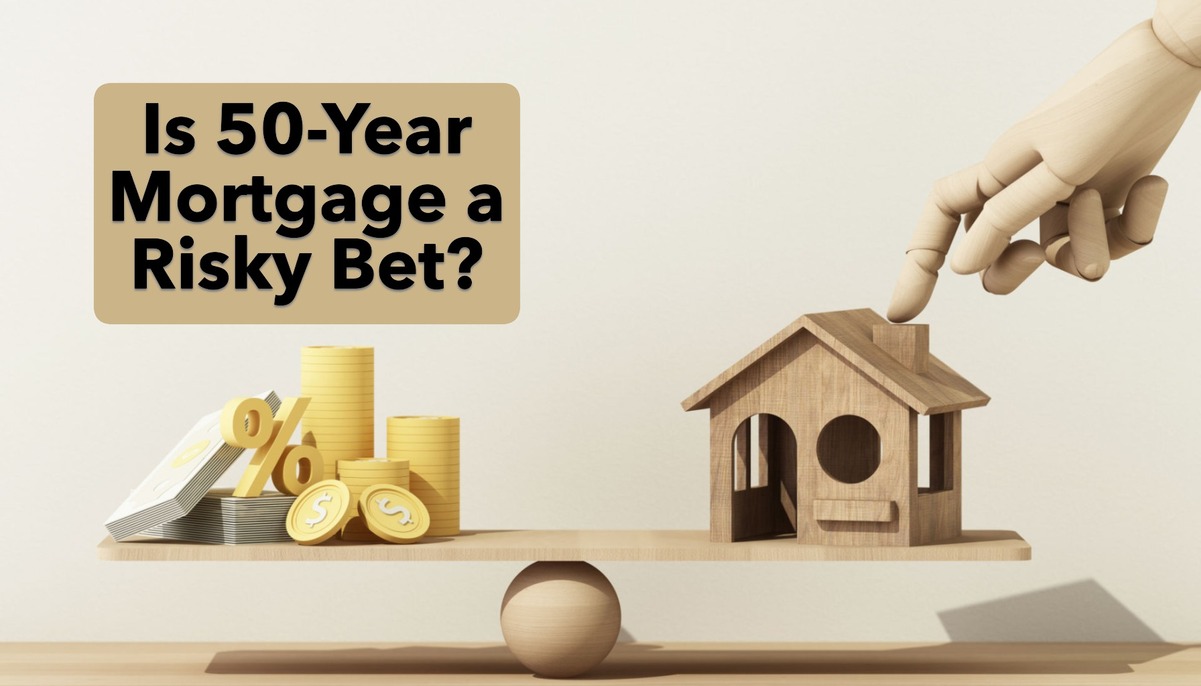
Is a 50-Year Mortgage Term a Risky Bet for Homebuyers?
The Staggering Cost of Time: Money You'll Never See Again
This is the big one, folks. When you stretch a mortgage out over 50 years instead of the more traditional 30, the interest you pay skyrockets. Think of it like this: every dollar you borrow costs you a little extra each month just to have it. The longer you keep that dollar, the more those little extras add up.
Let's crunch some numbers, and please remember these are just examples to show the difference. If you borrow $400,000 and the interest rate is 7%, over 30 years, you'll end up paying back around $958,000 total. That's a lot of money, right? But now, imagine that same loan, but at 7.5% for 50 years. Suddenly, you're looking at paying back a mind-boggling $1.54 million. That's almost $578,000 more just because you added 20 years to the loan term! That extra half a percent interest rate, which lenders often slap on for longer loans, truly bites. It's like paying for a whole second house in interest over the life of the loan. In my experience, homeowners who get locked into these ultra-long terms often don't realize the true cost until much later, when they're looking back and wishing they'd found another way.
Glaciers Move Faster: The Painfully Slow Climb to Ownership
Another huge concern is how painfully slow you build equity with a 50-year mortgage. Equity is the part of your home that you actually own. With most mortgages, especially in the early years, your monthly payment is mostly going towards interest, not the actual price of the house.
Imagine this: after 10 years of making payments on a 30-year mortgage, you've likely paid off around 18% of the principal (the original loan amount). That's pretty decent progress! Now, with a 50-year mortgage, after the same 10 years, you might have only chipped away at about 4% of the principal. That means you're still owing almost as much as you borrowed, even after a decade of payments. This slow growth makes it incredibly tough to build real wealth from your home.
The Underwater Trap: When Your House is Worth Less Than You Owe
Because the principal paid down so slowly, it’s incredibly easy to get into a situation where you owe more on your mortgage than your home is actually worth. This is what we call being “underwater,” or in a state of negative equity. If you bought a home with a 50-year mortgage and suddenly the housing market takes a dip, even a small one, you could find yourself owing $300,000 on a home that's now only worth $280,000. This makes it nearly impossible to sell your home without bringing a significant amount of cash to the table, or to refinance into a better loan.
From what I've seen, people who aren't building equity feel stuck. They can't move for a better job, can't downsize if their family situation changes, and often just feel trapped in their homes because of the financial entanglement.
Debt That Doesn't Quit: Your Retirement Might Get Complicated
This is a reality check that I think many people gloss over. The average age of a first-time homebuyer is creeping up. By 2025 and 2026, it’s projected to be around 40. If you take out a 50-year mortgage at that age, you could still be making payments when you’re 90! For most people, retirement means living on a fixed income, and having a massive mortgage payment hanging over your head in your golden years is a recipe for significant stress and financial strain. I've heard stories from older clients who deeply regret not having their mortgages paid off before they stopped working.
Stuck in Place: The Mobility Straitjacket
That slow equity growth we talked about? It directly impacts your ability to move. If you need to sell your house, and you haven't built up much equity, the money you get from the sale might not even be enough to cover the remaining mortgage balance, let alone any closing costs or moving expenses. This means you’d have to pull money from savings to pay off the loan, which defeats the purpose of buying a home for financial security. It’s a real catch-22.
Passing the Buck: Generational Debt Concerns
Some financial experts worry that 50-year mortgages could end up creating “generational debt.” Instead of a home being a stepping stone to building wealth that you can pass down or enjoy in your lifetime, it could become a financial burden that your heirs inherit if you can't pay it off. This is a far cry from the traditional idea of homeownership as a pathway to financial freedom.
A Niche Market with Few Safety Nets
It’s important to know that 50-year mortgages aren't exactly mainstream right now, especially in early 2026. They're often considered “non-qualified” mortgages. This means they usually don't have the same backing from government-sponsored entities like Fannie Mae or Freddie Mac, which typically stick to 30-year limits. This lack of federal backing can sometimes mean less consumer protection and more risk for both the borrower and the lender.
Fueling the Fire? The Inflation Question
There's also a concern among many economists that if 50-year mortgages become widely popular, the increased borrowing power they offer could actually push home prices even higher. This could worsen the very affordability crisis they're supposedly trying to solve. It’s like trying to put out a fire with gasoline – it might seem like a good idea at first, but it can make things much worse in the long run.
Beyond the 50-Year Horizon: Smarter Choices for Homeownership
So, if a 50-year mortgage isn't the best route, what are your options for making homeownership more affordable? Thankfully, there are many other roads to take that don't saddle you with such a long-term debt.
Low Down Payment Loans: Getting Your Foot in the Door
Several programs are designed to help people buy a home with less money upfront.
- FHA Loans: These are great for folks who don't have a huge down payment saved. You can get in with as little as 3.5% down and they're more flexible with credit scores.
- VA and USDA Loans: If you're a veteran or looking to buy in certain rural or suburban areas, these loans can be amazing. They often require zero down payment!
- HomeReady & Home Possible: Backed by Fannie Mae and Freddie Mac, these programs let you put down as little as 3% and are aimed at those with good credit and moderate incomes.
Playing with Interest Rates: Smart Short-Term Savings
Sometimes, you just need a little relief in the beginning.
- Adjustable-Rate Mortgages (ARMs): These usually have a lower interest rate for the first few years (often 5-10 years) compared to a fixed-rate mortgage. This can give you that monthly payment savings you might be seeking from a 50-year loan, but with a clear end in sight for the lower rate.
- Temporary Buydowns: This is where a seller or builder helps lower your interest rate for the first 1 to 3 years. It’s a fantastic way to ease into your mortgage payments while you get settled in your new home.
- Assumable Mortgages: This is a bit more niche, but if a seller has an existing mortgage with a really good interest rate, you might be able to “assume” it. This means you take over their loan terms, potentially saving you a ton on interest.
Down Payment Assistance and Grants: Free Money for Your Home
Don't forget about all the help out there! Many organizations offer grants and assistance to help with your upfront costs.
- National Programs: Some funds like the National Homebuyers Fund (NHF) can provide grants that might not even need to be repaid.
- State & Local Agencies: Your state or local housing authority (think CalHFA in California, for example) can offer incredible programs. Some might provide a chunk of money for your down payment in exchange for a small share of your home’s future value increase.
- Lender Grants: Even big banks sometimes have grants for homebuyers in specific areas. It's always worth asking your lender!
Sharing the Ownership: Creative Ways to Buy
- Shared Ownership: In some places, you can buy a portion of the home and rent the rest from a housing association. This lowers your initial purchase price significantly.
- Rent-to-Own: This lets you rent a place with the option to buy it later. The price is often locked in, and a portion of your rent might go towards your down payment. It’s a great way to save up while living in the home you want to buy.
When I look at the mortgage market, I always try to think about the whole picture. A 50-year mortgage might seem like a quick fix for affordability, but the long-term costs and risks are just too high for most people. It’s always better to explore other options that build your financial health over time, rather than just kicking the can down a very, very long road.
VS
Tennessee’s balanced rental vs Texas’s larger home with lower cap rate. Which fits YOUR investment strategy?
We have much more inventory available than what you see on our website – Let us know about your requirement.
📈 Choose Your Winner & Contact Us Today!
Talk to a Norada investment counselor (No Obligation):
(800) 611-3060
Also Read:
- Mortgage Rates Predictions Backed by 7 Leading Experts: 2025–2026
- Mortgage Rate Predictions for the Next 3 Years: 2026, 2027, 2028
- 30-Year Fixed Mortgage Rate Forecast for the Next 5 Years
- 15-Year Fixed Mortgage Rate Predictions for Next 5 Years: 2025-2029
- Will Mortgage Rates Ever Be 3% Again in the Future?
- Mortgage Rates Predictions for Next 2 Years
- Mortgage Rate Predictions for Next 5 Years
- Mortgage Rate Predictions: Why 2% and 3% Rates are Out of Reach
- How Lower Mortgage Rates Can Save You Thousands?
- How to Get a Low Mortgage Interest Rate?
- Will Mortgage Rates Ever Be 4% Again?