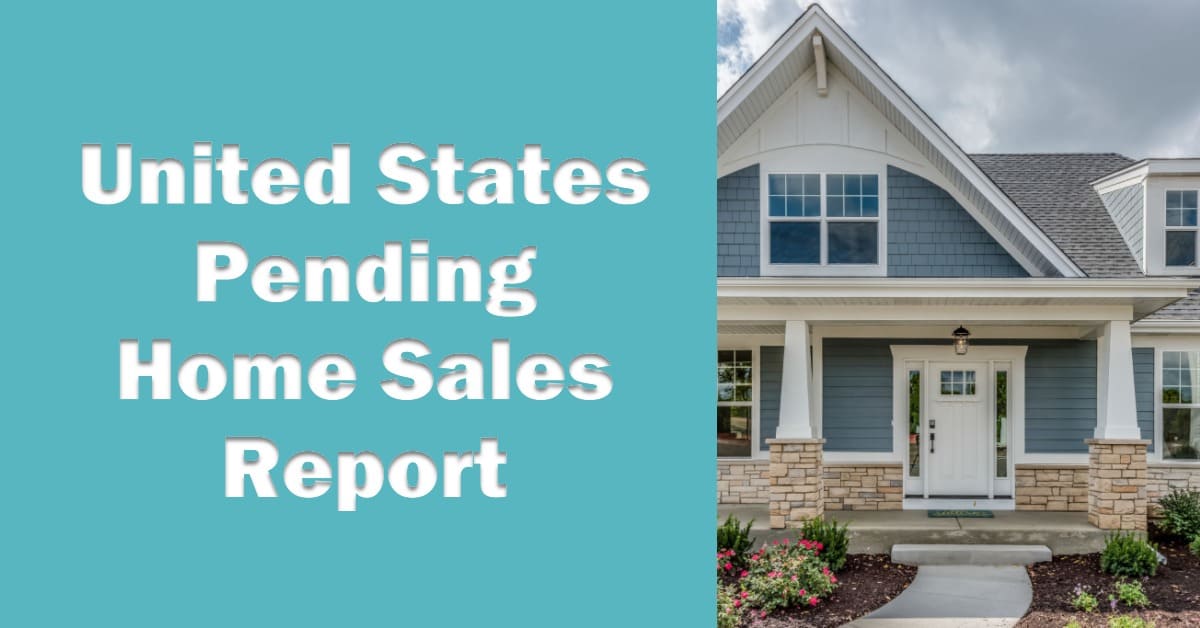
The latest news on the housing market is that the pending home sales dropped in June, signaling that the housing market isn't exactly booming right now. Specifically, the Pending Home Sales Index fell 0.8% from May and 2.8% year-over-year, according to the National Association of Realtors®. This means fewer people are signing contracts to buy homes, and that has a ripple effect on the entire market.
Pending Home Sales: Trends and Forecast 2025-2026
The biggest culprit behind this decline in pending home sales is affordability. And honestly, I'm not surprised. I've been watching these trends for a while, and it’s clear that rising home prices combined with stubbornly high mortgage rates are squeezing many potential buyers out of the market. It's a double whammy that makes it hard to jump into homeownership.
Think about this:
- The national median sales price for existing homes hit an all-time high of $435,300 in June 2025.
- While average 30-year mortgage rates eased slightly to 6.77% at the end of June, they're still high.
This combination makes it challenging for many, especially first-time buyers, to afford a home. We have also seen sentiment decline in surveys, with only 28% saying it is a good time to buy.
What's Driving This Affordability Crisis?
Several factors contribute to the lack of affordability:
- High Home Prices: Years of low interest rates and high demand drove home prices to record levels. Even though we're seeing some price softening in some areas, prices are still elevated.
- Elevated Mortgage Rates: The Federal Reserve's efforts to combat inflation have resulted in higher mortgage rates, making borrowing more expensive.
- Economic Uncertainty: With inflation still a concern and fears of a potential recession lingering, many buyers are hesitant to make a big financial commitment.
Regional Differences: A Patchwork Market
While the national numbers paint a clear picture of a slowing market, it's important to remember that real estate is local. The Northeast was the only region to see an increase in contract signings from May, up 2.1%. Meanwhile, the Midwest, South, and West all experienced declines on both a monthly and annual basis.
| Region | Monthly Change | Yearly Change |
|---|---|---|
| Northeast | 2.1% | 0.0% |
| Midwest | Declined | Declined |
| South | Declined | Declined |
| West | Declined | Declined |
This regional variation highlights the importance of working with a local real estate agent who understands the specific dynamics of your market.
Hope on the Horizon? Don't Hold Your Breath
If you're hoping for a dramatic turnaround in the housing market soon, you might be disappointed. As Realtor.com points out, many sellers are simply choosing to wait out the market rather than lower their prices.
Realtor.com reported that delistings surged 47% in May compared with a year earlier, suggesting that sellers increasingly prefer to wait rather than negotiate.
Will the Fed Offer Relief?
Unfortunately, even if the Fed decides to cut interest rates, it might not have a huge impact on mortgage rates right away. Inflation remains a concern, and that could keep long-term bond prices high, which in turn affects mortgage rates.
What Does This Mean for Buyers and Sellers?
- For Buyers: Be patient and realistic about what you can afford. Shop around for the best mortgage rates and consider exploring different neighborhoods or property types.
- For Sellers: Be prepared to be flexible on price and consider making upgrades to your home to make it more appealing to buyers. Understand that the market may not move as quickly as it did in recent years.
My Take: A “Stuck” Market
I agree with Bright MLS Chief Economist Lisa Sturtevant's assessment that the market is likely to remain “stuck” for the remainder of the year. Both buyers and sellers are facing uncertainty and are hesitant to make big moves. We might not see major changes until 2026.
The recent drop in pending home sales is a sign that the housing market is still adjusting to higher interest rates and affordability challenges. While there are regional variations, the overall picture is one of a slowing market. While it pays to keep a close eye on the market, I think it's a sign that you must not take on more than you are able to handle.
My Expectations for 2025:
Given the current situation, I anticipate a somewhat moderate pace for the remainder of 2025. The initial enthusiasm we might typically see in the spring buying season appears to be tempered by the prevailing mortgage rate environment. I wouldn't be surprised to see continued regional variations, with more affordable markets potentially showing more resilience. The increased inventory could prevent significant price drops in most areas, but it also means sellers might need to be more realistic in their pricing expectations.
Potential Scenarios for 2026:
Looking further into 2026, several scenarios could play out:
- Scenario 1: Gradual Rate Reduction: If the Federal Reserve begins to lower interest rates in response to easing inflation, we could see a gradual decrease in mortgage rates. This would likely stimulate buyer demand, leading to an increase in pending home sales.
- Scenario 2: Sticking with Higher Rates: If inflation proves to be more persistent and interest rates remain elevated, the housing market could continue to experience a slowdown. Affordability challenges would persist, and sales volume might remain subdued.
- Scenario 3: Economic Uncertainty: An unexpected economic downturn or a significant rise in unemployment could further dampen buyer confidence and put downward pressure on the housing market, regardless of mortgage rate movements.
The Bottom Line
The recent dip in pending home sales underscores the significant impact of mortgage rates on the housing market. As we look towards the Pending Home Sales Forecast, the trajectory will heavily depend on how these rates evolve, along with broader economic conditions and regional nuances. While the increased housing inventory offers some positives for buyers, the affordability challenge remains a key hurdle. Staying informed, understanding local market dynamics, and working with experienced real estate professionals will be essential for navigating the market successfully in the coming years.
Pending Home Sales Trends for the Last 12-Months
The table shows data from regarding pending home sales in four regions of the United States – Northeast, Midwest, South, and West. The data reveals interesting trends in pending home sales across the regions. The National Association of Realtors (NAR) publishes monthly data on pending home sales, which is seasonally adjusted and presented in the form of a seasonally adjusted annual rate (SAAR) in thousands.
Here is the tabular data of pending home sales from May 2024 to May 2025. The units displayed are in thousands and are the seasonally adjusted annual rate.
The Pending Home Sales Index Explained
The Pending Home Sales Index is a leading indicator for the housing sector, based on pending sales of existing homes. A sale is listed as pending when the contract has been signed but the transaction has not closed, though the sale usually is finalized within one or two months of signing. Pending contracts are good early indicators of upcoming sales closings. However, the amount of time between pending contracts and completed sales is not identical for all home sales.
Variations in the length of the process from pending contract to closed sale can be caused by issues such as buyer difficulties with obtaining mortgage financing, home inspection problems, or appraisal issues. According to the National Association of REALTORS®, the index is based on a sample that covers about 40% of multiple listing service data each month.
In developing the model for the index, it was demonstrated that the level of monthly sales-contract activity parallels the level of closed existing-home sales in the following two months. An index of 100 equals the average level of contract activity during 2001, which was the first year to be examined. By coincidence, the volume of existing home sales in 2001 fell within the range of 5.0 to 5.5 million, which is considered normal for the current U.S. population.
Recommended Read: