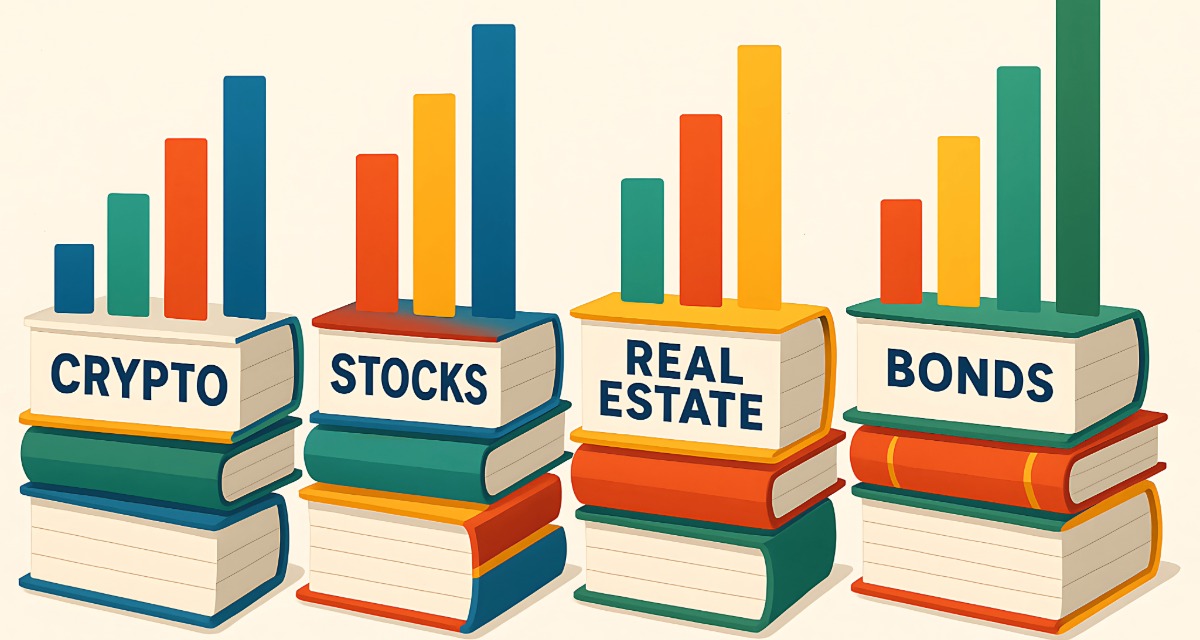
If you're asking which is the better investment in 2026, based on where things are headed, my honest opinion is that stocks are likely to offer a stronger punch for your money, mainly due to their projected growth potential.
As I look ahead to 2026, it's clear both the stock market and the real estate world are facing different winds. For many of us trying to make our money work harder, understanding these shifts is crucial. We're not just talking about picking winners; it's about understanding the why behind the numbers, the feelings, and the trends that shape our financial future. I’ve watched markets move for a while now, and I’ve learned that trying to predict is less useful than preparing for what’s probable.
Real Estate or Stocks in 2026: Which Offers Higher Returns?
The Stock Market: Riding the Wave of Innovation and Interest Rate Shifts
Think of the stock market like a fast-moving train. In 2026, this train is expected to keep chugging along, maybe not at the breakneck speed of some previous years, but still with serious momentum. The big driver? Artificial Intelligence. Seriously, AI is changing everything, and companies building and using this tech are seeing big investment.
Analysts, the folks who spend their days crunching numbers, have some pretty bright price targets out there for the S&P 500 (that’s a big list of 500 important US companies). We’re talking potential gains of 9% to 12% on average. That’s a healthy bump for your investment!
What’s fueling this optimism?
- AI Boom: Companies that are leading the charge in AI are attracting loads of cash. This isn't just a buzzword anymore; it’s a fundamental shift in how businesses operate.
- Fed Rate Cuts: The Federal Reserve, which is like the banker for the whole country, is expected to lower interest rates. When borrowing money becomes cheaper, both businesses and consumers tend to spend more, which is good for stock prices. They might be looking at rates around 3% to 3.25%.
Now, no train ride is entirely smooth, right? We need to be aware of a couple of bumps. Stock prices are already pretty high for some companies, and there’s always a little uncertainty around big political events, like the midterm elections in 2026. So, while the outlook is generally positive, expect some ups and downs.
Real Estate: A Year of Settling Down
Compared to the energetic stock market, real estate in 2026 feels more like settling into a comfortable armchair. It’s not about explosive growth, but about stability and finding a “safe haven.”
The housing market is moving towards what many are calling a “balanced” state. This means there are more homes for sale, and buyers might actually get to negotiate a bit, which is a nice change of pace from recent years.
What does this mean for prices? Most experts predict modest growth, mostly between 0% and 4% nationally. Some strong markets might see a little more, while others could even see prices stay flat or dip slightly. Don't expect the rapid jumps we’ve seen in some areas recently.
Here’s what’s shaping the real estate picture:
- Price Stability: With predictions ranging from 0% to 4% national growth, the focus is on where prices will settle, not soar.
- Mortgage Rate Relief: We might see mortgage rates calm down a bit, settling in the 6.0% to 6.3% range. This could make buying a home more affordable for some.
- Commercial Shift: Interestingly, global investment in commercial properties is expected to jump by about 15%. This growth is particularly strong in areas like data centers (where all that AI lives!) and trendy “lifestyle” office spaces that people actually want to go to.
Stocks vs. Real Estate: A Quick Look
To make it super clear, let's break down the key differences I see for 2026:
| Feature | Stock Market (2026) | Real Estate (2026) |
|---|---|---|
| Projected Return | 9% to 12% average | 0% to 4% (National average) |
| Liquidity | High; you can buy/sell quickly | Low; selling can take months |
| Barrier to Entry | Low; you can start with small amounts | High; usually needs a lot of money upfront |
| Risk Profile | Higher Volatility; prices can swing a lot | More Stable; tangible asset, less prone to big drops |
| Income Stream | Dividends (can change) | Rental income (usually steadier) |
From my perspective, the biggest difference often comes down to how quickly you can get your money out (liquidity) and how much you need to start. With stocks, even a few hundred dollars can get you going. For real estate, it's a much bigger leap.
My Take: Why Stocks Might Have the Edge in 2026
As I mentioned, I lean towards stocks for growth potential in 2026. Here’s why I feel that way, based on my own experiences and observations:
- The AI Revolution: I truly believe AI is more than a passing trend. It’s a foundational shift. Companies that are developing or effectively using AI are positioned for significant long-term growth. This kind of innovation often translates directly into higher stock values. We’re talking about a wave that could lift many boats in the stock market. While real estate is indirectly affected (think data centers), the direct impact on stock-based tech companies is much more pronounced.
- Interest Rate Tailwind: Lowering interest rates is like giving the economy a shot of adrenaline. For stocks, this means companies can borrow and invest more cheaply, and consumers are more likely to spend. This combination tends to boost company profits and, by extension, stock prices. Real estate also benefits from lower rates, but the current projections for property price growth are much more modest.
- Tangible vs. Digital Assets: While I appreciate the feel of owning a physical property, there's an undeniable agility in the digital world of stocks. In 2026, with the speed of technological change, having investments that can react and grow rapidly is a significant advantage.
But Don't Discount Real Estate Entirely!
Now, that’s not to say real estate is a bad investment. Far from it! It just plays a different role.
- Stability Seeker: If your main goal is to preserve your capital and earn steady income, real estate is still a champion. The rental income can be incredibly reliable, and owning property provides a sense of security that stocks, with their daily fluctuations, might not offer. I’ve seen many people sleep better at night knowing they own a physical asset.
- Tax Advantages: Let’s not forget the perks! Real estate investors often benefit from significant tax deductions, like for mortgage interest, property taxes, and depreciation. These can make a real difference in your overall returns.
- Local Power: This is a crucial point that often gets overlooked when we talk about national averages. Real estate is intensely local. While the national forecast is mild, some areas will undoubtedly perform much better than others. The Northeast and Midwest, for instance, are expected to show good price strength. Conversely, some of the markets that boomed like crazy in the past might cool down. You have to know your local market inside and out. I’ve always believed that a well-chosen property in the right neighborhood can still be a fantastic investment, regardless of national trends.
- “Democratization” of Property: It’s becoming easier to get into real estate. New technologies and rules are letting more people invest in property, even without buying a whole house. Think things like fractional ownership (sharing ownership of a property) or being able to invest in private real estate funds using your 401(k). This makes property accessible to more people.
The Bottom Line for 2026
For me, in 2026, if I had to pick one for growth, it would be stocks. The combination of AI innovation and the anticipated dip in interest rates creates a strong tailwind. I'd expect higher total returns there, with the possibility of selling more easily if I needed the money quickly.
However, if stability, tangible ownership, and potential tax benefits are your top priorities, and you’re looking for a more predictable income stream, real estate remains a strong contender. Just be prepared for slower growth and the commitment that comes with owning physical property. Many smart investors hold both, using each asset class for different purposes within their overall financial plan. That diversification is often the best strategy of all.
In 2026, investors are weighing stocks against real estate for maximum returns. While equities can deliver short‑term gains, turnkey rental properties provide steady cash flow, appreciation, and tax advantages—making them a powerful wealth‑building tool.
Norada Real Estate helps investors acquire turnkey properties in top U.S. markets—offering reliable passive income and long‑term ROI that often outpaces stock market volatility.