Norada Real Estate Investments

  • Home
  • Markets
  • Properties
  • Membership
  • Podcast
  • Learn
  • About
  • Contact

Archives for August 2025

Mortgage Rates Today: 5-Year Adjustable Rate Plunges by 23 Basis Points – August 21, 2025

August 21, 2025 by Marco Santarelli

Today's 5-Year Adjustable Rate Mortgage Drops from 7.56% to 7.54% - June 28, 2025

While most of the headlines you'll see today will focus on the slight uptick in the popular 30-year fixed mortgage, the real story is happening with adjustable-rate loans. For mortgage rates today, the 5-year ARM plunges by 23 basis points – August 21, 2025, bringing the national average rate down to a compelling 7.09%.

This significant drop comes as the average 30-year fixed rate nudged up by 4 basis points to 6.76%, creating a fascinating split in the market that savvy homebuyers should be watching closely. It’s a clear signal that the market is beginning to price in some long-awaited relief from the Federal Reserve.

Mortgage Rates Today: 5-Year Adjustable Rate Plunges by 23 Basis Points – August 21, 2025

In my years of watching the mortgage market, I've learned that you have to look beyond the headlines. The 30-year fixed rate is the king, no doubt. It’s stable, predictable, and what most Americans use to buy a home. But it's often a slow-moving giant. Adjustable-Rate Mortgages (ARMs), on the other hand, are like speedboats—they react much faster to the changing tides of economic expectation.

Today’s 23-basis-point drop in the 5-year ARM is a perfect example. A basis point is simply one-hundredth of a percentage point, so we're talking about a drop of 0.23%. While that might not sound like a lot, in the world of mortgages, it's a significant one-day move.

So, why the sudden dip? It’s all about anticipation. The market is overwhelmingly confident that the Federal Reserve is gearing up to cut its benchmark interest rate at its meeting next month. While fixed-rate mortgages are more closely tied to the long-term outlook of the economy (and the 10-year Treasury yield), ARMs are much more sensitive to short-term interest rate policy. Lenders are essentially betting on a lower-rate environment in the near future, and they are starting to price that optimism into their ARM products today.

A Quick Refresher: How Does an ARM Work?

If you’re not familiar with ARMs, they can seem a bit complicated, but the concept is straightforward. I always break it down for my clients like this:

  • The Introductory Period: An ARM, like a 5-year ARM, has a fixed interest rate for an initial period (in this case, five years). Your payment won't change during this time.
  • The Adjustment Period: After the intro period ends, the rate “adjusts” based on a specific financial index plus a margin set by the lender. This usually happens once a year.
  • The Appeal: The initial rate on an ARM is often lower than on a 30-year fixed mortgage, which can mean a lower monthly payment for the first few years.

The drop we're seeing today makes that initial rate even more attractive, especially for certain types of buyers.

A Look at the Full Rate Board for August 21, 2025

While the ARM story is the most dynamic, let's take a look at the full picture. The 30-year fixed rate remains stubbornly high, and even the 15-year fixed rate is holding steady. This creates a “sticky” situation for many buyers who crave long-term predictability.

Here’s a snapshot of the national average rates for conforming loans today:

PROGRAM RATE 1W CHANGE APR 1W CHANGE
30-Year Fixed Rate 6.76% up 0.09% 7.17% up 0.04%
20-Year Fixed Rate 6.43% down 0.24% 6.90% down 0.08%
15-Year Fixed Rate 5.80% up 0.04% 6.04% down 0.03%
10-Year Fixed Rate 5.79% up 0.31% 6.09% up 0.25%
7-year ARM 7.13% down 0.40% 7.60% down 0.40%
5-year ARM 7.09% down 0.15% 7.63% down 0.18%

Data by Zillow. Last updated: 8/21/2025.

The standout numbers here are the drops in the 5-year and 7-year ARMs. It tells a clear story: the market is confident that rates will be lower in the medium term, even if the long-term outlook keeping 30-year rates high remains a bit cloudy.

The Elephant in the Room: What is the Federal Reserve Doing?

To understand why rates are behaving this way, we have to talk about the Federal Reserve. Their decisions cast a long shadow over the entire economy, and especially over the housing market.

The Great Pause of 2025

Remember the whirlwind of 2022 and 2023? The Fed went on a historic rate-hiking spree to crush runaway inflation. It worked, but it also sent mortgage rates soaring to two-decade highs. Then, in late 2024, they pivoted, delivering three quick rate cuts to steady the ship.

Since then, however, it's been a waiting game. We've gone through five straight Fed meetings in 2025 with no change. Why? The Fed has been walking a tightrope. On one side, you have slowing GDP growth and a cooling labor market (unemployment is now at 4.2%). On the other, you have stubborn inflation that just won't quite get back to their 2% target. It's been hovering around 2.7%, complicated by new tariff pressures.

Inside the Fed, there's even been some disagreement. At the last meeting in July, two governors actually voted for a rate cut, a sign that the pressure to act is building.

All Eyes on September

Now, it looks like the wait is almost over. All signs are pointing to a rate cut at the Fed's next meeting on September 16-17. Market indicators like the CME FedWatch Tool are showing an 85-95% probability of a cut.

Here’s why the market is so confident:

  1. Cooling Inflation: The latest Consumer Price Index (CPI) reading showed inflation moderating to 2.7%. It's not perfect, but it's moving in the right direction.
  2. Weakening Labor Market: The rise in unemployment gives the Fed the justification it needs to act to support the economy without worrying as much about overheating it.
  3. Economic Forecasts: Projections point to a continued economic slowdown, making a preemptive cut a prudent move.

Fed Chair Jerome Powell is speaking tomorrow at the Jackson Hole symposium, and you can bet everyone will be hanging on his every word for a final clue.

The Million-Dollar Question: Should You Consider an ARM Right Now?

This is where my experience as a market observer comes in handy. The data tells us what is happening, but the real question is what it means for you. An ARM isn't for everyone, but in this specific environment, it's becoming a very strategic tool for the right buyer.

Who Should Consider an ARM?

I typically see this work well for a few types of homebuyers:

  • The Short-Term Homeowner: If you know you're likely to move or sell the property in five to seven years (perhaps for a job relocation or to upsize for a growing family), an ARM is a fantastic option. You can enjoy the lower initial rate and sell the home before the first rate adjustment ever hits.
  • The High-Income Earner Expecting a Raise: If you are confident your income will rise significantly in the coming years, you may be comfortable with the risk of a higher payment down the line, knowing you can absorb it or refinance.
  • The Strategic Refinancer: A buyer might take a 5-year ARM today with the explicit plan to refinance into a fixed-rate loan in a year or two, once the Fed's rate cuts have fully filtered through the system and brought 30-year fixed rates down. Today's ARM drop is a bet on that exact scenario.

Recommended Read:

5-Year Adjustable Rate Mortgage Update for August 19, 2025

Fixed vs. Adjustable Rate Mortgage in 2025: Which is Best for You

Who Should Stick with a Fixed-Rate Mortgage?

Despite the allure of a lower ARM rate, the peace of mind of a fixed-rate loan is unbeatable for many. You should probably stick with a fixed rate if:

  • You're on a Tight Budget: If the thought of your monthly payment potentially increasing in five years makes you nervous, an ARM is not for you. Predictability is key.
  • You Plan to Stay in Your Home for the Long Haul: If this is your “forever home,” locking in a rate for 30 years eliminates all future interest rate risk. You'll never have to worry about what the Fed is doing again.
  • You are Risk-Averse: Some people just sleep better at night knowing their largest monthly expense will never change. There's absolutely nothing wrong with that!

Key Dates for Your Calendar

The next few weeks will be pivotal. Here’s what I’m watching:

  • August 22: Fed Chair Powell's speech at Jackson Hole.
  • September 16-17: The next Fed meeting, where a rate cut is highly anticipated.
  • December Meeting: The likely opportunity for a second rate cut in 2025.

My Final Thoughts

Today’s mortgage rate news is a tale of two markets. The fixed-rate world is still stuck in the mud, waiting for a clear signal. But the adjustable-rate market is already sprinting ahead, anticipating the relief that seems to be just around the corner.

The 23-basis-point plunge in the 5-year ARM is more than just a number; it’s a strategic opportunity for the right buyer. It’s a chance to get a lower payment now while positioning yourself to refinance into a great fixed rate later. As always, the key is to understand your own financial situation, your timeline, and your tolerance for risk. The door on ARMs just opened a little wider—it’s worth taking a look inside.

Capitalize on ARM Rates Before They Rise Even Higher

With fluctuating adjustable-rate mortgages (ARMs), savvy investors are exploring flexible financing options to maximize returns.

Norada offers a curated selection of ready-to-rent properties in top markets, helping you capitalize on current mortgage trends and build long-term wealth.

HOT NEW LISTINGS JUST ADDED!

Connect with an investment counselor today (No Obligation):

(800) 611-3060

Get Started Now

Also Read:

  • Will Mortgage Rates Go Down in 2025: Morgan Stanley's Forecast
  • Expect High Mortgage Rates Until 2026: Fannie Mae's 2-Year Forecast
  • Mortgage Rate Predictions 2025 from 4 Leading Housing Experts
  • Mortgage Rates Forecast for the Next 3 Years: 2025 to 2027
  • Will Mortgage Rates Ever Be 3% Again in the Future?
  • Mortgage Rates Predictions for Next 2 Years
  • Mortgage Rate Predictions for Next 5 Years
  • Mortgage Rate Predictions: Why 2% and 3% Rates are Out of Reach
  • How Lower Mortgage Rates Can Save You Thousands?
  • How to Get a Low Mortgage Interest Rate?
  • Will Mortgage Rates Ever Be 4% Again?
Filed Under: Financing, Mortgage Tagged With: Adjustable Rate Mortgage, Interest Rate, mortgage, Mortgage Rate Trends, mortgage rates

Federal Reserve Interest Rate Predictions for the Next 2 Years

August 21, 2025 by Marco Santarelli

Federal Reserve Interest Rate Predictions for the Next 2 Years

Are you wondering where interest rates are heading? You're not alone! The Federal Reserve's (the Fed's) interest rate decisions affect everything from your mortgage payments to the growth of your investments. So, what's the scoop for the next two years? Expert predictions suggest a gradual decrease in interest rates.

As of August 2025, the federal funds rate sits at 4.25%-4.50%. Experts at the Federal Reserve and major financial institutions anticipate rates moving downward, although the pace and extent of these cuts remain uncertain, driven by factors like inflation, economic growth, and global events. Let's dive deep into what's influencing these predictions and what they mean for you.

Federal Reserve Interest Rate Predictions for the Next 2 Years

Before we get into the nitty-gritty, let's remember why paying attention to interest rates is so important. Think of them as the price of borrowing money.

  • For You: They affect how much you pay for mortgages, car loans, credit cards, and how much you earn on your savings. Lower rates mean cheaper loans but smaller returns on your savings.
  • For Businesses: They influence how much it costs companies to borrow money to invest and expand.
  • For the Economy: They help control inflation (rising prices) and support economic growth.

Basically, they are a big deal for all.

August 2025: Where Interest Rates Stand Right Now

As I write this in August 2025, the Federal Reserve (the Fed, for short) has kept the federal funds rate steady at a range of 4.25% to 4.50% in its July meeting. The Fed kept the rate unchanged for the fifth time in 2025. This federal funds rate is the benchmark interest rate for the US economy. It's what banks charge each other for overnight lending. It affects things like mortgages, credit cards, and savings accounts. The Fed put a hold on hiking interest rates after raising it many times in the recent past to try to curb inflation.

The Fed’s trying to balance controlling inflation, while making sure the economy keeps growing. It's a tough balancing act! The Fed's aiming for 2% inflation over the long term, and it's watching the data like a hawk before making any more moves.

Decoding the Fed's Crystal Ball: The SEP Projections

To get a sense of where the central bankers think rates are headed, you look at the Fed's Summary of Economic Projections (SEP). This report, updated every few months, gives us clues on what the Fed thinks will happen with interest rates, inflation, the economy, and jobs. I like to think of it as the Fed's way of saying, “Here's what we think will happen if we do what we think we should do.” It’s not a guarantee, but it's the best insight we've got.

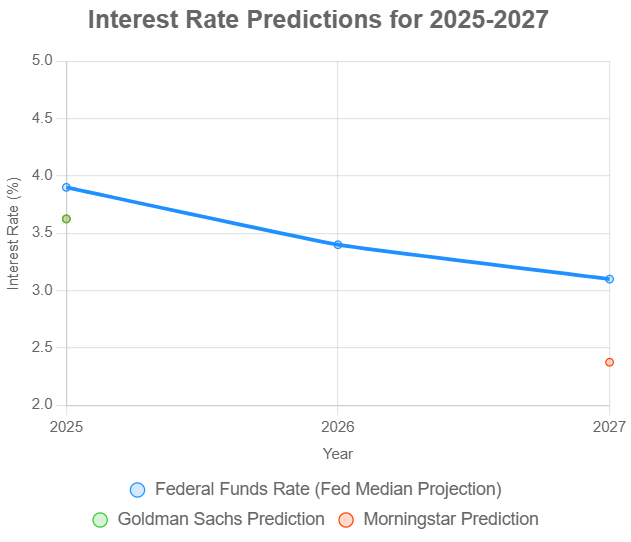
Interest Rate Projections (according to the Summary of Economic Projections):

Here’s what the Fed's Summary of Economic Projections says it expects:

Year Median Projection Central Tendency Range Implication
2025 3.9% 3.9%–4.4% 3.6%–4.4% Two 0.25% cuts from current levels (4.25%–4.50%)
2026 3.4% 3.1%–3.9% 2.9%–4.1% One additional 0.25% cut
2027 3.1% 2.9%–3.6% 2.6%–3.9% Another 0.25% cut

In plain English, the Fed thinks it will be able to cut rates slowly over the next few years as inflation cools down and the economy stays steady.

Inflation Forecasts:

Since controlling inflation is job number one for the Fed, let's look at what they think will happen with prices. The Fed focuses on something called PCE inflation, which is a way of measuring how much prices are changing.

PCE Inflation:

Year Median Central Tendency Range
2025 2.7% 2.6%–2.9% 2.5%–3.4%
2026 2.2% 2.1%–2.3% 2.0%–3.1%
2027 2.0% 2.0%–2.1% 1.9%–2.8%

Core PCE Inflation:

Year Median Central Tendency Range
2025 2.8% 2.7%–3.0% 2.5%–3.5%
2026 2.2% 2.1%–2.4% 2.1%–3.2%
2027 2.0% 2.0%–2.1% 2.0%–2.9%

These forecasts paint a picture of inflation gradually falling back to the Fed's 2% target by 2027. It is predicted they will begin cutting rates as inflationary pressures ease

Economic Growth and Unemployment:

The Fed is looking at these factors:

Real GDP Growth:

Year Median Central Tendency Range
2025 1.7% 1.5%–1.9% 1.0%–2.4%
2026 1.8% 1.6%–1.9% 0.6%–2.5%
2027 1.8% 1.6%–2.0% 0.6%–2.5%

Unemployment Rate:

Year Median Central Tendency Range
2025 4.4% 4.3%–4.4% 4.1%–4.6%
2026 4.3% 4.2%–4.5% 4.1%–4.7%
2027 4.3% 4.1%–4.4% 3.9%–4.7%

It looks pretty stable. The Fed sees the economy growing a bit each year, and they think the job market will stay pretty tight.

What the Big Banks Are Saying

Graph Showing Interest Rate Predictions for the Next 2 Years

The Fed projections are only one piece of the puzzle. It’s always good to check out what other big players in the financial world are thinking. Here's a snapshot of interest rate predictions from some major institutions:

Institution 2025 Prediction 2026 Prediction 2027 Prediction
Federal Reserve 3.9% 3.4% 3.1%
BlackRock ~4% – –
Goldman Sachs 3.5%–3.75% – –
Morningstar 3.5%–3.75% – 2.25%–2.5%
Fannie Mae (30-yr) 6.3%–6.8% (mortgage) – –
Mortgage Bankers Association 6.8% (early) (mortgage) 6.4% –

A few things stand out to me here:

  • The Consensus: Most experts agree that interest rates will come down over the next two years, but they have a difference on how fast and how far.
  • The Cautious View: BlackRock seems a bit more reserved. They mention things like possible trade wars and other global issues, which could make the Fed think twice about slashing rates too quickly.
  • The Optimists: Morningstar is a bit more bullish, thinking rates could fall more dramatically if inflation cools off faster than most people expect.

Mortgage Rate Predictions:

If you're keeping an eye on mortgage rates:

  • Fannie Mae sees the 30-year fixed rate starting at 6.8% in early 2025 and then dropping to 6.3% later in the year.
  • The Mortgage Bankers Association predicts a drop from 6.8% to 6.4% throughout 2026.

What Could Throw a Wrench in the Works? The Global and Policy Wildcards

Making interest rate predictions is more than just crunching numbers. You need to think about the bigger picture like global events and government policies. Here are a few things that could shake things up:

  • Global Economic Conditions: What's happening in Europe, China, and other parts of the world matters too. If other countries are struggling, it could pull down the U.S. economy.
  • Trade and Tariffs: If the government starts slapping tariffs on goods from other countries, prices could go up!
  • Fiscal Policy: Tax cuts or big government spending could fire up the economy. If the economy grows too quickly, inflation could come roaring back.
  • Geopolitical Events: Wars, political instability, or unexpected crises can send shock waves through the economy, making it harder for the Fed to predict what's going to happen.

What It All Means for You: Consumers and Investors

So, how do these interest rate predictions impact your wallet?

For Consumers:

  • Borrowing Costs: Lower rates mean you'll pay less for mortgages, car loans, and anything else you borrow money for. This could make it easier to buy a home or a new car.
  • Savings Returns: The downside? You'll probably earn less on your savings accounts and CDs.

For Investors:

  • Bonds: When rates fall, bond prices tend to rise. So, if you already own bonds, you could see some gains. But remember, new bonds will pay lower interest rates.
  • Stocks: Lower rates can be good for stocks because they make it cheaper for companies to borrow money and grow. But if the Fed is cutting rates because the economy is faltering, that could temper the optimism.
  • Real Estate: Lower mortgage rates could fire up the housing market, potentially pushing home prices up.

Here’s a quick cheat sheet:

Financial Decision Impact of Lower Rates (2025-2027)
Buying a Home Cheaper mortgages, increased affordability
Savings Accounts Lower returns, reduced interest earnings
Stock Investments Potential gains, but risks remain
Bond Investments Higher prices for existing bonds, lower new yields

The Bottom Line and My Two Cents

The interest rate predictions for 2025-2027 point to a gradual easing, but the road ahead is anything but smooth. The Fed, along with financial institutions, anticipates rates declining from the current 4.25%–4.50% range to around 3.1% by 2027. I believe this path is reasonable because inflation is very hot now. But the Fed might cut more or less.

As I watch this situation of rate cuts unfold, there is a risk of some external factors blowing it all off course.

So, what should you do? Stay informed, be realistic, and remember that nobody has a crystal ball.

Recommended Read:

  • Fed Projects Two Interest Rate Cuts Later in 2025
  • Federal Reserve Holds Interest Rates Steady in June 2025
  • When is Fed's Next Meeting on Interest Rate Decision in 2025?
  • Fed Indicates No Rush to Cut Interest Rates as Policy Shifts Loom in 2025
  • Fed's Powell Hints of Slow Interest Rate Cuts Amid Stubborn Inflation
  • Fed Funds Rate Forecast 2025-2026: What to Expect?
  • Interest Rate Predictions for 2025 and 2026 by NAR Chief
  • Market Reactions: How Investors Should Prepare for Interest Rate Cut
  • Interest Rate Predictions for the Next 3 Years
  • Impact of Interest Rate Cut on Mortgages, Car Loans, and Your Wallet
  • Interest Rate Predictions for Next 10 Years: Long-Term Outlook
  • When is the Next Fed Meeting on Interest Rates?
  • Interest Rate Cuts: Citi vs. JP Morgan – Who is Right on Predictions?
  • More Predictions Point Towards Higher for Longer Interest Rates

Filed Under: Economy, Financing Tagged With: Fed, Interest Rate, Interest Rate Predictions, mortgage

Today’s Mortgage Rates – August 20, 2025: 30-Year Fixed Rate Climbs by 4 Basis Points

August 20, 2025 by Marco Santarelli

Today's Mortgage Rates - August 20, 2025: 30-Year Fixed Rate Climbs by 4 Basis Points

Mortgage rates today, August 20, 2025, show a slight uptick with the national average 30-year fixed mortgage rate rising to 6.71%, up 4 basis points from last week, while refinance rates also increased modestly. However, markets are largely focused on the Federal Reserve’s anticipated interest rate cut in September, which could push mortgage rates down in the coming weeks.

Today's Mortgage Rates – August 20, 2025: 30-Year Fixed Rate Climbs by 4 Basis Points

Key Takeaways

  • 30-year fixed mortgage rate rose to 6.71%, up 4 basis points from last week.
  • 15-year fixed mortgage rate remains steady at 5.80%.
  • 5-year ARM mortgage rate increased slightly to 7.32%.
  • Refinance rates also climbed, with 30-year fixed refinance rates at 6.94%.
  • Fed signaling a high probability (about 90%) of cutting rates 25 basis points in September 2025.
  • Most forecasts predict mortgage rates will stay above 6% through 2025 and not drop below 6% until Q3 2026.
  • Fed's anticipated rate cuts could stimulate a decline in mortgage rates in the near term.

Current Mortgage Rates Overview for August 20, 2025

Mortgage rates today reflect a slight increase compared with last week’s averages, with the 30-year fixed rate climbing marginally to 6.71%. This figure has remained in a narrow range over the year, typically fluctuating between 6.6% and 6.8%. This persistence is attributable to ongoing inflation concerns and the Federal Reserve’s cautious approach to monetary policy.

Loan Type Rate (Aug 20, 2025) Weekly Change APR APR Weekly Change
30-Year Fixed 6.71% +0.04% 7.15% +0.03%
20-Year Fixed 6.43% -0.24% 6.90% -0.08%
15-Year Fixed 5.80% +0.03% 6.09% +0.02%
10-Year Fixed 5.48% 0.00% 5.84% 0.00%
7-Year ARM 7.45% -0.08% 8.12% +0.12%
5-Year ARM 7.32% +0.08% 7.81% 0.00%

(Source: Zillow)

Refinance Rates Also Trending Slightly Higher

Refinancing rates have followed a similar trajectory, with the national average 30-year fixed refinance rate rising to 6.94%, a 3-basis-point increase from the prior week. This indicates that despite some investors anticipating relief from lower borrowing costs, refinance rates remain elevated for now.

Refinance Loan Type Rate (Aug 20, 2025) Weekly Change
30-Year Fixed Refinance 6.94% +0.03%
15-Year Fixed Refinance 5.79% +0.04%
5-Year ARM Refinance 7.84% +0.09%

(Source: Zillow)

Why Are Mortgage Rates Still High? The Fed’s Role Explained

The Federal Reserve’s monetary policies drive mortgage rate trends significantly. Since the pandemic, the Fed moved from ultra-low interest rates to aggressive rate hikes starting in 2022 to fight inflation. This led mortgage rates to surge to levels not seen in two decades.

  • 2021-2023: Pandemic recovery policies kept rates low, then the Fed raised the federal funds rate by 5.25% in big steps to curb inflation.
  • Late 2024: The Fed cut rates three times, but mortgage rates remained elevated.
  • 2025: The Fed has paused rate changes for five meetings but looks poised to cut rates in September 2025 due to economic slowdowns and persistent inflation pressures.

The anticipated September 16-17 Fed meeting is seen as a potential turning point, with an 89-91% chance the Fed will lower rates by 25 basis points. This cut could set the stage for mortgage rates to finally dip below current stubborn strains.

Economic Factors Influencing Mortgage Rates

  • Inflation is still sticky but moderating: Consumer Price Index (CPI) data from July 2025 showed inflation slightly below economists’ expectations but remained a concern.
  • Job market cools: Employment growth slowed notably, with unemployment nudging up to 4.2%. This weak labor market supports the Fed's case for rate cuts.
  • Fed's cautious optimism: The Fed aims to balance inflation control without triggering a recession.


Related Topics:

Mortgage Rates Trends as of August 19, 2025

Mortgage Rates Predictions Next 90 Days: August to October 2025

Mortgage Rates Predictions for the Next 60 Days

Mortgage Rates Predictions for Next 90 Days: July-Sept 2025

Forecasts for Mortgage Rates: What Experts Are Saying

Multiple reputable sources provide consistent forecasts about mortgage rates for the remainder of 2025 and into 2026:

Organization Mortgage Rate Forecast Notes
National Association of REALTORS® Average 6.4% in H2 2025, dipping to 6.1% in 2026 Emphasizes rate’s role in affordability and buyer demand
Realtor.com Easing slowly, matching prior year at ~6.4% year-end Moderate relief expected but rates remain high
Fannie Mae ~6.4% end of 2025; not under 6% until Q3 2026 Long wait for sub-6% rates
Mortgage Bankers Association Around 6.7% end of 2025; 6.3% in 2026 Reflects inflation risks impacting rates

Mortgage Payment Example

Let’s say a buyer wants to take out a 30-year fixed mortgage loan for $300,000 today at the current average rate of 6.71%. Their monthly payment for principal and interest would be about $1,942. Keep in mind this doesn’t include other costs like property taxes or insurance, which would add to the total monthly amount.

Now, if the Federal Reserve follows through and cuts interest rates next month as expected, bringing the mortgage rate down to around 6.4%, that same buyer’s monthly payment would drop to about $1,892. This means they would save roughly $50 each month just on principal and interest with the lower rate.

Current ARM (Adjustable-Rate Mortgage) Trends

ARM rates remain noticeably higher than fixed rates, reflecting market uncertainty:

  • 5-year ARM fixed at 7.32%, up slightly.
  • 7-year ARM dipped a touch to 7.45%.

ARM products might appeal to some borrowers betting on declining rates but come with inherent risks of rate increases.

Broader Implications of Mortgage Rate Movement

Mortgage rates are not just numbers for homeowners; they affect the entire economy:

  • Housing affordability: As rates stay high, monthly mortgage payments increase, putting pressure on buyer budgets.
  • Home sales: High financing costs can suppress home buying demand, affecting market turnover.
  • Refinancing activity: Higher refinance rates reduce incentives for homeowners to refinance, impacting disposable income.
  • Economic growth: Lower mortgage rates can stimulate construction, real estate, and related sectors.

The looming Fed decision and its impact on mortgage rates will thus be closely watched by investors, buyers, and policymakers alike.

Summary of Mortgage and Refinance Rates on August 20, 2025

Category Rate Weekly Change
30-Year Fixed Mortgage 6.71% +0.04%
15-Year Fixed Mortgage 5.80% +0.03%
5-Year ARM Mortgage 7.32% +0.03%
30-Year Fixed Refinance 6.94% +0.03%
15-Year Fixed Refinance 5.79% +0.04%
5-Year ARM Refinance 7.84% +0.09%

This situation shows how difficult it is to time the market exactly, and borrowers usually benefit more by concentrating on their own financial situation instead of trying to guess how rates will change.

Capitalize Amid Rising Mortgage Rates

With mortgage rates expected to remain high in 2025, it’s more important than ever to focus on strategic real estate investments that offer stability and passive income.

Norada delivers turnkey rental properties in resilient markets—helping you build steady cash flow and protect your wealth from borrowing cost volatility.

HOT NEW LISTINGS JUST ADDED!

Speak with a seasoned Norada investment counselor today (No Obligation):

(800) 611‑3060

Get Started Now

Also Read:

  • Will Mortgage Rates Go Down in 2025: Morgan Stanley's Forecast
  • Mortgage Rate Predictions 2025 from 4 Leading Housing Experts
  • Mortgage Rate Predictions for the Next 3 Years: 2026, 2027, 2028
  • 30-Year Fixed Mortgage Rate Forecast for the Next 5 Years
  • 15-Year Fixed Mortgage Rate Predictions for Next 5 Years: 2025-2029
  • Will Mortgage Rates Ever Be 3% Again in the Future?
  • Mortgage Rates Predictions for Next 2 Years
  • Mortgage Rate Predictions for Next 5 Years
  • Mortgage Rate Predictions: Why 2% and 3% Rates are Out of Reach
  • How Lower Mortgage Rates Can Save You Thousands?
  • How to Get a Low Mortgage Interest Rate?
  • Will Mortgage Rates Ever Be 4% Again?
Filed Under: Financing, Mortgage Tagged With: Interest Rate, mortgage, Mortgage Rate Trends, mortgage rates, Mortgage Rates Today

California Housing Market Decline: Sales Drop for 4th Straight Month

August 20, 2025 by Marco Santarelli

California Housing Market Decline: Sales Drop for 4th Straight Month

The California housing market is showing signs of cooling, with home sales dipping below last year's figures for the fourth month in a row. This trend, primarily driven by persistently high mortgage rates and economic uncertainty, means fewer homes are changing hands compared to the same period last year.

I can tell you this slowdown isn't entirely surprising. We've been in a bit of a holding pattern, and the latest report from the California Association of REALTORS® (C.A.R.) confirms what many in the industry have been feeling. Existing, single-family home sales in July dropped by 4.1 percent compared to July of last year, settling at a seasonally adjusted annualized rate of 261,820 homes.

That's a noticeable dip from the 272,990 homes sold during the same month in 2024. It's the fourth consecutive month of year-over-year sales declines, which has pushed the year-to-date sales into negative territory.

California Housing Market Decline: Sales Drop for 4th Straight Month

Why the Slowdown? The Usual Suspects and Some New Twists

It's easy to point fingers at one single cause, but in real estate, it's almost always a mix of factors. The big one, and the one everyone’s talking about, is mortgage rates. Even though they've dipped to their lowest point since last October – averaging 6.72 percent in July – they still remain a significant hurdle for many potential buyers. When you compare this to the much lower rates we saw a couple of years ago, the monthly payment difference is substantial. This effectively prices some buyers out of the market or forces them to look at smaller, less expensive homes.

Beyond mortgage rates, I've seen firsthand how economic uncertainty plays a huge role. When people are worried about their jobs, inflation, or the general direction of the economy, they tend to be more cautious with big financial decisions, like buying a house. This caution translates into fewer people actively searching for homes and making offers.

C.A.R. President Heather Ozur echoed this sentiment, noting that “some buyers stepped back, waiting for more certainty in the market and broader economy.” It’s a rational move for many, and it directly impacts sales numbers.

Home Prices: A Slight Dip, But What Does It Really Mean?

While sales volume is down, home prices haven't taken a nosedive. The statewide median home price in July was $884,050. This is a slight decrease of 0.3 percent from July 2024, when the median price was $886,420. It's also down 1.7 percent from June, marking the third consecutive monthly decline.

This might sound counterintuitive—lower sales but only a small price drop? From my perspective, this is often a sign of a market that's rebalancing rather than crashing. When demand cools, sellers might need to adjust their expectations. However, California’s housing market is notoriously resilient due to supply constraints and consistent demand in many areas. So, a small dip in the median price doesn't mean a fire sale; it suggests a more moderate market.

Jordan Levine, C.A.R.’s Senior Vice President and Chief Economist, pointed out that with inventory reaching a plateau, the market is indeed cooling. He also offered a hopeful note: “Even with recent price declines, California’s median home price could still see a modest annual increase in 2025, provided the market stabilizes in the coming months.” That's the key phrase: stabilizes.

Regional Pockets of Activity: Not All of California is Moving at the Same Pace

It's crucial to remember that California is a huge and diverse state, and its housing market is equally varied. What's happening in one region might be completely different in another.

Let’s break down some of the regional highlights from the C.A.R. report:

  • Regions Showing Growth:
    • The Far North saw a modest 4.8 percent increase in sales compared to last year.
    • The Central Coast also experienced a bump, with sales up 1.7 percent year-over-year.
  • Regions Experiencing Declines:
    • The San Francisco Bay Area faced the largest regional decline, with sales falling by 4.1 percent. This is an area that often sets the pace, so its slowdown is significant.
    • Southern California and the Central Valley both saw more moderate pullbacks of 1.7 percent and 1.5 percent, respectively.

When we look at median home prices by region for July:

  • Regions with Price Increases:
    • The Central Coast led the way with a 4.9 percent gain compared to last year.
    • The Far North saw a 3.1 percent rise.
  • Regions with Stable or Declining Prices:
    • The Central Valley and San Francisco Bay Area median prices held steady.
    • Southern California experienced a slight 0.7 percent dip.

It's fascinating to see how different economic factors and local supply-and-demand dynamics play out across the state. For instance, areas in the Far North that might be more affordable or have different job markets could be less affected by national economic headwinds.

County-Level Snapshot: Where the Action (or Lack Thereof) Is

Drilling down further, the county-level data paints an even more detailed picture:

  • Counties with Strong Sales Growth:
    • Imperial County was a standout, with an astonishing 116.1 percent jump in sales year-over-year. This often happens in more affordable areas as buyers are priced out of more expensive regions.
    • Mariposa County saw a 91.7 percent increase, followed by Butte County with a 41.6 percent rise. It’s interesting to note that half of the counties with sales gains achieved double-digit growth.
  • Counties with Significant Sales Declines:
    • Mendocino County experienced a sharp 26.7 percent drop in sales.
    • Lake County saw a 22.6 percent decline.
    • Madera County was down 21.3 percent.

On the price front:

  • Counties with Notable Price Increases:
    • Mono County had the biggest surge at 56.5 percent.
    • Santa Barbara County jumped 32.4 percent.
    • Tehama County saw a 27.6 percent increase.
  • Counties with Price Decreases:
    • Trinity County saw the largest drop at 19.2 percent.
    • Mendocino County was down 15.0 percent.
    • Plumas County fell 14.6 percent.

This high-level view shows that while the statewide trend is downward in terms of sales volume, there are specific areas performing very differently. This highlights the importance for buyers and sellers to focus on local market conditions rather than broad generalizations.

Inventory and Time on Market: The Balance of Supply and Demand

One of the key indicators I always look at is the unsold inventory index (UII), which tells us how long it would take to sell the current supply of homes at the current pace. In July, the UII was 3.7 months, up from 2.9 months in July 2024. This is a clear sign that there’s more inventory available relative to the number of sales, which tends to give buyers more negotiating power.

We also saw that total active listings were up a significant 37.7 percent from a year ago, reaching a 69-month high. This is a big deal. More homes on the market mean less competition for buyers and can put downward pressure on prices. However, the report also notes that the pace of growth in active listings has slowed down, which might indicate that new listings aren't coming onto the market as rapidly as they were a few months ago.

And what about how quickly homes are selling? The median number of days it took to sell a California single-family home was 28 days in July. This is up from just 20 days in July 2024. Homes are staying on the market longer, which aligns with the idea of a cooling market and more choices for buyers.

The sales-to-list-price ratio also confirms this shift. It was 98.5 percent in July 2025, down from a perfect 100 percent in July 2024. This means that, on average, homes are selling slightly below their asking price, a departure from the bidding wars we saw previously.

What's Next? Navigating Uncertainty

So, where does this leave us heading into the latter part of the year? The sentiment from C.A.R. is cautiously optimistic. The recent dip in mortgage rates is a positive sign, potentially bringing some buyers back into the game. However, the persistent inflation and economic concerns mean that the market could remain soft through August.

As a professional in this field, I believe the key will be stability – stability in mortgage rates and stability in the broader economy. When people feel more confident about their financial futures, they are more likely to make the significant commitment of buying a home.

For buyers, this period could present opportunities. With homes staying on the market longer and less intense competition, buyers might find more room for negotiation. However, it's still essential to be well-prepared and understand the local market dynamics.

For sellers, patience and realistic pricing are key. While the market isn't as frenzied as it once was, a well-priced and well-presented home can still attract strong interest. Understanding the current market value based on recent comparable sales is more critical than ever.

The California housing market is always evolving. While sales may be trailing last year's levels for now, it’s a complex picture with regional variations and subtle shifts that point towards a market that's finding a new equilibrium. Keeping an eye on mortgage rates, economic indicators, and local inventory levels will be crucial for anyone involved in buying or selling property in the Golden State.

“Invest in Real Estate in the Growing Markets”

Discover high-quality, ready-to-rent properties designed to deliver consistent returns.

Contact us today to expand your real estate portfolio with confidence.

HOT NEW LISTINGS JUST ADDED IN MULTIPLE MARKETS!

Contact our investment counselors (No Obligation):

(800) 611-3060

Get Started Now

Related Articles:

  • California Housing Affordability Drops in Q2 2025 Amid High Mortgage Rates
  • California Housing Market Rebounds After a Three-Month Slump in Sales
  • Is the California Housing Market Heading for a Crash or Correction?
  • California Housing Market: Forecast and Trends 2025-2026
  • California Housing Market Graph 50 Years
  • The Great Recession and California's Housing Market Crash: A Retrospective
  • California Dominates Housing With 7 of Top 10 Priciest Markets
  • Real Estate Forecast Next 5 Years California: Boom or Crash?
  • Anaheim, California Joins Trillion-Dollar Club of Housing Markets
  • California Housing Market: Nearly $174,000 Needed to Buy a Home
  • Most Expensive Housing Markets in California
  • Abandoned Houses for Free California: Can You Own Them?
  • California Housing in High Demand: 19 Golden State Cities Sizzle
  • Homes Under 50k in California: Where to Find Them?
  • Will the California Housing Market Crash?
  • California Housing Market Crash: Is a Correction Coming Up?

Filed Under: Growth Markets, Housing Market, Real Estate Market Tagged With: california, Housing Market

California Mortgage Rates Today See a Spike of 22 Basis Points – August 20, 2025

August 20, 2025 by Marco Santarelli

California Mortgage Rates Today See a Spike of 22 Basis Points - August 20, 2025

Are you keeping an eye on mortgage rates in California? As of today, August 20, 2025, potential homebuyers are facing a noticeable shift. The average 30-year fixed mortgage rate in California has jumped by 22 basis points, reaching 6.89%. This increase could impact your affordability and overall home-buying strategy, so let's dive into what's happening and what it means for you.

California Mortgage Rates Today See a Spike of 22 Basis Points – August 20, 2025

How Does This Affect You?

A 22 basis point increase might not sound like a lot, but it can add up significantly over the life of a loan. Let's break down how this impacts your wallet:

  • Higher Monthly Payments: With a higher interest rate, you'll pay more each month for your mortgage.
  • Increased Total Interest Paid: Over 30 years, even a small rate increase can result in thousands of dollars more in interest paid.
  • Reduced Affordability: If rates rise, the amount you can afford to borrow might decrease, potentially impacting the type of home you can buy. If you get pre-approved, ensure to get the latest rates so you get an accurate indication of what to expect.

Breaking Down the Numbers: California Mortgage Rates on August 20, 2025

Here's a look at the current mortgage rates in California based on data from Zillow:

California Conforming Loans

PROGRAM RATE 1W CHANGE APR 1W CHANGE
30-Year Fixed Rate 6.89% up 0.21% 7.06% down 0.06%
20-Year Fixed Rate 7.02% 0.00% 7.13% 0.00%
15-Year Fixed Rate 5.84% up 0.08% 5.94% down 0.11%
10-Year Fixed Rate 6.01% 0.00% 6.10% 0.00%
7-year ARM 7.44% 0.00% 7.51% 0.00%
5-year ARM 7.38% up 0.11% 7.52% down 0.29%
3-year ARM — 0.00% — 0.00%

California Government Loans

PROGRAM RATE 1W CHANGE APR 1W CHANGE
30-Year Fixed Rate FHA 6.00% down 0.02% 7.00% down 0.03 %
30-Year Fixed Rate VA 6.05% down 0.13% 6.27% down 0.12%
15-Year Fixed Rate FHA 5.50% down 0.03% 6.46% down 0.03%
15-Year Fixed Rate VA 5.66% down 0.17% 6.02% down 0.17%

California Jumbo Loans

PROGRAM RATE 1W CHANGE APR 1W CHANGE
30-Year Fixed Rate Jumbo 6.90% up 0.01% 7.13% down 0.18%
15-Year Fixed Rate Jumbo 6.17% up 0.04% 6.30% down 0.10%
7-year ARM Jumbo 7.42% 0.00% 8.00% 0.00%
5-year ARM Jumbo 8.06% up 0.37% 8.31% up 0.28%
3-year ARM Jumbo — 0.00% — 0.00%

Key Takeaways from the Data:

  • The standard 30-year fixed-rate mortgage is indeed up significantly.
  • Adjustable-rate mortgages (ARMs) show mixed movement, especially in the Jumbo loan category, demanding extra caution and meticulous review.
  • Government-backed loans (FHA and VA) show a continued decrease, presenting a silver lining for eligible borrowers.

Comparing California to the National Average

It's worth noting that California mortgage rates today are 19 basis points higher than the national average rate of 6.70%. This might be due to factors specific to the California housing market, such as high demand, limited inventory, and a strong economy.

What Can You Do?

If you're in the market for a home in California, here are some steps you can take to navigate these rising rates:

  • Shop Around: Don't settle for the first rate you see. Compare offers from multiple lenders to find the best deal.
  • Improve Your Credit Score: A higher credit score can qualify you for a lower interest rate.
  • Consider a Shorter Loan Term: While monthly payments will be higher, a 15-year mortgage can save you a substantial amount on interest over the life of the loan.
  • Increase Your Down Payment: A larger down payment reduces the amount you need to borrow, which can lower your monthly payments and overall interest costs.
  • Lock in Your Rate: If you find a rate you're comfortable with, consider locking it in to protect yourself from further increases.
  • Talk to a Mortgage Professional: A mortgage broker or loan officer can guide you through the process and help you find the best loan for your situation. I've personally found their insights invaluable in navigating complex financial decisions.
  • Consider Government Loan Programs: If eligible, explore FHA or VA loans as they may offer more favorable terms than conventional mortgages.


Related Topics:

Jumbo Mortgage Rates Drop Today: 30-Year is Currently at 7.01% – August 20, 2025

Mortgage Rates Predictions Next 90 Days: August to October 2025

Mortgage Rates Predictions for the Next 60 Days

Mortgage Rates Predictions for Next 90 Days: July-Sept 2025

Fixed vs. Adjustable-Rate Mortgages: Weighing the Options

With rates fluctuating, you might be wondering about fixed-rate versus adjustable-rate mortgages.

  • Fixed-Rate Mortgages: Offer stability with an interest rate that remains consistent throughout the loan term. This is good for budgeting and predictability.
  • Adjustable-Rate Mortgages (ARMs): Start with a lower interest rate that adjusts after a set period. While potentially saving money initially, they carry the risk of rate increases. You need to evaluate your risk appetite carefully.

The Importance of APR

As the data shows, the APR (Annual Percentage Rate) is crucial for comparing loans. It reflects the total cost of borrowing. It includes not only the interest rate, but also lender fees, points, and other charges. Focusing on APR provides a more accurate picture of the true cost of your mortgage.

Looking Ahead: What's Next for California Mortgage Rates?

Predicting future mortgage rates is difficult because numerous economic factors can influence the market.

  • Keep an eye on inflation reports and the Federal Reserve announcement, as these often drive rate movements. Market signals now strongly suggest an 85-95% chance of a Federal Reserve rate cut at the September 16-17 meeting, according to tools like the CME FedWatch Tool.
  • Monitor housing market trends in California, as strong demand can put upward pressure on rates.
  • Don't panic! Mortgage rates fluctuate, and there are always opportunities for informed homebuyers to find favorable loans.

Final Thoughts: The jump in California mortgage rates today, highlights the importance of staying informed and prepared when navigating the home-buying process. By understanding the factors influencing rates, exploring your options, and working with experienced professionals, you can make informed decisions and achieve your homeownership goals. Good luck!

Capitalize Amid Rising Mortgage Rates

With mortgage rates expected to remain high in 2025, it’s more important than ever to focus on strategic real estate investments that offer stability and passive income.

Norada delivers turnkey rental properties in resilient markets—helping you build steady cash flow and protect your wealth from borrowing cost volatility.

HOT NEW LISTINGS JUST ADDED!

Speak with a seasoned Norada investment counselor today (No Obligation):

(800) 611‑3060

Get Started Now

Also Read:

  • Will Mortgage Rates Go Down in 2025: Morgan Stanley's Forecast
  • Mortgage Rate Predictions 2025 from 4 Leading Housing Experts
  • Mortgage Rate Predictions for the Next 3 Years: 2026, 2027, 2028
  • 30-Year Fixed Mortgage Rate Forecast for the Next 5 Years
  • 15-Year Fixed Mortgage Rate Predictions for Next 5 Years: 2025-2029
  • Will Mortgage Rates Ever Be 3% Again in the Future?
  • Mortgage Rates Predictions for Next 2 Years
  • Mortgage Rate Predictions for Next 5 Years
  • Mortgage Rate Predictions: Why 2% and 3% Rates are Out of Reach
  • How Lower Mortgage Rates Can Save You Thousands?
  • How to Get a Low Mortgage Interest Rate?
  • Will Mortgage Rates Ever Be 4% Again?
Filed Under: Financing, Mortgage Tagged With: California Mortgage Rates, Interest Rate, mortgage, Mortgage Rate Trends, Mortgage Rates Today

New Housing Construction: Starts Rise, Permits Fall in July 2025

August 20, 2025 by Marco Santarelli

New Housing Construction

Are you curious about the state of new housing construction? Do you want to know where the housing market is headed? Here's the bottom line: New housing starts are up, suggesting a potential rebound, but permits are down, indicating caution ahead. July 2025 saw a mixed bag of signals, with starts exceeding expectations but underlying uncertainties persisting.

According to the U.S. Census Bureau and Department of Housing and Urban Development, overall housing starts increased 5.2% monthly in July to a seasonally adjusted annual rate of 1.43 million units. Overall, permits fell 2.8% monthly to 1.35 million annualized.

New housing construction trends are influencing everything from the size and design of homes to the materials used and the technologies incorporated. In the recent months, we have seen the new housing construction starts fall in the United States.

Housing Starts refer to the number of new residential construction projects that have begun during any particular month. Estimates of housing starts include units in structures being rebuilt on an existing foundation.

Building permits, on the other hand, are issued by local governments to allow builders to begin the construction of a new home or to make significant renovations to an existing home. Building permits are usually required for any new construction or remodeling that involves changes to the structural or mechanical systems of a home.

Housing construction refers to the actual building of the residential structure, which includes everything from laying the foundation to framing the walls, installing electrical and plumbing systems, and finishing the interior and exterior of the building.

The sequence of new housing construction events typically goes as follows:

A builder obtains a building permit from the local government, which allows them to start construction on a new housing unit.
Once construction begins, it is counted as a housing start. The construction process continues until the housing unit is completed and ready for occupancy, at which point it is considered part of the housing stock.

So, building permits come first, followed by housing starts, and then housing construction. However, it is important to note that not all permits lead to starts and not all starts to lead to completed construction. Some permits may expire before construction begins, and some starts may be delayed or canceled due to various reasons such as changes in market conditions or financing issues.

New Housing Construction: Starts, Permits, Completions 2025

New Housing Construction: Starts, Permits, Completions 2025
Source: U.S. Census Bureau

Building Permits: A Glimpse into the Future

Building permits are like tea leaves for the housing market. They tell us what builders are planning to do in the coming months. When permit numbers decline, it suggests builders are becoming more cautious about starting new projects.

Here's a quick look at the July 2025 permit data:

  • Privately-owned housing units authorized by building permits: 1,354,000 (seasonally adjusted annual rate)
  • This is 2.8% below the revised June rate of 1,393,000.
  • It is also 5.7% below the July 2024 rate of 1,436,000.
  • Single-family authorizations: 870,000 (a slight increase of 0.5% from June)
  • Authorizations of units in buildings with five units or more: 430,000

What does this tell us? While single-family permits saw a tiny uptick, the overall trend is downward. This indicates that builders are becoming less confident in the market's short-term prospects. High interest rates and rising construction costs could be playing a role in this decision to build less.

Housing Starts: Breaking Ground

While permits reflect future intentions, housing starts show us what's actually happening on the ground right now. These are the number of new homes that builders have begun constructing.

Here's the July 2025 housing starts data:

  • Privately-owned housing starts: 1,428,000 (seasonally adjusted annual rate)
  • 5.2% above the revised June estimate of 1,358,000
  • 12.9% above the July 2024 rate of 1,265,000
  • Single-family housing starts: 939,000 (2.8% above the revised June figure)
  • Units in buildings with five units or more: 470,000

This data paints a more optimistic picture than the permit numbers. Housing starts are up across the board, suggesting that builders are still pushing forward with projects, possibly fueled by a need to meet existing demand. Perhaps they are optimistic about the longer term, betting that rates will eventually come down and that demand will continue to grow.

Regional Trends in Housing Starts:

Interestingly, there are significant regional differences in housing starts. Here's a summary of combined single-family and multifamily starts on a year-to-date basis:

  • Northeast: 10.2% higher
  • Midwest: 17.7% higher
  • South: 2.4% lower
  • West: 0.5% lower

The South's surprising drop is interesting. The region is one of the fastest growing regions in the U.S, particularly for single-family construction activity, getting an unexpected boost in July, powered by a building surge. Single-family starts rose 13% on the month and 22% annually.

Housing Completions: Bringing Homes to Market

The final piece of the puzzle is housing completions. This tells us how many new homes are actually finished and ready for occupancy.

Here's the July 2025 housing completion data:

  • Privately-owned housing completions: 1,415,000 (seasonally adjusted annual rate)
  • 6.0% above the revised June estimate of 1,335,000
  • 13.5% below the July 2024 rate of 1,635,000
  • Single-family housing completions: 1,022,000 (11.6% above the revised June rate)
  • Units in buildings with five units or more: 385,000

Completions also rose in July but are lower year-on-year, suggesting perhaps that supply-chain issues from the past are still slowing down construction or that builders are still very cautious about building beyond existing demand.

The Big Picture: What Does It All Mean?

So how do we make sense of these seemingly contradictory numbers? Here's my take:

  • Short-Term Caution, Long-Term Optimism: The drop in building permits suggests builders are wary about the short-term outlook. They're likely factoring in the impact of high interest rates, inflation, and persistent supply chain issues. However, the rise in housing starts indicates they are still committed to meeting existing demand and are perhaps optimistic about the longer-term prospects of the market.
  • Regional Variations are Key: The housing market is not monolithic. Conditions vary significantly depending on the region. The Northeast and Midwest are seeing stronger growth in new construction, while the South and West are experiencing slowdowns. I expect it to be more of a nuanced and hyper-localized trend, given the overall macro-economic picture.
  • Multifamily Driving Growth Multifamily construction has rebounded after falling to a 10-year low in 2024 – mainly to cater to affordability challenges in the single-family market, which have kept young families renting for much longer.
  • Affordability Remains a Major Challenge: Even with the increase in housing starts and completions, affordability remains a significant hurdle for many prospective homebuyers. Persistently high mortgage rates and rising home prices are making it difficult for people to enter the market.

What to Watch For

Going forward, here are some key factors to keep an eye on:

  • Interest Rates: Any significant movements in interest rates will have a major impact on the housing market
  • Inflation: Continued high inflation will put pressure on construction costs and consumer spending
  • Supply Chain Issues: Disruptions to the supply chain can delay projects and increase costs
  • Consumer Confidence: How consumers feel about the economy will definitely influence their willingness to buy homes.

While the new housing construction market in 2025 presents a mixed picture, I believe that fundamental demand and supply imbalance could still drive growth. While starts are exceeding permits in some cases, more construction is needed and these numbers are always subject to change. As the market continues to evolve, staying informed will be key for those looking to navigate the complex world of real estate.

New Housing Construction Forecast 2025

So, what does all this mean for the rest of 2025? Here are a few key takeaways and factors to watch:

  1. Interest Rate Sensitivity: The housing market is extremely sensitive to interest rate changes. If rates stay high, affordability will remain a challenge, potentially dampening demand and construction activity.
  2. Construction Costs: Builders are always keeping an eye on the cost of materials and labor. If these costs continue to rise, it could put further pressure on housing prices and construction timelines.
  3. Government Policies: Government policies related to zoning, regulations, and incentives can have a big impact on housing construction. For example, streamlining the permitting process can help builders get projects off the ground more quickly.
  4. Tariffs: There have been discussions on tariffs on materials, especially from countries like China and Canada. These tariffs would further increase the cost of construction and decrease production.
  5. Regulatory Reforms: Regulatory reforms can help decrease the cost to builders and therefore help reduce home prices.

My Thoughts

Having followed the housing market for several years, I believe we're at a bit of a turning point. The days of rapid price appreciation and frenzied buying seem to be behind us, at least for now.

Here are a few of my observations:

  • The need for affordable housing is critical. We need innovative solutions to make housing more accessible to a wider range of people. This could include things like smaller homes, accessory dwelling units (ADUs), and more efficient building techniques.
  • Builders need to adapt to changing consumer preferences. Buyers are increasingly interested in energy-efficient homes, smart home technology, and flexible living spaces. Builders who can meet these demands will be better positioned for success.
  • Local governments play a crucial role in shaping the housing market. By streamlining the permitting process, reducing unnecessary regulations, and investing in infrastructure, local governments can create a more favorable environment for housing construction.

Policy Paths: A Call for Action

Given the persistent affordability concerns, reducing inefficient regulatory costs offers the best policy path to improve attainable housing supply and bring down shelter inflation. This requires a collaborative effort from policymakers, builders, and community stakeholders. We have to find creative solutions that address the challenges facing the housing market.

Conclusion:

The new housing construction trends and forecast for 2025 suggest a market that's still finding its footing. While there are challenges, there are also opportunities. By understanding the key trends and factors at play, you can make informed decisions about buying, selling, or investing in real estate. I believe that a balanced approach, combining thoughtful planning with innovative solutions, is essential to navigating the dynamic housing market of 2025 and beyond.

Recommended Read:

  • New Home Sales Trends and Forecast 2025
  • Pending Home Sales Trends and Forecast 2025
  • Historical Home Sales Data in the United States
  • Single-Family Homes Construction Surges in September 2024
  • High Mortgage Rates Impact New Construction: Builders Pull Back
  • Benefits of Investing in New Construction Real Estate

Filed Under: Housing Market

Jumbo Mortgage Rates Drop Today: 30-Year is Currently at 7.01% – August 20, 2025

August 20, 2025 by Marco Santarelli

Jumbo Mortgage Rates Drop Today: 30-Year is Currently at 7.01% - August 20, 2025

Are you dreaming of buying a luxury home or a property in a high-cost area? Then you're probably looking into jumbo mortgage rates today. According to Zillow, as of August 20, 2025, the average 30-year fixed rate jumbo mortgage is around 7.01%. However, this is just a snapshot in time. The mortgage world is always changing, and I'm here to break down what's happening with jumbo rates, what's driving them, and what you can expect in the near future.

Jumbo Mortgage Rates Drop Today: 30-Year is Currently at 7.01% – August 20, 2025

What Are Jumbo Loans Anyway?

Before diving into the numbers, let's clarify what a jumbo loan actually is. Simply put, it’s a mortgage that exceeds the conforming loan limits set by Fannie Mae and Freddie Mac. These limits vary by location, but generally, if you need to borrow more than the conforming limit for your area, you'll be looking at a jumbo loan. And because these loans aren't backed by those government-sponsored enterprises, they often come with slightly higher interest rates and stricter qualification requirements.

A Quick Look at Current Jumbo Mortgage Rates

Here's a more detailed look at the rates I'm seeing right now (August 20, 2025 – Zillow):

  • 30-Year Fixed Rate Jumbo: 7.01% (down 0.04% from last week) with an APR of 7.33% (down 0.14% from last week)
  • 15-Year Fixed Rate Jumbo: 6.33% (down 0.02% from last week) with an APR of 6.52% (down 0.10% from last week)
  • 7-Year ARM Jumbo: 7.53% (unchanged from last week) with an APR of 7.70% (unchanged from last week)
  • 5-Year ARM Jumbo: 7.28% (up 0.09% from last week) with an APR of 7.92% (up 0.13% from last week)

As you can see, there's a variety of options available, with varying rates. It's interesting to note that the fixed rates are down from last week, while the 5-year ARM has jumped a bit. This highlights the market's sensitivity to economic news and future expectations.

Understanding the Factors Driving Jumbo Mortgage Rates

So, why are jumbo mortgage rates where they are today? Several factors are at play:

  • The Federal Reserve (The Fed): The Fed's monetary policy decisions are a huge influence on mortgage rates. After aggressively raising rates to combat inflation, the Fed is expected to cut rates soon. We'll delve deeper into this soon.
  • Inflation: Even though inflation has cooled down a bit, it's still a concern. If inflation remains stubbornly high, the Fed may be hesitant to cut rates aggressively.
  • The Economy: Overall economic health plays a role. Strong economic growth can lead to higher rates, while a slowing economy can push them down. Right now, we're seeing mixed signals – growth is slowing, but the labor market is still relatively tight.
  • Investor Confidence: The market's overall appetite for risk impacts mortgage-backed securities, which in turn influences mortgage rates.

The Federal Reserve's Role: A Deep Dive

Let's zoom in on the Fed because its actions are the biggest driver of mortgage rate trends. Here's a quick recap of their recent activity:

  • 2021-2023: Rate Hike Frenzy: The Fed hiked the federal funds rate by a whopping 5.25 percentage points to fight inflation. This sent mortgage rates soaring to 20-year highs. I remember how frustrating it was for potential homebuyers at the time!
  • Late 2024: The Pivot: The Fed finally paused rate hikes and even cut rates three times between September and December.
  • 2025: A Year of Waiting: The Fed has held steady on rates for the first half of 2025, creating a lot of uncertainty.

Right now (mid-2025), opinions are divided within the Fed. Some members are pushing for immediate rate cuts to stimulate the slowing economy, while others are hesitant due to persistent inflation.

The Anticipated September Rate Cut: What to Expect

The good news is that most market indicators point to a high probability of a rate cut at the September 16-17 Fed meeting. Currently, models like the CME FedWatch Tool suggest an 85-95% chance of a cut. This is built on the expectation of:

  • Cooling Inflation: The CPI has been moderating, which is a positive sign.
  • Weakening Labor Market: Unemployment has risen, and job growth is slowing, giving the Fed more reason to act.
  • Predicted Slowdown: Economic forecasts are pointing towards a slowdown, increasing the need for stimulus.

Keep an eye on Fed Chair Jerome Powell's speech at the Jackson Hole Economic Symposium on August 22. This could offer further clues about the Fed's intentions.

How a September Rate Cut Could Impact You

If the Fed does cut rates in September, here's what I anticipate:

  • Lower Mortgage Rates: A cut should finally initiate a sustained downward trend in mortgage rates, including jumbo rates.
  • Boost to the Economy: Lower borrowing costs should spur business investment and overall economic activity.
  • Market Movement: Expect activity in both the stock and bond markets.

The Fed itself projected two rate cuts in 2025. A September cut would be the first, potentially bringing mortgage rates closer to 6% by the end of the year. Of course, unexpected economic developments could always change the Fed's plans.


Related Topics:

Mortgage Rates Predictions Next 90 Days: August to October 2025

Mortgage Rates Predictions for the Next 60 Days

Mortgage Rates Predictions for Next 90 Days: July-Sept 2025

Key Dates and What to Watch For

Here's a timeline of what's coming up:

Date Event Significance
August 22, 2025 Jackson Hole Economic Symposium Fed Chair Powell Speech, potential hints about September decision
September 16-17, 2025 Federal Reserve Meeting Highly anticipated rate cut; updated economic projections will be released
December 2025 Federal Reserve Meeting Opportunity for a second rate cut to complete the projected easing cycle

What This Means for Borrowers Like You

  • Current Homebuyers: While rates are still high, the strong signal for a September cut suggests that relief is on the horizon. Don't give up hope!
  • Refinancers: If you have a mortgage rate above 7%, keep a close eye on the September meeting. This could be the trigger for a new wave of refinancing opportunities.
  • Investors: The bond markets are volatile, especially with the 10-year Treasury yield being sensitive to Fed chatter. A confirmed rate cut would likely push yields lower.

My Final Thoughts

The jumbo mortgage market, like the broader economy, is in a bit of a holding pattern right now. It's a time of watching and waiting. While recent economic data suggests a high probability of a rate cut at the next Fed meeting, there's always room for surprises. If the Fed does cut rates, it could be a great opportunity to jump into the market or consider refinancing an existing mortgage. Of course, it's always best to speak with a qualified mortgage professional to discuss your specific situation and goals.

Capitalize Amid Rising Mortgage Rates

With mortgage rates expected to remain high in 2025, it’s more important than ever to focus on strategic real estate investments that offer stability and passive income.

Norada delivers turnkey rental properties in resilient markets—helping you build steady cash flow and protect your wealth from borrowing cost volatility.

HOT NEW LISTINGS JUST ADDED!

Speak with a seasoned Norada investment counselor today (No Obligation):

(800) 611‑3060

Get Started Now

Also Read:

  • Will Mortgage Rates Go Down in 2025: Morgan Stanley's Forecast
  • Mortgage Rate Predictions 2025 from 4 Leading Housing Experts
  • Mortgage Rate Predictions for the Next 3 Years: 2026, 2027, 2028
  • 30-Year Fixed Mortgage Rate Forecast for the Next 5 Years
  • 15-Year Fixed Mortgage Rate Predictions for Next 5 Years: 2025-2029
  • Will Mortgage Rates Ever Be 3% Again in the Future?
  • Mortgage Rates Predictions for Next 2 Years
  • Mortgage Rate Predictions for Next 5 Years
  • Mortgage Rate Predictions: Why 2% and 3% Rates are Out of Reach
  • How Lower Mortgage Rates Can Save You Thousands?
  • How to Get a Low Mortgage Interest Rate?
  • Will Mortgage Rates Ever Be 4% Again?
Filed Under: Financing, Mortgage Tagged With: Interest Rate, Jumbo Mortgage Rates, mortgage, Mortgage Rate Trends, Mortgage Rates Today

Most Expensive Places to Live in the US: Fisher Island Tops List in 2025

August 20, 2025 by Marco Santarelli

Most Expensive Places to Live in the US: Fisher Island Tops List in 2025

If you’ve ever wondered where the truly jaw-dropping real estate deals happen in America, you’ve come to the right place. The answer, as you might expect, involves a lot of coastal addresses and a healthy dose of exclusivity. Fisher Island, Florida (ZIP code 33109), takes the crown as the most expensive place to live in the U.S., with a staggering median listing price of $11.9 million. According to Realtor.com, this is nearly 27 times more than the national median, giving you an idea of the price difference we’re talking about. It’s a world away from the everyday, a place where “luxury” is the baseline.

The Most Expensive Places to Live in the US: Where the Prices Touch the Sky

For me, looking at these numbers is always fascinating. It's not just about the price tags; it's about what those prices represent: unique locations, unparalleled privacy, and amenities that most of us can only dream of. These aren’t just houses; they're statements. They're often island enclaves, gated communities favored by the ultra-wealthy, and historically significant neighborhoods that continue to hold their value, and then some.

Coastal Dreams and California Riches

A significant trend emerges when you look at the list of the most expensive places: a strong presence of coastal areas, particularly in California. While Fisher Island might snag the top spot, seven out of the top ten most expensive ZIP codes are sprinkled along the California coast, from the glamorous beaches of Malibu to the refined enclaves near Santa Barbara.

Let's break down what makes these places so incredibly costly, shall we?

  • Location, Location, Location: This classic real estate mantra is amplified tenfold here. Oceanfront views, private beaches, and stunning natural beauty are immense selling points.
  • Exclusivity and Privacy: Many of these areas are islands, gated communities, or have limited access. The ability to escape the public eye is a massive draw.
  • Amenities and Lifestyle: We're talking about properties with private helipads, sprawling estates, award-winning golf courses, and access to high-end services that cater to a very specific lifestyle.
  • Scarcity: Unlike most places, these prime spots have a limited amount of land, meaning fewer homes can be built. When demand is high and supply is low, prices naturally soar.

The Reigning Champ: Fisher Island, Florida

As I mentioned, Fisher Island (ZIP code 33109) in Miami Beach is the undisputed king of expensive living. What sets it apart? It's an island accessible only by private ferry, yacht, or helicopter. No public roads mean no drive-by traffic – just pure, unadulterated privacy.

“Fisher Island's housing market is riding the wave of Miami’s ultra-luxury boom because it combines seclusion with inherent scarcity,” Ana Bozovic, a Miami-based real estate agent, told Realtor.com. I completely agree. It’s the best of both worlds: minutes from the vibrant energy of Miami but worlds away in terms of peace and quiet.

Homes here, averaging around 3,800 square feet, command prices that are astronomical, largely due to that unique combination of privacy and oceanfront allure. What’s even more interesting is that interest in Fisher Island properties is actually growing, even as luxury markets elsewhere might be cooling. Realtor.com saw a 4.5% increase in page views per property there year over year.

The top-tier listings there – meaning the most expensive 10% – can reach a mind-boggling $35 million. And it’s not just existing homes; there’s new construction like the Links Estates, featuring 12 single-family homes starting at an eye-watering $30 million. This all points to Miami's growing status as a global luxury hub, and Fisher Island is right at its exclusive center.

California's Luxury Landscape: A Closer Look

Now, let’s talk about California. This Golden State truly dominates the list, with its diverse geography and established reputation for attracting the wealthy and famous.

  • Newport Coast, Newport Beach, CA (ZIP code 92657): Coming in at number two, this area boasts a median listing price of $9.1 million. The truly opulent tier here, the top 5% of homes, can exceed $50 million. Imagine a place where even the “entry-level” luxury is this high.
  • Bel Air, Los Angeles, CA (ZIP code 90077): Synonymous with Hollywood glamour, Bel Air’s median listing price is $8.2 million. Homes here are generally larger, averaging close to 5,800 square feet. Interestingly, online interest in this market has dipped significantly, down by 46% compared to the previous year. It makes you wonder if folks are looking for something different, or perhaps the sheer cost is starting to push people away.
  • Montecito, Santa Barbara, CA (ZIP code 93108): This charming, exclusive community is home to A-listers like Prince Harry and Meghan Markle, and the estate of Oprah Winfrey. With median listings around $7 million, it’s clear that privacy and prestige come at a premium. Montecito is known for its beautiful homes and a relaxed, yet incredibly sophisticated, atmosphere.
  • Hope Ranch, Santa Barbara, CA (ZIP code 93108): Nestled near Montecito, Hope Ranch also features multimillion-dollar listings, with some estates asking for $6.8 million or more. It’s an area known for its equestrian facilities and sprawling properties, offering a more rural feel but with the same high-end appeal.
  • Beverly Hills, CA (ZIP code 90210): Yes, the one from the famous TV show! Beverly Hills continues to be a titan in luxury real estate, with a median listing price of around $6.9 million. What’s interesting here, as real estate agent Richard Schulman points out, is that demand has actually seen a boost after recent wildfires. People are seeking those historically desirable locations, even in the face of natural disasters. He also notes a key difference: Beverly Hills attracts buyers looking for a somewhat more walkable lifestyle, whereas Bel Air tends to appeal to those seeking expansive, secluded estates without sidewalks.
  • Malibu, CA (ZIP code 90265): Known for its stunning beachfront properties, Malibu’s median listing price is around $6 million. However, like Bel Air, Malibu has also been impacted by wildfires, leading to a 46% drop in online views for homes. Despite the challenges, there’s a strong belief in its recovery. Foreign investors are reportedly snapping up burned beachfront lots, betting heavily on a rebuild that will once again make Malibu a prime spot for wealthy homeowners looking for that coveted beach house.

The East Coast's Elite

While California dominates, the East Coast also holds its own in the ultra-luxury market.

  • Bridgehampton, NY (ZIP code 11932): Located in the Hamptons, a playground for the wealthy, Bridgehampton commands a median listing price of $8.5 million. This area is famous for its sprawling estates, manicured lawns, and proximity to both the Atlantic Ocean and charming village life.
  • Water Mill, NY (ZIP code 11976): Also in the Hamptons, Water Mill is a bit more understated but no less expensive, with a median listing price of $6.8 million. It offers a blend of historic homes and modern mansions, all set against a backdrop of picturesque farmland and water views.

Beyond the Top 10: Places Worth Mentioning

  • Rancho Santa Fe, CA (ZIP code 92067): This exclusive community in San Diego County rounds out the top 10 with a median listing price of $6.1 million. What’s notably different here? The homes are huge. The median home size in Rancho Santa Fe is a massive 6,711 square feet, nearly four times the national average. These are estates designed for grand living.
 
 
LUXURY REAL ESTATE

TOP 10 MOST EXPENSIVE
ZIP CODES IN AMERICA


Median Listing Prices • 2024 Data

 
2
Newport Coast
Newport Beach, CA
ZIP: 92657
$9.1M
 
👑 #1
1
Fisher Island
Miami Beach, FL
ZIP: 33109
$11.9M
 
3
Bridgehampton
NY
ZIP: 11932
$8.5M
 
4
Bel Air – Los Angeles, CA
ZIP: 90077
$8.2M
 
5
Montecito – Santa Barbara, CA
ZIP: 93108
$7.0M
 
6
Hope Ranch – Santa Barbara, CA
ZIP: 93110
$6.9M
 
7
Beverly Hills, CA
ZIP: 90210
$6.9M
 
8
Water Mill, NY
ZIP: 11976
$6.8M
 
9
Rancho Santa Fe, CA
ZIP: 92067
$6.1M
 
10
Malibu, CA
ZIP: 90265
$6.0M
70%
California Dominance
$7.7M
Average Price
3
States Represented
Data Source: Realtor.com
Infographic by Norada Real Estate Investments

What Drives These Prices?

It’s not just about brick and mortar. These prices are a reflection of a complex mix of factors:

  • Investment Potential: For the ultra-wealthy, prime real estate in desirable locations is seen as a stable, valuable asset, especially in times of economic uncertainty.
  • Tax Havens and Business Hubs: Cities that offer favorable tax environments or are major centers for global business, like Miami, attract international buyers and contribute to higher property values.
  • Brand Name Appeal: Certain ZIP codes, like 90210 or even Montecito, carry a certain prestige and a “brand name” that the affluent are willing to pay a premium for. It's about being part of an exclusive club.
  • Limited Supply, Unlimited Demand: As we’ve seen, many of these locations have finite land or are highly sought after by a small, but very wealthy, group of buyers. This imbalance naturally drives prices up.

While the numbers are astronomical, it’s important to remember that these are the outliers. The vast majority of Americans live in homes that are significantly more affordable. However, understanding these ultra-luxury markets gives us a glimpse into how wealth, desirability, and scarcity converge to create some of the most expensive real estate on the planet. It’s a fascinating world, and one that continues to evolve with global economic trends and the ever-present desire for the ultimate in luxury living.

Invest Beyond High-Cost Zip Codes

With ultra-premium areas like Fisher Island topping 2025’s “most expensive” lists, smart investors are shifting to affordable, high-yield rental markets for better cash flow and diversification.

Norada connects you to turnkey properties in resilient, landlord-friendly cities—so you can build wealth without paying trophy-market prices.

HOT NEW LISTINGS JUST ADDED!

Talk to a Norada investment counselor today (No Obligation):

(800) 611-3060

Get Started Now

Recommended Read:

  • Hottest Housing Markets: Top ZIP Codes for 2025 Revealed
  • Top 10 Hottest Housing Markets Where Home Prices Are Soaring
  • Housing Predictions 2025 by Warren Buffett's Berkshire Hathaway
  • New Tariffs Could Trigger Housing Market Slowdown in 2025
  • Housing Market Forecast 2025: Affordability Crisis Will Continue
  • Lower Mortgage Rates Will Reignite the Housing Demand in 2025
  • NAR Predicts 6% Mortgage Rates in 2025 Will Boost Housing Market
  • Housing Market Forecast for the Next 2 Years: 2024-2026
  • Housing Market Predictions for the Next 4 Years: 2025 to 2028
  • Housing Market Predictions for Next Year: Prices to Rise by 4.4%
  • Housing Market Predictions for 2025 and 2026 by NAR Chief
  • Real Estate Forecast Next 5 Years: Top 5 Predictions for Future
  • 2008 Forecaster Warns: Housing Market 2024 Needs This to Survive
  • Real Estate Forecast Next 10 Years: Will Prices Skyrocket?

Filed Under: Housing Market, Real Estate Market Tagged With: Housing Market, Most Expensive Places to Live, Most Expensive Zip Codes

How Much Will Mortgage Rates Drop Further in August 2025?

August 20, 2025 by Marco Santarelli

Mortgage Rates Predictions August 2025: Will Rates Go Down?

Trying to time the market, especially when it comes to something as big as a mortgage, can feel like trying to predict the weather. Will it be sunny skies and low rates, or stormy weather and high costs? If you're wondering, “Will mortgage rates drop further in August 2025?” the answer is probably not drastically. While a slight dip is possible, most experts believe rates will hover between 6.5% and 6.6%. Let's explore why that is and what factors could shift things one way or the other.

How Much Will Mortgage Rates Drop Further in August 2025?

The Current Situation: Where Mortgage Rates Stand Today

As of mid-August 2025, mortgage rates fell to their lowest level since October and purchase application activity is improving as borrowers take advantage of the decline in rates. Getting a mortgage today means dealing with interest rates that are higher than what we saw a few years ago. According to the Primary Mortgage Market Survey® by Freddie Mac, the average 30-year fixed-rate mortgage (FRM) is around 6.58%.

To really get a feel for this, look at the numbers:

  • 30-Year FRM: 6.58% (Slightly up from last year)
  • 15-Year FRM: 5.71% (A bit better, but you pay more each month)
  • Recent Range: Between 6.08% and 7.04% over the past year

While some might call it stable, “stable” at mid-6% can be a challenge for a lot of people who are trying to buy a home. This makes it tricky. I remember helping my cousin buy his first house in 2021 when the rates were crazy low. He got a steal. Now, it’s a whole different ball game, and that’s why understanding future predictions is important.

Looking Back: A Quick History of Mortgage Rate Swings

Why are rates where they are today? To understand that, we need to take a little trip down memory lane.

  • 2020-2021: The Pandemic Plunge. When COVID-19 hit, the Federal Reserve stepped in and cut interest rates to near-zero. Mortgage rates followed suit, dropping to historical lows. It’s like they were practically giving money away! I remember thinking I should refinance just because, even though I had only bought my house a year before.
  • 2022-2023: The Inflation Surge. Inflation started to climb when the world opened up, and the Fed started raising rates to calm things down. Mortgage rates shot up, too.
  • 2024: Trying to Find Balance. Rates bouncing around, usually between 6% and 7% reflecting the back and forth between inflation and economic expansion.
  • 2025: High But Steady. We're kind of stuck in the high-6% range without any dramatic drops.

This rollercoaster shows us it is not child's play, and there is no definite answer. This is why predictions should be seen as educated guesses, not guarantees.

Expert Expectations: What the Forecasters Are Saying About August 2025

Alright, let’s dive into what the people who study this stuff for a living are saying. I've scoured reports from the big names – NAR, Realtor.com, Fannie Mae, MBA, and Freddie Mac – to give you the most comprehensive outlook.

Here’s a quick rundown:

  • National Association of Realtors (NAR): Their chief economist, Lawrence Yun, thinks rates will average around 6.4% in the second half of 2025. He thinks inflation will calm down, and because of that, house sales should rise.
  • Realtor.com: They think we'll be at 6.4% by the end of 2025. August 2025 numbers will probably be around 6.5%-6.7%, so not a huge change.
  • Fannie Mae: They're predicting rates will end 2025 at 6.4% and then drop a bit more in 2026. For Q3 2026, it looks like they're seeing rates around 6%.
  • Mortgage Bankers Association (MBA): This group is playing it a bit safe. They think rates will stay close to 6.8% and then drop down to 6.7% by the end of the year.
  • Freddie Mac: They think rates are going to be up for a while, but slightly below what they were the prior year.
  • Morgan Stanley: Their economists believe that if the U.S. Treasury yields were to decrease, then this would also affect the interest rates.

To help you picture it all, take a look at this summary:

Source Q3 2025 (Aug) Forecast Year-End 2025 Forecast 2026 Forecast
NAR ~6.4% 6.4% 6.1%
Realtor.com ~6.5%-6.7% 6.4% –
Fannie Mae 6.5% 6.4% 6.0%
MBA 6.8% 6.7% 6.3%
Freddie Mac ~6.5%-6.7% ~6.5% –
Morgan Stanley ~6.5%-6.8% – Lower

The Bottom Line: Most experts seem to agree that mortgage rates in August 2025 will likely be in the 6.5% to 6.6% range. Don't expect any huge drops anytime soon. It looks like the bigger changes will happen later, maybe in 2026 or 2027.

What's Driving Rates? The Economic Factors at Play

Okay, so we know what the experts think, but why do they think that? Let's look at the main things that push mortgage rates up or down.

  1. The Federal Reserve (The Fed): The Fed controls the federal funds rate, which affects everything else, including mortgage rates. They've put the brakes on rate hikes due to inflation. It looks like if things cool down, they will lower rates.
  2. Inflation, Inflation, Inflation: The Fed really wants to get inflation down to 2%. If inflation drops faster than people expect, rates could slide down a bit. But, if something happens to push inflation up again (and there always could be), rates might stay higher.
  3. Treasury Yields: Mortgage rates like to follow the 10-year Treasury note yield.
  4. Economic Growth: A strong economy can mean higher rates.
  5. The Housing Market Itself: Are there a lot of houses for sale, or are people holding on to theirs? Are there a lot of buyers, or are people waiting? Low inventory has been pushing prices up, which can indirectly affect rates.

August 2025: Rate Scenarios and What They Mean

So, what could cause rates actually to go down in August 2025? Let's look at a few possibilities:

  • The Optimistic View (Rates Drop to Around 6.4%-6.5%) This happens if inflation eases faster than expected, encouraging the Fed to cut rates. Treasury yields would also need to come down as well.
    • What it Means: It would be a little easier to buy a home. For example, on a \$1 million house, if rates dropped from 6.74% to 6.4%, your monthly payment would decrease by a couple of hundred dollars.
    • How Likely? Possible, but inflation is still pretty sticky.
  • The Status Quo (Rates Stay Around 6.5%-6.7%) This is what most experts expect. Inflation hangs around and the Fed does nothing.
    • What it Means: Things would keep moving how they're probably moving now. Not cheap, but not getting worse either.
    • How Likely? Very likely, considering how things are playing out.
  • The Worrisome View (Rates Go Above 7%) This might happen if something causes inflation to jump up again. If that happened, the Fed might even have to raise rates again.
    • What it Means: Owning a home would get even harder, and sales would likely drop.
    • How Likely? Not likely, but always on the cards.


Related Topics:

Mortgage Rate Predictions for the Next 3 Years: 2026, 2027, 2028

Mortgage Rates Predictions for Next 90 Days: July-Sept 2025

What This Means for You: Whether You're Buying or Already Own

  • For Homebuyers: It might not be worth waiting for a massive rate drop. While trying to predict the market can be enticing, sometimes its best to jump in.
  • For Homeowners: Should you refinance? Look at your current situation. If rates slide down a bit, and you can reduce your rate by 0.5% to 1%, it could be worth it.

Here's how monthly mortgage payments change with different interest rates:

The Big Picture: What the Housing Market Will Look Like in August 2025

Here's what the overall market might look like then:

  • More Sales: Overall, it seems like sales will climb, likely a slow pace, but still moving in the right direction.
  • Prices Calming Down: Don't expect another big spike in prices. It seems prices are beginning to normalize.
  • More Choices: It may become easier to find inventory as developers get rid of “rate lock.”
  • Sticking Points: Buying a home may still be unaffordable to most.

The Final Word: Patience and Planning Are Key

So, will mortgage rates drop in August 2025? The short answer is probably not by much. Expect rates to stay in the mid-6% range. Major changes may take even longer. Be patient, plan carefully, and don't try to predict impossible outcomes. Keep an eye on the news. Consult with a mortgage professional.

Invest Smarter in a High-Rate Environment

With mortgage rates remaining elevated this year, it's more important than ever to focus on cash-flowing investment properties in strong rental markets.

Norada helps investors like you identify turnkey real estate deals that deliver predictable returns—even when borrowing costs are high.

HOT NEW LISTINGS JUST ADDED!

Connect with a Norada investment counselor today (No Obligation):

(800) 611-3060

Get Started Now 

Also Read:

  • Will Mortgage Rates Go Down in 2025: Morgan Stanley's Forecast
  • Mortgage Rate Predictions 2025 from 4 Leading Housing Experts
  • 30-Year Fixed Mortgage Rate Forecast for the Next 5 Years
  • 15-Year Fixed Mortgage Rate Predictions for Next 5 Years: 2025-2029
  • Will Mortgage Rates Ever Be 3% Again in the Future?
  • Mortgage Rates Predictions for Next 2 Years
  • Mortgage Rate Predictions for Next 5 Years
  • Mortgage Rate Predictions: Why 2% and 3% Rates are Out of Reach
  • How Lower Mortgage Rates Can Save You Thousands?
  • How to Get a Low Mortgage Interest Rate?
  • Will Mortgage Rates Ever Be 4% Again?
Filed Under: Financing, Mortgage Tagged With: Interest Rate, mortgage, Mortgage Rate Trends, mortgage rates, Mortgage Rates Predictions

Mortgage Rates Today: 5-Year ARM Goes Down by 6 Basis Points – August 19, 2025

August 19, 2025 by Marco Santarelli

Today's 5-Year Adjustable Rate Mortgage Drops from 7.56% to 7.54% - June 28, 2025

If you are in the market for a new home or looking to refinance, understanding the current mortgage rate is very important. As of today, August 19, 2025, the national average 5-year ARM (Adjustable-Rate Mortgage) has decreased by 6 basis points, settling at 7.27%, according to data from Zillow. While this might seem like a small change, it signals shifts in the market that I will discuss in this article. Let's break down what it means for you and how the Federal Reserve's decisions are playing a significant role.

Mortgage Rates Today: 5-Year ARM Goes Down by 6 Basis Points – August 19, 2025

A Snapshot of Today's Mortgage Rates

First, here’s a quick overview of how different mortgage types are performing right now:

  • 30-Year Fixed: 6.69% (down 1 basis point from yesterday)
  • 15-Year Fixed: 5.79% (down 2 basis point from yesterday)
  • 5-Year ARM: 7.27% (down 6 basis points from yesterday)

Here’s a more detailed look at the conforming loan rates:

PROGRAM RATE 1W CHANGE APR 1W CHANGE
30-Year Fixed Rate 6.69 % up0.03 % 7.16 % up0.04 %
20-Year Fixed Rate 6.43 % down0.24 % 6.90 % down0.08 %
15-Year Fixed Rate 5.79 % up0.02 % 6.09 % up0.02 %
10-Year Fixed Rate 5.48 % 0.00 % 5.84 % 0.00 %
7-year ARM 7.45 % down0.08 % 8.12 % up0.12 %
5-year ARM 7.27 % up0.03 % 7.82 % up0.01 %
3-year ARM — 0.00 % — 0.00 %

Source: Zillow – August 19, 2025

Why Focus on ARMs?

Adjustable-Rate Mortgages (ARMs) can be appealing, especially when rates for fixed mortgages are high. The initial rate on an ARM is often lower than a fixed-rate mortgage. In today's market, where the 30-year fixed rate sits at 6.69%, a 5-year ARM at 7.27% may not seem like a deal initially, but understanding the broader economic context is crucial.

The reason I believe ARM rates are really important right now: They directly reflect market expectations about near-term interest rate movements, influenced so much by meetings of the Fed. The small decrease we're seeing today could hint at bigger changes on the horizon.

The Federal Reserve's Influence: A Deep Dive

To really understand where mortgage rates are headed, we need to talk about the Federal Reserve (the Fed). Their monetary policy decisions are what mainly drive the trends in these rates.

From 2021 to 2023, the Fed was in full response mode, with actions varying from keeping mortgage rates at historic lows during the pandemic by purchasing bonds, to then switching gears and combatting inflation and aggressively raising the federal funds rate by 5.25 percentage points.

In late 2024, the Fed started to pivot, cutting rates three times between September and December. This decrease was one percentage point, putting the federal funds rate between 4.25% and 4.5%. Since those end of 2024 cuts, we've had a pause through July 2025, while they took additional measures to consider the economic impact of these decisions.

Economic Factors at Play in 2025

As of today, August 19, 2025, we're seeing a mix of economic factors that are influencing the Fed's decisions:

  • Inflation is Stubborn: Core PCE (Personal Consumption Expenditures) remains around 2.7%, and new tariffs could add to the pressure.
  • Growth is Slowing: GDP growth has slowed down, and unemployment has increased to 4.2%. We're also seeing fewer new jobs being created.

Because of these factors, there's a ton of expectation that the Fed will cut rates at their upcoming September 16-17 meeting. You can see the market signals point to a high probability (85-95%) of this happening, based on tools like the CME FedWatch Tool.

Why a September Rate Cut Is Likely

There are three things I think are really pointing toward the Fed making a rate cut next month:

  • Cooling Inflation: The CPI (Consumer Price Index) has come down to 2.7%, which is getting closer to the Fed's target.
  • Labor Market Weakening: With unemployment at 4.2% and fewer new jobs, the Fed has reason to step in and support the economy.
  • Predicted Slowdown: Economic forecasts are suggesting a slowdown, which just makes a preemptive stimulus look more necessary.

Keep an eye out for Fed Chair Jerome Powell's speech at the Jackson Hole Economic Symposium on August 22. He's likely to drop more hints about what the Fed will do in September.

Recommended Read:

5-Year Adjustable Rate Mortgage Update for August 16, 2025

Fixed vs. Adjustable Rate Mortgage in 2025: Which is Best for You

How a Rate Cut Will Impact Mortgage Rates

The mortgage rates on 30-year fixed mortgages has hovered close to 6.8% through mid-2025. A cut in September is expected to push rates lower. I believe this will reduce borrowing costs across the board, encouraging business investment and leading to significant movements in both stock and bond markets.

The Fed's own projections from June suggested two rate cuts in 2025. And with a September cut, it could potentially bring mortgage rates down near 6% by the end of the year.

What to Watch Out For

Even though the probability is high, it's important to remember that the Fed's decision isn't guaranteed. If inflation stays higher than expected or the economy shows surprising strength, things could change.

Key Dates and Scenarios

Here are some important dates to keep in mind:

  • September 16-17 Meeting: This is when the Fed will likely make a rate cut. They'll also release updated economic forecasts.
  • December Meeting: This could be when the Fed makes its second rate cut of 2025.

Looking further ahead, the Fed anticipates slowly lowering rates, with the goal of getting them to around 2.25%-2.5% by 2027.

What This Means for You

Here’s how these trends might affect different people:

  • Current Buyers: Although rates are still high, keep an eye on the September meeting. It could bring some relief.
  • Refinancers: If your rate is above 7%, pay close attention to what happens in September. You might be able to refinance at a lower rate.
  • Investors: The bond markets are sensitive to what the Fed says and does. If there's a confirmed rate cut, bond yields will likely go down.

Final Thoughts: The small decrease in the 5-year ARM rate today is just one piece of a much larger puzzle. By keeping an eye on the Fed's actions and understanding the economic factors at play, you can make smarter decisions about your mortgage and financial future.

Capitalize on ARM Rates Before They Rise Even Higher

With fluctuating adjustable-rate mortgages (ARMs), savvy investors are exploring flexible financing options to maximize returns.

Norada offers a curated selection of ready-to-rent properties in top markets, helping you capitalize on current mortgage trends and build long-term wealth.

HOT NEW LISTINGS JUST ADDED!

Connect with an investment counselor today (No Obligation):

(800) 611-3060

Get Started Now

Also Read:

  • Will Mortgage Rates Go Down in 2025: Morgan Stanley's Forecast
  • Expect High Mortgage Rates Until 2026: Fannie Mae's 2-Year Forecast
  • Mortgage Rate Predictions 2025 from 4 Leading Housing Experts
  • Mortgage Rates Forecast for the Next 3 Years: 2025 to 2027
  • Will Mortgage Rates Ever Be 3% Again in the Future?
  • Mortgage Rates Predictions for Next 2 Years
  • Mortgage Rate Predictions for Next 5 Years
  • Mortgage Rate Predictions: Why 2% and 3% Rates are Out of Reach
  • How Lower Mortgage Rates Can Save You Thousands?
  • How to Get a Low Mortgage Interest Rate?
  • Will Mortgage Rates Ever Be 4% Again?
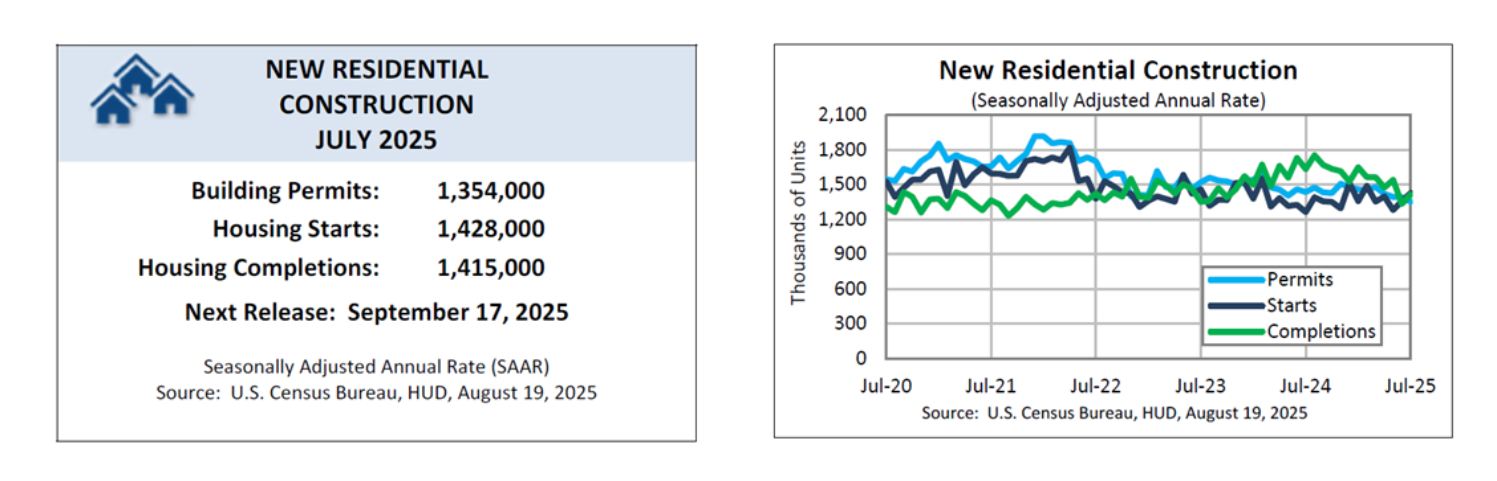
Filed Under: Financing, Mortgage Tagged With: Adjustable Rate Mortgage, Interest Rate, mortgage, Mortgage Rate Trends, mortgage rates

  • « Previous Page
  • 1
  • …
  • 3
  • 4
  • 5
  • 6
  • 7
  • …
  • 12
  • Next Page »

Real Estate

  • Birmingham
  • Cape Coral
  • Charlotte
  • Chicago

Quick Links

  • Markets
  • Membership
  • Notes
  • Contact Us

Blog Posts

  • 30-Year Fixed Mortgage Rate Drops Steeply by 54 Basis Points
    March 12, 2026Marco Santarelli
  • Today’s Mortgage Rates, March 12: 30‑Year Fixed Rises to 6.02%, 15-Year at 5.46%
    March 12, 2026Marco Santarelli
  • Mortgage Rates Today, March 12, 2026: 30-Year Refinance Rate Rises by 8 Basis Points
    March 12, 2026Marco Santarelli

Contact

Norada Real Estate Investments 30251 Golden Lantern, Suite E-261 Laguna Niguel, CA 92677

(949) 218-6668
(800) 611-3060
BBB
  • Terms of Use
  • |
  • Privacy Policy
  • |
  • Testimonials
  • |
  • Suggestions?
  • |
  • Home

Copyright 2018 Norada Real Estate Investments

Loading...