
Norada Real Estate Investments

  • Home
  • Markets
  • Properties
  • Membership
  • Podcast
  • Learn
  • About
  • Contact

Best Real Estate Markets for High Cash Flow and ROI in 2026

April 2, 2026 by Marco Santarelli

Best Real Estate Markets for High Cash Flow and ROI in 2026

As we look ahead, the question on every real estate investor's mind is a simple one: “Where is the smart money going next?” Smart investors are buying real estate by largely skipping the overpriced coastal giants and are instead targeting high-growth Sun Belt metros and surprisingly resilient Midwest cities. These areas offer the perfect storm of affordability, strong job growth, and a steady stream of new residents, creating a fantastic environment for both appreciation and cash flow.

The days of blindly throwing money at any property and expecting it to double in value are long gone. Today's market requires a more surgical approach. It’s about finding markets where real people are moving for real jobs and a better quality of life. The investors who understand this fundamental shift are the ones who will be winning in early 2026.

Best Real Estate Markets for High Cash Flow and ROI in 2026

The Big Picture: What's Driving the 2026 Real Estate Market?

Before we dive into specific cities, it's crucial to understand the major trends pushing investors toward these particular markets. This isn't random; it's a calculated move based on powerful economic and social forces.

The Great Affordability Migration

For years, I've seen people get priced out of major hubs like New York and California. That trend isn't just continuing; it's accelerating. Families and young professionals are cashing out their limited equity (or escaping sky-high rents) and moving to places where their dollar goes further. They're looking for good schools, safe neighborhoods, and a mortgage that doesn't eat up half their income. The cities on our list are primary beneficiaries of this massive wealth and population transfer.

The Remote Work Effect is Permanent

While some companies have called employees back to the office, the hybrid and remote work revolution is here to stay. This has fundamentally untethered millions of workers from expensive downtown cores. They can now choose a city based on lifestyle and cost of living rather than proximity to a single building. This gives a huge advantage to cities with great amenities, outdoor access, and, most importantly, affordable housing.

The Unrelenting Hunt for Cash Flow

Ask any seasoned investor, and they'll tell you: appreciation is nice, but cash flow is king. In high-priced markets, it's nearly impossible to find a property where the rent covers the mortgage, taxes, and insurance. Smart investors are chasing “yield,” and they're finding it in the Midwest and the Sun Belt. These markets allow you to buy properties where the numbers actually make sense from day one, providing a stable income stream that insulates you from market fluctuations.

The Hot List: Top Cities for Real Estate Investing in 2026

So, where exactly should you be looking? Based on current migration patterns, job growth data, and affordability metrics, these are the cities that I believe offer the most compelling opportunities for investors in 2026.

I've grouped them by region to highlight the broader trends at play.

The Sun Belt Superstars: Florida & Texas

The magnetic pull of the Sun Belt is undeniable. Low taxes, business-friendly governments, and warm weather are a combination that's hard to beat.

  • Dallas, Texas: Dallas is an economic juggernaut. It’s not just a city; it’s a sprawling metroplex that continues to attract major corporate relocations. This isn't just about oil and gas anymore. We're talking finance, technology, and logistics. For investors, this means a deep and diverse pool of quality tenants. You can find everything from single-family rentals in the suburbs for long-term holds to multi-family units closer to the urban core.
  • San Antonio, Texas: While Dallas gets a lot of headlines, I tell investors not to sleep on San Antonio. It offers a lower cost of entry than Dallas or Austin but boasts a rapidly growing economy, especially in sectors like cybersecurity and bioscience. Its vibrant culture and history also make it a desirable place to live, ensuring consistent rental demand.
  • Jacksonville, Florida: Jacksonville is one of my favorite “under-the-radar” Florida markets. It's a major port city with a strong logistics and healthcare sector. Unlike South Florida, it offers more affordability and a more stable, less speculative market. The population is growing steadily, and its proximity to the coast without the Miami price tag is a huge draw for new residents.
  • Cape Coral / Port St. Lucie, Florida: I'm grouping these because they represent a similar trend: explosive growth in smaller, lifestyle-focused Florida cities. Cape Coral, near Fort Myers, and Port St. Lucie, on the Atlantic coast, are attracting retirees and families in droves. They offer the Florida dream—waterfront living and sunny skies—at a fraction of the cost of places like Naples or West Palm Beach. The key here is new construction and strong demand from a retiring population with stable incomes.

The Southeast Powerhouses: Carolinas & Tennessee

These states are blending Southern charm with modern economic dynamism, creating a potent mix for real estate investors.

  • Charlotte, North Carolina: Charlotte has firmly established itself as the second-largest banking center in the United States. That financial backbone provides high-quality jobs and economic stability. The city is clean, well-planned, and continues to expand outward, creating opportunities in surrounding sub-markets. It's a blue-chip choice for investors looking for long-term, stable growth.
  • Nashville, Tennessee: Music City is so much more than music these days. It's a major hub for the healthcare industry and has a booming tech scene. What I love about Nashville is its energy. It attracts a young, educated workforce, which is exactly the kind of tenant demographic you want. While prices have risen, they are still reasonable compared to coastal tech hubs, and the rental demand is off the charts.

The Midwest's Hidden Gems: Stability and Cash Flow

Don't let the lack of oceans or mountains fool you. The Midwest is where many investors are quietly building serious wealth through incredible cash flow.

  • Indianapolis, Indiana: “Indy” is a model of Midwest consistency. It has a diverse economy built on healthcare, logistics (it's called the “Crossroads of America” for a reason), and a growing tech sector. The real draw for investors is the price-to-rent ratio. You can buy quality single-family homes or small multi-family properties for a price that allows for significant monthly cash flow. It's one of the most landlord-friendly states in the country, which is a major bonus.
  • Kansas City, Missouri: Straddling two states, Kansas City is a vibrant and growing metro. It has a thriving arts and culture scene, great food, and a cost of living that is well below the national average. Major investments in its downtown core and a growing tech presence are attracting new residents. For an investor, this means you can get in on the ground floor of a city that is clearly on an upward trajectory.
  • Cleveland, Ohio: For years, Cleveland was a punchline. Not anymore. The city is in the midst of a remarkable comeback, anchored by its world-class healthcare institutions like the Cleveland Clinic and a surprisingly robust tech and biomedical industry. The “buy-in” price for property here is among the lowest on this list, making it an incredible market for pure cash-flow plays. The yields can be fantastic if you know which neighborhoods to target.

The Comeback Kid

  • Birmingham, Alabama: Similar to Cleveland, Birmingham is a city reinventing itself. Once an industrial steel town, it's now a hub for medical research and banking. The University of Alabama at Birmingham (UAB) is a massive employer and economic engine. Investors who get into Birmingham now are positioning themselves to benefit from the city's continued revitalization and growth, all while enjoying very low property prices.

At-a-Glance: Comparing the 2025 Hot Markets

To make it easier, here’s a simple table summarizing what makes each of these markets so attractive.

City Primary Investment Driver Key Strength(s) Investor Profile
Dallas, TX Corporate Relocation & Job Growth Diverse Economy, Strong Tenant Pool Growth & Appreciation
San Antonio, TX Affordability & Population Growth Lower Buy-in, Stable Military & Tech Sectors Balanced Growth & Cash Flow
Jacksonville, FL Population Influx & Logistics Steady Growth, Coastal Proximity Long-Term Hold, Stable Returns
Cape Coral, FL Retirement & Lifestyle High Demand from Retirees, New Construction Niche (Retirement Rentals)
Charlotte, NC Financial Sector Strength Blue-Chip Stability, Quality Tenants Low-Risk, Long-Term Appreciation
Nashville, TN Tech & Healthcare Boom Young Demographics, High Rental Demand Appreciation-Focused, High Growth
Indianapolis, IN Excellent Cash Flow Affordability, Landlord-Friendly Laws Cash Flow Focused
Kansas City, MO Revitalization & Affordability Low Cost of Living, Up-and-Coming Tech Scene Balanced (Cash Flow with Growth Pop)
Cleveland, OH Maximum Cash Flow Extremely Low Buy-in, Strong Healthcare Anchor Pure Cash Flow, Higher Risk/Reward
Birmingham, AL Economic Reinvention Low Entry Point, Medical Sector Growth Speculative Growth, Strong Cash Flow

How to Invest Smartly in These Markets

Finding the right city is only half the battle. Executing your strategy is what separates successful investors from the rest.

  1. Do Your Hyper-Local Homework: This article is your map, but you need to explore the terrain. Don't just invest in “Dallas”; invest in a specific neighborhood in a Dallas suburb that has great schools and low crime. Never buy a property sight-unseen. If you can't go yourself, have a trusted partner walk the property for you.
  2. Build a Local “A-Team”: You need a great real estate agent, a reliable property manager, and a good contractor in the city where you're investing. They are your eyes and ears on the ground. A good property manager is worth their weight in gold and is the key to successfully investing from a distance.
  3. The Numbers Must Work: Don't fall in love with a property. Fall in love with the deal. Run your numbers conservatively. Account for vacancies, repairs, and capital expenditures. If the property doesn't generate positive cash flow after all expenses, think twice before buying.

The future of real estate investing in the U.S. is bright, but it's not where it used to be. The smart money is moving inland, chasing affordability, jobs, and a better quality of life. By focusing on these dynamic Sun Belt and Midwest cities, you can position your portfolio for success in 2026 and for many years to come.

The Ultimate Guide to Passive Real Estate Investing

Download Your FREE Guide to Passive Real Estate Wealth

Real estate investing has created more millionaires than any other path—and this guide shows you how to start or scale with turnkey rental properties.

Inside, you’ll learn how to analyze cash flow and returns, choose the best markets, and secure income-generating deals—perfect for building long-term wealth with minimal hassle.

🔥 FREE DOWNLOAD AVAILABLE NOW! 🔥

Download

Smart Investors Are Buying Turnkey Deals in These Hot Markets

From Birmingham to San Antonio, savvy investors are locking in cash-flowing rental properties in high-demand cities—before prices rise and inventory tightens.

Norada Real Estate offers exclusive access to turnkey deals in Cape Coral, Charlotte, Cleveland, Dallas, Indianapolis, Jacksonville, Kansas City, Nashville, Port Charlotte, and more—perfect for building passive income and long-term wealth.

🔥 HOT 2026 LISTINGS JUST ADDED! 🔥

Speak to Our Investment Counselor (No Obligation):

(800) 611-3060

View Properties For Sale

Recommended Read:

  • How to Secure Your Retirement With Cash-Flowing Rental Properties
  • Why Turnkey Real Estate Still Beats Today's High Mortgage Rate Climate
  • Best Places to Invest in Single-Family Rental Properties in 2025
  • Why Real Estate Can Thrive During Tariffs Led Economic Uncertainty
  • Rise of AI-Powered Hyperlocal Real Estate Marketing in 2025
  • Real Estate Forecast Next 5 Years: Top 5 Predictions for Future
  • 5 Hottest Real Estate Markets for Buyers & Investors in 2025
  • Will Real Estate Rebound in 2025: Top Predictions by Experts
  • Recession in Real Estate: Smart Ways to Profit in a Down Market
  • Will There Be a Real Estate Recession in 2025: A Forecast
  • Will the Housing Market Crash Due to Looming Recession in 2025?
  • 4 States Facing the Major Housing Market Crash or Correction
  • New Tariffs Could Trigger Housing Market Slowdown in 2025
  • Real Estate Forecast Next 10 Years: Will Prices Skyrocket?

Filed Under: Real Estate, Real Estate Investing, Real Estate Market Tagged With: Real Estate Investing, Rental Properties, Turnkey Real Estate

Is Turnkey Real Estate a Smart Investment Choice for Beginners?

April 2, 2026 by Marco Santarelli

Is Turnkey Real Estate a Smart Investment Choice for Beginners?

If you're stepping into the world of property investment for the first time, you might have come across the term turnkey real estate. In simple terms, turnkey real estate refers to fully renovated properties that are ready for immediate occupancy and rental, making them an appealing choice for new investors.

The short answer to the question, “Is turnkey real estate the best investment choice for beginners?” is yes, it can be, especially for those looking for passive income without getting involved in the nitty-gritty of property management.

Is Turnkey Real Estate the Best Investment Choice for Beginners?

Key Takeaways

  • Turnkey Properties: Fully renovated and ready-to-rent homes that offer immediate cash flow.
  • Passive Income: Investors can start earning income quickly with minimal involvement.
  • Varied Risks: Potential challenges include market risks and dependence on management companies.
  • Critical Market Research: Essential for maximizing investment potential.
  • Understanding Costs: Investors must be aware of purchasing prices, ongoing fees, and market conditions.

What is Turnkey Real Estate?

At its core, turnkey real estate refers to properties that require no repair or renovation—essentially, they are move-in ready homes. Turnkey investments are popular because they allow investors to start generating income quickly. The appeal of turnkey properties lies in their hassle-free nature; investors can purchase a property, hand the keys over to a property management team, and begin to receive rental income without getting bogged down in the usual responsibilities of being a landlord.

Turnkey investments often cater to those who may not have the time, resources, or desire to engage in the traditional avenues of property investment, which often involve buy-and-rehab strategies. This characteristic makes turnkey properties particularly popular among busy professionals, first-time investors, or those looking to diversify their investment portfolios without significant time commitments.

The Advantages of Turnkey Real Estate Investing

For many beginners, the advantages of investing in turnkey properties may seem alluring. Let’s explore some of the key benefits:

  1. Immediate Cash Flow: One significant draw is that these properties are rent-ready. This means once the purchase process is complete, you can begin collecting rent almost immediately. Depending on the rental market, this could mean cash flow starts within a matter of weeks.
  2. Low Management Responsibility: Because turnkey properties often come with professional property management services, investors can avoid day-to-day management tasks. These services typically handle tenant screening, rent collection, and maintenance, making the investment more passive.
  3. Simplified Entry Point for New Investors: For first-time investors, turnkey properties offer a straightforward pathway into real estate. With guidance from seasoned property management companies, beginners can learn the basics of rental income and property performance without the complexity of extensive renovations or direct tenant management.
  4. Opportunity for Portfolio Diversification: Investing in different geographical markets through turnkey properties can diversify your portfolio. This strategy can balance risks across various economic conditions and rental markets.
  5. Access to Smaller, More Affordable Markets: Turnkey properties afford beginners the chance to invest in areas with good cash flow potentials and appreciation opportunities, even if they reside in more expensive regions. For example, an investor living in a high-cost city might find better opportunities in a thriving town that has affordable properties with good rental yields.

The Potential Downsides

Despite the attractive features, investing in turnkey real estate is not without challenges. New investors should be aware of these potential pitfalls:

  • Higher Purchase Prices and Fees: Turnkey properties can carry a premium price due to their readiness and the services they include. This means you might pay more upfront than you would for a fixer-upper, which could impact your overall return on investment.
  • Reliance on Property Management: While property management helps relieve the investor’s workload, it can also be a double-edged sword. The quality and reliability of the management team significantly influence the investment's success. If the management company fails to effectively manage the property, that could lead to lower tenant satisfaction, increased vacancies, and consequent cash flow issues.
  • Market Risks: No real estate investment is immune to fluctuations in the market. If you invest in a burgeoning area that suddenly begins to decline, the value of your investment could diminish. It's crucial to do thorough market analysis both before and after purchasing to understand local trends and forecasts.
  • Less Control Over Property Decisions: While some investors appreciate the hands-off nature of turnkey properties, it also means giving up a degree of control. Investors will have limited ability to make decisions regarding property management, such as tenant selection and maintenance contracts.

Understanding the Turnkey Process

Navigating the process of turnkey real estate investing is critical for maximizing your investment potential. Here’s a detailed step-by-step guide to the process:

  1. Set Your Budget: Establish how much you are willing to invest, including associated costs like property management fees and maintenance expenses. It’s important that your budget accounts for working cash flow to handle any sudden costs that might arise.
  2. Conduct Thorough Market Research: Research is critical in identifying the best markets for potential investment. Look for areas with rising populations, job growth, and economic stability. Resources like BiggerPockets can offer valuable insights into promising markets and investment strategies.
  3. Choose a Reputable Turnkey Provider: Find a turnkey provider or property management company that has a successful track record in the industry. Look for companies with positive reviews, transparent fees, and demonstrated experience in the markets you are interested in.
  4. Visit and Inspect Properties: Even if a property is turnkey, visiting it allows you to assess its condition and the surrounding area. Speak to current tenants if possible and scrutinize aspects such as neighborhood safety and local amenities.
  5. Finalize Purchase and Begin Earning: Once you feel confident, finalize the purchase of the property, establish a contract with the management company, and prepare to start receiving rental payments.

Exploring Pros and Cons: Insights from Experts

As someone who has spent years analyzing real estate investments, I believe that turnkey real estate can be a great opportunity for beginners, especially those who are hesitant about dealing with the typical complexities of property management. However, it’s crucial to conduct thorough research and due diligence, especially when selecting properties and management companies.

Resources such as the article from BiggerPockets indicate the importance of weighing both expectations and reality. While they offer attractive returns, the landscape of real estate is ever-changing, and being mindful of potential market shifts is key.

In another insightful piece from Investopedia, the emphasis is placed on ensuring that investors understand their exit strategies. Turnkey properties can be great income generators, but having a plan for when you want to sell or appreciate the same investments can protect your finances.

Real-Life Examples: Success Stories and Cautionary Tales

Many investors have successfully launched their real estate careers by relying on turnkey properties. For example, one beginner investor who started with a single turnkey property in an up-and-coming neighborhood was able to leverage the rental income to reinvest in additional properties over time. This strategy of initial low investment with high income has led to a fine balance of risk and reward.

Conversely, there are also stories of caution where investors jumped into purchasing turnkey properties without adequate market research. One particular case involved an investor who bought a seemingly perfect property in a market identified as “hot,” only to discover afterward that the area had a significant decline in demand. This experience underscores the necessity of thorough research, market analysis, and ongoing due diligence—both before and after securing the investment.

Turnkey Rentals: The Best Starting Point for New Investors

For beginners in 2026, turnkey real estate offers a simple, low‑stress way to build passive income. With property management handled, investors can focus on cash flow and appreciation without the headaches of being a landlord.

Norada Real Estate helps first‑time buyers secure turnkey properties designed for immediate ROI and long‑term wealth—making real estate investing accessible and profitable from day one.

🔥 HOT 2026 INVESTMENT LISTINGS JUST ADDED! 🔥
Speak with an Investment Counselor Today (No Obligation):
(800) 611-3060
Or Request a Callback / Fill Out the Form Online

Contact Us

Navigating the Legal and Financial Aspects

Understanding the legal and financial implications of investing in turnkey properties is equally crucial. Before making any decisions, familiarize yourself with:

  • Financing: Often, lenders will require a 20%-25% down payment for investment properties. Ensure you are securing financing that aligns with your investment goals.
  • Local Laws and Regulations: Familiarize yourself with tenant laws, zoning regulations, and property taxes in your chosen market. Different cities or states may have stricter regulations affecting rental properties.
  • Insurance: Investment properties may require different insurance types than standard home insurance, so be sure to investigate your options to protect your asset adequately.
  • Tax Implications: Consult with a tax advisor to understand reporting rental income and the deductions you can claim. For instance, property taxes, depreciation, and certain operating expenses can often be deducted.

Final Insights on Turnkey Real Estate as a Beginner's Investment

In summary, turnkey real estate can represent a solid entry point for beginners eager to enter the rental market. With effortless management and potential for immediate cash flow, it stands as an appealing option for those who may not want to engage in extensive renovations or repairs associated with traditional property investment strategies.

Be proactive in educating yourself about the investment process, the specific market dynamics, and the resources available to you. Successful investing in turnkey real estate hinges upon your willingness to conduct comprehensive research, understand your specific needs, and make informed decisions. Remember, knowledge and preparation play significant roles in navigating the complexities of real estate investing, especially when you're entering a market that may initially seem daunting.

Also Read:

  • Why Smart Investors Are Buying Cleveland Turnkey Real Estate
  • Turnkey Homes for Sale Are Selling Fast
  • Turnkey Real Estate Investment: A Guide For Beginners
  • What is Turnkey Rental Property Investing?
  • What is Turnkey Rental Property Investing?
  • Top Real Estate Markets for Turnkey Investment Properties
  • Housing Market Predictions for Next Year: Prices to Rise by 4.4%
  • Housing Market Predictions for the Next 4 Years

Filed Under: Housing Market, Real Estate Market Tagged With: Real Estate Investing, Rental Income, Turnkey Properties

Mortgage Rates Today, April 2, 2026: 30-Year Refinance Rate Drops by 4 Basis Points

April 2, 2026 by Marco Santarelli

Mortgage Rates Today, July 21, 2026: 30-Year Refinance Rate Drops by 2 Basis Points

Today, April 2, 2026, marks a subtle shift in the refinance market, as the popular 30-year fixed refinance rate has dipped by 4 basis points week-over-week, settling at an average of 6.81%, according to Zillow. While this might seem like a small step, for homeowners looking to adjust their current mortgages, it's a breath of fresh air in a period of persistent rate pressure.

Mortgage Rates Today, April 2, 2026: 30-Year Refinance Rate Drops by 4 Basis Points

What's Happening with Refinance Rates Today?

Let's break down the numbers from Zillow for April 2, 2026:

  • 30-Year Fixed Refinance: Currently averaging around 6.81%. This is actually up a hair from yesterday (by 2 basis points), but the important story is that it's down 4 basis points compared to where we were just last week, when the average was closer to 6.85%.
  • 15-Year Fixed Refinance: These rates are holding steady at a solid 5.83%.
  • 5-Year Adjustable-Rate Mortgage (ARM) Refinance: These are also staying put at 5.94%.

As you can see, it's a mixed bag. The 30-year is the one making waves today, offering a small bit of relief. The others are playing it cool, staying put.

Why Are Rates Moving (or Not Moving)?

My experience tells me that mortgage rates don't just wake up and decide to go up or down. There are real forces at play. Today, it seems like a few things are creating this mixed picture:

  • Geopolitical Shakes: We've all been watching the news about the Middle East. When conflict heats up there, oil prices tend to climb. Higher oil prices can make people worry about inflation, and that worry often pushes up something called Treasury yields. Mortgages tend to follow Treasury yields pretty closely, so this is a big factor.
  • The Fed's Watchful Eye: The Federal Reserve, our central bank, decided to keep its main interest rate on hold again in March. We're talking about a range of 3.50%–3.75%. The general feeling now is that they plan to keep rates higher for longer, prioritizing getting inflation under control before they even think about lowering them. This sentiment definitely puts a lid on how much mortgage rates can drop.
  • A Bit More Room to Breathe (For Some): In some housing markets, we're starting to see a little more inventory – more houses for sale. This can be good news for buyers and potentially create more opportunities for homeowners considering a refinance. However, general economic uncertainty still has people feeling a bit cautious.

Refinance Demand: Cooling Off?

I've noticed a trend, and the data backs it up: fewer people are rushing to refinance right now. It makes sense when rates are hovering near recent highs.

  • A Big Weekly Slip: Applications for refinancing dropped by a significant 17% in the week ending March 27th, according to the Mortgage Bankers Association.
  • Monthly Slide: Looking at the whole month, refinance demand is down about 40%. That’s a pretty steep drop, as rates have climbed nearly half a percent in that time.
  • Refi's Slice of the Pie: Refinancing now makes up 45.3% of all mortgage activity. Last week, it was a bit higher, at 49.6%.
  • Still Better Than Last Year: Even with this recent dip, it's worth remembering that refinance activity is still much stronger – somewhere between 33% and 52% higher – than it was this time last year, in 2025, when rates were even higher.

It’s a delicate balance. While fewer people are refinancing this week or this month, the overall interest compared to a year ago is still significant.

What Experts Are Saying About the Future

Predicting mortgage rates is notoriously tricky, and experts are all over the map. Here's a glimpse of what some are forecasting for the rest of 2026:

  • Fannie Mae: They're optimistic that if inflation calms down, we could see rates dip below 6% later in the year.
  • Mortgage Bankers Association (MBA): Their outlook is a bit more conservative, expecting rates to likely hang out between 6.1% and 6.3% for the remainder of 2026.
  • Morgan Stanley: They're playing the long game, predicting a potential drop to 5.50%–5.75% by the middle of 2026. However, they also see a strong possibility of rates climbing back up in the latter half of the year.

As you can see, there's no crystal ball. Some see potential dips, while others believe rates will stick around higher levels or even creep back up. This uncertainty is precisely why staying informed is so crucial.

My Takeaway for You

So, what does this all mean for you, the homeowner? Today, April 2, 2026, we're seeing a slight improvement in the 30-year fixed refinance rate, bringing it down to 6.81%. While this is a welcome change from last week, it's happening in an environment where overall refinancing hasn't been as strong.

The economic climate, including inflation worries and global events, continues to make interest rates a bit jumpy. The Federal Reserve's stance also suggests we might not see dramatic rate drops anytime soon.

If you've been thinking about refinancing, now might be a good time to explore your options. That 4-basis-point dip, while modest, could make a difference for your monthly payment. However, it's essential to weigh that against the broader economic picture and the forecasts for the rest of the year. Keep an eye on those inflation reports, what the Fed says, and any major global developments. These are the things that really shape where mortgage rates will go next.

🏡 Two TURnkey properties With Strong Cash Flow

Rincon, GA
🏠 Property: Founders Dr
🛏️ Beds/Baths: 3 Bed • 2 Bath • 1600 sqft
💰 Price: $275,000 | Rent: $2,200
📊 Cap Rate: 7.0% | NOI: $1,613
📅 Year Built: 2025
📐 Price/Sq Ft: $172
🏙️ Neighborhood: B+

VS

Port Charlotte, FL
🏠 Property: Prineville St
🛏️ Beds/Baths: 4 Bed • 2 Bath • 1914 sqft
💰 Price: $349,900 | Rent: $2,100
📊 Cap Rate: 5.0% | NOI: $1,457
📅 Year Built: 2025
📐 Price/Sq Ft: $183
🏙️ Neighborhood: A

Georgia’s affordable rental with higher cap rate vs Florida’s A‑rated property with stability. Which fits YOUR investment strategy?

We have much more inventory available than what you see on our website – Let us know about your requirement.

📈 Choose Your Winner & Contact Us Today!

Speak to a Norada Investment Counselor (No Obligation):

(800) 611-3060

View All Properties

Invest Smart — Build Long-Term Wealth Through Turnkey Real Estate in 2026

Market forecasts suggest steady demand, making turnkey real estate one of the most reliable paths to passive income and wealth creation.

Norada Real Estate helps investors capitalize on these trends with turnkey rental properties designed for appreciation and consistent cash flow—so you can grow wealth securely while others wait for clarity in the market.

🔥 HOT 2026 INVESTMENT LISTINGS JUST ADDED! 🔥
Send Us An Email or Request a Call Back

Contact Us

Recommended Read:

  • 30-Year Fixed Refinance Rate Trends – March 22, 2026
  • Best Time to Refinance Your Mortgage: Expert Insights
  • Should You Refinance Your Mortgage Now or Wait Until 2026?
  • When You Refinance a Mortgage Do the 30 Years Start Over?
  • Should You Refinance as Mortgage Rates Reach Lowest Level in Over a Year?
  • Half of Recent Home Buyers Got Mortgage Rates Below 5%
  • Mortgage Rates Need to Drop by 2% Before Buying Spree Begins
  • Will Mortgage Rates Ever Be 3% Again: Future Outlook
  • Mortgage Rates Predictions for Next 2 Years
  • Mortgage Rate Predictions for Next 5 Years

Filed Under: Financing, Mortgage Tagged With: mortgage rates, Mortgage Rates Today, Refinance Rates

Today’s Mortgage Rates, April 1, 2026: 30-Year Fixed Falls to 6.29%, Down 7 Basis Points

April 1, 2026 by Marco Santarelli

Today's Mortgage Rates, July 21: Buyers Catch a Small Break as 30‑Year Fixed Dips to 6.40%

After a bit of a nail-biting period, we're seeing some welcome movement downwards in mortgage rates. As of today, April 1, 2026, according to the latest figures from Zillow, the average 30-year fixed mortgage rate has dipped to 6.29%, down seven basis points, and the 15-year fixed rate is now at 5.73%, an eight-basis-point drop. This is a pretty significant update for anyone in the market for a home or looking to refinance.

Today's Mortgage Rates, April 1, 2026: 30-Year Fixed Falls to 6.29%, Down 7 Basis Points

What the Numbers Tell Us Today

Let's get down to the specifics. Zillow's latest data offers us a clear picture of where things stand:

Loan Type Average Rate
30-Year Fixed 6.29%
20-Year Fixed 6.29%
15-Year Fixed 5.73%
5/1 ARM 6.13%
7/1 ARM 6.31%
30-Year VA 5.96%
15-Year VA 5.53%
5/1 VA 5.48%

Seeing that 30-year fixed rate dip below 6.3% is a positive sign. For a lot of families, this kind of movement can make a real difference in what they can afford month-to-month. The fact that the 15-year is also heading south is good news for those looking to pay off their mortgage faster.

Why the Sudden Shift? Unpacking Today's Influences

So, what’s behind this encouraging dip? I’ve been watching the markets closely, and a few key things are at play today:

  • A Global Deep Breath: There’s a sense of cautious optimism in the air regarding geopolitical tensions, particularly concerning the situation with Iran. When those kinds of international uncertainties ease, even just a little, it can reduce market anxiety and encourage investors to take on a bit more risk, which often translates to lower borrowing costs.
  • The Bond Market's Turnaround: As I mentioned, there's been a noticeable return of investor interest to the bond market. This increased demand means bond prices go up, and their yields go down. Since mortgage rates are closely tied to Treasury yields, this shift directly benefits borrowers.
  • A Pause in Homebuying Activity: It’s not all good news, though. Mortgage applications actually took a tumble last week, dropping by a significant 10.5%. This isn't surprising, really. We saw a sharp increase in rates not too long ago, and that definitely put the brakes on both people wanting to buy new homes and those looking to refinance their existing mortgages. It just goes to show that even small rate hikes can have a big impact on buyer behavior.
  • Lingering Inflation Worries: While today's relief is welcome, we can't forget about inflation. The ongoing impact of global events on energy and oil prices means that inflation fears haven't completely disappeared. This is likely why rates are still holding in that mid-to-high 6% range for the popular 30-year fixed. It's a delicate balancing act for policymakers.

Looking Ahead: What's Next on the Horizon?

In my experience, trying to predict mortgage rates can feel like a bit of a guessing game, but there are definitely clues to follow. The biggest event on everyone's radar right now is the Federal Reserve's upcoming meeting.

  • The Fed's Next Move: The Fed decided to keep interest rates steady back in March, which was a relief for many. However, their next meeting, scheduled for April 28th and 29th, is going to be crucial. If the new inflation data shows a cooling trend, there’s a real possibility we could see the Fed consider a rate cut later in 2026. This would be huge for the housing market.
  • Expert Predictions: The big players in the housing world – organizations like the National Association of Realtors (NAR), the Mortgage Bankers Association (MBA), and Fannie Mae – are giving us their best guesses. They're generally forecasting that 30-year fixed rates will settle somewhere between 5.7% and 6.3% by the end of the second quarter of 2026. This prediction hinges on inflation continuing to cooperate and ease up.

My Take: A Welcome Reprieve, But Stay Vigilant

So, to wrap things up, April 1, 2026, is giving us a bit of breathing room. The fact that the 30-year fixed rate is down to 6.29% and the 15-year fixed at 5.73% is fantastic news for potential homebuyers and those considering refinancing. The easing of geopolitical tensions and the positive turn in the bond market have provided a much-needed short-term boost.

However, as I always advise my clients, it's important to stay informed. Inflation is still a shadow, and the Federal Reserve's decisions are going to be the big drivers of where rates go next. The housing market is always a dynamic thing, and we're likely to see more ups and downs. If you're thinking about making a move, now is a good time to talk to a trusted mortgage professional, understanding these current rates and keeping an eye on those upcoming economic indicators.

🏡 Two Southeastern Rentals With Strong Cash Flow

Rincon, GA
🏠 Property: Founders Dr
🛏️ Beds/Baths: 3 Bed • 2 Bath • 1600 sqft
💰 Price: $275,000 | Rent: $2,200
📊 Cap Rate: 7.0% | NOI: $1,613
📅 Year Built: 2025
📐 Price/Sq Ft: $172
🏙️ Neighborhood: B+

VS

Port Charlotte, FL
🏠 Property: Prineville St
🛏️ Beds/Baths: 4 Bed • 2 Bath • 1914 sqft
💰 Price: $349,900 | Rent: $2,100
📊 Cap Rate: 5.0% | NOI: $1,457
📅 Year Built: 2025
📐 Price/Sq Ft: $183
🏙️ Neighborhood: A

Georgia’s affordable rental with higher cap rate vs Florida’s A‑rated property with stability. Which fits YOUR investment strategy?

We have much more inventory available than what you see on our website – Let us know about your requirement.

📈 Choose Your Winner & Contact Us Today!

Speak to a Norada Investment Counselor (No Obligation):

(800) 611-3060

View All Properties

Build Passive Income & Wealth with Turnkey Rentals in 2026

Mortgage rates remain high in 2026, but rental properties continue to deliver strong cash flow and appreciation. Savvy investors know that turnkey real estate is the path to passive income and long‑term wealth.

Norada Real Estate helps you secure turnkey rental properties designed for immediate cash flow and appreciation—so you can invest smartly regardless of interest rate trends.

🔥 HOT 2026 INVESTMENT LISTINGS JUST ADDED! 🔥
Request a Callback / Fill Out the Form Online

Contact Us

Also Read:

  • Mortgage Rates Predictions Backed by 7 Leading Experts: 2025–2026
  • Mortgage Rate Predictions for the Next 3 Years: 2026, 2027, 2028
  • 30-Year Fixed Mortgage Rate Forecast for the Next 5 Years
  • 15-Year Fixed Mortgage Rate Predictions for Next 5 Years: 2025-2029
  • Will Mortgage Rates Ever Be 3% Again in the Future?
  • Mortgage Rates Predictions for Next 2 Years
  • Mortgage Rate Predictions for Next 5 Years
  • Mortgage Rate Predictions: Why 2% and 3% Rates are Out of Reach
  • How Lower Mortgage Rates Can Save You Thousands?
  • How to Get a Low Mortgage Interest Rate?
  • Will Mortgage Rates Ever Be 4% Again?

Filed Under: Financing, Mortgage Tagged With: mortgage, mortgage rates, Today’s Mortgage Rates

Best Cities to Invest in Real Estate for High ROI in 2026

April 1, 2026 by Marco Santarelli

Best Cities to Invest in Real Estate for High ROI in 2026

If you're looking to make a smart move with your money in real estate, focusing on Midwestern value markets for steady income and Sun Belt growth areas for long-term gains is your winning strategy for 2026.

The buzz around real estate investment for the coming year is palpable, and if you're like me, you're probably wondering where to put your hard-earned cash for the best possible return. It’s a question that keeps many investors up at night, and frankly, it’s the question I’ve been digging into myself a lot lately. While there's no crystal ball, after poring over trends and data, I've got a pretty good idea of where the opportunities lie. It's not just about chasing the hottest markets; it's about smart, informed decisions.

Best Cities to Invest in Real Estate for High ROI in 2026

The Midwest: Your Cash Flow Champion

When I think about immediate, reliable income from my real estate investments, my mind immediately goes to the Midwest. These cities often fly under the radar compared to the glitz and glamour of coastal hubs, but that's precisely what makes them so attractive. Affordability is key here, meaning your initial investment dollars go further, and the demand for rental properties is strong and steady.

Indianapolis, Indiana: The Buyer's Best Friend

Zillow has pegged Indianapolis as the number one buyer-friendly market for 2026, and I can see why. It hits that sweet spot of being incredibly affordable while offering investors significant leverage. From my perspective, this translates to excellent cash flow potential. We’re talking about rental yields that can hover around 9.1%. That's a serious return on your investment, especially in the current economic climate. Plus, with big companies like Eli Lilly expanding and creating jobs, there’s a consistent stream of people looking for homes, which is great news for landlords.

Birmingham, Alabama: Where Yields Soar

If your primary goal is maximum rental income, Birmingham is a city you absolutely need to consider. I’ve seen projections showing certain properties here could yield as much as 13.6%. That’s a remarkable figure. The secret sauce? Low entry prices combined with a strong rental market. The University of Alabama at Birmingham (UAB) is a huge economic driver, employing thousands and bringing in students, which means a steady pool of potential renters, especially those in healthcare and research fields. It's a market that offers high yields and low entry prices, with the median home price around $251,000.

Kansas City, Missouri: Demand That's Heating Up

I’ve heard whispers, and now the data confirms it: Kansas City is experiencing a significant surge in demand. For early 2026, it’s among the major metros seeing the biggest jump in interest. What excites me about Kansas City is its balanced market. You get the potential for stable annual appreciation, typically in the 3–5% range, alongside a healthy rent-to-price ratio. As mortgage rates hopefully ease up, I expect to see sales volume climb by about 6–8%, making it an even more dynamic place to invest.

The Sun Belt: Paving the Way for Long-Term Growth

While the Midwest offers immediate income, the Sun Belt states are where you look for long-term appreciation. These are the areas experiencing rapid population growth, attracting people with jobs and a desire for a lower cost of living (or no state income tax!).

San Antonio, Texas: The In-Migration Magnet

Texas, in general, is a powerhouse for real estate investment, and San Antonio is a prime example. Its appeal is undeniable: massive population growth fueled by people moving in from all over, and the big draw of no state income tax. This constant influx of new residents creates sustained demand for housing, driving up property values over time. While the absence of state income tax is great, it’s important to remember that property taxes can be a bit higher here, usually ranging from 1.5% to 2%. Still, for long-term growth investors, the trade-off is often well worth it.

Beyond the Headlines: Other Strong Contenders

The cities I’ve highlighted are my top picks, but it would be a disservice not to mention a few other areas that are showing incredible promise.

Cleveland, Ohio: The “Cash Cow” Market

If rental yields are your absolute priority, Cleveland is a standout. I’ve seen figures showing it boasts the highest rental yields among major metros, reaching an impressive 11.3%. For investors focused on immediate income, this city can truly be a “cash cow.” While taxes might be a bit higher, the low initial investment needed to get started often makes it a compelling choice.

Detroit, Michigan: Appreciation Station

Detroit is on an incredible comeback, and its housing market is reflecting that. Reports show it leading the nation in appreciation rates, with a remarkable 26.8% housing market premium as of 2025. This is a city that has transformed itself, and if you're looking for rapid appreciation, Detroit is definitely a market to watch very closely.

Tampa & Jacksonville, Florida: The Comeback Kids

Florida continues to be a sought-after destination, and in 2026, cities like Tampa and Jacksonville are showing a strong recovery. There’s high demand here for both long-term rentals and short-term vacation stays, making them versatile options for investors.

The Crucial Role of Property Taxes

It’s easy to get caught up in rental income and appreciation figures, but I always stress the importance of property taxes. These are not a one-time fee; they are ongoing operating expenses that can significantly eat into your net cash flow. In 2026, the truly savvy investors will be those who recognize this and focus on markets where high yields are combined with sensible tax structures.

Here’s a quick look at how some of these cities stack up in terms of property taxes and average rental yields.

City Effective Tax Rate (2026) Avg. Rental Yield ROI Profile
Birmingham, AL 0.48% 7.5% – 13.6% Highest Cash Flow, Lowest Taxes
Indianapolis, IN 0.74% – 0.93% 6.8% – 9.1% Predictability, Protected Tax Caps
Kansas City, MO 1.11% – 1.19% 6.5% Balanced, Stable Yields
Cleveland, OH 1.31% – 1.74% 8.1% – 11.3% High Risk/Yield, Low Entry Prices
San Antonio, TX 1.74% – 2.2% 6.0% Appreciation Play, No State Income Tax
Detroit, MI 3.02% N/A Speculative Appreciation, High Taxes
  • The Indianapolis Advantage: Indiana has a constitutional cap of 1% on property taxes for primary residences, and it's around 2% for rentals. This offers fantastic predictability. Plus, for 2026, new incentives like a homestead credit can further reduce the tax burden.
  • Alabama's Smart System: Alabama assesses residential properties at only 10% of their market value. This is a big reason why their tax bills are among the lowest in the country, making markets like Birmingham incredibly attractive for cash flow.
  • The Texas & Florida Trade-off: While Texas and Florida boast no state income tax, they tend to have higher property taxes to compensate. This can be a great deal for high-earning investors who want to minimize income tax, but it’s something to factor into your monthly expenses.
  • Missouri's Reassessment Trick: In Kansas City, property reassessments only happen every odd year. If you buy in an even year like 2026, your taxes might remain lower based on the previous year’s assessment until the next reassessment in 2027. This can be a nice little buffer for your initial returns.

Making the right real estate investment isn't just about picking a city; it's about understanding the market dynamics, the economic drivers, and the hidden costs like property taxes. By focusing on these key areas for 2026, I believe you'll be well on your way to achieving those high ROI goals.

🏡 Two investment properties With high ROI

Birmingham, AL
🏠 Property: Quebec St
🛏️ Beds/Baths: 2 Bed • 1 Bath • 1076 sqft
💰 Price: $127,000 | Rent: $950
📊 Cap Rate: 7.4% | NOI: $785
📅 Year Built: 1940
📐 Price/Sq Ft: $119
🏙️ Neighborhood: B+

VS

Rincon, GA
🏠 Property: Founders Dr
🛏️ Beds/Baths: 3 Bed • 2 Bath • 1600 sqft
💰 Price: $275,000 | Rent: $2,200
📊 Cap Rate: 7.0% | NOI: $1,613
📅 Year Built: 2025
📐 Price/Sq Ft: $172
🏙️ Neighborhood: B+

Alabama’s affordable rental with higher cap rate vs Georgia’s new build with stronger NOI. Which fits YOUR investment strategy?

We have much more inventory available than what you see on our website – Let us know about your requirement.

📈 Choose Your Winner & Contact Us Today!

Speak to a Norada Investment Counselor (No Obligation):

(800) 611-3060

View All Properties

The Ultimate Guide to Passive Real Estate Investing

Download Your FREE Guide to Passive Real Estate Wealth

Real estate investing has created more millionaires than any other path—and this guide shows you how to start or scale with turnkey rental properties.

Inside, you’ll learn how to analyze cash flow and returns, choose the best markets, and secure income-generating deals—perfect for building long-term wealth with minimal hassle.

🔥 FREE DOWNLOAD AVAILABLE NOW! 🔥

Download

Want Stronger Returns? Invest Where the Housing Market’s Growing

Turnkey rental properties in fast-growing housing markets offer a powerful way to generate passive income with minimal hassle.

Work with Norada Real Estate to find stable, cash-flowing markets beyond the bubble zones—so you can build wealth without the risks of ultra-competitive areas.

🔥 HOT NEW LISTINGS JUST ADDED! 🔥

Speak to a Norada Investment Counselor today (No Obligation):

(800) 611-3060

Get Started Now

Recommended Read:

  • Best States to Buy a House in 2026
  • Best Cities to Buy a House for Investment in 2026
  • Best Cities to Buy a House For Rental Income in 2026
  • Best Cities to Invest in Real Estate in 2026
  • Should You Invest in the Austin or Raleigh Real Estate Market in 2026?
  • Dallas vs. Houston: Which City Offers Better Returns for Real Estate Investors
  • Single-Family vs. Townhome: Which is the Real Cash Flow Winner for Investors?
  • 5 Hottest Florida and Texas Markets for Real Estate Investors in 2025
  • Best Places to Invest in Real Estate: November 2024 Hotspots
  • How to Secure Your Retirement With Cash-Flowing Rental Properties
  • Best Places to Invest in Single-Family Rental Properties in 2025
  • 5 Hottest Real Estate Markets for Buyers & Investors in 2025

Filed Under: Real Estate, Real Estate Investing, Real Estate Market Tagged With: Best Cities To Invest In Real Estate, Investment Properties, ROI

Mortgage Rates Today, April 1, 2026: 30-Year Refinance Rate Drops by 8 Basis Points

April 1, 2026 by Marco Santarelli

Mortgage Rates Today, July 21, 2026: 30-Year Refinance Rate Drops by 2 Basis Points

The average rate for a 30-year fixed refinance has moved down to 6.85% today, April 1, 2026, as reported by Zillow. This marks a welcome 8-basis-point drop from recent highs. For those of us keeping a hawk's eye on our mortgage statements, this little bit of good news is definitely worth noting. It feels like a moment to pause and re-evaluate, especially when rates have been a bit of a rollercoaster lately.

Mortgage Rates Today – April 1, 2026: 30-Year Refinance Rate Drops by 8 Basis Points

What's Happening with the Numbers Today?

The headline grabber is certainly the 30-year fixed refinance rate falling to 6.85%. This brings us back to where we were just last week, which, in my experience, often signals that the recent upward trend might be taking a breather. It’s not a huge plunge, but in today's market, any dip is a positive one.

Beyond the popular 30-year option, we're also seeing a slight softening on other fronts:

  • The 15‑year fixed refinance rate has nudged down by 1 basis point to 5.88%. This is a great option for homeowners who can manage higher monthly payments for a shorter loan term, ultimately saving a substantial amount on interest over the life of the loan.
  • The 5‑year ARM refinance rate has held steady at 6.56%. While adjustable-rate mortgages (ARMs) can be attractive for their lower initial rates, the stability of fixed rates is often preferred by those seeking long-term predictability.

As you can see, the movement today is mostly in the fixed-rate world, which makes sense given the current economic climate.

The Big Picture: Activity and Borrower Sentiment

While today's rate drop is a positive sign, it's crucial to look at the broader picture of refinance activity. The numbers from the Mortgage Bankers Association (MBA) paint a picture of a somewhat cautious market.

Here’s a breakdown of recent trends:

  • Refinance Applications are Down: For the week ending March 27, 2026, refinance applications saw a significant dip of 17%. This follows a trend where overall refinance volume has dropped by over 40% compared to the previous month. It’s clear that higher rates have made many homeowners think twice before taking on a new loan.
  • A Silver Lining: Despite the recent downturn, it's important to remember that refinance activity is still robust compared to last year. We're seeing 33% to 41% higher refinance activity compared to the same week in 2025, when rates were considerably higher. This tells me that while demand has cooled from its peak, there are still a good number of people taking advantage of refinancing opportunities compared to the recent past.
  • Refinancing's Market Share: Refinancing currently makes up 52.3% of all mortgage applications. This is down from 57.8% the week before, indicating that for now, home purchase applications are taking a larger chunk of the pie.

From my perspective, these figures suggest that while the immediate incentive to refinance might be less pronounced for many, the underlying need or desire to improve mortgage terms hasn't completely vanished, especially for those who may have taken out loans when rates were high.

What's Driving These Changes? The Market Outlook

Understanding why rates are moving, or holding steady, is key to making informed decisions. The economy is a complex beast, and several factors are at play:

  • The Federal Reserve's Stance: The Federal Reserve maintained its hold on the federal funds rate at 3.50%–3.75% following its March meeting. Their message is clear: they’re not looking to slash rates until inflation is consistently marching towards their 2% target. This cautious approach from the Fed is a significant influencing factor on mortgage rates. They want to see sustained economic improvement before signaling any major policy shifts.
  • Conflicting Forecasts: The experts themselves can't quite agree on what's next. Fannie Mae, for instance, has revised its outlook, suggesting rates could dip below 6% later this year. On the other hand, the MBA has actually raised its rate expectations, citing ongoing inflation concerns. This divergence highlights the uncertainty in the market. It’s a game of reading tea leaves, and sometimes those leaves are pretty smudged!
  • A Shift in Homeowner Strategy: What's really interesting to me is how homeowners are adapting. With record-high home equity, many are opting for Home Equity Lines of Credit (HELOCs) or home equity loans instead of refinancing their primary mortgage. This is a smart move for those who locked in low rates on their original mortgage. They can tap into their home's value for other needs without jeopardizing their favorable primary mortgage rate. It's a strategic sidestep that reflects the current interest rate environment.

My Take on Today's Mortgage Rates

So, what does all this mean for you? As of April 1, 2026, the 30-year fixed refinance rate at 6.85% and the 15-year fixed at 5.88% offer a small reprieve. If you have a high-interest mortgage from a year or two ago, these numbers might present an opportunity to save some money. It’s always worth running the numbers.

However, as I look at the market, the persistent volatility and the Fed's cautious stance mean that stability hasn't fully returned. The strong demand seen previously is tempered by these uncertainties and the fact that many homeowners are now leveraging their home equity in different ways.

My advice? If you’re considering refinancing, do your homework. Compare offers from multiple lenders, and carefully weigh the costs and benefits against your current financial situation and your long-term goals. And definitely consider if a HELOC or home equity loan might be a more suitable tool for your needs right now, especially if your primary mortgage rate is already quite low. The market is still finding its footing, and a strategic approach is always the best approach.

🏡 Two TURnkey properties With Strong Cash Flow

Rincon, GA
🏠 Property: Founders Dr
🛏️ Beds/Baths: 3 Bed • 2 Bath • 1600 sqft
💰 Price: $275,000 | Rent: $2,200
📊 Cap Rate: 7.0% | NOI: $1,613
📅 Year Built: 2025
📐 Price/Sq Ft: $172
🏙️ Neighborhood: B+

VS

Port Charlotte, FL
🏠 Property: Prineville St
🛏️ Beds/Baths: 4 Bed • 2 Bath • 1914 sqft
💰 Price: $349,900 | Rent: $2,100
📊 Cap Rate: 5.0% | NOI: $1,457
📅 Year Built: 2025
📐 Price/Sq Ft: $183
🏙️ Neighborhood: A

Georgia’s affordable rental with higher cap rate vs Florida’s A‑rated property with stability. Which fits YOUR investment strategy?

We have much more inventory available than what you see on our website – Let us know about your requirement.

📈 Choose Your Winner & Contact Us Today!

Speak to a Norada Investment Counselor (No Obligation):

(800) 611-3060

View All Properties

Invest Smart — Build Long-Term Wealth Through Turnkey Real Estate in 2026

Market forecasts suggest steady demand, making turnkey real estate one of the most reliable paths to passive income and wealth creation.

Norada Real Estate helps investors capitalize on these trends with turnkey rental properties designed for appreciation and consistent cash flow—so you can grow wealth securely while others wait for clarity in the market.

🔥 HOT 2026 INVESTMENT LISTINGS JUST ADDED! 🔥
Send Us An Email or Request a Call Back

Contact Us

Recommended Read:

  • 30-Year Fixed Refinance Rate Trends – March 22, 2026
  • Best Time to Refinance Your Mortgage: Expert Insights
  • Should You Refinance Your Mortgage Now or Wait Until 2026?
  • When You Refinance a Mortgage Do the 30 Years Start Over?
  • Should You Refinance as Mortgage Rates Reach Lowest Level in Over a Year?
  • Half of Recent Home Buyers Got Mortgage Rates Below 5%
  • Mortgage Rates Need to Drop by 2% Before Buying Spree Begins
  • Will Mortgage Rates Ever Be 3% Again: Future Outlook
  • Mortgage Rates Predictions for Next 2 Years
  • Mortgage Rate Predictions for Next 5 Years

Filed Under: Financing, Mortgage Tagged With: mortgage rates, Mortgage Rates Today, Refinance Rates

Today’s Mortgage Rates, March 31: 30-Year Fixed Goes Down Slightly to 6.36%

March 31, 2026 by Marco Santarelli

Today's Mortgage Rates, July 21: Buyers Catch a Small Break as 30‑Year Fixed Dips to 6.40%

Well, if you're keeping an eye on mortgage rates and wondering what's happening right now, here's the good news: Today, March 31, 2026, mortgage rates have seen a slight dip, with the average 30-year fixed rate settling at 6.36%. This offers a small breather after a period of what feels like a rollercoaster ride for homeowners and potential buyers. It’s not a dramatic drop, mind you, but any sign of rates heading south is worth noticing in this current market.

Today's Mortgage Rates, March 31: 30-Year Fixed Goes Down Slightly to 6.36%

What the Numbers Are Saying Today

Thanks to Zillow's data, we have a clearer picture of where things stand. As of March 31, 2026, these are the average rates you're looking at:

Mortgage Type Average Rate
30-Year Fixed 6.36%
20-Year Fixed 6.32%
15-Year Fixed 5.81%
5/1 ARM 6.27%
7/1 ARM 6.20%
30-Year VA 5.89%
15-Year VA 5.47%
5/1 VA 5.41%

Looking at this table, you can see the modest pullback is most evident in the fixed-rate options. Interestingly, the 30-year fixed rate has come down by 11 basis points (that's 0.11%), and the 15-year fixed has dropped by 9 basis points (0.09%). Adjustable-rate mortgages, or ARMs, are still hanging out above the 6% mark, which is something to keep in mind if you're considering those options.

Diving Deeper: Understanding the Popular Mortgage Types

Let's break down the most common mortgage types you see in that table:

  • The 30-Year Fixed-Rate Mortgage: This is the king of the hill for many people. Your monthly principal and interest payment stays the exact same for the entire 30 years you have the loan. It offers fantastic predictability, which is a huge plus for budgeting. The trade-off? You generally pay a slightly higher interest rate compared to shorter-term loans because the lender is taking on more risk over a longer period. With today's rate at 6.36%, it's still a significant chunk of change, but down from where it was.
  • The 15-Year Fixed-Rate Mortgage: This is like the speedy cousin of the 30-year. The rate is fixed, just like the longer term, but you pay off your loan in half the time. Because the loan term is shorter, lenders see less risk, and that's why you typically get a lower interest rate. Today's 5.81% is attractive, but be prepared for much higher monthly payments. The upside is you build equity much faster and save a massive amount on total interest paid over the life of the loan.
  • Adjustable-Rate Mortgages (ARMs): For those looking at 5/1 or 7/1 ARMs, that first number (5 or 7) tells you how many years the interest rate is fixed. After that introductory period, the rate can adjust up or down based on market conditions. Today, the 5/1 ARM is at 6.27% and the 7/1 ARM is at 6.20%. The initial rate on an ARM is often lower than a fixed-rate mortgage, which can be appealing for people who plan to move or refinance before the fixed period ends, or if they anticipate rates falling in the future. However, the risk of higher payments down the line is real, and in this market, with rates still hovering, it requires careful consideration.

What's Driving Today's Mortgage Rates?

It’s not just random numbers that decide mortgage rates. A whole ecosystem of economic and global factors are at play. Here’s what's really shaping today's environment:

  • That Lingering Geopolitical Unease: You can’t ignore what’s happening in the world. Conflict in the Middle East has been pushing oil prices higher, and that has a ripple effect. When energy costs go up, it can fuel inflation concerns. And when inflation is a worry, it often means bond yields (which mortgage rates follow closely) tend to climb. It’s a complex chain reaction, but it’s definitely playing a part in keeping mortgage rates from plummeting.
  • The Fed's Steady Hand (For Now): The Federal Reserve just had its March 18 meeting, and they kept the federal funds rate right where it was, between 3.50% and 3.75%. Their message was pretty clear: they’re not in a rush to start cutting rates unless they see inflation consistently moving towards their 2% goal. This cautious approach from the Fed sends a strong signal to the market about the direction of interest rates, and it means we shouldn't expect any drastic drops anytime soon.
  • Refinance Woes: Honestly, it’s been tough for homeowners looking to refinance lately. With rates stubbornly high, many people are finding themselves “locked in” to their existing mortgages that have much lower rates. You can see this in the numbers: refinance applications have dropped by 15% in recent weeks. It just doesn't make financial sense for most people to refinance into a higher rate. This lack of refinance activity also affects the broader mortgage market.
  • What the Experts Are Thinking: I always like to see what the smart folks in the industry are predicting. Economists at Bankrate, for instance, are projecting that the 30-year fixed mortgage rate might average around 6.1% for the rest of 2026. Now, they’re also quick to point out that we should expect continued volatility. It’s not a straight line down, so we have to be prepared for ups and downs.

Peeking into the Future: What's Next?

Looking ahead is always a bit of a crystal ball exercise, especially in finance. But here’s what some major players are forecasting:

  • Fannie Mae's Outlook: They're suggesting that if inflation does manage to stabilize, the 30-year fixed rate could even dip just under 6% by the end of 2026. That would be a significant win for many potential buyers.
  • The Mortgage Bankers Association (MBA) View: The MBA is taking a slightly more conservative stance. They expect rates to mostly hang out between 6.10% and 6.30% through the remainder of 2026 and even into the early part of 2027. This suggests that while rates might not skyrocket, they also might not fall dramatically in the immediate future.

My Takeaway: A Breath of Fresh Air, But Stay Sharp

So, what’s the bottom line on today’s mortgage rates for March 31, 2026? We’ve seen a nice little dip, with the 30-year fixed at 6.36% and the 15-year fixed at 5.81%. It’s a bit of good news and a welcome reprieve from the constant upward pressure we've been feeling. However, and this is a big “however” from me, the overall economic picture is still quite uncertain. Geopolitical events, inflation worries, and the Federal Reserve's cautious stance mean that volatility is here to stay.

If you’ve been contemplating a refinance or looking to buy a new home, it’s absolutely crucial to weigh these modestly lower rates against your personal financial goals. Remember, lender offers can change by the day, and what looks attractive today might be different tomorrow. It’s a good time to be informed, stay vigilant, and perhaps have a chat with your mortgage professional to see what options might be best for your situation right now.

🏡 Two Southeastern Rentals With Strong Cash Flow

Rincon, GA
🏠 Property: Founders Dr
🛏️ Beds/Baths: 3 Bed • 2 Bath • 1600 sqft
💰 Price: $275,000 | Rent: $2,200
📊 Cap Rate: 7.0% | NOI: $1,613
📅 Year Built: 2025
📐 Price/Sq Ft: $172
🏙️ Neighborhood: B+

VS

Port Charlotte, FL
🏠 Property: Prineville St
🛏️ Beds/Baths: 4 Bed • 2 Bath • 1914 sqft
💰 Price: $349,900 | Rent: $2,100
📊 Cap Rate: 5.0% | NOI: $1,457
📅 Year Built: 2025
📐 Price/Sq Ft: $183
🏙️ Neighborhood: A

Georgia’s affordable rental with higher cap rate vs Florida’s A‑rated property with stability. Which fits YOUR investment strategy?

We have much more inventory available than what you see on our website – Let us know about your requirement.

📈 Choose Your Winner & Contact Us Today!

Speak to a Norada Investment Counselor (No Obligation):

(800) 611-3060

View All Properties

Build Passive Income & Wealth with Turnkey Rentals in 2026

Mortgage rates remain high in 2026, but rental properties continue to deliver strong cash flow and appreciation. Savvy investors know that turnkey real estate is the path to passive income and long‑term wealth.

Norada Real Estate helps you secure turnkey rental properties designed for immediate cash flow and appreciation—so you can invest smartly regardless of interest rate trends.

🔥 HOT 2026 INVESTMENT LISTINGS JUST ADDED! 🔥
Request a Callback / Fill Out the Form Online

Contact Us

Also Read:

  • Mortgage Rates Predictions Backed by 7 Leading Experts: 2025–2026
  • Mortgage Rate Predictions for the Next 3 Years: 2026, 2027, 2028
  • 30-Year Fixed Mortgage Rate Forecast for the Next 5 Years
  • 15-Year Fixed Mortgage Rate Predictions for Next 5 Years: 2025-2029
  • Will Mortgage Rates Ever Be 3% Again in the Future?
  • Mortgage Rates Predictions for Next 2 Years
  • Mortgage Rate Predictions for Next 5 Years
  • Mortgage Rate Predictions: Why 2% and 3% Rates are Out of Reach
  • How Lower Mortgage Rates Can Save You Thousands?
  • How to Get a Low Mortgage Interest Rate?
  • Will Mortgage Rates Ever Be 4% Again?

Filed Under: Financing, Mortgage Tagged With: mortgage, mortgage rates, Today’s Mortgage Rates

30-Year Fixed Mortgage Rate Rises Steeply by 16 Basis Points

March 31, 2026 by Marco Santarelli

30-Year Fixed Mortgage Rate Rises Steeply by 8 Basis Points

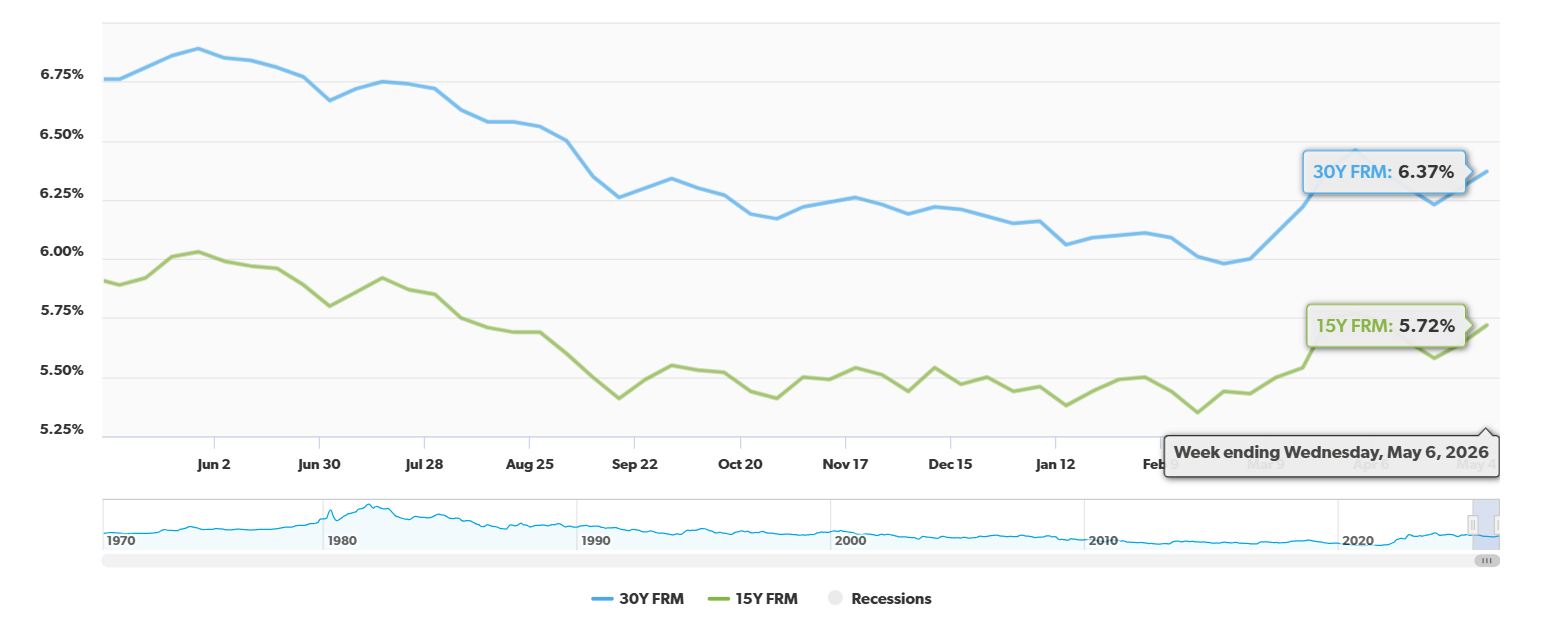
If you've been thinking about buying a home or refinancing your current mortgage, you've likely noticed that borrowing money just got a bit more expensive. For the week ending March 26, 2026, the average rate for a 30-year fixed mortgage jumped up by a significant 16 basis points, hitting 6.38%. This is the highest we've seen this particular rate since way back in September of last year. This isn't just a small blip; it's a noticeable uptick that could impact many people's homeownership dreams and financial plans.

30-Year Fixed Mortgage Rate Rises Steeply by 16 Basis Points

As someone who's spent years following the housing market, I can tell you that these kinds of moves, especially when they're sudden and substantial, always get my attention. It's easy to get lost in the numbers, but I believe it's crucial to understand the “why” behind these changes and, more importantly, “what it means for you and me.”

What's Driving This Rate Jump?

It feels like just yesterday we were celebrating slightly lower rates, and now we're seeing this upward trend. So, what's causing this sudden climb? Quite a few things, it turns out, and they're all interconnected, creating a bit of a ripple effect.

One of the biggest hats being thrown into the ring is the ongoing geopolitical situation. The continued conflict involving Iran has unfortunately thrown the global economy into a state of uncertainty. This “war outlook” tends to make lenders nervous, and when lenders get nervous, borrowing costs tend to go up. It's a classic case of supply and demand, with a healthy dose of fear thrown in.

30-Year Fixed Mortgage Rate Drops Steeply by 27 Basis Points
Freddie Mac

Then there's the immediate impact of this conflict on energy prices. We've seen oil prices surge, topping $100 a barrel. When oil gets this expensive, it has a domino effect on almost everything else. It fuels inflation, making the cost of goods and services go up. Financial markets have to react to this, and one of their reactions is to reassess how high interest rates might need to go to keep inflation in check.

This brings us to the bond market, specifically the 10-year Treasury yield. This is a really important benchmark that mortgage rates often follow. Right now, the 10-year Treasury yield has also climbed, reaching its highest point since July 2025. Why? Again, it's tied to inflation fears and those unsettling headlines coming out of the Middle East. When investors demand a higher return for lending their money to the government (which is essentially what buying a Treasury bond is), it signals that interest rates are likely to move higher across the board, including for mortgages.

And of course, we can't forget about the Federal Reserve. While they decided to keep interest rates steady in March 2026, the persistent inflation-related concerns mean that any hopes of quick rate cuts in the near future are fading. The current projection for inflation for the year is around 4.2%, which is still a bit higher than what the Fed typically aims for. This steady stance from the Fed, combined with other inflationary pressures, naturally pushes mortgage rates upward.

A Closer Look at the Numbers

To really understand the shift, let's break down the numbers a bit. Freddie Mac, a major player in the housing finance world, collects this data, and their most recent report sheds some light:

Key Mortgage Rate Data (Freddie Mac) – As of March 26, 2026

Mortgage Type Current Average Rate Last Week's Average One Year Ago Average
30-Year Fixed-Rate Mortgage (FRM) 6.38% 6.22% 6.65%
15-Year Fixed-Rate Mortgage (FRM) 5.75% 5.54% 5.89%

As you can see, both the 30-year and 15-year fixed rates have seen increases from the previous week. While the current 30-year rate is still lower than it was a year ago, that jump from last week is definitely something to note.

To give you a clearer picture of the weekly and yearly changes, and a hint at how these shifts can impact your wallet, here's a table:

Mortgage Rate Changes and Potential Savings Impact

Metric 30-Year Fixed-Rate Mortgage (FRM) 15-Year Fixed-Rate Mortgage (FRM)
1-Week Change +0.16% +0.21%
1-Year Change -0.27% -0.14%
Monthly Avg. 6.18% 5.56%
52-Week Avg. 6.42% 5.65%
Savings Impact A 0.16% increase on a $300,000 loan over 30 years translates to roughly an extra $27 per month in payments. Over the life of the loan, that adds up to nearly $10,000 more in interest. A similar percentage increase on a 15-year mortgage, while perhaps a smaller absolute dollar amount monthly, still means more interest paid over time.

Note: Savings impact is an approximation and can vary based on loan principal and other factors.

It's these numbers that make me pause. While the one-year change for the 30-year fixed is still a bit of a relief, that recent 16 basis point jump feels like a step backward, especially if you were just about to pull the trigger on a home purchase.

The Impact on the Housing Market

What does all of this mean for the actual housing market? Well, it's not exactly good news for those hoping for a robust spring buying season. The data shows a clear consequence:

  • Application Slowdown: We've seen a 10.5% drop in total mortgage application volume just this week. When rates go up, it tends to make people hesitant. Buyers might put their search on hold, and homeowners considering refinancing might decide to wait it out, hoping for better rates down the line.
  • Affordability Barrier: Experts from Realtor.com have pointed out that these rising rates are now the “primary barrier” to a smooth spring homebuying season. Even though there might be more homes on the market and some prices might be coming down, the increased cost of borrowing can effectively cancel out those benefits for many potential buyers.

From my perspective, this creates a bit of a tricky situation. We have factors like increased inventory and some price moderation, which should be good for buyers. But when the cost of getting that loan spikes, it can really dampen enthusiasm. It's like having a great sale on a car, but then the financing rates suddenly shoot up – it makes the overall deal less attractive.

🏡 Two turnkey properties With Strong Cash Flow

Rincon, GA
🏠 Property: Founders Dr
🛏️ Beds/Baths: 3 Bed • 2 Bath • 1600 sqft
💰 Price: $275,000 | Rent: $2,200
📊 Cap Rate: 7.0% | NOI: $1,613
📅 Year Built: 2025
📐 Price/Sq Ft: $172
🏙️ Neighborhood: B+

VS

Port Charlotte, FL
🏠 Property: Prineville St
🛏️ Beds/Baths: 4 Bed • 2 Bath • 1914 sqft
💰 Price: $349,900 | Rent: $2,100
📊 Cap Rate: 5.0% | NOI: $1,457
📅 Year Built: 2025
📐 Price/Sq Ft: $183
🏙️ Neighborhood: A

Georgia’s affordable rental with higher cap rate vs Florida’s A‑rated property with stability. Which fits YOUR investment strategy?

We have much more inventory available than what you see on our website – Let us know about your requirement.

📈 Choose Your Winner & Contact Us Today!

Speak to a Norada Investment Counselor (No Obligation):

(800) 611-3060

View All Properties

Build Passive Income & Wealth with Turnkey Rentals

Mortgage rates remain near 6%, but rental properties continue to deliver strong cash flow and appreciation. Savvy investors know that turnkey real estate is the path to passive income and long‑term wealth.

Norada Real Estate helps you secure turnkey rental properties designed for immediate cash flow and appreciation—so you can invest smartly regardless of interest rate trends.

🔥 HOT INVESTMENT Properties JUST ADDED! 🔥
Request a Callback / Fill Out the Form Online

Contact Us

Also Read:

  • Will Mortgage Rates Drop to 5% in 2026: Expert Forecast
  • How to Get a 3% Mortgage Rate in 2026 With Assumable Mortgages?
  • How to Get a 4% Interest Rate on a Mortgage in 2026?
  • What Leading Housing Experts Predict for Mortgage Rates in 2026
  • Mortgage Rate Predictions for 2026: What Leading Forecasters Expect
  • Mortgage Rate Predictions for the Next 3 Years: 2026, 2027, 2028
  • 30-Year Fixed Mortgage Rate Forecast for the Next 5 Years
  • 15-Year Fixed Mortgage Rate Predictions for Next 5 Years: 2025-2029
  • Will Mortgage Rates Ever Be 3% Again in the Future?
  • Mortgage Rates Predictions for Next 2 Years
  • Mortgage Rate Predictions for Next 5 Years
  • Mortgage Rate Predictions: Why 2% and 3% Rates are Out of Reach
  • How Lower Mortgage Rates Can Save You Thousands?
  • How to Get a Low Mortgage Interest Rate?
  • Will Mortgage Rates Ever Be 4% Again?
Filed Under: Financing, Mortgage Tagged With: 30-Year Fixed Mortgage Rate, mortgage, mortgage rates

Mortgage Rate Predictions for April 2026

March 31, 2026 by Marco Santarelli

Mortgage Rate Predictions for April 2026

If you're hoping to buy a home or refinance in April 2026, you're likely wondering where those all-important mortgage rates will land. Here’s my take: expect mortgage rates to stay in a holding pattern, likely dancing between 6.0% and 6.5% in April 2026. While the general direction for the year points downward, a few key factors are injecting some uncertainty, keeping things from dropping too quickly.

Mortgage Rate Predictions for April 2026: What Homebuyers Should Expect

It's always helpful to see what the big players are saying. For the second quarter of 2026 (which includes April), major housing authorities have offered their insights.

Organization 30-Year Fixed Rate Forecast (Q2 2026)
Fannie Mae 5.90%
National Association of Realtors (NAR) 6.00%
Wells Fargo 6.15%
Mortgage Bankers Association (MBA) 6.30%

Based on these projections, the average expert prediction for a 30-year fixed mortgage rate in April 2026 is hovering around ***6.07%***. This gives us a pretty good ballpark to aim for, but as we’ll see, a few things could push this up or down.

What’s Driving the Mortgage Market in April 2026?

When we look at what's shaping mortgage rates, it's rarely a single item. It's a blend of big-picture issues and more immediate concerns. Here are the key players I'm watching:

  • The Global Stage: Geopolitical Tensions:
    Right now (and looking ahead to early 2026), geopolitical events are a significant wild card. For instance, ongoing conflicts and tensions, like the one with Iran, can send energy costs soaring. When oil and gas get more expensive, it often makes inflation stickier. This is a problem because the Fed aims to keep inflation in check, and if inflation doesn't cool down as expected, they might be less inclined to lower interest rates. This creates upward pressure on mortgage rates.
  • The Federal Reserve: Playing it Cool
    The Federal Reserve has the biggest direct influence on short-term interest rates, and by extension, mortgage rates. As of March 2026, they've held their target interest rate steady in the 3.50%–3.75% range. My read on their signals is that they'll likely remain cautious through their next meeting in late April 2026. They’re watching inflation data very closely. If inflation shows signs of stubbornly sticking around, they might hold off on any rate cuts longer than many anticipate. This caution translates to potentially higher rates for longer.
  • Economic Clues: The Tightrope Walk
    We’re looking for a balancing act in economic indicators. You see, a softening labor market, where fewer jobs are available or businesses are hiring less, typically pushes interest rates lower. This is because a weaker economy tends to cool down demand and inflation. However, at the same time, if inflation remains persistent, it acts as a strong counterweight. The Fed won't be eager to lower rates if prices are still climbing too fast. So, we’re watching both employment numbers and inflation reports with a keen eye.
  • Treasury Yields: The Mortgage Rate's Shadow
    Mortgage rates often follow the lead of the 10-year Treasury yield. Think of it as a kind of benchmark. We've seen these Treasury yields elevated lately, and they’ve been keeping a wider-than-usual gap with mortgage rates. This means even if Treasury yields ease slightly, mortgage rates might not always fall as much as you’d expect. This wider spread can be a sign of market uncertainty or specific dynamics within the mortgage-backed securities market.

Current Market Snapshot: What We're Seeing Now (Late March 2026)

To understand where we might go, it’s crucial to see where we are. In March 2026, we’ve actually seen mortgage rates move higher for four consecutive weeks. After dipping briefly towards the 6% mark in February, they finished the month in the 6.38% to 6.56% range for a 30-year fixed mortgage, according to Freddie Mac and Bankrate. This recent uptick shows that the market isn’t a straight line down.

  • 15-Year Fixed Rates: For those considering a shorter loan term, the 15-year fixed mortgage rate has been a bit more attractive, generally sitting around 5.75% to 5.89%.

My Two Cents: What Does This Mean for You?

As I see it, April 2026 isn't a time for dramatic rate drops, but it’s also not necessarily a time to panic about rates skyrocketing. Instead, it feels like a period of stabilization and observation.

If you’re aiming to buy: This range, roughly 6.0% to 6.5% for a 30-year fixed, suggests that affordability will still be a key consideration. It’s vital to get pre-approved by a qualified lender early in your home search. This armors you with a clear understanding of your budget and allows you to act quickly if you find the perfect home. Don’t get discouraged by the exact number; focus on finding a home that fits your long-term needs.

If you're thinking of refinancing: If your current mortgage rate is significantly higher than what we're forecasting for April 2026, refinancing could still be a smart move. However, the savings might not be as dramatic as they were during periods of steeper rate declines. It's essential to run the numbers and see if the closing costs are justified by the monthly savings over the life of your loan.

The broader trend: While April might be a bit of a holding pattern, my personal view is that the longer-term trend for 2026 should still favor lower rates as the year progresses. The Fed will eventually start cutting rates when they're confident inflation is truly under control. The question is when. The cautious approach we’re seeing now is designed to prevent the market from overheating again.

My Advice: Stay informed, but don’t let day-to-day market fluctuations cause undue stress. Focus on your own financial health, understand your borrowing power, and work with trusted mortgage professionals. They can offer personalized advice based on your unique situation and the most up-to-date market information. The housing market always has its ups and downs, but with careful planning, you can still achieve your homeownership goals.

🏡 Two turnkey properties With Strong Cash Flow

Rincon, GA
🏠 Property: Founders Dr
🛏️ Beds/Baths: 3 Bed • 2 Bath • 1600 sqft
💰 Price: $275,000 | Rent: $2,200
📊 Cap Rate: 7.0% | NOI: $1,613
📅 Year Built: 2025
📐 Price/Sq Ft: $172
🏙️ Neighborhood: B+

VS

Port Charlotte, FL
🏠 Property: Prineville St
🛏️ Beds/Baths: 4 Bed • 2 Bath • 1914 sqft
💰 Price: $349,900 | Rent: $2,100
📊 Cap Rate: 5.0% | NOI: $1,457
📅 Year Built: 2025
📐 Price/Sq Ft: $183
🏙️ Neighborhood: A

Georgia’s affordable rental with higher cap rate vs Florida’s A‑rated property with stability. Which fits YOUR investment strategy?

We have much more inventory available than what you see on our website – Let us know about your requirement.

📈 Choose Your Winner & Contact Us Today!

Speak to a Norada Investment Counselor (No Obligation):

(800) 611-3060

View All Properties

Build Passive Income & Wealth with Turnkey Rentals

Mortgage rates remain near 6%, but rental properties continue to deliver strong cash flow and appreciation. Savvy investors know that turnkey real estate is the path to passive income and long‑term wealth.

Norada Real Estate helps you secure turnkey rental properties designed for immediate cash flow and appreciation—so you can invest smartly regardless of interest rate trends.

🔥 HOT INVESTMENT Properties JUST ADDED! 🔥
Request a Callback / Fill Out the Form Online

Contact Us

Also Read:

  • Will Mortgage Rates Drop to 5% in 2026: Expert Forecast
  • How to Get a 3% Mortgage Rate in 2026 With Assumable Mortgages?
  • How to Get a 4% Interest Rate on a Mortgage in 2026?
  • What Leading Housing Experts Predict for Mortgage Rates in 2026
  • Mortgage Rate Predictions for 2026: What Leading Forecasters Expect
  • Mortgage Rate Predictions for the Next 3 Years: 2026, 2027, 2028
  • 30-Year Fixed Mortgage Rate Forecast for the Next 5 Years
  • 15-Year Fixed Mortgage Rate Predictions for Next 5 Years: 2025-2029
  • Will Mortgage Rates Ever Be 3% Again in the Future?
  • Mortgage Rates Predictions for Next 2 Years
  • Mortgage Rate Predictions for Next 5 Years
  • Mortgage Rate Predictions: Why 2% and 3% Rates are Out of Reach
  • How Lower Mortgage Rates Can Save You Thousands?
  • How to Get a Low Mortgage Interest Rate?
  • Will Mortgage Rates Ever Be 4% Again?

Filed Under: Financing, Mortgage Tagged With: 30-Year Fixed Mortgage Rate, mortgage, mortgage rates

Mortgage Rates Today, March 31, 2026: 30-Year Refinance Rate Drops by 19 Basis Points

March 31, 2026 by Marco Santarelli

Mortgage Rates Today, July 21, 2026: 30-Year Refinance Rate Drops by 2 Basis Points

As of Tuesday, March 31, 2026, we're seeing a welcome dip in refinance rates, with the average 30-year fixed rate falling by a notable 19 basis points compared to last week. According to Zillow's data, the average 30-year fixed refinance rate has moved down to 6.66%, a welcome slide from last week's average of 6.85%. This drop follows a period of considerable choppiness in the market, and it’s a shift many homeowners have been eagerly anticipating.

Mortgage Rates Today, March 31, 2026: 30-Year Refinance Rate Drops by 19 Basis Points

This current rate of 6.66% is a significant update from the daily average of 6.82% reported yesterday, marking a decline of 16 basis points in just one day. For those looking to shorten their loan term, the 15-year fixed refinance rate has also seen a substantial decrease, now sitting at 5.62% – that’s a drop of 29 basis points from last week. However, the 5-year adjustable-rate mortgage (ARM) refinance rate has nudged slightly upwards, now at 7.54%, a minor increase of 3 basis points.

What the Numbers Mean for You

Let’s break down these numbers and what they could mean for your wallet. These are national averages, and your specific rate will depend on your credit score, loan-to-value ratio, and the lender you choose.

Here’s a snapshot of the current refinance rates:

  • 30‑Year Fixed Refinance: 6.66%
  • 15‑Year Fixed Refinance: 5.62%
  • 5‑Year ARM Refinance: 7.54%

It’s important to remember that these figures tell a story of a very active, and at times, quite unpredictable market. We’ve seen rates climb to recent highs and then pull back, which can make planning a bit tricky.

Why the Dip Now? Market Moves and Owner Behavior

You might be wondering what's causing this shift. Several factors are at play, and understanding them can help you make smarter decisions.

The refinance market has definitely shown signs of holding its breath lately. We’ve seen a significant drop in refinance applications, with some reports indicating a plunge between 15% and 19% in the most recent weekly data. This hesitation makes sense; when rates are swinging wildly, it’s hard to know if you’re getting the best deal. Consequently, the refinance portion of total mortgage activity has dipped to around 49.6%, down from what was a robust 60% back in mid-January.

However, it’s not all doom and gloom. When you look at the bigger picture, refinance activity is still 52% higher than it was this time last year. That tells me that while homeowners are cautious, there's still a strong underlying interest in refinancing, especially for those who secured loans when rates were considerably higher than they are today.

What's Driving the Rates on March 31, 2026?

So, what’s behind these daily fluctuations? It's a complex mix of global events and domestic economic policies.

The ongoing situation in the Persian Gulf continues to cast a shadow, impacting global energy exports. This has kept oil prices up, and in turn, put upward pressure on Treasury yields. When Treasury yields rise, mortgage rates tend to follow suit because they are closely linked.

On the home front, the Federal Reserve recently decided to keep their benchmark interest rate steady, hovering between 3.50% and 3.75%. They've also dialed back their expectations for future rate cuts this year. This cautious approach by the Fed is largely a response to inflationary pressures that have stubbornly refused to disappear completely.

Then there’s the “lock-in effect.” It’s a really significant factor right now. Over 82% of homeowners out there are currently sitting on mortgage rates below 6%. For these individuals, refinancing to a rate even slightly higher than what they have now simply doesn't make financial sense. They’re locked into fantastic deals, and it's tough for them to find a compelling reason to let that go.

This has led many homeowners to get creative. With an estimated $11 trillion in tappable home equity readily available, homeowners are increasingly turning to alternative equity products like Home Equity Lines of Credit (HELOCs) and home equity loans. This allows them to access their home’s value for renovations, investments, or other needs without giving up their incredibly low primary mortgage rates. It's a smart move for many, and it reduces the pool of people actively looking to refinance their primary mortgage.

My Two Cents: What Borrowers Should Consider

I’ve been following this market for quite some time, and one thing that always stands out is the importance of individual circumstances. While the averages are helpful, they don’t tell the whole story.

Economists are pointing out that if your current mortgage rate is above 7% – which is common for loans taken out in 2023 and 2024 – you might still be able to find substantial savings by refinancing at today's rates closer to 6.5%. Even a percentage point difference can add up to tens of thousands of dollars over the life of your loan.

However, and this is crucial, the Bankrate Variability Index is currently sitting at an 8 out of 10. This signals that the market is highly volatile. What this means for you is that the rate you see today might be different tomorrow, or even by the end of the day. My strongest advice is to shop around with multiple lenders. Get quotes from at least three to five different banks or mortgage brokers. Don't just go with the first one you talk to. Those few basis points can make a big difference, and lenders are offering different terms and rates right now.

The Bottom Line: A Moment of Relief, But Stay Alert

So, as we wrap up March 31, 2026, the refinance market offered a breath of fresh air. The 30-year fixed rate settling at 6.66% and the 15-year fixed at 5.62% is a positive development. Yet, as I've highlighted, this is happening in a market still shaped by global uncertainties, persistent inflation, and a Fed that’s playing its cards close to its chest.

For homeowners who financed at the higher rates of recent years, today's dip could present a genuine opportunity to save money. But if you’re one of the many who benefited from rates below 6%, it’s likely still more advantageous to explore options like HELOCs to tap into your home’s equity, rather than refinancing your primary mortgage. The key takeaway is to stay informed, be patient, and always shop around before making any big decisions.

🏡 Two TURnkey properties With Strong Cash Flow

Rincon, GA
🏠 Property: Founders Dr
🛏️ Beds/Baths: 3 Bed • 2 Bath • 1600 sqft
💰 Price: $275,000 | Rent: $2,200
📊 Cap Rate: 7.0% | NOI: $1,613
📅 Year Built: 2025
📐 Price/Sq Ft: $172
🏙️ Neighborhood: B+

VS

Port Charlotte, FL
🏠 Property: Prineville St
🛏️ Beds/Baths: 4 Bed • 2 Bath • 1914 sqft
💰 Price: $349,900 | Rent: $2,100
📊 Cap Rate: 5.0% | NOI: $1,457
📅 Year Built: 2025
📐 Price/Sq Ft: $183
🏙️ Neighborhood: A

Georgia’s affordable rental with higher cap rate vs Florida’s A‑rated property with stability. Which fits YOUR investment strategy?

We have much more inventory available than what you see on our website – Let us know about your requirement.

📈 Choose Your Winner & Contact Us Today!

Speak to a Norada Investment Counselor (No Obligation):

(800) 611-3060

View All Properties

Invest Smart — Build Long-Term Wealth Through Turnkey Real Estate in 2026

Market forecasts suggest steady demand, making turnkey real estate one of the most reliable paths to passive income and wealth creation.

Norada Real Estate helps investors capitalize on these trends with turnkey rental properties designed for appreciation and consistent cash flow—so you can grow wealth securely while others wait for clarity in the market.

🔥 HOT 2026 INVESTMENT LISTINGS JUST ADDED! 🔥
Send Us An Email or Request a Call Back

Contact Us

Recommended Read:

  • 30-Year Fixed Refinance Rate Trends – March 22, 2026
  • Best Time to Refinance Your Mortgage: Expert Insights
  • Should You Refinance Your Mortgage Now or Wait Until 2026?
  • When You Refinance a Mortgage Do the 30 Years Start Over?
  • Should You Refinance as Mortgage Rates Reach Lowest Level in Over a Year?
  • Half of Recent Home Buyers Got Mortgage Rates Below 5%
  • Mortgage Rates Need to Drop by 2% Before Buying Spree Begins
  • Will Mortgage Rates Ever Be 3% Again: Future Outlook
  • Mortgage Rates Predictions for Next 2 Years
  • Mortgage Rate Predictions for Next 5 Years

Filed Under: Financing, Mortgage Tagged With: mortgage rates, Mortgage Rates Today, Refinance Rates

  • « Previous Page
  • 1
  • …
  • 33
  • 34
  • 35
  • 36
  • 37
  • …
  • 377
  • Next Page »

Real Estate

  • Birmingham
  • Cape Coral
  • Charlotte
  • Chicago

Quick Links

  • Markets
  • Membership
  • Notes
  • Contact Us

Blog Posts

  • Best Real Estate Markets for First-Time Investors in 2026
    July 21, 2026Marco Santarelli
  • Today’s Mortgage Rates, July 21: Buyers Catch a Small Break as 30‑Year Fixed Dips to 6.40%
    July 21, 2026Marco Santarelli
  • Best Places to Invest in Real Estate for the Next 5 Years (2026-2030)
    July 21, 2026Marco Santarelli

Contact

Norada Real Estate Investments 30251 Golden Lantern, Suite E-261 Laguna Niguel, CA 92677

(949) 218-6668
(800) 611-3060
BBB
  • Terms of Use
  • |
  • Privacy Policy
  • |
  • Testimonials
  • |
  • Suggestions?
  • |
  • Home

Copyright 2018 Norada Real Estate Investments

Loading...