Norada Real Estate Investments

  • Home
  • Markets
  • Properties
  • Membership
  • Podcast
  • Learn
  • About
  • Contact

Florida Real Estate: 9 Housing Markets Predicted to Rise in 2025

February 12, 2025 by Marco Santarelli

Florida Real Estate: 9 Housing Markets Predicted to Rise in 2025

Are you thinking of buying a home in Florida? Realtor.com predicts that nine Florida metro areas are poised for significant housing market growth in 2025. These areas are attracting buyers due to a mix of factors like affordability, new construction, and a diverse population, making them attractive for those looking to invest in real estate. Let's explore which areas are on the rise and what makes them so appealing.

As a real estate enthusiast and someone who has closely followed Florida's housing trends for years, I've found that predicting future growth is a complex endeavor. Several factors contribute to the dynamic nature of this market, ranging from economic fluctuations to shifts in population demographics. But with the insights available from organizations like Realtor.com, we can see a clearer picture of which cities are likely to prosper.

While the housing market has gone through some dramatic swings in recent years, I've observed a consistent pattern in Florida. Many cities are experiencing a steady influx of new residents due to their attractive climate, job opportunities, and overall lifestyle. The increased demand, coupled with factors like new construction and potential increases in affordability, is creating a recipe for growth in certain markets.

Based on my experience and insights, I believe Florida's housing market is primed for a period of healthy growth, even in the face of national economic uncertainties. The factors that have made Florida attractive in the past, namely, its sunshine, beaches, and lifestyle, will likely continue to be significant drivers of the market.

Let's dive into the specific Florida markets predicted for growth in 2025.

Florida's Housing Markets Predicted for 2025 Growth

Realtor.com analyzed the 100 largest U.S. metropolitan areas and determined that 9 Florida markets are set to see a rise in both home prices and sales by 2025.

These Florida markets are:

  • Miami-Fort Lauderdale-Pompano Beach
  • Orlando-Kissimmee-Sanford
  • Jacksonville
  • Cape Coral-Fort Myers
  • Lakeland-Winter Haven
  • Tampa-St. Petersburg-Clearwater
  • Deltona-Daytona Beach-Ormond Beach
  • North Port-Sarasota-Bradenton
  • Palm Bay-Melbourne-Titusville

Why These Markets Are Predicted to Grow

1. Affordability (Relative to Other Areas):

While the cost of living in Florida can be a challenge compared to some other states, these specific markets offer more affordable home prices relative to other major metropolitan areas in the U.S. However, affordability is a complex issue. While home prices might be lower, it's important to consider the local income levels. In some cases, buyers might need to dedicate a larger portion of their income towards housing costs, making it crucial to carefully assess personal finances.

2. New Construction and Inventory Growth:

In many of these markets, new construction has been on the rise, which has helped to increase the supply of housing and hopefully, ease the tight competition that has characterized the housing market for the past few years. This translates into more options for buyers and can help to stabilize or even decrease prices in certain segments of the market.

3. Appealing to a Diverse Buyer Population:

Florida continues to attract young, diverse families and retirees, with many markets seeing a higher percentage of residents under 35 and households with children than the national average. These markets also have a higher concentration of active-duty military personnel and veterans, which can contribute to a vibrant and stable community.

4. Strong International Connections:

Many of the Florida cities on this list have seen a significant influx of international residents. This can create a more diverse and global economy and increase demand for housing.

5. Government-Backed Mortgage Options:

The presence of a larger than average percentage of military households and younger buyers translates to a greater need for government-backed mortgages such as FHA, VA, and USDA. These programs can facilitate homeownership for those who might not have the large down payments traditionally required.

A Closer Look at Each Florida Market

Let's take a more in-depth look at each of the nine Florida markets that Realtor.com has identified for 2025 growth.

Miami-Fort Lauderdale-Pompano Beach

The Miami metro area is predicted to be the second-fastest-growing housing market in the entire country by 2025, with an anticipated combined 33% growth in home sales and prices. While affordability is a concern here, with housing costs accounting for 42.1% of income, the area's vibrant economy, beautiful beaches, and international connections continue to drive demand.

  • Reasons for Growth: Strong economy, diverse population, proximity to the beach, international investment.
  • Considerations: Higher cost of living, potentially competitive market.

Orlando-Kissimmee-Sanford

The Orlando area is a popular destination for families and tourists, thanks to its world-renowned theme parks and attractions. The market is anticipated to experience 27.3% growth in sales and prices by 2025.

  • Reasons for Growth: Tourism industry, strong job market, family-friendly environment.
  • Considerations: Competition from other housing markets in the area.

Jacksonville

Jacksonville is the largest city in Florida by area, and it boasts a thriving economy with a variety of industries. It's predicted to see 23.3% growth by 2025.

  • Reasons for Growth: Strong job market, affordable housing options, growing population.
  • Considerations: Can be challenging to navigate a sprawling metro area, and competition for some homes is likely.

Cape Coral-Fort Myers

This southwest Florida area is known for its stunning waterways and beaches. With anticipated growth of 22.8% in 2025, it continues to draw in retirees and families seeking a relaxed lifestyle.

  • Reasons for Growth: Beautiful scenery, outdoor recreational activities, growing retiree population.
  • Considerations: Can be impacted by hurricane season, as are most coastal areas of Florida.

Lakeland-Winter Haven

This central Florida area is seeing rising popularity, especially among younger families. With a predicted 20.9% growth by 2025, it's a great area to consider if you want to be close to Orlando but want a slightly quieter and more affordable area.

  • Reasons for Growth: Growing job opportunities, affordable housing, close proximity to Orlando.
  • Considerations: A smaller market compared to other metro areas on this list, so the choices for buyers might be more limited.

Tampa-St. Petersburg-Clearwater

This western Florida area is home to vibrant cities, beautiful beaches, and a flourishing economy. The area is predicted to see 20.9% growth in 2025.

  • Reasons for Growth: Job growth, proximity to the Gulf Coast, diverse population.
  • Considerations: Competition can be fierce in areas with high demand.

Deltona-Daytona Beach-Ormond Beach

This east-central Florida area is famous for its beach communities and attractions. This area is predicted to see 18.7% growth in 2025.

  • Reasons for Growth: Tourism, outdoor recreation, beautiful beaches.
  • Considerations: Hurricane risk.

North Port-Sarasota-Bradenton

This southwest Florida area has experienced a recent surge in popularity, with a predicted growth of 13.5% in 2025. It's a blend of suburban and coastal living, with beautiful beaches and a more relaxed pace of life.

  • Reasons for Growth: Affordable housing options, access to outdoor recreation, growing population.
  • Considerations: It's a little further from major cities, which could be a deterrent for some.

Palm Bay-Melbourne-Titusville

This area in east-central Florida is located on Florida's Space Coast and is predicted to see a 10.4% growth in 2025. It is a popular area for aerospace and tech jobs.

  • Reasons for Growth: Growing job market (specifically in the aerospace and tech sectors), relatively affordable housing, and access to outdoor recreation.
  • Considerations: It's further from the popular tourist destinations and metropolitan areas.

Factors to Keep in Mind When Considering a Florida Market

While these Florida markets are anticipated to grow, it's important to remember that these are predictions. The actual performance of each market could vary based on several factors, including the following:

  • The national economy: Economic downturns and recessions can impact home prices and sales nationwide.
  • Interest rates: Increased mortgage interest rates can discourage buyers.
  • Local job market: Job growth is crucial to the health of the housing market.
  • Natural disasters: Florida is prone to hurricanes, which can cause significant damage and have a negative impact on the local market.

My Opinion

Having spent years analyzing the Florida housing market, I firmly believe that these nine metro areas are well-positioned for strong growth. However, before making a significant investment, I'd encourage you to do your own thorough research.

Consider these questions:

  • What is your budget and what are the available housing options in the area?
  • What are the local schools, job markets, and community like?
  • What are the potential risks associated with the area, like natural disasters or economic fluctuations?

By carefully considering your needs, goals, and doing your due diligence, you can maximize your chances of selecting a winning area.

Conclusion

Florida's housing market is dynamic and exciting, and it's clear that some markets are poised for significant growth. I am confident that these nine areas will offer fantastic opportunities in 2025 and beyond. By understanding the factors that contribute to their appeal, and making informed decisions, you can make a smart investment in your future and find the ideal place to call home.

Work With Norada, Your Trusted Source for

Turnkey Investment Properties in “FLORIDA”

Discover high-quality, ready-to-rent properties designed to deliver consistent returns. Contact us today to expand your real estate portfolio with confidence.

Reach out to our investment counselors:

(949) 218-6668 | (800) 611-3060

Contact Us Today


Recommended Read:

  • Florida Housing Market Forecast for Next 2 Years: 2025-2026
  • Housing Markets at Risk: California, New Jersey, Illinois, Florida
  • 3 Florida Housing Markets Are Again on the Brink of a Crash
  • Florida Housing Market Predictions 2025: Insights Across All Cities
  • Florida Housing Market 2025 & Predictions for Next 5 Years
  • Florida Housing Market Trends: Rent Growth Falls Behind Nation
  • When Will the Housing Market Crash in Florida?
  • South Florida Housing Market: Will it Crash in 2024?
  • South Florida Housing Market: A Crossroads for Homebuyers

Filed Under: Housing Market, Real Estate Market Tagged With: Florida, Housing Market, housing market crash, Housing Market Forecast, housing market predictions

Housing Market Forecast: CoreLogic Sees 4.1% Jump in Home Prices in 2025

February 7, 2025 by Marco Santarelli

Housing Market Forecast: CoreLogic Sees 4.1% Jump in Home Prices in 2025

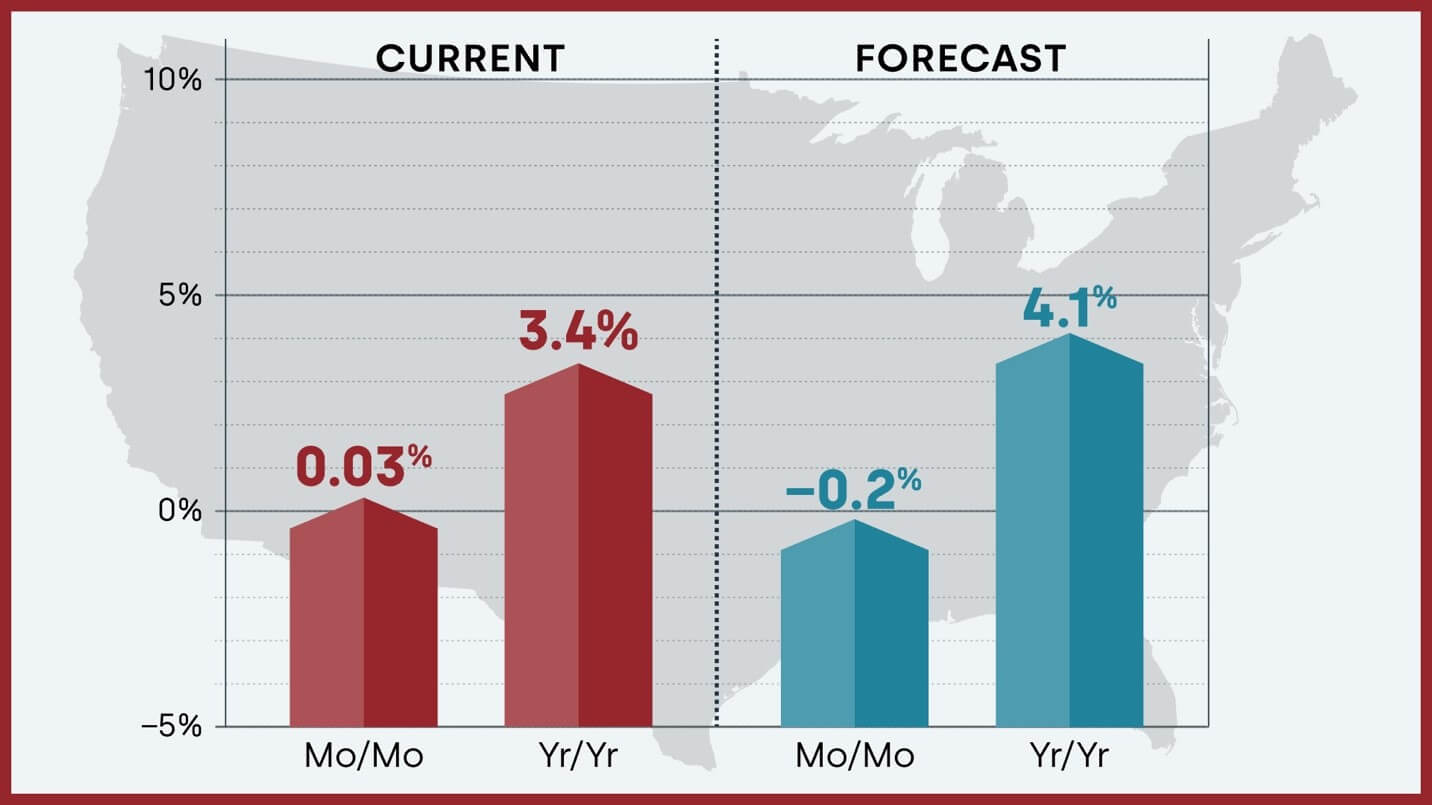
Are you trying to figure out what's going on with housing market prices in early 2025? You're not alone! The housing market can feel like a rollercoaster, and keeping up with the latest trends is crucial, whether you're buying, selling, or just keeping an eye on your investment. Here's the good news: Experts are predicting a 4.1% increase in home prices nationally by the end of 2025, compared to December 2024. Let’s take a deeper dive and see what's shaping the market right now and what we can expect in the months ahead.

Housing Market Forecast: CoreLogic Sees 4.1% Jump in Home Prices in 2025

A Look Back at 2024: Steady but Not Spectacular

2024 was a year of moderation in the housing market. We saw a bit more inventory than in the previous couple of years, which meant buyers had a few more options. However, demand remained somewhat soft due to factors like higher mortgage rates. As a result, home price growth was steady, but not as explosive as we saw during the peak of the pandemic.

According to CoreLogic, home prices nationwide, including distressed sales, increased by 3.4% year-over-year in December 2024. While that's a decent gain, it's a far cry from the double-digit appreciation we experienced just a few years ago. On a month-over-month basis, prices barely budged, increasing by only 0.03% in December.

Housing Market Forecast
Source: CoreLogic

Key Takeaways from 2024:

  • Moderate Growth: Home price appreciation slowed compared to previous years.
  • Inventory Improvement: Buyers had slightly more options available.
  • Regional Differences: Some areas experienced stronger growth than others.

What's Fueling the Forecast for 2025?

So, what's behind the projection of a 4.1% increase in home prices by the end of 2025? Several factors are at play:

  • The Spring Buying Season: The housing market tends to heat up in the spring, as families look to move before the new school year starts. This increased demand could put upward pressure on prices.
  • Limited Inventory: While inventory improved in 2024, it's still below historical averages in many markets. A shortage of homes for sale can drive prices higher.
  • Economic Factors: The overall health of the economy plays a role. If the economy remains stable or improves, it could boost consumer confidence and lead to more homebuying activity.

However, it's important to remember that these are just forecasts. Unforeseen events, like a sudden spike in interest rates or a major economic downturn, could certainly change the outlook.

Regional Variations: Where are Prices Headed?

The housing market is rarely uniform across the country. What's happening in one city or state can be very different from what's happening in another. In December 2024, we saw significant regional variations in home price growth:

  • Northeast Strong: States like Connecticut (up 7.8%) and New Jersey (up 7.7%) experienced some of the strongest year-over-year gains. This is largely due to limited inventory in these areas.
  • Hawaii and D.C. Lagging: On the other end of the spectrum, Hawaii and the District of Columbia saw home price declines of -1.1% and -0.7%, respectively.
  • Southern Markets Adjusting: Some Southern markets are readjusting to higher inventories and increased variable mortgage costs.
  • Mountain West Stabilizing: The Mountain West is trying to find stability after experiencing significant price swings in recent years.

Year-Over-Year Home Price Changes by State (December 2024)

State Change (%)
Connecticut 7.8
New Jersey 7.7
Hawaii -1.1
District of Columbia -0.7

Major Metro Areas: Winners and Losers

Looking at specific metro areas, we also see a mixed bag of results.

  • Chicago Leads the Pack: In December 2024, Chicago posted the highest year-over-year gain among the top 10 metros, at 5.6%.
  • Other Strong Performers: Boston, Washington, and Miami also saw solid price appreciation.
  • Phoenix Cooling Down: In contrast, Phoenix experienced more modest growth, reflecting the market's attempt to stabilize.

Year-Over-Year Home Price Changes by Select Metro Areas (December 2024)

Metro Area Change (%)
Chicago 5.6
Boston 4.8
Washington 4.4
Miami 4.0
Los Angeles 4.1
San Diego 3.2
Phoenix 2.5
Denver 1.7
Houston 3.4
Las Vegas 5.0

Markets at Risk: Where Prices Could Fall

While most areas are expected to see price appreciation in 2025, some markets are considered to be at higher risk of a decline. CoreLogic's Market Risk Indicator (MRI) identifies areas where the housing market may be overheated or vulnerable to economic shocks.

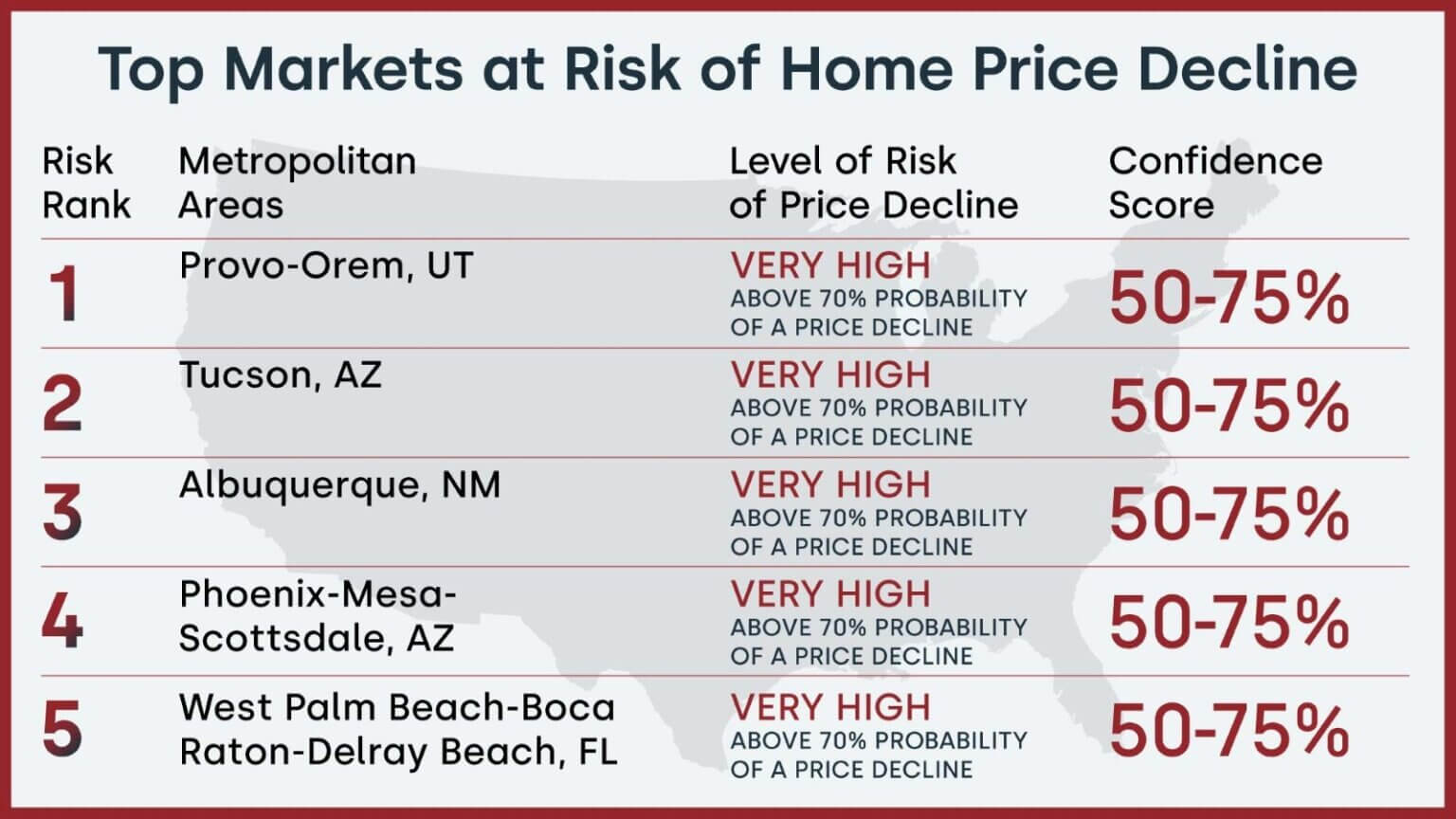
According to the MRI, the following metro areas are at very high risk of home price declines over the next 12 months:

  • Provo-Orem, UT: This area has a 70%-plus probability of a price decline.
  • Tucson, AZ: Also at very high risk.
  • Albuquerque, NM: Another market to watch carefully.
  • Phoenix-Mesa-Scottsdale, AZ: Continuing its cooling trend.
  • West Palm Beach-Boca Raton-Delray Beach, FL: A surprise entry on this list.

Top Five U.S. Markets at Risk of Annual Price Declines (December 2024)

Rank Metropolitan Area Level of Risk of Price Decline Confidence Score
1 Provo-Orem, UT Very High (70%+) 50-75%
2 Tucson, AZ Very High (70%+) 50-75%
3 Albuquerque, NM Very High (70%+) 50-75%
4 Phoenix-Mesa-Scottsdale, AZ Very High (70%+) 50-75%
5 West Palm Beach-Boca Raton-Delray Beach, FL Very High (70%+) 50-75%

If you're considering buying or selling in one of these areas, it's especially important to do your research and consult with a local real estate professional.

housing market decline
Source: CoreLogic

Factors Beyond the Numbers: Wildfires and Tariffs

The numbers paint a general picture, but it's crucial to understand the real-world events that can influence the housing market. As CoreLogic's Chief Economist, Dr. Selma Hepp, points out, factors like proposed tariffs and natural disasters can have a significant impact.

  • Tariffs: The possibility of new tariffs on imported building materials could drive up construction costs, which would inevitably be passed on to homebuyers.
  • Wildfires: Events like the devastating wildfires in Los Angeles County in January 2025 can disrupt the supply chain, increase building material costs, and delay construction times.

These types of events highlight the interconnectedness of the housing market and the broader economy.

Recommended Read:

Weekly Housing Market Trends: What's Happening in 2025?

Will Trump Lower Mortgage Interest Rates in 2025?

US Housing Market Sees Worst Year for Sales Since 1995

Expert Opinion and My Own Thoughts

Dr. Selma Hepp's analysis offers valuable context to the data. She emphasizes the ongoing bifurcation across markets, with the Northeast experiencing strong growth due to low inventory, while Southern markets adjust to higher inventory and rising mortgage costs. I agree with her assessment that the housing market is likely to see a smaller overall increase in prices in 2025 compared to previous years.

In my opinion, while the forecast of a 4.1% increase is reasonable, it's crucial to remain cautious. The housing market is sensitive to changes in interest rates, economic conditions, and consumer sentiment. It would be smart to keep a close eye on these factors in the coming months.

What Does This Mean for You?

Whether you're a buyer, seller, or homeowner, here's what the February 2025 housing market insights suggest:

  • For Buyers: Be prepared for a potentially competitive spring buying season. Get pre-approved for a mortgage, work with a knowledgeable real estate agent, and be ready to act quickly when you find the right property.
  • For Sellers: If you're considering selling, now might be a good time to list your home. Prices are expected to continue rising in most areas, but don't overprice your property.
  • For Homeowners: Stay informed about local market conditions and be prepared to adjust your plans if necessary. Consider refinancing your mortgage if interest rates fall.

Final Thoughts

The housing market prices are complex, and it's vital to stay informed. While forecasts suggest a moderate increase in prices in 2025, it's essential to consider regional variations and potential risks. By understanding the factors that influence the market, you can make informed decisions about your real estate investments.

Work with Norada in 2025, Your Trusted Source for Investment

in the Top Housing Markets of the U.S.

Discover high-quality, ready-to-rent properties designed to deliver consistent returns.

Contact us today to expand your real estate portfolio with confidence.

Contact our investment counselors (No Obligation):

(800) 611-3060

Get Started Now 

Recommended Read:

  • New Tariffs Could Trigger Housing Market Slowdown in 2025
  • Housing Market Forecast 2025: Affordability Crisis Will Continue
  • Lower Mortgage Rates Will Reignite the Housing Demand in 2025
  • NAR Predicts 6% Mortgage Rates in 2025 Will Boost Housing Market
  • Housing Market Forecast for the Next 2 Years: 2024-2026
  • Housing Market Predictions for the Next 4 Years: 2025 to 2028
  • Housing Market Predictions for Next Year: Prices to Rise by 4.4%
  • Housing Market Predictions for 2025 and 2026 by NAR Chief
  • Real Estate Forecast Next 5 Years: Top 5 Predictions for Future
  • 2008 Forecaster Warns: Housing Market 2024 Needs This to Survive
  • Real Estate Forecast Next 10 Years: Will Prices Skyrocket?

Filed Under: Housing Market, Real Estate Market Tagged With: Housing Market, Housing Market 2025, housing market crash, Housing Market Forecast, housing market predictions, Housing Market Trends, Real Estate Market

Weekly Housing Market Trends: What’s Happening in 2025?

February 6, 2025 by Marco Santarelli

Weekly Housing Market Trends: What's Happening in 2025?

Are you trying to figure out what's happening with home prices, how many houses are up for sale, and how quickly they're selling? Well, you're in the right place. This Weekly Housing Market Trends and Forecast offers a concise update: as of late January 2025, median listing prices have generally declined by -0.5% year-over-year, new listings are up significantly by 9.3%, active inventory has increased by 26.1%, and homes are spending 3 days longer on the market compared to last year. Overall, it's a mixed bag, but there are definitely opportunities for both buyers and sellers to navigate this changing market.

Weekly Housing Market Trends: What's Happening in 2025?

Navigating the housing market can feel like trying to predict the weather – one minute it's sunny, and the next it's raining (mortgage rates!). But don't worry, I am here to break down the latest trends in the housing market with data released by Realtor.com. I'll cover what these trends mean for you, whether you're looking to buy your first home, sell your current one, or just keep an eye on the real estate world.

What's Been Happening Lately? An Overview

Let's start with a quick summary of the key trends I am seeing in the housing market right now:

  • Home prices: Generally flat or declining compared to last year.
  • New listings: Significantly up, giving buyers more choices.
  • Inventory: Much higher than last year, meaning more homes are available.
  • Time on market: Homes are sitting on the market a bit longer, but the gap is narrowing.

These are the highlights, but let's dig a little deeper to see what's really going on.

Breaking Down the Numbers: Key Trends in Detail

Let's dive into the four key areas that are shaping the housing market right now.

1. Home Prices: Are They Finally Coming Down?

One of the biggest questions on everyone's mind is: are home prices finally dropping? For the past 35 weeks, the national median home listing price has been either flat or decreasing compared to the same time last year. That's a pretty long stretch! As of the week ending January 25, 2025, the median listing price fell by -0.5% year-over-year.

But here's where it gets interesting. A lot of the decline we're seeing is because there are more smaller, less expensive homes on the market. When you look at the median listing price per square foot (which takes the size of the home into account), it's actually up 1.3% compared to last year.

Even though prices per square foot are still up, the rate of increase has slowed down since May 2024. This could mean that even though smaller homes are available, softening price growth means that when mortgage rates do decline below current levels, homes become more affordable relative to last year. It’s a signal that the market might be stabilizing.

What does this mean for you?

  • Buyers: There are more affordable homes available, especially smaller ones. If you're willing to downsize or consider a smaller property, you might find a good deal. And softening price growth means that when mortgage rates do decline below current levels, homes become more affordable relative to last year.
  • Sellers: You need to be realistic about pricing. Don't expect to get the same prices that homes were fetching a year or two ago. Consider making your home more attractive to buyers by making necessary repairs and upgrades.

2. New Listings: A Breath of Fresh Air for Buyers?

For months, one of the biggest problems in the housing market has been a lack of homes for sale. But that's starting to change! New listings – the number of sellers putting their homes on the market – increased by 9.3% compared to last year for the week ending January 25, 2025. In fact, the final three weeks of January saw double-digit increases in new listings.

Why is this happening? There are a couple of possibilities:

  • Sellers who were waiting for lower mortgage rates: When mortgage rates dipped slightly in the fall of 2024, some sellers may have decided it was time to list their homes.
  • The “lock-in effect” is easing: Many homeowners have been hesitant to sell because they're locked into low mortgage rates. But life happens, and sometimes people need to move regardless of interest rates.
  • People adapting to life changes: Some buyers are needing to finally adapt to life changes.

What does this mean for you?

  • Buyers: You have more choices than you did a few months ago. Take advantage of this by carefully researching different neighborhoods and homes to find the best fit for your needs and budget.
  • Sellers: You'll face more competition. To stand out, make sure your home is in tip-top shape and priced competitively.

3. Inventory: More Homes on the Market Than Last Year

Not only are more homes being listed, but the overall inventory of homes for sale is also up significantly. For the 64th week in a row, there are more homes for sale than there were at the same time last year. As of January 25, 2025, active listings were up a whopping 26.1% compared to last year. This is a good sign that the market may be starting to cool down.

What does this mean for you?

  • Buyers: You have more leverage. With more homes to choose from, you're in a better position to negotiate price and terms.
  • Sellers: It's more important than ever to make your home stand out. Pay attention to curb appeal, make necessary repairs, and stage your home to appeal to the broadest range of buyers.

4. Time on Market: Are Homes Selling Faster or Slower?

For months, homes have been sitting on the market longer than they were last year. As of January 25, 2025, homes were spending 3 days longer on the market compared to the same time last year. This is the 40th consecutive week that homes have taken longer to sell.

However, there's a glimmer of hope. The gap in time on market has been shrinking since November. This suggests that while inventory is up, buyer demand is also holding steady.

What does this mean for you?

  • Buyers: You have a little more time to make a decision, but don't wait too long. If you find a home you love, it's still important to act quickly.
  • Sellers: Be patient. It might take a little longer to sell your home than it would have a year or two ago. Don't be afraid to adjust your price if you're not getting offers.

Data Summary: A Quick Look at the Numbers

Here's a table summarizing the key data points as of January 2025:

Metric Year-over-Year Change
Median Listing Prices -0.5%
New Listings +9.3%
Active Listings +26.1%
Time on Market +3 days

Recommended Read:

Will Trump Lower Mortgage Interest Rates in 2025?

US Housing Market Sees Worst Year for Sales Since 1995

My Thoughts and Predictions

Based on these trends, here's what I think we can expect to see in the housing market in the coming weeks and months:

  • Prices will likely remain relatively stable: I don't expect to see huge price drops, but I also don't think prices will start rising dramatically anytime soon.
  • Inventory will continue to increase: As more sellers enter the market, buyers will have even more choices.
  • Mortgage rates will be a key factor: If mortgage rates stay high, the market will likely remain sluggish. But if rates start to come down, we could see a surge in buyer demand.
  • The market will vary by location: Some areas will be hotter than others. It's important to pay attention to what's happening in your local market.

Overall, I think the housing market is in a period of transition. It's not as crazy as it was a year or two ago, but it's not a buyer's market either. It's a more balanced market, where both buyers and sellers need to be smart and strategic.

Tips for Buyers and Sellers

No matter which side of the transaction you're on, here are some tips to help you navigate the current housing market:

For Buyers:

  • Get pre-approved for a mortgage: This will show sellers that you're a serious buyer.
  • Work with a good real estate agent: A knowledgeable agent can help you find the right home and negotiate a fair price.
  • Be patient: Don't feel pressured to buy the first home you see. Take your time and find the right fit.
  • Don't be afraid to negotiate: With more homes on the market, you have more leverage to negotiate price and terms.

For Sellers:

  • Price your home competitively: Don't overprice your home. Work with your agent to determine a fair market value.
  • Make necessary repairs: Fix any obvious problems before you list your home.
  • Stage your home: Make your home look as attractive as possible to potential buyers.
  • Be flexible: Be willing to negotiate with buyers.

The Bottom Line

The housing market is always changing, and it can be tough to keep up with the latest trends. But by staying informed and working with experienced professionals, you can successfully navigate the market, whether you're buying or selling.

I hope this article has been helpful. Happy house hunting (or selling)!

Work with Norada in 2025, Your Trusted Source for Investment

in the Top Housing Markets of the U.S.

Discover high-quality, ready-to-rent properties designed to deliver consistent returns.

Contact us today to expand your real estate portfolio with confidence.

Contact our investment counselors (No Obligation):

(800) 611-3060

Get Started Now 

Recommended Read:

  • New Tariffs Could Trigger Housing Market Slowdown in 2025
  • Housing Market Forecast 2025: Affordability Crisis Will Continue
  • Lower Mortgage Rates Will Reignite the Housing Demand in 2025
  • NAR Predicts 6% Mortgage Rates in 2025 Will Boost Housing Market
  • Housing Market Forecast for the Next 2 Years: 2024-2026
  • Housing Market Predictions for the Next 4 Years: 2025 to 2028
  • Housing Market Predictions for Next Year: Prices to Rise by 4.4%
  • Housing Market Predictions for 2025 and 2026 by NAR Chief
  • Real Estate Forecast Next 5 Years: Top 5 Predictions for Future
  • 2008 Forecaster Warns: Housing Market 2024 Needs This to Survive
  • Real Estate Forecast Next 10 Years: Will Prices Skyrocket?

Filed Under: Housing Market, Real Estate Market Tagged With: Housing Market, Housing Market 2025, housing market crash, Housing Market Forecast, housing market predictions, Housing Market Trends, Real Estate Market

Housing Market and Mortgage Outlook January 2025: A Positive Trajectory

January 27, 2025 by Marco Santarelli

Housing Market and Mortgage Outlook January 2025: A Positive Trajectory

The housing market and mortgage outlook for January 2025 points towards a positive, albeit moderate growth trajectory. While it's not going to be a repeat of the crazy boom we saw a couple of years back, it's also not doom and gloom.

We're looking at a market that's finding its balance, with some key shifts in buyer and seller behavior, and a gradual easing of the pressures that have defined the past couple of years. I think this means we're moving into a more stable and predictable phase for the housing market.

This detailed analysis, from the Economic & Housing Research group at Freddie Mac, helps us better understand where we stand and what might be coming down the line.

Housing Market and Mortgage Outlook January 2025: A Moderate but Positive Trajectory

The Economy: A Tale of Resilience and Moderation

Before we get into the nitty-gritty of the housing market, let's zoom out and look at the big picture – the economy. I've been watching economic indicators like a hawk, and here's what I'm seeing.

  • GDP Growth: The U.S. economy actually grew faster than initially estimated in the third quarter of 2024, with a 3.1% jump in real GDP. This is great news, showing the economy's resilience. Consumer spending, the engine of our economy, is still chugging along strongly, with a 3.7% increase – the fastest pace since early 2023. However, it’s important to note that housing investment actually declined by 4.3%, showing a slight slowdown in that particular sector.
  • Labor Market: The job market also shows signs of strength, with solid gains of 256,000 new jobs in December 2024. Healthcare and leisure/hospitality sectors led the way. Overall job growth for 2024 was 2.2 million, averaging 186,000 jobs added per month. The unemployment rate is still low, at 4.1%. This tells me that while some sectors may be struggling, overall, people are working, and that’s key for a healthy economy.
  • Inflation: The inflation monster, which had us all worried for a while, seems to be showing some signs of slowing down. Core inflation, which takes out food and energy prices, rose a modest 0.1% in November. While it’s still above the Federal Reserve’s target of 2%, the fact that price increases for services are slowing is encouraging. This could mean a less aggressive approach from the Fed on interest rates in the future.

Here's a quick recap of key economic indicators:

Indicator Q3 2024 Data Notes
Real GDP Growth 3.1% Stronger than initial estimate of 2.8%
Consumer Spending Growth 3.7% Fastest since Q1 2023
Residential Fixed Investment -4.3% Second consecutive decline
December Job Growth 256,000 Led by healthcare and leisure/hospitality
Average Monthly Job Growth 2024 186,000 Total of 2.2 Million for the whole year
Unemployment Rate (Dec) 4.1%
Core Inflation (PCE) 0.1% MoM, 2.8% YoY Services sector inflation is slowing

The Housing Market: A Look at Home Sales, Construction, and Prices

Now, let's switch our focus to the housing market. I know a lot of people have been on edge about what's going to happen with home values and mortgages, so I'll break it down as clearly as I can.

  • Home Sales: Despite the roller coaster of mortgage rates, we've actually seen an uptick in home sales. Total home sales (both new and existing) increased by 4.9% in November 2024. Existing home sales, in particular, are booming, with a 6.1% jump from the previous year – the fastest pace since June 2021. New home sales have also increased, which is a good sign for overall market health. This signals to me that people are finally getting over the initial shock of higher mortgage rates and are ready to make a move.
  • Housing Construction: The construction side of things is showing a bit of a mixed picture. Total housing starts actually decreased by 1.8% in November, driven primarily by a sharp 28.8% decline in multifamily construction. This suggests that builders are getting cautious about adding too much inventory, especially when it comes to apartments and condos. Homebuilder confidence remains weak, indicating that building conditions are expected to remain weak in the near term. The index remains below 50, indicating a negative outlook.
  • Home Prices: House price growth is slowing down compared to the crazy run-up we saw in 2022, but prices are still going up. The FHFA House Price Index showed a 0.4% increase month-over-month in October, with a 4.5% year-over-year gain. There are some regional variations, with three divisions actually seeing price decreases, which I see as a sign of a more localized market dynamic coming in to play.
    • Limited housing inventory is still a big factor driving prices higher.
    • High mortgage rates are also impacting affordability, which is dampening demand to some extent.

Here's a table showing the key data for the housing market:

Indicator November 2024 Data Notes
Total Home Sales Increase 4.9% New and existing homes
Existing Home Sales YoY Increase 6.1% Fastest pace since June 2021.
Housing Starts Decline 1.8% Primarily driven by a drop in multifamily starts
House Price Increase (FHFA) 0.4% MoM, 4.5% YoY Some regional variations, and a general slowdown from 2022 highs

Mortgage Rates: Staying Elevated but Perhaps Not Forever

The big question on everyone's mind is, of course, what's happening with mortgage rates? Well, unfortunately, they’ve remained higher than many hoped.

  • Current Rates: Mortgage rates stayed elevated in December 2024, with the 30-year fixed-rate mortgage averaging 6.72%, according to Freddie Mac's survey. This is considerably higher than the rates we saw just a couple of years ago, which has had a major impact on affordability.
  • Refinance Activity: With rates this high, it’s no surprise that refinance activity has dropped off. The appeal of refinancing for lower rates is pretty much gone, at least for now.
  • Purchase Activity: While purchase activity did increase overall due to pent-up demand, it's also been affected by higher rates. I've seen people hesitant to commit to a higher monthly payment, even if they're ready to buy. In fact, purchase activity decreased 15.4% in the last week of December compared to the last week of November.
  • Mortgage Delinquencies: On the mortgage performance front, 3.92% of outstanding mortgage debt was in some stage of delinquency as of Q3 2024. While this is down slightly from the previous quarter, it's up year-over-year. Seriously delinquent loans are also up. There are also increases in delinquencies across VA, FHA, and Conventional loans. This isn't a sign of a market collapse, but I believe it's worth keeping an eye on.

Key points about mortgage rates and activity:

  • 30-year fixed rate averaged 6.72% in December 2024.
  • Refinance activity has decreased significantly.
  • Purchase activity decreased 15.4% in the last week of December.
  • 3.92% of outstanding mortgage debt was in some stage of delinquency as of Q3 2024.

Looking Ahead to 2025: A More Balanced Year

So, where does all of this leave us for the housing market and mortgage outlook January 2025? Here's my take on what we might expect:

  • Moderate Economic Growth: I expect the U.S. economy to keep growing in 2025, but at a more moderate pace. The labor market is likely to cool down a bit, with slightly higher unemployment and slower job growth. This should help ease some of the pressure on inflation. I think that would be a good development in the long term, despite some pain in the short run.
  • Mortgage Rates to Remain Elevated: Unlike the optimism we saw at the start of 2024, the general feeling is that mortgage rates will stay elevated for longer in 2025. The good news is that they may not rise as much as we had anticipated. This means that both buyers and sellers may have to adjust to the new reality and make their move without a drastic rate change in sight.
  • Increased Home Sales: With that in mind, I believe that we’ll see more home sales in 2025 compared to 2024. The “rate lock-in effect,” where homeowners are reluctant to sell because they have low mortgage rates, is also expected to cool off gradually. This should increase the number of homes for sale, making the market more active. My gut feeling is that people will feel more confident moving on with their lives, and this will result in more real estate transactions.
  • Moderate House Price Appreciation: While home prices are still expected to rise, I'm not expecting anything dramatic. The pace of price increases is likely to slow down. This is, in my view, a healthy sign that we're moving towards a more balanced market.
  • Higher Origination Volumes: Both purchase and refinance volumes are expected to increase in 2025. This should boost total mortgage origination volumes, and is something I’m keeping an eye on as a sign of overall market improvement.

Recommended Read:

Will Trump Lower Mortgage Interest Rates in 2025?

US Housing Market Sees Worst Year for Sales Since 1995

My Personal Take:

From my perspective, the housing market in 2025 is not going to be boring, but it will be far less volatile than the past couple of years. I've seen a lot of uncertainty in the past, but now it feels like we're entering a period of more predictability. It's a market where careful planning and realistic expectations are going to be essential for both buyers and sellers. The “wait-and-see” approach may no longer be the best strategy, as we settle into a new normal.

Here's what I think both buyers and sellers should consider:

  • Buyers: Don't expect a sudden drop in mortgage rates. Focus on what you can afford, and be ready to shop around for the best deal. Be patient, and be prepared to compromise.
  • Sellers: While home prices are still appreciating, don't get too greedy. Price your home competitively to attract buyers and consider working with a real estate professional to understand the local market. Also, be aware that the market might be becoming more price sensitive.

Final Thoughts

The housing market and mortgage outlook for January 2025 presents a picture of moderate growth, stability and the market finding a new equilibrium. While the high mortgage rates remain a challenge, the market is showing signs of resilience and adaptation. For all involved, it’s going to be important to keep a close eye on the market and adjust strategies accordingly. But, for now, the overall outlook seems positive.

Work with Norada in 2025, Your Trusted Source for Investment

in the Top Housing Markets of the U.S.

Discover high-quality, ready-to-rent properties designed to deliver consistent returns.

Contact us today to expand your real estate portfolio with confidence.

Contact our investment counselors (No Obligation):

(800) 611-3060

Get Started Now 

Recommended Read:

  • Housing Market Forecast 2025: Affordability Crisis Will Continue
  • Lower Mortgage Rates Will Reignite the Housing Demand in 2025
  • NAR Predicts 6% Mortgage Rates in 2025 Will Boost Housing Market
  • Housing Market Forecast for the Next 2 Years: 2024-2026
  • Housing Market Predictions for the Next 4 Years: 2025 to 2028
  • Housing Market Predictions for Next Year: Prices to Rise by 4.4%
  • Housing Market Predictions for 2025 and 2026 by NAR Chief
  • Real Estate Forecast Next 5 Years: Top 5 Predictions for Future
  • 2008 Forecaster Warns: Housing Market 2024 Needs This to Survive
  • Real Estate Forecast Next 10 Years: Will Prices Skyrocket?

Filed Under: Housing Market, Mortgage, Real Estate Market Tagged With: Housing Market, Housing Market 2025, Housing Market Forecast, housing market predictions, Housing Market Trends, Real Estate Market

US Housing Market Sees Worst Year for Sales Since 1995

January 24, 2025 by Marco Santarelli

Housing Market and Mortgage Outlook January 2025: A Positive Trajectory

The US housing market has just weathered its most sluggish year for existing home sales since 1995, with a total of 4.06 million homes sold. This stark reality isn't just a statistic; it reflects a complex interplay of high mortgage rates, soaring home prices, and a stubborn lack of inventory that’s left both buyers and sellers in a state of uncertainty and frustration. Believe me, as someone who's been keeping a close eye on the housing market for years, this slowdown feels significant, and it’s impacting a lot of people’s lives.

US Housing Market Sees Worst Year for Sales Since 1995

The Perfect Storm: Why Home Sales Plummeted

So, what exactly led to this dramatic drop in home sales? Well, it's not a single culprit, but rather a combination of factors that created a perfect storm. Let's break them down:

  • Elevated Mortgage Rates: The most significant factor, without a doubt, has been the sharp rise in mortgage rates. We saw rates spend much of 2024 above 6.5%, which is a massive increase compared to the rock-bottom rates of just a couple of years ago. This surge dramatically increased the cost of borrowing, making homeownership far less attainable for many potential buyers. To put it simply, when borrowing money is this expensive, a lot of people just have to sit on the sidelines.
  • High Home Prices: Even as sales slowed, home prices remained stubbornly high. The median home price reached a record $407,500 in 2024. This high-price environment was primarily driven by sales of higher-end properties pushing the overall median price up. The combination of high prices and high interest rates made monthly payments incredibly expensive for many would-be homebuyers.
  • Low Inventory: This was another major problem. A lack of available homes for sale further constricted the market. This low inventory gave sellers the upper hand, allowing them to maintain high prices, while buyers had fewer options to choose from. It’s a vicious cycle where the lack of houses for sale keeps the price of the existing ones very high.

The Rate Rollercoaster: A Deep Dive into Mortgage Rates

The mortgage rate story is particularly interesting because it wasn't a steady climb, but a bit of a rollercoaster. We saw a slight dip to 6.08% in late September, after the Federal Reserve cut interest rates for the first time since 2020. It felt like a glimmer of hope for some. But that drop was short-lived. The rates quickly began to climb again, even surpassing the 7% mark recently, before slightly retreating to around 6.96%.

This volatility made it hard for buyers to plan and left many wondering if they should jump in or wait it out. And let’s be honest, these rates are not exactly low. Experts are suggesting that rates in the 6-7% range could be the “new normal.” I think we need to brace ourselves for this scenario and get used to it.

Recommended Read:

Will Trump Lower Mortgage Interest Rates in 2025? 

The Golden Handcuffs: The Low-Rate Lock-In Effect

Here's a twist that I think many people don't fully understand: It's not just that rates are high now, it's also that so many homeowners are locked into historically low rates from 2021 and 2022. Think about it. Why would you want to give up a 2-3% mortgage rate to move into a new home that would cost significantly more and have a 7% mortgage?

This “golden handcuffs” effect is what many potential sellers are facing. They're reluctant to give up those super low rates, even if they'd otherwise consider moving. This has contributed to the lack of inventory, as people are not selling their houses at the rates they would have normally. This reluctance to move is a very strong factor in the slowdown of the housing market that cannot be underestimated.

Is There Any Good News? Some Potential Bright Spots

Okay, so it's not all doom and gloom. There are some signs that the market might be shifting, albeit slowly:

  • Increased December Sales: The number of existing home sales in December was actually 9.3% higher compared to the previous year. This is a good indicator that things are not all bad and there is some demand.
  • Rising New Home Supply: Here is some more good news: The number of new housing units completed in 2024 reached an estimated 1.63 million, 12.4% above the 2023 numbers. New home sales now account for a larger share of the market, making about 30% of total sales. This is interesting because there is significantly more inventory of new homes than of existing ones.
  • Momentum Building: The fact that sales are climbing year-over-year for three straight months indicates that there is some momentum building in the market. This signals that there is still demand for houses, which can potentially increase in the future.
  • Job and Wage Growth: Job and wage gains, combined with the increased supply, is impacting the market positively. With more people having secure and better-paying jobs, the demand for houses has the possibility to increase.

A Balancing Act: The Challenges of Building New Homes

While the rise in new construction is encouraging, it's important to recognize the challenges builders face. They are navigating:

  • High Borrowing Costs: Like prospective buyers, builders are also facing increased costs due to the high-interest rates on loans for development and construction projects.
  • Tight Labor Market: Finding skilled workers has also become very difficult and expensive, with more demand for workers in the construction sector.
  • Rising Material Costs: The prices for building materials have also been on the rise, squeezing the builder’s margins and forcing them to build at a higher price point.

These challenges make it difficult for builders to meet the high demand, especially for affordable housing, and they need innovative solutions such as using more townhomes, multifamily projects and “built-for-rent” models.

Here's A Quick Recap of Key Numbers

Metric 2024 Notes
Total Existing Home Sales 4.06 million Lowest annual total since 1995
Median Home Price $407,500 Record high
Average 30-Year Mortgage Rate Above 6.5% most of the year Peaked above 7%, then dropped below
New Housing Units Completed 1.63 million 12.4% increase over 2023
December Existing Home Sales Increase 9.3% year-over-year A sign of market recovery and momentum building

My Personal Thoughts on the Market

As someone who follows the housing market closely, I believe that we are in a period of adjustment. We are moving away from the low-interest-rate era that made housing so accessible for a while. The current market demands patience and a realistic understanding of the landscape, but there are definitely some opportunities.

I think it is essential for both buyers and sellers to:

  • Do their Homework: Understanding the market dynamics, interest rate trends, and the inventory situation will be extremely important.
  • Be Prepared to Negotiate: While prices are still high, there are still some chances for price negotiations, and it's not a totally one sided market.
  • Take the Long View: Buying a home should be considered a long-term investment and not a quick way to make money. So, if you are planning to move, it will be very important to have a long-term perspective.

I honestly believe the housing market will eventually stabilize. However, it's unlikely we’ll see a return to the rock-bottom interest rates of the past few years anytime soon. The key to success, whether you're a buyer or a seller, will be to stay informed, flexible, and realistic.

What’s Next for the US Housing Market?

The US housing market, after a very slow 2024, may slowly start to recover over time. The pace of recovery will mostly depend on factors such as the change in mortgage rates, the growth in new housing supply, and the overall economic conditions in the US. It is important to keep an eye on these indicators to understand where the market is headed and take informed decisions.

Work with Norada in 2025, Your Trusted Source for

Investing in the Growing U.S. Housing Markets

Discover high-quality, ready-to-rent properties designed to deliver consistent returns.

Contact us today to expand your real estate portfolio with confidence.

Contact our investment counselors (No Obligation):

(800) 611-3060

Get Started Now 

Recommended Read:

  • Housing Market Forecast 2025: Affordability Crisis Will Continue
  • Lower Mortgage Rates Will Reignite the Housing Demand in 2025
  • NAR Predicts 6% Mortgage Rates in 2025 Will Boost Housing Market
  • Housing Market Forecast for the Next 2 Years: 2024-2026
  • Housing Market Predictions for the Next 4 Years: 2025 to 2028
  • Housing Market Predictions for Next Year: Prices to Rise by 4.4%
  • Housing Market Predictions for 2025 and 2026 by NAR Chief
  • Real Estate Forecast Next 5 Years: Top 5 Predictions for Future
  • 2008 Forecaster Warns: Housing Market 2024 Needs This to Survive
  • Real Estate Forecast Next 10 Years: Will Prices Skyrocket?
Filed Under: Housing Market, Mortgage, Real Estate Market Tagged With: Housing Market, Housing Market 2025, Housing Market Forecast, housing market predictions, Housing Market Trends, Real Estate Market

Top Housing Markets for Buyers in 2025: NAR’s Expert Forecast

January 23, 2025 by Marco Santarelli

Top 10 Housing Market Hotspots for Buyers in 2025: NAR's Forecast

If you're dreaming of owning a home in 2025, you're in luck! The National Association of Realtors (NAR) has just released its list of 10 housing market hotspots poised to outshine the rest of the country in sales next year. These aren't just random locations; they've been carefully selected based on strong economic, demographic, and housing factors that signal future market strength. So, if you're looking to buy, keep reading – these are the places to watch!

I've been tracking housing trends for a while now, and it's clear the market can be tricky. The past few years have been a rollercoaster, but the good news is that things seem to be stabilizing. Based on NAR's analysis and my own observations, 2025 is shaping up to be a better year for buyers. The key is to know where to look.

What Makes These Housing Markets Hot?

The NAR didn't just pick these 10 cities out of a hat. They looked at a variety of factors, including:

  • Affordable Home Prices: Areas with a good mix of starter homes and generally lower prices are always attractive.
  • Stable or Declining Mortgage Rates: As rates potentially settle around 6% next year, buyers will get a bit of breathing room.
  • Strong Job Growth: A thriving local economy means more people can afford to buy and are also looking to settle down in the area.
  • Net Migration: If an area is attracting new residents, the housing market tends to stay active.
  • Fewer “Locked-In” Homeowners: This refers to people with older, lower-rate mortgages who are unlikely to sell. Fewer locked-in homeowners mean more homes for sale (more inventory).

NAR's Chief Economist, Lawrence Yun, put it well: “Important factors common among the top-performing markets in 2025 include available inventory at affordable price points, a better chance of unlocking low mortgage rates, higher income growth for young adults and net migration into specific metro areas.” He also believes that the “worst of the affordability challenges are over” as more inventory, stable mortgage rates and continued job and income growth pave the way for more Americans to achieve homeownership.

Top Housing Markets for Buyers in 2025: NAR's Expert Forecast

Here are NAR's 10 top housing hot spots for 2025 in alphabetical order. I'll share some insights based on my understanding of these areas, along with the data provided by NAR.

1. Boston-Cambridge-Newton, Massachusetts-New Hampshire

  • Average Home Price: $694,494
  • Why it's Hot: While Boston is pricey, there are a few key things that make it a hotspot for the coming year. NAR expects mortgage rates here to stabilize, which will likely reduce the number of locked-in homeowners, leading to more inventory. The area also features a good number of starter homes and mortgage rates that tend to be lower than the national average.
  • My Thoughts: Boston is a great city with a vibrant economy. Although the prices are above the national average, the potential for job growth and the presence of starter homes makes it an interesting place for buyers. If you are considering buying here, make sure you have your finances in order.

2. Charlotte-Concord-Gastonia, North Carolina-South Carolina

  • Average Home Price: Data not available, but 43% of homes are priced below $324,000
  • Why it's Hot: Charlotte has seen 10% job growth in the past five years and a large share of affordable homes, with 43% priced below $324,000. The interest rate in the area is 6.85%, which is a little below the national average.
  • My Thoughts: Charlotte's a rapidly growing city. Its combination of job growth and affordable housing makes it a very attractive option, particularly for families and young professionals. This is a market I would keep a close eye on!

3. Grand Rapids-Kentwood, Michigan

  • Average Home Price: $271,960
  • Why it's Hot: Grand Rapids offers affordable home prices, averaging around $271,960. While the mortgage rates are slightly higher than the national average, the area has fewer homeowners locked into lower mortgage rates, so more homes are likely to come on the market.
  • My Thoughts: Grand Rapids has a lot going for it: lower cost of living, nice communities, and an opportunity to enter the housing market. If you're priced out of larger markets, it’s definitely worth considering.

4. Greenville-Anderson, South Carolina

  • Average Home Price: $307,315
  • Why it's Hot: Greenville boasts affordable average home prices at $307,315, coupled with homes selling quickly – about 17 days on the market. 42% of homes are starter homes, and despite slightly higher mortgage rates, the market continues to attract new residents.
  • My Thoughts: Greenville's a good option for young families and professionals. The relatively affordable prices, and strong demand signal an opportunity for home buyers. Keep an eye on mortgage rate trends here, though.

5. Hartford-East Hartford-Middletown, Connecticut

  • Average Home Price: $178,696
  • Why it's Hot: The average home price is hard to beat at $178,696. The city had one of the lowest mortgage rates in 2023, at 6.5%, and the highest proportion of homeowners exceeding the average tenure of 17 years, which could lead to a rise in inventory.
  • My Thoughts: Hartford's affordability is a big draw. It's a great choice if you are on a tighter budget and looking for value. The fact that many homeowners have been there for a while could mean good opportunities in 2025, with homes potentially coming on the market.

6. Indianapolis-Carmel-Anderson, Indiana

  • Average Home Price: $223,261
  • Why it's Hot: Indianapolis is another market with a good amount of affordable housing, with nearly 42% of homes priced under $236,000. The area has strong job growth and fewer locked-in homeowners.
  • My Thoughts: Indianapolis is definitely one of the more affordable metros on this list. The strong job growth and ample supply of homes makes it a good choice for those looking to get into the housing market.

7. Kansas City, Missouri-Kansas

  • Average Home Price: $233,826
  • Why it's Hot: Kansas City has a favorable market due to a generally lower average mortgage rate, lower share of locked-in homeowners and affordable prices, with an average price of $233,826. About 30% of the millennial population can afford to buy in the area.
  • My Thoughts: Kansas City has a good mix of affordability and economic opportunity. It's definitely worth considering, as the city is attracting many young people looking to get into the housing market for the first time.

8. Knoxville, Tennessee

  • Average Home Price: $350,614
  • Why it's Hot: Knoxville is a hot market, where approximately 50% of those moving in buy homes. The average home value of $350,614 makes it a comparatively affordable option, especially when you consider its location at the foothills of the Great Smoky Mountains.
  • My Thoughts: Knoxville has a desirable lifestyle along with growing demand for housing. If you want to buy a home in an area with an outdoor lifestyle and affordable home prices then Knoxville will be on your radar.

9. Phoenix-Mesa-Chandler, Arizona

  • Average Home Price: $414,977
  • Why it's Hot: With an average home value of $414,977, the Phoenix area offers relatively affordable housing, lower cost of living, and strong job growth. Phoenix has become a popular place for people, particularly from California, to move to.
  • My Thoughts: Phoenix continues to grow and attracts many new residents from expensive coastal areas. If you're looking for an area with a warm climate, affordability, and a lot of job opportunities, Phoenix may be the place for you.

10. San Antonio-New Braunfels, Texas

  • Average Home Price: $250,834
  • Why it's Hot: San Antonio has a growing job market and the average home price of $250,834 is below the national average. The cost of homes has decreased over the past year and the city continues to see a steady stream of new residents.
  • My Thoughts: San Antonio is one of the fastest growing cities in the U.S. and the data suggests that the housing market is booming there. This is another market I'd be keeping an eye on due to its job growth and reasonable prices.

Key Takeaways & My Final Thoughts

As a homeowner and someone who's followed these markets for years, here are my main takeaways:

  • Affordability is Key: The markets NAR has highlighted all have one thing in common – relative affordability, either in terms of overall price or in terms of a good share of starter homes.
  • Don't Expect Dramatic Price Drops: While we may see prices stabilize, don’t expect home prices to fall through the floor.
  • Mortgage Rates Will Likely Stabilize: The Federal Reserve is expected to continue cutting borrowing costs next year, and most experts expect the mortgage rates to settle around 6%. While it's not as low as some people are hoping, it's still better than what we've seen recently.
  • Do Your Research: Even within these hot markets, it's essential to research specific neighborhoods, school districts, and local amenities to find the perfect fit for you and your family.
  • Be Prepared to Move Quickly: In most of these areas, houses are moving fast, so be sure to have your financing in order and be ready to make an offer when you find the right place.

These are exciting markets, and I'm curious to see how they develop in 2025. Remember, the housing market is dynamic, so it's important to do your own research and not just follow general predictions blindly. Use these hotspots as a starting point and find the place that best suits your individual needs and preferences.

Work with Norada in 2025, Your Trusted Source for

Turnkey Investment Properties

Discover high-quality, ready-to-rent properties designed to deliver consistent returns.

Contact us today to expand your real estate portfolio with confidence.

Contact our investment counselors (No Obligation):

(800) 611-3060

Get Started Now


Recommended Read:

  • Most Popular Housing Markets: Unveiling Hotspots of 2024
  • Existing Home Sales Predicted to Remain at 30-year Low in 2025
  • Lower Mortgage Rates Will Reignite the Housing Demand in 2025
  • NAR Predicts 6% Mortgage Rates in 2025 Will Boost Housing Market
  • Housing Market Forecast for the Next 2 Years: 2024-2026
  • Housing Market Predictions for the Next 4 Years: 2025 to 2028
  • Housing Market Predictions for Next Year: Prices to Rise by 4.4%
  • Housing Market Predictions for 2025 and 2026 by NAR Chief
  • Real Estate Forecast Next 5 Years: Top 5 Predictions for Future
  • Real Estate Forecast Next 10 Years: Will Prices Skyrocket?
Filed Under: Housing Market, Real Estate Market Tagged With: Home Price, home sales, Housing Market, Housing Market Forecast, housing market predictions, Housing Market Trends, Real Estate Market

Housing Market Forecast Shows Affordability Crisis to Continue in 2025

January 23, 2025 by Marco Santarelli

Housing Market Forecast 2025: 'Lock-in Effect' and Affordability Key Factors

As we look toward the future of the housing market, one fact stands out: the housing market is unlikely to thaw in 2025 due to affordability challenges and the persistent “lock-in effect.” In a recent December 2024 commentary by the Fannie Mae Economic and Strategic Research (ESR) Group, it was made clear that the ongoing challenges faced by potential homebuyers will continue to suppress housing activity. With existing home sales hovering near multi-decade lows and affordability remaining a key issue, many are left wondering what the future holds.

Housing Market Forecast 2025: ‘Lock-in Effect' and Affordability Key Factors

Key Takeaways

  • Affordability Challenges: Continuous high mortgage rates and elevated home prices are outpacing wage growth.
  • Lock-in Effect: Current homeowners with low mortgage rates are reluctant to sell, limiting inventory.
  • Sales Predictions: Existing home sales are expected to remain stagnant, with slight increases projected.
  • Regional Variations: Different areas will experience varying levels of market activity, particularly favored are regions like the Sun Belt.
  • Future Outlook: While the overall market appears sluggish, some segments may show resilience, particularly in new home sales.

Understanding the Current Housing Market Climate

The U.S. housing market has been rocked by various challenges over the past few years, many of which are projected to continue well into 2025. Affordable housing is becoming a significant concern as potential buyers grapple with the reality of rising home prices and high mortgage rates that have lingered around 6%.

According to Fannie Mae, this trend is not just temporary; it represents a deeper systematic issue within the market. Homebuyers are increasingly pressured by the dual threats of high prices and interest rates, which are likely to stay elevated, significantly dampening the overall demand for homes (Fannie Mae Commentary, December 2024).

Among the most pressing challenges is the phenomenon known as the “lock-in effect.” Essentially, this term describes the reluctance of current homeowners to sell their homes and give up their low mortgage rates for higher ones currently in the market. This voluntary stasis means fewer available homes for potential buyers, creating an ongoing imbalance between supply and demand, which pushes prices higher (New York Times, 2023).

Affordability: A Lingering Crisis in Housing

One of the major takeaways from the Fannie Mae report is the persistent challenge of affordability. Even though nominal wage growth is expected to slowly start to outpace home price increases for the first time in over a decade, this will likely not be enough to overhaul the situation. According to Fannie Mae's chief economist, Mark Palim, buyers face an uphill battle as prices remain constrained (Fannie Mae Research and Insights).

The locked-in homeowners are experiencing a drastic divide between their favorable mortgage rates and the rising costs that new buyers face. This disparity deters many potential sellers from entering the market and exacerbates the already strained availability of homes. The report states, “From an affordability perspective, we think 2025 will look a lot like 2024,” indicating that little change is expected on the horizon (Fannie Mae Commentary, December 2024).

Economic Outlook for 2025: A Cautiously Optimistic Perspective

Despite these challenges, there is a sense of cautious optimism regarding the broader economic landscape. The economy is forecasted to expand at a pace above historical trends, which could lead to some relief in housing challenges. Still, fundamental issues surrounding housing affordability are expected to overshadow this positive growth.

Fannie Mae forecasts a modest decline in average mortgage rates; however, these rates are expected to remain above the 6% mark. This forecast indicates that while rates may occasionally dip, they will not create a substantial shift that would revive the housing market significantly in 2025 (Fannie Mae Economic Forecast).

National Home Price Trends and Predictions

In terms of home prices, the overall trajectory indicates a deceleration in growth. During 2025, home prices are expected to rise at a slower pace, which represents a cooling period compared to the fluctuations witnessed in earlier years. This slowdown could be beneficial for buyers who have been priced out thanks to dynamic increases in market prices.

However, the existing inventory will still remain below pre-pandemic levels. The lack of inventory plays a critical role in maintaining historically high prices in certain markets, especially where housing demand continues to outstrip supply (Fannie Mae Newsroom).

Regional Market Insights

It's essential to understand that the housing market doesn't function uniformly across the country. Regions like the Sun Belt are likely to experience different dynamics than the Northeast, which tends to have stricter supply constraints. In areas where new constructions are flourishing, such as parts of the Sun Belt, housing activity might see a relative boost compared to other regions (Fannie Mae Commentary, December 2024).

The Sun Belt states, which have seen robust construction in recent years, are focusing on providing options for first-time homebuyers. These trends highlight how localized conditions can significantly impact market performance. While prospective homebuyers in regions like the Northeast may continue to feel squeezed, those in the Sun Belt could feel the benefits of greater availability and targeted construction for their demographic needs.

The Multifamily Market: A Stable Sector Amidst Uncertainty

Another significant aspect of the housing market forecast is the performance of multifamily housing. While the single-family market remains constrained by affordability and inventory challenges, many economists expect the multifamily sector to maintain a level of stability. Understanding that more individuals are opting for rental options rather than homeownership could indicate a shift in how Americans view housing security in 2025.

The multifamily market typically benefits from the difficulty many face in purchasing homes, thereby creating a stable demand for rental properties. This segment could allow for lower income and credit-challenged demographics to find housing solutions despite a sluggish overall market (Fannie Mae Research Insights).

What Lies Ahead for Homebuyers and Sellers?

While 2025 may not present a robust recovery for the housing market, potential homebuyers and sellers must adapt to the current conditions. For sellers, the lock-in effect will likely continue to stifle inventory and keep prices firm. On the other hand, homebuyers will need relevant strategies and financial literacy to navigate a constantly shifting market.

Despite these hurdles, there may be light at the end of the tunnel. As mortgage rates may occasionally decrease, temporary reprieves may energize segments of the market. Economists predict that uncertainty around interest rates will occasionally benefit those who can capitalize during brief periods of lower lending (Fannie Mae Newsroom).

Reflecting on the Housing Market Situation

In my opinion, understanding the key factors contributing to the housing market's performance is crucial for both buyers and sellers. The persistent affordability challenges and lock-in effect are not merely seasonal phenomena; they represent a deeper, structural issue that many aspects of our economy will need to address. The disparities across regions illustrate how localized knowledge will be paramount for anyone looking to buy or sell in the coming year.

We are witnessing a housing market at a crossroads. The current conditions demand flexibility, adaptability, and thorough awareness of external economic factors. As 2025 approaches, both existing homeowners and potential buyers will need to stay informed about market trends and forecasts to make the best financial decisions possible.

Partner with Norada, Your Trusted Source for Turnkey Investment Properties

Discover high-quality, ready-to-rent properties designed to deliver consistent returns. Contact us today to expand your real estate portfolio with confidence.

Reach out to our investment counselors:

(949) 218-6668 | (800) 611-3060

Contact Us Today


Recommended Read:

  • Lower Mortgage Rates Will Reignite the Housing Demand in 2025
  • NAR Predicts 6% Mortgage Rates in 2025 Will Boost Housing Market
  • Housing Market Forecast for the Next 2 Years: 2024-2026
  • Housing Market Predictions for the Next 4 Years: 2025 to 2028
  • Housing Market Predictions for Next Year: Prices to Rise by 4.4%
  • Housing Market Predictions for 2025 and 2026 by NAR Chief
  • Real Estate Forecast Next 5 Years: Top 5 Predictions for Future
  • 2008 Forecaster Warns: Housing Market 2024 Needs This to Survive
  • Real Estate Forecast Next 10 Years: Will Prices Skyrocket?

Filed Under: Housing Market, Mortgage, Real Estate Market Tagged With: Housing Market, Housing Market 2025, Housing Market Forecast, housing market predictions, Housing Market Trends, Real Estate Market

Florida Condo Market Faces Crisis With the New Law and Rising Fees

January 23, 2025 by Marco Santarelli

Florida Condo Market Faces Crisis With the New Law and Rising Fees

The Florida condo market is currently experiencing a significant shift, and the short answer is: it's complicated. New legislation, stemming from the tragic Surfside condo collapse, is forcing condo associations to address long-overdue maintenance and repairs. This, in turn, is having a ripple effect on both buyers and sellers.

As someone who has followed this market closely, I can tell you that the changes are substantial and require careful consideration for anyone looking to buy, sell, or currently own a condo in the Sunshine State. So, let's get into the details.

Florida Condo Owners Face Rising Fees: A Market Analysis

According to a recent report by Realtor.com, the heartbreaking collapse of Champlain Towers South in Surfside back in June 2021 is a pivotal moment in Florida's history and has dramatically impacted the state's condo market. The incident, which tragically claimed 98 lives, revealed serious deficiencies in the building's structural integrity and exposed the lack of adequate maintenance and reserve funding. It was a wake-up call, not just for the residents of Surfside but for the entire state.

The tragedy highlighted a crucial issue: many older condo buildings in Florida had not been properly maintained, and the funds needed for critical repairs were not readily available. This led to the creation of Senate Bill 4D in May 2022, a law aimed at preventing similar disasters by ensuring better oversight and financial planning for condo associations. This was not an overreaction; the lives of thousands were at stake.

The New Law: What You Need to Know

The core of the new law is the Structural Integrity Reserve Study (SIRS). Here's what it entails:

  • Who is affected? Condo buildings three stories or higher, particularly those older than 30 years.
  • What's the requirement? Condo associations are now required to conduct a SIRS, detailing the current state of the building's structural elements.
  • What does the SIRS do? It identifies essential repairs and maintenance needs and estimates the costs involved, helping the associations plan for the future.
  • Budget Adjustments: Associations are required to adjust their budget as per the SIRS report.
  • Transparency: The associations are required to share both the SIRS and the revised budgets with all the condo owners within 45 days.
  • Funding: Condo owners must contribute to the reserve funds to ensure long-term repairs can be carried out.
  • Timeline: The associations must submit a spending plan for repairs by December 31st.

The law basically aims to create a system where adequate reserves are set aside to address future repairs and keep the buildings safe.

The Impact on Condo Owners: Rising Costs and Uncertainty

The immediate effect of the new law is that many condo owners are now facing significantly increased costs. Here's a breakdown:

  • Special Assessments: Many associations are imposing special assessments to fund immediate repairs and build up those mandated reserve funds. These can be quite substantial.
  • Increased HOA Fees: Homeowner's association (HOA) fees have, on average, almost doubled since the Surfside tragedy. This is in addition to the assessments and increases the monthly outlay.
  • Insurance Hikes: Homeowners insurance premiums have also risen dramatically as insurance companies have been hiking rates for condo association insurance and collapse coverage.
  • Financial Strain: This combination of increased assessments, HOA fees, and insurance costs is placing a tremendous financial burden on many condo owners, particularly retirees on fixed incomes.

It's a scary situation for many who find themselves facing costs they hadn't budgeted for. There's a lot of concern in the community that some owners might even be forced to sell their properties due to these additional charges.

The Buyer's Perspective: Hesitation and Caution

If you're thinking about buying a condo in Florida right now, you're probably feeling a little cautious, and understandably so. Here's what's on the minds of many prospective buyers:

  • Uncertainty about Costs: It's hard to predict what costs you might inherit with a condo purchase, since you are buying into an existing association. This uncertainty is a big deterrent for some. Buyers are worried they might be buying into a property that will require significant and unexpected expenses.
  • Focus on Single-Family Homes: Some buyers are opting for single-family homes or townhouses, as they seem less likely to be subject to the same level of scrutiny and high fees. This means there are a lot of condos on the market which are not attracting buyers.
  • Scrutiny: Now, as a buyer, you have to ask tough questions: Have the inspections been completed? Are the reserves adequately funded? What are the ongoing expenses? It can feel like a lot to take on.

Essentially, many buyers are taking a “wait and see” approach, which is further impacting the demand for Florida condos.

The Seller's Dilemma: Selling Under Pressure

For condo owners considering selling, it is also a complex situation:

  • Increased Competition: With many owners looking to sell before assessments hit, there's more competition on the market.
  • Potential for Losses: Some owners might need to sell at a loss to avoid rising fees.
  • Transparency and Disclosure: Sellers must now be prepared to provide all necessary documents including SIRS reports and budget information to potential buyers.
  • Title Complications: If the building isn't compliant with the new laws because of unfunded reserves or unmet inspection requirements, sellers may struggle to convey a clear title.

It can be a stressful time to sell, especially when facing rising costs and a market where many buyers are wary.

The Silver Lining: Long-Term Stability and Safety

While the current situation in the Florida condo market is tough, there is also a silver lining. In the long run, the new regulations will lead to better-maintained buildings, increased safety, and more financial stability within condo associations.

Here are some potential positives:

  • Structural Integrity: Buildings will be safer because of thorough inspections and the mandatory repair schedule.
  • More Transparency: Both buyers and owners will now have a clearer understanding of a condo association’s financial situation because of the SIRS and budget reporting.
  • Long-Term Planning: Associations are now mandated to plan ahead and create reserves to handle major future repairs.
  • Ending Uncertainty: Many in the industry feel that by the end of this year, we will have a clearer picture of the financial health of different condo buildings. This will in turn bring more certainty to the market and help buyers.

As Jeff Lichtenstein mentioned, much of the current deterrent for buyers comes from uncertainty about costs. That mystery is starting to end, and with it, the market will find a new equilibrium.

Key Takeaways for Navigating the Florida Condo Market

If you are involved in the Florida condo market, here is some advice based on the current situation:

  • For Buyers:
    • Do your due diligence: Before making an offer, ask about inspection reports, reserve funding, and the status of potential assessments.
    • Consider the Financials Carefully analyze HOA fees, insurance premiums and understand the budget of the association before making any decisions.
    • Think long-term: Be aware that the prices might reflect the current issues in the market, but the potential long-term benefits of a stable, well-maintained building.
    • Consider other options Single-family homes and townhouses might be more attractive options for those who are wary about condo associations, but do consider all the pros and cons.
  • For Sellers:
    • Be transparent: Disclose all information regarding the building's inspection and funding status to any potential buyers.
    • Price Strategically: It may be worth considering pricing competitively to attract buyers, given the current market conditions.
    • Be patient: It might take longer to find the right buyer due to the uncertainty, so you need to be patient.
    • Work with a professional: Partner with experienced Realtors who can help you navigate the current situation effectively and offer strategic advice.
  • For Condo Owners:
    • Understand your building's financial health: Get familiar with the SIRS and the budget, so you can plan ahead for upcoming expenses.
    • Attend association meetings: This is important to understand the status of the building and any upcoming projects.
    • If you are struggling financially: Look into whether there are options like payment plans for special assessments.

Looking Ahead

The changes to the Florida condo market are not temporary; they represent a fundamental shift in how these properties are managed. The new regulations are designed to prevent a tragedy like the Surfside collapse from ever happening again, and, in the long run, they will create a safer and more stable environment for everyone. In the meantime, it is crucial for both buyers and sellers to be prepared for this complex and evolving situation.

The Florida condo market is certainly in a state of flux, but with awareness, caution, and informed decision-making, both buyers and sellers can navigate these changes successfully. It’s going to be a period of adjustment, but in the long term, these changes should contribute to a more sustainable and safer environment for condo living in Florida.

Work with Norada, Your Trusted Source for

Turnkey Investment Properties in Florida Markets

Discover high-quality, ready-to-rent properties designed to deliver consistent returns.

Contact us today to expand your real estate portfolio with confidence.

Contact our investment counselors (No Obligation):

(800) 611-3060

Get Started Now

Recommended Read:

  • Florida Real Estate Market Saw a Post-Hurricane Rebound Last Month
  • Hottest Florida Housing Markets in 2025: Miami and Orlando
  • Florida Real Estate: 9 Housing Markets Predicted to Rise in 2025
  • Florida Housing Market Forecast for Next 2 Years: 2025-2026
  • Housing Markets at Risk: California, New Jersey, Illinois, Florida
  • 3 Florida Housing Markets Are Again on the Brink of a Crash
  • Florida Housing Market Predictions 2025: Insights Across All Cities
  • Florida Housing Market 2024 & Predictions for Next 5 Years
  • Florida Housing Market Trends: Rent Growth Falls Behind Nation
  • When Will the Housing Market Crash in Florida?
  • South Florida Housing Market: Will it Crash in 2024?
  • South Florida Housing Market: A Crossroads for Homebuyers

Filed Under: Housing Market, Real Estate Market Tagged With: Florida, Florida Condo Market, Housing Market, housing market crash, Housing Market Forecast, housing market predictions

Asheville Housing Market: Trends and Forecast 2025-2026

January 13, 2025 by Marco Santarelli

Asheville Housing Market: Trends and Forecast 2025-2026

Asheville, NC's housing market has become a standout in the state. Luring residents with its vibrant arts scene and proximity to the Blue Ridge Mountains, Asheville has seen a surge in buyer interest.

However, the Asheville housing market is currently showing signs of a cooling trend, with some shifts that potential buyers and sellers should be aware of. While prices haven't dramatically dropped across the board, we're seeing some interesting changes compared to last year. Let's dive into what's going on and what it might mean for you.

Current Asheville Housing Market Trends: What's Happening Right Now?

I've been following the Asheville real estate scene closely, and frankly, it's a bit of a mixed bag right now. It's definitely not the crazy seller's market we saw a couple of years ago, but it's also not a complete buyer's paradise either. It feels like we're in a bit of a transition period, and it's crucial to understand the nuances of these changes.

Home Sales

Let's start with the basics. How many homes are actually selling? When looking at the larger Asheville region, which includes a mix of counties, we see that while new listings are up slightly, closed sales have significantly decreased.

Here is what the numbers look like for November 2024:

  • New Listings: 919 in November 2024 vs 951 in November 2023, a slight decrease of 3.4%.
  • Closed Sales: 559 in November 2024 vs 821 in November 2023, a significant decrease of 31.9%

What this indicates to me is that while the supply of houses might be increasing a little, the pace of sales is slowing down considerably. This could mean buyers are taking their time, being more selective, or perhaps struggling with higher interest rates.

Looking at the year-to-date numbers across the Asheville region gives us a bigger picture:

  • New Listings: 12,615 through November 2024 vs 12,035 through November 2023, a moderate increase of 4.8%
  • Closed Sales: 8,615 through November 2024 vs 9,269 through November 2023, a decrease of 7.1%

These figures show a similar pattern across the whole year as well. The market in 2024 has had more new listings but ultimately had fewer closed sales than 2023.

It’s important to remember that these are regional numbers. If we look at Buncombe County specifically, for example, we see a larger decrease in closed sales compared to last year.

  • Closed Sales in Buncombe County: 160 in November 2024 vs 287 in November 2023, a dramatic decrease of 44.3%

This data shows that the cooling trend may be more pronounced in some areas than others, with Buncombe County seeing more of a downturn. Other areas in the region have had closed sale numbers that are closer to last year's, and in some instances, even higher.

Key Metrics November 2023 November 2024 Percent Change Thru Nov 2023 Thru Nov 2024 Percent Change
New Listings 951 919 -3.4% 12,035 12,615 +4.8%
Pending Sales 710 764 +7.6% 9,443 8,847 -6.3%
Closed Sales 821 559 -31.9% 9,269 8,615 -7.1%

Source: Canopy Realtor® Association

Home Prices

Now, let’s talk about the factor everyone is most interested in: prices. While some might be hoping for huge price drops, the reality is a bit more subtle.

In the Asheville region, the median sales price has remained relatively stable and has increased slightly year-to-date.

  • Median Sales Price (November): $422,000 in November 2023 vs $420,000 in November 2024, a slight decrease of 0.5%
  • Median Sales Price (Year-to-date): $405,000 through November 2023 vs $419,951 through November 2024, an increase of 3.7%

The average sales price in the region has actually increased year-to-date:

  • Average Sales Price (November): $544,024 in November 2023 vs $521,353 in November 2024, a decrease of 4.2%
  • Average Sales Price (Year-to-date): $494,619 through November 2023 vs $527,621 through November 2024, an increase of 6.7%

So, while prices haven't taken a nosedive, they're certainly not skyrocketing like they were before. It seems like prices have stabilized somewhat, with minor fluctuations.

However, it’s worth noting how much the prices are varying between different counties. For example:

  • Buncombe County’s Median Sales Price (November): $488,101 in 2023 and $500,000 in 2024
  • Haywood County’s Median Sales Price (November): $371,000 in 2023 and $423,500 in 2024.
  • Jackson County’s Median Sales Price (November): $444,475 in 2023 and $390,000 in 2024.
  • Mitchell County’s Median Sales Price (November): $160,000 in 2023 and $315,000 in 2024
  • Swain County’s Median Sales Price (November): $395,000 in 2023 and $250,000 in 2024
  • Transylvania County's Median Sales Price (November): $425,000 in 2023 and $610,000 in 2024

This shows that some areas are experiencing price increases while others are seeing declines. It highlights the importance of looking at very specific regions instead of just relying on generalized averages.

Key Metrics November 2023 November 2024 Percent Change Thru Nov 2023 Thru Nov 2024 Percent Change
Median Sales Price $422,000 $420,000 -0.5% $405,000 $419,951 +3.7%
Average Sales Price $544,024 $521,353 -4.2% $494,619 $527,621 +6.7%
Percent of Original List Price Received 95.2% 93.4% -1.9% 96.1% 94.8% -1.4%

Housing Supply

Another vital piece of the puzzle is the housing supply. How many homes are actually available for sale? In the Asheville region, we’ve seen a noticeable jump in inventory.

  • Inventory of Homes for Sale: 2,624 in November 2023 vs 3,125 in November 2024, an increase of 19.1%
  • Months Supply of Inventory: 3.2 months in November 2023 vs 4.0 months in November 2024, an increase of 25%

This shows that there are more options for buyers compared to this time last year. The “months supply of inventory” figure, which represents how long it would take for all available homes to sell at the current rate, has also gone up. This indicates a potential shift towards a more balanced market.

Again, we must look at individual counties to get a more in-depth understanding of the situation:

  • Buncombe County's Inventory: 829 in November 2023 vs 917 in November 2024, an increase of 10.6%
  • Haywood County's Inventory: 248 in November 2023 vs 338 in November 2024, an increase of 36.3%
  • Madison County's Inventory: 92 in November 2023 vs 108 in November 2024, an increase of 17.4%
  • Rutherford County's Inventory: 224 in November 2023 vs 307 in November 2024, an increase of 37.1%

Clearly, supply is growing across the region, but some areas are seeing more options available than others. This is important for buyers to keep in mind when they are deciding where they want to look for a home.

Key Metrics November 2023 November 2024 Percent Change
Inventory of Homes for Sale 2,624 3,125 +19.1%
Months Supply of Inventory 3.2 4.0 +25.0%

Market Trends

Looking at the data, it's clear that the Asheville housing market is experiencing a shift. We are seeing:

  • Increased inventory: More homes are available for sale.
  • Slower sales: Homes are taking longer to sell. The days on market until sale has increased from 38 in November 2023 to 57 days in November 2024, an increase of 50%.
  • Stabilizing prices: While not declining significantly, price increases have slowed down considerably, and some areas are even experiencing decreases.
  • Shift in negotiating power: Buyers may have a bit more room to negotiate compared to the recent past. This is supported by the fact that the percent of the original list price received has decreased from 95.2% in November 2023 to 93.4% in November 2024.

In general, the data indicates that the market is becoming more balanced and less of an extreme seller's market than in previous years.

Is It a Buyer's or Seller's Housing Market?

This is the million-dollar question, isn't it? The answer is: it’s complicated. It's not a full-blown buyer's market, but it's certainly moving away from the intense seller's market that we’ve seen in recent history.

Here’s how I see it:

  • For Sellers: It’s still possible to sell your home at a decent price, but you might have to be more patient and realistic about your asking price. Overpricing your home could lead to it sitting on the market longer than you expect.
  • For Buyers: There’s slightly less competition now, which could mean more opportunities and a little bit of wiggle room with offers, but keep in mind that prices still haven’t significantly decreased and some areas are still quite competitive.

It's really about finding the right property, in the right location, and at a price that works for both the buyer and the seller. This makes it more important than ever to work with a knowledgeable real estate agent who knows the nuances of each area.

Are Home Prices Dropping?

The short answer is no, not drastically. While we're not seeing the dramatic price hikes of the last few years, overall prices in the Asheville region remain relatively stable, with a slight increase year-to-date. However, that’s not to say that prices aren’t dropping in some specific locations. This is where that localized market knowledge is key.

Here’s what I’ve been observing:

  • Overall: The overall median sales price in the Asheville region has remained mostly stable, with a very minor decrease for November 2024.
  • Local variations: Some specific towns and neighborhoods within the larger Asheville region have experienced varying shifts, with some seeing price decreases and others seeing increases.
  • Negotiation: Even if prices aren't dropping significantly, buyers have a little more leverage than before, which means there could be some negotiating room to get a good deal.

I would encourage anyone who is thinking about buying or selling to look closely at the specific areas and neighborhoods that they are interested in to have a better understanding of the local market trends.

Asheville Housing Market Predictions 2025-2026

The Asheville housing market has been a hot topic for years, attracting buyers seeking a beautiful mountain environment and a thriving community. But what does the future hold? Let's dive into the data and see what experts predict for the Asheville MSA (Metropolitan Statistical Area).

Based on the latest projections, it looks like Asheville home values are expected to increase, not decline, in the coming months and into 2025, though at a slower pace than the last few years. There's no crash expected, just a more moderate growth trend.

Now, I know what you might be thinking – “Everyone says the market is crazy!” And you're right; things have been a bit wild. But the data from credible sources like Zillow suggests things are settling down into a more predictable pattern. Let me break down the numbers for you.

Looking at the Numbers: Asheville's Projected Home Value Changes

Zillow's latest housing market forecast gives us some concrete predictions for how home prices might move. Here's a look at what they're projecting for the Asheville real estate market:

Time Period Projected Change in Home Values
December 2024 (End of Year) 0.2%
February 2025 0.7%
November 2025 3.4%

As you can see, the forecast indicates that home prices in Asheville are expected to increase. The increase will be gradual, it starts slow and picks up a bit as we move into 2025. It's not the explosive growth we've seen in the past, but it's still positive. To me, it signals a return to a more sustainable rate of appreciation, which is healthy for the market in the long run. I think we can expect things to be calmer and more balanced.

How Does Asheville Compare to the Rest of North Carolina?

It's always good to look at the bigger picture. How does the Asheville housing forecast stack up against other major metro areas in North Carolina? Here’s a quick look at the numbers, again from Zillow:

Region Projected Change by End of 2024 Projected Change by Feb 2025 Projected Change by Nov 2025
Asheville 0.2% 0.7% 3.4%
Charlotte 0% 0.1% 3.2%
Raleigh -0.2% -0.5% 1.7%
Greensboro 0.1% 0.7% 3.1%
Winston-Salem 0.1% 0.6% 3.2%
Durham 0% 0.2% 2.8%
Fayetteville 0.1% 0.9% 4.7%

As you see, Asheville's housing market is showing consistent growth, similar to most of the other areas in the state. Fayetteville appears to have the highest growth projections, while Raleigh is showing a slower trend. Overall, what I observe here is that Asheville is neither the slowest nor the fastest, but it is rather stable and in line with other metro areas in North Carolina.

Will Home Prices Drop or Crash in Asheville?

I’m often asked, “Will the Asheville real estate market crash?” Based on what I am seeing, a crash is unlikely. The data shows a consistent, though moderate increase in home values. A crash typically involves a sudden and drastic fall in prices, and I am not seeing any indicators for this. Instead, I believe we're transitioning from a period of rapid growth to a more stable market. However, it’s always wise to consult a professional financial advisor for personalized advice.

What About 2026?

While we don’t have concrete data for 2026 yet, my educated guess is that the trend we're seeing will likely continue. I anticipate that the Asheville housing market will keep growing, but at a gradual pace, similar to the projections for 2025. I am not expecting drastic swings either way.

In short, if you are thinking of investing or purchasing a home, this data can be a useful reference point for your decision-making.

So, Should You Invest in the Asheville Real Estate Market in 2025?

The Asheville real estate market has garnered significant attention in recent years, fueled by stunning mountain scenery, a vibrant arts scene, and a booming tourism industry. But is it the right investment for you? Let's delve into the key factors to consider before making a decision.

Asheville's Allure: Market Drivers for Investors

Population Growth and Trends

  • Steady Growth: Asheville boasts a steadily growing population, attracting young professionals, retirees, and families seeking a unique lifestyle. The Asheville metro area is expected to grow by nearly 13% from 2020 to 2030, reaching a population of 400,000. This consistent increase translates to sustained demand for housing.
  • In-Migration: Asheville experiences a constant influx of new residents, further bolstering the housing market. This trend is expected to continue, driven by Asheville's natural beauty and economic opportunities.

Economy and Jobs

  • Diversified Economy: Asheville's economy is no longer solely reliant on tourism. The city has witnessed a surge in healthcare, education, and technology sectors, offering a wider range of job opportunities and attracting a skilled workforce. This economic diversification creates a more stable market for real estate investors.
  • Booming Tourism Industry: Asheville remains a major tourist destination, attracting visitors with its majestic mountains, pleasant climate, and peaceful environment. Tourism is a significant economic driver, generating $3.1 billion annually for the local economy. This industry supports 27,240 jobs in Asheville and contributes $199.2 million in state and local taxes. In turn, this tax revenue helps reduce the average household tax burden by $1,950, making Asheville an even more attractive place to live.

Livability and Other Factors

  • High Quality of Life: Asheville consistently ranks high in livability surveys, boasting a strong sense of community, excellent outdoor recreation opportunities, and a thriving arts and culture scene. This desirability factor fuels real estate investment due to the sustained attractiveness of the city.
  • Natural Beauty: Asheville's breathtaking mountain setting offers a unique lifestyle advantage, attracting residents and tourists alike. This scenic beauty is a permanent feature, ensuring the city's long-term appeal.

Rental Property Market Size and Growth

  • Strong Rental Market: Asheville's rental market is robust, with vacancy rates remaining low. This high occupancy rate translates to reliable rental income for investors.
  • Growing Short-Term Rental Market: The popularity of short-term rentals like Airbnb and Vrbo has surged in Asheville, offering investors an alternative rental income stream. However, regulations surrounding short-term rentals can vary, so thorough research is crucial.

Other Factors Related to Real Estate Investing

  • Real Estate Appreciation: While the breakneck pace of price increases might slow down, Asheville's real estate market has historically shown appreciation. This potential for long-term capital gains can be a significant factor for investors.
  • Inventory Levels: As inventory levels rise, investors may find more favorable purchasing opportunities compared to the peak seller's market conditions. However, competition can still be present, especially for desirable properties.
  • Interest Rates: Rising interest rates can impact investment returns. Carefully evaluate how interest rates will affect your overall investment strategy.

The Verdict: Consider Your Investment Goals

Asheville's real estate market presents compelling opportunities for investors seeking a balance of income generation and potential for appreciation. However, the decision ultimately depends on your individual investment goals and risk tolerance.

By carefully evaluating these factors alongside the data and trends outlined above, you can make an informed decision about whether Asheville real estate aligns with your investment goals.

Work with Norada in 2025, Your Trusted Source for

Turnkey Real Estate Investing

Discover high-quality, ready-to-rent properties designed to deliver consistent returns.

Contact us today to expand your real estate portfolio with confidence.

Contact our investment counselors (No Obligation):

(800) 611-3060

Get Started Now

Read More:

  • Greensboro Housing Market: Trends and Forecast 2025-2026
  • North Carolina Housing Market: Trends and Forecast 2025
  • Best Places to Live in North Carolina for Families & Retirees
  • Wilmington NC Housing Market Forecast for Next 2 Years: 2025-2026

Filed Under: Growth Markets, Housing Market, Real Estate Investing Tagged With: Asheville, Housing Market, Housing Market Forecast, North Carolina

Long Island Housing Market: Prices, Trends, Forecast 2025-2026

January 9, 2025 by Marco Santarelli

Long Island Housing Market: Prices, Trends, Forecast 2025-2026

Thinking about buying or selling a home on Long Island? The Long Island housing market in New York has always been a topic of interest, boasting a unique blend of suburban tranquility and urban accessibility.  Let me give you the lowdown on the current Long Island housing market trends. The market is currently a seller's market, with home prices significantly higher than last year. Let's dive into the details.

Current Long Island Housing Market Trends:

Home Sales

Overall, home sales on Long Island are still active, but I have observed a slight slowing compared to the peak of the pandemic housing boom. Redfin's data shows that homes are selling quickly, with an average of 70 days on the market – a pretty competitive timeframe. This means homes are in demand and often receive multiple offers.

Home Prices

This is where things get interesting. The median sale price of a home on Long Island last month was a hefty $716,000, a whopping 10.1% increase compared to the same time last year! The median sale price per square foot is $453, also up 10.2% year-over-year. These numbers clearly illustrate a robust, though perhaps cooling, market.

Housing Supply

While the exact figures on the available housing inventory aren't directly provided, the short days on market suggest a limited supply of homes for sale compared to buyer demand. This continues to fuel higher prices and competitive bidding situations. Finding the right property may take some time and effort.

Market Trends

I've seen the market shift over the past couple of years. The initial pandemic surge led to a very competitive seller's market. While we're seeing a slight cool-down from that peak, the market still strongly favors sellers. Interest rates play a large role in this, and while rates are up, it has not been enough to completely dampen the buying and selling activity.

Is It a Buyer's or Seller's Housing Market: Based on the current data, Long Island remains firmly a seller's market. High demand and relatively low inventory give sellers considerable leverage.

Are Home Prices Dropping: No, home prices are not dropping on Long Island currently. While the pace of price increases might be slowing from the frenetic growth of the past couple of years, they remain significantly higher than last year. It's still a significant investment to purchase a home on Long Island.

Data Summary Table:

Metric Value Year-over-Year Change
Median Sale Price $716,000 +10.1%
Median Sale Price/Sq Ft $453 +10.2%
Average Days on Market 70 –
Over List Price Percentage 1% –

Fueling Growth: Factors Behind the Surge

Economic Factors

The economic landscape plays a pivotal role in driving the Long Island housing market's growth. A thriving local economy, coupled with job opportunities and economic stability, contributes to increased demand for housing. This positive correlation between economic health and real estate vitality positions Long Island as an attractive destination for potential homeowners.

Investor Confidence

The steady increase in home prices and the sustained demand for properties showcase the confidence investors have in the Long Island real estate market. This trust is not only reflected in local investors but also draws attention from those looking to diversify their portfolios in a stable and appreciating market.

Long Island Housing Market Forecast

Looking ahead, experts predict that Long Island's housing market will continue to show resilience and growth. The region's desirability as a suburban retreat, combined with its accessibility to city centers, positions it well for sustained demand. While factors like interest rates and economic conditions will influence the market, the overall trajectory seems positive.

The ongoing trend of remote work and flexible arrangements might also play a role in driving demand for Long Island real estate. With more people able to work from home, the appeal of spacious homes and larger properties with outdoor spaces has risen significantly. This shift in priorities favors Long Island's housing market, where such properties are more readily available compared to crowded urban settings.

Climate Risks and Considerations

Beyond market trends and prices, it's crucial to consider the impact of climate risks on the Long Island housing market. Redfin's data includes insights into the potential hazards and environmental risks that homes in the area might face. These risks range from floods and storms to droughts and heat waves. The assessment provides valuable information about the likelihood of these risks occurring and how they might change by 2050.

For instance, the assessment indicates that Long Island's heat risk could increase, leading to a higher number of hot days per year. Similarly, storm risk might elevate, affecting the chances of extreme precipitation events. The analysis also examines fire risk, estimating the likelihood of wildfires based on various factors.

Long Island County-Level Housing Market Trends

Long Island is physically composed of four counties, namely Queens, Kings (Brooklyn), Nassau, and Suffolk, with Queens and Kings located in the western portion and Nassau and Suffolk to the east. However, from a cultural perspective, Long Island typically includes only Nassau and Suffolk counties, while the western counties of Queens and Kings are not commonly regarded as part of the cultural concept of Long Island.

This dual classification underscores the distinction between the geographical and cultural perceptions of Long Island. Currently, both counties show a strong seller's market, indicating higher demand than available homes.

Suffolk County, NY, situated on Long Island, is a vibrant and picturesque region known for its beautiful landscapes, coastal charm, and thriving communities. The real estate market in Suffolk County has seen significant shifts and trends, making it an intriguing destination for both homebuyers and investors.

Based on November 2024 data, Long Island's real estate market continues to be active, though showing signs of a slight slowdown compared to previous peak years. While sales are still occurring, the pace has moderated compared to the frenzied activity witnessed in earlier years. This slight deceleration is likely a response to higher interest rates and a growing awareness of economic uncertainty, impacting buyer confidence. In my experience, fluctuations are normal, but the market remains competitive.

Prices remain remarkably robust despite the softening in sales volume. In Suffolk County, the median listing price sits at $839,000, a 7.7% year-over-year increase. The median sold price is $649,000. Meanwhile, Nassau County boasts a median listing price of $849,000, representing a substantial 10.4% year-over-year rise. Its median sold price is $760,000. These figures showcase the sustained strength of the Long Island housing market despite broader economic headwinds.

Both Suffolk and Nassau Counties show a clear seller's market, although there are subtle shifts suggesting a slight cooling. The median days on the market have increased slightly, indicating that properties are taking a bit longer to sell compared to the previous peak years. This does not mean that it's a buyer's market yet, but rather that the extreme seller's market has softened slightly. It is important to keep in mind that these are averages and that individual property performance will vary significantly based on several factors like location, condition, and price.

Comparative Data: Suffolk vs. Nassau Counties (November 2024)

County Median Listing Price Median Sold Price Sale-to-List Ratio Median Days on Market Market Type
Suffolk $839,000 $649,000 100.52% 64 Seller's
Nassau $849,000 $760,000 100% 58 Seller's

The current situation reflects a healthy correction from the hyper-competitive market of recent years. While prices haven't dropped, we are seeing a more balanced market, offering potential buyers more time and a slightly less pressured buying experience. However, for those thinking of selling their homes, the demand remains substantial, suggesting attractive opportunities remain in the near term. It is advisable to always work closely with a reliable local real estate agent to navigate these evolving market conditions.

Will Prices Drop in Long Island Housing Market?

The current state of Long Island's real estate market might lead to concerns about a potential market crash. Given the combination of current inventory levels and the upward trajectory of mortgage rates, the possibility of a market downturn in Long Island, and even across New York as a whole, might not seem far-fetched.

However, the likelihood of a housing market crash remains relatively low. Presently, Long Island is grappling with inflated property prices, elevated interest rates, and limited housing supply, factors that collectively hint at the potential for a housing bubble. Such a bubble forms when demand surges due to relatively modest price increases amid constrained supply.

Nonetheless, the escalation of home prices can eventually reach a threshold where they become unaffordable for the average homebuyer.

Despite this, a full-blown crash is unlikely primarily due to the persistent shortage of available homes. A crash scenario would necessitate an increase in both supply and demand, effectively deflating the so-called “bubble.” Yet, an upsurge in supply appears improbable unless mortgage rates drop significantly or more homeowners decide to list their properties despite prevailing interest rates.

Having established that a severe market crash isn't highly probable, does this mean Long Island presents a favorable investment opportunity? The answer hinges on individual circumstances. Certain potential buyers might opt to delay purchasing until the market stabilizes further.

Beginning with home sales, while property values have exhibited a steady upward trajectory in recent months, the number of actual transactions remains subdued due to affordability concerns and a dearth of available homes.

Nevertheless, Long Island still holds allure for various individuals, being less densely populated than certain other New York locales. Furthermore, its proximity to New York City amplifies its appeal to prospective buyers. Despite the ongoing challenges, Long Island is expected to retain its appeal in the real estate market, albeit with certain hurdles that both buyers and sellers must navigate.

Some experts suggest a recent uptick in activity over the past months, characterized by heightened foot traffic during open houses and a modest increase in buyer investments. These trends signal a gradual recovery within the Long Island market.

Considering these insights, it's conceivable that the market will continue its growth trajectory throughout much of 2023, creating opportunities for both buyers and sellers. However, the persistent challenges posed by elevated mortgage rates and constrained inventory are anticipated to temper this growth.

Read More:

  • Long Island Housing Crisis: Prices Soar 11.5%, Buyers Struggle
  • Long Island's Housing Crisis: Can New York Fix This Market
  • New York Real Estate Market: Should You Invest Here?
  • 5 Predictions That Will Define the NYC Housing Market in 2025
  • NYC Housing Market: Prices, Trends, Forecast 2024-2025

Filed Under: Housing Market Tagged With: Housing Market Forecast, housing market predictions

  • « Previous Page
  • 1
  • …
  • 5
  • 6
  • 7
  • 8
  • 9
  • …
  • 11
  • Next Page »

Real Estate

  • Birmingham
  • Cape Coral
  • Charlotte
  • Chicago

Quick Links

  • Markets
  • Membership
  • Notes
  • Contact Us

Blog Posts

  • How to Find Off-Market Properties for Sale in 2026?
    June 15, 2026Marco Santarelli
  • Today’s Mortgage Rates, June 15: Rates Dip Easing Monthly Housing Costs for Buyers
    June 15, 2026Marco Santarelli
  • Best Cities to Buy a House in 2026 Where Affordability Meets Growth
    June 15, 2026Marco Santarelli

Contact

Norada Real Estate Investments 30251 Golden Lantern, Suite E-261 Laguna Niguel, CA 92677

(949) 218-6668
(800) 611-3060
BBB
  • Terms of Use
  • |
  • Privacy Policy
  • |
  • Testimonials
  • |
  • Suggestions?
  • |
  • Home

Copyright 2018 Norada Real Estate Investments

Loading...