Norada Real Estate Investments

  • Home
  • Markets
  • Properties
  • Membership
  • Podcast
  • Learn
  • About
  • Contact

Today’s Mortgage Rates, May 8: Slight Decline in Fixed Rates Offers Borrowers Relief

May 8, 2026 by Marco Santarelli

Today's Mortgage Rates, June 14: Stability in Rates Signals Relief for Homebuyers

If you've been watching the mortgage market with a hawk's eye, you'll be glad to hear that today, May 8, 2026, brings a slight decrease in mortgage rates, with the popular 30-year fixed dipping to 6.18%. This is a small but welcome relief after a period where rates seemed determined to climb higher. While this single-day change might not feel like a huge victory, understanding the nuances behind it can make a big difference in your home-buying journey or refinancing plans.

Today's Mortgage Rates, May 8: Slight Decline in Fixed Rates Offers Borrowers Relief

Breaking Down Today's Numbers

It's always good to have the latest data right in front of you, so here's the rundown from Zillow for today:

  • 30-Year Fixed: A good 6.18%. That's down by 8 basis points from yesterday's 6.26%.
  • 20-Year Fixed: Following suit, this is at 6.12%, also down 8 basis points.
  • 15-Year Fixed: This is looking a bit more attractive at 5.57%, a smaller dip of 2 basis points.
  • 5/1 ARM: Currently sitting at 6.15%.
  • 7/1 ARM: Slightly lower than the 5/1 ARM, this is at 6.11%.
  • 30-Year VA: For our veterans, this is at 5.70%.
  • 15-Year VA: An even better rate for veterans at 5.28%.
  • 5/1 VA: For those seeking an ARM, this is at 5.40%.

What this tells me is that the market is showing a little flexibility. The fixed-rate loans, especially the longer-term ones, saw the most movement downward today. This suggests a slight pause in the upward trend we've been seeing.

Why the Slight Dip? Understanding the Bigger Picture

While a lower rate is always good news, it's crucial to remember that mortgage rates don't just change on a whim. They're influenced by a whole lot of factors. As of May 2026, we're still dealing with the ongoing story of persistent inflation and the ever-present global geopolitical uncertainties. These are the big players that keep rates from dropping too dramatically.

Most experts are sticking to the idea that we're in a “higher-for-longer” environment. This means we should expect rates to continue to bounce around, likely staying somewhere between 6.0% and 6.5% for the rest of the year. Today's dip is a gentle reminder that even within this range, there are opportunities for slight improvements.

What's Happening with Buyers and Sellers?

It’s not just about the numbers; it’s about how those numbers affect real people. Here’s what I’m seeing in terms of demand and inventory:

  • Affordability Hurdles: The reality of higher borrowing costs means that some buyers, especially those with lower incomes or first-time homeowners, are finding it tougher to enter the market. They might be waiting for rates to drop more significantly or for prices to adjust.
  • Inventory is Shifting: We're seeing a slight increase in the number of homes for sale compared to this time last year. However, a big chunk of homeowners are still enjoying rates well below 6% – in fact, an estimated 78% of homeowners are locked in at rates below 6%. This “lock-in effect” means fewer people are eager to sell and buy again, which keeps inventory from skyrocketing.
  • Buyer Power Varies by Region: The market isn't the same everywhere. In the Southeast, for example, where inventory is a bit higher, buyers might find they have more room to negotiate. Contrast that with the Northeast, which often remains a very tight market, giving sellers the upper hand.

Looking Ahead: What Might Happen in the Rest of 2026?

Forecasting is always a tricky business, but looking at the trends and expert opinions can give us a good idea of what to expect.

  • Fannie Mae's Crystal Ball: They're predicting that rates will likely hover between 6.1% and 6.3% for the rest of the year, through the late months of 2026.
  • Could Rates Go Lower? Some analysts believe there's a possibility for rates to dip closer to 5.75%. This would likely happen if the job market cools down significantly or if international tensions ease.
  • The “New Normal”: Many economists are starting to think that rates in the 5.75% to 6.25% range might be what we consider the “new normal” for the foreseeable future. It’s a far cry from the historic lows we saw a few years ago, but it’s a range that feels more sustainable in the current economic climate.

Your Strategy for Getting the Best Rate

Even with rates hovering in this higher range, there are smart ways to make sure you're getting the best deal possible. My experience has taught me that being proactive is key:

  • Don't Settle – Shop Around! This is the golden rule. Rates can differ a lot between different lenders – big banks, local credit unions, and online mortgage providers. I always advise people to compare offers from at least three different lenders. You could save thousands of dollars over the life of your loan.
  • Consider Discount Points: If you plan to stay in your home for a long time, paying some upfront fees at closing, known as “discount points,” can actually lower your interest rate. It's like pre-paying some of your interest to get a better rate going forward.
  • Boost Your Loan-to-Value (LTV) Ratio: A bigger down payment means you're borrowing less relative to the home's value. This reduces the risk for the lender and can often lead to a better rate or even waived fees.
  • Think About Shorter Fixed Terms: If you're someone who anticipates refinancing in a few years, or you're comfortable with a bit more risk, products like a 2-year fixed mortgage or a tracker mortgage might offer a lower initial rate than a traditional 30-year loan.

The Bottom Line:

Today, May 8, 2026, brought a welcome, albeit small, drop in mortgage rates, with the 30-year fixed now at 6.18%. While these rates are higher than what we saw during the pandemic's low-interest period, the slight increase in inventory and varying buyer leverage in different regions are creating opportunities. My advice? Stay engaged. Keep an eye on inflation and global events that influence these numbers, and most importantly, be proactive in shopping lenders and exploring different loan options. Making informed decisions now can secure you a better financial future.

🏡 Two Rental Properties Generating Consistent Cash Flow

Rincon, GA
🏠 Property: Founders Dr
🛏️ Beds/Baths: 3 Bed • 2 Bath • 1600 sqft
💰 Price: $275,000 | Rent: $2,200
📊 Cap Rate: 7.0% | NOI: $1,613
📅 Year Built: 2025
📐 Price/Sq Ft: $172
🏙️ Neighborhood: B+

VS

Port Charlotte, FL
🏠 Property: Prineville St
🛏️ Beds/Baths: 4 Bed • 2 Bath • 1914 sqft
💰 Price: $349,900 | Rent: $2,100
📊 Cap Rate: 5.0% | NOI: $1,457
📅 Year Built: 2025
📐 Price/Sq Ft: $183
🏙️ Neighborhood: A

Georgia’s affordable rental with higher cap rate vs Florida’s A‑rated property with stability. Which fits YOUR investment strategy?

We have much more inventory available than what you see on our website – Let us know about your requirement.

📈 Choose Your Winner & Contact Us Today!

Speak to a Norada Investment Counselor (No Obligation):

(800) 611-3060

View All Properties

Build Passive Income & Wealth with Turnkey Rentals in 2026

Mortgage rates remain high in 2026, but rental properties continue to deliver strong cash flow and appreciation. Savvy investors know that turnkey real estate is the path to passive income and long‑term wealth.

Norada Real Estate helps you secure turnkey rental properties designed for immediate cash flow and appreciation—so you can invest smartly regardless of interest rate trends.

🔥 HOT 2026 INVESTMENT LISTINGS JUST ADDED! 🔥
Request a Callback / Fill Out the Form Online

Contact Us

Also Read:

  • Mortgage Rates Predictions Backed by 7 Leading Experts: 2025–2026
  • Mortgage Rate Predictions for the Next 3 Years: 2026, 2027, 2028
  • 30-Year Fixed Mortgage Rate Forecast for the Next 5 Years
  • 15-Year Fixed Mortgage Rate Predictions for Next 5 Years: 2025-2029
  • Will Mortgage Rates Ever Be 3% Again in the Future?
  • Mortgage Rates Predictions for Next 2 Years
  • Mortgage Rate Predictions for Next 5 Years
  • Mortgage Rate Predictions: Why 2% and 3% Rates are Out of Reach
  • How Lower Mortgage Rates Can Save You Thousands?
  • How to Get a Low Mortgage Interest Rate?
  • Will Mortgage Rates Ever Be 4% Again?

Filed Under: Financing, Mortgage Tagged With: mortgage, mortgage rates, Today’s Mortgage Rates

Mortgage Rates Today, May 8, 2026: 30-Year Refinance Rate Creeps Up 1 Basis Point

May 8, 2026 by Marco Santarelli

Mortgage Rates Today, June 14, 2026: 30‑Year Refinance Rate Drops by 16 Basis Points

If you've been keeping an eye on mortgage rates, you'll want to know that today, May 8, 2026, the popular 30-year fixed refinance rate has nudged up by a tiny bit – just 1 basis point to 6.60%. While this small jump might seem insignificant, it actually places rates at their highest point in about a month, and it's worth digging into what this means for all of us looking to buy or refinance a home.

Mortgage Rates Today, May 8, 2026: 30-Year Refinance Rate Creeps Up 1 Basis Point

What the Numbers Tell Us Today

Based on the latest data from Zillow, here's a quick snapshot of how things look for refinancing today:

  • 30-Year Fixed Refinance Rate: Currently at 6.60%. This is a small tick up from 6.59% we saw recently.
  • 15-Year Fixed Refinance Rate: Holding steady at 5.67%. This rate has been quite stable.
  • 5-Year Adjustable-Rate Mortgage (ARM) Refinance Rate: Also staying put at 7.14%.

It's interesting to note that even with this minor increase in the 30-year fixed rate, it's still a far cry from the peaks we experienced a couple of years ago. However, these current levels are definitely making borrowers pause and consider their options.

Why Are Rates Moving? It's a Mix of Things.

You know, it often feels like mortgage rates are their own little mystery, but they're really tied to bigger economic forces. Today, a couple of things seem to be influencing these slight bumps:

  • Inflation Worries: There's been chatter about inflation not cooling down as fast as we'd hoped. When inflation is a concern, the Federal Reserve often signals that interest rates might stay higher for longer, and that can push mortgage rates up.
  • Global Events: Unfortunately, world events, like ongoing tensions in the Middle East, can also create uncertainty. This global instability can make investors nervous, leading them to seek safer investments, which can drive up the cost of borrowing money for things like mortgages.

How This Affects You: Demand and Opportunity

So, how does this subtle shift in rates translate into action (or inaction) in the housing market?

Refinance Activity is Cooling:

We're seeing a definite slowdown in people wanting to refinance their homes. Mortgage applications as a whole dropped by 4.4% in the week ending May 1, 2026. Specifically, refinance applications fell by 5%. This is the lowest we've seen refinance demand as a portion of total mortgage activity since way back in August 2025. It seems that for many, the current rates just aren't compelling enough to make a switch.

Homebuyers Are Still Out There, But Cautiously:

Purchase activity, which is when people are buying new homes, has also dipped by about 4% week-over-week. However, it's not all doom and gloom for buyers. Compared to this time last year, there are slightly more homes on the market, and the average prices are a bit more manageable. This is helping to keep buyer interest alive, even if it's a bit more cautious than before.

The “In the Money” Crowd:

Here's a fascinating point: even with rates at 6.60%, there are still millions of homeowners who could benefit from refinancing. Zillow estimates that about 2.7 million homeowners are currently paying more than 7% on their mortgages. If they were to refinance into today's mid-6% range, they could potentially save an average of $160 each month. That's a significant amount of money over the life of a loan!

What Does This Mean for Your Next Move?

As someone who's followed the mortgage market for a while, I can tell you that every basis point and every economic signal matters. Here’s what I'm thinking:

The Federal Reserve's Stance: The Fed recently decided to keep their benchmark interest rate steady, sitting between 3.5% and 3.75%. This tells us they're being very careful about inflation. Don't expect any big rate cuts anytime soon; most experts are predicting they might start to ease rates in late 2026. This means we should probably prepare for mortgage rates to stay somewhat elevated for a while.

Affordability Remains Key: While the supply of homes is getting a little better, the reality is that high interest rates continue to make it tough for buyers, especially those with lower incomes. We’re seeing more people consider adjustable-rate mortgages (ARMs) or shorter-term fixed loans to make their monthly payments more affordable upfront.

Your Refinance Strategy: A good rule of thumb I often share is that refinancing is usually worth it if you can shave off at least 0.75 percentage points from your current rate. Anything less, and the closing costs might eat up your savings. And remember, rates can vary significantly between different lenders. I always recommend shopping around – check with big names like Santander, or perhaps more regional players like Nationwide, to see who offers you the best deal. Don't be afraid to ask questions and compare quotes!

The Bottom Line:

Today, May 8, 2026, marks a slight uptick in the 30-year fixed refinance rate, reaching 6.60%. While this 1-basis-point rise isn't dramatic, it's enough to push rates to a month-high and is a reminder that the market is sensitive to economic news. Refinance demand has cooled, but millions still have a financial incentive to consider refinancing. Given the persistent inflation concerns and global uncertainties that are keeping rates from dropping significantly, it's more important than ever for homeowners and potential buyers to be strategic. Compare offers diligently, understand your options (like ARMs for potential short-term savings), and lock in a rate when it feels right for your financial goals.

🏡 Two Rental Properties Generating Consistent Cash Flow

Rincon, GA
🏠 Property: Founders Dr
🛏️ Beds/Baths: 3 Bed • 2 Bath • 1600 sqft
💰 Price: $275,000 | Rent: $2,200
📊 Cap Rate: 7.0% | NOI: $1,613
📅 Year Built: 2025
📐 Price/Sq Ft: $172
🏙️ Neighborhood: B+

VS

Port Charlotte, FL
🏠 Property: Prineville St
🛏️ Beds/Baths: 4 Bed • 2 Bath • 1914 sqft
💰 Price: $349,900 | Rent: $2,100
📊 Cap Rate: 5.0% | NOI: $1,457
📅 Year Built: 2025
📐 Price/Sq Ft: $183
🏙️ Neighborhood: A

Georgia’s affordable rental with higher cap rate vs Florida’s A‑rated property with stability. Which fits YOUR investment strategy?

We have much more inventory available than what you see on our website – Let us know about your requirement.

📈 Choose Your Winner & Contact Us Today!

Speak to a Norada Investment Counselor (No Obligation):

(800) 611-3060

View All Properties

Build Passive Income & Wealth with Turnkey Rentals in 2026

Mortgage rates remain high in 2026, but rental properties continue to deliver strong cash flow and appreciation. Savvy investors know that turnkey real estate is the path to passive income and long‑term wealth.

Norada Real Estate helps you secure turnkey rental properties designed for immediate cash flow and appreciation—so you can invest smartly regardless of interest rate trends.

🔥 HOT 2026 INVESTMENT LISTINGS JUST ADDED! 🔥
Request a Callback / Fill Out the Form Online

Contact Us

Also Read:

  • Mortgage Rates Predictions Backed by 7 Leading Experts: 2025–2026
  • Mortgage Rate Predictions for the Next 3 Years: 2026, 2027, 2028
  • 30-Year Fixed Mortgage Rate Forecast for the Next 5 Years
  • 15-Year Fixed Mortgage Rate Predictions for Next 5 Years: 2025-2029
  • Will Mortgage Rates Ever Be 3% Again in the Future?
  • Mortgage Rates Predictions for Next 2 Years
  • Mortgage Rate Predictions for Next 5 Years
  • Mortgage Rate Predictions: Why 2% and 3% Rates are Out of Reach
  • How Lower Mortgage Rates Can Save You Thousands?
  • How to Get a Low Mortgage Interest Rate?
  • Will Mortgage Rates Ever Be 4% Again?
Filed Under: Financing, Mortgage Tagged With: mortgage rates, Mortgage Rates Today, Refinance Rates

Austin Housing Market: Trends and Forecast 2026

May 7, 2026 by Marco Santarelli

Austin Housing Market: Trends and Forecast

If you're thinking about buying or selling a home in Austin, or even just curious about what's going on with the local housing market, you're in the right place. The short answer is that while Austin's housing market is seeing some shifts, it's not the sky-high frenzy of a few years ago, and by 2026, we can expect a market that’s more balanced, though still likely competitive.

As someone who's been watching and working within the Austin real estate scene for a while now, I’ve seen the market go through some serious ups and downs. It's exciting and sometimes a bit nerve-wracking! Let's dive into what the numbers from Unlock MLS and ABoR are telling us right now and what that means for the coming years.

Austin Housing Market Trends: What's Happening Now?

Where We Stand Today: A Look at March 2026 Data

When we look at the latest data for March 2026, it paints a picture of a market that’s settling into a new rhythm. It's a far cry from the bidding wars and lightning-fast sales we witnessed not too long ago.

Key Sales Trends for March 2026:

  • Median Sales Price: The median sales price is sitting at $426,220. This is a 3.0% decrease compared to the previous year. This tells me that while prices haven't necessarily plummeted, they're not climbing at the breakneck speed they once were, which is actually good news for many potential buyers.
  • Closed Sales: We saw 2,593 closed sales, which is up by less than 1% from March 2025. This indicates a stable number of transactions, not a surge but not a drop either.
  • New Listings: There were 5,009 new listings, a 3.8% decrease. Fewer homes hitting the market means sellers might still have a bit of an edge, but it's not a drastic shortage.
  • Months of Inventory: This is a big one for understanding market balance. We have 5.5 months of inventory, an increase of 0.8 months. Generally, 4-6 months is considered a balanced market. So, we're moving closer to that sweet spot where neither buyers nor sellers have a massive advantage.
  • Active Listings: The number of active listings is 10,867, an 8.9% decrease. This might seem counterintuitive with more months of inventory, but it means homes are perhaps staying on the market a little longer, not flying off the shelves instantly.
  • Pending Sales: We saw 3,557 pending sales, a significant 15.4% increase. This is a strong indicator that buyer interest is still very much alive and kicking, with more deals being initiated.
  • Sales Dollar Volume: The total sales dollar volume came in at $1.47 billion, a 2.0% decrease. This generally reflects the slight dip in prices and perhaps fewer high-value sales.
  • Average Days on Market: Homes are taking longer to sell, with an average of 85 days on market, a 5.0-day increase. This is another sign of a cooling, more normalized market.
  • Average Close to List Price: Homes are selling closer to their asking price, at 92.8%, compared to 94.0% in March 2025. This suggests that sellers are becoming more realistic with their pricing.

Looking at the Rental Market for March 2026:

The rental market also has its own story:

  • Median Rental Price: The median rental price is $2,000, a 7.0% decrease. This is welcome news for renters, as the cost of renting has been a major concern for many.
  • Closed Leases: We saw 2,746 closed leases, an increase of 10.5%. This shows more people are finding rental homes.
  • New Leases: 3,240 new leases were initiated, a 13.0% increase. This signifies strong demand in the rental sector.
  • Months of Inventory: Months of inventory for rentals is 1.9, up only 0.1. This still points to a tight rental market, meaning rentals can still be competitive.
  • Active Leases: There are 3,811 active leases, showing a slight increase of less than 1%.
  • Pending Leases: 3,001 pending leases is a hearty 13.9% increase, indicating continuing strong interest for rental properties.
  • Lease Dollar Volume: The lease dollar volume is $6.10 million, up 2.7%.
  • Average Days on Market for Leases: Rental properties are taking longer to rent, averaging 60 days on market, up 9.0 days.
  • Average Close to Rent Price: Leases are closing at 96.4% of asking rent, a slight decrease from 96.7% in March 2025.

My Take: What Does This All Mean for You?

From where I stand, these numbers suggest Austin is returning to a more sustainable, less overheated housing market. The days of lining up with 20 other offers and waiving everything in sight are largely behind us, at least for now.

  • For Buyers: This is a much more buyer-friendly environment. You have more breathing room to make decisions, inspect homes thoroughly, and negotiate. While it’s not a buyer’s paradise, you’re less likely to be in a desperate situation. Homes are sitting on the market longer, giving you time to find the right fit. The decrease in median sales price is a positive sign for affordability.
  • For Sellers: It’s not the gold rush it once was, but it's not a bust either. The decrease in new listings means there’s still demand, and with a steady number of closed sales, homes are still moving. The key is to be realistic with your pricing and present your home in the best possible light. Homes that are well-maintained and appropriately priced will still sell.
  • For Renters: The good news is that rental prices are dropping. However, the rental market remains tight, so you'll still want to be quick and prepared when you find a place you like.

Forecasting the Austin Housing Market for 2026 and Beyond

Predicting the future is always tricky, especially with something as complex as real estate. However, based on the current trajectory and economic indicators, I can offer some educated insights into what the Austin housing market might look like by 2026.

My feeling is that we'll continue on this path toward a more balanced and stable market. The rapid growth and price surges of the past few years were driven by a unique set of circumstances, including historically low interest rates and a massive influx of people and companies.

Key Forecasted Trends for 2026:

  • Continued Market Normalization: I anticipate the trend of a more balanced market to continue. This means more predictable price appreciation, longer selling times (closer to the 85 days we're seeing now), and less intense competition for homes. The months of inventory is likely to hover around that 4-6 month mark, giving buyers a healthier selection.
  • Interest Rate Stability (Relative): While interest rates are a huge factor, by 2026, I suspect we'll have reached a relative period of stability, or at least a more predictable pattern. This will help buyers budget more effectively. If rates remain in a reasonable range, buyer demand should stay consistent.
  • Steady Buyer Demand: Austin remains an attractive city. Companies are still expanding, and people are still drawn to its culture, job opportunities, and quality of life. This will ensure consistent buyer demand, even if it’s not the frenzied demand of the past.
  • Potential for Gradual Price Appreciation: While rapid price increases are unlikely, I expect modest price appreciation in the coming years. Supply and demand will still play a role, and Austin's desirability as a city will continue to support property values. Prices might not bounce back to the peak highs of a few years ago overnight, but a steady, healthy appreciation is within reach.
  • Rental Market Dynamics: The rental market might see continued, but perhaps slower, growth in rental prices after the recent dip. The demand for rentals will likely persist, especially as some potential buyers opt to rent while they wait for more favorable conditions or perfect their financial situation. The months of inventory for rentals will remain a key metric to watch.

Potential Factors to Watch:

  • Economic Shifts: Any significant changes in the national or local economy could impact interest rates, job growth, and consumer confidence, all of which affect the housing market.
  • Interest Rate Movements: While I'm forecasting relative stability, unexpected shifts in interest rates will always be a big influence.
  • New Development: The pace of new home building and apartment complexes coming online can significantly affect supply and demand.

My Opinion: Navigating the Austin Market

Navigating any real estate market requires understanding the data, but also having a feel for the nuances. Austin has always been a bit of a unique market, driven by innovation and a strong economy. Even as it cools, it remains a desirable place to live.

For those looking to buy, this is a fantastic time to be patient and strategic. Do your homework, get pre-approved for a mortgage, and work with a real estate agent who knows the local neighborhoods inside and out. The goal is to find a home that fits your needs and budget, not to win a quick-sale contest.

For sellers, a well-priced, well-presented home will always attract buyers. Focus on what you can control: the condition of your property and your pricing strategy.

The Austin housing market is evolving. It’s moving away from the extreme highs and lows towards something more sustainable. By 2026, I'm optimistic we'll see a market that offers more opportunity and predictability for both buyers and sellers alike. It’s an exciting time to be involved in Austin real estate, and I’m eager to see how things continue to unfold.

Build Wealth with Turnkey Real Estate — Even in a High-Rate Market

High interest rates don’t have to hold you back. Turnkey rental properties still deliver steady cash flow and long-term appreciation—especially in markets with strong rental demand and job growth.

Work with Norada Real Estate to identify profitable, cash-flowing markets that thrive even when borrowing costs rise—so your investments stay strong and stress-free.

NEW TURNKEY DEALS JUST ADDED!

Talk to a Norada Investment Counselor (No Obligation):

(800) 611-3060

Get Started Now

Recommended Read:

  • Austin Real Estate Market Forecast 2025 to 2030
  • Is The Austin TX Housing Market in Big Trouble?
  • Will the Austin Housing Market Crash?
  • Is the Austin Housing Market Shifting? Here's What Experts Say
  • Austin House Prices Are ‘Going Back To Normal’
  • Austin Housing Market is Losing Homebuyers to Other Cities

Filed Under: Housing Market, Real Estate Market Tagged With: Austin, Housing Market

Today’s Mortgage Rates, May 7: High Volatility Keeps Rates in Mid‑6% Range

May 7, 2026 by Marco Santarelli

Today's Mortgage Rates, June 14: Stability in Rates Signals Relief for Homebuyers

As of Thursday, May 7, 2026, I'm seeing a bit of breathing room for homebuyers and homeowners alike. The 30-year fixed mortgage rate has nudged down to 6.26%, a welcome drop of 5 basis points from yesterday's 6.31%. While this might seem like a small change, in the world of mortgages, these small shifts can make a real difference. This dip comes after a period where rates seemed determined to climb, offering a much-needed moment of respite.

Today's Mortgage Rates, May 7: High Volatility Keeps Rates in Mid‑6% Range

What the Numbers Tell Us Today

It's always smart to look at the specific figures, and Zillow's latest data gives us a clear picture of where things stand today:

Loan Type Rate and Daily Change (Source: Zillow, May 7, 2026)
30-Year Fixed 6.26% (down 5 basis points from yesterday)
20-Year Fixed 6.12% (down 10 basis points)
15-Year Fixed 5.60% (down 11 basis points)
5/1 ARM 6.21%
7/1 ARM 6.07%
30-Year VA 5.75%
15-Year VA 5.31%
5/1 VA 5.28%

What I find particularly interesting is that the rates for fixed-rate mortgages saw declines across the board. This suggests a slightly more stable outlook for those looking for predictability in their monthly payments. The Adjustable-Rate Mortgages (ARMs) are also showing some competitive numbers, especially the 7/1 ARM, which is dipping below 6.1%.

Decoding the Market's Mood: Why the Fluctuations?

It’s no secret that mortgage rates have been on a bit of a rollercoaster lately. After easing up a bit towards the end of last year, we saw a steady climb through March and April. Today's drop is a reminder that this market is highly sensitive to global events and economic indicators. From my perspective, several key factors are at play:

  • Geopolitical Jitters: The ongoing instability in regions like the Middle East is a major concern. When tensions rise, oil prices tend to follow, which can quickly translate into higher inflation. This, in turn, often pushes bond yields up, and mortgage rates tend to track those yields.
  • Inflation's Stubbornness: Even though we've made progress, inflation is still proving to be a bit more persistent than the Federal Reserve would like. Their target is around 2%, and as long as we're above that, they're likely to be cautious about lowering their benchmark interest rates, which influences everything else, including mortgage rates.
  • Daily Swings are the New Normal: I’ve noticed that daily changes of 5 to 10 basis points are becoming more common. This volatility means that what a rate looks like today might be different by tomorrow. It really underscores how quickly the market can react to news.

Looking Ahead: What's the Forecast?

Predicting mortgage rates with absolute certainty is like trying to catch lightning in a bottle, but we can look at expert forecasts and trends to get a general idea.

  • Short-Term Outlook (Next 3-6 Months): Most economists I follow are suggesting that we'll likely see rates continue to hover in the 6.0% to 6.5% range. Any significant spikes will probably be tied to things like sudden oil price increases or major developments in international relations.
  • Longer-Term Projections (2026-2030): Looking further out, major players like Fannie Mae and Wells Fargo are projecting that rates could settle into the upper 5% to low 6% range by the end of 2026. It's highly unlikely we'll see a return to those pandemic-era lows of below 3%. My own sense is that we're settling into a new normal for mortgage rates, likely somewhere between 5.5% and 6.5% for the next few years.

How Today's Rates Affect You: Real-World Impact

Even with today's slight decrease, the overall picture for borrowers is a mixed bag.

  • A Little Relief, But Not a Party: Compared to this time last year, when rates were often pushing above 7.5%, today's rates are certainly offering some savings. For a typical mortgage, this could mean saving hundreds of dollars each month. However, the combination of still-high home prices and what's known as the “lock-in effect” (people not wanting to move because they'd lose their low pandemic-era mortgage rate) continues to limit the number of homes available for sale.
  • First-Time Buyers Feeling the Squeeze: For those just starting out, even small weekly rate increases – say, 0.2% – can make a noticeable dent in their purchasing power. This can be discouraging and might push some potential buyers to delay their homeownership dreams.
  • Refinancing Opportunities: There's a modest uptick in people looking to refinance, particularly those who took out loans in 2024 or 2025 at higher rates. This is a smart move for them. However, if you were fortunate enough to get a mortgage with a rate below 4% during the pandemic, refinancing now likely doesn't make financial sense.

My Takeaway on Today's Mortgage Rates

On May 7, 2026, the 30-year fixed mortgage rate dropping to 6.26% is a positive sign, offering a brief pause from the upward trend we've seen. While these rates are significantly better than the peaks of last year, the underlying economic factors – inflation and global uncertainties – mean that borrowing costs are likely to remain elevated for some time.

For anyone in the market to buy or refinance, my advice is to stay informed. Keep an eye on economic news, understand how rate locks work, and consult with a trusted mortgage professional. Making an informed decision today could save you a lot of money in the long run.

🏡 Two Rental Properties Generating Consistent Cash Flow

Rincon, GA
🏠 Property: Founders Dr
🛏️ Beds/Baths: 3 Bed • 2 Bath • 1600 sqft
💰 Price: $275,000 | Rent: $2,200
📊 Cap Rate: 7.0% | NOI: $1,613
📅 Year Built: 2025
📐 Price/Sq Ft: $172
🏙️ Neighborhood: B+

VS

Port Charlotte, FL
🏠 Property: Prineville St
🛏️ Beds/Baths: 4 Bed • 2 Bath • 1914 sqft
💰 Price: $349,900 | Rent: $2,100
📊 Cap Rate: 5.0% | NOI: $1,457
📅 Year Built: 2025
📐 Price/Sq Ft: $183
🏙️ Neighborhood: A

Georgia’s affordable rental with higher cap rate vs Florida’s A‑rated property with stability. Which fits YOUR investment strategy?

We have much more inventory available than what you see on our website – Let us know about your requirement.

📈 Choose Your Winner & Contact Us Today!

Speak to a Norada Investment Counselor (No Obligation):

(800) 611-3060

View All Properties

Build Passive Income & Wealth with Turnkey Rentals in 2026

Mortgage rates remain high in 2026, but rental properties continue to deliver strong cash flow and appreciation. Savvy investors know that turnkey real estate is the path to passive income and long‑term wealth.

Norada Real Estate helps you secure turnkey rental properties designed for immediate cash flow and appreciation—so you can invest smartly regardless of interest rate trends.

🔥 HOT 2026 INVESTMENT LISTINGS JUST ADDED! 🔥
Request a Callback / Fill Out the Form Online

Contact Us

Also Read:

  • Mortgage Rates Predictions Backed by 7 Leading Experts: 2025–2026
  • Mortgage Rate Predictions for the Next 3 Years: 2026, 2027, 2028
  • 30-Year Fixed Mortgage Rate Forecast for the Next 5 Years
  • 15-Year Fixed Mortgage Rate Predictions for Next 5 Years: 2025-2029
  • Will Mortgage Rates Ever Be 3% Again in the Future?
  • Mortgage Rates Predictions for Next 2 Years
  • Mortgage Rate Predictions for Next 5 Years
  • Mortgage Rate Predictions: Why 2% and 3% Rates are Out of Reach
  • How Lower Mortgage Rates Can Save You Thousands?
  • How to Get a Low Mortgage Interest Rate?
  • Will Mortgage Rates Ever Be 4% Again?
Filed Under: Financing, Mortgage Tagged With: mortgage, mortgage rates, Today’s Mortgage Rates

Illinois Housing Market: Trends and Forecast 2026

May 7, 2026 by Marco Santarelli

Illinois Housing Market
The Illinois housing market in 2026 is showing signs of steady growth, with a notable increase in home sales and median prices, despite ongoing affordability challenges and fluctuating mortgage rates. As I look at the current state of the Illinois housing market, I see a dynamic picture unfolding. It's a market that's certainly keeping us all on our toes, with a blend of encouraging growth and persistent challenges.

Illinois Housing Market Trends in 2026

Let's dive into the specifics of March 2026, which offers a clear snapshot of where things stand. Statewide, we saw 10,075 homes sold, a modest but positive increase of 3.1 percent compared to March 2025. This growth in sales, even with higher borrowing costs, suggests that many buyers are still actively participating in the market.

However, the inventory of homes available for sale tells a different story. Statewide, there were 17,099 homes on the market in March 2026, which is 7.7 percent less than the previous year. This tight inventory is a significant factor influencing prices. The median home price in Illinois rose to $315,000 in March 2026, an increase of 6.8 percent from March 2025. This upward trend in prices, as Illinois REALTORS® president Jeff Kolbus noted, is directly linked to the limited supply of homes available.

The Chicago Metro Area: A Closer Examination

The Chicago Metro Area, a vital hub for the state's real estate, mirrors some of these statewide trends but with its own unique characteristics. In March 2026, home sales in this region reached 6,928, up 3.8 percent from the previous year. But, similar to the state, inventory has decreased significantly, with 10,455 homes for sale, a drop of 13.1 percent. This scarcity has pushed the median home price in the metro area to $375,000, a 4.2 percent increase year-over-year.

Chicago: A Tale of Two Markets

The city of Chicago itself presents an interesting dichotomy. While the broader metro area saw sales increase, the city experienced a 4.3 percent decrease in sales in March 2026, with 1,766 homes sold. The inventory situation here is even more pronounced, with a staggering 28.8 percent drop in available homes, leaving just 2,981 homes on the market. Despite fewer sales, the median price in Chicago climbed to $409,200, a 7.7 percent jump from March 2025. Lutalo McGee, president of the Chicago Association of REALTORS®, rightly points out that this is a testament to strong buyer demand persisting even with limited supply.

Illinois Housing Market Forecast: What to Expect

Looking ahead, the Institute for Housing Studies (IHS) at DePaul University offers a forecast that suggests continued, albeit modest, growth. Their projections for April through June 2026 indicate an approximate 2.5 percent rise in home sales across Illinois compared to the same period last year. However, they anticipate that home prices will remain relatively flat in June compared to the previous year.

Geoff Smith, Executive Director of the IHS, highlights the key factors that will continue to influence the market: volatile economic conditions, tight inventory, fluctuating mortgage rates, and ongoing affordability challenges. These are the headwinds that both buyers and sellers need to be aware of.

Mortgage Rates: A Constant Factor

Mortgage rates play a crucial role in affordability. In March 2026, the average commitment rate for a 30-year fixed-rate mortgage was 6.2 percent. This is up slightly from February 2026 (6.0 percent) but down from March 2025 (6.7 percent). While rates have seen some fluctuation, they remain a significant consideration for potential buyers looking to secure financing.

My Perspective: What This Means for You

From my experience, the Illinois housing market in 2026 is a complex but rewarding one. The persistent low inventory is a major driver, creating a seller's market in many areas. This means that if you're looking to sell, your home could be in high demand. Pricing your home correctly from the start will be key to attracting serious buyers and potentially receiving multiple offers.

For buyers, the challenge lies in affordability and competition. With prices on the rise and inventory scarce, it's essential to be pre-approved for a mortgage and be ready to act quickly when a suitable property becomes available. Exploring different neighborhoods or even considering homes that might need a little updating could open up more possibilities.

The forecast for flat prices in the near term suggests that while the rapid appreciation we've seen in some areas might cool down, significant price drops are unlikely, especially given the inventory constraints. It's a market that rewards patience and preparedness.

Key Takeaways for 2026

  • Sales are up: Statewide and in the Chicago Metro Area, home sales have seen a positive increase.
  • Inventory is down: Limited housing supply is a significant factor across Illinois.
  • Prices are rising: The median home price continues to climb, particularly in desirable areas.
  • Mortgage rates are stable but influential: Buyers need to factor current rates into their budget.
  • Affordability remains a challenge: Higher prices and borrowing costs require careful financial planning.

Table: Illinois Housing Market Snapshot – March 2026 vs. March 2025

Metric March 2025 March 2026 Percentage Change
Statewide Sales 9,774 10,075 +3.1%
Statewide Inventory 18,526 17,099 -7.7%
Statewide Median Price $295,000 $315,000 +6.8%
Chicago Metro Sales 6,672 6,928 +3.8%
Chicago Metro Inventory 12,034 10,455 -13.1%
Chicago Metro Median Price $360,000 $375,000 +4.2%
Chicago City Sales 1,845 1,766 -4.3%
Chicago City Inventory 4,188 2,981 -28.8%
Chicago City Median Price $380,000 $409,200 +7.7%

The Illinois housing market in 2026 is characterized by increasing sales and prices, driven by low inventory. Buyers face affordability challenges, while sellers may find a strong market.

Seize the Midwestern Momentum—Illinois Housing Market

The Illinois housing market is shifting: affordability is improving, mid‑sized metro areas are gaining traction, and investors are starting to notice strong rental demand across key regions.

Norada helps you take advantage of this evolving opportunity—with turnkey investment properties in Illinois markets poised for growth and positive cash flow.

HOT NEW LISTINGS JUST ADDED!

Talk to a Norada investment counselor today (No Obligation):

(800) 611-3060

Get Started Now

Recommended Read:

  • Top 10 Buyer-Friendly Housing Markets Where You Can Snag a Deal
  • Chicago Housing Market: Prices, Trends, Forecast
  • Naperville Housing Market: Prices, Trends, Forecast
  • Housing Market Trends 2025: Sales, Prices, and Supply Analysis
  • 20 Worst Housing Markets Facing Biggest Price Crash or Correction by 2026

Filed Under: Growth Markets, Housing Market Tagged With: Chicago, Housing Market, Illinois

Mortgage Rates Today, May 7, 2026: 30-Year Refinance Rate Drops by 20 Basis Points

May 7, 2026 by Marco Santarelli

Mortgage Rates Today, June 14, 2026: 30‑Year Refinance Rate Drops by 16 Basis Points

Well, if you've been watching the mortgage rates like a hawk, today brought some welcome news. After a bit of a rollercoaster ride lately, the average rate for a 30-year fixed-rate refinance took a noticeable dip, dropping by 20 basis points to land around 6.43%. That's a significant move in the mortgage world and definitely worth paying attention to, especially if you've been contemplating refinancing your home loan. Let's break down what these numbers mean and what might be happening behind the scenes.

Mortgage Rates Today, May 7, 2026: 30‑Year Refinance Rate Drops by 20 Basis Points

Today's Mortgage Refinance Rates: The Numbers

Based on the latest data compiled by Zillow this morning, May 7, 2026, here’s how the key refinance rates are looking:

  • 30‑Year Fixed Refinance: Averaging 6.43%. This is down from yesterday's average of 6.63%, a 20 basis point decrease. It's also 16 basis points lower than the average rate we saw just last week (which was around 6.59%).
  • 15‑Year Fixed Refinance: Currently sitting at 5.53%. This is an 11 basis point drop from the previous day's rate of 5.64%.
  • 5‑Year Adjustable-Rate Mortgage (ARM) Refinance: This saw the biggest single-day drop, now at 6.77%. That's a significant 41 basis point decrease from yesterday's 7.18%.

It's important to remember that “basis points” are just small increments of percentage change. One basis point is equal to 0.01% (1/100th of a percent). So, that 20 basis point drop on the 30-year fixed means the rate went from 6.63% down to 6.43%. Small changes like this can add up to significant savings over the life of a loan.

What's Causing This Rate Shift?

It feels like just yesterday rates were creeping back up, making everyone nervous. So, what caused this noticeable dip today? Several factors are likely at play, and it's rarely just one thing.

  1. Economic Data & Inflation Watch: We're still grappling with inflation that's proving tougher to shake than many economists initially hoped. Experts from outlets like Bankrate and Forbes have consistently pointed out how “sticky” inflation has made mortgage rates. While the Federal Reserve has held off on major rate hikes for a while, they're also being extremely cautious about initiating significant cuts until they're confident inflation is truly under control. Today's slight easing might be a reaction to some softer-than-expected economic indicator released overnight, perhaps related to consumer spending or manufacturing output, suggesting inflationary pressures might be slightly lessening. However, the underlying trend is still one of caution.
  2. Treasury Yields & Market Sentiment: Mortgage rates, particularly fixed rates, tend to track the yields on longer-term U.S. Treasury bonds, especially the 10-year note. When investors are nervous about the economy or global stability, they often flock to the perceived safety of Treasury bonds, which pushes their prices up and their yields down. We've seen increased global tensions, particularly concerning the Middle East, contributing to market uncertainty. This uncertainty likely drove investors toward Treasuries, pulling mortgage rates down with them. This is a key reason why rates can swing even when the Federal Reserve isn't actively changing its policy rate.
  3. Federal Reserve Stance: The Fed's communication remains crucial. They've signaled a “higher for longer” approach regarding interest rates, meaning they're comfortable keeping rates elevated until inflation is firmly heading towards their target (usually around 2%). Today's rate drop doesn't necessarily signal a change in the Fed's long-term strategy, but rather a short-term market reaction to other pressures.

Personally, I believe this drop is more of a temporary breather than a sign of a major trend reversal just yet. The underlying economic conditions supporting persistently higher rates haven't fundamentally changed overnight.

Analyzing Refinance Application Activity

The data on mortgage applications gives us a clue about what homeowners are actually doing.

  • Application Volume: It's interesting that refinance applications actually fell by 5% in the week ending May 1st. This happened as rates were climbing back towards the mid-6% range during that period. It shows that homeowners are sensitive to even small rate increases and are hesitant to apply when rates tick up.
  • Year-over-Year Growth: Despite the weekly dip, the overall volume of refinance activity is still 29% higher than it was this time last year. This makes sense because rates were significantly higher in May 2025. However, the gap is narrowing, indicating that the refinancing boom isn't what it used to be.
  • Refinance Share: Refinancing now makes up only 42% of all mortgage applications. This is the lowest percentage we've seen since August 2025. This suggests that while some people are refinancing, the purchase market (people buying homes) might be holding relatively stronger, or perhaps fewer homeowners see a compelling enough reason to refinance compared to previous months.

What Today's Rate Drop Means for You

So, what's the takeaway for homeowners like you and me?

  • Opportunity Knocks (Gently): Today's 6.43% average for a 30-year fixed refinance is a positive sign. If your current rate is above 7%, calculating the potential savings is definitely worthwhile. Remember to factor in closing costs – don't refinance if you'll barely save money after paying those fees.
  • Be Prepared for Swings: Don't get too comfortable. The market is still sensitive. What moves down today can move up tomorrow. Having a clear refinance goal and strategy will help you navigate these ups and downs.
  • Consider Rate Locks: If you find a rate that meets your goals and makes financial sense after considering costs, using a rate lock protects you from potential increases while your refinance application is processed.
  • ARM Option: The big drop in the 5-year ARM rate might make it attractive for those comfortable with adjustable rates, perhaps planning to sell or refinance again before the rate starts adjusting significantly.

Looking Ahead

The rest of May and June will be critical. We'll be watching upcoming inflation data releases very closely, listening for any hints from the Federal Reserve about their future plans, and keeping an eye on global stability. Will rates continue this downward trend, potentially breaking that 6% barrier? Or was this just a brief pause before heading higher again? My guess is we'll continue to see volatility, making timely and informed decisions crucial.

Bottom Line

As of May 7, 2026, homeowners looking to refinance have a slightly better opportunity, with the average 30-year fixed refinance rate falling to 6.43%, a 20 basis point decrease. While this is encouraging news, especially compared to higher rates seen recently and last year, it's essential to understand the context. Inflation remains a concern, geopolitical tensions create market uncertainty, and experts suggest rates might stay “sticky” in the 6% range for some time. Evaluating your specific financial situation, calculating potential savings versus closing costs, and deciding whether to lock your rate or wait for potentially lower rates below 6% are key steps to take right now.

🏡 Two Rental Properties Generating Consistent Cash Flow

Rincon, GA
🏠 Property: Founders Dr
🛏️ Beds/Baths: 3 Bed • 2 Bath • 1600 sqft
💰 Price: $275,000 | Rent: $2,200
📊 Cap Rate: 7.0% | NOI: $1,613
📅 Year Built: 2025
📐 Price/Sq Ft: $172
🏙️ Neighborhood: B+

VS

Port Charlotte, FL
🏠 Property: Prineville St
🛏️ Beds/Baths: 4 Bed • 2 Bath • 1914 sqft
💰 Price: $349,900 | Rent: $2,100
📊 Cap Rate: 5.0% | NOI: $1,457
📅 Year Built: 2025
📐 Price/Sq Ft: $183
🏙️ Neighborhood: A

Georgia’s affordable rental with higher cap rate vs Florida’s A‑rated property with stability. Which fits YOUR investment strategy?

We have much more inventory available than what you see on our website – Let us know about your requirement.

📈 Choose Your Winner & Contact Us Today!

Speak to a Norada Investment Counselor (No Obligation):

(800) 611-3060

View All Properties

Build Passive Income & Wealth with Turnkey Rentals in 2026

Mortgage rates remain high in 2026, but rental properties continue to deliver strong cash flow and appreciation. Savvy investors know that turnkey real estate is the path to passive income and long‑term wealth.

Norada Real Estate helps you secure turnkey rental properties designed for immediate cash flow and appreciation—so you can invest smartly regardless of interest rate trends.

🔥 HOT 2026 INVESTMENT LISTINGS JUST ADDED! 🔥
Request a Callback / Fill Out the Form Online

Contact Us

Also Read:

  • Mortgage Rates Predictions Backed by 7 Leading Experts: 2025–2026
  • Mortgage Rate Predictions for the Next 3 Years: 2026, 2027, 2028
  • 30-Year Fixed Mortgage Rate Forecast for the Next 5 Years
  • 15-Year Fixed Mortgage Rate Predictions for Next 5 Years: 2025-2029
  • Will Mortgage Rates Ever Be 3% Again in the Future?
  • Mortgage Rates Predictions for Next 2 Years
  • Mortgage Rate Predictions for Next 5 Years
  • Mortgage Rate Predictions: Why 2% and 3% Rates are Out of Reach
  • How Lower Mortgage Rates Can Save You Thousands?
  • How to Get a Low Mortgage Interest Rate?
  • Will Mortgage Rates Ever Be 4% Again?

Filed Under: Financing, Mortgage Tagged With: mortgage rates, Mortgage Rates Today, Refinance Rates

When Will Mortgage Rates Go Down to 4%?

May 6, 2026 by Marco Santarelli

When Will Mortgage Rates Go Down to 4%?

If you're dreaming of that sweet 4% mortgage rate, I’ve got to be upfront: it’s highly unlikely we’ll see that magic number for a 30-year fixed mortgage in the United States within the next few years. Based on what most experts are saying, and what I’ve been seeing in the market, we're likely looking at rates staying above 6% for a good while longer.

It feels like just yesterday we were talking about 3% and even 2% rates, doesn't it? For anyone who bought a home in that incredibly low-rate environment, it was a fantastic time to lock in a payment. Now, as we stand here in May 2026, the conversation has shifted significantly. The era of borrowing money almost for free seems to have passed, and we're settling into what many are calling a “new normal.” This “new normal” for mortgages seems to be in the ballpark of 5% to 6.5%. So, while a 4% rate feels like a distant memory, it's worth understanding why that's the case and what we can expect.

When Will Mortgage Rates Go Down to 4%? Let's Talk Reality.

What the Experts Are Seeing for 2026 and 2027

I’ve been keeping a close eye on projections from major players in the housing and financial world, and the consensus is pretty clear.

  • The Big Picture: Organizations like Fannie Mae and the Mortgage Bankers Association (MBA) are forecasting that the average 30-year fixed mortgage rate will hover between 5.7% and 6.3% through the end of 2026. This isn't a small dip; it's a sustained period of higher borrowing costs.
  • A Little Bit of Hope, But Fleeting: Some strategists, like those at Morgan Stanley, suggest there might be a slight dip towards 5.50%–5.75% around mid-2026. However, their prediction comes with a caveat: they expect rates to start climbing again shortly after. It's not a permanent drop, more like a brief pause.
  • Sticking Around: Wells Fargo is even more direct, predicting that rates will bottom out at 6.14% in 2026 and stay practically welded to that number, hovering around 6.19% in 2027.

When I look at these numbers, I don't see a clear path back to 4% anytime soon, maybe not even in the next five years, unless something drastic happens in the economy. We’re talking about a major economic collapse or a severe recession, which, frankly, nobody wants to see.

Why Aren't Rates Dropping Back to 4%? The Economic Hurdles

There are several powerful economic forces keeping mortgage rates higher than many of us would like. It boils down to a few key factors:

  • The Federal Reserve's Stance: The Fed is in a tough spot. They've been battling inflation, and their approach is often described as “higher for longer.” While we saw some smaller interest rate cuts happen in 2025, the main interest rate set by the Fed (the benchmark rate) is still quite high. They need it to stay elevated to truly cool down prices.
  • Inflation Isn't Behaving: Remember when everyone was aiming for that nice, tidy 2% inflation target? Well, we're still above it. As of early 2026, inflation is sticking around the 2.7% to 3.3% mark. As long as prices are still rising faster than the Fed wants, they're likely to keep borrowing costs high.
  • Global Worries Add Pressure: We've seen some pretty unsettling geopolitical events lately, especially conflicts in the Middle East. These situations can cause spikes in energy prices, and when energy costs go up, it impacts almost everything else, contributing to more inflation and, you guessed it, pushing interest rates higher.
  • Treasury Yields Aren't Budging Much: Mortgage rates have a very close relationship with the interest you can earn on U.S. Treasury bonds, particularly the 10-year Treasury yield. Right now, those yields are staying elevated. Think of it this way: if the government can borrow money at a higher rate, they’ll likely offer mortgage lenders higher rates too.

If You're Buying Now: Strategies for a Higher-Rate World

So, what if you need to buy a home right now, even with these higher rates? I absolutely get it. Life doesn't always wait for the perfect interest rate. The strategy that's gaining a lot of traction, and one I personally think is smart, is “marrying the house and dating the rate.”

What does this mean? It means you find a home you love and can afford, and you secure the loan for it now. The “dating the rate” part comes in later. You plan to refinance your mortgage in the future if and when rates do come down. It’s a way to get into a home you want without being locked into a potentially higher payment forever, assuming rates eventually fall.

Here are some other smart ways to navigate the current market:

  • Builder Buydowns: If you're considering a new construction home, this is huge. Many homebuilders are eager to sell their inventory, so they're offering substantial incentives. This can include mortgage rate buydowns, where they pay a portion of your interest for the first few years of the loan, effectively lowering your rate by 1% to 2% (or even more) below the market rate.
  • Government-Backed Loans: Don't forget about FHA, VA, and USDA loans. These programs are designed to help specific groups of borrowers, and they often come with significantly lower interest rates than what you'd find on a standard conventional 30-year fixed mortgage. If you qualify, they can be a game-changer.
  • Discount Points: This is a way to pay for a lower rate upfront. When you get your mortgage, you can pay a fee at closing – called a discount point – which permanently reduces your interest rate over the life of the loan. It requires some math to see if the upfront cost is worth the long-term savings, but it's an option.
  • Adjustable-Rate Mortgages (ARMs): ARMs are often a bit controversial, but they can make sense in certain situations. They typically start with a lower initial interest rate than fixed-rate loans. If you're someone who knows they’ll be moving within a few years, or you're confident you’ll refinance before the rate starts adjusting, an ARM could be a good way to save money in the short term.

The Housing Market: A Look for Buyers

It's not all doom and gloom for buyers, though. The market is definitely different from a couple of years ago.

  • Prices Expected to Stabilize: We’re not seeing the runaway home price growth of the past. In fact, national home prices are expected to see 0% growth in 2026. Some areas, particularly on the West Coast and in the Sun Belt, might even see slight price declines, especially where there’s more housing supply.
  • More Homes on the Market: The inventory of homes for sale has improved, increasing by about 20% compared to recent lows. This is great news for buyers because it means more options and more room to negotiate. You might be able to ask for seller concessions for closing costs or repairs.
  • New Policies to Help Buyers: There are some interesting policy changes happening, like attempts to ban large institutional investors from buying single-family homes. The idea is to reduce competition for regular buyers, especially those looking for their first home. We’ll have to wait and see how much of an impact these have, but it’s a positive sign for individual buyers.

My Take: A Pragmatic Approach

From my vantage point, the idea of a 4% mortgage rate anytime soon is a pipe dream, and it’s important to acknowledge that. The economic factors are too strong. However, this doesn’t mean buying a home is impossible or a bad idea. It just means we need to be smart and adaptable.

Focus on what you can control: your finances, your credit score, and understanding the different loan options available. If you're aiming to buy, a good financial checklist looks something like this:

  • The 20-30-40 Rule: Try to put down at least 20% for your down payment. Aim to keep your monthly mortgage payment (your EMI) below 30% of your gross monthly income. And make sure you have at least 40% of your income left for savings, investments, and other expenses.
  • Credit Score Power: A credit score of 650 or higher significantly opens doors to better loan terms and lower rates (even within the current higher range). The higher, the better!
  • Down Payment Assistance Programs: Don't forget about the thousands of state and local programs offering Down Payment Assistance (DPA). These can be grants or forgivable loans that can significantly reduce the amount you need to bring to closing.

Ultimately, buying a home is a long-term decision. While the interest rate is a huge part of the puzzle, it’s not the only piece. Understanding the market, being strategic with your finances, and being open to future refinancing are the keys to navigating today's housing market successfully.

🏡 Two Promising Rentals With Strong Cash Flow

Rincon, GA
🏠 Property: Founders Dr
🛏️ Beds/Baths: 3 Bed • 2 Bath • 1600 sqft
💰 Price: $275,000 | Rent: $2,200
📊 Cap Rate: 7.0% | NOI: $1,613
📅 Year Built: 2025
📐 Price/Sq Ft: $172
🏙️ Neighborhood: B+

VS

Calumet City, IL
🏠 Property: Lincoln Pl
🛏️ Beds/Baths: 3 Bed • 1 Bath • 1300 sqft
💰 Price: $164,900 | Rent: $1,700
📊 Cap Rate: 7.2% | NOI: $989
📅 Year Built: 1956
📐 Price/Sq Ft: $127
🏙️ Neighborhood: A-

Georgia’s new build with strong NOI vs Illinois’s affordable rental with higher rent yield. Which fits YOUR investment strategy?

We have much more inventory available than what you see on our website – Let us know about your requirement.

📈 Choose Your Winner & Contact Us Today!

Speak to a Norada Investment Counselor (No Obligation):

(800) 611-3060

View All Properties

Build Passive Income & Wealth with Turnkey Rentals in 2026

Mortgage rates remain high in 2026, but rental properties continue to deliver strong cash flow and appreciation. Savvy investors know that turnkey real estate is the path to passive income and long‑term wealth.

Norada Real Estate helps you secure turnkey rental properties designed for immediate cash flow and appreciation—so you can invest smartly regardless of interest rate trends.

🔥 HOT 2026 INVESTMENT LISTINGS JUST ADDED! 🔥
Request a Callback / Fill Out the Form Online

Contact Us

Also Read:

  • Will Mortgage Rates Go Down to 5% in 2026?
  • Mortgage Rates Predictions Backed by 7 Leading Experts: 2025–2026
  • Mortgage Rate Predictions for the Next 3 Years: 2026, 2027, 2028
  • 30-Year Fixed Mortgage Rate Forecast for the Next 5 Years
  • 15-Year Fixed Mortgage Rate Predictions for Next 5 Years: 2025-2029
  • Will Mortgage Rates Ever Be 3% Again in the Future?
  • Mortgage Rates Predictions for Next 2 Years
  • Mortgage Rate Predictions for Next 5 Years
  • Mortgage Rate Predictions: Why 2% and 3% Rates are Out of Reach
  • How Lower Mortgage Rates Can Save You Thousands?
  • How to Get a Low Mortgage Interest Rate?
  • Will Mortgage Rates Ever Be 4% Again?

Filed Under: Financing, Mortgage Tagged With: mortgage, Mortgage Rate Predictions, mortgage rates

Today’s Mortgage Rates, May 6: Inflation and Spring Spike Pushes Rates Higher

May 6, 2026 by Marco Santarelli

Today's Mortgage Rates, June 14: Stability in Rates Signals Relief for Homebuyers

If you're hoping to buy a home or refinance, the news isn't exactly jumping for joy today. As of this morning, according to the latest data from Zillow, the average rate for a 30-year fixed mortgage has ticked up again, landing squarely at 6.375%. This continues a trend we've seen developing over the past couple of weeks, putting a bit of a damper on the optimism some felt when rates briefly dipped below 6% back in April. The main culprits? Persistent inflation worries and ongoing global uncertainty, which tend to make lenders a little more cautious.

Today's Mortgage Rates, May 6: Inflation and Spring Spike Pushes Rates Higher

What the Numbers Show: Rates Right Now

Let's break down where things stand today, based on Zillow’s tracking:

  • 30-Year Fixed: This is the workhorse for many homebuyers. The average rate is currently 6.375%.
  • 15-Year Fixed: If you're looking to pay off your mortgage faster, the rate is a bit lower at 5.875%. This usually means higher monthly payments but less interest paid over the life of the loan.
  • 7-Year Adjustable-Rate Mortgage (ARM): These start with a lower fixed rate (6.625% right now) for the first seven years before adjusting based on market conditions. They can be attractive but come with the risk of future payment increases.
  • 30-Year Refinance: For those looking to replace an existing mortgage, the average rate is hovering around 6.40%.

As you can see, rates have been moving higher for about the second week straight. It’s not a huge jump day-to-day, but the trend is noticeable and reflects broader economic signals.

Why Are Rates Moving Up Again? My Take.

From where I stand, watching the financial news and mortgage markets day in and day out, it's a complex picture, but a few key factors are definitely at play.

First, inflation is proving stickier than many hoped. We saw some relief earlier in the year, but recent data suggests prices aren't cooling down as quickly as the Federal Reserve would like. When inflation is high, lenders need to charge more interest to ensure their returns keep pace and aren't eroded by rising costs. This directly pushes mortgage rates higher.

Second, there's the ever-present shadow of geopolitical tensions, particularly the ongoing conflict in the Middle East. This situation creates ripples across the global economy. Rising oil prices can fuel inflation, and general uncertainty makes investors nervous. When investors get nervous, they often shift money around, impacting the bond market. Mortgage rates tend to follow the yields on certain types of bonds (like the 10-year Treasury note), so when those yields climb due to uncertainty or inflation fears, mortgage rates usually follow suit. I've noticed this connection strengthening lately; market jitters seem to translate almost immediately into higher borrowing costs.

This combination—stubborn inflation and global instability—has created what some are calling a “spring spike” in rates. After hitting lows around 5.98% back in late February, rates have climbed back up, reaching levels not seen in about seven months. It feels like we're stuck in a bit of a holding pattern above the 6% mark for now.

The Recent “Spring Spike” Explained

It's worth looking closer at this recent climb. We saw rates dip below 6% for a brief window earlier this year, sparking hope for buyers and homeowners. But that relief proved temporary. The increase we're seeing now is noticeable – Zillow data shows the average 30-year fixed rate moved up roughly 11 basis points in the first week of May alone. On May 5th, the day before this snapshot, it jumped about 9 basis points. This isn't just noise; it’s a clear signal that factors pushing rates up are currently outweighing those that might bring them down. This “spring spike” has pushed rates to their highest point this season, moving firmly into the mid-6% range.

Looking at the Bigger Picture: Housing Market Shifts

Beyond just the rates, how is the housing market itself behaving? This is crucial context. Zillow recently updated its housing market forecast, and it's interesting. They're now projecting a slight national home price dip of about 1% over the next year in certain areas. At the same time, they expect housing inventory—the number of homes for sale—to grow by approximately 9%.

What does this mean in plain English? Well, if prices soften just a little bit and there are more homes available, buyers might find themselves in a stronger negotiating position than they have been over the last few years. Even with rates hovering in this higher territory, increased choice and potentially less intense bidding wars could level the playing field somewhat. It’s not a dramatic crash, mind you, but a subtle shift that could benefit those actively looking to purchase.

Expert Insights and Federal Reserve Watch

I always like to see what the big players are saying. Economists from Zillow, Fannie Mae, and the Mortgage Bankers Association (MBA) seem to be converging on a similar outlook: they expect rates to stay within the 6.0% to 6.4% range for the remainder of the second quarter of 2026. The general consensus is that a significant move below 6% isn't likely this year, primarily because of that stubborn inflation we talked about.

There's also the Federal Reserve factor. With Jerome Powell's term as Chair concluding and Kevin Warsh set to take the helm in mid-May, there's always some anticipation about potential policy shifts. However, most analysts I follow believe the Fed's overall stance will likely remain cautious, especially concerning inflation. This caution translates directly into keeping interest rates, including mortgage rates, elevated.

For homeowners thinking about refinancing, the experts aren't predicting a massive boom. However, they do anticipate small opportunities, or “boomlets,” popping up whenever rates take a temporary dip. If you managed to get a mortgage in 2024 or 2025 at a rate significantly higher than today's (say, above 7%), keeping an eye out for those brief windows could save you money.

Wrapping It Up: The Bottom Line for May 6

Today, May 6, 2026, finds us with the 30-year fixed mortgage rate at 6.375%, continuing its upward journey this spring. Inflationary pressures and global tensions are keeping borrowing costs elevated, and the Federal Reserve's cautious approach isn't likely to change things dramatically overnight. However, the housing market might offer a slightly better environment for buyers, with Zillow forecasting modest price adjustments and increased inventory. My advice? Stay informed, evaluate your personal financial situation carefully, consider locking in a rate if you're buying soon, and watch upcoming economic reports closely. It’s a balancing act, but opportunities can still be found.

🏡 Two Rental Properties Generating Consistent Cash Flow

Rincon, GA
🏠 Property: Founders Dr
🛏️ Beds/Baths: 3 Bed • 2 Bath • 1600 sqft
💰 Price: $275,000 | Rent: $2,200
📊 Cap Rate: 7.0% | NOI: $1,613
📅 Year Built: 2025
📐 Price/Sq Ft: $172
🏙️ Neighborhood: B+

VS

Port Charlotte, FL
🏠 Property: Prineville St
🛏️ Beds/Baths: 4 Bed • 2 Bath • 1914 sqft
💰 Price: $349,900 | Rent: $2,100
📊 Cap Rate: 5.0% | NOI: $1,457
📅 Year Built: 2025
📐 Price/Sq Ft: $183
🏙️ Neighborhood: A

Georgia’s affordable rental with higher cap rate vs Florida’s A‑rated property with stability. Which fits YOUR investment strategy?

We have much more inventory available than what you see on our website – Let us know about your requirement.

📈 Choose Your Winner & Contact Us Today!

Speak to a Norada Investment Counselor (No Obligation):

(800) 611-3060

View All Properties

Build Passive Income & Wealth with Turnkey Rentals in 2026

Mortgage rates remain high in 2026, but rental properties continue to deliver strong cash flow and appreciation. Savvy investors know that turnkey real estate is the path to passive income and long‑term wealth.

Norada Real Estate helps you secure turnkey rental properties designed for immediate cash flow and appreciation—so you can invest smartly regardless of interest rate trends.

🔥 HOT 2026 INVESTMENT LISTINGS JUST ADDED! 🔥
Request a Callback / Fill Out the Form Online

Contact Us

Also Read:

  • Mortgage Rates Predictions Backed by 7 Leading Experts: 2025–2026
  • Mortgage Rate Predictions for the Next 3 Years: 2026, 2027, 2028
  • 30-Year Fixed Mortgage Rate Forecast for the Next 5 Years
  • 15-Year Fixed Mortgage Rate Predictions for Next 5 Years: 2025-2029
  • Will Mortgage Rates Ever Be 3% Again in the Future?
  • Mortgage Rates Predictions for Next 2 Years
  • Mortgage Rate Predictions for Next 5 Years
  • Mortgage Rate Predictions: Why 2% and 3% Rates are Out of Reach
  • How Lower Mortgage Rates Can Save You Thousands?
  • How to Get a Low Mortgage Interest Rate?
  • Will Mortgage Rates Ever Be 4% Again?
Filed Under: Financing, Mortgage Tagged With: mortgage, mortgage rates, Today’s Mortgage Rates

30 Year Fixed Mortgage Rate Drops Steeply by 46 Basis Points Year-Over-Year

May 6, 2026 by Marco Santarelli

30 Year Fixed Mortgage Rate Drops Steeply by 46 Basis Points Year-Over-Year

It’s a moment many prospective homebuyers have been waiting for: the 30-year fixed mortgage rate, despite a slight uptick this week, is showing a robust 46 basis point decrease year-over-year, a significant drop that’s making homeownership feel more accessible again, even with the economic storms brewing. This is fantastic news for anyone looking to finance a home, as it represents a tangible improvement in affordability that we haven't seen in a while.

30 Year Fixed Mortgage Rate Drops Steeply by 46 Basis Points Year-Over-Year

A Welcome Downturn: What Those Numbers Really Mean

Let's break down what's happening. According to the latest data from Freddie Mac, for the week ending April 30, 2026, the average rate for a 30-year fixed mortgage landed at 6.30%. Now, you might notice that this is a slight jump – 7 basis points, to be exact – from the week prior (where it was 6.23%). On the surface, a small increase can sound discouraging.

But here’s where it gets interesting and, frankly, quite encouraging: when you zoom out and compare it to the same week last year, that figure stood at 6.76%. That means, while we saw a minor weekly wobble, the big story is the significant 46 basis point decline year-over-year. That’s a substantial chunk of percentage points, and it translates into real savings for borrowers. For me, this signals a market that's trying to find its footing, offering a much-needed lifeline to buyers.

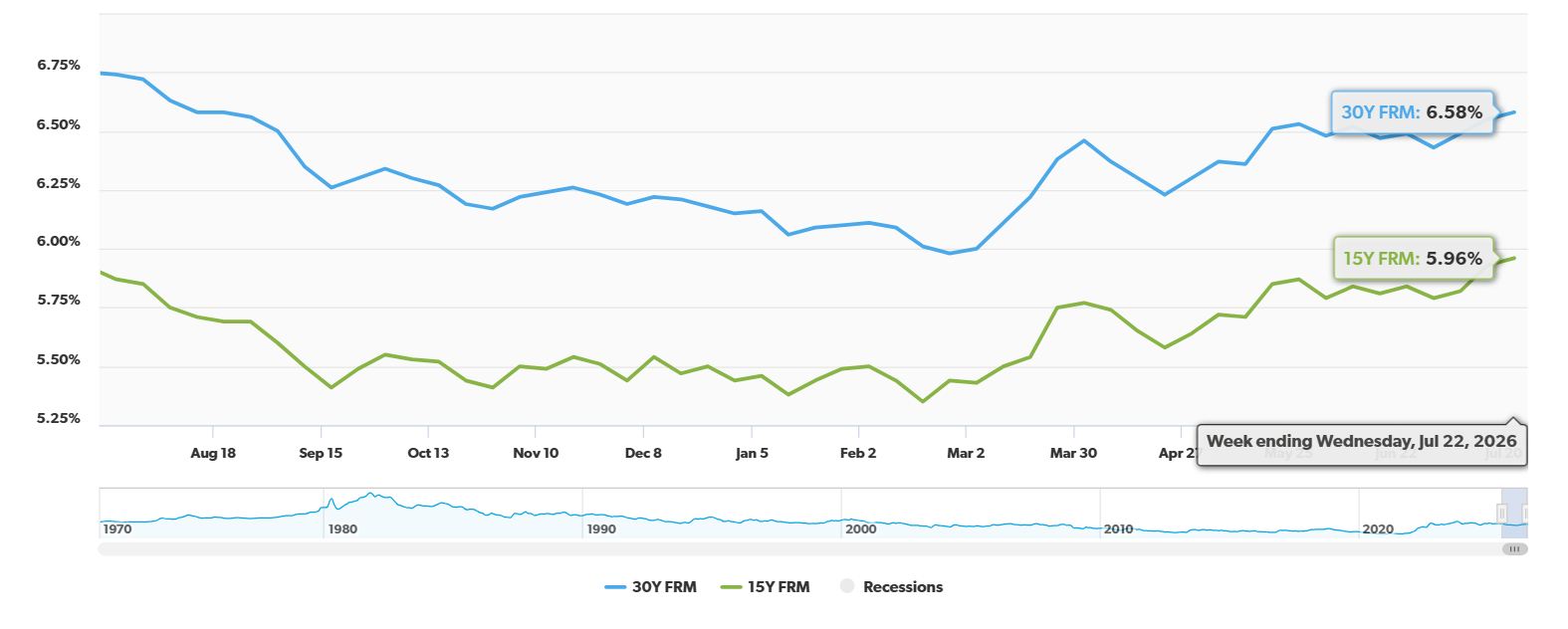
Fixed Mortgage Rate Rises Ending 3 Weeks of Decline
Freddie Mac

Why the Seemingly Mixed Signals? Understanding Market Dynamics

This situation, where rates move up slightly one week but are down significantly over a longer period, isn't uncommon. The mortgage market is a bit like a boat navigating choppy seas. There are always waves (weekly fluctuations) and larger currents (year-over-year trends).

The Freddie Mac report itself highlights these nuances. While the average rate for a 30-year fixed mortgage is 6.30% as of April 30, 2026, it's important to remember this followed a three-week decline. The real win is that year-over-year, we're seeing a 6.76% rate from a year ago plummeting to 6.30% today. That's a definite step in the right direction.

The “Headwinds in 2026” and Their Impact

The headline mentions “headwinds in 2026,” and this is where the real insight comes in. What are these headwinds? Market watchers and analysts, including those cited by FOX Business and U.S. News, point to ongoing geopolitical tensions and the subsequent volatility in long-term Treasury yields. These are the bigger, more unpredictable forces that can cause rates to sway. Think of it like this: global events can make investors nervous about where their money is safest, and that nervousness directly impacts the cost of borrowing money for things like mortgages.

Even with these external pressures, the fact that we're still seeing such a significant annual rate decrease is a testament to the underlying economic forces at play, which are generally more favorable for borrowers than they were last year.

Buyer Demand Soars: A Direct Result of Lower Rates

Perhaps the most telling sign that this drop in rates is having a real impact is the surge in buyer demand. The report proudly states that purchase applications are currently running over 20% above year-ago levels. This isn't just a small bump; it's a strong indication that more people are actively looking to buy homes.

What's fueling this increased demand? Two key factors mentioned are improved inventory and, of course, those overall lower rates compared to previous spring buying seasons. For years, inventory has been a major bottleneck. When more homes become available, it eases competition and can help stabilize prices. Combine that with more affordable financing, and you have a recipe for increased buyer activity. From my perspective, this is the market responding positively to improved conditions. It's a cycle: lower rates make buying more attractive, which brings more buyers into the market, and that enthusiasm can encourage more sellers to list their homes.

Beyond the 30-Year: Trends in Other Mortgage Types

It's not just the iconic 30-year fixed-rate mortgage that's showing improvement. The 15-year fixed-rate mortgage is following a similar, welcome trend. For the week ending April 30, 2026, it averaged 5.64%. Like its longer-term counterpart, this is up slightly from 5.58% the previous week. However, the year-over-year picture is again the compelling story: it’s down from 5.92% recorded a year ago. This offers even more options for those looking for shorter repayment terms and lower overall interest paid over the life of a loan.

The Economic Forecast: What Freddie Mac and Analysts Predict

Looking ahead, the outlook, while acknowledging the “headwinds,” remains cautiously optimistic. Freddie Mac's own Q1 2026 report reveals a company in strong financial health, with a notable $3.6 billion in net income. This financial stability is crucial for the housing market. Furthermore, they forecast a 2.3% projected house price growth for the year. This suggests a balanced market, avoiding the rampant price increases of some past years, which is good for long-term stability.

The broader analysis points towards a gradual improvement in affordability throughout 2026. Factors contributing to this include a projected 7.1% increase in inventory and the expectation that mortgage rates will continue on a downward trajectory as inflation is anticipated to cool. This is the nuanced outlook that experienced market participants follow – a blend of short-term fluctuations and longer-term trends driven by fundamental economic indicators.

My Take: A Balanced Market Finding its Equilibrium

As someone who's followed the housing market for a while, this data tells me a story of recovery and stabilization. The 30-year fixed mortgage rate's impressive year-over-year drop of 46 basis points is the headline, and rightly so. It signifies a real shift towards affordability. The weekly uptick is just noise in the grand scheme, common in any dynamic market.

The strength in purchase demand, exceeding year-ago levels by over 20%, is the undeniable proof that buyers are responding. They're seeing an opportunity. While geopolitical issues and other economic “headwinds” are real and will continue to cause some bumps, the underlying trend seems to be one of cautious optimism. The fact that Freddie Mac is doing well and predicting growth, alongside a rise in inventory and a cooling inflation outlook, paints a picture of a housing market that is actively working towards finding a more sustainable equilibrium. For anyone considering a move, this period presents a potentially golden opportunity.

🏡 Two Performing Rentals With Strong Cash Flow

Pleasant Grove, AL
🏠 Property: 6th Avenue
🛏️ Beds/Baths: 3 Bed • 2.5 Bath • 1549 sqft
💰 Price: $270,000 | Rent: $1,900
📊 Cap Rate: 6.7% | NOI: $1,514
📅 Year Built: 2026
📐 Price/Sq Ft: $175
🏙️ Neighborhood: B+

VS

Rincon, GA
🏠 Property: Founders Dr
🛏️ Beds/Baths: 3 Bed • 2 Bath • 1600 sqft
💰 Price: $275,000 | Rent: $2,200
📊 Cap Rate: 7.0% | NOI: $1,613
📅 Year Built: 2025
📐 Price/Sq Ft: $172
🏙️ Neighborhood: B+

Alabama’s new build with solid cap rate vs Georgia’s affordable rental with stronger NOI. Which fits YOUR investment strategy?

We have much more inventory available than what you see on our website – Let us know about your requirement.

📈 Choose Your Winner & Contact Us Today!

Speak to a Norada Investment Counselor (No Obligation):

(800) 611-3060

View All Properties

Build Passive Income & Wealth with Turnkey Rentals

Mortgage rates remain near 6%, but rental properties continue to deliver strong cash flow and appreciation. Savvy investors know that turnkey real estate is the path to passive income and long‑term wealth.

Norada Real Estate helps you secure turnkey rental properties designed for immediate cash flow and appreciation—so you can invest smartly regardless of interest rate trends.

🔥 HOT INVESTMENT Properties JUST ADDED! 🔥
Request a Callback / Fill Out the Form Online

Contact Us

Also Read:

  • Will Mortgage Rates Drop to 5% in 2026: Expert Forecast
  • How to Get a 3% Mortgage Rate in 2026 With Assumable Mortgages?
  • How to Get a 4% Interest Rate on a Mortgage in 2026?
  • What Leading Housing Experts Predict for Mortgage Rates in 2026
  • Mortgage Rate Predictions for 2026: What Leading Forecasters Expect
  • Mortgage Rate Predictions for the Next 3 Years: 2026, 2027, 2028
  • 30-Year Fixed Mortgage Rate Forecast for the Next 5 Years
  • 15-Year Fixed Mortgage Rate Predictions for Next 5 Years: 2025-2029
  • Will Mortgage Rates Ever Be 3% Again in the Future?
  • Mortgage Rates Predictions for Next 2 Years
  • Mortgage Rate Predictions for Next 5 Years
  • Mortgage Rate Predictions: Why 2% and 3% Rates are Out of Reach
  • How Lower Mortgage Rates Can Save You Thousands?
  • How to Get a Low Mortgage Interest Rate?
  • Will Mortgage Rates Ever Be 4% Again?
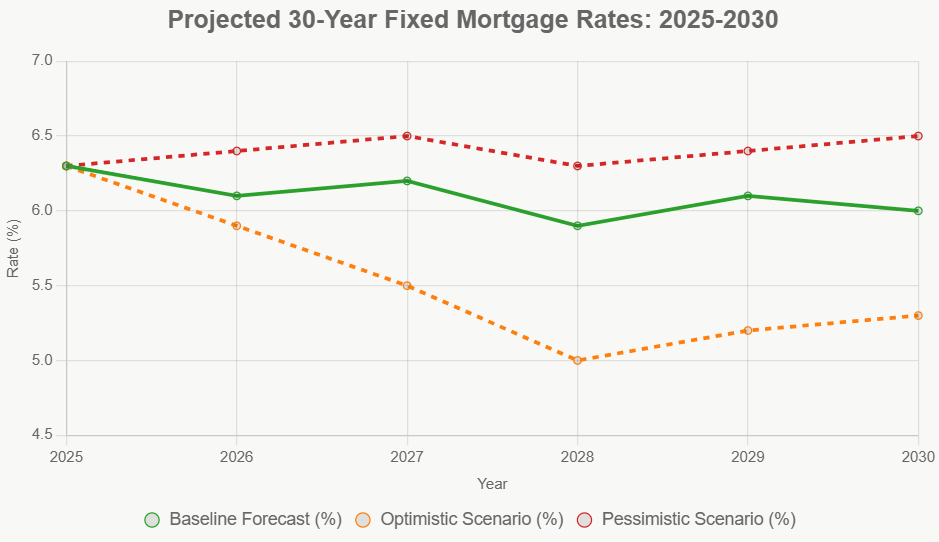
Filed Under: Financing, Mortgage Tagged With: 30-Year Fixed Mortgage Rate, mortgage, mortgage rates

Mortgage Rates Today, May 6, 2026: 30-Year Refinance Rate Rises by 14 Basis Points

May 6, 2026 by Marco Santarelli

Mortgage Rates Today, June 14, 2026: 30‑Year Refinance Rate Drops by 16 Basis Points

Are you thinking about refinancing your mortgage? As of today, May 6, 2026, the waters are a little choppy. The 30-year fixed refinance rate has taken a bit of a jump, climbing to 6.73%. This is an increase of 14 basis points from last week's average, according to data from Zillow. Let's dive into what's causing this shift and what it means for you.

Mortgage Rates Today, May 6, 2026: 30-Year Refinance Rate Rises by 14 Basis Points

The Refinance Rate Picture Today

The mortgage market is a tricky beast, and what seems like a small change can impact your wallet in a big way. Here's a quick snapshot of where refinance rates stand today, according to Zillow:

  • 30-Year Fixed Refinance: 6.73% (up 6 basis points from yesterday's 6.67%)
  • 15-Year Fixed Refinance: 5.86% (up 9 basis points from 5.77%)
  • 5-Year ARM Refinance: 7.29% (unchanged)

While we've seen a drop from the highs of 2023, these recent increases remind us that volatility is still a major part of the market. Let's address the elephant in the room: yes, seeing that 6.73% on a 30-year fixed can be unsettling, especially if you were hoping for a lower rate. So, what's behind these movements?

Why Are Rates Going Up?

Several factors are contributing to this upward trend, and none of them are exactly “easy” answers.

First, you cannot ignore inflation. Even though the Federal Reserve is working tirelessly to curb rising prices, inflation is proving stubborn. Persistent inflation puts upward pressure on borrowing costs, including mortgage rates.

Second, there's geopolitical instability. With conflicts and uncertainties around the globe, investors tend to seek safer havens, which can affect bond yields and, consequently, mortgage rates. The ongoign conflict in Iran is a prime example, influencing oil prices and overall market sentiment.

Third, The Federal Reserve's policy decisions will continue to have a HUGE impact on the markets. Any signals regarding future rate cuts, or lack thereof, sends ripples of fear and euphoria and affect what lenders charge.

Refinance Demand: Are People Still Biting?

The story on demand isn't as simple as “rates are up, so demand is down.” While refinance applications have dipped recently (falling about 5% in the first week of May), it's essential to consider the bigger picture.

  • Not a Full-Blown Boom: Economists are wary about labeling these bumps in activity as a full-scale boom. Many homeowners are still sitting pretty with those super-low pandemic-era rates (below 4%), making a refinance less attractive.
  • Who IS Refinancing? Primarily, it's those who got their mortgages in 2024 and 2025, when rates were hovering around 7-8%. Refinancing now could still save them money.
  • Cash-Out is Still King: Home equity remains elevated, driving many to consider cash-out refinances or HELOCs (Home Equity Lines of Credit), even with the higher borrowing costs. A lot of people are tapping into their home's value for renovations, debt consolidation, or other major expenses.

For me, I believe Cash-Out Refinance still makes sense if you use the money wisely.

What Do the Experts Predict? (Late 2026 and 2027)

Let's peer into the crystal ball, or at least, what leading financial institutions are predicting. Of course, these are just forecasts, and the market can change on a dime, but it's good to have an idea of the general sentiment.

Source Late 2026 Projection 2027 Projection
Fannie Mae ~5.9% ~6.0%
MBA ~6.1% ~6.4%
Bankrate ~6.1% N/A
Deloitte Rates unchanged until Dec 2026 Gradual easing mid-2027

The general consensus is that we're unlikely to return to the rock-bottom rates of the past anytime soon. Most experts anticipate rates to stabilize in the 6% range, with only gradual easing expected in 2027. The era of ultra-cheap money is definitely over.

What Should Homeowners Do?

Okay, so you've got the data, the factors, and the forecasts. What does this actually mean for you, the homeowner? Here are a few things to consider:

  • Don't Jump Too Soon: Only consider refinancing if you can lower your rate by at least 0.5% to 1%, or if you have a clear strategic need for tapping into your home equity.
  • Explore Cash-Out Options: If you need cash for a significant investment or debt consolidation, a cash-out refinance or HELOC might still be a viable option, even with higher rates. In my opinion, these are good for some and bad for others so read all of those documents carefully.
  • Adjust Your Expectations: Remember that rates are unlikely to plummet back to pandemic lows. Factor in the likelihood of rates remaining elevated when making financial decisions. The economy is like the weather these days, unpredictable!

Ultimately, the decision to refinance depends on your individual circumstances, financial goals, and risk tolerance. It's always wise to consult with a financial advisor to determine the best course of action for your specific situation. Don't be afraid to ask questions and shop around for the best rates. It's your money, and you deserve to make informed decisions!

🏡 Two Rental Properties Generating Consistent Cash Flow

Rincon, GA
🏠 Property: Founders Dr
🛏️ Beds/Baths: 3 Bed • 2 Bath • 1600 sqft
💰 Price: $275,000 | Rent: $2,200
📊 Cap Rate: 7.0% | NOI: $1,613
📅 Year Built: 2025
📐 Price/Sq Ft: $172
🏙️ Neighborhood: B+

VS

Port Charlotte, FL
🏠 Property: Prineville St
🛏️ Beds/Baths: 4 Bed • 2 Bath • 1914 sqft
💰 Price: $349,900 | Rent: $2,100
📊 Cap Rate: 5.0% | NOI: $1,457
📅 Year Built: 2025
📐 Price/Sq Ft: $183
🏙️ Neighborhood: A

Georgia’s affordable rental with higher cap rate vs Florida’s A‑rated property with stability. Which fits YOUR investment strategy?

We have much more inventory available than what you see on our website – Let us know about your requirement.

📈 Choose Your Winner & Contact Us Today!

Speak to a Norada Investment Counselor (No Obligation):

(800) 611-3060

View All Properties

Build Passive Income & Wealth with Turnkey Rentals in 2026

Mortgage rates remain high in 2026, but rental properties continue to deliver strong cash flow and appreciation. Savvy investors know that turnkey real estate is the path to passive income and long‑term wealth.

Norada Real Estate helps you secure turnkey rental properties designed for immediate cash flow and appreciation—so you can invest smartly regardless of interest rate trends.

🔥 HOT 2026 INVESTMENT LISTINGS JUST ADDED! 🔥
Request a Callback / Fill Out the Form Online

Contact Us

Also Read:

  • Mortgage Rates Predictions Backed by 7 Leading Experts: 2025–2026
  • Mortgage Rate Predictions for the Next 3 Years: 2026, 2027, 2028
  • 30-Year Fixed Mortgage Rate Forecast for the Next 5 Years
  • 15-Year Fixed Mortgage Rate Predictions for Next 5 Years: 2025-2029
  • Will Mortgage Rates Ever Be 3% Again in the Future?
  • Mortgage Rates Predictions for Next 2 Years
  • Mortgage Rate Predictions for Next 5 Years
  • Mortgage Rate Predictions: Why 2% and 3% Rates are Out of Reach
  • How Lower Mortgage Rates Can Save You Thousands?
  • How to Get a Low Mortgage Interest Rate?
  • Will Mortgage Rates Ever Be 4% Again?

Filed Under: Financing, Mortgage Tagged With: mortgage rates, Mortgage Rates Today, Refinance Rates

  • « Previous Page
  • 1
  • …
  • 11
  • 12
  • 13
  • 14
  • 15
  • …
  • 367
  • Next Page »

Real Estate

  • Birmingham
  • Cape Coral
  • Charlotte
  • Chicago

Quick Links

  • Markets
  • Membership
  • Notes
  • Contact Us

Blog Posts

  • Today’s Mortgage Rates, June 14: Stability in Rates Signals Relief for Homebuyers
    June 14, 2026Marco Santarelli
  • Mortgage Refinance Demand Soars by 20% Compared to Last Year
    June 14, 2026Marco Santarelli
  • Best Cities to Invest in Real Estate in 2026 for Strong ROI Potential
    June 14, 2026Marco Santarelli

Contact

Norada Real Estate Investments 30251 Golden Lantern, Suite E-261 Laguna Niguel, CA 92677

(949) 218-6668
(800) 611-3060
BBB
  • Terms of Use
  • |
  • Privacy Policy
  • |
  • Testimonials
  • |
  • Suggestions?
  • |
  • Home

Copyright 2018 Norada Real Estate Investments

Loading...