Norada Real Estate Investments

  • Home
  • Markets
  • Properties
  • Membership
  • Podcast
  • Learn
  • About
  • Contact

30-Year Fixed Mortgage Rate Drops to New Lows as November 2025 Wraps Up

November 30, 2025 by Marco Santarelli

30-Year Fixed Mortgage Rate Drops to New Lows as November 2025 Wraps Up

As we approach the end of November, 30-year fixed mortgage rates are hovering around or even dipping slightly below the 6% mark, a welcome development that’s been absent for a while. According to the latest data from Zillow, the national average for a 30-year fixed mortgage is sitting right at 6.00%.

This brings us to some of the most encouraging financing terms we’ve seen in months and presents a compelling reason for prospective buyers to consider making a move sooner rather than later. While these rates are still a far cry from the rock-bottom figures of the pandemic era, this dip offers a crucial bit of encouragement as we head into the final stretch of 2025.

30-Year Fixed Mortgage Rate Drops to New Lows as November 2025 Wraps Up

This recent downward trend is largely a response to the market anticipating potential rate cuts from the Federal Reserve, which could happen as early as December. This speculation has been steadily nudging mortgage rates lower, and the 6% barrier for a 30-year fixed loan feels like a significant psychological and practical milestone. For anyone looking to buy a home, this could be the incentive you've been waiting for – a chance to lock in a more affordable monthly payment and potentially a lower overall cost of borrowing.

The Power of the 6% Threshold for 30-Year Fixed Mortgages

The magic of a 30-year fixed mortgage is that it provides payment stability for decades. When the rate dips below 6%, the impact on your monthly payment can be substantial, especially on a larger loan amount. Let's look at the numbers again from Zillow, focusing on what this means for you:

  • 30-year fixed rates are at a national average of 6.00%. This is a key figure to watch.
  • For comparison, the 15-year fixed rate stands at 5.50%. While lower fixed, the monthly payment will be higher.
  • The 20-year fixed rate is at 5.86%. This offers a middle ground for some buyers.

My experience tells me that breaking below 6% on a 30-year fixed is a significant psychological win for the market. It makes the prospect of buying a home feel more attainable for a broader range of people. While rates were in the 7% range earlier, a drop to 6% can save hundreds of dollars per month on a typical mortgage, making a real difference in affordability. And remember, these are national averages. Many lenders are now actively competing to offer rates just below 6%, so diligent shopping is key to capturing the best possible deal.

Why It's a ‘Buy Now' Incentive, But With Caveats

This dip in rates acts as a clear ‘buy now' incentive for those who have been on the fence. Housing affordability, while challenging due to sustained high home prices, becomes more manageable with lower borrowing costs.

  • Reduced Monthly Payments: As illustrated before, a difference between 7% and 6% can save you thousands over the life of the loan. This improved affordability can either help you buy a more desirable home or simply reduce your monthly financial burden.
  • Overcoming Buyer Hesitancy: After a period of rapidly rising rates, seeing them trend downward can restore confidence in the market. It signals that lenders are eager to do business, and buyers might face less competition than at the peak of demand.

However, it’s crucial to temper expectations. As I mentioned, rates remain significantly higher than the ultra-low pandemic-era lows. The 2-3% rates are a relic of a unique economic period and are not expected to return.

Refinancing Opportunities Emerge from Lower Rates

This shift is also creating potential refinancing opportunities. If you secured a mortgage earlier in the year when rates were higher, it might be time to check if you can benefit from a lower rate now.

Here's a look at the refinance rates from Zillow:

  • 30-year fixed refinance: 6.14%
  • 15-year fixed refinance: 5.60%

Even though these refinance rates are slightly higher than the purchase rates, the gap has narrowed considerably. For homeowners who borrowed at, say, 7% or 7.5%, refinancing to a 6.14% rate could still lead to substantial savings. I always advise homeowners to:

  • Check your current rate: Know what you're paying now.
  • Get quotes: Don't assume refinancing isn't worthwhile. Contact a few lenders to see what offers you can get.
  • Consider loan recasting: Sometimes, a lender can adjust your payment schedule without a full refinance if you've made a significant lump-sum payment.

Stability Expected, But Watch for Builder Incentives

Looking ahead, analysts seem to agree that we can expect a degree of stability for the remainder of December. A sharp, continued drop in mortgage rates is considered unlikely in the immediate future. However, the market is dynamic.

What is interesting, though, is the response from homebuilders. In many areas, builders are actively trying to move inventory. This can translate into:

  • Price Reductions: Some builders are directly cutting the asking price of their homes.
  • Rate Buydowns: A common incentive is offering to “buy down” your interest rate for a period, meaning you pay a lower rate for the first few years of your mortgage. This can significantly reduce your initial payments.

These builder incentives, coupled with the slightly lower national rates, create a more favorable environment for buyers looking for new construction. It's a sign that the market is adjusting to this higher-rate era.

Long-Term Forecasts: A Stable, Higher Rate Environment?

When I look at the longer-term forecasts, the picture is one of cautious optimism and relative stability, albeit at a higher level than the pandemic years.

  • Early November Forecasts (2025): These suggested that 30-year fixed rates would likely settle between 6.1% and 6.3% by the end of November. The fact that we’re now seeing averages at 6.00% indicates slightly better conditions than predicted.
  • End of 2025/2026 Forecasts (October Predictions): Projections from October indicated that 30-year rates might hover around 6% or even higher through 2026. Fannie Mae, for instance, projects a dip to 5.9% by the fourth quarter of 2026, which aligns with a potential continued easing, but still above current pandemic lows. The Mortgage Bankers Association has a more conservative outlook, anticipating an average rate of 6.4% throughout 2026.

This suggests that while we might see some fluctuations, the era of consistently sub-5% rates is likely behind us for the foreseeable future. Therefore, capitalizing on the current dip below 6% for a 30-year fixed mortgage could be a sound strategy for long-term financial planning.

Invest Smartly in Turnkey Rental Properties

With rates dipping to their lowest levels, investors are locking in financing to maximize cash flow and long-term returns.

Norada Real Estate helps you seize this rare opportunity with turnkey rental properties in strong markets—so you can build passive income while borrowing costs remain historically low.

🔥 HOT NEW LISTINGS JUST ADDED! 🔥

Talk to a Norada investment counselor today (No Obligation):

(800) 611-3060

Get Started Now

Also Read:

  • Mortgage Rates Predictions Backed by 7 Leading Experts: 2025–2026
  • Mortgage Rate Predictions for the Next 3 Years: 2026, 2027, 2028
  • 30-Year Fixed Mortgage Rate Forecast for the Next 5 Years
  • 15-Year Fixed Mortgage Rate Predictions for Next 5 Years: 2025-2029
  • Will Mortgage Rates Ever Be 3% Again in the Future?
  • Mortgage Rates Predictions for Next 2 Years
  • Mortgage Rate Predictions for Next 5 Years
  • Mortgage Rate Predictions: Why 2% and 3% Rates are Out of Reach
  • How Lower Mortgage Rates Can Save You Thousands?
  • How to Get a Low Mortgage Interest Rate?
  • Will Mortgage Rates Ever Be 4% Again?

Filed Under: Financing, Mortgage Tagged With: Interest Rate, mortgage, Mortgage Rate Trends, mortgage rates, Mortgage Rates Today

Texas Housing Market: Trends and Forecast 2025-2026

November 29, 2025 by Marco Santarelli

Texas Housing Market

Have you felt dizzy watching the Texas real estate market lately? For years, it seemed like prices were going nowhere but up, fueled by massive job growth and people moving here from all over the country. If you’re like me, you’ve been wondering: is the frenzy finally done? And, more importantly, what does the future hold for potential buyers and sellers?

I’ve spent some time reviewing the data and speaking with local experts. Here’s the straight answer: The current Texas housing market trends in 2025 show we are officially in a period of intense correction and transition. While home prices are dipping, home sales are proving resilient.

If you are looking for the overall picture for 2025, brace yourself: we are firmly operating in a buyer's housing market driven by elevated supply, meaning competition is low, but affordability is still tightly tied to fluctuations in mortgage rates. We anticipate this buyer-friendly period will continue through the end of 2025, with prices stabilizing but not significantly rebounding until mid-2026.

Now, let's roll up our sleeves and look at the hard facts defining the current state of Texas real estate.

Current Texas Housing Market Trends

The standard rule in real estate is that prices and sales go up and down together. When demand is high, prices soar, and lots of houses sell. When demand falls, sales slow down, and prices drop. But right now in Texas, we are seeing a fascinating “divergence”—a fancy word for things moving in opposite directions.

The Great Divergence: Sales are Up, Prices are Down

Recent market indicators from the Texas Real Estate Research Center show that while average home prices have continued to decline, sales activity is actually holding strong. For September 2025, the data paints an unexpected picture:

  • September Home Sales surged ***7.3% Year-over-Year (YoY)***.
  • The Home Price Index dropped 0.8% YoY.
  • Active Inventory shot up a staggering 20.2% YoY.

Think about that for a second. We sold way more houses than we did last year, yet prices decreased. Why? Because we have way too many houses sitting on the market. That persistent supply glut is making sellers nervous, and buyers are taking advantage of the leverage they now hold.

This resilience in home sales is being fueled partly by falling mortgage rates (which make monthly payments more manageable) and partly by sellers finally accepting the new reality and lowering their prices. In fact, pending home sales—a strong indicator of future activity—were up 2.8% YoY, suggesting this sales momentum will continue through October and into the fall.

High Inventory is Driving the Transition (The Buyer’s Edge)

The biggest factor tilting the market toward buyers is the sheer volume of available housing. You can’t negotiate hard if the house across the street just sold for $50,000 over asking, but you can if that house has been sitting empty for 90 days.

We measure supply in “Months’ Supply.” A balanced market—one that doesn't favor the buyer or the seller—is typically considered 3 to 4 months of supply in Texas. Guess where we are now?

  • As of September 2025, the housing inventory is at a 5.5-month supply. That’s a significant jump from 4.7 months just a year prior.

This excessive supply pressure is forcing sellers to make serious concessions. Look at the numbers on how much sellers are cutting prices:

Trend Sep-2025 Sep-2024 Sep-2019 (Pre-Pandemic Norm)
Median Seller Price Cuts $17,000 $14,500 $7,500
Average Days on Market (Sold Homes) 67 days 60 days 56 days
Average Days on Market (Unsold Listings) 96 days 87 days 90 days

That median price cut of $17,000 means buyers are negotiating harder, and sellers are accepting it. In percentage terms, sellers are taking roughly 5 percent off the asking price just to close a deal. That’s a massive win for buyers who are ready to move. Also, note that unsold homes are sitting on the market for an average of 96 days—that’s over three months! The quick sales of the pandemic era are truly a distant memory.

Where is the Demand? The Mortgage Rate Lock-In Problem

While overall sales look strong, a closer inspection reveals a major weakness: the middle of the market. This is where the famous “lock-in” effect is wreaking havoc.

Here is the inconvenient truth: Over 80 percent of existing mortgaged homeowners are locked into shockingly low mortgage rates (below 6 percent). If they sell their current home to upgrade—the “move-up” segment—they would have to trade their 4% mortgage for a 6% or 7% mortgage on a new, more expensive house. Financially, it often doesn't make sense.

This reluctance is creating skewed demand:

Price Segment YoY Sales Change (September 2025) Market Behavior
$250,000 and Below (Starter Homes) +13.9% Strongest performance. Buyers can make these payments work.
$350,000 to $600,000 (The Middle Tier/Move-Up) -8.1% (Decline) Weakest segment. Hit hardest by the affordability crisis and rate lock-in issue.
$800,000 and Above (Luxury) +13.7% Strong performance. These buyers are cash-rich and less sensitive to interest rates.

My take? Until those pesky mortgage rates drop significantly, the middle-tier market, which historically represents the largest share of buyer activity, will remain constrained. Everyone is either looking for the cheapest affordables or they are wealthy enough that rates don’t matter.

Texas Home Prices Fell Again in September

As expected, high supply leads to falling prices. September recorded the third straight month of negative year-over-year price change across the state. The statewide median price was $330,000.

This correction is not hitting every city equally. Some major metropolitan areas that saw huge growth during the pandemic are now correcting the fastest:

Metro Area September 2025 Median Price YoY Price/Market Behavior
Austin-Round Rock-San Marcos $415,000 Continues to lead the state in price declines, though the pace has eased slightly.
Dallas-Fort Worth-Arlington $386,700 Overall recorded a 1% annual decline, led by the Dallas-Plano-Irving division.
San Antonio-New Braunfels $310,000 Experienced the most pressure recently, with a 1.9% YoY drop in September.
Houston-Pasadena-The Woodlands $325,000 Price declines here are accelerating due to elevated inventory.

The fact that cities like Austin and San Antonio are seeing steeper drops makes sense; they experienced the most rapid price escalation previously. This is the market hitting the reset button.

Texas Housing Market Forecast 2025 and 2026

So, we know the current reality: Inventory is high, sellers are negotiating hard, and sales volume is surprisingly strong. But what happens over the next 12 to 24 months? Will prices keep tumbling?

Will Texas Home Prices Crash? (My Professional Opinion)

This is the question everyone asks me. Based on the data, the simple and firm answer is: No, Texas home prices are highly unlikely to crash.

The reason we won't see a 2008-style collapse is that this is not a crisis of bad borrowing or faulty loans; it is a crisis of affordability caused by high mortgage rates and elevated inventory levels, especially new construction.

When I look at Texas specifically, I see underlying factors that prevent a prolonged downturn:

  1. Massive Population Growth: Texas still added more people than any other state last year. Demand for housing isn't gone; it’s just delayed until rates drop.
  2. Job Market Strength: Our major metro areas (DFW, Houston, Austin) boast diversified job markets that continue to attract companies and workers.
  3. Inventory Normalization: Although inventory is high right now (5.5 months), once rates drop and demand picks up, that inventory will be absorbed quickly, especially since new listings have slowed down (new listings fell 23.4% from their May peak).

My prediction: Instead of a crash, we will see continued price deterioration (small monthly drops) through the remainder of 2025, possibly resulting in an overall average decline of 2% to 4% for the full year 2025. After that, stabilization begins.

Comparing Texas to the National Picture

It’s helpful to see how our situation stacks up against the rest of the country. Lawrence Yun, Chief Economist for the National Association of Realtors (NAR), recently provided an optimistic outlook for the US market nationwide:

US Market Metric (NAR Forecast) Projected 2025 Growth Projected 2026 Growth
Existing Home Sales Growth +6% +11%
Median Home Price Appreciation +3% +4%
Average Mortgage Rate (2nd Half) 6.4% 6.1%

The national forecast expects prices to start appreciating again in 2025. However, Texas has to work off its current 5.5 months of supply first. Because our housing inventory is so much higher than the national average, Texas is likely to trail the nation on price appreciation but lead the nation in sales volume recovery. High inventory means sellers have to wait longer for prices to rise again.

2026 and 2027 Projections: The Path to Balance

Based on our current trajectory—high sales volume absorbing excess supply, coupled with the national expectation of lower rates—here is how I see the Texas market evolving:

Remaining 2025 Forecast (Q4 2025)

The pressure cooker stays on. This is still a strong Buyer's Housing Market.

  • Prices: Prices will continue to cool, experiencing slow but steady month-over-month declines, especially in areas with very high inventory like Austin and San Antonio. The median seller concession ($17,000+) will remain high.
  • Sales: Sales volume will surprise favorably, bolstered by buyers drawn in by lower prices and slightly better-off mortgage rates.
  • Inventory: Inventory levels will likely begin to plateau and slowly shrink, setting the stage for 2026.

2026 Forecast (Year-End Projection)

The market hits an equilibrium. The high inventory is mostly absorbed thanks to resilient sales and slowing new construction starts.

  • Mortgage Rates: Aligning with the NAR forecast, if rates drop closer to the 6.1% average by the end of 2026, the mid-tier housing segment ($350k-$600k) will finally wake up.
  • Prices: Prices will stabilize fully by mid-2026, ending the year with modest appreciation somewhere between 1% and 2%. This is much slower than the NAR projection for the US, reflecting the time needed to digest the current housing supply.
  • Market Status: The market will transition towards a Balanced Market (3.5 to 4 months’ supply) in many major metros.

Early 2027 Forecast

Normalization and sustainable growth resume.

  • Prices: Appreciation will return to historically normal levels, around 3% to 4%. The Texas Housing Market will feel much calmer and more predictable, having flushed out the excesses of the post-pandemic boom.
  • Sales: We will see a slight uptick in existing homeowners selling, as the rate gap between their current mortgage and a new one becomes less painful.

In conclusion, the Texas housing market data shows that the turbulence is far from over in 2025, but the market is moving through this correction in a healthy way. Buyers currently hold the power, but anyone waiting for a massive economic crash will likely be waiting too long. This is the perfect window to buy before rates—the “magic bullet” that Lawrence Yun mentioned—reignite overwhelming buyer demand across the state.

Invest in Turnkey Real Estate for Immediate Cash Flow & Long-Term Wealth

Turnkey properties let you start earning rental income from day one—no renovations, no tenant hunts, no management headaches.

Work with Norada Real Estate to find vetted, cash-flowing markets tailored to your goals—so you can build steady returns without the stress.

HOT NEW LISTINGS JUST ADDED!

Speak with a seasoned Norada investment counselor today (No Obligation):

(800) 611-3060

Get Started Now

Read More:

  • Will the Texas Housing Market Crash as Prices Drop Across the State?
  • Texas Housing Market Predictions for the Next 2 Years: 2025-2026
  • Average Down Payment on a House in Texas
  • 10 Texas Cities Where Home Prices Are Expected to Fall in 2025
  • Will the Texas Housing Market Crash in 2025?
  • This Texas Housing Market is the Best in the U.S. [2024 Rankings]
  • Are Texas Home Sales Dropping?
  • How Much Do Real Estate Agents Make in Texas?
  • 10 Cheapest Places to Live in Texas
  • Is Texas a Good Place to Live: Explore the Cost, Jobs and Lifestyle

Filed Under: Growth Markets, Housing Market, Real Estate Market Tagged With: Texas housing market, Texas real estate

Today’s Mortgage Rates, Nov 29: 30-Year FRM Maintains Firm Stability at 6.00%

November 29, 2025 by Marco Santarelli

Today’s Mortgage Rates, Nov 30: 30-Year Fixed Rate Poised to Break Into the 5% Range

As of today, November 29th, today's mortgage rates are tantalizingly close to a significant psychological barrier. According to Zillow's data, the average 30-year fixed mortgage rate stands firm at 6.00%. This means we're just a hair's breadth away from seeing rates dip into the 5% range, a move that could very well send a jolt of excitement through the housing market. For many potential buyers and homeowners looking to refinance, this 5% threshold has been a waiting game, and we might be on the cusp of seeing that signal to jump in.

Today's Mortgage Rates, Nov 29: 30-Year FRM Maintains Firm Stability at 6.00%

It's been a bit of an emotional rollercoaster watching mortgage rates. They've danced around this 6% mark for a while now, making potential buyers pause and homeowners consider if now is the time to lock in a better deal. But this shift we're seeing, this slow and steady creep downwards, feels different. It’s like watching a tide slowly pull back, revealing more of the shoreline than we’ve seen in a while.

The 15-year fixed mortgage rate is also holding steady, currently at 5.50%. This shorter-term option has always been a popular choice for those who want to pay off their homes faster and save on overall interest, and it’s good to see it offering even more attractive terms as rates generally trend lower. This steady movement on both fronts really underscores just how close we are to a more favorable borrowing environment.

What’s Actually on the Table Today: Today's Mortgage Rates

Let’s break down what these numbers mean in practical terms. Here’s a look at the average rates you might see, according to Zillow’s latest figures:

Loan Type Average Rate
30-year fixed 6.00%
20-year fixed 5.86%
15-year fixed 5.50%
5/1 ARM 6.11%
7/1 ARM 6.15%
30-year VA 5.44%
15-year VA 5.10%
5/1 VA 5.11%

I've been following these numbers for years, and seeing rates hover around are generally good indicators. The 30-year fixed is the workhorse for most homebuyers, and 6.00% isn't a bad place to be, especially when you consider how much higher they were not too long ago. The 15-year fixed at 5.50% is a fantastic deal for those who can comfortably manage higher monthly payments for a decade less.

VA loans, designed for our veterans, continue to offer some of the most competitive rates, which is always heartening to see. The 30-year VA rate at 5.44% is a significant advantage for eligible borrowers.

Thinking About a Refinance? Today’s Mortgage Refinance Rates

For those of you already owning a home, the refinance market is also showing some promising movements. Refinancing at a lower rate can significantly reduce your monthly payments and the total interest paid over the life of your loan. Here’s how refinance rates are looking today:

Loan Type Average Rate
30-year fixed 6.14%
20-year fixed 6.05%
15-year fixed 5.60%
5/1 ARM 6.55%
7/1 ARM 6.72%
30-year VA 5.57%
15-year VA 5.18%
5/1 VA 5.04%

It’s important to note that refinance rates are often a fraction of a percent higher than purchase rates. This difference accounts for the lender’s perspective on the risk involved. However, even a small drop can make a big difference when you're looking at a 15- or 30-year loan. If you bought your home a few years ago when rates were higher, it's definitely worth exploring if a refinance makes sense for you. My personal opinion? If you can shave off even half a percent or more, and your closing costs are manageable, it's often a win.

Fixed vs. ARM: Navigating Your Choices Near 6%

As rates hover around the 6% mark, the age-old question of fixed-rate mortgages versus Adjustable-Rate Mortgages (ARMs) comes to the forefront.

  • Fixed-Rate Mortgages: These offer stability. Your interest rate and monthly principal and interest payment remain the same for the entire loan term. This is ideal if you value predictability and plan to stay in your home for a long time, or if you anticipate rates rising in the future. The 30-year fixed is the most common, offering lower monthly payments but more interest over time. The 15-year fixed has higher monthly payments but less interest overall.
  • Adjustable-Rate Mortgages (ARMs): ARMs typically start with a lower introductory interest rate than fixed-rate loans. This initial rate is usually fixed for a set period (like 5 or 7 years), after which the rate adjusts periodically based on market conditions.
    • Pros: Lower initial payments, which can help you qualify for a larger loan or save money in the short term.
    • Cons: Payments can increase significantly after the introductory period if interest rates rise. This makes them riskier if you aren't prepared for potential payment hikes.

Looking at today's mortgage rates, the 5/1 ARM and 7/1 ARM are only slightly higher than the 30-year fixed. This is a bit unusual. Typically, ARMs are significantly lower to entice borrowers. This narrow gap might suggest a market environment where lenders are less aggressive with ARM pricing, possibly anticipating future rate stability or even declines. For someone who plans to move or refinance before the adjustment period kicks in, an ARM could still offer a good initial savings. However, the risk of future payment increases means I always advise caution with ARMs, especially if your financial situation isn't rock-solid.

Refinance Opportunities: Who Stands to Gain Most?

The prospect of rates dipping below 6% truly opens up refinancing doors for a wider group of homeowners.

  • Recent Buyers: If you purchased a home in the last couple of years when rates were higher, even a small decrease can translate into significant savings. If your rate is, say, 7% or higher, moving down to 6% or even into the 5% range could easily save you hundreds of dollars a month.
  • Those with Jumbo Loans: Sometimes, jumbo loans (loans exceeding conforming limits) can have slightly different rate movements. If you have a jumbo mortgage and your current rate is above 6%, explore refinancing options.
  • Cash-Out Refinancers: If you need funds for home improvements, debt consolidation, or other major expenses, a cash-out refinance could be an option. With lower rates, the cost of borrowing that extra cash might be more manageable than it was previously.
  • Homeowners Who Initially Waited: Many people held off on buying or refinancing, waiting for rates to become more favorable. The current movement towards the 5% range could be their cue to act.

I always encourage people to get a personalized quote. Zillow's data is a great snapshot, but your individual credit score, down payment, loan type, and lender will all play a big role in the actual rate you're offered.

What’s Pushing the Rates Around?

Several economic factors are influencing where mortgage rates are today. Understanding these can help give you a clearer picture of what might come next.

  1. Federal Reserve Actions (and Anticipation): The Federal Reserve has been actively adjusting its key interest rate. They've cut it twice this year, and there's a strong possibility of another cut in December. While the Fed doesn't directly set mortgage rates, their actions send ripples through the financial markets. Lowering the Fed's rate generally makes borrowing cheaper for banks, and they can pass some of those savings along to consumers in the form of lower mortgage rates.
  2. The Job Market's Temperature: Recent signals suggesting a softening in the job market have played a role in pushing mortgage rates down. When the economy shows signs of slowing, investors often seek safer assets, and bonds (which influence mortgage rates) become more attractive.
  3. The 10-Year Treasury Yield: This is perhaps the most direct influence on mortgage rates. The 10-year Treasury yield has seen a recent dip, and this has directly contributed to the downward trend in mortgage rates we're observing. Think of it as a close cousin to mortgage rates – when one goes down, the other usually follows.
  4. Housing Market Vibes: It’s a bit of a feedback loop. As rates decline and housing inventory (the number of homes for sale) sees a slight increase, it makes buying a home more accessible and attractive. We saw pending home sales pick up in October, which is a good sign that buyers are responding to these more favorable conditions.

Looking Ahead: What Experts Are Saying

Forecasting interest rates is notoriously tricky, and even the experts have differing opinions.

  • Fannie Mae predicts that mortgage rates will likely stick around the low 6% range through 2026. This suggests a period of relative stability rather than dramatic drops.
  • The Mortgage Bankers Association offers a slightly different outlook, suggesting rates might trend a bit higher than that prediction.
  • However, a consensus seems to be forming: a return to the ultra-low rates we saw during the height of the pandemic is highly unlikely in the foreseeable future. The economic conditions are simply too different now.

From my vantage point, I believe we're in a period of normalization. The extreme lows of the pandemic era were an anomaly. The current rates, while higher than those peaks, are more reflective of long-term economic trends and a healthier housing market balance. It's a more sustainable environment, even if it means buyers and refinancers need to adjust their expectations compared to a couple of years ago.

Ultimately, today's mortgage rates, sitting right at the cusp of the 5% range, are a significant development. Whether you're looking to buy your first home, move up, or refinance your current mortgage, now is definitely a time to pay close attention and potentially explore your options.

Invest Smartly in Turnkey Rental Properties

With rates dipping to their lowest levels, investors are locking in financing to maximize cash flow and long-term returns.

Norada Real Estate helps you seize this rare opportunity with turnkey rental properties in strong markets—so you can build passive income while borrowing costs remain historically low.

🔥 HOT NEW LISTINGS JUST ADDED! 🔥

Talk to a Norada investment counselor today (No Obligation):

(800) 611-3060

Get Started Now

Also Read:

  • Mortgage Rates Predictions Backed by 7 Leading Experts: 2025–2026
  • Mortgage Rate Predictions for the Next 3 Years: 2026, 2027, 2028
  • 30-Year Fixed Mortgage Rate Forecast for the Next 5 Years
  • 15-Year Fixed Mortgage Rate Predictions for Next 5 Years: 2025-2029
  • Will Mortgage Rates Ever Be 3% Again in the Future?
  • Mortgage Rates Predictions for Next 2 Years
  • Mortgage Rate Predictions for Next 5 Years
  • Mortgage Rate Predictions: Why 2% and 3% Rates are Out of Reach
  • How Lower Mortgage Rates Can Save You Thousands?
  • How to Get a Low Mortgage Interest Rate?
  • Will Mortgage Rates Ever Be 4% Again?

Filed Under: Financing, Mortgage Tagged With: Interest Rate, mortgage, Mortgage Rate Trends, mortgage rates, Mortgage Rates Today

Mortgage Rates Today, Nov 29: 30-Year Refinance Rate Rises by 19 Basis Points

November 29, 2025 by Marco Santarelli

Mortgage Rates Today, Jan 1, 2026: 30-Year Refinance Rate Rises by 48 Basis Points

If you've been keeping an eye on your mail or your email inbox, you've probably seen offers for refinancing your mortgage. But with mortgage rates today, Nov 29, seeing the 30-year refinance rate climb by 19 basis points to 6.88%, it’s a good time to pause and understand what’s happening in the housing market. This increase, as reported by Zillow, suggests that the window for snagging the absolute best refinance rates might be narrowing, at least for this particular loan type.

Mortgage Rates Today, Nov 29: 30-Year Refinance Rate Rises by 19 Basis Points

Breaking Down Today's Mortgage Rate Movement

Let’s get into the nitty-gritty of what Zillow reported for today, November 29, 2025, and what it means for you.

  • 30-Year Fixed Refinance Rate: This is the one making waves. It jumped from 6.69% to 6.88%, a notable increase of 19 basis points. This is the rate most people think of when they discuss mortgages, and this upward tick could certainly make homeowners think twice about refinancing right now.
  • Comparison to Last Week: It’s also worth noting that today's 6.88% is 10 basis points higher than the average rate of 6.78% we saw last week. This suggests a consistent upward trend.
  • 15-Year Fixed Refinance Rate: Here's where we see a different story. This rate actually dipped slightly, from 5.68% to 5.67%, a decrease of 1 basis point. For those looking to pay off their mortgage faster and who qualify, this might still be an attractive option.
  • 5-Year Adjustable-Rate Mortgage (ARM) Refinance Rate: This one saw a significant jump, climbing 29 basis points from 7.33% to 7.62%. ARMs often start with lower rates but can increase over time, and this sharp rise indicates a shift in how lenders are pricing this riskier loan product.

Visualizing the Trends

To make it clearer, let’s look at these figures side-by-side:

Loan Term Current Rate (Nov 29, 2025) Previous Rate (Approx.) Change
30-Year Fixed 6.88% 6.69% +19 bps
15-Year Fixed 5.67% 5.68% -1 bps
5-Year ARM 7.62% 7.33% +29 bps
  • Note: Rates are national averages reported by Zillow and can vary based on individual creditworthiness, loan terms, and lender.

Why Are Rates Moving? Unpacking the Factors

When I see mortgage rates change, my first thought is always: why? It’s rarely just one thing. Several interconnected forces are at play, and understanding them gives us a much better perspective than just looking at the daily numbers.

1. The Federal Reserve’s Influence:
The Federal Reserve’s monetary policy plays a big role, even if it doesn't directly set mortgage rates. The Fed has been cutting its key interest rate, aiming to stimulate the economy. We've seen two cuts already in 2025, and there's a good chance of a third in December. Generally, when the Fed cuts rates, it signals a move towards looser credit, which can lead to lower borrowing costs for consumers, including mortgages. However, the market's reaction can be complex, and other factors can override this influence.

2. A Hint of Weakness in the Job Market:
Recent data suggests the job market might be cooling down a bit. When the labor market shows signs of slowing, it can make investors a little nervous about the overall economic picture. This nervousness often leads them to seek safer investments, which can indirectly push down the yields on government bonds, and as we'll see next, that affects mortgages.

3. The 10-Year Treasury Yield – A Stronger Indicator:
For those in the know, the 10-year Treasury yield is a much more direct influencer of mortgage rates than the Fed's short-term rates. Think of it as a benchmark for longer-term borrowing costs. When this yield goes down, mortgage rates tend to follow suit, and vice versa. The recent decrease in the 10-year yield has indeed been a factor in keeping some mortgage rates from climbing even higher. However, the recent uptick in the 30-year fixed rate suggests that other pressures are at play, perhaps outweighing the recent bond market movements.

4. Housing Market Dynamics:
The housing market itself is a dynamic beast. We've seen a slight dip in mortgage rates recently (before today's jump for the 30-year), coupled with an increase in available homes. This combination has actually spurred more activity, with pending home sales showing growth in October. When more people are buying homes, it can, in turn, influence lender behavior and rate offerings. It’s a bit of a feedback loop.

Navigating a Rising Rate Environment

This is where my experience comes in handy. When rates are on the move, especially upwards for popular loan terms like the 30-year fixed, timing becomes everything.

  • Don't Panic, But Be Prepared: Seeing a rate jump isn't a sign to immediately give up on refinancing. However, it does mean you should act with a bit more urgency if you have a specific goal in mind. What I’ve found is that having your ducks in a row – pre-approved, clear on your financial documents – allows you to jump on a good rate when it appears.
  • Consider Different Loan Terms: As our table showed, the 15-year fixed rate actually went down a smidgen. This highlights the importance of not fixating on just one loan type. If you can comfortably afford higher monthly payments, a 15-year mortgage could save you a lot of money in interest over the life of the loan, even with today’s rates.
  • ARM Strategy: The surge in the 5-year ARM rate is a stark reminder of their nature. They can be great for those who plan to move or refinance again before the fixed period ends, but the recent jump signals increased risk. It’s crucial to do the math and understand your potential payment increases. I always tell people to run the worst-case scenario in their heads.

Recommended Read:

30-Year Fixed Refinance Rate Trends – November 28, 2025

Best Time to Refinance Your Mortgage: Expert Insights

Should You Refinance Your Mortgage Now or Wait Until 2026? 

What’s Next for Mortgage Rates?

Predicting mortgage rates is notoriously tricky, and even the experts have different ideas.

  • Fannie Mae's View: One widely cited forecast from Fannie Mae suggests that rates will likely stay in the low-6% range through 2026. This implies a period of relative stability after the recent fluctuations.
  • Mortgage Bankers Association's Outlook: On the other hand, the Mortgage Bankers Association predicts slightly higher rates than Fannie Mae. This suggests a more cautious or slightly pessimistic view on the future trajectory.
  • The Unspoken Truth: What most experts do agree on is that returning to the super-low rates we saw during the heart of the pandemic (think 3% or even lower for a 30-year fixed) is highly unlikely in the foreseeable future. The economic conditions that fueled those rates are simply not present anymore.

As I see it, we're in a new normal for mortgage rates. They might fluctuate, but the era of historically unprecedented lows is likely behind us. This means borrowers need to be more strategic than ever. It’s about finding a sustainable rate that fits your budget and your long-term financial goals, rather than waiting for a return to a past that’s probably gone.

“Invest Smart — Build Long-Term Wealth Through Real Estate”

Norada's team can guide you through current market dynamics and help you position your investments wisely—whether you're looking to reduce rates, pull out equity, or expand your portfolio.

Work with us to identify proven, cash-flowing markets and diversify your portfolio while borrowing costs remain favorable.

HOT NEW TURNKEY DEALS JUST LISTED!

Speak with a seasoned Norada investment counselor today (No Obligation):

(800) 611-3060

Get Started Now

Recommended Read:

  • When You Refinance a Mortgage Do the 30 Years Start Over?
  • Should You Refinance as Mortgage Rates Reach Lowest Level in Over a Year?
  • NAR Predicts 6% Mortgage Rates in 2025 Will Boost Housing Market
  • Mortgage Rates Predictions for 2025: Expert Forecast
  • Half of Recent Home Buyers Got Mortgage Rates Below 5%
  • Mortgage Rates Need to Drop by 2% Before Buying Spree Begins
  • Will Mortgage Rates Ever Be 3% Again: Future Outlook
  • Mortgage Rates Predictions for Next 2 Years
  • Mortgage Rate Predictions for Next 5 Years
  • Mortgage Rate Predictions for 2025: Expert Forecast

Filed Under: Financing, Mortgage Tagged With: mortgage, mortgage rates, Mortgage Refinance Rates

Today’s Mortgage Rates, Nov 28: 30-Year FRM Drops to 6% as Lenders Roll Out Lowest Offers

November 28, 2025 by Marco Santarelli

Today’s Mortgage Rates, Nov 30: 30-Year Fixed Rate Poised to Break Into the 5% Range

Finally, we're seeing some encouraging movement in the mortgage market. Today's mortgage rates, November 28th, are showing a welcome dip, with some lenders now offering deals on 30-year fixed loans at or even below 6%. This is a significant moment for anyone looking to buy a home or refinance their existing mortgage, offering a real chance to secure more favorable financing. I’ve been watching these numbers closely, and this trend is the most competitive we’ve seen in months.

Today's Mortgage Rates, Nov 28: 30-Year FRM Drops to 6% as Lenders Roll Out Lowest Offers

What the Numbers Look Like Today

Let’s break down the current situation based on the latest data from Zillow. These are the national averages, so keep in mind your specific offer might be a little different depending on your credit score, down payment, and the lender you choose.

Here's a snapshot of the current mortgage rates:

Loan Type Average Rate
30-year fixed 6.00%
20-year fixed 5.86%
15-year fixed 5.50%
5/1 ARM 6.11%
7/1 ARM 6.15%
30-year VA 5.44%
15-year VA 5.10%
5/1 VA 5.11%

It’s important to note that these are averages. They’re rounded to the nearest hundredth, giving us a clear picture of the market's general direction.

Refinancing Opportunities: A Smart Move for Many

If you already own a home, this shift in rates might present a golden opportunity to refinance. Lowering your interest rate can mean more money in your pocket each month, which can be used for anything from paying down debt to saving for a future goal.

Here are the national averages for mortgage refinance rates, according to Zillow:

Loan Type Average Rate
30-year fixed 6.14%
20-year fixed 6.05%
15-year fixed 5.60%
5/1 ARM 6.55%
7/1 ARM 6.72%
30-year VA 5.57%
15-year VA 5.18%
5/1 VA 5.04%

As you can see, the refinance rates are generally a touch higher than the purchase rates, which is typical. However, the gap has narrowed considerably, making refinancing a very attractive option right now.

Why Shopping Multiple Lenders Really Matters

I can’t stress this enough: your experience shopping for a mortgage is not guaranteed to be the same as your neighbor's. Lenders have different algorithms, risk assessments, and profit margins. What one lender offers you could be significantly different from what another offers. For example, one lender might offer you a 6.00% rate on a 30-year fixed loan, while another, on the very same day, might offer you 5.875%. Over the life of a 30-year mortgage, that seemingly small difference can add up to tens of thousands of dollars in savings.

Think of it like getting quotes for car insurance. You wouldn't just go with the first company you call, right? You shop around to find the best coverage at the best price. A mortgage is one of the biggest financial decisions you'll make, so applying that same diligence is essential. I always tell people to pull quotes from at least three different types of lenders: a large national bank, a local credit union, and an online mortgage lender. This broad approach often captures the best possible rate.

The Impact of Sub-6% Rates on Buyer Affordability

The return of rates dipping below the 6% mark is a breath of fresh air for potential homebuyers. For many years, we weren't even close to these numbers, and the ultra-low rates of the pandemic era (think 2-3%) feel like a distant memory. However, a rate in the 5-6% range can make a tangible difference in monthly payments compared to rates in the 7% range.

Let's do a quick, simplified comparison:

  • Scenario 1 (Hypothetical Buyer): A $400,000 loan at 7.0% (30-year fixed) results in a principal and interest payment of approximately $2,661.
  • Scenario 2 (Same Buyer): A $400,000 loan at 6.0% (30-year fixed) results in a principal and interest payment of approximately $2,398.

That's a difference of roughly $263 per month, or nearly $9,500 over three years. This extra cash can help offset other rising costs or allow a buyer to afford a slightly more expensive home, moving them closer to their ideal property.

However, it's crucial to acknowledge that while rates are easing, the overall housing market affordability remains a challenge. Home prices, in many areas, are still significantly elevated from pre-pandemic levels. So, while lower rates help, they don't entirely solve the affordability puzzle for everyone.

Comparing 30-Year vs. 15-Year Fixed Loans in Today's Market

When you're looking at mortgages, you often hear about the 30-year fixed and the 15-year fixed options. Each has its pros and cons, and the “best” choice really depends on your financial goals and circumstances.

  • 30-Year Fixed: Features lower monthly payments, making it more accessible for a wider range of buyers. However, you'll pay more interest over the life of the loan. With current rates around 6.00%, it's a solid option for those who need a more manageable monthly budget.
  • 15-Year Fixed: Offers a lower interest rate (currently 5.50%) and you'll pay off your mortgage much faster. This means you save a significant amount on interest over time. The trade-off is higher monthly payments. This is a great choice if you have the financial capacity to handle the increased payments and want to build equity quicker.

Personally, I often lean towards advising clients who can manage it to consider the 15-year fixed, even if it means stretching their budget a bit. The long-term interest savings are substantial. But if the monthly payment on a 15-year loan is simply too high, the 30-year option at these improved rates is still a very good deal compared to what we've seen recently.

Key News and Trends Shaping Today's Rates

So, what's causing these rates to move in a favorable direction? It’s a combination of factors, with the Federal Reserve's actions and the market's reaction playing a big role.

  • Recent Fed Action: The Federal Reserve has made some moves, with two quarter-point rate cuts in September and October of next year (2025). This might seem far off, but the market is forward-looking. There's growing confidence about a third rate cut happening at the December meeting of next year (2025), which is a significant driver pushing mortgage rates downward.
  • Market Anticipation: Mortgage rates aren't directly set by the Fed, but they are heavily influenced by what the Fed might do. Lenders are already pricing in the expectation of these rate cuts. However, some financial analysts are warning that rates might not continuously fall forever. There could be a point where they stabilize or even tick up slightly if economic conditions change.
  • Housing Market Impact: This downward trend in rates is certainly providing some much-needed relief for potential homebuyers. It helps to counteract some of the sticker shock from higher home prices. But, as I mentioned, affordability remains a central issue for many.
  • Historic Context: It's worth remembering that even with rates around 6%, we're still in a much better position than we were for much of the past 40 years. The era of incredibly low rates between the pandemic's start and late 2021 was an anomaly. Experts widely agree that those super-low 2-3% rates are highly unlikely to return in the foreseeable future.
  • Analyst Outlook: Looking ahead, forecasts for 2026 and 2027 are varied. Some economists predict that mortgage rates could stabilize in the mid-6% range. Others are cautiously optimistic that rates might even dip a bit further, perhaps into the low 6% range. It's a dynamic situation, and keeping an eye on economic indicators will be key.

What This Means for You

As we wrap up November, the mortgage market is offering a more welcoming environment for buyers and refinancers. The rates we're seeing today, especially on fixed-rate loans, are a good sign.

My perspective is that if you've been on the fence about buying or refinancing, now is a prime time to start seriously exploring your options. Get pre-approved, talk to multiple lenders, and understand exactly what you can afford. Locking in a rate in the 5-6% range now, rather than waiting for potentially unstable future conditions, could be a very smart financial move. The “perfect” time to buy or refinance is often the time that works best for your personal financial situation, and right now, it looks pretty good.

Invest Smartly in Turnkey Rental Properties

With rates dipping to their lowest levels, investors are locking in financing to maximize cash flow and long-term returns.

Norada Real Estate helps you seize this rare opportunity with turnkey rental properties in strong markets—so you can build passive income while borrowing costs remain historically low.

🔥 HOT NEW LISTINGS JUST ADDED! 🔥

Talk to a Norada investment counselor today (No Obligation):

(800) 611-3060

Get Started Now

Also Read:

  • Mortgage Rates Predictions Backed by 7 Leading Experts: 2025–2026
  • Mortgage Rate Predictions for the Next 3 Years: 2026, 2027, 2028
  • 30-Year Fixed Mortgage Rate Forecast for the Next 5 Years
  • 15-Year Fixed Mortgage Rate Predictions for Next 5 Years: 2025-2029
  • Will Mortgage Rates Ever Be 3% Again in the Future?
  • Mortgage Rates Predictions for Next 2 Years
  • Mortgage Rate Predictions for Next 5 Years
  • Mortgage Rate Predictions: Why 2% and 3% Rates are Out of Reach
  • How Lower Mortgage Rates Can Save You Thousands?
  • How to Get a Low Mortgage Interest Rate?
  • Will Mortgage Rates Ever Be 4% Again?

Filed Under: Financing, Mortgage Tagged With: Interest Rate, mortgage, Mortgage Rate Trends, mortgage rates, Mortgage Rates Today

Mortgage Rates Today, Nov 28: 30-Year Refinance Rate Drops by 5 Basis Points

November 28, 2025 by Marco Santarelli

Mortgage Rates Today, Jan 1, 2026: 30-Year Refinance Rate Rises by 48 Basis Points

If you're like me, you're constantly keeping an eye on mortgage rates. It's a big deal when you're thinking about buying a home or, like many, considering a refinance. So, here's the scoop: Today, November 28, 2025, the national average 30-year fixed refinance rate dropped slightly by 5 basis points to 6.78%, according to the latest data from Zillow.

While a 5 basis point drop might not seem like a huge deal at first glance, it can still impact your monthly payments and overall financial strategy. Let's dive into what this means for you, the current refinance landscape, and some key factors to consider.

Mortgage Rates Today, Nov 28: 30-Year Refinance Rate Drops by 5 Basis Points

A Closer Look at Today's Refinance Rates

Zillow reports the following changes in refinance rates today:

  • 30-Year Fixed Refinance Rate: 6.78% (Down 5 basis points from 6.83%)– The same as last weeks's average rate.
  • 15-Year Fixed Refinance Rate: 5.69% (Down 3 basis points from 5.72%)
  • 5-Year ARM Refinance Rate: 7.59% (Up 15 basis points from 7.44%)

What a 5 Basis Point Drop Means for Monthly Payments

Okay, let's break down what a 5 basis point drop really means. One basis point is equal to 0.01%. So, a 5 basis point drop translates to a 0.05% decrease in your interest rate. Honestly, it's not a huge difference on its own, but it can add up over time, especially with a large mortgage.

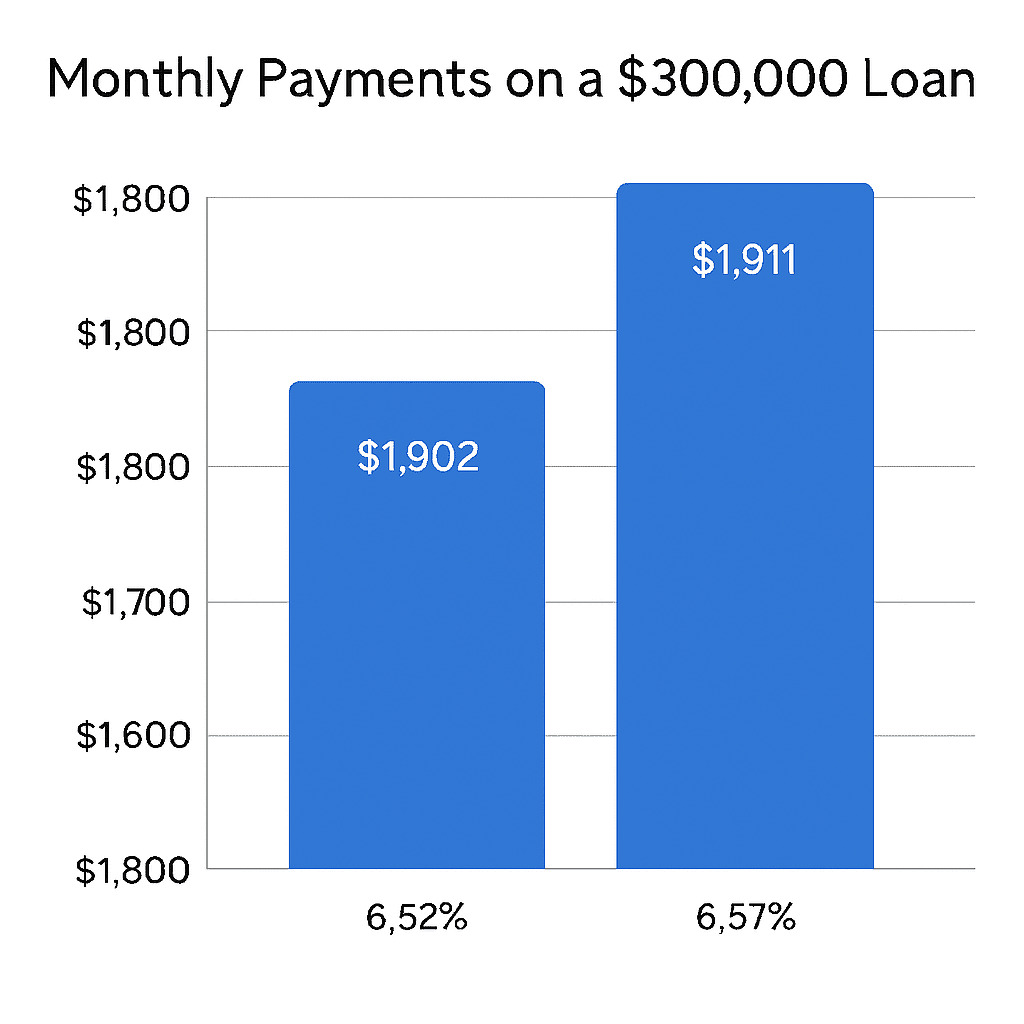
To illustrate, let's imagine you have a $300,000 mortgage. Without factoring in any fees and costs, here is how much of a difference it can make in monthly payments:

  • At 6.83%: Your approximate monthly payment (principal and interest) would be about $1,969.
  • At 6.78%: Your approximate monthly payment (principal and interest) would be about $1,960.

That's a savings of around $9 per month,. While it might seem small, over the 30-year term, you'd save over $3,200.

Key Factors Influencing Refinance Eligibility

Besides the current rate environment, there are other factors that determine whether you can actually qualify for a refinance. These include:

The Role of Credit Scores in Refinancing

Your credit score is critical to getting a good refinance rate. Lenders use your credit score to assess the risk of lending you money. The higher your score, the lower the interest rate you're likely to get. Aim for a credit score of 740 or higher to qualify for the best rates.

Loan-to-Value (LTV) Ratio

Your LTV ratio is the amount of your loan compared to the appraised value of your home. A lower LTV ratio (meaning you have more equity in your home) makes you a less risky borrower, which can result in a better rate. A general thumb rule is your LTV should be at least 80% or lower to qualify for better mortgage rates.

Debt-to-Income (DTI) Ratio

Lenders also look at your DTI Ratio. This is your monthly debt payments compared to your gross monthly income. The lower your DTI, the better. Lenders want to see that you have enough income to comfortably manage your debt.

Income Stability and Employment History

Lenders prefer borrowers with a stable income and a solid employment history. A consistent employment record demonstrates your ability to consistently repay the loan.

Benefits of Refinancing for First-Time Homeowners

Refinancing isn't just for seasoned homeowners. If you're a first-time home buyer, there are several advantages to refinancing depending on when you bought your house and at what rates.

  • Lower Interest Rate: If interest rates have dropped since you got your original mortgage, refinancing can save you money over the life of the loan.
  • Shorter Loan Term: Refinancing from a 30-year to a 15-year mortgage can help you pay off your home faster and save on interest.
  • Changing Loan Type: You could switch from an adjustable-rate mortgage (ARM) to a fixed-rate mortgage for more stability.
  • Cash-Out Refinance: This option allows you to tap into your home's equity for things like renovations or debt consolidation.

Recommended Read:

30-Year Fixed Refinance Rate Trends – November 27, 2025

Best Time to Refinance Your Mortgage: Expert Insights

Should You Refinance Your Mortgage Now or Wait Until 2026? 

How Interest Rate Fluctuations Affect Refinancing Decisions

Interest rates are constantly in motion, depending on the economic indicators. These can heavily affect mortgage refinance decisions.

  • Economic Growth: A strong economy can lead to higher interest rates due to increased demand for loans.
  • Inflation: High inflation often results in higher interest rates as the Federal Reserve tries to control rising prices.
  • Federal Reserve Policy: The Fed's decisions on interest rates directly impact mortgage rates.
  • Global Economic Conditions: Events happening around the world can affect U.S. interest rates.

Latest Trends in Mortgage Refinance Rates

Besides today's slight dip in rates, there are a few other trends worth noting:

  • Home equity lines of credit (HELOCs) are an alternative: Many homeowners are taking advantage of HELOCs or home equity loans to access their home equity (instead of refinancing and losing their low mortgage rates.
  • Refinancing boom unlikely: Experts don't expect a refinance boom anytime soon. A big drop in rates would be needed to kickstart one.

Mortgage Refinance Alternatives

If refinancing doesn't seem like the best option for you, there are other avenues to consider:

  • Home Equity Loan: Provides a lump sum with a fixed interest rate, ideal for specific large expenses.
  • HELOC (Home Equity Line of Credit): Offers flexible access to funds with a variable interest rate, suitable for ongoing or unpredictable expenses.
  • Personal Loan: An unsecured loan that can be used for various purposes without tapping into home equity, but may come with higher interest rates.
  • Stay Put: Sometimes, the best option is to wait for more favorable market conditions or improved personal circumstances.
  • Renegotiate: Call your lender and renegotiate terms and conditions.
  • Blend Equity Release / Retirement Mortgages: This is applicable for people who are 55 and over.

Takeaway

Even though rates aren't at pandemic-era lows, think deeply about if refinancing is right for you now if rates have dropped since you opened your mortgage. Even with the 5 basis point dip in 30-year refinance rates today, it's important to remember that the decision to refinance depends on multiple factors. Keep your eye on those credit scores, shop around with multiple lenders, and crunch numbers to determine whether such decisions are right for you.

“Invest Smart — Build Long-Term Wealth Through Real Estate”

Norada's team can guide you through current market dynamics and help you position your investments wisely—whether you're looking to reduce rates, pull out equity, or expand your portfolio.

Work with us to identify proven, cash-flowing markets and diversify your portfolio while borrowing costs remain favorable.

HOT NEW TURNKEY DEALS JUST LISTED!

Speak with a seasoned Norada investment counselor today (No Obligation):

(800) 611-3060

Get Started Now

Recommended Read:

  • When You Refinance a Mortgage Do the 30 Years Start Over?
  • Should You Refinance as Mortgage Rates Reach Lowest Level in Over a Year?
  • NAR Predicts 6% Mortgage Rates in 2025 Will Boost Housing Market
  • Mortgage Rates Predictions for 2025: Expert Forecast
  • Half of Recent Home Buyers Got Mortgage Rates Below 5%
  • Mortgage Rates Need to Drop by 2% Before Buying Spree Begins
  • Will Mortgage Rates Ever Be 3% Again: Future Outlook
  • Mortgage Rates Predictions for Next 2 Years
  • Mortgage Rate Predictions for Next 5 Years
  • Mortgage Rate Predictions for 2025: Expert Forecast

Filed Under: Financing, Mortgage Tagged With: mortgage, mortgage rates, Mortgage Refinance Rates

Fed Signals Growing Reluctance to Interest Rate Cut in December 2025

November 28, 2025 by Marco Santarelli

Fed Signals Growing Reluctance to Interest Rate Cut in December 2025

The Federal Reserve's recent signals are making it clearer than ever: a December 2025 interest rate cut is looking less and less likely. While the Federal Open Market Committee (FOMC) did reduce the federal funds rate by 25 basis points in October 2025, the freshly released minutes from their November 19 meeting reveal a palpable hesitation among policymakers about cutting rates again in December.

Fed Signals Growing Reluctance to Interest Rate Cut in December 2025

This caution stems from a difficult balancing act between wanting to support employment and the persistent need to bring inflation fully back down to their 2% target. As things stand now, the path forward for interest rates is far from certain, and a pause in December seems to be the leading scenario.

For months, the big question on everyone's mind has been: when will the Fed start lowering interest rates? After a series of hikes to combat soaring inflation, the economy has shown signs of cooling, leading many to anticipate rate cuts. Yet, the latest insights from the Fed suggest that while they've eased policy a bit, they're not quite ready to keep pushing rates down. This is a critical moment, and understanding why the Fed is hesitant is key to grasping what might happen next in our economy, from borrowing costs to job markets.

The October Meeting: A Step Back, Not a Leap Forward

The meeting on October 28–29, 2025, resulted in the Fed's second rate cut of the year, bringing the target federal funds rate down to a range of 3.75%–4.00%. This move was intended to help bolster employment as economic growth showed signs of slowing. However, the vote was closer than expected, with a 10–2 split.

This wasn't just a minor disagreement; it highlighted genuinely different views within the committee. One policymaker voted for a more substantial 50 basis point cut, believing it was needed to more aggressively tackle rising unemployment risks. On the other hand, another dissenter felt it was better to hold rates steady, emphasizing the need for more solid proof that inflation was truly under control.

In my opinion, this split vote is a significant clue. It tells us that even when the Fed does decide to ease, there are substantial concerns about doing too much, too soon. The Fed's main goal is to achieve both maximum employment and price stability (keeping inflation at 2%). Right now, these goals seem to be pulling in slightly different directions, making their decisions incredibly complex.

Additionally, the Fed also announced it would end its balance sheet runoff by December 1, 2025. This is essentially a way to inject more liquidity into the financial system. It’s like them saying, “We're easing on one front with rates, but we're also preparing to ease liquidity, giving us more flexibility for future decisions.” They are trying to carefully manage the system without creating new problems.

Digging into the Minutes: What Policymakers Are Really Thinking

The minutes from the November 19 release are where we get the real meat of the discussion. They revealed that many FOMC participants expressed reservations about cutting rates again in December. Why? The minutes pointed to a couple of main reasons:

  • Inflation is Still Sticky: While inflation has come down considerably from its peaks, it's currently hovering around 2.8% (for core PCE), which is still above the Fed's 2% target. Some policymakers worried that further rate cuts could risk inflation becoming entrenched, meaning it gets stuck at a higher level than desired. They specifically noted that “further policy rate reductions could add to the risk of higher inflation becoming entrenched or could be misinterpreted as implying a lack of policymaker commitment to the 2 percent inflation objective.” That's a direct quote from the minutes, folks, and it’s pretty telling.
  • Uncertainty from Economic Data: The recent U.S. government shutdown caused disruptions in data collection, making it harder for the Fed to get a clear picture of the economy's true health. This lack of solid, up-to-date information makes making big policy decisions, like cutting rates, a much riskier proposition.

Key Concerns Highlighted in the Minutes:

  • Inflation Risks: Upside risks to inflation were described as “elevated.”
  • Data Gaps: The government shutdown led to a high degree of uncertainty about the economic outlook.
  • Policy Commitment: A desire to signal unwavering commitment to the 2% inflation goal.

The minutes suggest that while the overall economy is still expanding at a “moderate pace,” fueled by consumer spending and exports, these underlying concerns about prices are weighing heavily on the minds of Fed officials.

The Employment Picture: Cooling, But Not Collapsing

On the flip side, the labor market has shown clear signs of cooling. Job gains have slowed, and the unemployment rate has edged up slightly, now around 4.2%. This is still historically low, and layoff rates remain subdued. The Fed acknowledges this softening and sees it as one of the main reasons for the October rate cut. However, the minutes also indicate that this employment picture, while weakening, isn't yet dire enough to override the inflation concerns for many.

The Fed's dual mandate is crucial here: they need to keep prices stable and support maximum employment. When inflation is stubbornly above target, and the job market is cooling but not alarming, the tendency is to prioritize getting inflation back to 2% before aggressively cutting rates to boost jobs. This is a delicate dance, and right now, inflation seems to be the heavier foot.

December Rate Cut Scenarios: What's Likely and Why

December Rate Cut Predictions: Scenarios and Probabilities

Based on the minutes and recent market reactions, here's how I see the potential scenarios for the December 16–17 FOMC meeting:

1. The Hawkish Hold (Most Probable)

  • What it means: The Fed keeps interest rates unchanged at the current 3.75%–4.00% range.
  • Why it's likely: This scenario aligns with the growing reluctance expressed in the minutes. If incoming data in November (like jobs reports and inflation figures) shows continued evidence of inflation staying above target or a strong labor market, the Fed will likely hold. This sends a signal that they need more convincing evidence that inflation is on a sustainable path back to 2%.
  • Market Implication: This would likely temper expectations for rapid rate cuts in early 2026, potentially leading to slightly higher bond yields and a steadier stock market. As of my last check, market odds favored this outcome at around 67%.

2. The Dovish Cut (Still Possible, but Less Likely Now)

  • What it means: The Fed cuts rates by 25 basis points, bringing the target range down to 3.50%–3.75%.
  • Why it could happen: This would align more closely with the September “dot plot” projections, which suggested two rate cuts by year-end 2025. If November's jobs report shows a significant weakening (e.g., fewer than 150,000 new jobs) or inflation data unexpectedly cools sharply, the Fed might opt for a cut to support employment.
  • Market Implication: A cut would likely boost stock markets and lower borrowing costs, but it could also reignite fears of inflation returning. This scenario's probability, which had briefly surged earlier in the week, has now fallen to around 33%.

3. Aggressive Easing (Very Unlikely)

  • What it means: A cut of 50 basis points or more.
  • Why it's unlikely: This would require a truly alarming economic shock, like a rapid surge in unemployment or a sudden deflationary scare, neither of which appears imminent based on current data. This scenario would echo the more aggressive dissent seen in the October meeting but doesn't fit the Fed's current measured approach.

Looking Beyond December: The 2026 Outlook

The September 2025 “dot plot” (which is the Fed's projection of where it sees interest rates going) is still a key reference point. It indicated a median federal funds rate of 3.4% by the end of 2025, implying one more cut from the current level. For 2026, the projection was for rates to move lower, toward a neutral rate of around 3%. While the October minutes introduce ambiguity about December, the longer-term trend still points toward eventual easing. However, how quickly and how smoothly that easing occurs is the big question.

Historical Context: A Turnaround in Progress

It's helpful to remember where we've come from. After aggressively hiking rates from near zero in 2022 to combat runaway inflation, the Fed began its pivot to easing in late 2024.

Event Change (bps) Target Range (%)
July 2023 (Peak) +25 5.25–5.50
Sep 2024 -50 4.75–5.00
Nov 2024 -25 4.50–4.75
Dec 2024 -25 4.25–4.50
Sep 2025 -25 4.00–4.25
Oct 2025 -25 3.75–4.00

This table shows a cumulative easing of 150 basis points since September 2024. The effective federal funds rate has followed a similar downward trend, currently sitting around the 4.09% mark for October 2025. This easing cycle is happening as inflation has calmed but not yet fully settled at the 2% target.

chart illustrates the federal funds effective rate's evolution from 2024 onward:

Implications for You: What This Means for Your Wallet

So, what does this growing Fed reluctance mean for everyday people and investors?

  • For Borrowers: If the Fed pauses in December, it means that borrowing costs might not fall as quickly as some had hoped. Mortgage rates, currently around 6.5%, might stabilize or even tick up slightly if inflation fears resurface. Auto loans (around 7%) and credit card rates (around 20%) won't see any immediate relief from further Fed cuts in December.
  • For Savers: This is good news for savers. If rates stay higher for longer, you'll continue to earn decent interest on your savings accounts, CDs, and money market funds, which are currently offering yields around 4%.
  • For Investors: A December pause might temper the immediate optimism for a strong market rally driven by easy money. However, it could also reinforce the narrative of a “soft landing”—an economy that cools without plunging into recession. Investors will be watching closely for any signs of economic distress that might force the Fed's hand later. Strong November jobs data, for example, could be seen as positive for the economy but negative for immediate rate cut hopes.
  • For Businesses: Businesses will likely face continued higher borrowing costs, which could influence investment decisions. However, stable inflation expectations might provide some predictability. The end of QT could also provide some liquidity benefits.

My Take: A Measured Approach is Likely

From my perspective, the Fed is in a tough spot, and their caution is warranted. The economy has been surprisingly resilient, but the battle against inflation isn't completely won. The minutes from the October meeting strongly suggest that the Committee wants to be very sure before embarking on another round of rate cuts.

I believe the most likely scenario is a hawkish hold in December. This allows the Fed to gather more data, assess the impact of the October cut, and see if inflation truly continues on its downward path. They've learned from history that prematurely cutting rates when inflation is still a concern can be a costly mistake, potentially leading to the inflationary spirals of the 1970s.

However, I also believe they are keenly aware of employment risks. If the job market shows signs of significant weakness in the coming weeks, they won't hesitate to cut rates to fulfill their mandate. The key takeaway is that the Fed is truly data-dependent, and their decisions will be guided by the incoming economic reports.

The Fed's signals of growing reluctance to cut interest rates in December 2025 reflect a delicate balancing act against persistent inflation. Explore the FOMC minutes, economic backdrop, and expert outlooks to understand the evolving monetary policy outlook.

Invest in Real Estate While Rates Are Dropping — Build Wealth

If the Federal Reserve moves forward with another rate cut in December, investors could gain a valuable window to secure more favorable financing terms and scale their portfolios ahead of renewed buyer demand.

Lower borrowing costs would boost cash flow and enhance overall returns, especially for those positioned to act quickly

Work with Norada Real Estate to find turnkey, income-generating properties in stable markets—so you can capitalize on this easing cycle and grow your wealth confidently.

NEW TURNKEY DEALS JUST ADDED!

Talk to a Norada investment counselor today (No Obligation):

(800) 611-3060

Get Started Now

Want to Know More?

Explore these related articles for even more insights:

  • Fed Cuts Interest Rate Today for the Second Time in 2025
  • Fed Interest Rate Decision Today: Markets Prepare for Quarter-Point Rate Cut
  • Fed Interest Rate Forecast Q4 2025: Target Range Could Hit 3.50%–3.75%
  • Fed Interest Rate Forecast for the Next 12 Months
  • Federal Reserve Cuts Interest Rate by 0.25%: Two More Cuts Expected in 2025
  • Interest Rate Predictions for the Next 3 Years: 2025, 2026, 2027
  • When is Fed's Next Meeting on Interest Rate Decision in 2025?
  • Interest Rate Predictions for the Next 10 Years: 2025-2035
  • Interest Rate Predictions for 2025 by JP Morgan Strategists
  • Interest Rate Predictions for Next 2 Years: Expert Forecast
  • Market Reactions: How Investors Should Prepare for Interest Rate Cut
  • Impact of Interest Rate Cut on Mortgages, Car Loans, and Your Wallet

Filed Under: Economy, Financing Tagged With: Economy, Fed, Federal Reserve, FOMC Meeting, interest rates

Can Mortgage Rates Drop Below 6% in the Next 2 Months?

November 28, 2025 by Marco Santarelli

Will Mortgage Rates Go Down Below 6% in the Next Two Months?

Based on what I'm seeing and hearing from the experts, combined with the latest economic figures and recent rate trends, it's highly unlikely that average 30-year fixed mortgage rates will drop below 6% within the next two months. While I know that's probably not the news some of you were hoping for, it’s important to have a realistic picture of where things stand.

Can Mortgage Rates Drop Below 6% in the Next 2 Months?

Predicting these things precisely is more of an art than a science. There are a lot of moving parts, and even the most respected analysts often have differing opinions. However, the consensus among major players like Fannie Mae and the Mortgage Bankers Association (MBA) suggests that we’ll likely see rates stay above that 6% mark through the end of 2025.

Some forecasts even suggest a possibility of dipping below 6% by late 2026. While a short-term forecast from HSH.com (ending January 2, 2026) places average rates in the 5.98% to 6.38% range, this still hints at staying right around or just above the 6% threshold in the immediate future.

So, What’s Really Driving Mortgage Rates Right Now?

It's easy to look at mortgage rates and think they’re just plucked out of thin air. But in reality, they're deeply connected to the economy and the decisions made by big players like the Federal Reserve. Think of it like a complex machine with many gears.

The Federal Reserve's Balancing Act

You’ve probably heard a lot about the Federal Reserve (often called the “Fed”). They are the central bank of the United States, and one of their main jobs is to manage the economy by influencing interest rates. Back in September and October of 2025, the Fed made two rate cuts, each of 25 basis points. This was a move designed to help out a labor market that was showing signs of weakness.

Now, a common question I get is: “Will these cuts automatically make my mortgage cheaper?” Not directly, and not overnight. The Fed’s cuts directly impact the federal funds rate, which is a short-term borrowing rate between banks. While this influences everything else in the financial system, mortgage rates are more closely tied to longer-term trends.

The big unknown is whether the Fed will decide to cut rates again in December. Officials are looking at a lot of data, and honestly, they're getting some mixed signals. Some see the economy improving, while others are still concerned about inflation. This uncertainty is a huge reason why mortgage rates aren't dropping rapidly. Traders are essentially split on whether another December cut will happen.

Inflation's Persistent Glow

Let’s look at the numbers. As of mid-November 2025, the latest figures show a Core CPI of around 2.95% year-over-year, with the overall headline CPI at roughly 2.99%. This means inflation has been rebounding slightly, largely thanks to higher energy and shelter costs, but it’s still hanging below the critical 3% mark.

  • October 2025 Inflation Recap: Monthly data for October showed CPI increasing by 0.31% and Core CPI by 0.25%.

While these numbers are concerning enough to make the Fed cautious, they aren't so high that they necessarily demand immediate, aggressive action to raise rates. This persistent, but not runaway, inflation is a key factor keeping the Fed from aggressively lowering rates, which in turn keeps mortgage rates from dropping sharply.

The Job Market: Still Resilient, But Showing Cracks

The labor market is another crucial piece of the puzzle for the Fed. According to ADP, US companies have been shedding jobs at an average of about 2,500 per week in the four weeks leading up to November 1, 2025. Now, that might sound alarming, but it's a relatively small number in the grand scheme of the US economy.

We’re still awaiting updated government reports for October due to recent delays, but the September 2025 employment data gave us a picture of around 50,000 new jobs added, with the unemployment rate holding steady at 4.3%.

So, what does this tell us? The job market isn't roaring back to life, but it also isn't collapsing. This “middle ground” is what gives the Fed room to consider rate cuts, but the slight softening we're seeing in job additions might be enough to encourage them to pause and assess further before December.

Treasury Yields: A Modest Downward Trend

When we talk about mortgage rates, it's impossible to ignore the 10-year Treasury yield. As of November 18, 2025, this important benchmark is sitting at 4.12%.

What’s interesting is that this yield has declined modestly from earlier highs. It's actually about 0.29 percentage points lower than it was at the same time last year. This downward movement is a direct reaction to investors anticipating further Fed action and responding to the softer economic data we've been seeing, such as the jobs figures and the sticky-but-not-exploding inflation. Lower Treasury yields generally translate to lower mortgage rates, but as you can see, 4.12% on the 10-year yield doesn't typically translate to a 30-year fixed mortgage rate much below 6%.

Where Are Mortgage Rates Actually Sitting?

Looking at the Primary Mortgage Market Survey® data from November 13, 2025, provides a very current snapshot. The average 30-Year Fixed-Rate Mortgage (FRM) is currently at 6.24%.

It's worth noting that this is a slight increase of 0.02% from the week prior. However, when we look back a year, it's a significant improvement, down -0.54% from the same time last year. The monthly average is sitting just below at 6.21%, and the 52-week average is higher at 6.67%. The 52-week range has seen rates as low as 6.17% and as high as 7.04%.

Even the 15-Year Fixed-Rate Mortgage (FRM), which typically offers a lower rate, is at 5.49%. This is down just a hair by -0.01% from the previous week and down -0.50% year-over-year.

These figures from the survey reinforce the idea that we're hovering right around that 6% mark, and the very slight uptick within the last week suggests that any immediate downward pressure is being countered by other market forces.


Related Topics:

Mortgage Rate Predictions for the Next 30 Days: Nov 10 to Dec 10, 2025

Mortgage Rates Predictions for the Next 12 Months: Nov 2025 to Nov 2026

Mortgage Rates Predictions for Next 90 Days: October to December 2025

What Does This Mean for You as a Homebuyer?

Seeing a target like “sub-6% mortgage rates” can make anyone want to hit the pause button on their homebuying plans. I understand that temptation. However, from my experience, waiting for the “perfect” rate is often a gamble that doesn’t pay off. Here’s why:

  • Predicting the Future is Hard (Really Hard!): As we've discussed, there are so many economic forces at play. Even experts get it wrong. You could wait for rates to drop, only to find they actually go up, or stay the same. The slight week-over-week increase in the 30-year FRM shows just how sensitive these numbers are.
  • Home Prices Can Keep Rising: While higher mortgage rates can cool down buyer demand slightly, in many areas, low inventory continues to be a major issue. If rates do drop significantly in the future and more buyers flood the market, home prices could easily tick back up. You might end up paying more for the house in price, even if your monthly payment is similar due to a lower rate.
  • You Can Improve Your Odds: Instead of just waiting, I always advise my clients to focus on what they can control.

  • Boost Your Credit Score: Even a small improvement can make a difference. Pay bills on time, reduce credit card balances.
  • Save for a Bigger Down Payment: More money down means borrowing less and potentially getting a better rate.
  • Shop Around: This is HUGE! Don't just go with the first lender you talk to. Get quotes from at least 3-5 different lenders – banks, credit unions, mortgage brokers. You might be surprised at the differences.
  • Explore Different Loan Options: Have you talked about an adjustable-rate mortgage (ARM)? While they come with their own risks, the introductory rates can be lower than fixed rates. Or consider a shorter loan term if your budget allows for the higher monthly payment; you'll pay significantly less interest over the life of the loan and potentially can get a lower fixed rate.

My Personal Take: Don't Be Paralyzed by Rate Fear

I’ve seen buyers hold off for months, even years, waiting for rates to hit a certain number. Sometimes it works out, but more often than not, they either miss out on a home they loved or end up paying more overall because of rising prices.

My advice is to figure out what monthly payment you are comfortable with and what you can afford today. Get your finances in order, get pre-approved, and start your home search. You can always refinance down the line if rates do drop significantly. Many homeowners who bought homes in recent years when rates were also elevated have since refinanced to lower rates. It's a strategy that has worked for many, and it could work for you too.

The market is dynamic, and while it looks improbable that we'll see average mortgage rates plummet below 6% in the next 60 days, that doesn't mean buying a home isn't a smart move for you right now. Focus on your financial health, do your homework, and make a decision that feels right for your personal circumstances.

Want Stronger Returns? Invest Where the Housing Market’s Growing

Turnkey rental properties in fast-growing housing markets offer a powerful way to generate passive income with minimal hassle.

Work with Norada Real Estate to find stable, cash-flowing markets beyond the bubble zones—so you can build wealth without the risks of ultra-competitive areas.

🔥 HOT NEW LISTINGS JUST ADDED! 🔥

Talk to a Norada investment counselor today (No Obligation):

(800) 611-3060

Get Started Now

Also Read:

  • Who Benefits Most from Today's Lower Mortgage Rates?
  • Mortgage Rates Predictions Backed by 7 Leading Experts: 2025–2026
  • Mortgage Rate Predictions for the Next 3 Years: 2026, 2027, 2028
  • 30-Year Fixed Mortgage Rate Forecast for the Next 5 Years
  • 15-Year Fixed Mortgage Rate Predictions for Next 5 Years: 2025-2029
  • Will Mortgage Rates Ever Be 3% Again in the Future?
  • Mortgage Rates Predictions for Next 2 Years
  • Mortgage Rate Predictions for Next 5 Years
  • Mortgage Rate Predictions: Why 2% and 3% Rates are Out of Reach
  • How Lower Mortgage Rates Can Save You Thousands?
  • How to Get a Low Mortgage Interest Rate?
  • Will Mortgage Rates Ever Be 4% Again?

Filed Under: Financing, Mortgage Tagged With: Interest Rate, mortgage, Mortgage Rate Trends, mortgage rates, Mortgage Rates Today

Florida Housing Market Forecast for the Next 12 Months

November 28, 2025 by Marco Santarelli

Florida Housing Market Predictions for the Next 12 Months

Thinking about buying or selling a home in the Sunshine State? You’re probably wondering what on earth is going to happen next. After a few years of dizzying price hikes and market madness, things are starting to feel… different. So, what are the Florida housing market predictions for the next 12 months? In short, I see a market that’s finally catching its breath and settling into a more stable, balanced rhythm. Expect home prices to flatten out, not crash, with modest single-digit growth in some areas, while sales activity will continue to be heavily influenced by mortgage rates, creating windows of opportunity for savvy buyers.

Florida Housing Market Forecast for the Next 12 Months

I've been analyzing real estate trends in Florida for years, and what we're seeing now isn't a sign of collapse; it's a much-needed return to normalcy. The frantic, buy-at-any-cost days are behind us, and that’s a good thing for everyone. Let’s break down what the latest data is telling us and what I believe it means for you over the coming year.

A Quick Look Back: What Just Happened in the Florida Market?

Before we look forward, we have to understand where we are right now. The latest numbers from Florida Realtors® for September paint a really interesting picture. After a long period of slumping sales, we're seeing signs of life again.

Here’s a snapshot of the key takeaways from their September report:

  • Sales Are Up: Existing single-family home sales jumped 13.6% compared to this time last year. That’s a big deal. Even condo and townhouse sales, which have been sluggish, saw an 8% increase.
  • Prices Are Leveling Off: The statewide median price for a single-family home was $410,000. The most important part? That’s the exact same price as it was a year ago. For condos, the median price was $299,000, which is actually down a bit. This tells us the days of 20% year-over-year price gains are over.
  • Mortgage Rates are the Puppet Master: According to Florida Realtors® Chief Economist Dr. Brad O’Connor, the recent dip in mortgage rates is a huge reason for this renewed activity. When rates briefly fell over the summer, buyers came off the sidelines. This shows just how sensitive the market is to affordability.
  • Pending Sales Look Promising: New pending sales (homes that went under contract but haven't closed yet) were up for the second month in a row. This is a great forward-looking indicator that suggests the sales momentum could continue.

So, the data shows a market that's shifting from a wild seller's market to something more balanced. The fear is subsiding, and strategic moves are replacing panicked decisions.

My Top 5 Florida Housing Market Predictions for the Next 12 Months

Based on this data, my own experience in the field, and the larger economic factors at play, here are my five key predictions for what we can expect in Florida over the next year.

1. The End of the Price Freefall: Hello, Stability.

I’ll say it again: we are not heading for a 2008-style crash. The leveling of the median home price at $410,000 is the strongest evidence of this. For months, prices were correcting from their unsustainable peak. Now, they've found a floor.

Over the next 12 months, I predict that home prices will largely move sideways, with slight variations by region. We might see some markets eke out a 1-3% gain, while others might see a small 1-2% dip, but the statewide median will hover in a very tight range. Why? Because the fundamental demand for Florida living hasn't gone away. People are still moving here for jobs, weather, and the lack of state income tax. This consistent influx of new residents creates a safety net under home prices that prevents them from collapsing.

2. Mortgage Rates Will Be the Market's Most Valuable Player (MVP)

Everything hinges on interest rates. The Federal Reserve's fight against inflation has kept rates elevated, sidelining many would-be buyers. As Dr. O'Connor noted, even a small drop in rates can reignite demand.

My prediction is that mortgage rates will slowly and unevenly trend downward over the next 12 months, likely settling in the low-to-mid 6% range by this time next year. There will be volatility along the way. When rates dip, expect a flurry of activity from buyers who have been waiting patiently. When they tick back up, the market will cool off again.

For buyers, this means being prepared is paramount. Have your financing in order so you can lock in a rate and make an offer the moment an opportunity presents itself.

3. Inventory Will Grow, But at a Snail's Pace

Inventory, or the number of homes for sale, gives us a sense of market balance. A 5-6 month supply is considered healthy. Right now, Florida has a 5.1-month supply of single-family homes—perfectly balanced!

However, the condo market is a different story, with a 9.1-month supply. This puts it firmly in buyer's market territory.

Over the next year, I expect overall inventory to continue to rise, but not dramatically. Many current homeowners are locked into sub-3% mortgage rates and have no desire to sell and take on a new loan at double that rate. This “lock-in effect” will keep a lid on the number of homes hitting the market, which in turn will support prices. We won't see a flood of listings, but buyers will have more choices than they've had in years.

4. The Condo Market: A Tale of Opportunity and Caution

The high inventory and falling prices in the condo market are a direct result of two major factors: soaring insurance costs and rising HOA fees, often driven by new safety and maintenance requirements following the Surfside tragedy.

This creates a fantastic opportunity for some, but a potential minefield for others.

  • The Opportunity: For cash buyers or those who can navigate the financing hurdles, there are deals to be had. You’ll have more negotiating power and a wider selection of properties.
  • The Caution: You must do your due diligence. I can't stress this enough. Investigate the condo association's financial health. Are the reserves fully funded? Are there any large special assessments planned? A low purchase price can be quickly negated by a $30,000 assessment for a new roof.

I predict the condo market will remain a buyer's market for the next 12 months, with prices staying soft until the insurance and HOA fee situations stabilize.

Market Segment Current Supply Price Trend My 12-Month Outlook
Single-Family Homes 5.1 Months (Balanced) Stable Slight price stability to modest growth (1-3%)
Condos/Townhouses 9.1 Months (Buyer's Market) Decreasing Prices will remain soft; a great opportunity for diligent buyers

5. Florida's “Magnetic” Appeal Isn't Fading

Let's zoom out from the monthly stats. The long-term story for Florida is still incredibly strong. It remains one of the fastest-growing states in the country. This isn't just about retirees anymore; we're seeing major corporate relocations, a booming tech scene in places like Miami and Tampa, and a steady stream of families looking for a better quality of life. This fundamental, underlying demand is the bedrock of our housing market and will prevent any prolonged downturn.

What This Means For You: A Practical Guide

Predictions are great, but how do they apply to your personal situation?

For Buyers: The next 12 months could be your “golden window.” You'll face less competition, have more inventory to choose from, and may even be able to negotiate on price. The key is to be patient and ready. Don't try to time the absolute bottom of the market. Instead, focus on finding the right home for your family and budget. Remember the old saying: “Marry the house, date the rate.” You can always refinance when rates eventually come down.

For Sellers: Your mindset has to shift from 2021. Pricing your home accurately from day one is the most important thing you can do. Overpriced homes will sit on the market and accumulate “stale” days, forcing you to make price cuts later. A well-presented, competitively priced home will still sell in a timely manner. The market is no longer a lottery where every ticket is a winner; it's a strategic game where preparation and realistic expectations lead to success.

A Tale of Two Floridas: Why Location Still Matters Most

It's crucial to remember that Florida is not one single market. The trends in Miami-Dade will be different from those in Jacksonville or The Villages.

  • Major Metro Areas (Tampa, Orlando, South Florida): These areas benefit from strong job growth and will likely remain the most resilient. I expect prices here to stay firm and potentially see modest appreciation.
  • Coastal/Insurance-Sensitive Areas: Coastal communities, particularly those with older housing stock, will face the biggest headwinds from property insurance costs. This could suppress price growth in certain zip codes.
  • Second Home/Vacation Markets: These markets are more sensitive to economic downturns and high interest rates. While demand is still there, expect a more pronounced return to a balanced market in these areas.

My Final Take: The Verdict on the Next 12 Months

The Florida housing market predictions for the next 12 months point toward a much-needed normalization. The market is taking a deep breath after a frantic sprint. We're transitioning from a period of volatility to one of stability.

I am cautiously optimistic. We will see a healthier, more sustainable market where buyers have a chance to think and sellers can still get a fair price for their homes. It won’t be the wild ride of the past few years, and frankly, that's good news for the long-term health of real estate in the Sunshine State.

Invest in Turnkey Properties in Florida’s Changing Market

Norada Real Estate helps you invest in turnkey rental properties that deliver monthly cash flow, inflation protection, and tax advantages like depreciation and 1031 exchanges—perfect for early retirement planning.

NEW FLORIDA LISTINGS AVAILABLE NOW!

Speak with a seasoned Norada investment counselor today (No Obligation):

(800) 611-3060

Get Started Now

Want to Know More About the Florida Housing Market?

Explore these related articles for even more insights:

  • Florida Housing Market Trends: 4 Cities Turn Buyer-Friendly in 2025
  • Florida Housing Market Faces Fallout Amid NFIP Freeze and Permit Delays
  • Florida Housing Market Sees a Major Shift With a Jump in Pending Sales
  • Florida Housing Prices Drop for the Fifth Consecutive Month in 2025
  • Is the Florida Housing Market on the Edge of a Crash or Downturn?
  • 24 Florida Housing Markets Could See Home Prices Drop by Early 2026
  • Is the Florida Housing Market Headed for Another Crash Like 2008?
  • Key Trends Shaping the Florida Housing Market in 2025
  • This Florida Housing Market Bucks National Trend With Declining Prices
  • Florida Housing Market Crash 2.0? Analyst Warns of 2008 Echoes
  • Tax Relief Proposed as Florida Housing Market Faces Deepening Crisis
  • Florida Housing Market: Record Supply Expected to Favor Buyers in 2025
  • Florida Housing Market Forecast for Next 2 Years: 2025-2026
  • Florida Housing Market: Predictions for Next 5 Years (2025-2030)
  • When Will the Housing Market Crash in Florida?
  • South Florida Housing Market: Will it Crash?

Filed Under: Housing Market, Real Estate Market Tagged With: Florida, Florida Housing Market Predictions, Housing Market

Pros and Cons of Locking in a Mortgage Rate Now vs Waiting

November 28, 2025 by Marco Santarelli

Pros and Cons of Locking in a Mortgage Rate Now vs Waiting

The big question on everyone's mind right now, especially if you're looking to buy a home, is whether to lock in your mortgage rate today or try your luck waiting for an even better deal. With rates currently sitting at some of the lowest points we've seen all year, it's a decision that could save you thousands of dollars over the life of your loan. In my experience, locking in a rate now offers stability and protection against unpredictable market swings, but it's not a one-size-fits-all answer. Let's break down what's happening and what it means for you.

Pros and Cons of Locking in a Mortgage Rate Now vs Waiting

Understanding Today's Mortgage Rate Situation

It feels like just yesterday we were looking at mortgage rates hovering above 7%, and now, thanks to some strategic moves by the Federal Reserve, they've dipped into the low-to-mid 6% range. This is a significant drop! The Fed's decision to cut the federal funds rate a couple of times this fall has had a ripple effect, helping to cool things down and bring mortgage rates lower.

However, it’s not all smooth sailing. The market is still a bit like a roller coaster – up one day, down the next. A tiny bit of inflation creeping back in, or a surprisingly strong jobs report, can send rates bouncing around. Right now, inflation is hanging around 3%, and the Fed’s target is a nice, round 2%. Until we get closer to that 2% mark, we probably won't see mortgage rates plummeting dramatically and staying there.

The 10-year Treasury yield is also a big player here. It usually moves hand-in-hand with mortgage rates. When that yield dips, mortgage rates tend to follow. But if that yield suddenly jumps – bam! – mortgage rates could shoot back up quickly.

What are the experts saying? Well, it’s a mixed bag. Some, like the chief economist at the National Association of Realtors, think rates will average around 6% next year. Others, like the Mortgage Bankers Association, are predicting rates will stay in the mid-6% range for a while. Fannie Mae even tossed out the idea that rates could dip below 6% by the end of next year.

And then there's the “lock-in effect.” Many homeowners who got those super-low rates during the pandemic (think below 4%) are hesitant to sell because they don't want to trade their cheap mortgage for a much more expensive one. This lack of homes for sale means even with rates higher than they were, prices can still climb because demand is strong relative to the limited supply.

Here’s a clean, informative table comparing the potential savings of locking in a mortgage rate now versus waiting, based on the latest Primary Mortgage Market Survey® data from Freddie Mac as of November 20, 2025:

Lock Now vs. Wait: Mortgage Rate Comparison

Loan Type Current Avg Rate 52-Week High Potential Savings (vs High) Monthly Payment* (Now) Monthly Payment* (At High) Monthly Savings
30-Year FRM 6.26% 7.04% ↓ 0.78% $2,470 $2,685 $215
15-Year FRM 5.54% 6.27% ↓ 0.73% $3,278 $3,446 $168

*Monthly payments are based on a $400,000 loan amount. Estimates assume principal and interest only.

 Key Takeaways

  • Locking in now could save borrowers $168–$215 per month compared to peak rates from the past year.
  • Over the life of a 30-year loan, that’s a potential savings of $77,000+ in interest.
  • With rates still below their 52-week averages, this may be a strategic window to act before volatility returns.

The Case for Locking in Your Rate Now

Locking in your mortgage rate is like putting a protective shield around your interest rate for a specific period, typically 30 to 60 days. This means if the market decides to take a sudden uphill climb, your rate is safe and sound.

Pros of Locking in a Mortgage Rate:

  • Protection Against Rising Rates: This is the big one. You’re guaranteed your quoted interest rate. No surprises, no sudden jumps. This gives you invaluable budget certainty.
  • Peace of Mind: Honestly, home buying can be stressful enough. Knowing your interest rate won't change, regardless of what the market does, can be a huge relief. You can focus on packing, decorating, and all the fun stuff without that nagging worry.
  • Predictable Monthly Payments: When you have a locked-in fixed rate, you know exactly what your principal and interest payment will be each month. This makes planning your household budget so much easier. No more guessing games!
  • Flexibility with Extensions: Life happens, and sometimes closings get delayed. Many lenders offer the option to extend your rate lock for a fee. While it's an extra cost, it can be worth it to keep your favorable rate.

The Temptation to Wait

On the flip side, there’s always that appealing thought: what if rates go even lower? If you’re not in a huge rush and you're comfortable with a little bit of risk, waiting might pay off. The economy is still cooling, and if the Fed keeps cutting rates, we could see further dips.

Pros of Waiting to Lock in a Mortgage Rate:

  • Potential for a Lower Rate: If the market trends continue downward and rates dip further, you could snag a better rate closer to your closing date.
  • No Upfront Lock-in Fees: You avoid the initial cost that some lenders charge just to lock in a rate.
  • No Worry About Lock Expiration: You won't have to stress about your rate lock expiring before your closing and potentially having to pay for an extension.

Potential Downsides of Each Approach

Every decision has a trade-off, and this one is no different.

Cons of Locking in a Mortgage Rate:

  • Missing Out on Lower Rates: This is the gamble. If you lock in at, say, 6.2% and rates fall to 5.8%, you're stuck with the higher rate unless you have a special provision (more on that in a bit).
  • Possible Fees: Some lenders charge an upfront fee to lock your rate, and as mentioned, extensions can cost extra.
  • Locked-in Rate Isn't Always Permanent: Be aware that if your financial situation changes dramatically – like a significant drop in your credit score or a big change in the loan amount – your lender might deem the locked-in rate invalid or require you to re-qualify.

Cons of Waiting to Lock in a Mortgage Rate:

  • Exposure to Rate Hikes: This is the biggest risk. If you’re waiting and rates suddenly spike due to an unexpected economic event, you could end up with a significantly higher monthly payment and a more expensive loan than you initially planned for.
  • Increased Uncertainty and Stress: Constantly watching market fluctuations can take a toll. The uncertainty of where rates will land can make budgeting and financial planning feel like a guessing game.
  • Loss of Control Over Your Budget: Without a locked rate, it’s much harder to set a firm budget for your future mortgage payments, which can complicate your financial planning.

How Do I Make My Decision?

This is where your personal situation really comes into play. I always tell people to sit down and have an honest conversation with themselves (and their partner, if applicable) about a few key things:

  • Your Risk Tolerance: How much uncertainty can you handle? If the thought of rates going up gives you sleepless nights, the peace of mind that comes with locking in is probably worth any potential downside.
  • Market Trends: Are rates generally creeping up or down? While past performance isn't a guarantee of future results, it's a piece of the puzzle. If rates are on an upward trend, locking in sooner rather than later makes more sense. If they're consistently falling, waiting might be an option.
  • The “Float-Down” Option: This is a super valuable tool! Ask your lender if they offer a “float-down” option. Basically, you lock in a rate, but if rates fall before you close, you can choose to float down to the lower rate. It often comes with an extra fee or a slightly higher locked-in rate, but it gives you a great safety net. It’s like having your cake and eating it too, to some extent.
  • Talk to Your Lender: This is non-negotiable. Have a frank discussion with your loan officer. Understand all their policies regarding rate locks: the fees, the extension policies, and what conditions might cause you to lose your locked rate. The more information you have, the better decision you can make.

My Take on It

From where I stand, with rates currently at these lower levels and the market’s unpredictable nature, locking in a rate right now feels like the safer bet for most people. The feeling of knowing your biggest housing expense is fixed, regardless of economic surprises, just offers a level of stability that’s hard to put a price on. The potential savings from waiting for rates to drop just a little further might not outweigh the risk of rates jumping significantly higher. Plus, if your lender offers a float-down option, you get a lot of the benefits of waiting while still securing protection.

Ultimately, buying a home is one of the biggest financial decisions you'll make. Don't rush it, gather all the information, and make the choice that feels right for your comfort level and your financial future.

Want Stronger Returns? Invest Where the Housing Market’s Growing

Turnkey rental properties in fast-growing housing markets offer a powerful way to generate passive income with minimal hassle.

Work with Norada Real Estate to find stable, cash-flowing markets beyond the bubble zones—so you can build wealth without the risks of ultra-competitive areas.

🔥 HOT NEW LISTINGS JUST ADDED! 🔥

Talk to a Norada investment counselor today (No Obligation):

(800) 611-3060

Get Started Now

Also Read:

  • Mortgage Rates Predictions for 2026: A Gradual Thaw in a Cooling Economy
  • Will Mortgage Rates Go Down Below 6% in the Next 60 Days?
  • Who Benefits Most from Today's Lower Mortgage Rates?
  • Mortgage Rates Predictions Backed by 7 Leading Experts: 2025–2026
  • Mortgage Rate Predictions for the Next 3 Years: 2026, 2027, 2028
  • 30-Year Fixed Mortgage Rate Forecast for the Next 5 Years
  • 15-Year Fixed Mortgage Rate Predictions for Next 5 Years: 2025-2029
  • Will Mortgage Rates Ever Be 3% Again in the Future?
  • Mortgage Rates Predictions for Next 2 Years
  • Mortgage Rate Predictions for Next 5 Years
  • Mortgage Rate Predictions: Why 2% and 3% Rates are Out of Reach
  • How Lower Mortgage Rates Can Save You Thousands?
  • How to Get a Low Mortgage Interest Rate?
  • Will Mortgage Rates Ever Be 4% Again?

Filed Under: Financing, Mortgage Tagged With: Interest Rate, mortgage, Mortgage Rate Trends, mortgage rates

  • « Previous Page
  • 1
  • …
  • 74
  • 75
  • 76
  • 77
  • 78
  • …
  • 365
  • Next Page »

Real Estate

  • Birmingham
  • Cape Coral
  • Charlotte
  • Chicago

Quick Links

  • Markets
  • Membership
  • Notes
  • Contact Us

Blog Posts

  • 30-Year Fixed Mortgage Rate Drops by 37 Basis Points Year-Over-Year
    June 4, 2026Marco Santarelli
  • Today’s Mortgage Rates, June 4: 30‑Year Fixed at 6.29%, Adjustable Rates Drop Sharply
    June 4, 2026Marco Santarelli
  • Mortgage Rates Today, June 4, 2026: 30‑Year Refinance Rate Falls by 8 Basis Points
    June 4, 2026Marco Santarelli

Contact

Norada Real Estate Investments 30251 Golden Lantern, Suite E-261 Laguna Niguel, CA 92677

(949) 218-6668
(800) 611-3060
BBB
  • Terms of Use
  • |
  • Privacy Policy
  • |
  • Testimonials
  • |
  • Suggestions?
  • |
  • Home

Copyright 2018 Norada Real Estate Investments

Loading...