Norada Real Estate Investments

  • Home
  • Markets
  • Properties
  • Membership
  • Podcast
  • Learn
  • About
  • Contact

3 Big US Cities on the Brink of a Housing Bubble: Crash Alert

June 8, 2025 by Marco Santarelli

3 Big Cities Facing High Housing Bubble Risk: Crash Alert?

Are some US cities about to pop? 3 US Cities on the Brink of a Housing Bubble are a real concern, and we're going to dive deep into which ones might be in trouble. According to the UBS Global Real Estate Bubble Index, the overall risk of housing bubbles is down, but some cities are still flashing warning signs. Let's take a closer look.

Are Housing Bubbles a Real Threat?

The UBS Global Real Estate Bubble Index recently pointed out some potential issues. While overall global bubble risk has lessened, certain cities remain high on the danger list. What's a housing bubble, you ask? Simply put, it’s when house prices rise way faster than what's actually sustainable. This often leads to a rapid and painful correction—a housing market crash. Think of it like a balloon blown up too big; eventually, it pops.

The index looks at things like price-to-income ratios (how much a house costs compared to how much people earn), rental growth, and mortgage rates. They don't just pull numbers out of thin air; they gather data from reliable sources all over the globe.

Several cities worldwide are showing warning signs, and a few in the US are showing some concerning signs. We're going to focus on three key areas. But first, let’s look at the big picture.

Understanding the Current Housing Market

The overall US housing market has experienced some serious changes lately. Interest rates have been fluctuating, impacting affordability. While rising interest rates typically cool down a hot market, other factors are playing a significant role. The key factors to consider are:

  • Affordability: It's becoming seriously tough for many people to afford a home. Mortgage payments are a bigger chunk of people's income than during the 2006-2007 housing bubble, even if home prices aren't as high as they were back then.
  • Supply and Demand: The supply of available homes is still seriously low in many areas. This limited supply fuels demand, keeping prices high despite other economic pressures. This shortage is a major factor, even with slower sales.
  • Interest Rates: Changes in interest rates are a major driver of the market. Lower interest rates make it easier and cheaper to borrow money for a mortgage, increasing demand. Higher rates do the opposite.

The good news is that in many places, the fierce competition for homes seems to be easing. This means prices aren't skyrocketing as fast as they once were.

3 Big US Cities on the Brink of a Housing Bubble?

Now, let’s pinpoint three US cities that are showing some worryingly high signs of a potential future problem:

1. Miami: The Luxury Market's Risky Bet

Miami is a stunning city, attracting a lot of international attention. But its luxury housing market is expanding at a rapid rate. The UBS Global Real Estate Bubble Index consistently ranks Miami as having high bubble risk. Real housing prices increased by almost 50% in real terms since the end of 2019. Even with recent slowdowns elsewhere, Miami shows no signs of slowing down.

While the luxury market driving much of Miami's growth is not the same as the market for average homes, it's still a key indicator. The increased investor activity and the constant stream of affluent people looking for a second or third home have driven prices exceptionally high. It's a city where affordability is already a significant problem, and if the market corrects significantly, it could cause a ripple effect.

Miami's Housing Market: Key Factors

  • High-End Demand: A huge factor is the persistent influx of wealthy buyers, many from international markets, fueling demand for luxury properties.
  • Limited Supply: There's not enough inventory of available homes to meet this high demand, further escalating prices.
  • Speculative Buying: There is significant concern that some purchases are driven by speculation, which creates vulnerability if the market cools.

2. Boston: A Historically Strong Market Faces Challenges

Boston is known for its strong economy and historical significance. Yet, housing prices in Boston are significantly above the national average. While the local economy has faced some recent difficulties, it has historically shown exceptional strength, but even it is not immune to market pressure. The housing market in Boston shows concerning signs of a potential bubble, especially in specific neighborhoods.

Boston's Housing Market: Key Factors

  • High Price-to-Income Ratio: The cost of housing compared to residents' incomes is extremely high, making it challenging for many to afford a home.
  • Strong Economic History (But Recent Slowdown): While Boston typically has a robust economy, recent slower growth could negatively impact housing demand, potentially causing prices to fall.
  • Limited Housing Supply: The persistent lack of available homes continues to constrain the market.

3. Los Angeles: A Divided Market

Los Angeles is incredibly diverse, with various housing markets within its boundaries. The luxury market is robust, but more affordable areas reflect a very different picture. While the city has experienced challenges like population decline in certain areas, other parts of the city are booming. This makes forecasting exceptionally complex.

Los Angeles's Housing Market: Key Factors

  • Uneven Growth: The housing market is extremely fragmented, with luxury markets doing better than more affordable areas. This makes it hard to make broad statements about the whole city.
  • Declining Population in Some Areas: This has led to a decrease in demand and pressure on prices in certain neighborhoods, while other areas still show strong growth.
  • High Cost of Living: The overall high cost of living in LA puts downward pressure on the overall housing market in general.

What Does the Future Hold?

Predicting the future of the housing market is tricky. However, it’s clear these three cities are facing significant affordability challenges. The continuing increase in interest rates and the overall weakening economy could significantly impact housing prices.

My Personal Opinion

My Opinion on the Housing Bubble

I've spent years studying housing markets, and my gut tells me we are not facing a repeat of 2008. That crisis had many unique factors, including widespread subprime mortgages, that aren't as prevalent today. However, the current affordability issues are serious and could lead to significant price corrections in these cities, if not a full-blown housing bubble burst. It is essential to stay informed and monitor the situation closely.

While a significant crash like 2008 may not happen, a substantial correction in some of these cities is certainly a realistic possibility.

Conclusion:

So, are we staring down the barrel of a major housing market crash in these three US cities? It's a complicated question, but the risks are certainly high in some areas within these three cities. While I don't believe we are facing a crisis as widespread as 2008, it is likely that a market correction is ahead, particularly in Miami. Paying close attention to changes in interest rates, affordability, and supply is crucial for navigating the US housing market.

“Invest in Real Estate With Norada”

With major metros showing signs of a potential housing bubble, now is the time to consider stable, cash-flowing markets for your investments.

Norada helps you avoid high-risk cities and instead provides access to affordable, high-demand properties in resilient markets.

HOT NEW LISTINGS JUST ADDED!

Talk to a Norada investment counselor today (No Obligation):

(800) 611-3060

Get Started Now 

Related Articles:

  • Housing Market Predictions for Next Year: Prices to Rise by 4.4%
  • Housing Market Crash: Expert Says Market is Ready to Pop
  • Housing Market Crash 2008 Explained: Causes and Effects
  • Will the Housing Market Crash in 2025?
  • Housing Market Crash: When Will it Crash Again?
  • Here's Why Housing Market Crash Predictions Are Overblown!
  • Will the Housing Market Crash: Top Cities Where Prices Are Soaring
  • If The Housing Market Crashes What Happens To Interest Rates?

Filed Under: Housing Market, Real Estate, Real Estate Market Tagged With: Housing Bubble, Housing Market, housing market crash, Real Estate Market

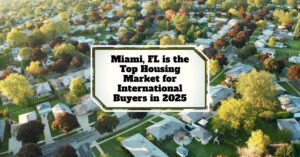
Miami, FL is the Top Housing Market for International Buyers in 2025

June 7, 2025 by Marco Santarelli

Miami, FL is the Top Housing Market for International Buyers in 2025

Do you ever wonder what makes a place truly special, not just for a visit, but for laying down roots, for investing your hard-earned money, for calling it home? I often think about this when I look at the dynamic global real estate market. And if there's one city that consistently captures the world's imagination, it's Miami.

In fact, Miami tops the list of the most popular housing markets for international buyers, definitively securing its position as the premier destination for global real estate investment and lifestyle seekers in the first quarter of 2025.

According to Realtor.com, in 2025 Q1, 1.9% of their online traffic came from international home buyers, up slightly from 1.7% in 2024Q1 and 1.3% in 2020Q1, the pre-pandemic level. Miami was the most popular U.S. market for international shoppers in 2025 Q1, attracting 8.7% of international online views

This isn't just a fleeting trend; it's a testament to Miami's unique appeal, drawing in buyers from across the globe who see more than just sunshine and beaches – they see opportunity, security, and a vibrant future.

Miami, FL is the Top Housing Market for International Buyers in 2025

For anyone tracking real estate trends, especially those driven by international capital, Miami's dominance isn't a surprise. But to see it lead the pack, accounting for a significant 8.7% of all international demand in the U.S. in the first quarter of 2025, truly solidifies its standing. When I first saw these numbers, I wasn't just impressed; I felt a sense of vindication for what I've observed on the ground for years. Miami isn't just popular; it's a phenomenon.

What makes Miami such an unassailable leader? It's a blend of factors that create a powerful magnet for international buyers. Firstly, there's the obvious allure: the weather, the beaches, and the unparalleled luxury lifestyle. Who wouldn't want to wake up to turquoise waters and endless sunshine? But beyond the aesthetics, Miami offers tangible benefits. Florida's lack of state income tax is a huge draw, especially for high-net-worth individuals and those looking to relocate from higher-tax states or countries. This fiscal advantage translates directly into greater disposable income and better returns on investment.

From my perspective, Miami offers a unique blend of cosmopolitan sophistication and laid-back South Florida charm. It's a major hub for international business, finance, and trade, particularly with Latin America and Europe. This creates a robust economy and a diverse job market that attracts talent and investment. The city's infrastructure, from its modern airport to its world-class medical facilities and booming tech sector, further enhances its appeal. International buyers see Miami not just as a place to live, but as a strategic investment in a resilient and growing economy. They recognize its unique position as a gateway to the Americas.

Think about it: whether you're looking for a sprawling waterfront estate, a chic downtown condo, or a quiet family home in a gated community, Miami's diverse housing options cater to every taste and budget within the luxury spectrum. The city's cultural melting pot, with its strong Latin American and European influences, also makes it feel welcoming and familiar to many international buyers, making the transition to life in the U.S. that much smoother.

A Glimpse at the World's Favorite U.S. Destinations

While Miami proudly holds the top spot, it's just one piece of the puzzle illustrating the broader international interest in U.S. real estate. The data reveals that a significant 1.9% of Realtor.com's online traffic originated from international home shoppers in the first quarter of 2025 – a steady increase from 1.7% a year prior and 1.3% before the pandemic in 2020. This upward trend clearly shows that the U.S. continues to be viewed as a safe haven and an attractive destination for real estate investment globally.

Looking past Miami, the list of top markets for international buyers highlights a fascinating mix of established global cities and rapidly growing regional centers. Here’s a snapshot of the top 10, showing their traffic share in 2025 Q1:

Metro Traffic Share
Miami, FL 8.7%
New York, NY 4.9%
Los Angeles, CA 4.6%
Orlando, FL 2.9%
Dallas, TX 2.8%
Houston, TX 2.6%
Tampa, FL 2.5%
Phoenix, AZ 2.3%
Chicago, IL 2.0%
Riverside, CA 1.5%

It's intriguing to observe how these major metropolitan areas continue to hold sway. New York, NY, and Los Angeles, CA, remain significant draws, representing global economic and cultural powerhouses. Their consistent appeal underscores their status as perennial investment hotbeds, offering prestige, diverse opportunities, and robust rental markets.

And then there's Florida again, with Orlando and Tampa also making strong appearances. Orlando, often known for its theme parks, is also a rapidly expanding metropolitan area with a strong job market and relatively affordable housing compared to coastal Florida. Its family-friendly atmosphere and growing tech sector attract a wide range of buyers. Tampa’s appeal lies in its burgeoning urban core, beautiful waterfront, and more relaxed pace of life, often drawing those looking for a slightly less intense but still vibrant Florida experience. For international buyers, both offer compelling options for investment, potential rental income, or part-time residency.

From my standpoint, these cities offer a familiar sense of stability to international investors. They are well-known, have established infrastructure, and offer a perception of safety for investments compared to more volatile global markets.

The Lone Star State's Ascendance: Texas Captures Global Attention

One of the most notable shifts in the data is the undeniable rise of Texas as a major player in the international housing market. This is a trend I've been watching closely, and it's exhilarating to see it unfold so dramatically. In 2025 Q1, both Austin, TX, and San Antonio, TX, broke into the top 20 markets for international home shoppers, a significant leap considering neither appeared on the list in the prior year or before the pandemic. Moreover, Dallas, TX, climbed three spots, and Houston, TX, secured the sixth position globally. Texas is no longer just on the map; it's a central character in the international real estate story.

So, what's driving this immense interest in Texas? It boils down to a compelling mix of economic, social, and cultural factors:

  • Cost of Living: Compared to coastal powerhouses like California or the Northeast, Texas offers a considerably lower cost of living, from housing prices to everyday expenses. This means more home for the money, which is a powerful incentive for international buyers.
  • No State Income Tax: Similar to Florida, Texas boasts a significant financial advantage: no state income tax. For individuals and businesses, this can lead to substantial savings, making the state an attractive destination for both relocation and investment.
  • Pro-Business Environment: Texas has actively cultivated a deeply pro-business environment with favorable regulations and incentives. This has led to a massive influx of major corporations, including tech giants, manufacturing firms, and automotive companies, relocating or expanding their operations within the state. As someone who follows economic development, I've seen firsthand the aggressive efforts by Texas to attract and retain businesses, and it's clearly paying off.
  • Economic & Job Growth: The corporate migration has fueled explosive economic growth and job creation. This means a robust local economy, increasing demand for housing, and strong potential for property appreciation and rental income – all key considerations for international investors.
  • Infrastructure Development: With rapid growth comes significant investment in infrastructure, including roads, public transit, and utilities. This ongoing development makes Texas cities more livable and accessible.
  • Cultural Diversity & Universities: Texas is incredibly diverse, offering a welcoming environment for people from all backgrounds. Its strong university systems, like the University of Texas and Texas A&M, also attract international students and faculty, who often become long-term residents and homebuyers.
  • International Travel Connections: Major Texas cities like Dallas and Houston boast extensive international travel connections, with direct flights to numerous global destinations, making it easier for international buyers to commute back home or manage their properties from afar.

For me, the rise of Texas isn't just about numbers; it's about a strategic vision that has come to fruition. The state has consciously positioned itself as an economic powerhouse, and international buyers are now recognizing and capitalizing on that vision. It’s a testament to the fact that favorable fiscal policies and a supportive business ecosystem can translate directly into strong real estate demand.

The Retreat from Western Shores: A Shift in Buyer Preferences

While some states are gaining ground, others appear to be losing some of their international luster. The data highlights a significant shift away from certain Western markets. In 2020 Q1, cities like San Francisco, CA, San Diego, CA, and Las Vegas, NV, were all among the top 20 destinations for international home shoppers. However, come 2025 Q1, none of these cities remained on the list.

The most striking example is San Francisco, which was also absent from the list in 2024 Q1. As someone who's observed market dynamics for years, I believe several interconnected factors are at play here:

  • Persistent Affordability Challenges: San Francisco has long been notorious for its astronomical housing prices. For international buyers looking for strong returns and long-term value, the sheer cost of entry can be prohibitive, making other, more affordable markets far more attractive. My opinion is that at a certain point, even the most prestigious locations face a ceiling when affordability becomes unsustainable for a broad base of buyers.
  • Concerns about Long-Term Returns: High prices demand high returns, and when market conditions become uncertain, international buyers, especially those focused on investment, become wary. The perception of whether future appreciation can justify the current high prices is crucial.
  • Tech Sector Volatility: San Francisco's economy is heavily tied to the tech industry. Recent periods of tech layoffs and slowed hiring have introduced a degree of uncertainty and instability into the local economy. For international investors, who often seek environments of stability and consistent growth, this volatility can be a deterrent.
  • Broader Urban Issues: Beyond economic factors, ongoing debates about housing and zoning, coupled with highly visible homelessness challenges, have contributed to buyer caution. While San Francisco undeniably offers cultural richness and deep economic strengths in certain niches, these broader urban issues can make international buyers think twice about long-term investment, particularly if they are also considering relocating their families. They are looking for a comprehensive package of quality of life and investment security.

San Diego and Las Vegas, while different markets, also face their own challenges. For San Diego, high cost of living and, perhaps, the allure of other lower-cost coastal communities might be playing a role. Las Vegas, while popular for tourism, may be seen by some international investors as having a more speculative real estate market compared to more diversified economies. This shift underscores a broader trend: international buyers are becoming increasingly discerning, prioritizing long-term stability, affordability, and a strong foundational economy over mere brand recognition.

Unraveling the Origins: Who's Eyeing U.S. Real Estate?

Understanding where international buyers are coming from is just as important as knowing where they're going. The data provides a clear picture of the dominant sources of online interest in U.S. properties in 2025 Q1:

  • Canada: Leading the pack, Canadian home shoppers still accounted for a substantial 34.7% of all international traffic.
  • United Kingdom (UK): Following with 5.7%.
  • Mexico: A strong showing at 5.4%.
  • Germany: Contributing 3.8%.
  • Australia: Rounding out the top five with 3.2%.

Beyond these top contenders, buyers from other countries are also consistently engaging with the U.S. market, signifying the widespread appeal of American real estate as a reliable and often lucrative asset.

The Canadian Connection: A Shifting, Yet Strong Dynamic

Canadians have long been the U.S.'s most significant group of international homebuyers, and that trend continued in 2025 Q1, with them making up over a third of all international online traffic. Yet, there’s a fascinating dynamic at play: their share actually declined from 40.7% in 2024 Q1 to 34.7% in 2025 Q1. This retreat, the data suggests, coincided with a period during which the U.S. imposed a series of tariffs on Canadian goods.

From my perspective, this correlation is worth considering. Geopolitical and trade policies can absolutely have an impact on consumer confidence and investment behavior, even in areas like real estate. When there's friction or uncertainty in trade relations, it can subtly affect the perception of an investment environment. It might make potential buyers pause, reconsider, or simply become more cautious, perhaps thinking, “Is this the optimal time to move capital across the border?”

At the metro level, this decline was felt across the board. The largest drops in Canadian interest were observed in their traditional Florida strongholds and warmer climates:

  • Naples, FL: Saw the most significant drop, from 73.1% of its international online traffic being Canadian in 2024 Q1 to 59.6% in 2025 Q1 – a 13.5 percentage point decline.
  • North Port, FL: Followed with a 12.9 percentage point decrease.
  • Phoenix, AZ: Declined by 11.8 percentage points.
  • Cape Coral, FL: Down by 10.8 percentage points.
  • Tampa, FL: Dropped by 10.1 percentage points.
  • Detroit, MI: Saw a 10 percentage point decrease.

Despite this measurable dip, it's crucial to acknowledge that Canadians still dominate international views in these markets. For instance, even after the drop, almost 60% of international demand in Naples still came from Canada. This clearly shows that the underlying appeal – whether it’s for snowbirds seeking warmer winters, retirement homes, or vacation properties – remains incredibly strong. My personal take is that while political winds can cause temporary shifts, the fundamental draw of Florida’s climate and lifestyle for Canadians is an enduring force. They are likely just exercising a bit more caution or waiting for clearer signals before making their move.

Mexican Buyers: Proximity and Enduring Connections

Another compelling aspect of the international buyer data is the consistent presence of Mexican homebuyers. They constituted 5.4% of international traffic in 2025 Q1, a slight decrease from 5.8% in the previous year, despite similar tariffs being applied to imports from Mexico as seen with Canada. This slight dip suggests a remarkable resilience in demand.

What truly stands out about Mexican homebuyers is their strong preference for destinations located near the U.S.-Mexico border. Unlike the scattered coastal or sunshine-state preferences of many other international buyers, Mexican interest is largely clustered around cities like:

  • San Antonio, TX
  • Dallas, TX
  • Houston, TX
  • El Paso, TX
  • San Diego, CA

This isn't by chance. From my years of observation, these patterns are driven by deeply practical and cultural considerations:

  • Proximity: The sheer ease of cross-border travel for family visits, business operations, and personal connections is paramount.
  • Cultural and Language Connections: These border cities often share strong cultural and linguistic ties with Mexico, making the transition significantly smoother for new residents. It simply feels more familiar and welcoming.
  • Established Networks: Many families and businesses already have established networks across the border, whether it's family members, business partners, or trusted service providers. This infrastructure makes living or investing in a border city far more convenient.
  • Access to Services: Access to U.S. education, healthcare, and diverse shopping opportunities continues to be a major pull factor.

Mexican buyers play a significant role in key markets. For example, in San Antonio, TX, they account for a notable 18.8% of its international demand. They also have a substantial presence in Riverside, CA (10.5%), and Chicago, IL (8.2%).

While the overall share of Mexican international traffic saw a marginal decline, some metros experienced more pronounced shifts. Chicago, IL, notably saw its share of Mexican homebuyers drop from 10.9% in 2024 Q1 to 8.2% in 2025 Q1. Smaller declines also occurred in Philadelphia, PA, San Antonio, TX, and Phoenix, AZ. My take is that the demand from Mexico, driven by these fundamental connections, is incredibly robust and less susceptible to the same economic crosscurrents that might impact buyers from further afield. It's truly a unique segment of the international real estate market.

The Broader Appeal: What Drives All International Home Shopping?

Beyond specific countries or regions, it's worth stepping back and looking at the overarching reasons why international buyers consistently look to the U.S. real estate market. My experience tells me it boils down to a combination of enduring advantages:

  • Stability and Security: The U.S. is generally perceived as a stable political and economic environment. For international investors, especially those from less stable regions, U.S. real estate offers a tangible asset that is often seen as a safe haven for capital.
  • Investment Opportunities: The U.S. market offers a wide range of investment opportunities, from high-yield rental properties in growing cities to long-term appreciation in prestige locations. The diversity of property types and market conditions allows for tailored investment strategies.
  • Diversification: For many global investors, U.S. real estate serves as a crucial tool for diversifying their portfolios, reducing risk by spreading investments across different currencies and markets.
  • Lifestyle and Education: For those seeking to relocate, the allure of the American lifestyle, world-class educational institutions, and diverse cultural experiences are powerful draws. Many buyers are looking for homes that offer
    • Better quality of life
    • Access to top universities for their children
    • A sense of freedom and aspiration
  • Rule of Law: The strong legal framework and property rights in the U.S. provide a level of security and predictability that may not be available in other countries. This protects investments and gives buyers peace of mind.

I often think of the U.S. real estate market as a highly sophisticated, multi-layered product. It's not just about a house; it's about the economic ecosystem, the legal protections, the lifestyle, and the educational opportunities that come with it. International buyers grasp this holistic value proposition.

Looking Ahead: The Future of Cross-Border Real Estate

The international demand for U.S. real estate continues to evolve, reflecting global economic shifts, geopolitical dynamics, and changing preferences. I believe we'll continue to see certain trends solidify:

  • Sustained Demand for Safe Havens: In an increasingly uncertain world, the U.S. will likely remain a preferred destination for capital seeking stability and asset protection.
  • Continued Growth of Emerging Hotspots: While established markets will hold their own, the rise of cities like Austin and San Antonio indicates a growing appetite for markets that offer strong economic fundamentals combined with relative affordability. I anticipate other second-tier cities with strong job growth and quality of life will also start appearing higher on lists.
  • Impact of Global Events: Trade policies, currency fluctuations, and international conflicts will continue to exert influence on where and how international money flows into U.S. real estate. The Canadian example around tariffs is a clear illustration of this.
  • Technology's Role: Digital platforms and virtual reality tours will become even more crucial in facilitating cross-border transactions, making it easier for buyers to explore properties remotely.
  • Sustainability and Wellness: As global awareness grows, international buyers may increasingly prioritize properties with green features, smart home technology, and access to wellness amenities.

The U.S. real estate market is a powerful and attractive force on the global stage. Its diversity, stability, and enduring appeal continue to draw international buyers looking for homes, investments, and a piece of the American dream.

Related Articles:

  • Miami, Florida Housing Market Faces BIG Crash Risk
  • Top 10 Housing Markets Attracting Foreign Homebuyers in 2025
  • Miami Housing Market: Prices, Trends, Forecast
  • Hottest Florida Housing Markets in 2025: Miami and Orlando
  • Miami Real Estate Market Predictions 2025-2026: Insights for Buyers
  • Will Miami's Housing Market Crash Due to Rising Mortgage Rates
  • Miami Housing Market Soars: Prices Jump by Remarkable 10.6%
  • When Will the Housing Market Crash Again?

Filed Under: Housing Market, Real Estate, Real Estate Market Tagged With: Florida, Housing Market, Miami, Real Estate Market

Top 22 Housing Markets Where Prices Are Predicted to Rise the Most by 2026

June 4, 2025 by Marco Santarelli

22 Housing Markets Expected to Highest Price Gains by Early 2026

The housing market rollercoaster continues, and if you're trying to figure out where things are headed, you're not alone. It feels like just yesterday everyone was talking about prices skyrocketing everywhere, and now? Not so much, at least on a national level.

But here's the thing: real estate is local. Always has been, always will be. While the big picture forecast might show a dip, some specific spots are expected to keep climbing. According to the latest analysis from Zillow Research, released in April 2025, there are indeed 22 housing markets where home prices will rise the most over the next 12 months, defying the broader trend they predict for the rest of the country.

So, what's the big picture, according to Zillow? Their updated forecast is predicting a national drop in home values of 1.9% through 2025. That's a pretty significant shift from their earlier expectation of a small increase. They point to more homes hitting the market and mortgage rates staying elevated as the main reasons sellers are having to cut prices to attract buyers.

On the flip side, they do expect existing home sales to tick up slightly, forecasting about 4.2 million sales in 2025, a modest 3.3% bump from the year before. Essentially, they see buyers getting a bit more power and time to shop around, while sellers are adjusting expectations. Rental markets?

They see rents still rising, but at a slower pace, especially for apartments, with demand for single-family rentals holding steady as some folks wait on the sidelines for the buying market to cool off or rates to drop.

But let's get back to those specific places expected to see prices go up. This is where it gets interesting because it highlights the power of local market dynamics even when national headwinds are blowing. As someone who's spent years watching real estate trends, I know that national averages can sometimes hide fascinating stories happening in individual towns and cities.

Understanding the Forecast in Context

Before we dive into the list, let's be super clear: these are forecasts. They're based on complex models that take into account a ton of data – things like current prices, sales trends, inventory levels, rental data, economic indicators, and even search activity on Zillow's own platform. Zillow themselves mention that mortgage rates are in an “especially unpredictable period,” and unforeseen events could always change things. So, treat this list not as a crystal ball, but as a snapshot of where Zillow's models predict the strongest price growth based on the data available in April 2025.

What makes a market potentially buck the national trend of price depreciation? Based on my experience, it often comes down to a few key factors:

  1. Relative Affordability: Even if national prices are high, some smaller or less-discovered markets might still offer value, attracting buyers looking for more bang for their buck.
  2. Limited Supply: If a market simply isn't building many new homes, or has geographical constraints (like being surrounded by mountains or water), limited inventory can keep upward pressure on prices even if demand cools slightly.
  3. Specific Demand Drivers: Is there a major employer expanding? A new amenity like a park or transportation hub? Is it a desirable retirement spot, a recreational haven, or an area seeing an influx of remote workers? Local job growth and population shifts are huge drivers.
  4. Unique Market Characteristics: Some markets just have their own rhythm. Maybe it's a popular vacation spot, a college town with stable demand, or an area benefiting from specific state-level initiatives.

Looking at Zillow's national forecast of a price drop, finding markets predicted to gain value is like finding little islands of appreciation in a sea of slight decline. It tells me these specific areas likely have some combination of the factors above working strongly in their favor, strong enough to counteract the pressure from higher rates and increased national inventory levels.

22 Housing Markets Where Prices Are Predicted to Rise the Most by 2026

Now, let's get to the list everyone wants to see. The data provided ranks markets by their projected price change from March 31, 2025, to March 31, 2026. As requested, I'm grouping markets that have the same forecast percentage and including all markets from Steamboat Springs, CO down to Price, UT in the provided data. This gives us the top ranks, which includes 22 specific markets in total.

Here's the breakdown based on Zillow's April 2025 forecast:

Rank 1

  • Projected Price Increase (March 2025 – March 2026): 3.8%
  • Market: Steamboat Springs, CO

My take: No huge surprise to see a high-end recreational market like Steamboat Springs at the top. Places like this often have limited supply due to geography and strong demand from both second-home buyers and those able to work remotely. Even if the broader market softens, desirability for unique lifestyle locations remains high for a segment of the population.

Rank 2

  • Projected Price Increase (March 2025 – March 2026): 3.0%
  • Market: Maysville, KY

My take: Maysville is an interesting contrast to Steamboat Springs. Often, we see more affordable or smaller regional centers show up on lists like this when larger, more expensive markets cool off. Could this be related to value relative to nearby larger metros, or perhaps specific local economic factors? It highlights that appreciation isn't just confined to famous hotspots.

Rank 3

  • Projected Price Increase (March 2025 – March 2026): 2.7%
  • Market: Edwards, CO

My take: Another Colorado mountain town ranking high. Edwards is near Vail and Beaver Creek. This reinforces the idea that desirable recreational areas with limited buildable land can often maintain or increase value even in tougher markets, driven by affluent buyers or those prioritizing lifestyle.

Rank 4

  • Projected Price Increase (March 2025 – March 2026): 2.5%
  • Market: Augusta, ME

My take: As the capital of Maine, Augusta has a stable base of government employment. Maine's popularity as a destination, both for tourists and those seeking a different pace of life (especially after the remote work shift), might be playing a role here. It's another example of a smaller regional center showing predicted resilience.

Rank 5

  • Projected Price Increase (March 2025 – March 2026): 2.4%
  • Markets:
    • Atlantic City, NJ
    • Alamogordo, NM
    • Berlin, NH

My take: This group is fascinating because they are so different. Atlantic City has the draw of gambling and the shore, but has faced economic challenges. Alamogordo has a military base nearby (Holloman Air Force Base), which provides economic stability. Berlin, NH is a smaller town in northern New Hampshire, an area known for its natural beauty and outdoor recreation. This diversity at the same predicted growth rate tells me different factors are likely driving the forecasts in each location – tourism/recreation in AC and Berlin, and stable employment in Alamogordo.

Rank 6

  • Projected Price Increase (March 2025 – March 2026): 2.3%
  • Markets:
    • West Plains, MO
    • Jackson, WY

My take: Another pairing of very different markets. Jackson, WY is a world-famous high-end destination similar to Steamboat Springs and Edwards, driven by its proximity to Grand Teton and Yellowstone National Parks and its status as a playground for the wealthy. West Plains, MO, on the other hand, is a regional hub in the Ozarks, likely appealing due to affordability and a slower pace of life. This stark contrast highlights that predicted growth isn't limited to one type of market; it's about specific local supply/demand balances and economic drivers.

Rank 7

  • Projected Price Increase (March 2025 – March 2026): 2.2%
  • Markets:
    • Mayfield, KY
    • Thomaston, GA

My take: Two more smaller regional markets. Mayfield was notably impacted by a devastating tornado in late 2021; perhaps this forecast reflects ongoing rebuilding or shifting local dynamics post-disaster. Thomaston is south of the Atlanta metro area, potentially benefiting from folks looking further out for affordability or space, though the forecast shows a slight dip in the immediate few months.

Rank 8

  • Projected Price Increase (March 2025 – March 2026): 2.0%
  • Market: Dodge City, KS

My take: Famous for its Old West history, Dodge City is a regional center in southwest Kansas. Its economy is tied to agriculture and manufacturing. A forecast of 2.0% appreciation here suggests local economic stability is likely underpinning the housing market's resilience compared to national trends.

Rank 9

  • Projected Price Increase (March 2025 – March 2026): 1.9%
  • Markets:
    • Kingston, NY
    • Statesboro, GA
    • Keene, NH
    • Cedartown, GA
    • Clewiston, FL
    • Butte, MT

My take: This is the largest group by far, showing a cluster of markets all predicted to see modest appreciation around 1.9%. We see a mix here: Kingston, NY (Hudson Valley, potentially benefiting from proximity to NYC); Statesboro and Cedartown, GA (smaller Georgia cities); Keene, NH (southwest NH); Clewiston, FL (inland Florida, near Lake Okeechobee); and Butte, MT (historic mining town, now a regional center). The common thread here might be relative affordability compared to nearby larger areas or specific local economic anchors keeping demand steady.

Rank 10

  • Projected Price Increase (March 2025 – March 2026): 1.8%
  • Markets:
    • Rochester, NY
    • Laconia, NH
    • Brevard, NC
    • Price, UT

My take: This final group also shows diversity. Rochester, NY is a larger metro area than most on this list. Laconia, NH is in the Lakes Region. Brevard, NC is in the mountains near Asheville, another area popular for recreation and lifestyle. Price, UT is in a more rural part of central Utah. The presence of Rochester suggests that even some larger, more established metros might find stability and slight growth, perhaps driven by specific neighborhoods, educational institutions, or industries within the city. The others again lean towards smaller, potentially more affordable, or recreation-adjacent areas.

Here's a table summarizing these markets by their predicted appreciation rate:

Rank Predicted Price Increase (Mar 2025 – Mar 2026) Market(s)
1 3.8% Steamboat Springs, CO
2 3.0% Maysville, KY
3 2.7% Edwards, CO
4 2.5% Augusta, ME
5 2.4% Atlantic City, NJ; Alamogordo, NM; Berlin, NH
6 2.3% West Plains, MO; Jackson, WY
7 2.2% Mayfield, KY; Thomaston, GA
8 2.0% Dodge City, KS
9 1.9% Kingston, NY; Statesboro, GA; Keene, NH; Cedartown, GA; Clewiston, FL; Butte, MT
10 1.8% Rochester, NY; Laconia, NH; Brevard, NC; Price, UT

Data Source: Zillow Home Value and Home Sales Forecast, April 2025

What Can We Learn from This List?

Looking at this list, a few things jump out at me:

  • It's Not Just One Type of Market: We see a mix of high-end recreational areas (Steamboat, Edwards, Jackson), smaller regional centers (Maysville, Augusta, West Plains, Dodge City, Statesboro, Cedartown, Keene, Berlin, Butte, Price), and some unique cases like Atlantic City or markets potentially benefiting from spillover affordability (Thomaston, Kingston).
  • Affordability Matters: Many of these markets, outside of the high-end Colorado and Wyoming examples, are relatively more affordable than major coastal metros or Sunbelt boomtowns that saw massive price increases earlier in the cycle. Could this predicted growth be a function of delayed affordability corrections or continued demand for value? I think that's definitely a factor.
  • Local Anchors are Key: Stable employment sources (military bases, government jobs), recreational appeal, or simply being a necessary regional hub seem to be providing enough underlying demand to support price increases even when national conditions are softer.
  • Modest Growth is Still Growth: While 3.8% or even 1.8% might seem small compared to the double-digit appreciation we saw in 2020-2022, in a period where the national forecast is negative, any positive growth is notable. It suggests these markets have strong fundamentals relative to the current economic and interest rate environment.

My Thoughts on Navigating the Market

Based on this data and my understanding of market cycles, here's my perspective:

First, remember that a forecast is just a forecast. It's a model's best guess based on current information. Things can change. Mortgage rates could drop faster (or slower) than expected. The economy could surprise us. Local factors in any of these markets could shift.

Second, if you're looking to buy or invest, particularly in one of these markets, this data is a piece of the puzzle, not the whole picture. You still need to do your homework on the ground. What are inventory levels really like right now in that specific town or neighborhood? What are the local job prospects? What's the condition of the homes? How do the prices compare to historical averages for that specific market, not just the national trend?

Third, this reinforces the power of diversification if you're thinking about real estate investment. While national trends matter, having exposure to different types of markets – some larger, some smaller, some driven by different economic factors – can help buffer against downturns in any single area.

Finally, for most people, buying a home is about more than just appreciation potential. It's about finding a place to live, raise a family, or build a life. While potential price growth is a nice bonus, focusing too much on short-term forecasts (even ones looking out a year like this) might distract from finding the right home for your needs and budget in a community you actually want to live in. The predicted growth rates here, while positive, are relatively modest. This isn't a signal of a new boom, but rather resilience.

In conclusion, while Zillow's April 2025 forecast paints a picture of slight price declines nationally, these 22 markets (grouped into 10 ranks) from Steamboat Springs, CO, down to Price, UT, are predicted by their models to see home prices continue to climb, albeit modestly, by early 2026.

They represent a fascinating mix of recreational hotspots and smaller regional centers, each likely driven by unique local factors strong enough to counteract the national headwinds of higher rates and increased supply. It's a strong reminder that even in a complex and uncertain housing market, opportunities for appreciation exist, but they're highly localized and require careful, specific research.

Invest in the Fastest-Growing Housing Markets

Looking to build long-term wealth? Norada identifies top housing markets with the highest growth potential projected through 2026.

Get access to pre-vetted properties in emerging cities before they become unaffordable hot zones.

HOT NEW LISTINGS JUST ADDED!

Talk to a Norada investment counselor today (No Obligation):

(800) 611-3060

Get Started Now

Also Read:

  • Housing Market Predictions 2026: Will it Crash or Boom?
  • 12 Housing Markets Set for Double-Digit Price Decline by Early 2026
  • Housing Prices Are Set to Rise by 4.1% by the End of 2025
  • Housing Market Predictions for the Next 4 Years: 2025 to 2029
  • Real Estate Forecast: Will Home Prices Bottom Out in 2025?
  • Housing Markets With the Biggest Decline in Home Prices Since 2024
  • Why Real Estate Can Thrive During Tariffs Led Economic Uncertainty
  • 5 Hottest Real Estate Markets for Buyers & Investors in 2025
  • Will Real Estate Rebound in 2025: Top Predictions by Experts
  • Will the Housing Market Crash Due to Looming Recession in 2025?
  • 4 States Facing the Major Housing Market Crash or Correction

Filed Under: Housing Market, Real Estate Market Tagged With: home prices, Housing Market, Housing Price Forecast, Housing Prices, real estate, Real Estate Market

What Will the Average House Price Be in 2040: Predictions

June 1, 2025 by Marco Santarelli

What Will the Average House Price Be in 2040: Predictions

For most Americans, their home is their biggest investment. So, naturally, the question of what the future holds for housing prices is a hot topic. Here's a quick look at US house price growth over the years:

  • Average YoY growth rate (Mar 1992 – Mar 2024): 5.5%
  • All-time high YoY growth: 17.8% (September 2021)
  • Record low YoY growth: -12.4% (December 2008)

With homeownership being a priority for many, will you be able to afford a house in 16 years? Let's delve into the factors that might shape the average US house price in 2040.

US House Price Growth Over the Years

Average YoY Growth

5.5%

(Mar 1992 – Mar 2024)

All-time High Growth

17.8%

(September 2021)

Record Low Growth

-12.4%

(December 2008)

Growth Timeline

1992

2008

2021

2024


Predicting the Average US House Price in 2040

The Winds of Change: Factors at Play

Predicting the future is no easy feat, and the housing market is no exception. Here are some key elements that will likely influence the average house price in 2040:

Inflation: This invisible hand steadily pushes prices upwards. Over the past few decades, inflation has averaged around 2-3% annually in the U.S. While the exact rate in the coming years is uncertain, it's a safe bet that inflation will cause a rise in average house price. This doesn't necessarily mean a house will cost twice as much in 2040 compared to today, but it does suggest that steadily increasing prices will erode purchasing power.

Interest Rates: The cost of borrowing to buy a house significantly impacts affordability. If interest rates remain low, it could fuel demand and potentially push prices higher. Conversely, rising interest rates would make monthly mortgage payments more expensive, potentially dampening demand and slowing price growth. The Federal Reserve plays a key role in setting interest rates, but various economic factors also influence them.

Supply and Demand: Basic economics tells us that if there's a shortage of houses compared to the number of buyers, prices will rise. Demographics play a role here – millennials, a large generation, are entering prime home-buying years. This could create high demand, especially in desirable areas where there's already limited inventory. On the other hand, if new construction keeps pace with demand, it could help stabilize prices.

Location, Location, Location: The adage holds true. Prices will likely continue to vary greatly depending on factors like proximity to job centers, amenities, and overall desirability. Coastal areas, vibrant cities, and suburbs with excellent schools tend to command a premium. However, affordability concerns may cause some buyers to look beyond traditional hot spots and consider more geographically diverse locations.

Looking at the Crystal Ball (Through Fuzzy Glasses)

Expert opinions on future house prices diverge. Some, like speakers at recent investment banker conferences, point to historical trends and project a continuation of the current upward trajectory, with the median house price exceeding $1 million by 2040 [source: YouTube video talking about investment bankers conference]. Their reasoning hinges on the assumption that low-interest rates and a growing population will continue to fuel demand, outpacing new construction.

On the other hand, some analysts foresee a more modest increase. They acknowledge the influence of inflation and demographics but also consider potential dampening factors. An economic downturn or a significant rise in interest rates could cool the market. Additionally, a shift towards more affordable housing options, or a rise in remote work opportunities leading to a decline in the importance of location, could also impact average prices.

$1 Million Homes: Can Americans Afford Them in 2040?

  • Wage Growth: If wages keep pace with inflation and rising house prices, then a $1 million median price might not be completely out of reach. However, historically, wage growth hasn't kept up with housing prices, making affordability a challenge.
  • Interest Rates: Low interest rates make monthly payments more manageable. But if rates rise significantly, even a million-dollar house could become unaffordable for many.
  • Shifting Demographics: Millennials, a large cohort, are entering prime home-buying years. This high demand could push prices even higher, especially in desirable locations.
  • Alternative Housing Options: The rise of tiny homes, multi-generational living, and co-op ownership could become more prevalent as affordability concerns mount.

Here's a breakdown of possible scenarios:

  • Scenario 1: Balanced Growth: If wages rise at an average of 3% annually, keeping pace with inflation, and interest rates stay around 4%, a $1 million median price could be achievable for some Americans, particularly those with high incomes or dual earners. For example, a couple with a combined pre-tax income of $150,000 might qualify for a mortgage on a $1 million house, assuming a 20% down payment. However, for many middle-class earners, especially those in single-income households, a $1 million median price would likely still be out of reach.

Overall, a $1 million median price in 2040 would likely create a more segmented housing market:

  • High-cost areas: Prices in desirable locations could significantly exceed the national median, further limiting affordability.
  • More affordable regions: Areas with lower overall living costs might see a surge in popularity as people prioritize affordability over location.

The future remains uncertain, but one thing is clear: affordability will be a key concern in a $1 million housing market.

The Takeaway: Be Prepared, Not Paranoid

It's important to remember that unforeseen events can dramatically impact the housing market. Economic downturns, changes in government policy, or natural disasters can all disrupt trends.

While the average price is interesting, what truly matters is affordability. Even if the average house price doesn't skyrocket, stagnant wages could make homeownership increasingly difficult for many.

While predicting the exact average house price in 2040 is impossible, understanding the influencing factors can help you make informed decisions. Focus on building a solid financial foundation, explore areas with a good balance of affordability and desirability, and consider alternative housing options if needed.

Remember, the path to homeownership isn't always linear. Stay informed, be adaptable, and don't let the uncertainty of the future hold you back from achieving your dream home.

Position Yourself for 2040—Start Investing in Real Estate Now

As average home prices are expected to rise significantly by 2040, investing in income-generating properties today can help you build massive equity and wealth over time.

Norada Real Estate connects investors with turnkey rental properties in growth markets—so you can benefit from appreciation, cash flow, and tax advantages.

HOT NEW LISTINGS JUST ADDED!

Talk to a Norada investment counselor today (No Obligation):

(800) 611-3060

Get Started Now 

Read More:

  • Real Estate Forecast Next 10 Years: Will Prices Skyrocket?
  • Housing Market Predictions for Next 5 Years (2025-2029)
  • Housing Market Predictions for 2027: Experts Differ on Forecast
  • Housing Market Predictions for the Next 2 Years
  • Housing Market Predictions: Will Real Estate Crash?

Filed Under: Housing Market, Real Estate, Real Estate Market Tagged With: Housing Market, Real Estate Market

Why Cash Flow Alone Isn’t Enough to Get Rich?

June 1, 2025 by Marco Santarelli

Cash Flow Will NOT Make You Rich

Don't get me wrong. Cash flow is good (assuming it's positive), but absolutely NO one has ever become rich from cash flow alone. Think about that for a minute.

Let’s look at a quick example. Let’s say you have a $100,000 property that generates $200 per month in positive cash flow. That’s $200 per month after all your expenses and debt service. That would give you $2,400 per year or $12,000 over five years in cash flow.

Assuming you follow our advice of maintaining a reserve account for each of your properties to cover future maintenance and repairs, you will have made $12,000 in net profit over those five years. This assumes that nothing unforeseen happens along the way such as a hot water tank or leaky roof requiring replacement, or a long-term vacancy.

If you’re going to put your investment capital, credit, and possibly your income at “risk” for $12,000, then you’ll need more than just cash flow to make it worthwhile. You need to be investing in markets that offer good appreciation potential. That is how you become rich!

Live where you want and invest only where the numbers make sense! This stresses the importance of investing in good markets and good neighborhoods.

Going back to our example above, what would happen if we averaged only 5% appreciation per year in addition to the $2,400 in cash flow? (Remember that the national average has been 6.2% going as far back as the 1940s.)

With only 5% appreciation per year you’d make over two (2) times more money in equity than cash flow alone. And with a 10% average rate of appreciation over five years you’d make over five (5) times more money in equity than cash flow alone.

Did you forget that appreciation in many markets used to be over 10% as recently as four years ago? Markets move in cycles and appreciation always happens as markets cycle off their bottoms. We are seeing it today in markets all around the country.

Of course, in addition to the positive cash flow and money made through appreciation, you also benefit from the amortization of the mortgage and the tax benefits through depreciation, tax deferred exchanges and lower capital gains when holding your property for more than a year and a day.

Now is the time to be investing with so many markets near their cyclical bottom or turning back up. Cash flow is great, and it’s the “glue” that keeps your investment together, but it’s the equity growth that will make you rich.

Why Cash Flow Alone Isn't Enough to Get Rich

  • Limited Growth Potential: Cash flow provides a steady income stream, but the amount typically increases slowly over time due to rent control or gradual market adjustments. This can make it difficult to achieve financial independence or aggressive wealth building goals solely through cash flow.
  • Inflation Risk: Inflation erodes the buying power of your cash flow over time. A $200 monthly profit today won't hold the same value in ten years. This means your cash flow won't provide the same level of financial security in the future.

Appreciation: The Engine of Wealth

  • Exponential Growth: Property value appreciation can snowball over time. Even a modest 5% annual increase can significantly boost your equity and overall wealth. Imagine a $100,000 property appreciating by 5% every year for a decade. That translates to a $50,000 increase in equity, outpacing any cash flow generated during that period.
  • Leveraging Debt: Real estate allows you to leverage debt (mortgage) to acquire assets. As property value rises, the loan amount stays fixed, increasing your return on investment (ROI). This magnifies the gains from appreciation compared to a straight cash purchase.

Beyond Cash Flow and Appreciation

  • Tax Advantages: Real estate offers various tax benefits, including depreciation deductions, which lower your taxable income. These deductions can be a significant advantage over other asset classes. Additionally, deferring capital gains taxes through strategies like 1031 exchanges allows you to reinvest profits and accelerate wealth creation. By utilizing these tax benefits, you keep more of your returns working for you.
  • Hedge Against Inflation: Unlike cash flow, which suffers from inflation, real estate can act as a hedge against inflation. Historically, property values tend to rise alongside inflation, helping to preserve your purchasing power over time.

Building a Well-Rounded Strategy

  • Market Research: Investing in “good markets” with high appreciation potential is crucial. Research local trends, job growth, and development plans. Look for areas with strong economic fundamentals that can support rising property values. But remember, appreciation isn't guaranteed. A balanced approach considers both potential appreciation and steady cash flow to generate income while you wait for the market to upswing.
  • Diversification: Don't put all your eggs in one basket. Diversify your portfolio across different property types (residential, commercial), locations, and asset classes to mitigate risk. This could involve a mix of single-family homes, apartment buildings, or even investing in REITs (Real Estate Investment Trusts). Consider factors like investment horizon, budget, and risk tolerance when making these decisions.
  • Professional Guidance: Consider seeking advice from experienced real estate professionals like agents, brokers, or financial advisors. They can help you navigate the complexities of the market, identify suitable investment opportunities, and develop a personalized strategy aligned with your goals. Don't hesitate to interview multiple professionals to find one who understands your investment philosophy and risk tolerance.

By focusing on appreciation alongside cash flow and incorporating tax benefits and diversification, you can develop a well-rounded real estate investment strategy with the potential for substantial wealth creation. This approach offers the potential for both steady income, long-term capital gains, and protection against inflation, all while mitigating risk through careful market research and portfolio diversification. Remember, real estate is a complex asset class, and success requires ongoing education, due diligence, and potentially the help of qualified professionals.

Build Wealth with More Than Just Cash Flow

Relying on cash flow alone isn’t enough to build real wealth. Smart investors know that long-term appreciation, tax advantages, and leverage are just as critical.

Norada helps you invest in markets with strong growth potential, solid rental income, and built-in equity—so you grow wealth from multiple angles.

HOT NEW LISTINGS JUST ADDED!

Talk to a Norada investment counselor today (No Obligation):

(800) 611-3060

Get Started Now 

Read More:

  • The One Percent Rule: Quick Math For Positive Cash Flow Rental Properties
  • How Does Buying a House in Cash Affect Taxes?
  • Why You Should Be Investing Your Cash in Real Estate
  • How to Profit or Get Rich From Rising Interest Rates?
  • The Rich vs Poor Mindset: Which Mindset Do You Have in 2025?

Filed Under: Real Estate Investing Tagged With: building equity, cash flow, Investment Property, Real Estate Investing, Real Estate Market

Best Real Estate Markets for New Investors to Watch in 2025

May 28, 2025 by Marco Santarelli

Top Housing Markets for First-Time Investors in 2025

Willing to dive into the world of real estate investing, and 2025 feels like your year? You're not alone! Many folks, especially those living in pricier cities, are looking beyond their own backyards to find that perfect first investment property. The big question, the one that keeps us up at night, is: Where exactly should you put your hard-earned money?

Well, based on solid data and a good understanding of what makes a market tick, some areas are looking particularly promising. For those seeking the Best Real Estate Markets in 2025 to Buy Your First Investment Property, keep reading, because we're about to break down some key locations that deserve your attention, drawing insights from the experts at BiggerPockets.

For me, the absolute bedrock of a strong housing market is job growth. Think about it – cities thrive on commerce. When businesses move in, people follow for the jobs, creating a ripple effect of demand for housing, which in turn attracts even more businesses. It's a virtuous cycle. Of course, not every market needs explosive growth to be a good investment.

Affordability and strong cash flow can be just as appealing, especially for those prioritizing immediate returns. Sometimes, it's about playing the long game in a growth market, while other times, a “hybrid” market offering a mix of both growth potential and affordability can be the sweet spot. So, let's explore some specific markets that stand out.

Best Real Estate Markets for New Investors to Watch in 2025

1. Chasing Appreciation: Why Raleigh-Durham, NC, Could Be a Smart Move

If you're aiming for a market where your property value is likely to climb steadily, Raleigh, North Carolina, should definitely be on your radar. Why? Let's look at the numbers, courtesy of BiggerPockets‘ data.

One key indicator I always watch is median income growth. It's a pretty straightforward concept: as people earn more, they have more capacity to afford housing, which can drive up prices, assuming supply doesn't skyrocket. Raleigh has shown some impressive median income growth.

Market Metrics for Raleigh-Durham:

  • Median Price: $474,000
  • Median Rent: $2,021
  • Rent-to-Price Ratio: 0.43%
  • Five-Year Job Growth: 14.7%
  • Median Income: $62,961
  • One-Year Price Forecast (HouseCanary): 2.4%

Beyond the raw numbers, Raleigh-Durham boasts a significant advantage: the Research Triangle. This powerhouse region is home to three major universities renowned for their STEM programs, feeding a highly educated workforce into the local economy. Plus, it houses the Triangle Research Park, the largest research park in the entire United States. And here's a forward-thinking move: North Carolina is phasing out its corporate income tax entirely by 2030, which is a huge incentive for businesses to set up shop and create more jobs.

While Raleigh isn't the cheapest market out there, especially for first-timers, the strong growth fundamentals make it an attractive option if you're comfortable with a potentially lower immediate cash flow in exchange for longer-term appreciation.

2. The Hybrid Approach: Indianapolis, IN – Growth Meets Affordability

For investors seeking a balance between growth potential and a more accessible entry point, Indianapolis, Indiana, presents a compelling case. When comparing Indy to other popular Midwest markets, its job growth stands out.

You might notice a recurring dip in the job growth chart every January. This is largely due to the significant logistics sector in Indianapolis; as the holiday shipping rush ends, there's a seasonal drop in employment before things pick back up throughout the year.

Market Metrics for Indianapolis:

  • Median Price: $270,000
  • Median Rent: $1,759
  • Rent-to-Price Ratio: 0.65%
  • Five-Year Job Growth: 7.3%
  • Median Income: $58,146
  • One-Year Price Forecast: 3.6%

What I find particularly interesting about Indianapolis is the growth happening in the northeast areas like Carmel and Fishers. These suburbs are attracting businesses and residents, making them potentially lucrative spots for investment. Indianapolis offers a solid blend of a growing economy and a more affordable housing market, which can lead to decent cash flow alongside appreciation.

3. Digging Deeper: Kansas City, MO – Declining Vacancy Signals Rising Demand

While Kansas City, Missouri, shows respectable job growth and median income figures, there's another metric that really catches my eye: its declining vacancy rate over the past decade.

Think of the vacancy rate as a barometer of housing demand relative to supply. A high vacancy rate suggests there are more empty units than people looking to rent, indicating lower demand. Conversely, a falling vacancy rate, like what we're seeing in Kansas City, signifies that demand for housing is increasing faster than new construction. This is a strong indicator of a healthy and potentially appreciating market.

Market Metrics for Kansas City:

  • Median Price: $332,000
  • Median Rent: $1,963
  • Rent-to-Price Ratio: 0.59%
  • Five-Year Job Growth: 3.6%
  • Median Income: $56,902
  • One-Year Price Forecast: 5.8%

Keep an eye on suburbs surrounding Kansas City like Overland Park, Olathe, and Prairie Village. These areas often present excellent investment opportunities with strong community appeal. The combination of a tightening housing market and decent affordability makes Kansas City a market with significant potential.

4. Cash Flow is King: Memphis, TN – Strong Returns with Local Nuances

If your primary goal is generating consistent cash flow from your investment property, Memphis, Tennessee, is a market you should seriously consider. The rent-to-price ratios here are quite attractive.

However, when it comes to Memphis, it's crucial to understand the local dynamics. While overall appreciation is happening, neighborhood selection is key. Some areas might struggle with higher crime rates, while others are much safer and experiencing stronger appreciation. This is a market where having reliable, boots-on-the-ground professionals is essential. I'm talking about investor-friendly real estate agents, property managers, or even turnkey providers who specialize in acquiring and managing cash-flowing properties.

Market Metrics for Memphis:

  • Median Price: $246,600 (according to HouseCanary data)
  • Median Rent: $1,597
  • Rent-to-Price Ratio: 0.65%
  • Five-Year Job Growth: 0%
  • Median Income: $54,464
  • One-Year Price Forecast: 3.7%

Memphis's economy is also heavily reliant on logistics, being one of the largest hubs in the United States. While white-collar job growth might be slower, there's a consistent demand for blue-collar workers, which supports a stable rental market. For investors prioritizing immediate cash flow and willing to do their due diligence on specific neighborhoods, Memphis can offer compelling returns.

Taking the Leap: Your First Investment Property Journey

Investing in real estate, especially out of state, can feel like a big undertaking. Building a reliable team, finding the right neighborhoods, analyzing deals, and managing properties can seem overwhelming. But remember, you don't have to navigate this alone. Services like Rent to Retirement, as mentioned by BiggerPockets, offer turnkey investment properties that are already cash-flowing from day one. This can be a great option for those who want a more hands-off approach.

Ultimately, the “best” housing market for your first investment property in 2025 will depend on your individual investment goals, risk tolerance, and financial situation. Are you prioritizing long-term appreciation? Or is immediate cash flow your main focus? Perhaps a hybrid market offers the right balance for you.

By carefully analyzing market data, understanding local economic drivers, and considering your own investment strategy, you can make an informed decision and take that exciting first step into the world of real estate investing. The opportunities are out there – it's about finding the right fit for you.

“Invest in Real Estate in the Top U.S. Markets”

Discover high-quality, ready-to-rent properties designed to deliver consistent returns.

Contact us today to expand your real estate portfolio with confidence.

Contact our investment counselors (No Obligation):

(800) 611-3060

Get Started Now 

Also Read:

  • Best Places to Invest in Single-Family Rental Properties in 2025
  • Why Real Estate Can Thrive During Tariffs Led Economic Uncertainty
  • Rise of AI-Powered Hyperlocal Real Estate Marketing in 2025
  • Real Estate Forecast Next 5 Years: Top 5 Predictions for Future
  • 5 Hottest Real Estate Markets for Buyers & Investors in 2025
  • Will Real Estate Rebound in 2025: Top Predictions by Experts
  • Recession in Real Estate: Smart Ways to Profit in a Down Market
  • Will There Be a Real Estate Recession in 2025: A Forecast
  • Will the Housing Market Crash Due to Looming Recession in 2025?
  • 4 States Facing the Major Housing Market Crash or Correction
  • New Tariffs Could Trigger Housing Market Slowdown in 2025
  • Real Estate Forecast Next 10 Years: Will Prices Skyrocket?

Filed Under: Housing Market, Real Estate Market Tagged With: First-Time Investors, Housing Market, Real Estate Investing, real estate investments, Real Estate Market

5 Best Places to Buy and Sell a House in Spring 2025

May 27, 2025 by Marco Santarelli

5 Best Metro Areas to Buy and Sell a Home in Spring 2025

As the days grow longer and the flowers begin to bloom, so too does the activity in the real estate market. Spring is traditionally a bustling season for both buyers and sellers, but knowing where the most favorable conditions lie can make all the difference.

According to a recent analysis by Zillow, the top 5 best metro areas to both buy and sell a home this spring offer unique advantages depending on which side of the transaction you're on. For buyers seeking more options, negotiating power, and potentially lower prices, Miami, New Orleans, Jacksonville, Tampa, and Memphis stand out.

Conversely, for sellers aiming for quick sales and top dollar, Buffalo, San Jose, San Francisco, Hartford, and Boston are the markets to watch. This spring offers a diverse real estate landscape, with opportunities abounding for those who know where to look.

From my years of watching market trends, and even personally navigating a few home sales and purchases, I can tell you that timing and location are everything. What might seem like a seller's dream market in one city could be a buyer's haven just a few states away. The data really shines a light on these regional differences, offering valuable insights for anyone looking to make a move this spring. Let's dive deeper into what makes these ten metro areas particularly attractive right now.

5 Best Places to Buy and Sell a House in Spring 2025

The Top 5 Metro Areas for Home Buyers

If you're in the market to buy a home this spring, you might feel a mix of excitement and perhaps a bit of apprehension. Hearing about bidding wars and rapidly rising prices in some areas can be discouraging. However, the good news is that the national picture is showing signs of improvement for buyers, with more inventory and a slightly slower pace of sales. But certain metro areas are going above and beyond in offering buyer-friendly conditions. Here are the top 5, based on Zillow's analysis:

  • Miami: Picture this: you're browsing listings at your own pace, without the intense pressure to make an offer within hours. That's the reality for buyers in Miami right now. Homes in this vibrant city are taking nearly three times longer to sell compared to the national average. This extended timeline gives buyers the crucial opportunity to thoroughly assess properties and ensure they're making the right long-term decision. Furthermore, with nearly a quarter of all listed homes experiencing a price reduction in February, buyers in Miami have significant negotiating leverage to potentially secure a better deal. The key data points speak for themselves:
    • Median days on market: 60 days
    • Share of listings with a price cut: 24.2%

    From my perspective, this extended time on market and the prevalence of price cuts suggest a market where the initial frenzy of the past few years has cooled, giving buyers a much-needed breather and a chance to be more strategic.

  • New Orleans: For those who appreciate culture, history, and a unique way of life, New Orleans presents a compelling buying opportunity this spring. The data reveals a significant increase in the number of homes available for sale. In fact, there are 42% more homes on the market now compared to pre-pandemic levels, and an 11% increase compared to last year. This surge in inventory means buyers have a wider selection to choose from, increasing their chances of finding a property that truly meets their needs and preferences. And just like Miami, the pace of sales is more relaxed, with homes staying on the market for nearly two months.
    • Inventory: Up 42% from pre-pandemic levels, and up 11.4% year over year
    • Median days on market: 58 days

    Having visited New Orleans several times, I can attest to its undeniable charm and character. The fact that buyers now have more options in this captivating city is a fantastic development. It suggests a market where supply is finally catching up, offering a less competitive environment.

  • Jacksonville: If you're looking for a sweet spot that combines affordability with ample choices, Jacksonville might be the place for you. This Florida city boasts a 26% increase in the number of homes for sale compared to last year. This boost in inventory gives buyers more power and reduces the likelihood of intense bidding wars. Adding to the buyer-friendly atmosphere is the fact that nearly 30% of sellers have dropped their asking price. This indicates that sellers are becoming more realistic about market values, creating opportunities for buyers to potentially snag a deal.
    • Inventory: Up 26.3% year over year
    • Share of listings with a price cut: 28.8%

    In my experience, a significant increase in inventory coupled with a high percentage of price reductions is a strong indicator of a market where buyers hold considerable sway. Jacksonville seems to be offering just that this spring.

  • Tampa: Staying in Florida, Tampa presents another attractive market for buyers, particularly those seeking discounts. A remarkable 31.9% of all for-sale listings in Tampa have experienced a price cut. This high percentage suggests that sellers are motivated and willing to negotiate. Furthermore, home values in Tampa have seen a 3.6% decrease compared to last year, making homeownership slightly more accessible. Buyers also benefit from a larger selection, with inventory being about 20% higher than it was a year ago.
    • Inventory: Up 19.8% year over year
    • Share of listings with a price cut: 31.9%
    • Zillow Home Value Index: Down 3.6% year over year

    A market with decreasing home values and a large number of price reductions is certainly appealing for buyers. Tampa appears to be offering a window of opportunity to enter the housing market at a more favorable price point.

  • Memphis: For buyers prioritizing affordability, Memphis stands out. The data highlights a compelling financial advantage: the typical monthly mortgage payment in Memphis is approximately $1,200, while typical rents are over $1,400. This means that, on a monthly basis, it is currently less expensive to own a home than to rent in Memphis. Additionally, buyers have a reasonable amount of time to make a decision, with homes staying on the market for nearly a month before going under contract.
    • Typical monthly mortgage payment (20% down, 30-year fixed): $1,228
    • Zillow Observed Rent Index: $1,418
    • Median days on market: 29 days

    As someone who has always believed in the long-term benefits of homeownership, seeing a market where mortgage payments are lower than rent is incredibly encouraging for potential buyers. Memphis offers a chance to build equity and secure housing costs in a way that renting simply doesn't.

The Top 5 Metro Areas for Home Sellers

On the other side of the coin, sellers in certain metro areas are finding themselves in a very advantageous position this spring. High demand, limited inventory, and quick sales are the hallmarks of these seller-friendly markets. According to Zillow's analysis, the top 5 metro areas where sellers have the upper hand are:

  • Buffalo: Earning the title of Zillow's hottest market of 2025, Buffalo is experiencing strong demand, particularly from first-time homebuyers drawn to its robust job market. The data clearly indicates a seller's market: most homes in Buffalo find a buyer in 12 days or less, and a significant 56% of listings sell above their list price. This prevalence of bidding wars suggests strong competition among buyers, driving up sale prices. Additionally, home values in Buffalo have increased by 5% over the past year.
    • Median days on market: 12 days
    • Share of listings sold above list price: 56%
    • Zillow Home Value Index change: Up 5% year over year

    From my perspective, a market where homes sell rapidly and for above asking price is the dream scenario for most sellers. Buffalo's strong job market seems to be a key driver of this high demand.

  • San Jose: As the most expensive large metro area in the country, San Jose continues to see home values appreciate. They are up a substantial 7.6% compared to last year. The high demand is evident in the fact that nearly 60% of homes are selling for more than their list price, and properties are snatched up quickly, with a median of just 9 days on market. This intense competition among buyers underscores the desirability of the San Jose area.
    • Share of listings sold above list price: 57.1%
    • Median days on market: 9 days
    • Zillow Home Value Index change: Up 7.6% year over year

    While affordability remains a challenge in San Jose for buyers, the data paints a clear picture of a very strong seller's market, driven by the area's thriving tech industry and limited housing supply.

  • San Francisco: Neighboring San Jose, San Francisco also presents a favorable environment for sellers, although there is slightly more inventory available. While the number of for-sale listings is up by 32.5% compared to last year, a significant 44.4% of all homes are still selling for more than the asking price. This indicates that despite the increase in inventory, demand remains high enough to create competitive bidding situations and push prices upward.
    • Share of listings sold above list price: 44.4%
    • Inventory: Up 32.5% year over year

    The San Francisco market, while offering slightly more options for buyers than San Jose, still strongly favors sellers. The fact that a large percentage of homes are selling above list price demonstrates continued buyer competition.

  • Hartford: In the insurance capital of the world, sellers are experiencing incredibly swift sales. Homes in Hartford are flying off the market in a mere seven days, which is significantly faster than the national average. This rapid pace is driven by a substantial lack of inventory; there were 71% fewer listings this February compared to pre-pandemic levels. This scarcity of homes has led to a significant increase in home values, which have climbed by over 57% since before the pandemic and 5.6% in the past year.
    • Median days on market: 7 days
    • Inventory: Down 71.0% from pre-pandemic levels
    • Zillow Home Value Index change: Up 5.6% year over year

    A market with such a dramatic decrease in inventory and a rapid sales pace strongly favors sellers. Hartford appears to be a market where sellers can expect quick offers and potentially higher prices due to limited competition from other listings.

  • Boston: Known for its historic charm and strong academic institutions, Boston is another market where sellers are in a prime position. Bidding wars are a common occurrence, with two out of every five sellers expecting to sell their home for more than their list price. This competitive environment is contributing to home values appreciating at twice the national rate. Sellers can also anticipate a quick transaction, with homes typically going under contract in just eight days.
    • Median days on market: 8 days
    • Share of listings sold above list price: 40.4%
    • Zillow Home Value Index change: 4.2% year over year

    Boston's enduring appeal and limited housing stock continue to create a highly competitive market for buyers, which translates to excellent conditions for sellers. The likelihood of multiple offers and above-asking sales makes it a very attractive market to sell in this spring.

Making Sense of the Spring Market

The data from Zillow clearly illustrates the regional variations in the housing market. While buyers in the Southeast are generally finding more options and negotiating power, sellers in the Northeast and Northern California are still enjoying high demand and quick sales. Understanding these local dynamics is crucial for anyone looking to buy or sell a home this spring.

As someone who has followed the real estate market closely for years, I always advise people to look beyond the national headlines and focus on what's happening in their specific area. The conditions can vary dramatically from one city to the next, and even within different neighborhoods of the same city.

Consulting with a local real estate agent who has a deep understanding of the market dynamics in your target area is always a wise move. They can provide invaluable insights into pricing trends, inventory levels, and negotiation strategies that are specific to your situation.

Whether you're a buyer hoping to find the perfect place to settle down or a seller looking to maximize your return, this spring offers a range of opportunities. By understanding the dynamics of the top metro areas highlighted by Zillow, you can approach your real estate journey with greater confidence and make informed decisions that align with your goals.

Work with Norada in 2025, Your Trusted Source for

Real Estate Investment in Top Housing Markets

Discover high-quality, ready-to-rent properties designed to deliver consistent returns.

Contact us today to expand your real estate portfolio with confidence.

Contact our investment counselors (No Obligation):

(800) 611-3060

Get Started Now 

Also Read:

  • Housing Market: 2025 is the Best Time for Homebuyers in Years
  • Month of May is the Best Time to Sell Your House in 2025
  • Is It a Good Time to Sell a House in 2025?
  • Should I Sell My House Now or Wait Until 2026?
  • Should I Buy a House Now or Wait Until 2025?
  • Best Time to Buy a House in the US: Timing Your Purchase
  • Is Now a Good Time to Buy a House? Should You Wait?
  • The 2025 Housing Market Forecast for Buyers & Sellers
  • Why Did More People Decide To Sell Their Homes in Fall?
  • When is the Best Time to Sell a House?
  • Is It a Buyers or Sellers Market?
  • Don't Panic Sell! Homeowners Hold Strong in Housing Market

Filed Under: General Real Estate, Housing Market, Selling Real Estate Tagged With: Buy a Home, Housing Market, Real Estate Market, Sell a Home

Future of Housing Market After Redfin’s Acquisition by Rocket Mortgage

May 20, 2025 by Marco Santarelli

Future of Housing Market After Redfin's Acquisition by Rocket Mortgage

If you're even remotely interested in buying or selling a home in the US, you'll want to pull up a chair for this one. The news is out: Rocket Mortgage acquires Redfin, and what this means for the US housing market is a significant move towards a more streamlined, tech-driven, and potentially more consolidated homebuying future.

Future of Housing Market After Redfin's Acquisition by Rocket Mortgage

This isn't just another business deal; it's a pairing that could fundamentally change how many of us find, finance, and close on our homes. Rocket Companies, the behemoth behind Rocket Mortgage (the nation's largest mortgage lender), has announced it's buying Redfin, a major digital real estate brokerage, for a cool $1.75 billion in an all-stock deal.

Imagine your favorite online home search tool suddenly joining forces with a mortgage giant – that's the scale we're talking about. This deal, expected to be finalized around the second or third quarter of 2025, aims to create a one-stop shop for homebuyers. Think about it: searching for listings on Redfin, connecting with a Redfin agent, and getting your mortgage through Rocket, all under one big, tech-savvy roof. Sounds convenient, right? But like any big change, it brings a mix of exciting possibilities and some real questions we need to unpack.

The Nitty-Gritty: What’s in the Deal?

Let’s break down what this “all-stock acquisition” actually means. Instead of Rocket paying cash, Redfin shareholders will get shares of Rocket Companies' stock. Specifically, they'll receive 0.7926 shares of Rocket Companies’ Class A common stock for each Redfin share they own. This values Redfin shares at $12.50 each, which was a hefty 63% more than what they were trading for, on average, in the month before the announcement.

When all is said and done, Rocket shareholders will own about 95% of the new, combined company, with Redfin shareholders holding the remaining 5%. Good news for Redfin fans: Glenn Kelman, Redfin’s CEO, will continue to lead Redfin’s operations, reporting to Rocket Companies CEO Varun Krishna. So, the Redfin you know might not disappear, but it will definitely be part of a much bigger machine.

Interestingly, this isn't Rocket's only big move. They also announced a $9.4 billion acquisition of mortgage servicer Mr. Cooper around the same time (March 2025). It's clear Rocket is on a mission to build an all-encompassing homeownership platform. They're not just dipping their toes in; they're diving headfirst into controlling as much of the homebuying journey as possible.

Why This Power Couple? The Strategy Behind the Scenes

So, why would Rocket, a mortgage giant, want to buy a real estate brokerage like Redfin? It’s all about creating a smoother, more integrated experience for you, the homebuyer, and, of course, capturing a bigger slice of the market pie.

Here’s what I see as the main drivers:

  • A Direct Line to Homebuyers: Redfin is a hugely popular platform, attracting nearly 50 million visitors every month and showcasing over 1 million active listings. For Rocket, that's like having a welcome mat laid out for millions of potential mortgage customers. They're hoping to boost their purchase mortgage business – that’s mortgages for buying homes, not just refinancing. In 2024, their market share in this area already grew by 8% year-over-year, and Redfin is key to pushing that even higher.
  • Saving Money and Making More: Rocket expects this deal to create $200 million in “run-rate synergies” by 2027. In plain English, that means they anticipate saving $140 million by getting rid of overlapping operations and making an extra $60 million by selling Rocket mortgages to Redfin users and vice-versa.
  • Data is the New Gold: Both companies are tech-focused. Together, they’ll have a mind-boggling 14 petabytes of data – that's a huge amount of information. Redfin brings 4 petabytes of property data, and Rocket has its vast mortgage expertise. The plan? To use Artificial Intelligence (AI) to offer you super-personalized homebuying experiences. As Rocket CEO Varun Krishna put it, “Redfin is a data powerhouse in an AI-driven world, and this wealth of information will strengthen Rocket’s AI models.”
  • Becoming the Top Dog: This move clearly positions Rocket to be a dominant force in both real estate brokerage and mortgage lending. They're not just competing anymore; they're aiming to set the pace, potentially giving other big players like Zillow a run for their money.

From my perspective, this is a smart, albeit aggressive, move by Rocket. In a world where convenience is king, integrating the search and financing aspects of homebuying makes a lot of sense. They’re betting that by making the process easier, they can attract more customers and keep them within their ecosystem.

What's In It For You, the Homebuyer? Roses and Thorns

This is where the rubber meets the road for most of us. What will this Rocket-Redfin marriage mean when you decide to buy a home?

The Potential Upsides (The Roses):

  • A Smoother Ride: Imagine searching for homes on Redfin, finding one you love, clicking a button to connect with a Redfin agent (there are over 2,200 of them, by the way, ranked in the top 1% nationwide!), and then seamlessly applying for a Rocket Mortgage, all within one platform. This could cut down on the headaches and paperwork that often come with buying a home.
  • Possible Cost Savings: This is a big one. Rocket executives have even suggested that this integration could cut transaction costs by up to $20,000! In a market with high home prices and stubborn interest rates, any savings are a big deal. I'm keen to see how this plays out in reality, as $20,000 is a significant claim.
  • Tailor-Made for You: With all that data and AI, you might get more personalized property recommendations and mortgage options that truly fit your needs and financial situation. No more sifting through endless generic listings!

The Potential Downsides (The Thorns):

  • Are You Being Steered? The Consumer Federation of America has raised a valid concern: could homebuyers be subtly (or not so subtly) pushed towards Rocket’s mortgage products, even if there are better or more affordable options elsewhere? For instance, will it be as easy to find information on FHA loans with downpayment assistance if they aren't Rocket's prime offerings? This is something to watch.
  • Less Choice, Higher Prices? When big companies merge, there's always a risk that it reduces competition. If there are fewer major players, will that eventually lead to higher fees or less favorable terms for consumers? It's a classic economic concern.
  • Data Privacy and Transparency: With so much of your personal and financial information in one place, you'll want strong assurances that your data is being used responsibly and that all pricing is crystal clear.

I believe the promise of a streamlined process is genuinely appealing. Nobody enjoys juggling multiple contacts and platforms. However, consumers will need to stay savvy and remember to compare options, even if one platform seems to offer it all.

A New Chapter for Real Estate Agents

What about the folks on the front lines – the real estate agents? Redfin’s 2,200+ agents will continue to operate under the Redfin brand. The plan is to integrate them more closely with Rocket’s mortgage services.

This could be a double-edged sword:

  • For Redfin Agents: They might get easier access to a wider range of Rocket's lending products and potentially more competitive rates for their clients. This could make it easier for them to close deals.
  • For Independent Agents: They might face tougher competition. It's hard to compete with a giant that offers an all-in-one package. However, many experts, like those at JVM Lending, believe that personal relationships, local expertise, and specialized skills will still allow smaller, independent firms to thrive. I tend to agree; real estate is still a very personal business.

The Big Picture: How This Could Reshape the US Housing Market

This acquisition isn't happening in a vacuum. It's sending ripples across the entire US housing market.

  • Competition Heats Up (or Cools Down?): Rocket Mortgage could grab an even bigger share of the mortgage market by tapping into Redfin’s massive user base. This will undoubtedly pressure other lenders and real estate tech companies. Will Zillow, for example, feel the heat and respond with its own big moves? It's very likely. We might see more innovation, but also…
  • More Mergers on the Horizon: This deal is part of a larger trend. The housing market has been tough since 2022, with high interest rates and fewer homes being sold. In times like these, companies often look to merge to become stronger and more efficient. We could see fewer, bigger players dominating the field. While consolidation can lead to efficiencies, it can also, as mentioned, reduce consumer choice if not carefully monitored.
  • Tech Takes Center Stage: The focus on AI and data analytics by Rocket and Redfin could set a new industry standard. Expect to see more technology aimed at predicting market trends, targeting customers more effectively, and making the whole process more automated. Other companies will have to keep up or risk being left behind.
  • What About Affordability? This is the elephant in the room. While streamlining the process and potentially cutting some transaction costs is great, this deal doesn't directly solve the huge challenge of housing affordability. Homes are expensive, and interest rates are still a hurdle for many. Any relief on transaction costs would be welcome, but it’s not a silver bullet for the bigger affordability crisis.
  • Regulators Will Be Watching: You can bet that government regulators will be taking a close look at this deal. Given the size of Rocket (especially after also scooping up Mr. Cooper) and Redfin, they'll want to make sure this merger doesn't unfairly crush competition or harm consumers. The fact that it's an all-stock deal and Redfin shareholders only get 5% of the combined company might ease some concerns, but scrutiny is almost guaranteed.

My Two Cents: Reading Between the Lines

From where I sit, this acquisition is a bold statement about the future of real estate. Rocket isn't just trying to be a big lender; it's aiming to be the central hub for homeownership. As Christopher Whalen of Whalen Global Advisors noted, a key goal is “originating and retaining residential mortgages in portfolio,” meaning Rocket wants to control more of the entire mortgage lifecycle, from the first click on a listing to the final mortgage payment.

I also agree with the sentiment that smaller, agile firms can still compete. Technology is a great equalizer, but the human element in real estate – trust, local knowledge, negotiation skills – is hard to replicate with an algorithm alone. If I were a local realtor or mortgage broker, I’d be focusing on delivering exceptional, personalized service that a mega-corporation might struggle to match consistently.

The potential for $200 million in synergies sounds impressive, but achieving these savings and revenue gains isn't a walk in the park. Integrating two large companies, each with its own culture and systems, is a massive undertaking. There are always “integration risks,” as Investing.com rightly pointed out.

The timing is also crucial. This is all happening against the backdrop of a “challenging housing market.” Redfin, for instance, reported a $164.8 million net loss in 2024 and had to go through layoffs. This made them a more attractive, and perhaps more affordable, acquisition target for a company like Rocket, which, while its own market cap has seen ups and downs, still has a strong brand and deep pockets.

Here's a quick summary of the deal's key aspects:

Aspect Details
Transaction Value $1.75 billion (all-stock)
Offer Price $12.50 per Redfin share (a 63% premium at the time)
Ownership Split Rocket shareholders: ~95%, Redfin shareholders: ~5%
Expected Closing Q2 or Q3 2025
Leadership Glenn Kelman (Redfin CEO) continues, reports to Varun Krishna (Rocket CEO)
Anticipated Synergies $200 million by 2027 ($140M cost savings, $60M new revenue)
Combined Data Power Approximately 14 petabytes (Redfin: 4 PB, Rocket: 10 PB)
Key Consumer Impact Potential for streamlined process & cost savings, but steering concerns
Broader Market Impact Increased competition, likely further consolidation, tech advancements

Looking Down the Road: What’s Next?

The success of this Rocket-Redfin venture will hinge on a few key things:

  1. Smooth Integration: Can they truly merge these two distinct operations and cultures seamlessly? This is often harder than it looks on paper.
  2. Delivering on Promises: Will consumers actually see those significant cost savings and the ultra-smooth experience they’re advertising? The proof will be in the pudding.
  3. Navigating the Watchdogs: How will they handle regulatory scrutiny and ensure they’re playing fair in the market?
  4. Market Conditions: The broader housing market's health will also play a big role. If interest rates remain high and inventory low, even the best-integrated system will face headwinds.

I expect we’ll see competitors like Zillow and other proptech companies closely watching and likely making strategic moves of their own. This could spark a new wave of innovation or, alternatively, more consolidation as companies try to achieve similar scale.

Final Thoughts: A New Era or Just a Bigger Player?

The Rocket Mortgage acquisition of Redfin is undeniably a landmark event. It signals a clear push towards an end-to-end, digitally driven homebuying experience. For us consumers, it could mean a simpler, faster, and maybe even cheaper path to owning a home. That’s an exciting prospect.

However, it’s not without its potential pitfalls. We need to be mindful of the risks of reduced competition, data privacy, and the possibility of being steered towards certain products. The dream of a one-stop shop is appealing, but smart homebuyers will continue to do their homework and explore all their options.

Ultimately, this deal could very well redefine parts of the homebuying process. Whether it leads to a genuinely better and more accessible market for everyone, or simply a more powerful position for one dominant company, remains to be seen. One thing's for sure: the US housing market just got a whole lot more interesting. I’ll be keeping a close eye on how this unfolds, and you should too!

“Invest in Real Estate in the Top U.S. Markets”

Discover high-quality, ready-to-rent properties designed to deliver consistent returns.

Contact us today to expand your real estate portfolio with confidence.

Contact our investment counselors (No Obligation):

(800) 611-3060

Get Started Now 

Also Read:

  • Top 22 Housing Markets Where Prices Are Predicted to Rise the Most by 2026
  • Housing Market Predictions 2026: Will it Crash or Boom?
  • 12 Housing Markets Set for Double-Digit Price Decline by Early 2026
  • Housing Prices Are Set to Rise by 4.1% by the End of 2025
  • Housing Market Predictions for the Next 4 Years: 2025 to 2029
  • Real Estate Forecast: Will Home Prices Bottom Out in 2025?
  • Housing Markets With the Biggest Decline in Home Prices Since 2024
  • Why Real Estate Can Thrive During Tariffs Led Economic Uncertainty
  • 5 Hottest Real Estate Markets for Buyers & Investors in 2025
  • Will Real Estate Rebound in 2025: Top Predictions by Experts
  • Will the Housing Market Crash Due to Looming Recession in 2025?
  • 4 States Facing the Major Housing Market Crash or Correction

Filed Under: Housing Market, Real Estate Market Tagged With: home prices, Housing Market, Housing Price Forecast, Housing Prices, real estate, Real Estate Market

Housing Market Predictions 2025 by Real Estate Agents

May 16, 2025 by Marco Santarelli

Real Estate Agents Predict Strong Housing Market in 2025

If you're wondering what to expect in the real estate world next year, you're not alone. The good news is, most agents are optimistic about the 2025 housing market. A recent survey revealed that a significant majority of real estate professionals anticipate rising home prices and increased transaction volumes throughout the year. Let's dive into what's driving this positive outlook and what it could mean for you, whether you're buying, selling, or just keeping an eye on things.

Housing Market Predictions for 2025 by Real Estate Agents

Why Are Agents Feeling So Good About 2025?

It's easy to feel overwhelmed by the constant chatter about economic ups and downs, interest rates, and housing inventory. These things can make even seasoned real estate folks a little uneasy. However, digging deeper, it seems there's a good reason for the optimism I'm seeing among my colleagues.

Zillow's recent survey of over 300 agents across the U.S. in late 2024 provides some solid insights. Let's break down the key findings:

  • Rising Home Prices: A whopping 67% of agents believe home prices will continue to climb over the next 12 months. Even more interesting, 20% of those foresee a large increase. This is a significant jump from mid-2024 when only 44% expected prices to keep rising.
  • Increased Transactions: Despite economic uncertainties, a strong 72% of agents predict that the number of home sales will increase. Almost a quarter of that percentage, 22%, are expecting to see a large increase in transactions. Only a mere 10% think transactions will go down.
  • A Shift to a Neutral Market: The market is becoming more balanced. 45% of agents believe we're in a buyer's market, while 41% think it's a seller's market. This near-even split suggests a more stable and predictable environment for both buyers and sellers.

But how can we reconcile these optimistic predictions with the realities of affordability and recent sales figures?

The Balancing Act: Prices, Sales, and Affordability

There's a bit of a puzzle here. The National Association of Realtors (NAR) reported that home sales in 2024 hit their lowest annual level since 1995, with just 4.06 million homes sold. So, how can agents simultaneously expect rising prices and increased transaction volume?

Here's my take:

  • Pent-Up Demand: After a period of caution and lower sales, there's likely a significant amount of pent-up demand in the market. People put their plans on hold in the face of uncertainty, but life events – marriages, growing families, job changes – don't stop. This can lead to more people looking to move.
  • Adaptation to Higher Rates: While interest rates have been a concern, buyers and sellers are starting to adjust. People are adapting by considering smaller homes, different locations, or waiting a bit longer to save more for a down payment. Sellers are more willing to negotiate.
  • The “Neutral” Sweet Spot: A neutral market means neither buyers nor sellers have a significant advantage. This can encourage more transactions as both sides feel like they have a fair shot at getting a good deal.

Personal Thoughts and Expertise

As a real estate investor, I've seen firsthand how market sentiment can shift quickly. The optimism I'm hearing from colleagues isn't just based on numbers. It's driven by a sense that the market is finding its footing after a period of volatility.

Important Note: It's really important to note that the national level data can sometimes be a bit too broad to be relied upon fully. I would highly suggest you consider the market conditions of your specific area.

Where Are We Seeing the Biggest Shifts?

The housing market is highly localized. What's happening in one city or state might be completely different elsewhere. According to the Zillow survey, we're seeing:

  • Buyer's Markets: Emerging in parts of the Southeast. This might be good news for first-time homebuyers or those looking for more negotiating power.
  • Seller's Markets: Still strong in major cities on both coasts. If you're selling in these areas, you might be able to command a higher price.
  • Neutral Markets: Predominantly in the Midwest and parts of the Southwest. These areas offer a more balanced environment for both buyers and sellers.

Table: Regional Market Trends

Region Market Type
Southeast Buyer's Market
Coastal Cities Seller's Market
Midwest/Southwest Neutral Market

What Does This Mean for You?

Whether you're buying, selling, or investing, understanding these trends is essential. Here's a quick breakdown:

  • For Buyers: Don't panic! Even with rising prices, there are still opportunities. Work closely with your agent to find properties that fit your budget and needs. Consider exploring markets where buyers have more leverage.
  • For Sellers: While the market might be shifting towards neutral, you can still get a good price for your home. Work with your agent to stage your home effectively and price it competitively.
  • For Investors: Keep a close eye on local market conditions. Look for areas with strong growth potential and consider both short-term and long-term investment strategies.

Recommended Read:

Can China Crash the US Housing Market in 2025?

Warning of a Weak Housing Market: Are We Headed for Another Crisis?

Fannie Mae Lowers Housing Market Forecast and Projections for 2025

Housing Market Forecast 2025 by JP Morgan Research

Housing Predictions 2025 by Warren Buffett's Berkshire Hathaway

Why Trust These Predictions?

It's natural to be skeptical about predictions, especially when it comes to something as important as the housing market. However, surveys like Zillow's provide valuable insights because they:

  • Capture Real-Time Sentiment: They reflect the actual experiences and expectations of agents who are on the front lines of the market.
  • Combine Data and Experience: They blend statistical data with the practical knowledge of professionals who work with buyers and sellers every day.
  • Offer a Broad Perspective: By surveying agents across the country, they provide a more comprehensive view of the national market.

Summary:

While uncertainty will always be a factor in the real estate world, the general sentiment among agents is undeniably optimistic. The predicted rise in home prices and transaction volumes, combined with a shift towards a more balanced market, suggests a more stable and predictable environment for buyers and sellers alike. If the market is on the upswing or not, the key to success in the 2025 housing market will be staying informed, working with a knowledgeable agent, and making informed decisions based on your specific needs and goals.

Work with Norada, Your Trusted Source for Investment

in the Top U.S. Housing Markets

Discover high-quality, ready-to-rent properties designed to deliver consistent returns.

Contact us today to expand your real estate portfolio with confidence.

Contact our investment counselors (No Obligation):

(800) 611-3060

Get Started Now 

Also Read:

  • Majority of Americans Fear Housing Market Will Crash in 2025
  • Housing Market Price Forecast for 2025 and 2026 Increased by NAR
  • Will the Housing Market Crash Due to Looming Recession in 2025?
  • 4 States Facing the Major Housing Market Crash or Correction
  • 5 Cities Where Home Prices Are Predicted To Crash in 2025
  • New Tariffs Could Trigger Housing Market Slowdown in 2025
  • Housing Market Forecast 2025: Affordability Crisis Will Continue
  • Lower Mortgage Rates Will Reignite the Housing Demand in 2025
  • NAR Predicts 6% Mortgage Rates in 2025 Will Boost Housing Market
  • Housing Market Forecast for the Next 2 Years: 2024-2026
  • Housing Market Predictions for the Next 4 Years: 2025 to 2028
  • Housing Market Predictions for Next Year: Prices to Rise by 4.4%
  • Housing Market Predictions for 2025 and 2026 by NAR Chief
  • Real Estate Forecast Next 5 Years: Top 5 Predictions for Future
  • Real Estate Forecast Next 10 Years: Will Prices Skyrocket?

Filed Under: Housing Market, Real Estate Market Tagged With: home prices, Housing Market, Housing Market 2025, housing market crash, Housing Market Forecast, housing market predictions, Housing Market Trends, Real Estate Market

Real Estate Faces Trillion-Dollar Climate Risk Threat Across the US

May 14, 2025 by Marco Santarelli

Real Estate Faces Trillion-Dollar Climate Risk Threat Across the US

Climate change is no longer a distant threat; it's here, and it's already impacting our wallets. A recent Zillow analysis reveals that climate risks threaten trillions of dollars in real estate across the United States, exposing homes to potential damage from floods, fires, and extreme wind, and potentially reshaping the future of homeownership.

Real Estate Faces Trillion-Dollar Climate Risk Threat Across the US

Are you ready for a wake-up call?

I’ve been following the real estate market for over a decade, and I've seen trends come and go. But the growing impact of climate change on property values isn’t just another fleeting trend; it’s a fundamental shift that every homeowner, buyer, and investor needs to understand. It’s not just about rising sea levels anymore. It's about wildfires raging through suburbs, stronger hurricanes tearing apart coastal communities, and even subtle shifts in weather patterns that can destabilize a home's foundation.

The Staggering Numbers: A Breakdown of the Risks

The Zillow analysis, which leverages data from First Street Foundation, paints a pretty stark picture. We're talking serious money, folks.

  • Wind Risk: Homes facing major wind risk rack up to at least $17 trillion, a figure equivalent to half of the entire U.S. GDP.
  • Fire Risk: Properties threatened by major fire hazards are valued at $9.1 trillion. Imagine that going up in smoke!
  • Flood Risk: Homes vulnerable to major flooding amount to a whopping $7 trillion.

These aren't just abstract figures. They represent real homes, real families, and real financial futures hanging in the balance. When you add it all up, the total value of homes at major risk is more than the entire GDP of countries like Japan and Germany!

Here's a breakdown of the metros at highest risk:

Metro Area Total Value of Homes with Major Fire Risk (Billions) Total Value of Homes with Major Flood Risk (Billions) Total Value of Homes with Major Wind Risk (Billions)
New York, NY $68.6 $593.0 $3,031.3
Los Angeles, CA $831.4 $286.6 N/A
Chicago, IL $4.0 $117.5 N/A
Dallas, TX $230.9 $60.9 $755.3
Houston, TX $55.8 $261.4 $790.4
Washington, DC $36.7 $109.0 $125.2
Philadelphia, PA $19.7 $80.1 $781.1
Miami, FL $70.0 $579.7 $1,432.8
Atlanta, GA $28.5 $65.7 $345.7
Boston, MA N/A $152.6 $1,021.7
Phoenix, AZ $336.0 $49.7 N/A
San Francisco, CA $385.4 $192.8 N/A
Riverside, CA $551.1 $73.9 N/A

Why Are People Still Buying in High-Risk Areas? The Paradox of Perception

Now, here’s where it gets interesting. Despite these very real threats, many people are still choosing to buy homes in areas known to be at high risk. Zillow's research indicates that over 80% of home shoppers consider climate risks, yet these locations often have higher home values. What gives?

There are several factors at play:

  • Desirability: Coastal locations, mountain views, and proximity to urban centers often outweigh climate concerns in the eyes of many buyers. People are drawn to the lifestyle these areas offer, and they’re willing to take the risk – or perhaps they aren't fully aware of the true extent of the risk.
  • Affordability (or lack thereof elsewhere): In some cases, high-risk areas may be the only option for buyers priced out of safer neighborhoods. This is a particularly concerning trend, as it can exacerbate existing inequalities.
  • Short-Term Thinking: Some buyers may be betting that they’ll sell the property before the worst impacts of climate change hit. This is a dangerous game, as it relies on the assumption that the market will continue to ignore the mounting evidence.
  • Lack of Information: While awareness of climate risk is growing, many buyers still lack access to comprehensive, easy-to-understand information about the specific risks facing a property. This is improving with resources like Zillow's climate risk data, but there's still a long way to go.

The “Denial” Factor: Are We Underestimating the Risks?

I think there's also a certain level of “denial” at play. People tend to underestimate risks that feel distant or abstract. It's easy to think, “That won't happen to me,” even when the data suggests otherwise. As human beings, we are notoriously terrible at assessing risk.

Insurance: The Canary in the Coal Mine

One of the most telling signs of the escalating climate crisis is the upheaval in the insurance market. Insurers are starting to pull out of high-risk areas altogether, or they're dramatically increasing premiums. This is a major red flag, because insurance companies are in the business of assessing and pricing risk. When they start to back away, it's a clear indication that the risks are becoming too great to bear.

Think of it like this: if you were betting on a horse race, and the odds on one horse suddenly skyrocketed, you’d probably think twice before putting your money down. The insurance market is essentially doing the same thing, and we need to pay attention.

The Impact on Home Values: A Looming Correction?

The big question, of course, is how all of this will ultimately affect home values. I believe that we're headed for a reckoning. As climate risks become more apparent and insurance costs rise, I expect to see a significant correction in the housing market, particularly in the most vulnerable areas.

Homes in high-risk areas will likely become less desirable, leading to lower prices and longer times on the market. This could create a cascade effect, as homeowners struggle to sell their properties and move to safer locations.

What Can Homebuyers Do?

If you're in the market for a new home, it's more important than ever to factor climate risk into your decision-making process. Don't just rely on gut feelings or anecdotal evidence. Do your research, consult with experts, and understand the specific risks facing a property.

Here are a few steps you can take:

  • Check Zillow's Climate Risk Data: Zillow's new feature provides valuable insights into flood, fire, wind, heat, and air quality risks. Use it to assess the potential hazards associated with a property.
  • Consult with Insurance Professionals: Talk to multiple insurance agents to get a clear understanding of the cost of insuring a property and whether coverage is even available.
  • Review FEMA Flood Maps: These maps provide detailed information about flood zones and potential flood risks.
  • Consider a Home Inspection: A thorough home inspection can identify potential weaknesses or vulnerabilities that could make a property more susceptible to damage from natural disasters.
  • Think Long-Term: Don't just focus on the immediate benefits of a location. Consider the long-term implications of climate change and how it might impact your property's value and livability.
  • Get Professional Advice: Do not hesitate to seek guidance from the financial professionals.

What Can Homeowners Do?

If you already own a home in a high-risk area, there are steps you can take to mitigate the risks and protect your investment:

  • Invest in Home Improvements: Consider measures to fortify your home against floods, fires, or wind damage. This might include installing flood barriers, reinforcing your roof, or creating defensible space around your property to protect against wildfires.
  • Advocate for Community-Level Solutions: Support local initiatives to improve infrastructure, manage flood risks, and reduce wildfire hazards. Collective action is essential to protecting entire communities.
  • Stay Informed: Keep up-to-date on the latest climate science and potential risks in your area.

The Role of Government and Policy

Ultimately, addressing the threat of climate change to the real estate market will require strong leadership from governments and policymakers. We need policies that incentivize sustainable development, discourage construction in high-risk areas, and provide financial assistance to homeowners who need to relocate.

My Final Thoughts: This Isn't Just About Money

While the financial implications of climate change are significant, it's important to remember that this is about more than just money. It's about protecting our homes, our communities, and our way of life. It's about ensuring that future generations have a safe and sustainable place to live.

The challenge before us is daunting, but I believe that we can rise to meet it. By acknowledging the risks, taking proactive steps, and working together, we can build a more resilient and sustainable future for our homes and our communities.

Invest in Real Estate in the Top U.S. Markets

Discover Norada's high-quality, ready-to-rent properties designed to deliver consistent returns.

Contact us today to expand your real estate portfolio with confidence.

Contact our investment counselors (No Obligation):

(800) 611-3060

Get Started Now 

Also Read:

  • Top 22 Housing Markets Where Prices Are Predicted to Rise the Most by 2026
  • Housing Market Predictions 2026: Will it Crash or Boom?
  • 12 Housing Markets Set for Double-Digit Price Decline by Early 2026
  • Housing Prices Are Set to Rise by 4.1% by the End of 2025
  • Housing Market Predictions for the Next 4 Years: 2025 to 2029
  • Real Estate Forecast: Will Home Prices Bottom Out in 2025?
  • Housing Markets With the Biggest Decline in Home Prices Since 2024
  • Why Real Estate Can Thrive During Tariffs Led Economic Uncertainty
  • 5 Hottest Real Estate Markets for Buyers & Investors in 2025
  • Will Real Estate Rebound in 2025: Top Predictions by Experts
  • Will the Housing Market Crash Due to Looming Recession in 2025?
  • 4 States Facing the Major Housing Market Crash or Correction

Filed Under: Housing Market, Real Estate Market Tagged With: real estate, Real Estate Market

  • « Previous Page
  • 1
  • 2
  • 3
  • 4
  • 5
  • …
  • 20
  • Next Page »

Real Estate

  • Birmingham
  • Cape Coral
  • Charlotte
  • Chicago

Quick Links

  • Markets
  • Membership
  • Notes
  • Contact Us

Blog Posts

  • Today’s Mortgage Rates November 12: 30-Year FRM Holds at 6.16% as Market Stays Steady
    November 12, 2025Marco Santarelli
  • Rhode Island Housing Market Forecast 2025-2026: What Buyers Must Know
    November 12, 2025Marco Santarelli
  • Providence Housing Market Forecast 2025-2026: Will Home Prices Crash?
    November 12, 2025Marco Santarelli

Contact

Norada Real Estate Investments 30251 Golden Lantern, Suite E-261 Laguna Niguel, CA 92677

(949) 218-6668
(800) 611-3060
BBB
  • Terms of Use
  • |
  • Privacy Policy
  • |
  • Testimonials
  • |
  • Suggestions?
  • |
  • Home

Copyright 2018 Norada Real Estate Investments

Loading...